White Trillium from different aspects.
Click photograph for larger image. To do this from WordPress Reader, you need to first click the title of this post to open a new page.
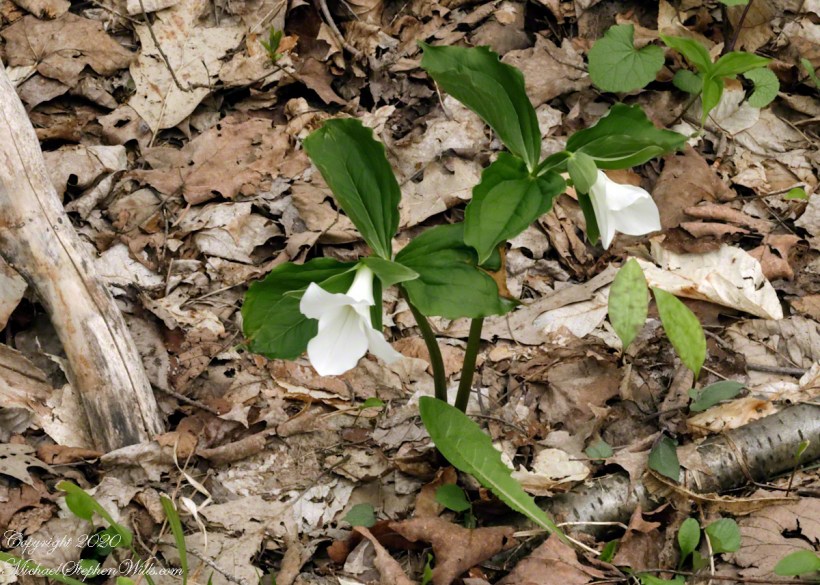
above 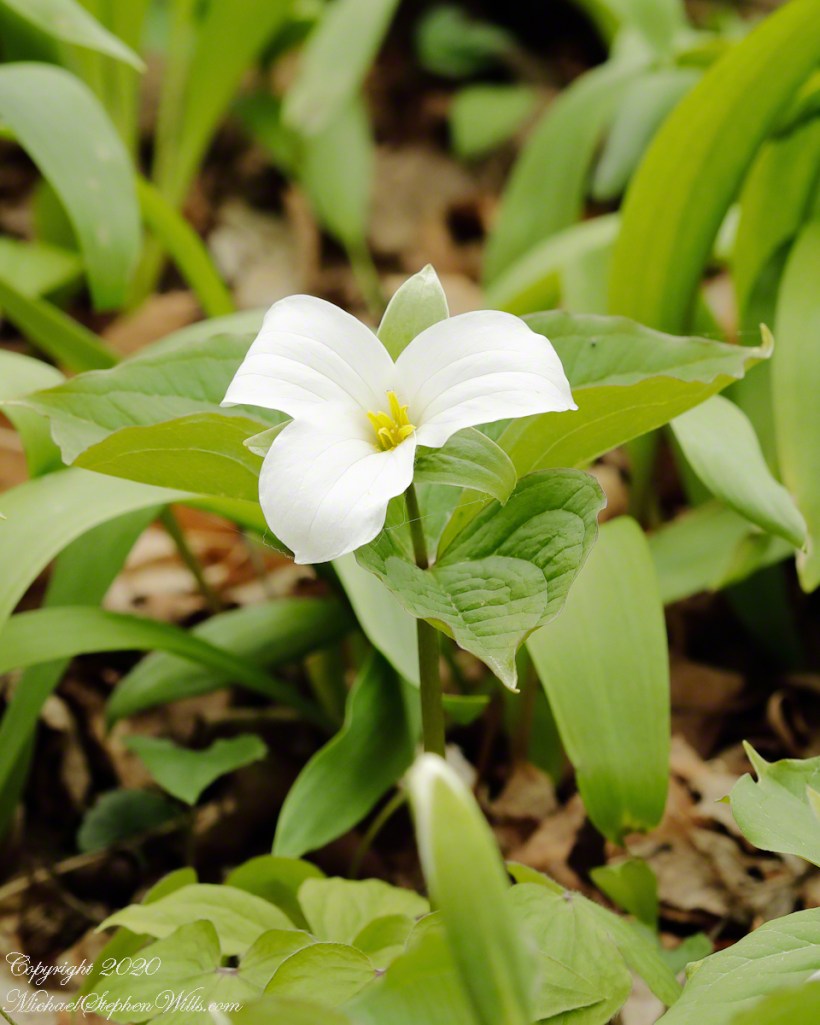
same level 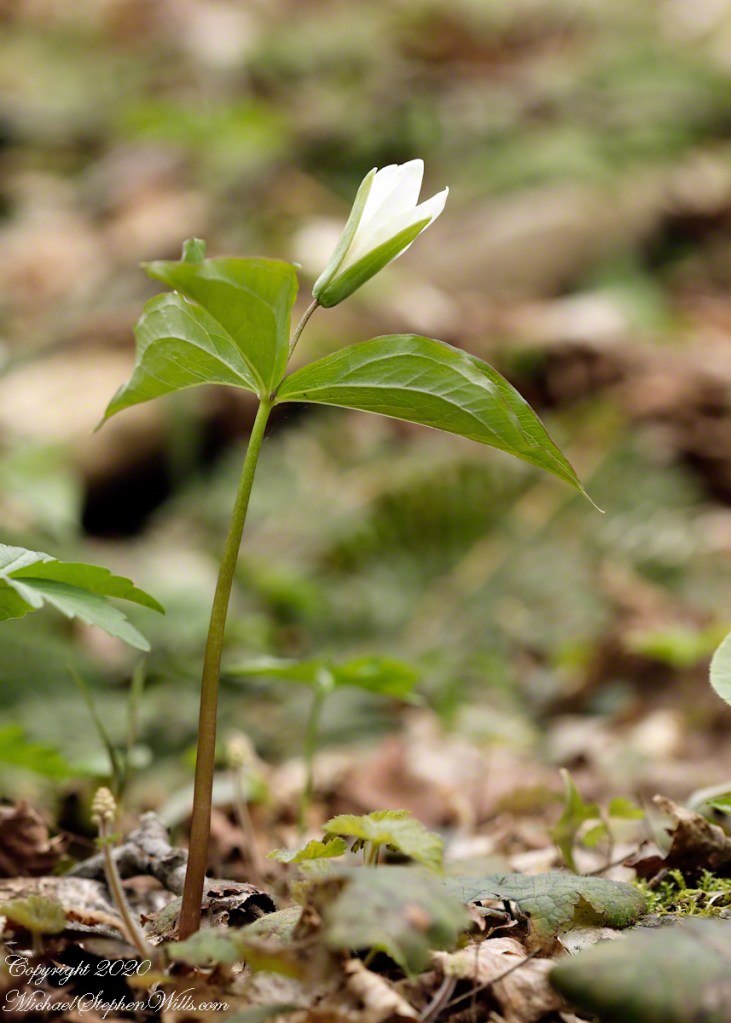
below
Aspect Continuum
White Trillium from different aspects.
Click photograph for larger image. To do this from WordPress Reader, you need to first click the title of this post to open a new page.
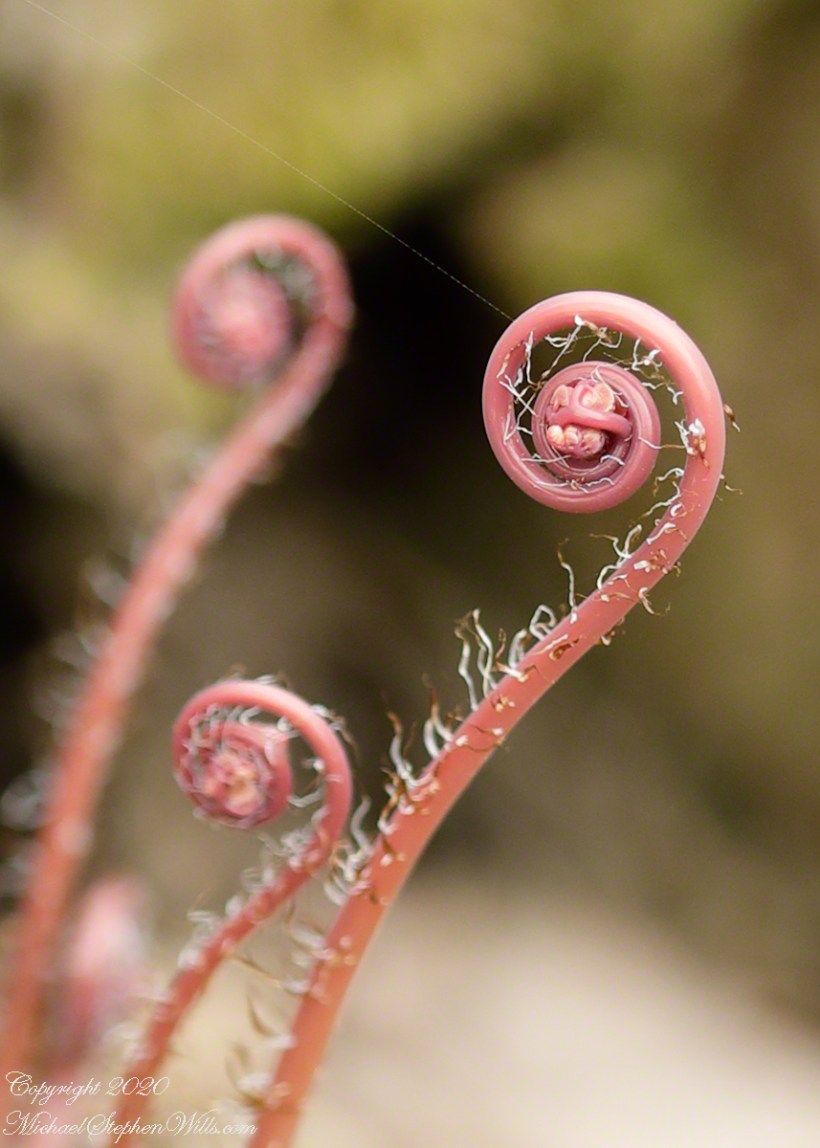
Circinate
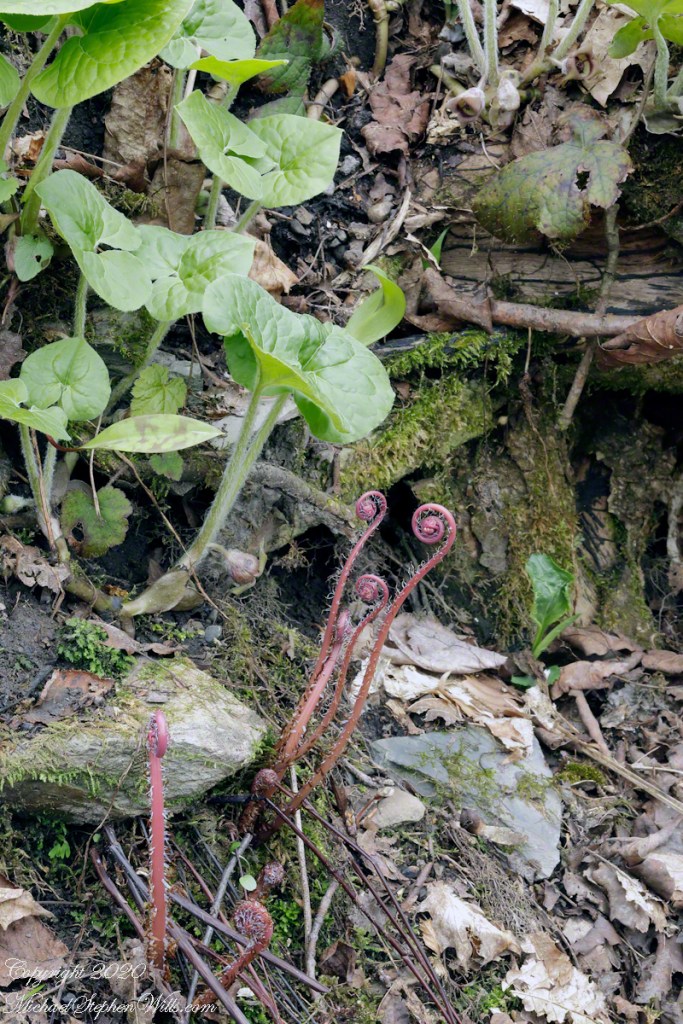
A thumb’s width span for each unfurling stalk of this unidentified colony. Fern? Flowering plant?
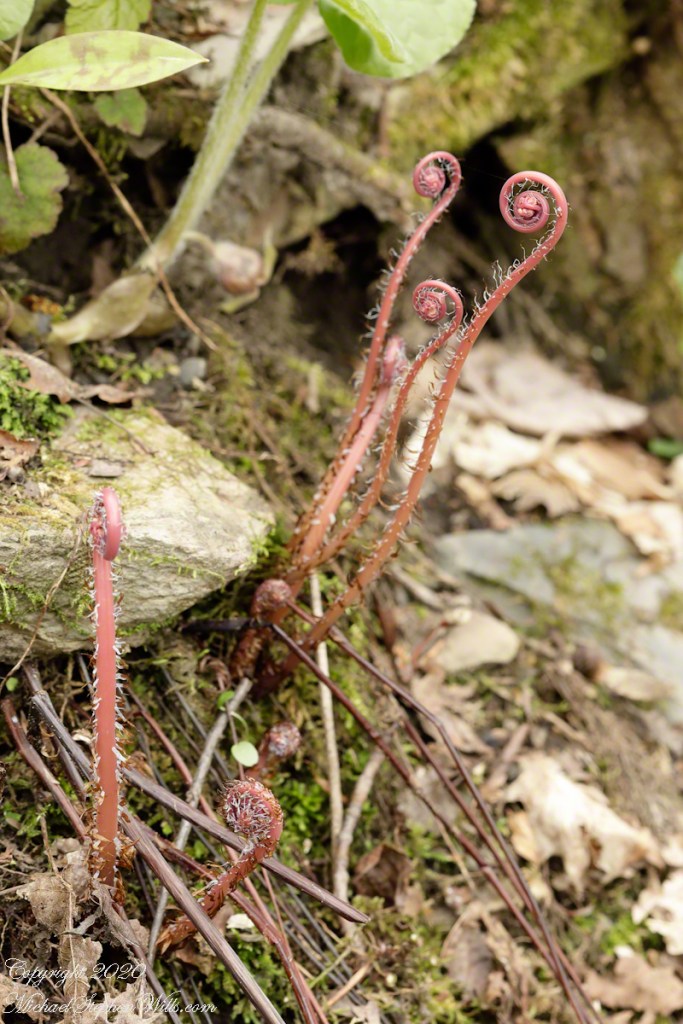
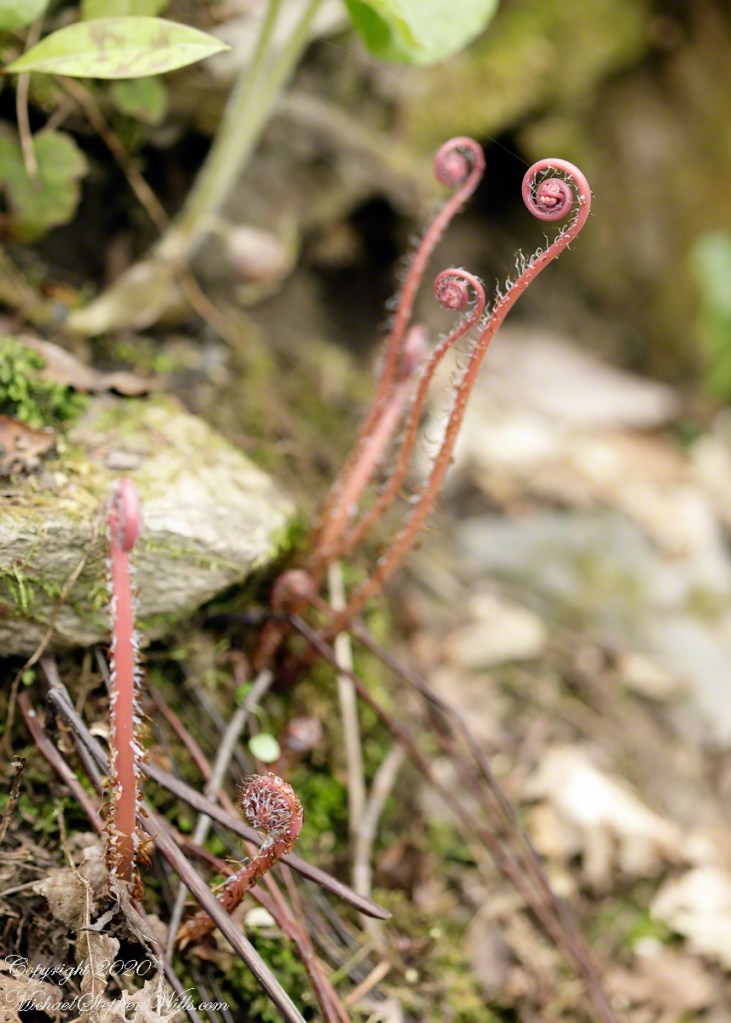
Each image is from a Canon 100 mm macro lens, camera mounted on a sturdy studio tripod I carried a few hundred feet to this bank within Fillmore Glen New York State park.
Here is another assignment from the “Fundamentals of Photography” course, to capture a scene at different f-stops, the degree to which the diaphragm is open, to control the width of the lens aperture. Increasing f-stop narrows lens aperture.
For this f32 image, the least possible apeture for this lens, resulting in maximum depth of field. Everything in view is in focus, increasing the visual elements competing for the viewer’s attention. On the other hand, a distracting element is more information about where the plant is thriving.
Click photograph for larger image. To do this from WordPress Reader, you need to first click the title of this post to open a new page.
At 8 f-stop aperture is at a midpoint, elements of the background are out of focus, though still recognizable. The sturdy tripod, well situated, enables me to take the exact same view, changing only the f-stop (and associated shutter speed, the higher the f-stop the slower the shutter speed. As the aperture decreases, less light enters the camera and more time is required to collect enough light to expose the digital media. Slower shutter speed means more time for spring breezes to move the delicately balanced plant stalk, resulting a blur for a subject otherwise in focus.
In this image I removed all but the immediate surroundings of the red stalks.
At f2.8 the diaphram is wide open, a maximum amount of light enters the camera and shutter speed is higher as well. Less of the image is in focus, a single subject is in sharp relief. Prior to cropping more than one stalk is in focus, competing for attention.
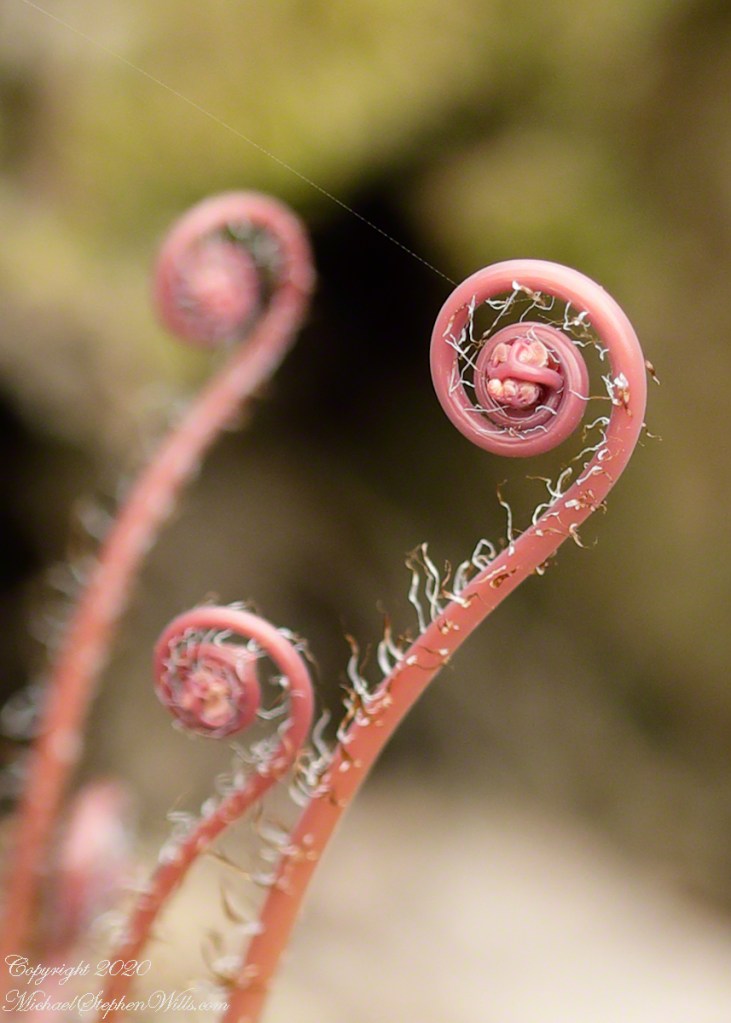
After cropping a single stalk is the image subject, reminding me of swirling galaxies. The drawback is reduction in image size: 30 reduced to 1.3 (6,744 to 1,371). I needed to reposition the tripod and camera for a closer shot of the circinate scene elements and a image with a higher resolution of this fascinating episode in the life of a plant. I am tempted to visit Malloryville where large ferns unfurl.
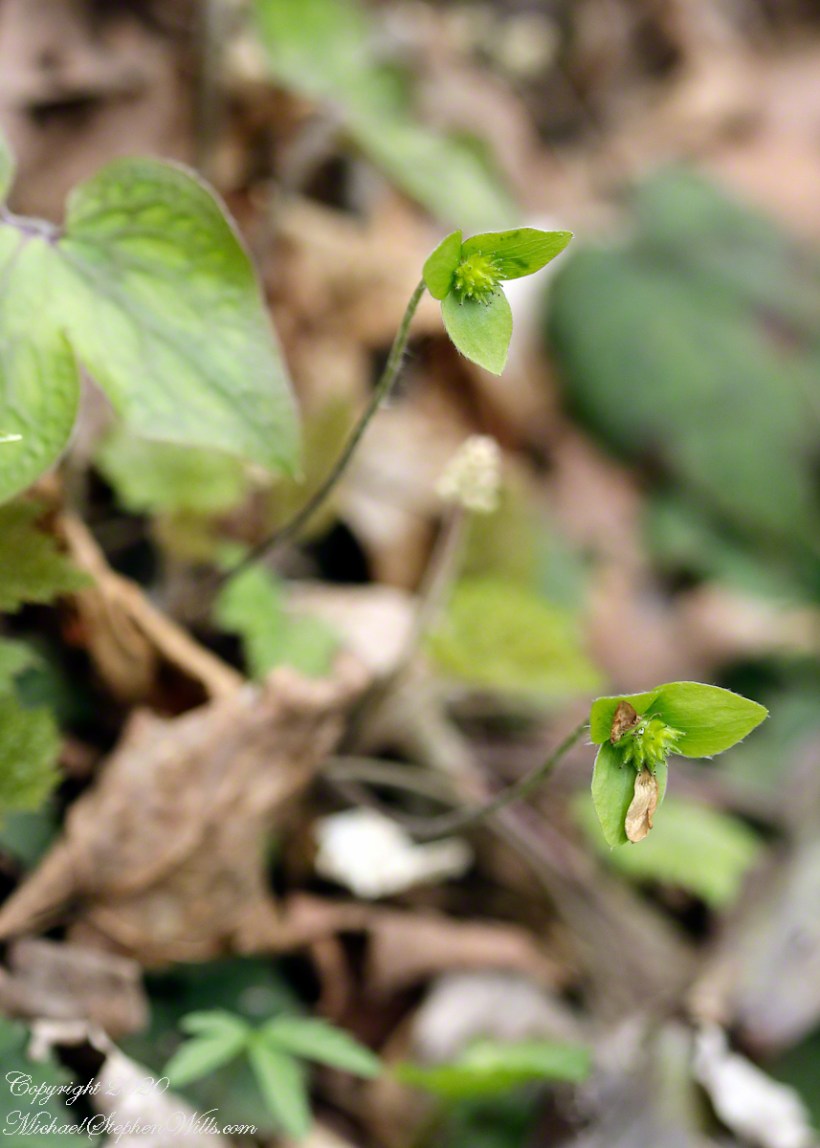
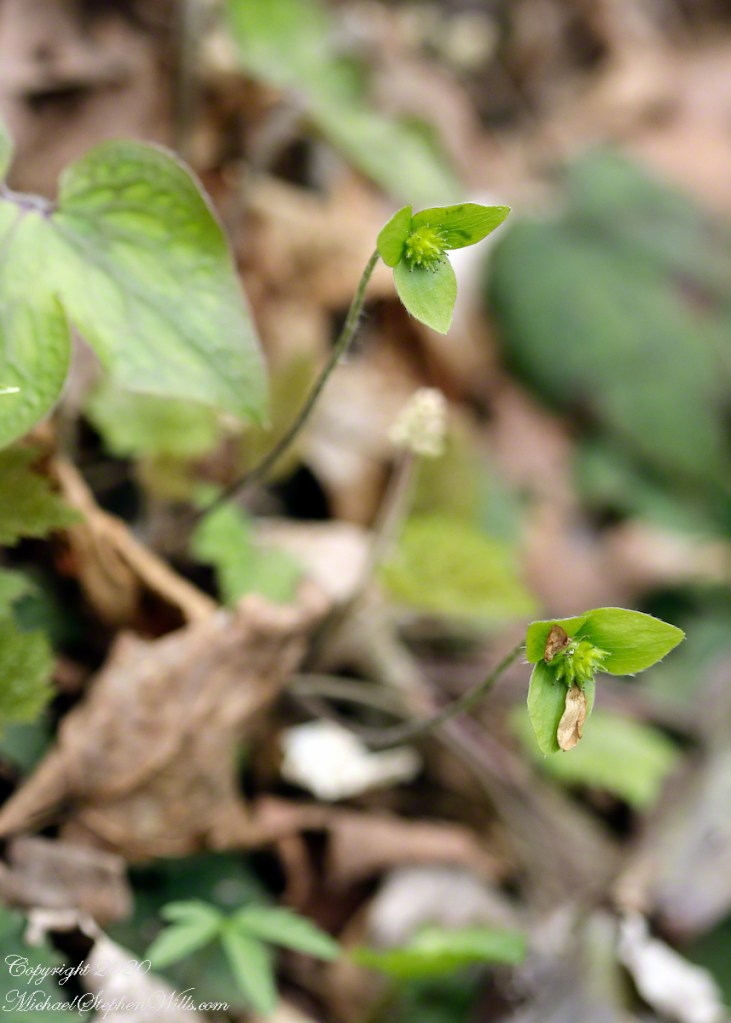
Hepatica from April 2007
Yesterday you saw a grouping of Hepatica flowers and seed heads. (Click me for another Hepatica posting from this season).
Here you see two seed heads in selective focus, one still has flower petals attached.
Click photograph for larger image. To do this from WordPress Reader, you need to first click the title of this post to open a new page.
Cutting Trees to Fight Disease in Glenariff Forest Park
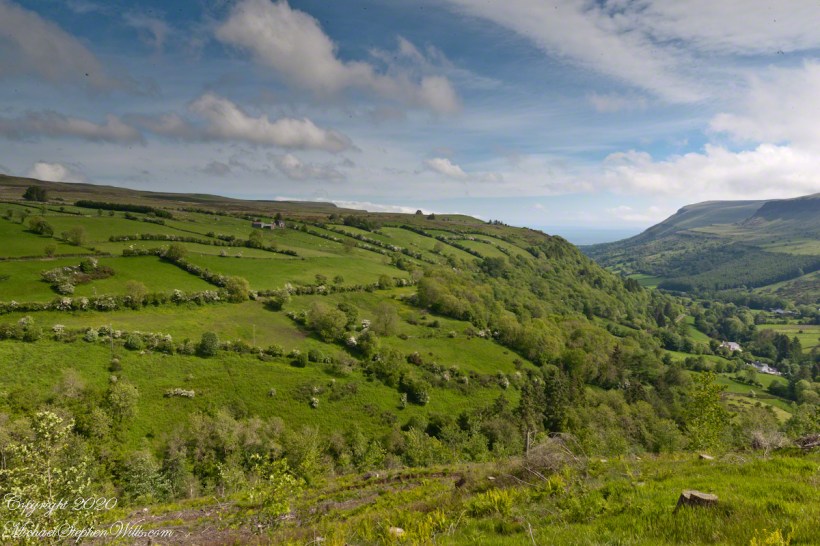
White Hawthorne tree blooms grace hedgerows of the rural hillside facing Glenariff Forest Park. The other white is grazing sheep. The North Channel of the Irish Sea is visible at the foot of the glen, with the shore of Scotland just visible.
Foreground are the stumps of mature trees cut by the forest service to control the oomycete plant pathogen Phytophthora ramorum. We visited June 2014, the year before, October 2013, the Belfast Telegraph reported “Northern Ireland is close to the point where it will be impossible to eradicate a virulent disease from the forests where it has taken hold.” Glenariff Forest part was one of those forests and the tree stumps are victims of that struggle.
Click photograph for a larger view. To do this from WordPress Reader, you need to first click the title of this post to open a new page.
Copyright 2020 All Rights Reserved Michael Stephen Wills
A Blessed Easter to Everyone
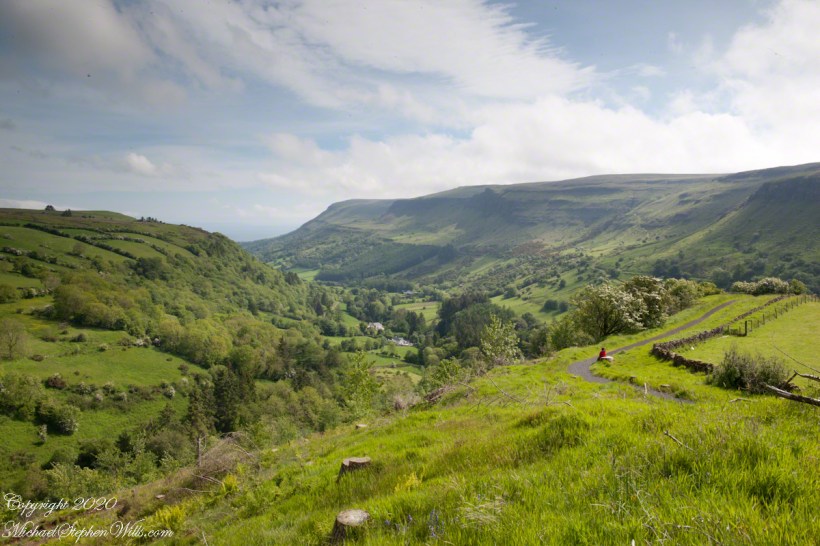
Comparing this view with the first of this series, first glance, with the camera held steady on a Manfrotto studio tripod, it is identical but from the play of light and cloud. My model Pam walked a few feet to sit in quiet contemplation of the beautiful surroundings.
To produce stock photography I research the details of the image, to write an informative caption. For example, in the post “Another Glenariff View” my identification of the Rowan was from a two volume atlas, paging through page after page.
Click photograph for a larger view. To do this from WordPress Reader, you need to first click the title of this post to open a new page.
Copyright 2020 All Rights Reserved Michael Stephen Wills
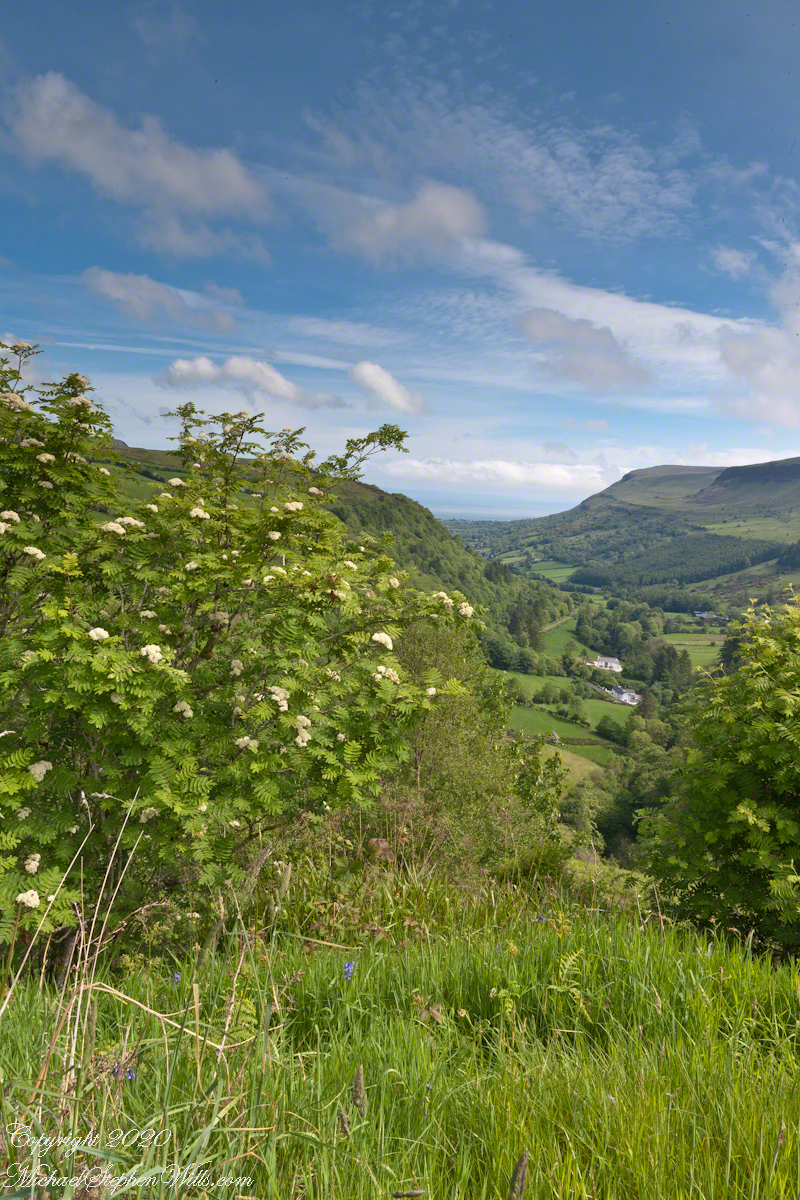
…with a flowering bush.
After photographing the broad expands of a wide Glenariff valley, moving the tripod on that same eminence, here is a near and far view.
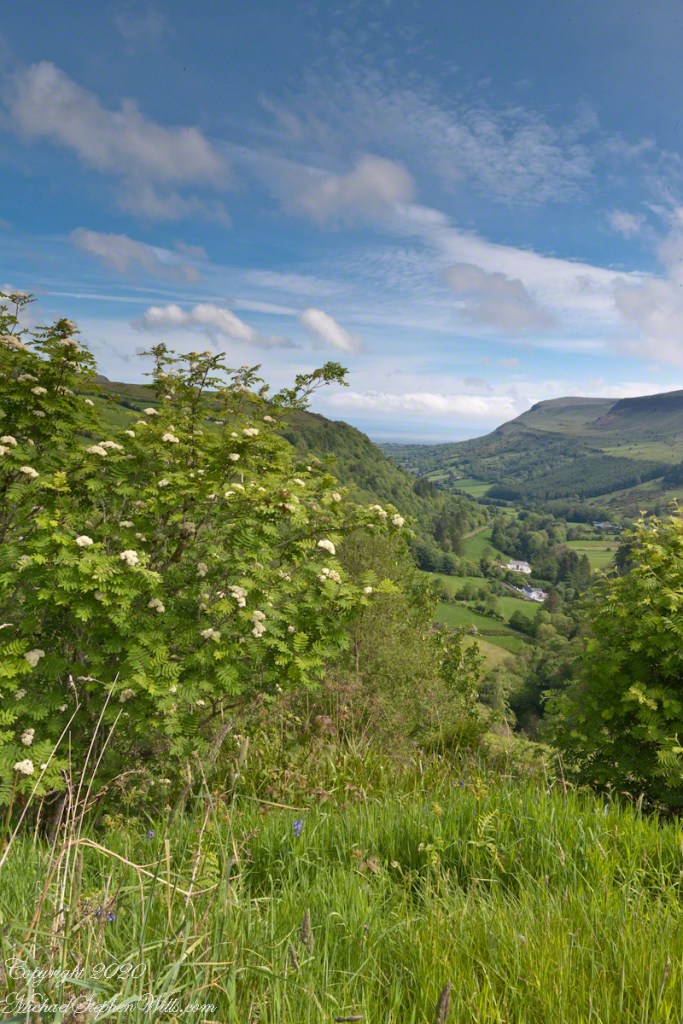
The foreground white flowering bush of pinnate leaves is Rowan (Sorbus in the family Rosaceae subfamily Maloideae). In Irish it is crann caorthainn, a plant considered sacred in ancient times by both Celts and Vikings. The fruit is made into preserves, jellies. The pinnate leaves are similar to Ash, the reason it is also known as Mountain Ash, Rowan is not botanically related to Ash.
The Canon lens EF 24mm f/1.4L II USM was mounted on the Canon EOS-1Ds Mark III camera. The graduated neutral density filter was perfect for the setting. Notice, between the hills in the distance, is a patch of the Northern Channel (of the Irish Sea), and just visible the Scottish Coast, a tilted horizon uncorrected.
Click photograph for a larger view. To do this from WordPress Reader, you need to first click the title of this post to open a new page.
Copyright 2020 All Rights Reserved Michael Stephen Wills
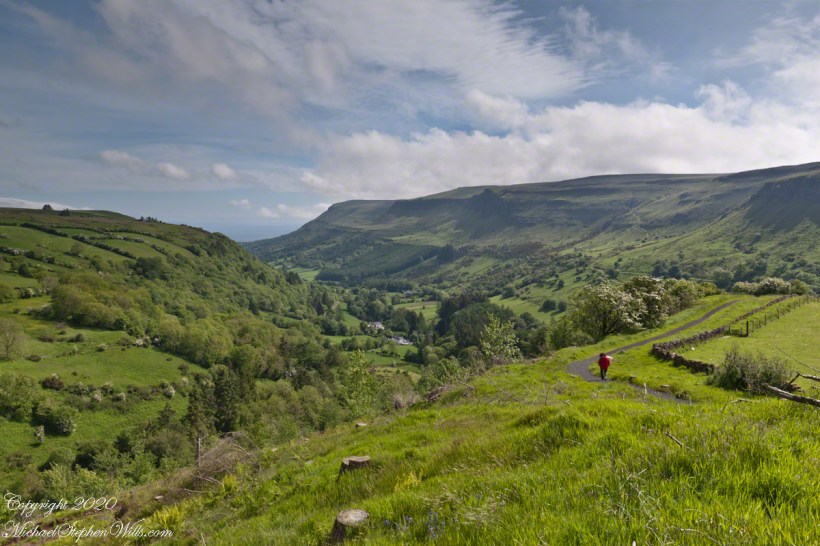
….to Glenariff
Here is the first stop on our tour of the Antrim Glens and coast, Glenariff Forest Park. These blogs have gone backward from Torr Head towards the started our day with breakfast in Coleraine, proceeding south along the plain to the head of Glenariff. The name, in Irish Gleann Airimh, means “Glen of arable land.” The Glenariff River flows from the height of Tievebulliagh, a 1,300 foot mountain, to form the broad valley of Glenariff. Arable, means tillable, and the land is tillable because the valley is wide.
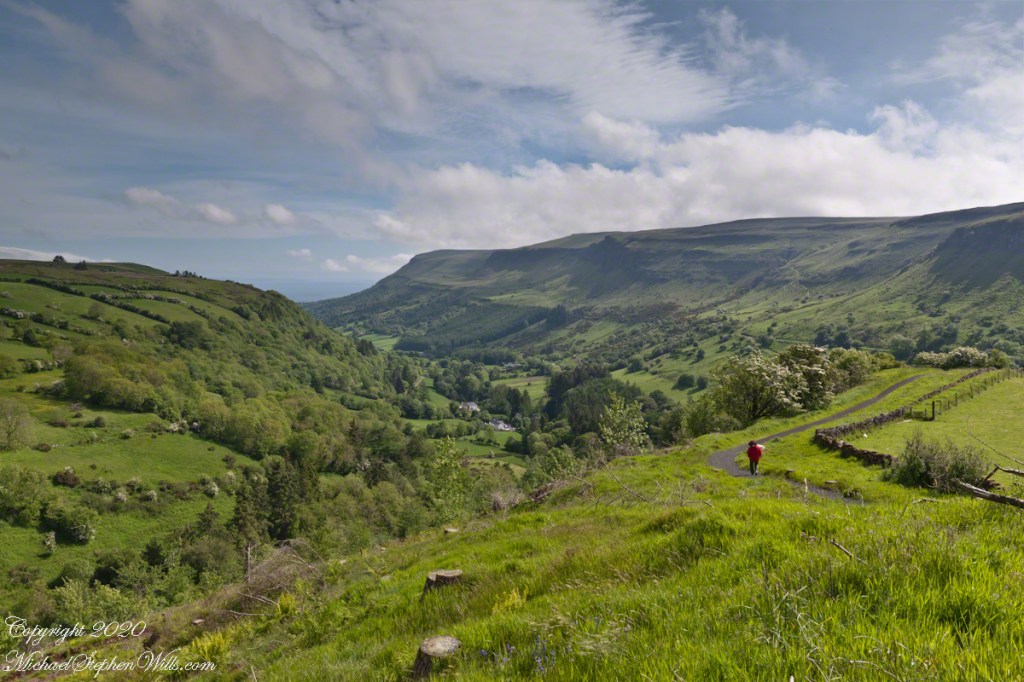
This is one of my most popular photographs, it is from that day. I set up the tripod on an eminence overlooking the glen and a park path. Pam, in her red raincoat, headed down. The Canon lens EF 24mm f/1.4L II USM was mounted on the Canon EOS-1Ds Mark III camera. The graduated neutral density filter was perfect for the setting.
Click photograph for a larger view. To do this from WordPress Reader, you need to first click the title of this post to open a new page.
Copyright 2020 All Rights Reserved Michael Stephen Wills
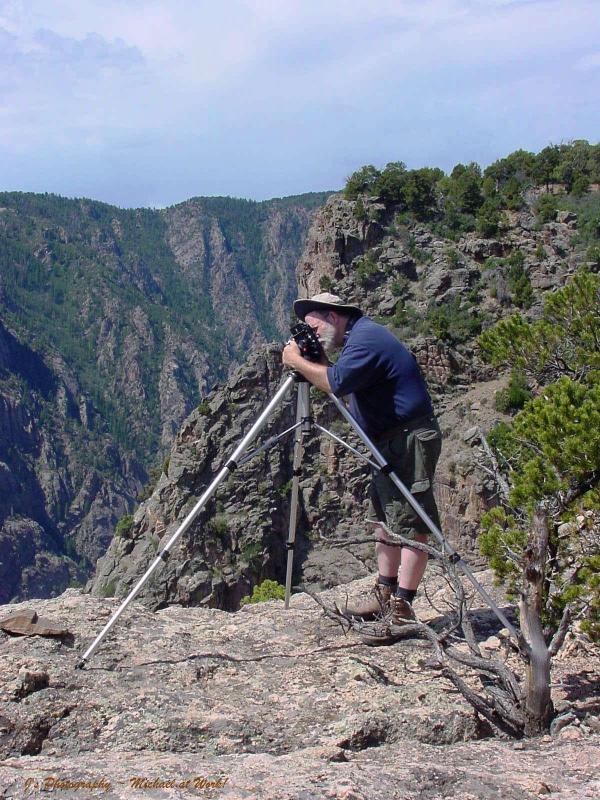
Photographer at work, captured by his wife
Pam captured me at work on the north rim of Black Canyon, Colorado. That is a Manfrotto studio tripod and hydro-static ball head.
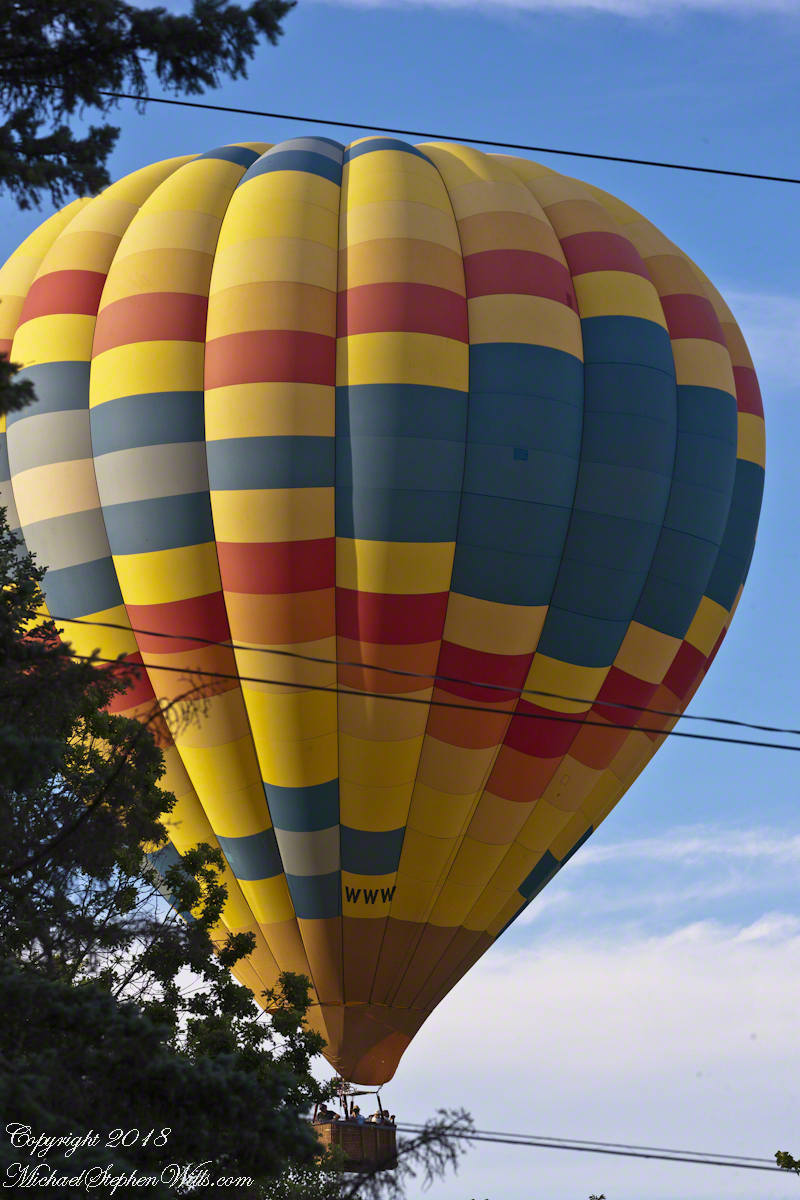
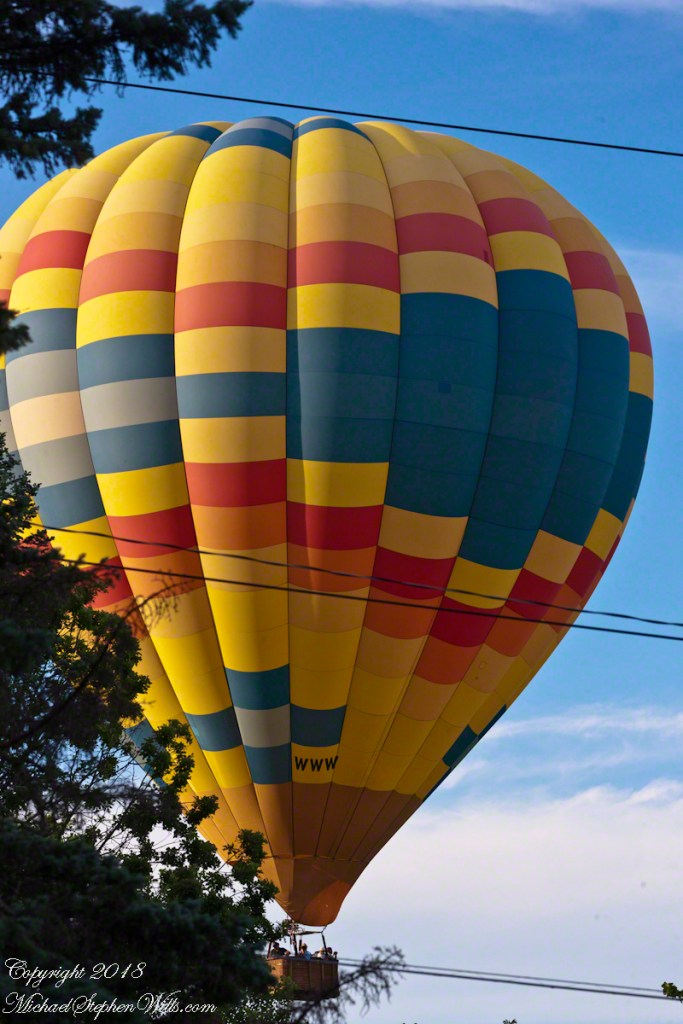
The header photograph is mine of a hot air balloon over our home last summer. I imagine us floating, the Black Canyon below us.
 Michael Stephen Wills Photography