The white snakeroot stood near the woods along the South Rim Trail, a pale branching spray of flowers lifted out of the shade. I had gone to Taughannock for the gorge walls, the lake light, the shale ledges, and the first yellowing leaves, but this modest herb held its own at the edge of the scene. It was knee to waist high, easy to overlook; yet once seen, it seemed to gather the late summer around itself.
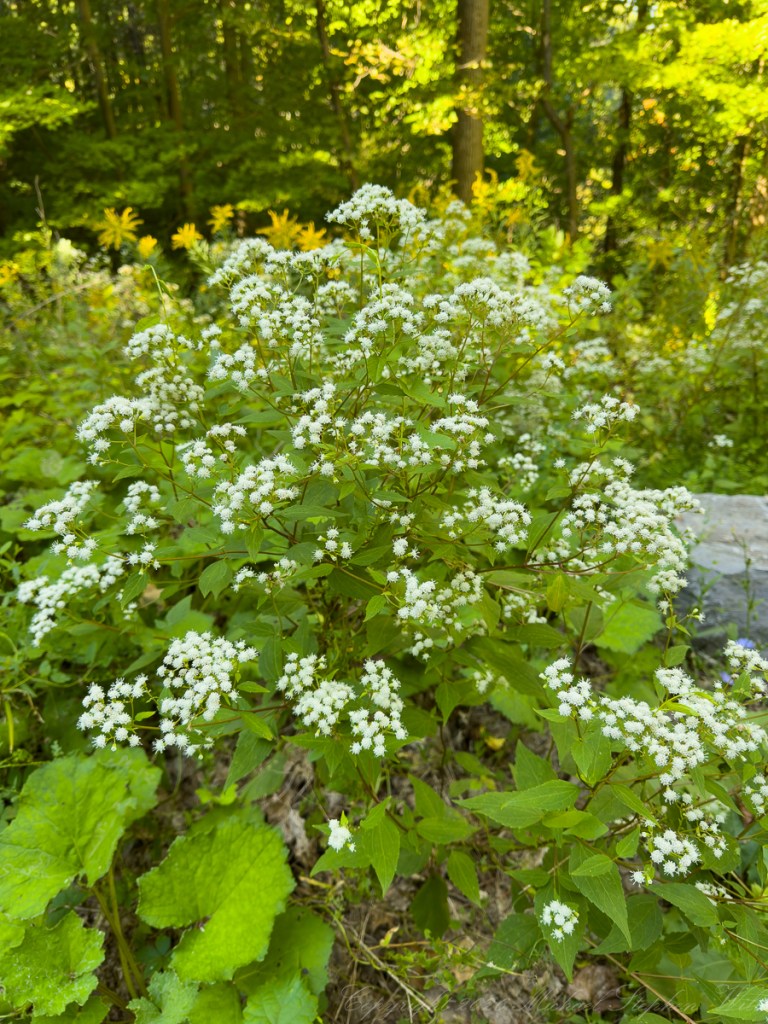
White snakeroot, Ageratina altissima, is a poisonous perennial herb in the aster family. It is native to woodland places in the eastern United States and often grows in rich or rocky woods, thickets, stream edges, roadsides, and disturbed ground. Its current accepted botanical name is Ageratina altissima, though older guides may still remember it as Eupatorium rugosum.
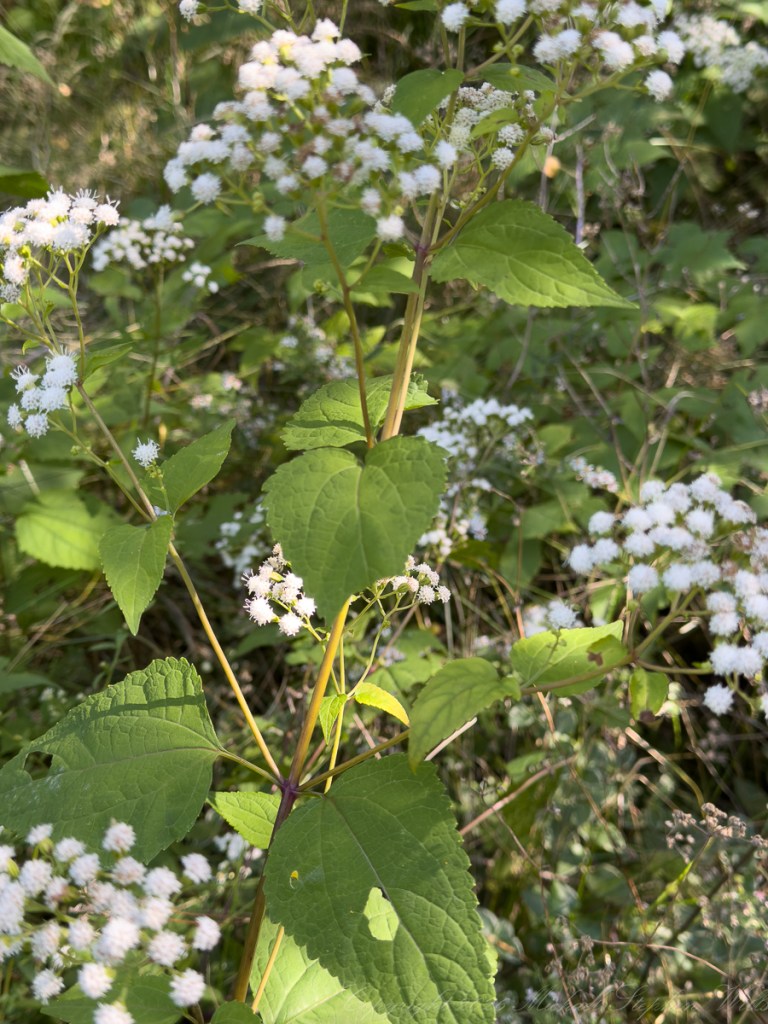
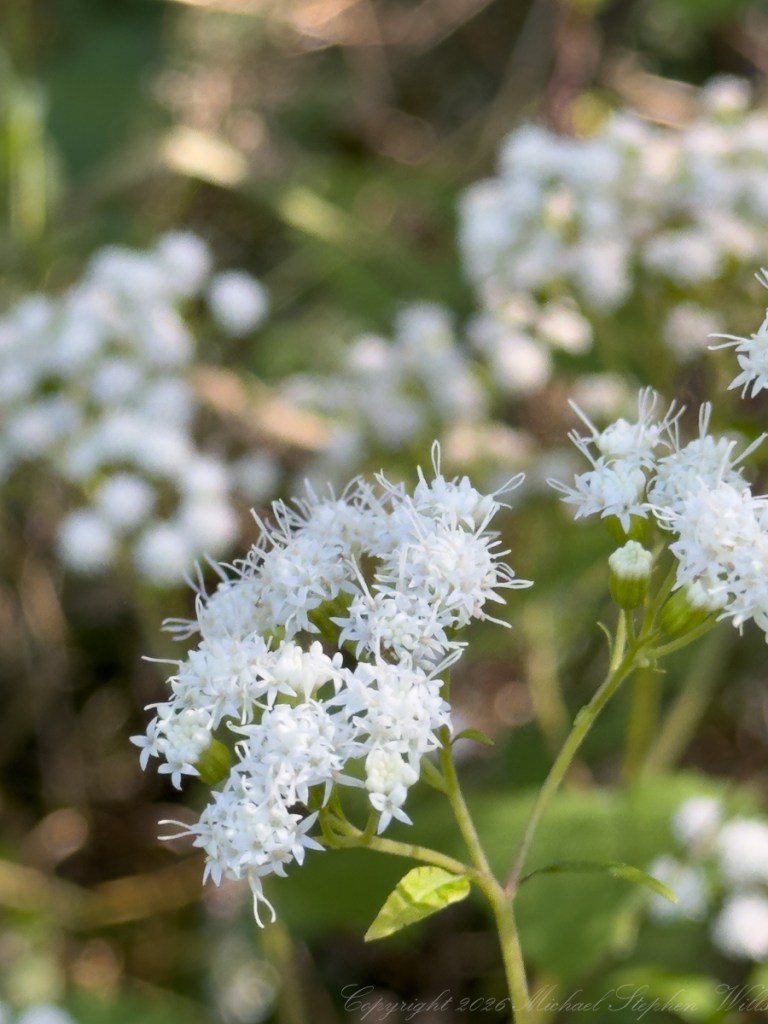
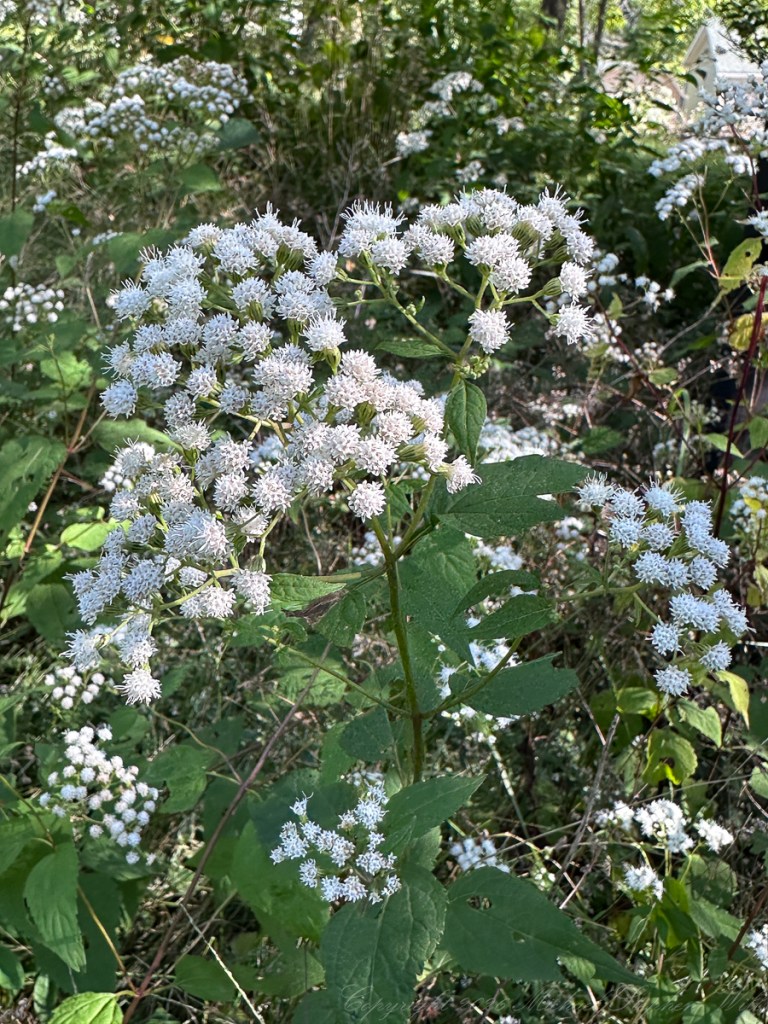
Later, I began seeing the same composed plainness in the white snakeroot growing in our own yard. Its leaves are opposite, toothed, broadly ovate to somewhat heart-shaped, with pointed tips and slender petioles. The stems rise and divide, and at their ends appear flat-topped clusters of white flower heads. At a closer look, the flowers are not like daisies or other familiar asters. They have no showy rays spreading outward like petals. They are made of small disk flowers, each head a tuft, and the whole plant in bloom becomes a cloud of minute, bristling whiteness. What looks from a distance like foam resolves, near at hand, into many small parts.
The scientific name begins in a paradox. Ageratina comes from the same root as Ageratum, from Greek language associated with “not aging,” a reference to flowers that keep their color for a long time. The species name altissima means tallest or very tall, and in this case refers to its stature within the genus. A plant found in shade, at the edge of paths, among fallen leaves and shale-gray rock, is given a name that speaks of lasting freshness and height. The name seems, at first, too grand for it. But by September, when many flowers have passed into seed or exhaustion, white snakeroot is still offering its small whiteness to the air.
Then come the common names, each one carrying a fragment of human encounter. White snakeroot is the one most often used, and it preserves an old belief that the root could be used against snakebite. Other names collected around it over time: richweed, white sanicle, fall poison, deerweed, Indian sanicle, milk-sickness plant, white top. These names are not synonyms so much as testimonies of different encounters. One person saw the habitat and called it richweed. Another remembered a medicinal resemblance and called it white sanicle. Another learned danger and named it fall poison. The plant stayed where it was, in the shade and edge-growth, while people kept finding new reasons to name it.
The word “snakeroot” is especially revealing. It belongs to a time when usefulness and fear were not separate categories. A root that might heal a bite, a plant that might hold a hidden power, a white bloom appearing at the border of pasture and wood—such things entered household knowledge before they entered botany. The old belief was wrong, but the name endured. Names often do. They are less like labels than sediments, deposited by generations of need, mistake, memory, and caution.
Around the Finger Lakes, white snakeroot seems at home in the broken places where wildness and human passage touch: the edge of a gorge trail, the bank above a creek, a roadside ditch beneath maples, a yard border neglected long enough to become interesting. It does not require the open blaze of a meadow. It tolerates shade. It stands in those green rooms where goldenrod, asters, jewelweed, wood nettle, grasses, young trees, and invasive shrubs may all be negotiating for light. In the late season it becomes part of the pollinator economy of scarcity, offering nectar and pollen when many summer blooms are finished. Bees, butterflies, wasps, flies, beetles, and moths may visit it; extension and conservation sources note its value to late-season pollinators.
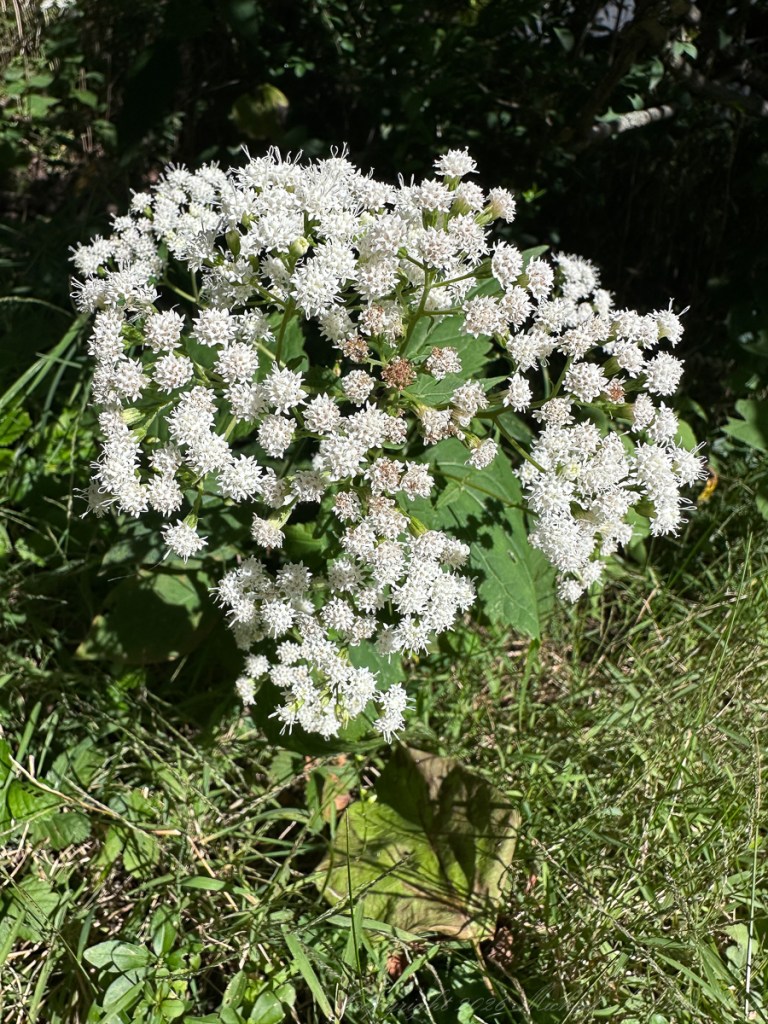
But this is not a harmless innocence. White snakeroot is one of those plants that shows how beauty and hazard may occupy the same stem. Its toxic history is bound to grazing animals, milk, and settlement. When cattle consumed the plant, toxic compounds could pass into milk, producing the illness once known as milk sickness in people who drank it. Research has associated the toxicity with tremetol, a lipophilic mixture of compounds, and with tremetone-related compounds; the old rural names “trembles” and “milk sickness” record the symptoms and route of harm.
This intersection with humanity is sobering because it was not dramatic in the way a venomous snake is dramatic. The danger did not announce itself with fangs. It entered through the ordinary domestic trust of milk. A cow grazed a shaded edge. A household drank what it had always drunk. Illness followed from a chain no one had yet learned to see. The plant was not malicious. It was only doing what plants do: making compounds in its tissues, surviving in the shade, waiting out the season.
That is one reason I find the plant moving. White snakeroot asks us to look without simplifying. Native does not mean safe. Poisonous does not mean expendable. The same plant that feeds late-season insects also carries the history of milk sickness and frontier fear. It has been cleared from pastures and is welcomed in our woodland garden.
By October its whiteness will give way to seed. The heads will loosen, and the plant will fade into the brown grammar of the season. But in September, around the Finger Lakes, it still stands in the half-light: white, poisonous, useful to insects, burdened with names, and easy to pass by.
Click me to visit Michael Stephen Wills Online Finger Lakes Gallery.
Enter your email to receive notification of future postings. I will not sell or share your email address.


Interesting, informative and beautiful – thank you Michael.
LikeLike