White Snakeroot: A Native Finger Lakes Wildflower with a Dangerous History

White snakeroot around the Finger Lakes reveals a native wildflower of beauty, poison, pollinator value, layered names, and deep human history.

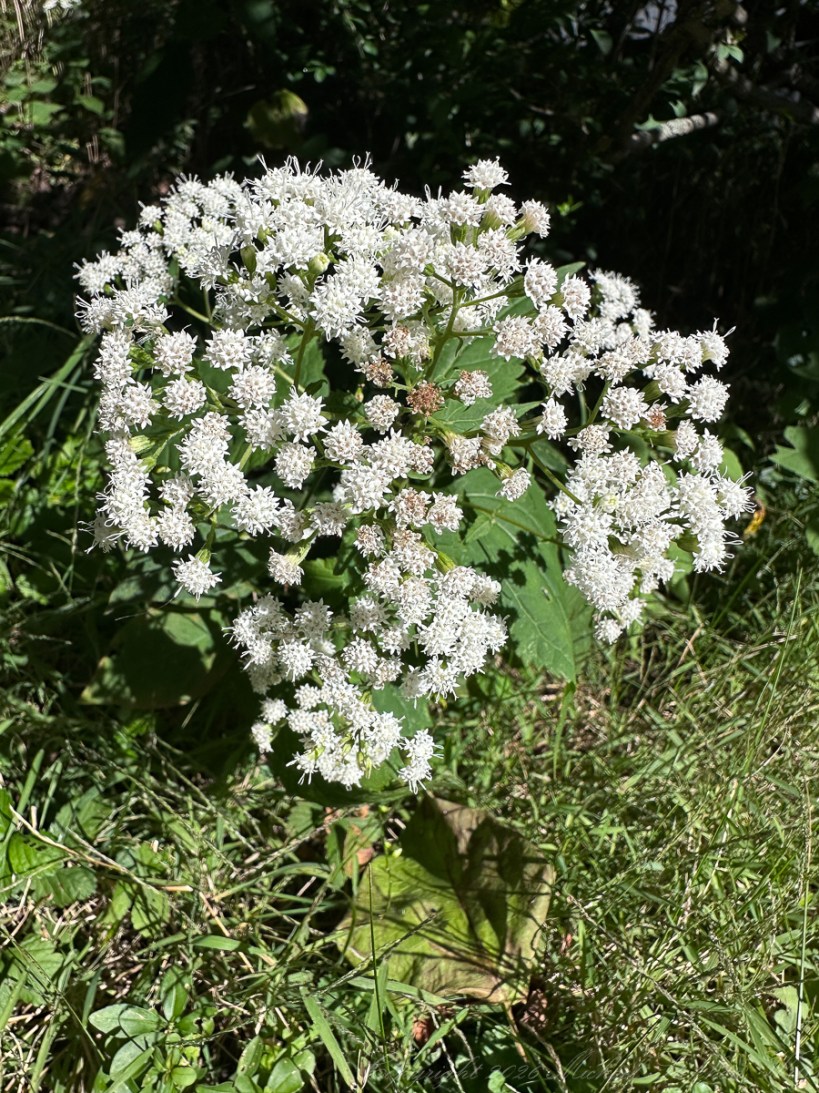
The white snakeroot stood near the woods along the South Rim Trail, a pale branching spray of flowers lifted out of the shade. I had gone to Taughannock for the gorge walls, the lake light, the shale ledges, and the first yellowing leaves, but this modest herb held its own at the edge of the scene. It was knee to waist high, easy to overlook; yet once seen, it seemed to gather the late summer around itself.
Found along the South Rim Trail. From a walk around Taughannock Falls State Park, down the South rim Trail, up the North Rim Trail. September 14, 2026

White snakeroot, Ageratina altissima, is a poisonous perennial herb in the aster family. It is native to woodland places in the eastern United States and often grows in rich or rocky woods, thickets, stream edges, roadsides, and disturbed ground. Its current accepted botanical name is Ageratina altissima, though older guides may still remember it as Eupatorium rugosum.
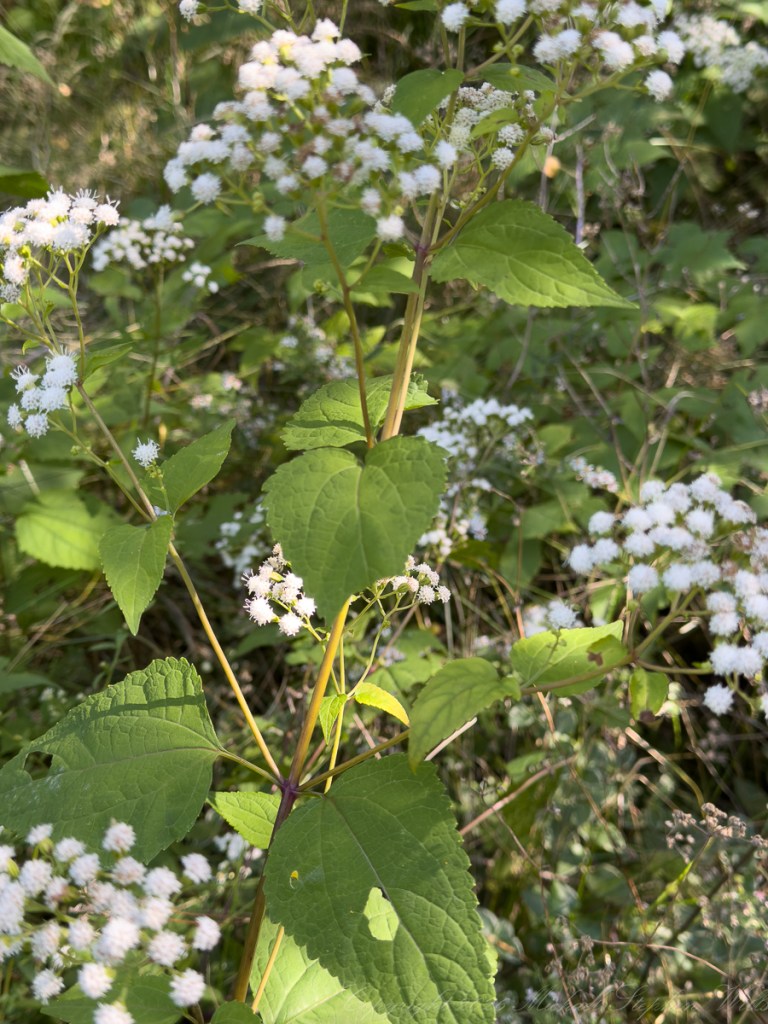
Leaves and flower clusters of white snakeroot, Tompkins County, New York.

Later, I began seeing the same composed plainness in the white snakeroot growing in our own yard. Its leaves are opposite, toothed, broadly ovate to somewhat heart-shaped, with pointed tips and slender petioles. The stems rise and divide, and at their ends appear flat-topped clusters of white flower heads. At a closer look, the flowers are not like daisies or other familiar asters. They have no showy rays spreading outward like petals. They are made of small disk flowers, each head a tuft, and the whole plant in bloom becomes a cloud of minute, bristling whiteness. What looks from a distance like foam resolves, near at hand, into many small parts.
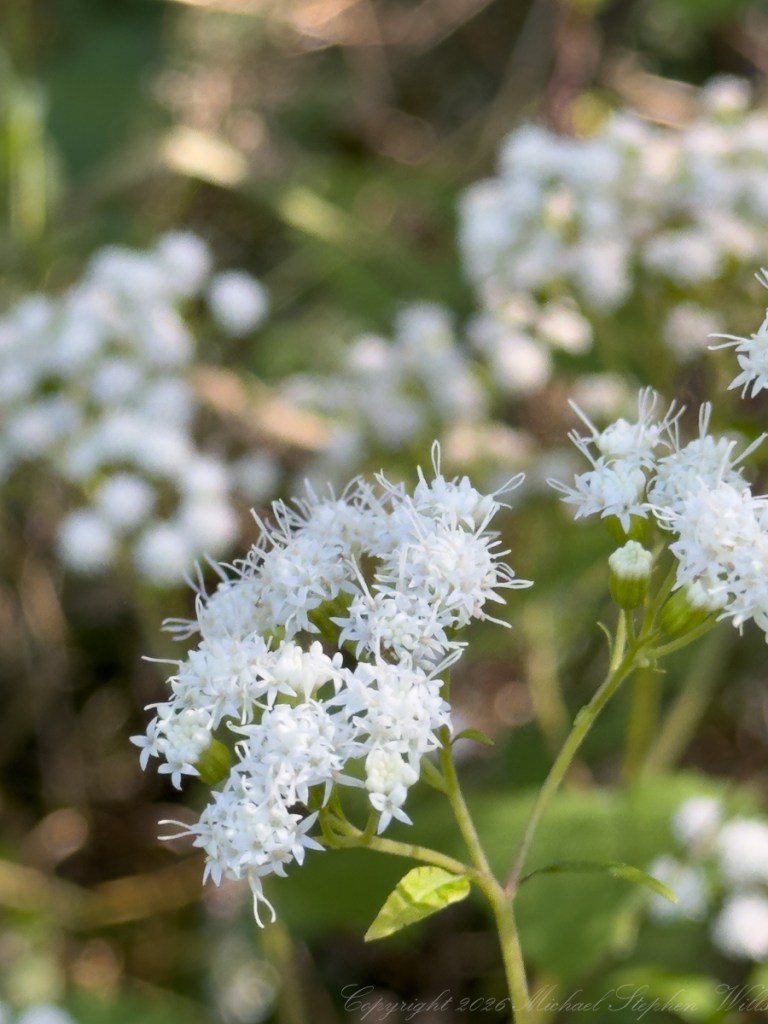
A closer look at the flowers of this member of the Aster family

The scientific name begins in a paradox. Ageratina comes from the same root as Ageratum, from Greek language associated with “not aging,” a reference to flowers that keep their color for a long time. The species name altissima means tallest or very tall, and in this case refers to its stature within the genus. A plant found in shade, at the edge of paths, among fallen leaves and shale-gray rock, is given a name that speaks of lasting freshness and height. The name seems, at first, too grand for it. But by September, when many flowers have passed into seed or exhaustion, white snakeroot is still offering its small whiteness to the air.
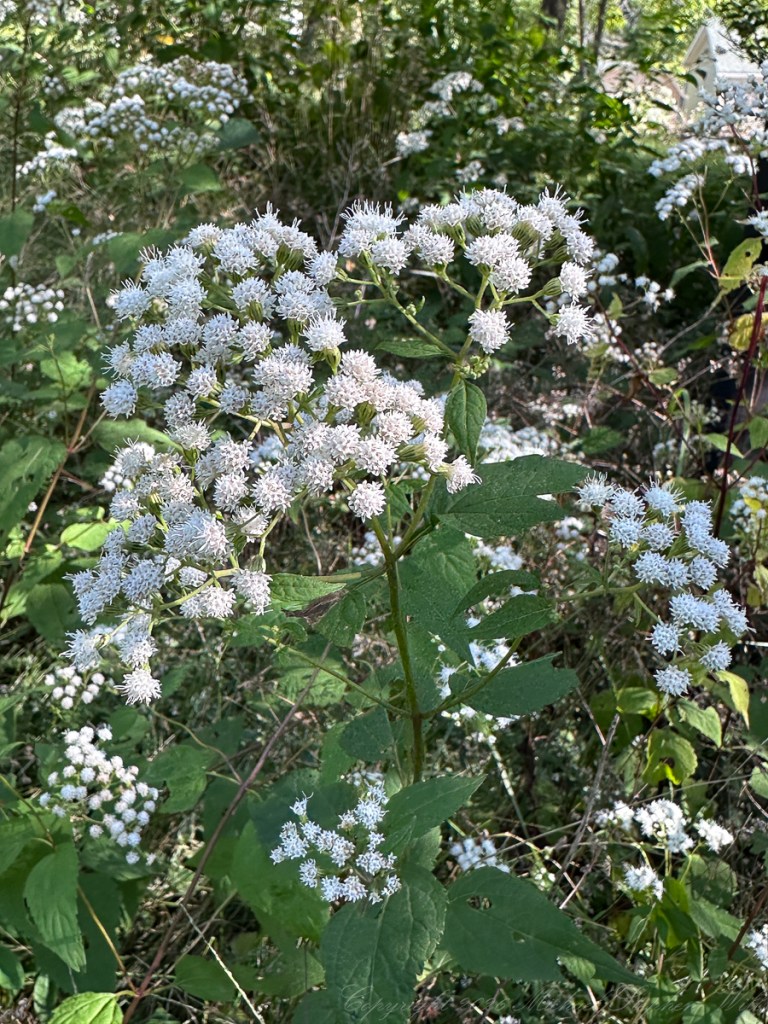
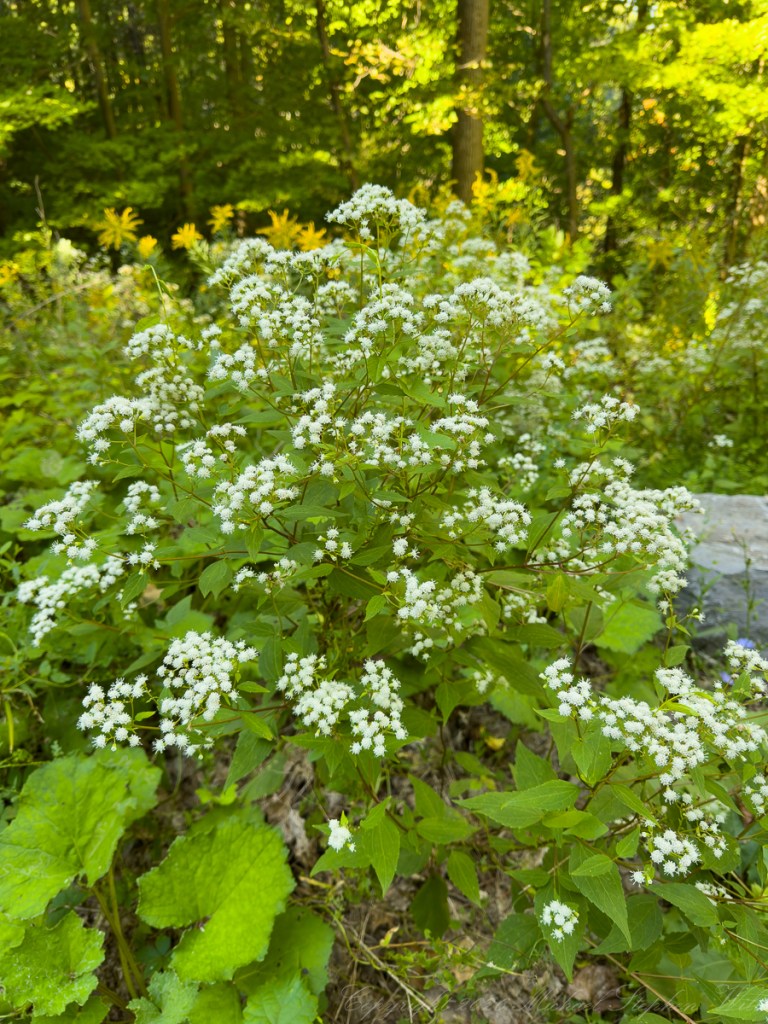
White snakeroot blooming in our Ithaca yard.

Then come the common names, each one carrying a fragment of human encounter. White snakeroot is the one most often used, and it preserves an old belief that the root could be used against snakebite. Other names collected around it over time: richweed, white sanicle, fall poison, deerweed, Indian sanicle, milk-sickness plant, white top. These names are not synonyms so much as testimonies of different encounters. One person saw the habitat and called it richweed. Another remembered a medicinal resemblance and called it white sanicle. Another learned danger and named it fall poison. The plant stayed where it was, in the shade and edge-growth, while people kept finding new reasons to name it.

The word “snakeroot” is especially revealing. It belongs to a time when usefulness and fear were not separate categories. A root that might heal a bite, a plant that might hold a hidden power, a white bloom appearing at the border of pasture and wood—such things entered household knowledge before they entered botany. The old belief was wrong, but the name endured. Names often do. They are less like labels than sediments, deposited by generations of need, mistake, memory, and caution.

Around the Finger Lakes, white snakeroot seems at home in the broken places where wildness and human passage touch: the edge of a gorge trail, the bank above a creek, a roadside ditch beneath maples, a yard border neglected long enough to become interesting. It does not require the open blaze of a meadow. It tolerates shade. It stands in those green rooms where goldenrod, asters, jewelweed, wood nettle, grasses, young trees, and invasive shrubs may all be negotiating for light. In the late season it becomes part of the pollinator economy of scarcity, offering nectar and pollen when many summer blooms are finished. Bees, butterflies, wasps, flies, beetles, and moths may visit it; extension and conservation sources note its value to late-season pollinators.
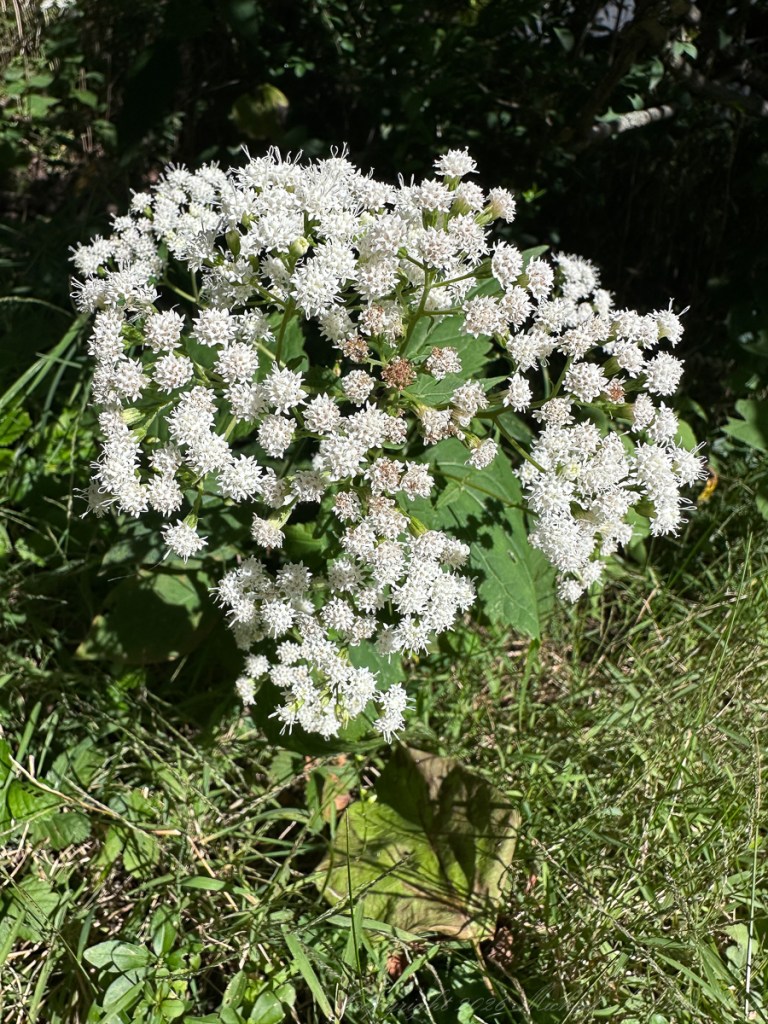
A small bouquet spared by the lawnmower.

But this is not a harmless innocence. White snakeroot is one of those plants that shows how beauty and hazard may occupy the same stem. Its toxic history is bound to grazing animals, milk, and settlement. When cattle consumed the plant, toxic compounds could pass into milk, producing the illness once known as milk sickness in people who drank it. Research has associated the toxicity with tremetol, a lipophilic mixture of compounds, and with tremetone-related compounds; the old rural names “trembles” and “milk sickness” record the symptoms and route of harm.

This intersection with humanity is sobering because it was not dramatic in the way a venomous snake is dramatic. The danger did not announce itself with fangs. It entered through the ordinary domestic trust of milk. A cow grazed a shaded edge. A household drank what it had always drunk. Illness followed from a chain no one had yet learned to see. The plant was not malicious. It was only doing what plants do: making compounds in its tissues, surviving in the shade, waiting out the season.

That is one reason I find the plant moving. White snakeroot asks us to look without simplifying. Native does not mean safe. Poisonous does not mean expendable. The same plant that feeds late-season insects also carries the history of milk sickness and frontier fear. It has been cleared from pastures and is welcomed in our woodland garden.

By October its whiteness will give way to seed. The heads will loosen, and the plant will fade into the brown grammar of the season. But in September, around the Finger Lakes, it still stands in the half-light: white, poisonous, useful to insects, burdened with names, and easy to pass by.

Click me to visit Michael Stephen Wills Online Finger Lakes Gallery.

Enter your email to receive notification of future postings. I will not sell or share your email address.
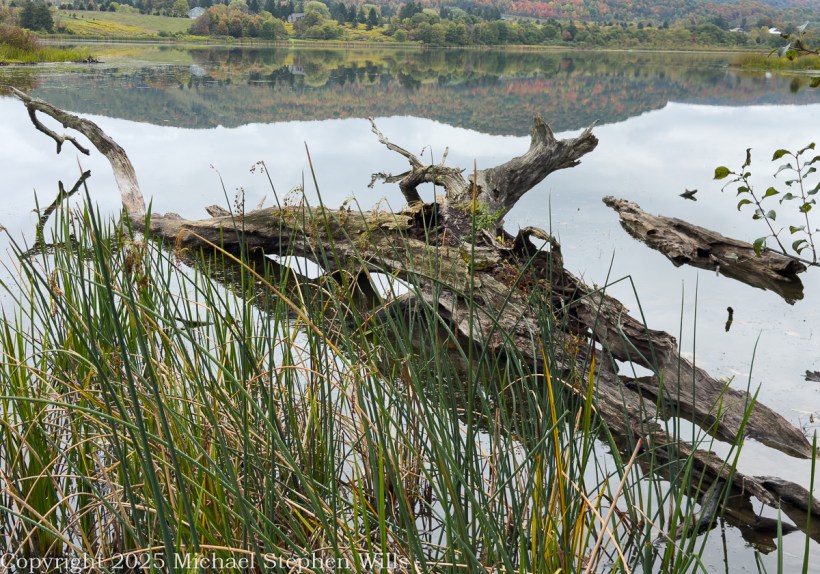
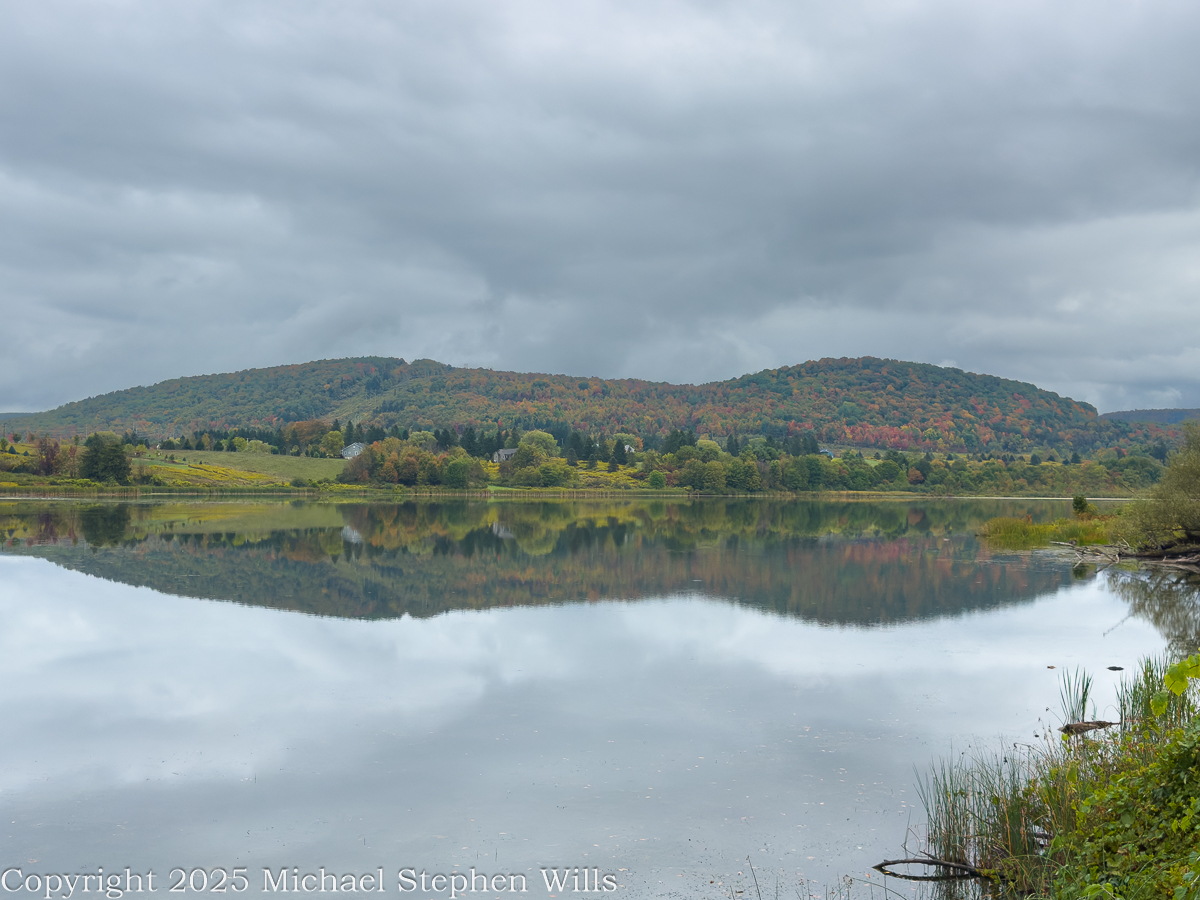
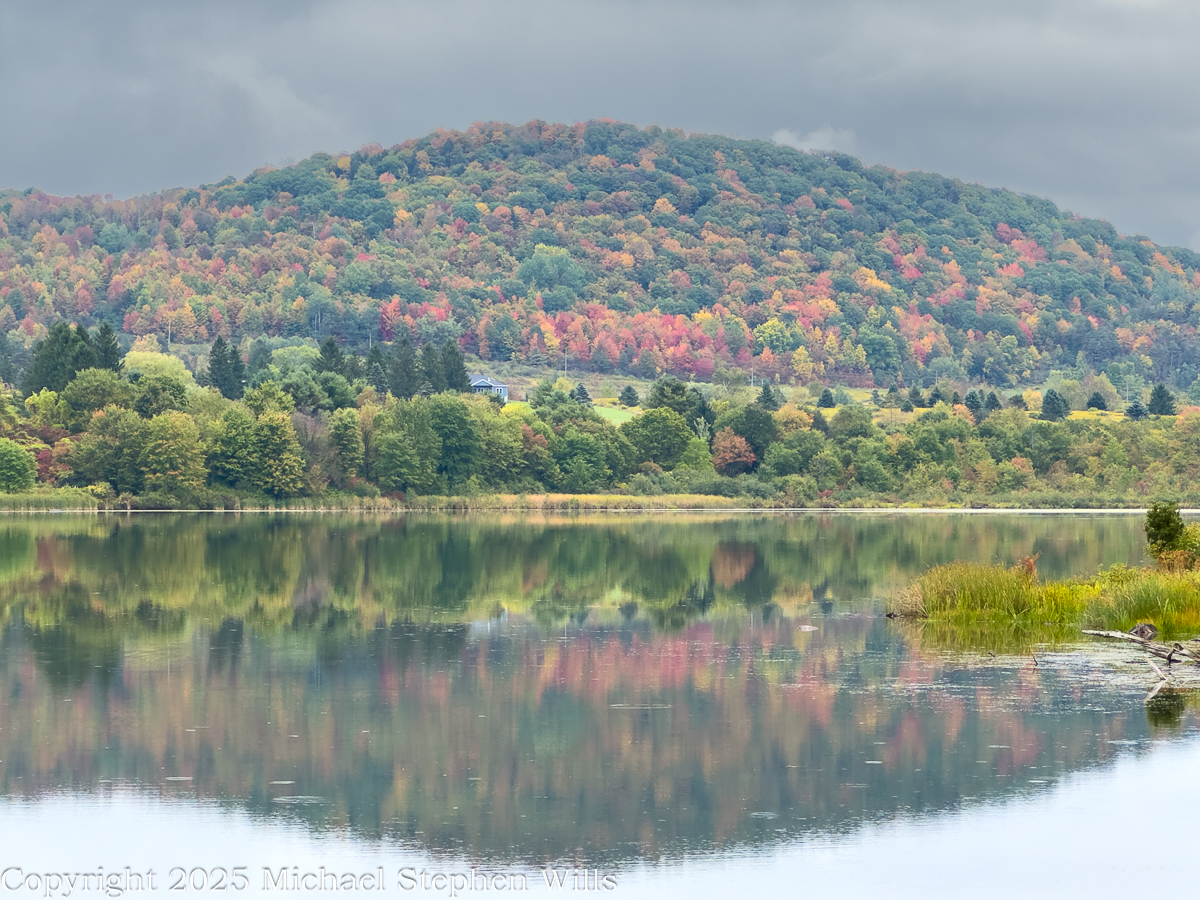
Glacial Echoes: Dryden Lake Park’s Mirror-Calm Morning in Upstate New York

Morning clouds hang over Dryden Lake as hills kindle first color; reflections hold breath while a lone walker reads the valley’s glacial and human-written past.

He came to the water before the people woke, the road a still ribbon of cold tar snaking beneath the low hills. Mattocks of cloud hung over the valley and the lake took in the sky like a mirror dropped yet not broken. The trees were beginning to color. A patient fire working from within the leaves. He parked where the grass ran down to the shore and stood a long while without moving. Birds made small sounds in the reeds. Somewhere a single truck labored up the grade and was gone. The surface held the hills with a steadiness the hills themselves could not keep. He thought how the quiet of a place can be the loudest thing it owns.

He went along the margin along the damp sedges where old drift lay silvered and light as bones. A drowned trunk angled from the shallows. The lake was old in the way of things made by ice and time. A kettle in the outwash of the last glacier, some men said, a bowl left when the buried ice eased away. He pictured the ice receding into the valley heads, the meltwaters choked with gravel, a hand larger than memory scribing the floor of this country. The earth never told it plain but the lay of it was witness enough. Across later centuries men cribbed a dam across the outlet and drew the water to a shape that pleased them and served their work.

A trail ran the length of the water on the old rail bed. The ties were long gone and the iron and cinders buried under years of leaf fall and gravel. He had walked it as a boy beside his father and now he walked it alone. Benches stood at half-mile intervals like waystations in a country of small pilgrimages. The signs told what once was here and what remains. They had renamed the path for a townman who argued it into being after the railroad had passed from the world and the right-of-way grew up with sumac and rumor. It was an easy trail and he carried nothing. His hands hung at his sides as if the day might place something in them when it was ready.

In another era the lake was a workshop. Men whipsawed timber in the wet air and fed small mills with the grove’s dark boards. Winter flowed over the flats, and they built icehouses and set the blocks within like blue stone, an industry that died when cold could be called from a switch. The hills have learned to forget the noise of it, though on certain mornings the fog takes a shape and you could believe rising from the ponded sawdust and the lading of sleds. He thought of the labor of those gone hands and of how work is a scripture every place keeps in its own tongue.

Before any of that, the ground here was a summer camp. People came with the season and went with it, laying their fires in the lee of the knoll and taking fish where the cattails thin. He could feel them in the open places, not as ghosts but as the first understanding the land ever had of itself. The words used for them now are museum words, yet the wind still crosses the water as it did and empties the same smell of iron and leaf into the lungs of whoever stands to breathe.

The town took its name from a poet long dead, a scholar’s choosing in the years after the war for independence when this tract of country was parceled out to soldiers of that same war. Virgil lay to the east as if they were shelving Latin across a map. The creek that bears that name threads the villages and finds Fall Creek at Freeville, and the combined waters go their own slow way toward Cayuga where the glacial hand scooped deeper yet. He said these names under his breath and they tasted of chalk and river stone.

A kingfisher rattled across the cove. The fish rose in rings that spread and vanished like time seen from above. Out on the water an old man pushed a skiff with an electric motor that hummed like a trapped bee, for the lake allows no gas engines now. The wildlife area ran around the shore in a ragged collar of field and wetland and alder, near two hundred acres under the state’s keeping, and the lake itself a little over a hundred. He watched the man aim for the lily line and thought how rules arise from the wish that a thing endure, though nothing does. Still we make the rules and we keep them as if the earth were listening.

Wind came down the slope with a smell of rain. He turned back and the hills lay again in the water, entire, and for a moment he could not tell which world had claim to the other. He thought of the rails pulled up and the mills gone to weeds and of the icehouses fallen into their own shadows and he thought of the people before all that and of the long winter pressing its thumb into the land and lifting it away. He thought of his father walking the rail bed beside him a lifetime ago and saying nothing. There are places where the past crowds close and will not be argued with. He stood until the first drops dimpled the surface and the reflection shattered and reformed. A train no longer runs here. The only sound was the soft percussion of rain on water and the slow turning of the earth beneath both. He put his hand to the damp trunk of a fallen tree and felt the grain and the coolness and the old patient labor of rot. Then he went up from the reeds, his pockets full of acorns, and out to the road where his truck waited and the day, austere and sufficient, came along with him.

References

Geological History and Glacial Formation of the Finger Lakes

Jim Schug Trail

The Dryden Lake area in the 19th century

Indian Campsite on west side of Dryden Lake

Dryden New York (wikipedia)

Dryden Lake (New York State DEC)

Geohydrology, Water Quality, and Simulation of Groundwater Flow in the Stratified-Drift Aquifer System in Virgil Creek and Dryden Lake Valleys, Town of Dryden, Tompkins County, New York

Enter your email to receive notification of future postings. I will not sell or share your email address.