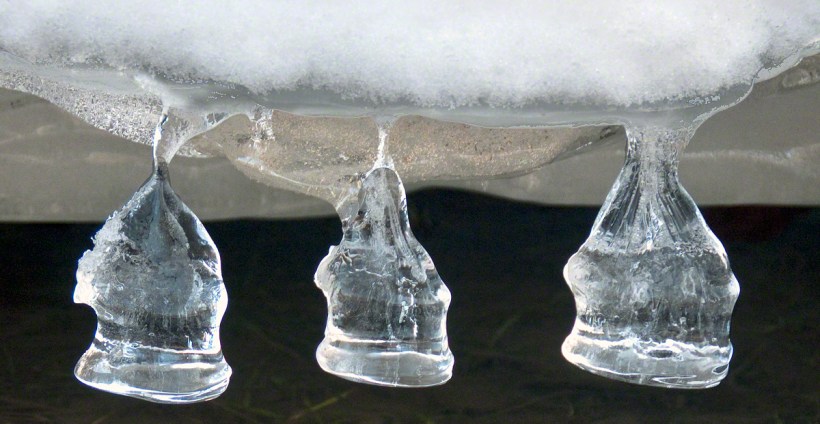
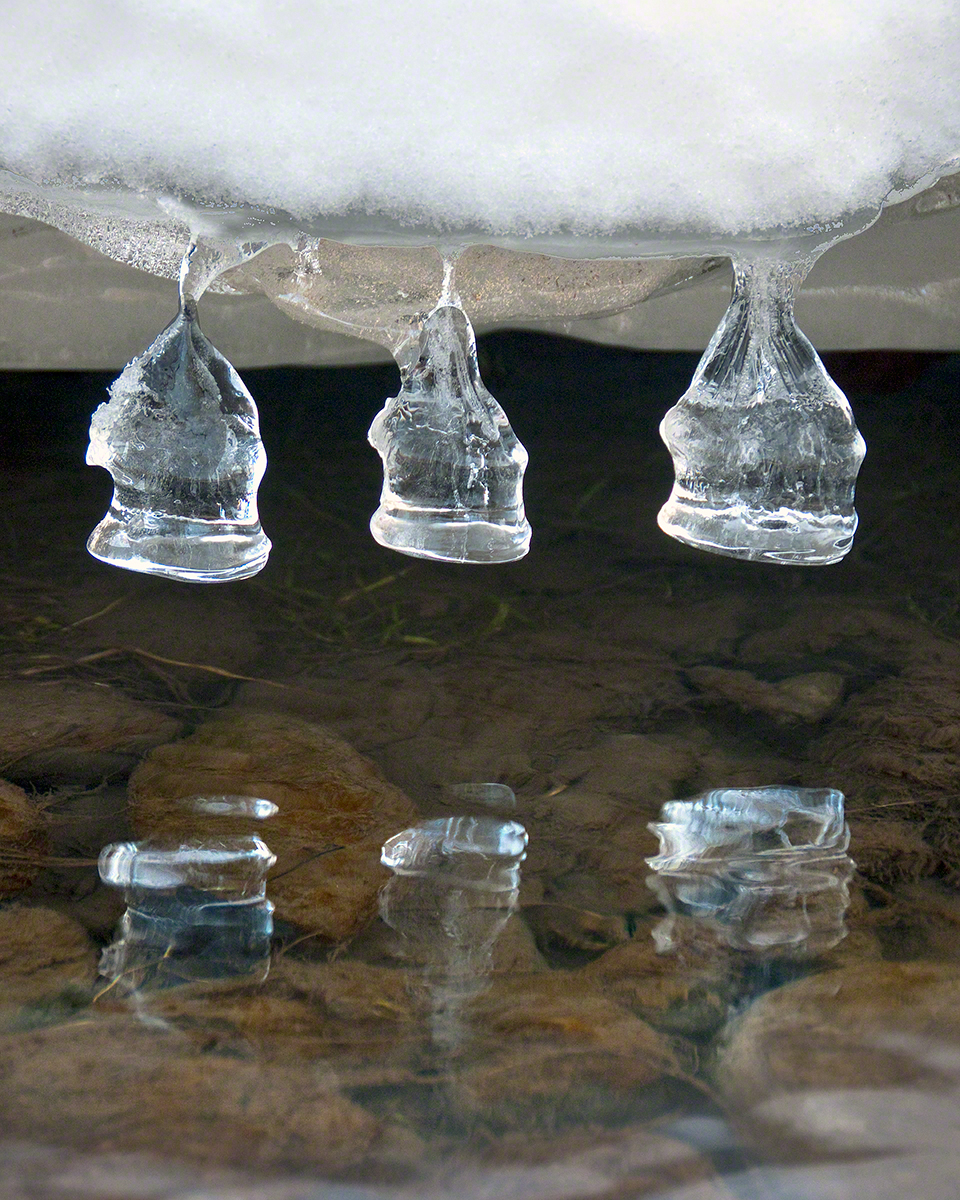
These icicles were formed along Fall Creek during the coldest months of February in the Finger Lakes Region of New York State.
The transient nature of these forms is suggested by the thinness of the pedicle joining each bell to the ice lobe of the ledge. Note the golden crystals in the ice lobe.
A visualization of the symbolic power of the numeral three, reflected on itself. Question: what do “threes” mean to you?
Captured with the Sony DSLR-A700, DT 16-105mm F3.5-5.6 lens, hoya circular polarizing filter, mounted on the Manfrotto tripod with ball head.
Click the photograph for my online gallery Ice Bells listing.
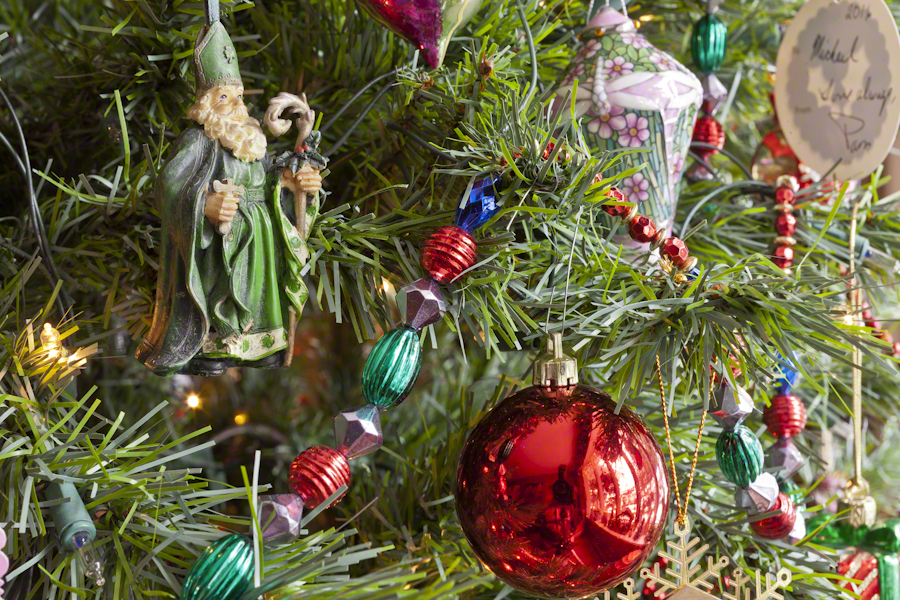
Where would we be without Saint Patrick? He was a force, to be sure. A favorite story, is the landing of his return to the island 432 AD. The tides on the eastern coast of the Irish Sea can be strong. His plan was to sail up to coast further north than what we call today Strangford Lough. On passing this inlet the boat was swept into the lough tidal narrows. Circumstances called for a landing, rather than wait for the tide. Patrick came ashore where the Slaney River enter the lough and “quickly converted” the local chieftan, Dichu, who provided a barn for holding services. The name of the town “Saul” in Irish is Sabhall Phádraig, translated as “Patrick’s Barn.”
In this posting I’ll go lighter on descriptions of technique. Leave it to say I held to the Canon fixed lens EF 50mm f1.2L USM throughout. Some, like the photograph of Saint Patrick, used a tripod. Others, like the latter two of the following Irish Themed Cross set were handheld. Generally a flash was used to supplement ambient sunlight from a large north-facing bay window.
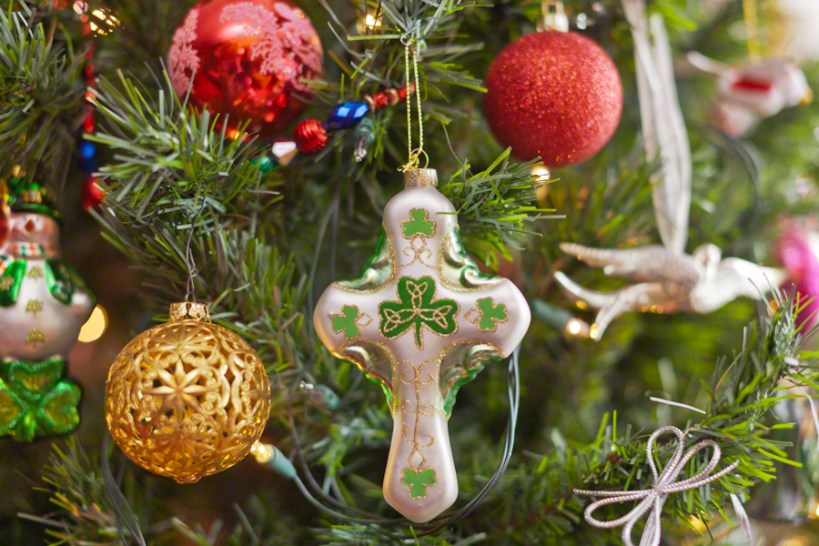
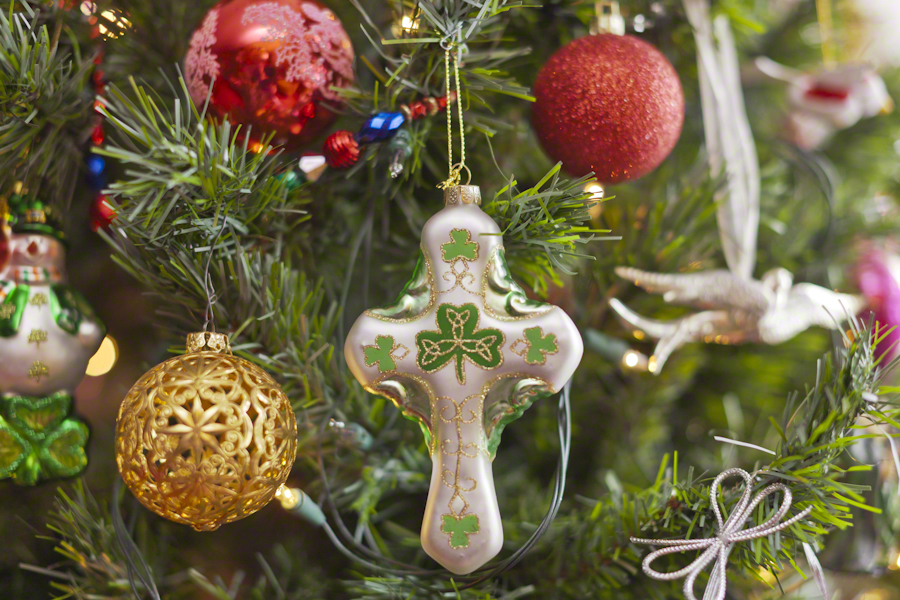
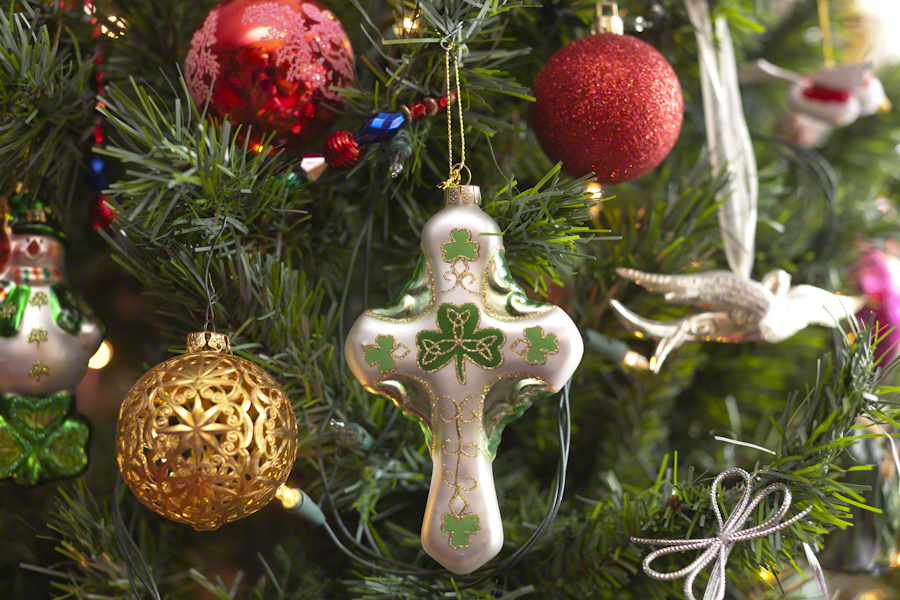
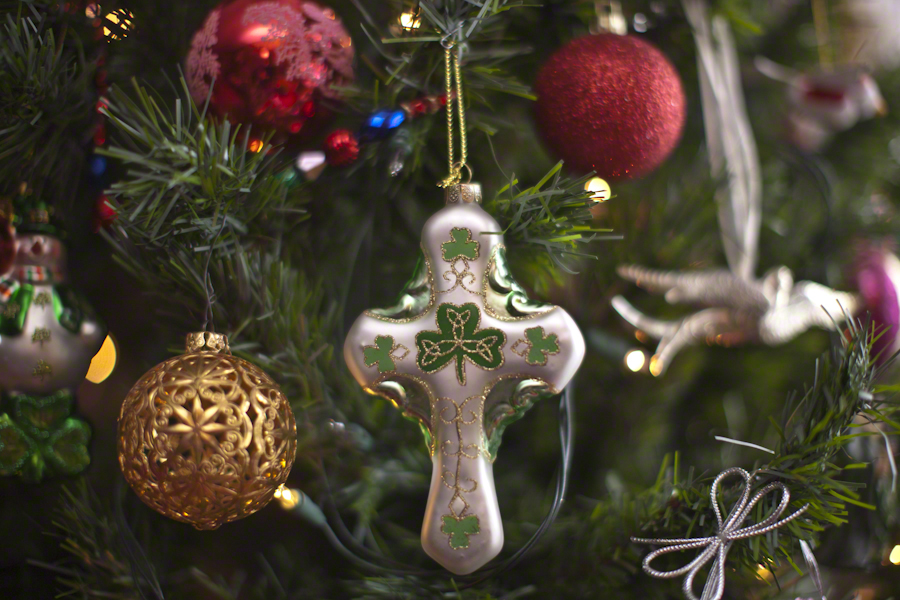
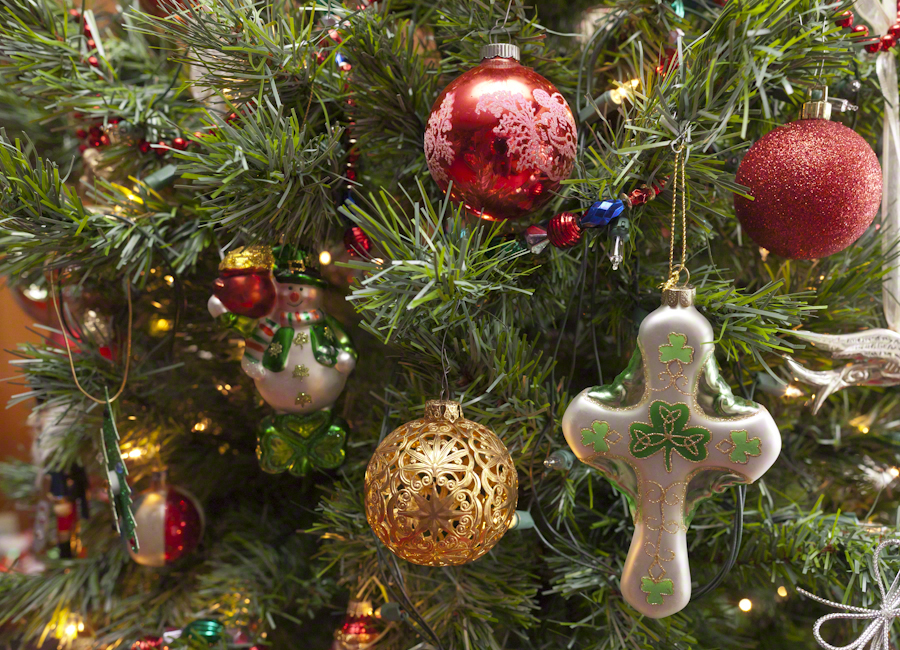
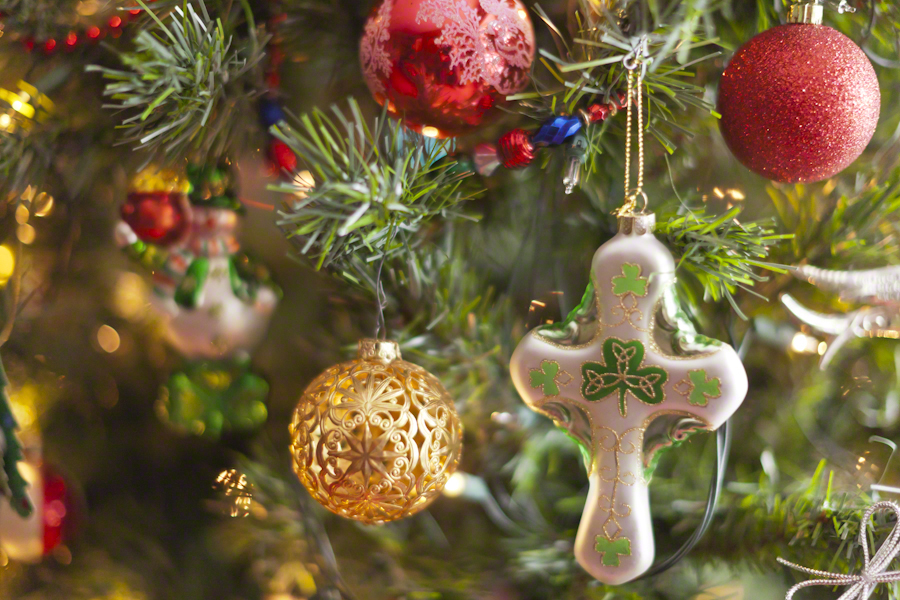
Here the “celtic” cross is converted to an Irish theme through a substitution of a shamrock with golden decoration inspired by pagan neolithic petroglyphs for the nimbus (circle) intersecting the central intersection of arms and stem.
For the first three I played with aperture, taking advantage of the stability of a tripod. The final two of the set are handheld.
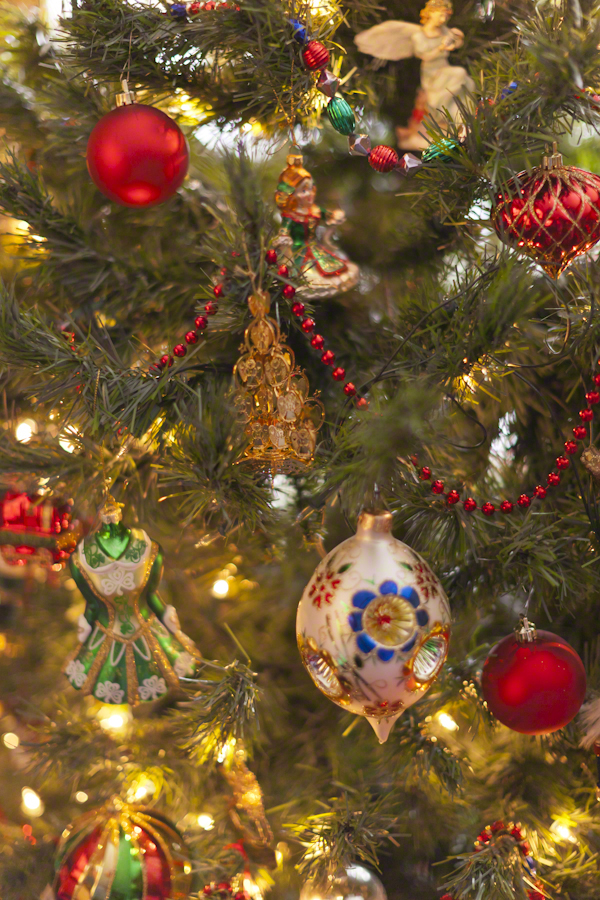
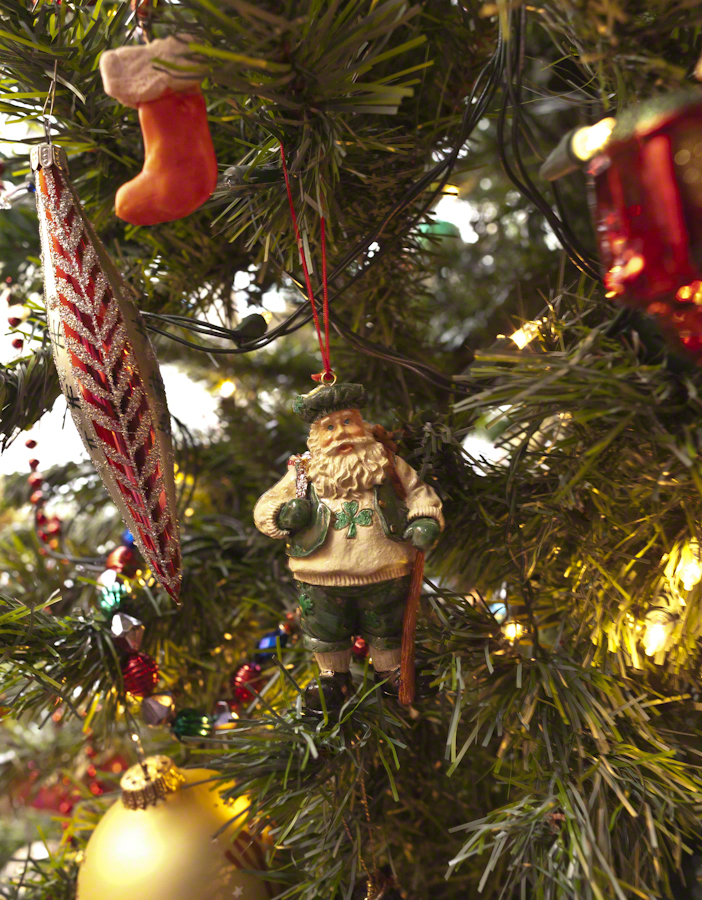
Note the fanciful leprechaun snowman with pot o’ gold, on the left.
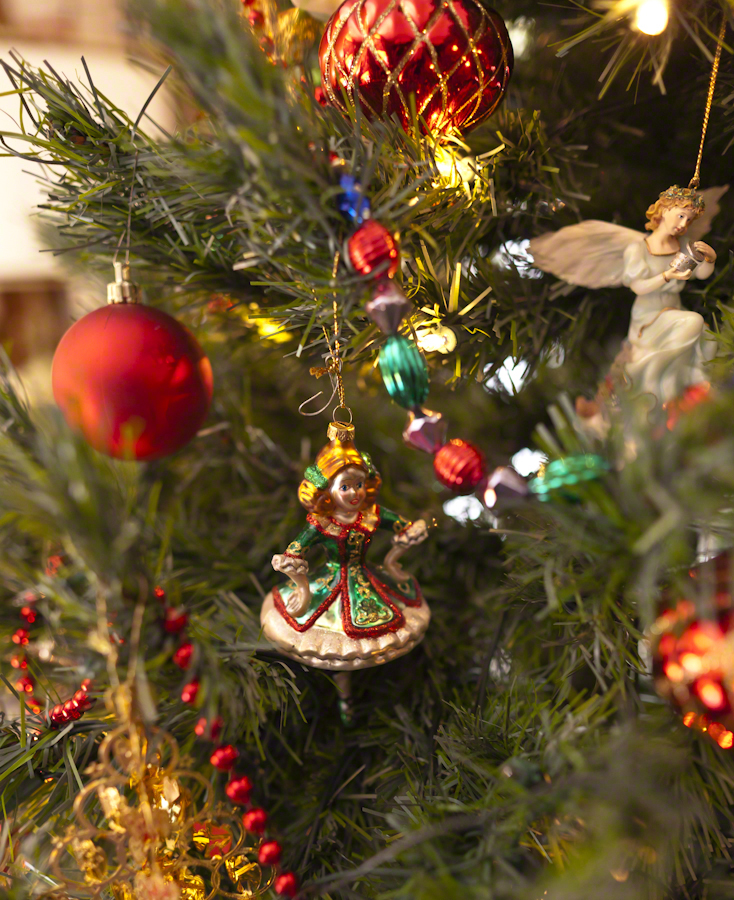
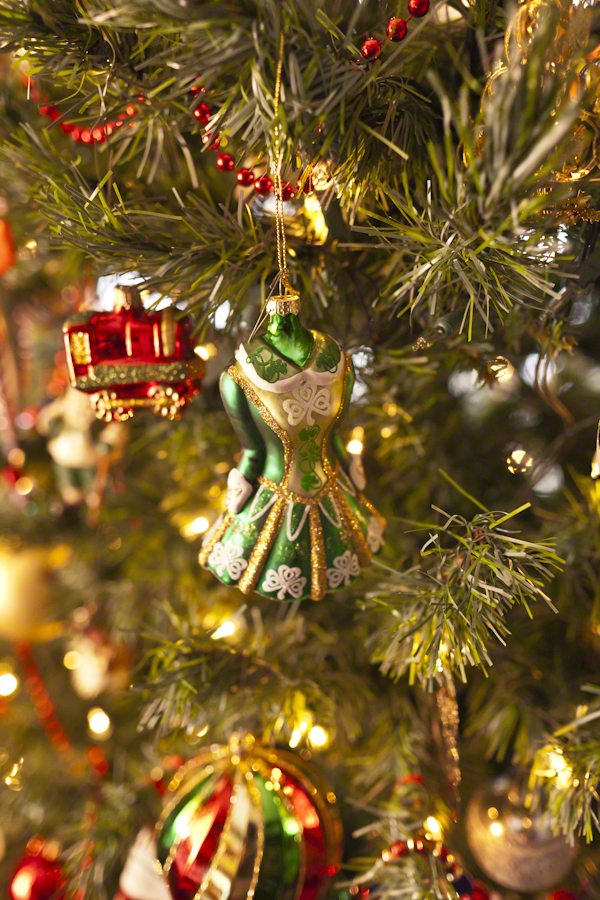
Blown glass Irish dancers.
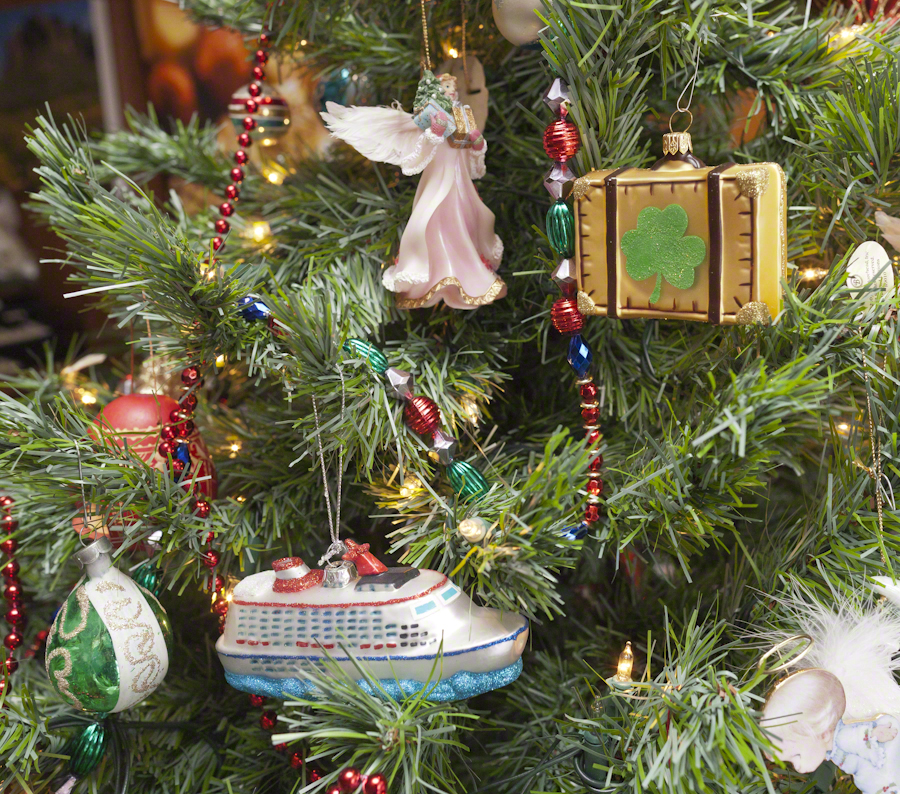
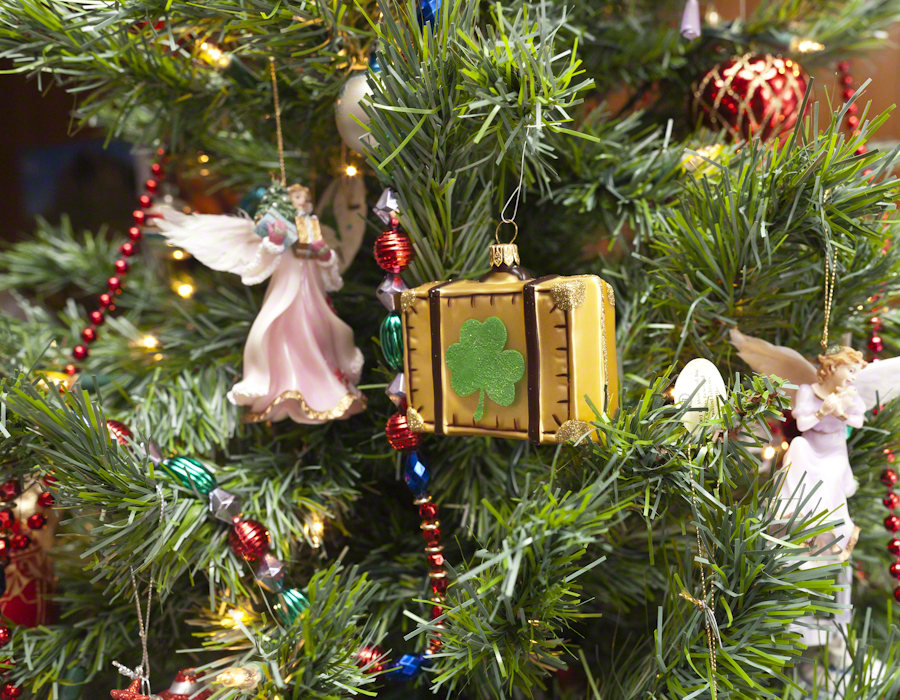
“Travel memories”
the suitcase for our 2014 tour of the island and re-connection with family. Also a symbol of our ancestors travel across the Atlantic ocean to North America.
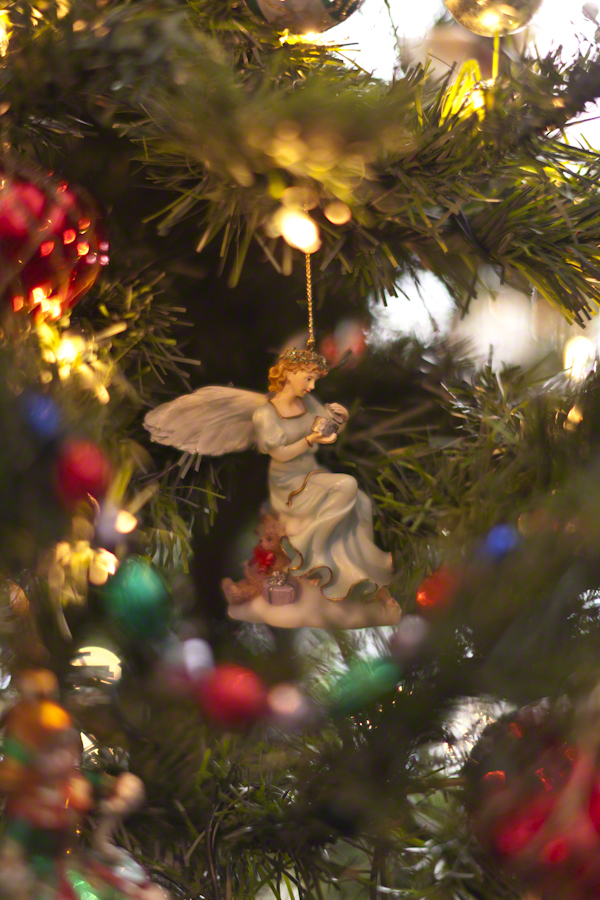
The angels of our Christmas tree and home remind us of the Jesus birth stories of scripture and the force of love in our own lives.
What comes to mind with the sudden appearance of Gabriel to Mary and that astounding message? Unlike the attempt of Jonah to avoid his calling, the subtext to Mary’s ready acceptance is the risks faced by an affianced woman who becomes pregnant. The book of Deuteronomy (Chapter 22 verses 13 – 21) calls for stoning a woman who presents herself for marriage as a virgin, when she is not.
When learning of Mary’s pregnancy, Joseph’s reaction, as a follower of Mosaic Law, was to divorce her quietly to avoid exposing her to shame. It was a visit from an angel, in a dream, that convinced Joseph to accept Mary (Matthew Chapter 2, verses 18 – 24).
An angel visited shepherds, announcing “today in the city of David a savior has been born for you who is the Messiah and Lord.” Suddenly there was a multitude of the heavenly host with the angel, praising God.” Luke Chapter 2, verses 8 – 13.
Was it an angel who warned the Magi, in a dream, not to return to King Herod with news of Jesus (Matthew Chapter 2 Verse 12)? Scriptures clearly state (Matthew Chapter 2 verse 13) “the angle of the Lord appeared to Joseph in a dream and said, ‘Rise, take the child and his mother, flee to Egypt.”
People can be angelic in expressing love for others through action. I am thinking of a movie Pam and I viewed last evening, “The Theory of Everything.” Jane Wilde, in her love for Stephen Hawking, stays with him when, shortly after their romance began, he was diagnosed with ALS. The prognosis was death in two years. In all likelihood, Jane gave Stephen his life and work through loving him. He is alive and working today at 75.
The love of our parents is more common, no less precious.
A note on the photographs, I used a Canon EOS-1Ds Mark III dslr with Canon lens EF 50 mm f/1.2L, Canon Speedlite 600Ex-Rt, Manfrotto studio tripod and hydrostatic ball head. Some of the photographs were hand held. When the flash was used, it supplemented ambient light from a large north facing bay window.
Copyright 2020 Michael Stephen Wills All Rights Reserved
My dear wife Pam is the heart of Christmas in our home. Over the years we have collected a treasure of ornaments and knick-knacks she crafts into displays around our one. Pam completed the project well in advance of our grandchild holiday visits, before card writing and gift wrapping.
My contribution is a photographic time capsule. Here is some of my artistic output from this work.
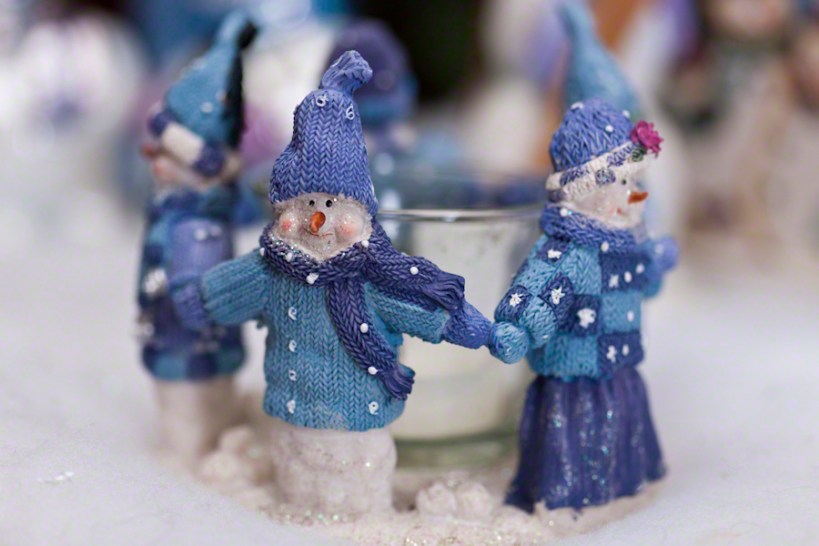
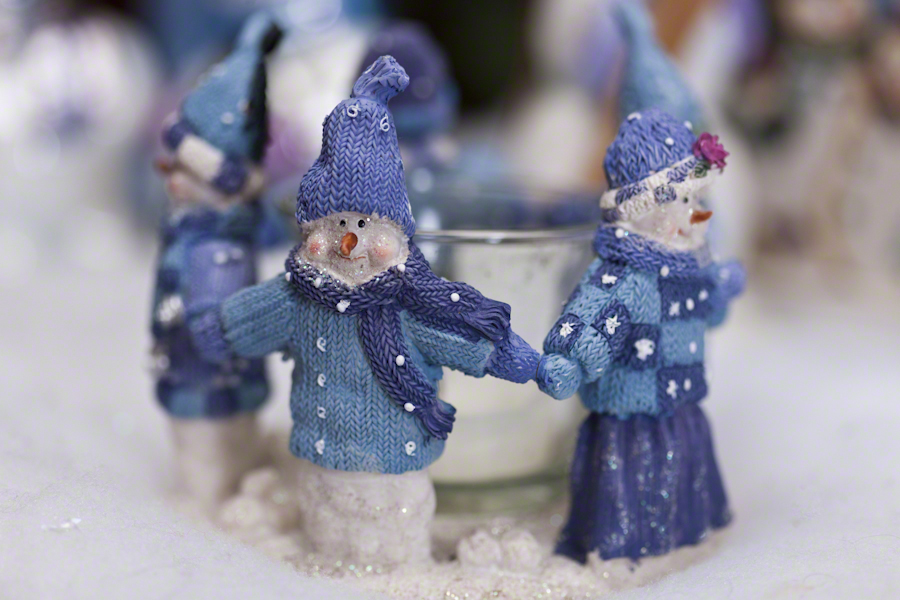
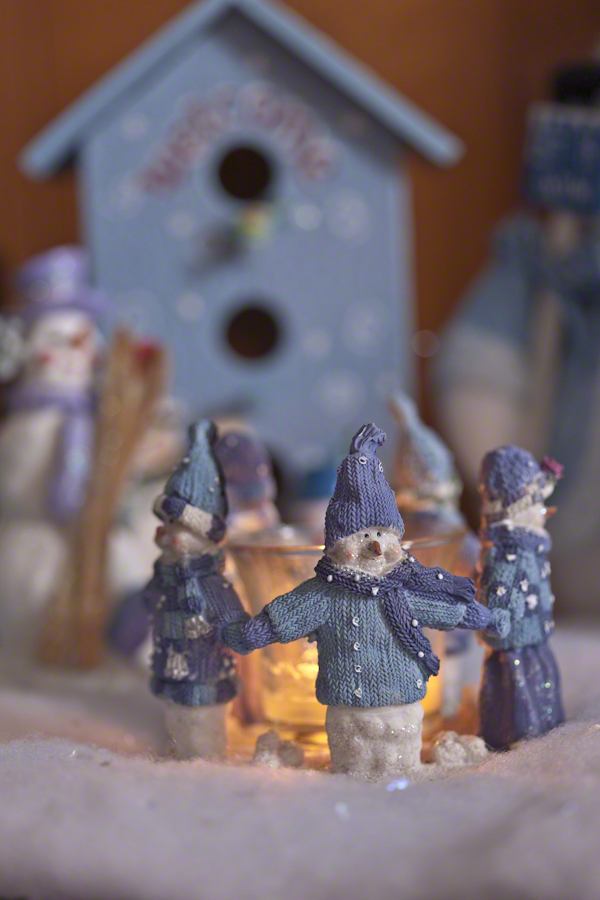
This grouping of five cozy snowmen (three males, two females) are warmly dressed in knit sweaters and stocking caps; the women with long skirts. The five hold hands in a ring, rising from a common platform. We place a cup and devotional candle in the center.
The tiny group evokes community, harmony, amity. I captured them with a Canon EOS 1Ds Mark III dslr, a fixed Canon EF 100mm f/2.8L macro lens mounted on a Manfrotto studio tripod and hydrostatic ball head. Fixed lenses provide the sharpest macros. The mounting allowed precise framing and use of the widest aperture and a low ISO. The light sources were sunlight from a large north facing bay window, a Canon Speedlite 600Ex-Rt and the candle. When used, the flash was angled in various ways toward the ceiling.
I start with a tight shot, maximum aperture. A single figure is in clear focus, the remaining gradually lost in the bokeh. The flash was used. I can almost see then circling around the candle in a winter wind.
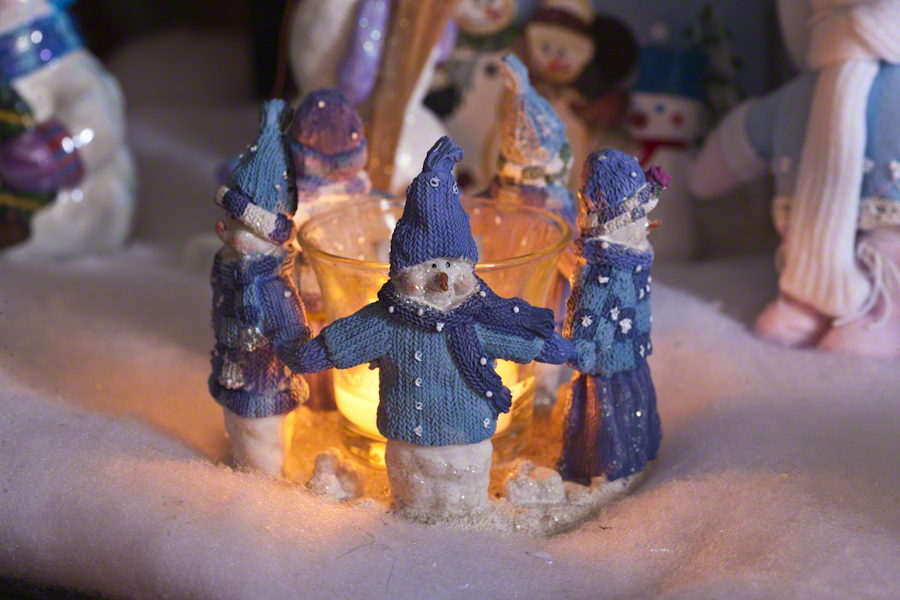
Here the candle is lighted, aperture narrow to f8 using only the candle and ambient light (no flash). The group is visible within surrounding figures. I backed away and the viewpoint is higher.
The candle light enhances the perception of community.
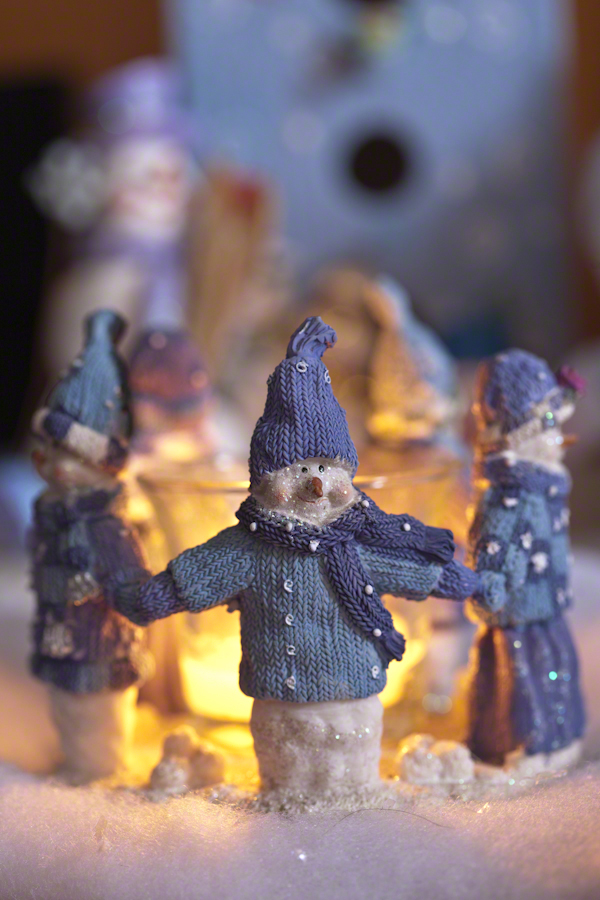
Viewpoint is closer, still only the candle and ambient light. Aperture widened to 3.5. I must remove the hair in lightroom.
I backed off, aperture at the max with only the candle and ambient light. The figures are placed in a tableau with other snowmen and a structure, a birdhouse.
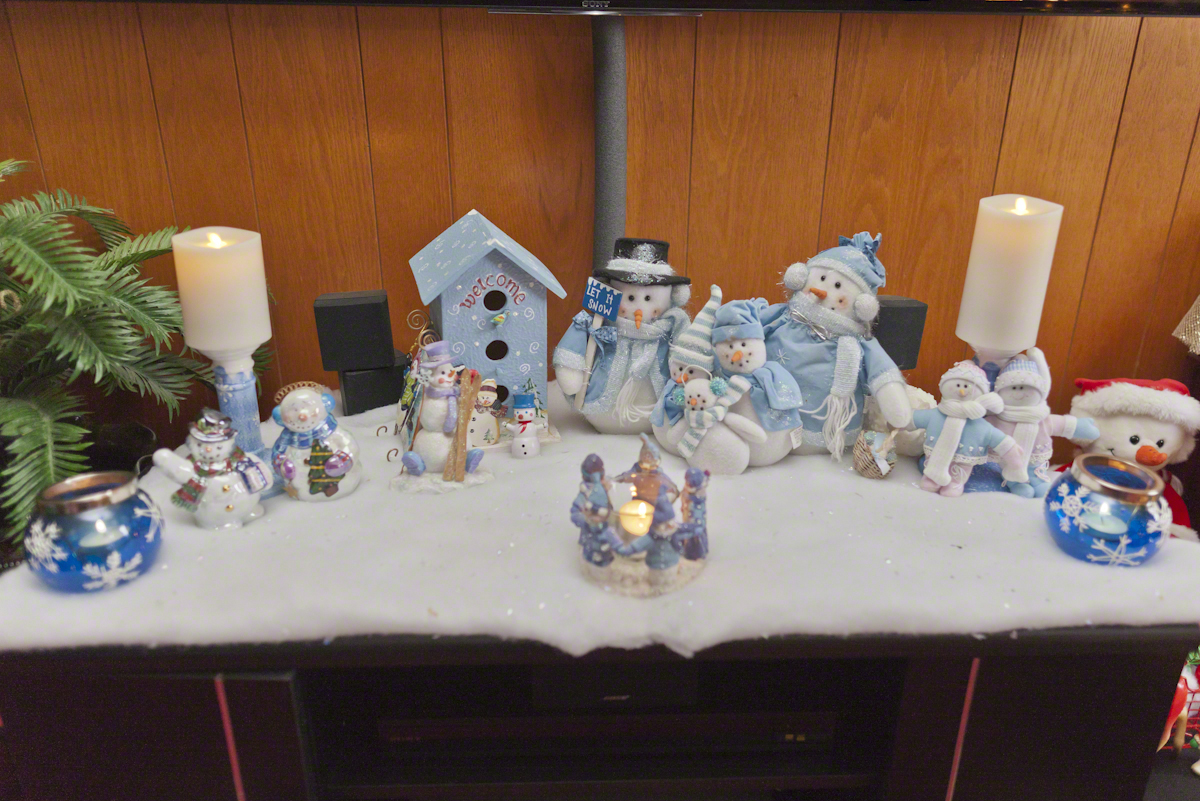
For this overview I swapped in a Canon 24mm f/1.4L II USM with a flash, aperture f2.2.
Christmas 2017 snowman display laid out in our den on top of the entertainment cabinet.
Copyright 2020 Michael Stephen Wills All Rights Reserved
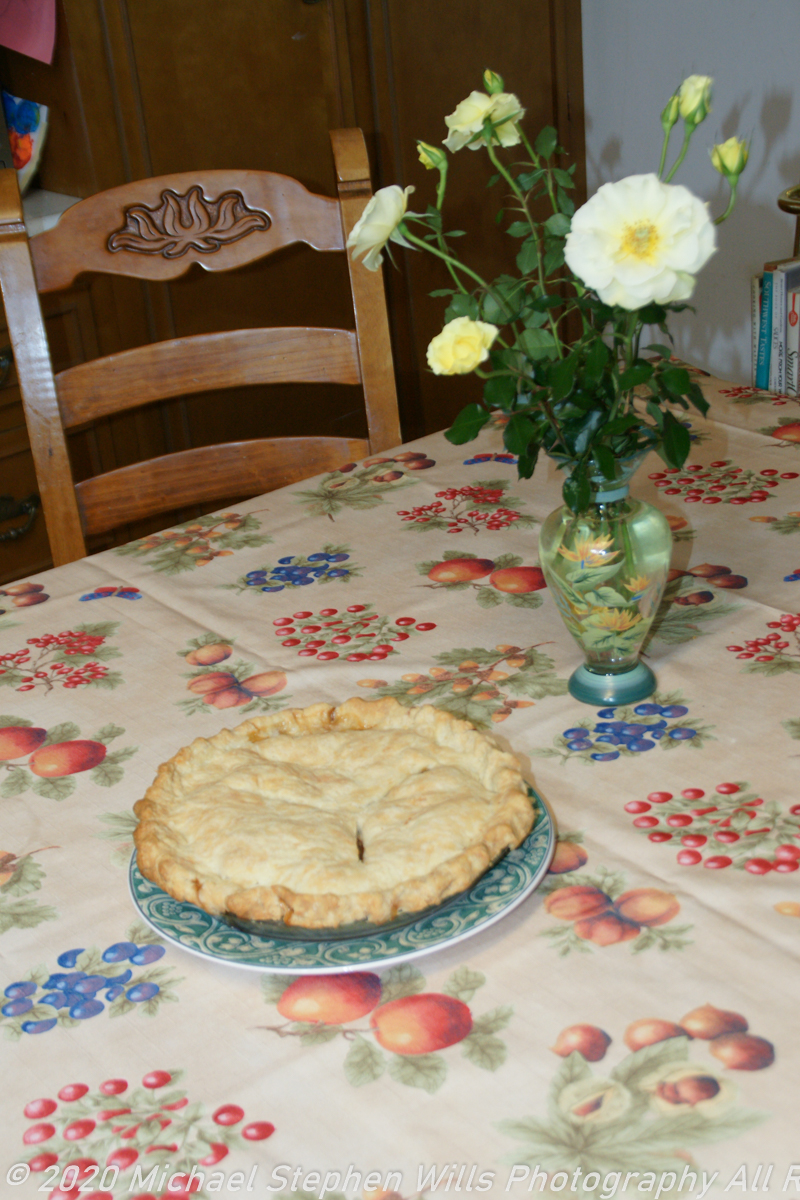
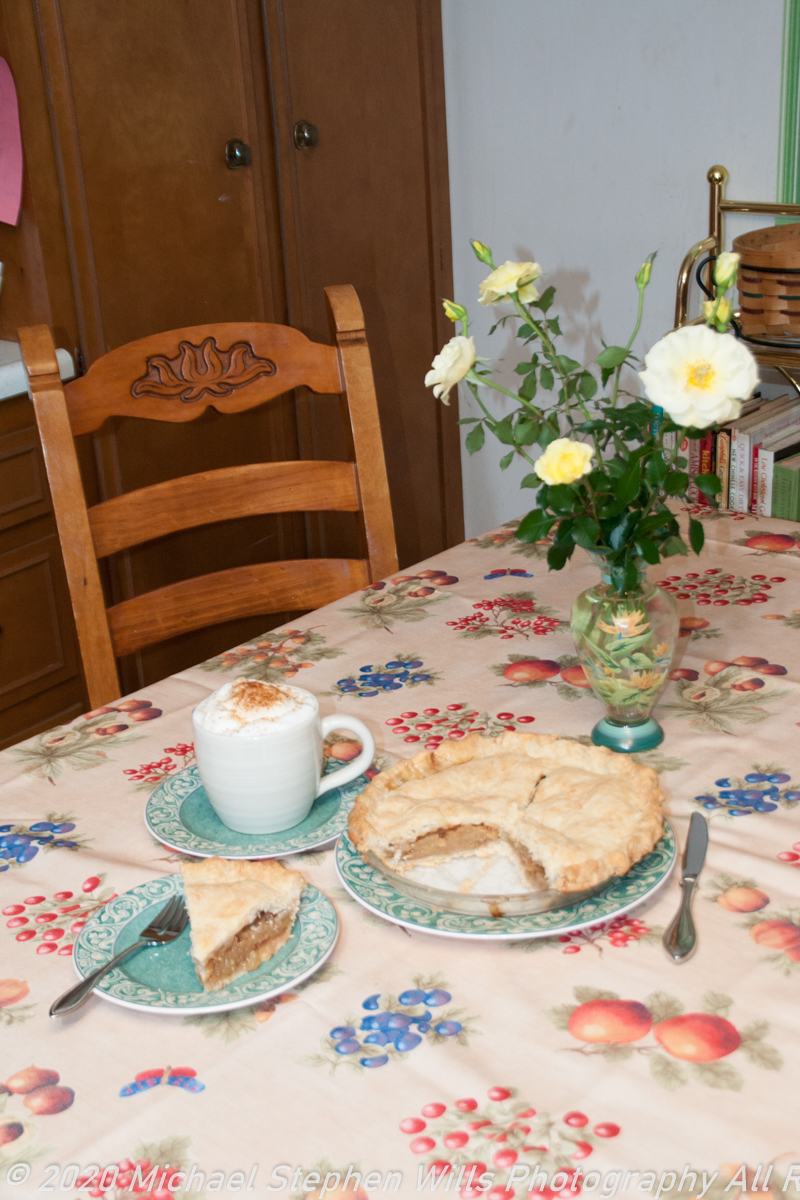
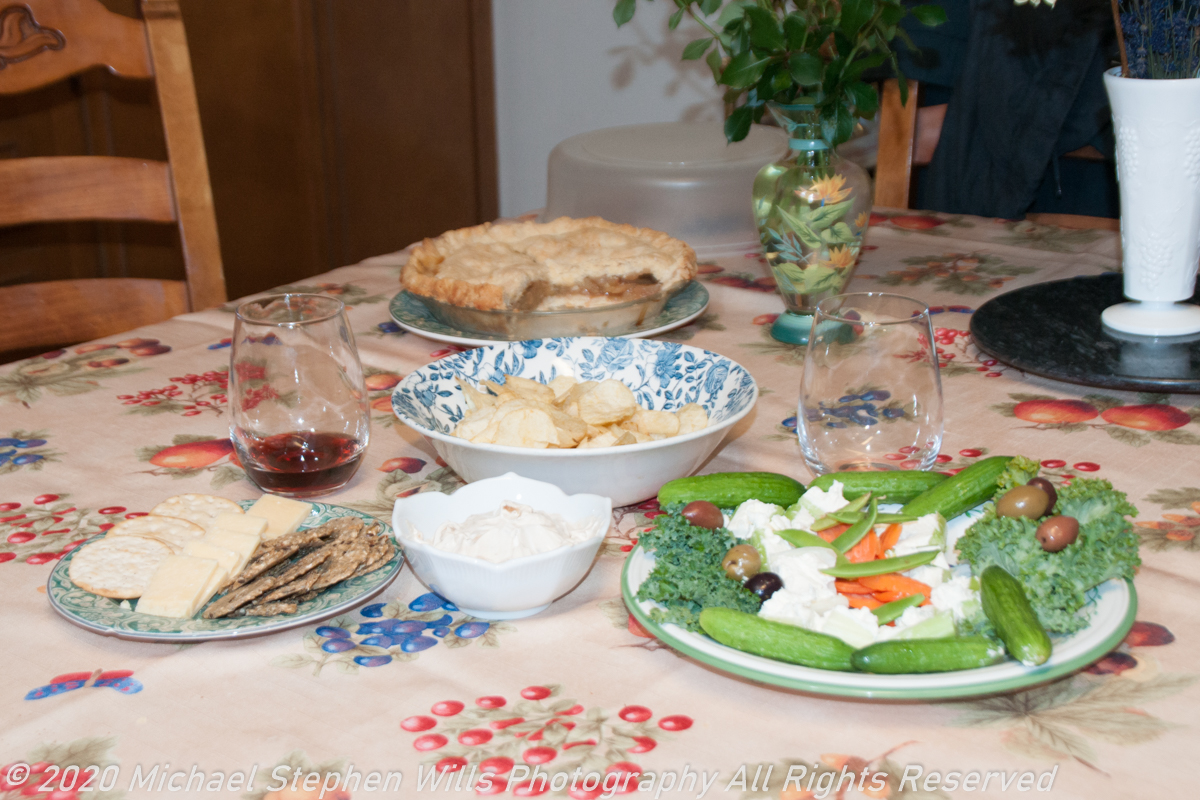
Breakfast: Homemade Apple Pie (Grannie Smith Apples), Coffee with foamed milk and cinnamon Lunch: Relish plate, sour cream onion dip, potato chips (avocado oil), Irish cheddar cheese and crackers, Dr. Frank Pino Noir The roses are the last blooms from our garden.
Copyright 2020 Michael Stephen Wills All Rights Reserved
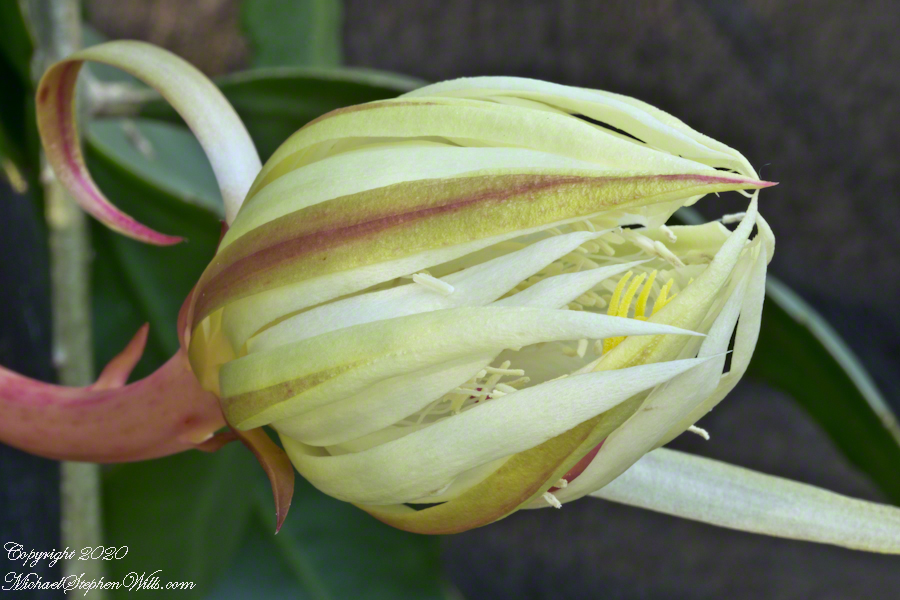
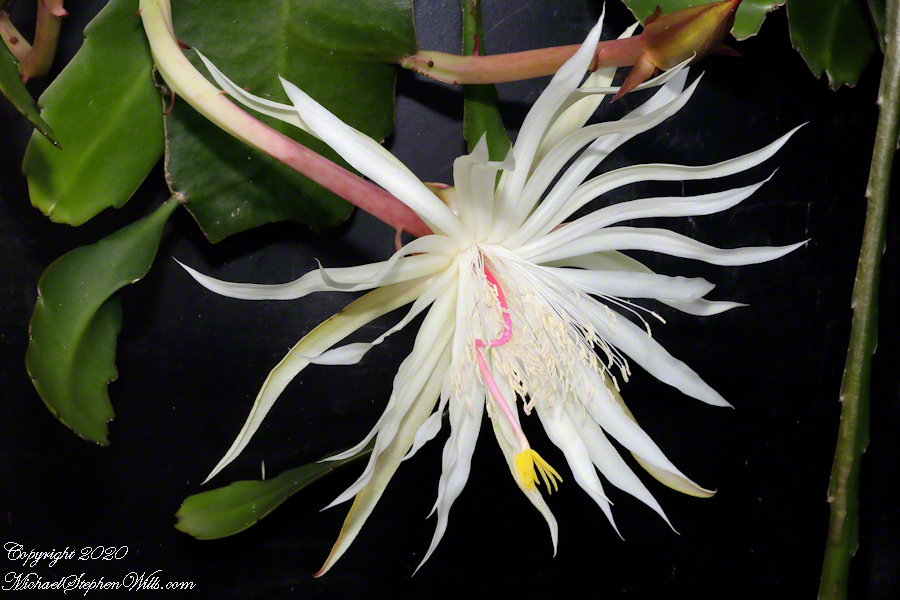
For the final post of this series on Cereus blooms, of the four buds two failed to fully open after the weather turned cold in late September/Early October. Here is the failed bloom from the same opening bud featured in the last Cereus posting.
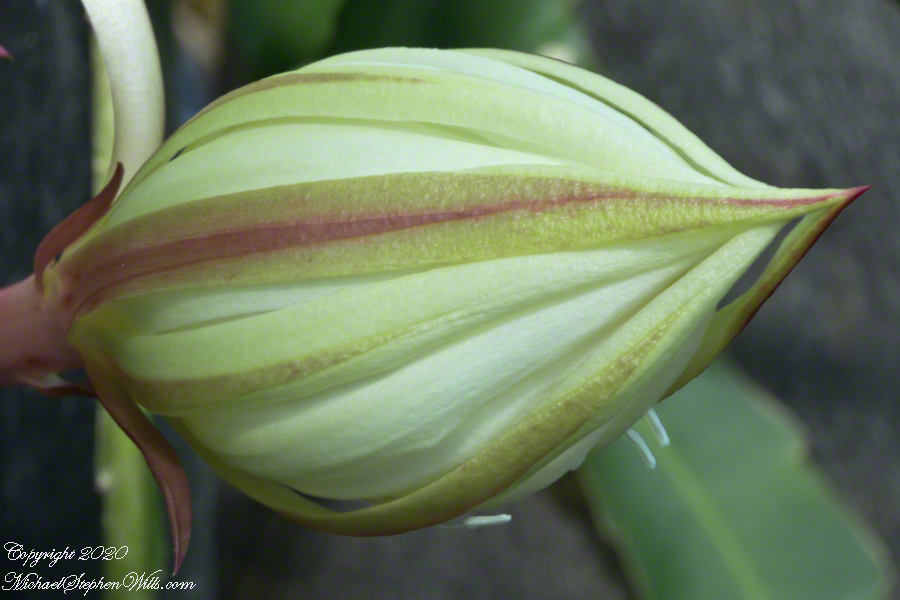
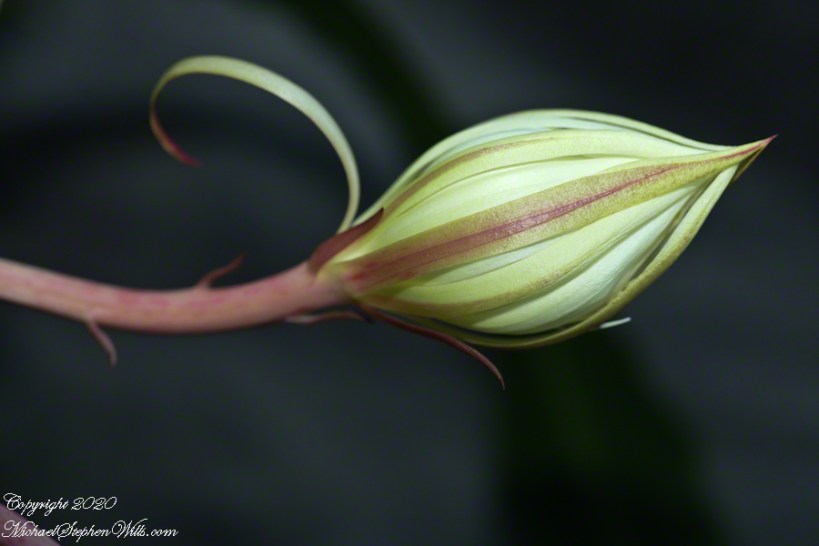
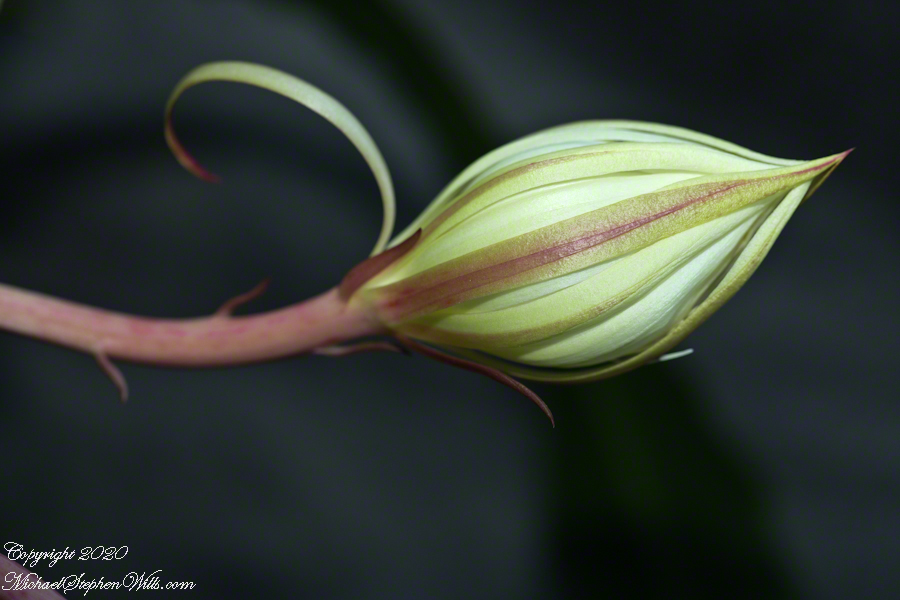
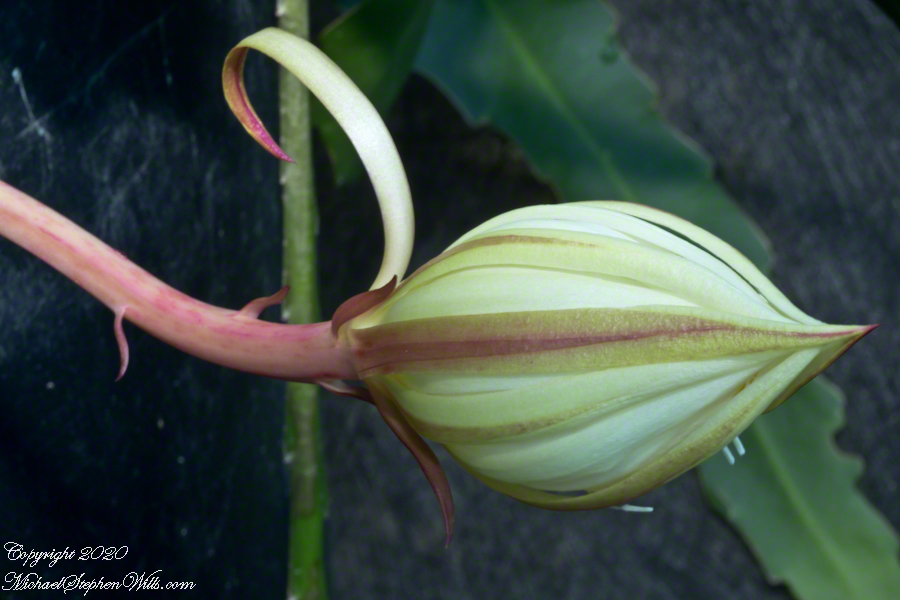
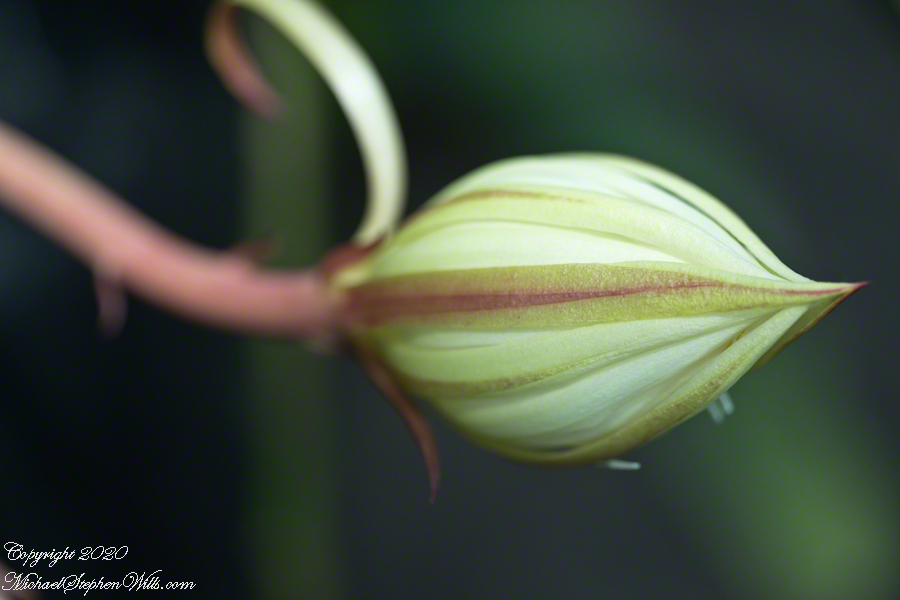
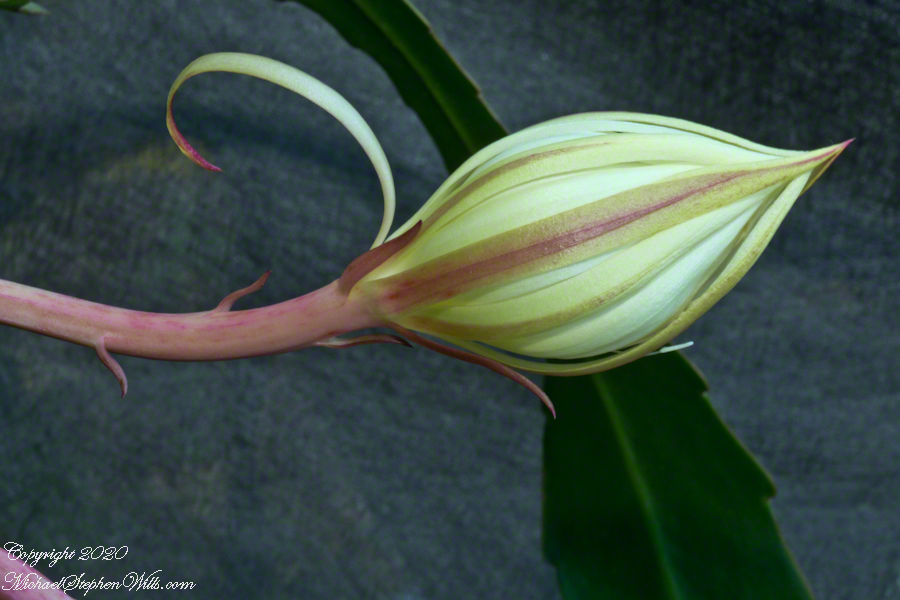
Almost bursting open, the third of four flower buds of our Night Blooming Cereus caught one October evening just before opening. The black background is repurposed anit-weed ground cover material.
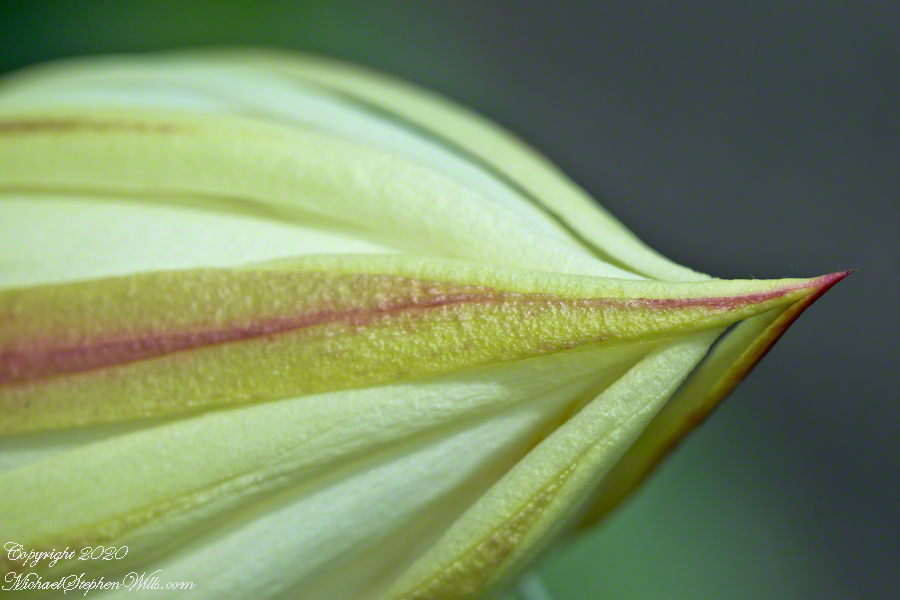
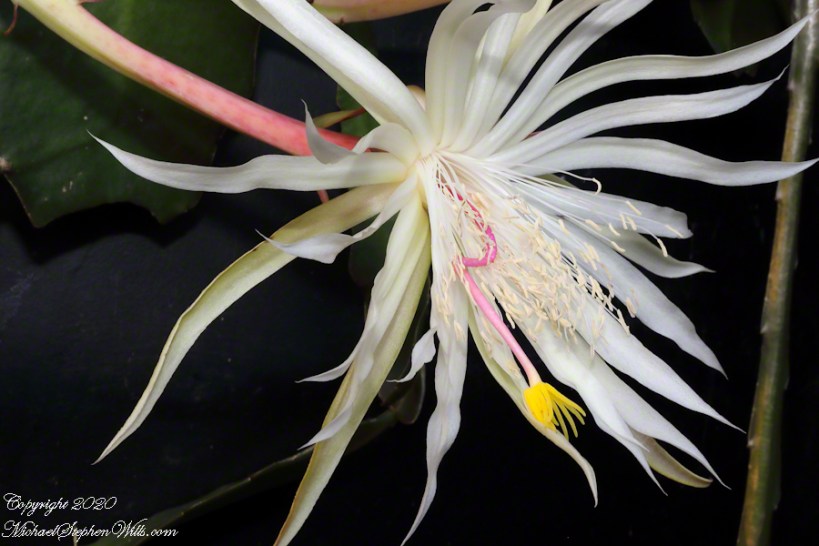
Here is a series of flash photographs at varying apertures and angles. The white rods are emerging anthers, the pollen-containing tips of long stamens seen in my previous postings of the open flowers.
Bloom #2 of this season. Two more in the wings. I broke out the flash and the Canon 100 mm “macro” lens for this series taken an hour after sunrise before this one-night-only bloom wilted.
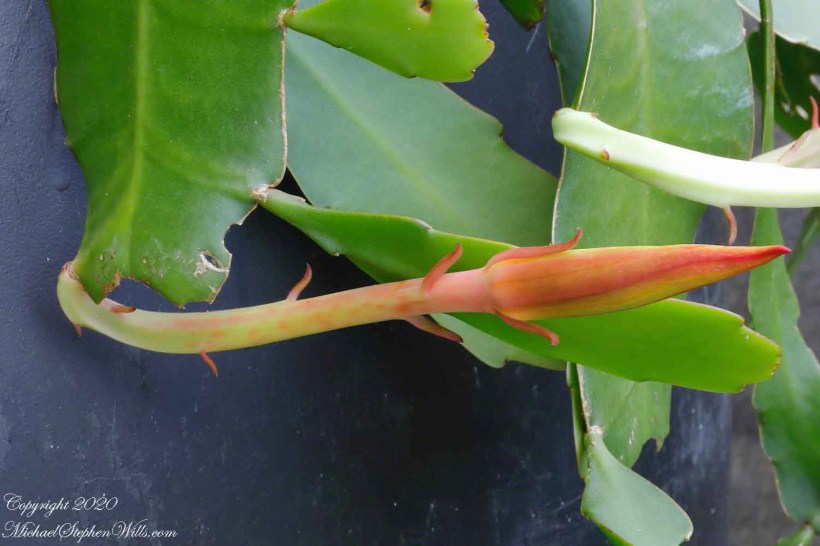
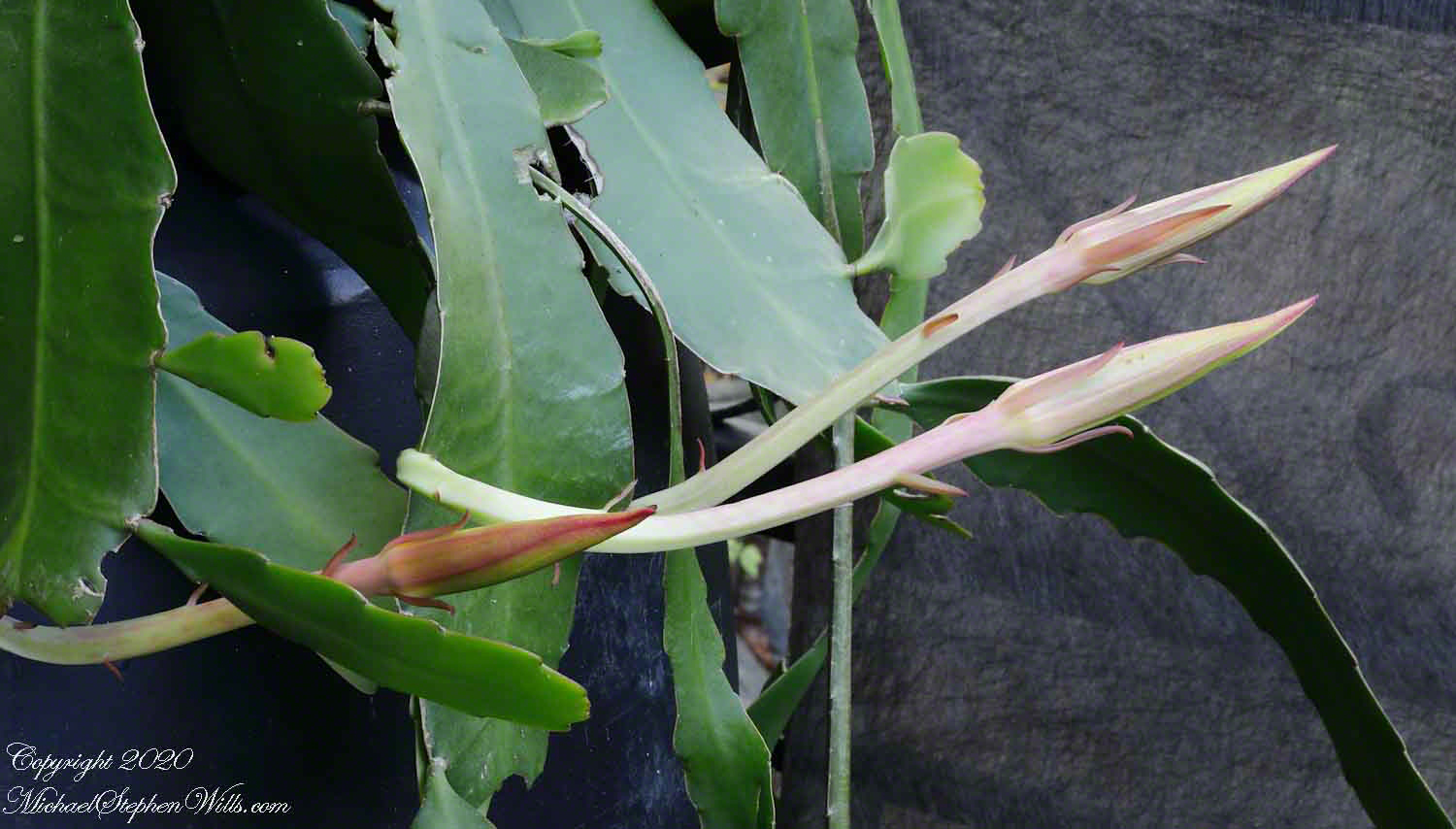
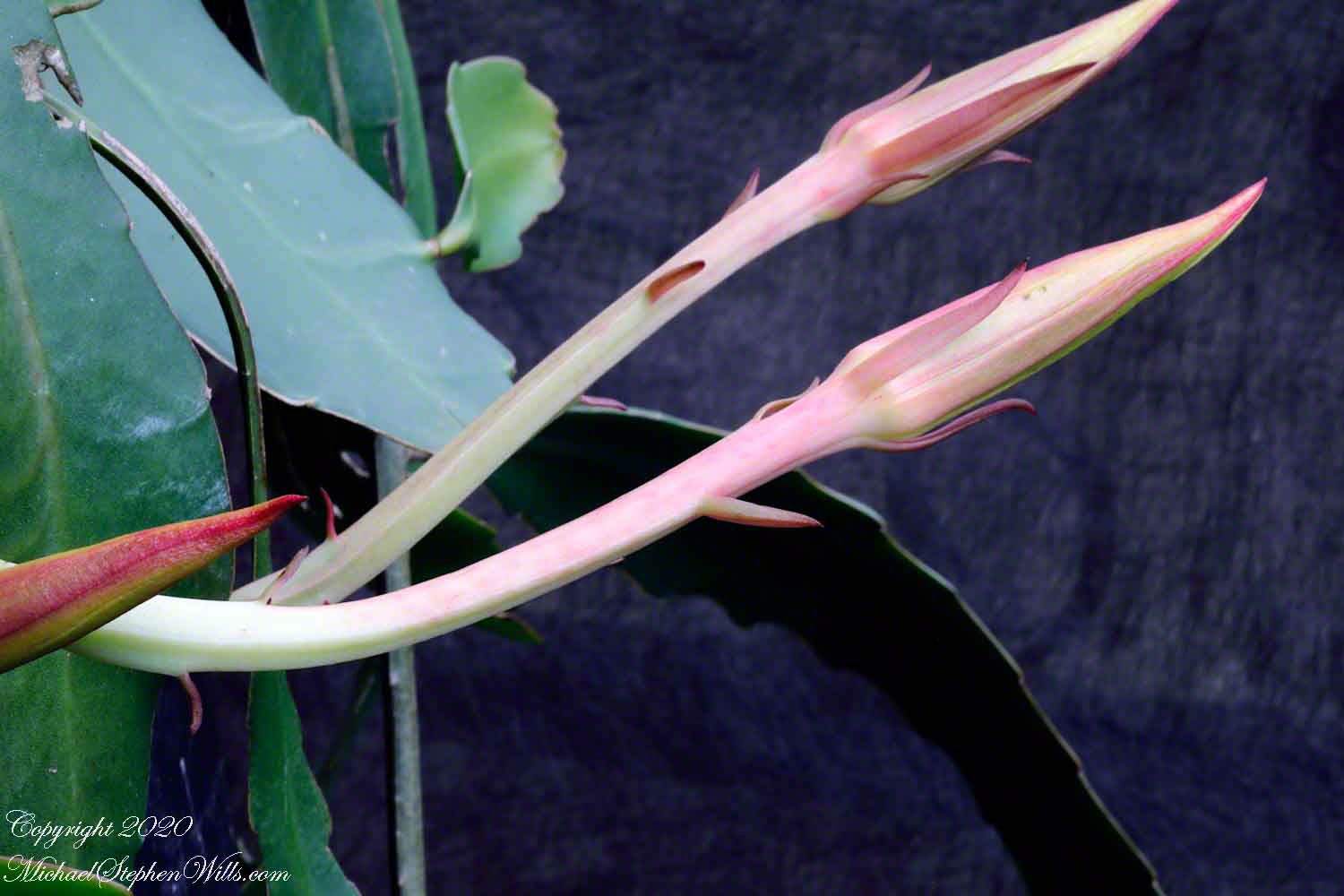
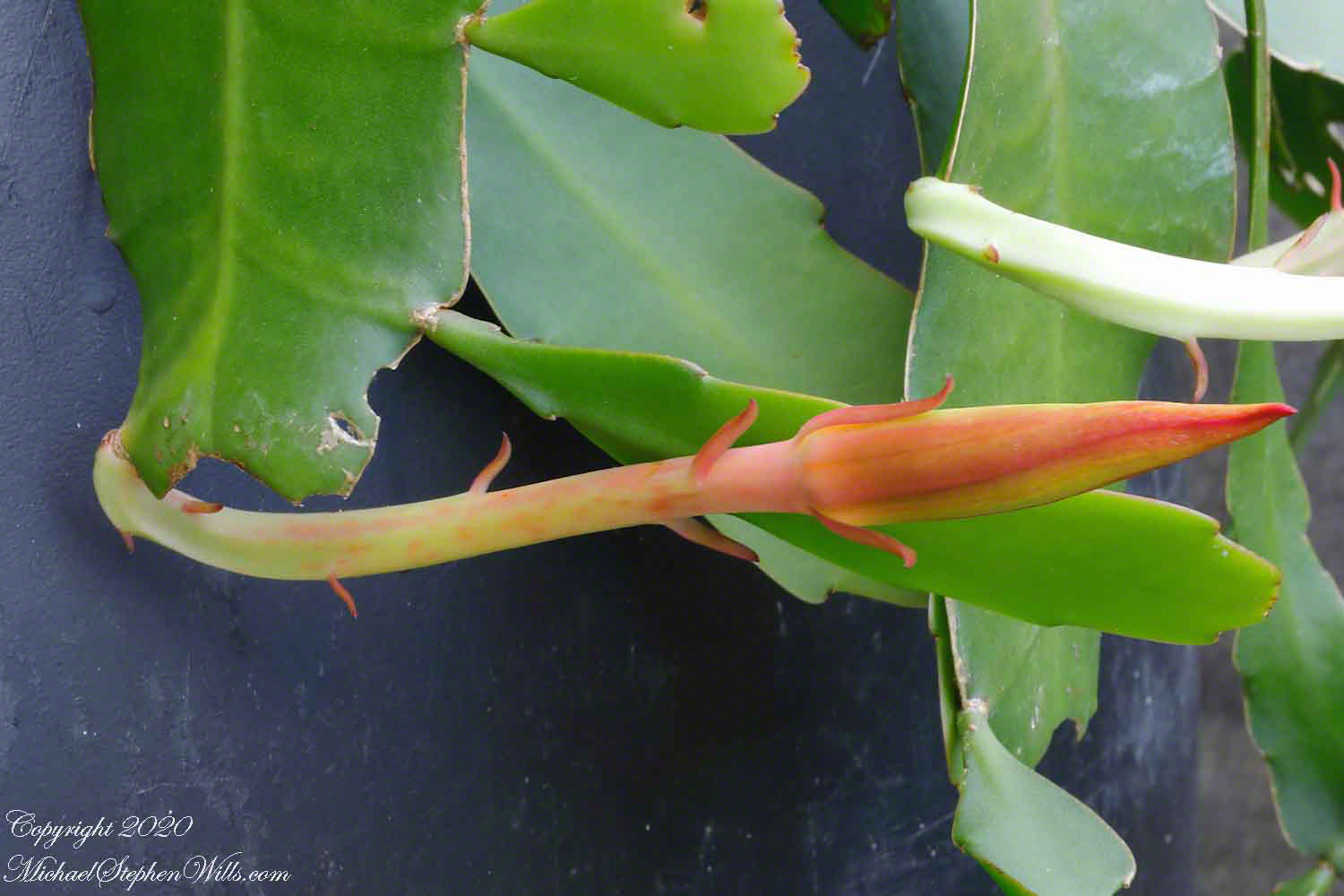
In an earlier posts the popular name of this plant, “Night Blooming Cereus” was introduced as incorrect, still there must be some truth in the name, I believe it is found in the developing flower stalk and bud.
“Cereus” is from the Greek word for candle. Don’t these developing flower stalks, resemble a candle and the bud a flame?
Click image for a larger version.
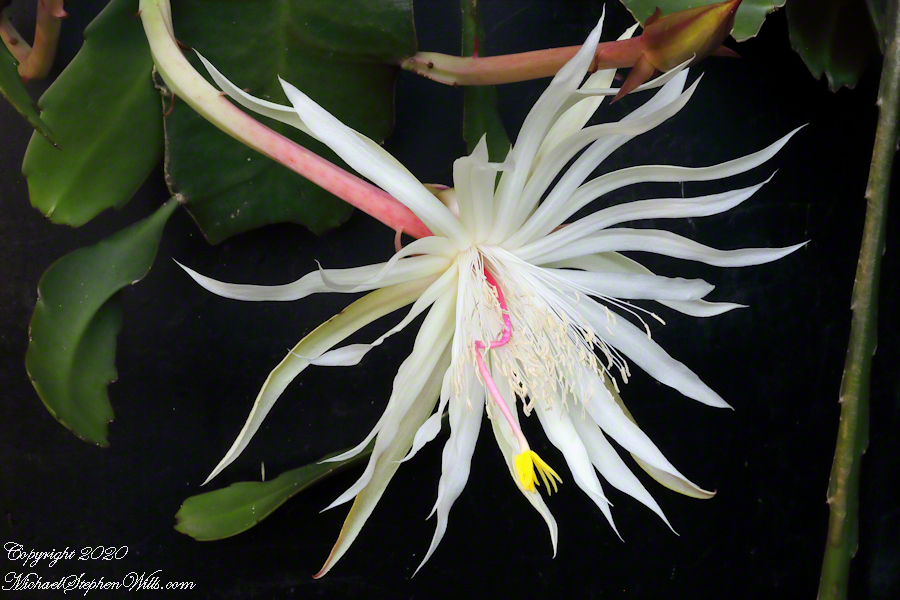
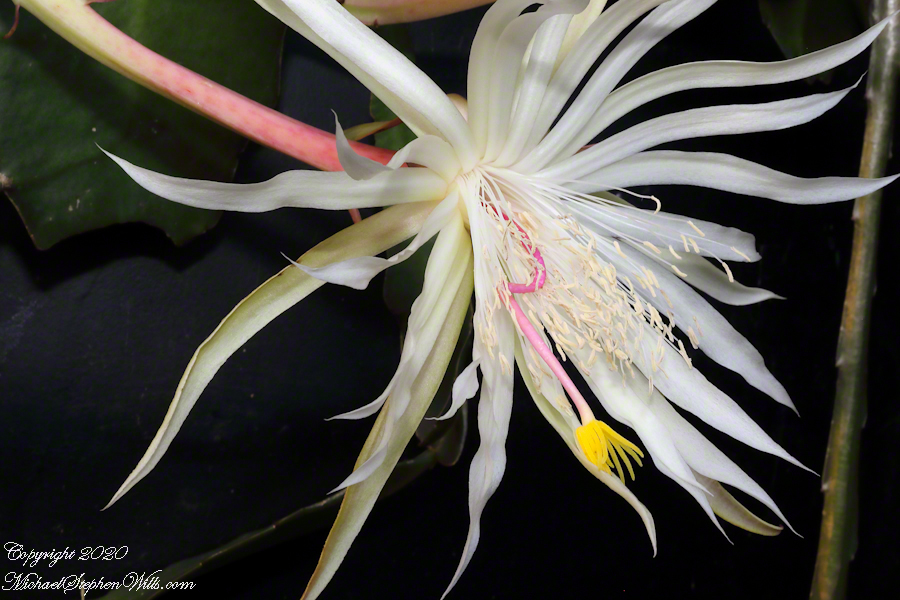
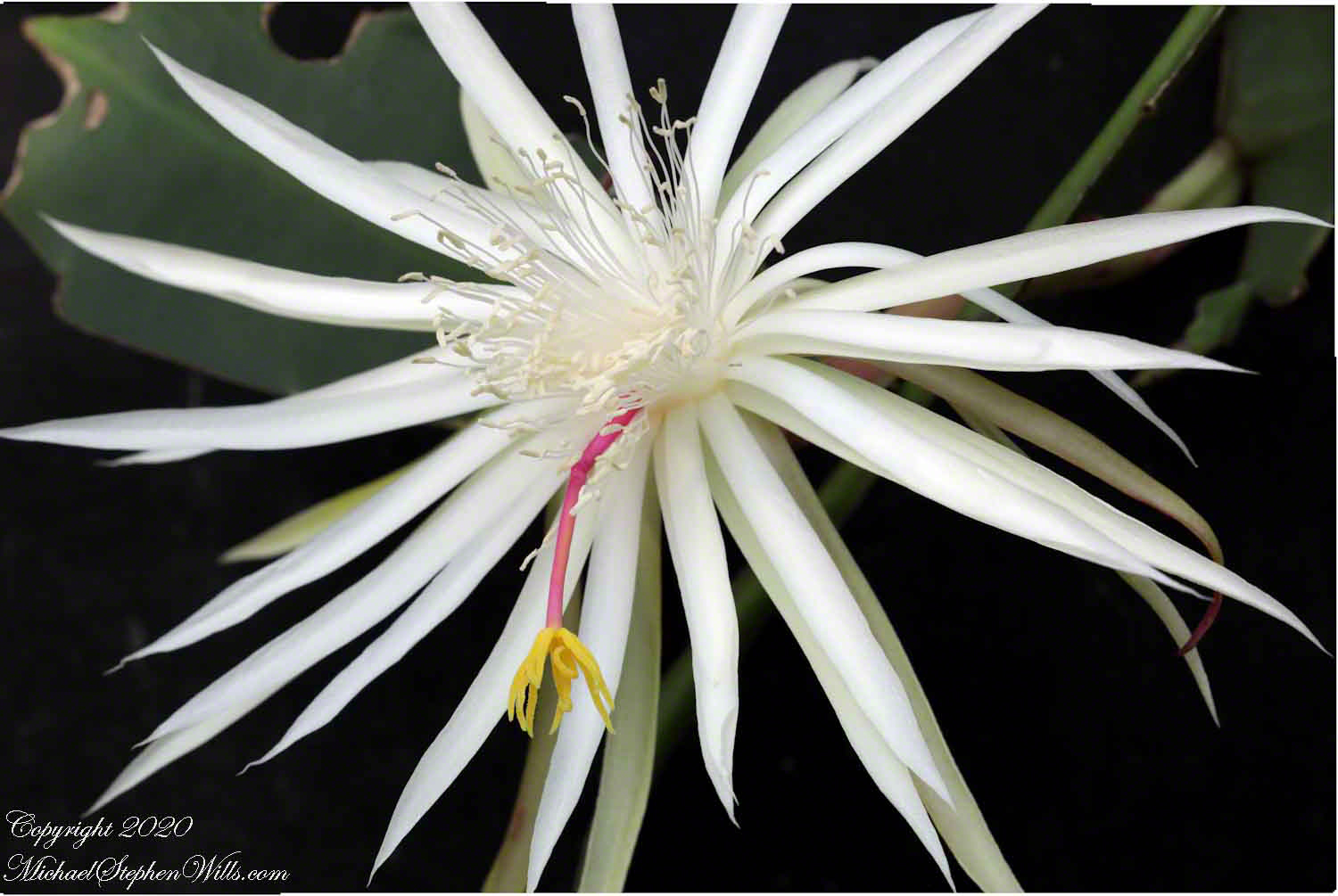
Here’s the flower from an earlier bloom this season.








 Michael Stephen Wills Photography