Red Berries

Jack-In-The-Pulpit one June Day

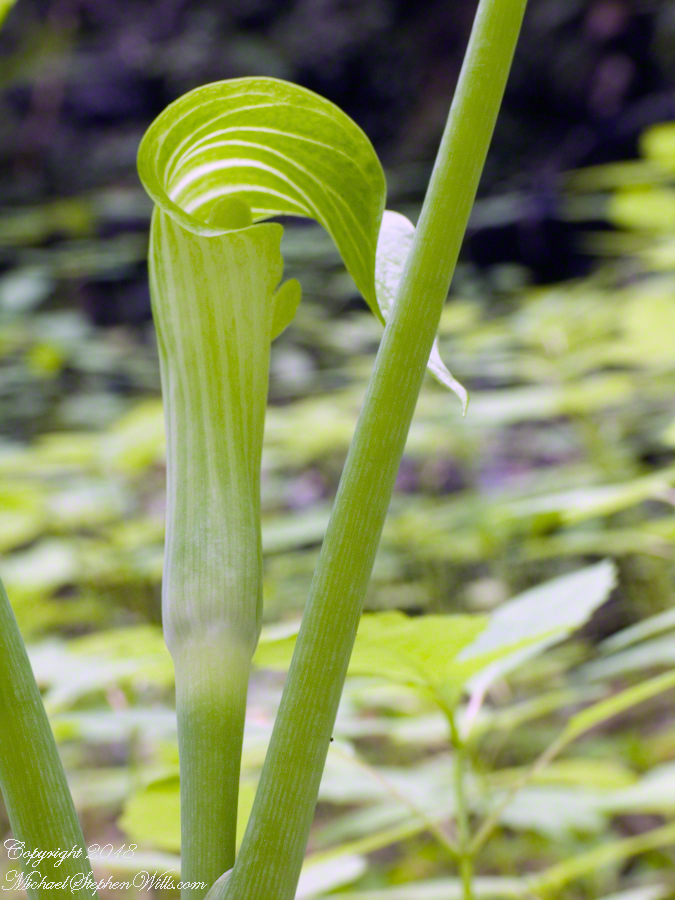
The many names for this plant are reflective of how wide spread it is. Called Arisaema triphyllum (scientific name), jack-in-the-pulpit, bog onion, brown dragon, Indian turnip, American wake robin, or wild turnip this secretive plant flourishes in moist soils across eastern North America, everywhere north to south. I say “secretive” because the varieties I am familiar with hide the flower under the leaves, three of them growing from a stalk.

Click this link to view my Online Gallery.

Lovers Lane Observation Platform– CLICK ME!!!!

Those of you who know Georgia O’Keefe may be familiar with the form and coloring of Jack-in-the-pulpit from the series of six oil canvasses from 1930, her time in the east living near a spring. There is a spathe, the pulpit, strongly colored in dramatic vertical, flowing stripes, wrapped around a spandix, the “jack”, being a stem covered with male and female flowers.

Around the time my photography habit started in 2002 I was surprised by the jacks growing from the walls of Fillmore Glen, spying the distinctive forms flowing a bit above eye level under the three large leaves. Seeing them was like recognizing a friend in Halloween disguise, the exotic O’Keefe shapes in a known place.

From this gift, an awareness of the possibility lead me to recognize “jacks” in many other places. I have yet to exhaust the possibilities.

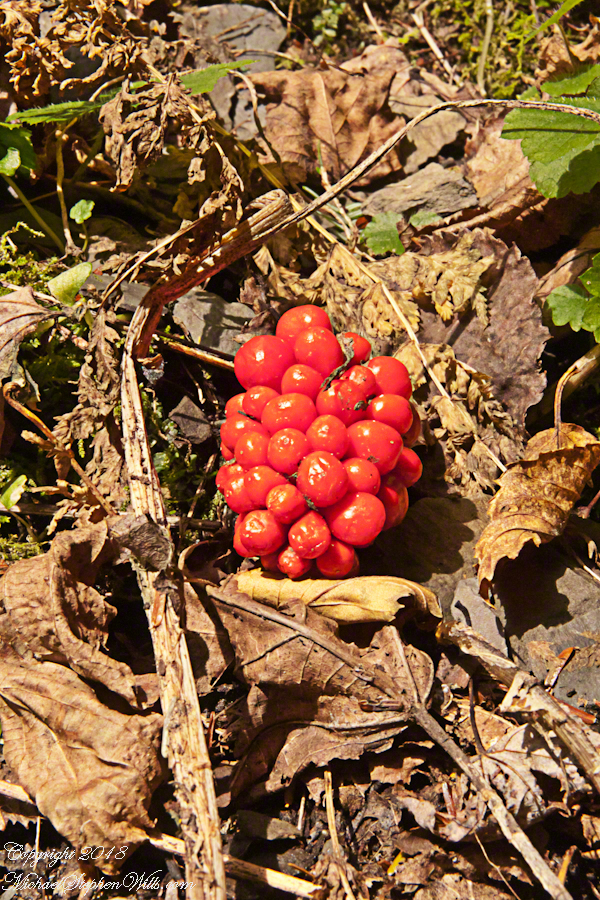
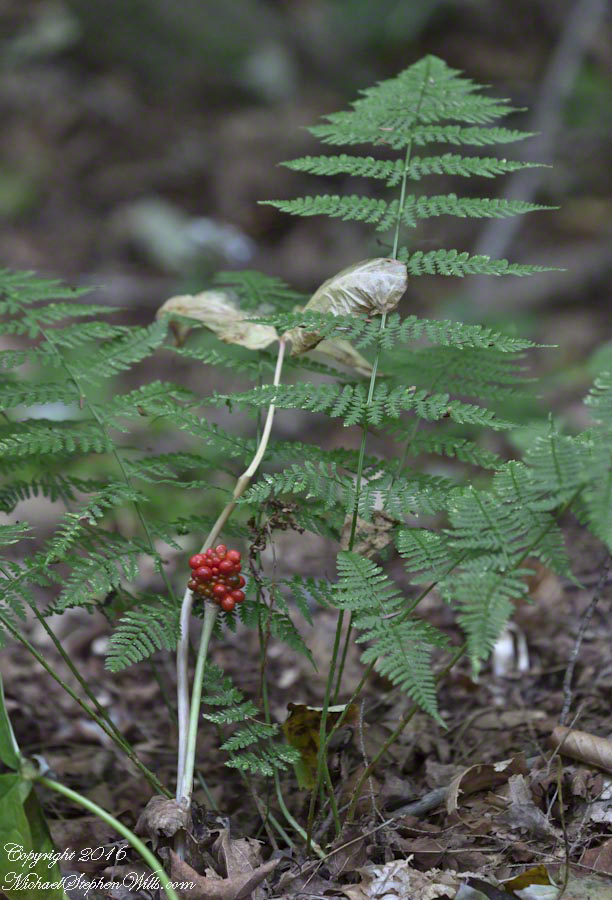
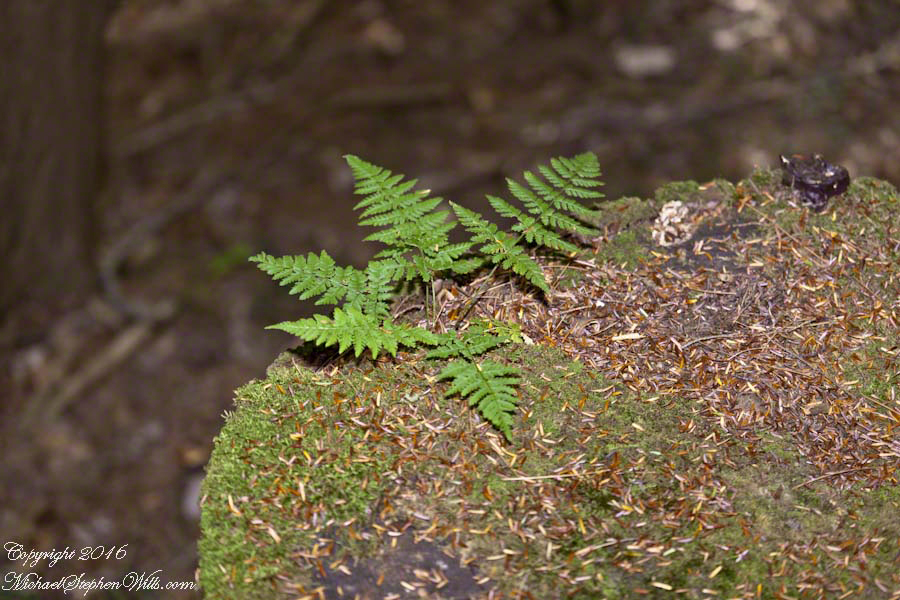
2015 I acquired a Canon EF 70-300mm f/4-5.6 L IS USM lens for our cruise around South American. It proved very useful for an unending combination of situations. Here, it allowed me to frame this specimen, the former covering of three leaves now sere brown and collapsed, the berries revealed in startling clarity among evergreen ferns, Christmas red and green. The strangely named Dry Creek, the driving force of Fillmore Glen, flowing below this humus layered shelf moist with a constant flow from the gorge walls.

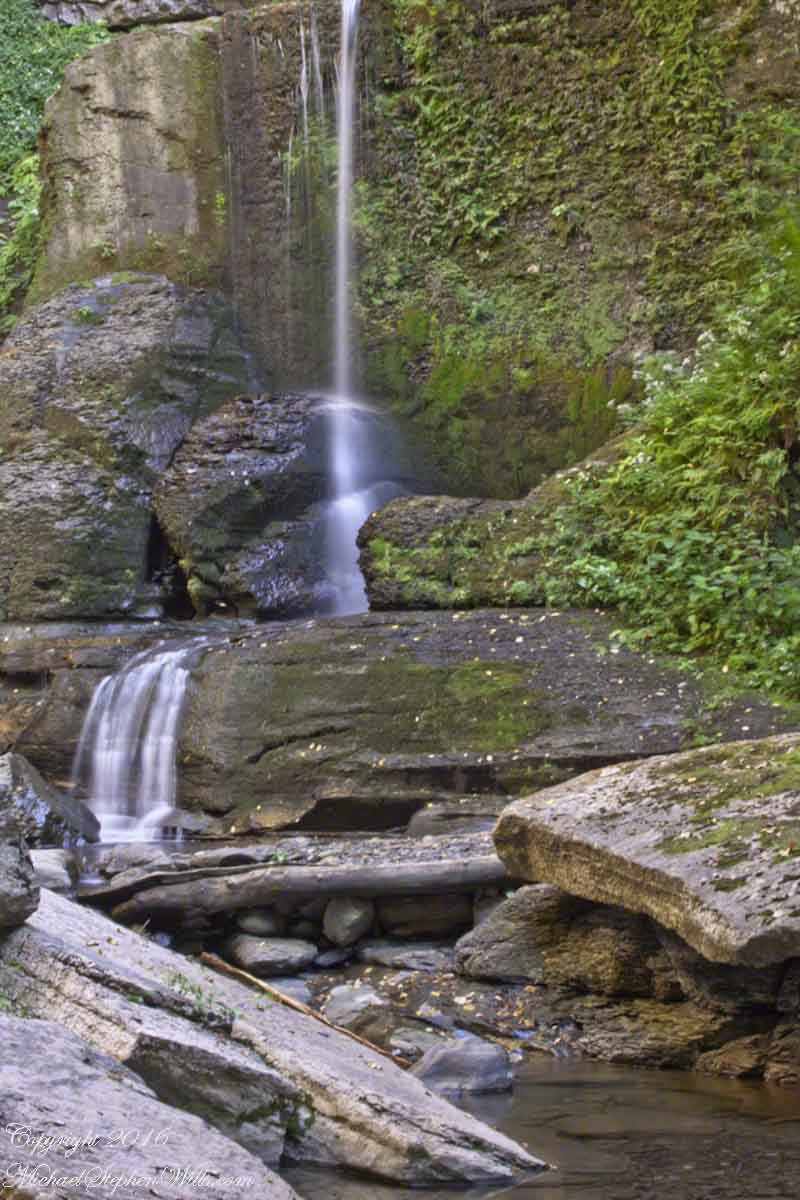
The park trails make for a pleasant choice at the start of each excursion. This day, Pam and I visited Cowshed Falls at the foot of the glen, climbed the north rim trail to walk among the hemlocks, listening the leisurely calls of Hermit Thrust like breaking crystal. The time of mushrooms was past in late September, instead we enjoyed the Indian Summer sun and breeze safe in knowing it will not last.

“Jacks” are part of the known lore of the Native American woodland tribes. These berries are poisonous, so beware of handing them. Wikipedia tells me a ploy was to mix the berry juice with meat to leave for enemies. Hidden by the meat flavor, the heartily enjoyed poison lead to death. The plant grows from a thick root, a corm. Correctly dried and prepared, the corm is food. I can imaging these plants an entities haunting the forest, choosing to reveal themselves, or not, to knowing souls. Maybe this is was drew O’Keefe to these woodland shapes growing around the springs of her summer homes. Leisure and an open, wandering glance are important, anyway, for noticing them. Most strangers wander by, engrossed in conversations, memories, evanescent distractions.

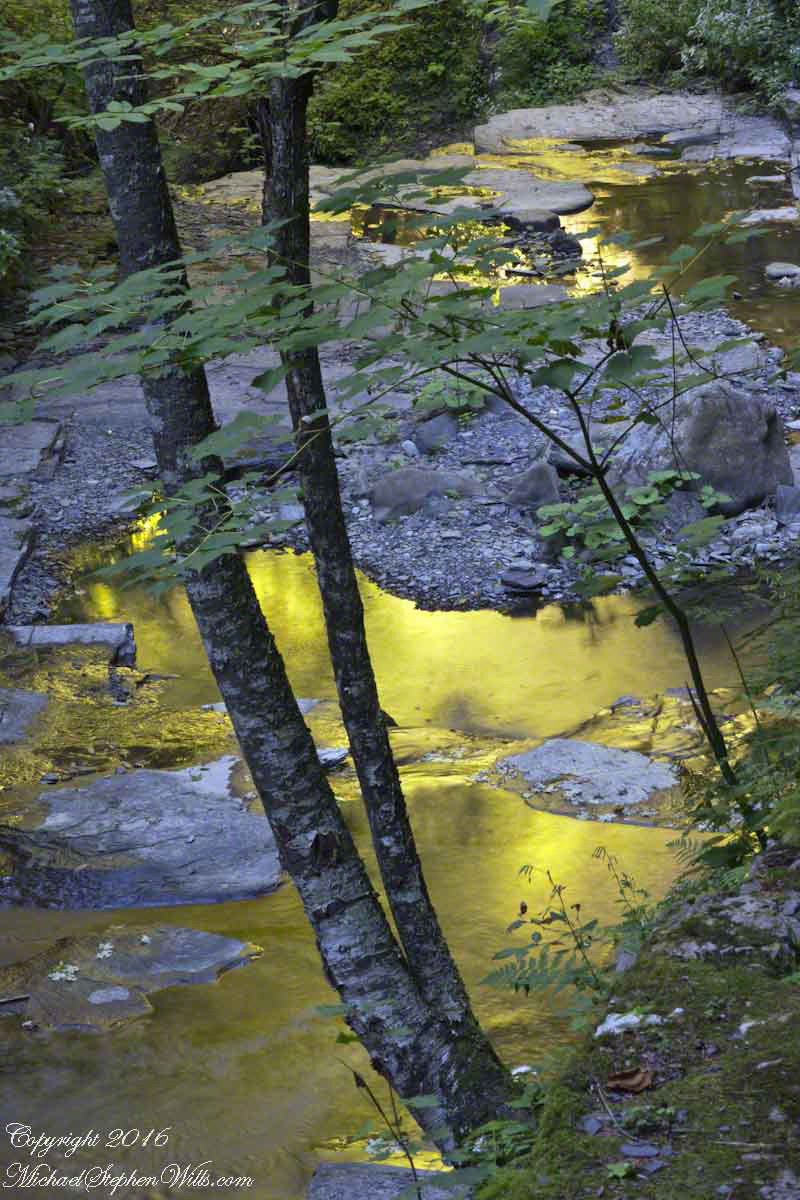
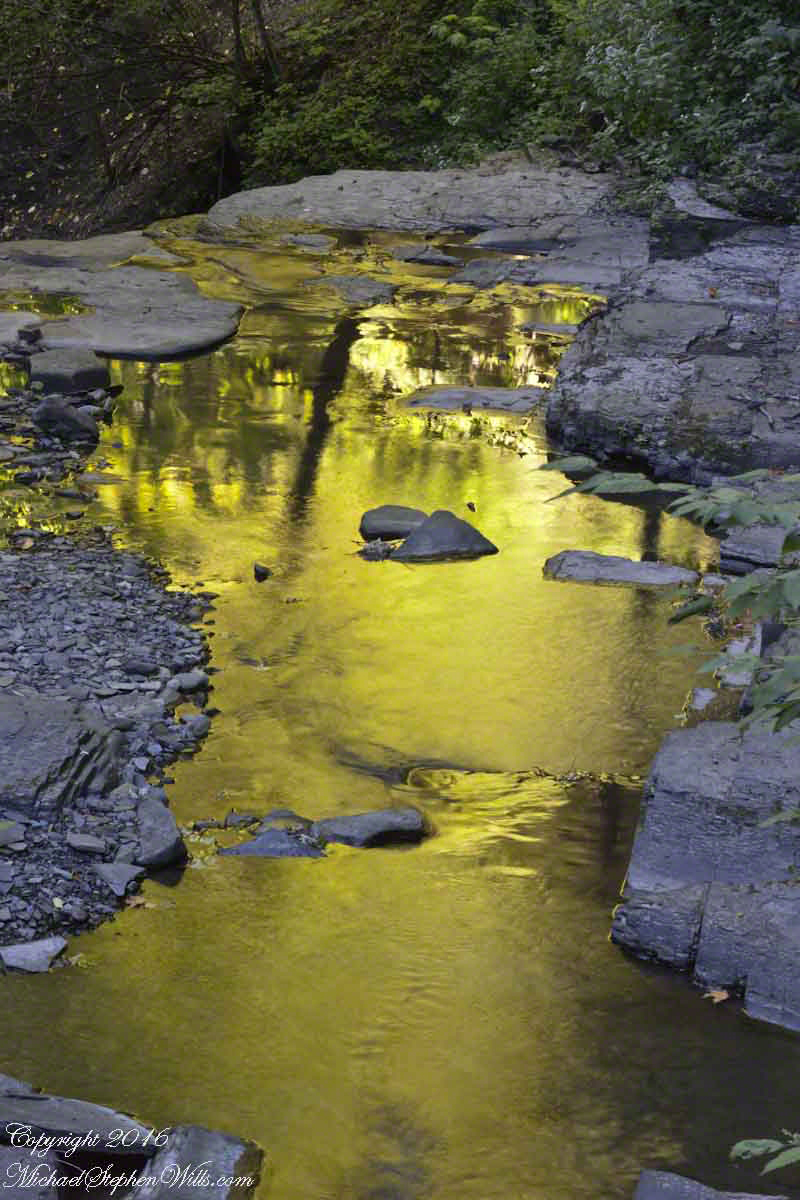
Here are other “shots” from the same day.

Here is another posting about the Finger Lakes of New York State.

Copyright 2021 Michael Stephen Wills All Rights Reserved

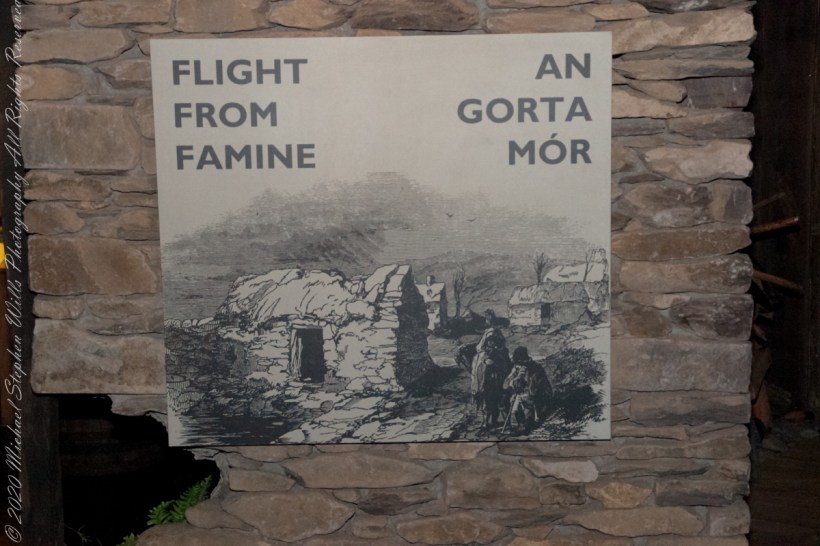
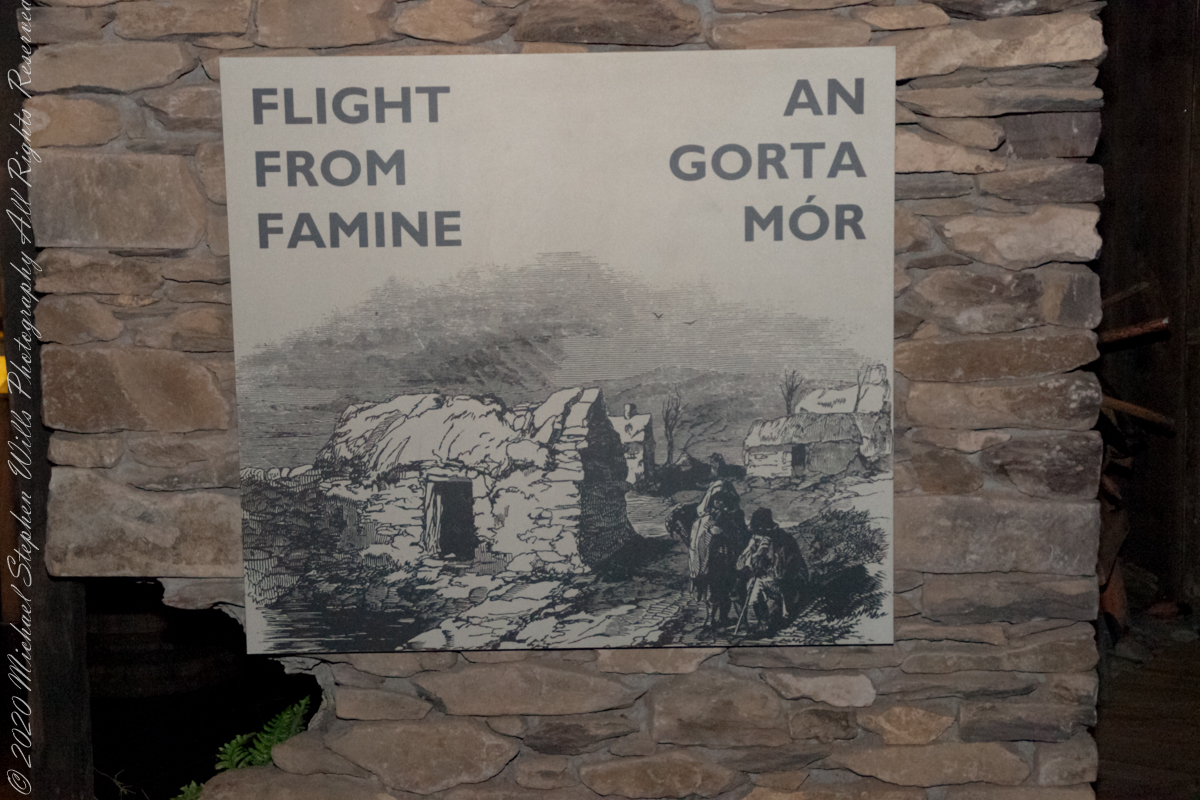
An Gorta Mor

The Great Famine had profound social, cultural, and political impacts on Ireland and its relationship with Britain. It led to a significant decline in the Irish population due to death and mass emigration and is remembered as one of the darkest periods in Irish history. The event also left deep scars on the collective memory of the Irish people and played a role in the growth of Irish nationalism and the push for Irish independence in the following decades

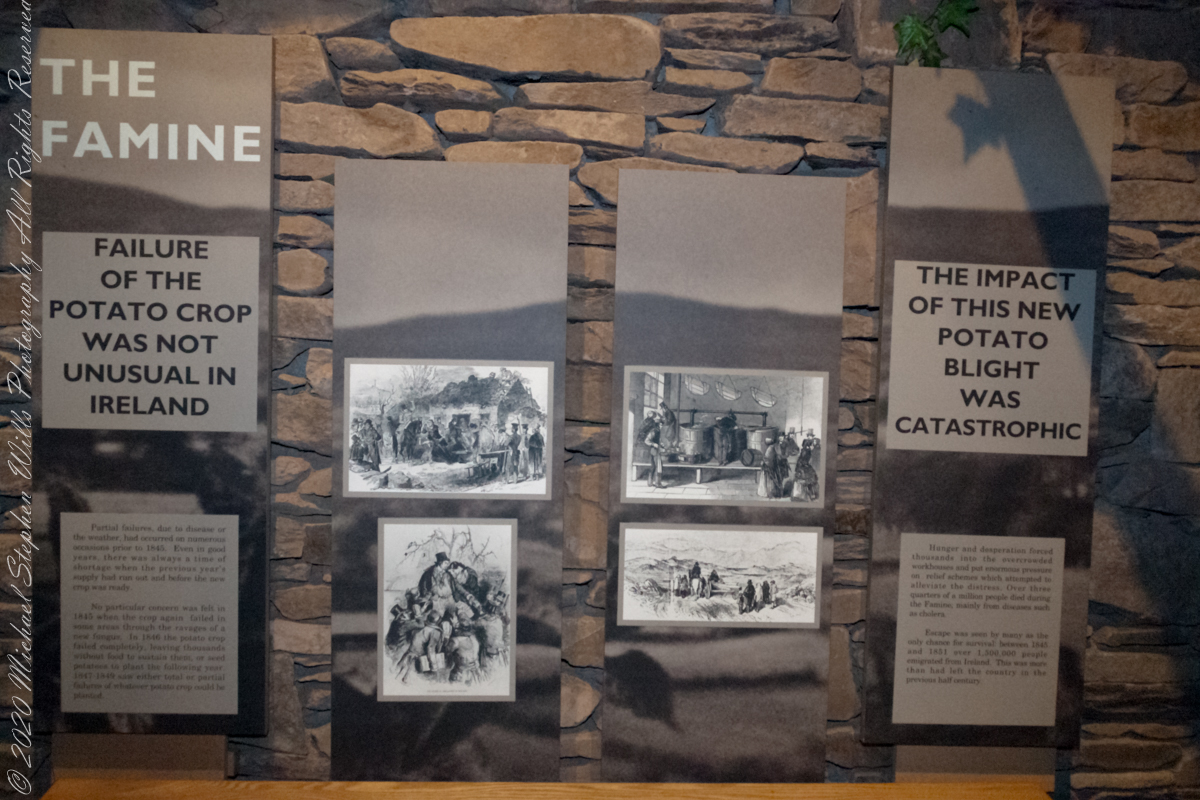
“Partial failures, due to disease or the weather, had occurred on numerous occasions prior to 1845. Even in good years, there was always a time of shortage when the previous year’s supply had run out and before the new crop was ready.”


“No particular concern was felt in 1845 when the crop again failed in some areas through the ravages of a new fungus. In 1846 the potato crop failed completely, leaving thousands without food to sustain them, or seed potatoes to plant the following year. 1847 – 1849 saw either total or partial failures of whatever potato crop could be planted.”

“Hunger and desperation forced thousands into the overcrowded workhouses and put enormous pressure on relief schemes which attempted to alleviate the distress. Over three quarters of a million people died during the Famine, mainly from diseases such as cholera. Escape was seen by many as the only change for survival: between 1845 and 1851 over 1.5 million people emigrated from Ireland. This was more than had left the country in the previous half century.”
The Great Famine of Ireland, often referred to as the “Irish Potato Famine,” occurred between 1845 and 1852, with the most acute suffering taking place between 1847 and 1849. The causes of this devastating period in Irish history are multifaceted and debated among historians, but the following are generally acknowledged as the primary factors:

Potato Blight (Phytophthora infestans): The immediate cause of the famine was a potato disease known as late blight. The potato was a staple crop in Ireland, and for many poor Irish, it was the primary source of nutrition. The blight destroyed the potato crop year after year, leading to widespread hunger.

Over-reliance on a Single Variety of Potato: The Irish mainly grew a type of potato called the “Lumper,” which was particularly susceptible to the blight. This lack of genetic diversity made the entire crop more vulnerable to disease.

Land Ownership and Tenancy: Most of the land in Ireland was owned by a small number of landlords, many of whom were absentee, living in England. The Irish Catholic majority often worked as tenant farmers, living on small plots of land and paying rent to these landlords. The land was subdivided among heirs, leading to plots becoming increasingly smaller and less productive over generations.

British Colonial Policies: The relationship between Ireland and Britain played a significant role in exacerbating the famine’s effects. Some British policies and economic theories at the time discouraged intervention. For instance:

Corn Laws: These tariffs protected British grain producers from cheaper foreign competition, making grain more expensive and less accessible for the starving Irish.


Economic Beliefs: The prevailing laissez-faire economic philosophy of the time held that markets should be allowed to self-regulate without government intervention.


Exports: Even as the famine raged, Ireland continued to export food (like grain, meat, and dairy) to Britain, which was a source of controversy. Many felt these exports should have been halted or reduced to feed the starving Irish population.
Inadequate Relief Efforts: While the British government did undertake some relief measures, such as opening public works projects and distributing maize (known as “peel’s brimstone”), these efforts were often insufficient, mismanaged, or too late. The public works projects sometimes did not lead to meaningful infrastructure improvements and instead focused on tasks like building roads that led nowhere.

Social and Cultural Factors: Discrimination against the Irish Catholics by the Protestant English elite, language barriers (many Irish spoke only Gaelic), and distrust between the local population and English officials further complicated relief efforts.

The Great Famine had profound social, cultural, and political impacts on Ireland and its relationship with Britain. It led to a significant decline in the Irish population due to death and mass emigration and is remembered as one of the darkest periods in Irish history. The event also left deep scars on the collective memory of the Irish people and played a role in the growth of Irish nationalism and the push for Irish independence in the following decades.

Reference: text in quotes is from “The Famine” poster. Cobh Heritage Center, May 2014.

Copyright 2023 Michael Stephen Wills All Rights Reserved

Overlapping Hepatica and Trillium Blooms

four of a kind

Click here for my Getty flower photography.

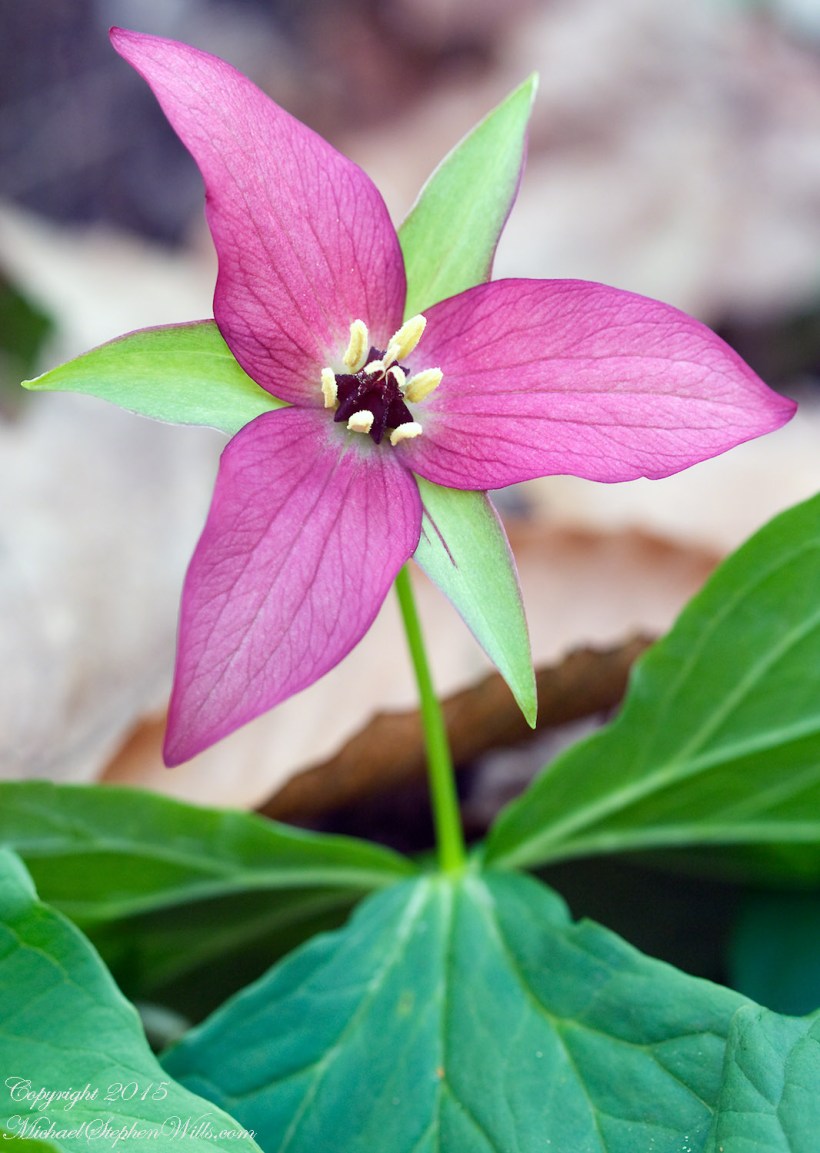
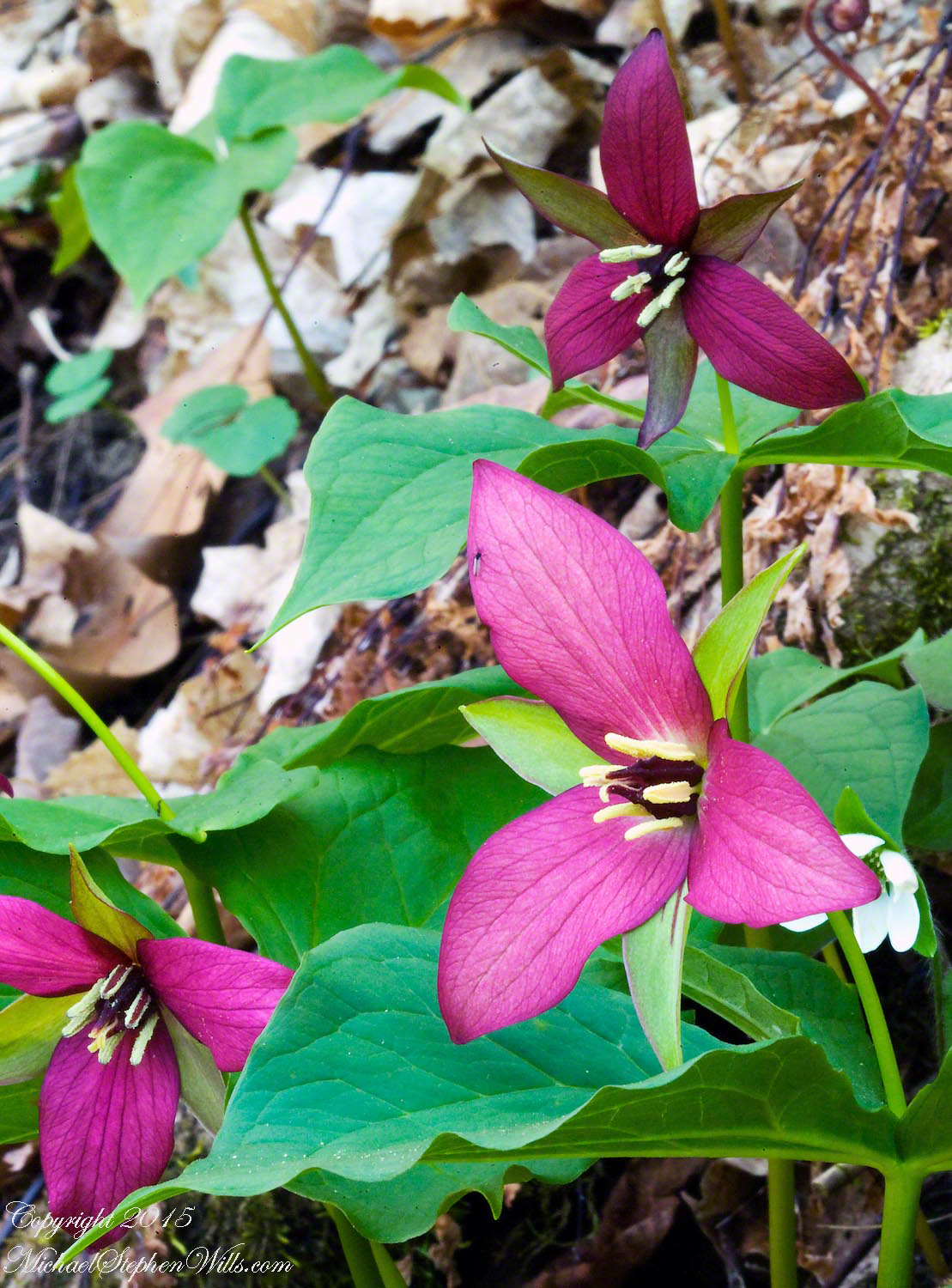
Four views of purple trillium, three of a grouping and one portrait. Taken in the same session of a rare set of perfect blooms growing wild.

Taken with a Canon 100 mm “macro” lens, a Kodak dslr body, a Manfrotto tripod and ample time and patience.

Enjoy!

Fillmore Glen Purple Trillium

The trillium plant grows from a body of rhizomes, a type of underground stem you can think of as a type of root. There are rhizomes when use to flavor food such as turmeric, though trillium is not one of these.

Fillmore Glen Purple Trillium

The single scape grows straight from the ground to form a whorl of three bracts mirrored by the three green (usually) sepals and, again, by the three flower petals for which it is named.

You can clearly see all of this in my photographs.

Fillmore Glen Purple Trillium

Fillmore Glen Purple Trillium

Copyright 2021 Michael Stephen Wills All Rights Reserved

Personable Wildflowers

With wishes for a Blessed Easter 2021

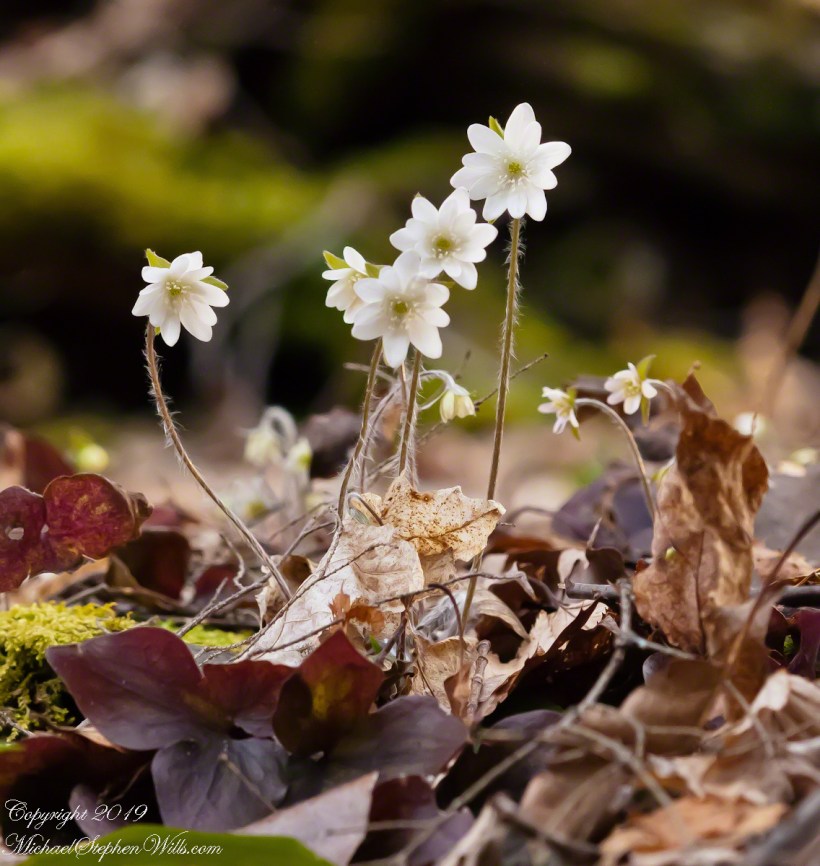
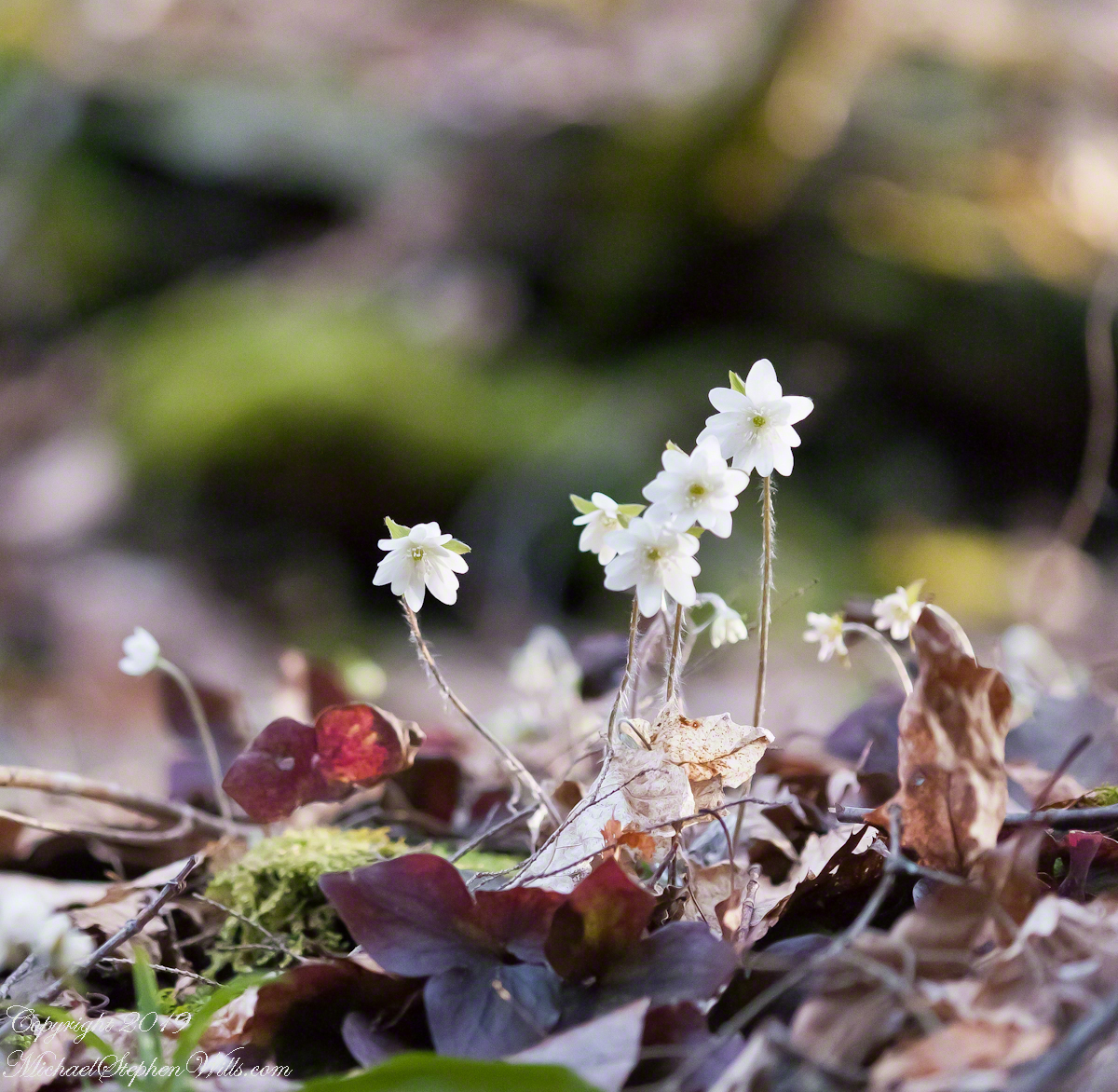
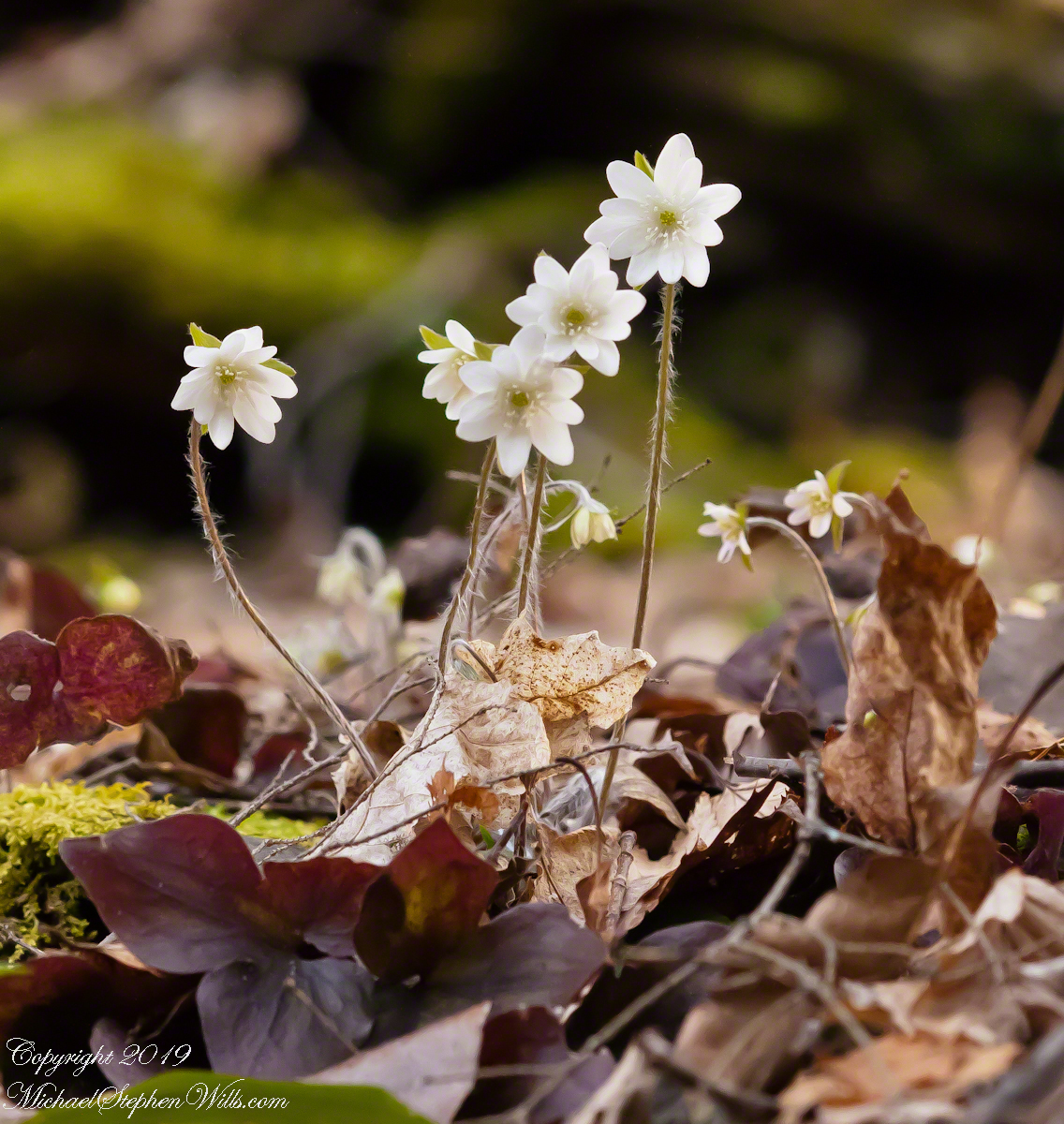
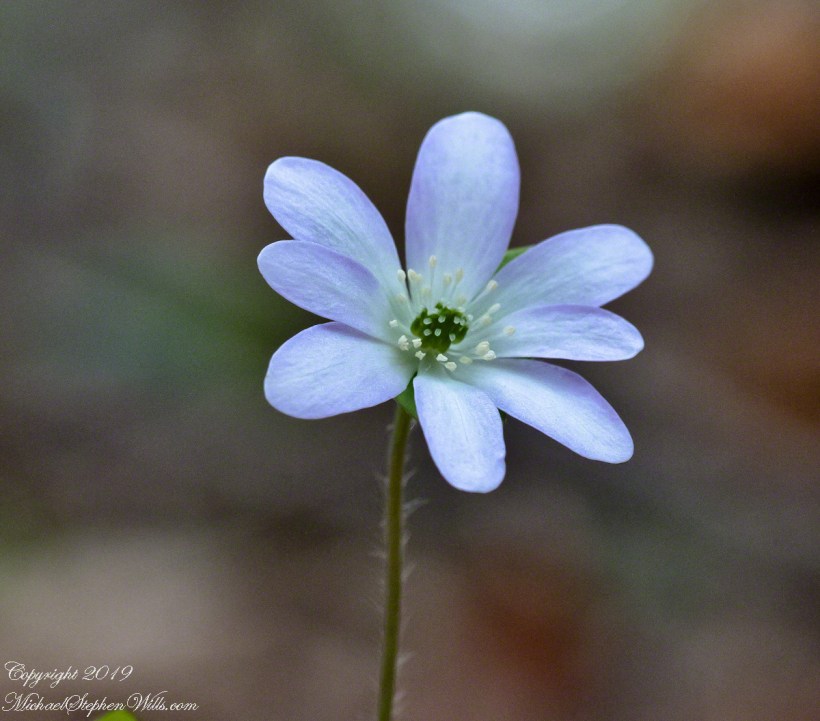
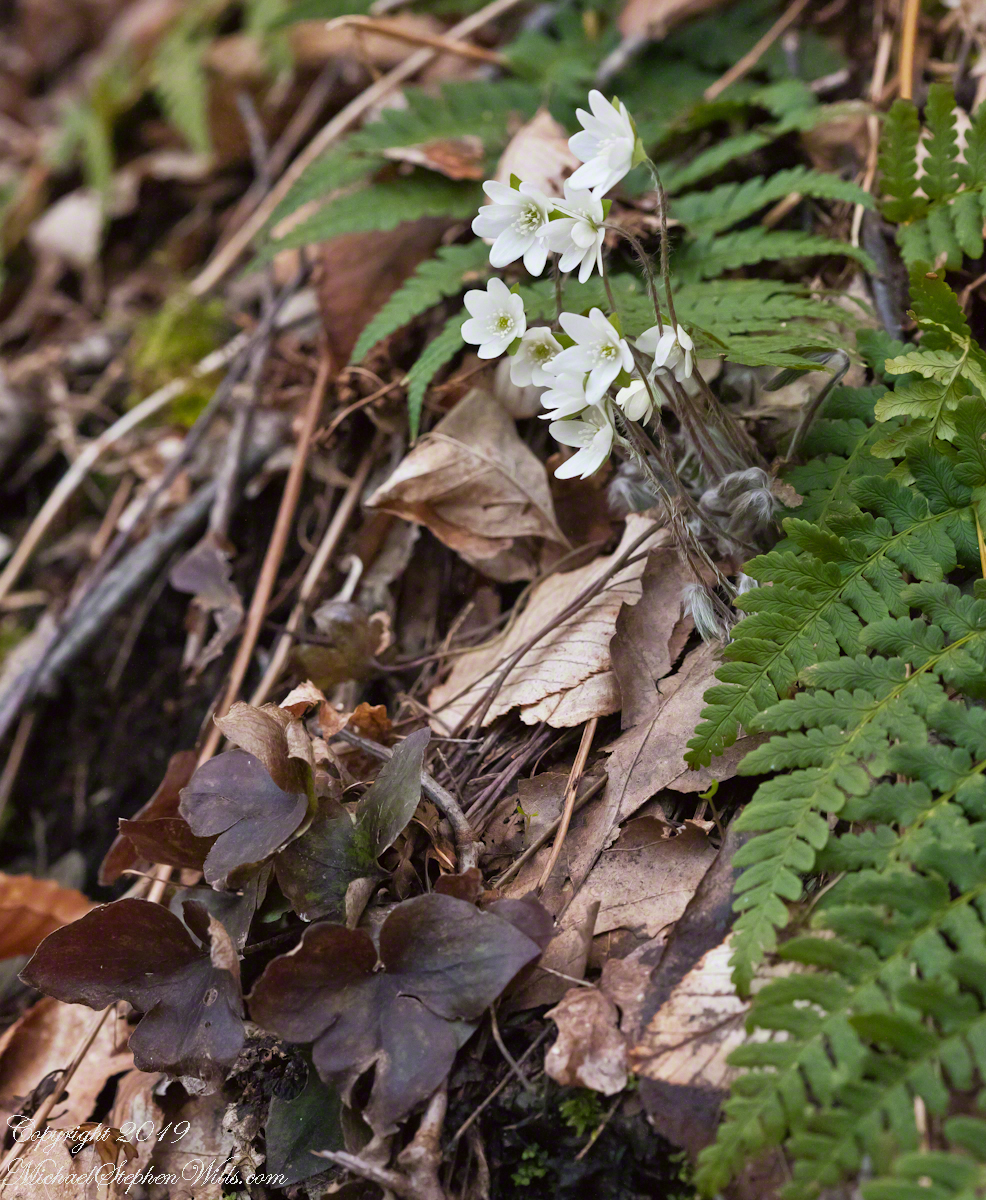
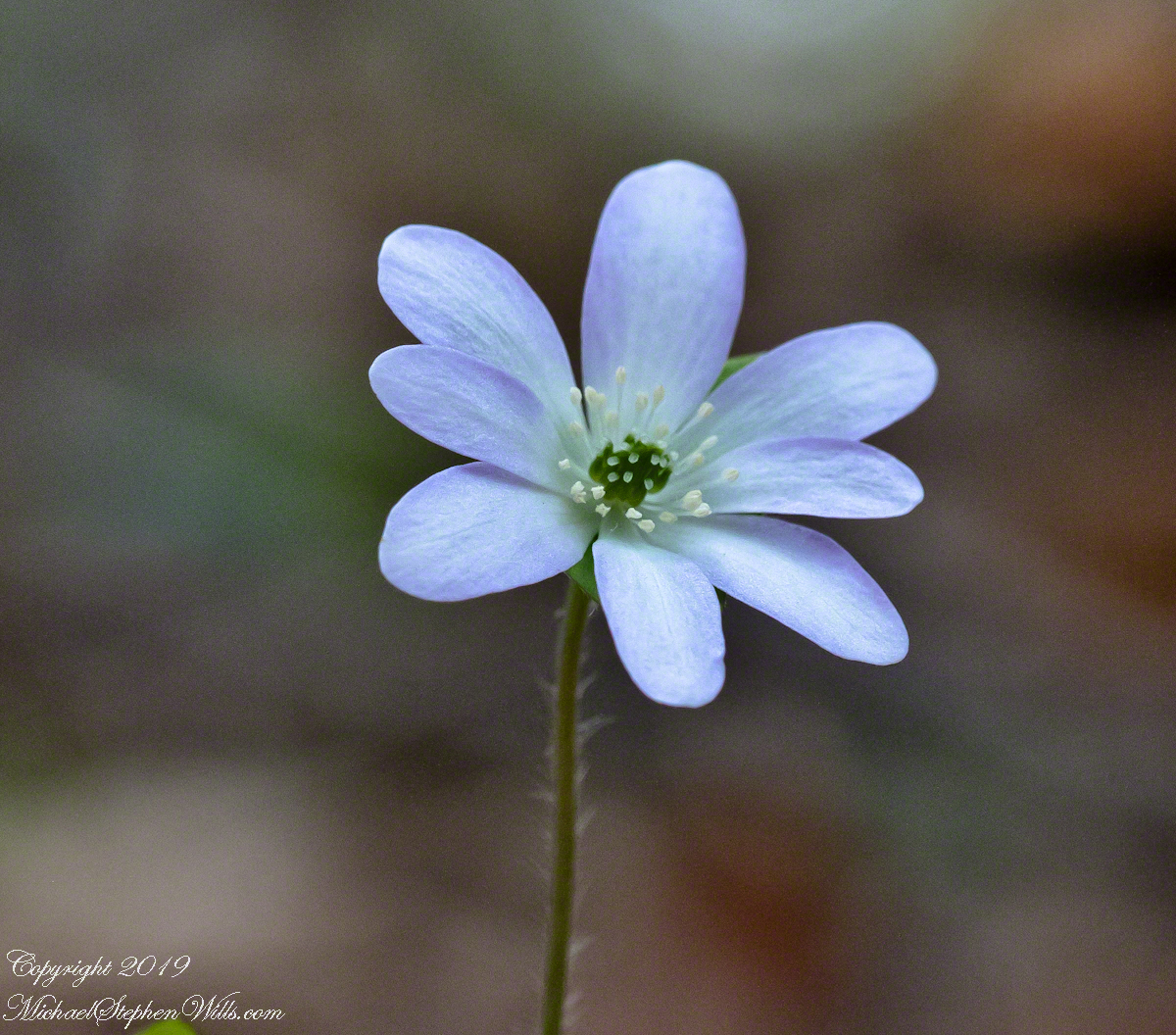
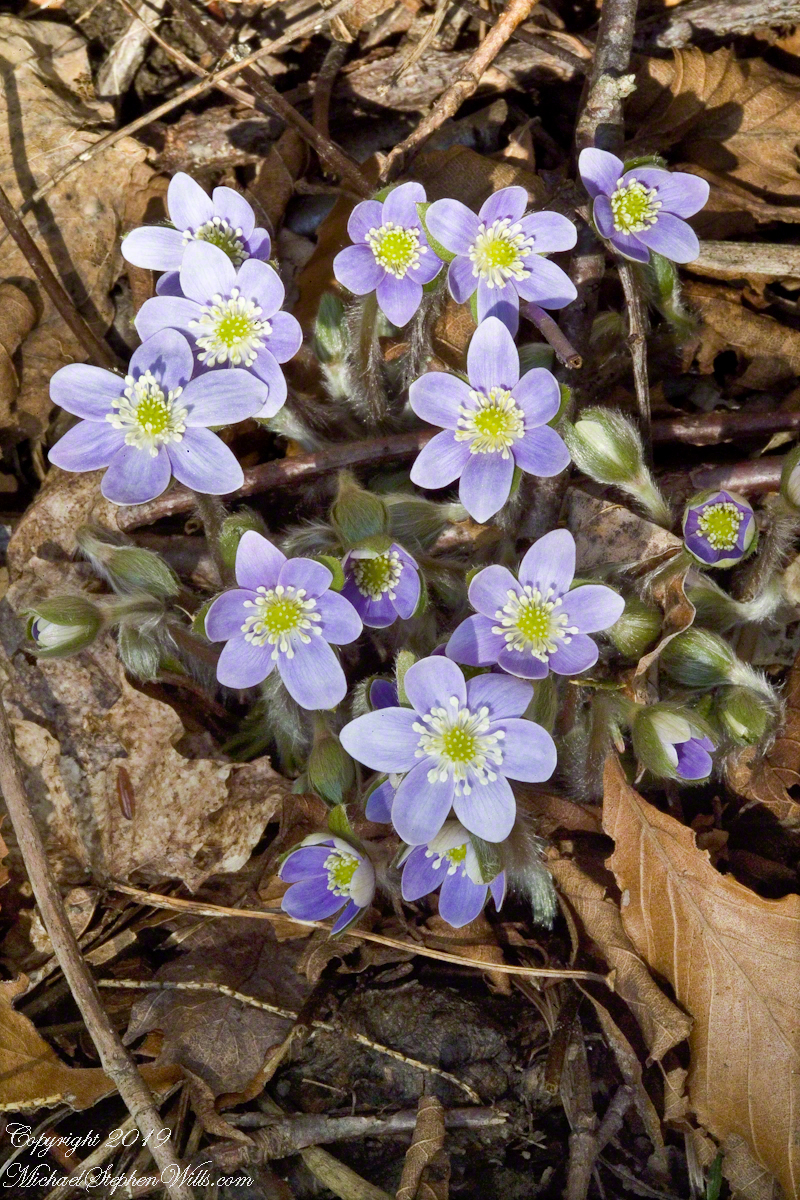
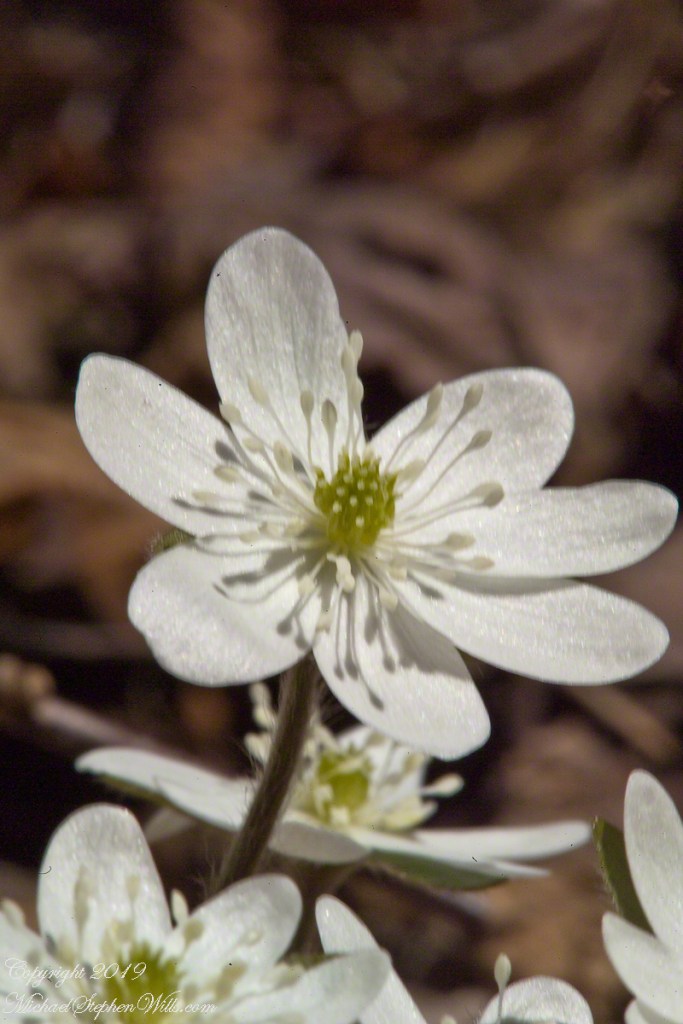
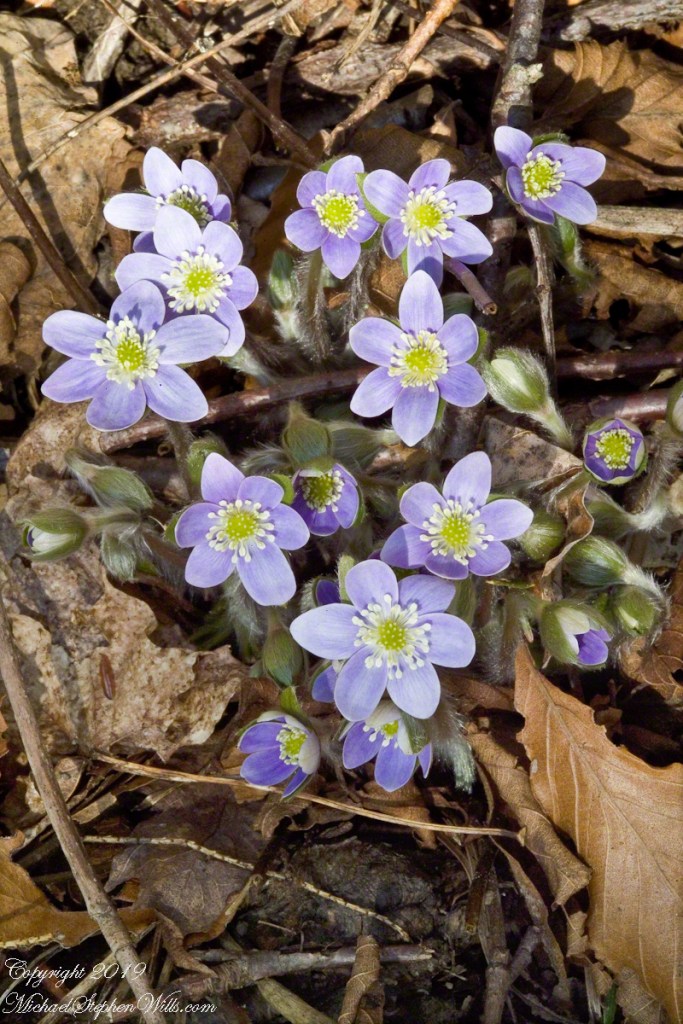
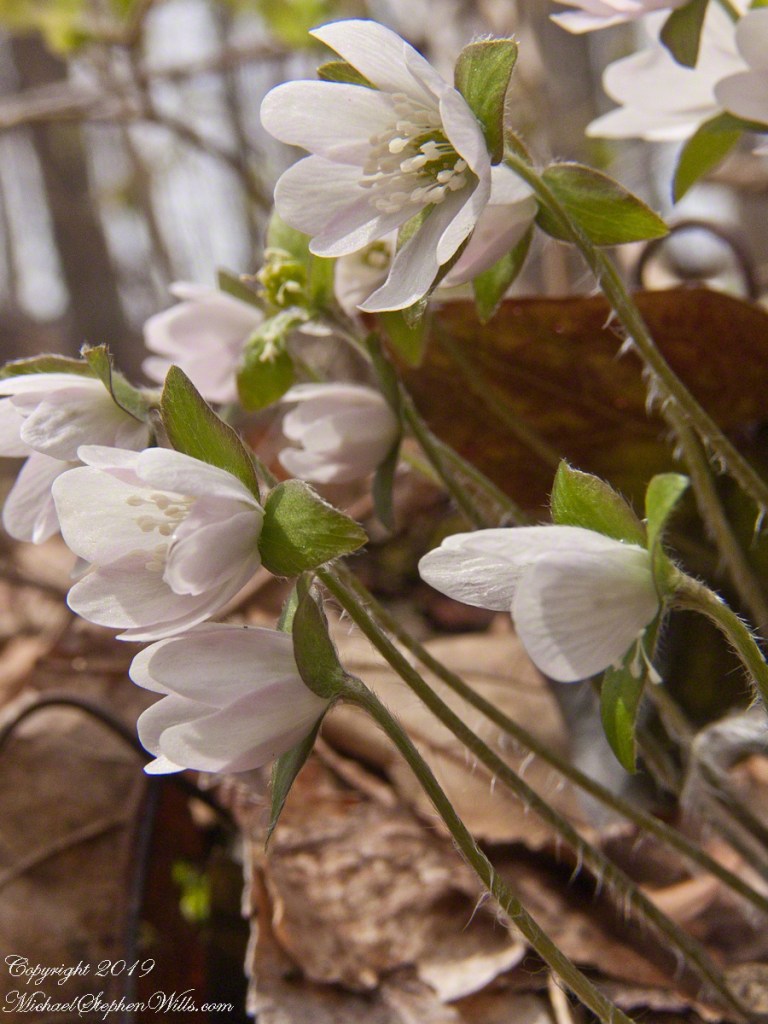
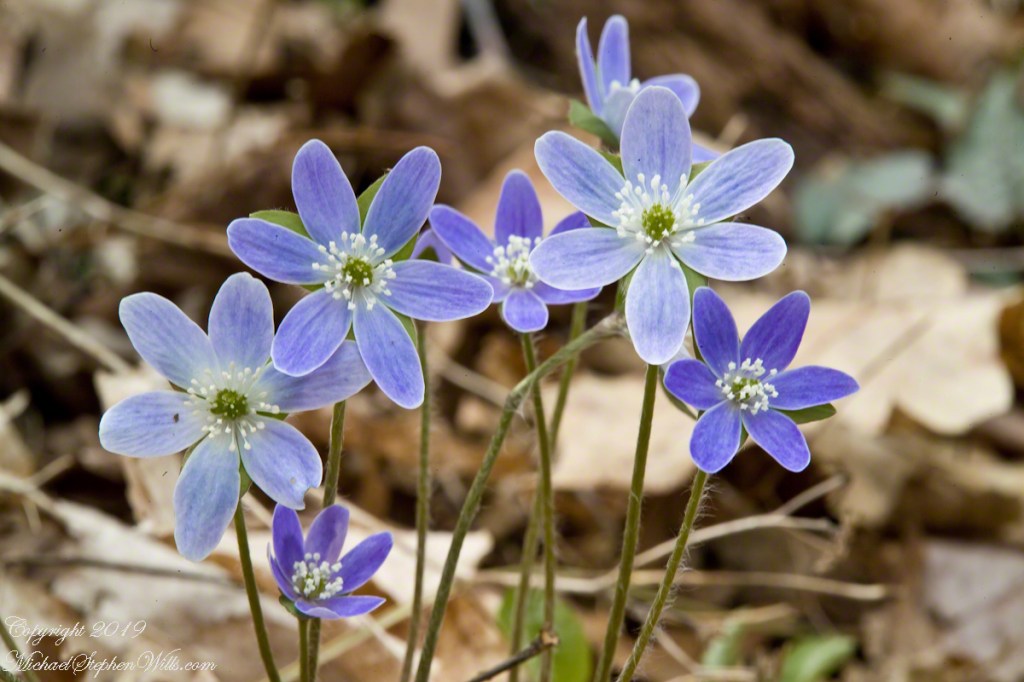
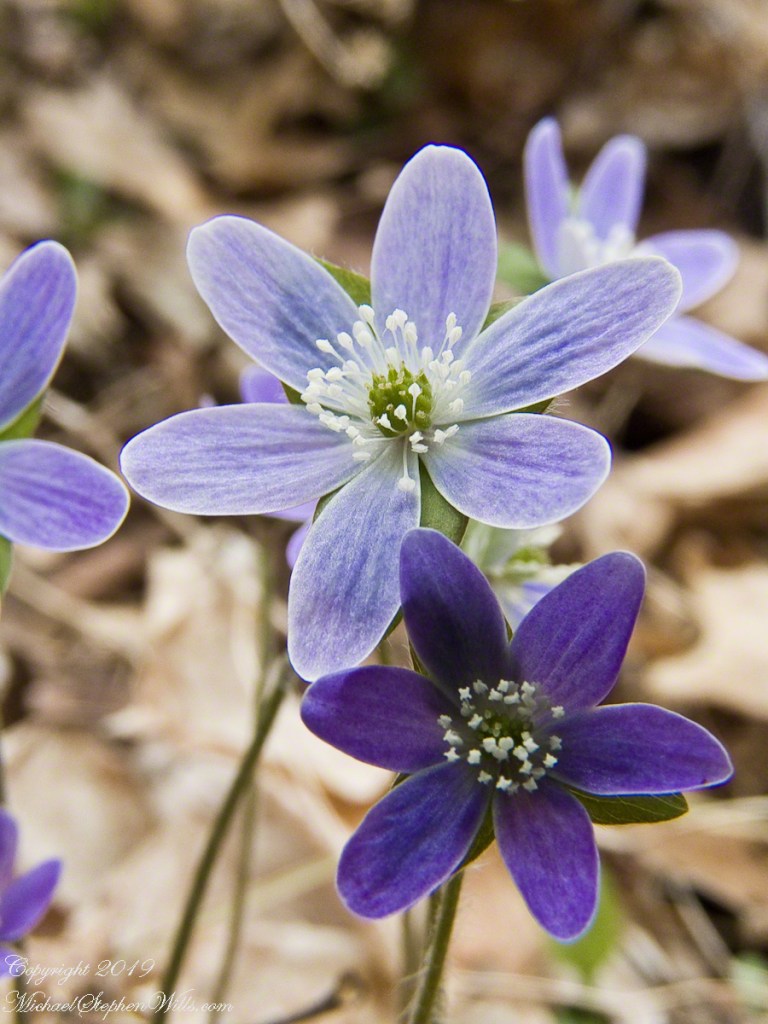
Late one April afternoon these backlit Hepatica on the gorge wall above the South Rim Trail of Treman Gorge posed for their portraits.

Click me for the first post of this series.
Click me for “Finger Lakes Memories”, a gallery of fine art photography.
Copyright 2019 All Rights Reserved Michael Stephen Wills

Hepatica

Early Spring Beauties

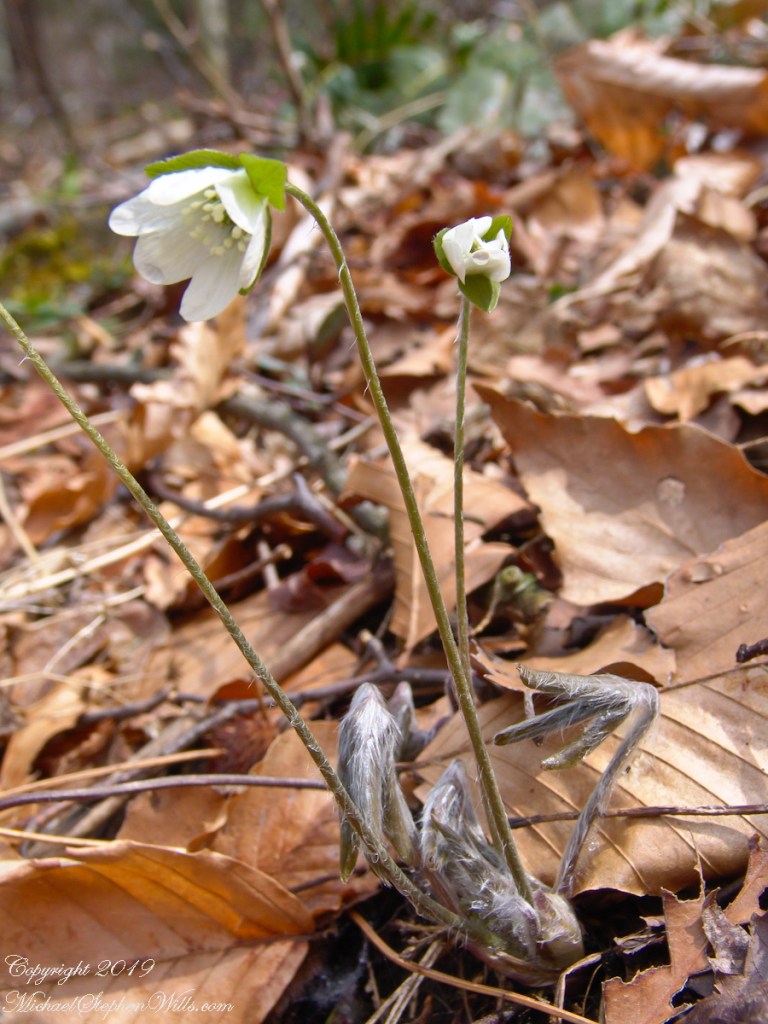
Most every year since 2002 I’ve photographed these personable beauties, the first wildflowers to bloom as early as late February through the snows.

Click photograph for a larger version
Click me for “Finger Lakes Memories”, a fine art photography gallery.

Copyright 2019 All Rights Reserved Michael Stephen Wills

Hepatica, Fillmore Glen

Hepatica from April 2007

Back in 2007 I used a 100 mm Canon Macro lens on a Kodak slr along with a Sony DSC-F828 variable lens for this mix of macro and habitat captures presented as a gallery so you can flip back and forth among the larger images. Click any image to bring up a larger version.

Click for my “Finger Lakes Memories” Fine Art Photography Gallery.

Copyright 2019 All Rights Reserved Michael Stephen Wills

Wildflowers Late Winter / Early Spring 3

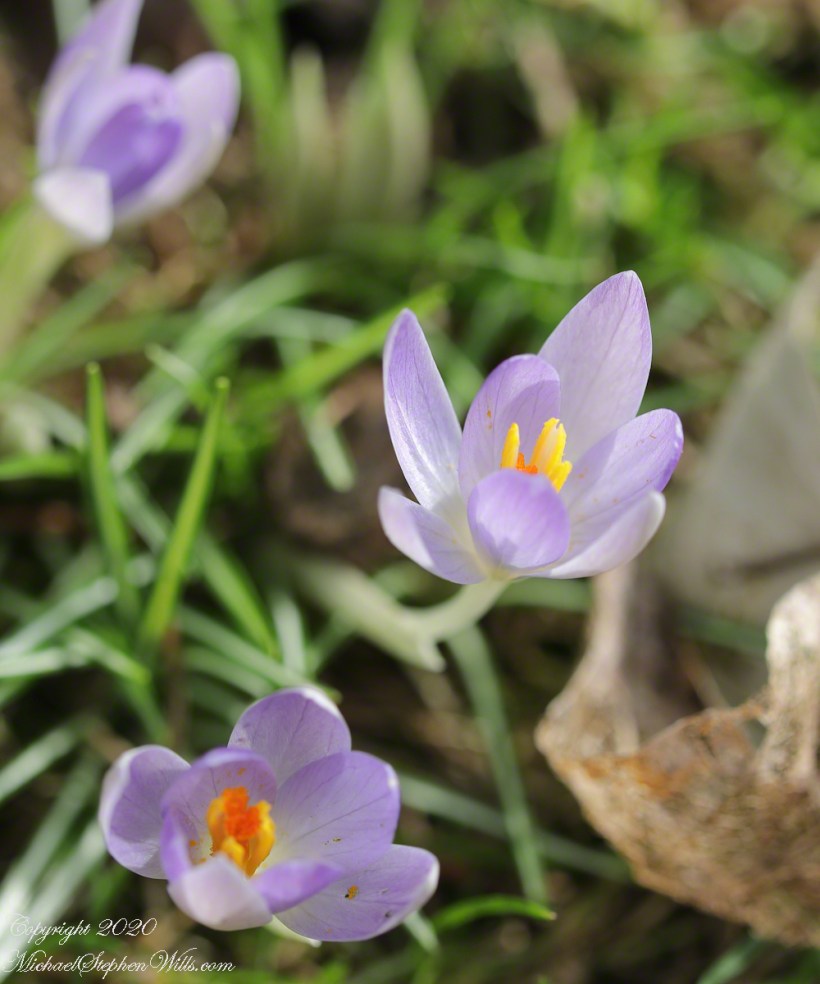
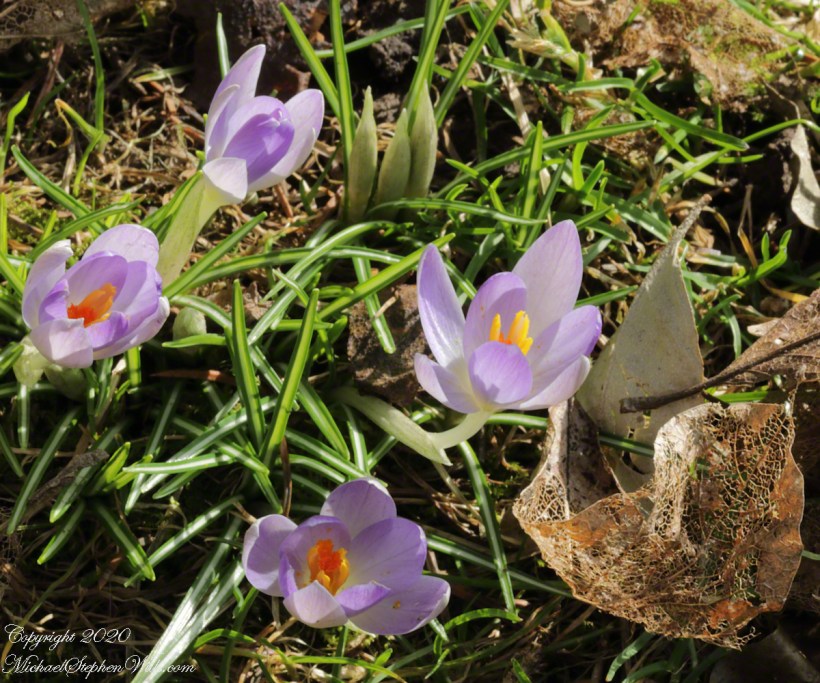
With the thermometer in the 40’s on March 12 these crocus were open, under the same magnolia tree as the buttercups from the 10th. The blooms close during cold snaps much as you see in the first post.

Click photograph for a larger view. To do this from WordPress Reader, you need to first click the title of this post to open a new page.

A tripod held the composition steady and the timer was set to 2 seconds for extra stability. With the leaf body worn away by time, the remaining veining turns the form lacy.

Here is a slideshow today’s and previous wildflowers.

Copyright 2021 All Rights Reserved Michael Stephen Wills

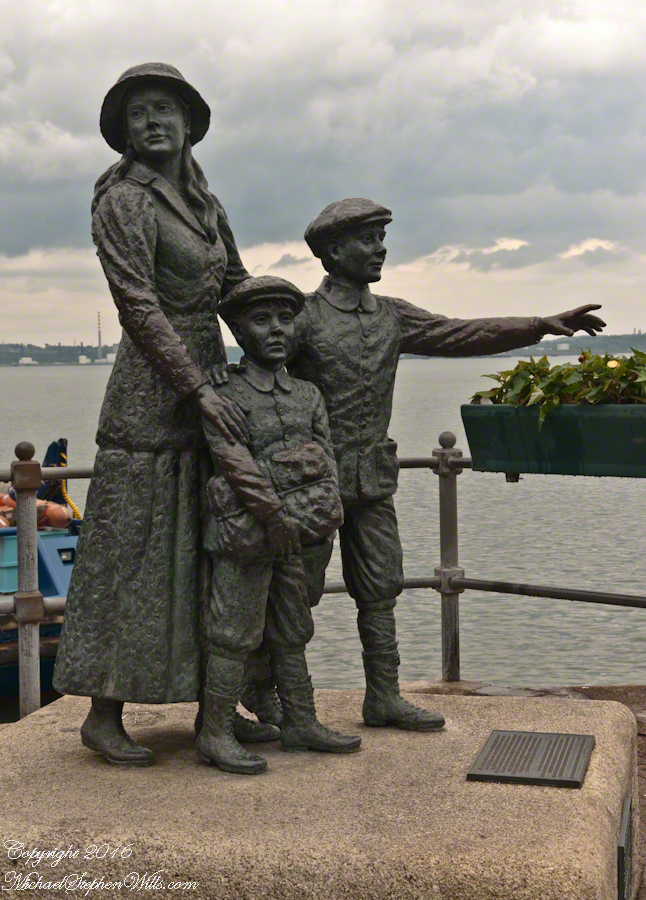
Annie Moore and her brothers

A statue of Annie Moore and her brothers quayside, Cóbh, County Cork, The Republic of Ireland

Click the photograph for my online gallery.
Annie, Anthony and Phillip Moore Statue, Cóbh– CLICK ME!!!!

On May 29, 2014, Pam and I had the emotionally moving experience of visiting the Cóbh Heritage Centre. This statue stands outside the centre, on the quay from which thousands of Irish emigrated from what was then Queenstown. My father’s mother, Elizabeth Wills née Duffy, departed from here on April 28, 1898.

These are the words on the plaque:

‘Annie Moore and her brothers, Anthony and Phillip, embarked from this town on December 20, 1891, on the S.S. Nevada. Annie was the first person to be admitted to the United States of America through the new immigration center at Ellis Island, New York, on January 1, 1892. This sculpture was unveiled by the President of Ireland, Mary Robinson, on February 9, 1993. It was erected by Cóbh Heritage Trust Ltd. and is dedicated to all who emigrated from Ireland.
This sculpture won the Zeneca Ireland Ltd. Commemorative Sculpture Award. A statue of Annie Moore was also erected at Ellis Island, New York. The commemoration of Annie Moore at New York and at Cóbh was initiated by the Irish American Cultural Institute. This sculpture is the work of Jeanne Rynhart of Bantry.'”

Click to visit the previous post in this series, “The Old Aghameen School.”

Copyright 2021 Michael Stephen Wills All Rights Reserved

Ice Bells

Noticing small miracles, taking the time and effort to capture them…..

These icicles were formed along Fall Creek during the coldest months of February in the Finger Lakes Region of New York State.

The transient nature of these forms is suggested by the thinness of the pedicle joining each bell to the ice lobe of the ledge. Note the golden crystals in the ice lobe.

A visualization of the symbolic power of the numeral three, reflected on itself.  Question: what do “threes” mean to you?

Captured with the Sony DSLR-A700, DT 16-105mm F3.5-5.6 lens, hoya circular polarizing filter, mounted on the Manfrotto tripod with ball head.

Click the photograph for my online gallery Ice Bells listing.

Ireland on the Mind at Christmas

Reflections and Mementoes

Where would we be without Saint Patrick?  He was a force, to be sure.  A favorite story, is the landing of his return to the island 432 AD.  The tides on the eastern coast of the Irish Sea can be strong.  His plan was to sail up to coast further north than what we call today Strangford Lough.  On passing this inlet the boat was swept into the lough tidal narrows.  Circumstances called for a landing, rather than wait for the tide.  Patrick came ashore where the Slaney River enter the lough and “quickly converted” the local chieftan, Dichu, who provided a barn for holding services.  The name of the town “Saul” in Irish is Sabhall Phádraig, translated as “Patrick’s Barn.”

IrelandChristmas-1

In this posting I’ll go lighter on descriptions of technique.  Leave it to say I held to the Canon fixed lens EF 50mm f1.2L USM throughout.  Some, like the photograph of Saint Patrick, used a tripod.  Others, like the latter two of the following Irish Themed Cross set were handheld.  Generally a flash was used to supplement ambient sunlight from a large north-facing bay window.

Here the “celtic” cross is converted to an Irish theme through a substitution of a shamrock with golden decoration inspired by pagan neolithic petroglyphs for the nimbus (circle) intersecting the central intersection of arms and stem.

For the first three I played with aperture, taking advantage of the stability of a tripod.  The final two of the set are handheld.

Note the fanciful leprechaun snowman with pot o’ gold, on the left.

Blown glass Irish dancers.

“Travel memories”

Lets’s finish up with a resin cast Santa Claus in hiking garb.  Hiking is a favorite activity of ours.  Featuring a stout staff and Aran Island sweater.

IrelandChristmas-17
Copyright 2040 Michael Stephen Wills All Rights Reserved