A Strange Orchard at Cornell: Discovering Rona Pondick’s Untitled Tree Sculpture

On a March afternoon at Cornell University, I encounter Rona Pondick’s surreal sculpture Untitled Tree, where scattered aluminum “fruit” reveal unsettling human teeth beneath bare branches.

An encounter with Rona Pondick’s Untitled Tree (1997)

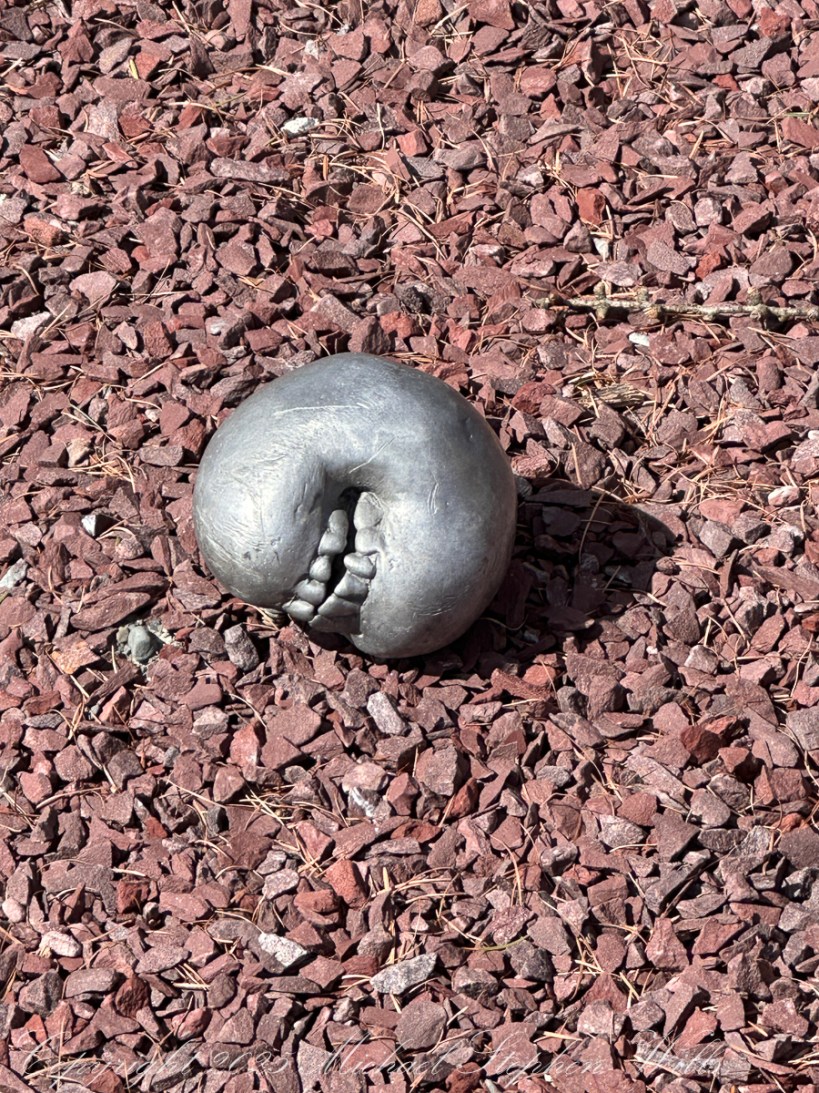
One March afternoon on the lawn near the Herbert F. Johnson Museum of Art at Cornell, you might notice a small, leafless tree rising from a circle of red gravel. At first it seems merely dormant, another tree waiting for the long Ithaca winter to loosen its grip. But as you approach, the scene grows quietly unsettling. Around the trunk lie dozens of smooth gray forms—small, rounded objects like stones or fruit that have fallen from the branches.

Then you see the teeth.

The objects scattered beneath the tree are cast aluminum forms bearing unmistakably human molars. They appear to have dropped from the tree like strange metallic apples, a harvest that belongs less to botany than to anatomy. This disquieting grove is Untitled Tree (1997) by the American sculptor Rona Pondick.


The Artist of Hybrids

Pondick, born in Brooklyn in 1952 and trained at Queens College and the Yale School of Art, has spent decades exploring the language of the body in sculpture—often literally. Her work frequently uses casts of body parts, particularly teeth or her own head, creating forms that merge human anatomy with animals, plants, or everyday objects.

The result is a sculptural vocabulary that feels simultaneously ancient and uncanny. Critics often describe her work as “hybrid”—a blending of the human body with other forms, echoing mythic creatures such as sphinxes or centaurs while remaining distinctly contemporary.

Teeth have been a recurring motif in Pondick’s art since the 1980s, when she began casting them and embedding them in unexpected contexts. These fragments of the body carry a peculiar emotional charge: they evoke childhood, appetite, vulnerability, and mortality all at once.


A Sculpture That Feels Like a Dream

Created in 1997, Untitled Tree belongs to a group of works where Pondick began experimenting with trees as sculptural forms. She has explained that she sometimes uses actual branches or trunks as starting points for casting in metal, translating natural textures into aluminum or steel.

The Cornell sculpture is monumental yet restrained:

  • a cast-aluminum tree,
  • surrounded by dozens of small aluminum objects,
  • each about the size of a stone but bearing human teeth.

Seen from a distance, the scene reads like a quiet landscape intervention. Up close, however, it feels like a fragment from a surreal dream—a tree that has shed something disturbingly human.


The Poetry of the Fallen Teeth

Standing before it on that March afternoon, one might think of the sculpture as a botanical riddle.

Trees drop fruit.
They drop leaves.
In autumn they drop seeds.

But this tree has dropped teeth.

The idea is both playful and faintly macabre. The small aluminum forms resemble seeds, yet their teeth suggest the human mouth—the place of speech, hunger, laughter, and loss. The sculpture seems to whisper that the natural world and the human body are not separate realms but entwined systems of growth and decay.

In the red gravel circle beneath the tree, the objects appear almost archaeological, as though a curious species once grew here and shed fragments of itself into the soil.


Cornell’s Quiet Surrealist Grove

Placed on the lawn near the Johnson Museum’s striking I. M. Pei building, the sculpture forms a gentle conversation between art, architecture, and landscape. In winter the bare branches echo the skeletal trees around it. In summer the aluminum trunk gleams among living foliage.

And the scattered teeth remain—silent, patient, and oddly humorous.

They remind us that nature, like art, can be unsettling and beautiful at the same time.
Enter your email to receive notification of future postings. I will not sell or share your email address.

Exploring Art with Toddlers: A Day at Johnson Museum

In October 2017, a family visit to the Johnson Museum of Art enriched bonds through art appreciation and nature exploration with toddler Sam.

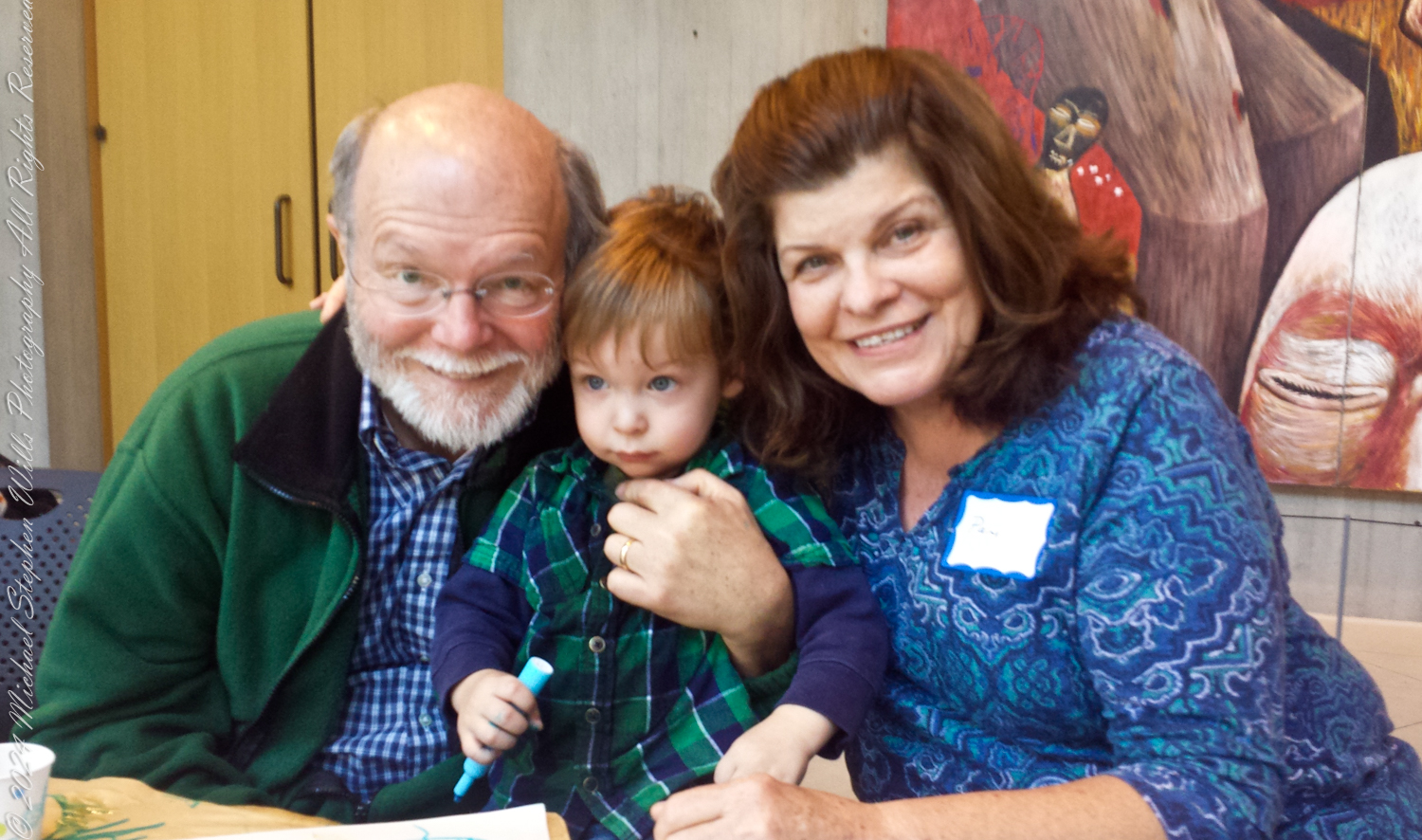
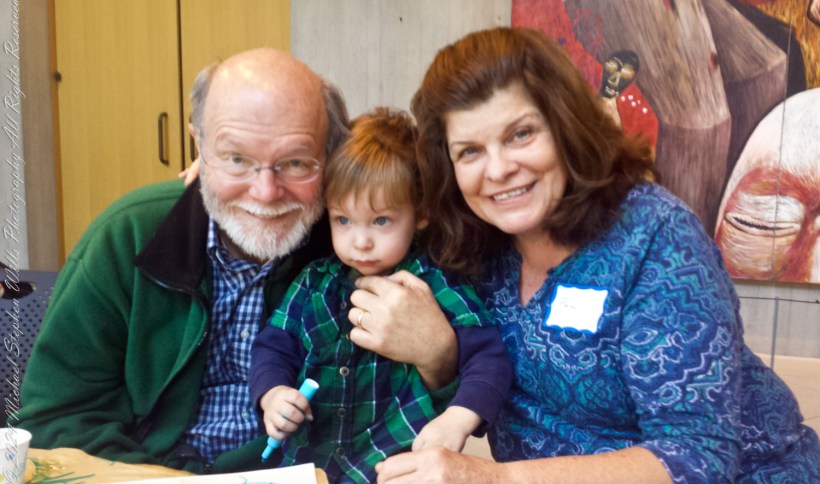
On a crisp October morning in 2017, I was on the cusp of retirement with leisure time to explored the Johnson Museum of Art at Cornell University, with my grandson Sam and his grandmother, Pam, my wife. We were attending a “Let’s Look Baby” event—a wonderful opportunity to introduce young children to art and the world around them. Sam was a toddler at the time, curious and full of energy, and I was eager to share this moment of discovery with him.

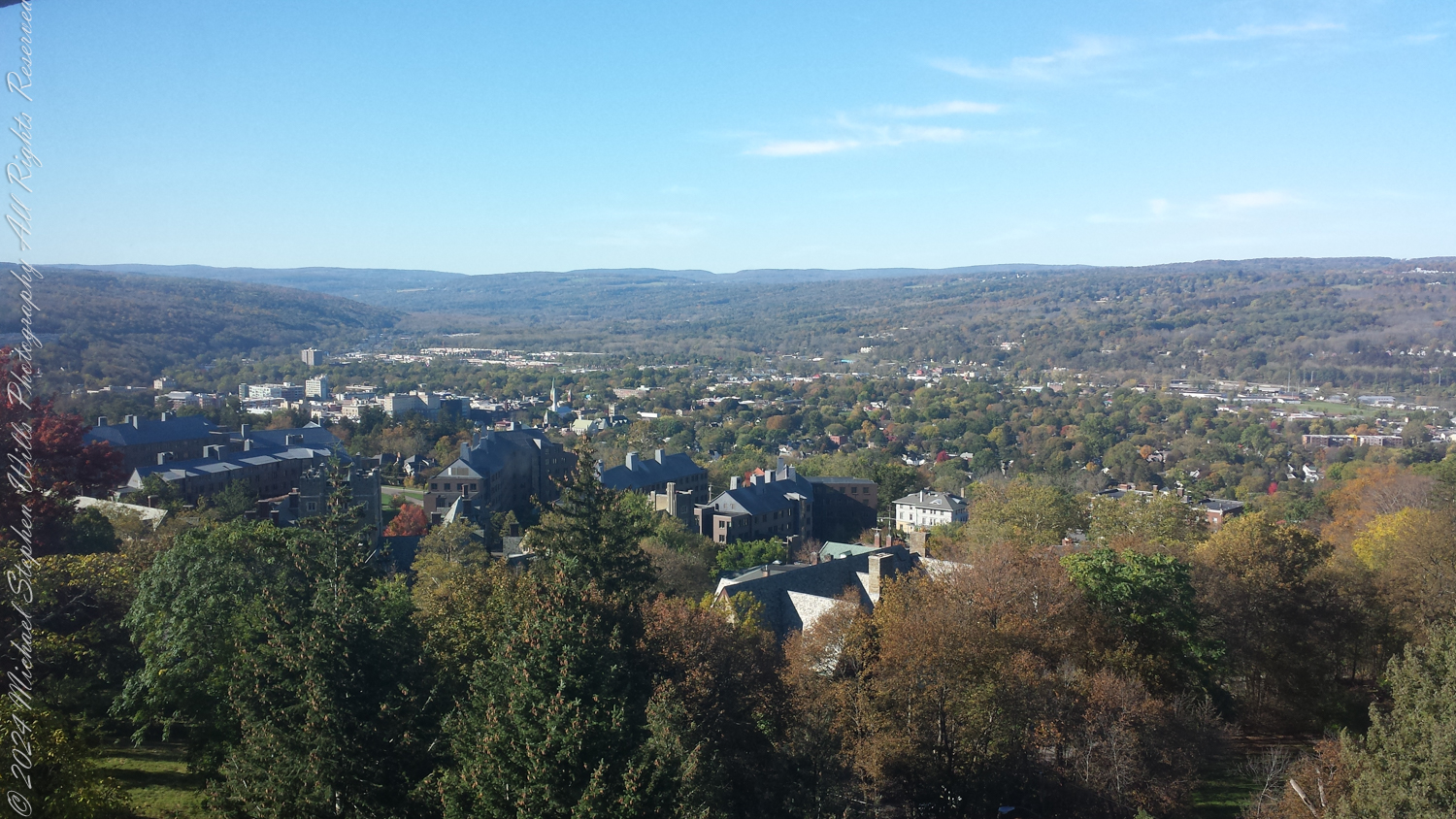
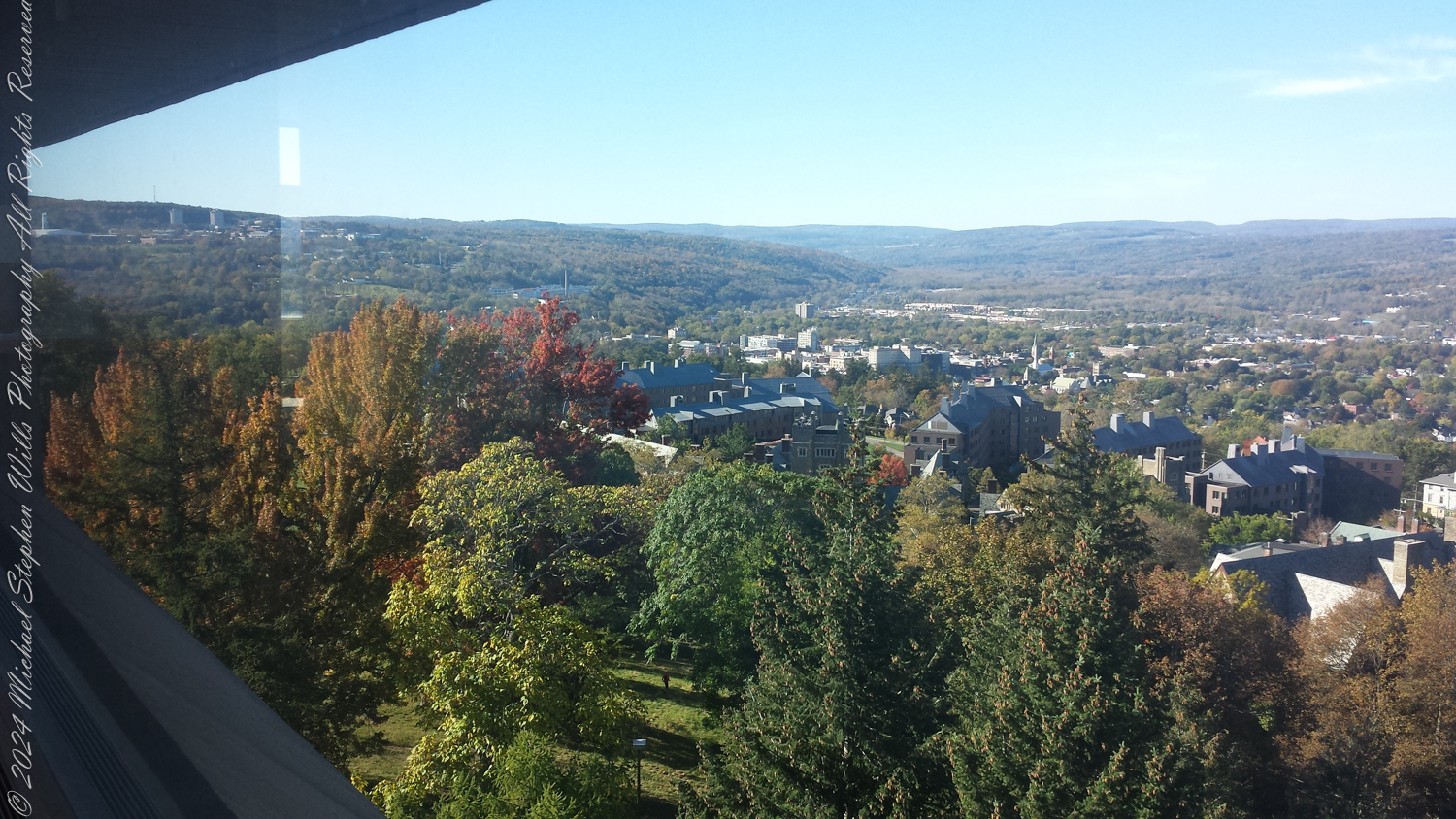
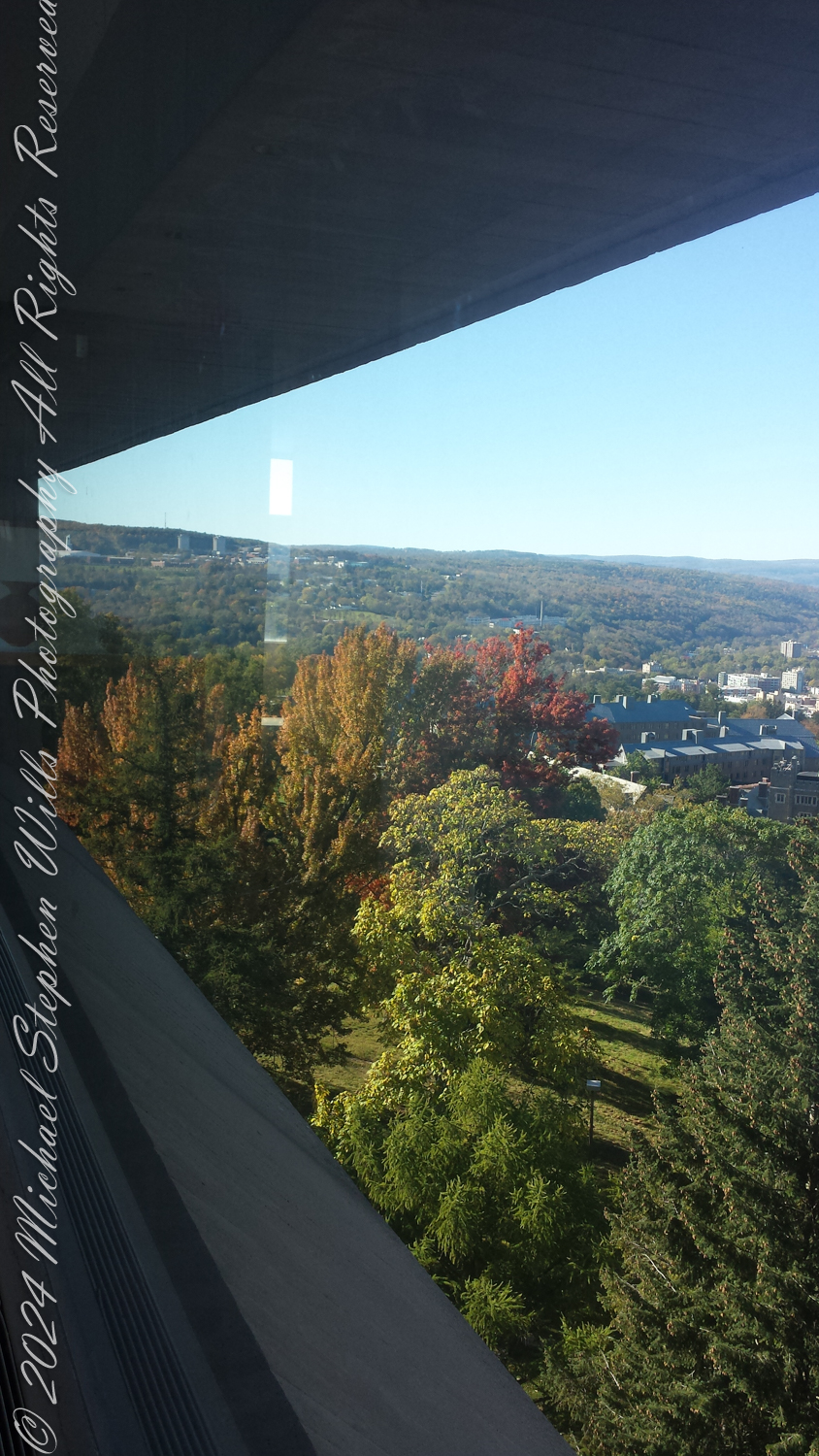
The day started on the museum’s upper level, where expansive windows offered breathtaking views of Ithaca, Cayuga Lake, and the surrounding hills. I lifted Sam so he could take it all in, his little hands gripping my arm as he gazed out at the vibrant autumn landscape while Pam captured the moment. The trees were in early stages of autumn—fiery reds, golden yellows, and rich browns—while Cayuga Lake shimmered in the distance, its deep blue surface reflecting the clear October sky. Sam pointed out toward the horizon; his eyes wide with curiosity. I told him about the lake, the hills, and the valley, trying to capture the beauty of it all in words simple enough for him to understand.

The architecture of the Johnson Museum itself framed the experience perfectly. Designed by I.M. Pei, the building’s clean, modern lines allowed the landscape to take center stage. Standing there with Sam, I felt a profound sense of gratitude—for the view, for the moment, and most of all, for the chance to share it with Sam.

Looking southwest over Cornell University and Ithaca, down the Cayuga Lake Valley. West Hill is to the right. Tompkins County, Finger Lakes Region of New York State

As part of the event, we explored the museum’s galleries, moving from one exhibit to the next. The “Let’s Look Baby” program was designed with young children in mind, blending art appreciation with sensory exploration. While Sam was too young to fully grasp the meaning behind the pieces, he was fascinated by the vibrant colors and the textures of the displays. At one point, we stopped by a ceramic vase. Its elegant curves caught Sam’s attention, and I used the moment to talk to him about shapes and forms, pointing out how it was similar to the roundness of a pumpkin or the arc of a rainbow.

Looking South / Southwest over Cornell University and Ithaca, down the Cayuga Lake Valley. Ithaca College is to the left on South Hill. Tompkins County, Finger Lakes Region of New York State

Throughout the visit, I found myself narrating the world to Sam, drawing connections between what we saw in the museum and the beauty of the natural world outside. It reminded me how much there is to learn and how much joy there is in teaching, even if the lessons are as simple as noticing the colors of leaves or the shape of a cloud.

Looking southwest over Cornell University’s Lib Hill and Ithaca, down the Cayuga Lake Valley. West Hill is to the right. Tompkins County, Finger Lakes Region of New York State

We returned to the large windows overlooking Ithaca more than once. From there, I pointed out the landmarks of the city—downtown Ithaca with its steeples, the rolling hills, and the peaceful expanse of Cayuga Lake stretching toward the horizon. Sam listened quietly, his small fingers pointing to whatever caught his attention. I wondered what he was thinking, but I knew this experience, even if he wouldn’t remember it fully, was shaping his view of the world.

Looking to the North / Northwest over Cornell University and Cayuga Heights to Cayuga Lake. West Hill is to the far left. Along the southern lake shore is Stewart Park, the lighthouse, New York State Marina and Cass Park. Tompkins County, Finger Lakes Region of New York State

The day wasn’t just about what we saw—it was about the connection we shared. Holding Sam in my arms, I felt the simple, deep joy of being present in the moment. This was a chance to see the world through his eyes, to notice the details I might otherwise overlook, and to marvel at the way something as simple as a vase or a view could spark his curiosity.

Looking to the North / Northwest over Cornell University and Cayuga Heights to Cayuga Lake. West Hill is to the far left. Along the southern lake shore is Stewart Park, the lighthouse, New York State Marina and Cass Park. Tompkins County, Finger Lakes Region of New York State

As the October sun swept over the landscape, casting warm golden light, we left the museum. Sam was getting sleepy, his little head resting on my shoulder Pam and I shared a quiet contentment. That day at the Johnson Museum is a memory to treasure, a reminder of the beauty in both art and the natural world, and most importantly, the joy of sharing it with someone you love.

Enter your email to receive notification of future postings. I will not sell or share your email address.

Winter Magic

a meditation

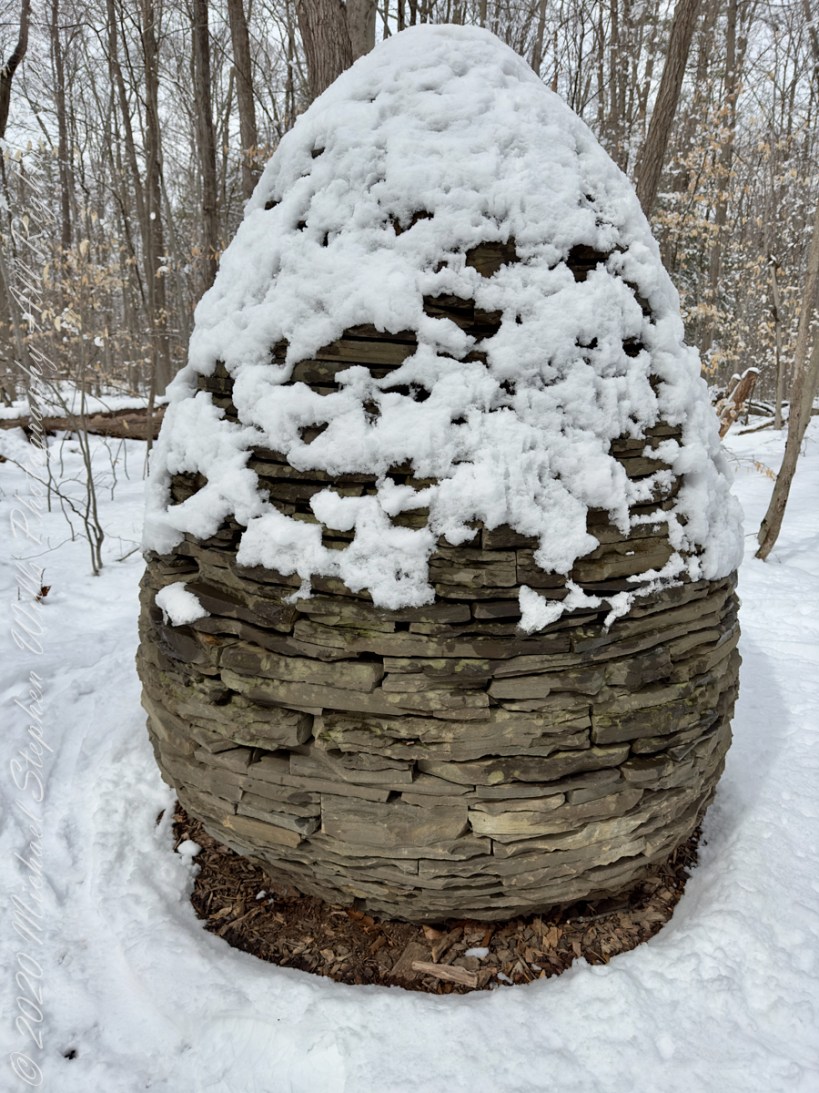
Found along the Hoyt-Pileated Trail, Sapsucker Woods, Sunday, March 12, 2023.

Text of plaque reads: Andy Goldsworthy; British, born 1956; “Sapsucker Cairn” (formerly New York Cone), 1995 – 2008; Llenroc and other local stone; Gift of Sirje Helder Gold and Michael O. Gold, rededicated in memory of their beloved son Maximilian Arnold Gold; Herbert F. Johnson Museum of Art.

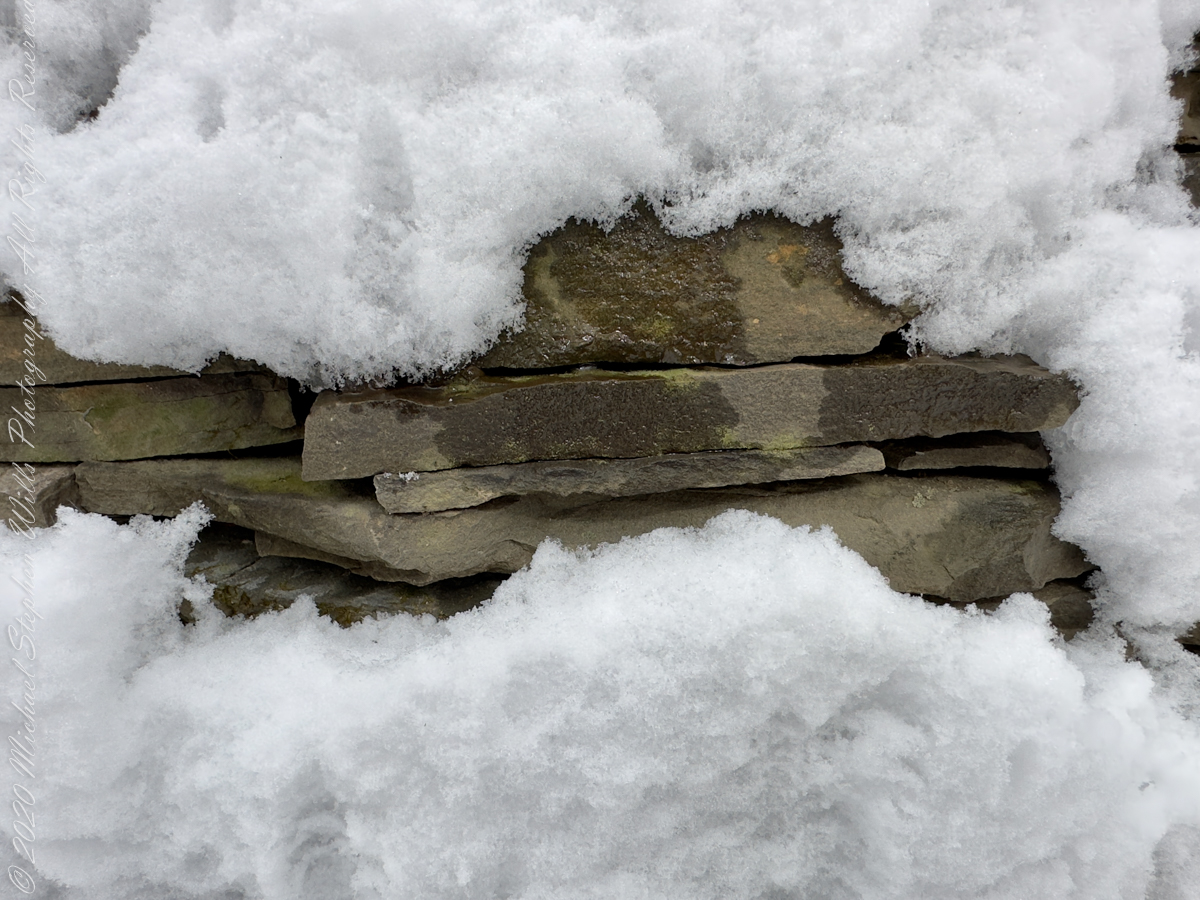
A sculpture transformed by a March snowfall. Notice how the stone, warmed by sunlight filtering through the leafless trees, melts surrounding snow.

Llenroc (Cornell spelled backwards) stone is a type of bluestone that is quarried in the Finger Lakes region of New York. It has a mix of blue-gray and rust color and is traditionally used on Cornell University’s campus. Llenroc is also the name of a Gothic revival villa built by Ezra Cornell, the founder of Cornell University.

Click Me for “Finger Lakes Memories” my online gallery.

Copyright 2018 Michael Stephen Wills All Rights Reserved