Superstition Wilderness Dawn

on the slopes of Lime Mountain

Pre-dawn on the fourth morning of my solo expedition to Reavis Falls, before the last posting “Among the Desert Wildflowers“, on the slopes of Lime Mountain, as the eastern sky became slightly less dark, I woke to an unusual sensation:  total silence.  The air was absolutely still, no insects trilled, the birds were still asleep.  Lying very still, the ringing of my ears announced the silence.

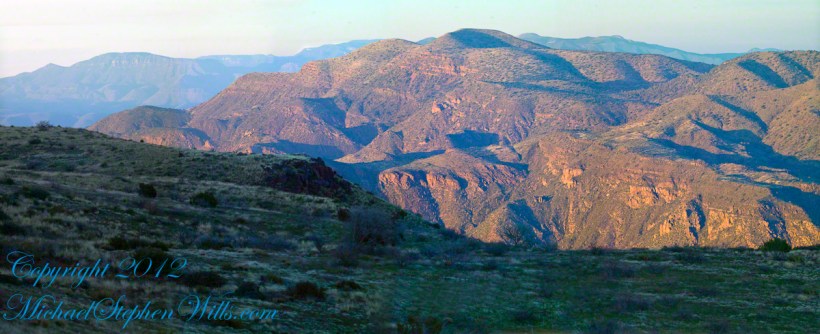
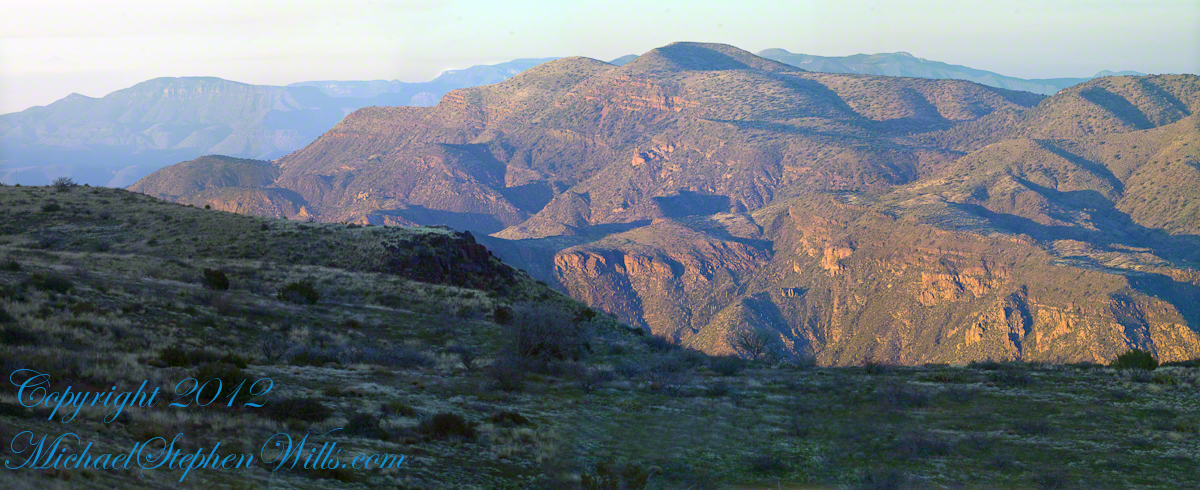
In that silence I set up for this panorama taken from a tripod-mounted Kodak DCS ProSLR/c mounted with a Canon EF 200mm f/2.8L II USM telephoto lens.  It is 5 image files combined.  The source file is about 300 MB.

That is Pinyon Mountain in the center distance.  The Arizona Trail traverses that terrain, though it is not visible from this distance (it is about 3 miles away).

Lime Mountain is truly a light green, as you can see from the foreground ledge.  From there, a cliff runs round where on a south-facing site there are cliff dwelling ruins.  The trail to Reavis Falls runs to the right, along a ridge broken by a narrow canyon with access to Cedar Basin, also at the foot of these cliffs.
Copyright 2023 Michael Stephen Wills All Rights Reserved

Among the desert wildflowers

Among the grasses, cacti and lichen-covered rocks were many small wildflowers

See Evening on Two Bar Mountain for another chapter of my four-day solo expedition to Reavis Falls in the remote eastern Superstition Wilderness.

Campsite at Morning

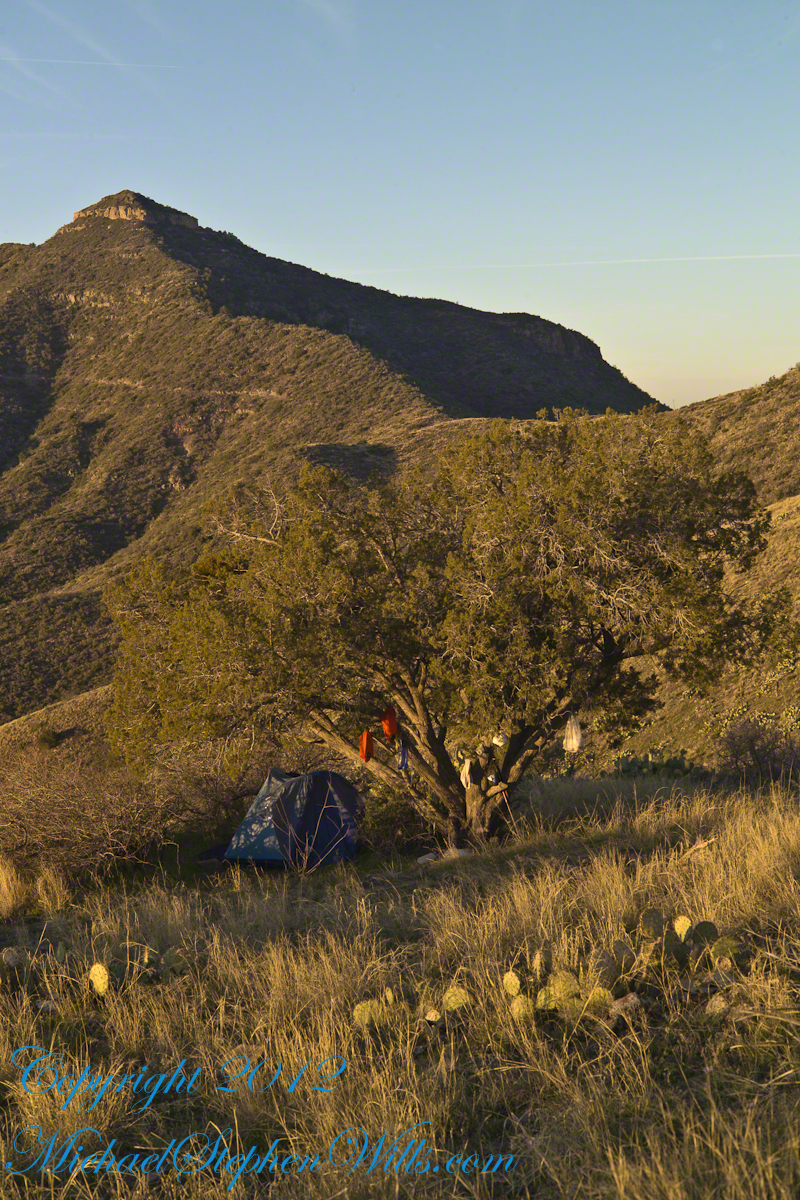
On the late-morning of day three I climbed out of the Reavis Creek valley to camp on the slopes of Lime Mountain.  There I watched the afternoon progress to evening, a full moon rise in a bright sky and other events featured in this blog.  All around my campsite under a lone juniper the mountain side was blooming.

Grasses, Cacti and Flowers

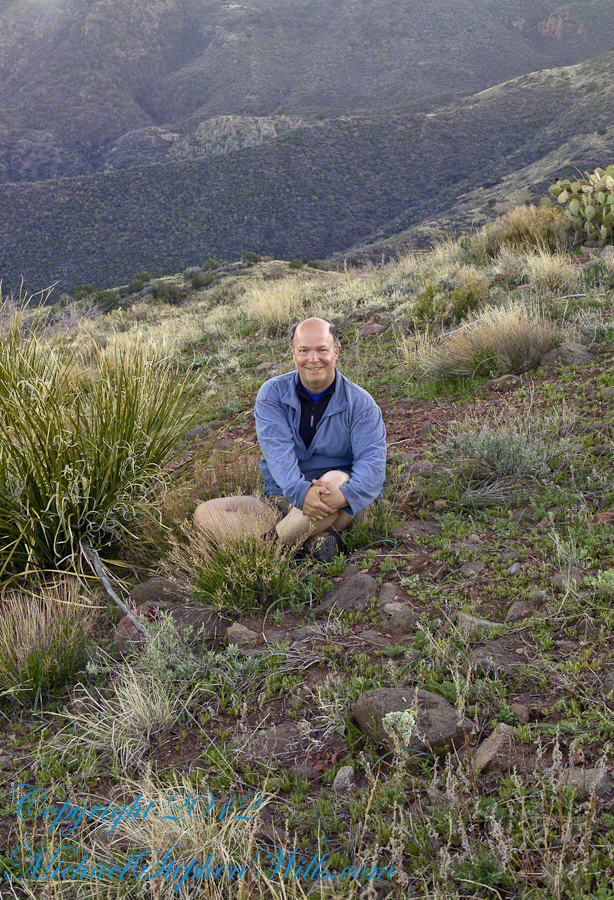
Among the grasses, cacti and lichen-covered rocks were many small wildflowers.  I was careful to avoid damaging them and otherwise enjoyed their beauty and plentiful blooms my entire stay.  I capture some of them in the early morning light and spent some time identifying them for you.

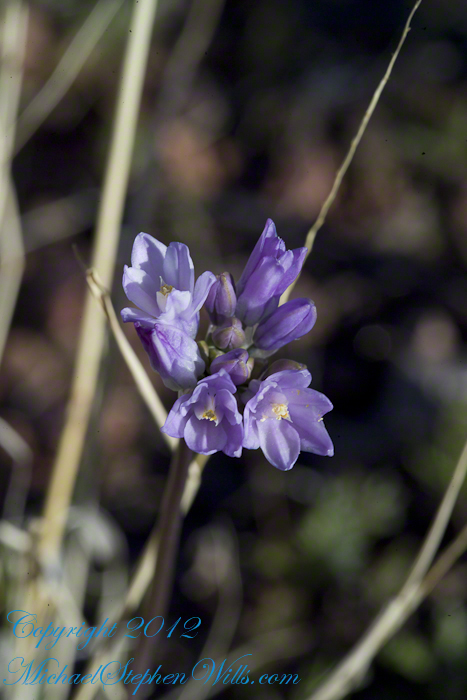
Desert Hyacinth is a perennial lilly (Liliaceae).

It grows from an onion-like bulb used for food by pioneers and Native Americans.  This lilly propagates through this bulb and, also, from seed that forms from these flowers.

The umbel-shaped flowers grow in clusters at the end of long, leafless stalks.  Each blossom is an inch across and has six segments that are like petals.

Also called Blue Dicks, bluedicks, Papago lily, purplehead, grassnuts, covena, coveria.

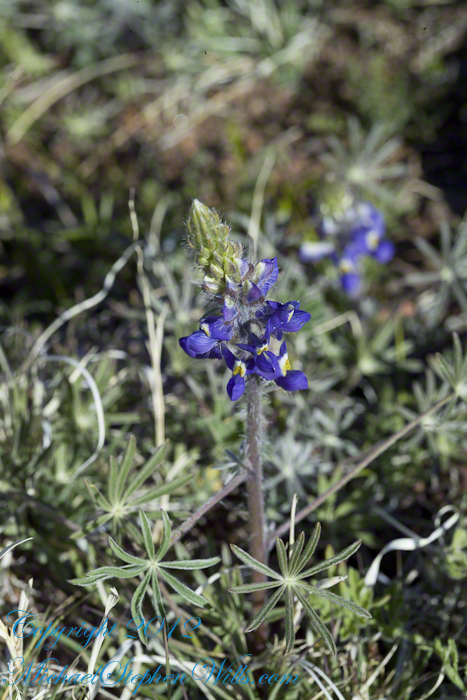
Lupine is a pea, a perennial herb and a favorite of bees. Like other lupines, it improves the soil.
Their root nodules, with the aid of certain bacteria, allow lupines and other legumes to absorb free nitrogen from the air.

A member of the Phlox family (Polemonium), this five (5) petal flower bloomed in small groups on erect stalks with sparse leaves. The stamen heads are notable for a bright blue color.

Copyright 2023 Michael Stephen Wills All Rights Reserved