Spring Outing III

Red Pine on the level

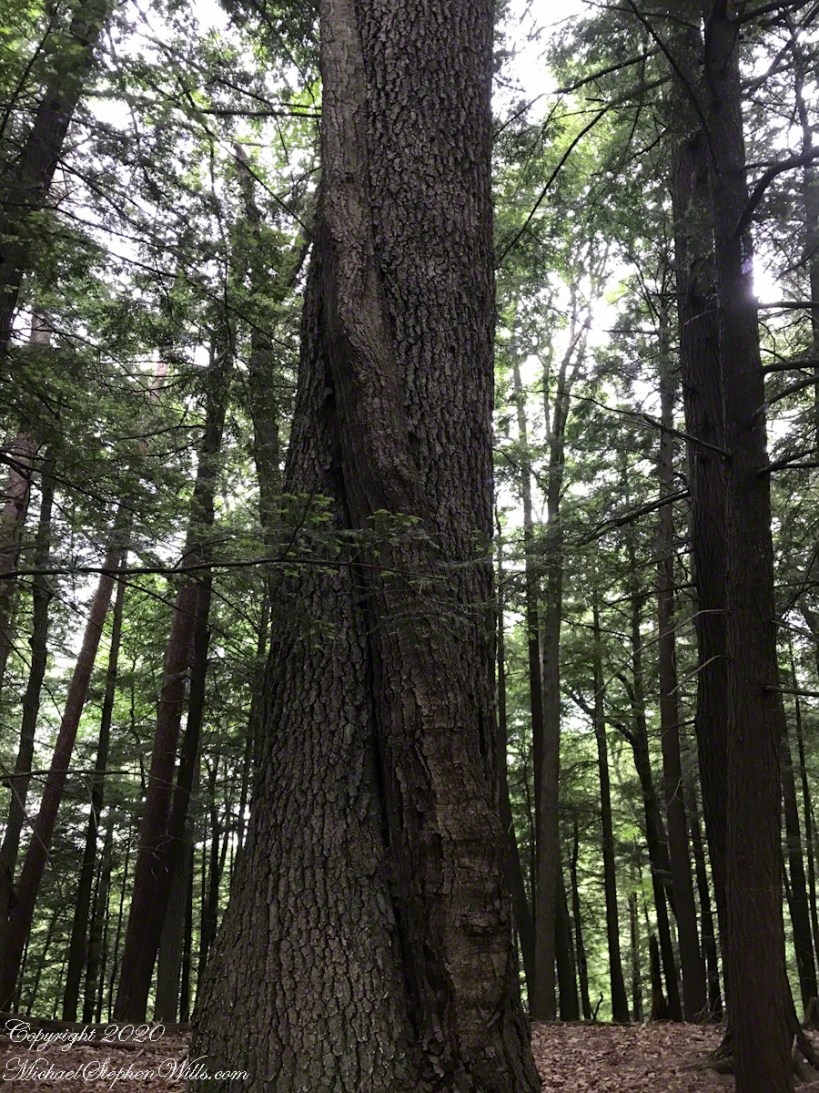
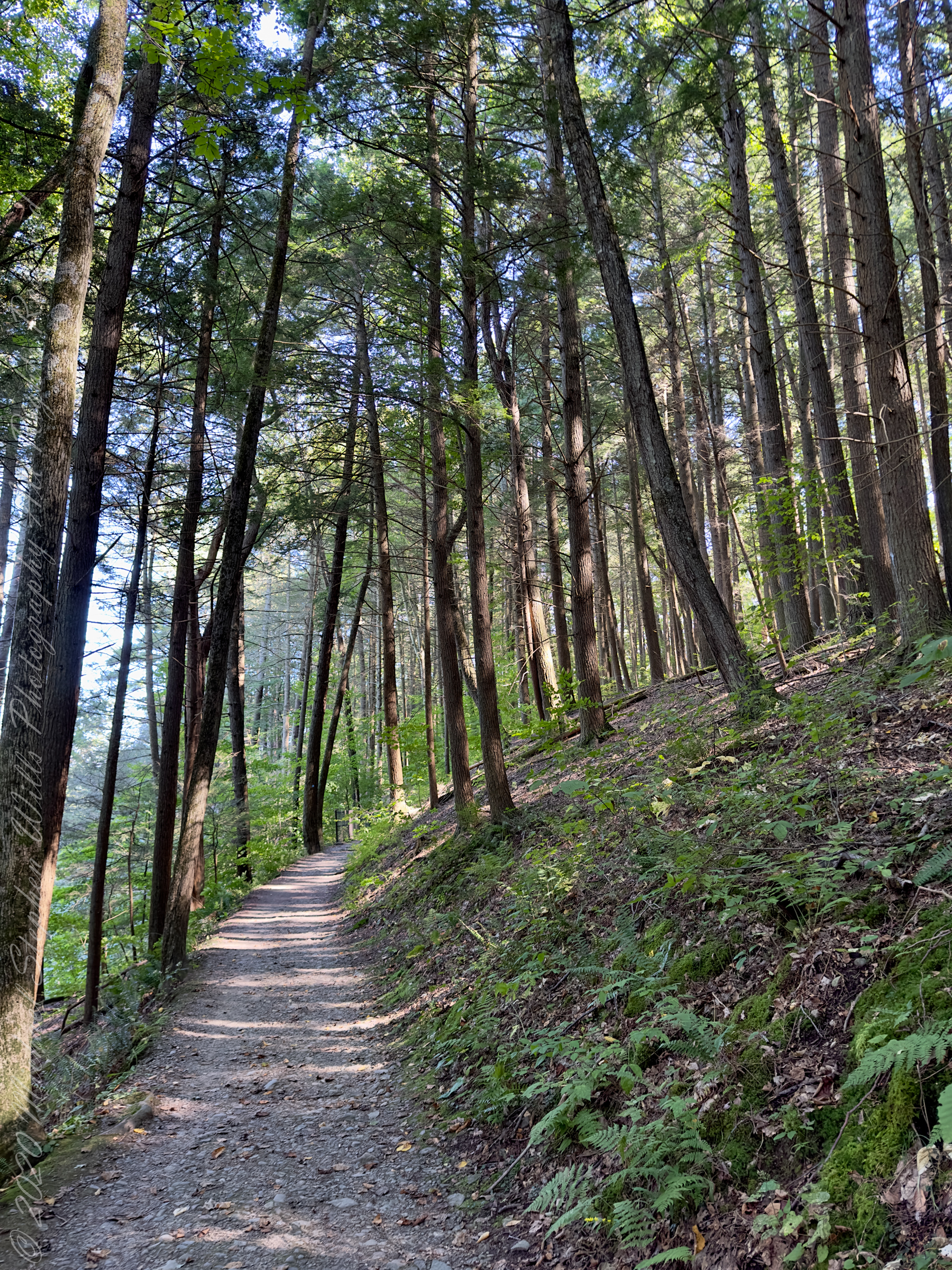
One hundred and fifty feet in a series of steep climbs is the effort expended to reach the relatively level portion of South Rim Trail where the tall Red Pines briefly reign. Here the trees thrive on the northeast facing slope. They grow in this way in one other location, in the upper park, on an eponymous trail.

Encounters with groups of people descending always demanded I step off the trail to allow social distancing. Everyone work a flimsy face covering, although Governor Coumo’s order covers situations where social distancing is not possible. As of you, we do not have the loose masks; but only the N95 or a full respirator (both acquired very early on, our respirators were purchased for spreading lawn chemicals and spray painting).

Click photograph for a larger view. To do this from WordPress Reader, you need to first click the title of this post to open a new page.
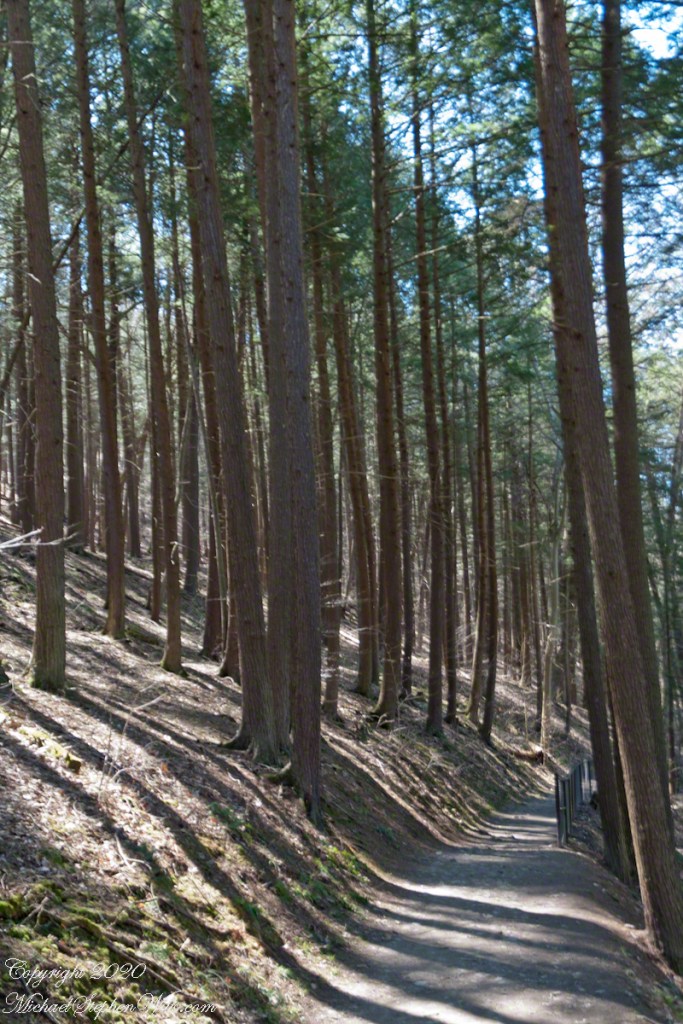
Red Pine (Pinus resinosa), also know as Norway Pine, shed pollen prolifically. Some Aprils my boots are covered with it, a dusting of yellow. Not today.
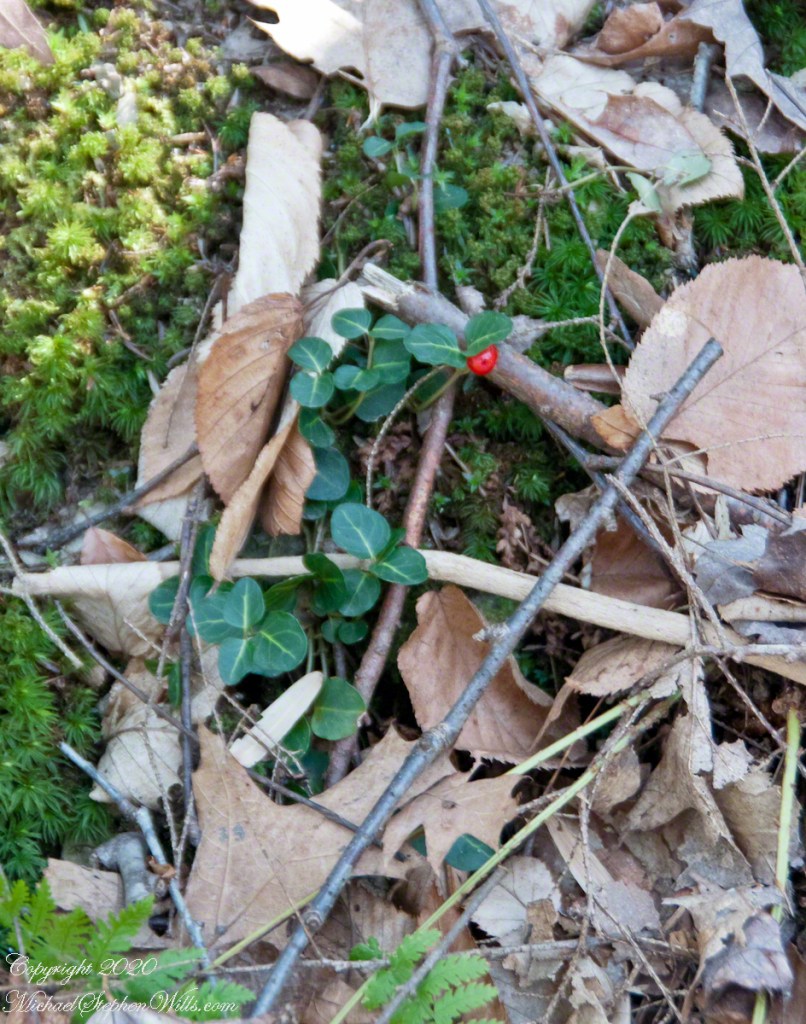
A species easy to spot among the green, an example of a shrub of the genus Gaultheria, though a very small specimen. The common name is wintergreen and I have never found larger specimens in Treman park. It is growing among the mosses on the wall of Enfield Glen South Rim.
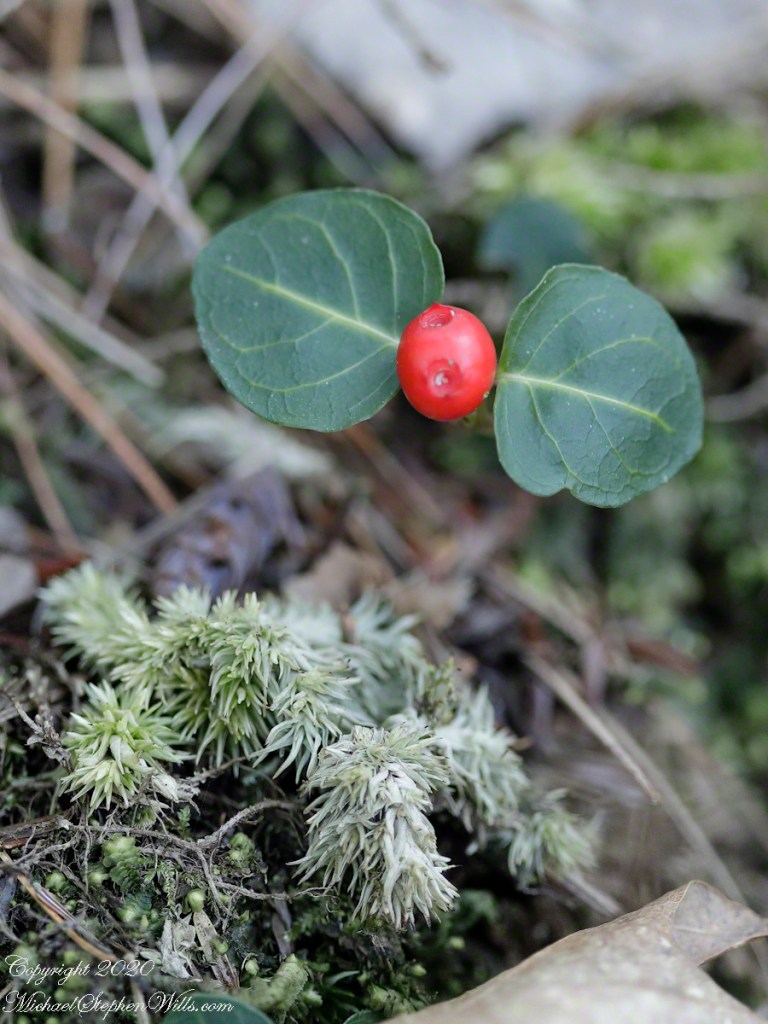
The tough wintergreen leaves endue the cold seasons, the name is synonymous with evergreen.

Both shots are handheld, the macro is from a 100 mm “macro” fixed focus lens. ISO 2500, the f-stop to be wide open at 2.8 to gather the sparse light and present the subjects, blurring the immediate background. The overview shot is also a high ISO, 2000, the f-stop 5.8 on a variable focus lens set to 60 mm.
Copyright 2024 All Rights Reserved Michael Stephen Wills

Treman Early Autumn Walk XIII

The Red Pine, Minnesota’s state tree, is a tall, conical, long-lived evergreen with distinctive orange-red bark.

Returning from a Rim Trail walk one April my boots were yellow from a prolific release of pollen from flowers of these tall trees that develop into the woody cones.

Pinus, the pine, is the largest genus in the family Pinaceae, with around 100 species throughout the northern hemisphere.


Red Pine (Pinus resinosa) is Minnesota’s state tree, known there as the Norway Pine. The use of the name “Norway” may stem from early Scandinavian immigrants who likened the American red pines to the Scots pines back home.


“Red pine is a coniferous evergreen tree characterized by tall, straight growth. It usually ranges from 20–35 meters (66–115 feet) in height and 1 m (3 ft 3 in) in trunk diameter, exceptionally reaching 43.77 m (143+1⁄2 ft) tall. The crown is conical, becoming a narrow, rounded dome with age. The bark is thick and gray brown at the base of the tree, but thin, flaky and bright orange red in the upper crown; the tree’s name derives from this distinctive character. Some red color may be seen in the fissures of the bark. The species is self-pruning; there tend not to be dead branches on the trees, and older trees may have very long lengths of branchless trunk below the canopy.”


“It is a long-lived tree, reaching a maximum age of about 500 years. Another member of Pinus, Pinus longaeva D.K. Bailey, the intermountain bristlecone pine, is the longest-lived tree in the world; one in the White Mountains of Nevada is estimated to be 5,000 years old, and by matching rhe rings with even older dead trees, a sequence going back 8,500 years has been established.”

“Red pine is notable for its very constant morphology and low genetic variation throughout its range, suggesting it has been through a near extinction in its recent evolutionary history. A genetic study of nuclear microsatellite polymorphisms among populations distributed throughout its natural range found that red pine populations from Newfoundland are genetically distinct from most mainland populations, consistent with dispersal from different glacial refugia in this highly self-pollinating species.”

Click Me for the first post in this series.

References
–text in italics and quotes is from Wikipedia, “Pinus resinosa.”
–“The Botanical Garden Vol I Trees and Shrubs,” Roger Phillips and Martyn Rix, Firefly Books, 2002.

Copyright 2023 All Rights Reserved Michael Stephen Wills

Native

Red Pine on the level

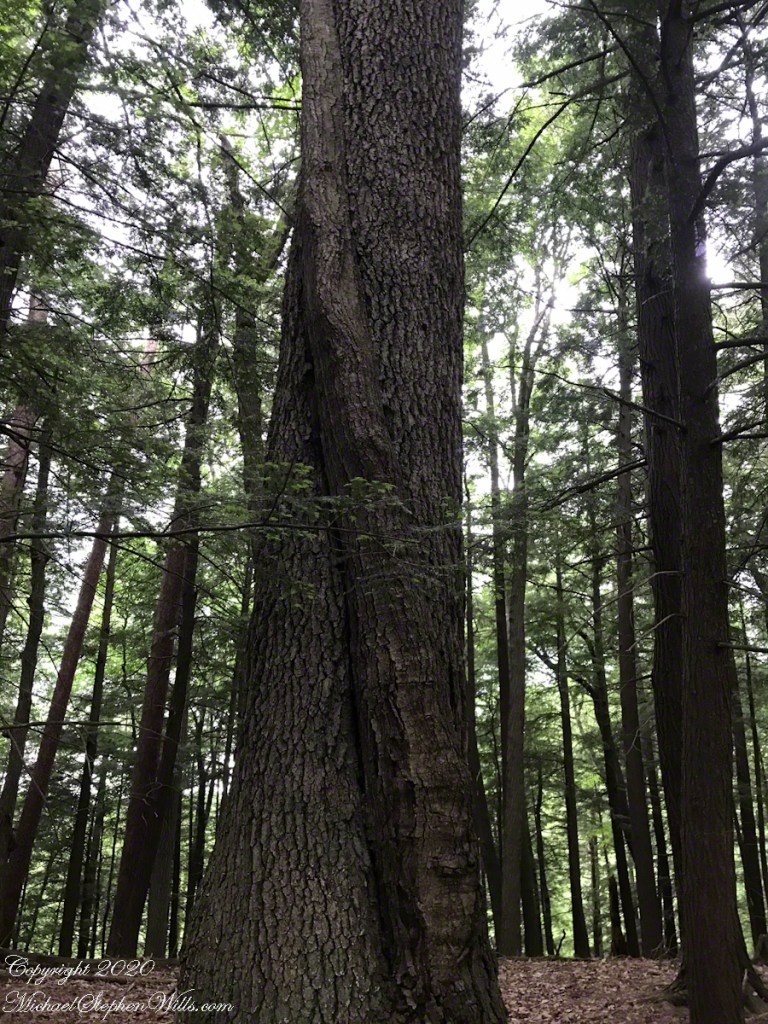
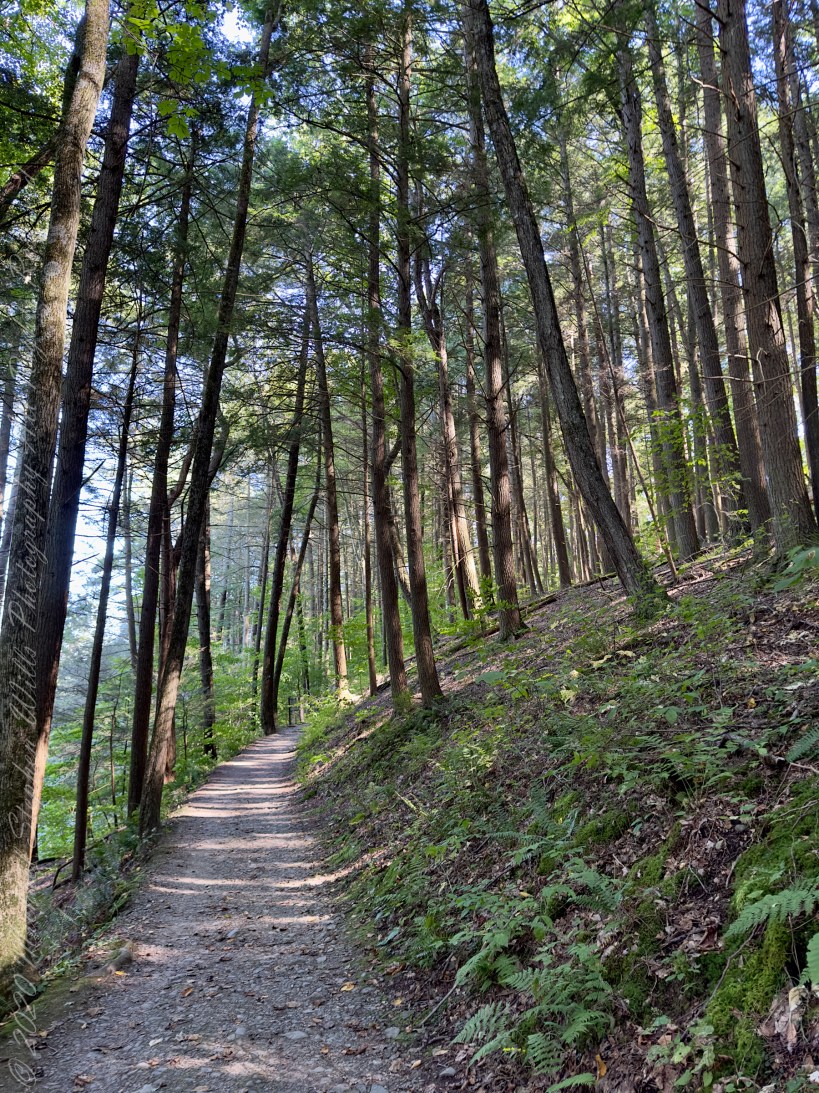
Red Pine is a tree native to North America, yet it is called “Norway Pine” in Minnesota. Famously settled by Norsemen, the misnomer may originate with a sense of homesickness in these first settlers. The tall and straight trunks grace the trails of Treman Park, one trail is eponymous.

Click any photograph for a larger view. To do this from WordPress Reader, you need to first click the title of this post to open a new page.

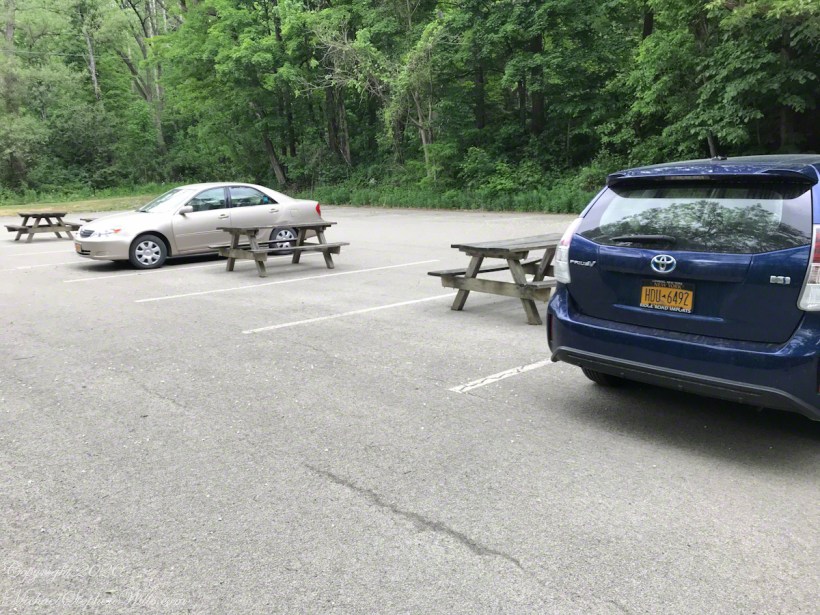
I break away from household chores on a week day for exercise, arriving am impressed by the COVID-19 mitigation.

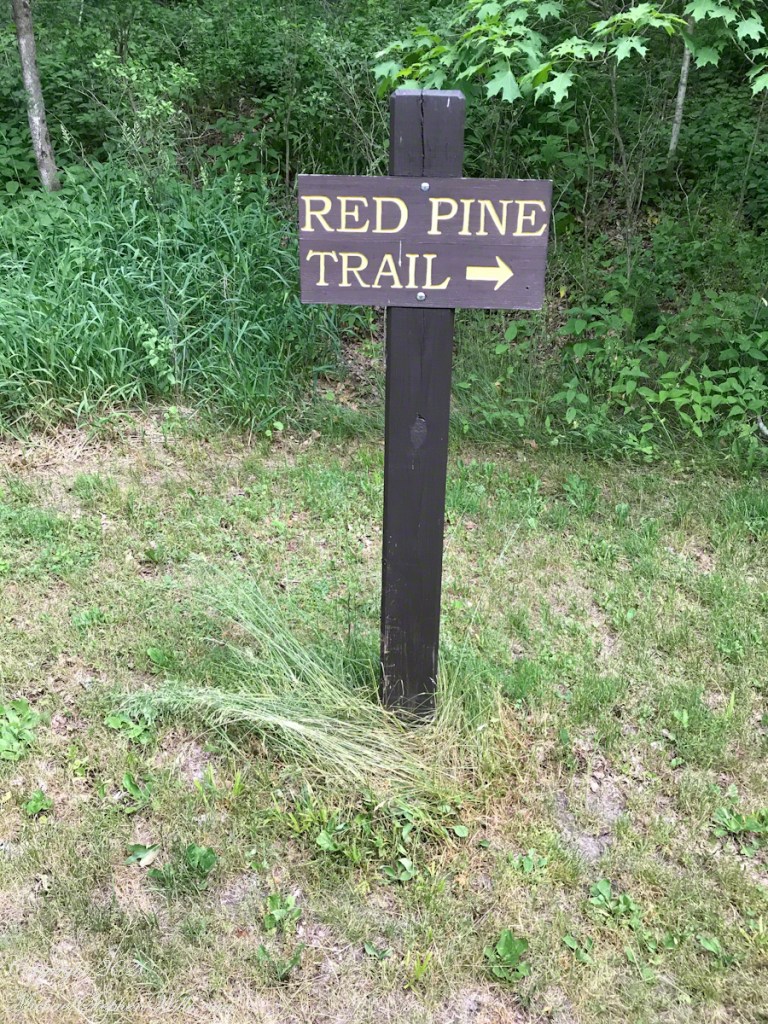
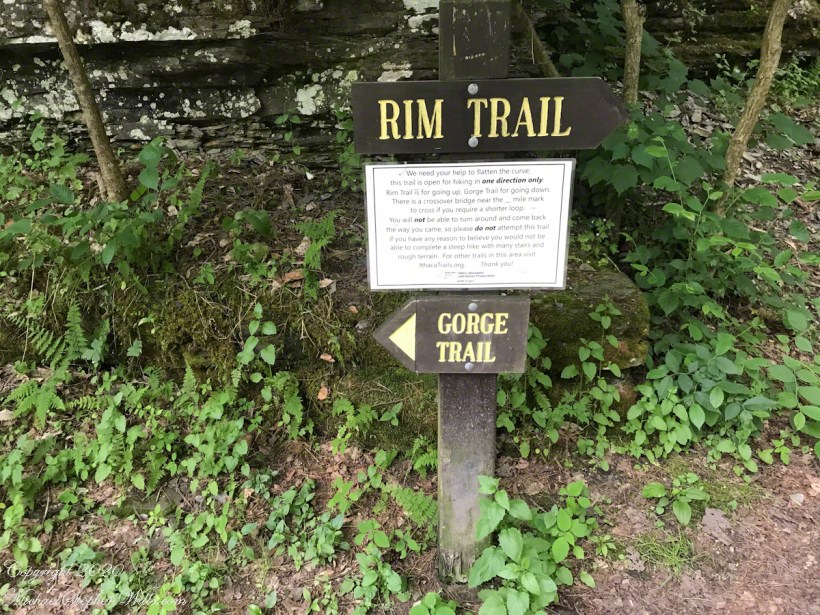
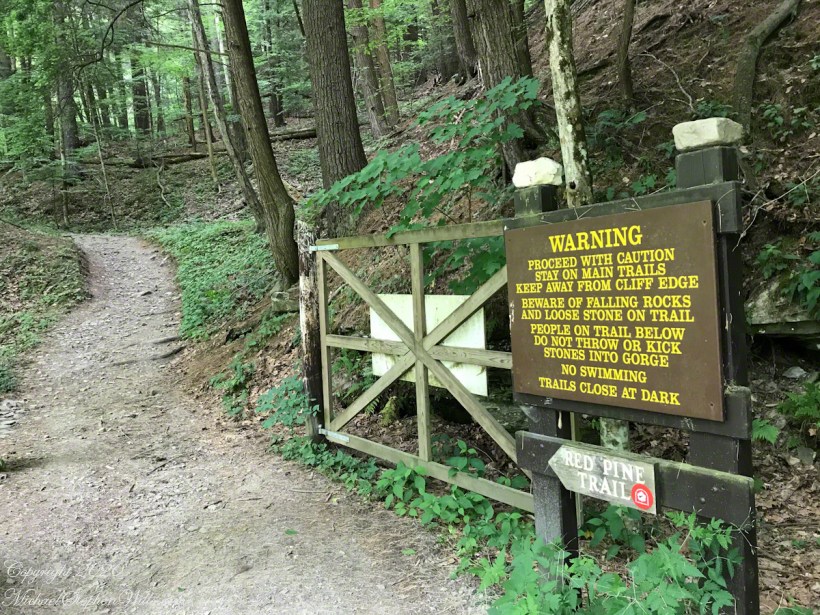
The new one-way trail rules, posted on the Rim Trail sign, means my planned route must change. Today’s COVID-19 strategy is to use the Red Pine trail, a very steep climb, a pine woods ramble, ending with descent to the Gorge Trail suitable for a mountain goat. The rules mean I cannot turn right on the Gorge Trail to form a loop. Instead commitment to the Gorge Trails means a 4 mile loop to the bottom of the park, returning on the Rim Trail. I decide to climb to the top and return.

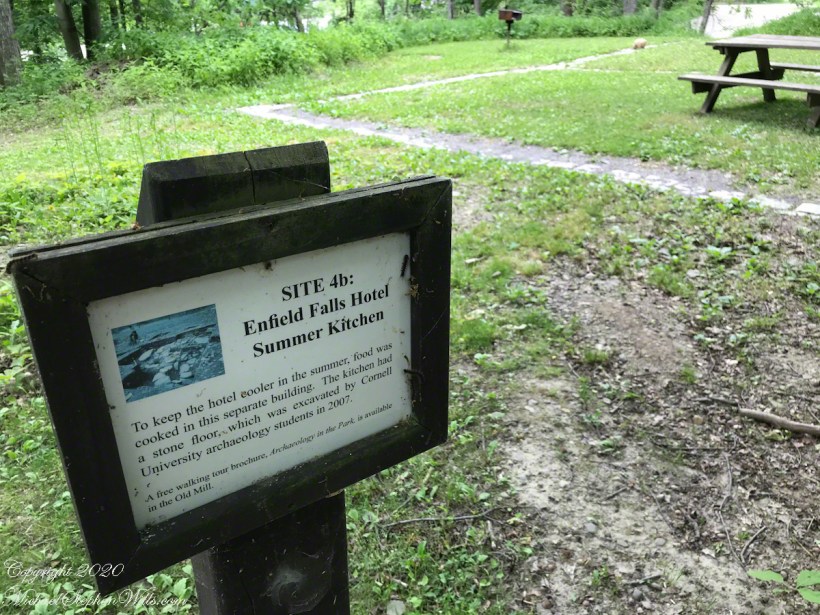
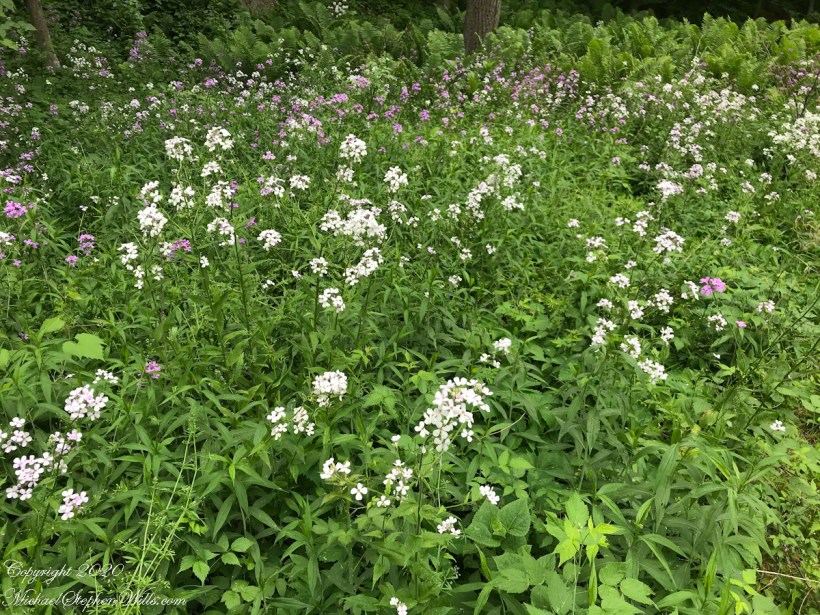
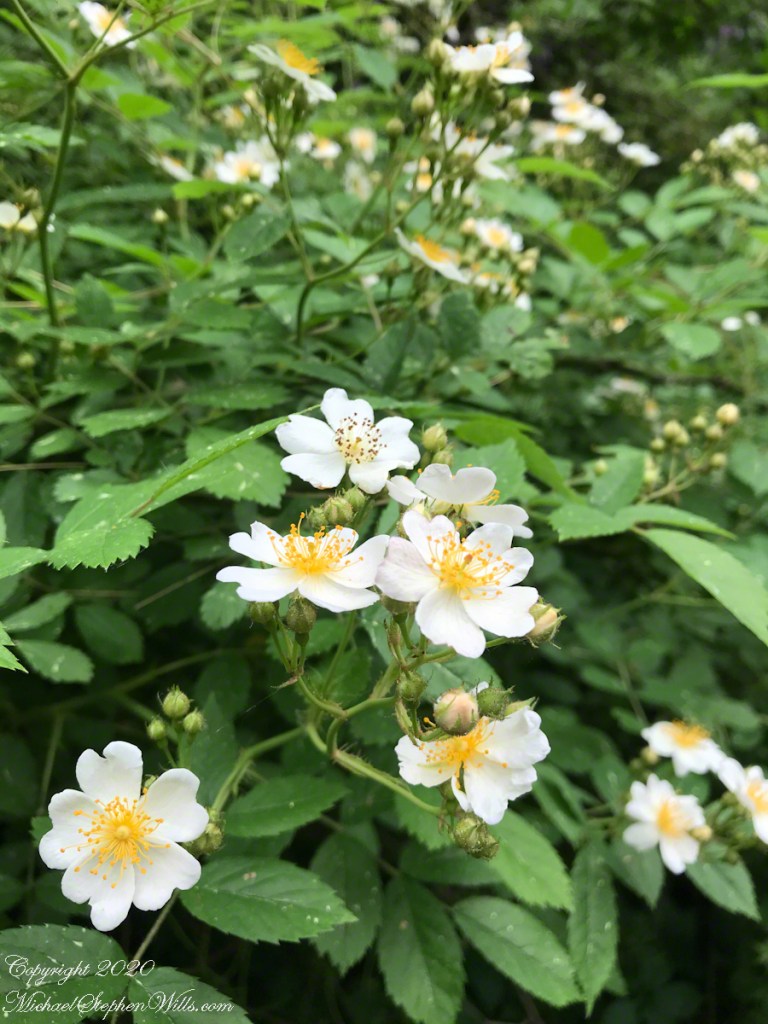
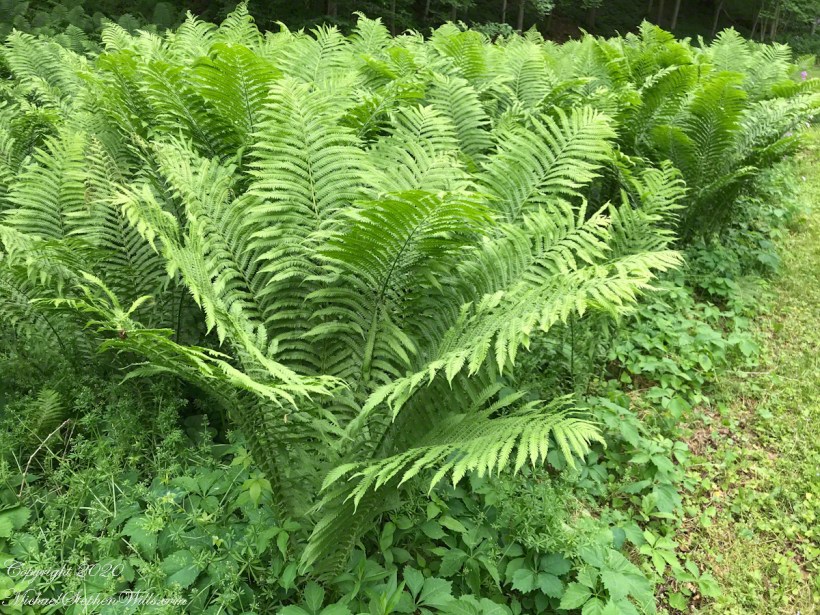
I take an interesting detour on the way, visiting an archaeological site, fields of strongly scented wild roses, lush ferns.

All these photographs and video are from an IPhone 7, sent to my laptop via ICloud.

I cross a nameless stream to the trail head, follow this stream uphill to where it cuts into the slope where the trail turns sharply and climbs into the pines.

Click me for better experience viewing the following video. To do this from WordPress Reader, you need to first click the title of this post to open a new page. Note the replay icon (an arrow circling counter-clockwise.

Here is the experience from the ridge top. The sound of water is Enfield Creek rushing along the cliff face.

Copyright 2019 All Rights Reserved Michael Stephen Wills