Healing Through Nature in Sapsucker Woods

An autumn walk for healing, resilience, and gratitude.

On this autumn Sapsucker Woods afternoon, the world seems crafted to soothe. Sunlight filters through the canopy, setting leaves ablaze in rich reds, golden yellows, and softened greens, the seasonal palette reflecting nature’s grand finale. Today, the woods are a sanctuary for healing, a space where steps are measured not by speed but by strength, each one a testament to resilience.
Pam stands before the wide, outstretched wings painted on the wall at the Cornell Lab of Ornithology, wings so vast that they dwarf her. She smiles, resting against her hiking poles, the Condor wings an emblem of a journey toward reclaiming freedom. Her recent hip replacement surgery has given her back this independence, a reminder that recovery is not just about physical mending, but about lifting the spirit to soar once again.

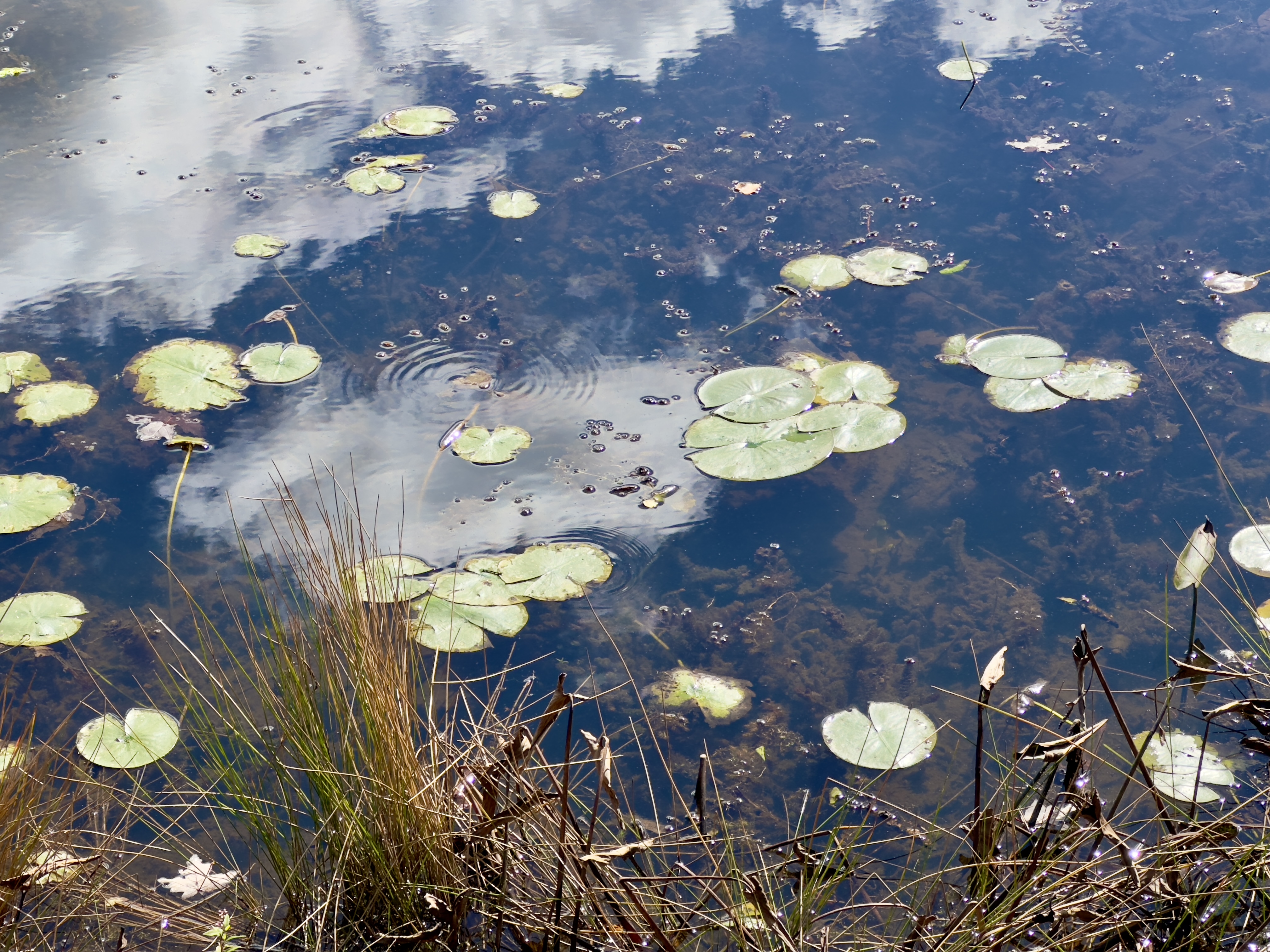
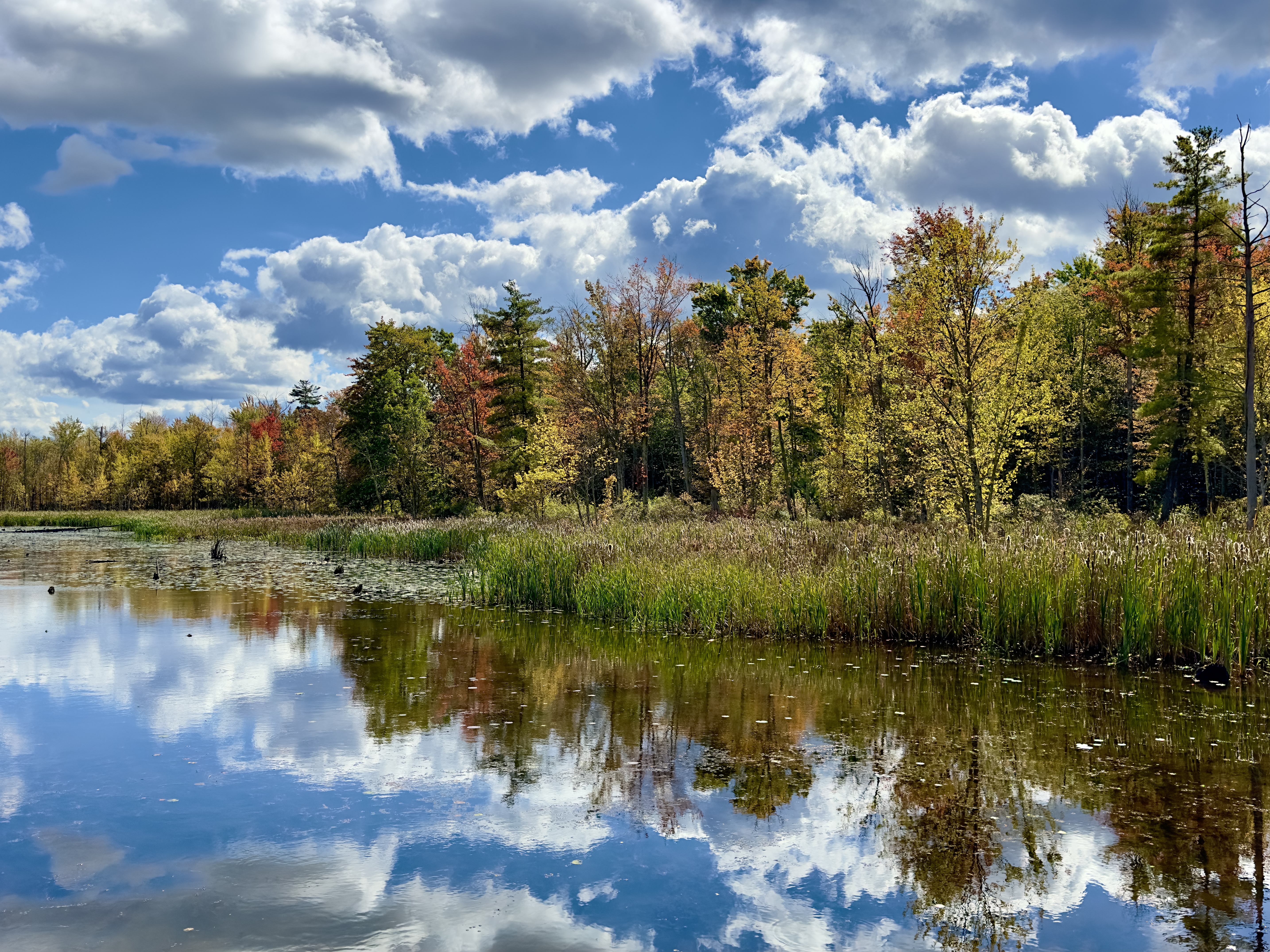
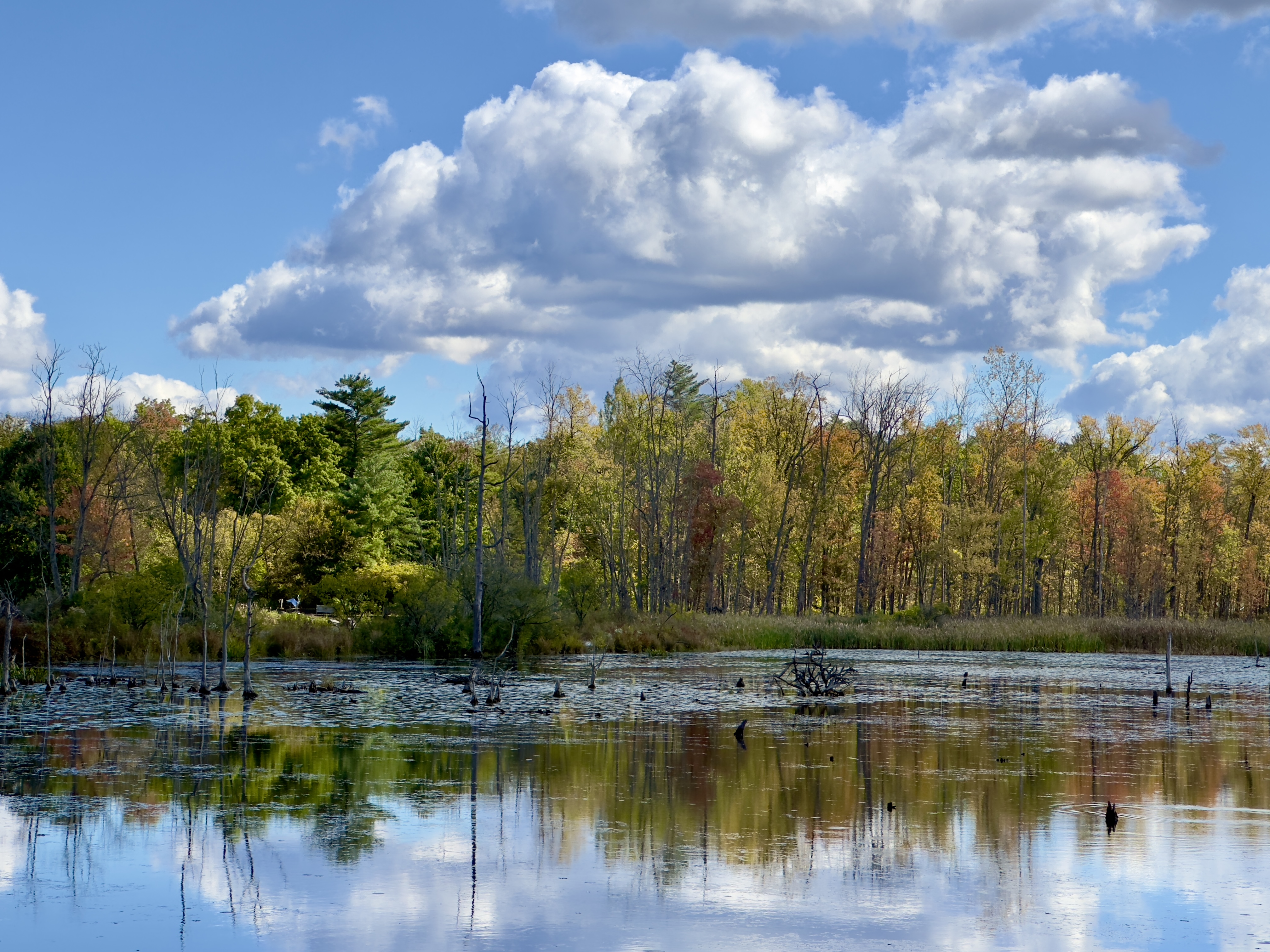
The trail unfolds gently, bordered by cattails and still waters that mirror the sky—a bright blue canvas mottled with soft clouds drifting in and out of the reflections. Fallen leaves float upon the pond’s surface, creating patches of color that seem suspended between water and sky. Nearby, lily pads, green stepping stones over shadowed depths, their edges lit by glittering sunlight. Geese glide by, unbothered, embodying a calm flowing outward, wrapping the whole scene in peace.
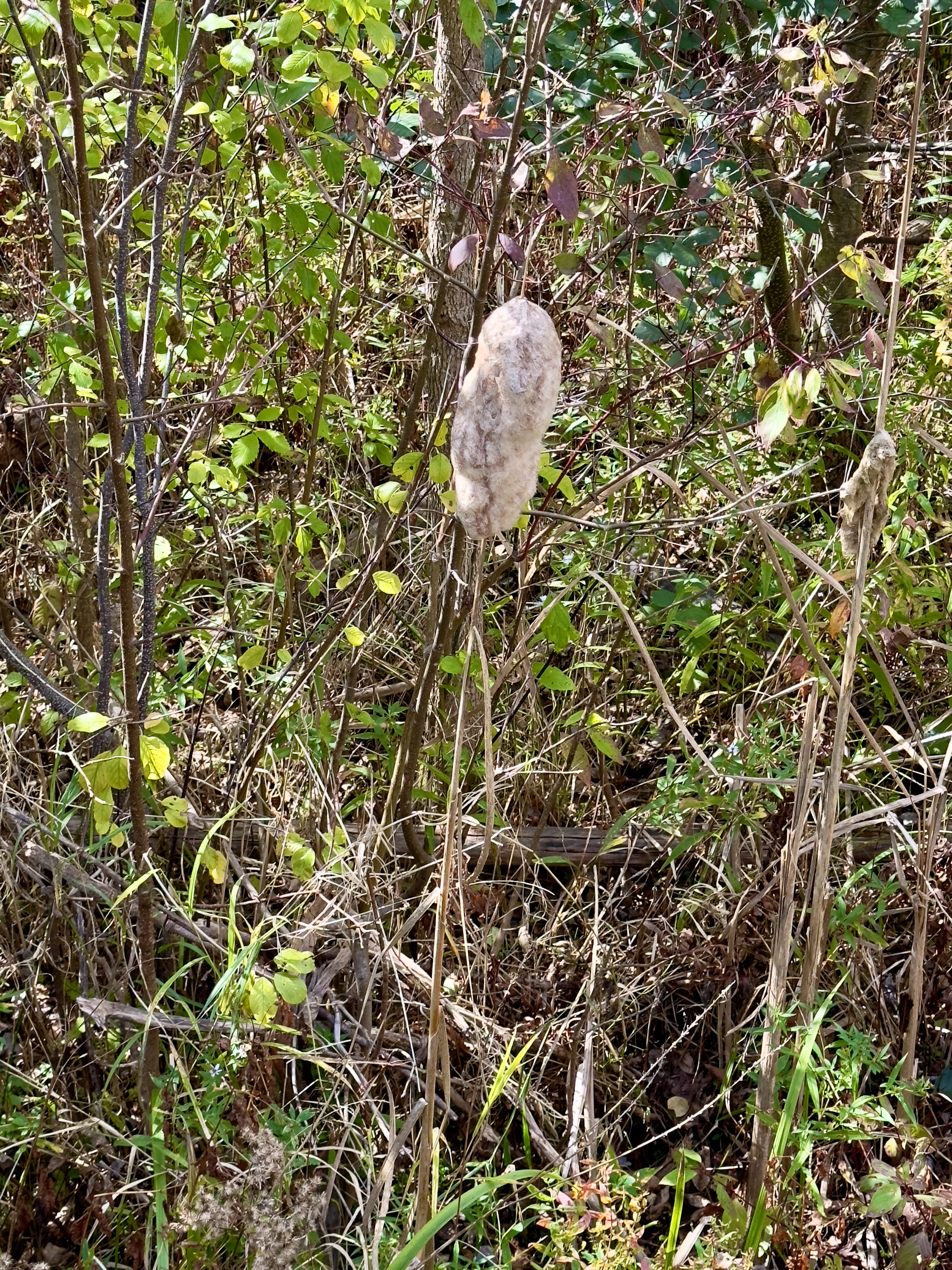
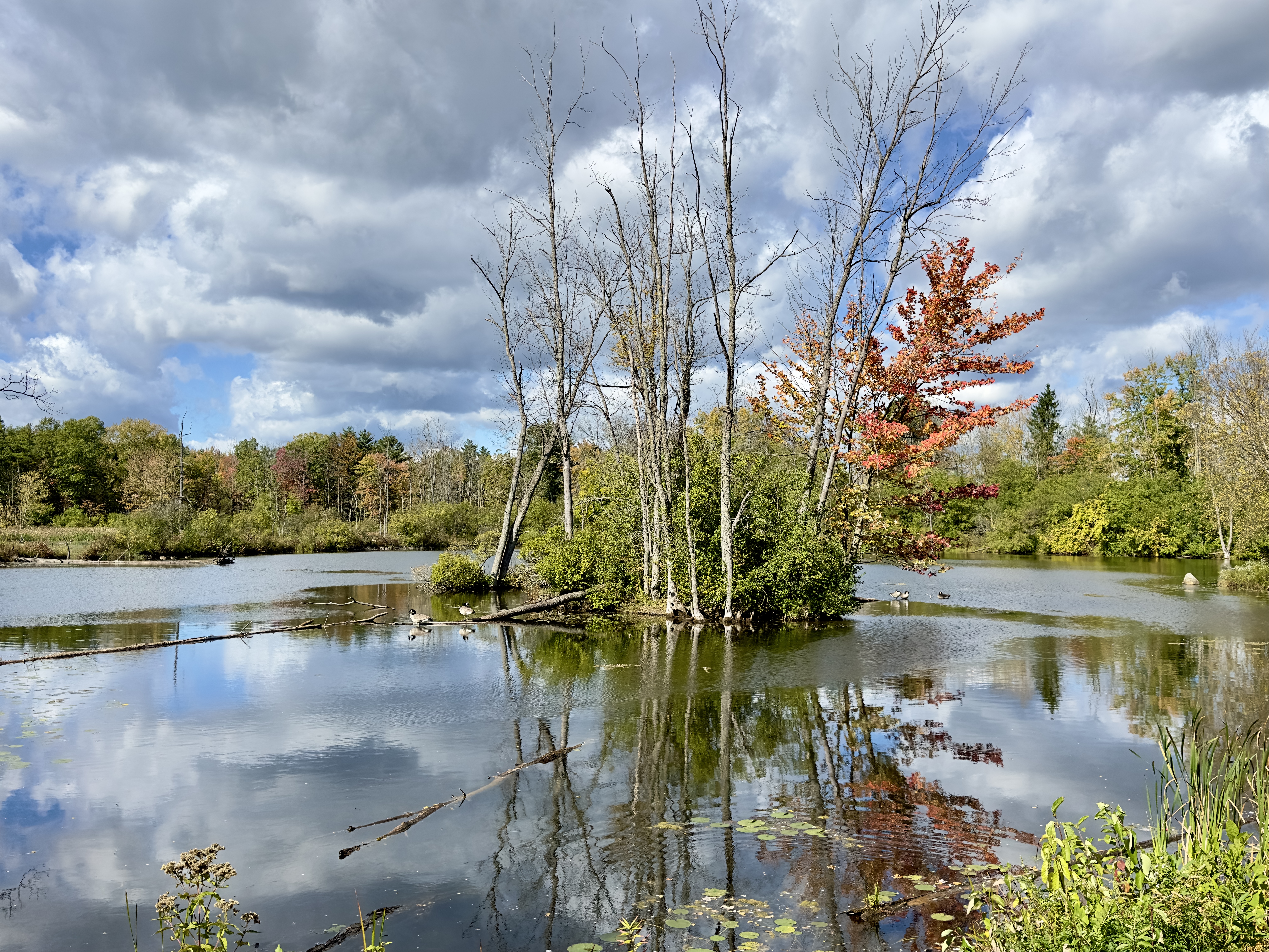
Each step Pam takes is deliberate, accompanied by the steady rhythm of her poles striking the ground. It is the kind of walk that invites contemplation, where time slows, and even the smallest detail—a single yellow leaf spiraling down, a ripple breaking the pond’s surface—feels like an invitation to pause and breathe. She moves from the open path toward a shaded arbor, draped with twisting vines. The vines climb upward, winding around the wooden beams, their leaves creating a soft veil that frames her view of the water beyond. Through this leafy curtain, she gazes upon the pond, where autumn’s reflection glows, offering a quiet moment of solitude, of healing drawn from nature’s persistence.
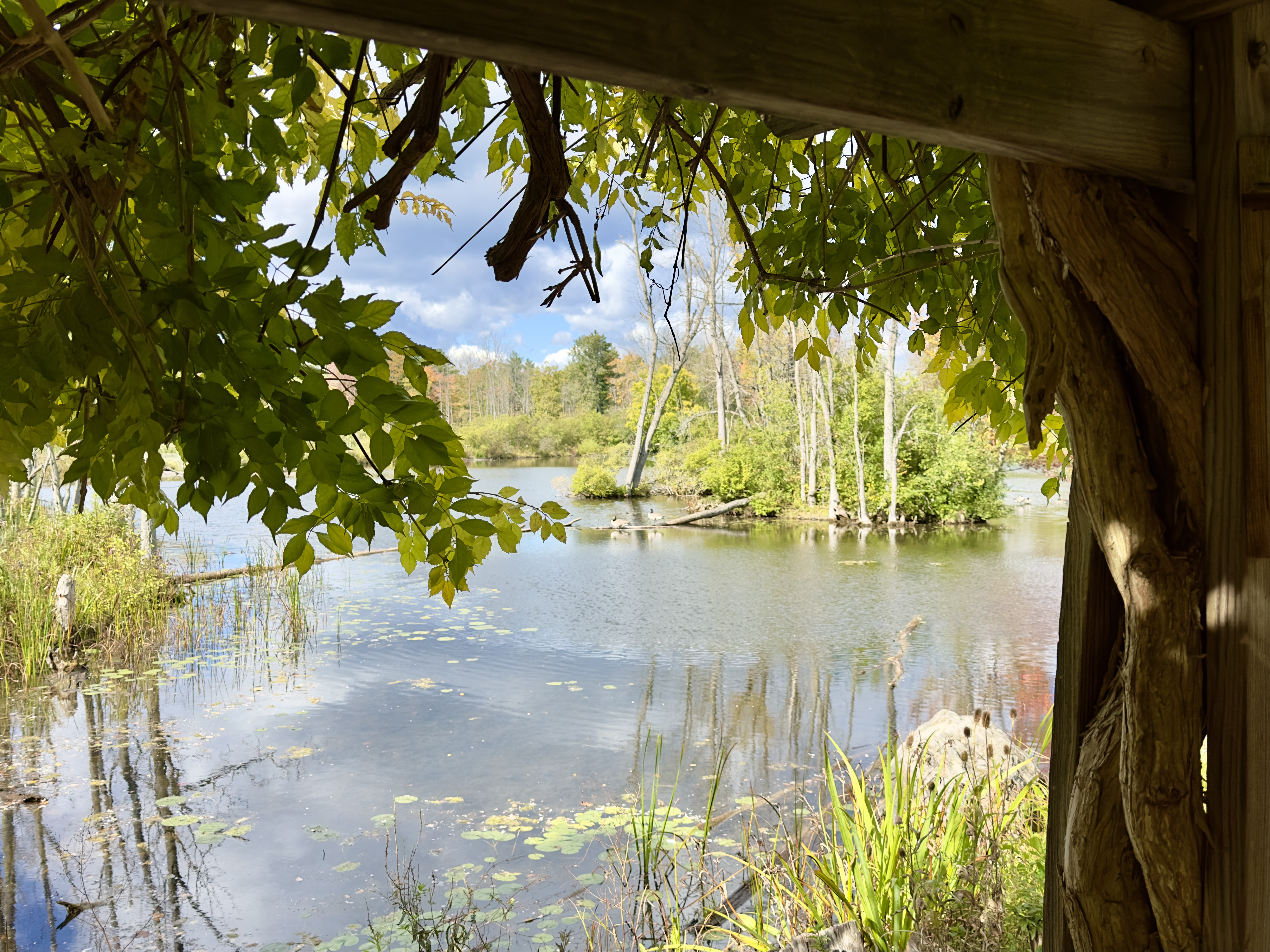
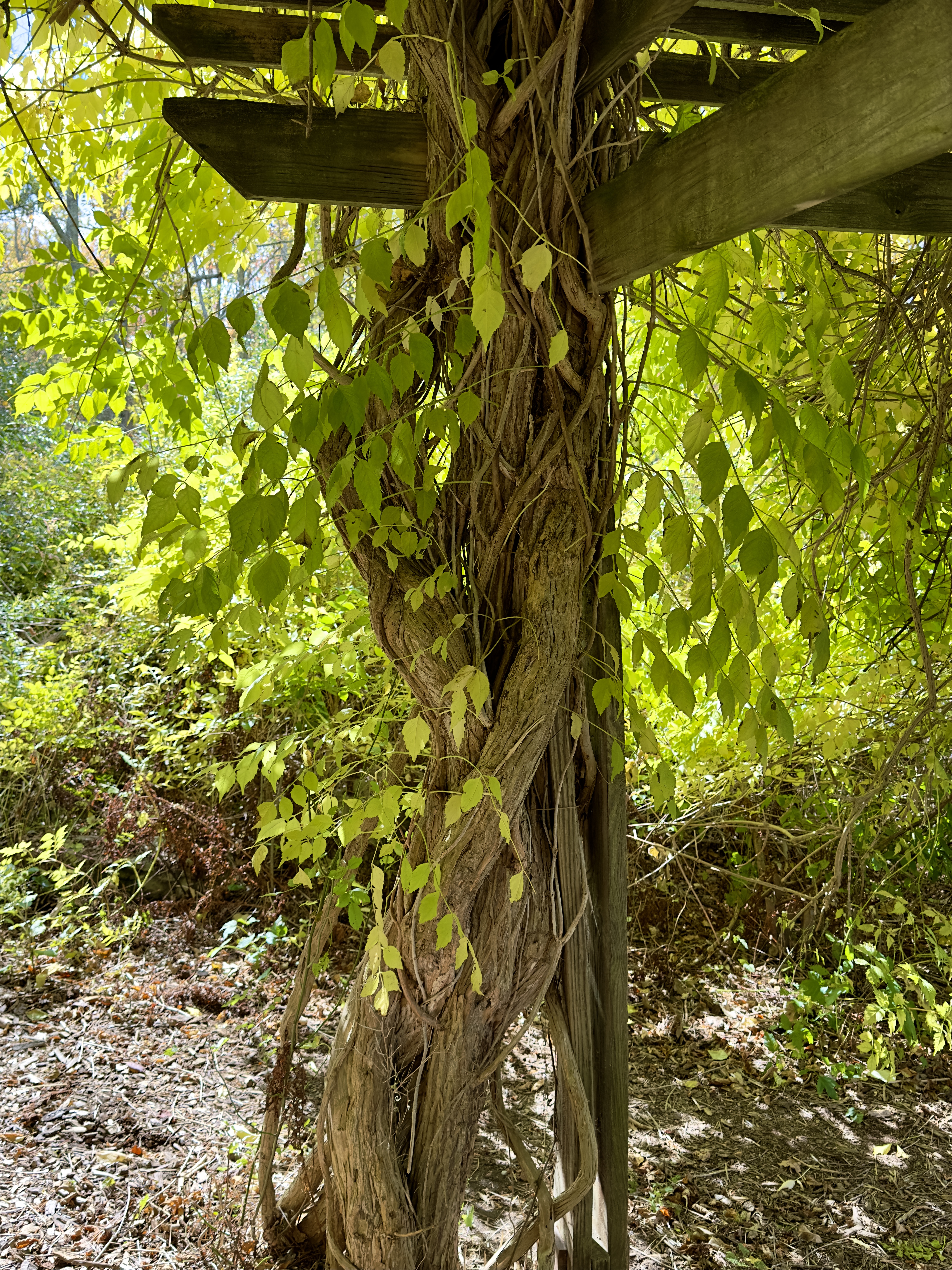
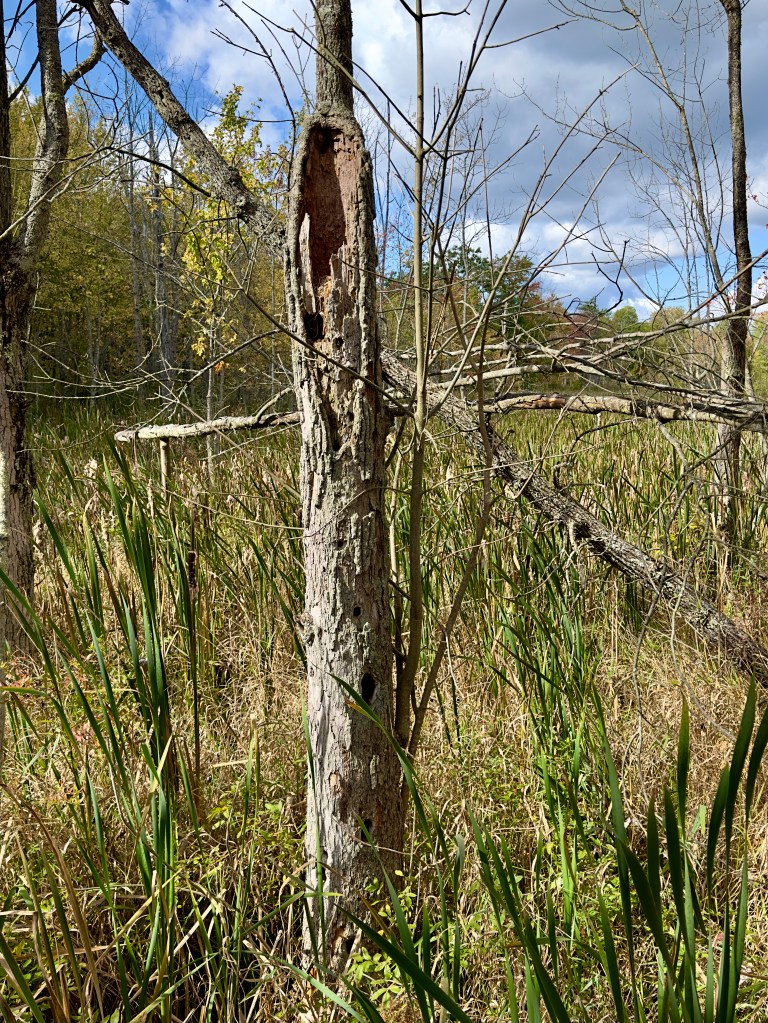
Just beyond, a bare tree stands, its trunk hollowed by years, its exposed wood testament to the life that has passed through it. In its decay, it offers a home to the creatures of the marsh, a structure among reeds and grasses that sway with the wind. The tree reminds Pam of her own journey, how resilience is often found in adapting, in letting time and life shape you.
At last, we reach a bench overlooking the pond, a perfect place to rest and reflect. She settles in, feeling the quiet thrill of accomplishment. The woods are still, save for the sound of a breeze rustling the reeds and the occasional bird song piercing the silence. In this moment, with the vast sky overhead and the world reflected below, she feels a profound sense of gratitude—not only for the beauty around her but for the strength within her. Sapsucker Woods are a personal cathedral, a space where nature and recovery intertwine, offering peace in every step, in every breath.
Enter your email to receive notification of future postings. I will not sell or share your email address.

A Beachcomber’s Musings on Floridian Dune Ecology

Discover the resilient beauty of Florida’s dune sunflowers through the eyes of a beachcomber. Uncover the secrets of Helianthus debilis, a symbol of hope thriving where sea meets sand. Join the coastal dance of life.

Encounter with Helianthus debilis


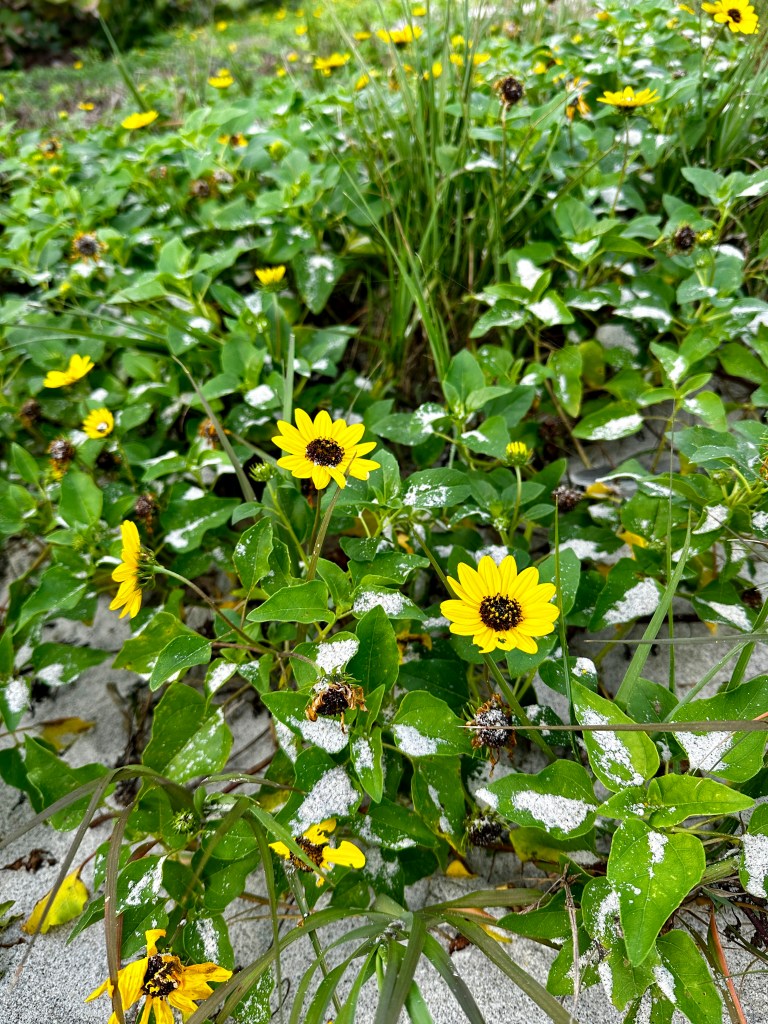
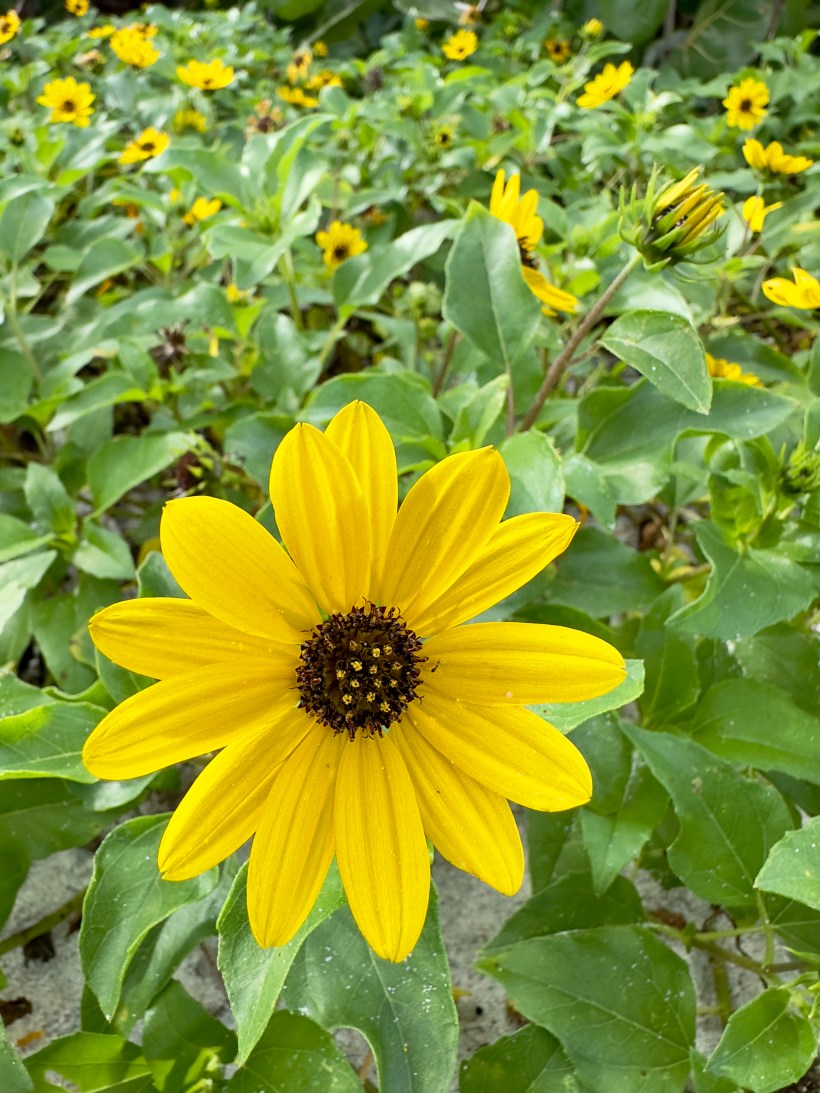
Strolling along the beachfront of Patrick Space Force Base, Florida, my gaze is captivated by a cluster of dune sunflowers, or Helianthus debilis. These hardy perennials are native to the coastal sand dunes of the southeastern United States and have made a home amidst the sandy grains where few dare to take root.

The Sunflower’s Domain


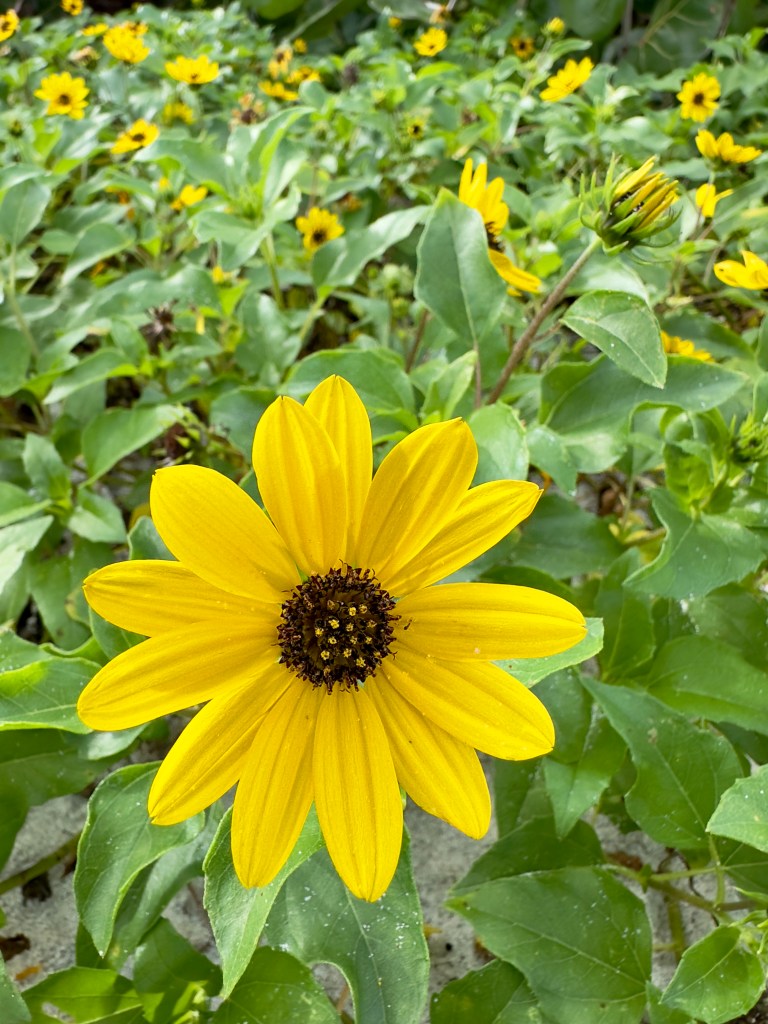
Helianthus debilis, distinguished by its large, yellow ray florets and dark center disks, thrives in this challenging environment. The dunes provide a unique ecosystem, where the sunflowers can withstand high salinity, shifting sands, and the full force of the sun’s rays. Their deep root systems anchor the sandy soil, helping to prevent erosion and maintain the integrity of the dune landscape.

Adaptation and Survival


The dune sunflower’s adaptation to its coastal environment is a marvel of nature. Its silvery-green leaves are covered with tiny hairs, reflecting sunlight and conserving moisture. The flowers bloom throughout the year, ensuring a constant presence of color along the dunes. Their hardiness is a testament to the sunflower’s evolutionary success in a habitat where freshwater is scarce and the soil is nutrient-poor.

A Native’s Role in the Ecosystem


As a native species, the dune sunflower plays a crucial role in the coastal ecosystem. It serves as a food source for local wildlife, including insects and birds, and its presence helps stabilize dune formations. The ecological value of Helianthus debilis extends beyond its beauty, as it contributes to the biodiversity and resilience of the coastal dunes.

The Dynamics of Dune Life


The life of a dune sunflower is inextricably linked to the ebb and flow of the coastal environment. Each plant is a microhabitat, supporting a range of organisms from the larvae of the dune butterfly to the burrowing beetles that find refuge in the sand. The interaction between the sunflowers and these creatures creates a dynamic web of life, each species depending on the others for survival.

Reflections on Resilience


The dune sunflower’s ability to flourish in such an austere environment is a profound reminder of the resilience of nature. As I observe the sunflowers, I am struck by their tenacity, their willingness to face the elements head-on. They are a beacon of life in a place where existence is a daily challenge, and their perseverance is a lesson in the art of endurance.

Conclusion: A Testament to Nature’s Ingenuity


As the sun begins to set, casting a warm glow over the dunes, I take a final look at the Helianthus debilis. Their scientific wonders and ecological im portance leave a lasting impression. They are not just flowers; they are a testament to nature’s ingenuity, an embodiment of the delicate balance between life and the environment. These dune sunflowers are a symbol of hope, a reminder that in the face of adversity, life finds a way to not just survive, but to thrive.

Copyright 2024 Michael Stephen Wills All Rights Reserved