Ecological Significance of False Solomon’s Seal

In Taughannock Falls State Park, False Solomon’s Seal captivates with its beauty, ecological role, and historical medicinal uses.

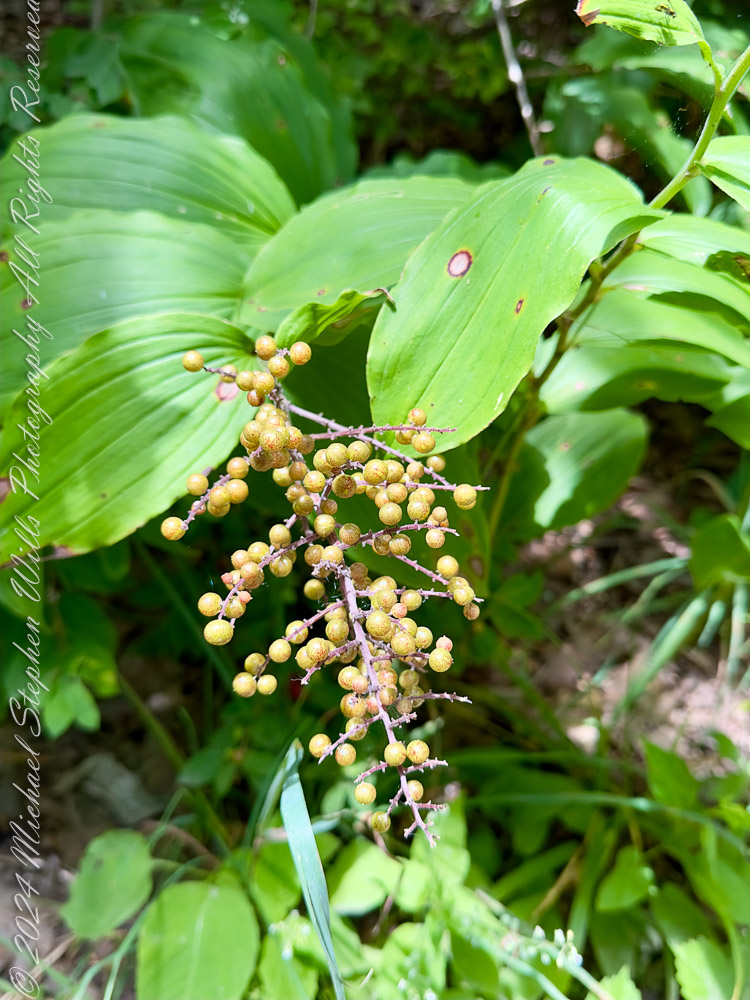
The trails of Taughannock Falls State Park always hold surprises, and on that July day, they did not disappoint. As I paused to take in the tranquility of the woods, my gaze fell upon a plant whose graceful arch and clusters of berries demanded attention. Its broad, lance-shaped leaves alternated along the stem, framing the stem’s terminal cluster of small green berries. Recognizing the plant as Maianthemum racemosum, commonly known as False Solomon’s Seal, I took a moment to admire its understated elegance.
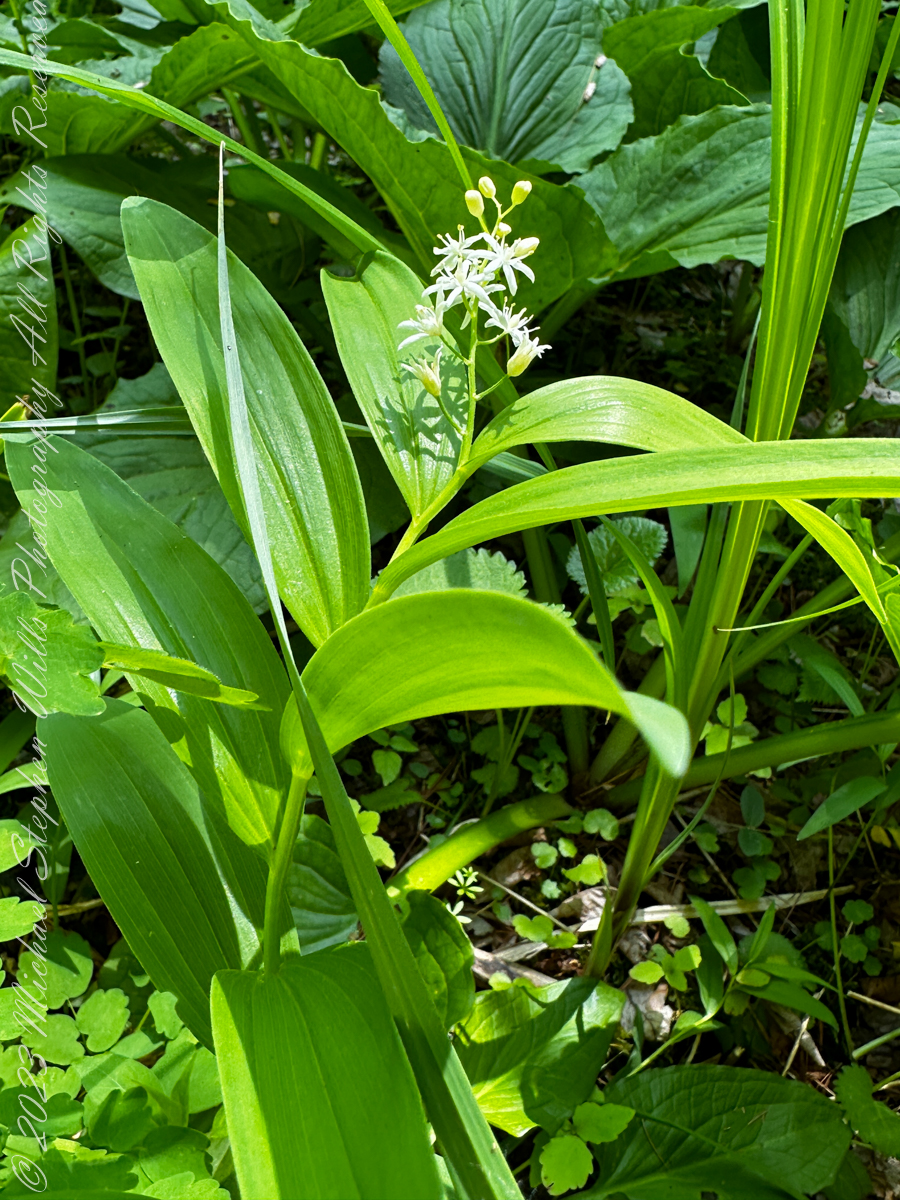
False Solomon’s Seal, scientific name Maianthemum racemosum, is common in the Finger Lakes Region. I found this specimen during a walk with the grandchildren in a local fen among the post-glacial terrain of the Finger Lakes Region. Eames Memorial Natural Area, Cornell Botanic Gardens, Town of Dryden, Tompkins County, Finger Lakes Region, New York State

Characteristics of the Plant

False Solomon’s Seal is a perennial herbaceous plant belonging to the asparagus family (Asparagaceae). It can grow up to three feet tall, its arching stems giving it a unique and recognizable silhouette. The leaves are broad and lance-shaped, with prominent veins running their length, arranged alternately along the stem. At the tip of each stem is a cluster of tiny, spherical green berries, which later in the season ripen to a speckled reddish hue. The plant blooms in late spring to early summer, producing delicate, star-shaped white flowers before transitioning to its fruiting phase.

Found throughout much of North America, Maianthemum racemosum thrives in moist, shaded woodlands, making the lush forests of Taughannock Falls State Park an ideal home. Its ability to grow in the dappled light beneath the forest canopy highlights its adaptability to varying light conditions.

Etymology of the Name

The genus name, Maianthemum, comes from the Greek words “mai” (May) and “anthemon” (flower), reflecting the plant’s tendency to bloom in late spring or early summer. The species name, racemosum, refers to the plant’s inflorescence, which forms a raceme—a cluster of flowers or berries along a single stem. Its common name, False Solomon’s Seal, derives from its superficial resemblance to Solomon’s Seal (Polygonatum spp.), though the latter has bell-shaped flowers hanging beneath its stems, in contrast to the terminal clusters of Maianthemum racemosum.

History and Folklore

False Solomon’s Seal has long been valued for its medicinal and culinary uses by Indigenous peoples and early settlers. The young shoots were harvested and cooked as a vegetable, while the ripe berries were sometimes used in jellies or preserves, though their slightly bitter flavor limited their appeal. Medicinally, teas made from the roots and leaves were used to treat a variety of ailments, including digestive issues, coughs, and sore throats. The roots were also applied as poultices for cuts and bruises, reflecting the deep understanding of natural remedies held by those who lived in harmony with the land.

The plant’s name has sparked legends. While the “false” in its name denotes its distinction from Solomon’s Seal, some folklore suggests that the plant was used to counterfeit the medicinal properties of its namesake. Others believe that its graceful arch and persistent berries symbolize resilience and adaptability, qualities often attributed to those who lived in its native habitats.

Uses and Ecological Role

Although not widely cultivated, Maianthemum racemosum is a valuable plant in its native ecosystems. Its flowers provide nectar for pollinators such as bees and butterflies, while the berries are a food source for birds and small mammals. Its rhizomatous roots also play a role in stabilizing soil in forested environments, preventing erosion and supporting the health of the woodland floor.
For those contemplating harvesting these plants be advised that collection of plants from New York State Parks is prohibited to protect natural resources and maintain ecological balance. According to the New York State Office of Parks, Recreation and Historic Preservation (OPRHP) regulations, “No person shall… remove… any… plant life” within state parks without proper authorization. Therefore, collecting plants in state parks without explicit permission is not allowed. If you have a specific research or educational purpose, you may contact the park administration to inquire about obtaining the necessary permits. However, for casual visitors, it’s best to enjoy the flora from a distance. False Solomon Seal ecological contributions are significant. In addition to its pollinator support and soil stabilization, the plant’s presence is an indicator of a healthy woodland ecosystem.

A Moment of Reflection

As I rose from my crouched position, having taken in the details of Maianthemum racemosum, I felt a quiet gratitude for the opportunity to encounter such a plant. False Solomon’s Seal, with its graceful leaves and unassuming berries, serves as a reminder of the interconnectedness of life in the forest. Its role in the ecosystem, its history with humans, and its understated beauty all speak to the richness of the natural world.

Walking onward, I carried with me a sense of awe for the intricate web of life that thrives in the woods. The False Solomon’s Seal, standing quietly among the ferns and leaf litter, seemed to embody the resilience and balance of the forest—a gentle presence in a vibrant community.

Enter your email to receive notification of future postings. I will not sell or share your email address.

Discovering the Beauty of White Bluebells: An Exploration of Hyacinthoides non-scripta (alba)

Discover the enchanting white bluebells blooming around our home! Explore their natural history, ethereal beauty, and fascinating folklore. Uncover the wonders of Hyacinthoides non-scripta (alba) in our latest blog post.

The surprise of finding white bluebells blooming around our home this spring was nothing short of magical. Known scientifically as Hyacinthoides non-scripta (alba), these delicate flowers add a touch of elegance and tranquility to our garden. As I delved into the history, etymology, and folklore of these enchanting blooms, I discovered a world rich in cultural significance and natural wonder.

Bluebell Natural History

White bluebells, a variant of the common bluebell, belong to the Asparagaceae family. Native to the woodlands of Western Europe, these perennials are renowned for their striking appearance and pleasant fragrance. The white bluebell, though less common than its blue counterpart, is equally captivating with its pure white, bell-shaped flowers that hang gracefully from slender stems.

Hyacinthoides non-scripta thrives in shady, moist environments, often forming dense carpets that transform forest floors into a sea of blossoms in spring. These plants are well-adapted to their woodland habitats, where they bloom before the canopy closes, taking advantage of the early spring light.

White Bluebell (Hyacinthoides non-scripta (alba)) growing around our home, May 2024

Etymology of the Scientific and Common Names

The scientific name “Hyacinthoides” is derived from the Greek word “hyakinthos,” referring to the mythological youth Hyacinthus, who was transformed into a flower. “Non-scripta” means “unmarked” or “not written,” distinguishing it from the classical hyacinth described by ancient authors. This epithet underscores the plant’s unique identity in the botanical world.

The common name “bluebell” comes from the flower’s resemblance to small bells and its predominant blue color. The “white” prefix simply describes this particular variety’s color, adding to its distinction.

White Bluebells in Folklore and History

Bluebells, including their white variants, are steeped in folklore and myth. In England, bluebells are often associated with fairy enchantments and woodland magic. Folklore suggests that bluebells ring to summon fairies, and to disturb a bluebell patch was to risk falling under a fairy spell. The white bluebells, with their ethereal appearance, add an extra layer of mystique to these tales.

Historically, bluebells were used for practical purposes as well. The sticky sap from the bulbs was employed to bind pages in books and to glue feathers onto arrows. However, it’s important to note that all parts of the plant are toxic if ingested, a fact that has also contributed to its aura of cautionary folklore.

The Surprise and Wonder of White Bluebells

Discovering white bluebells around our home has been a source of immense joy. These flowers, with their serene beauty and historical significance, connect us to the past and the natural world in a profound way. The surprise of seeing them bloom each spring reminds us of nature’s unpredictability and generosity.

Their presence in our garden brings a sense of peace and wonder, inviting us to pause and appreciate the small miracles that surround us. The delicate white bells, swaying gently in the breeze, create a visual symphony that enchants the senses and uplifts the spirit.

White bluebells serve as a testament to the rich tapestry of life that thrives in our gardens, often unnoticed. They remind us to look closely, to explore, and to cherish the natural beauty that graces our lives. As we continue to nurture our garden, the white bluebells stand as a symbol of purity, resilience, and the timeless charm of nature’s wonders.

Copyright 2024 Michael Stephen Wills All Rights Reserved

The Delight of Woodruff: An Exploration of Galium odoratum

Discover the enchanting woodruff growing around our home! Explore its natural history, delightful fragrance, and fascinating role in folklore and history. Uncover the wonders of this perennial plant in our latest blog post.

As spring breathes new life into our surroundings, the delight of identifying the plants that grow around our home is a joy like no other. This year, I was thrilled to discover that the delicate and fragrant woodruff (Galium odoratum) has been gracing our garden. Known for its charming clusters of white flowers and vibrant green leaves, woodruff brings both aesthetic beauty and a rich historical tapestry to our home.

Natural History of Woodruff

Woodruff, scientifically known as Galium odoratum, is a perennial plant native to Europe, North Africa, and parts of Asia. It thrives in shady, woodland environments, often forming dense mats that carpet the forest floor. The plant typically blooms in late spring to early summer, producing tiny white flowers that contrast beautifully with its whorls of bright green leaves.

Galium odoratum is a member of the Rubiaceae family, which also includes coffee and gardenias. Its ability to spread quickly through its creeping rhizomes makes it an excellent ground cover. In addition to its visual appeal, woodruff is known for its sweet scent, which intensifies when the plant is dried. This fragrance is due to the presence of coumarin, a natural compound that also contributes to its medicinal properties.

This woodruff (Galium odoratum) grows around our home.

Etymology of the Scientific and Common Names

The scientific name Galium odoratum provides insights into the plant’s characteristics. “Galium” is derived from the Greek word “gala,” meaning milk. This refers to the plant’s historical use in curdling milk. “Odoratum,” on the other hand, highlights the plant’s pleasant aroma.

The common name “woodruff” has an interesting origin as well. The word “wood” refers to the plant’s typical habitat in wooded areas, while “ruff” is thought to be derived from the Old English “rūwe,” meaning rough or hairy, describing the texture of the plant’s leaves and stems.

Woodruff in Folklore and History

Woodruff has a storied past, steeped in folklore and history. In medieval Europe, it was used for its aromatic properties to freshen up linens and as a strewing herb to mask odors in homes and churches. Its sweet scent was believed to ward off evil spirits and bring good fortune, making it a popular choice for wreaths and garlands during festivals and celebrations.

The plant also played a role in traditional medicine. Woodruff was used to treat various ailments, including liver and gallbladder issues, and as a mild sedative. Its medicinal use is attributed to the coumarin content, which has anticoagulant and anti-inflammatory properties. However, it’s worth noting that high doses of coumarin can be toxic, so its medicinal use has largely fallen out of favor in modern times.

In Germany, woodruff is famously associated with May Wine, a traditional beverage enjoyed during spring festivals. The plant is infused into white wine, imparting its unique flavor and aroma. This custom dates back centuries and is still practiced today, symbolizing the arrival of spring and the renewal of life.

This woodruff (Galium odoratum) grows around our home.

The Surprise and Wonder of Woodruff

Discovering woodruff around our home has been a source of wonder and delight. Its presence connects us to the rich tapestry of nature and history, reminding us of the timeless beauty and utility of the plants that surround us. As I watch the delicate flowers sway gently in the breeze, I am filled with a sense of gratitude for the surprises that nature continually offers.

Woodruff’s modest appearance belies its profound impact on the landscape and our lives. It serves as a reminder that even the smallest plants can hold significant historical, cultural, and medicinal value. As we continue to explore and appreciate the natural world around us, the humble woodruff stands as a testament to the enduring connection between humanity and nature.

Copyright 2024 Michael Stephen Wills All Rights Reserved