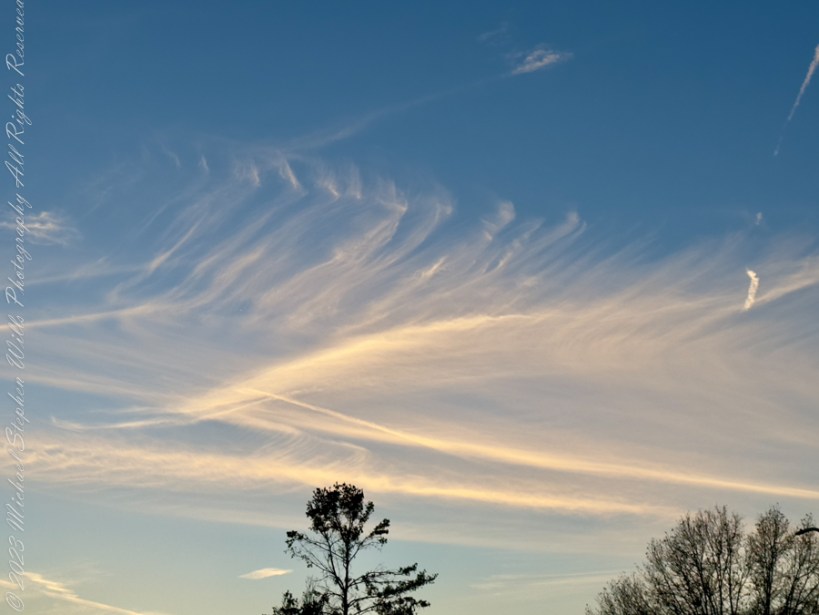
As the sun dipped lower, casting its farewell in hues of amber and soft gold, Pam and I stood beside the serene Cayuga Lake Inlet, gazing westward. The stillness of the evening was a quiet symphony, punctuated only by the gentle lapping of water against the shore. It was November 5th, and the world seemed to hold its breath in the golden hour, that perfect moment minutes before the sun would bid its final adieu for the day.
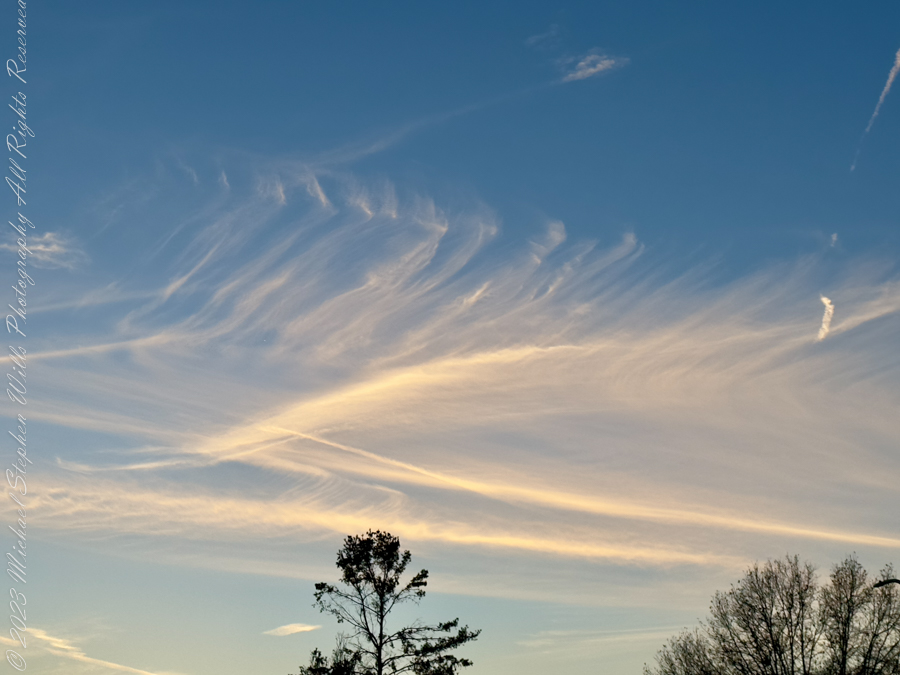
Above us, the sky was a canvas of nature’s delicate brushwork – the Cirrus fibratus. These high-altitude clouds, ethereal and wispy, stretched across the sky like strands of silken thread. The cirrus clouds, the feathery remnants of far-travelled storms, are the poets of the atmosphere, telling tales of weather yet to come. Their presence was both a testament to the day’s tranquility and a harbinger of change looming on the horizon.
Cloud Lore
Cirrus fibratus clouds, in their striated splendor, often signal the approach of a warm front and are associated with the shifts in weather patterns. As we stood there, the clouds seemed to be etching the sky with messages in a cryptic script, hints of the coming days. These clouds, so high in the sky, are formed from ice crystals, and their very existence speaks of the coldness of the upper atmosphere, as the days down here by the lake inlet lengthen towards the winter solstice.
The days of early November, with their crisp air and the promise of winter, bring a change in the light, a deepening of colors, and a certain clarity to the world. The skies seem grander, a vast dome of ever-changing artistry, and the Cirrus fibratus are our guides to the imminent transformation. They remind us that the earth is tilting away from the sun in our hemisphere, pulling us into the cooler seasons.
Eternal Change
These cirrus formations, while signaling the shifts in weather, also play with the light of the lengthening days. The sun’s rays, ever lower on the horizon, catch the ice crystals, creating a prism effect that can result in sundogs, those bright spots of light that occasionally grace the sky at solar dawn or dusk. They add a mystical quality to the already enchanted time of day.
As the twilight deepened, the Cirrus fibratus began to glow with the sun’s final touch, turning from white to shades of pink and fiery orange. This spectacle was a gentle reminder of the passage of time, the cycles of nature, and the endless dance between the earth and the sun. The clouds foretold of cooler weather, perhaps a sign that we should cherish these last vestiges of autumnal warmth.
As night began to embrace the sky, the clouds slowly faded from our sight, but the memory of their beauty and the secrets they carried lingered. They are not just ice and air; they are messengers, carrying the stories of the atmosphere from one part of the world to another, connecting us with the rhythms of the earth in their ceaseless journey.
Signs and Wonders
In the coming days, we would watch the sky, taking note of the cirrus and the subtle cues they offered. Would there be rain, a storm, or perhaps a clear day that belies the cold snap in the air? Only time would tell, but for now, we stood in silent appreciation of nature’s grace, feeling the profound connection to the world around us that only a sunset watched together can bring.
Click Me to view my photographs on Getty.



 Michael Stephen Wills Photography