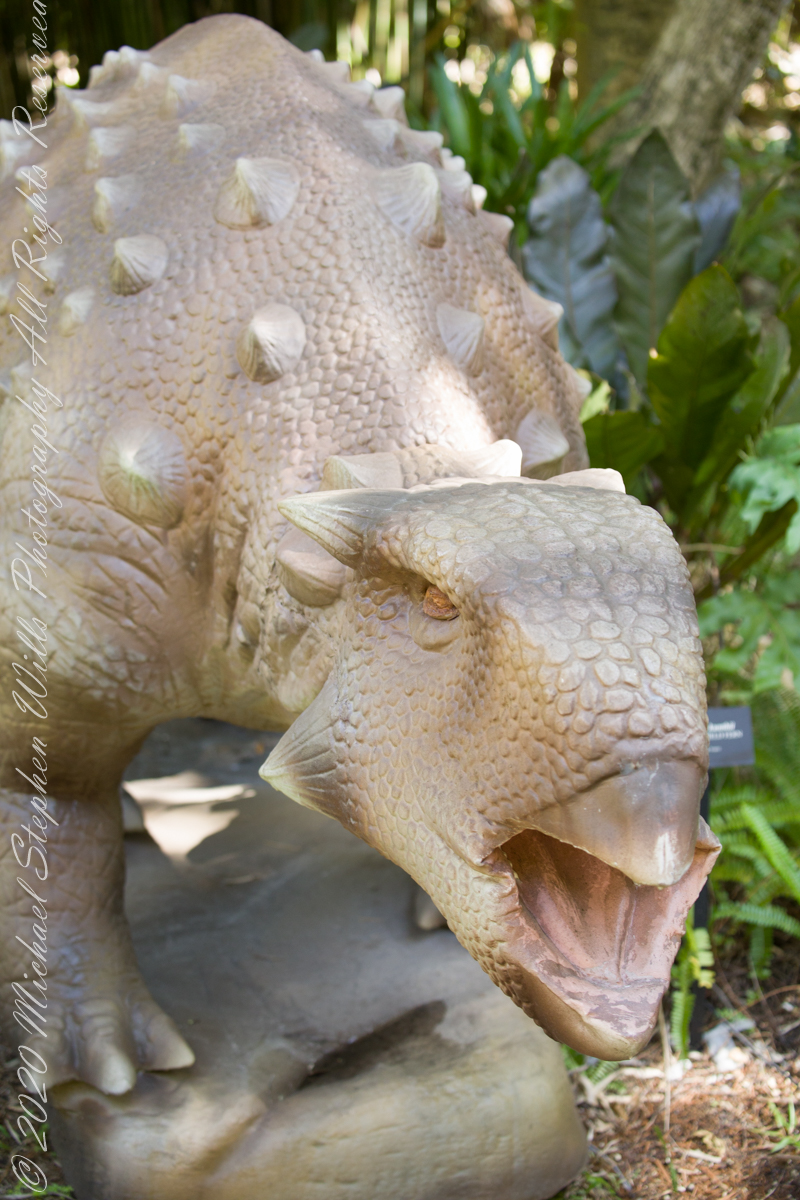
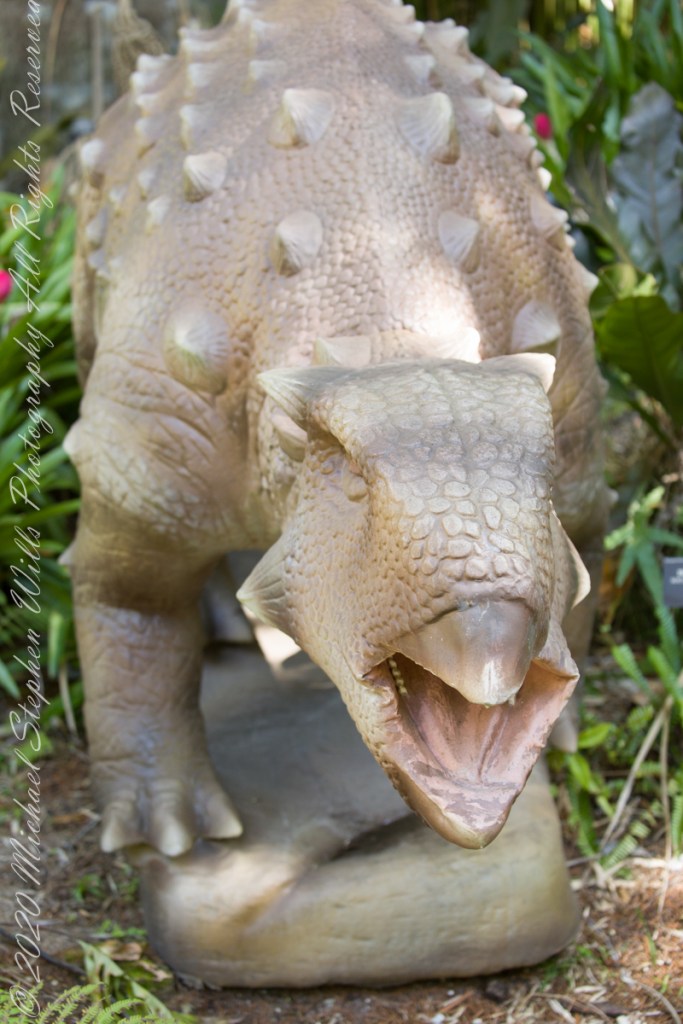
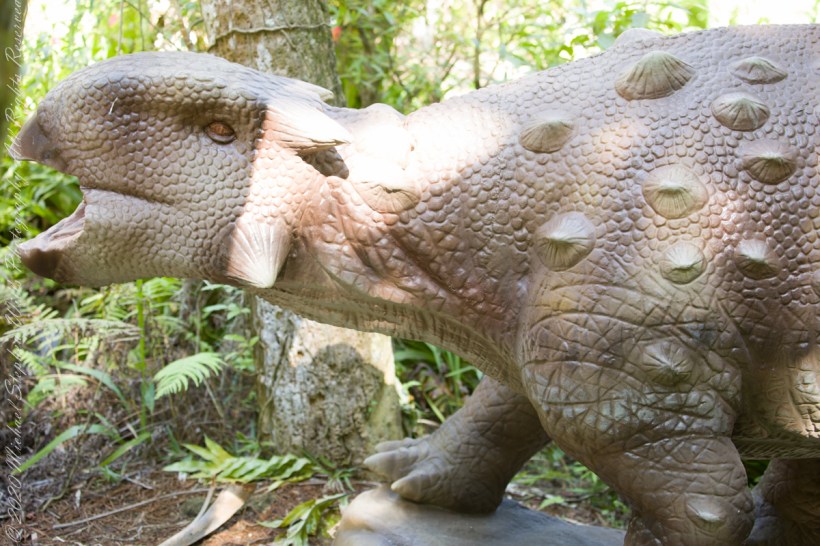
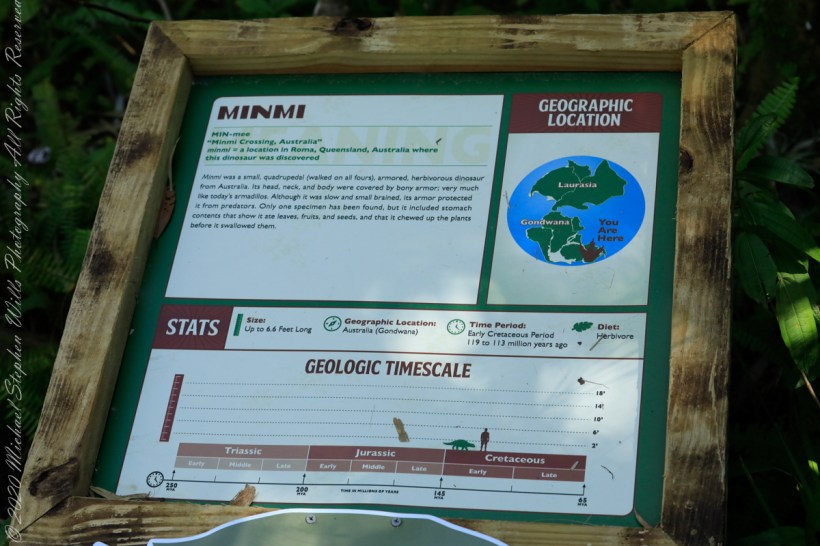
Minmi was a small, quadrupedal, armored, herbivorous dinosaur from Australia. Its head, neck and body were covered by bony armor, very much like today’s armadillos. Although it was slow and small brained, its armor protected it from predators. Only one specimen has been found, but it included stomach contents that show it ate leaves, fruit and seeds, and that it chewed up the plants before it swallowed them. Minmi is the location in Roma, Queensland, Australia where this dinosaur was discovered.
References: text is from the park placard with minor edits.
Copyright 2022 Michael Stephen Wills All Rights Reserved
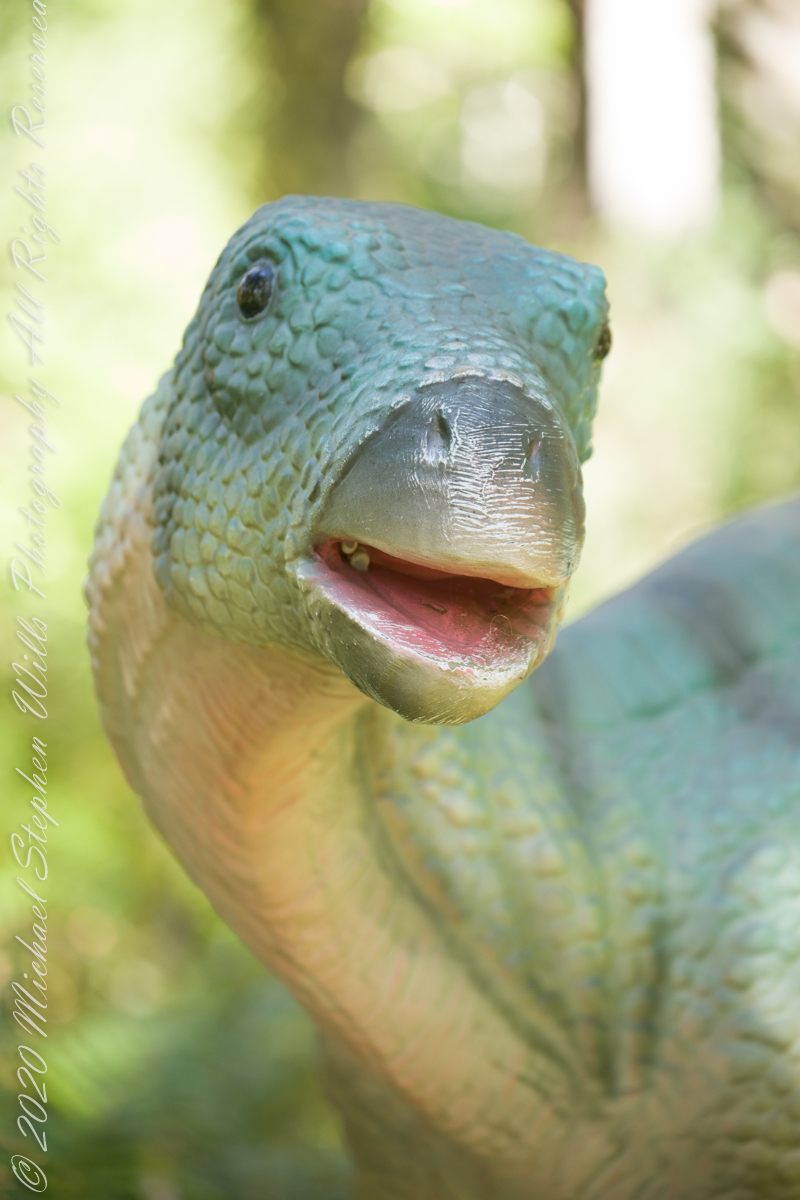
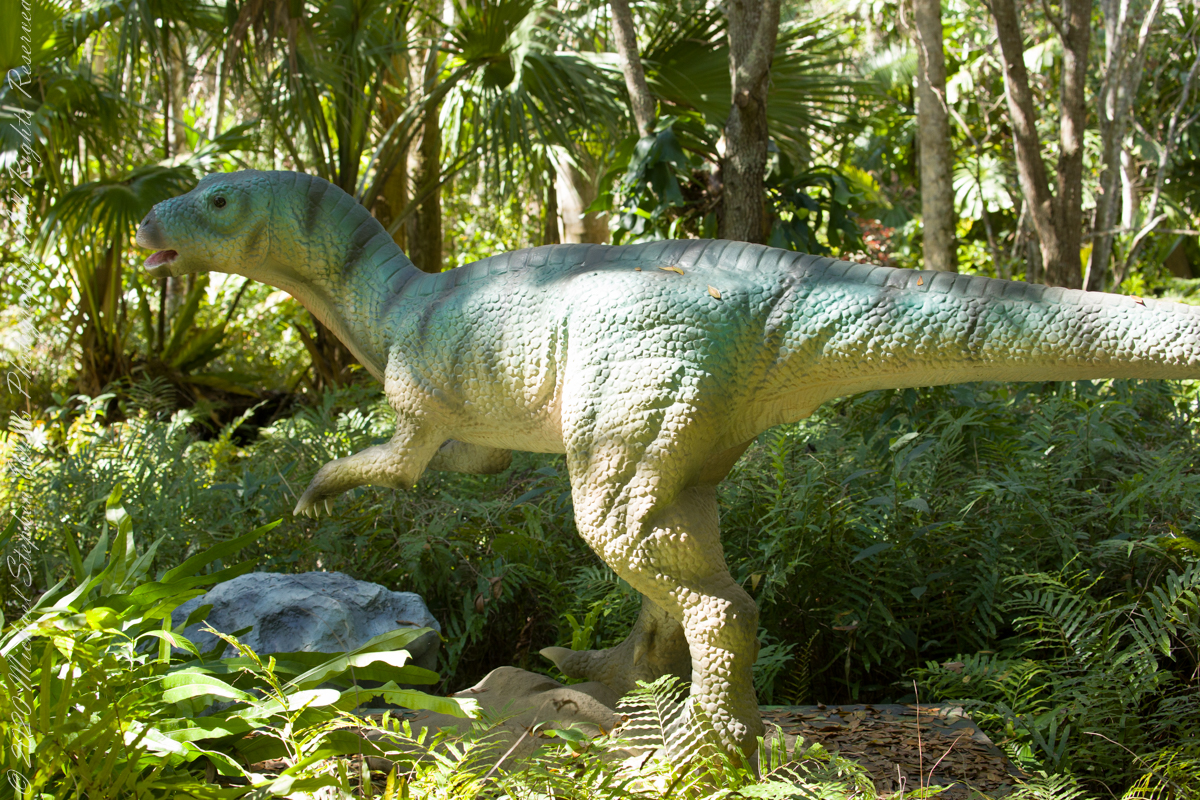
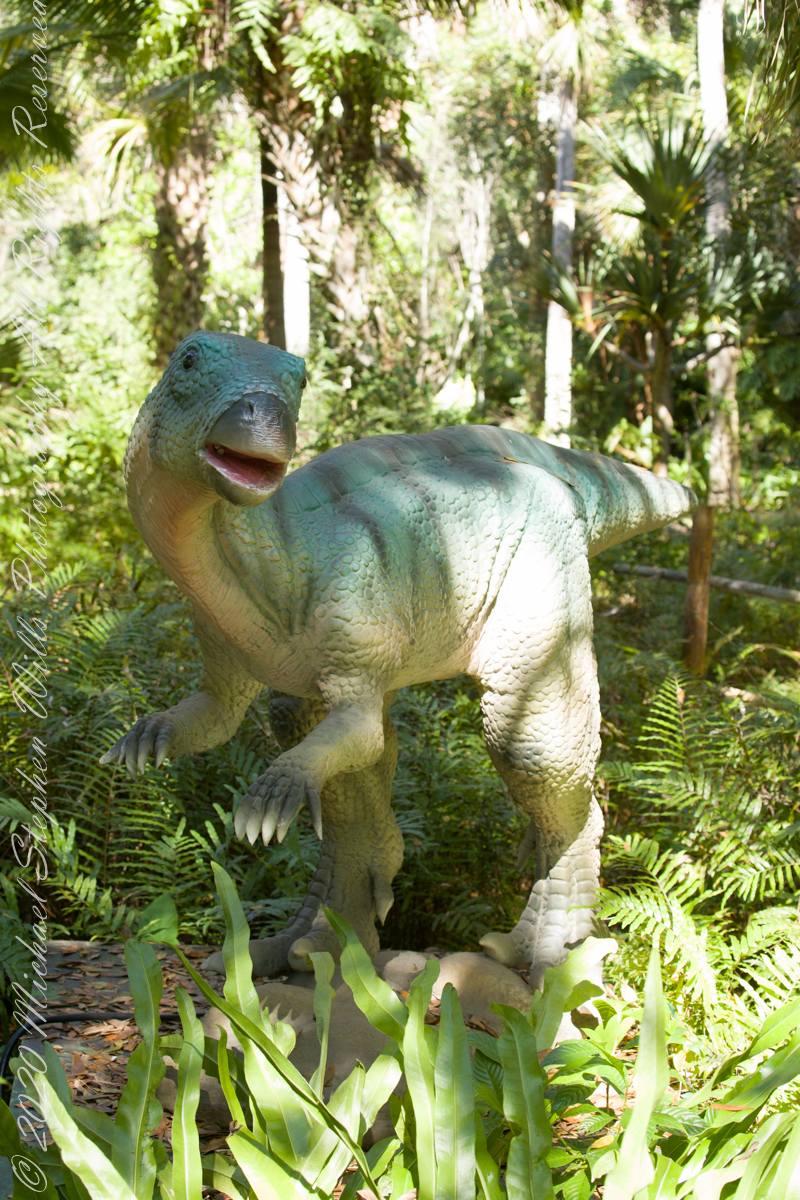
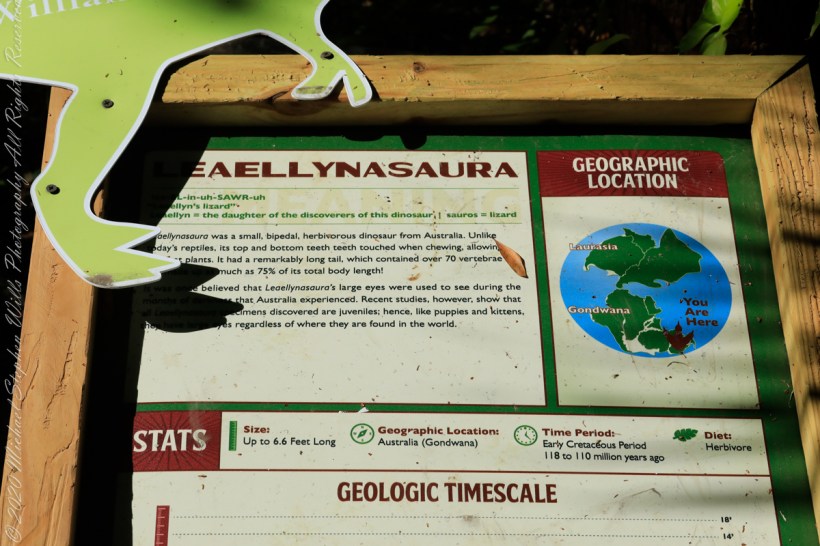
Baellynasaura was a small, bipedal, herbivorous dinosaur from Australia. Unlike today’s reptiles, its top and bottom teeth touch when chewing, allowing it to consume plants. It had a remarkably long tail, which contained over 70 vertebrae, as much as 75% of its total bodyt length. It is believed Leaellynasaura’s large eyes were used to see during the long nights that Australia experienced. Recent studies, however, show that these specimens discovered are juveniles; hence, like puppies and kittens, their eyes are large regardless of where they are found in the world.
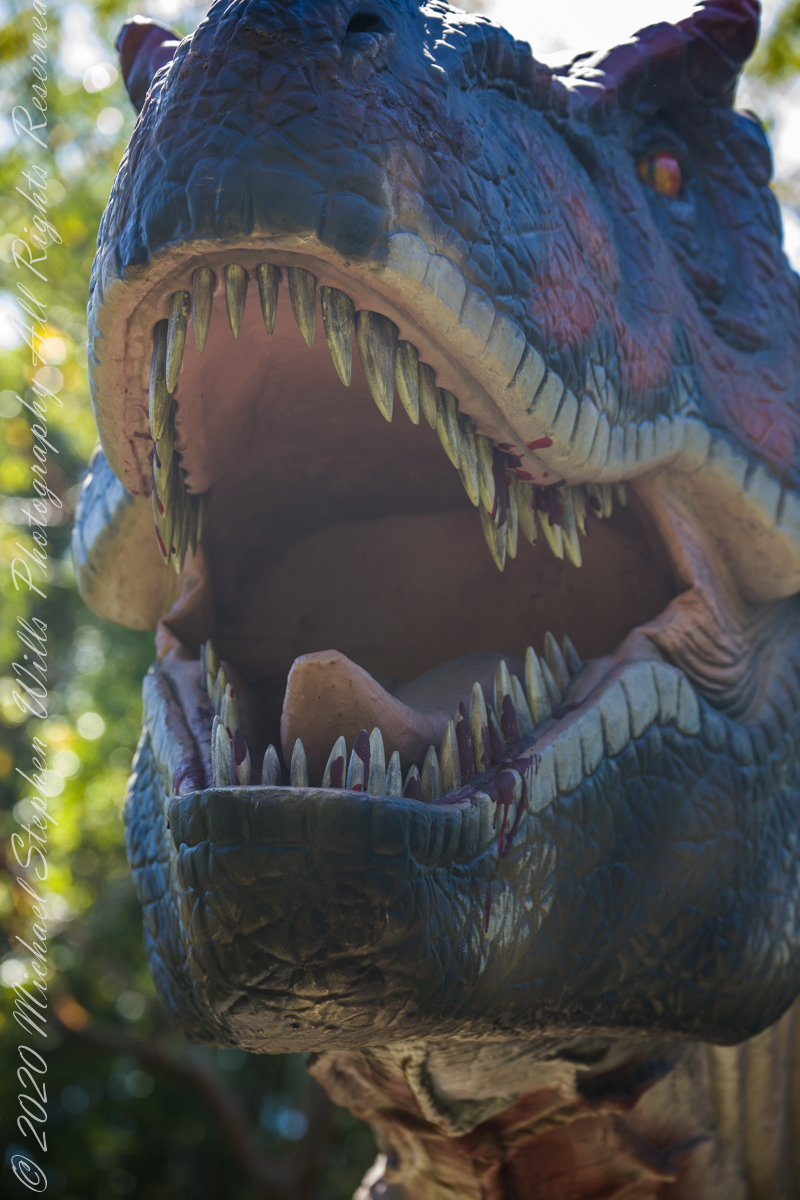
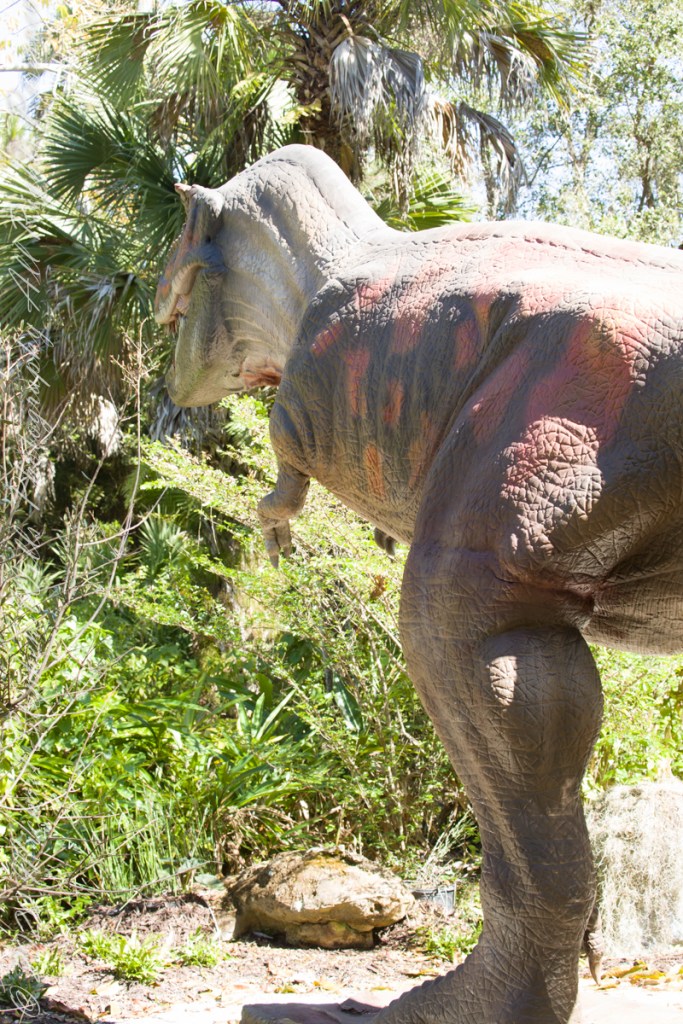
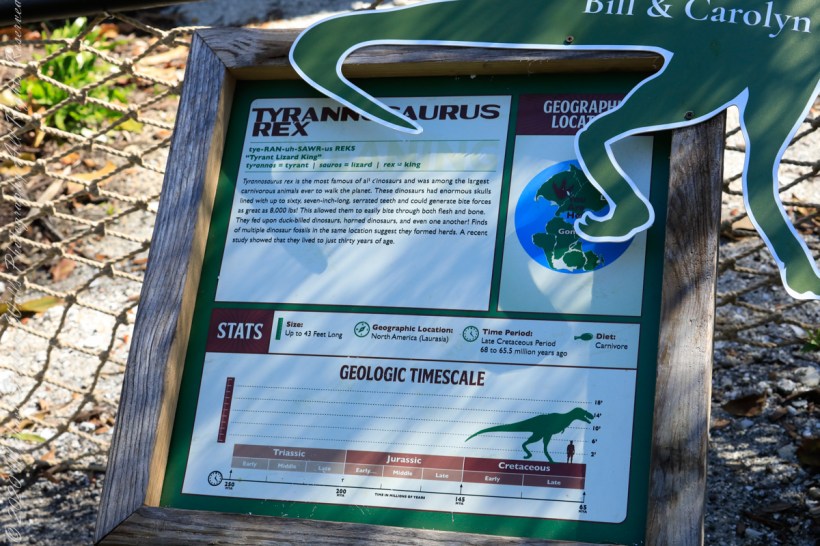
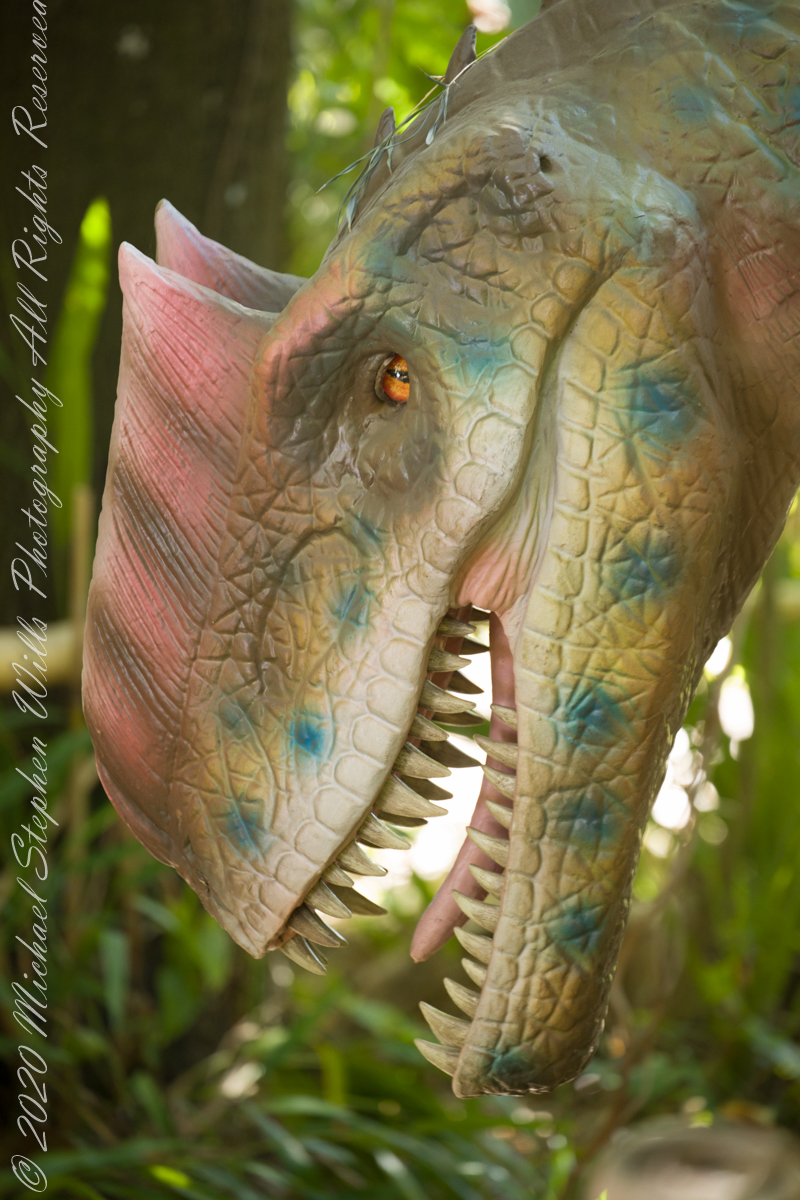
Tyrannosaurus Rex, the most famous of all dinosaurs, was among the largest carnivorous animals ever to walk the planet. Tyrannosaurus Rex had enormous skulls lined with up to sixty, seven-inch long teeth and could generate bite forces as great as 8,000 pounds. This allowed them to easily bite through both flesh and bone. They fed upon duck-billed dinosaurs, horned dinosaurs and even one another. Finds of multiple dinosaur fossils in the same location suggest they formed herds. A recent study showed that they lived to just thirty years of age.
Thank goodness humans never shared the environment with “The Rex.”
pure terror
References: text is from the park placard with minor edits.
Copyright 2022 Michael Stephen Wills All Rights Reserved
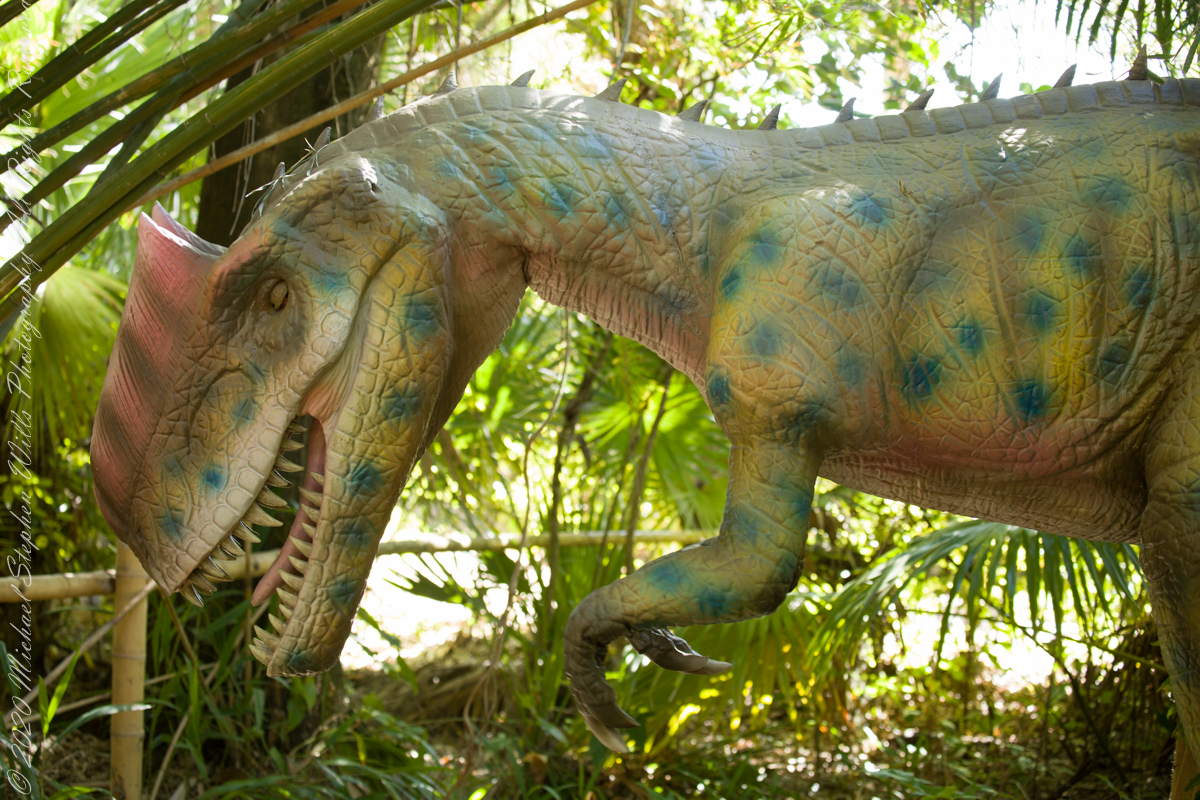
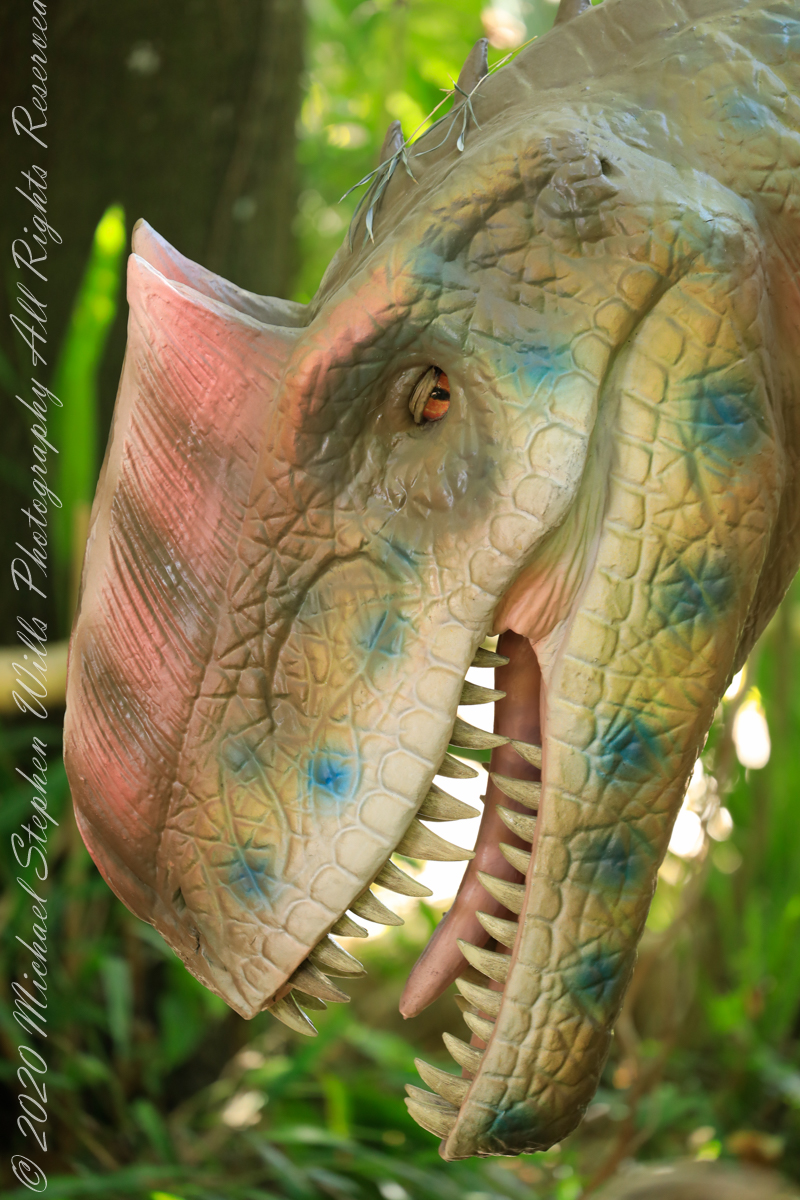
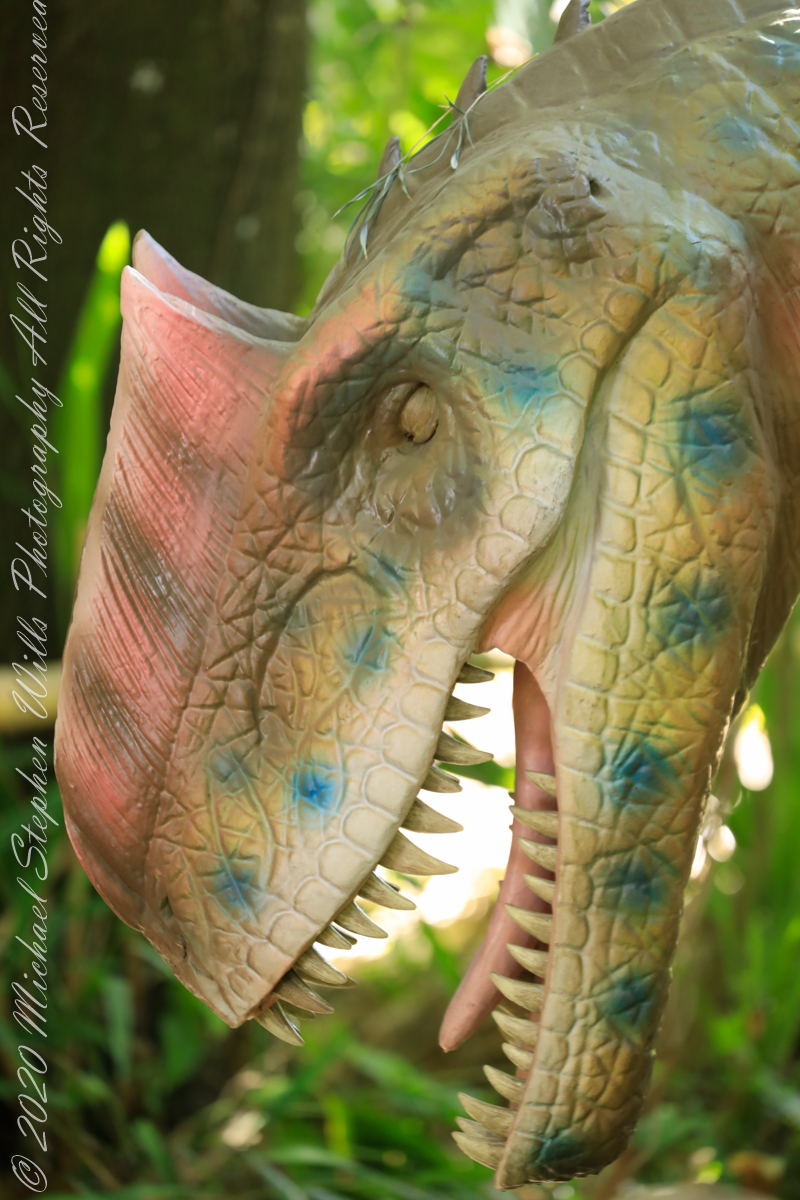
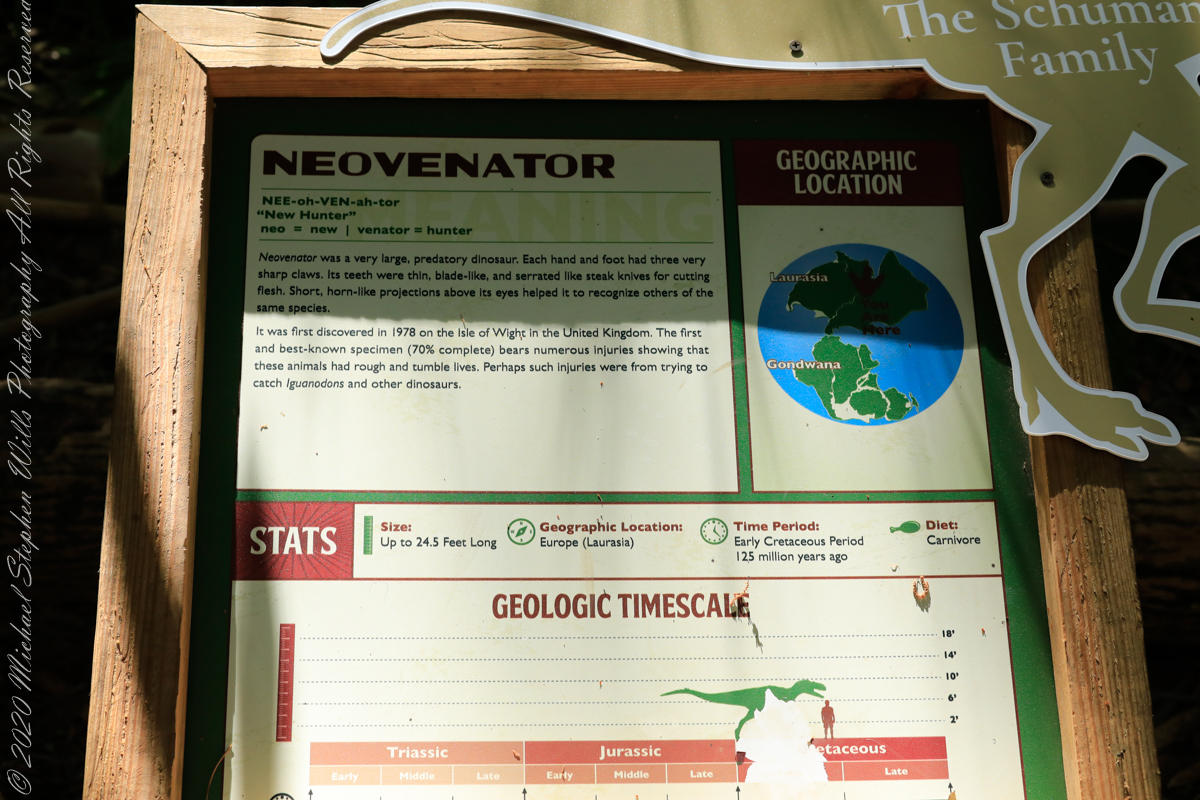
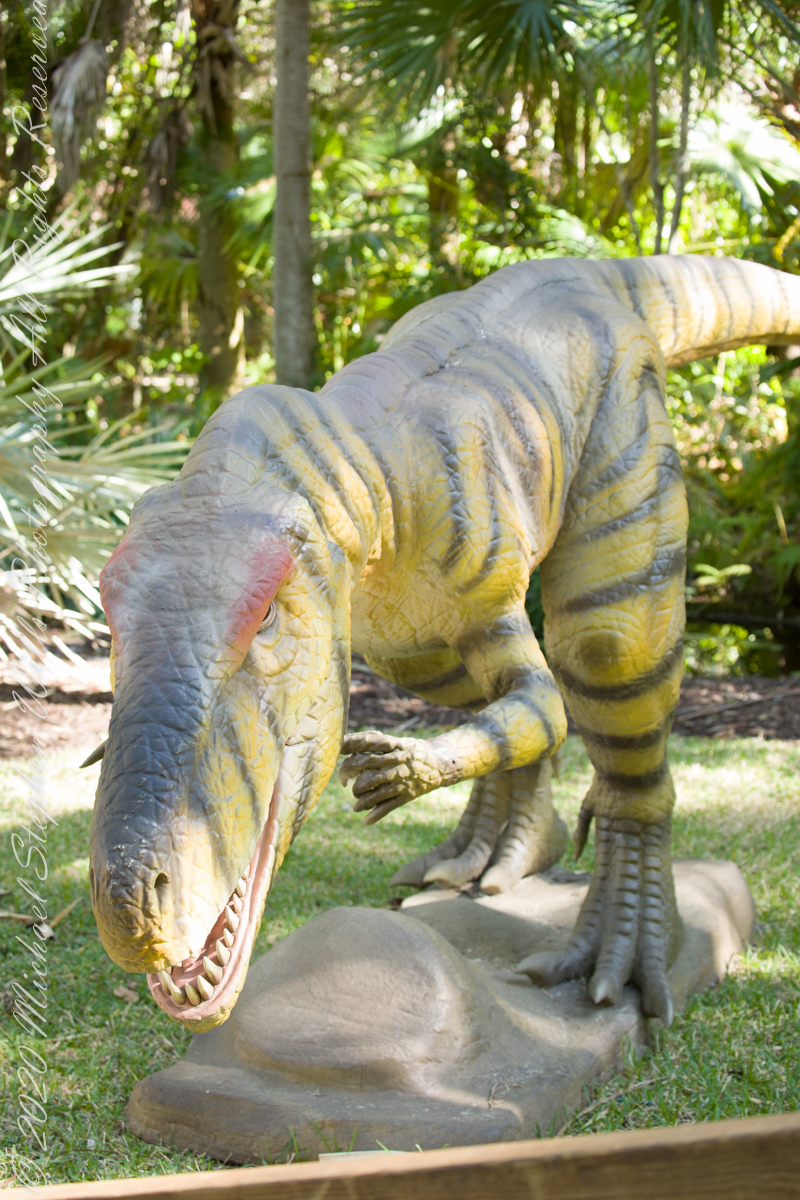
Neovenator was a very large, predatory dinosaur. Each hand and foot had three very sharp claws. Its teeth were thin, blade-like, and serrated like steak knives for cutting flesh. Short, horn-like projections above its eyes helped to recognize others of the same species. First discovered in 1978 on the Isla of Wight, United Kingdom. The fist and best-known specimen (70% complete) bears numerous injuries showing that these animals had rough and tumble lives. Perhaps such injuries were from trying to catch Iguanodons and other dinosaurs. Neovenator is derived from the latin words for “now” and “hunter.”
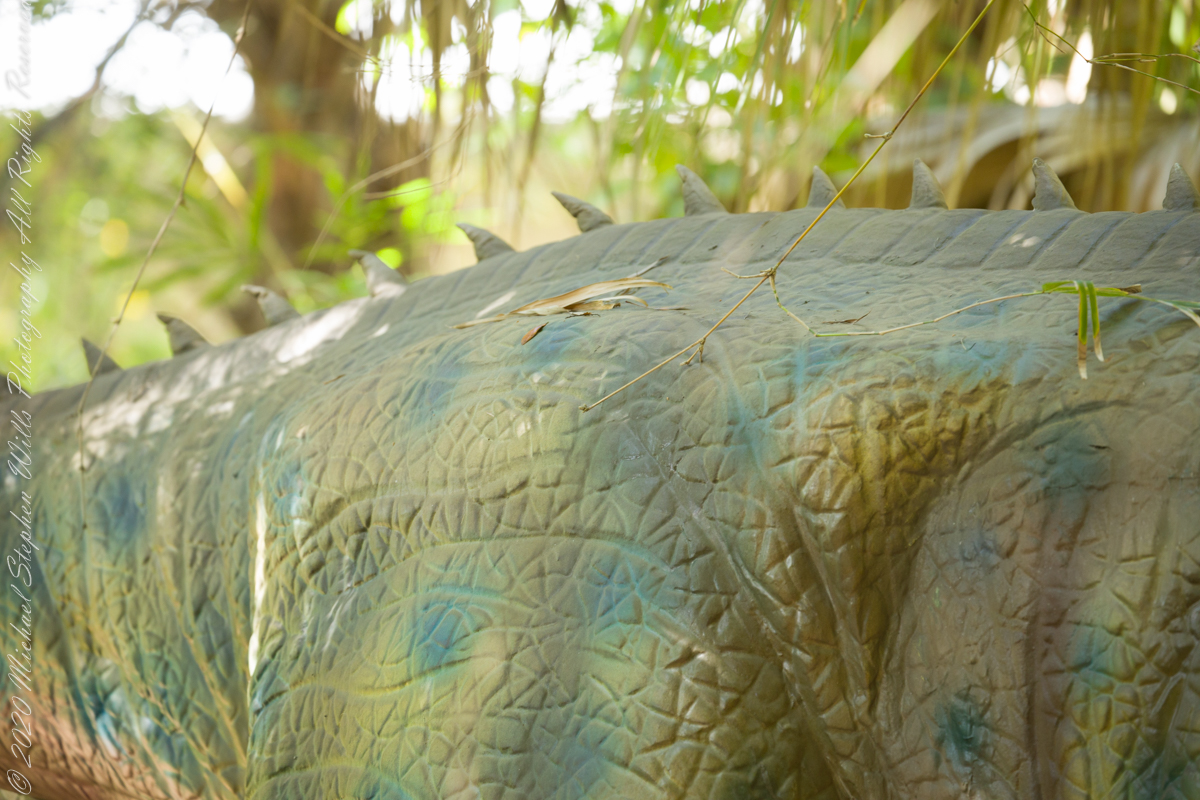
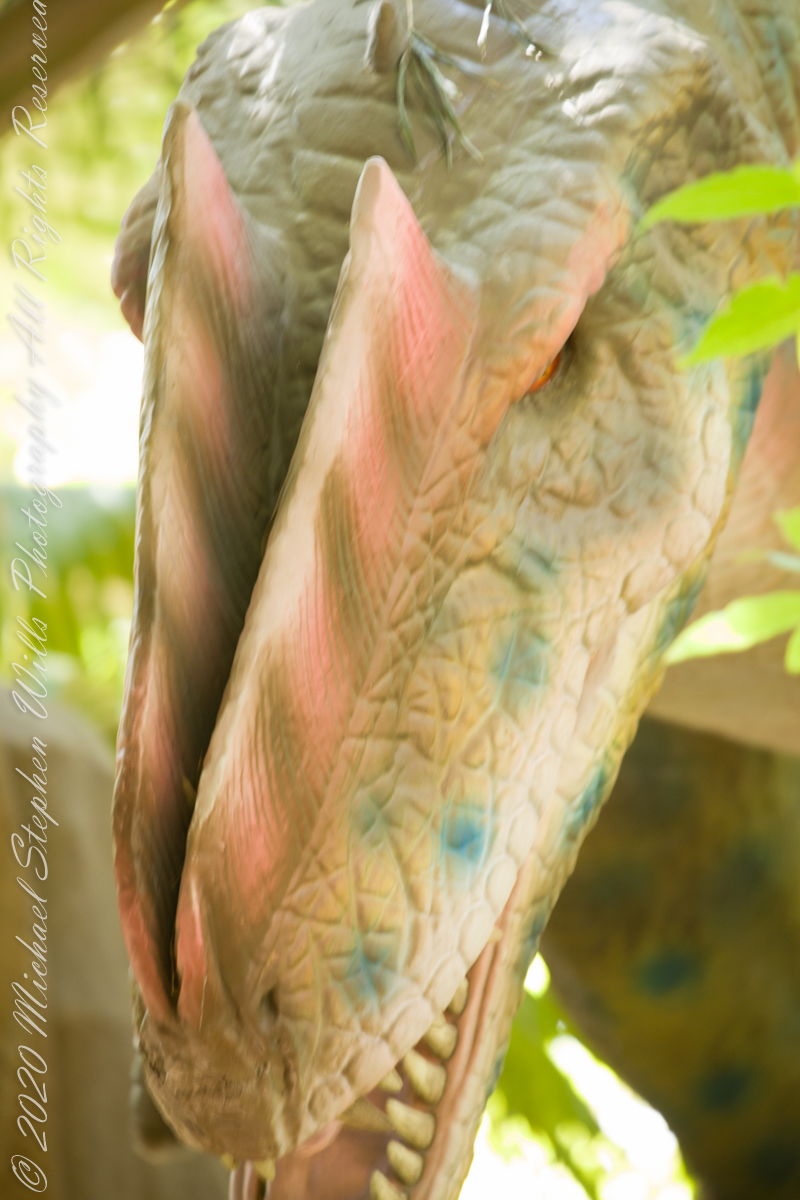
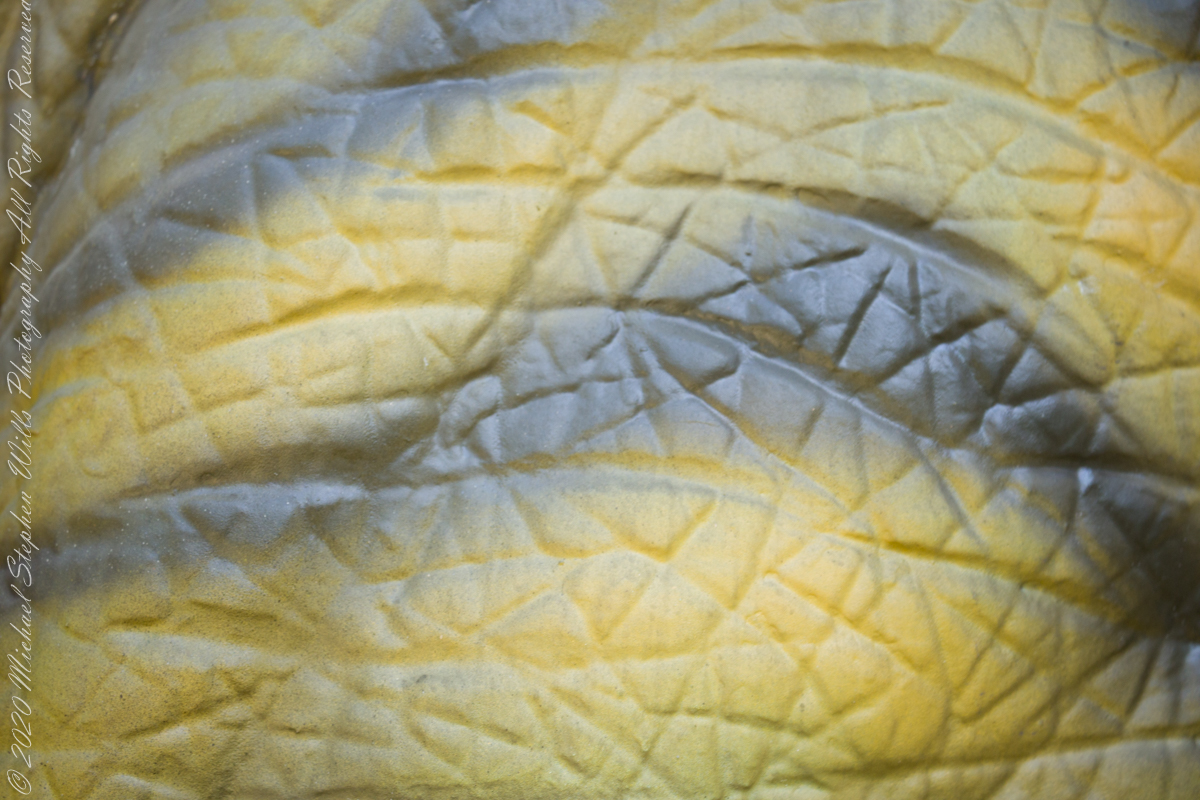
Skin TextureShort, horn-like projections above its eyes helped to recognize others of the same species.
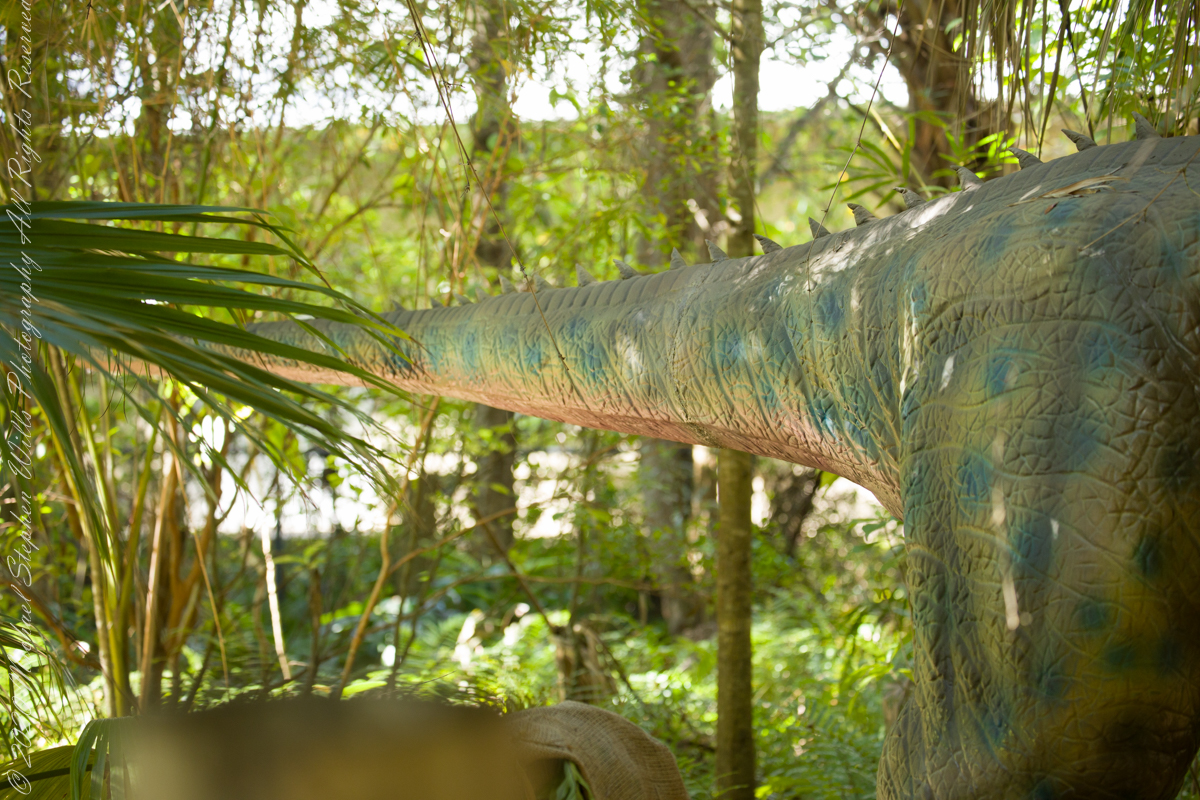
Long extended tail provided balance
A creepy customer
References: text is from the park placard with minor edits.
Copyright 2022 Michael Stephen Wills All Rights Reserved
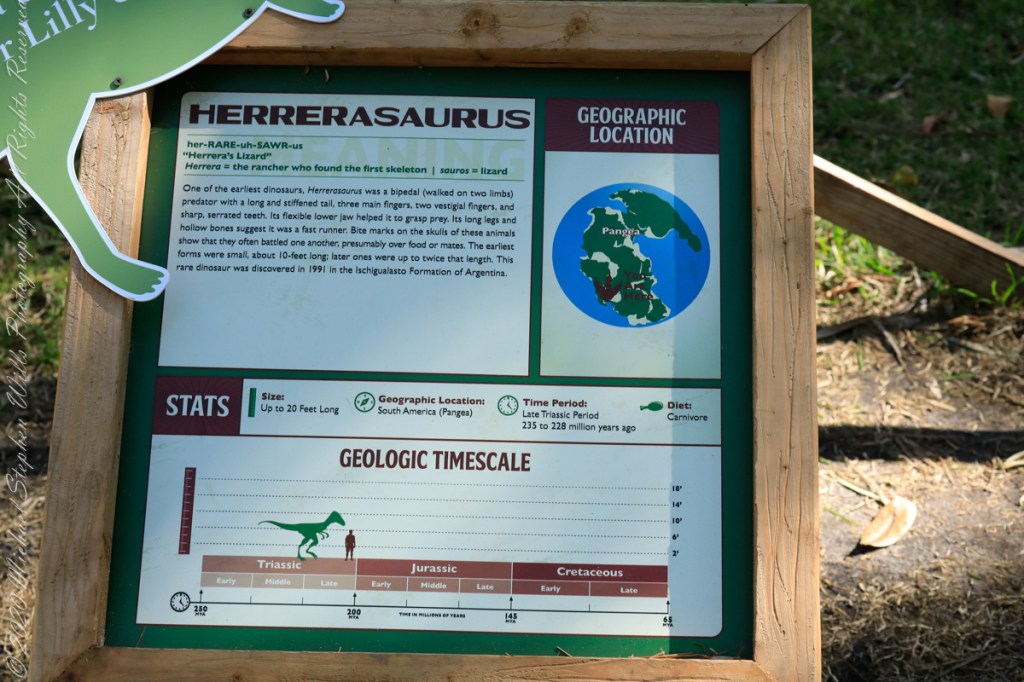
One of the earliest dinosaurs, Herrerosaurus was a bipedal predator with a long and stiffened tail, three main fingers, two vestigial fingers, and sharp, serrated teeth. Its flexible lower jaw helped to grasp prey. Its long legs and hollow bones suggest it was a fast runner. Bite marks on skulls of these animals show they often battled one another, presumably over food or mates. The earliest forms were small, about 10-feet long; later ones were up to twice that length. This rare dinosaur was discovered in 1991 in the Ischigualasto Formation of Argentina.
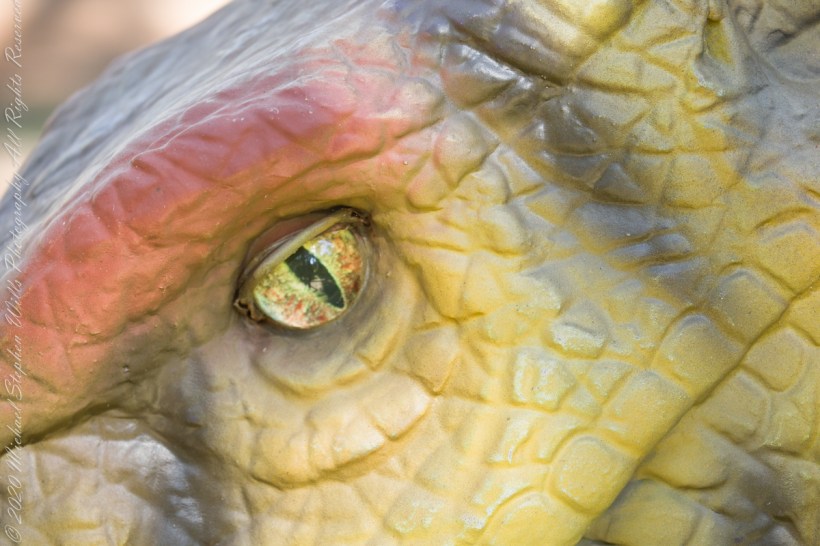
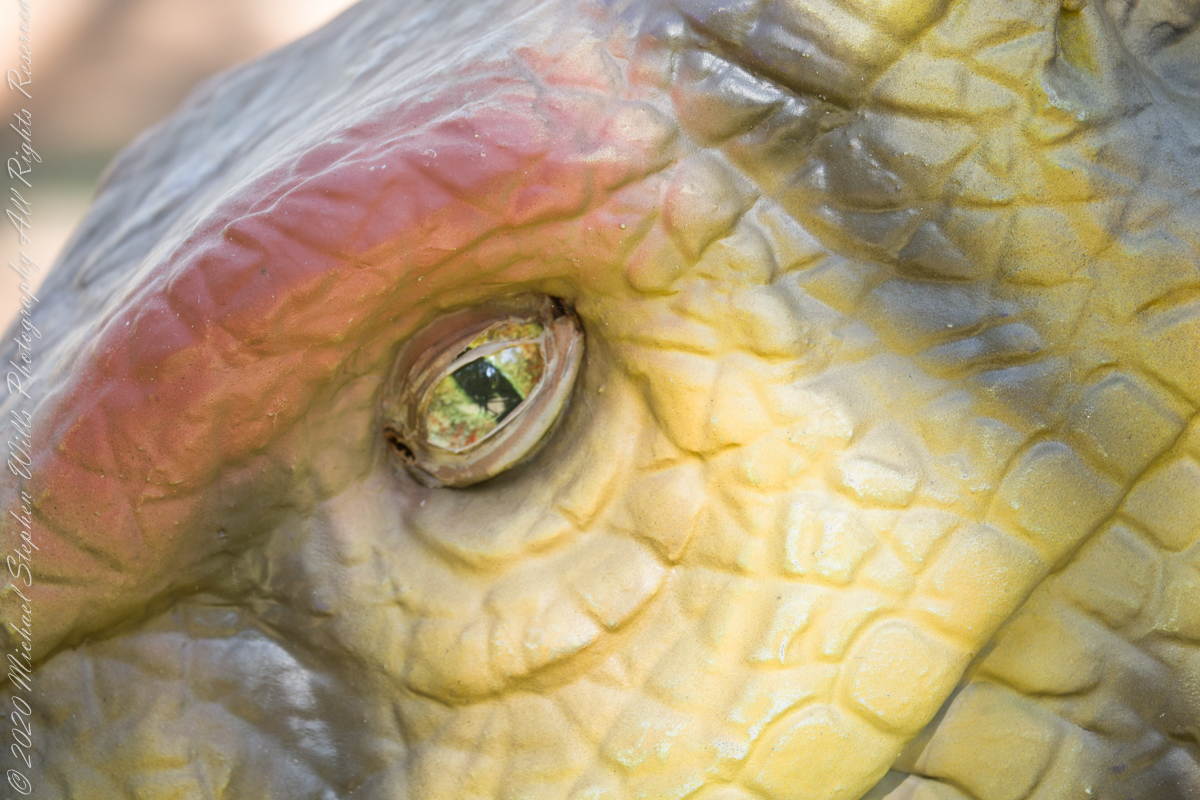
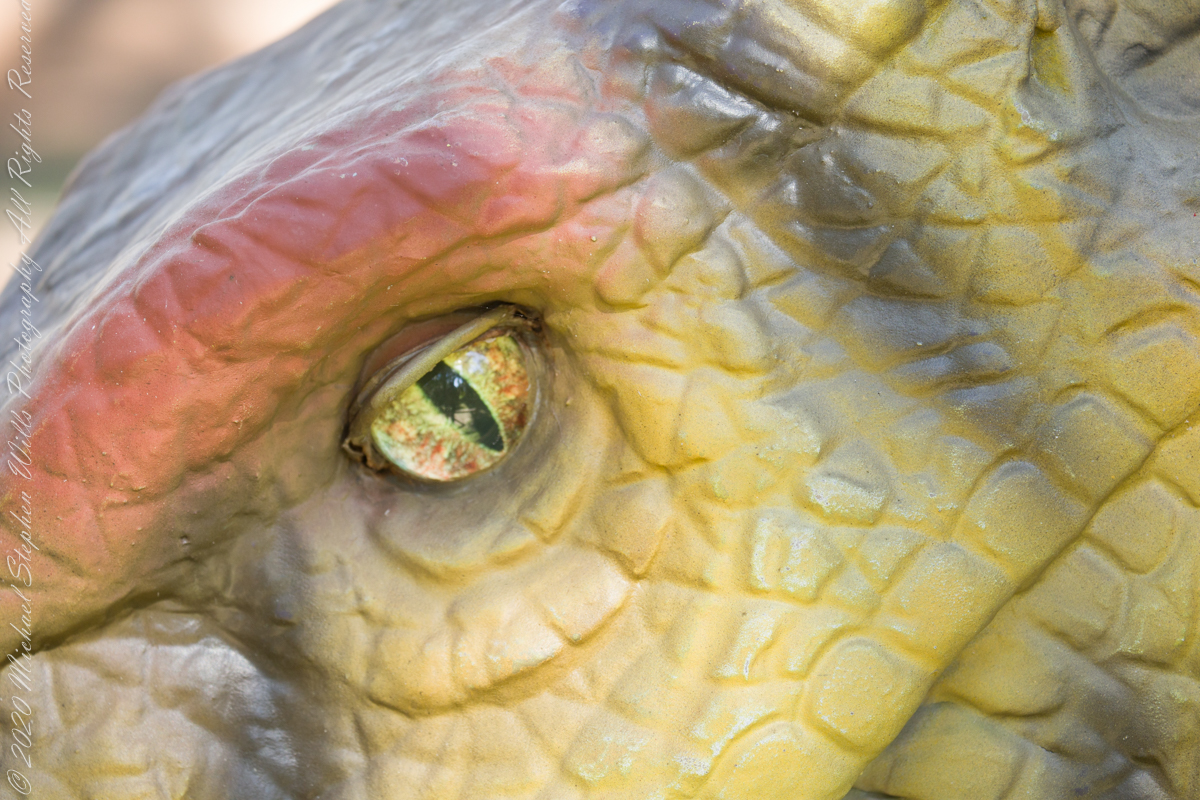
This sculpture has a nictitating membrane, a transparent or translucent third eyelid present in some animals that can be drawn across the eye for protection and to moisten it while maintaining vision. The animatronic sculpture includes the nictating membrane lowering over eye, moving jaws and body and a roar.
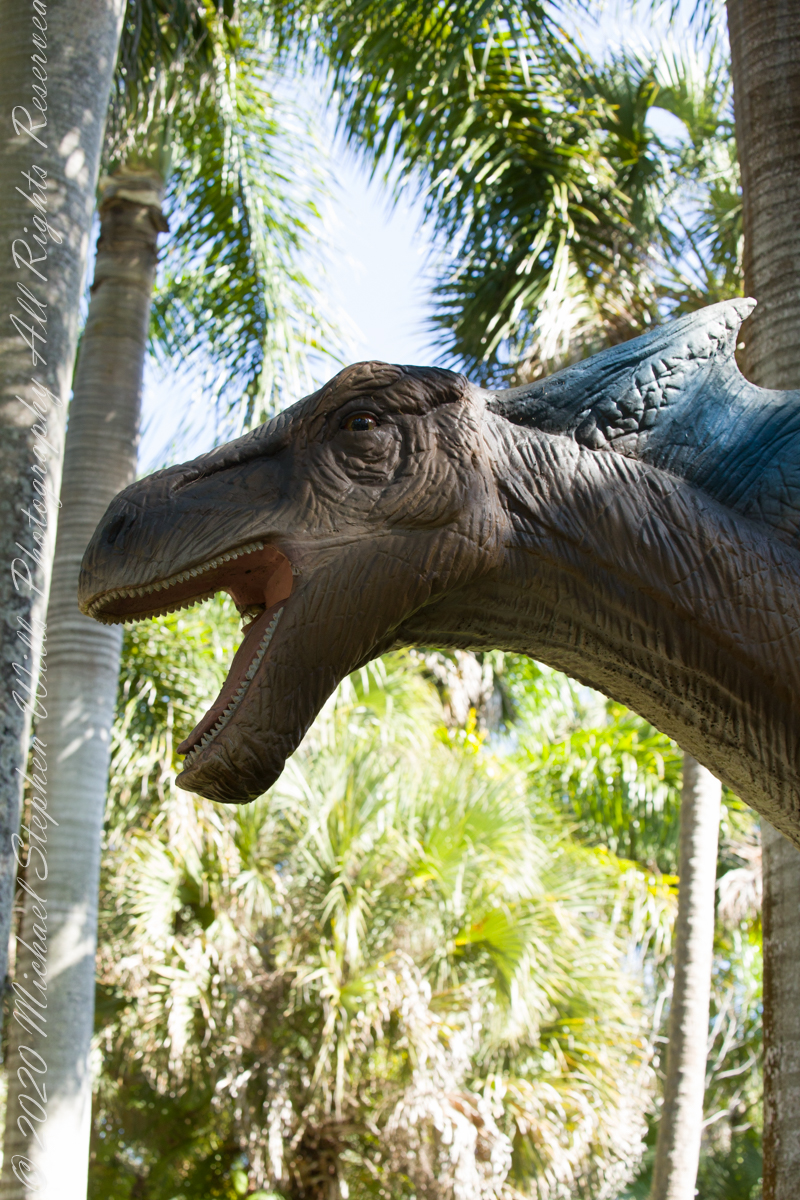
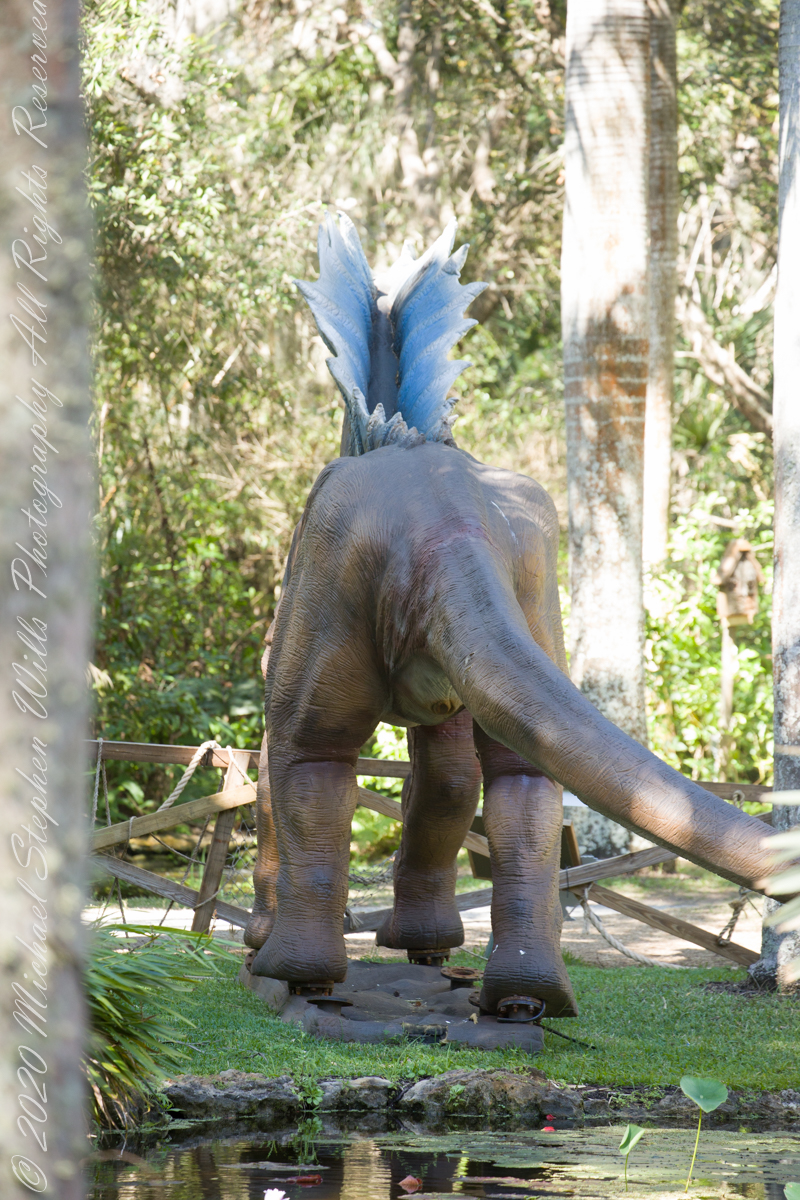
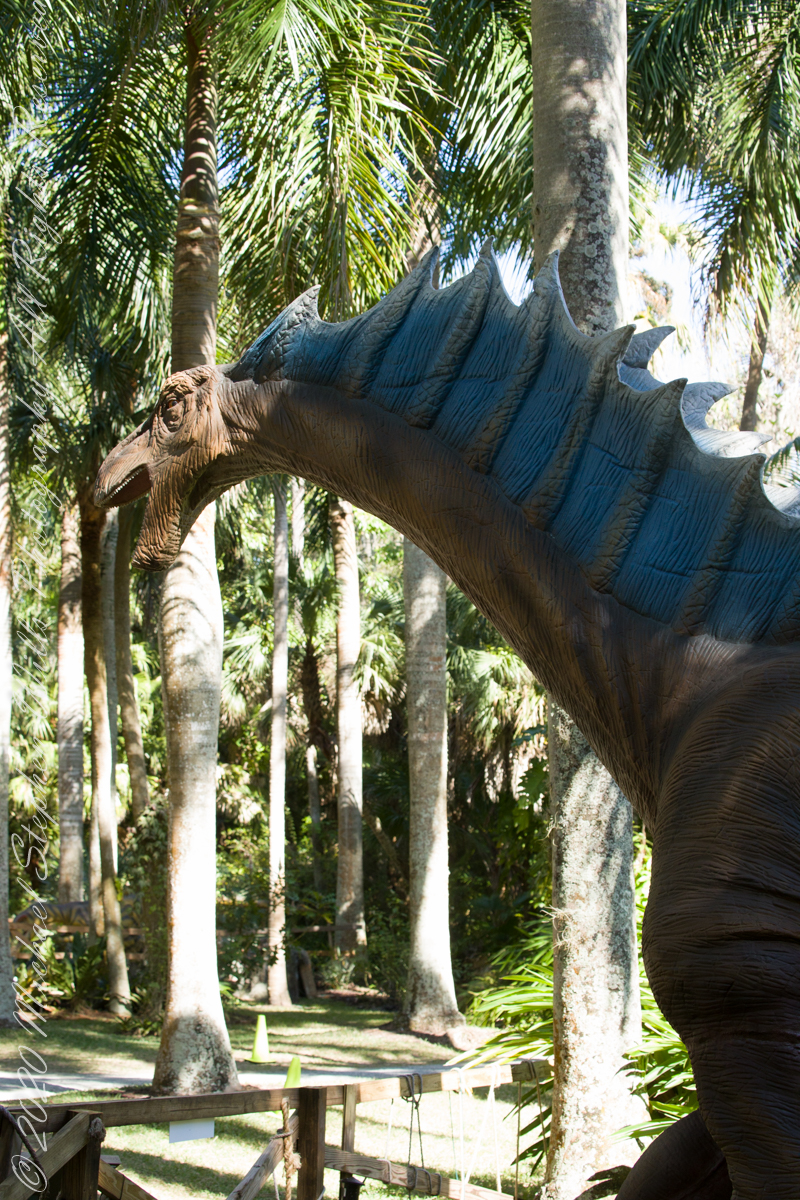
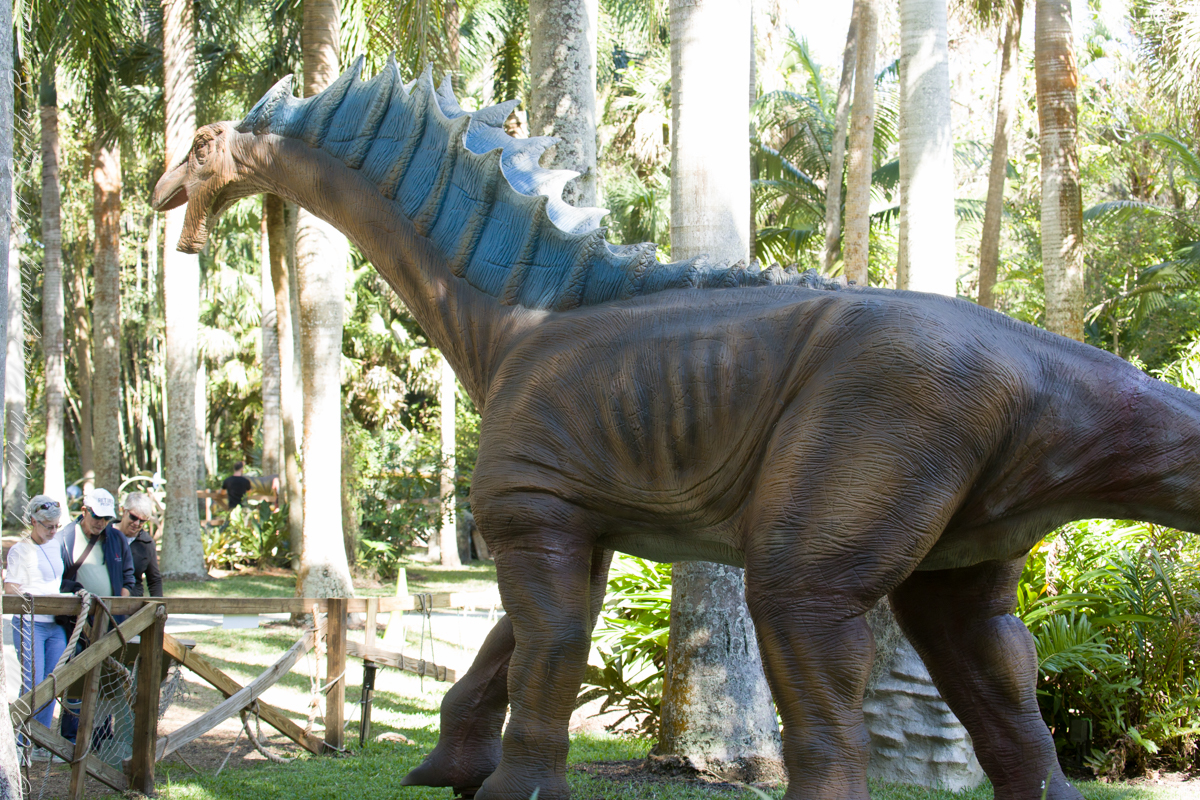
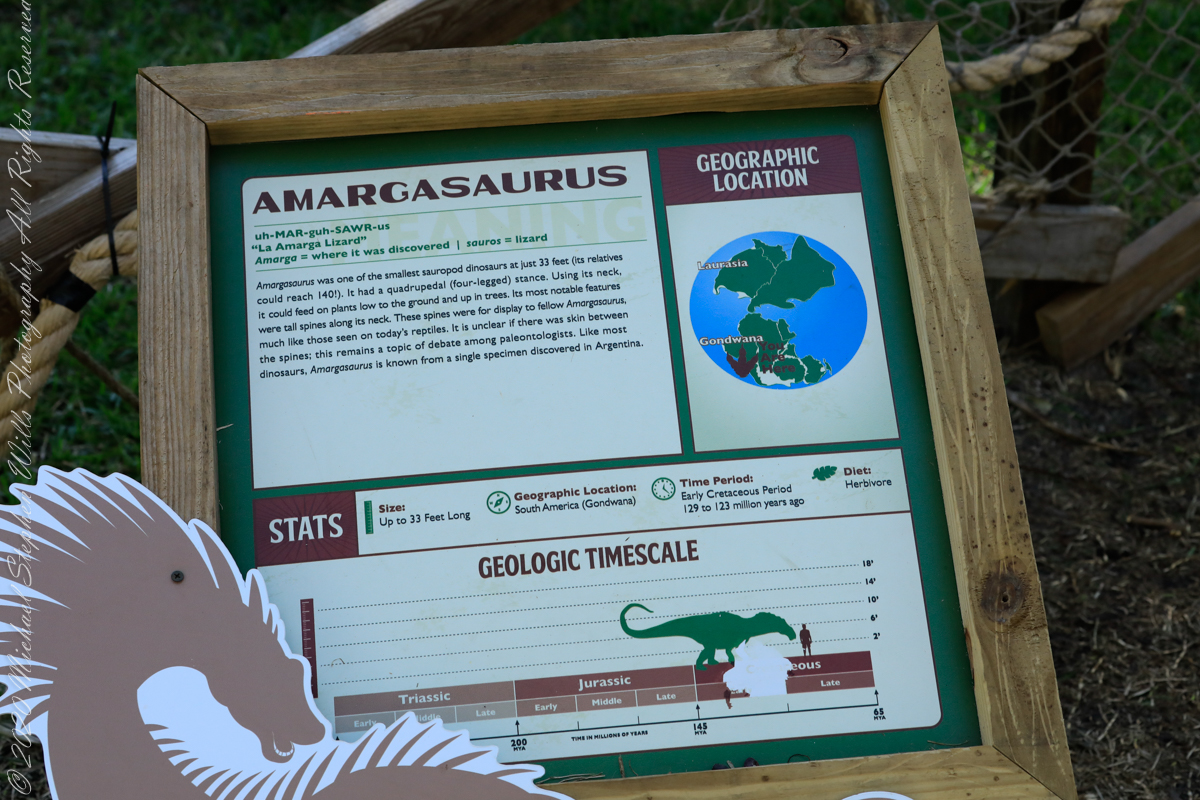
Amargasaurus was one of the smallest sauropod dinosaurs at just 33 feet (its relatives could reach 140 feet!!). It had a quadrupedal stance. Using its neck, it could feed on plants low to the ground and up in trees. Its most notable features were tall spines along its neck. These spines were for display to fellow Amargasaurus, much like those seen on today’s reptiles. It is unclear if there was skin between the spines; this remains a topic of debate among paleontologists. Like most dinosaurs, Amargasaurus is know from a single specimen discovered in Argentina.
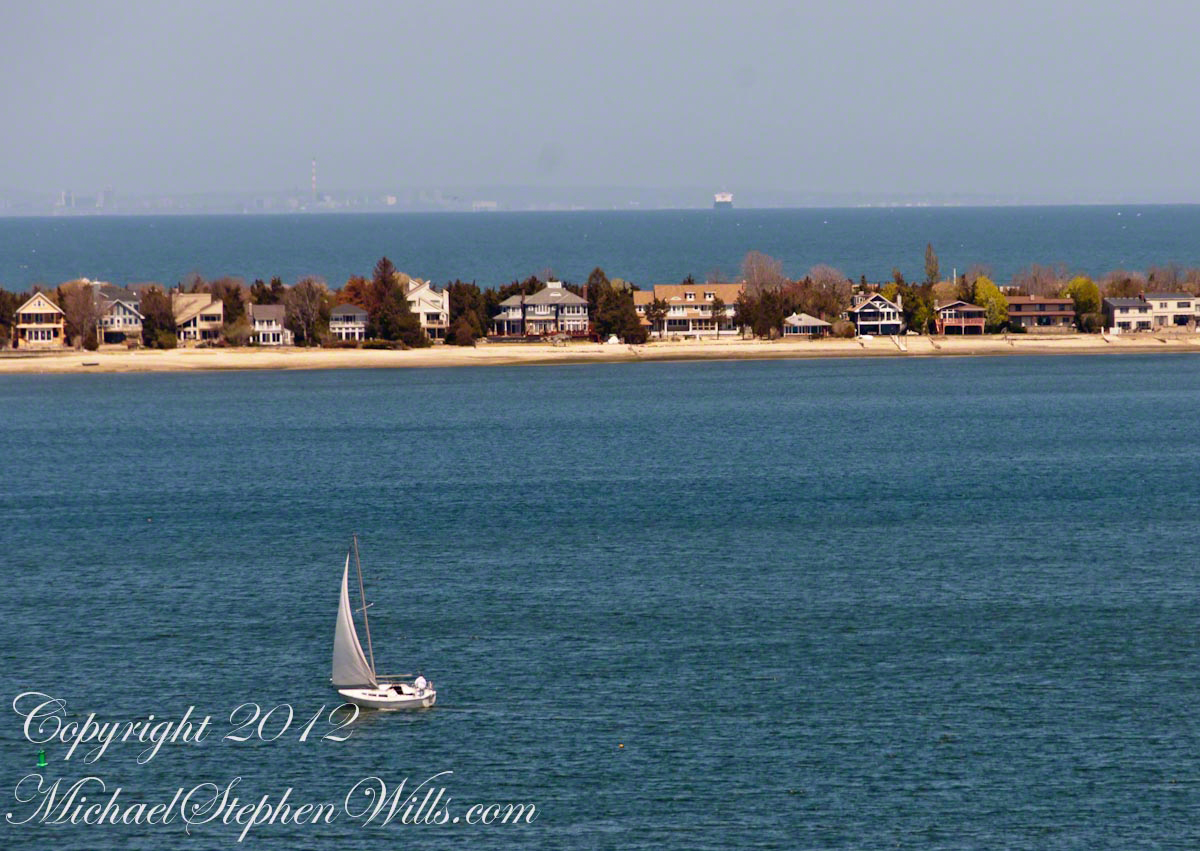
It brings to mind, a few years ago Pam and I took lessons at Cornell’s Merrill Family Sailing Center followed by several seasons of memberships. We’d take out sailboats the size on the one enjoyed by the fellow above in Northport Harbor.
We’d spend entire days on the water, looking up at the people driving the hill up and down route 13. “How lucky we are here and not there”, I’d say.
The Stories
Willy Vanderbilt named his Centerport estate “Eagle’s Nest” after his first yacht, “Eagle” that was anchored in Northport harbor along the estate shoreline. In 1932 the German Krupp Germaniawerft company build a new yacht named Alva, after his mother.
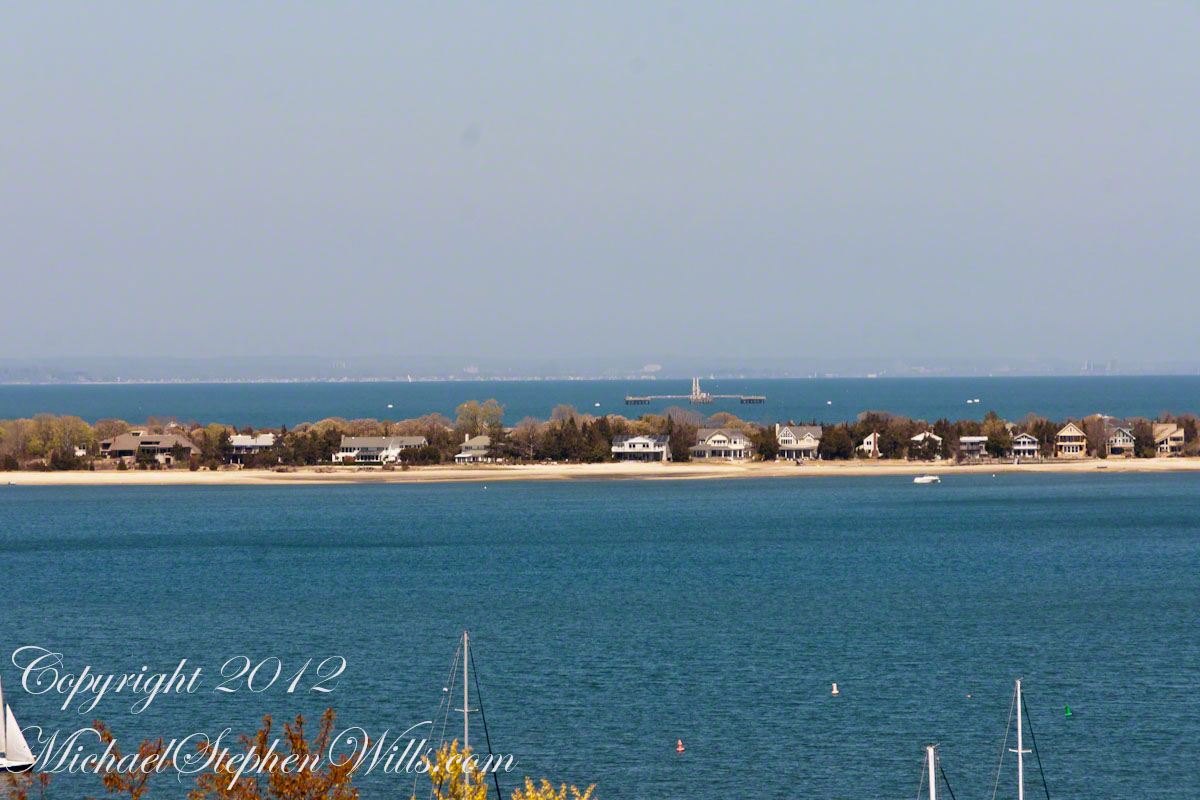
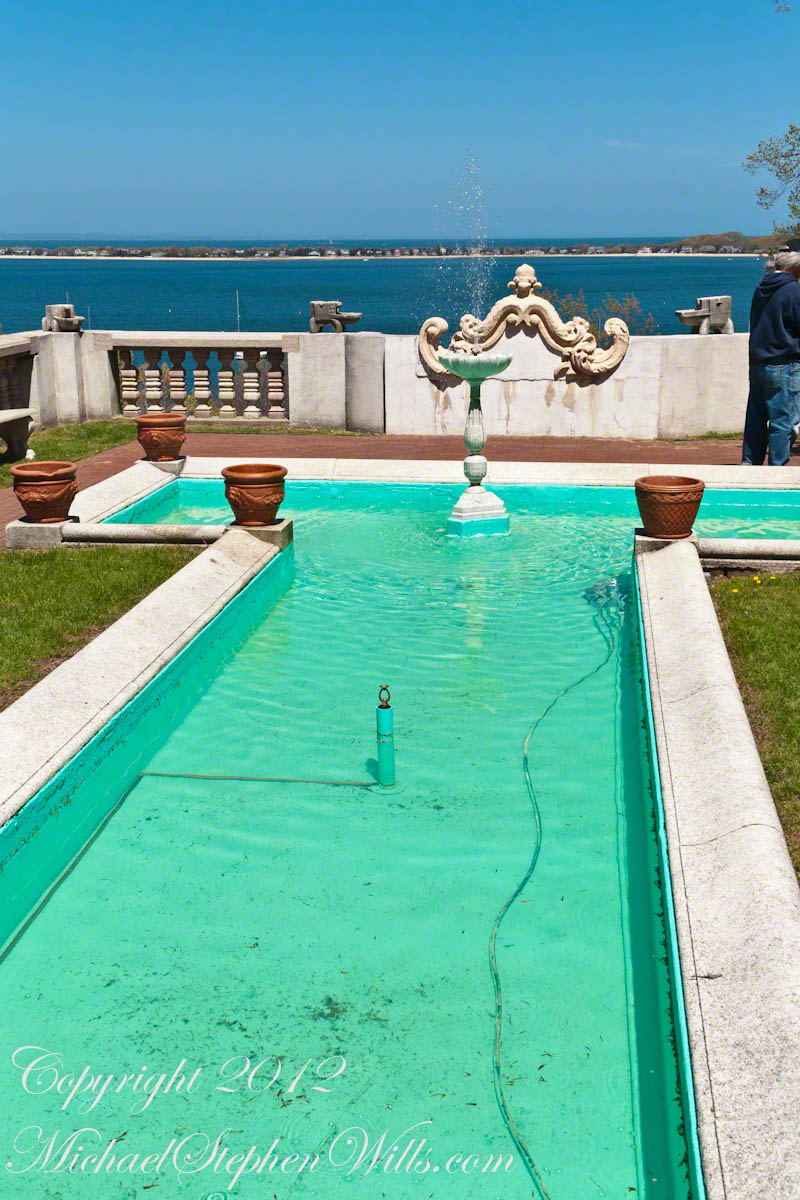
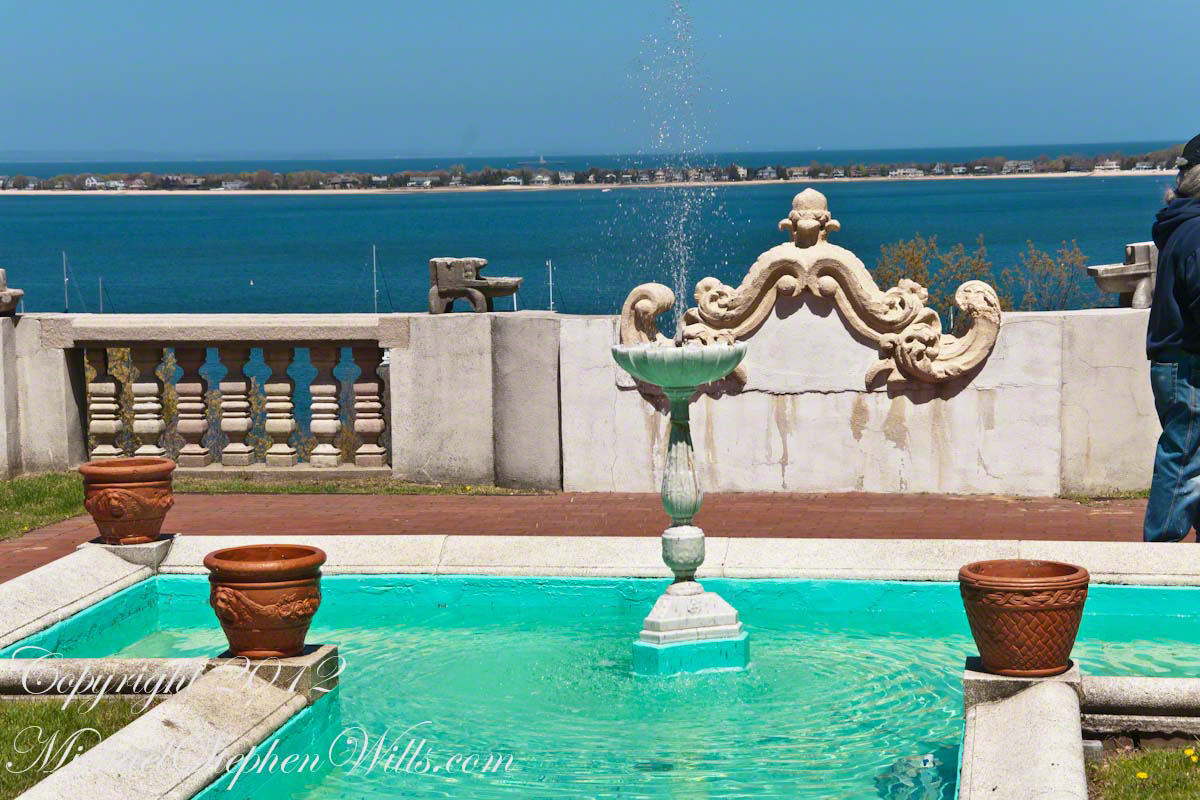
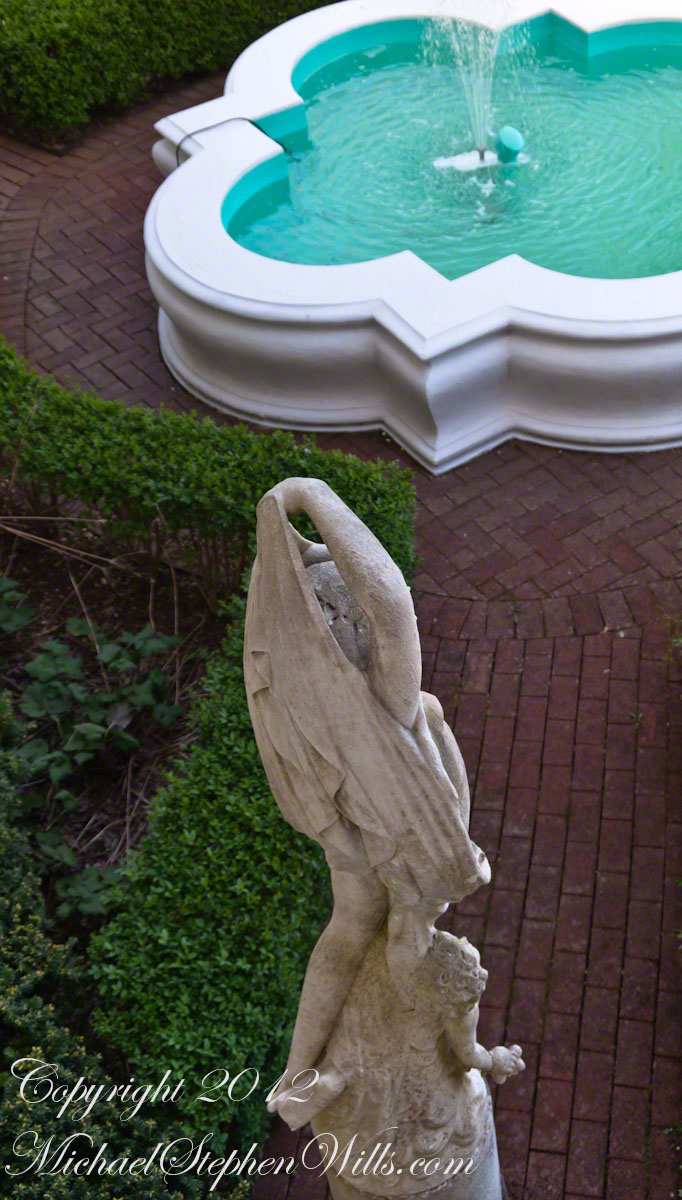
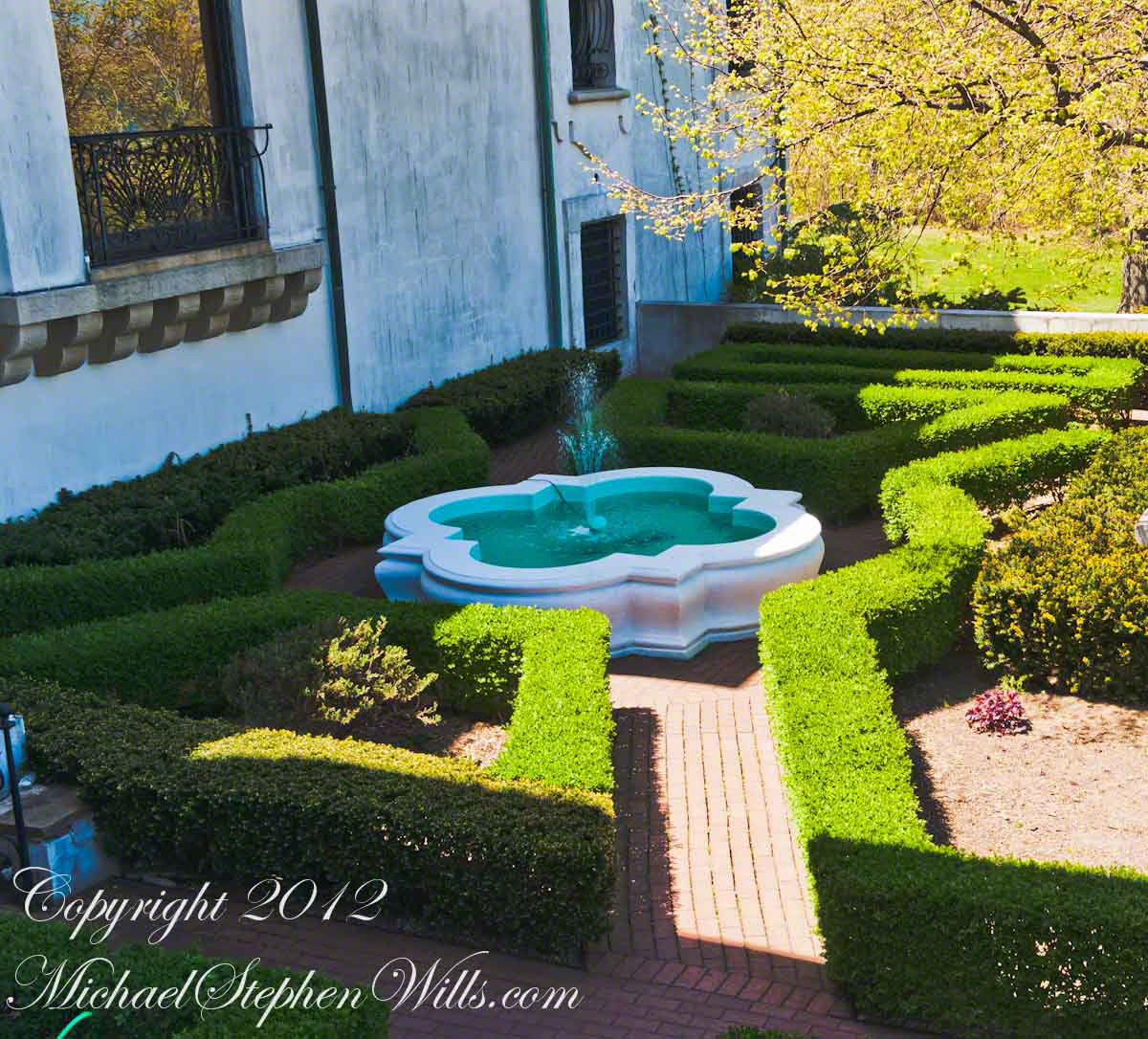
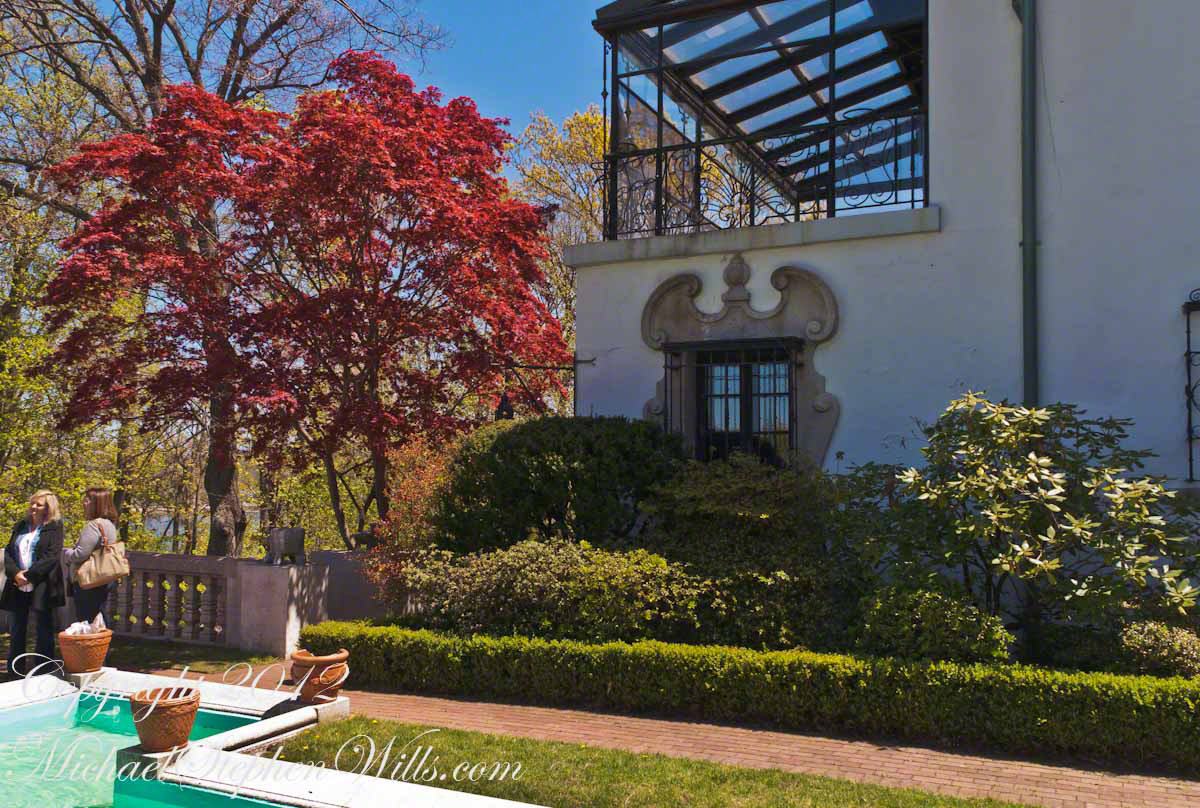
The mansion garden features several fountains and pools. Northport harbor and Long Island Sound are the view.
Willy had a “thing” about the infant Baccus. My first Vanderbilt Museum posting “A Taste of Gatsby: details from the Vanderbilt Museum”included the following depictions of the infant Baccus. the name preferred by the Romans.
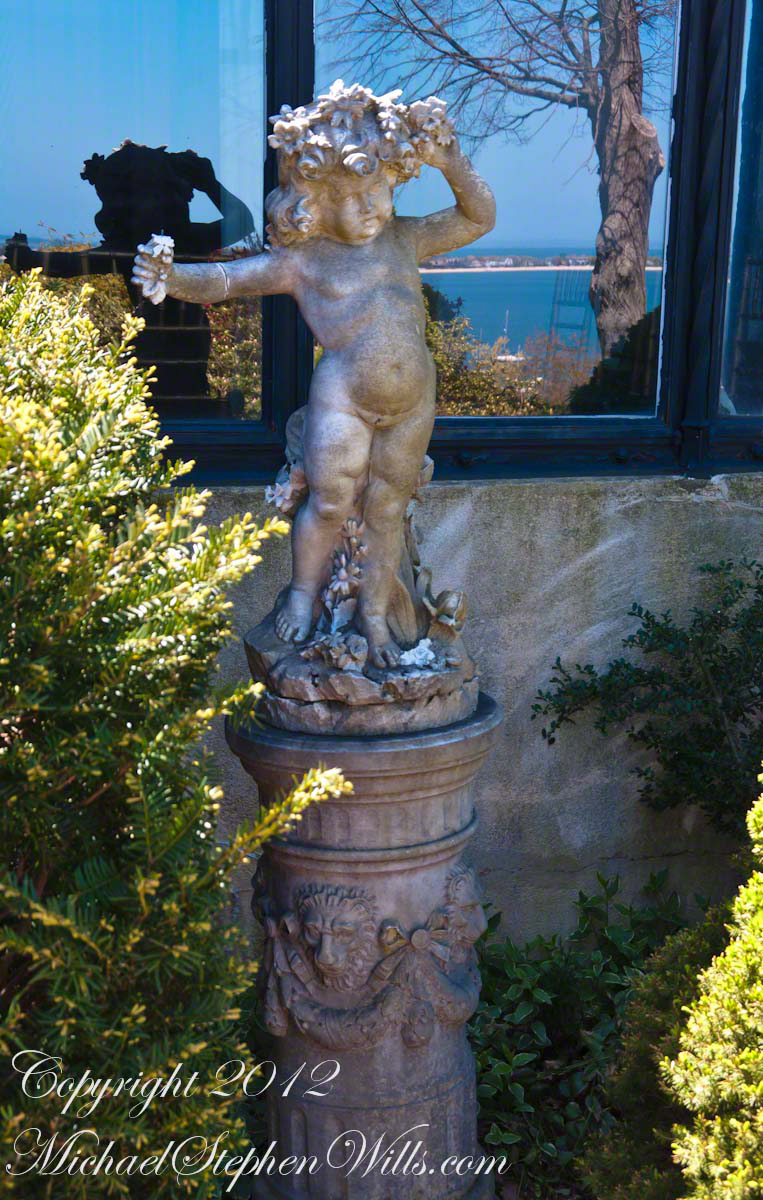
Statue of a young Bacchus in the Mansion Garden with Northport Harbor and the Long Island Sound reflection
To the Greeks he was Dionysus. Also known as the “twice born” from the myth of his being carried in his father Zeus’ thigh after Hera, the jealous wife, plotted the death of his mother, the mortal Semele.
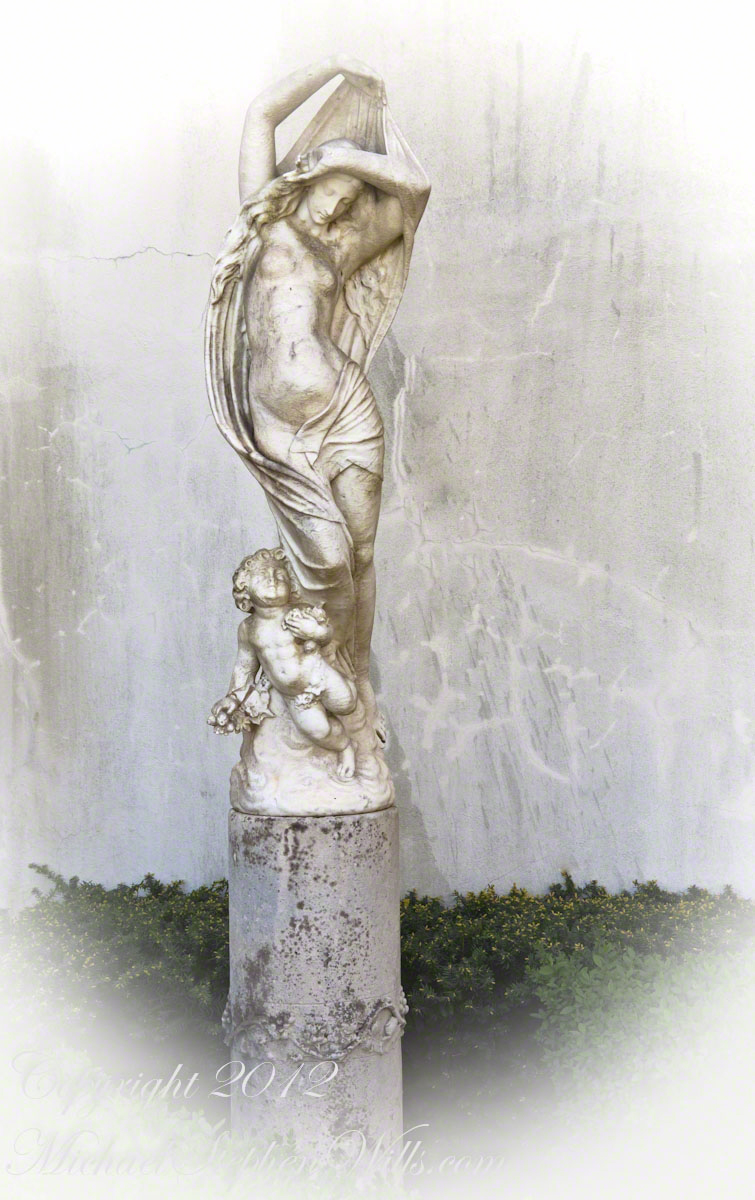
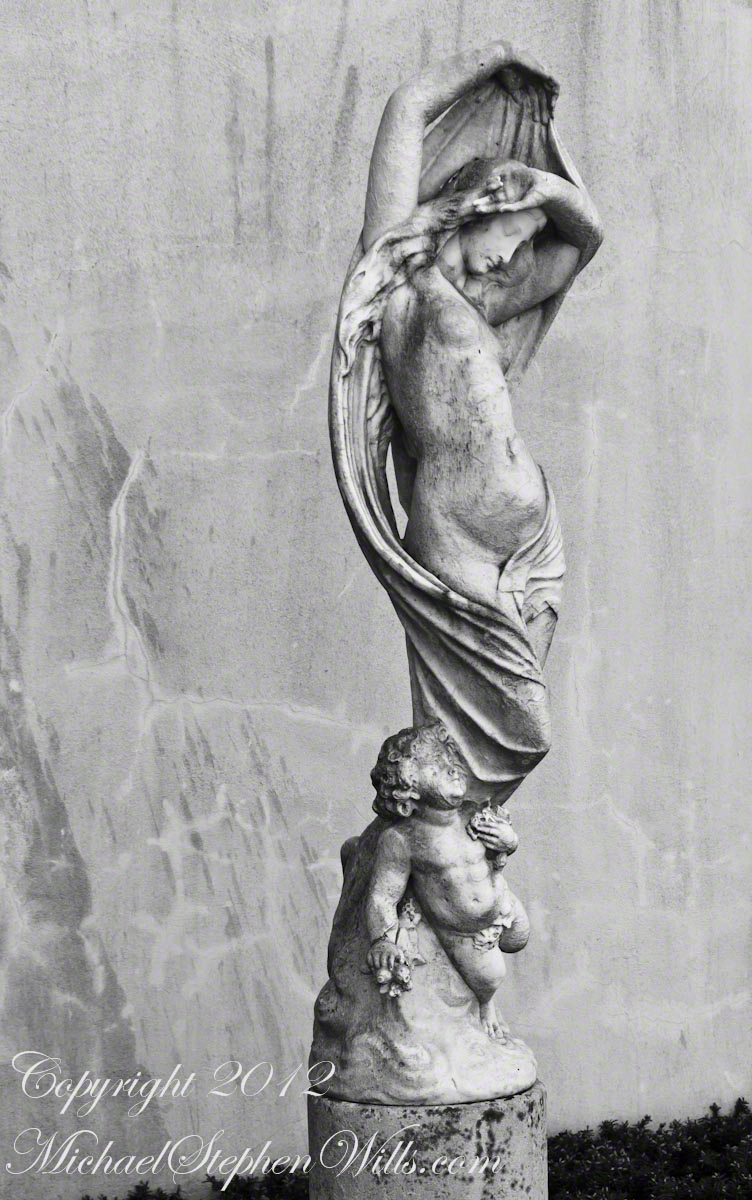
The infancy of Dionysus was perilous, with Hera plotting revenge Zeus found safe haven for the child at a place of earth called Mount Nysa, with beings named Rain Nymphs. The fascination of Vanderbilt with the story continued with the acquisition and display of a statue of the infant Dionysus with a protective nymph.
Dionysus and protector, a Rain-nymph of Nysa
The Things
The statue and plinth are at the stairs into the garden.
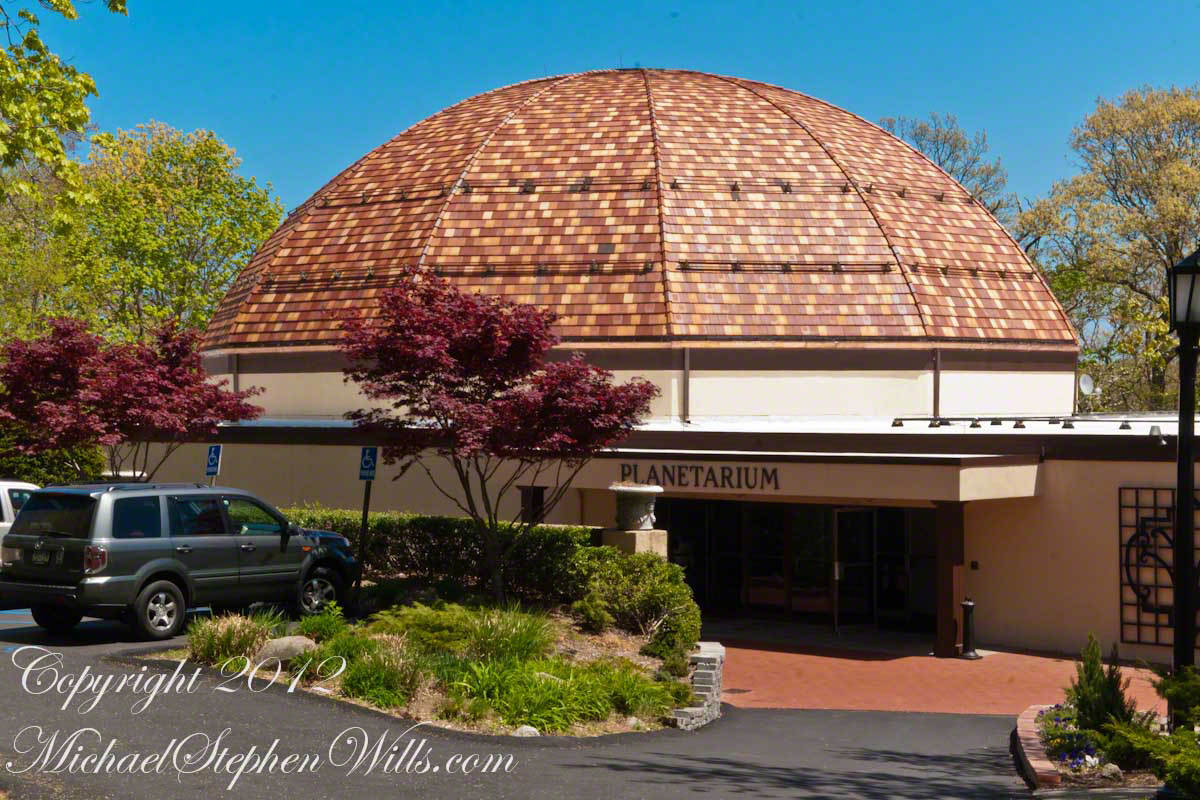
Thirty five years after completing his Eagles Nest estate and twenty seven after his death, this planetarium became an addition to the museums left by William K. Vanderbilt II (“Willie K”). Located next to the Rose Garden, where my last blog “A Taste of Gatsby – details from the Vanderbilt Museum” left off, this planetarium is on the site for the estate tennis courts. The Planetarium reopened March 2013 with a complete equipment upgrade.
The star of the planetarium is a Konica Minolta GeminiStar III projector; a machine that will put this museum on the map for having one of the finer planetarium projectors in the United States.
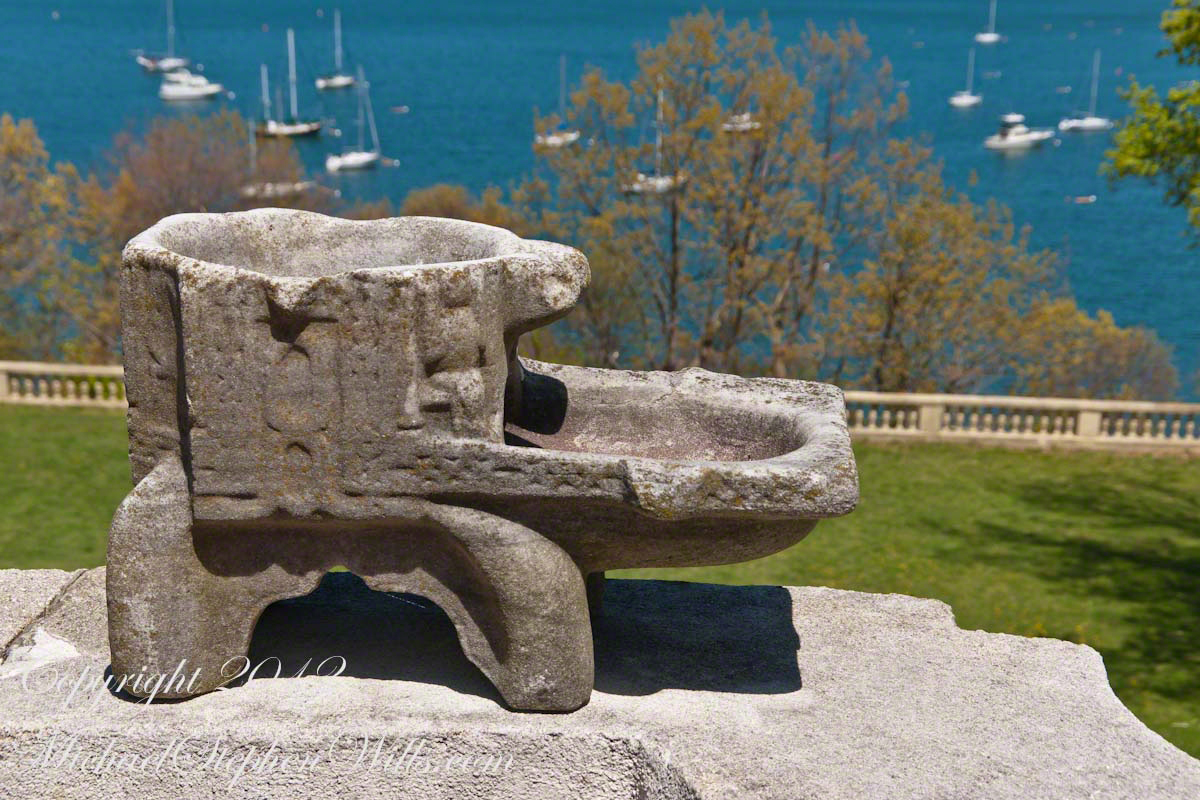
There are several museums on the grounds, joined by graciously appointed walkways. This is a corner urn along the walk to the mansion.
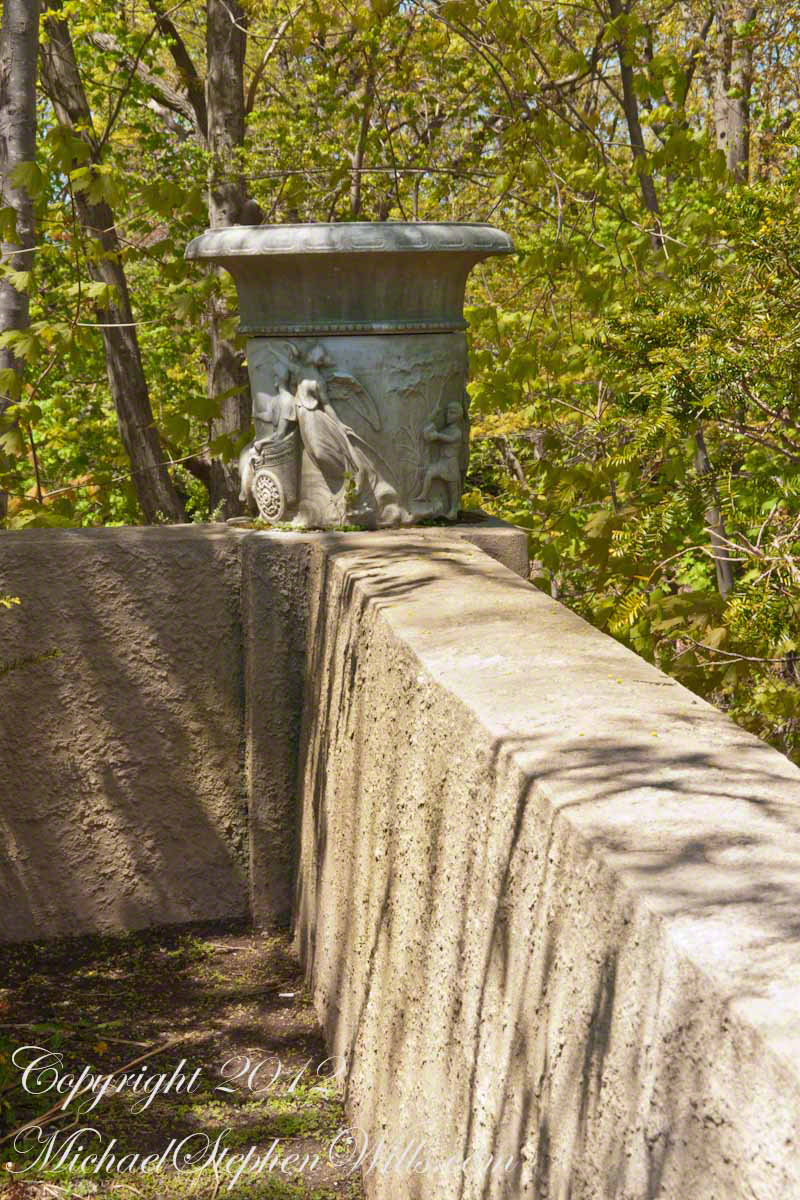
This planter graces a wall corner along the path from the Planetarium to the Corinthian Colonnade
Courtyard Entrance
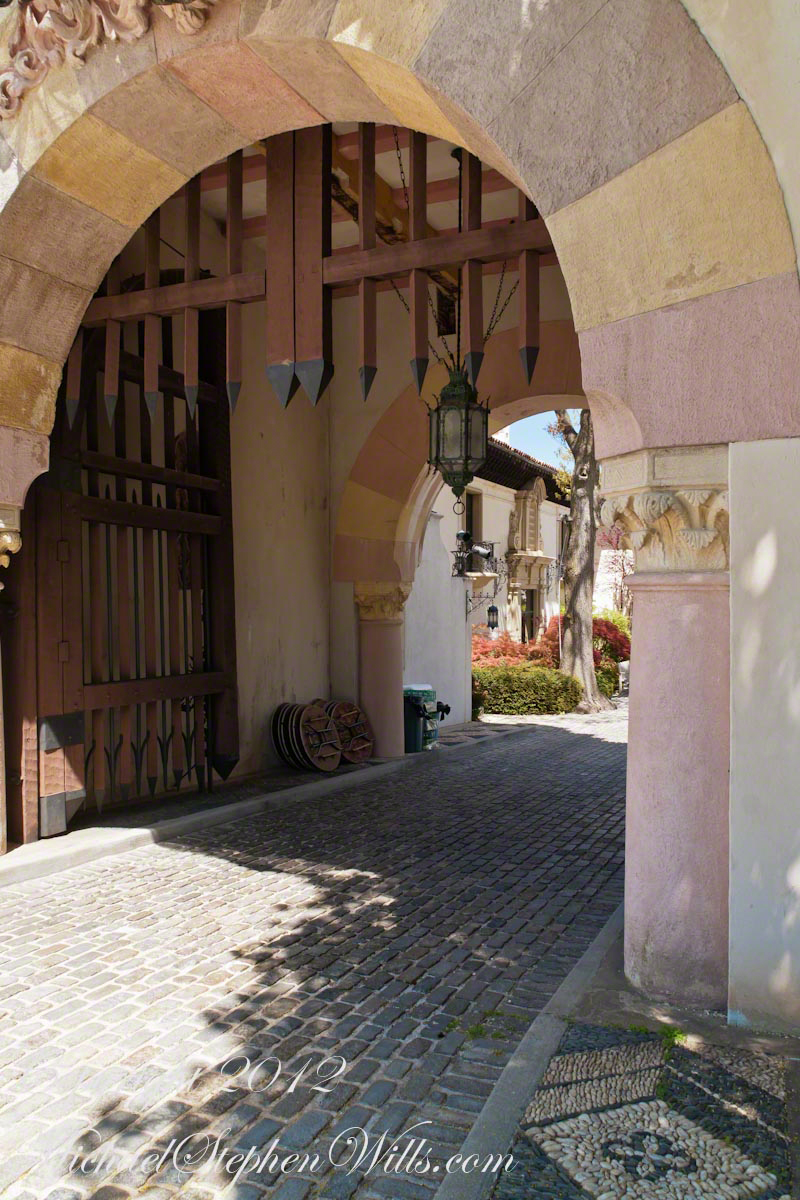
The Spanish Revival style mansion gathers around a central, cobblestone courtyard entered through this elaborate sandstone gate flanked by two carved sandstone urns, each at least six feet tall with pedestal.
A gated arch serves as the mansion courtyard entrance.
The gated entrance is the base of a bell tower. Willie brought from Russia a church bell that is older than the Liberty bell. He used to have great fun ringing the bell on Sunday mornings to disturb the sleep of his partying son and friends. That stopped when the neighbors arrived as an angry, spontaneous group to complain.
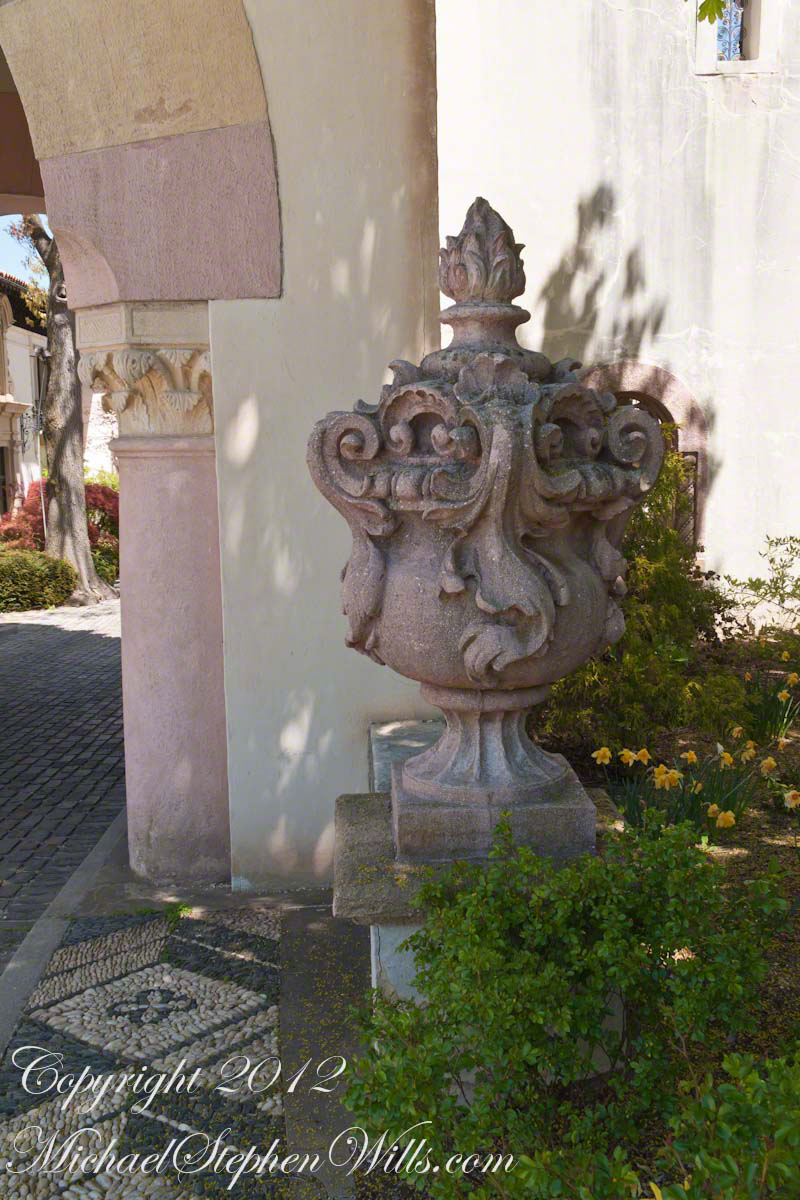
The mansion courtyard is entered through a gated archway. This cast urn graces the right side.
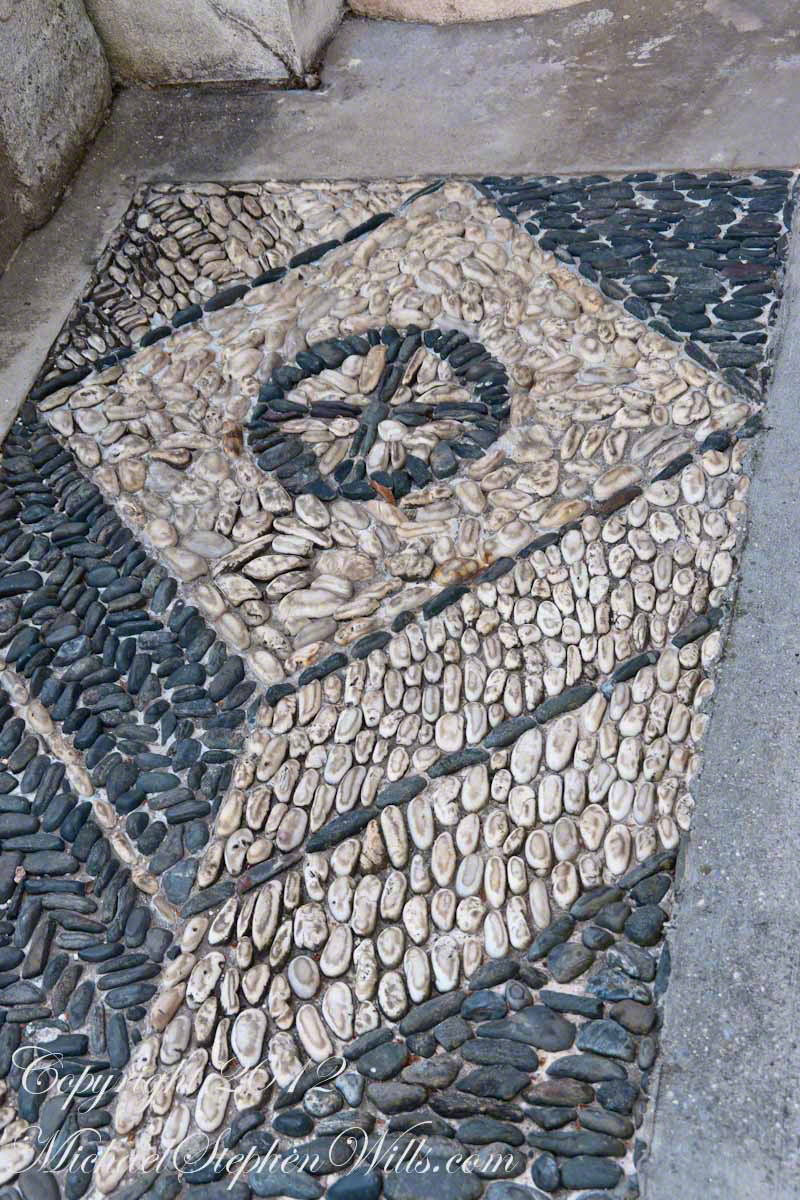
The cobblestone road leads up to the mansion, over a bridge and into the courtyard. Here is a detail of the walk way, formed from glacially rounded pebbles very common on beaches of Long Island’s North Shore.
A walkway decorated with black and white pebbles leads into the mansion courtyard. This is a portion just inside the arch.
A Ghost in the Garden
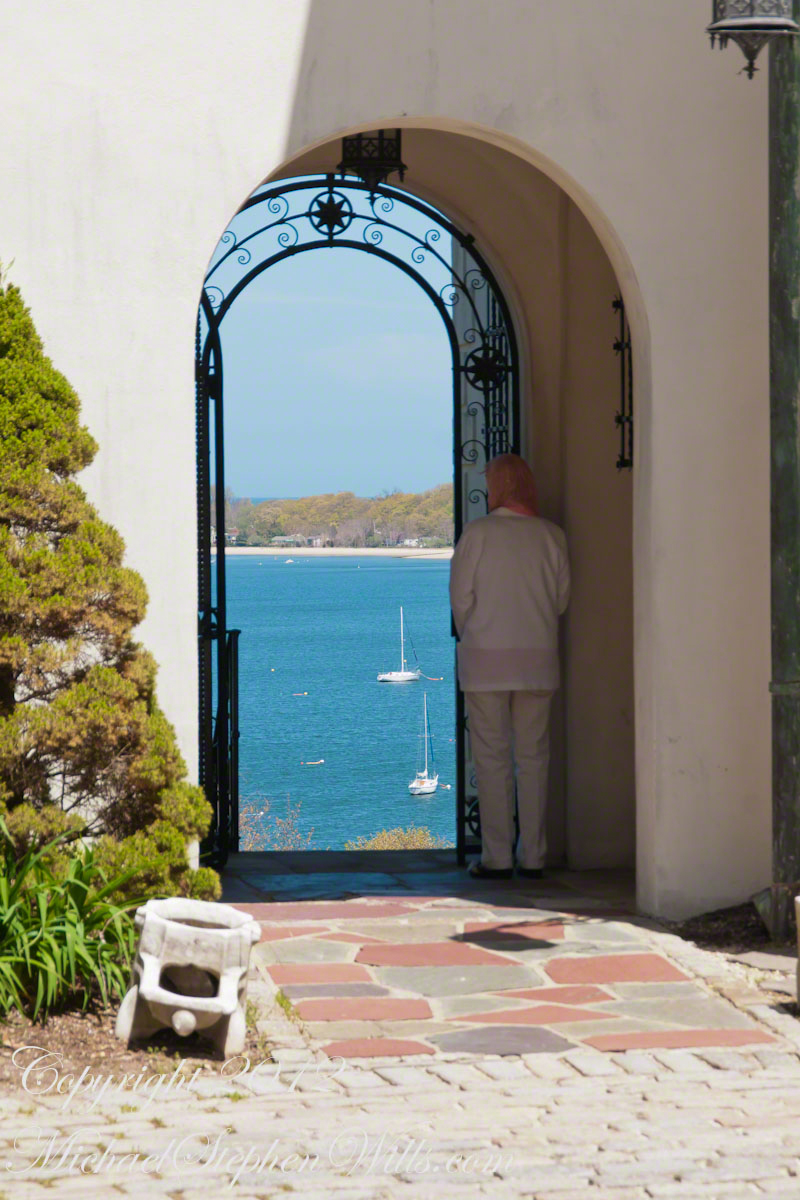
Across the courtyard from the bell tower is this arched entrance to the gardens along the east mansion walls. As we approached the figure to the right seemed to be a ghost, she was so still, enthralled by the view of Northport Harbor.
Archway with view toward Northport Bay and Asharoken
There were many cast stone planters in an Aztec motif such as that to the left of the archway and, in a detail shot, below.
A cast wall urn from the Mansion Garden of the Vanderbilt Museum.
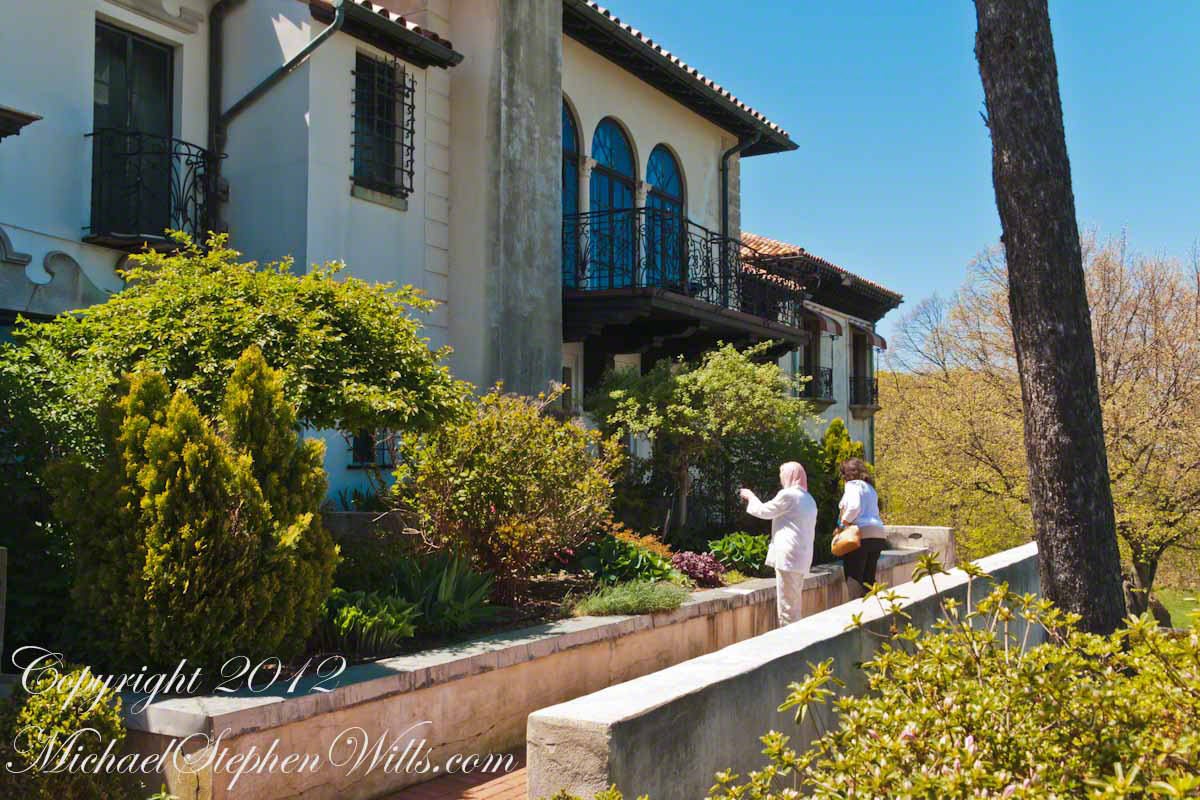
We continued through the archway into the gardens. With plenty of time before the Mansion tour (highly recommended) we wandered at length and had an interesting conversation with the figure of the archway, a retired lady from Smithtown (and not a ghost).
Pam struck up a conversation with another visitor who was very knowledgeable about the museum history and grounds.
Copyright 2022 Michael Stephen Wills All Rights Reserved
The first weekend of May 2013 my wife, Pam, and I attended a New York City Ballet performance on Saturday. Sunday we visited the Vanderbilt Museum of Centerport, Long Island.
This is the former “Eagles Nest” estate of William (“Willie”) Kissam Vanderbilt II.
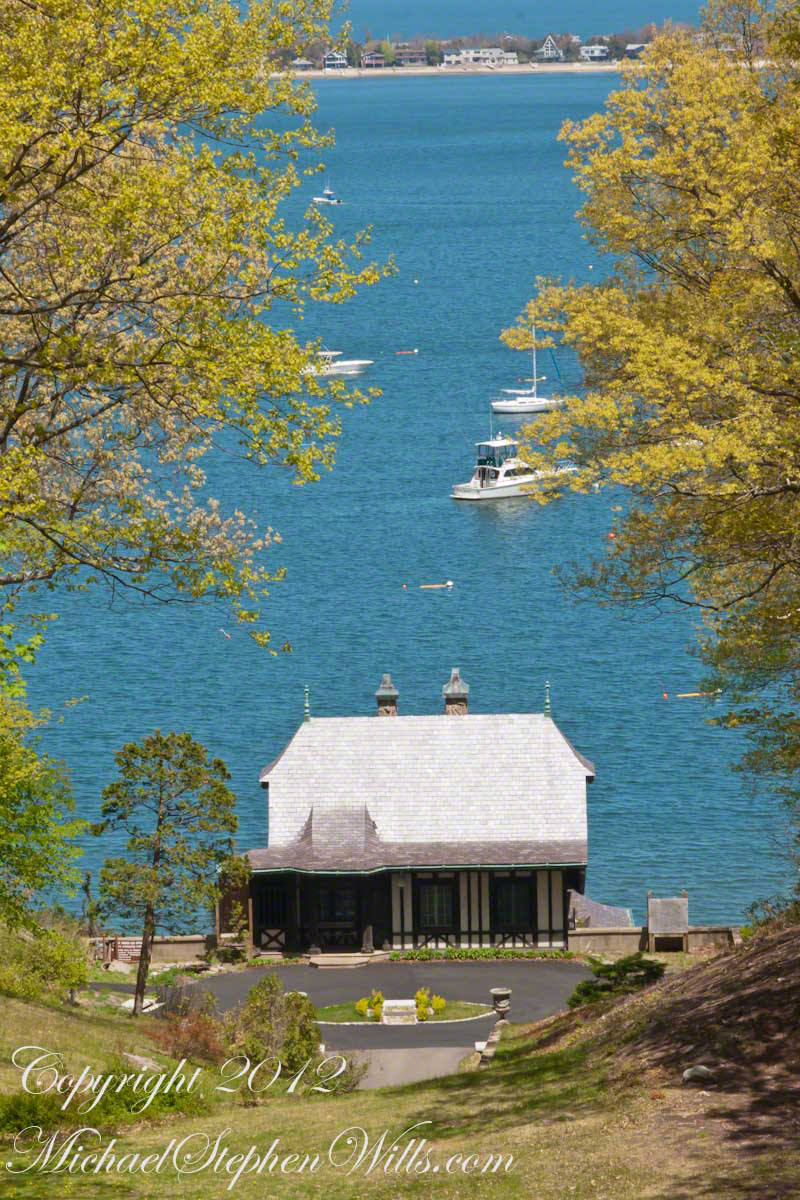
Museum visitors are first drawn to a grand Corinthian colonnade and view of this boathouse on Northport Harbor.
Willie K chose Centerport in 1910 for an anchorage on the well protected Northport Harbor, deep enough to his yacht the size of a destroyer class ship named for his mother, Alva. The estate grounds are high above the harbor, the mansion and gardens designed to enhance the view.
There are superficial parallels between Willie K’s life and “The Great Gatsby.” The first suburban commuter, Willie K was an auto enthusiast. A theme of F. Scott Fitzgerald’s novel “The Great Gatsby” is travel back and forth from New York City to the great estates on Long Island’s North Shore. In Gatsby, while the vehicles are grand, the travel is pointless or worse. In comparison, Willie K as a pioneering automobile racer, achieved a land speed record and founded a major race, “The Vanderbilt Cup.” Gatsby, above and beyond his fictional status, is a tenuous, transient figure. Vanderbilt established this estate, grounds and museums we still enjoy today.
Rose Garden
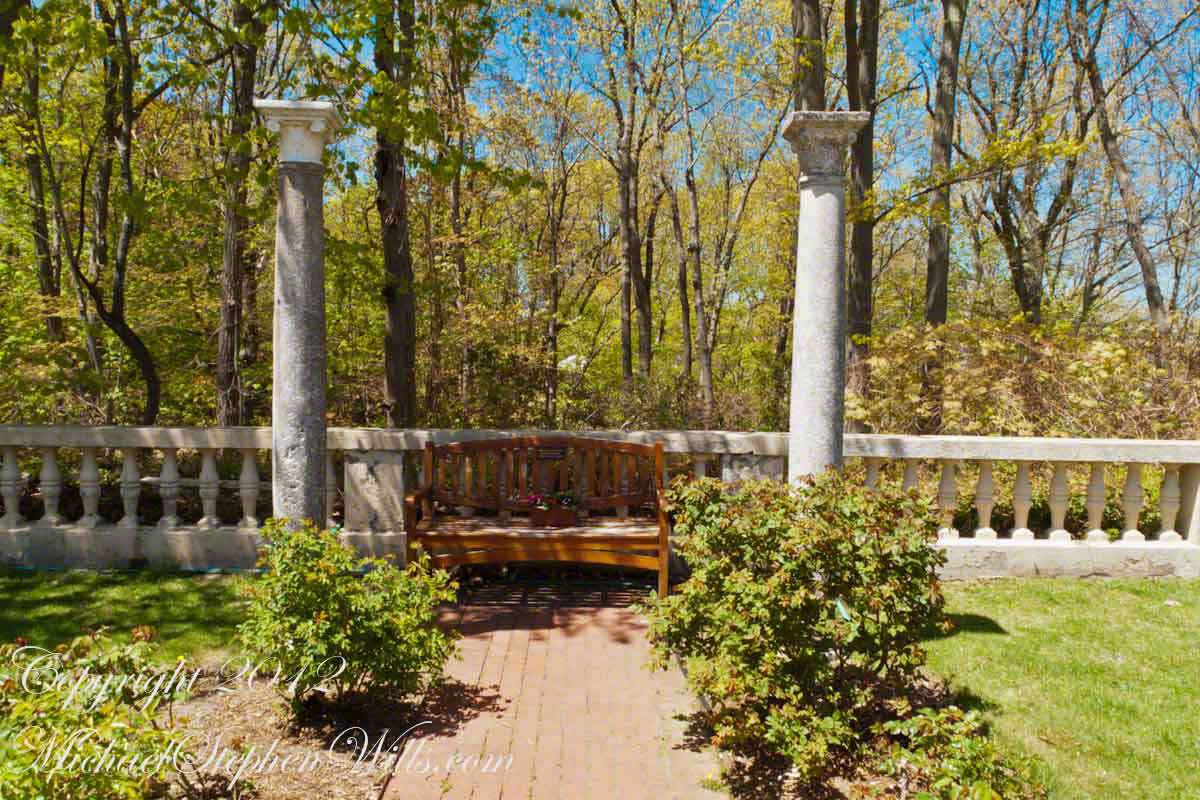
A short walk from the colonnade is a rose garden surrounding a pool and fountain. These Corinthian columns sized to a human scale flank a dedication bench on the northern side overlooking the boathouse through a hillside forest.
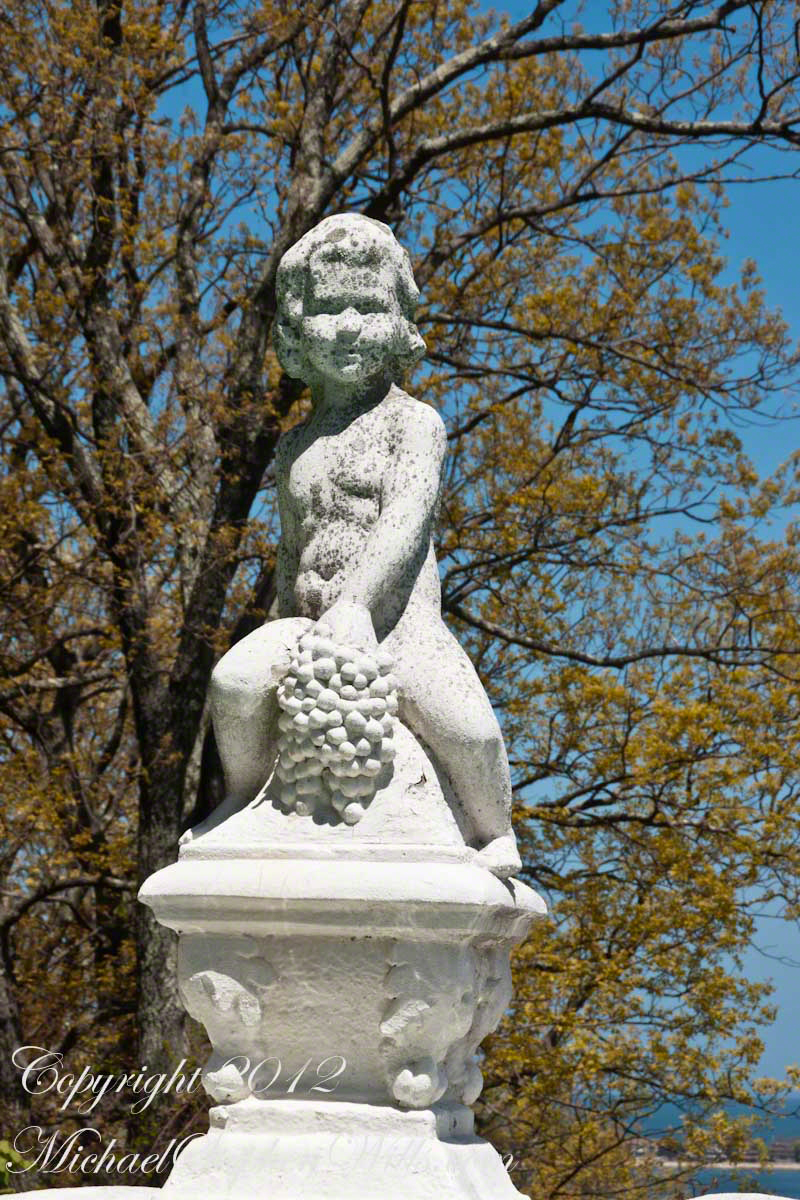
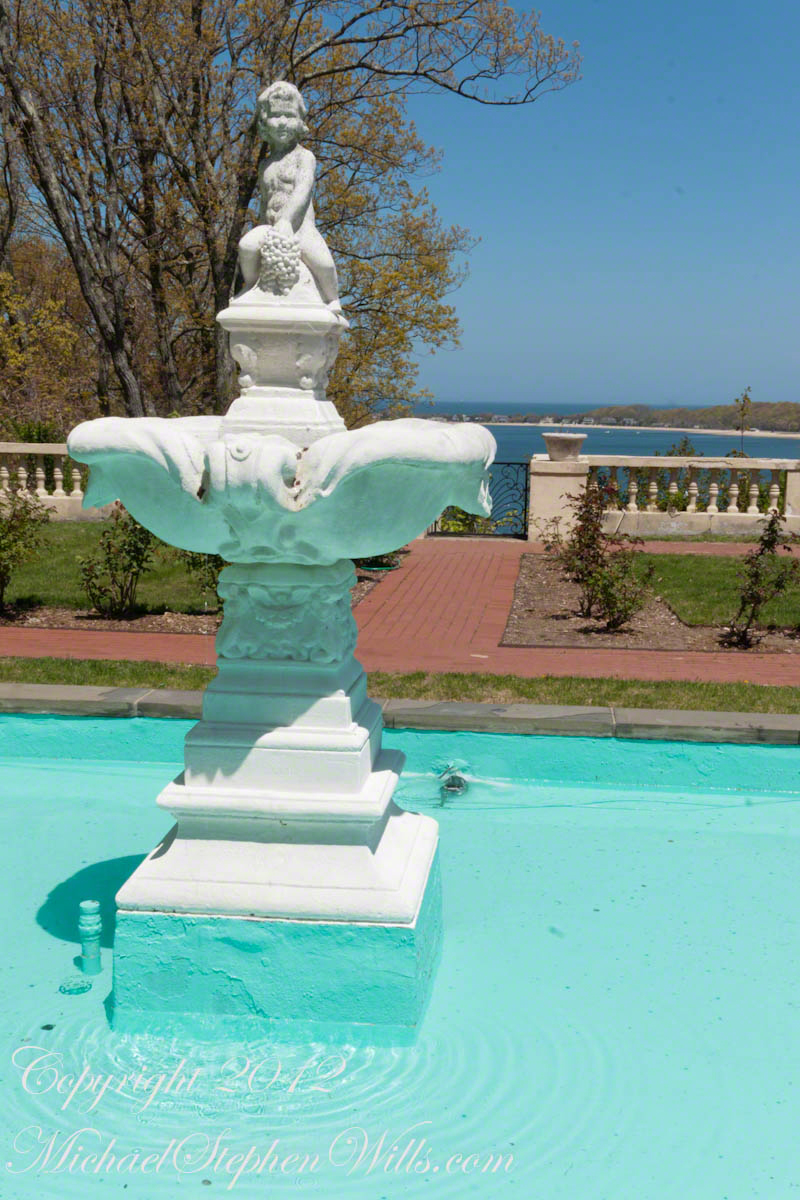
This figure of a flourishing infant is atop the rose garden fountain. Pam and I first noticed this character of the Eagles Nest estate here, with his abundant grape cluster, and came to know him as an expression of Willie’s outlook.
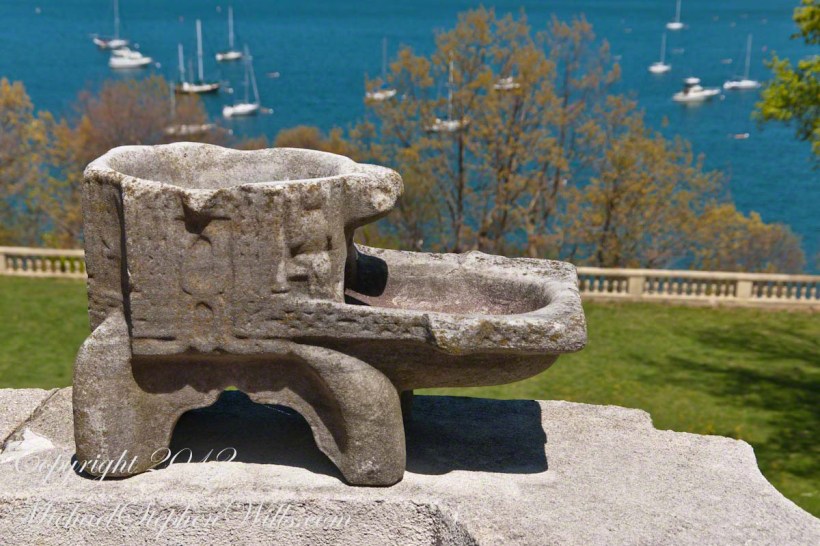
To the northeast / east is a dramatic view of Northport harbor and the Long Island Sound.
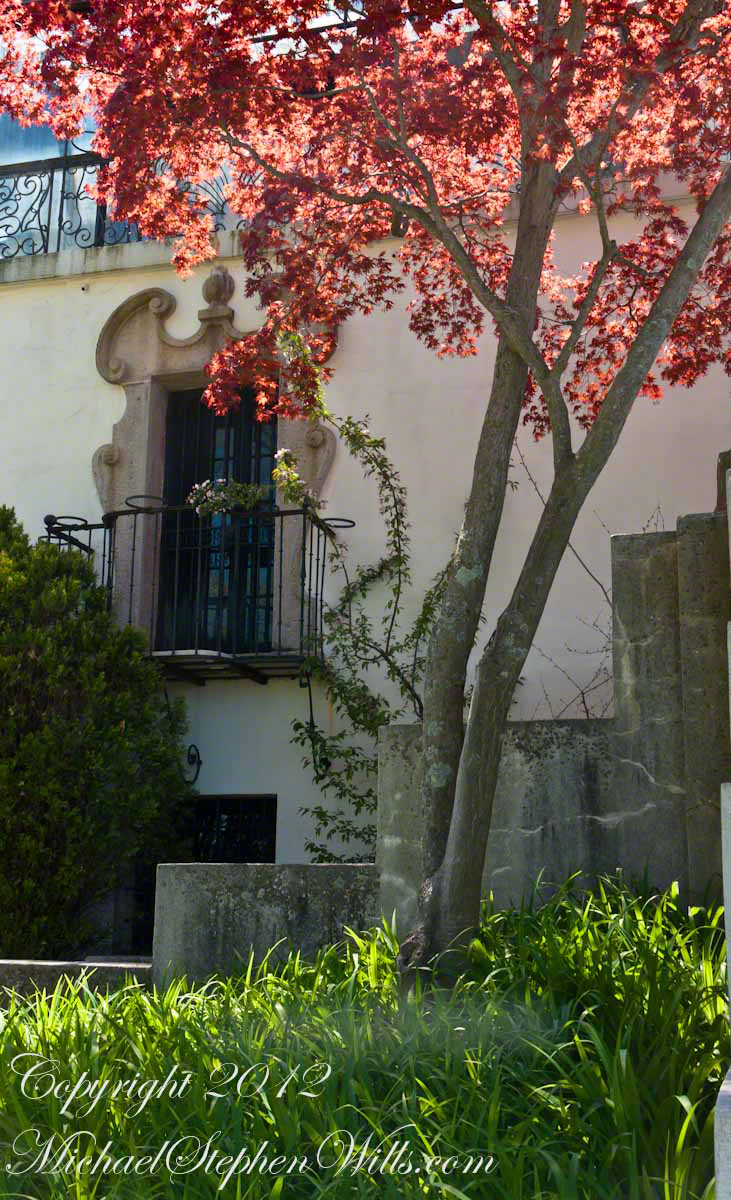
The mansion and surrounding grounds were imagined by Willie and implemented by the architects Warren, Wetmore and Pearce, over a twenty five year building campaign, from his feeling for the Mediterranean.
Over the years my selection of beach texture photography has expanded. Click this link or any photograph to visit my Textures Abstracts Patterns fine art gallery.
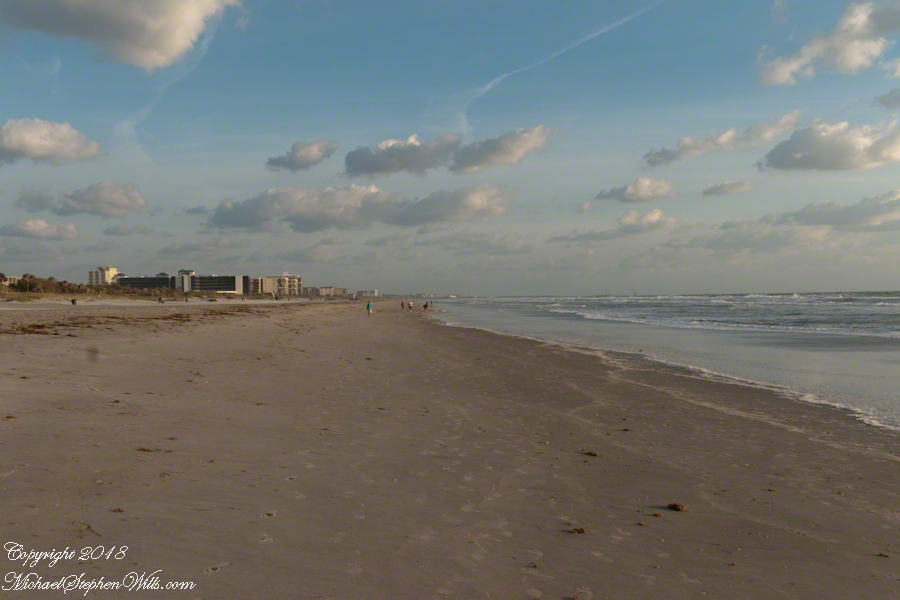
Setting off from the International Palms Resort Pam and I turned left, walking toward the pier, about 2.5 miles away. On the left is Lori Wilson (public) Park. One benefit of this location is the lifeguard station and “protected” swimming. We have reservations about ocean swimming: Sharks? Man ‘O War?
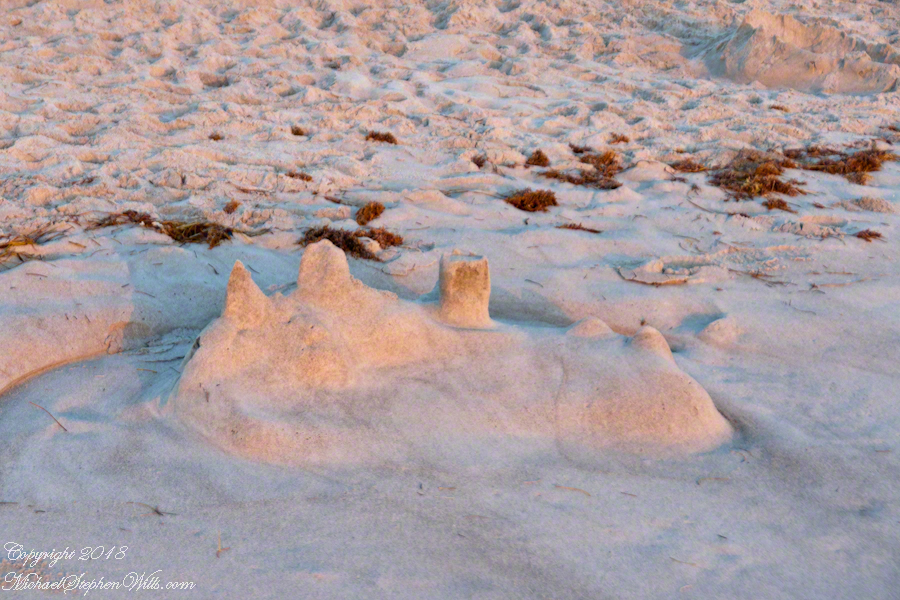
That hotel with the dark windows, on the north side of Lori Wilson Park is the Hilton. This sandcastle, washed out by high tide, caught in the dawn light, was in front of the Hilton. It brings to mind the interaction of nature and people.
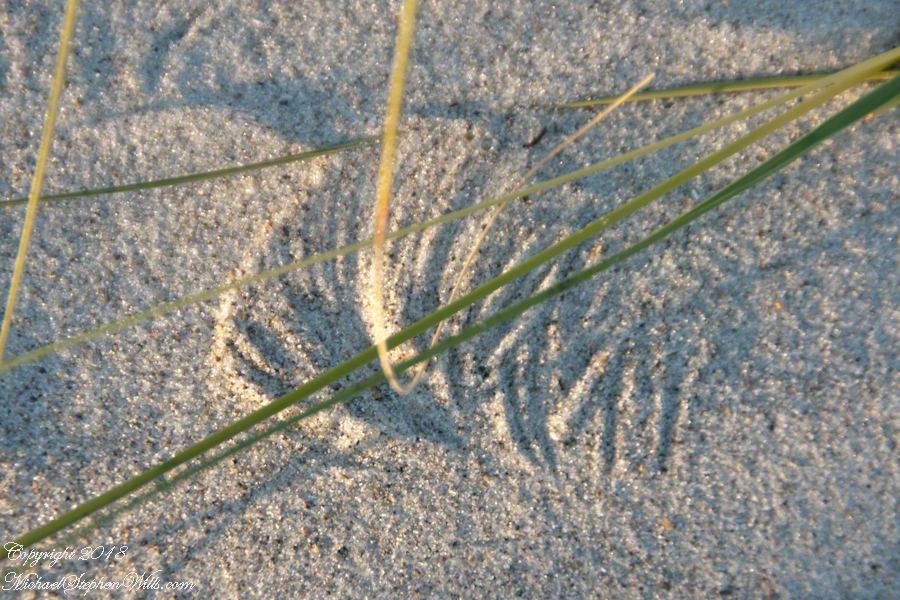
There were strong on-shore winds that day. Dune grass driven by the wind made this pattern.
Click photo to visit my Fine Art Gallery
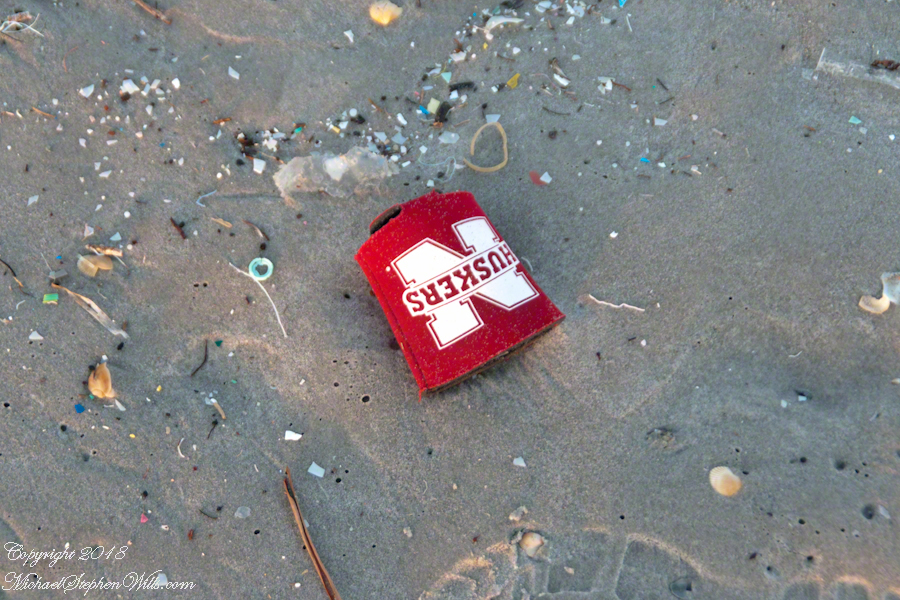
The wind and tide washed ashore all sorts of man-mad junk.
These small pieces of plastic washes off distant islands by hurricanes, the plastic ground up into bits.
The branded drink holder, the “corn huskers” of the University of Nebraska Lincoln, does not speak well for the alumni as these are sold locally. Community-minded people walk the beach with bags, picking up the bigger stuff.
When the wind changed the small plastic washed out with the next high tide and the beach was cleared.
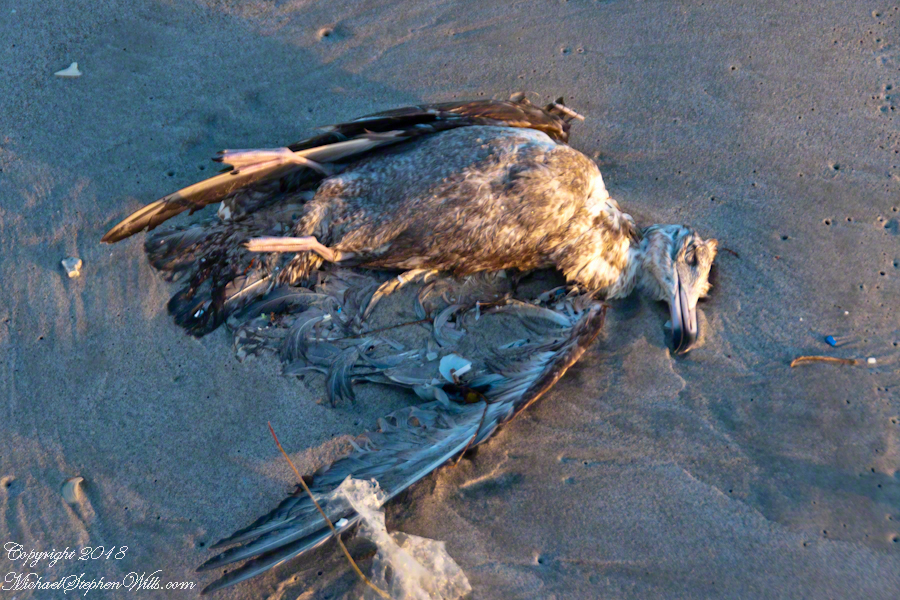
Corpse of a gull with ground up plastic bits.
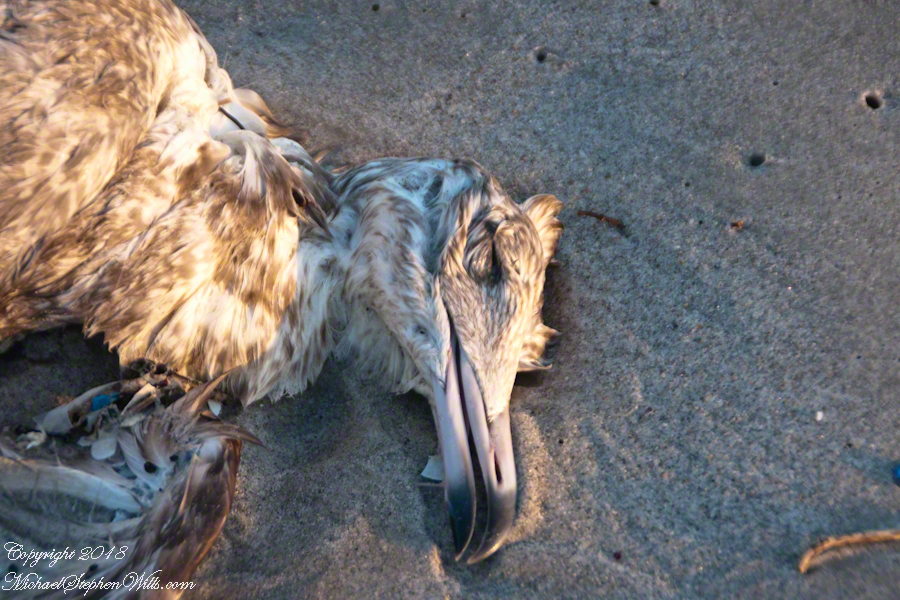
The gull beak has the same cruel beauty in death as it does in life.
Click photo to visit my Fine Art Gallery
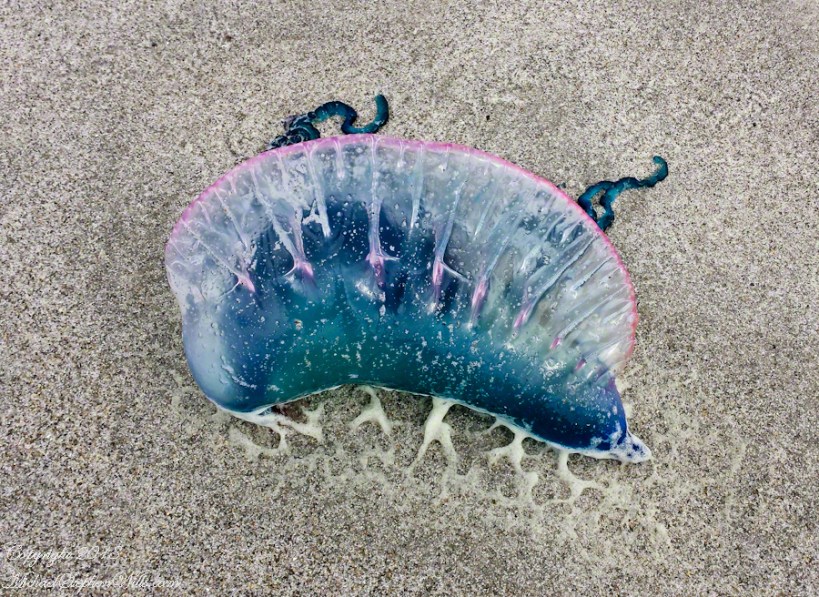
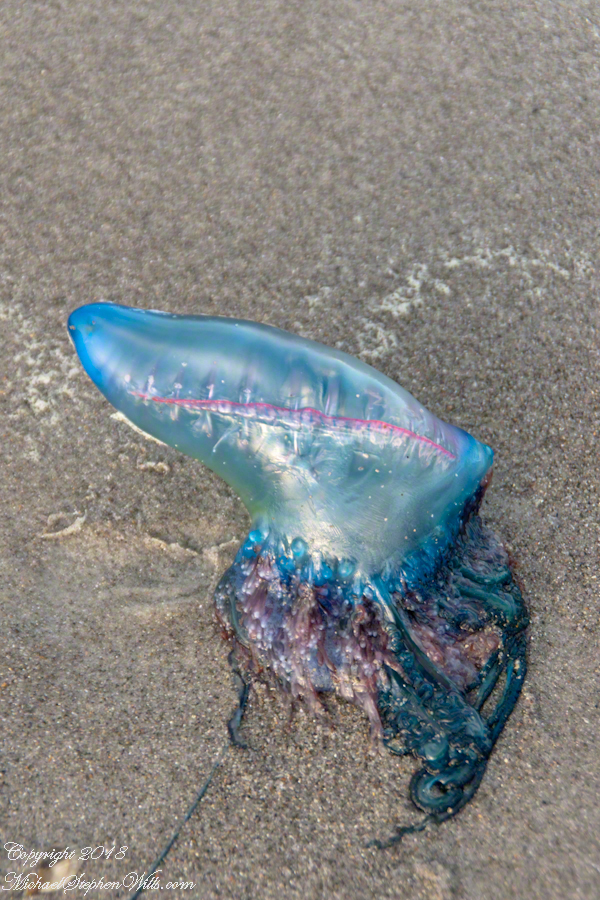
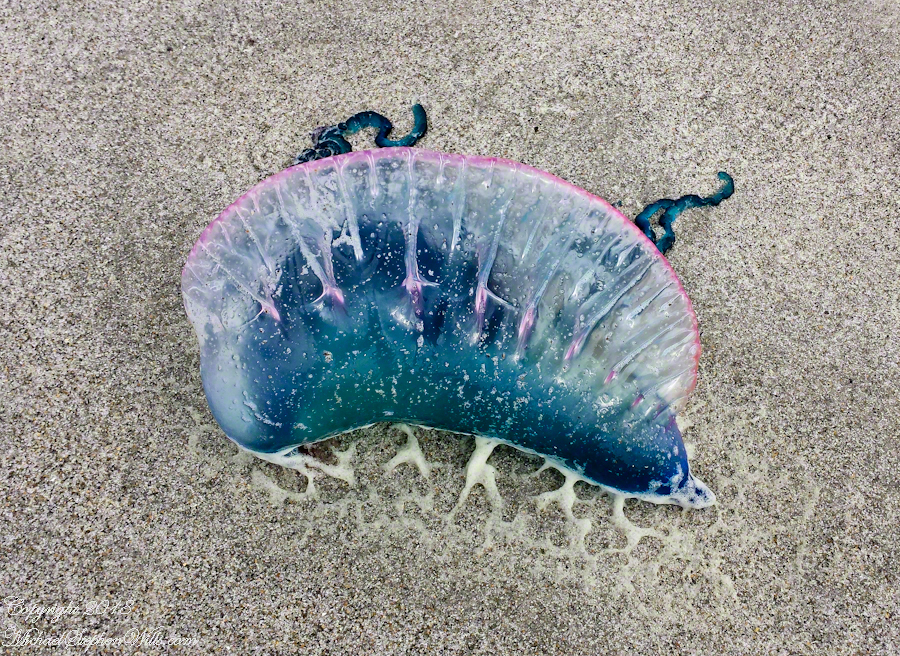
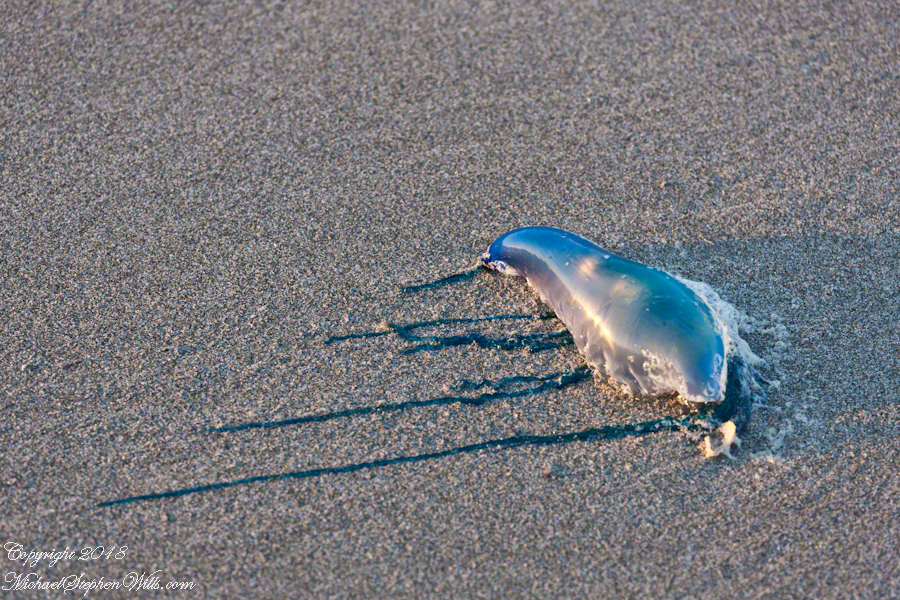
The wind drove ashore living creatures, left them on the beach to dry out or as food for crabs and gulls. After a Man Of War washes up on a beach it is still dangerous. Long tentacles extend from the body and can deliver painful stings.
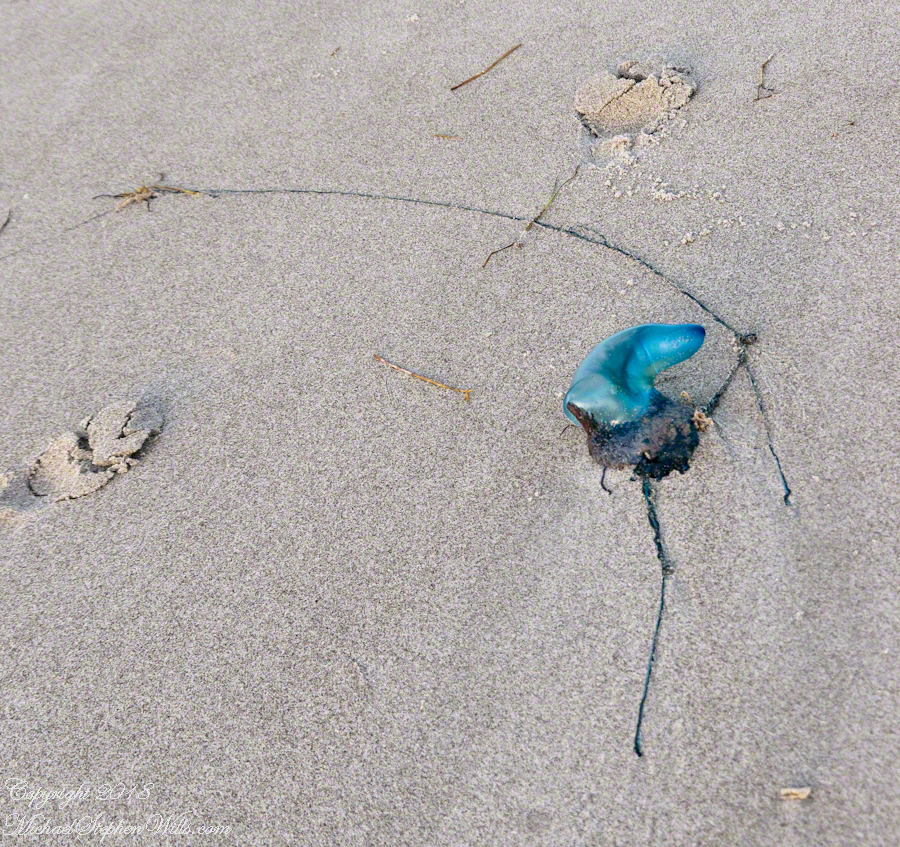
The person walking around these tentacles is wisely wearing shoes, as I can tell from the footprint shape.
Each such tentacle is threaded with stinging, venom-filled structures coiled, like a spring, ready to pump venom into the victim for the purpose of feeding, catching larval and small fishes and squids.
These structures, called nematocysts fire on contact and do not differentiate targets be it a human foot or a squid.
Click photo to visit my Fine Art Gallery
The crest of the Portuguese Man of War is very visible in the water, the sac can be inflated/deflated to catch the wind or even sink the organism to escape surface feeders. The fanciful resemblance of the floating crest to a sailing ship is the origin of the organism’s popular name. The scientific name is Physalia physalis. While it appears to be a single creature, it is actually several working together for common benefit.
In Australia they call these baddies “blue bottles.” So descriptive.
We talked with life guards about first aid procedure, for the stings, and were not comforted by their ignorance. We had done the research ourselves. Be informed before you step onto the beach. Do not expect well informed assistance in the case of a sting, pre-arm yourself with knowledge.
Click photo to visit my Fine Art Gallery
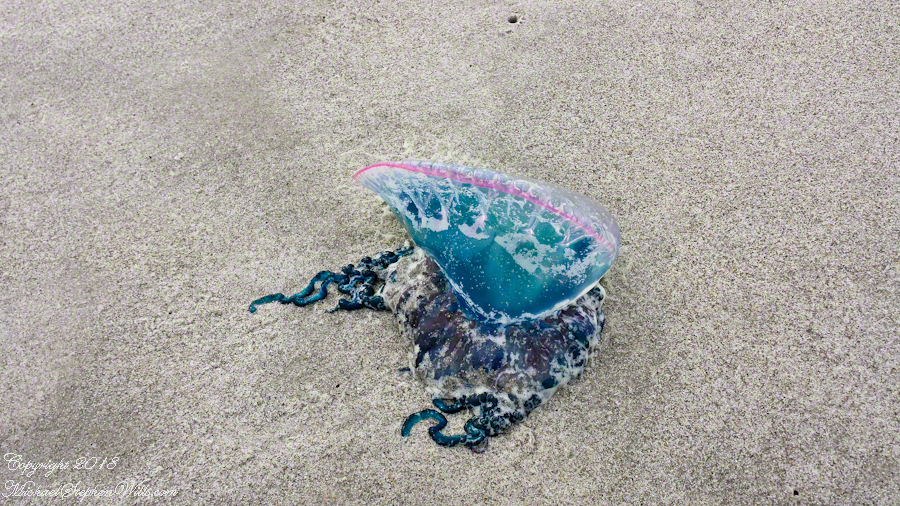
This is an especially dangerous configuration of a beached Man O’ War (also known at Floating Terror): a blue balloon with strings trailing from it. Young children will see the balloon and want to grab or play with it. If we see tourist families with young children, when these are around, we will go out of our way to warn them.
These disconcerting findings on the beach do not diminish our enjoyment of the environment, instead we are left with a greater appreciation and respect for the ocean.
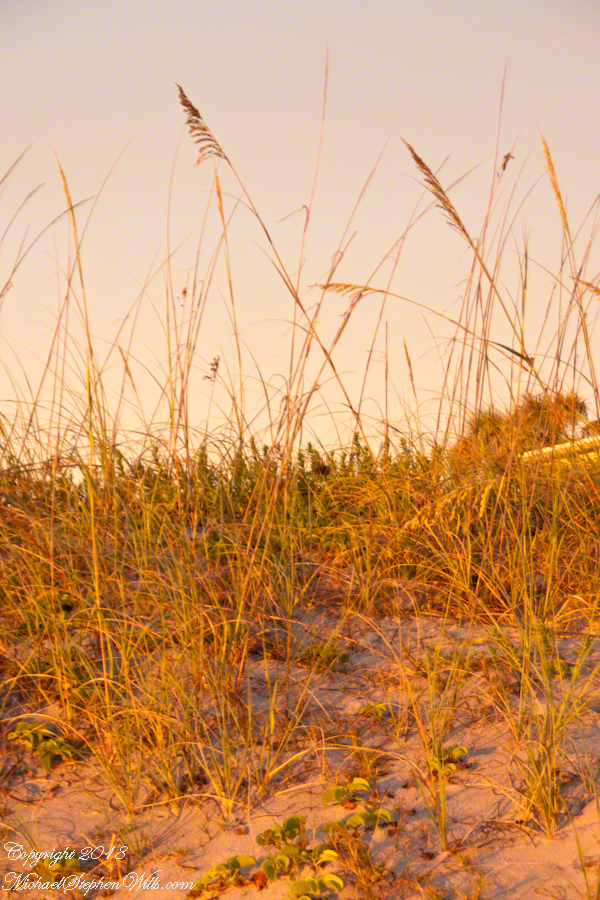
Dunes welcome us home after a successful sunrise photo shoot.