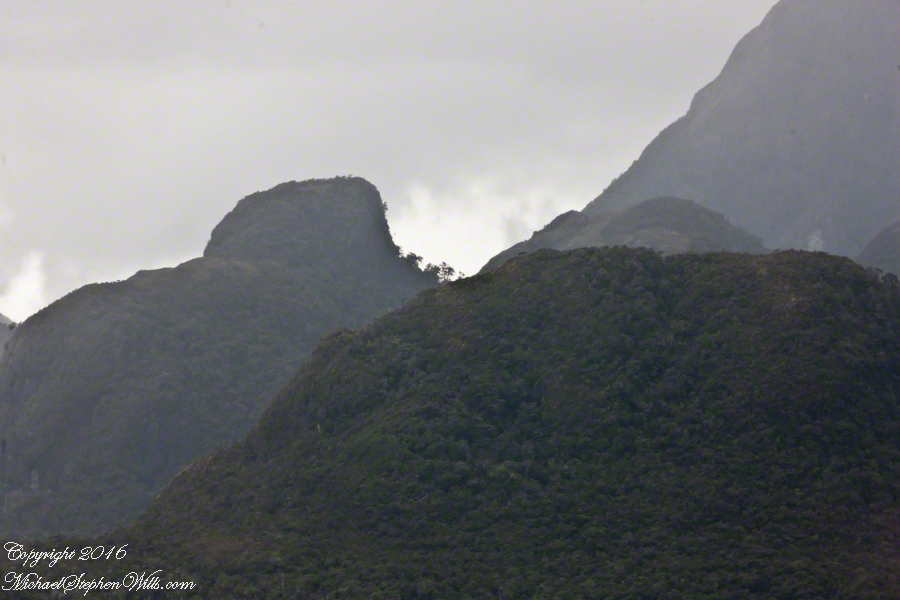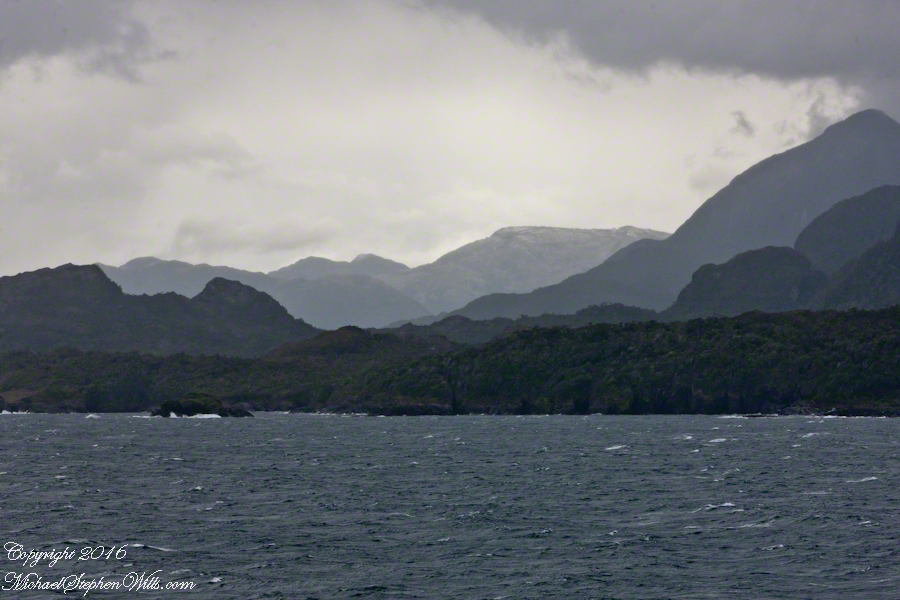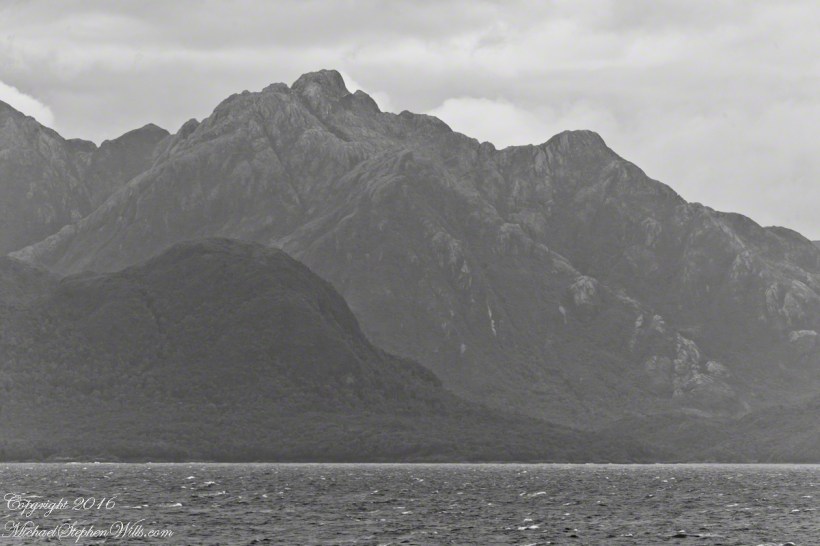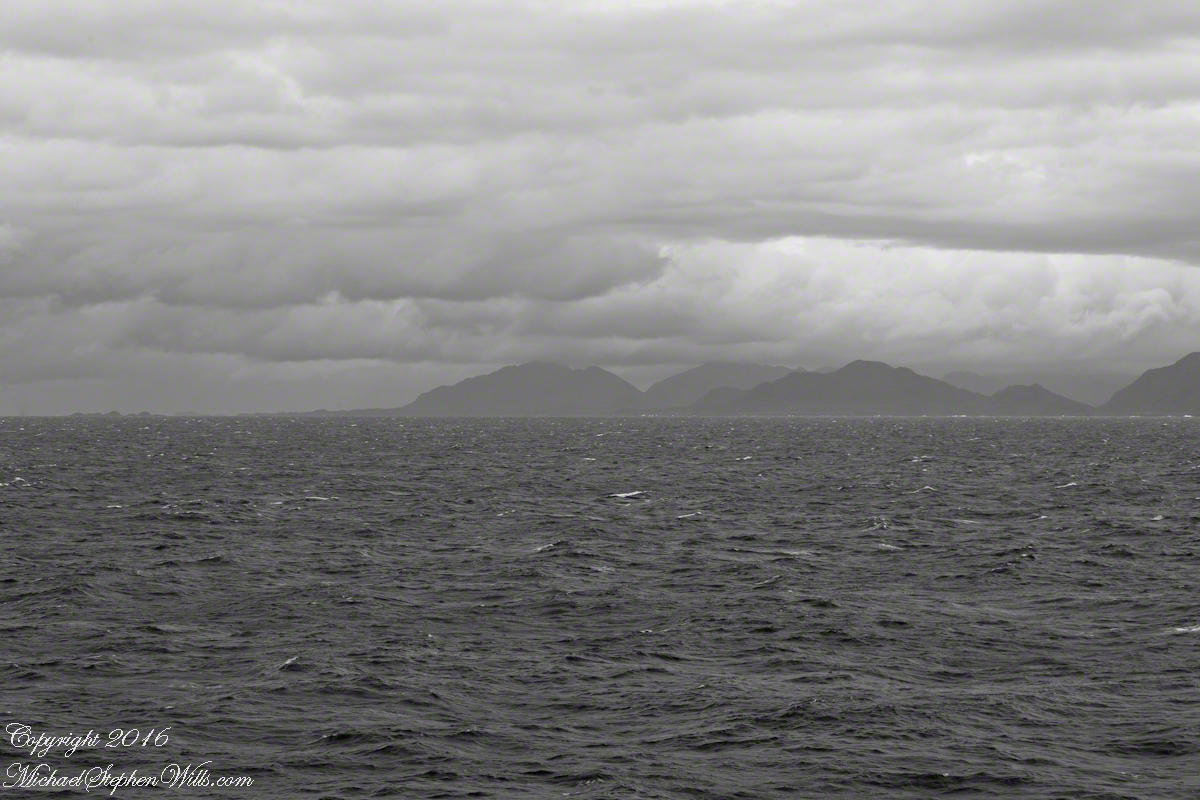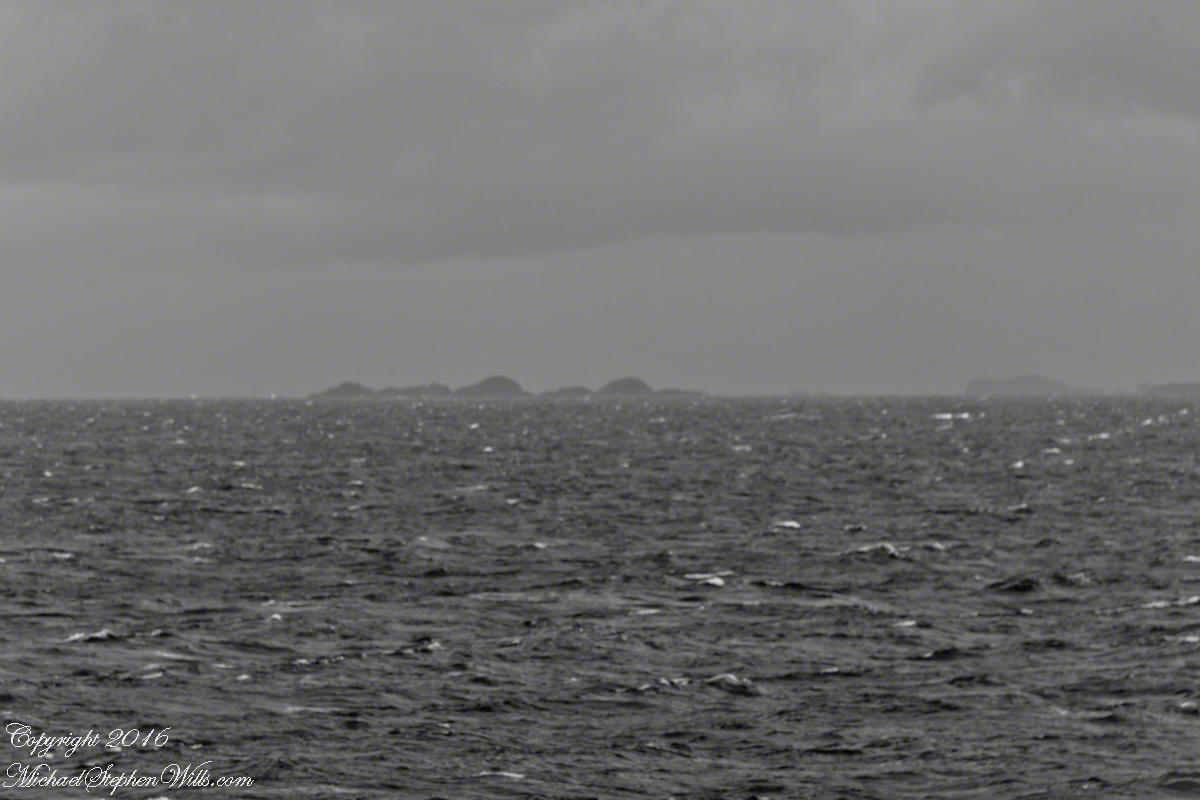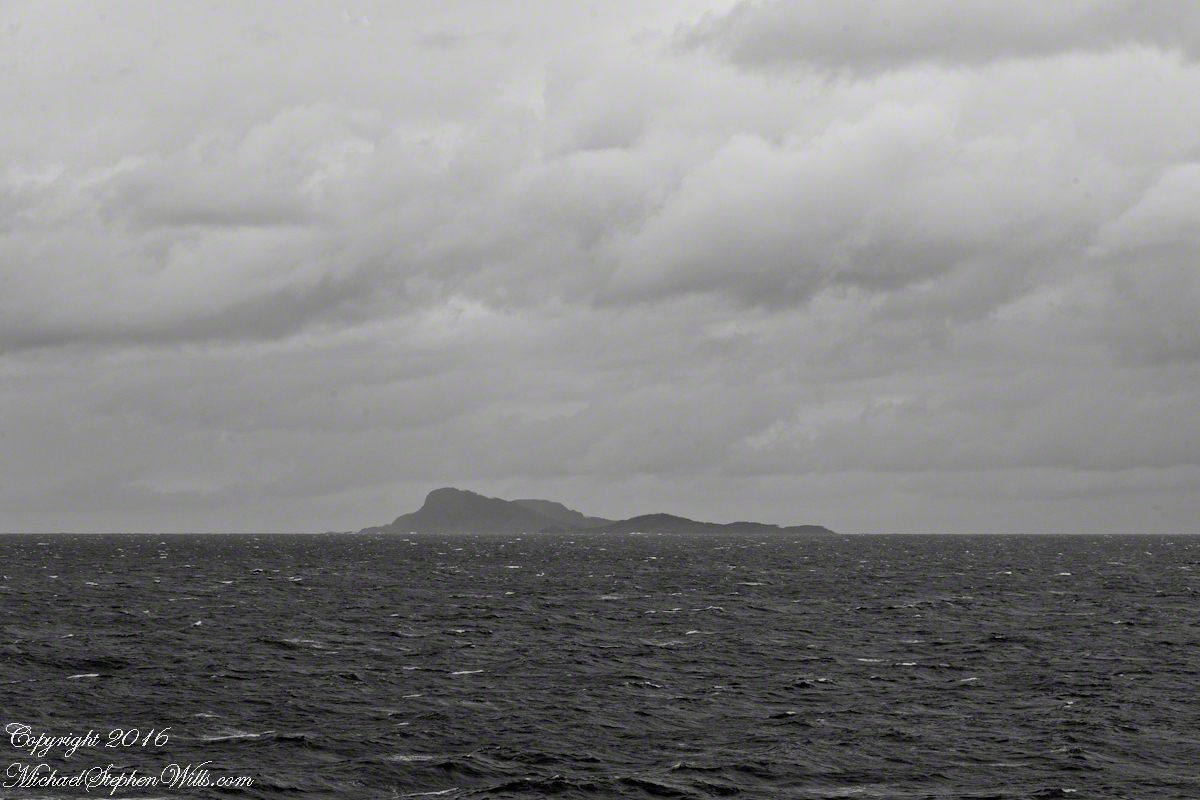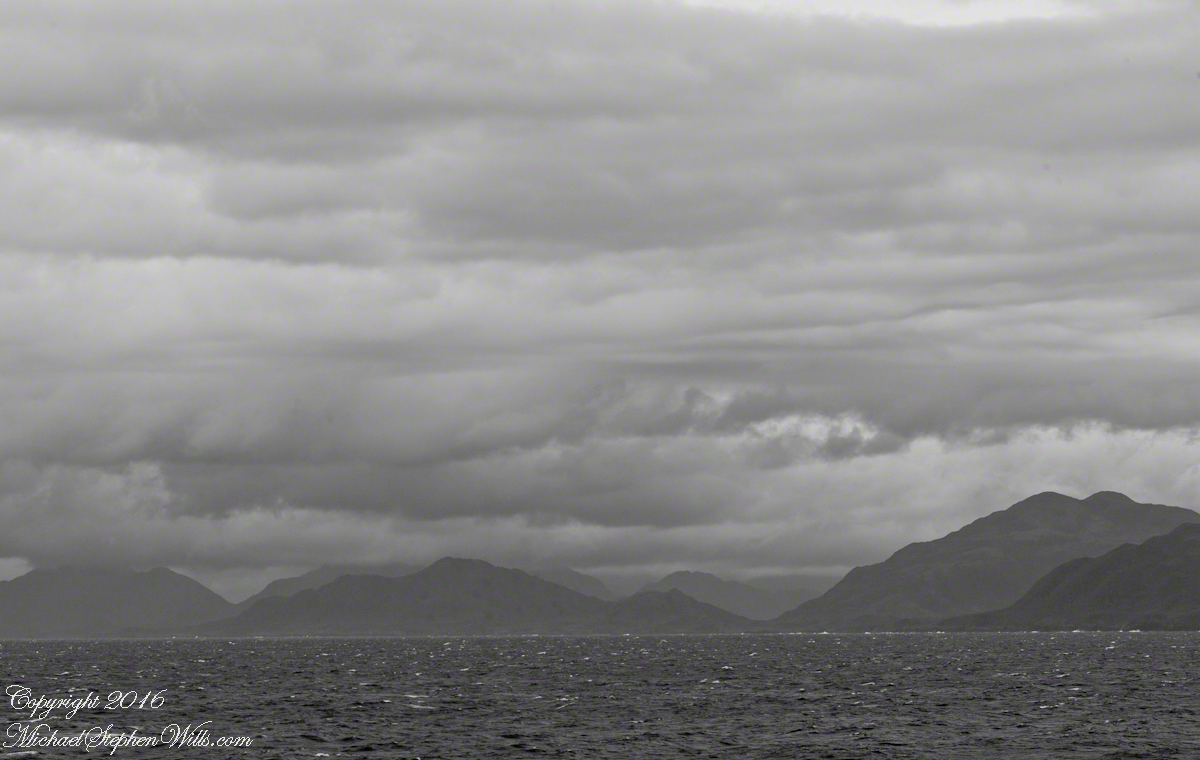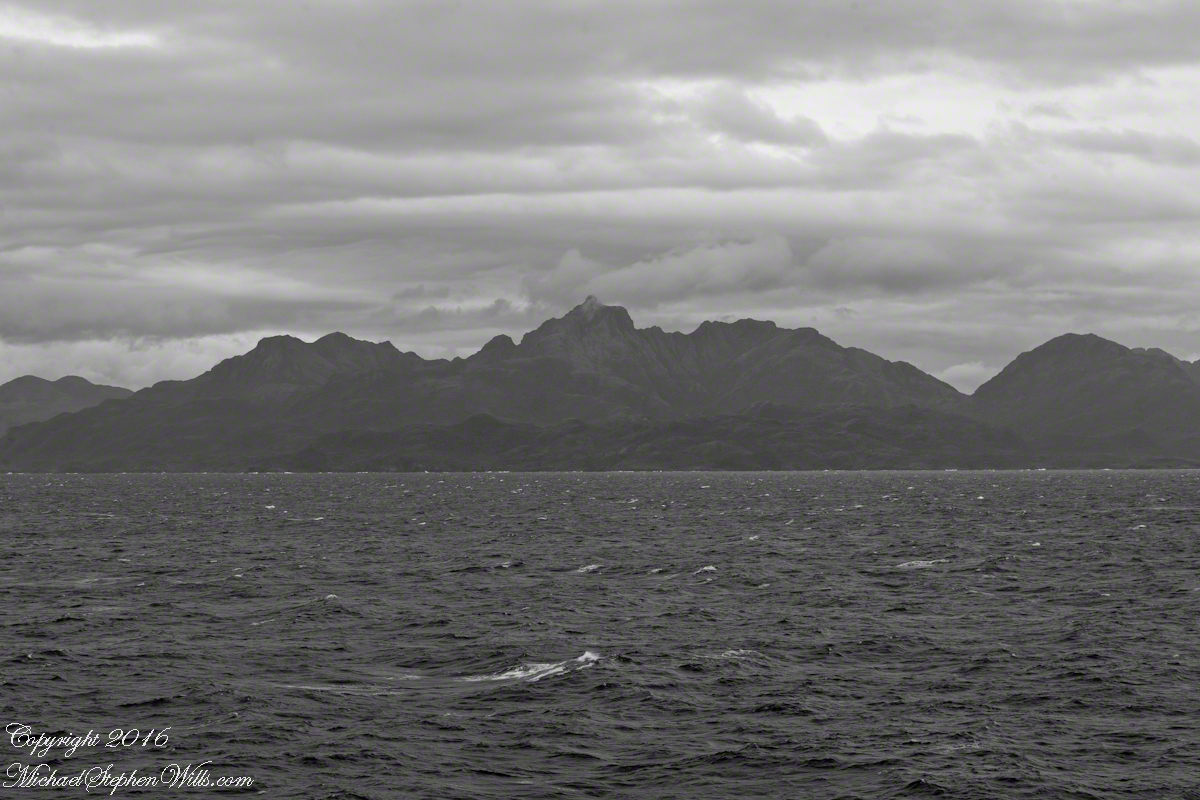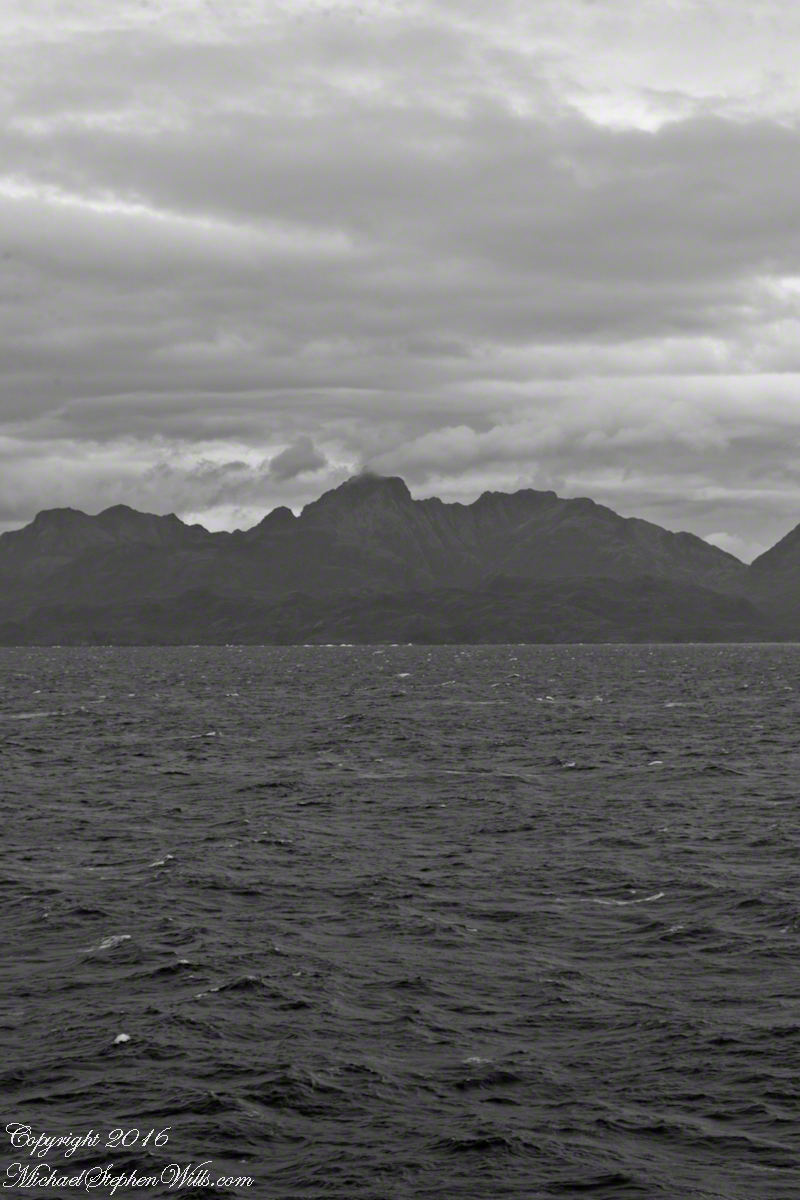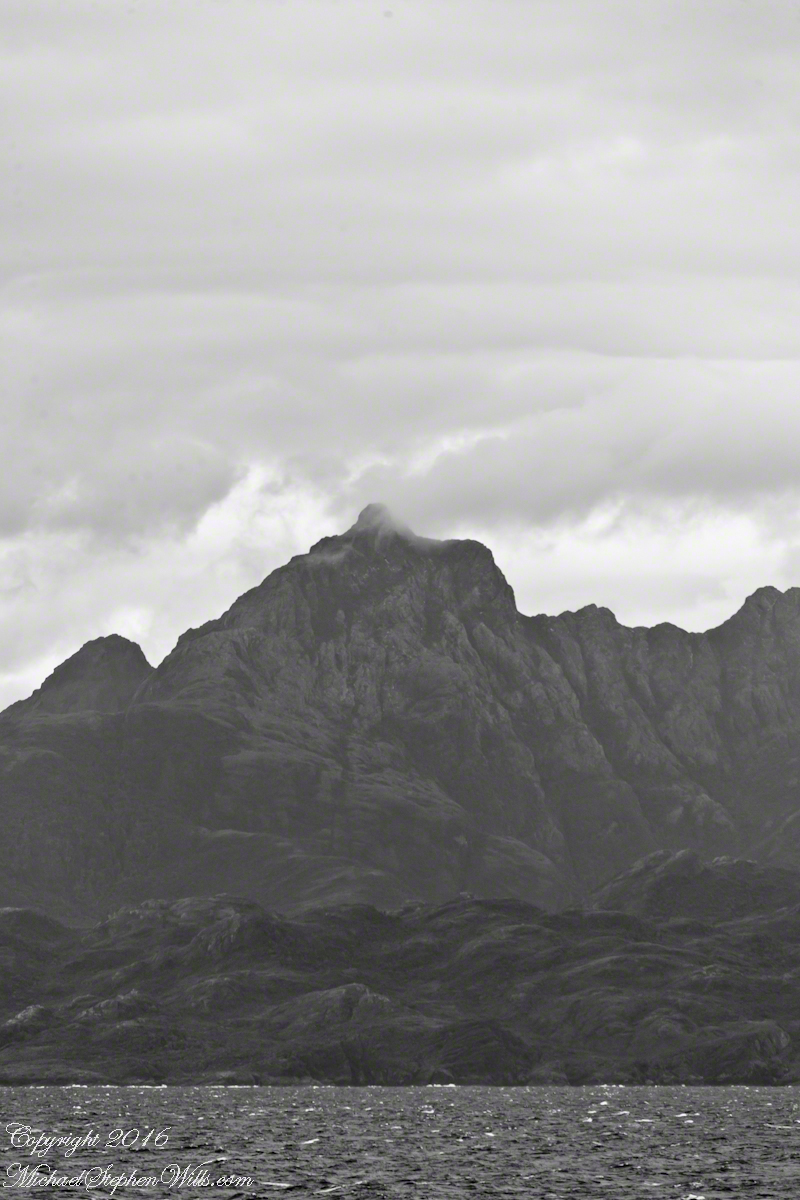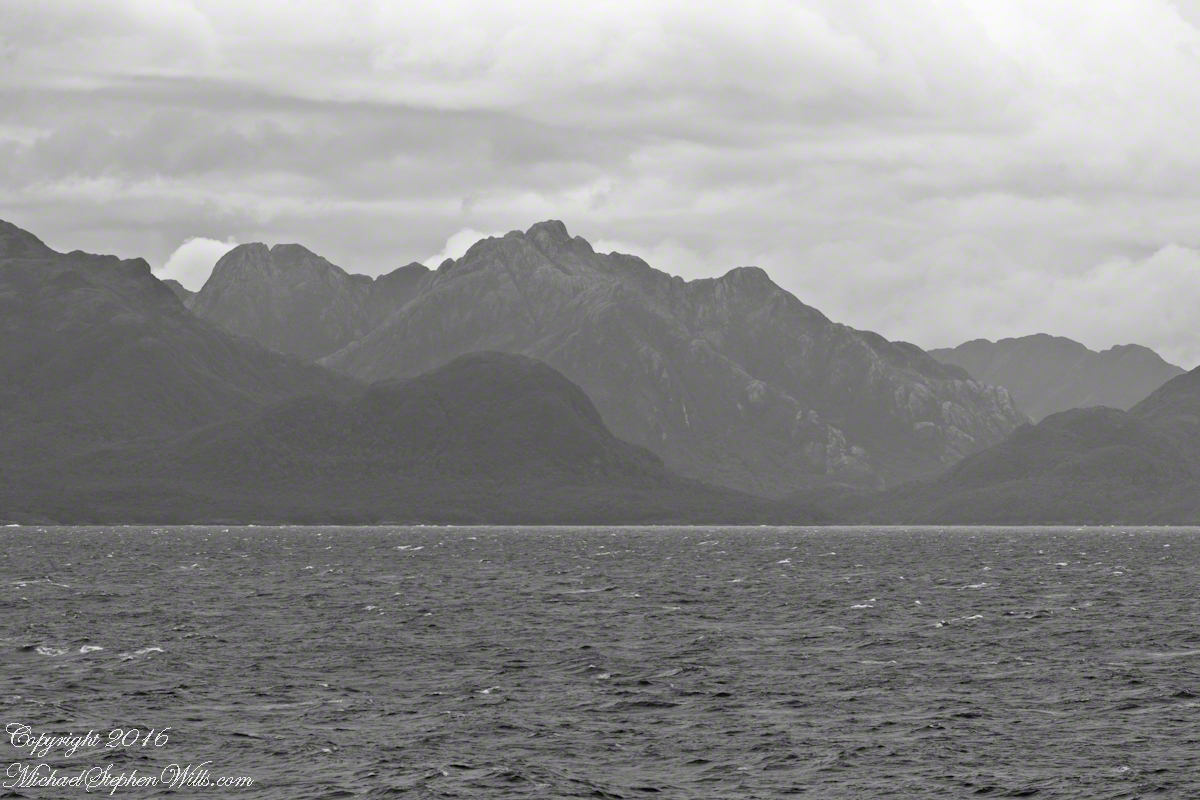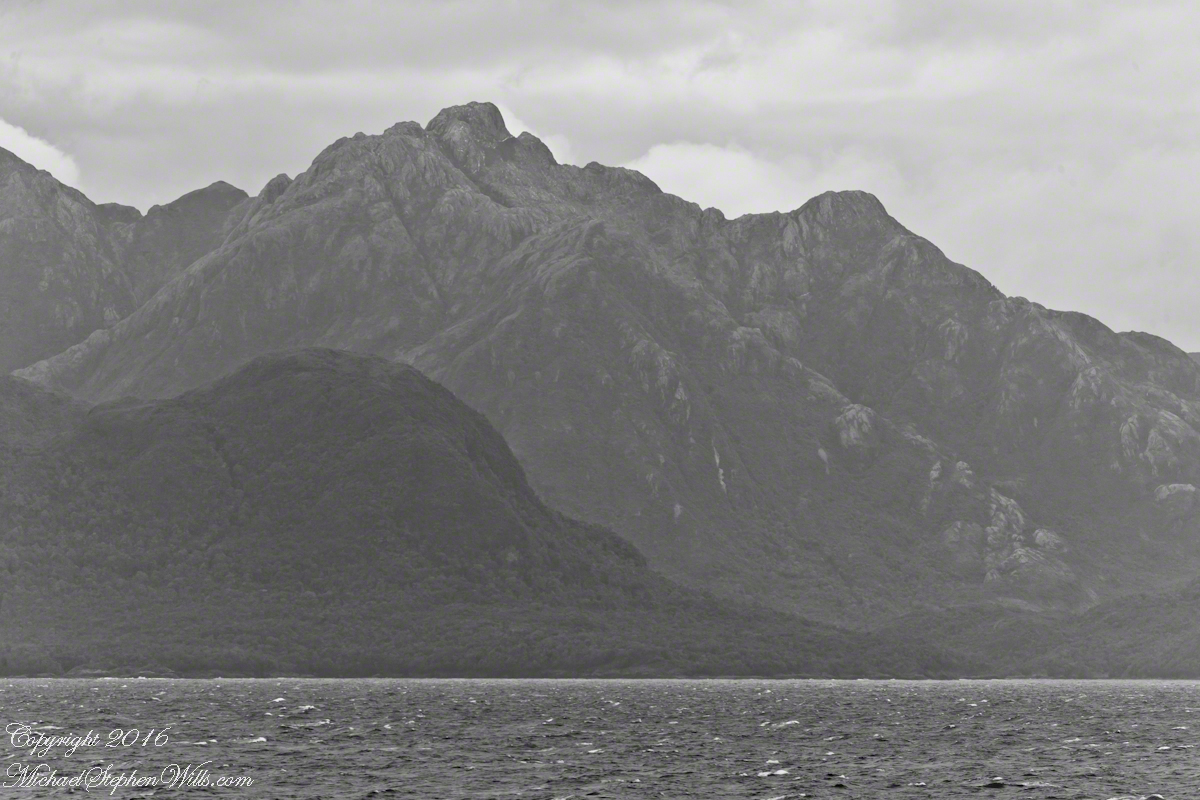
In English the Gulf of Penas means “Gulf of Distress.” Open to the storms of the western pacific ocean, ships seeking refuge sail this body of water to reach the shelter of the bays around the entrance of the Messier Channel.
Stargazing Chileans named the channel after Charles Messier (1730 – 1870), author of a catalog of 110 visually diffuse celestial objects such as the Great Cluster of Hercules, the Crab Nebula of Taurus, the Ring Nebula of Lyra. As Messier catalog objects these are listed on star charts as M13,M1,M57.
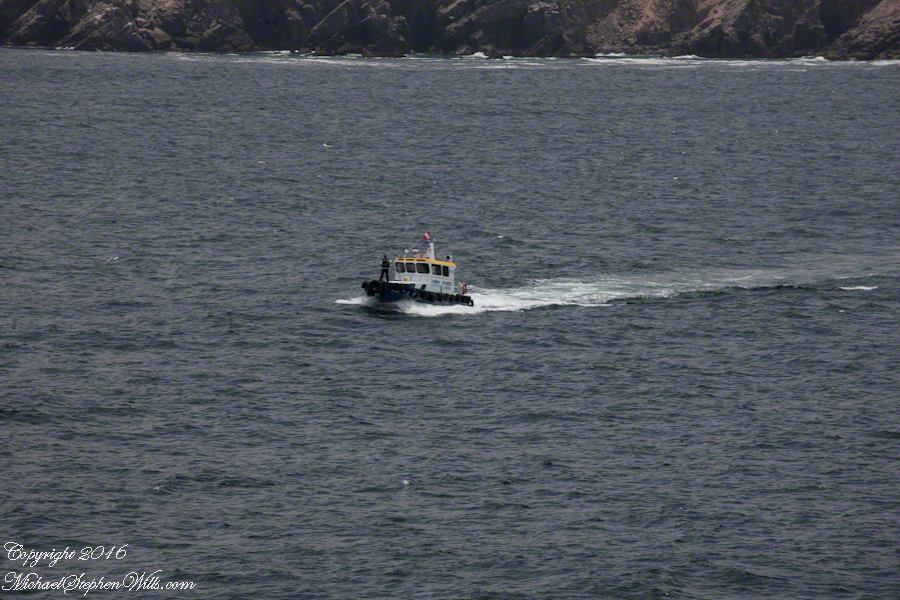
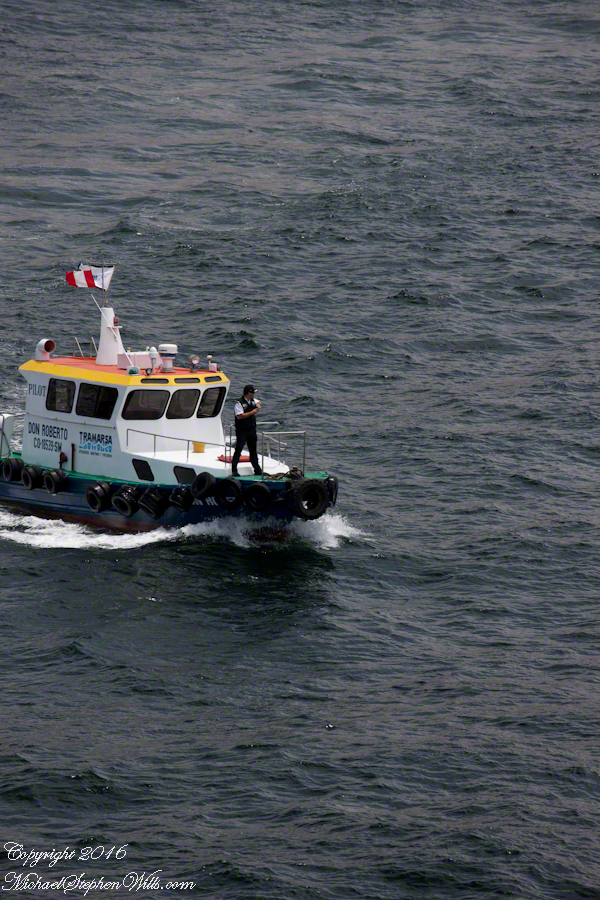
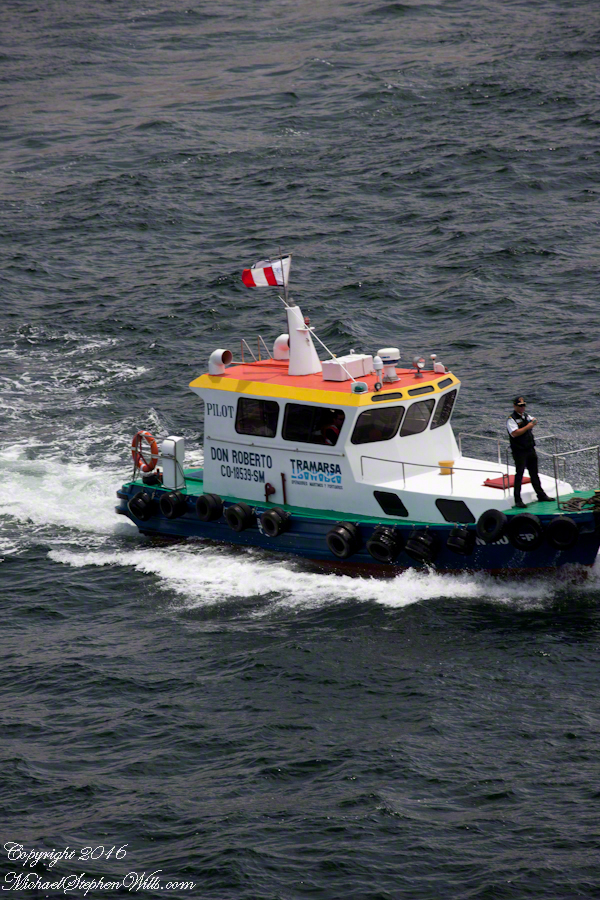
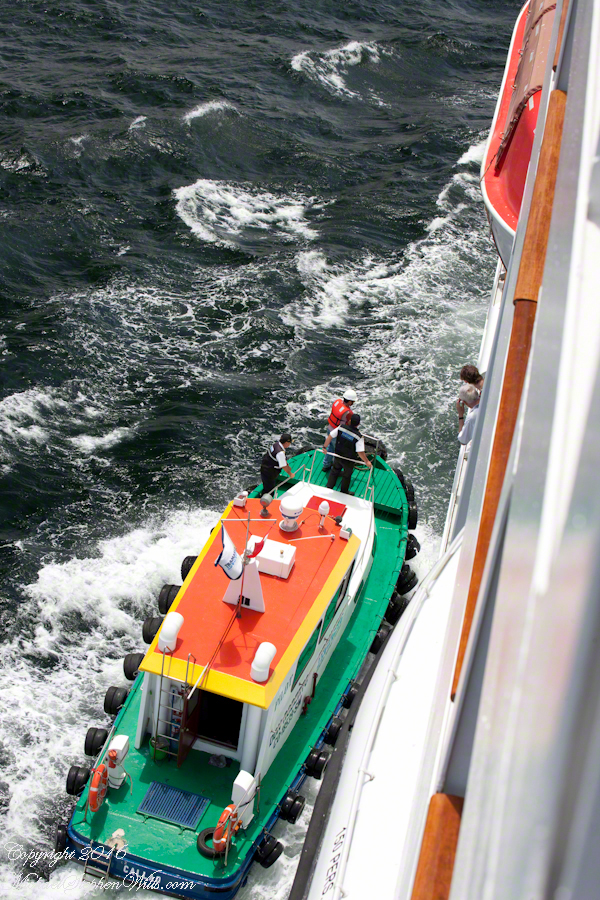
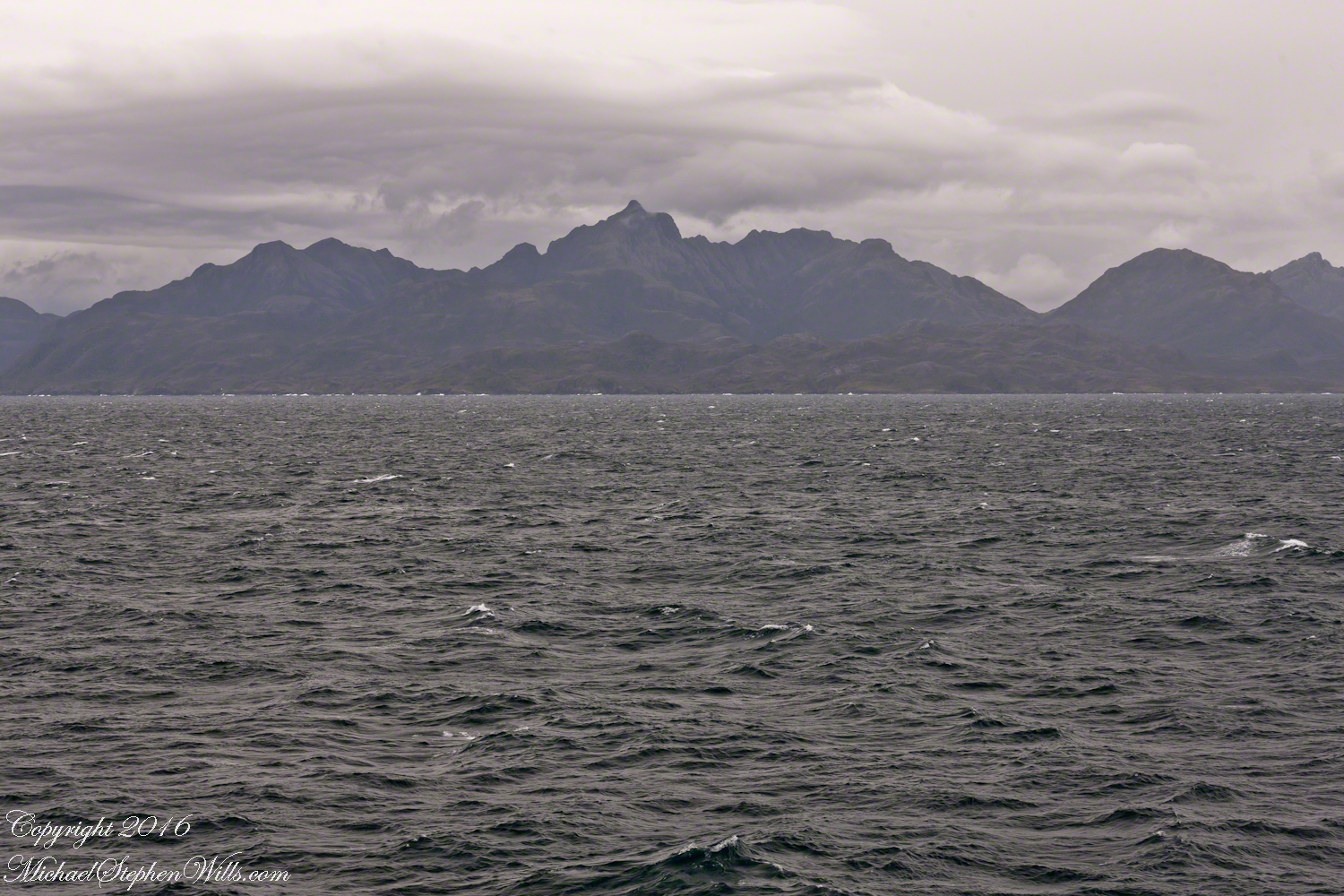
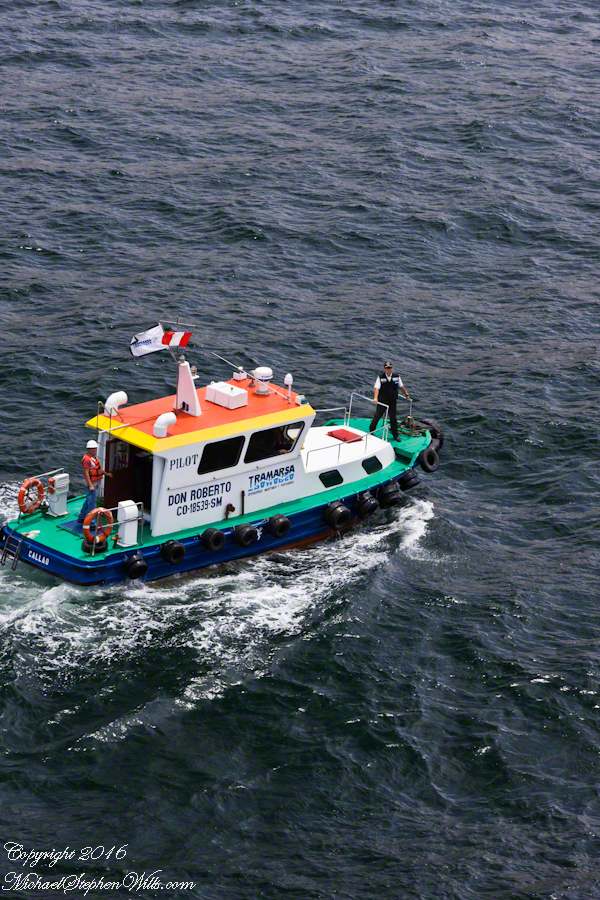
The Larenas and Fresia peninsulas of Aisen Province, Chile, on the southeastern shores of the gulf are seen here as we approach the Messier Channel. The shore is dotted with islets and islands. The Chilean pilot who came aboard at Puerto Chacobuco is earning his salary, keeping us safe. To reach the channel we pass through Tarn Bay, generally north to south. The southern margin of the bay is marked by Sombrero Island, the subject of my next blog.
Larenas Peninsula and Merino IsletsClose-up of the Merino IsletsAyautau IslesThe Northern Patagonian Ice Fields lay to the east and north of these mountains of the Larenas Peninsula.High Ridge of the Larenas PeninsulaLarenas Peninsula High Ridge 2Larenas Peninsula High Ridge Close 3The craggy heights of the Larenas Peninsula are in the rear. On the right are Fresia Point (of the eponymous peninsula) and the entrance to Fjord Eloisa.Larenas Peninsula High Ridge Closer 5
Copyright 2022 Michael Stephen Wills All Rights Reserved
The Gulf of Penas is exposed to the storms of the western pacific. We are here moving from Aisen Region to the Magellan Region of Chile. Also known as Patagonia. This view is the Larenas Peninsula. The Northern Patagonian Ice Fields are on the other side of those mountains, the Southern Andes.
Taken with a Canon EOS 1Ds Mark3, the EF 70-300 f 4-5.6L IS USM lens, tripod mounted on a Manfrotto carbon fiber travel tripod. UV filter 1/160 second at f 6.3 ISO 250.
There is a steady wind of about 12 mph driving a few white caps. A line of surf is seen breaking against the cliffs. Shot midmorning from our stateroom terrace as the Regatta cruises south, February 17, 2016. We are headed to an encounter with the Iceberg Glacier of the Southern Ice Fields of Patagonia.
Photography conditions were poor: shooting into the sun from an unstable platform gives poor contrast for the mountain crags. The stabilization of the Canon lens was helpful and I balanced the need for a short exposure with the lowest ISO possible. No time to experiment.
Copyright 2022 Michael Stephen Wills All Rights Reserved
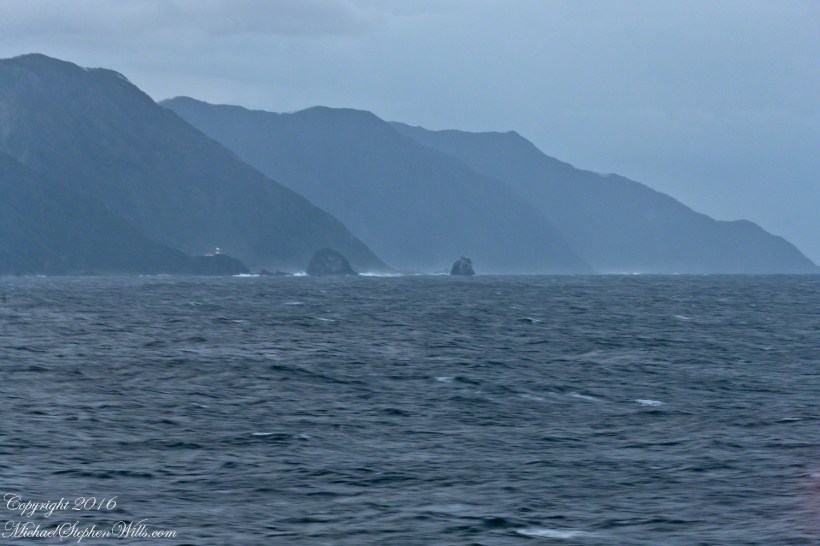
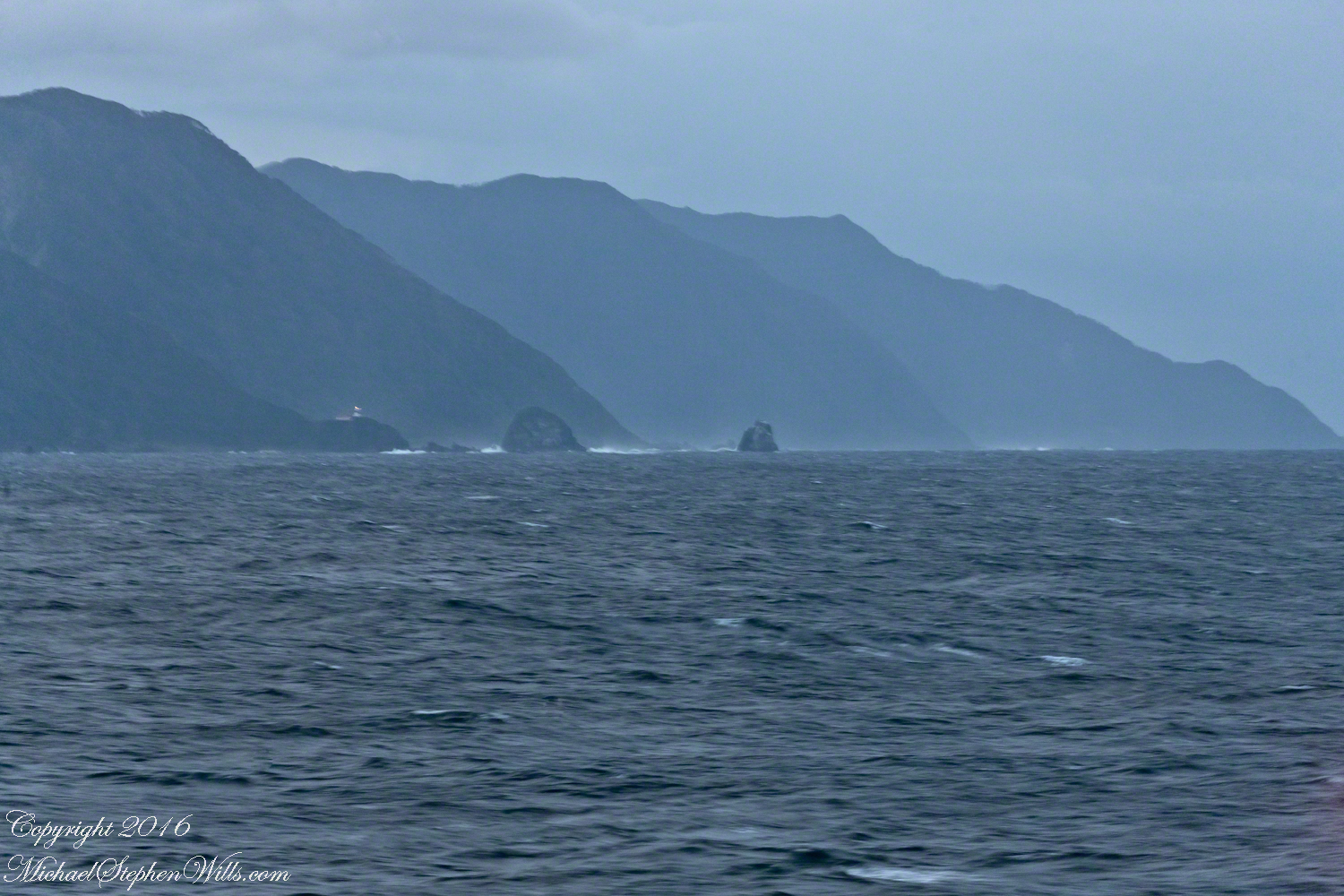
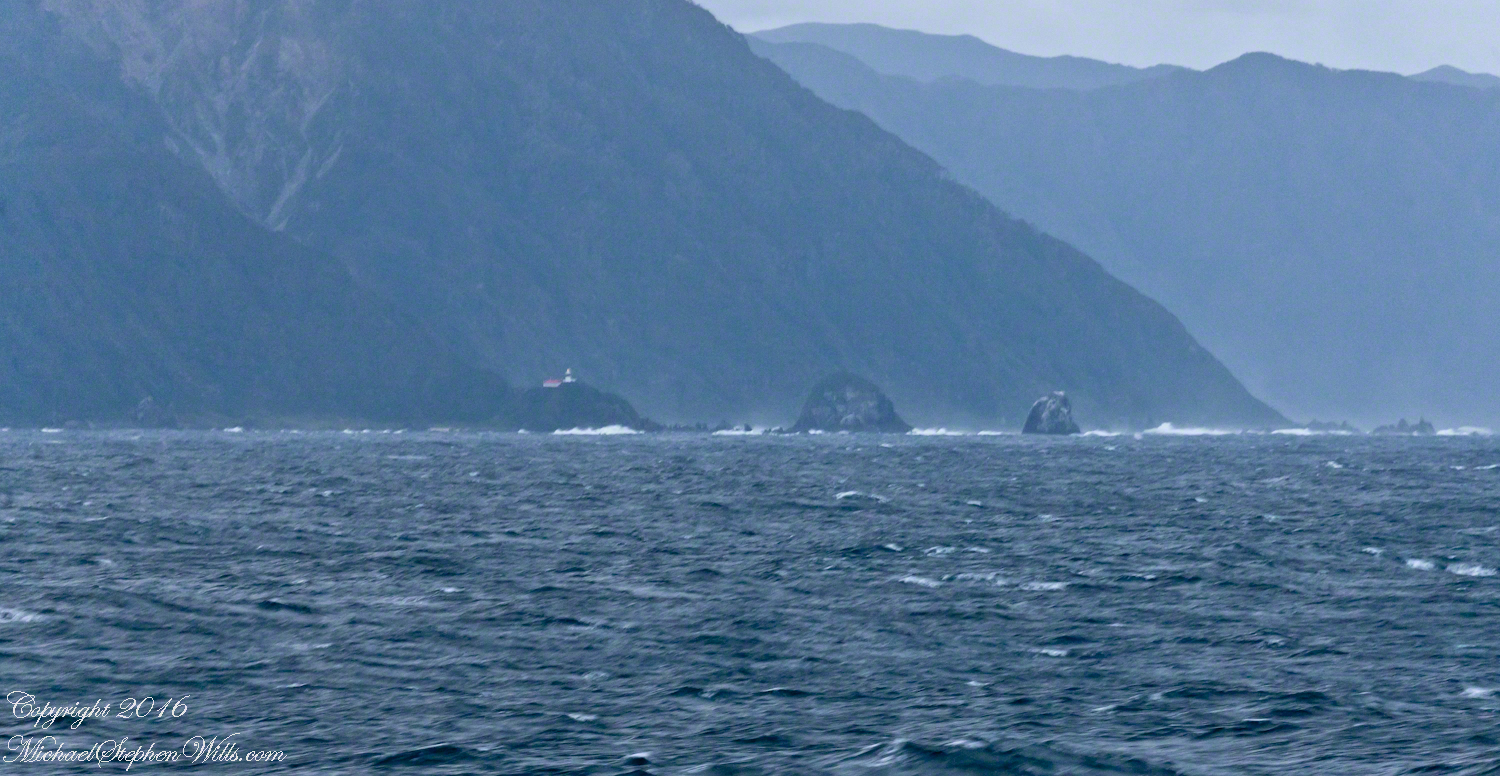
While most of our fellow passengers were sleeping, as usual I woke at 5 am to pull the gear together, dress warmly, step out onto our magic window on the world. Our decision to request a port side cabin continues to pay off. The Cape Rapier lighthouse flashes every few seconds. One of these shots caught the light.
Since 1914 the lighthouse on Cape Rapier, Aysen Provence, Chile, has protected ships on the northern approach to the Gulf of Penas.
Before dawn, February 17, 2016, the light protected us on the Oceania Regatta as we rounded Cape Rapier to enter the Gulf of Penas on route of the Messier Channel, the Fjords of Chile and an encounter with the Iceberg Glacier of Fjord Tempanos.
Copyright 2022 Michael Stephen Wills All Rights Reserved
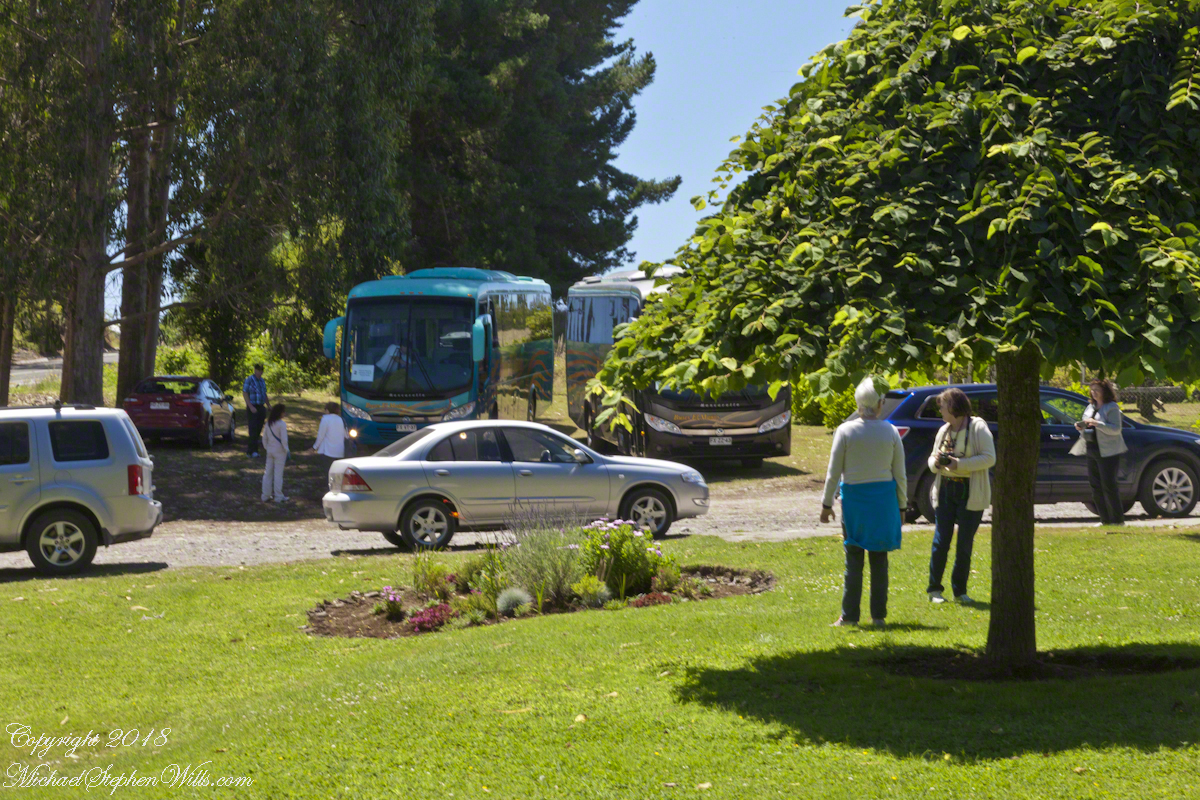
Our tour of Chilean Lake Country and Volcanoes began from the harbor of Puerto Montt, in the tender we boarded from the ship Regatta. This is a small boat carried in the hold and deployed to transport passengers to ports without docking facilities. Once on land, we met our guide for the day and boarded the bus.
I have yet to post about our first stop, Puerto Varas, a 20 minute ride and our first exposure to the influence of 19th Century German settlers seen, from our bus windows, in the architecture. Today’s post is about our lunch stop, a restaurant half way between Puerto Varas and Ensenada.
Click any photograph for a larger view.
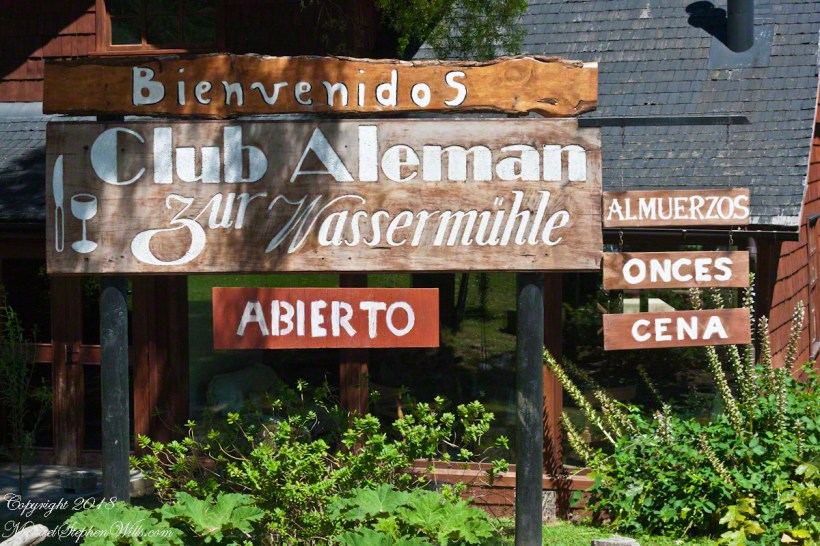
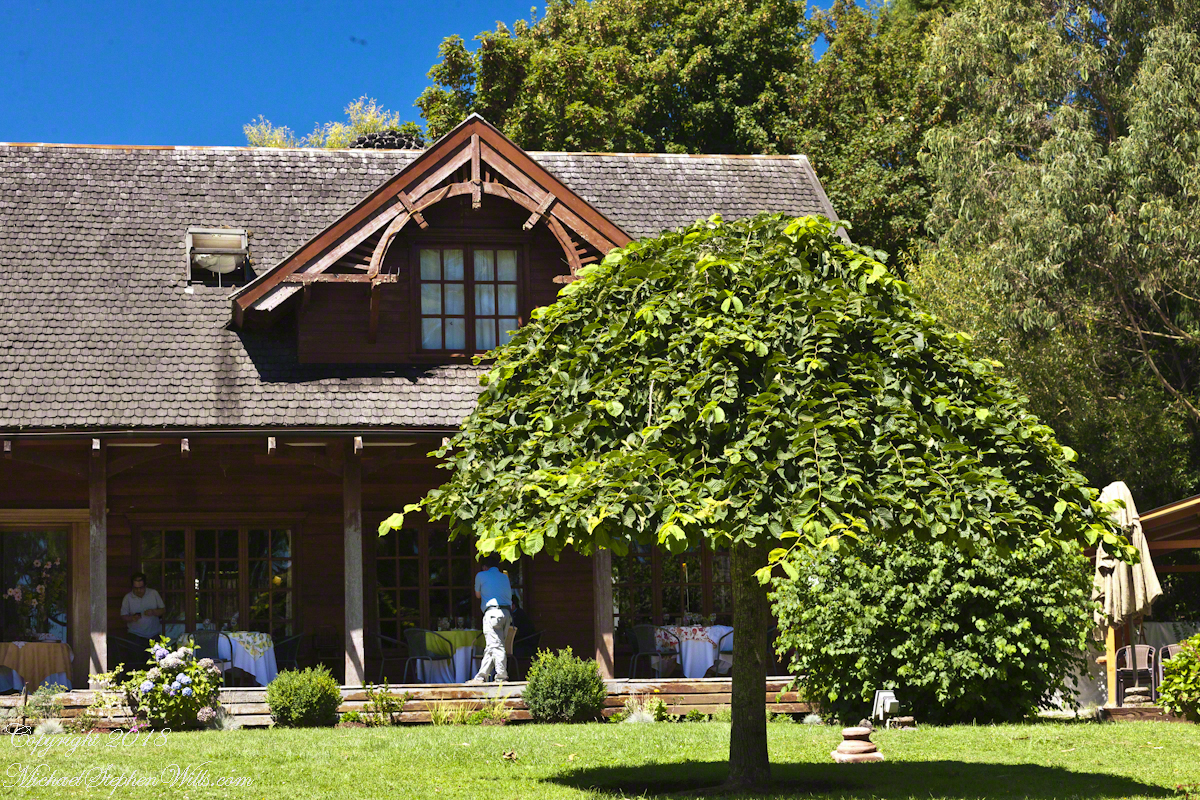
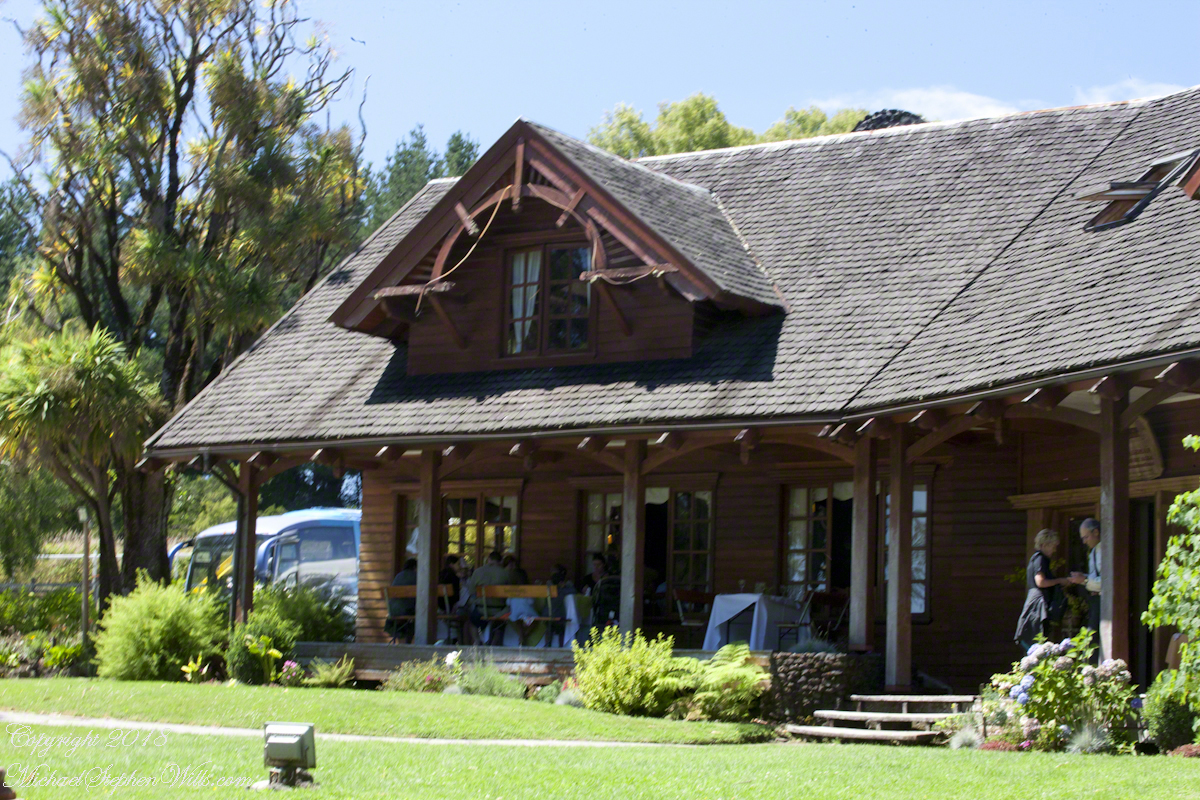
Club Aleman Molino de Agua
Club Alemans (German Clubs) are found in Puerto Montt, Puerto Varas, and here. Each is a gathering place for locals to celebrate their heritage, a feeling somewhat diluted over time to where, now, they speak of themselves as “Chileans of German extraction” and the great majority speak Spanish at home and are exposed to the German language as school courses.
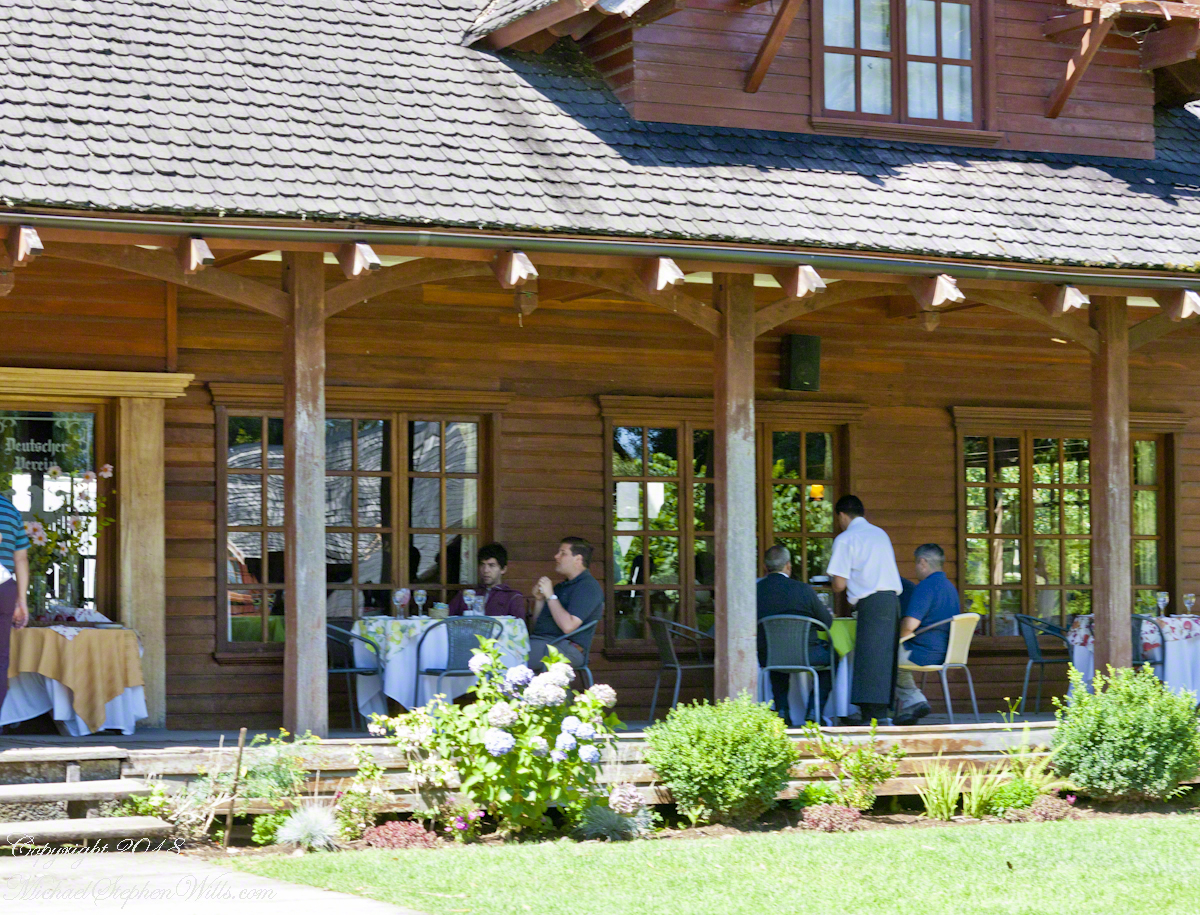
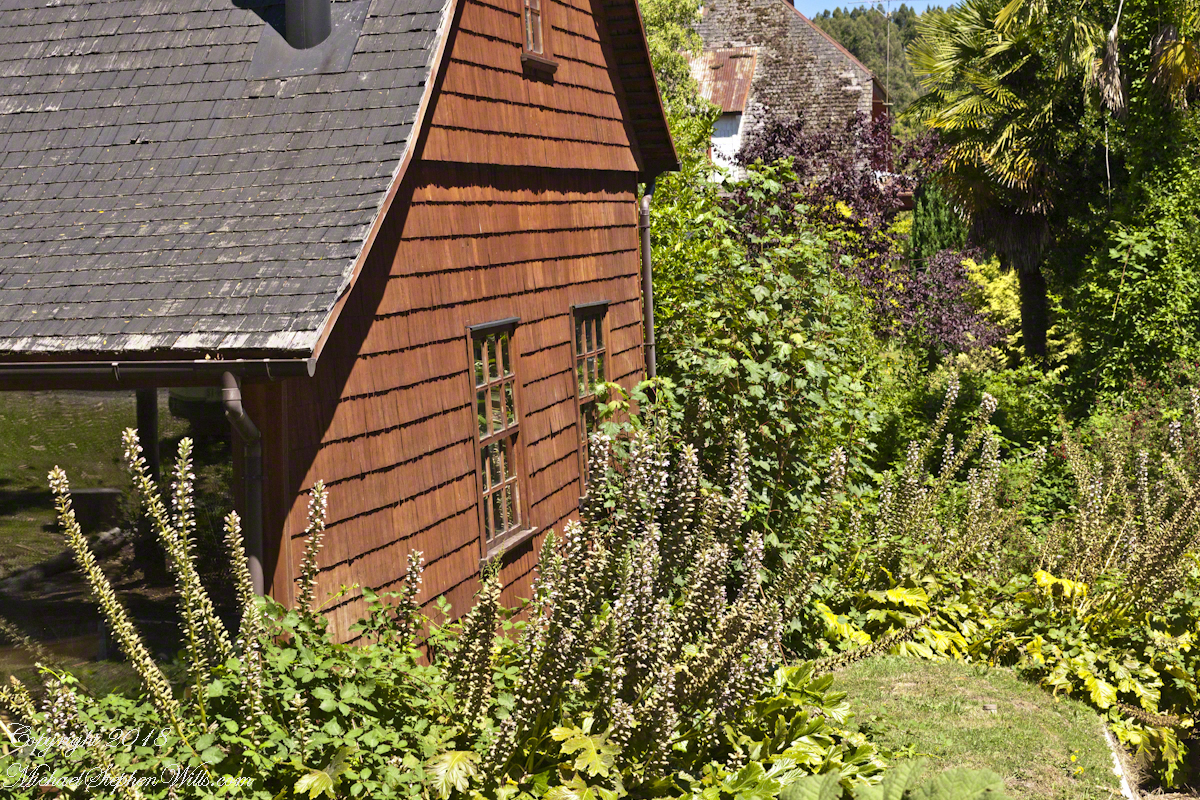
For past generations, the link was stronger, German was the language spoken at home and there was homesickness for the cultural traditions left behind and somewhat alleviated by the similarity of Chilean Lake Country to foothills of the Alps. Once established, the settlers duplicated the architectural features using local wood. Notably, many houses are clad with shingles from the Alerce (also known as Fitzroya cupressoides), a type of Cypress native to southern Chile and Argentina. The roof shingles of Club Aleman, seen below, were of this type.
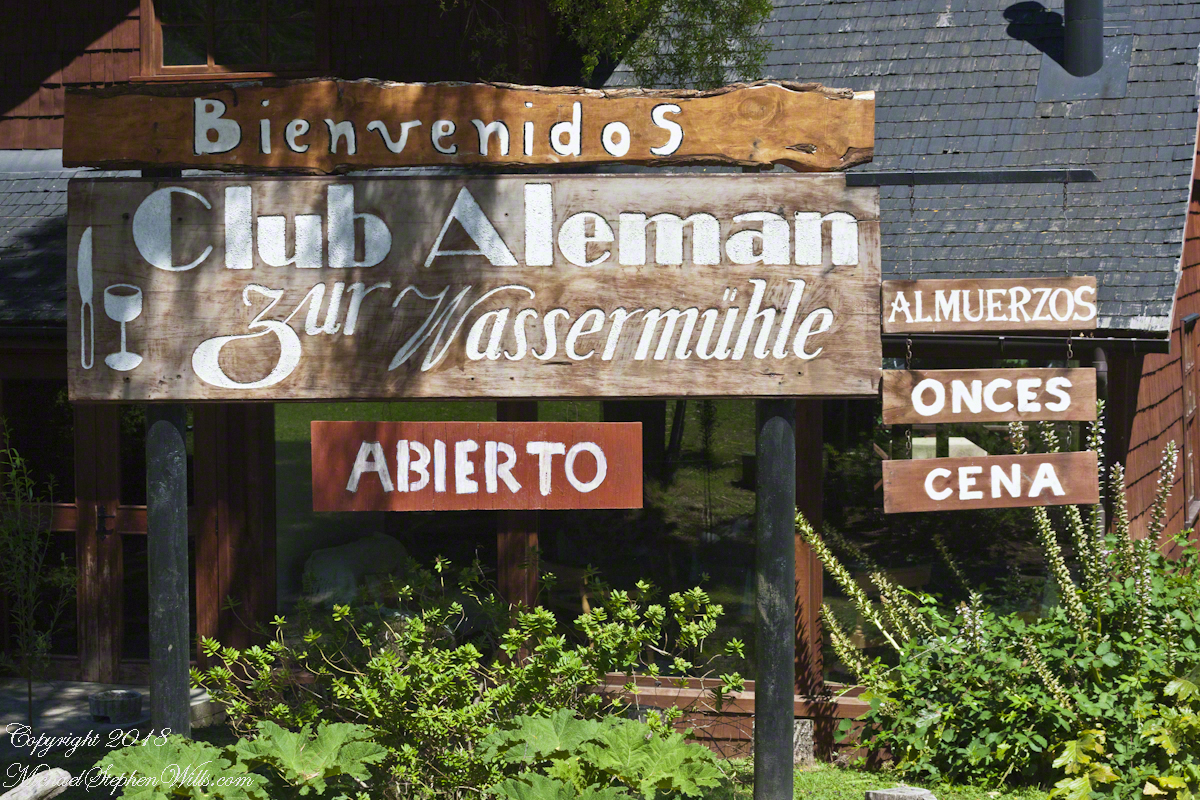
The sign translates to “German Club: to the watermill” from the two languages used: Spanish and German. The sign reads “lunch, dinner, late night.” “Onces means Late Night.
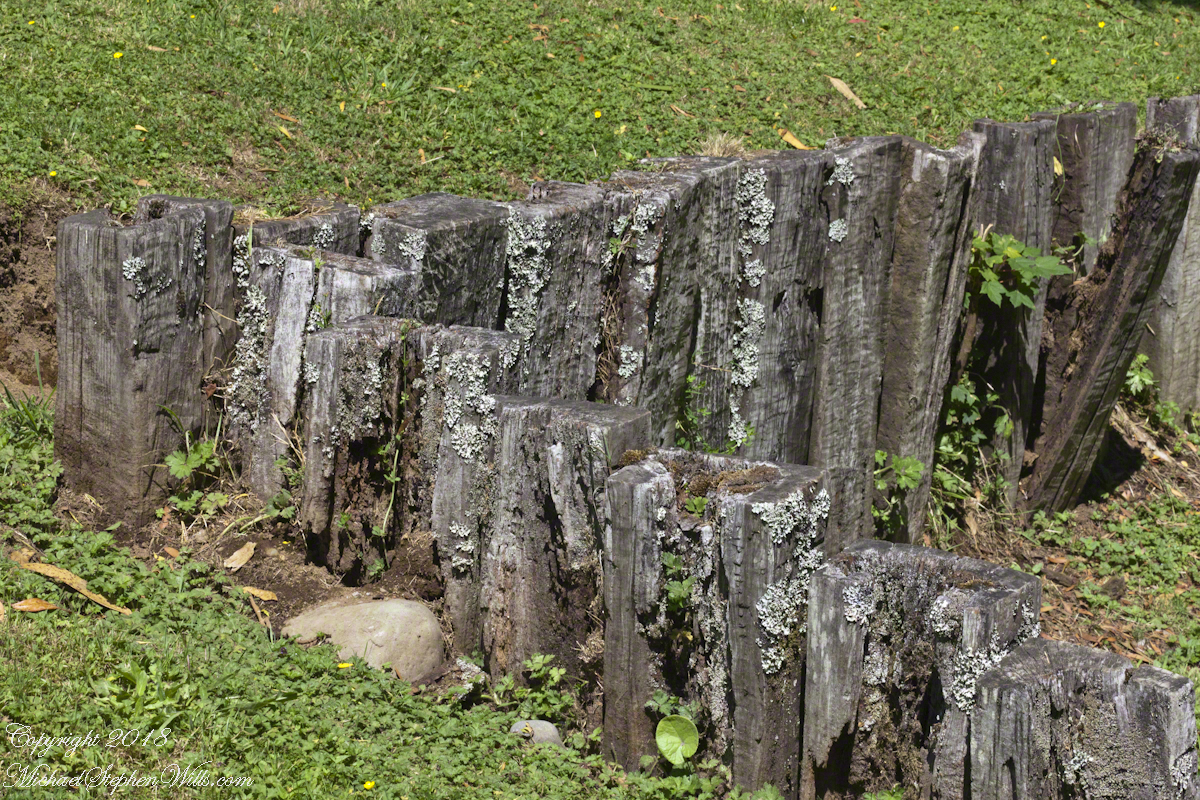
The “watermill” is a nostalgic, sentimental reference echoed in architectural and decorative details throughout the property, such as this series of posted set to suggest a device used to control water flow. There is no water flowing through the property.
Our lunch was excellent Chilean fare, but I don’t recall what it was, exactly and I didn’t photograph the interior. For us, an plus of using these cruise tours is all the details are taken care of, releasing us to maximize our enjoyment of the surroundings.
A dark side to these settings was the attraction the area had to un-remorseful Nazis fleeing war crime prosecution. In Chile and Argentina they found refuge in the 1940’s, 50’s and were supporters of the Pinochet dictatorship. None of this history was presented by our excellent guide, nor was it reflected in these rustic charms.
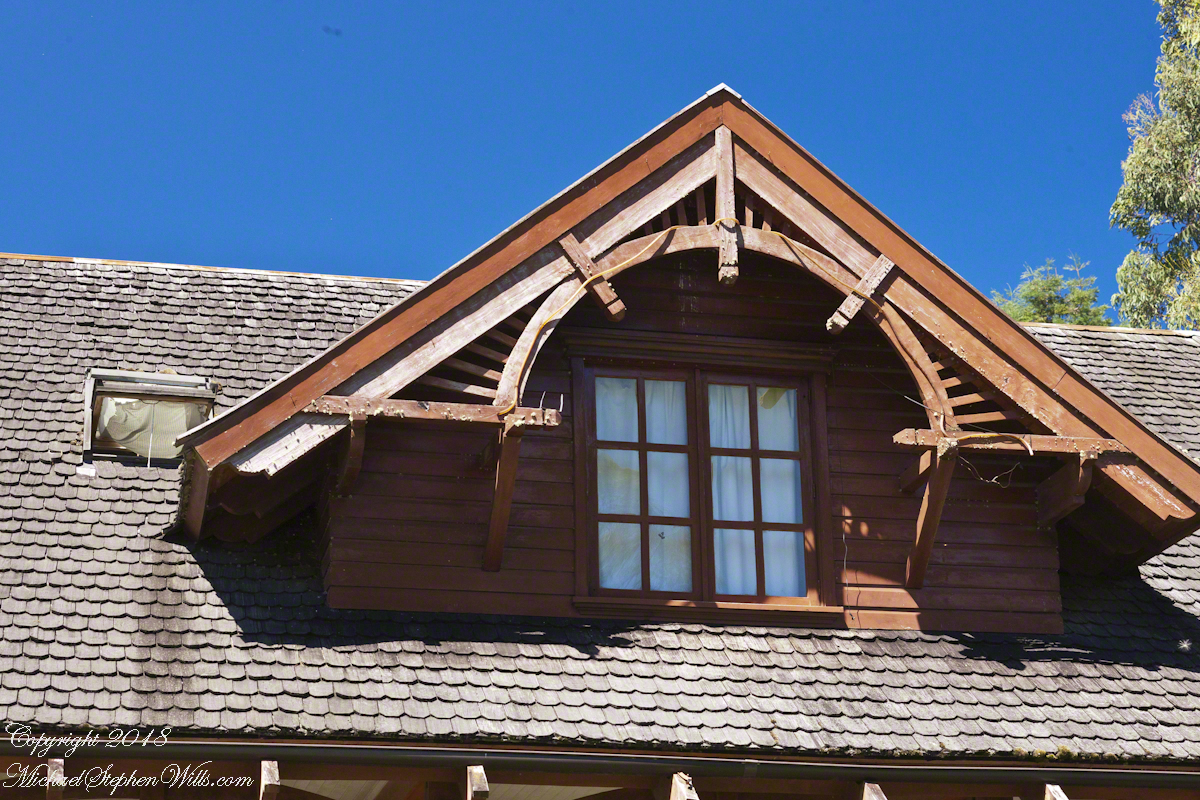
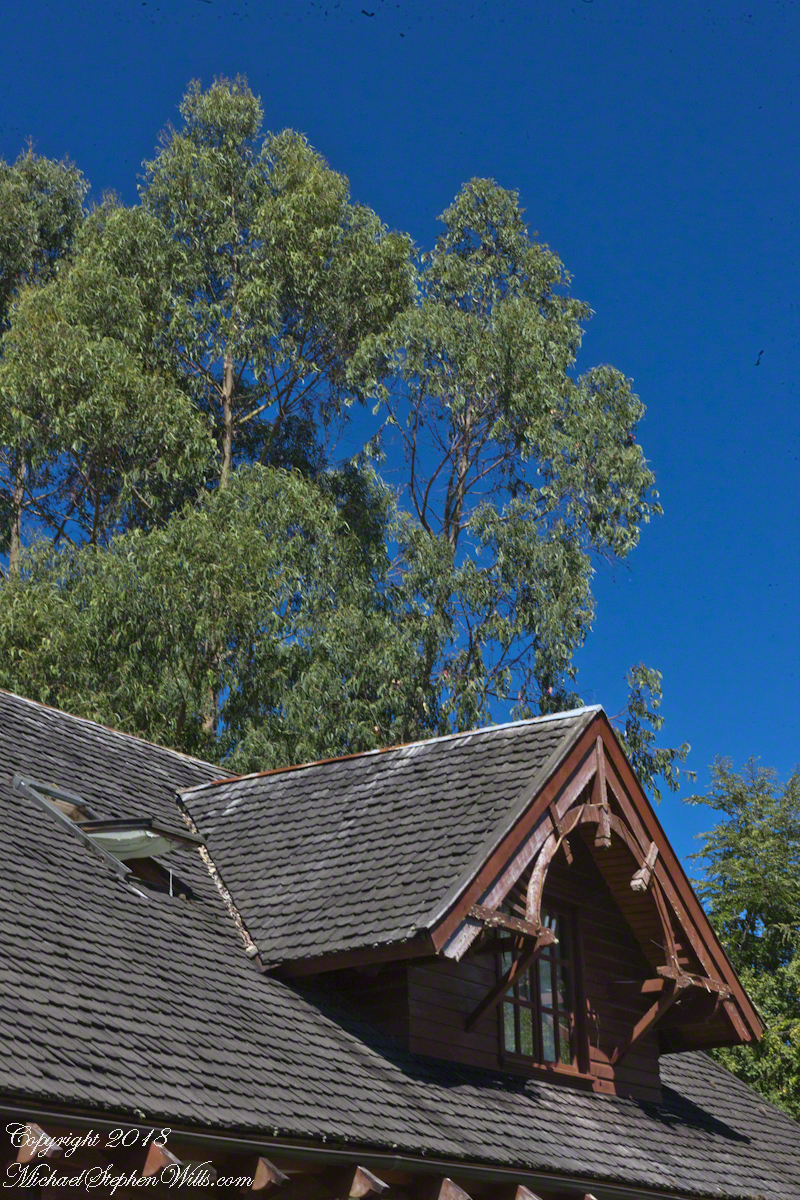
I was fascinated, for some reason, by the two dormers of the main building root with the wheel-like decoration.
The Garden
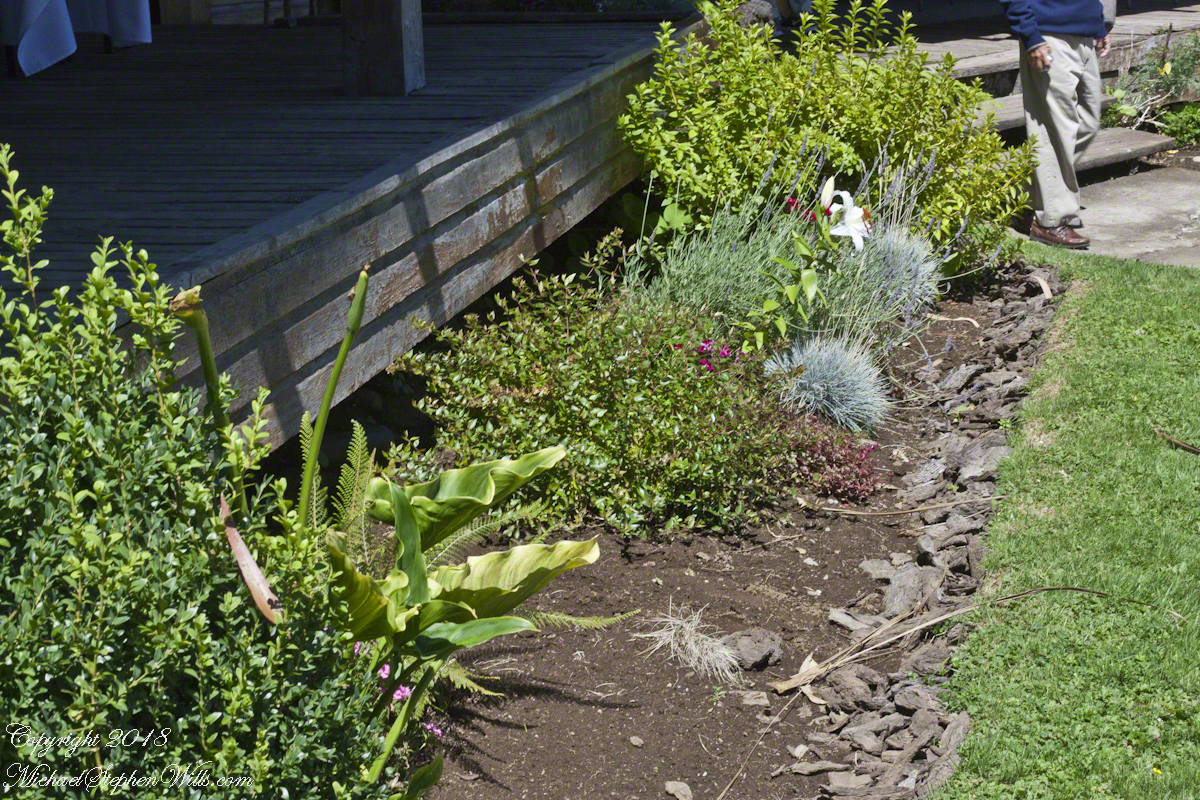
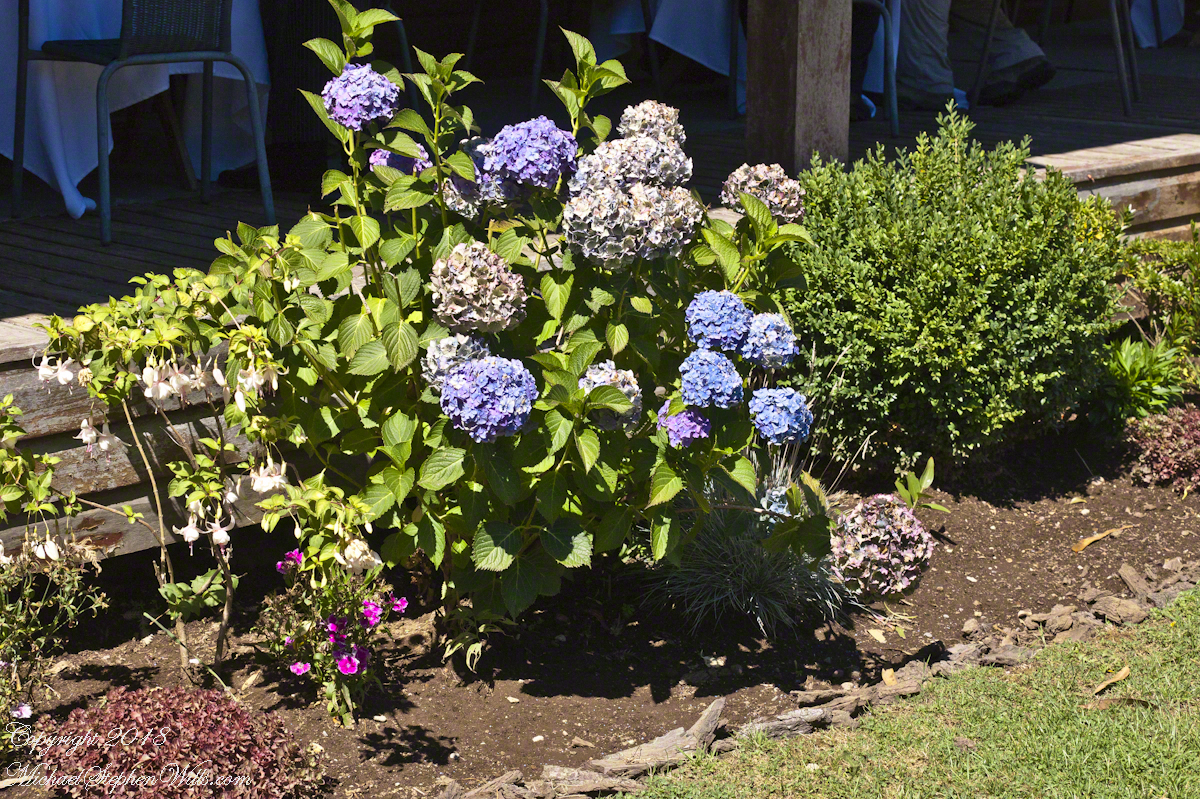
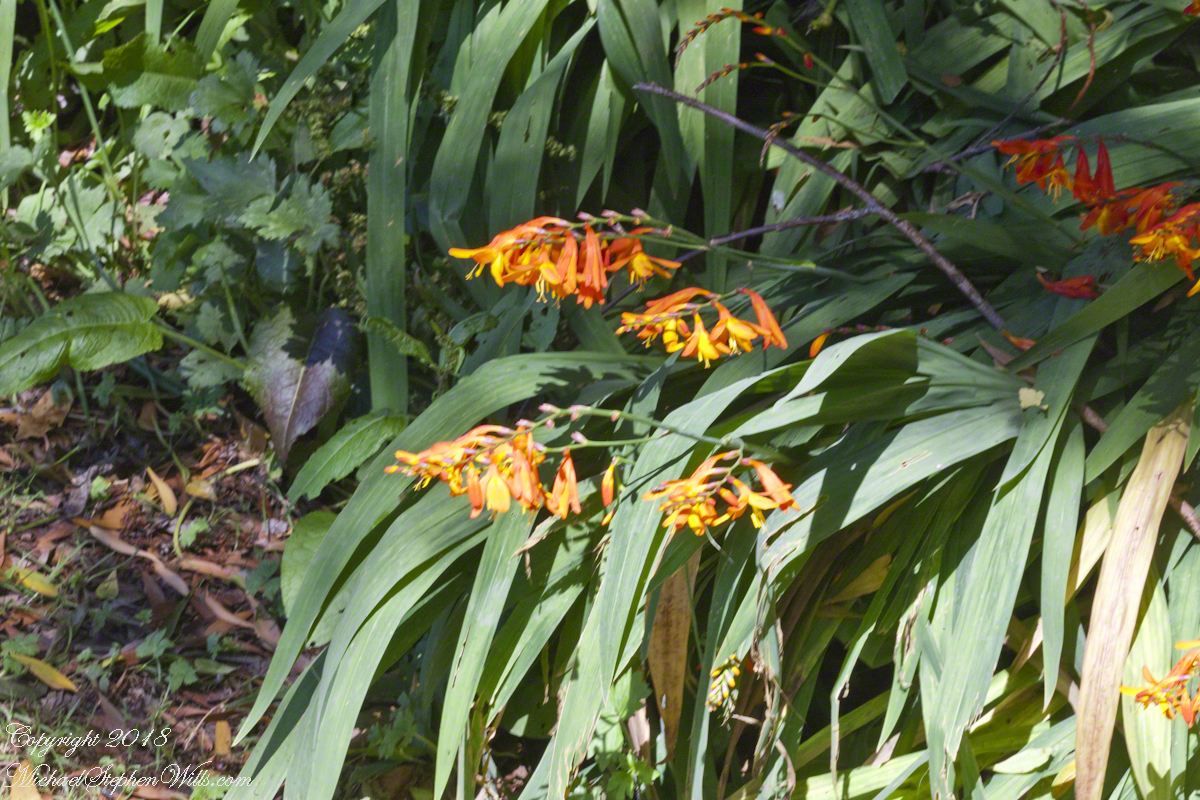
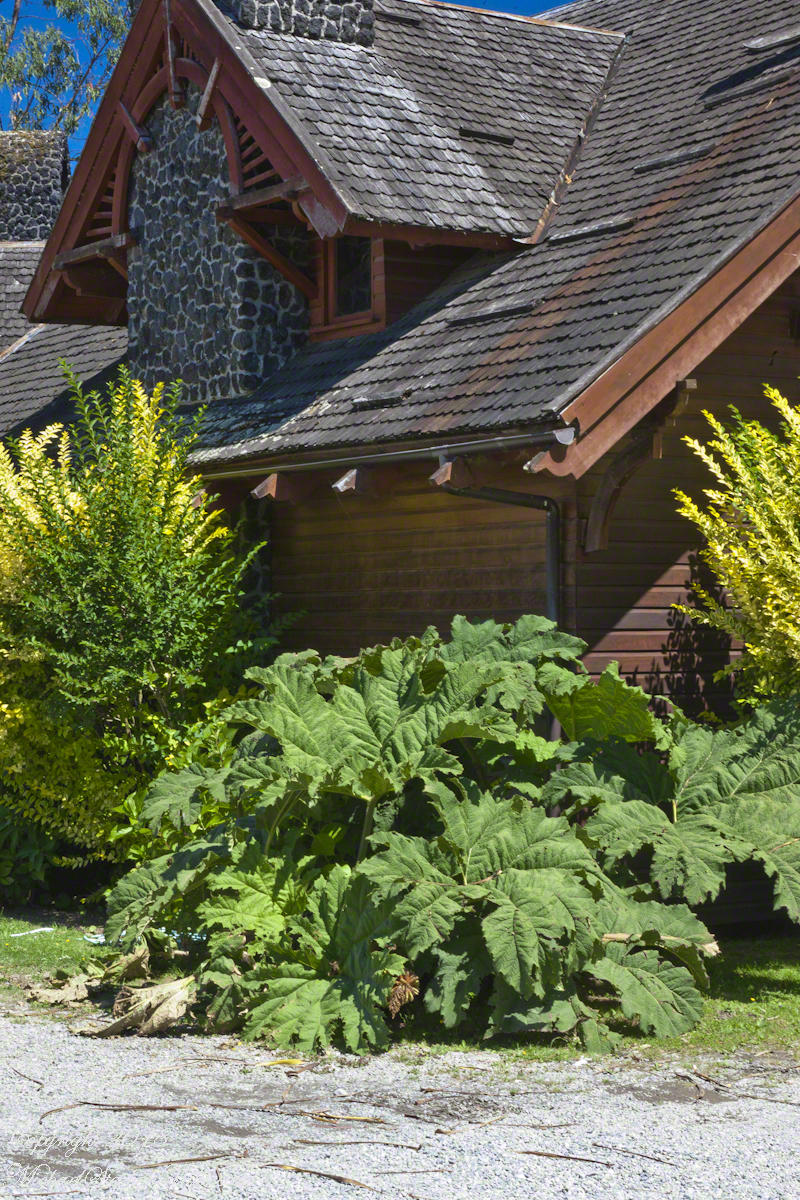
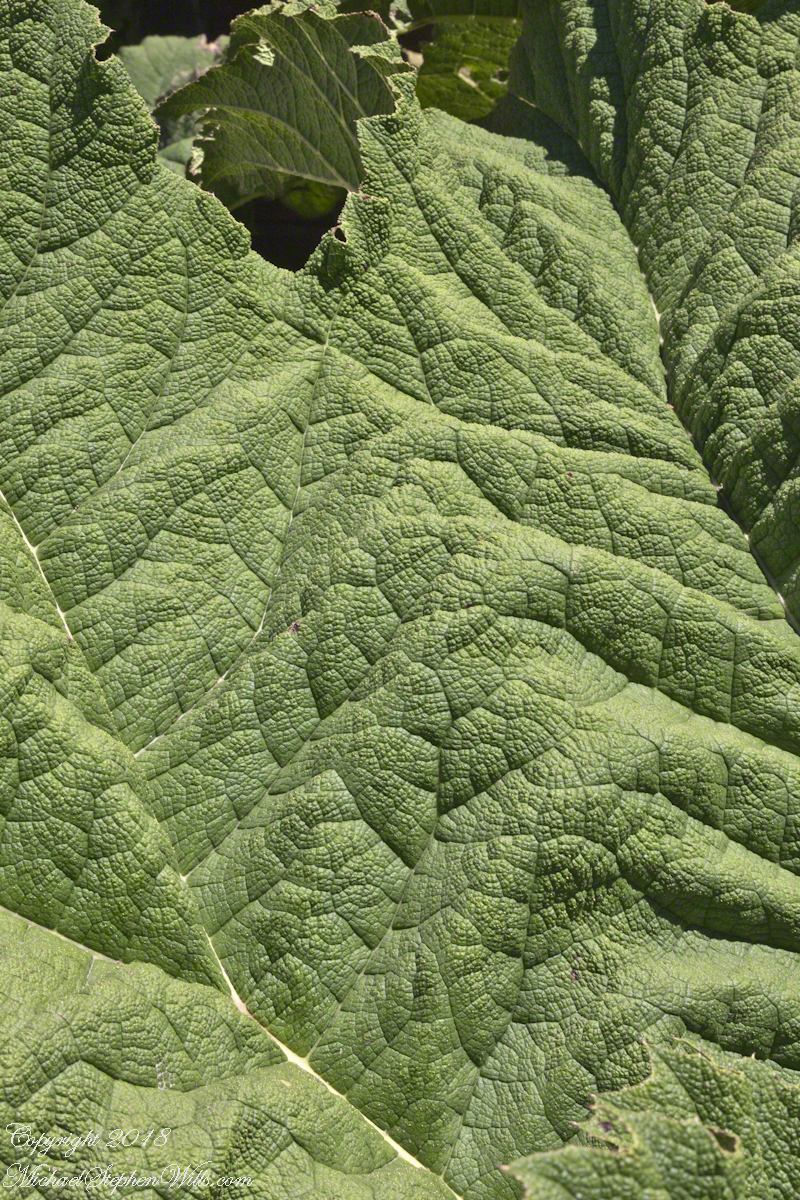
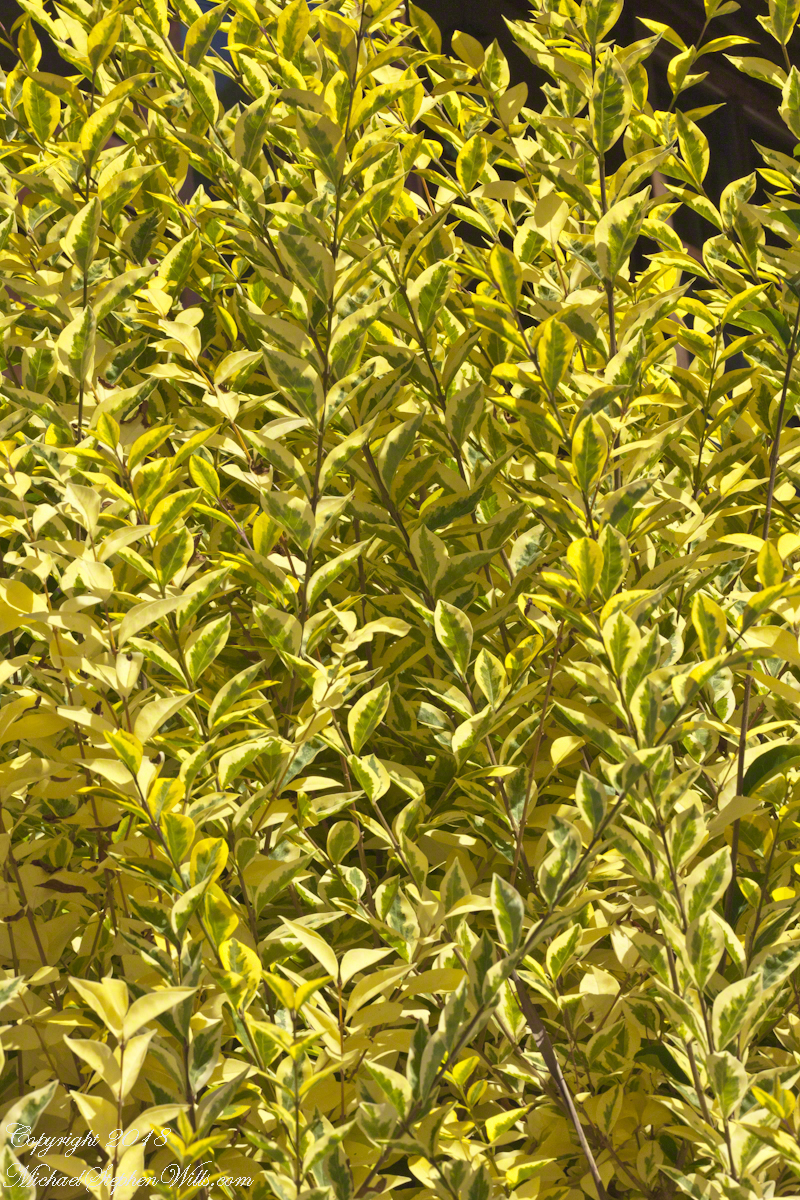
A native plant encountered frequently in our travels, growing wild, and here.Close-up of the shrub growing to either side of those large leaves.
Copyright 2022 All Rights Reserved Michael Stephen Wills
Postings last week featured the symmetrical, haunting cone of Orsorno and I have more images and stories to share of this quiescent horror in waiting. Today you will learn of another stratovolcano just 16 miles from Orsorno, also ancient; unlike Orsorno, misshapen and a current threat to local residents.
Calbuco is its name, taken from an indigenous language, “Blue Water” in English. It must refer to the water of Lake Llanquihe. As we drove Road 225 Calbuco was on one side, to the south, the lake on the other. When we visited Petrohué Falls, the river forms a southern boundary to the Llanquihue National Reserve from which Calbuco rises.
April 2015 Eruptions
Where we planned out trip, nine months before this day in February 2016, Calbuco erupted without warning with explosions one step below that of Mount St. Helen’s 1980 event. The volcanic plume of ash and cinders reached more than 10 kilometers ( 6+ miles ) high. It was fortunate the wind direction took the ash away from the nearby cities of Puerto Varas and Puerto Montt. Each is about 17 miles from Calbuco. As it was, the catastrophe destroyed crops and made farmers lives difficult. Farmers and the residents of the rural village Ensenada, nine miles away, evacuated to save their lives. Abandoned farm animals perished. Village residents returned to homes, roads, gardens covered in ash.
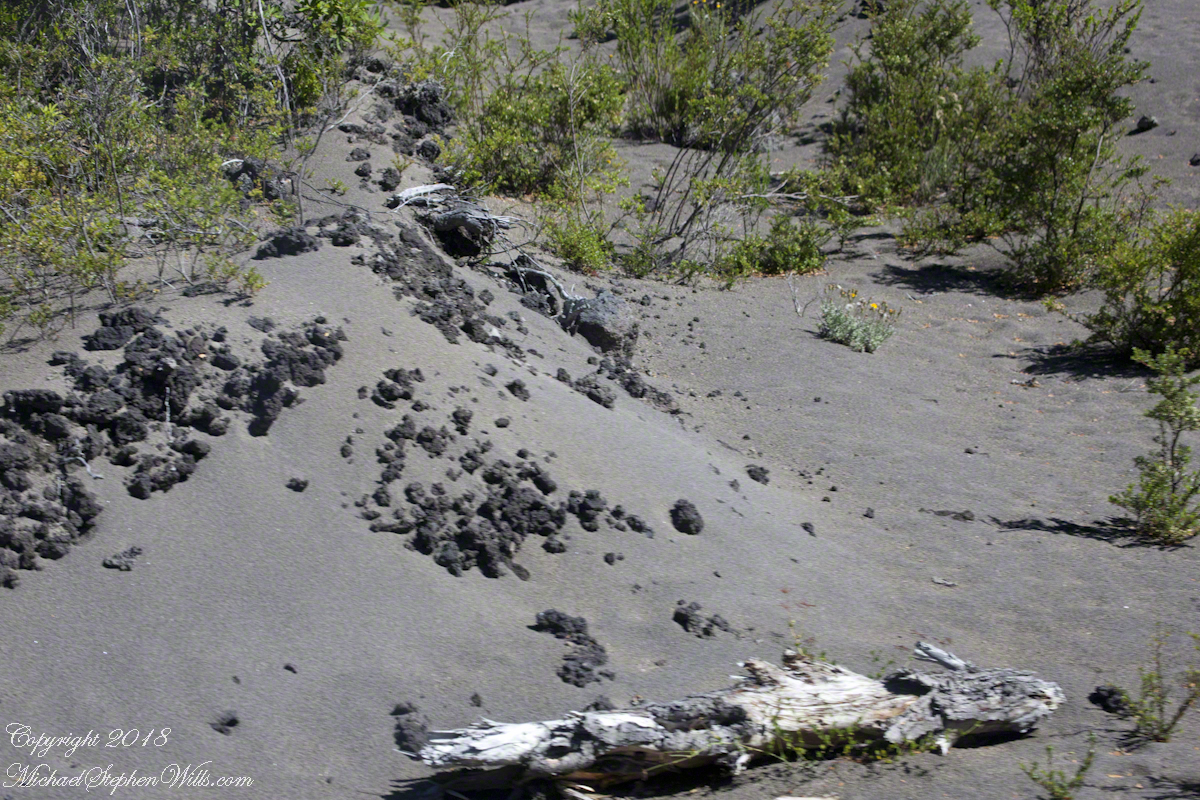
Here is a photograph of an ash and cinder drift from the explosion, just off Road 555 on the slopes of Orsorno volcano, above Ensenada village.
Click any photograph for a larger view.
Settlement Beneath Active Volcanos
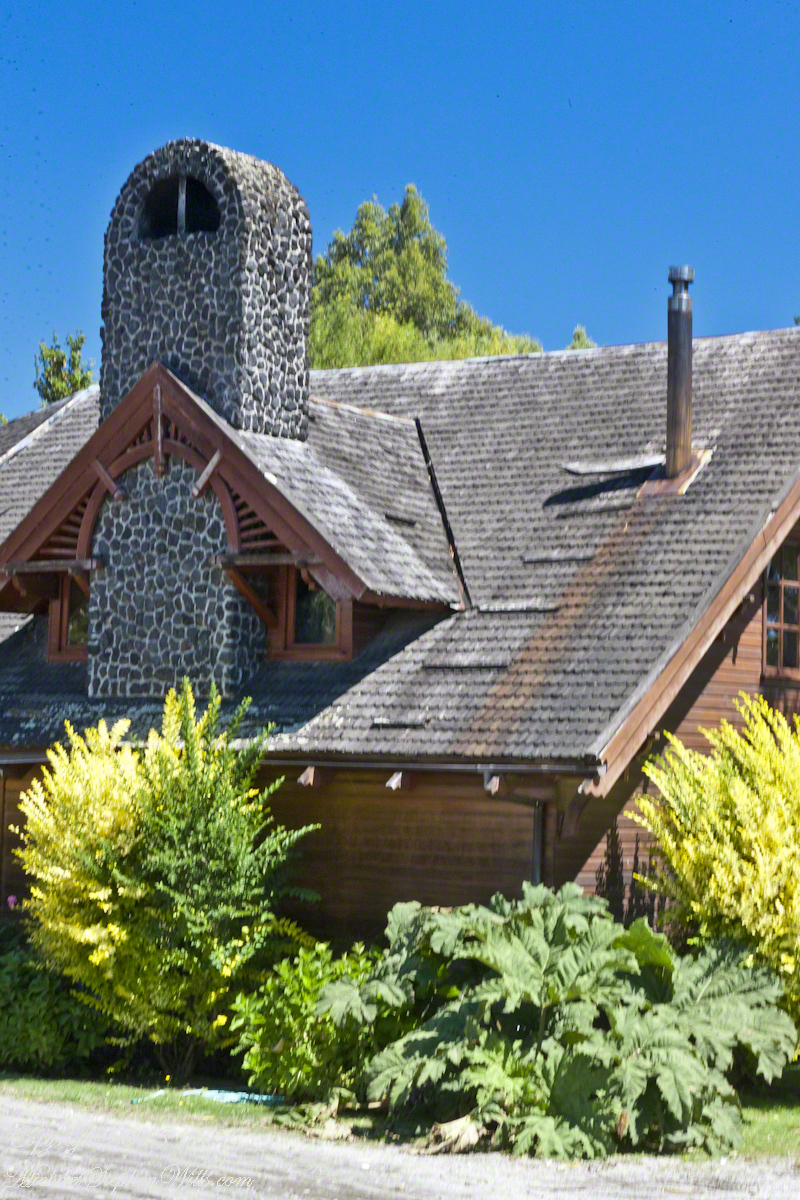
At the start of the 18th Century the provinces around Lake Llanquihe were thinly populated. The government of Chile, in anticipation of seizure of the land by European powers, cooperated with efforts of German emigres to resettle German families fleeing a disorderly revolution. Today the region show the cultural influence of these settlers. Here is the exterior of the Club Alemain (“German Club”), the restaurant along Road 225 were we had an excellent lunch.
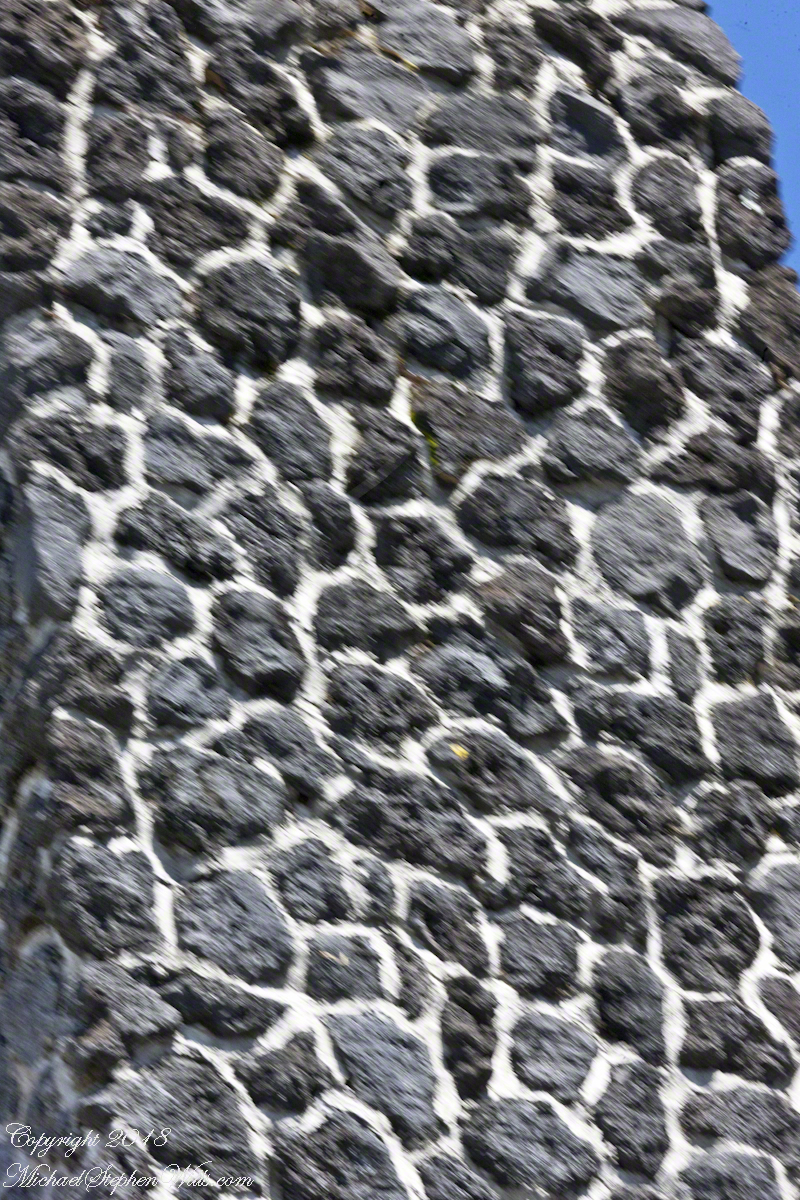
Look closely at the chimney. The stones are black and porous, volcanic cinders from Calbuco eruptions.
German settlers were there to witness, and suffer, the 1893-1895 Calbuco eruptions, one of the most explosive experienced in Southern Chile. Debris was ejected eight kilometers with large flows of hot mud. Farmers on the eastern shore of Lake Llanquihe petitioned the government to be resettled elsewhere. Without options, many remained.
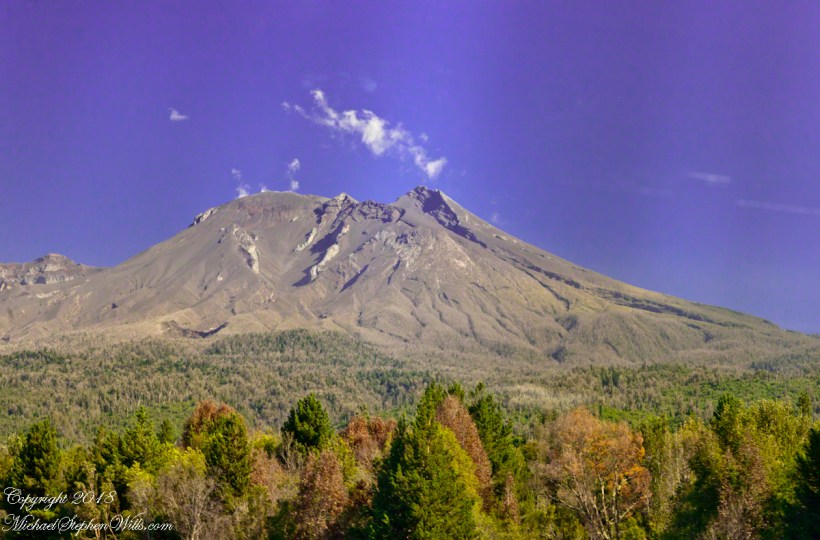
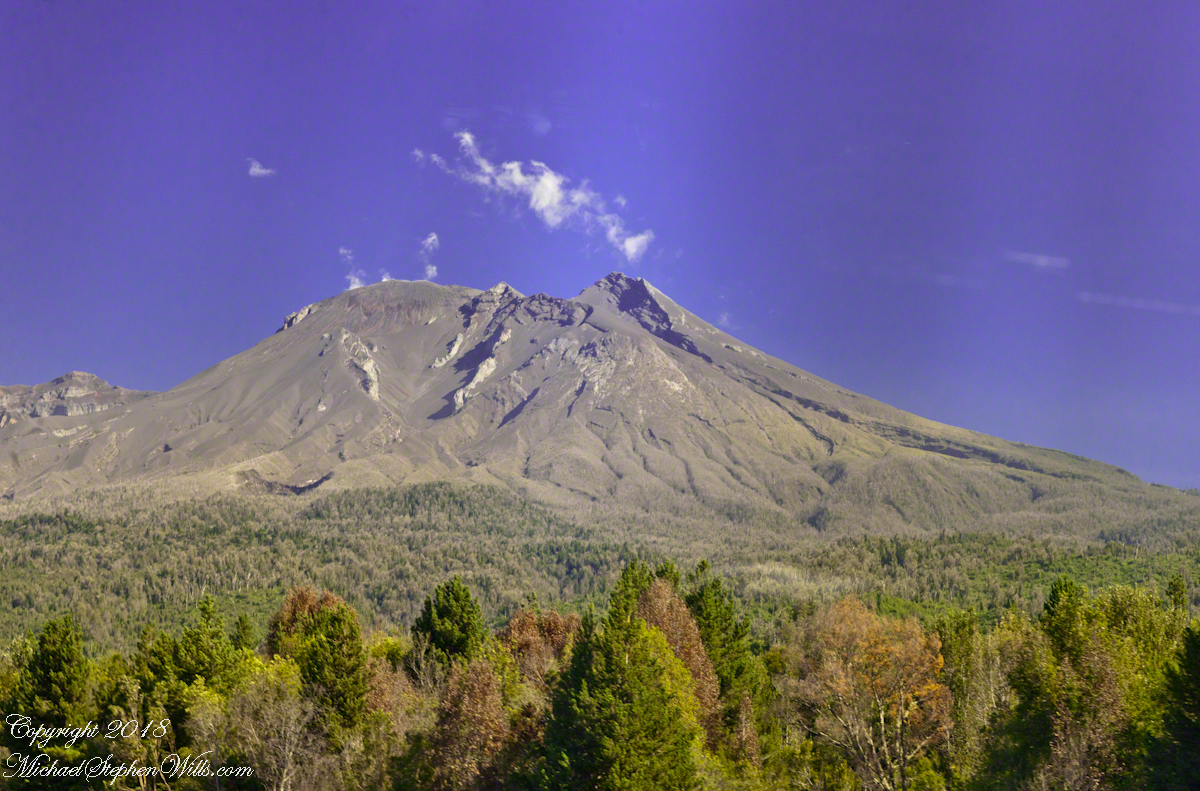
Here is a view of the monster, a threatening presence to the south. That is vapor from the active caldera. Today, people live here, enjoying the current moments of their surroundings.
Calbuco Volcano, February 15, 2016
Click me for the first post in this series, “Orsorno Volcan
o and Tourists.”
Copyright 2022 All Rights Reserved Michael Stephen Wills
A user commented on a Chile Lake District post of mine asking for more photos of Germany. This is striking, because German traveler who visited have made note of parallels between this area and Europe. In this series I will share photography taken from the tour bus window as we traveled to the Lake District and returned to Puerto Montt. I used a handheld Canon EOS 1Ds Mark III SLR with the Canon lens EF 70-300 f 4-5.6LIS. This is the second post of this series.
Click any photograph for a larger view.
Chipped into Shingles?
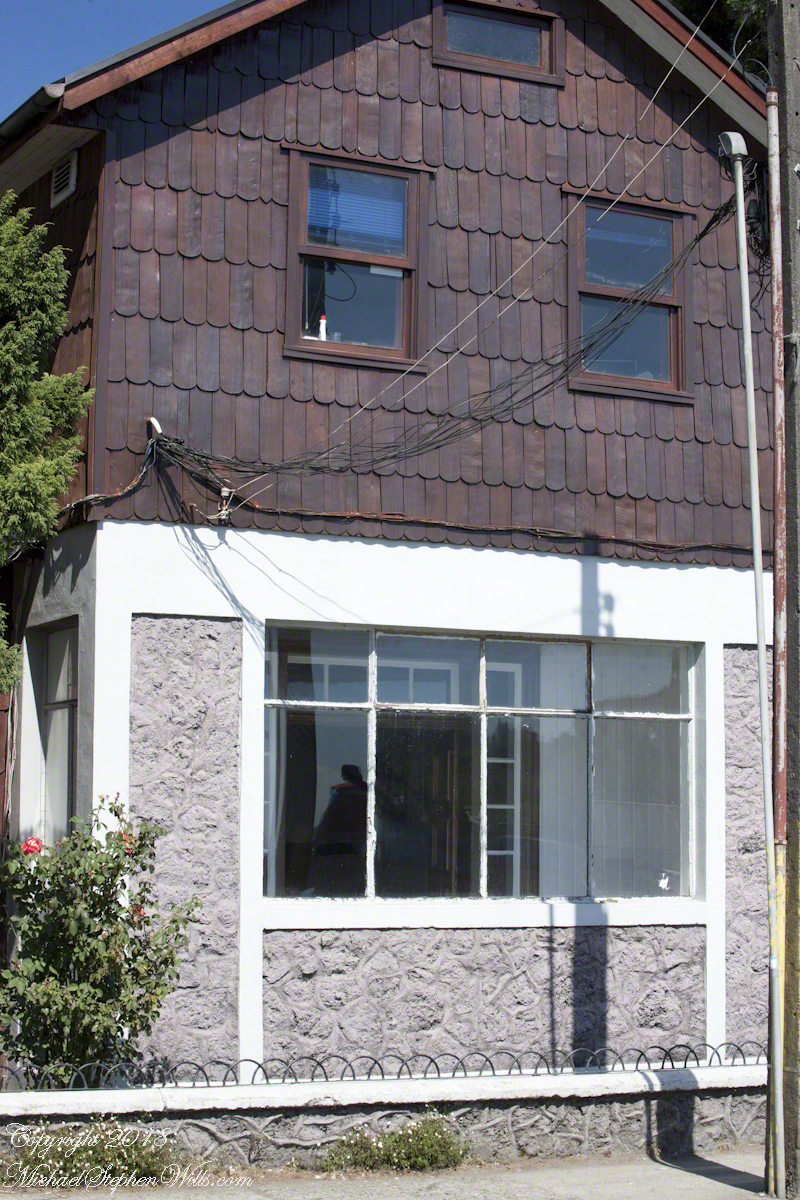
Wood is a building material the German pioneers had in abundance. They went to work clearing the forests, tilling the land and building structures such as this, a house in the town of Puento Varas on Lake Llanquihue. In face, those windows face the lake. I have our guide to thank for these photographs of the houses, early on as we drove through Puerto Montt she shared the significance of the shingles with us.
The shape is identical to that used in Germany and Switzerland wooden frame homes. It was the wood of a tree native to Chile and western Argentina that made these possible and in the course of surviving in a new land, a good portion of their natural patrimony was spent. Since the late 1960’s Chile has backed away from this and conservation of the slow growing Alerce is now paramount.
We can intuit how difficult the winters are from the view into this house provided by the window. There is a room outside the living area, sealed by a second door to prevent the escape of warmth. The use of metal embedded into the low concrete wall is common in the South American countries we visited.
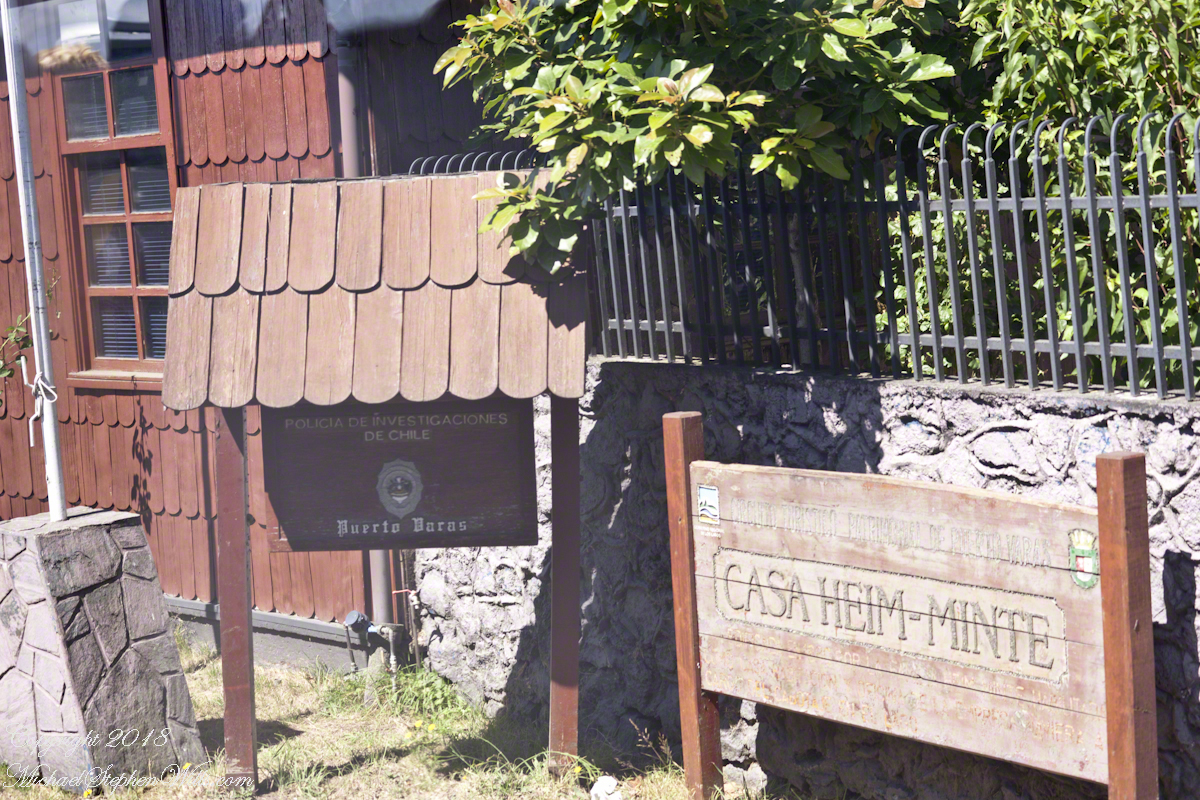
Close by, also facing the lake in Puerto Varas, is this police station, the “Civil Police,” whatever than means. It is a small, apparently historic, building. Rising around it are modern hotels.
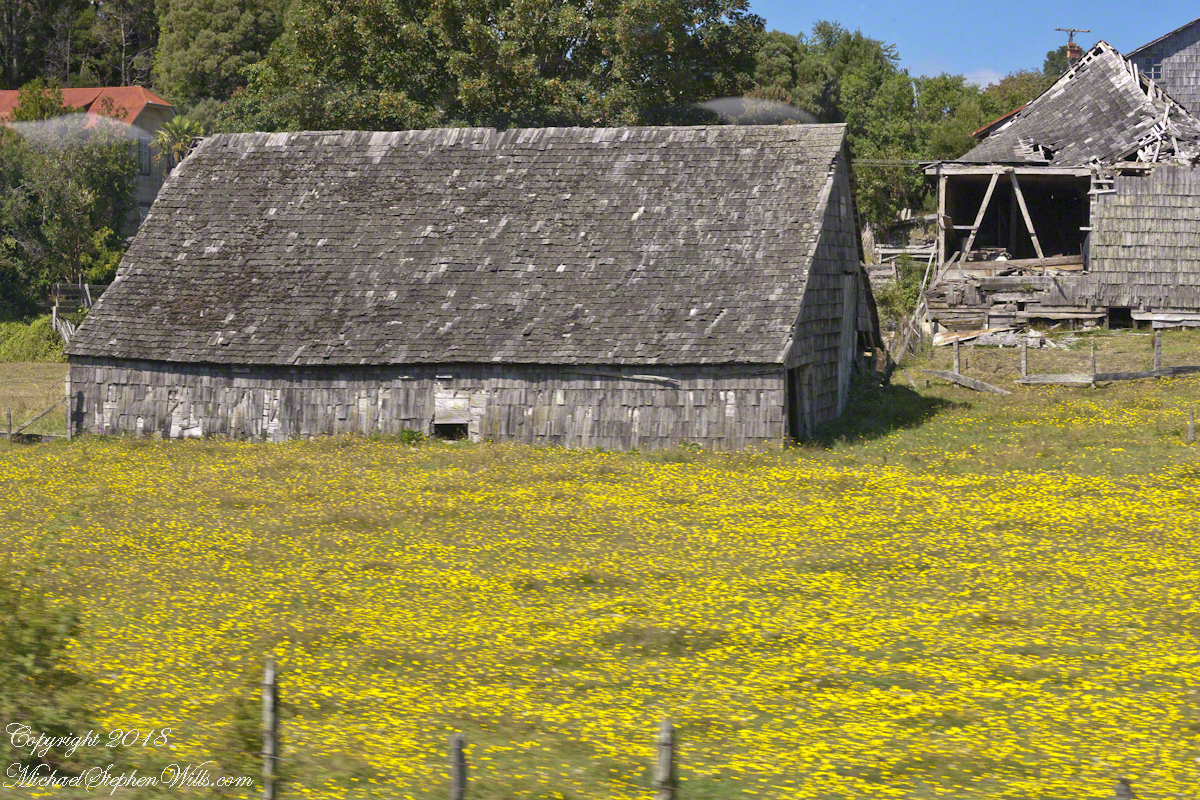
This large rural shed, on the outskirts of the town, appears to be a structure from the original 19th century settlers, a testimony to the durability of Alerce shingles covering the siding and the large, steeply sloped roof.
Open Country
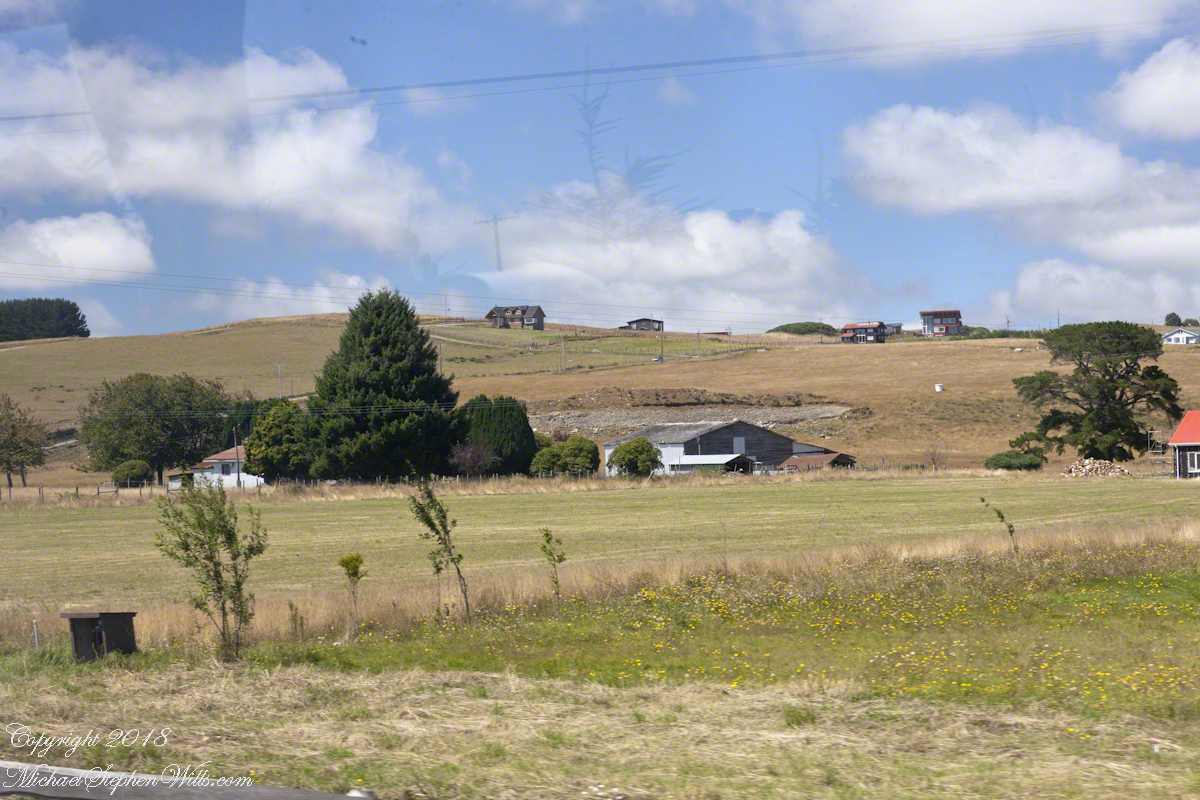
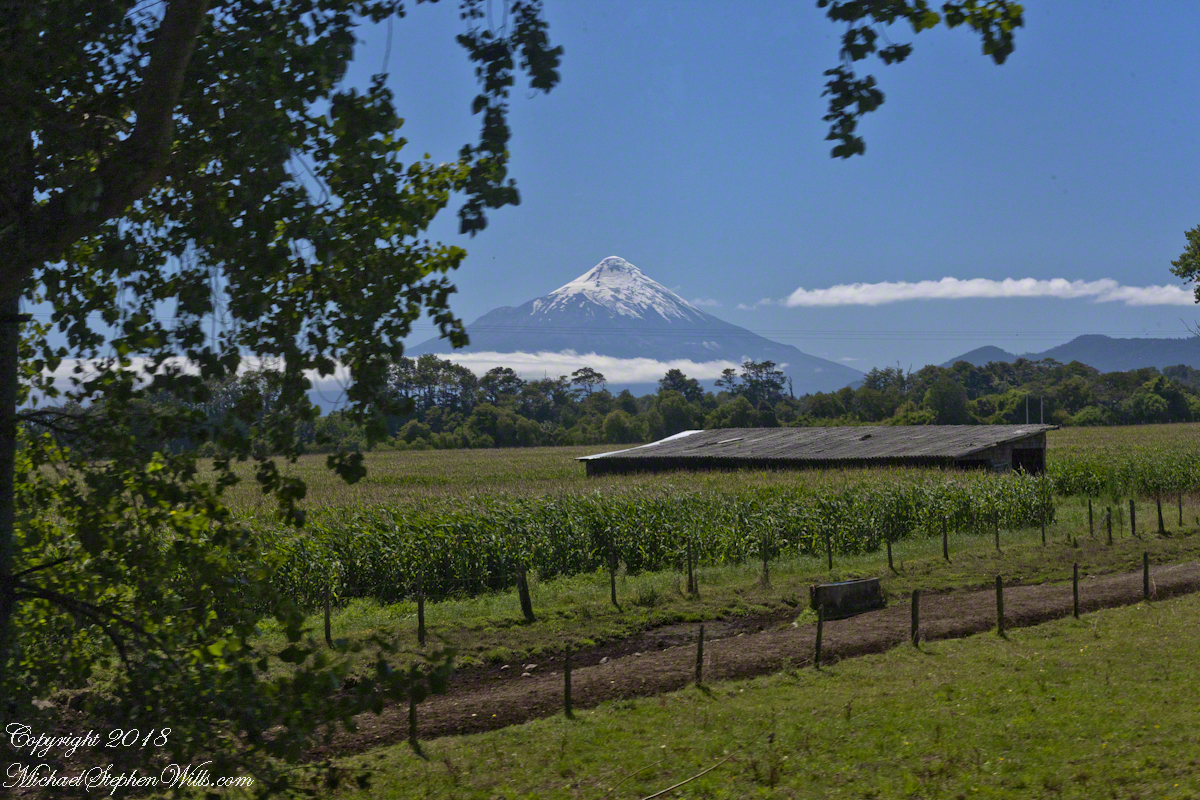
Suddenly we were graced with these cleared farm fields, here and there large modern homes high on the hill for a sweeping view of the lake.
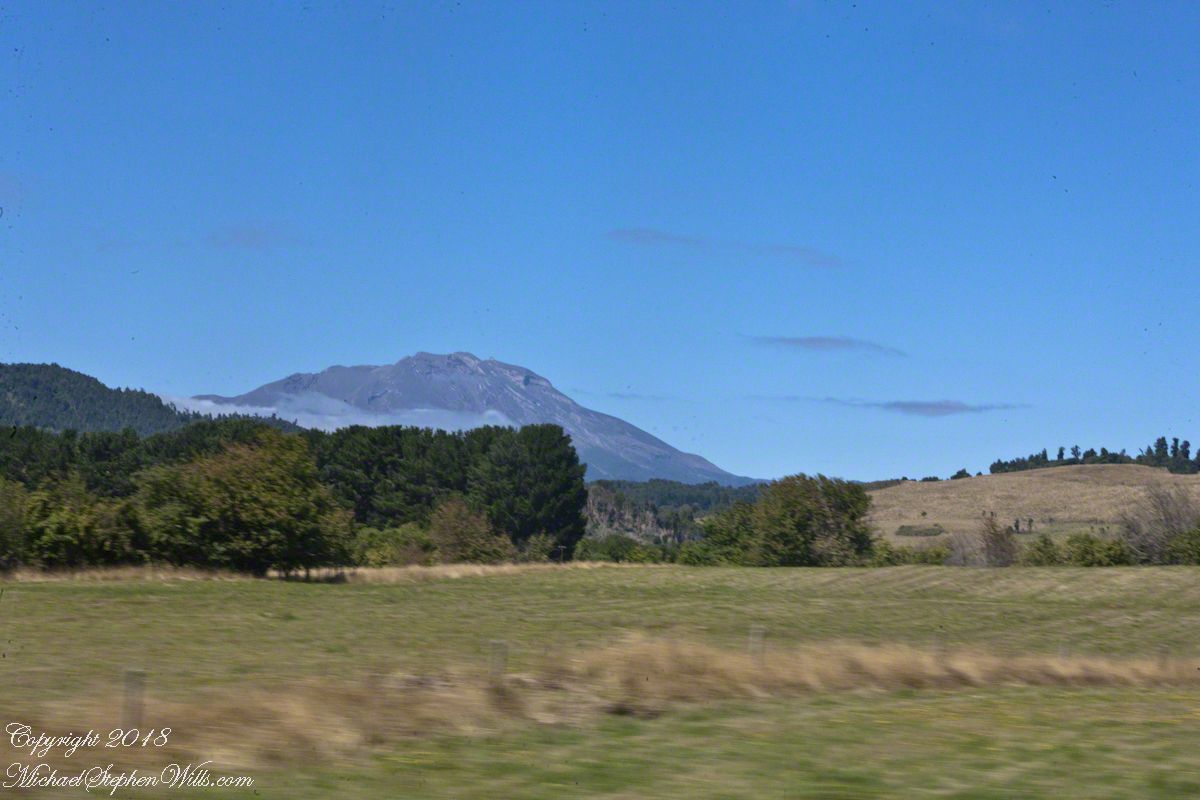
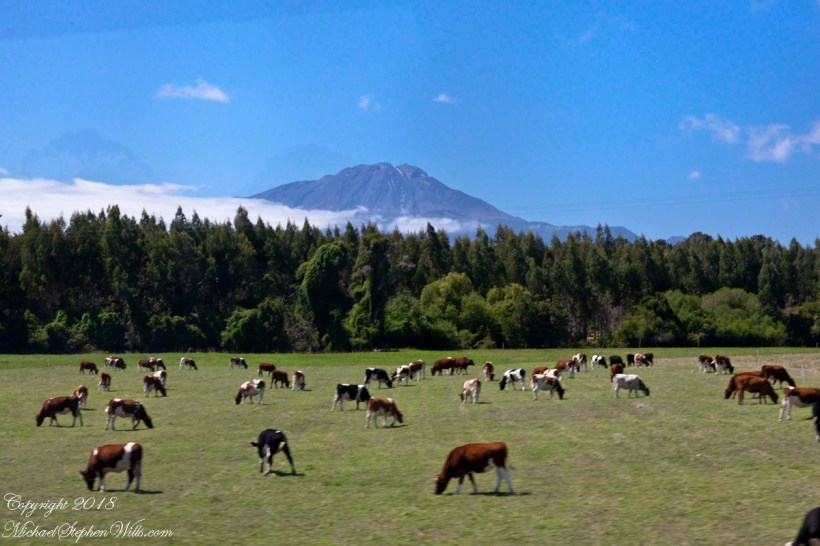
In the distance is Calbuco, the volcano whose eruption broke the peace ten months before our trip. The wind spared these lands the destructive effect of falling ash.
Copyright 2019 Michael Stephen Wills All Rights Reserved
A user commented on a Chile Lake District post of mine asking for more photos of Germany. This is striking, because German traveler who visited have made note of parallels between this area and Europe. In this series I will share photography taken from the tour bus window as we traveled to the Lake District and returned to Puerto Montt. I used a handheld Canon EOS 1Ds Mark III SLR with the Canon lens EF 70-300 f 4-5.6LIS. This is the third post of this series.
Click photograph for a larger view.
Orsorno Volcano, Lakes District, Chile
Copyright 2019 Michael Stephen Wills All Rights Reserved
A user commented on a Chile Lake District post of mine asking for more photos of Germany. This is striking, because German traveler who visited have made note of parallels between this area and Europe. In this series I will share photography taken from the tour bus window as we traveled to the Lake District and returned to Puerto Montt. I used a handheld Canon EOS 1Ds Mark III SLR with the Canon lens EF 70-300 f 4-5.6LIS. This is the fourth post of this series. Click me for “Swiss Chalet,” the first post in this series.
Click any photograph for a larger view.
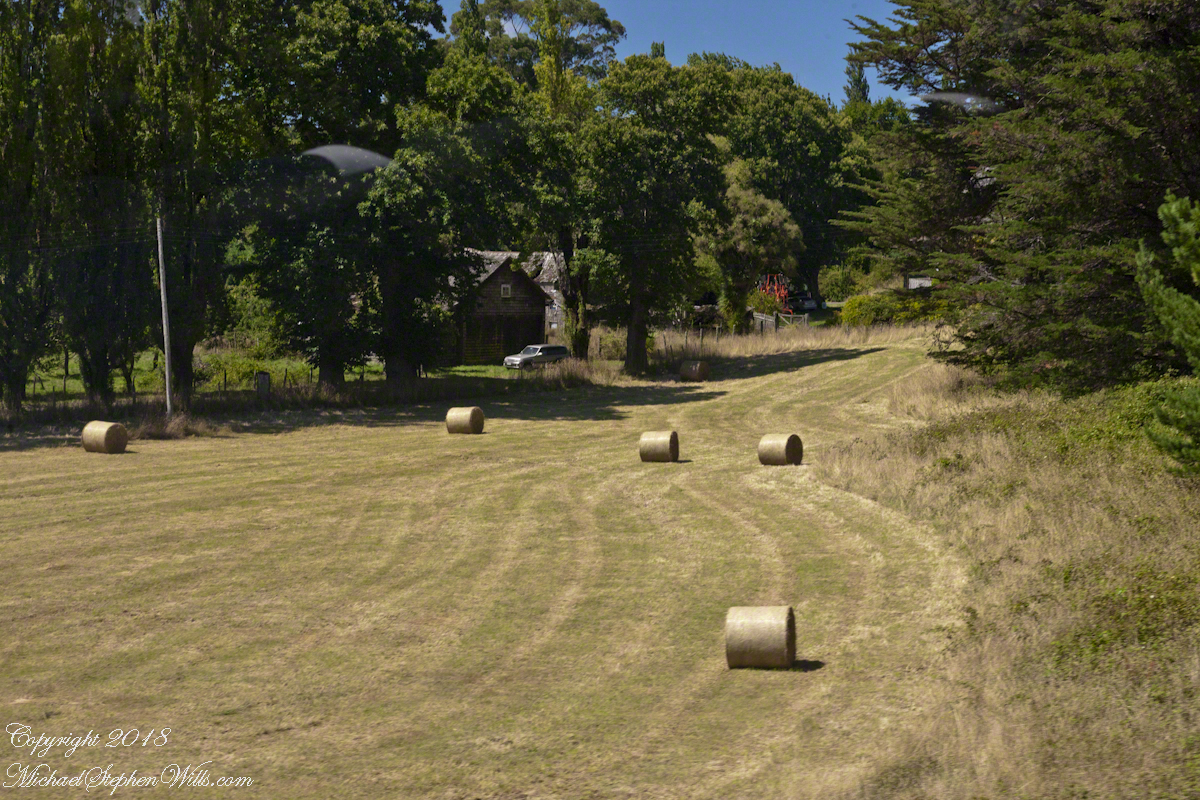
……on cut grass rolled into hay below the volcano
Here is a comforting sight for a dairy farmer: well cured fodder ready for the winter. Apologies to William Carlos Williams. “So much/ depends/upon a red wheel /barrow/glazed with rain/water/besides the white /chickens.” (XXII, “Spring and All”, 1923).
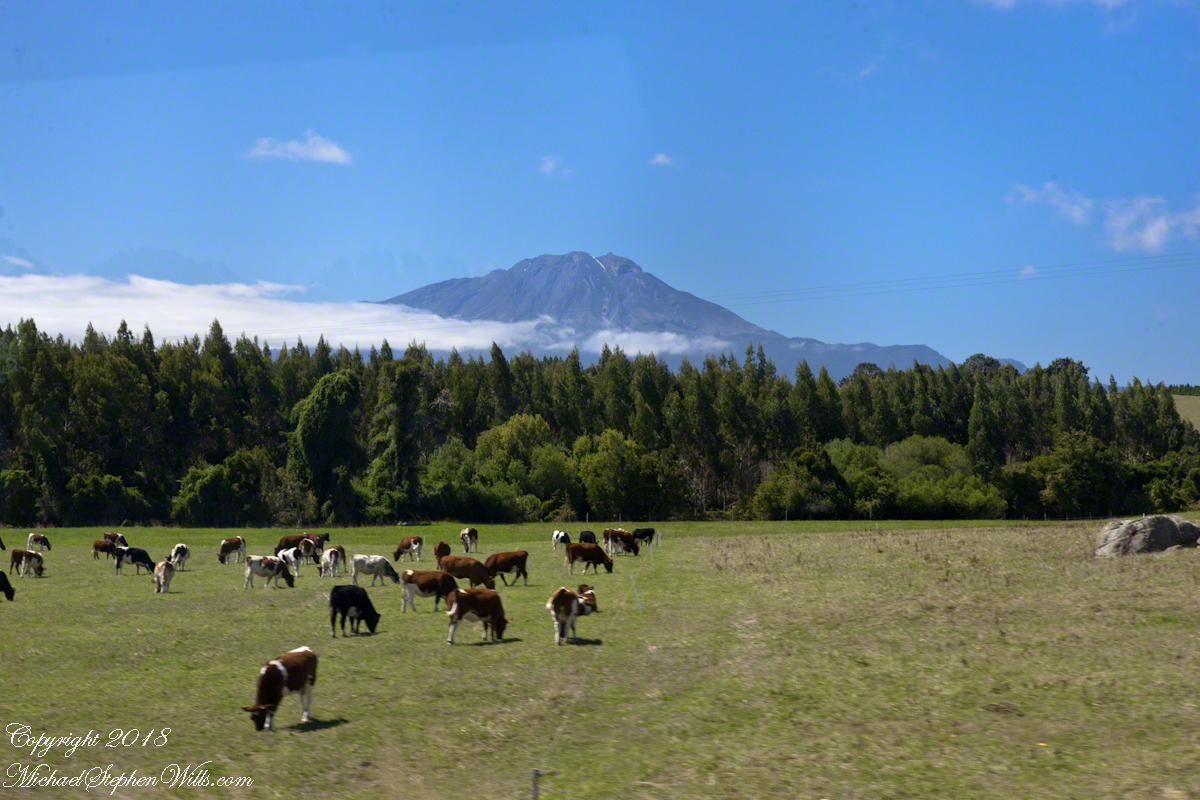
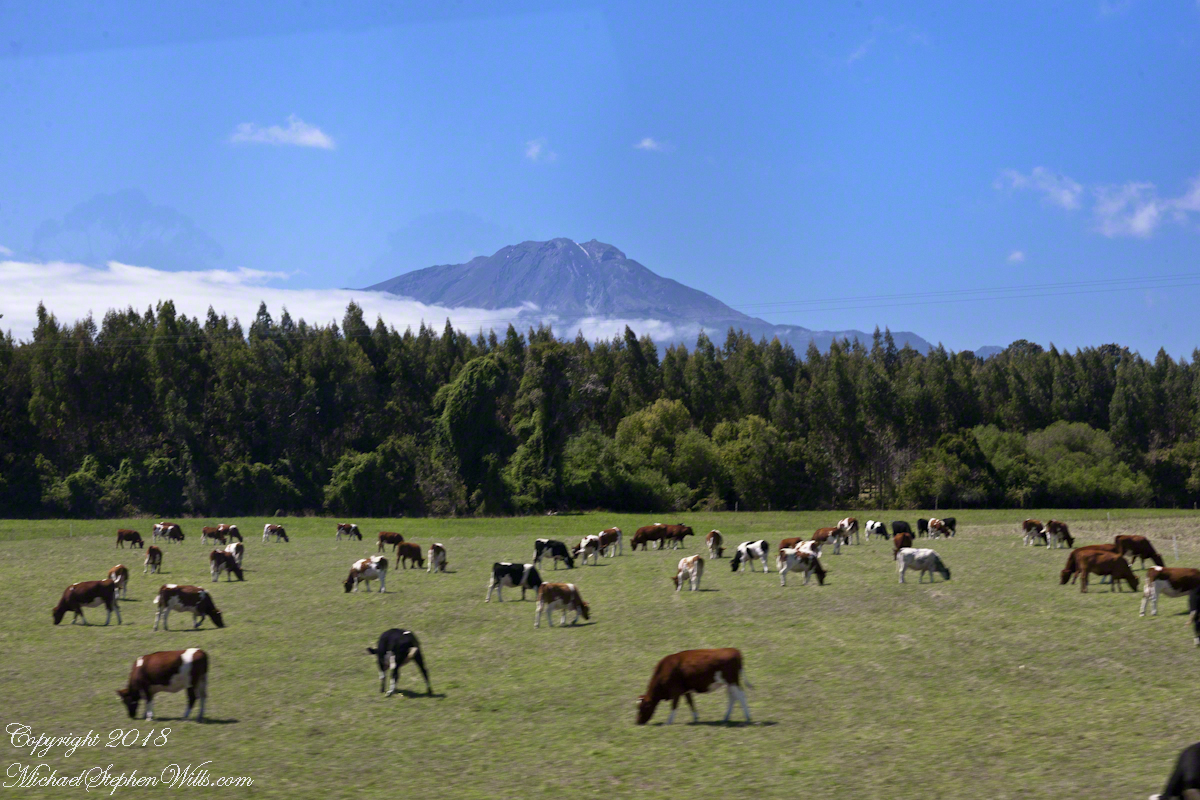
On one side was Calbuco Volcano, seen across hay fields and hills……
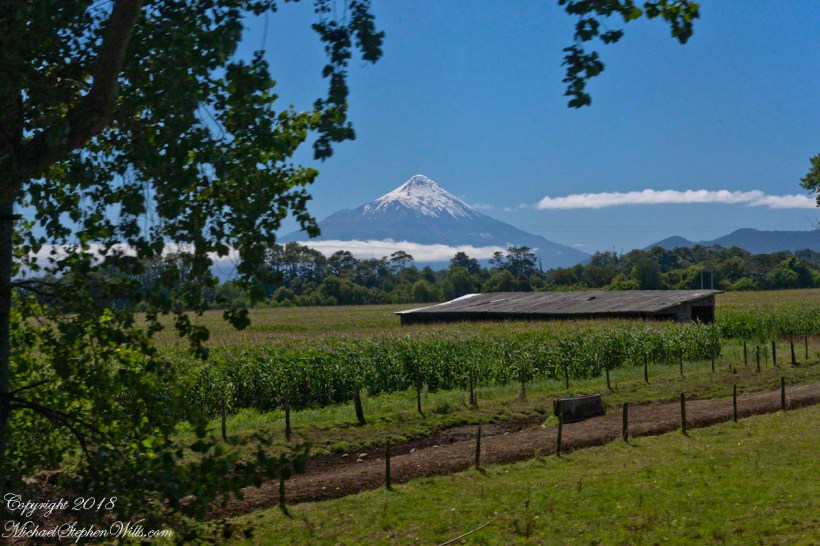
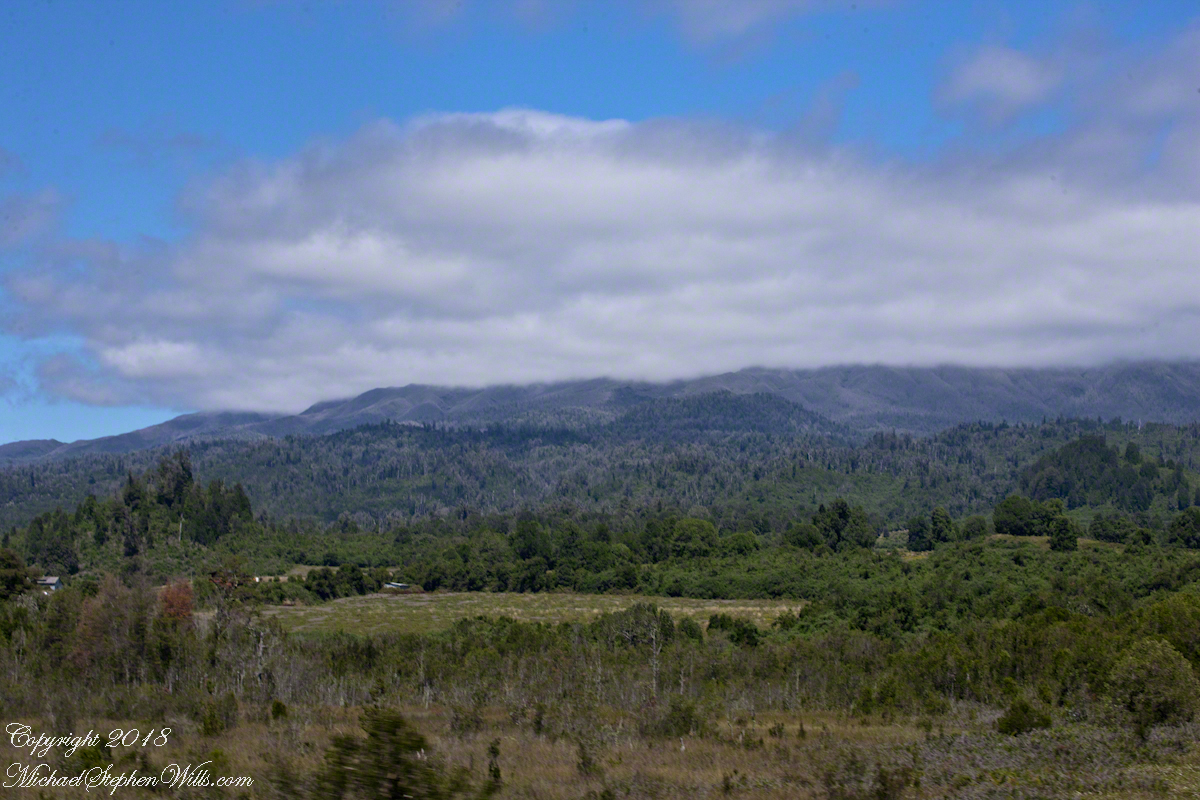
……on the other is the lower slopes of Osorno, the cone hidden by clouds.
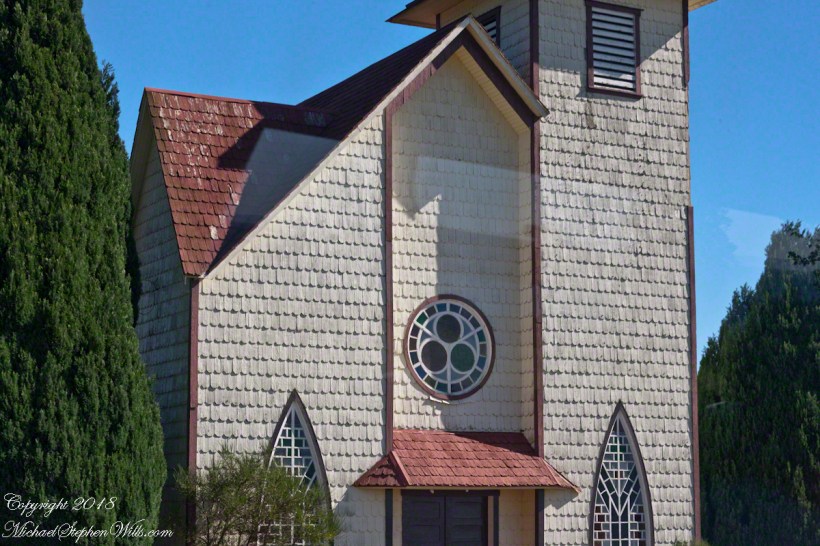
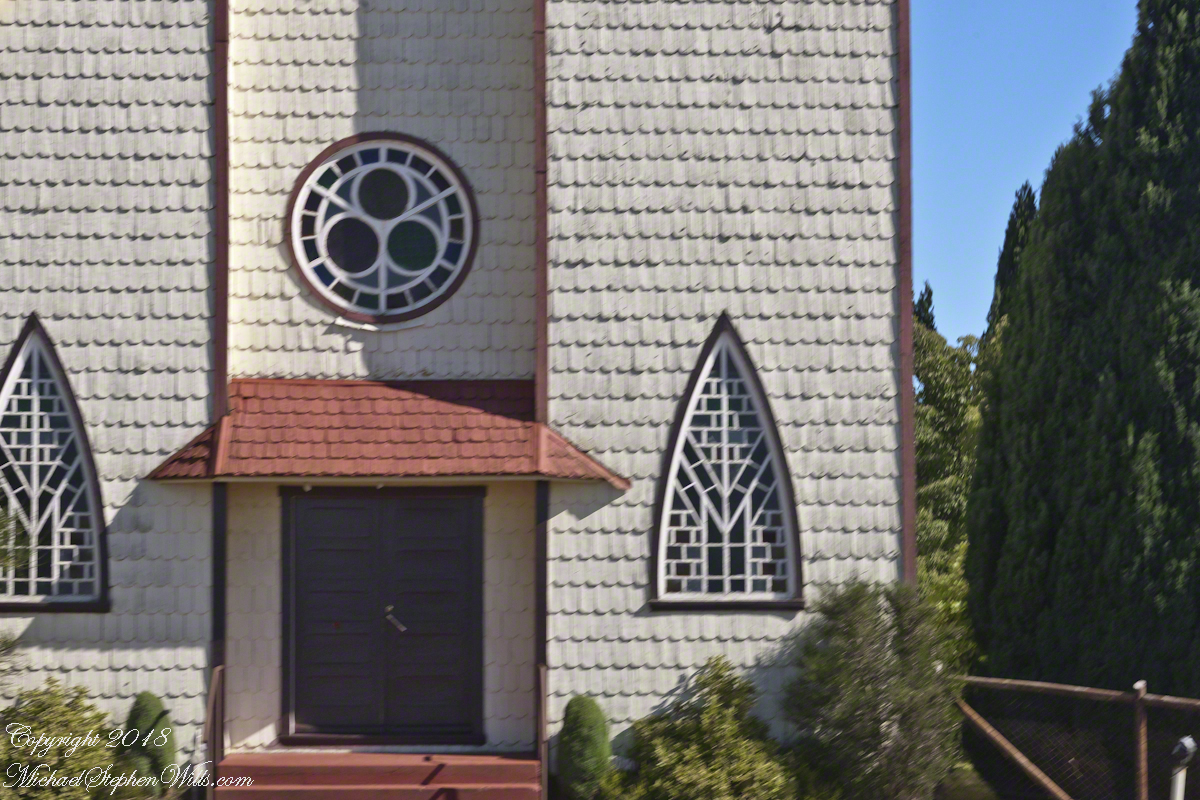
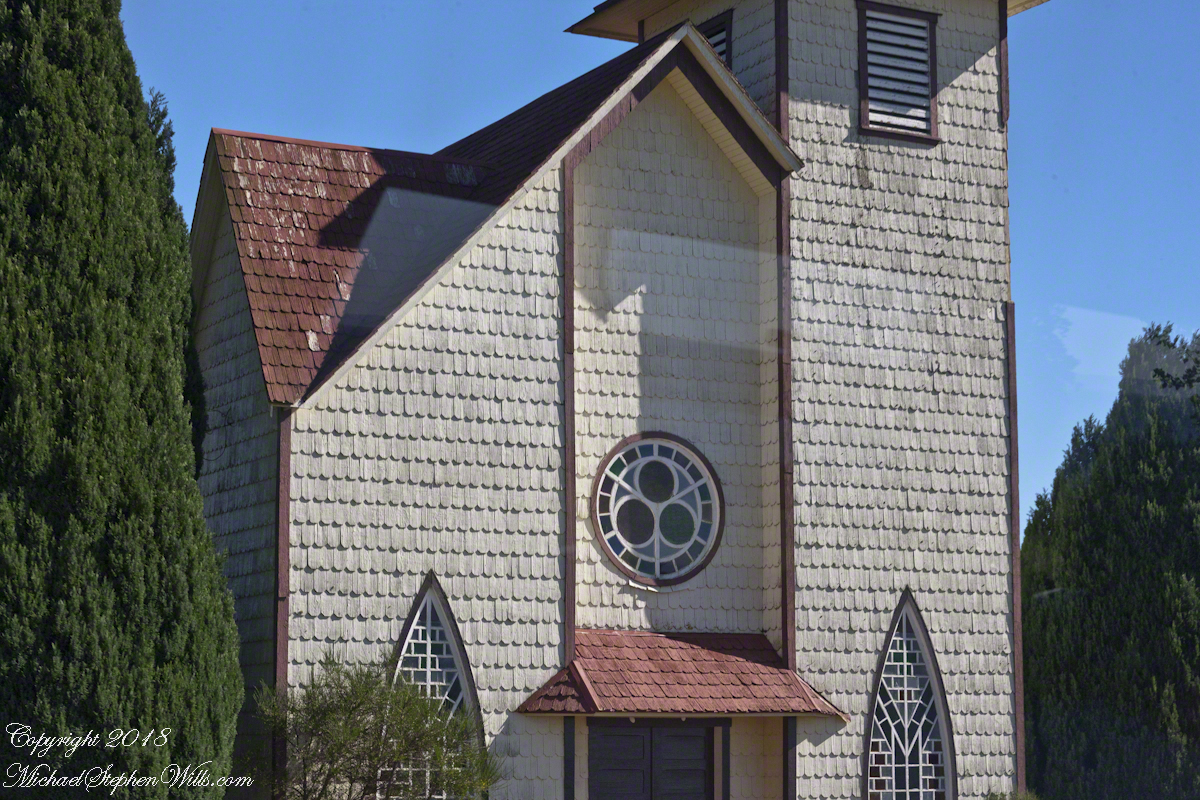
On the east side of where the waters of Rio Pescado flow into Lake Llanquihue the Holy Cross Chapel serves silent testimony to the influence of German immigrants who, fleeing war and chaos, settled these lands.
Copyright 2022 Michael Stephen Wills All Rights Reserved
A user commented on a Chile Lake District post of mine asking for more photos of Germany. This is striking, because German traveler who visited have made note of parallels between this area and Europe. In this series I will share photography taken from the tour bus window as we traveled to the Lake District and returned to Puerto Montt. I used a handheld Canon EOS 1Ds Mark III SLR with the Canon lens EF 70-300 f 4-5.6LIS. This is the first post of this series. Click me for “Orsorno Volcano and Tourists,” the first post in that series.
Click any photograph for a larger view.
House on a Hill
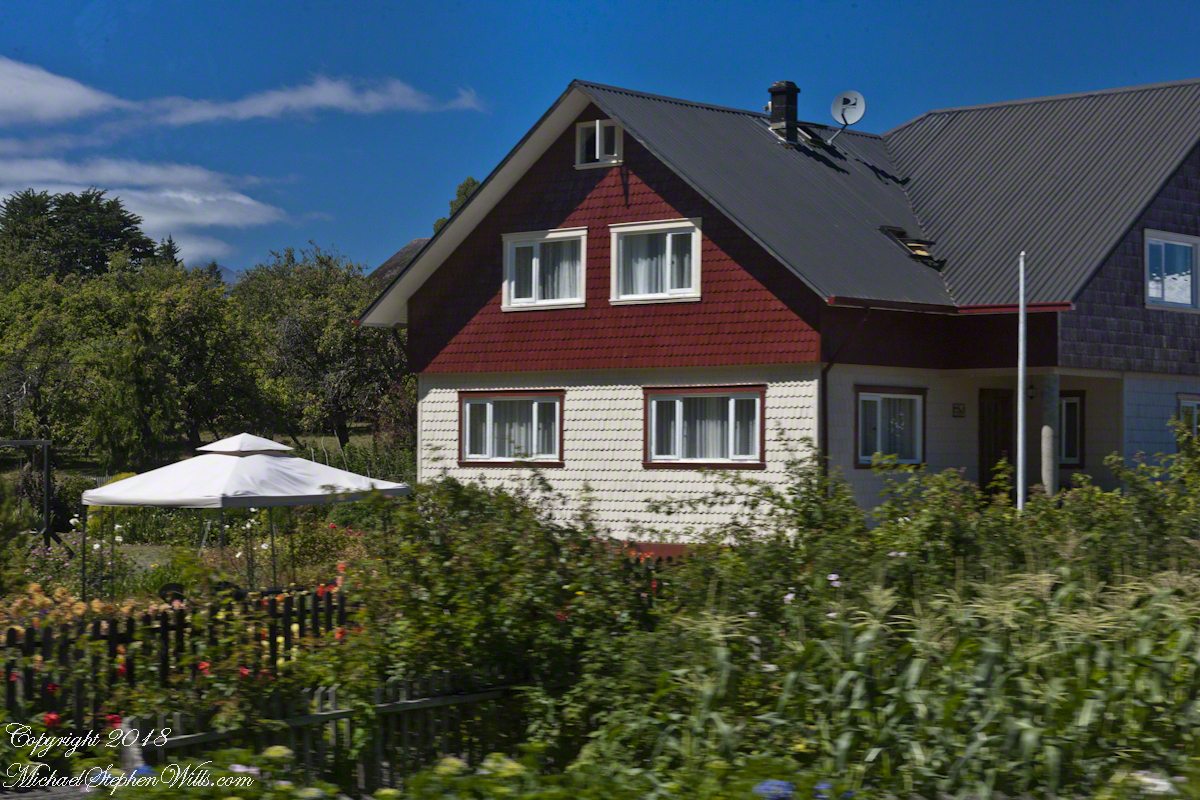
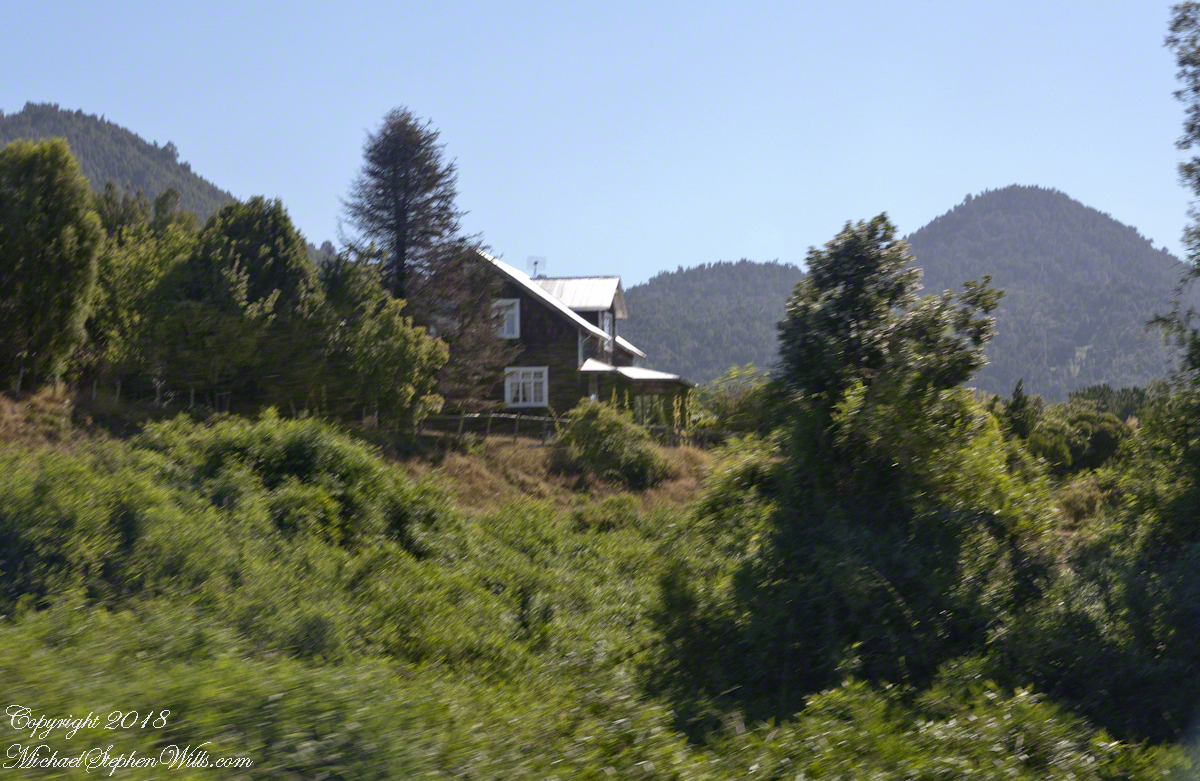
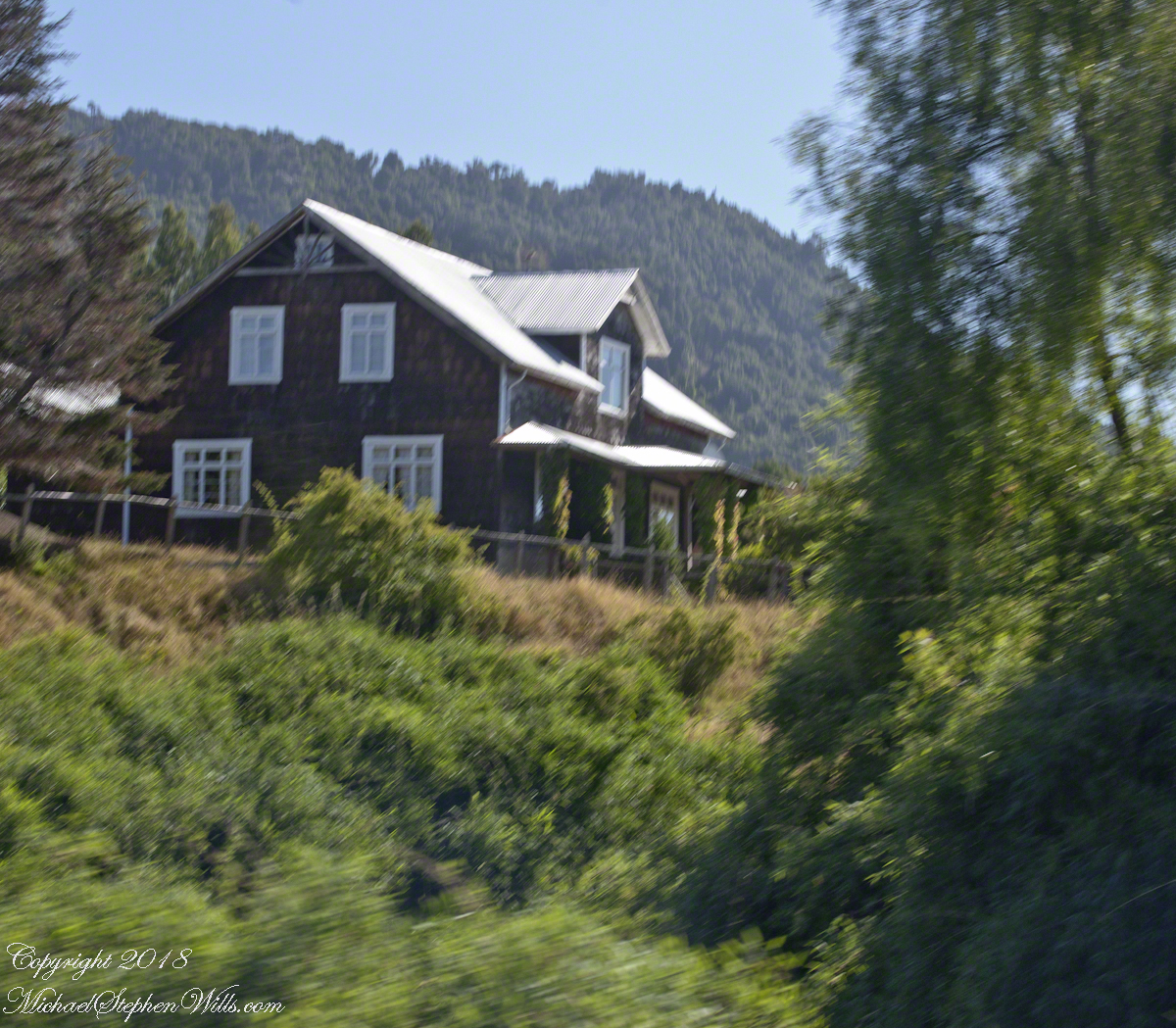
Wood is a building material the German pioneers had in abundance. They went to work clearing the forests, tilling the land and building structures such as this, the steeply sloping roof to shed snow, gabled dormers for more living space on the top floor.
This has a tin roof, but many roofs are shingles made from magnificent Alerce trees. The government banned the export of Alerce wood in 1976. It is a slow growing tree, the fine grained wood is in demand. I believe the tall tree towering over the roof is a Monkey Puzzle, scientific name Araucaria araucana, an ancient evergreen, the national tree of Chile and one of the unique differences the early Germans came to recognize and love as their own South American identify.
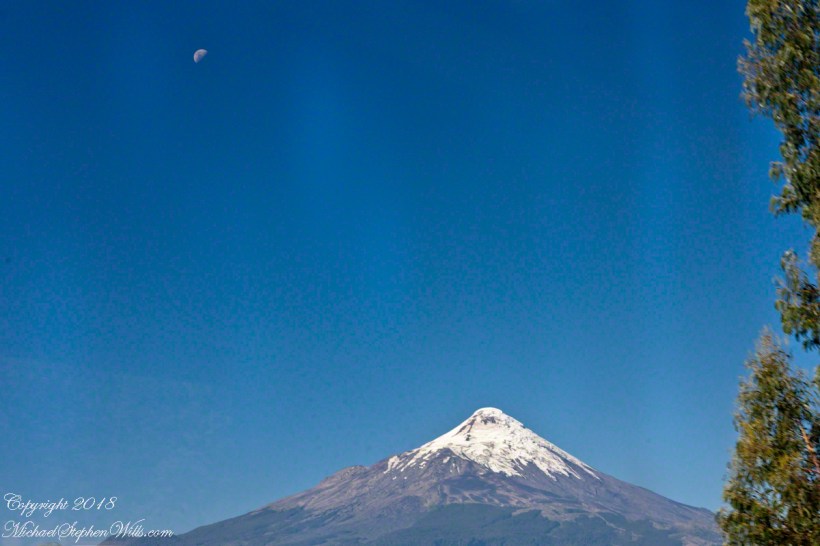
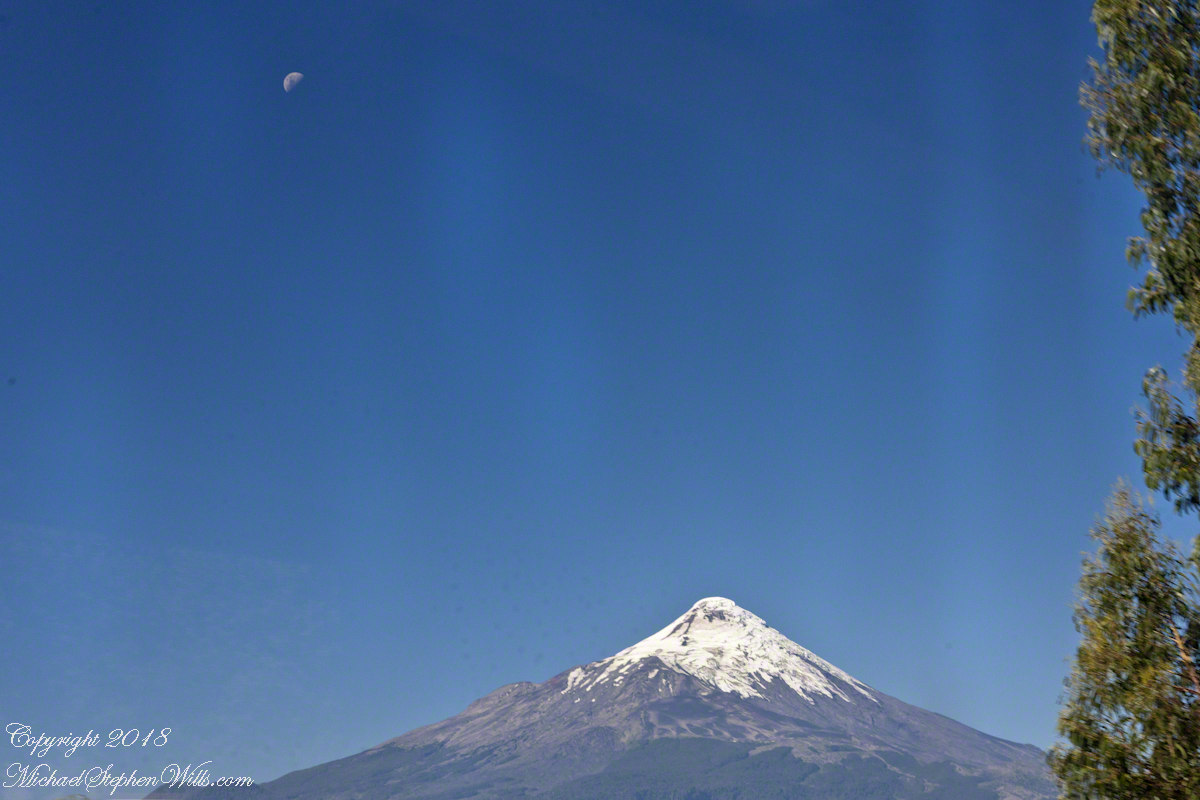
The Orsorno Volcano, somehow reminiscent of the Alps and very different. Here a half moon, high above and shining brightly on a summer evening, February 2016. These are some of the touches European travelers name “Chilean Swiss.”
Copyright 2022 Michael Stephen Wills All Rights Reserved
Petrohué Waterfalls are on the tourist track, traffic on the walkway was heavy on the southern hemisphere summer day, February 2016, of our visit. People were relaxed and friendly, the walkway well designed and safe. The wide angle lens was mounted on my Canon dslr, with a circular graduated neutral density filter. This is a filter with the upper third restrictive to light fading gradually to clear and mounted on a ring to rotated to cover the bright portion of the view. I used this successfully in the previous postings to obtain an exposure of the bright sky and darker land (for example, “Orsorno Volcano and Tourists.”). I could not resist capturing our fellow tourists. With a wide angle lens it is easy to do candid shots, such as the following. Most people are unaware of the capability of the 24 mm wide angle lens.
Click any photograph for a larger view.
Unfortunately, in the rush of the crowd and moment the dual use of a configuration for landscape and (candid) street photography lead to mistakes. I did not have the lens hood attached correctly, you can see the hood in each corner. Then there is the circular, graduated filter. In the above photograph, the shaded portion runs across the lower left to the upper right. The subject is watching me photograph the water.
Here, I turned around from photographing the Orsorno Volcano to capture these selfie fans leaning against the railing to capture themselves and the volcano through they are in the minority. The trail is a “dead end”, rising to the point above the falls, where I am standing.
Selfie Stick
We started back down towards the point over the incredible emerald green water. There were three teenagers having fun with a selfie stick. Around them are people entranced by the water, as we werel.
Smile!! You’re on Candid Camera
Headed back, I thought that curving tree was a good subject. Turned out, a fellow tourist heightened the interest of the shot. You see him, leaning against the railing next to the tree in the mid-distance of the following shot.
Here I am, looking back toward the child of Orsorno and the entire length of the observation walkway filled with people.
Copyright 2021 All Rights Reserved Michael Stephen Wills