Floral Anchors: Early Saxifrage’s Survival Dance in Treman Gorge

Step into the serene realms of Robert H Treman State Park, where the Early Saxifrage blossoms amidst ancient stones, embodying resilience and the timeless beauty of nature’s persistence against all odds.

Ambling along the rugged Gorge Trail within the serene expanse of Robert H Treman State Park, my gaze is caught by the delicate clusters of Early Saxifrage (Micranthes virginiensis), formerly known as Saxifraga virginiensis. Nestled in nooks and crannies along the limestone-rich corridors, this resilient plant, also colloquially known as “Virginia saxifrage” or “rockfoil,” presents a mesmerizing spectacle against the moss-draped backdrop of the gorge’s ancient stones.

Early Saxifrage thrives in these modest crevices, its roots gripping tightly to the scant soil amidst the rocks, drawing nourishment from the most unlikely of places. The plant’s small, white star-like flowers blossom in dense clusters, creating a soft contrast against the rugged gray of weathered stone. The base of the plant, typically hidden, burgeons with rosettes of spoon-shaped leaves, which persist through the winter, ready to embrace the spring with vigor.

This plant not only captures the eye but also whispers tales of medicinal lore. Historically, Early Saxifrage has been utilized in folk medicine, primarily valued for its supposed efficacy in dissolving kidney stones—a testament to its name, “saxifrage,” which means “stone-breaker.” Though modern usage does not commonly reflect these ancient practices, the plant’s presence here speaks to the deep-rooted herbal knowledge passed down through generations.

As I tread lightly over the worn paths that weave through the gorge, the sight of Early Saxifrage serves as a poignant reminder of the park’s ecological tapestry. This flora, modest yet striking, symbolizes the tenacity of life, blooming splendidly in the stark environment it calls home. It is a beacon of endurance and beauty, inviting us to pause and appreciate the quieter, often overlooked wonders of nature.

In this corner of the Finger Lakes, where water and stone sculpt the landscape, Early Saxifrage flourishes. It stands as a testament to the persistence of the wild, a delicate yet resilient inhabitant of this storied terrain, weaving its subtle magic into the fabric of the gorge. Here, among the whispers of streams and the echoes of stone, it finds its place, a fragile star in the vast, enduring sky of green.

Copyright 2024 Michael Stephen Wills All Rights Reserved

From Myths to Medicine Unraveling the Tales of False Solomon’s Seal

Step into Treman Gorge and discover the enchanting world of False Solomon’s Seal. Unveil the myths, medicinal uses, and ecological wonders of Smilacina racemosa as it flourishes beneath the forest canopy.

In the shaded woodland of Treman Gorge, near the tumbling waters of Lucifer Falls, the understory blooms with the intriguing presence of Smilacina racemosa, commonly known as false Solomon’s seal. This perennial wildflower’s identity is as layered as the forest floor it adorns, its names—both scientific and common—woven with historical and cultural threads.

Smilacina racemosa—the plant’s scientific name—offers a botanical breadcrumb trail to its identity. “Smilacina” derives from a diminutive form of the Latin word for smile, “smilax”, a reference not to the plant’s demeanor but to its resemblance to the related sarsaparilla plants, which belong to the genus Smilax. The species name “racemosa” speaks directly to its form, describing the characteristic raceme or cluster of flowers that gracefully arch at the end of its stalk, each blossom a delicate dot along the green wand.

The common name, false Solomon’s seal, tells a tale of mistaken identity and botanical homage. The name playfully suggests a sibling rivalry of sorts with its look-alike, the true Solomon’s seal (Polygonatum), which bears its flowers and fruits along the stem, rather than at the tip as in Smilacina. The term “Solomon’s seal” itself is steeped in lore, supposedly referring to the circular seals from King Solomon’s ring—a mark of wisdom and an echo in the circular scars on the rhizome of the true Solomon’s seal. Here, in this false version, the legacy is mimicked in form but remains uniquely distinct in its flowering finale.

As for its cultural tapestry, false Solomon’s seal holds its own chapter in Native American ethnobotany. The plant was not merely a forest decoration but a source of sustenance and medicine. Its young shoots and leaves were often harvested in spring, a woodland asparagus of sorts, eaten raw or cooked. The roots served a more medicinal role, employed in treatments from stomachaches to rheumatic pains, revealing a deep-rooted reverence for this plant’s healing potential.

Beyond its uses, false Solomon’s seal paints a broader stroke in the ecological canvas of Treman Gorge. Flowering in May, its creamy white blossoms are a ballet of light in the dappled shade, attracting a suite of spring pollinators. By autumn, the flowers give way to speckled red berries, a feast for the eyes and a banquet for birds and mammals, knitting itself into the life threads of its woodland home.

Thus, the journey of understanding Smilacina racemosa is as much about unearthing its etymological roots as it is about appreciating its ecological and cultural resonance. A plant of beauty and utility, it stands as a silent sentinel in the history-laden woods of Treman Gorge, its presence a whispered tale in the symphony of spring. As it stretches beneath the towering trees, it invites those who wander to delve deeper into its story, a tale woven through the very fabric of the forest floor.

Copyright 2024 Michael Stephen Wills All Rights Reserved

The Living Tapestry of Treman Gorge

Discover the enchanting world of Treman Gorge through its ancient ferns. Step into a living tapestry where nature’s resilience paints a story of survival and beauty. Dive deeper into this magical realm by reading our latest blog post.

Entering Treman Gorge


As I step into the lush expanse of Treman Gorge, I am enveloped by a verdant cathedral of nature. The gentle murmur of flowing water blends with the chorus of birds, creating a symphony that resonates deep within me. The air is fresh, filled with the earthy aroma of damp foliage, inviting me deeper into its serene embrace.

“The Gallery” entrance to Tremen Gorge from the upper park.

Among Ancient Rocks

The gorge is a geological marvel, sculpted from layers of Devonian shale and sandstone. These sedimentary rocks, formed over 400 million years ago, tower around me, formidable and steeped in history. The stratified patterns on their surfaces tell tales of ancient rivers and seas that once dominated this landscape, leaving behind sediments that would compact into the shale and sandstone seen today.

The Flourish of Life on Stone

Along the damp trails, vibrant mosses and ferns adorn the rock walls, thriving in the moist, shaded nooks. The mosses, lush and green, form thick carpets that breathe life into the stone. Among them, patches of Dicranum moss are notable for their robust, upright growth. Ferns, too, make their home here, with Polystichum acrostichoides, or Christmas fern, prevalent for its evergreen fronds that add year-round color to the grey stone backdrop.

Ephemeral Pools and Nature’s Adaptation

Small pools of water collected in the rock crevices create microhabitats buzzing with life, from aquatic insects to amphibians seeking refuge. These clear, cool pools mirror the verdant foliage and blue skies above, creating tranquil tableaus of the gorge’s hidden depths.

The Role of Ferns and Mosses in Human History

Ferns and mosses, beyond their beauty and ecological roles, have practical applications that have been recognized since ancient times. Ferns have been used in traditional medicines for their anti-inflammatory and pain-relieving properties. Certain species, like the bracken fern, were used by Native Americans for food, medicine, and even bedding during travel.

Mosses also hold significance in human history. Their excellent insulation properties made them a popular choice for lining chinking in log cabins or as a packing material to keep food fresh. In modern times, the absorptive properties of moss are harnessed in ecological projects such as biofiltration, to clean contaminants from water.

Native American Heritage in Treman Gorge

The history of Native Americans in areas like Treman Gorge is rich with culture and deep respect for the natural world. They utilized the gorge’s resources sustainably, understanding the intrinsic value of each plant and animal. For example, the gorge’s abundant moss and fern-covered landscapes provided not only material resources but also spiritual significance. These plants were often used in ceremonial practices, symbolizing life and fertility, and were integral in storytelling and oral traditions that passed vital knowledge through generations.

Enfield Creek in Treman Gorge

Reflections on Resilience and Beauty

With each step through Treman Gorge, I feel a deep connection to the past—each rock, moss patch, and fern frond speaks of endurance and adaptability. In the grand timeline of Earth, my presence is but a fleeting moment, yet it is intertwined with the eons of history embedded in this place.

Devil’s Kitchen Waterfall above Lucifer Falls

Treman Gorge, with its ancient rocks and thriving plant life, stands as a testament to the resilience and beauty of nature. It reminds us of the world’s perpetual motion, of life’s ability to adapt and thrive in the face of time’s relentless passage. Here, amidst the moss-covered rocks and fern-laden paths, I find a sense of peace and continuity, a connection to the Earth that is both humbling and uplifting.

Concluding Thoughts

As I leave Treman Gorge, the echo of the water and the rustle of leaves linger in my mind, a reminder of the timeless dance between nature and those who walk its paths. This place is a living library, holding the secrets of millennia, reminding us of our place in nature’s vast narrative and the enduring legacy of those who walked these paths before us.

Copyright 2024 Michael Stephen Wills All Rights Reserved

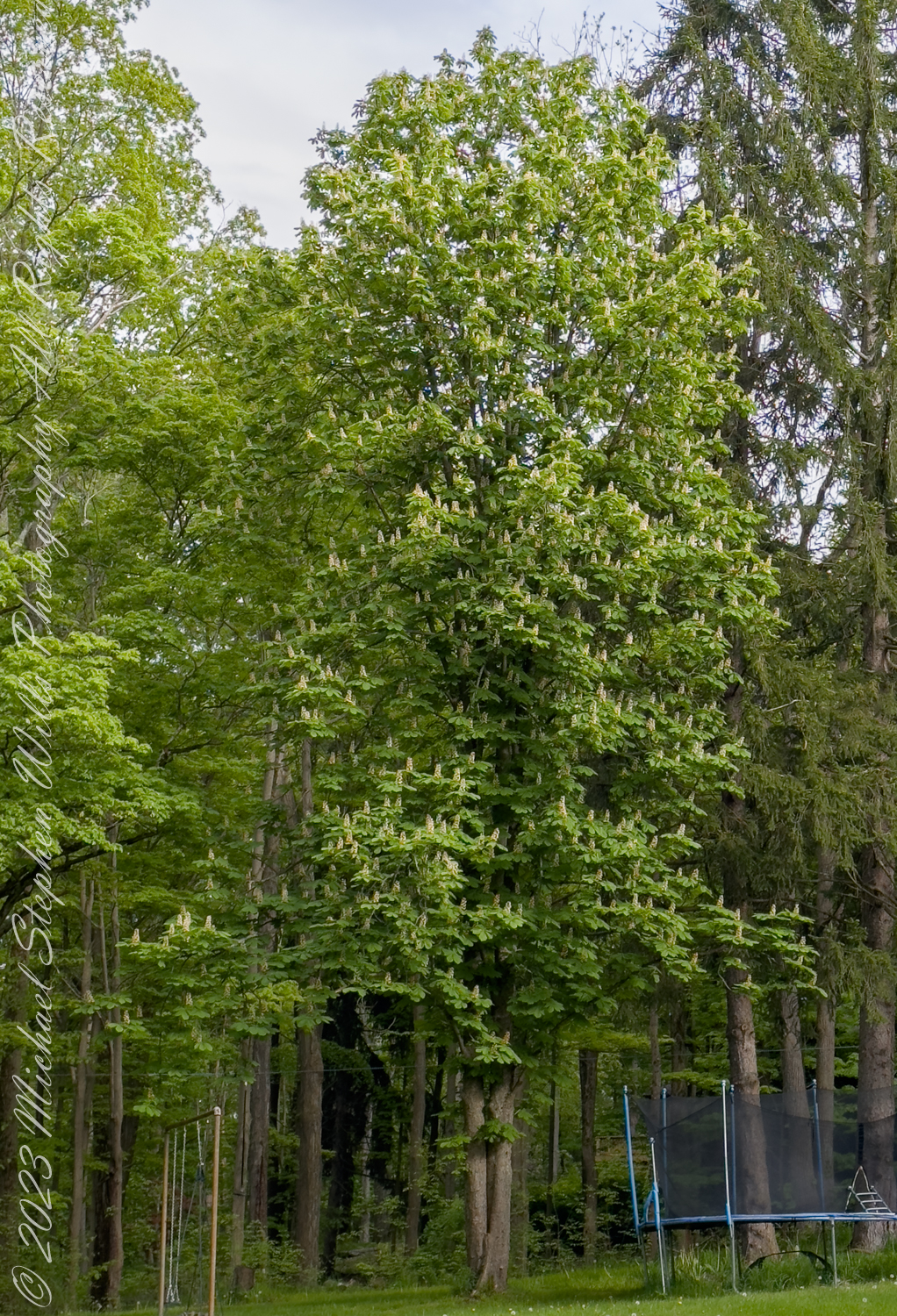
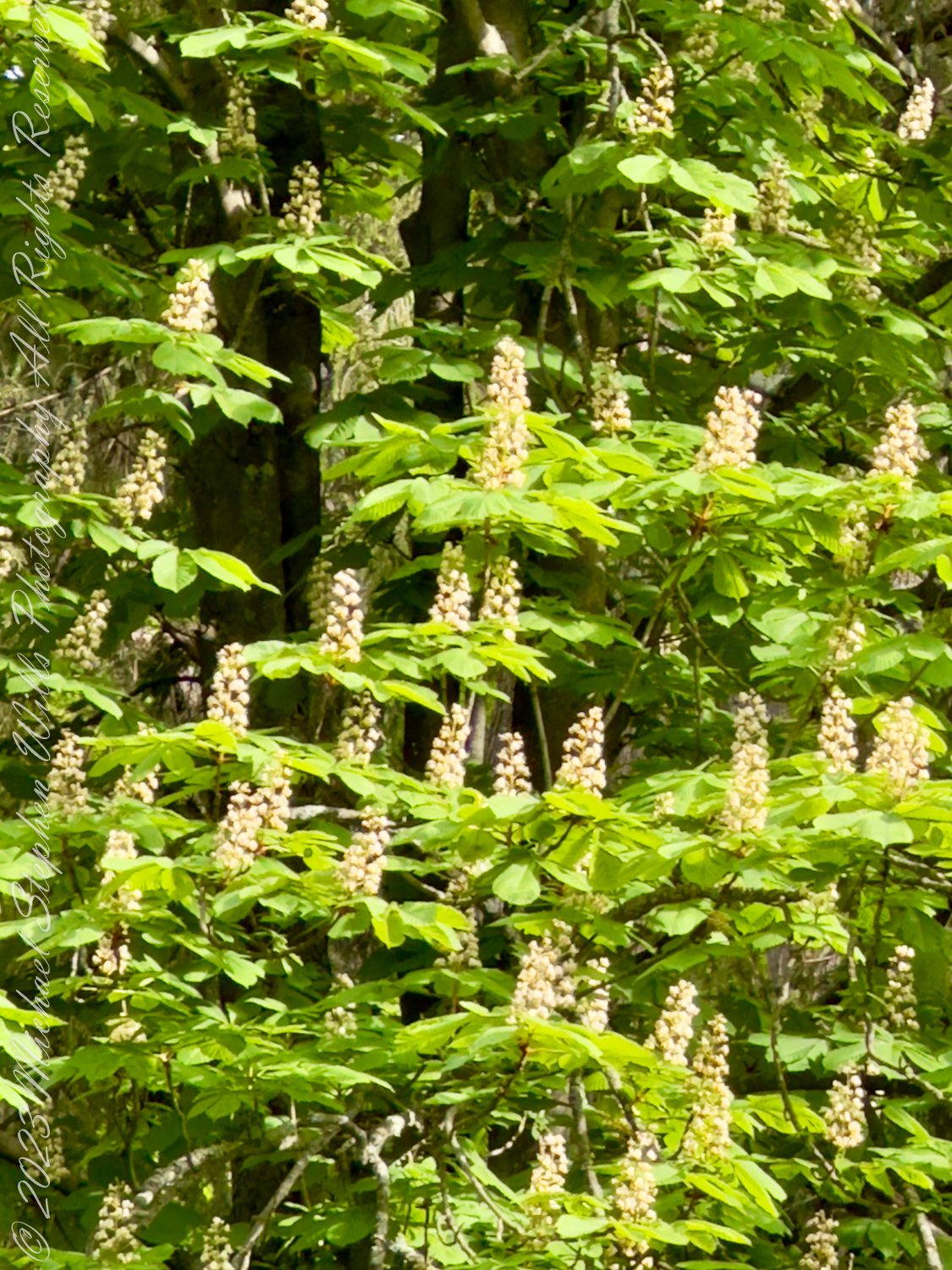
Mother’s Day Amid the Blossoms of the Horse Chestnut

Explore the enchanting world of the Horse Chestnut, its vibrant spring blossoms, and its rich tapestry of historical and ecological significance, as I wander the slopes above Cayuga Lake on a serene Mother’s Day.


On a serene Mother’s Day in 2024, I found myself walking the slopes above Cayuga Lake, embraced by the spring warmth and the vibrant blossoms of the Horse Chestnut tree (Aesculus hippocastanum). This moment was a seasonal celebration and a deep dive into the botanical and cultural tapestry that this majestic tree weaves.

The Botanical Brilliance of the Horse Chestnut


The Horse Chestnut tree, with its robust stature and radiant floral displays, is a sight to behold, a study in botanical survival and adaptation. Originally native to a small area in the Pindus Mountains mixed forests and the Balkan mixed forests of Southeast Europe, this tree has traversed continents and histories to root itself into diverse landscapes, including the fertile grounds above Cayuga Lake.

Each spring, the Horse Chestnut’s candle-like flower spikes, scientifically known as ‘panicles’, burst forth in a shower of whites and subtle pinks, each petal marked distinctively with a blotch of yellow or red. These blooms are structured to attract a variety of pollinators, playing a crucial role in the local ecological narrative by supporting biodiversity.

Historical Uses and Cultural Significance


The journey of the Horse Chestnut tree from its native lands to the Americas is a tale of practicality and reverence. Native Americans, prior to the arrival of European settlers, were keen observers of their environment but may not have had a direct historical use for the Horse Chestnut, as it was introduced later. However, the European settlers quickly discovered the tree’s multiple uses. The wood, known for its softness and workability, was used to make furniture and boxes, while the bark found its place in the tanning industry due to its rich tannin content.

Most notably, the seeds of the Horse Chestnut were ground and used as a form of laundry detergent and to treat various ailments, a testament to the tree’s utility in pioneering life. This aspect of the Horse Chestnut highlights a broader theme of how both Native Americans and European settlers utilized natural resources for survival and economic purposes, blending the lines between utility and conservation.

A Reflection on the Natural History and Ecology


As I strolled beneath the boughs heavy with spring’s bounty, the historical echoes of the Horse Chestnut’s uses merged with the present chorus of birds nesting in its branches. The tree’s role extends beyond human uses; it is a vital component of the local ecosystems. The dense canopy provides shelter and the flowers feed pollinators, which in turn support the broader food web.

Environmental factors, particularly those influenced by climate change, pose challenges to the Horse Chestnut. Issues such as leaf blotch and the conker tree moth threaten its health and longevity. Observing the Horse Chestnut’s current vibrancy, I am reminded of the resilience and adaptability that this species has demonstrated over centuries.

Conclusion: A Legacy Continues

As the day drew to a close and the sun cast long shadows over Cayuga Lake, the Horse Chestnut stood as a botanical specimen, a living monument to natural history and human ingenuity. The tree’s story is a powerful reminder of our intertwined destinies with the plant kingdom—how plants shape our cultures, sustain our environments, and continue to amaze with their ecological and aesthetic contributions.

Copyright 2024 Michael Stephen Wills All Rights Reserved