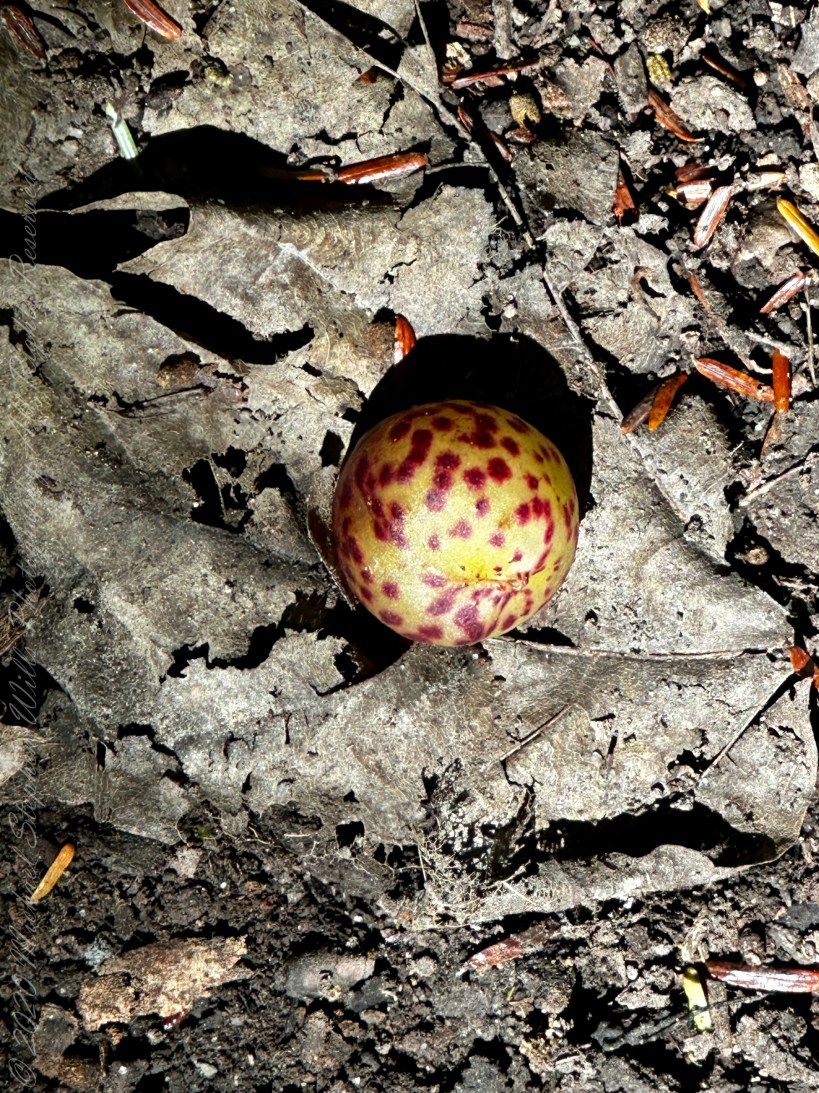
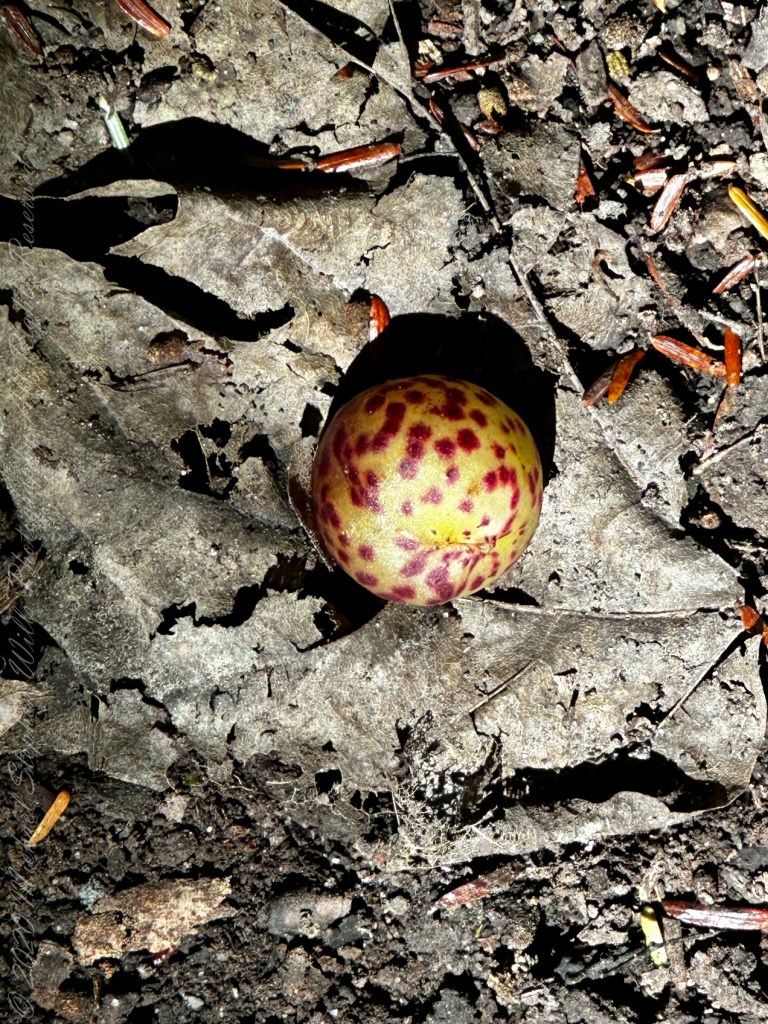
This is an Oak Apple gall. An adult female wasp lays single eggs in developing leaf buds. The wasp larvae feed on the gall tissue resulting from their secretions, which modify the oak bud into the gall, a structure that protects the developing larvae until they undergo metamorphosis into adults.
“Oak galls have been used in the production of ink since at least the time of the Roman Empire. From the Middle Ages to the early twentieth century, iron gall ink was the main medium used for writing in the Western world.”
“Gall nuts are a source of tannin in the production of iron gall ink. Tannins belong to a group of molecules known as polyphenols and can be taken from different parts of plants such as leaves, pods, fruits, and gall nuts.”
“Along with gall nuts, other important ingredients in the production of iron gall ink include iron sulfate and gum arabic. The reaction between the tannins from the gall nut and the iron produces a complex that gives the iron gall ink its color. The gum arabic makes the ink more viscous and helps bind the ink to the writing surface.”
“According to recent research, traces of iron-gall ink have been found on the Dead Sea scrolls and on the ‘lost’ Gospel of Judas. Iron-gall ink may have been used for 1,800 years, but it does not withstand the test of time well. Over the course of centuries, the ink fades, and discolours and damages the paper. Iron gall ink is manufactured chiefly by artists enthusiastic about reviving old methods or possibly forgers of old documents.”
Reference: text in italics and quotes is from the Wikipedia, “Oak Apple Gall” and “Oak Marble Gall.”
Copyright 2023 All Rights Reserved Michael Stephen Wills
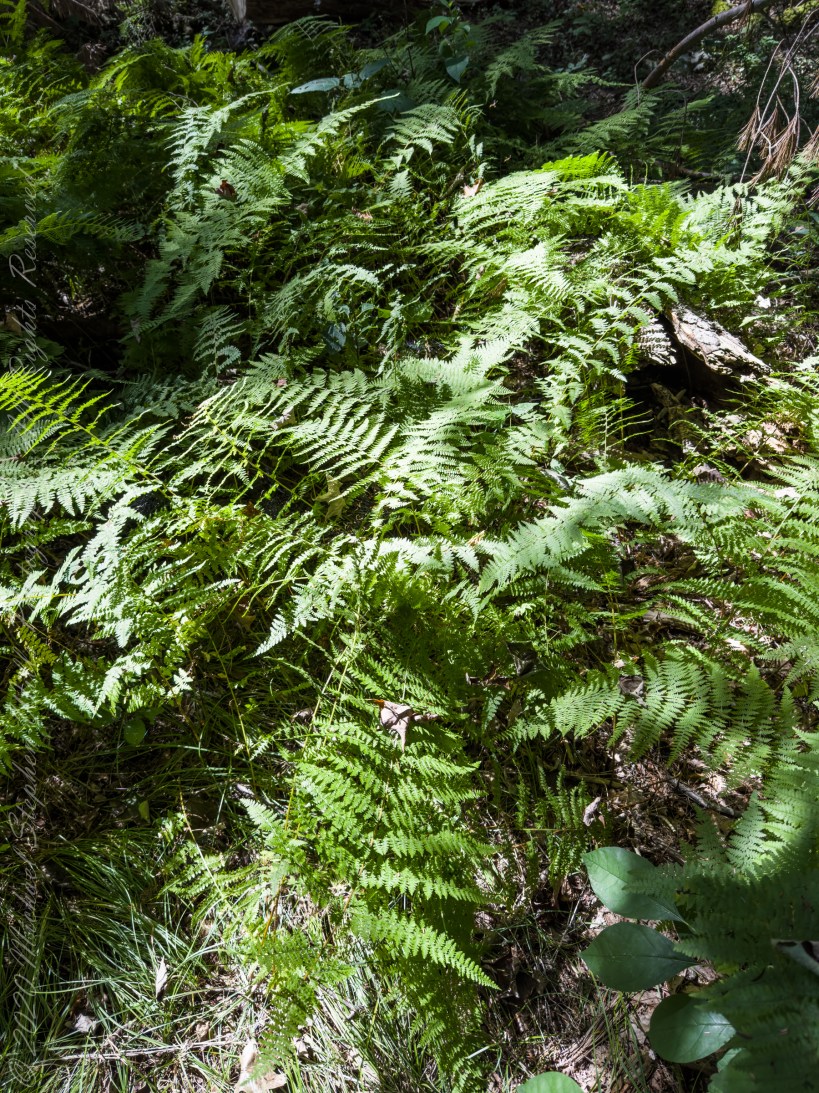
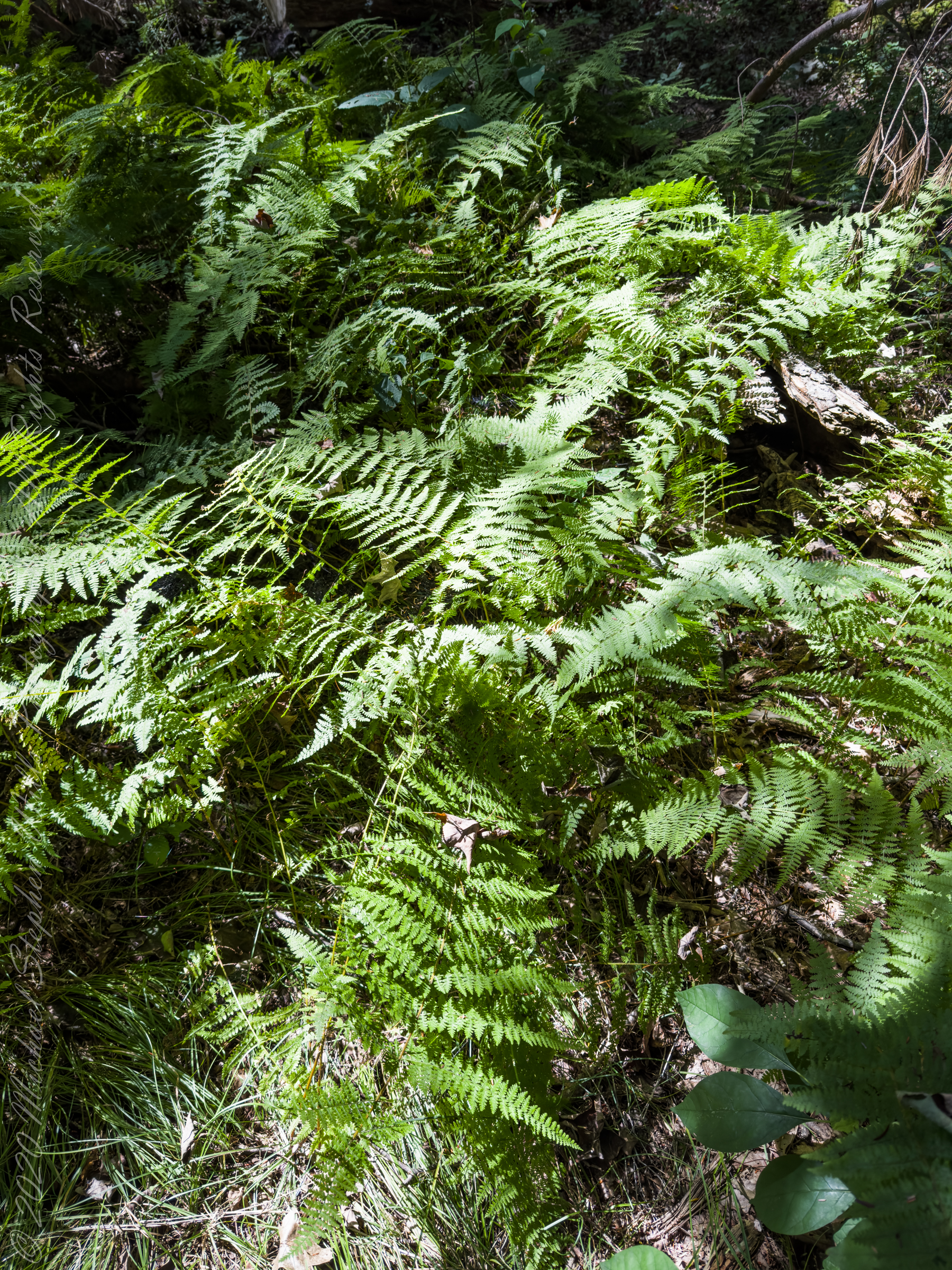
“Dennstaedtia punctilobula, the eastern hayscented fern or hay-scented fern, is a species of fern native to eastern North America, from Newfoundland west to Wisconsin and Arkansas, and south in the Appalachian Mountains to northern Alabama; it is most abundant in the east of its range, with only scattered populations in the west.”
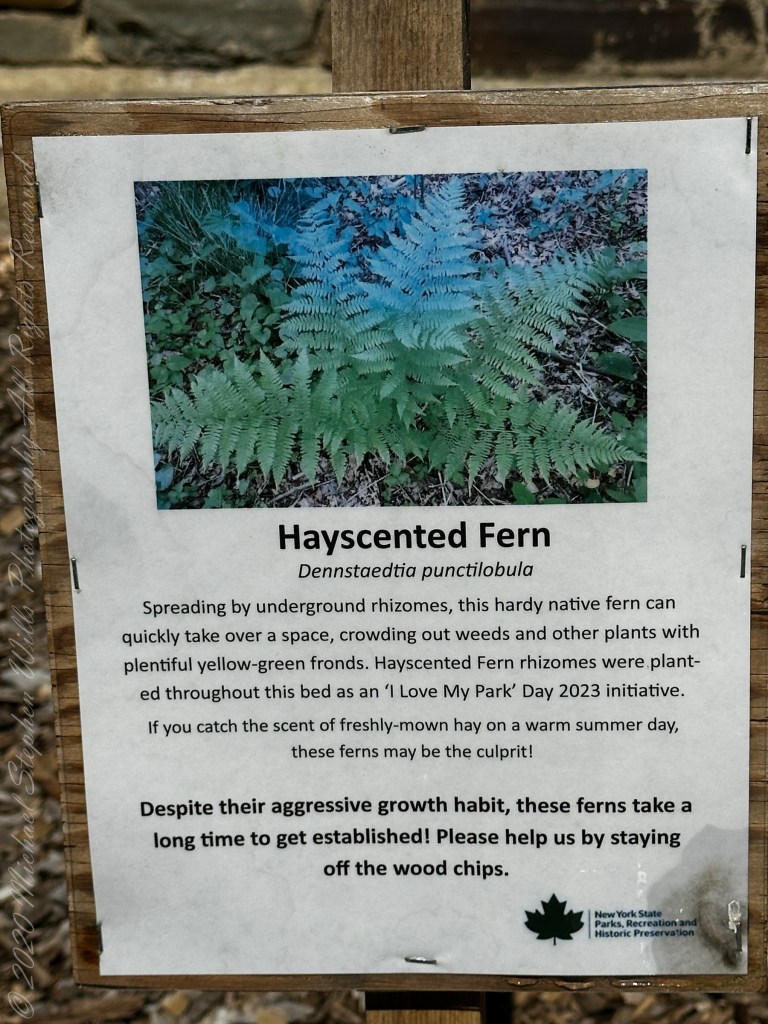
Hayscenter Fern ( Dennstaedtia punctilobula), spreading by underground rhizomes, this hardy fern native to the Finger Lakes Region of New York State, can quickly take over a space, crowding out weeds and other plants with plentiful yellow-green fronds.
“It is a deciduous fern with fronds growing to 40–100 cm (rarely 130 cm) tall and 10–30 cm broad; the fronds are bipinnate, with pinnatifid pinnules about three times as long as broad. It occurs in damp or dry acidic soils in woods or open woods, from sea level up to 1,200 m altitude.”
“Dennstaedtia punctilobula can exhibit varying degrees of phototropism. The common name “Hay-scented Fern” comes from the fact that crushing it produces an aroma of fresh hay.“
“The presence of D. punctilobula influences the dynamics of the understory vegetation of many forests in the eastern United States. An abundance of highbush blackberry (Rubus allegheniensis) in open areas encourages new tree seedlings. Where the effects of herbivorous animals (such as deer) reduce the abundance of R. allegheniensis, D. punctilobula, which is not browsed by deer, takes over. Where D. punctilobula becomes common, the growth of tree seedlings is restricted.”
Reference: text in italics and quotes is from the Wikipedia, “Dennstaedtia punctilobula.”
Copyright 2023 All Rights Reserved Michael Stephen Wills
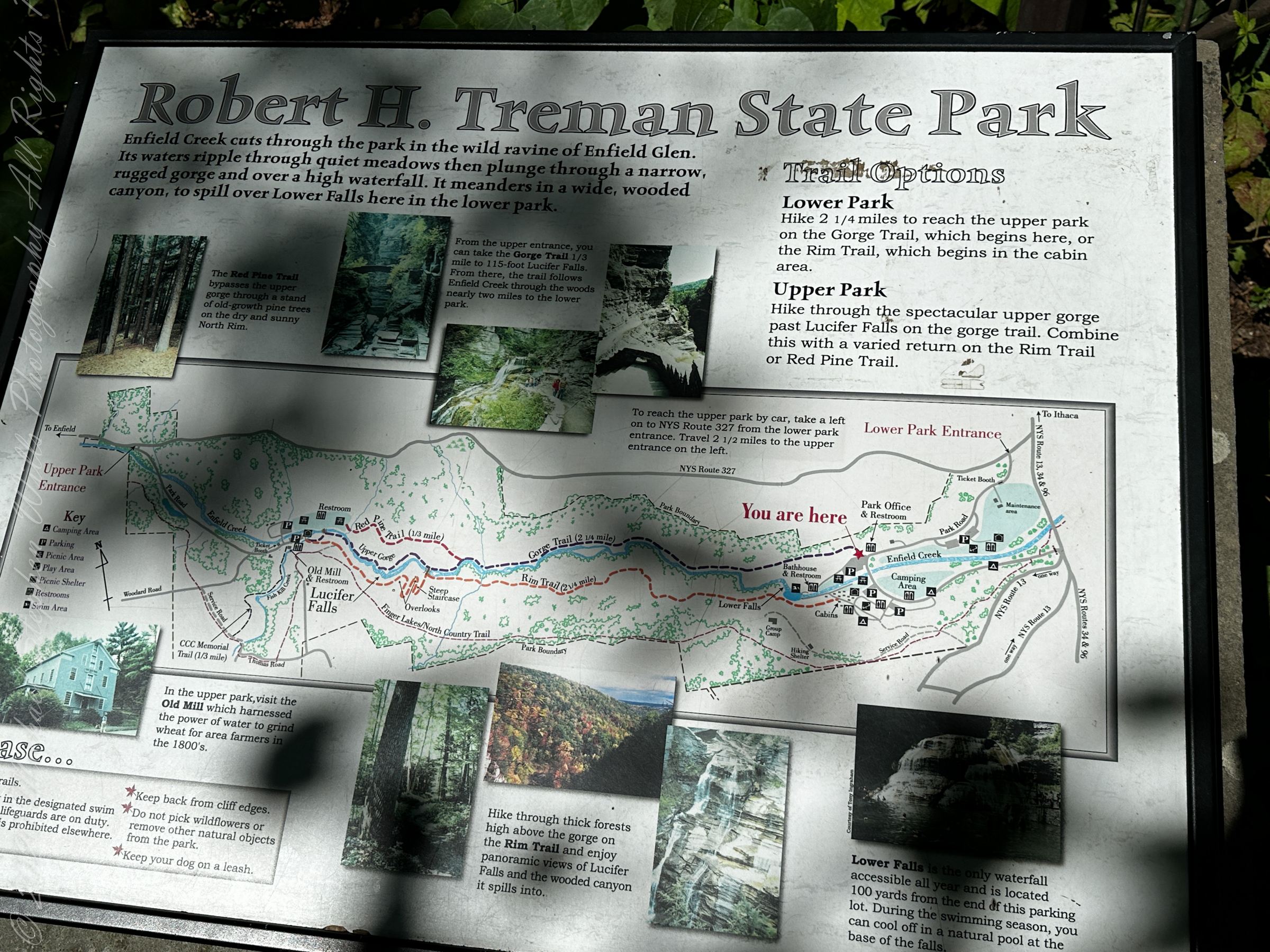
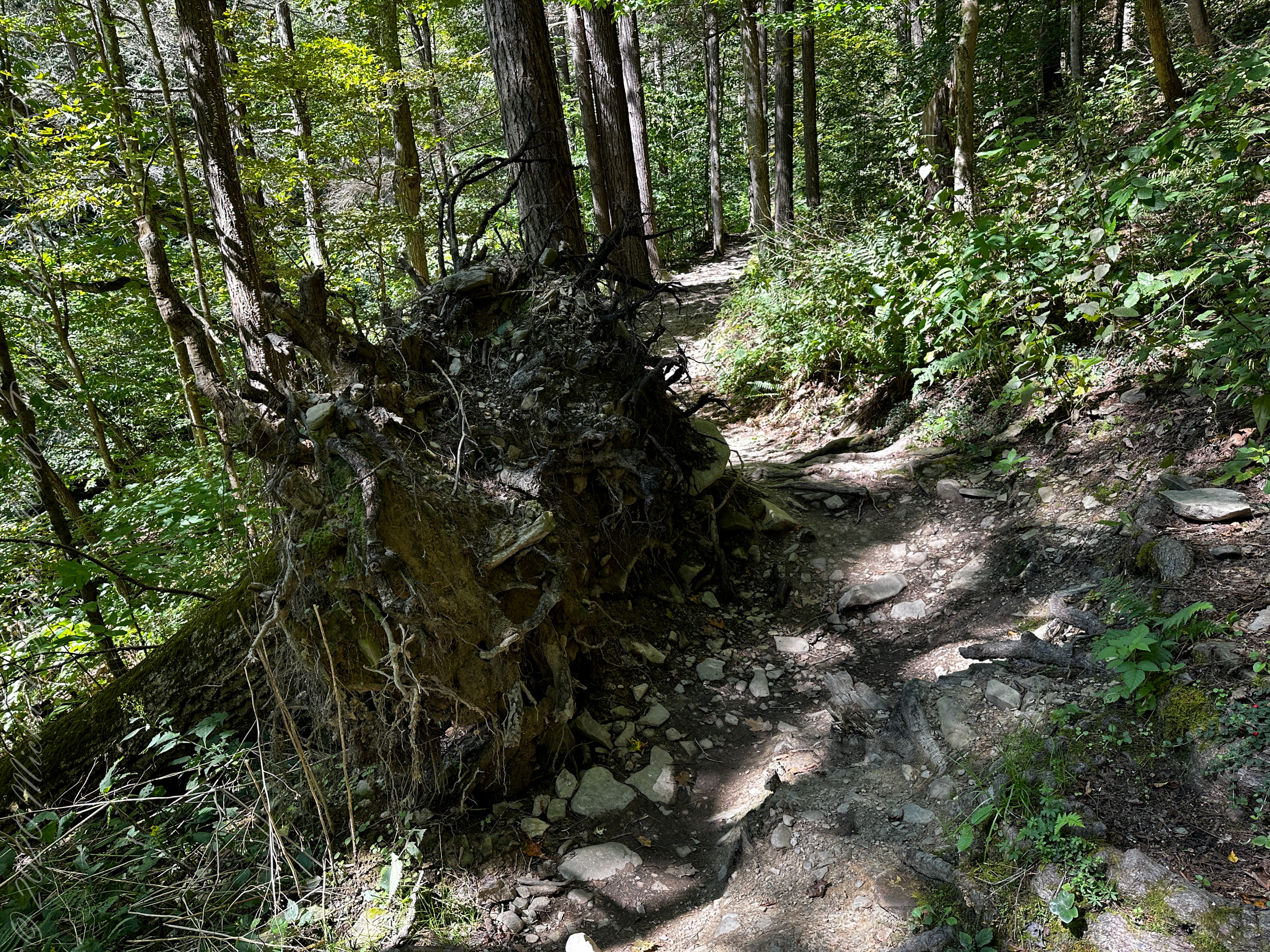
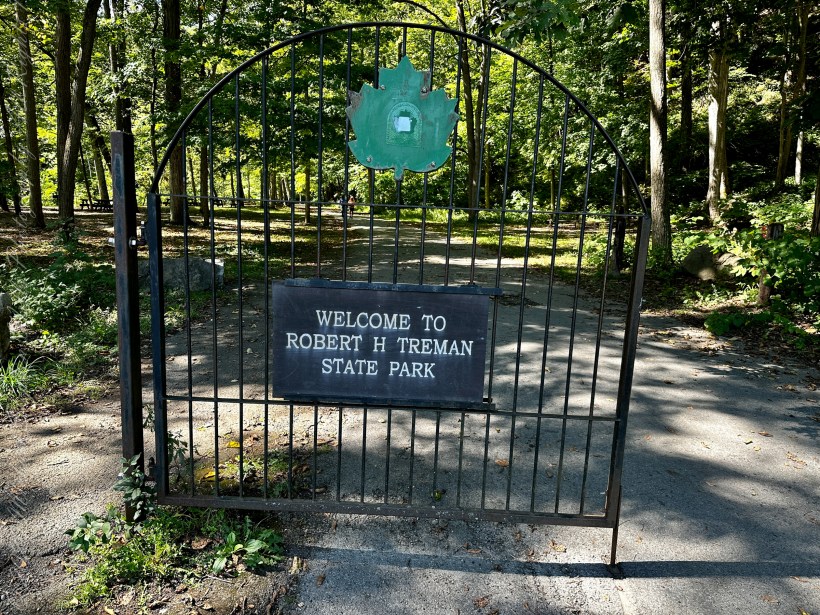
Today I walked the Gorge Trail to below Lucifer Falls, crossed the bridge and returned via the South Rim Trail, a trip of over 5 miles according to the Apple IPhone 14 Pro Max used for these photographs.
Thankful I was not here when this tree gave way across the trail.
Information about a cultivated fern, followed by a photograph of the wild version, trailside.
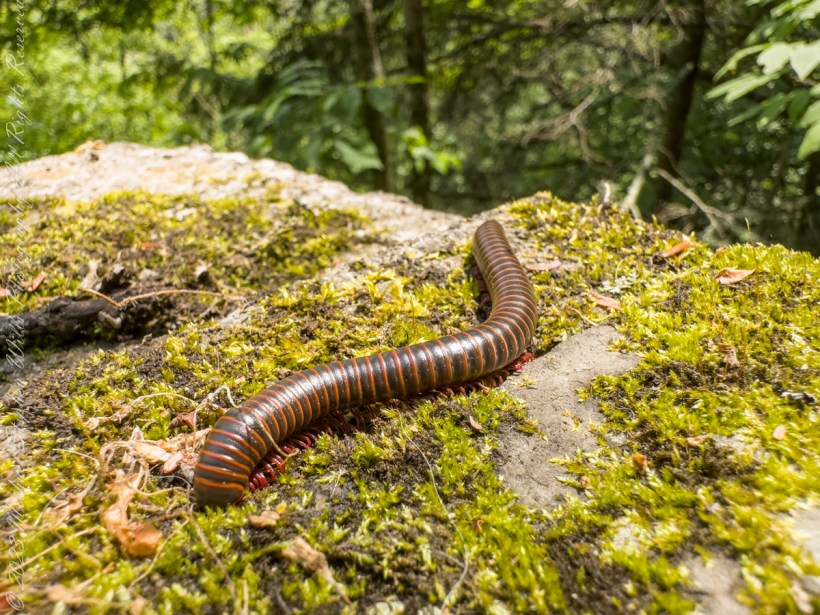
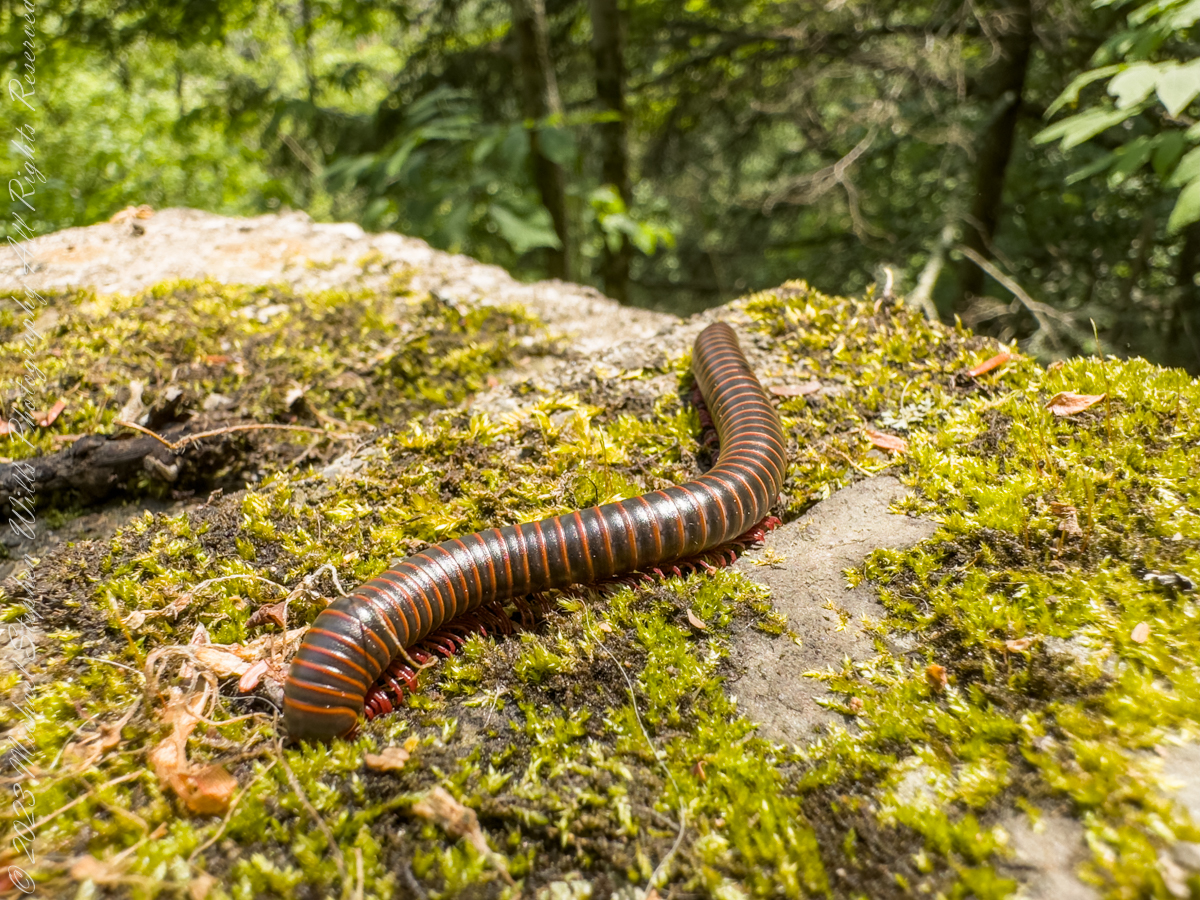
Visitors to Robert H. Treman park think nothing of crushing millipedes on the trail, it is concerning to encounter evidence of such disrespectful and boorish behavior. Here is an intact millipede I found last week. Millipedes are a group of arthropods that are characterized by having two pairs of jointed legs on most body segments; […]
Visitors to Robert H. Treman park think nothing of crushing millipedes on the trail, it is concerning to encounter evidence of such disrespectful and boorish behavior. Here is an intact millipede I found last week.
Millipedes are a group of arthropods that are characterized by having two pairs of jointed legs on most body segments; they are known scientifically as the class Diplopoda, the name derived from this feature. Each double-legged segment is a result of two single segments fused together. Most millipedes have very elongated cylindrical or flattened bodies with more than 20 segments, while pill millipedes are shorter and can roll into a tight ball. Although the name “millipede” derives from Latin for “thousand feet”, no species was known to have 1,000 or more until the discovery of Eumillipes persephone, which can have over 1,300 legs.
There are approximately 12,000 named species classified into 16 orders and around 140 families, making Diplopoda the largest class of myriapods, an arthropod group which also includes centipedes and other multi-legged creatures. Most millipedes are slow-moving detritivores, eating decaying leaves and other dead plant matter. Some eat fungi or drink plant fluids, and a small number are predatory.
Millipedes are generally harmless to humans, although some can become household or garden pests. Millipedes can be an unwanted nuisance particularly in greenhouses where they can potentially cause severe damage to emergent seedlings. Most millipedes defend themselves with a variety of chemicals secreted from pores along the body, although the tiny bristle millipedes are covered with tufts of detachable bristles. Its primary defense mechanism is to curl into a tight coil, thereby protecting its legs and other vital delicate areas on the body behind a hard exoskeleton. Reproduction in most species is carried out by modified male legs called gonopods, which transfer packets of sperm to females.
Millipedes are among the first animals to have colonized land during the Silurian period. Early forms probably ate mosses and primitive vascular plants. Millipedes also exhibit the earliest evidence of chemical defense, as some Devonian fossils have defensive gland openings called ozopores. Millipedes, centipedes, and other terrestrial arthropods attained very large sizes in comparison to modern species in the oxygen-rich environments of the Devonian and Carboniferous periods, and some could grow larger than one meter. As oxygen levels lowered through time, arthropods became smaller.
Most millipedes are detritivores and feed on decomposing vegetation, feces, or organic matter mixed with soil. They often play important roles in the breakdown and decomposition of plant litter: estimates of consumption rates for individual species range from 1 to 11 percent of all leaf litter, depending on species and region, and collectively millipedes may consume nearly all the leaf litter in a region. The leaf litter is fragmented in the millipede gut and excreted as pellets of leaf fragments, algae, fungi, and bacteria, which facilitates decomposition by the microorganisms.
Reference: “Millipede” Wikipedia
Copyright 2023 All Rights Reserved Michael Stephen Wills
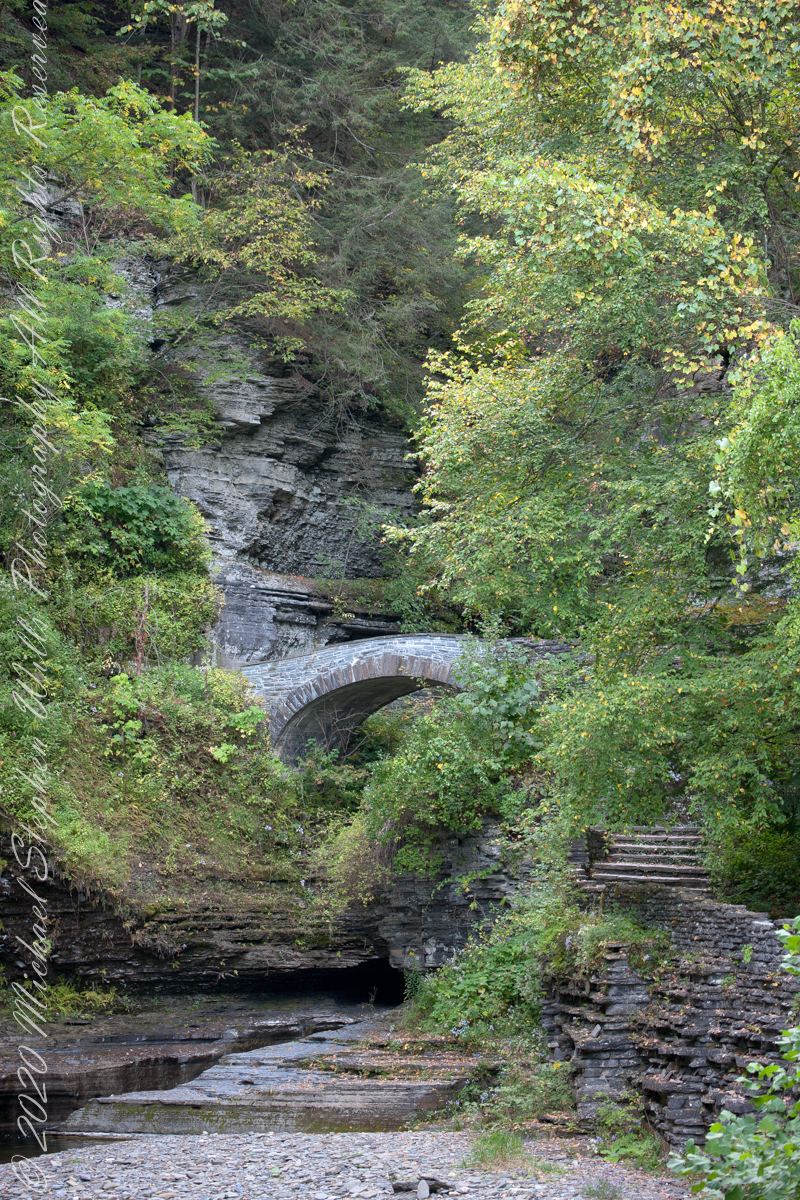
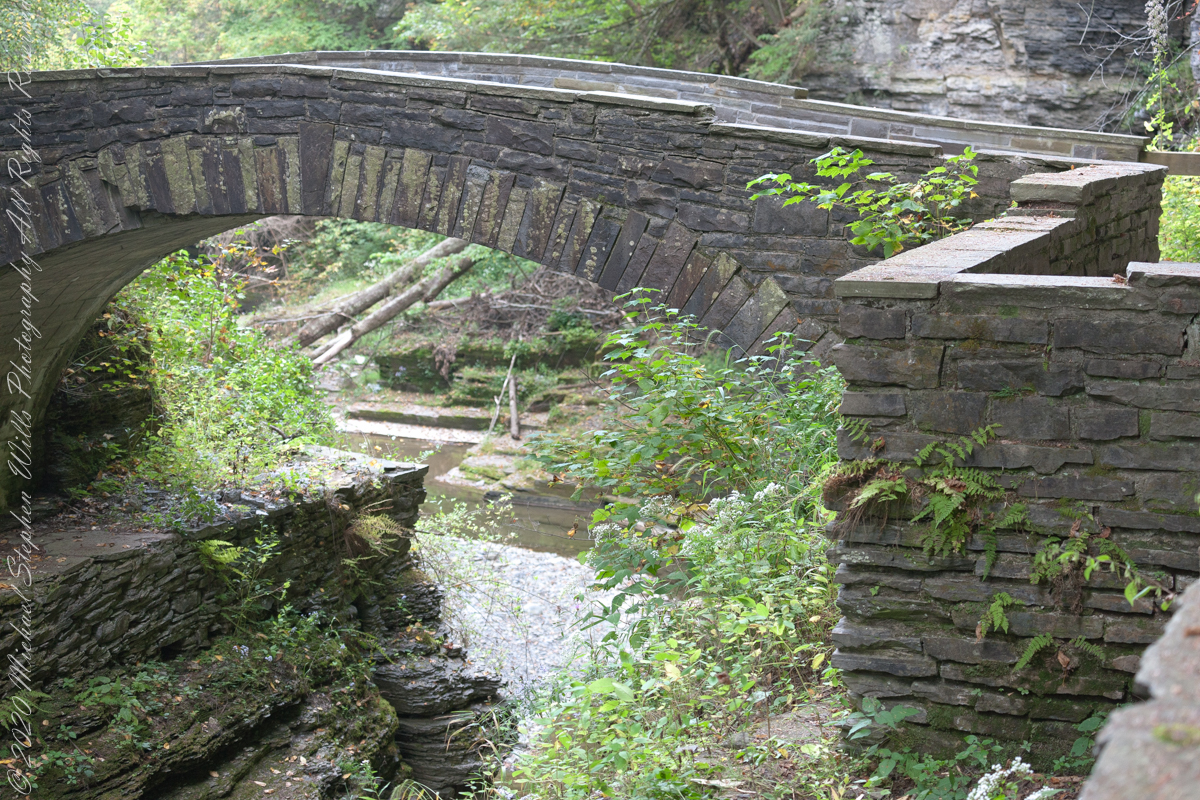
Looking back after crossing the Gallery Footbridge we are rewarded with this view, providing a better understanding of the site. It is evening on a mid-September evening, Robert H. Treman Park, Ithaca, Tompkins County, New York Copyright 2023 All Rights Reserved Michael Stephen Wills
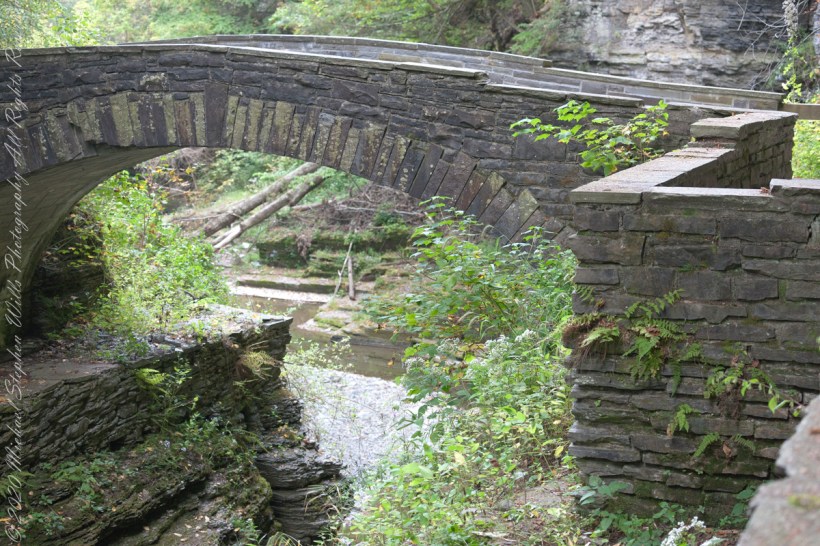
Here we are on the Gorge Trail of Treman State Park. My readers have seen this marvelous stone bridge from a distance. Here it is on the west side, facing east/northeast and looking down into the gorge. It is evening on a mid-September evening, Robert H. Treman Park, Ithaca, Tompkins County, New York Copyright 2023 […]
Here we are on the Gorge Trail of Treman State Park. My readers have seen this marvelous stone bridge from a distance. Here it is on the west side, facing east/northeast and looking down into the gorge.
Spanning the eastern side of the gallery entrance of the gorge.
It is evening on a mid-September evening, Robert H. Treman Park, Ithaca, Tompkins County, New York
Copyright 2023 All Rights Reserved Michael Stephen Wills
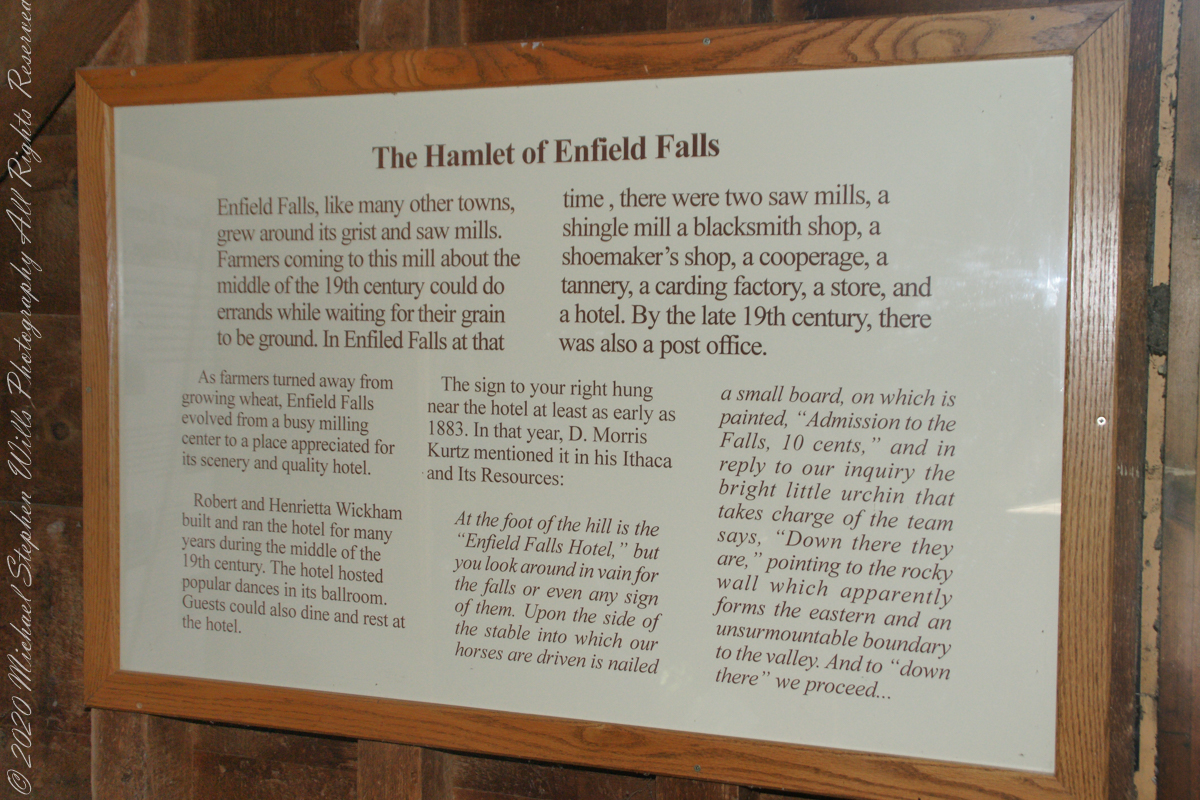
“Enfield Falls, like many other towns, grew around its grist and sawmills. Farmers coming to this mill about the middle of the 19th century could do errands while waiting for their grain to be ground. In Enfield Falls at that time, there were two sawmills, a shingle mill, cooperage, tannery, carding factory, store and hotel. By the late 19th century there was also a post office.”
“As farmers turned asway from growing wheat, Enfield Falls evolved from a busy milling center to a place appreciated for scenery and a quality hotel. Robert and Henrietta Wickham build and ran the hotel for many years during the middle of the 19th century. The hotel hosted popular dances in its ballroom. Guests could also dine and rest at the hotel.”
This placard from the Mill Museum at Treman Park is the source of much of today’s information. I used italics and quotes to attribute this source.
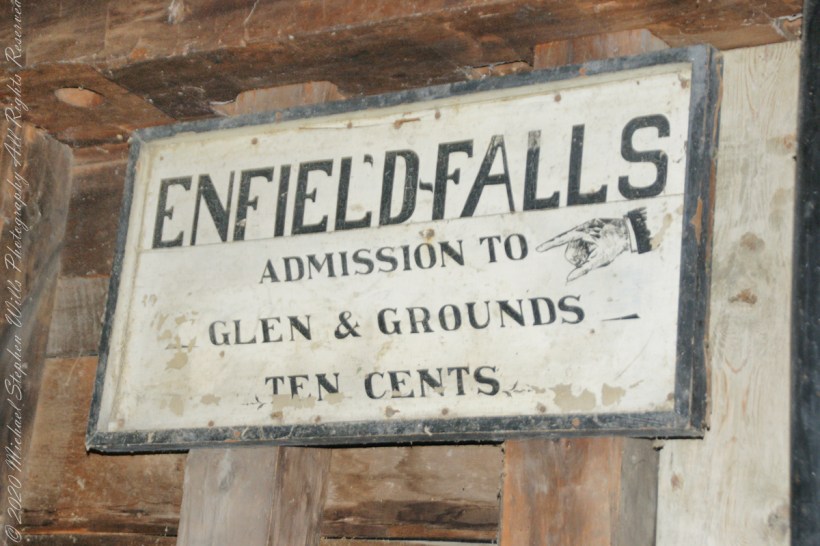
The sign in the heading of this post “hung near the hotel at least as early as 1883. In that year, D. Morris Kurtz mentioned it in his “Ithaca and Its Resources”: “At the foot of the hill is the Enfield Falls Hotel, but you look around in vain for the falls or even any sign of them. Upon the side of the stable into which our horses are driven is nailed a small board, on which is painted ‘Admission to the Falls, 10 cents.’ In reply to our inquiry the bright little urchin that takes charge of the team says, ‘Down there they are,’ pointing to the rocky wall which apparently forms the eastern and an unsurmountable boundary to the valley. And to ‘down there’ we proceed……“
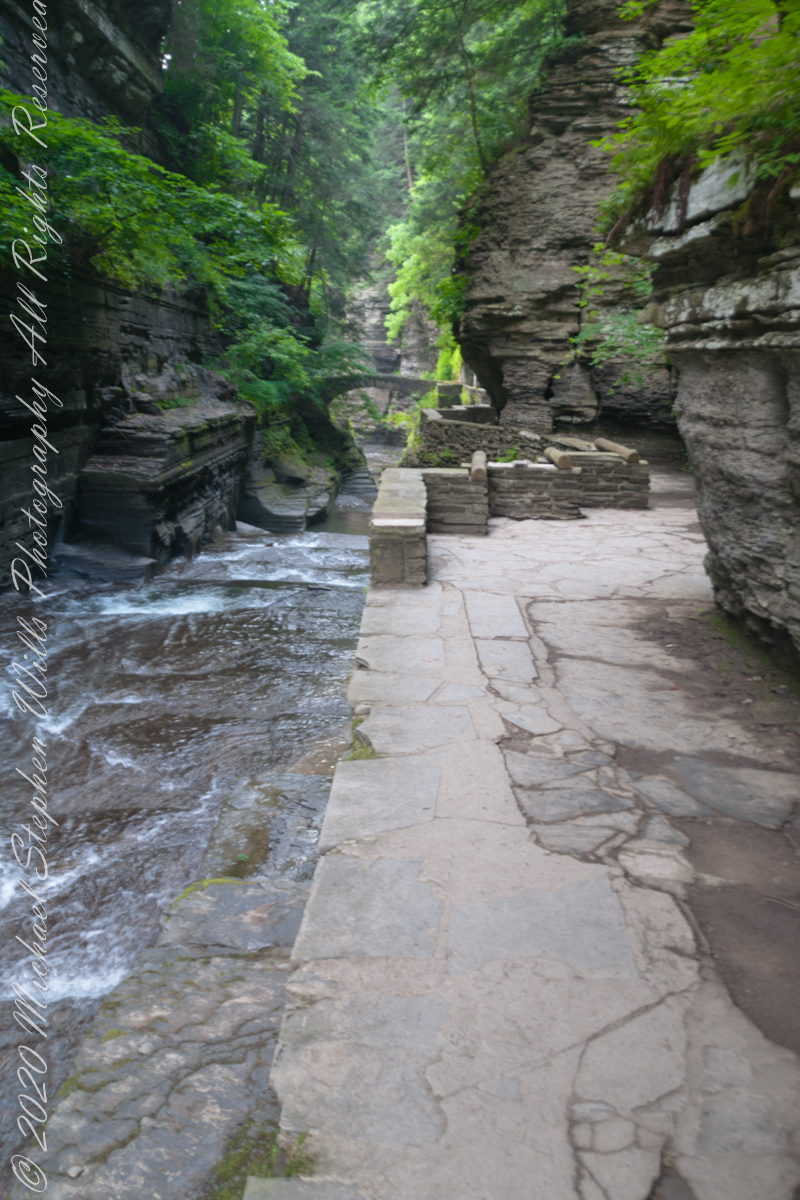
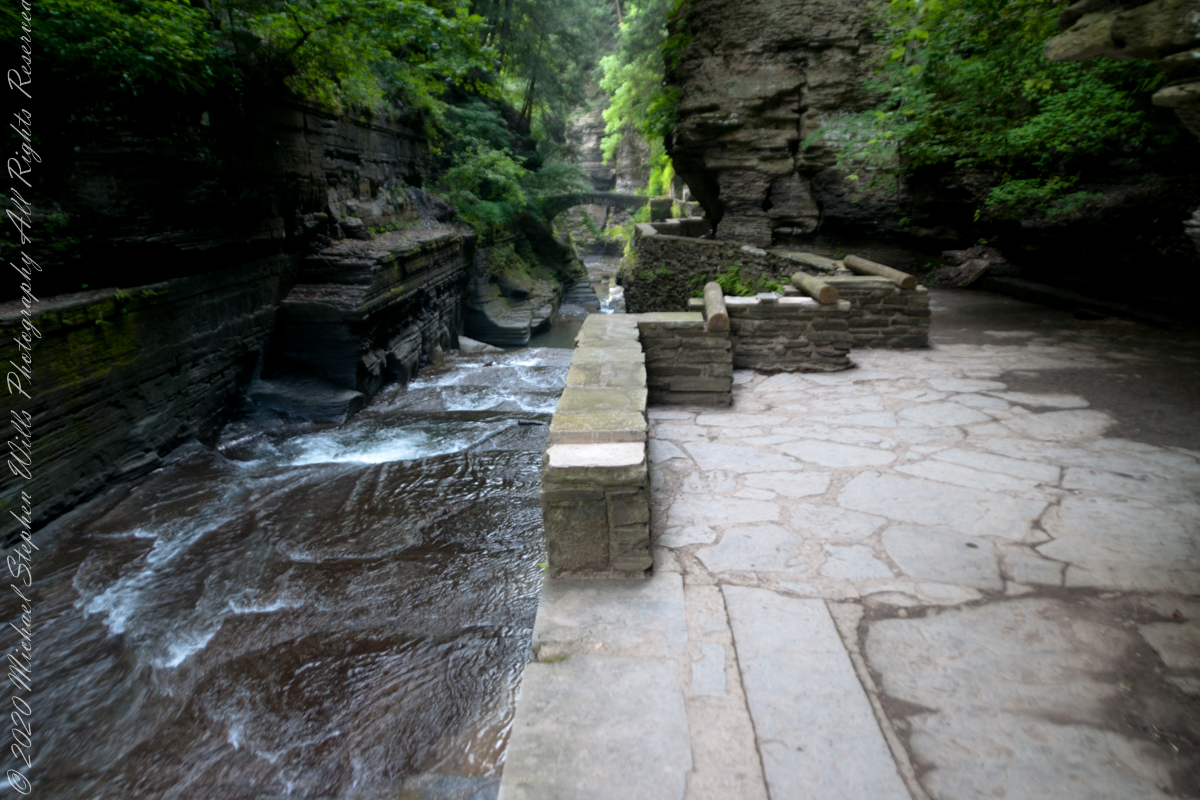
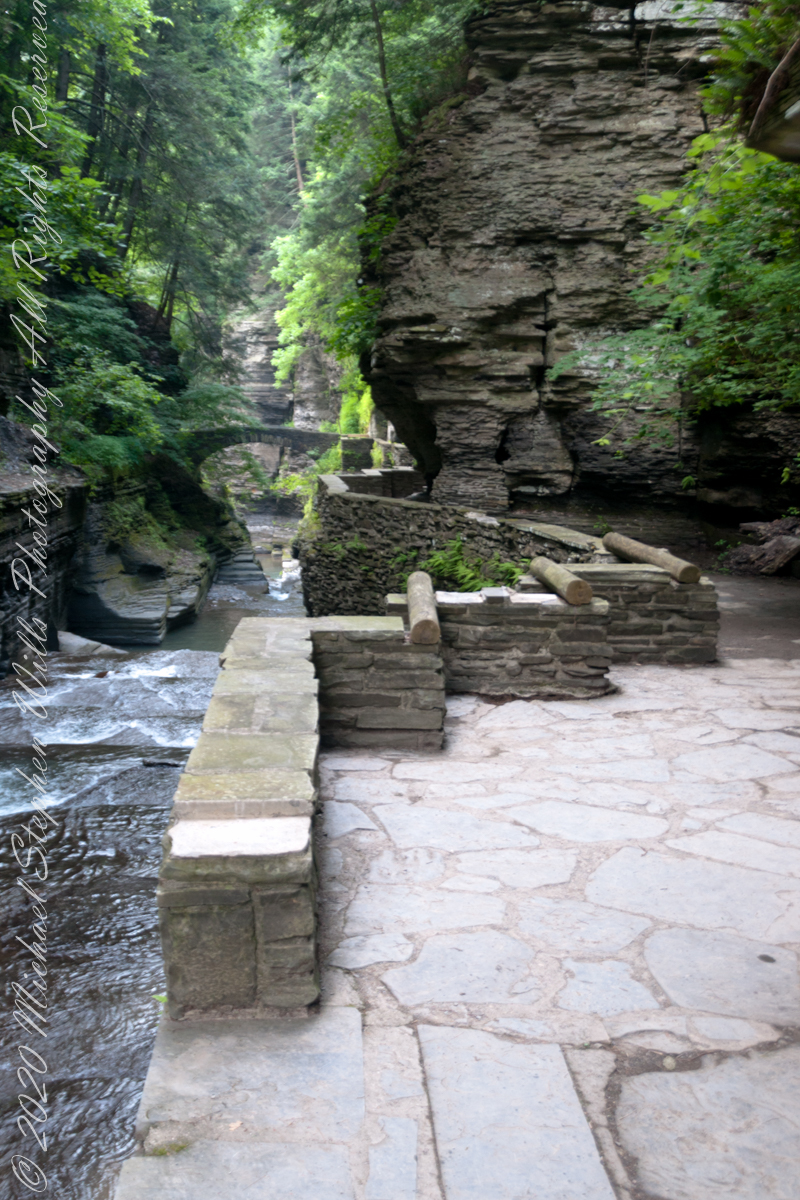
Treman Gorge Trail from the Old Mill enters a narrow gallery looking here southeast along Enfield Creek, passing over a stone footbridge. This was the control point in the 19th century for collecting the ten cent admission fee. Here are some photographs of the entrance as it exists today. The retaining wall, footpath and stone bridge were constructed in the 1930’s by the Civilian Conservation Corps. The site was far rougher for those earlier visitors.
The Gorge Trail next to Enfield Creek on a midsummer morning. Robert H. Treman State Park, Ithaca, Tompkins County, New YorkThis walkway, retaining wall, path, stone bridge were built by the Civilian Conservation Corps, “Roosevelt’s Tree Army,” during the Great Depression in the 1930’s. The north side is sedimentary rock worn through over the ages by what we call Enfield Creek today.
Photograph captured on a midsummer morning. Robert H. Treman State Park, Ithaca, Tompkins County, New York
Copyright 2023 All Rights Reserved Michael Stephen Wills
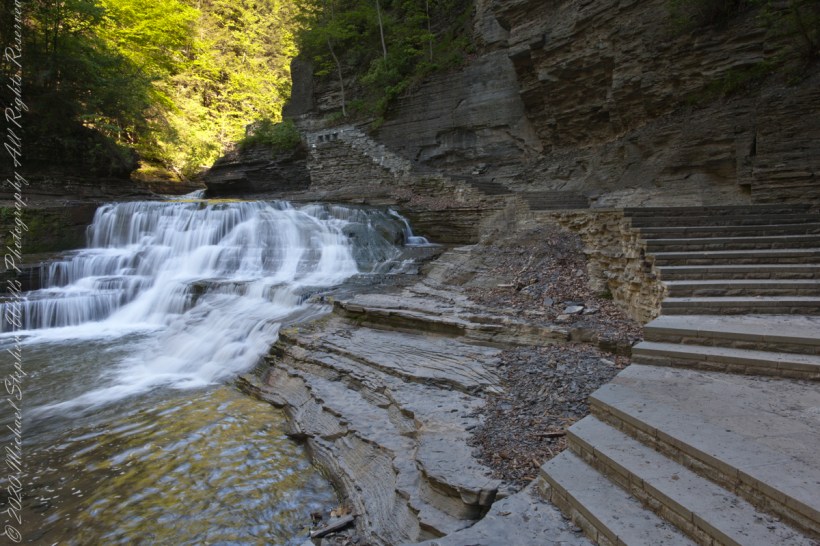
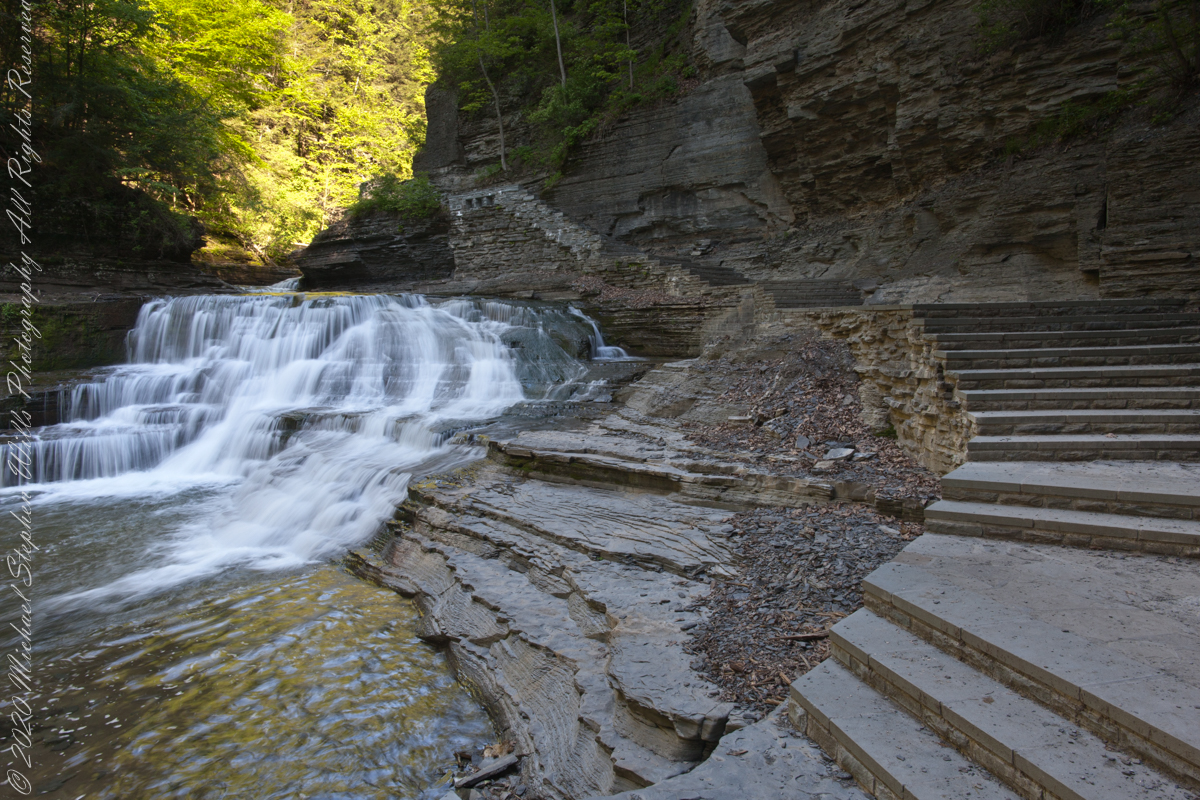
Can you see the small difference between yesterday and today’s take on Devil’s Kitchen? Is the change and improvement, degradation or no difference? User Response Requested: respond in comments.
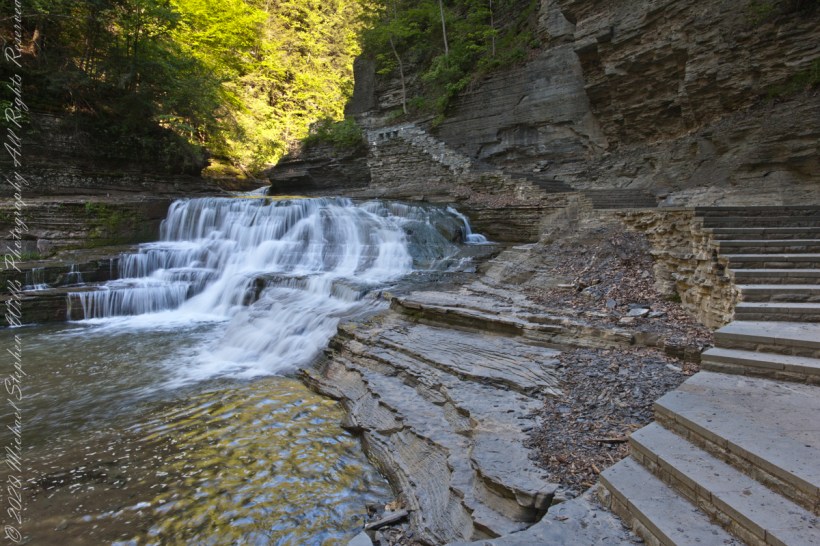
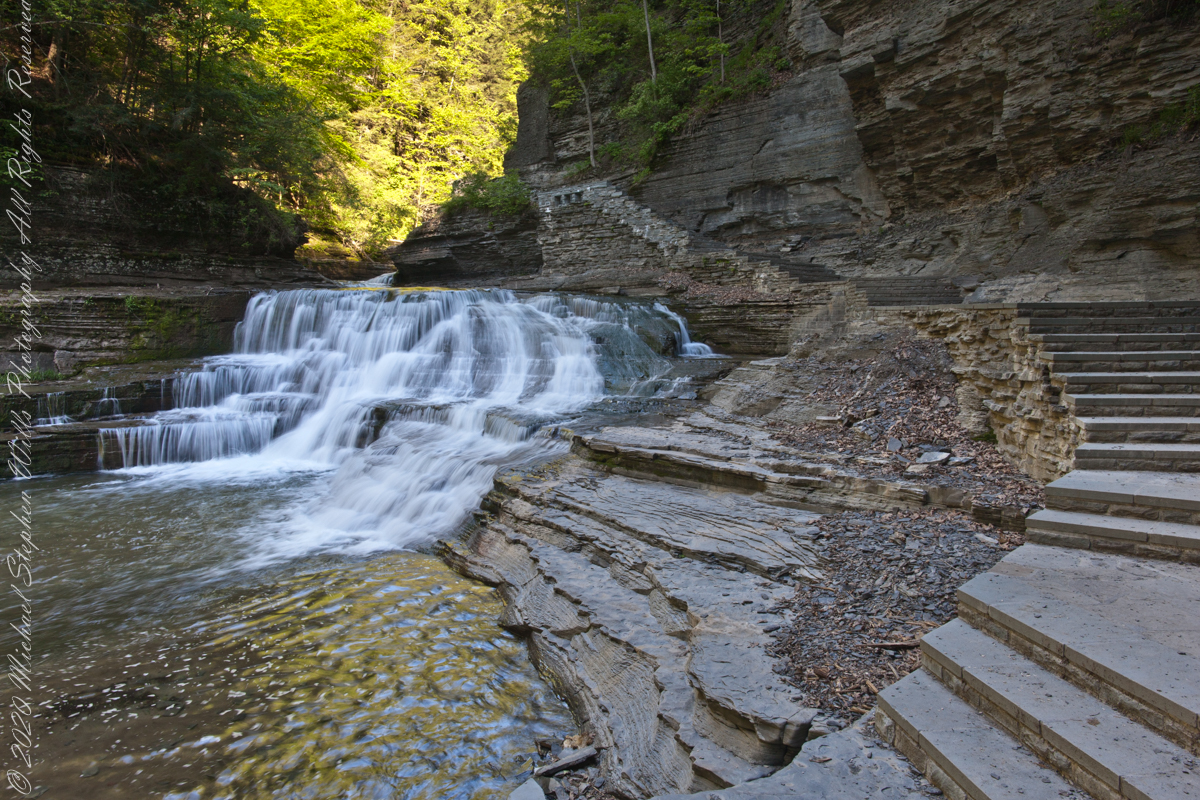
Aptly named Devil’s Kitchen is where Enfield Creek passes over these 20 foot falls before the Lucifer Falls 115 foot rock face cascade. Captured on a Memorial Day morning. Robert H. Treman State Park, Ithaca, Tompkins County, New York.
Here they are side by side.
YesterdayToday
It is 9:00am on a Memorial Daty morning Robert H. Treman Park, Ithaca, Tompkins County, Ithaca, New York,
Copyright 2023 All Rights Reserved Michael Stephen Wills
Aptly named Devil’s Kitchen is where Enfield Creek passes over these 20 foot falls before the Lucifer Falls 115 foot rock face cascade. We are occasionally appalled by families and adventure seekers climbing over these falls, wading in the water downstream and other insanities happening next to a waterfall so dangerous it is named after the Prince of Darkness and this very location “his” kitchen.
I am not one to talk, though. One winter on this very spot when the Gorge Trail was closed for winter, black ice brought me down almost into the water. All for a winter scene (photograph) of this marvel. Thankfully, I am wiser for the experience.
It is 9:00 am on a Memorial Daty morning Robert H. Treman Park, Ithaca, Tompkins County, Ithaca, New York,
Copyright 2023 All Rights Reserved Michael Stephen Wills
 Michael Stephen Wills Photography