Iquique by Sea VI

Experience the breathtaking approach to Iquique, Chile, capturing the vibrant life of fishermen, the majestic beauty of Punta Negra, and the resilient spirit of this coastal community. Join us on a journey from sea to shore.

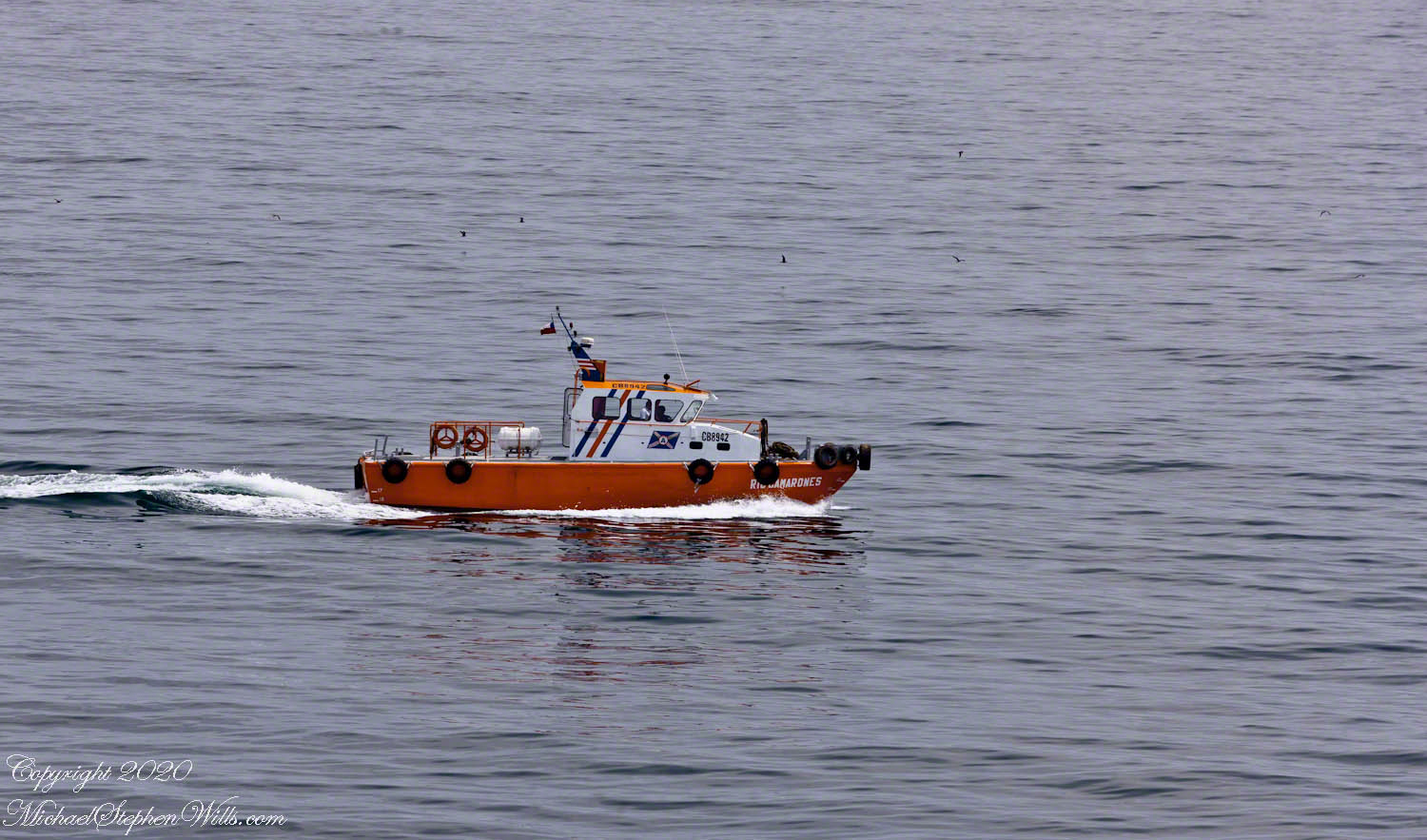
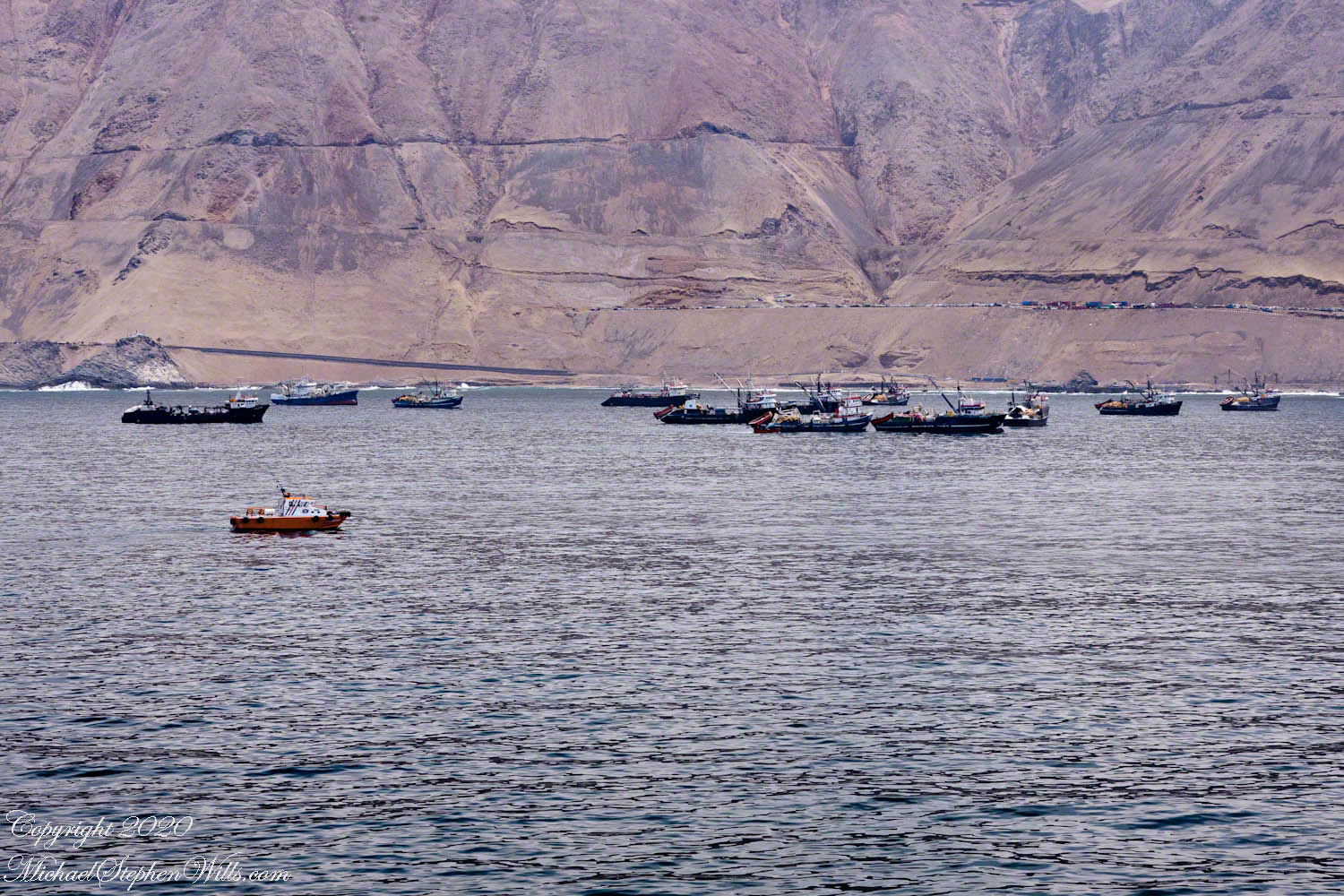
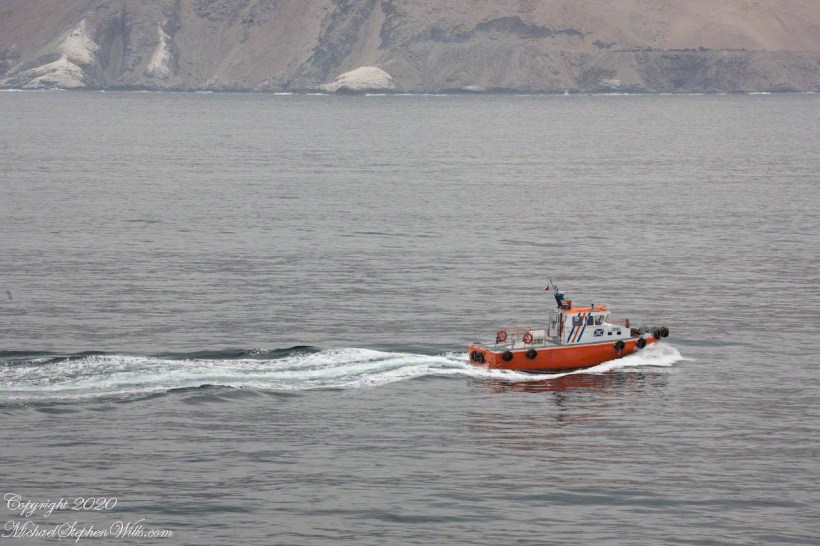
Forty-one minutes have passed, and we are now close to the anchorage site. The pilot boat, with its vibrant orange hull, cuts a striking figure against the serene blue gray of the sea. This small but vital vessel plays an essential role in the complex choreography of maritime navigation, guiding larger ships safely through treacherous waters.

Click any photograph for a larger view and use Ctrl-x to zoom in closer.
Beyond the pilot boat, shorebirds fly in rhythmic formation, a sight both familiar and comforting. Using the zoom (300mm) of my variable zoom lens, I identify these birds as pelicans, their elegant, synchronized flight a mesmerizing display against the vast expanse of water.
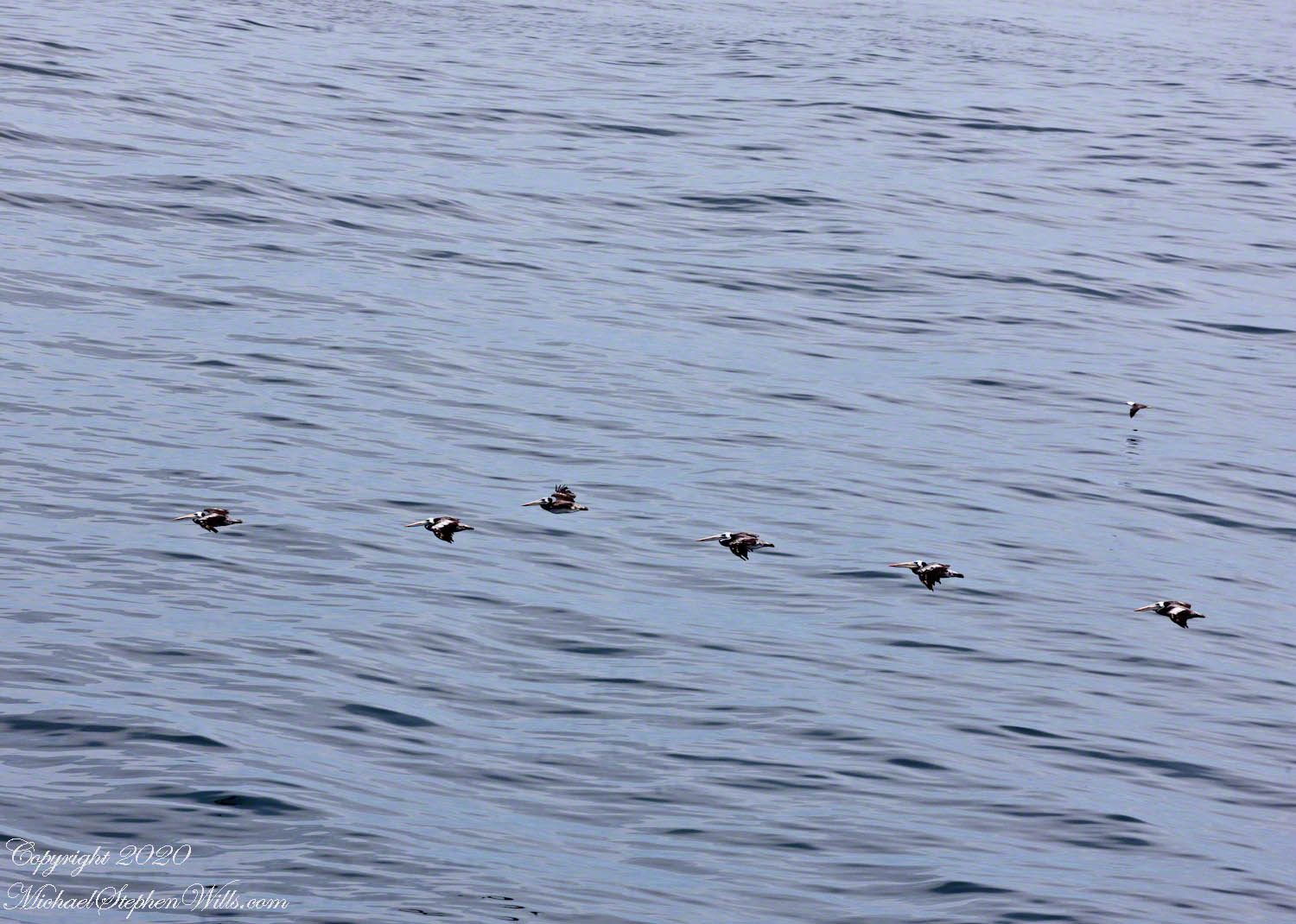
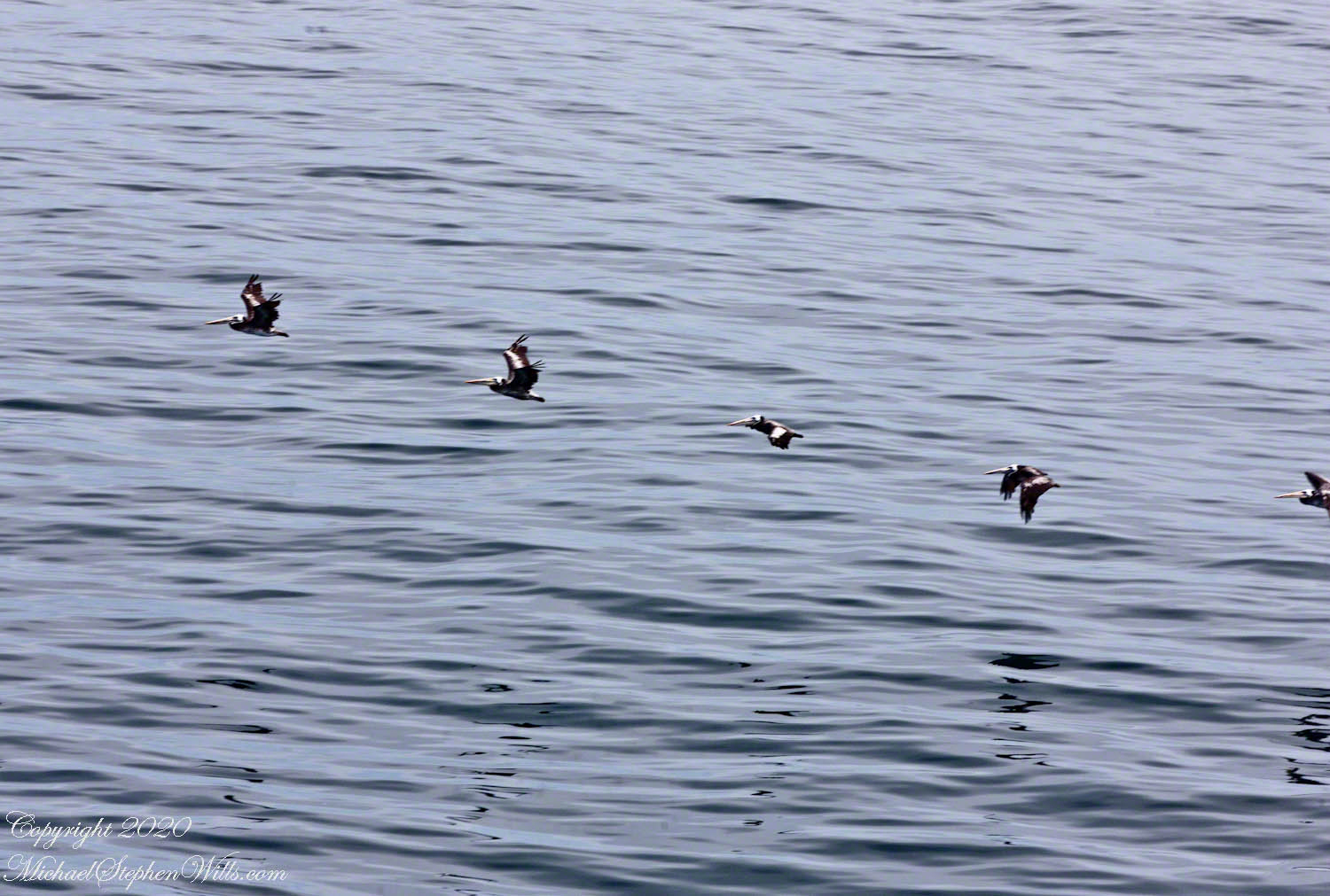
The pilot boat comes to a stop between us and anchored fishing boats, a cluster of vessels that seem to float effortlessly on the waves. Each boat, with its unique character and history, tells a story of countless journeys and the lives of those who depend on the sea for their livelihood. The fishermen, with their weathered faces and hands skilled in the art of the catch, embody a resilience born from years of facing the sea’s many moods. These boats are tools of the trade, lifelines for the families and communities they support, each one a testament to the enduring human spirit.
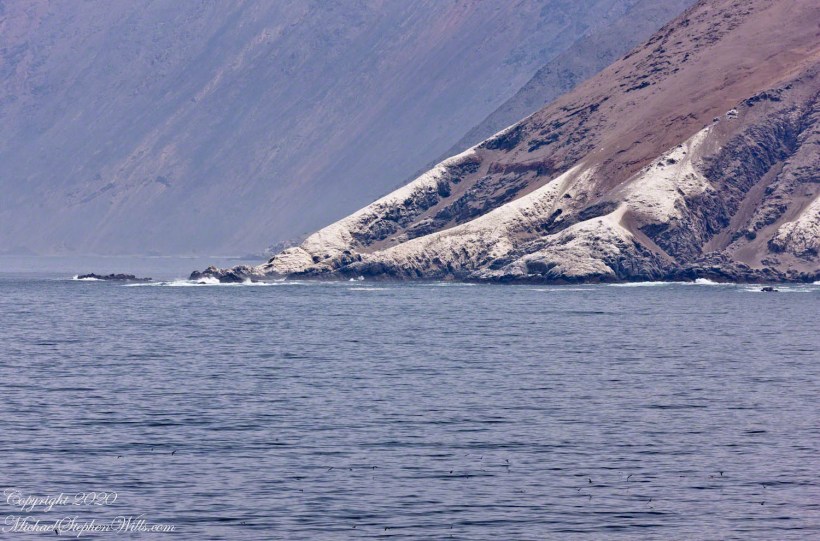
The post header photograph captures Punta Negra, the northern boundary of the harbor. The rugged, imposing cliffs of Punta Negra rise sharply from the water, their stark beauty accentuated by a white layer of diatomaceous earth running along the coast. This geological feature, first encountered at our last port in Mollendo, Peru, adds a unique texture to the landscape, a silent testament to the natural history of the region. The white layer, created by the accumulation of microscopic algae over millennia, stands out vividly against the darker rock, a reminder of the Earth’s ancient past.
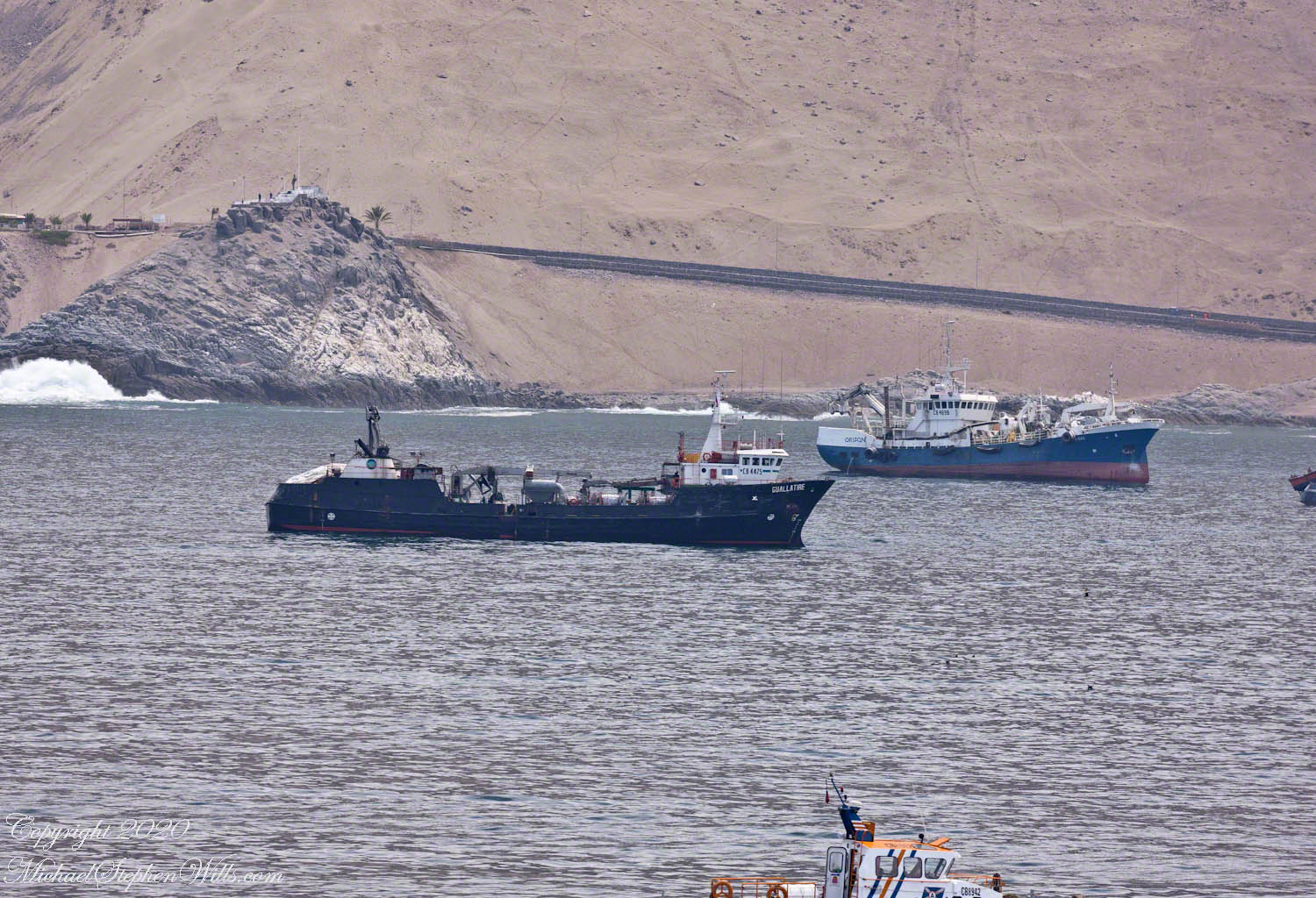
Look closely, can you make out the distinctive shape of a Monkey Puzzle tree along the shoreline road? This ancient tree, with its unique and resilient form, mirrors the endurance of those who live and work in this challenging environment. The Monkey Puzzle tree, native to Chile, is known for its hardiness and longevity, thriving in conditions where few other trees can survive. It stands as a metaphor for the people of this region, who have adapted to and thrived in one of the world’s most inhospitable landscapes.

As I zoom in further, using the full 300mm power of my lens on a stable tripod, I capture close views of the fishing boats. Each detail comes into sharp focus – the rusted hulls, the nets hanging in preparation, the names of the boats proudly painted on their sides. These vessels, with their worn and weathered appearances, have a beauty all their own. They are symbols of perseverance, of the daily struggle and triumphs of those who brave the sea to make a living. The fishing boats, though seemingly small in the vast ocean, are powerful symbols of human resilience and adaptability.
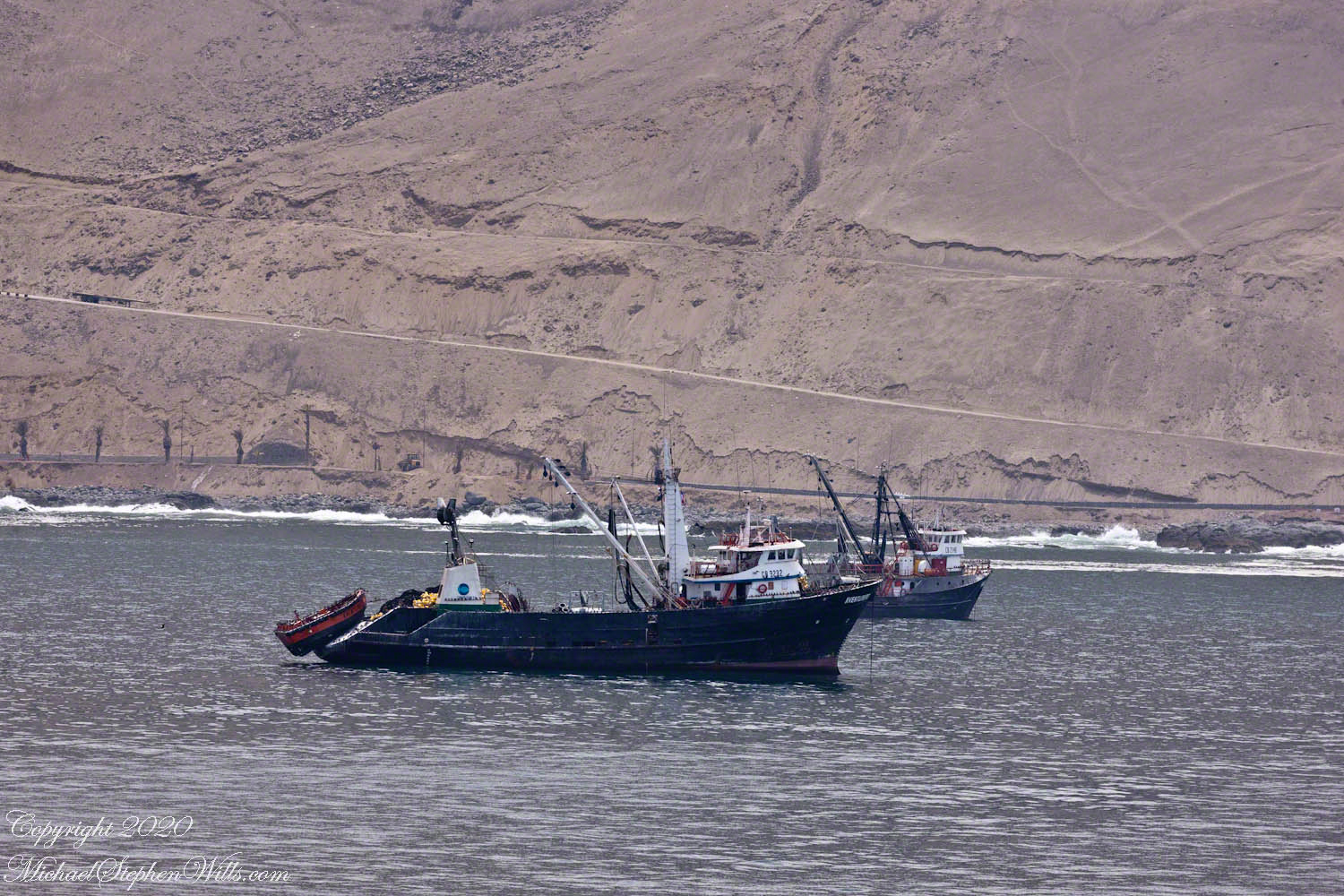
The sea, a constant presence in the lives of these people, shapes their days and their destinies. The fishermen head out each morning, guided by the tides and the weather, their knowledge of the sea passed down through generations. Each catch brings hope and sustenance, a reward for their hard work and skill. Yet, the sea is also unpredictable, capable of turning fierce and unforgiving in an instant. This duality – the sea as both provider and adversary – is a fundamental part of life here, woven into the fabric of daily existence.

Our ship’s anchor has dropped, signaling that we are ready to board the tender for the trip from anchorage to port. This marks the start of our day’s activities, a journey that will take us from the vast, open sea to the vibrant life of Iquique. As we prepare to disembark, I reflect on the interconnectedness of these moments – the precision of the pilot boat, the flight of the pelicans, the stories of the fishermen, and the enduring landscape. Each element weaves together to create a tapestry of life on the sea, a testament to the resilience and beauty of this remarkable region.

The tender ride offers a closer look at the fishing boats and the shore. I notice the intricate details of the boats – the colorful paint, the weather-beaten wood, the names that reflect the hopes and dreams of their owners. Each boat is a microcosm of life, carrying the weight of daily struggles and the promise of future catches. The fishermen, now preparing their gear for the day’s work, move with practiced ease, their actions a ballet of efficiency honed by years of experience.

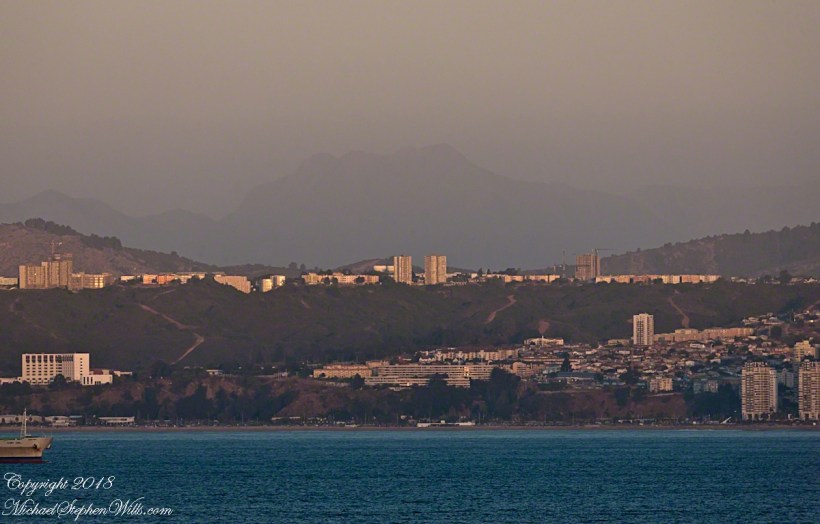
As we approach the port, the city of Iquique comes into view, a bustling hub of activity nestled between the sea and the mountains. The contrast between the natural beauty of the landscape and the vibrant energy of the city is striking. Here, in this meeting place of land and sea, past and present, we see the resilience of the human spirit, the ability to adapt and thrive in even the most challenging conditions.

This journey, from the open sea to the heart of Iquique, is more than just a physical passage. It is a journey through time and history, a glimpse into the lives of those who call this place home. As we step onto the shore, ready to explore the city and its rich heritage, I carry with me the stories of the sea, the echoes of the past, and the promise of new discoveries.
Click me for the first post of this series.

Copyright 2024 Michael Stephen Wills All Rights Reserved

Iquique by Sea IV

Discover the vibrant blend of history and modern maritime traditions in Iquique. From the dramatic escarpment backdrop to the bustling harbor, join us on a journey exploring the city’s past and present, anchored in seafaring tales.

Continue reading “Iquique by Sea IV”

Valparaiso Departure II

View of Aconcagua Mountain at Sunset

After the Ocean Princess sailed off toward its destiny in my last posting, “Valparaiso Departure I,” Pam and I left the deck for dinner to return two hours later for the Regatta’s departure in the magic sunset hour.

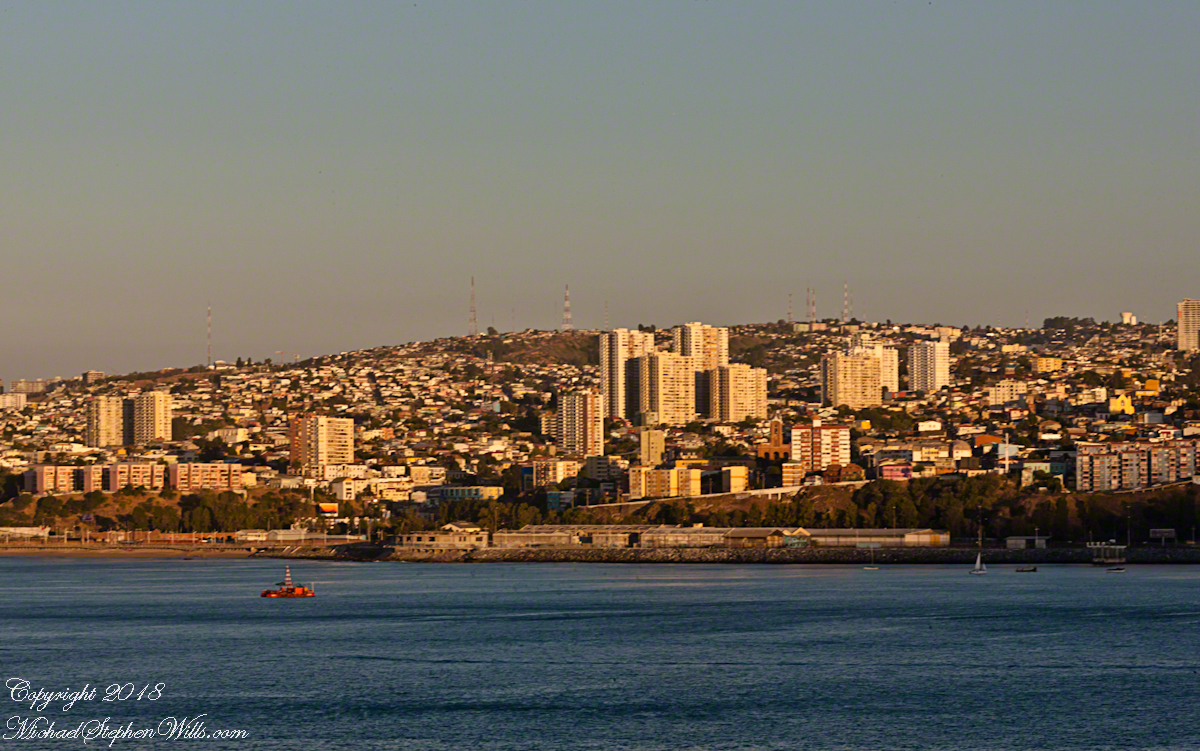
This first photograph is 22 minutes before sunset as the ship swung into a course along the northern shore of Valparaiso Bay.  The city grew along the bay shore, starting from the city center in the southern cup and into the north.  We are looking southeast across a lighthouse named “Club de Yates”, identified from the red fiberglass tower, a triangular daymark, toward the north end of Valparaiso.

Click this link for my Fine Art Photography gallery.

ValparaisoDeparture-17

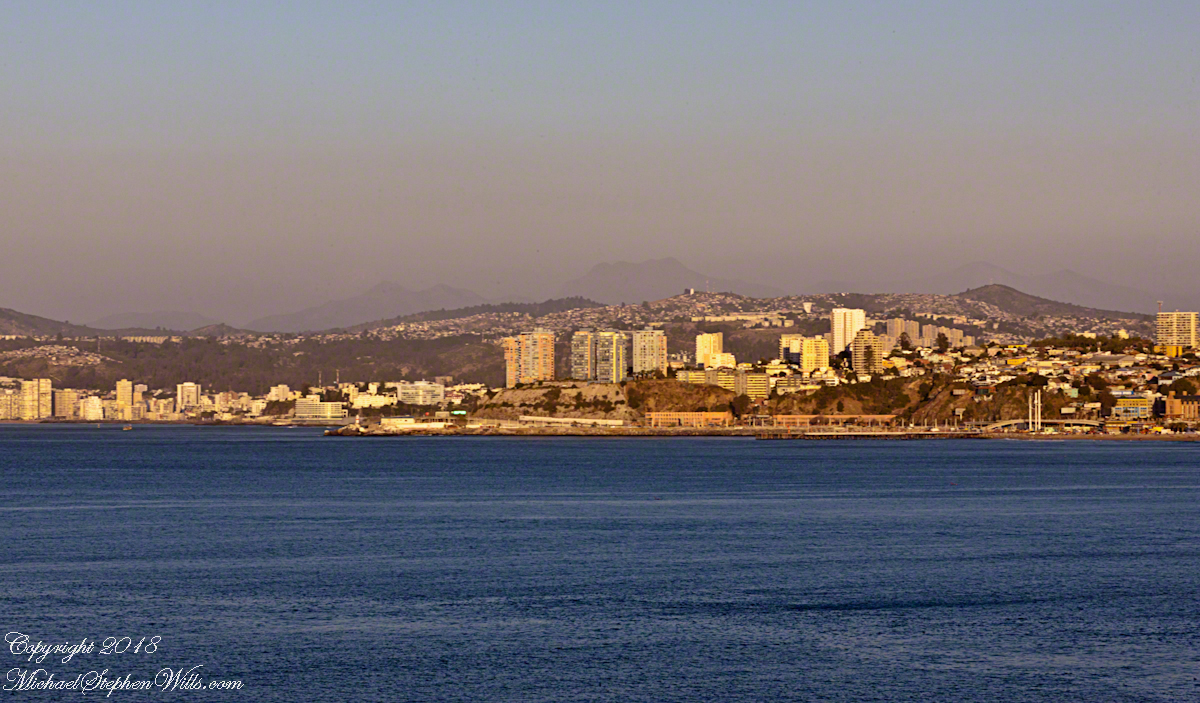
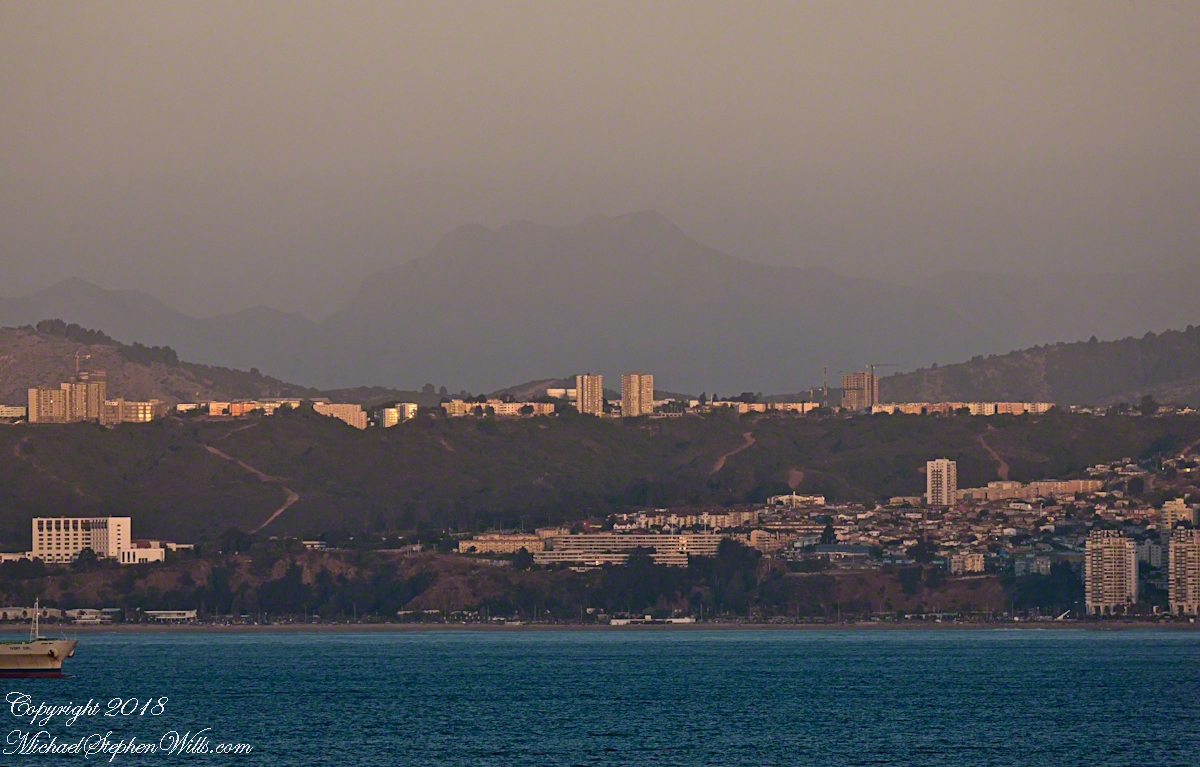
Here we see a different city altogether, the fourth largest of Chile and also within the Valparaiso Region and the Greater Valparaiso Area, named Vina Del Mar (Vineyard of the Sea).  The view is almost due east and, from here, it is difficult to discern why it is also called “La Ciudad Jardin” (Garden City), it is do densely populated.  North Valparaiso ends with a ridge with Vina Del Mar the next valley.  Look carefully along the shore to find the Punta Gruesa lighthouse with a red band on a white metal tower daymark.  By way of scale the tower is 56 feet high.  Follow Punta Gruesa to the right for the ridge separating Vina Del Mar (the taller apartment buildings, from Valparaiso.

The distant mountain is huge, visible from 95 miles away.  More about it later.  

ValparaisoDeparture-18

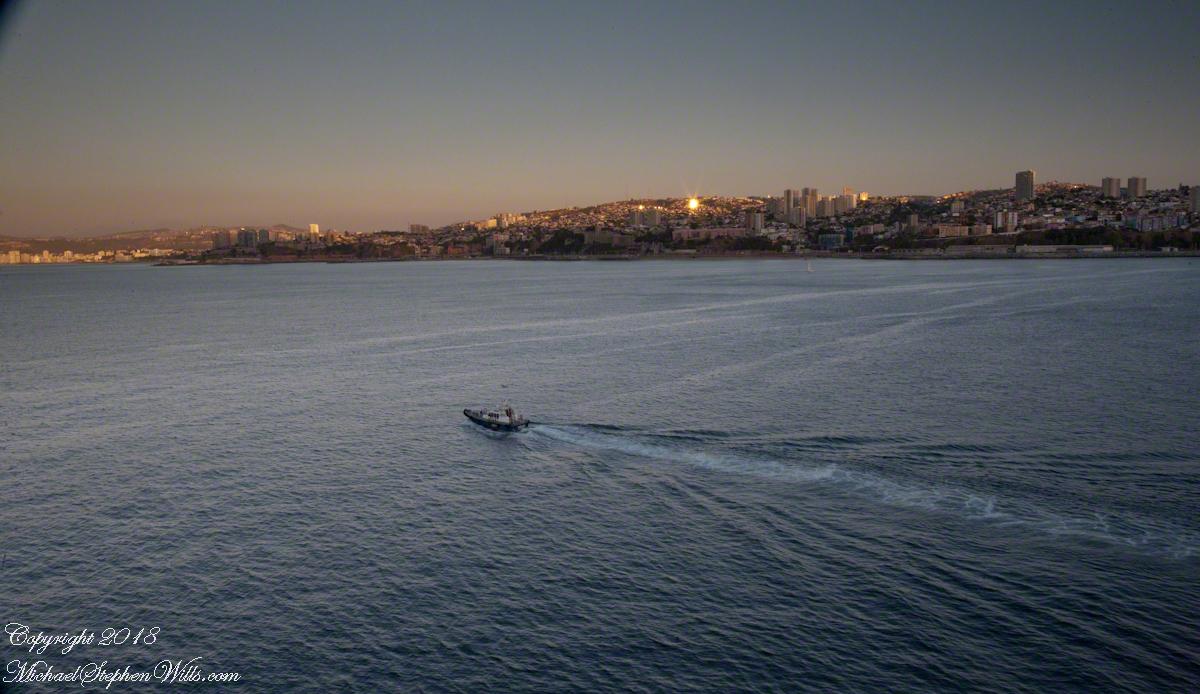
The previous photographs were using a tripod mounted Canon EOS-1Ds Mark III with the Canon 70 – 300 mm f4-5.6 L IS USM lens set to 108 mm focal length, taken 15 seconds apart.  I then swapped  the EF 24 mm f 1.4 L USM lens for the following photograph of the pilot boat heading to a rendezvous with the Regatta, having dropped off “our” harbor pilot.  It will wait beyond the harbor to bring the pilot back home.  The photograph is 7 minutes after the previous.  Punta Gruesa and the lighthouse and the Vina Del Mar apartment towers are just visible, having lost the sun.

Click this link for my Fine Art Photography gallery.

ValparaisoDeparture-19

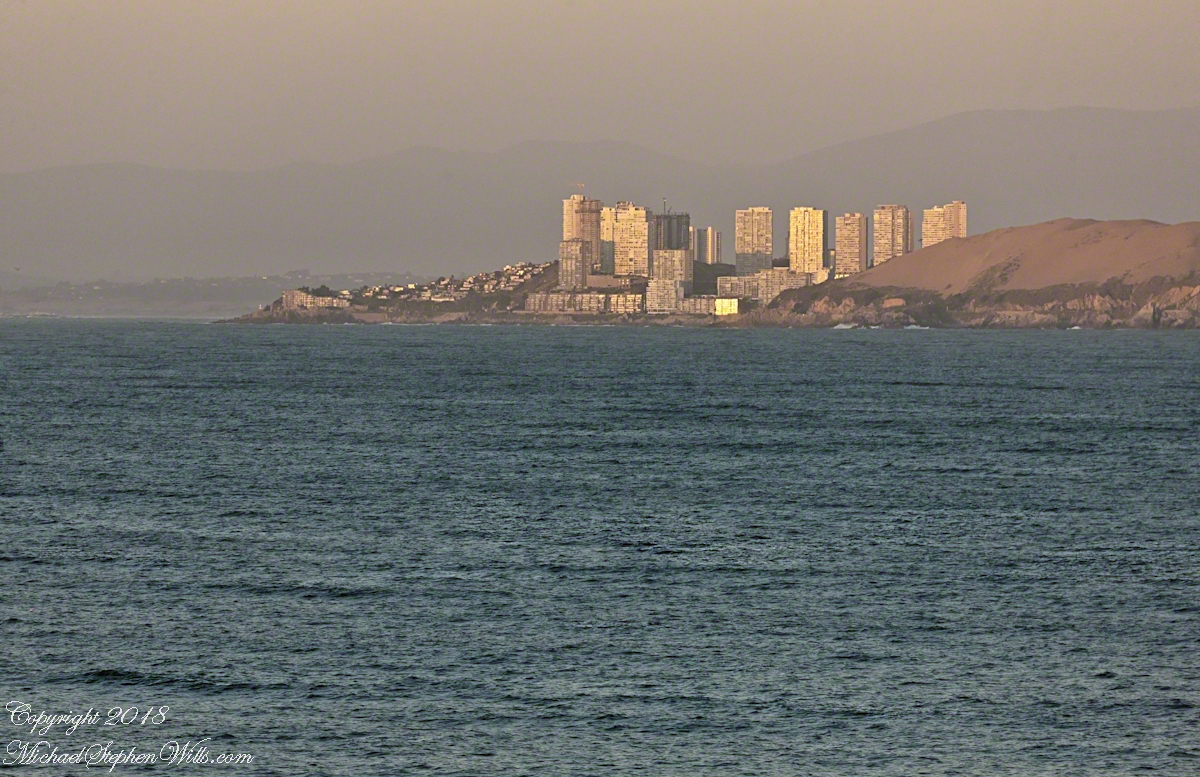
On the northern tip of Valparaiso Bay Punta Concon, the City of Concon and tall sand dunes also called Concon reflect the sun’s light 10 minutes before sunset.  The city is the fastest growing in Chile, 106% between 1992 and 2010 (28,157 to 50,000).  The Regatta is now well underway and I returned to the “long” lens here set to the 3oo mm focal length maximum.

On the other side of Punta Concon (Concon Point) the Aconcagua River flows into the Pacific.  Although the river has the same name as Aconcagua Mountain, the head waters are in Chile, 12 miles from the slopes of the mountain in Argentina.

ValparaisoDeparture-20

A swivel of the camera brings Aconcagua Mountain into view.  This former volcano, dead now for 8 – 10 million years is the highest mountain in North and South America.  The next highest peak is in the Hindu Kush, 10,000 miles to the northeast.  That said, Aconcagua is less challenging than Denali of Alaska and so many people attempt it each year human excrement is a major pollutant there.  We are looking here over the Vina Del Mar Valley 95 miles to Aconcagua Mountain in Argentina.

Click this link for my Fine Art Photography gallery.

ValparaisoDeparture-21

Copyright 2022 Michael Stephen Wills All Rights Reserved

Valparaiso Departure I

Thoughts on Departures

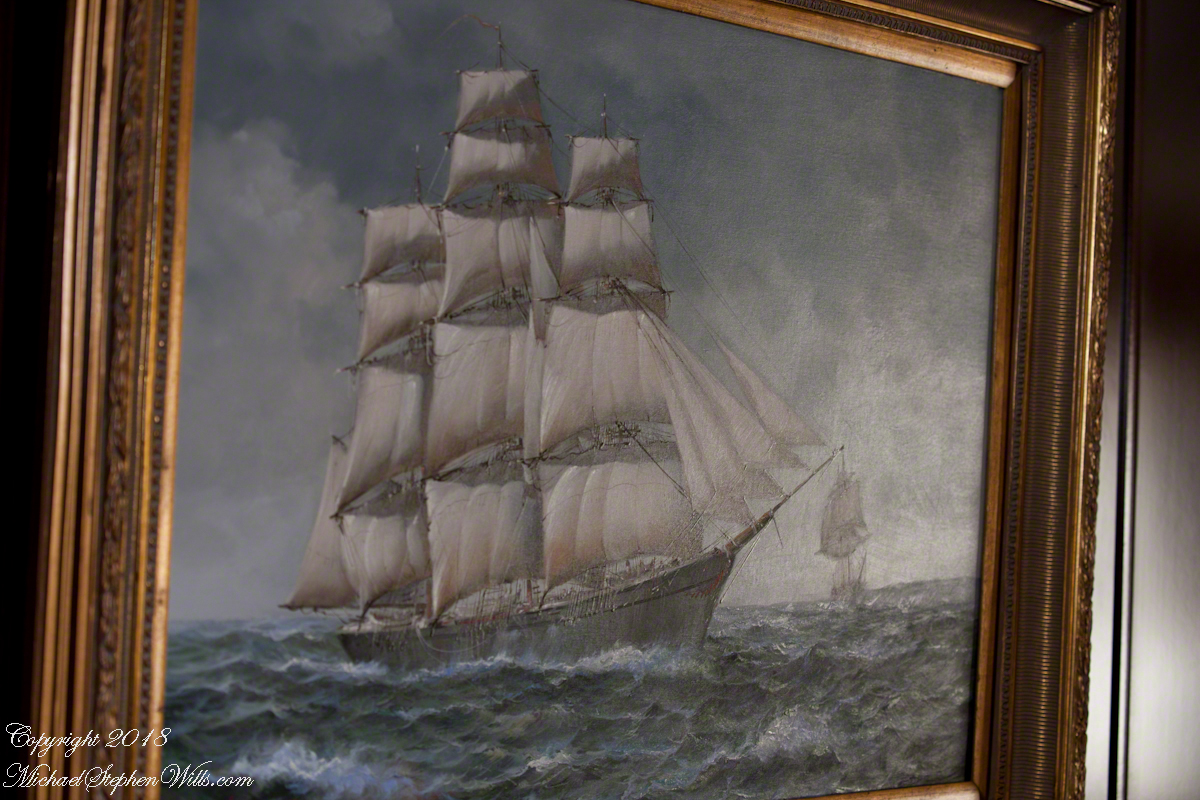
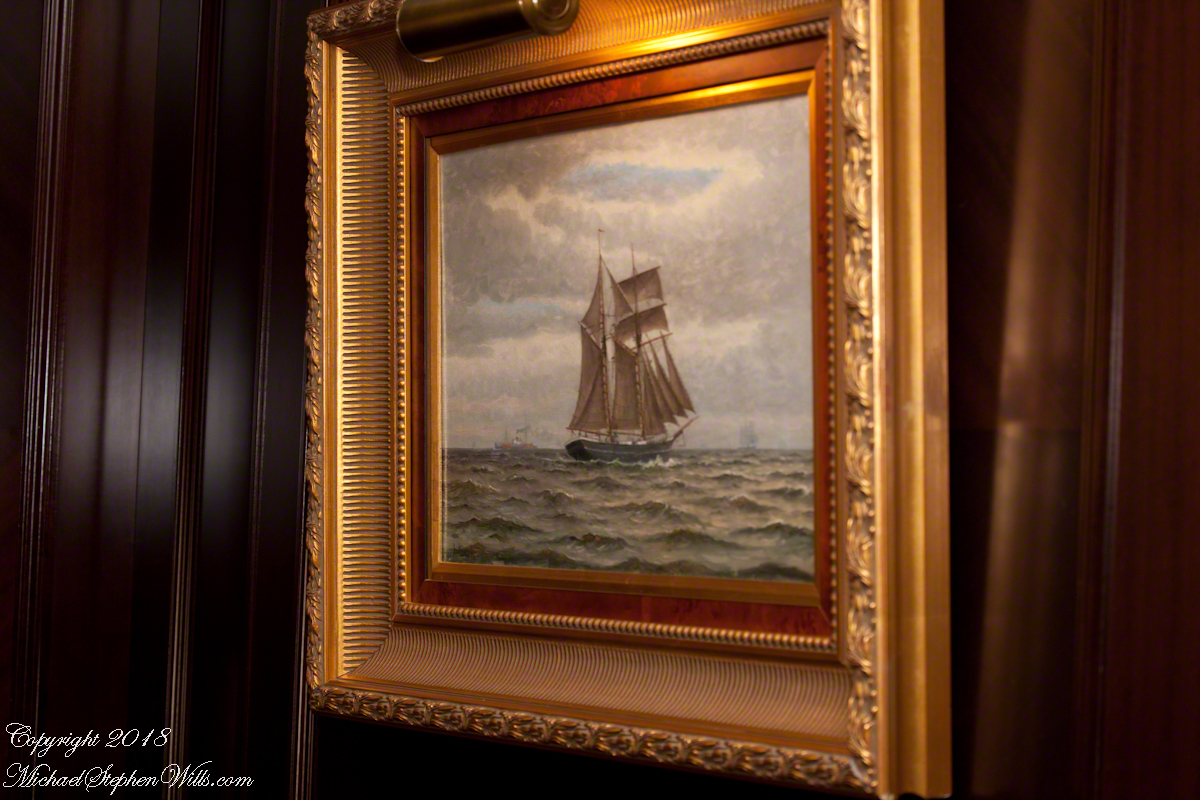
Late afternoon of our departure from the Chilean port city Valparaiso,  Pam and I enjoyed entertainments on the Regatta.  This painting of a ship under sail brings to mind the history of Valparaiso, as a place only reachable by ship, clinging to a narrow ledge on the Andes, barely existing for centuries, repeatedly destroyed by earthquakes until the 19th century brought sailing vessels such as this, growth and prosperity.  Major earthquakes hit the years 1730, 1822, 1839, 1873, 1906, 1907.  After 1907, the city was rebuilt anew in the modern form.  The inhabitants must enjoy spot, naming it “Vale of Paradise.”

Click this link for my Fine Art Photography gallery.

ValparaisoDeparture-1

While, in the 21st century the city enjoys a refreshment of an influx of artists and visitors such as the Regatta, the danger of the next massive quake is ever present and unpredictable.

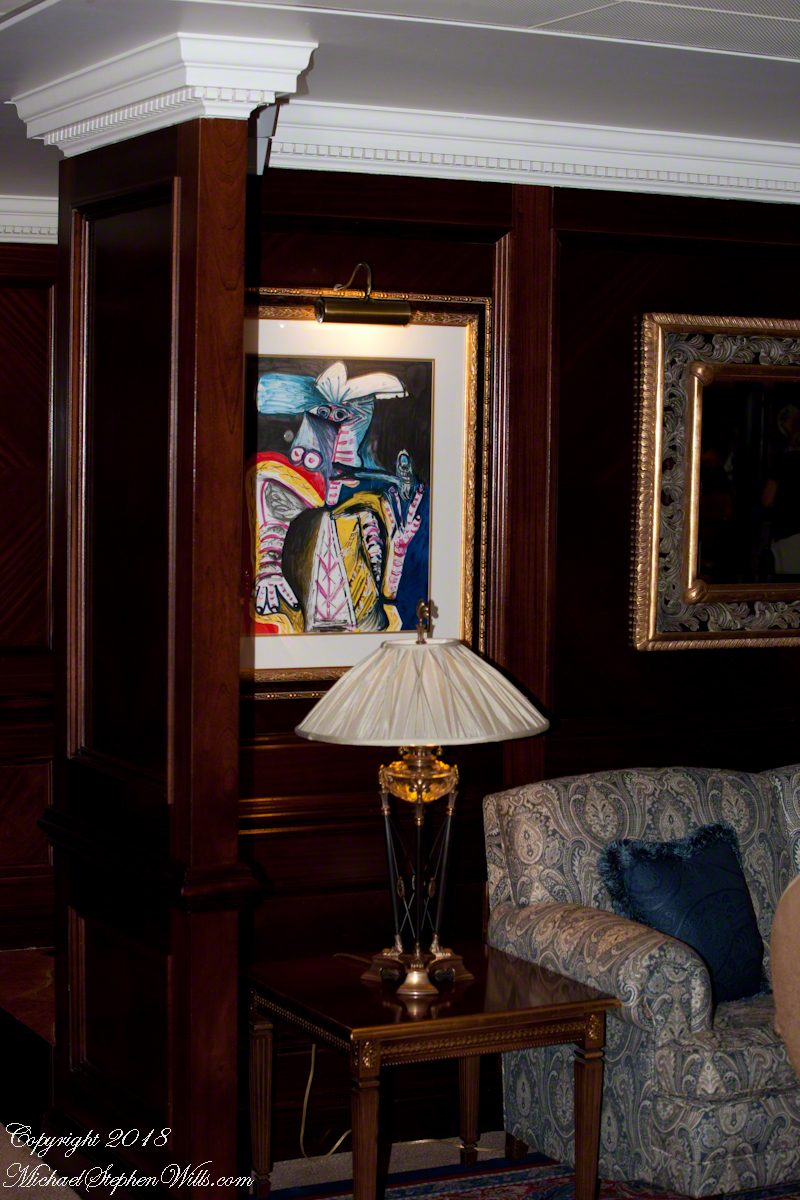
As we enjoyed the artwork….

ValparaisoDeparture-13

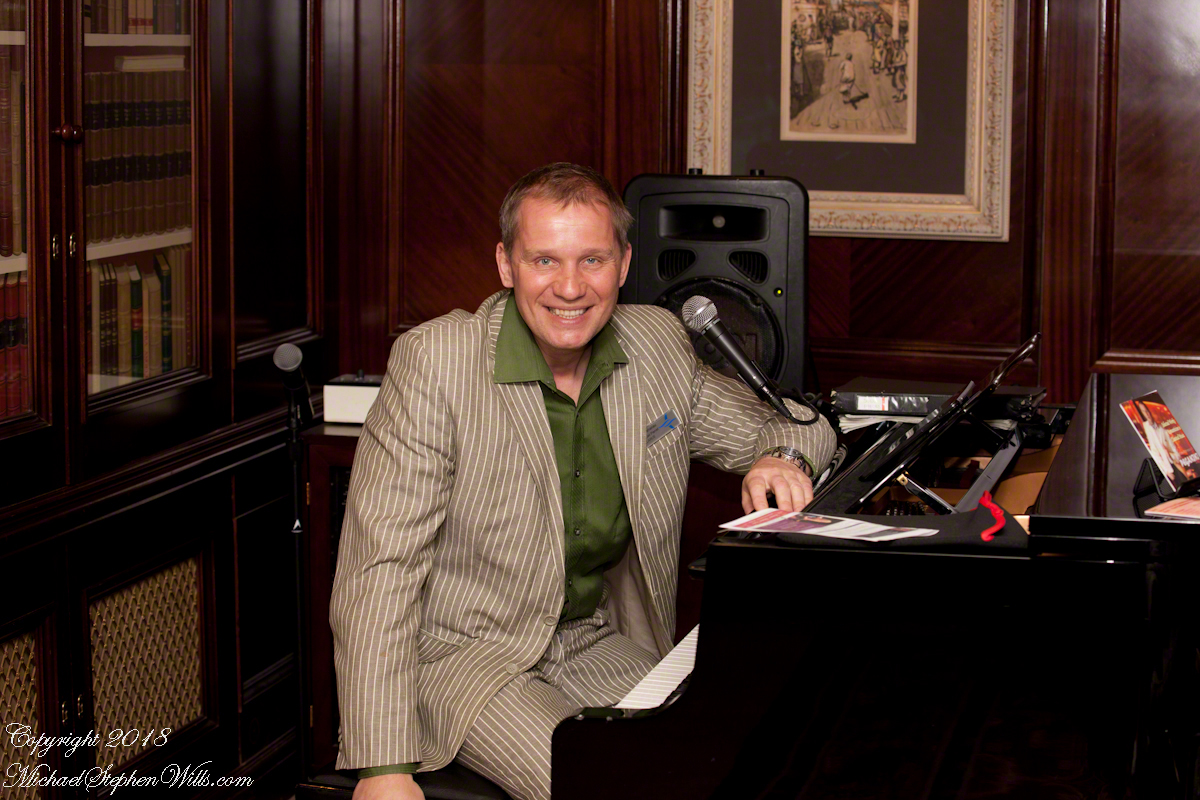
….a pianist entertained us.

ValparaisoDeparture-14

As usual, I was carting photography equipment to capture the moments as the afternoon moved towards…

ValparaisoDeparture-15

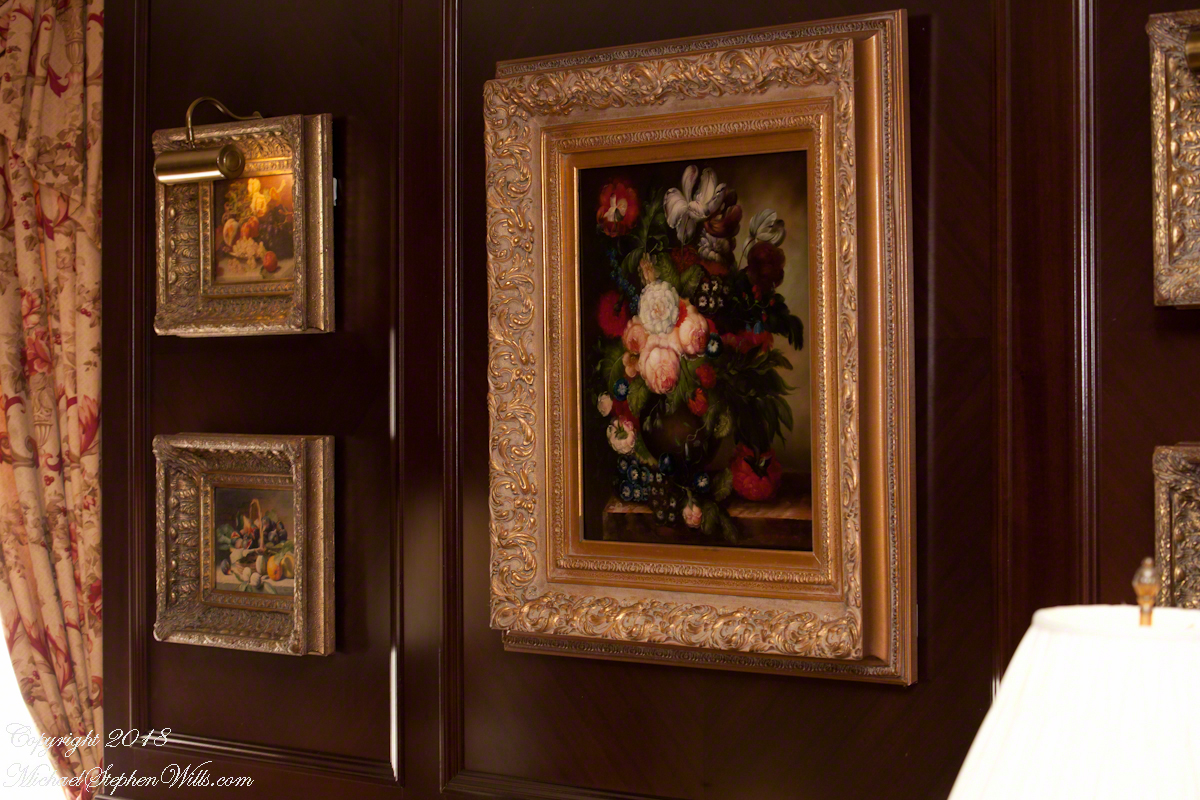
….the scheduled departure among still life painting in the style of the Dutch masters.

Click this link for my Fine Art Photography gallery.

ValparaisoDeparture-16

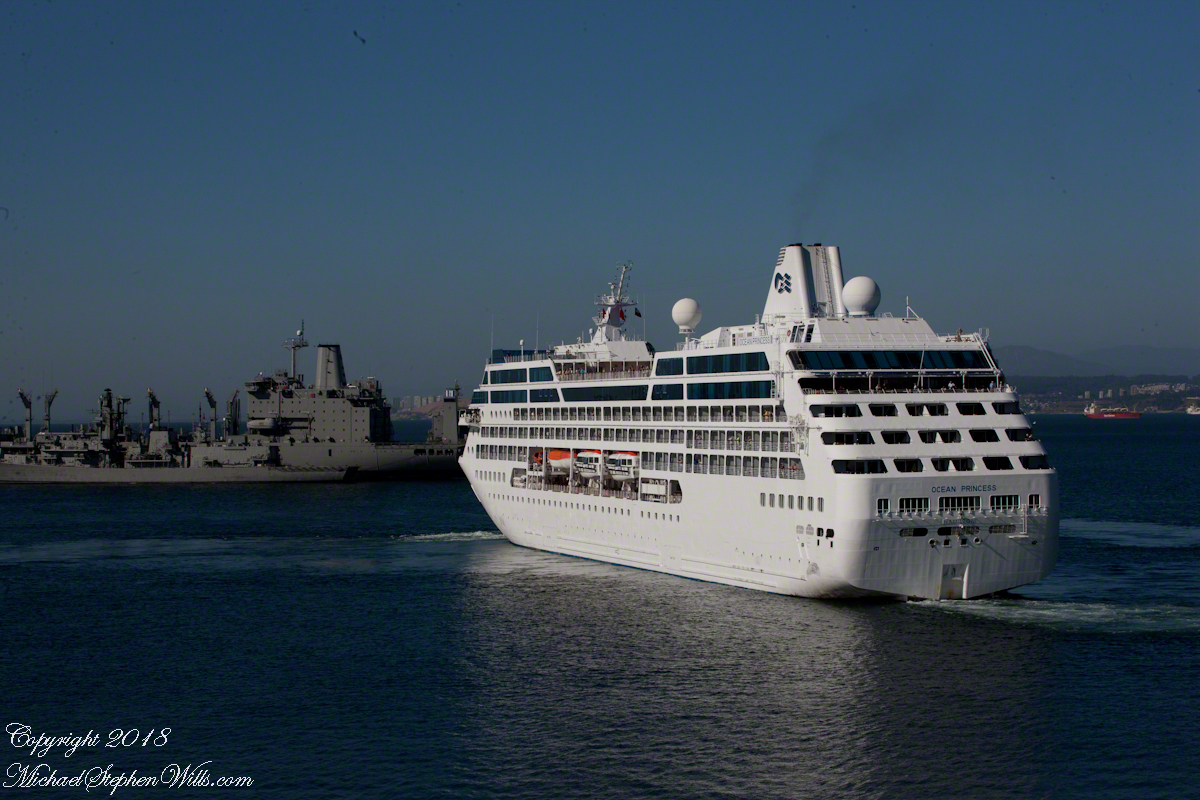
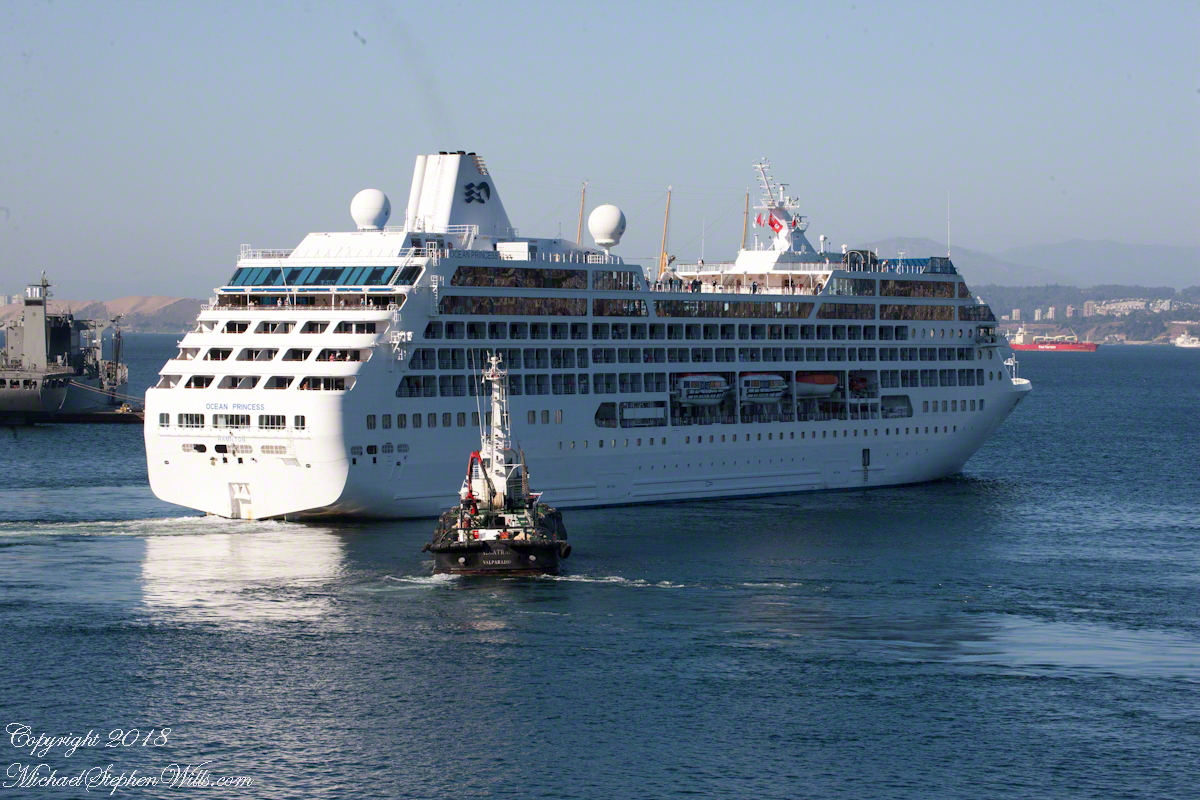
That day I chose the upper decks as the best vantage point.  From there, Pam and I viewed the departure of a similar ship to the Regatta, the “Ocean Princess.”  It must have been the last voyage of the Princess under that name as, the same year, it was acquired by the Oceania line, refurbished, relaunched as the “Sirena”.

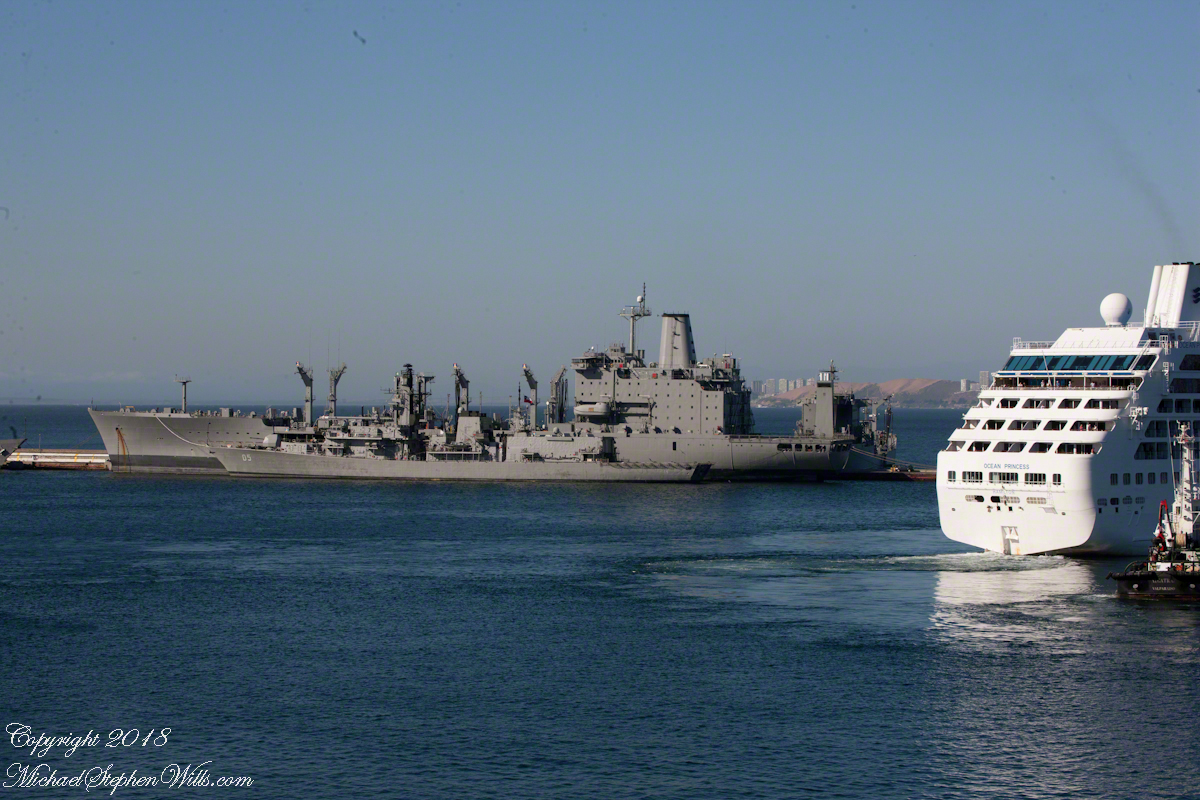
The Chilean navy base and Naval Academy is there.  The Ocean Princess navigated around this docked destroyer…..

ValparaisoDeparture-2

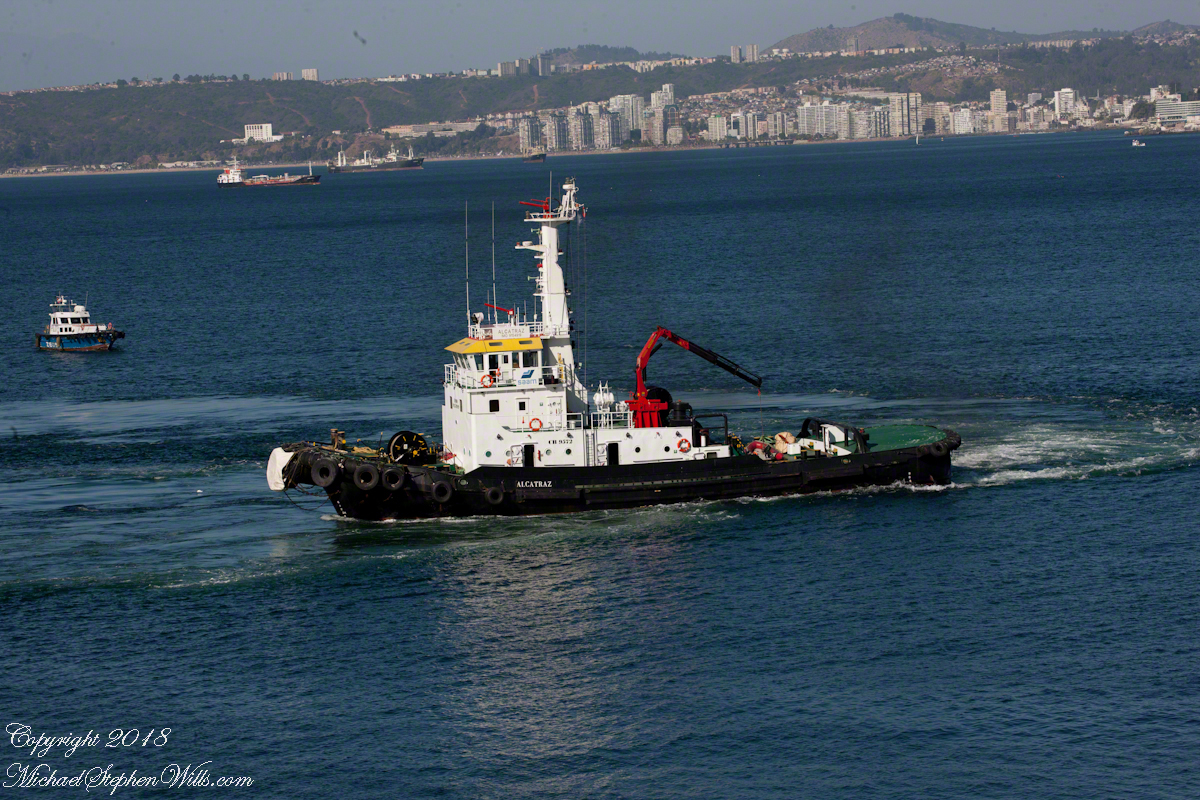
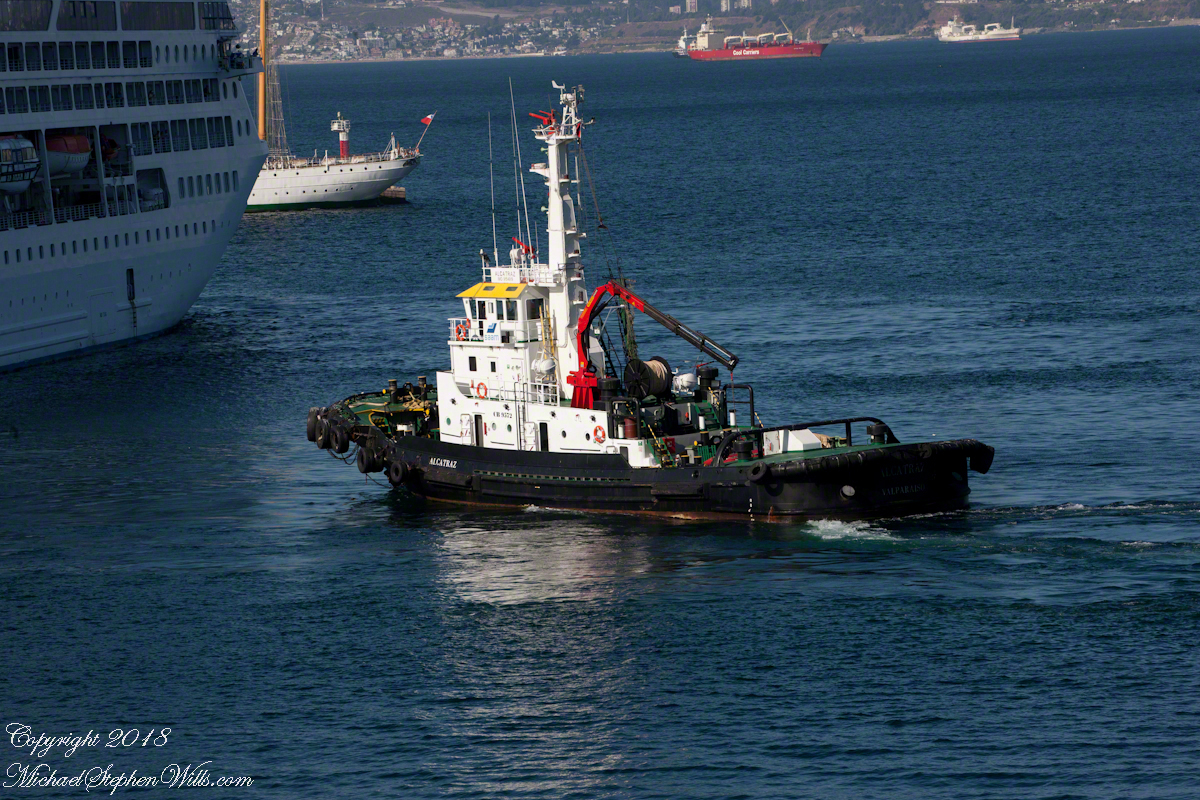
…with the assistance of the tugboat Alcatraz, a name derived from the Spanish word for pelican as in “La Isla de los Alcatraces” (Island of the Pelicans) where the former Alcatraz prison was built in San Francisco Harbor.  Spanish speakers think of birds when viewing the tub boat.  Americans think of prisoners (escaping) and San Francisco.  Unlike San Francisco Harbor, Valparaiso Bay is a semi-circle open to the ocean, the harbor is on the southern, north facing (away from the ocean) shore, protected by a long (3,000 foot) breakwater along which the Chilean war ships dock.  We are viewing the Alcatraz after most of the work for the Ocean Princess departure was done.

ValparaisoDeparture-3

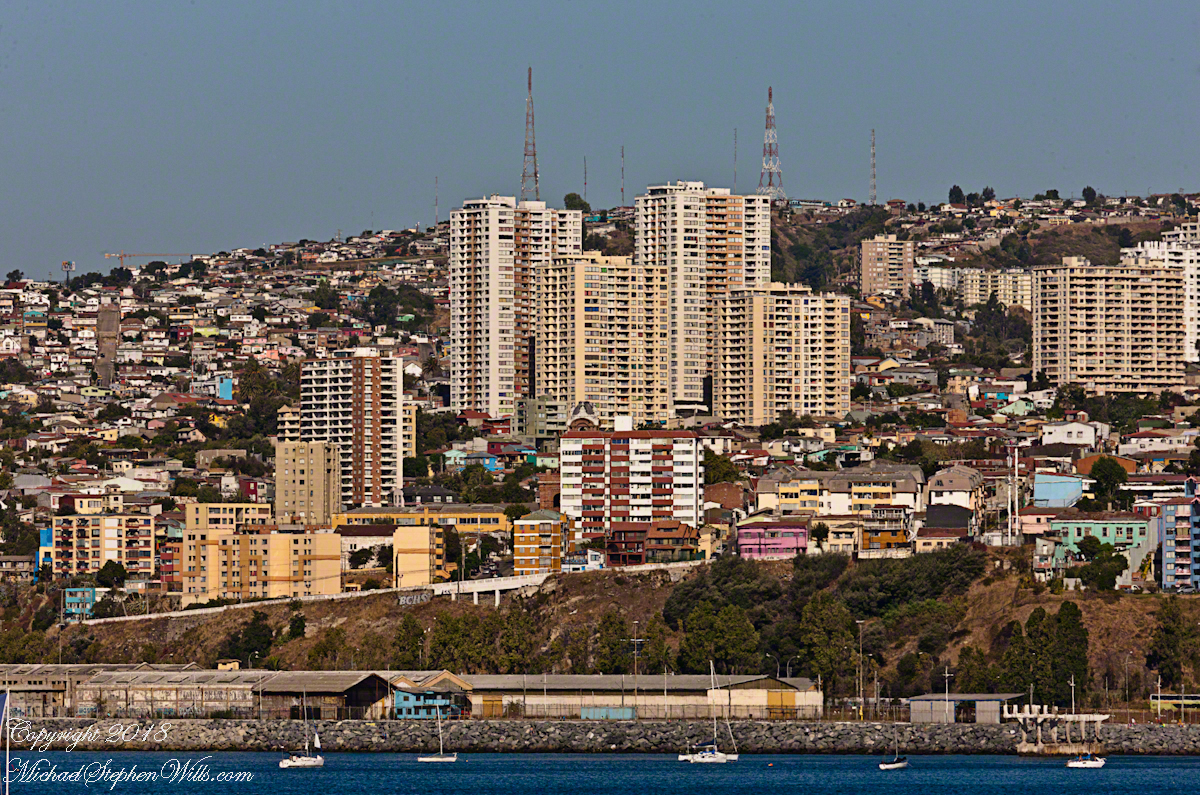
The north end of the bay is residential, behind the towers are homes arrayed on the hillside, the only land available.

Click this link for my Fine Art Photography gallery.

ValparaisoDeparture-4a

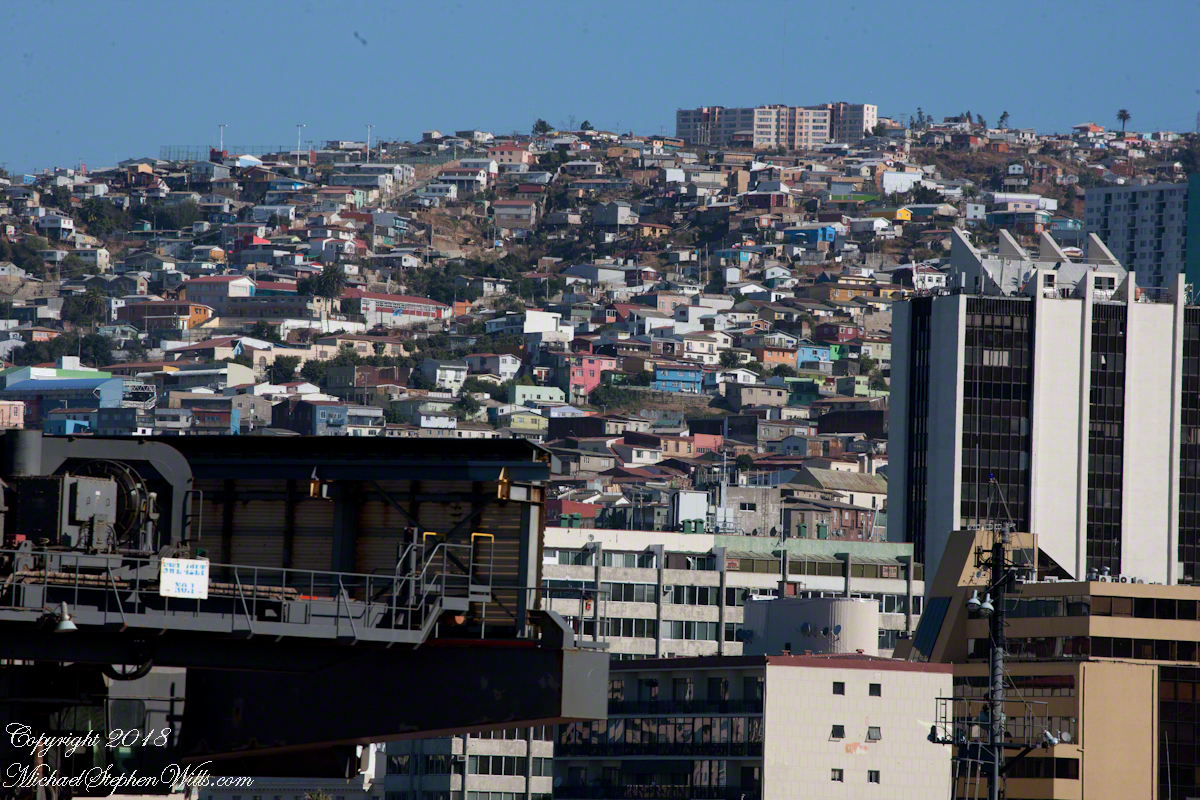
Much of the harbor and city business district, in the foreground (below), on the south side is on land reclaimed from the sea.

ValparaisoDeparture-5

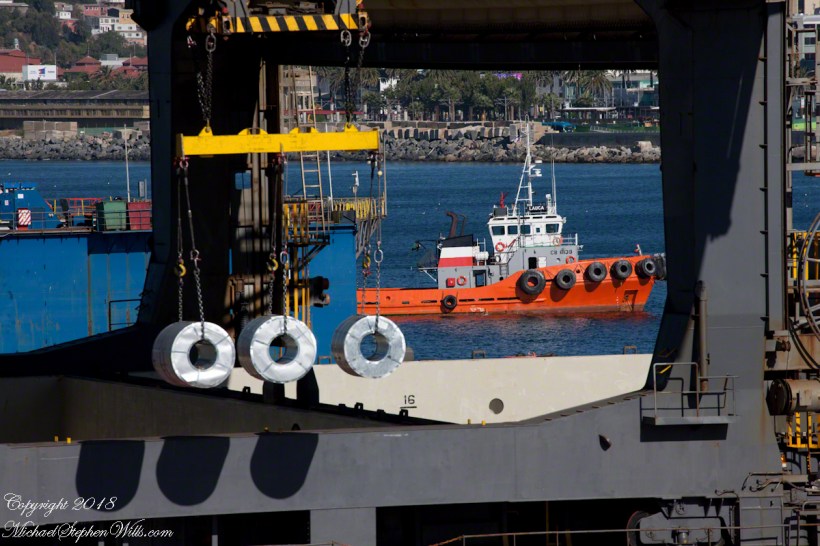
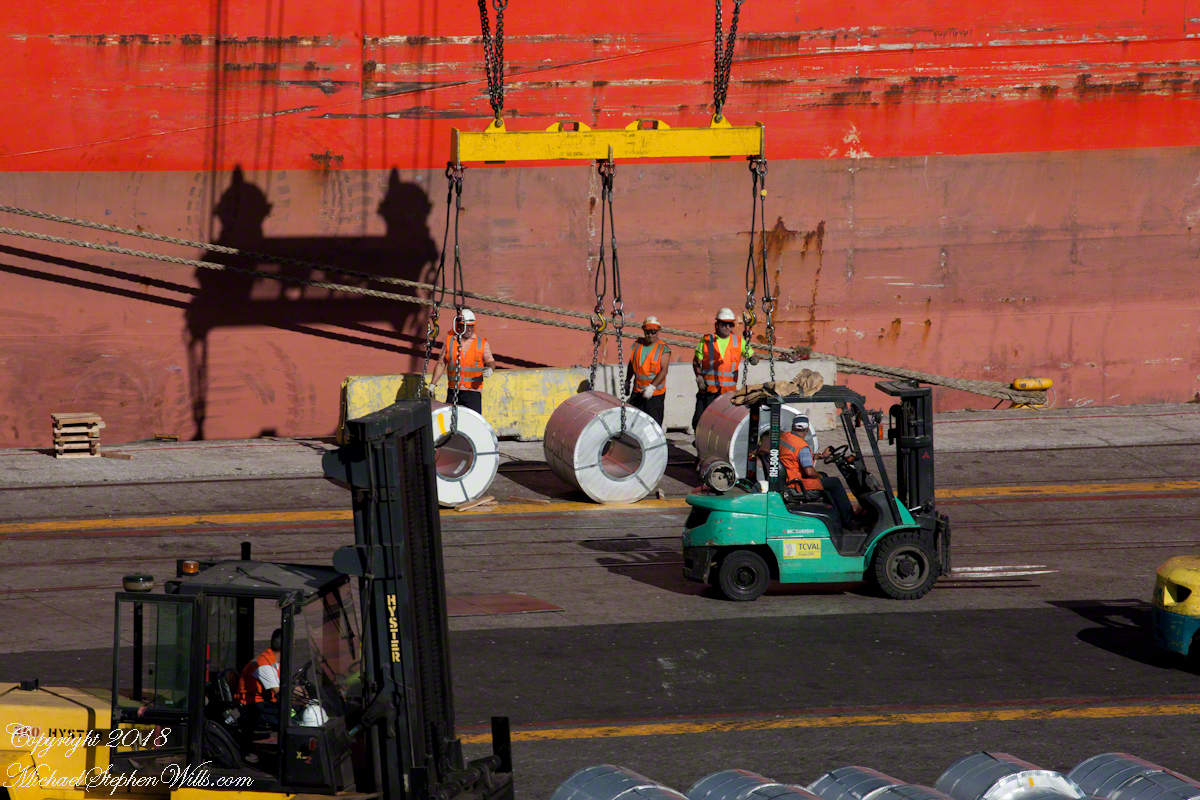
All around the Regatta was a working port.  Here rolls of cable (wire?) are prepared for hoisting onto a cargo ship.  Note the hawsers, taught under the strain, between the workmen and the ship hull.

ValparaisoDeparture-6

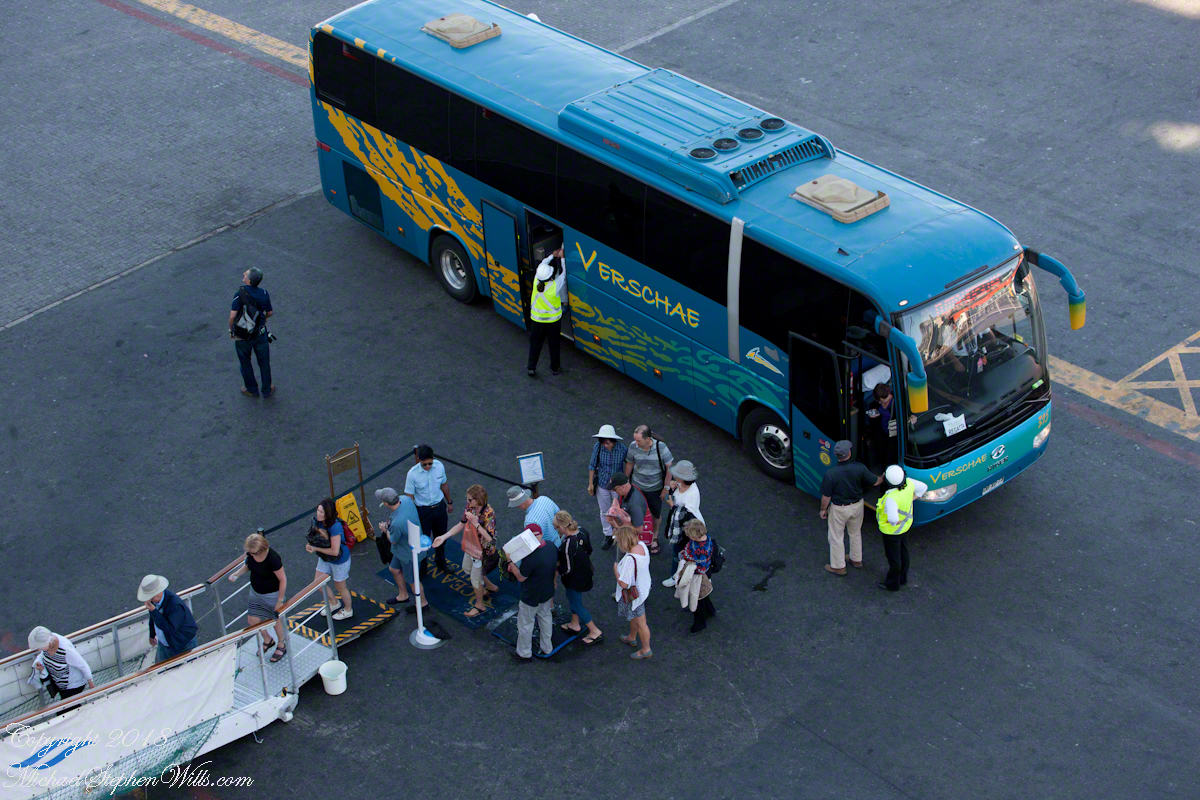
Passengers board the Regatta from the last tours.  I expect this is the trip to Santiago.  Most of the dockings the Regatta was surrounded by the port, the only way to access the city was on a tour bus as the port activity made walking too dangerous.

Click this link for my Fine Art Photography gallery.

ValparaisoDeparture-7

I can only guess the role the Alcatraz is playing here…..

ValparaisoDeparture-8

…. probably it is positioned to give the Ocean Princess a nudge if the harbor pilot misjudges the turn around the breakwater and warships.  In a harbor, a ship’s crew passes control to a harbor pilot who knows the navigation challenges much better than is possible for them.

ValparaisoDeparture-9

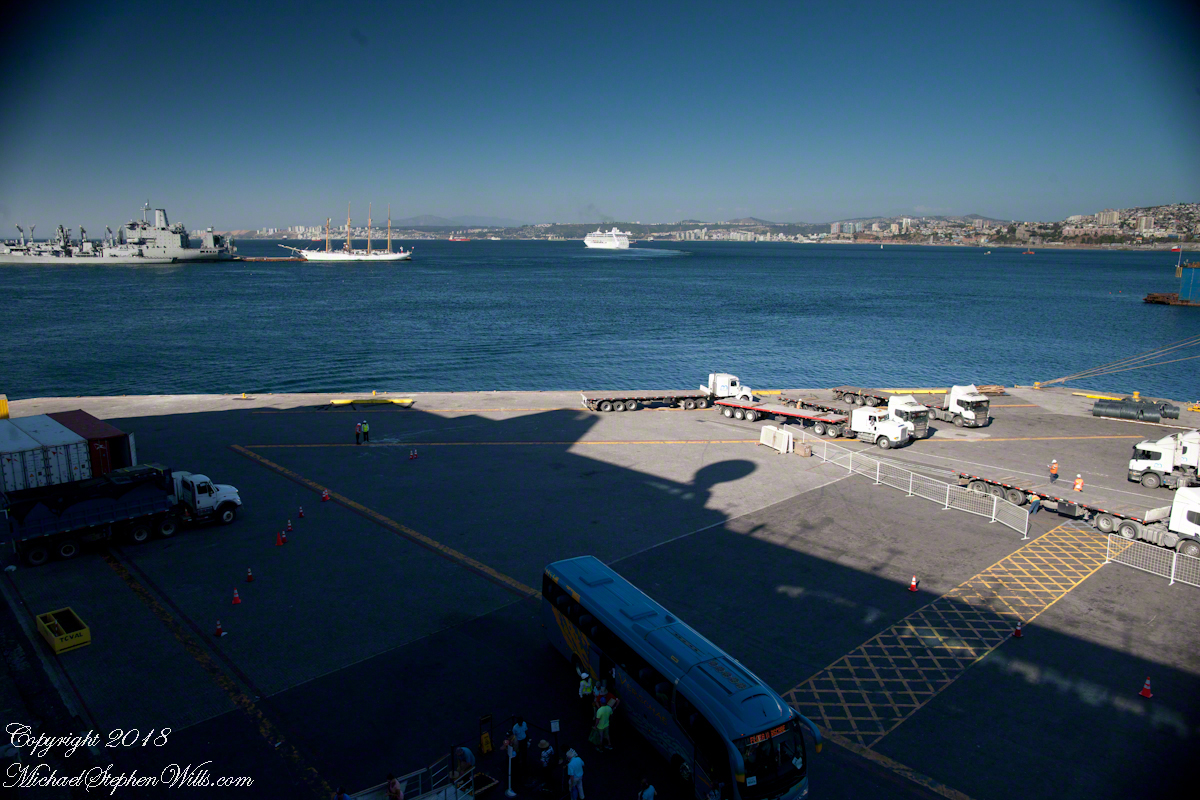
Today, as 99.9% of all days, the pilot makes the turn safely.  Here is a better view of the warship.

ValparaisoDeparture-10

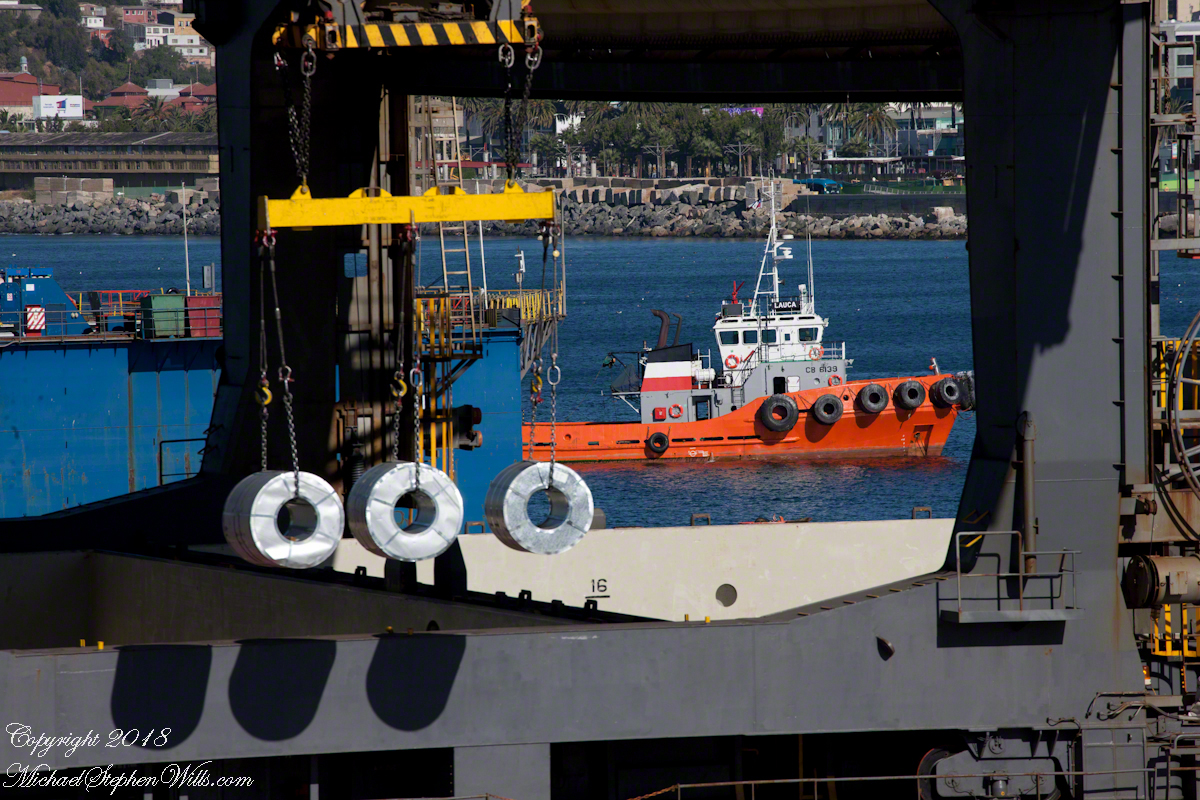
Looking back toward the harbor, the crane is hoisting those rolls, the tug boat “Lauca” framed by the superstructure of (I think) the crane.

ValparaisoDeparture-11

The Ocean Princess is will under way, as shown by the long wake.  As luck will have it, When the Regatta follows the sun will be much lower, the light better for photography.  At the stern of the warship, the masted vessel is a training ship for the Chilean Naval Academy.

Click this link for my Fine Art Photography gallery.

ValparaisoDeparture-12

Copyright 2022 Michael Stephen Wills All Rights Reserved