On a crisp October afternoon, October 3, 2024, Pam and I reveled in Upper Robert H. Treman State Park, a serene oasis nestled in Tompkins County. This visit was particularly special for us, a step in Pam’s recovery from her August hip replacement. I remember the sound of her hiking pole tapping the ground as we walked together, feeling grateful for her progress since surgery. The air was cool, and the leaves, turning gold and orange, whispered in the breeze, providing the perfect backdrop for our outing that day.
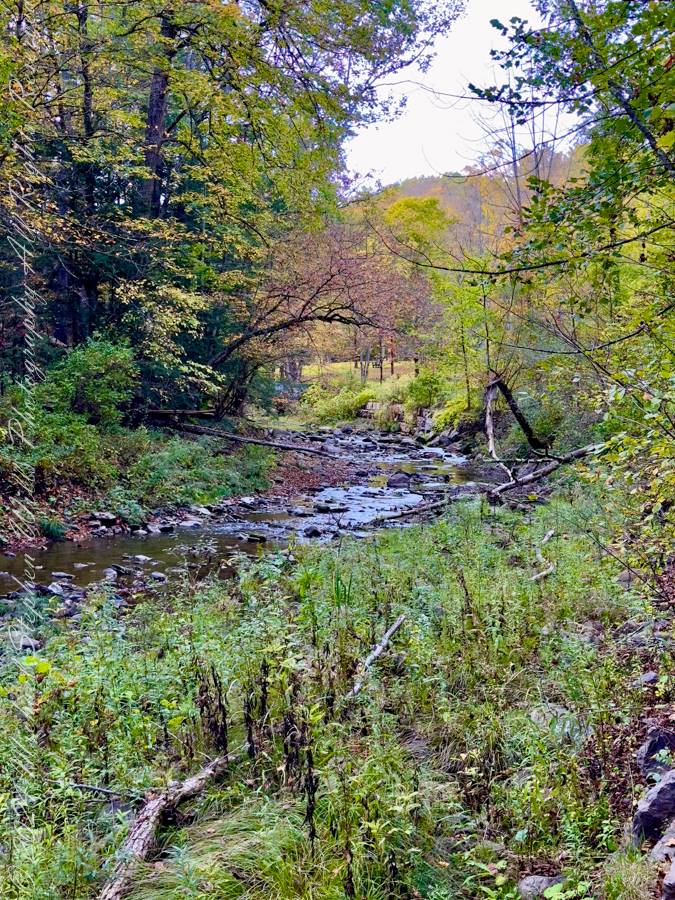
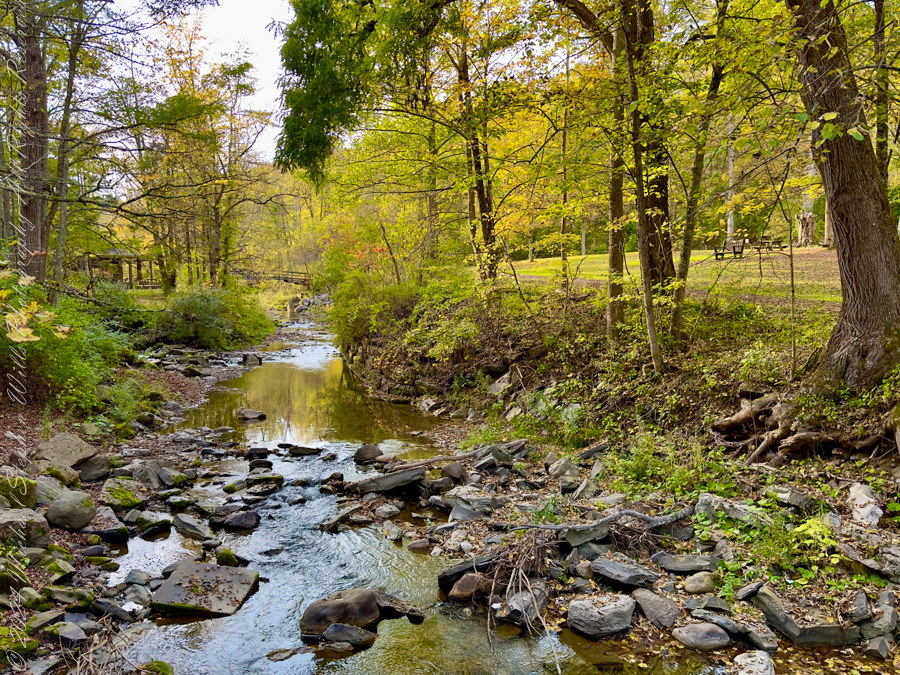
Our path followed the creek, the same creek that winds through the heart of the park, framed by layers of stone and lush vegetation. In one of the first photos I took that day, you can see the creek reflecting the soft autumn light, its bed dotted with rocks and fallen branches. The vibrant greens of the undergrowth juxtaposed with the golden leaves made the scene feel timeless, as though nature itself was participating in Pam’s recovery, offering healing in its quiet, enduring beauty.
The view upstream just before the creek enters The Gallery. Robert H. Treman State Park, Enfield, Tompkins County, Finger Lakes Region, New York State.
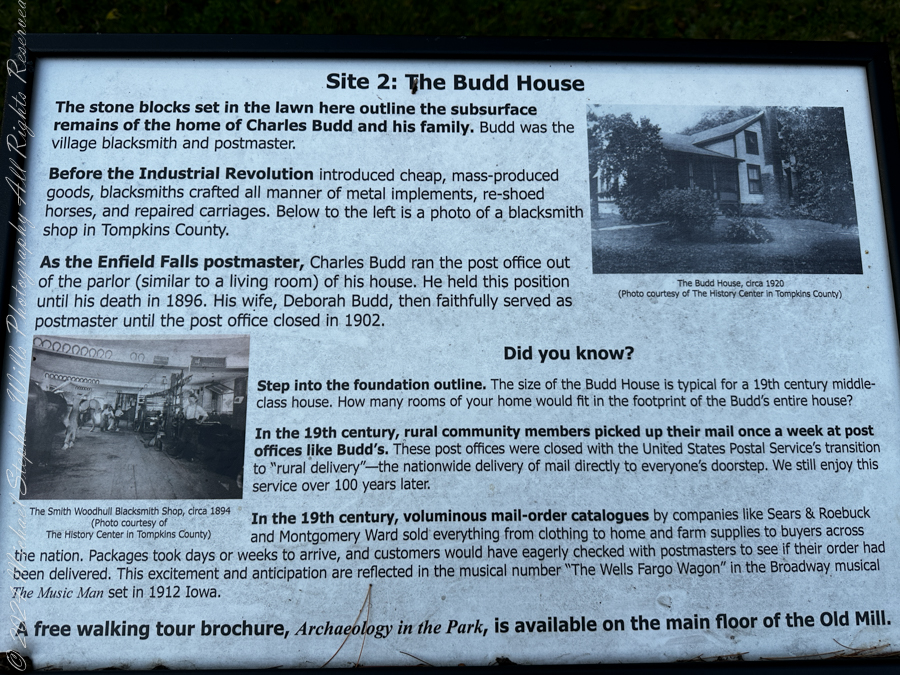
We paused to take in the quiet hum of life around us. There was a sense of history in the park that seemed to blend with our personal story. As we wandered deeper, we reached the foundation of the old Budd House, its stone blocks now barely a shadow of the past but still carrying echoes of life lived long ago. The placard described Charles Budd, a village blacksmith and postmaster, and his wife, Deborah, who continued to serve the community after his passing. Standing there, I reflected on how these stones, much like Pam’s journey, represented resilience and the passage of time.
Site 2: The Budd House
The stone blocks set in the lawn here outline the subsurface remains of the home of Charles Budd and his family. Budd was the village blacksmith and postmaster.
Before the Industrial Revolution introduced cheap, mass-produced goods, blacksmiths crafted all manner of metal implements, re-shoed horses, and repaired carriages. Below to the left is a photo of a blacksmith shop in Tompkins County.
As the Enfield Falls postmaster, Charles Budd ran the post office out of the parlor (similar to a living room) of his house. He held this position until his death in 1896. His wife, Deborah Budd, then faithfully served as postmaster until the post office closed in 1902.
Did you know?
Step into the foundation outline. The size of the Budd House is typical for a 19th century middle-class house. How many rooms of your home would fit in the footprint of the Budd’s entire house?
In the 19th century, rural community members picked up their mail once a week at post offices like Budd’s. These post offices were closed with the United States Postal Service’s transition to “rural delivery”—the nationwide delivery of mail directly to everyone’s doorstep. We still enjoy this service over 100 years later.
In the 19th century, voluminous mail-order catalogues by companies like Sears & Roebuck and Montgomery Ward sold everything from clothing to home and farm supplies to buyers across the nation. Packages took days or weeks to arrive, and customers would have eagerly checked with postmasters to see if their order had been delivered. This excitement and anticipation are reflected in the musical number “The Wells Fargo Wagon” in the Broadway musical The Music Man set in 1912 Iowa.
A free walking tour brochure, Archaeology in the Park, is available on the main floor of the Old Mill. Upper Treman. Robert H. Treman State Park, Enfield, Tompkins County, Finger Lakes Region, New York State.
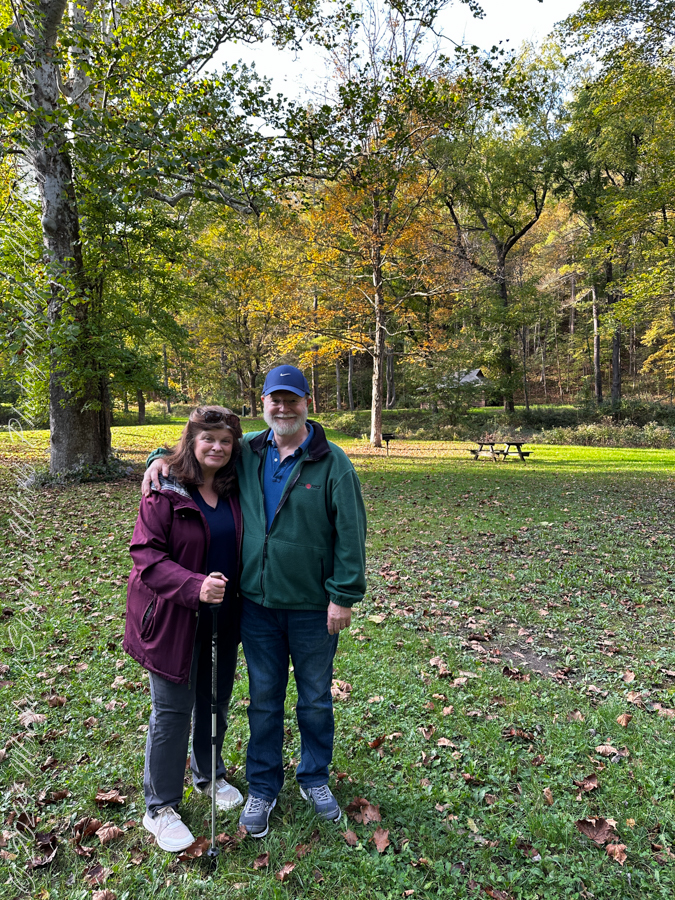
As we stood by the foundation, we met another couple. The woman shared her own story of recovery, a tale of resilience that resonated deeply with us. She had fallen and suffered a spinal injury, becoming paralyzed from the neck down, while traveling. Thanks to surgery and rehabilitation, she regained full mobility. There was a moment of understanding and connection between us. We offered to take a photo of them, and they returned the favor, capturing the two of us—Pam leaning lightly on her cane, smiling, surrounded by trees whose leaves were beginning to fall. That picture, one of my favorites from the day, symbolizes not just Pam’s strength but also the support and shared experiences that come with recovery.
We are taking a walk through upper Treman Park during Pam’s recovery from hip replacement. This was taken by a couple we met.
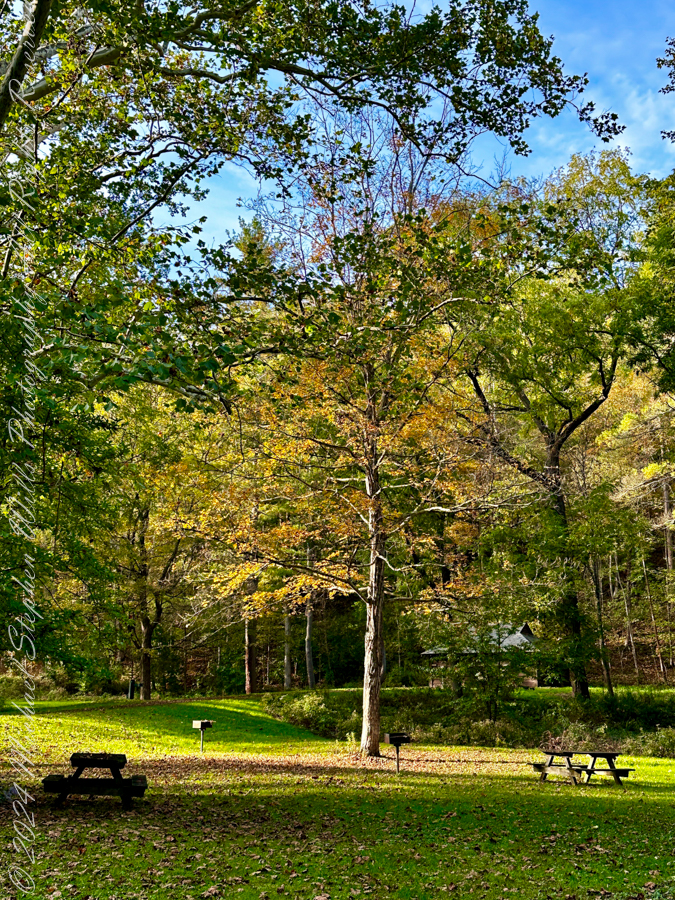
The park offered us a space for reflection and a sense of continuity. The trees, some towering over us with roots gripping the earth, had seen many seasons of change, and now they watched over us as we walked beneath them. In the clearing where picnic tables stood, we sat for a while, simply absorbing the moment. The afternoon light filtered through the branches, casting long shadows on the grass.
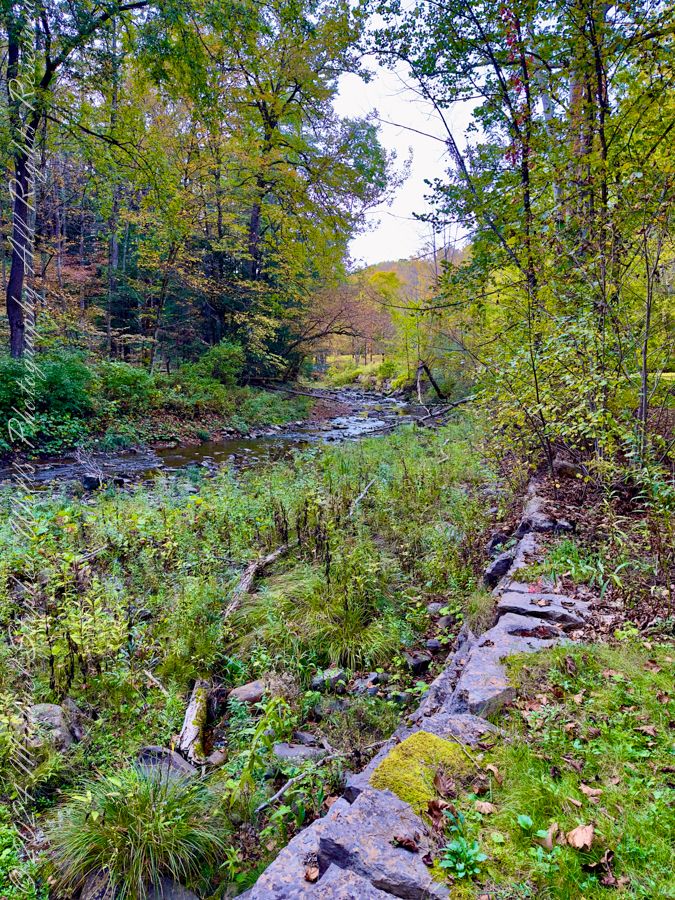
One of the final photos I took that day captures the creek from another angle. The water, calm and clear, reflects the yellow hues of the trees, while the rocks and roots along the bank seem frozen in time. It’s a peaceful image, one that reminds me of the quiet strength that Pam has shown throughout her recovery.
Here Fish Creek, a tributary of Enfield Creek joins the flow just below the pavilion of Upper Treman.
We left the park that day feeling both uplifted and grounded, the layers of history and personal resilience blending seamlessly into the natural landscape. Upper Robert H. Treman had become had become a part of Pam’s recovery story, a testament to the healing power of both nature and community.
Enter your email to receive notification of future postings. I will not sell or share your email address.
Copyright 2024 All Rights Reserved Michael Stephen Wills
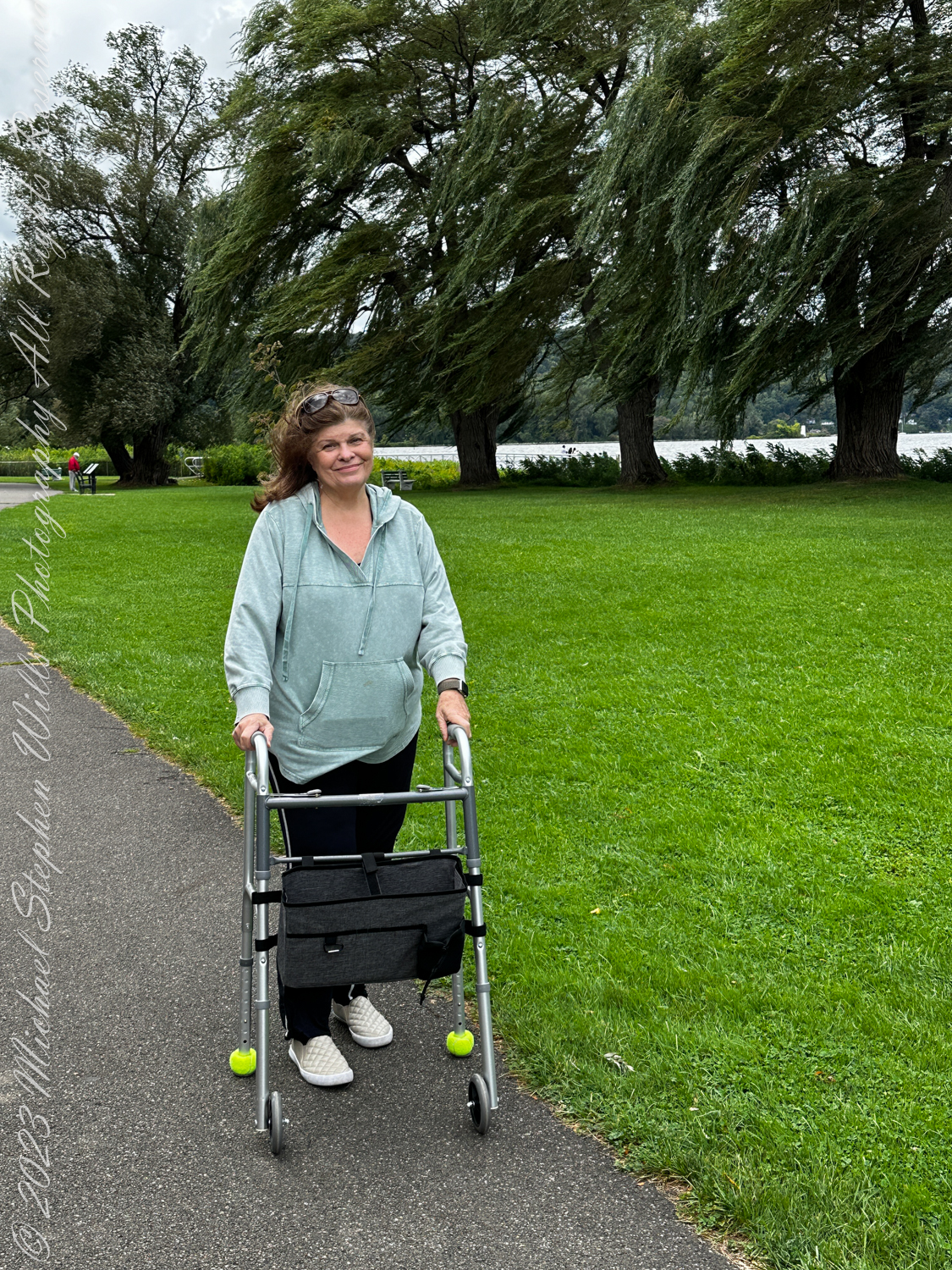
As Pam took her first therapeutic steps through Stewart Park after hip surgery, the wind off Cayuga Lake carried memories of our sailing days. This walk, a milestone along a journey of strength and reflection.
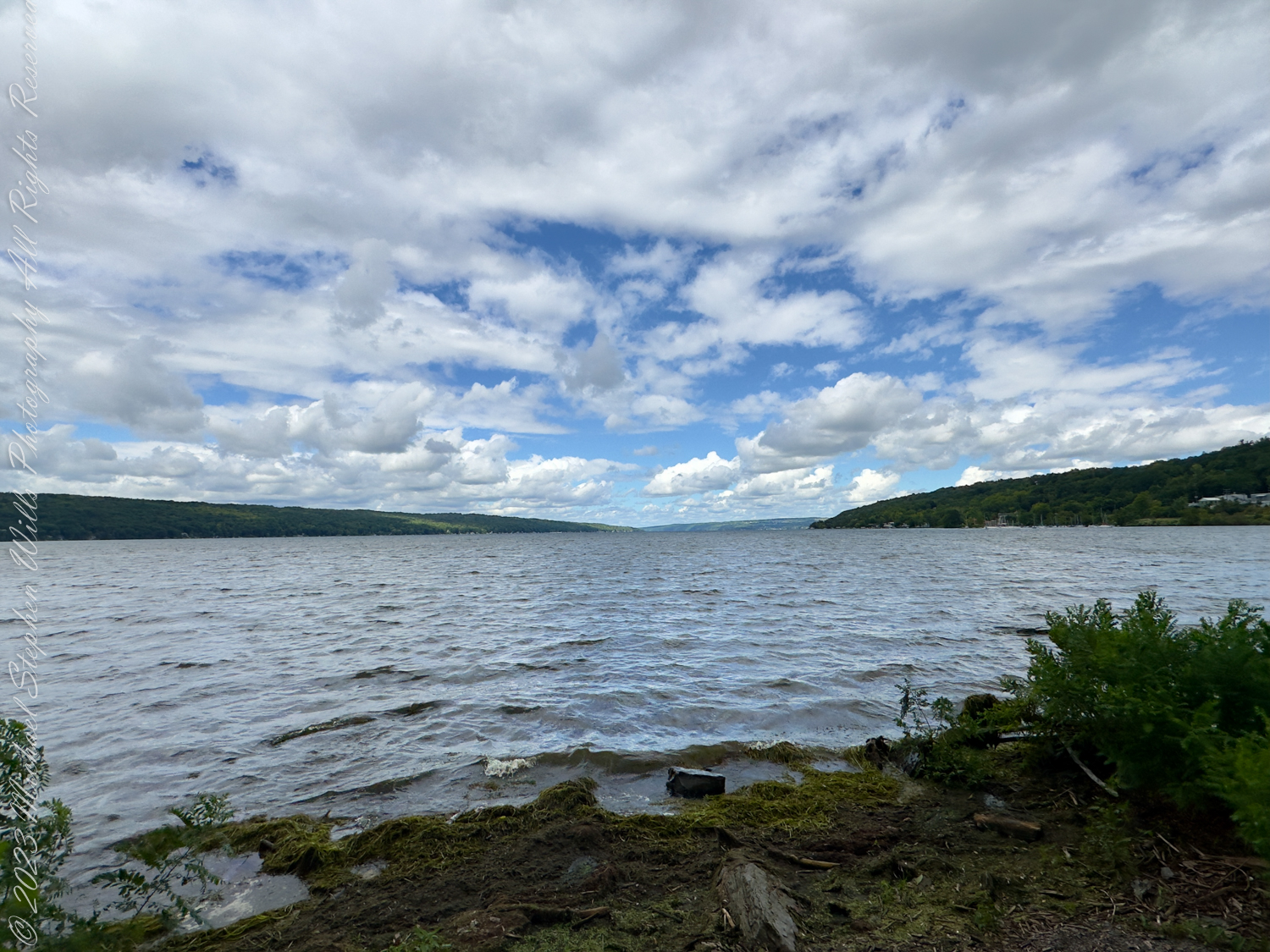
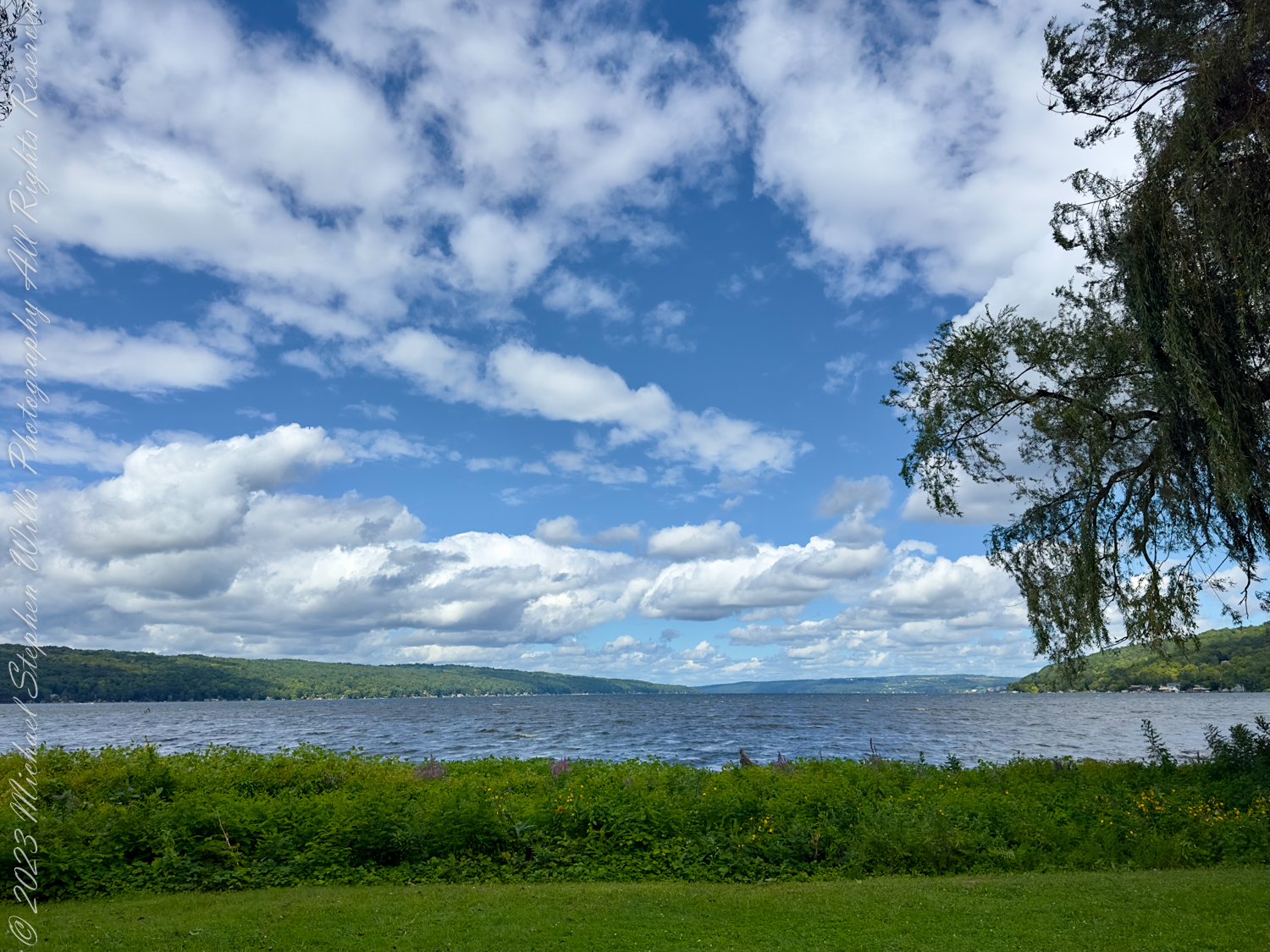
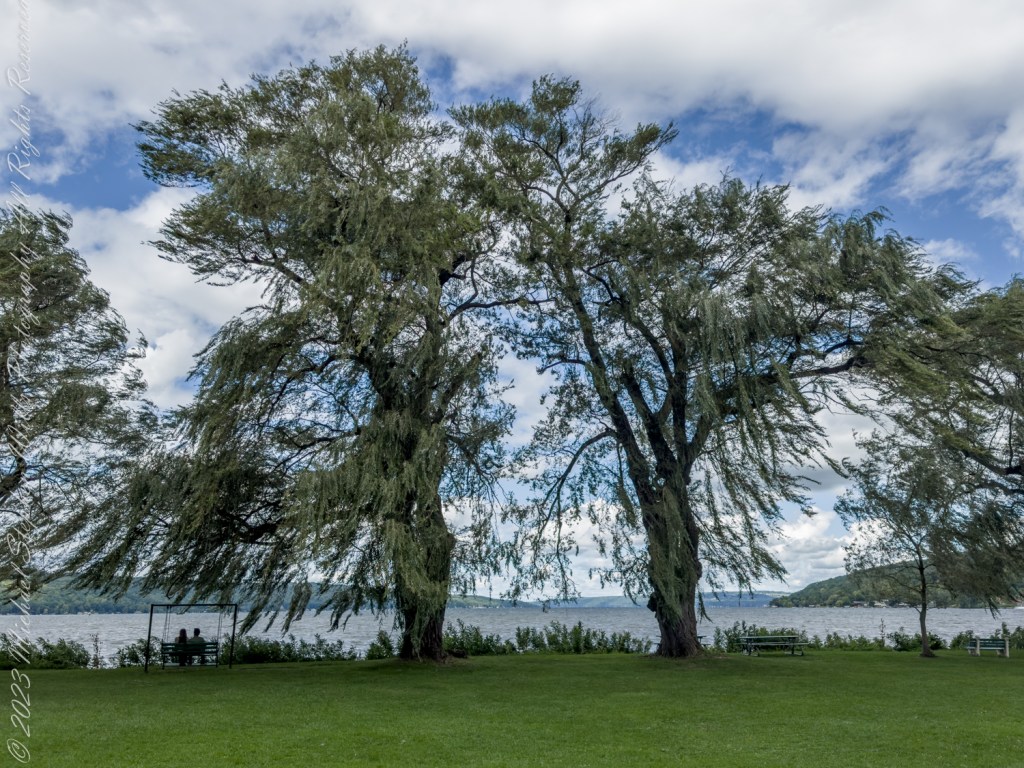
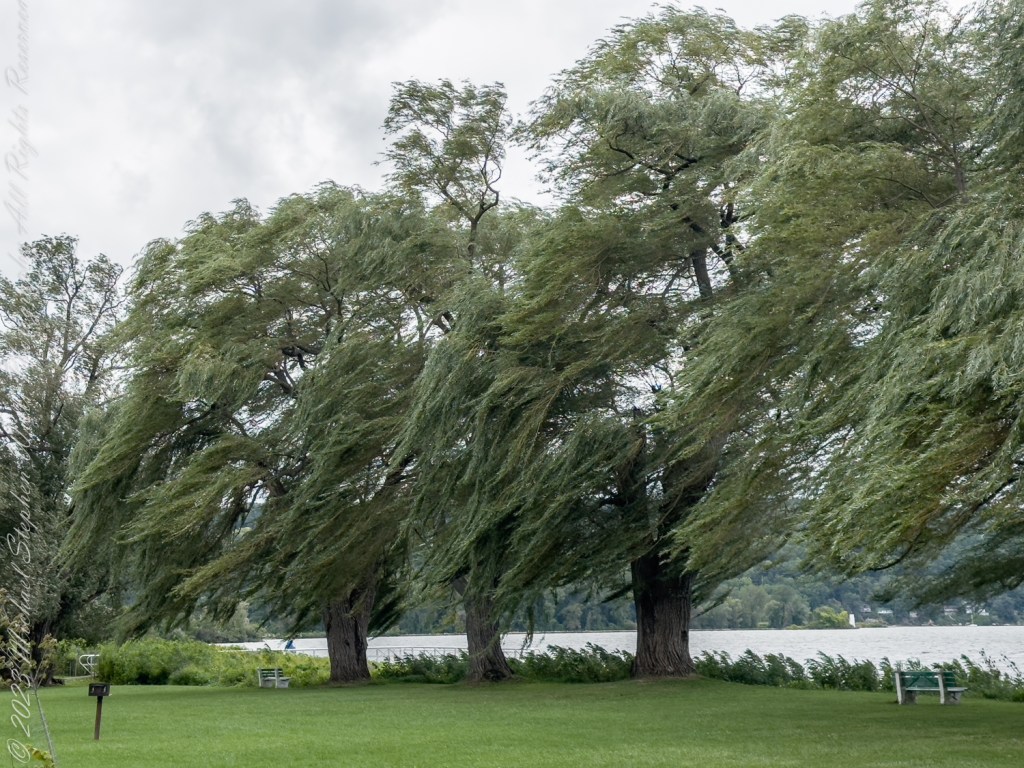
The breeze off Cayuga Lake was lively, stirring the willows and creating waves that rippled across the water’s surface as we arrived at Stewart Park. For Pam, this day marked a significant milestone: her first therapeutic walk since undergoing total hip replacement surgery. The park, located on the outskirts of Ithaca, New York, had long been a place of peaceful walks and scenic reflection for us, but on this day, it took on new meaning. The pathways and views we had enjoyed over the years now served as the backdrop for Pam’s journey of recovery.
As Pam began her walk, using her walker for support, the air felt crisp with the late-summer breeze. She moved carefully along the paved path, her steps steady but measured. The sight of her, framed by the grand trees lining the park, was a testament to the resilience and strength she had displayed throughout the weeks following her surgery. The park’s beauty offered a sense of calm that seemed to support her determination, as though nature itself was encouraging her every step.
Stewart Park, with its sweeping views of Cayuga Lake and towering willows, had always been a special place for us. Over the years, we had spent afternoons such as this sailing the lake’s expansive waters. We ventured out to let the wind carry us across the lake. As Pam walked, we reminisced about those times—how we would navigate the gusty winds that filled our sails, steering into the waves with a sense of adventure. “This wind reminds me your calls to ‘control the jib!!’,” Pam said, smiling as we remembered the thrill of maneuvering the boat to dock.
On days like those, the lake was unpredictable, much like Pam’s journey through recovery had been. Yet, whether on the water or facing the challenges of healing, Pam had always shown a quiet, steadfast determination. Just as we had learned to adjust the sails to accommodate the changing wind patterns, Pam had adapted to her new circumstances, tackling each step of her rehabilitation with grace.
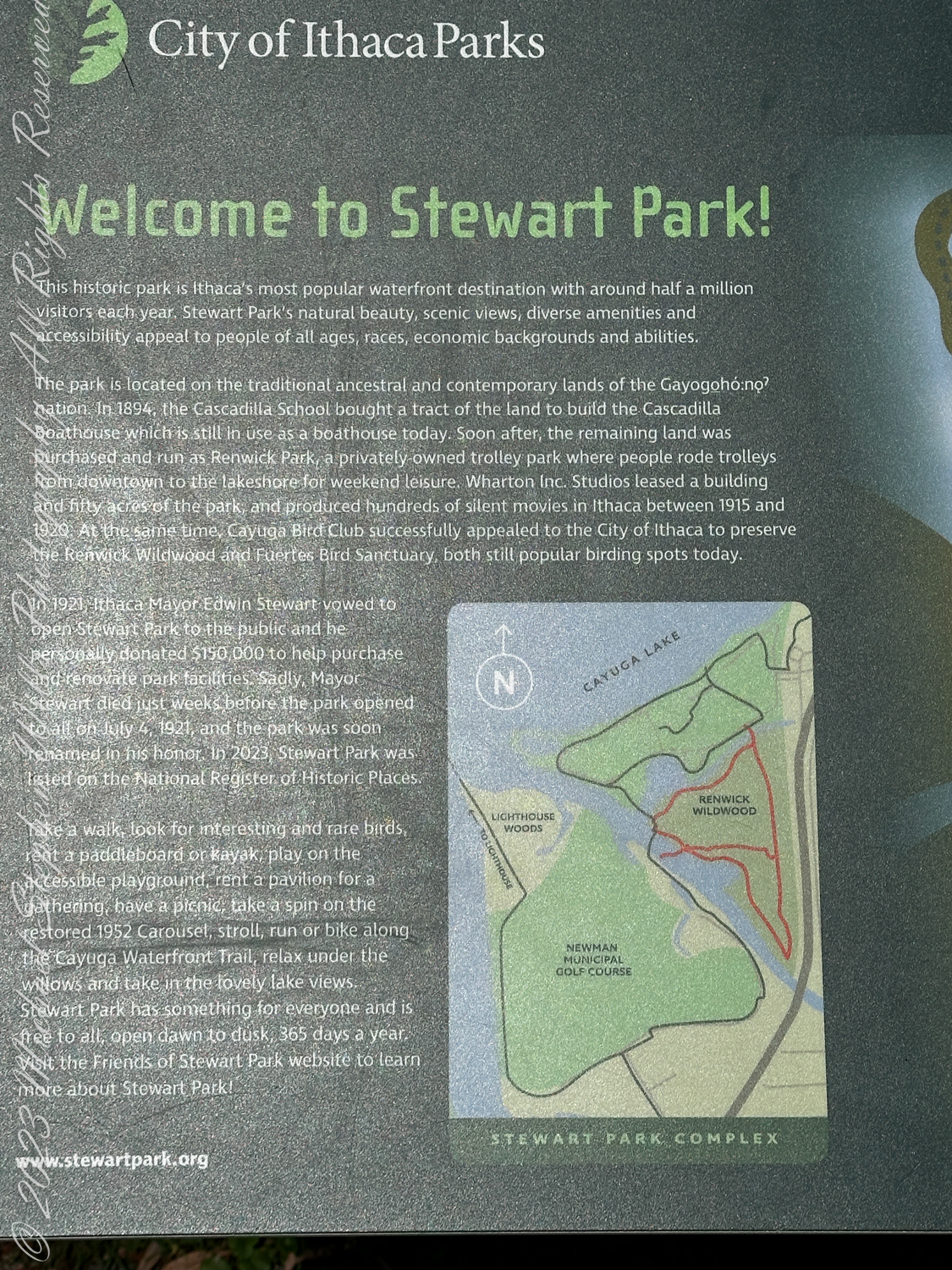
We paused at one of the informational signs along the path. The sign detailed the park’s history, noting that it sits on the ancestral lands of the Gayogo̱hó꞉nǫ’. Originally developed in 1894 for the Cascadilla School’s boathouse, the park had undergone many transformations before becoming the public space it is today. The sign spoke of Mayor Edwin Stewart, who had donated $150,000 to help purchase and renovate the park’s facilities, only to pass away weeks before its official opening in 1921. In 2021, the park was listed on the National Register of Historic Places, a testament to its enduring role in the community.
City of Ithaca Parks
Welcome to Stewart Park!
This historic park is Ithaca’s most popular waterfront destination with around half a million visitors each year. Stewart Park’s natural beauty, scenic views, diverse amenities and accessibility appeal to people of all ages, races, economic backgrounds and abilities.
The park is located on the traditional ancestral and contemporary lands of the Gayogo̱hó꞉nǫʼ nation. In 1894, the Cascadilla School bought a tract of the land to build the Cascadilla Boathouse which is still in use as a boathouse today. Soon after, the remaining land was purchased and run as Renwick Park, a privately owned trolley park where people rode trolleys from downtown to the lakeshore for weekend leisure. Wharton Inc. Studios leased a building and fifty acres of the park, and produced hundreds of silent movies in Ithaca between 1915 and 1920. At the same time, Cayuga Bird Club successfully appealed to the City of Ithaca to preserve the Renwick Wildwood and Fuertes Bird Sanctuary, both still popular birding spots today.
In 1921 Ithaca Mayor Edwin Stewart vowed to open Stewart Park to the public and he personally donated $150,000 to help purchase and renovate park facilities. Sadly, Mayor Stewart died just weeks before the park opened to all on July 4, 1921, and the park was soon renamed in his honor. In 2021 Stewart Park was listed on the National Register of Historic Places.
Take a walk, look for interesting and rare birds, rent a paddleboard or kayak; play on the accessible playground, rent a pavilion for a gathering, have a picnic, take a spin on the restored 1952 Carousel, stroll, run or bike along the Cayuga Waterfront Trail, relax under the willows and take in the lovely lake views. Stewart Park has something for everyone and is free to all, open dawn to dusk, 365 days a year. Visit the Friends of Stewart Park website to learn more about Stewart Park!
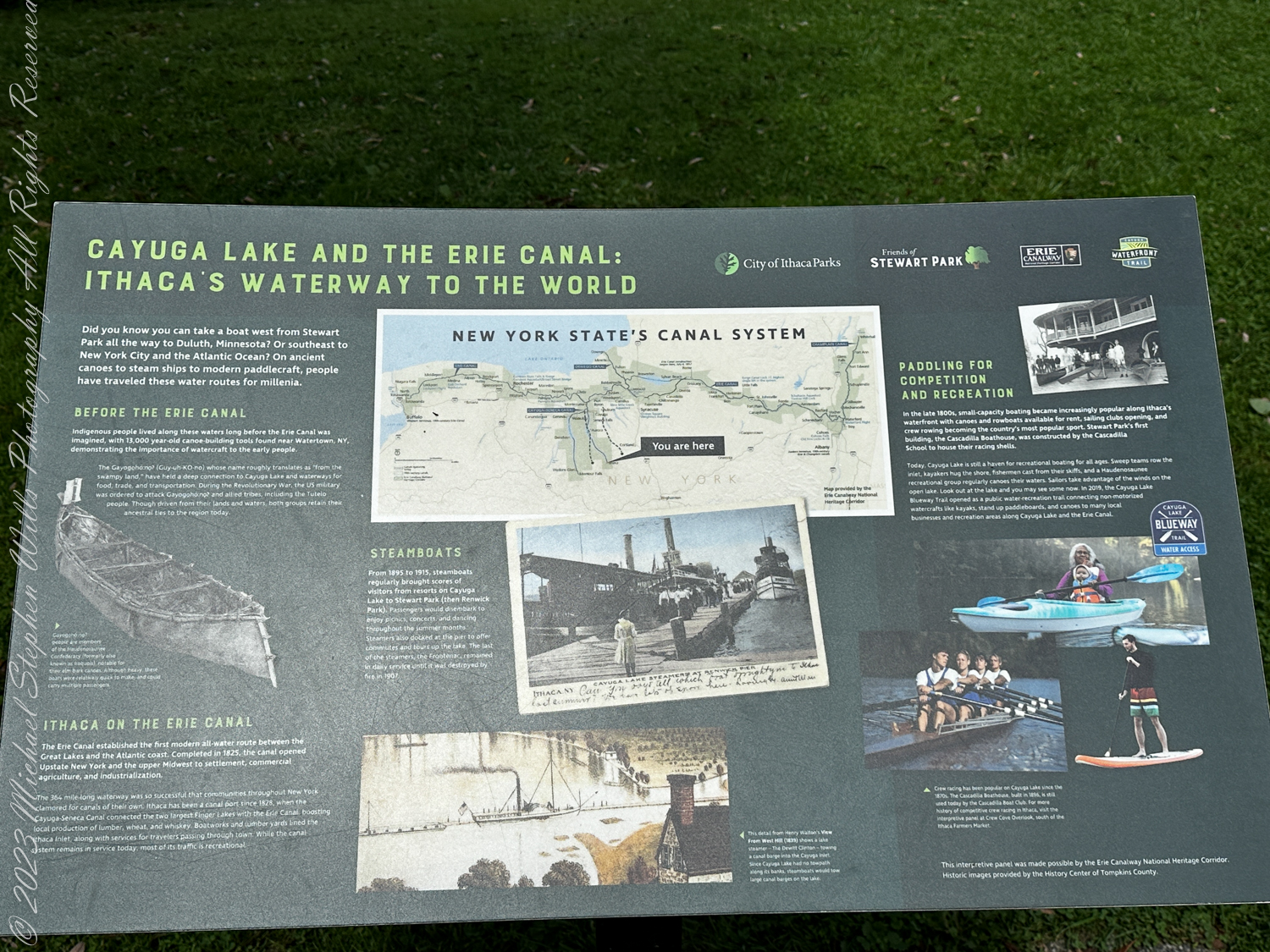
CAYUGA LAKE AND THE ERIE CANAL: ITHACA’S WATERWAY TO THE WORLD
Did you know you can take a boat west from Stewart Park all the way to Duluth, Minnesota? Or southeast to New York City and the Atlantic Ocean? On ancient canoes to steam ships to modern paddlecraft, people have traveled these water routes for millenia.
Before the Erie Canal
Indigenous people lived along these waters long before the Erie Canal was completed in 1825. In 1790, a dugout canoe was found near Elmira, NY, demonstrating the importance of waterways to the early people.
The Cayuga/Seneca Gayogo̱hó꞉nǫʼ who lived here for nearly a thousand years used the lake and rivers to transport people and goods. In the 1600s, French explorers reported meeting the Gayogo̱hó꞉nǫʼ as they traveled east along these waterways. Canoes and later watercraft helped settlers move people, goods, and ideas, transforming upstate New York. With only one lock, the lake’s water level would rise and fall, but goods still needed to be portaged, or moved over land. As the first commercial waterway in the US, the Erie Canal used river systems, canal channels, and lakes to connect New York’s inland towns to world markets.
ITHACA ON THE ERIE CANAL
The canal established the first modern all-water route between the Great Lakes and the Atlantic. Completed in 1825, the canal opened Upstate New York and the upper Midwest to settlement, commercial agriculture, and industry.
The southernmost port of the canal was at Cayuga Lake, near present-day Route 90, where steamboats ferried passengers and freight to and from Ithaca. Products like salt from Syracuse, wood from the region, and coal from Pennsylvania were loaded onto canal boats for shipment to New York City or via Buffalo, to the upper Midwest.
After more than 200 years of service, the canal has evolved into a water route that is primarily used by small boats for recreation. In 2017, the NYS Canal Corporation rebranded the canal as a recreation destination.
As Pam read the sign, she reflected on how the park’s evolution mirrored her own journey. Like Stewart Park, which had undergone multiple transformations over the years, Pam was in the midst of her own renewal. Her new hip, like the park’s renovations, represented a fresh start, a return to activity, and a promise of more days spent outdoors, enjoying the natural beauty that had always brought us peace.
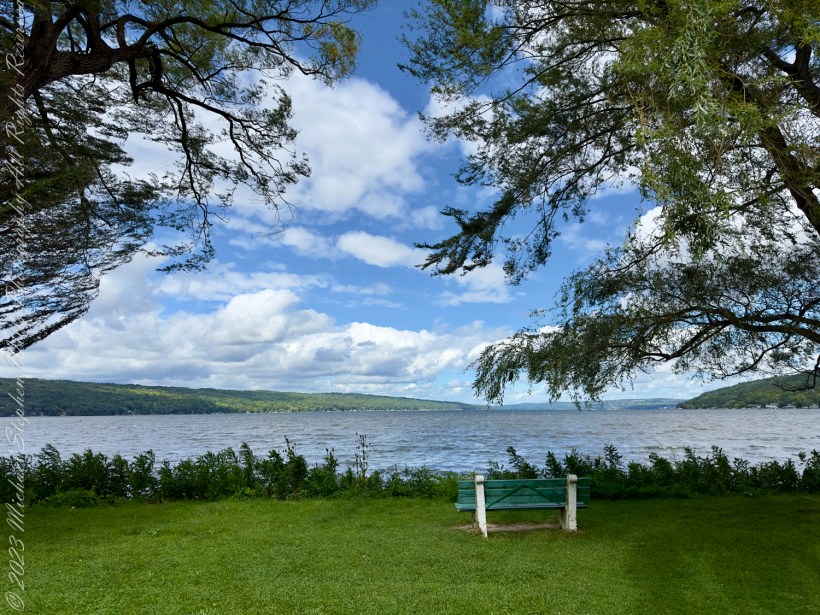
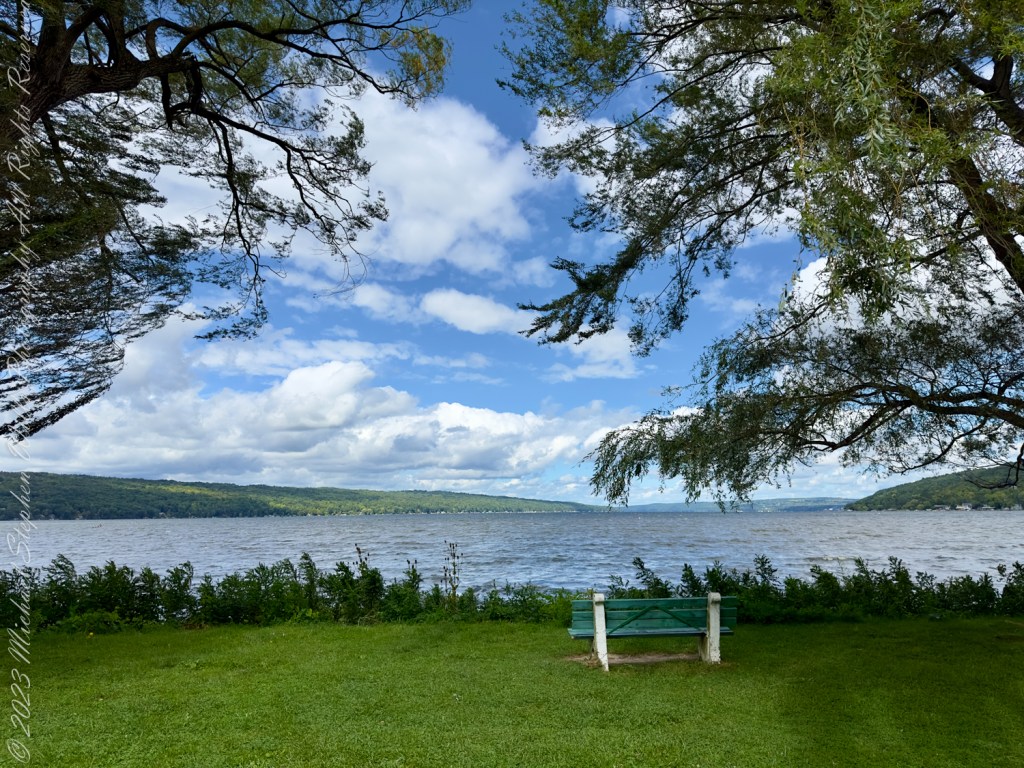
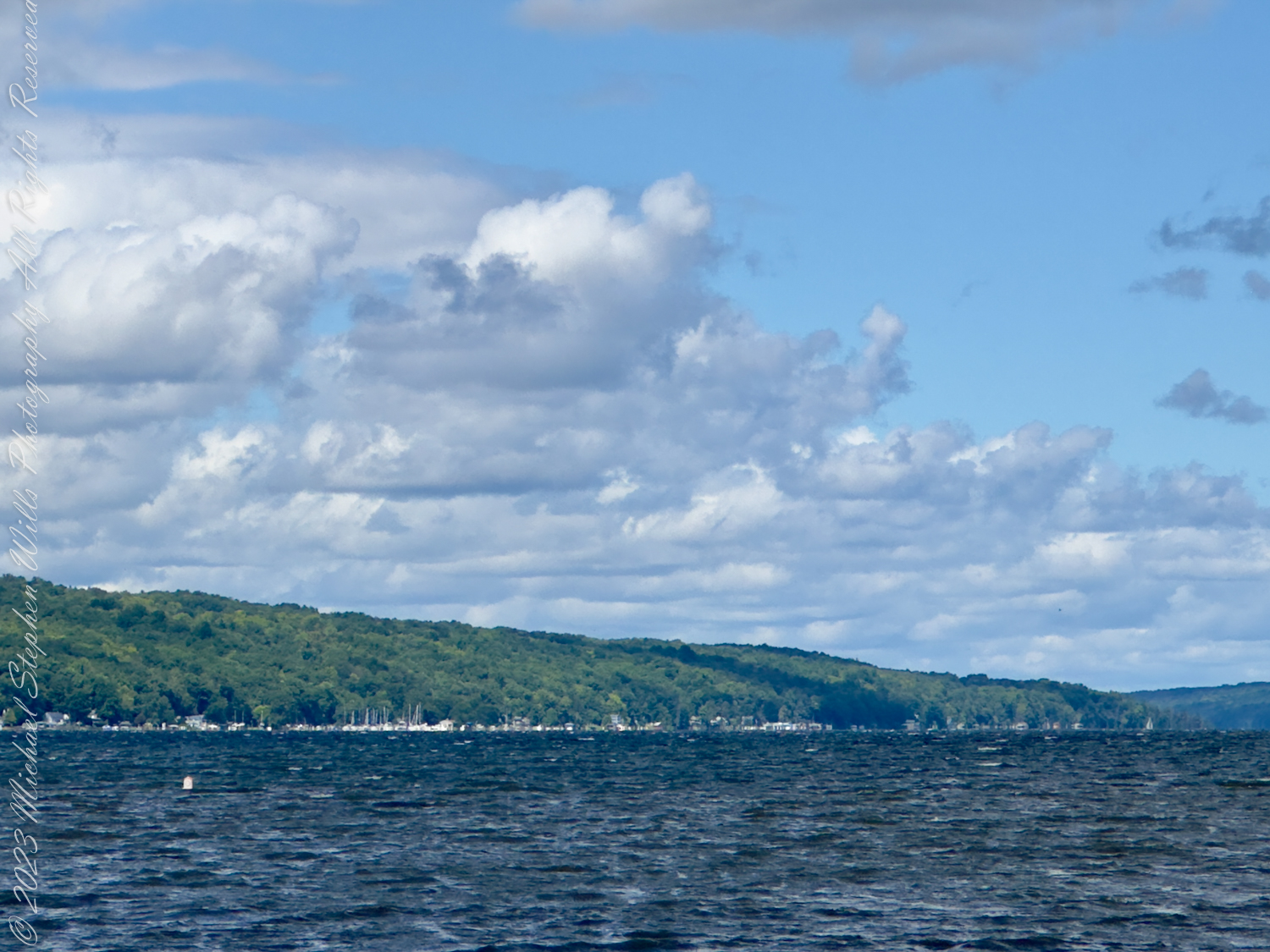
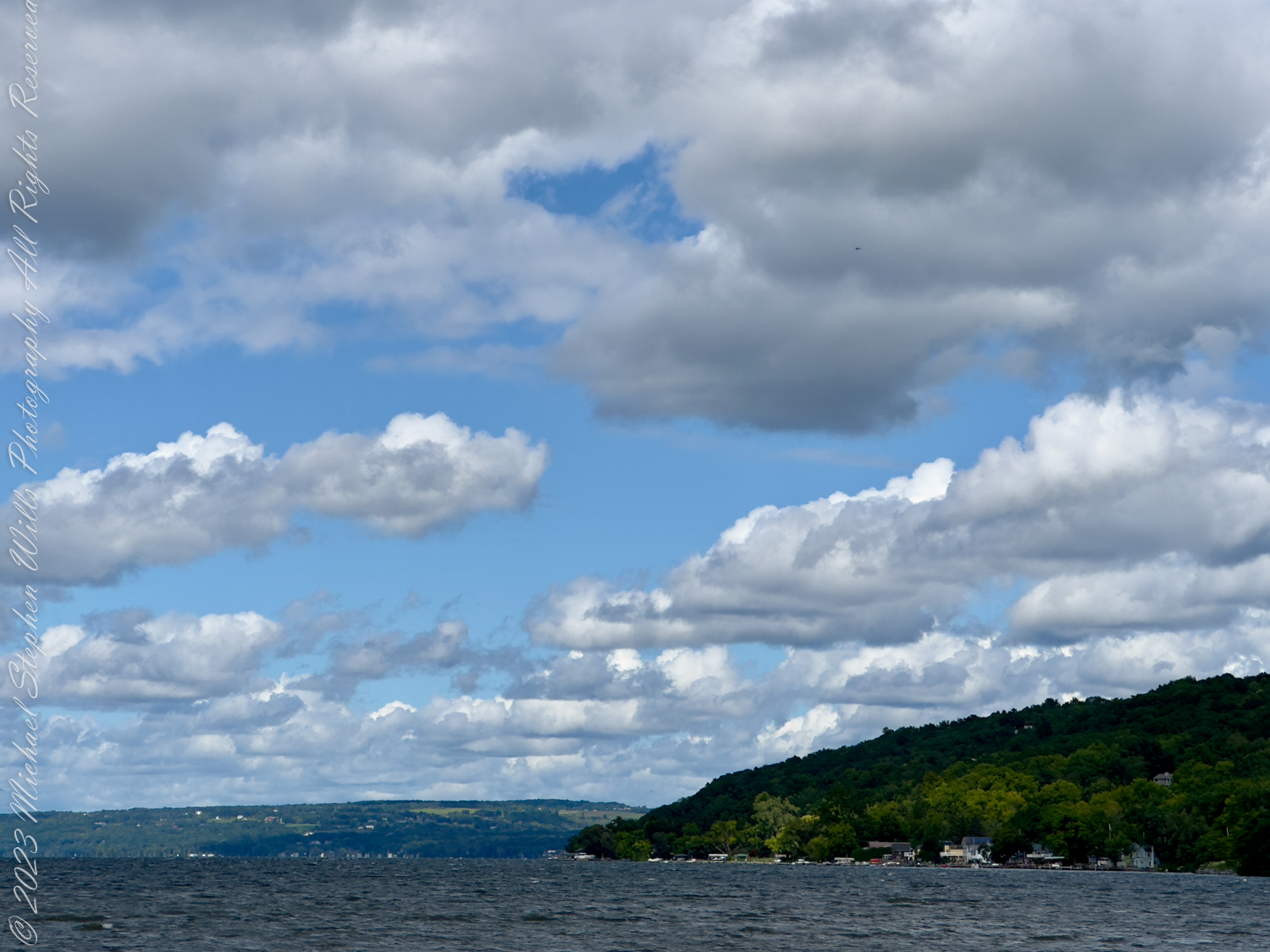
Continuing along the path, we passed several benches nestled beneath the graceful willows, their branches swaying gently in the breeze. Pam took a moment to rest on one of the benches, her eyes focused on the vast expanse of Cayuga Lake. The view stretched toward the distant hills, where the clouds and sun played together, casting ever-shifting patterns of light across the water. For a brief moment, it felt like we were back on our sailboat, riding the waves and allowing the wind to guide us toward new horizons.
As we made our way back along the path, the tall willows swaying and the sound of the waves lapping at the shore, I couldn’t help but feel gratitude. Stewart Park had always been a place of calm and reflection, but on this day, it became a place of healing. Pam’s steps, though slow and deliberate, were filled with the same strength and grace she had shown throughout her life.
The park’s beauty, the history we had shared here, and the memories of our time spent sailing on Cayuga Lake all came together to create a sense of peace. Pam’s recovery journey was far from over, but her progress was undeniable. As we looked out over the lake one last time before heading home, the water shimmered in the sunlight, promising more adventures to come.
Stewart Park, with its windswept trees and timeless views, would forever be tied to this day—Pam’s first steps toward reclaiming her mobility, set against the backdrop of a place that had long been part of our shared story. It was a day filled with hope, strength, and the quiet knowledge that, like the wind, life would continue to move us forward, no matter the challenges.
Copyright 2024 Michael Stephen Wills All Rights Reserved
 Michael Stephen Wills Photography