Glacial Kettle Bog Wonders: Photographing Pitcher Plants at the O.D. Engeln Preserve in Freeville

Step onto Freeville’s O.D. Engeln Preserve boardwalk and meet purple pitcher plants in a glacial kettle bog—carnivorous beauty, hidden blooms, and macro-photo magic.

Seen from 1000 feet above in Google Earth, the O.D. (Von) Engeln Preserve at Malloryville Road lays itself out in two glacial “kettles,” pond and bog; a simple diagram drawn by ice and time, then complicated by everything that has happened since. In my photograph, taken from the bog observation platform on a July morning, the sky is rinsed blue, clouds billow, conifers stitch along the rim around open space. Step closer, or lower your lens, and the openness resolves into a crowded, intimate architecture of sedges and moss, twigs and standing water, sunlight and shadow.
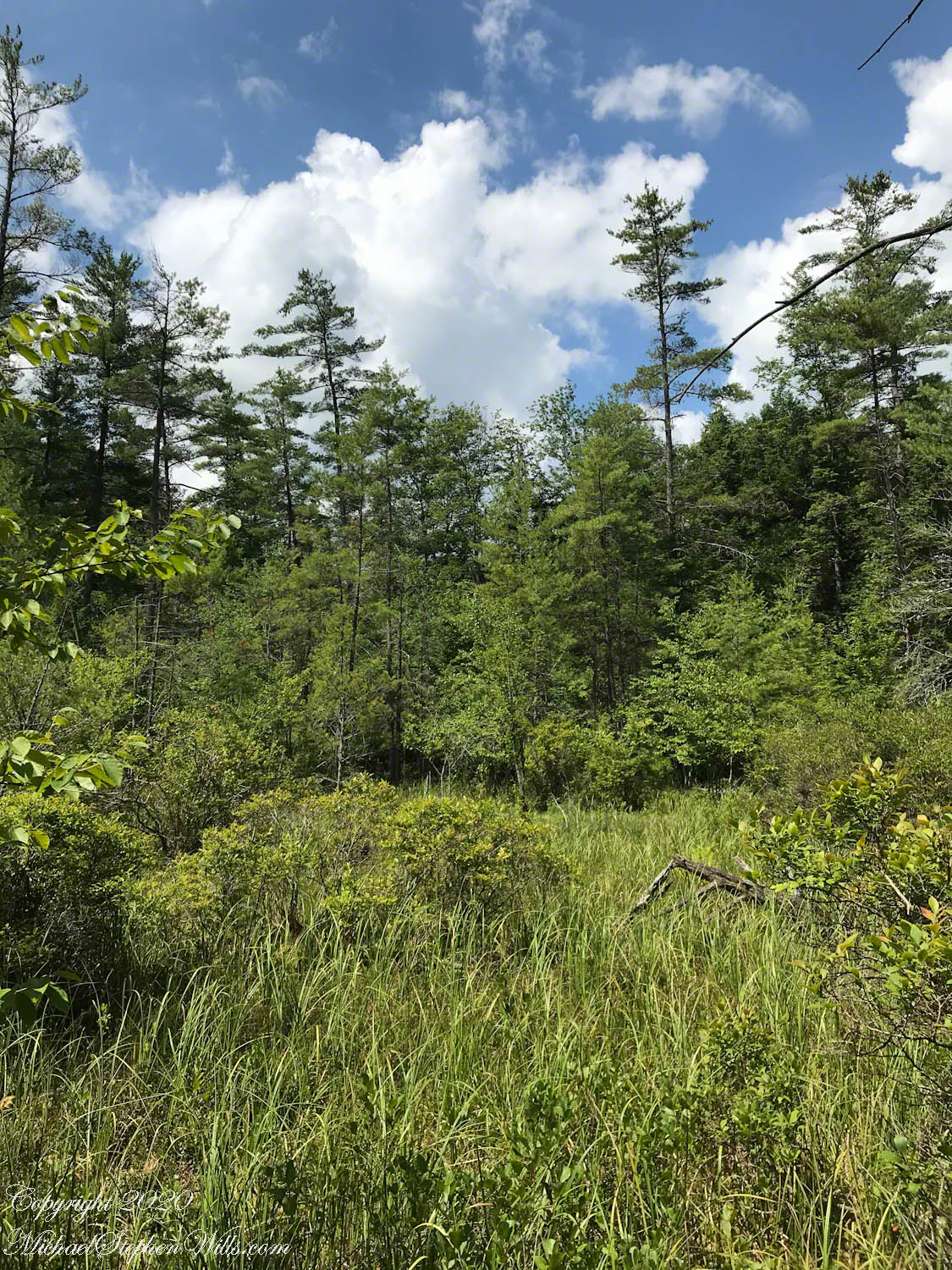
I came here for a plant that does not announce itself the way wildflowers often do. The purple pitcher plant, Sarracenia purpurea, is a quiet scandal: a green vessel in a place where green should be satisfied simply to survive. I arrived equipped for attentiveness—an iPhone for the broad scene, and a Canon DSLR with the F2.8 100 mm macro lens for the stars of this bog. The macro lens is an instrument of humility. It forces you to admit that the important drama is often no bigger than your palm.
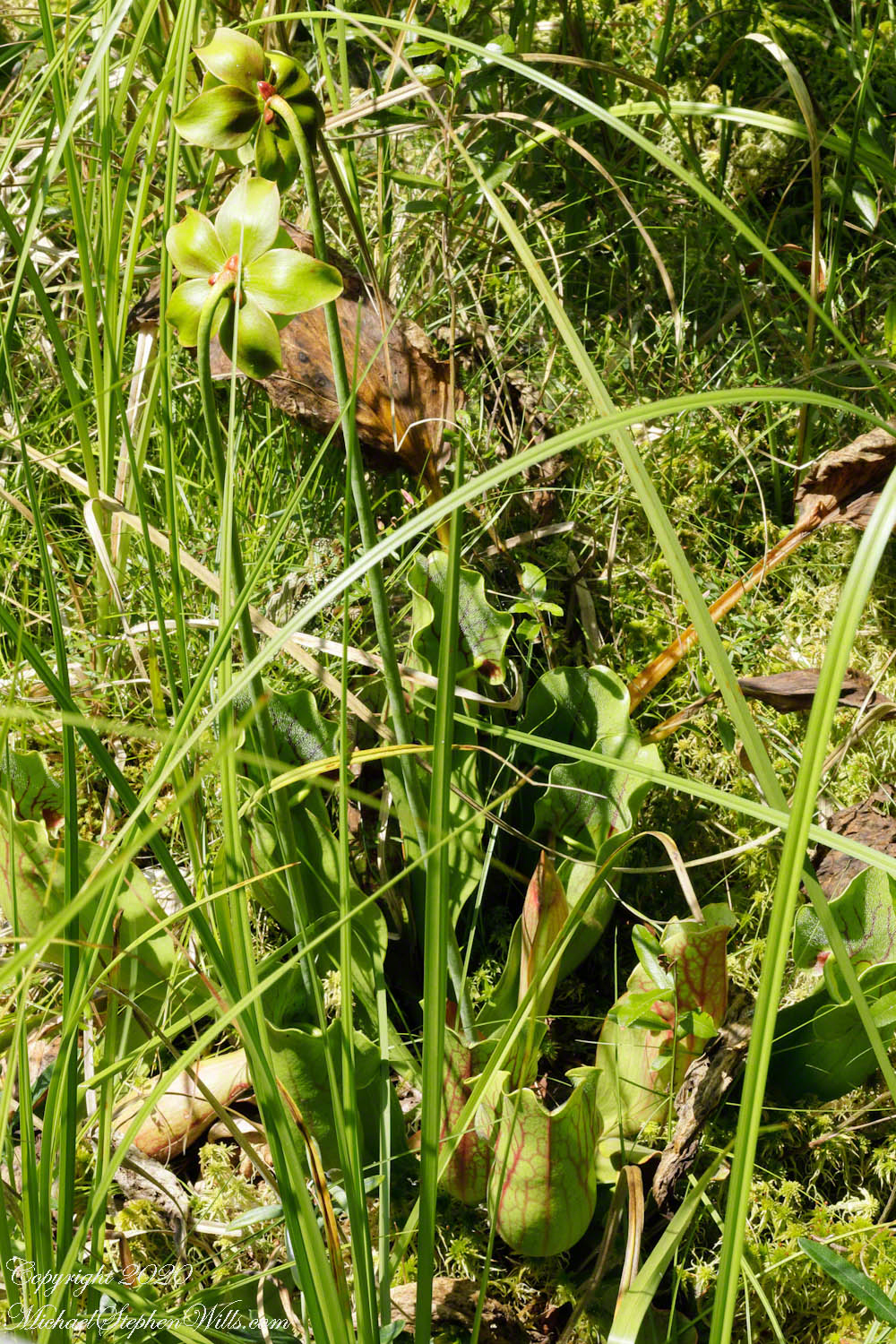
In earlier years, the pitchers could be found right where a visitor naturally looks—within the central cut-out of the observation deck, close enough to lean over and study. But the bog is not a museum display; it is a living negotiation. This season, highbush blueberries pressing in from the margin had crowded the pitchers out, pushing the flowering plants into the grasses eight to ten feet away. The shift is small in human terms, the kind of distance you cross without thinking. In bog terms, it is displacement—an erasure of a familiar scene, a reminder that rarity is not only about numbers but also about space.
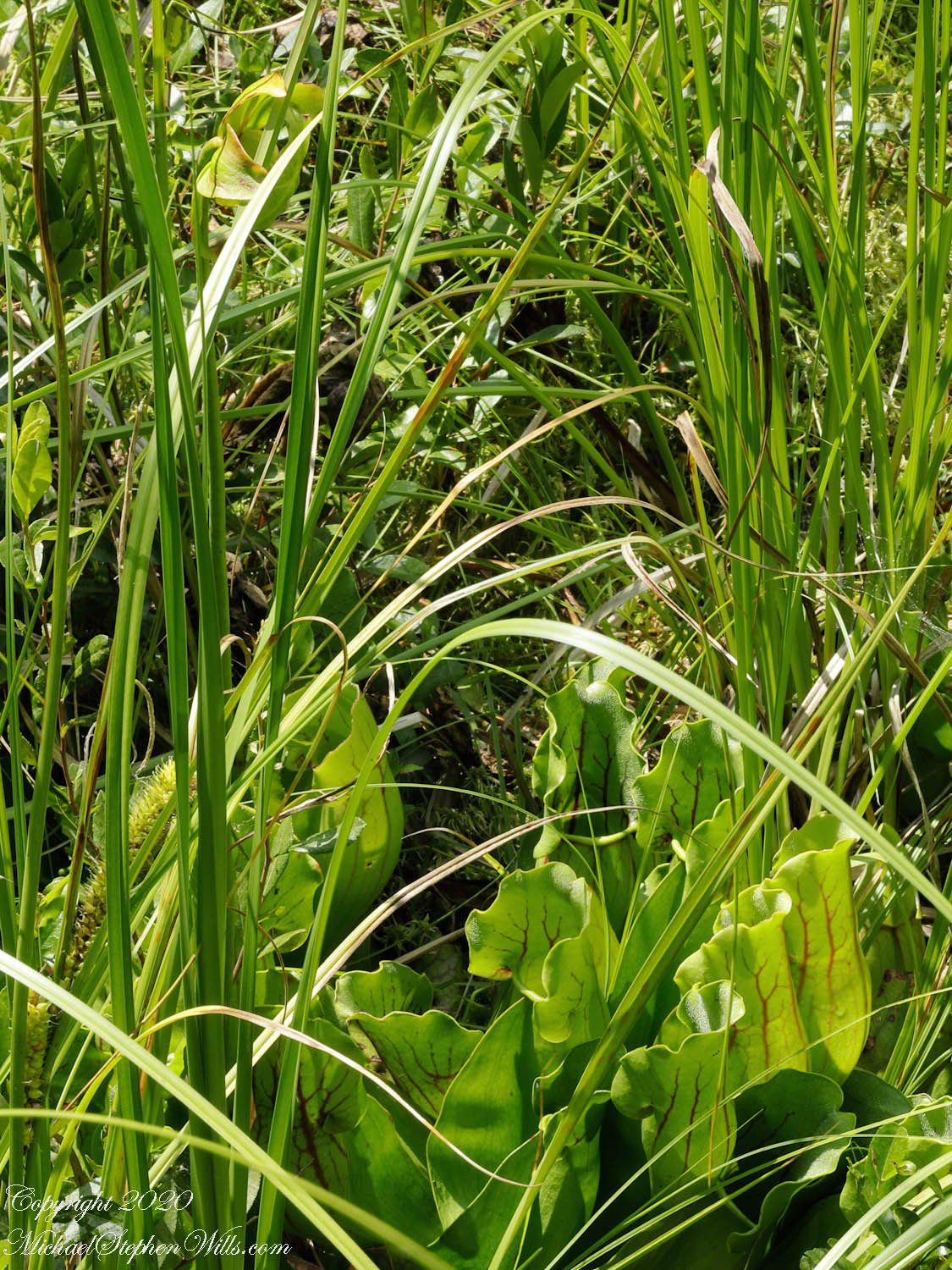
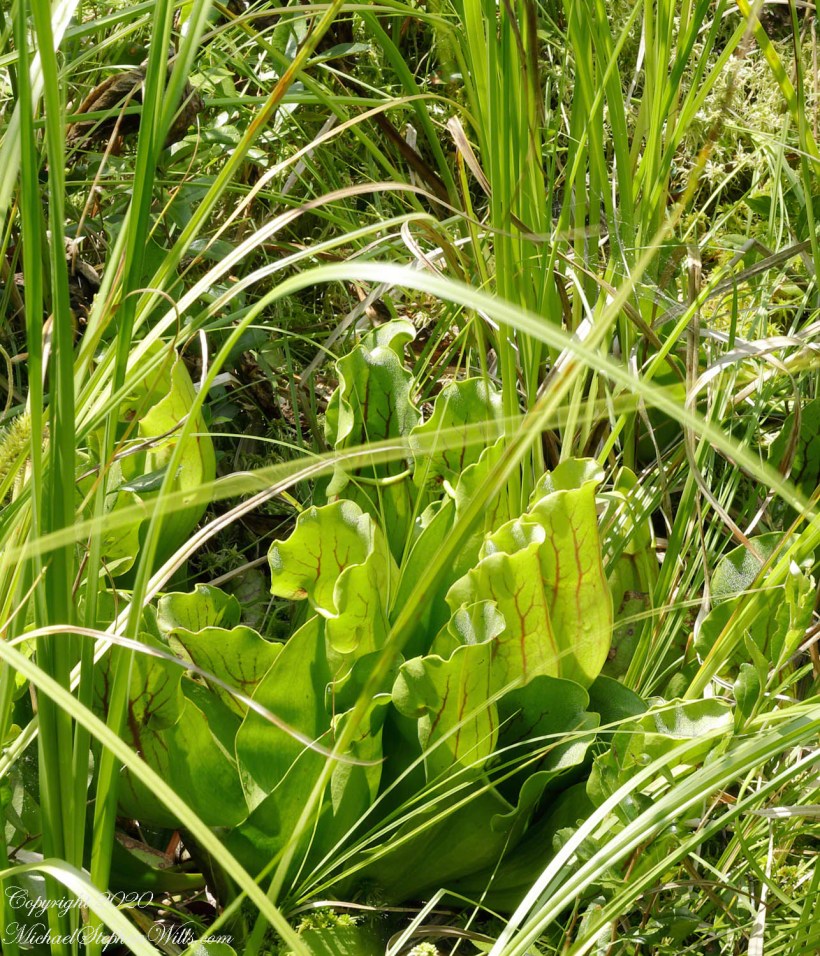
The pitchers themselves—those “turtle socks,” as they’ve been nicknamed—sit at ground level in a rosette, their mouths open to weather. Sunlight floods the cups and turns them into something both domestic and uncanny: a set of green, veined slippers left out to air, or a cluster of small amphorae awaiting an offering. In the bog’s thin soil, nourishment is hard-won. The pitcher plant answers that poverty with invention. Instead of arguing with the chemistry of peat, it borrows from the animal world—luring and taking what the air can spare. The cup is a trap, yes, but also a reservoir: rainwater gathered and held, a miniature wetland that mirrors the preserve’s larger one.
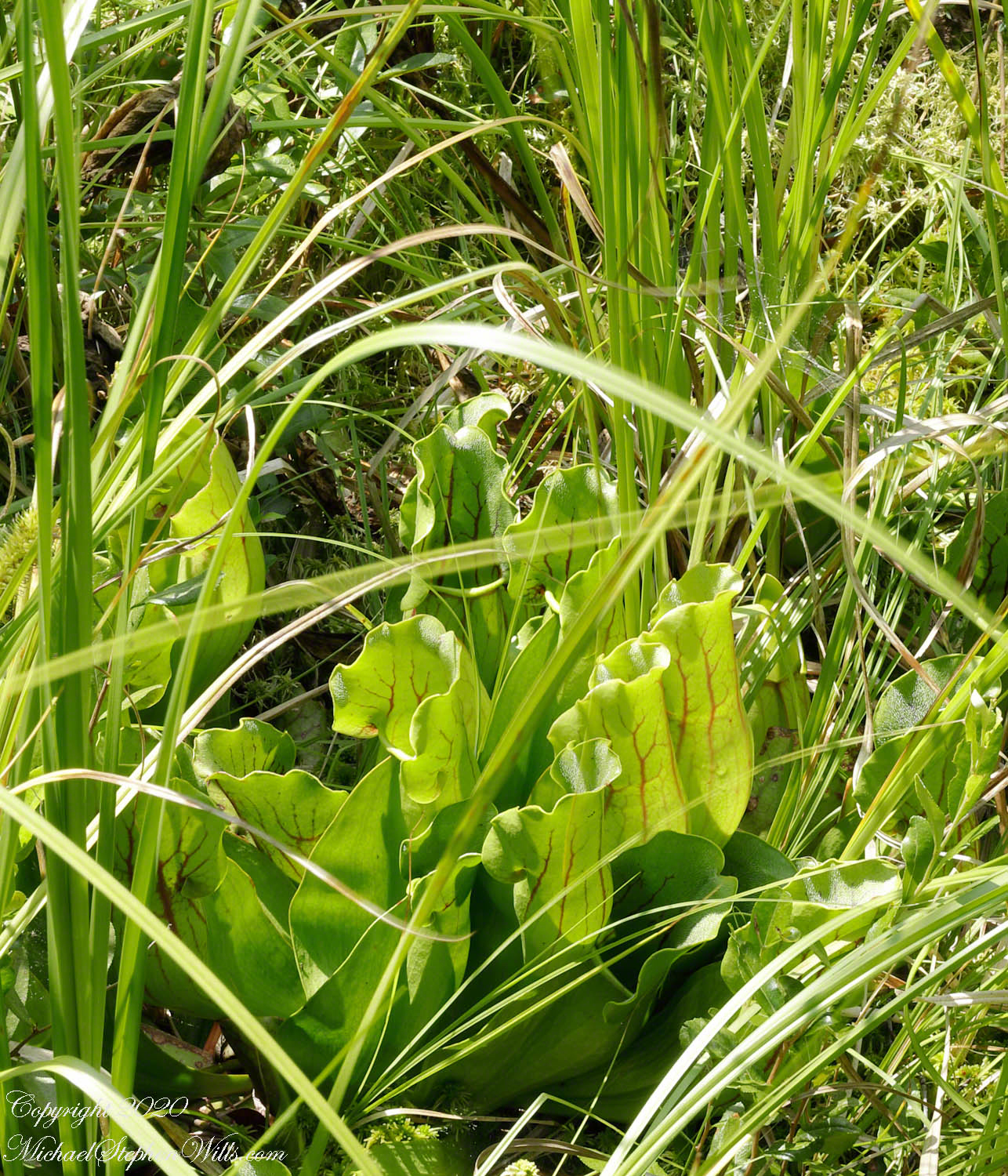
There is a tension here that never quite resolves: the plant’s beauty, and the plant’s appetite. We admire the cup’s red veining, the glossy rim, the way the opening flares like a lip; then we remember what the lip is for. We admire the flower’s elegant sheltering forms; then we realize the shelter is also a funnel, a choreography. This is not cruelty—no more than winter is cruelty. It is adaptation made visible, a lesson in how form follows need, and how need can produce something unexpectedly lovely.
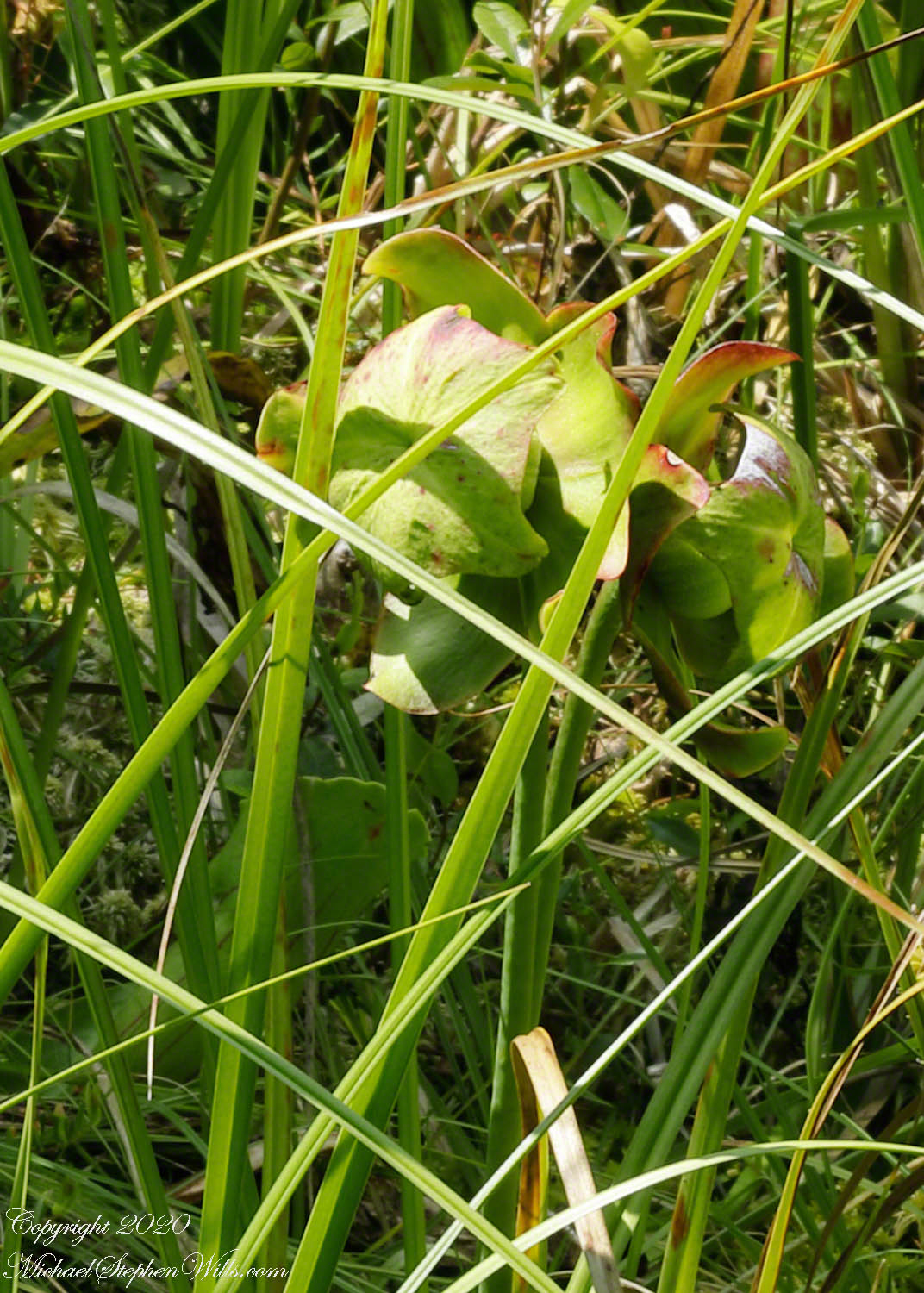
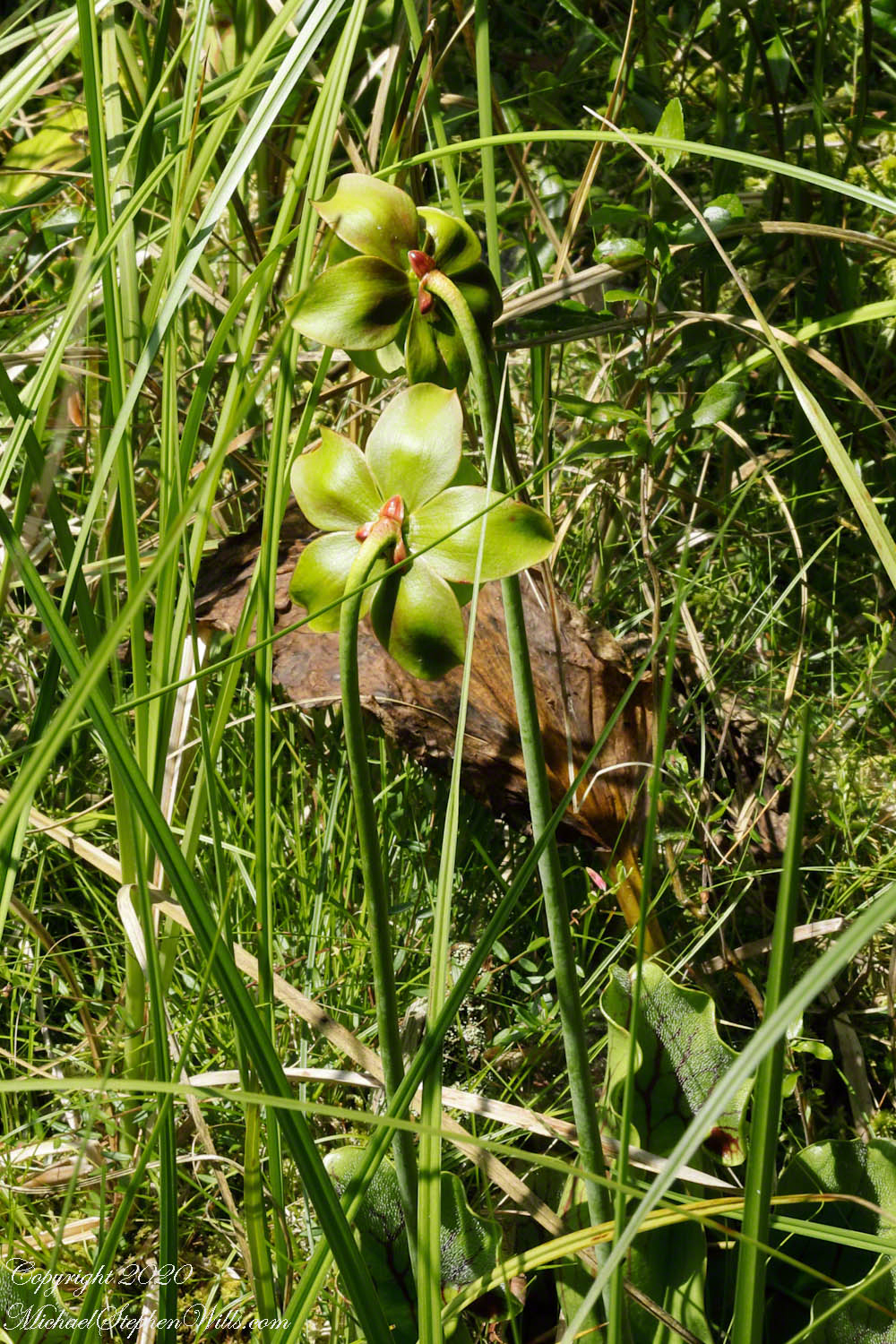
And yet the real marvel—the reason I came that day—rises above the traps on a strong stalk, lifted clear of the dangerous mouths below. The flower is not purple in the obvious way its common name promises. It is subtler and stranger: a suspended structure with the poise of a lantern and the protective logic of armor. It struck me as a flower unlike any I have experienced, resembling an insect carapace, with the reproductive element underneath a hood. That hooded design feels less like ornament than strategy—an architecture that guides a pollinator’s route, controlling entrances and exits the way the pitcher controls the fall of an insect.
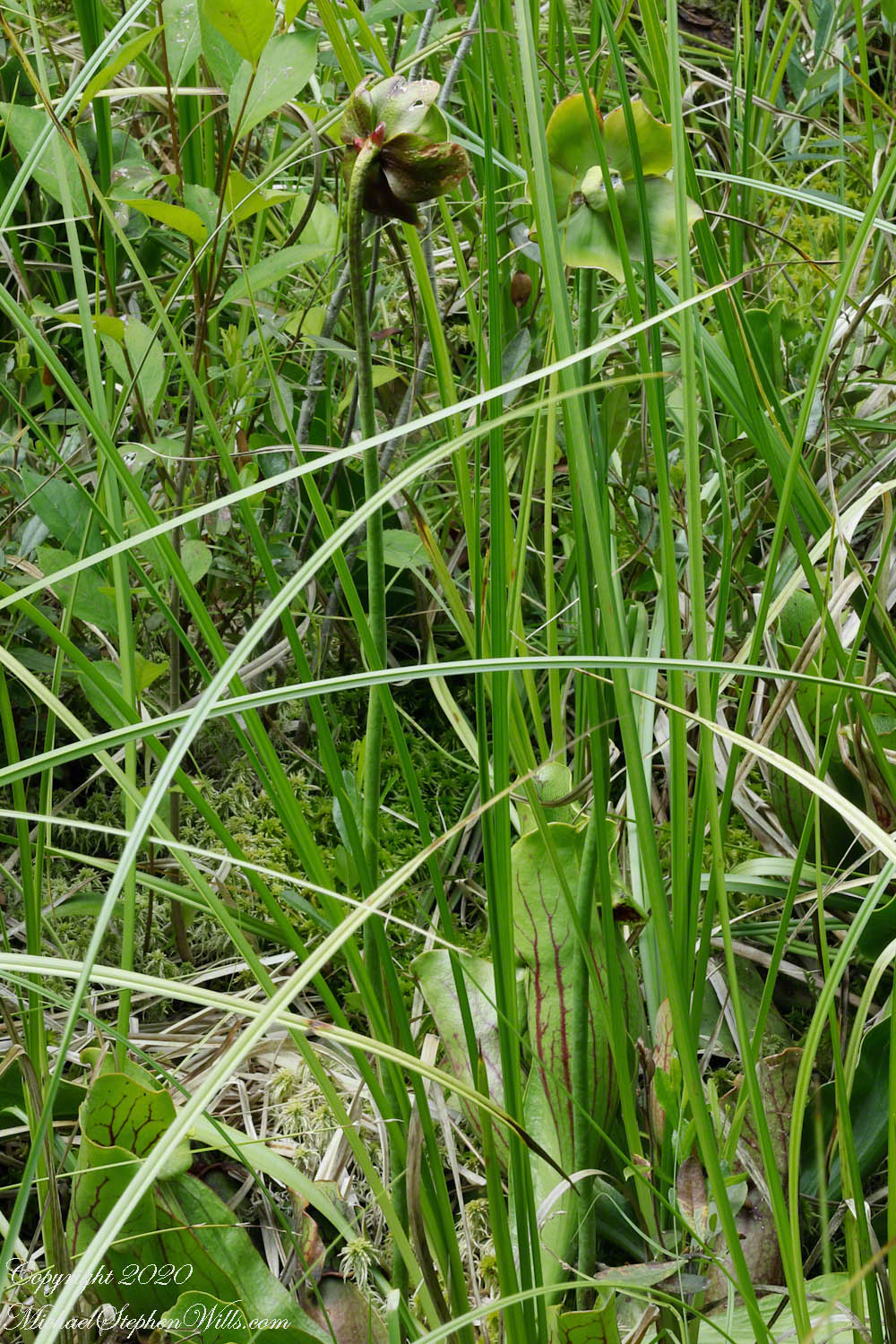
Even the flower’s back side refuses to perform for the camera. From the posterior angle, “there are only bracts”—plain supporting structures, the botanical equivalent of scaffolding left in place once the facade is finished. The bog, too, shows its scaffolding everywhere: dead stems, old wood, peat-dark water, last year’s leaves. A preserve is never only what is blooming. It is what persists.
I found myself thinking about the details I wanted but could not quite capture that day: the downward facing hairs inside the pitcher—those one-way bristles that make retreat difficult once a victim has slipped in. I or my lens was not up to this challange. The shortcoming was minor, but instructive. The bog offers glimpses, not guarantees. It invites return visits, different light, different seasons, a different kind of patience.

Standing on the platform I felt the preserve’s central truth: these are landscapes shaped by constraint—by ice, by water, by nutrient scarcity, by the slow encroachment of shrubs—and yet they keep producing improbable forms. The purple pitcher plant is one of those forms: a green cup that drinks rain, a flower that wears a hood, a turtle sock that turns hunger into design. In a place where the ground itself seems to refuse abundance, the plant answers with a different kind of richness—an elegance that is also a solution.
Enter your email to receive notification of future postings. I will not sell or share your email address.

Fens, Bogs, and Flowing Water of Malloryville Preserve of Freeville, New York

Discover Malloryville Preserve in Freeville, New York—a hidden Finger Lakes wetland of fens, bogs, and flowing water where glacial history and rare plants meet.

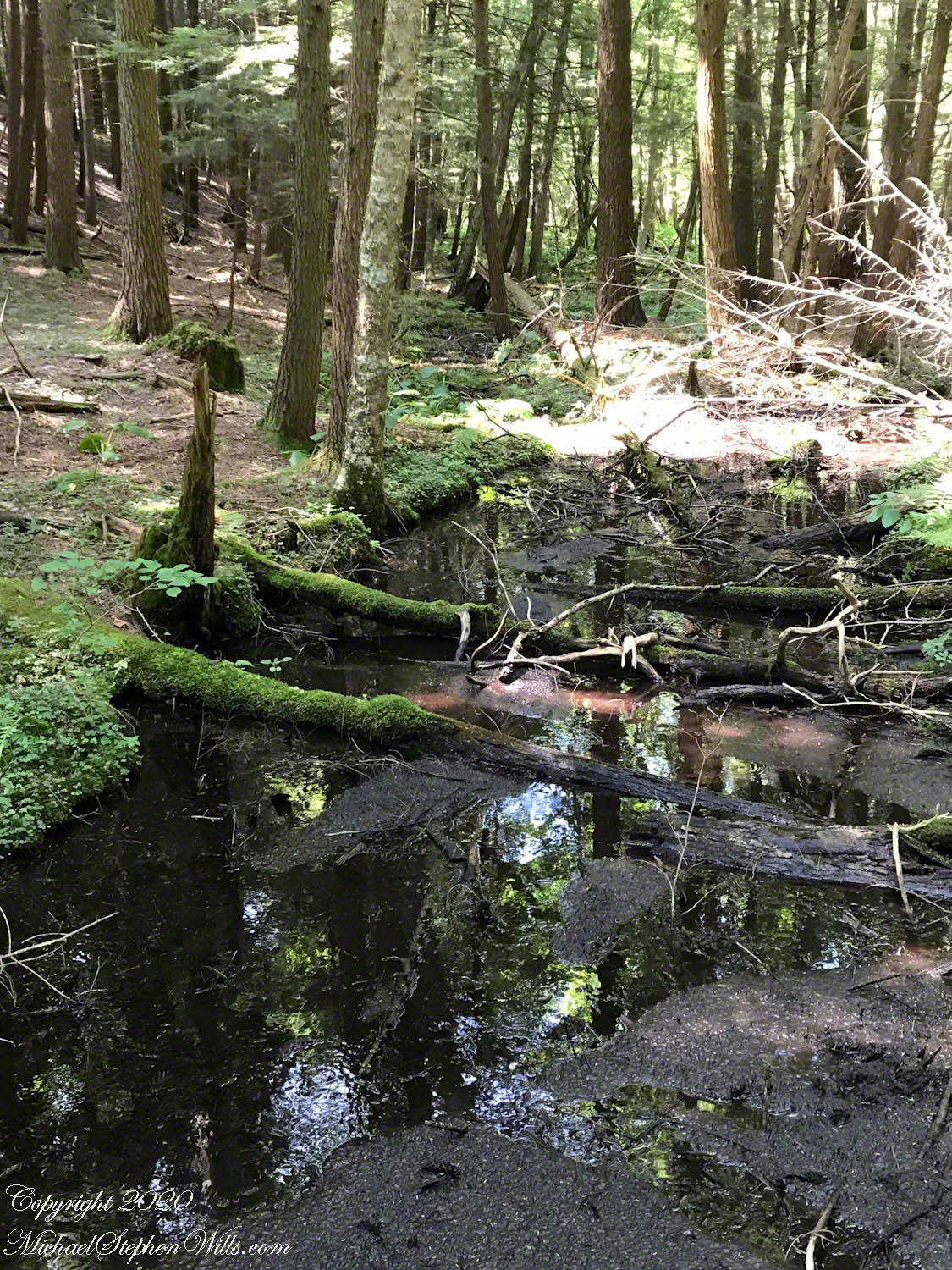
Water defines the O.D. von Engeln Preserve at Malloryville long before we see or hear it. At first, it is only a dampness in the air, a coolness at ankle level, a dark sheen between sedge tussocks. In the space of a half-hour walk, we pass through fen, bog, marsh, and swamp, each distinct, yet bound together by the same slow, persistent flow.

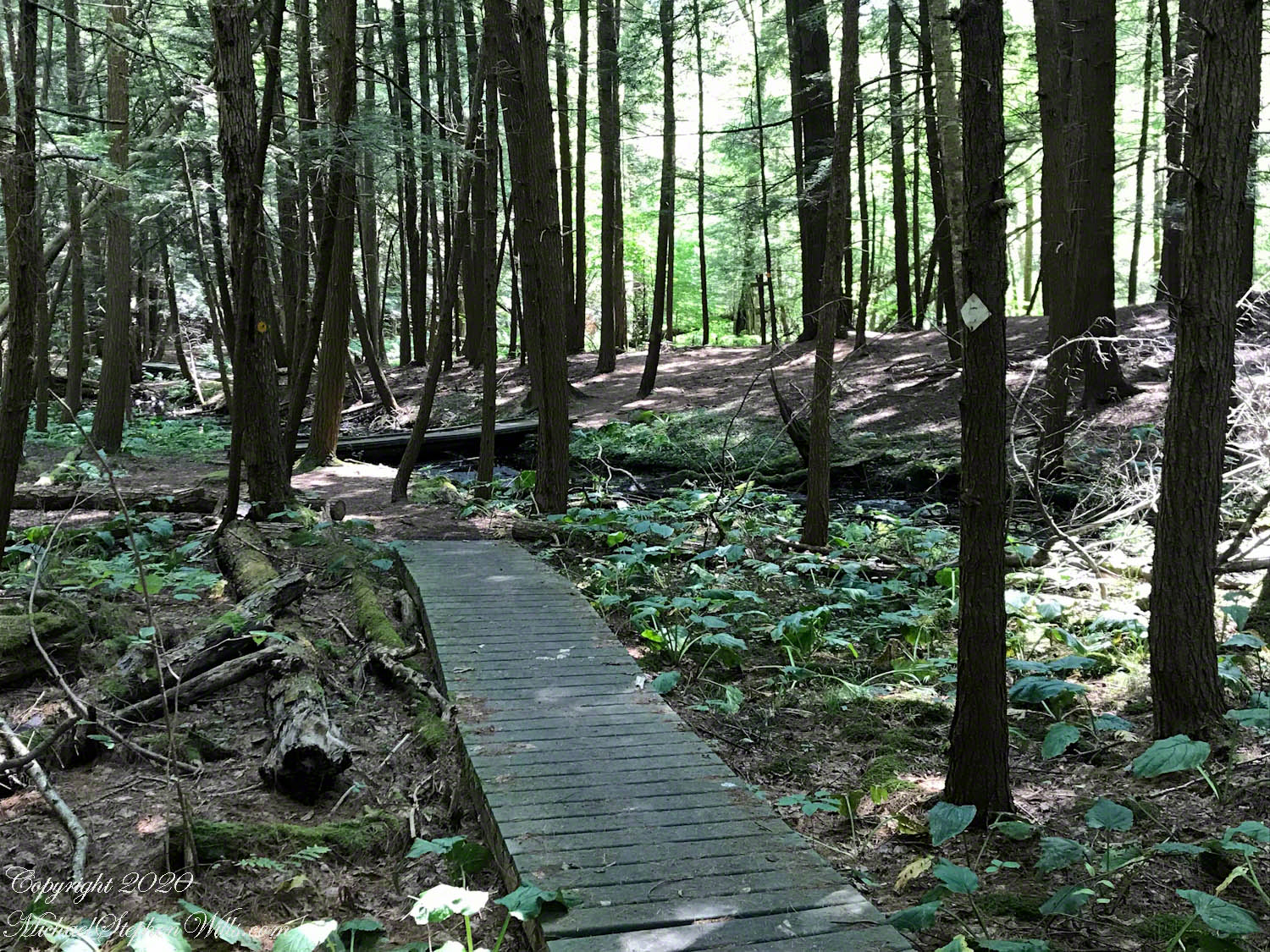
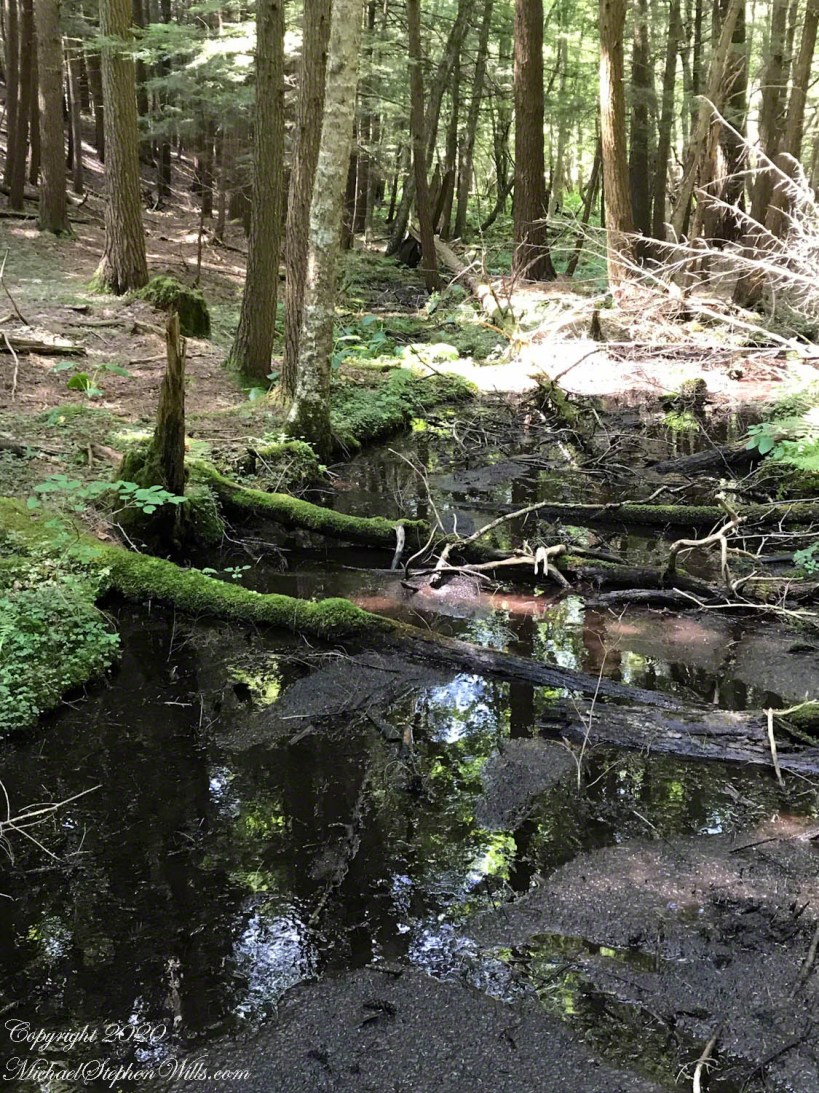
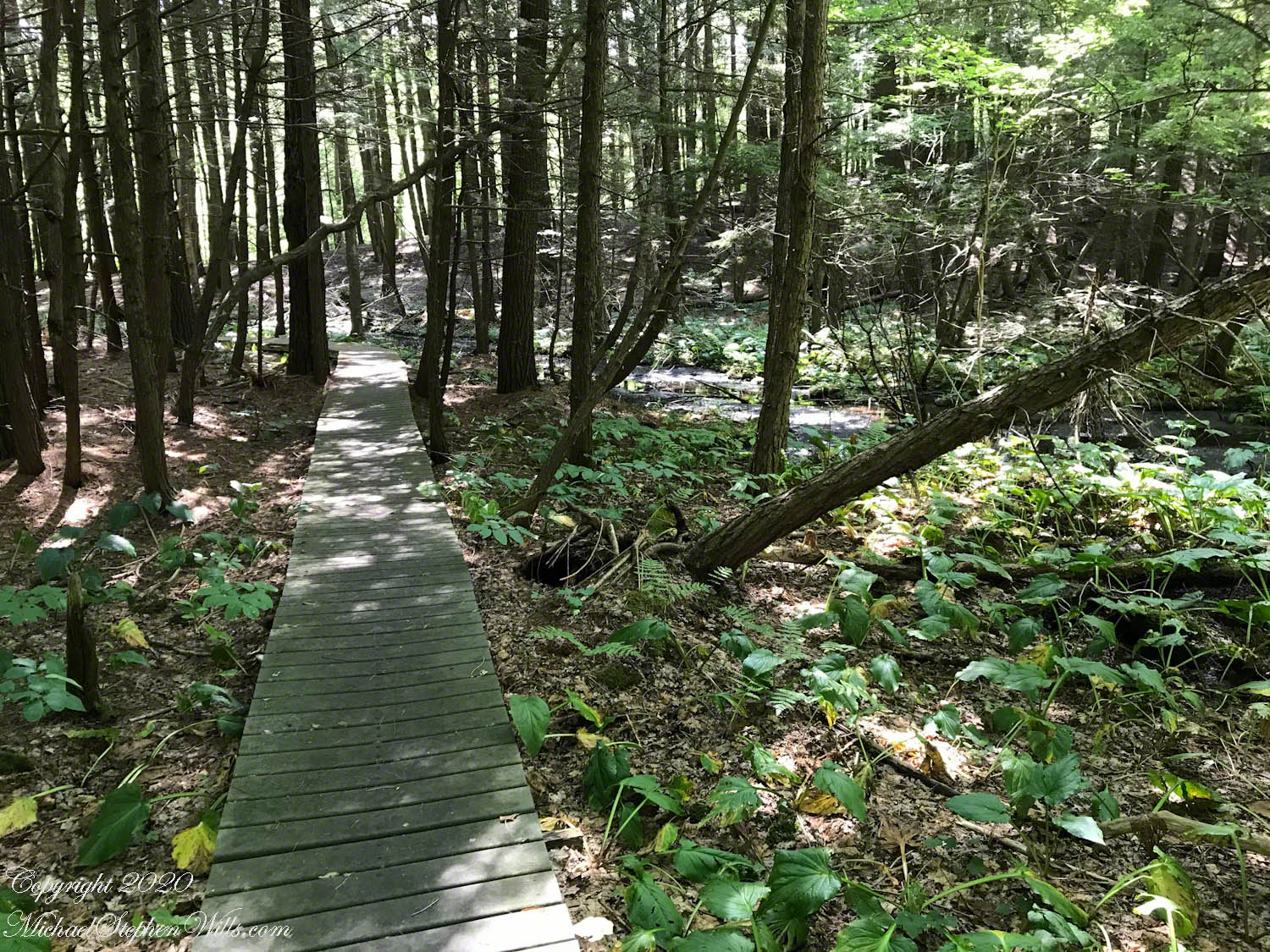
Here we are traversing a swamp, our steps buoyed along on planking made from recycled plastic. The boardwalk floats visually above pools the color of tea, edged with moss and skunk cabbage. It’s easy to imagine what this crossing would have been like before the planks were laid—boots sinking, knees splashed, delicate plants crushed. The modern walkway is a quiet compromise: we may enter this saturated world without trampling it, a human gesture that matches the preserve’s ethos of protection and restraint.

The Malloryville wetlands lie in a low pocket along Fall Creek, a landscape shaped by the last ice age. As the glacier that once covered this region melted, torrents of water tunneled through the ice, depositing braided ridges of sand and gravel known as eskers. Today, more than a mile of these ancient riverbeds winds through the preserve, narrow wooded spines rising above the surrounding wetlands. From an esker crest, the pattern of water reveals itself: dark channels of open flow, pale pools rimmed with sedge, patches of sphagnum floating like cushions, and, farther off, the straight silver of Fall Creek.

But the story of Malloryville’s water begins far from these pools. Rain falls on the uplands as cool, slightly acidic water. It sinks through glacial till—a jumble left by the ice—and begins a long, blind journey underground. As it moves, the water reacts with the minerals it encounters. Where it brushes limestone or other carbonate-rich layers, it is slowly neutralized and picks up dissolved calcium and magnesium. By the time it resurfaces in low spots, it may be transformed from sour, soft rain to mineral-rich groundwater.

Those subtle chemical shifts are written onto the land. In some hollows, where water still mainly reflects its origin as rain, the environment becomes a bog—cold, acidic, nutrient-poor. Here, sphagnum moss knits a floating carpet, and only specialists such as leatherleaf and cranberries can endure. In other pockets, where groundwater welling up from below brings minerals, we find fens: lush, lime-touched wetlands offering niches for orchids, sedges, and the carnivorous pitcher plant. Marshes and swamps round out the spectrum, their standing water and wooded shade forming still more microhabitats.

In this small preserve, all these wetland types coexist side by side, threaded by water that often moves so slowly it appears not to move at all. The stillness is deceptive. A slight difference in elevation—barely the height of your boot—can determine whether water spreads and stagnates, seeps outward in a fan, or concentrates into a narrow, unseen channel. Hydrologists studying the area have shown that a water-table mound of only a few inches can redirect the underground flow and, over time, steer the evolution from open fen to peat-filled bog.

Human history here is entwined with that quiet power. The founders of the preserve, themselves from a dairy farming family, came to understand that the springs, seeps, and wetlands feeding Fall Creek were vulnerable. Gravel pits on nearby land had already bitten into the valley; another such excavation on this side would have severed the veins of water that sustain the fen and bog. Their years-long effort to protect the property culminated in a Nature Conservancy preserve whose very purpose is to safeguard water and the uncommon communities it supports.

The boardwalk under our feet is part of that story. Its recycled-plastic planks do not rot in constant dampness, and their smooth, slightly hollow sound reminds us with each step that we are guests in a place where soil never truly dries. At the edges of the walkway, tamarack and red maple lift their trunks from hummocks, their roots anchored in peat built grain by grain from centuries of water-logged plant remains. In the open patches, we can seek out pitcher plants, their flaring, water-filled leaves digesting unwary insects to make up for the nutrient-poor conditions.

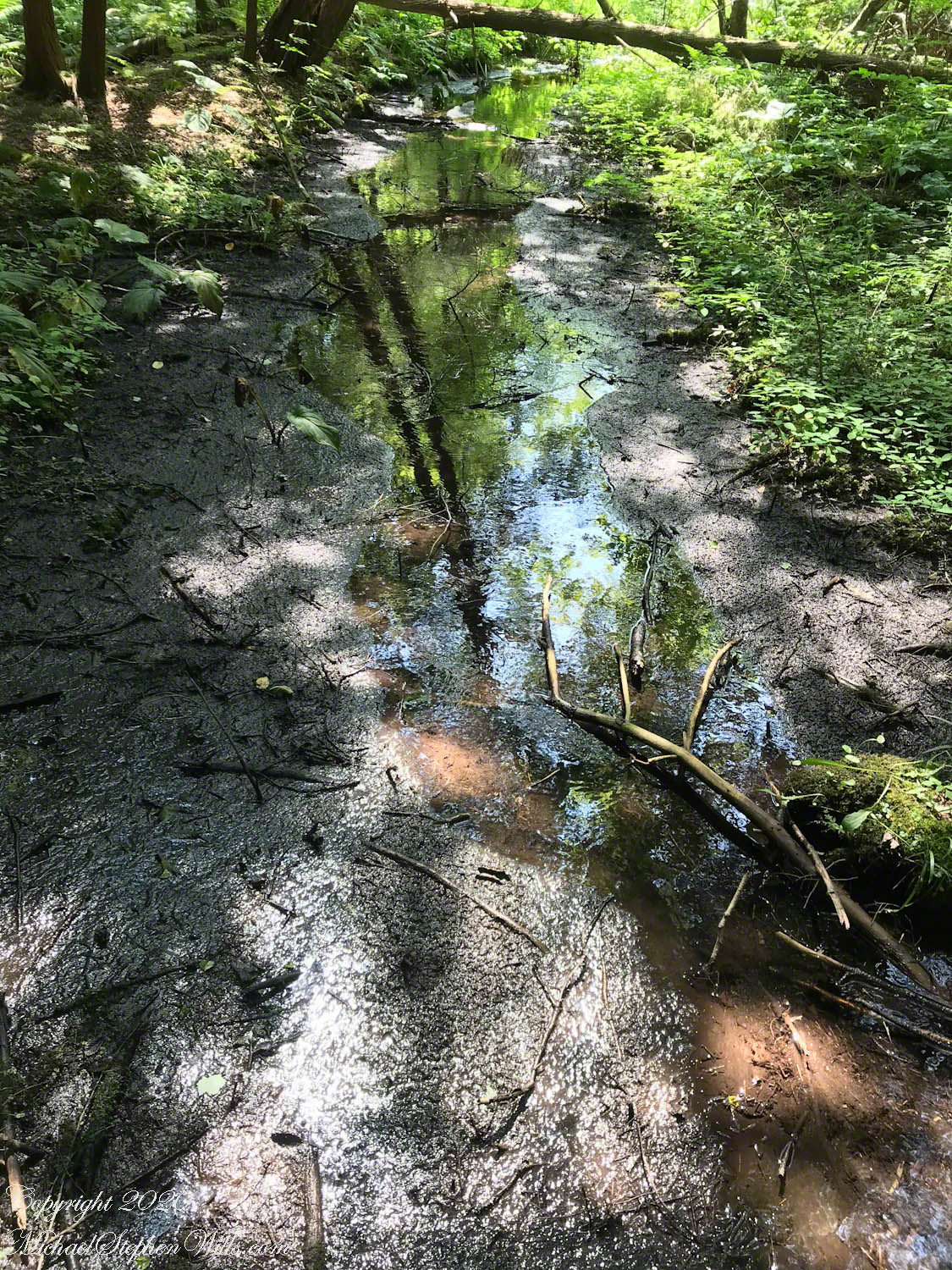
Everywhere, water moves almost invisibly. It rises as a cold trickle at the base of the esker, fans through the moss as a thin sheet, and gathers again in dark, tannin-stained channels. It rarely speaks aloud; only in spring flood or after hard rain does it murmur against roots or tap lightly at the plastic planks. Yet its influence is written in every texture and color—emerald moss, rusty sedge, the silvery bark of birch leaning over a pool.

To walk in Malloryville is to learn to read this subtle handwriting. We begin by noticing the obvious: the wetness, the boardwalk, the glimpses of standing water. By the end of the walk, we are tracing gradients—how the plants shift with elevation, how the ground feels underfoot, how the air cools or warms by a degree or two. We sense the long journey of water from sky to stone to peatland to creek, and onward to Cayuga Lake and the wider world beyond.

Water, flowing quietly, almost soundlessly, with powerful effect: Malloryville Preserve, that power is persistence. It is the power to carve a valley, to build a peatland one stem at a time, to sustain rare communities of plants and animals in a modest corner of New York. To honor such water is to move carefully, speak softly, and remember that our presence, like our boardwalk, should allow the flow beneath to continue its ancient work.

Enter your email to receive notification of future postings. I will not sell or share your email address.