Cocoa Beach’s Unique Nine-Armed Sea Star Encounter

In Cocoa Beach, I encountered a Nine-armed Sea Star, which I returned to the ocean, reflecting on its ecological role and the wonders of marine life.

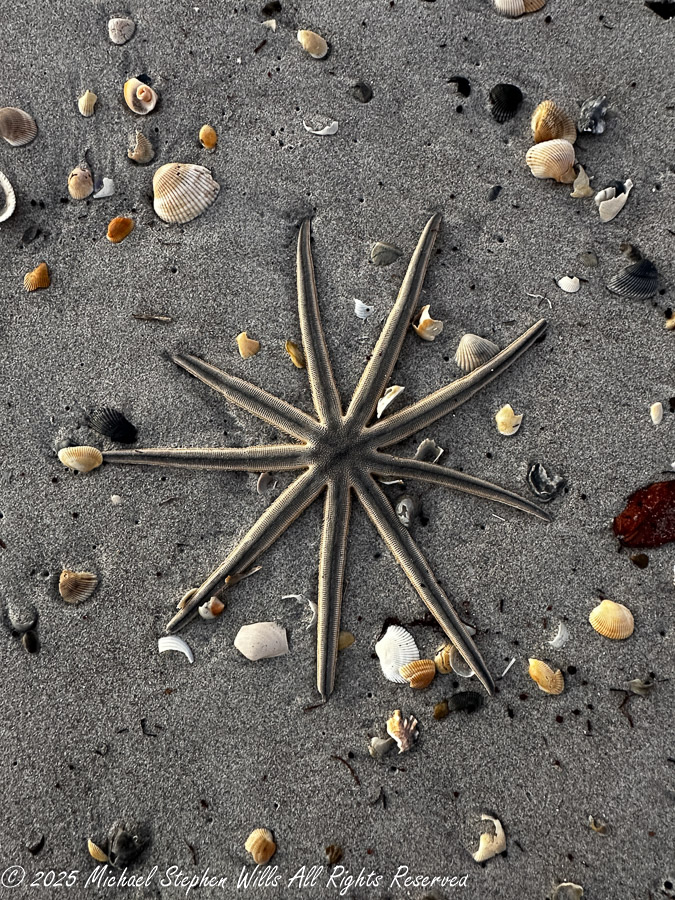
Walking along the shoreline of Cocoa Beach in the early morning light, I encountered a remarkable sight—a Nine-armed Sea Star (Luidia senegalensis) sprawled on the damp sand. Its long, slender arms stretched outward in a perfect starburst pattern, each limb tapering to a fine point. The sandy beige coloration of its body blended with the surrounding beach, accentuated by a darker stripe running down the center of each arm. Scattered around it were small shells and fragments, remnants of the ocean’s ebb and flow, testifying to the high tide that had deposited this fascinating creature ashore.
The scientific name Luidia senegalensis provides insight into the taxonomy and classification of this intriguing sea star. The genus Luidia is named after the 18th-century Portuguese naturalist Francisco Luid, who contributed significantly to marine biology. The species name senegalensis refers to its first recorded discovery along the coast of Senegal in West Africa. As a member of the phylum Echinodermata and the class Asteroidea, the Nine-armed Sea Star shares lineage with other starfish, sea urchins, and sand dollars, distinguished by their radial symmetry and water vascular system used for movement and feeding.

As I paused to observe it more closely, I marveled at the intricate details of its structure. Unlike the more familiar five-armed sea stars, this specimen had nine arms radiating from a small central disc. The surface of its body appeared smooth, with tiny tube feet lining the underside of each arm—a biological marvel designed for locomotion and feeding.
This starfish washed up on high tide. I seemed alive so I returned it to the surf during ebb tide, hoping the ebb current would return it to deeper water.
The Nine-armed Sea Star, common along Florida’s coastline, is a voracious predator within the benthic ecosystem. It primarily preys on bivalves such as clams and mussels, using a fascinating feeding strategy. Unlike most predators that rely on speed and strength, this sea star employs patience and ingenuity. It wraps its flexible arms around a bivalve, exerting a slow and steady force to pry the shell open. Once a small gap is achieved, the sea star everts its stomach through its mouth and into the prey’s shell, secreting digestive enzymes that liquefy the soft tissues within. This external digestion allows the sea star to consume its prey without the need for teeth or jaws—a perfect example of nature’s ingenuity.

Despite its delicate appearance, the Nine-armed Sea Star plays a crucial role in the marine ecosystem. By preying on bivalves, it helps regulate their populations, preventing overgrazing of seagrass beds and maintaining a balanced food web. Additionally, it serves as a food source for larger marine predators, such as fish and sea turtles. Its presence signifies a healthy intertidal environment, where nutrient cycles and predator-prey relationships are in dynamic equilibrium.

As I considered the sea star’s role in the ecosystem, I wondered about its journey to this point. These creatures undergo a fascinating life cycle, starting as tiny, free-swimming larvae that drift with ocean currents. Over time, they undergo metamorphosis, settling onto the seabed and gradually developing into their iconic star shape. The resilience and adaptability of these creatures are truly astounding, capable of regenerating lost arms and thriving in diverse habitats.

Realizing that this sea star likely found itself stranded by the receding high tide, I felt a sense of responsibility to help it return to its natural environment. Picking it up gently, I carried it toward the water’s edge, where the ebb tide was beginning to pull the sea back into its vast domain. With a final look at its striking form, I placed it carefully into the shallow waves, hoping that the ebb current would carry it back to the sandy seabed where it belonged.

As the waves lapped around my feet, I imagined the sea star resuming its journey, gliding along the ocean floor in search of its next meal. The interconnectedness of all marine life became evident in that moment—each creature playing its part in an intricate and delicate dance of survival.

Walking back along the shoreline, I reflected on the experience. My fleeting encounter with the Nine-armed Sea Star was a reminder of the wonders hidden beneath the ocean’s surface and our role in preserving them. Every tide brings new discoveries, and every ebb offers a second chance—for the sea star, and perhaps for us as well.

Cocoa Beach, with its gentle waves and abundant life, had once again provided an unforgettable encounter with nature. The starfish, now safely returned to the ocean, would continue its unseen work beneath the waves, a quiet but essential denizen of the underwater world.

Enter your email to receive notification of future postings. I will not sell or share your email address.

Exploring Arcosanti: A Model for Sustainable Living

In 2005, I explored Arcosanti’s model, envisioning an eco-architectural future that promotes community and harmony with nature.

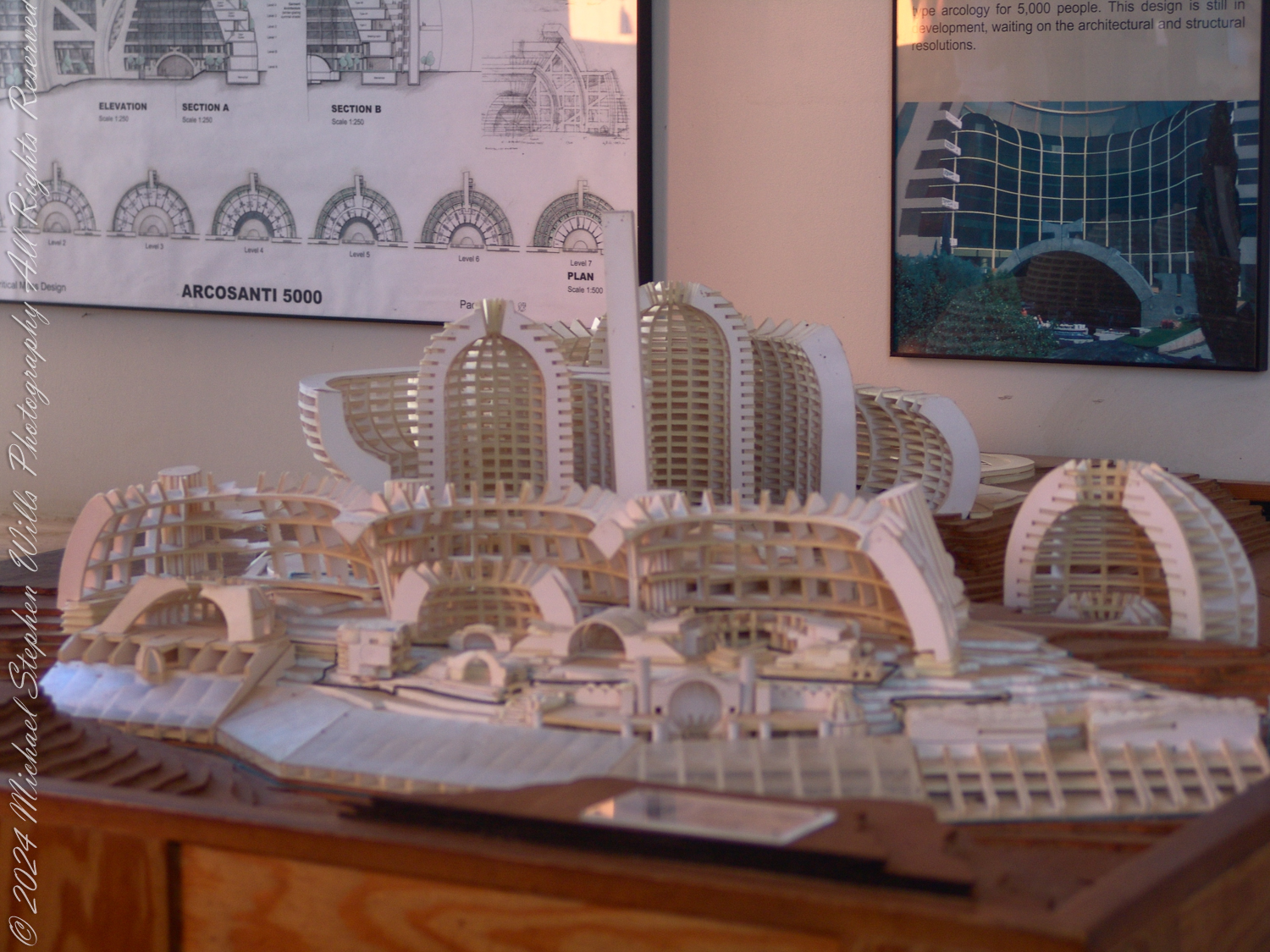
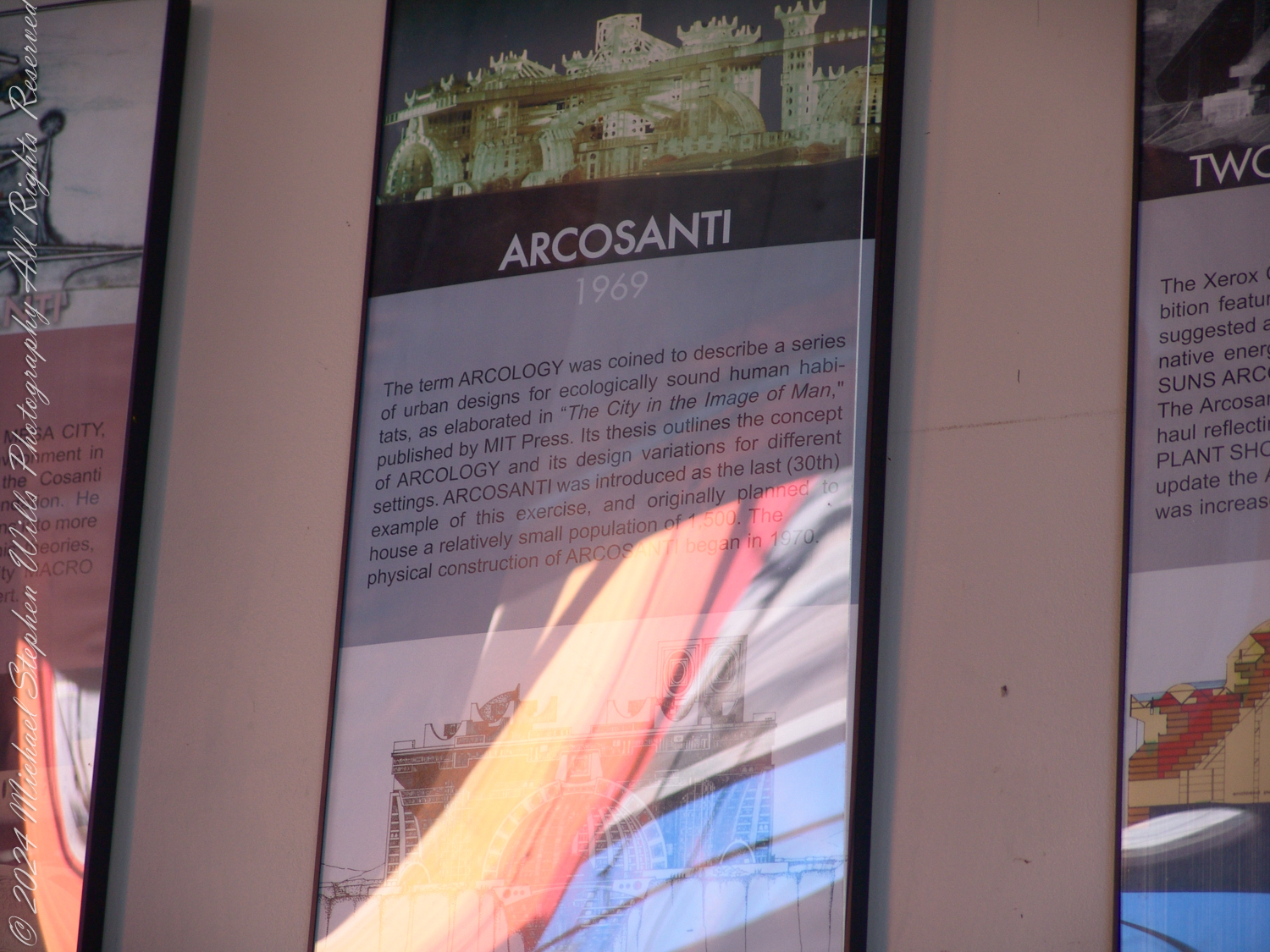
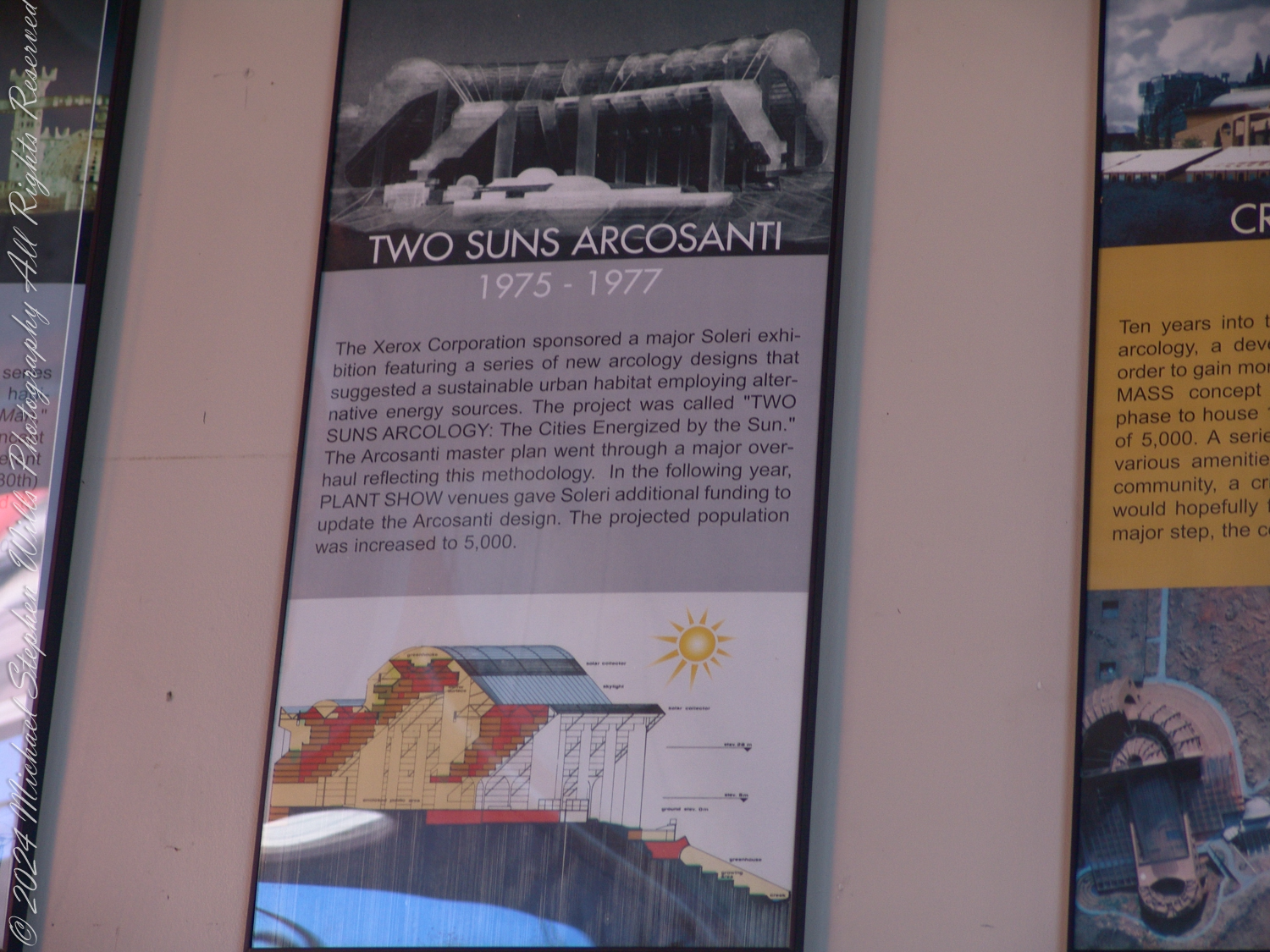
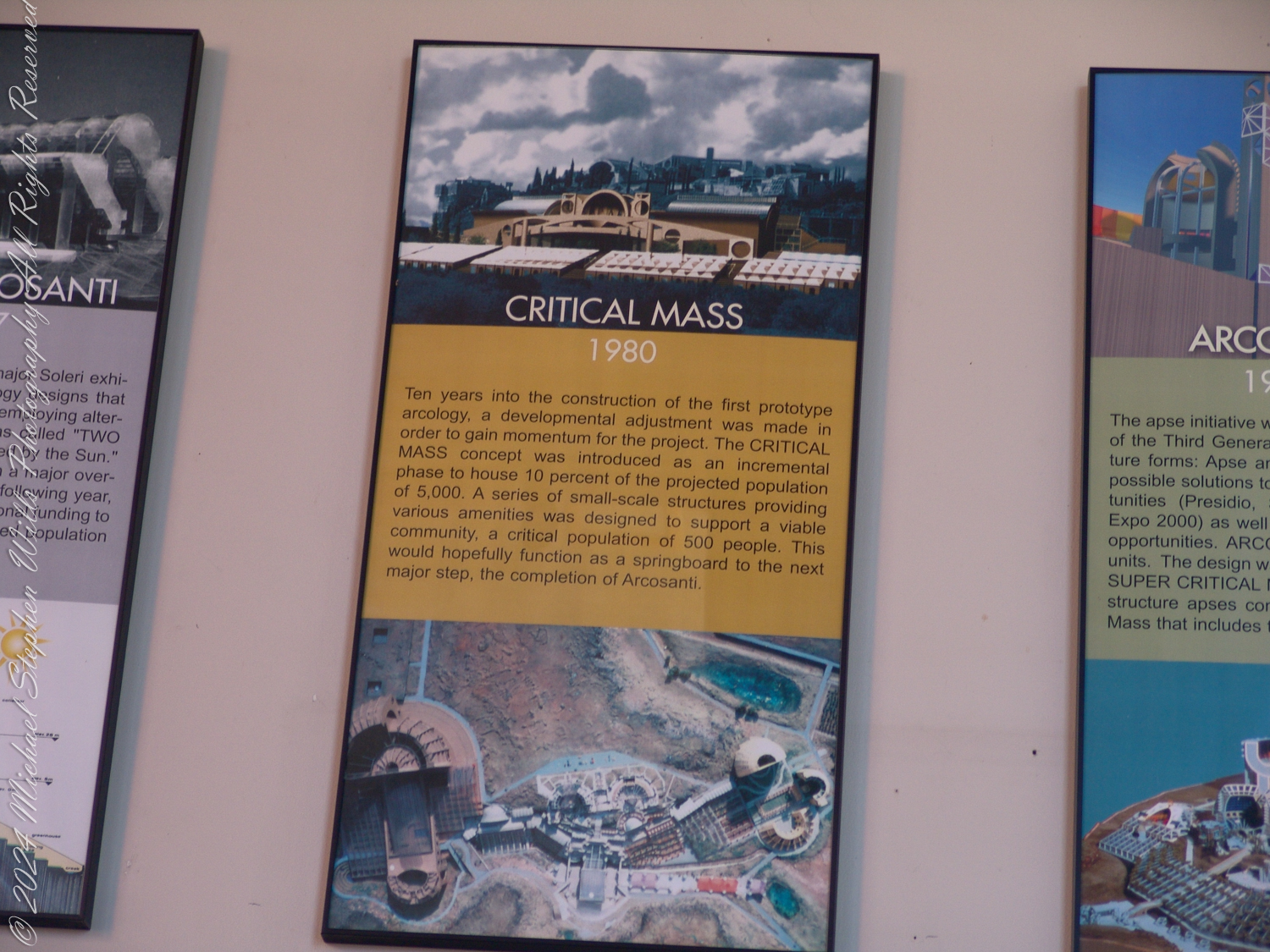
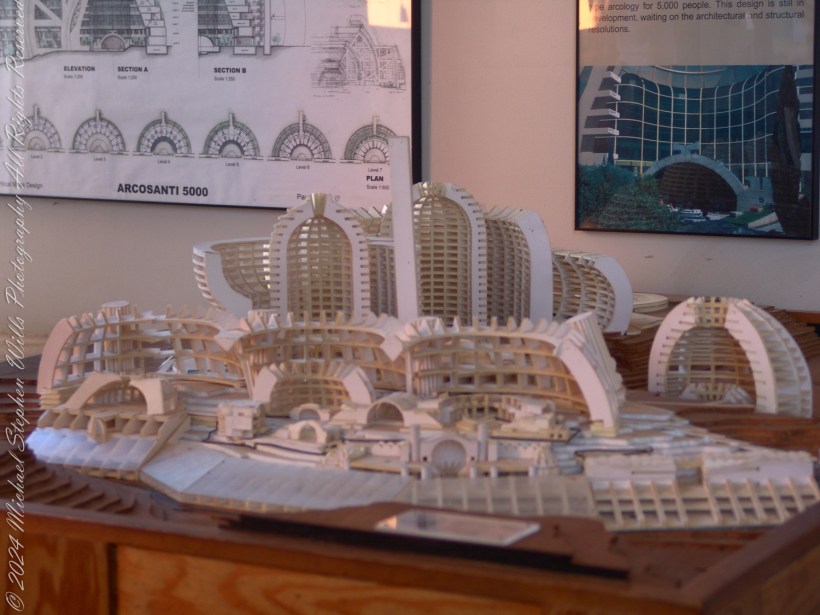
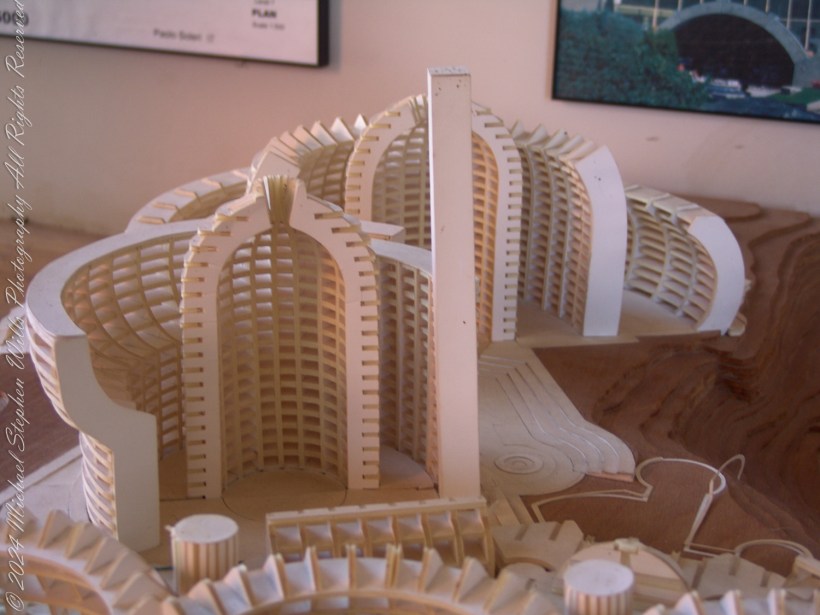
The desert air was sharp, dry, and oddly invigorating as I stepped into the gallery at Arcosanti, Arizona. The year was 2005, and I had long dreamed of visiting this experimental micro-city—a fusion of architecture and ecology conceived by Paolo Soleri. Amidst the array of sketches, photographs, and miniature prototypes stood the centerpiece of my curiosity: the sprawling, intricate scale model of “Arcosanti 5000.” It was as though the future had been condensed into a tangible artifact, whispering promises of an alternative way of living.

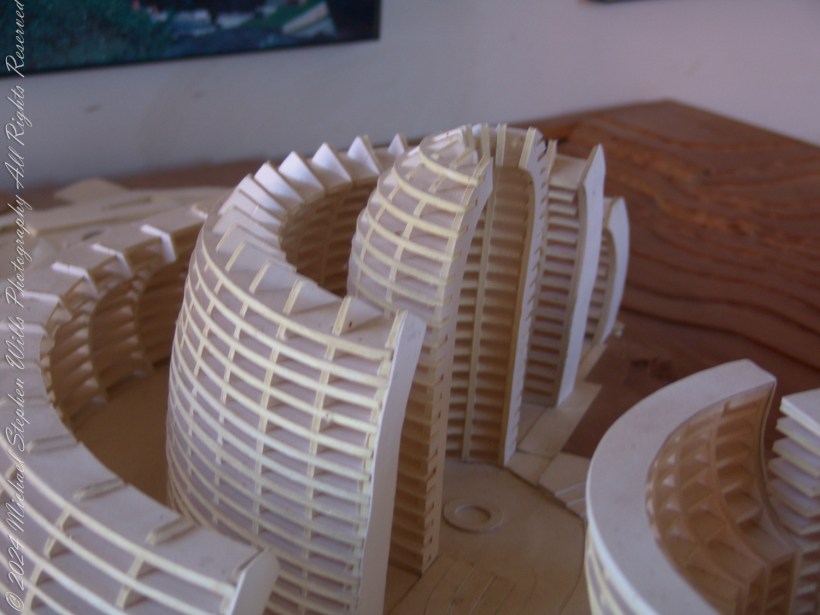
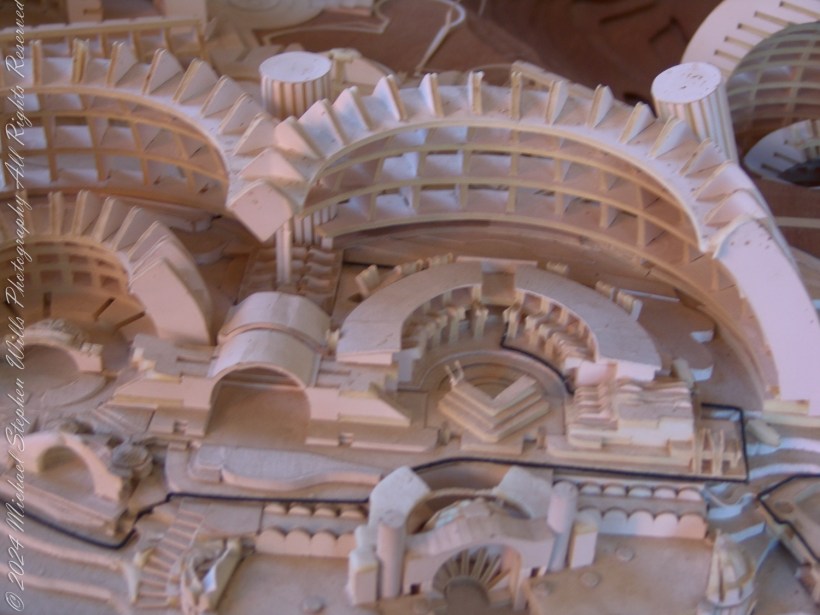
The model was perched on a wooden table, surrounded by blueprints and diagrams. Its sweeping curves and layered structures evoked the natural patterns of a canyon or the unfurling petals of a desert flower. I leaned in, drawn to its labyrinthine details: the arches that seemed to embrace the air itself, the layered grids suggesting terraces and communal spaces, and the towering central spire—a striking focal point that anchored the design. The model was an architectural plan, a vision made tactile, a conversation between the human spirit and the earth it inhabits.

As I circled the table, I tried to imagine life within these walls. Here was the apse architecture that Soleri had championed—a structural form both futuristic and deeply rooted in the land. Its curves seemed to reject the cold rigidity of modern urbanity, embracing instead a harmonious fluidity. What would it feel like to wake up in one of these units, to look out through those sweeping arches and see the desert alive with light and shadow?

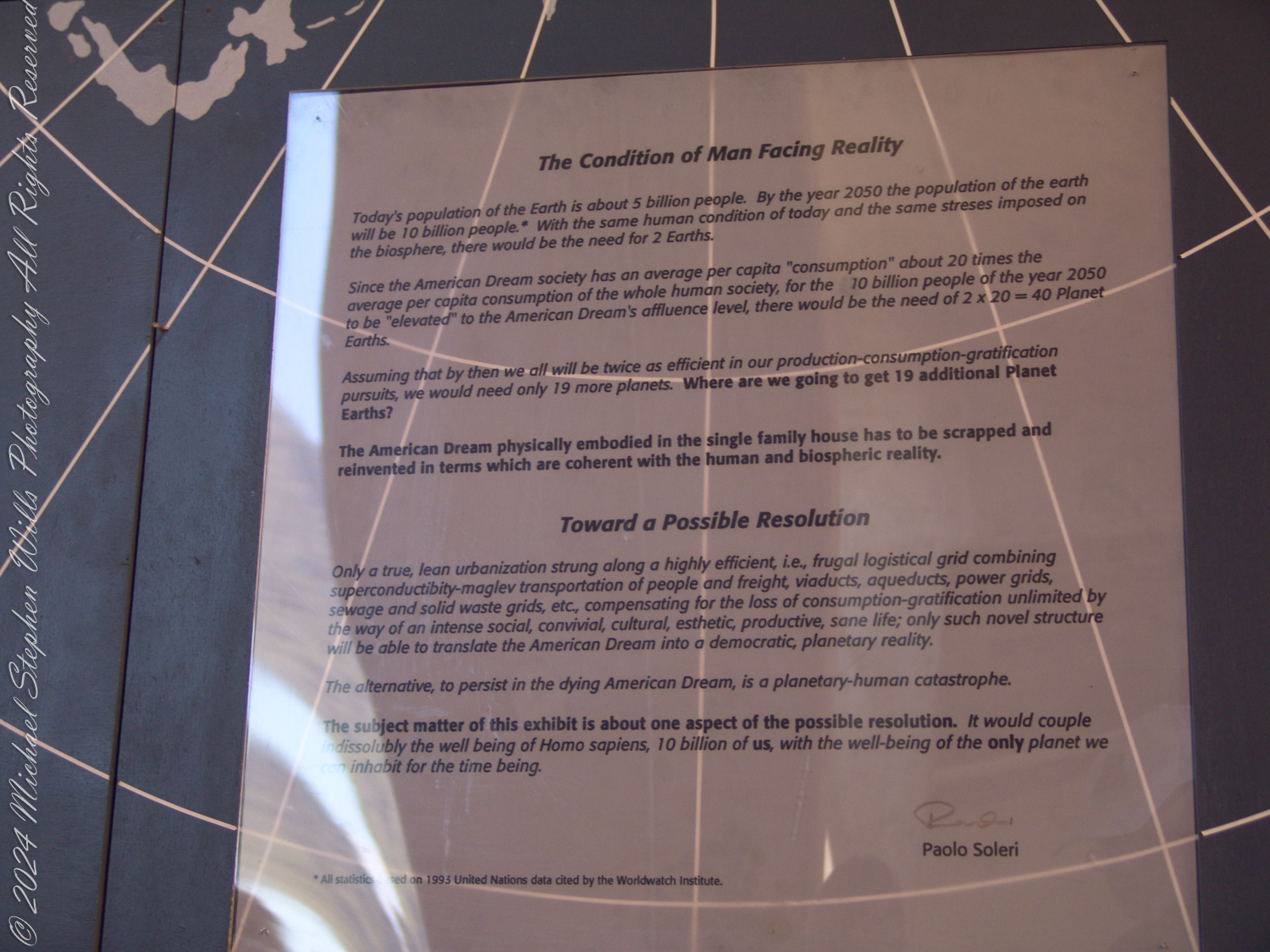
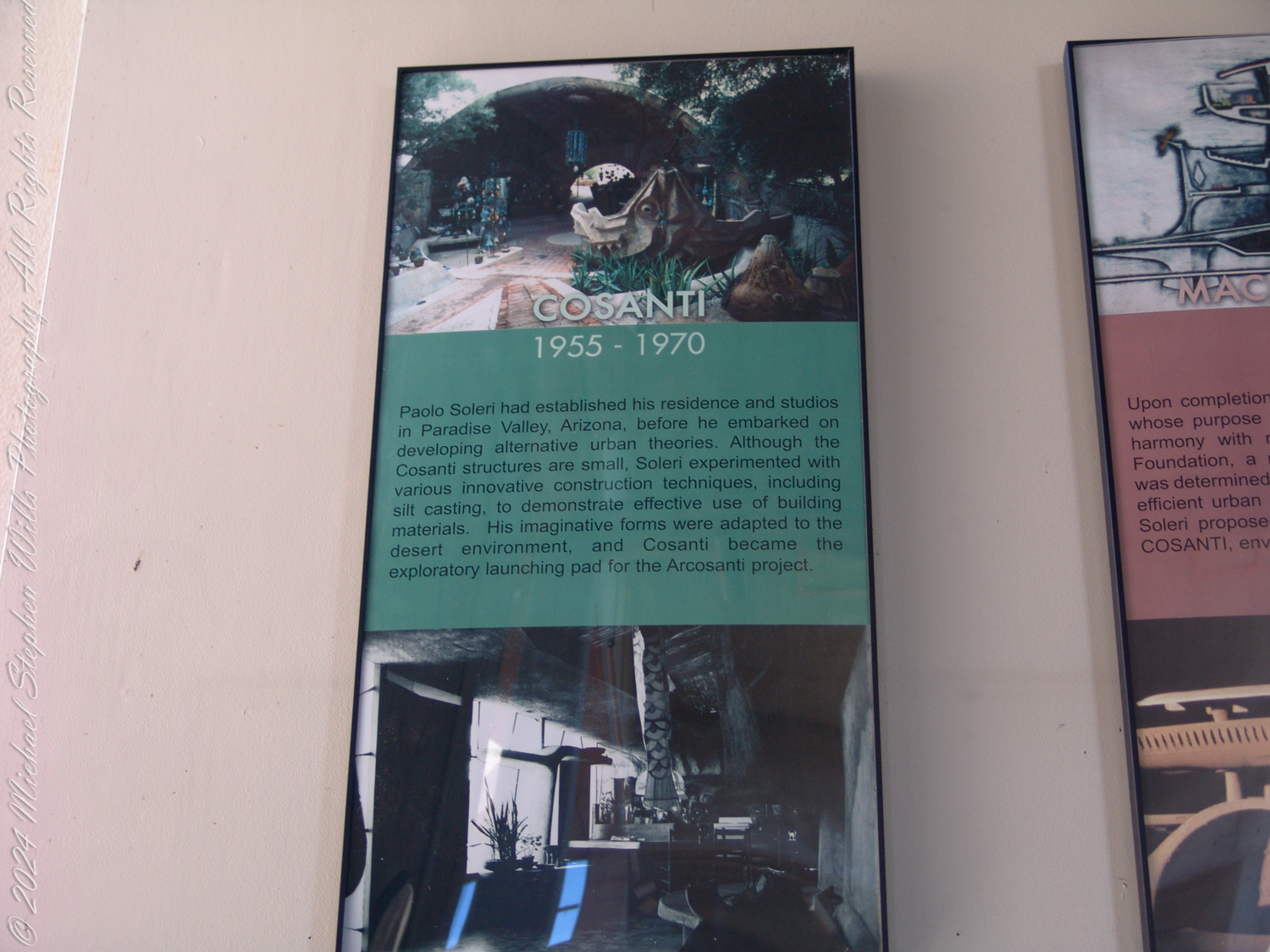
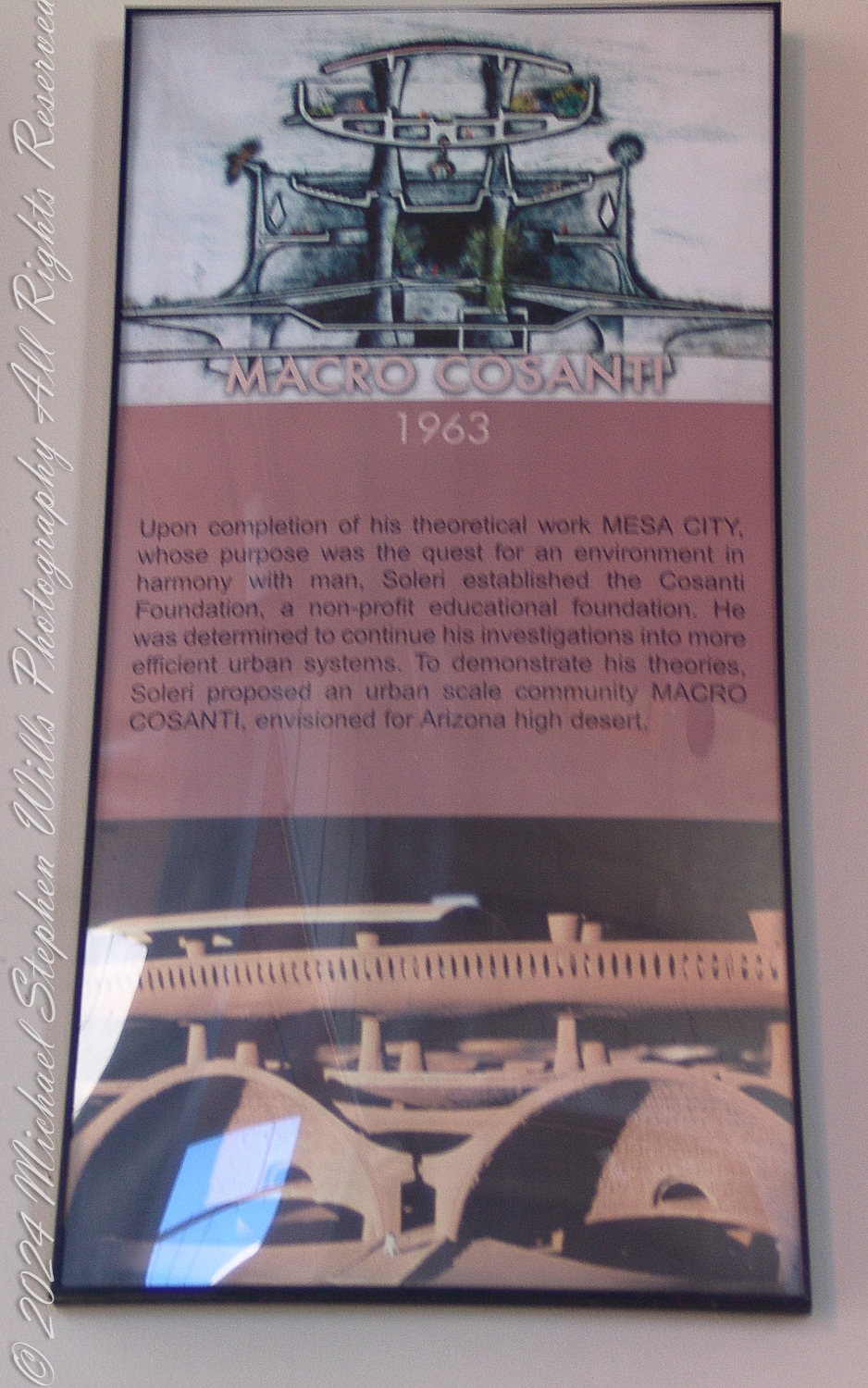
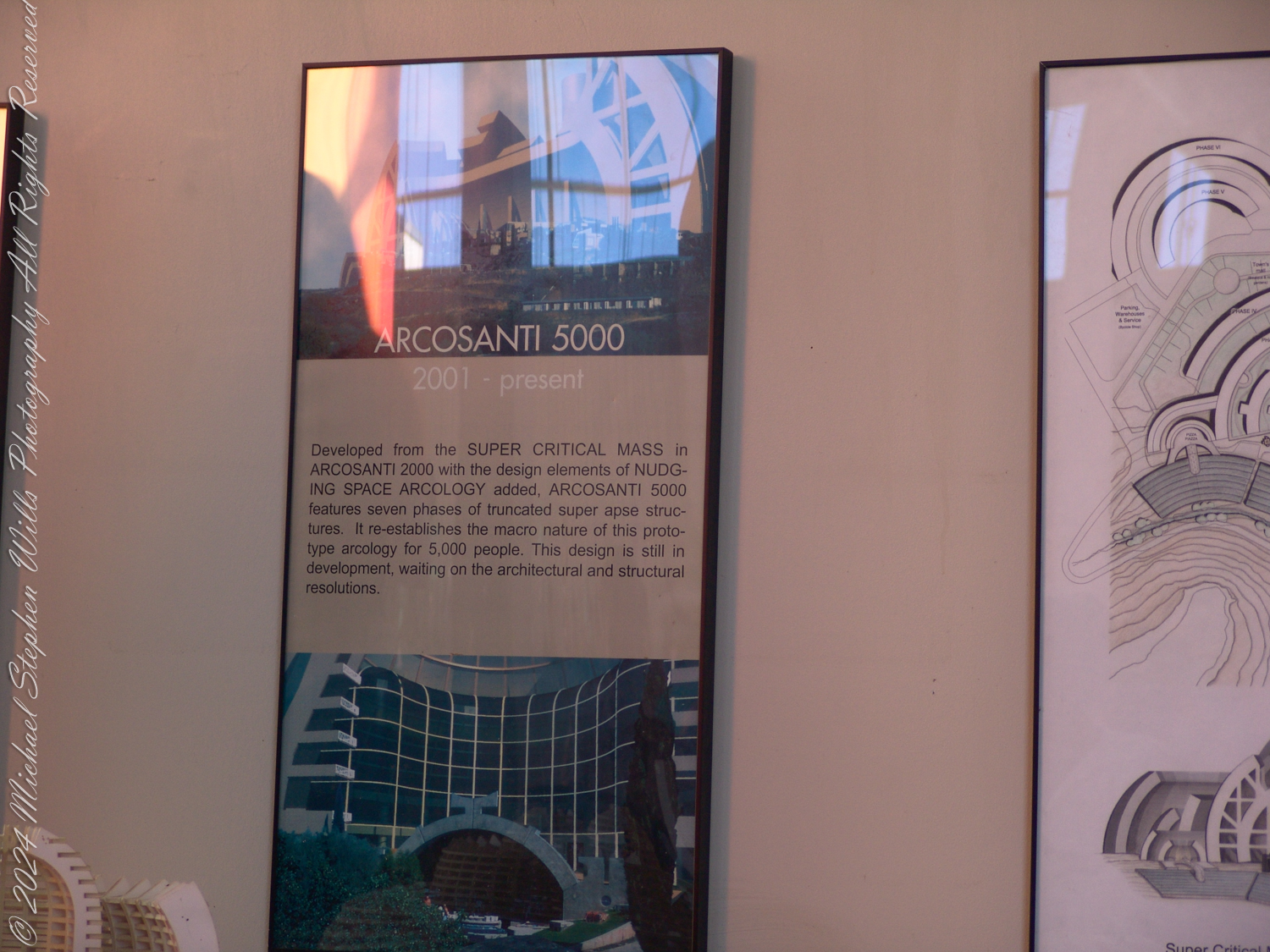
The plaque nearby described this design as part of a “Super Critical Mass” initiative, envisioned for a population of 5,000. The model represented an evolution from earlier prototypes, incorporating what Soleri called “nudging spaces”—areas designed to encourage spontaneous human interaction. I thought of my own neighborhood back home, how it felt fractured and isolated by its grids of asphalt and fenced-off yards. Could this model offer a blueprint for healing that divide?

I moved closer, tracing the pathways with my eyes. The tiny staircases, the shaded atriums, the terraced gardens—they spoke of a life integrated with nature, of a city that tread lightly upon its environment. The thought was thrilling, but also sobering. The challenges of realizing such a vision in the sprawling chaos of modern development loomed large in my mind. Could humanity ever truly embrace such radical simplicity?

In that moment, the gallery was silent except for the soft click of my camera. I wanted to capture not just the model, but the feeling it evoked—the delicate balance of hope and humility. The metadata on the image files would later remind me of the precise day and hour I stood there, absorbing this vision of what might be. But no timestamp could fully capture the spark it ignited—a sense that, even in a world burdened by consumption and waste, there remained a path forward, winding like a desert trail through arches of light and shadow.

Enter your email to receive notification of future postings. I will not sell or share your email address.

Exploring Arcosanti: Paolo Soleri’s Vision in the Arizona Desert

Arcosanti embodies Paolo Soleri’s vision of sustainable living, merging architecture and ecology in harmony with the Arizona desert landscape.

Under a strong early spring desert sun I turned from Arcosanti Road, a ribbon of asphalt threading through the arid Arizona landscape. Ahead, the architectural vision of Paolo Soleri emerged like an oasis of ideas etched into the barren desert. My mind drifted back to the 1970s, to the University of Arizona lecture hall where Soleri, full of vigor, had introduced us to his concept of “Arcology.” That hour left an indelible mark—a vision of dense human habitation harmonizing with the environment, reducing our ecological footprint toward a sustainable whole.

Arcosanti detail
Arcosanti detail

That memory had stayed with me, a beacon of idealism. Over the years, Soleri’s Arcosanti had grown, not with the speed of cities, but with the deliberate rhythm of an organic organism. Today, after decades of curiosity and connection, I found myself at its gates.

Click any photograph to visit my “Arizona” online gallery.
Arcosanti detail
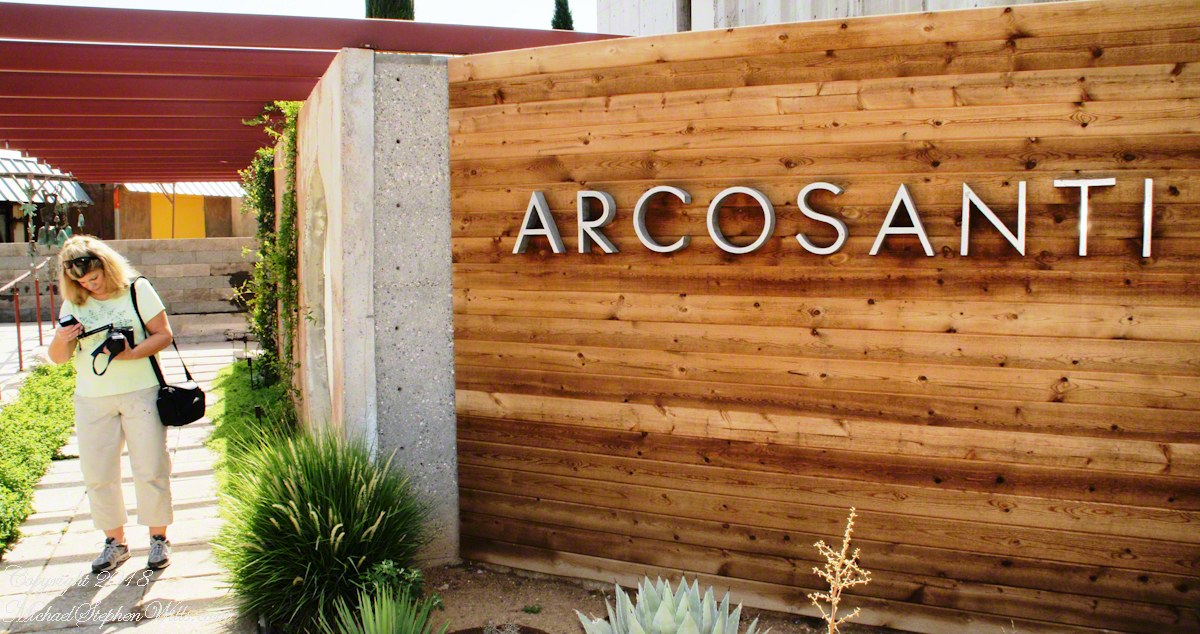
Pam checking her equipment before a Summer 2008 visit

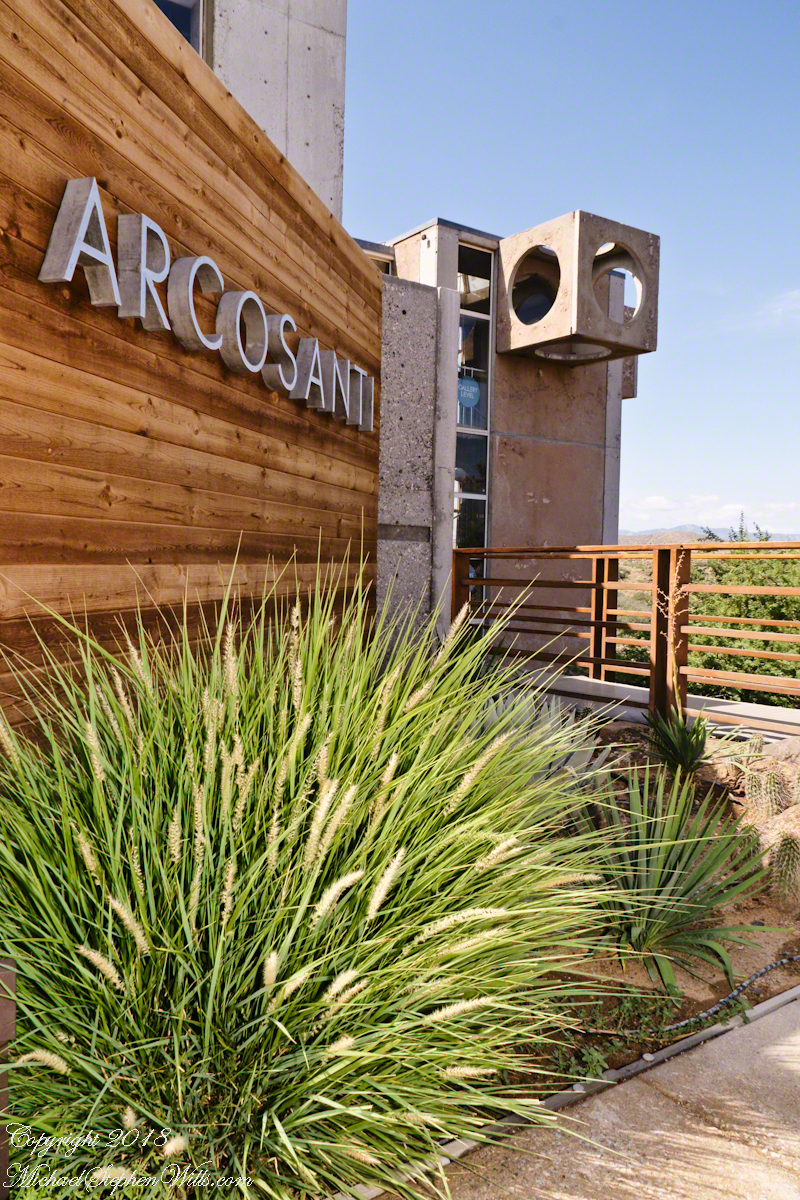
The first steps into Arcosanti struck me with a sense of balance. A sign, simple yet bold, announced the name: ARCOSANTI. It was embedded into a wooden facade, juxtaposed with the rugged modernity of concrete forms. Below, soft plumes of desert grass swayed, echoing the harmony Soleri envisioned—a human footprint gently integrated into the natural world. The sunlit entrance spoke of the potential for design to soothe rather than overpower.

Entrance and a Tower of the Crafts III building

Pam – CLICK ME for more Arizona Photography.

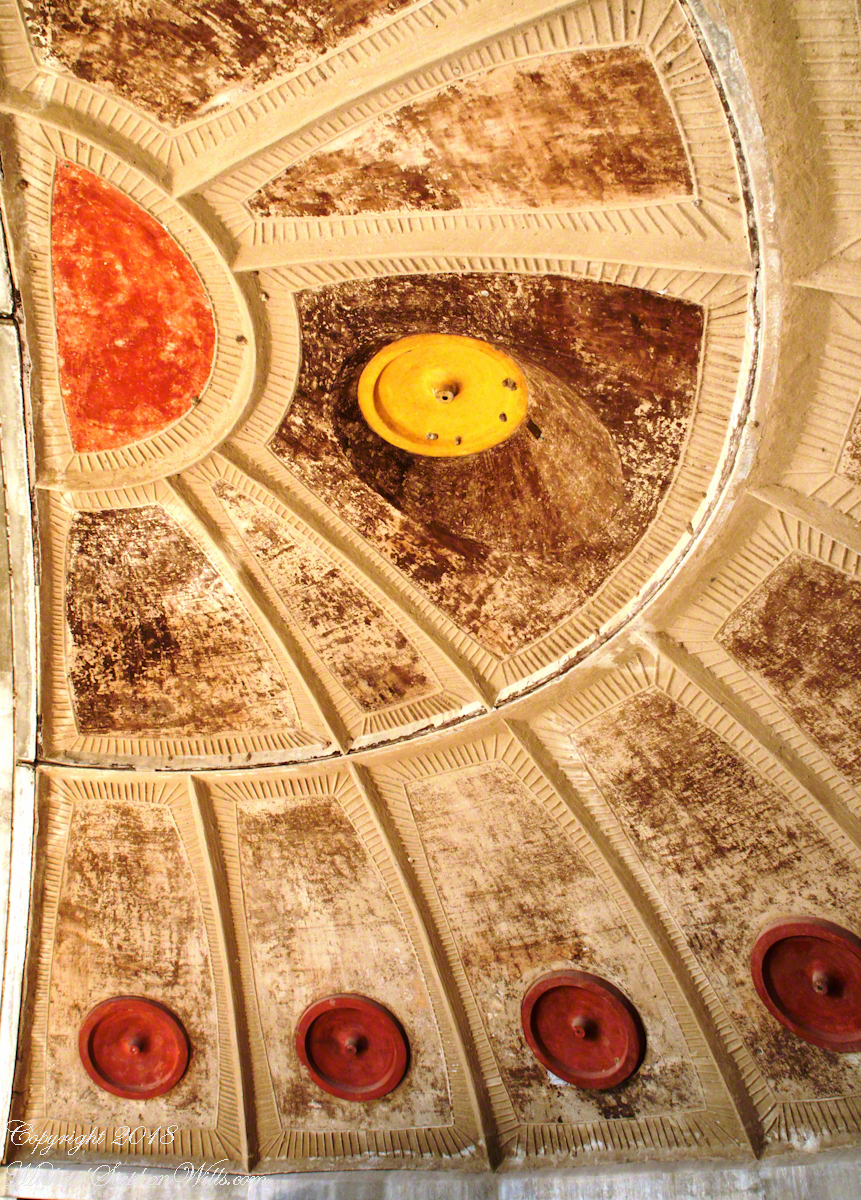
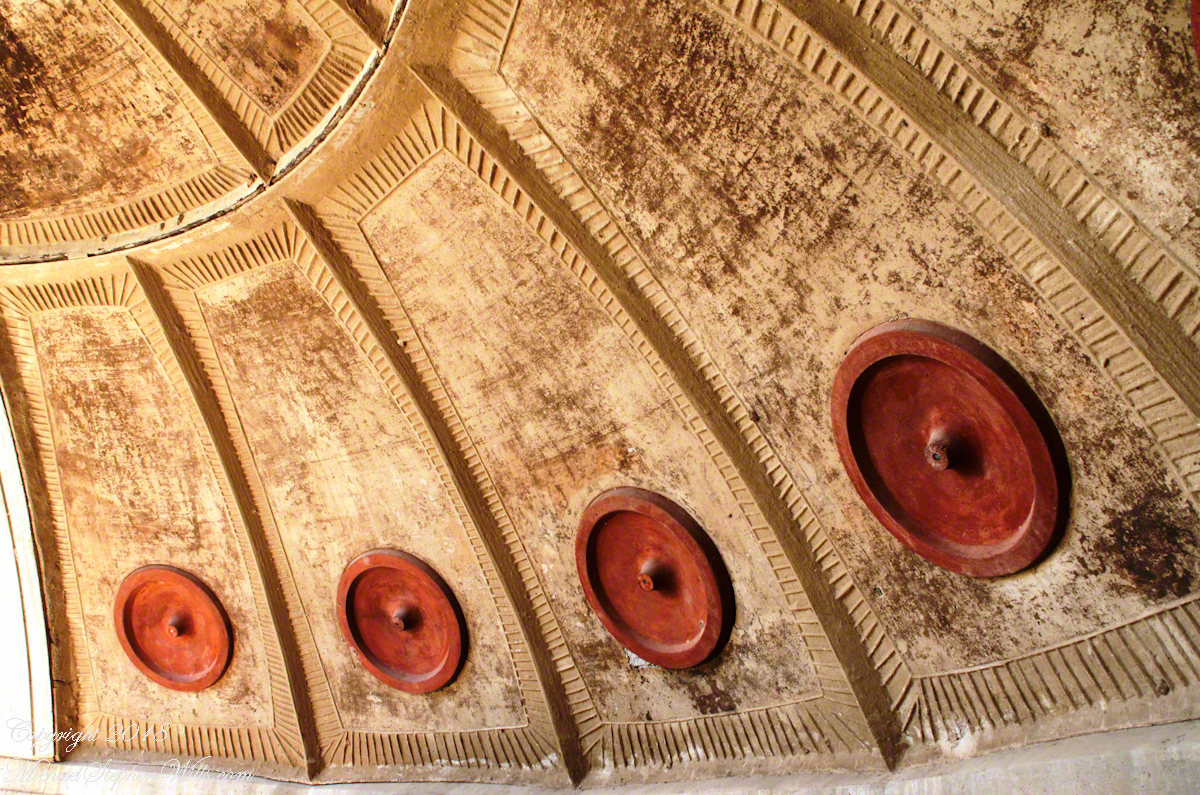
Inside, the bold lines and unique details captivated me. In one space, I craned my neck to admire a ceiling adorned with terracotta-colored circular forms, each embedded in angular panels radiating like the sun’s rays. These circular elements acted as focal points, their symmetry grounding the expansive, textured design. The play of light and shadow across the surface was mesmerizing, a reminder of Soleri’s mastery in turning the utilitarian into the poetic.

Ceramics Apse Sand Cast Panels I

Ceramics – CLICK ME for more Arizona Photography.

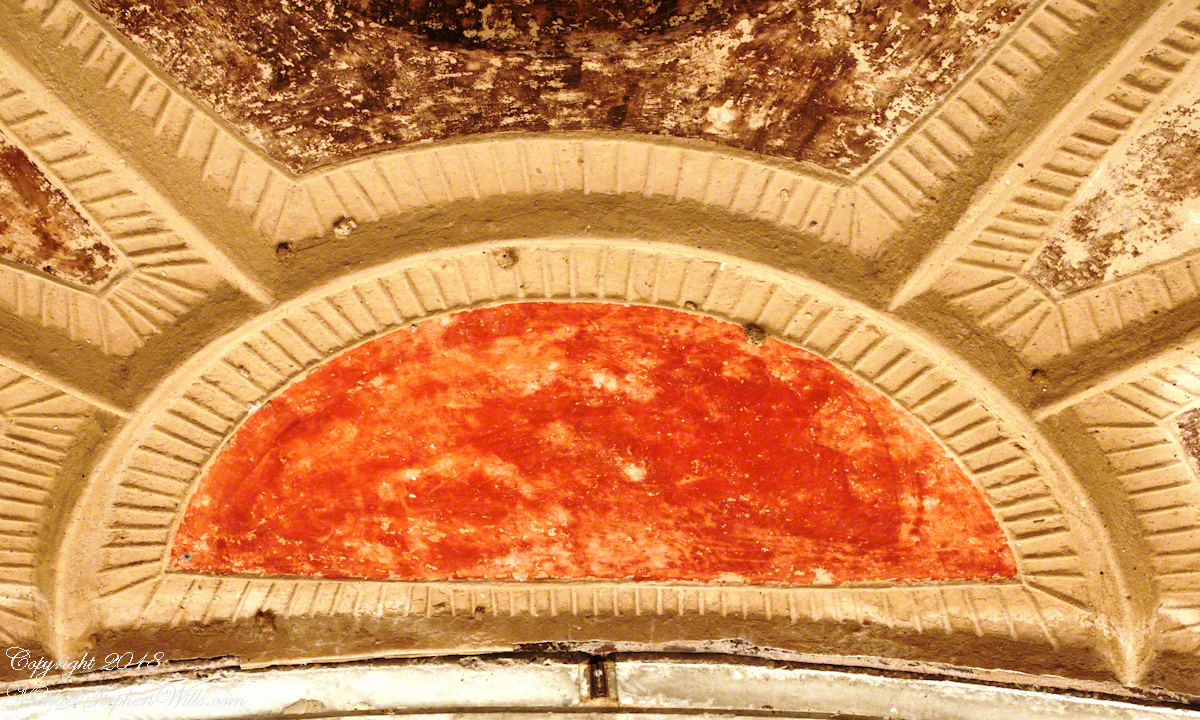
Each space in Arcosanti seemed crafted to evoke reflection. A splash of ochre-red pigment adorned another portion of the ceiling, forming a half-circle bordered by precise ridges. It was more than architectural detail—it was an abstract sun, warm and full of energy, radiating from its place above. The deliberate asymmetry, the interplay of form and texture, seemed to breathe with the desert itself.

Ceramics Apse Sand Cast Panels II

Ceramics – CLICK ME for more Arizona Photography.

Ceramics Apse Sand Cast Panels III

Ceramics – CLICK ME for more Arizona Photography.

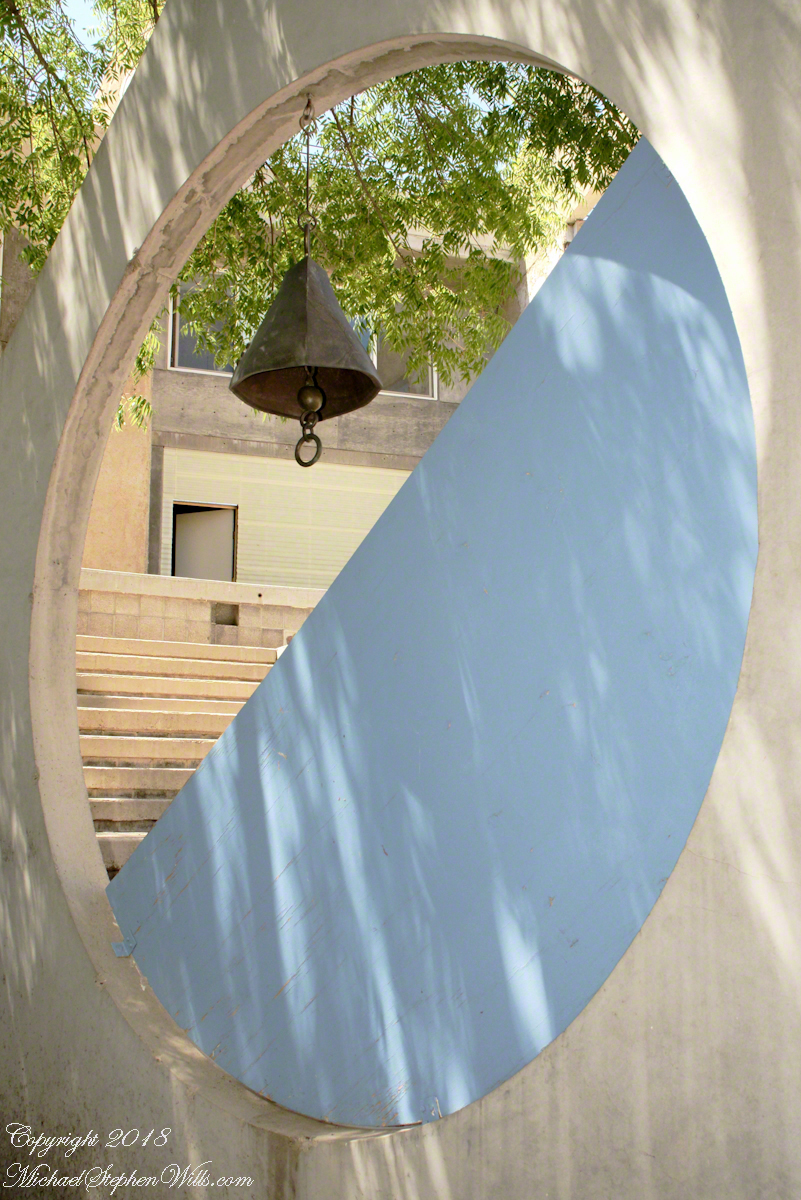
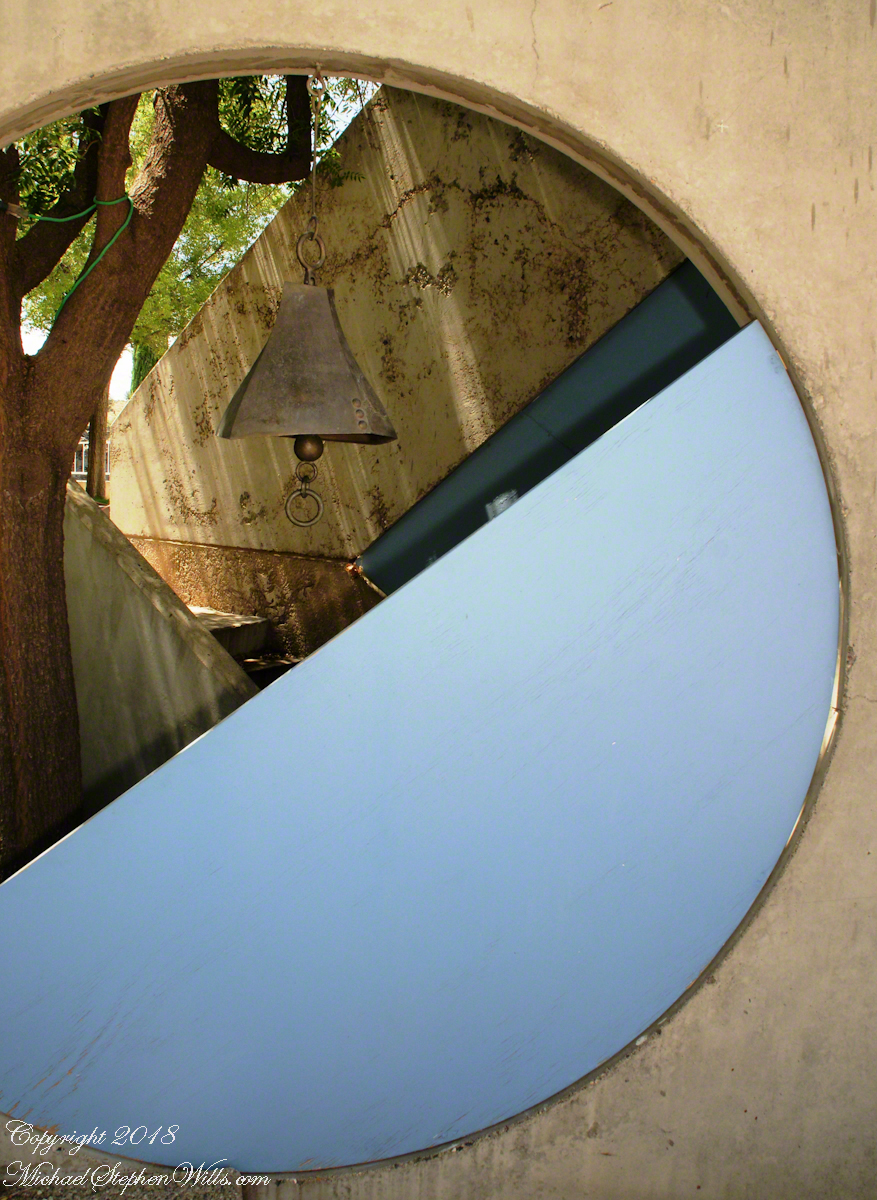
Walking further, I encountered an outdoor arch framing a bell, its heavy bronze form suspended against a panel of sky-blue. The simplicity was striking: a geometric dialogue between the natural and the constructed, a kind of meditative pause within the bustle of ideas. I lingered, allowing my thoughts to settle as the bell swayed gently in the wind.

Bell and Panel from the Colly Soleri Amphitheater

Bell Casting was and continues to be a major source of income.

Ceramics – CLICK ME for more Arizona Photography.

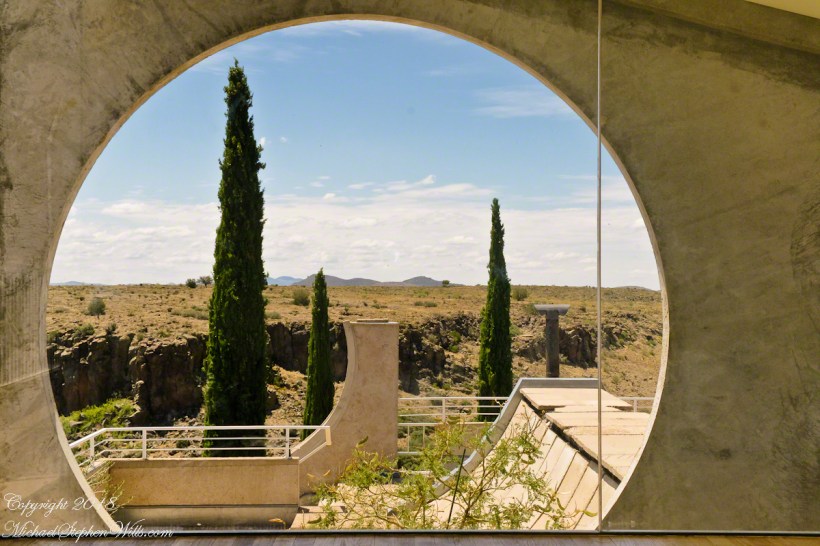
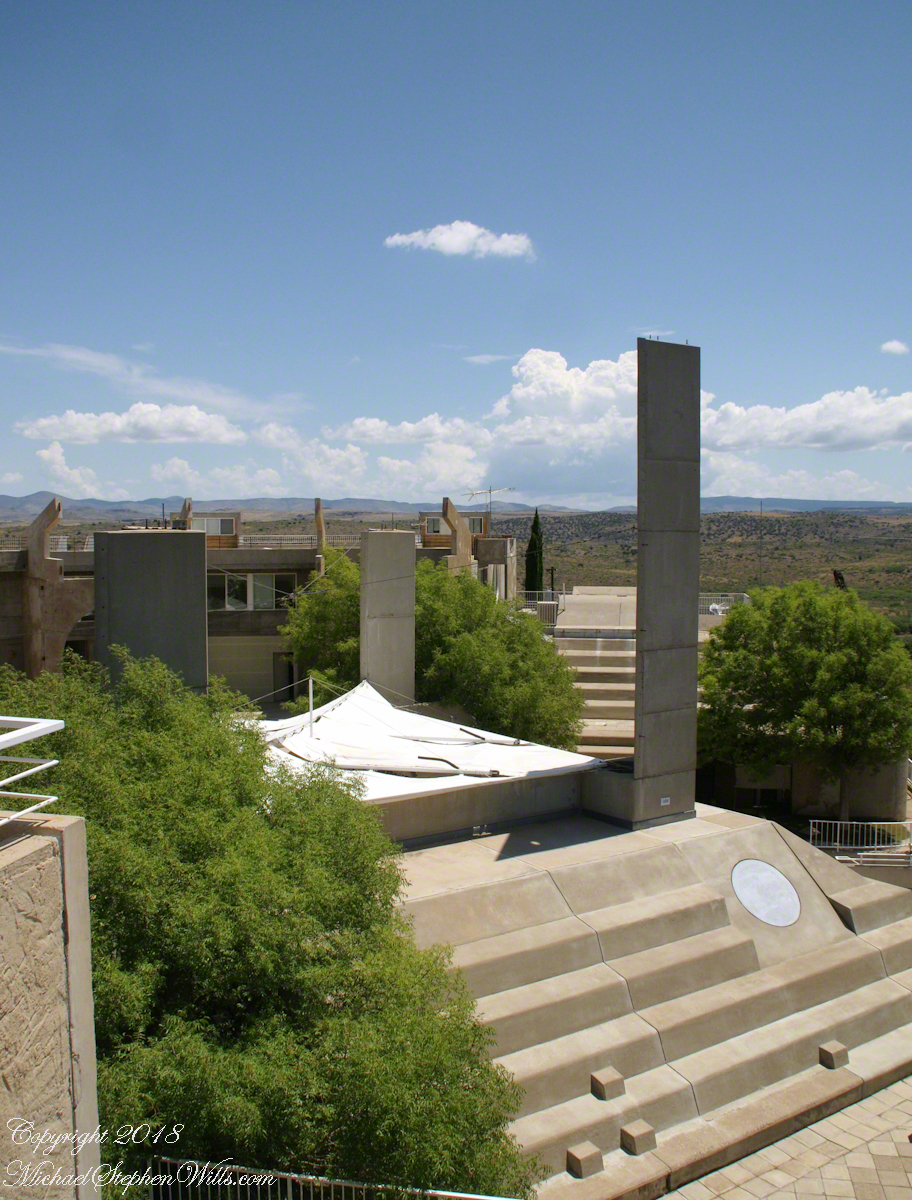
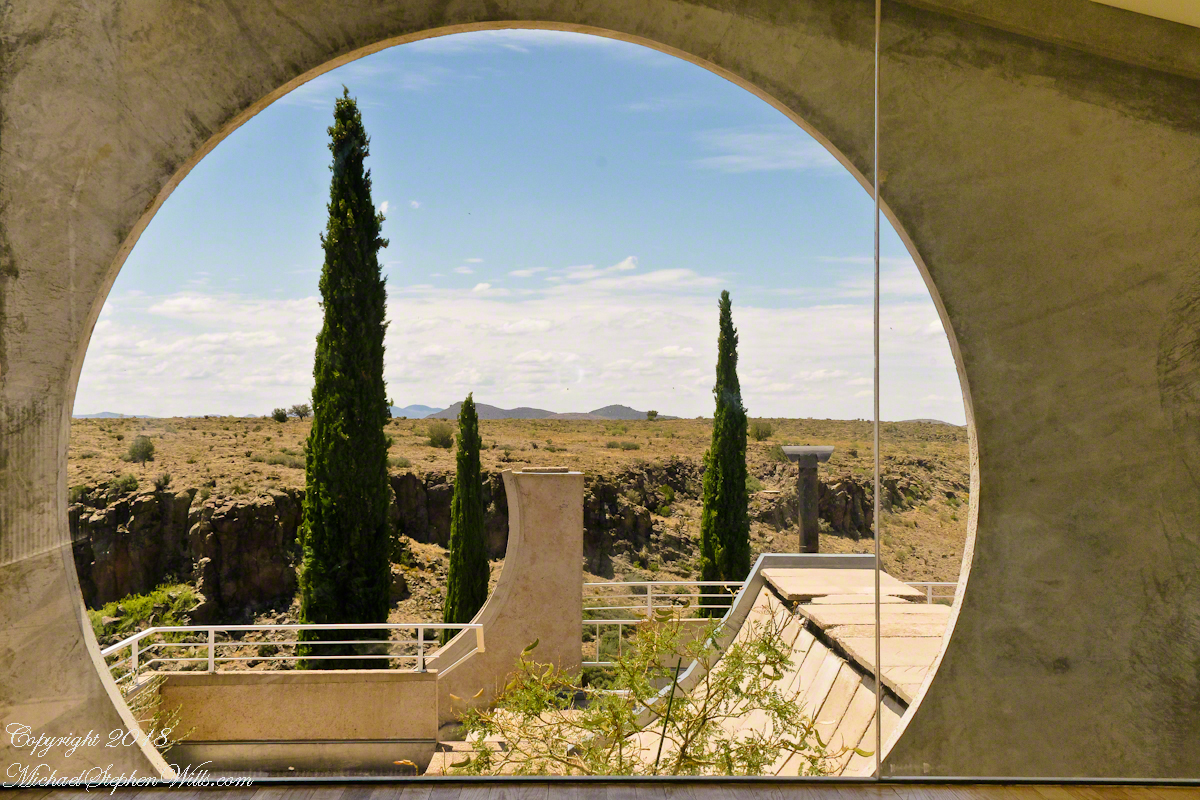
Each turn at Arcosanti revealed yet another viewpoint, another carefully composed alignment of architecture and nature. The sweeping views of the Arizona desert, framed by bold circular cutouts, were a reminder of our smallness in the grand scheme of things. The cypress trees standing tall against the rugged cliffs offered a contrast of textures—natural and man-made—that felt uniquely Solerian. His vision was alive in every corner: the terraces, the staircases, the unassuming balance between the earth’s rawness and humanity’s imagination.

View from the East Housing complex to the East Across Arcosanti

View Across Arcosanti – CLICK ME for more Arizona Photography.

As I stood gazing through one of the monumental circular frames at the horizon, I reflected on how Soleri’s ideas, abstract in the present, are also tangible, concrete, and inspiring—literally and figuratively. Despite his passing, the project he began decades ago continues to evolve, a living experiment in how we might reimagine our relationship with the planet.

View to the South with Cypress Trees from a Portal of the Crafts III Building

Portal View – CLICK ME for more Arizona Photography.

The journey to Arcosanti is a physical one and a rediscovery of ideals. Soleri’s Arcology—a fusion of architecture and ecology—reminded me of our potential to create something not only functional but also deeply meaningful. Here, amidst the Arizona desert, was proof of a life’s work that still speaks to humanity’s potential for coexistence and creativity.

As I prepared to leave, the weight of Soleri’s vision stayed with me, much like that lecture hall memory from all those years ago. The sun was setting, casting long shadows across the concrete forms. Arcosanti stood resolute, a tribute to one man’s dream and a reminder to all of us: change is not instantaneous, but with patience, vision, and humanity, it is possible.

Enter your email to receive notification of future postings. I will not sell or share your email address.

Exploring the Vision of Arcosanti

In the Arizona desert, structures harmonize with nature, embodying creativity and purpose while inviting reflection on balance and coexistence.

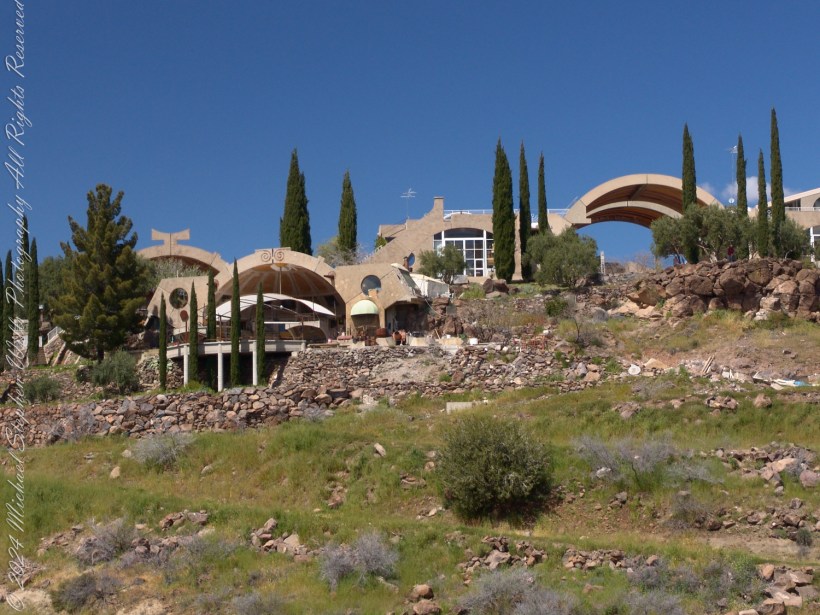
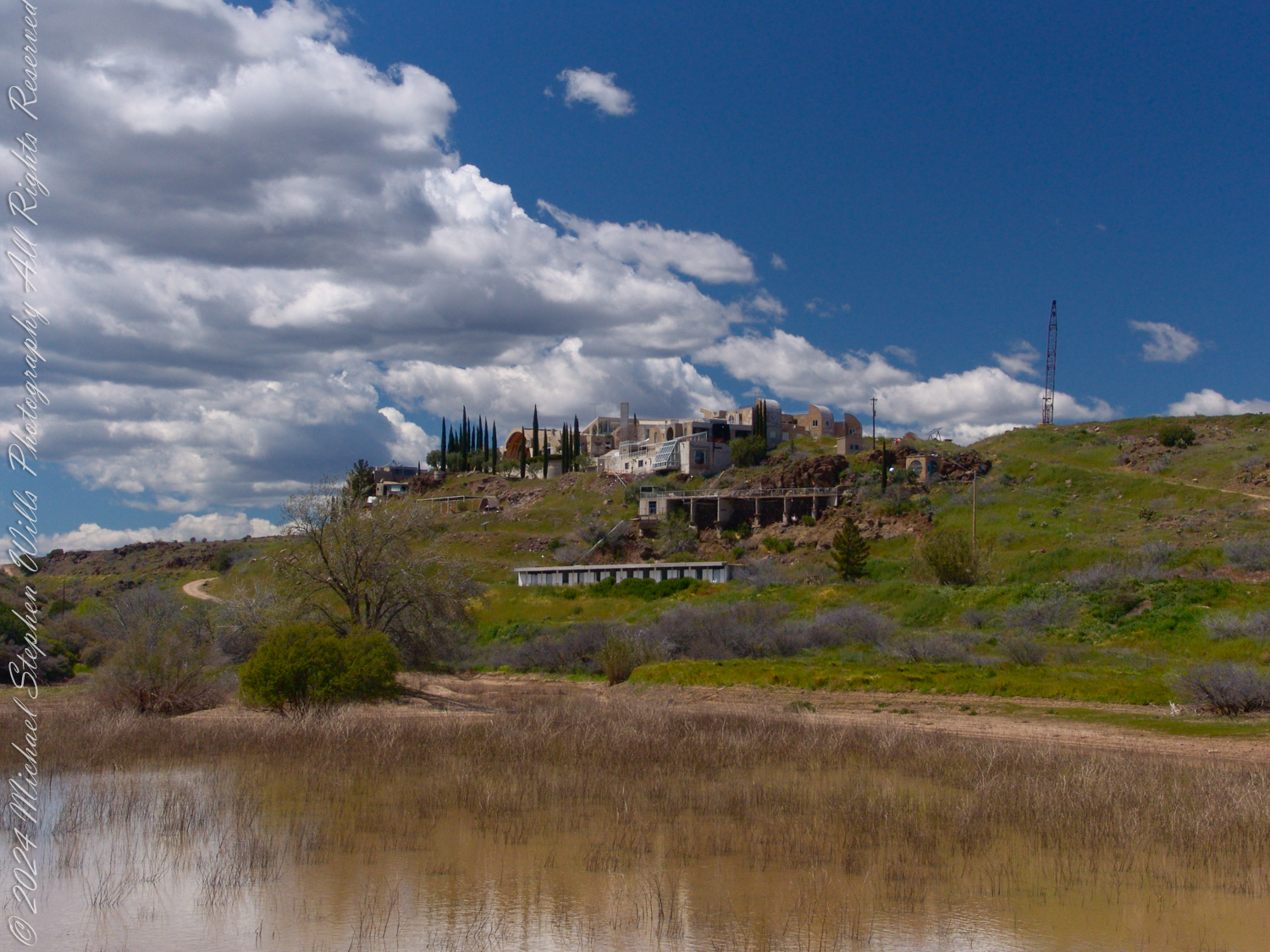
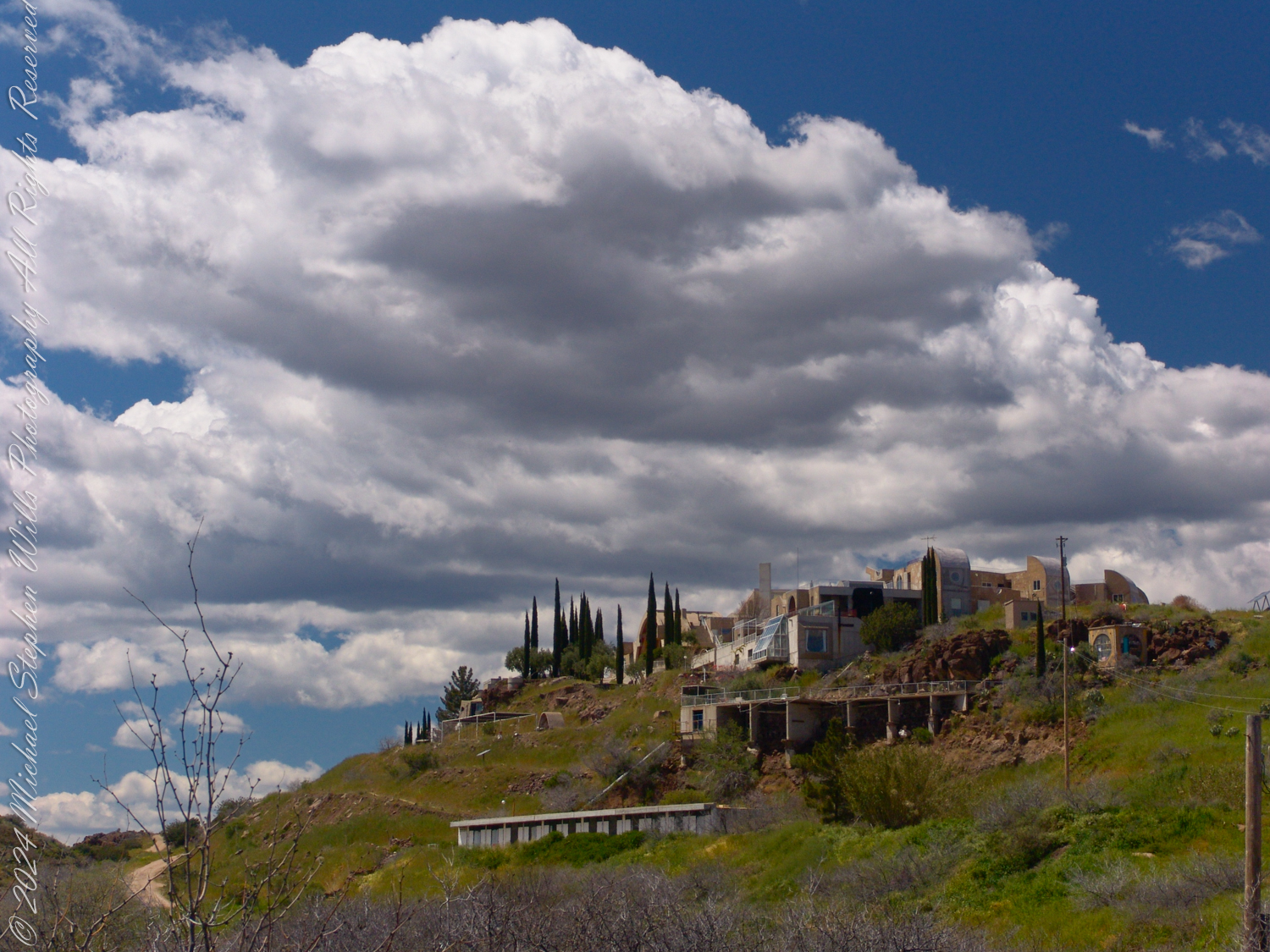
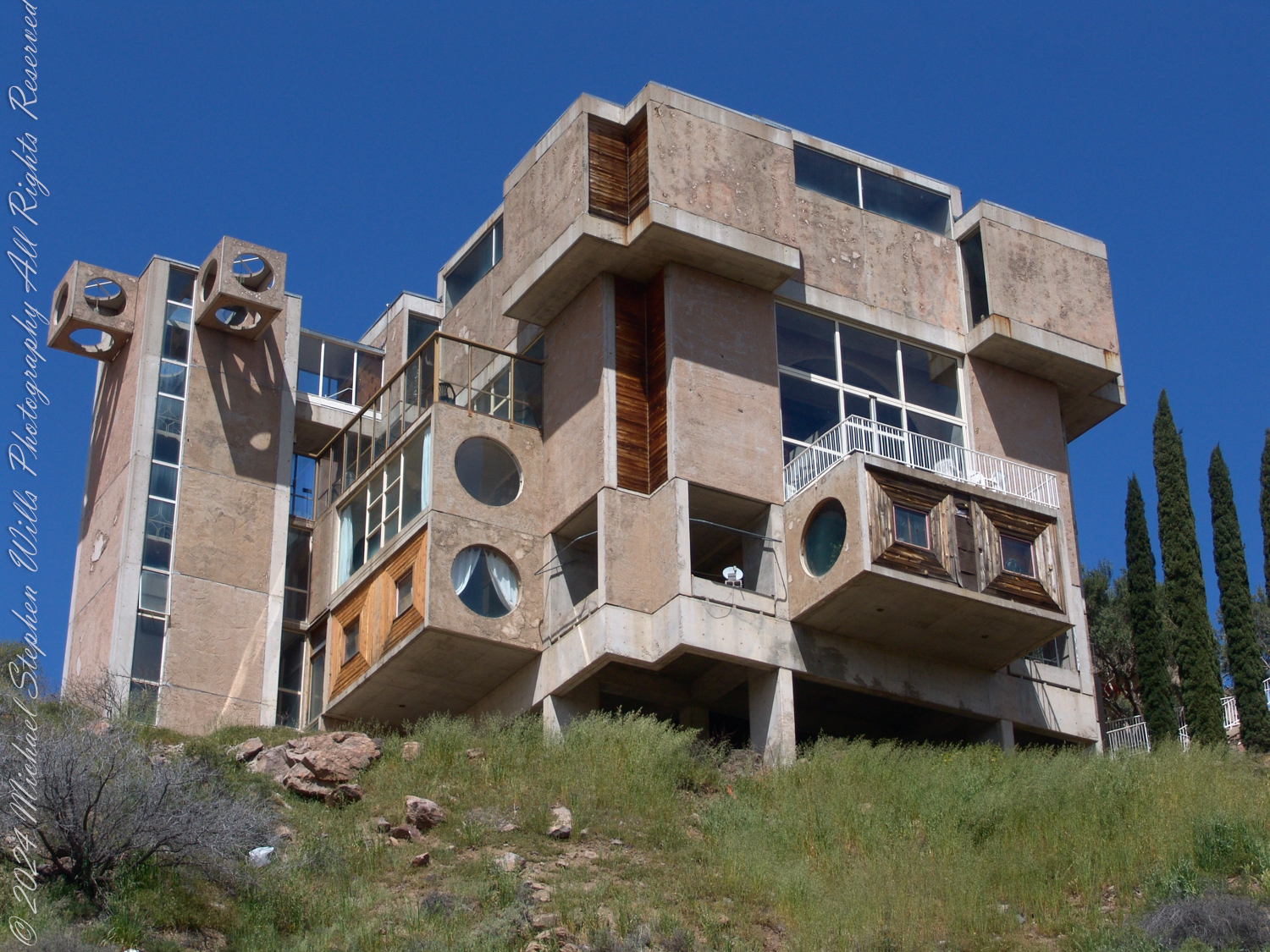
Approaching Arcosanti from afar, a cluster of forms rising from the Arizona desert like a mirage of human imagination. Against the cobalt sky, the buildings seemed to breathe with the land itself, their curves and edges echoing the undulations of the hillside. From this distance, the structures were both distant dream and solid reality, their symmetry a whispered promise of order amidst the chaos of the wild.

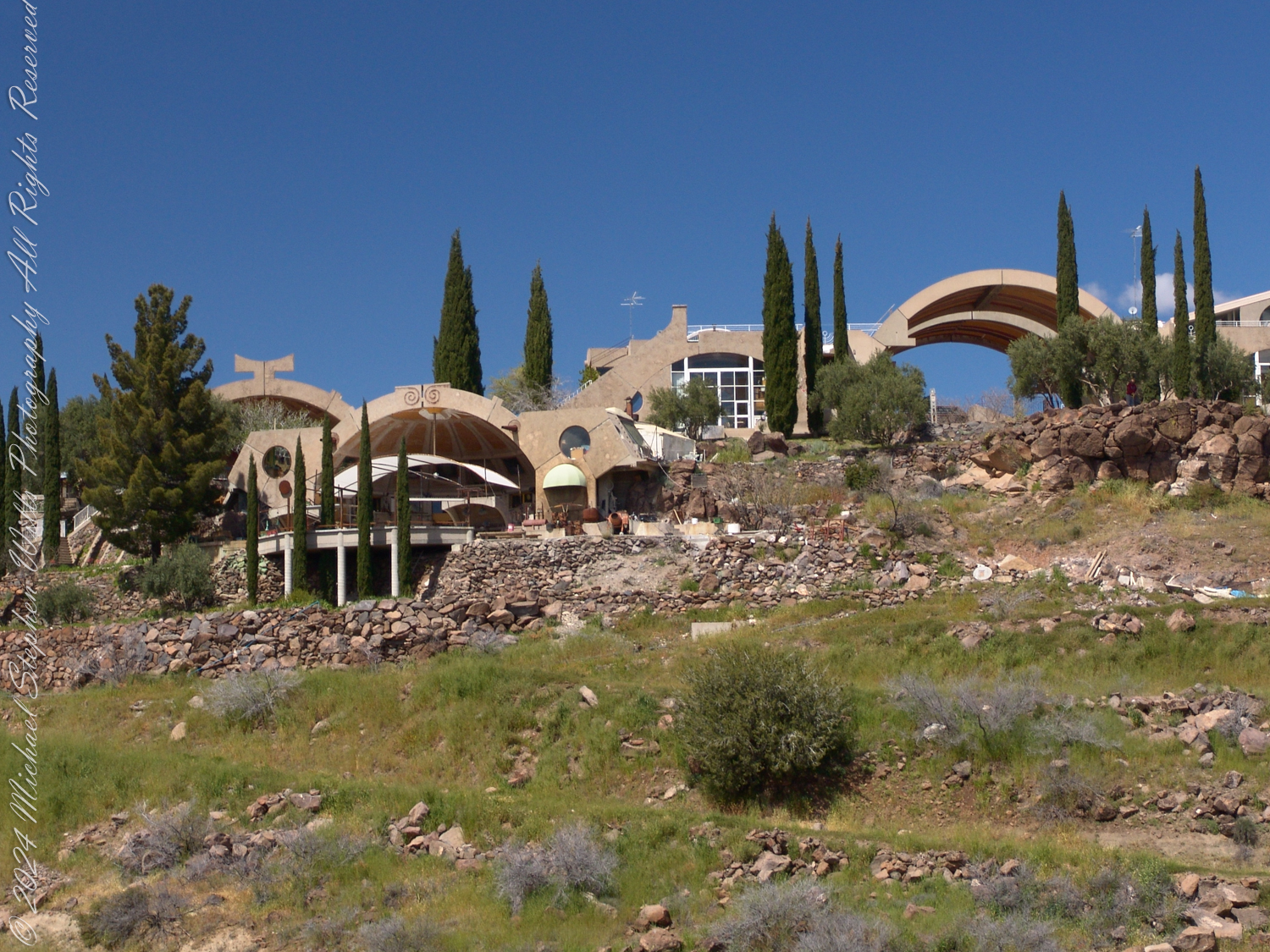
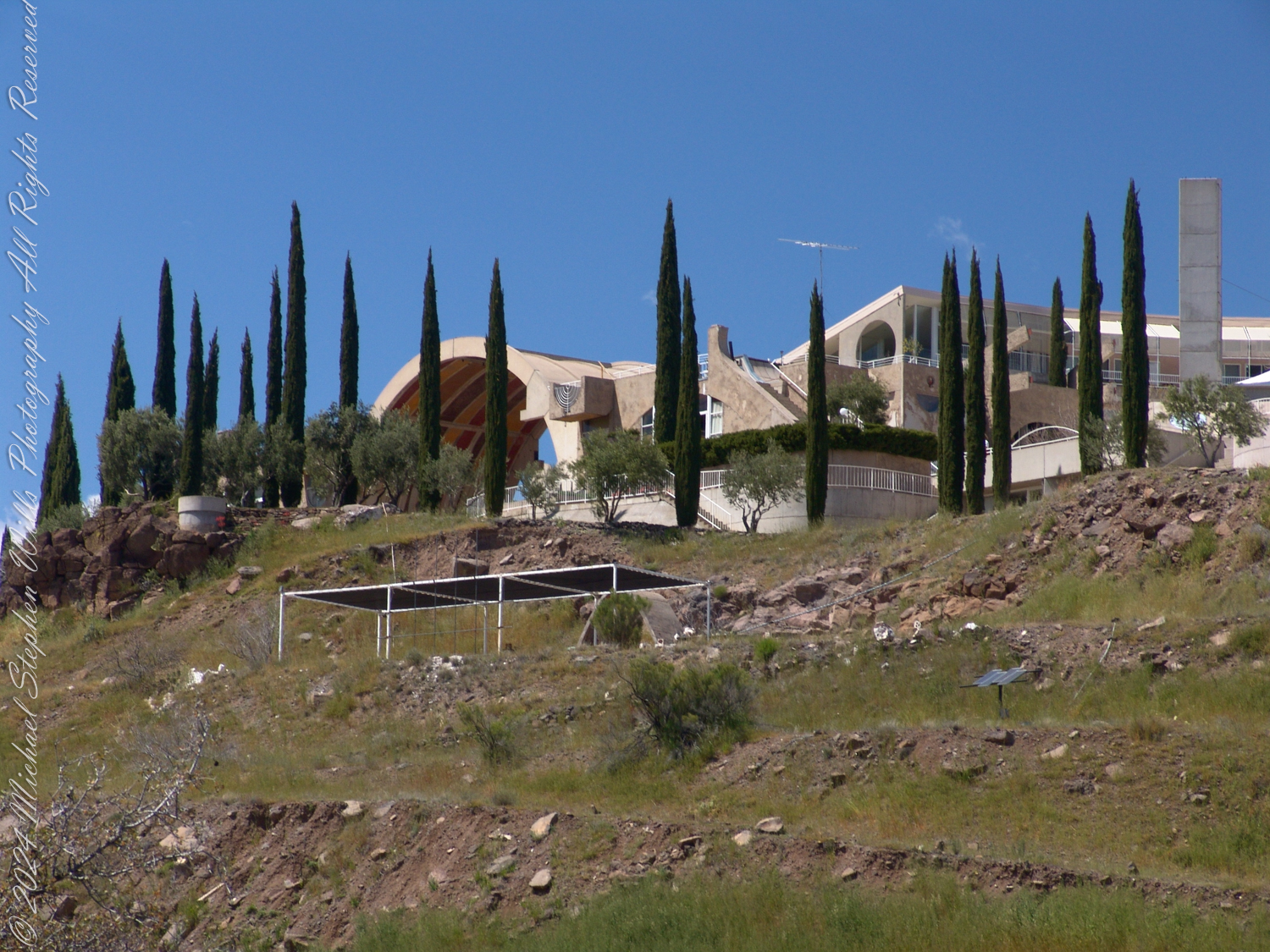
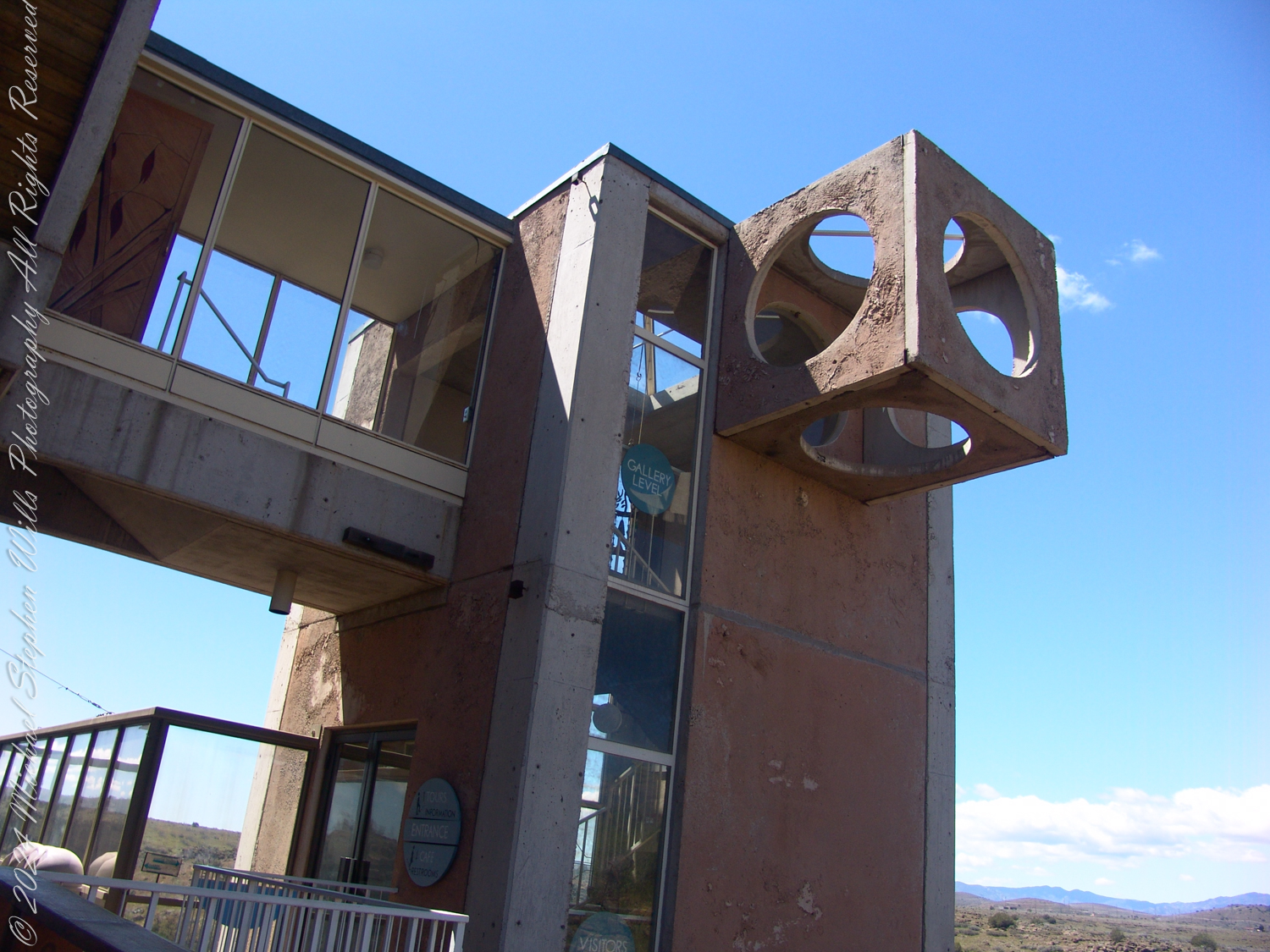
As I moved closer, the buildings revealed their intricate secrets. Circular windows stared like unblinking eyes, portals to a world shaped by creativity and purpose. Towers and cubes jutted confidently into space, their bold geometry softened by the earthen hues of concrete and weathered wood. These materials, neither foreign nor intrusive, seemed born of the very soil beneath my feet. There was an undeniable rhythm to the place—a harmony where art, function, and the timeless desert converged.

I walked among the structures, their forms towering above me like sentinels of some ancient philosophy reborn for a modern age. The elevated walkways beckoned with a quiet invitation, connecting one sanctuary of thought to another. Circular motifs repeated like a mantra, reminding me of the cycles of life, of the sun and the moon, of the unbroken circles that hold us together. Here, design was not merely a tool but a hymn, sung in concrete and glass.

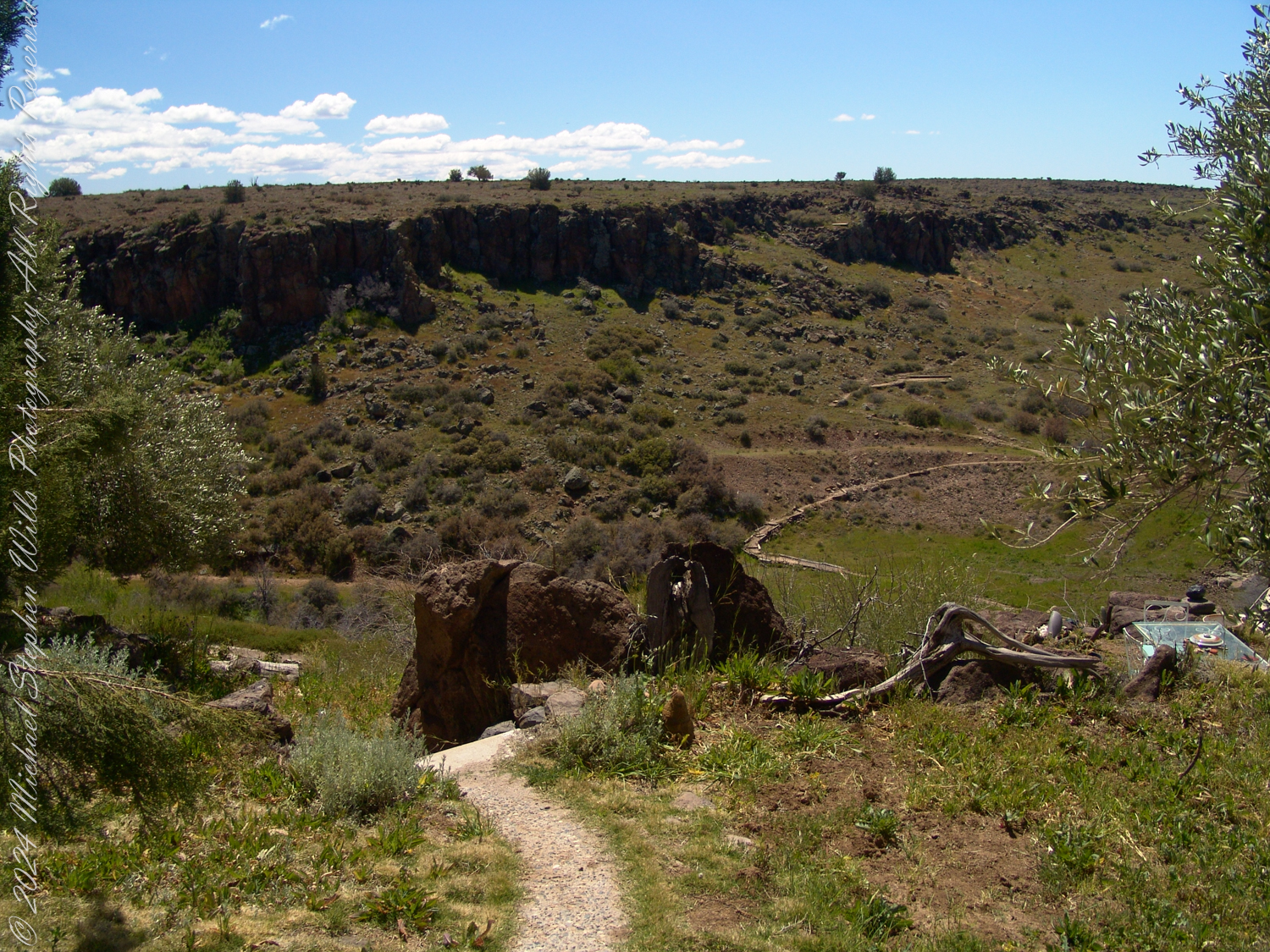
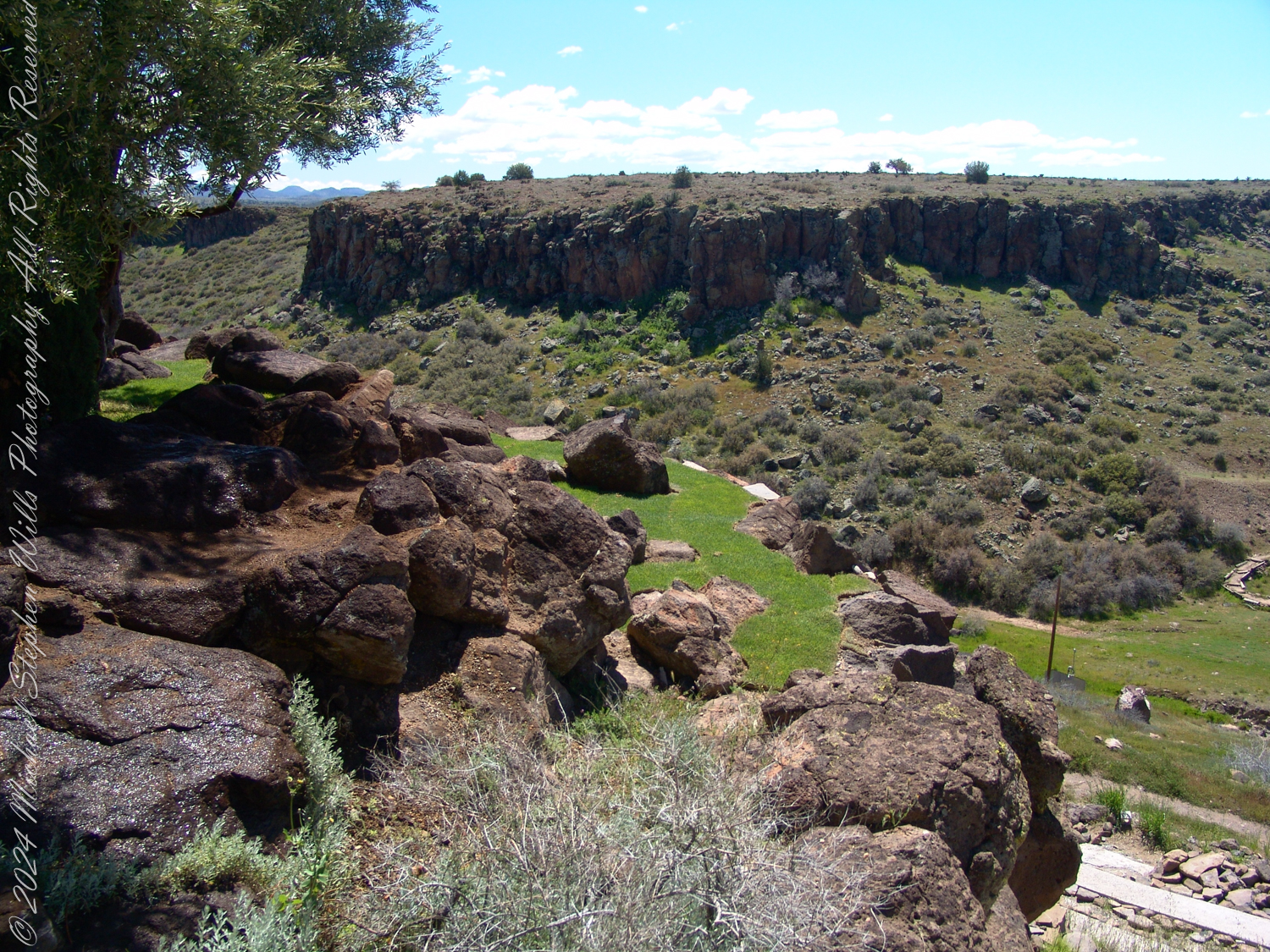
Then, I turned my gaze outward, to the land that cradled this creation. The desert was alive, though its voice was quiet and deliberate. Rocks, worn smooth by the patient hand of time, rested among tufts of sage and grasses that swayed in the breeze. The light played its own game, casting shadows that danced across the ground, a choreography as old as the sun. Paths meandered through this terrain, their curves a gentle suggestion rather than a command, inviting me to wander but not to conquer.

Arcosanti

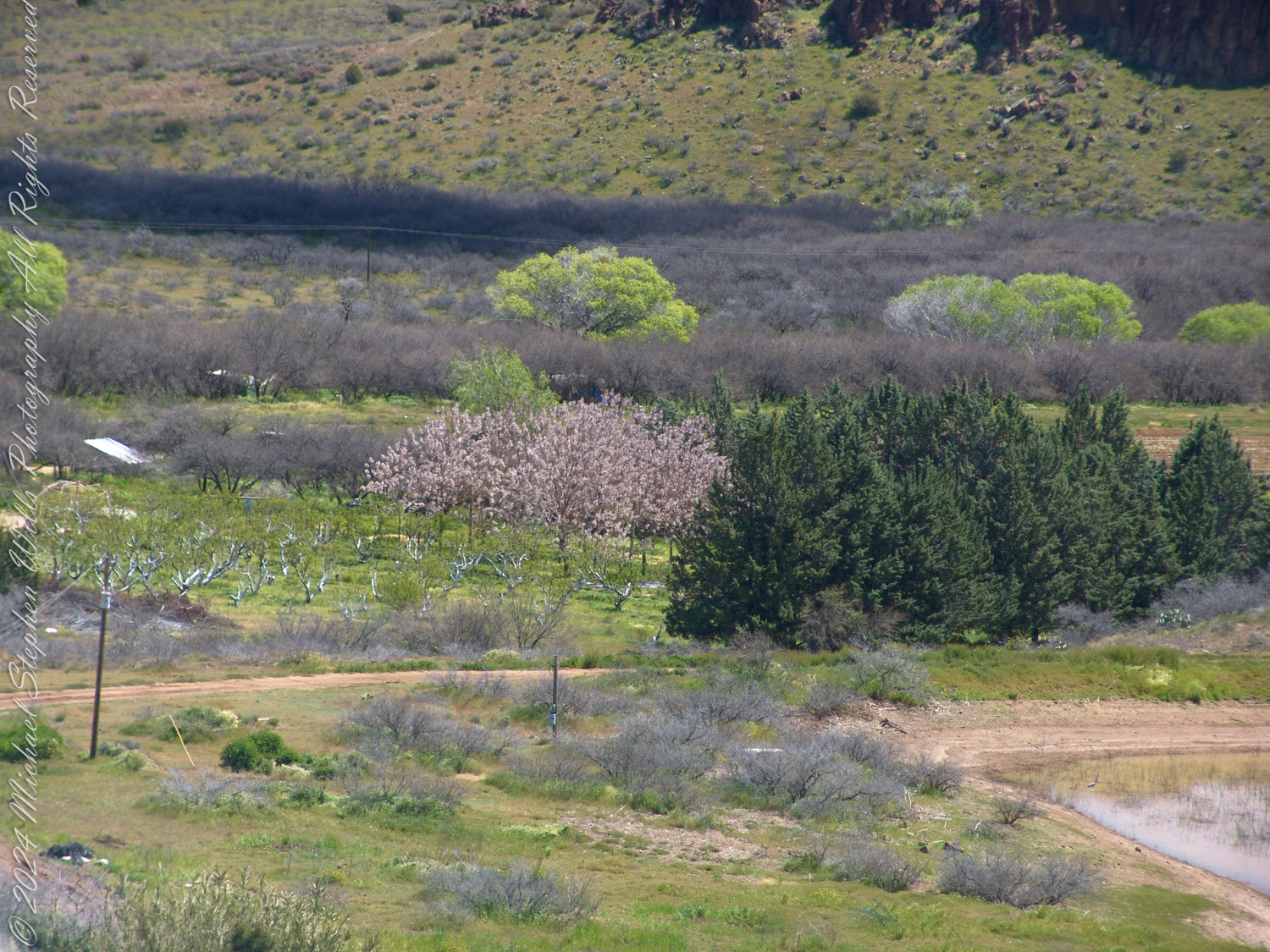
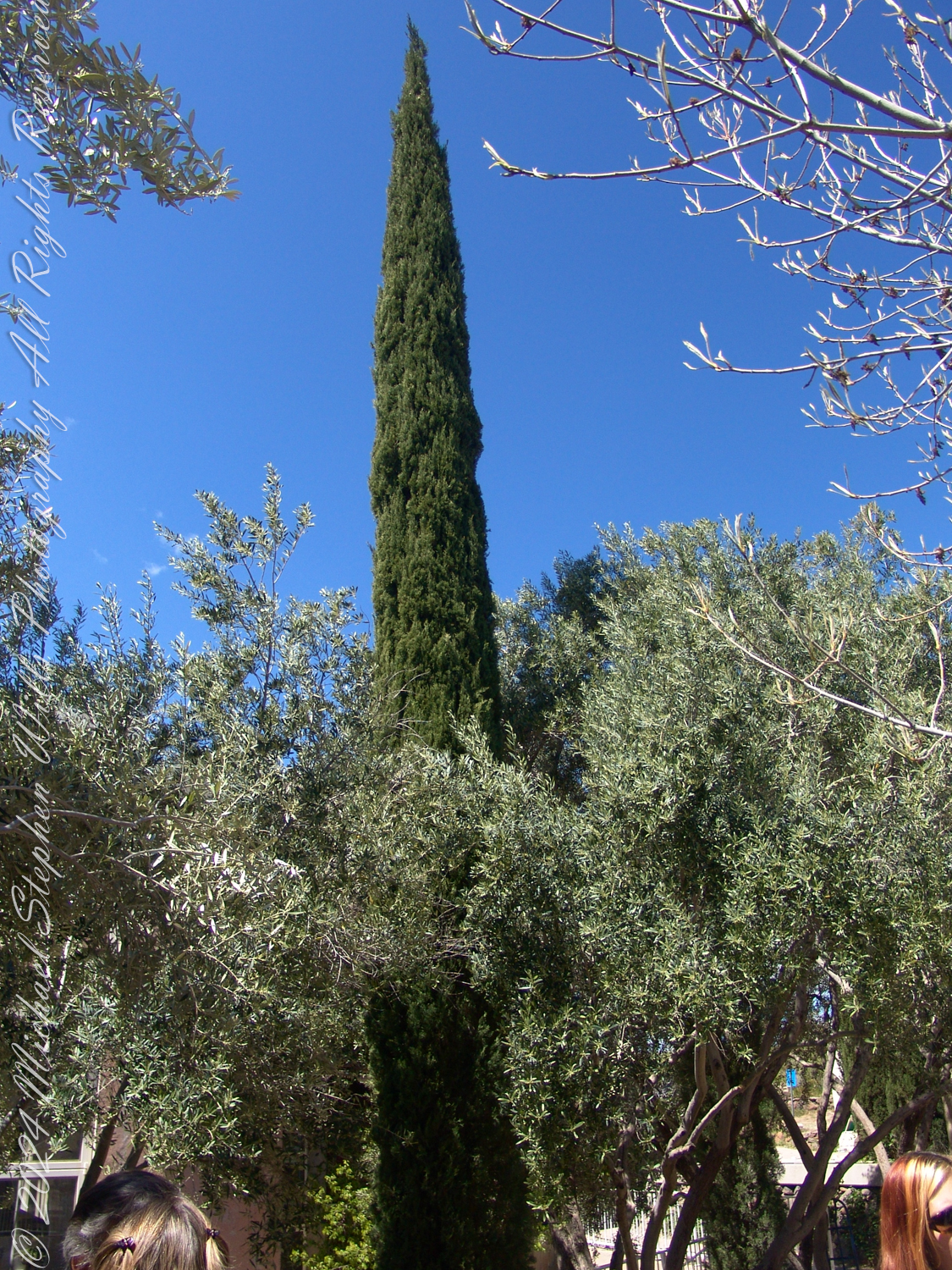
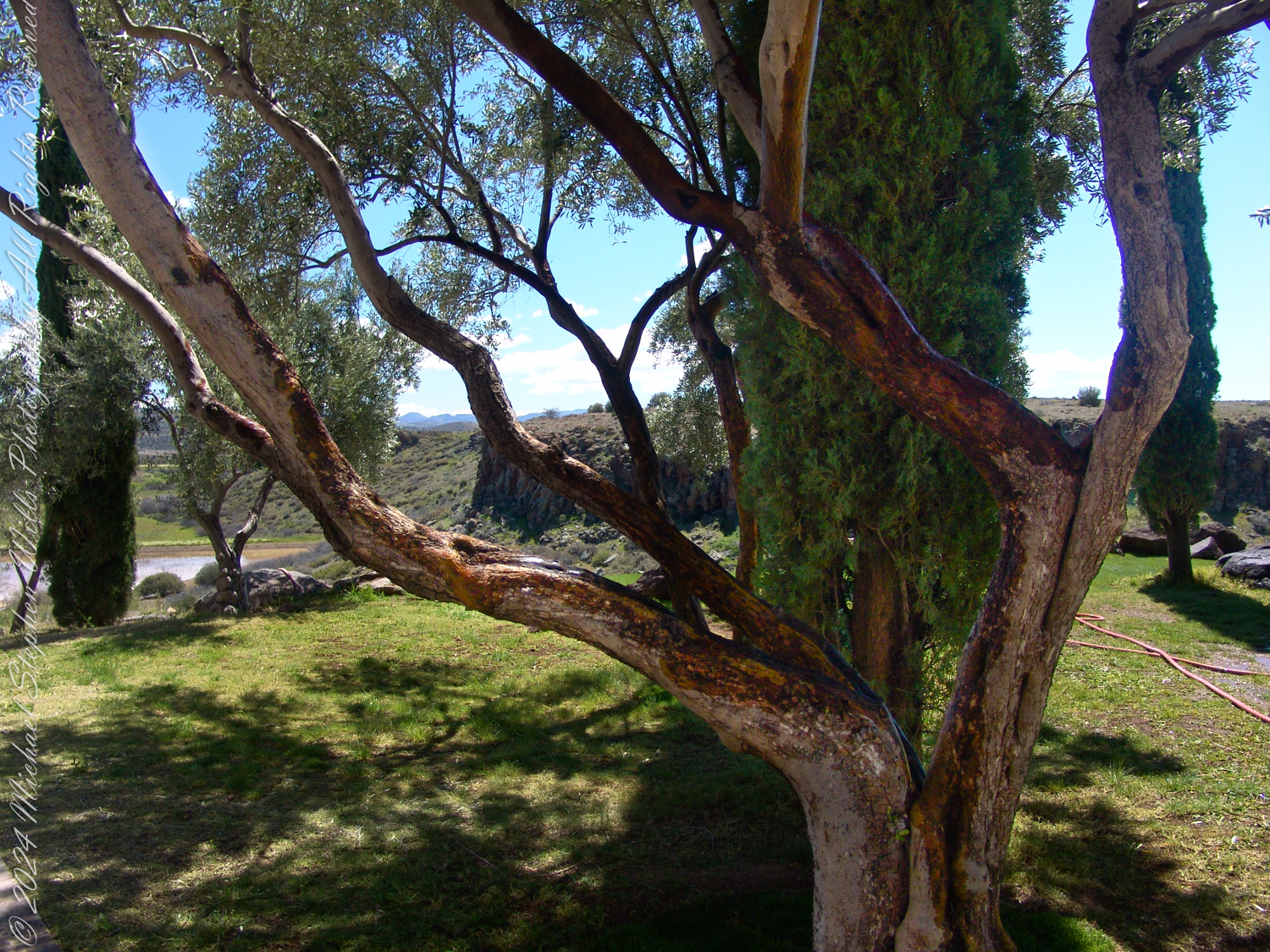
The trees stood tall and still, their presence both steadfast and serene. The cypress trees, their slender forms reaching toward heaven, seemed like exclamation points on the landscape, their verdant green cutting through the sky’s azure expanse. Beside them, olive trees spread their silvered arms, their gnarled trunks telling stories of endurance and quiet strength. One cypress, in particular, caught my attention—so perfectly straight, so impossibly regal, as if it had been planted by the hand of a god.

Beneath the olive trees, I paused, tracing my fingers along the bark’s intricate patterns. The sunlight filtered through the leaves in golden shards, dappling the earth beneath with shifting shapes. The air carried the scent of something ancient and vital—a blend of dry earth, sun-warmed bark, and the faintest hint of blooming life. It was a reminder that even in this place of human creation, nature reigned supreme.

I wandered to the edge of a canyon, its rugged walls carved by time’s relentless flow. The raw power of the landscape stretched out before me, a tapestry of stone and shadow that humbled and awed. Here, the boundaries between human vision and natural grandeur blurred. The olive and cypress trees, so carefully placed, seemed less an intrusion and more a part of the desert’s rhythm. They were a bridge, a whispered conversation between what is made and what simply is.

Finally, the paths called me back, their winding lines leading me deeper into reflection. Each step felt deliberate, as though I were tracing the lines of a poem etched into the earth. The trails curved gently, like the desert’s own breath, and I followed, not as an intruder but as a guest. The buildings now stood behind me, a testament to the balance we strive for—between the ephemeral dreams we build and the eternal landscape that cradles them.

This place is a meeting of stone and sky, a meditation: reminding us that, if we listen, the land will teach us how to live in harmony. Here, in the desert’s embrace, I found space to ask better questions, my heart as open and unbroken as the endless horizon before me.

Enter your email to receive notification of future postings. I will not sell or share your email address.

Saint Fin Barre’s Cathedral: Resilience and Devotion in Cork

Saint Fin Barre’s Cathedral embodies faith and history through intricate artistry and significant apostolic representations.

As I stood within the hallowed confines of Saint Fin Barre’s Cathedral in Cork City, Ireland, I found myself drawn to the intricate artistry that tells the story of faith, resilience, and devotion. The figures and symbols within this magnificent edifice bring to life the history of Saint Fin Barre as well as the broader narrative of Christian tradition and its enduring influence on the region.

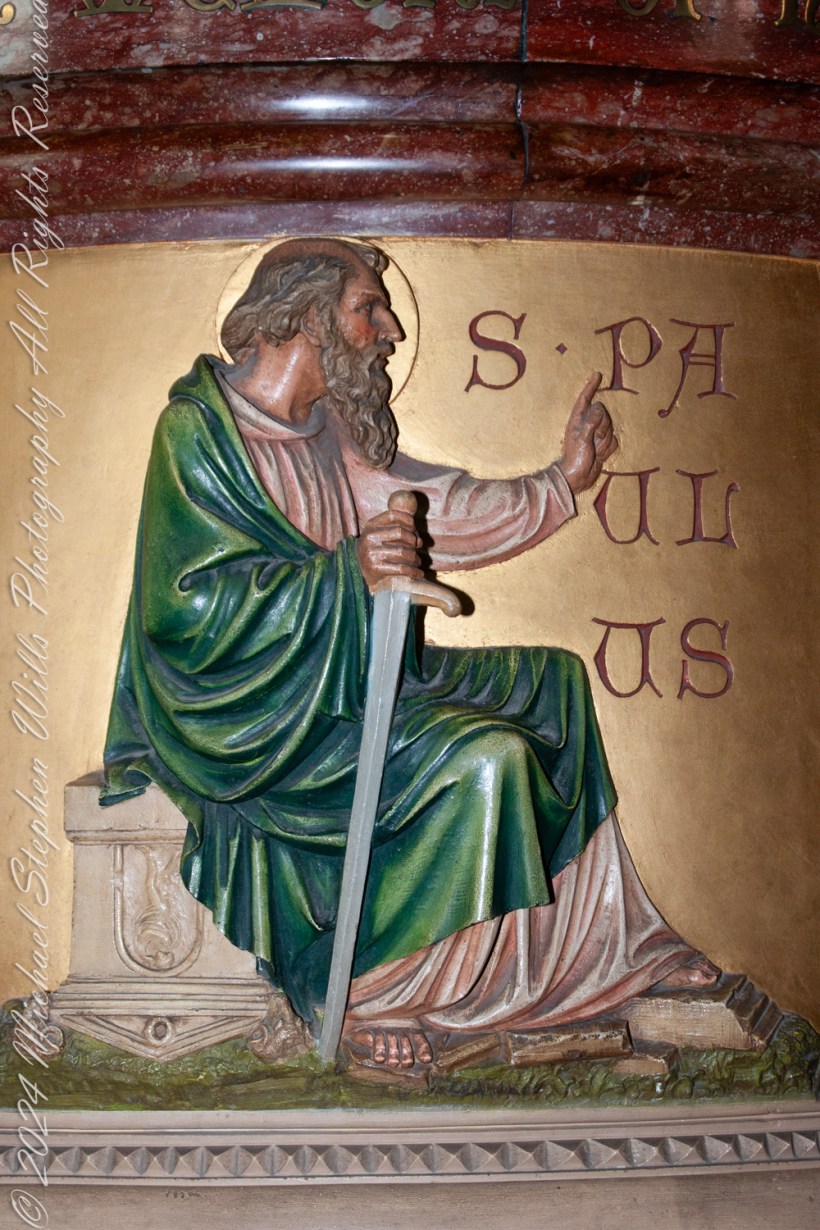
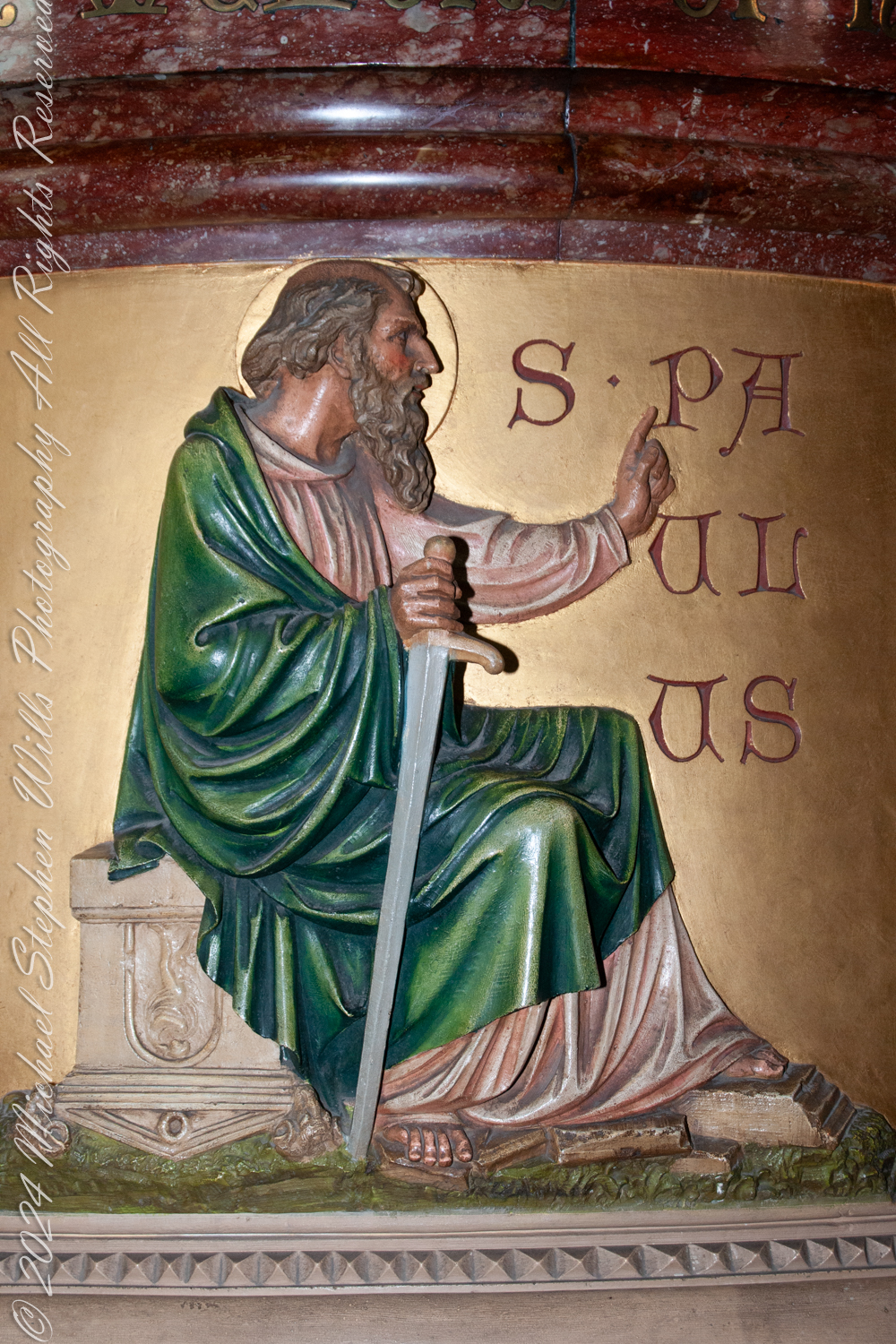
Near the entrance, the cylindrical pulpit’s relief figures of five evangelists captured my imagination. Here was the relief of Saint Paul seated with his characteristic sword, a symbol of both his martyrdom and the “sword of the Spirit” from chapter 6, verse 17 of the New Testiment Epistle to the Ephesians. His hand gestures toward the heavens, as if calling upon divine guidance to symbolize his role as an intermediary or messenger of God’s revelation. The rich green of his robes, juxtaposed against the golden background, speaks of hope, growth, and the everlasting promise of salvation. Here I found Saint Paul embodying the courage and conviction needed to preach and defend the faith—a sentiment that resonates deeply in the cathedral’s design and purpose.

Saint Paul

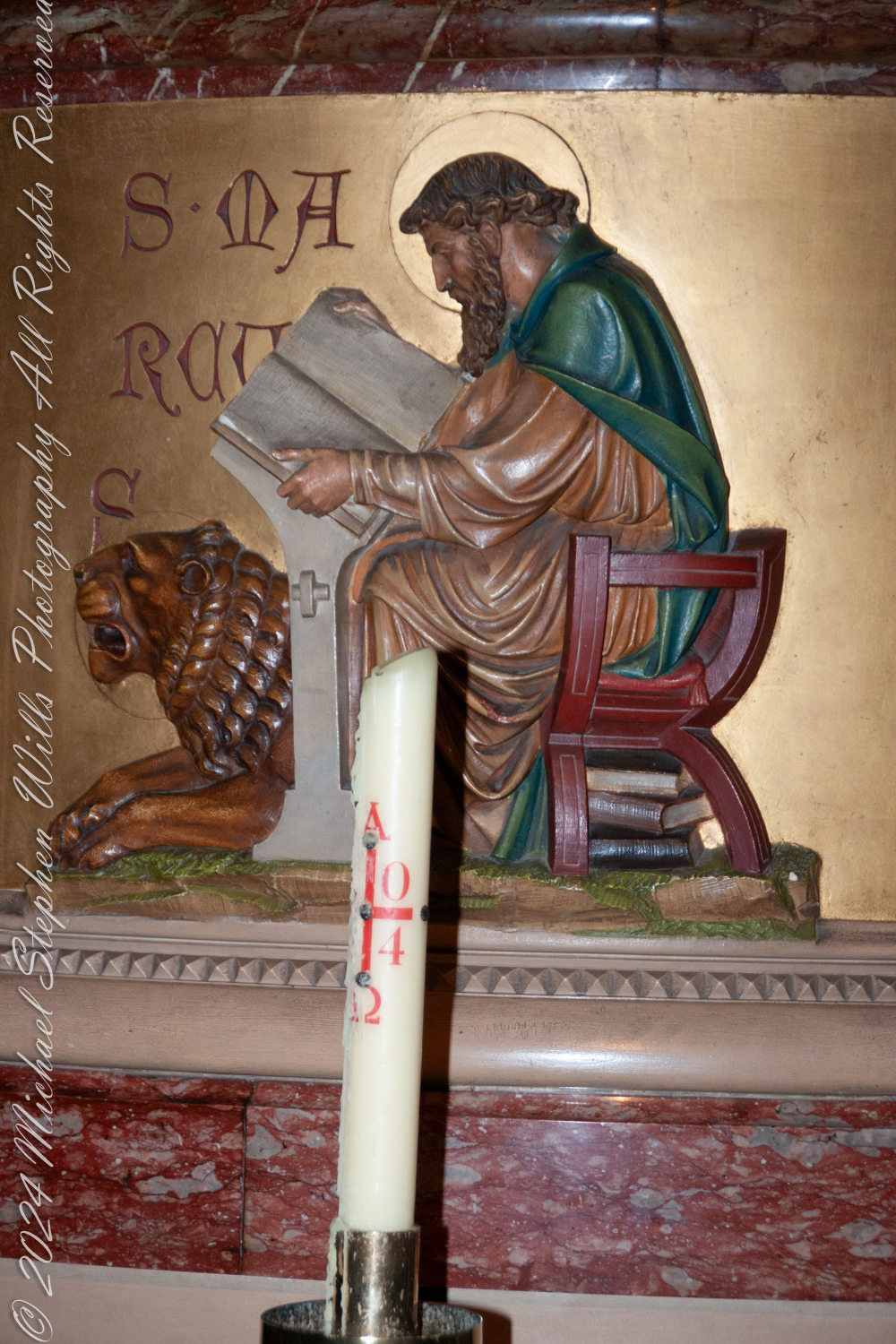
Rounding the circle, another relief brought Saint Mark to life. With the lion at his side, Saint Mark writes intently, reminding us of his contributions to the Gospels. The warm, earthy tones of his attire and the contemplative tilt of his head evoke the diligence and introspection of a writer who draws inspiration from divine revelation. The lion, its expression both fierce and loyal, represents courage and the Gospel’s enduring power.

Saint Mark

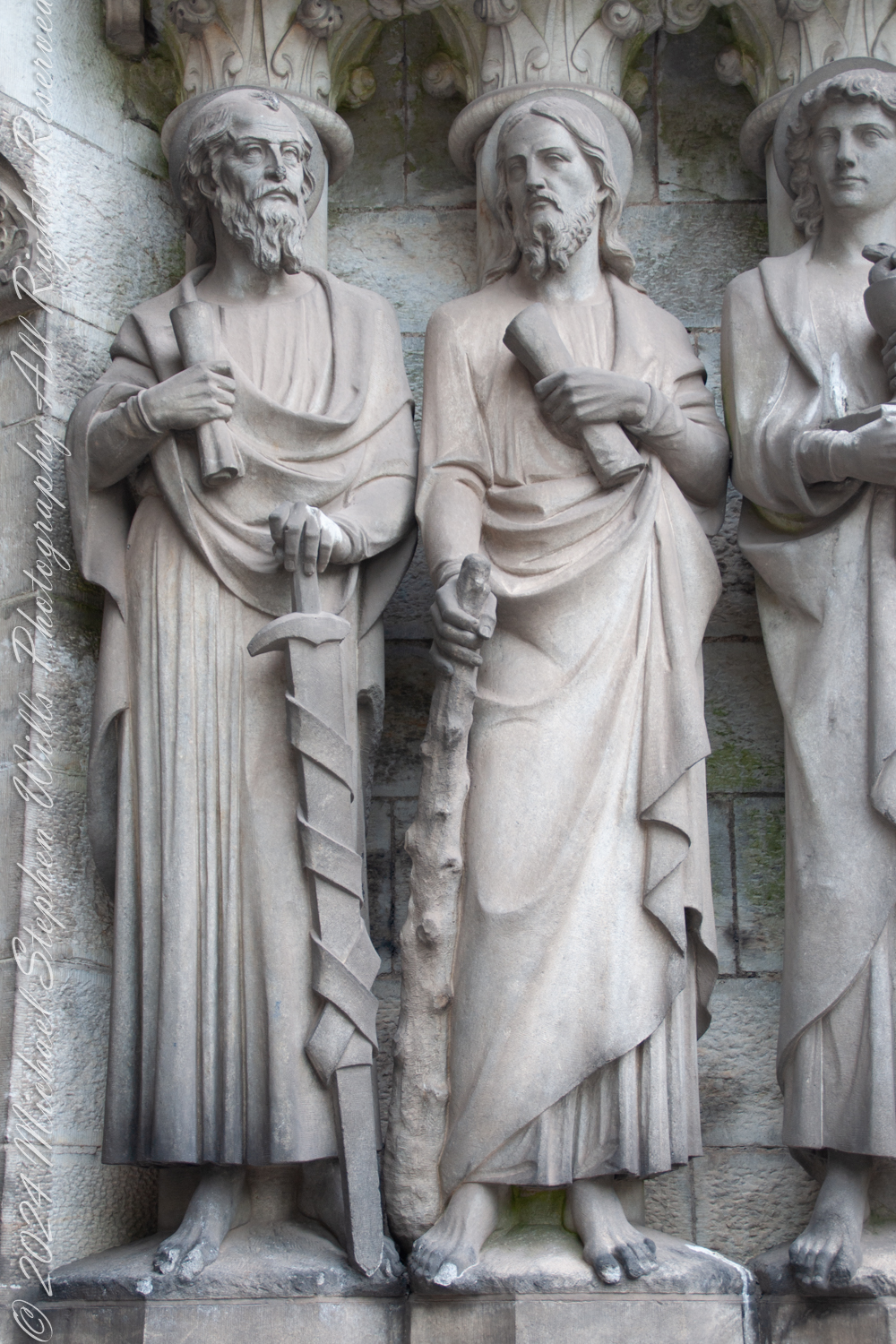
The cathedral’s external sculptures echo these individual representations of the apostles, where stone figures silently stand guard at the west entrance. The central figure of my photograph, holding a scroll in his left hand and a long cudgel (club) in his right, is Saint James the Less (also known as James the Minor). The scroll symbolizes his role spreading the word of God. The cudgel alludes to his martyrdom, as tradition holds that his executioners brutally beat him to death with such a club. His serene expression contrasts with Saint Paul, on the left, who holds the traditional “sword of the spirit” of his Epistle to the Ephesians. These carvings are spiritual sentinels, inviting visitors to contemplate the legacy of those who laid the foundations of the Church.

As the patron saint of the city, Saint Fin Barre’s enduring legacy profoundly impacts Cork’s spiritual and cultural history. His legacy dates back to the 7th century when he established a monastic settlement on the site where the cathedral now stands. This sacred location has witnessed centuries of devotion, destruction, and renewal. The visionary architect William Burges designed the cathedral in the 19th century as both a tribute to Saint Fin Barre’s enduring influence and a testament to William Burges’s own artistic genius.

Walking through the cathedral, I felt the interplay of past and present, earth and heaven. These saints and apostles are figures from history, embodiments of virtues and struggles that are timeless. Their stories invite us to reflect on our own faith, perseverance, and the ways we leave our mark on the world.

Saint Fin Barre’s Cathedral is a place of worship and a narrative in stone, wood, and glass. The intricate carvings and the evocative sculptures, among much else, create a space that transcends the ordinary. Here, the saints and apostles stand as eternal witnesses to the human journey toward the divine. As I left the cathedral, the image of Saint Paul, resolute and unyielding, stayed with me—a reminder that we must build faith, much like the cathedral itself, stone by stone, moment by moment, to endure the test of time.

Enter your email to receive notification of future postings. I will not sell or share your email address.

Discovering the Beauty of Saint Fin Barre’s Cathedral in Cork

Saint Fin Barre’s Cathedral features stunning Victorian Gothic artistry, with symbolic ceilings and intricate designs reflecting divine themes and craftsmanship.

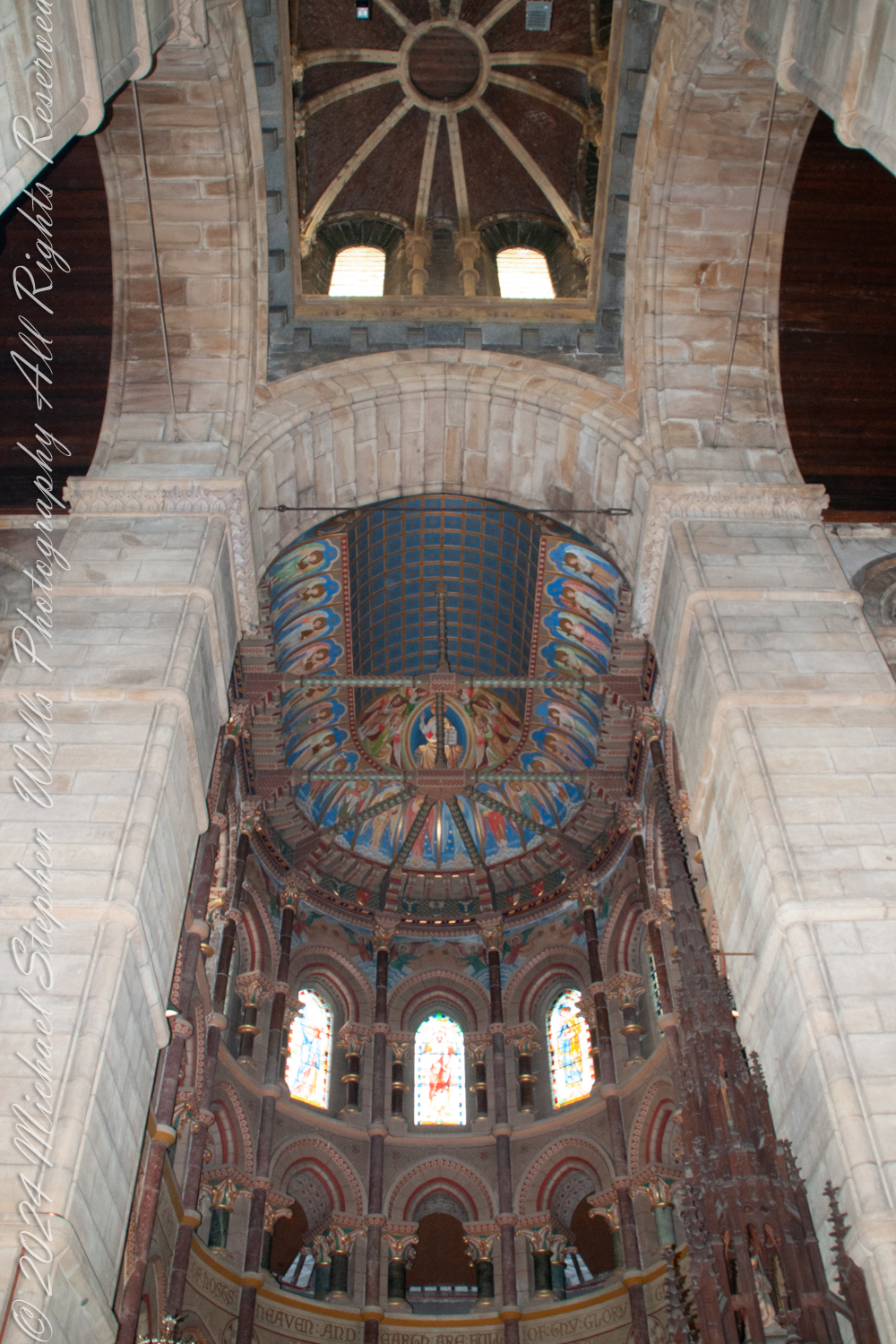
As I stood on the floor of Saint Fin Barre’s Cathedral in Cork, Ireland, I gazed upward toward the Apse and sanctuary ceiling at the eastern end. Turning my eyes directly to the west, I found myself captivated by the crossing ceiling—the very heart where the nave intersects with the transepts, forming the iconic cross shape typical of Gothic cathedral architecture.

In my imagination the central tower and spire soared majestically above the crossing ceiling. The ceiling there featured intricate architectural elements like ribbed vaults and a lantern tower, allowing light to flood into the space below. This crossing served as a beautiful transitional space between the sanctuary and the main body of the cathedral, the nave.

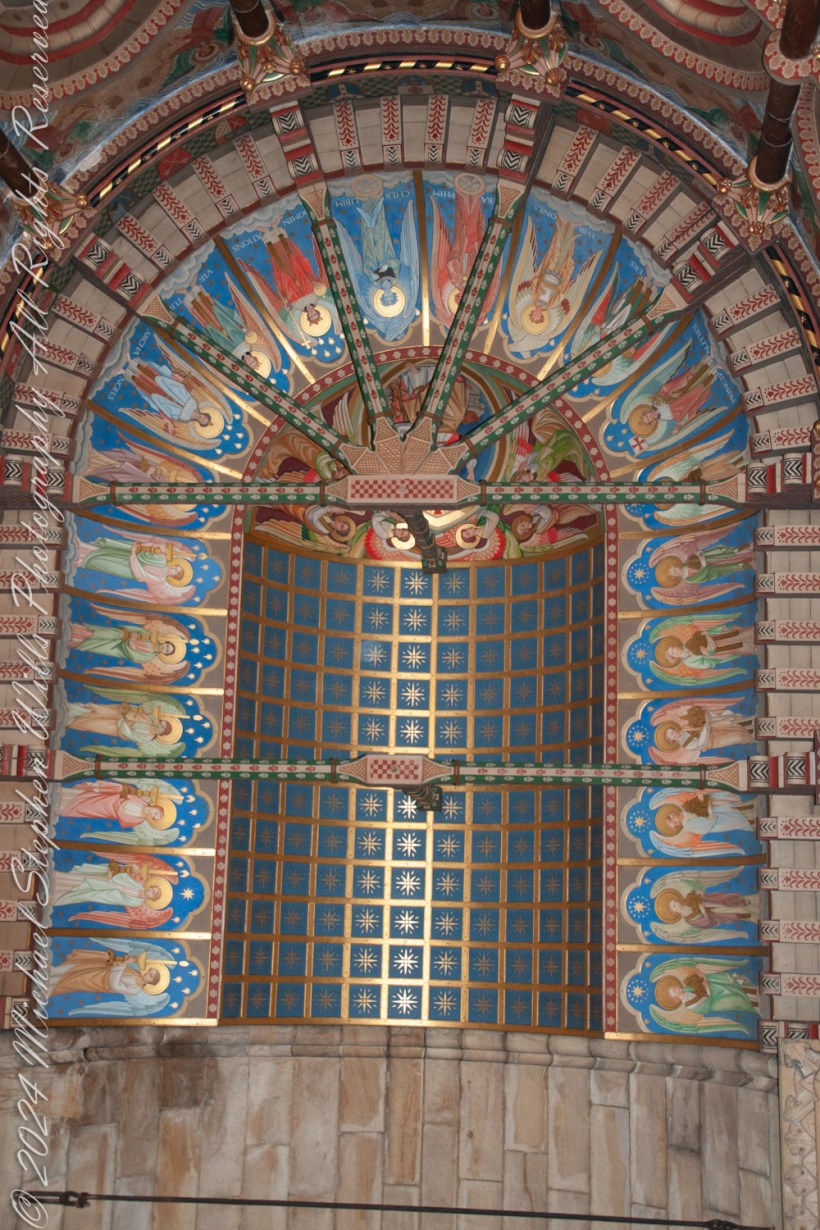
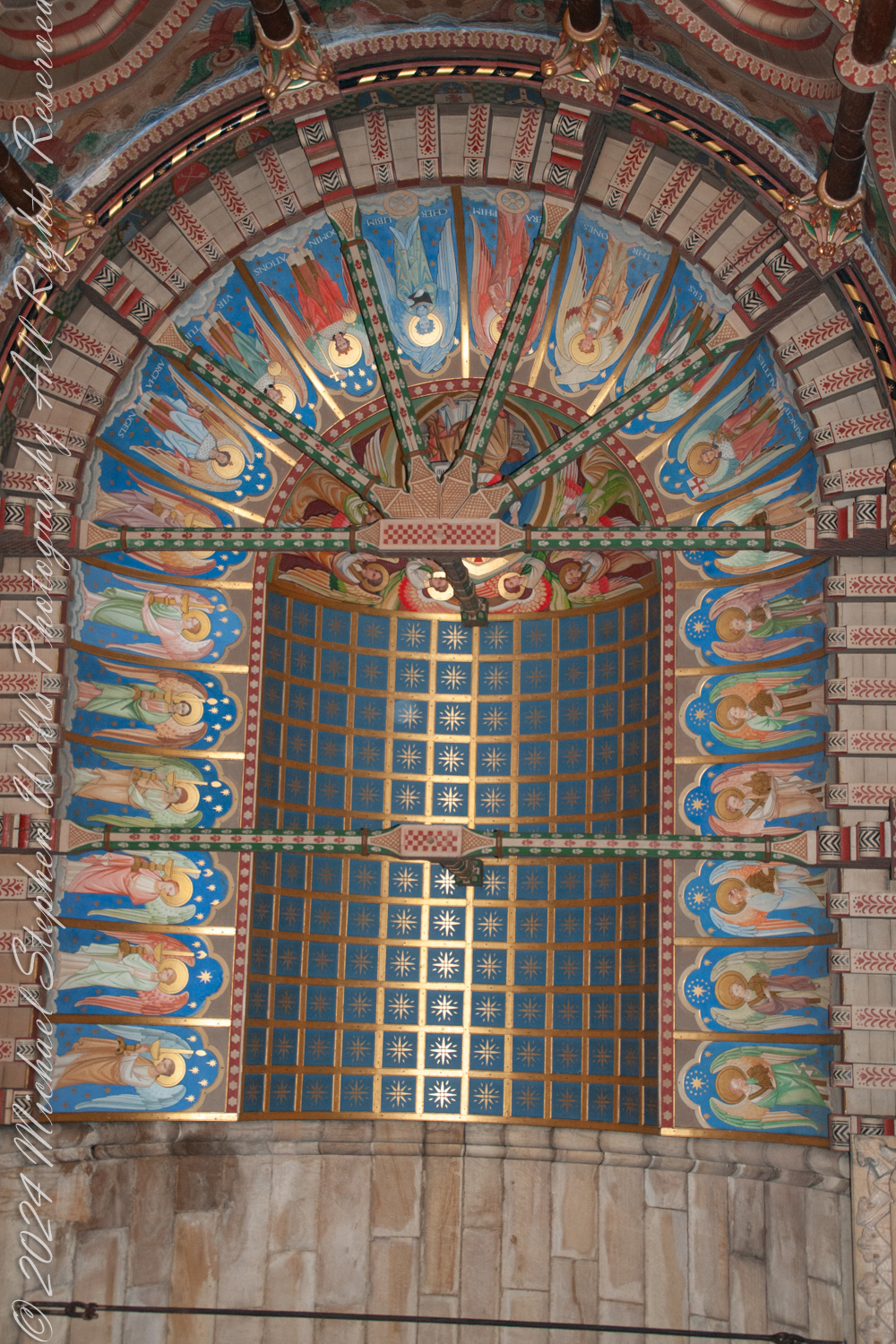
Focusing my camera on the Sanctuary Ceiling of Saint Fin Barre’s Cathedral, I was struck by the stunning example of Victorian Gothic Revival artistry before me. Designed by the architect William Burges, who envisioned every detail of the cathedral, the ceiling reflected his meticulous attention to detail and his love for vibrant colors and symbolic ornamentation.

The rich iconography drew me in. Angels adorned the ceiling, likely representing the celestial hierarchy or the glorification of Christ. Each angel held symbolic items—trumpets, stars, or scrolls—emphasizing their roles as messengers and worshippers of God.

The radiant color scheme was breathtaking. Deep blues, shimmering golds, lush greens, and vivid reds combined to create a striking visual effect, symbolizing heaven and divine majesty. Gold accents caught and reflected the light, reinforcing the idea of heavenly glory.

Geometric and star patterns embellished the vaults. The blue panels dotted with gold stars symbolized the heavens—a common motif in Gothic church ceilings. These stars seemed to represent divine guidance or eternity, adding another layer of meaning to the already rich tapestry above me.

The structural elements themselves were works of art. Painted ribs intersected across the ceiling, highlighting the Gothic architecture’s ribbed vaulting. Their intricate designs in green and red emphasized both structural beauty and functional elegance.

The symbolism was profound. The angels with their instruments and the starry heavens collectively evoked themes of divine worship and the glory of God’s kingdom. This alignment with the Victorian Gothic ideal of infusing spiritual symbolism into architectural elements was evident in every brushstroke.

Knowing that William Burges envisioned Saint Fin Barre’s Cathedral as a “Bible in stone,” I felt a deep connection to his purpose. Standing beneath the Sanctuary Ceiling—the focal point above the altar—I sensed how it served to elevate worshippers’ gaze and spirits toward the divine.

Capturing these scenes through my lens, I was documenting a testament to the artistic and architectural achievements of the 19th century. Saint Fin Barre’s Cathedral is a place of worship and also a living gallery of history, faith, and unparalleled craftsmanship.

Enter your email to receive notification of future postings. I will not sell or share your email address.

The Architectural Symbolism of Saint Fin Barre’s Cathedral

The Western Portico of Saint Fin Barre’s Cathedral illustrates the parable of the ten virgins, emphasizing spiritual preparedness and divine judgment.

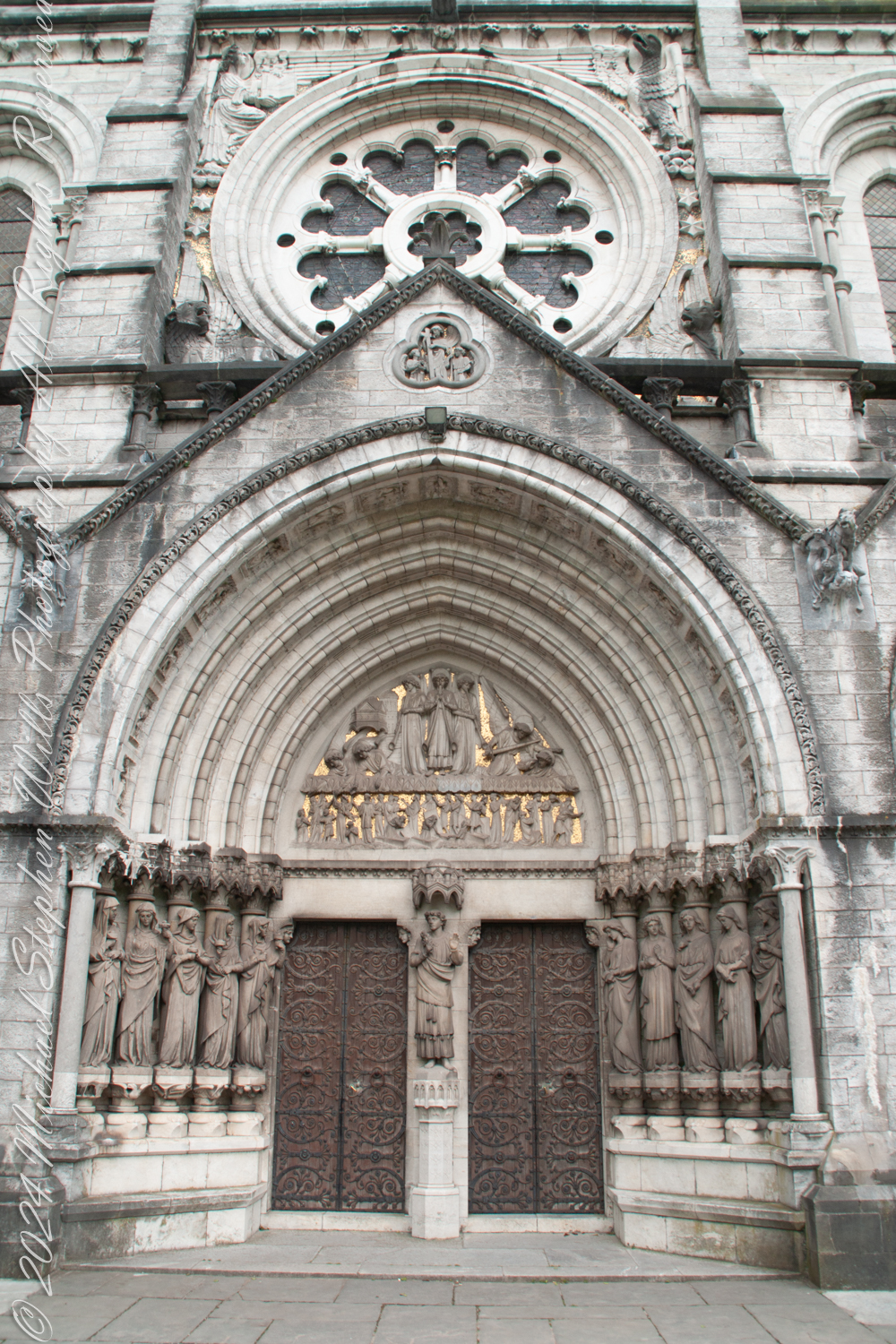
The towering Western Portico of Saint Fin Barre’s Cathedral leads into the sacred space of the church while serving as a canvas for a profound narrative of divine judgment and grace. Standing before it, I am drawn into its intricate details, particularly the central set of doors flanked by the ten virgins—five wise and five foolish—embodied in stunning columnar statues. Their story is drawn from the Gospel of Matthew (25:1–13), a parable of spiritual preparedness that echoes throughout the cathedral’s architecture.

The parable tells of ten virgins who go out to meet the bridegroom, each carrying a lamp. The wise virgins take oil with their lamps, while the foolish take none. When the bridegroom is delayed, all ten fall asleep. At midnight, the cry rings out, “Here is the bridegroom! Come out to meet him!” The virgins awaken and trim their lamps. The foolish ones, realizing their lamps are going out, plead with the wise to share their oil, but the wise refuse, saying, “There may not be enough for both us and you. Instead, go to those who sell oil and buy some for yourselves.” While the foolish virgins are away buying oil, the bridegroom arrives, and the wise virgins go with him into the wedding banquet. The door is shut. Later, the foolish virgins return, crying, “Lord, Lord, open the door for us!” But he replies, “Truly I tell you, I do not know you.” The parable concludes with the warning: “Therefore, keep watch, because you do not know the day or the hour.”

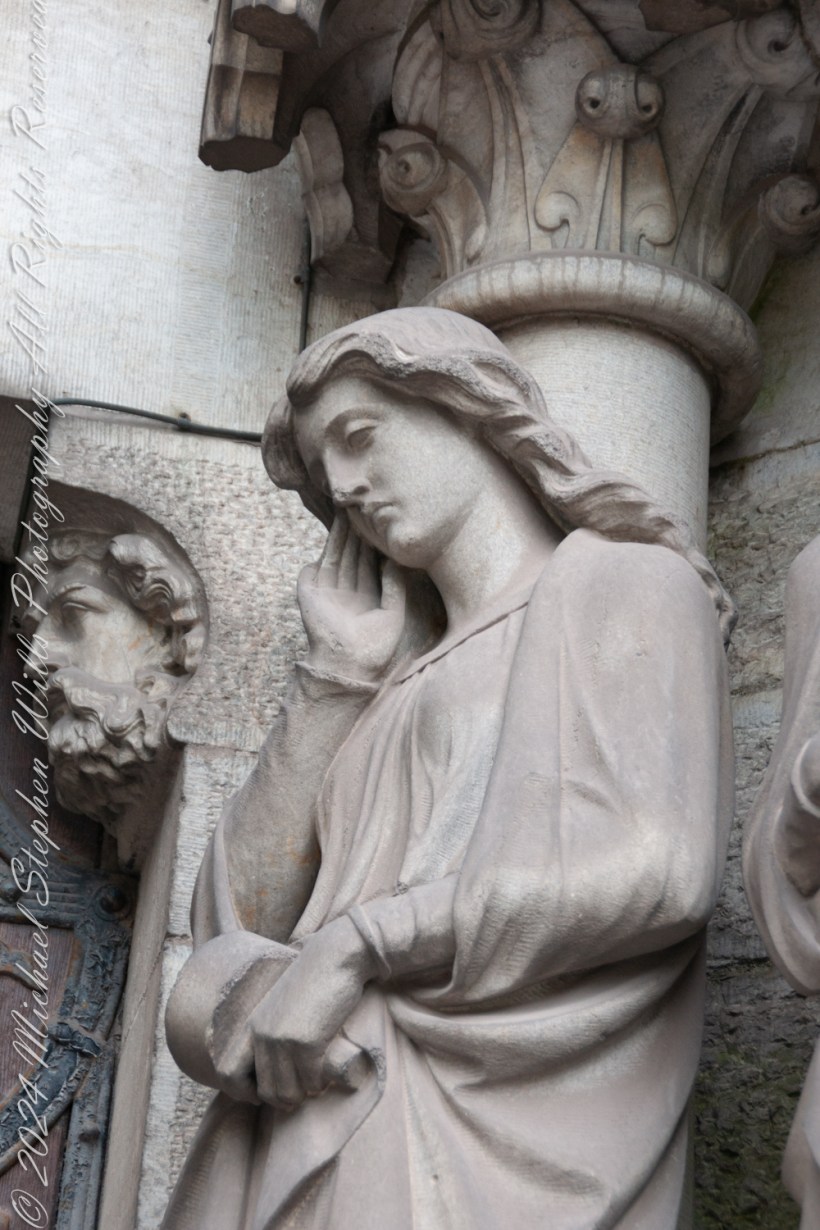
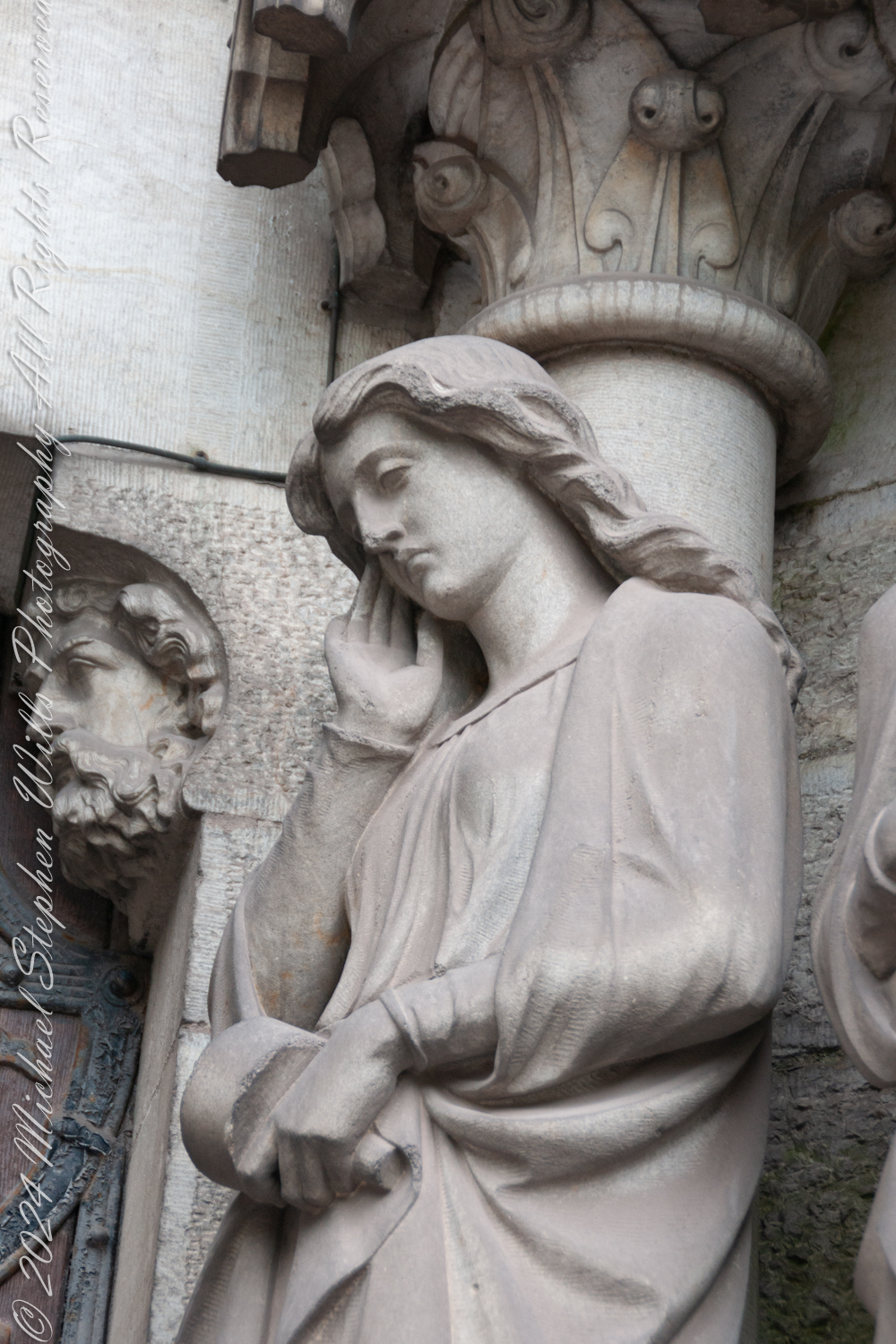
On either side of the central door, the virgins stand as sentinels, embodying this story. The wise virgins, to the right of Christ, hold their lamps aloft, flames burning brightly, symbols of readiness and spiritual vigilance. Their faces are serene, reflecting a sense of fulfillment in their preparedness to meet the bridegroom. To the left, the foolish virgins clutch their unlit lamps, their postures and expressions marked by despair and regret. The detail in their sculpting is exquisite—draped garments, forlorn gazes, and, in the case of the leftmost virgin, a subtle gesture of mourning, her hand resting thoughtfully against her cheek as though lamenting her unpreparedness.

Beneath each figure lies a pedestal adorned with imagery that amplifies their symbolic meaning. The wise virgins stand upon a foundation of flourishing life: vines, flowers, and fruits, evoking the vitality and promise of spiritual readiness. In contrast, the pedestals of the foolish virgins are carved with desolation—withered branches, skeletal forms, and motifs of death, stark reminders of the spiritual decay brought by neglect and complacency.

At the heart of the narrative stands Christ, the Bridegroom. His figure, commanding yet compassionate, turns toward the wise virgins, his gesture one of welcome and blessing. The flowing robes and the serene expression of the Christ figure emphasize his dual roles as judge and redeemer. It is a moment of movement captured in stone—Christ leaning into the wise while his back turns on the foolish, a subtle yet striking commentary on divine justice.

Above the door, the tympanum deepens this narrative, depicting the ultimate moment of judgment. Surmounted by three angels announcing the resurrection, their imagery and gold background harking to the Resurrection Angel of the east cathedral side with gold a symbol of purity and divine light; the dead rise from their graves, their fates determined by their spiritual choices. On the right, angels extend their hands to the faithful, pulling them upward toward eternal life. Their forms radiate lightness, their wings creating a sense of ascension and joy. On the left, the scene is markedly darker: angels, stern and unyielding, drive the condemned downward, their bodies twisted in expressions of agony. Flames lick at the edges of the scene, signaling the fires of damnation.

The weight of this imagery is palpable. The parable of the ten virgins, brought to life in stone, underscores the centrality of vigilance and readiness in the Christian faith. The Western Portico is a story carved in stone, a vivid testament to the choices each person must make. Standing before it, I am not merely a viewer but a participant, invited to reflect on my own readiness and my place in this cosmic drama. The intricacy and theological depth of this space leave an indelible impression, a reminder of the eternal truths that the cathedral seeks to communicate through its art.

Enter your email to receive notification of future postings. I will not sell or share your email address.

What the Resurrection Angel Symbolizes for Cork City

The Resurrection Angel at Saint Fin Barre’s Cathedral symbolizes hope and vigilance, reminding Cork’s citizens of life’s transience and resilience.

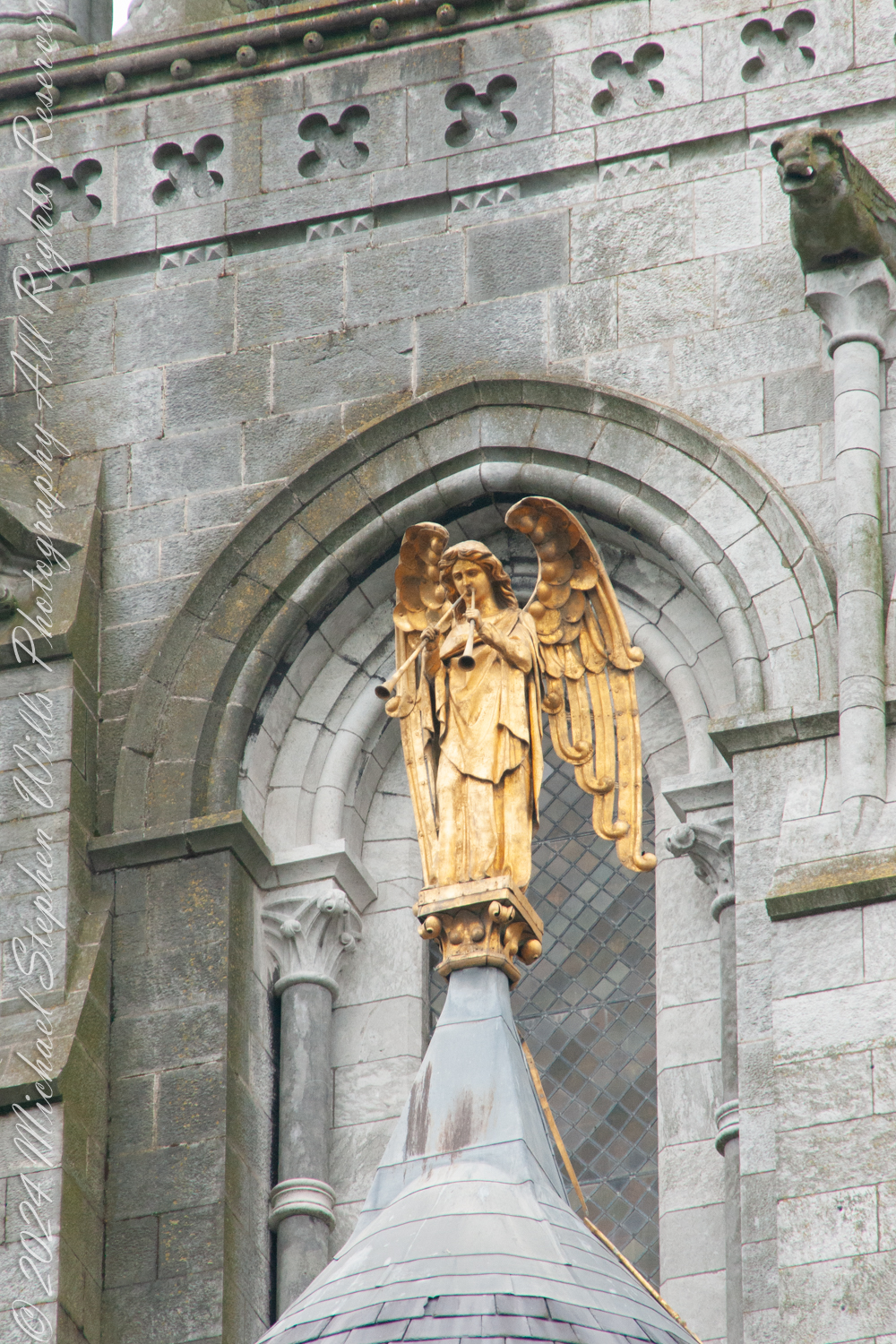
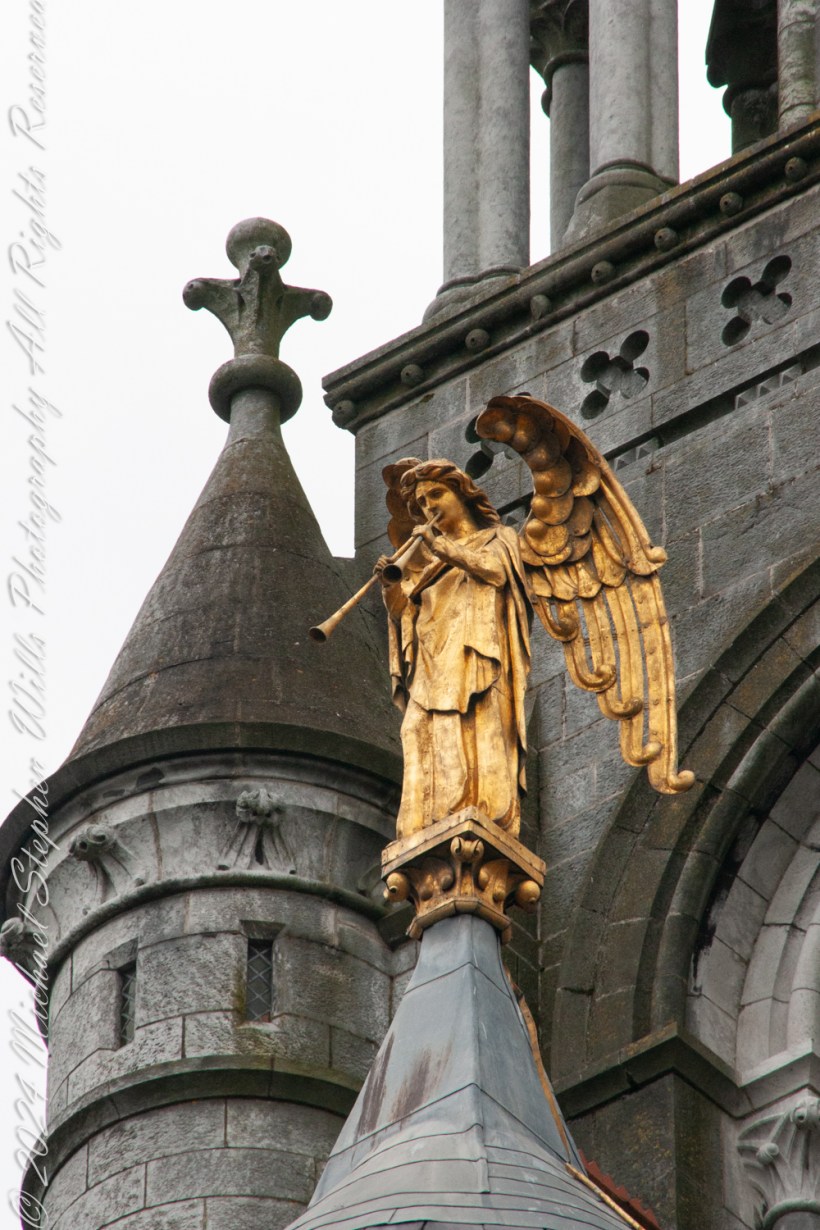
Standing on the east side of Saint Fin Barre’s Cathedral, I lift my gaze to the gilded angel high above the polygonal apse. Known as “The Resurrection Angel,” this radiant figure with its trumpet held aloft commands both awe and contemplation. As an enduring symbol of hope, renewal, and spiritual vigilance this angel carries a profound and dramatic promise: the sound of its trumpet will one day warn the people of Cork of the world’s imminent end, giving them the opportunity to be among the first to ascend to heaven.

The Resurrection Angel’s trumpet echoes the apocalyptic imagery of the Book of Revelation, particularly Revelation 11:15, where the seventh trumpet announces, “The kingdoms of this world have become the kingdoms of our Lord.” Yet in Cork, this celestial figure is imbued with a uniquely local significance. It stands as both guardian and guide, poised to fulfill its divine purpose when the end of days draws near. The legend elevates the angel’s presence beyond theology or art—it becomes a tangible connection between the celestial and the earthly, rooted in the lives of Cork’s citizens.

From an epistemological perspective, the Resurrection Angel poses fascinating questions about how we prepare for the unknown. What does it mean to live in the shadow of an angelic trumpet, one that might sound at any moment? Its silence is a paradox, a quiet yet profound proclamation of life’s transience. The legend suggests that the people of Cork, by virtue of the angel’s warning, are uniquely favored—a notion that intertwines faith with identity and imbues the city with a sense of divine guardianship.

The angel’s golden form shines brightly against the gray stone of the cathedral, a deliberate contrast that speaks to its otherworldly purpose. Gold, a symbol of purity and divine light, captures the eternal amid the temporal. The Resurrection Angel reflects the ambitions of the cathedral’s architect, William Burges, who intended every detail of Saint Fin Barre’s to serve as a testament to faith and artistry. This angel was the final piece installed, marking the cathedral’s completion and fulfilling Burges’ vision of a “perfect work.” According to lore, Burges himself declared that if the angel were ever to fall, it would signal the end of the world—a statement that deepens the mystique surrounding this celestial figure.

For Cork, the angel embodies the city’s resilience and collective spirit. Over centuries, Cork has weathered fires, floods, and rebellion, yet it has always risen anew. The angel, with its legend of warning and redemption, mirrors this cyclical journey of challenge and renewal. Its trumpet, silent but ever-present, reminds the people of Cork to stay vigilant, to hope, and to strive for goodness in the time they have.

As I stand beneath its watchful gaze, I feel the weight of the legend and its implications. If the angel’s trumpet were to sound today, would we be ready? It invites not fear but reflection—a challenge to live with purpose and awareness of the sacred in the everyday. And as I step away, the angel remains, steadfast and golden, a silent guardian over Cork, holding its promise and its warning aloft for generations to come.

Enter your email to receive notification of future postings. I will not sell or share your email address.

Saint Fin Barre’s Cathedral: A Marvel of Victorian Architecture

Saint Fin Barre’s Cathedral, a Gothic Revival masterpiece by William Burges, symbolizes artistry and faith in Cork, Ireland.

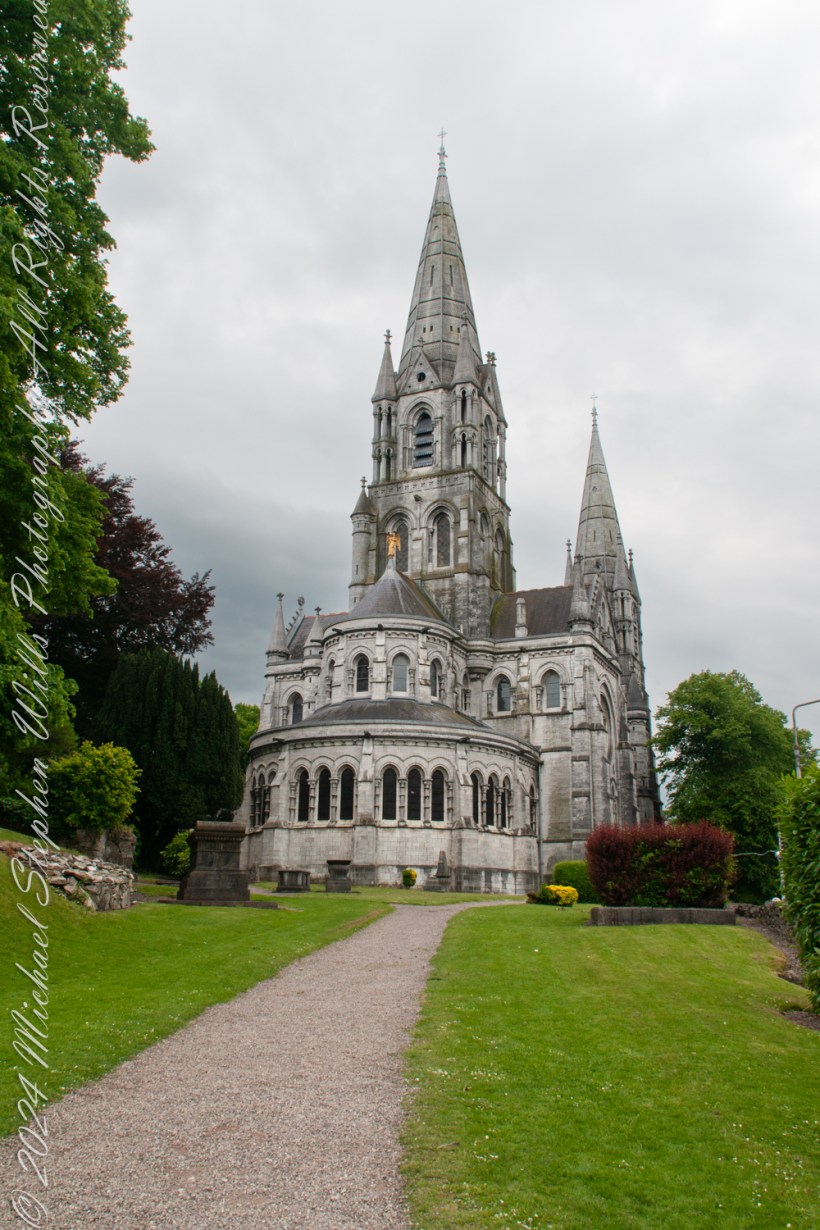
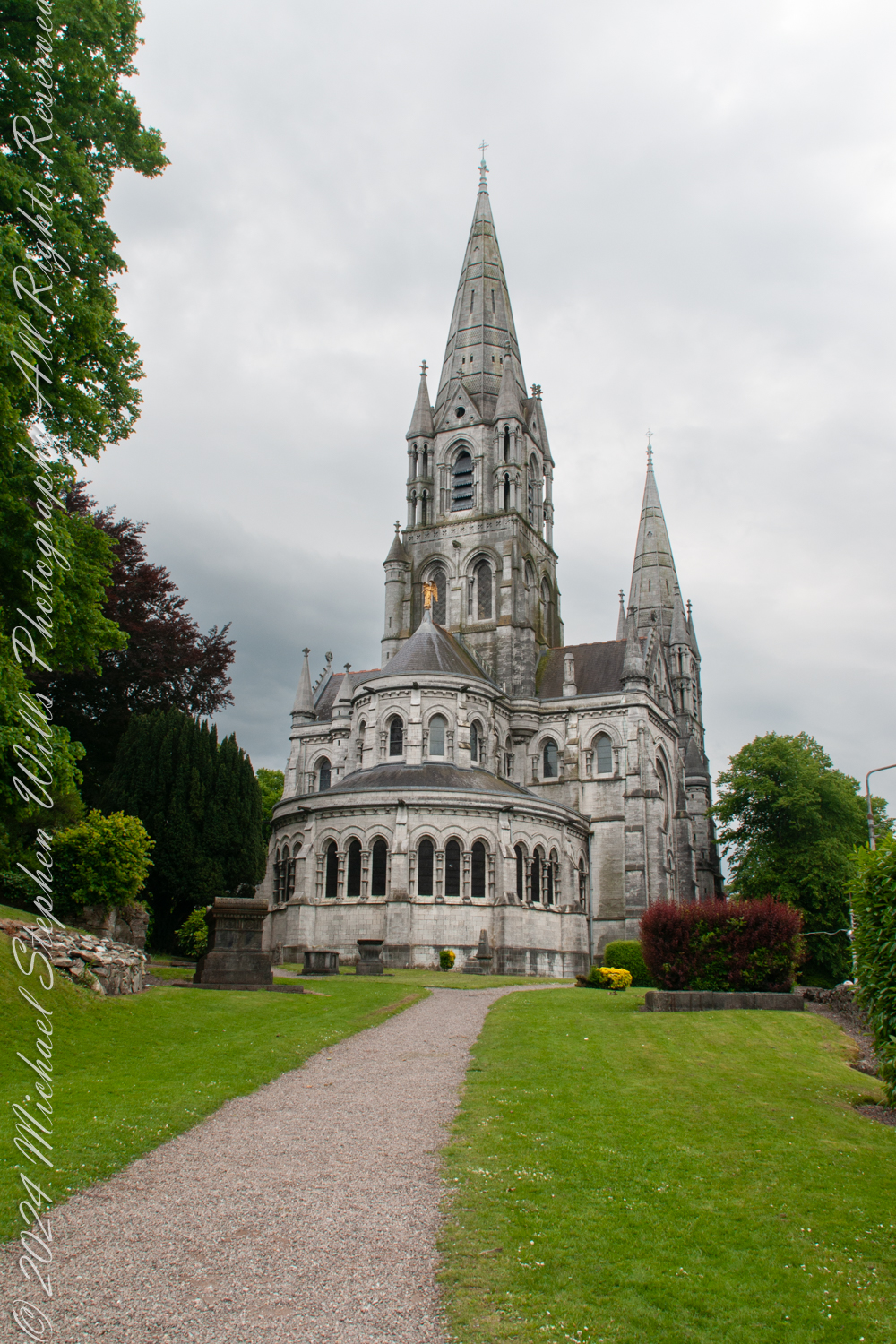
Approaching from the east, we see the polygonal apse at the eastern end houses the high altar and is a key liturgical and architectural feature. Each angular bay is delineated with tall lancet windows filled with stained glass, adding to the richness of the design. Saint Fin Barre’s Cathedral, a masterpiece of Gothic Revival architecture, stands as a beacon of faith and artistry in the heart of Cork, Ireland. Designed by the renowned Victorian architect William Burges, the cathedral is both a testament to the spiritual fervor of its time and a bold statement of artistic vision.

Approaching from the east, we see the polygonal apse at the eastern end houses the high altar and is a key liturgical and architectural feature

Commissioned in 1862, the cathedral replaced an earlier structure, marking a new chapter in Cork’s ecclesiastical history. William Burges, known for his theatrical approach to design, was the perfect choice for this ambitious project. His vision for Saint Fin Barre’s Cathedral blended medieval inspiration with Victorian ingenuity, creating a building that is as much a work of art as a place of worship.

Burges, a figure of eccentric brilliance, was deeply influenced by the principles of the Gothic Revival movement, which sought to recapture the grandeur of medieval European architecture. Drawing from this aesthetic, he designed the cathedral with meticulous attention to detail. Its three spires dominate the Cork skyline, with the central spire rising to an impressive height of 73 meters. These spires are not merely structural; they are symbolic, reaching heavenward in a gesture of devotion.

The exterior of the cathedral, constructed from Cork limestone and Bath stone, is adorned with intricate carvings and sculptures. These include depictions of biblical scenes, saints, and gargoyles, all painstakingly crafted under Burges’s watchful eye. Every detail reflects his belief that architecture should educate as well as inspire. Bishop Street, The Lough, Cork City, County Cork, Ireland

Enter your email to receive notification of future postings. I will not sell or share your email address.

The Autumn Tapestry of Cayuga Lake: A Journey on the Treman Park Lake Loop

Autumn’s Arrival Along Cayuga Lake

In Autumn 2024, the Treman Park Lake Loop of the Cayuga Waterfront Trail in Ithaca, New York, unfurled a vibrant display of seasonal transition. The natural landscape, adorned with fiery hues of reds, oranges, and yellows, reflected in the rippling waters of Cayuga Lake, creating a harmony of color and light. This is a scenic journey through stories of plant and animal life that call this place home—including the majestic Osprey (Pandion haliaetus) that nests along the shore.

The Osprey’s Watchtower

A sight to greet visitors is the solitary osprey nest perched high on a pole. Used by Osprey families during their breeding season, this nest stands as a testament to their remarkable recovery in the Finger Lakes region. Ospreys, once declining due to pesticide use, have rebounded significantly following conservation efforts.

With a wingspan of up to 6 feet, these raptors are expert fish hunters, often seen diving talons-first into the lake to snatch their prey. During autumn, as their young take flight, the nest remains an empty marker of the summer’s success—a reminder of the cyclical nature of life along the lake.

Did You Know? Ospreys are often referred to as “fish hawks” because fish make up 99% of their diet.

The Meadow and Its Golden Touch: Reedbeds and Goldenrod

Surrounding the osprey pole, expansive meadows of grasses and reeds sway with the breeze. Among these are stands of Common Reed (Phragmites australis), a tall grass with feathery plumes that catch the sunlight. While Phragmites can sometimes be invasive, they provide crucial shelter and food for various species of birds and insects.

Intermixed with the reeds are patches of Goldenrod (Solidago spp.), whose bright yellow flowers are a signature of late summer and autumn in the Northeast. Goldenrods are critical for pollinators, offering nectar to bees, butterflies, and migrating insects like the Monarch butterfly (Danaus plexippus).

Ecological Note: Goldenrods are often mistakenly blamed for allergies; the real culprit is ragweed (Ambrosia artemisiifolia), which blooms at the same time but releases airborne pollen.

A Lake Alive with History and Beauty

The shimmering blue waters of Cayuga Lake form the centerpiece of this trail. The lake, stretching nearly 40 miles, is the longest of the Finger Lakes and steeped in geological and cultural history. Its name is derived from the Cayuga Nation, part of the Haudenosaunee Confederacy, who inhabited the region for centuries.

The striking red lighthouse in the water serves as a vivid counterpoint to the natural surroundings. Built to aid navigation, it now stands as a picturesque focal point for photographers and nature enthusiasts alike.

Cayuga Inlet Light Beacon

In the distance, a sailboat glides across the lake—a serene reminder of the recreational draw that Cayuga Lake holds year-round.

West shore with sailboat and lake houses

The Forest Fringe: A Kaleidoscope of Color

The forests that fringe the meadow and the lake present an explosion of autumn color. Trees such as Sugar Maple (Acer saccharum), Red Oak (Quercus rubra), and Black Cherry (Prunus serotina) dominate the canopy, their leaves transforming into brilliant oranges, scarlets, and deep burgundies. The Sugar Maple, in particular, is renowned for its vibrant golden-orange foliage, a hallmark of the northeastern fall.

The Ithaca Yacht Club lies south of Maplewood Point

Closer to the ground, the understory hums with the activity of migrating birds and foraging mammals. Squirrels can be seen gathering acorns, preparing for the winter months ahead, while chickadees flit among the branches, calling their cheerful “fee-bee” notes.

Historical Fact: The Finger Lakes were carved out by retreating glaciers over 10,000 years ago, leaving behind these deep, elongated lakes and fertile soil that supports rich biodiversity.

A Path Through Time and Nature

Walking the Treman Park Lake Loop is a sensory journey—the crispness of the autumn air, the rustling of reeds, and the rhythmic lapping of waves against the shore combine to evoke a timeless tranquility.

From the vibrant meadows to the osprey’s lofty perch and the quiet expanse of Cayuga Lake, this section of the Waterfront Trail encapsulates the beauty and diversity of the Finger Lakes ecosystem. Whether for quiet reflection or active exploration, it remains a treasured destination in every season.

Closing Thoughts

As autumn deepens, this landscape prepares for the dormancy of winter. Yet the stories it holds—from the osprey’s nest to the goldenrod’s bloom—remain alive, waiting to be rediscovered with each new season. The Treman Park Lake Loop is not just a trail; it is a canvas of life, change, and history painted by nature’s hand.

Reflection: To walk this trail is to connect with a land shaped by glaciers, nurtured by waters, and home to countless species that continue to thrive amid the ever-turning wheel of the seasons.

Enter your email to receive notification of future postings. I will not sell or share your email address.