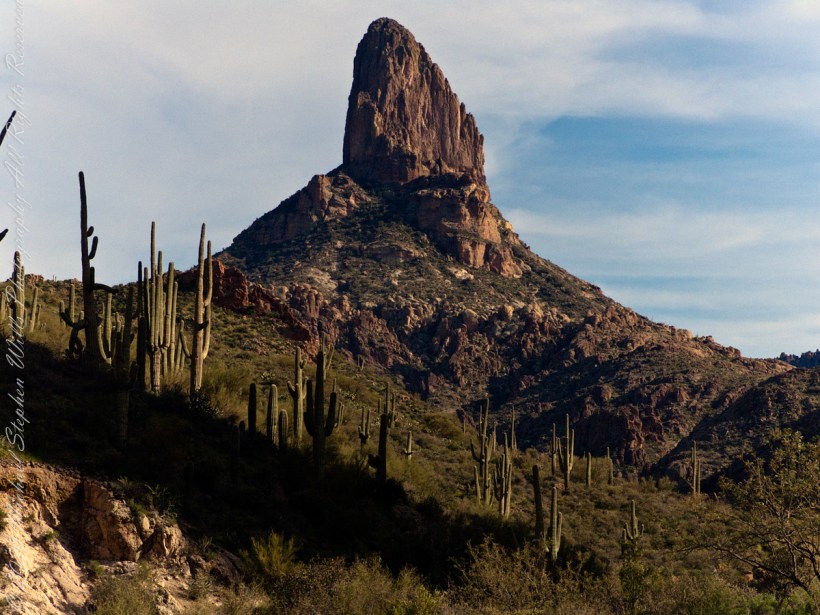
I cannot pick a favorite version from this series taken at sunset with a Canon 200 mm lens. Can you? If you have a choice, please name it in comments.
Click Me for my Online Gallery
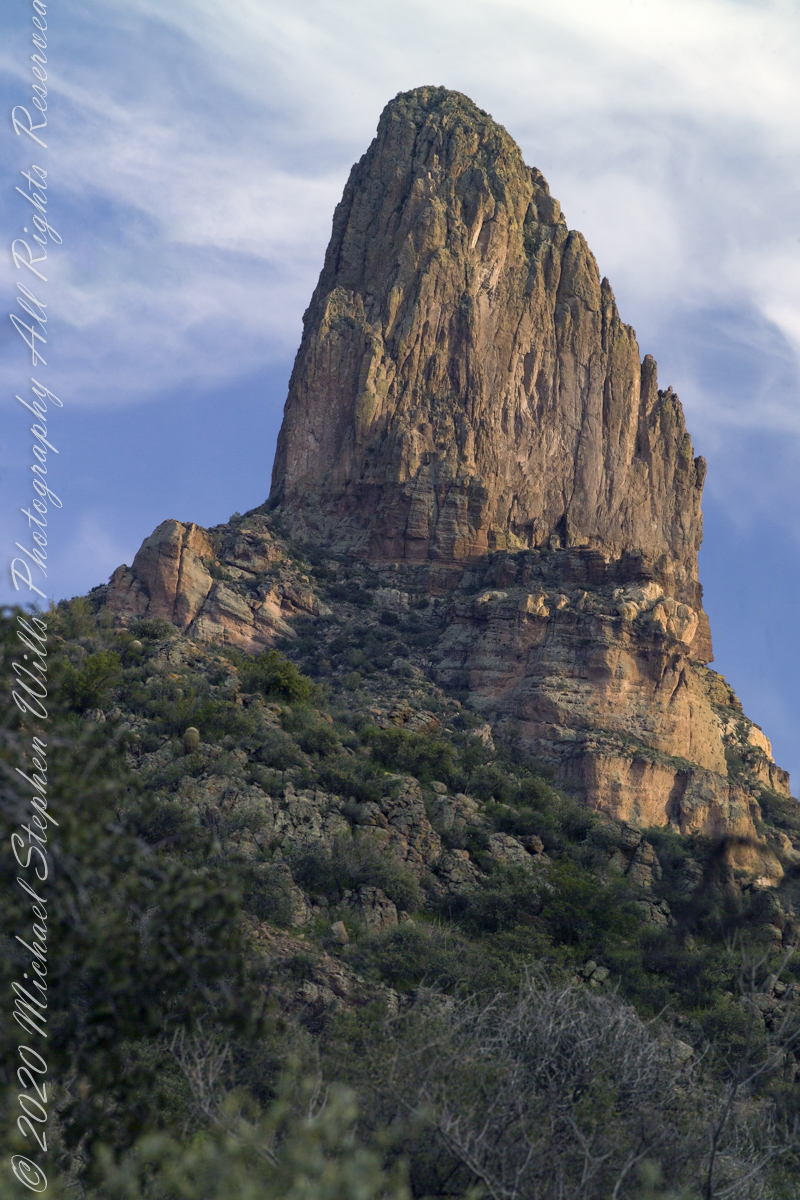
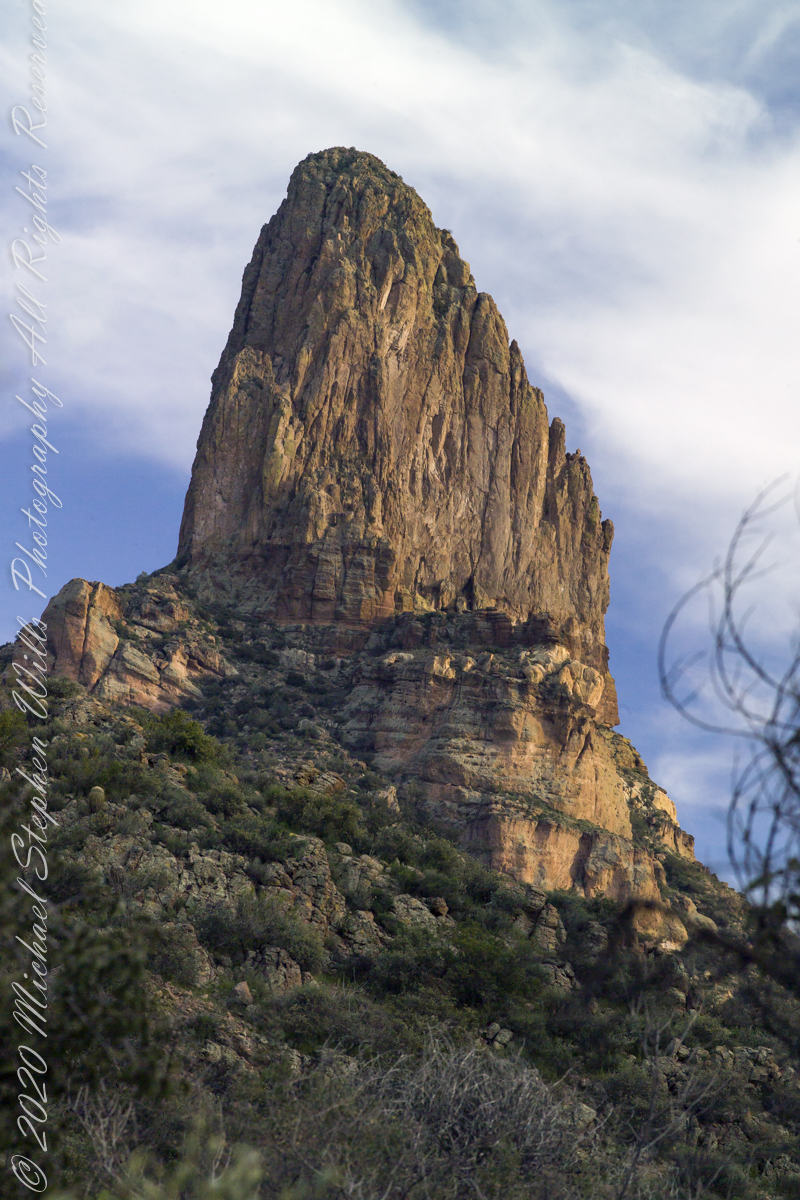
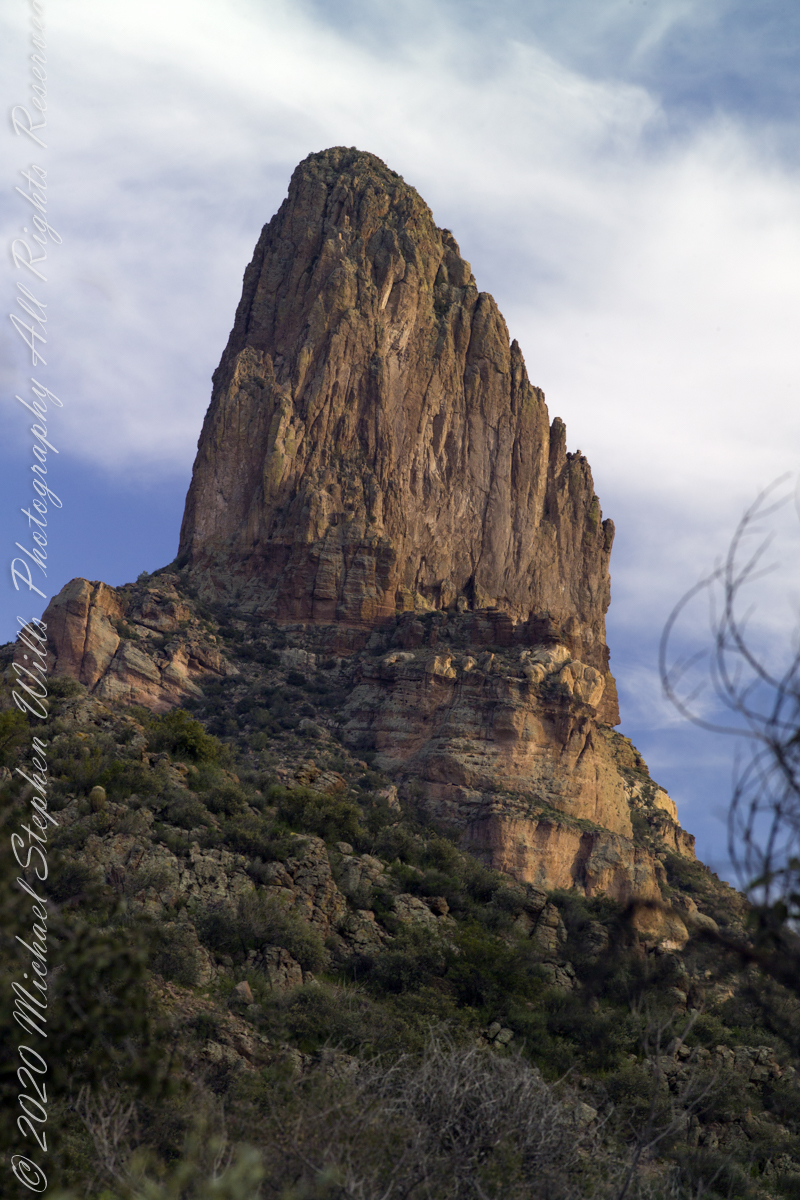
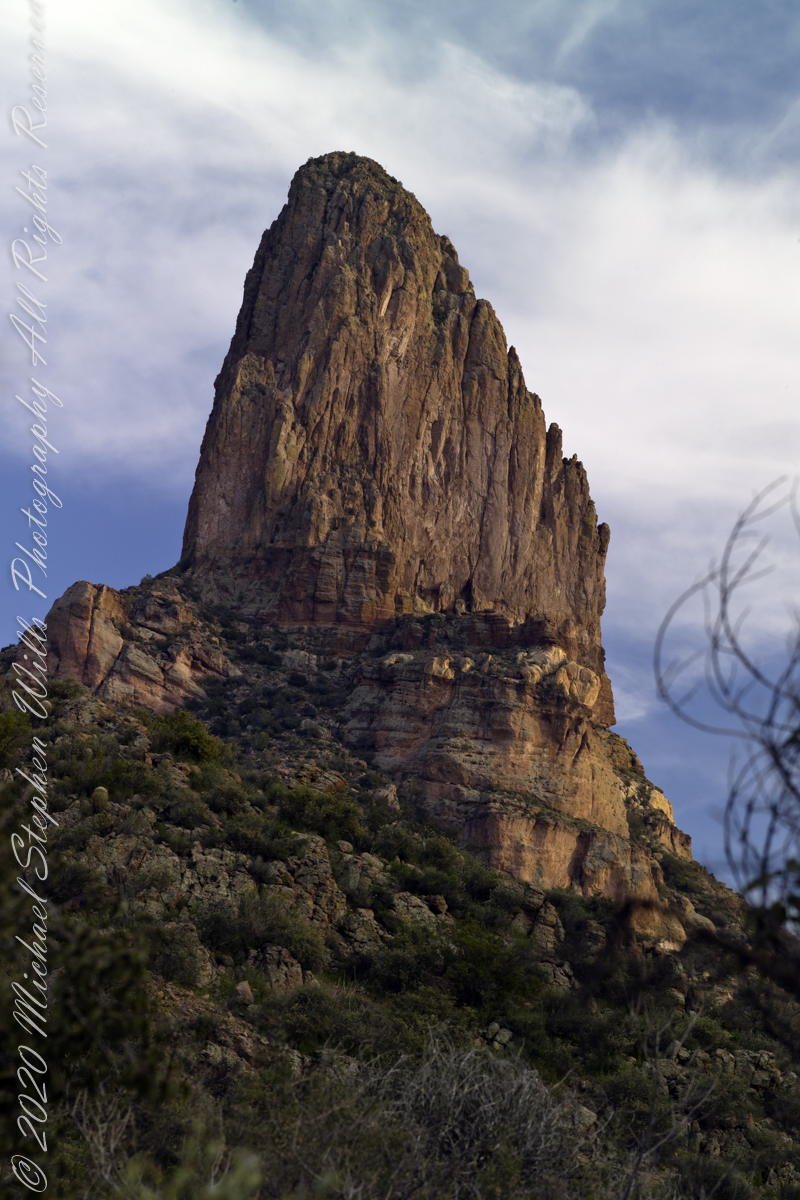
Copyright 2022 Michael Stephen Wills All Rights Reserved
Use comments to name your preference with rational (if any)
Thank You
I cannot pick a favorite version from this series taken at sunset with a Canon 200 mm lens. Can you? If you have a choice, please name it in comments.
Copyright 2022 Michael Stephen Wills All Rights Reserved
A personal mystery solved
Capturing photographs and videos on the fly using an Iphone, we visited Fillmore Glen State Park, Moravia, New York with our granddaughter, Nia. This is the eighth post of this series. Click me for “The Space Station and the Waterfall,” the first post in this series.
Among this jumble of fallen, cut trees is the solution to a personal mystery.
I had often seen these green berry-like fruits of summer, these were growing among tree fall on one of the few almost level places of the gorge. The green turns bluish when ripe. This photograph I used today, along with dogged determination, to identify this plant. It was in neither reference on my desk.
The green berry color threw me off, using the growth pattern of the fruit, the leaves and where it was growing (moist forest with little light) to identify Blue Cohosh (Caulophyllum thalictroides). The leaves are similar to meadow rue and the species name ( thalictroides) is taken from the genus name of meadow rue (Thalictrum). The two are related, belonging to the order Ranunculales.
Blue Cohosh has pharmacological properties. Another name for the plant, Papoose Root, is from the Native Americans who used preparations of the root to induce childbirth, ease the pain of labor, rectify delayed or irregular menstruation, and alleviate heavy bleeding and pain during menstruation.

Trail closed at bridge seven
Capturing photographs and videos on the fly using an Iphone, we visited Fillmore Glen State Park, Moravia, New York with our granddaughter, Nia. This is the ninth post of this series. Click me for “The Spaceship and the Waterfall,” the first post in this series.
We laughed at the trail-head sign, “Caution Muddy Trails.” White shorts beware. Somebody complained and demanded immediate resolution to the situation.
Another sign advised the Gorge Trail was closed after the seventh bridge. In my post “Bridge Views” these bridges are described. We could cross the seventh bridge, a barrier and a strongly worded sign, “Proceed no further, you will be prosecuted,” blocked the way. Here is the view, looking upstream.
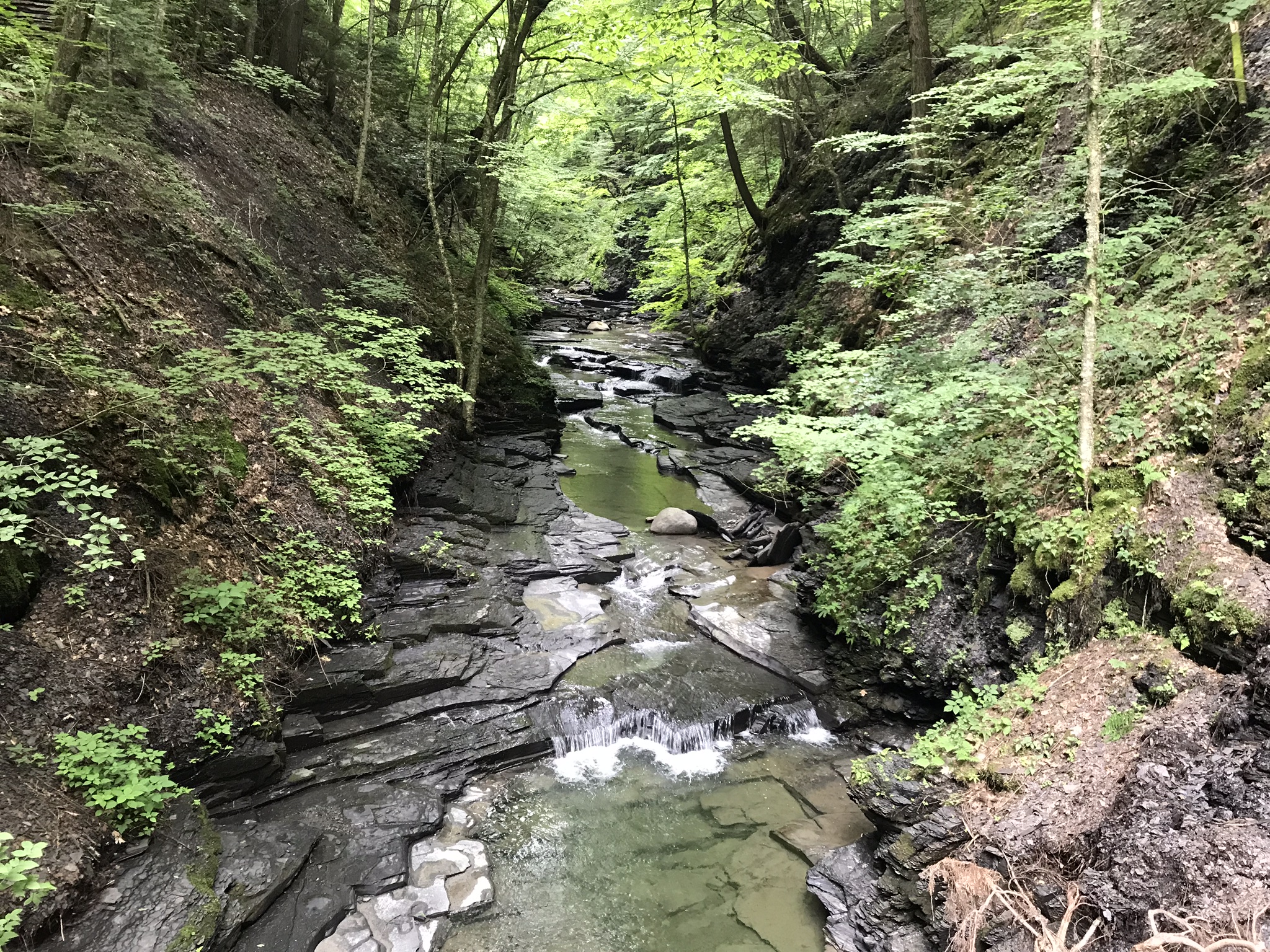
The blocked path climbs the steep northern glen wall. This is the south wall, from the bridge. There was a young mother with two children, a girl, 6 or 7, and her 7 or 8 years old brother, each well equipped for the expedition with appropriate clothing and backpacks.
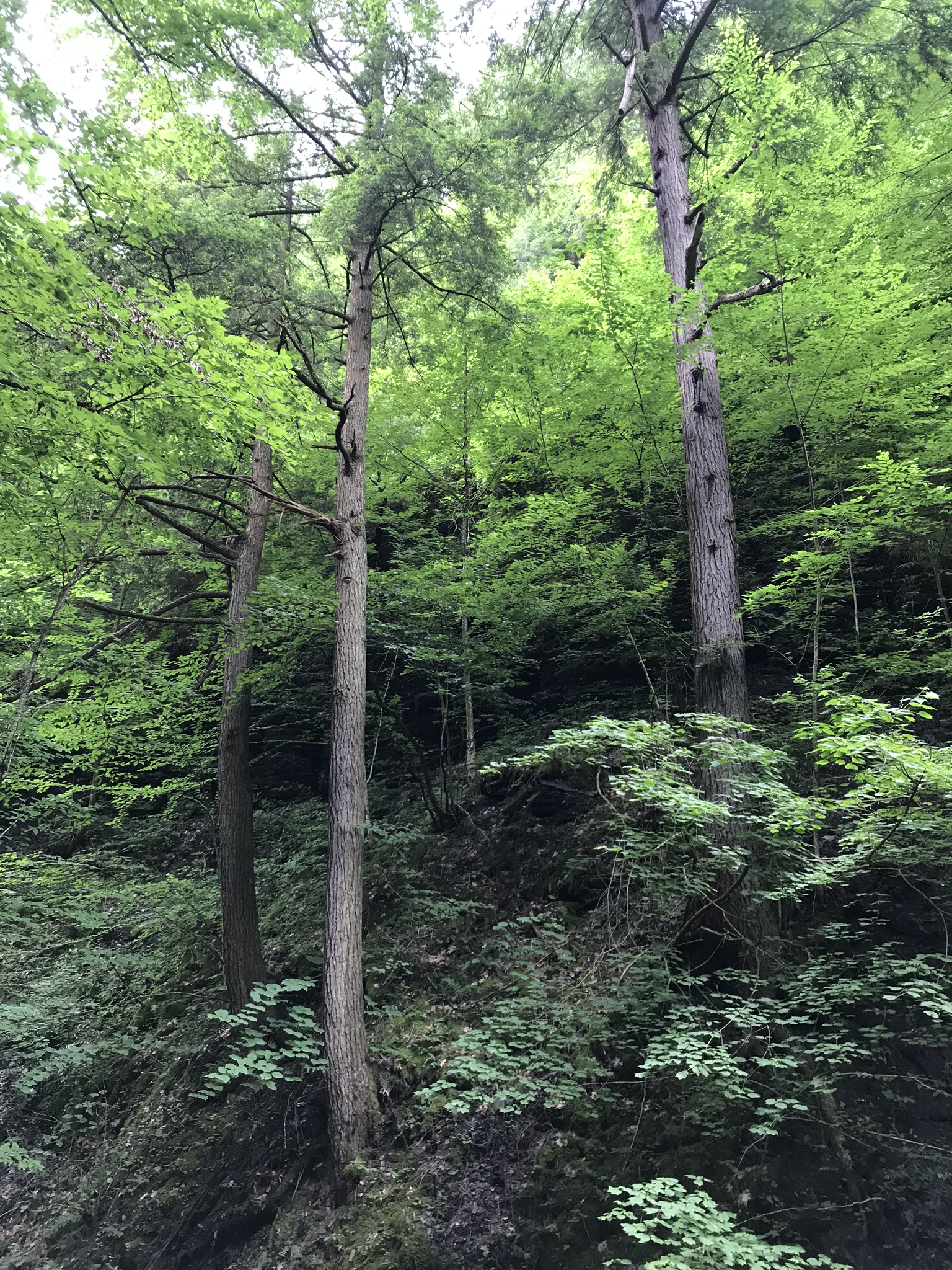
The family proceeded while I lingered to gaze up the blocked trail. I was tempted to crawl over the barrier, the ascending trail was clear the entire visible length. Being more cautious with age, or growing wisdom, I suppressed the urge and took in sights on the return trip.
On bridge number six the girl has her entire backpack contents spread over the path, a naturalist examining her kit. So sweet. Nia and Pam, at this point, were far ahead of me.
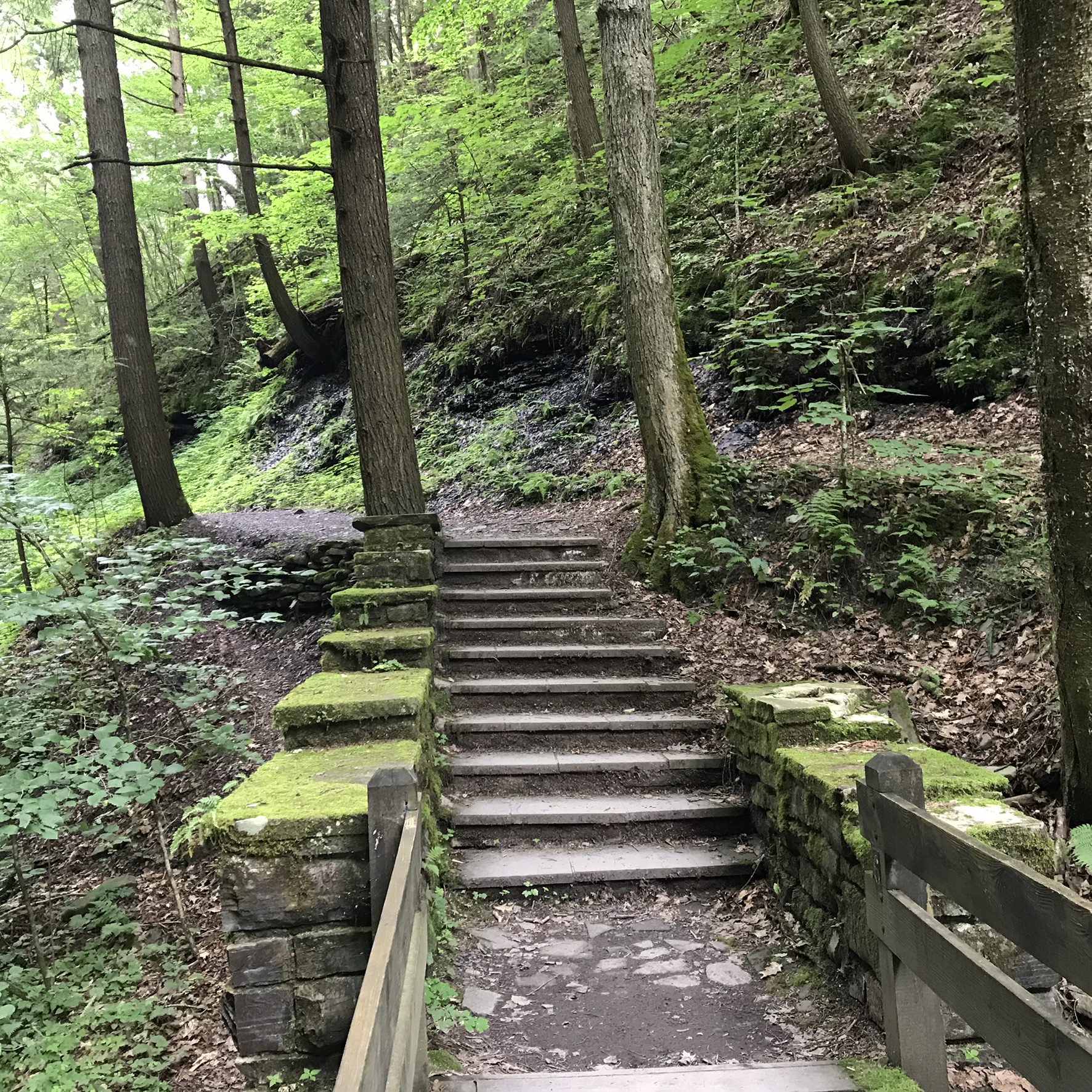
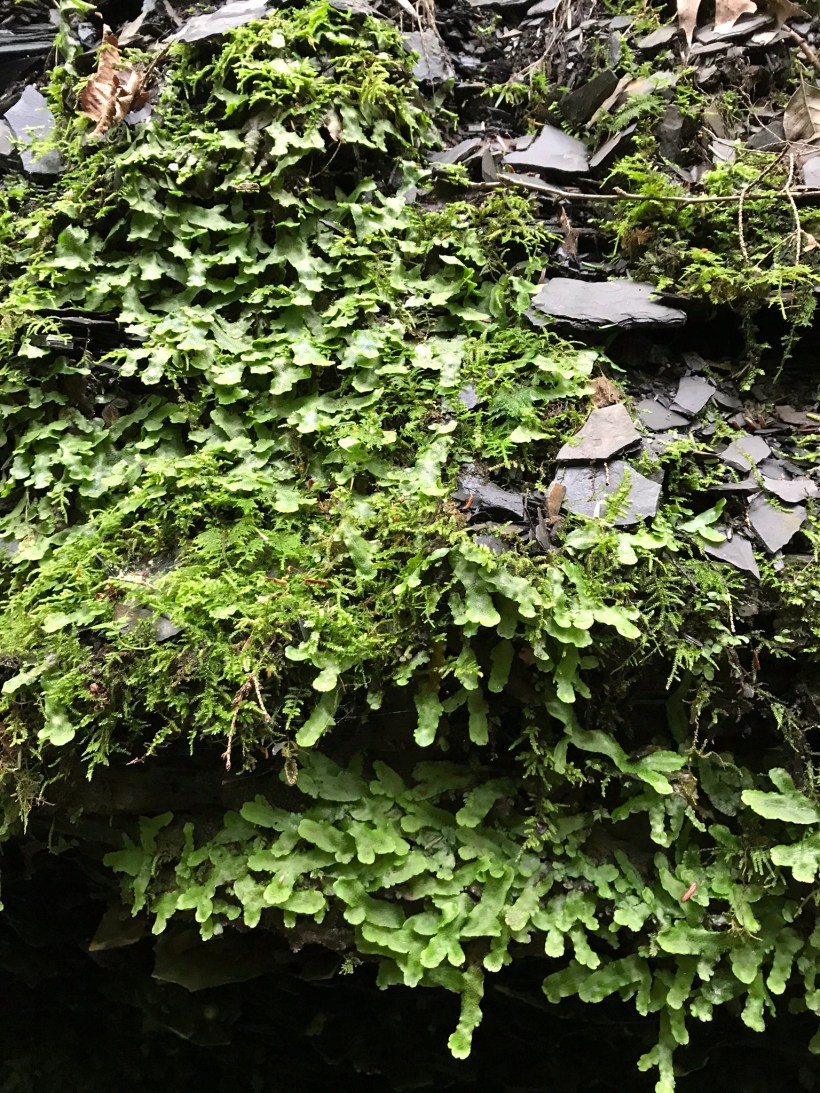
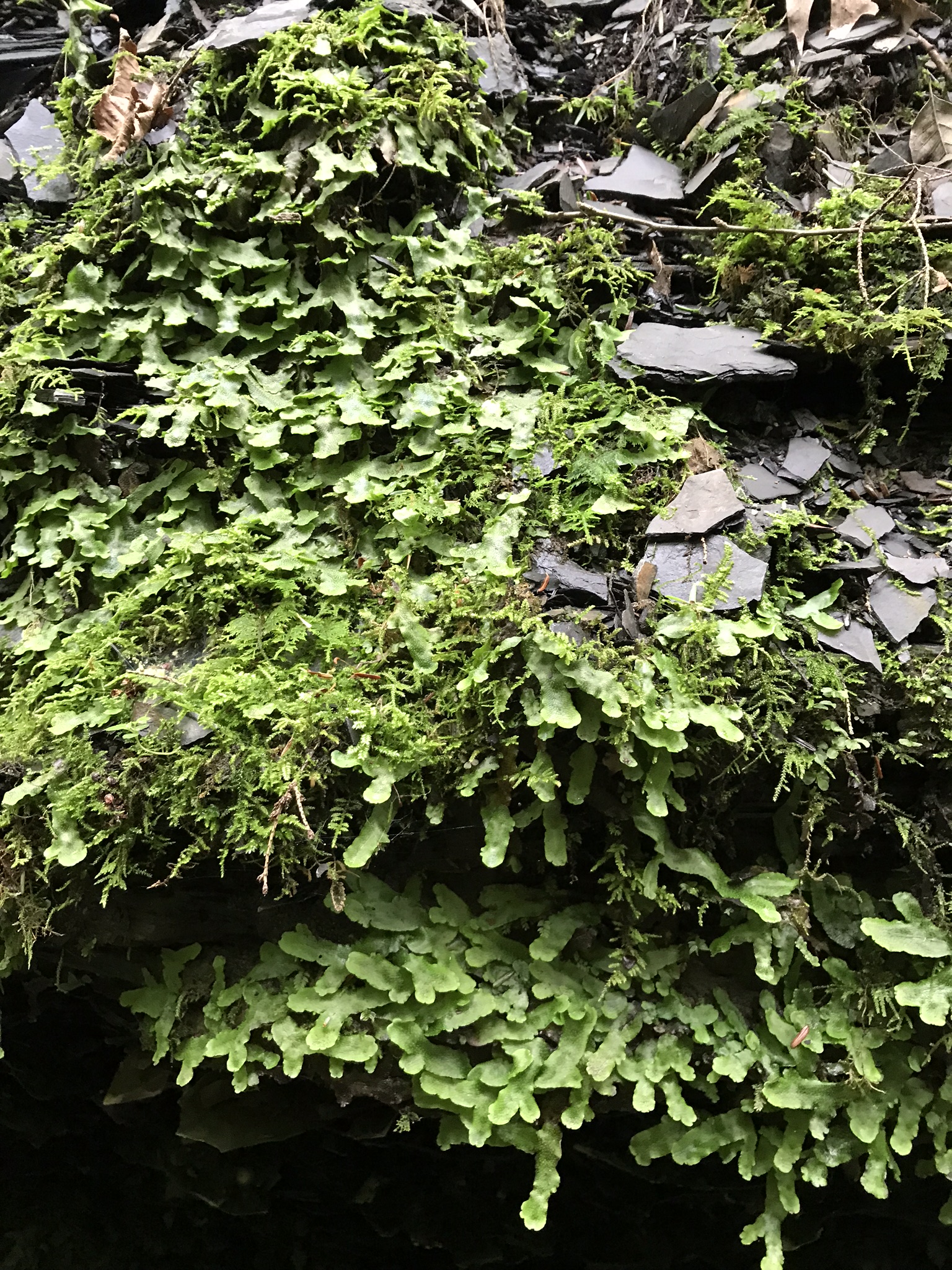
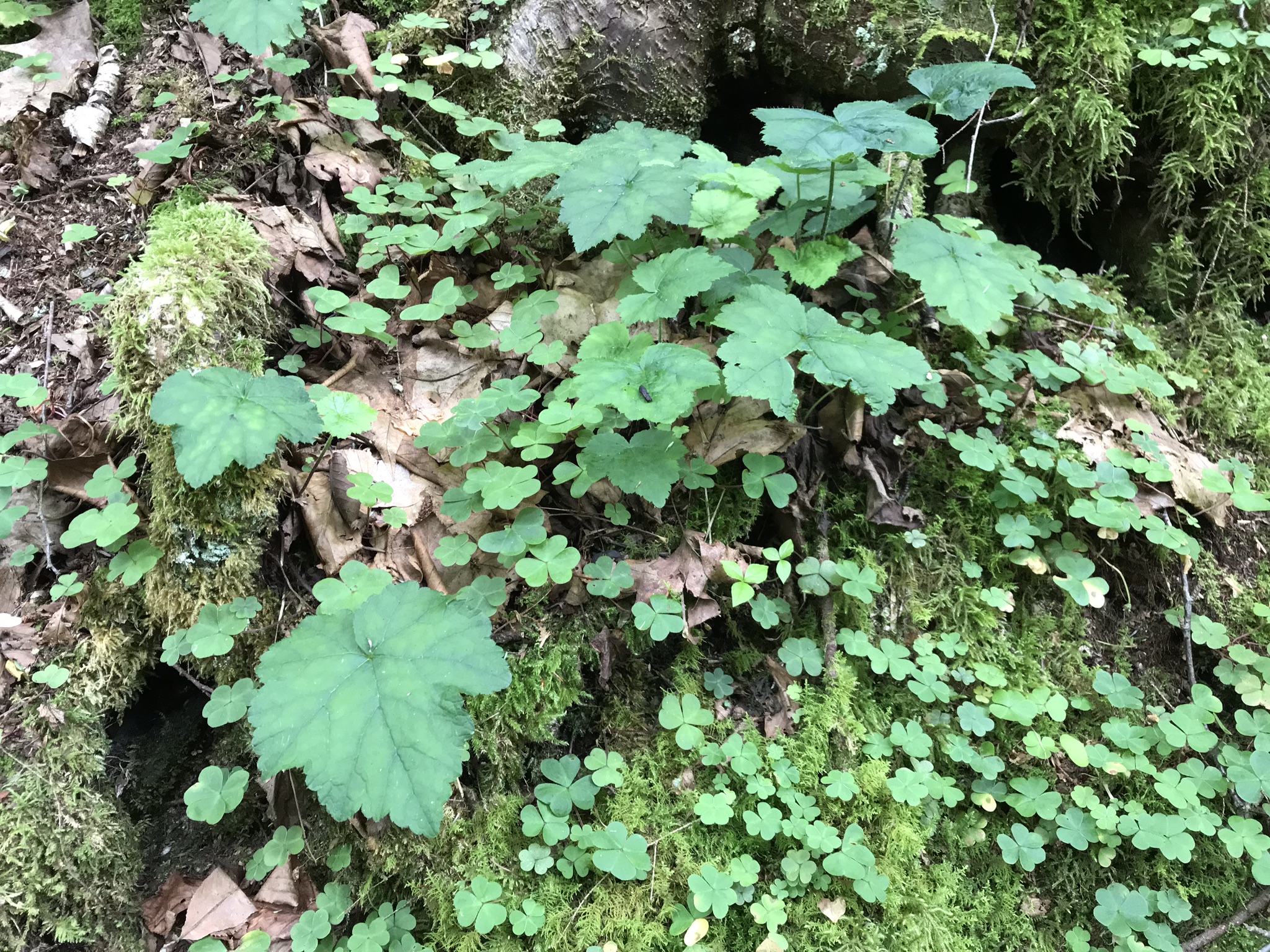
Moss is another plant proven valuable to humankind.
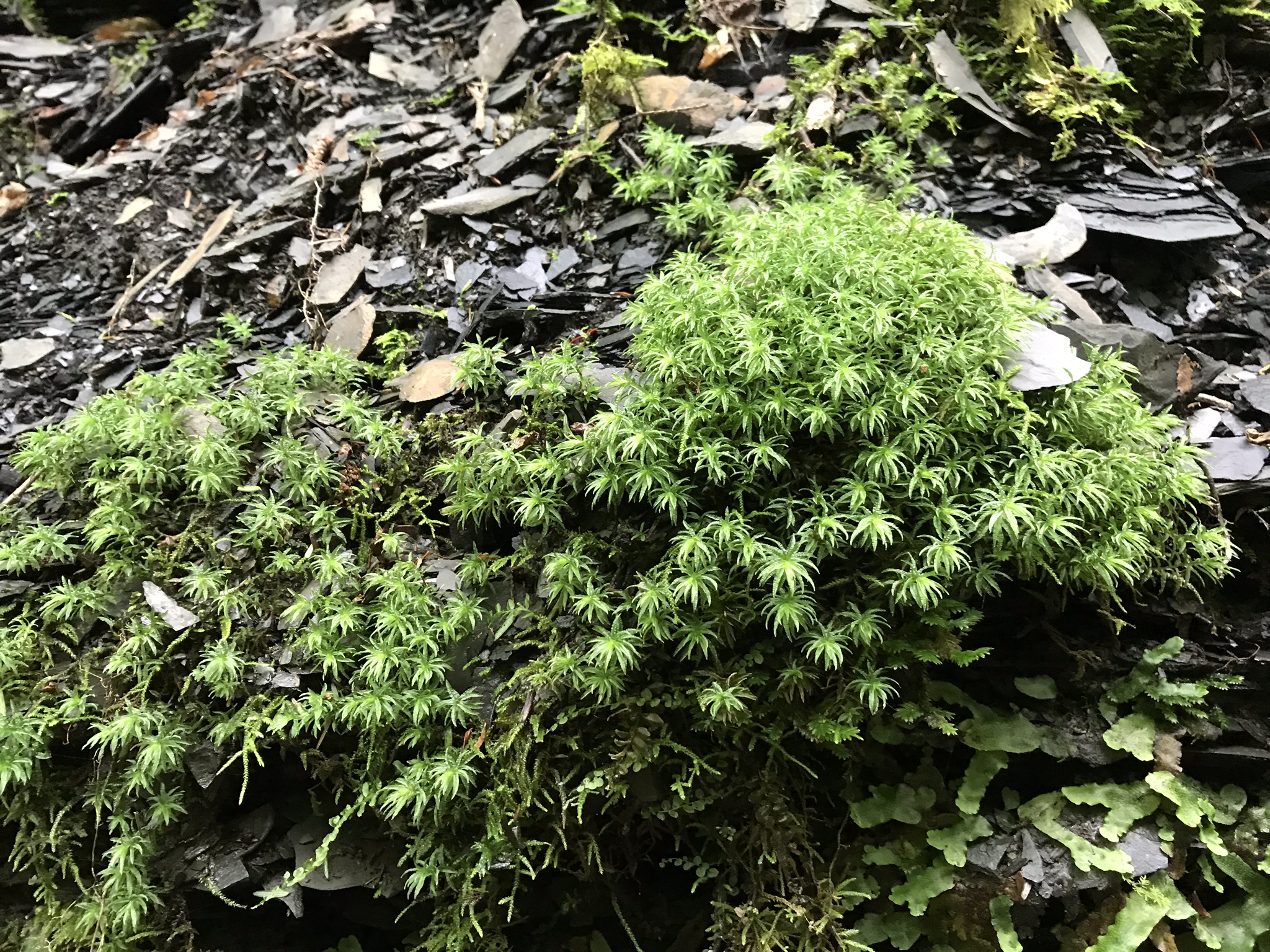
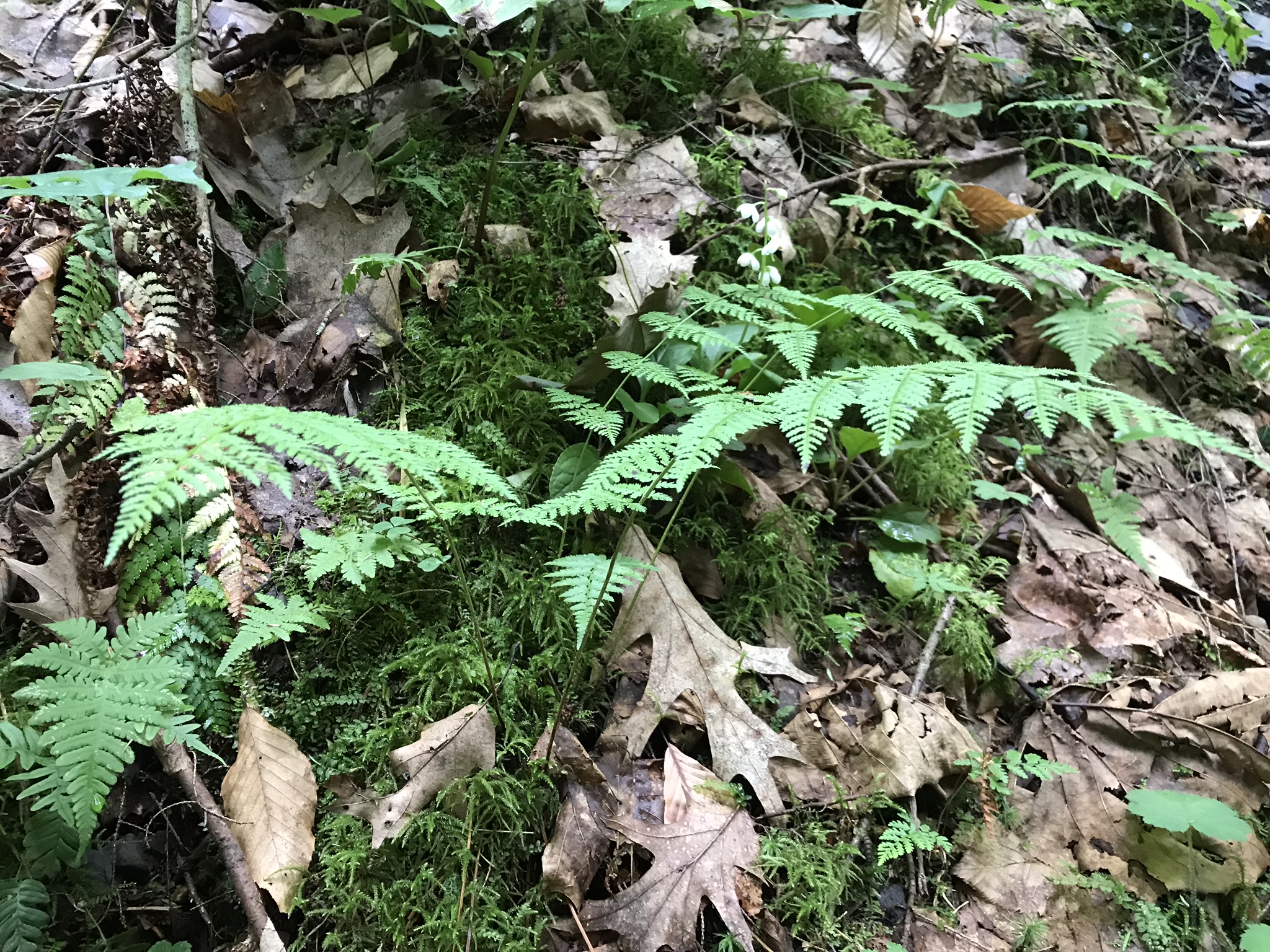
This strange orchid, the species name references a similarity to hellebore
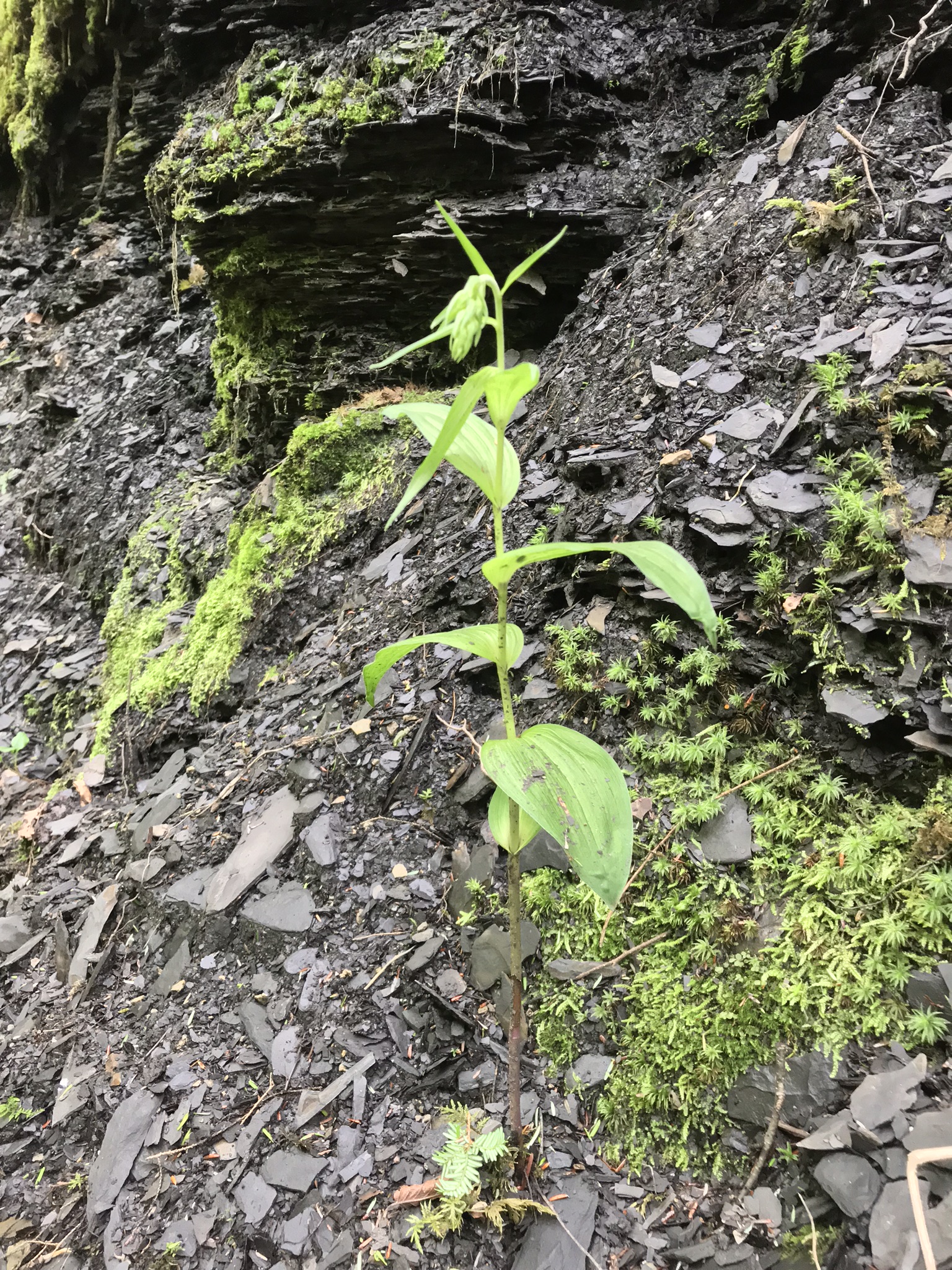
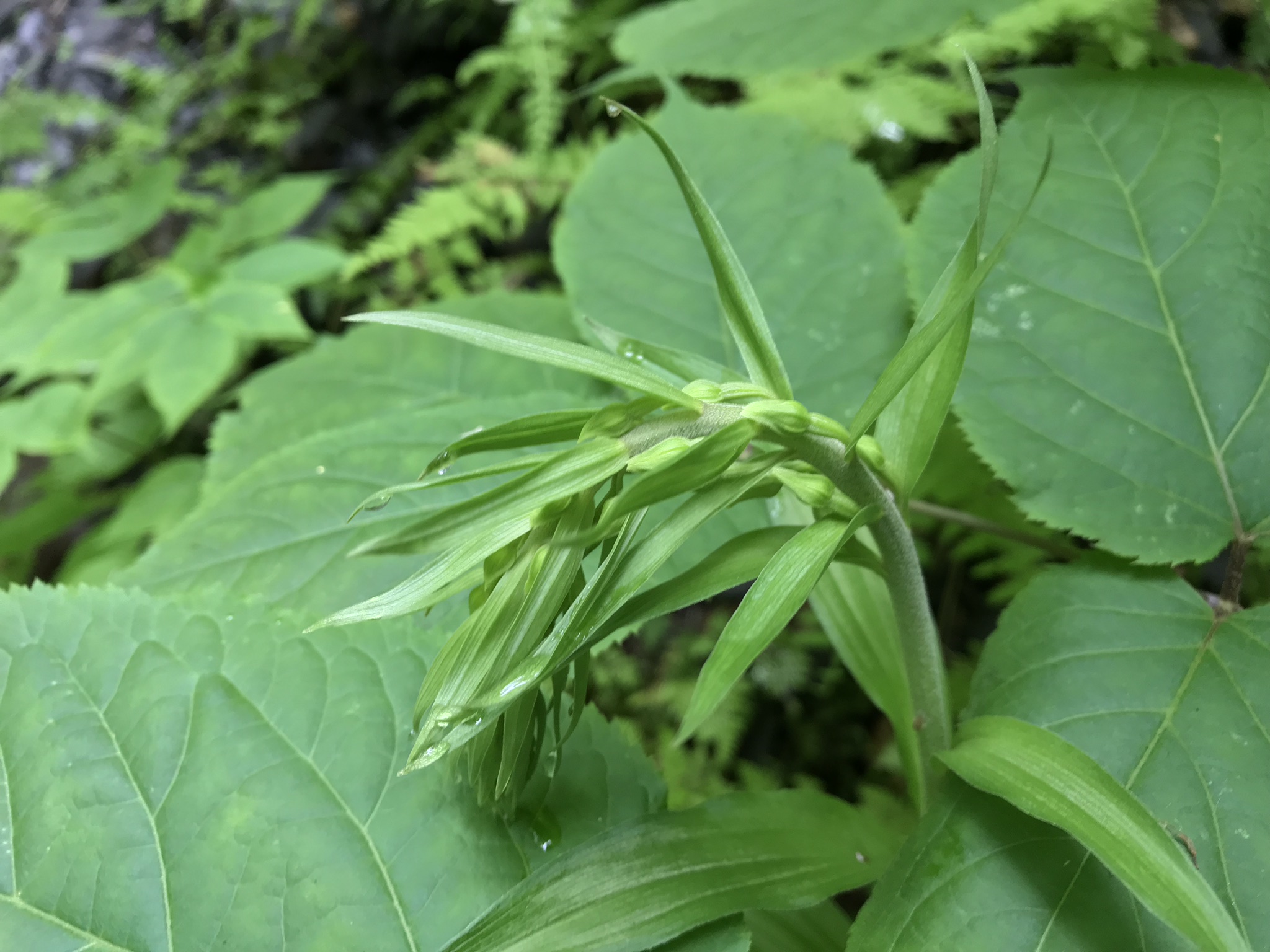
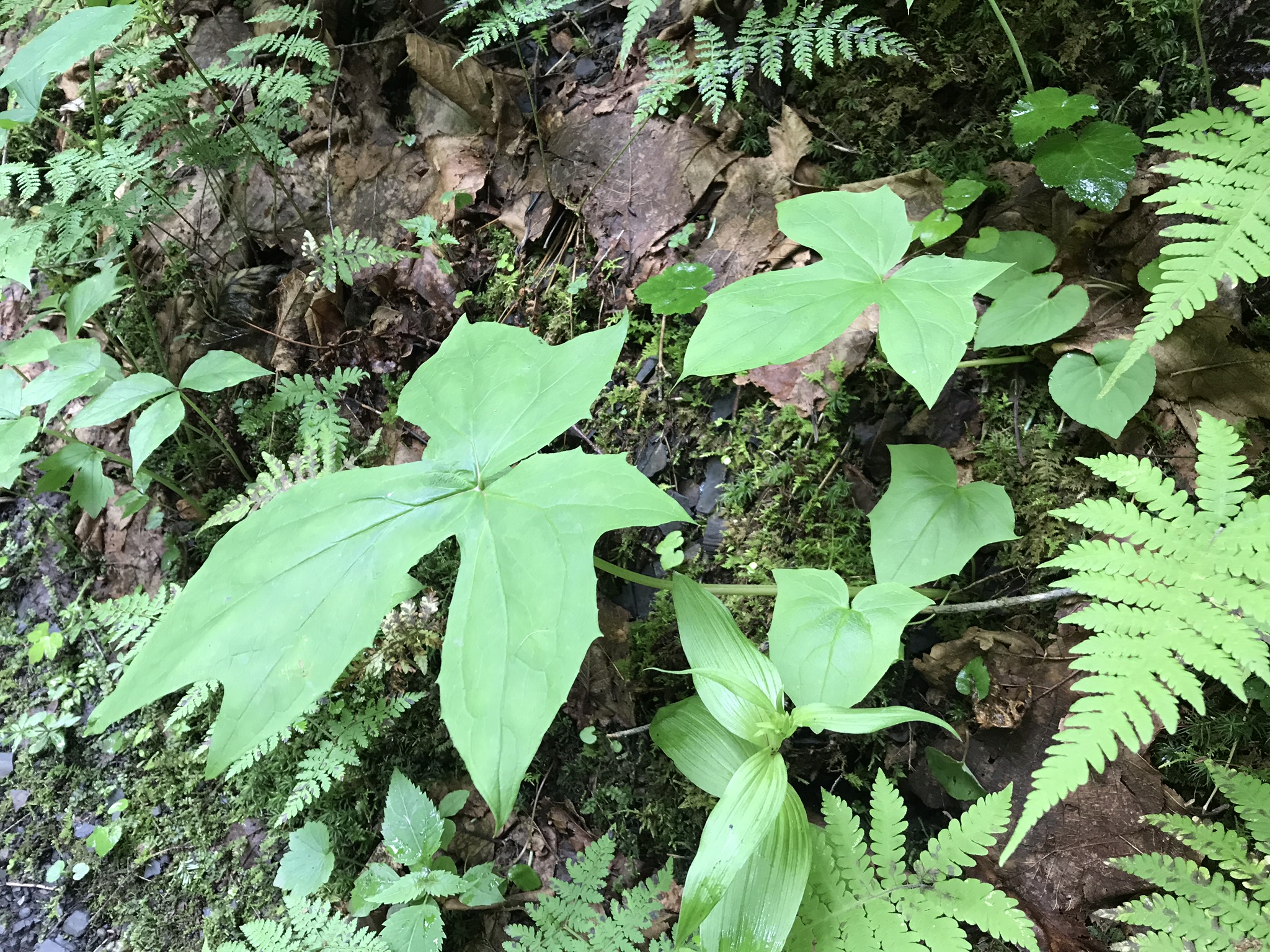
With is we left the Gorge trail for this day, with a plan to return to approach the eight bridge from the north.
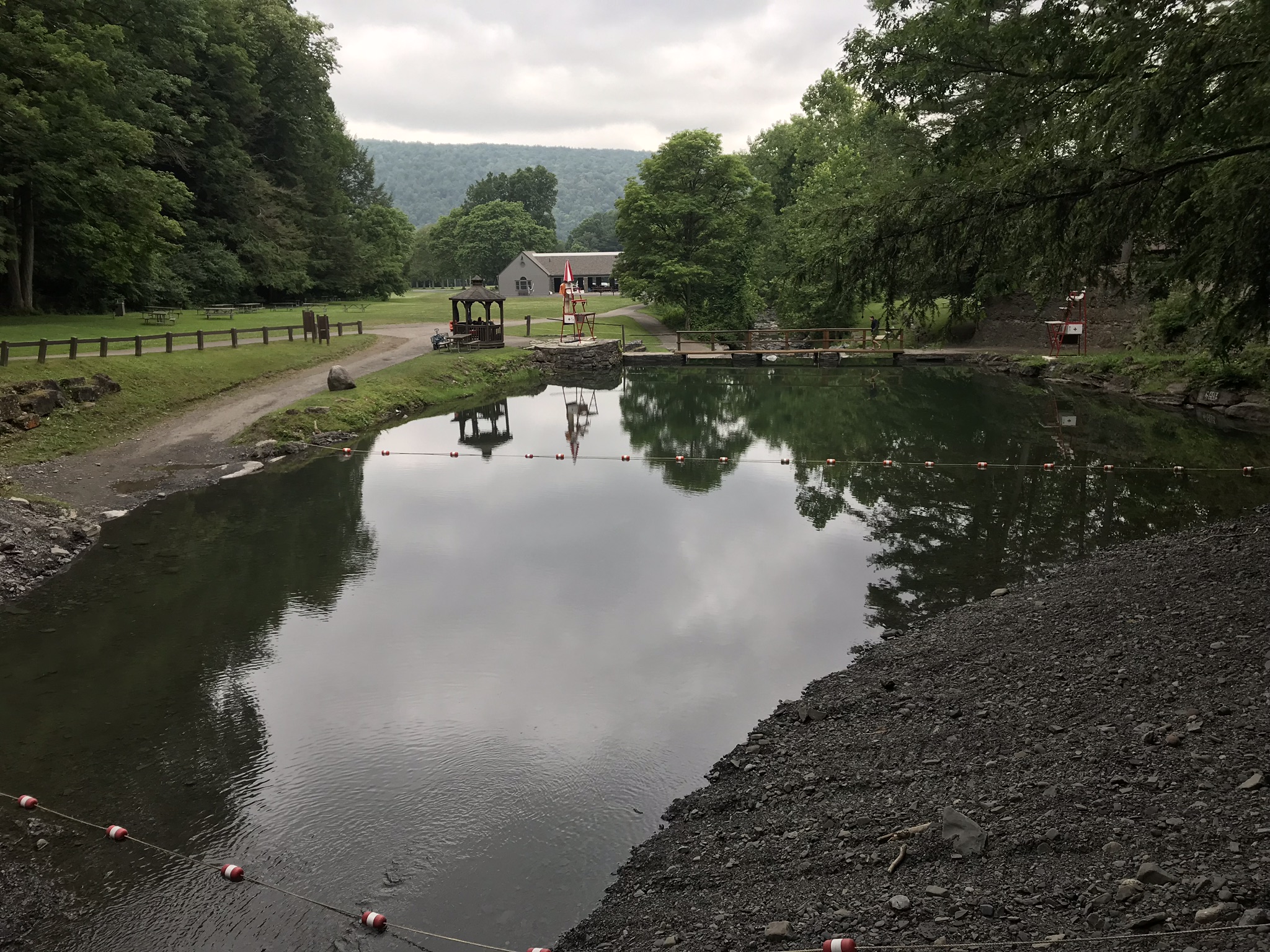

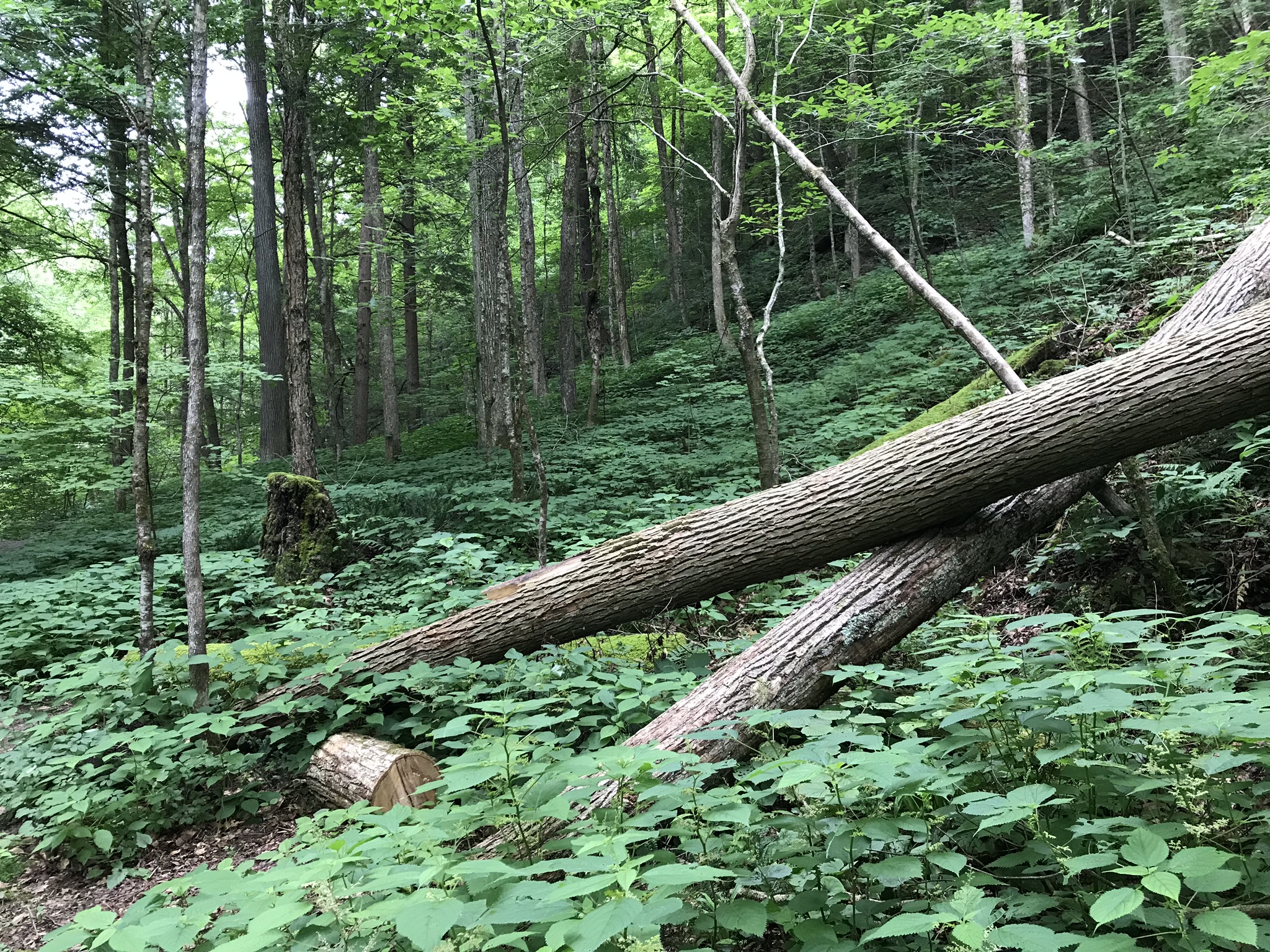
Among the chaos
Capturing photographs and videos on the fly using an Iphone, we visited Fillmore Glen State Park, Moravia, New York with our granddaughter, Nia. This is the fifth post of this series. Click me for the first post in this series, “The Space Station and the Waterfall,”.

Moss and soil held in place by roots, it is unsettling to pass this place. This entire section is unsettled and unsettling to someone with an overactive imagination, who notices nothing growing below this place, in a gorge otherwise covered in greenery.
This decade some exceptional trail stabilization work was completed. Here is a portion of the trail, near the above photograph, the bank of loose soil held in place with a stepped retaining wall crafted from wood 8×8 posts. Higher in Fillmore Glen a portion of the trail is closed where the hillside gave way 14 years ago.
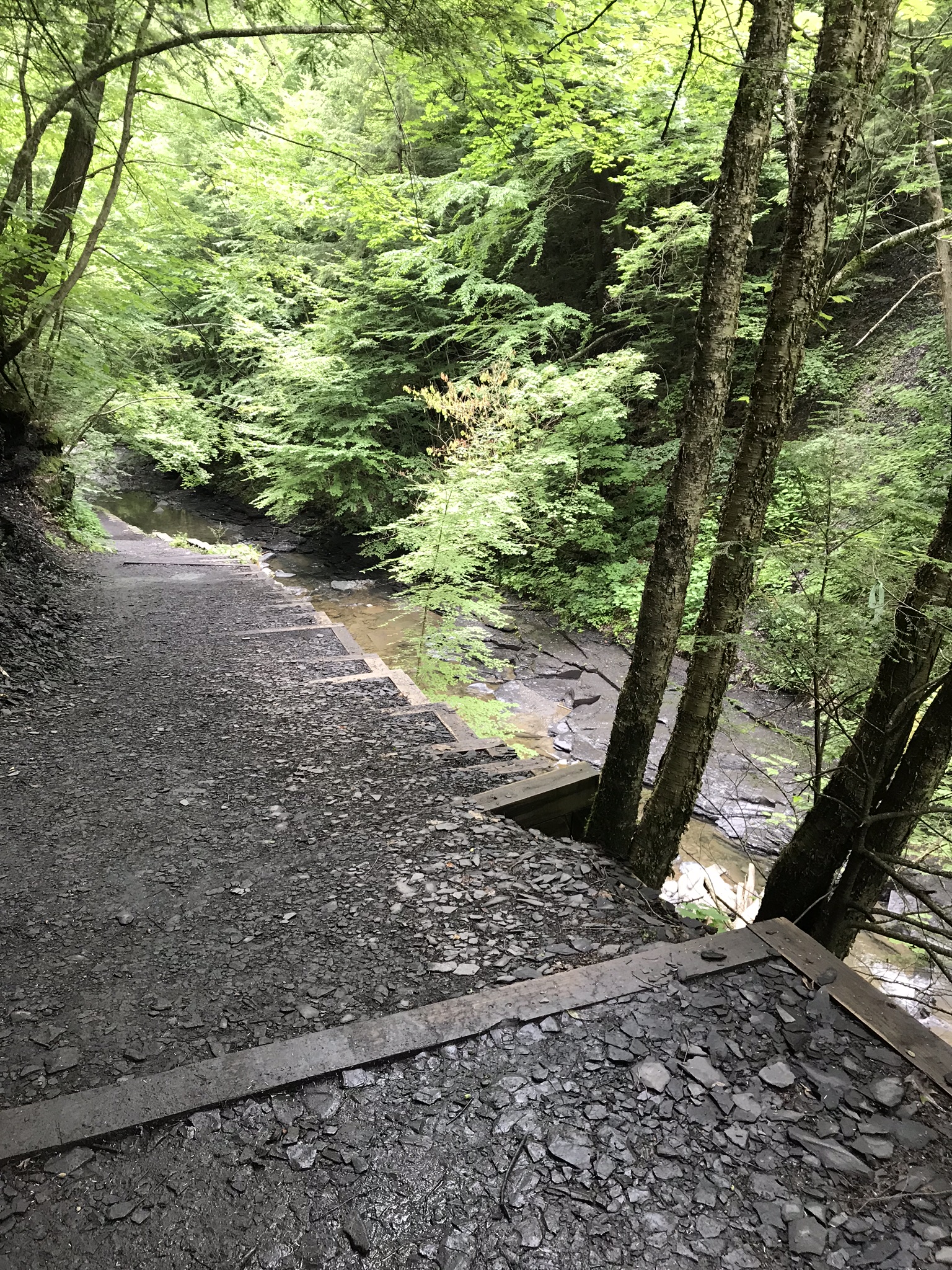
Gravity working toward disaster is seen as a constant infall, a slow rain of trees, left in place to rot over the course of a century.
Dying trees on unstable creek bank are cut before falling.

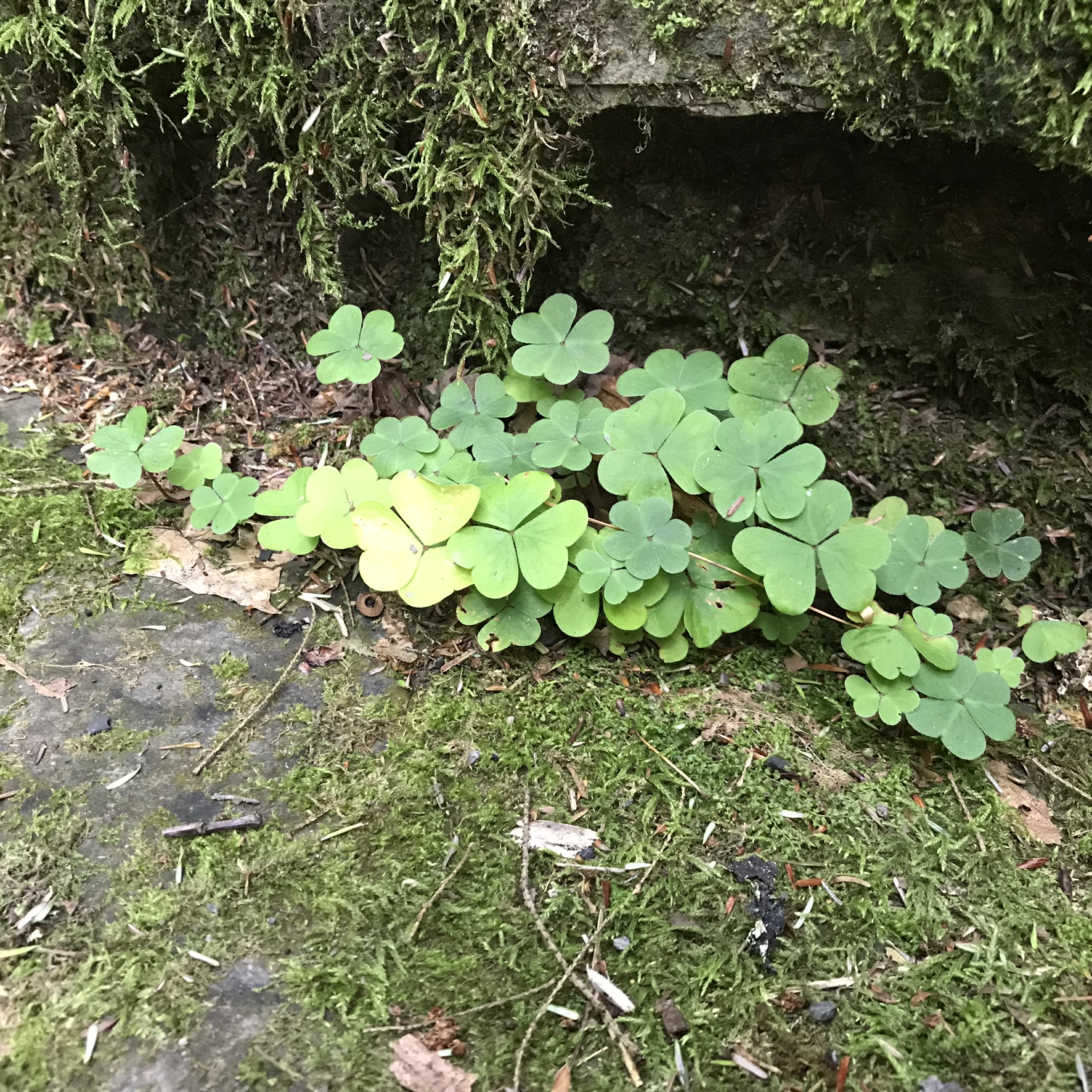
Beneath the infall, chaos, this wood sorrell took root on a shin high shale shelf among mosses. The taste of the plant is sour, leading to the name from the greek for “sour.” The family Oxalidaceae comprises 570 species. I till not venture to guess this one.
Also known as sourgrass and false shamrock, these grow on a thread of hope in a glimmer of sunlight.
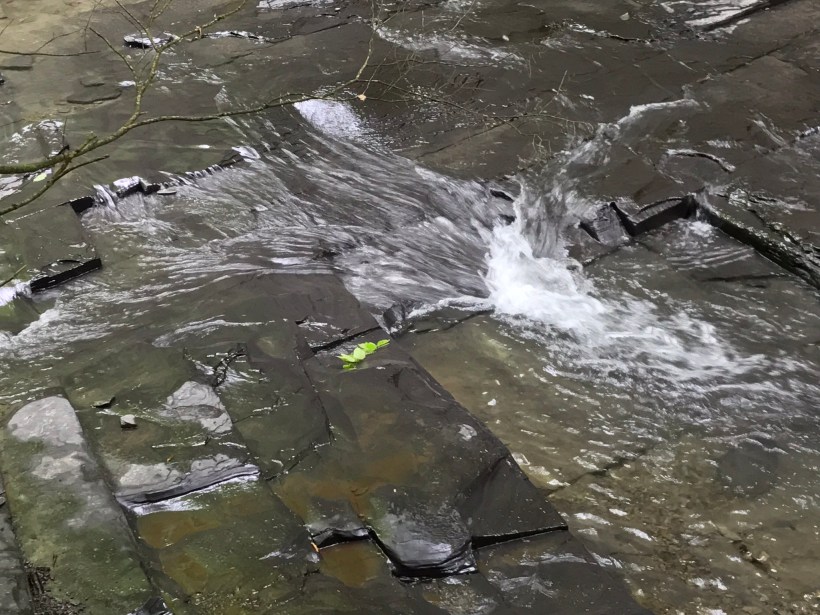
Exploring Dry Creek Gorge
Capturing photographs and videos on the fly using an Iphone, we visited Fillmore Glen State Park, Moravia, New York with our granddaughter, Nia. This is the fourth post of this series. Click me for the first post in this series, “The Space Station and the Waterfall.”.
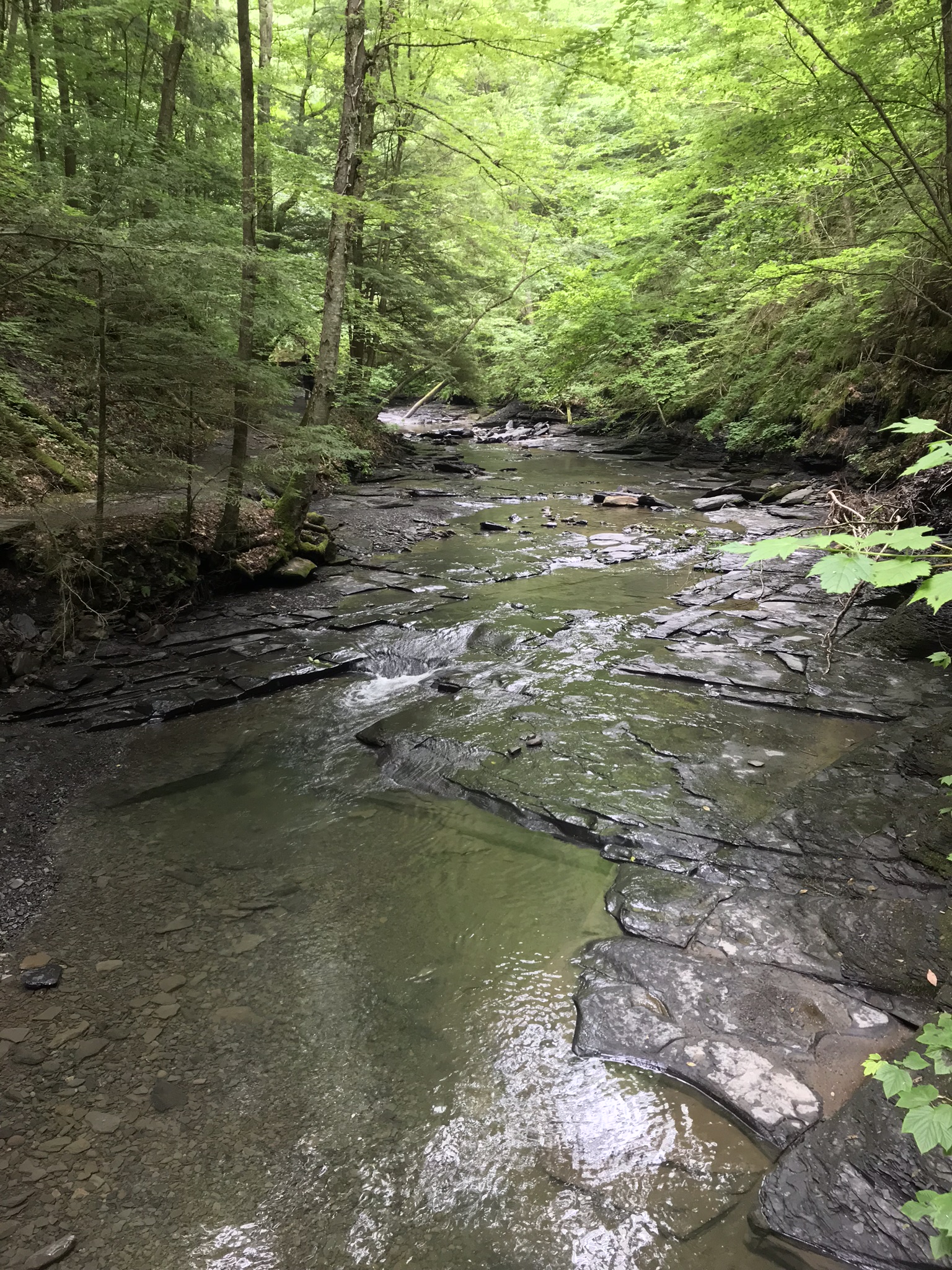
Gorge trails follows the path cut by Dry Creek through eons of multiple and various sedimentary rock. The work of the CCC crew (see “Presidents Millard Fillmore and F.D. Roosevelt”) makes it literally child’s play to negotiate a course otherwise impossible to do without getting soaking wet.
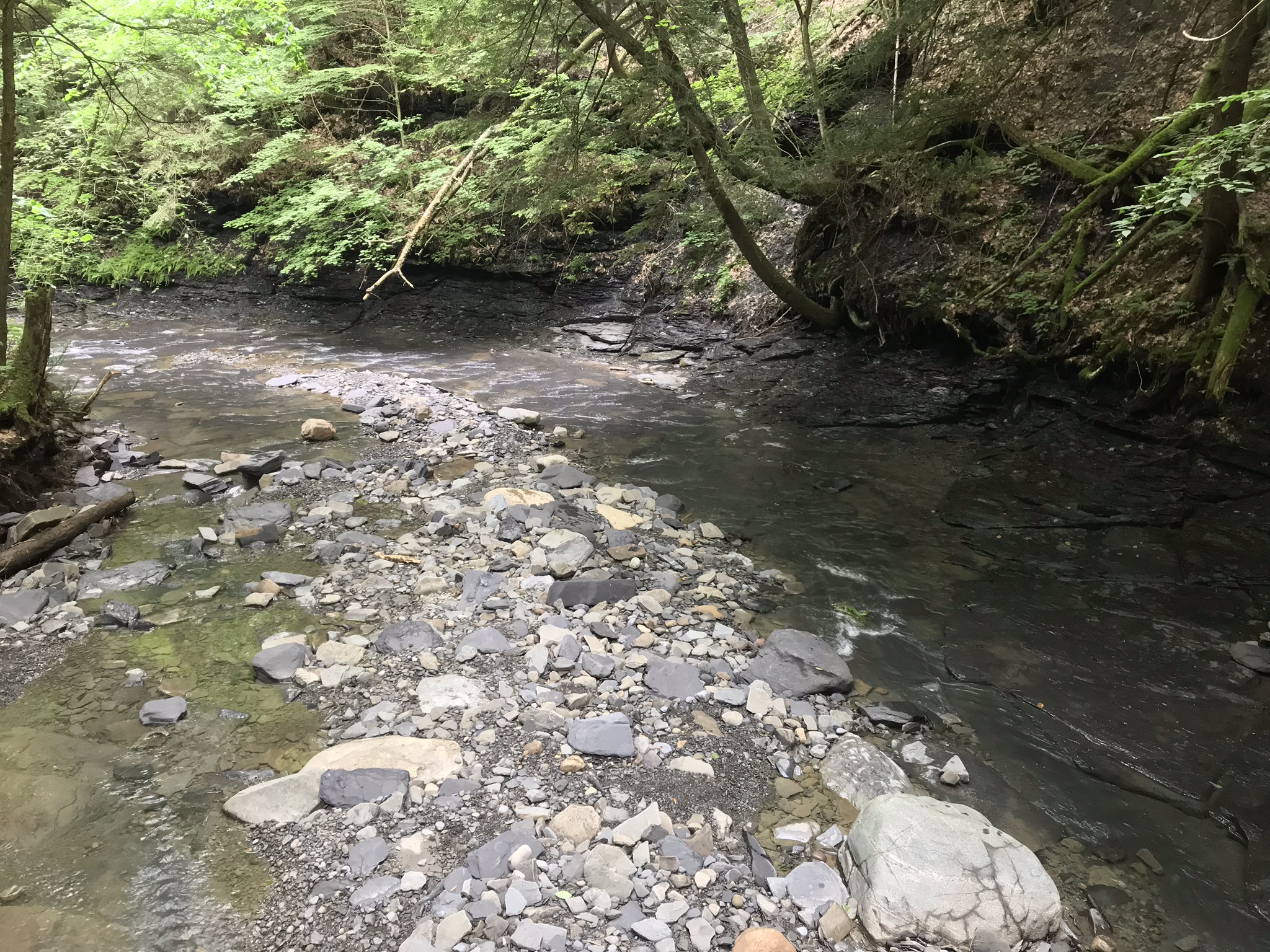
There were seven bridges, wooden over steel I-beams, we crossed today. The trail beyond bridge seven is closed due to hazardous conditions, don’t know what exactly. The gorge is plagued with landfalls. Much of the modern work is elaborate wooden supports of the land beneath the trail.
Every step on the Gorge Trail is beneath 100+ foot walls, steep slopes held in place by the forest and every variety of native wildflower.
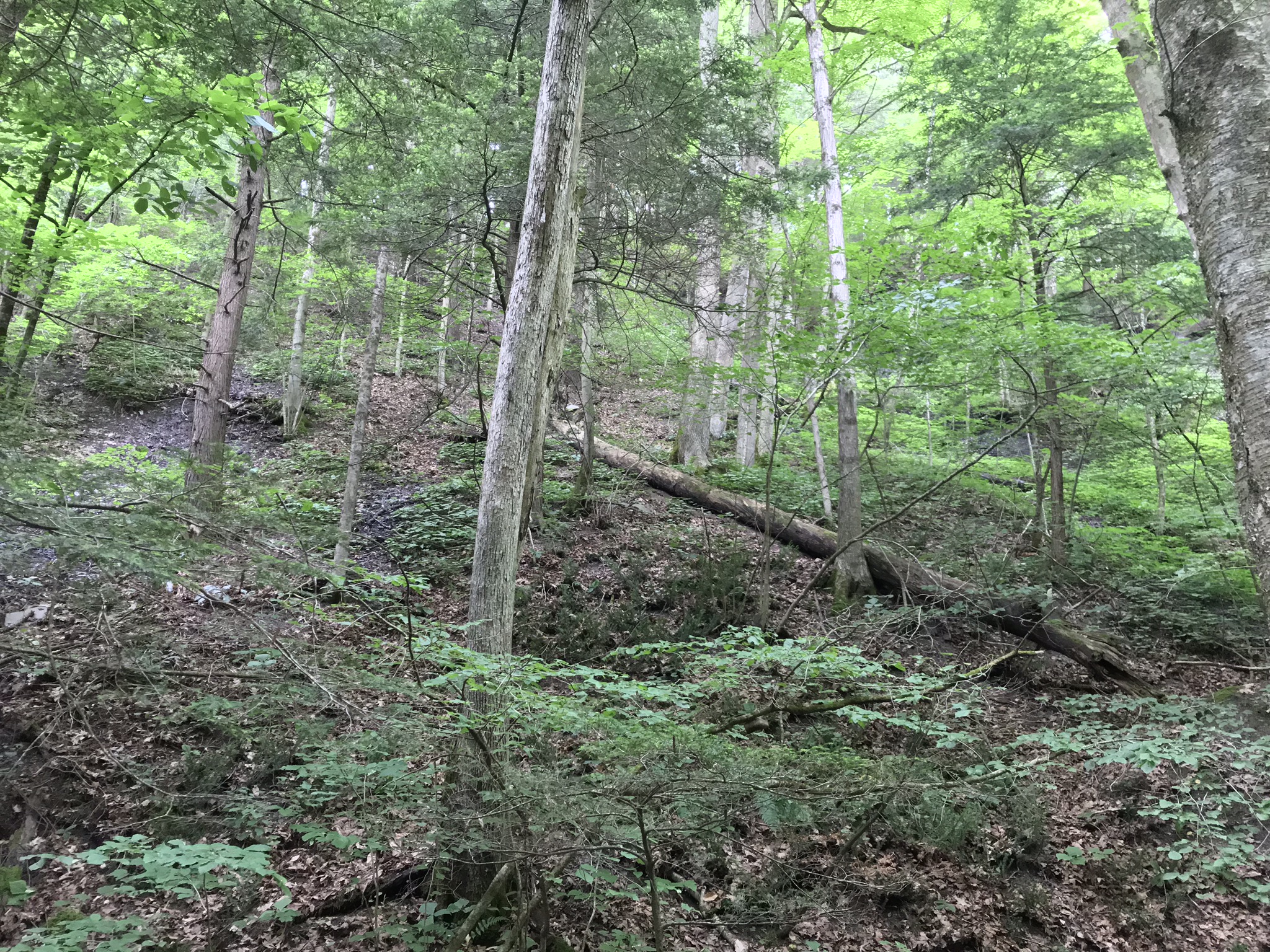
I took the following video from a zig-zag path over a difficult steam topography tamed by two bridges and limestone walls sourced from the stream bed.
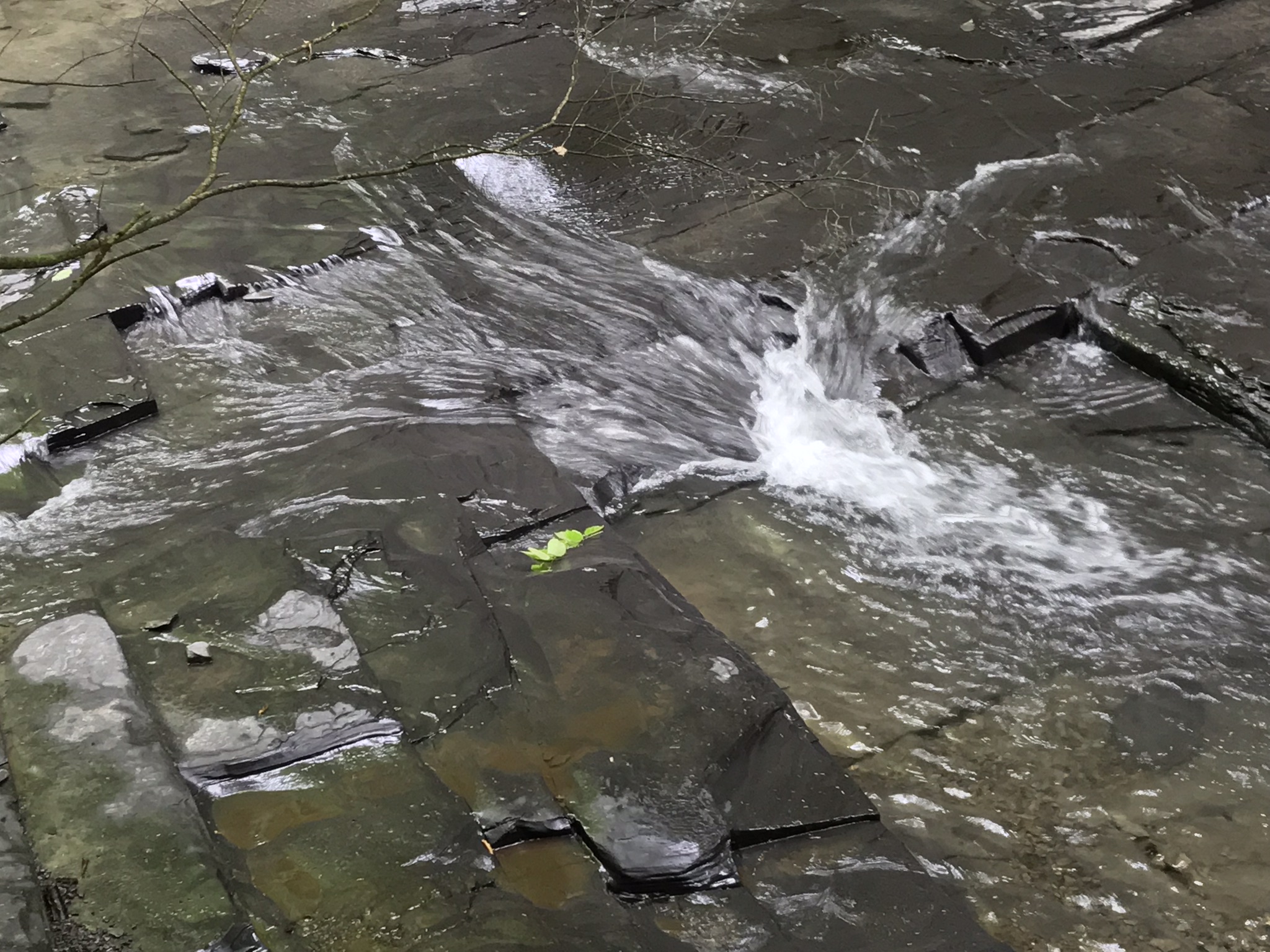
Above, is a view of the characteristic right angle faulting of the limestone base of Dry Creek, faulting produced when the North American plate pressed against the African plate, released, then after pivoting 90 degrees, pressed again against Africa before finally separating with the create of the Atlantic Ocean.
The Lost Mine
It is ironical the word “legend,” from the Latin verb “to read,” is the word used to describe the ahistorical stories, rumors really, of the Superstition Wilderness anchored, concurrently undermined, with the hard facts of geology. “Named for Paulino Weaver, a famed mountain man, scout, trapper and miner, Weavers Needle is a volcanic monolith that rises almost 1,300 feet from its base to an elevation of 4,553 feet. It’s the most recognizable landmark in the wilderness, and it’s also considered a marker for the legendary Peralta Mine.” — Arizona Highways
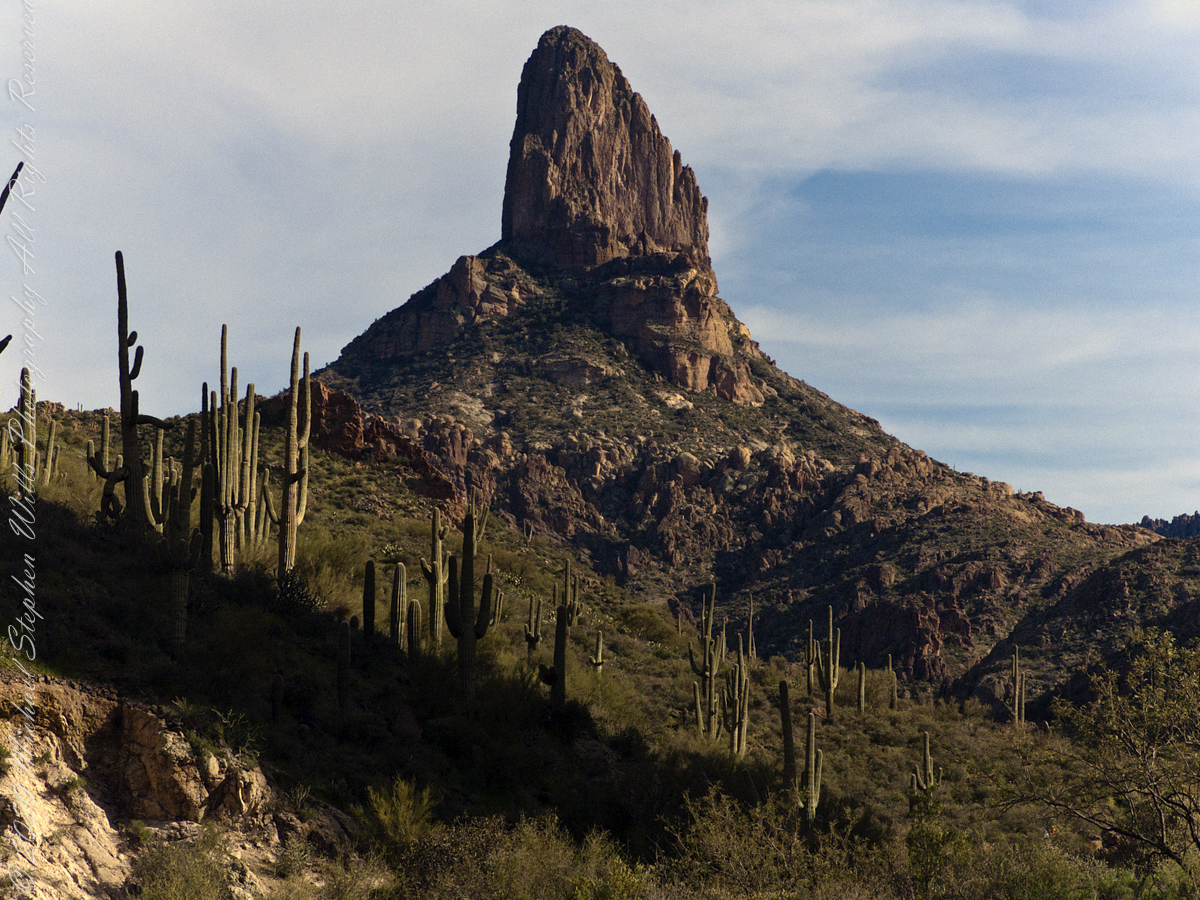
“As the story goes, Don Miguel de Peralta and his family, who had come to the Superstition Mountains from Mexico, discovered gold, lots of gold, in the shadow of Weavers Needle. However, before cashing in, according to the story, they were killed by Apaches, who allegedly sealed off the mine. A few decades later, Jacob Waltz, better known as the “Lost Dutchman,” claimed to have found the old Peralta Mine, but he died before proving his claim. Since then, thousands of treasure hunters have gone looking, including Arthur Weber and the Dons of Phoenix, but no one has ever found the gold. And it’s unlikely anyone ever will — the volcanic rock out there isn’t conducive to producing precious metals. They’ll keep looking, though. Meantime, the real treasure is the trail. Especially in the springtime, when the ground is covered with gold. ” –Arizona Highways
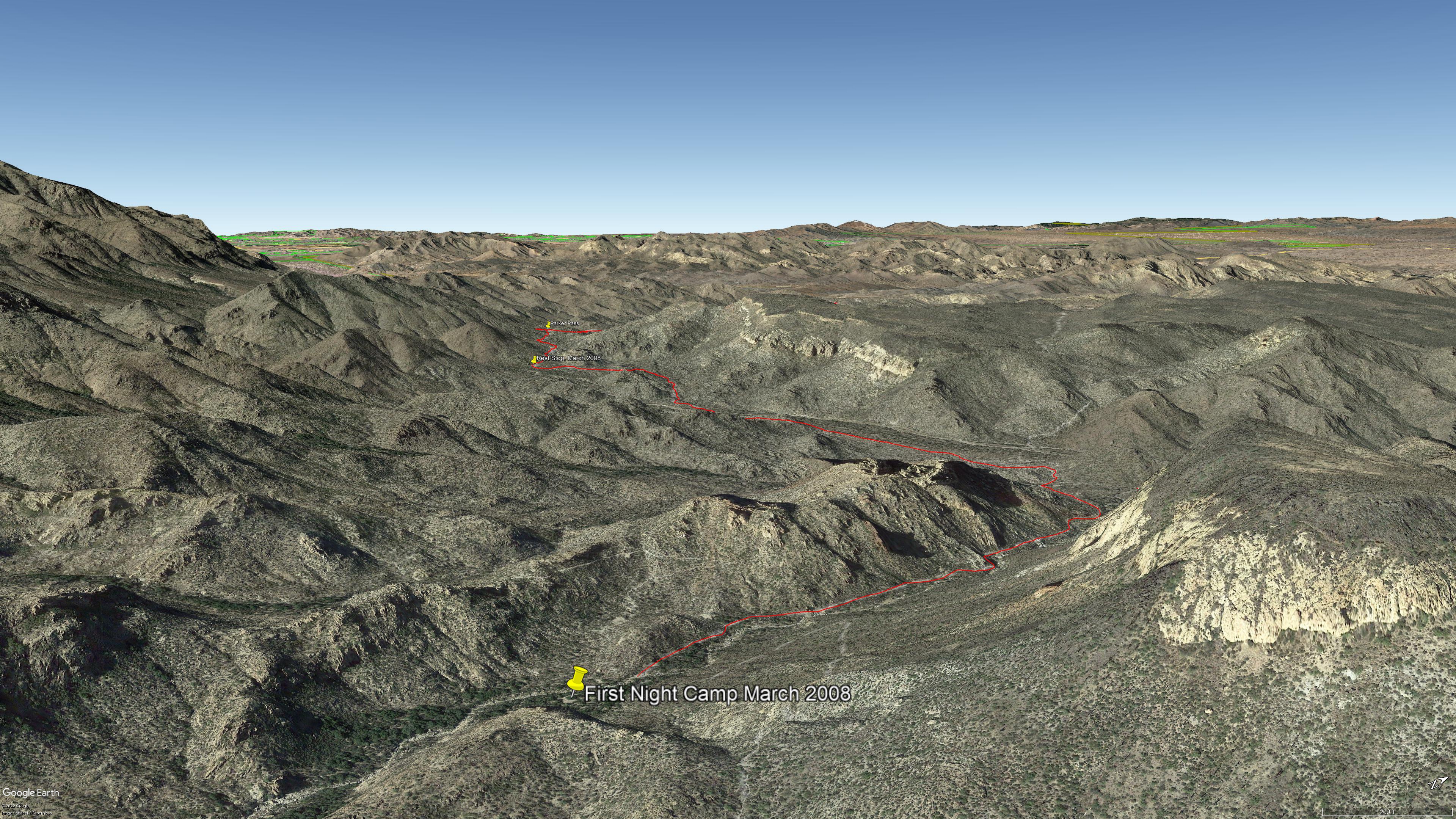
Here is a view of part of the day’s trail. We started at 1911 feet elevation, Apache Junction, topping 2693, Parker Pass, with 2512 our resting spot with many ups and downs in between: a combined descent of 1760. Our rest was well earned. Palamino Mountain is on the left, Black Top Mesa the right. Look carefully to see the Peralta Trail surmounting Palamino Mountain ridge, descending in a zigzag to Boulder Canyon where it terminates on Dutchman Trail.
Copyright 2022 Michael Stephen Wills All Rights Reserved
Enter the family name “Peralta”
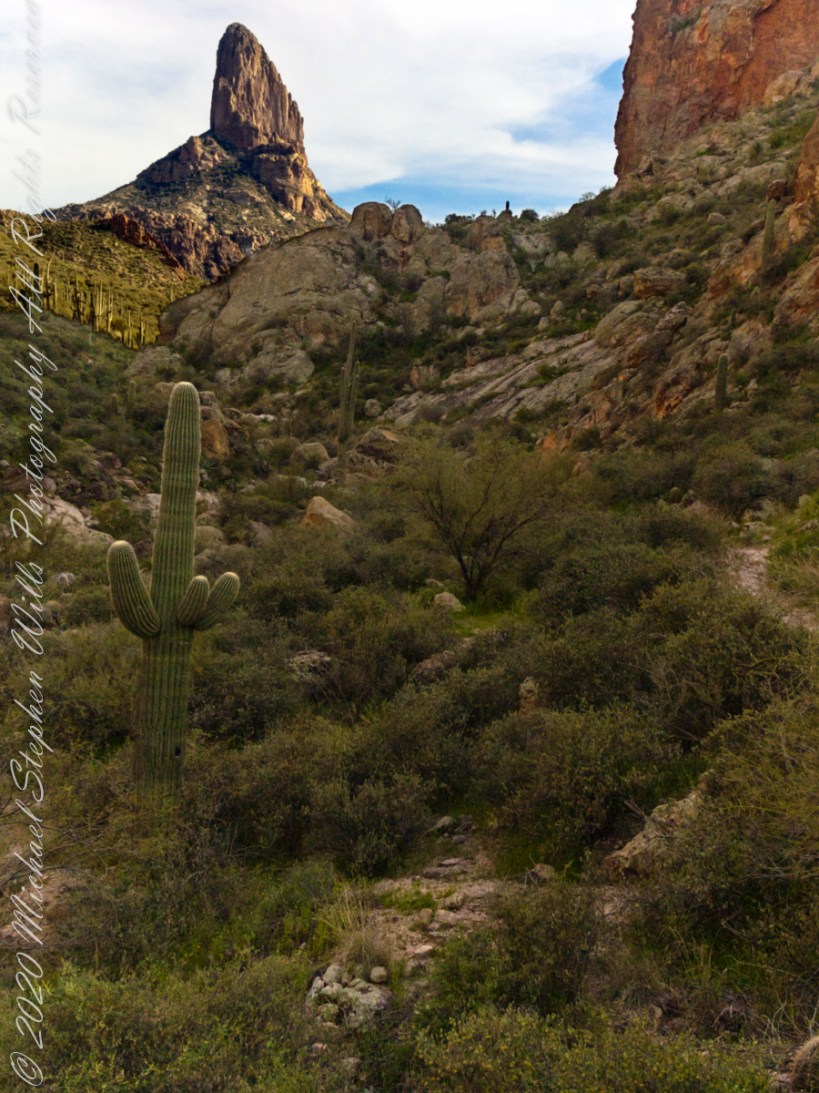
Our eleven-mile trek from Apache Junction ended here between Black Top Mesa and Palamino Mountain. Peralta trail winds up the ridge to right with Weaver’s Needle beyond in the setting sun.
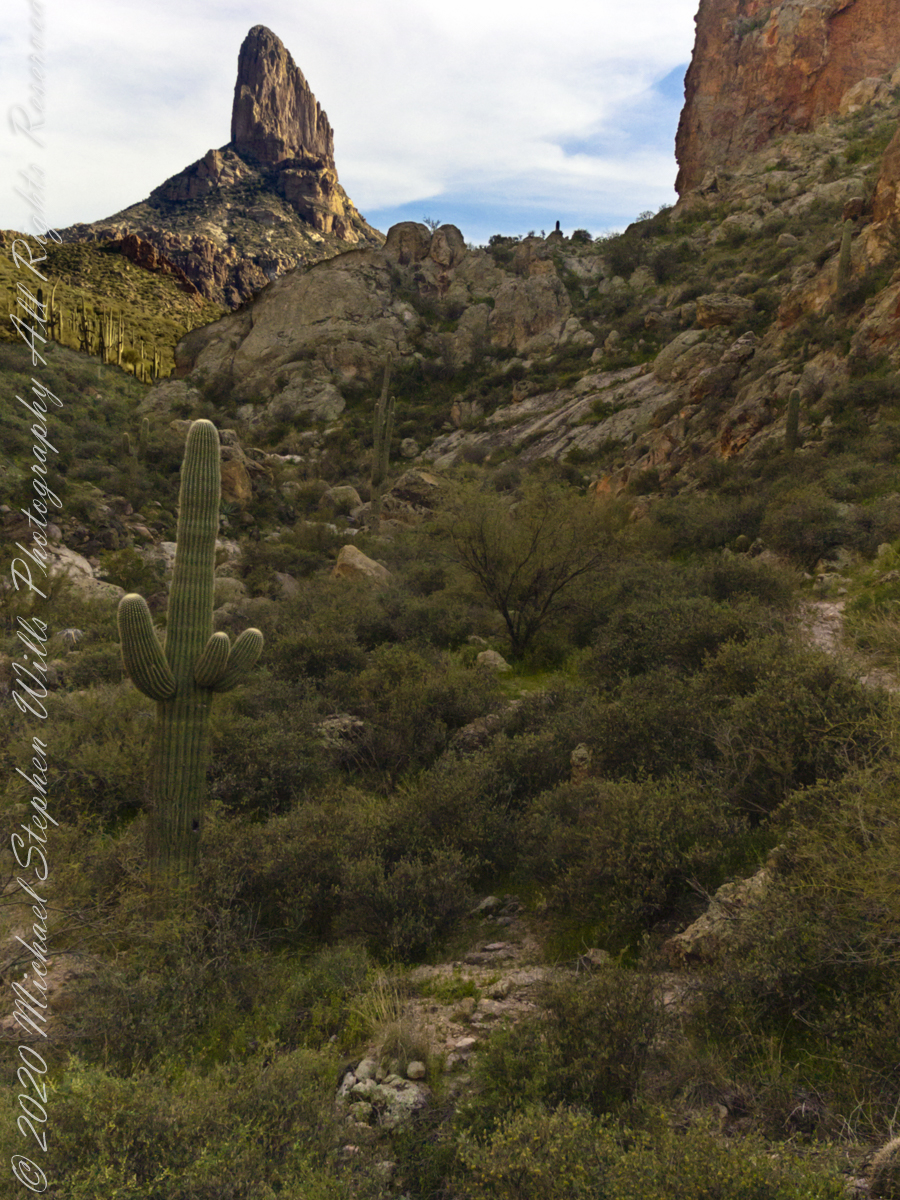
Deep shade combined with the distant sunlit needle made for a difficult photographic capture. In fact, this picture needed significant work in Photoshop. I wore the 8 megapixel Sony F828 to capture the handheld shots of this series. A few days later I dropped the camera while riding Colorado, rendering it inoperable. This was when I acquired my Sony Alpha 700 during downtime in Phoenix. Later, the F828 was repaired at Sony and is still operable.
Copyright 2022 Michael Stephen Wills All Rights Reserved
Desert Riches
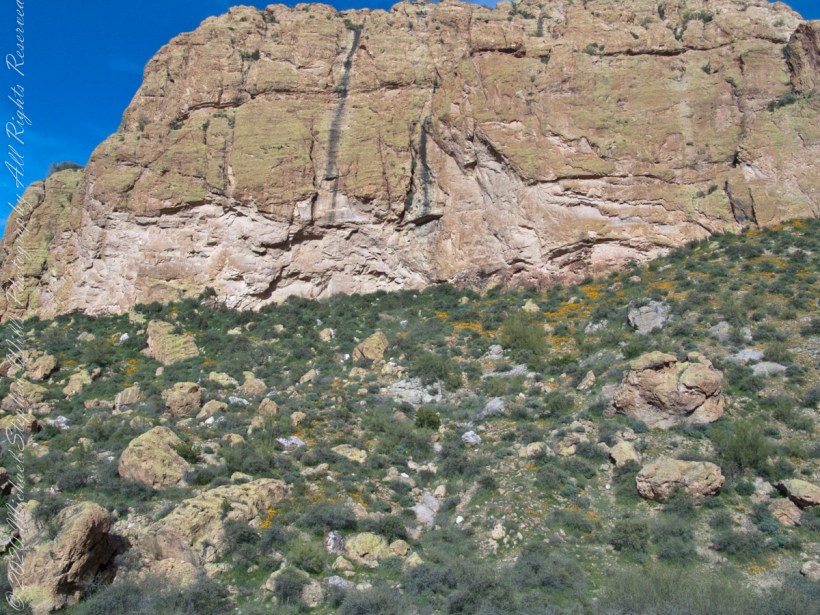
A few minutes after photographing this Stressed Mesquite I looked across the creek to the slope of volcanic rock fallen from the cliff of Black Top Mesa where clumps of dark yellow, in the following photograph of that cliff, mark clusters of flowering Mexican Poppies.
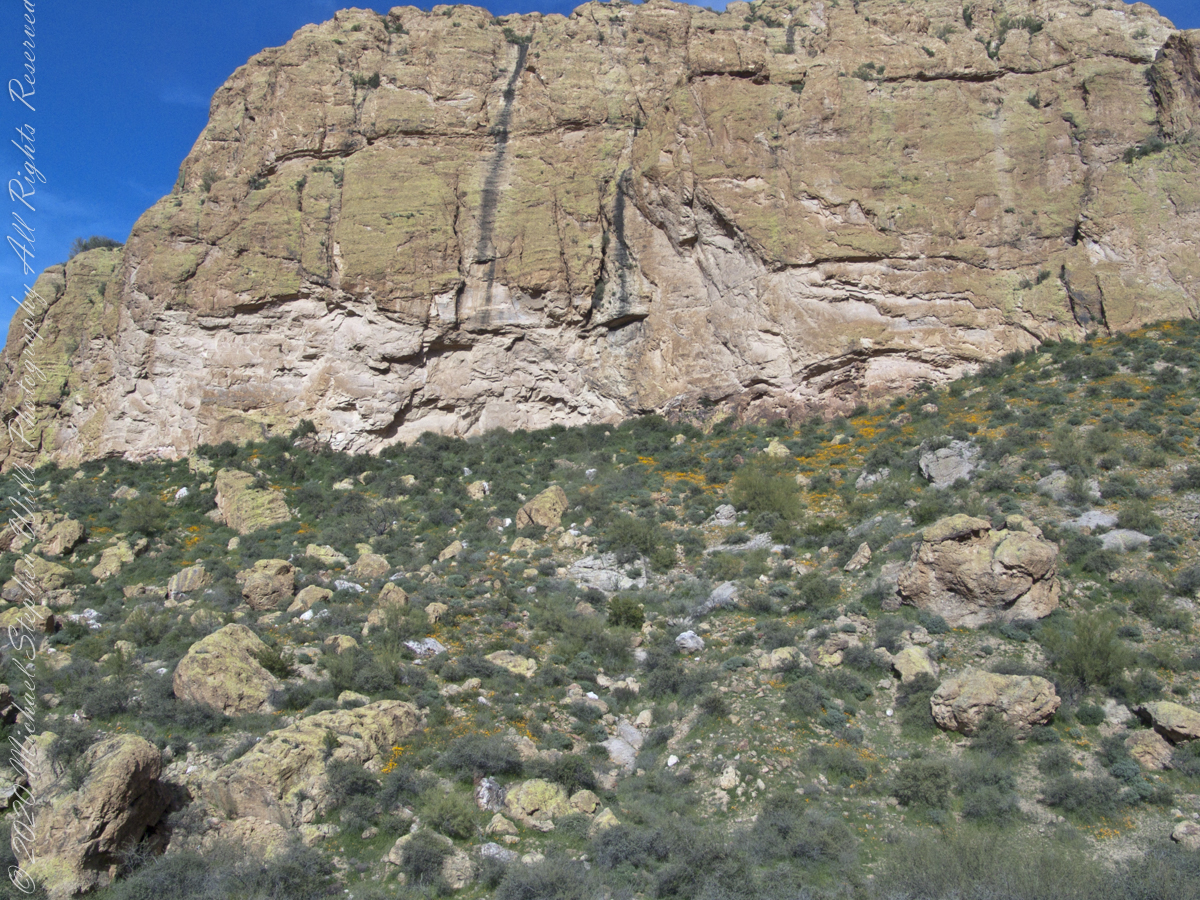
Plentiful winter rains of 2008 trigged a profusion of Mexican Poppies throughout the Superstition Wilderness. Here is a photograph captured after our expedition.
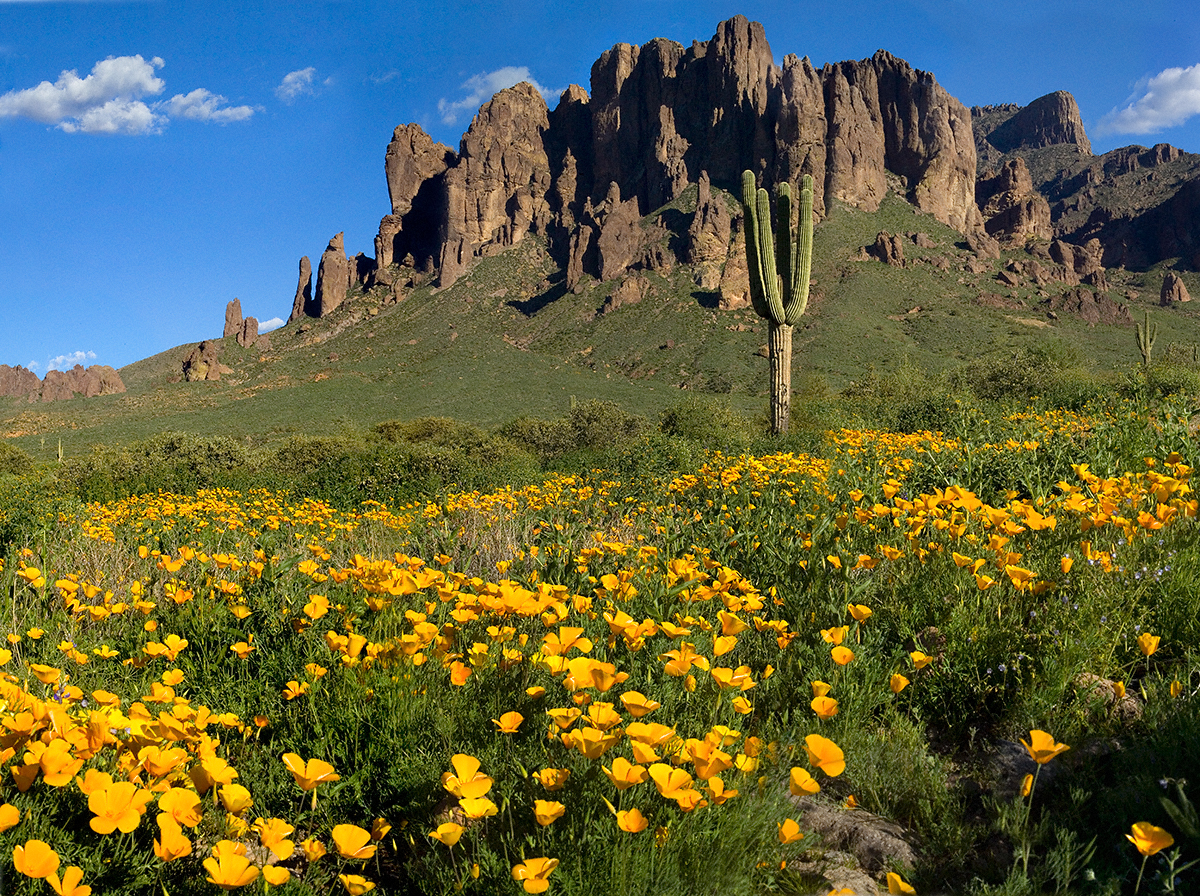
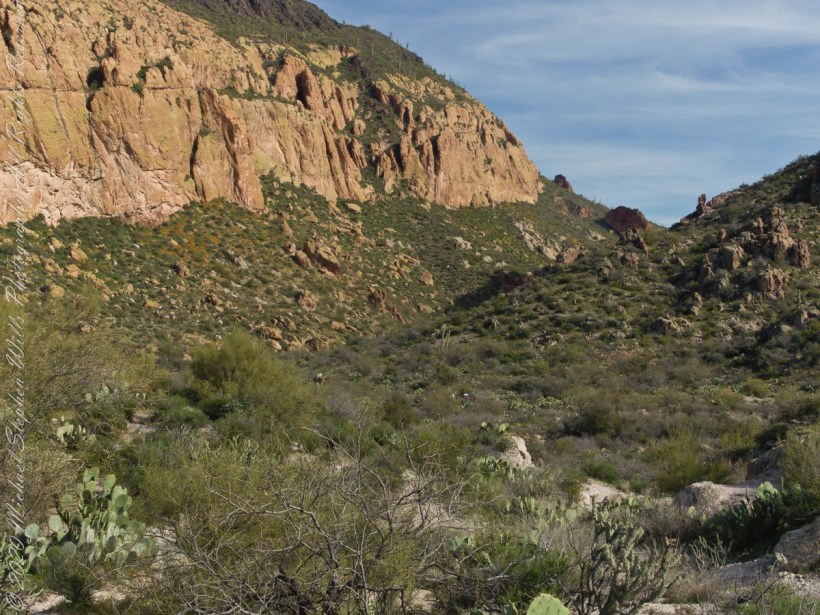
Look carefully for a scattering of color, like gold dust, at the foot of the volcanic cliffs. That is spring blooms of Mexican Poppy (Eschscholtzia californica). This gold wonder is plentiful from the month of late February through April, varying with the rains.
Copyright 2022 Michael Stephen Wills All Rights Reserved
Superstition Wilderness
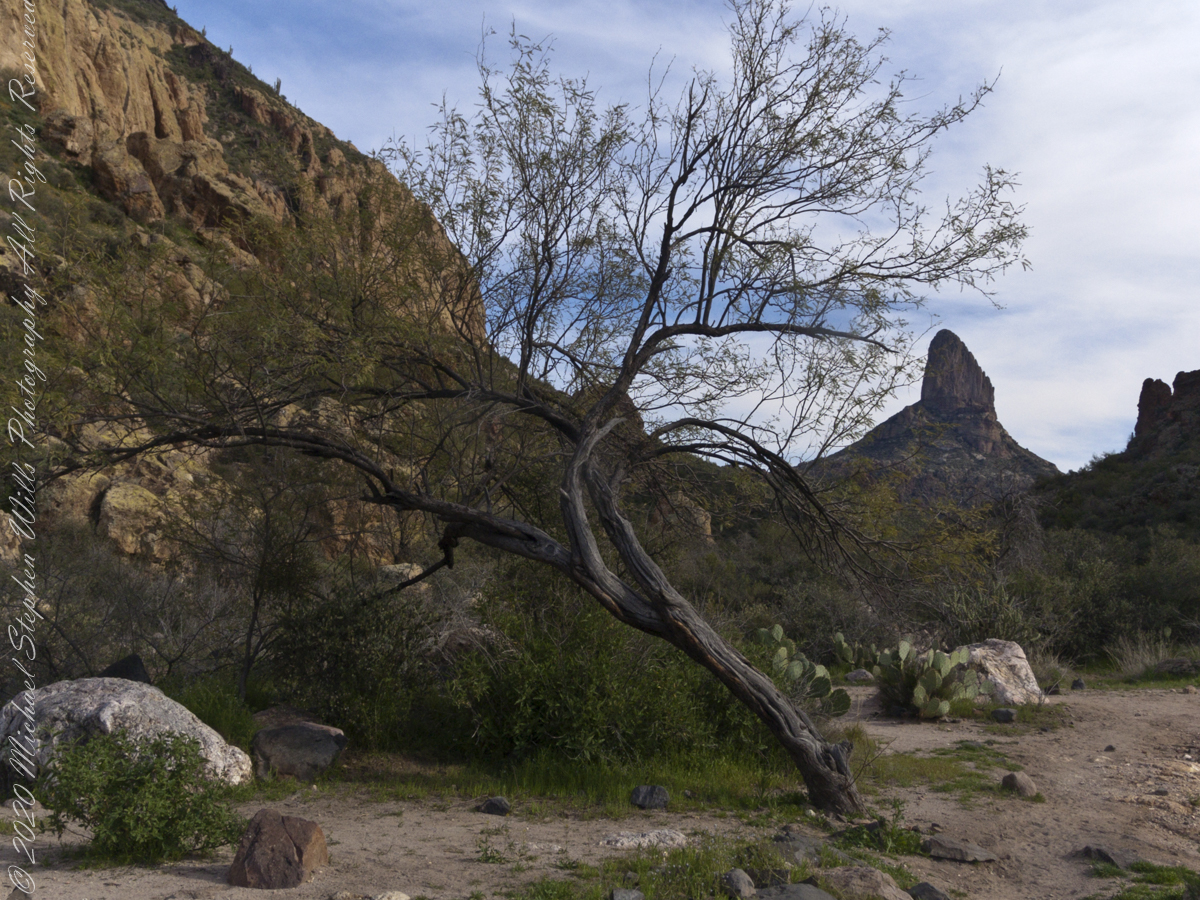
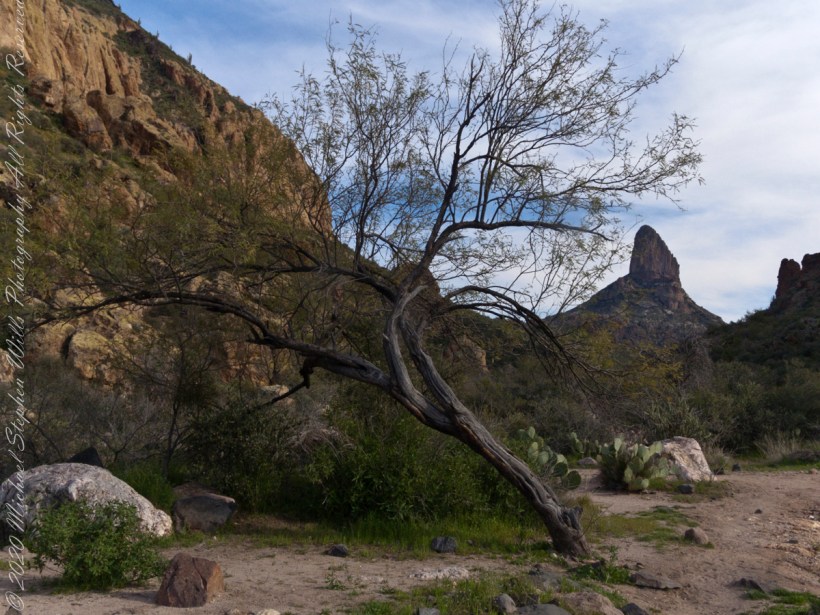
Mesquite, of the genus Prosopis, is a widespread, successful desert shrub that sometimes grows into tree form, as you see here. A mesquite tap root can extend 190 feet down to draw on the water table.
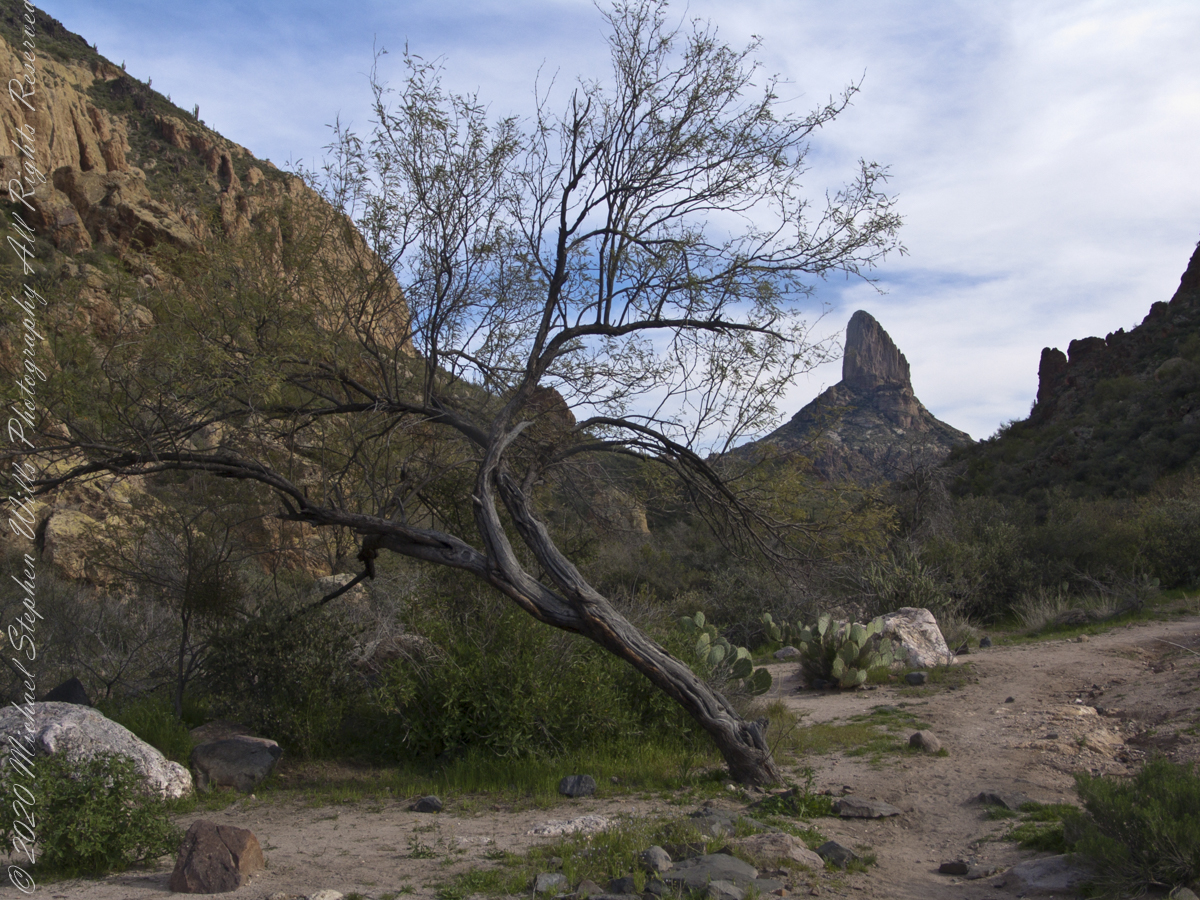
East Boulder Creek was flowing, in this season, a few feet away. Still, this mesquite is stressed, with a loss of over half of its bark. The ever-present Prickly Pear is in the middle distance. I prefer the image with the distant Weavers Needle, a neck of eroded volcanic rock, is brightened by the setting sun. To the left, the light-colored rock of Black Top Mesa is also of volcanic origin.
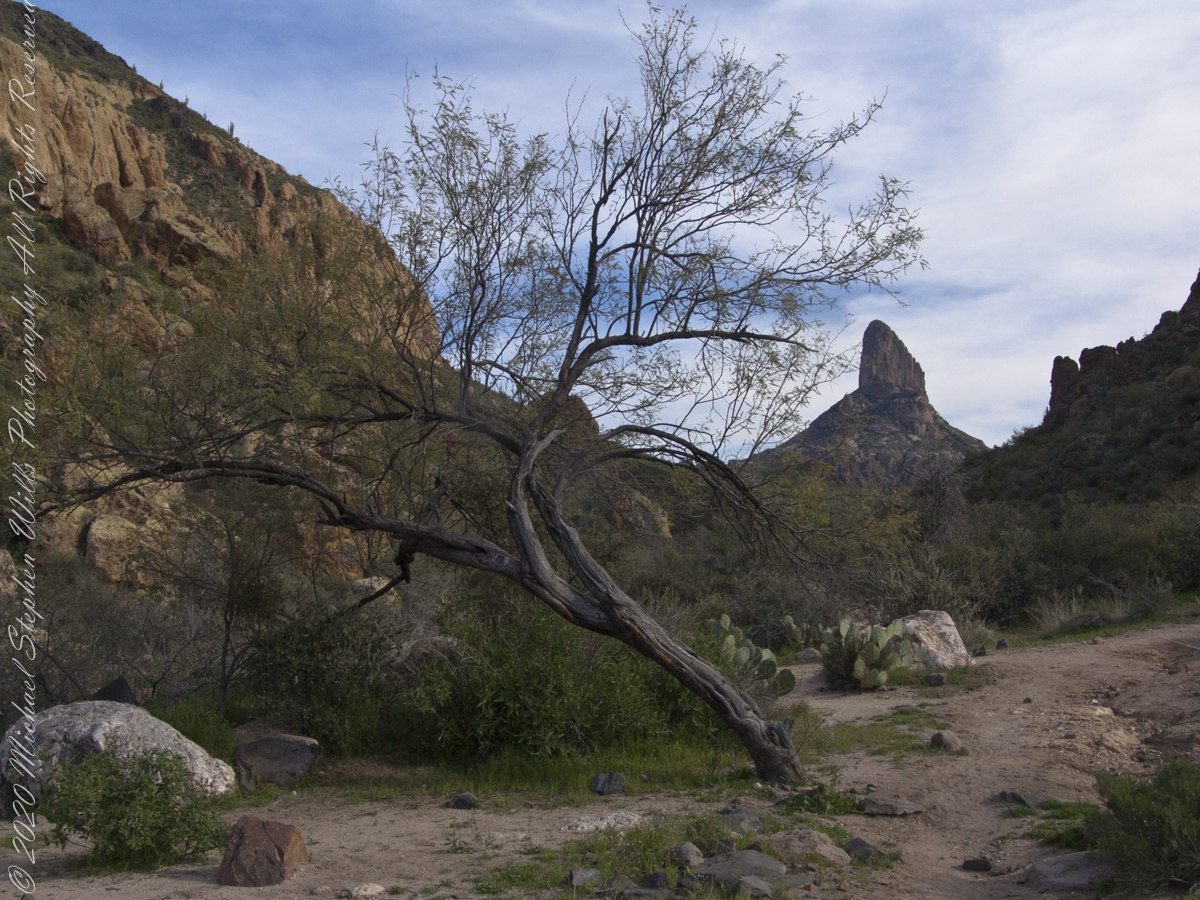
I am here on the Dutchman Trail between Black Top Mesa and Palamino Mountain, Superstition Wilderness, Tonto National Forest, Arizona.
Here is a gallery of post images, making comparison easier. All were taken with a handheld Sony F828. Walking without a pack make it possible for me to wear the camera.
Read more about the uses of mesquite.
Copyright 2022 Michael Stephen Wills All Rights Reserved
Superstition Wilderness
The black basalt of the mesa, for which it is named, is just visible above the lighter colored alternating layers of ash and tuff all remnants of volcanic eruptions 15 to 29 million years ago. We are on the Dutchman trail with the slopes of Palamino Mountain on the right. Ahead, other members of the expedition are just visible.
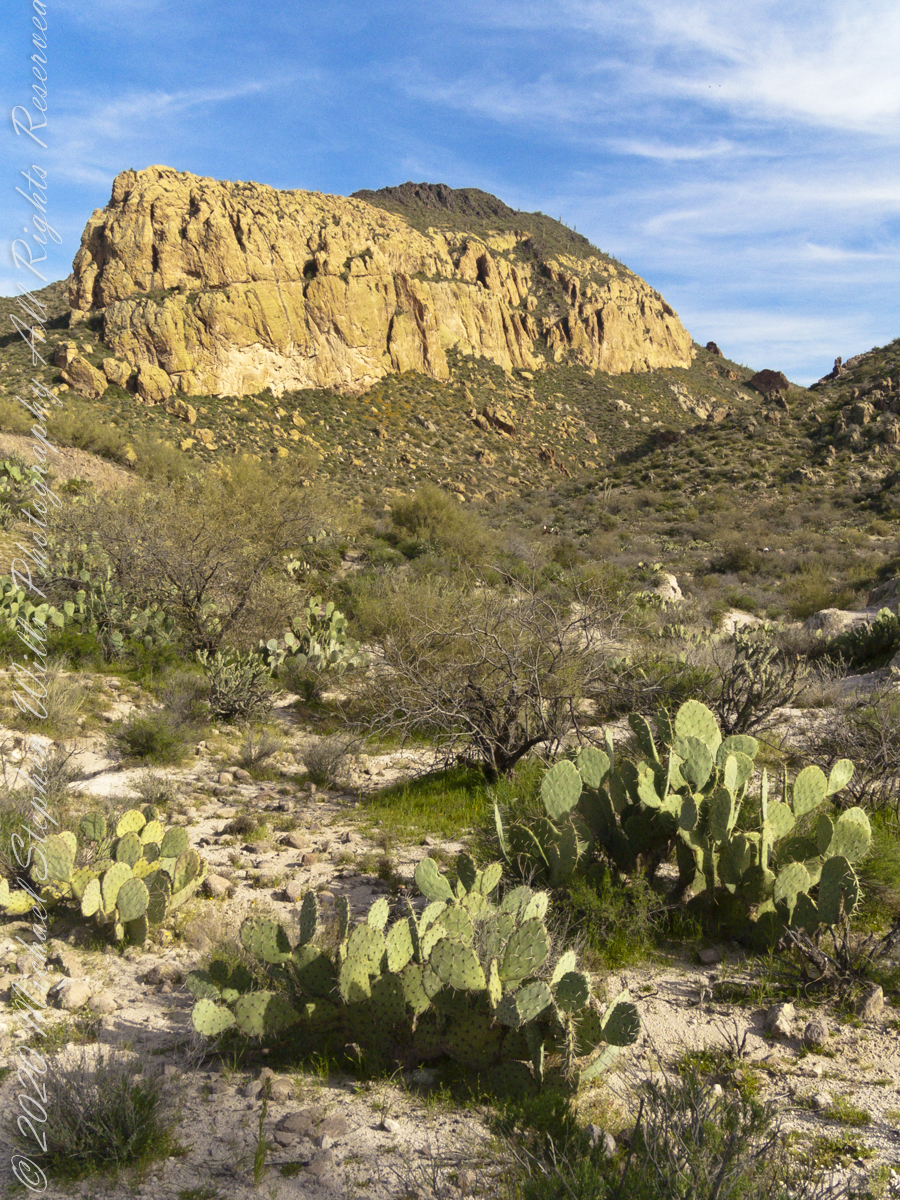
In this view the late afternoon shadow of Palamino Mountain reveals the defile to which we are headed. Poles of young Saguaro Cactus (Carnegiea gigantean), poke from the black basalt capping Black Top Mesa. Foreground left is Stag Horn Cholla (Cylindropuntia), on the right is Prickly Pear (Optuna).
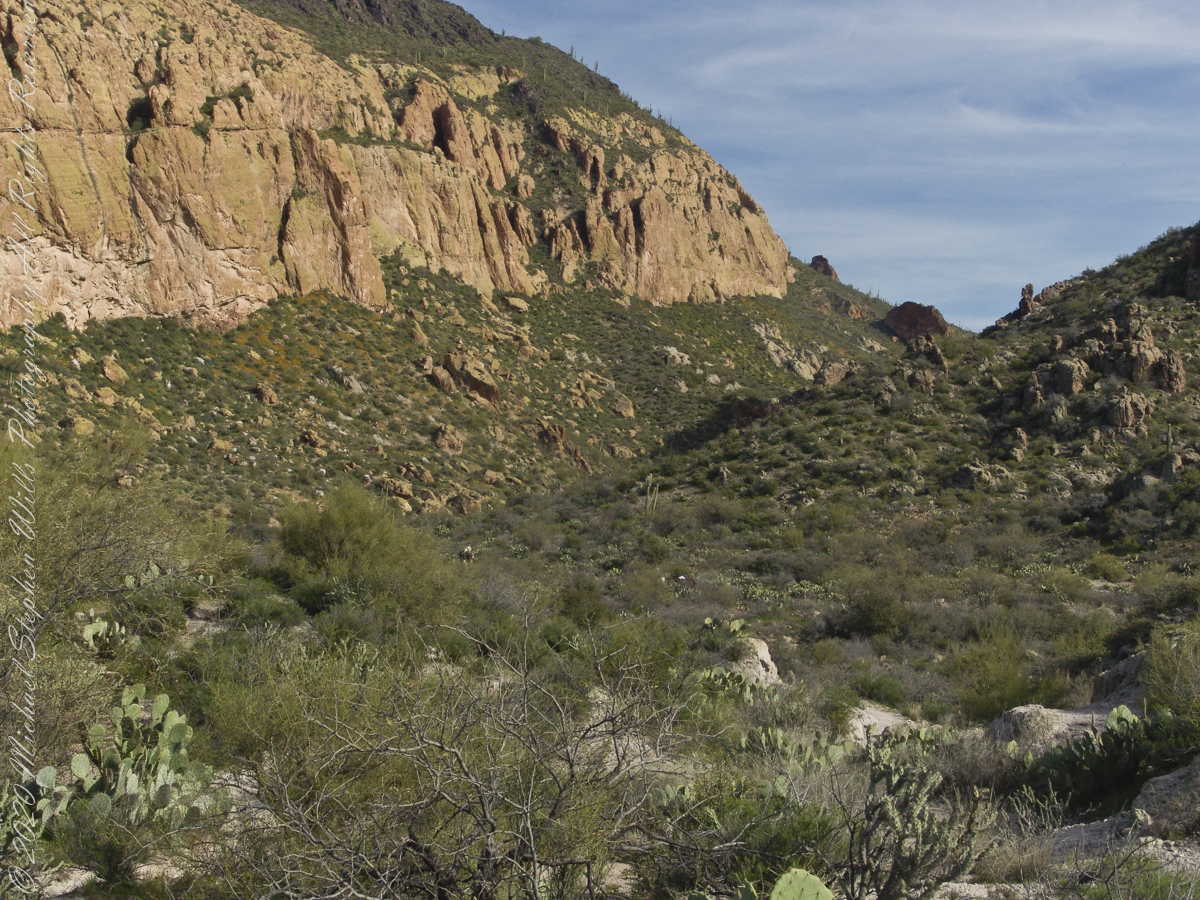
Look carefully for a scattering of color, like gold dust, at the foot of the volcanic cliffs. That is spring blooms of Mexican Poppy (Eschscholtzia californica).
Read more about Black Top Mesa
Copyright 2022 Michael Stephen Wills All Rights Reserved
 Michael Stephen Wills Photography