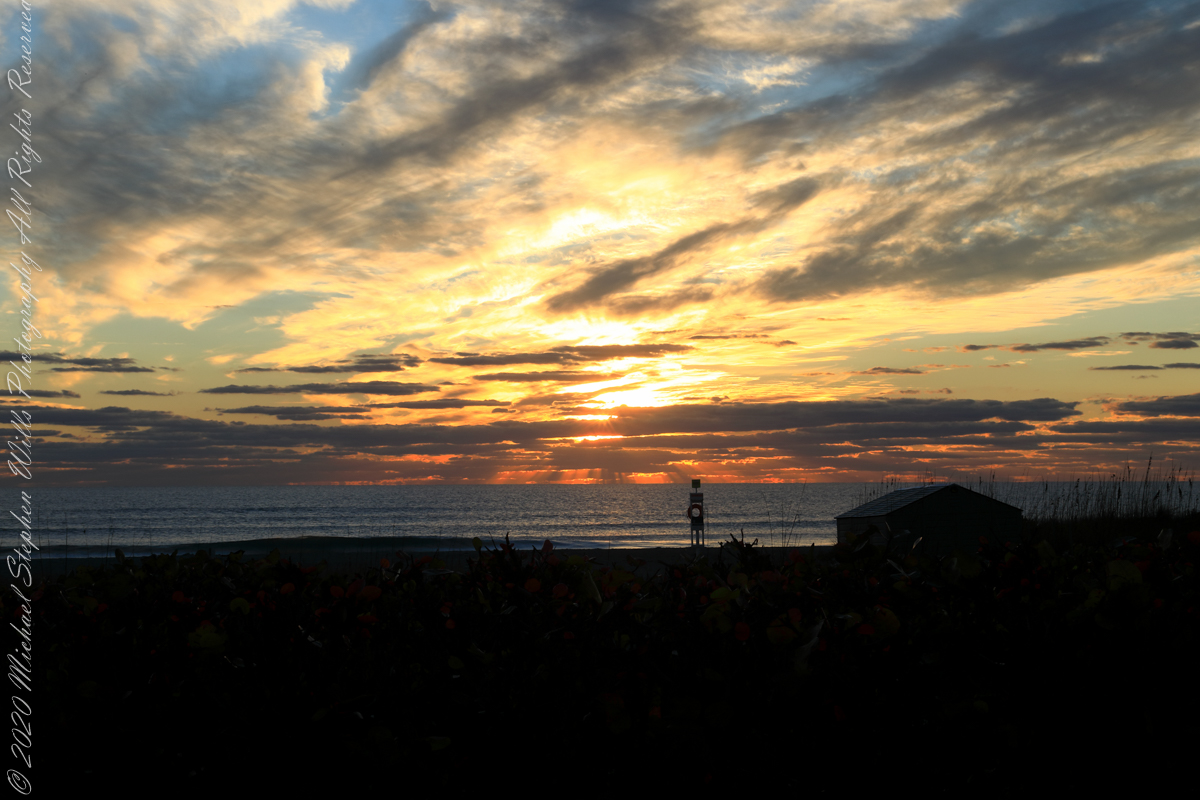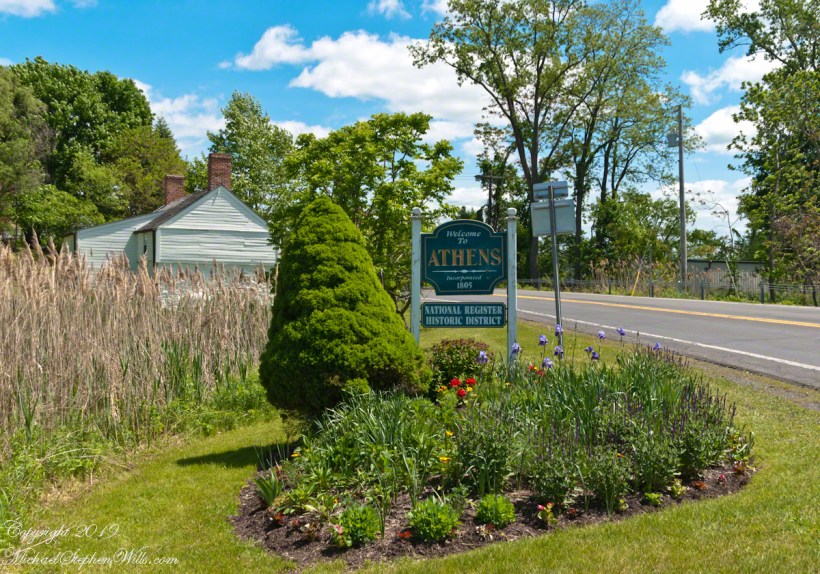
Around and About Athens, New York, part 1

Enjoyments of Athens, New York

Memorial Day Weekend 2019 Pam and I visited Athens, first settled in the 17th Century by an ancestor through her maternal grandmother. Click me for more about the Van Loons. Jan Van Loon is 10 generations removed from Pam and her siblings and is one of 1024 (512 pairs) of ancestors. Whatever became of the other 1022 people (and all those in between) Pam was there with me that day to enjoy the experience of walking around town and talking about Jan Van Loon’s connection to herself.

Click any photograph for a larger version
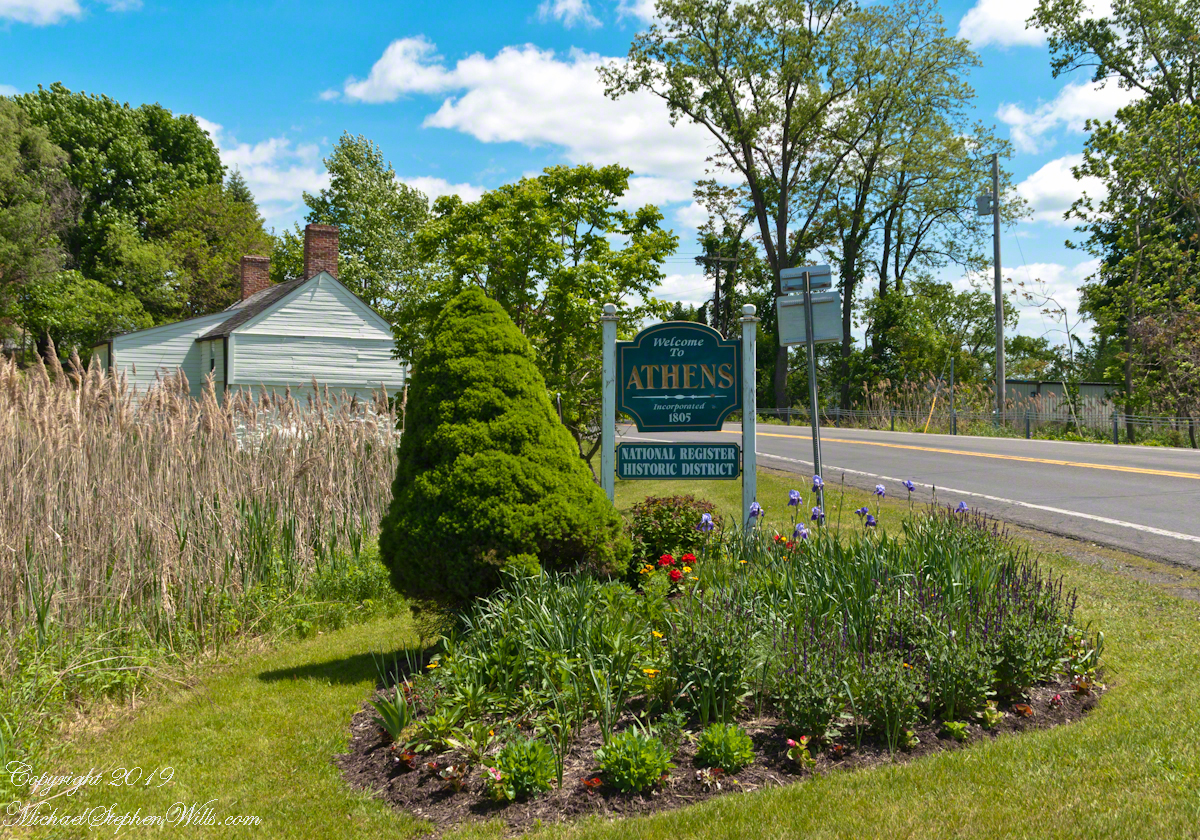
Founded as Loonenberg, named after the first settler Jan Van Loon. today,Athens is a lovely destination, a historic village on the Hudson River.

We stopped for a very enjoyable latte at Bonfiglio and Bread on 2nd street. As we ambled south on 2nd street Pam spotted someone to talk to and I proceeded with the goal of the Hudson River, visible at the bottom of the street.

I noticed this architectural specimen and turned to capture this side in a good light and was lucky to capture a young co-admirer of its style with whom I assume is her Mother. Athens, developed as a “National Register Historic Site,” is a charming place to stroll and admire.
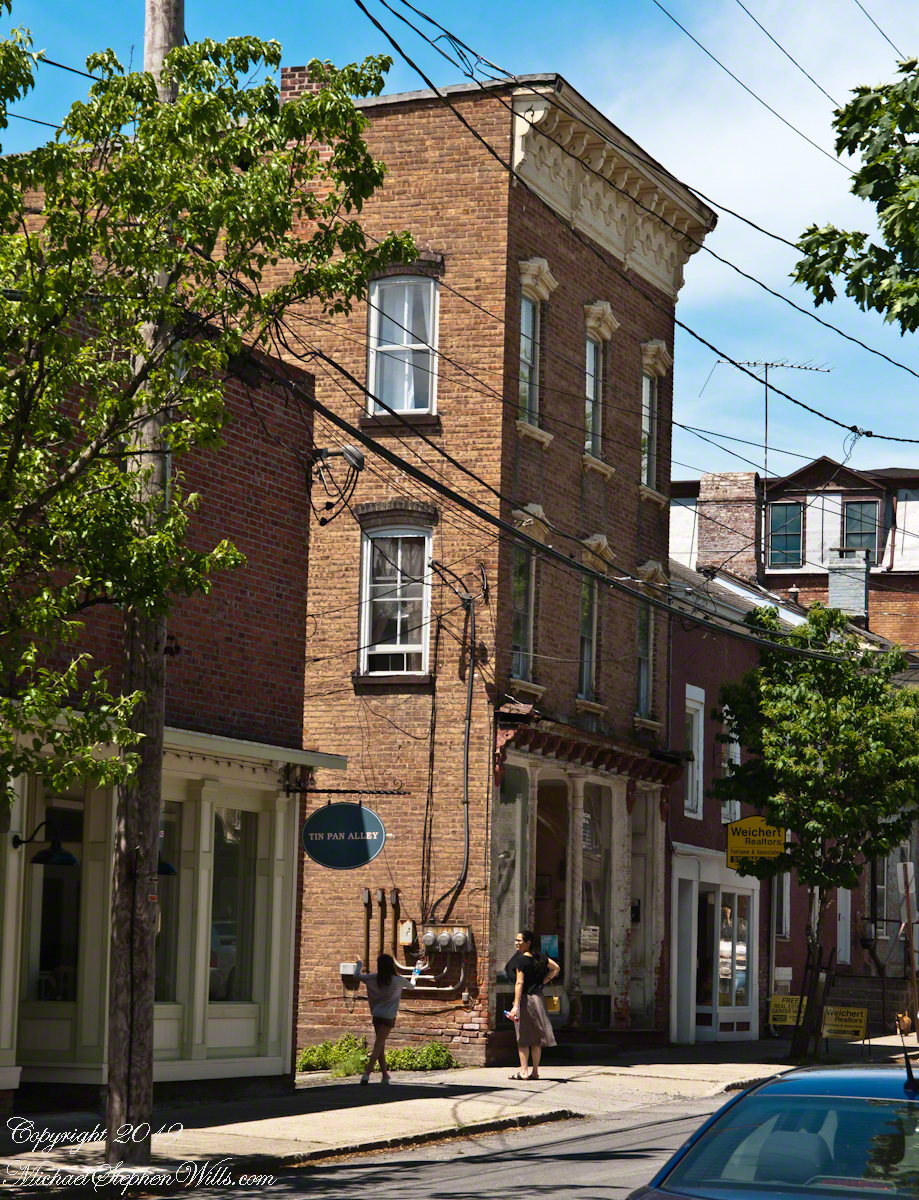
Southeast view on 2nd Street between Water and Washington streets. Athens, New York

Hudson Riverfront

Yesterday I did a Red Cross blood donation at an elementary school on Hudson Street here in Ithaca. Henry Hudson, the first European to sail up the river that now bears his name, is memorialized this way across New York State so much so it is unusual to find the “Riverfront Park” named as such.

The city of Hudson, in Columbia County directly across the river named its park “Henry Hudson Riverfront Park.”
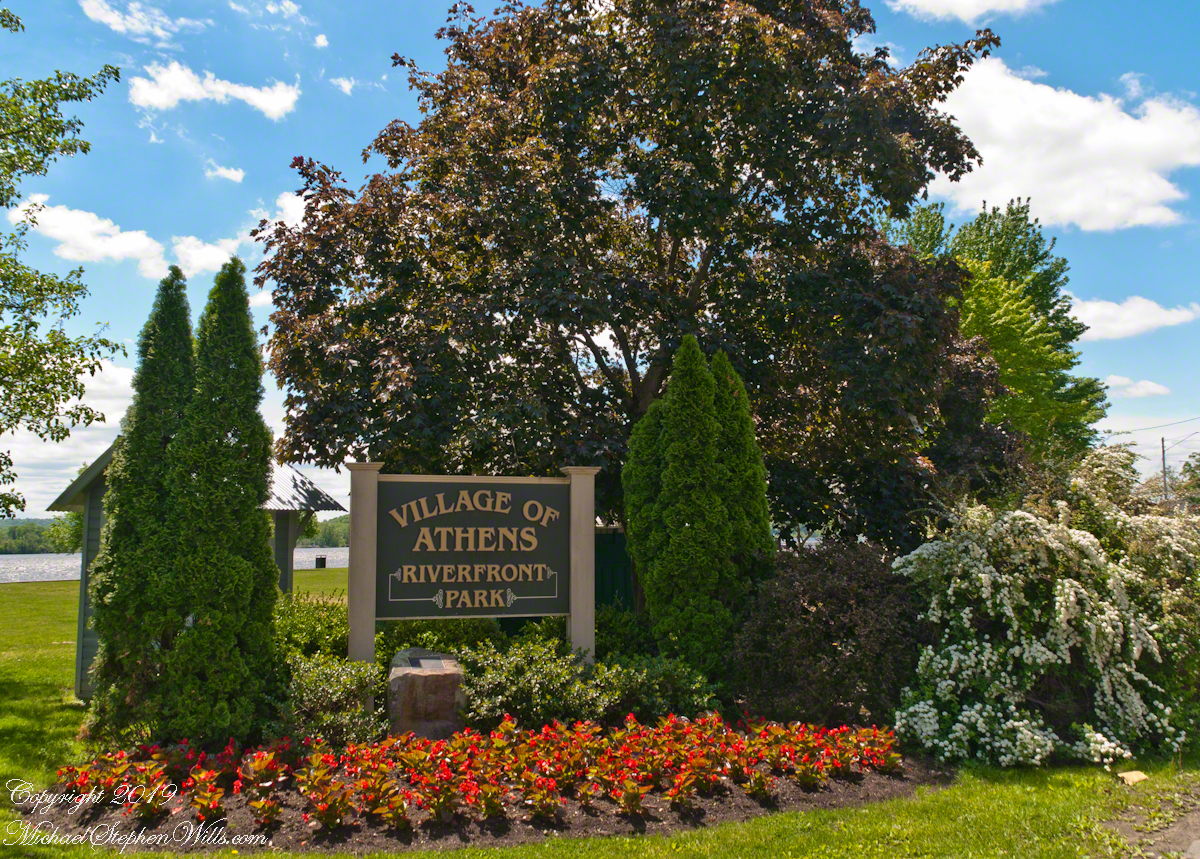
Looking east toward the entrance of the Riverfront Park, Athens, New York. Found at the east end of 2nd Street.

Peace and Quiet

The Athens Park is a gathering place for the village with a large swath of grass, a short boardwalk, benches and generous shade trees along with river…….

The photograph captions will speak for themselves for the rest of today’s post. Enjoy!!
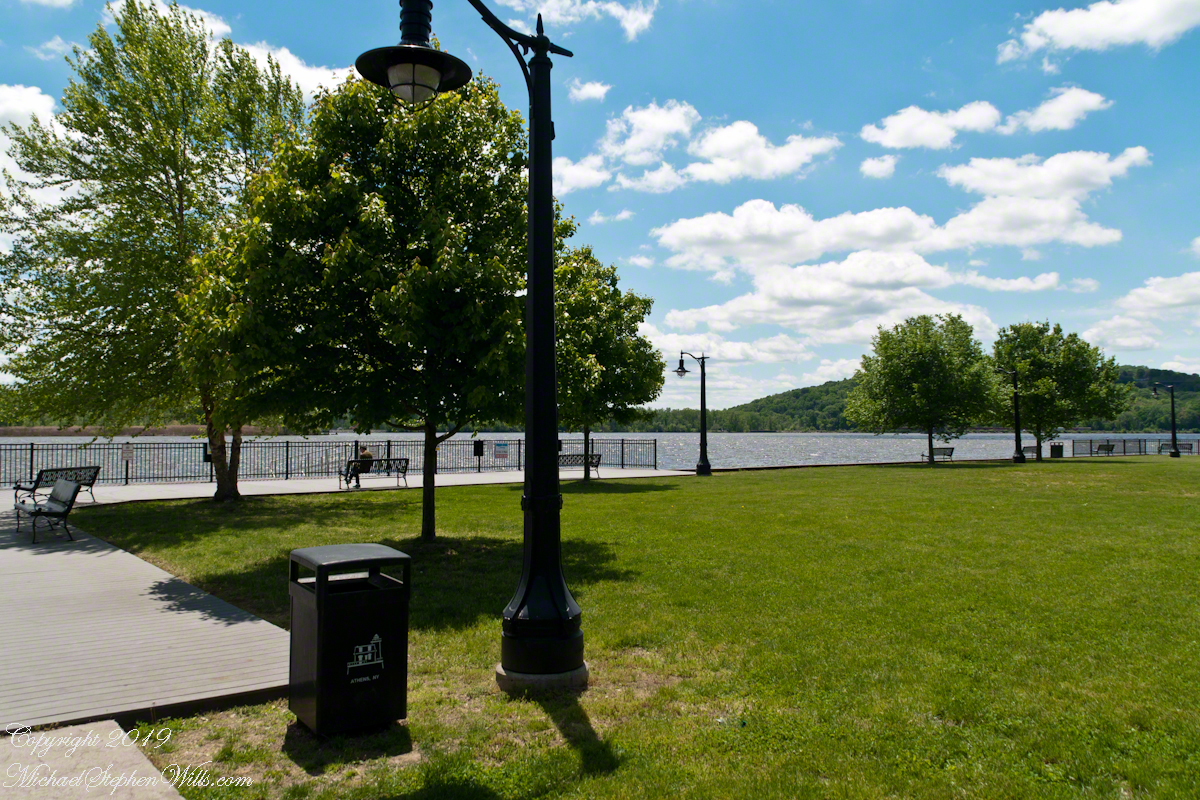
A sole reader enjoys the solitude and view across the Hudson. A large mid-stream island, Middle Ground Flats, provides a swath of green instead of a view of the city Hudson.

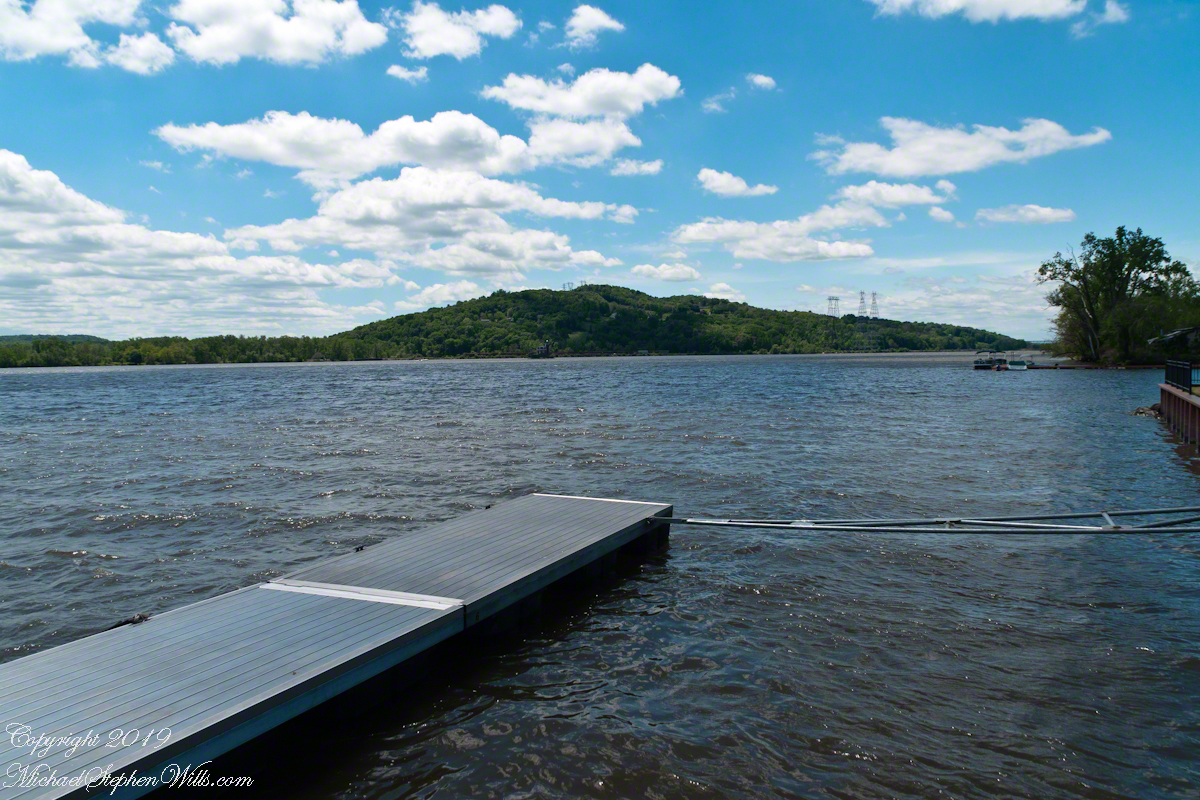
…and a dock.

The map shows a dotted line between this dock in the Athens Riverside Park and the Henry Hudson Riverside park of the city of Hudson. Barely visible in front of the wooded hills is the Hudson-Athens lighthouse.
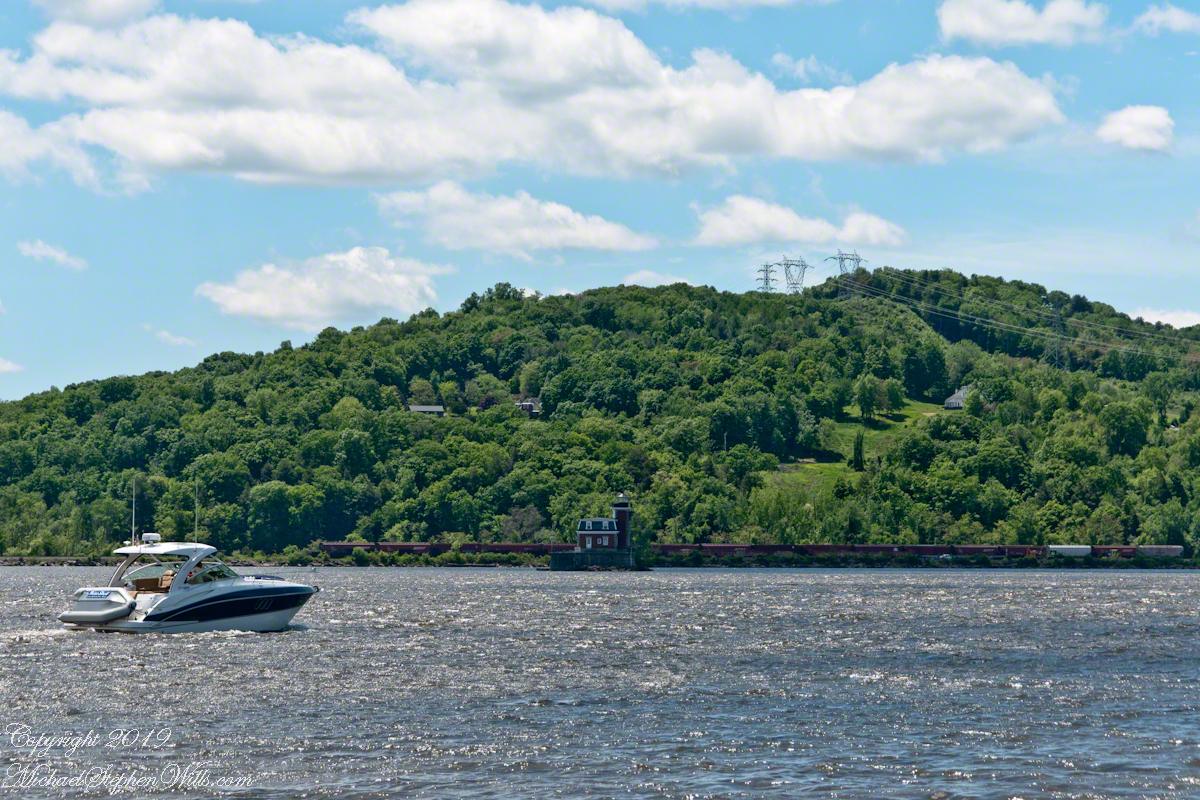
A pleasure craft motoring south on the Hudson River passes in front of the Hudson-Athens Lighthouse. On the eastern shore is a line of freight cars. Amtrack uses this line for service between New York City, Albany and beyond. We have enjoyed this Hudson River view from the train and highly recommend that trip.
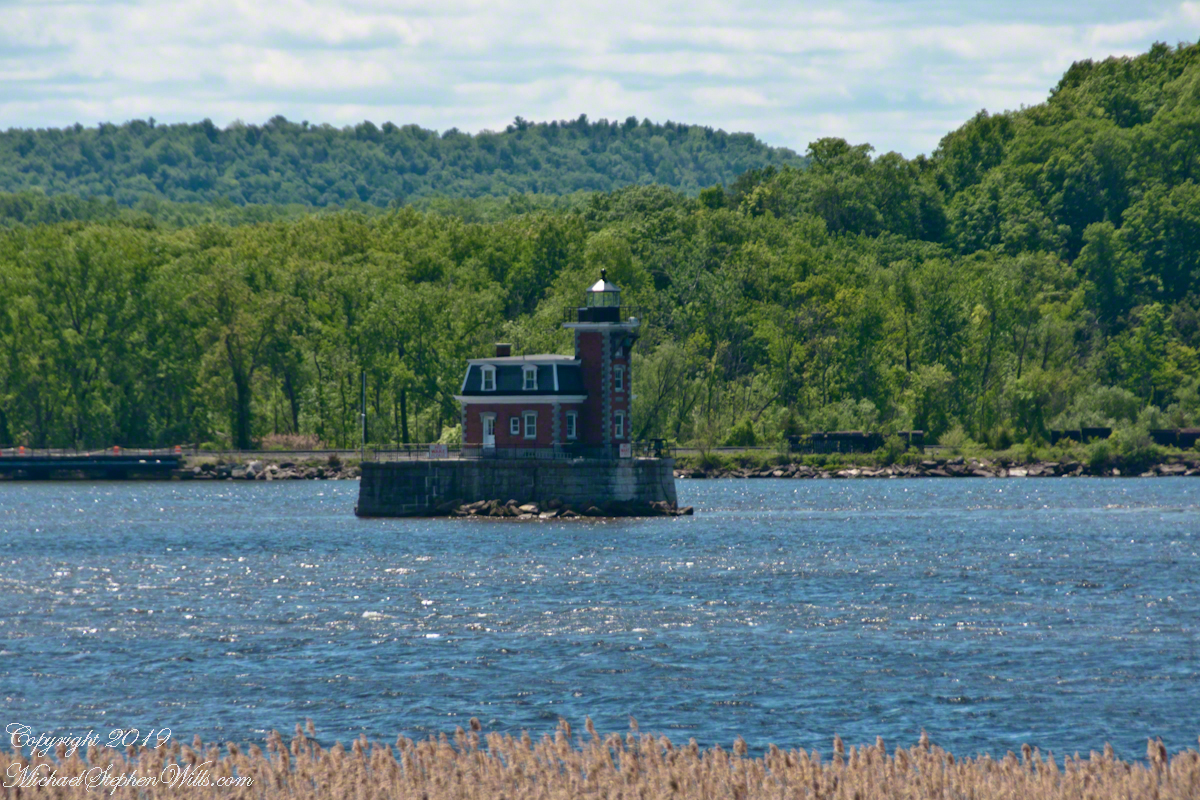
Built 1874, the Hudson-Athens lighthouse guides traffics around the island named “Middle Ground Flats.”

Click me for more photography on Getty IStock.

Copyright 2022 All Rights Reserved Michael Stephen Wills

Orsorno Volcano from the Chacao Channel

Booking our February/March 2016 passage on the Oceania Regatta from Lima, Peru to Buenos Aires, Argentina we started early, Spring 2017. We made two excellent choices: a stateroom with balcony on the port side. Waking each morning we were treated to views of the shoreline. On the morning of February 15, 2016 as we sailed the Chacao Channel toward Puerto Montt I was up 4:15 am before the sun rose to photograph our approach to the city.
I knew a classic 8,701 foot high stratovolcano topped with glaciers, named Orsorno, was out there and, amazingly, appeared on the horizon, seventy five miles distant to the northeast outlined by the gathering dawn. The sky was just brightening from total darkness at this time.

Click me for the first South American Post in this series

Copyright 2022 Michael Stephen Wills All Rights Reserved

Dive!!

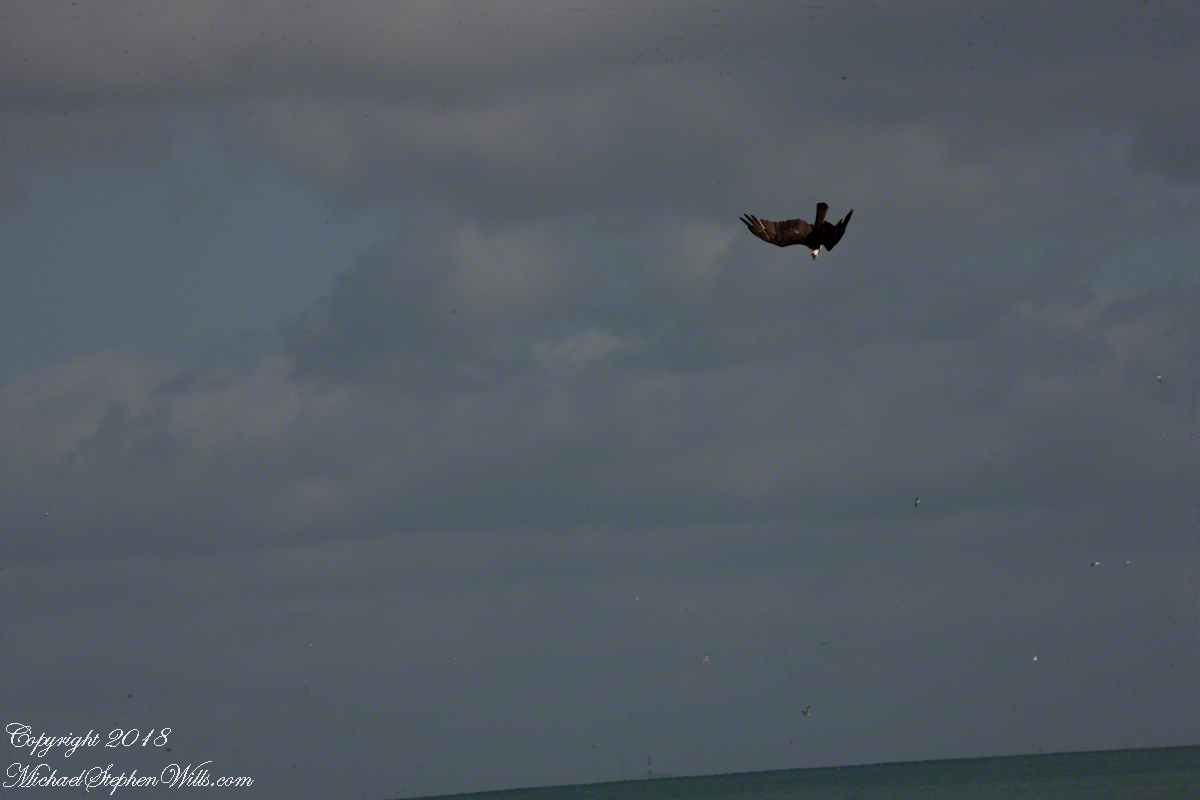
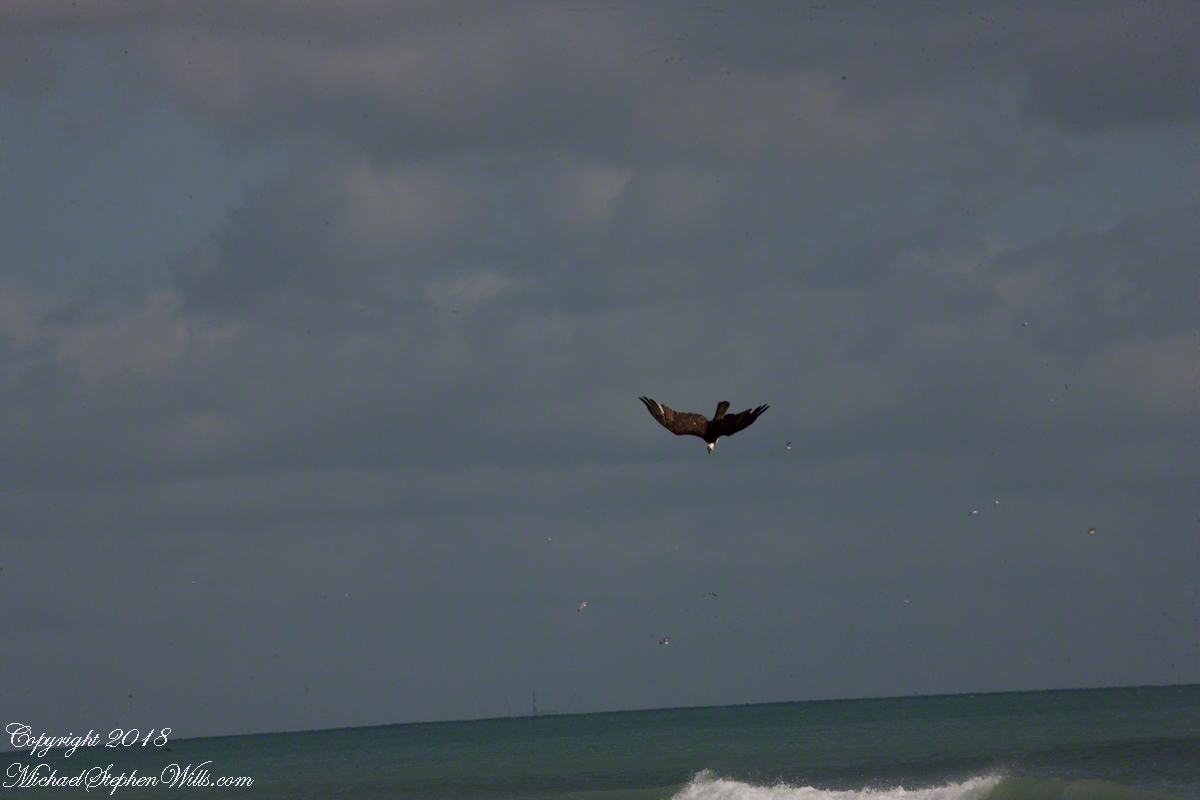
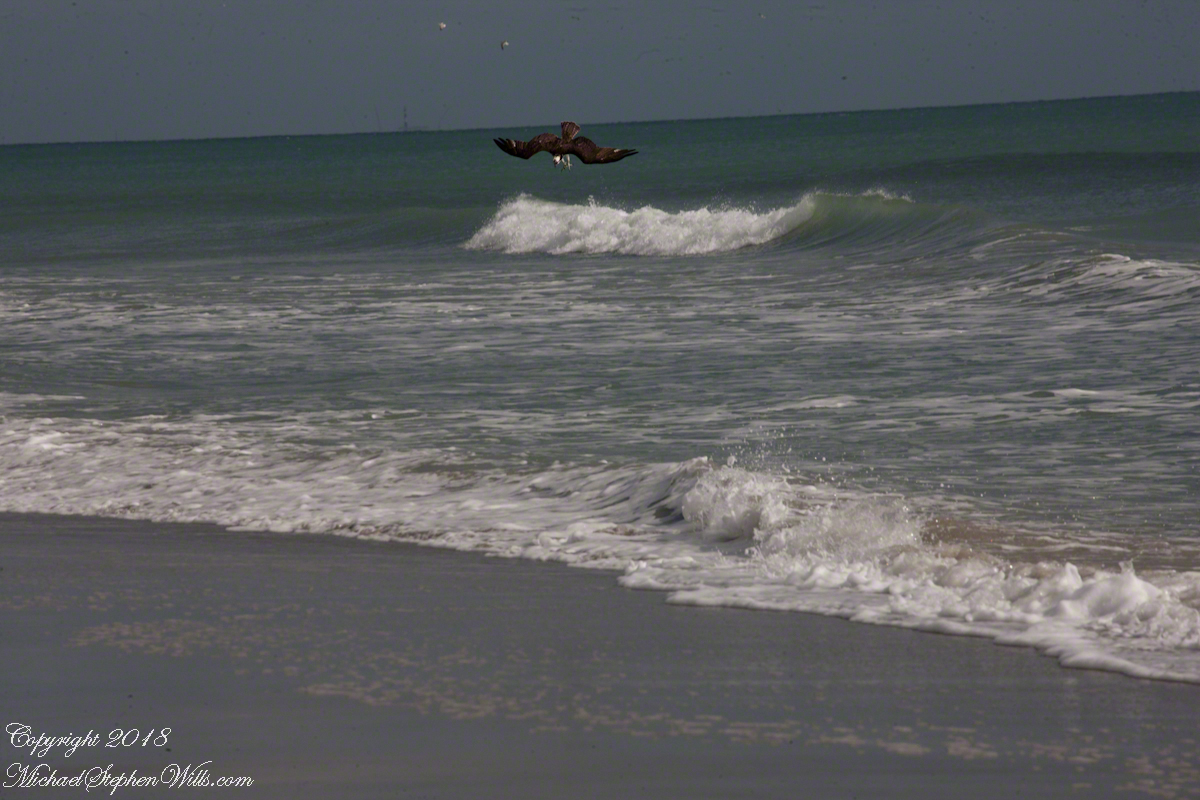
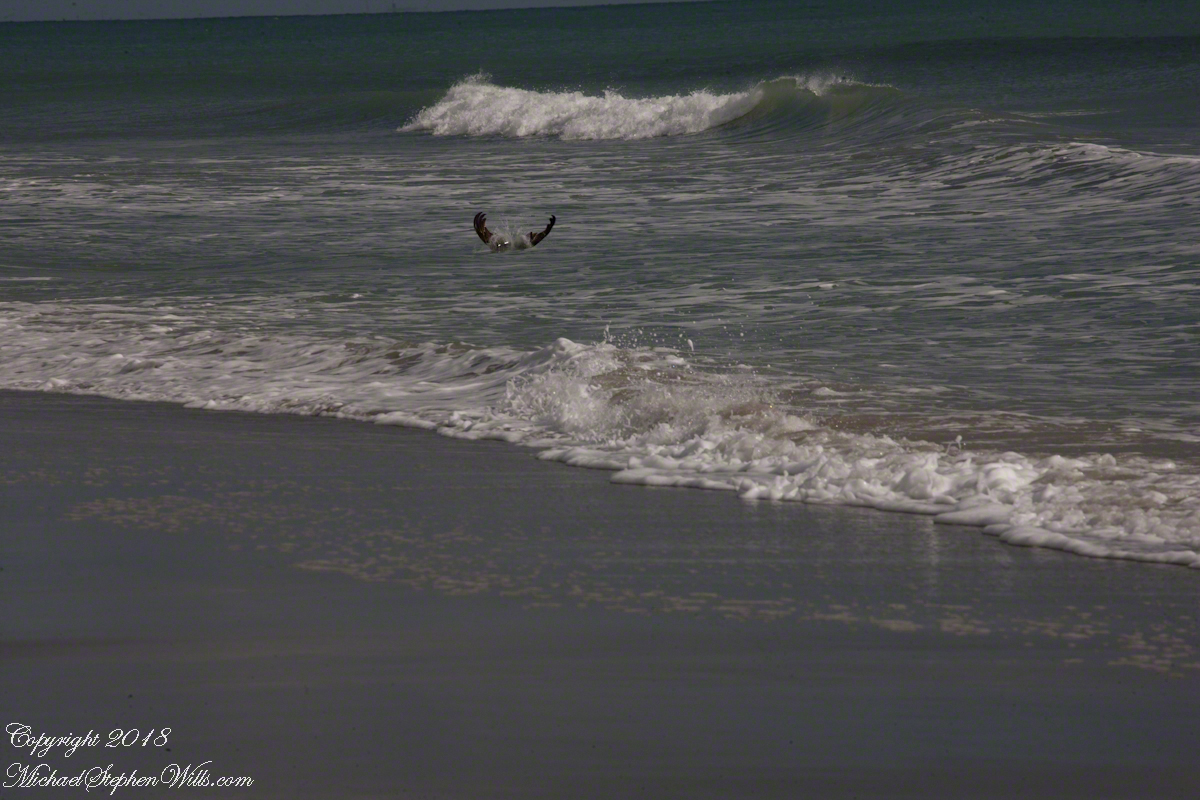
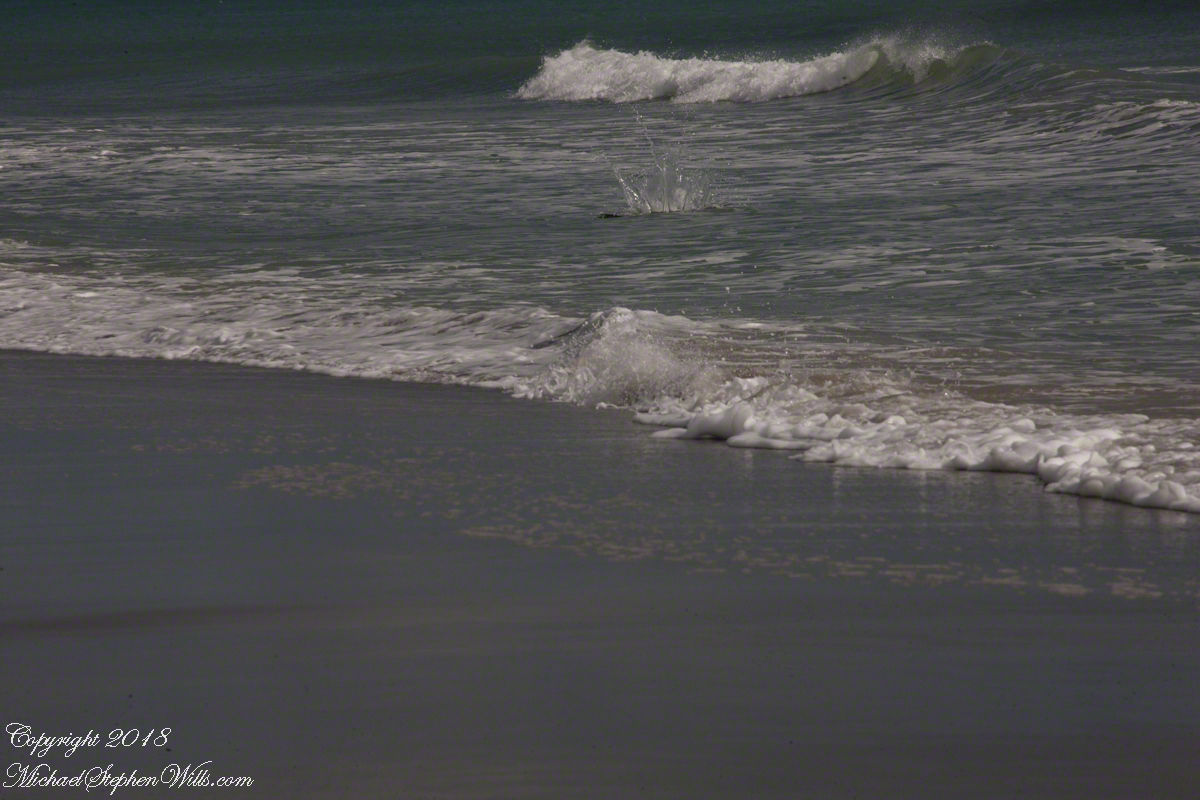
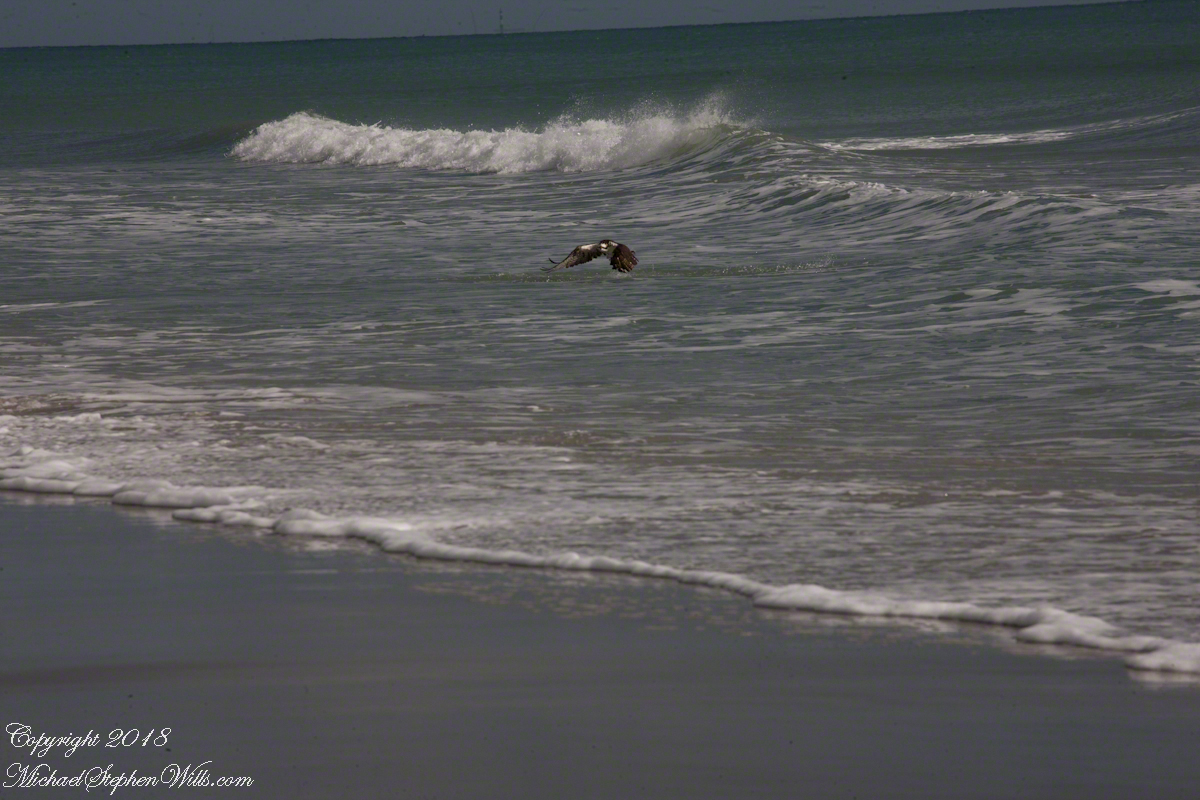
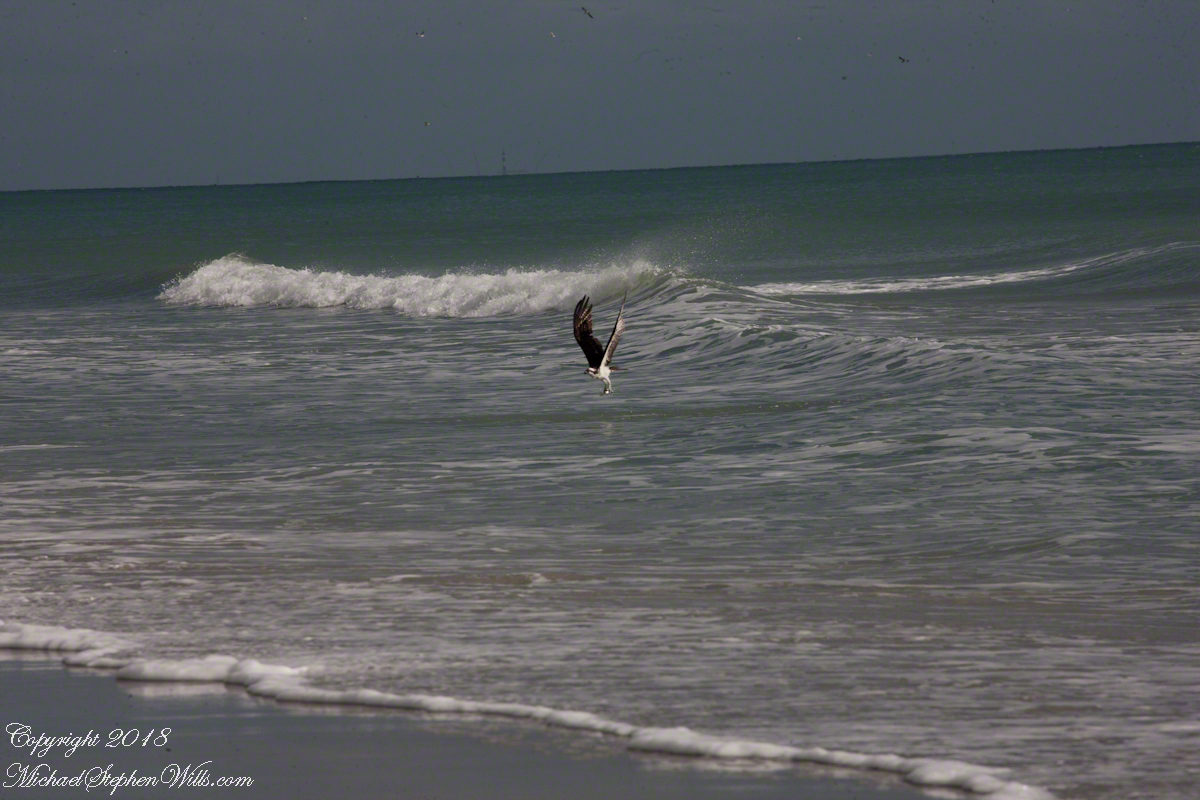
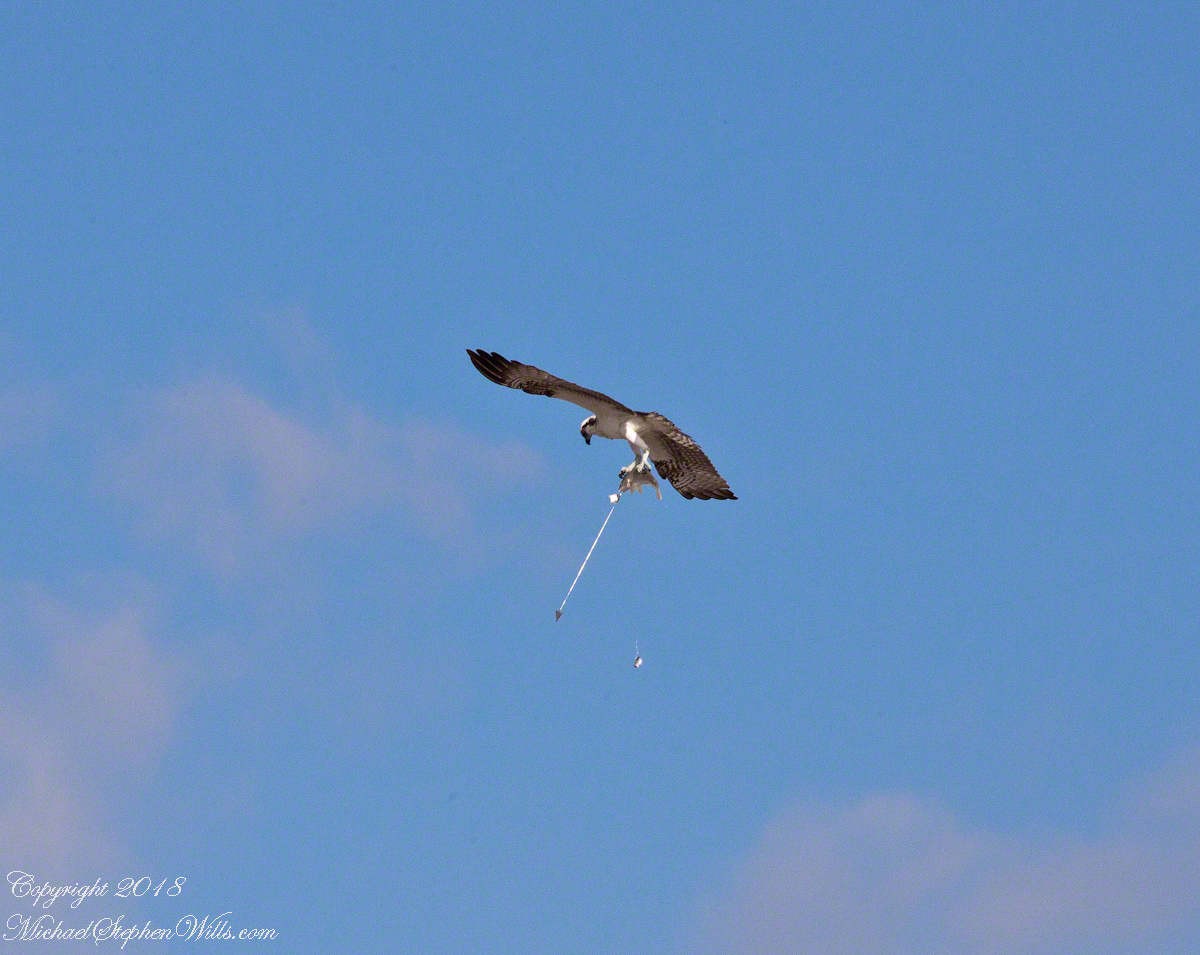
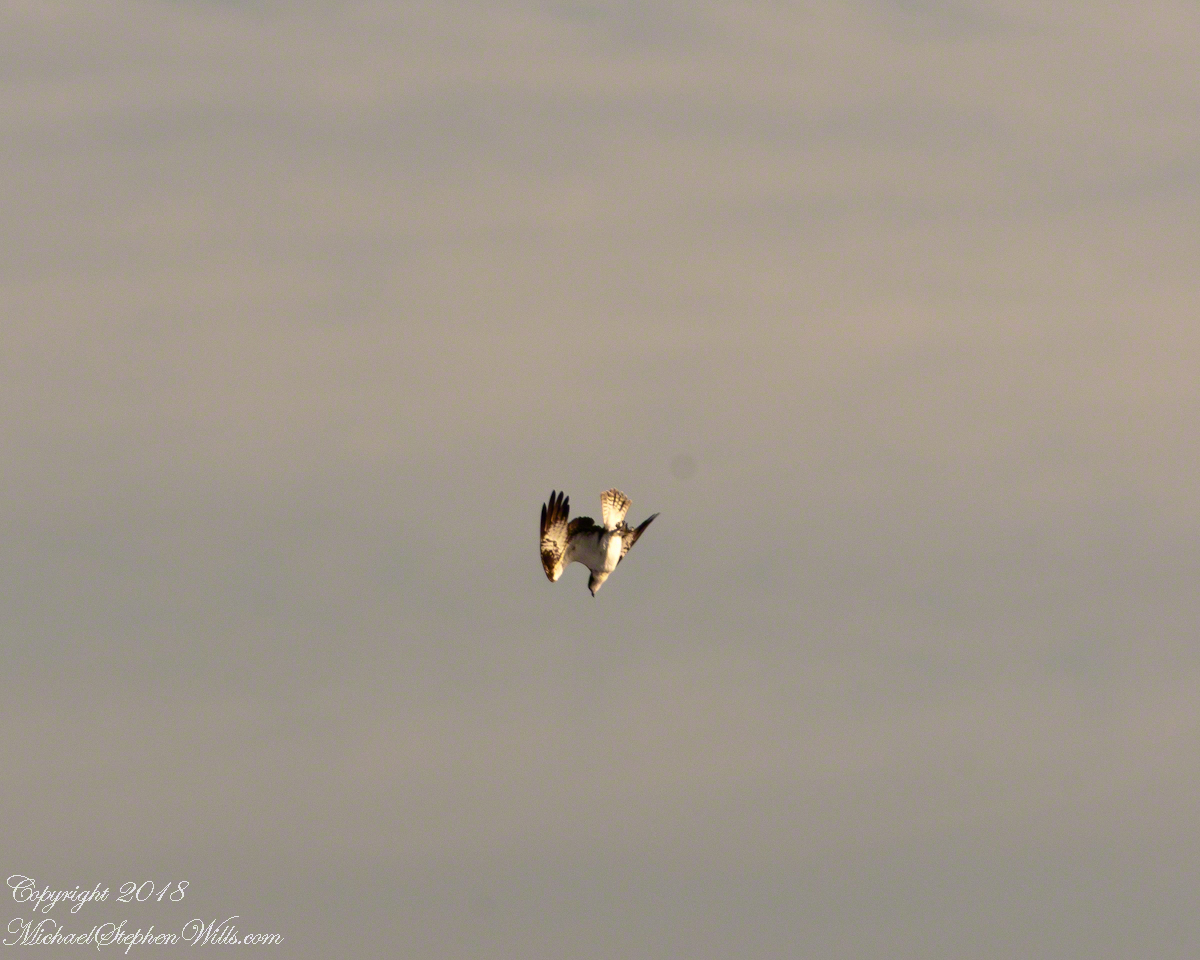
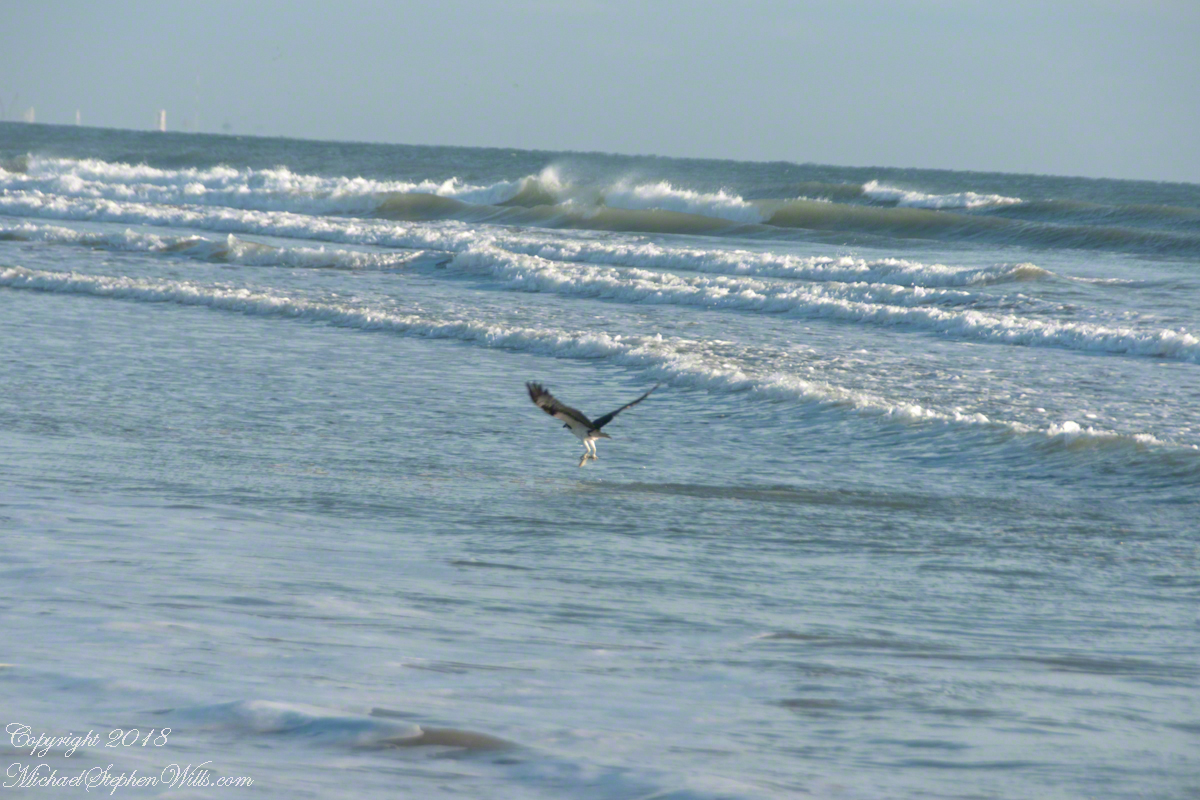
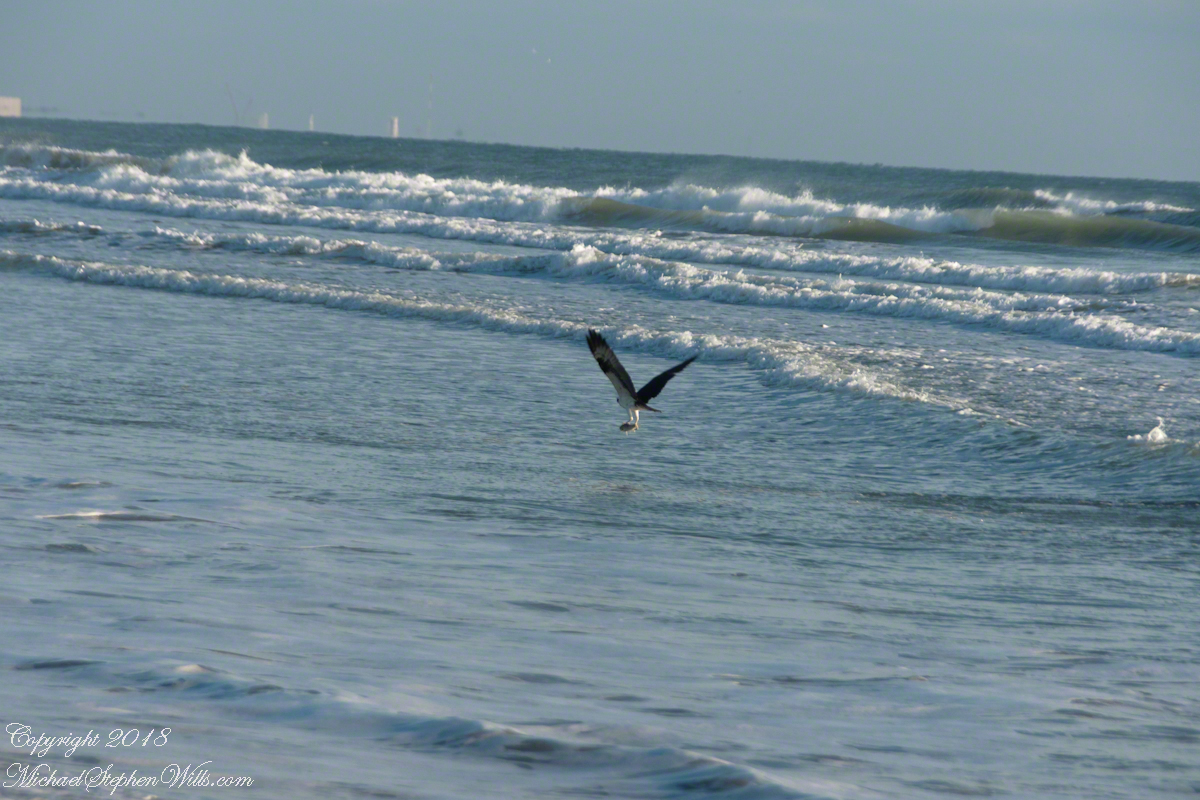
Less than 3 seconds elapse from the Osprey initiating dive to emergence from the surf and flight, fish in talons.

A sequence of high speed shots of what the Osprey does best. For this, the sixth and final post of this series (Click me for the first post, “Endless Searching“), we follow the bird in a dramatic plummet into the surf until it rises, catch in claws.

Click Me for “Florida” in my Fine Art Galleries.

“All Elements In Place”

Late morning of January 20, 2019 I headed out with the Canon EOS-1Ds Mark III mounted with the Canon EF 70-300mm f/4-5.6L USM lens for handheld shots. Many elements aligned for these shots: weather, equipment, placement among them. The angle of the sun at 11:21 am was not optimal, but the cloud cover made up for it.

Click any photograph for a larger view.
The Day’s Setting

Commitment

The dive impact happens in less than 2 seconds.

My observation is the reason the wings are extended is to maintain control of the dive…..
…..I have seen these dives terminate inches from the water with a u-shaped swoop.
Talons are extended in the final seconds.

The Strike

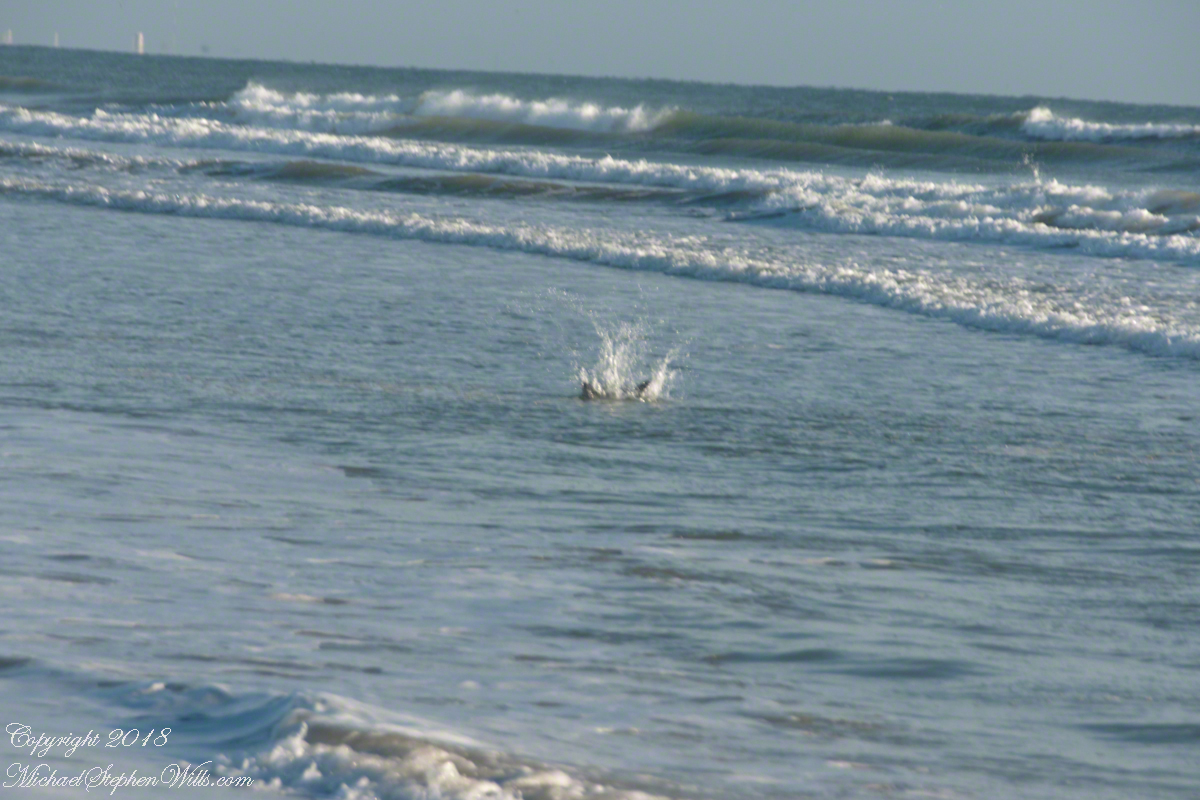
Less than one second from point of impact until emgergence and flight.

Instant of impace with wings still extended.
Gone

Arise

What strength, to lift off from the water.
Catch in talons
Copyright 2022, Michael Stephen Wills All Rights Reserved

Osprey Pictorial

Humans are hard coded to relish scenes of water and land.

Now and then a photograph comes along that stands by itself. For this, the fifth post of this series (Click me for the first post, “Endless Searching“), we explore images that speak for themselves.

Click Me for “Florida” in my Fine Art Galleries.

“Another Day in Paradise”

Humans are hard coded to relish scenes of water and land. This day I headed out with the Canon EOS-1Ds Mark III mounted with the Canon EF 70-300mm f/4-5.6L USM lens for handheld shots.

Click any photograph for a larger view.
The Day’s Setting

Hook, Line and Sinker

Poise

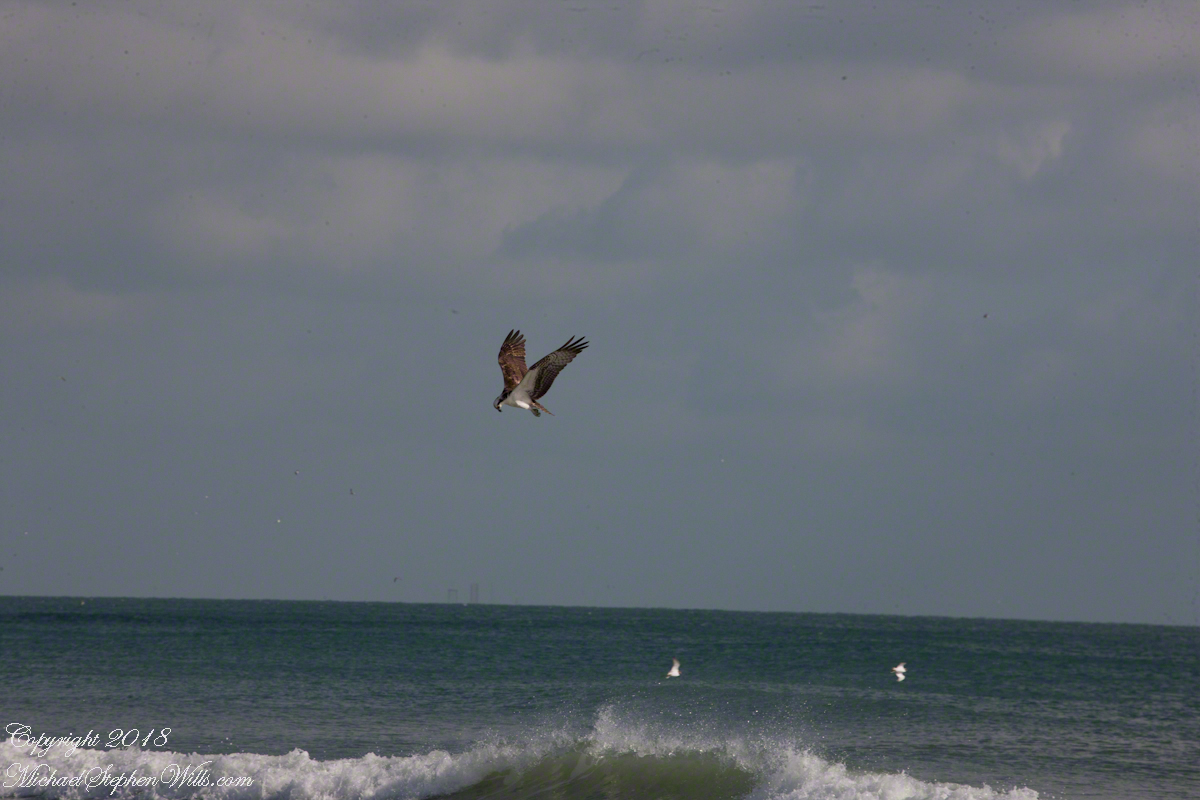
Barely visible on the horizon are Cape Canaveral Launch Towers
Copyright 2022, Michael Stephen Wills All Rights Reserved

Nesting

December through February is Florida Osprey nesting season.

“Florida ospreys (Pandion haliaetus) commonly nest on power poles, communication towers, water navigation devices, lighting fixtures, outdoor billboards and other man-made structures as well as in decaying or dead trees.” This quote from the Florida Fish and Wildlife Conservation Commission web site is a fitting introduction. For this, the fourth post of this series (Click me for the first post, “Endless Searching“), I explore images of Osprey nesting behavior.

Click Me for “Florida” in my Fine Art Galleries.

“Other Man-Made Structures”

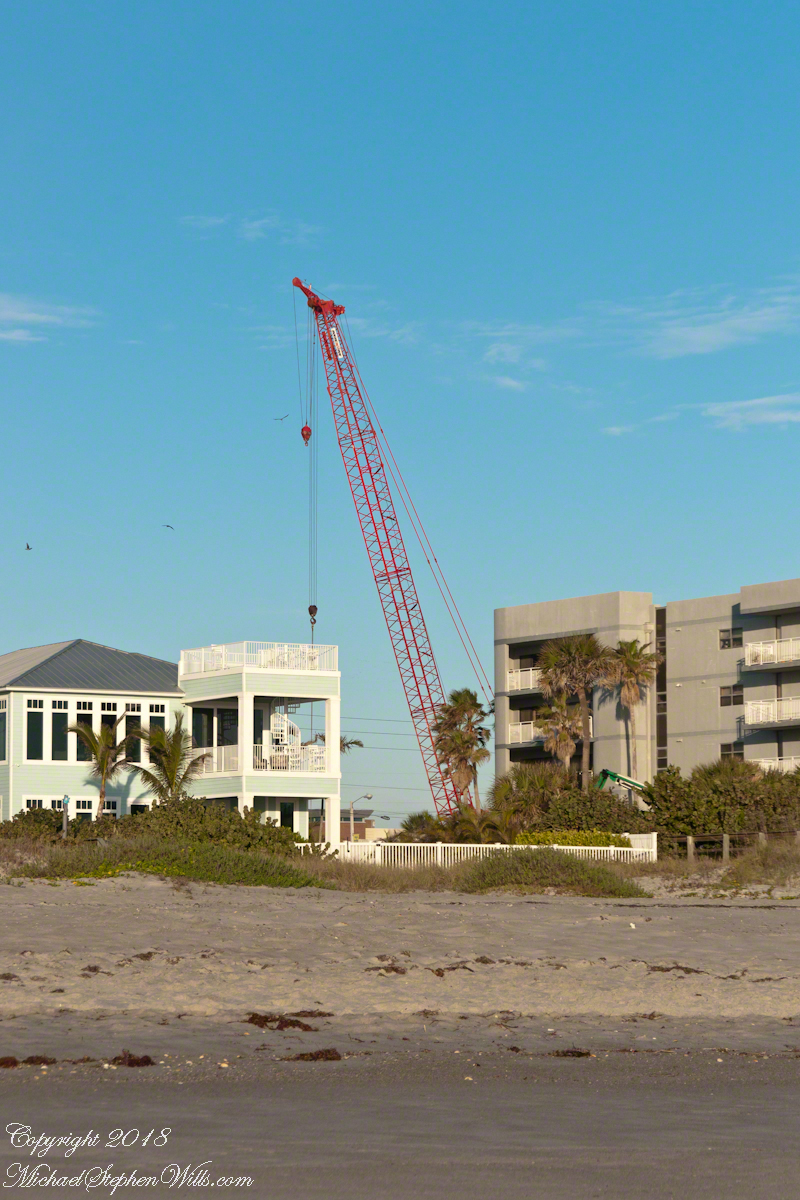
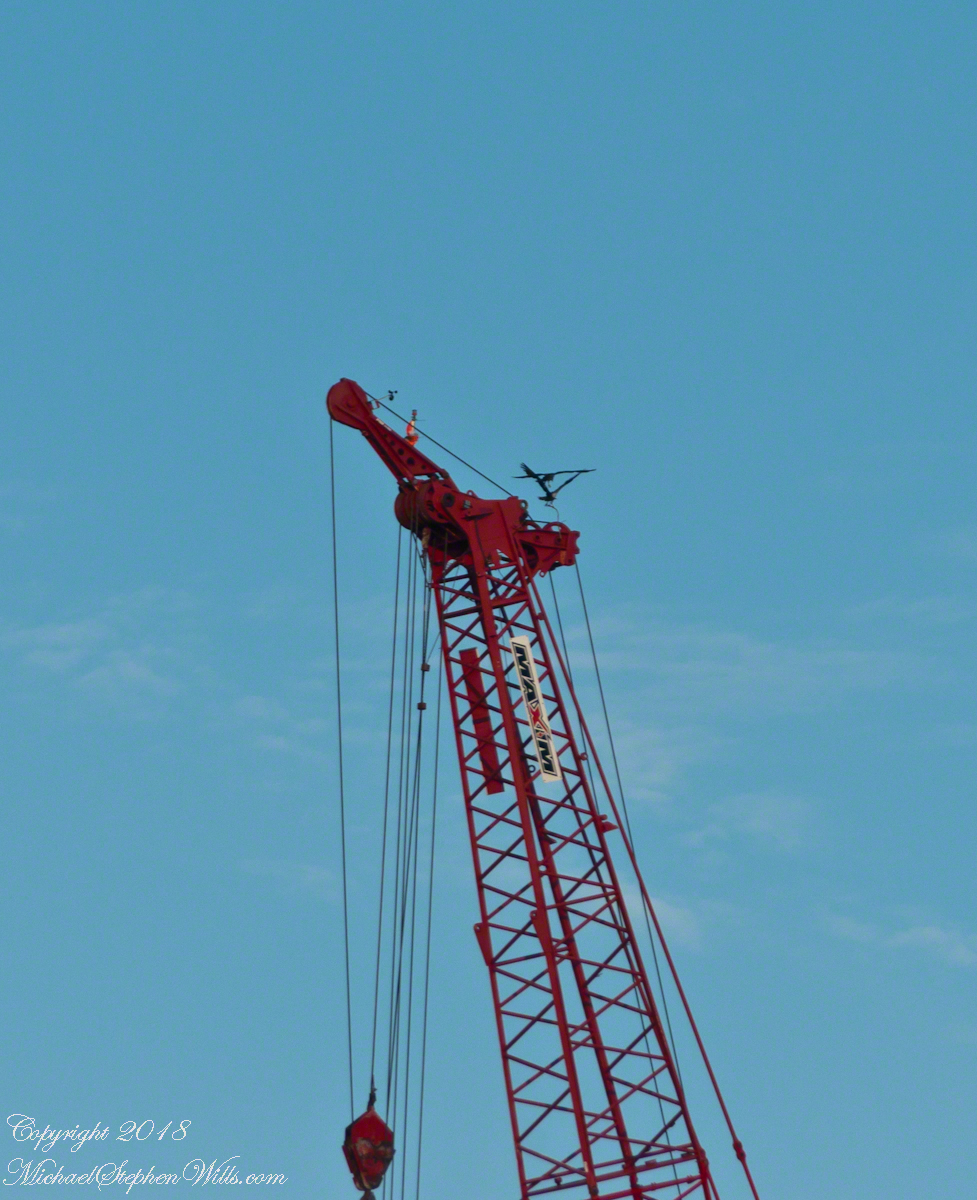
Early morning winter Cocoa Beach walks offer a new experience with each dawn be it a change in wind, light, or beach-combing offerings. This looming crane was a consistent specter the entire month, poised over a downtown parking garage under construction.

Click any photograph for a larger view.
On the Lookout

Distant Figures

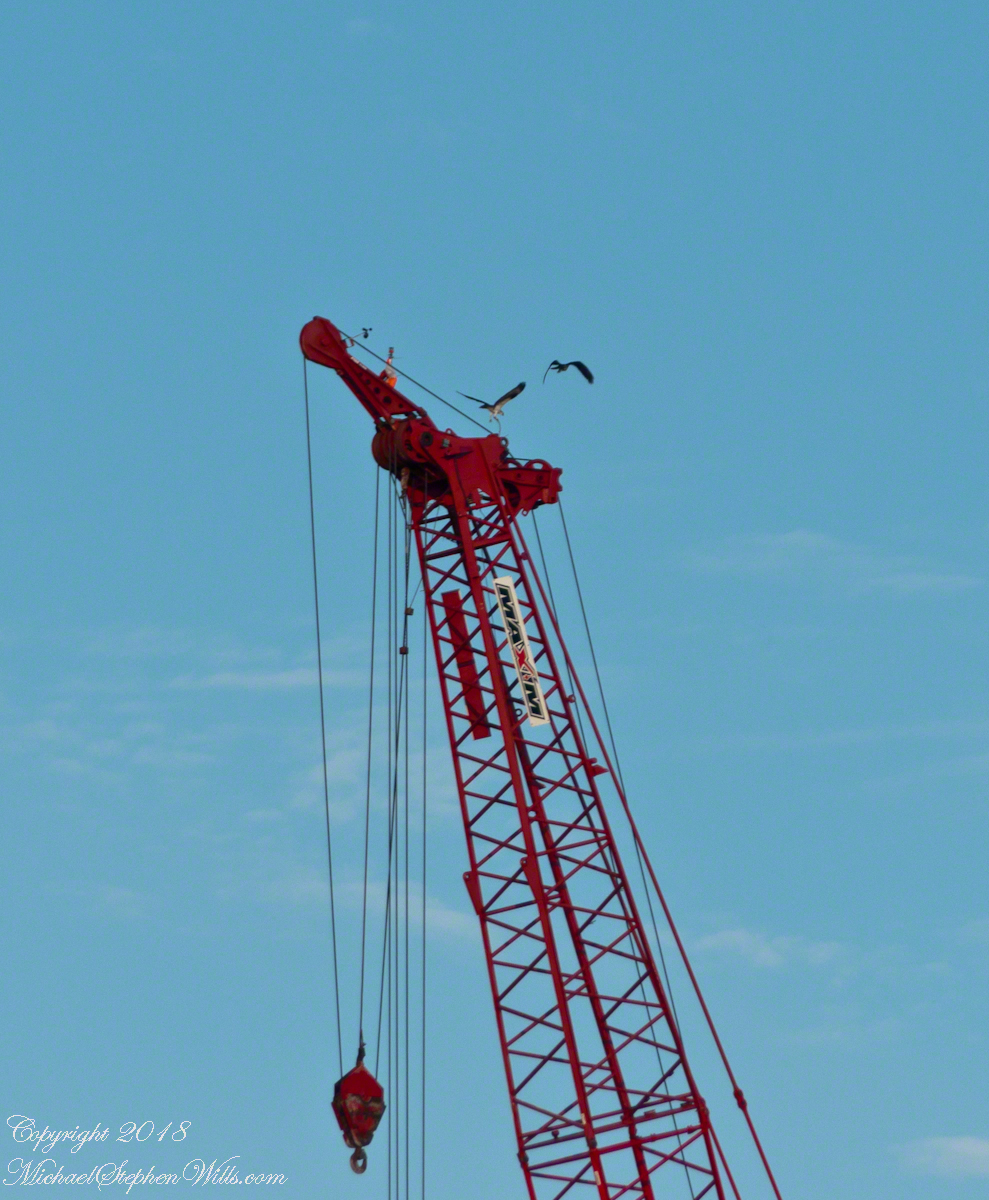
Each winter morning January 2019 I left our ocean side condo to walk the beach, taking equipment according to a whim. For this series I used the Sony Alpha 700 with a variable “Zoom” lens. In this next shot the focal length was set to maximum.

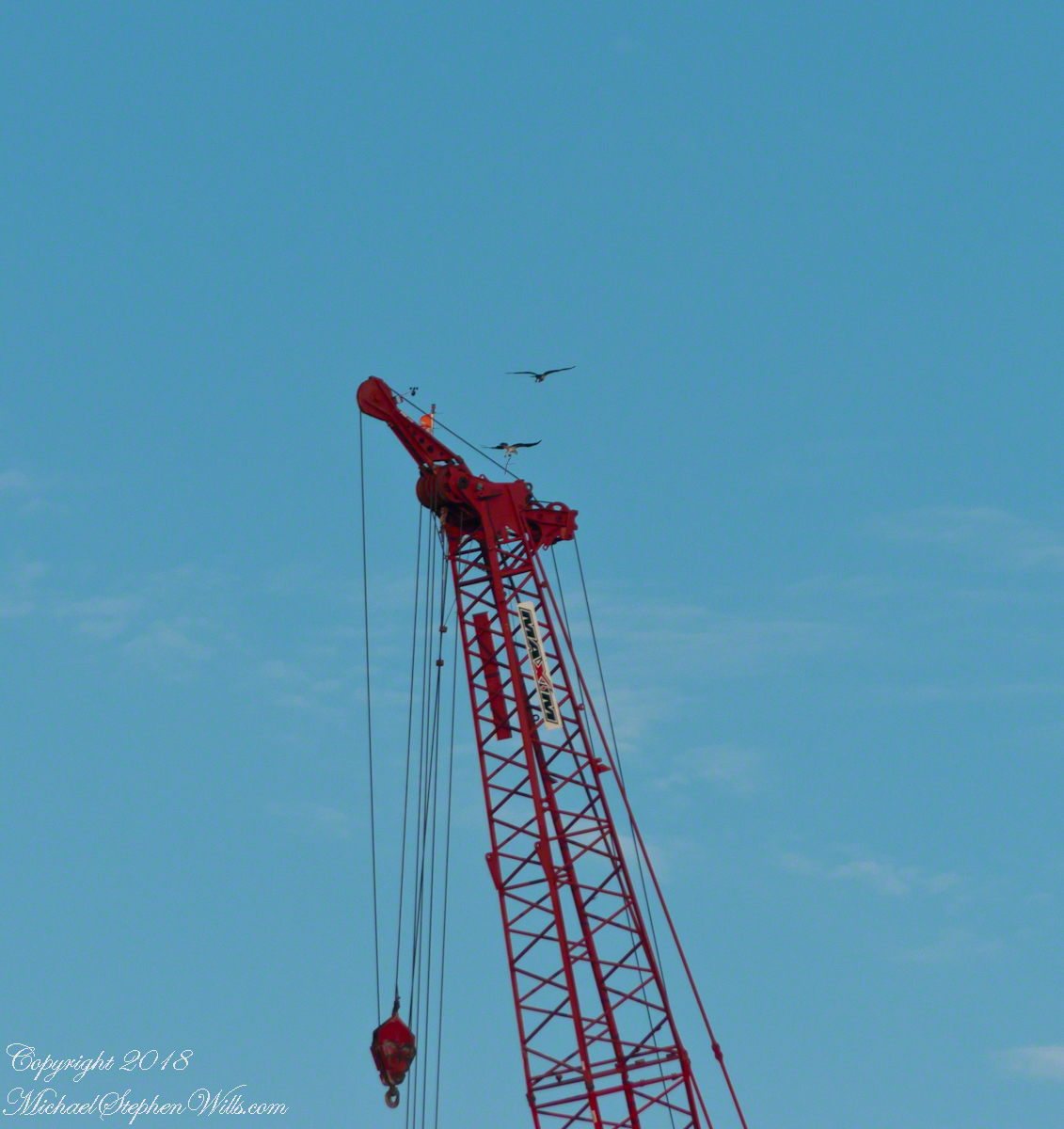
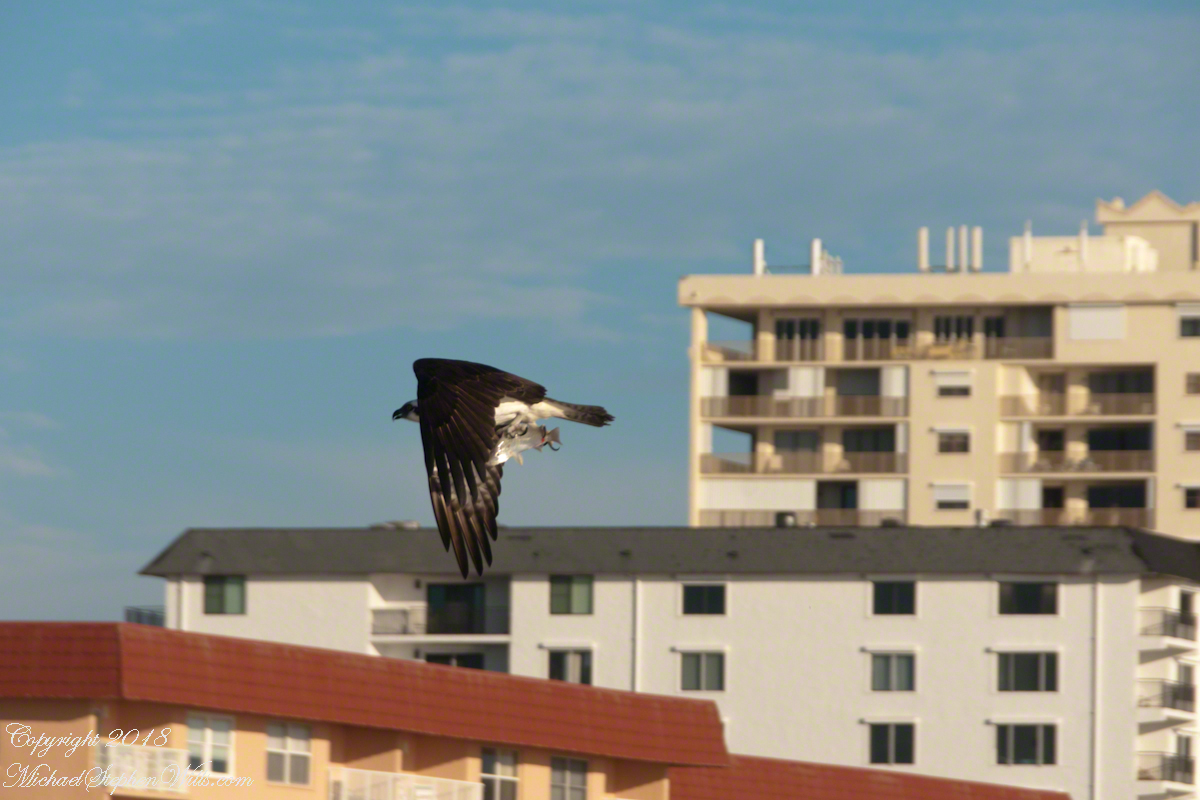
Searching the internet (“Florida Osprey behavior”), a link from http://www.naturesacademy.org states, in Florida, Osprey nesting season is December through February. The following series of photographs clearly show an Osprey with nesting material. The header image for this post clearly shows the markings of the individual holding a large branch.

The second individual is close to the same size, it is a reasonable conclusion the two are flying together. The series was taken in a 33 second time span.

The two were flying around the crane and it is beyond imagination they’d be successful building on an actively used crane. Would construction come to a halt until the nest was abandoned? I wonder.

In following days there were no signs of nesting behavior on the crane.

Copyright 2022, Michael Stephen Wills All Rights Reserved

Shoulder to Shoulder

Snatch and Grab Shopper

“They walk among us” can evoke horror, still it is a fitting description for the many species successful in an ecological niche occupied by humans. This is the third post of a series featuring the Osprey of Cocoa Beach, Florida. The first post is “Endless Searching,” In this post we follow a householder on a shopping expedition.

Click for “Florida” in my Fine Art Galleries.

Observation

Search internet references on Florida Osprey you find there is a mixture of year-round residents and migrants passing through spring/fall to points farther north. This being January, my brilliant conclusion is these are residents of Cocoa Beach, maintaining nests. My next post will have more on this.

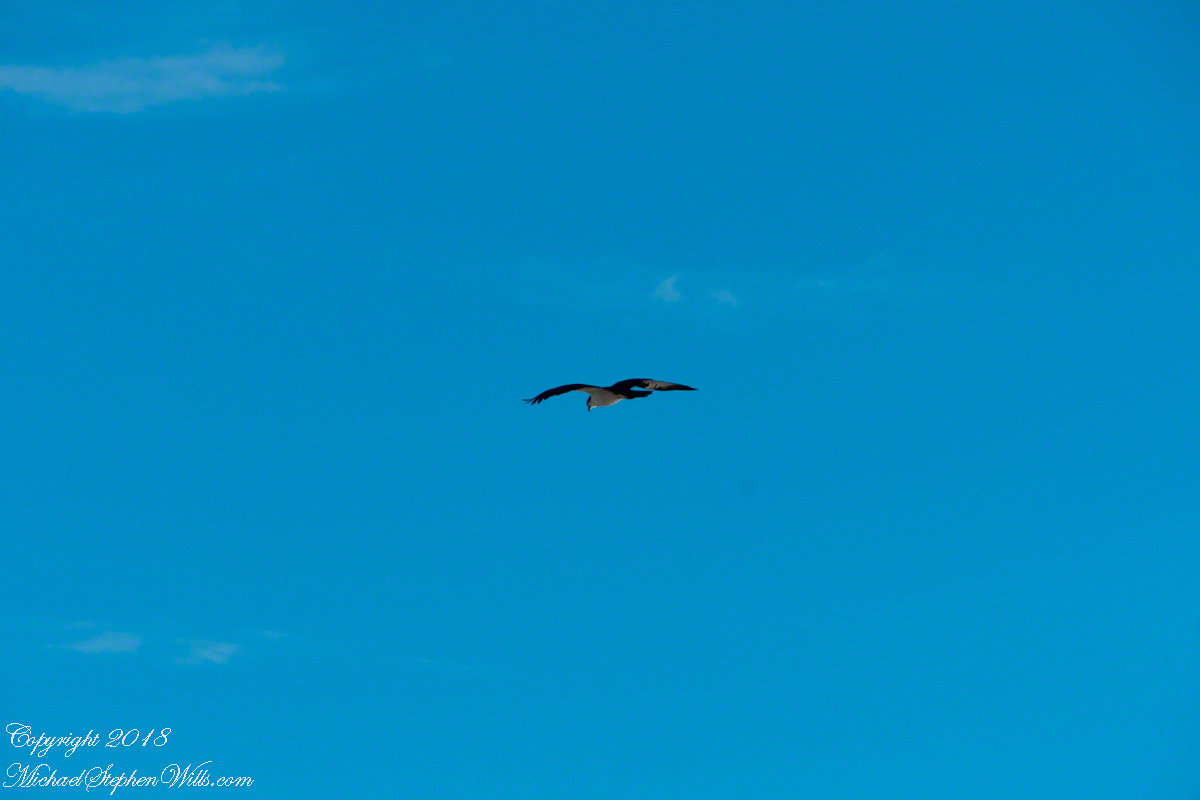
Each winter morning January 2019 I left our ocean side condo to walk the beach, taking equipment according to a whim. For this series I used the Sony Alpha 700 with a variable lens. In this first shot, the watchful pose of the hunting Osprey is apparent, long glide with head slightly down.

Click any photograph for a larger view.
On the Lookout

Dive!!

Once these hawks entered my dim awareness and their habits understood, with a lot of luck I was able to click the button at the right time. You can see in the previous post, “Fishing Creatures,” how little time elapsed during a dive, the split second opportunity seen in the following photograph.

Committed

Wow, that is impact. The bird is poised to grab one fish, spotted under the water 50+ feet away, talons extended.

Into the Drink

Success rate? Those days in January, if the Osprey hit the water more than 50% of the time it flew away with a fish.

Our seven year old grandson is an enthusiastic fisherman and might be able to identify this catch. In the distance, on the horizon is Cape Canaveral Air Force Base, the lighthouse and space launch towers .

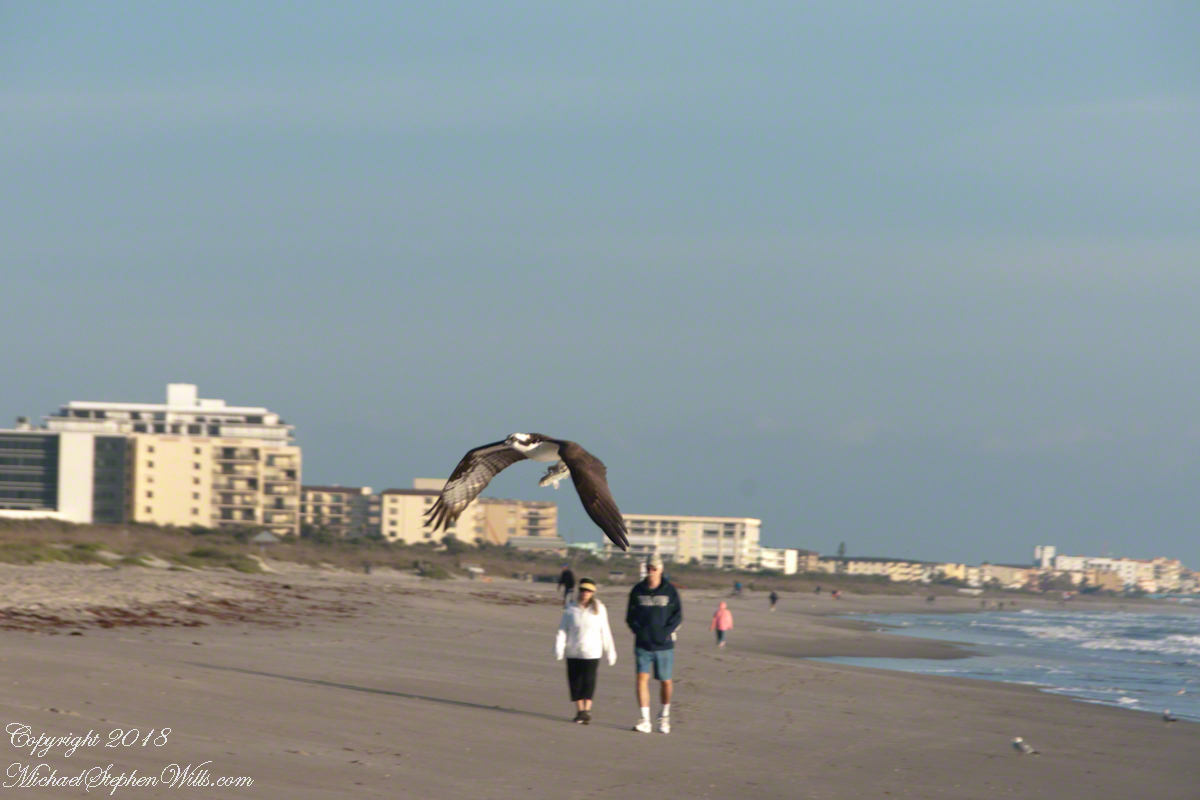
An image of Osprey / Human closeness. The long lens tends to bring objects closer together, the Osprey is far away from the early morning walkers.

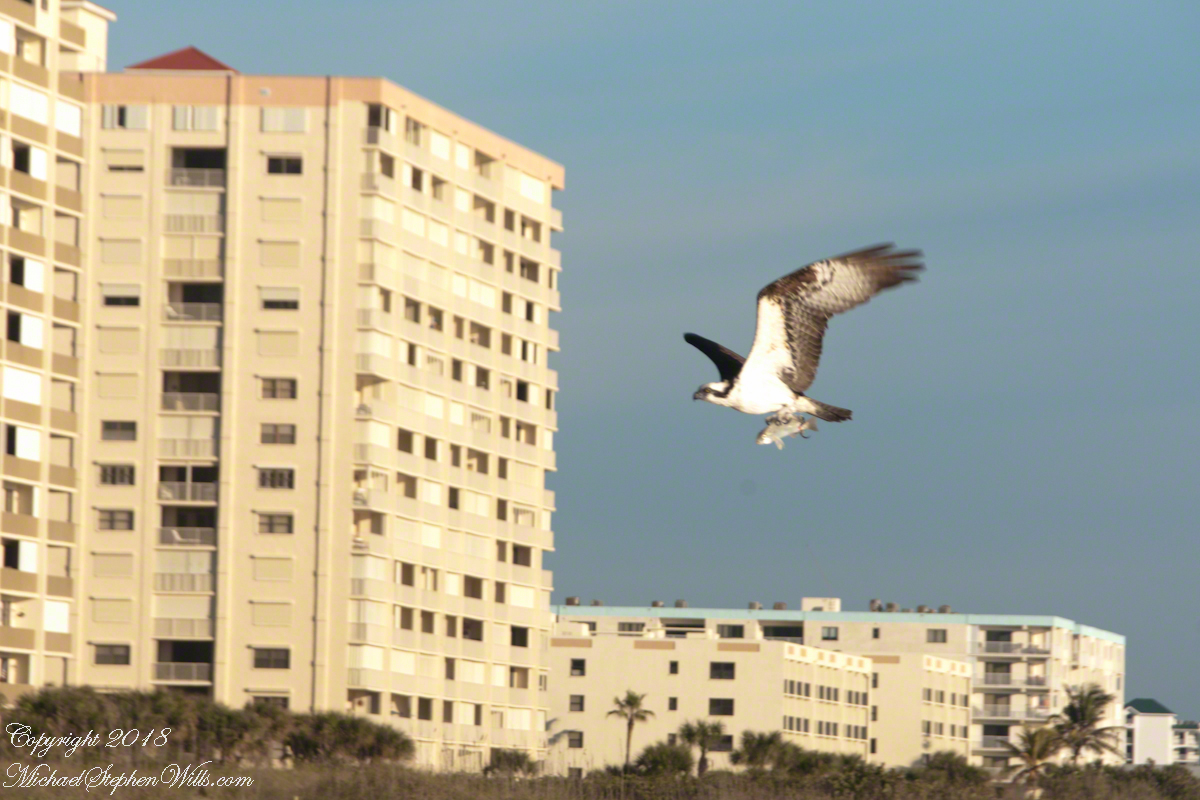
A reader, “ekurie”, in observing Ospreys noticed the catch is oriented to aerodynamic, placed head first toward the direction of flight. The hawk is using the evolutionary adaptations of the fish, to reduce drag in the water, to flying through the air.

This snatch and grab shopper is headed straight home to a nest beyond the shore front condos.

A Well Deserved Meal.
Copyright 2019, Michael Stephen Wills All Rights Reserved

A Day in a Life

“An early-morning walk is a blessing for the whole day.” Henry David Thoreau

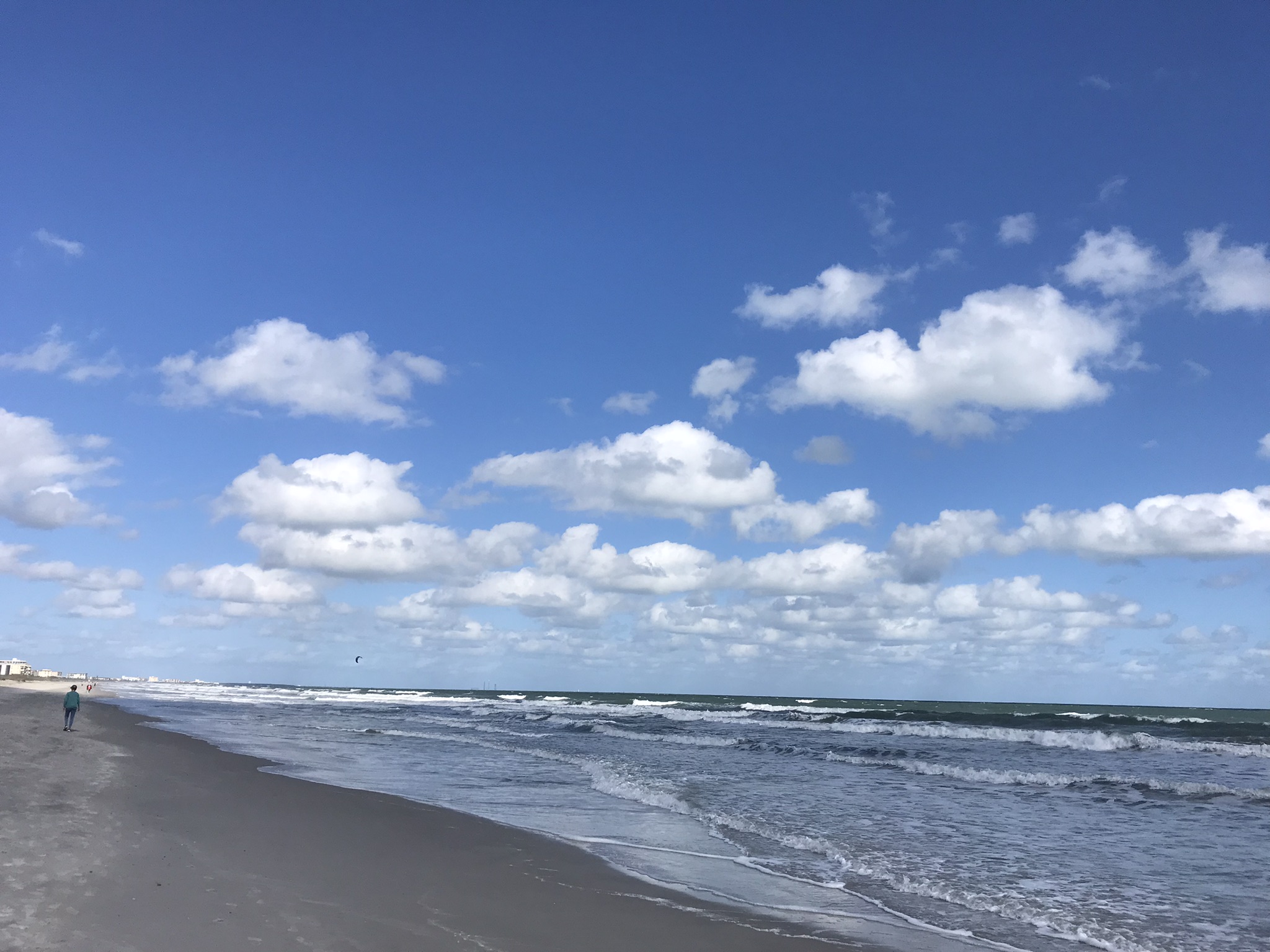
Images saved from this winter day of beachcombing and exploring around Cocoa Beach, Brevard County, Florida

Sunrise

The Day Taking Shape

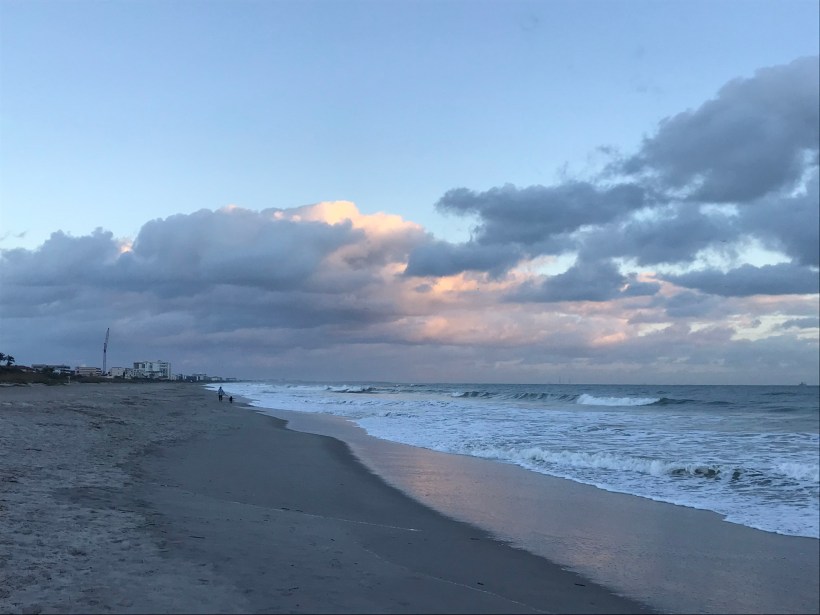
Beach Wandering

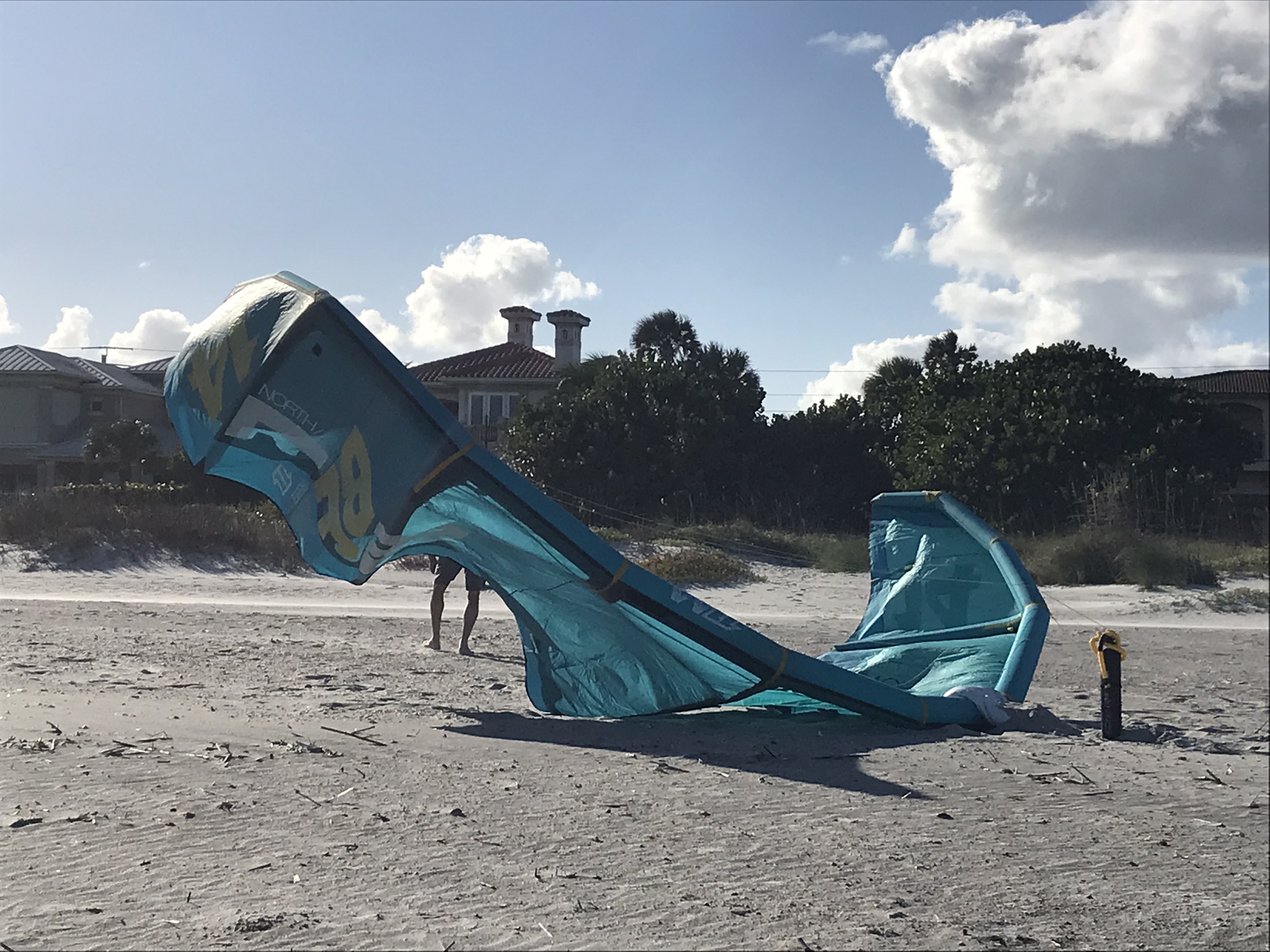
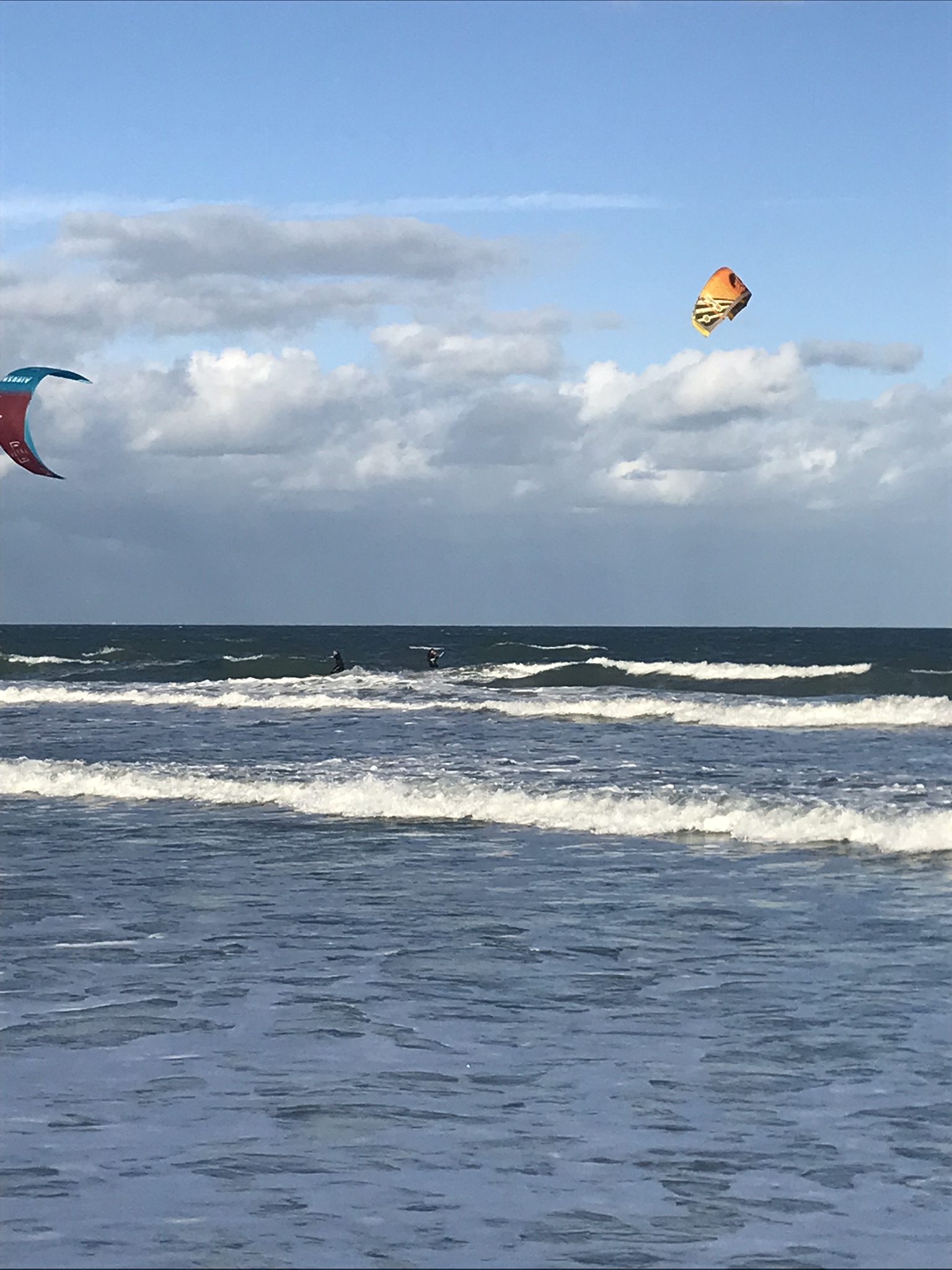
Kite Boarding

Beauty in Motion I

Beauty in Motion 2

Beauty in Motion 3

Manatee Park Wildlife

Biplane

I saved this to share with the grandchildren

Copyright 2022 Michael Stephen Wills All Rights Reserved

Oceans’ Eons

Tranquil Morning Surf with Peaceful Music for Tranquility, Relaxation, Meditation.

For full peace and tranquility view on a large screen “smart” television.

Eight minutes of ocean waves and gentle music in 4K UHD.

Anatomy of Dawn

Subcategories of Twilight and more

Use your pinky finger to apprehend the sky dome. Imagine yourself at sea, out of sight of land, on a calm day. Keeping your arm extended, place your pinky-tip on the horizon due east, raise your arm directly overhead. The average sized pinky-tip will have spanned 90 of its lengths. The distance measured from the horizon to directly overhead, the zenith, is 90 degrees of sky dome, about one pinky-width per degree, one-fourth of the entire 360 degrees of sky around your spot on the globe.

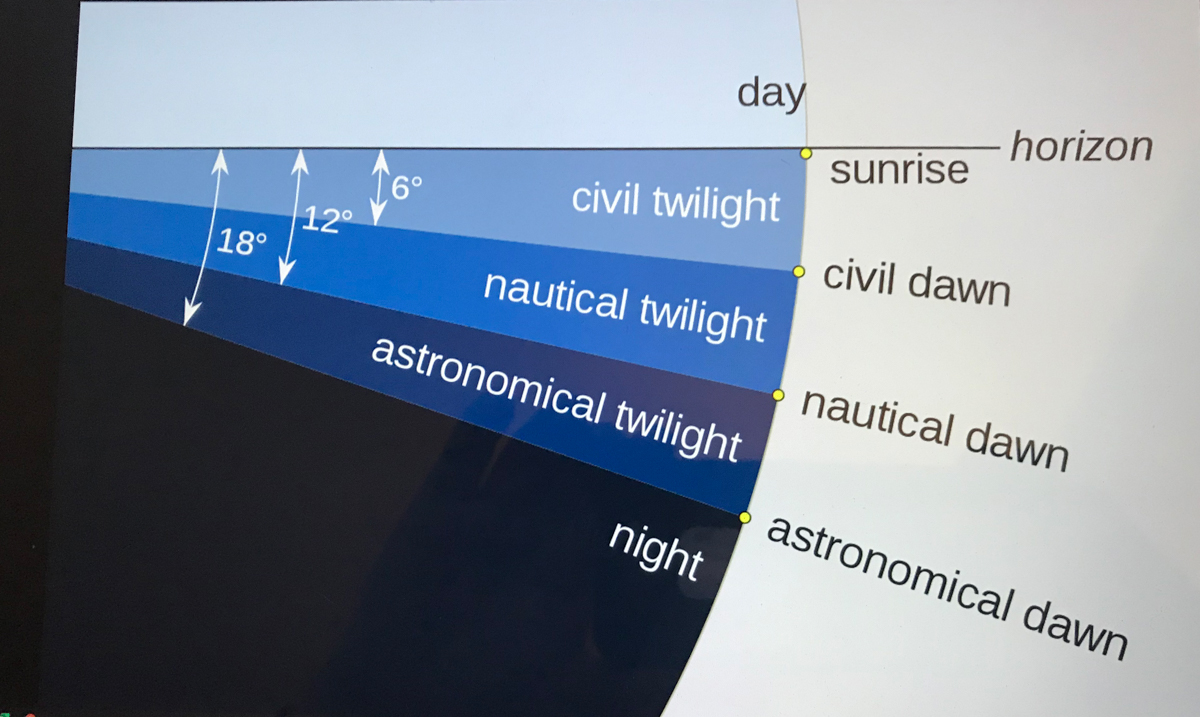
The apparent width of the sun disk from earth covers 1/2 degree of sky dome. The disk center point moves 15 degrees per hour (360/24 = 15). Using these facts to estimate time to sunset is relatively straightforward. Estimating time to dawn from the sky is more difficult. This graphic, “Twilight-dawn subcategories,” is a way to grasping what happens. Your position on the earth globe affects the experience. For example, at northern latitudes above 60°34′ summer nights never become darker than civil twilight because the sun’s midpoint never drops lower than 6 degrees below the horizon. Civil twilight lasts all night long summer times in parts of Sweden and Finland.

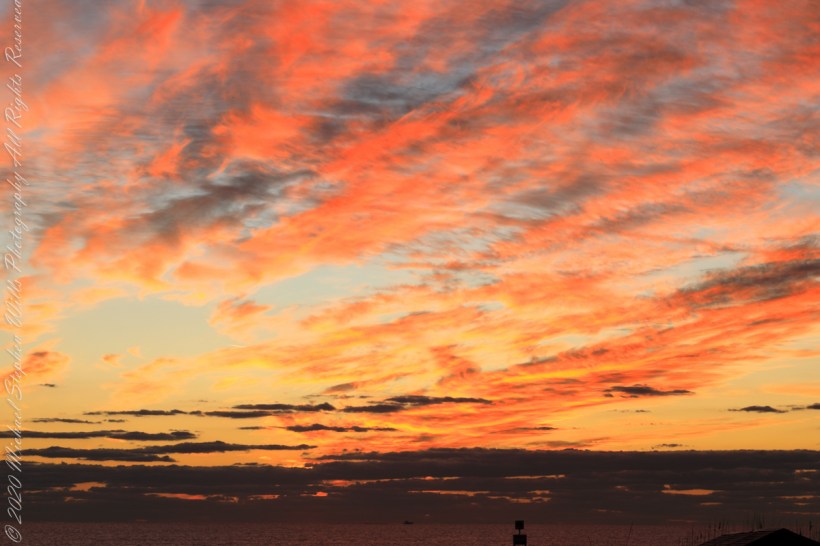
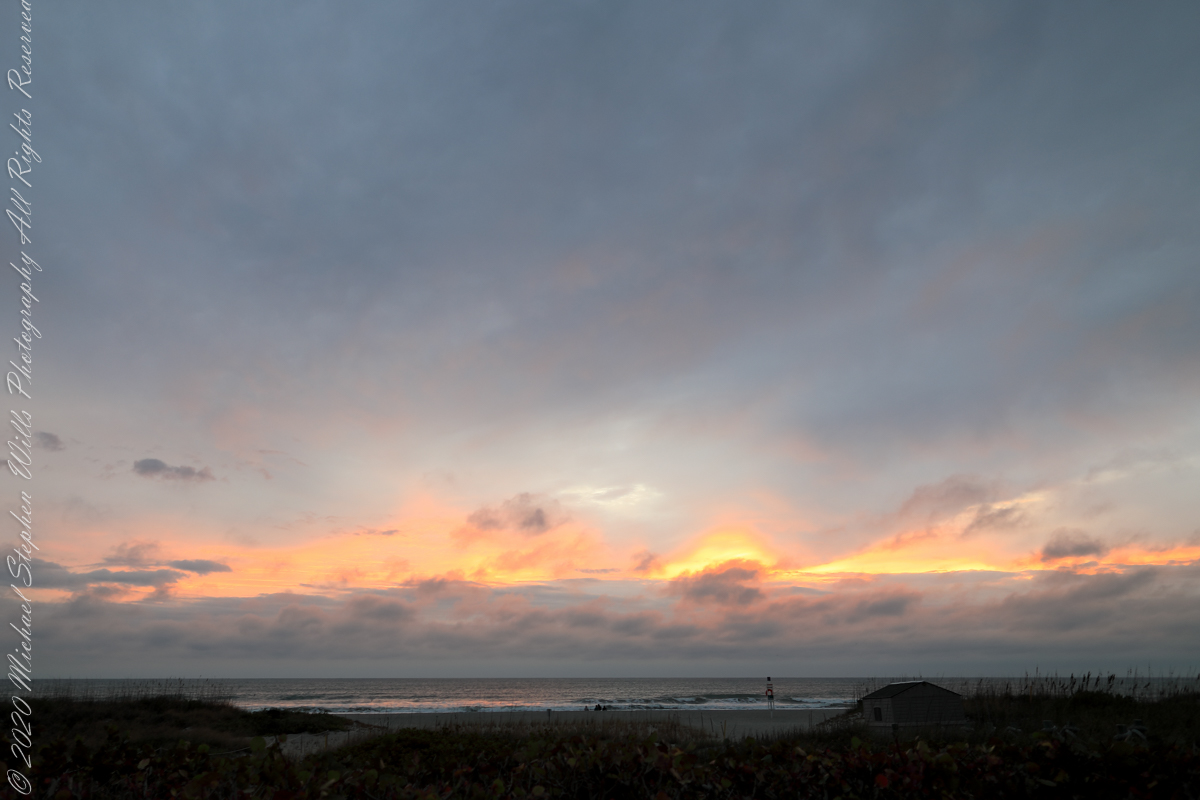
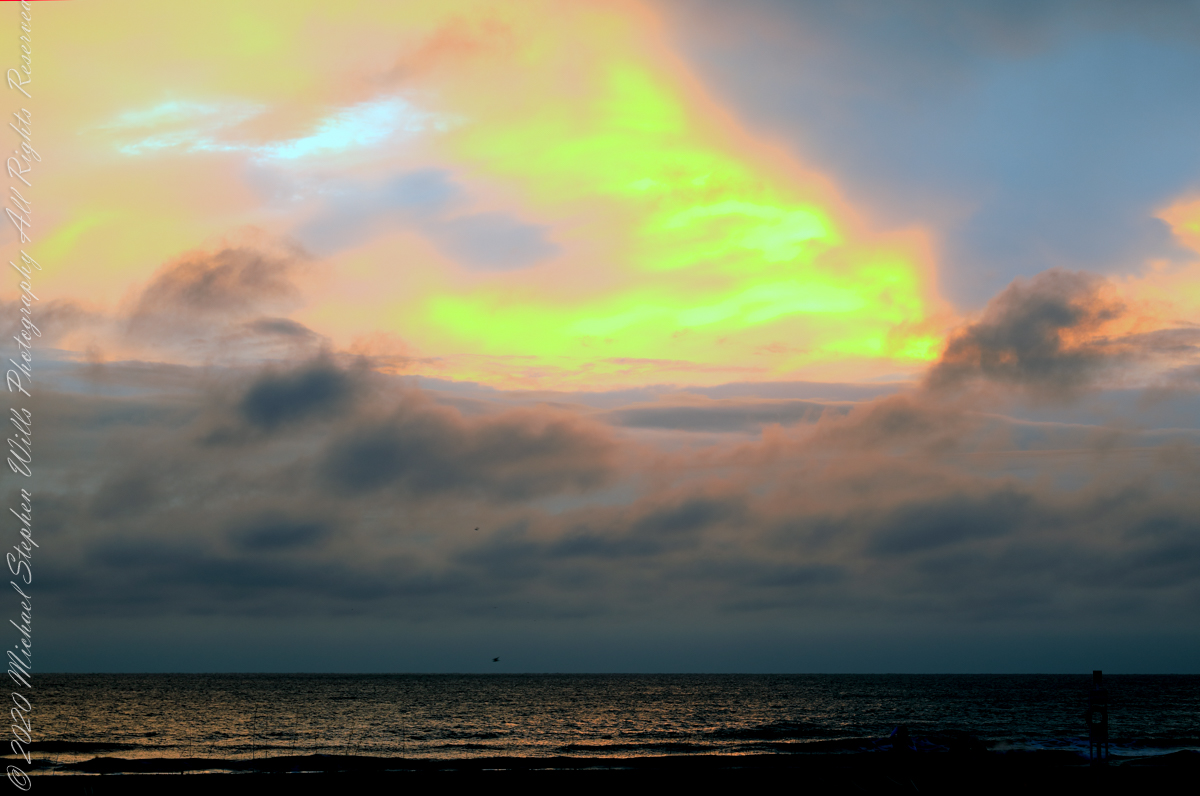
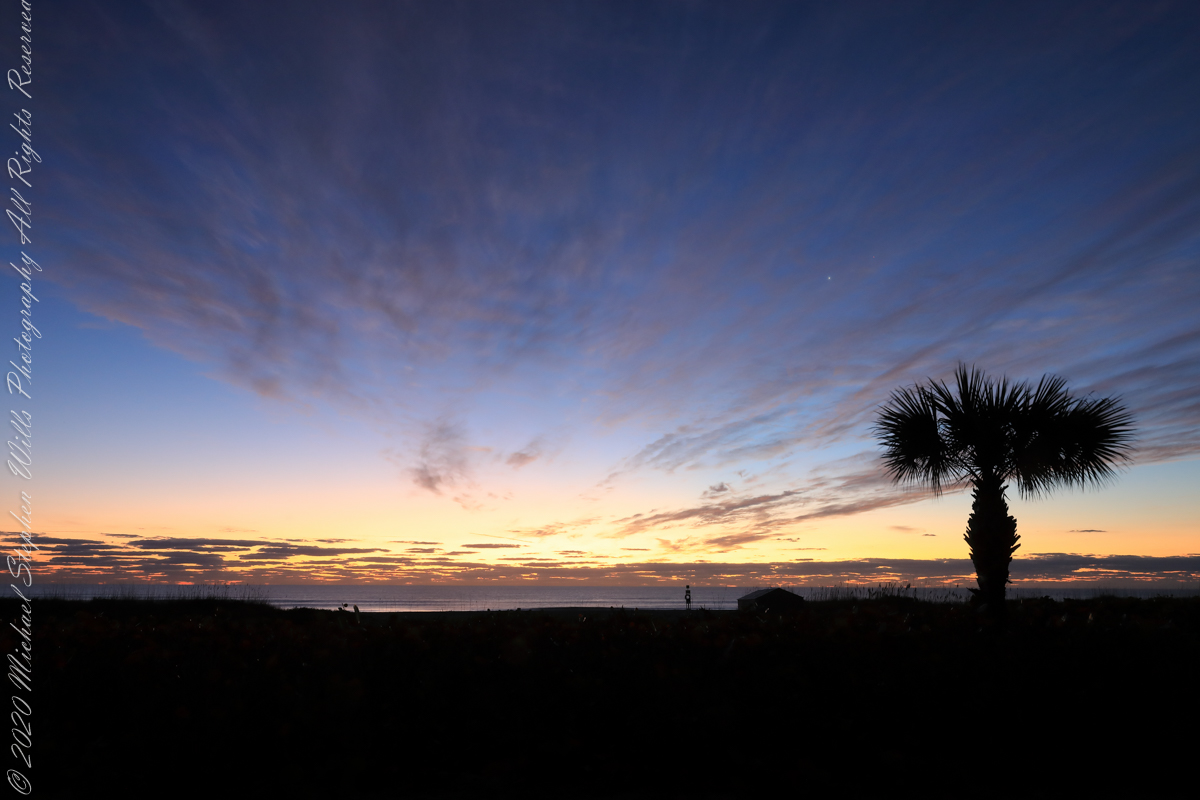
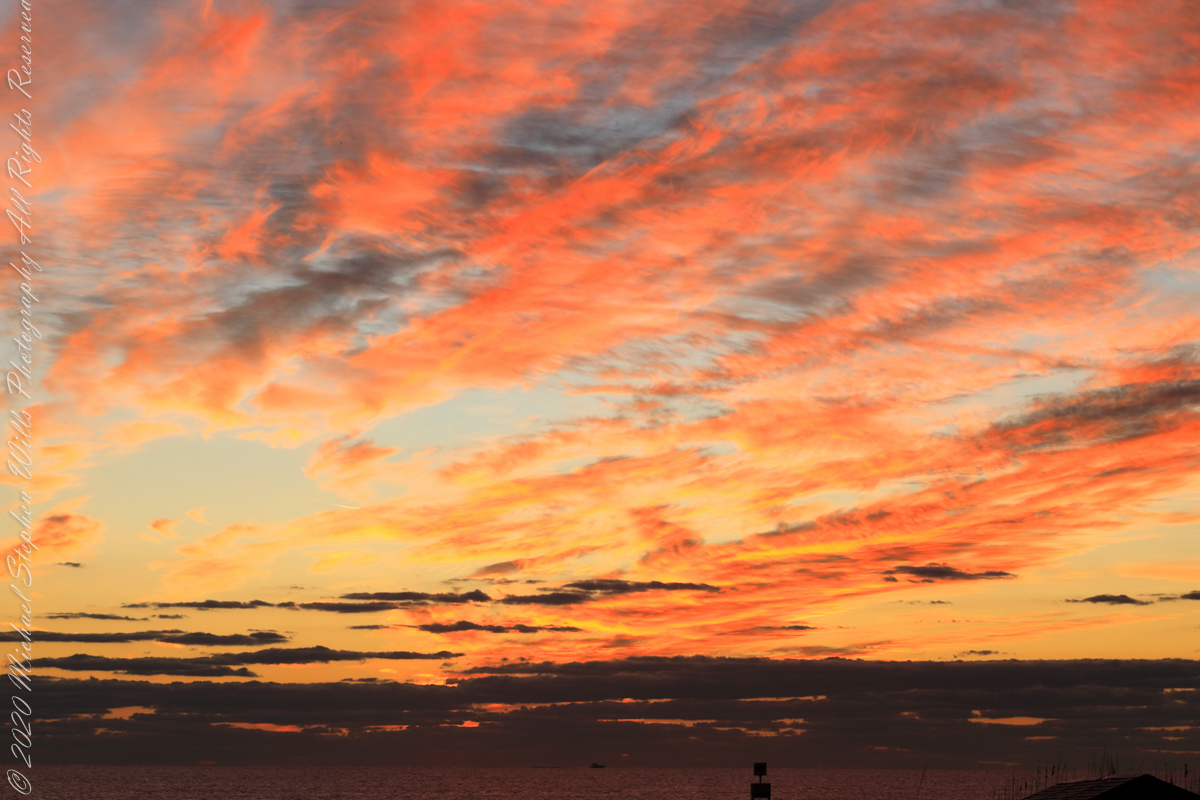
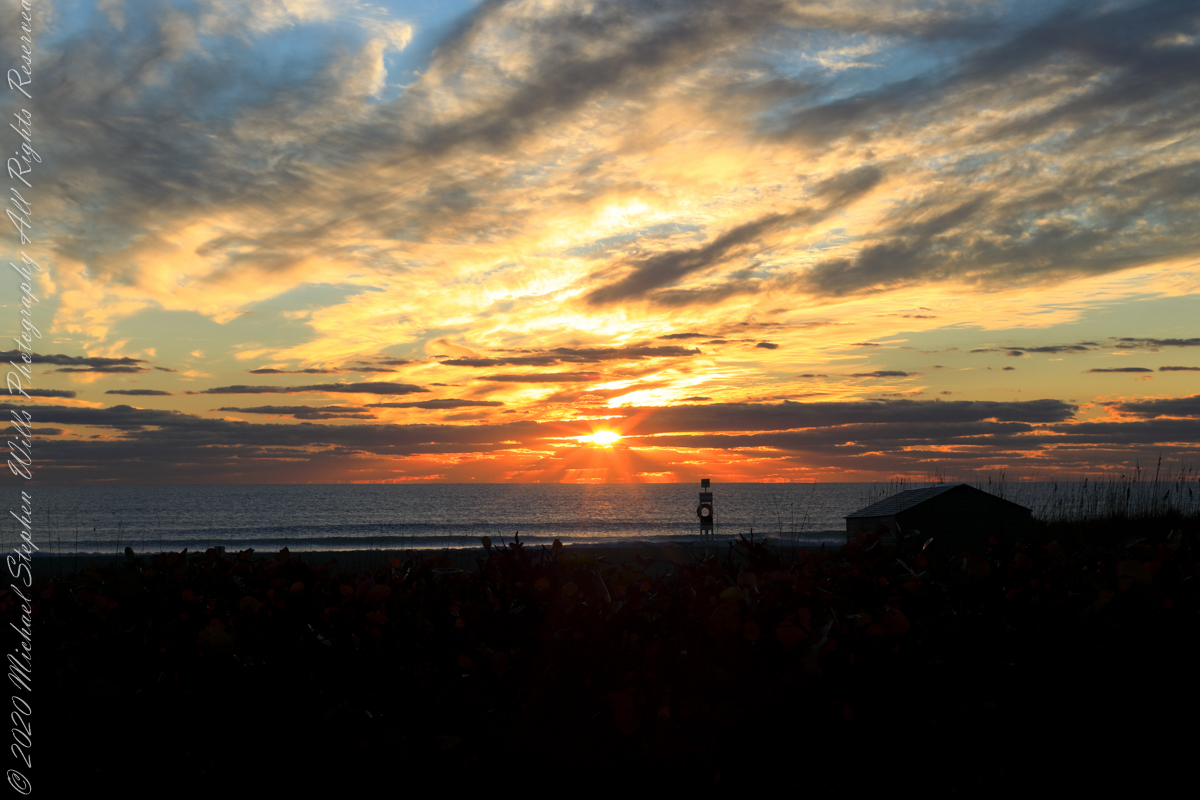
The date-time stamp on the first photograph of this series is 6:46:23 am, Cocoa Beach sunrise for February 1st was 7:09:40, 00:23:17, 23.283 minutes in decimal notation, later. This duration divided by 60 minutes in an hour and multiplied by the sun’s apparent velocity across the sky (15 degrees per hour) and minus the .25 degree between sun’s center and disk edge, gives the sun’s center as 5.57 degrees below the horizon: this is a photograph of the sky a minute or so after the sun passed civil dawn into civil twilight. I am not more exact because this calculation does not account the deviation of the sun path from due east at this latitude, lengthening civil twilight duration by almost a minute.

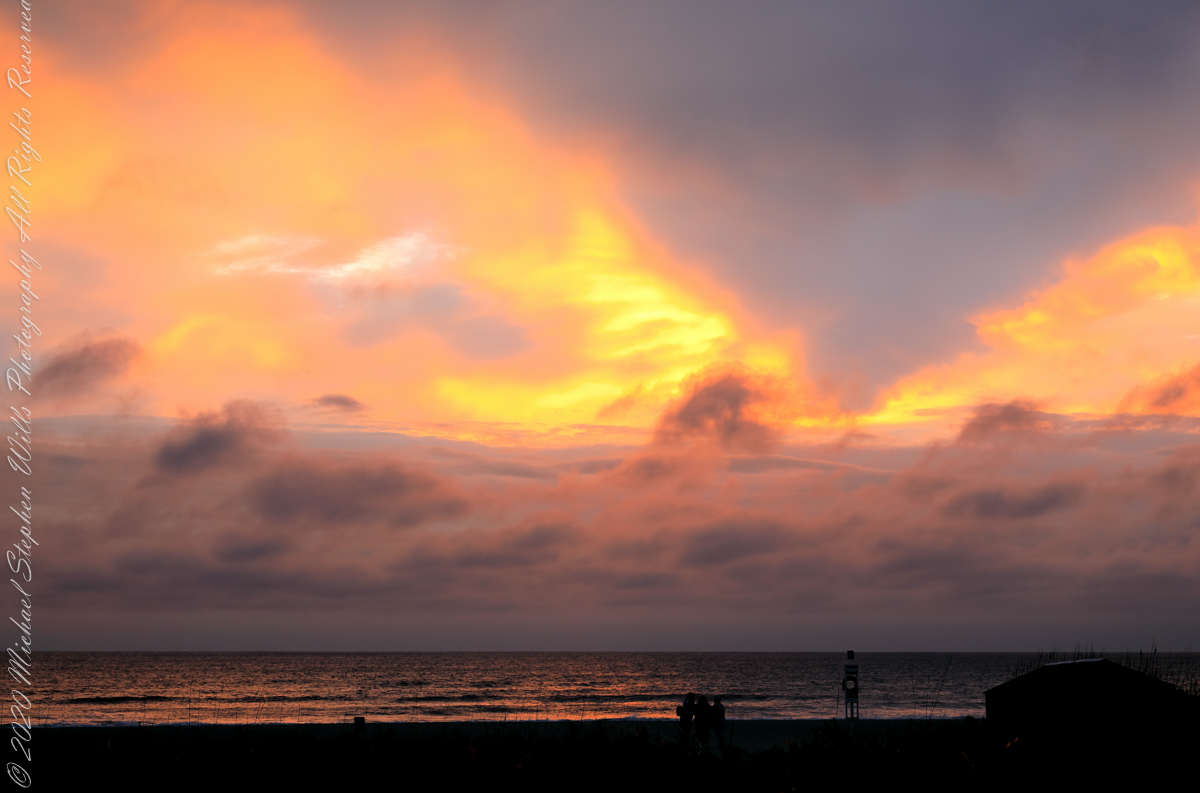
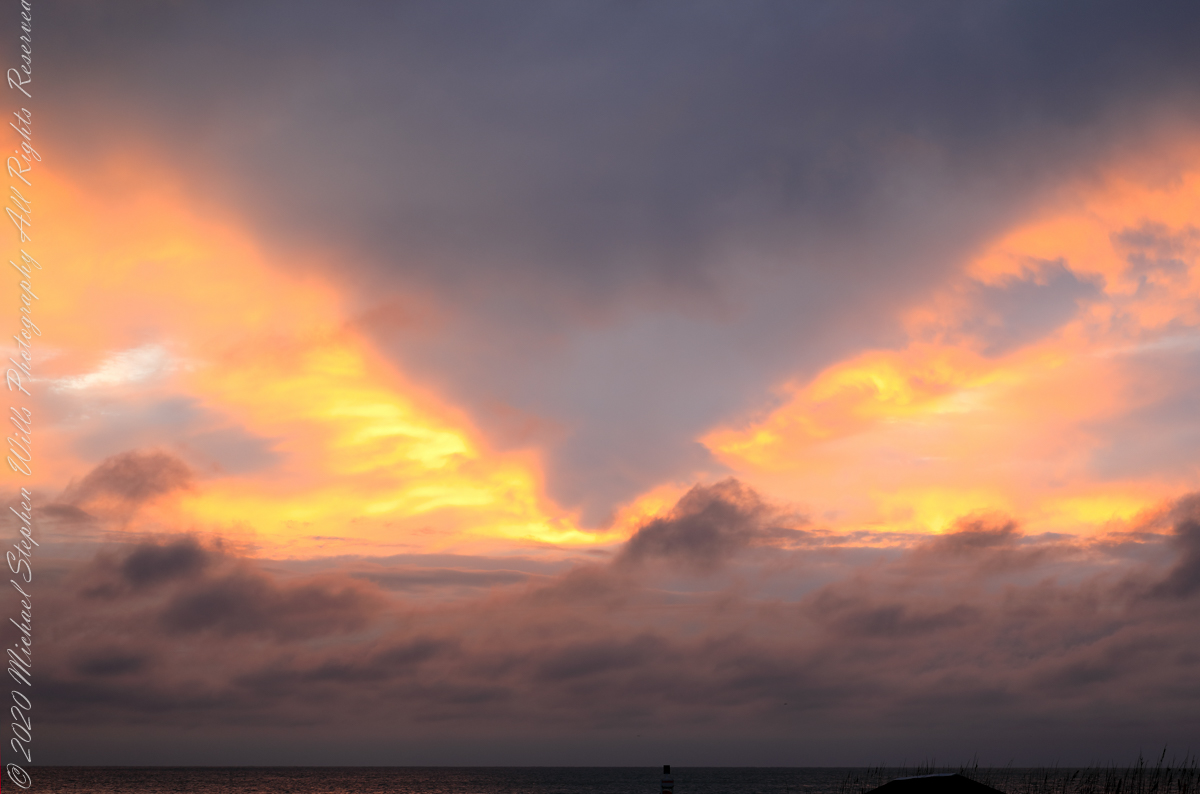
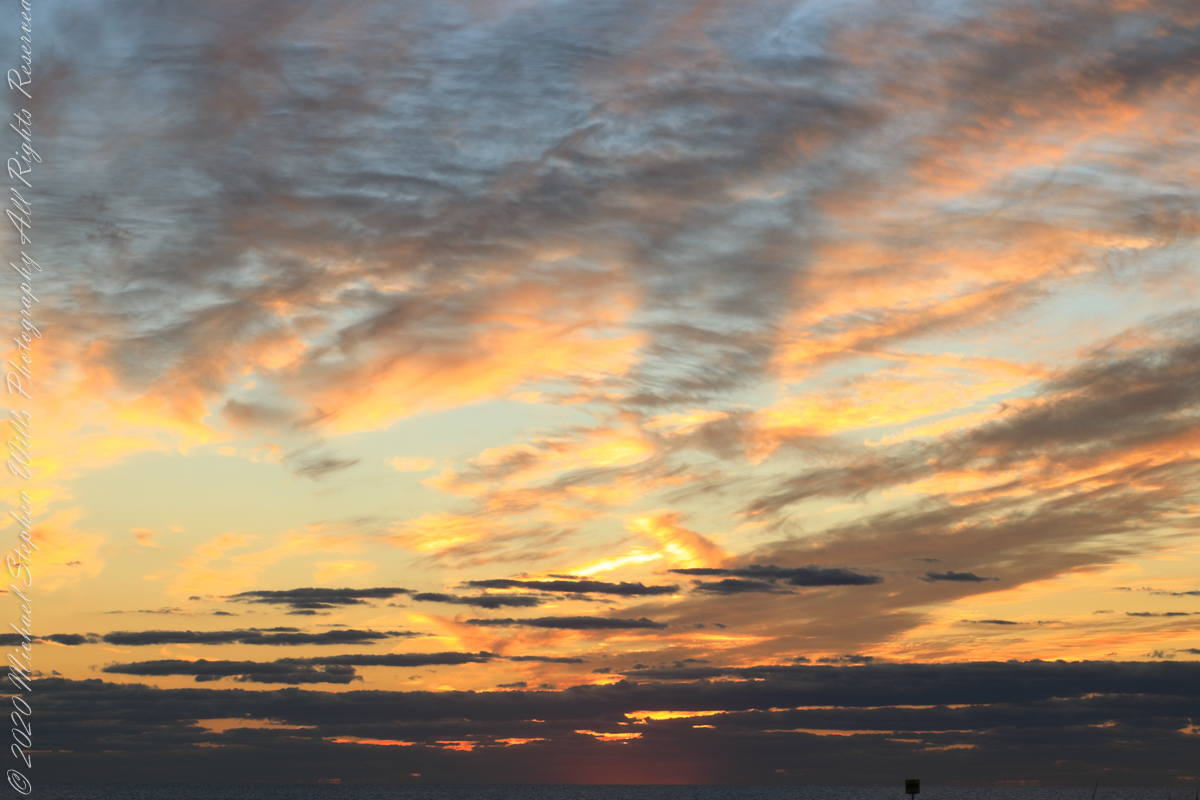
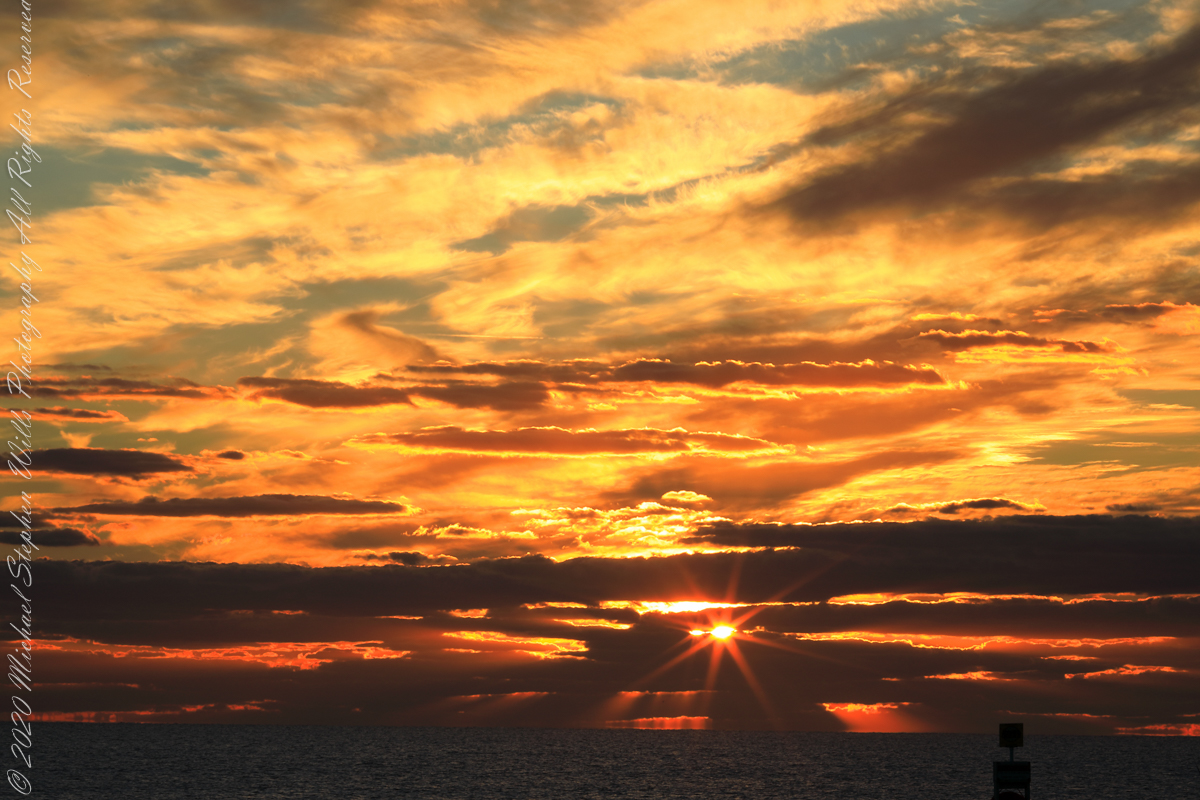
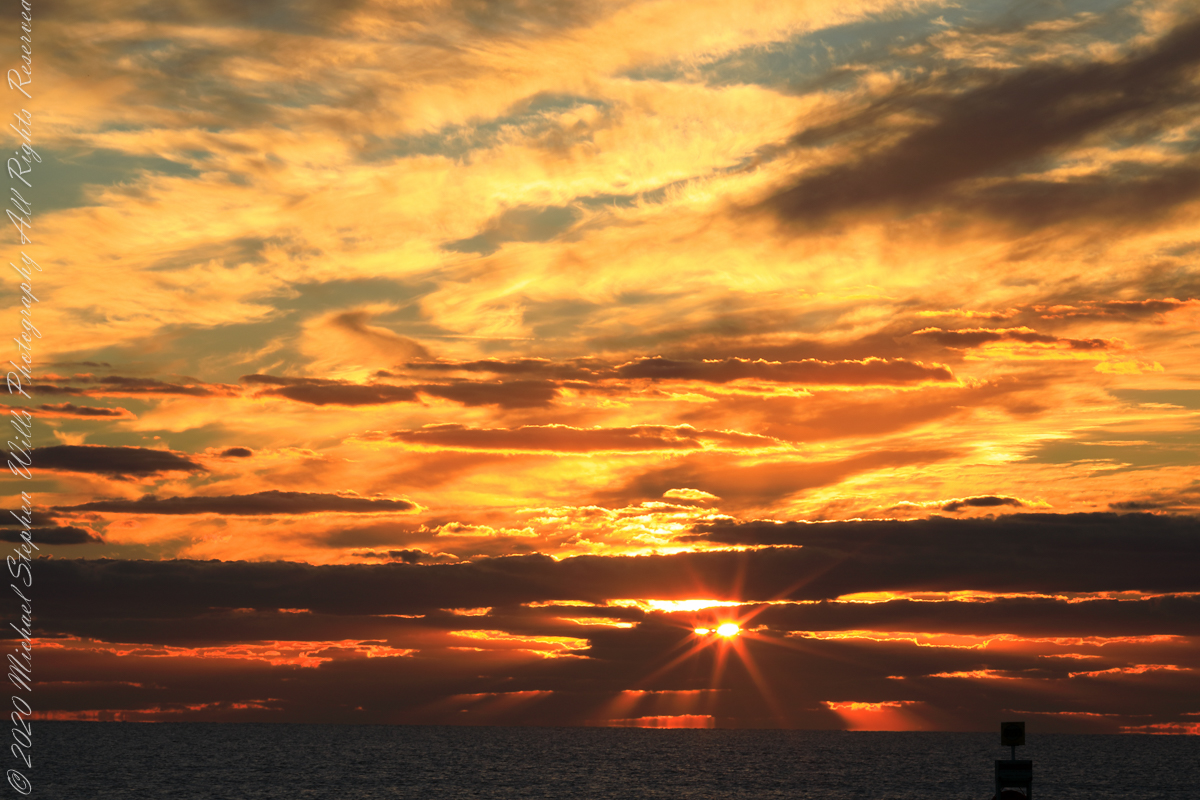
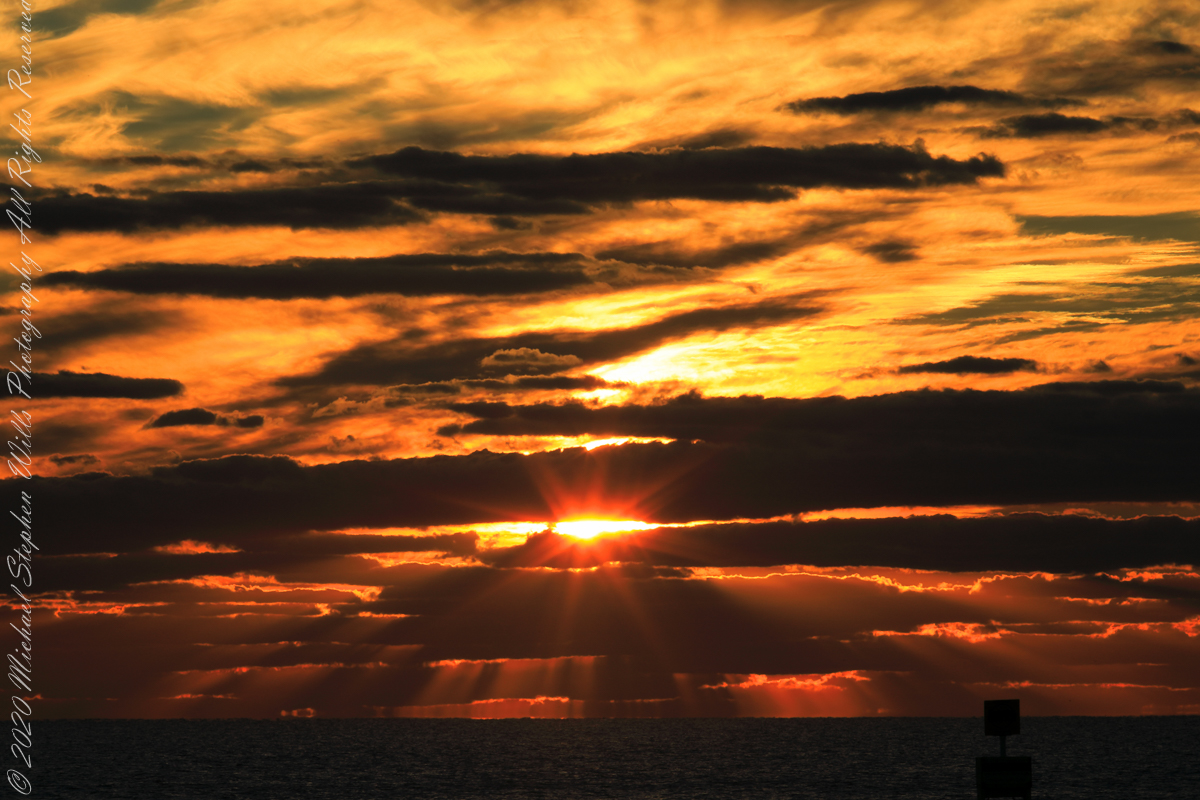
The following photograph is time-stamped 7:05:06, 4.567 minutes until sunrise, sun center is just below the horizon, setting the dark clouds of the previous photograph fleetingly on fire.

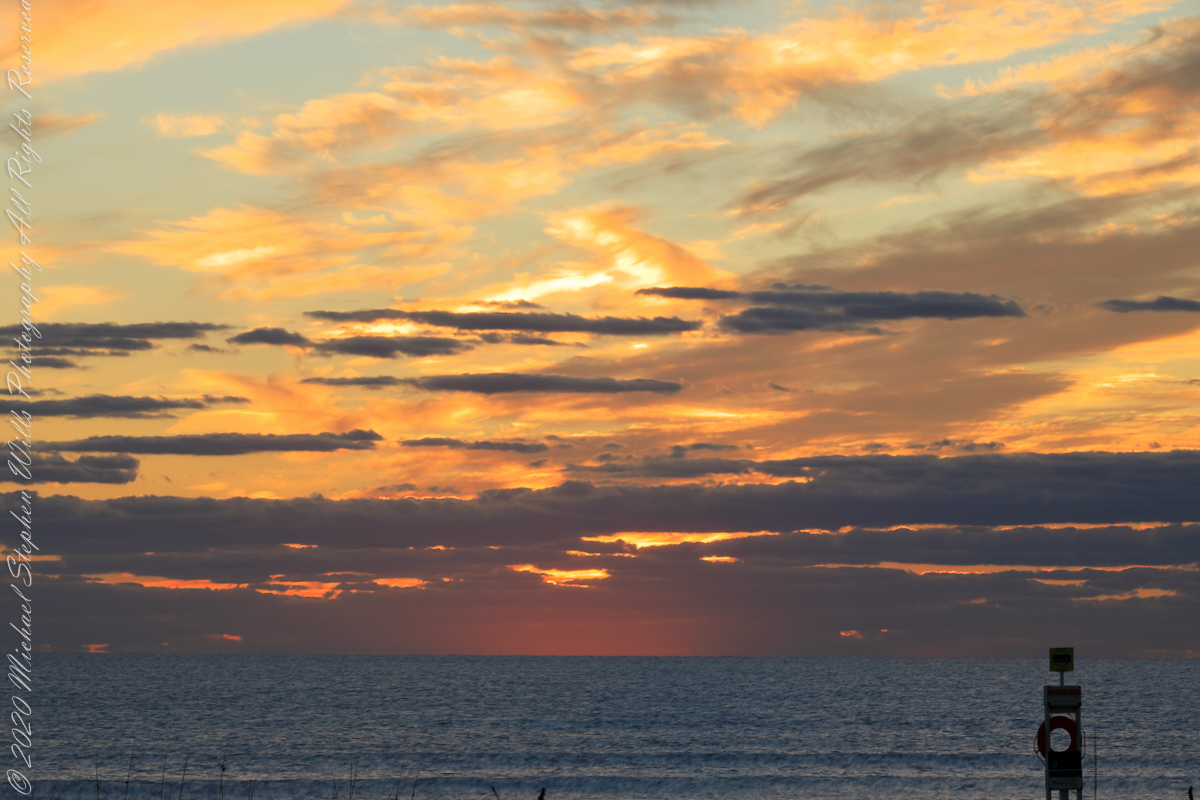
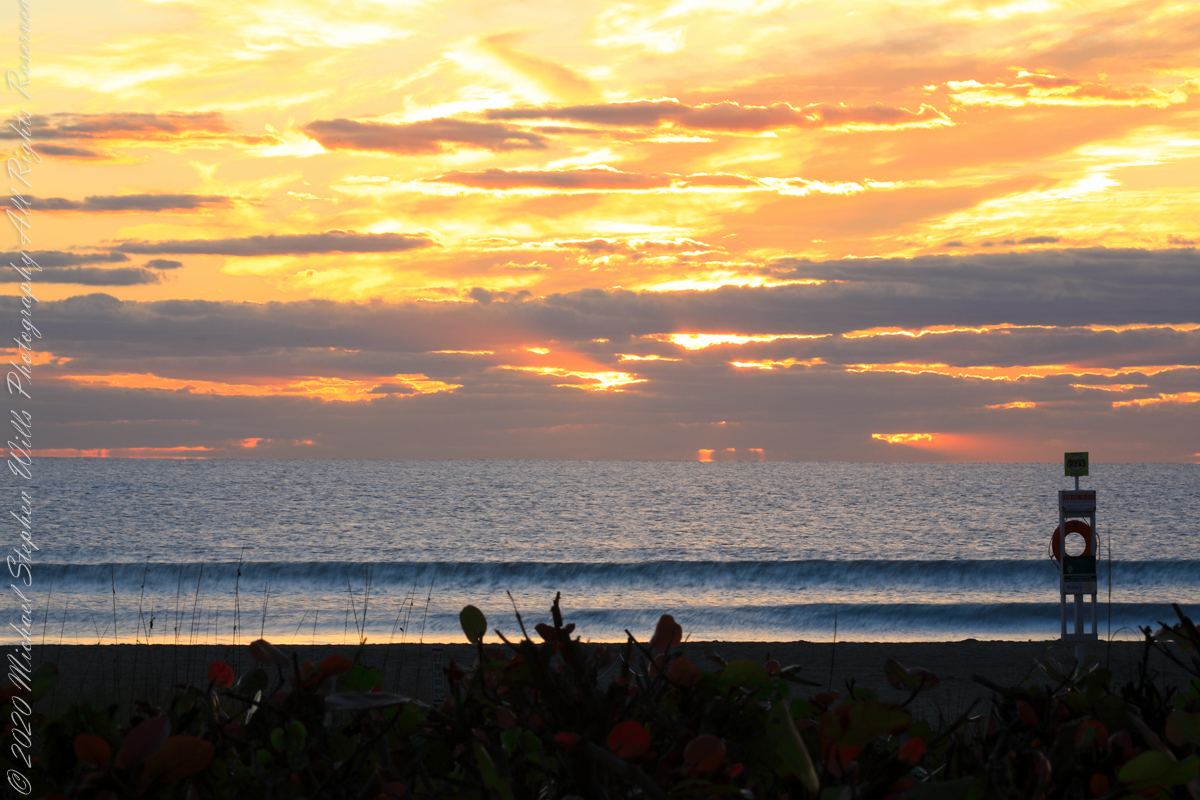
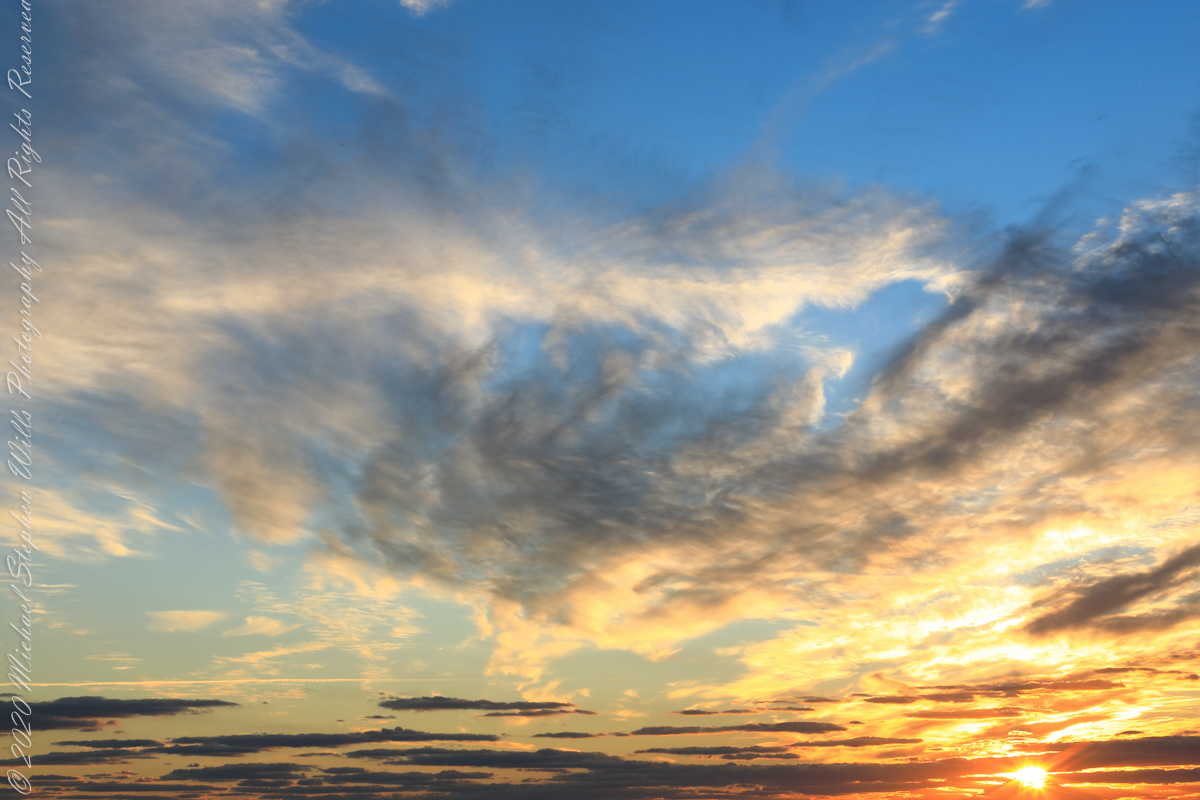
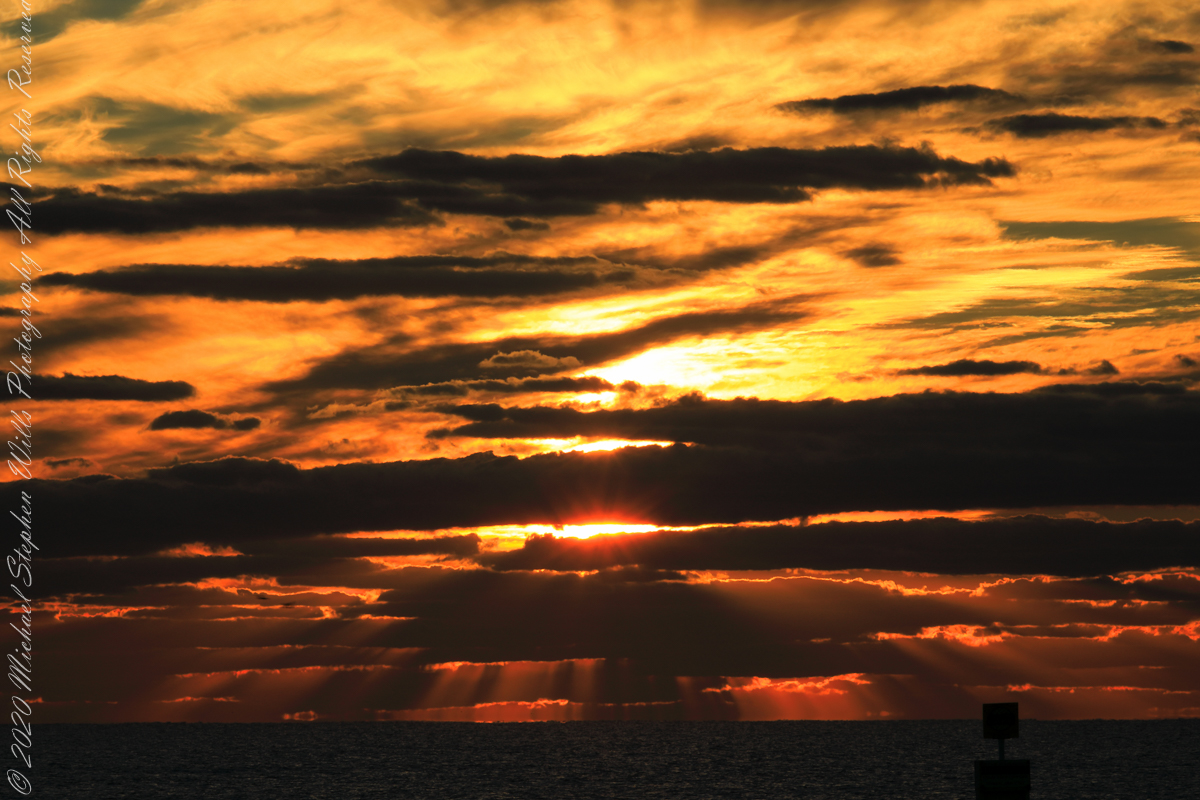
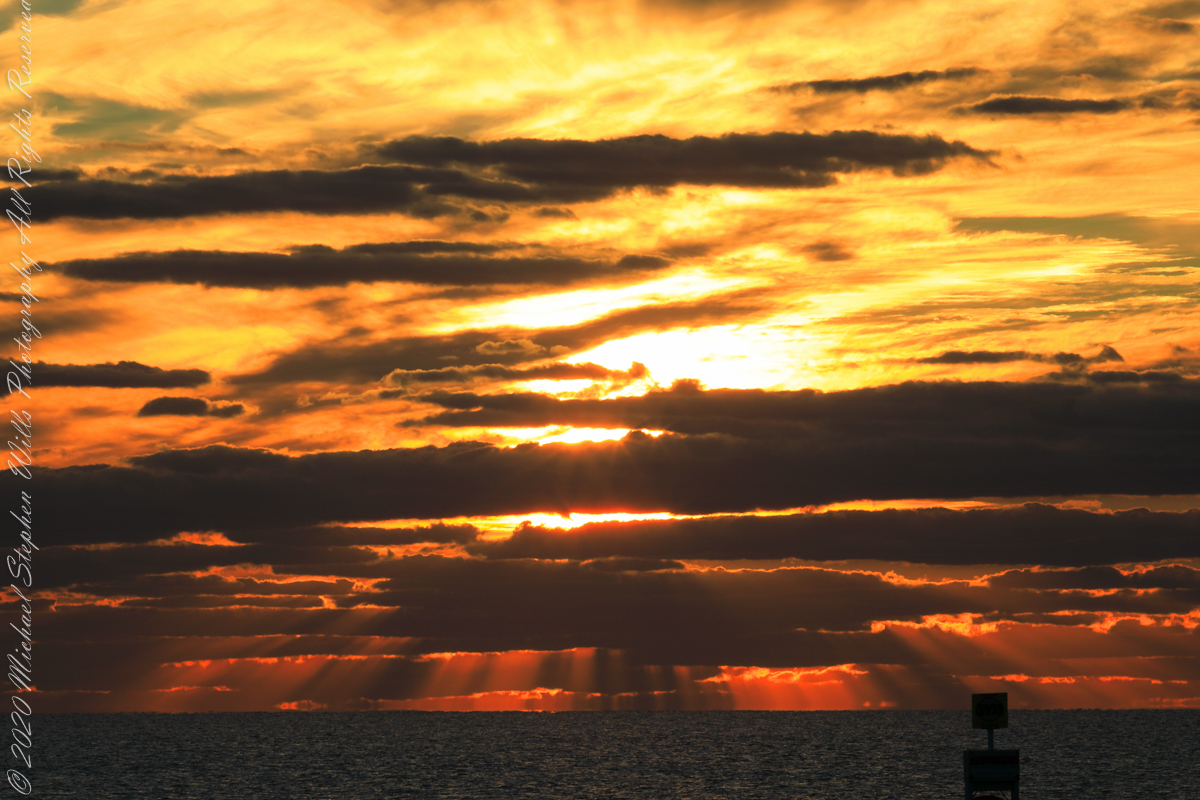
Sunrise has passed in the following photographs, obscured by clouds and making for a great light show. Enjoy!!

References

“Dawn” Wikipedia page, the graphic “Twilight-dawn subcategories,” and the descriptions of subcategories came from this page.