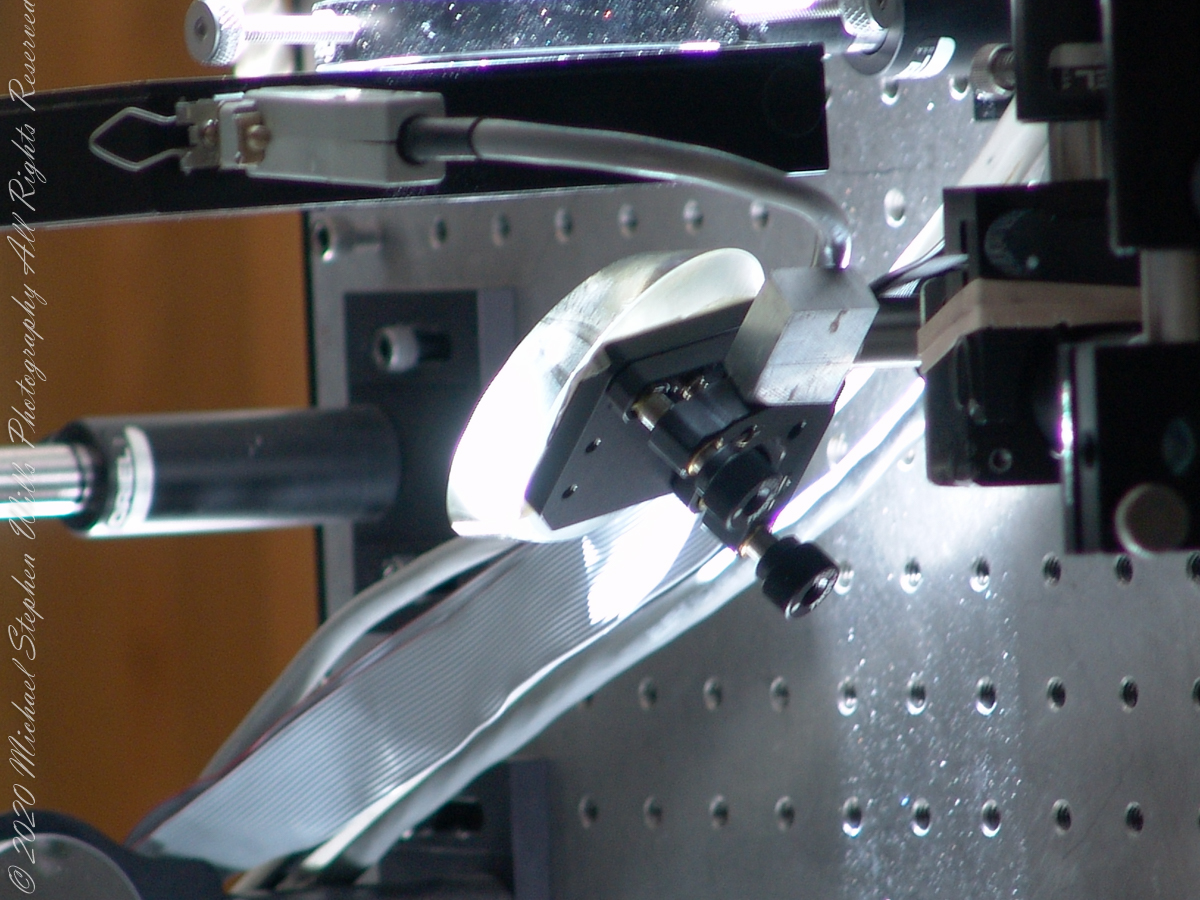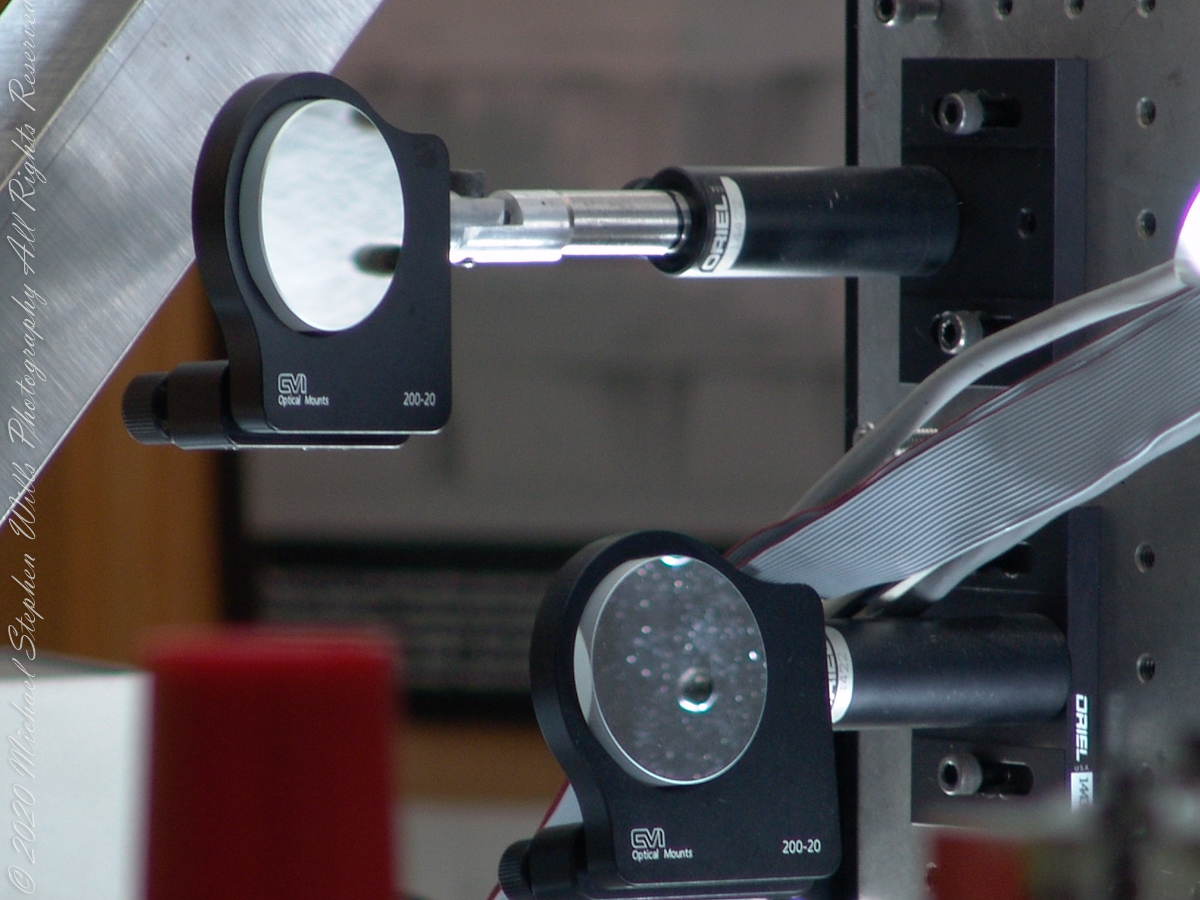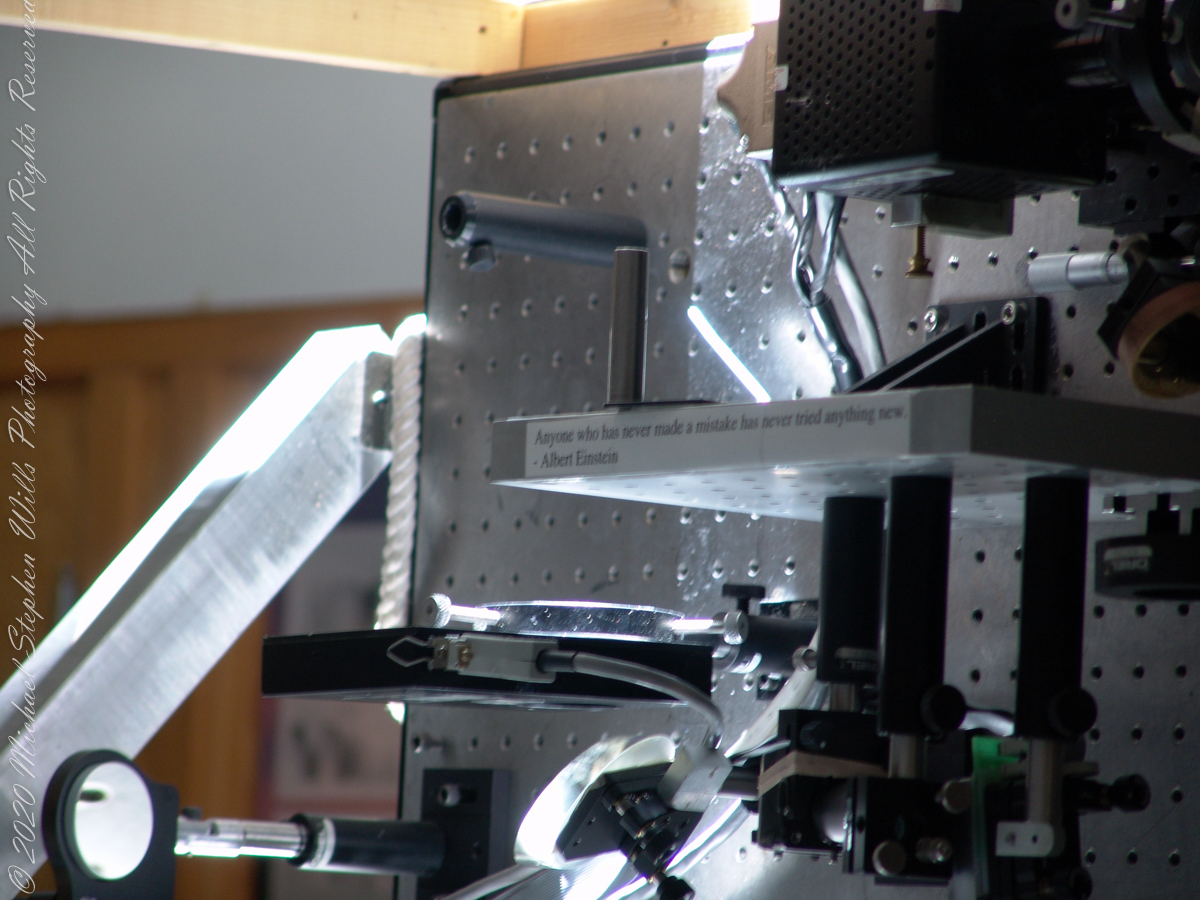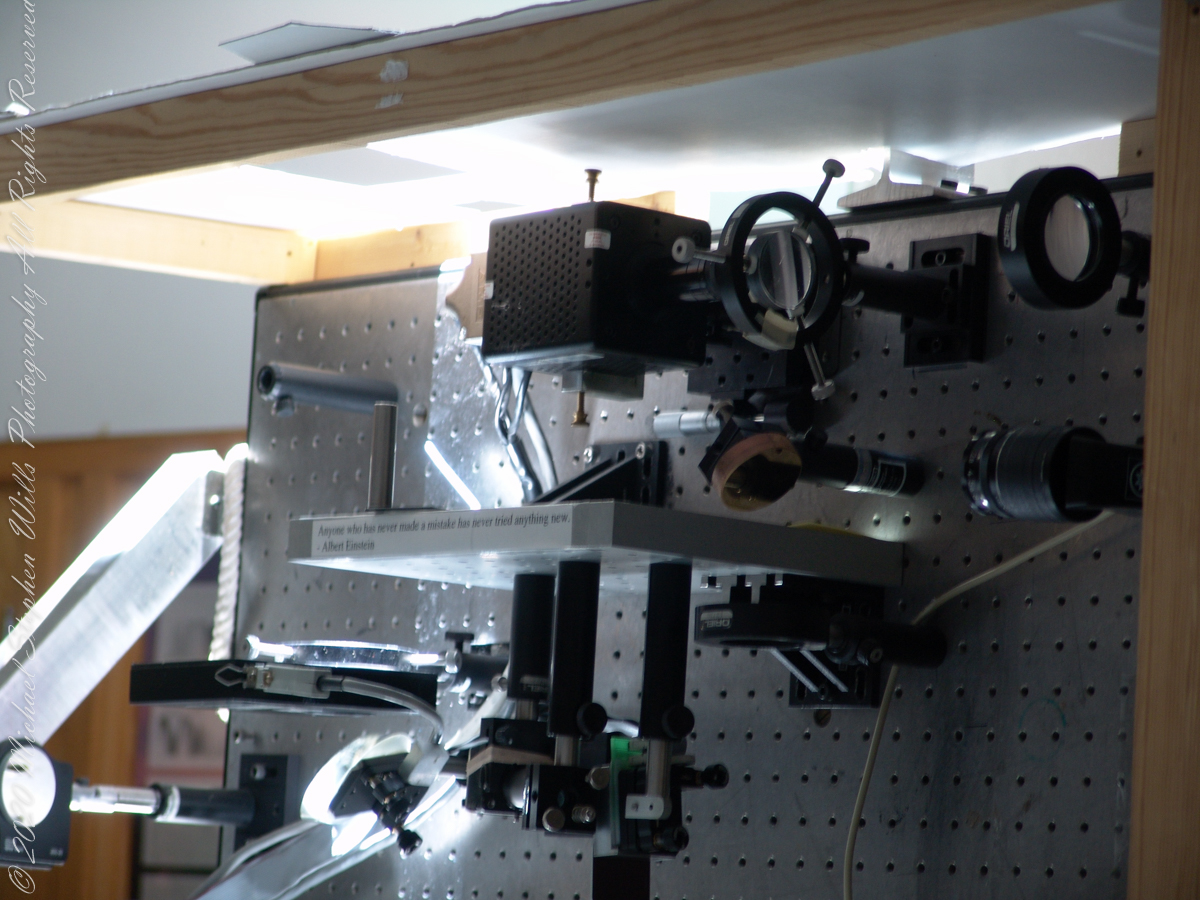
Bench Sitting Nature Watch

a monarch in steady progress south

On a sunny autumn morning we set out, my soon to be three grandson Sam and I, to the Lime Hollow Nature Center near Cortland for an adventure.  For the first time I brought a newly purchased iPhone 7 instead of the usual slr camera.  The phone can be carried in a pocket and is simpler to us, to allow me to give full attention to Sam.
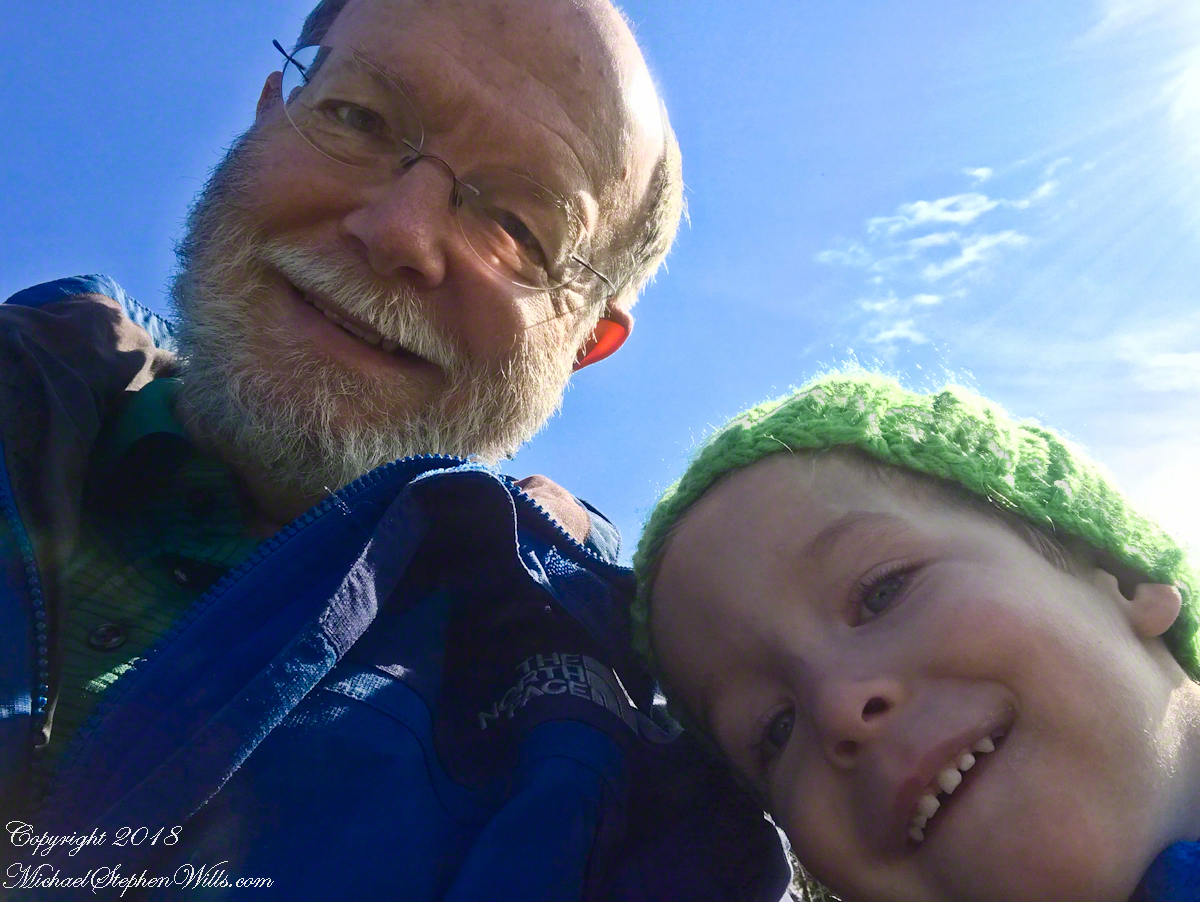
WillsSamuelJackBenchsitting20181014-1

At the start is a large, today sunlit, field with an “art trail.”  There are various anthropomorphic transformations on the trees and a very large sculpture of a blue face.  Here is a tree from another place near here, to give you an idea.
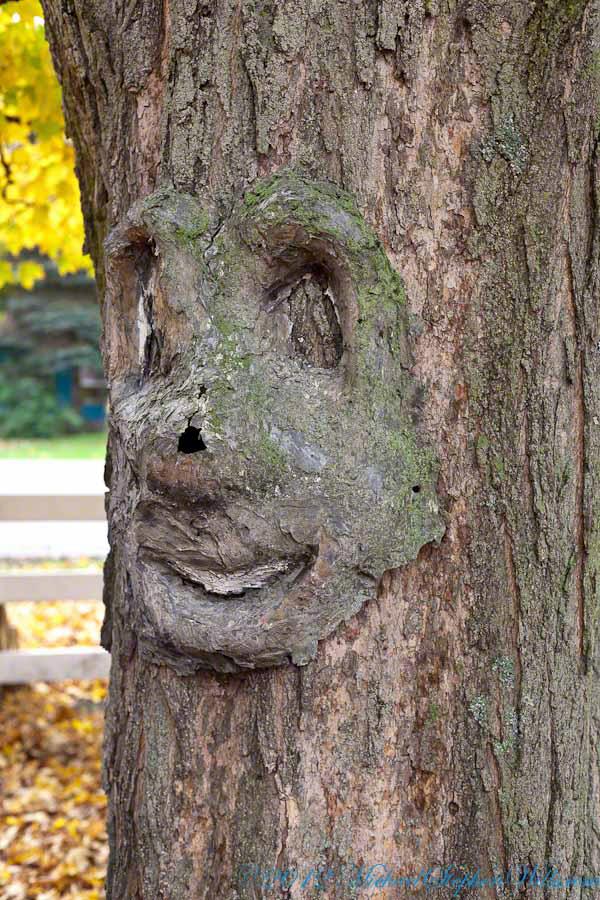
PumpkinFarmTreeFace2012

I do not point out the tree faces to Sam.  His Mom likes to say he enjoys being frightened and, when the blue face came into view, he turned back and said, “home.”  Sam was mildly anxious, so I carried him and tried to turn him up the trail away from the face.  He turned to keep an eye on it while I assured him it could not move.  This and a climb up a 230 foot hill were the only times he didn’t walk the half mile to a open grassy knoll with a bench.
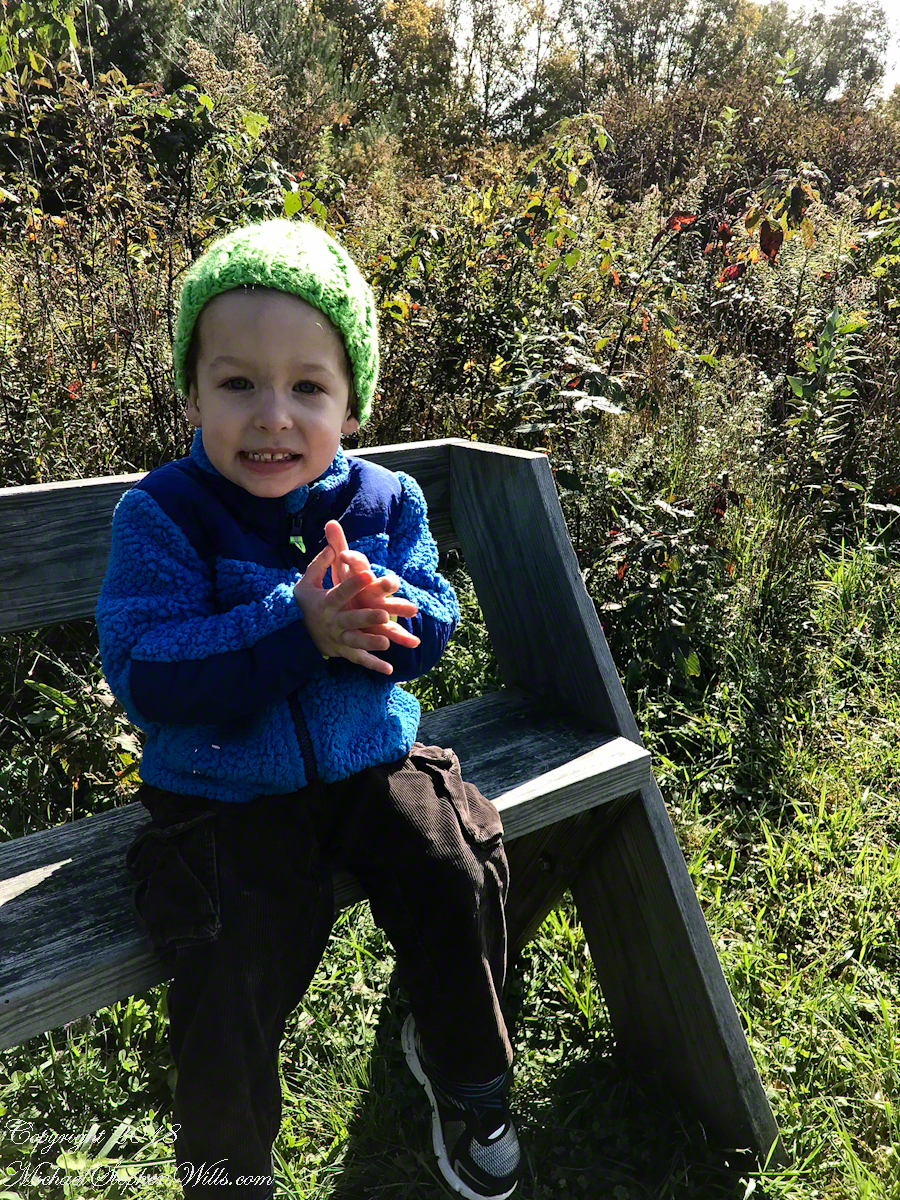
WillsSamuelJackBenchsitting20181014-2

There we sat for 30 minutes, still and watching, Sam and I talked about our sightings:
1. The sunlit sky of clouds, from a milky blue towards the north to, overhead, a bright robins egg blue.
2. A circling hawk, shadow crossing over us.
3. One blue jay in a maple turning red, loudly calling over and over.
4. A little while after a second jay, landing in a tree turned yellow, drawn in and giving answer.
5. A monarch butterfly’s steady progress south. Such a strong gliding path.
6. A yellow butterfly who did not leave us, fluttering round and round.
7. Four honking Canadian geese flying north east, turned to check out a nearby pond, the returned to the original heading.
8. The sound of wind through the trees, listening to the sound made by each tree.
9. The late season golden rod, now dried gray.
10. A distant chittering red squirrel.
11. Distant peeper frogs in the swamps at the foot of the hill.

Sam did not want to leave the bench, eventually we headed on to the pond the geese checked out.
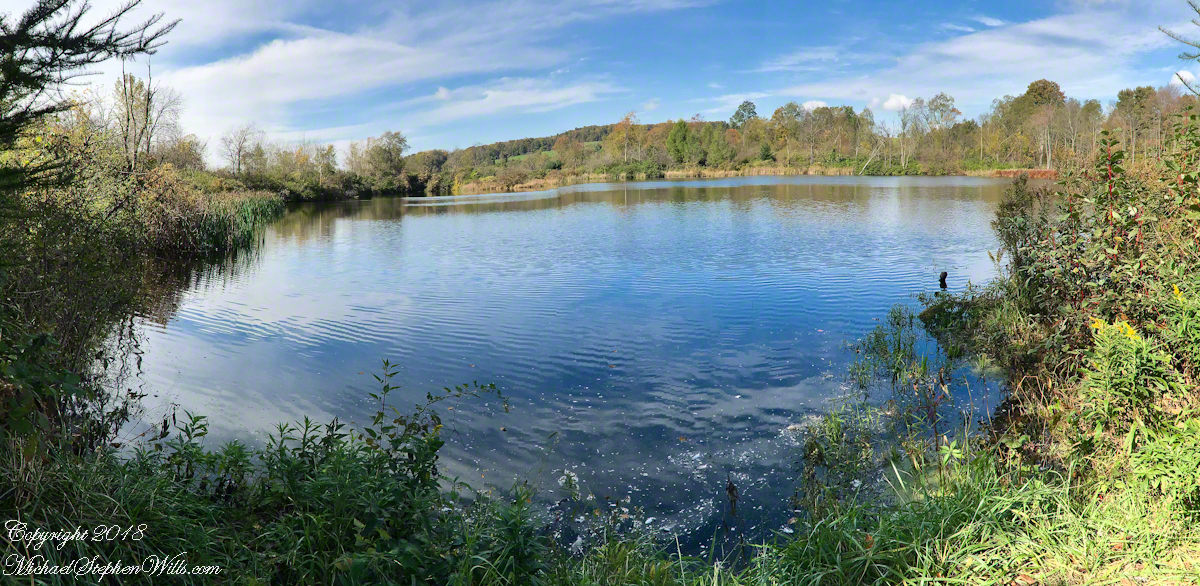
WillsSamuelJackBenchsitting20181014-3

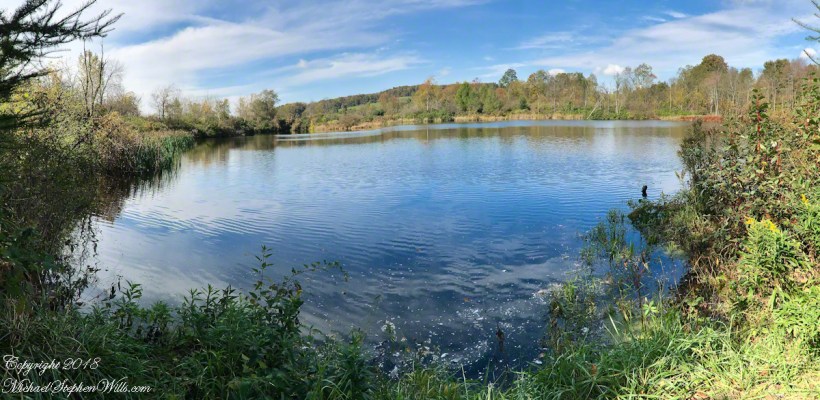
I used the “panoramic” feature of the iPhone 7 for this shot. On the hill we were sheltered by trees and bushes from the steady northeast wind. Here, on a bench by the pond, that direction was open to the wind. The sun kept us warm. It was clear why the geese did not land, the water surface was deserted, filled only by rippling wind driven waves.

On our walk back we sat on a bench on the edge of the art trail field, the blue face out of sight. A woman, the only other person encountered, emerged from one of the trails cut from the brush, camera in hand. She was collecting images for a Cortland Historical Society publication and asked to take our photograph. “OK,”, I said and gave the story of living here for 25 years in the house on Fall Creek where my son’s family lives now. She replied, “My daughter is in San Francisco. We don’t know who will have our house when we are gone.”

Click me for “Celestial Geese with two haiku by Issa”.
Copyright 2022 Michael Stephen Wills All Rights Reserved

Getting It Right

Use comments to name your preference with rational (if any)
Thank You

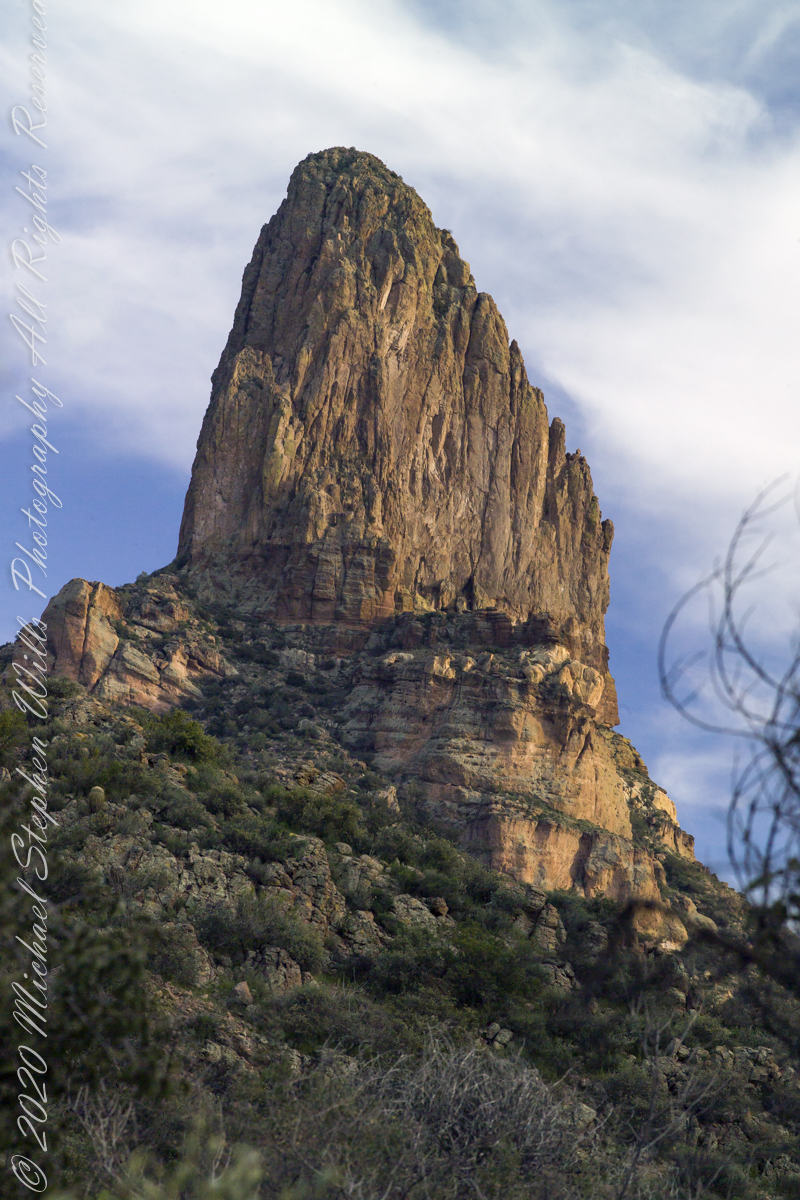
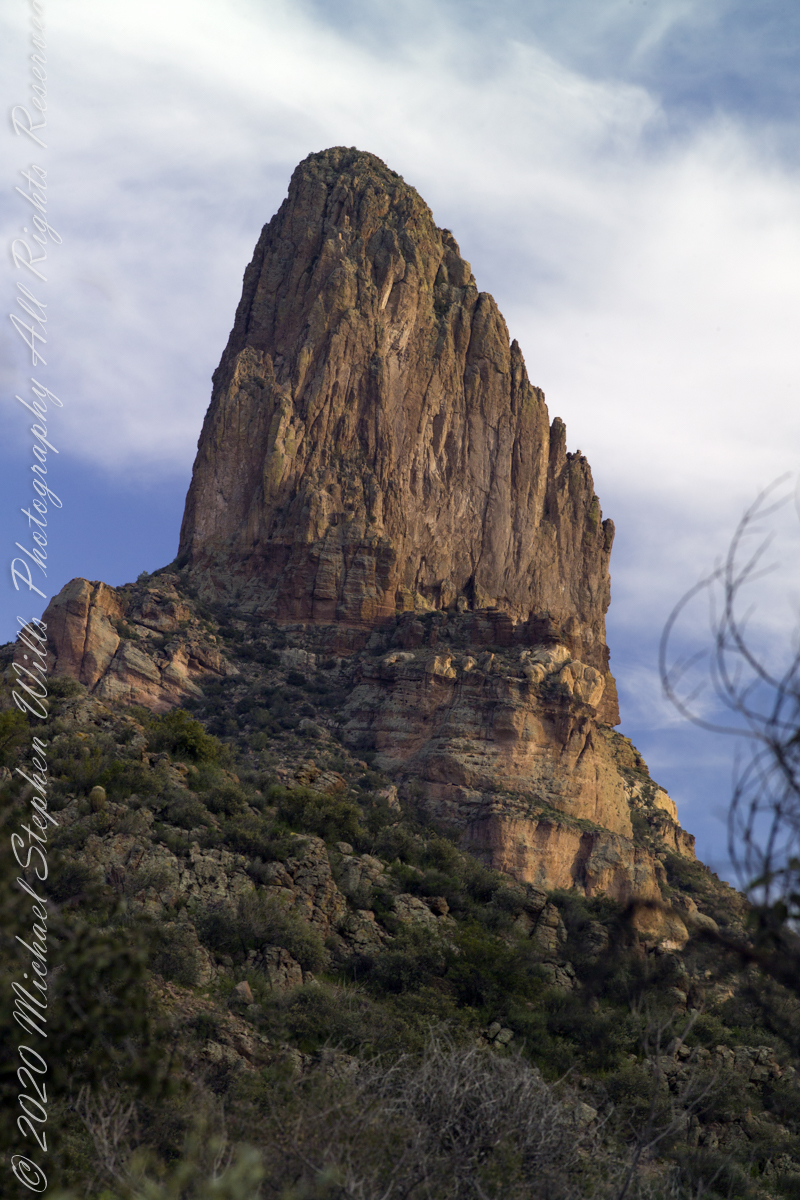
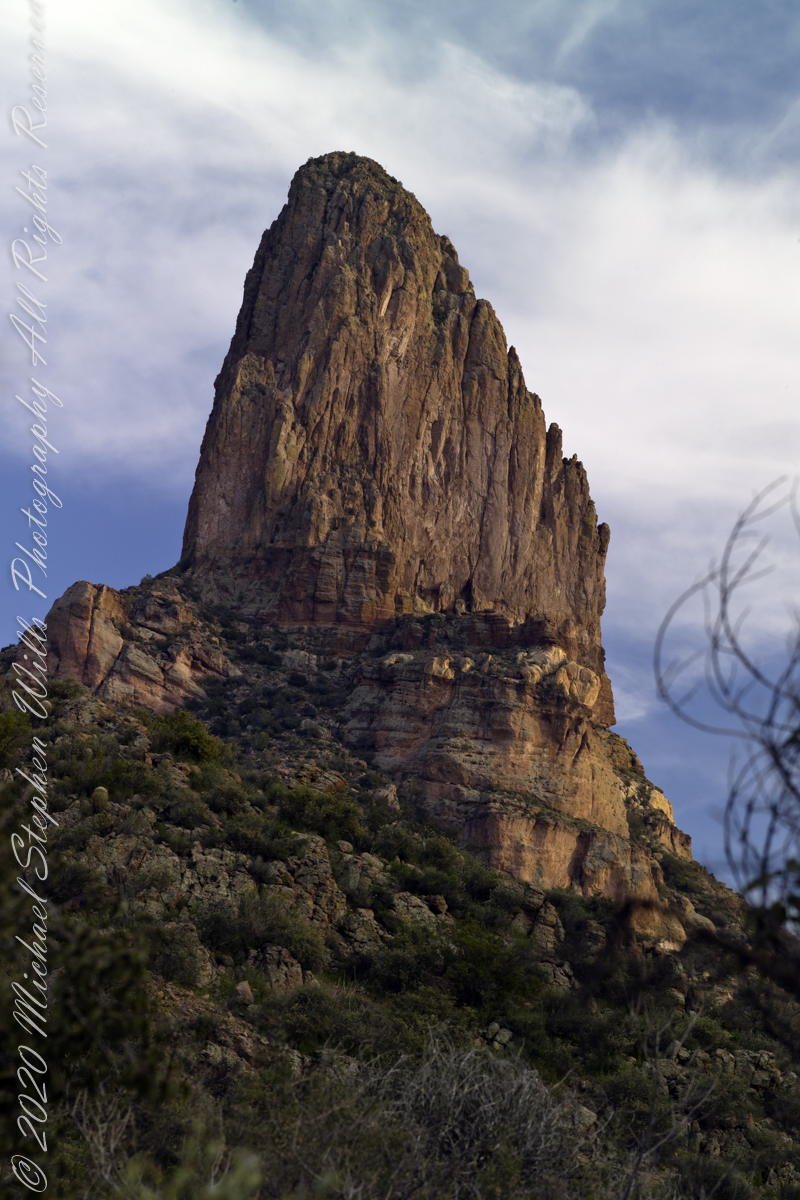
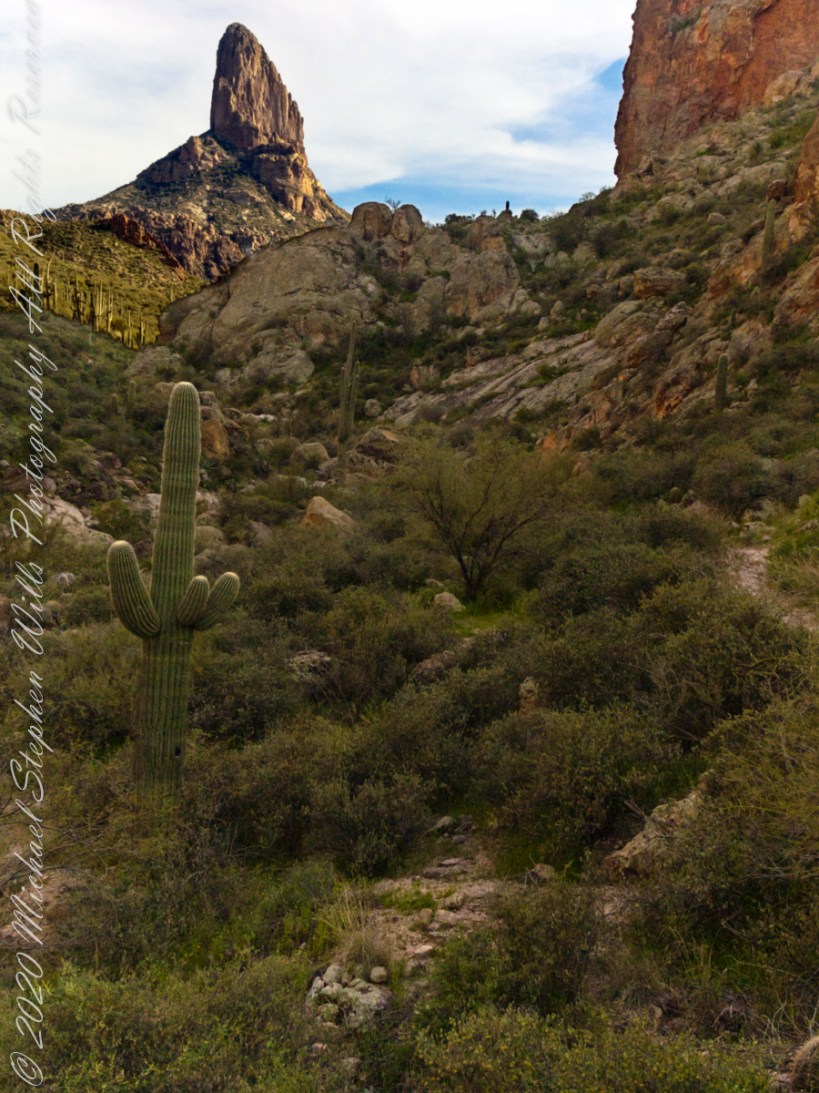
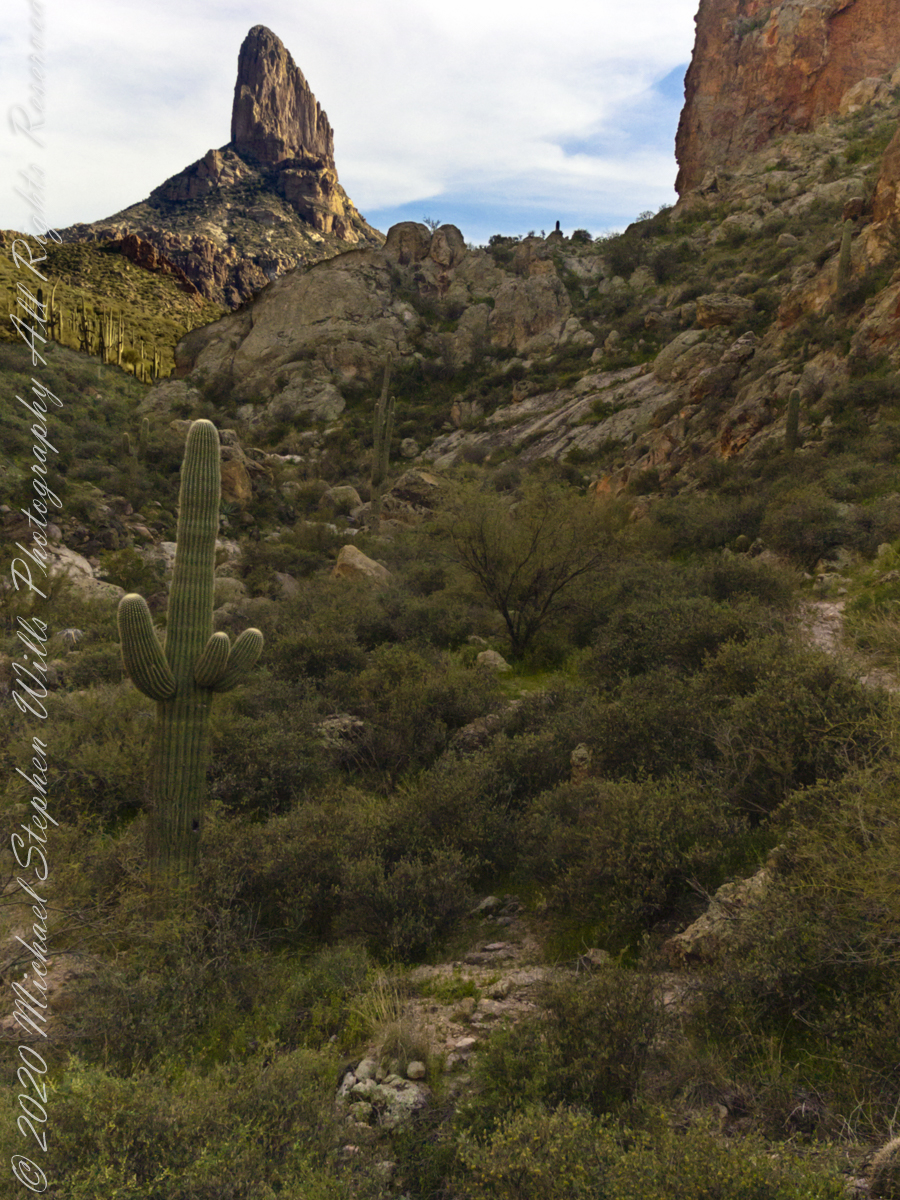
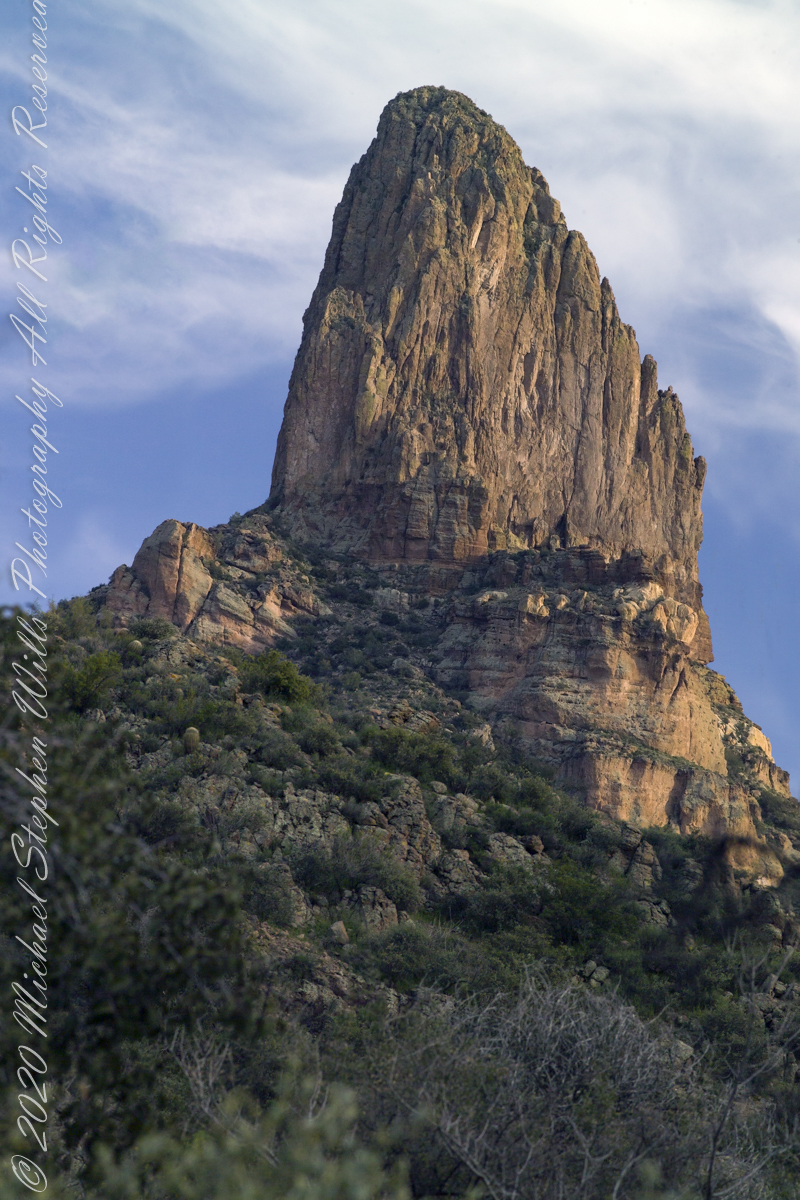
I cannot pick a favorite version from this series taken at sunset with a Canon 200 mm lens. Can you? If you have a choice, please name it in comments.
Click Me for my Online Gallery

Copyright 2022 Michael Stephen Wills All Rights Reserved

Legend

The Lost Mine

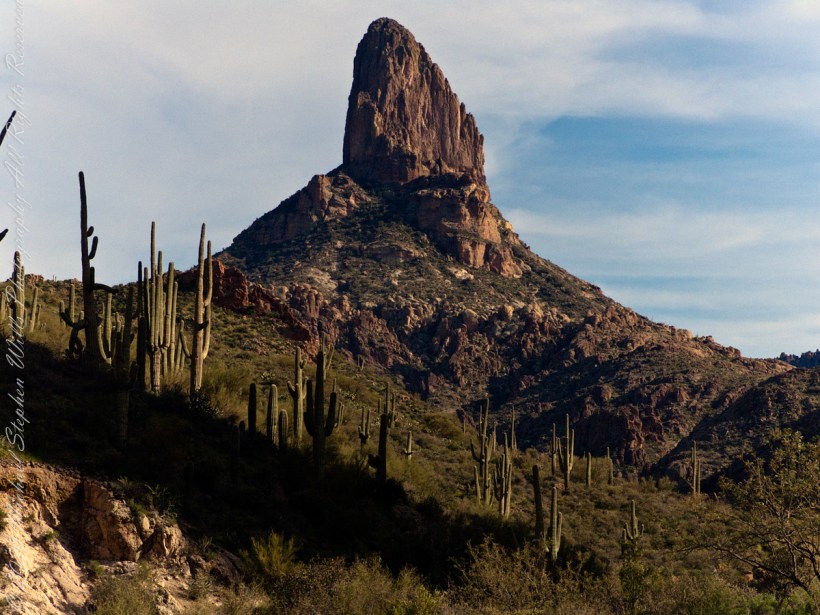
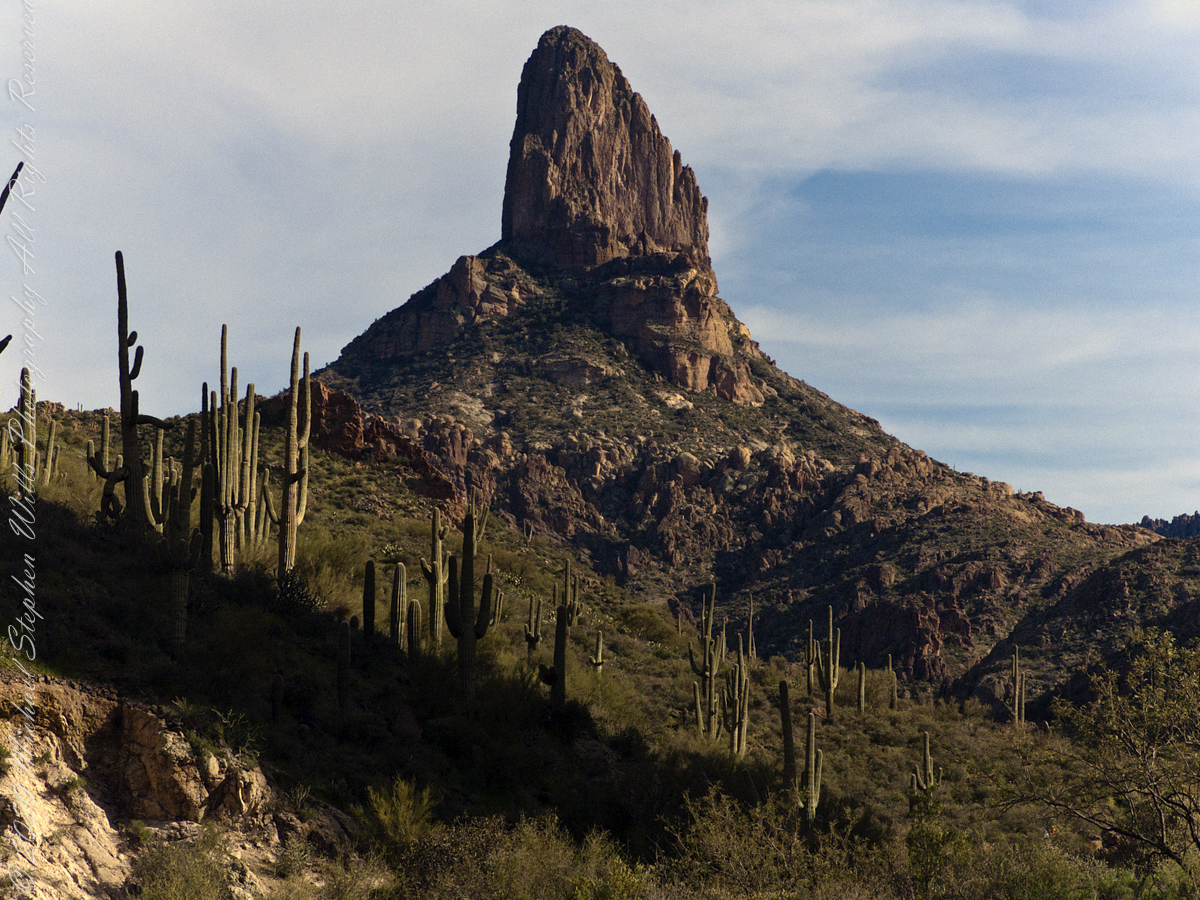
It is ironical the word “legend,” from the Latin verb “to read,” is the word used to describe the ahistorical stories, rumors really, of the Superstition Wilderness anchored, concurrently undermined, with the hard facts of geology. “Named for Paulino Weaver, a famed mountain man, scout, trapper and miner, Weavers Needle is a volcanic monolith that rises almost 1,300 feet from its base to an elevation of 4,553 feet. It’s the most recognizable landmark in the wilderness, and it’s also considered a marker for the legendary Peralta Mine.” — Arizona Highways

Click Me for my Online Gallery

“As the story goes, Don Miguel de Peralta and his family, who had come to the Superstition Mountains from Mexico, discovered gold, lots of gold, in the shadow of Weavers Needle. However, before cashing in, according to the story, they were killed by Apaches, who allegedly sealed off the mine. A few decades later, Jacob Waltz, better known as the “Lost Dutchman,” claimed to have found the old Peralta Mine, but he died before proving his claim. Since then, thousands of treasure hunters have gone looking, including Arthur Weber and the Dons of Phoenix, but no one has ever found the gold. And it’s unlikely anyone ever will — the volcanic rock out there isn’t conducive to producing precious metals. They’ll keep looking, though. Meantime, the real treasure is the trail. Especially in the springtime, when the ground is covered with gold. ” –Arizona Highways

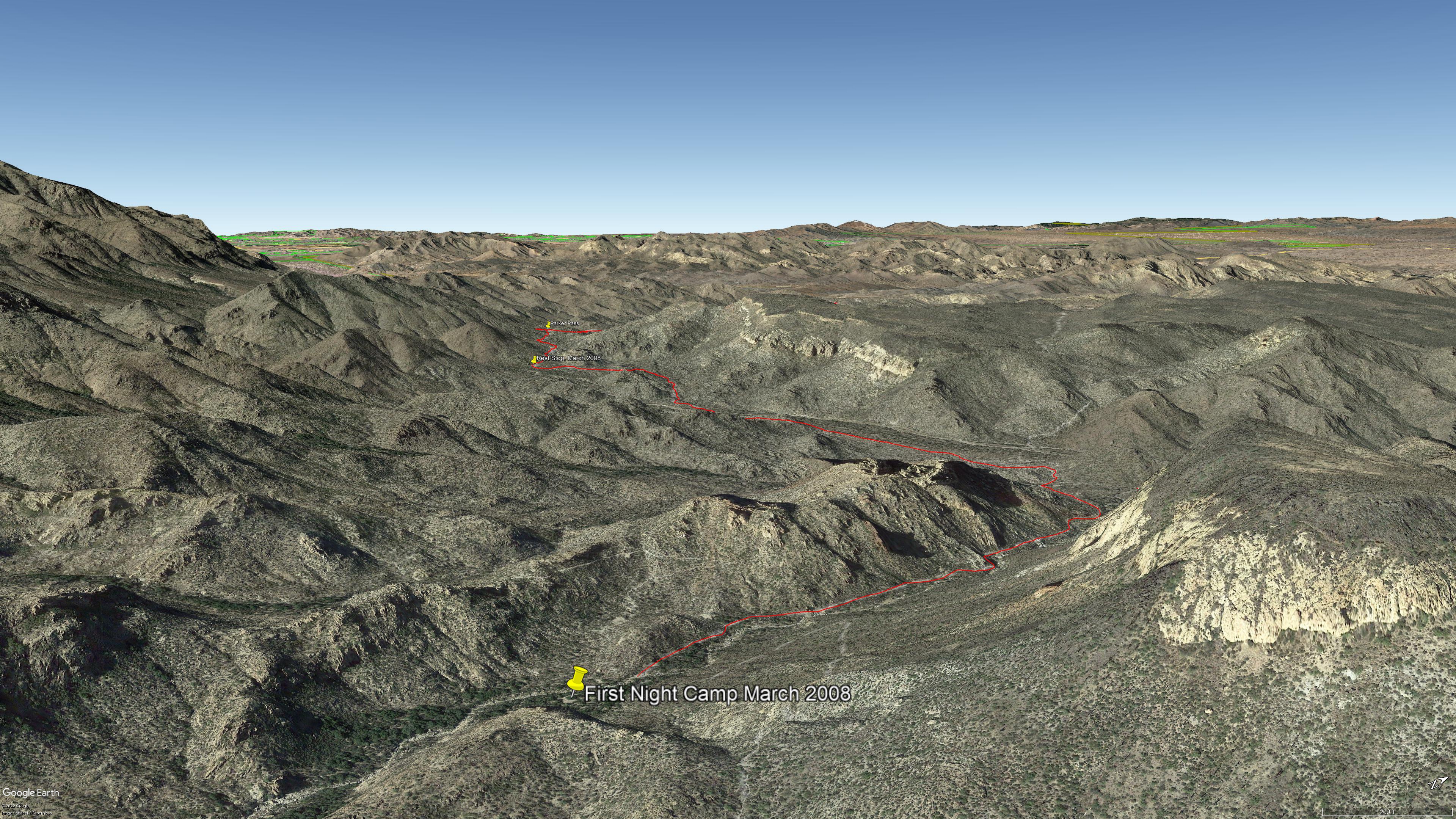
Here is a view of part of the day’s trail. We started at 1911 feet elevation, Apache Junction, topping 2693, Parker Pass, with 2512 our resting spot with many ups and downs in between: a combined descent of 1760. Our rest was well earned. Palamino Mountain is on the left, Black Top Mesa the right. Look carefully to see the Peralta Trail surmounting Palamino Mountain ridge, descending in a zigzag to Boulder Canyon where it terminates on Dutchman Trail.

Click me for more information about the Peralta Trail from Arizona Highways.

Copyright 2022 Michael Stephen Wills All Rights Reserved

A Time for Rest

Enter the family name “Peralta”

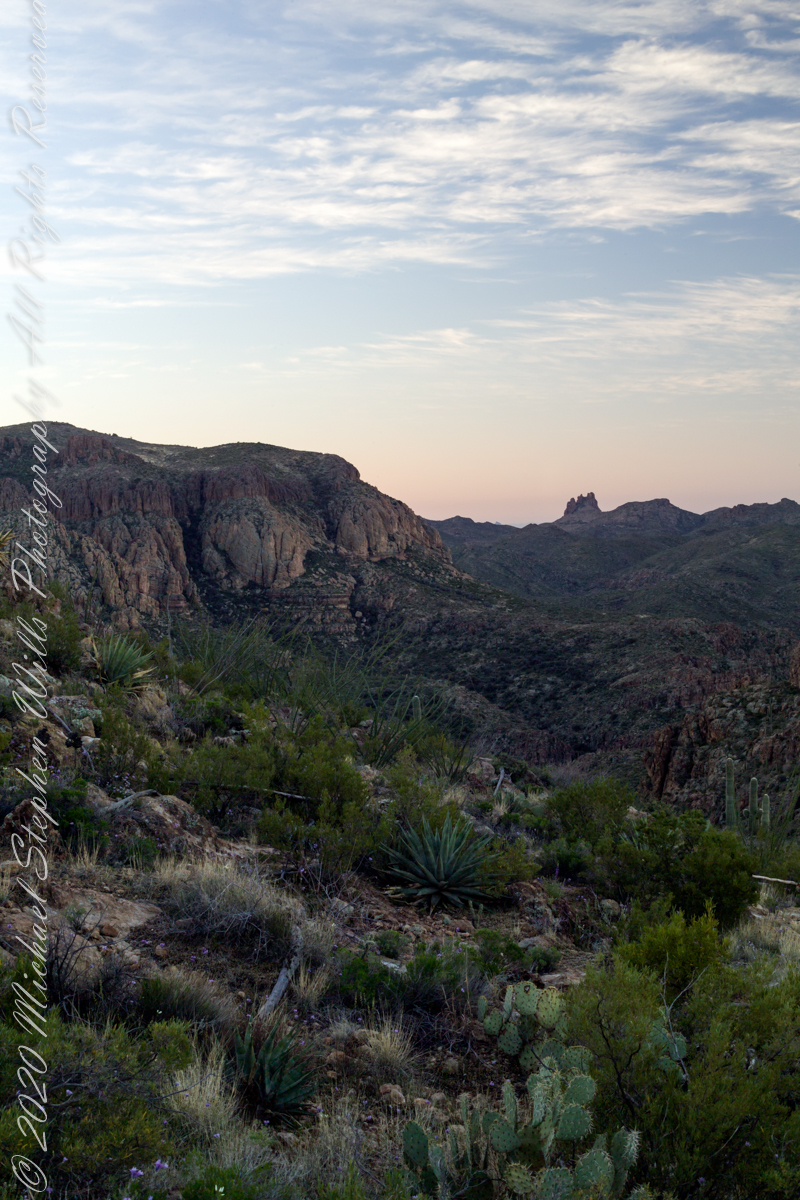
Our eleven-mile trek from Apache Junction ended here between Black Top Mesa and Palamino Mountain. Peralta trail winds up the ridge to right with Weaver’s Needle beyond in the setting sun.

Click Me for my Online Gallery

Deep shade combined with the distant sunlit needle made for a difficult photographic capture. In fact, this picture needed significant work in Photoshop. I wore the 8 megapixel Sony F828 to capture the handheld shots of this series. A few days later I dropped the camera while riding Colorado, rendering it inoperable. This was when I acquired my Sony Alpha 700 during downtime in Phoenix. Later, the F828 was repaired at Sony and is still operable.

Click me for more information about this camera.

Copyright 2022 Michael Stephen Wills All Rights Reserved

Horse Camp

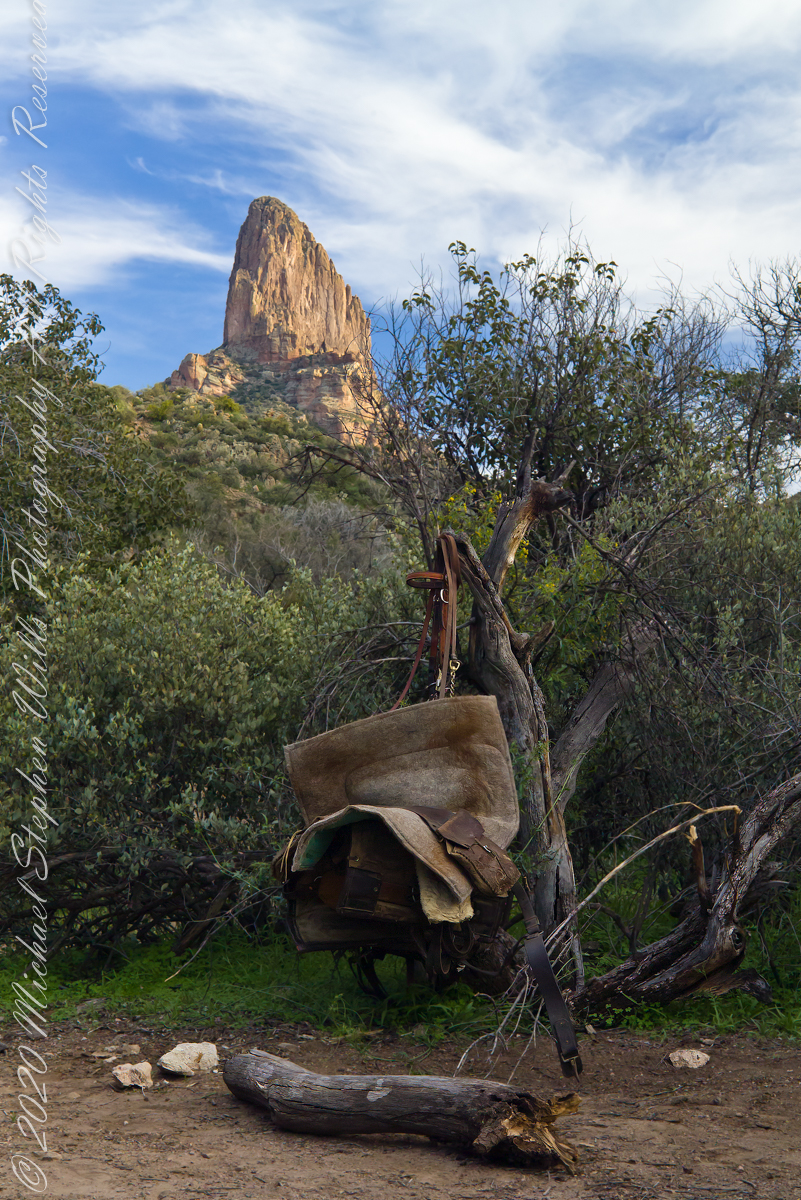
Western Still Life

The end of a day trekking to East Boulder Canyon at the foot of Weaver’s Needle, Superstition Wilderness. I had a light pack with the camera equipment and supplies packed in on horseback.

Click Me for my Online Gallery


Click me for another Superstition Wilderness Episode

Copyright 2022 Michael Stephen Wills All Rights Reserved

Peter’s Mesa Sunrise/Sunset

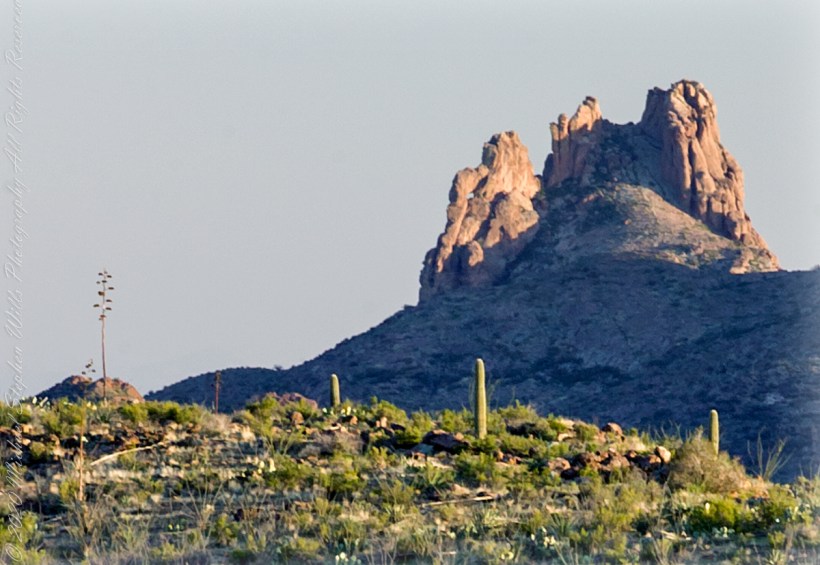
Can You Find the Eye of the Needle?

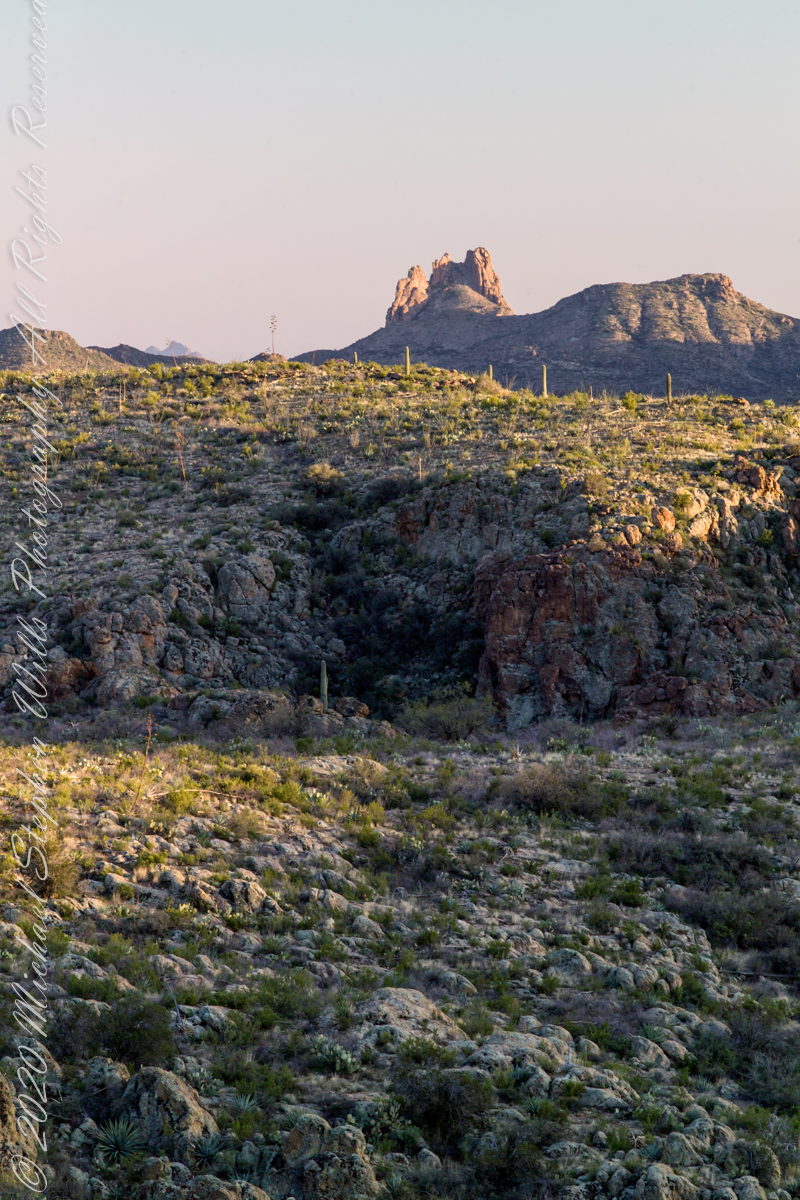
I was a member of an expedition to Peter’s Mesa March 2008, a place central to Superstition Wilderness treasure legends. This is a sunset view, looking south, southwest. Light raking across the desolation and Miner’s Needle creates a fascinating spectacle. Ancient volcanism, apparent throughout the Superstition Wilderness, is here seen in the texture, form and type of rock as well as the mineral deposits. Miner’s Needle, like Weaver’s Needle (not seen in this view), are eroded volcanic summits. Look closely for the “eye” of Miner’s Needle, easier seen in the cropped heading photograph. To this day, hopeful prospectors search for gold nuggets.

There is one form of volcanism present today as an eerie rumble or hiss, similar to an enormous distant jet engine heard now and then during our two days on the mesa, louder and closer than an overhead plane could produce. The view includes many notable Sonoran Desert plants. Many young Saguaro cactus are in the form of green poles. Catching the dramatic light, on the ridge is a tall single flower of an Agave, known as the “Century Plant” it flowers once in a long life and dies.

Click Me for my Online Gallery

Peters Mesa is named after “Old Pete” Gottfried Petrasch, father of Hermann and Rhiney Petrasch. Old Pete worked for Jim Bark for awhile in the 1890s doing odd jobs. Irregular employment gave Pete and Sons time to s searched for the Lost Dutchman Mine in the years following the death of the source of the legend, the “Dutchman” Jacob Waltz. The Petrasches were one of the first groups to search for the mine, and gold in general. They covered almost the entire Superstition range in their combined searches.

On our first day on the mesa, we came across the remains of one of these camps, on the top of Squaw Canyon, a deplorable junk pile discarded by searchers, presumably disappointed, too lazy to cart it out. That March, we were lucky to find the remnants of winter rains in the form of a meager trickle at the bottom of a shallow draw off Peter’s Mesa trail up from La Barge canyon. We had a good time of it until the trip was cut short by a storm front and torrential rains. We were back in Apache Junction before they hit.


Click me for another Superstition Wilderness Episode

Copyright 2022 Michael Stephen Wills All Rights Reserved

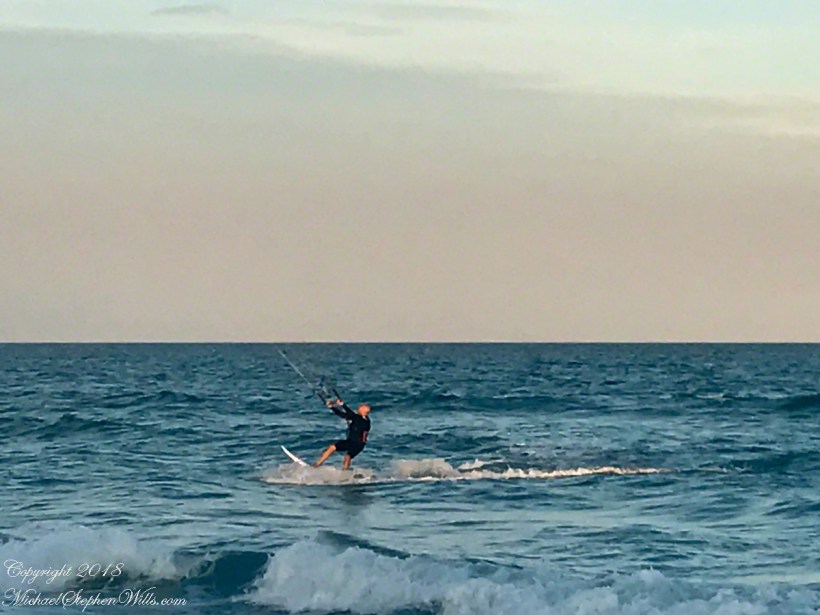
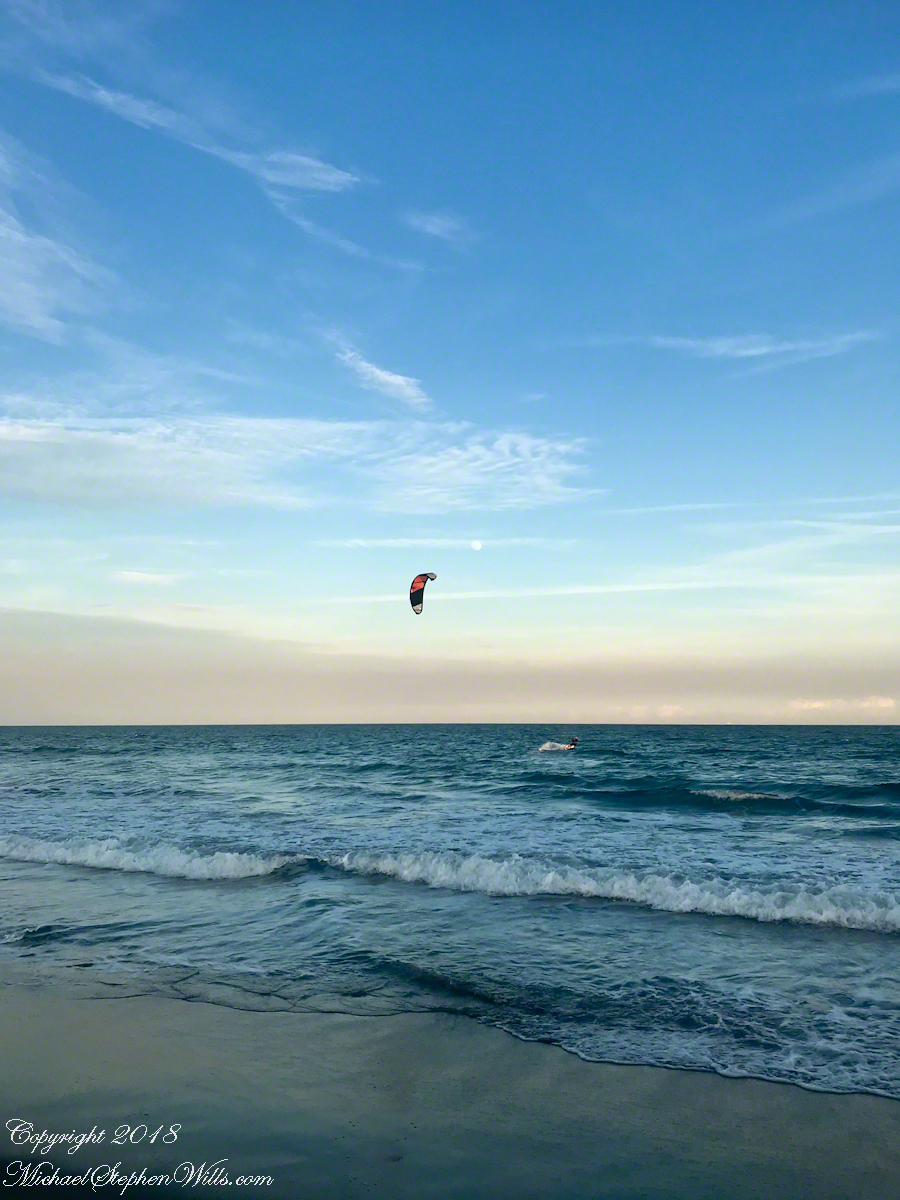
Sunset Visions of Kite Surfing

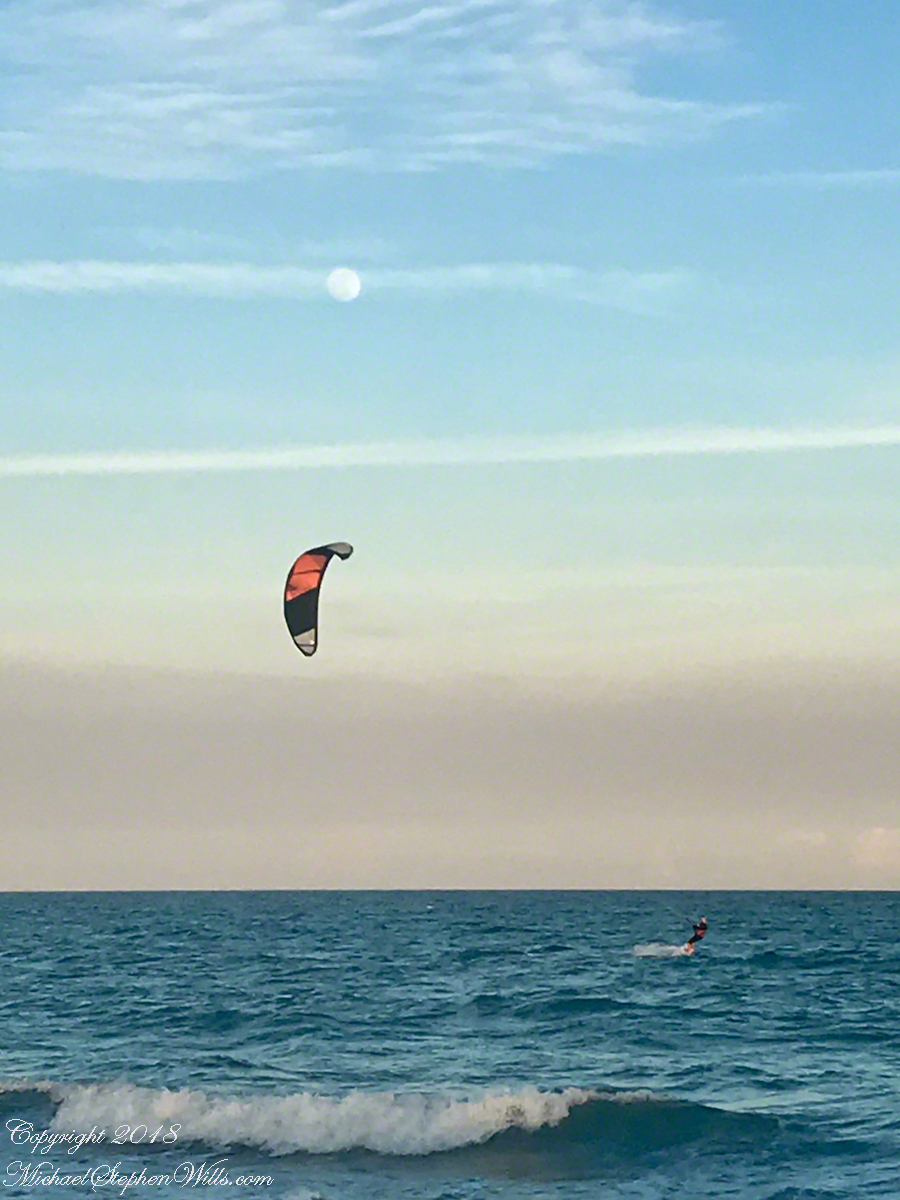
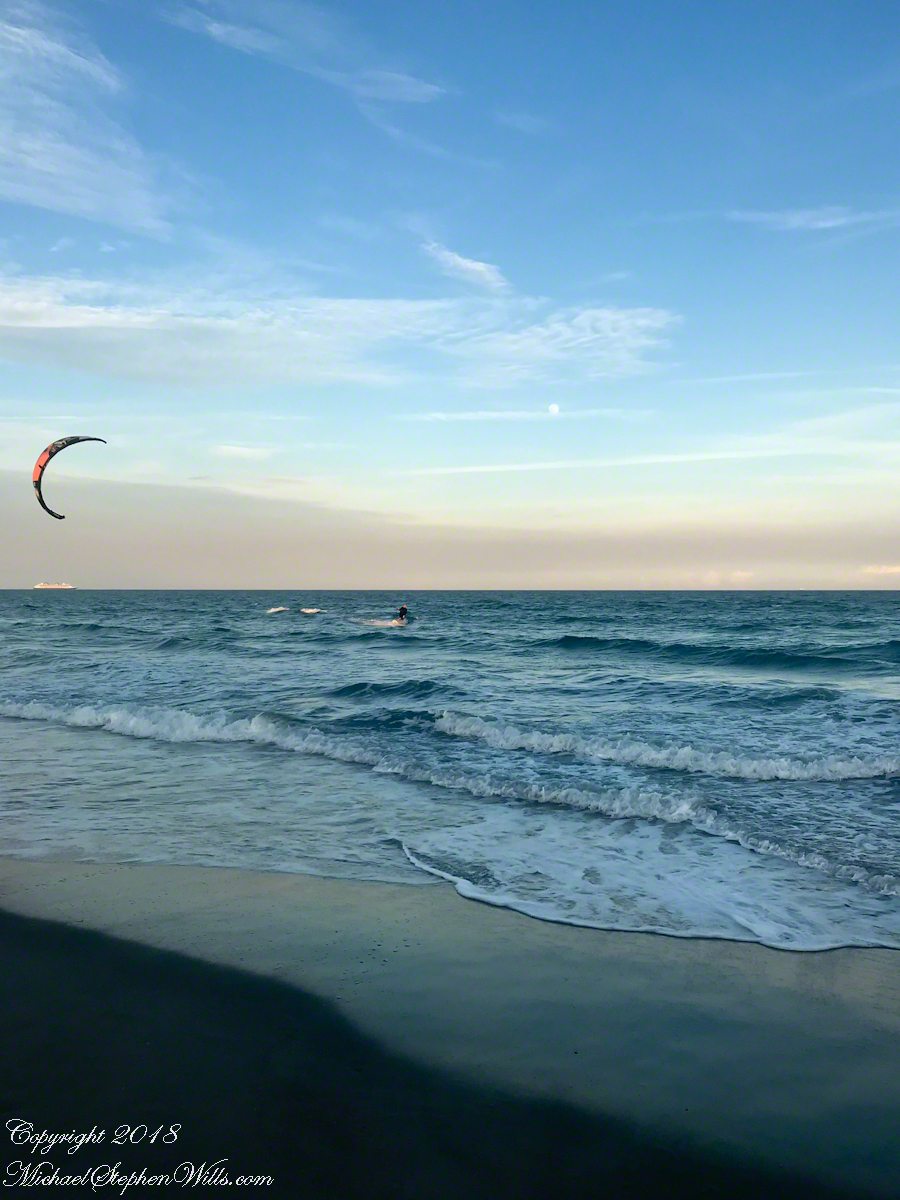
One day before the 2019 Total Lunar Eclipse a full moon rose 4:25 pm above the Atlantic Ocean off Cocoa Beach, the “Space Coast” of Florida. We saw a power kite to the south, with the southerly winds there was time before he was on us. I took the following photographs with what was at hand, an iPhone 8.

Risen Full Moon and Surf Boarder at Sunset

Click any photograph to visit my Online Fine Art Photography Gallery

At 50 minutes post moonrise, I included the orb in this frame as the rider tacked, rising a water crest.

Risen Full Moon and Surf Boarder at Sunset

A flick of the fingers to zoom in, the moon and rider are together as he rides toward shore.

Risen Full Moon and Surf Boarder at Sunset with cruise ship

This time of, Saturdays, the cruise ships depart Cape Canaveral Port. The kite is above the distant ship. It is amazing the kite allows sailing into the wind, his heading is southwest. The shore limits his progress, forcing a tack towards a southeast heading.

Kite Surfer coming to shore at sunset.

Or not, it seems he plans to tack to the northeast, continuing progress north up the coast. I have to wonder how he will return to the starting point?

Copyright 2022 All Rights Reserved Michael Stephen Wills

Kite Surfing Action Series

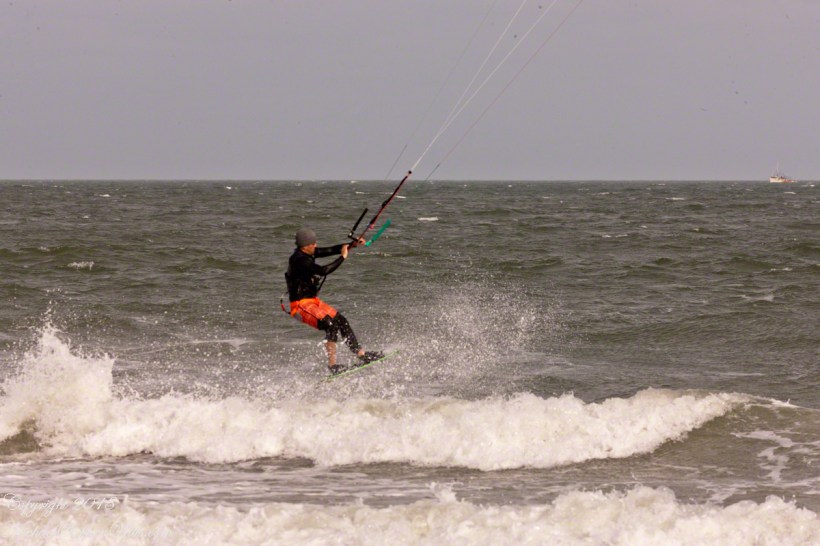
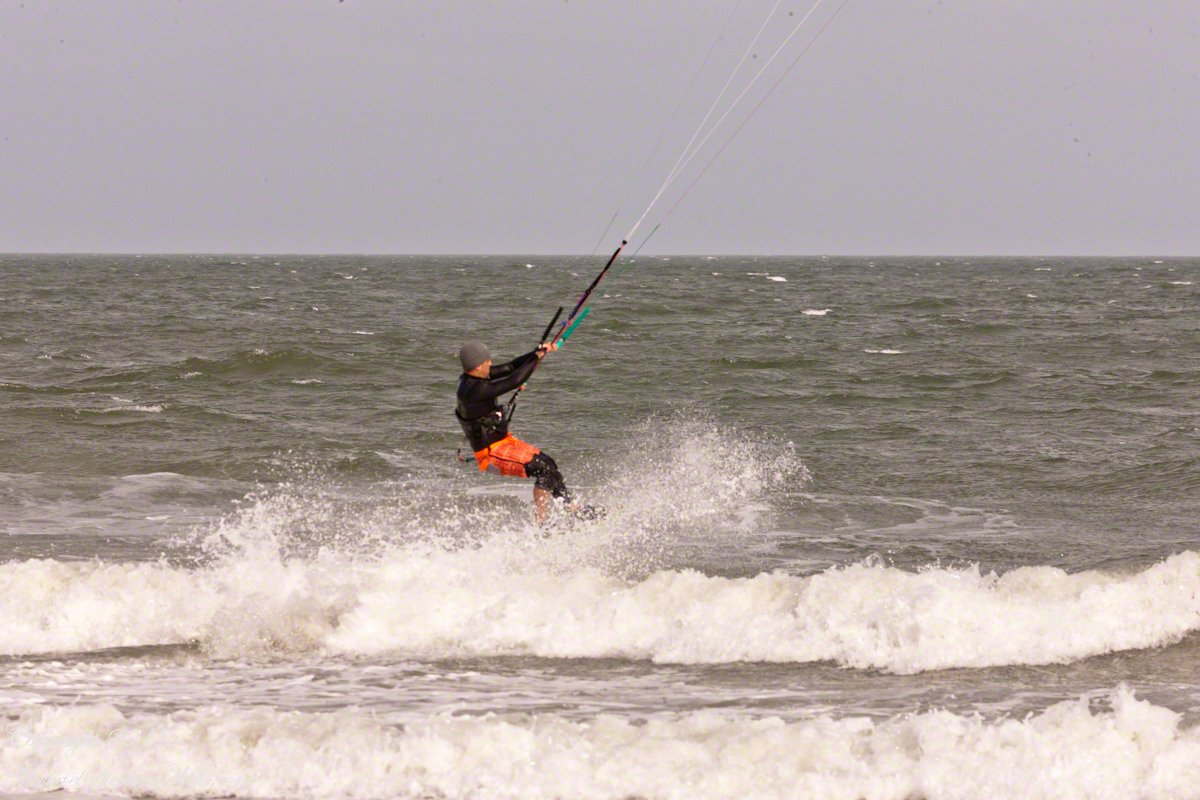
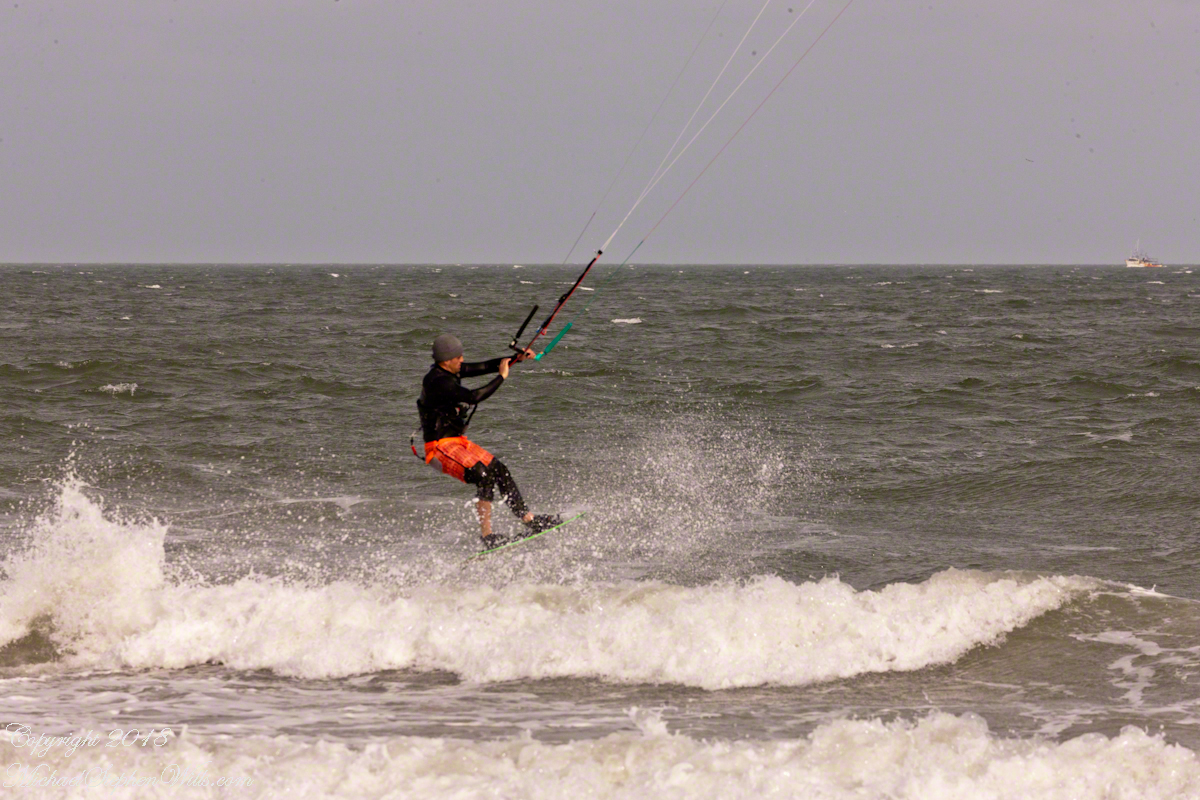
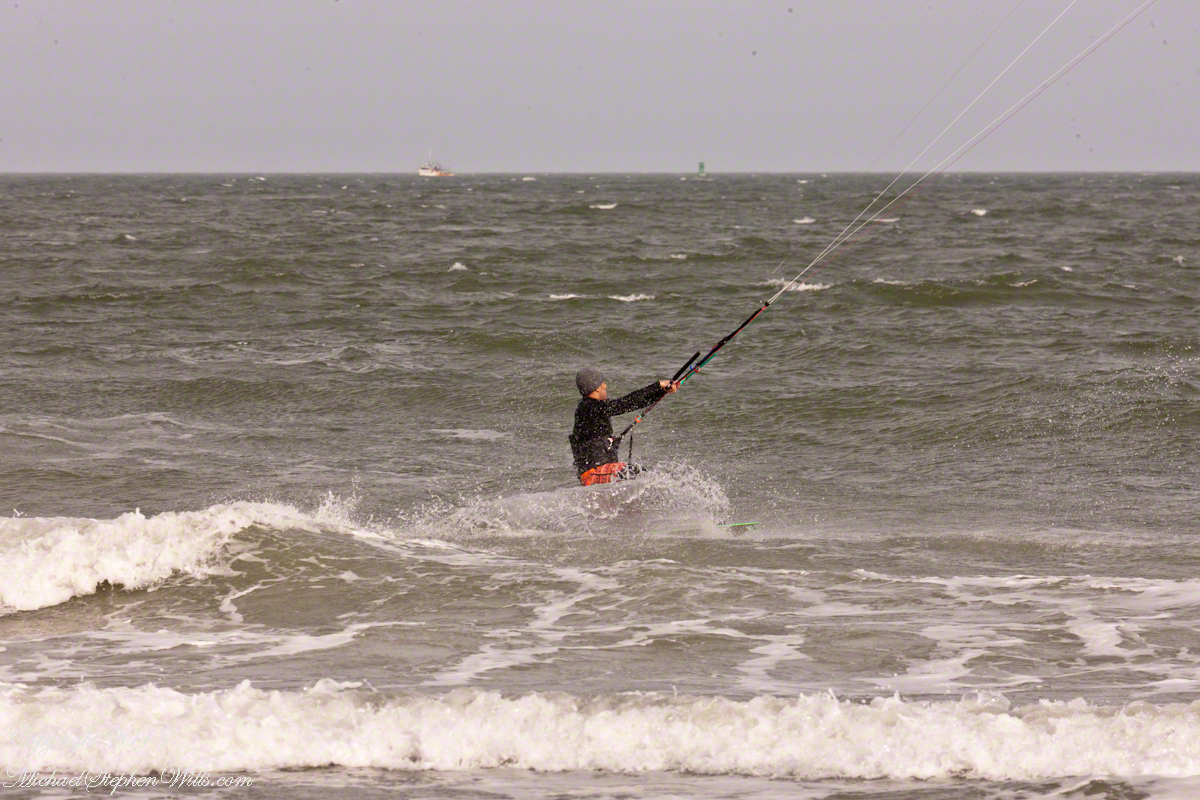
three shots in one second

For a change of scene we visited Cape Canaveral, the beach at Cherie Down Park were an informal gathering of Kite Surfers was underway. Here is a series of action shots, one second elapsed from first to last.

Click the photograph for my Online Galleries
Click any photograph for my Online Galleries

Conditions were excellent: good northerly wind, the sun overcast and, it being afternoon, in the west. Surfers stayed relatively close to shore, near their starting point. I had packed the “heavy gun” camera with a tripod.

Click the photograph for my OnLine Galleries

Panning the scene (swiveling on the tripod), the camera in rapid exposure mode, I pressed the shutter release and held it down.

Click the photograph for my Online Galleries

The surfer was captured mid-jump to landing.


Copyright 2022 All Rights Reserved Michael Stephen Wills

McMath-Pierce Solar Telescope – 3

Adaptive optics

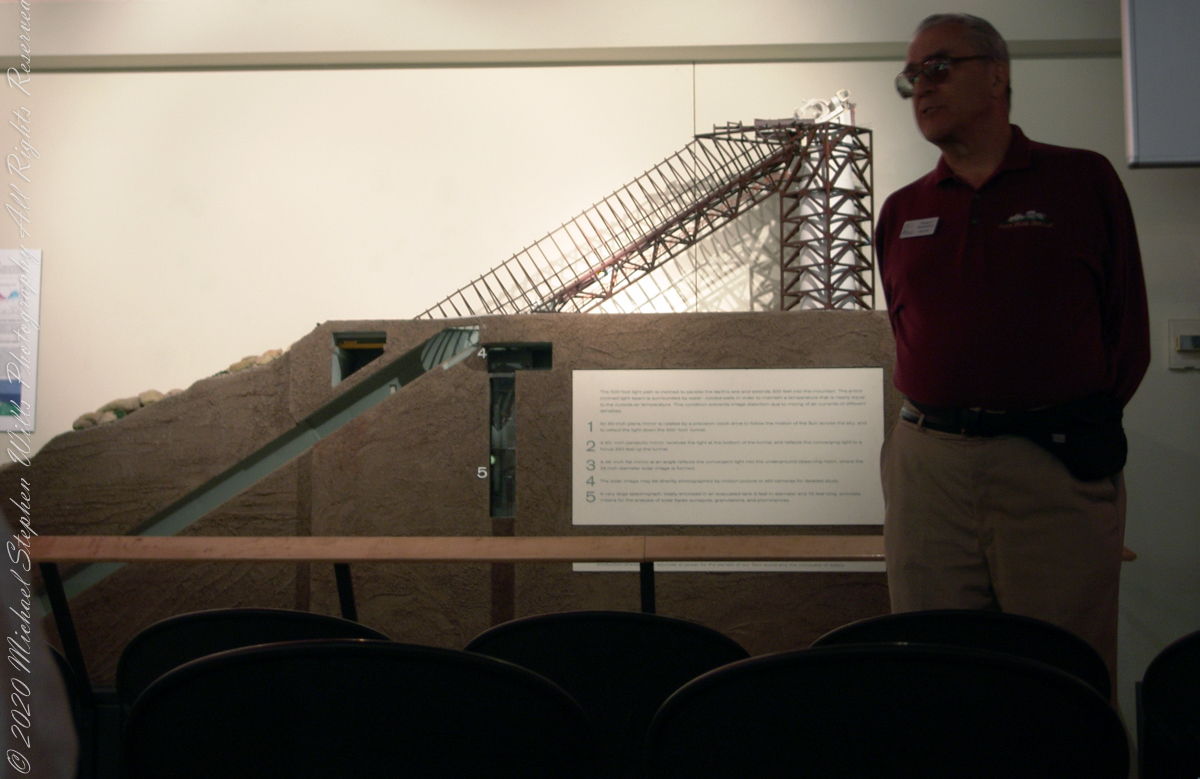
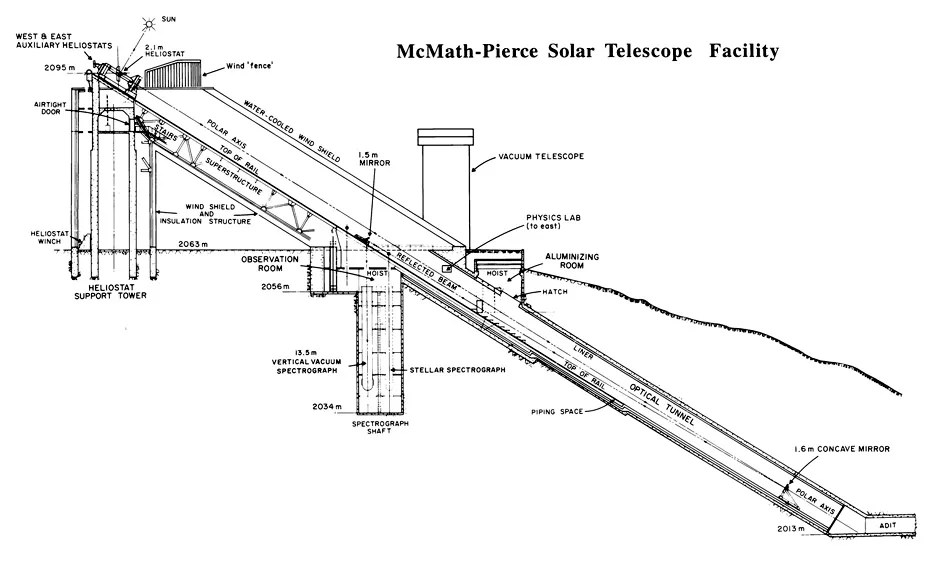
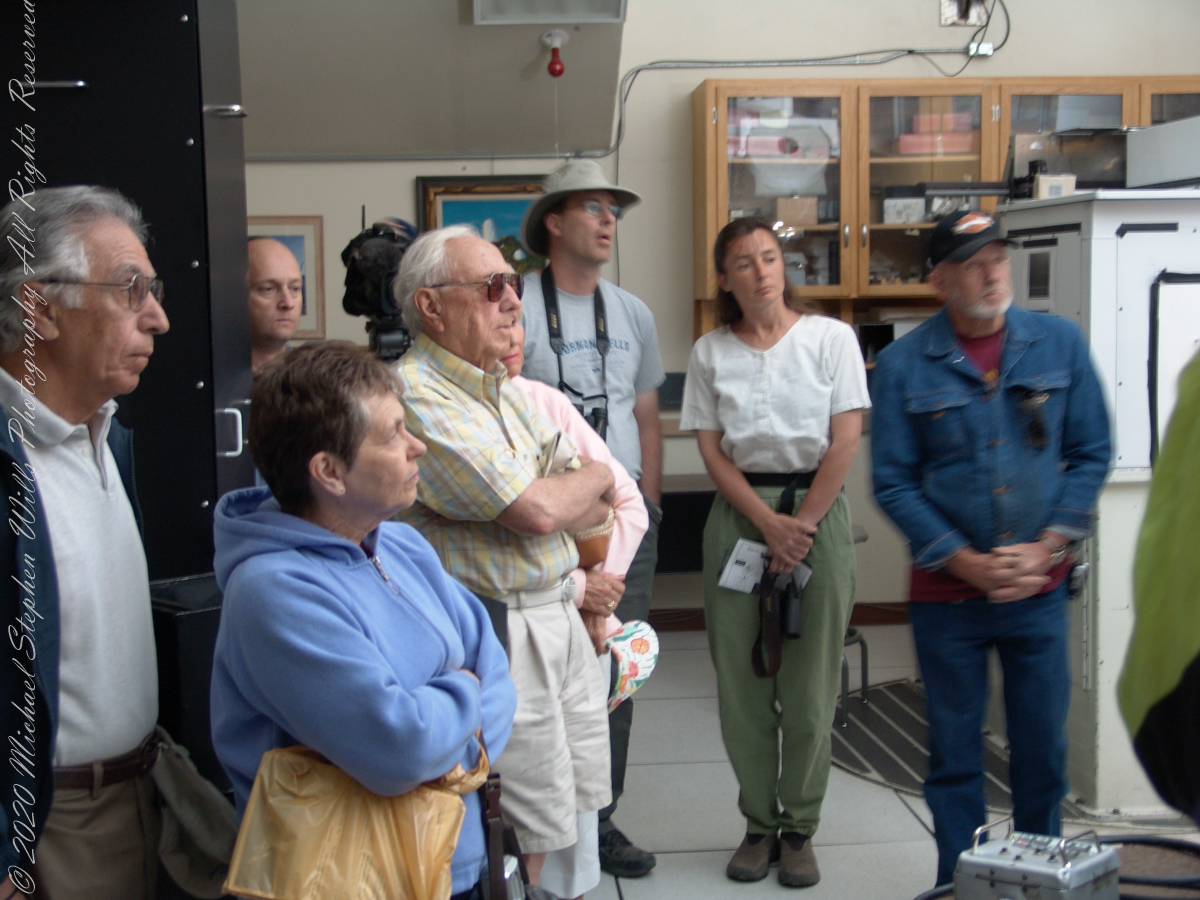
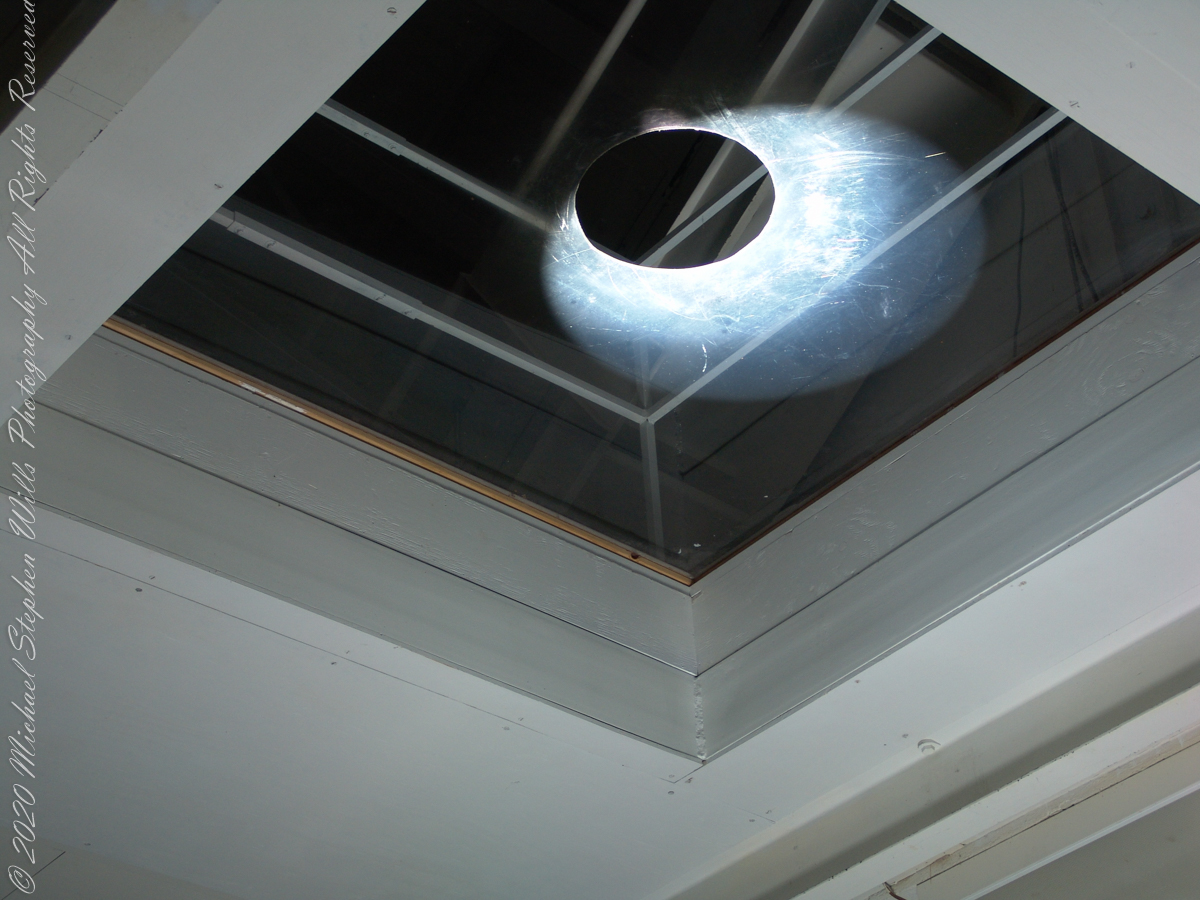
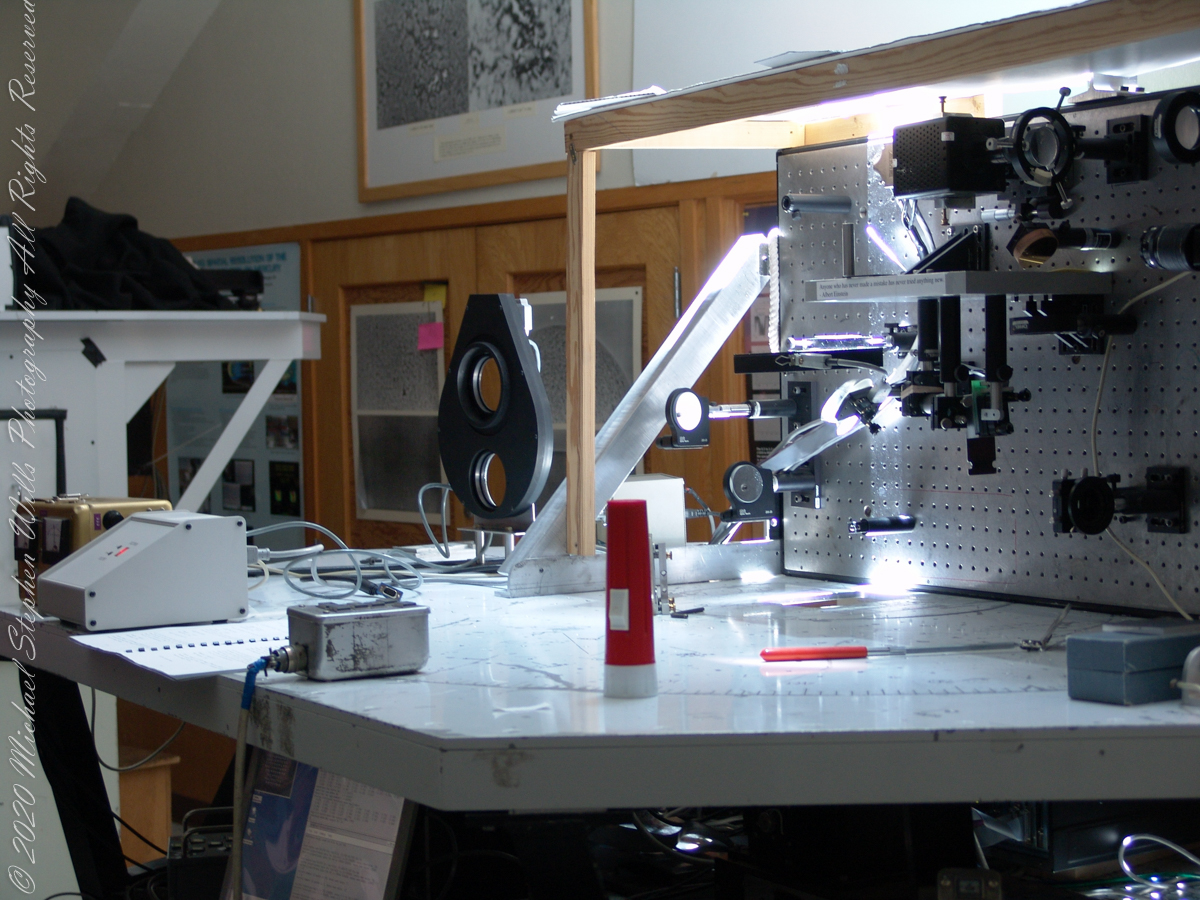
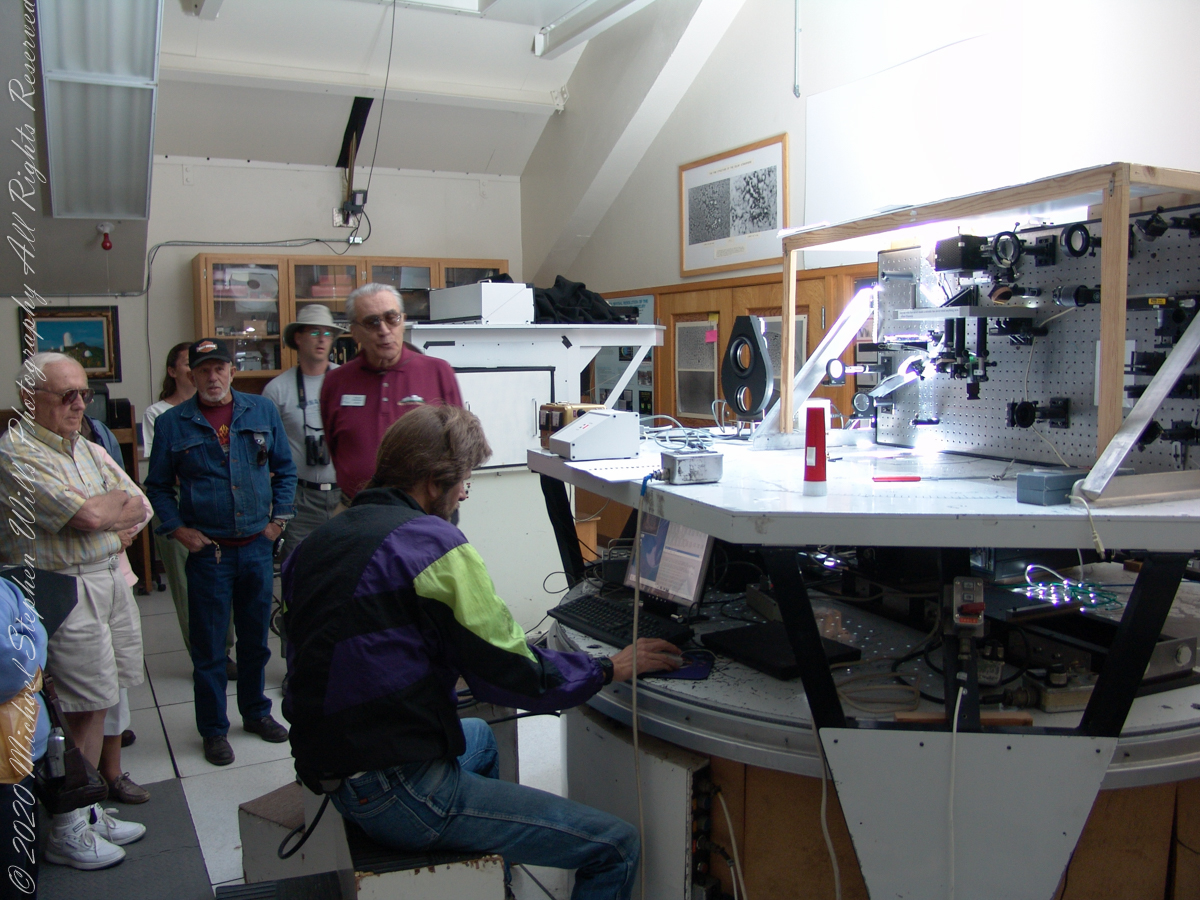
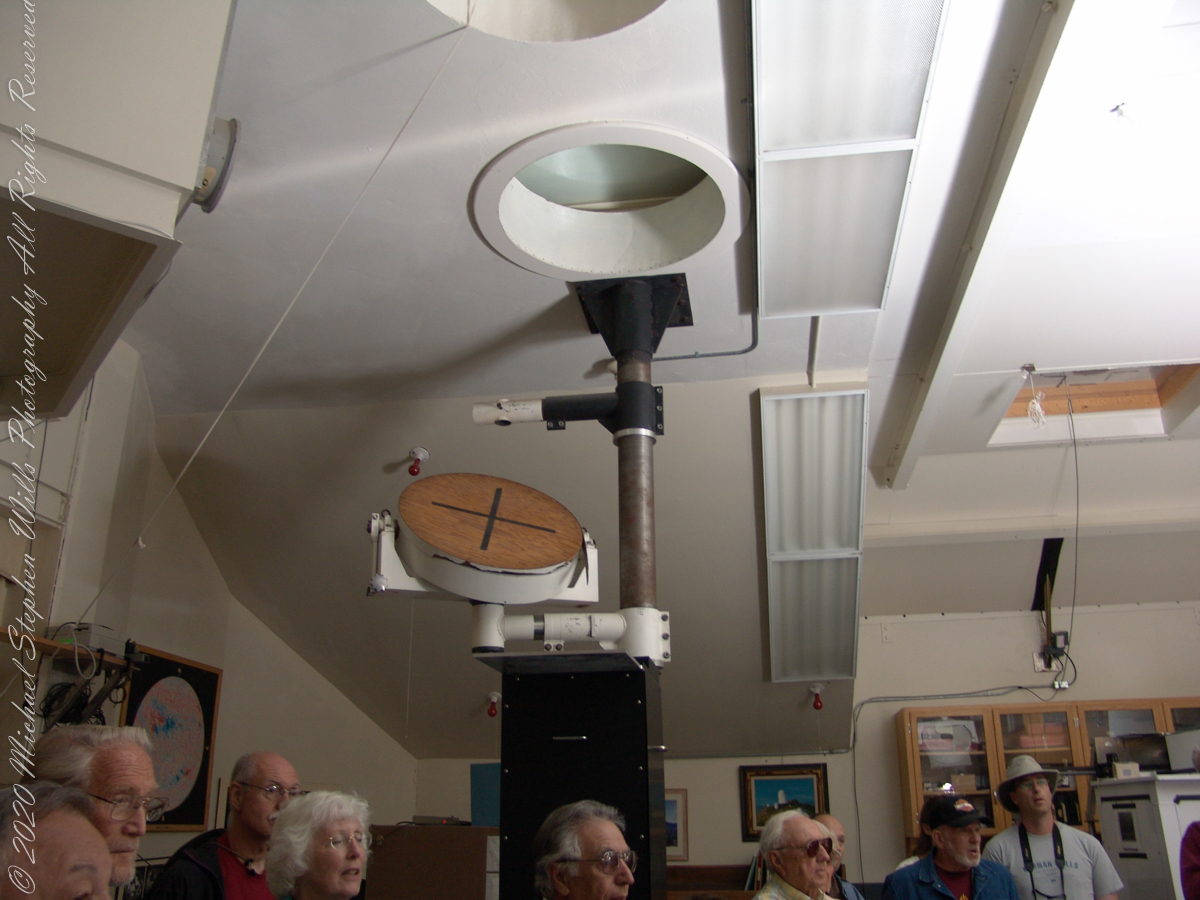
These views within the McMath–Pierce solar telescope enclosure were captured during a guided tour of the instrument, April 20, 2005. By way of orientation, the observation room we visited is near the location labeled “4” on the model of the following photograph or the “Observation Room” of the drawing.

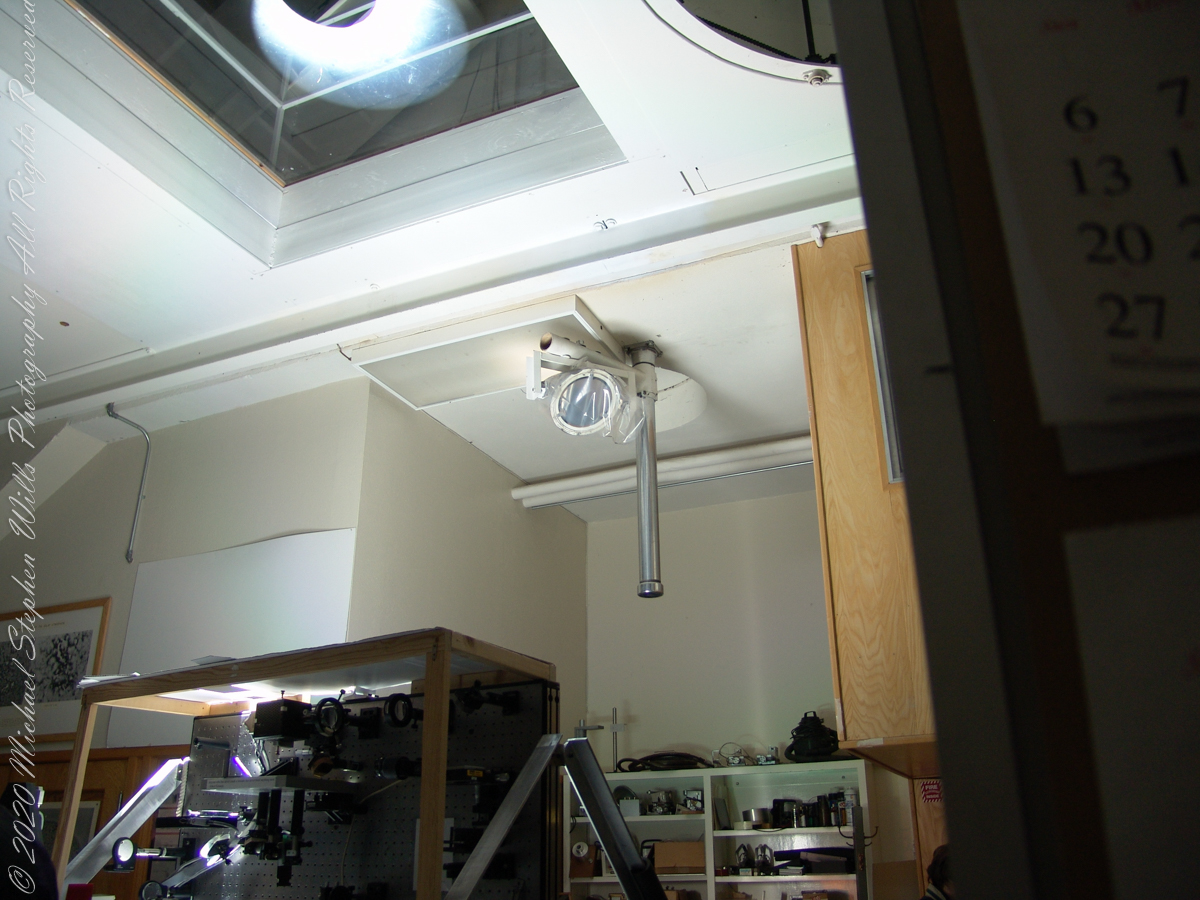
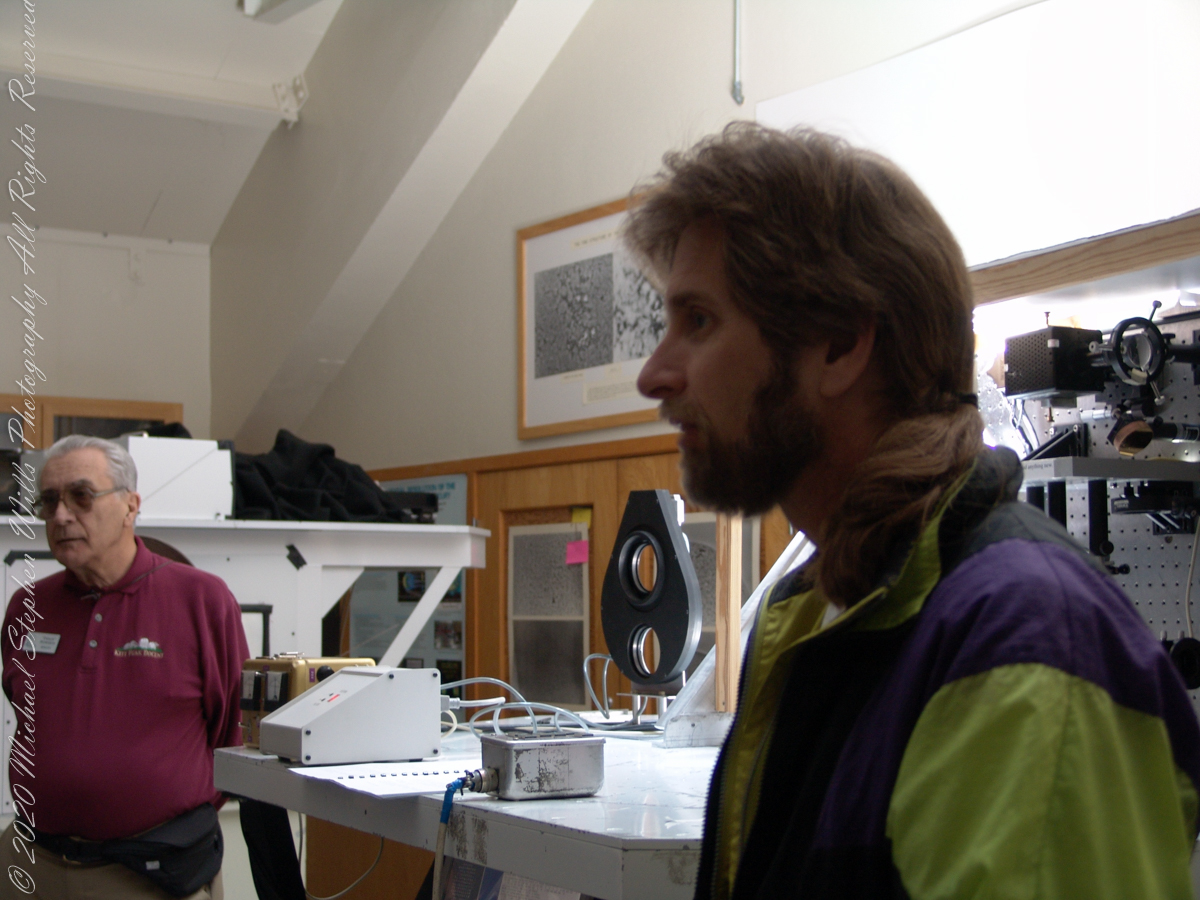
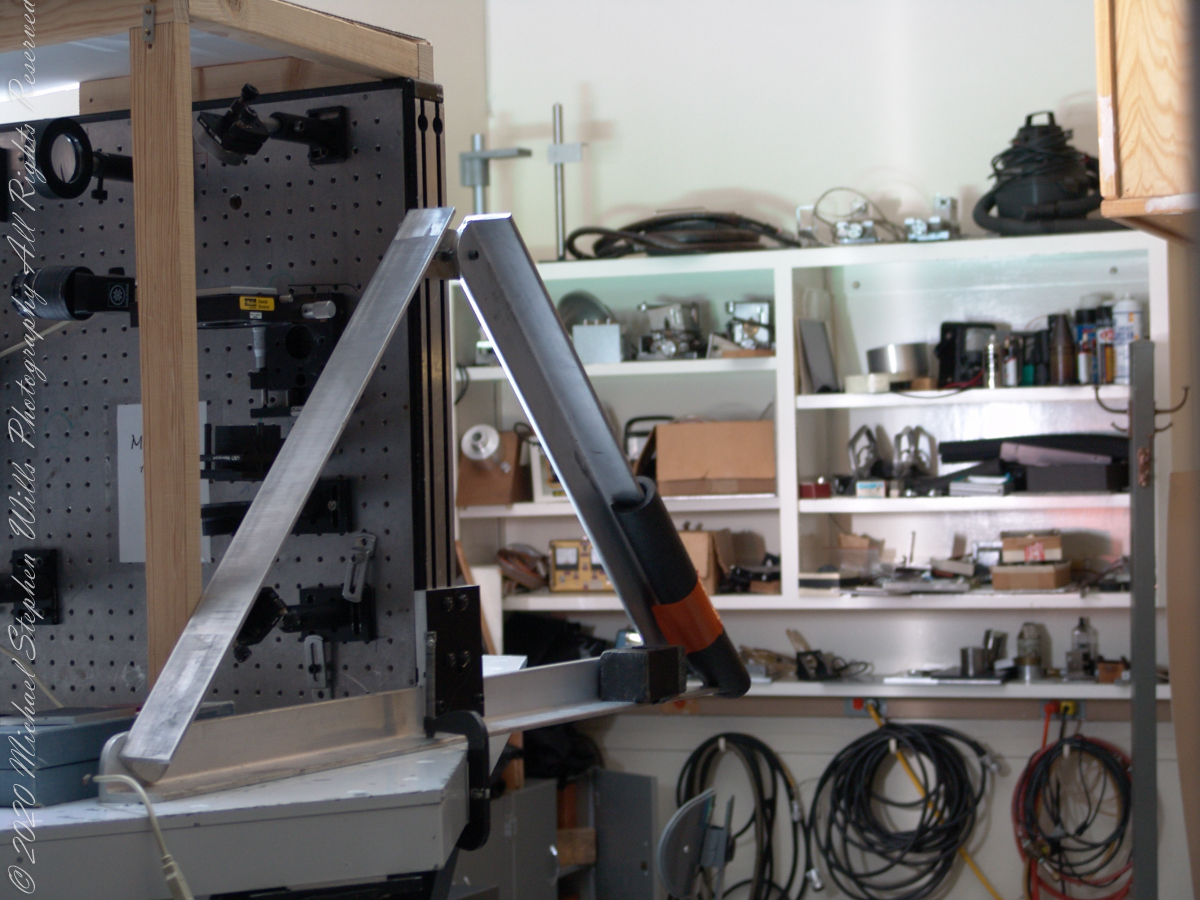
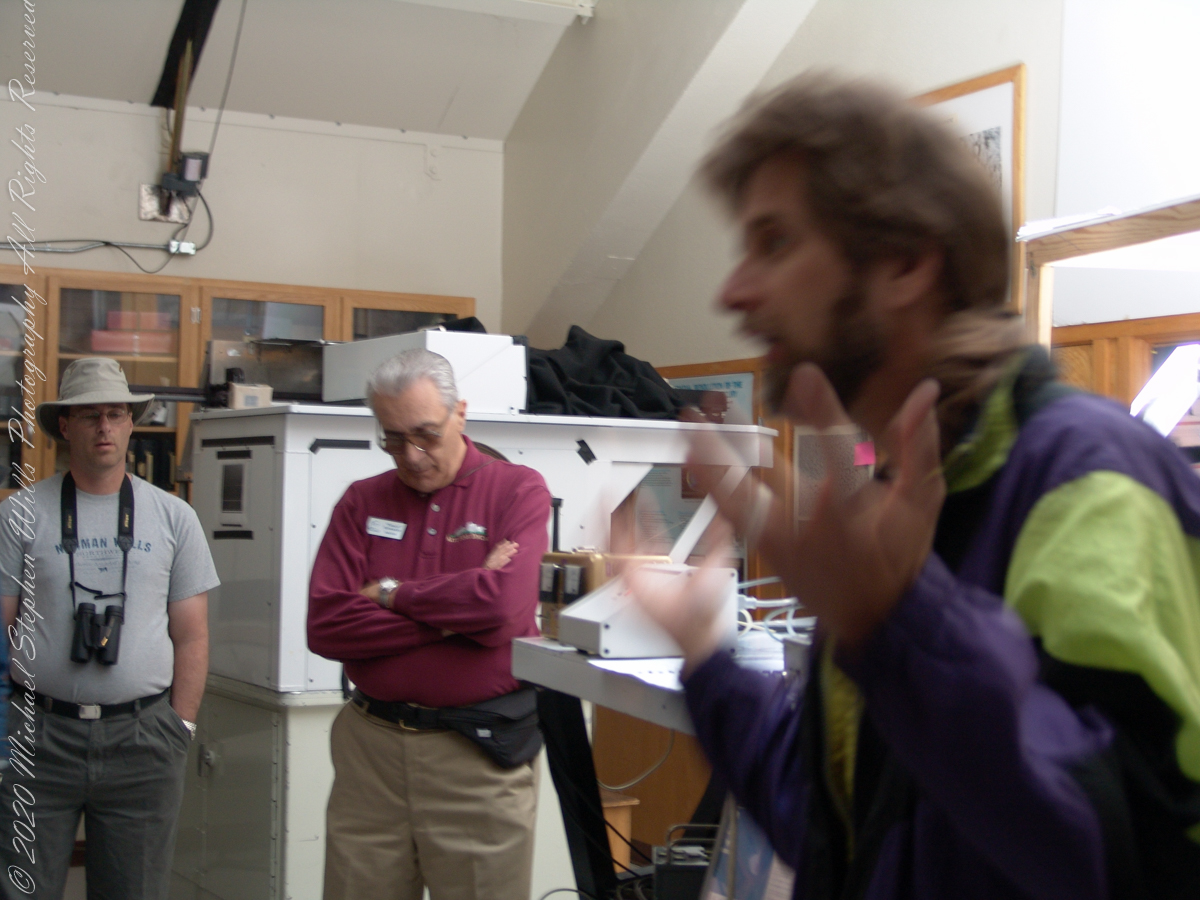
We learned each of the sets of mirrors is considered a separate telescope. The first step in designing the new solar telescope was to determine the optimal image scale. Working on the spectra of the solar granules, on the physical structure of the sunspots and their associated magnetic fields, requires a considerable image size. Past experience has shown that the optimal image of the sun should be approximately 0.91 meters. The highlight of our visit to the Main Observation room was meeting with the technician operating the recently developed low-cost adaptive optics system.

Tip-tilt correction and low order wavefront correction is available with a number of portable optical benches.  These are primarily used with the Main spectrograph and the Solar Stellar spectrograph on the Main telescope, but due to their compact mounting they could be used with other telescopes and instruments in the facility.

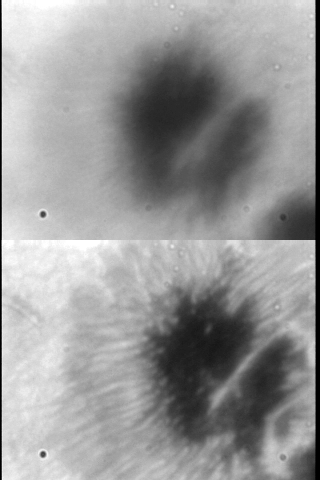
This configuration uses a rapidly deformable mirror to correct distortions introduced by the turbulent atmosphere. Using sensors to measure the degree of image distortion, the adaptive optics system adjusts the shape of the mirror accordingly and converts a blurred image into a clear one. The following image demonstrates the correction. “Low-cost” = $25,000 in 2003 US dollars. Under references is a link to a full description of the device by the creator.

A main area of ​​study in the observatory is the structure of sunspots, which are relatively cold, dark spots on the surface of the Sun created by intense magnetic activity.

Some of the most important discoveries made at McMath-Pierce include the detection of water vapor in the Sun, the measurement of kilogauss magnetic fields (thousands of times stronger than those on Earth) outside sunspots and the detection of a natural maser (like a laser, but with a microwave instead of visible light) in the Martian atmosphere.

Over the years and technological advances, the National Solar Observatory has moved its headquarters from Tucson to Boulder, Colorado. The organization abandoned its solar telescopes at Kitt Peak and in New Mexico for a larger instrument in Hawaii, the Daniel K. Inouye Solar Telescope on the island of Maui, which began operating in 1919.

References:
Wikipedia “McMath–Pierce solar telescope”

“Low Cost Adaptive Solar Optics” by Christopoher Kellar

Insights into the architectural design.

National Solar Observatory website..

Copyright 2022 Michael Stephen Wills All Rights Reserved

McMath-Pierce Solar Telescope – 2

The Mirrors

These views within the McMath–Pierce solar telescope enclosure were captured during a guided tour of the instrument, April 20, 2005. By way of orientation, think of yourself at the location labeled “4” on this model. This is the only large telescope where humans can view the interior and visually experience the light paths “bouncing” between the mirrors.

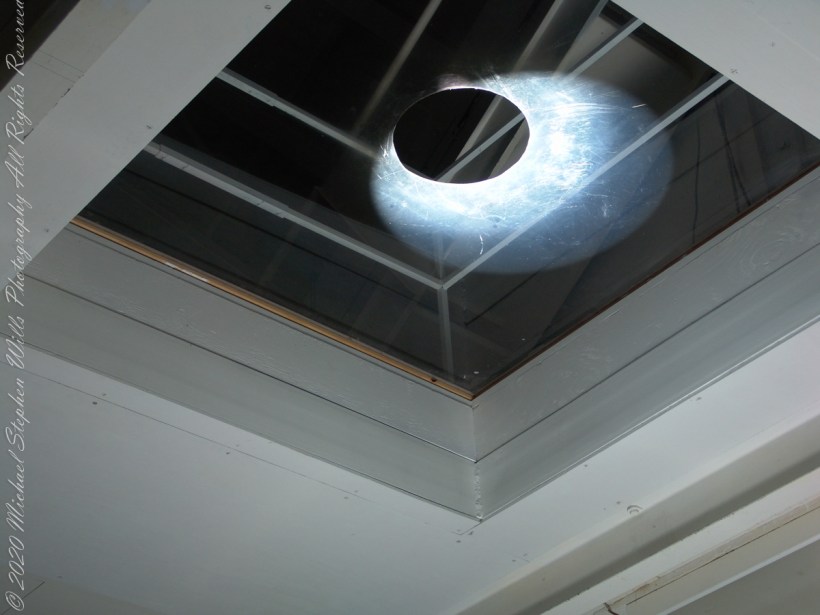
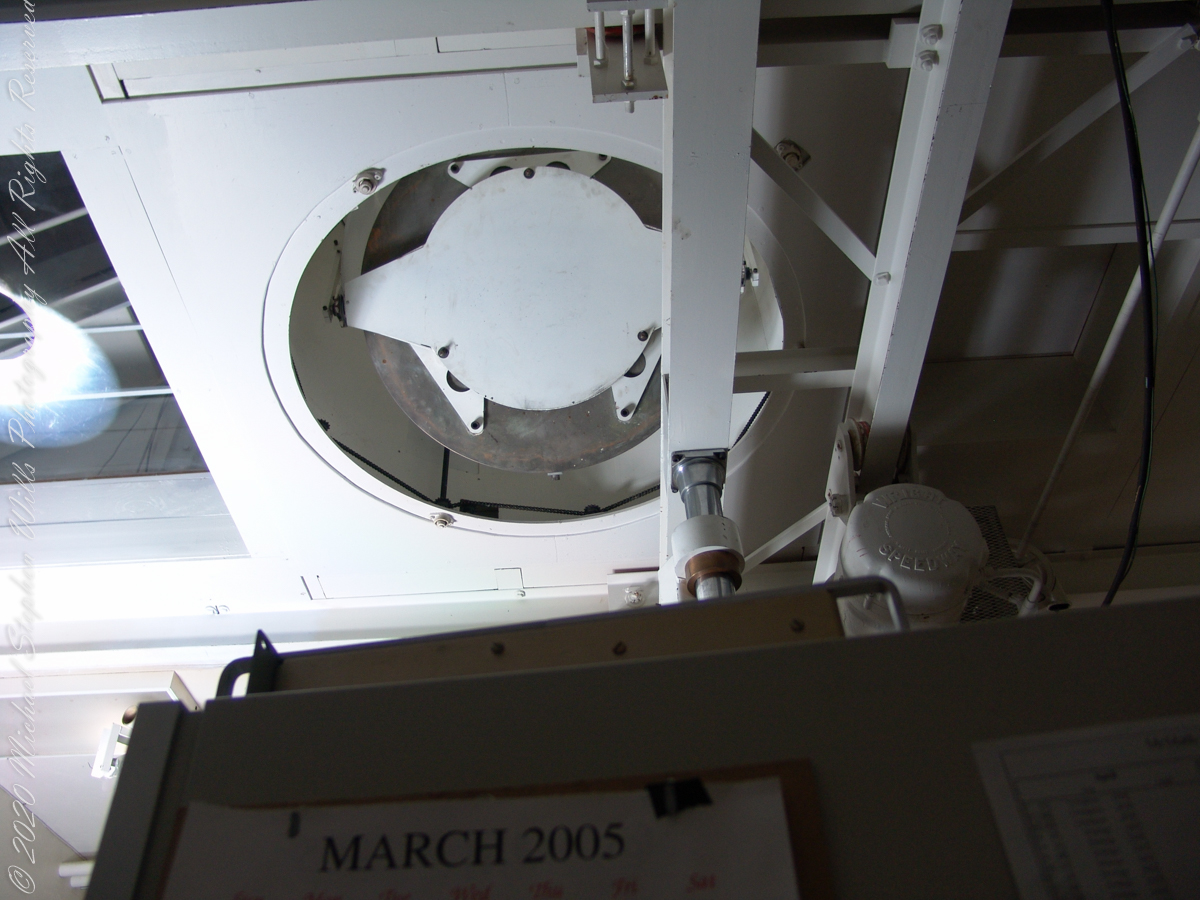
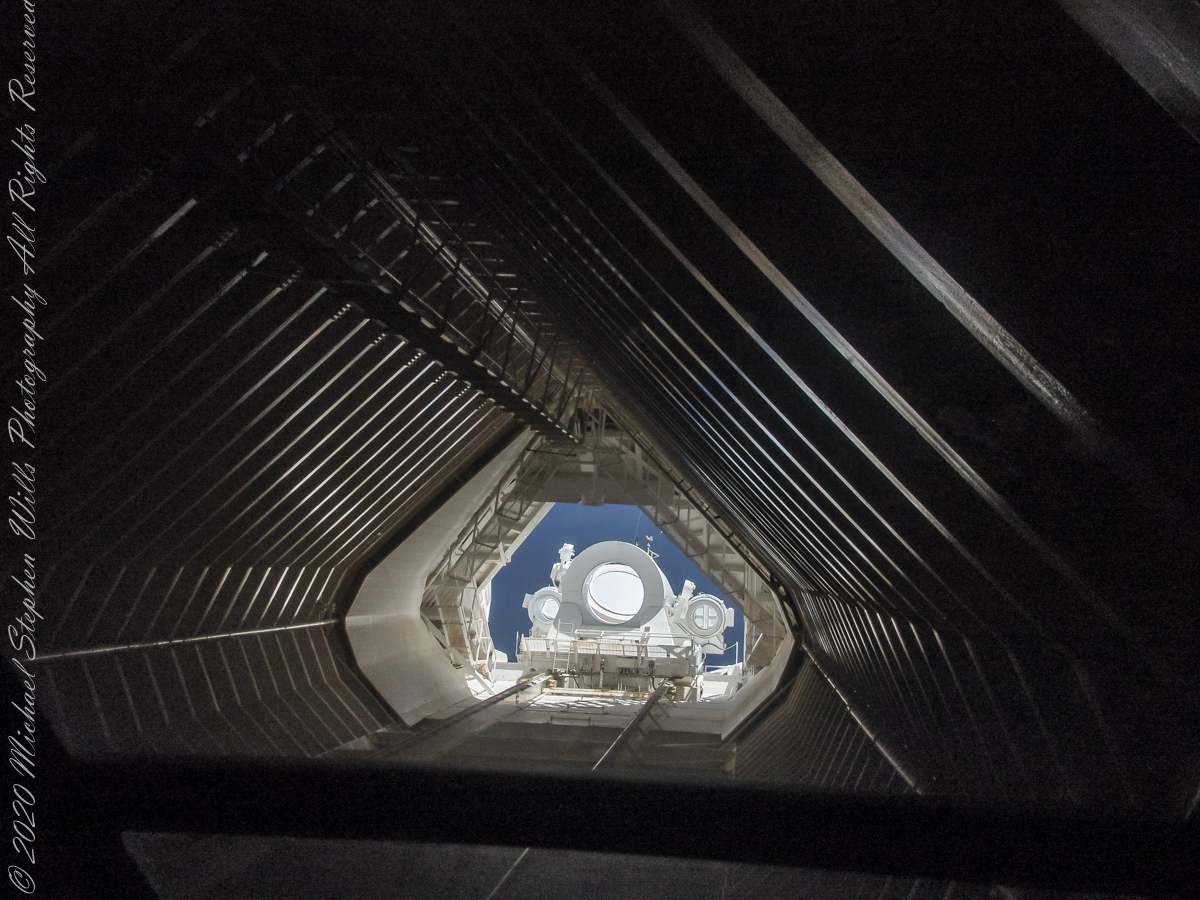
McMath–Pierce solar telescope has three heliostats mounted on a 110-foot tower adjacent to a slanted enclosure. The 2.03-meter heliostat feeds a 1.61-meter primary mirror, there are 1.07-meter and 0.91-meter primary mirrors fed by a pair of 0.81-meter heliostats. Here we are inside the slanted enclosure, looking up the shaft to the tower mounted heliostats, readily identified as the three circles, the largest at center (3.51 feet in diameter). The smaller (2.66 feet) heliostats named “East” (on left) and “West.”

Built in 1962, the building was designed by American architect Myron Goldsmith and Bangladeshi-American structural engineer Fazlur Rahman Khan. It was the largest solar telescope and the largest unobstructed aperture telescope in the world. It is named after the astronomers Robert Raynolds McMath and Keith Pierce. Painted white to reflect sunlight to reduce heat accumulation, the enclosure is water cooled to prevent convection currents through the column of air within the slanted enclosure, keeping the air as still as possible along the light path between the mirrors.

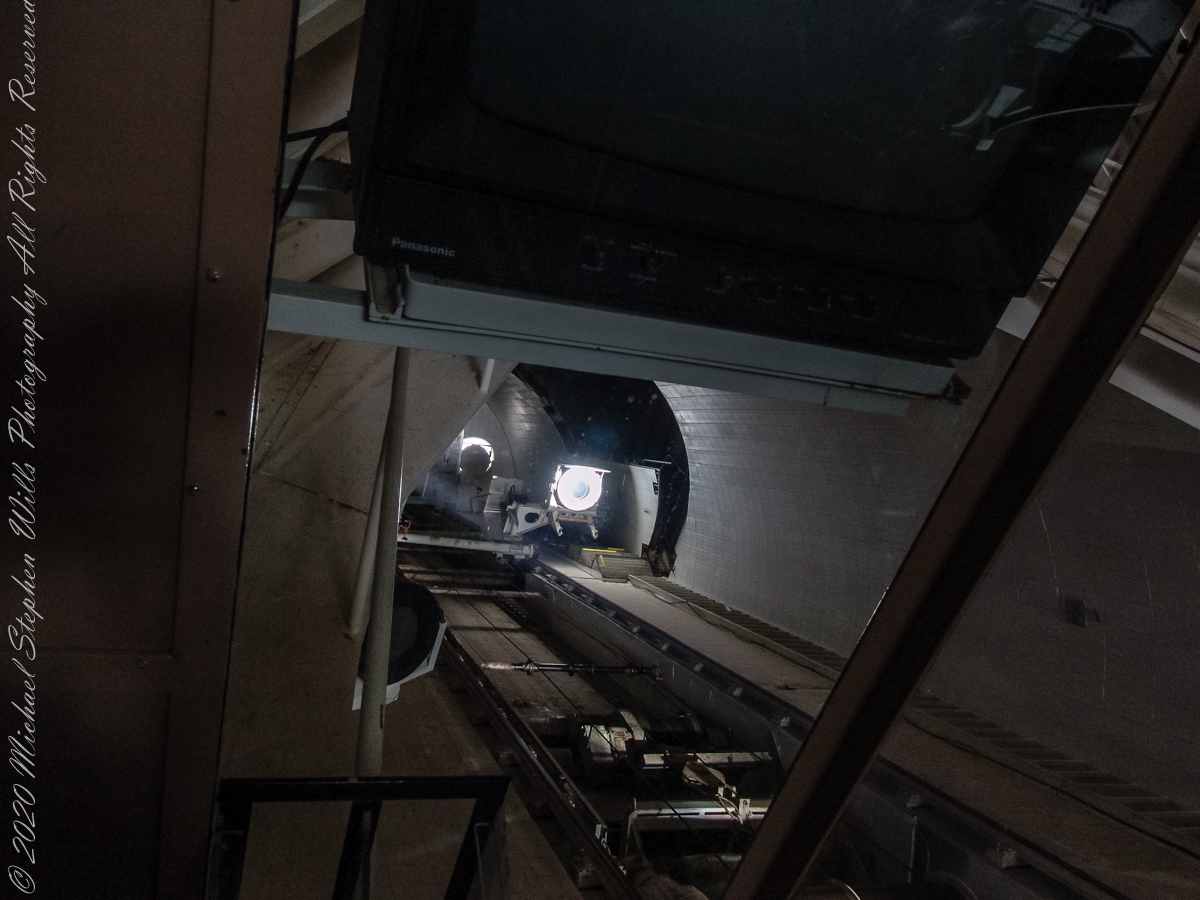
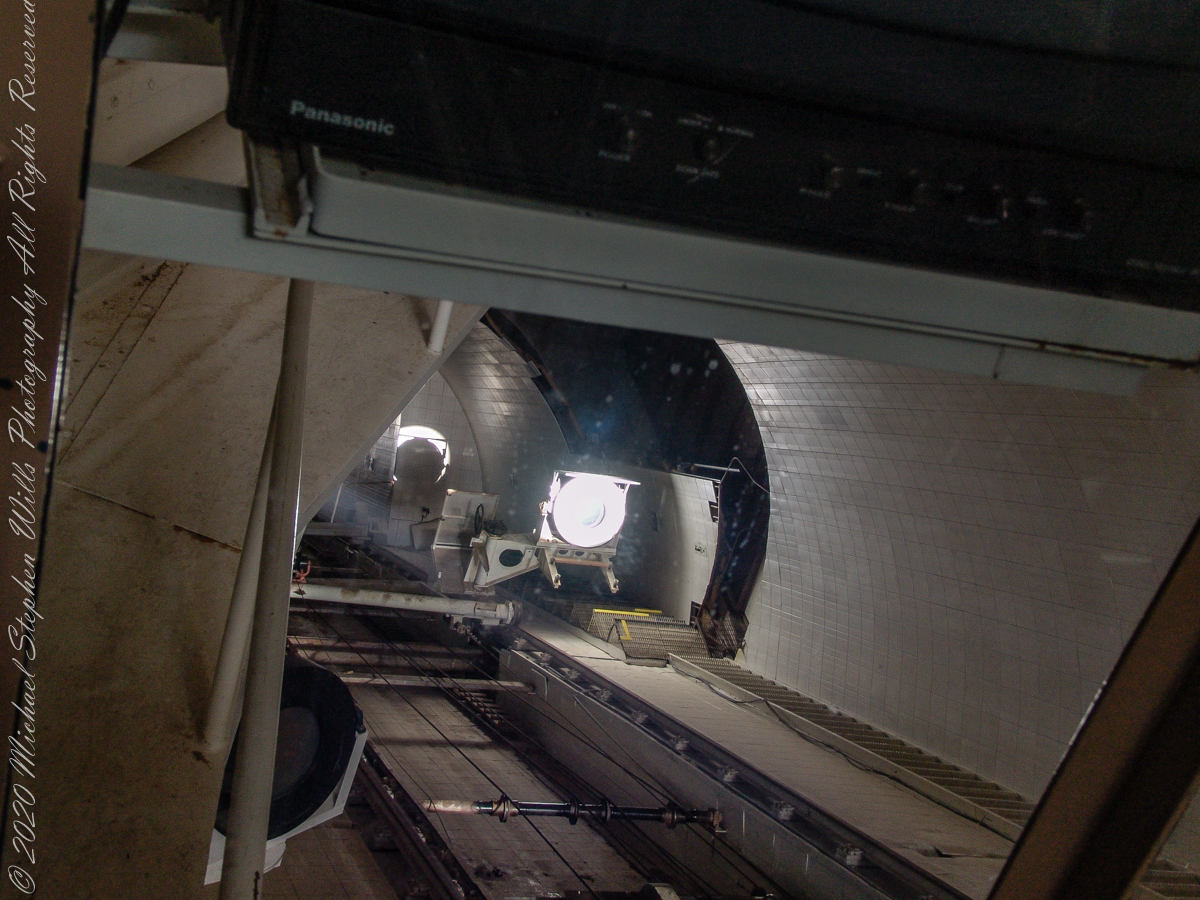
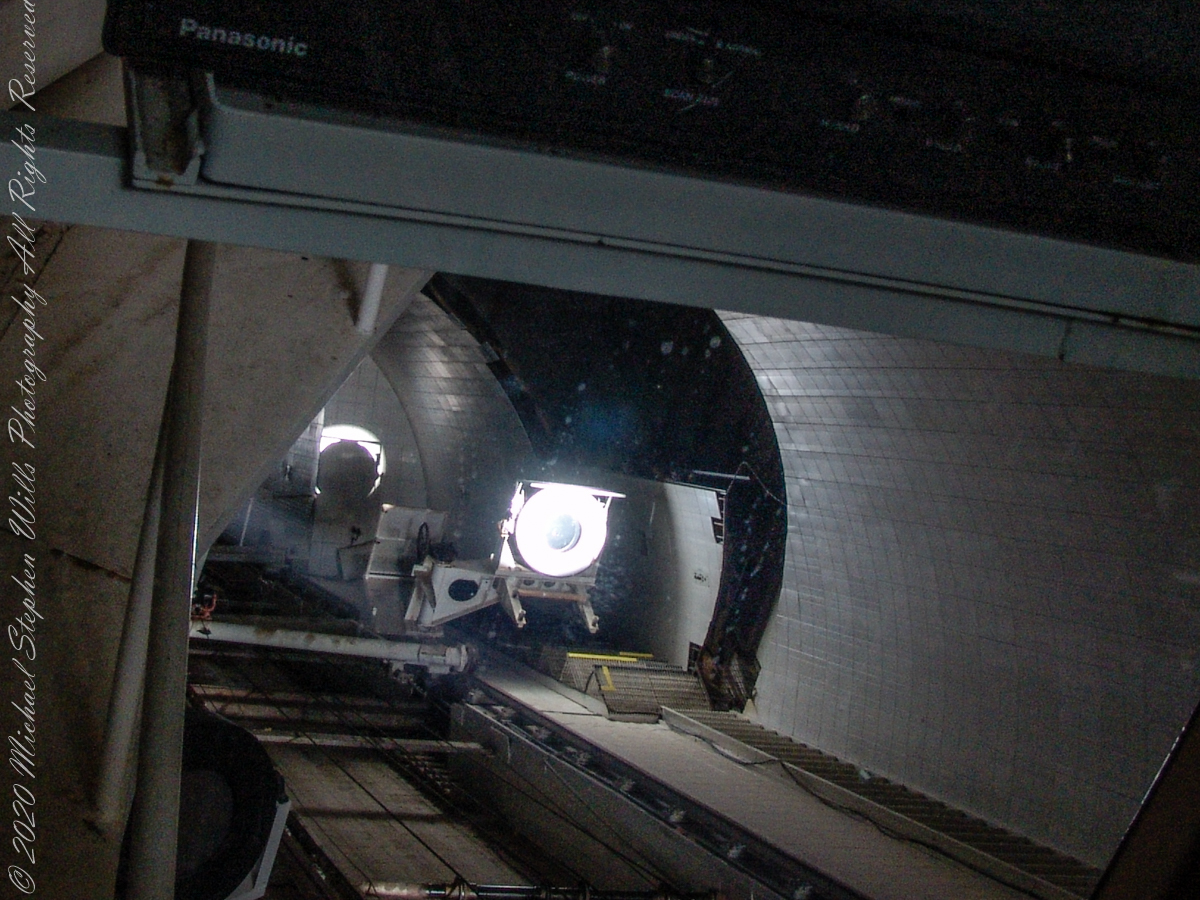
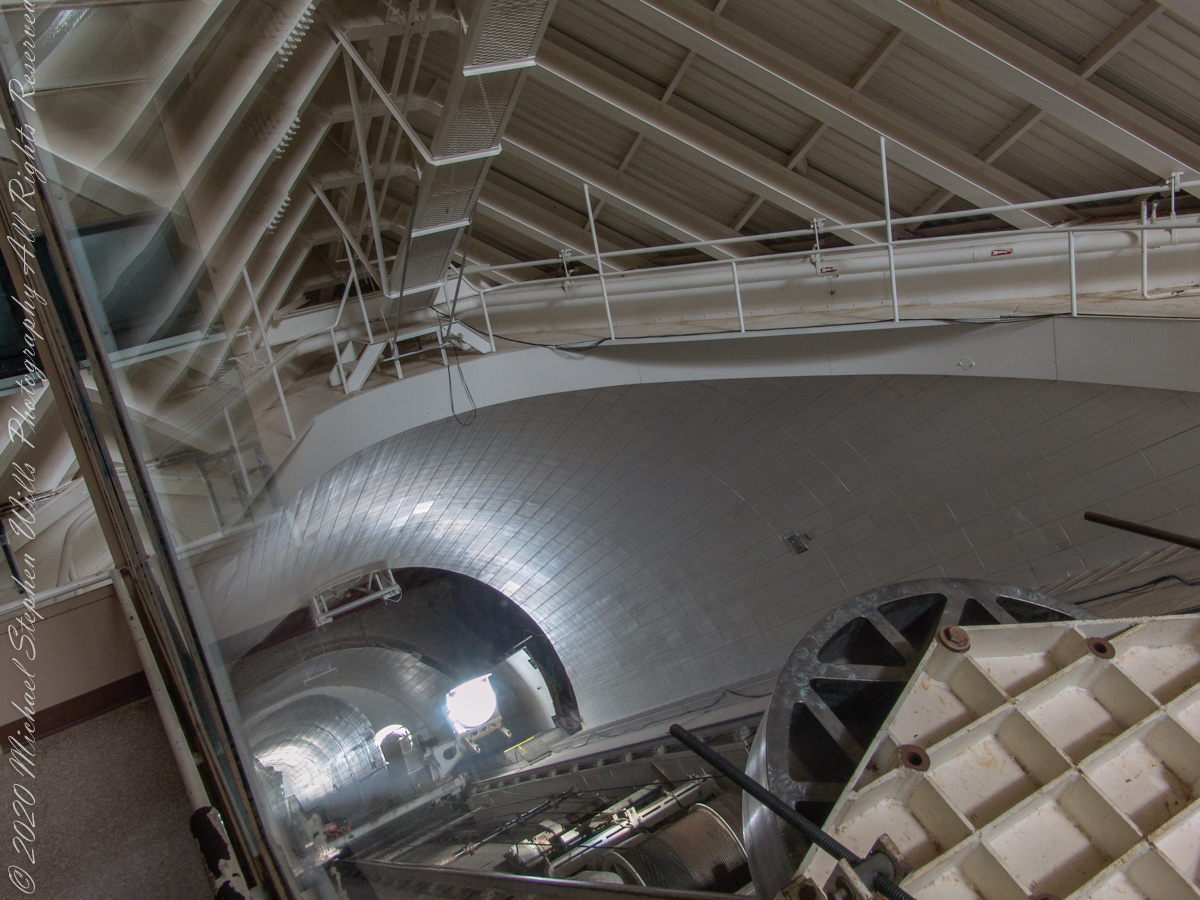
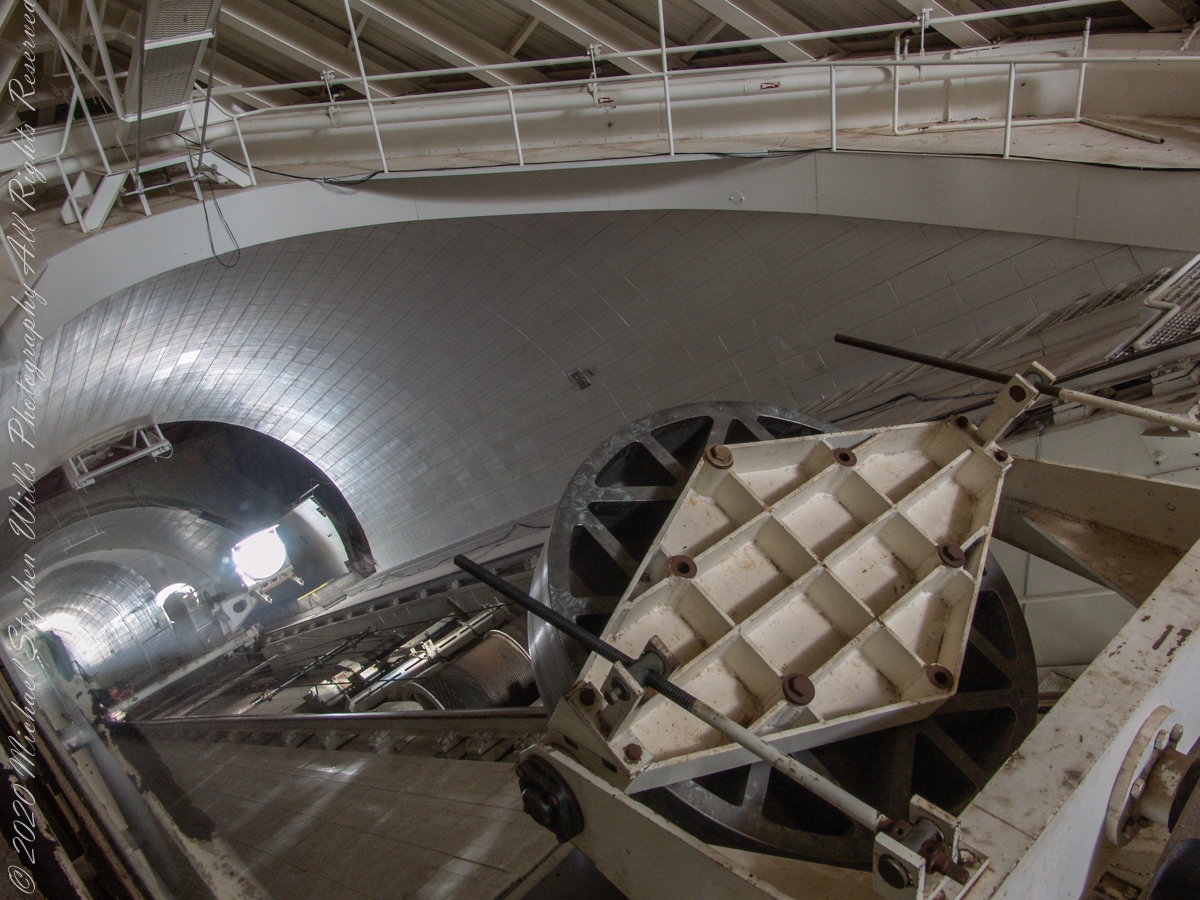
In the three photographs following, we face the underground portion of the slanted shaft and (what looks to be) the 0.91 meter (2.99 feet) primary concave mirror. I say that because in some of the photographs a beam of light, to the left of the mirror, can be seen travelling further underground, presumably to the largest primary mirror. As there is only one such light beam, I conclude the west heliostat is inactive.

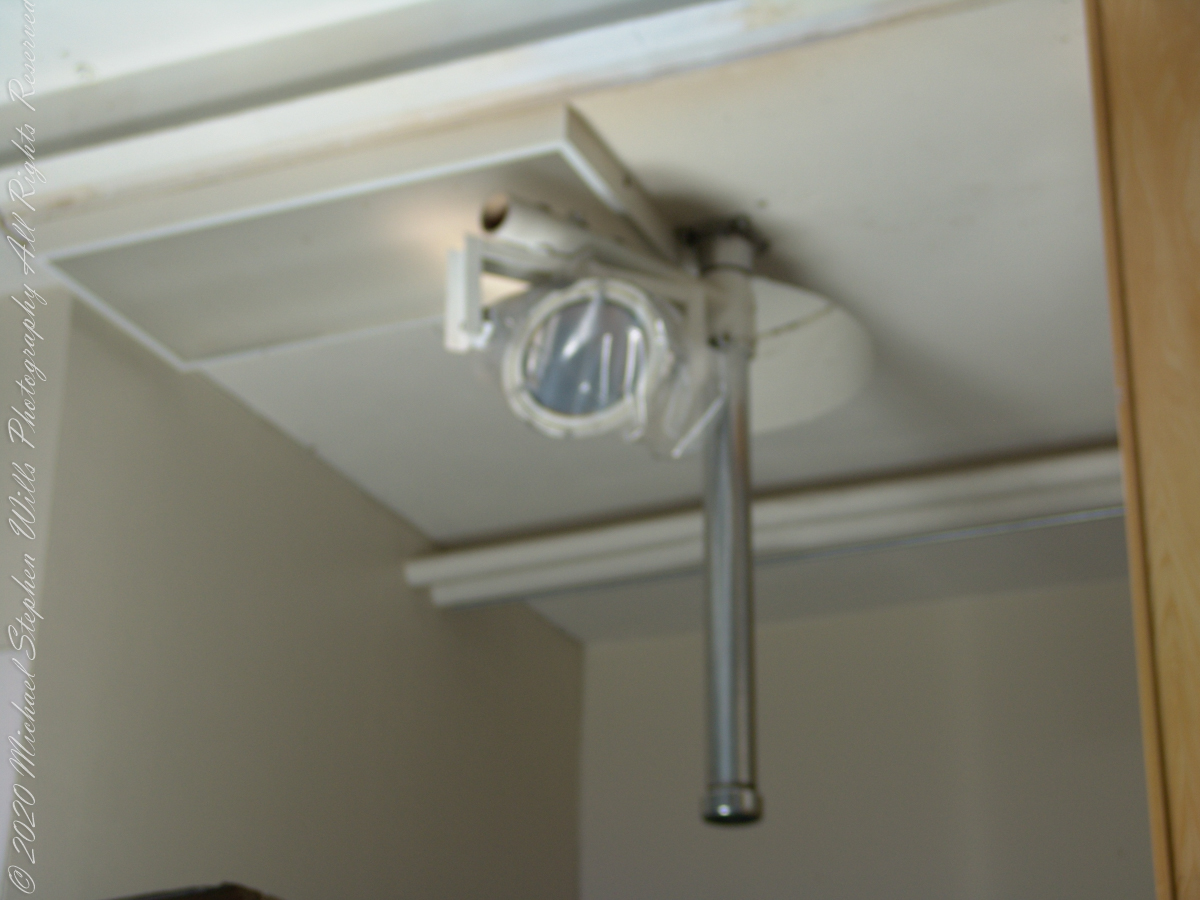
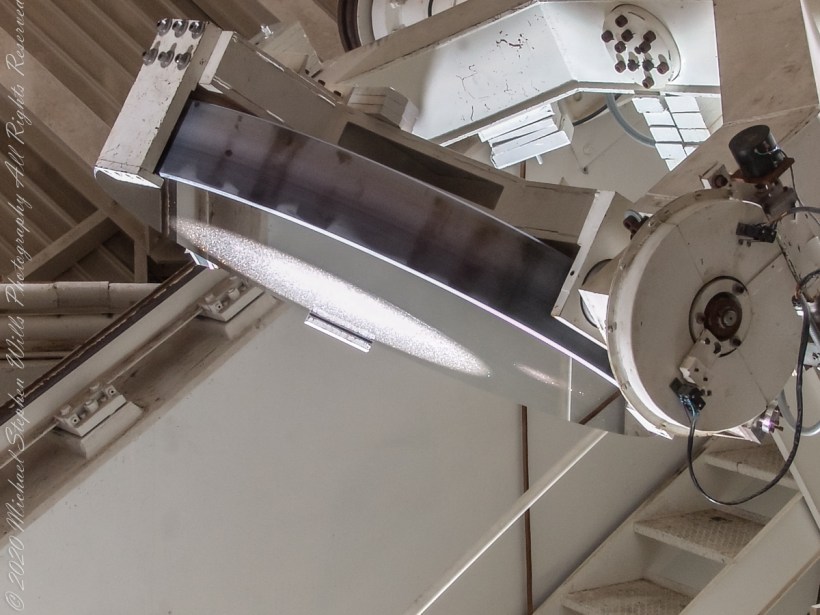
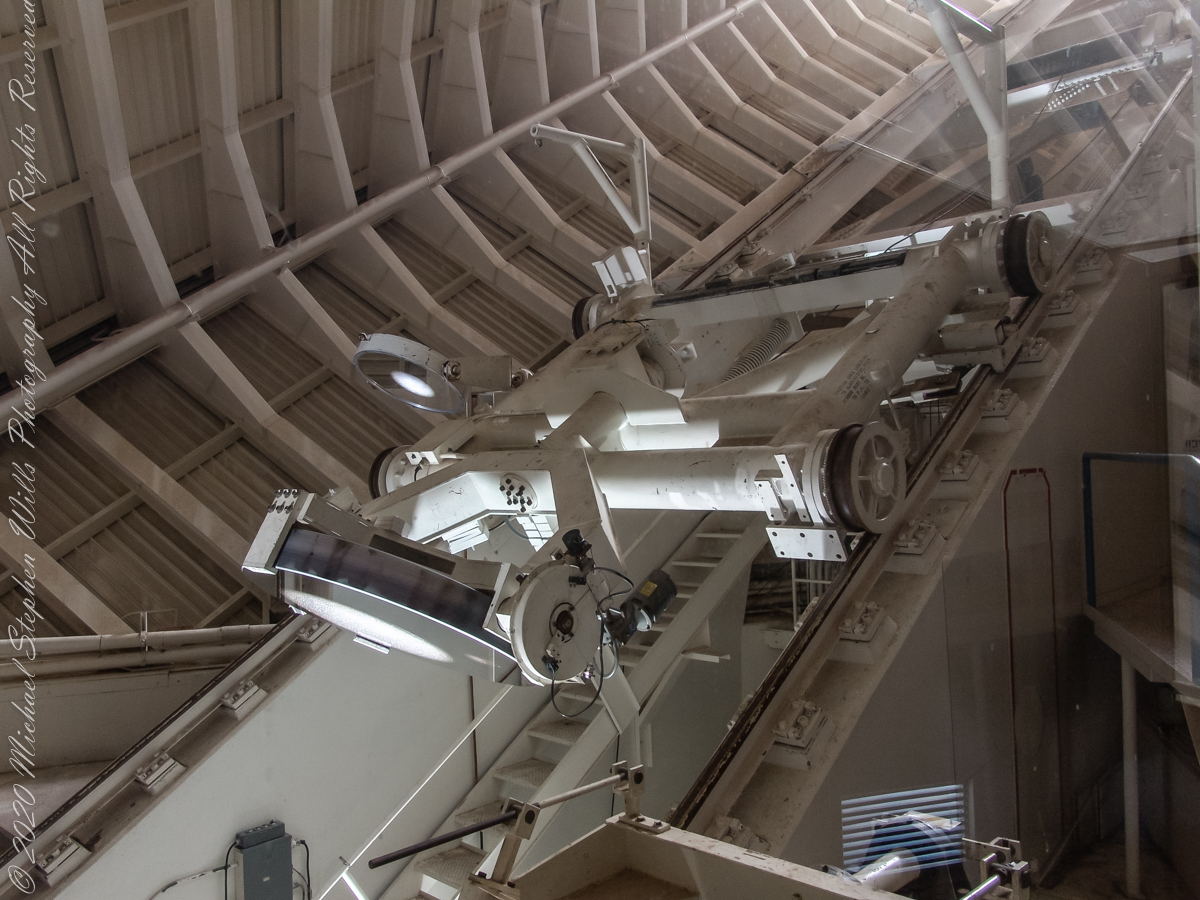
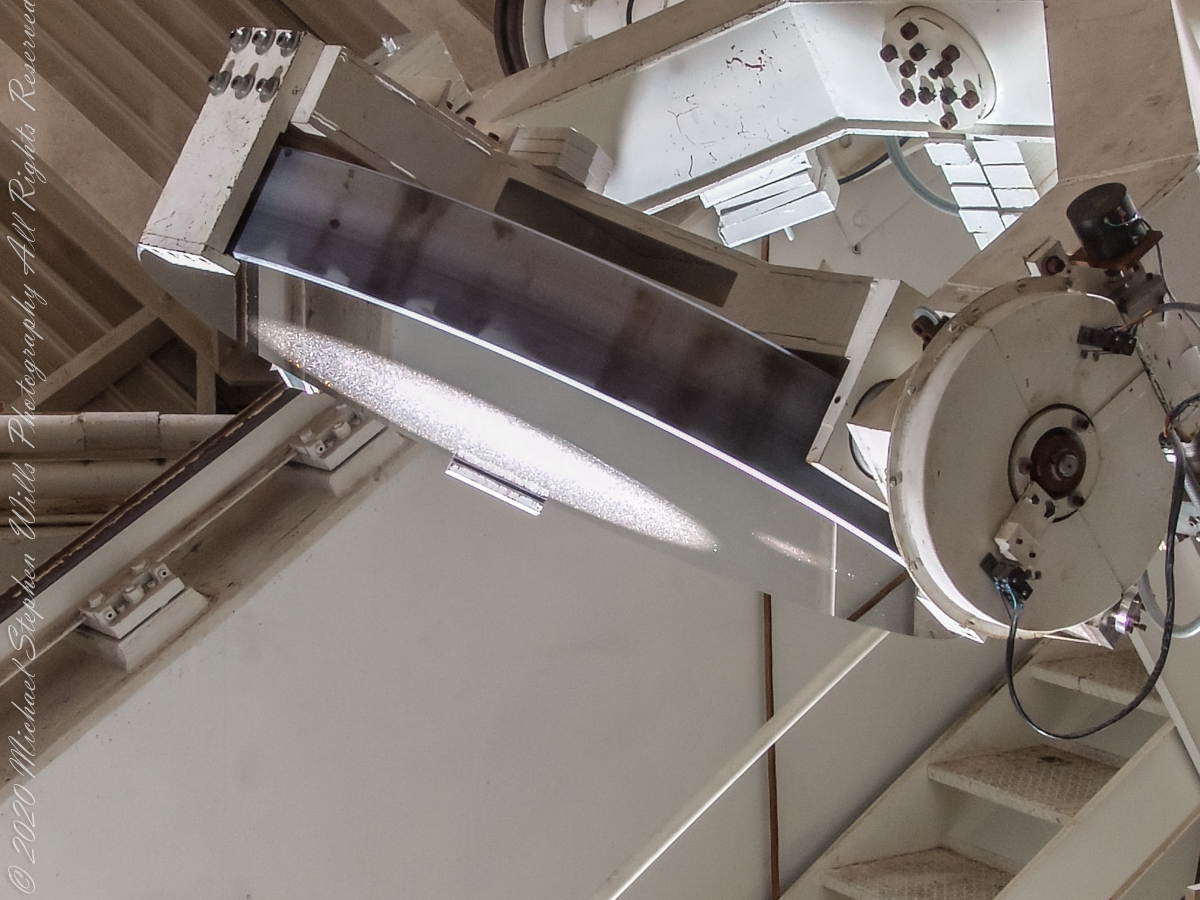
Here we looking up the slanted enclosure. Look carefully at the first photograph, below, to see reflections on the glass partition. The observation platform was separated from the light paths to maintain the stillness of the air column. The two mirrors of the first photograph are the third mirror, reflecting concentrated sunlight from the 0.91 and 1.61-meter primary mirrors into the observatory rooms. The mirror for the 1.07-meter primary is out of sight in foreground, I believe this set of three mirrors (West heliostats, primary and third) was out of service.

The second photograph, on right, is a close up of the third mirror for the largest primary. A foreshortened, perfectly round light disk is clearly visible.

Here we are inside the slanted enclosure, facing the underground portion of the slanted shaft and (what looks to be) the 0.91-meter primary concave mirror. In the lower right corner is the reverse side of the third mirror for the largest primary mirror, the 1.61-meter.

Reference: Wikipedia “McMath–Pierce solar telescope”
Copyright 2022 Michael Stephen Wills All Rights Reserved