Tracashel

Strand of the Stone Fort

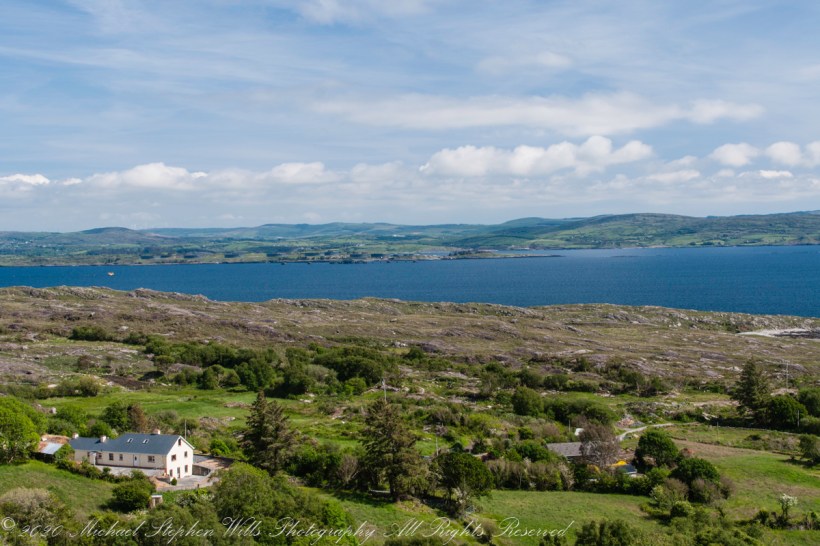
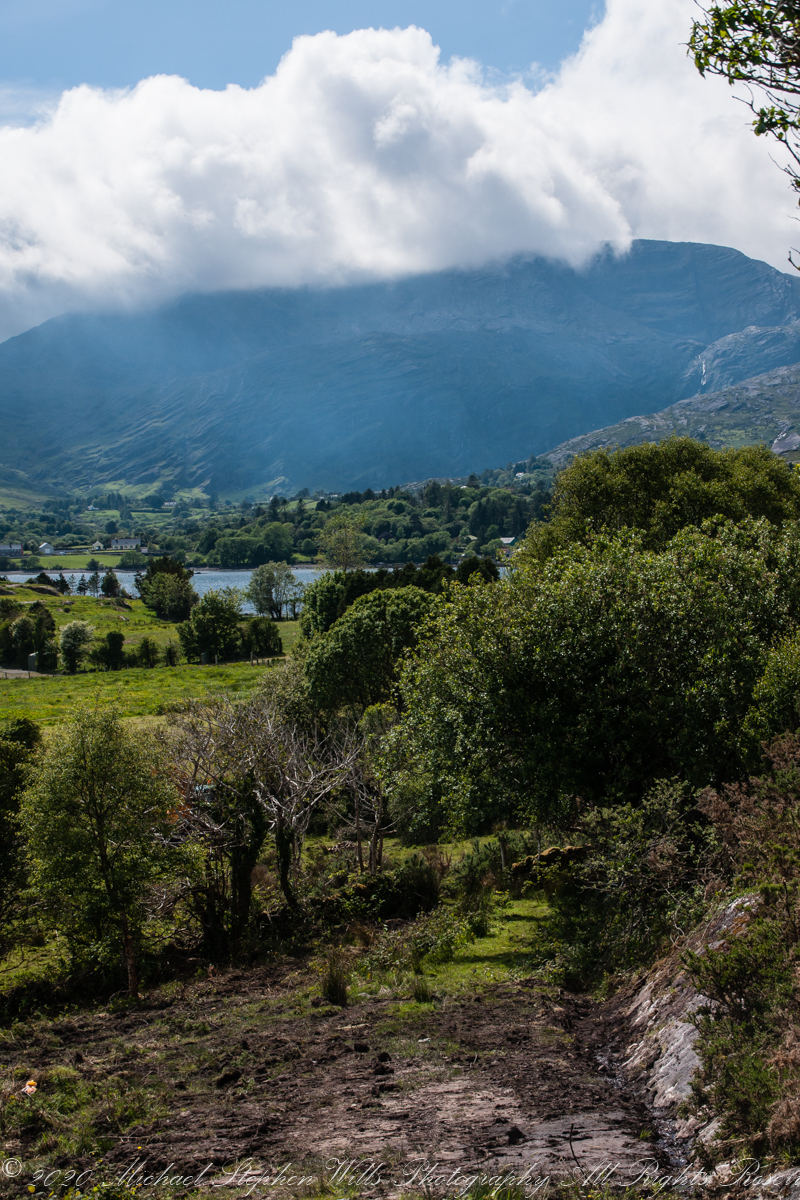
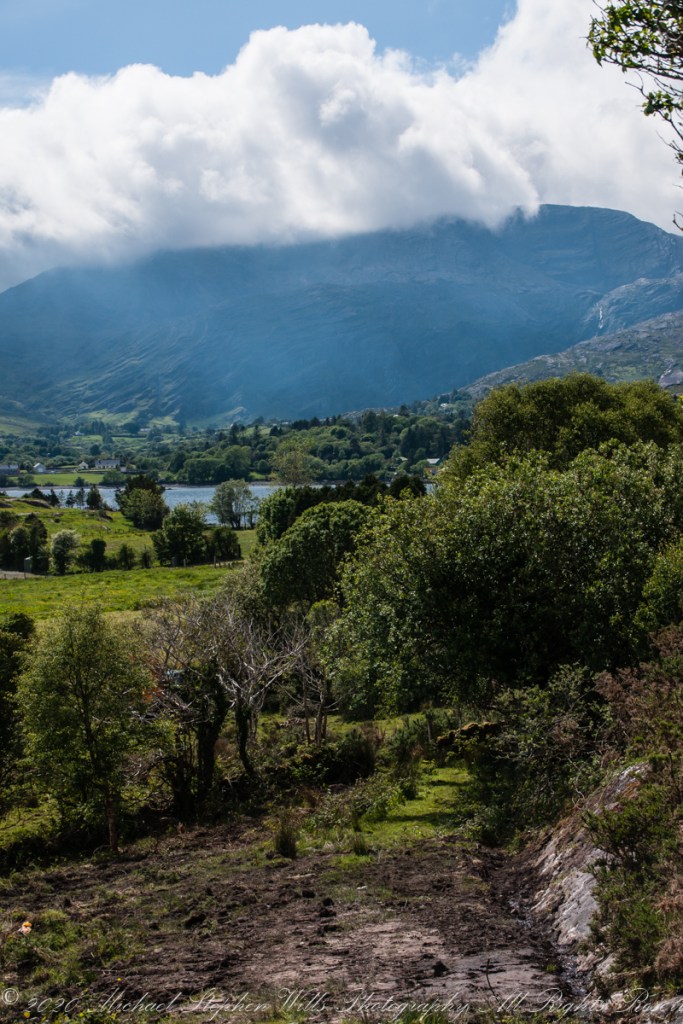
Our introduction to Beara peninsula was a turn onto R572, Sugarloaf Road, from Glenarriff, drive a few minutes to encounter this view view. So stupendous, we parked on a convenient turnoff. The Irish name for the townland is Thrá Chaisil, Tracashel in English. The meaning is “Strand of the Stone Fort.” A prosaic name is “Stone Fort Beach.” Here we look across Bantry Bay,
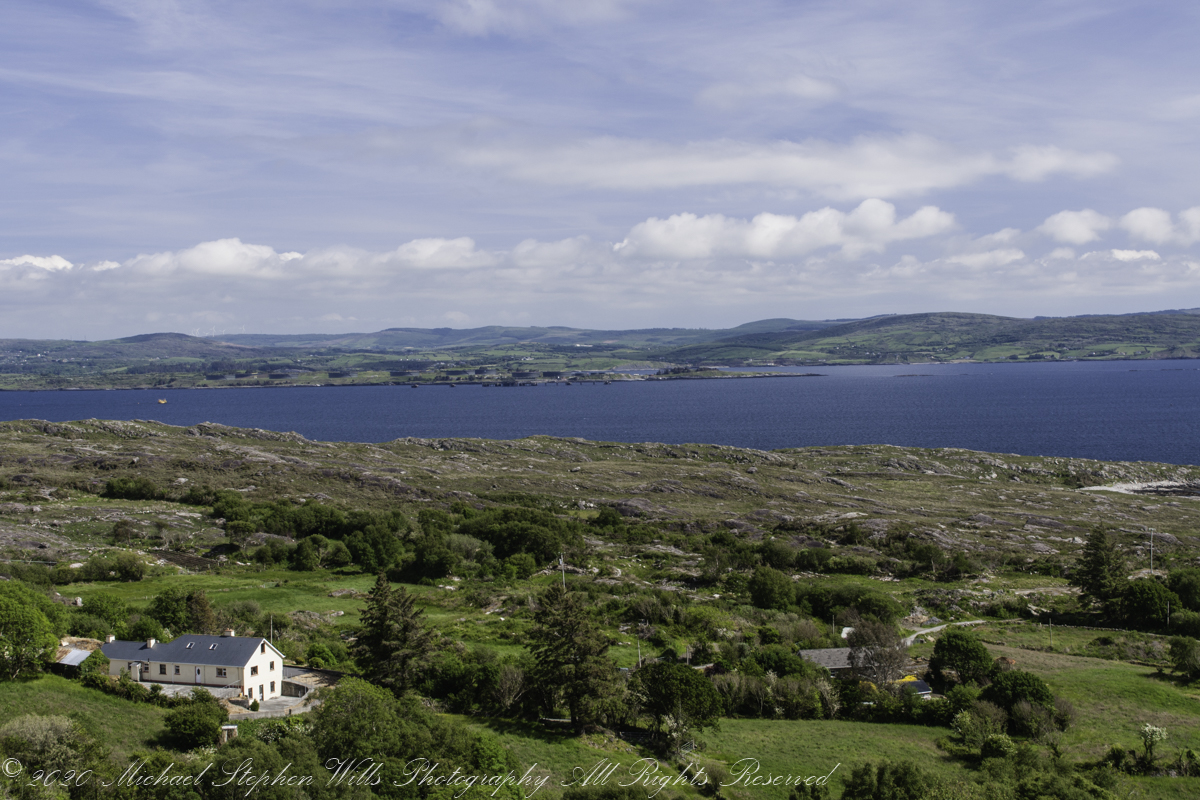
The location, lost for years, was rediscovered from this photograph. A signed place name. An unmapped place name, surprisingly.
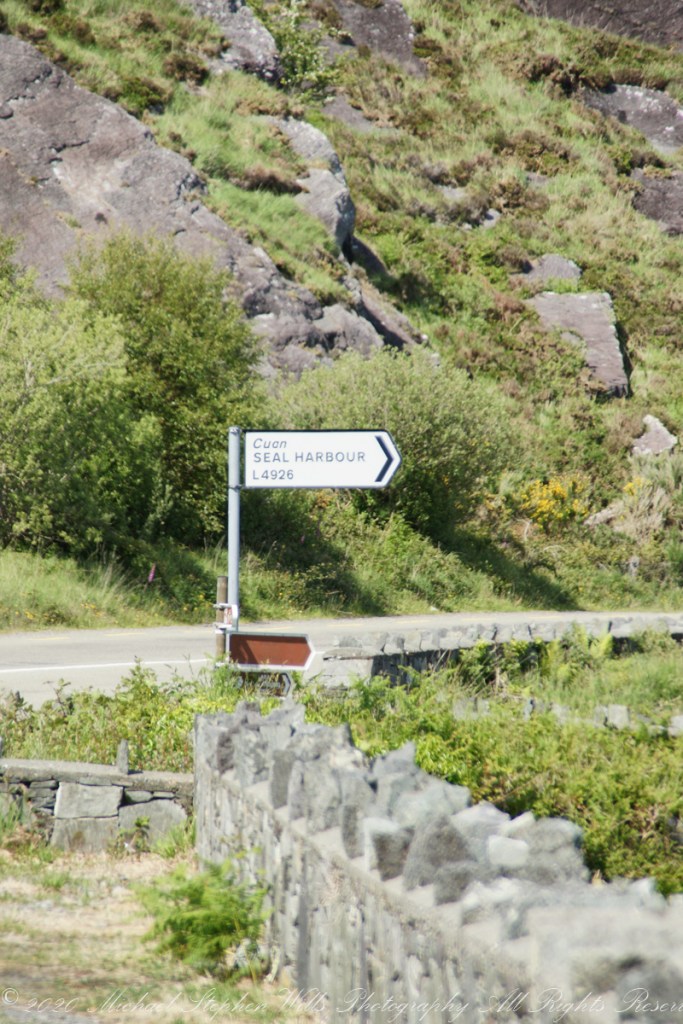
Using date/time stamps, working backward from the Adrigole photograph of yesterday’s post, I used the Google Maps to navigate the route from Glenarriff to find the sign post and turnoff. The harbor in question (“Cuan” is Irish for bay) is named for the adjacent townland, Coolieragh, “An Chúil Iarthach” in Irish, translated as “Western Nook.”

The non-existant “Seal Harbor” is a hopeful renaming by some entrepreneur.
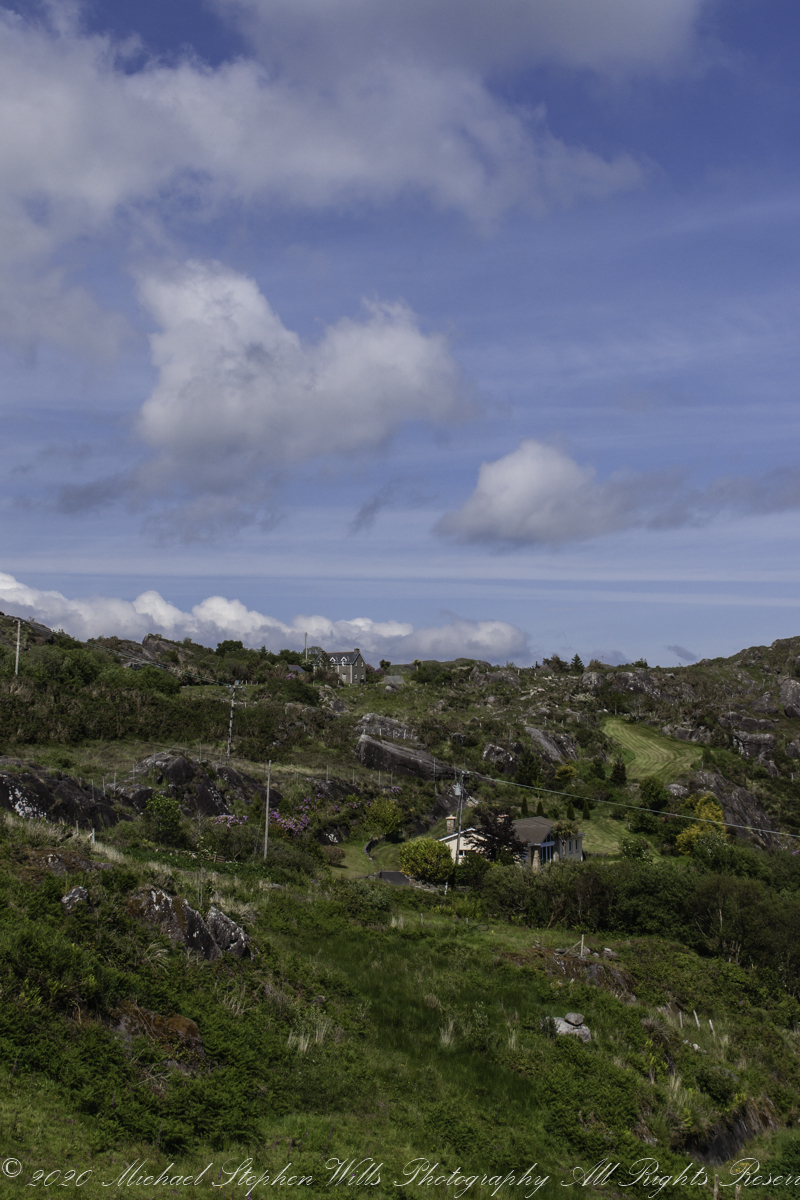
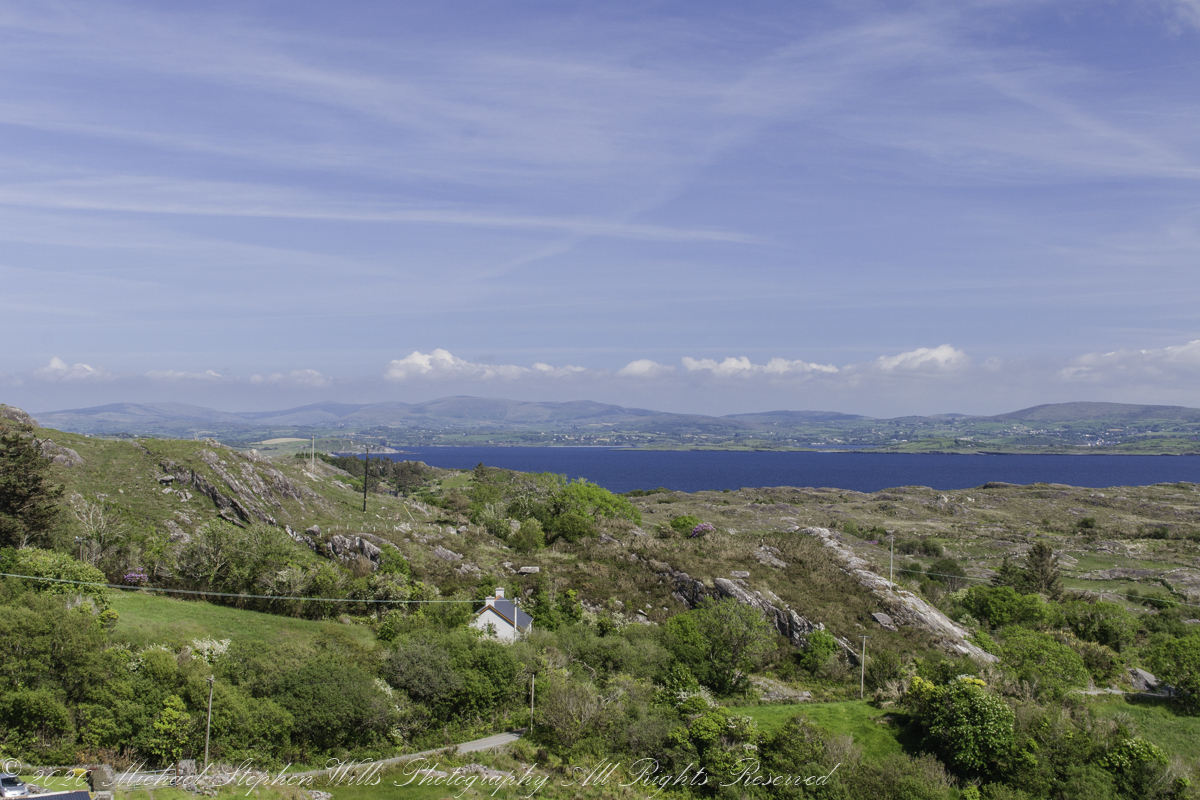
Another view across Bantry Bay.
Copyright 2021 Michael Stephen Wills All Rights Reserved
Adrigole

Famine Road

Driving the Beara Peninsula of western County Cork Pam and I were lucky enough to encounter a famine road traversing the Healy Pass. Formerly known as Kerry Pass, renamed in honor of Timothy Michael Healy, the first Governor-General, Irish Free State when the road was improved in 1932 shortly after his death. In Irish the name is Bealach Scairte.

Built by workers from the starving poor during the Potato Famine of the 19th century, one of the government projects to provide relief and improve infrastructure. This photograph is from where Healy Pass, R574, begins from the town Adrigole, County Cork. The mountain is the highest of the Caha Mountains of the Beara peninsula, is known by several names: “Adrigole Mountain,” “Hungry Hill,” “Cnoc Daod,” “Knockday,”j and “Knockdhead.” “Hungry Hill” is also a 1943 novel by Daphne du Maurier, thought to be set on the Beara peninsula.

The water is the Adrigole River.

References

Wikipedia articles for “Timothy Michael Healy” and “Healy Pass.”

Copyright 2021 Michael Stephen Wills All Rights Reserved
Late Autumn Ithaca 8

A Dangerous Game

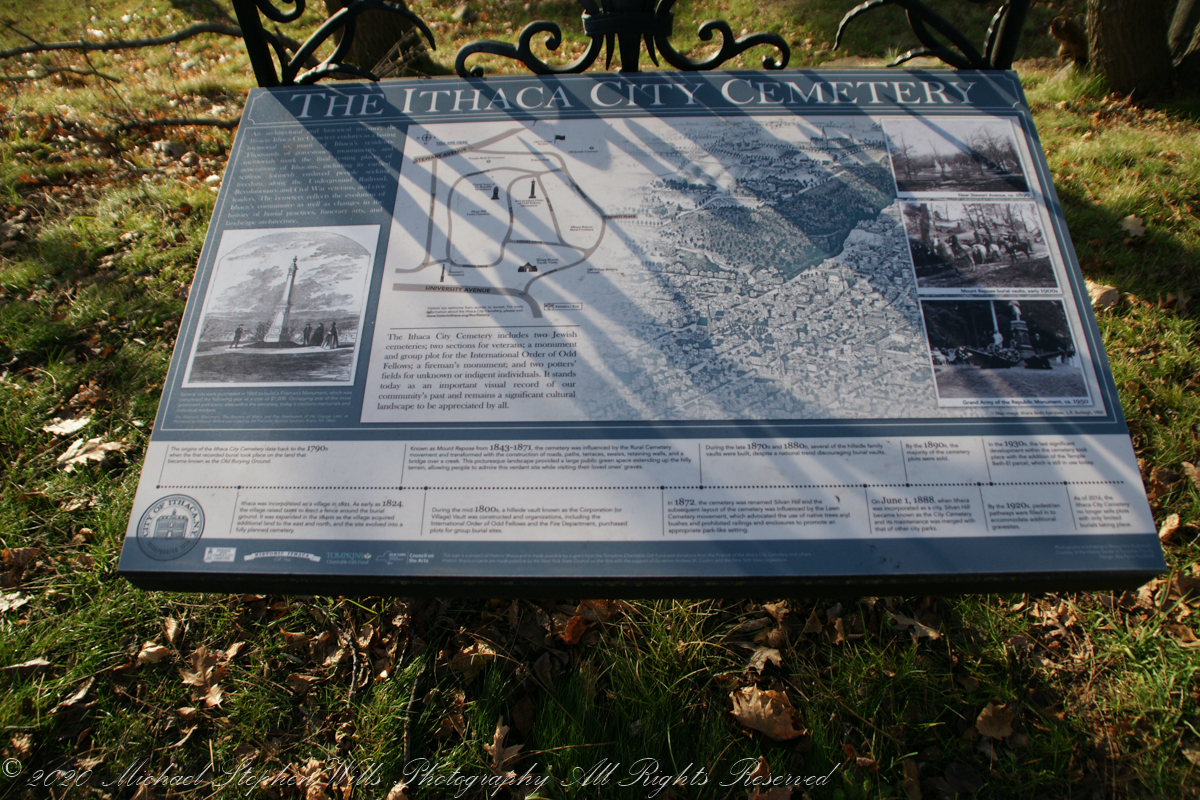
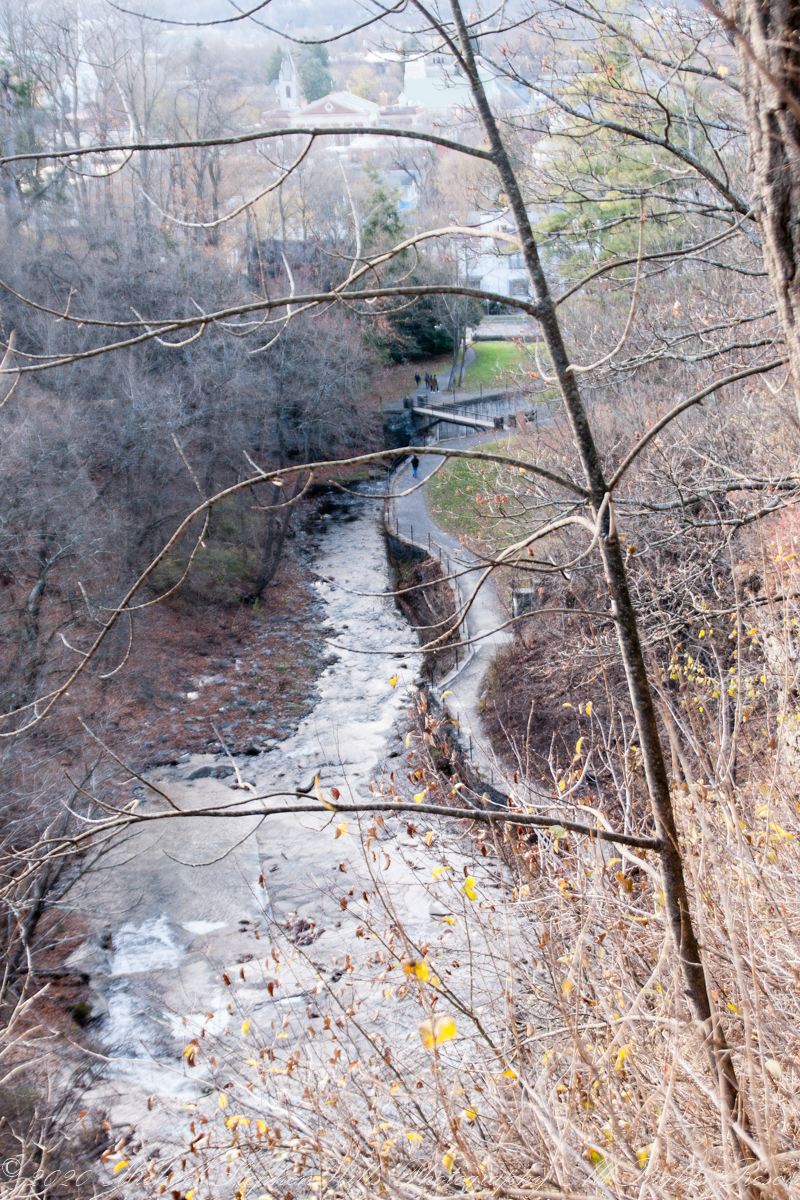
Hard on the Ithaca City Cemetery is our version of the crookedest street. Cascadilla Park road ascends East Hill as a series of switchbacks, charming homes cut into the hillside. A foot path overlooks the gorge, seen here.

Today, two young teens used the hill bottom for skateboarding. Taking turns on watch, each sped onto intersecting University Avenue. A dangerous game.

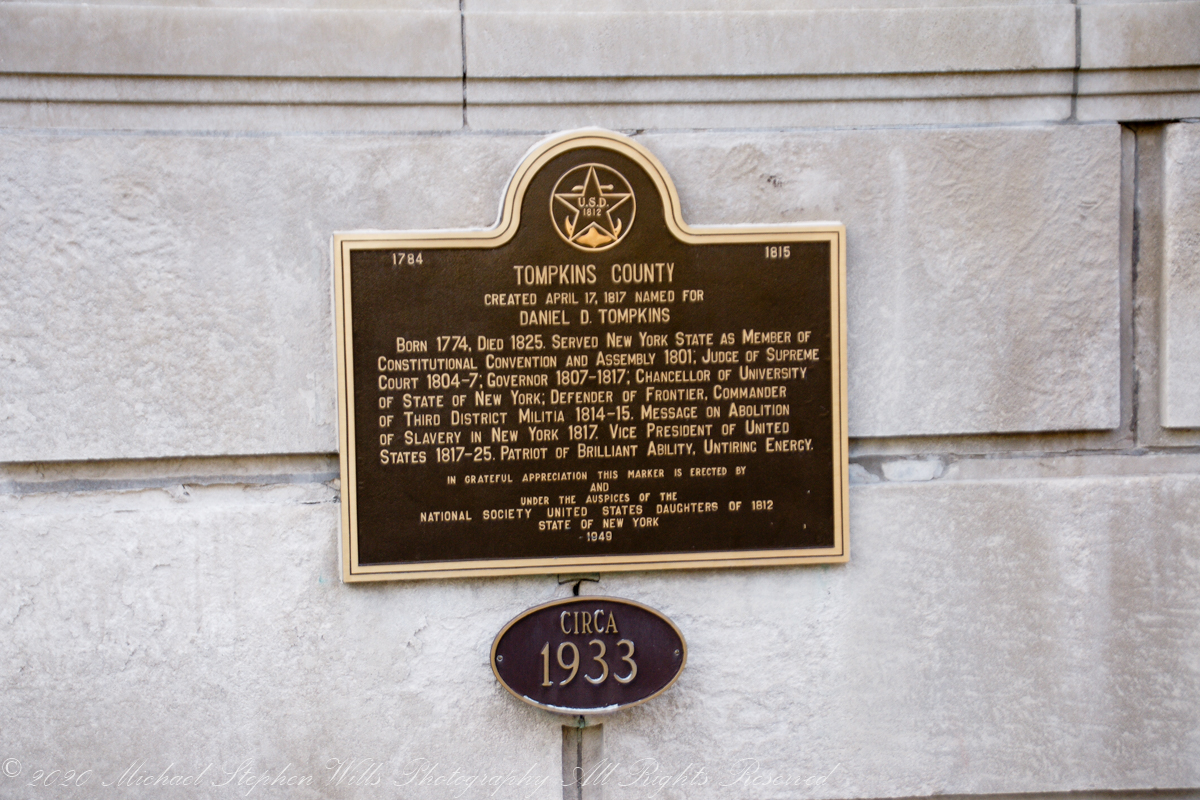
A brass plaque commemorates Daniel D Tompkins on eponymous Tompkins County courthouse. When the county was formed, 1817, Daniel Tompkins was a former governor of New York and Vice President to James Monroe. Tompkins never visited “his” county, there is no other connection between him. His family and life was rooted in eastern part of New York, around “The City.”

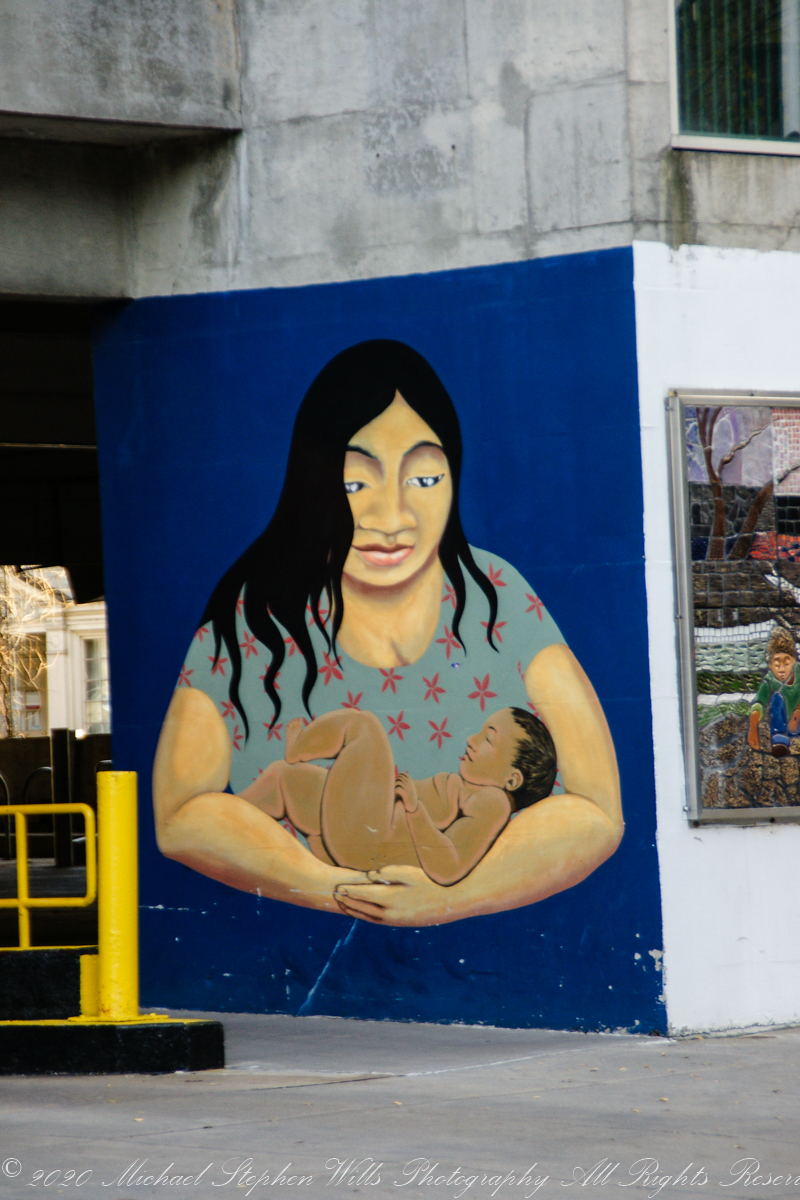
“Maternidad”, Seneca Street Garage, a mural by Nick Gilbert was the 2014 winner of 2014 @culturaithaca Latinx Mural Design Contest.

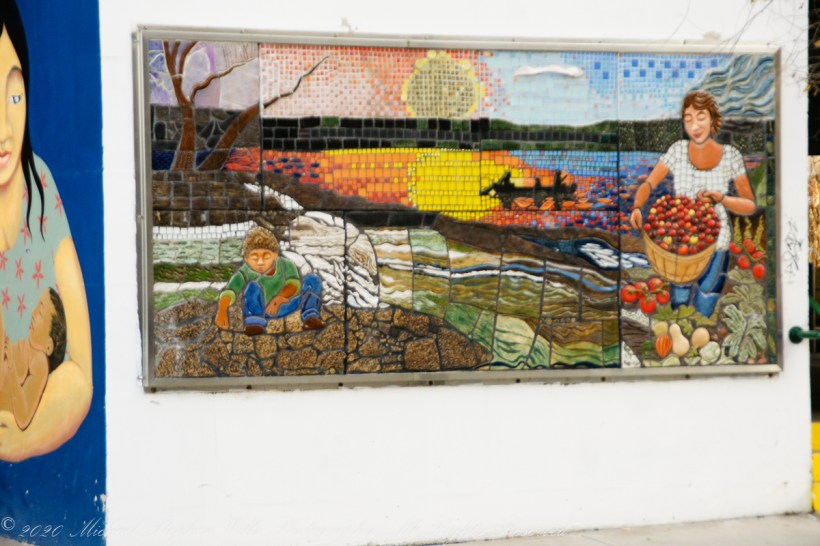
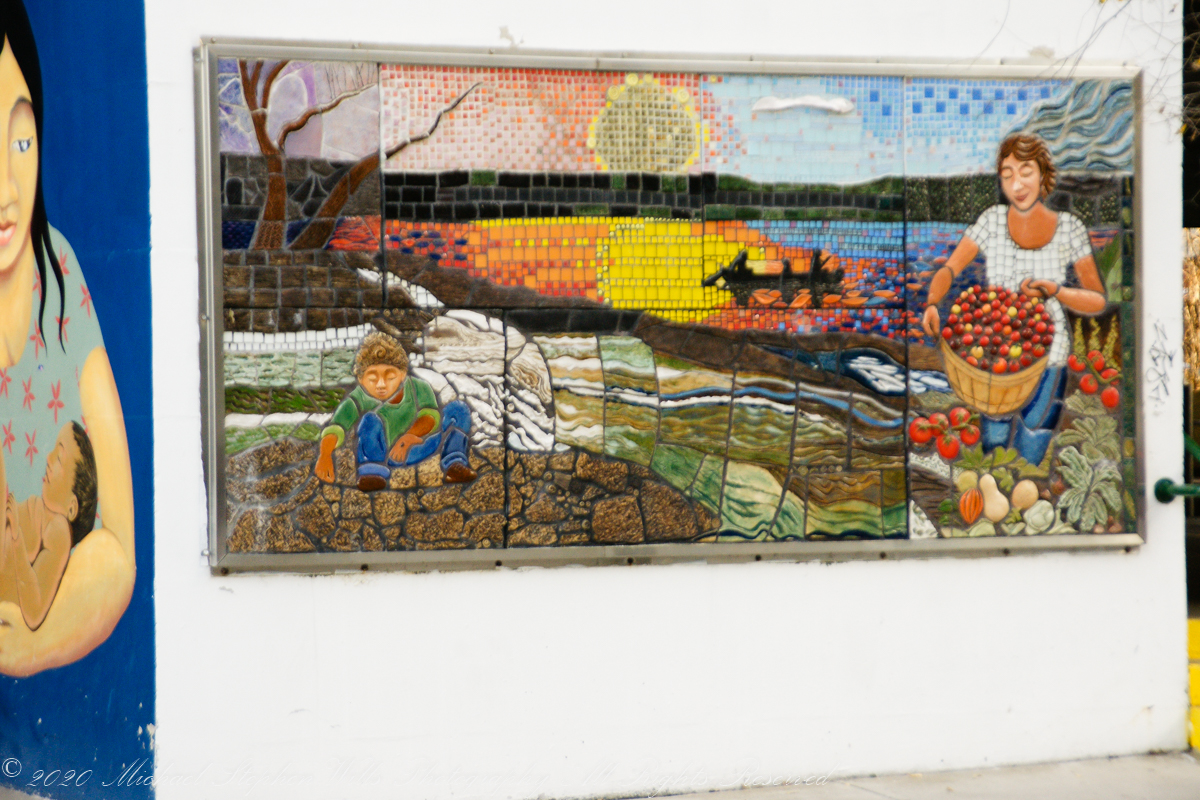
Mosaic Mural “Feels Like Ithaca” by Annamarie Zwack, Seneca Street Garage Also known as “Spirit of Ithaca”

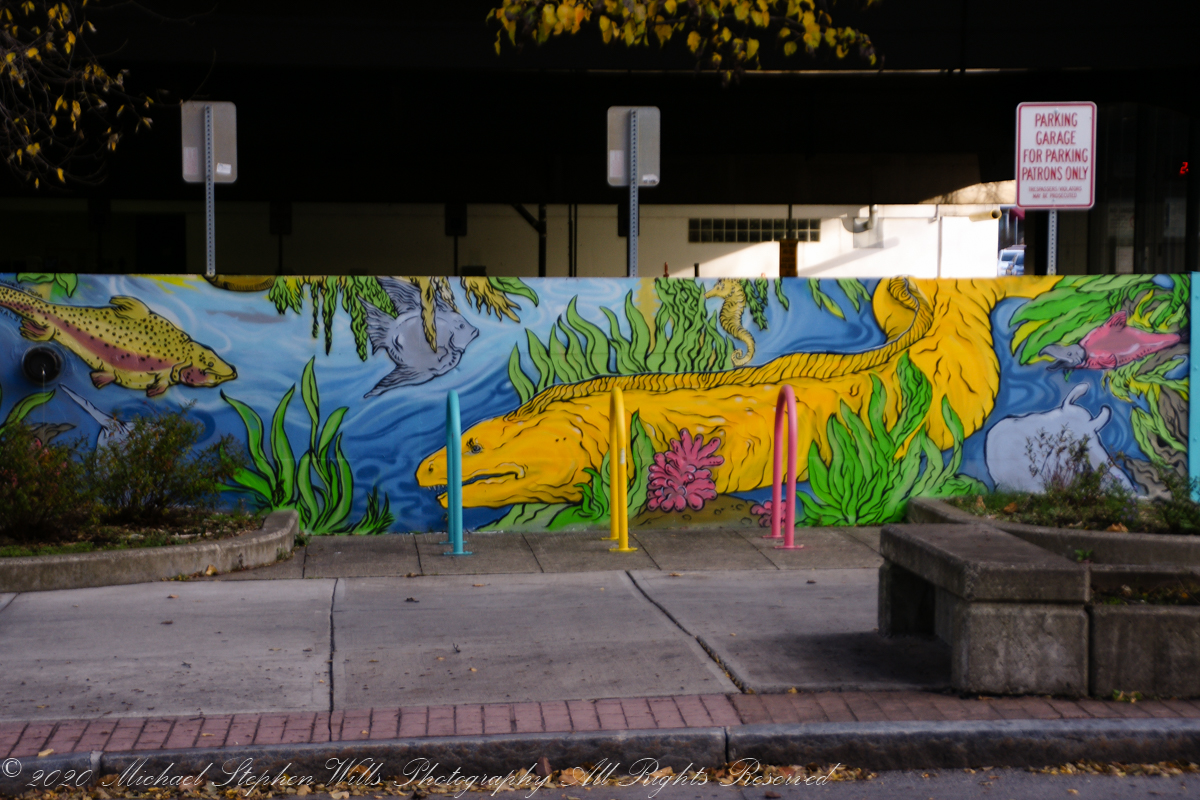
I am not finding the attribution for this undersea idyll, also on the Seneca Street garage adjoining “Feels Like Ithaca.”

This completes my Sunday afternoon walk around Ithaca.

Copyright 2021 Michael Stephen Wills All Rights Reserved
Late Autumn Ithaca 7

Hillside Rest

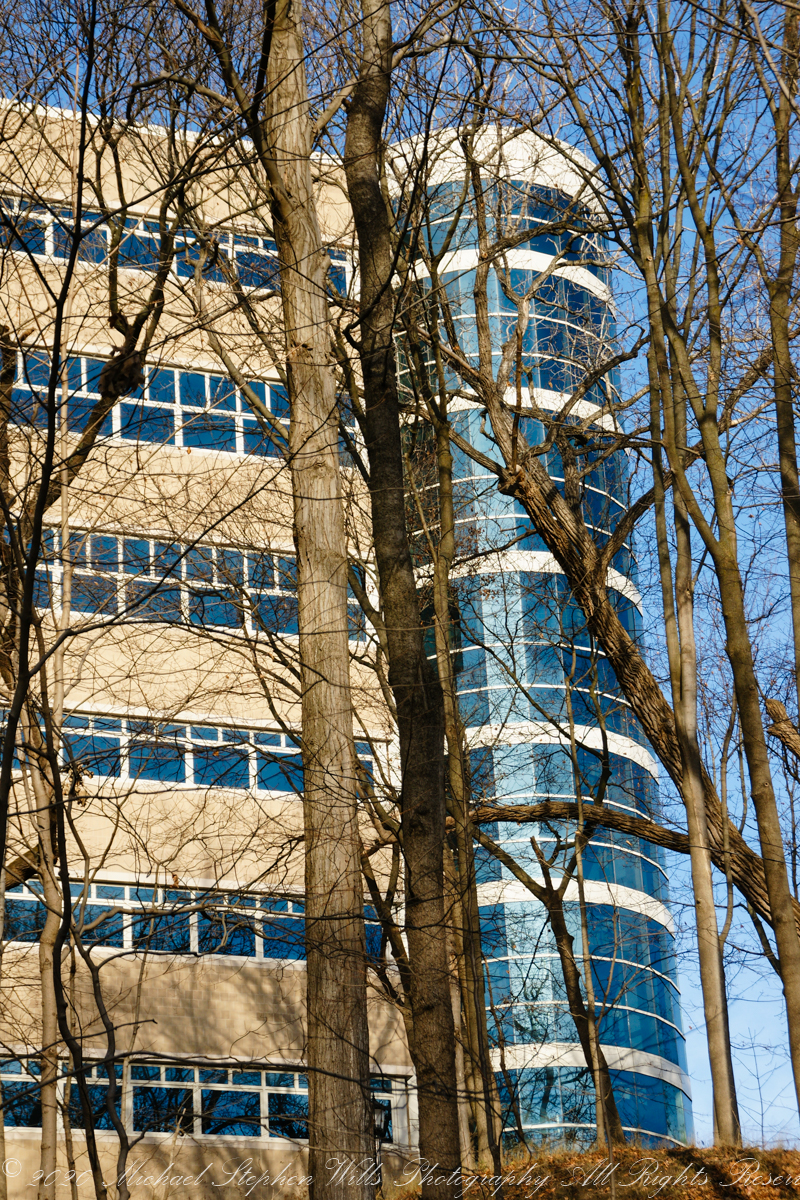
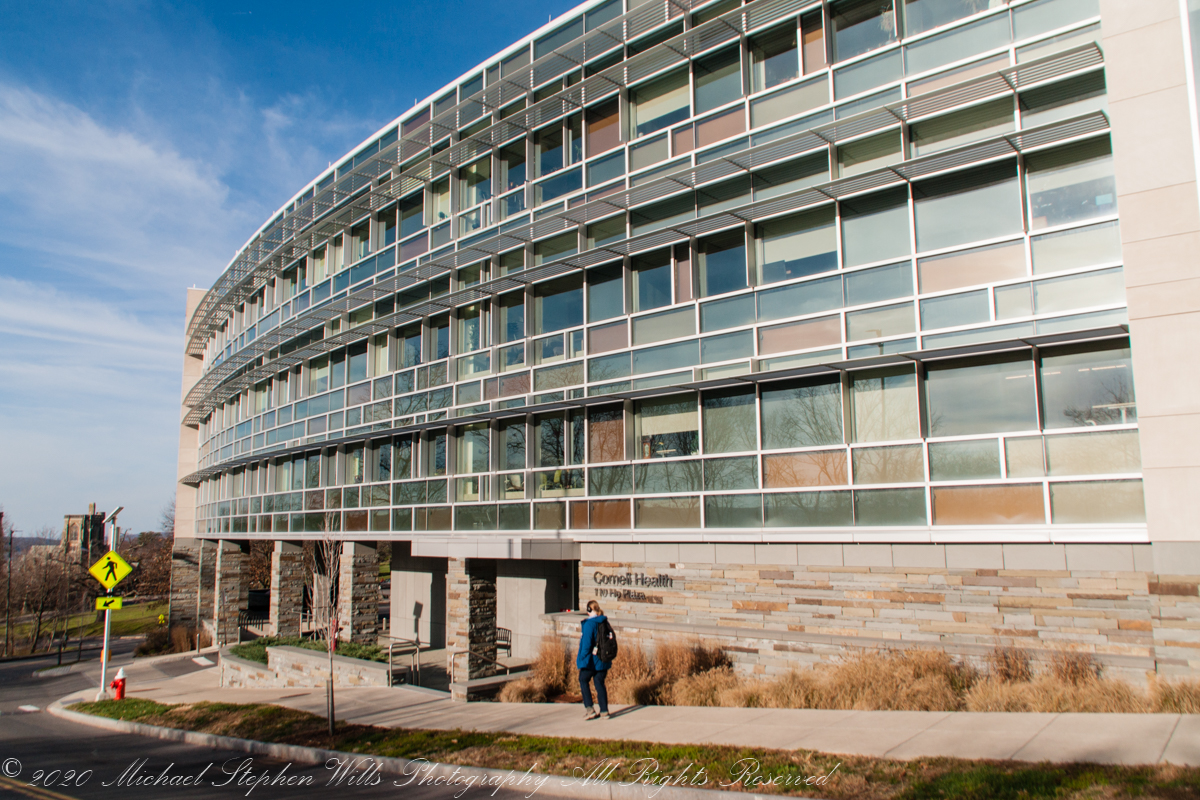
We pick up this walk through Ithaca from the December 23rd post, next to a waterfall and the “Theory Center,” starting with the spiffed up rear façade of the Cornell Health Building, renamed from Gannett Health after a right wing newspaper publishing magnate. The building fronts “Ho Plaza” thus carries an address with unfortunate allusions, named for a distinguished Cornell alumna who’s family name is Ho. I included this building in appreciation to Cornell University and students for being good neighbors during this COVID-19 pandemic, controlling the virus.

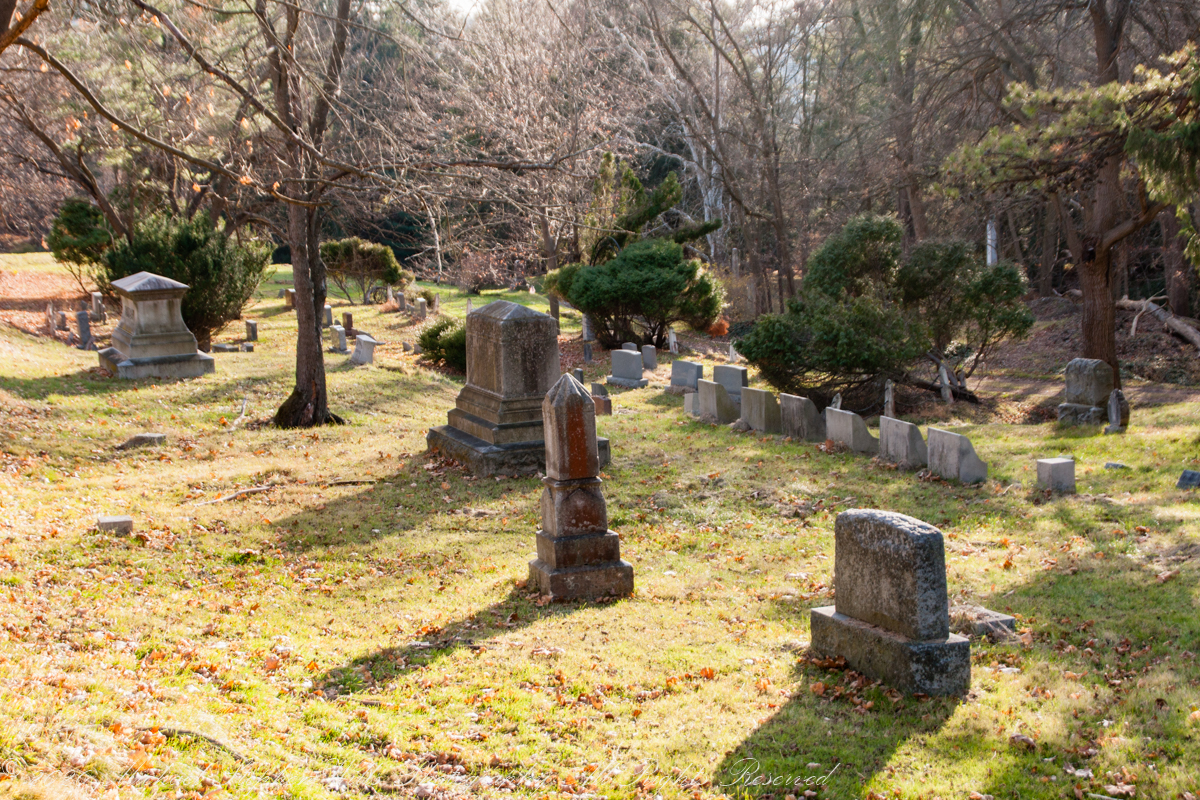
Today, I avoided the views of the popular Lib Hill to minimize personal contact. Instead, descending the hill on footpaths, found myself on Stewart Avenue and the eastern side of City Cemetery.

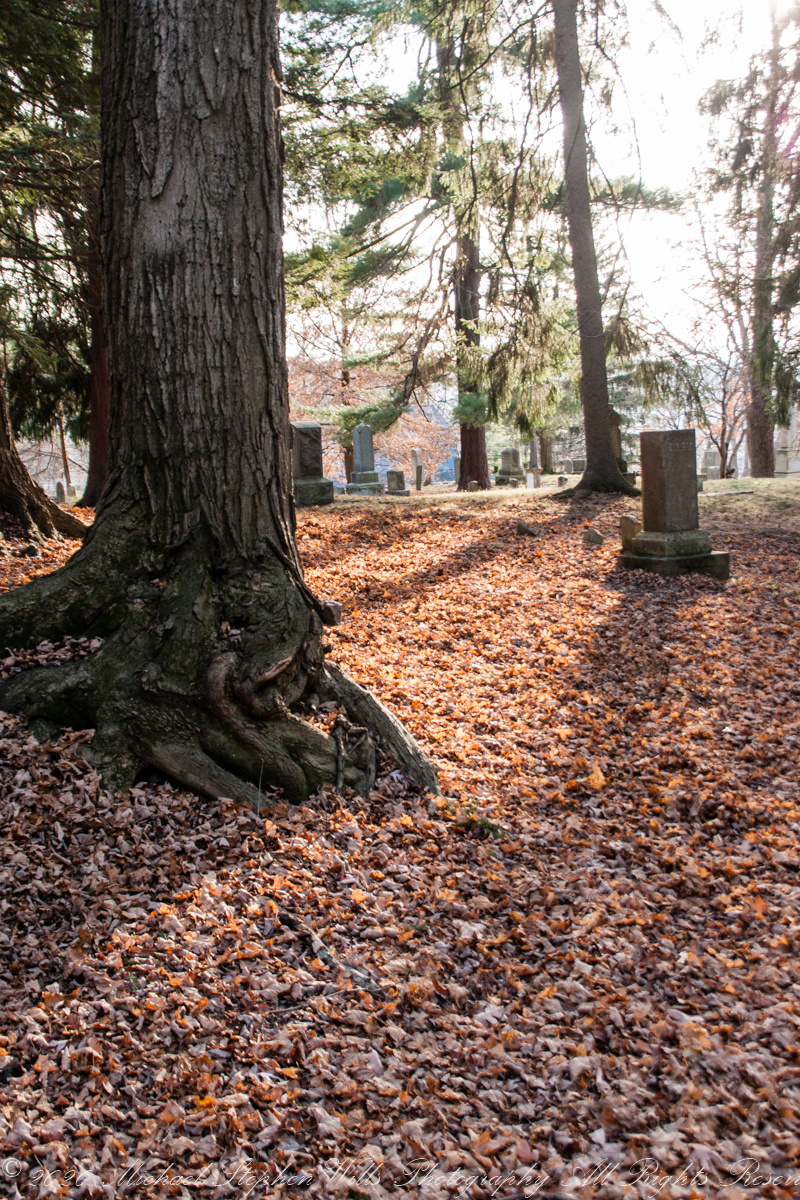
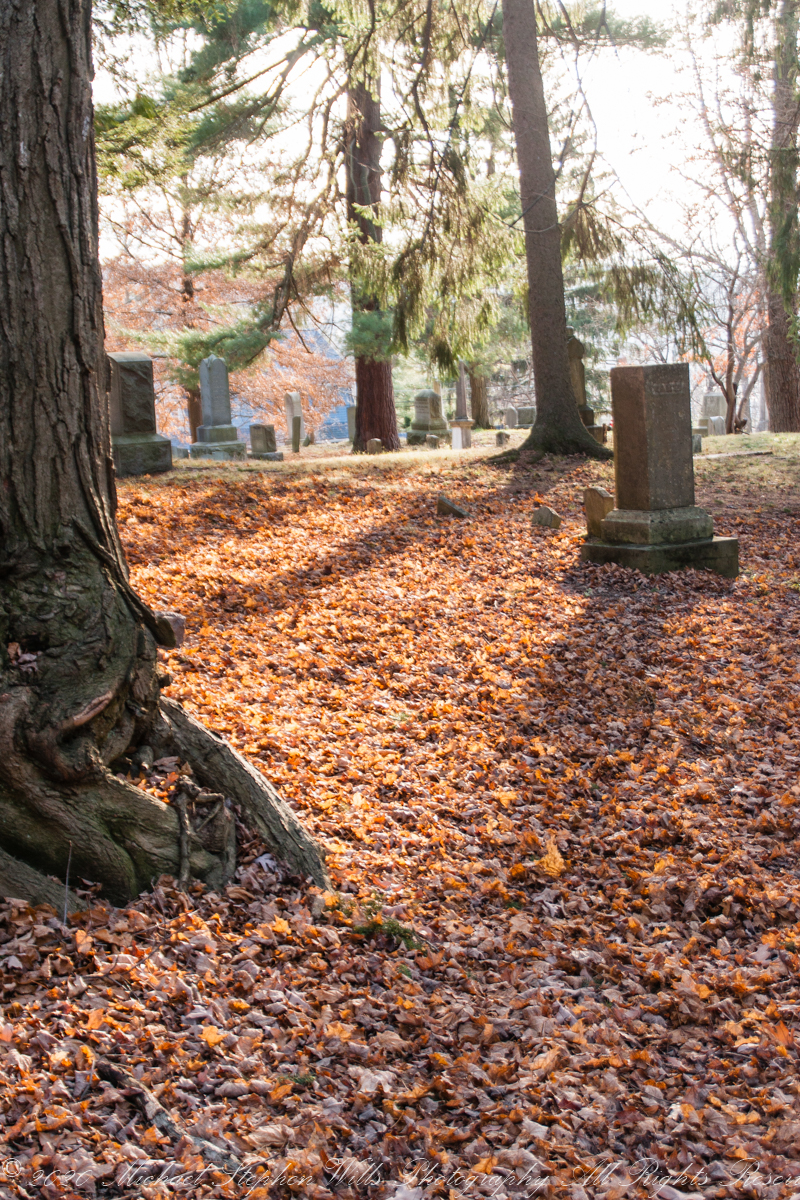
Enjoying the solitude and long shadows of our northern afteroon.

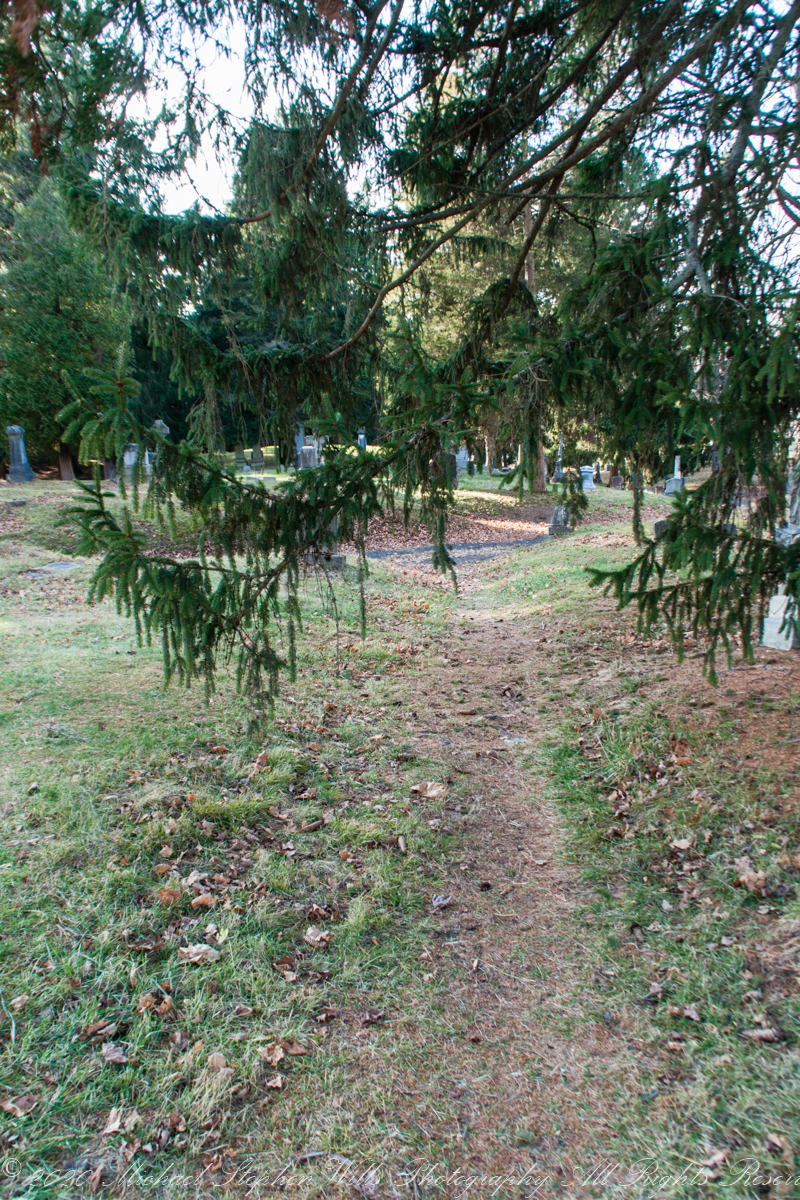
Traversed a gate of hemlock branches….

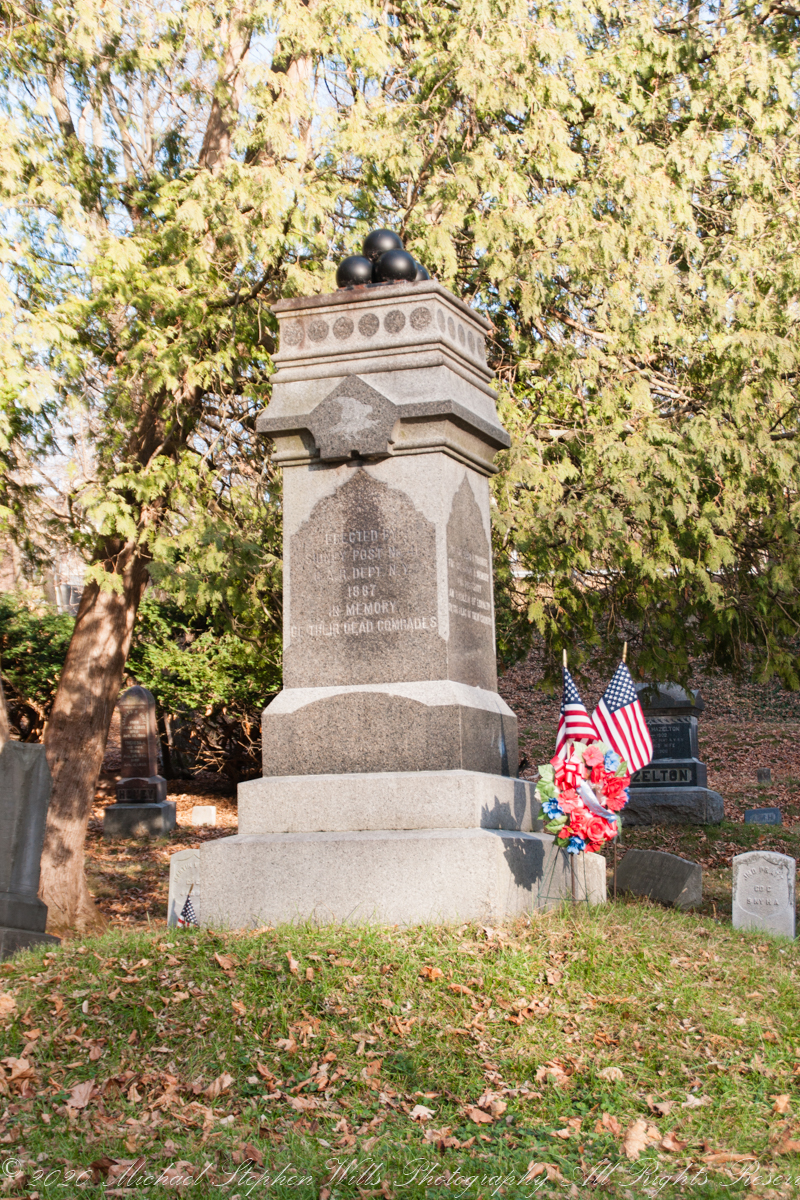
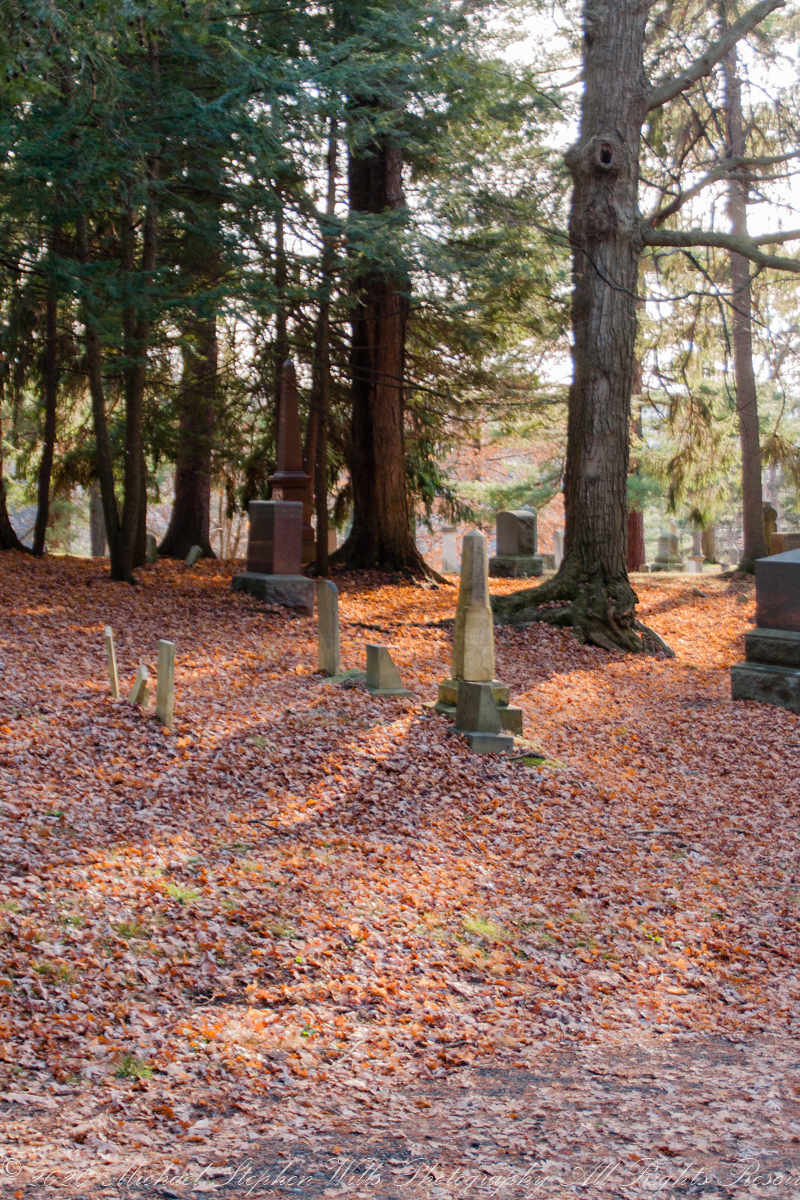
Admired random monuments. By the way, George Washington Schuyler, whose family anecdote I shared in a previous post, rests here under an impressive stone. Not this one.

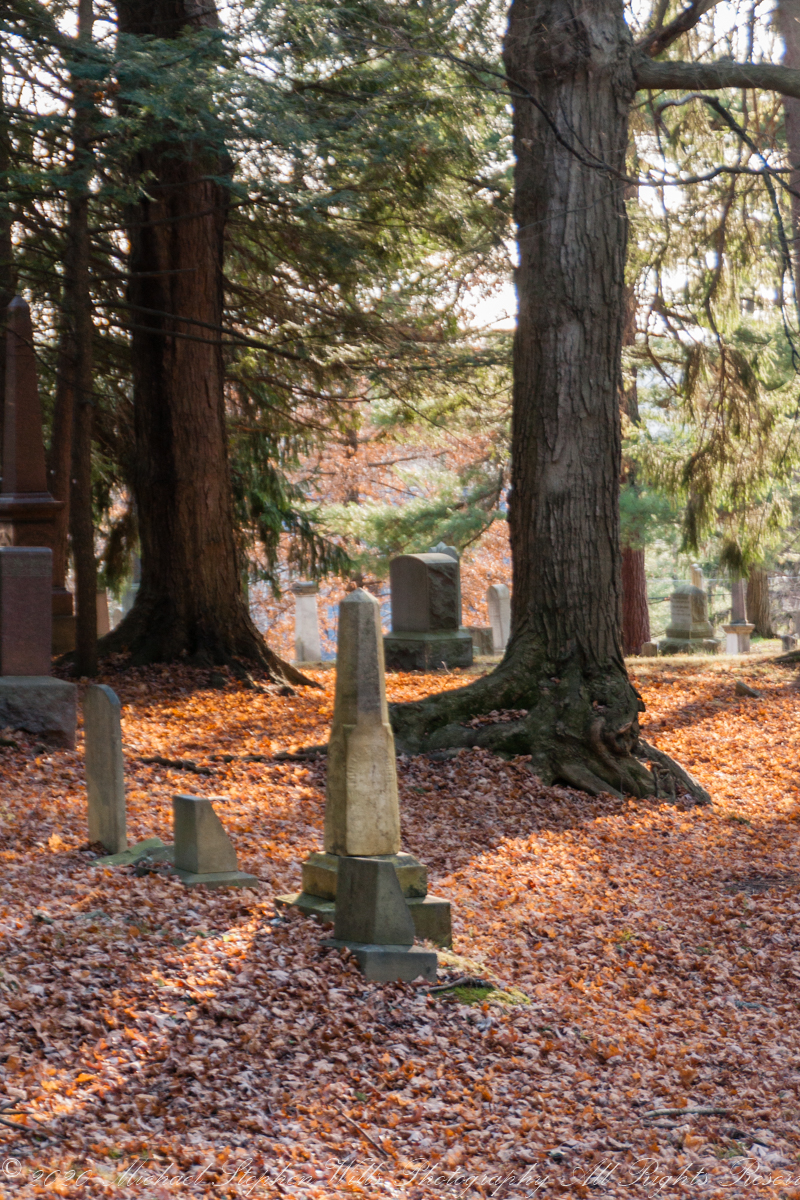
More afternoon light, fallen leaves, hemlocks.

Copyright 2021 Michael Stephen Wills All Rights Reserved
Late Autumn Ithaca 5

Golden Hour and “Happy New Year”

Walking the Lower Cascadilla Gorge Trail from the end of Court Street, downtown Ithaca, named for the Tompkins County Court is a favorite way for students to walk from the Cornell Campus.

I avoided the route today, the trail is narrow, much less than the 6 foot minimum distance. The footpath from Eddy Gate to College Avenue passes where the trail climbs up from the gorge. I did opt to catch the Upper Cascadilla Gorge trail, much wider. The trail passes two footbridges accessing the Engineering Quadrangle and the main Cornell Campus. Photographed here is the approach to the second, smaller, footbridge.

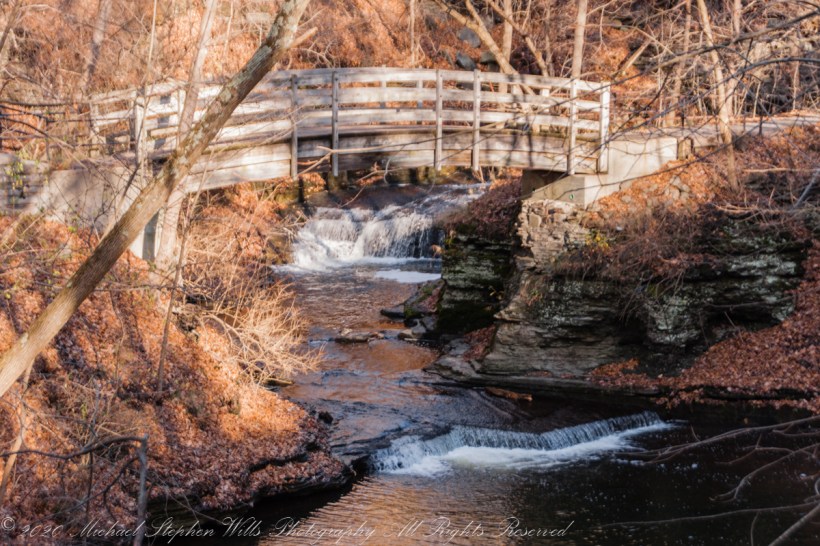
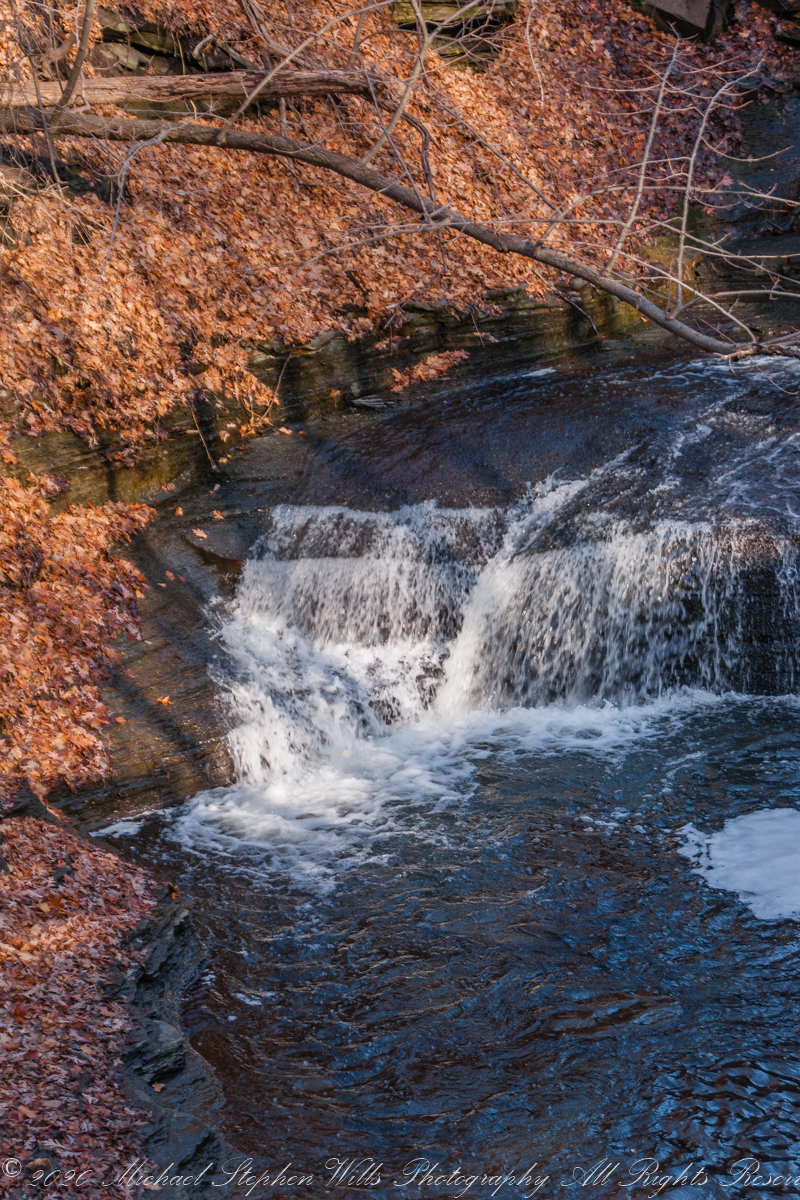
Late fall/winter afternoons the “Golden Hour” is hours long for this view of the footbridge and waterfall.

Waterfall views from the bridge. I left the tripod at home, so these exposures “freeze” water motion.

Look up from the other side for this view. Baptized 1985 as “The Theory Center,” 2007 saw the name changed to the more evocative, “Center for Advanced Computing.” It always filled with supercomputers. Socially, the culture of the place was retrograde from the beginning with “faculty only” lounges that kept out the lowly staff members. As if on cue, I came upon a group of the privileged, unmasked, strutting down the hill toward me, like vacuous moles.

Copyright 2021 Michael Stephen Wills All Rights Reserved
Fresh Snow

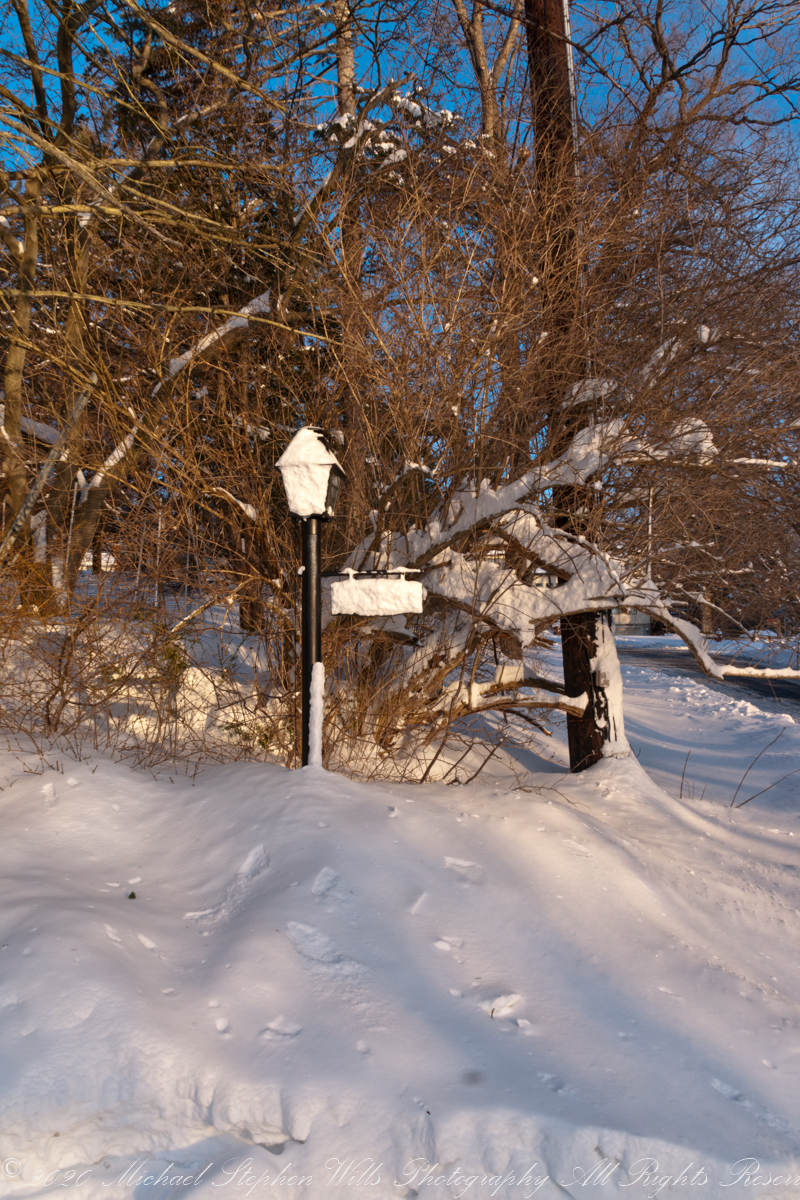
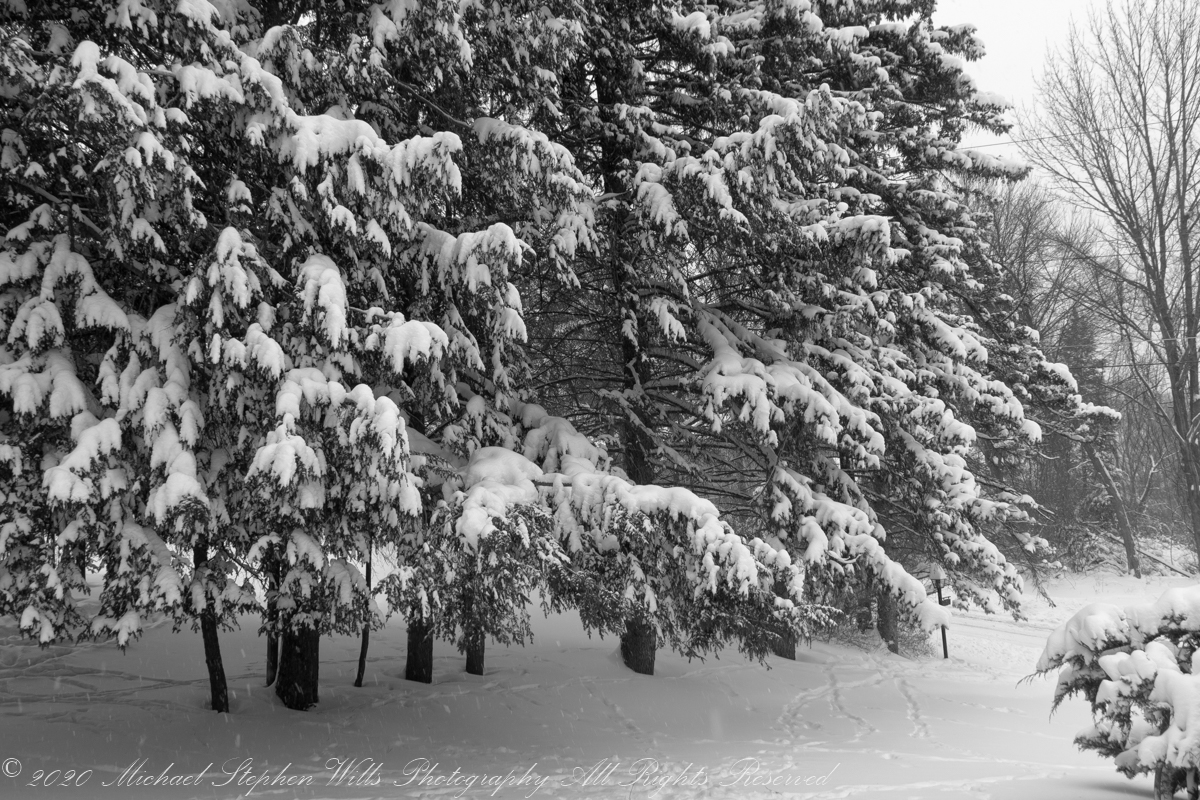
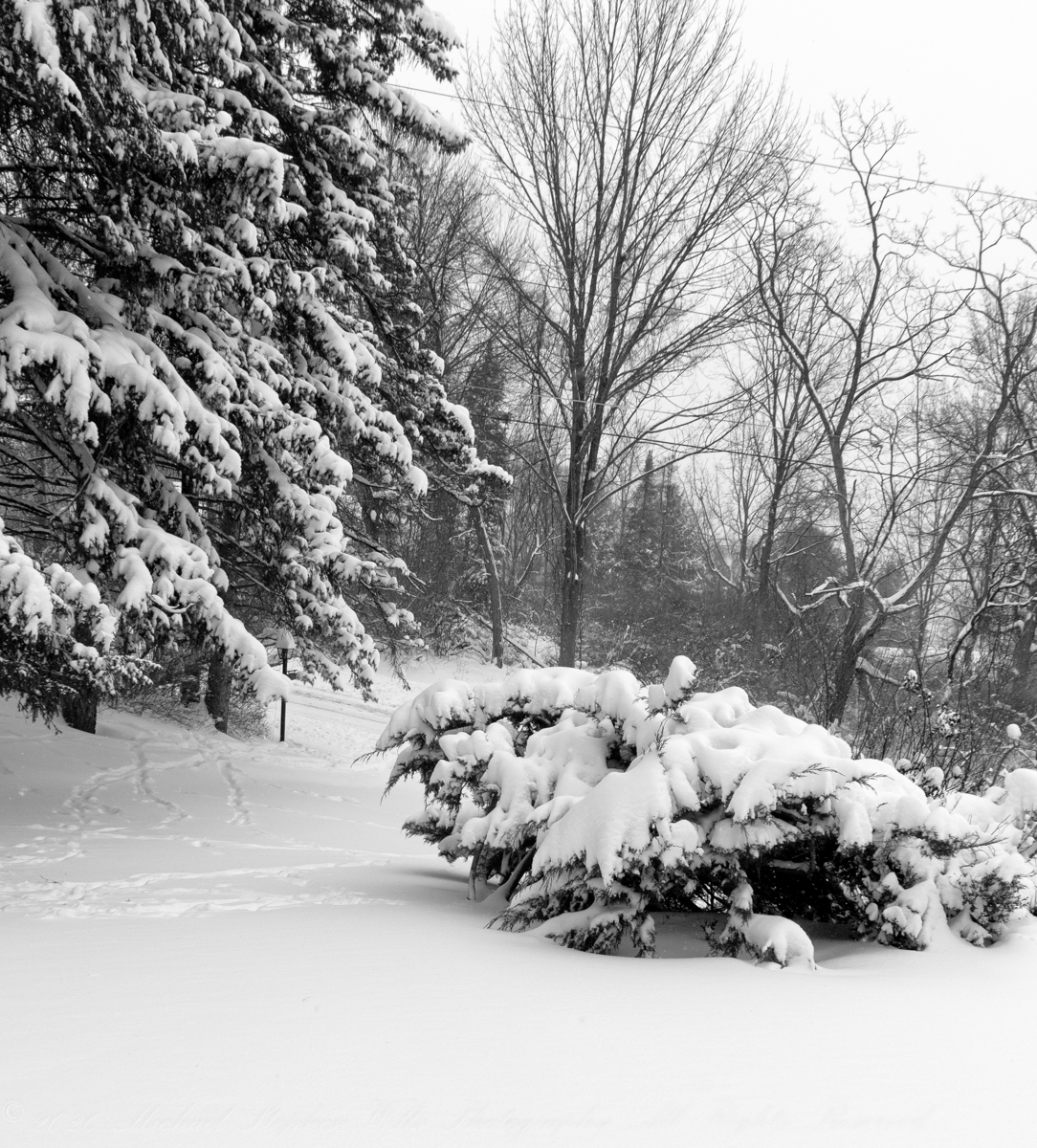
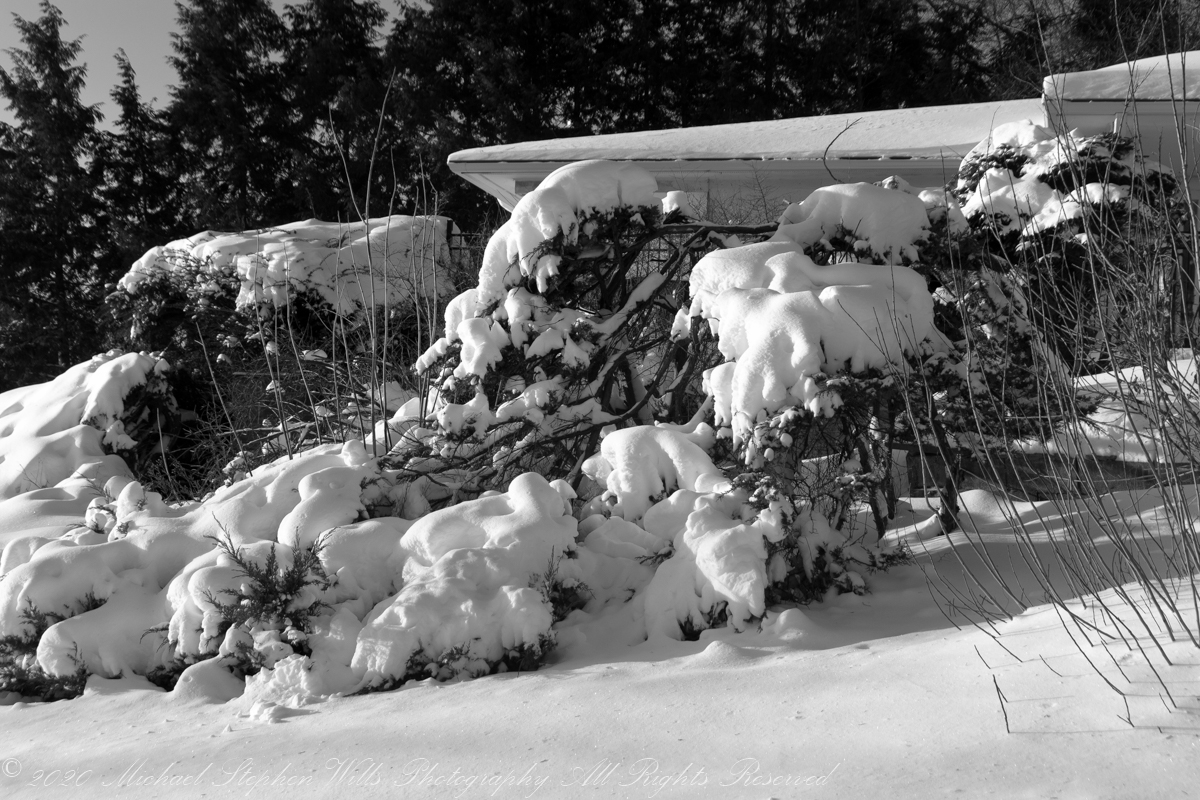
In Dawn’s Light, Untouched

Here is a story of a local man’s narrow escape from this week’s snowstorm.

Copyright 2020 Michael Stephen Wills All Rights Reserved
With and Without People

always without water

Pampa del Tamarugal National Reserve

Getty requires a signed photo release for each human in a photograph.

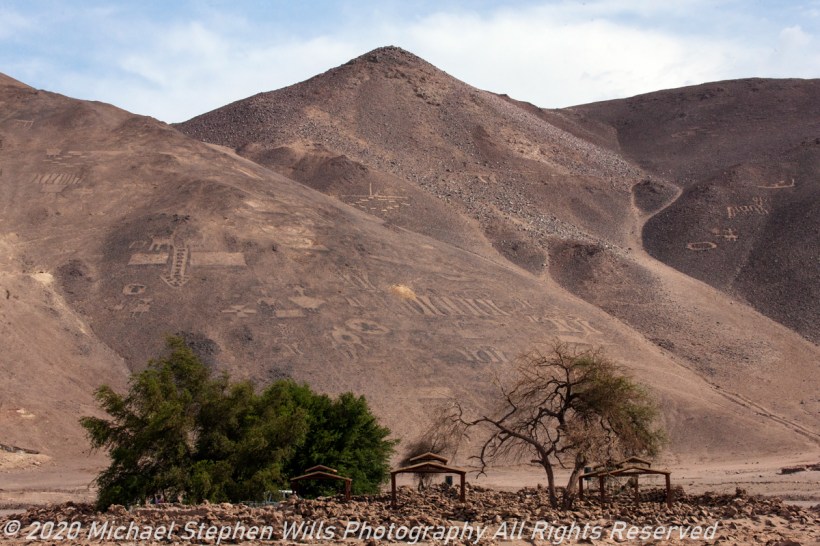
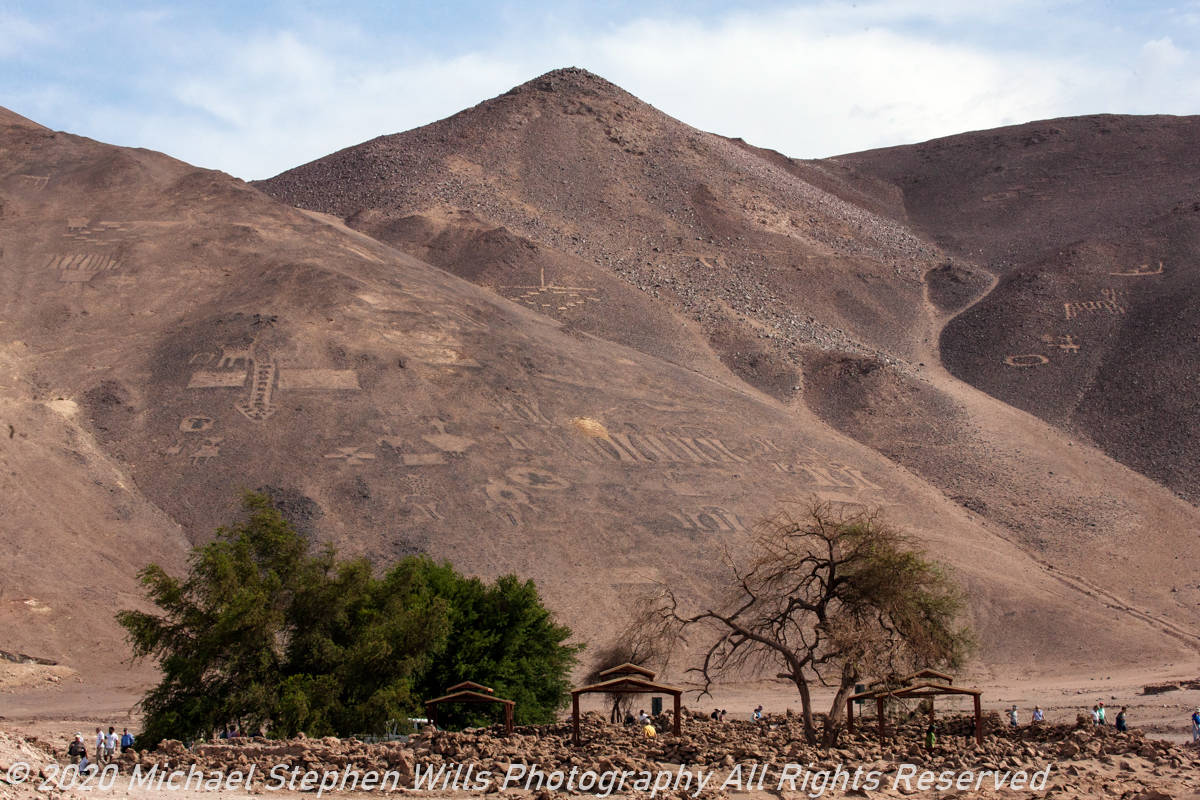
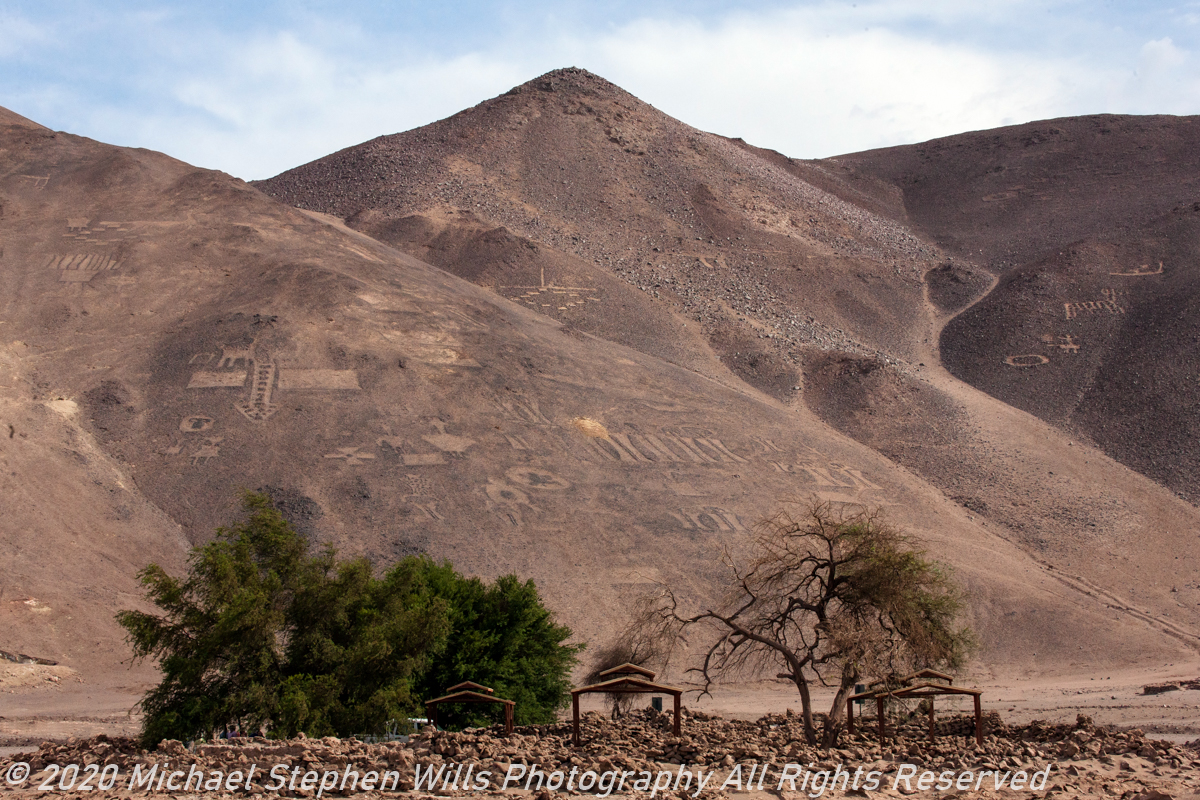
For this, the single best overview from our time with the Pintado Geoglyphs, I carefully painted out every human figure, our fellow tourists.

Here are the versions with and without human figures.

Click any photograph for a larger view and use Ctrl-x to zoom in closer.

Click me for the first post of this series.

Copyright 2020 Michael Stephen Wills All Rights Reserved
Geoglyph Panorama

Rain never falls here

Pampa del Tamarugal National Reserve

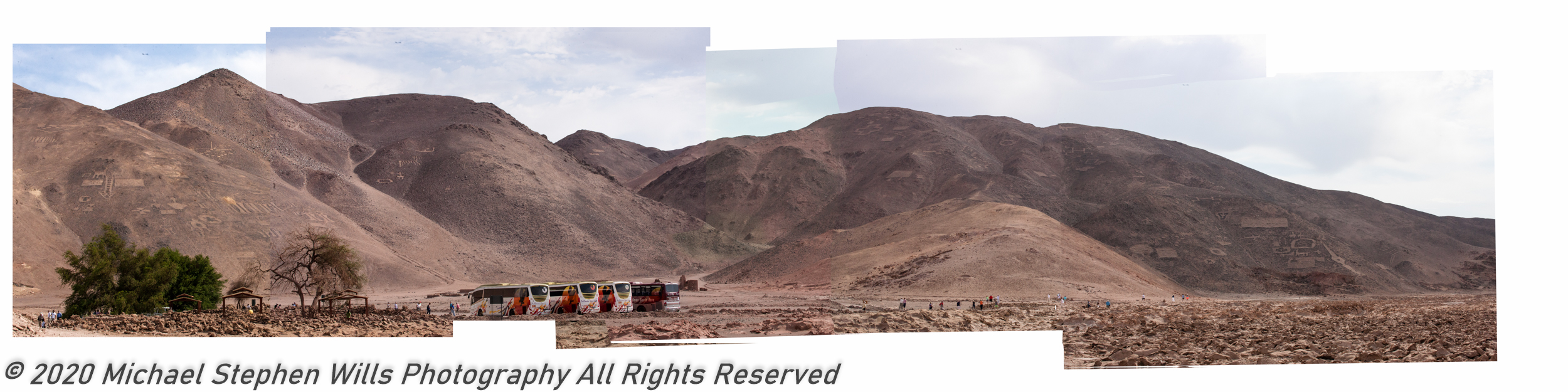
Eternal high clouds that never yield water, we visited these hills just off the Pan American highway, to view shapes formed by moving stones.

The shapes are multifarious, mysterious and majestic. Hundreds of them, rendered for reasons known only to the makers.

I stitched together five images to yield an overall impression.

Click any photograph for a larger view and use Ctrl-x to zoom in closer.

Click me for the first post of this series.

Copyright 2020 Michael Stephen Wills All Rights Reserved
Ghost of a Ghost Town

A place that exists because of water and a roa

Adolfo Tapia Live Here (?)

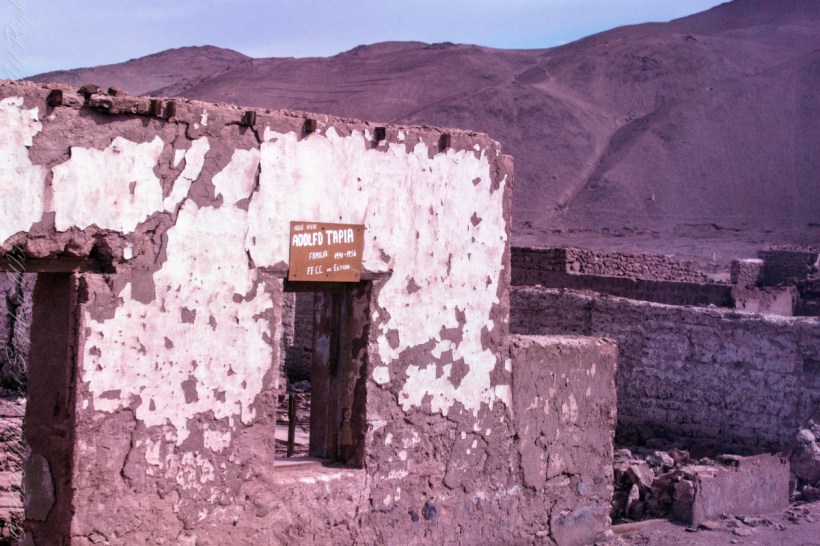
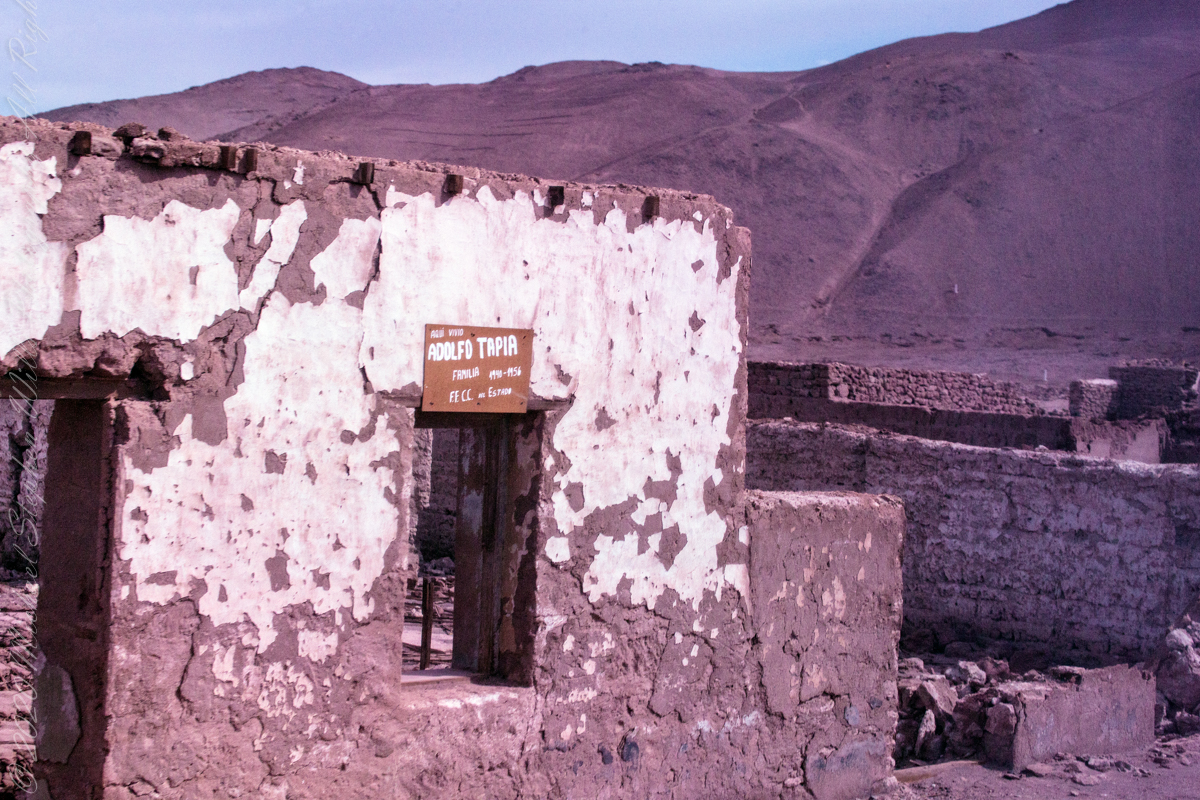
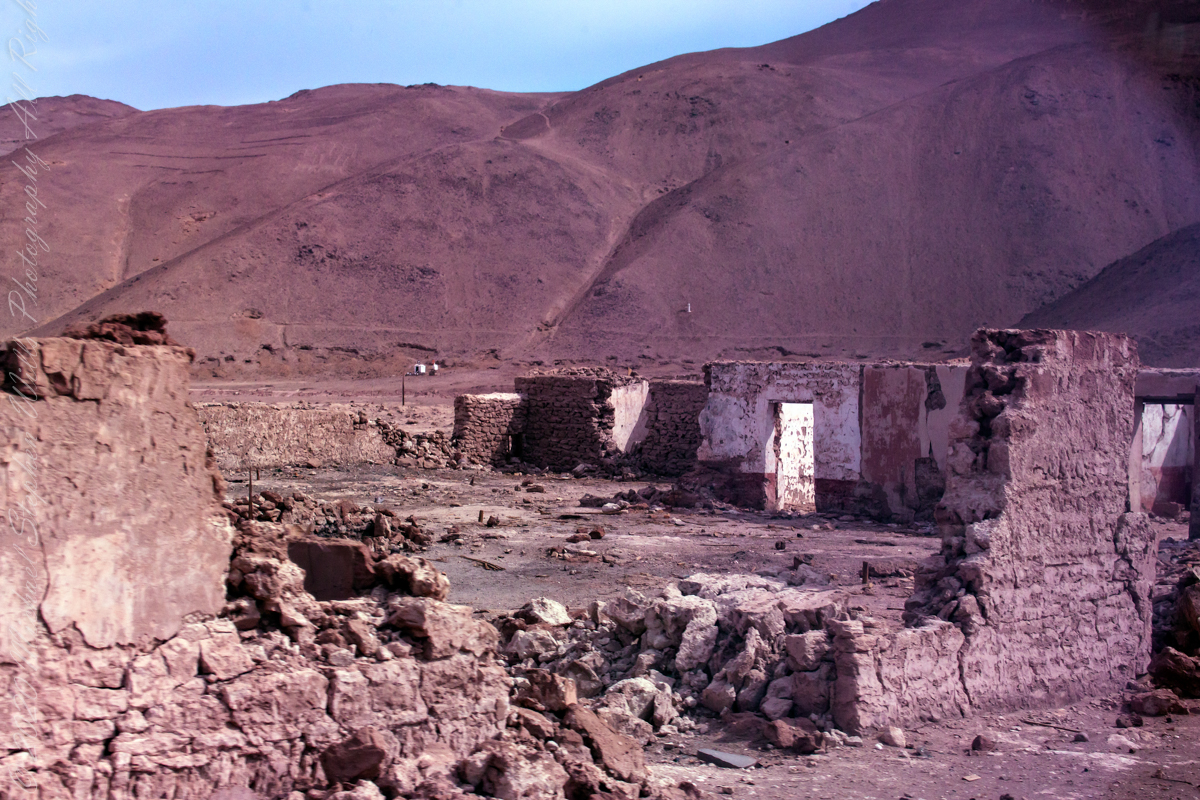
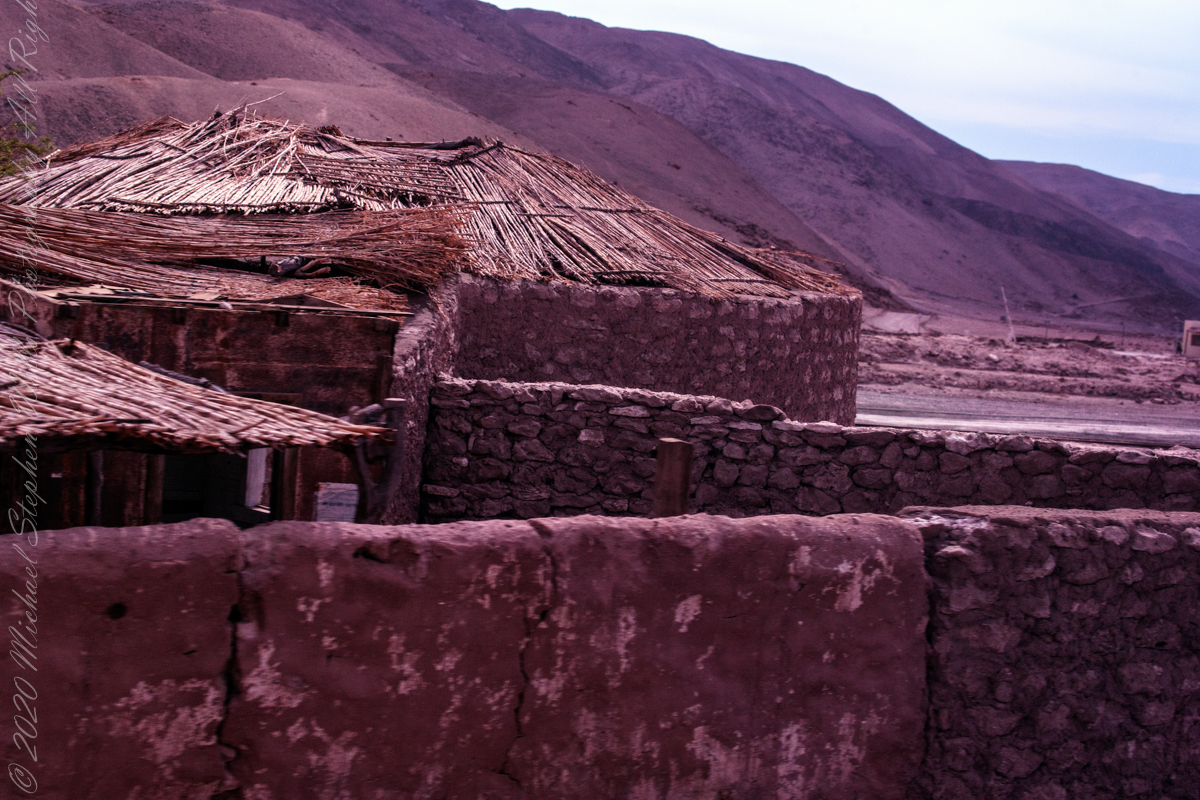
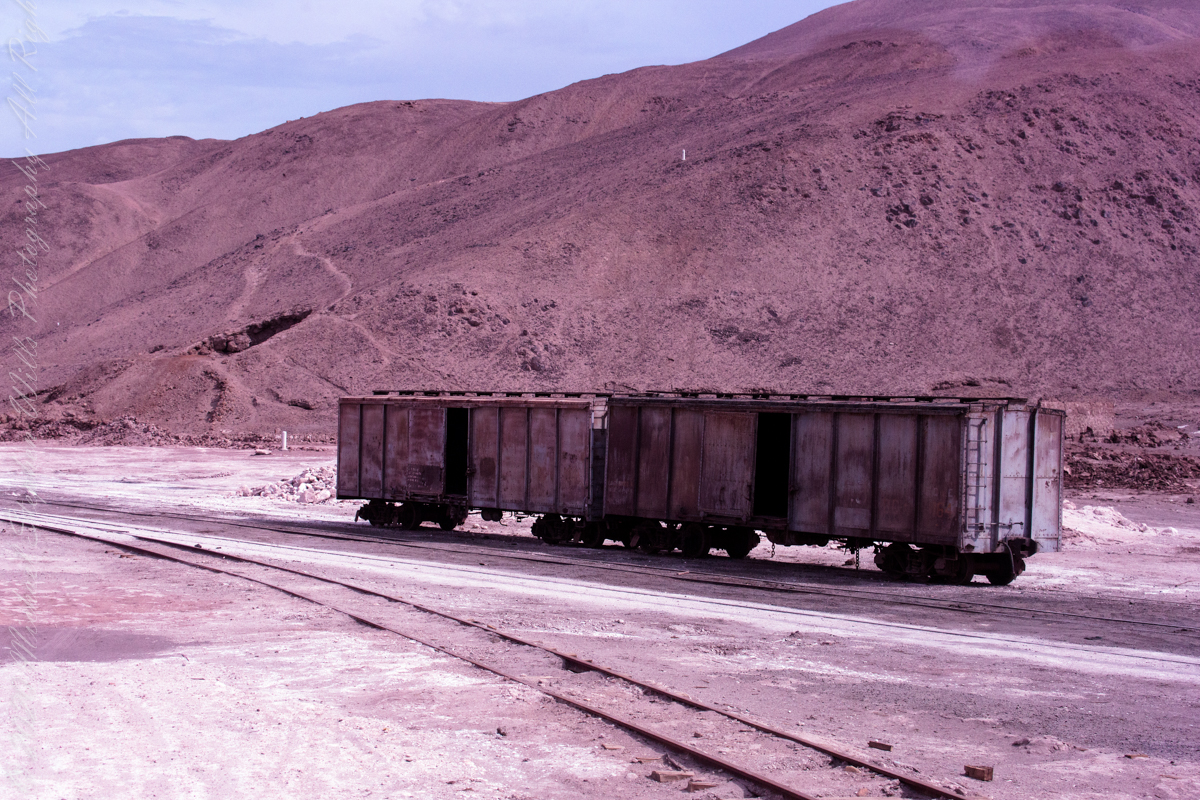
The Spanish word pintados translates to painted in English. There are many references to the word, in one it is a war loving tribe known for tattoos. Here, it is the name of a deserted town on an abandoned railroad running roughly parallel to the Pan American highway. As we passed through en route to Geoglifos de Pintados, I captured these shots of the ruined town.

The handprinted sign above the window, top photograph, says in translation, “Here lived the Adolfo Tapia Family, 1940-1956, F.F C.C. del Estado.” Searches on Adolfo Tapia turned up nothing, all we know is the sign attributes the designation to the state government.

The hill of the geoglyphs are the background, some of the figures are visible. There will be more in later posts.

The railroad served the many Saltpeter factories dotting the Tarapacá region. To my knowledge all were closed in the mid-20th century.

Click any photograph for a larger view and use Ctrl-x to zoom in closer.

Click me for the first post of this series.

Copyright 2020 Michael Stephen Wills All Rights Reserved
Well Ordered

fighting for truth and honesty

a basis for fairness

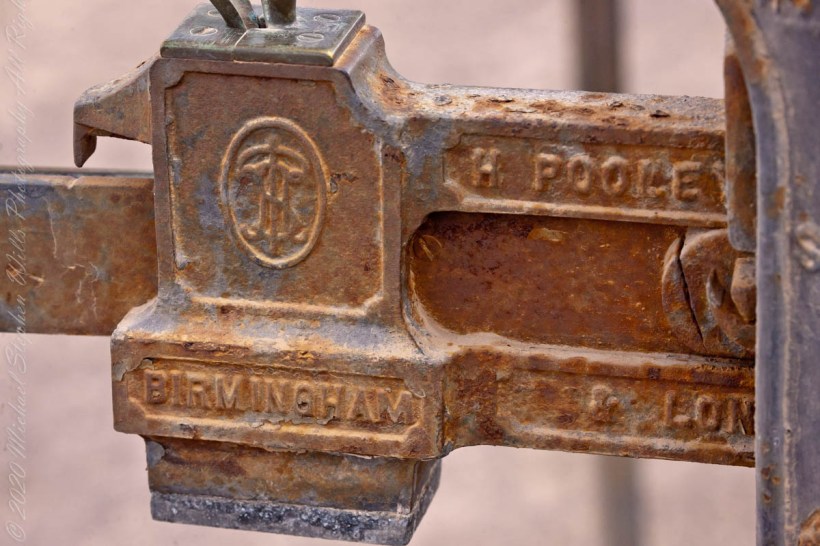
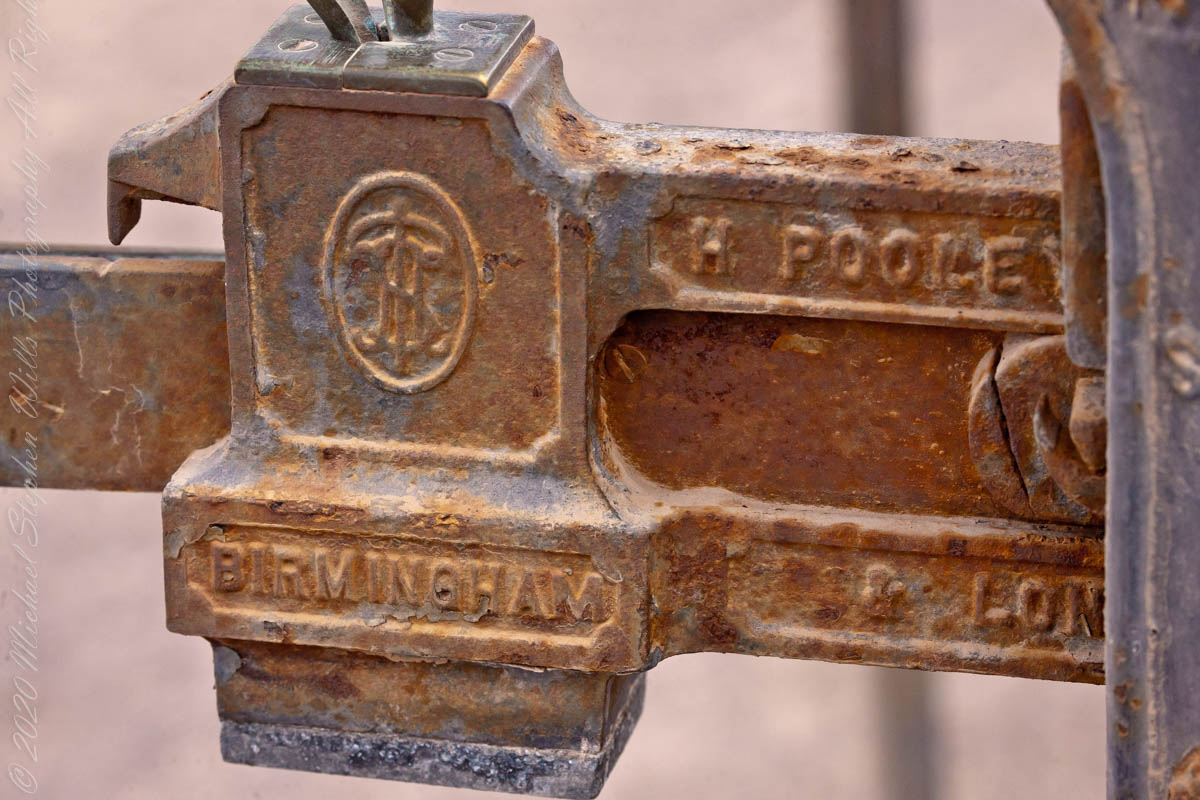
Pooleys were a firm of mechanical engineers, founded in Liverpool 1790. Shown as Pooley of Liverpool in Heath Mill Lane, Birmingham, the company originally made scale beams, such as shown here, a reminder of the origins of Humberstone.

A demand of the workers was access to a scale to verify company store weights. With this post I close this series of photographs from the Humberstone UNESCO World Heritage Site.

Click any photograph for a larger view and use Ctrl-x to zoom in closer.

Click me for the first post of this series.

References

Websites

Humberstone and Santa Laura Saltpeter Works World Heritage page

The Humberstone and Santa Laura Saltpeter Works site (Chile), removed from the List of World Heritage in Danger/
Copyright 2020 Michael Stephen Wills All Rights Reserved