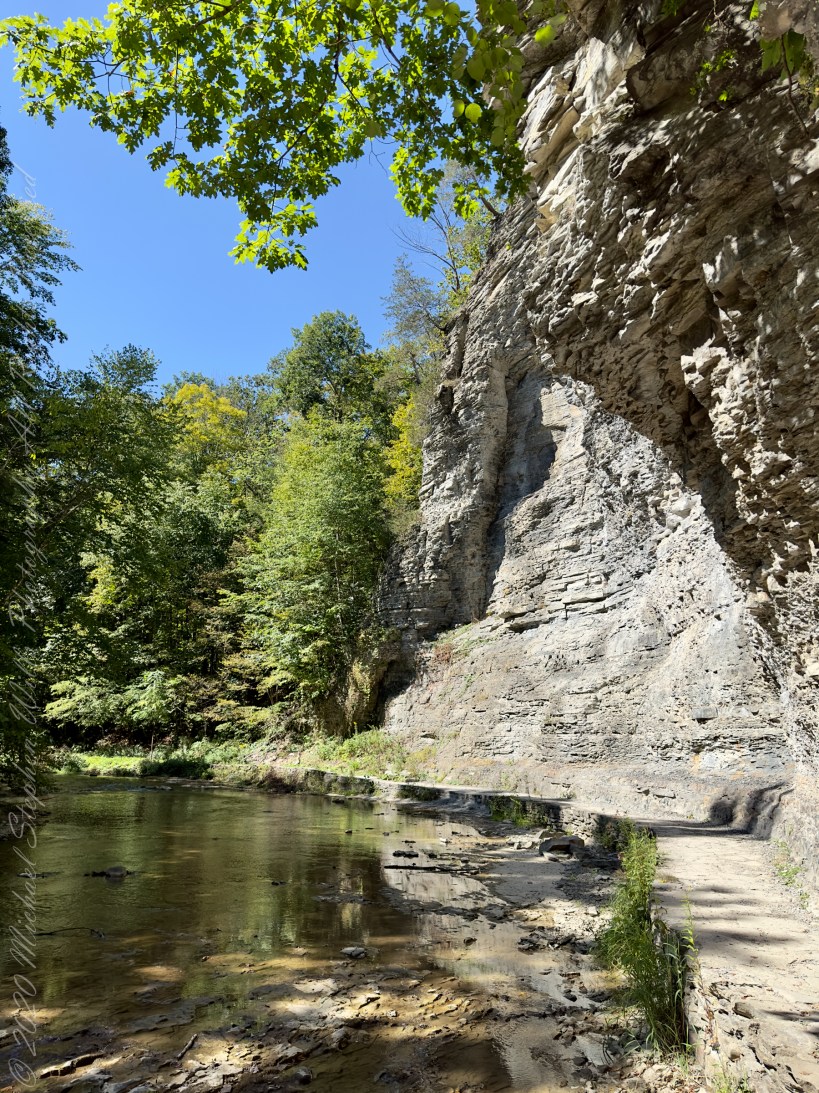
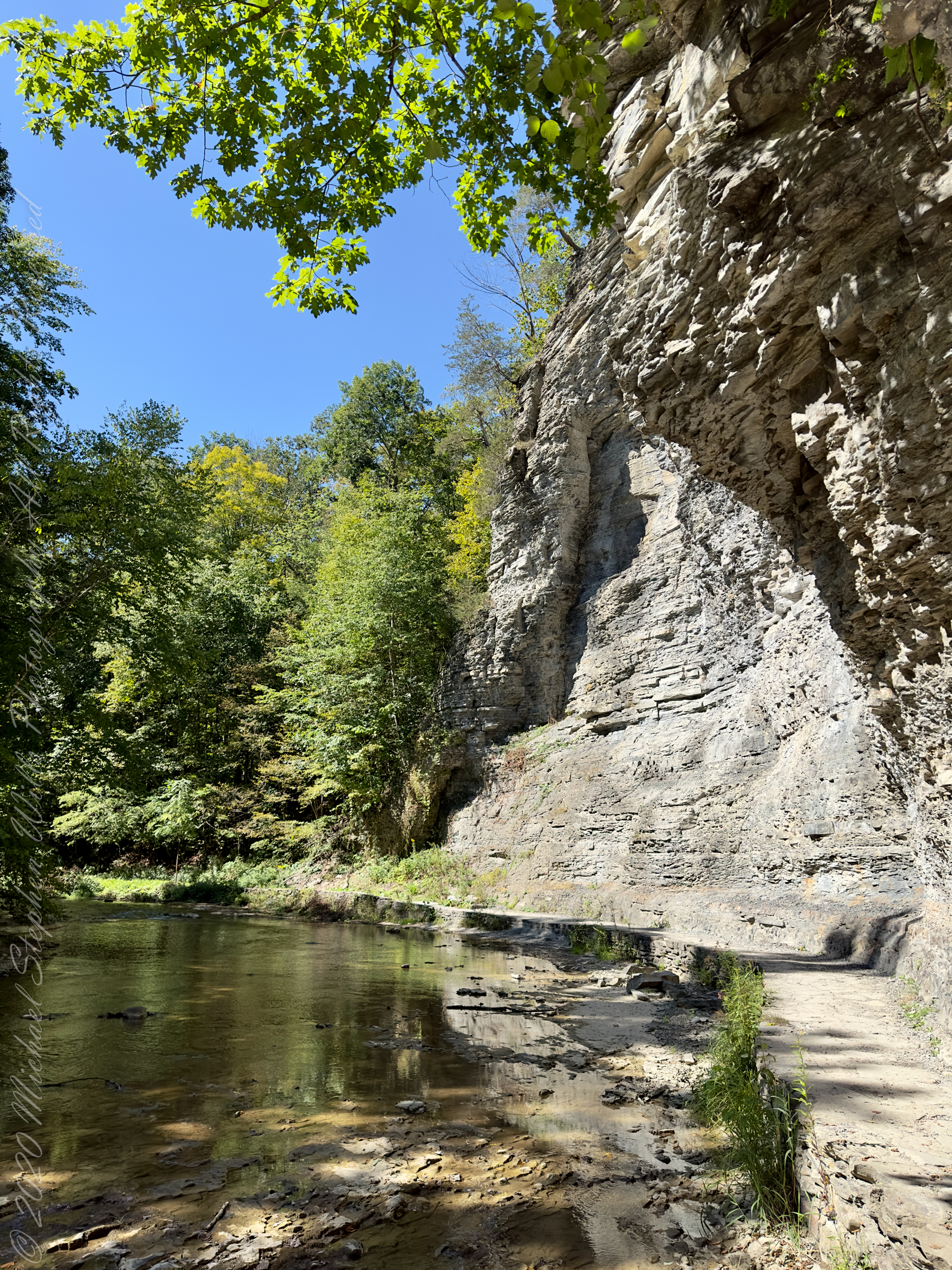
Overhangs such as this worry me, always forcing a faster pace. Over the years during early springtime walks, sometime before the gorge trail is opened officially, the path is littered with huge blocks fallen during the winter, possibly even that same day.
A task the park staff undertakes before opening is an evaluation of sequences such as this, with cliffs and overhangs, for portions ready to fall. Rock climbers are engaged to dislodge these rocks. At times, larger segments of the cliff are blasted resulting in landslides.
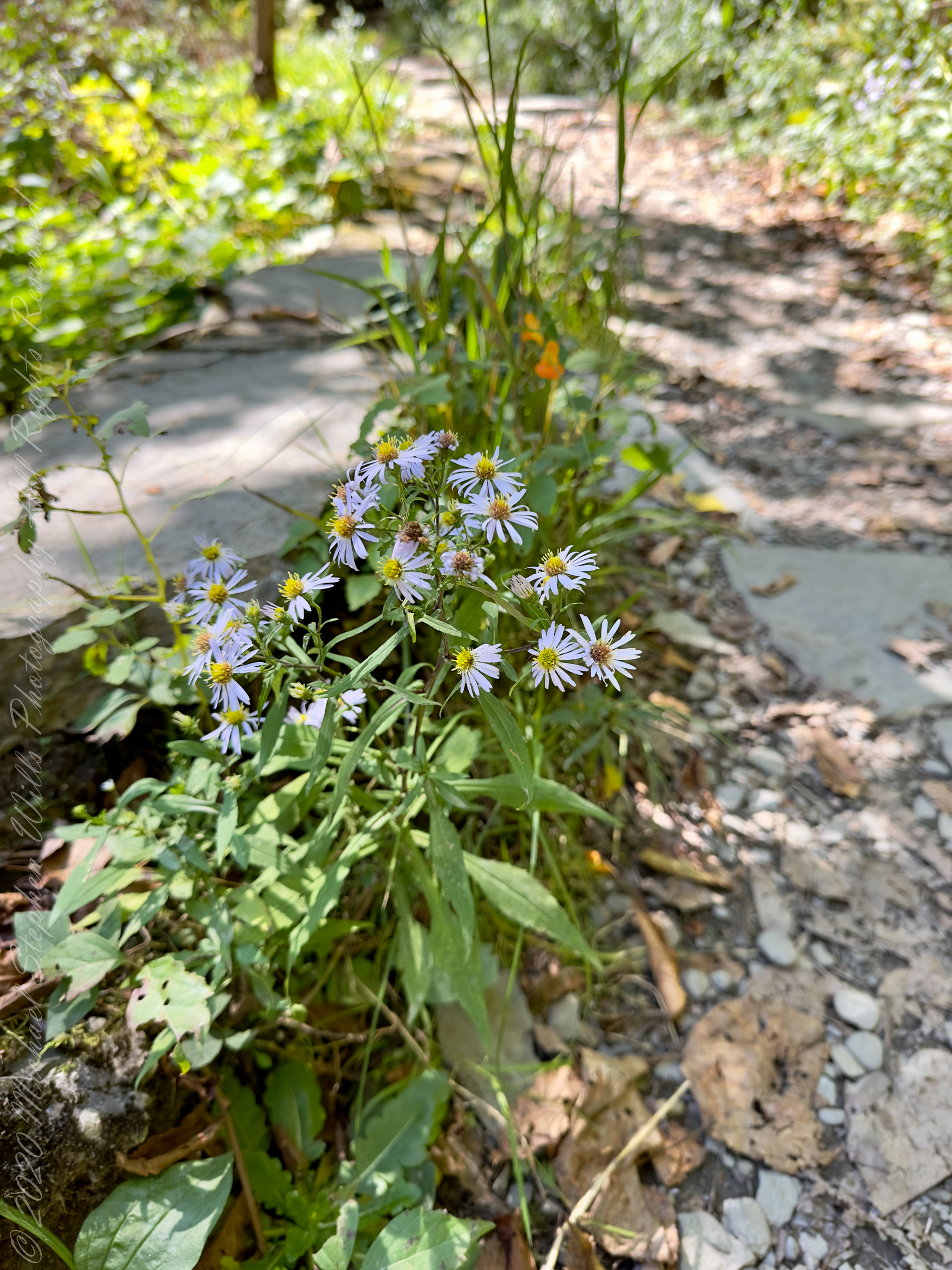
On a gentler note, these asters grace Finger Lakes trails this time of year.
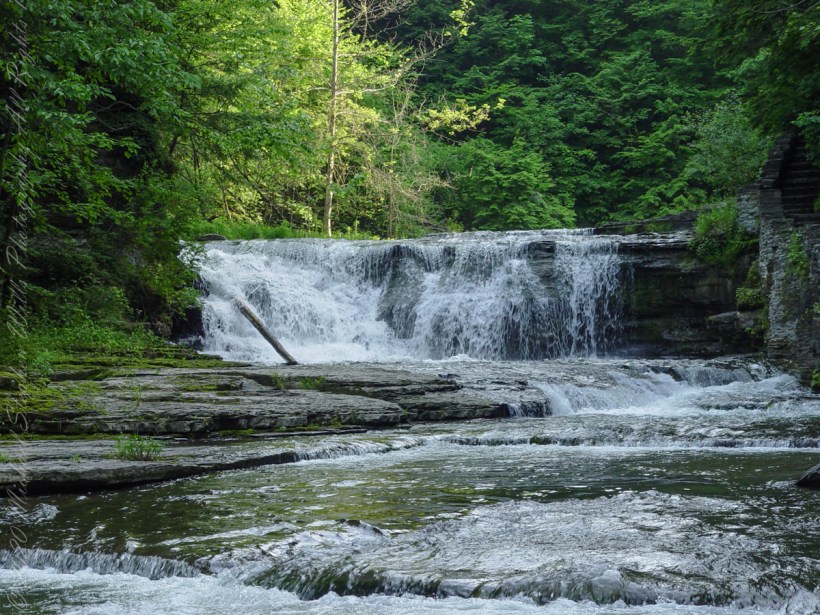
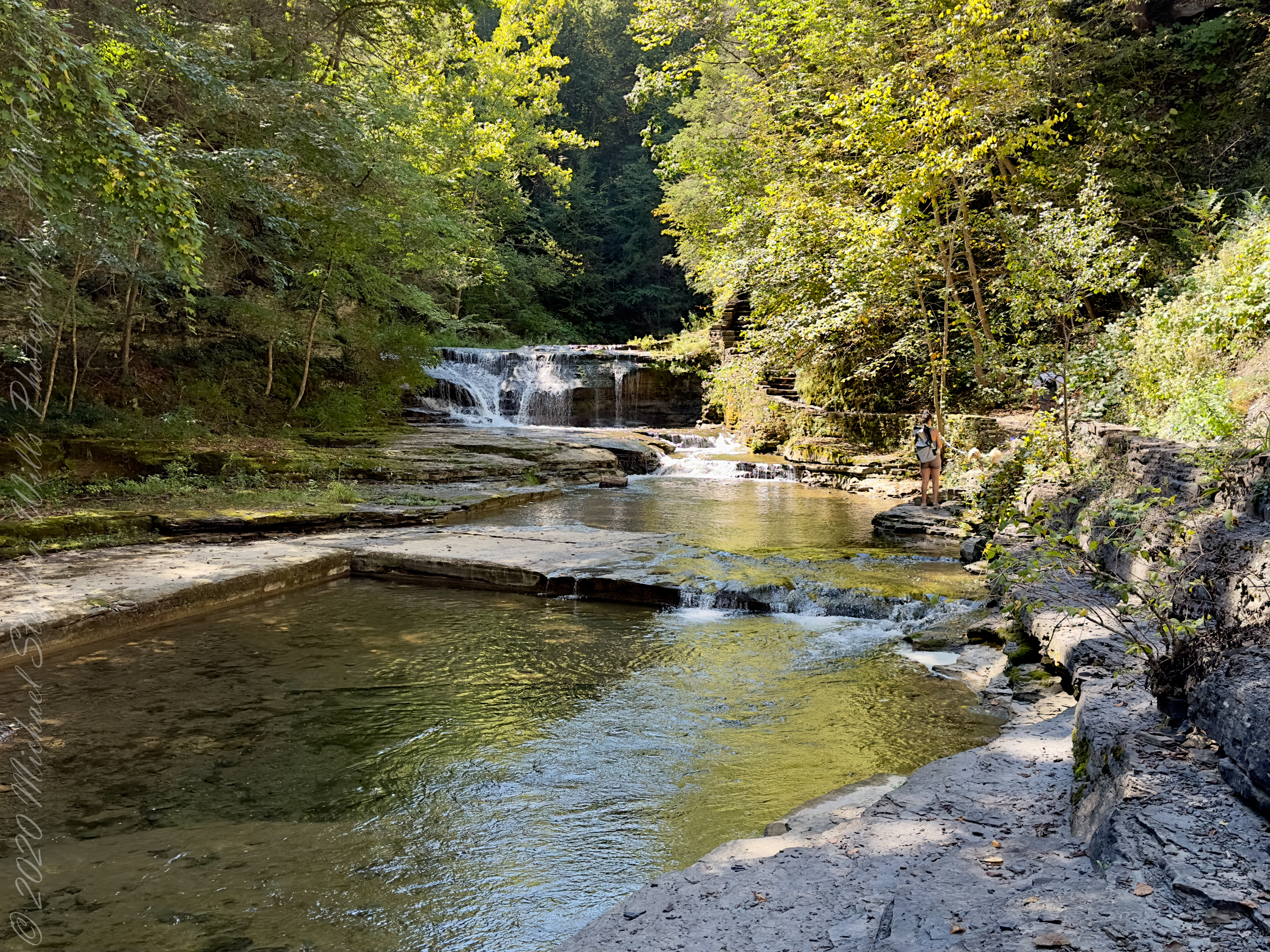
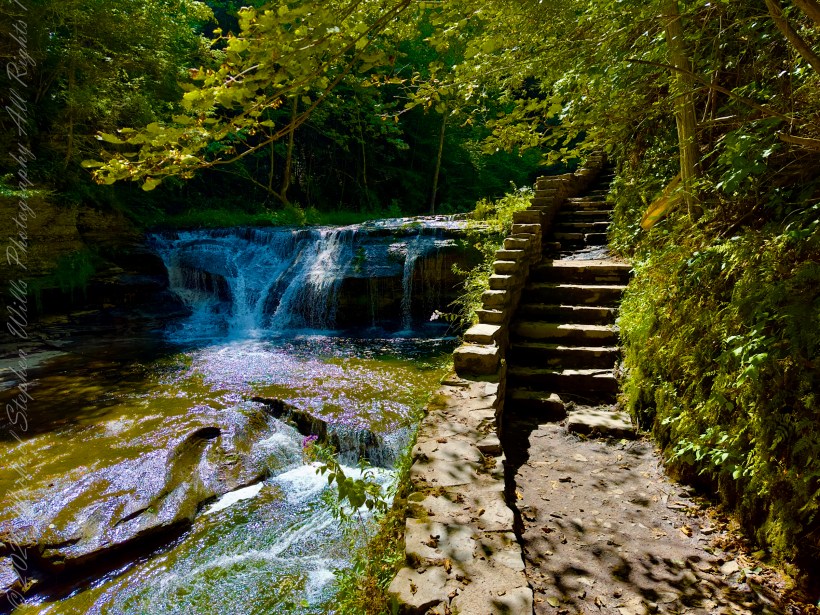
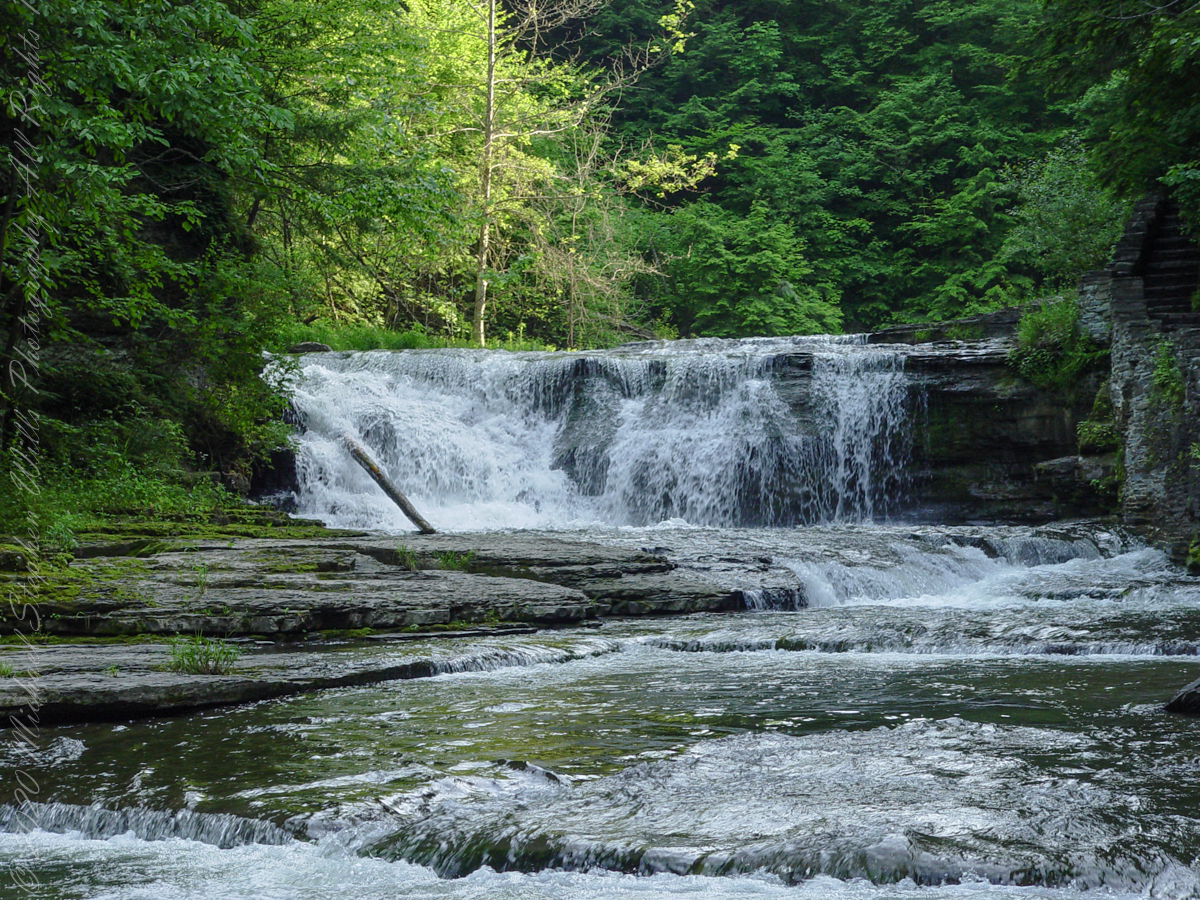
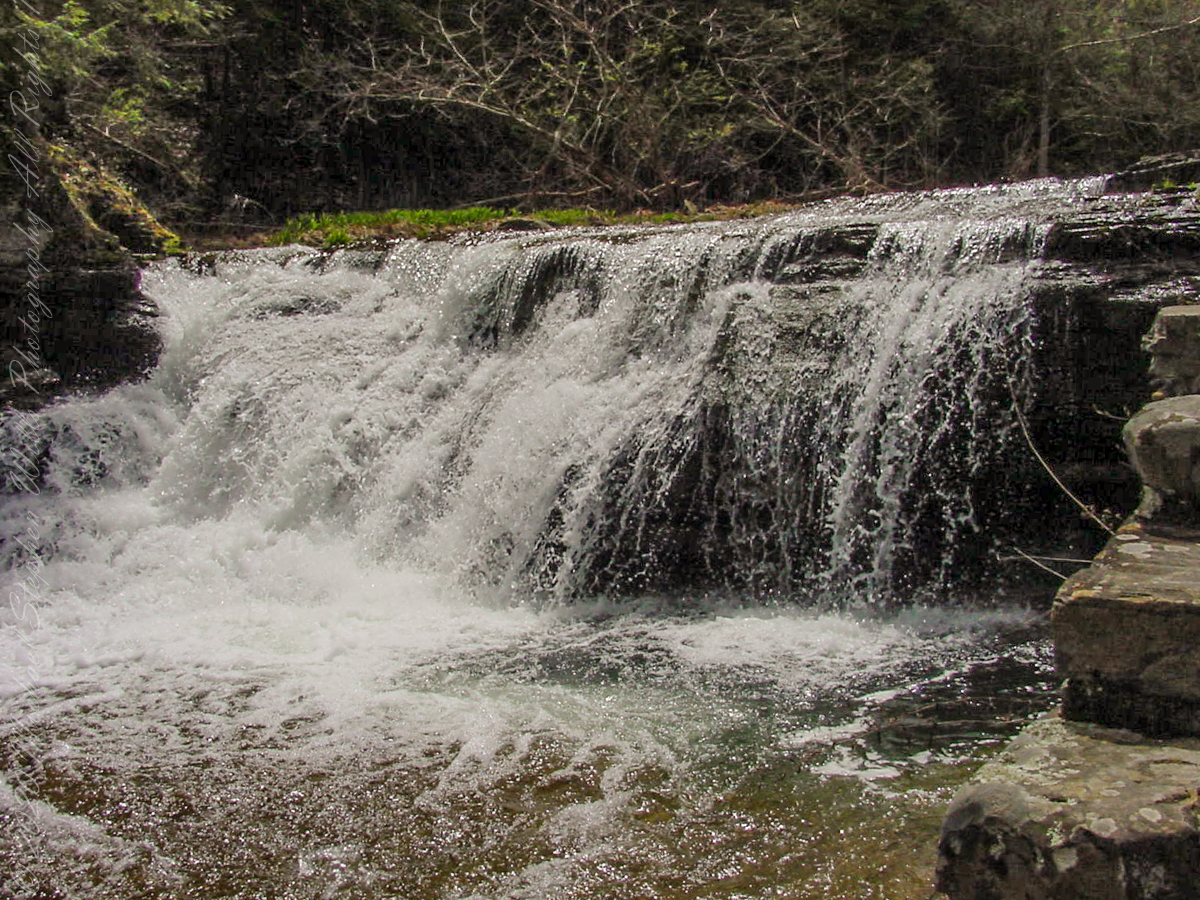
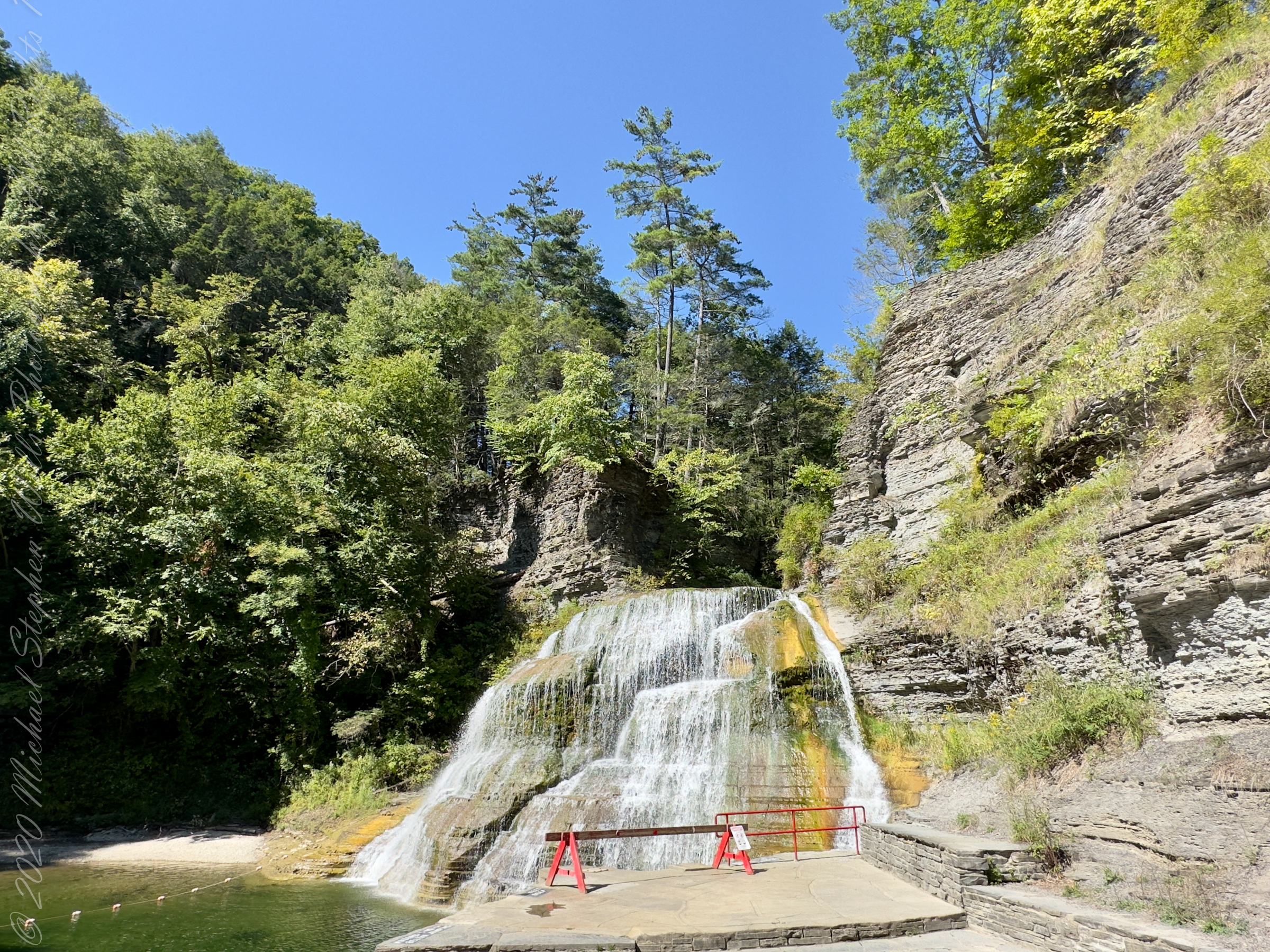
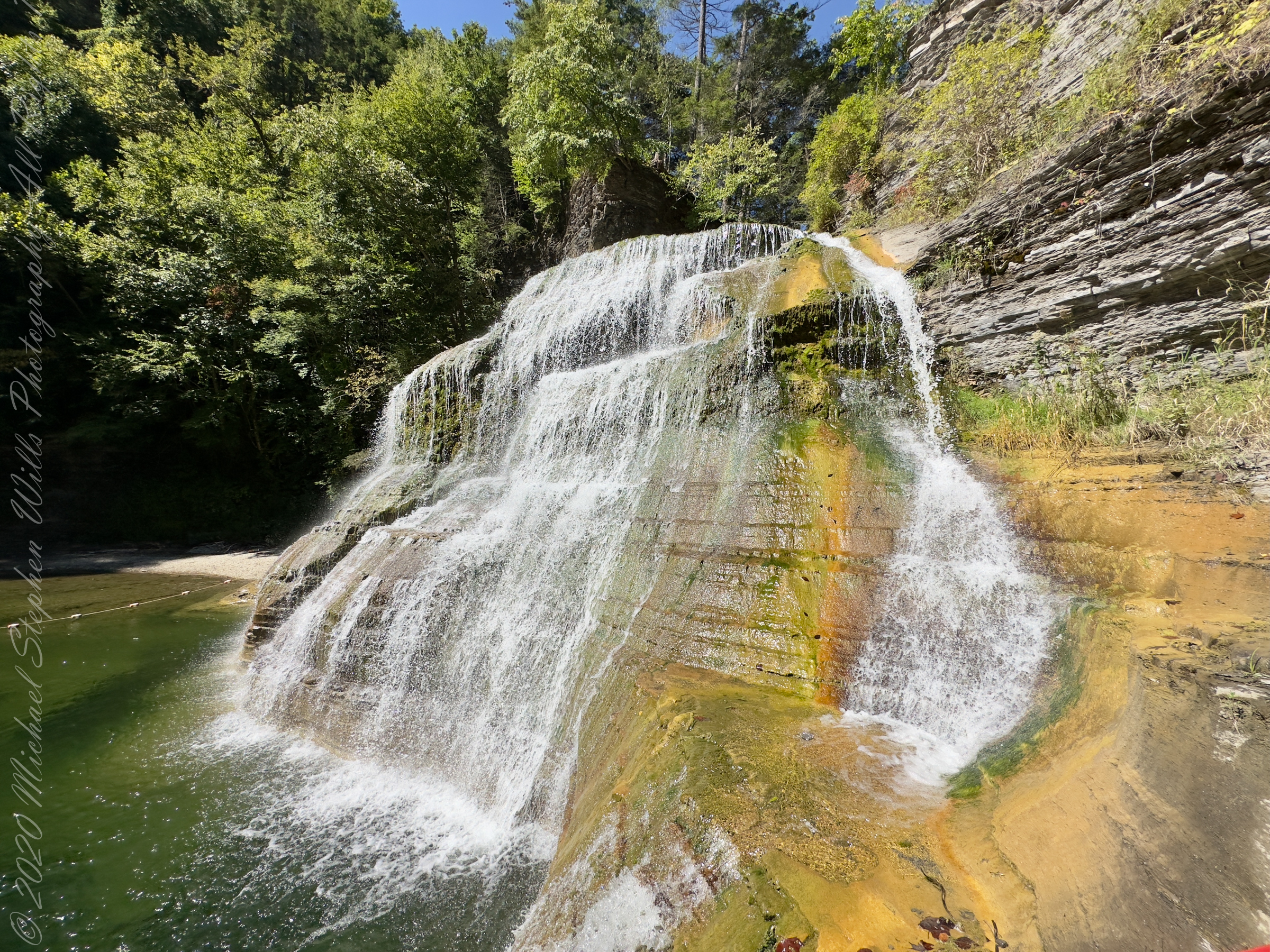
An unnamed waterfall along the Gorge Trail is memorable for the steps alongside.
I have captured it in all seasons from the beginning of my photography interest. Here it is at midday, early autumn, 2023, taken with the Apple Iphone 14 proMax. Bright sunlight ruins the shot.
Here, evening, early summer 2003, the foreground shaded, late day sunlight on trees beyond. The Sony dsc F828 camera, on a tripod, was used.
Here, bright sunlight at midday is handled by framing the brightly lit waterfall, April, 2002. A handheld Sony Mavica was used.
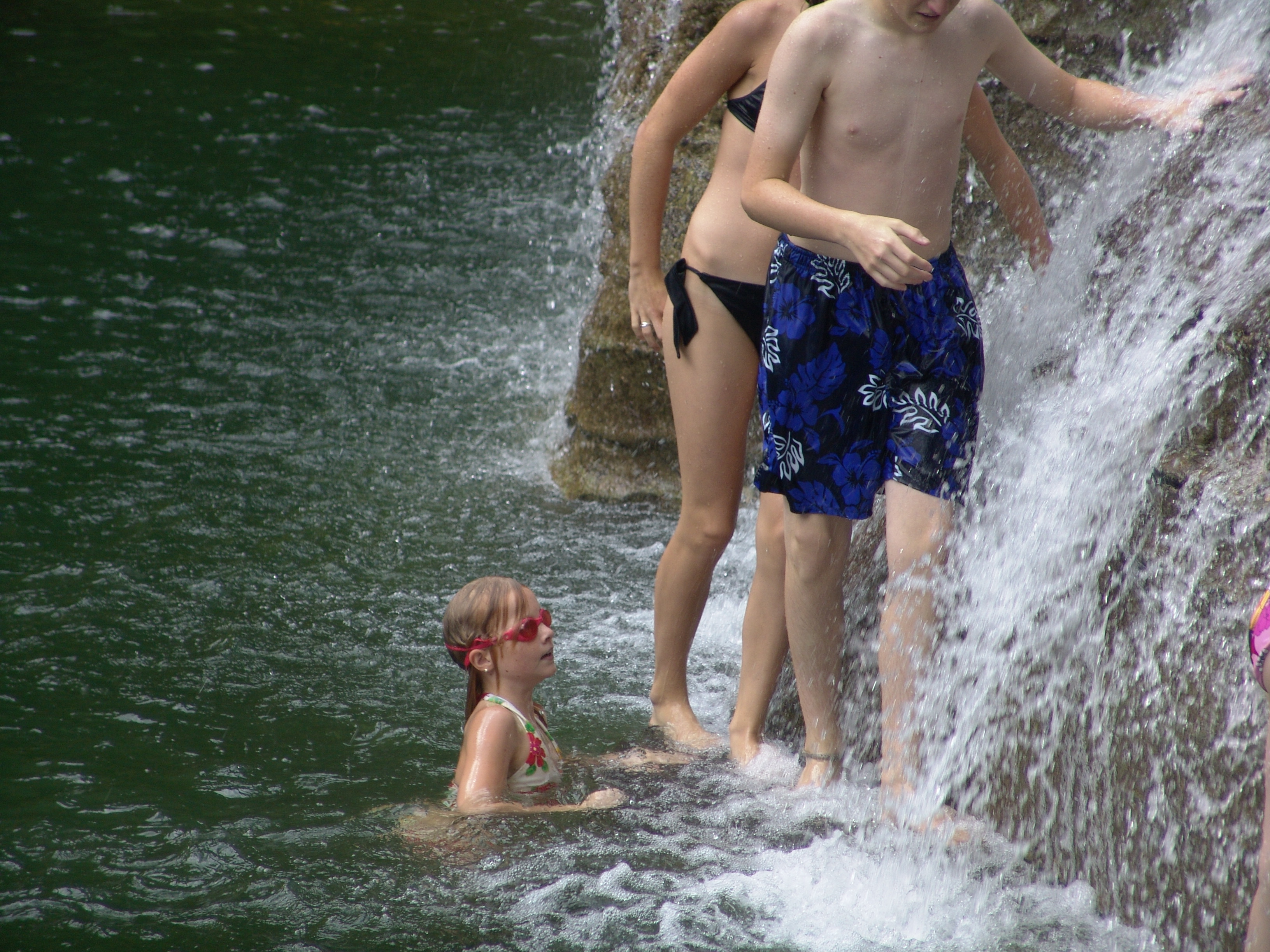
Daring visitors jump from the wall at right into a plunge pool, seen here as the quiet water at base of wall. It is a doubly dangerous activity as the force of water can hold a swimmer under indefinitely, missing the narrow pool results in striking the rocks. Robert H. Treman New York State Park, Tompkins County, Ithaca, New York.
“Plunge pools are formed by the natural force of falling water, such as at a waterfall or cascade; they also result from man-made structures such as some spillway designs. Plunge pools are often very deep, generally related to the height of fall, the volume of water, the resistance of the rock below the pool and other factors.[4] The impacting and swirling water, sometimes carrying rocks within it, abrades the riverbed into a basin, which often features rough and irregular sides. Plunge pools can remain long after the waterfall has ceased flow or the stream has been diverted. Several examples of former plunge pools exist at Dry Falls in the Channeled Scablands of eastern Washington. They can also be found underwater in areas that were formerly above sea level, for example Perth Canyon off the coast of Western Australia.”
“Plunge pools are fluvial features of erosion which occur in the youthful stage of river development, characterized by steeper gradients and faster water flows. Where softer or fractured rock has been eroded back to a knickpoint, water continues to bombard its base. Because this rock is often less resistant than overlying strata, the water from the higher elevation continues eroding downward until an equilibrium is achieved.”
Reference: text in italics and quotes is from the Wikipedia, “Plunge Pool.”
Copyright 2023 All Rights Reserved Michael Stephen Wills
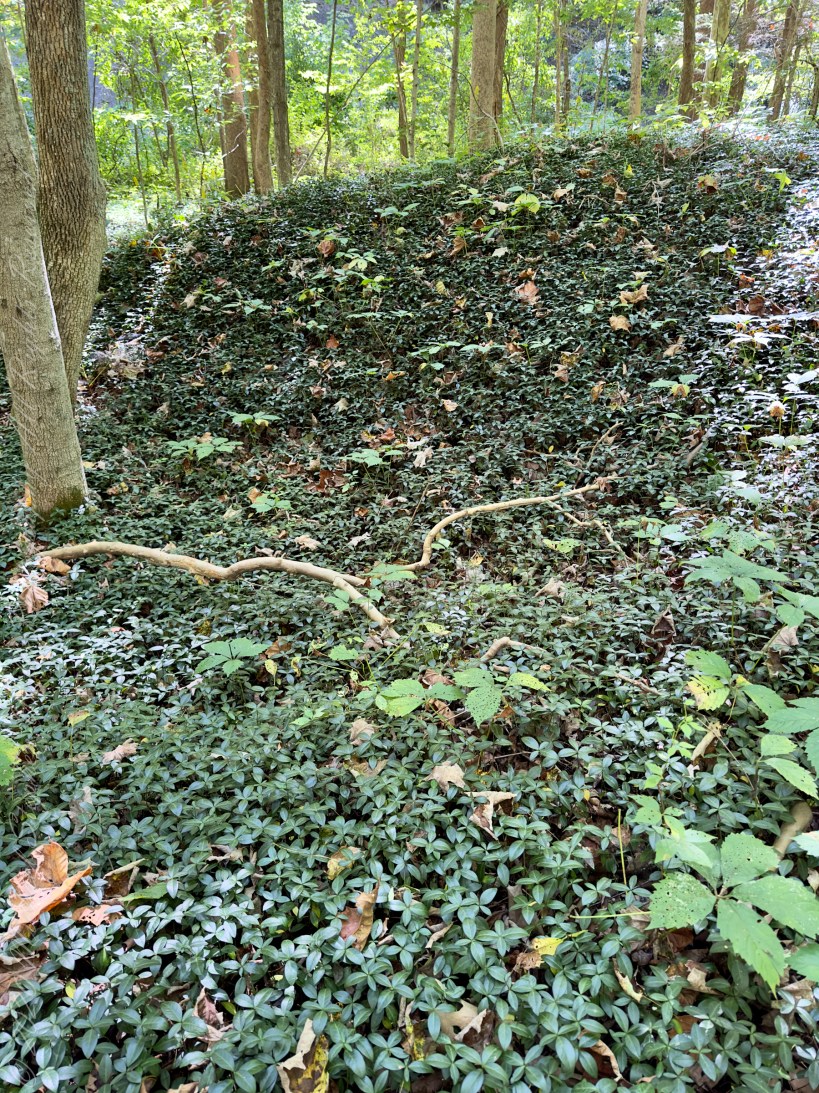
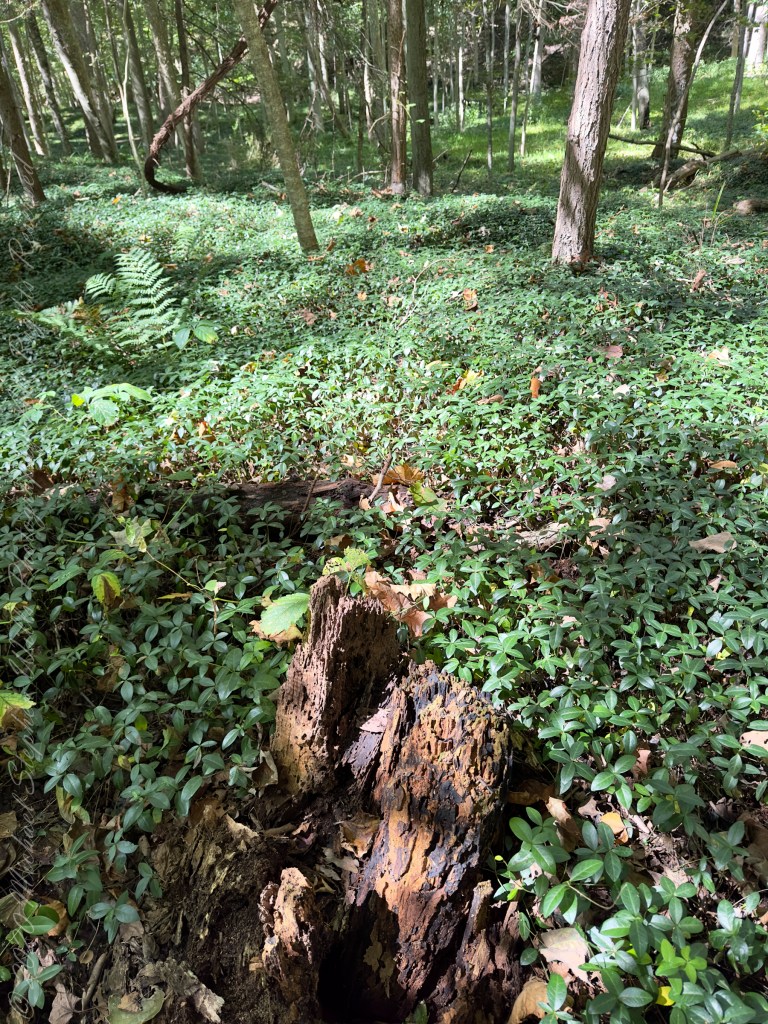
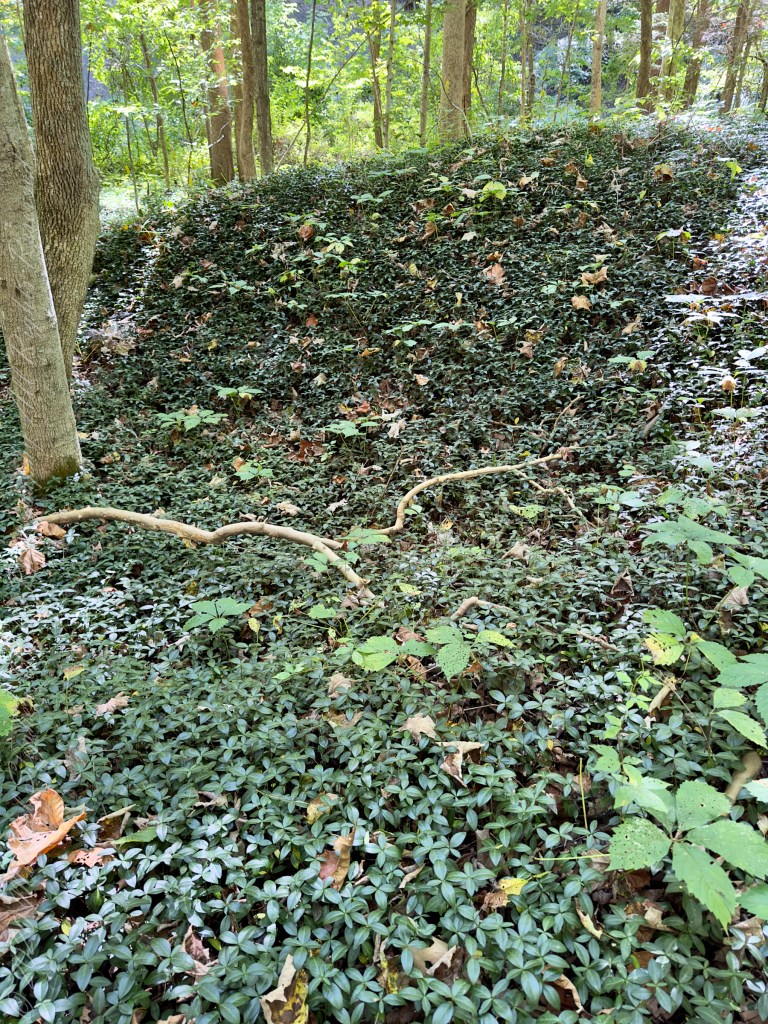
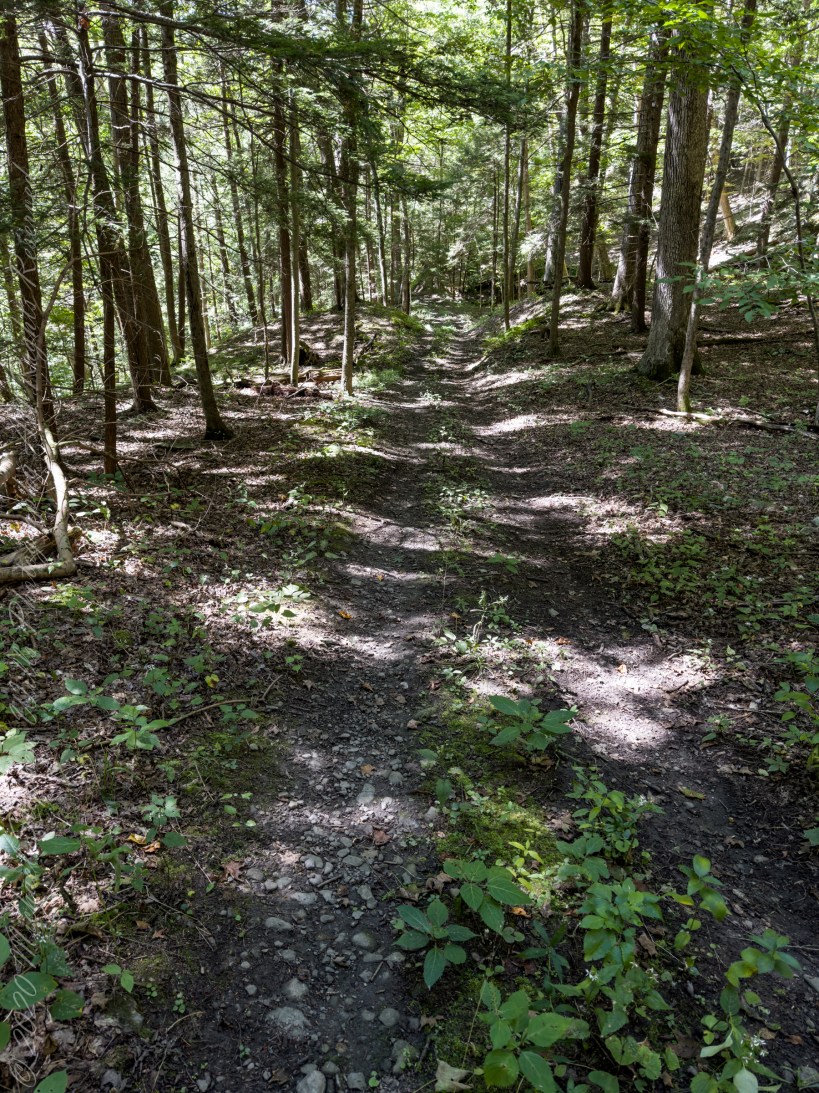
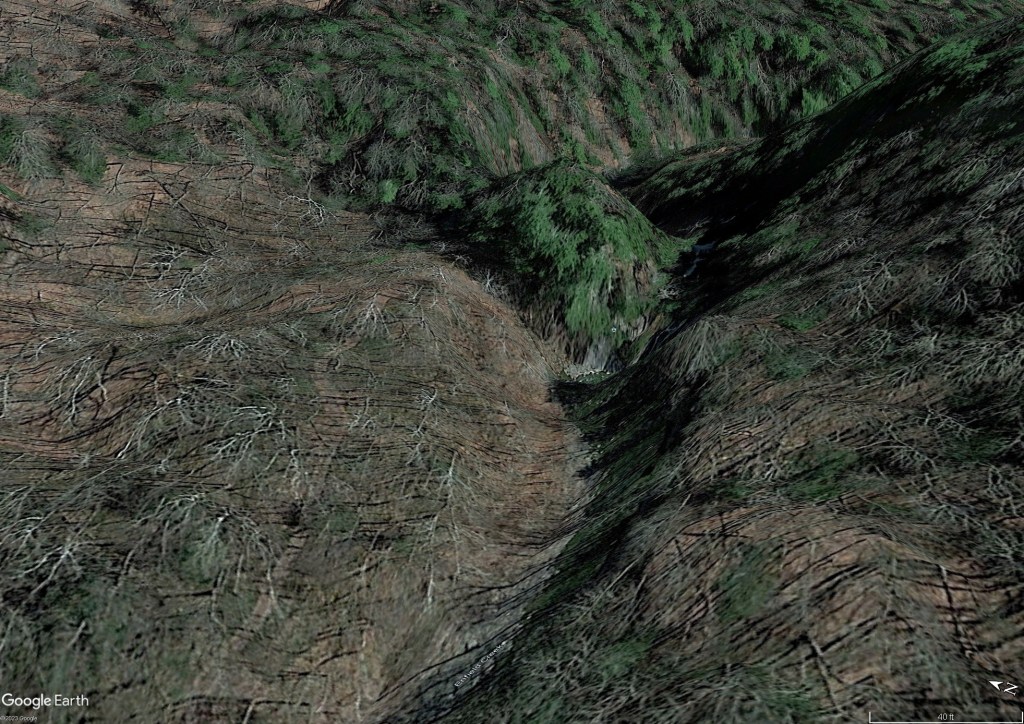
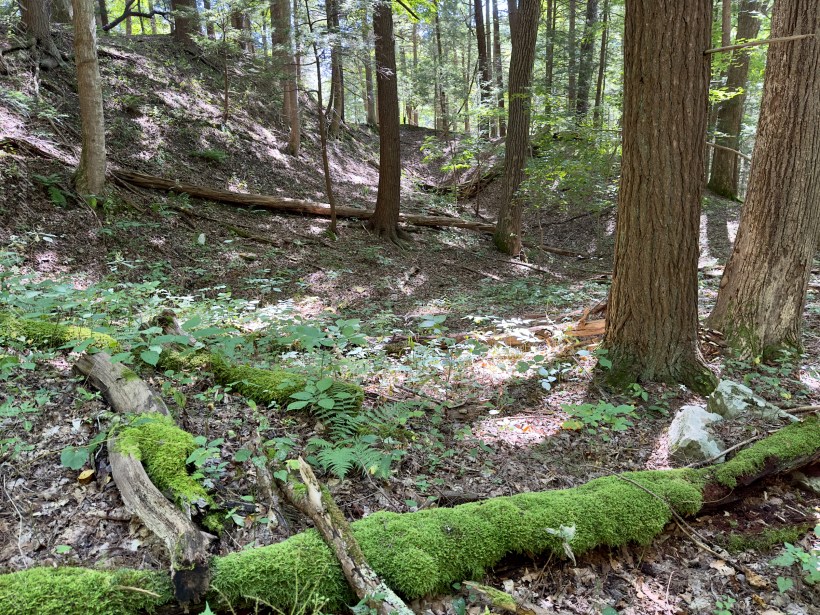
Over a period of 11,000 years this former stream bed, abandoned when a melting tongue of the Laurentide Ice Sheet deposited drift across Enfield Creek, transformed to this sun dappled glade, one of two along the Gorge Trail of Treman Park.
Pam calls this the Fairy Forest for the feeling of peaceful expectation she feels here. Another reason is the small flowers of this native myrtle after which the periwinkle is named.
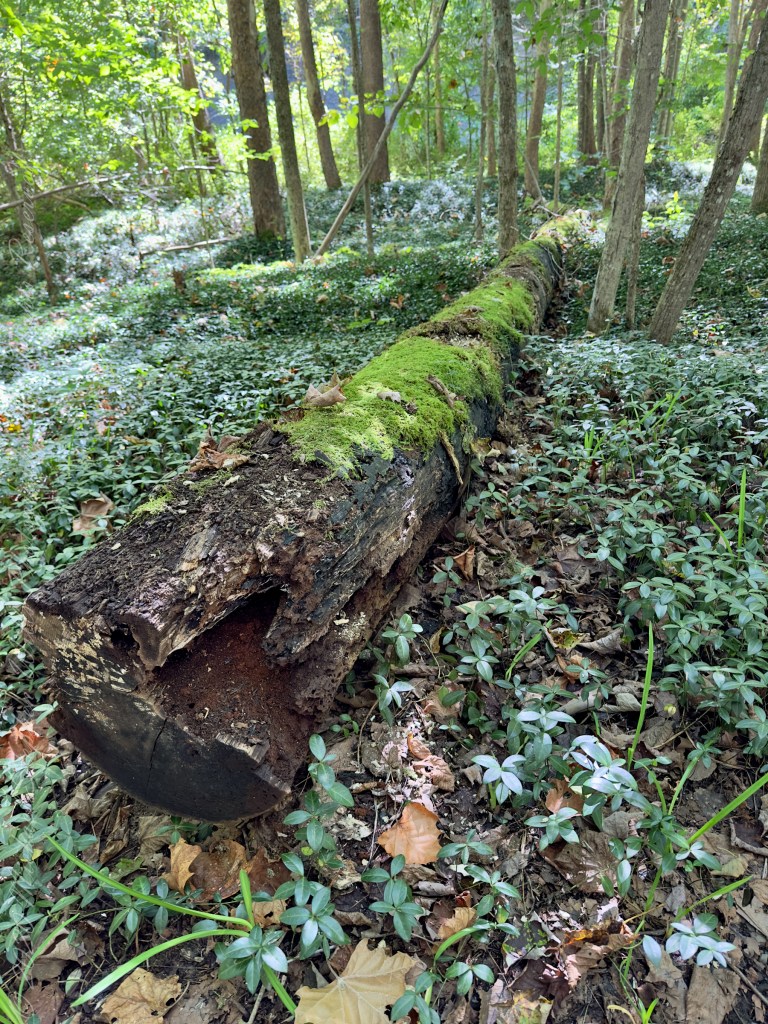
Fallen trees are left be to return to the soil.
“Vinca minor (common names lesser periwinkle, dwarf periwinkle is a species of flowering plant in the dogbane family, native to central and southern Europe, from Portugal and France north to the Netherlands and the Baltic States, east to the Caucasus, and also southwestern Asia in Turkey. Other vernacular names used in cultivation include small periwinkle, common periwinkle, and sometimes in the United States, myrtle or creeping myrtle.”
“Vinca minor is a trailing subshrub, spreading along the ground and rooting along the stems to form large clonal colonies and occasionally scrambling up to 40 centimeters (16 in) high but never twining or climbing. The leaves are evergreen, opposite, 2–4.5 centimeters (0.79–1.77 in) long and 1–2.5 centimeters (0.39–0.98 in) broad, glossy dark green with a leathery texture and an entire margin.“
“The flowers are solitary in the leaf axils and are produced mainly from early spring to mid-summer but with a few flowers still produced into the autumn; they are violet-purple (pale purple or white in some cultivated selections), 2–3 centimeters (0.79–1.18 in) diameter, with a five-lobed corolla. The fruit is a pair of follicles 2.5 centimeters (0.98 in) long, containing numerous seeds.”
“The species is commonly grown as a groundcover in temperate gardens for its evergreen foliage, spring and summer flowers, ease of culture, and dense habit that smothers most weeds.”
“Vinca minor contains more than 50 alkaloids, including vincamine. Other alkaloids include reserpine, rescinnamine, akuammicine, majdine, vinerine, ervine, vineridine, tombozine, vincamajine, vincanine, vincanidine, vinburnine, apovincamine, vincaminol, desoxyvincaminol, vincorine[ and perivincine. Vinpocetine (brand names: Cavinton, Intelectol; chemical name: ethyl apovincaminate) is a semisynthetic derivative alkaloid of vincamine.”
It is possible this is a cemetery as myrtle was once commonly planted in cemeteries in parts of the United States and naturalized periwinkle may indicate the presence of graves whose other markers have disappeared.
Reference: text in italics and quotes is from the Wikipedia, “Vinca Minor.”
Copyright 2023 All Rights Reserved Michael Stephen Wills
Wisconsin Glacial Episode was only the latest of a series of ice wall incursions. For this walk I went off the path to bushwack, following a drift filled stream bed, evidence of multiple glacial incursions with subsequent changing the stream bed of Enfield Creek. Here I am walking on glacial deposition to the north of the current creek bed. A park ranger informed us of this location, it is difficult to comprehend or imaging a 50 foot hill of material deposited in this way. The creek does bend at this point and the deposition is easily seen from above.
Enfield Creek flows to the right of the deposition.
The surface of the hill is hummocky, typical of glacial deposition.
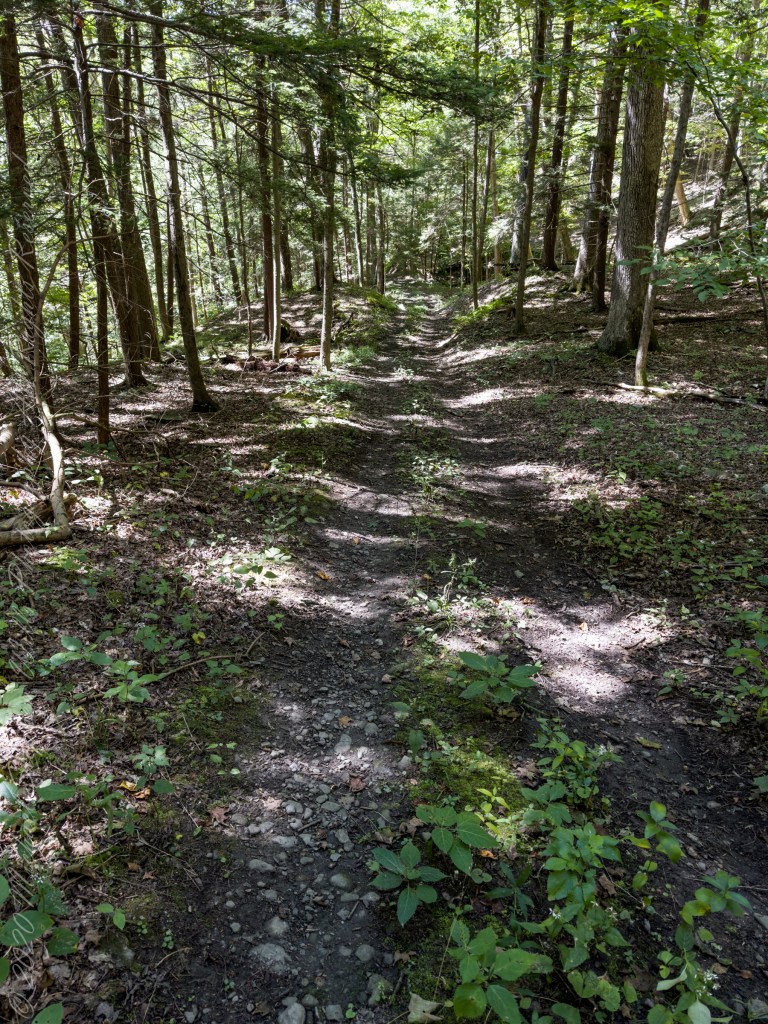
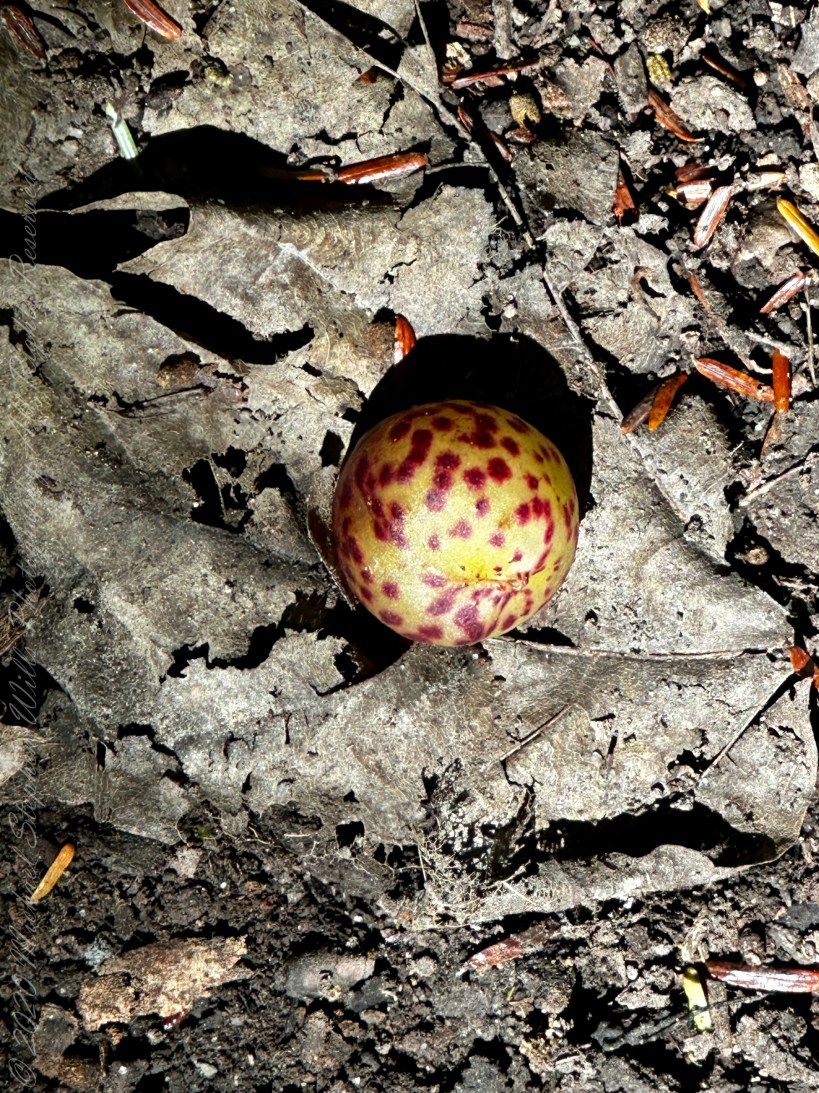
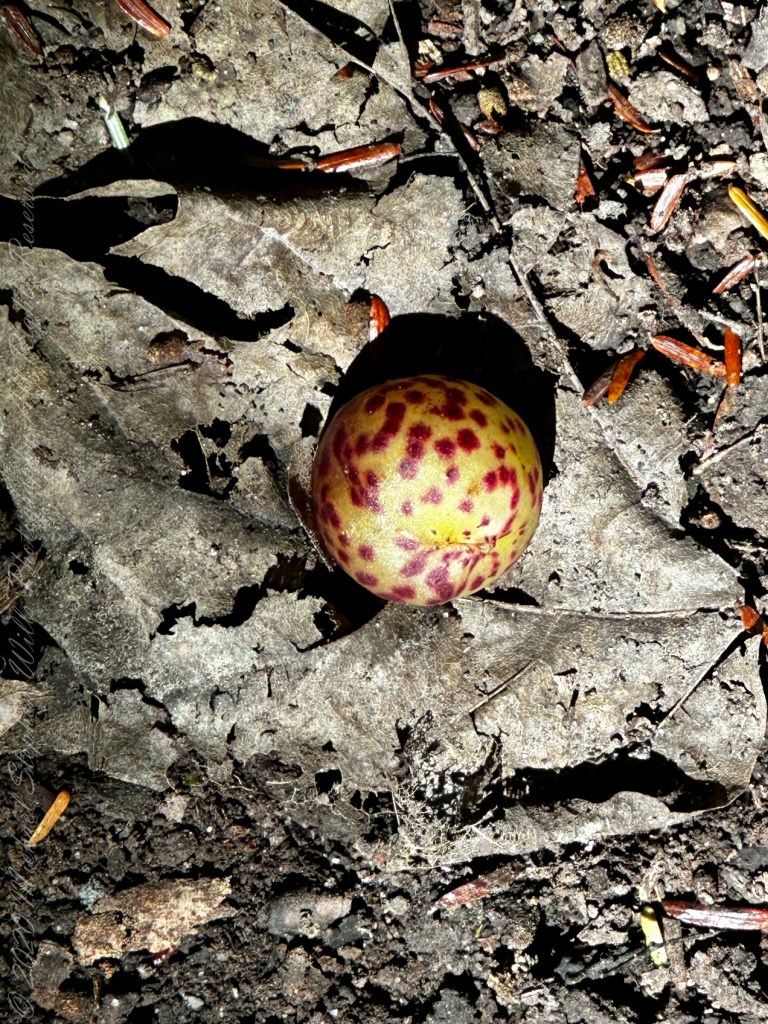
Eventually the former stream bed intersects with a work road sloping back down to the Gorge Trail. It was here I found the oak apple gall of yesterday’s posting.
Copyright 2023 All Rights Reserved Michael Stephen Wills
This is an Oak Apple gall. An adult female wasp lays single eggs in developing leaf buds. The wasp larvae feed on the gall tissue resulting from their secretions, which modify the oak bud into the gall, a structure that protects the developing larvae until they undergo metamorphosis into adults.
“Oak galls have been used in the production of ink since at least the time of the Roman Empire. From the Middle Ages to the early twentieth century, iron gall ink was the main medium used for writing in the Western world.”
“Gall nuts are a source of tannin in the production of iron gall ink. Tannins belong to a group of molecules known as polyphenols and can be taken from different parts of plants such as leaves, pods, fruits, and gall nuts.”
“Along with gall nuts, other important ingredients in the production of iron gall ink include iron sulfate and gum arabic. The reaction between the tannins from the gall nut and the iron produces a complex that gives the iron gall ink its color. The gum arabic makes the ink more viscous and helps bind the ink to the writing surface.”
“According to recent research, traces of iron-gall ink have been found on the Dead Sea scrolls and on the ‘lost’ Gospel of Judas. Iron-gall ink may have been used for 1,800 years, but it does not withstand the test of time well. Over the course of centuries, the ink fades, and discolours and damages the paper. Iron gall ink is manufactured chiefly by artists enthusiastic about reviving old methods or possibly forgers of old documents.”
Reference: text in italics and quotes is from the Wikipedia, “Oak Apple Gall” and “Oak Marble Gall.”
Copyright 2023 All Rights Reserved Michael Stephen Wills
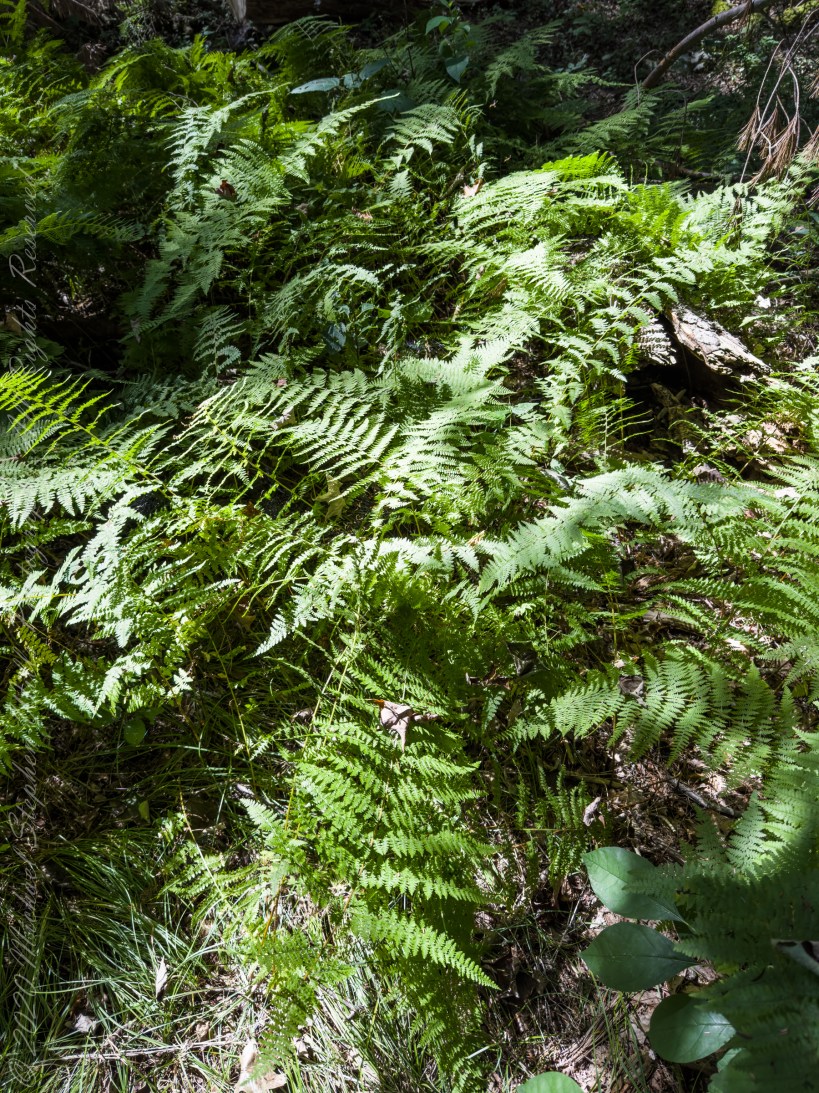
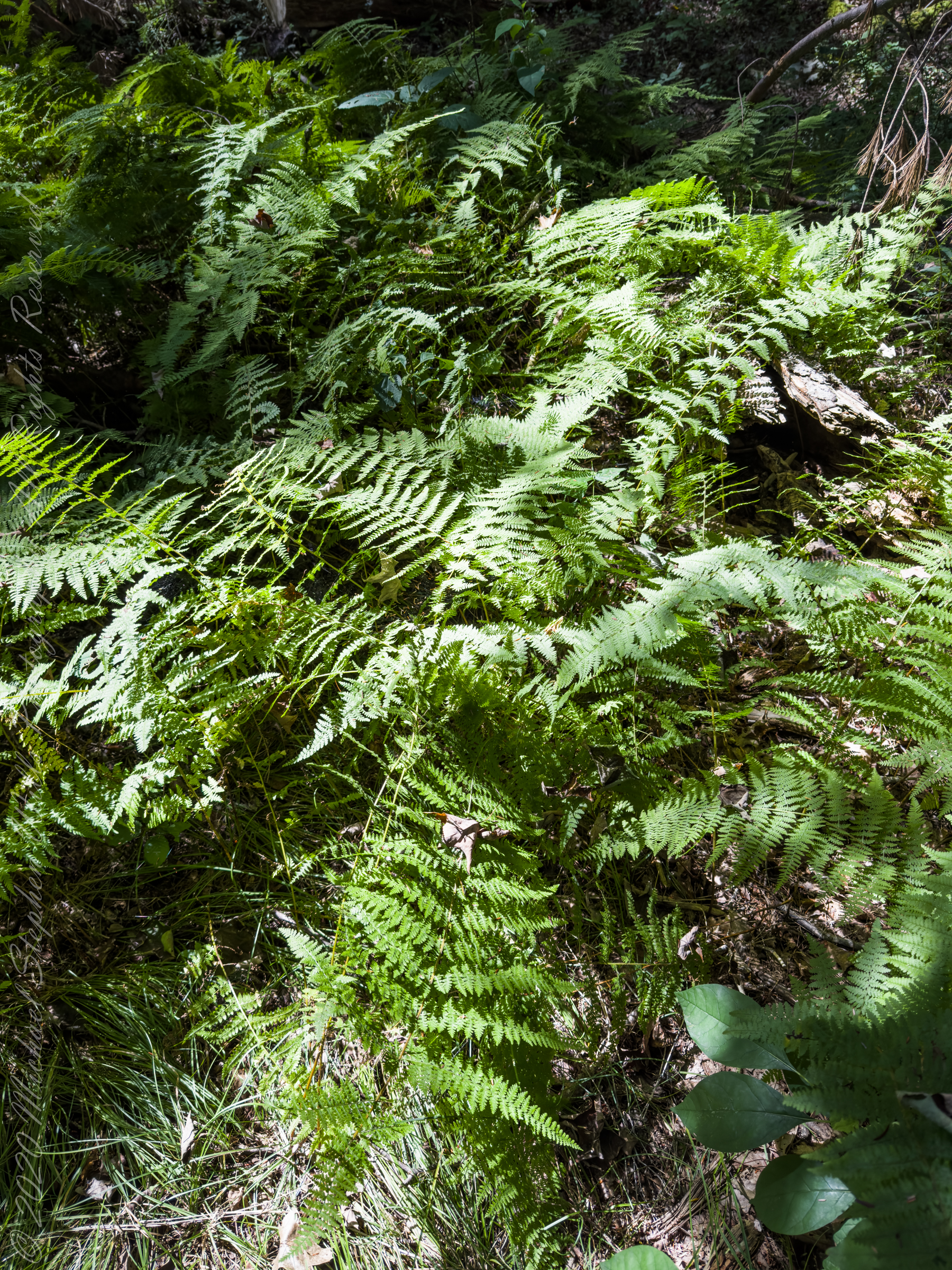
“Dennstaedtia punctilobula, the eastern hayscented fern or hay-scented fern, is a species of fern native to eastern North America, from Newfoundland west to Wisconsin and Arkansas, and south in the Appalachian Mountains to northern Alabama; it is most abundant in the east of its range, with only scattered populations in the west.”
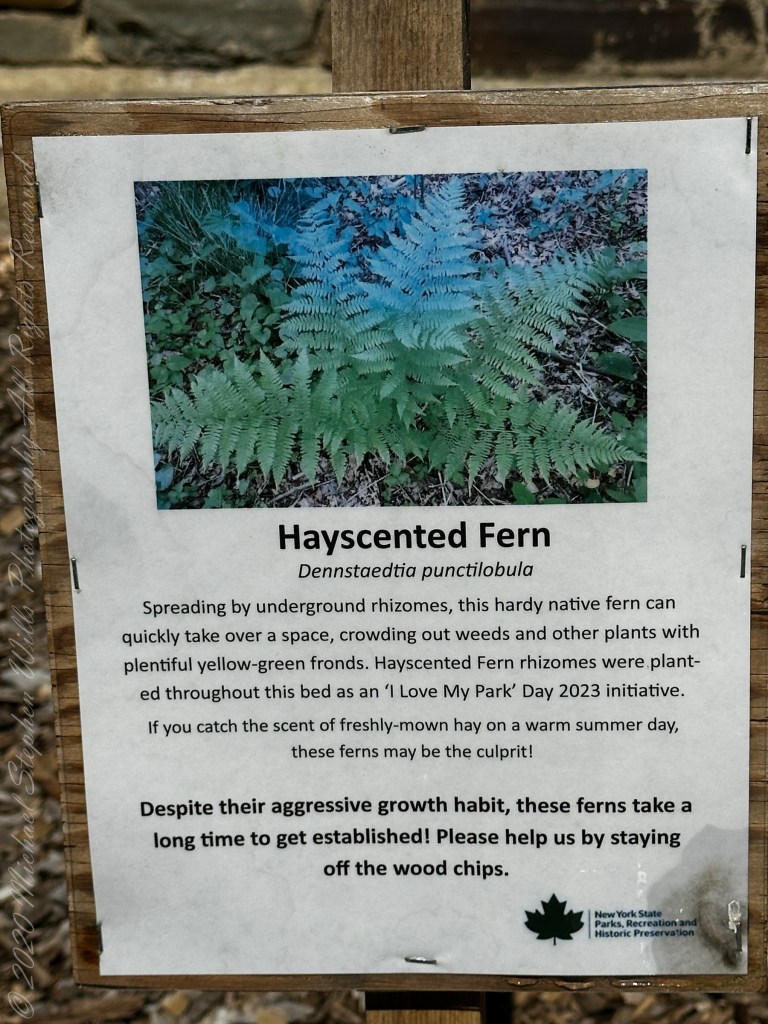
Hayscenter Fern ( Dennstaedtia punctilobula), spreading by underground rhizomes, this hardy fern native to the Finger Lakes Region of New York State, can quickly take over a space, crowding out weeds and other plants with plentiful yellow-green fronds.
“It is a deciduous fern with fronds growing to 40–100 cm (rarely 130 cm) tall and 10–30 cm broad; the fronds are bipinnate, with pinnatifid pinnules about three times as long as broad. It occurs in damp or dry acidic soils in woods or open woods, from sea level up to 1,200 m altitude.”
“Dennstaedtia punctilobula can exhibit varying degrees of phototropism. The common name “Hay-scented Fern” comes from the fact that crushing it produces an aroma of fresh hay.“
“The presence of D. punctilobula influences the dynamics of the understory vegetation of many forests in the eastern United States. An abundance of highbush blackberry (Rubus allegheniensis) in open areas encourages new tree seedlings. Where the effects of herbivorous animals (such as deer) reduce the abundance of R. allegheniensis, D. punctilobula, which is not browsed by deer, takes over. Where D. punctilobula becomes common, the growth of tree seedlings is restricted.”
Reference: text in italics and quotes is from the Wikipedia, “Dennstaedtia punctilobula.”
Copyright 2023 All Rights Reserved Michael Stephen Wills
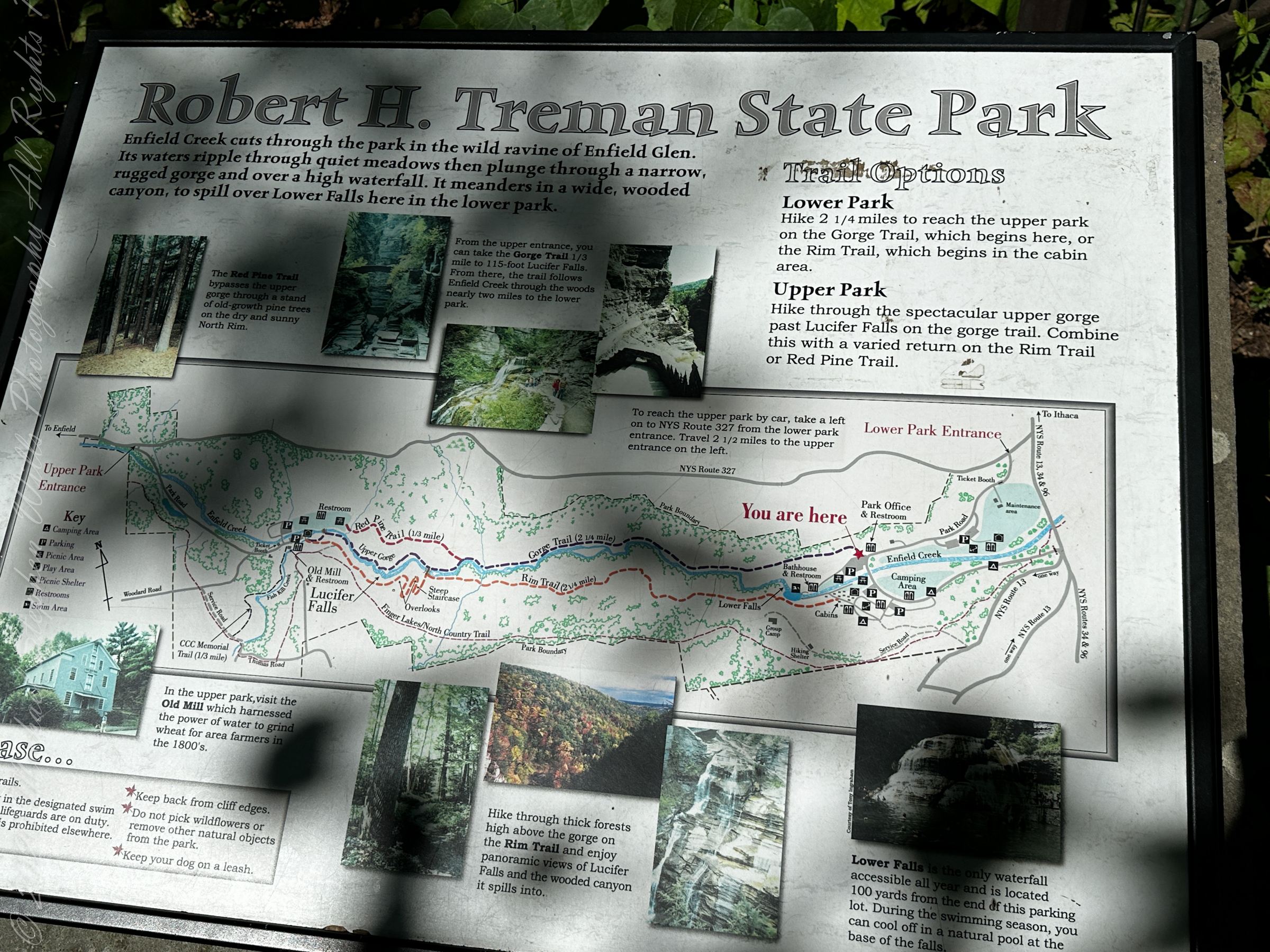
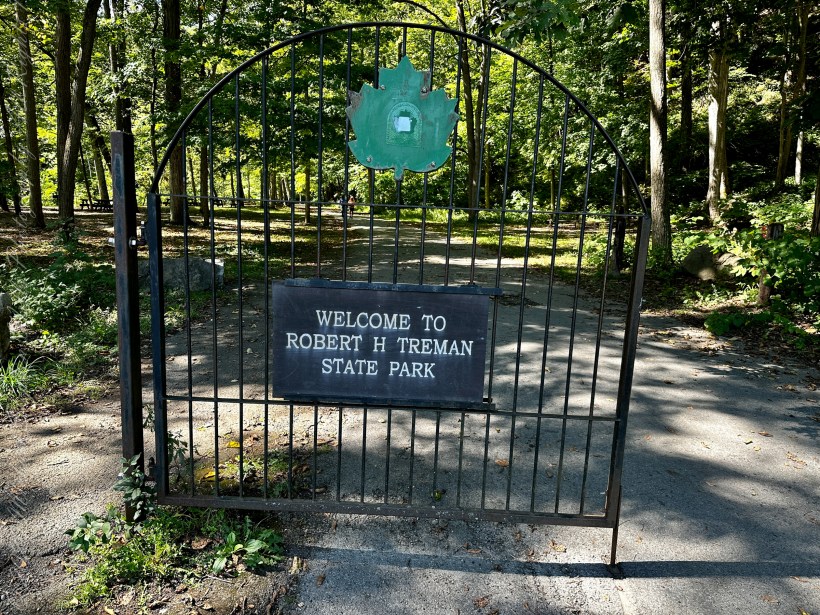
Today I walked the Gorge Trail to below Lucifer Falls, crossed the bridge and returned via the South Rim Trail, a trip of over 5 miles according to the Apple IPhone 14 Pro Max used for these photographs.
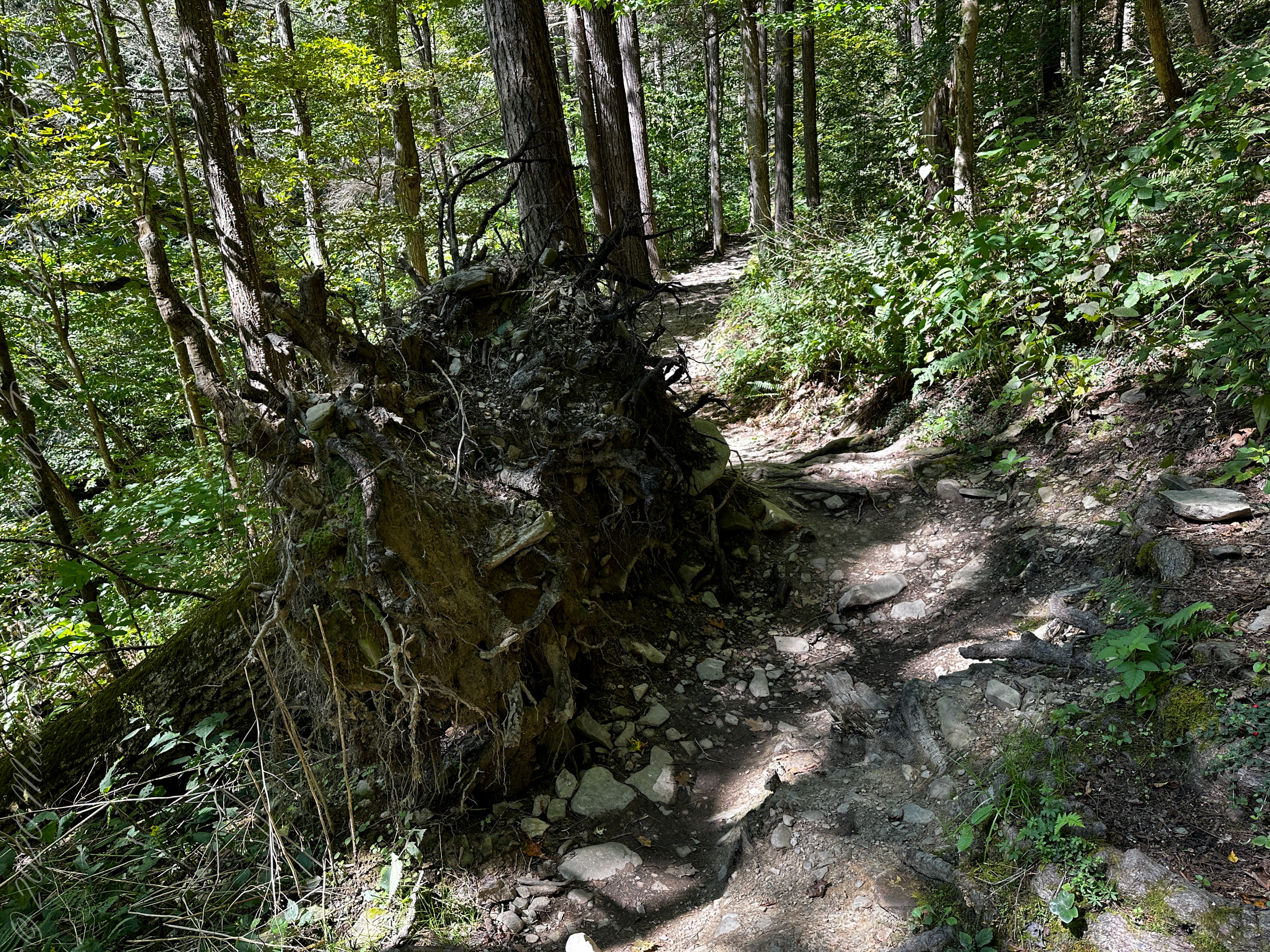
Thankful I was not here when this tree gave way across the trail.
Information about a cultivated fern, followed by a photograph of the wild version, trailside.
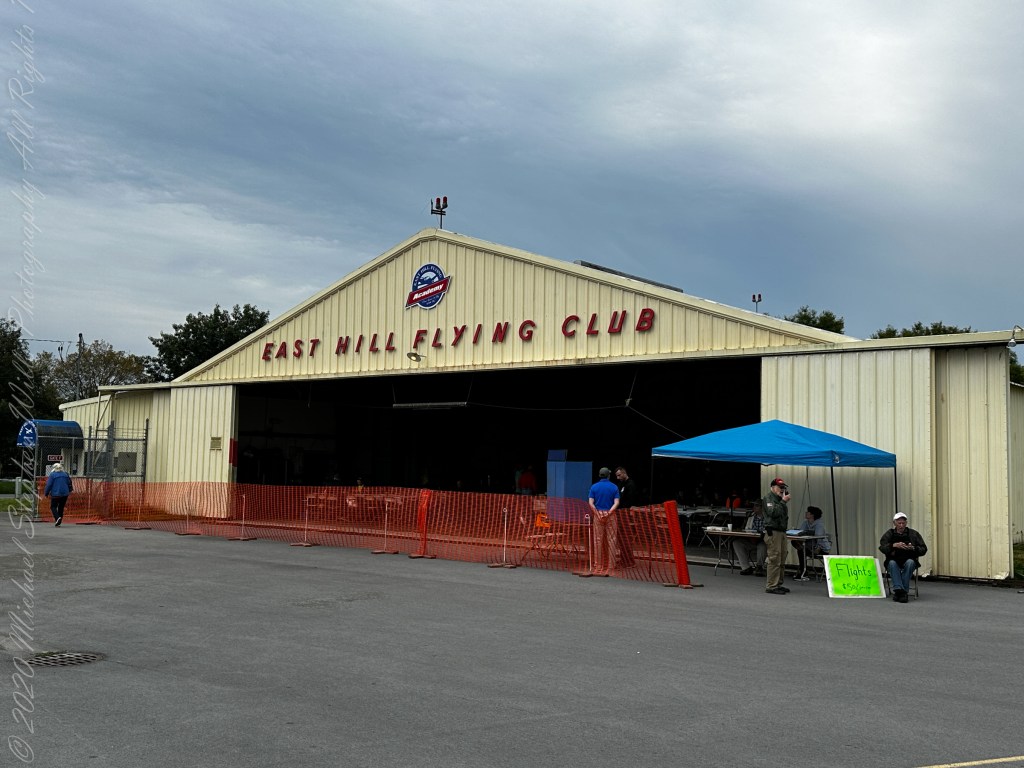
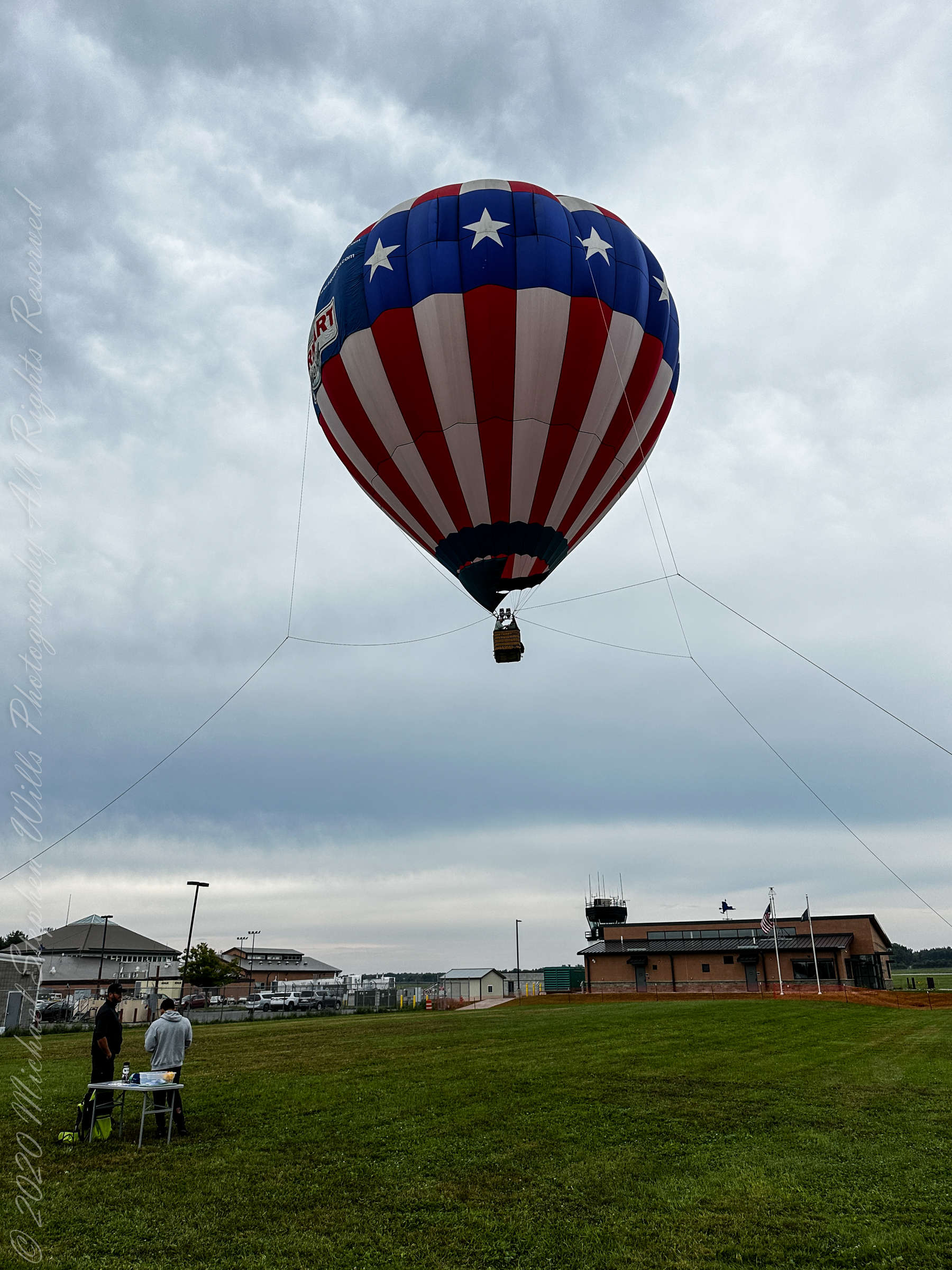
Airport Day was hosted by the East Hill Flying Club, the pancake breakfast was in the hangar.
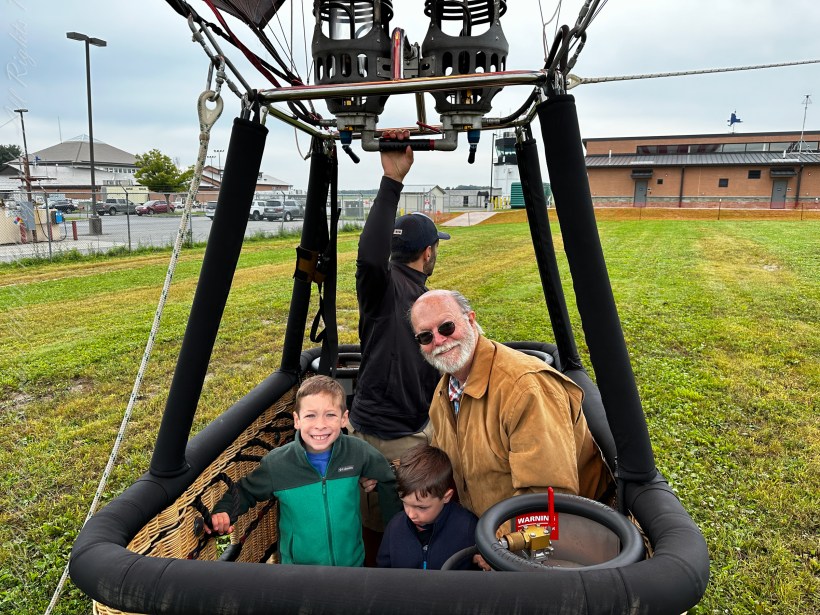
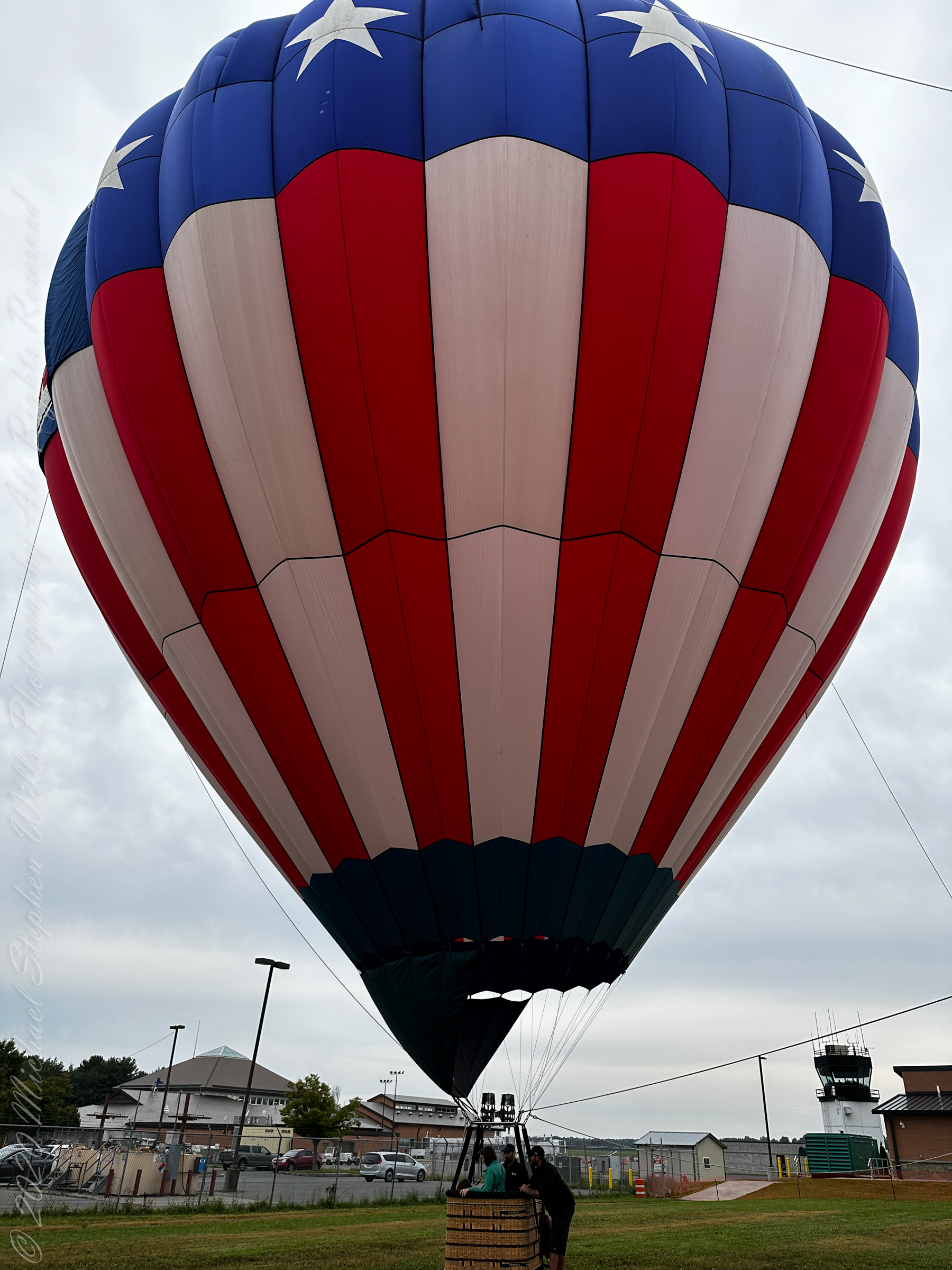
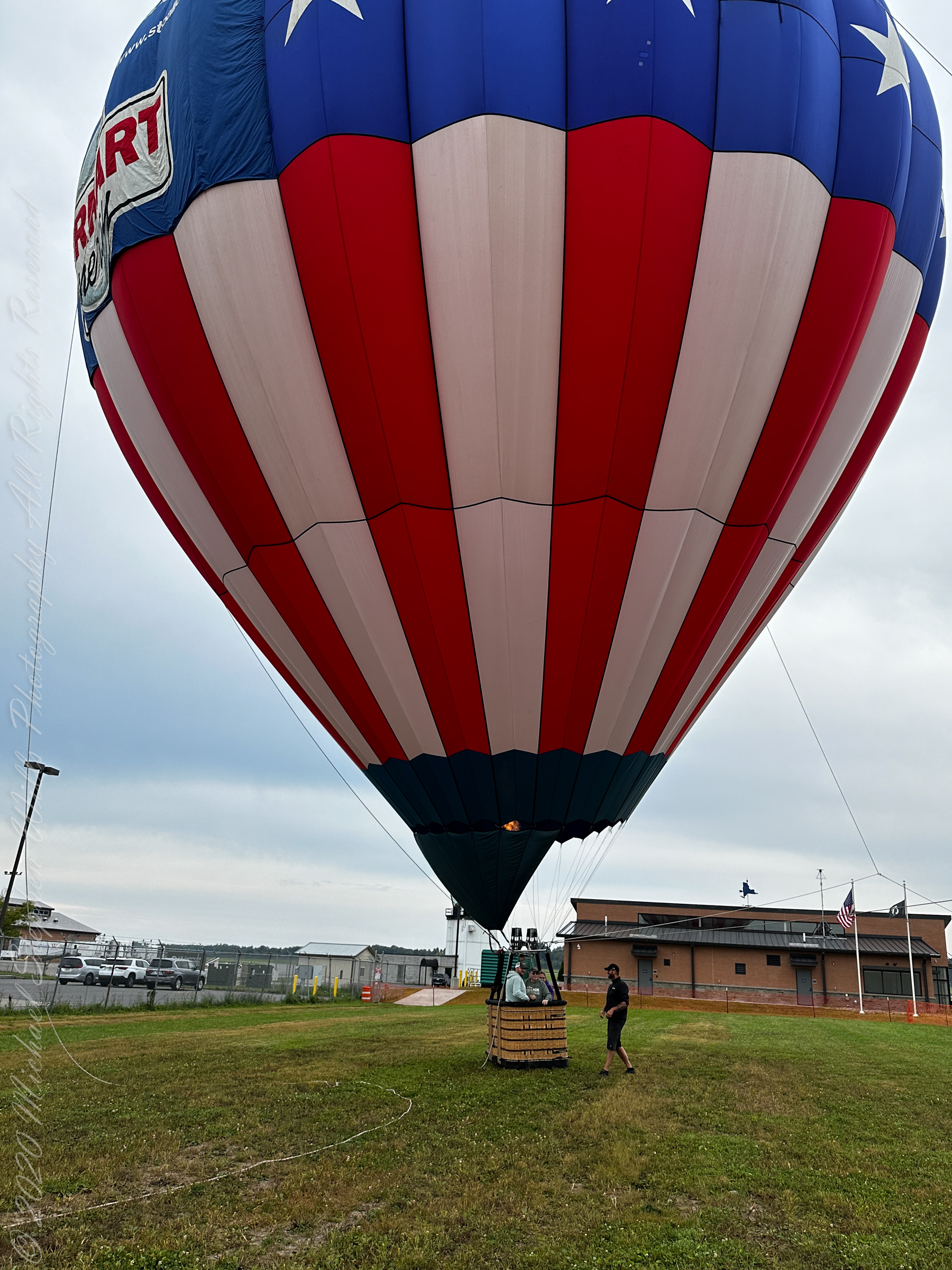
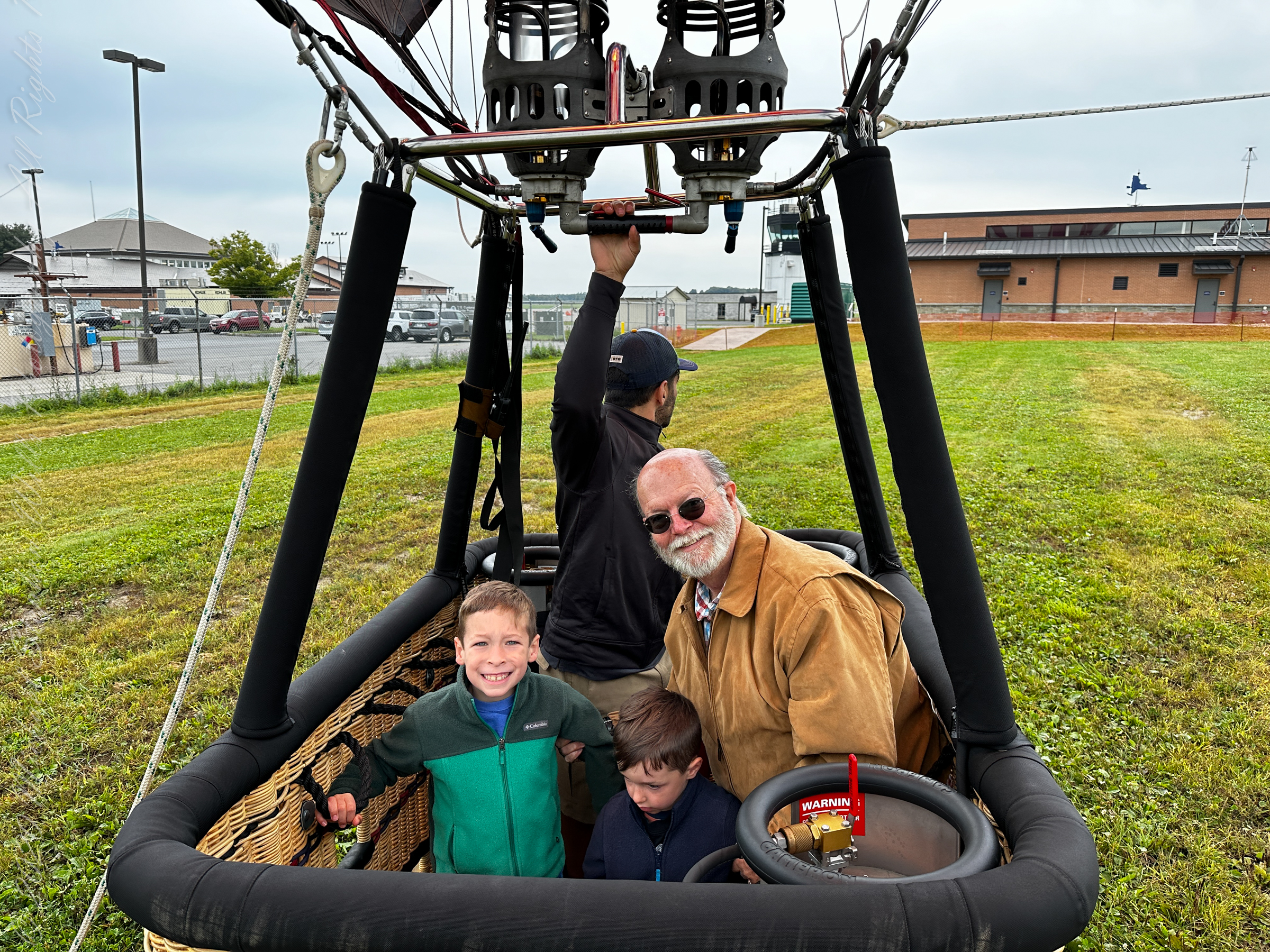
We learned why a hot air balloon cannot “pop.”
The propane burner announces the approach of every hot air baloon.
The operator kept careful watch over this landing helicopter, Sam was nervous anyway.
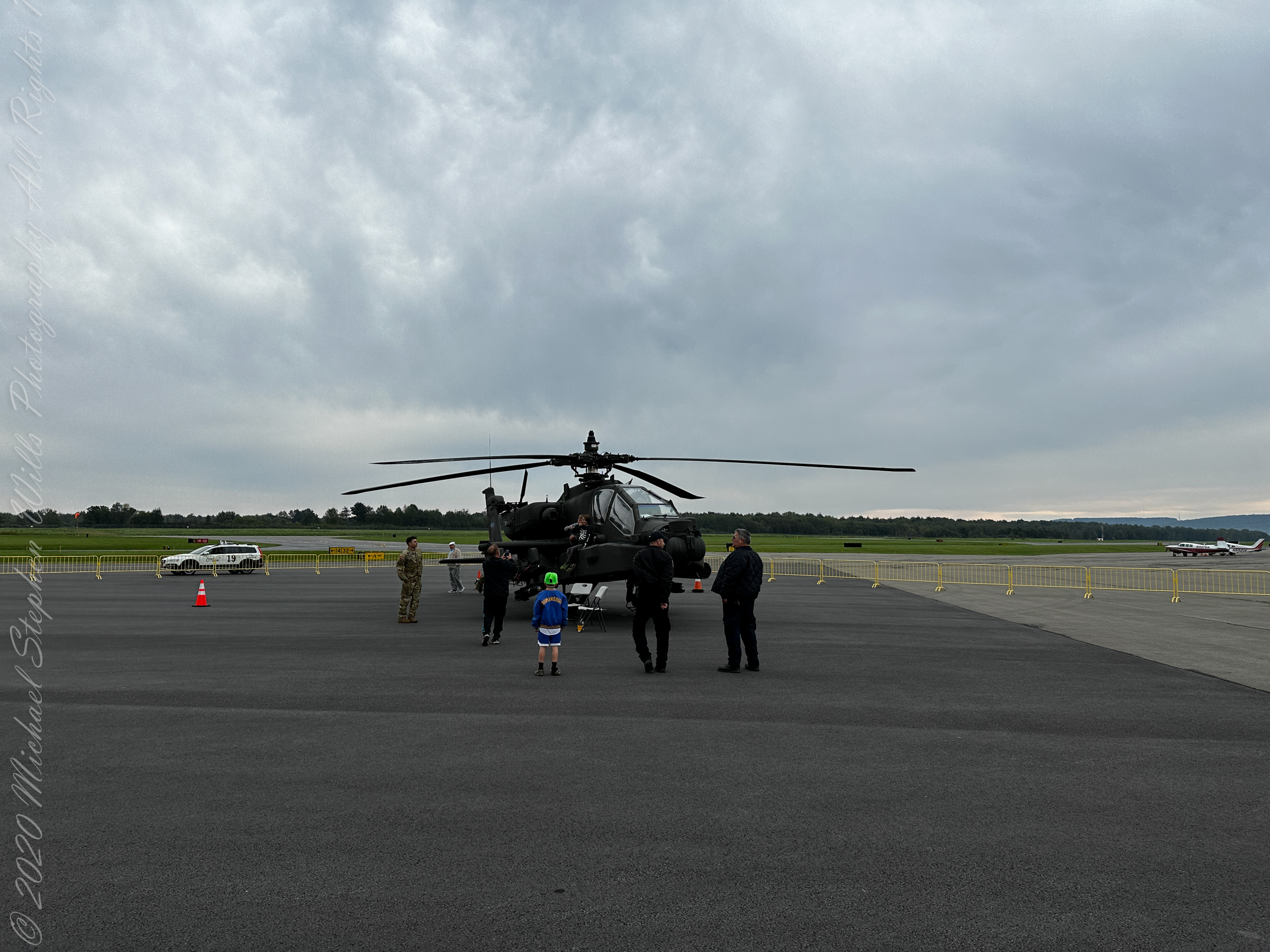
While we were aloft the New York State Police helicopter completed landing next to the U.S. Army Helicopter.
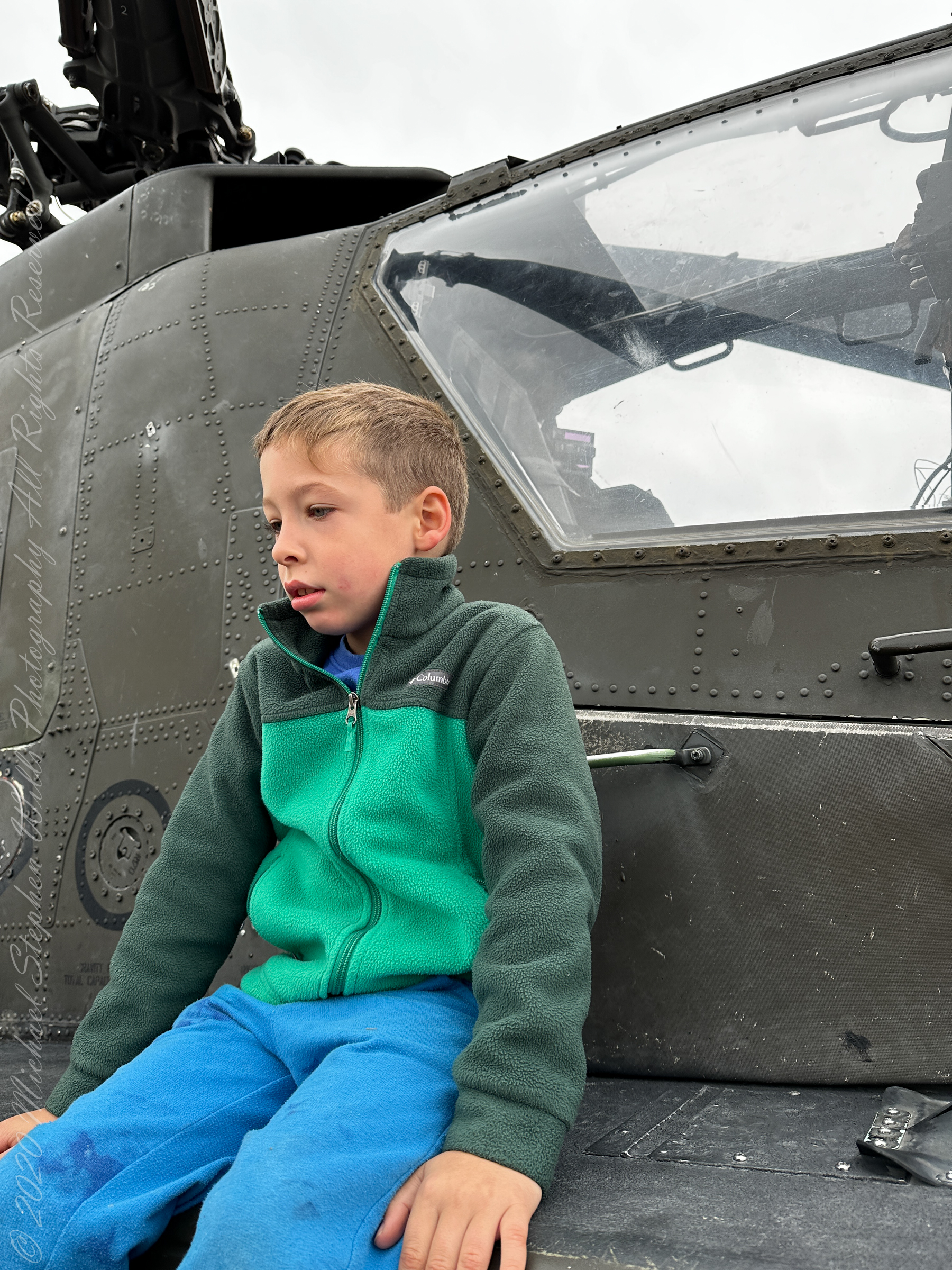
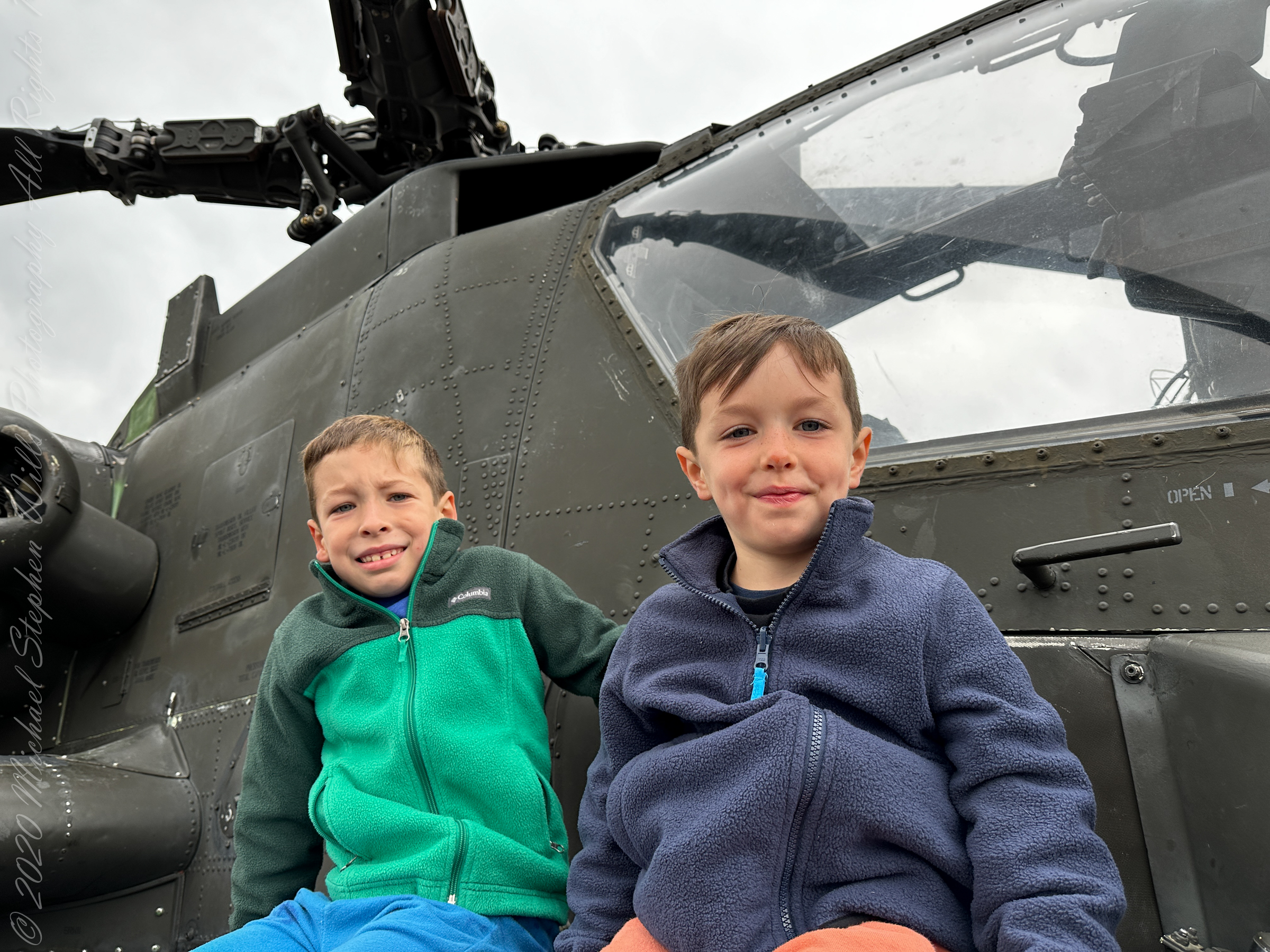
U.S. Army Helicopter — Sam was not a fan of the potential firepower, Rory was all in
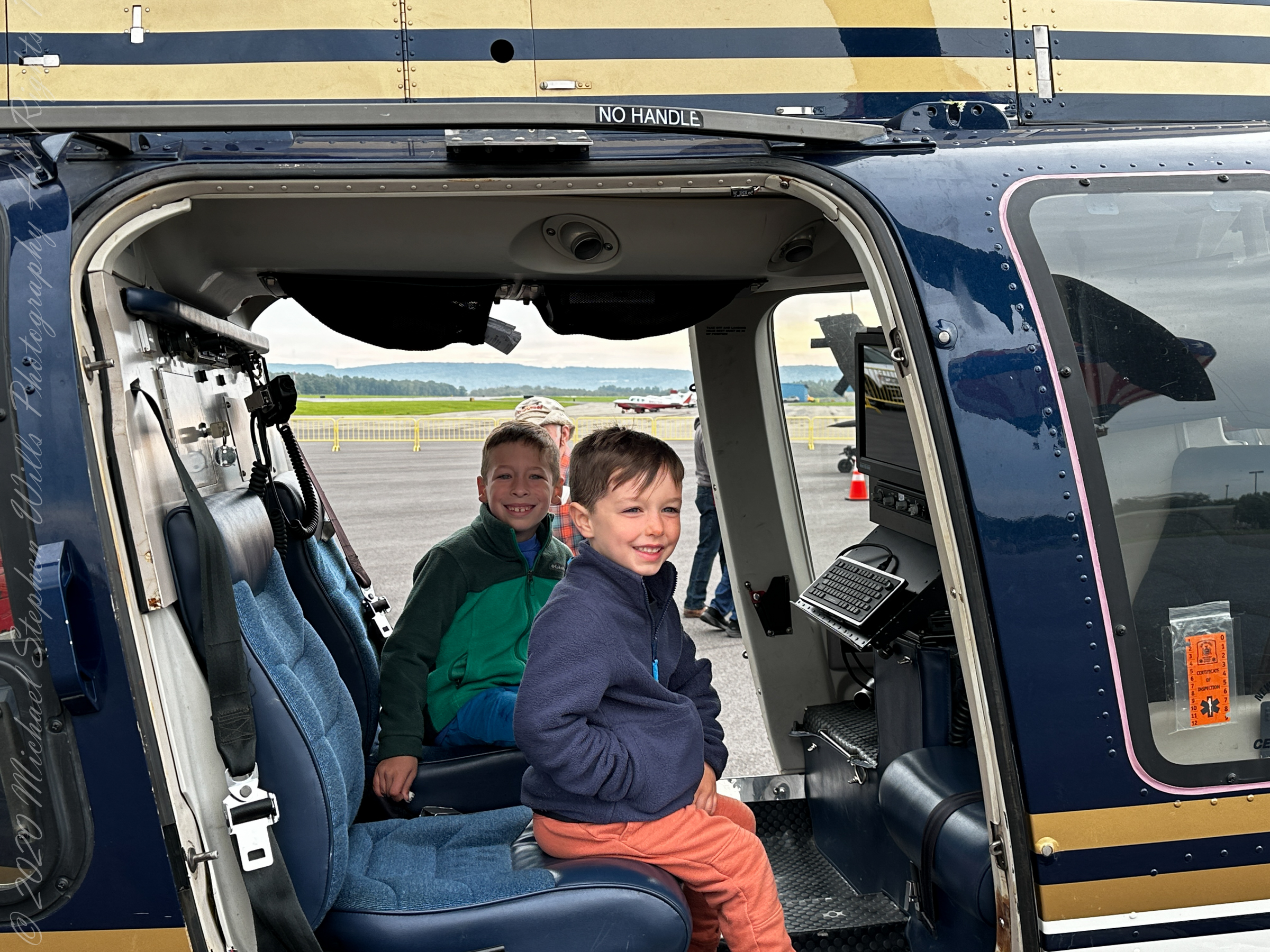
New York State Police Helicopter
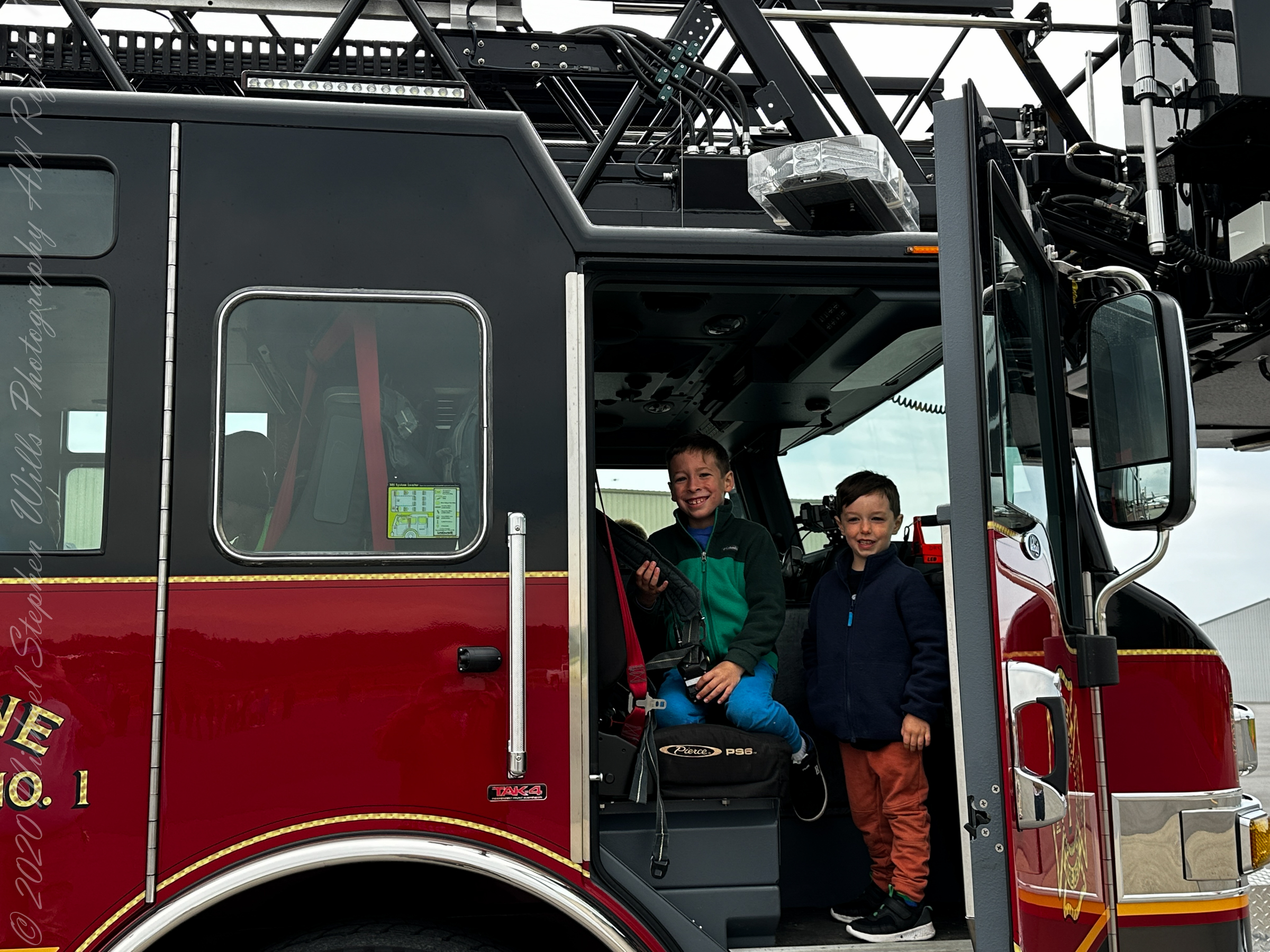
Dryden Volunteer Fire Department Firetruck
The Friendly Clown was excellent!!
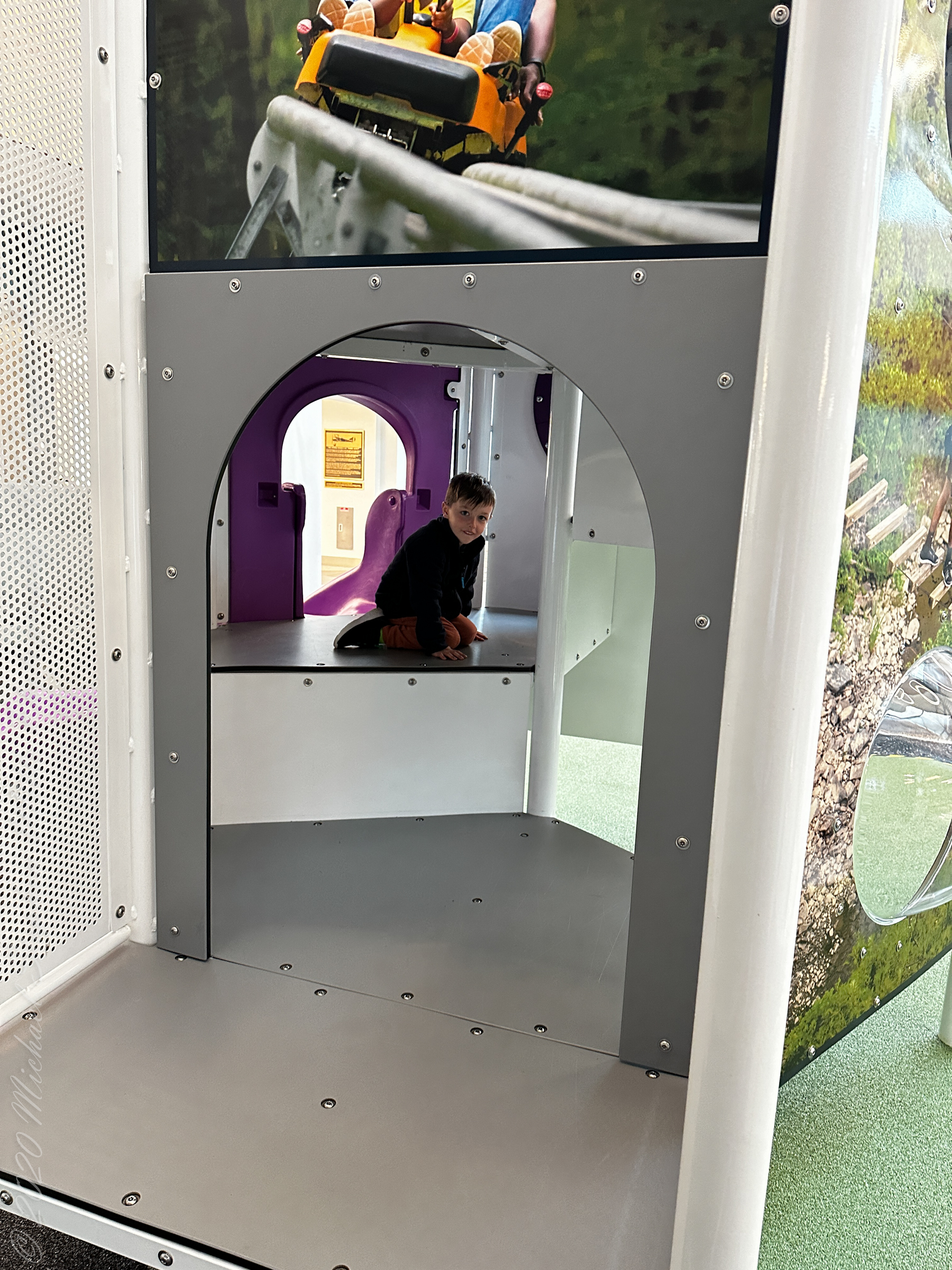
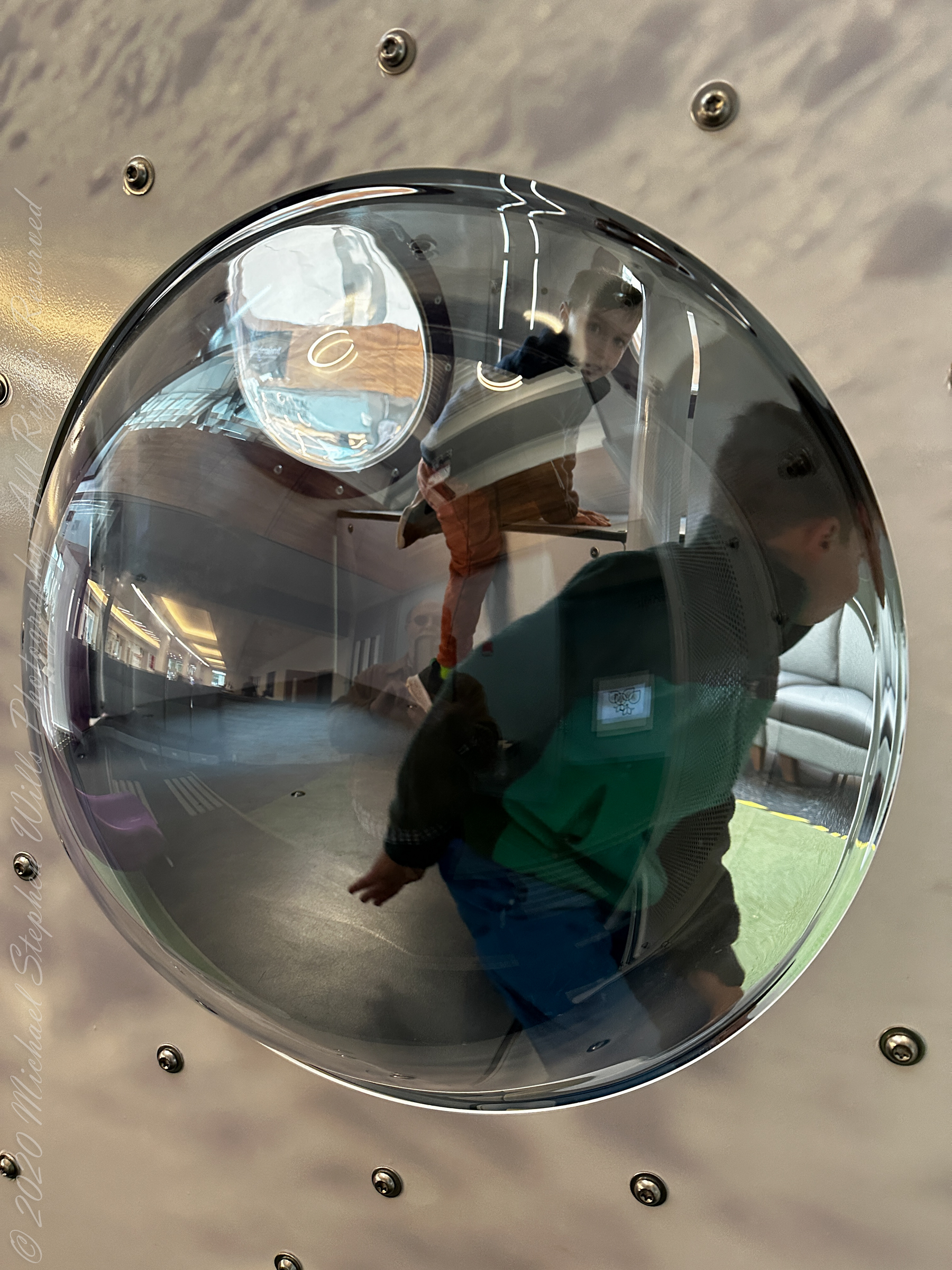
The Airport Terminal was not part of the day’s events, I took Sam and Rory there once, to visit the bathroom, and ever since they insist on visiting the play area
Copyright 2023 Michael Stephen Wills All Rights Reserved