Myth and Art: The Sirens of Punta de las Salinas

At Punta de las Salinas, Lily Perkins’ sculptures embody siren mythology, merging art with the rugged beauty of nature’s edge.

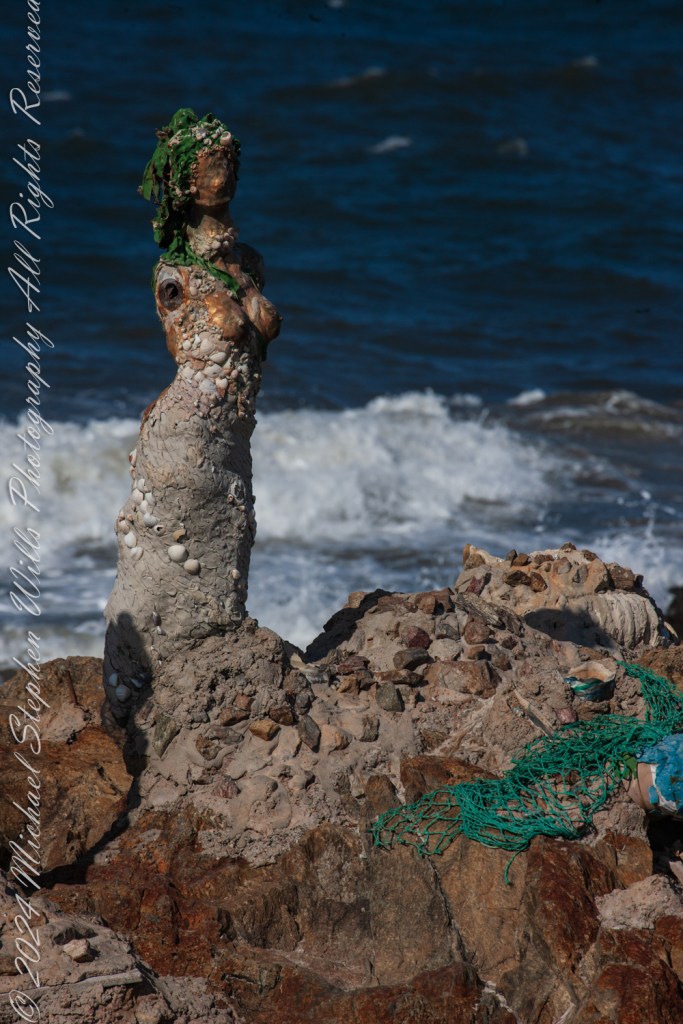
The wind carried the scent of the sea as we stood at Punta de las Salinas, the furthest tip of Punta del Este, Uruguay. This was a place of myth and mystery for us, where the Atlantic Ocean merged with the Río de la Plata, and where the rocks bore witness to the timeless interplay of water and stone. Here stood “El Canto de las Sirenas” (The Song of the Mermaids), an evocative art installation by Lily Perkins, first completed in 2012. The sculptures seemed perfectly at home here, their placement deeply intertwined with the mythology they evoked.

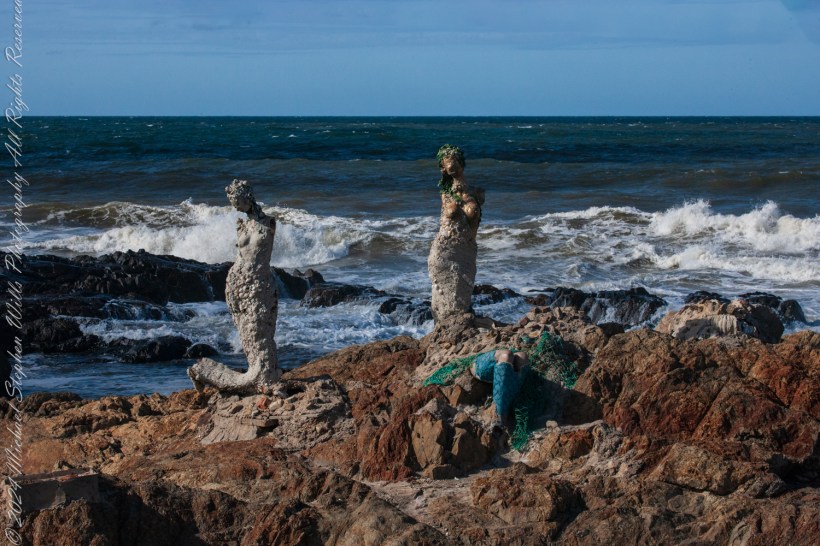
This is at Great Britain Square, Punta de las Salinas of Punta del Este. We are at the tip of the peninsula, the easternmost point of Uruguay. This is the art installation El Canto de las Sirenas” (The Song of the Mermaids) (2012) by the artist Lily Perkins. Punta del Este, Departamento de Maldonado, Uruguay

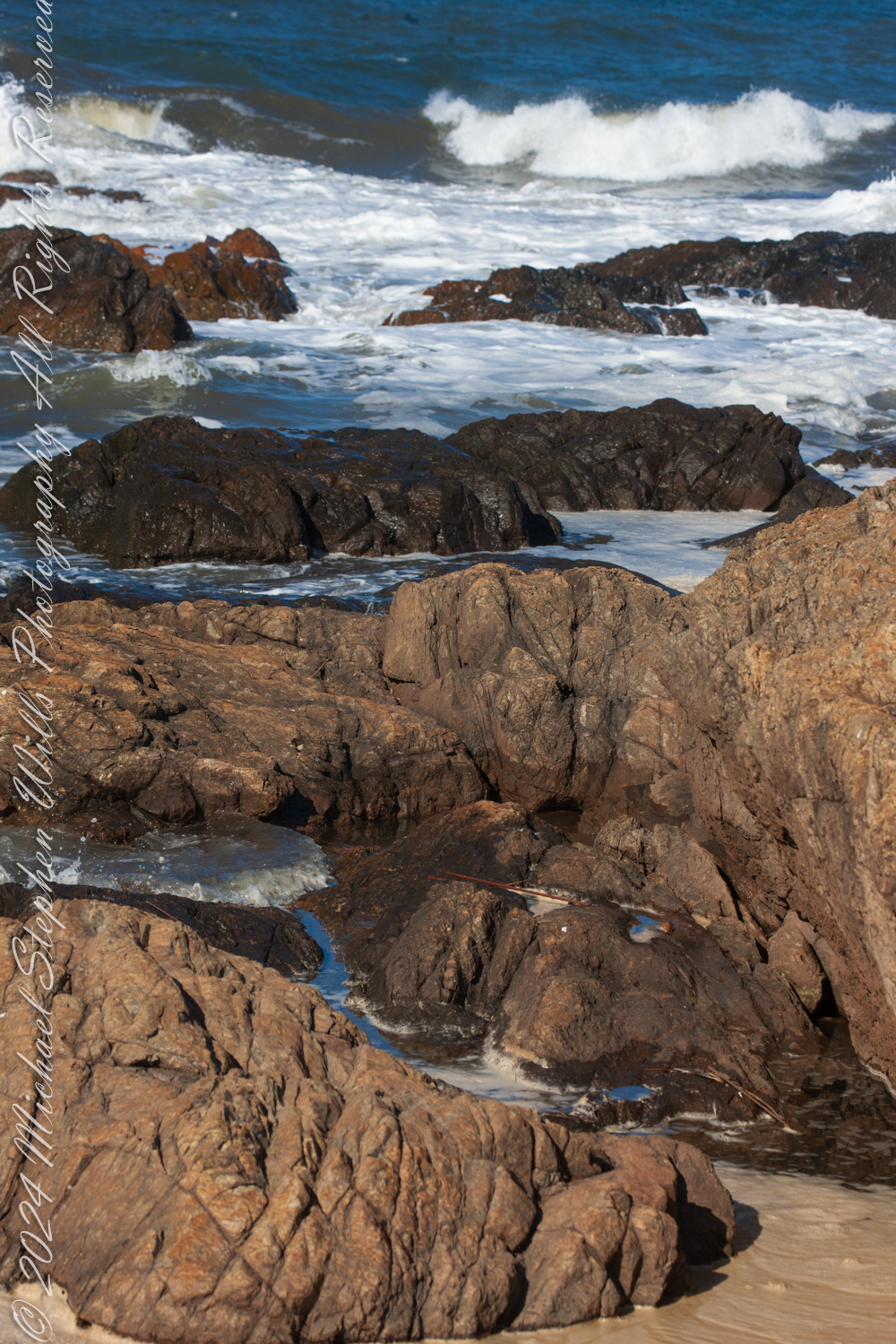
The sirens of ancient lore were said to dwell at perilous points where land met the untamed sea, luring sailors to their doom with haunting songs. These rocky outcrops, both a boundary and a threshold, have long held symbolic power as places where the natural world is at its most raw and elemental. Punta de las Salinas is such a place. Its jagged rocks and churning waves create an environment as beautiful as it is treacherous. It is easy to imagine mythical sirens choosing this very spot to weave their spellbinding melodies.
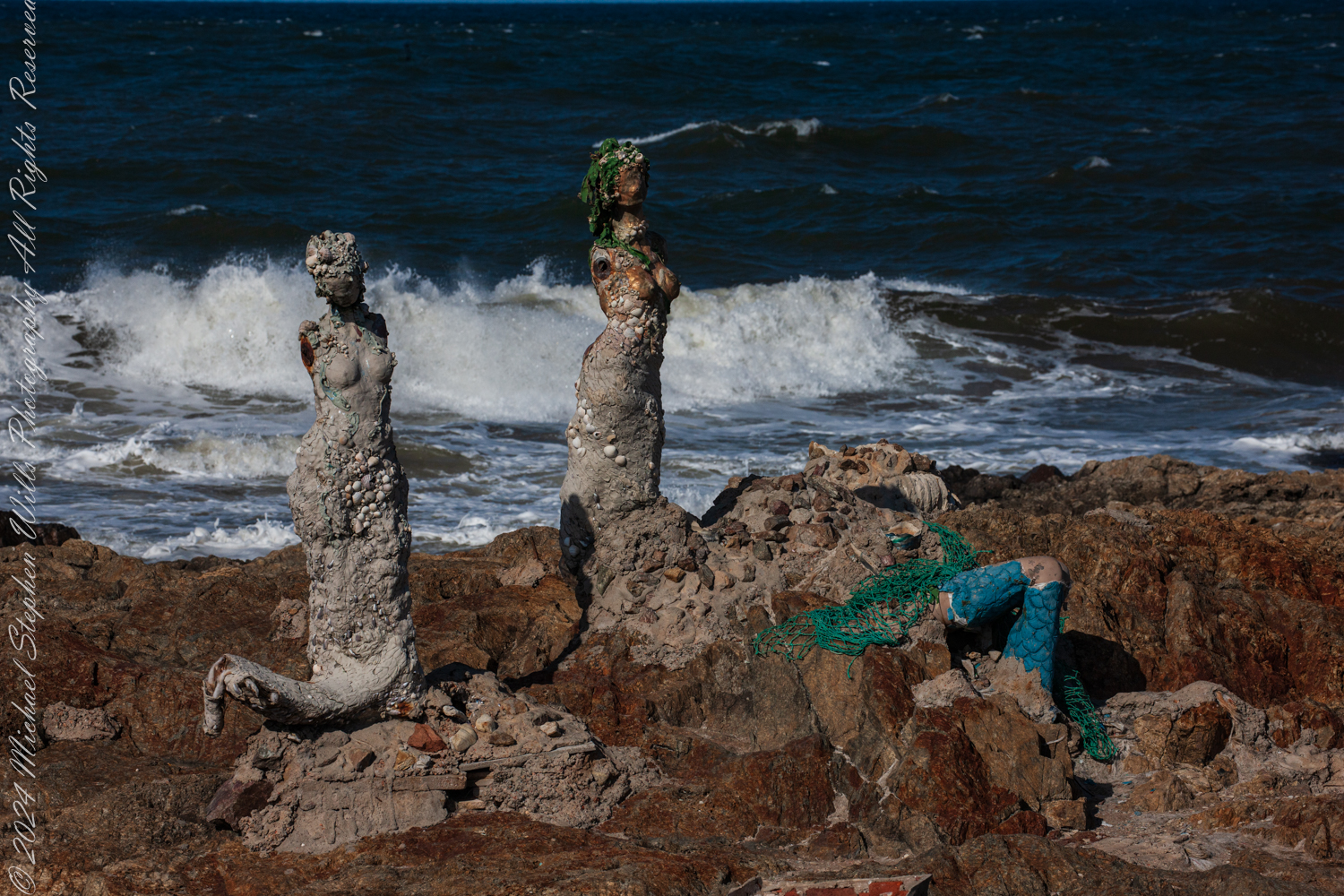
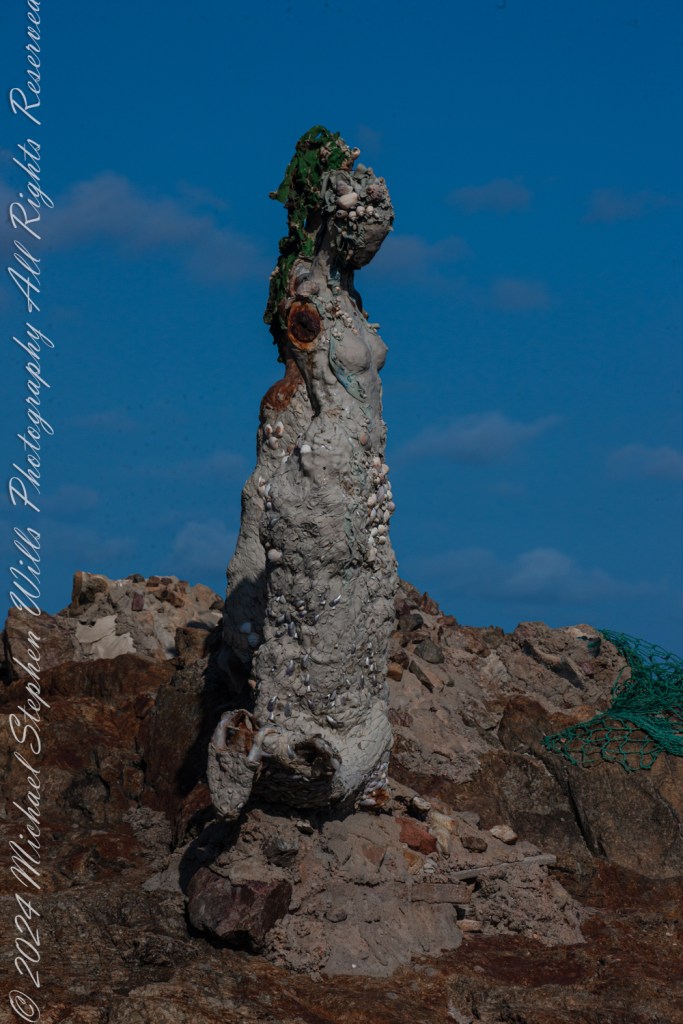
This is at Great Britain Square, Punta de las Salinas of Punta del Este. We are at the tip of the peninsula, the easternmost point of Uruguay. This is the art installation El Canto de las Sirenas” (The Song of the Mermaids) (2012) by the artist Lily Perkins. Punta del Este, Departamento de Maldonado, Uruguay

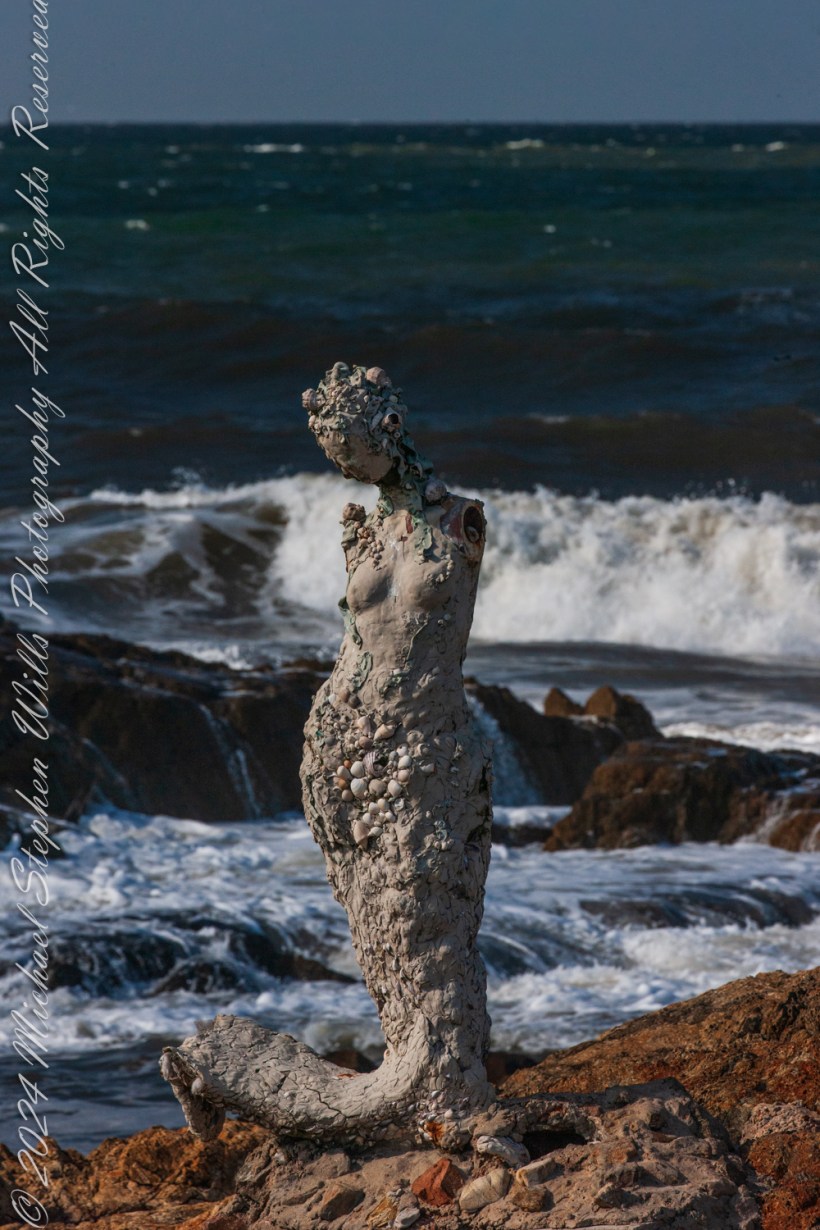
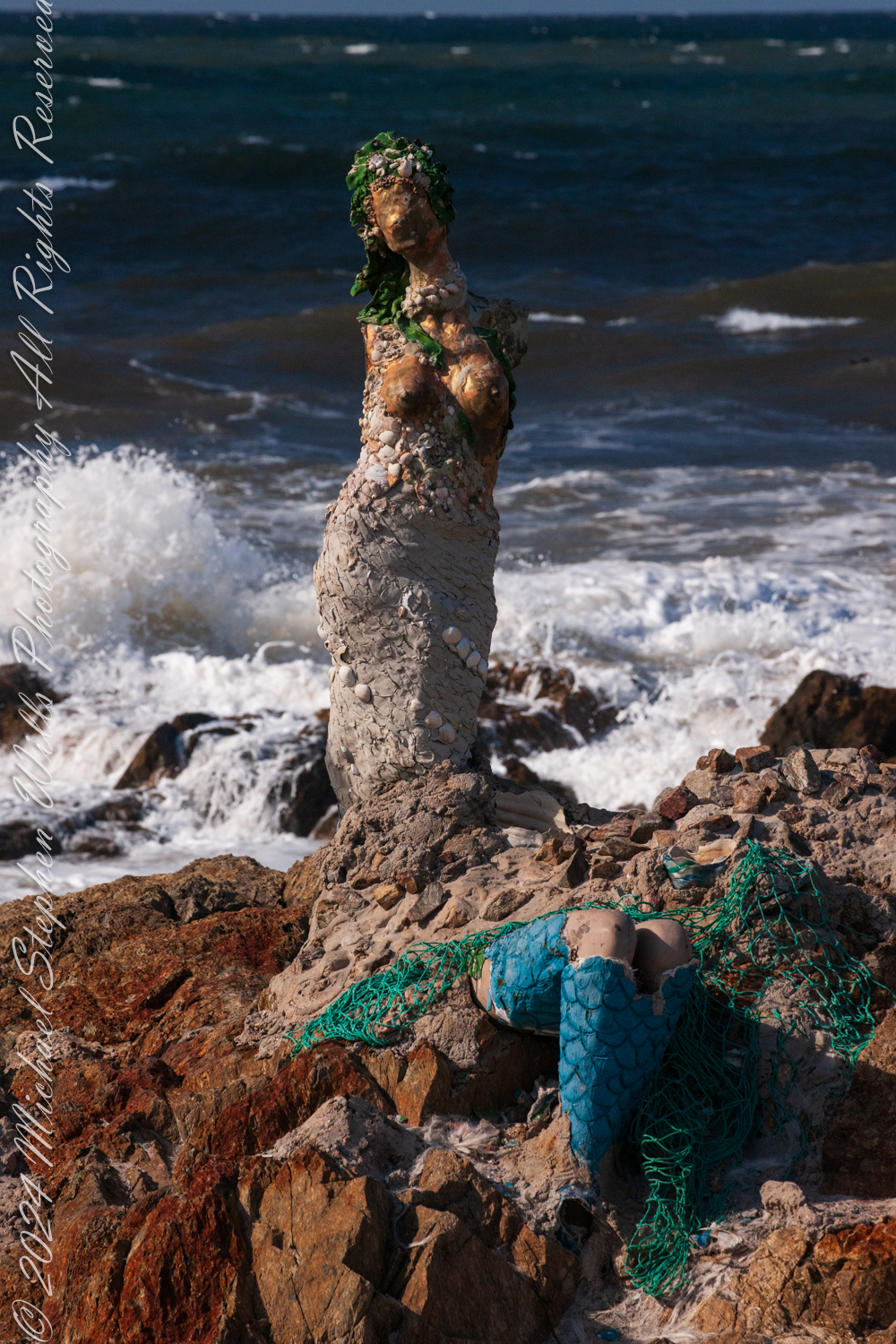
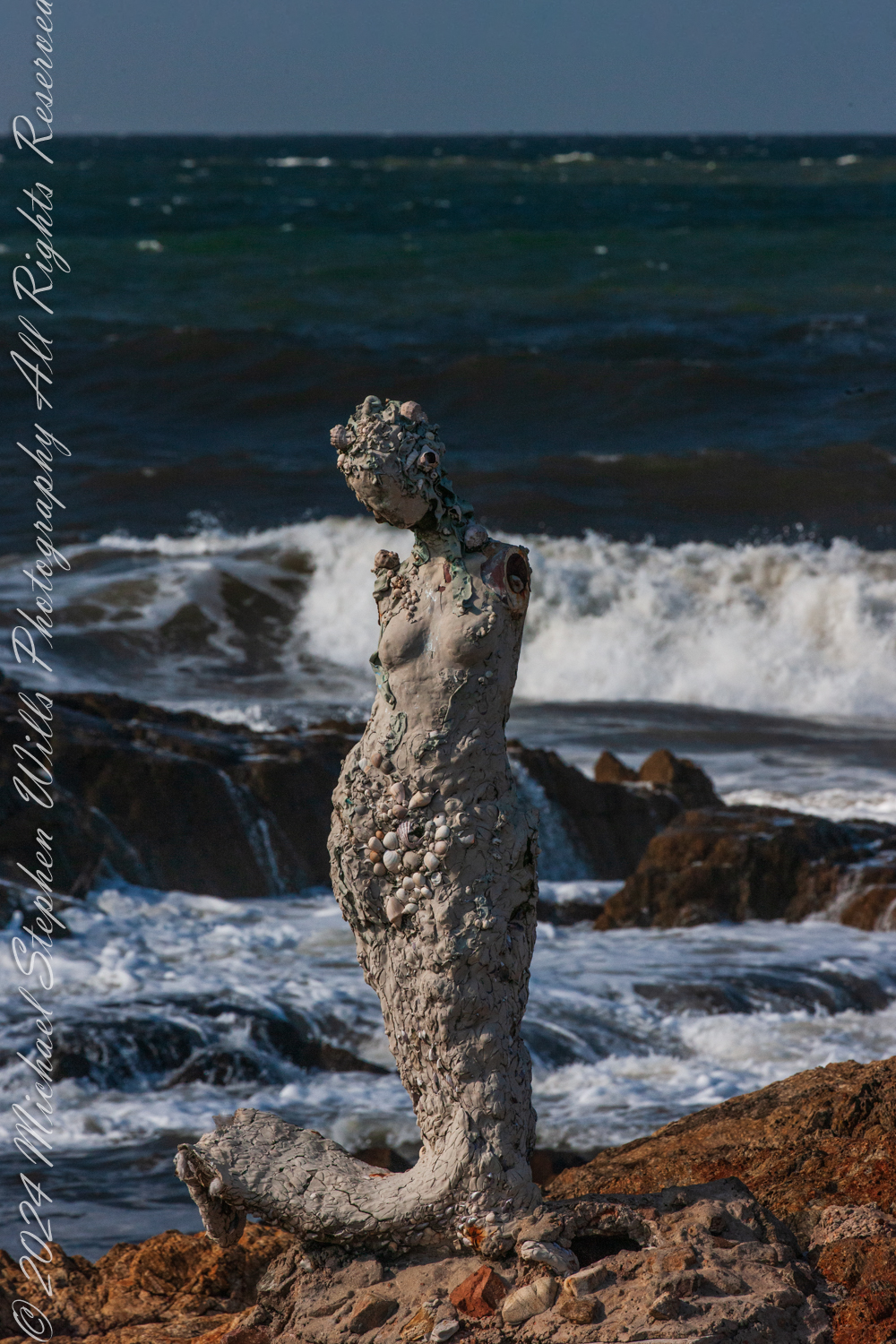
Lily Perkins’ installation captures this essence. The sculptures are not idealized depictions of mermaids; they are rugged and raw, encrusted with shells, stones, and marine debris. Their weathered forms mirror the harsh, untamed beauty of their surroundings. It is as if they have emerged from the ocean itself, born of the waves and the salt-laden air, to stand as sentinels at the edge of the world.
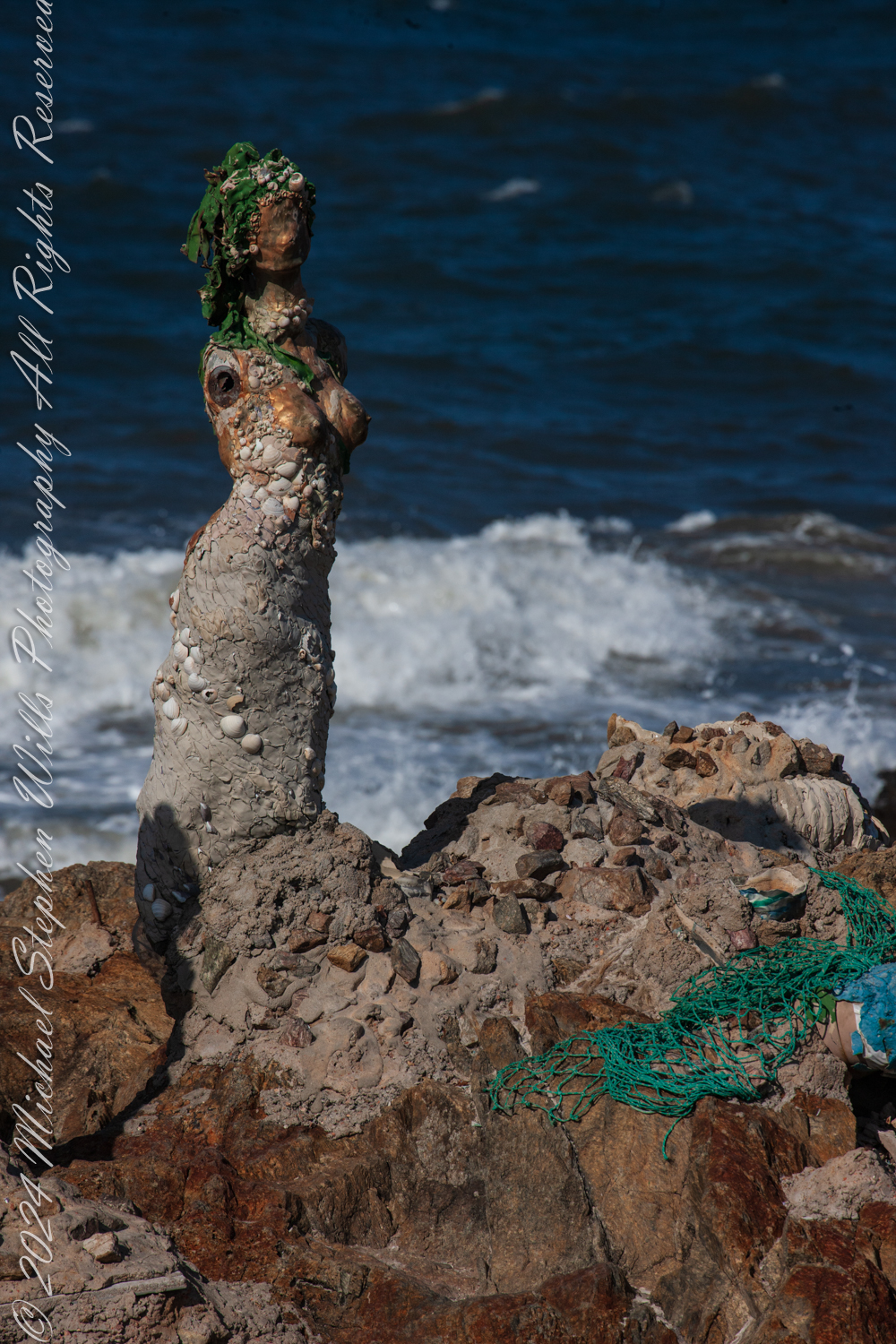
The central figure, with her face turned skyward, evokes the myth of the siren’s song—a melody so enchanting that it drove sailors to risk their lives against the rocks. Her posture suggests longing, perhaps for a connection beyond the horizon, or perhaps for the very mortals she is fated to ensnare. Nearby, a broken figure reclines against the rocks, her form partially encased in green netting and mosaic-like tiles. She seems more grounded, her siren’s call muted, as if weighed down by the realities of the modern world. The use of marine materials in her construction—a blend of natural and human-made debris—suggests an awareness of humanity’s impact on the seas.
The third figure, slightly apart, is the most enigmatic. Encrusted with barnacles and weathered by the elements, she seems lost in thought. Her gaze is directed not toward the sea but toward the land, as if contemplating her place at this meeting of worlds. In mythology, sirens were liminal creatures, existing between realms—the sea and the shore, the mortal and the divine. This figure embodies that in-between state, rooted in the rocks yet shaped by the sea.
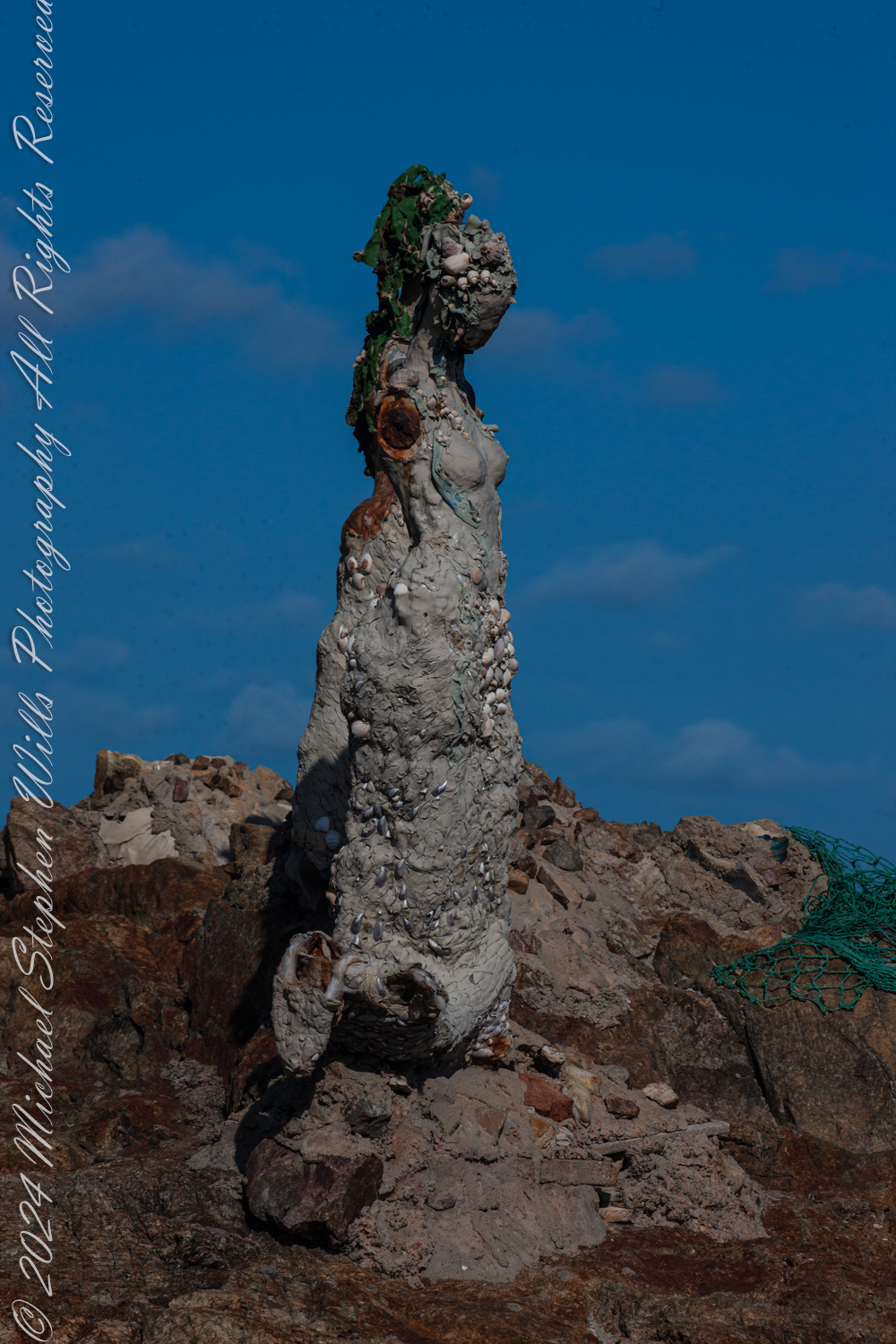
The placement of these sculptures at Punta de las Salinas is no accident. This headland is the easternmost point of Uruguay, a natural boundary and a crossroads where two vast bodies of water meet. For centuries, sailors navigated these waters, their journeys fraught with danger. The rocks here are unforgiving, and the waves crash with relentless power. To stand at this point is to feel the raw energy of the ocean and to understand why myths of sirens arose in such places. The sirens symbolize both allure and peril, a reminder of the ocean’s capacity to inspire and to destroy.

As I walked among the sculptures, the mythology seemed to come alive. The sound of the waves crashing against the rocks could easily be imagined as the sirens’ song—a hypnotic rhythm that draws you in and holds you spellbound. The figures, though silent, seemed to hum with an energy that echoed the sea’s eternal motion.
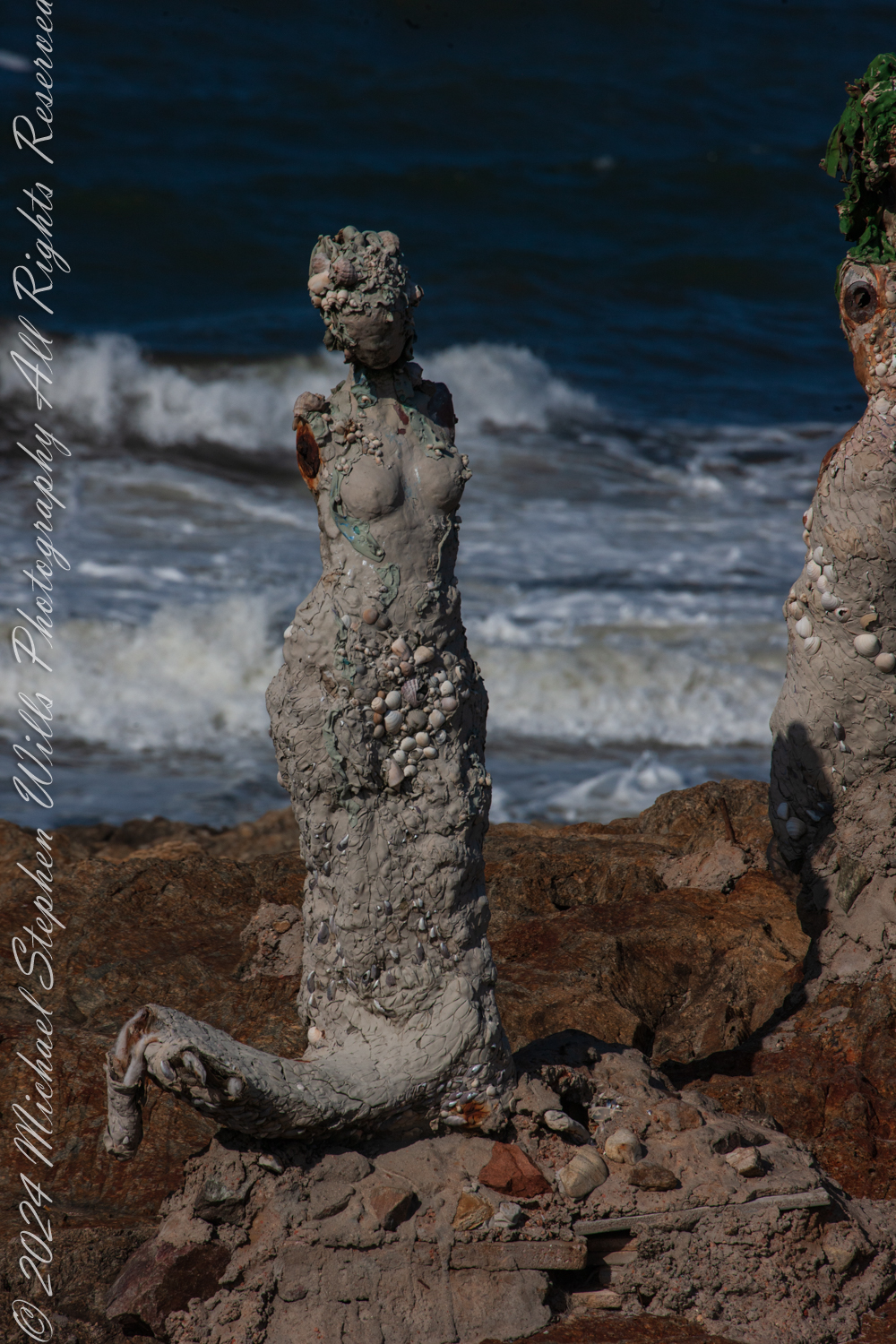
I feld these sculptures were not merely placed at Punta de las Salinas; but had emerged from it, their forms shaped by the same forces that shaped the rocks beneath our feet. The shells and stones embedded in their surfaces tied them physically to the sea, while their mythical resonance tied them spiritually to the place.

The mythology of the sirens speaks to the duality of the sea—its beauty and its danger, its capacity to give and to take away. Standing at Punta de las Salinas, surrounded by Perkins’ sculptures, I felt that duality in a profound way. The ocean stretched endlessly before us, a vast, unknowable expanse, while behind us lay the solid ground of the peninsula—a place of safety, but also a place that ended here, at this edge.

Lily Perkins sculptures are restored…..

As we left, the figures seemed to watch us go, their silent song lingering in my mind. The sirens of Punta del Este are more than art; they are a dialogue between myth and reality, between the natural world and the human imagination. In their weathered beauty, they remind us of the stories the sea has always told, and of the enduring power of those who give those stories form.

Enter your email to receive notification of future postings. I will not sell or share your email address.

Capturing Punta del Este: A Morning of Candid Moments

A photographer captures candid moments in Punta del Este, celebrating the city’s vibrant life and juxtaposition of modernity and tradition.

The morning sunlight bathed Punta del Este in a soft, golden glow we rode in a tour bus with large, clean windows along the streets near Punta de las Salinas, my camera Canon dslr at ready, with a Canon EF 70-300 f/4-5.6 L IS USM lens. This was the perfect time of day for street photography—the light was forgiving, and the people were starting their routines. There’s something magical about candid moments, the kind you can only find when the subjects are unaware they’re being watched. It’s these fleeting, authentic snippets of life that draw me to photography.

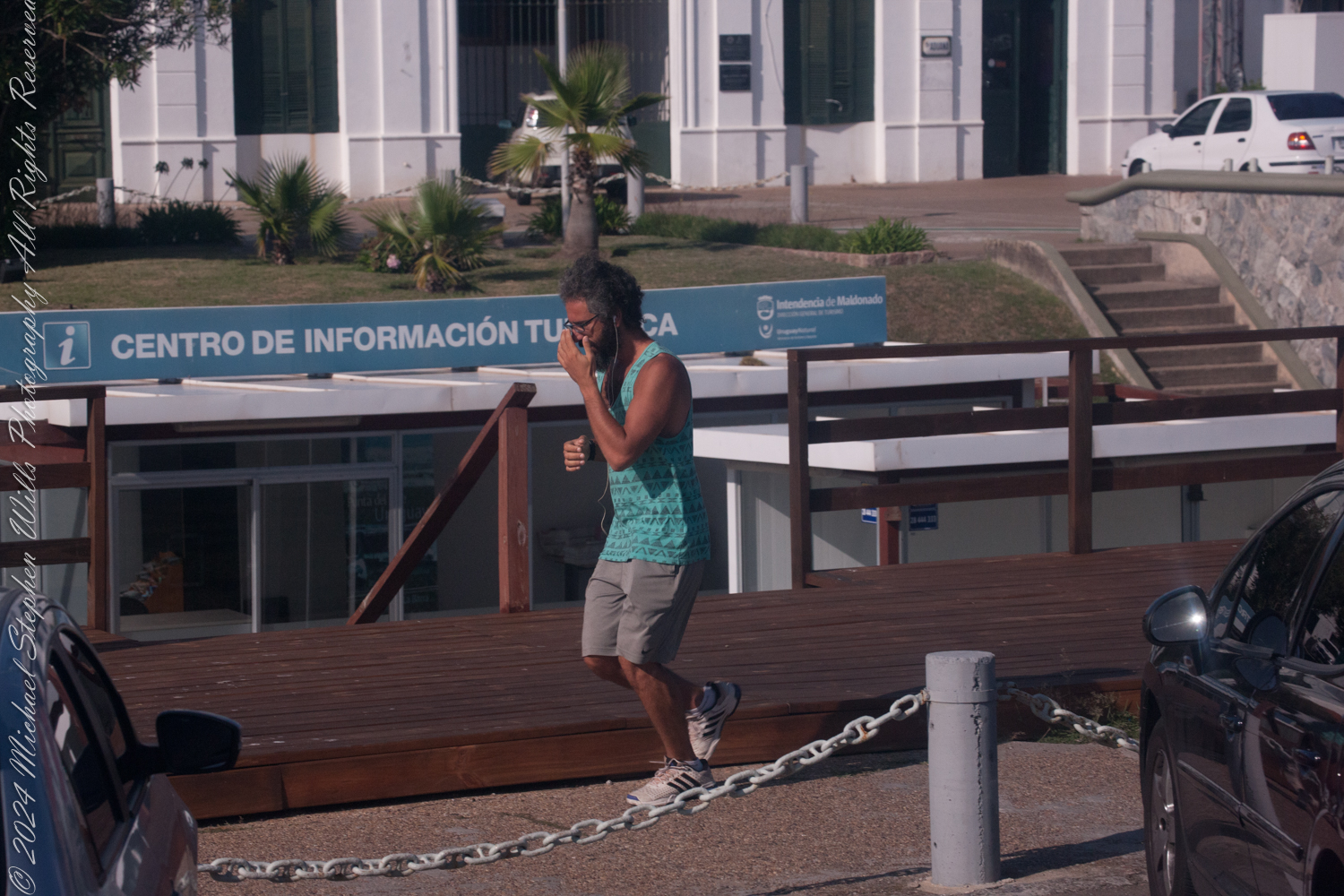
I came across the Centro de Información Turística, a modest but bustling hub for visitors. A man in a bright turquoise tank top walked briskly past, talking animatedly into his phone. He was a splash of vibrant color against the clean, white facade of the building, his movement so dynamic that I couldn’t resist snapping a photo. The contrast of his modern, casual style against the timeless architecture behind him captured the essence of Punta del Este—a place where history and the contemporary coexist seamlessly.

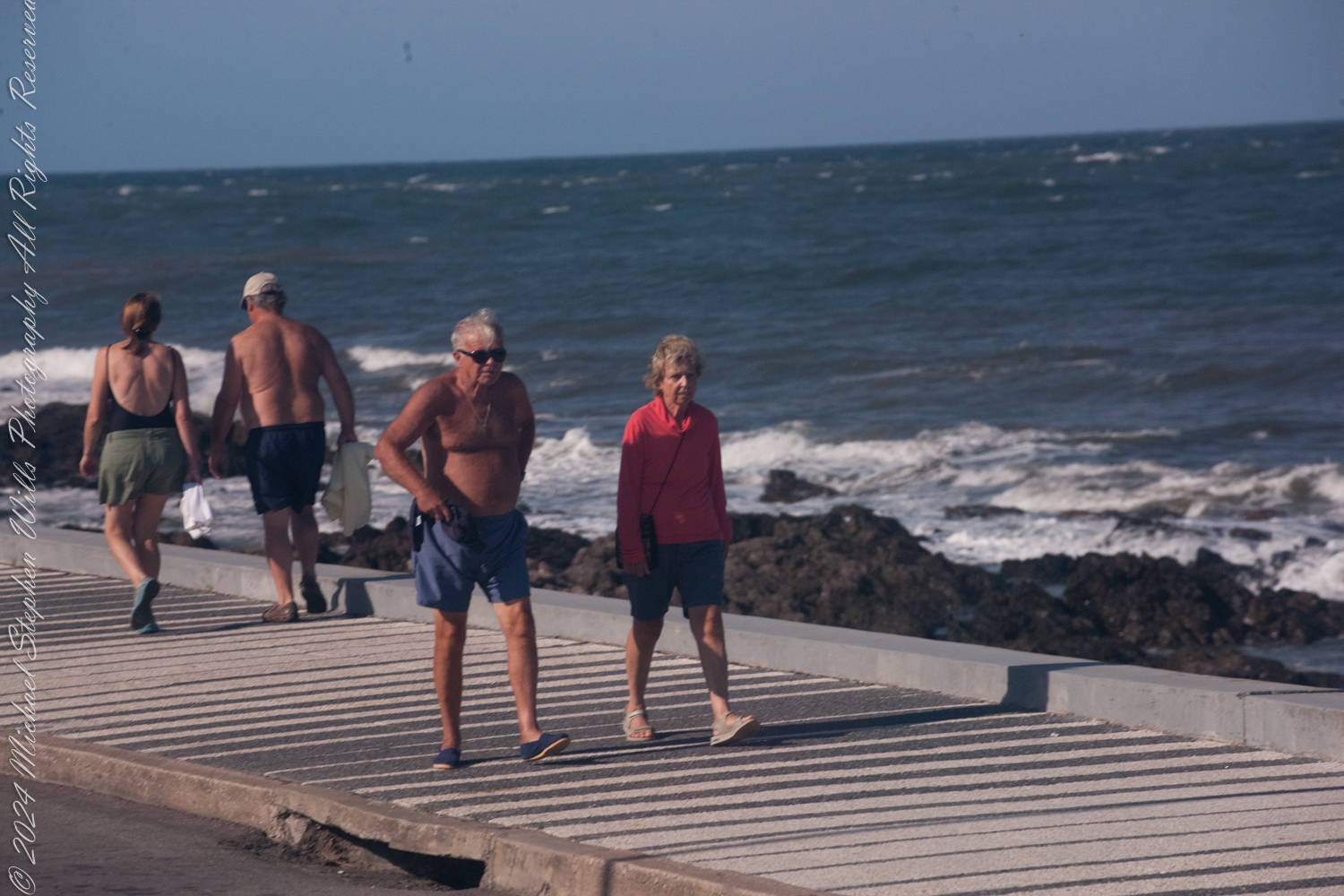
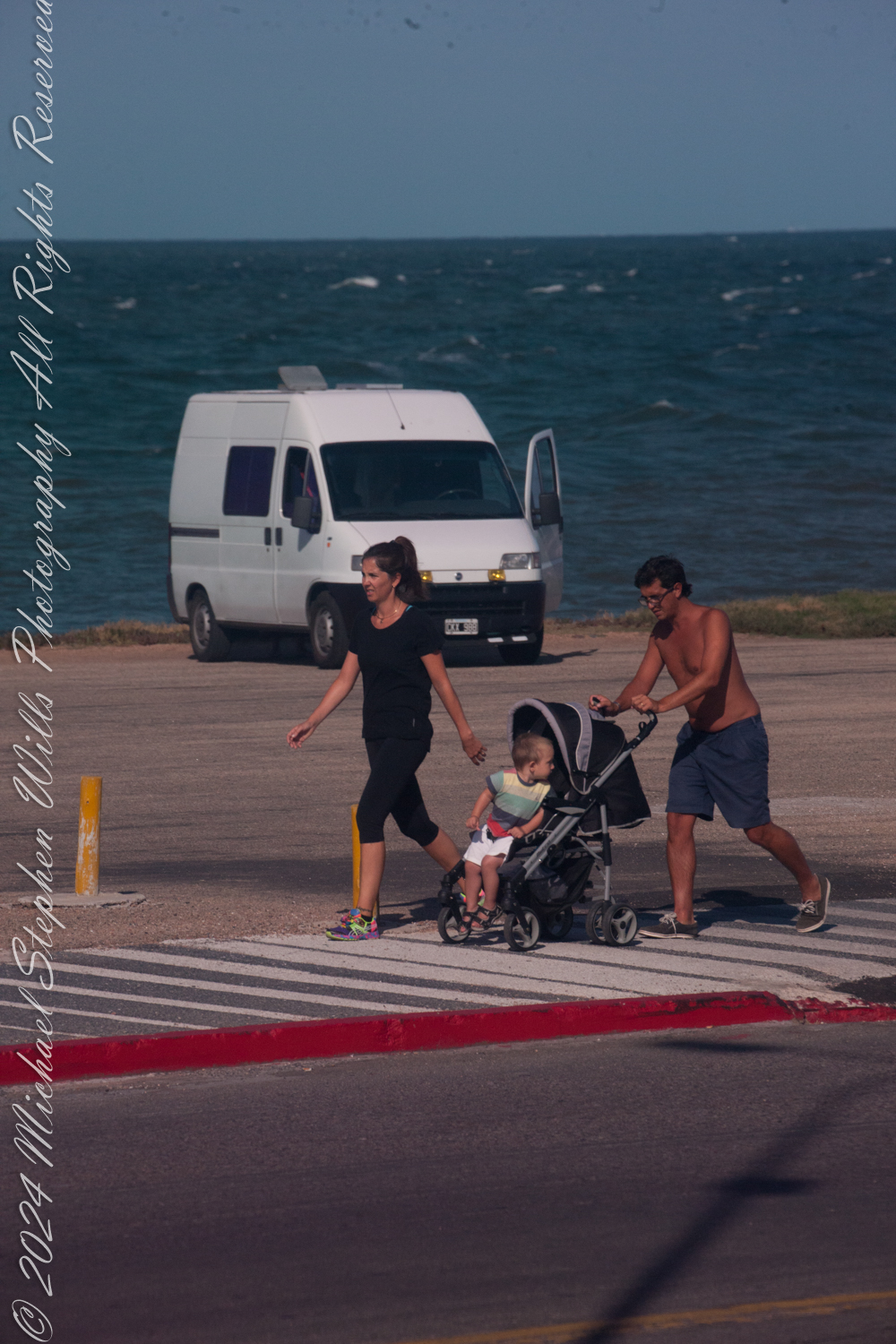
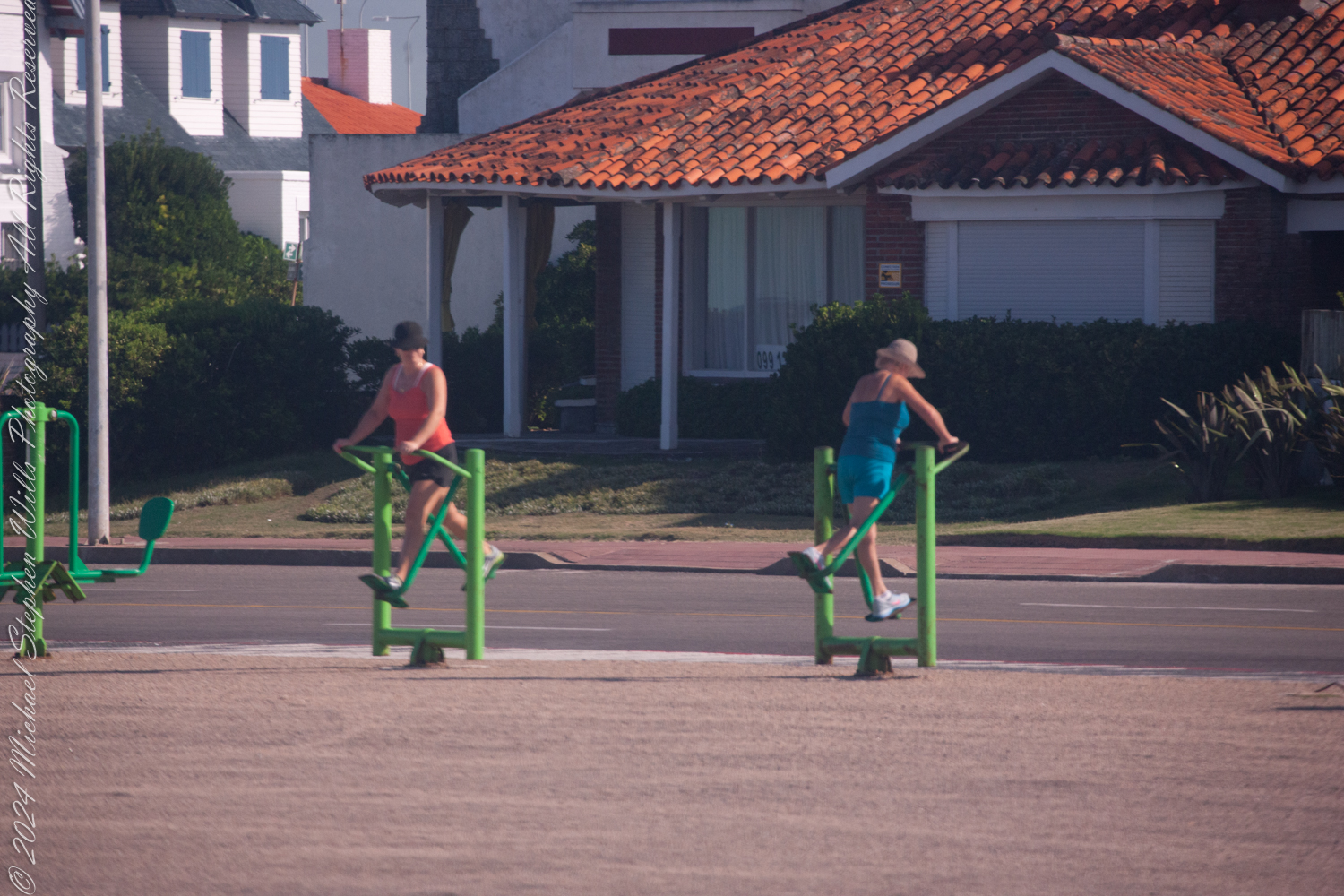
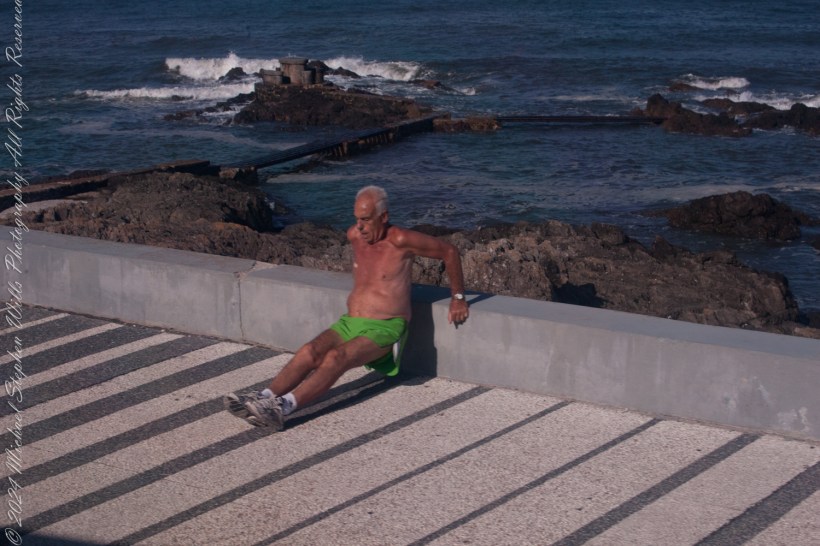
Candid shots of people at their leisure in and around Great Britain Square of Punta del Este. Departamento de Maldonado, Uruguay

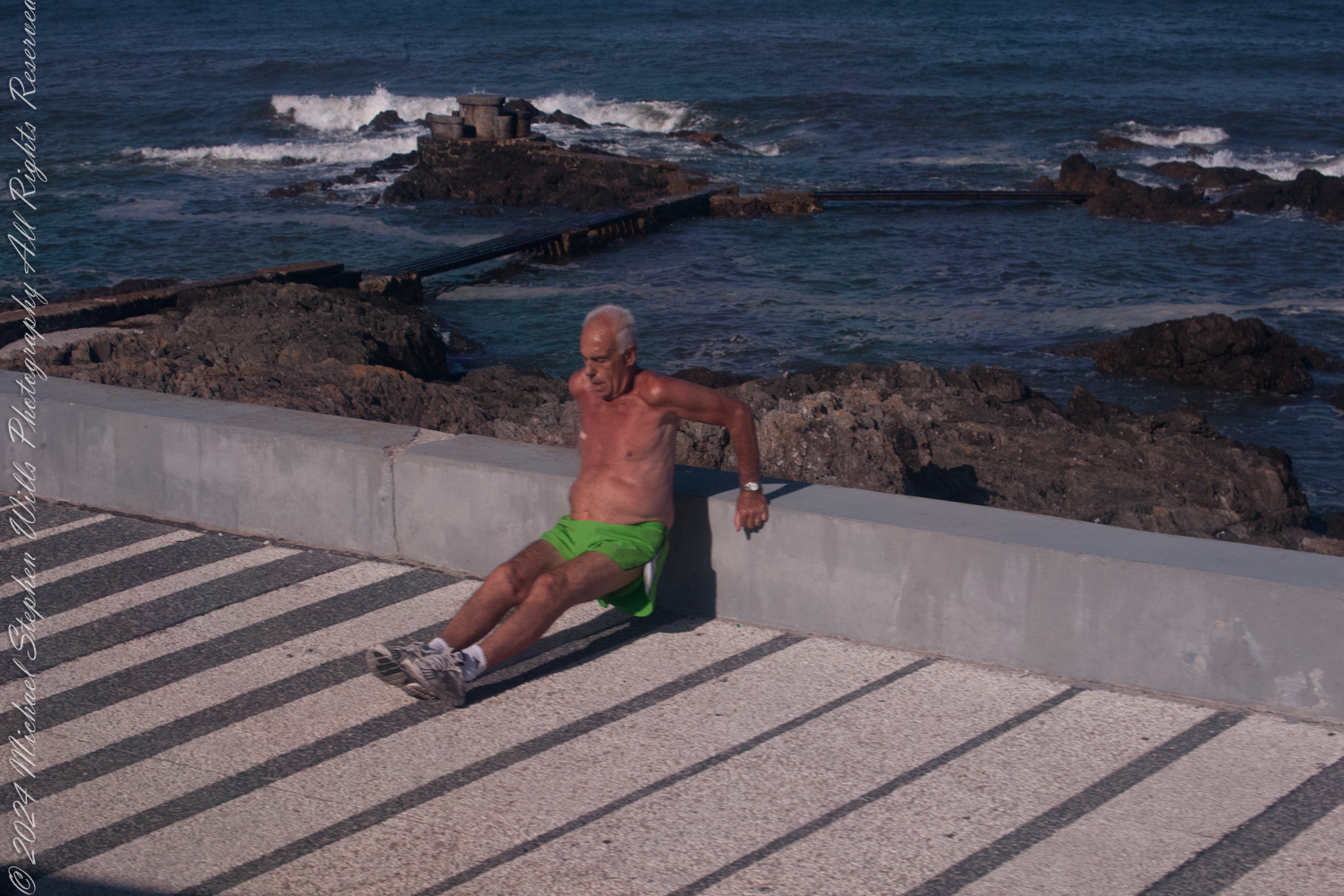
We were headed to the shoreline for the sound of the waves and the refreshing scent of salt in the air. There, on a low stone wall, an older man in neon green shorts leaned back, exercising his arms. His weathered face was relaxed, a picture of contentment. Behind him, the ocean swirled and crashed against the rocks, and I marveled at how effortlessly this simple scene captured the spirit of life in this coastal city—a balance between the energy of the waves and human moments.

Further down the walkway, a group of people strolled leisurely, their conversations punctuated by laughter. One couple caught my eye—an older man in sunglasses walking beside a woman in a bright red sweater. The warmth between them was palpable, the kind of comfort that comes with years spent together. I raised my camera and framed them against the endless blue horizon. The waves rolled in behind them, their rhythm a perfect counterpoint to the couple’s measured pace. It was a reminder that even in a world that feels transient, some things remain steady and enduring.

Crossing the road, I noticed a young family out for a walk. The parents, both casually dressed, pushed a stroller with a little boy inside. The child’s curiosity was evident as he leaned forward, his tiny hands gripping the sides of the stroller as if ready to leap out and explore the world. The scene felt timeless—youthful energy, familial love, and the sense of new beginnings. It was an image I knew I had to capture, a slice of life that would resonate universally.

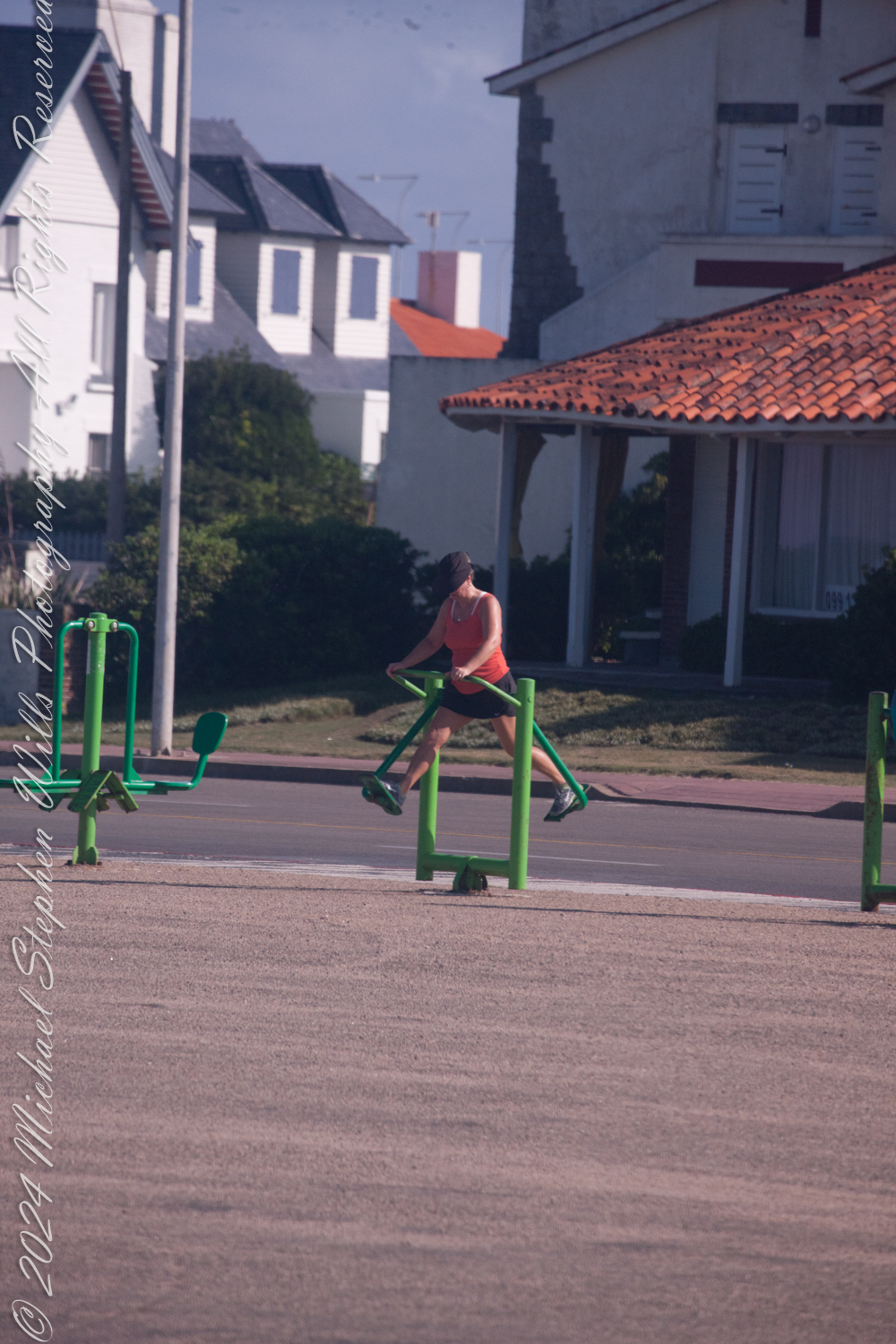
Progressing to our destination, we passed a small exercise area, where two women worked out on bright green outdoor machines. Their movements were deliberate, their focus unwavering. One wore a vivid orange top, her energy radiating even from a distance, while the other in teal moved with a more relaxed rhythm. The scene was a perfect metaphor for the city itself—a blend of activity and leisure, where people embraced life at their own pace.

We passed a row of homes and modern apartments facing the ocean. One balcony caught my attention—a young woman stood there, brushing her hair as the breeze played with it. She seemed lost in thought, gazing out at the sea, her solitude a sharp contrast to the bustling streets below. The light hit her at just the right angle, turning her into a silhouette against the backdrop of glass and steel. I clicked the shutter—a quiet moment amid the city’s liveliness.

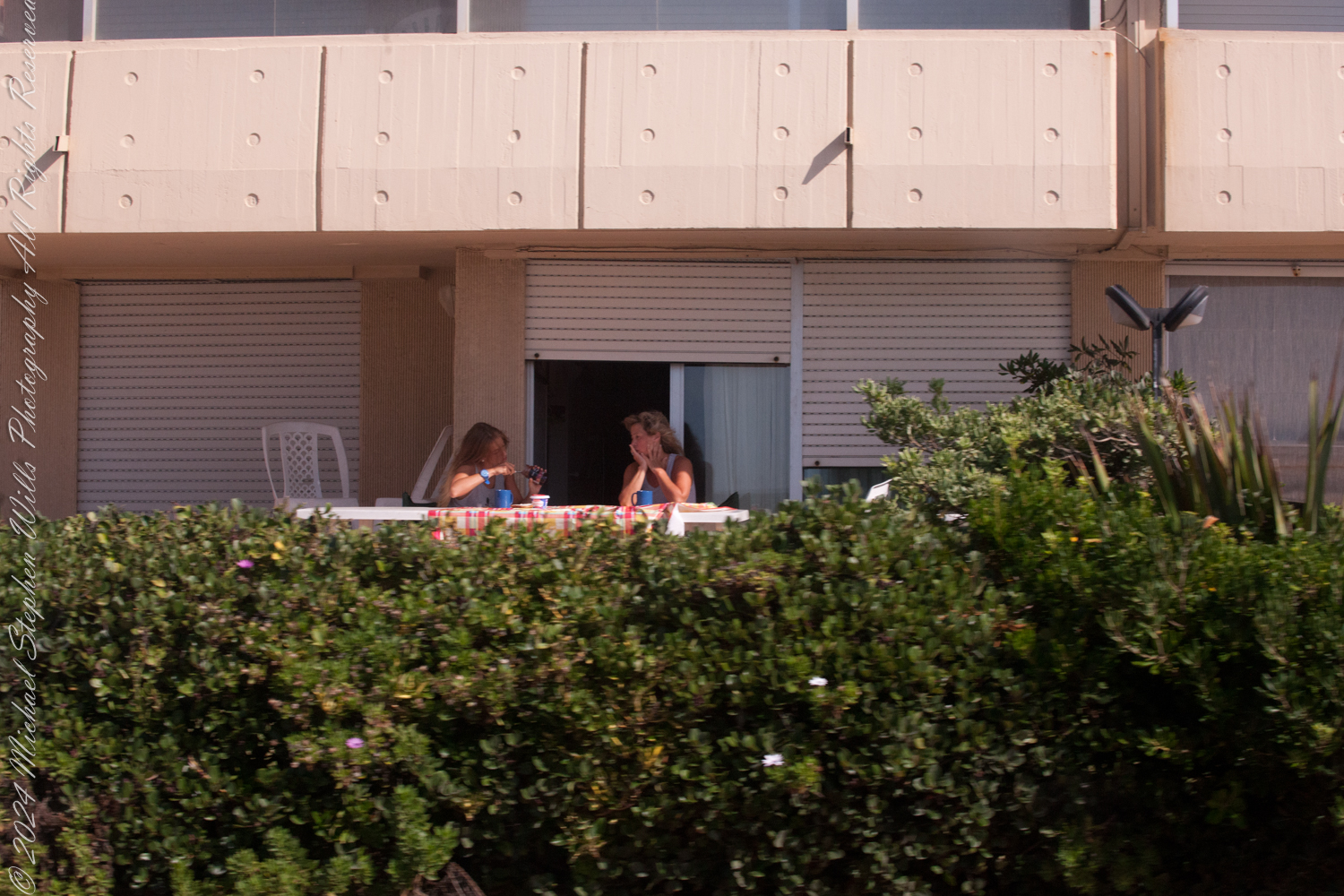
Further along, another balcony revealed two women sitting at a small table, sharing what looked like breakfast. They were deep in conversation, their gestures animated as they leaned toward one another. The table was set simply, with two cups and a plate of food, but the scene exuded warmth and connection. It reminded me that even in a city known for its glamour and style, the real beauty lies in these intimate, unguarded moments.

As I reviewed the images on my camera, I felt a sense of satisfaction. Punta del Este had revealed itself in layers that morning—a city of contrasts and harmonies, where every street and every person seemed to have a story to tell. Through my lens, I had tried to capture not just the people, but the rhythm of life here, the interplay of light and shadow, motion and stillness, solitude and togetherness. And as the sun climbed higher in the sky, I knew I had witnessed something special—an ordinary morning made extraordinary by the people who lived it.

Enter your email to receive notification of future postings. I will not sell or share your email address.
Discovering La Sirena de la Garza at Punta de las Salinas

At Punta del Este, Uruguay, the beauty of the ocean and sculptures creates a profound connection between nature, art, and mythology.

As I stood at the edge of Punta del Este, Uruguay, I marveled at the wild beauty of the place. We were at Punta de las Salinas, the very tip of the peninsula, the edge of where the Atlantic Ocean meets the Río de la Plata. This easternmost point of Uruguay, where time feels suspended as restless waves crash against rocky shores. A sea breeze carries a distinct salty tang.

This is at Great Britain Square, Punta de las Salinas of Punta del Este. We are at the tip of the peninsula, the easternmost point of Uruguay. Punta del Este, Departamento de Maldonado, Uruguay

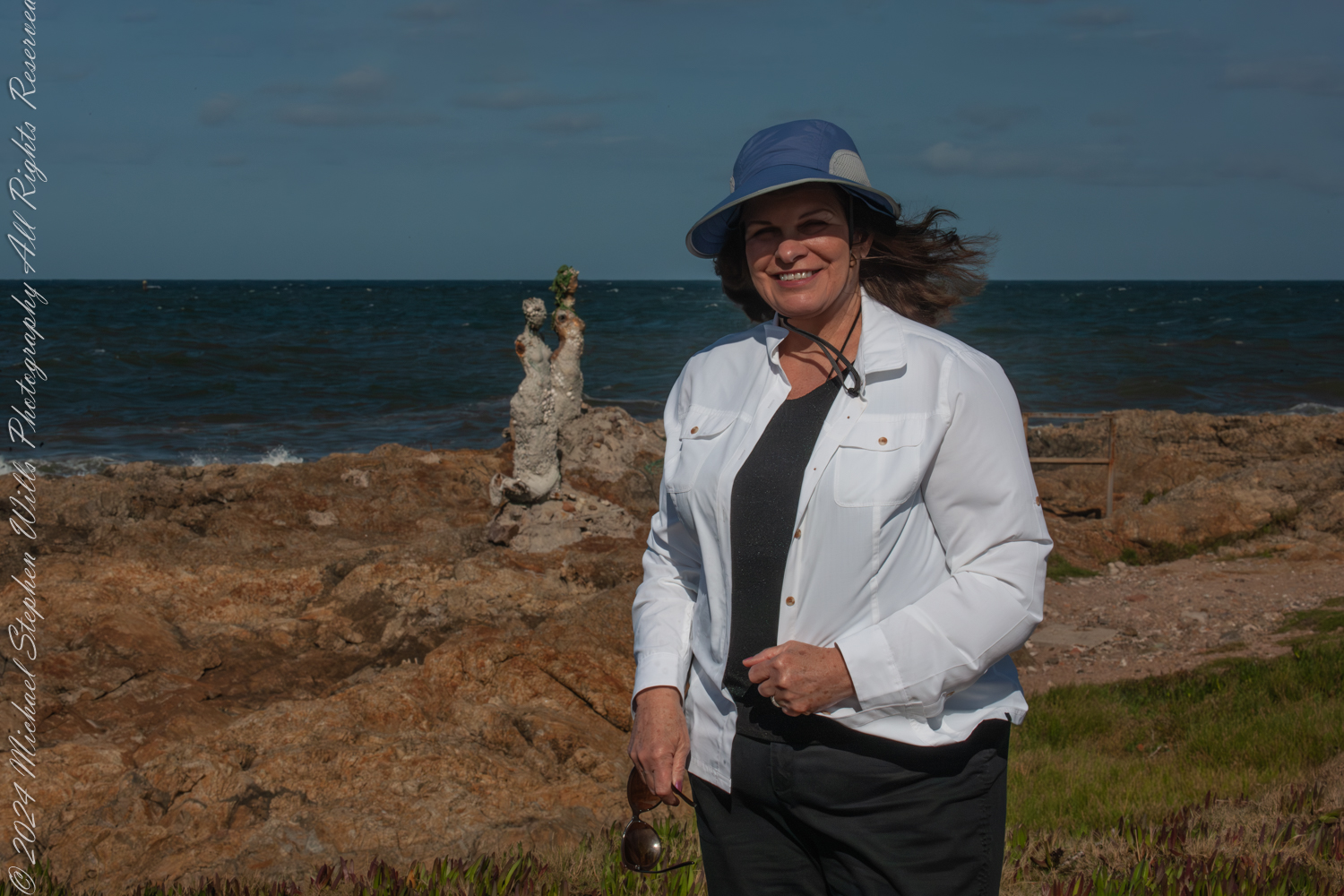
Pam, my wife, stood beside me, a bright smile on her face as the ocean wind tugged at her sunhat. Behind her, rising among the rocks, was an art installation that seemed to embody the spirit of the place “El Canto de las Sirenas” (The Song of the Mermaids). These sculptures by the artist Lily Perkins, their forms shaped and worn by the elements, appeared almost as though they were natural extensions of the rocky coastline. They gazed out to sea, their haunting beauty a poignant reminder of myth and humanity’s eternal connection with the ocean.

The sirens, crafted with an earthy texture and adorned with bits of marine debris, seemed to tell a story of resilience and adaptation. They stood stoically against the backdrop of the churning waves, their barnacle-like surfaces merging seamlessly with their rugged surroundings. I felt a strange connection to them, as if they were silent witnesses to the ever-changing dance of the sea and sky.

Pam during our 2016 South American tour. This is at Great Britain Square, Punta de las Salinas of Punta del Este. We are at the tip of the peninsula, the easternmost point of Uruguay. Over her shoulder is the art installation “El Canto de las Sirenas” (The Song of the Mermaids) (2012) by the artist Lily Perkins. Punta del Este, Departamento de Maldonado, Uruguay

The morning was perfect for photography. I adjusted my Canon camera, capturing the interplay of light and shadow across the jagged rocks, the turquoise waves, and the statues. The textures of the sirens came alive through the lens, each detail hinting at the passage of time and the endless conversations between water and stone. Pam posed in front of one of the sculptures, her presence adding a touch of humanity to the scene, as though she were part of this mythological tableau.

I took a moment to step back and absorb the scene. The coastline stretched out before me, rugged and raw, with the waves crashing in an eternal rhythm. The sirens belonged here, their forms shaped artist hands, then also by the elements. They merged into this unique place, much like the wind, the rocks, and the ocean.

As we walked along the rocky outcrop, the sound of the waves filled the air, drowning out any other noise. It was easy to lose oneself in the hypnotic patterns of the water, the spray catching the sunlight like tiny jewels. I found myself reflecting on the history of this place—Punta del Este, a meeting point of cultures and stories, a place where the natural world and human creativity converge.

Great Britain Square, where we started this journey, seemed an apt setting for such an installation. The name itself evokes a sense of exploration and connection across vast distances, much like the sirens that seem to call out across the waves. The symbolism was not lost on me as I thought about how we, too, were travelers, drawn to the edges of the earth by a desire to explore and understand.

Plaza Gran Bretana (Great Britain Square) is named for the World War II naval battle near here between the German battleship Graf Spee and the English ships Ajax, Achilles and Exeter. The plaza also has an anchor marking the boundary between Rio de la Plata and the Atlantic Ocean.

Pam and I lingered for a while longer, taking in the scenery and enjoying the peacefulness of the moment. The sculptures seemed almost alive, their forms shifting subtly as the light changed. They reminded me of the stories of sirens from ancient mythology—creatures that lured sailors to their doom with their enchanting voices. But here, they seemed more like guardians, watching over the waters and the land, their presence a testament to the enduring power of art and nature.

As the morning wore on, we made our way back, leaving the sirens behind to their eternal vigil. The experience stayed with me, though, a vivid memory of a place where myth and reality intertwine. Punta de las Salinas, with its rugged beauty and its mysterious sirens, had left an indelible mark on my heart.

Enter your email to receive notification of future postings. I will not sell or share your email address.
Valparaiso Connections V

A Deeper Understanding

Monuments Then and Now

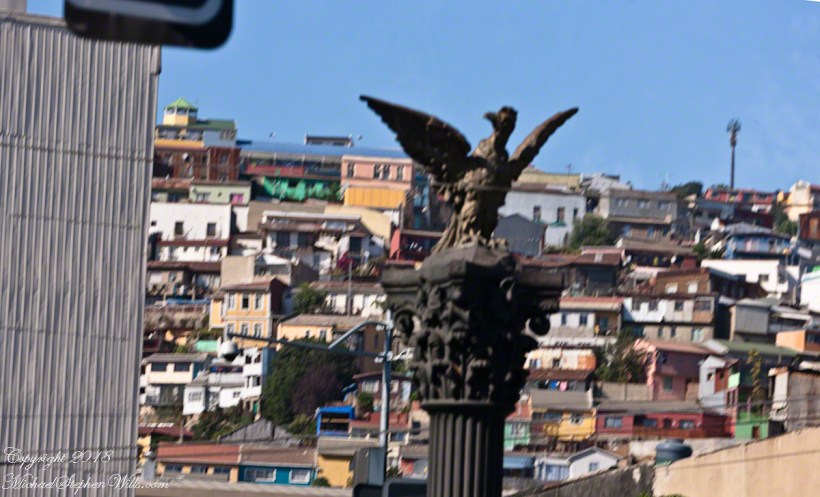
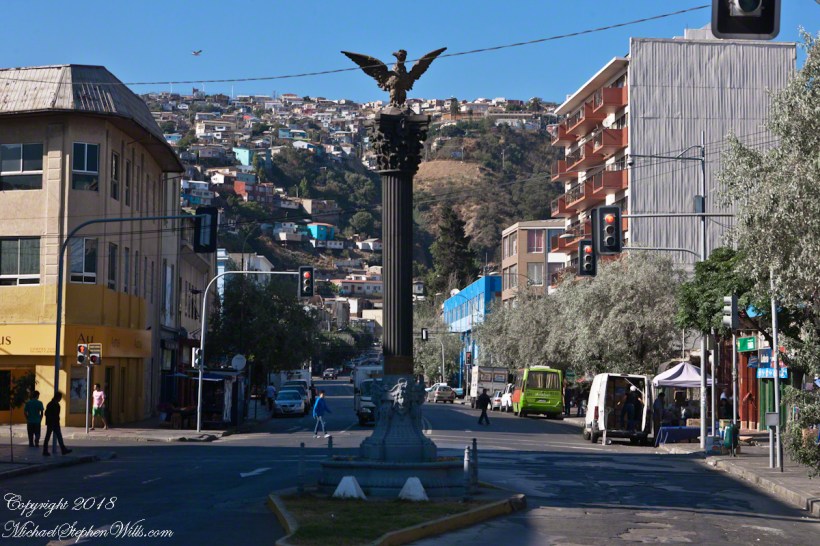
Trundled along within our bubble, the Mercedes tour bus proceeded up Avenue Montt when Ricardo pointed out this statue for ridicule.  A depiction of the Chilean national bird, the Condor, porteños derisively call it “The Chicken,” and in truth the wingspan is undersized.  From the vantage of the above photograph, the statue form does capture an impression of soaring among the hills of Valparaiso.  Keep in mind, beyond those hills is Aconcagua, the highest mountain of the western hemisphere, home to Condors.  

A reason for writing multiple Varparaiso “connection” posts is to better understand the jumbled impressions from that day.  In a previous post I coined the term Varparasians for natives of the city.    I found in researching this post the residents, as for Buenos Aires, call themselves porteños (people of the port).  This cast iron statue speaks to the contributions of French immigrants to the city and nation.

Gift of the French Colony for the Centennial of Chile – Valparaíso, 1810 – 1910.

Here the view is south towards (what I believe is) Cerro Florida (Florida Hill).  France Avenue continues, beyond the monument, following a steep and winding path up the hills, at the crest intersecting with German Avenue.  Adjacent, on the right, is Park Italia where we’ll visit in part VI.  Above a cast iron basin, at each corner of the commemorative column base is a female mask, above them a gold band inscribed (from the) “The French of Valparaiso” with 1810 – 1910 to denote the centennial.  A condor with outspread wings surmounts the column.

The artist, Nicanor Plaza, born in Santiago, Chile was living in Florence, Italy at the time of this commission.  He was a natural choice for the commission.  Trained in Chile and Paris, Plaza taught for the Academy of Fine Arts of Santiago.  It is of cast iron, produced by the French company Val Osne, an art foundry dating back to 1835.  The owner, Jean Pierre Andre Victor, invented a cast iron ornamental technique originally used to produce street furniture.  

 From 1854 to 1895 immigration from France burgeoned, from a country total of 1,654 to 8,266.  This cohort is credited with developing the vineyards of the Central Valley, still famous today.  The Chilean president Augusto Pinochet descended on his father’s side from an 18th-century French Breton immigrant from Lamballe and his mother was a descendant from 17th century immigrants, partially Basque.  Pinochet’s legacy can only be attributed to himself and the ruling Junta.  What is of concern is (1) Pinochet was protected against prosecution throughout his life. (2)  The same people who protected him still hold power.  A case in point is the Esmeralda, still in service.

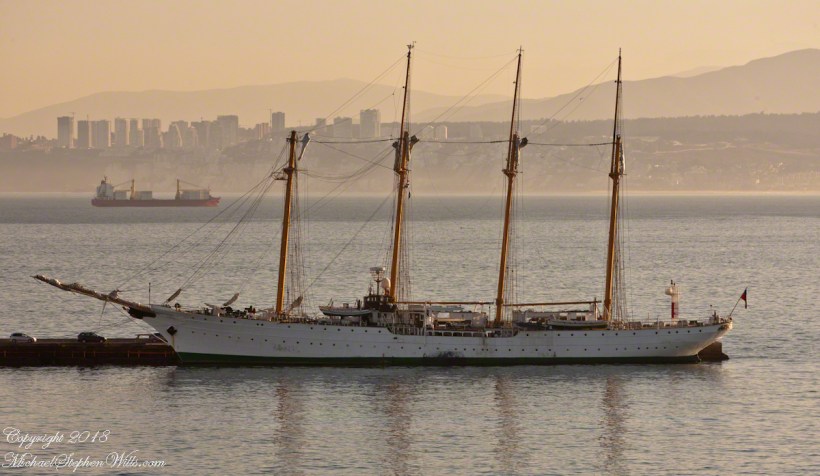
The Naval Training Vessel Esmeralda

 I took this photograph at dawn from our stateroom balcony, it is the
Esmeralda, a four-masted  top sail schooner, from Spain, christened May 12, 1953.  From 1973 to 1980 it was a floating torture chamber where up to 100 persons were subjected to hideous treatment by the Pinochet regime.  Protests erupt wherever it docks in a foreign port yet it remains in service.  A relatively small part of the puzzle, yet it serves as an unacknowledged monument to the failure of Chile’s ruling elite to come to terms with the recent past.

Click for my Fine Art Gallery.

Valparaiso Connections IV

The O’Higgins Carrera Feud

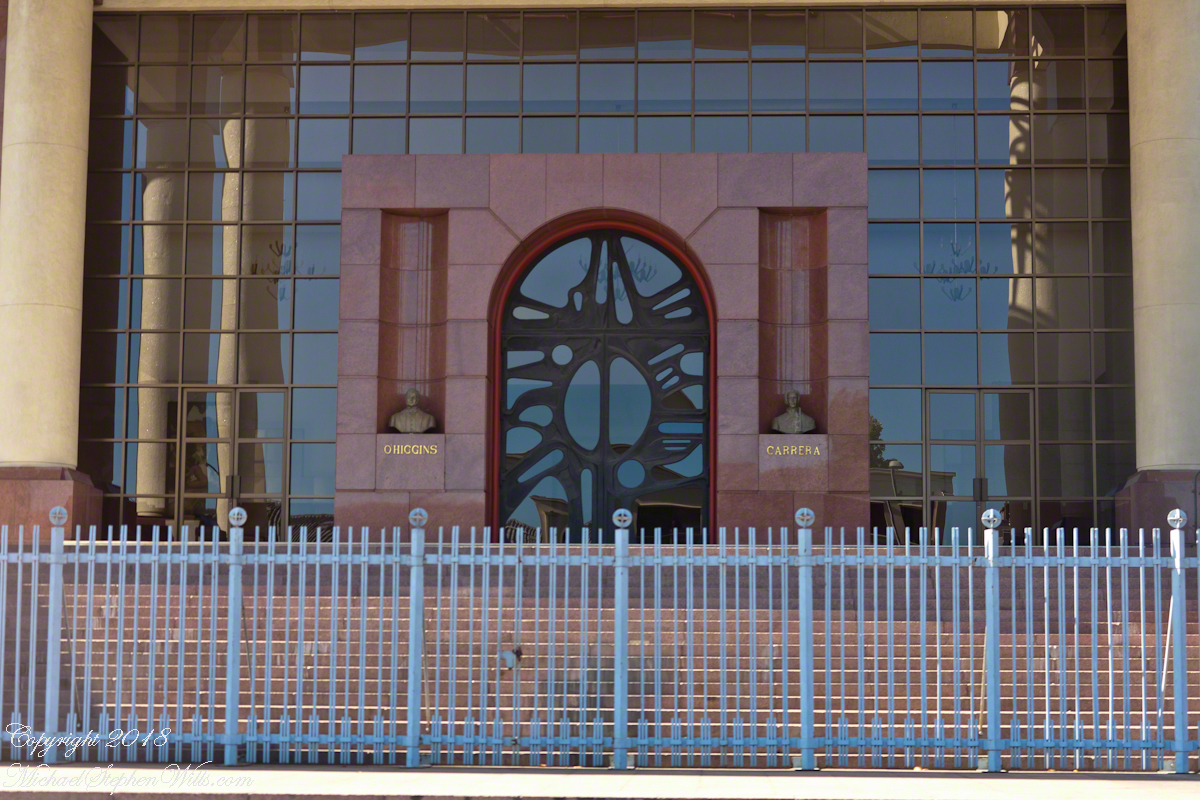
“Valparaiso Connections III” brought us to Pedro Montt Avenue and the building of this imposing façade, Congreso Nacional de Chile (National Congress of Chile).  The very fact it is in Valparaiso is a recollection of the former National Congress, disbanded by the ruling Junta on September 13, 1973.  During the final years the Pinochet dictatorship chose Valparaiso for the site of a new congress building.  The former National Congress building still stands in Santiago, now housing the offices of both houses of congress.
I am fascinated the façade is shared by two founding fathers of Chile, Bernardo O’Higgins and José Miguel Carrera.  O’Higgins father never married his mother (in other words, Bernardo was a bastard).  Cared for by his mother’s privileged family, he used his mother’s family name until the death of his father.  Carrera, was also born of privilege, the acknowledge son of his father who attended the best schools, well positioned to lead the movement for Chilean independence.  Benefactors looked after O’Higgins, they sent the seventeen year old to Europe to finish his education.

In the chaos of war, in spite of ill-health and lack of military training, O’Higgins out performed Carrera as an officer through reckless bravery; surviving, he became an admired military leader through this example and ultimate victories. Carrera resented being overtaken (by a bastard), did not respect O’Higgins leadership and the two feuded. O’Higgins became the first head of the independent Chile while Carrera gathered a force.  Exiled in Paraguay, Carrera marched across the intervening wastes battling indigenous forces.  Eventually captured by those loyal to O’Higgins, Carrera suffered a mock trial and execution.

All five of Carrera’s legitimate offspring married and prospered, today his descendants number in the hundreds, being the majority of Chile’s ruling class.  Today, the followers of Carrera (Carreristas) fight for his recognition against the O’Higginistas, who they despise.  The balance is on display on the National Congress façade on Pedro Montt Avenue.  The building is next to Plaza O’Higgins.

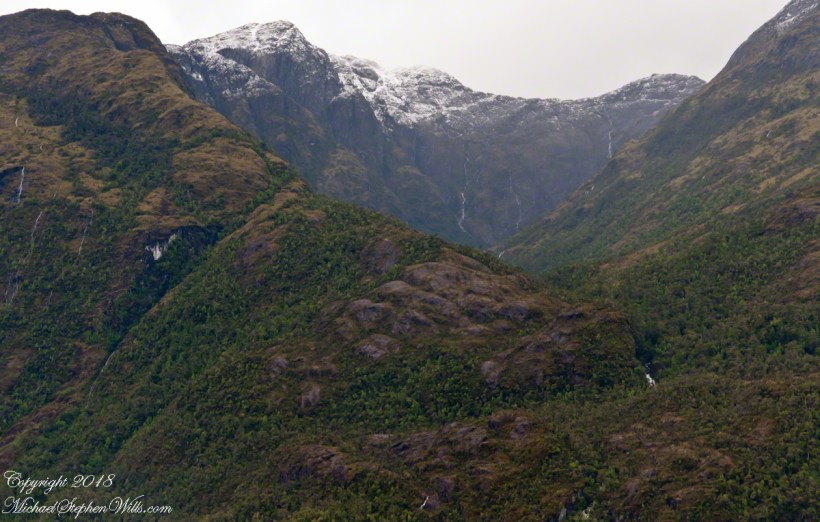
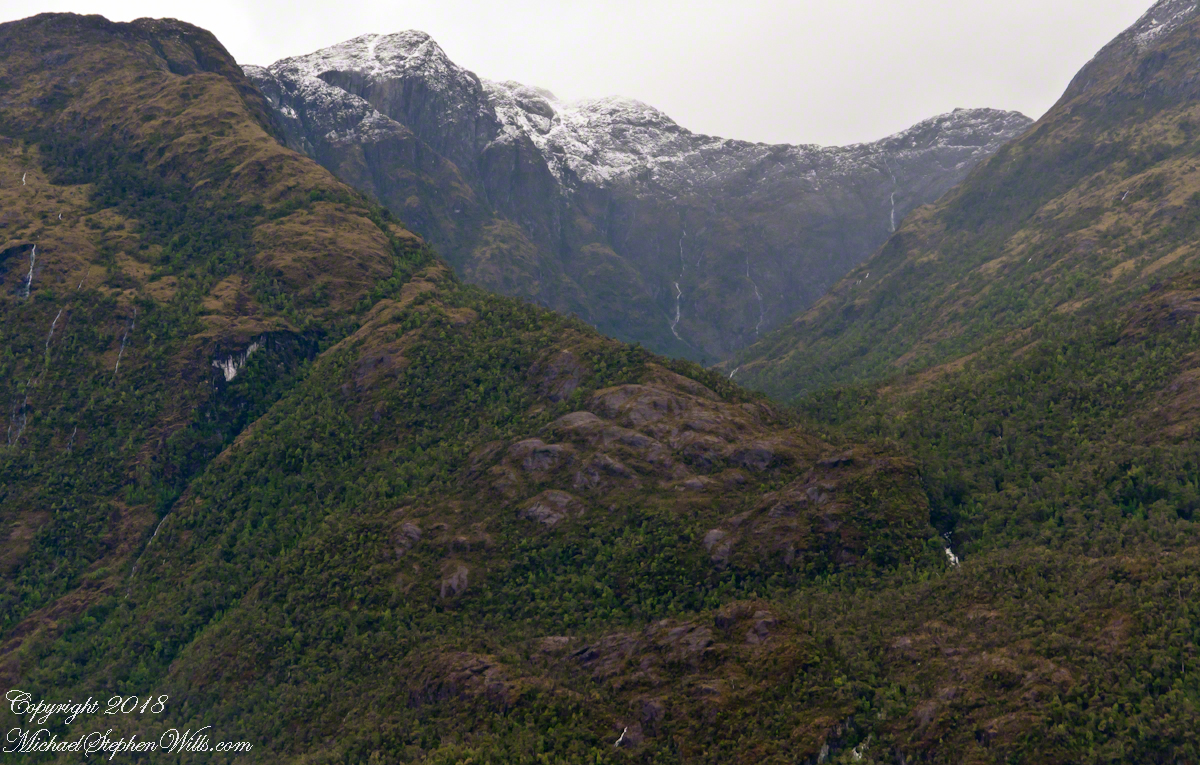
Measured by acreage, O’Higgins is far ahead of Carrera.  The following photograph, from my posting “A Far Country VII: View of Tempanos Fjord” is from within Bernardo O’Higgins National Park, the largest protected land in Chile.

A large lake in Patagonia is named after General Carrera.

Valparaiso Connections III

Copper Cable and History

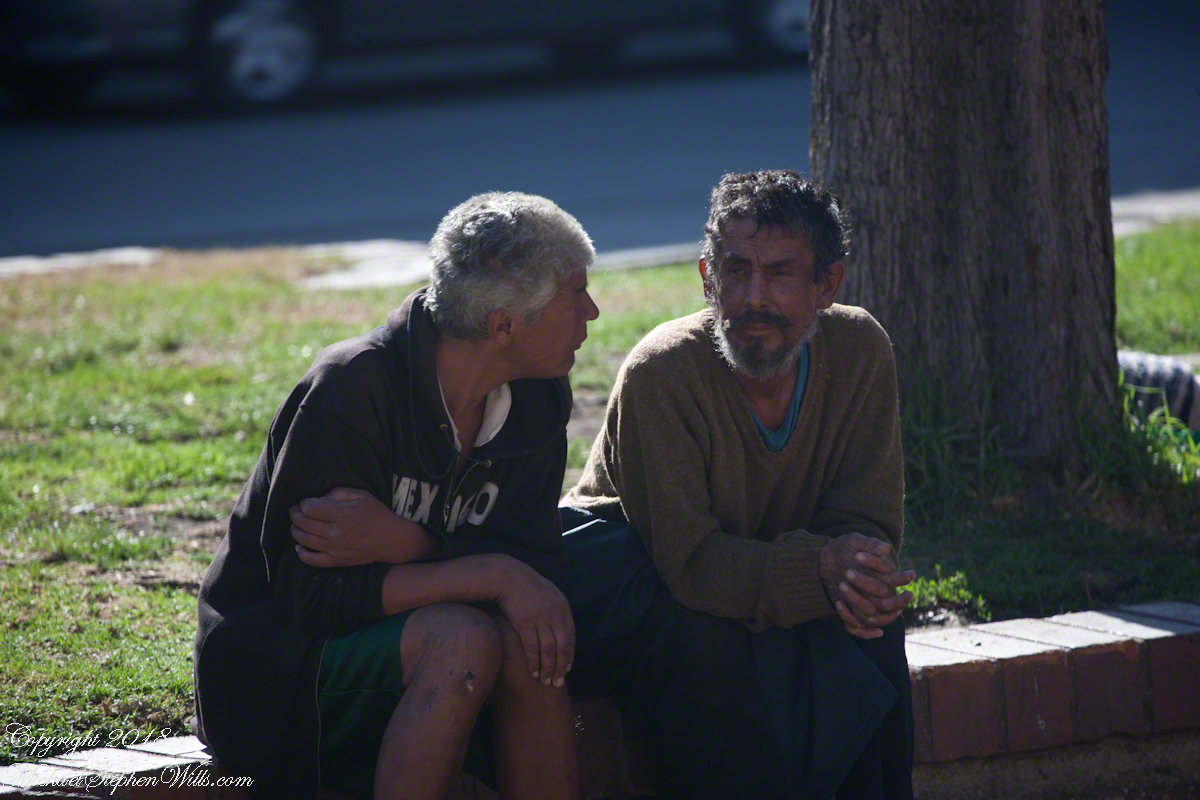
“Valparaiso Connections II” left us with these friendly Valparasians, if such a word can be used to describe residents of the city, chatting on Argentina Avenue.

It was Saturday, the happy occasion of the weekend street fair, kiosks sprouting like mushrooms, thinly attended this early morning.

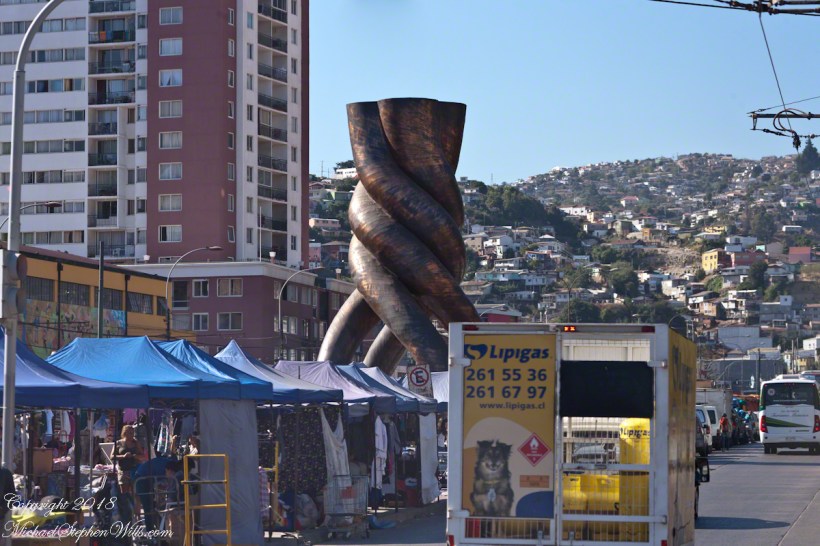
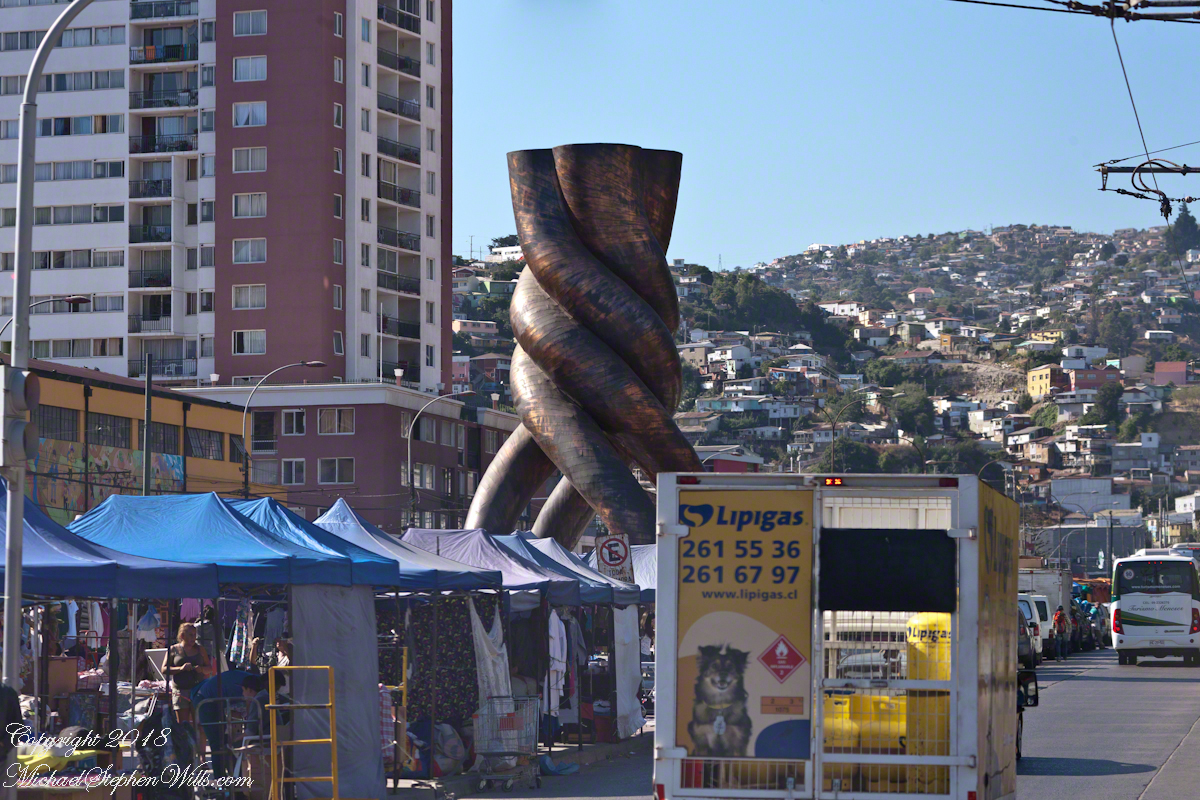
We did not pause to wander, instead turned up a street known as Pedro Montt, named for a Chilean president of the early 2oth century.  Was we turned, monumental street sculpture, rising from the kiosks, caught my eye.

A creation of the great national artist Mario Irarrzabal, it invokes solidarity through the image of four thick copper cables twisted together to form one, the union that can happen to achieve bigger things.  Opened in 1995, crafted of iron, wood and copper, after Pinochet passed power to a new democratic constitution and still held office as a Senator, protected from extradition, in the National Congress located just to the west of the monument.

The imagery works on multiple levels.  Known as “Copper Cable Monument” or “Copper Column,” the monument also stands for Chilenización del cobre (Chileanization of copper), a movement began during the presidency of General Carlos Ibáñez del Campo.  Concluded in the presidency of Salvador Allende, the takeover of foreign owned mines lead to the isolation of Chile and was a component of the support of the USA, via the CIA, for the Pinochet 1973 Chilean coup d’état.  Pinochet retained state control of the mines in the face of strong popular support for the huge contribution to state coffers.  To this day CODELCO (in English National Copper Corporation of Chile) operates as a corporate entity.

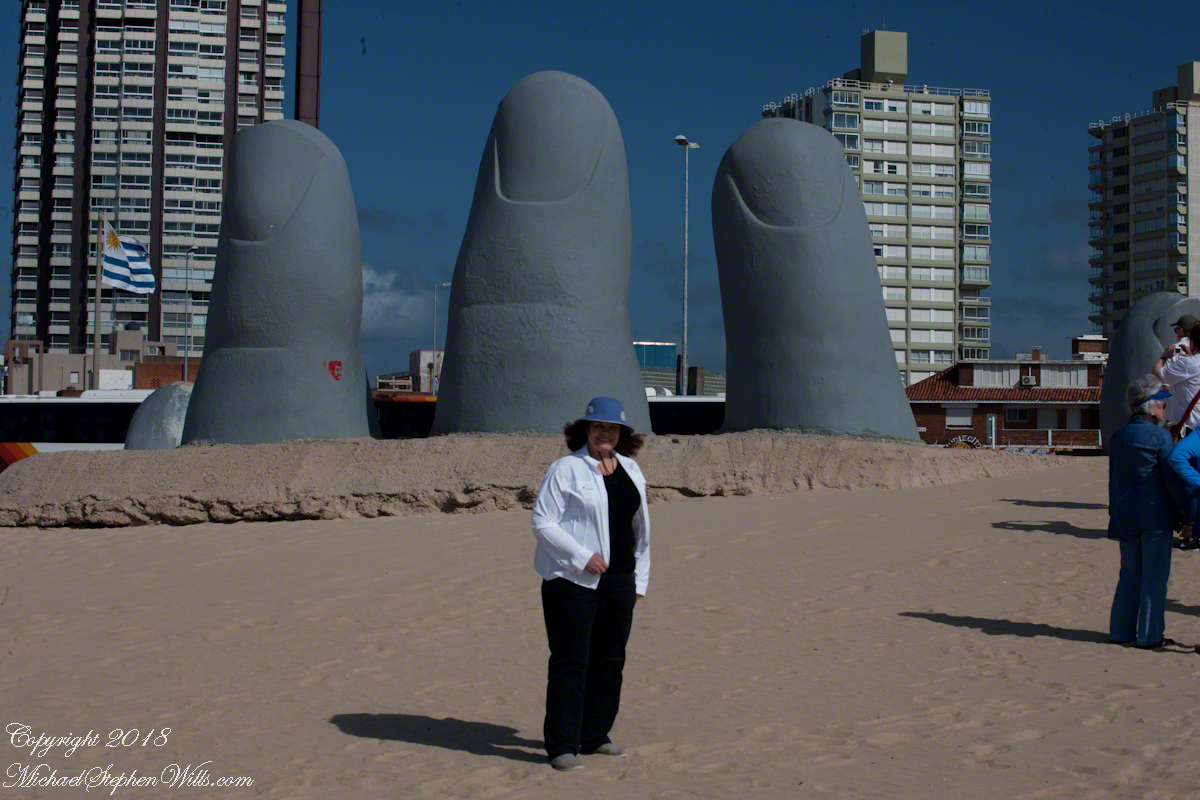
As with our guide, Ricardo (“Valparaiso Departure I”) and the companions at the start of today’s post, Irarrzabal was profoundly affected by the Pinochet dictatorship.  Under its influence as well as the sculpture of Easter Island, the artist began work on monumental sculptures.  Pam and I visited one on the other side of the South America “cone,” Punta del Este, Uruguay.

Built from Brava beach at the height of the dictatorship, 1982, of concrete, steel rebar, mesh covered with a corrosion resistant coating, the artist title it “Man Emerging to Life.”  He was a young man at the time, the work built his reputation and he repeated the theme internationally as well as, in 1992, 1,181 miles away the “Hand of the Desert.”  At that time while Chile was emerging from the Pinochet dictatorship the palm as well as fingers are visible.  The “cone” of South American, Chile and Argentina, are encompassed by the left hand of the east, a right hand of the west.

Back To School, Uruguay

A late summer Friday evening

Since 1877 primary education in Uruguay is universal, compulsory and free. These days students receive free education through university, literacy is the highest in South America at 95%, equally for males and females.

These photographs are from a cruise around South American my wife, Pam, and I enjoyed February / March 2016 on the Oceania ship Regatta. This was the evening of February 26, 2016, a Friday, in the city Montevideo, Uruguay.

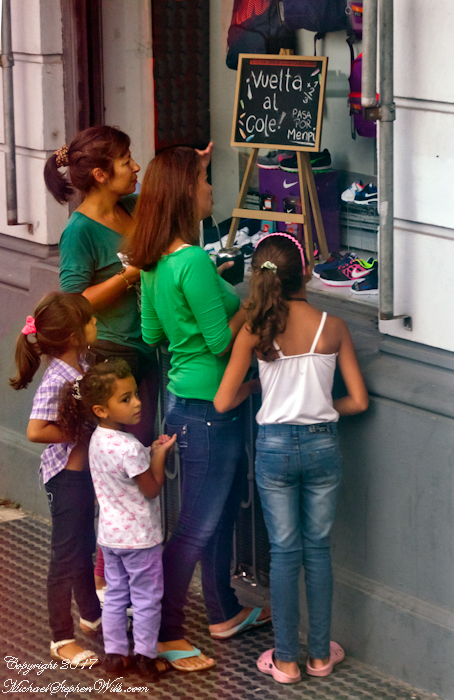
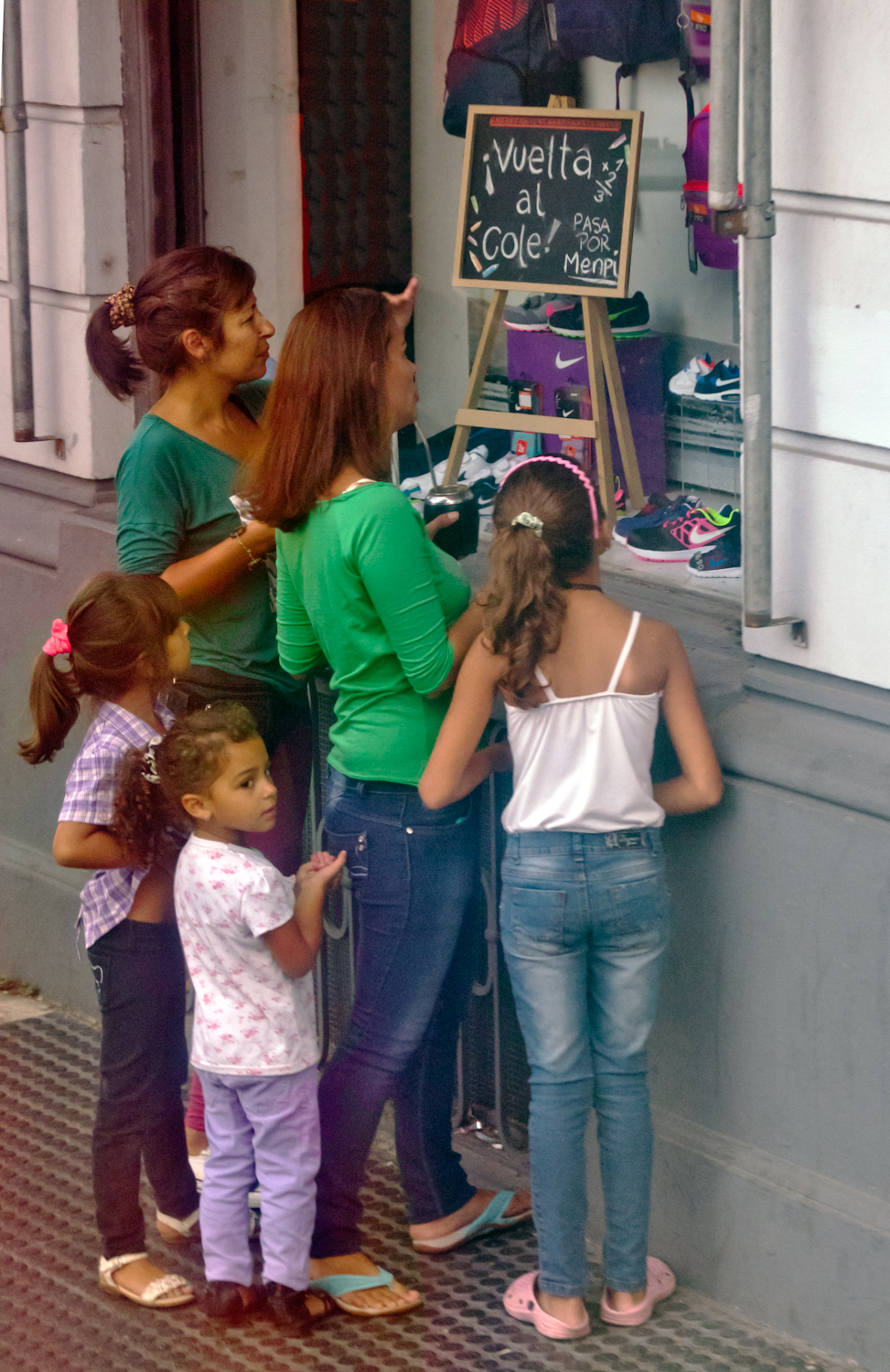
This image is the theme of this blog, “back to school”. On Avenue Gral Eugenio Garzon of the Colon neighborhood of Montevideo a mother and four daughters discuss a shop window featuring “back to school” clothing and necessaries. The children range in age from pre-school to teen. This is evidently a serious discussion about preparing for the school year which starts in March for Uruguay.

A government program launched in 2007 expands Information and Communication technologies in primary schools with these goals:
— To distribute technology,
— To promote knowledge,
— To generate social equity.

Called Ceibal, after a tree native to Uruguay, the program was a success. From 2009 – 2012 450,000 laptops, popularly named “”ceibalitas”, were delivered to children coordinate with teacher training and a monitoring and evaluation model for assessing the impact nationally. Ceibal is the acronym for “Conectividad Educativa de Informática Básica para el Aprendizaje en Línea” (Educational Connectivity/Basic Computing for Online Learning in English).
These photographs build on the theme of the positive influence education has on the lives of Uruguayans, many of whom live in poverty.

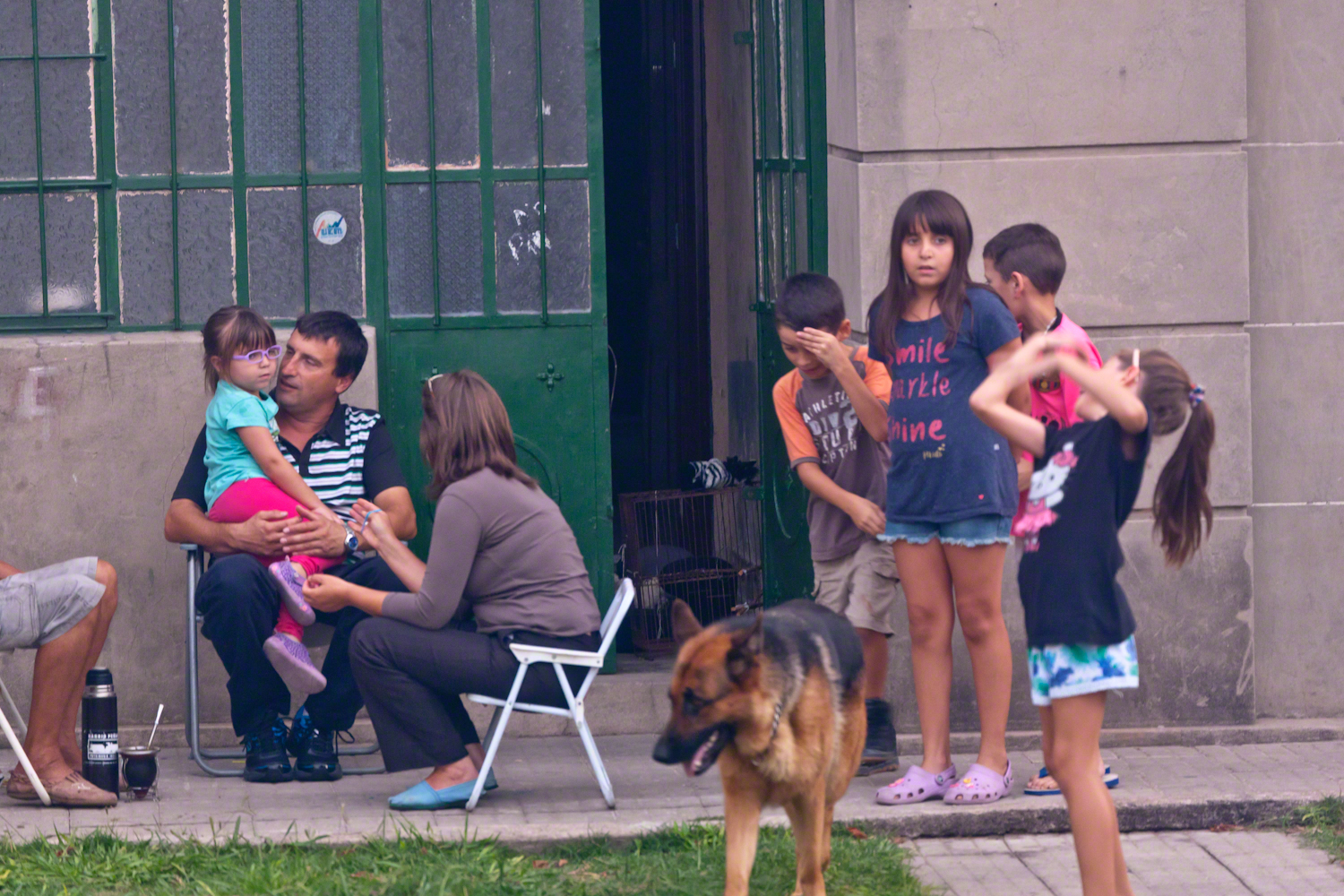
A family gathering in their yard on Avenue Gral Eugenio Garzon, enjoying a cool late summer evening.

Back To School -- CLICK ME!!!!

Traffic and a gas station. People were out and about, walking and conversing. There is a makeshift trailer attached to the motorcycle, behind is a large truck.

Back To School -- CLICK ME!!!!

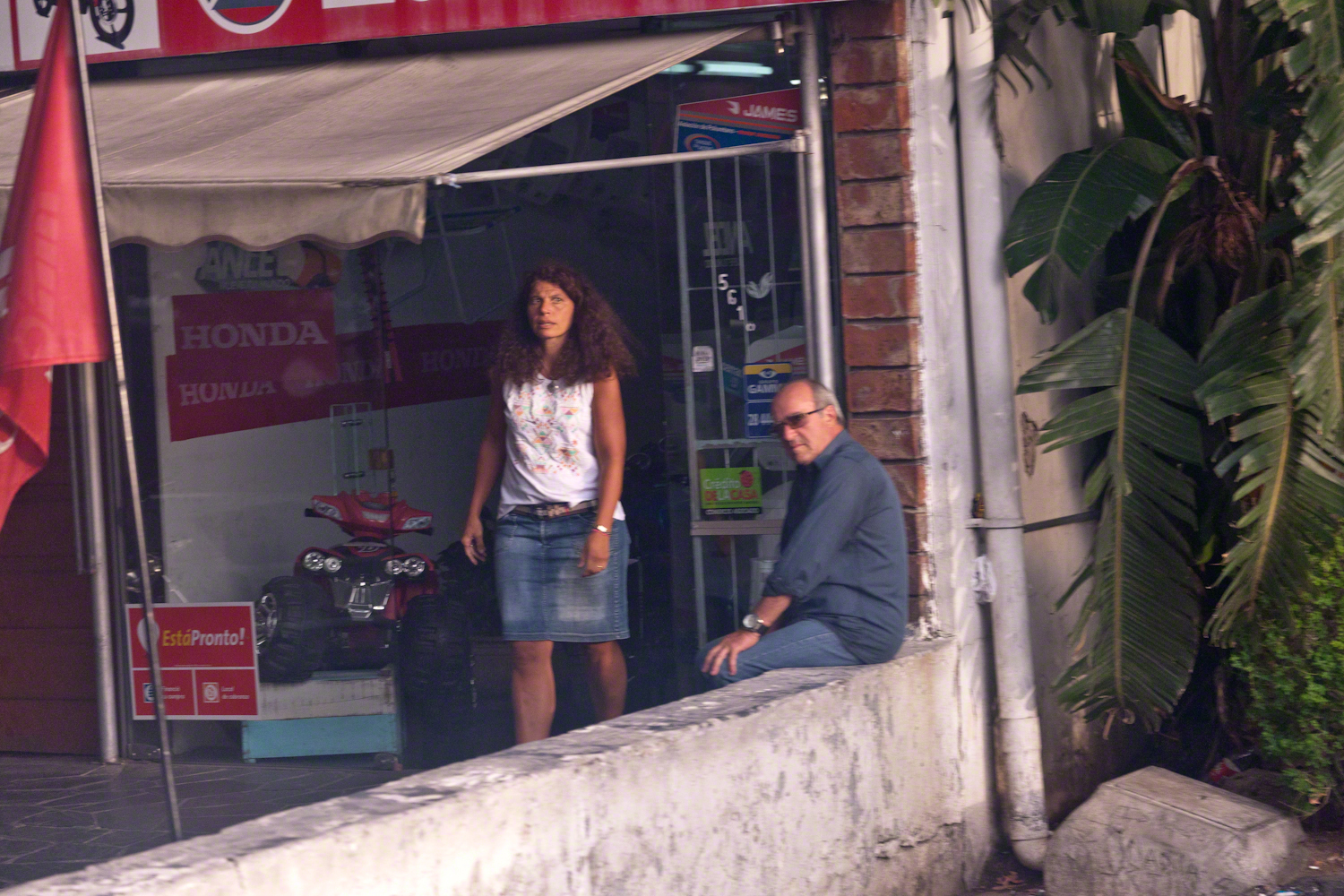
Storefront with customer and man loitering on wall. A mini-Honda all terrain vehicle is on display.

Back To School -- CLICK ME!!!!

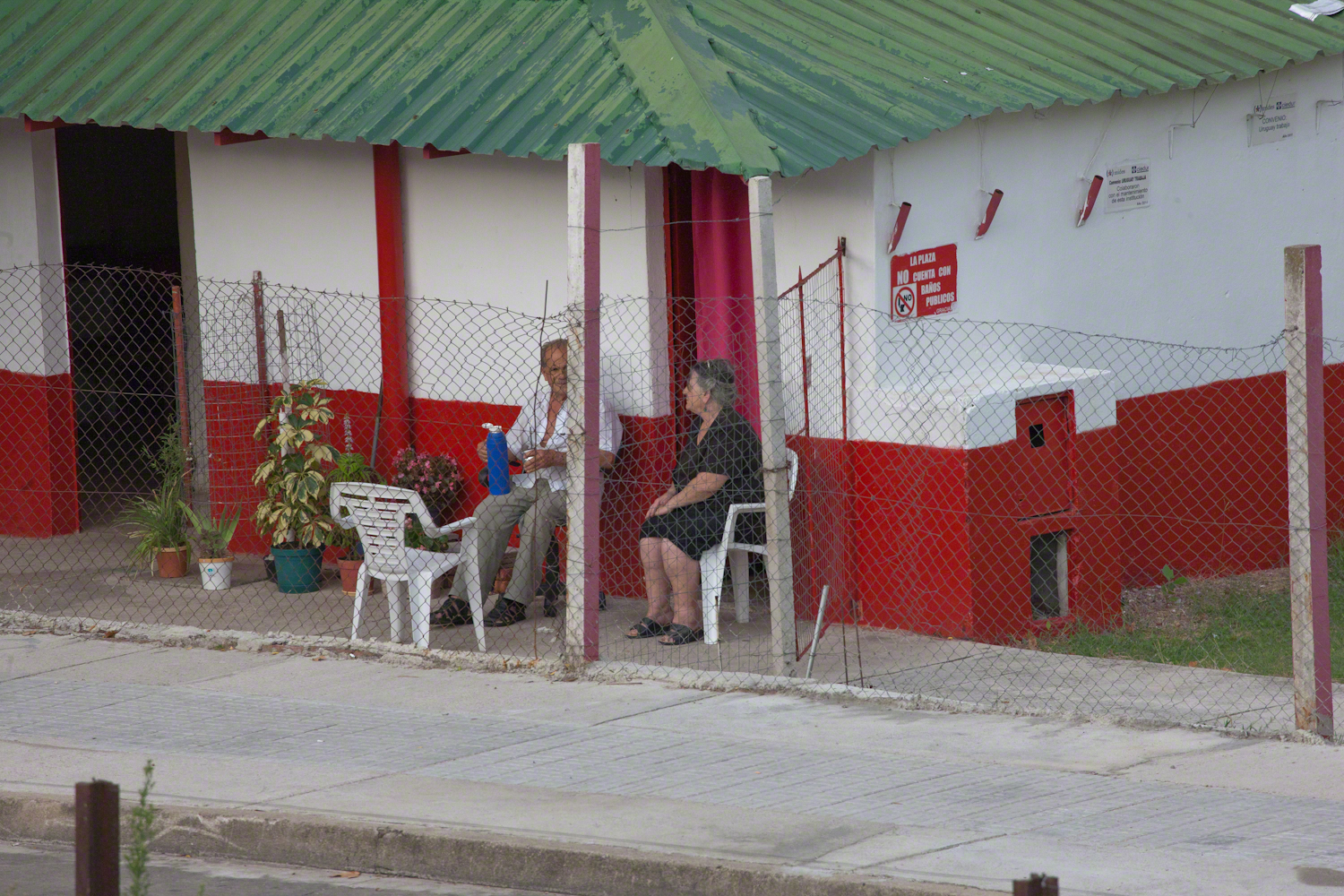
Mate is a beverage enjoyed throughout South America. Here companions enjoy a warm summer evening with a thermos of hot water and mate gourd behind a restaurant, their view across the train tracks and the Colon rail station is of a playground and playing fields.
Back To School -- CLICK ME!!!!

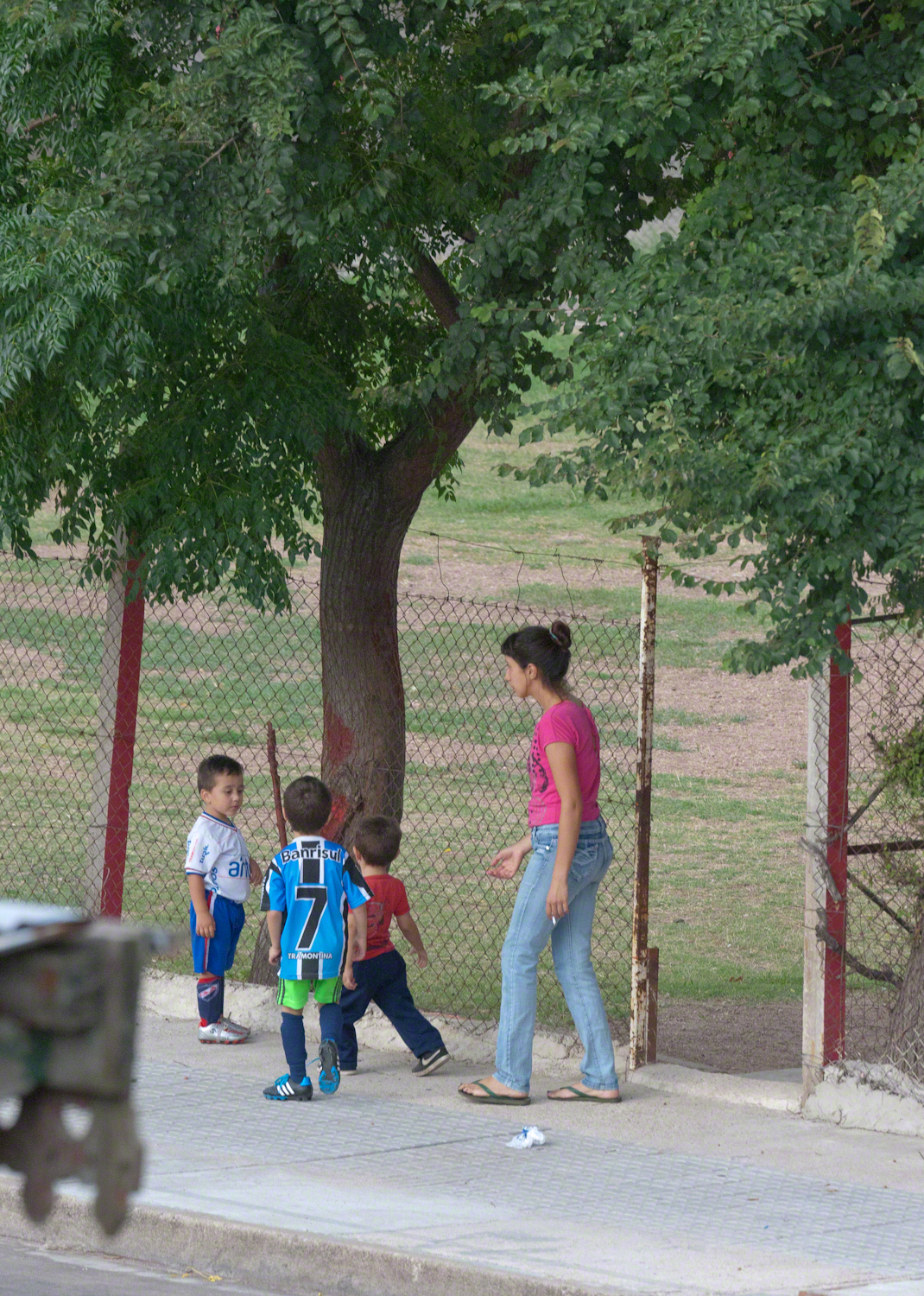
A family of very young soccer players coming from practice with teammates. The sponsors of lucky number 7 are the bank Banrisul and Tramontina, a kitchenware manufacturer.
Back To School -- CLICK ME!!!!

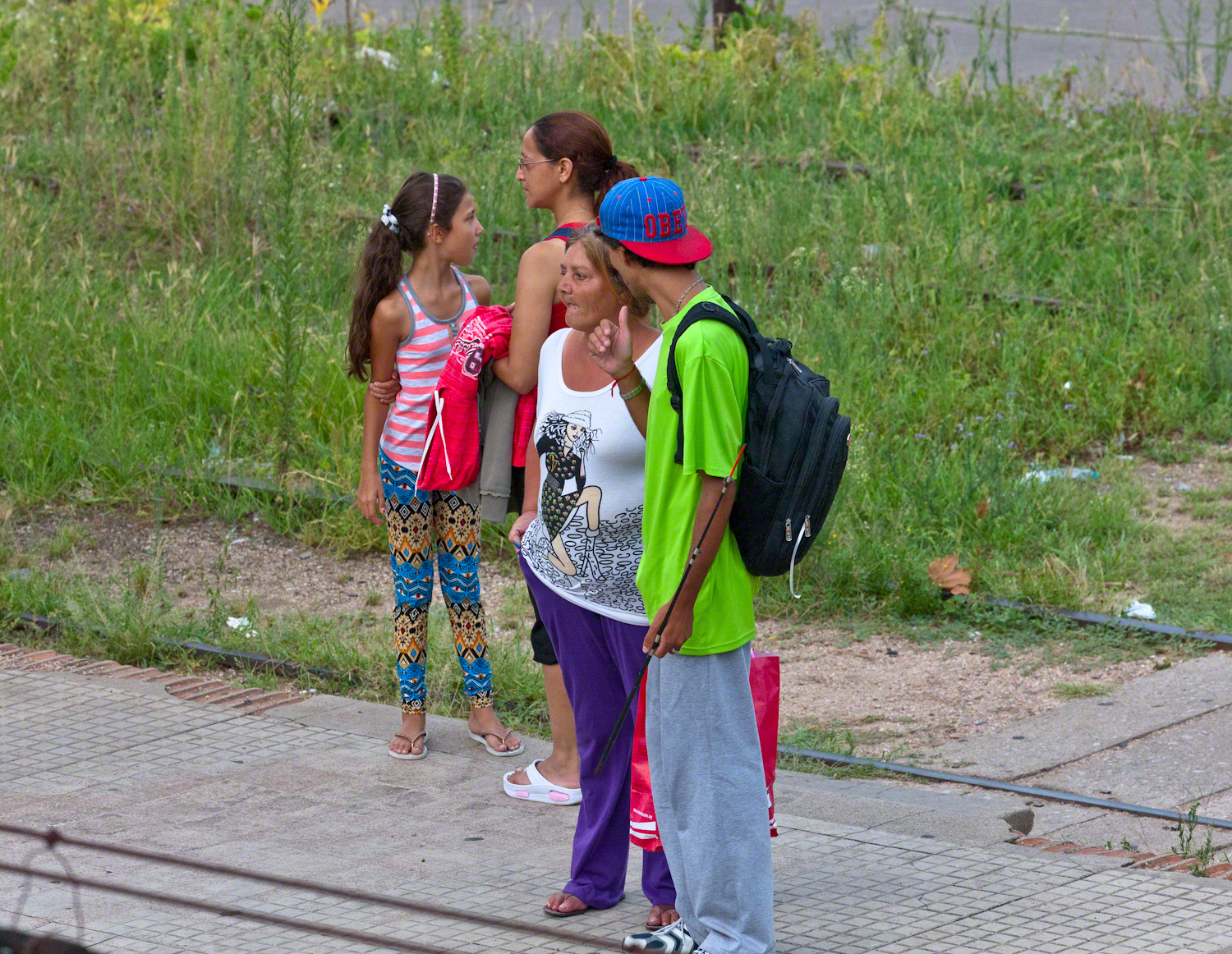
We waited to board an historic train and shared the station with Montevideans waiting for a passenger train. Here are two families: a mother and pre-teen daughter colorfully dressed, a grandmother and grandson. Behind them are the playing fields and playground.

Back To School -- CLICK ME!!!!

A passenger train heading north passed while we waited for our ride to begin. Curiosity shines from this child’s eyes.

Back To School -- CLICK ME!!!!

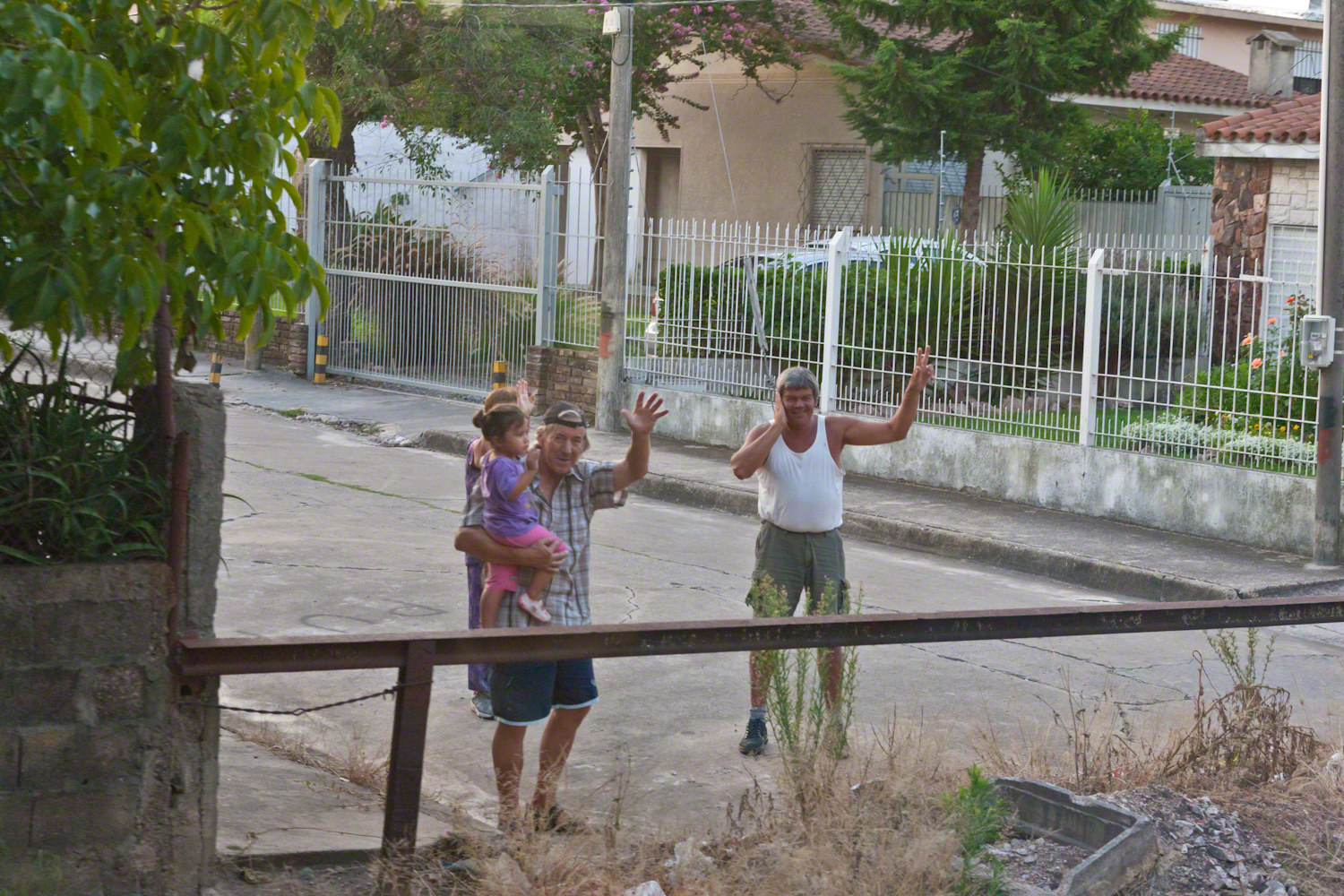
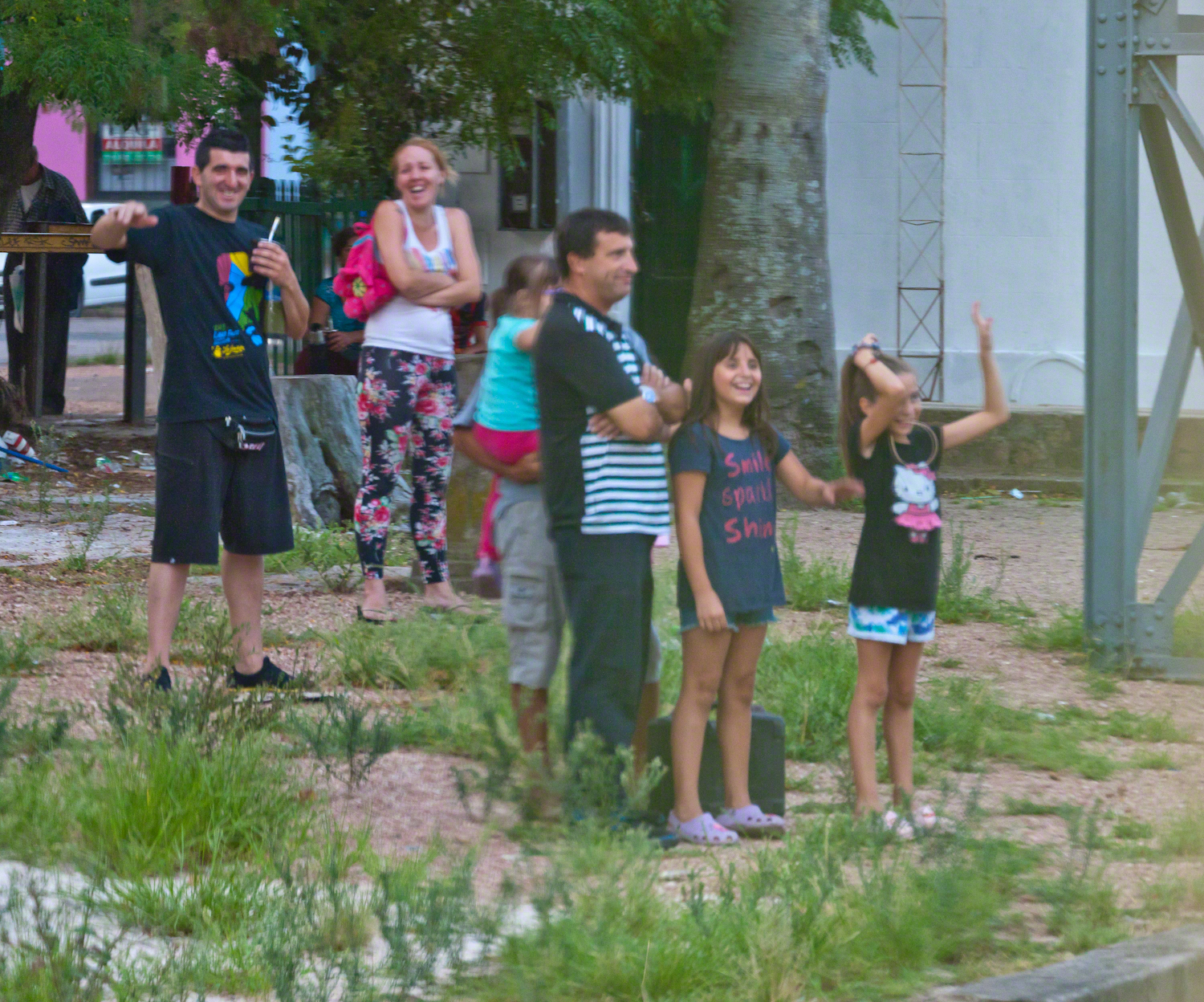
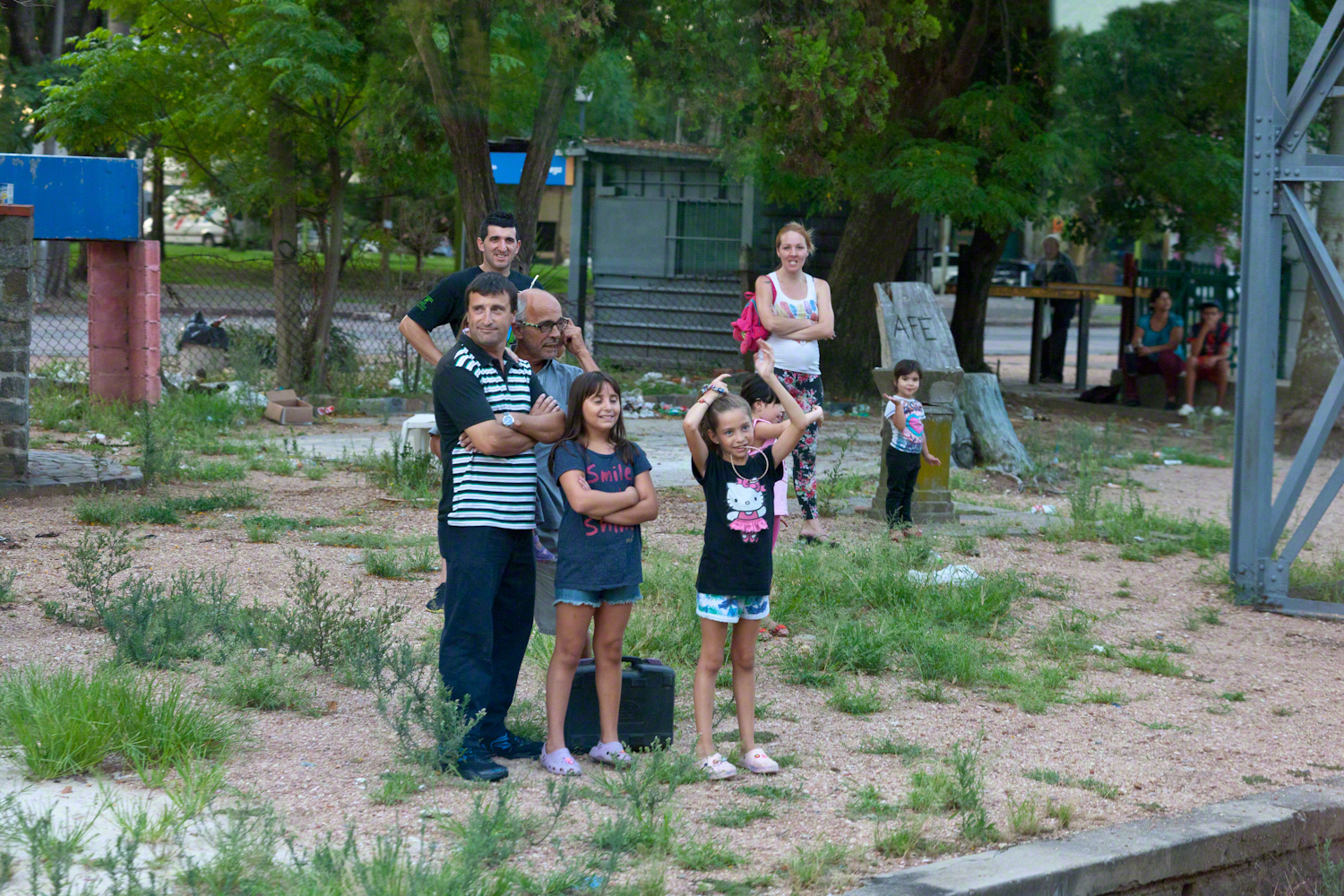
Happy families greeted us with waves and smiles during our trip to downtown Montevideo.

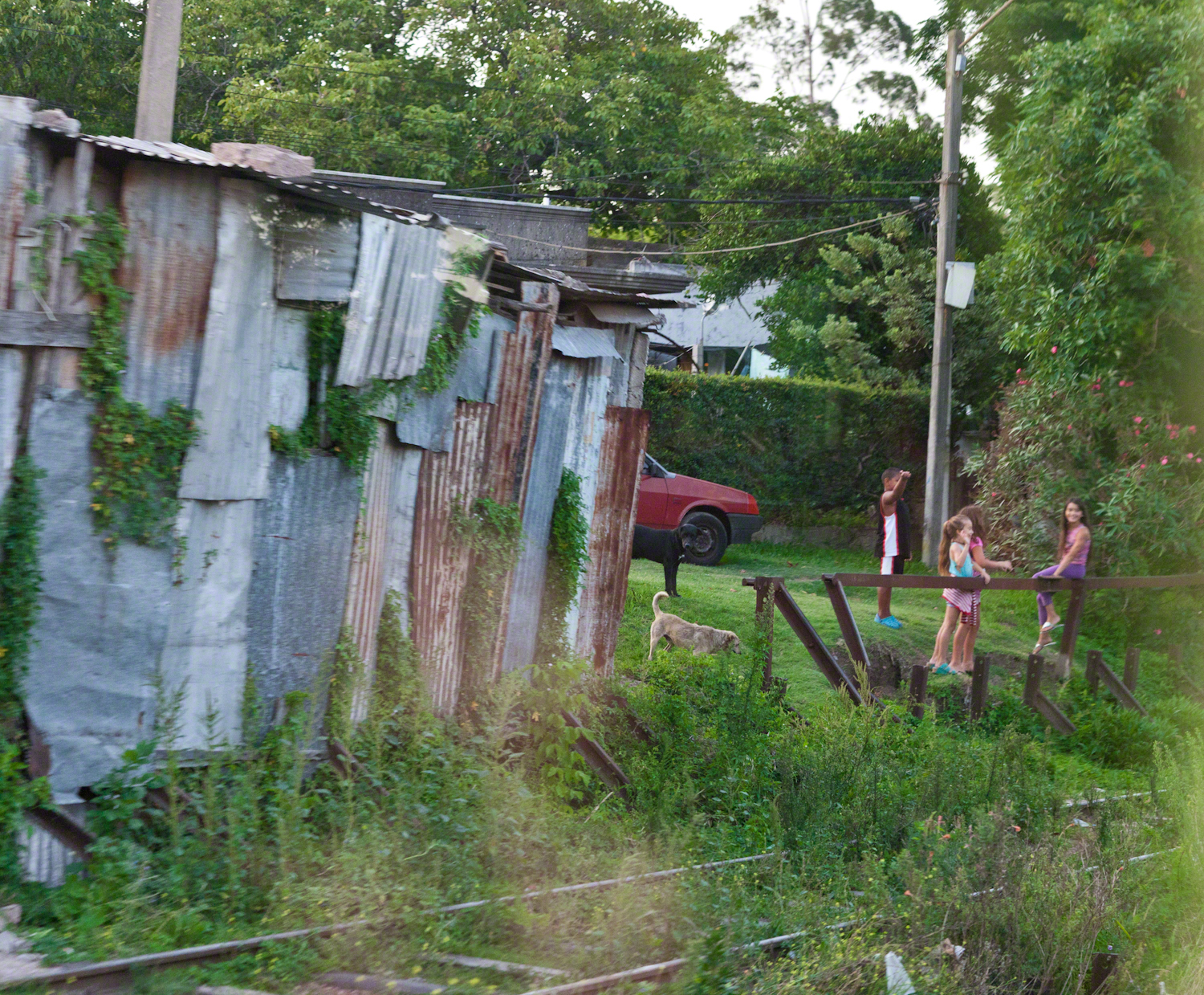
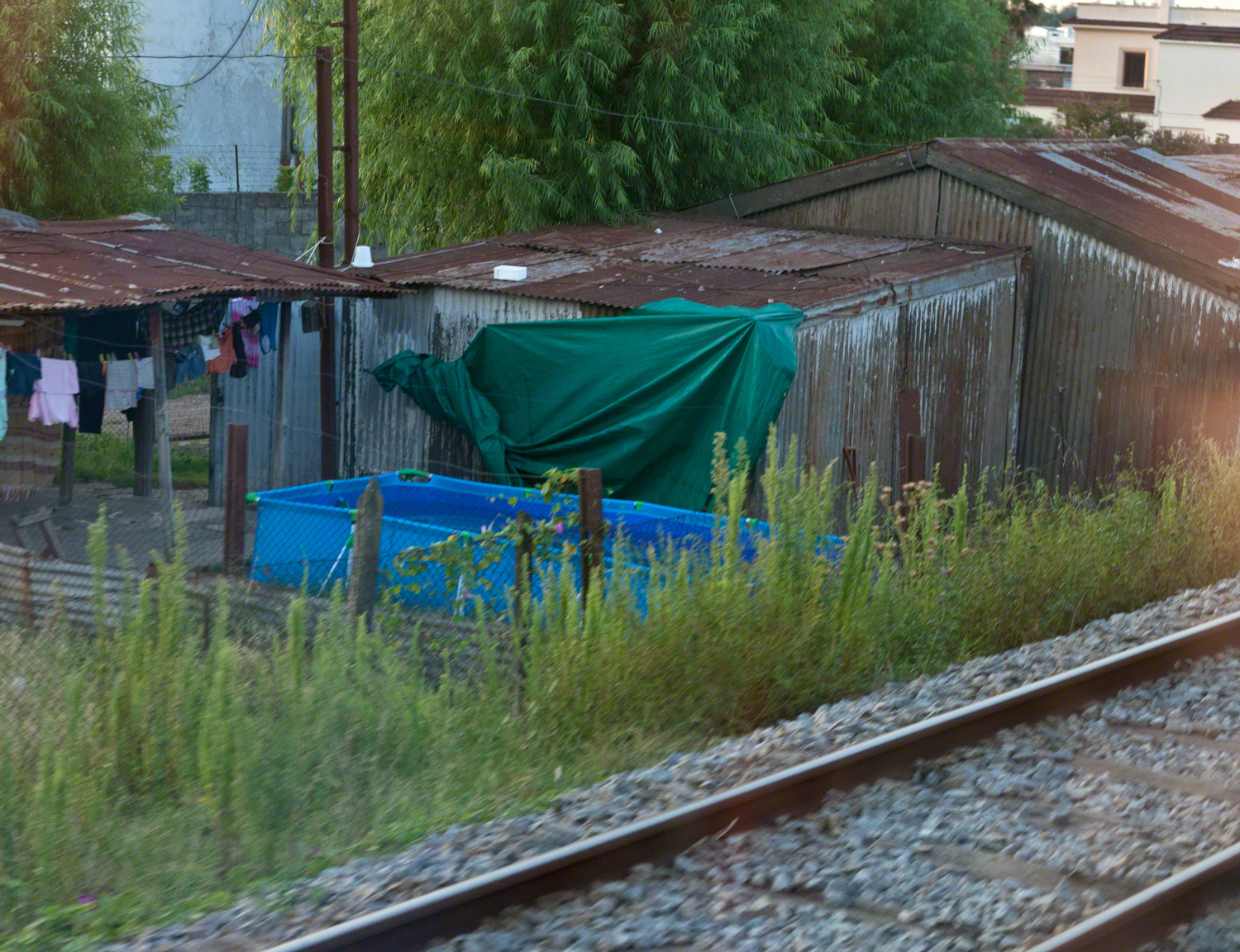
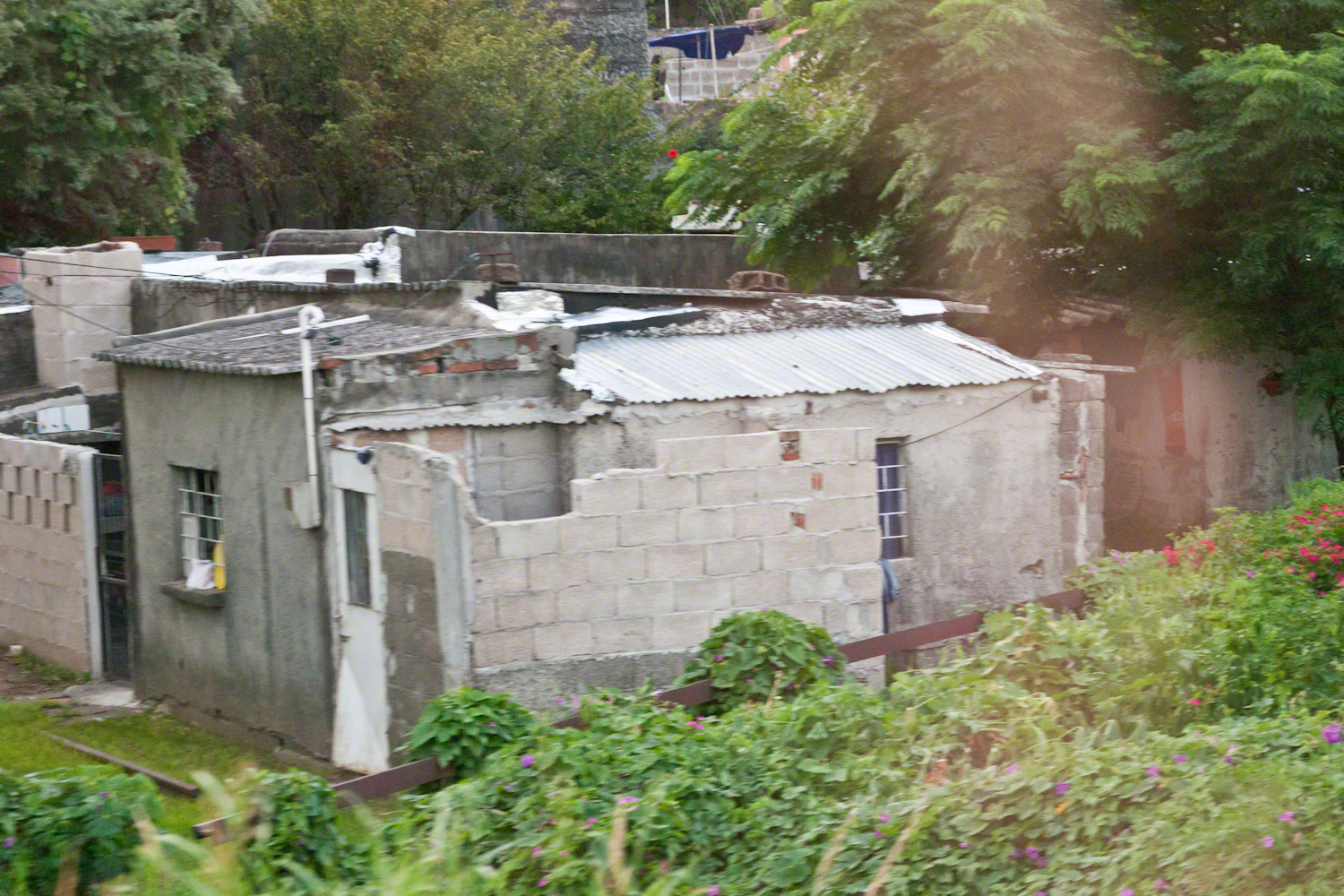
Some of the homes along the rail line. Pools such as that are popular in cities. We saw a great many on the streets in Lima, Peru.

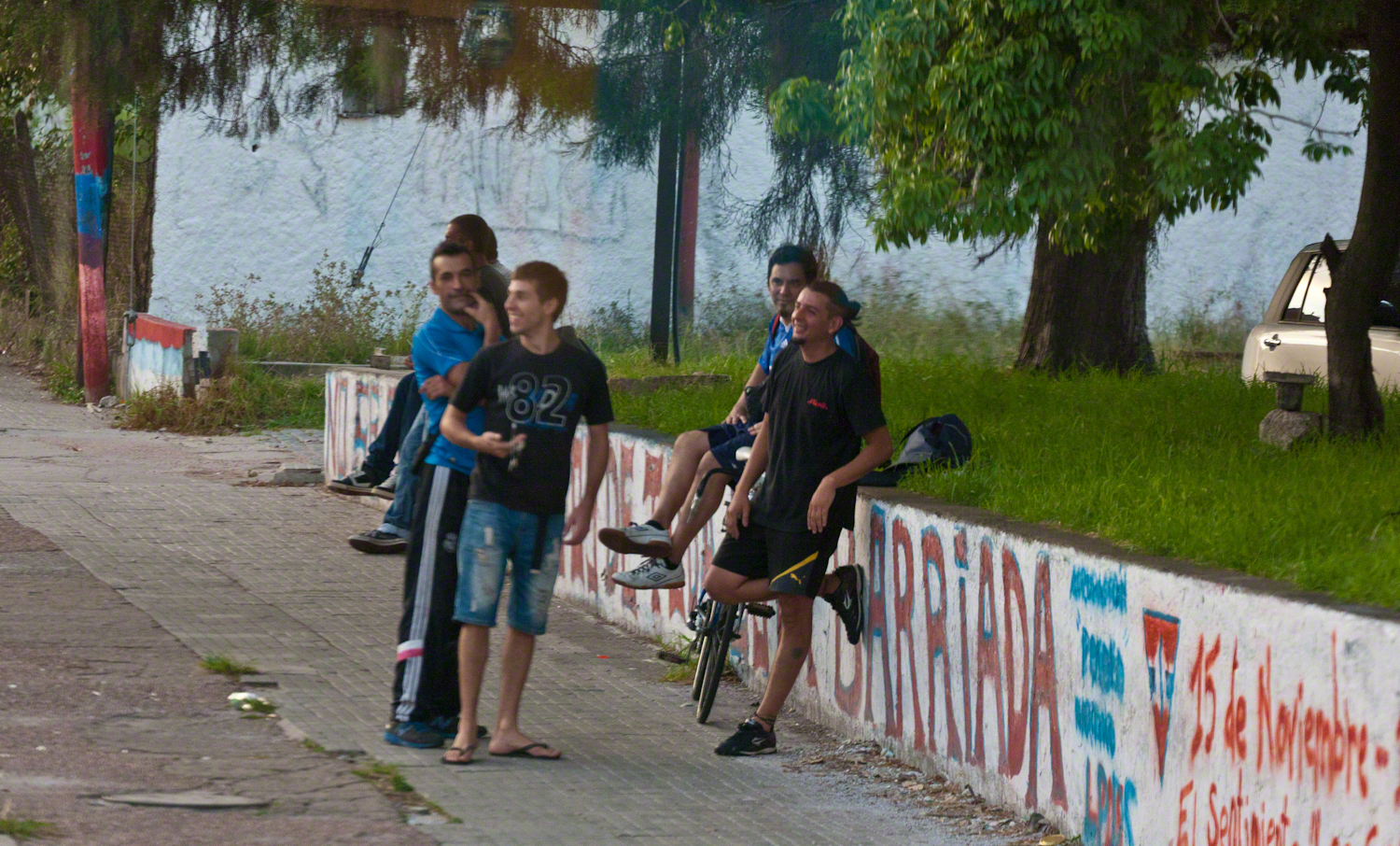
Reaction to the historic train from a group of young men.

Back To School -- CLICK ME!!!!

Curious playmates gather at the end of the road.

Back To School -- CLICK ME!!!!

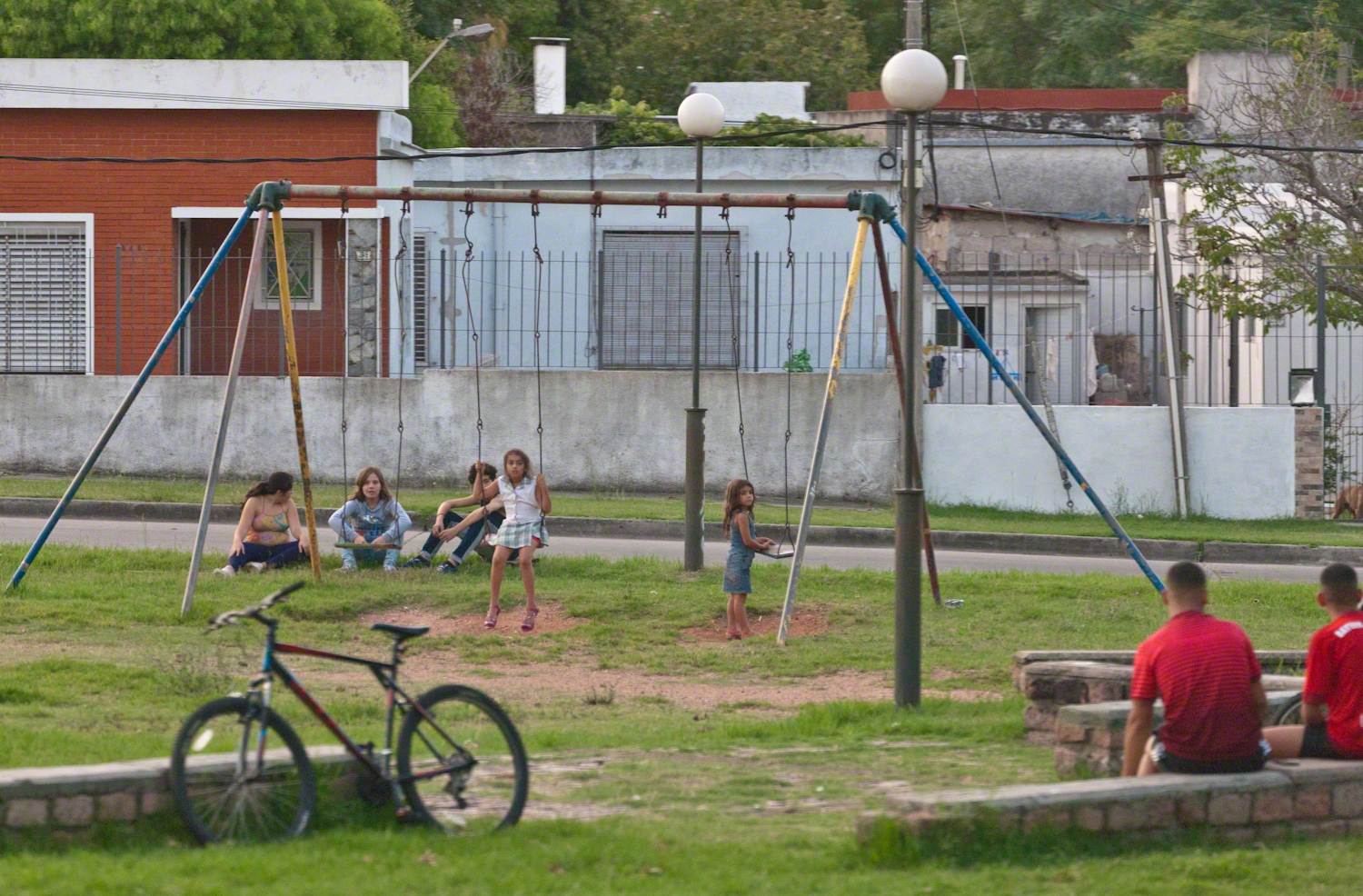
A well attended playground.

Back To School -- CLICK ME!!!!

Copyright 2021 Michael Stephen Wills All Rights Reserved