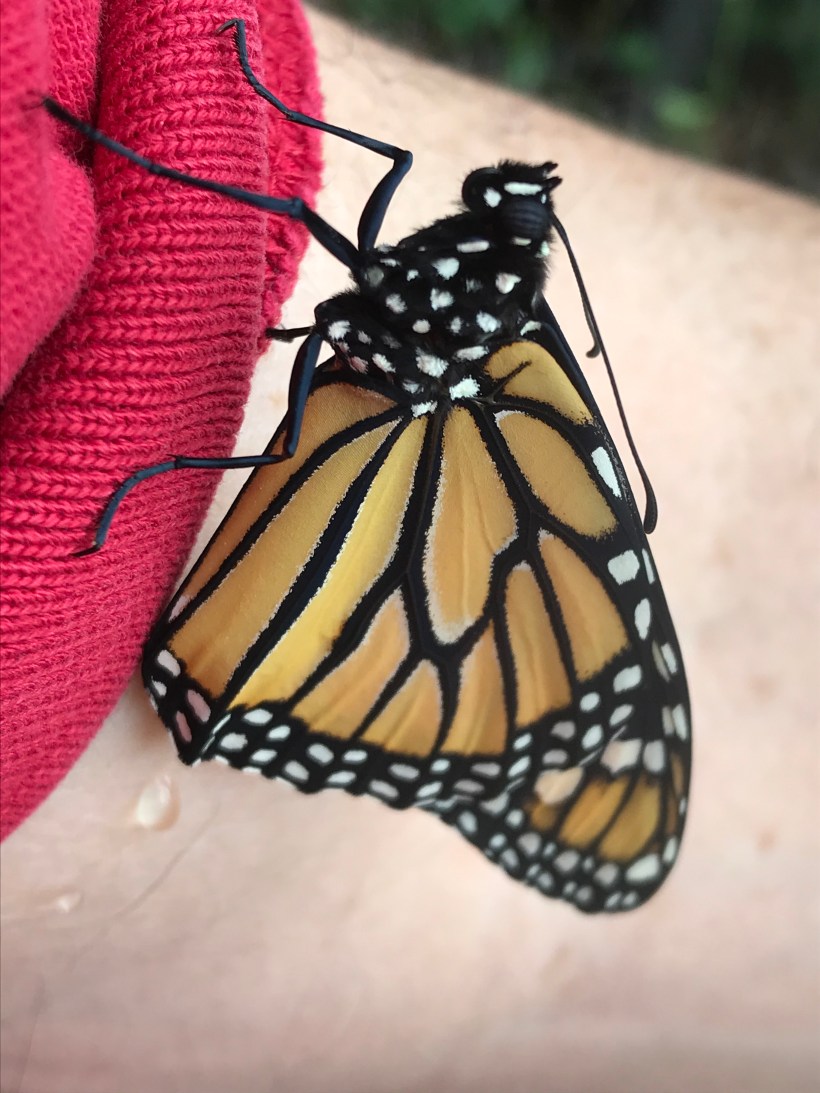
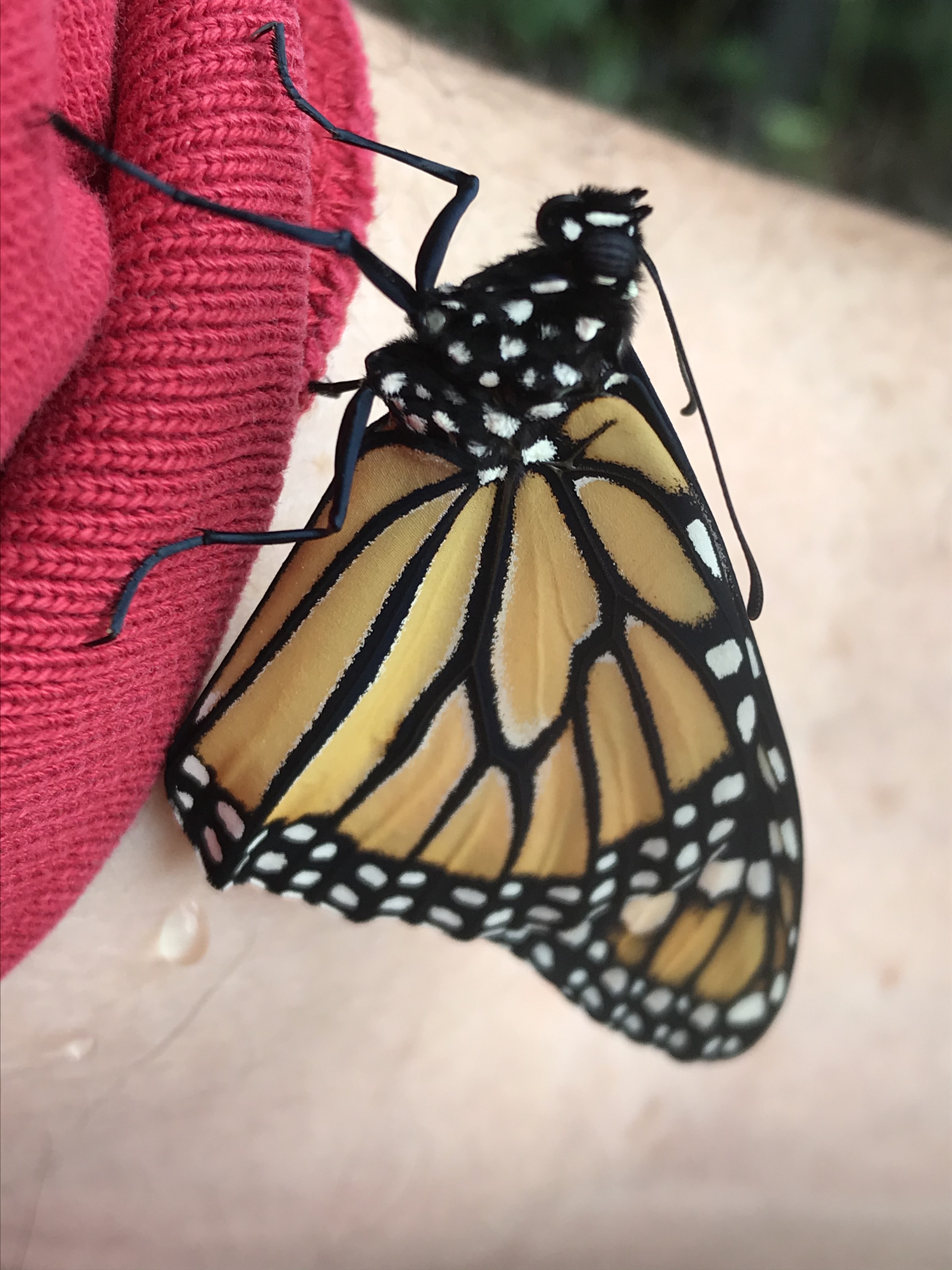
Clinging to my sleeve, the newly emerged Monarch wings dried. It is a process of excreting the fluids pumped into wings, crumpled from folding within the chrysalis, to expand them. The clear drips of water on my arm are this fluid. I spent the hour sitting by our pool, savoring the summer morning. The butterfly signaled readiness, wings dried and hardened, opening and closing them slowly. Offered my finger it crawled to my hand, across to the thumb and, running out of space, took off.
Click photograph for a larger view and use Ctrl-x to zoom in closer.
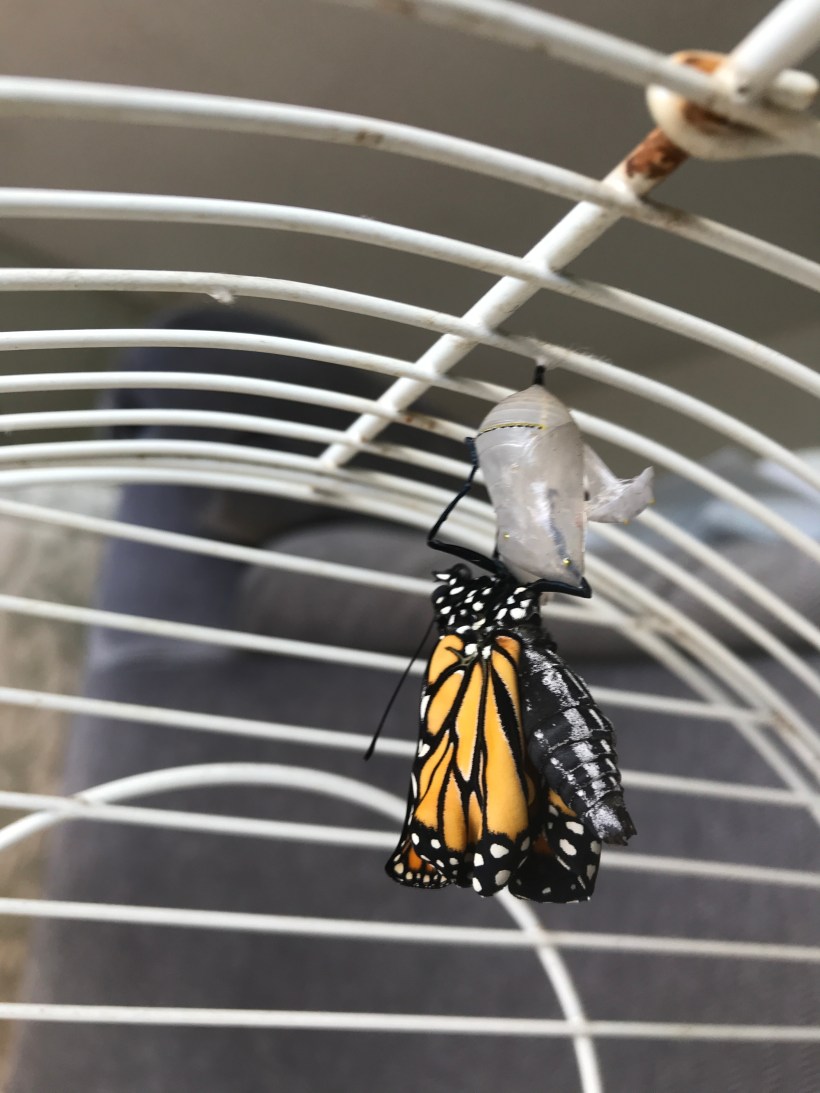
Emerged from the chrysalis a butterfly’s wings are crumpled, useless. Here it is fifteen minutes into freedom after abdominal fluid is pumped into the wings, opening them. Full of this fluid, the wings are soft, still useless.
Click photograph for a larger view and use Ctrl-x to zoom in closer.
Our monarch butterfly sanctuary is a dense stand of milkweed, over the years the established plants grow rapidly late May through June, blooming in July. The flowers have an incredible scent, attracting numerous pollinating insects.
A colony of pesky sparrows nest nearby. In spite of a reputation for tasting bad, the sparrow actively feed on the hatched caterpillars. My strategy is to examine the plants early morning, placing rescued caterpillars in this old birdcage.
Click photograph for a larger view and use Ctrl-x to zoom in closer.
The caterpillars and milkweed leaf is placed on the cage floor. I pile up the dried leaves, replacing with fresh each morning.
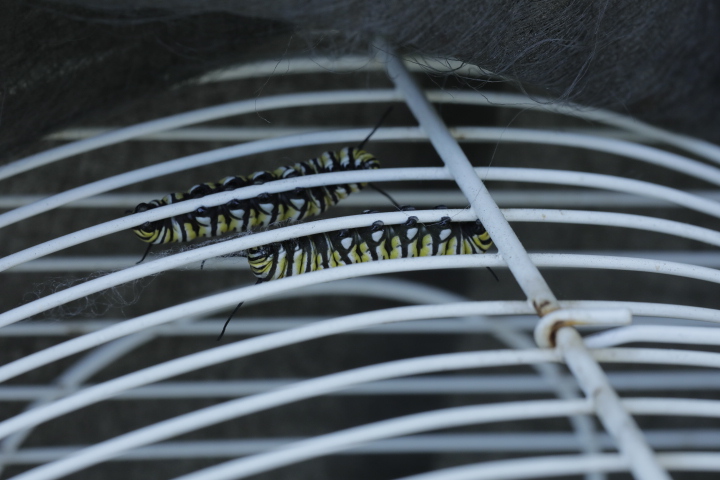
Sadly to report, the last, ravenous caterpillar stage is also carnivorous, cannibalistic. These two, below, were the only ones left except for one in the pile of dried leaves.
Here is a closer view of the two fifth stage instars searching for a safe location to pupate.
A few hours later one has successfully created a silk pad, attached itself and assumed the “J” shape. To the left a second caterpillar and silk pad.
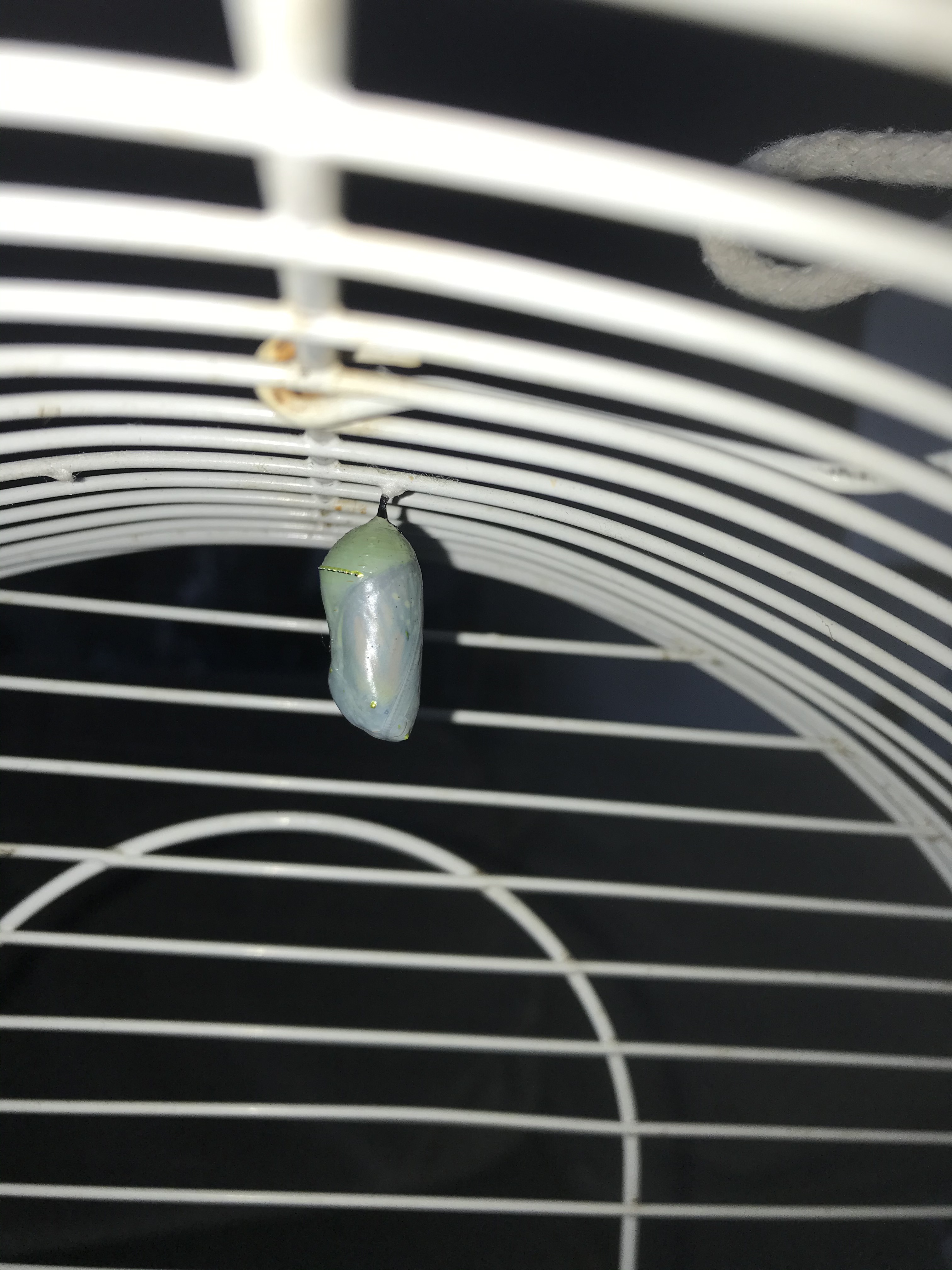
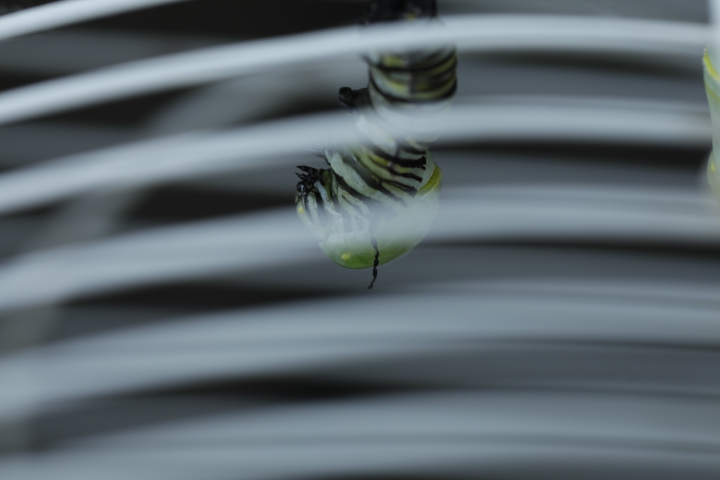
The next morning, the first has formed a chrysalis. The second, hung spent.
This unsuccessful individual never completed the chrysalis, dried up and fell. My sources write the pupa transforms to a chrysalis through shedding of skin, the following photograph tells a different story. The chrysalis appears to extrude from the skin; arising over, or from, the skin rather and beneath it. I have never recovered a shed skin underneath a successful chrysalis.
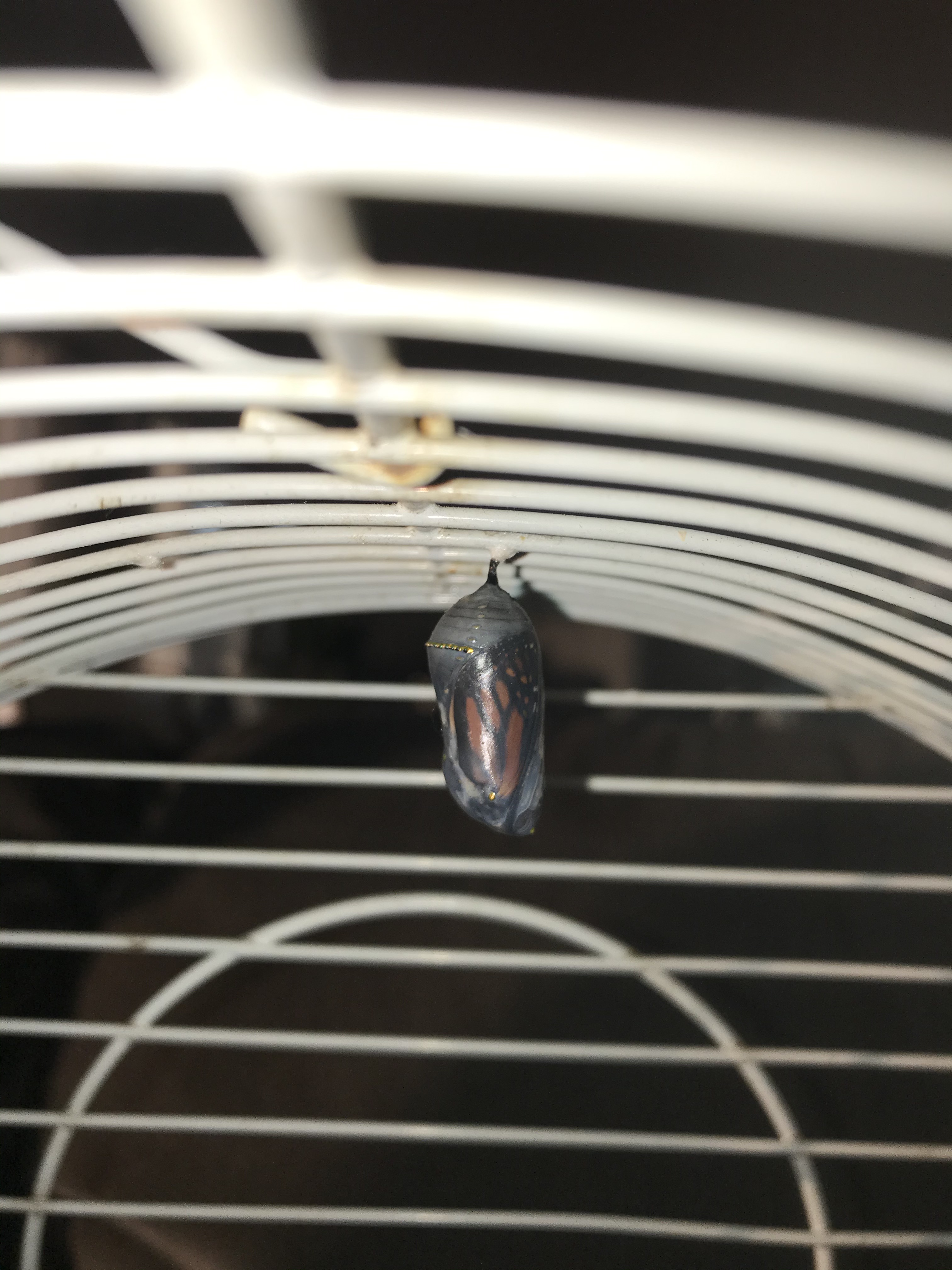
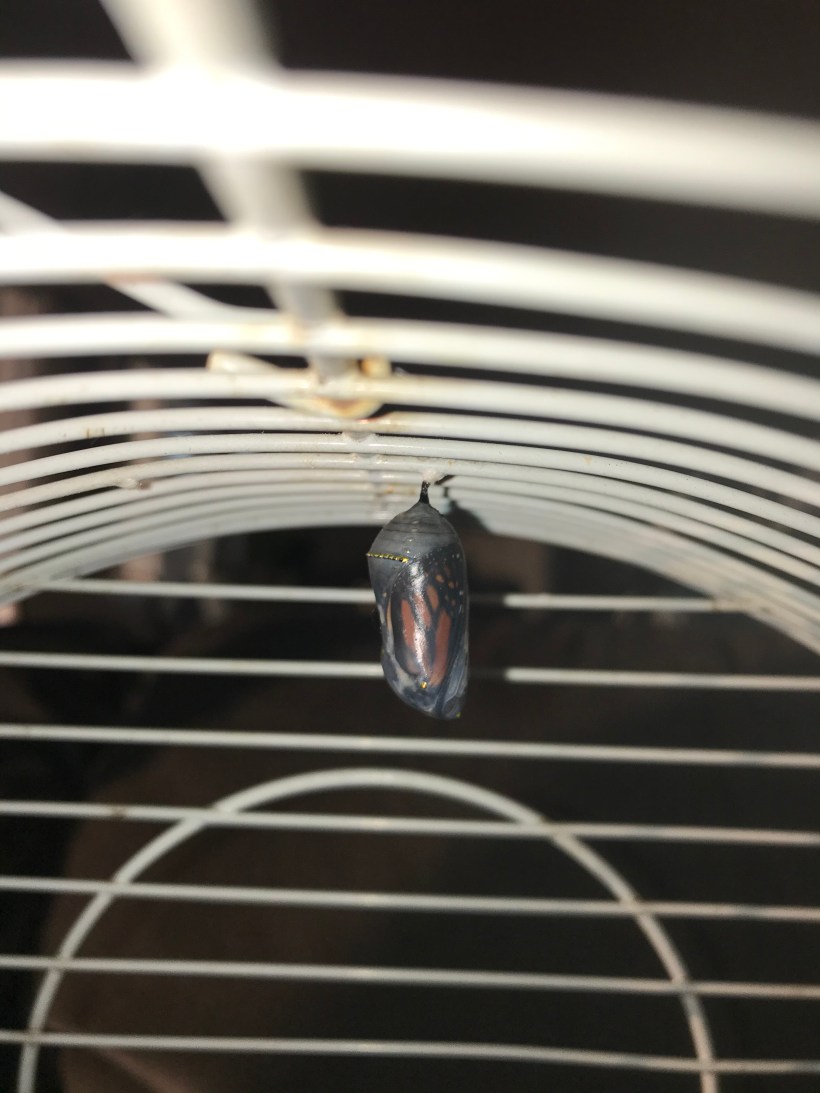
Nine days later, Tuesday, July 28, the chrysalis hangs. I check several times a day.
These photographs are from a 100mm “macro” lens, handheld. The birdcage works well for protecting the monarchs. Is a poor location for photography.
Thank You for visiting.
Copyright 2020 Michael Stephen Wills All Rights Reserved
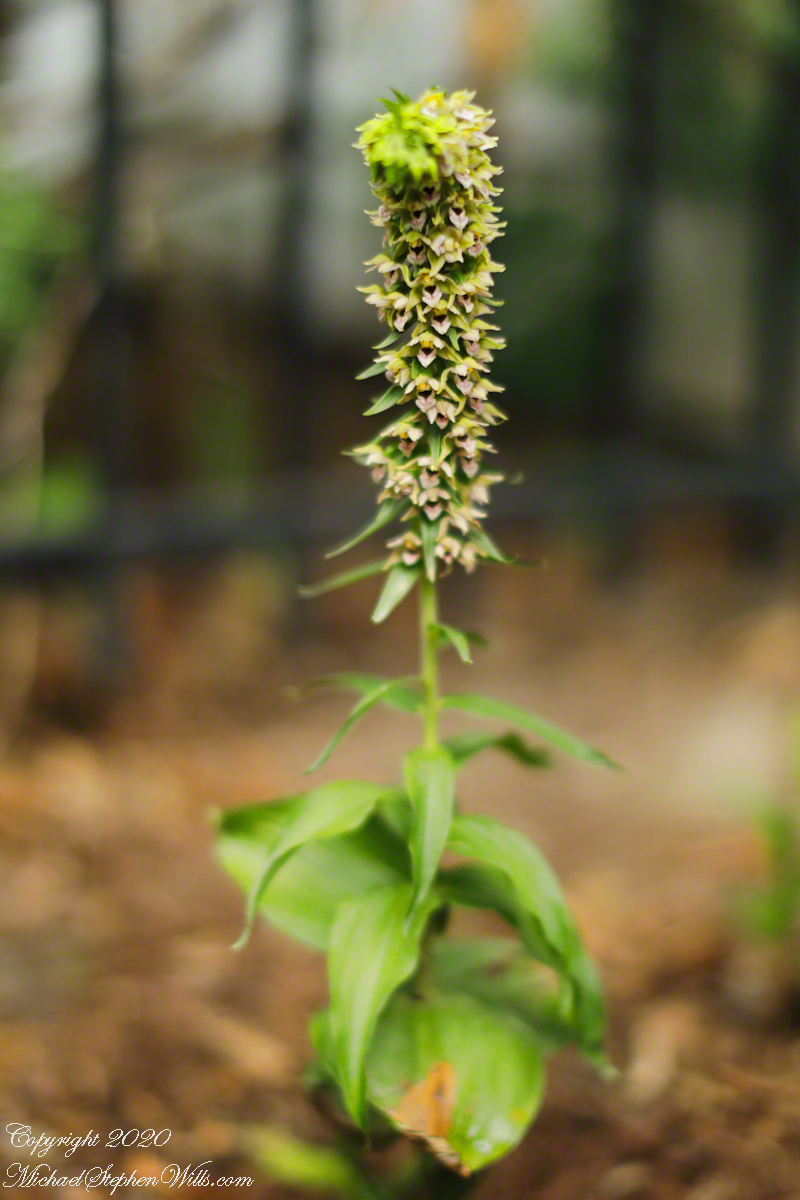
Broad-leaved Helleborine (Epipactis helleborine), a wild orchid, is a wide ranging, invasive, plant now found across North America. I suspect this success is based on a partnership with fungi. Commonly known as the “Weedy Orchid” it is not especially particular on the fungus partner, accepting a wide, curiously undefined for lack of research, variety.
In this the fourth of a five part series, the 50 mm lens f-stop is tamped down a bit, narrowing the diaphragm to f2.2, yielding the column of orchid faces in sharp focus. The nodding top, bent into the frame, unfocused, stem and leaves soft focus, still lots of detail discernible. Background far less distracting.
Click photograph for a larger view and use Ctrl-x to zoom in closer.
Today’s header image is from yesterday’s post, by way of comparison.









 Michael Stephen Wills Photography