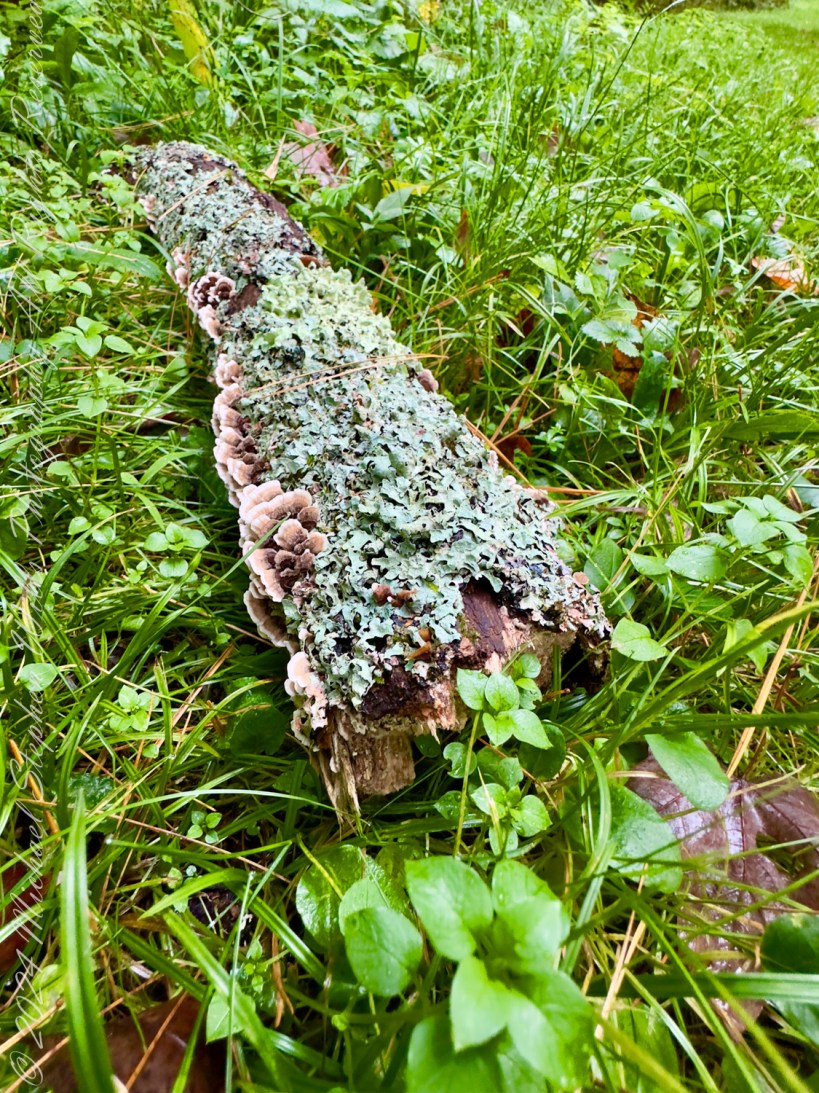
Exploring Autumn’s Beauty on the Finger Lakes Trail

The hike through Robert H. Treman State Park reflects nature’s cycles of life, decay, and renewal, intertwined with human history.

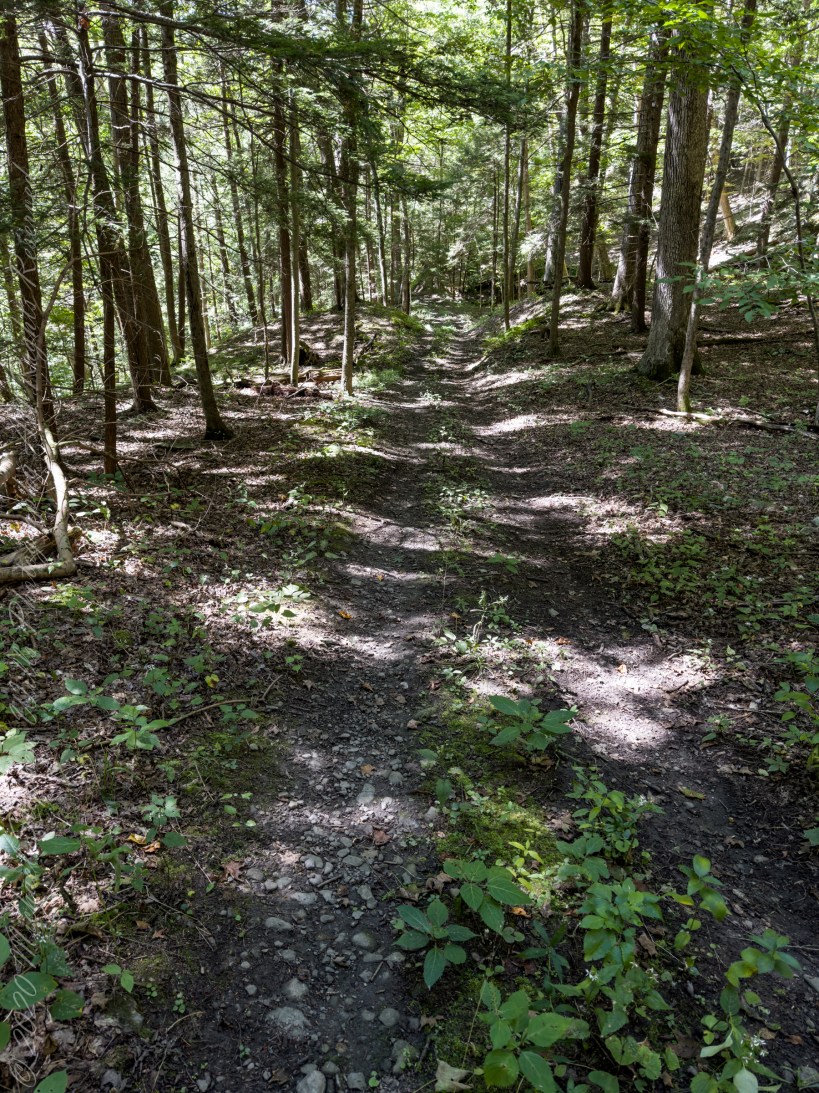
The wind is cool, carrying the first real bite of autumn as I step onto the Finger Lakes Trail from Woodard Road, entering Robert H. Treman State Park. The sounds of rustling leaves underfoot remind me that the season is in full swing, and soon, this vibrant foliage will be a memory. But today, the trees still hold their colors—greens tinged with yellow, brown, and red—forming a canopy that seems to glow in the soft morning light.
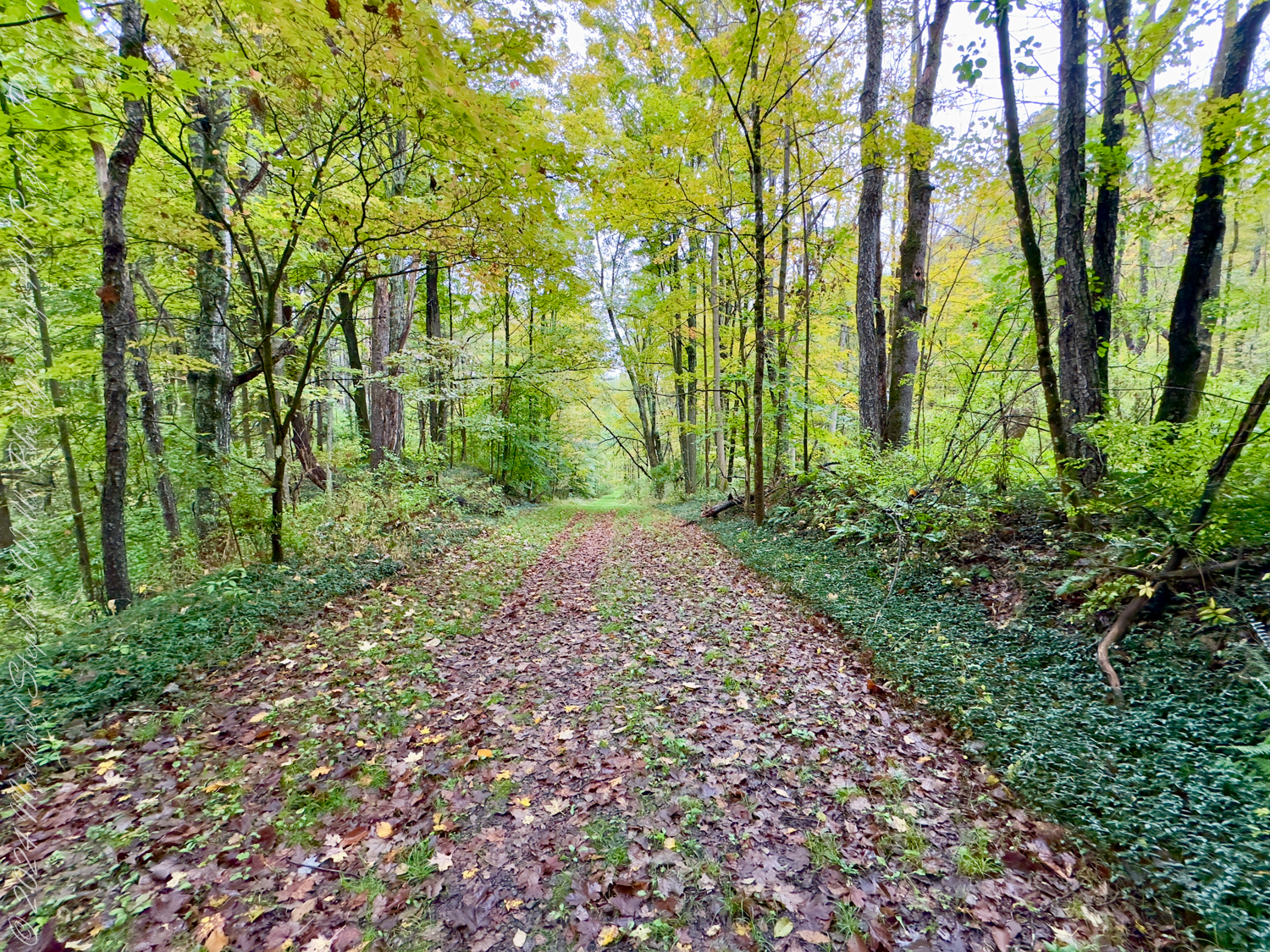
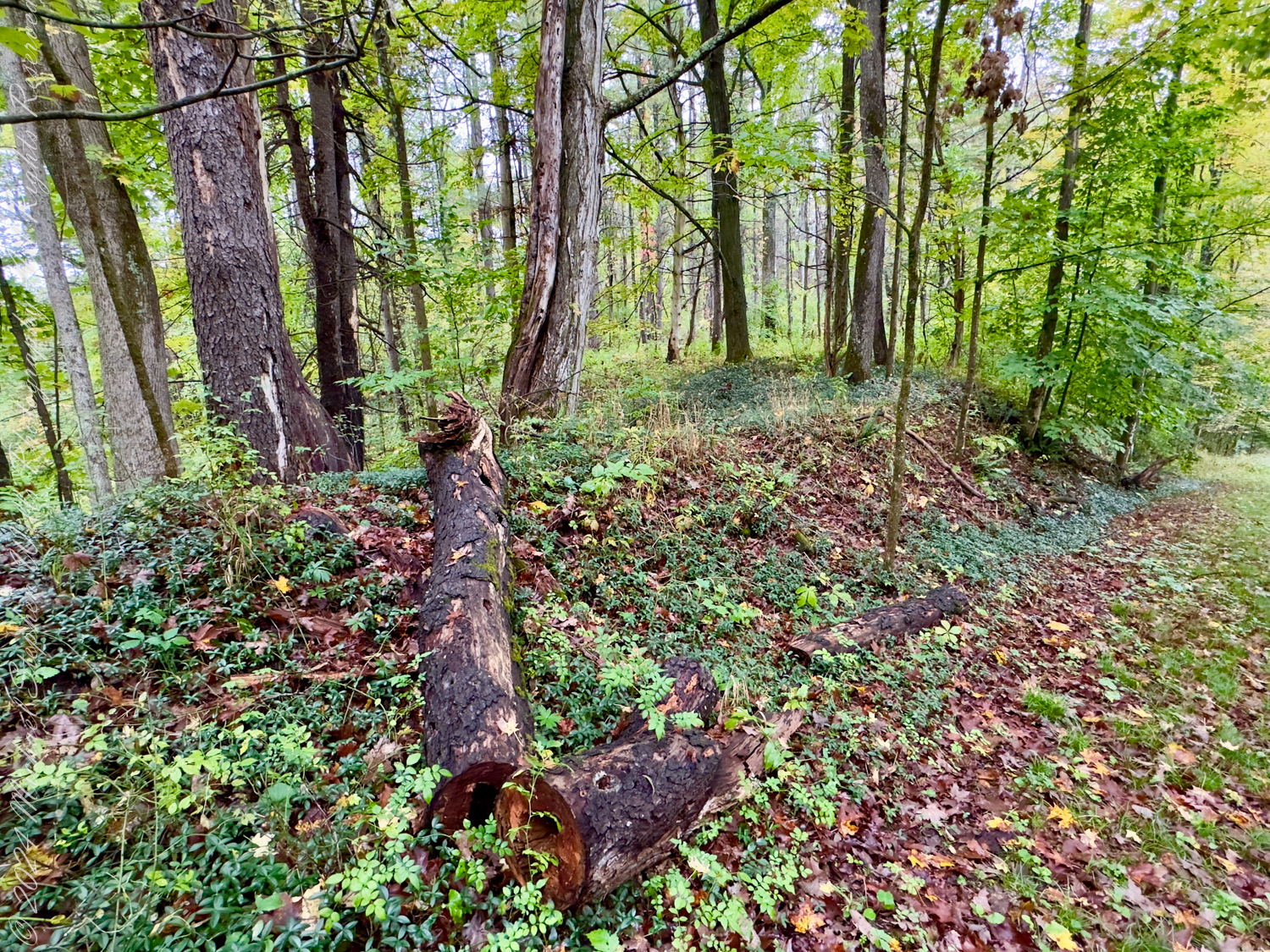
The trail is quiet, save for the occasional chirping of birds and the subtle creaking of the trees as they sway in the wind. It’s a perfect time for reflection, and with each step, I feel myself sinking deeper into the peace of this place. Ahead of me, a fallen tree lies on the slope, now part of the earth, slowly being reclaimed by the forest. The log, dotted with moss and fungi, seems like a work of art created by time and nature. I stop to admire it, my fingers grazing the rough bark, now softened with age and decay. It’s a reminder that everything in nature moves in cycles—growth, death, and rebirth.
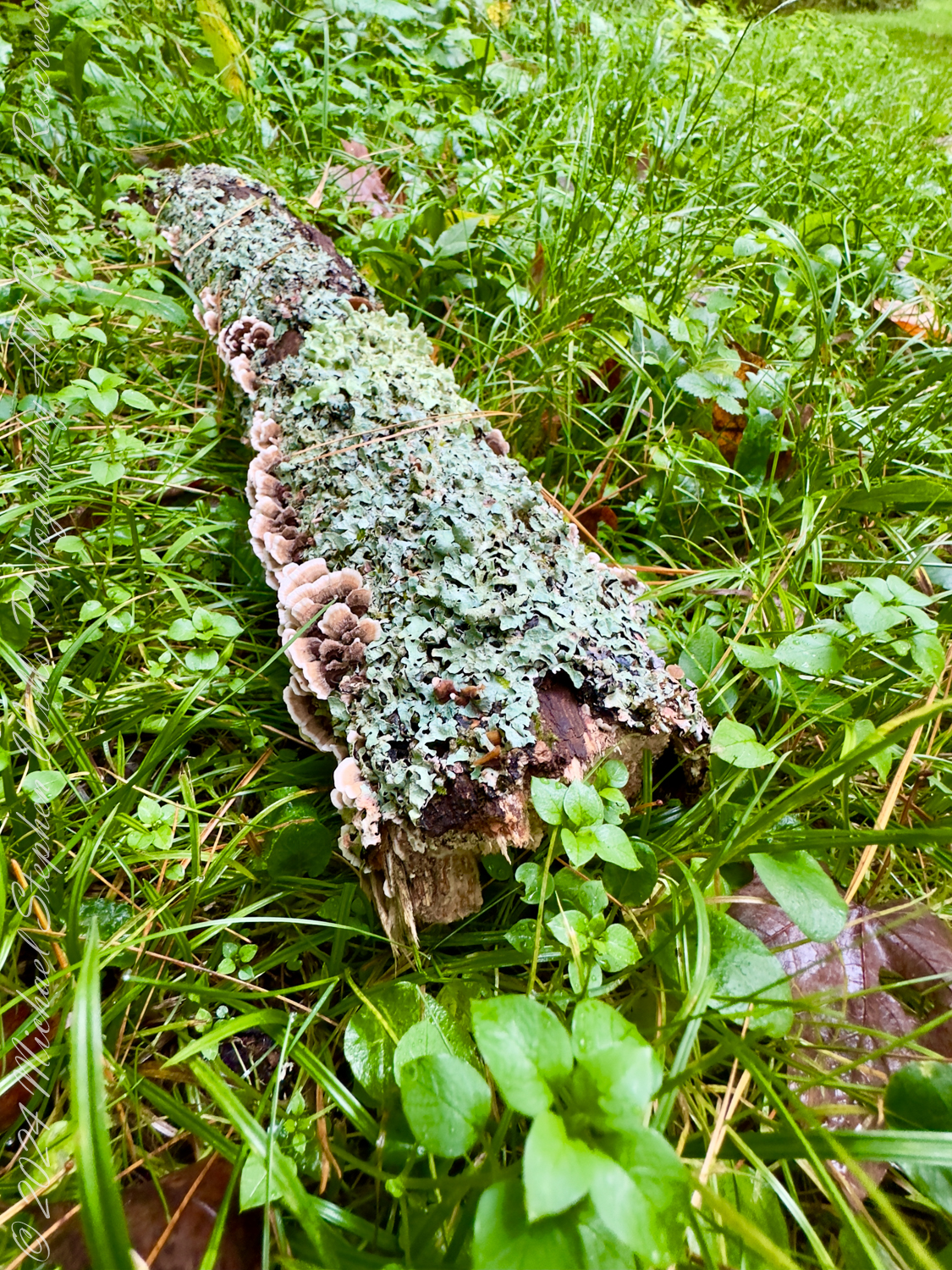
A few steps further and I find something even more intricate—another log, this one completely overtaken by a delicate layering of lichens and shelf fungi. The growth covers the bark like an elaborate tapestry of greens, grays, and soft whites. It’s beautiful in its own quiet way, and I take a moment to kneel beside it, studying the intricate patterns. Nature has a way of turning even decay into something stunning. I wonder how long it took for these fungi to establish their hold, slowly breaking down the wood, contributing to the endless cycle of life in the forest.
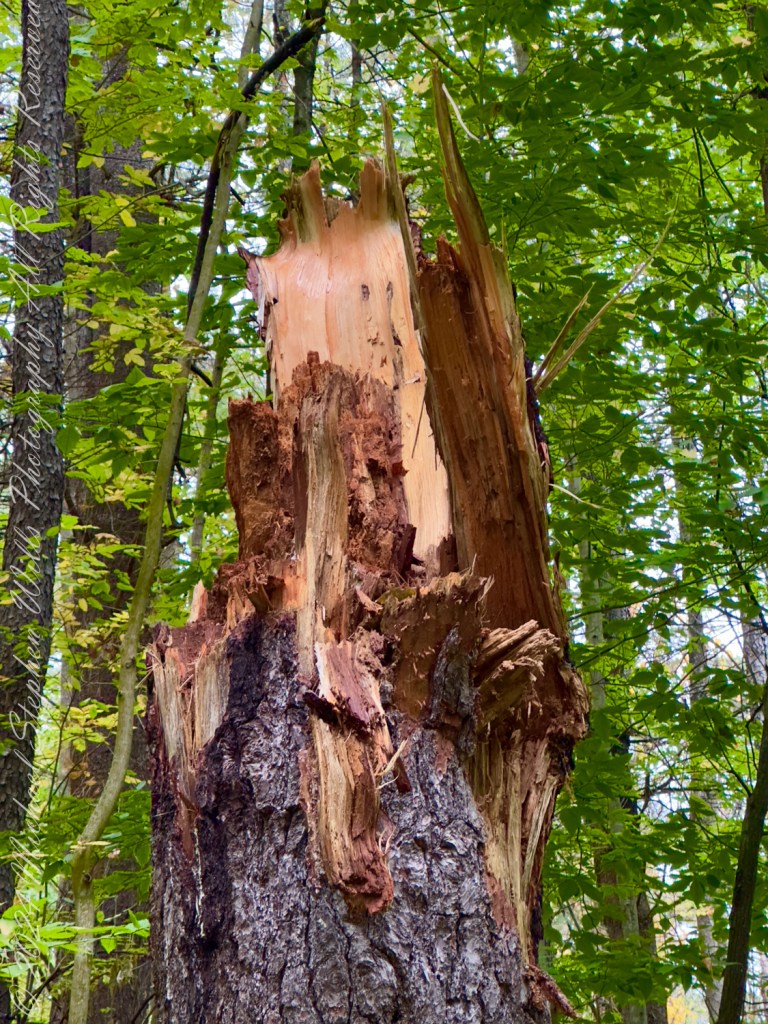
Moving onward, I come across a tall stump—remnants of a once-majestic tree, now shattered. The splintered wood reaches upward like jagged teeth, still sturdy despite the obvious trauma it endured. The raw power of nature is always humbling; trees like this seem so strong and permanent, yet even they can be brought down in an instant. It’s a reminder of life’s fragility, and I feel a sense of reverence standing in its presence, imagining the forces that felled it.
Continuing along the trail, I soon reach a clearing. There, nestled in the grass, is a plaque mounted on a large stone. It marks the site of the Civilian Conservation Corps (C.C.C.) Camp SP-6, Company 1253, which operated here from 1933 to 1935. I pause to read the inscription, which commemorates the young men who lived and worked in this camp during the Great Depression. They carried out public works projects, including improvements to Enfield Glen, Buttermilk Falls, and Taughannock Falls. I imagine the sense of purpose and camaraderie these workers must have felt, building something that would outlast them, even in the midst of hardship.
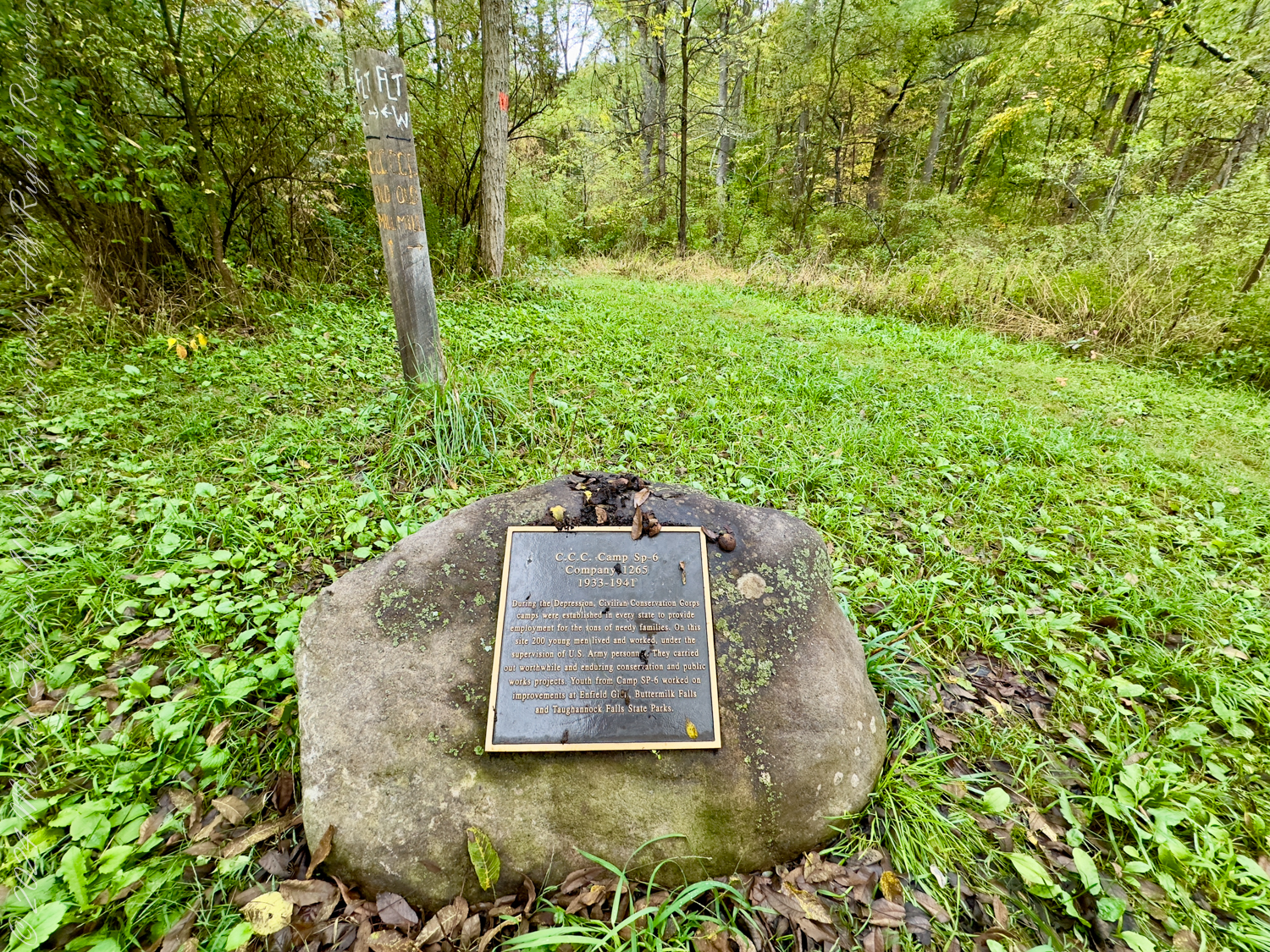
C.C.C. Camp SP-6, Company 1253, 1933-1935 During the Depression, Civilian Conservation Corps camps were established across America to provide employment for the relief of needy families. On this site, 200 young men lived and worked under the supervision of U.S. Army personnel. They carried out camp-wide and nearby construction and public works projects. Youth from Camp SP-6 worked on improvements in Enfield Glen, Buttermilk Falls, and Taughannock Falls State Park.

The plaque is a poignant reminder of the connection between humans and nature. Just as the trees here are part of a larger cycle, so too were the men of the C.C.C. They left their mark on this land, shaping the trails and structures we now take for granted. And yet, like everything in nature, their work is being slowly reclaimed by the forest. The wooden signs marking distances and directions are weathered, moss creeping up their bases, as if the forest itself is gently pulling them back into the earth.
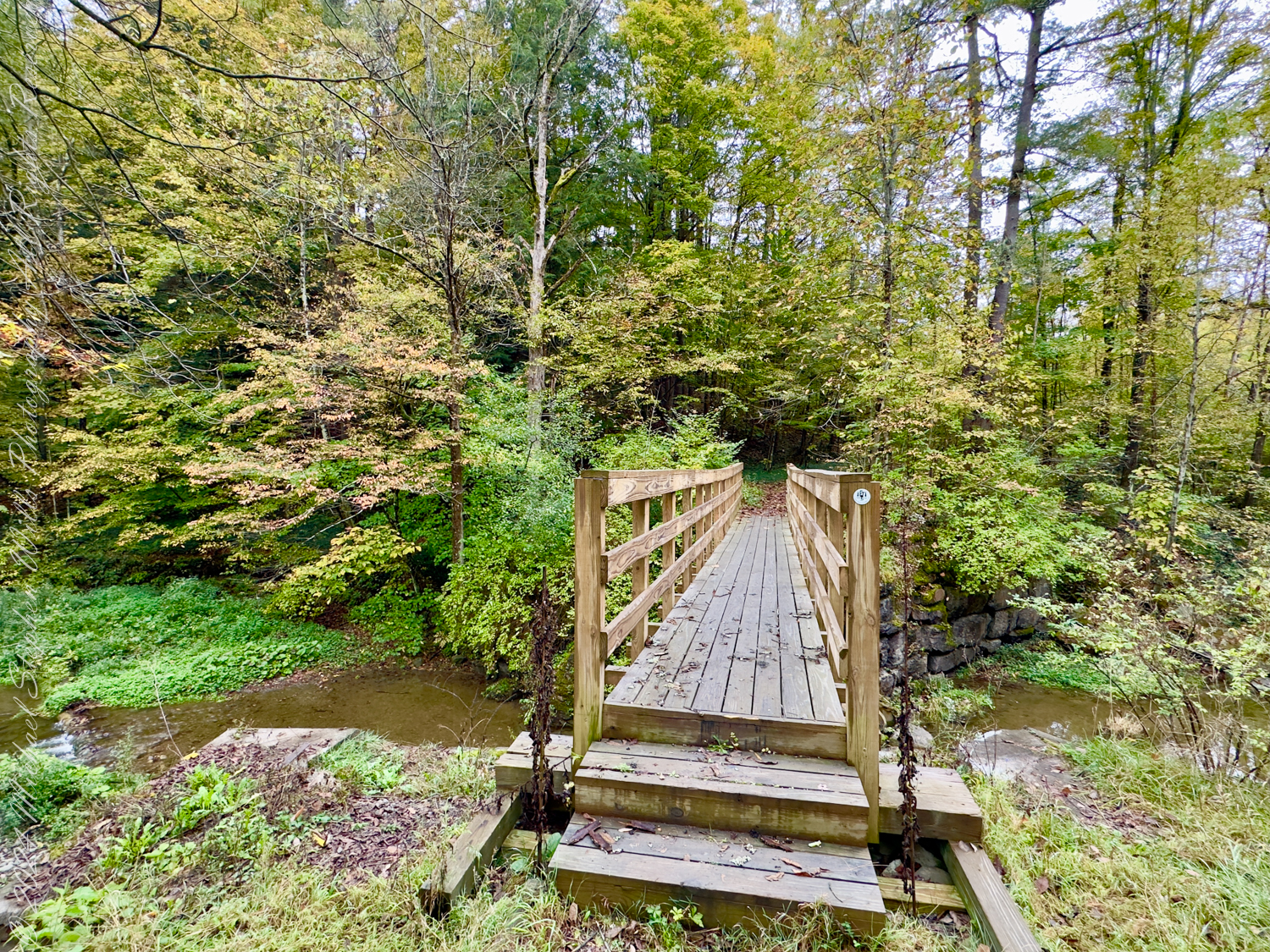
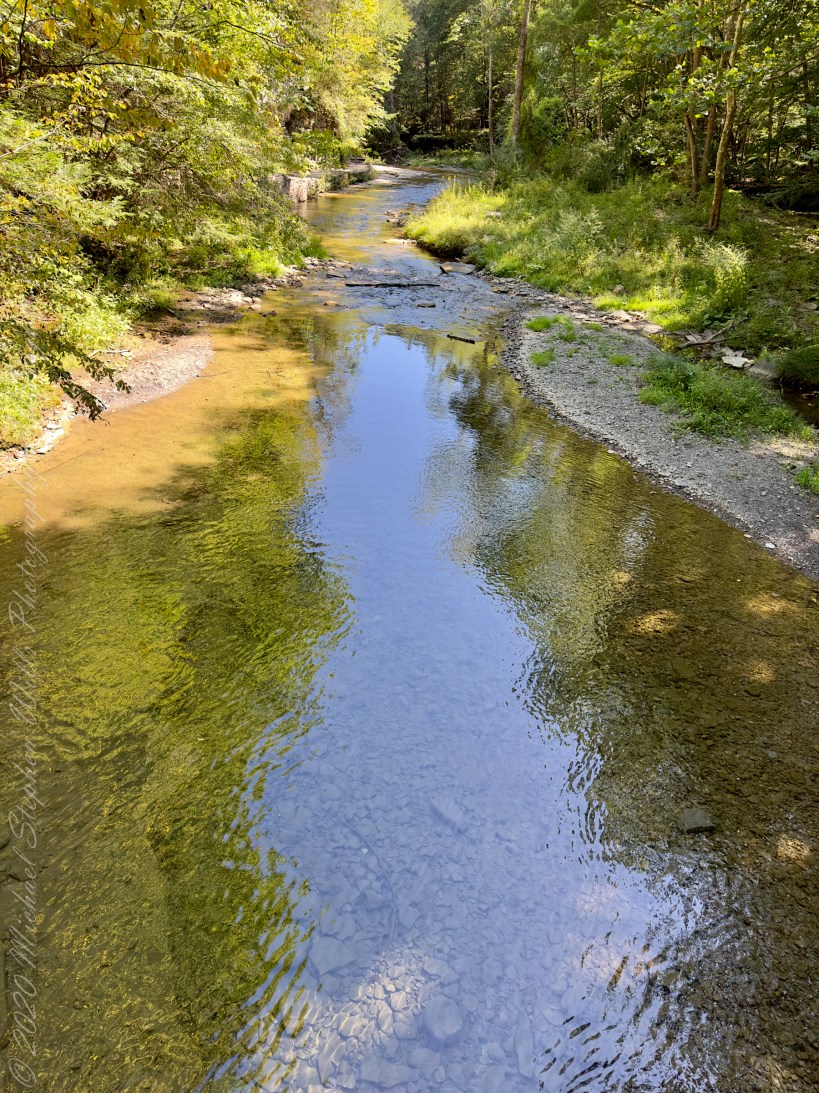
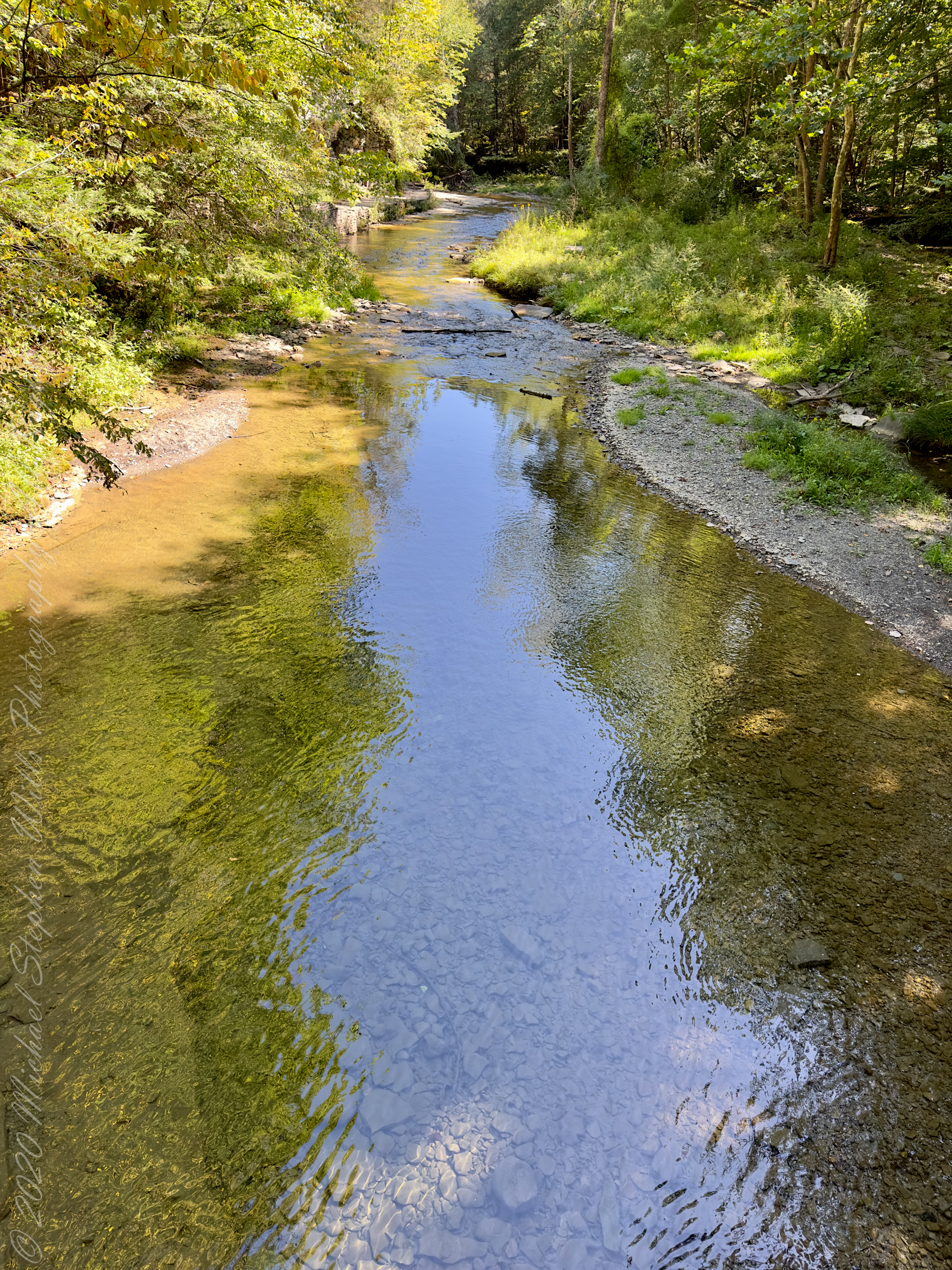
As I cross a small wooden footbridge, recently replaced on the Finger Lakes Trail, I stop to look down at the creek below. The water moves steadily, reflecting the gold and green hues of the trees above. Small waterfalls tumble over rocks, their gentle rush filling the air with a peaceful sound. I watch the water for a while, feeling the pull of time and nature’s persistence.
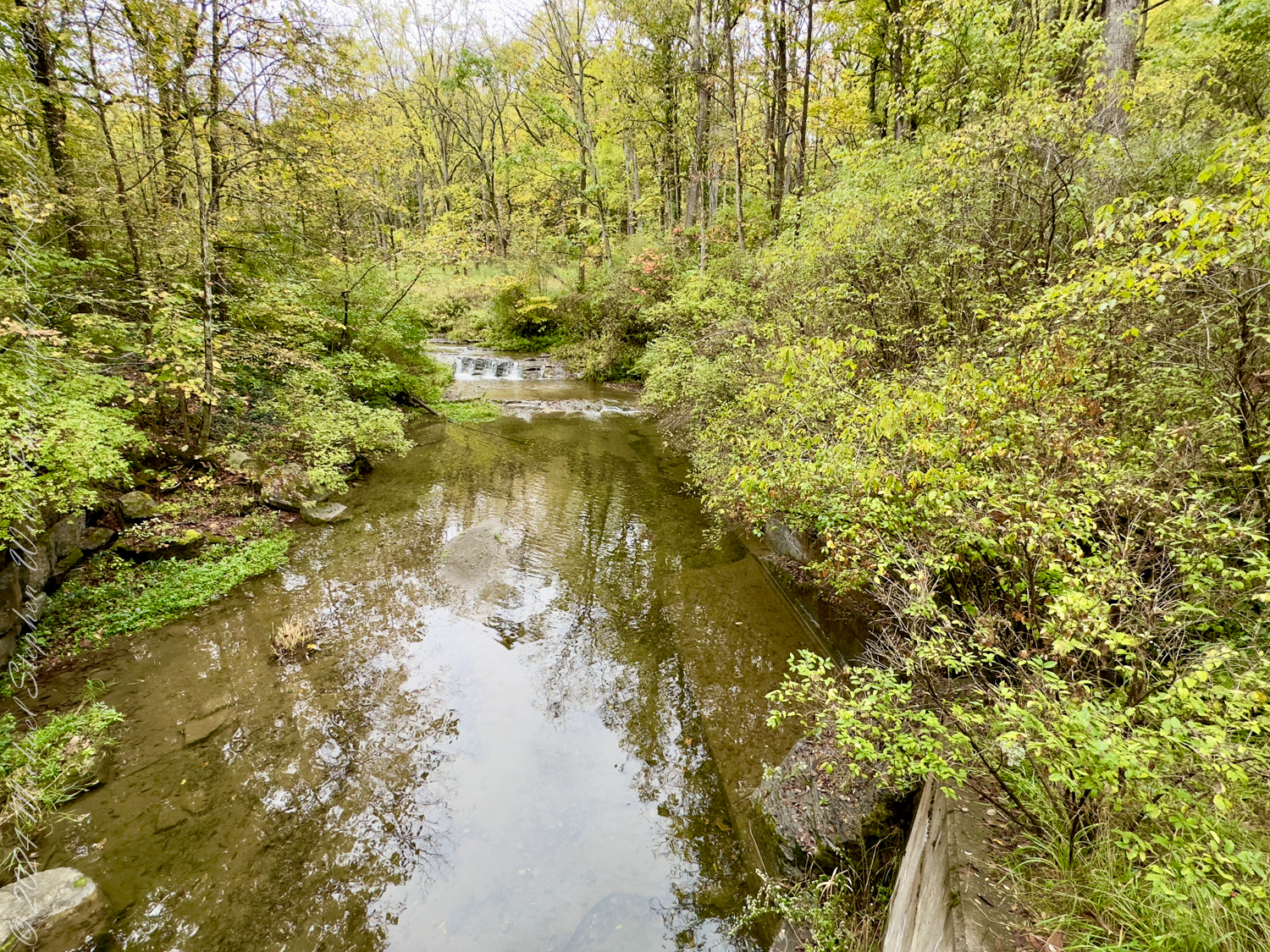
View from the bridge, upstream Fish Creek

Standing there, I’m struck by how everything I’ve encountered today, from the fallen trees to the CCC plaque, tells the same story—nature’s quiet persistence, its ability to adapt, reclaim, and renew. I breathe deeply, knowing that while time moves forward and everything changes, the beauty and wisdom of places like this will always remain, if we just take the time to notice.
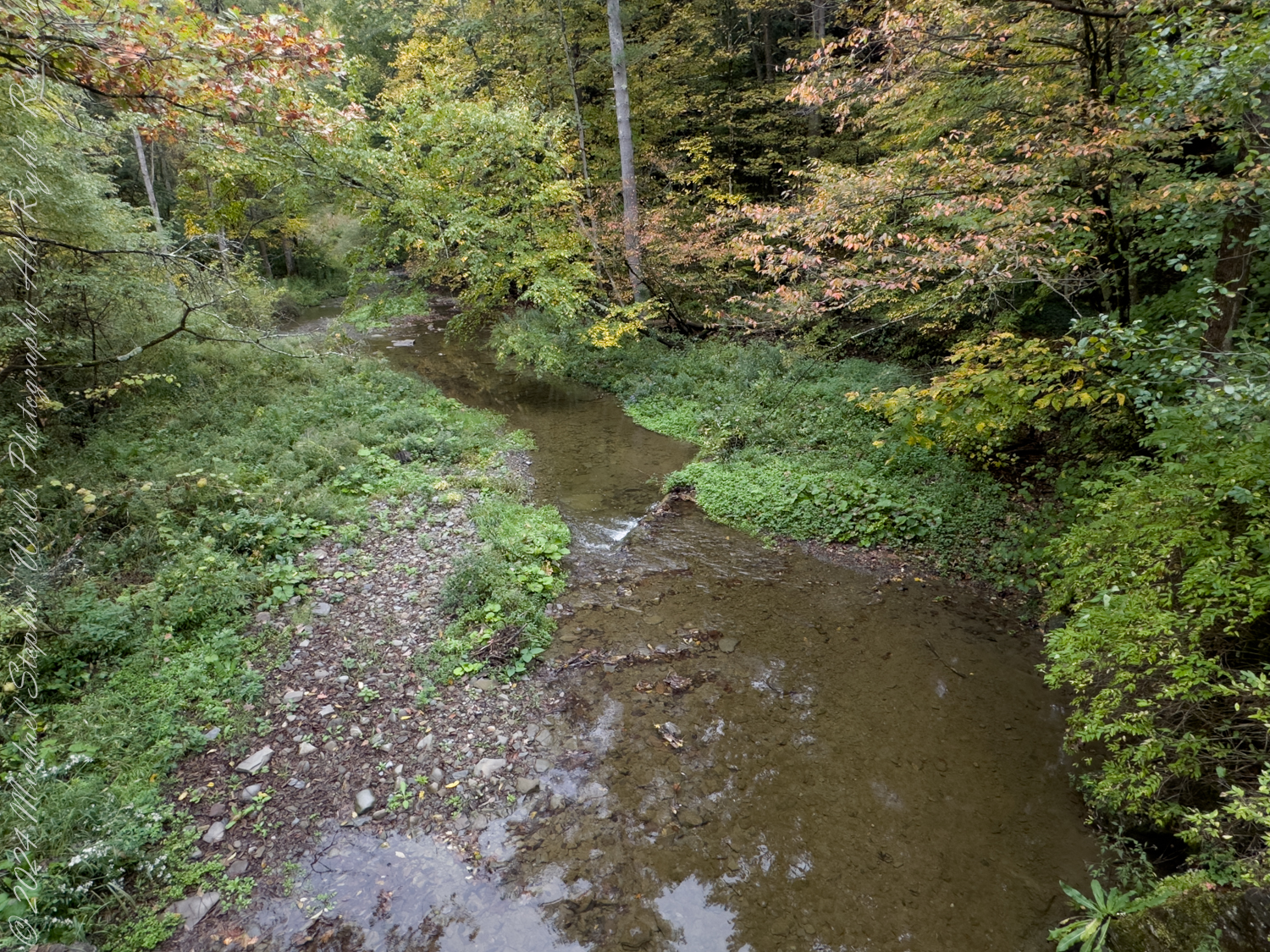

View from the bridge, downstream Fish Creek
Enter your email to receive notification of future postings. I will not sell or share your email address.

Treman Early Autumn Walk X

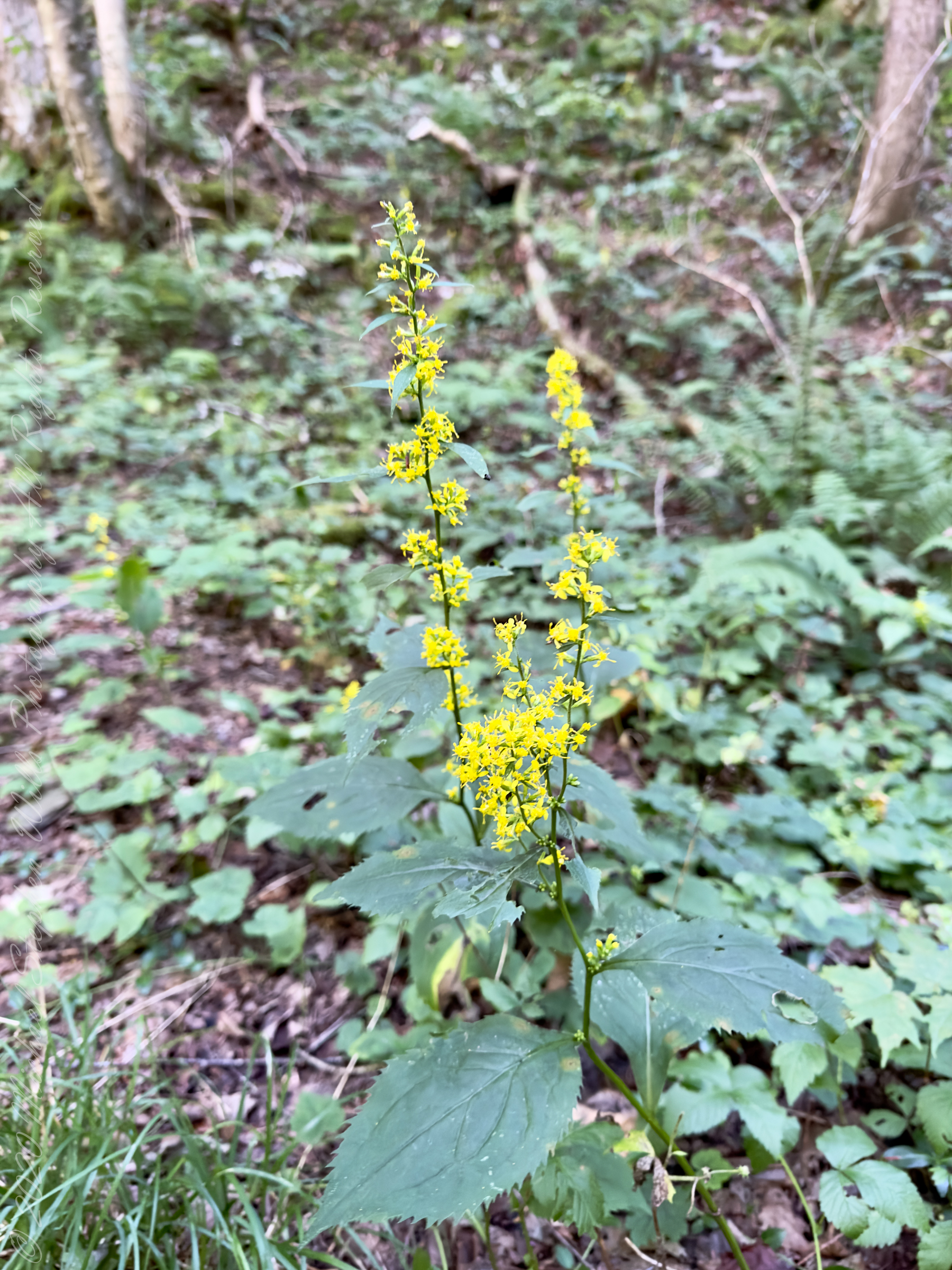
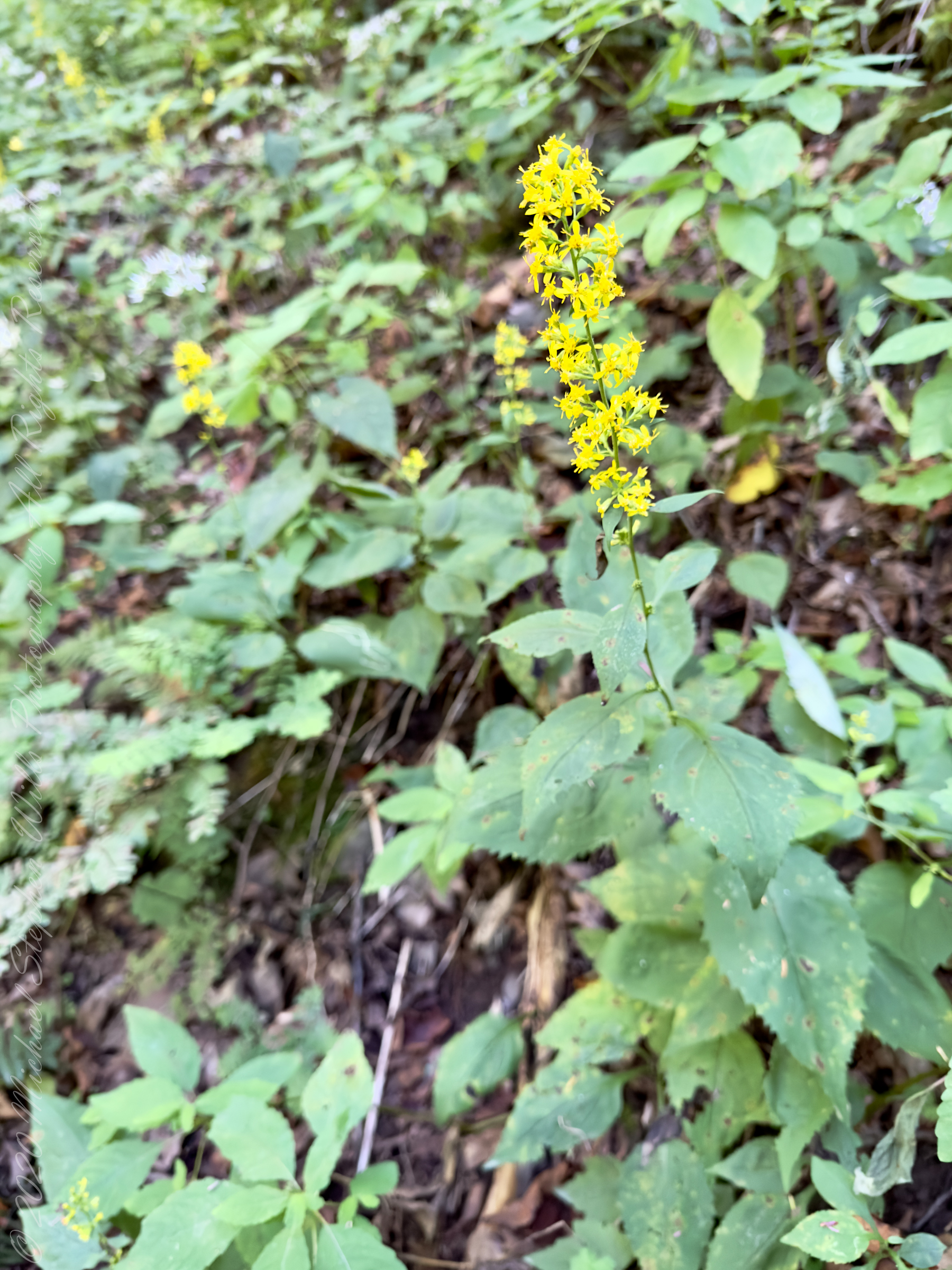
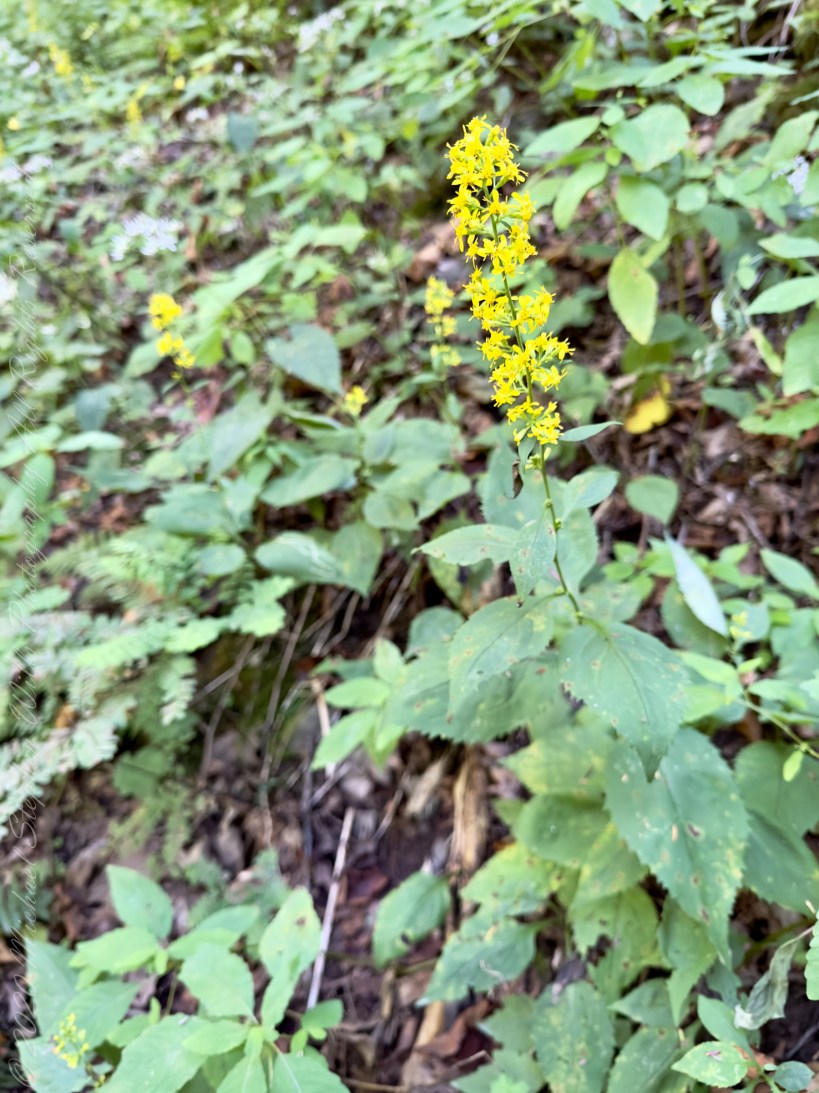
The zigzag goldenrod is a crucial plant to North American pollinator biodiversity, hosting diverse insects.

After crossing the bridge at Swan Road I turned back down the gorge on the Rim Trail, climbing above the gorge where these interesting woodland goldenrod thrive.

“Solidago flexicaulis, the broadleaved goldenrod, or zigzag goldenrod,is a North American species of herbaceous perennial plants in the family Asteraceae. It is native to the eastern and central parts of the United States and Canada, from Nova Scotia west to Ontario and the Dakotas, and south as far as Alabama and Louisiana. It grows in a variety of habitats including mesic upland forests, well drained floodplain forests, seepage swamp hummocks, and rocky woodlands.”

“The plant is called the “zigzag goldenrod” because the thin, wiry stem zigs and zags back and forth, changing direction at each node (leaf attachment point). The plant bears sometimes as many as 250 small yellow flower heads, some at the end of the stem, others in the axils of the leaves. The leaves are very broad, almost round, but with an elongated tip at the end and large teeth along the edges.”

“Goldenrod is considered a keystone species and has been called the single most important plant for North American pollinator biodiversity. Goldenrod species are used as a food source by the larvae of many Lepidoptera species. As many as 104 species of butterflies and moths use it as a host plant for their larvae, and 42 species of bees are goldenrod specialists, visiting only goldenrod for food. Some lepidopteran larvae bore into plant tissues and form a bulbous tissue mass called a gall around it, upon which the larva then feeds. Various parasitoid wasps find these galls and lay eggs in the larvae, penetrating the bulb with their ovipositors. Woodpeckers are known to peck open the galls and eat the insects in the center.”

“Solidago flexicaulis is host to the following insect induced galls: Asteromyia modesta, a species of gall midges in the family Cecidomyiidae. Gnorimoschema gallaesolidaginis also called the solidago gall moth, goldenrod gall moth or goldenrod gallmaker, is a moth in the family Gelechiidae.”

References: text in italics and quotes is from the Wikipedia, “Solidago flexicaulis,” “Solidago,” “Asteromyia modesta,” and “Gnorimoschema gallaesolidaginis.”

Copyright 2023 All Rights Reserved Michael Stephen Wills

Treman Early Autumn Walk IX

The post discusses various unique kennings, their meanings, and reflects on the term “Swan-Road” symbolizing a serene river.

Below Lucifer Falls this quiet water flows beneath a bridge linking Gorge and Rim trails. The reflection of blue sky between river trees brings to mind the kenning “Swan-Road.” To me it is more fitting than the established meaning: “The Sea,” also associated more appropriately with Whale-Road.

Swan Road

The seldom used English verb “ken.” The Oxford English dictionary proposed the word was borrowed from Norse based on a confluence of meaning, i.e. to know. When it is turned into a noun with the -ing ending, it is a phrase that brings to mind and object described.

Other kennings from : “Whale road = sea (e.g., a place where whales travel); Treasure seat = throne (e.g., the source of treasure or reward, or the role of the king in rewarding his men); Ring giver, ring breaker = king (e.g., the person who bestows rings, or breaks off a piece of his golden bracelet as a reward); Sword sleep = death (e.g., a “sleep” caused by a sword wound); Rapture of heaven = sun (e.g., the sun, brightest of heavenly objects, the joy of heaven); Weaver of peace = wife (e.g., a person whose grace and mildness instills peace, or one who creates domestic tranquility); Earl’s defense = Beowulf (e.g., the one who defends Hrothgar); Mead seats = benches in Heorot (e.g., the places where people sit and drink).”

Click Me for a master work of English poetry that employs kenning forms, “The Porcupine” by Galway Kinnell.

References:

–text in italics and quotes is from the eNotes.com, “Beowulf.”

–Kinnell, Galway. “The Porcupine.” The Hudson Review 20, no. 2 (1967): 219–22.

Copyright 2023 All Rights Reserved Michael Stephen Wills

Treman Early Autumn Walk VI

Fairy Forest

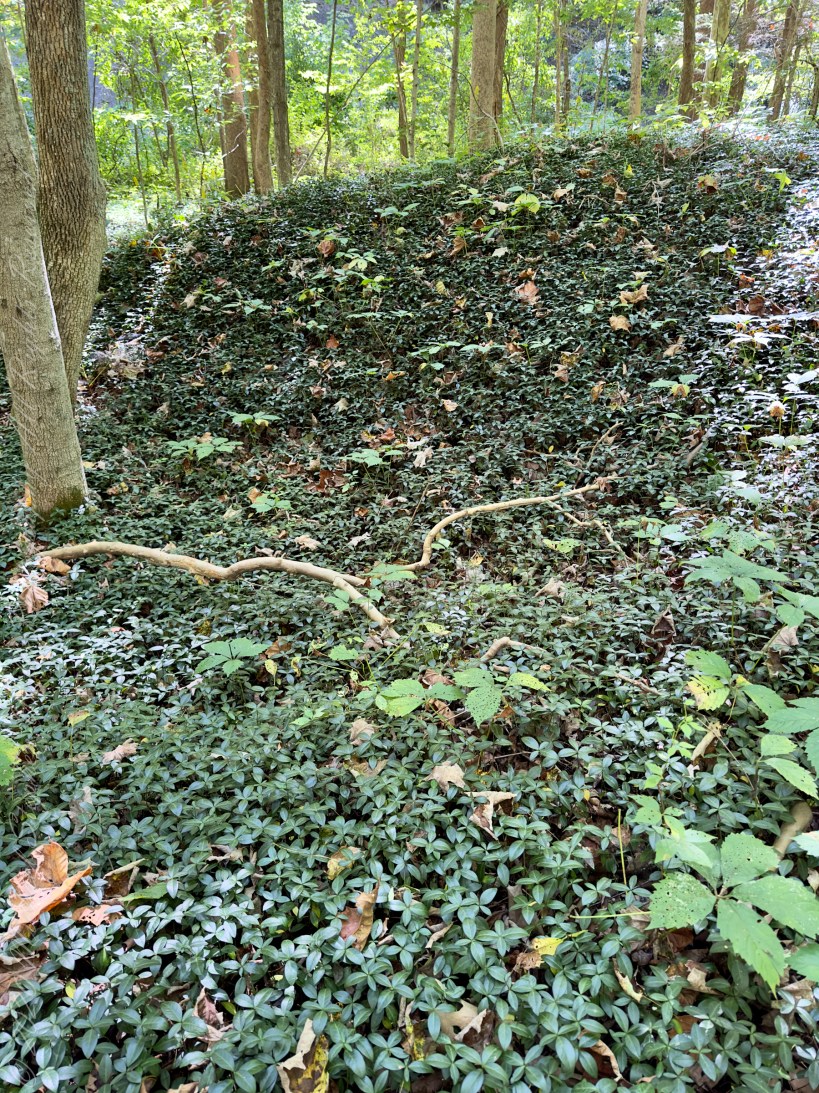
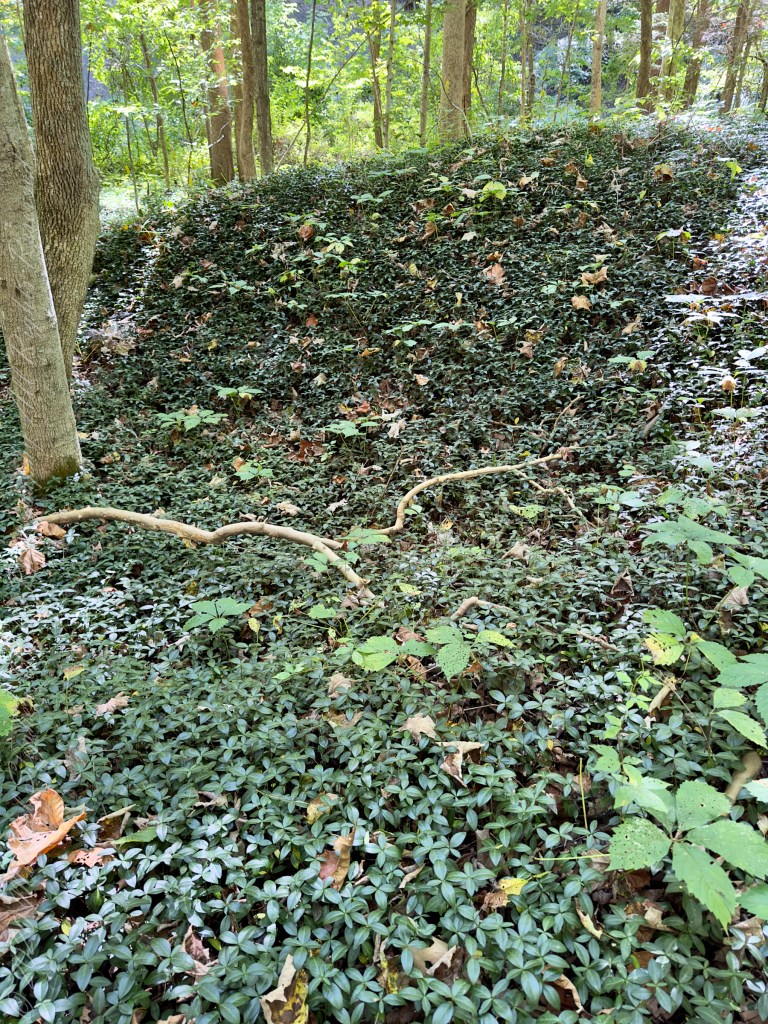
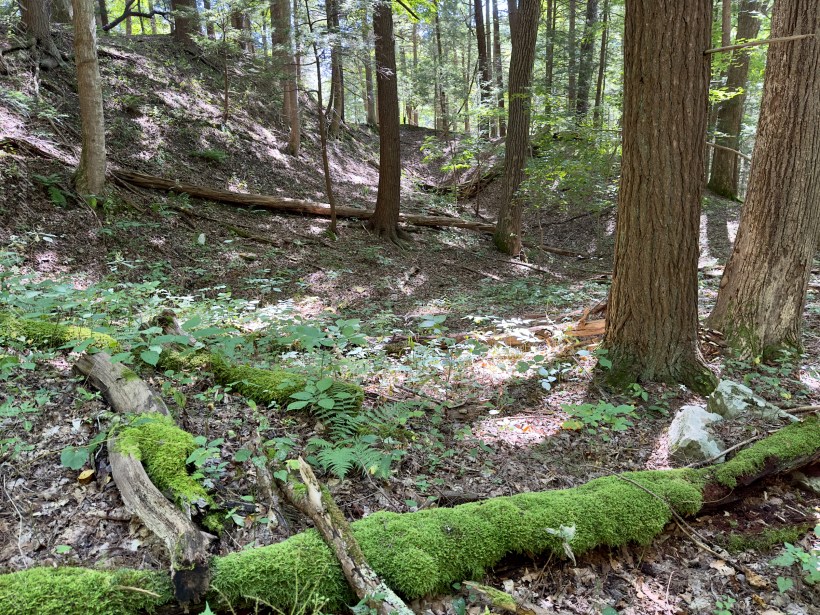
Over a period of 11,000 years this former stream bed, abandoned when a melting tongue of the Laurentide Ice Sheet deposited drift across Enfield Creek, transformed to this sun dappled glade, one of two along the Gorge Trail of Treman Park.

Pam calls this the Fairy Forest for the feeling of peaceful expectation she feels here. Another reason is the small flowers of this native myrtle after which the periwinkle is named.

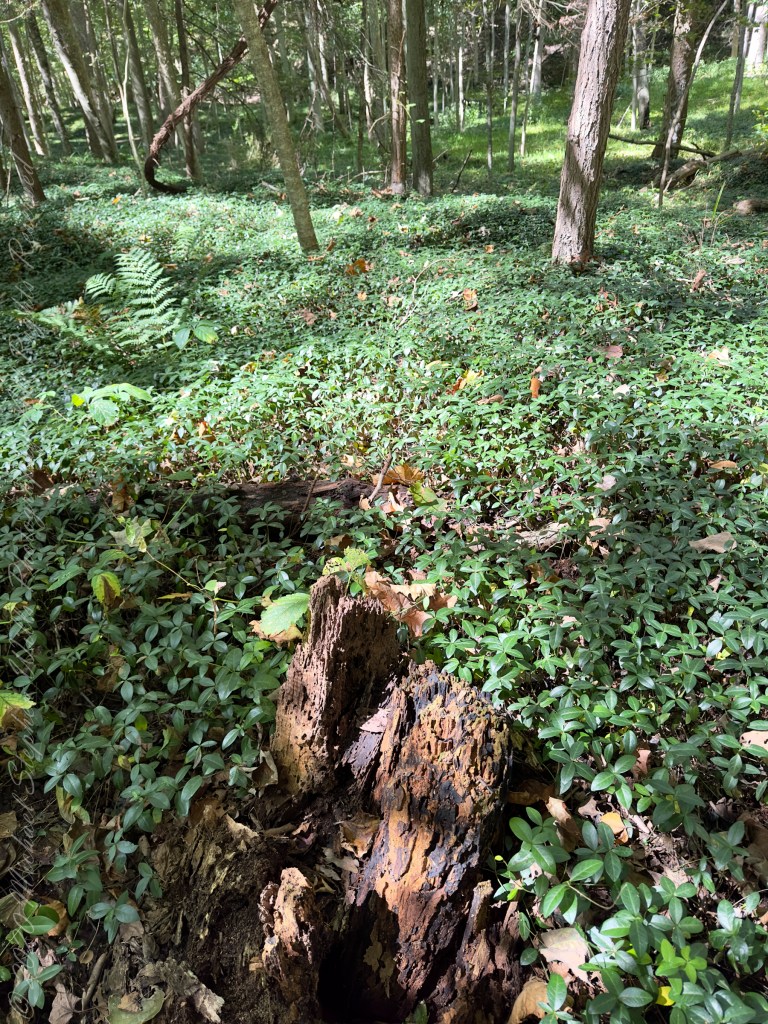
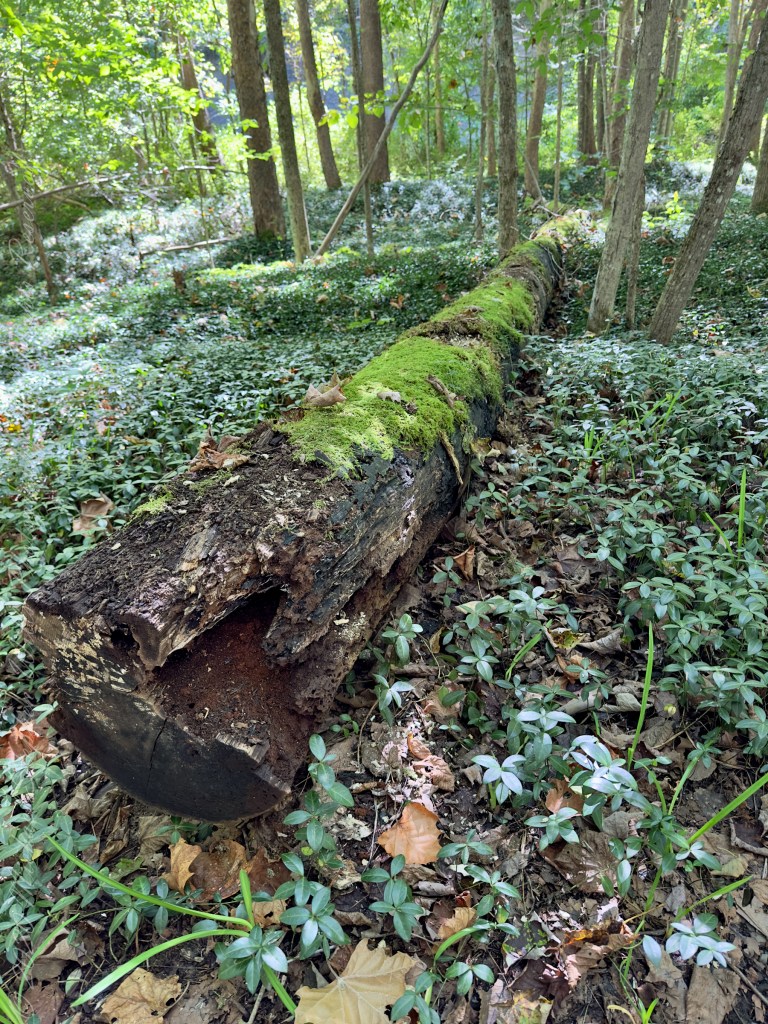
Fallen trees are left be to return to the soil.

“Vinca minor (common names lesser periwinkle, dwarf periwinkle is a species of flowering plant in the dogbane family, native to central and southern Europe, from Portugal and France north to the Netherlands and the Baltic States, east to the Caucasus, and also southwestern Asia in Turkey. Other vernacular names used in cultivation include small periwinkle, common periwinkle, and sometimes in the United States, myrtle or creeping myrtle.”

“Vinca minor is a trailing subshrub, spreading along the ground and rooting along the stems to form large clonal colonies and occasionally scrambling up to 40 centimeters (16 in) high but never twining or climbing. The leaves are evergreen, opposite, 2–4.5 centimeters (0.79–1.77 in) long and 1–2.5 centimeters (0.39–0.98 in) broad, glossy dark green with a leathery texture and an entire margin.

“The flowers are solitary in the leaf axils and are produced mainly from early spring to mid-summer but with a few flowers still produced into the autumn; they are violet-purple (pale purple or white in some cultivated selections), 2–3 centimeters (0.79–1.18 in) diameter, with a five-lobed corolla. The fruit is a pair of follicles 2.5 centimeters (0.98 in) long, containing numerous seeds.”

“The species is commonly grown as a groundcover in temperate gardens for its evergreen foliage, spring and summer flowers, ease of culture, and dense habit that smothers most weeds.”

“Vinca minor contains more than 50 alkaloids, including vincamine. Other alkaloids include reserpine, rescinnamine, akuammicine, majdine, vinerine, ervine, vineridine, tombozine, vincamajine, vincanine, vincanidine, vinburnine, apovincamine, vincaminol, desoxyvincaminol, vincorine[ and perivincine.  Vinpocetine (brand names: Cavinton, Intelectol; chemical name: ethyl apovincaminate) is a semisynthetic derivative alkaloid of vincamine.”

It is possible this is a cemetery as myrtle was once commonly planted in cemeteries in parts of the United States and naturalized periwinkle may indicate the presence of graves whose other markers have disappeared.

Reference: text in italics and quotes is from the Wikipedia, “Vinca Minor.”

Copyright 2023 All Rights Reserved Michael Stephen Wills

Treman Early Autumn Walk V

a drift filled stream bed

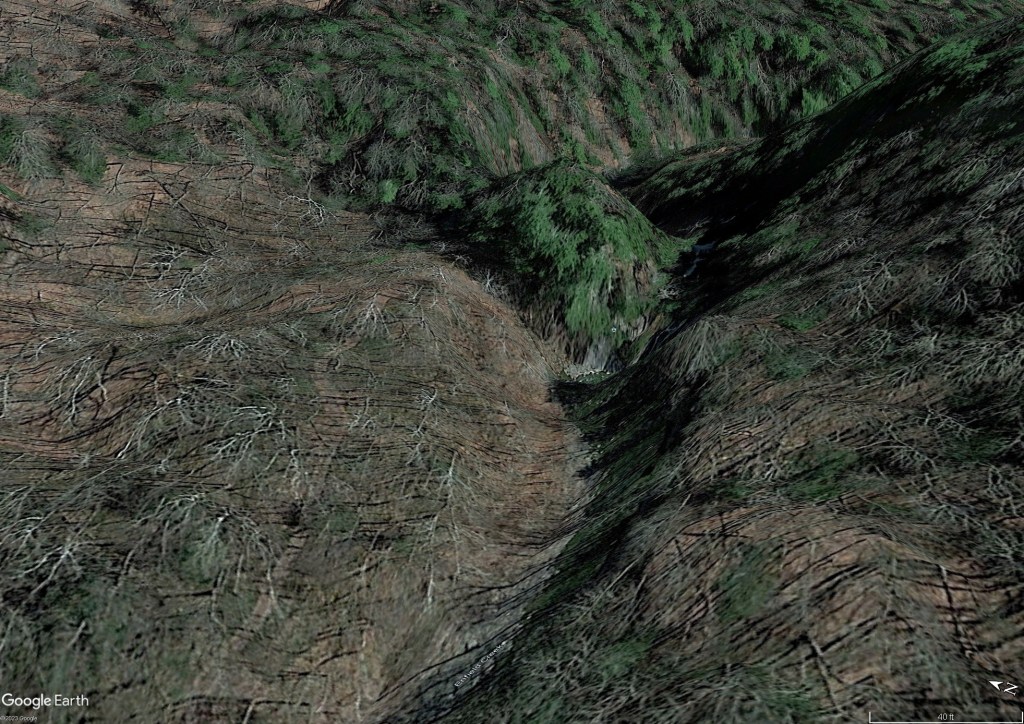
Wisconsin Glacial Episode was only the latest of a series of ice wall incursions. For this walk I went off the path to bushwack, following a drift filled stream bed, evidence of multiple glacial incursions with subsequent changing the stream bed of Enfield Creek. Here I am walking on glacial deposition to the north of the current creek bed. A park ranger informed us of this location, it is difficult to comprehend or imaging a 50 foot hill of material deposited in this way. The creek does bend at this point and the deposition is easily seen from above.

Enfield Creek flows to the right of the deposition.

The surface of the hill is hummocky, typical of glacial deposition.

Eventually the former stream bed intersects with a work road sloping back down to the Gorge Trail. It was here I found the oak apple gall of yesterday’s posting.

Copyright 2023 All Rights Reserved Michael Stephen Wills

Treman Early Autumn Walk IV

Oak Gall

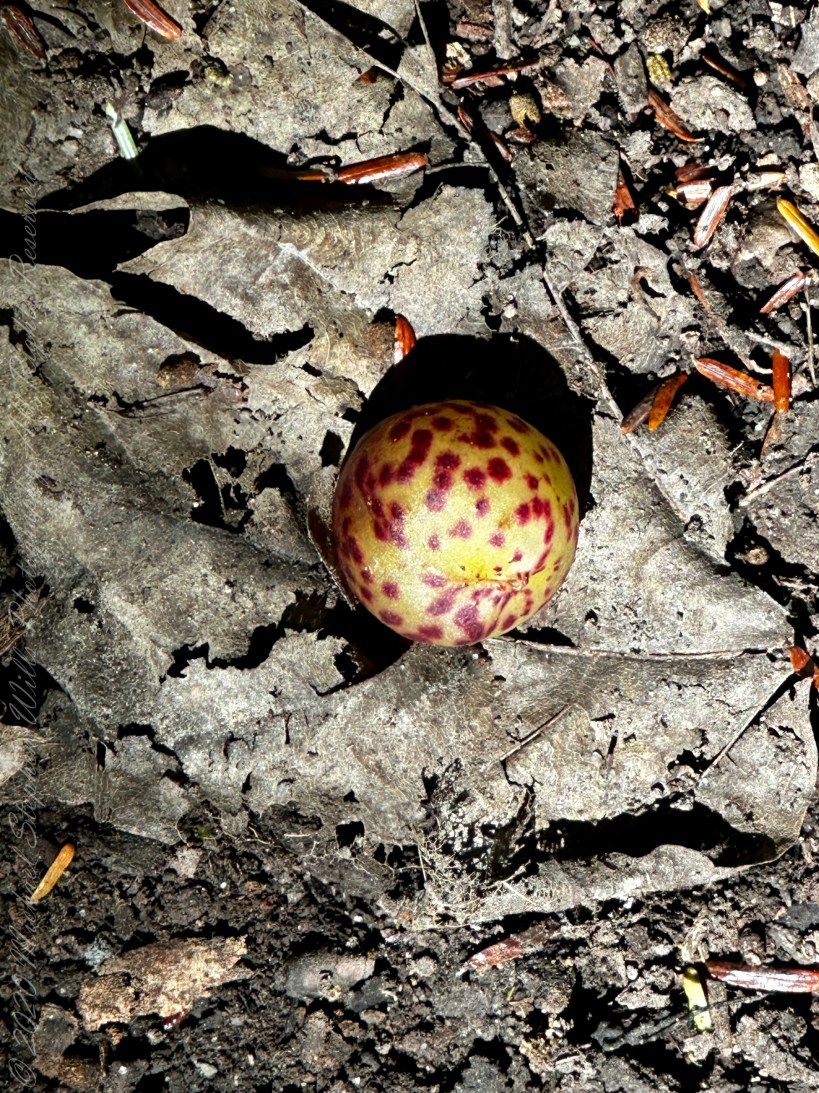
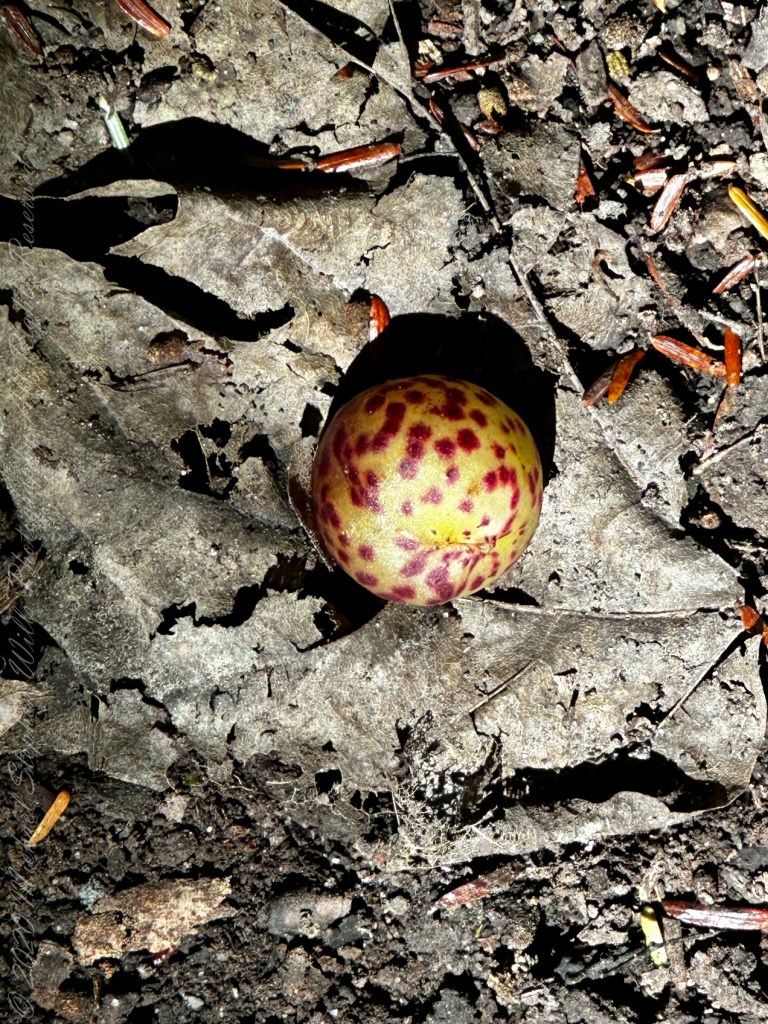
This is an Oak Apple gall. An adult female wasp lays single eggs in developing leaf buds. The wasp larvae feed on the gall tissue resulting from their secretions, which modify the oak bud into the gall, a structure that protects the developing larvae until they undergo metamorphosis into adults.

“Oak galls have been used in the production of ink since at least the time of the Roman Empire. From the Middle Ages to the early twentieth century, iron gall ink was the main medium used for writing in the Western world.”

“Gall nuts are a source of tannin in the production of iron gall ink. Tannins belong to a group of molecules known as polyphenols and can be taken from different parts of plants such as leaves, pods, fruits, and gall nuts.”

“Along with gall nuts, other important ingredients in the production of iron gall ink include iron sulfate and gum arabic. The reaction between the tannins from the gall nut and the iron produces a complex that gives the iron gall ink its color. The gum arabic makes the ink more viscous and helps bind the ink to the writing surface.”

“According to recent research, traces of iron-gall ink have been found on the Dead Sea scrolls and on the ‘lost’ Gospel of Judas. Iron-gall ink may have been used for 1,800 years, but it does not withstand the test of time well. Over the course of centuries, the ink fades, and discolours and damages the paper. Iron gall ink is manufactured chiefly by artists enthusiastic about reviving old methods or possibly forgers of old documents.”

Reference: text in italics and quotes is from the Wikipedia, “Oak Apple Gall” and “Oak Marble Gall.”

Copyright 2023 All Rights Reserved Michael Stephen Wills

Treman Early Autumn Walk III

Cultivated vs Wild

Dennstaedtia punctilobula, the eastern hayscented fern or hay-scented fern, is a species of fern native to eastern North America, from Newfoundland west to Wisconsin and Arkansas, and south in the Appalachian Mountains to northern Alabama; it is most abundant in the east of its range, with only scattered populations in the west.”

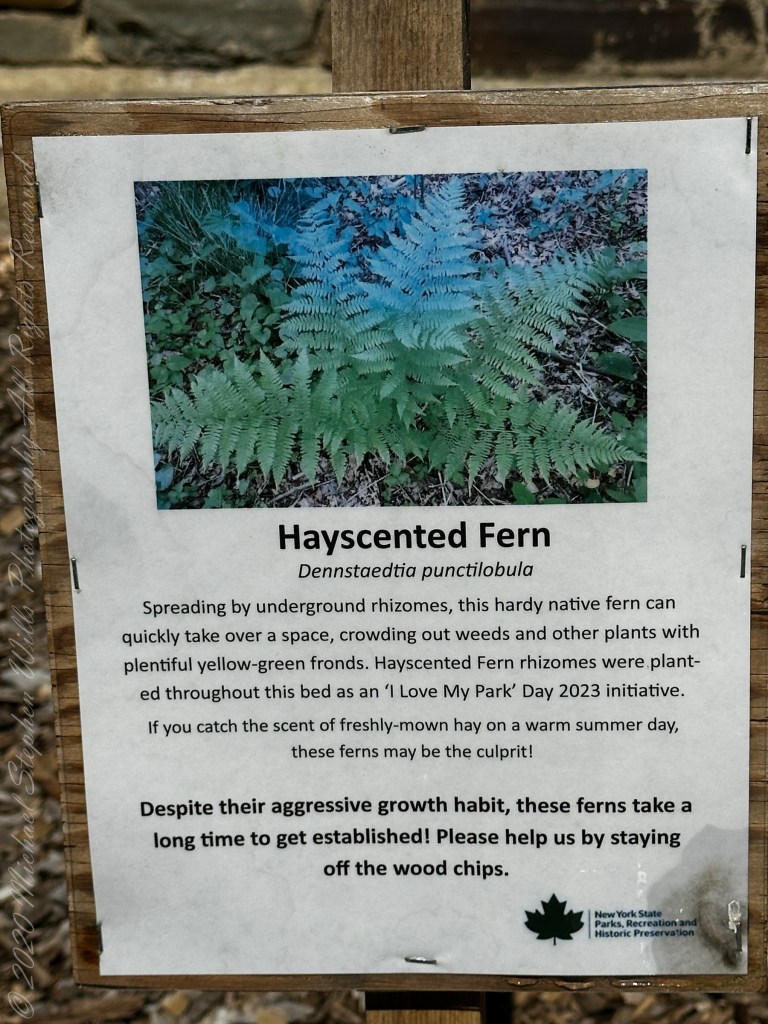
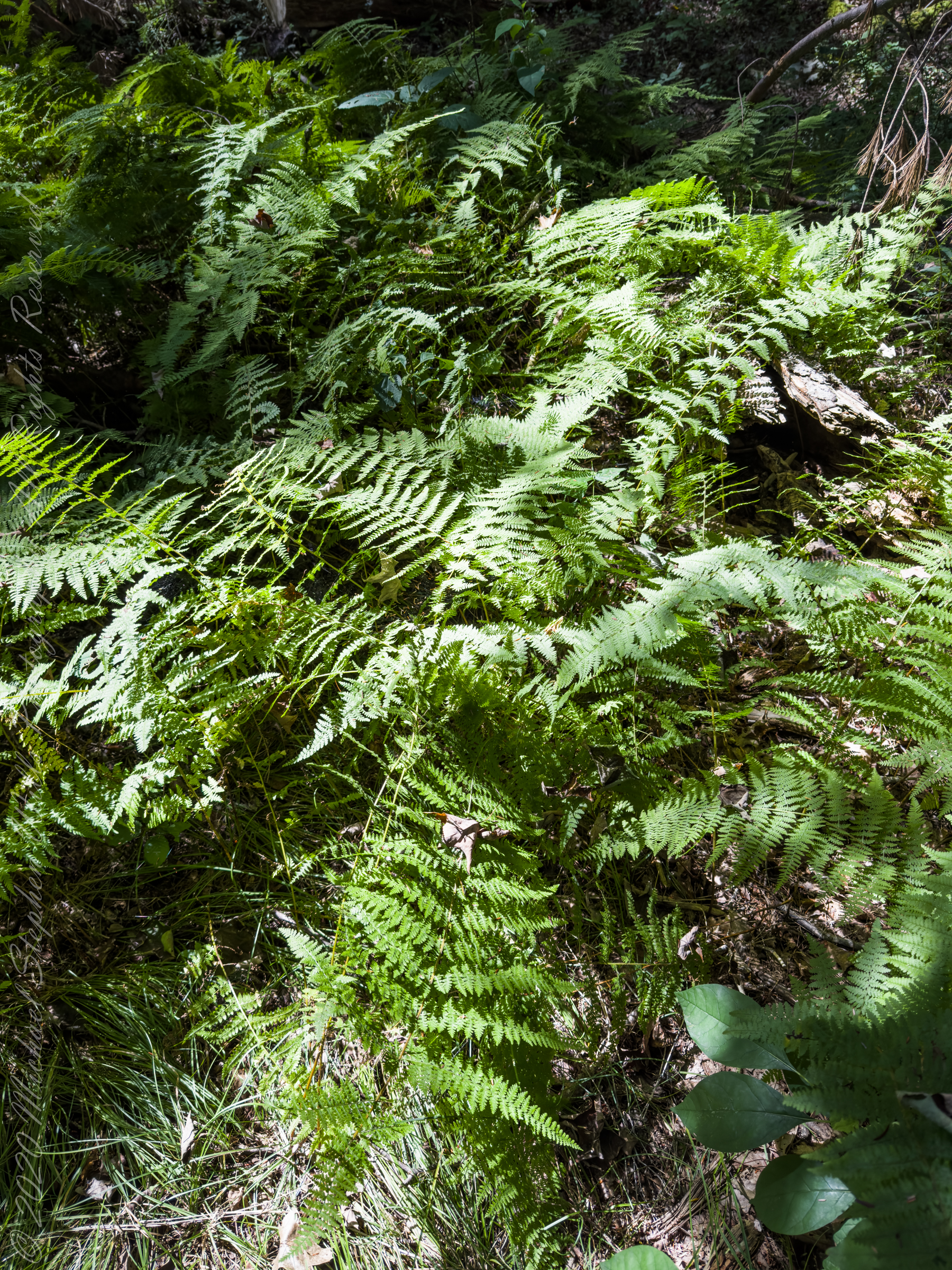
Hayscenter Fern ( Dennstaedtia punctilobula), spreading by underground rhizomes, this hardy fern native to the Finger Lakes Region of New York State, can quickly take over a space, crowding out weeds and other plants with plentiful yellow-green fronds.

“It is a deciduous fern with fronds growing to 40–100 cm (rarely 130 cm) tall and 10–30 cm broad; the fronds are bipinnate, with pinnatifid pinnules about three times as long as broad. It occurs in damp or dry acidic soils in woods or open woods, from sea level up to 1,200 m altitude.”

“Dennstaedtia punctilobula can exhibit varying degrees of phototropism. The common name “Hay-scented Fern” comes from the fact that crushing it produces an aroma of fresh hay.

“The presence of D. punctilobula influences the dynamics of the understory vegetation of many forests in the eastern United States. An abundance of highbush blackberry (Rubus allegheniensis) in open areas encourages new tree seedlings. Where the effects of herbivorous animals (such as deer) reduce the abundance of R. allegheniensis, D. punctilobula, which is not browsed by deer, takes over. Where D. punctilobula becomes common, the growth of tree seedlings is restricted.”

Reference: text in italics and quotes is from the Wikipedia, “Dennstaedtia punctilobula.”

Copyright 2023 All Rights Reserved Michael Stephen Wills

Treman Early Autumn Walk II

Cultivated vs Wild

Today I walked the Gorge Trail to below Lucifer Falls, crossed the bridge and returned via the South Rim Trail, a trip of over 5 miles according to the Apple IPhone 14 Pro Max used for these photographs.

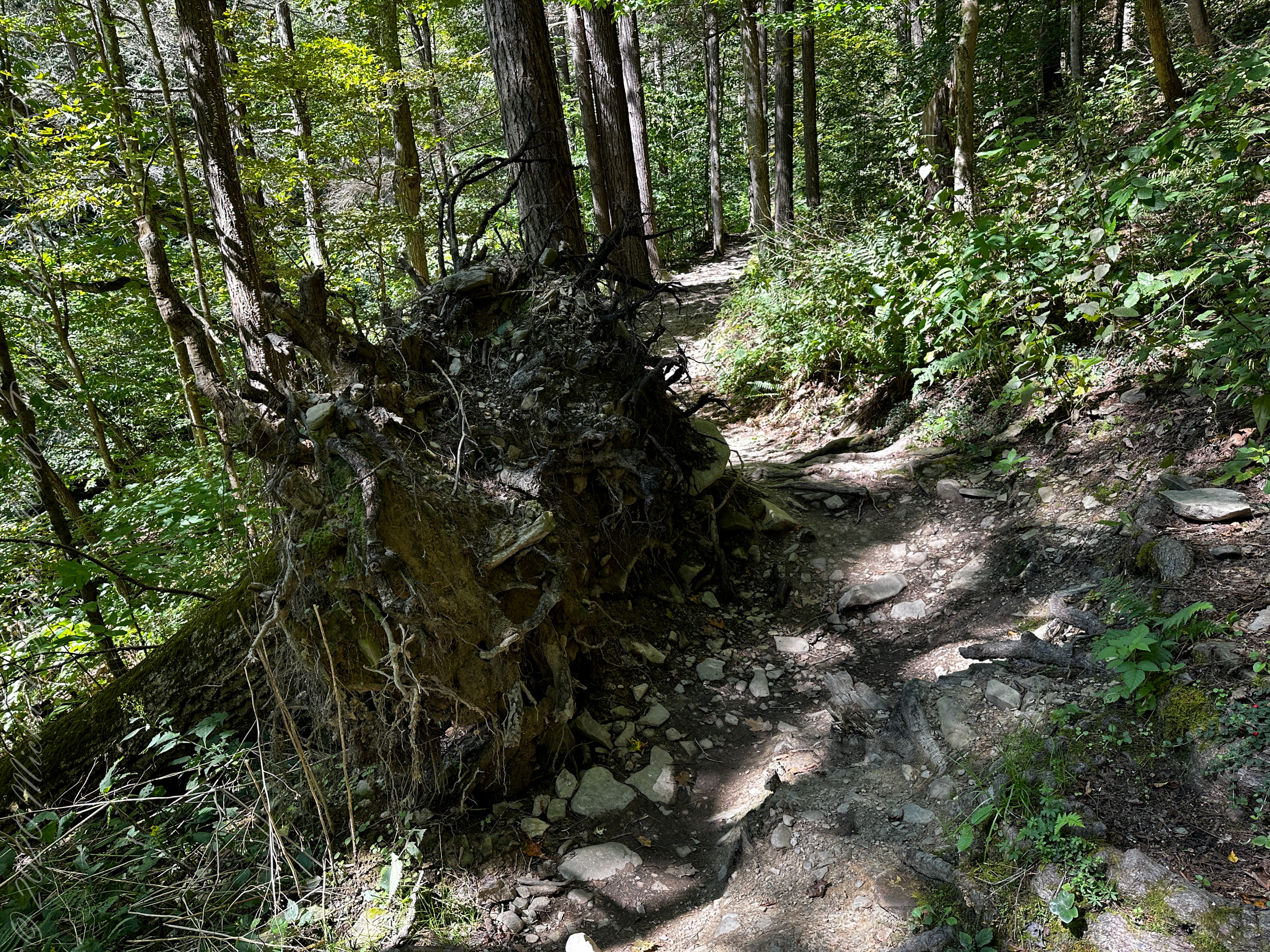
Thankful I was not here when this tree gave way across the trail.

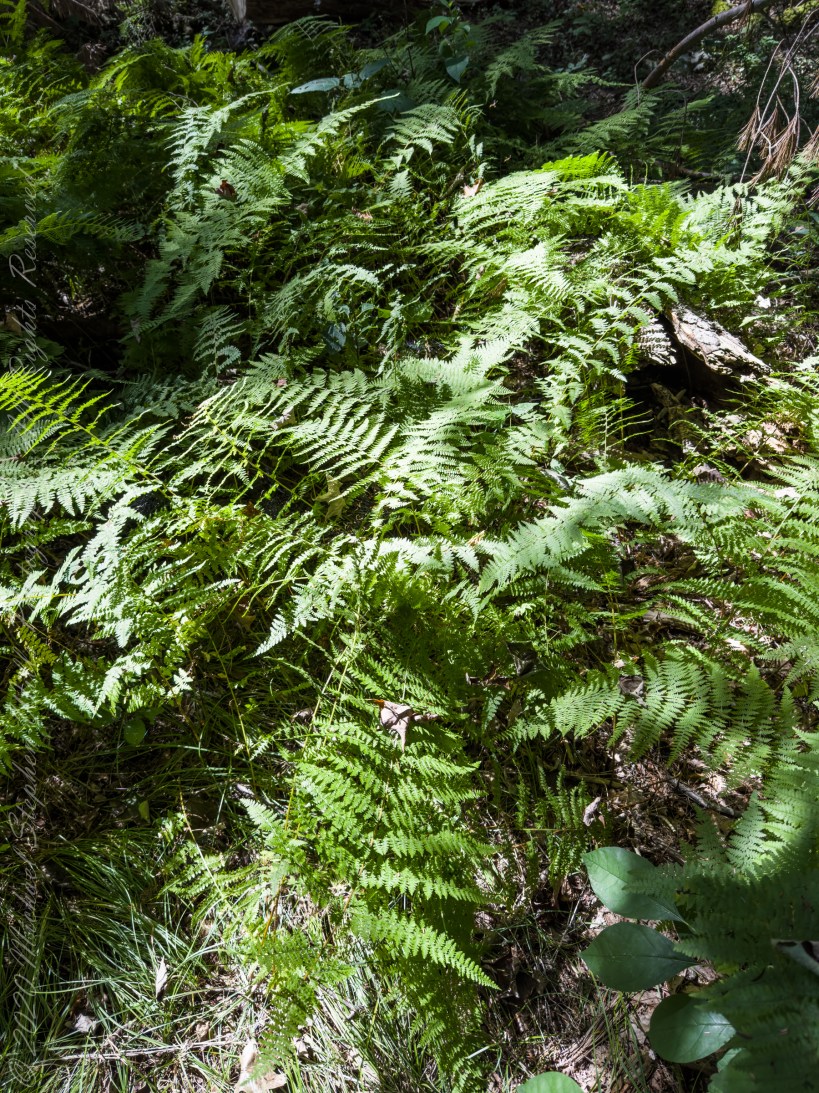
Information about a cultivated fern, followed by a photograph of the wild version, trailside.

Flourishing hayscented fern.

Click Me for the next post in this series.

Copyright 2023 All Rights Reserved Michael Stephen Wills

Treman Early Autumn Walk I

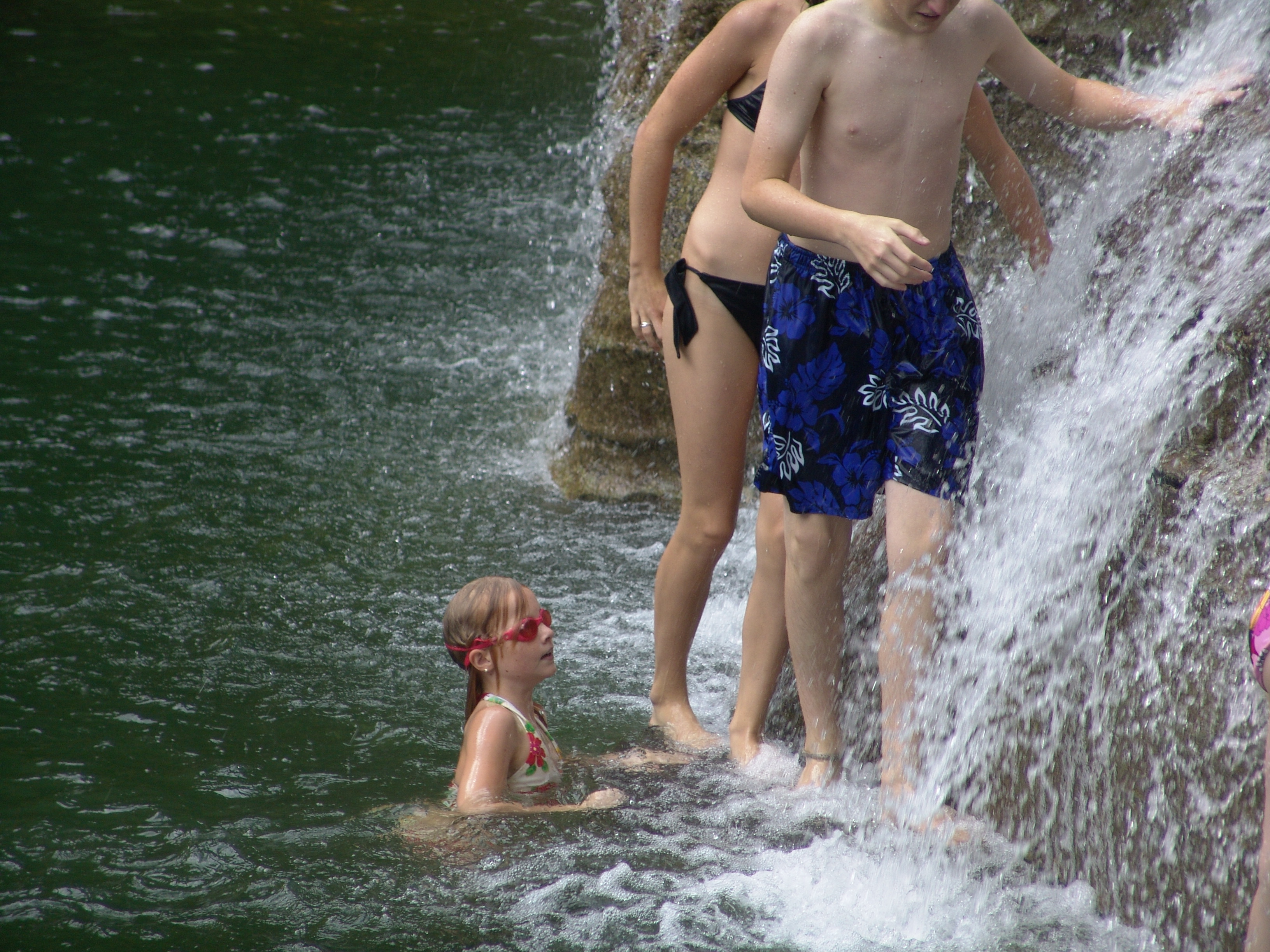
Swimming Under The Waterfall

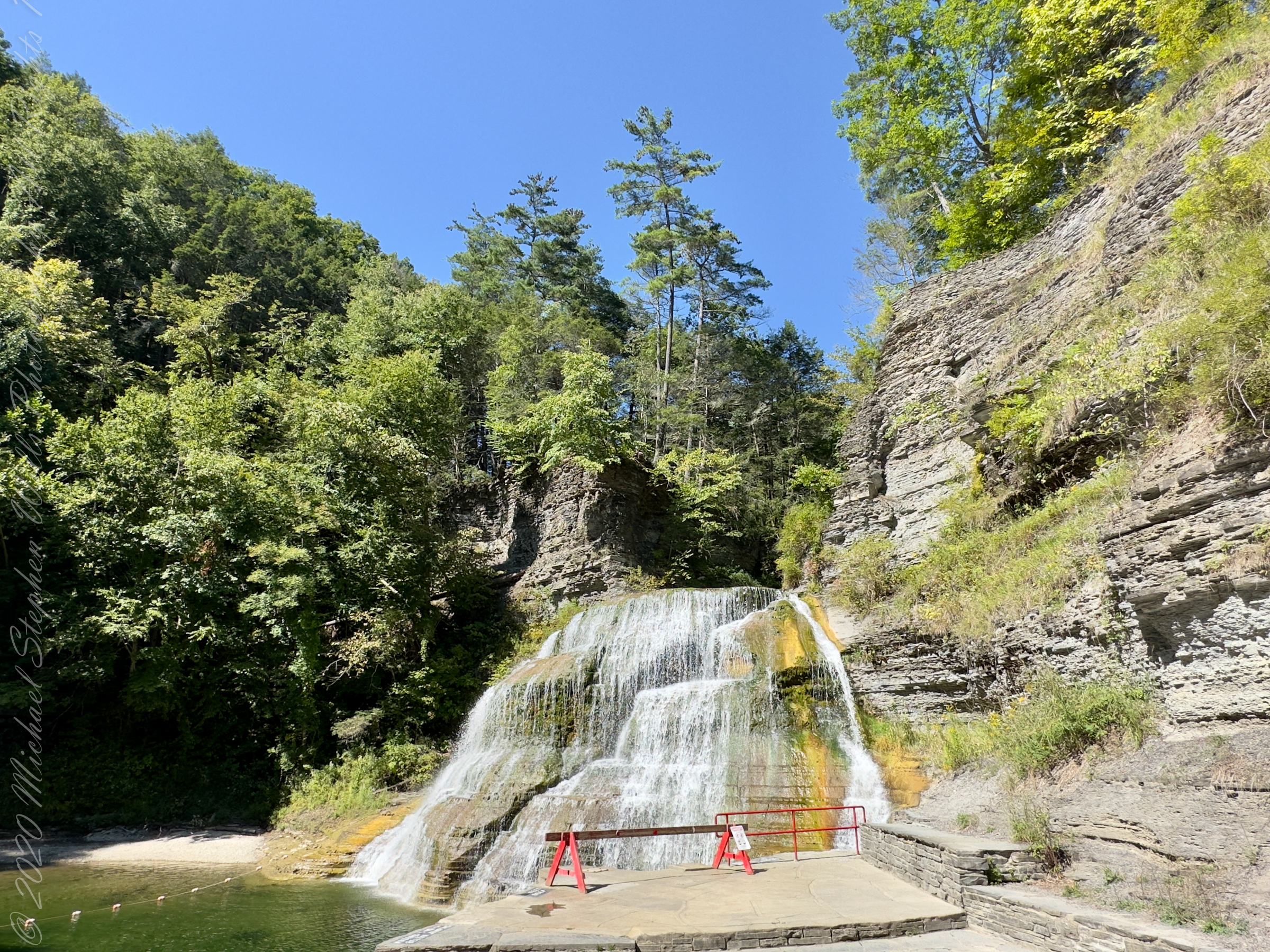
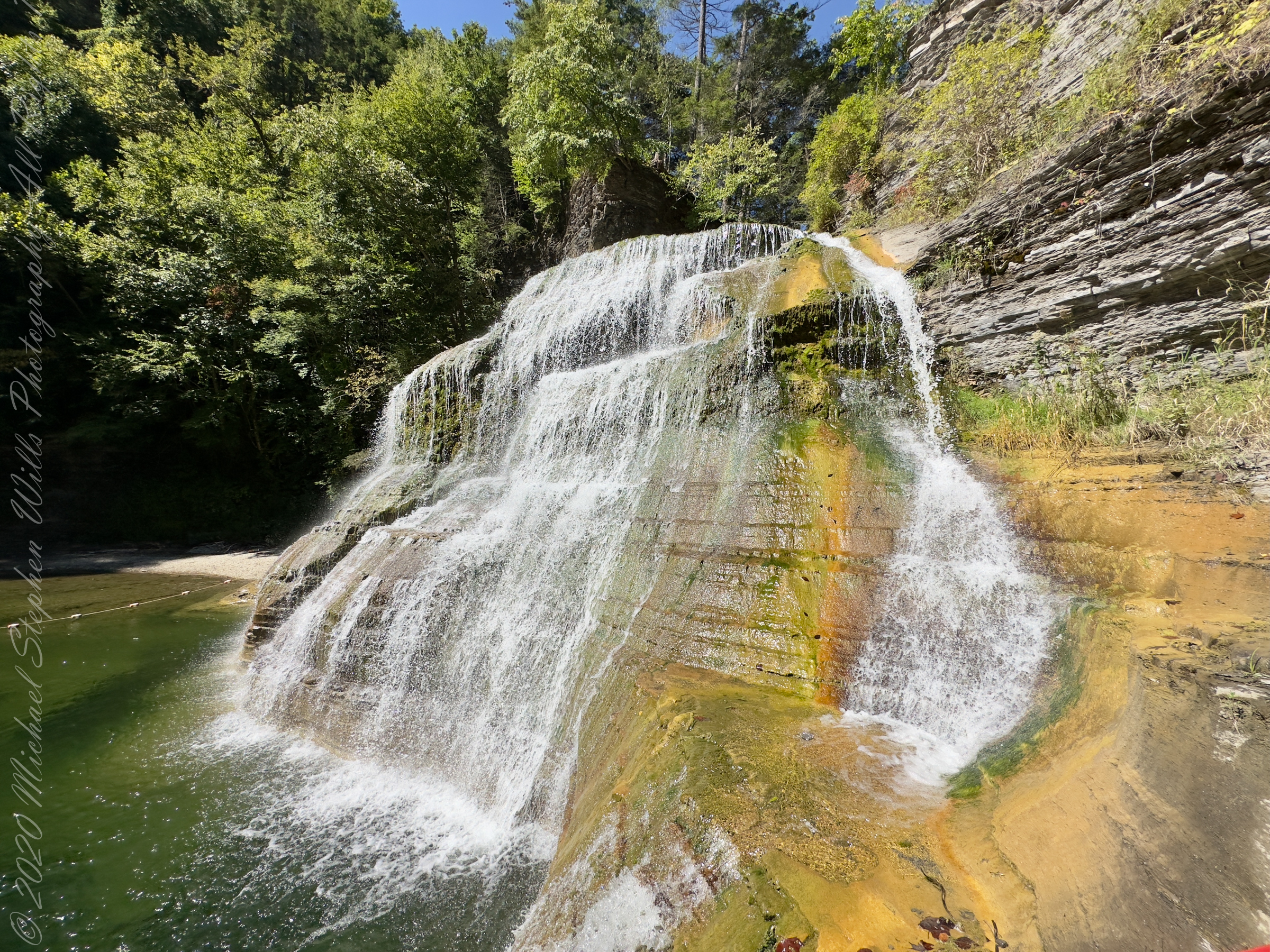
Swimming area closed for the season, the waterfall is still a draw.

An overview on a perfect September morning.

The waterfall at the height of summer in years past.

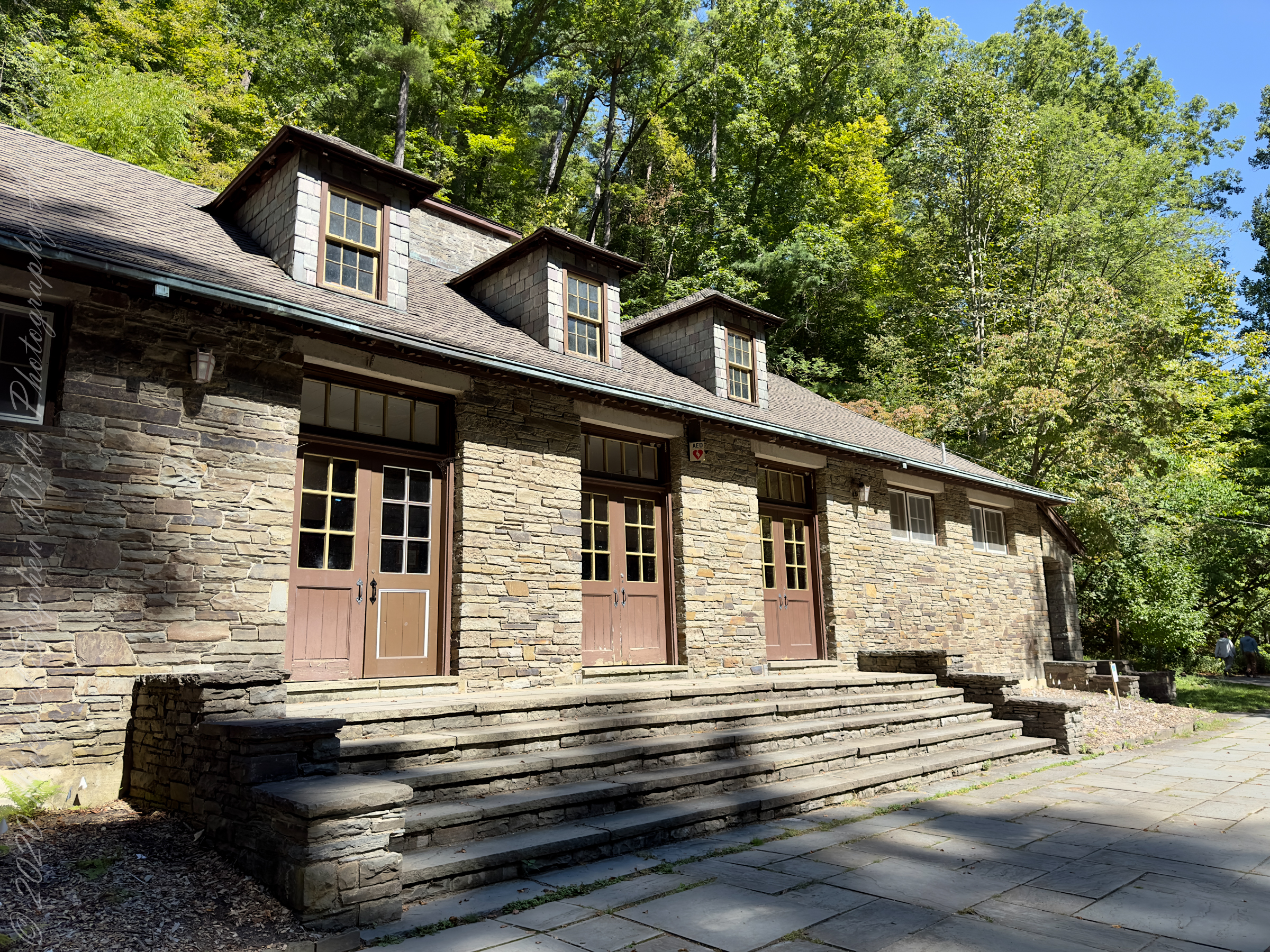
A palatial bathhouse built by the Civilian Conservation Corps, “For the people, by the people.”

Click Me for the next post in this series.

Copyright 2023 All Rights Reserved Michael Stephen Wills

Lake Treman

formed by a 1930’s Dam on Buttermilk Creek

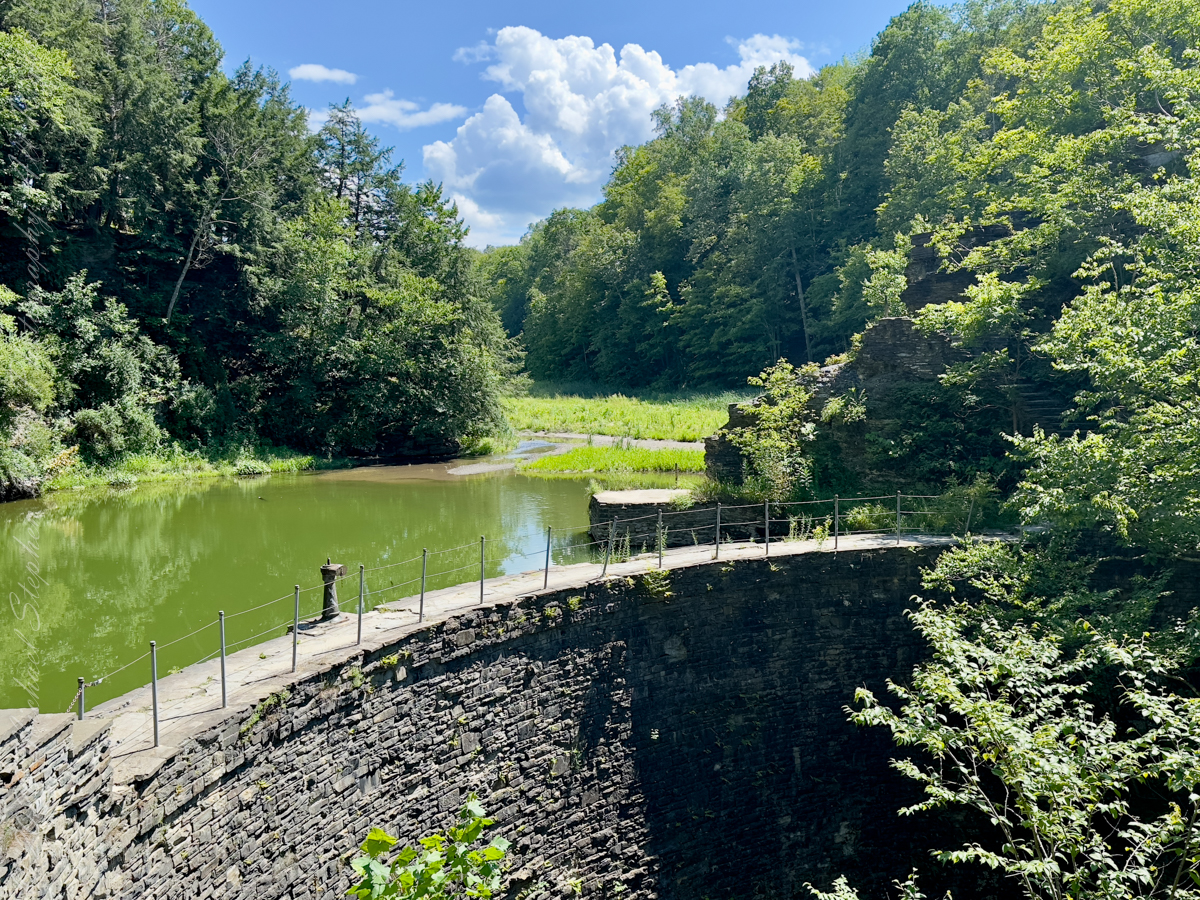
Lake Treman from the dam.

Buttermilk creek flowing into Lake Treman.

Dam on Buttermilk creek that forms Lake Treman. Here is stunning Civilian Conservation Corp (1930’s) work in this 36-foot-high stone dam that is not only a spectacle to observe but also serves as part of the trail that encircles Lake Treman. The man-made lake’s wooded shores and placid waters are a stark comparison to the gorge’s rocky cliffs and surging water

August 2023, Buttermilk Falls New York State Park, Ithaca, Tompkins County, New York.

Copyright 2023 Michael Stephen Wills All Rights Reserved