Autumn Reflections: The Majesty of Acer Rubrum

On a serene autumn afternoon by Beebe Lake, a solitary red maple stood out against the backdrop, showcasing its vibrant colors and resilience, symbolizing autumn’s fleeting beauty.

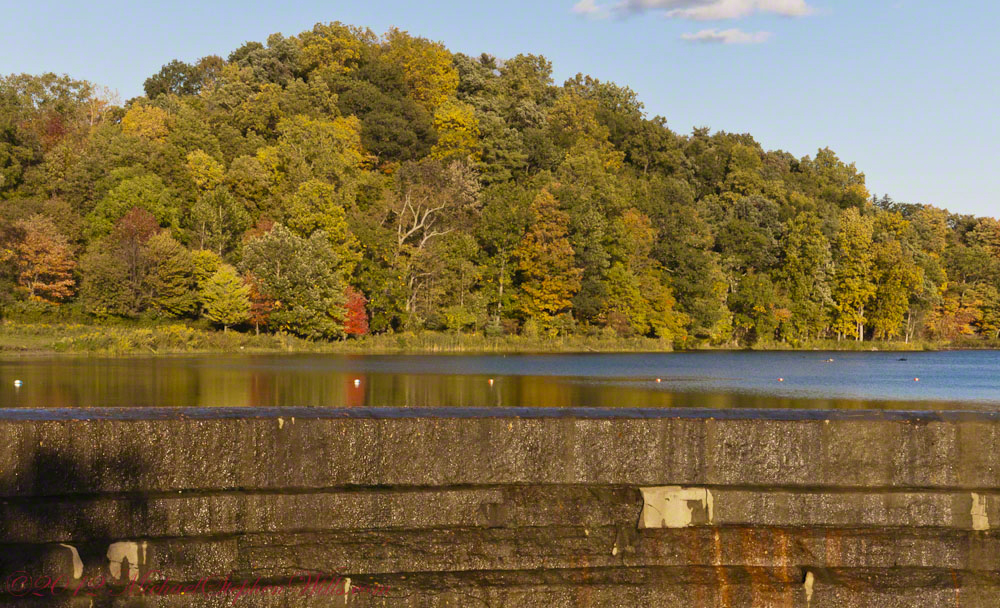
It was one of those serene autumn afternoons that linger in memory, the kind where the sky seems impossibly clear, the air crisp and gently scented with fallen leaves. I stood at the edge of Beebe Lake, my gaze first drawn to the textured concrete dam holding back the water, its weathered facade contrasting sharply with the soft reflections shimmering across the lake’s calm surface. Beyond, the wooded hillside rose gently, a tapestry woven with the warm hues of autumn—golds, greens, oranges, and reds mingling like brush strokes on a canvas.


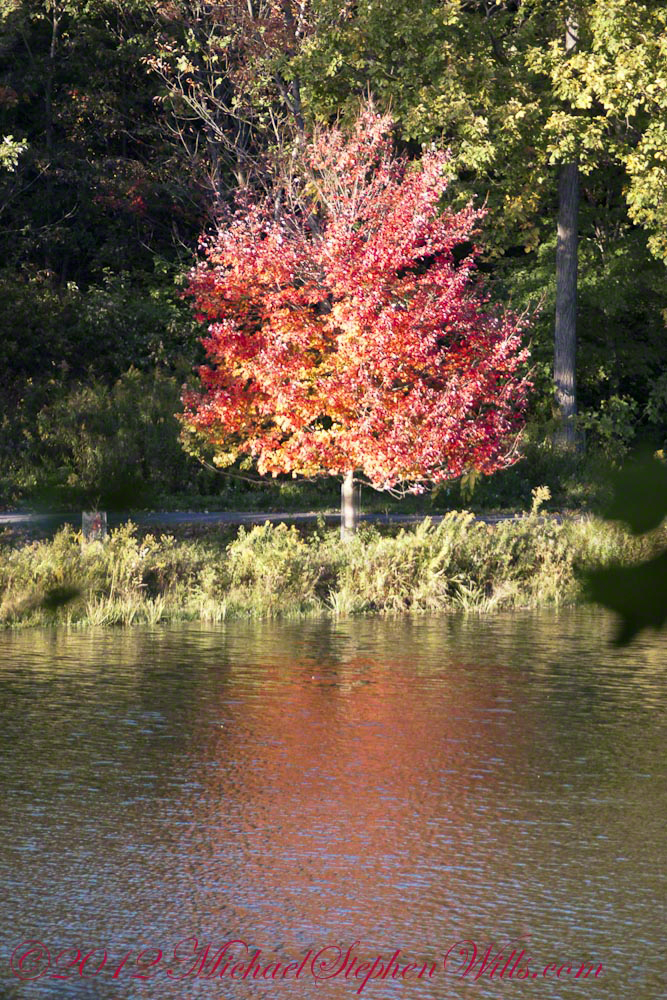
An October Glory, turning before all others

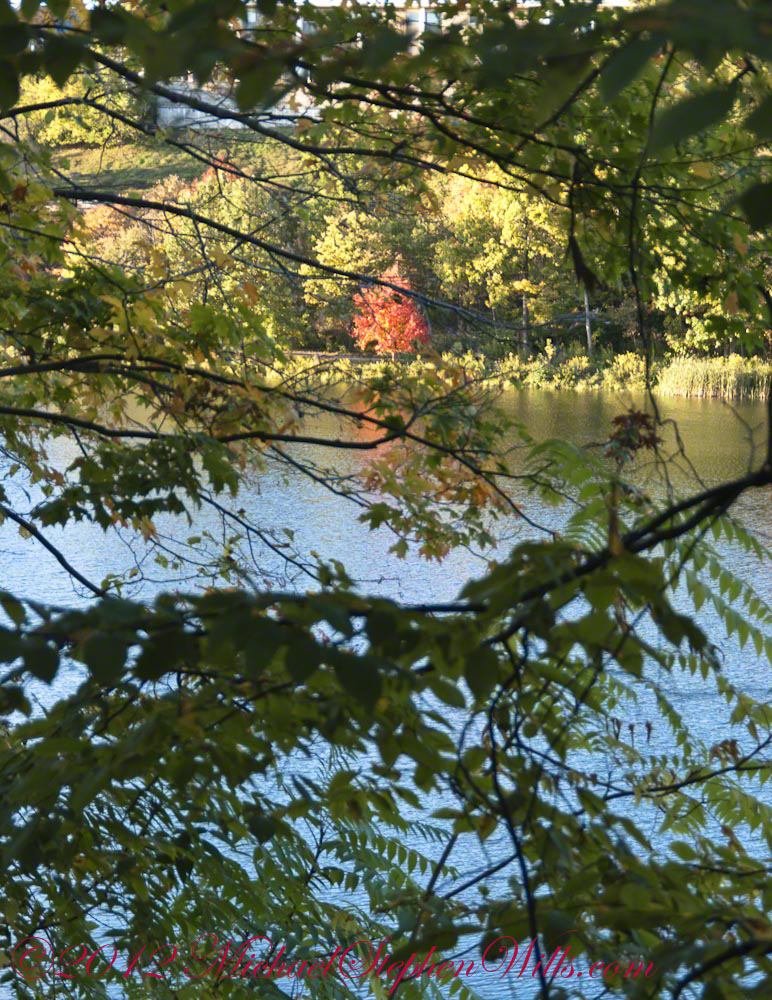
Yet amidst this collective beauty, one tree captured my attention, singular in its brilliance—a solitary red maple standing proudly on the lakeshore. Its leaves had turned a vivid crimson, blazing brightly as though defying the muted earth tones surrounding it. Even from a distance, framed and partially obscured by larger trees, its vibrant reflection cast a fiery echo on the water, rippling softly in the afternoon breeze.

The maple, Acer Rubrum, seemed perfectly at home here, thriving robustly at the water’s edge. I remembered reading how adaptable red maples are, able to flourish in conditions ranging from dry uplands to swampy shores. This spot, near the edge of the tranquil Beebe Lake, seemed to showcase its resilient character perfectly.

Up close, the maple’s glow was even more striking. Its leaves cascaded in fiery clusters, hues deepening from bright scarlet at the tips to a darker maroon closer to the branches. This dramatic gradient seemed symbolic of autumn itself—beautiful, fleeting, and subtly tinged with the melancholy reminder of winter’s approach.

The Red Maple (Acer Rubrum) to tolerant of diverse conditions, making it a perfect choice for this spot on the short of Beebe Lake.

A memory surfaced of early spring in the Finger Lakes region, a time when maples, including this red maple, generously share their sap. Though not traditionally tapped like its sweeter cousin, the sugar maple, this species’ sap can indeed be boiled down into syrup, a surprising sweetness hidden within its sturdy trunk. Standing in its shadow, imagining those early spring days, it seemed astonishing that the same tree could offer both the delicate sweetness of syrup and the fierce beauty now on display.

Curiously, the transformation of the tree appeared methodical yet whimsical—it changed colors from the top down, its upper branches already bare, exposing slender twigs pointing skyward. Like an artist carefully removing layers to reveal something deeper beneath, the maple unveiled its upper bare bones first, as though reminding observers of the quiet strength supporting its autumn splendor.

This Red Maple (Acer Rubrum) turns from the top down and has already bare for most top branches.

As I lingered, taking in this turning tree, joggers passed by along the path, their rhythmic footsteps a gentle percussion beneath the rustling leaves. Briefly, they glanced toward the vivid maple, perhaps drawn, like me, by its striking contrast to the surrounding foliage. It felt like we shared a secret admiration for this singular tree, recognizing in it a quiet assertion of individuality amidst conformity.

Eventually, I viewed the maple once more from afar, framed now by broader sweeps of branches and leaves, partially obscured but no less vivid. Through layers of leaves and dappled sunlight, it glowed like a distant flame, a beacon that seemed to encapsulate the entire mood of the season—warm yet cool, bright yet transient.

The Red Maple (Acer Rubrum) is the first to flower in spring and the first to turn in autumn.

Walking away, the image of that maple lingered, its reflection shimmering gently in the afternoon sun, a moment suspended between summer’s lush vitality and winter’s bare stillness. Beebe Lake had offered scenic beauty, a quiet meditation, a reflection mirrored not only on its tranquil surface but in the heart of an observer captivated by a single tree’s fleeting glory.

Enter your email to receive notification of future postings. I will not sell or share your email address.

Exploring Ecological Wonders at Cornell Botanical Gardens

The Cornell Botanical Gardens blend ecological education and African American history through diverse plant life, creating a vibrant, engaging experience.

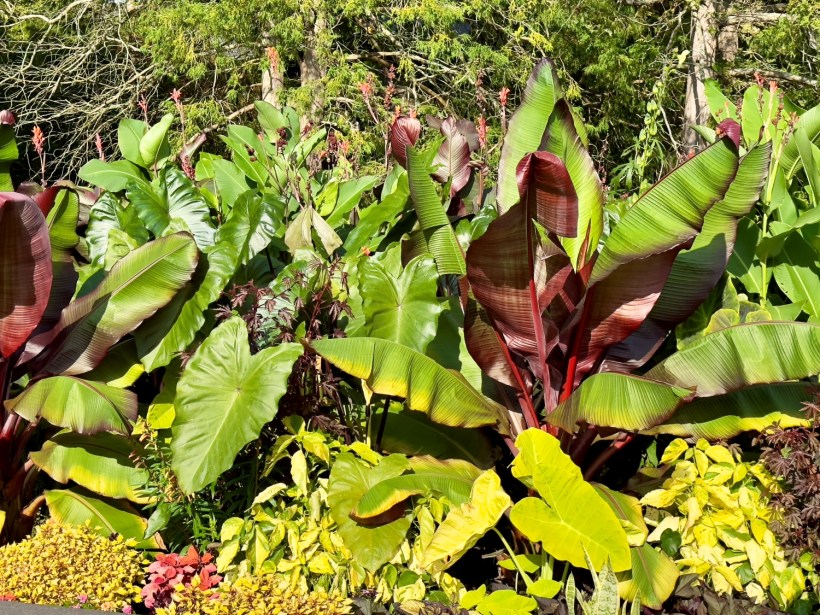
As Pam and I wander near the Nevin Welcome Center at the Cornell Botanical Gardens on a bright, early autumn day, my eye catches on a cluster of verdant, broad-leaved foliage. The sunlight filters through the leaves, casting a luminous green glow, while hints of red and burgundy add warmth to the scene. The plants here have a presence, a boldness that draws me in, and as I approach, I notice an array of information signs, thoughtfully placed to explain the rich tapestry of flora surrounding me.

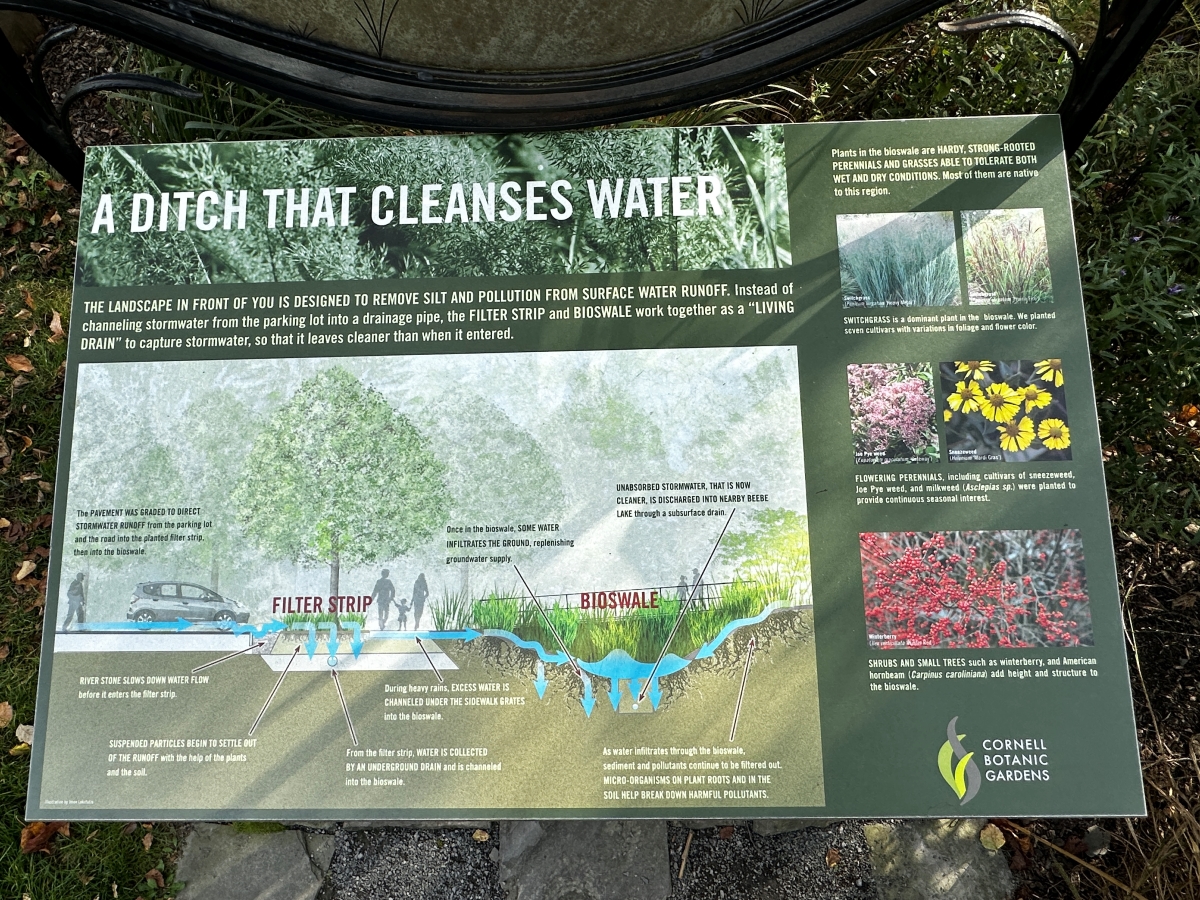
The first sign I encounter is titled “A Ditch That Cleanses Water.” It immediately piques my curiosity. In just a few sentences, it describes how this landscape is designed to capture and cleanse stormwater runoff, turning what might otherwise be a simple drainage area into a living, breathing ecosystem. Instead of funneling water into a standard drainpipe, a filter strip and bioswale—a kind of vegetative trench—work in tandem to trap silt and pollutants. There’s a delicate choreography happening here, as water flows from the parking lot into river stone beds, slowing down, and then into the plant-lined filter strip, which encourages suspended particles to settle out.

The bioswale itself is lush and resilient, filled with hardy, native plants that thrive in both wet and dry conditions. The sign explains that these plants are carefully chosen varieties such as Switchgrass and flowering perennials—sneezeweed and Joe Pye weed among them—that provide color through the seasons. Small trees like winterberry and American hornbeam add height and structure, giving this ecological marvel both function and form. I’m struck by how much thought has gone into something as mundane as stormwater runoff, transforming it into a process that supports the environment but also creates a pleasing view. Here, the bioswale captures the stormwater, filters it, and releases it cleaner than before, a quiet miracle of natural engineering.

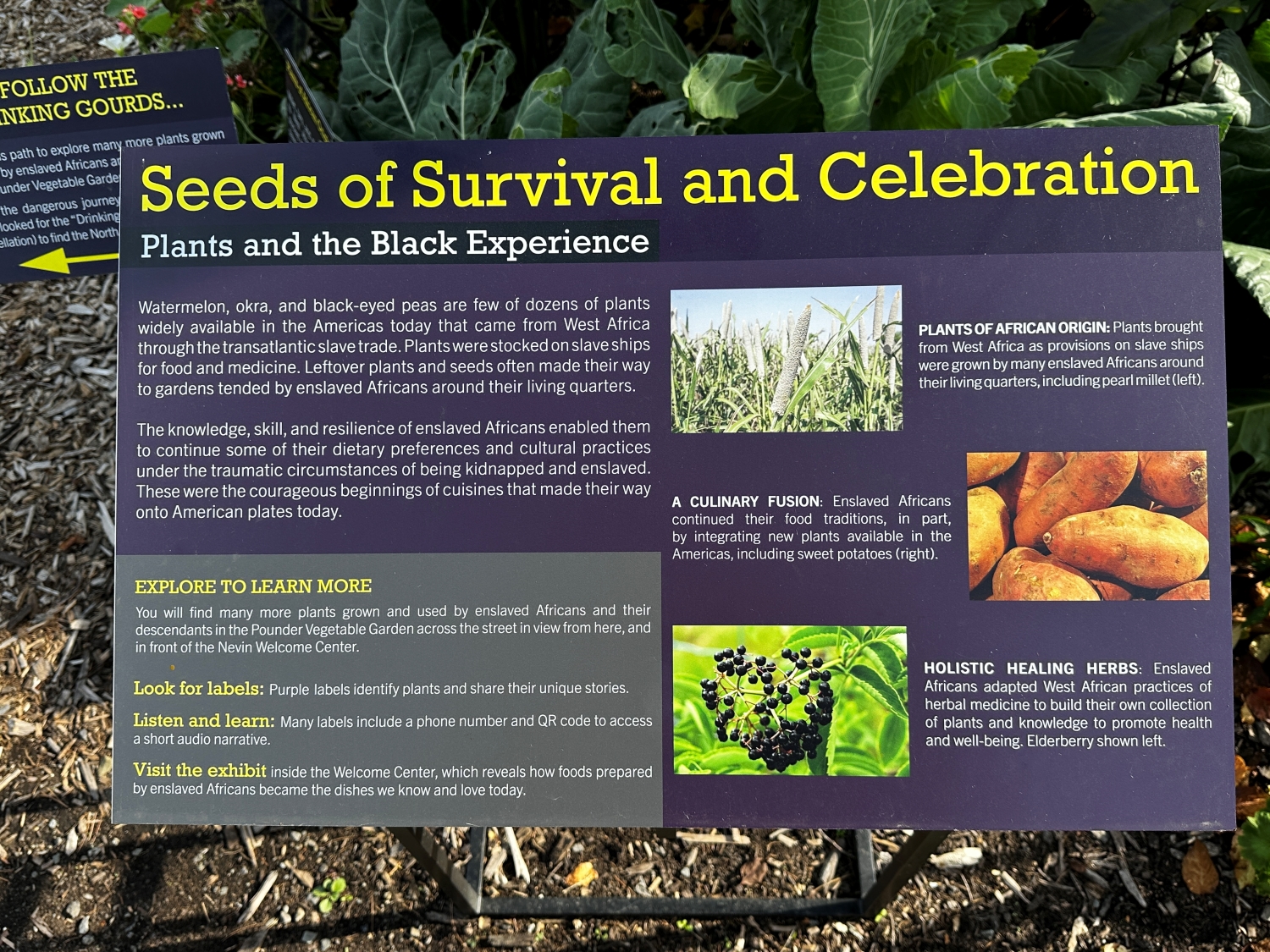
Moving on, I find another sign titled “Seeds of Survival and Celebration: Plants and the Black Experience.” This sign feels more intimate, as it dives into the deep history of plants brought from West Africa during the transatlantic slave trade. I’m reminded that gardens can be repositories of history, culture, and resilience. Plants like watermelon, okra, and black-eyed peas were brought by enslaved Africans who tended them near their quarters, ensuring a piece of home remained with them, even under unimaginable conditions. These plants became the foundation of African American culinary traditions, and I can almost taste the sweet potatoes and other foods that have become part of our shared heritage. The sign even nods to holistic healing herbs like elderberry, which were used to promote health and well-being, demonstrating how enslaved Africans maintained aspects of their culture through the plants they grew.

As I reflect on the stories woven into these signs, I find myself surrounded by a stunning mix of bold, leafy plants in vibrant greens, reds, and yellows—an almost tropical display that stands defiant against the approaching cold season. Banana leaves, elephant ears, and coleus fill the garden beds, their leaves large, showy, and unabashedly lush. The scene feels alive, a burst of tropical splendor amid the Finger Lakes. These aren’t plants native to upstate New York, yet they’ve been incorporated here with care and skill, bringing a hint of warmth as the days grow shorter. Their wide, smooth surfaces reflect the sunlight, catching my eye with every slight breeze, and they create an atmosphere that is both exotic and inviting.

This day, the Cornell Botanical Gardens have offered Pam and I beauty along with education. The signage has guided us through ecological engineering, the resilience of African American foodways, and the artistry of landscape design, blending these narratives into the landscape itself. Each sign, each plant, tells a story, and as I walk away, I carry these tales with me, reminded that gardens are not merely for looking—they are for learning, for remembering, and for celebrating the resilience of life in all its forms.

Enter your email to receive notification of future postings. I will not sell or share your email address.

Jenny Pickford’s Double Allium: A Tribute to Nature’s Wonders

The Double Allium sculpture symbolizes nature’s beauty and personal connection, reflecting the artist’s homage to alliums and cherished memories.

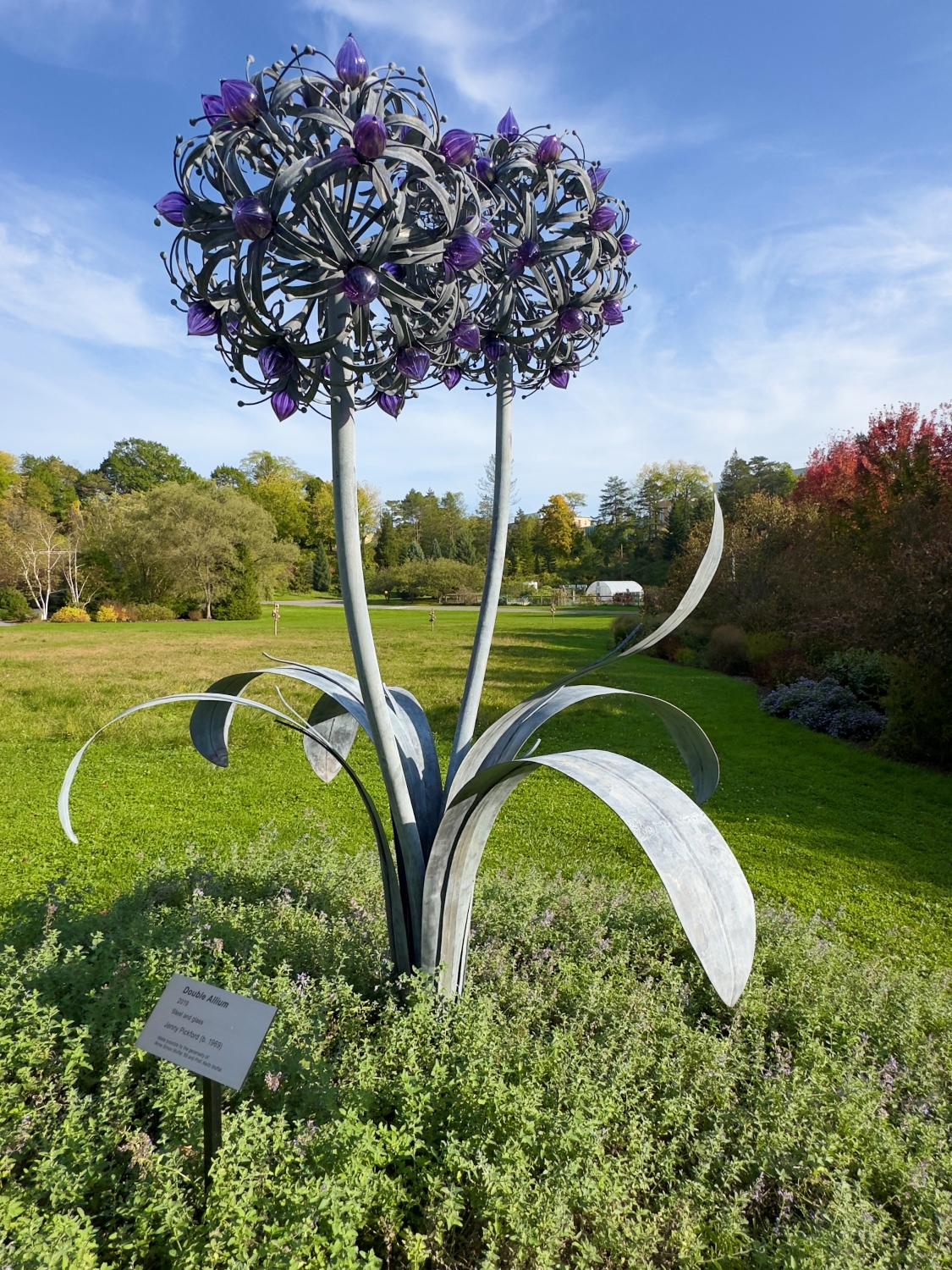
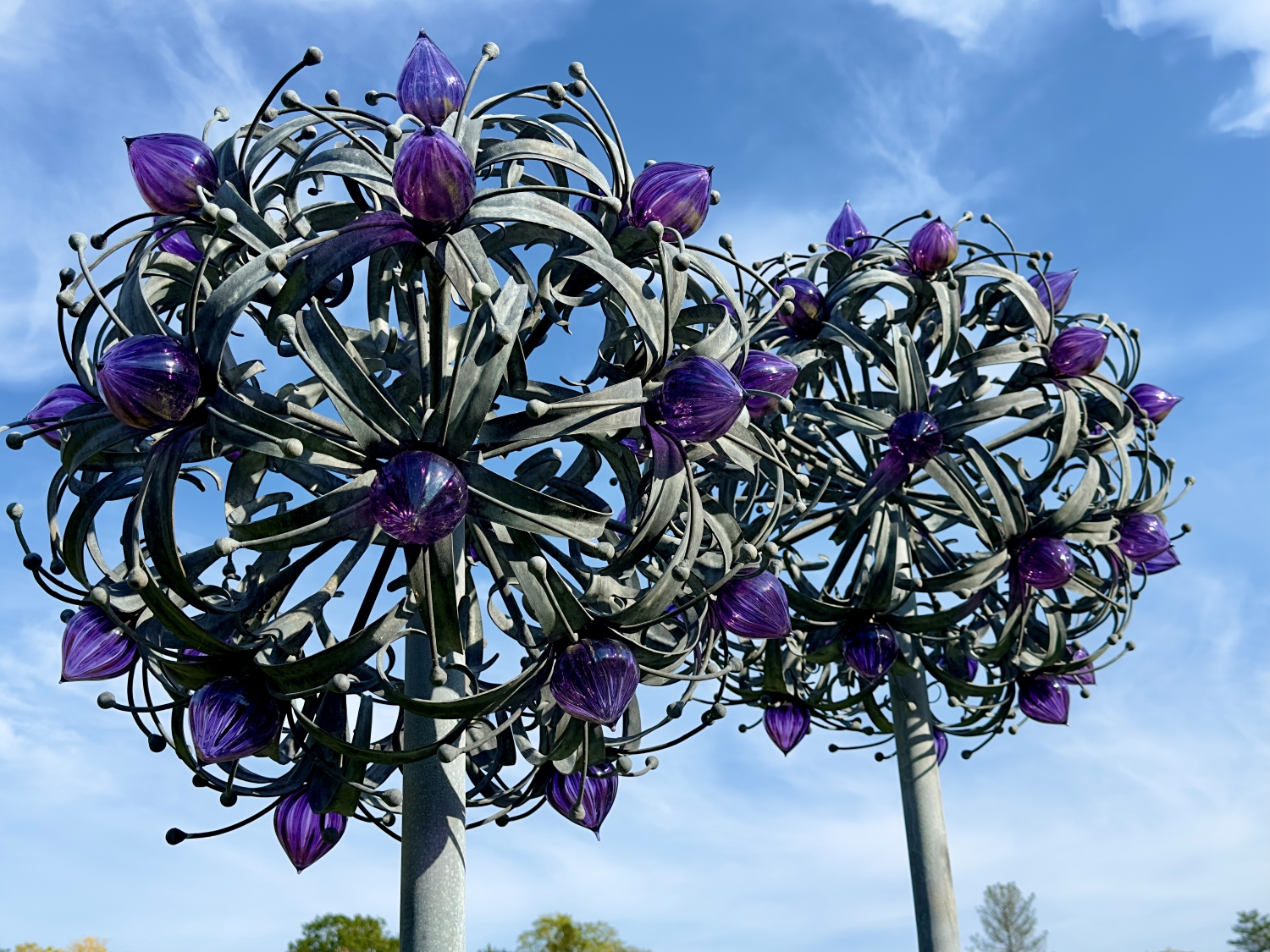
As I wander the paths of the Cornell Botanical Gardens near the Nevin Welcome Center, a towering sculpture arrests my attention, rising well over ten feet into the bright autumn sky. At first glance, it’s unmistakable—a pair of massive allium blooms crafted from steel and glass, an artistic tribute to the very flowers my wife, Pam, has come to love. This creation, titled Double Allium, is the work of British artist Jenny Pickford, completed in 2019. Made of robust steel and translucent purple glass, it stands proudly among the greenery, capturing both the delicacy and boldness of allium flowers.

A few summers ago Pam planted several allium in sunny locations, which exploded into violet firework-like blooms, each sphere teeming with tiny star-shaped flowers that clustered together into one massive, round bloom. When the alliums blossomed, they attracted a small frenzy of bees, and it became a shared delight for us to watch our garden transform into a pollinator’s paradise. Pam was captivated by the plants’ structure and beauty, as well as their ecological role in supporting bees—a small, vibrant ecosystem within our yard. Standing before Double Allium, I’m reminded of those summer days and the quiet joy we both found in observing our garden.

Bees and Allium in our summer garden, 2024

The scientific name for alliums, Allium giganteum (for the larger ornamental varieties), links them to a vast genus that includes onions, garlic, and leeks. These plants have been cultivated and revered by humans for thousands of years, not only for their culinary value but also for their symbolism in various cultures. In ancient Egypt, alliums were believed to represent eternity; their spherical form and concentric layers were thought to mirror the eternal nature of life. Even today, they bring a sense of timelessness to gardens worldwide, their tall stalks and spherical blooms defying gravity, standing tall against the changing seasons.

As I study Pickford’s sculpture, I’m struck by how faithfully it captures this essence of alliums—strength paired with grace, structure married to elegance. The steel stems curve gently yet rise powerfully from the ground, while the glass petals shimmer in the light, giving an almost ethereal quality to the blooms. Pickford, born in 1969, is known for her botanical-inspired sculptures that explore the intersection of nature and art. With Double Allium, she’s created a piece that feels alive, as if the blooms might sway in the wind or burst into real flowers at any moment.

For Pam and me, this sculpture pays homage to a beautiful plant; it’s a connection to our own experience with nature, a reminder of those summer mornings watching bees dance among our alliums. Standing beneath Double Allium, I feel a sense of continuity—a link between the art and our own small garden, between our life and the ancient cultures that cherished these plants, between the permanence of steel and the fleeting beauty of each summer bloom.

In this towering sculpture, Pickford has given us a mirror that reflects nature as well as our personal connection to it. “Double Allium” is a celebration of growth, strength, and beauty, qualities that Pam and I cherish in the alliums we tend and that we find echoed in this remarkable work of art.

Enter your email to receive notification of future postings. I will not sell or share your email address.

Vibrant Blooms of Zinnias and Gazanias at Cornell Botanical Gardens

Join me in admiration of these Zinnias and Gazanias at the Cornell Botanical Gardens, highlighting their vibrant beauty and rich botanical history.

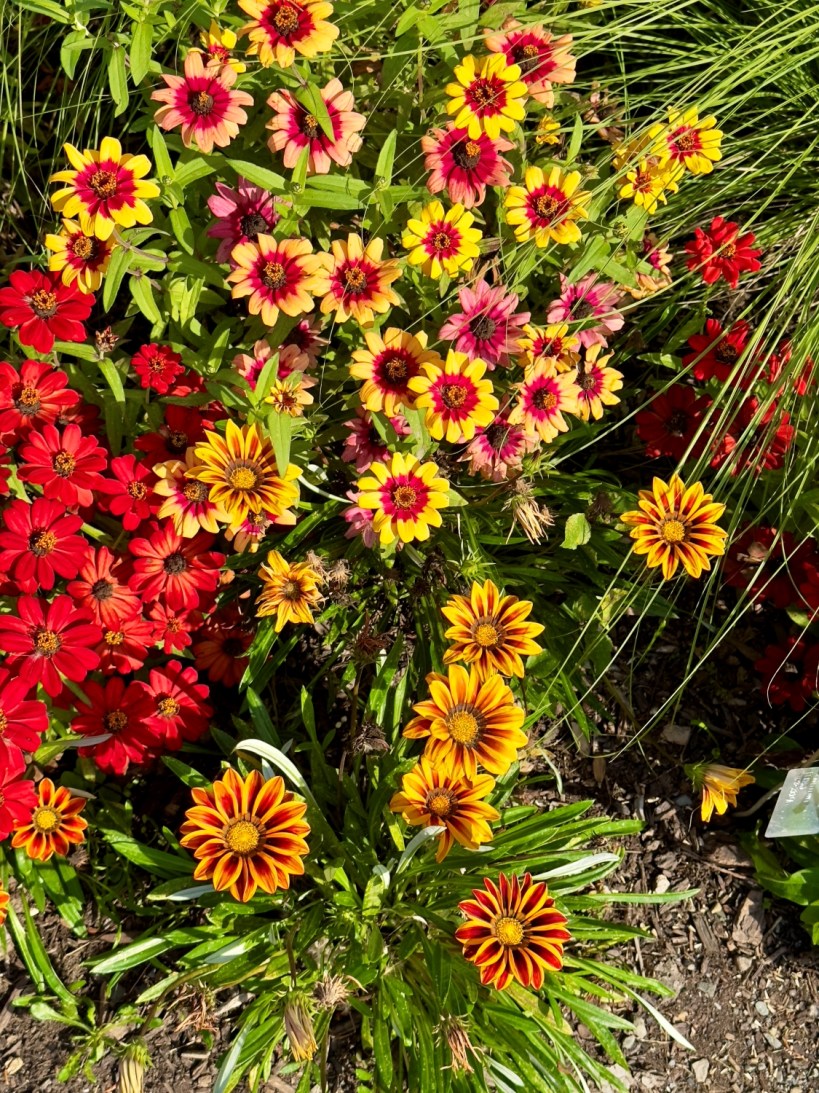
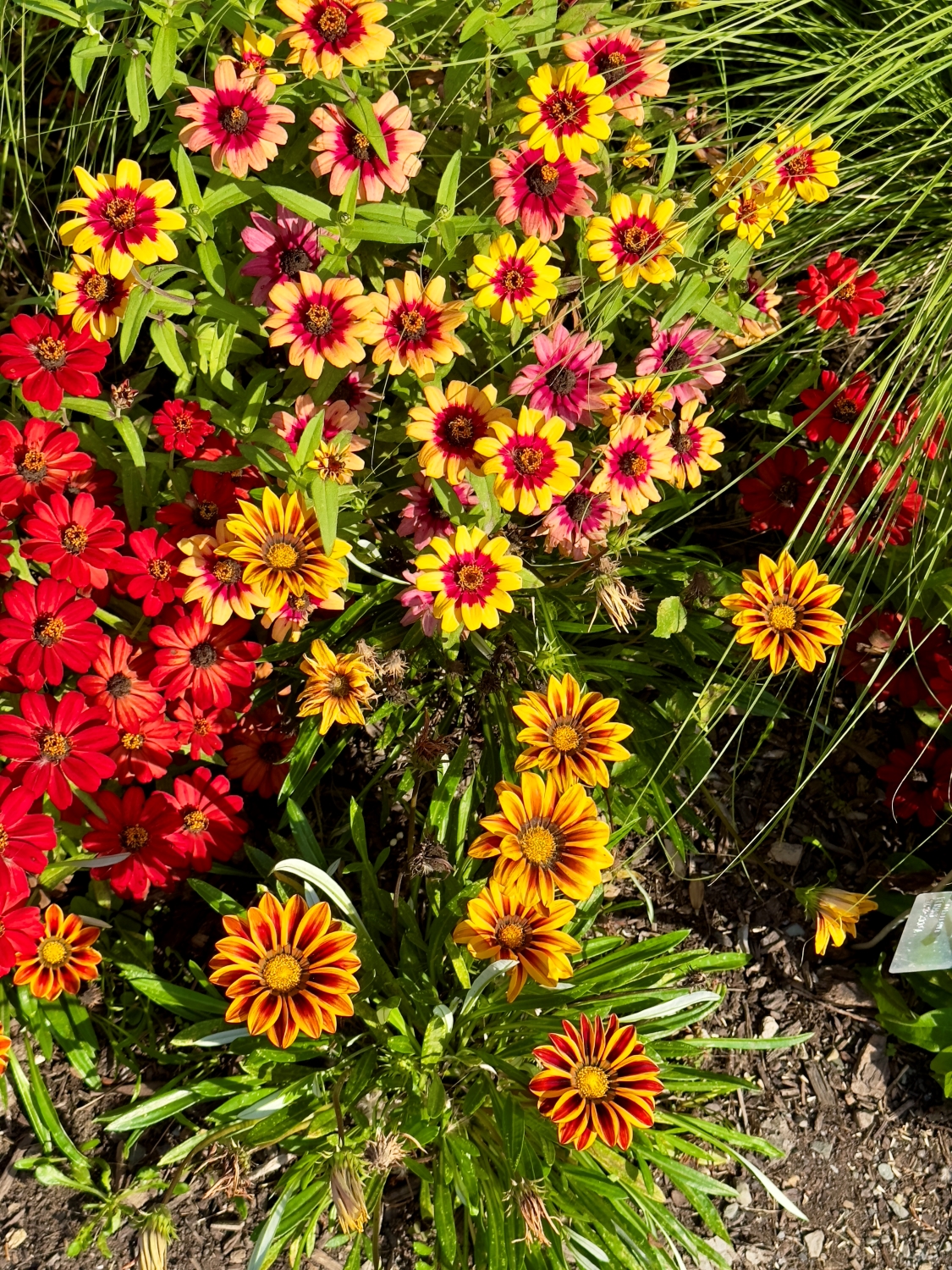
As I stroll around the Nevin Center at the Cornell Botanical Gardens, my eye is drawn to a bed of bright, cheerful flowers that seem to beam with personality. Here, amidst the lush plantings, Zinnias and Gazanias bring their vivid colors to life, each bloom a tiny celebration of nature’s artistry. These flowers, from a family spanning two continents, share a surprising harmony that only the language of color and form could convey.

The Zinnias (family Asteraceae), little fireworks exploding in hues of yellow, red, pink, and orange. They belong to the daisy family, which includes many well-known wildflowers and ornamental plants. Native to the warm regions of Mexico and Central America, Zinnias were first documented by Dr. Johann Gottfried Zinn, an 18th-century German botanist. Dr. Zinn initially set out to study human anatomy, but he turned to botany after inheriting the job of garden inspector at the University of Göttingen. His study of these cheerful flowers was eventually immortalized when the genus was named in his honor. Every time I see a Zinnia, I think about Dr. Zinn’s unexpected journey into botany and how these resilient, sun-loving flowers carry on his legacy.

Growing alongside them are Gazanias (family Asteraceae as well), which, despite their similarity in form, come from an entirely different part of the world. These stunning blooms are native to South Africa, thriving under the intense African sun. Also known as “treasure flowers,” Gazanias have radiant, striped petals that look like they’ve been painted by hand, with shades of fiery orange and deep red. The name Gazania honors Theodorus Gaza, a 15th-century Greek scholar who translated many important botanical works from Greek into Latin. I can’t help but feel that these flowers, with their bold, jewel-toned colors, live up to the name “treasure,” each one a small gem in the landscape.

As I stand here, admiring these blooms, I’m struck by the way they bring a sense of vibrancy and warmth to the Nevin Center. Both Zinnias and Gazanias are sun-worshippers, thriving in full sunlight and well-drained soil, making them ideal for this bright spot. Their colors seem even more dazzling against the verdant greens of the surrounding plants, and they attract bees and butterflies, adding another layer of life to this already lively space.

In a way, the planting here feels like a dialogue between continents, with the Zinnias representing the New World and the Gazanias embodying the spirit of Africa. It’s a conversation that reminds me of the global heritage of our gardens, how each plant carries a story, a name, and a lineage across borders and centuries. Here at the Cornell Botanical Gardens, they’ve found a new home, far from where they first bloomed, but as vibrant as ever.

I leave the Nevin Center with a sense of joy and gratitude for these botanical ambassadors. Zinnias and Gazanias, each named for pioneers in botany, remind me that discovery often comes in unexpected forms, just as beauty does. They teach us to look closely, to celebrate color and form, and to appreciate the living history all around us.

Enter your email to receive notification of future postings. I will not sell or share your email address.

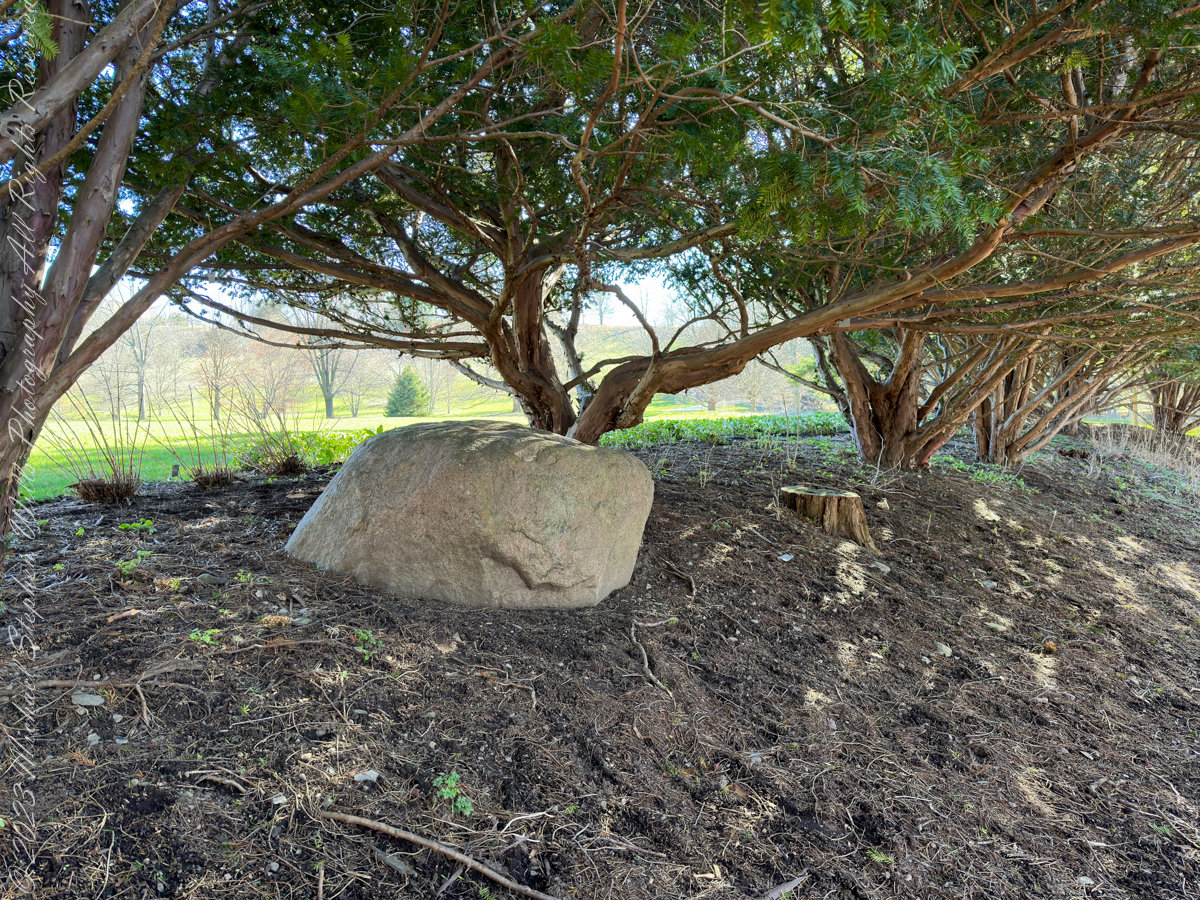
Glacial Erratic, unremarked

This maple tree is one of the first plants to flower in spring.

Pam and I ambled around the Arboretum for our Easter 2023 outing.

Click Me for “Finger Lakes Memories” my online gallery.

All photography using the IPhone 14 ProMax triple camera, raw format, edited on the phone.

We find boulders of crystalline rock, commonly derived from Adirondack sources, left behind on the surface of ablation moraine, in the Finger Lakes Region.

Cornell finds some and move them, maybe the case for this unremarked erratic found along the Allen Trail of FR Newman Arboretum.

Another enormous erratic, brought in from the Sixmile Creek valley, was carved into a seat as a memorial to Professor R.S. Tarr who deciphered much of the glacial history of the Finger Lakes Region. Find it at the southwest corner of McCraw Hall on the Cornell University Campus.

History (from wikipedia)

During the 18th century, erratics were deemed a major geological paradox. Geologists identify erratics by studying the rocks surrounding the position of the erratic and the rock of the erratic itself. Erratics were once considered evidence of a biblical flood, but in the 19th century scientists gradually came to accept that erratics pointed to an ice age in Earth’s past. Among others, the Swiss politician, jurist, theologian Bernhard Friedrich Kuhn [de] saw glaciers as a possible solution as early as 1788. However, the idea of ice ages and glaciation as a geological force took a while to be accepted. Ignaz Venetz (1788–1859), a Swiss engineer, naturalist and glaciologist was one of the first scientists to recognize glaciers as a major force in shaping the earth.

In the 19th century, many scientists came to favor erratics as evidence for the end of the Last Glacial Maximum (ice age) 10,000 years ago, rather than a flood. Geologists have suggested that landslides or rockfalls initially dropped the rocks on top of glacial ice. The glaciers continued to move, carrying the rocks with them. When the ice melted, the erratics were left in their present locations.

Charles Lyell’s Principles of Geology (v. 1, 1830) provided an early description of the erratic which is consistent with the modern understanding. Louis Agassiz was the first to scientifically propose that the Earth had been subject to a past ice age. In the same year, he was elected a foreign member of the Royal Swedish Academy of Sciences. Prior to this proposal, Goethe, de Saussure, Venetz, Jean de Charpentier, Karl Friedrich Schimper and others had made the glaciers of the Alps the subjects of special study, and Goethe,[15] Charpentier as well as Schimper had even arrived at the conclusion that the erratic blocks of alpine rocks scattered over the slopes and summits of the Jura Mountains had been moved there by glaciers.

Charles Darwin published extensively on geologic phenomena including the distribution of erratic boulders. In his accounts written during the voyage of HMS Beagle, Darwin observed several large erratic boulders of notable size south of the Strait of Magellan, Tierra del Fuego and attributed them to ice rafting from Antarctica. Recent research suggests that they are more likely the result of glacial ice flows carrying the boulders to their current locations.

References:
The Finger Lakes Region: Its Origin and Nature,” O.D. von Engeln, Cornell University Press, 1961 page 106.
Wikipedia, “Glacial Erratics”
Copyright 2023 Michael Stephen Wills All Rights Reserved

A large and varied genus

“Water Banana”

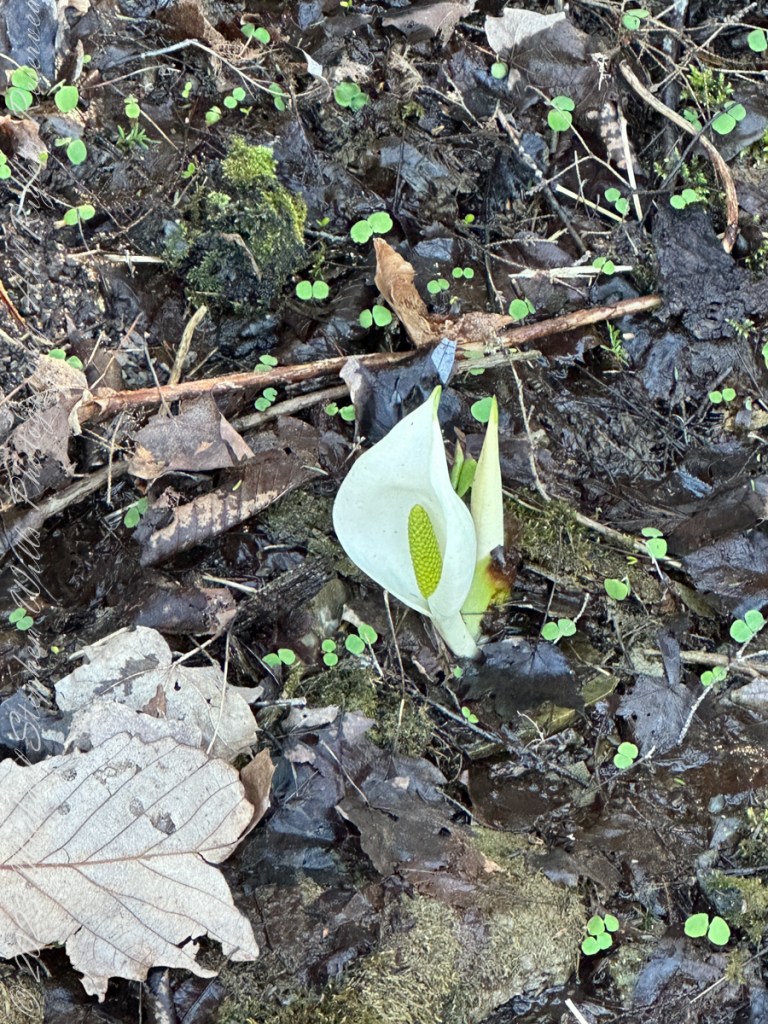
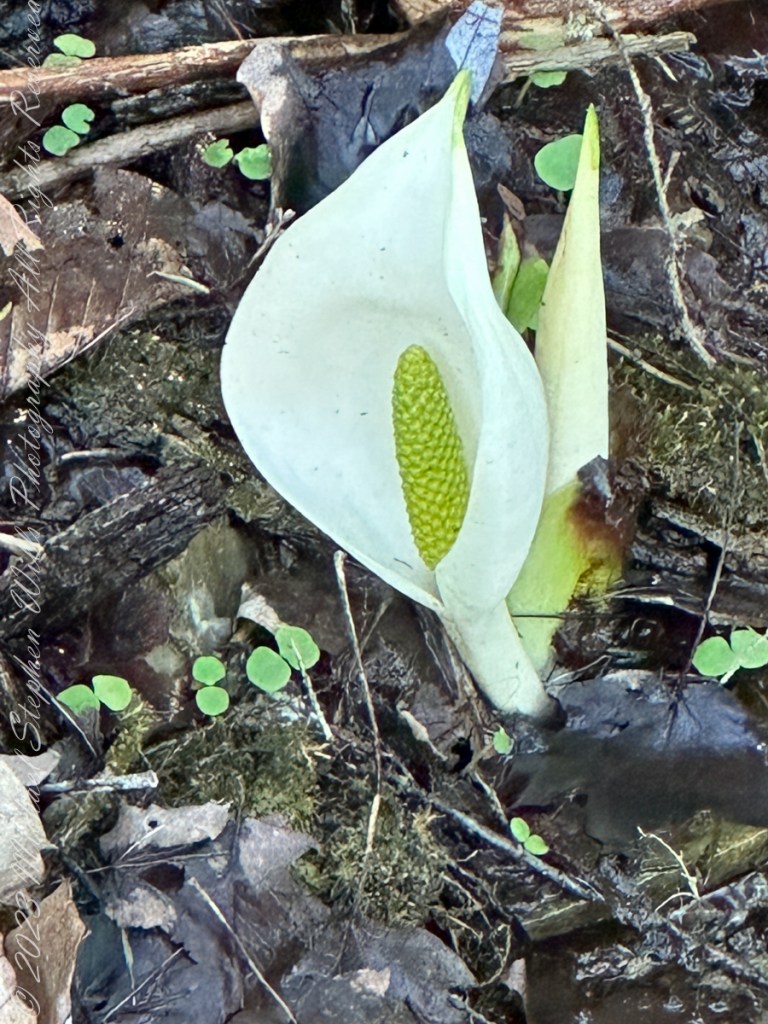
Pam and I ambled around the Arboretum for our Easter 2023 outing. We discovered this seeming lily growing from the muck along the Treman Woodland Walk. Scientific Name: Lysichiton camtschatcensis. Common names: Asian skunk cabbage, white skunk cabbage, Far Eastern swamp lantern or Japanese swamp lantern.

This is a plant found in swamps and wet woods, along streams and in other wet areas of the Kamchatka Peninsula, the Kuril Islands, Sakhalin and northern Japan. The common name “skunk cabbage” is used for the genus Lysichiton, which includes Lysichiton americanus, the western skunk cabbage, noted for its unpleasant smell. The Asian skunk cabbage is more variable: plants have been reported in different cases to smell disgusting, not at all, and sweet.

Click Me for “Finger Lakes Memories” my online gallery.

All photography using the IPhone 14 ProMax triple camera, raw format, edited on the phone.

In Japanese it is known as mizubashō (lit. “water-banana”) from a supposed similarity to the Japanese banana, a name with poetic rather than malodorous associations. It is not closely related to the true cabbage.

Copyright 2023 Michael Stephen Wills All Rights Reserved