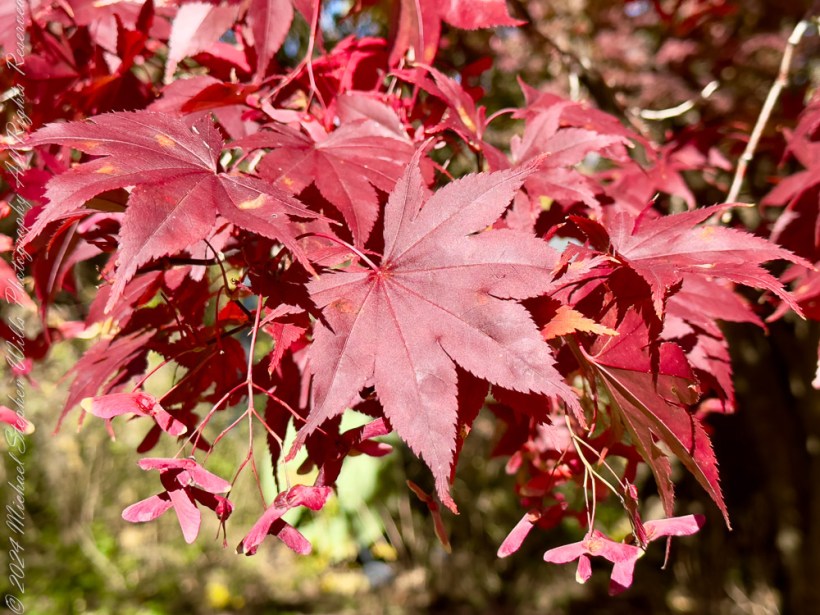
The Finger Lakes region, renowned for its natural beauty and changing seasons, put on a stunning performance on October 24, 2024. From the vibrant reds of a Japanese maple (Acer palmatum) to the golden hues of oak leaves (Quercus spp.), this photographic journey through our home captures the essence of autumn in upstate New York.
A Panoramic Tapestry
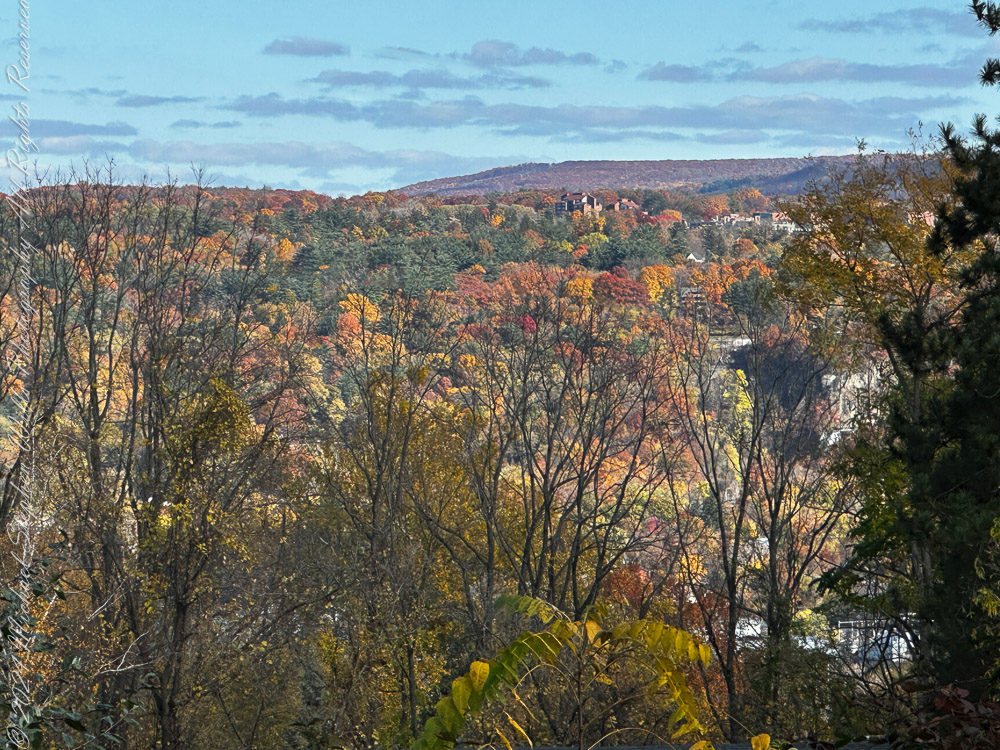
In the first photograph, the landscape unfolds like a watercolor painting. Hills dressed in fiery oranges and golds stretch across the horizon, with hints of evergreen pines (Pinus spp.) providing contrast. The sky, dotted with wispy clouds, serves as a serene backdrop, while the foreground frames the scene with bare tree limbs—a reminder that autumn is both a celebration of life and a prelude to winter’s dormancy. This image evokes a sense of timelessness, connecting us to the rolling hills that have witnessed countless seasons of change.
Japanese Maple: A Crimson Jewel
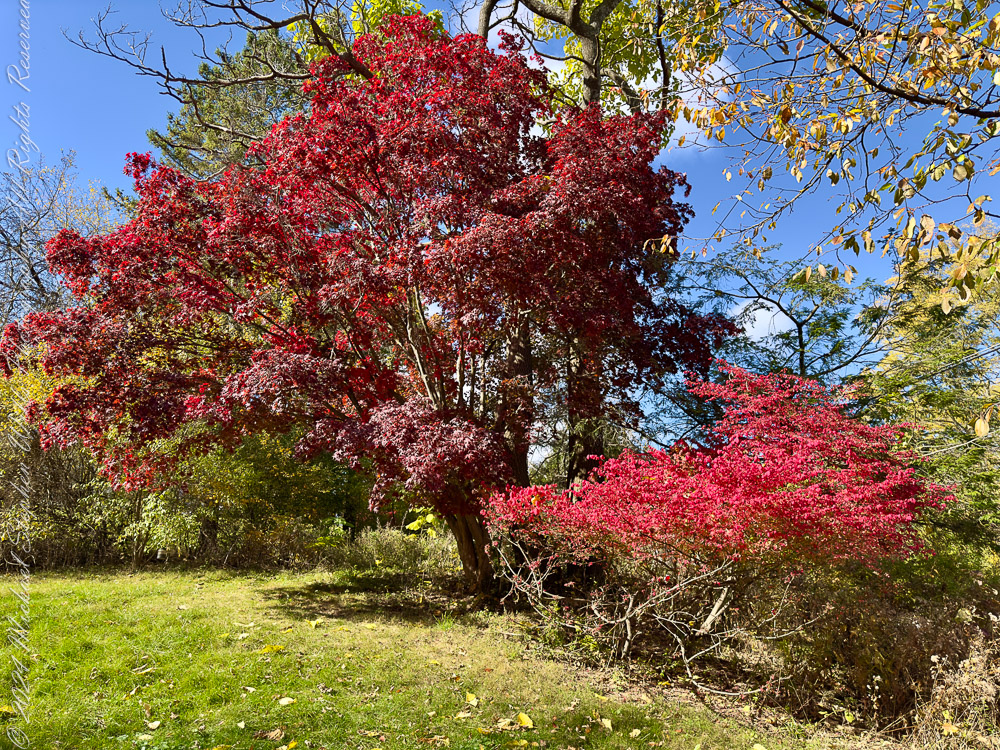
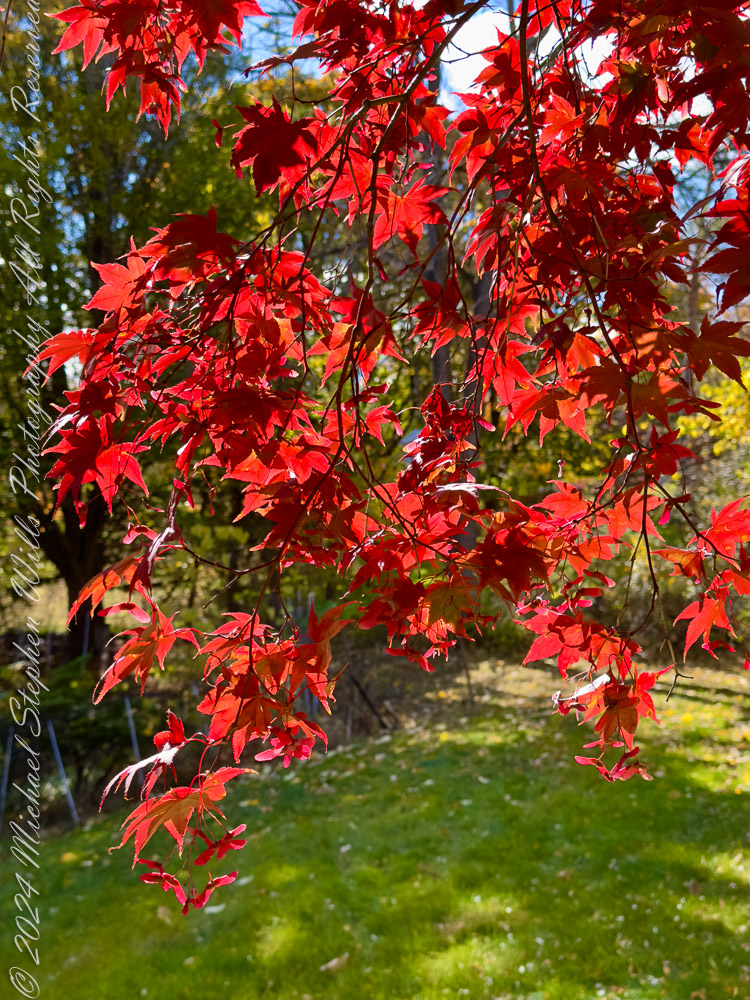
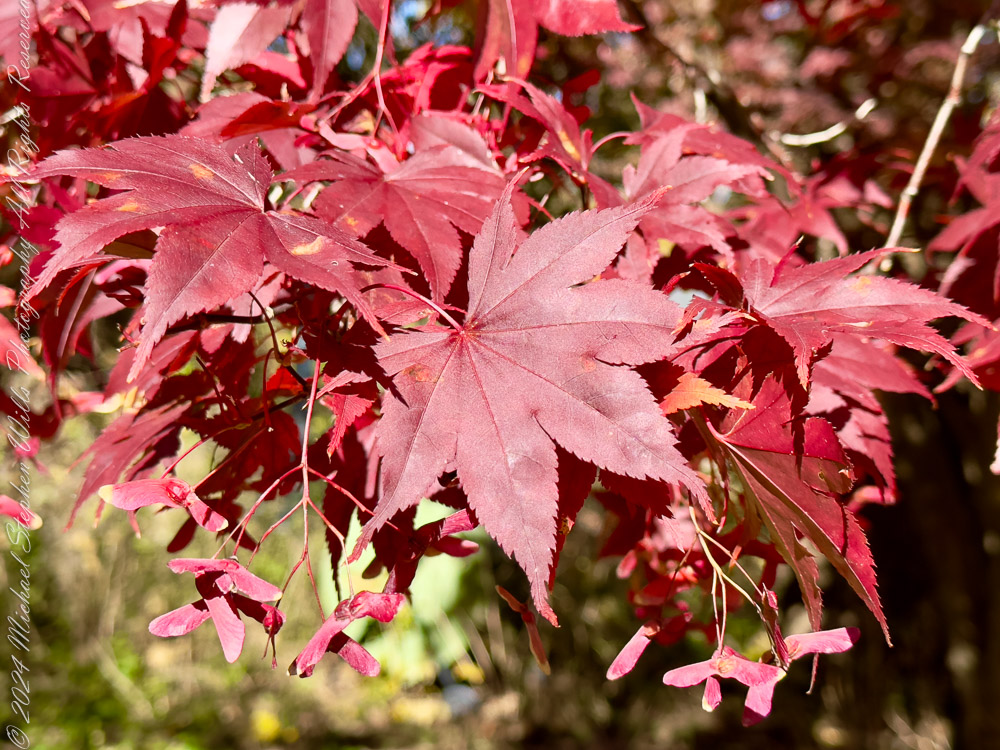
The next series of images focuses on the Japanese maple (Acer palmatum), a tree whose vibrant red foliage becomes a magnet for admiration in autumn. One close-up reveals delicate leaves, their intricate lobes illuminated by the afternoon sun. The interplay of light and shadow transforms each leaf into a tiny stained-glass window. Another photograph showcases the tree in its entirety, a commanding presence against the verdant lawn. It is a poignant reminder of nature’s artistry, where every branch and leaf contributes to the symphony of color.
Home Amid the Foliage
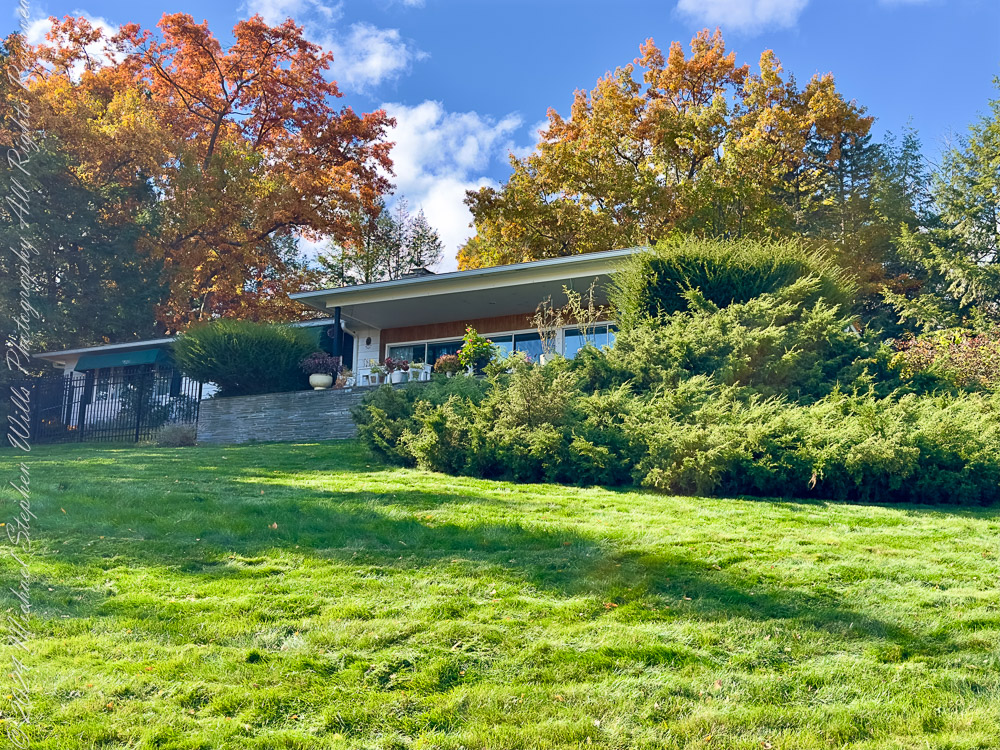
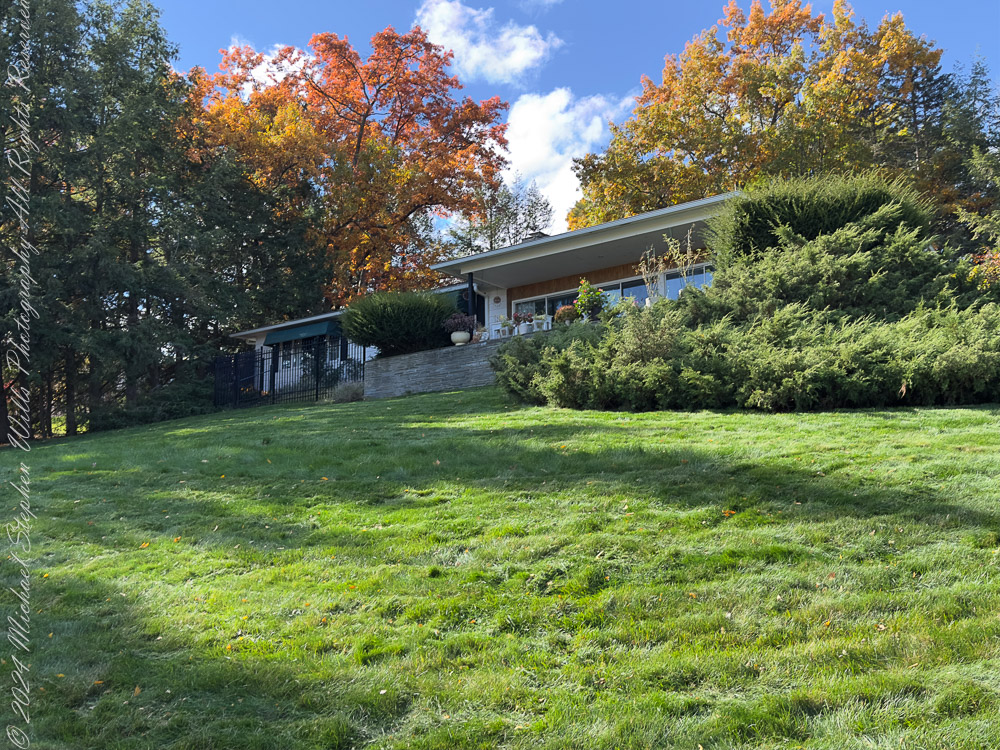
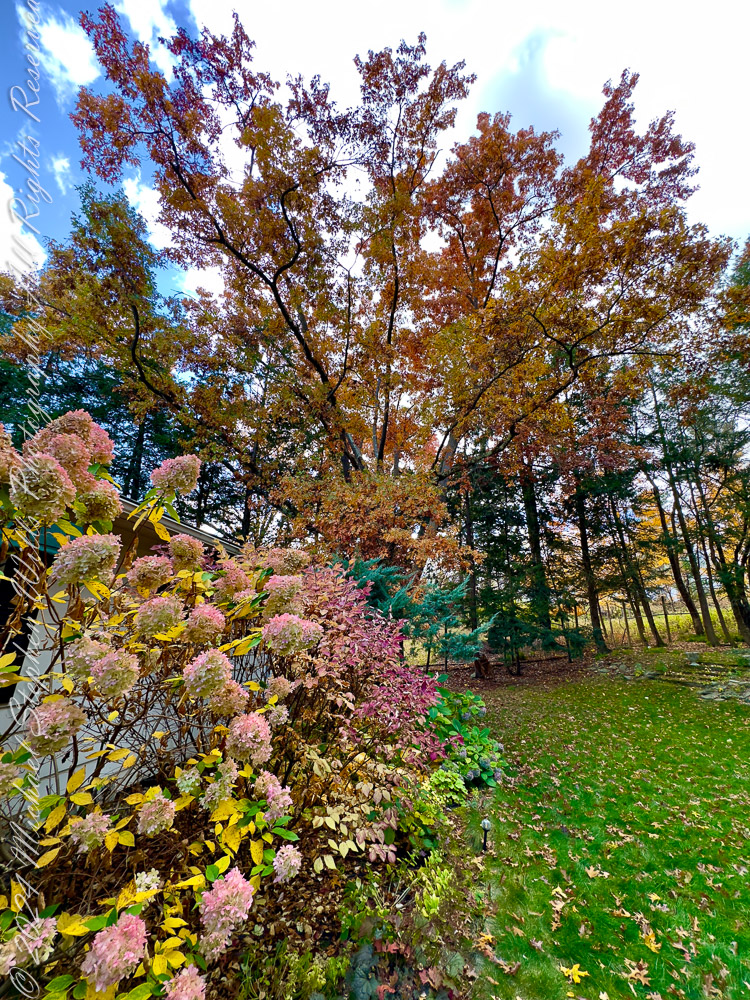
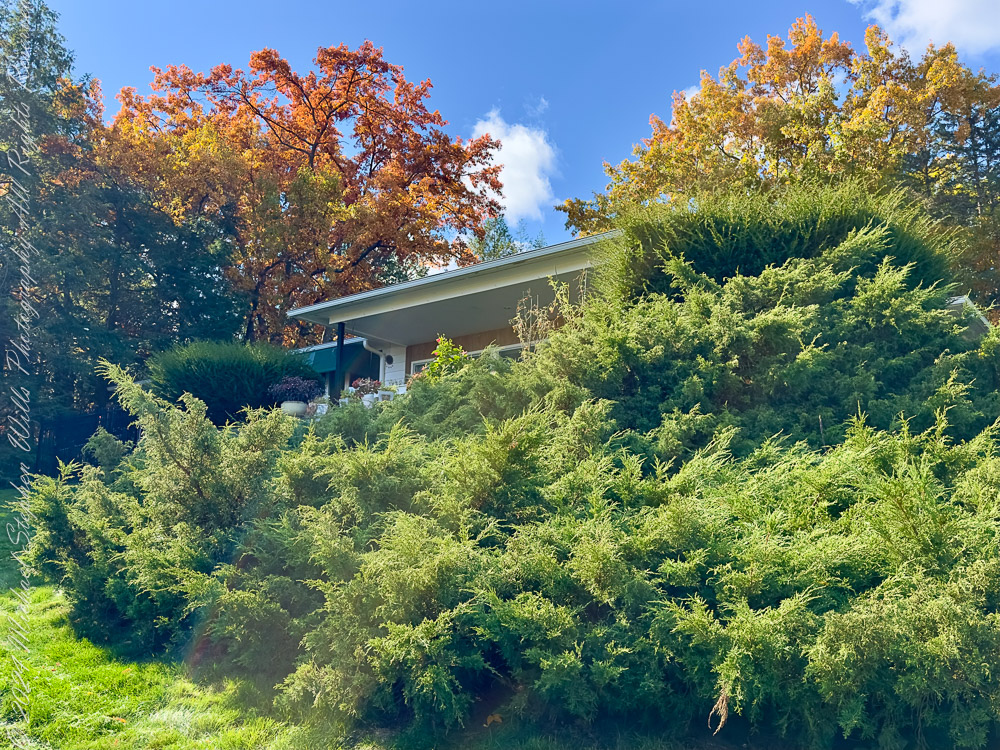
Nestled within this autumnal palette is our home, a mid-century structure that seems almost inseparable from its surroundings. The expansive lawn, a lush carpet of green, contrasts with the fiery colors of nearby oak (Quercus spp.) and maple trees (Acer spp.). In one angle, the house appears almost tucked away, sheltered by Eastern Hemlock (Tsuga canadensis) and junipers (Juniperus spp.) that add a sense of permanence to the scene. This juxtaposition of human habitation and natural splendor underscores how our lives are intertwined with the land we call home.
Oak Leaves: A Study in Texture
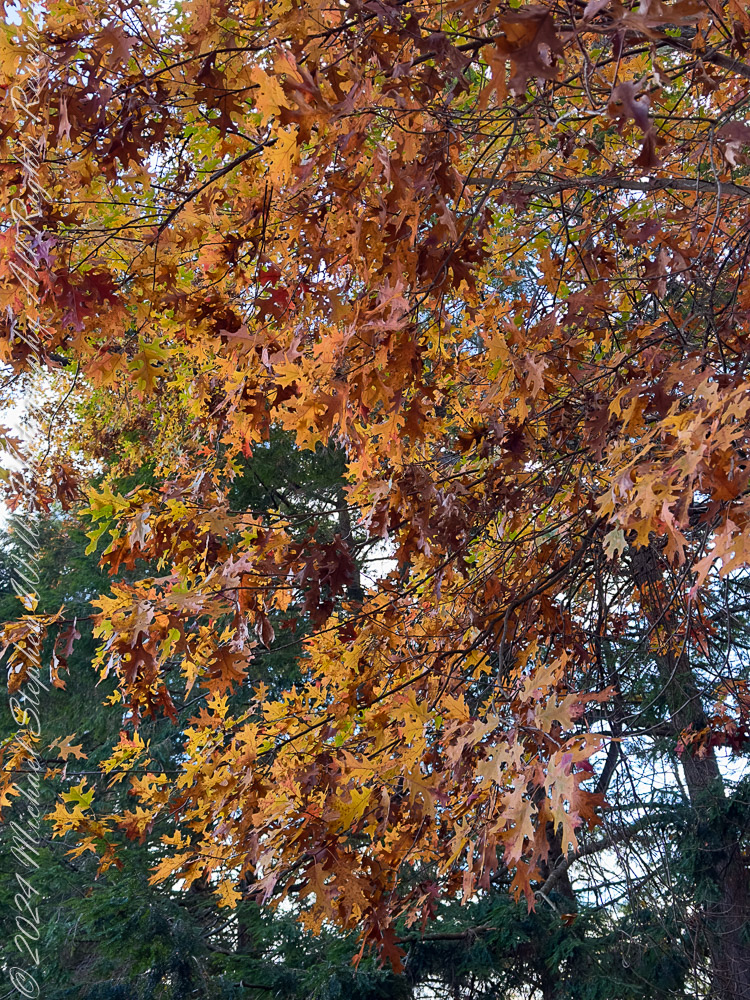
A close-up of oak leaves (Quercus spp.) showcases their rugged beauty, with jagged edges and deep veins that seem etched by time itself. Their colors—ranging from deep amber to burnished copper—are a testament to the richness of autumn’s palette. These leaves, clinging tenaciously to their branches, remind us of resilience and the fleeting beauty of the season.
Hydrangeas in Transition
The hydrangea bushes (Hydrangea paniculata) by the house present a softer side of autumn. Their once-vivid blooms have faded to pastel pinks and creams, lending an air of nostalgia. These flowers, in their gentle decline, mirror the transition of the season, where vibrancy gives way to a quieter beauty. The hydrangea blooms seem to whisper the story of the summer past, offering a delicate contrast to the bolder hues of the surrounding trees.
The Resilient Shrubs
Creeping Juniper (Juniperus horizontalis), here in the foreground, provides a grounding element in the composition, with a steadfast green the reminder of life persisting even as deciduous leaves fall. The dense shrubbery near the house creates a protective cocoon, framing the building with a sense of natural security. The dynamic interplay between these evergreens and the changing foliage of maples and oaks reflects the layered complexity of this landscape.
Reflections on an Afternoon
As I wandered through these scenes with camera in hand, I was struck by the interplay of light, color, and texture. Each photograph captures a fleeting moment, a slice of a season that, despite its predictability, never fails to surprise and inspire. Autumn in the Finger Lakes is a time of reflection, a reminder to pause and appreciate the world around us.
These images, taken on a single afternoon, tell a story of a landscape alive with color and character. From the steadfast junipers to the delicate hydrangea blooms, from the fiery maples to the enduring oaks, they invite us to celebrate not just the beauty of nature but also our place within it—a home nestled among trees that have stood for decades, witnessing the rhythms of the earth.


 Michael Stephen Wills Photography