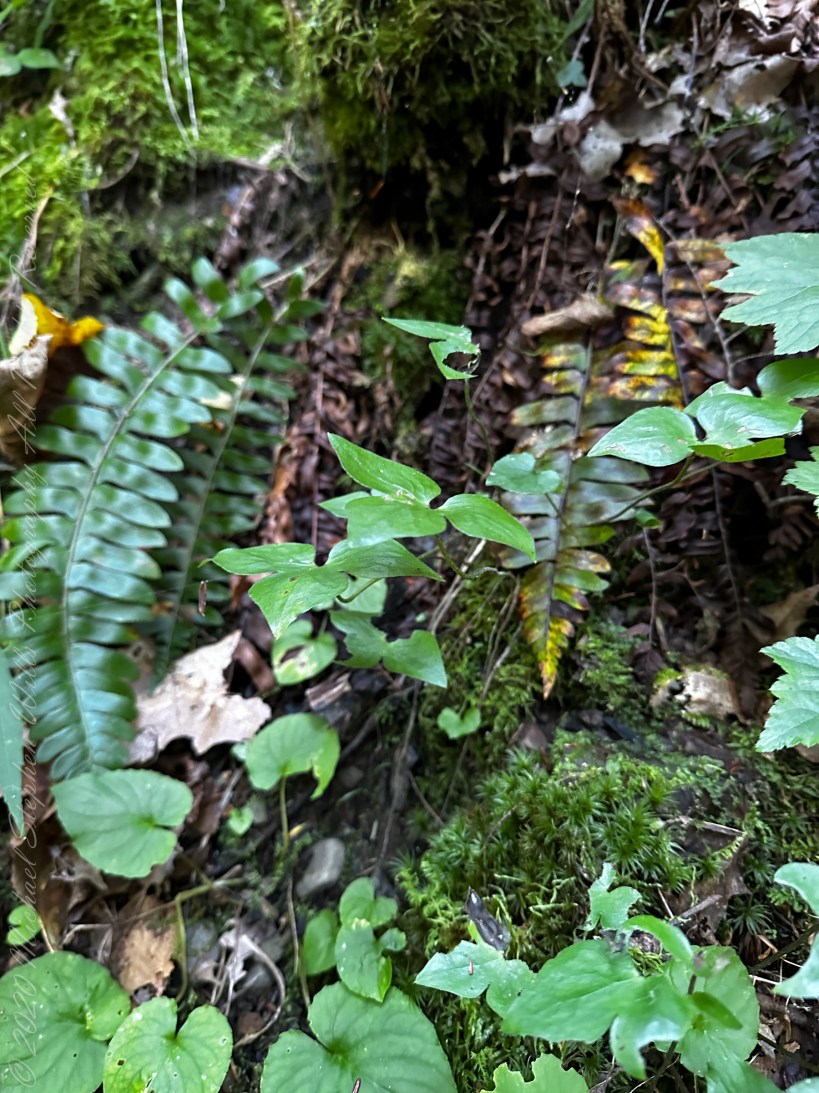
Treman Early Autumn Walk XIV

The post discusses the Hepatica acutiloba plant, highlighting its characteristics, growth, historical medicinal use, and its natural habitat in central eastern North America. It also includes an observation made in Robert H. Treman Park.

These characteristic leaves are Hepatica plants growing on the sun dappled southern rim of Robert H. Treman Park captured on a bright late September morning.
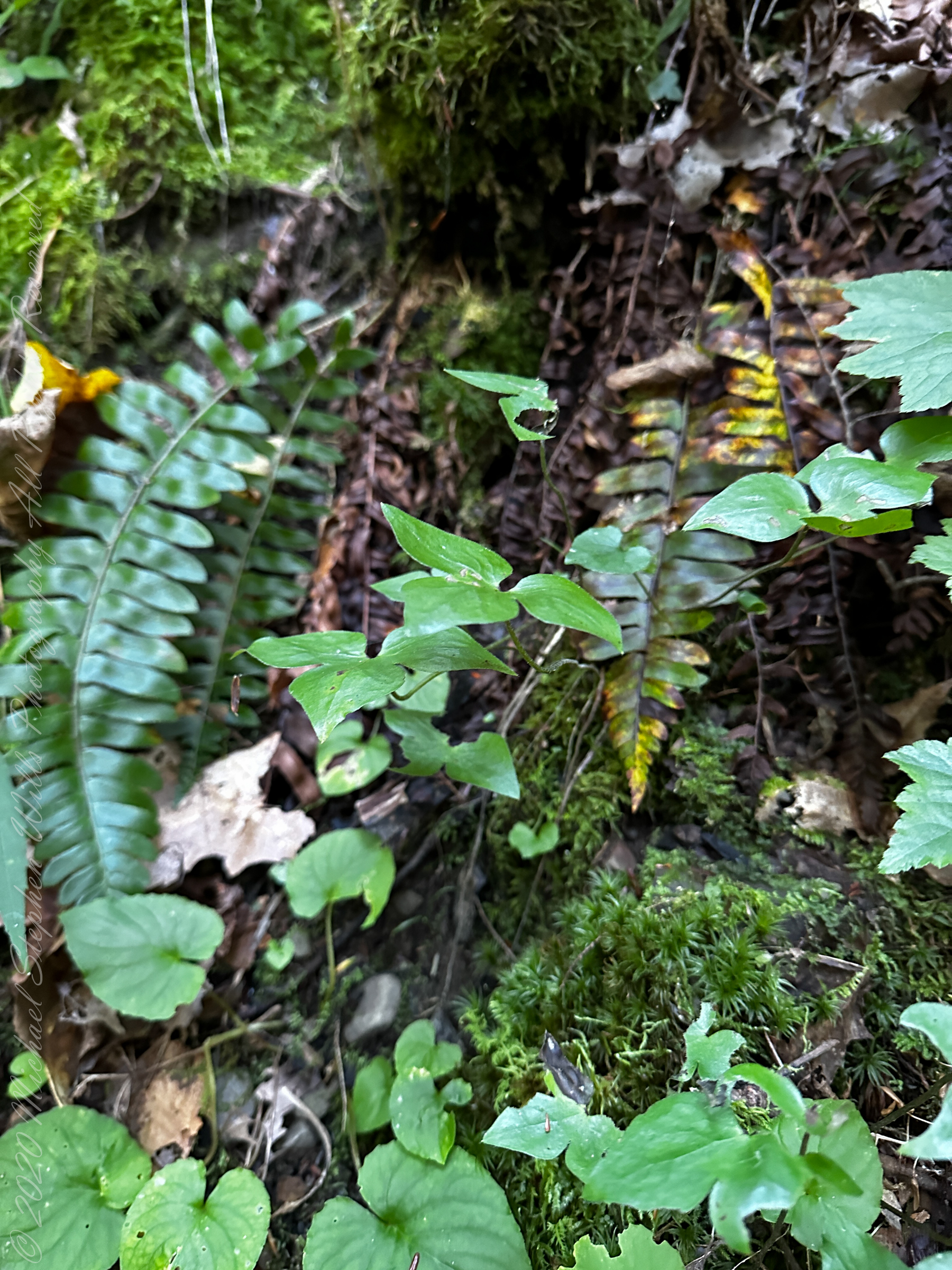
“Hepatica acutiloba, the sharp-lobed hepatica, is a herbaceous flowering plant in the buttercup family Ranunculaceae. It is sometimes considered part of the genus Anemone, as Anemone acutiloba, A. hepatica, or A. nobilis. Also generally known as Liverleaf and Liverwort.”


“The word hepatica derives from the Greek ἡπατικός hēpatikós, from ἧπαρ hêpar ‘liver’, because its three-lobed leaf was thought to resemble the human liver.”


“Each clump-forming plant grows 5 to 19 cm (2.0 to 7.5 in) tall, flowering in the early to mid spring. The flowers are greenish-white, white, purple or pinkish in color, with a rounded shape. After flowering the fruits are produced in small, rounded columned heads, on pedicels 1 to 4 mm long. When the fruits, called achenes, are ripe they are ovoid in shape, 3.5–4.7 mm long and 1.3–1.9 mm wide, slightly winged and tend to lack a beak.”
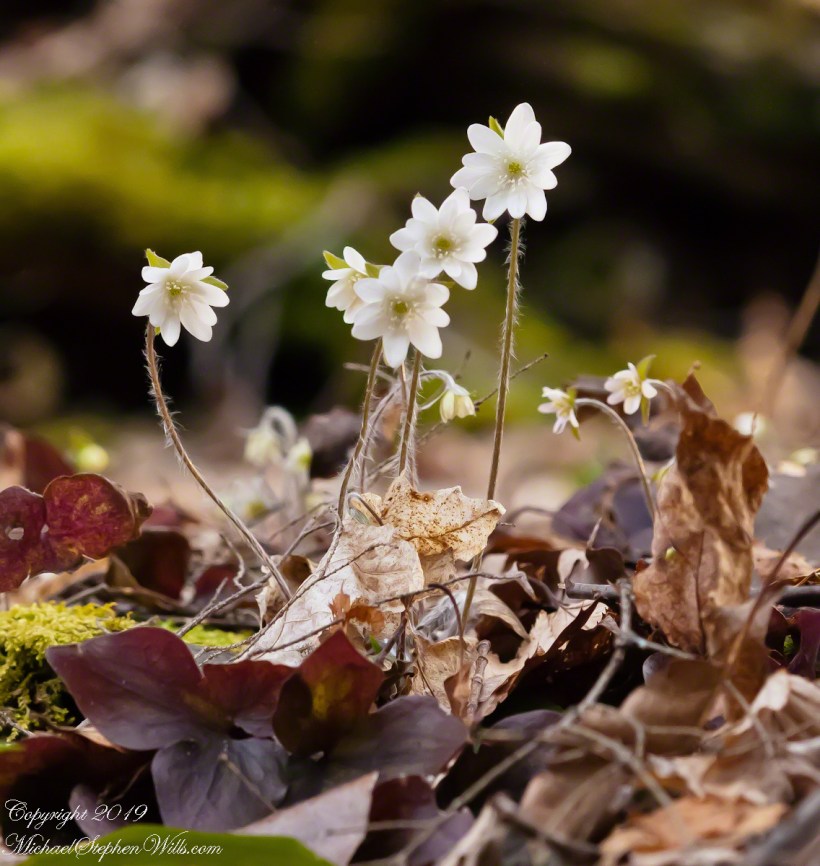
Hepatica Flowers in early spring on the Rim Trail

“Hepatica acutiloba is native to central eastern North America where it can be found growing in deciduous open woods, most often in calcareous soils. Butterflies, moths, bees, flies and beetles are known pollinators. The leaves are basal, leathery, and usually three-lobed, remaining over winter.”

“Hepatica was once used as a medicinal herb. Owing to the doctrine of signatures, the plant was once thought to be an effective treatment for liver disorders. Although poisonous in large doses, the leaves and flowers may be used as an astringent, as a demulcent for slow-healing injuries, and as a diuretic.”
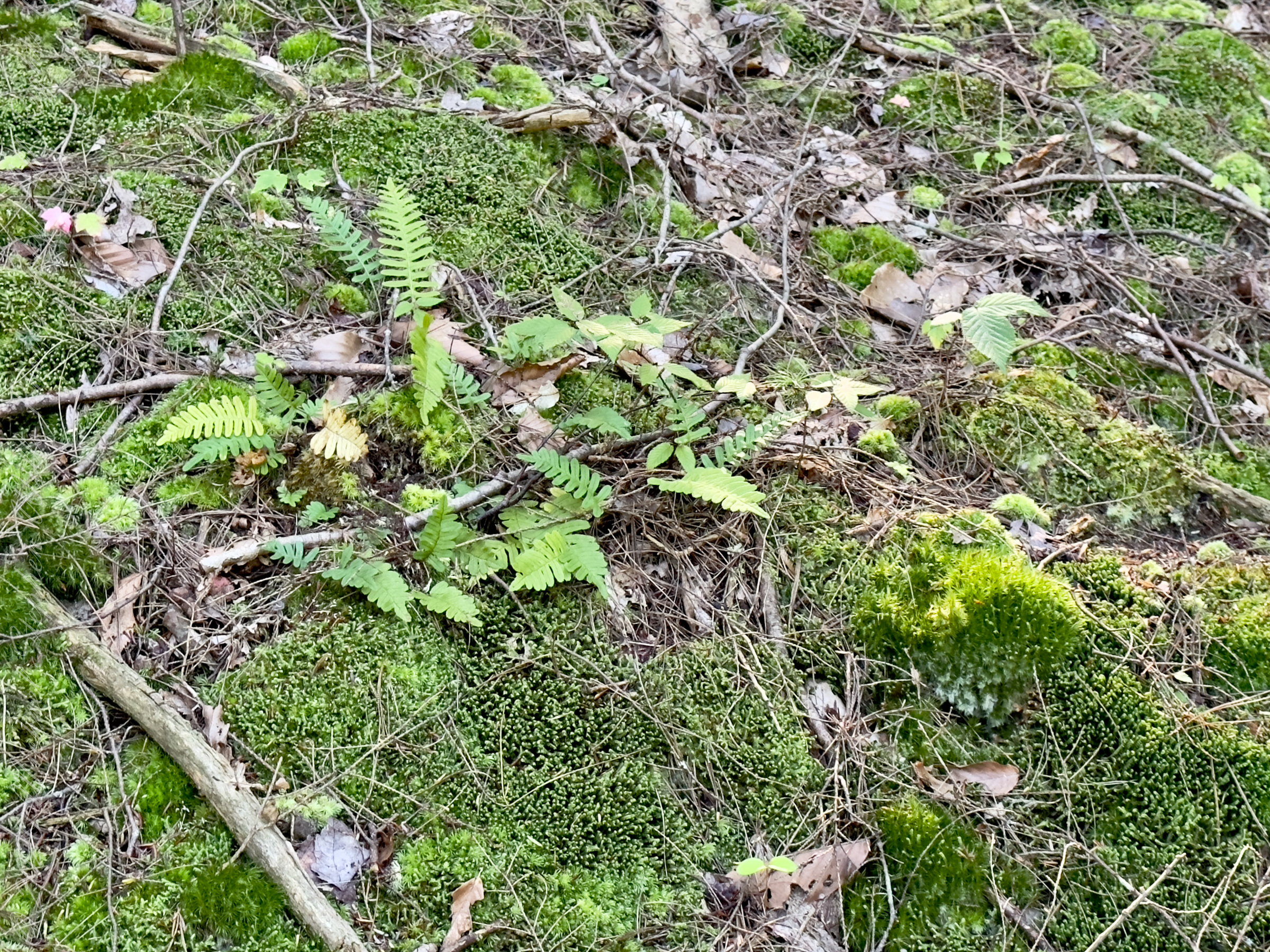

Ferns and Mosses growing beneath Red Pines

View of the lower falls and swimming hole from the Rim Trail

Click Me another post featuring Hepatica flowers

References
–text in italics and quotes is from Wikipedia, “Hepatica” and “Hepatica acutiloba.”
–“The Botanical Garden Vol II Perennials and Annuals,” Roger Phillips and Martyn Rix, Firefly Books, 2002.
Copyright 2023 All Rights Reserved Michael Stephen Wills

When is “moss” not moss?

Southern Gothic

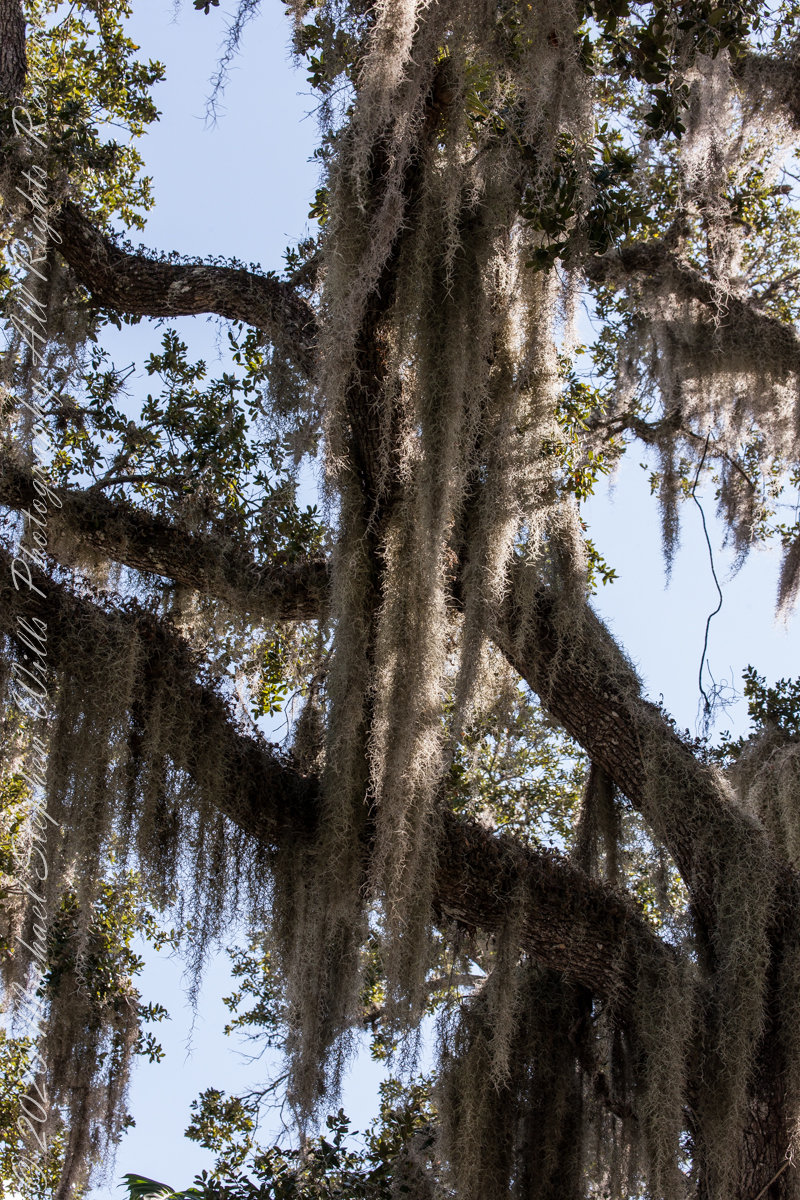
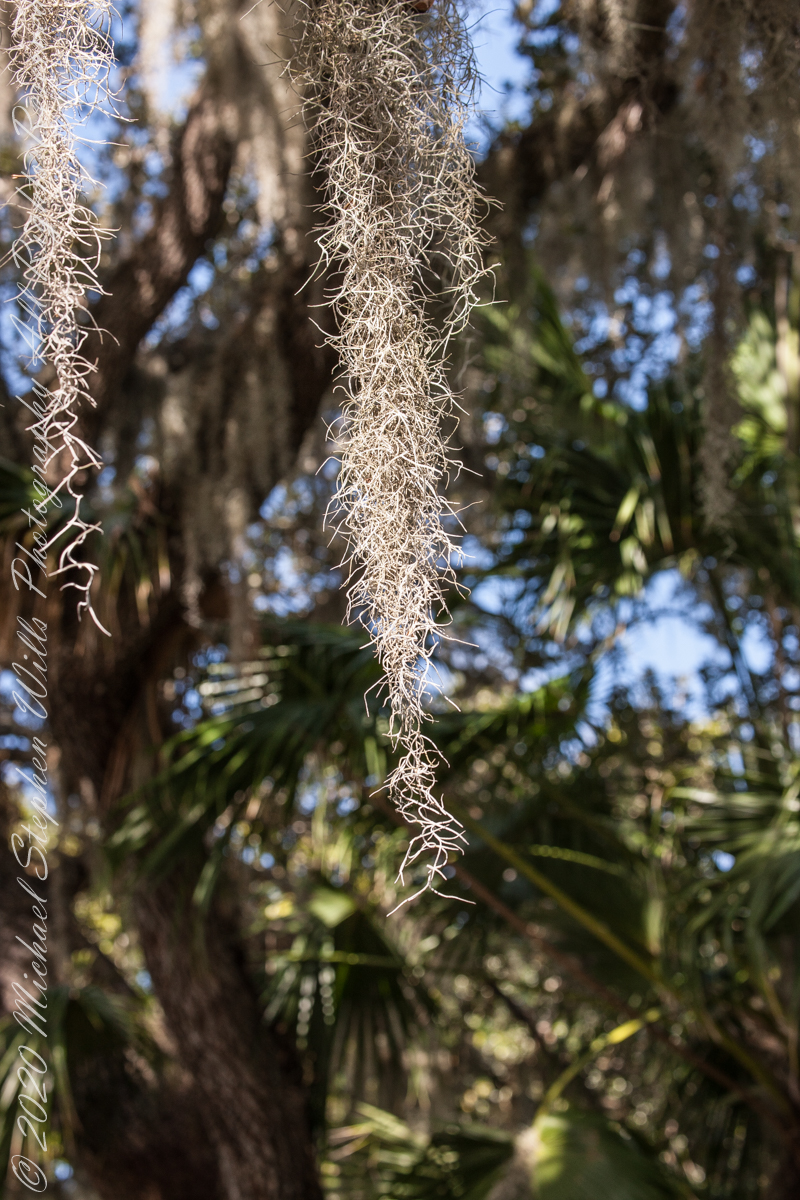
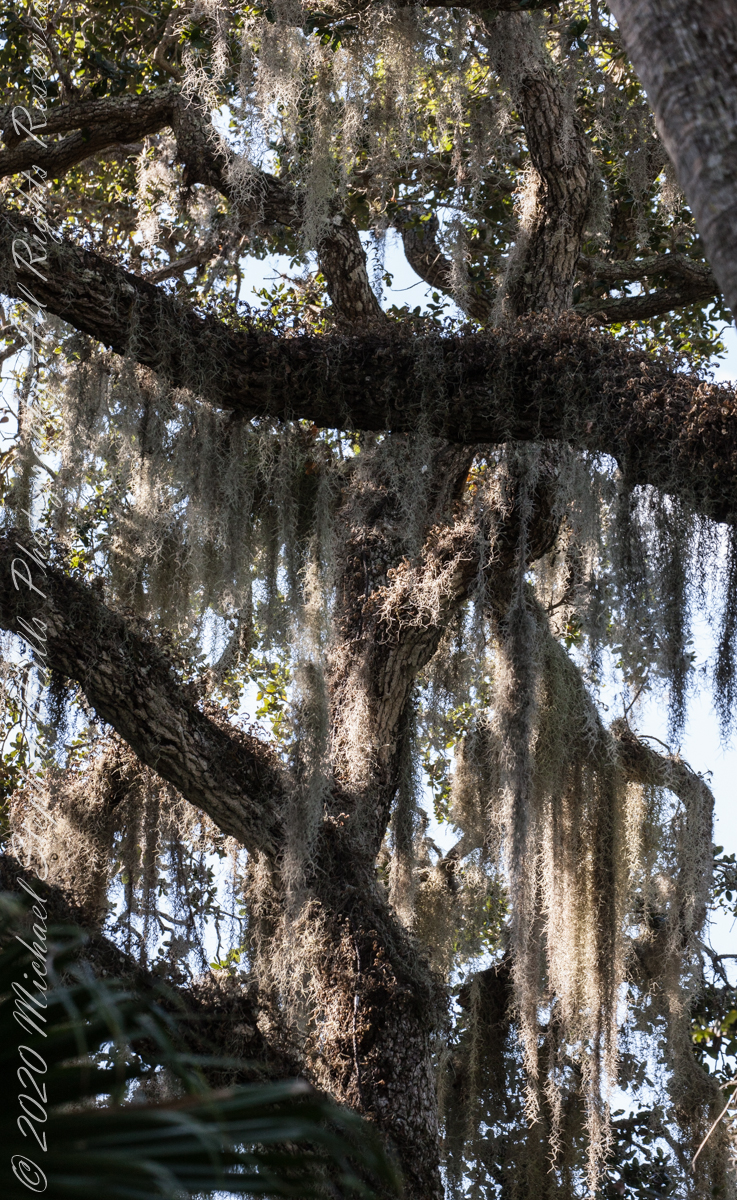
We spotted this stuff within minutes of arriving at McKee Gardens for an afternoon visit with the grandchildren. Festooned above our heads from thick Oak branches, I could not resist pulling out the camera for this photograph to capture the flavor of Southern Gothic. Fortunately, our group included neither deeply flawed nor disturbing characters, though we can confess to a touch of eccentricity.

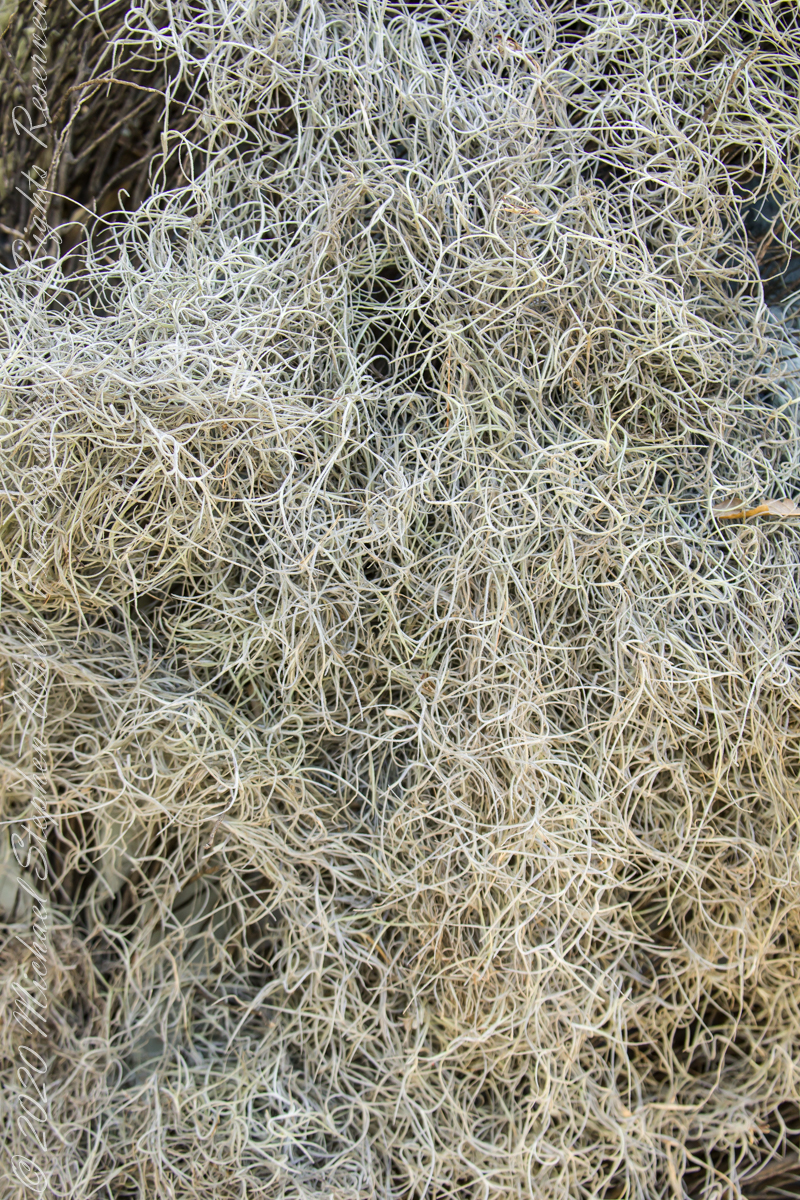
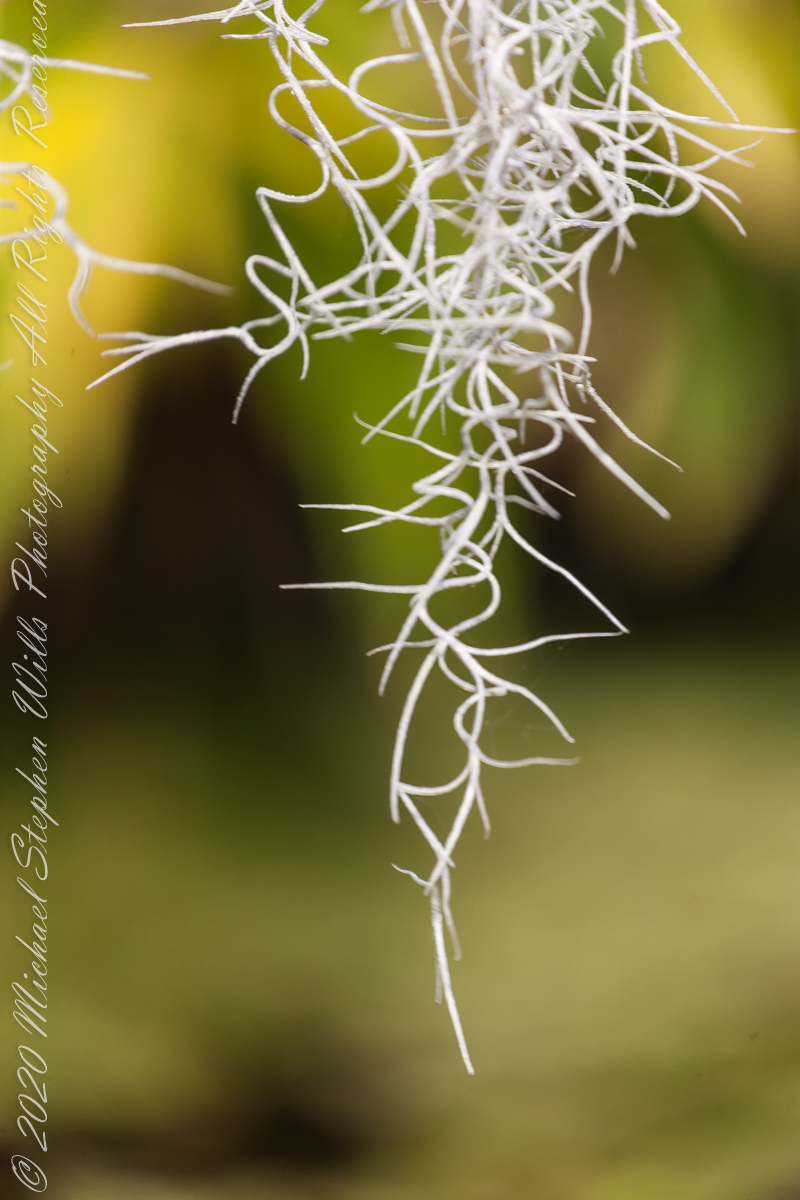
Spanish Moss produces inconspicuous flowers with tiny seeds. Spanish Moss also propagates from fragments of the fine leaves.

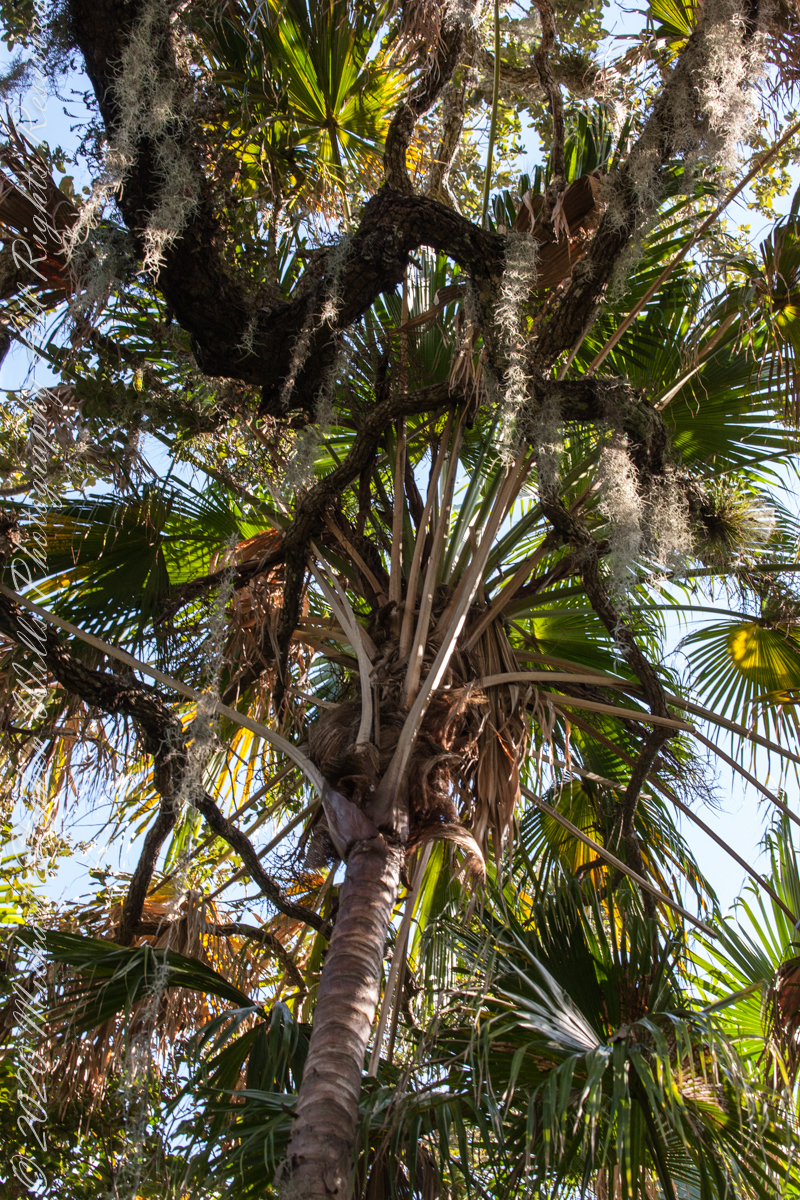
Spanish Moss is neither moss nor Spanish. Scientific name Tillandsia usneoides, this flowering plant is in the family Bromeliaceae that includes pineapple. Here we have two epiphytic bromelias sharing the trunk of a palm.

A rootless epiphyte native to the tropical / semi-tropical Americas, Spanish Moss has a preference for southern live oak (Quercus virginiana) and bald cypress (Taxodium distichum) because of their high rates of foliar mineral leaching (calcium, magnesium, potassium, and phosphorus) that provides an abundant supply of nutrients to the epiphytic plant.

My two volume “go to” resource for plants and trees had sparse information about Spanish Moss and no wonder as it is a burden on trees, though not parasitic, and so more a pest than a decorative element to cherish. Surprisingly, Spanish Moss was purposely introduced to Hawaii where it is now known as “Pele’s Hair” after their fire goddess.

Click me for a dinosaur video from McKee Gardens.

Reference: wikipedia “Spanish Moss”

Copyright 2022 Michael Stephen Wills All Rights Reserved