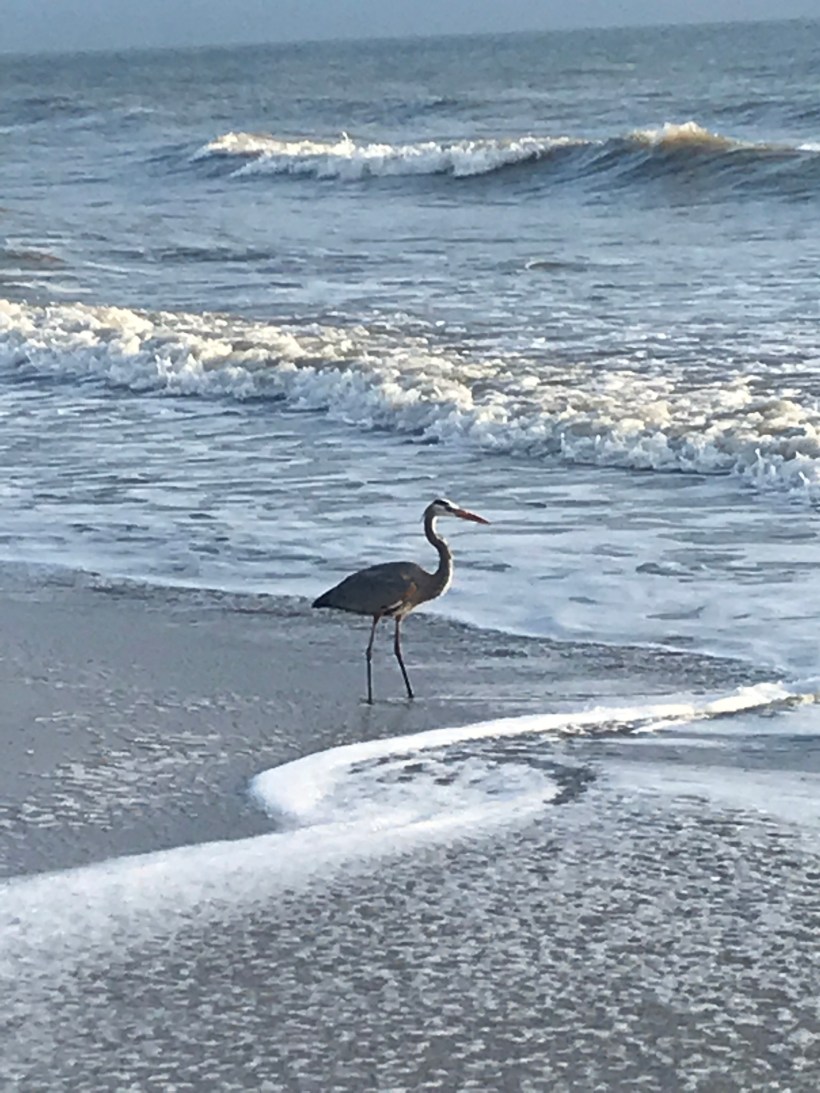
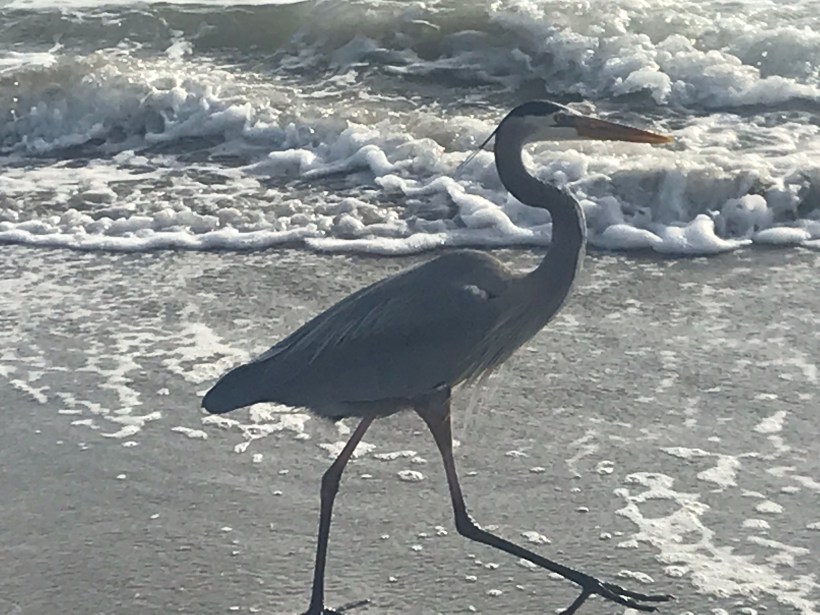
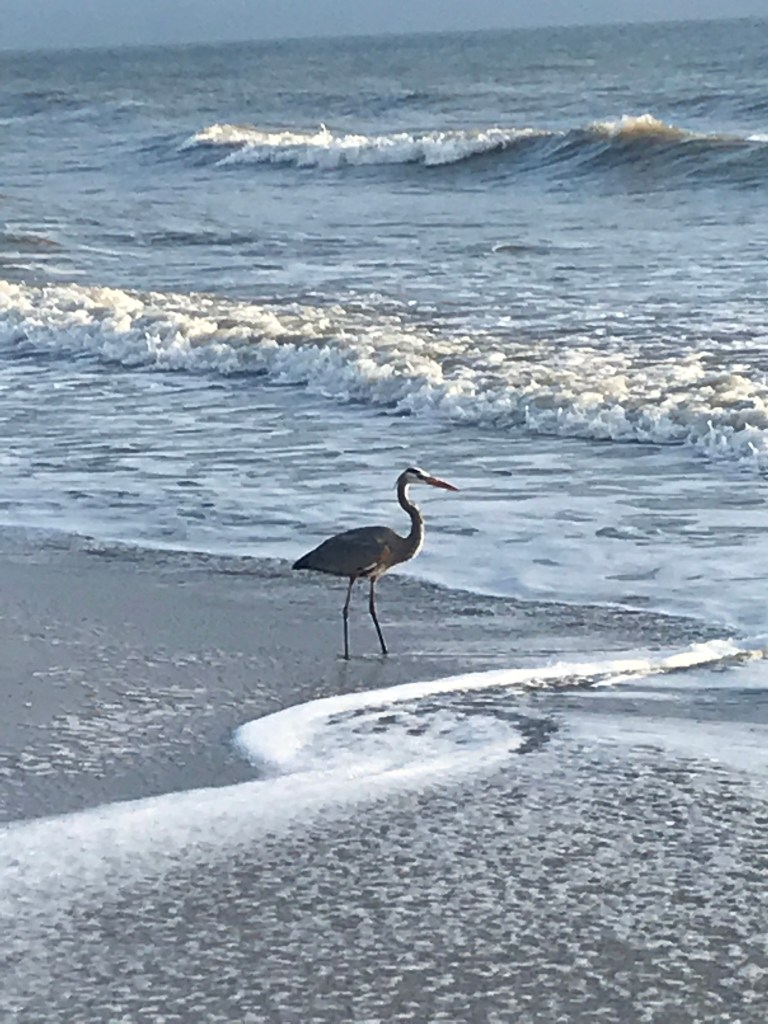
Along the luminous seam of surf and sand, a heron reads the tide’s slow grammar, patience embodied, until water yields a silver secret and morning becomes ceremony.
We walk the long seam where the Atlantic writes its restless script, and our beachcombing becomes a study in attention. The shore’s edge—where foam loosens shells from sand and the wind arranges salt on the tongue—draws other walkers too: grey herons, patient and arrow-straight, patrolling the surf line as if reading a language older than tides. They halt us without trying. We stand, quieted, while they work the boundary between water and land, between hunger and satisfaction.
I pack an iPhone sometimes for beachcombing as a lightweight alternative to SLRs. This post features iPhone photographs.
Along this narrow world of sand and surf, herons keep two distinct manners. Some linger near anglers, learning the thrift of handouts and the craft of appearing inevitable. Others refuse that bargain and hunt on their own, staking the wash with a slowness that is not delay but method. These independent operators move along the ocean’s margin: high enough to let the breakers fold ahead of them, low enough that their long legs stir the small lives hidden in the cross-hatching currents. To follow one with the eye is to adopt a different clock. Sandpipers skitter and dash; the heron lengthens time.
A perfect place to stalk the surf
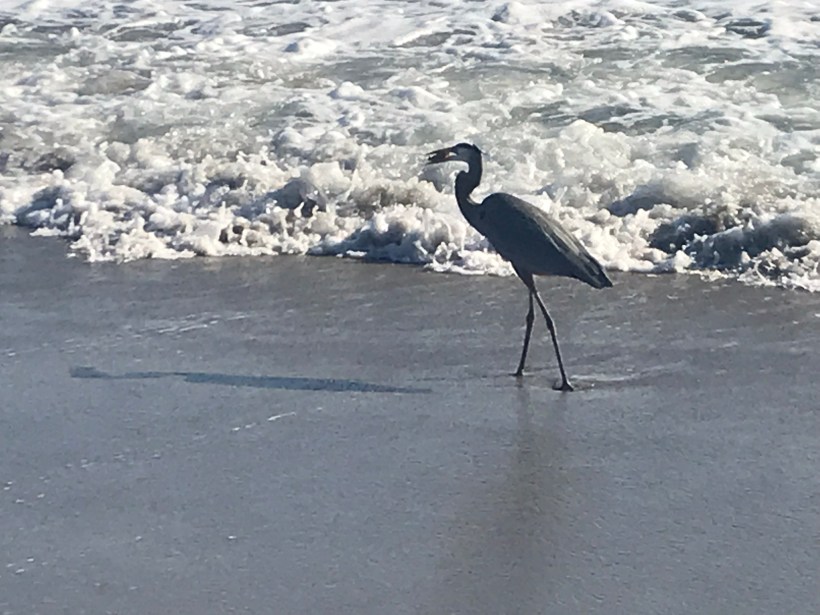
At first the bird seems merely spellbound by light on water. Then a shift: a narrow cant of the head, the smallest realignment of the eye to the glare. The neck—serpentine and stored with intention—uncoils quick as a strike, and the bill cleaves the surface. The world either yields or it doesn’t. Often it doesn’t. When it does, the beak lifts an impossibly large, glinting fish, as if the ocean had lent out a secret.
Success!!
What follows is ceremony. The heron stands and calibrates, turning the silver length with almost invisible nods until head and prize agree. A sharp jerk aligns the fish with beak and gullet; the upper throat swells, accepting the whole, unchewed. Two more pulses and the catch is a memory traveling inward. It is an astonishment every time, not because we do not understand what is happening but because we do, and still it exceeds us.
We carry a smart phone on these morning circuits, a slim stand-in for heavier glass, enough to witness without intruding. Backlit by the early sun, the herons are cut from bronze and shadow, working the luminous edge while the day composes itself behind them. In the afternoons we meet fewer of the solitary hunters when the strand belongs more to the opportunists near the thinning knots of anglers. Why the shift, we cannot say. The ocean has its schedule; so, it seems, do its readers.
If we keep our distance, we are permitted to watch. Cross a line we don’t perceive and the bird will rise all at once, the long body unfolding, the voice a rasping scold torn from the throat of reed beds and marsh dawns; but, grant it enough space, and the heron returns us to the lesson it keeps teaching: that patience is a kind of movement; that the boundary of things is where change is clearest; that the most astonishing acts require the courage to do very little, very well, for a long time.
We come to linger where the waves erase our tracks, apprenticed to that slow grammar, trying to learn the tide’s careful verbs before the light turns and the day becomes something else—a different text, the same shore, the heron already a thin signature against the horizon.
Enter your email to receive notification of future postings. I will not sell or share your email address.
Copyright 2025 All Rights Reserved Michael Stephen Wills
After 25 years of visiting Cocoa Beach, a discovery of coquina clams transformed my appreciation for the ecosystem, revealing its beauty, complexity, and intrinsic connections to life.
For nearly two and a half decades, I’ve strolled the sands of Cocoa Beach—since my first visit in March 2001—comforted by the rhythmic Atlantic waves and the familiar stretch of shoreline. I thought I knew this beach intimately; from the way the sunrise paints the water orange to the feel of wet sand under my feet. Yet it wasn’t until a clear morning in February 2025 that I recognized one of its tiniest treasures: the coquina clam. In the past, I might have walked past countless little shells and the tiny siphons and feet in the sand without a second glance. Now, with newfound awareness, I realize an entire world had been bustling at my toes all along.
February 2025: Discovering the Coquina Clams
Early one February morning, as the high tide receded, I noticed something magical happening at the water’s edge. Tiny coquina clams—each no larger than a fingernail—were emerging from the sand only to swiftly burrow down again between each wave.
These living coquina clams were found in the receeding high tide on a February 2025 morning on Cocoa Beach, Brevard County, Florida
Their small wedge-shaped shells, in colors of pastel pinks, purples, yellows, and whites, peeked out for a moment and then vanished, synchronized with the pulse of the ocean. It was as if the beach itself had come alive with confetti-like jewels, re-positioning themselves with every ebb and flow. I stood entranced, wondering how I’d missed this subtle dance for so many years. That morning marked the beginning of my quest to learn about these little clams that had been hiding in plain sight.
Life Beneath the Sand
Once my eyes were opened, I began observing and researching the coquina clams’ hidden world. I learned that each delicate clam is a filter feeder, siphoning in microscopic phytoplankton, algae, and organic particles from the surf. This constant filtering not only feeds the clam but also helps clean and clarify the coastal waters by removing excess nutrients. Coquinas live a fast-paced, transient life by necessity: they typically survive 1–2 years in the wild and can endure a mere few days without the ocean’s moving water.
No wonder they race to burrow when the waves recede—staying submerged is a matter of life and death, as they rely on the surf for both food and oxygen. In their brief lifespan, they continually ride the tides, migrate in swarms up and down the beach, and rebury themselves between each wave to avoid being swept away.
I found it astonishing that such small creatures possess the agility and tenacity to “surf” the waves and dig themselves back into wet sand within seconds, a graceful routine I had unknowingly witnessed that February morning.
Beyond their daily habits, coquina clams also undergo a remarkable life cycle beneath the sand. They spawn in the warmer months, releasing gametes into the water for external fertilization. The resulting larvae drift as plankton for a time before settling into the sand and metamorphosing into tiny clams. With no parental care to guide them these young coquinas must immediately fend for themselves in the surf zone. Perhaps it’s this independent, perilous beginning that drives them to cluster in large colonies—while they aren’t social in a communicative sense, hundreds of coquinas often live side by side in favorable spots, turning patches of wet sand into vibrant mosaics of color and life.
Walking the beach now, I recognize these patches: slightly raised, pebbly areas that, when a wave washes over, suddenly bristle with tiny siphons and feet as the clams feed and reposition. It’s humbling to realize that under each footstep, an entire hidden ecosystem of coquinas might be thriving.
Shells on the Shore: Beauty and Predation
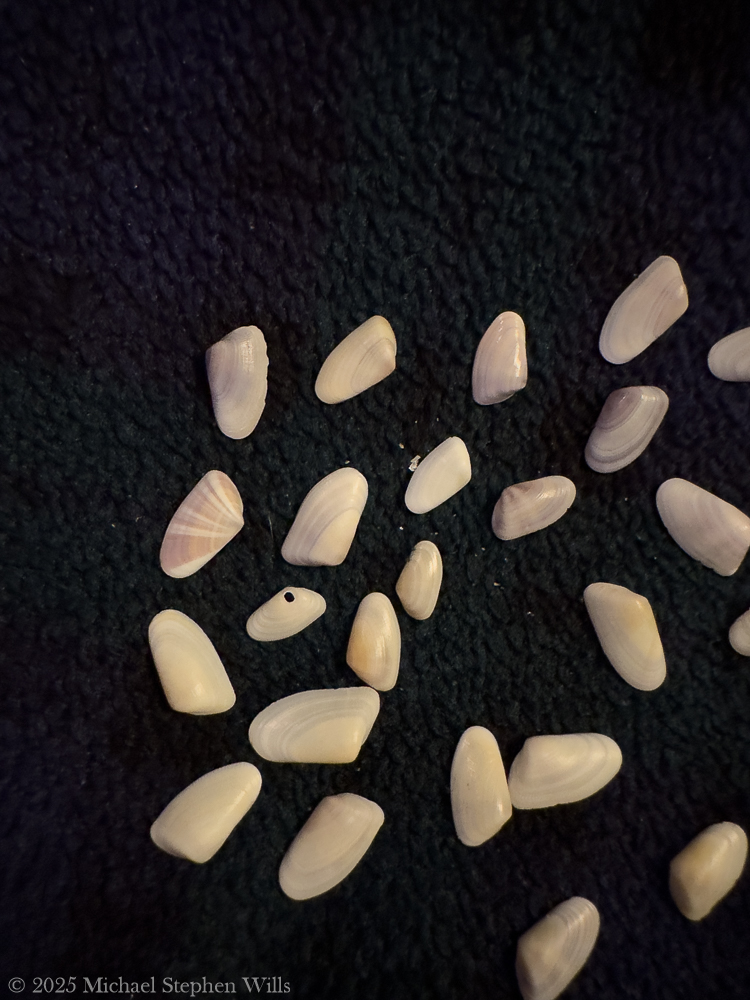
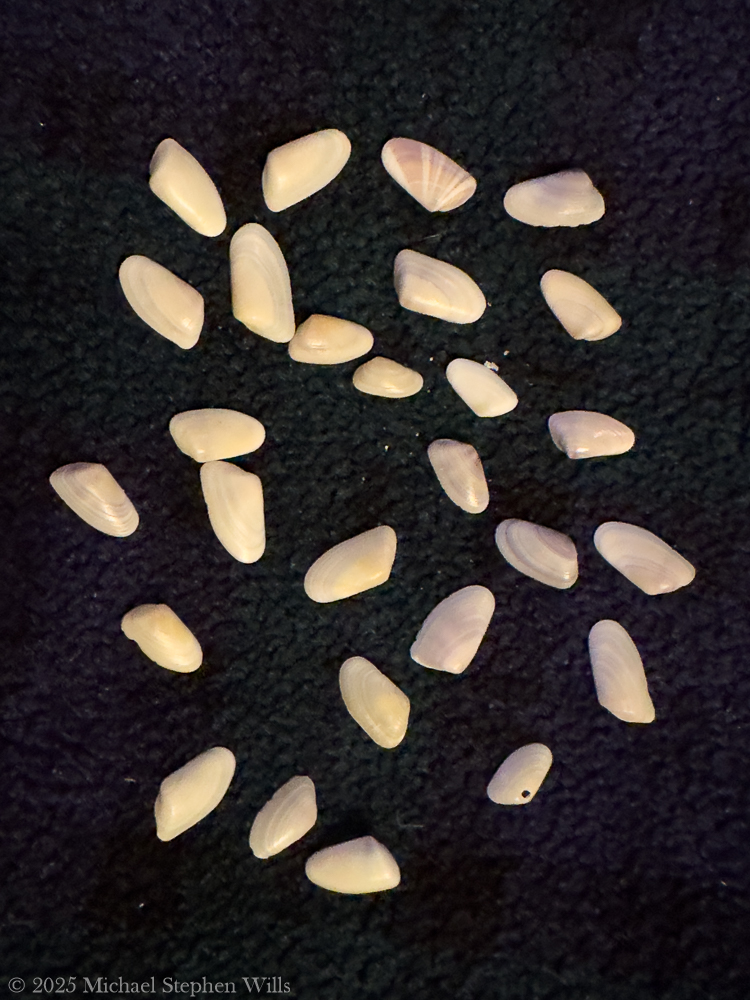
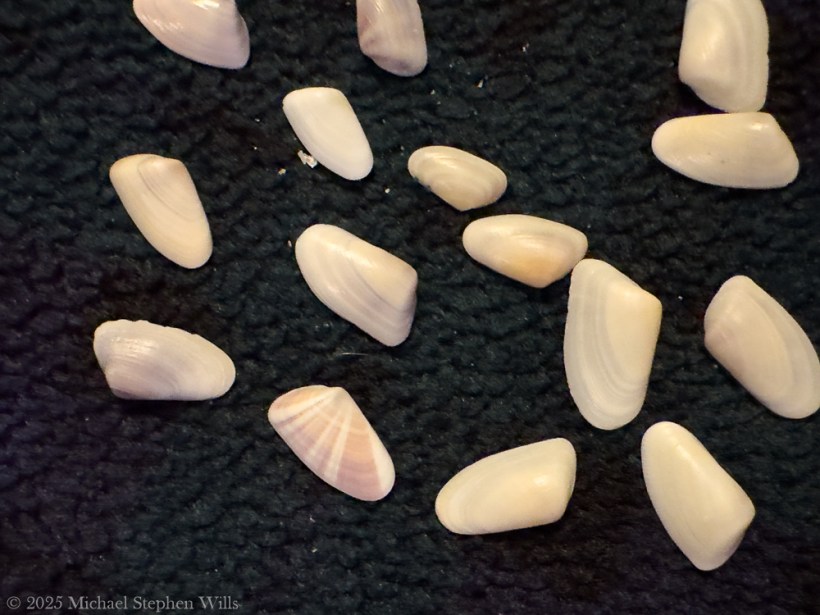
With my new awareness, even the empty shells strewn along the high tide line told a story. I began to collect some of the colorful coquina shells scattered on the sand, marveling at their variety—no two looked exactly alike. Some were solid orange or yellow, others striped with purple and white, each as delicate as a butterfly wing. Many of these shells were intact, evidence of clams that had lived out their short lives or perhaps fallen prey to gentle endings. Others, however, bore mysterious perfectly round holes on their surfaces. At first glance, I thought a tiny drill had punched through them, and in a way, I was right. Those small holes are the signature of predatory snails that haunt the sands: creatures like moon snails (also known as shark’s-eye snails) and whelks that prey on coquinas by literally boring into their shells. These sand-dwelling snails wrap themselves around a clam and use a tongue-like organ called a radula—akin to a miniature saw—to drill a neat hole through the coquina’s shell, aided by acidic secretions to soften the calcium carbonate. Once the hole is complete, the snail devours the clam from within, leaving behind an empty, perforated shell as a grim calling card of the food chain in action.
Seeing those tiny “murder holes,” as beachcombers jokingly call them, on coquina shells transformed my perspective on the shell collections I had casually admired for years. Each shell in my hand represented a life that had been an integral part of the beach ecosystem. Some had been snatched by shorebirds or fish the instant they were exposed by the retreating tide, becoming breakfast for a sanderling or a pompano. Others, as the holes revealed, had been victims of an even stealthier predator under the sand. It struck me that every fragment and hollowed shell on the beach is evidence of a relationship—predator and prey, life and death intertwined on the shore. Instead of seeing a random assortment of pretty shells, I now saw a record of the beach’s vibrant food web written in calcium carbonate. The realization filled me with both wonder and respect: this sunny tourist beach holds quiet tales of survival as dramatic as any wilderness, if one knows where to look.
The Coquina’s Ecological Role
As I dug deeper (both into the sand and the literature), I discovered that coquina clams are far more than a footnote in the beach ecosystem—they are a keystone of coastal ecology. By filtering plankton and detritus from the surf, countless coquinas collectively act as tiny water purifiers, helping maintain water quality along the shore. Their presence in large numbers indicates a beach’s health; in fact, abundant coquina populations signal that the beach environment is robust and unspoiled. A stretch of sand teeming with coquina clams suggests natural, shifting sands and minimal human interference, as these clams thrive best where coastal processes remain undisturbed. In this way, coquinas are like a barometer for the shoreline: if I continue to find them at Cocoa Beach, it means the beach is still alive and supporting complex life.
Coquina clams also form a critical link in the food chain. Numerous shorebirds rely on them as a food source—those flocks of little sandpipers and plovers skittering at the water’s edge have, all along, been feasting on coquinas right under my nose. Fish that patrol the surf, like the Florida pompano and various kinds of drum (whiting), gulp them up as the waves churn the sand.
These coquina clam shells were found February 2025 on Cocoa Beach, Brevard County, Florida
Even ghost crabs and other scavengers benefit, feeding on clams that wash ashore. And of course, the predatory snails under the sand have a specialized taste for them. It’s a reminder that even a creature only an inch long can be a cornerstone of an entire food web, sustaining animals up the chain from mollusks to birds to fish. Standing on the beach now, I often pause and watch the frenetic chase of the shorebirds in the surf, aware that without the coquina clams beneath the foam, that familiar coastal ballet could cease to exist.
Humanity and the Coquina: Intertwined Histories
It’s not only animals that have interacted with coquina clams—we humans have a longstanding relationship with them as well. Historically, Floridians made use of coquinas as a food source. Local folklore and old recipes describe coquina broth and chowder, a delicate soup made by briefly boiling these tiny clams to extract their flavor.
Because each clam is so small, you’d need hundreds to make a pot of soup, so it’s not a common dish today except perhaps as a novelty. Still, the idea that the sands I walk on could literally be cooked into a chowder is a charming and earthy connection between food and place. Early indigenous peoples and European settlers alike would have recognized coquinas as an edible bounty in times when every bit of protein counted.
For best experience, click on “Watch on YouTube”
Humans have also found value in the shells of coquinas beyond admiring their beauty. Over time, vast deposits of coquina shells on ancient beaches hardened into a soft limestone rock called coquina stone (the term “coquina” itself comes from the Spanish for “shellfish” or “cockle,” reflecting its composition).
In a fascinating twist of fate, this sedimentary rock—essentially millions of fused clam shells—became a building material. Here in Florida, coquina stone was quarried and used to construct some of our oldest structures. The historic fortifications in St. Augustine, like Fort Matanzas and Castillo de San Marcos, were built from coquina stone, their walls made resilient by a matrix of coquina clam shells.
I find it poetic that the same little clams I only just learned to appreciate have literally been the building blocks of human shelters that have stood for centuries. Even today, crushed coquina shells are used in landscaping and as decorative ground cover—perhaps you’ve seen driveways or garden paths that gleam with fragments of pink and purple shells.
Our lives overlap with the coquina in subtle ways: from the architecture of coastal Florida to the aesthetics of our beach towns.
Modern conservationists note another connection: by protecting natural beach dynamics, we also protect coquina populations, which in turn supports the whole ecosystem. This means being mindful about coastal development, beach renourishment projects, and even how many shells tourists collect. I’ve become more aware that picking up a few pretty coquina shells as souvenirs is fine, but we must leave plenty behind for the beach to recycle and for other creatures to use. For example shorebirds glean minerals from them. The humble coquina clam has given me a new appreciation for how intimately tied human activity is to the smallest inhabitants of the shore.
Reflections: Wonder in the Little Things
My journeys to Cocoa Beach were enhanced: what began as a casual observation in 2025 has blossomed into a profound shift in the way I experience the beach. I feel as if I’ve been given new eyes—now I notice the glint of tiny shells in the sand and know there’s life (or a story of life) attached to each one. The joy of discovery I felt upon noticing the coquina clams has reignited a childlike curiosity in me. It’s astounding that after decades of visits, there was still a secret to uncover on those familiar shores. This realization makes me wonder: What else have I been missing? It’s a reminder that nature has layers upon layers of wonder, even in places we think we know intimately. Sometimes it just takes a shift in perspective, a bit of knowledge, or a quiet moment of attention to peel back the veil.
In reflecting on the coquina clams of Cocoa Beach, I’ve learned not only about a specific species and its role in the world, but also about myself and the value of lifelong learning. These clams, in their smallness and ubiquity, taught me to slow down and appreciate the intricate tapestry of life at my feet. Now, each time I visit the beach, I smile seeing the waves bring in that rush of foam and sand, knowing a hidden troupe of coquinas is hard at work filtering water, dodging predators, and holding up the very balance of the shore. I often kneel down now, running my fingers gently through the wet sand to feel them retreat, and I silently thank them — for cleaning the water, for feeding the birds and fish, for building historic forts (unbeknownst to themselves), and for showing me that wonder can be found in the smallest of places. Cocoa Beach, through the lens of the coquina clam, feels like a brand new world I’ve been lucky enough to discover, even after all these years
I look forward to other hidden marvels awaiting discovery on my next visit.
References
Abbott, R. T. (1974). American Seashells: The Marine Mollusca of the Atlantic and Pacific Coasts of North America. Van Nostrand Reinhold Company.
Andrews, J. (1994). Shells and Shores of Texas. University of Texas Press.
Brusca, R. C., & Brusca, G. J. (2003). Invertebrates (2nd ed.). Sinauer Associates.
Denny, M., & Gaines, S. (2000). Encyclopedia of Tidepools and Rocky Shores. University of California Press.
Futch, C. R., & Burger, J. (1976). The ecology of coquina clams (Donax variabilis) in the southeastern United States. Marine Biology Journal, 34(2), 157-168.
Leal, J. H. (2002). Seashells of Southern Florida: Living Marine Mollusks of the Florida Keys and Adjacent Regions. Smithsonian Institution Press.
Mikkelsen, P. M., & Bieler, R. (2008). Seashells of Southern Florida: Marine Bivalves, The Bivalvia. Princeton University Press.
Morton, B. (1988). Particulate Matter Processing in Bivalves: An Overview. Journal of Marine Ecology, 19(3), 103-123.
Ruppert, E. E., Fox, R. S., & Barnes, R. D. (2004). Invertebrate Zoology: A Functional Evolutionary Approach (7th ed.). Cengage Learning.
Stanley, S. M. (1970). Relation of shell form to life habits of the Bivalvia. Geological Society of America Memoir, 125, 1-296.
Voss, G. L. (1980). Seashells of the Gulf and Atlantic Coasts. Houghton Mifflin Harcourt.
Wells, H. W., & Gray, I. E. (1960). Habitat selection and the distribution of the coquina clam (Donax variabilis). Ecological Monographs, 30(1), 55-77.
Enter your email to receive notification of future postings. I will not sell or share your email address.
Copyright 2024 All Rights Reserved Michael Stephen Wills
Experience the breathtaking approach to Iquique, Chile, capturing the vibrant life of fishermen, the majestic beauty of Punta Negra, and the resilient spirit of this coastal community. Join us on a journey from sea to shore.
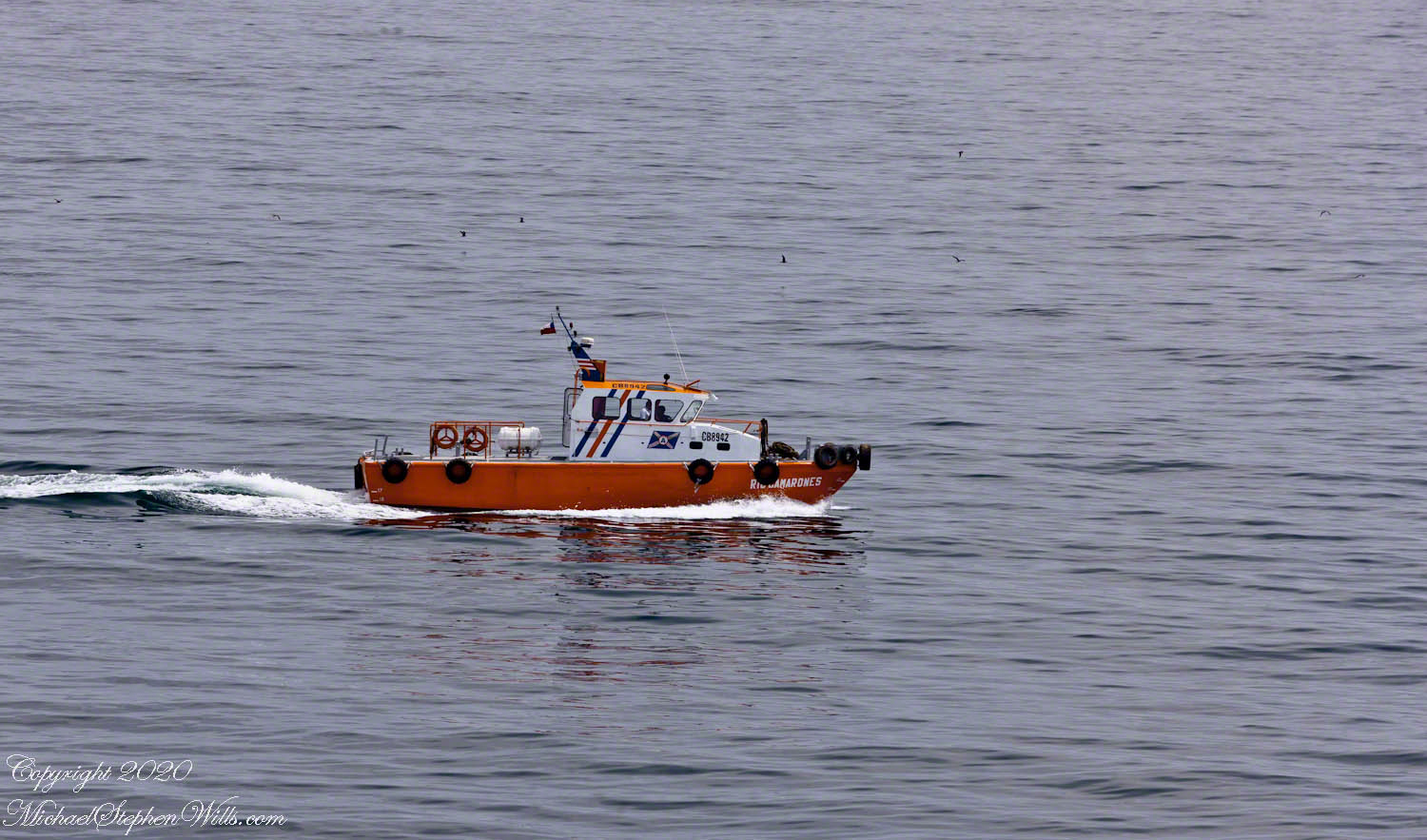
Forty-one minutes have passed, and we are now close to the anchorage site. The pilot boat, with its vibrant orange hull, cuts a striking figure against the serene blue gray of the sea. This small but vital vessel plays an essential role in the complex choreography of maritime navigation, guiding larger ships safely through treacherous waters.
Click any photograph for a larger view and use Ctrl-x to zoom in closer.
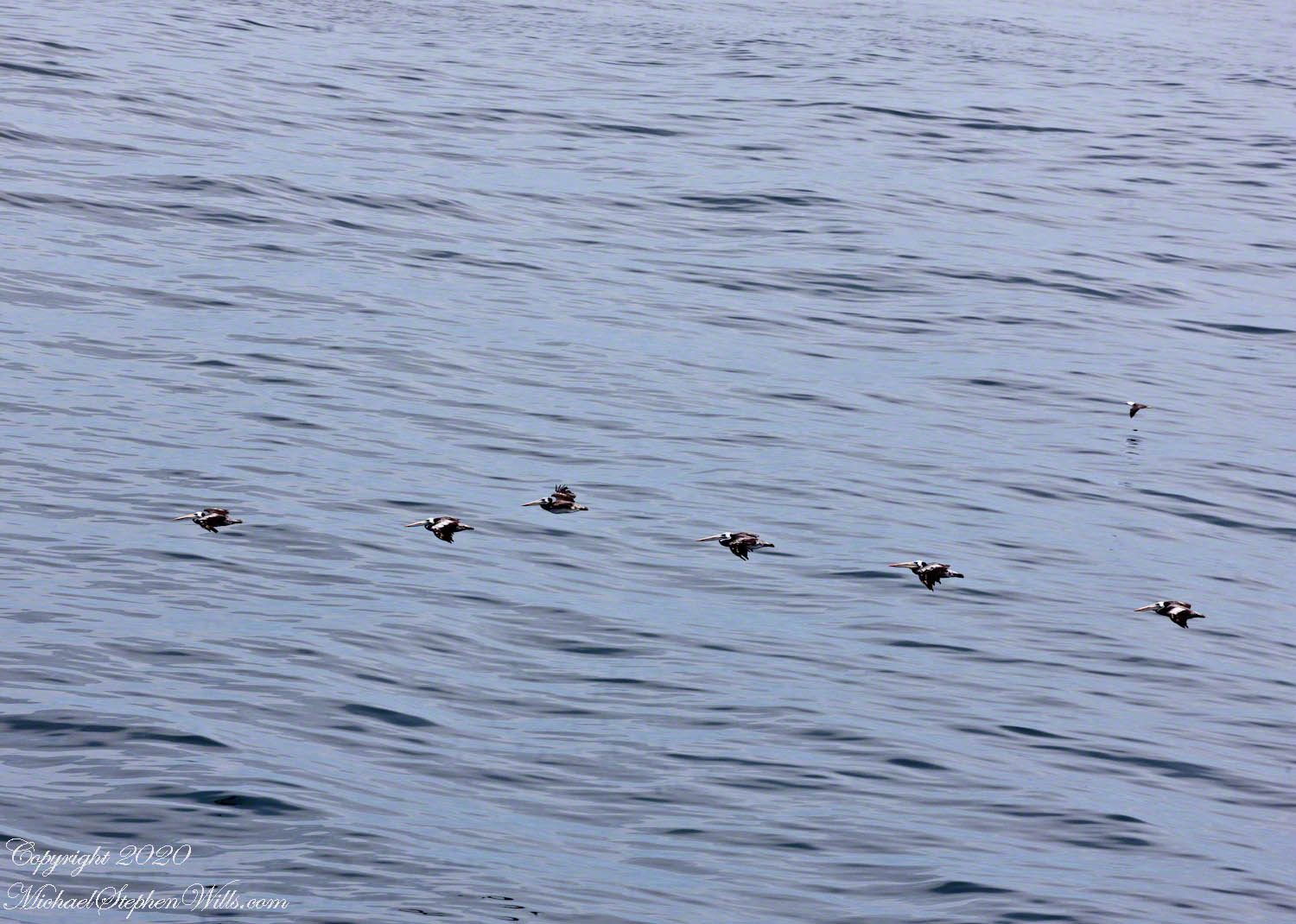
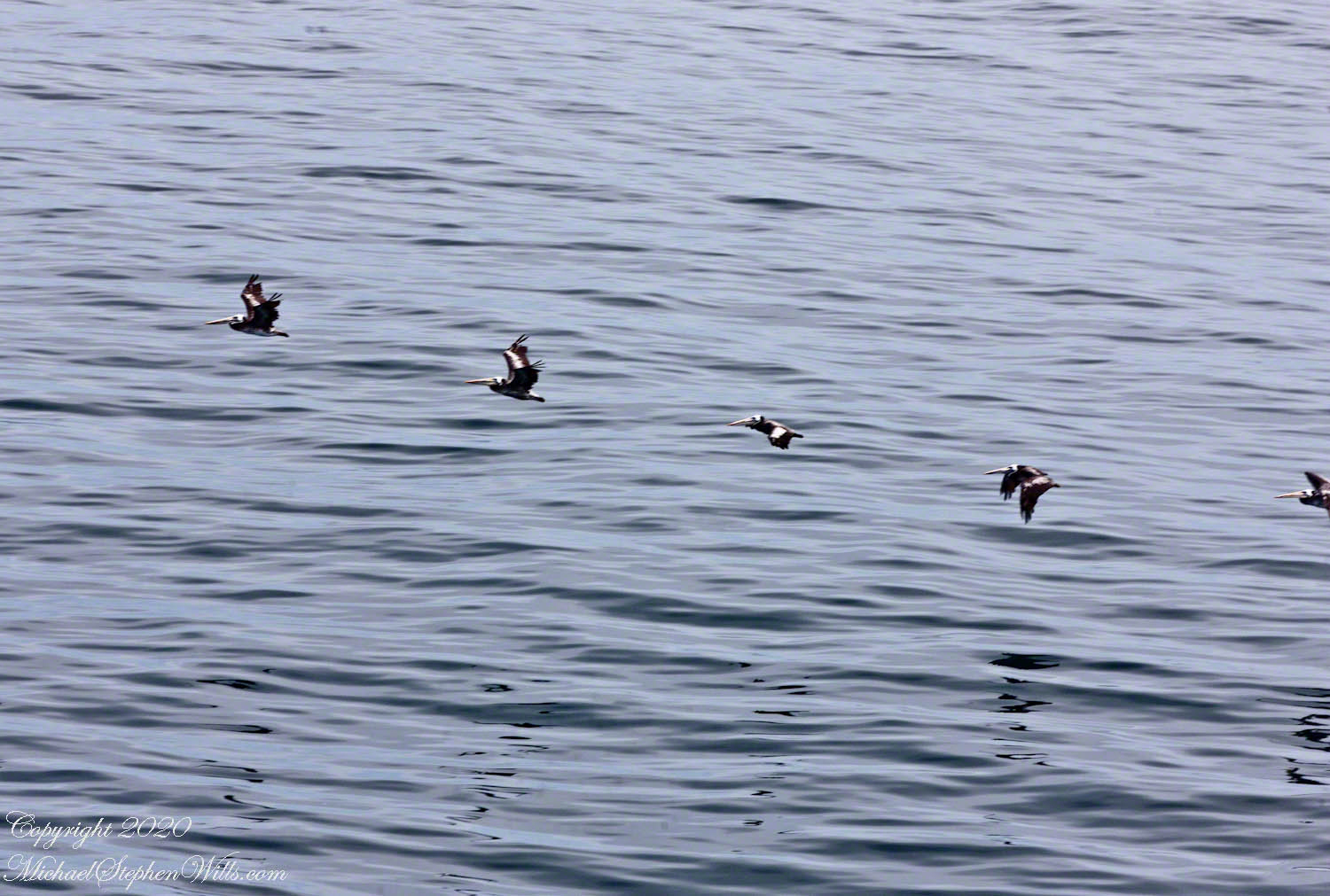
Beyond the pilot boat, shorebirds fly in rhythmic formation, a sight both familiar and comforting. Using the zoom (300mm) of my variable zoom lens, I identify these birds as pelicans, their elegant, synchronized flight a mesmerizing display against the vast expanse of water.
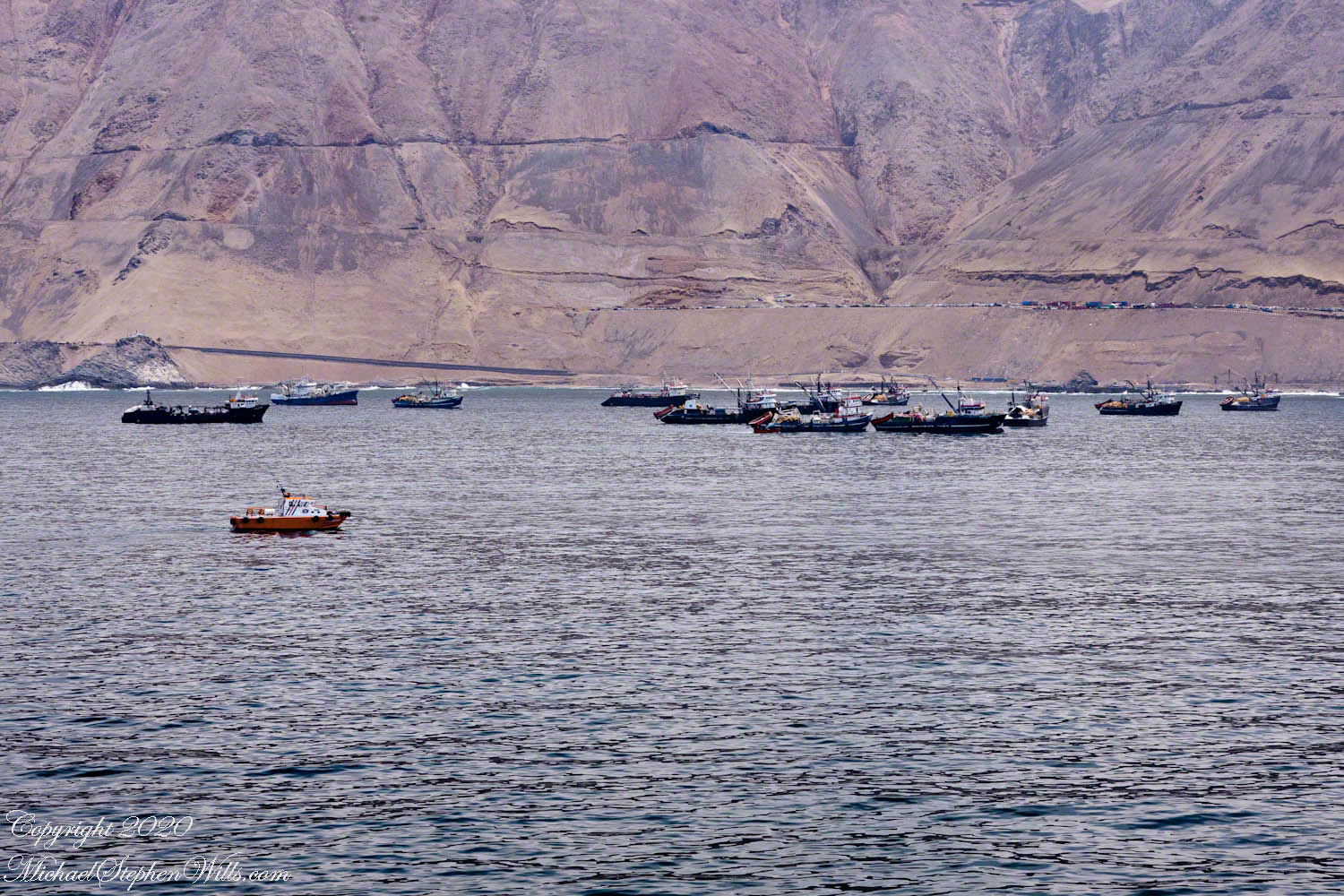
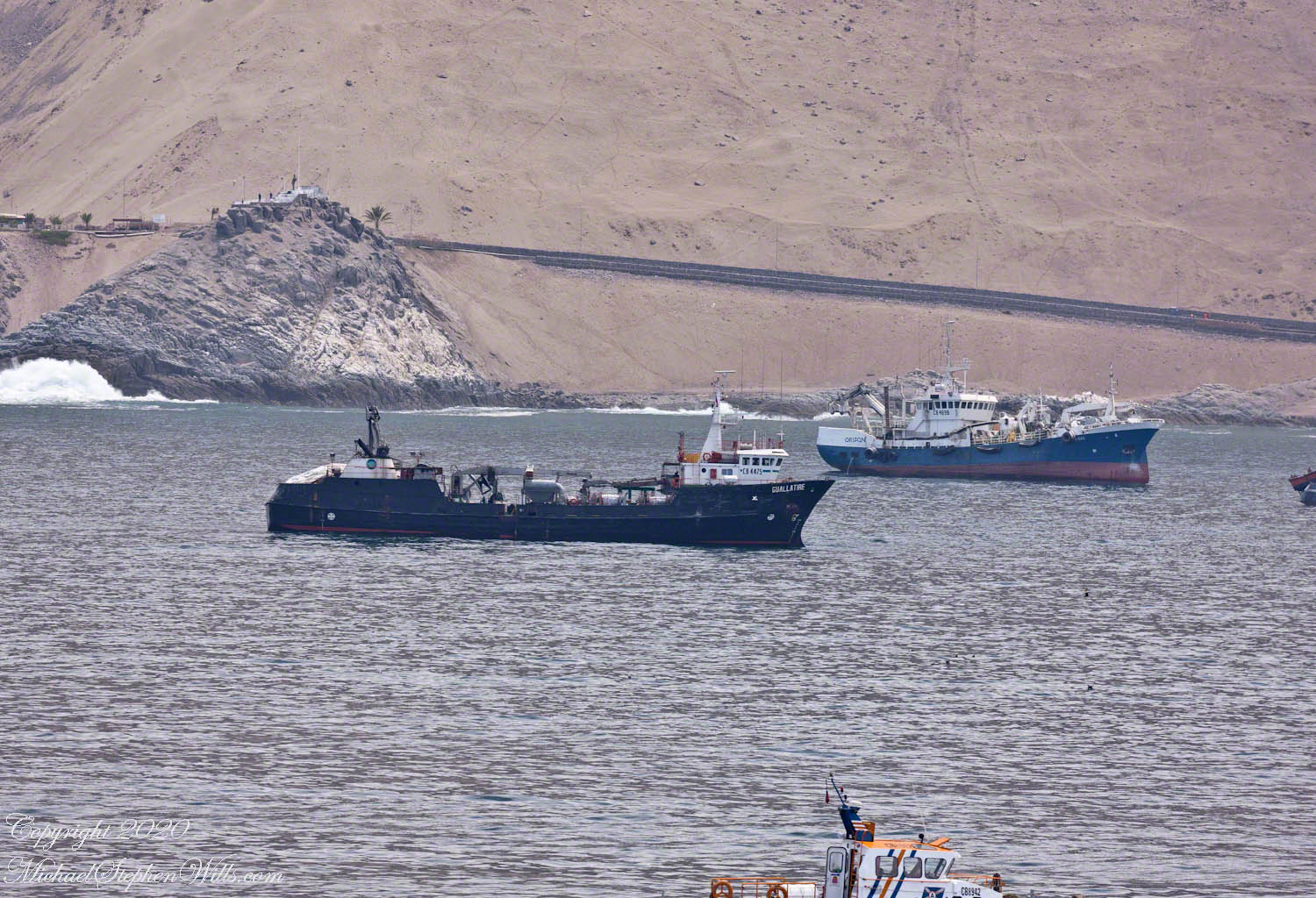
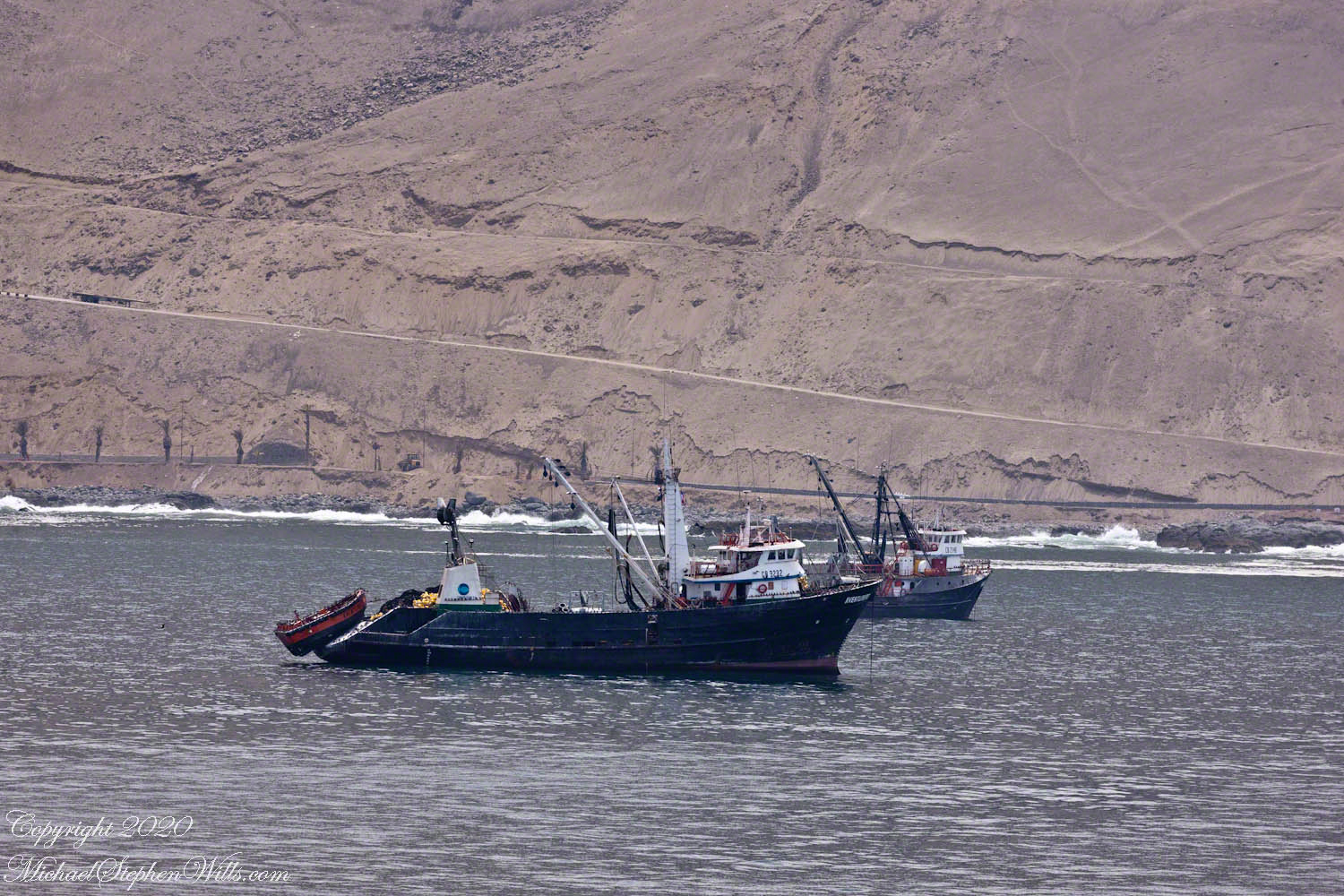
The pilot boat comes to a stop between us and anchored fishing boats, a cluster of vessels that seem to float effortlessly on the waves. Each boat, with its unique character and history, tells a story of countless journeys and the lives of those who depend on the sea for their livelihood. The fishermen, with their weathered faces and hands skilled in the art of the catch, embody a resilience born from years of facing the sea’s many moods. These boats are tools of the trade, lifelines for the families and communities they support, each one a testament to the enduring human spirit.
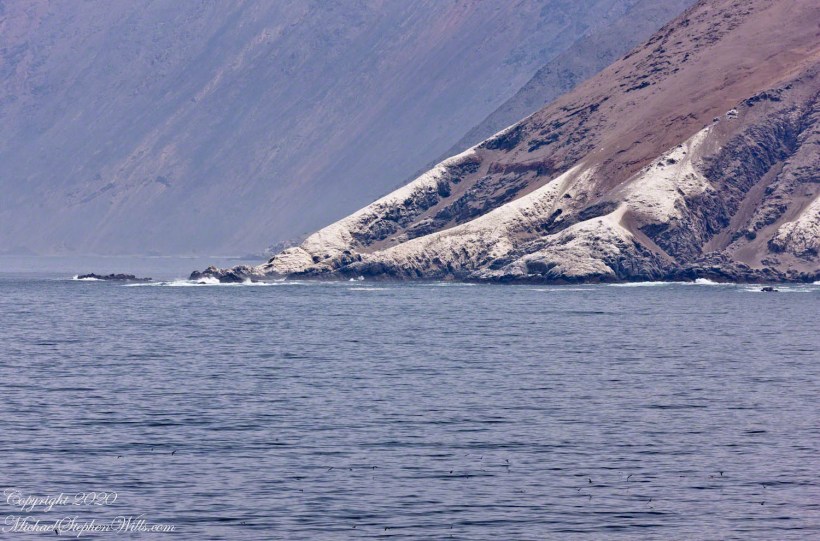
The post header photograph captures Punta Negra, the northern boundary of the harbor. The rugged, imposing cliffs of Punta Negra rise sharply from the water, their stark beauty accentuated by a white layer of diatomaceous earth running along the coast. This geological feature, first encountered at our last port in Mollendo, Peru, adds a unique texture to the landscape, a silent testament to the natural history of the region. The white layer, created by the accumulation of microscopic algae over millennia, stands out vividly against the darker rock, a reminder of the Earth’s ancient past.
Look closely, can you make out the distinctive shape of a Monkey Puzzle tree along the shoreline road? This ancient tree, with its unique and resilient form, mirrors the endurance of those who live and work in this challenging environment. The Monkey Puzzle tree, native to Chile, is known for its hardiness and longevity, thriving in conditions where few other trees can survive. It stands as a metaphor for the people of this region, who have adapted to and thrived in one of the world’s most inhospitable landscapes.
As I zoom in further, using the full 300mm power of my lens on a stable tripod, I capture close views of the fishing boats. Each detail comes into sharp focus – the rusted hulls, the nets hanging in preparation, the names of the boats proudly painted on their sides. These vessels, with their worn and weathered appearances, have a beauty all their own. They are symbols of perseverance, of the daily struggle and triumphs of those who brave the sea to make a living. The fishing boats, though seemingly small in the vast ocean, are powerful symbols of human resilience and adaptability.
The sea, a constant presence in the lives of these people, shapes their days and their destinies. The fishermen head out each morning, guided by the tides and the weather, their knowledge of the sea passed down through generations. Each catch brings hope and sustenance, a reward for their hard work and skill. Yet, the sea is also unpredictable, capable of turning fierce and unforgiving in an instant. This duality – the sea as both provider and adversary – is a fundamental part of life here, woven into the fabric of daily existence.
Our ship’s anchor has dropped, signaling that we are ready to board the tender for the trip from anchorage to port. This marks the start of our day’s activities, a journey that will take us from the vast, open sea to the vibrant life of Iquique. As we prepare to disembark, I reflect on the interconnectedness of these moments – the precision of the pilot boat, the flight of the pelicans, the stories of the fishermen, and the enduring landscape. Each element weaves together to create a tapestry of life on the sea, a testament to the resilience and beauty of this remarkable region.
The tender ride offers a closer look at the fishing boats and the shore. I notice the intricate details of the boats – the colorful paint, the weather-beaten wood, the names that reflect the hopes and dreams of their owners. Each boat is a microcosm of life, carrying the weight of daily struggles and the promise of future catches. The fishermen, now preparing their gear for the day’s work, move with practiced ease, their actions a ballet of efficiency honed by years of experience.
As we approach the port, the city of Iquique comes into view, a bustling hub of activity nestled between the sea and the mountains. The contrast between the natural beauty of the landscape and the vibrant energy of the city is striking. Here, in this meeting place of land and sea, past and present, we see the resilience of the human spirit, the ability to adapt and thrive in even the most challenging conditions.
This journey, from the open sea to the heart of Iquique, is more than just a physical passage. It is a journey through time and history, a glimpse into the lives of those who call this place home. As we step onto the shore, ready to explore the city and its rich heritage, I carry with me the stories of the sea, the echoes of the past, and the promise of new discoveries.
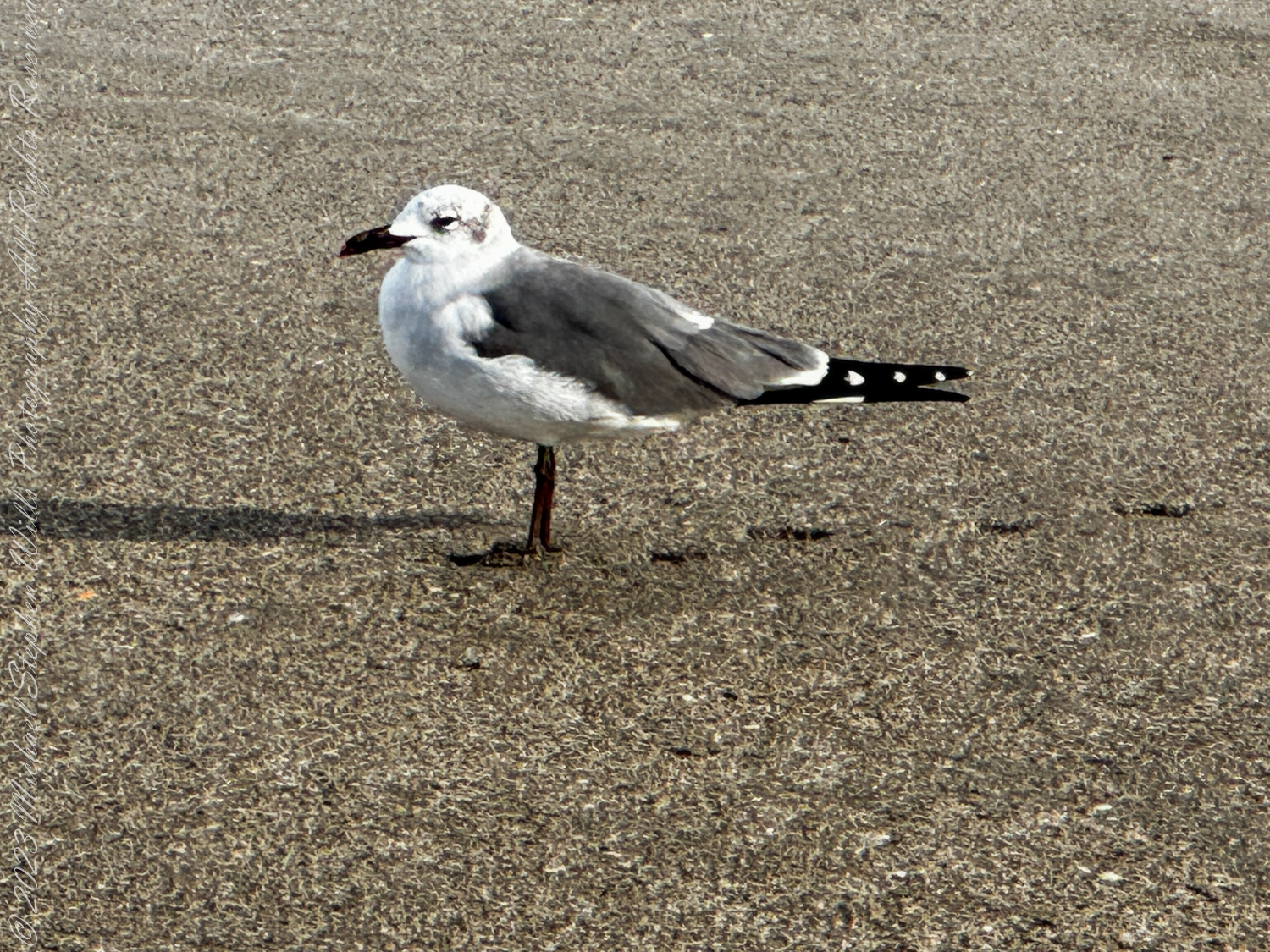
Discover the captivating world of Laughing Gulls, the jesters of Cocoa Beach’s shores. Dive into their lives, exploring the dance of courtship, the adaptability in their diet, and their vital role in the coastal symphony.
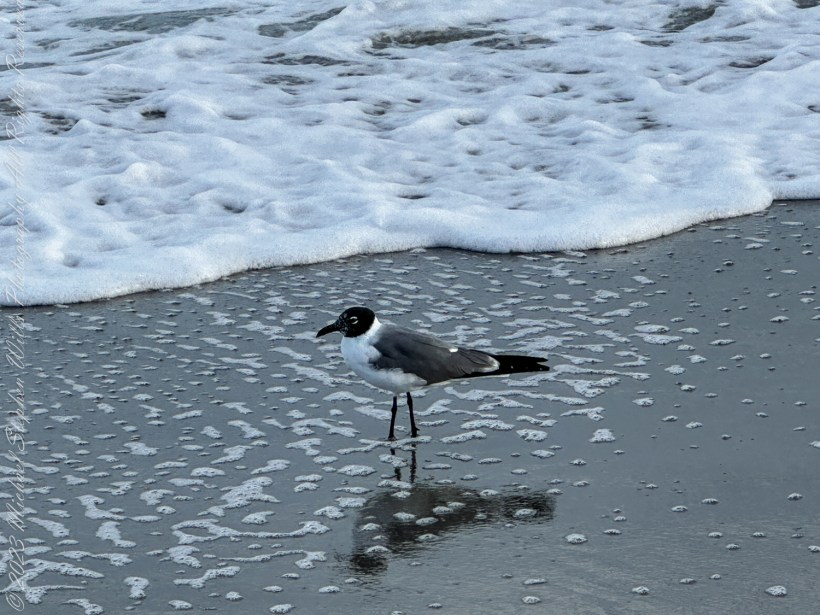
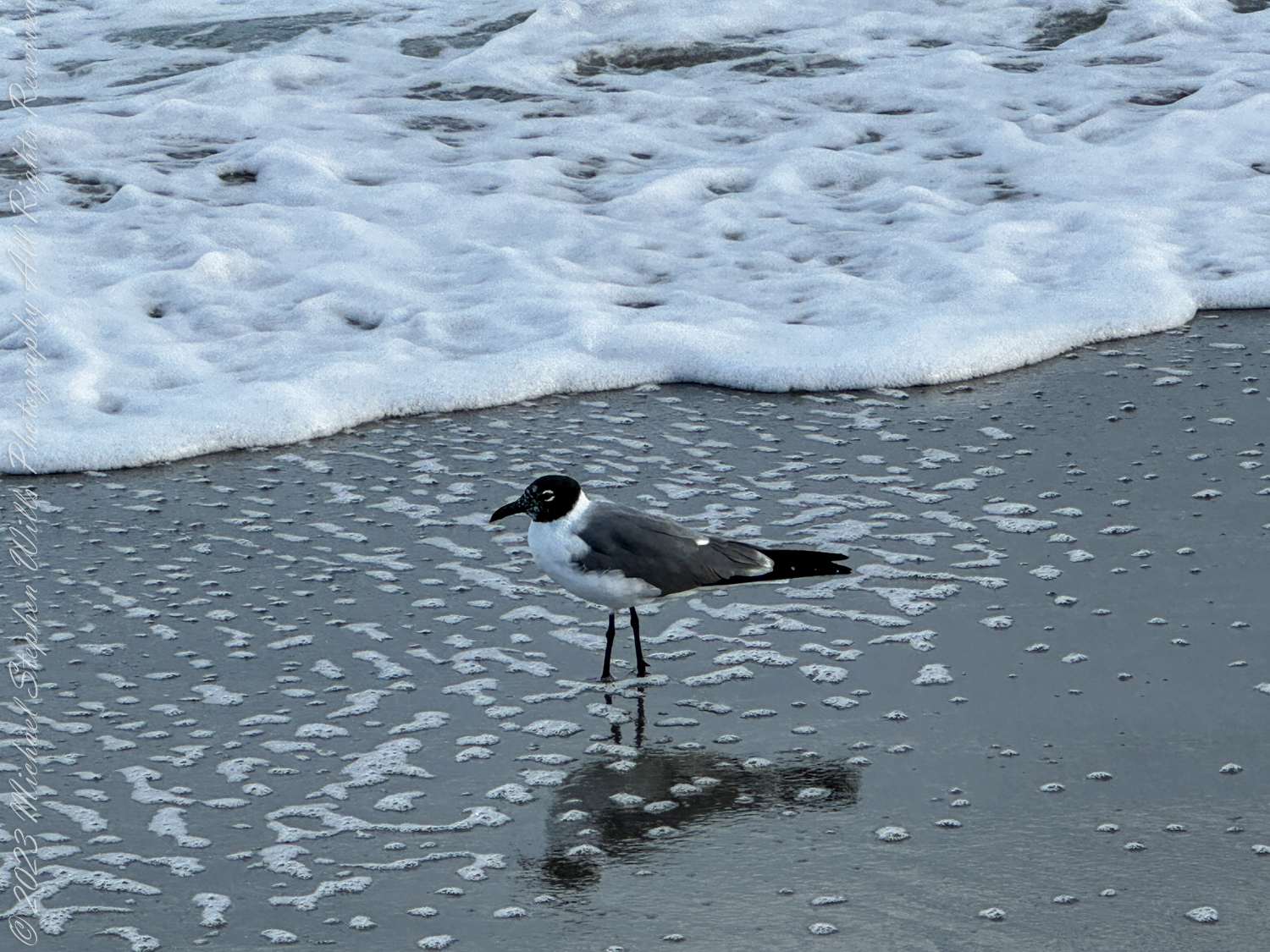
On the shores of Cocoa Beach, where the Atlantic’s waves gently knead the sands of Brevard County, Laughing Gulls (Leucophaeus atricilla) enact their daily ballet of survival and adaptation. In the span of mere minutes, the shifting light of Florida’s coastal theater presents two scenes, each with the same protagonist yet donned in starkly different costumes.
The Many Faces of Adaptation
The first gull, captured against the frothy lace of the incoming tide, is the epitome of the breeding plumage: a sleek, black hood that starkly contrasts its pearl-grey wings. This attire is not merely for allure but speaks of its readiness to engage in the rituals of courtship and the responsibilities of rearing the next generation. This black hood, a seasonal crown, fades as the duties of breeding wane, revealing the less conspicuous garb of the non-breeding season—a mottled grey head atop the same sturdy body, ready to blend into the off-season’s landscape.
Laughing Gull with breeding plumageLaughing Gull, nonbreeding plumage
Minutes Of Separation
The mere minutes that separate the two photographs are but a whisper in the grand dialogue of evolutionary time. Yet, they offer a glimpse into the ever-present duality of the Laughing Gull’s life. In one, the gull stands resolute, black-headed and bold against the soft chaos of the sea’s edge. In the other, its head appears dusted with the wisdom of age, a visual softening that speaks to the less confrontational time of year.
Here are some observations to make sense of this disparity:
Overlap of Molting Periods: Laughing Gulls do not all breed at the same time; some individuals may start molting into or out of breeding plumage earlier or later than others. This can result in birds with different plumage being seen together.
Varied Maturity: Younger gulls or those not yet of breeding age may not have developed the breeding plumage, while adults in the same flock may display full breeding colors.
Breeding Colonies: Gulls often nest in colonies where birds in different stages of the breeding cycle can be observed together, including those that may have lost mates or failed to breed and therefore did not develop breeding plumage.
Health or Nutritional Status: Sometimes a bird’s plumage can be affected by its health or nutritional status. A gull in poor health might not molt into breeding plumage as expected.
Geographic and Climatic Factors: Local environmental conditions can influence the timing of molting. Birds in the same location can experience different environmental cues that might affect their molt.
Non-breeding Visitors: During the breeding season, some non-breeding birds may still be present and intermingle with breeding birds, either because they are passing through the area or they are non-breeding residents.
Extended Breeding Season: In areas with a long breeding season, such as in subtropical and tropical regions, the breeding and non-breeding plumages can be seen at the same time due to the extended period over which breeding can occur.
Masters of the Coastal Realm
The Laughing Gulls are more than just residents of the coast; they are its caretakers and witnesses. Their laughing calls are synonymous with the ocean’s breath, a soundscape that harmonizes with the rhythmic crashing of waves. These birds thrive in the intertidal zone, a challenging environment where land and sea engage in a perpetual tussle. Here, they must be opportunistic, agile, and resourceful, for the beach offers both a cornucopia of food and the threat of unpredictability.
The Ebb and Flow of Existence
The life of a Laughing Gull is intimately tied to the ebb and flow of the tides. Their diet is a testament to their adaptability, comprising anything the sea yields—fish, crustaceans, and even the unfortunate insects that stray too close to the brine. They are pirates of the shore, unafraid to snatch a meal from another bird or scavenge the remains of human activity.
Reflections on Change and Constancy
Laughing Gulls are the embodiment of the sea’s narrative around us—a story of change and constancy. Their lives are a testament to the tumultuous history of the ocean, and their presence is a thread that connects us to the vast, blue mystery. They remind us that, while the sea’s moods are many and its faces ever-changing, it remains a central force in the narrative of life on Earth.
In the Face of Tomorrow
In the space between these two images, we find a profound lesson on the nature of time and the resilience of life. The Laughing Gulls of Cocoa Beach, with their shifting plumage and timeless cries, are messengers of the past, envoys of the present, and harbingers of the future. As we contemplate their existence, we are reminded of our own place within the natural world—a world that requires our understanding and protection, lest the laughter of these gulls fades into the silent archives of history.
The Laughing Gulls of Cocoa Beach continue their dance, unfazed by the human gaze, their lives a fluid adaptation to the sea’s caprices. And as the sun marches across the sky, casting the story of these gulls into relief against the shifting sands, we are privileged to observe, to learn, and to cherish the Atlantic Ocean’s enduring tale.
Copyright 2024 Michael Stephen Wills All Rights Reserved

 Michael Stephen Wills Photography