Autumn Evening Hike Part 1 of 3

It started with running water…..

Over the weekend the handle of our 60 year old Delta brand kitchen faucet broke off, since we moved here I rebuilt it once and replaced the stainless steel sphere, the central control of the mechanism.  The stem of the sphere must have been faulty because it snapped. Monday, I visited Lowes and the sphere was not in stock.  Just wanting to fix the faucet, I skipped the usual vetting of a new product and grabbed the exact same Delta faucet which was, just like the sphere that broke, made in China.  The next step up in (questionable) quality was three times the price.

Running Water

Yesterday I installed a new faucet in the kitchen sink, a straightforward and unpleasant task that took most of the day.  Late afternoon, while resting up, I brought up the idea of a hike and Pam reminded me we had another clear September day.  Last week, I headed out to capture the Mill Creek waterfall of upper Treman Park at the perfect time of day.  It was a day such as this, warm, a cloudless sky, minimal breeze.
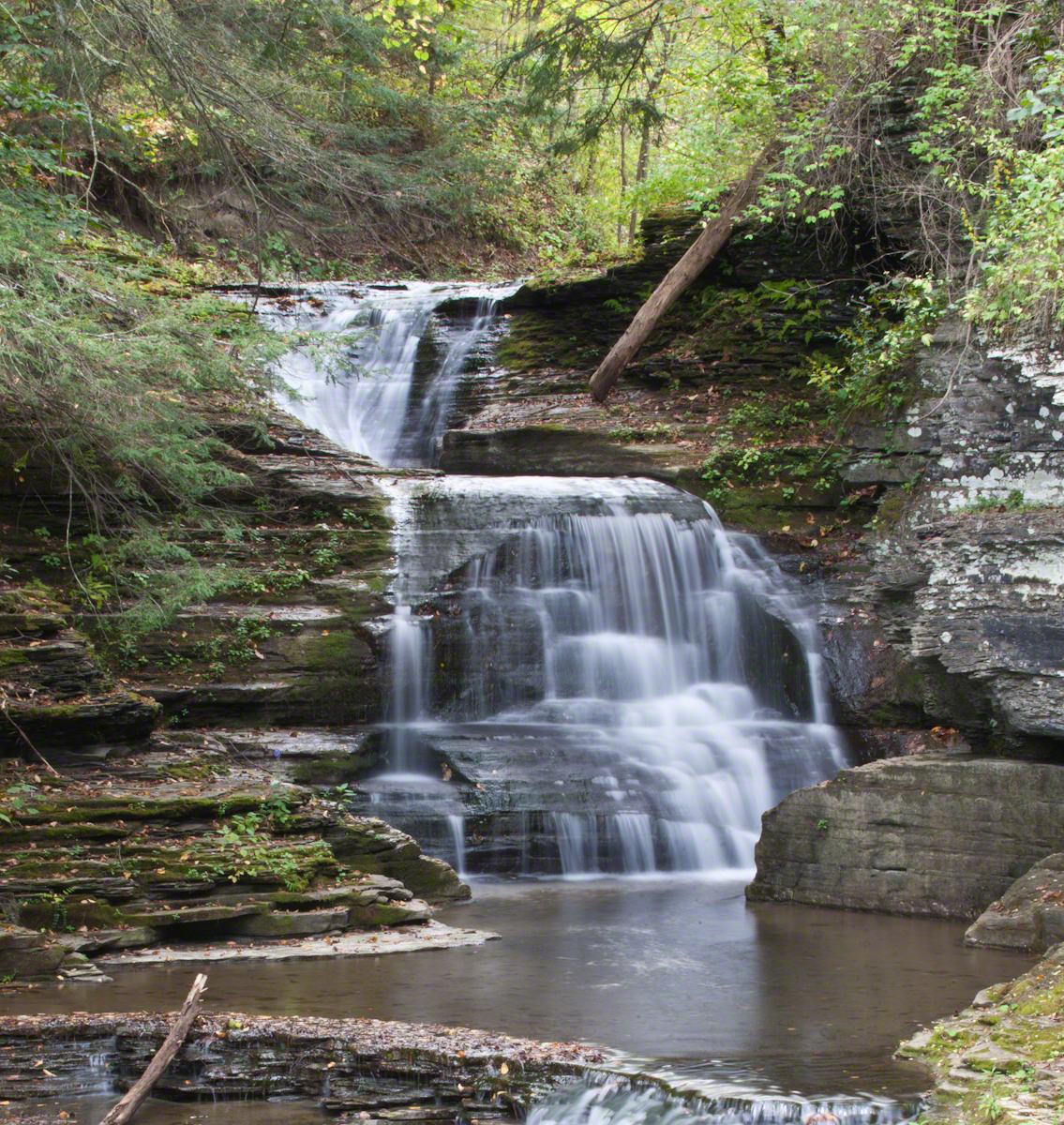
Mill Falls
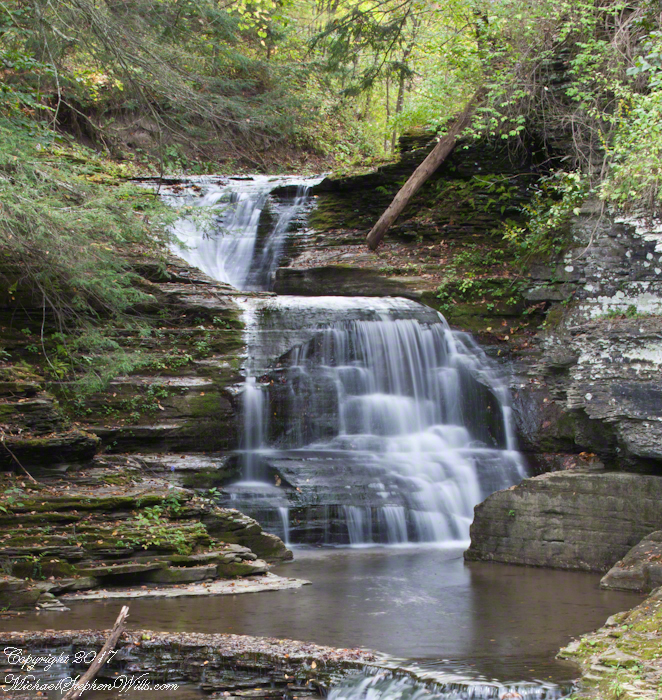
Pam reminded me this evening I was trying to capture the Mill Waterfall of Upper Treman Park at the perfect moment when the sunlight glazes the pools.

I need to get in place a bit earlier.  Previously, I used a 24 mm wide angle lens and, today, mounted the EF 70-300mm f/4 – 5.6L USM lens on the Canon EOS 1DS MarkIII.  Did not have time to sort through the ND filters, so left the UV on.  The waterfall is in a glen, shaded from direct light at this time of day, sun low in the west.  Given the low light, to save time, I decided to set ISO to a low value (125), set lens to the widest angle (70 mm), and frame the shot using the heavy Manfrotto tripod with ball head.

Needed to crop the image for the above result, still not perfect.  I am seeking to full the entire pool in that glow.

Want more? Click the link for my Online Gallery
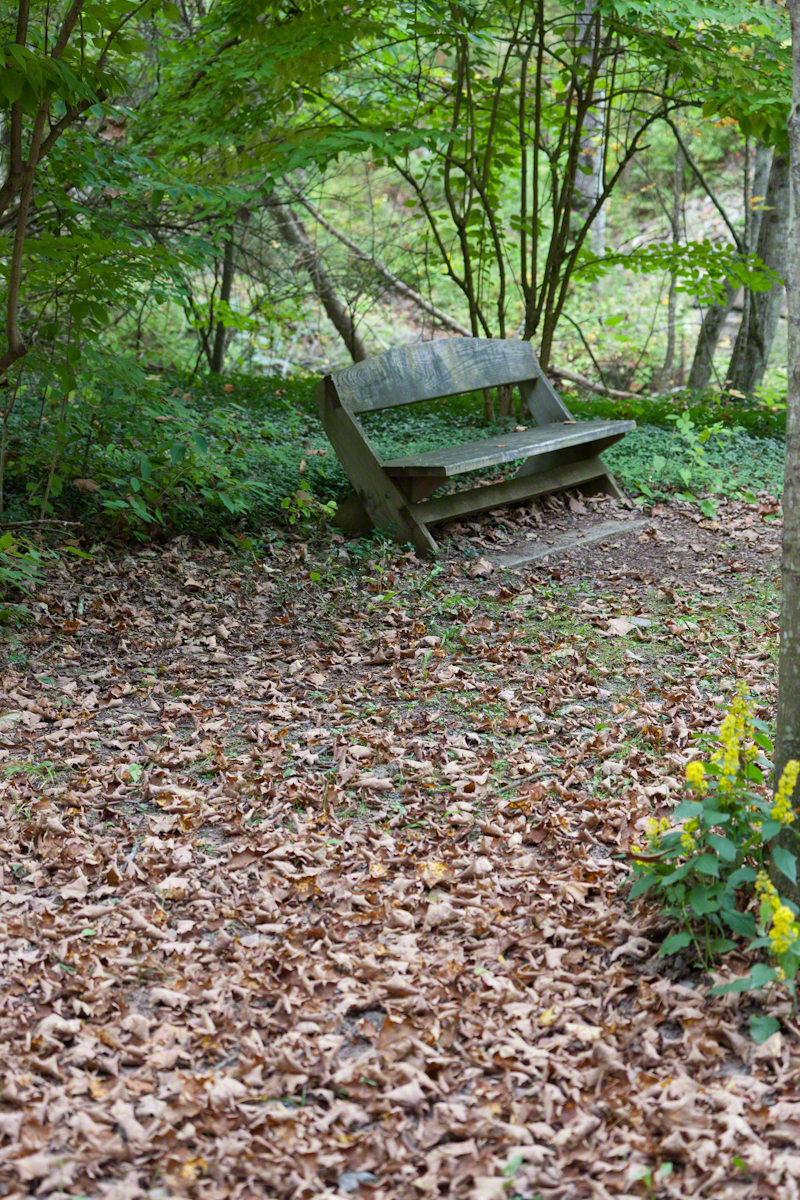
Mo's Bench
Towards the end of her life, my Mom waited for us on this bench while we walked. She enjoyed the sound of the creek, watching and chatting with passerbys. There some out of focus goldenrod right foreground. I frames the shot to catch the flowers and crop out a tree trunk.

Hiking the Gorge Trail

Instead of putting the gear away, I carried that heavy setup on the hike.  The strap around the neck is a lot of stress if it hangs.  With the gear cradled in the crook of my arm it is bearable.
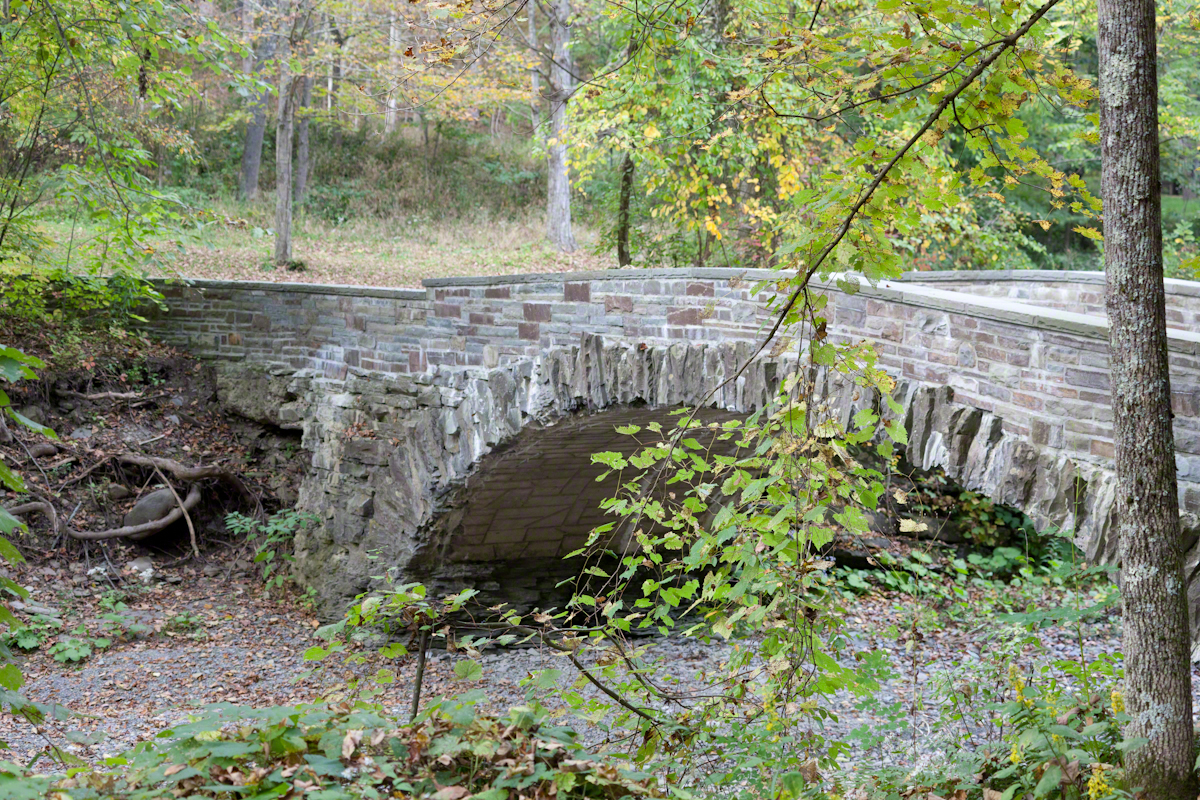
Foot Bridge
The creek is spanned at several points by these stone footbridges, the work of the Civilian Conservation Corps, as are all the gorge trails. This bridge was restored last year. It leads to a marvelous grove of Sycamores.

Needless to say, the pace was sedate.  Pam spent most of the time walking ahead and refusing to be in any shots.  These past weeks, rainfall was light, so the creek is low.  This low flow is a necessary element to a perfect waterfall image.
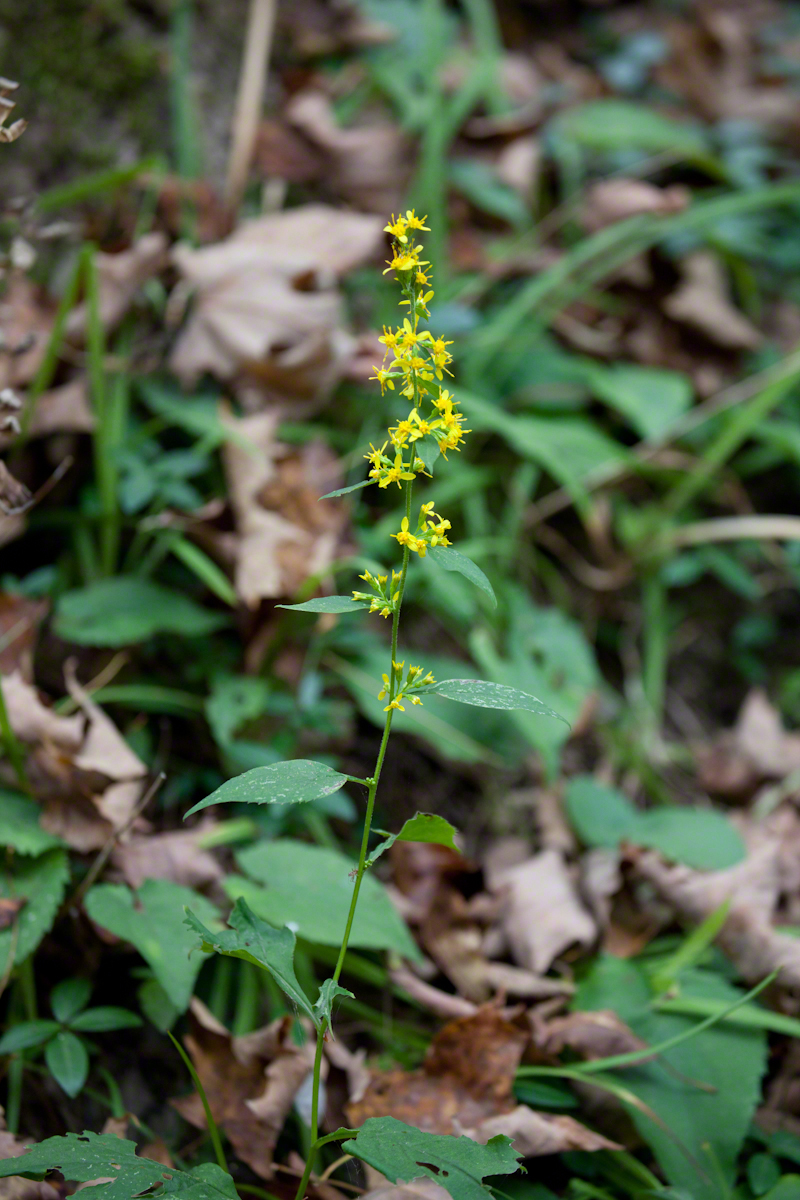
Golden Rod
A single stem of goldenrod, ther are hundreds of species of this relative of the aster.
Want more? Click the link for my Online Gallery

I get some great macro shots with that lens.  With just the UV filter, it is quite fast.
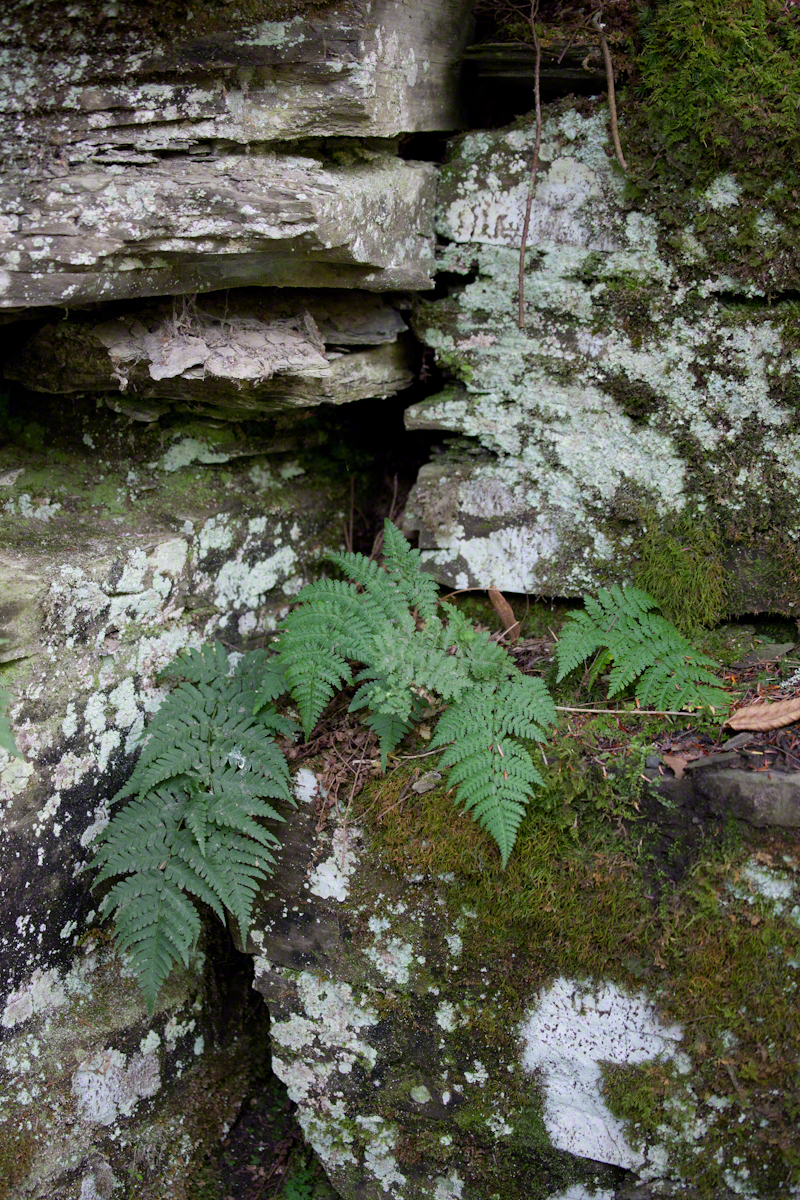
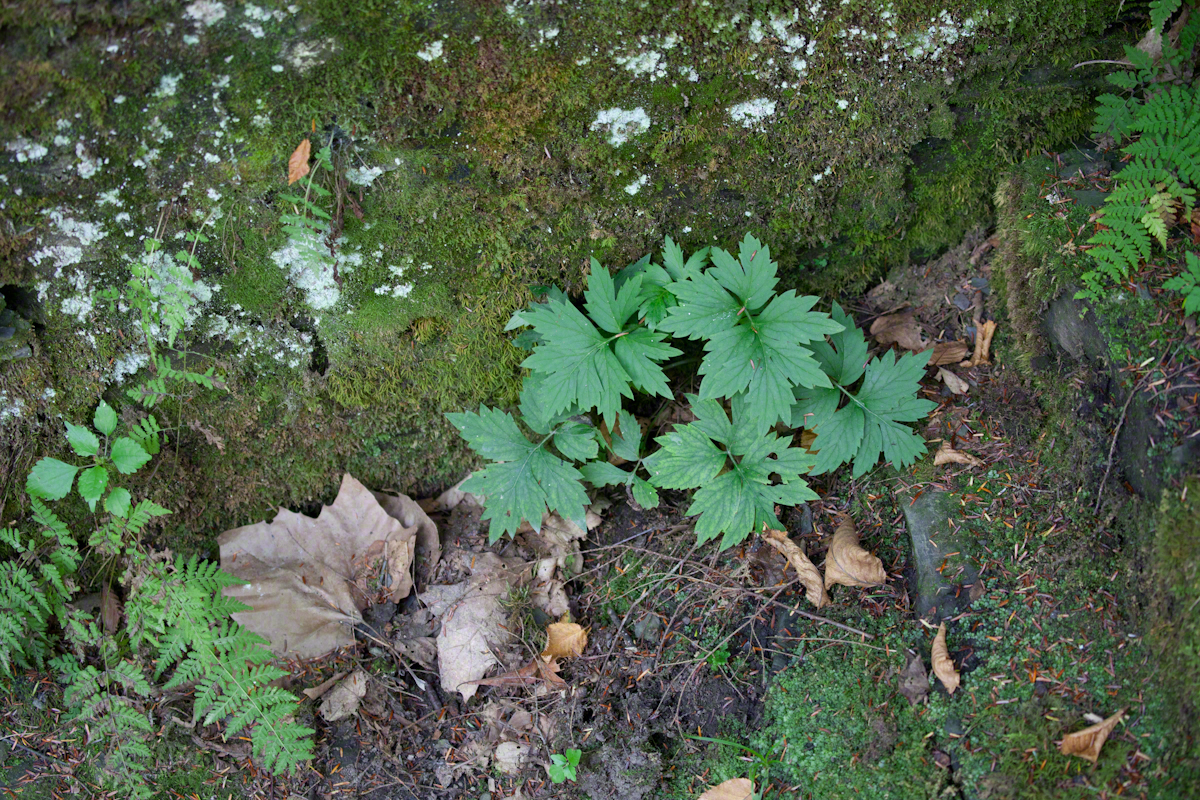
Ferns, Lichen, Gorge Wall
The gorge wall rises to the right of the path.
Foot of the Gorge Wall
Very little of the gorge walls do not support thick growth of mosses, lichen, ferns, flowering plants of all kinds. I don’t know offhand the name of the cnetral plant growing from the base of the wall.

In the Gallery

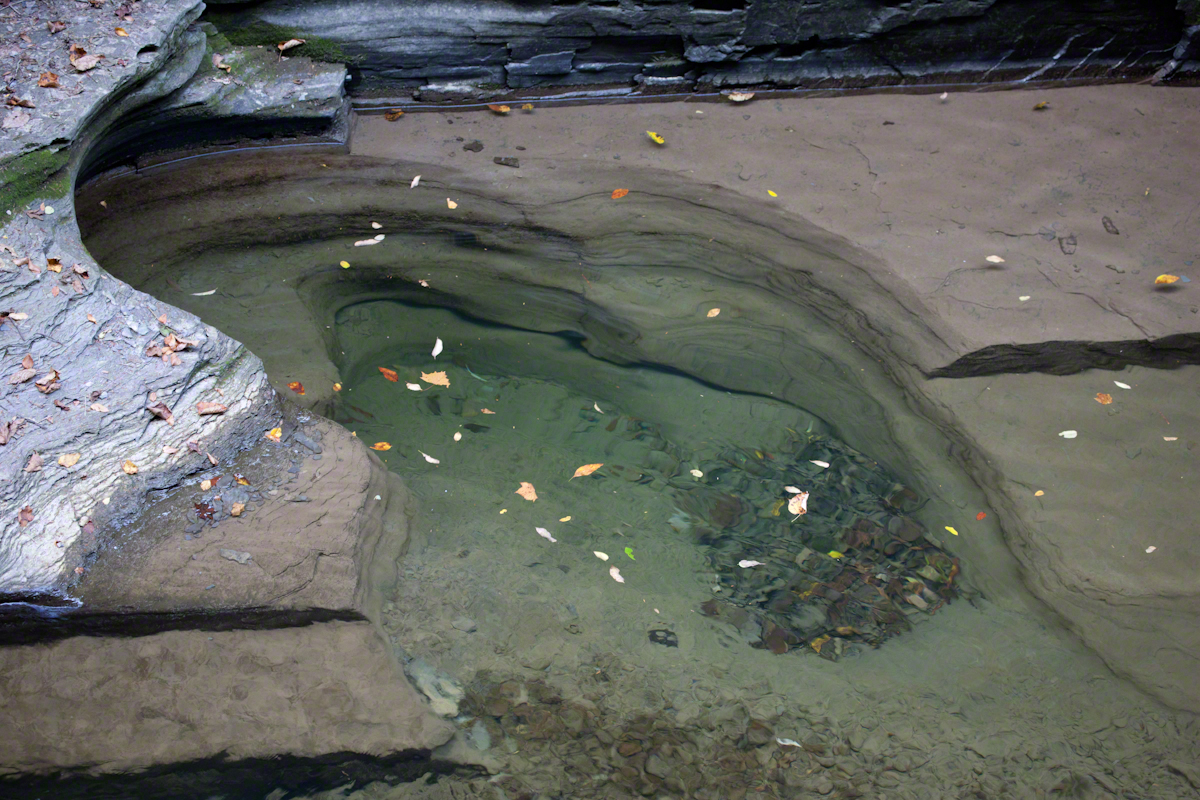
Creek Pool
Shaped by whirlpools during high flow, the curves recall flowing water.

A memorable feature of upper Treman Park is the dramatic gorge entrance.  When the glaciers melted, 10,000+ years ago, enough water flowed through this watercourse to wear away several hundred feed of sedimentary rock to form a gallery, or hall, with towering, crumbling, walls on either side.

This evening the light was low, the water seemed dead in that it was clear and did not glisten or ripple.  I used these conditions in the above shot to emphasize the structure this pool.  Located at the foot of a waterfall, at high water, the falls fill channel and this pool is carved by river stones carried in the current.  At lower water, the pool is exposed.
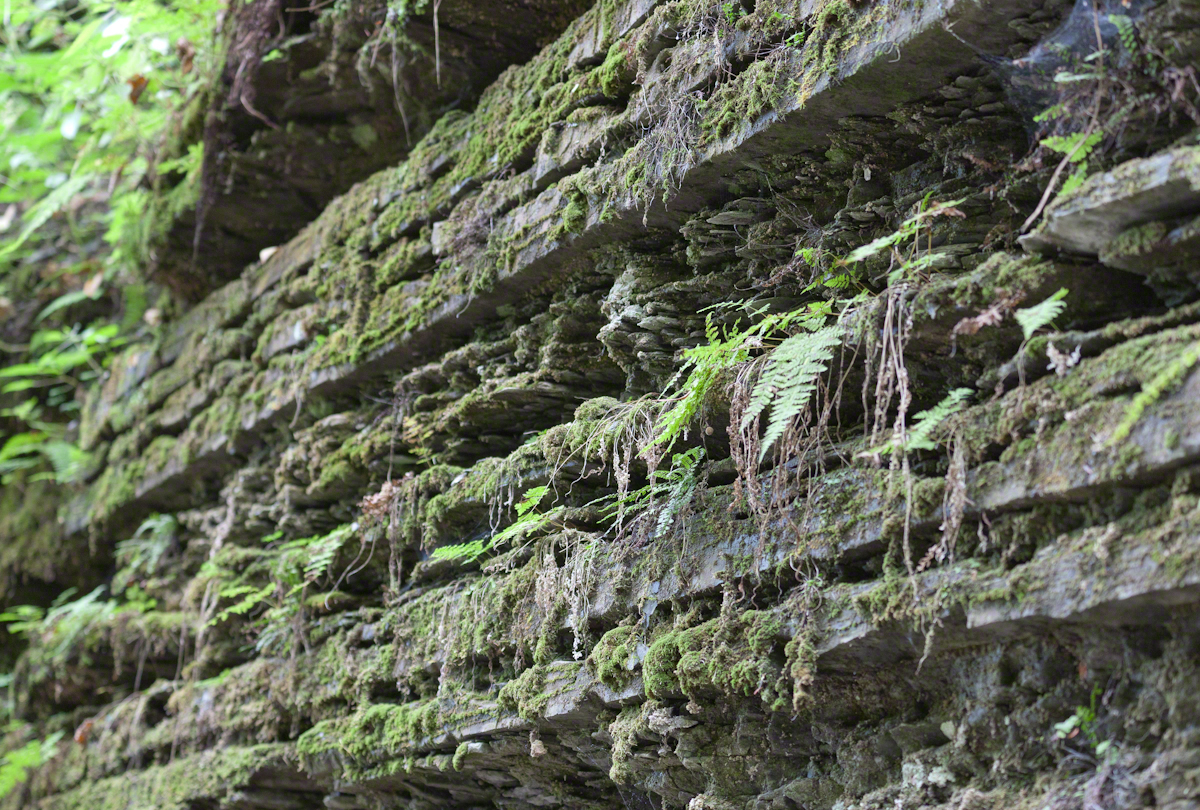
Eons of Layers
Millions of years in rock strata.
Want more? Click the link for my Online Gallery
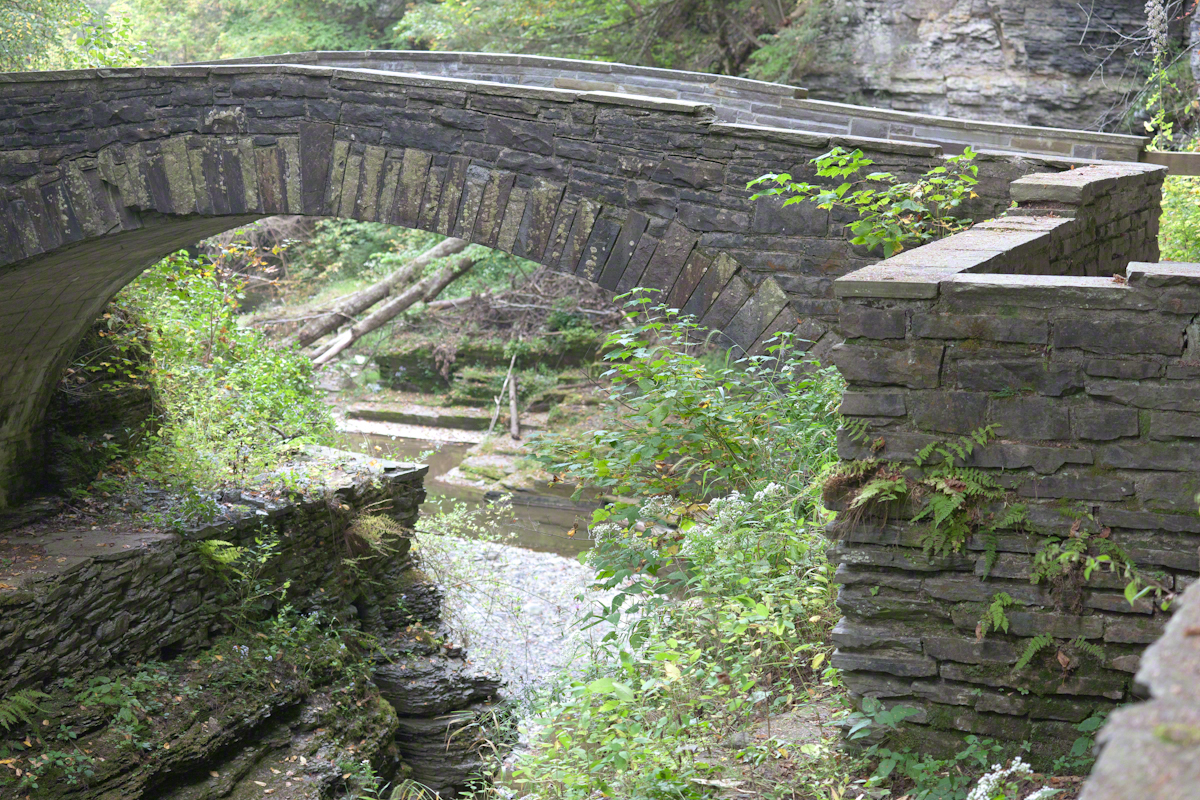
Foot Bridge
Spanning the eastern side of the gallery entrance of the gorge.

The footbridge, above, is most often photographed from the western side of a long gallery formed by the gorge carved by the creek.  This is a shot that explores the fine stonework.

Continued……..
Copyright 2023 Michael Stephen Wills All Rights Reserved http://www.MichaelStephenWills.com

Lengthening Shadows

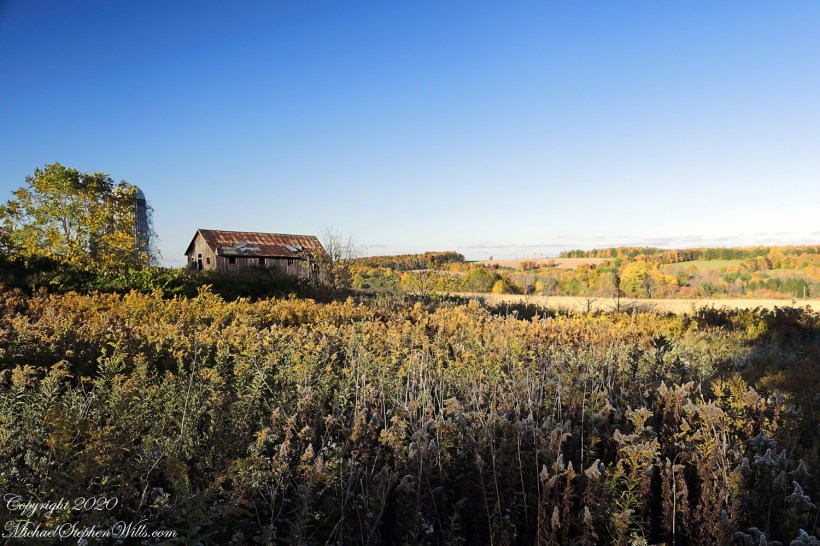
Sere Goldenrod

West Hill, Ithaca, resolves to this plain here sere goldenrod, abandoned barn, silo, distant hills. We headed out from home as sunset approached.

Click photograph for larger view. Use combination keys to enlarge/reduce: Ctrl+ (Control / Plus) and Ctrl- (Control / Minus)
Click to view my autumn photographs on Getty.

Mizpah and Mitzvah

I was reading the story of Jacob and Laban and encountered the word “Mizpah” is Hebrew for “watchtower”. It is used to refer to an emotional bond or covenant made between two people with God as their witness, often symbolized by a pile of stones marking an agreement​​. Mizpah sounds similar to “Mitzvah,” often used to mean “a good deed,” and is related to the Aramaic word “tzavta,” which means to attach or join. This term is commonly used to describe any charitable act and has deep roots in Jewish tradition and texts, such as the Jerusalem Talmud.​​

The relationship between “Mizpah” and “Mitzvah” seems to be more linguistic and symbolic rather than direct. Both terms originate from Semitic languages and carry connotations of connection and covenant. “Mizpah” symbolizes a bond overseen by God, while “Mitzvah” refers to actions that connect individuals through good deeds, potentially strengthening communal bonds.

Click Me to view my photographs on Getty.

Copyright 2023 Michael Stephen Wills All Rights Reserved http://www.MichaelStephenWills.com

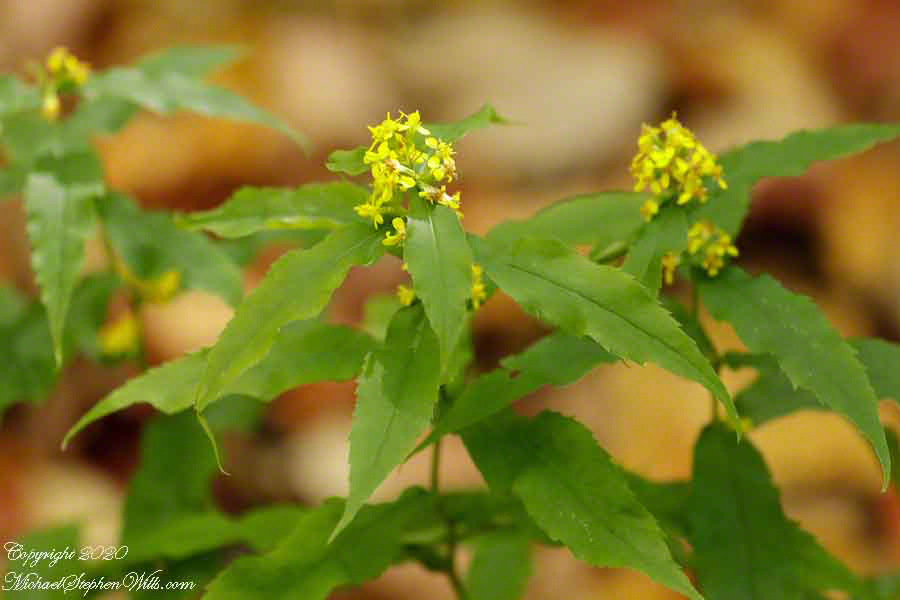
Woodland Goldenrods

Woodland goldenrods in the Finger Lakes Region contribute to ecosystem biodiversity and resilience.

In the Finger Lakes Region of Central New York State, a tapestry of flora unfurls across the landscape, marked by the vibrant yellows of woodland goldenrods. These wildflowers are not just a visual spectacle; they are integral to the ecosystem, contributing to its biodiversity and offering a feast for pollinators.

Woodland goldenrods (Solidago species) are part of a larger genus that encompasses over 100 species, many of which thrive in the varied habitats of the Finger Lakes. This region, with its rich soils, ample rainfall, and diverse topography, hosts an array of goldenrod species, each adapted to specific niches within the woodland understory.

Hint: click image for larger view. Ctrl/+ to enlarge / Ctrl/- to reduce

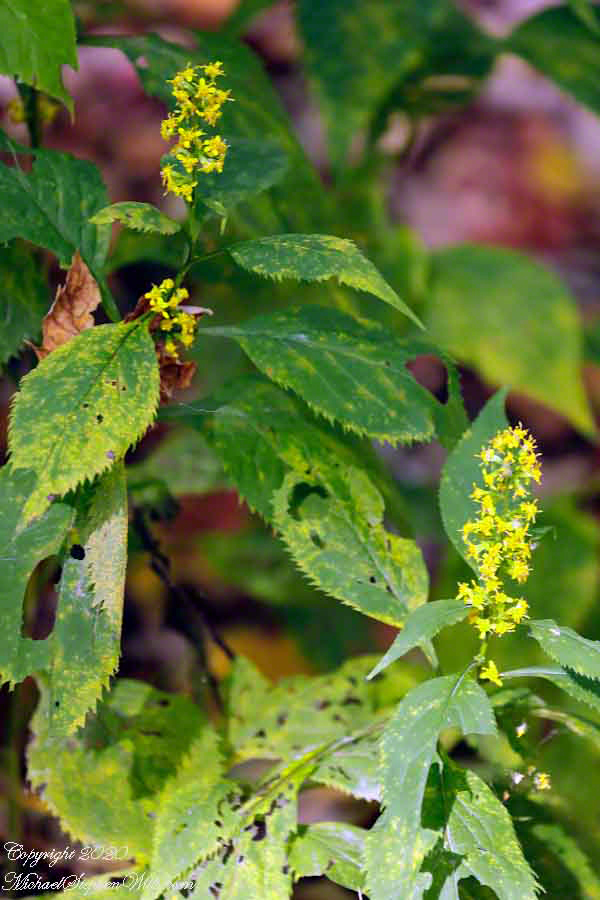
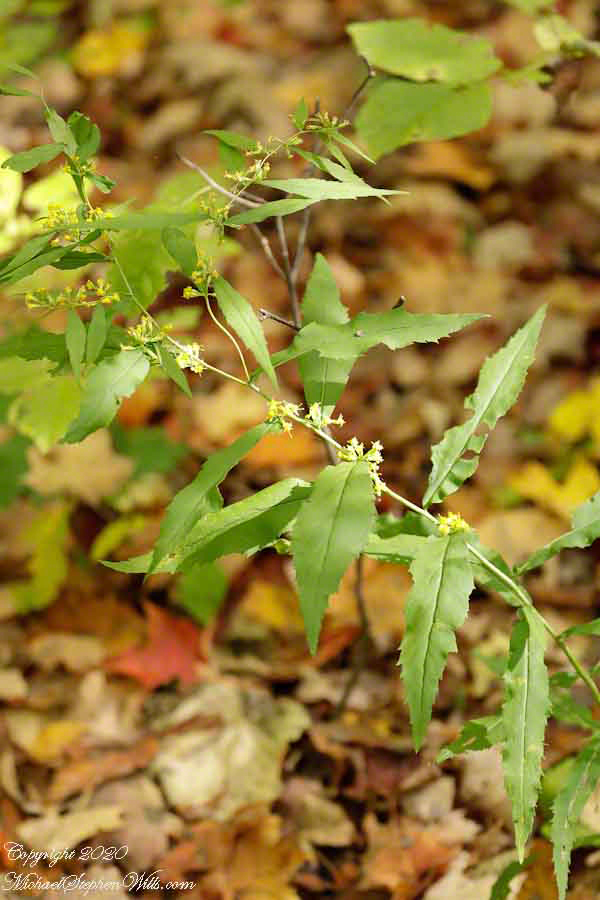
Solidago caesia, commonly known as blue-stemmed or wreath goldenrod, is one species that graces these woods. Unlike the typical roadside goldenrods, this species thrives in the dappled shade, its delicate arching stems culminating in small bursts of yellow flowers that appear like beaded necklaces draped over the greenery.

Another species, Solidago flexicaulis, or zigzag goldenrod, earns its name from the characteristic bending pattern of its stem, which zigzags between leaf nodes. Its flowers are more clustered, favoring the shade and moist conditions of the forest floor. Its presence is often a sign of a healthy, undisturbed woodland.

Solidago odora, or anise-scented goldenrod, brings a sensory delight to the mix with leaves that emit a licorice-like fragrance when crushed. This goldenrod favors the edges of woodlands and clearings, where sunlight can reach its clusters of tiny, bright yellow flowers.

The downy goldenrod, Solidago puberula, is yet another species that decorates the region’s woodlands. It prefers dry, sandy soils, often found on the slopes and ridges that contour the Finger Lakes. Its name comes from the fine hairs that cover its stems and leaves, a characteristic that distinguishes it from its kin.

Each of these goldenrods plays a role in the woodland ecosystem. Their flowers provide nectar and pollen for a variety of insects, from bees and butterflies to beetles and flies. The seeds are a food source for birds, and the plants themselves offer habitat to numerous woodland creatures.

The presence of woodland goldenrods also indicates the health of the region’s forests. These plants are often pioneers in disturbed areas, contributing to soil stabilization and the natural succession process. They are resilient and adaptable, capable of surviving in a range of conditions from full sun to dense shade, though each species has its preference.

In the Finger Lakes Region, the goldenrods bloom from late summer into the fall, their golden hues a prelude to the coming autumnal display. They stand as a testament to the beauty and complexity of these woodlands, their very existence a reminder of the delicate balance within these ecosystems.

In conclusion, the woodland goldenrods of the Finger Lakes are more than just a splash of color in the verdant forests. They are a vital part of the ecological tapestry, contributing to the biodiversity and resilience of the region. Each species, with its unique adaptations and preferences, adds to the rich natural heritage of Central New York State, reminding us of the intricate web of life that thrives in these woodlands.

Click Me to view my photographs on Getty.

Copyright 2023 Michael Stephen Wills All Rights Reserved http://www.MichaelStephenWills.com