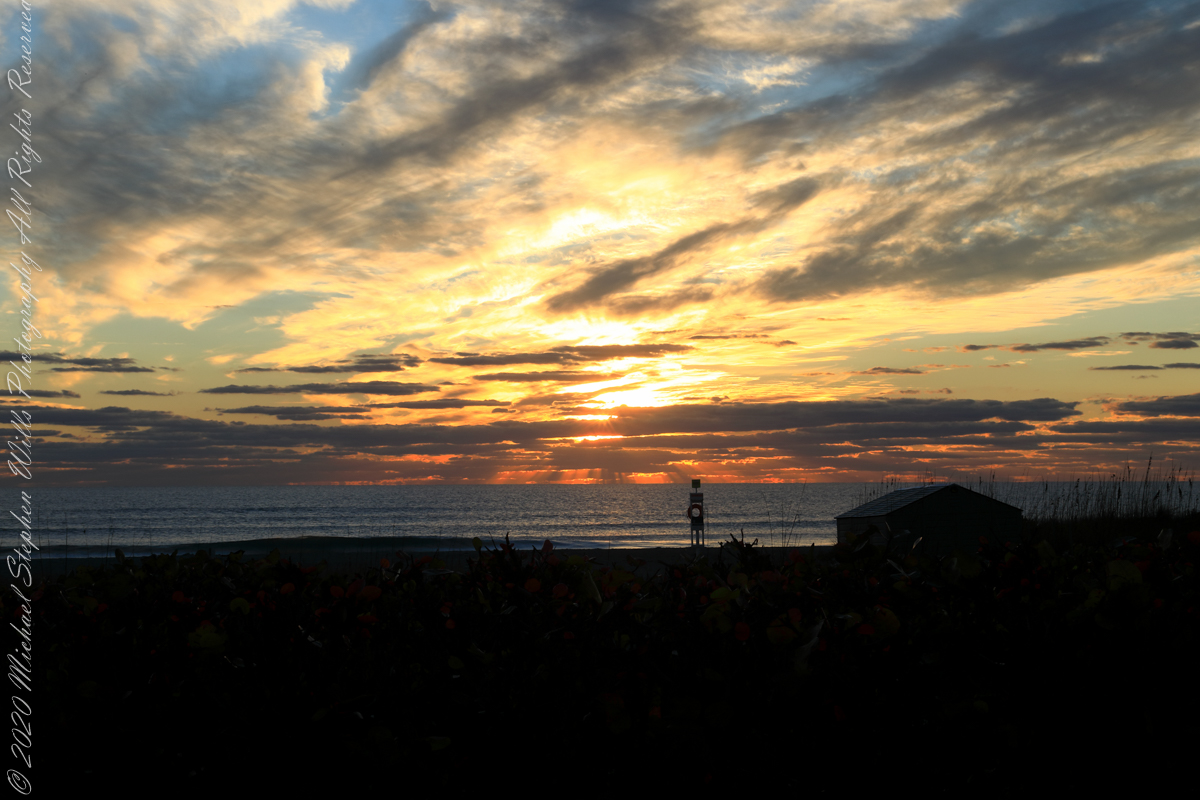
Near and Far — the last day of 2023

Discover a heartfelt story woven from the sands of Cocoa Beach on New Year’s Eve, where shells and stars intertwine, inviting you to ponder the delicate dance of near and far.

On the last day of 2023, as the sun began its descent on Cocoa Beach, I found myself tracing the contours of a heart laid out in Ark Clam shells. Each shell, with its ridges and grooves, felt like a chronicle of the ocean’s whispers. This artful mosaic, set against the granular canvas of the beach, was a testament to the playful hands of time and tide. I marveled at the intention behind it, the human desire to create and connect, to leave a mark, however fleeting, on the vastness of nature.
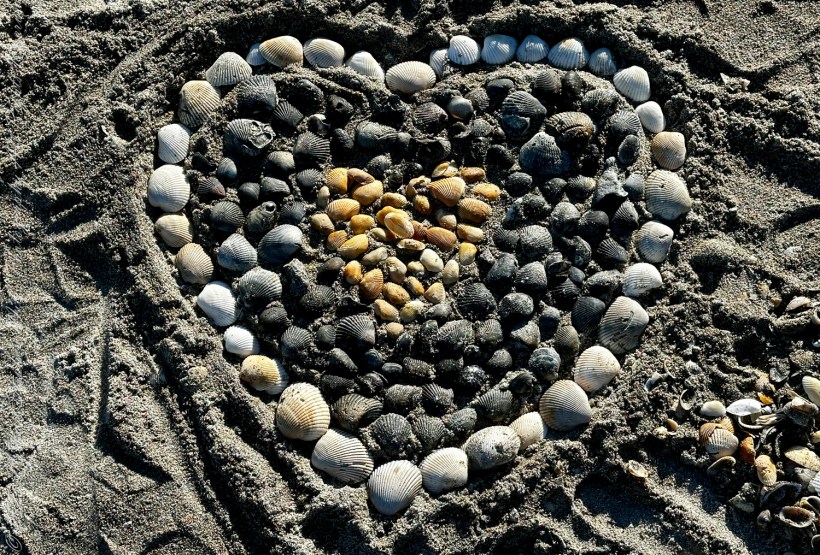
I found this beach heart while walking on Cocoa Beach on the last day of 2023. It is composed of the various shade of Ark Shells. Ark clam is the common name for a family of small to large-sized saltwater clams or marine bivalve molluscs in the family Arcidae. These are the most common shells found there.

The shells were cool and firm under my fingertips, each one a unique piece of the year’s mosaic. Some were a pristine white, while others bore the earthy tones of the sea’s floor. I pondered the journeys they had taken, tumbling in the ocean’s embrace before resting here, on the threshold of a new year. The act of arranging them into a symbol of love felt like an ode to the past year’s collective joys and sorrows, an offering to the unknown adventures of the year to come.

As the day waned, my gaze shifted from the shells to where the water met the sky. There, a sailboat floated serenely, a silent sentinel between two worlds. It was a picture of solitude, a single vessel on the brink of the infinite sea, beneath the expanding dome of the heavens. On the horizon, the silhouette of a cargo ship whispered stories of distant lands and the ceaseless pulse of commerce and exploration that defined our modern era.
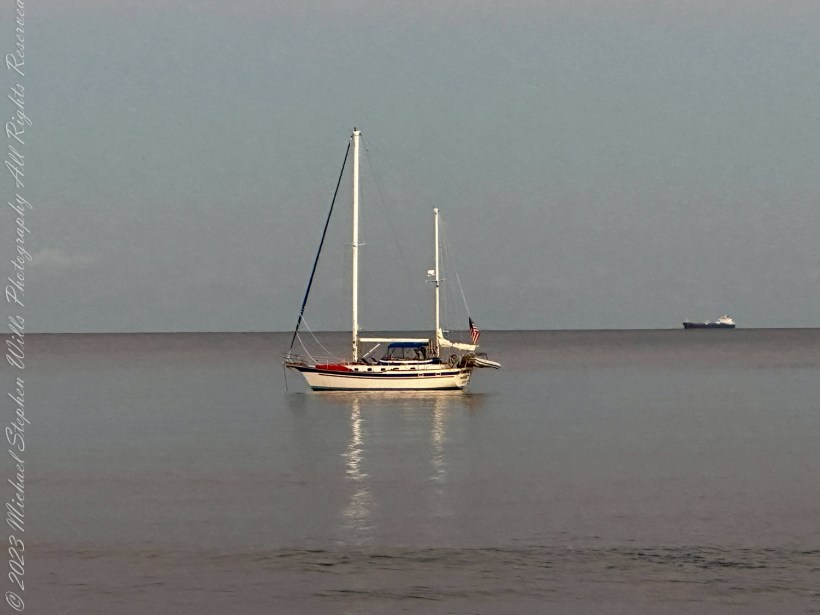
On New Years Eve 2023 this sailboad moored off North 1st Street, Cocoa Beach, Brevard County, Space Coast, Florida.

The beach was quiet, the sounds of the day giving way to the evening’s peaceful lull. The sailboat’s stillness was a stark contrast to the perpetual motion of the cargo ship, each representing different paths on the water’s vast canvas. One was an emblem of leisure and simplicity, the other of industry and complexity. Both near and far, they were the day’s quiet companions, their stories part of the fabric of the Space Coast.

As twilight deepened into night, the stars began to emerge, one by one, until the sky was a tapestry of celestial wonder. With my iPhone 14 Pro Max, I captured this cosmic dance, the constellation of stars that had been the silent witnesses to Earth’s revolutions. The constellations, those mythic shapes that have long sparked human imagination, seemed to hold the secrets of what had been and what was to come. They were distant suns, their light traveling unfathomable distances to reach me, to reach us, as we stood on the brink of a new beginning.
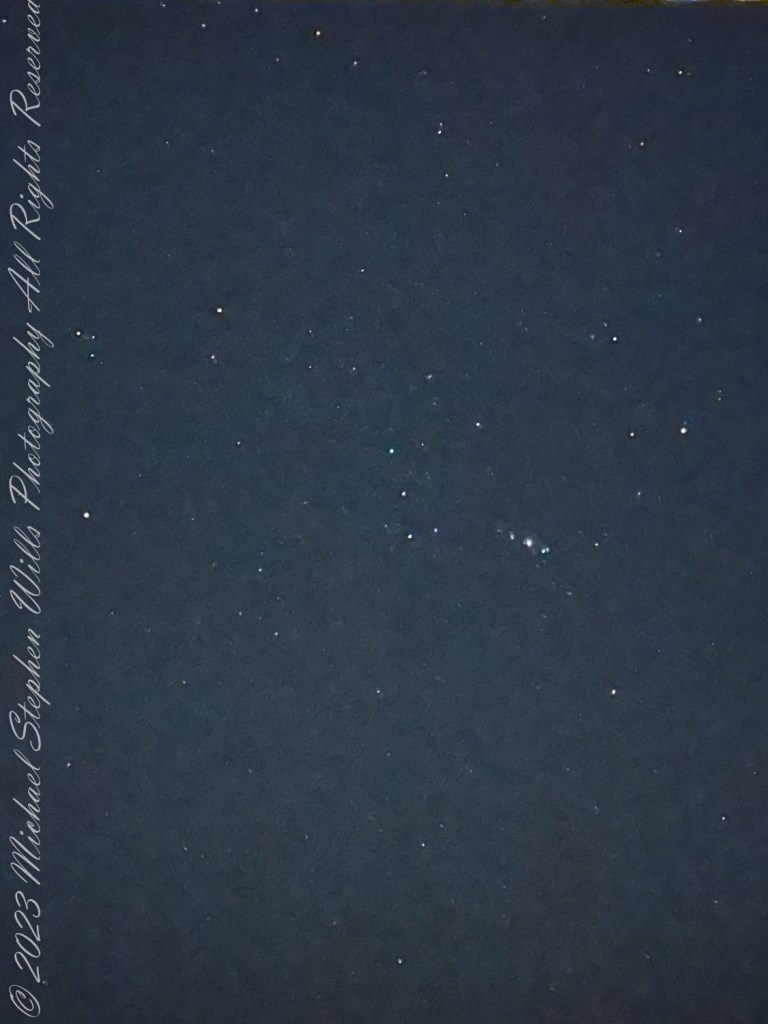
Orion

I couldn’t help but feel a connection to the stars, a kinship with their ancient light. They reminded me that we, too, are part of this grand cosmic design, our lives stitched into the universe’s expansive quilt. On the beach, with the shells at my feet and the stars overhead, I was caught in the delicate balance of near and far—the tangible reality of the shells I could touch and the distant glow of starlight from ages past.
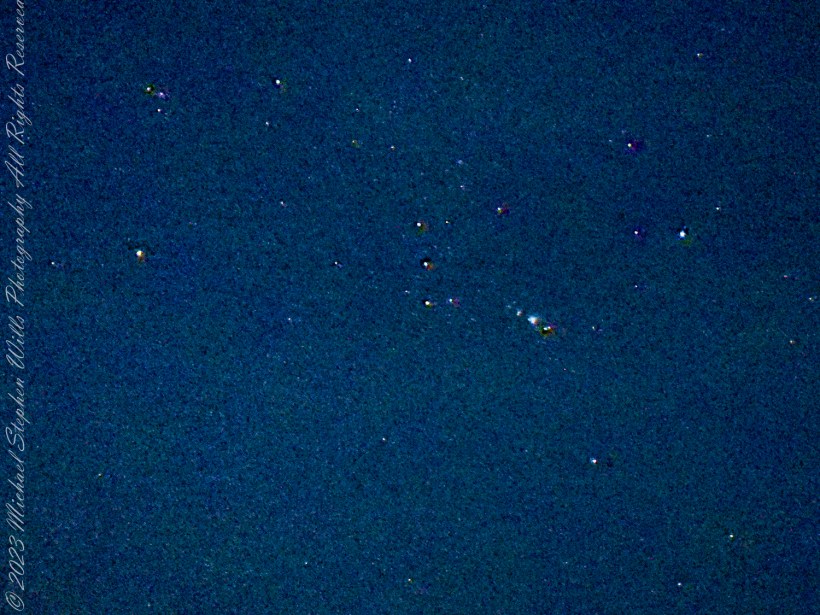
Orion, the belt and sword in center.

As the year ticked closer to its end, I stood between the intimate artistry of the shell heart and the boundless majesty of the star-filled sky, a lone observer of time’s relentless march. The Space Coast, with its unique blend of earthly beauty and human aspiration, was the perfect stage for this reflection. Here, on Cocoa Beach, I embraced the last moments of 2023, ready to welcome the new year, with its promise of continuance and change, its constant dance of near and far.
Copyright 2024 Michael Stephen Wills All Rights Reserved

Above the Finger Lakes: A Winter’s Eve Flight

Joint me to gaze out upon a mesmerizing view of winter’s embrace over the Finger Lakes, where the setting sun paints an ephemeral masterpiece of ice, water, and twiligh

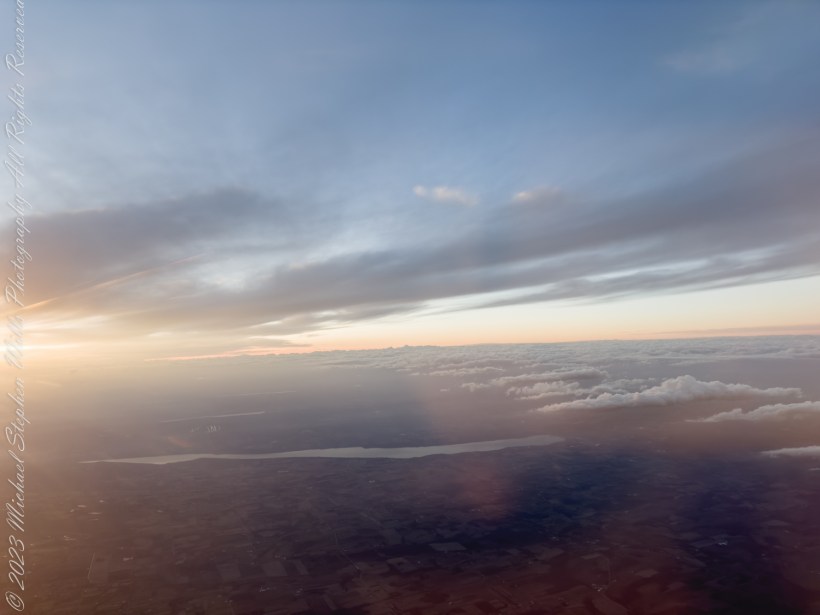
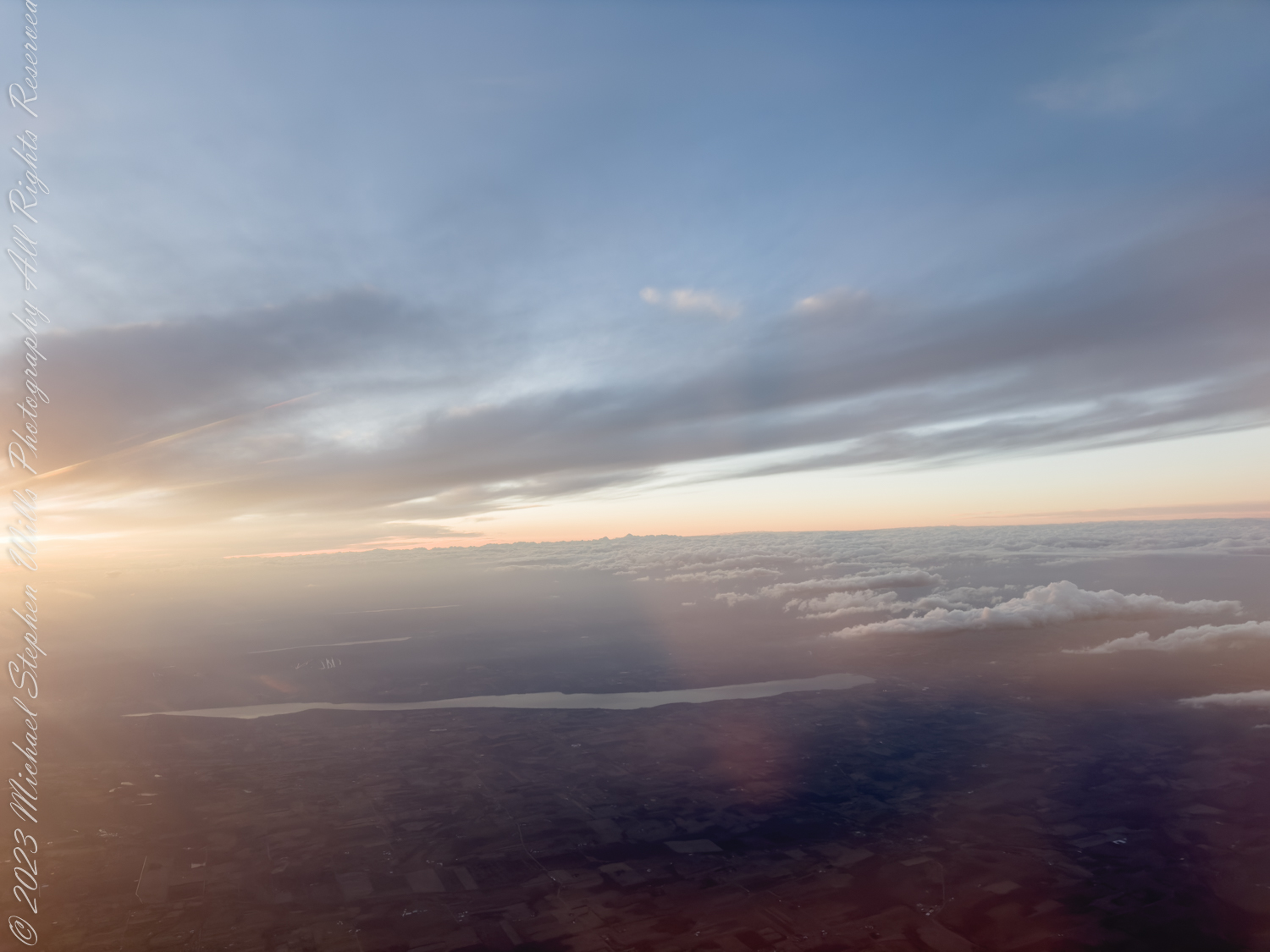
As I soared into the heavens, bound for Syracuse on the 9th of February in the year 2024, I found myself cradled in the gentle embrace of the port side of our metal chariot. The world unfolded beneath me; a tapestry of natural splendor painted in the golden hues of the setting sun. The view to the west, a grand panorama, beckoned my gaze, luring my senses into the wild embrace of Upstate New York’s finest landscapes.

Flying into Syracuse, February 9, 2024 we sat on the left (port) side of plane, this view to the west took in Canandaigua Lake, Bristol Mountain Ski Area, Honeoye Lake, Hemlock Lake (Canadice Lake is not visible).

Below, Canandaigua Lake lay stretched out like a slumbering giant, its waters glistening with the last kisses of daylight, a mirror to the sky’s fiery canvas. How wondrous it was to perceive the world from such heights, to witness the lake’s serenity from the abode of the gods. It seemed as if Canandaigua herself was remembering whispered tales of ice fishermen and quiet boathouses locked in the winter’s frosty grasp.

Off to the south, the proud shoulders of Bristol Mountain Ski Area rose in defiance against the winter’s chill. The mountain’s snow-laden slopes, carved with the meticulous precision of skiers and snowboarders, reflected the sun’s dying light, a beacon of winter’s joy amidst the sprawling lands. I could almost hear the muffled laughter of families and the swish of skis carving their ephemeral signature upon the mountain’s white canvas.

Nestled in the mountain’s shadow, Honeoye Lake revealed itself, a slender and unassuming sliver of tranquility. Its presence was like that of a quiet companion amidst the grandeur, a reminder of the simpler pleasures—frozen waters awaiting the spring thaw, the promise of lush greenery peering from beneath the white shroud of winter.
Beyond, where the earth kissed the sky, Hemlock Lake offered its secluded beauty, a hidden gem amongst its more renowned siblings. Though Canadice Lake remained shyly concealed from view, I knew it too slumbered there, a silent sentinel guarding the land’s secrets. Together, these lakes stood as custodians of a silent world, the guardians of a tranquility that seemed untouched by the passage of time.
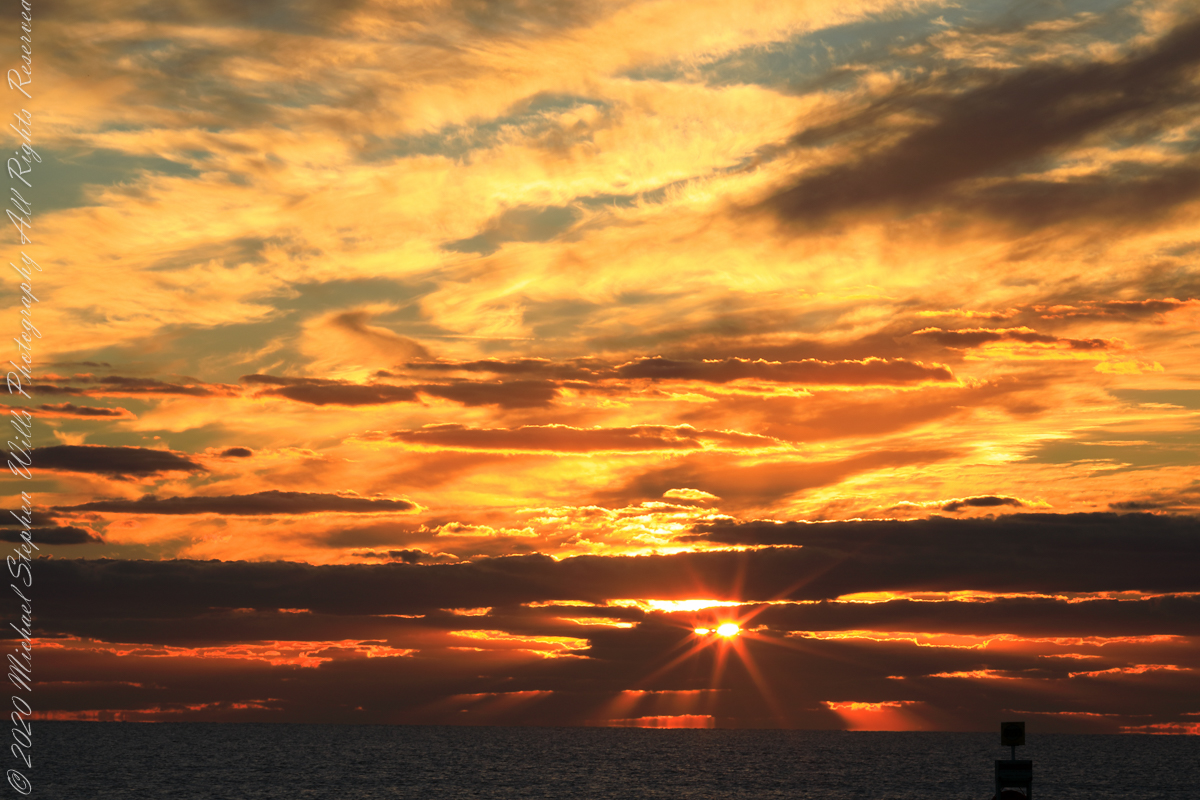
As the plane banked gently, the clouds above me caught fire, ablaze with the colors of the dying day. Wisps of vapor painted streaks of orange, purple, and pink across the expansive canvas, a celestial masterpiece unfolding before my very eyes. The clouds seemed to dance with the joy of existence, a choreographed performance to the symphony of the setting sun.

I found myself lost in the moment, a solitary figure suspended between heaven and earth, caught in the embrace of an ephemeral beauty. The world below whispered of untold stories, of winters past and springs to come, of the endless cycle of life that pulsed beneath the frost. It was a moment of profound connection, a fleeting communion with the heartbeat of the planet.

Feeding Frenzy

Nine videos taken the same morning, February 5, 2022

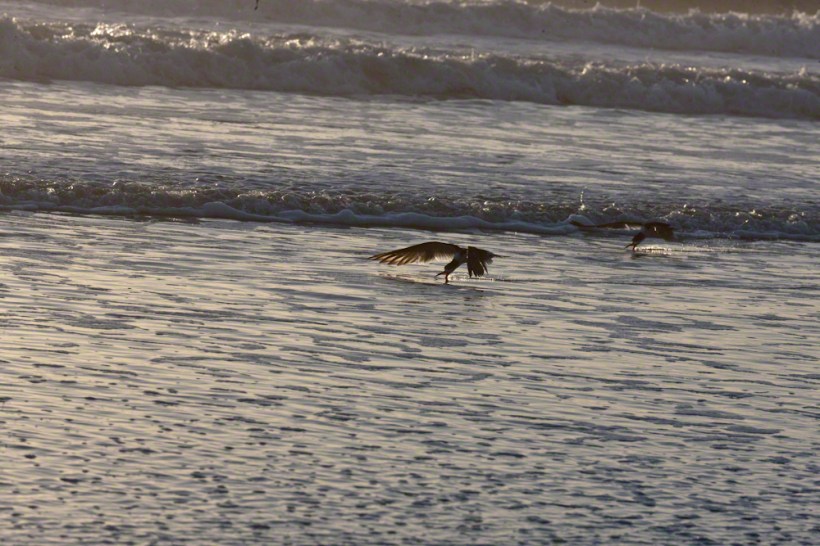
A multi-day hatch of small fry around the time of a new moon triggered this Black Skimmers (scientific name: Rynchops niger) feeding behavior surf off Cocoa Beach, Brevard County on Florida’s Atlantic Coast.

Copyright 2022 Michael Stephen Wills All Rights Reserved

Here and There

Around Cocoa Beach

Sights and Sounds

Black Skimmers

Scan of Lori Wilson Park beach

Hunter

Copyright 2022 Michael Stephen Wills All Rights Reserved

Whale Sighting

Right Whales in February

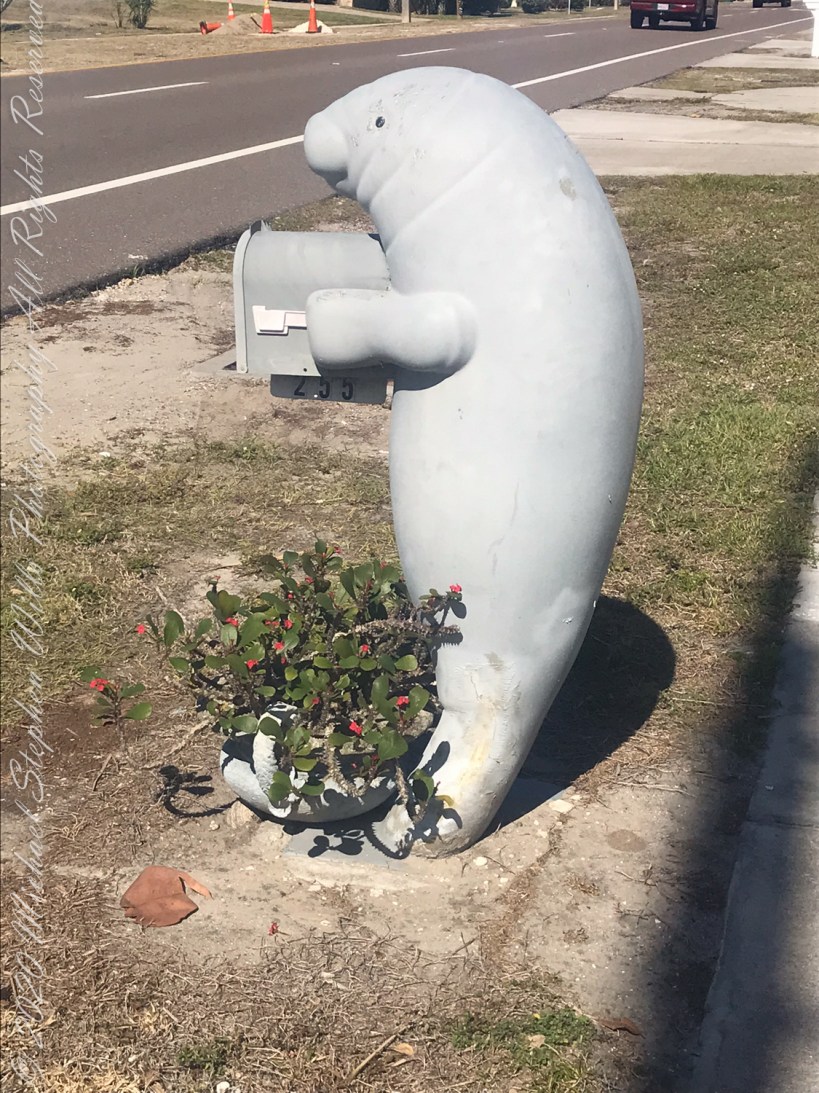
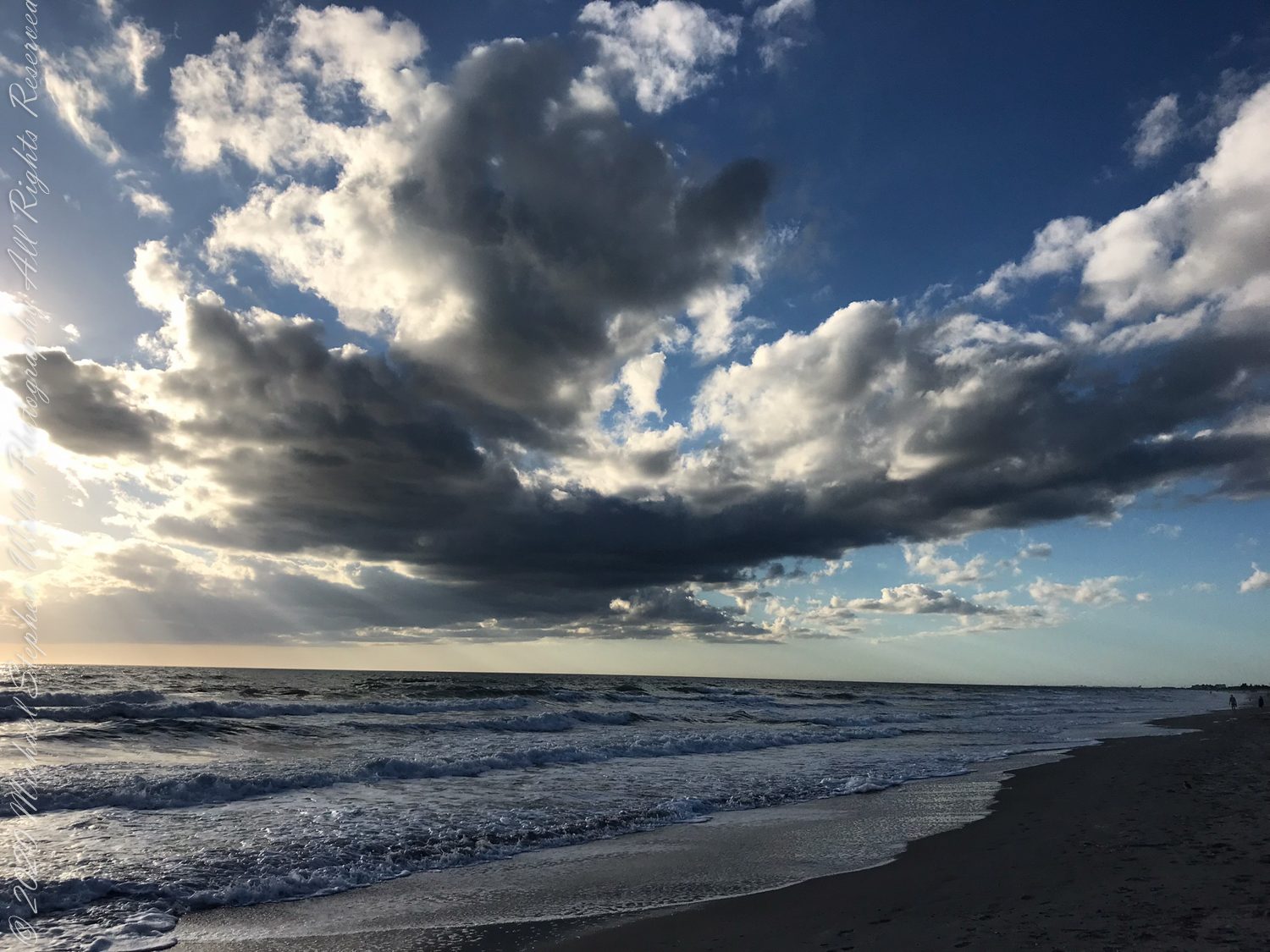
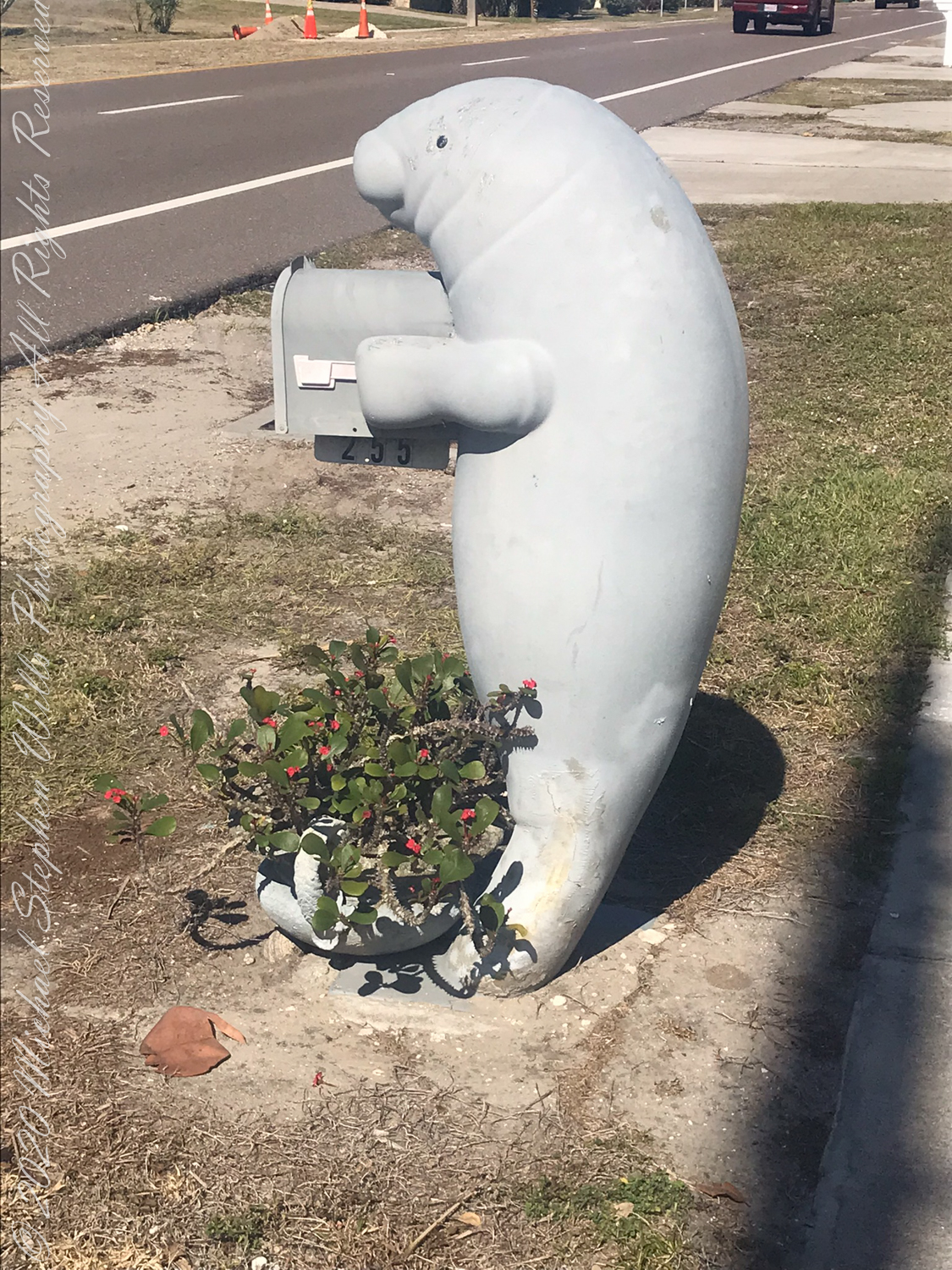
No, the Manatee mailbox on Atlantic Avenue is NOT the whale sighted….more of that later. February 3rd 2022 dawned with scattered clouds to fracture sunbeams.

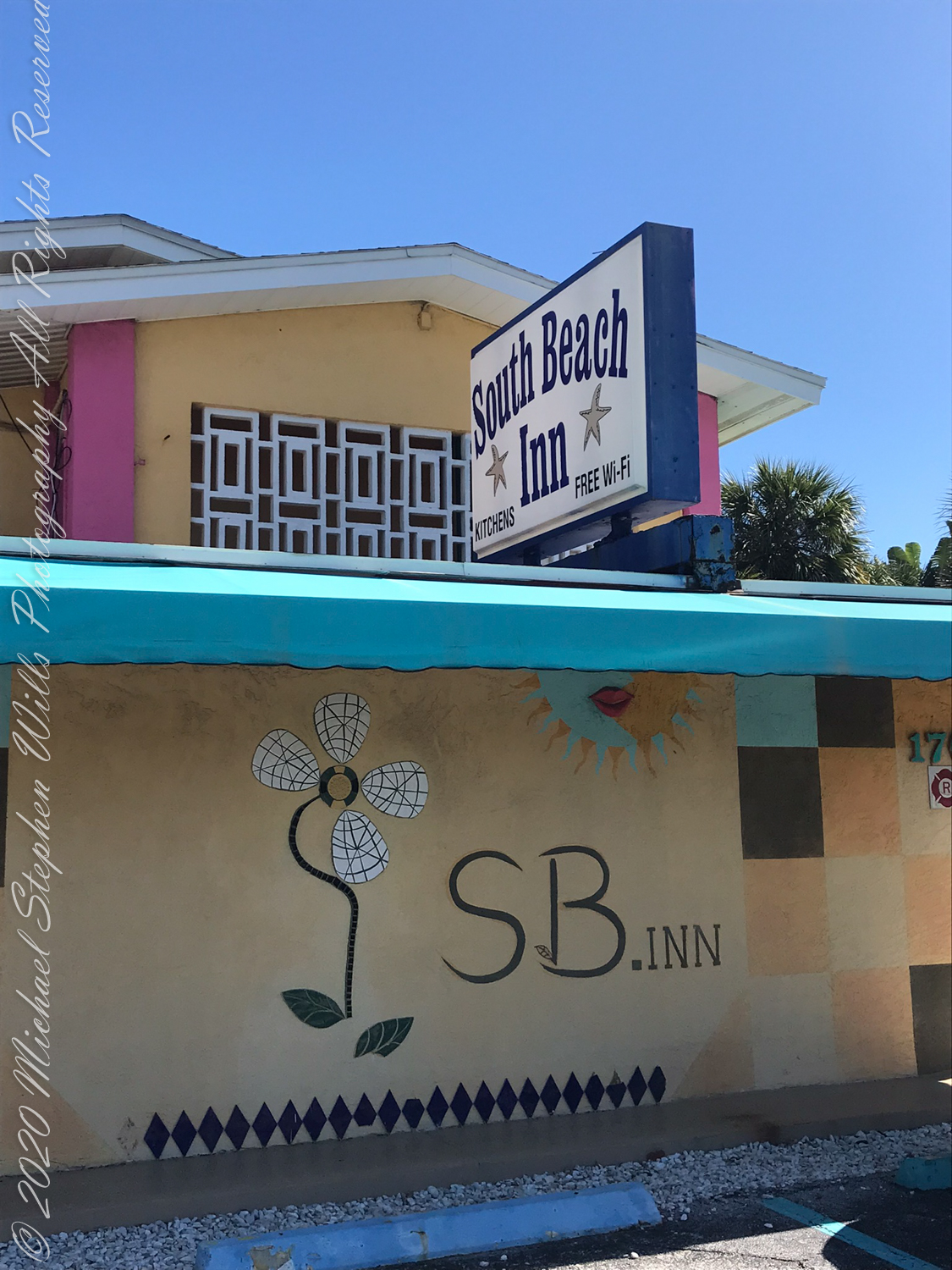
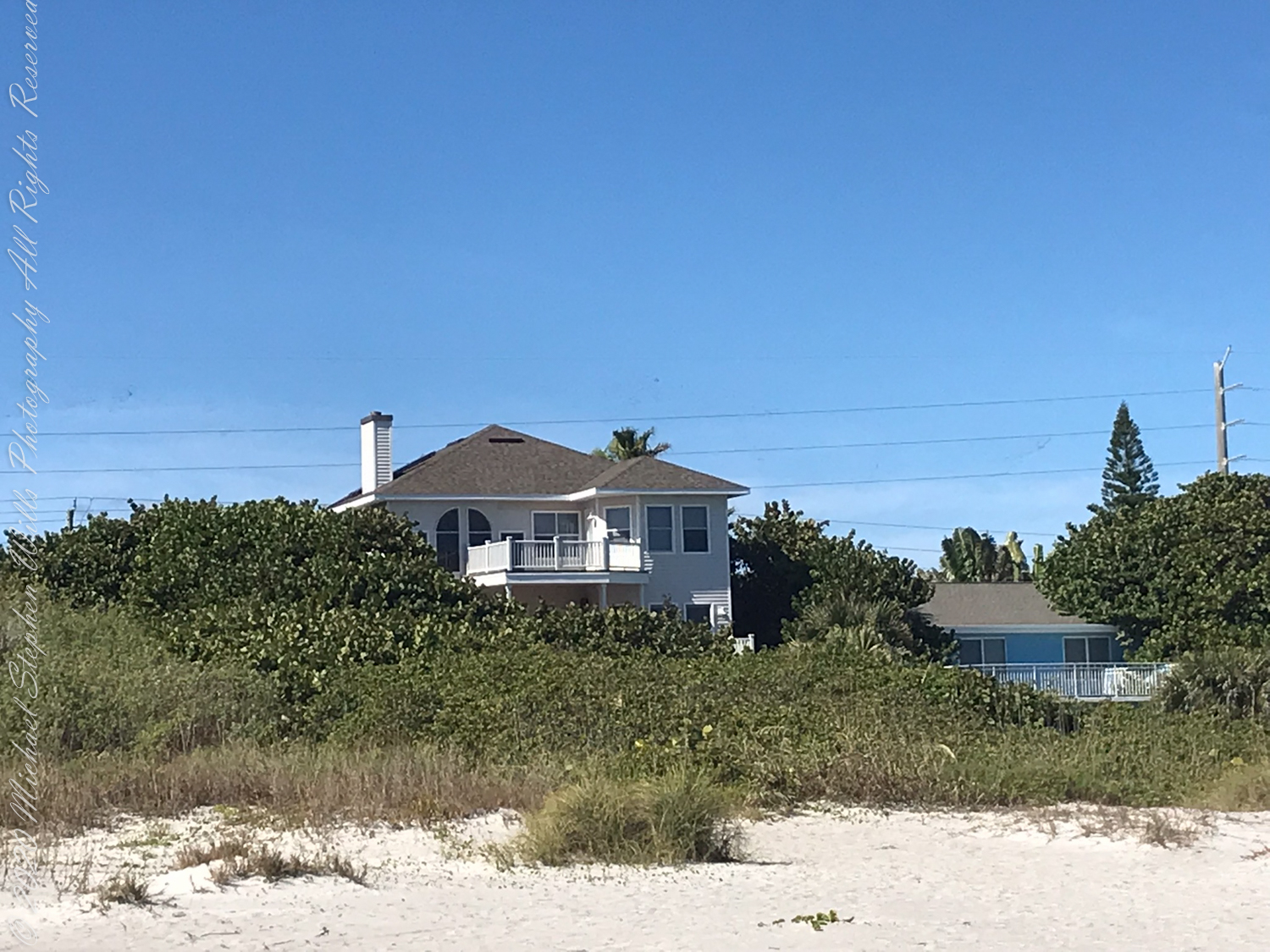
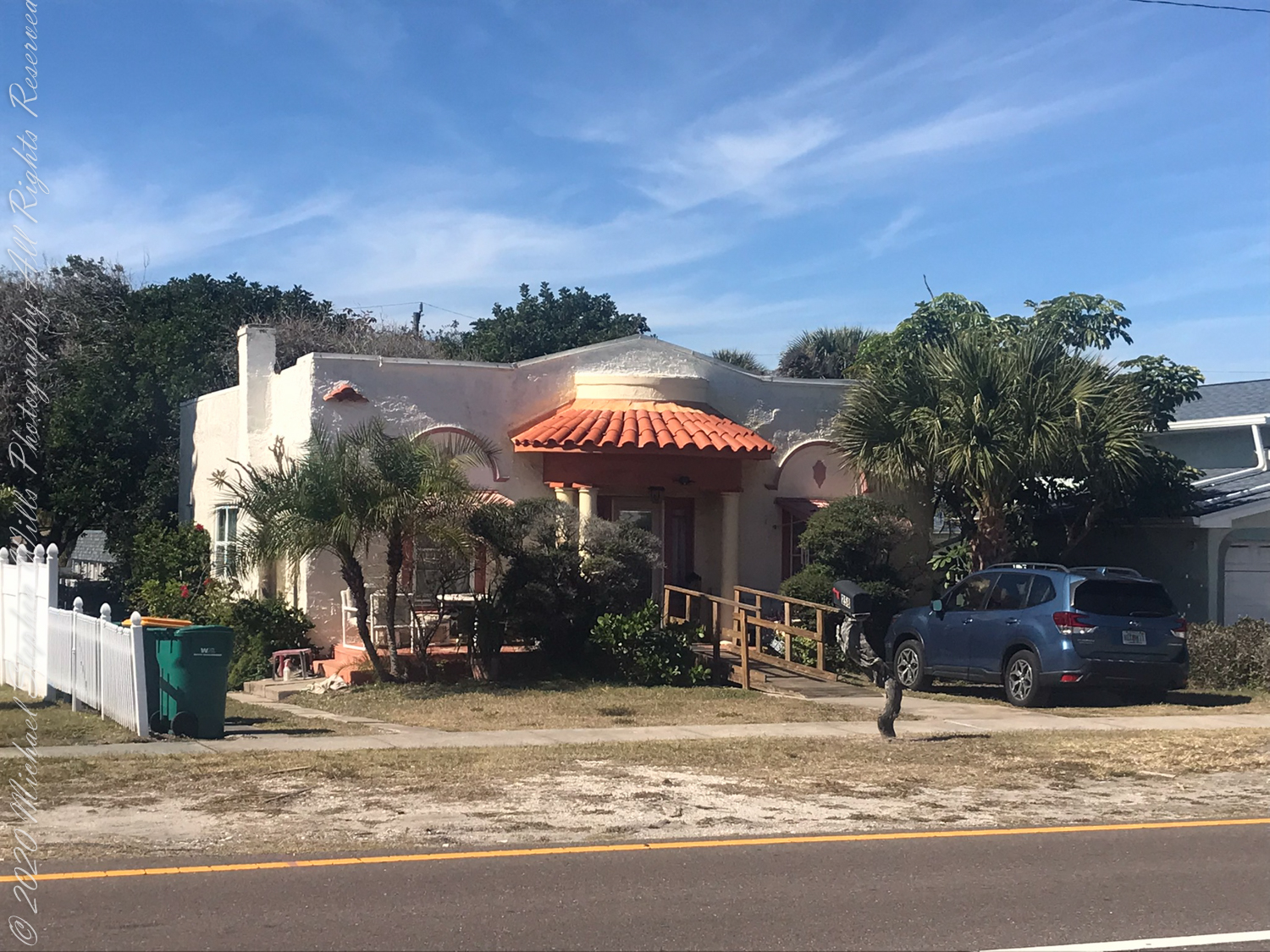
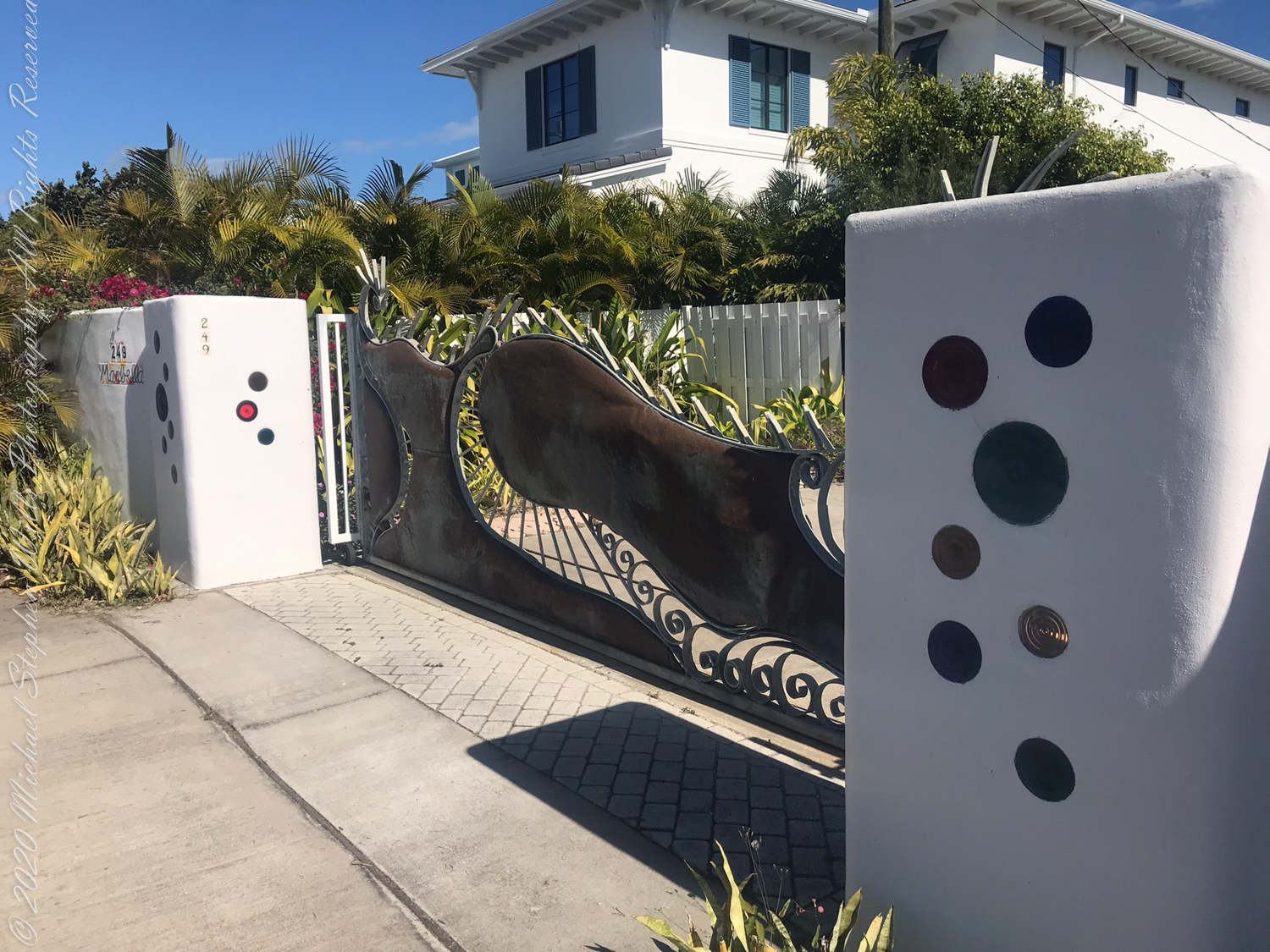
Walking south I made the 2+ mile point where, up from the beach on South Atlantic Avenue, is a memorable facade.

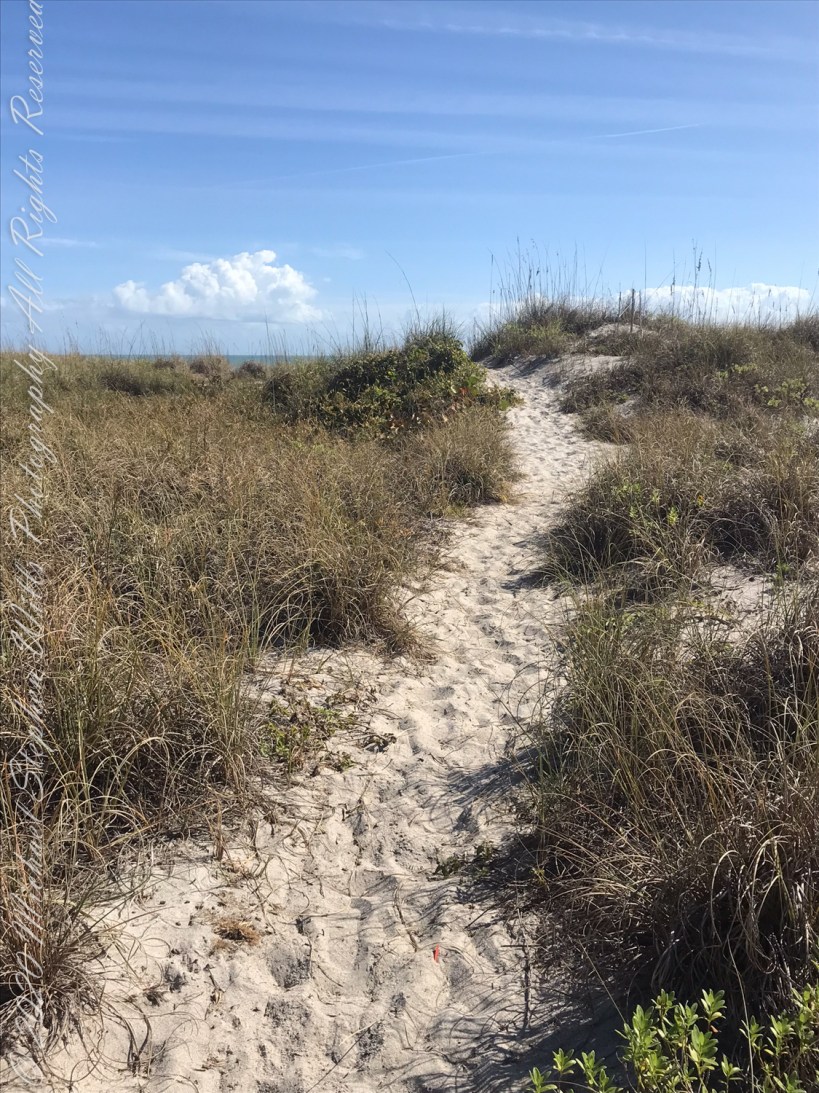
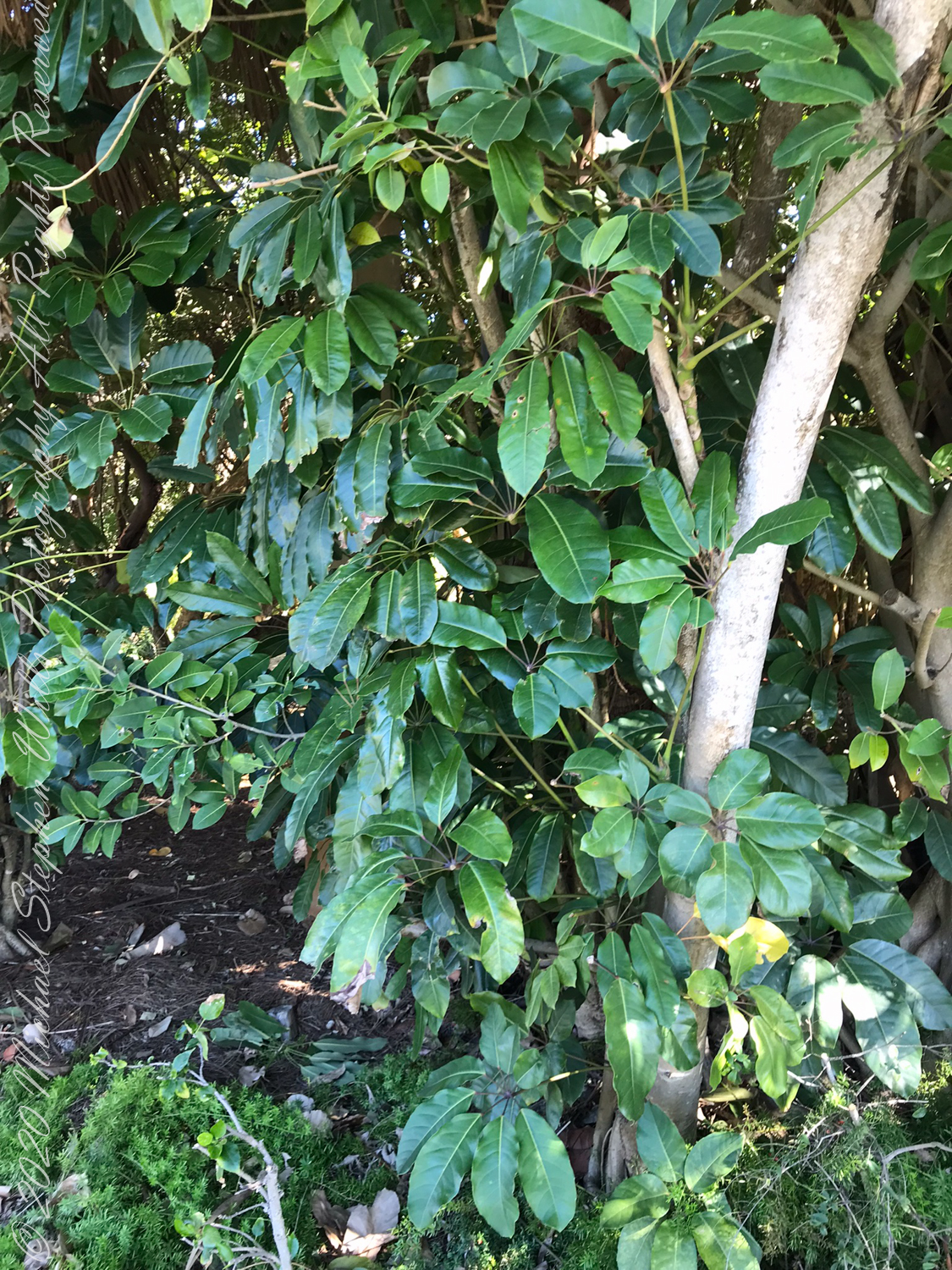
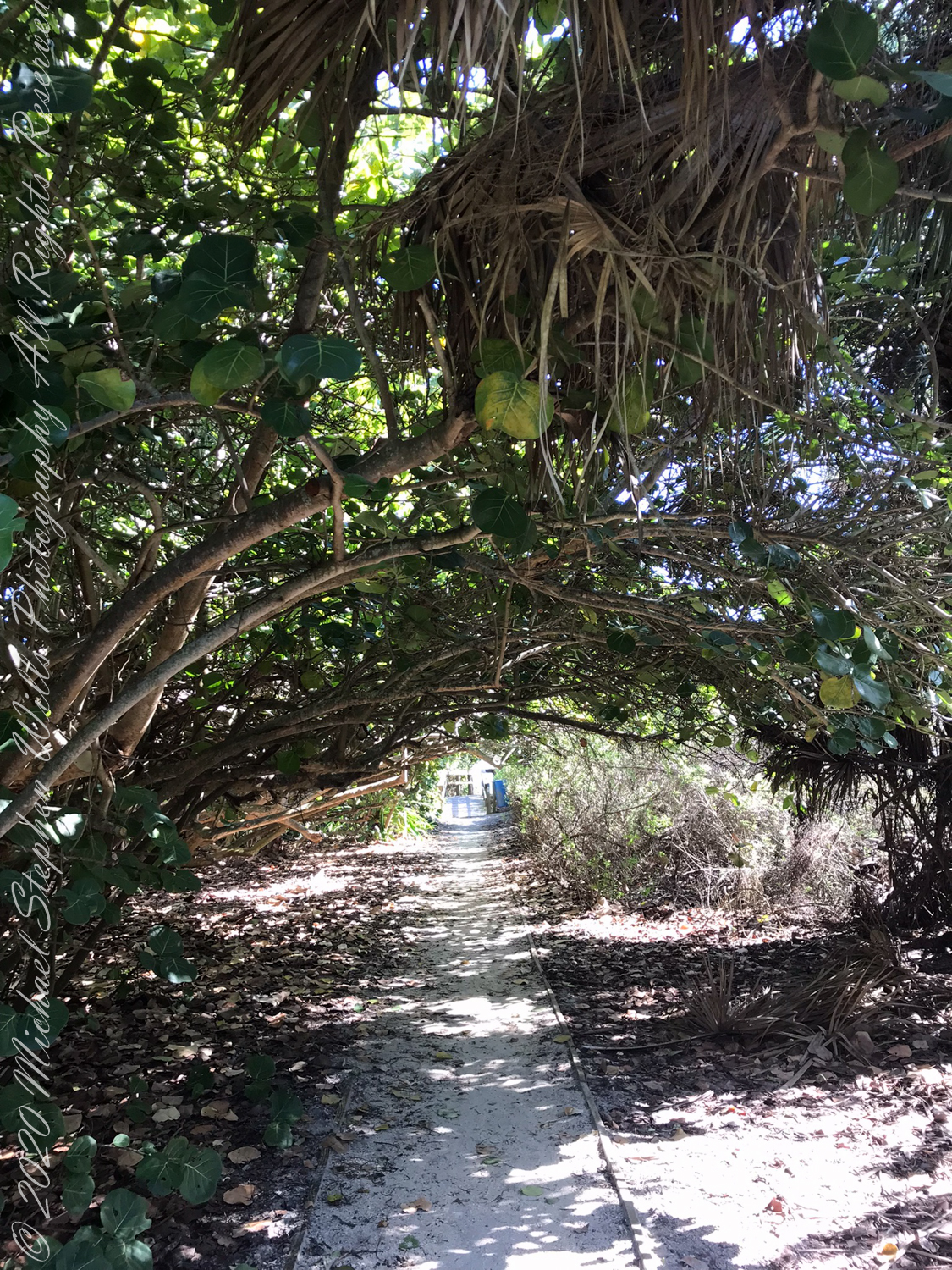
Also exotic schefflera, paths to the beach through Sea Grapes.

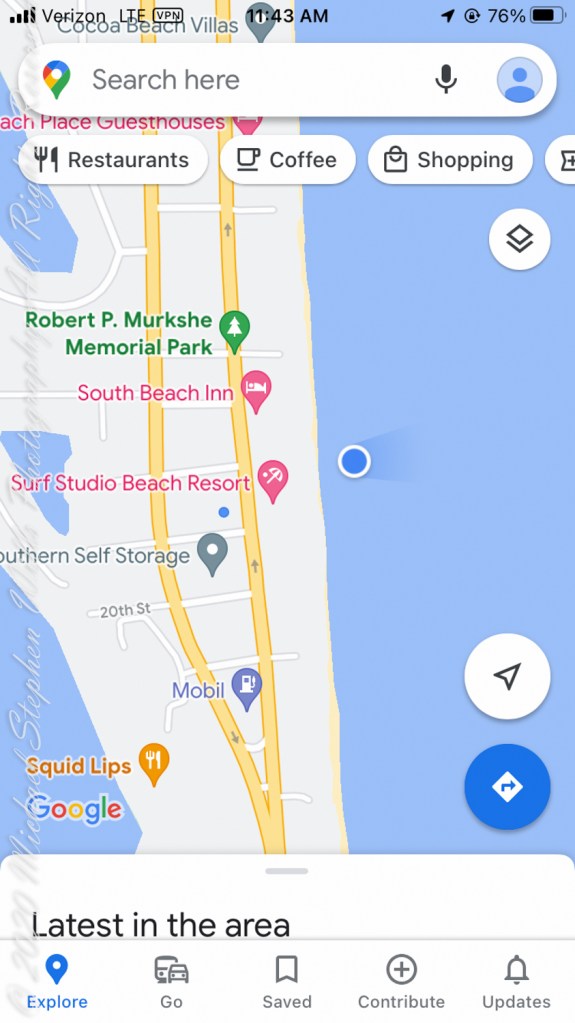
February is the time for Right Whale sightings on the Florida Atlantic Coast. On the beach, near the blue dot on the following map, were lines of people facing the ocean, some with binoculars and cameras with long lenses.

About 500 feet out, beyond where the wave roll begins, a person sat on a paddle board looking to my right. In the following IPhone videos an occasional black hump, roiling water, a flipper and the signature spout are visible. It is too far for identification, I call it a Right Whale from their reputation for visiting these shores in late January/February.

An hour later, I left the beach at South 4th Street to capture the following local color.

Copyright 2022 Michael Stephen Wills All Rights Reserved

Anatomy of Dawn

Subcategories of Twilight and more

Use your pinky finger to apprehend the sky dome. Imagine yourself at sea, out of sight of land, on a calm day. Keeping your arm extended, place your pinky-tip on the horizon due east, raise your arm directly overhead. The average sized pinky-tip will have spanned 90 of its lengths. The distance measured from the horizon to directly overhead, the zenith, is 90 degrees of sky dome, about one pinky-width per degree, one-fourth of the entire 360 degrees of sky around your spot on the globe.

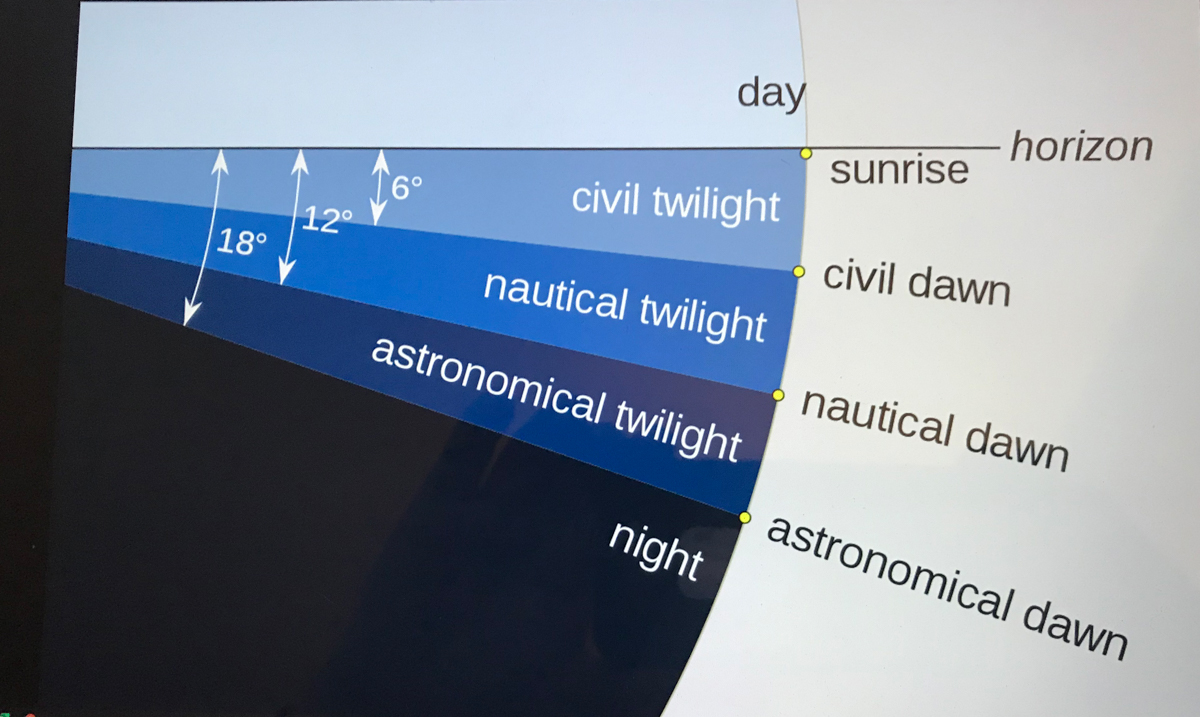
The apparent width of the sun disk from earth covers 1/2 degree of sky dome. The disk center point moves 15 degrees per hour (360/24 = 15). Using these facts to estimate time to sunset is relatively straightforward. Estimating time to dawn from the sky is more difficult. This graphic, “Twilight-dawn subcategories,” is a way to grasping what happens. Your position on the earth globe affects the experience. For example, at northern latitudes above 60°34′ summer nights never become darker than civil twilight because the sun’s midpoint never drops lower than 6 degrees below the horizon. Civil twilight lasts all night long summer times in parts of Sweden and Finland.

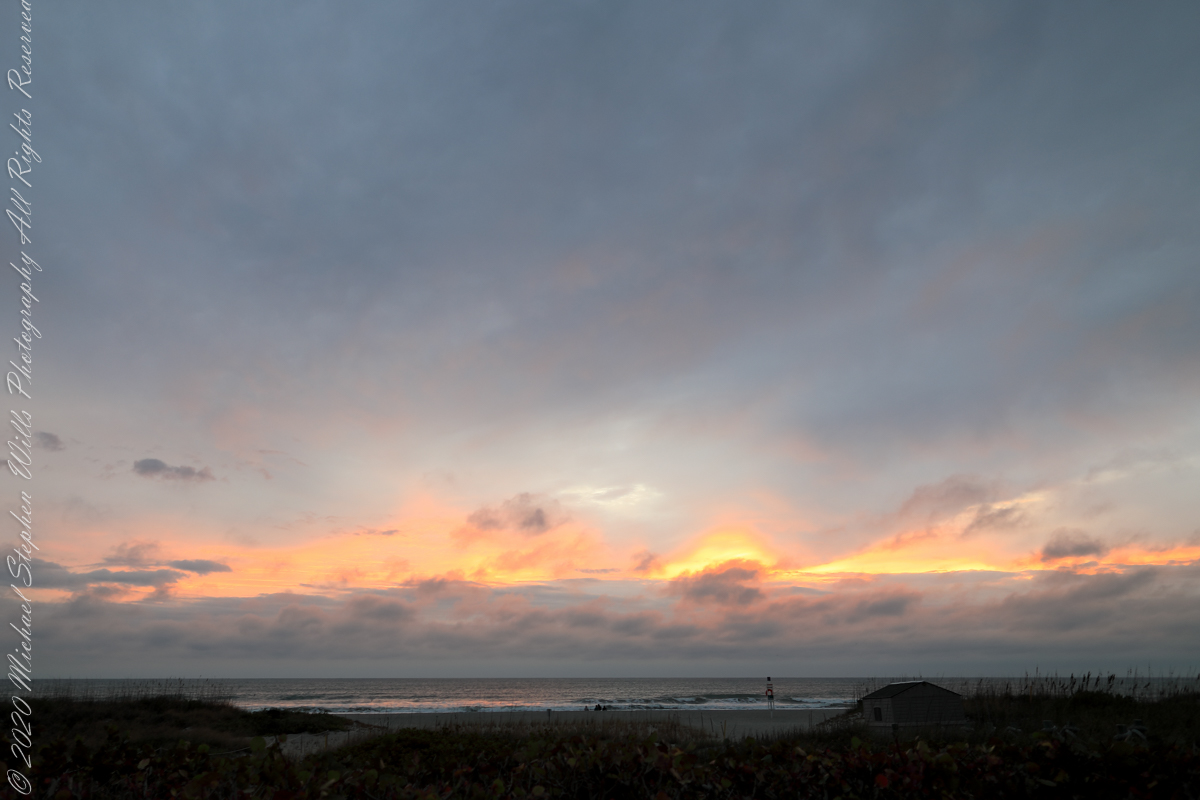
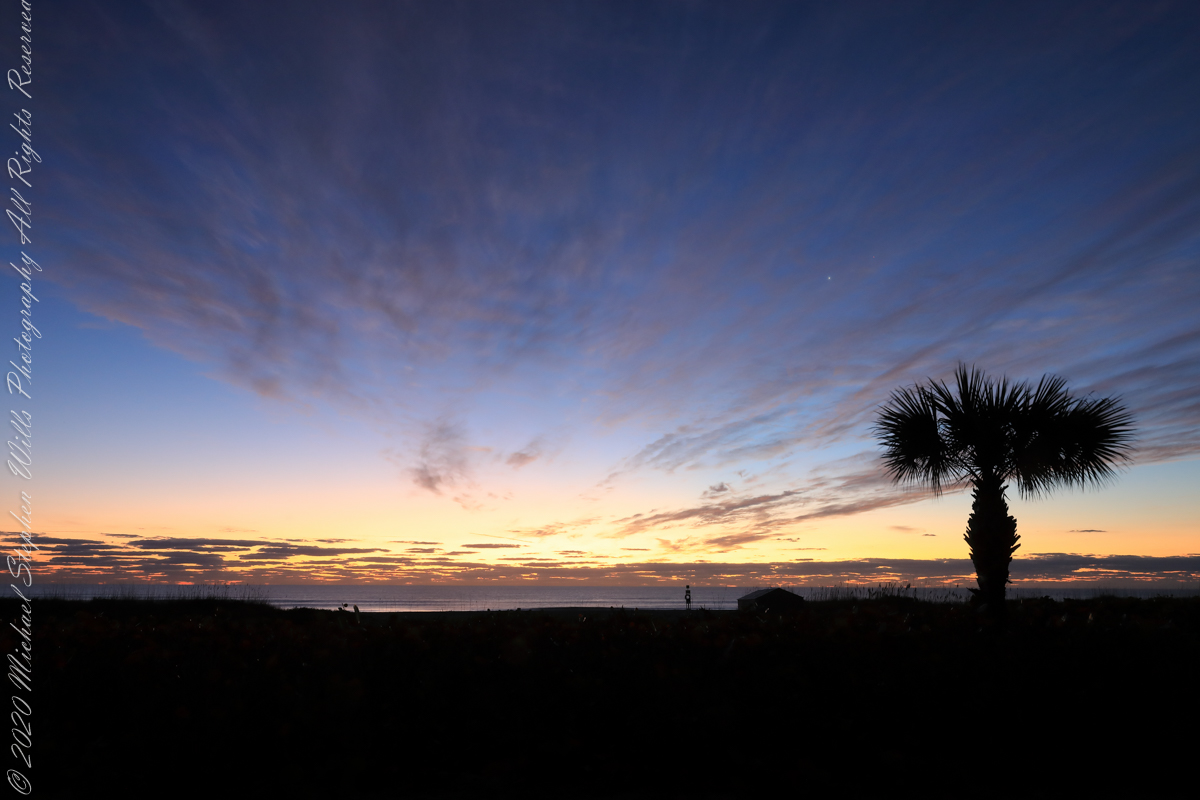
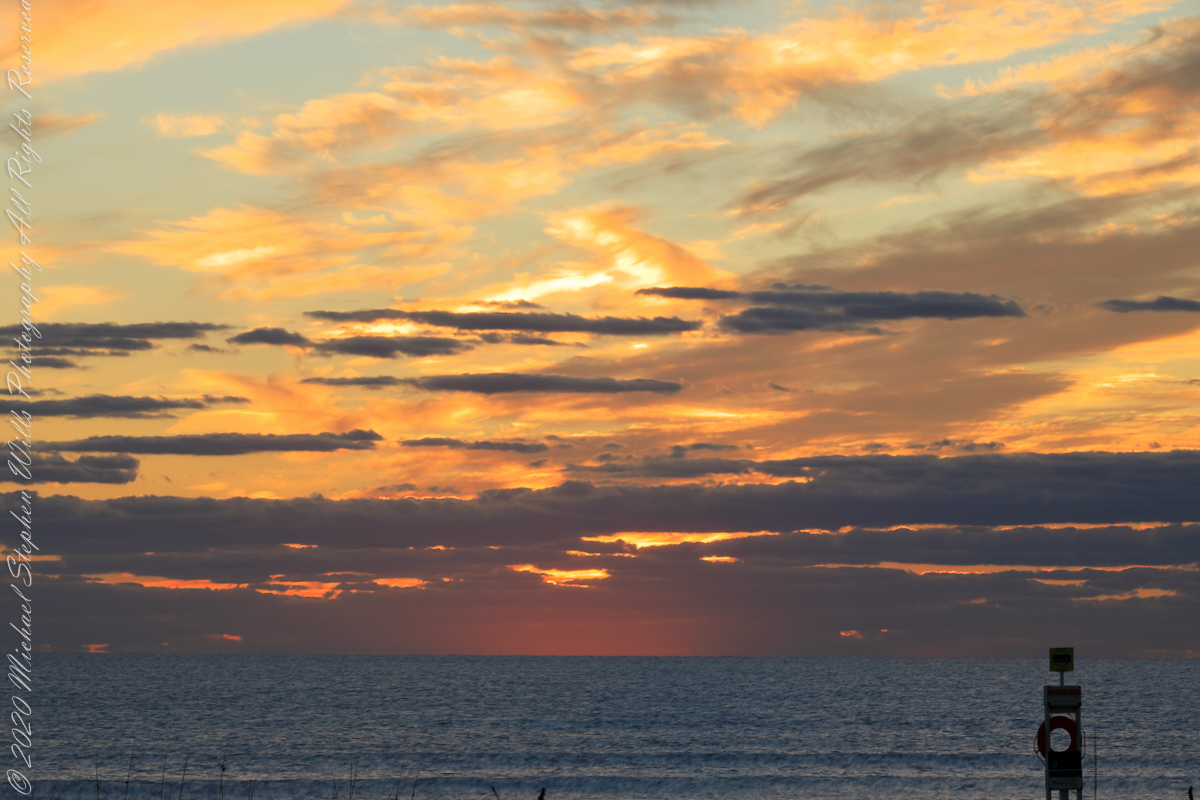
The date-time stamp on the first photograph of this series is 6:46:23 am, Cocoa Beach sunrise for February 1st was 7:09:40, 00:23:17, 23.283 minutes in decimal notation, later. This duration divided by 60 minutes in an hour and multiplied by the sun’s apparent velocity across the sky (15 degrees per hour) and minus the .25 degree between sun’s center and disk edge, gives the sun’s center as 5.57 degrees below the horizon: this is a photograph of the sky a minute or so after the sun passed civil dawn into civil twilight. I am not more exact because this calculation does not account the deviation of the sun path from due east at this latitude, lengthening civil twilight duration by almost a minute.

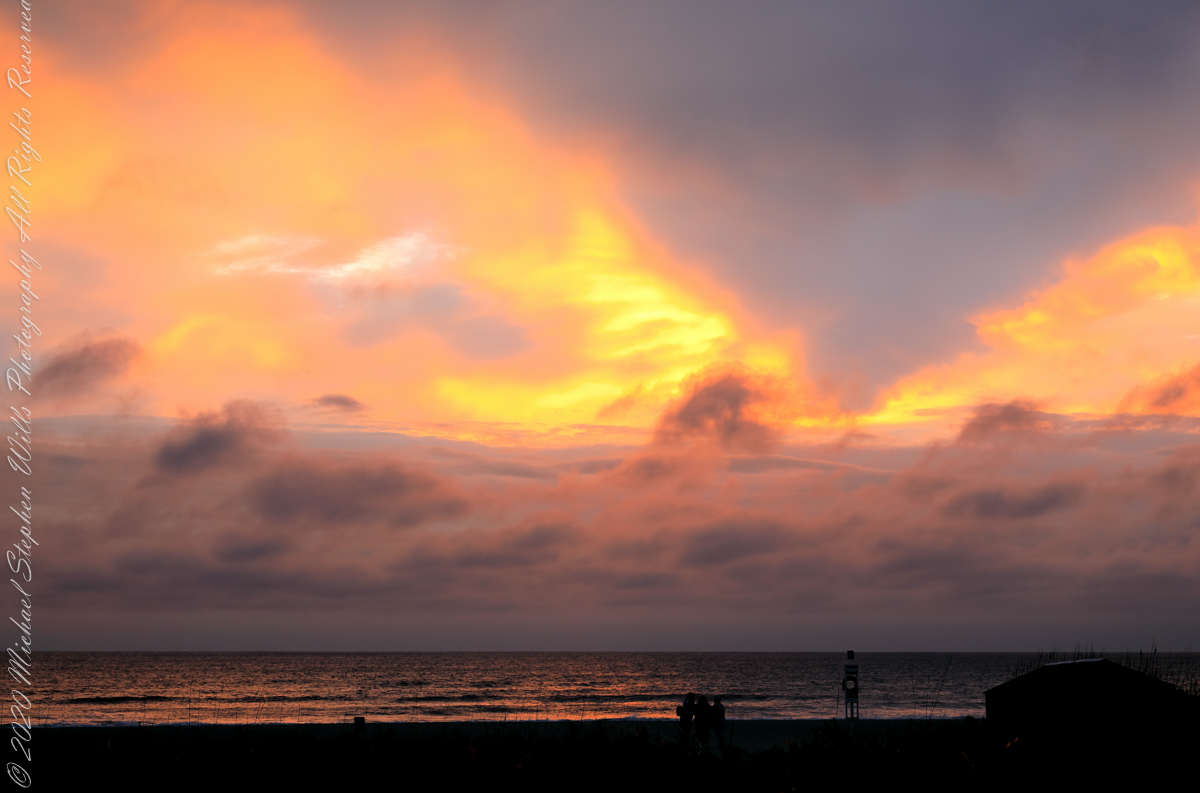
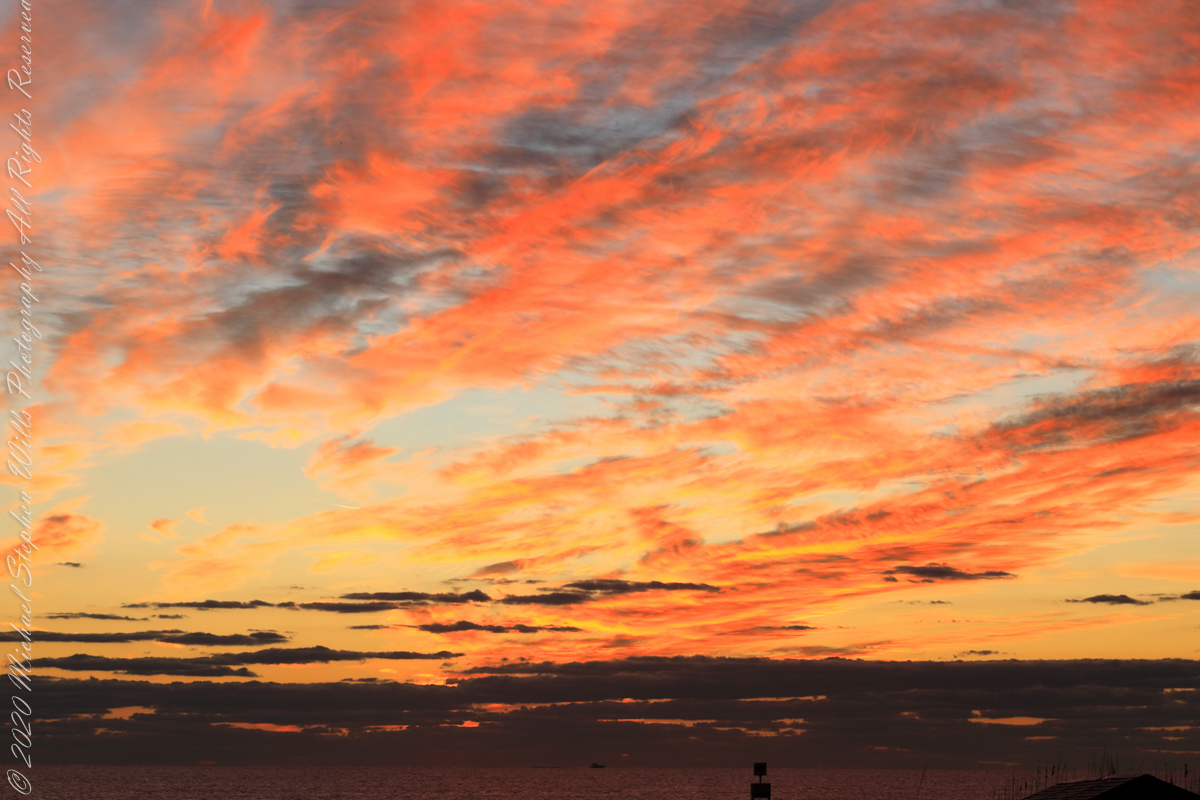
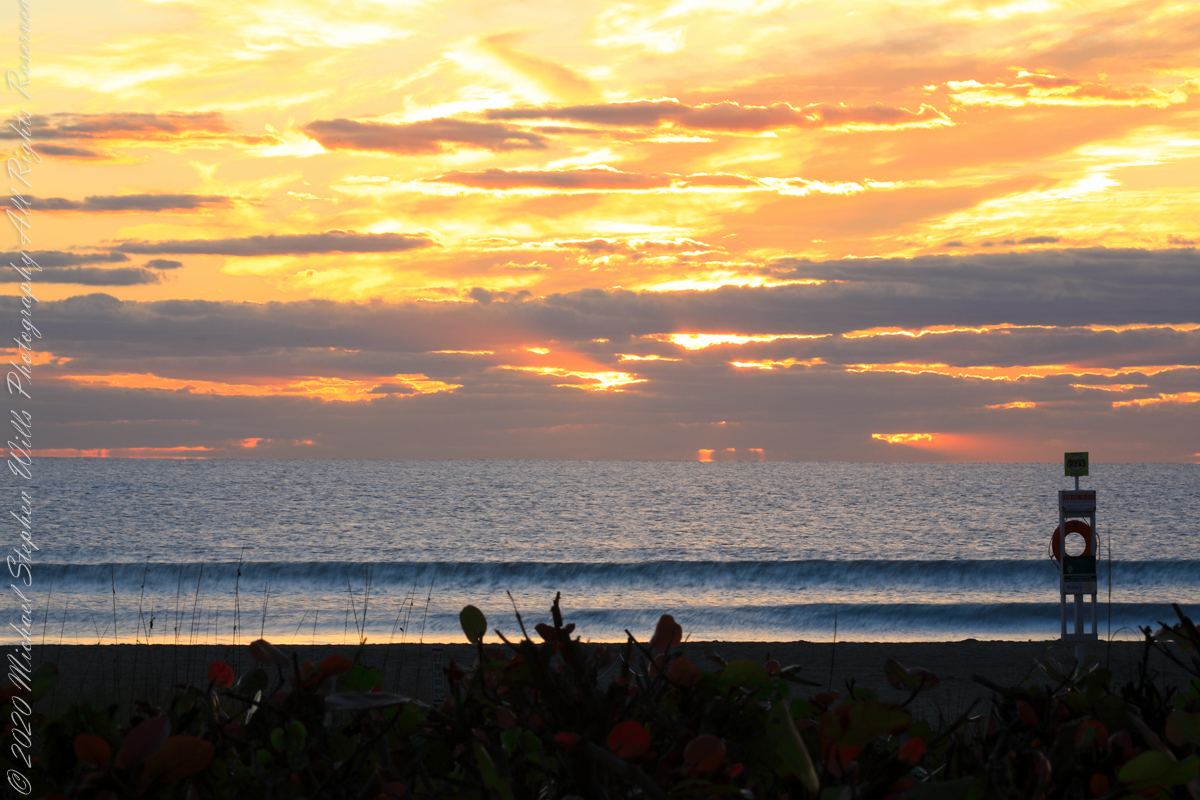
The following photograph is time-stamped 7:05:06, 4.567 minutes until sunrise, sun center is just below the horizon, setting the dark clouds of the previous photograph fleetingly on fire.

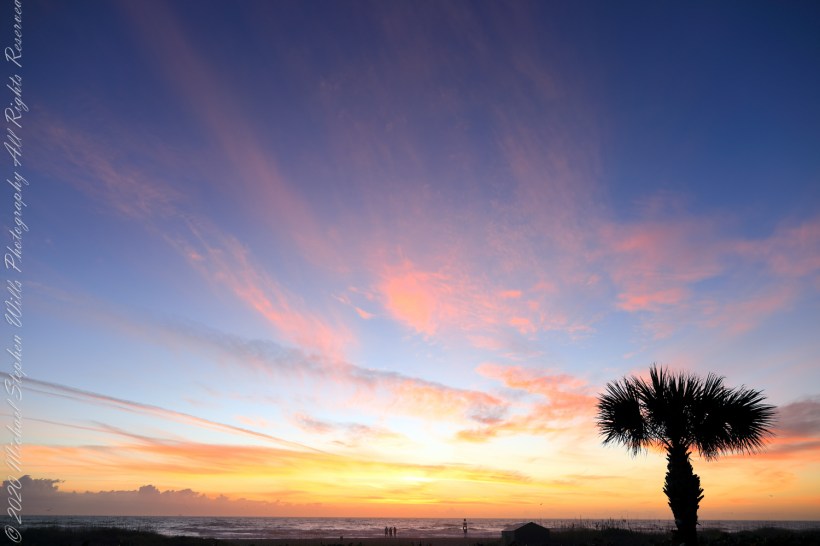
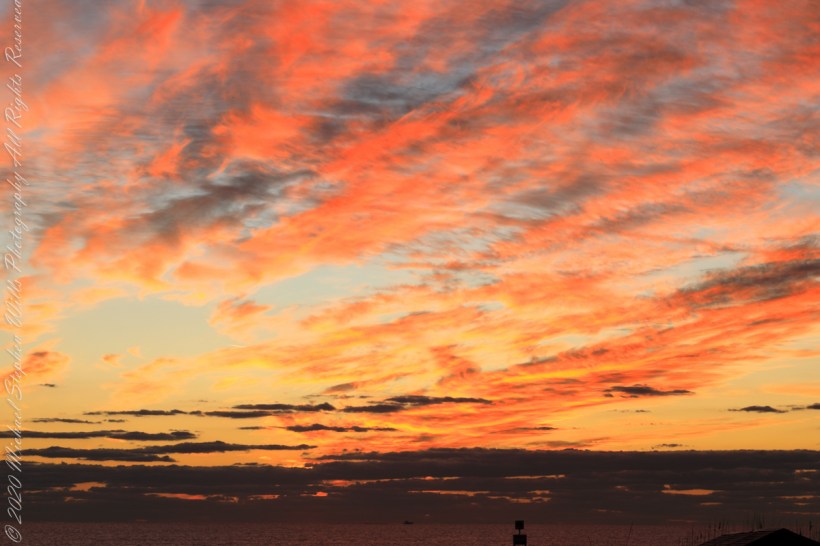
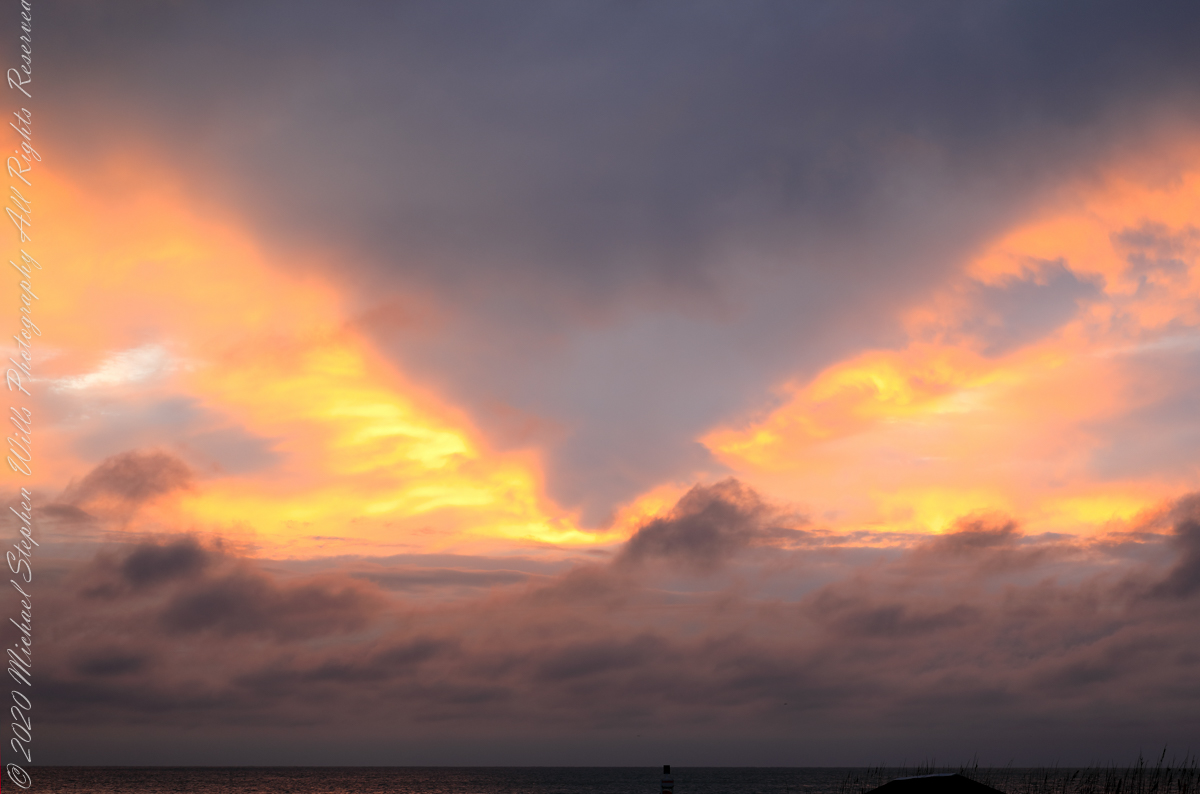
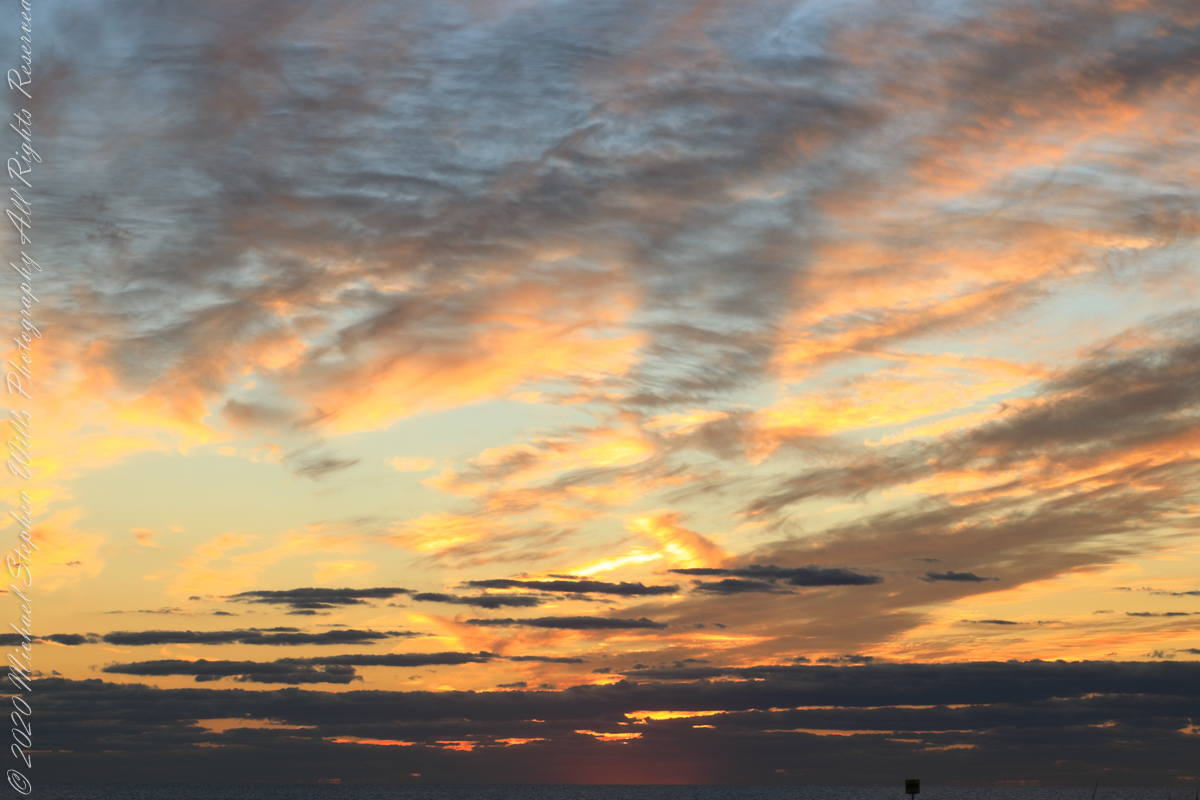
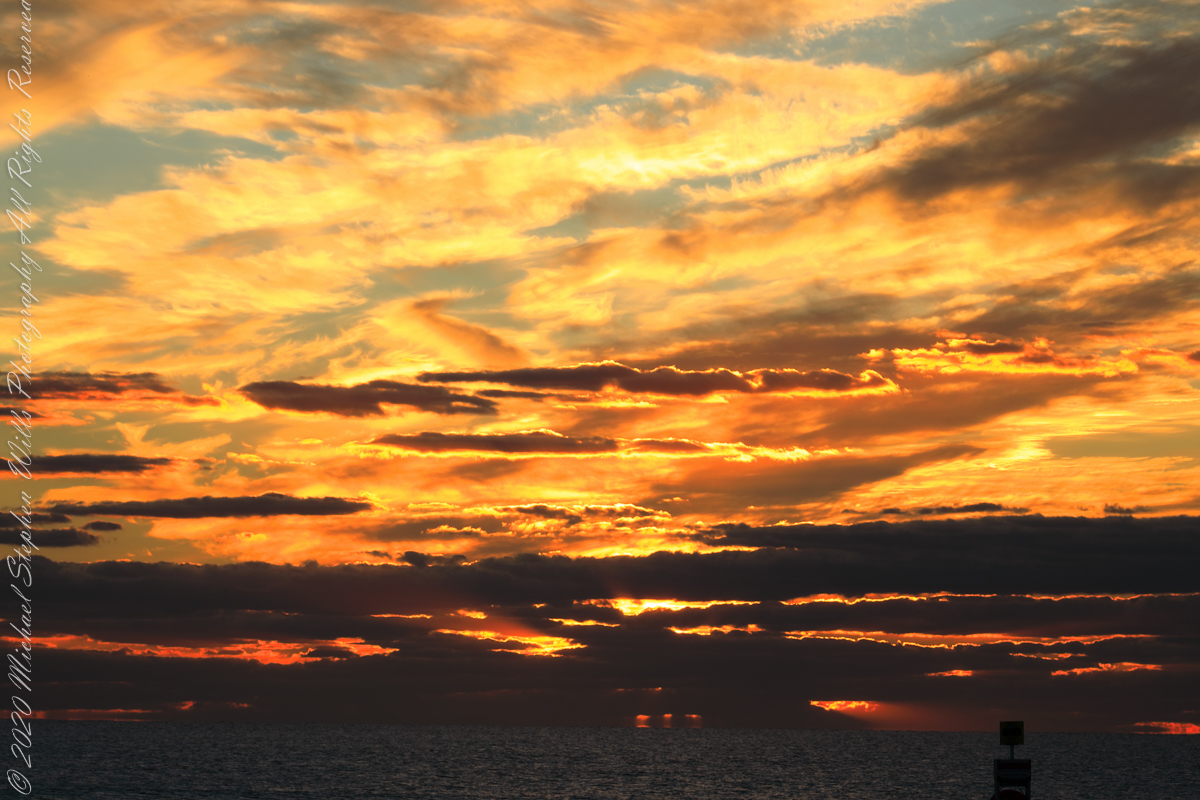
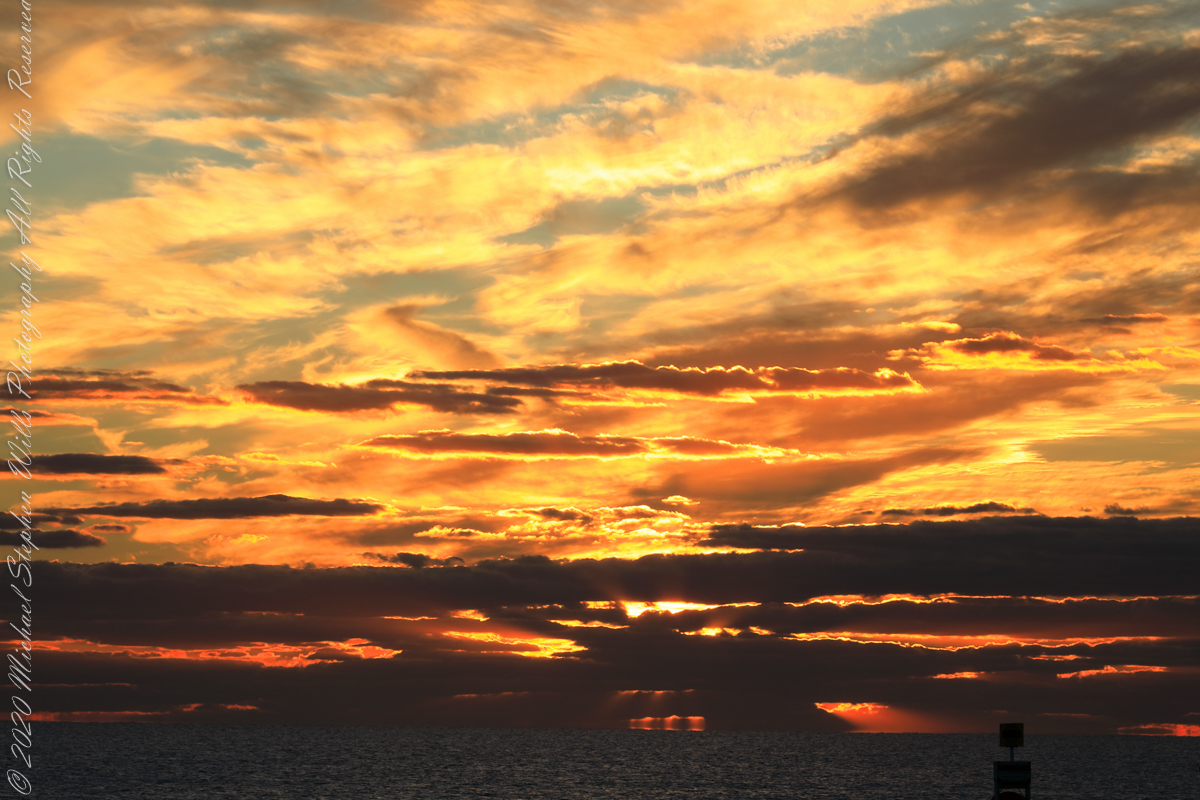
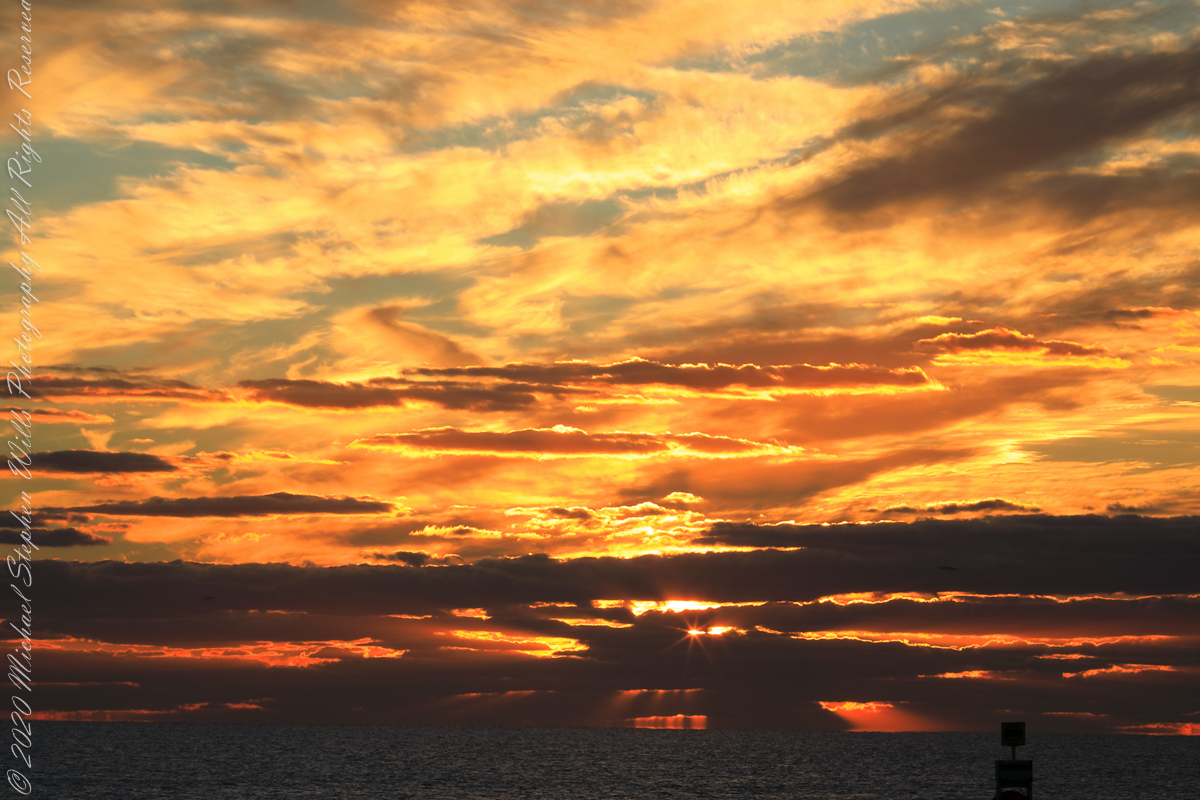
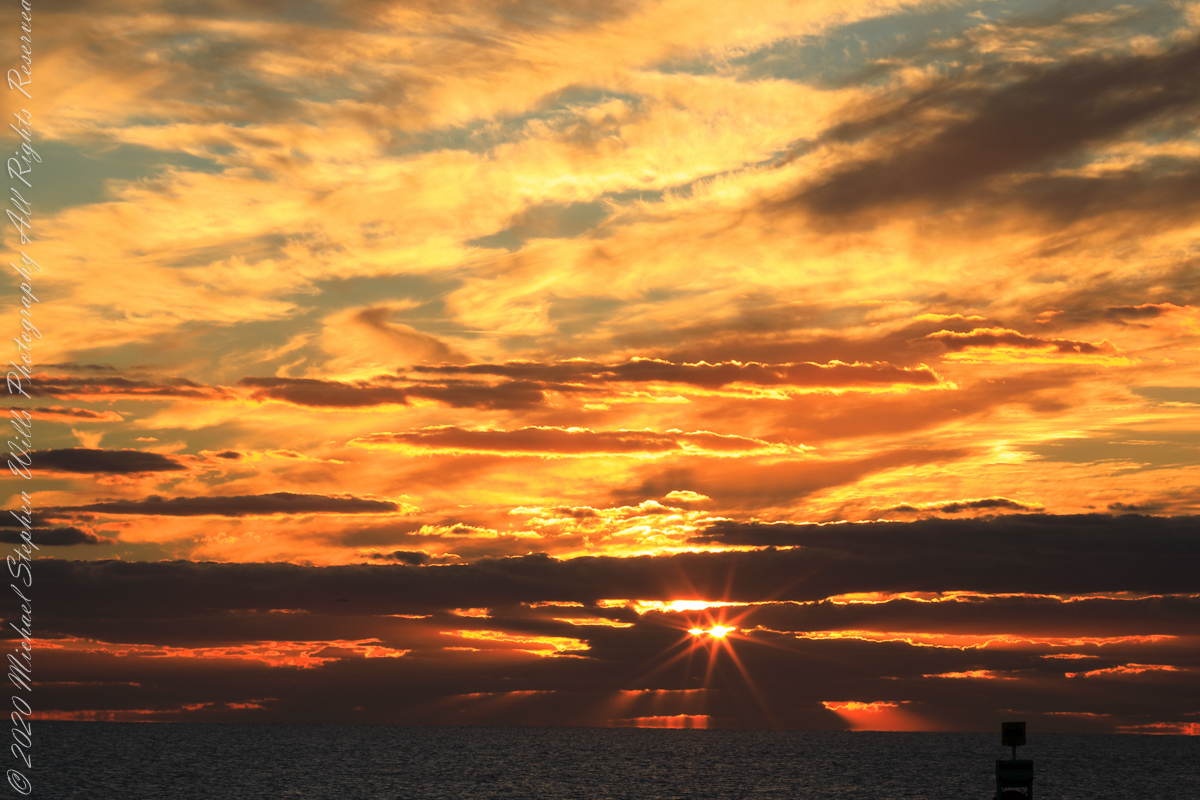
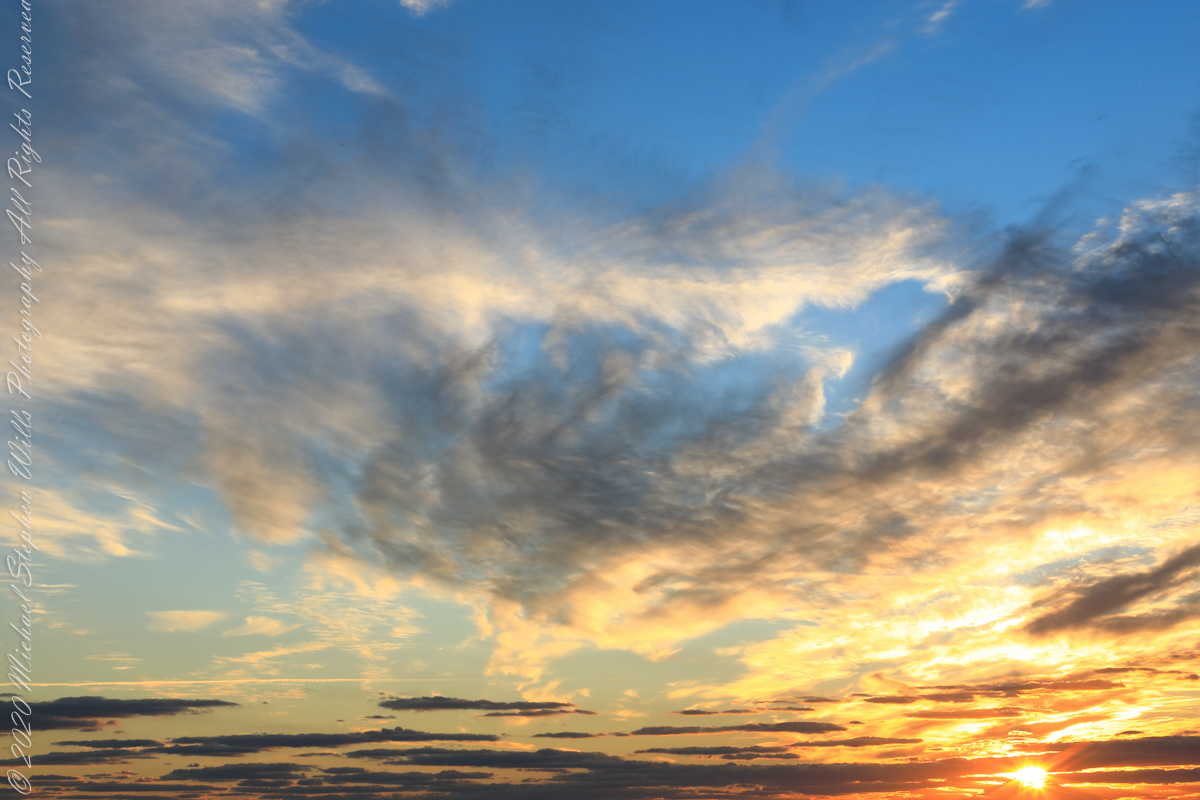
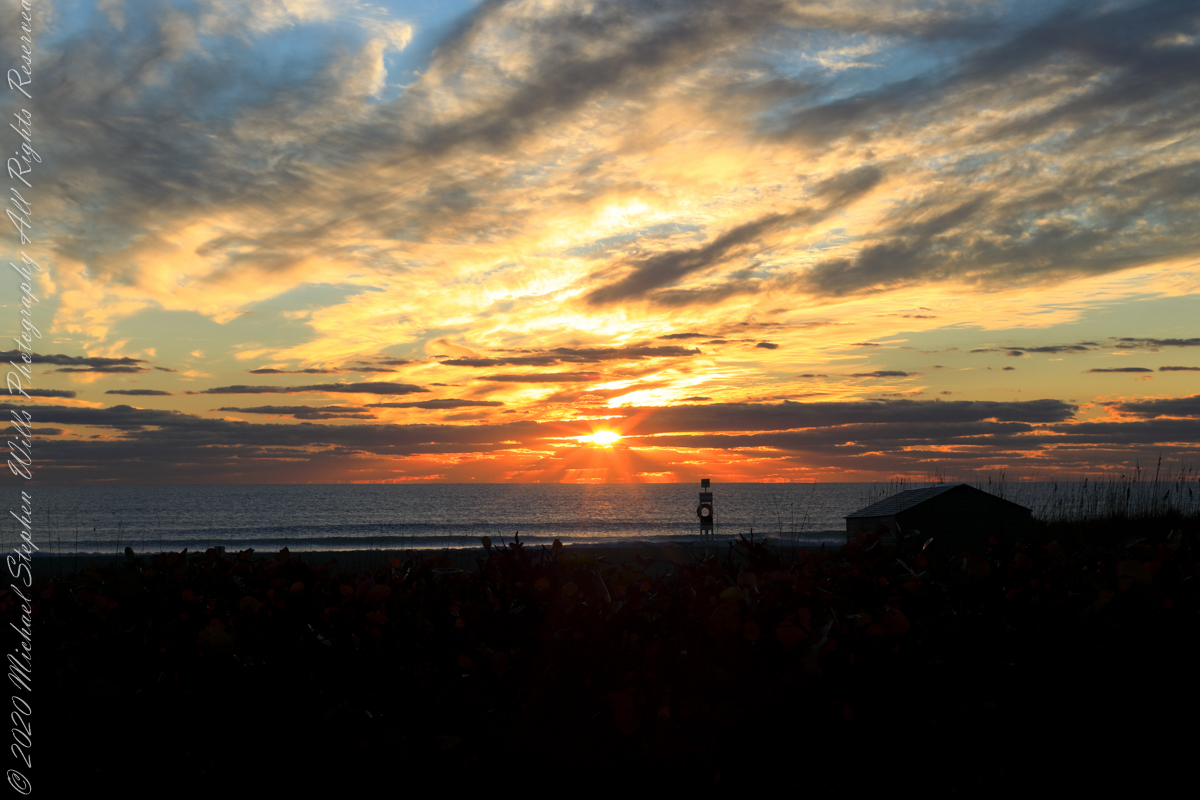
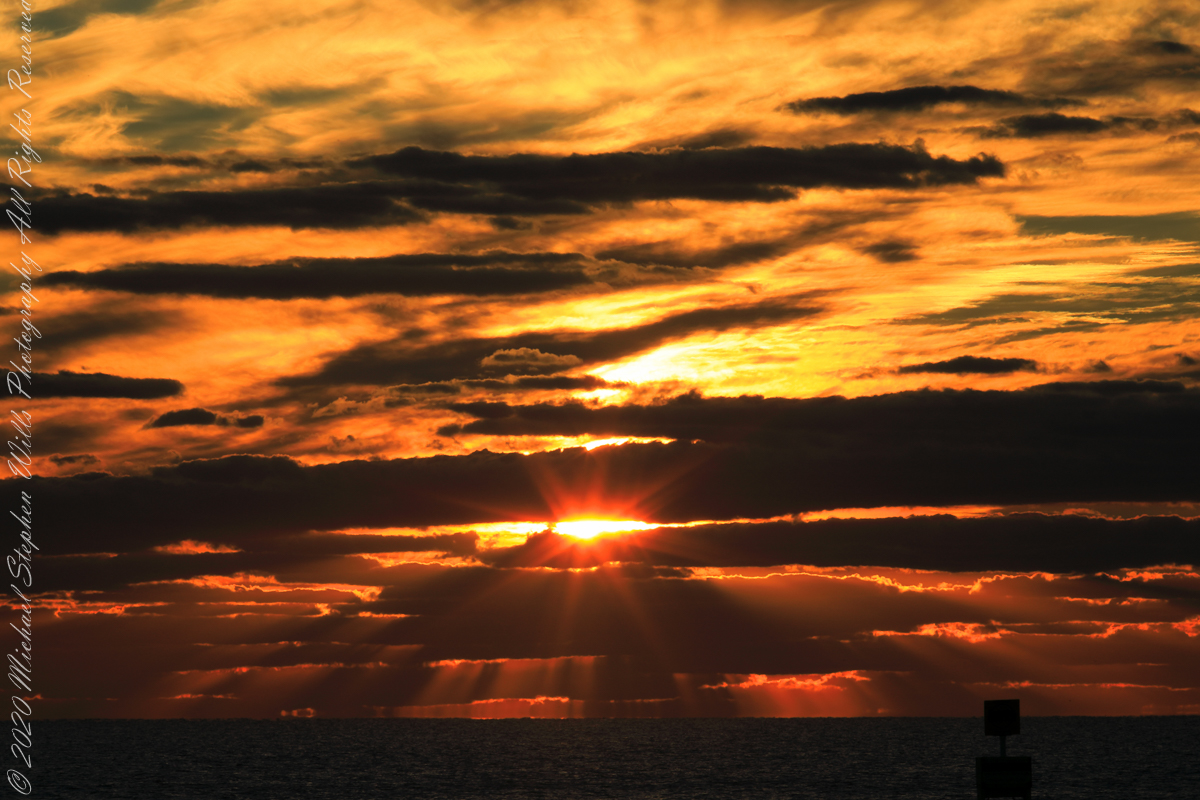
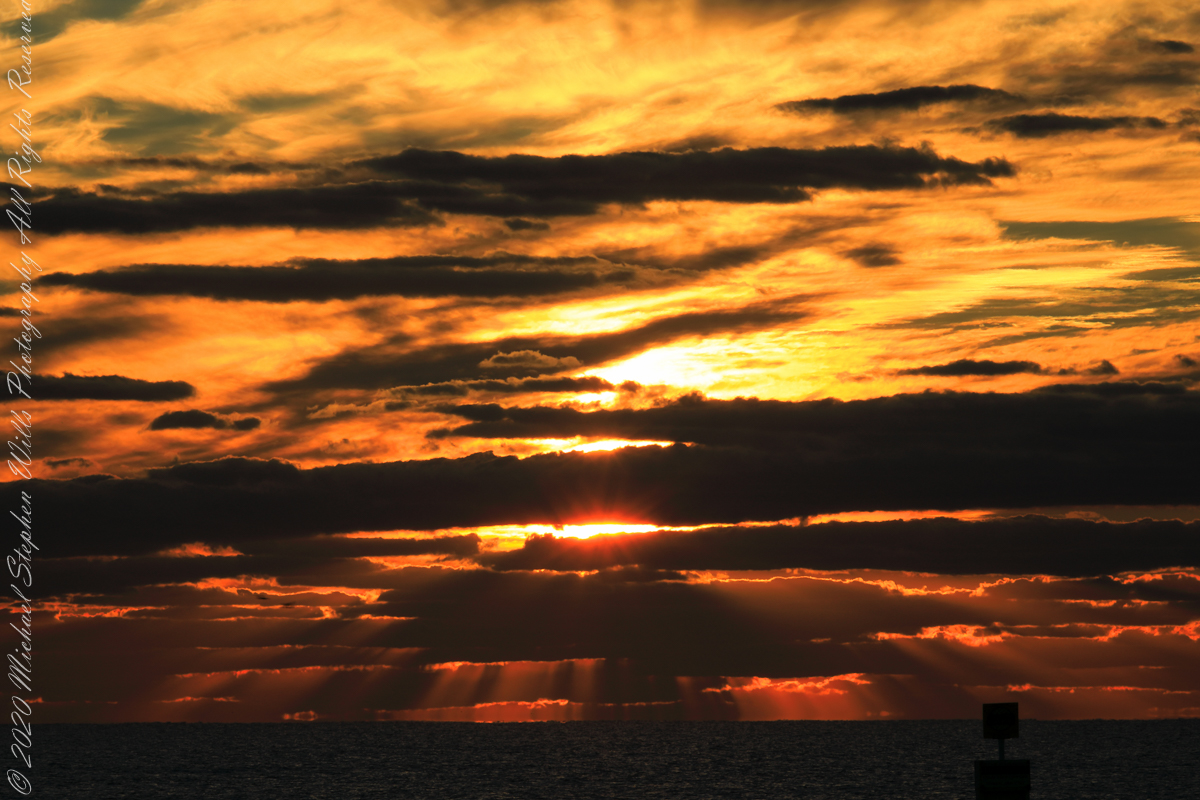
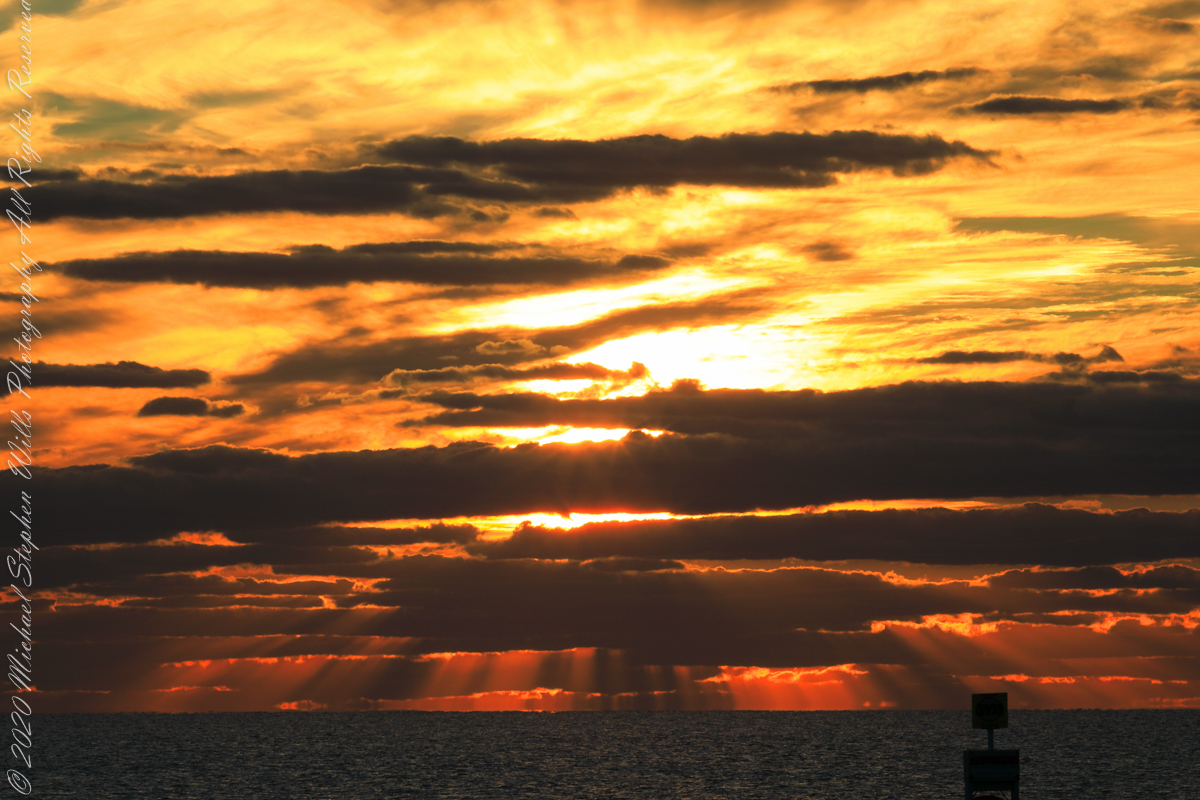
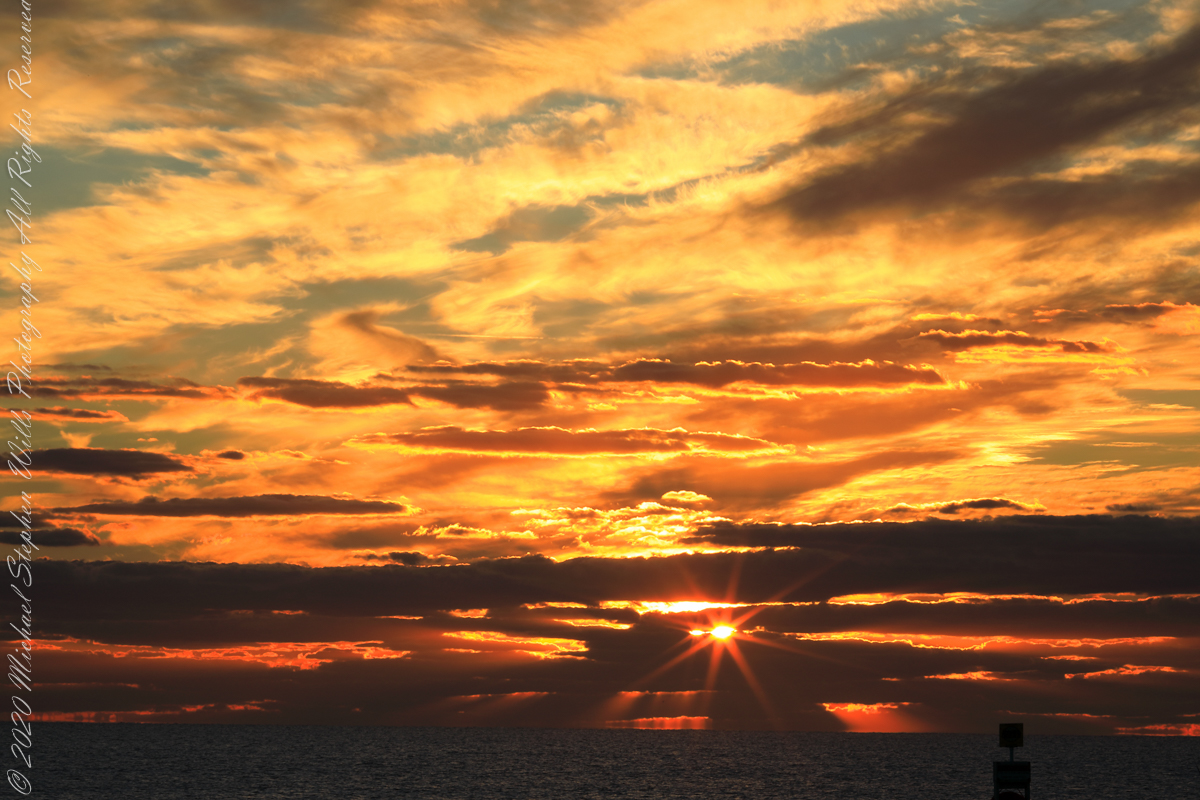
Sunrise has passed in the following photographs, obscured by clouds and making for a great light show. Enjoy!!

References

“Dawn” Wikipedia page, the graphic “Twilight-dawn subcategories,” and the descriptions of subcategories came from this page.