My photographic style centers on the use of natural light to visualize emotion and evoke memory. The evolution of my style began early in the year 2002, with an imperative to capture personal and fleeting memories.
My son and I traveled to New York City, to view the first Saint Patrick's Day parade after September 11, 2001. My work from that parade was so successful and satisfying (see "New York Fire Department, Saint Patrick's Day 2002") I just never stopped.
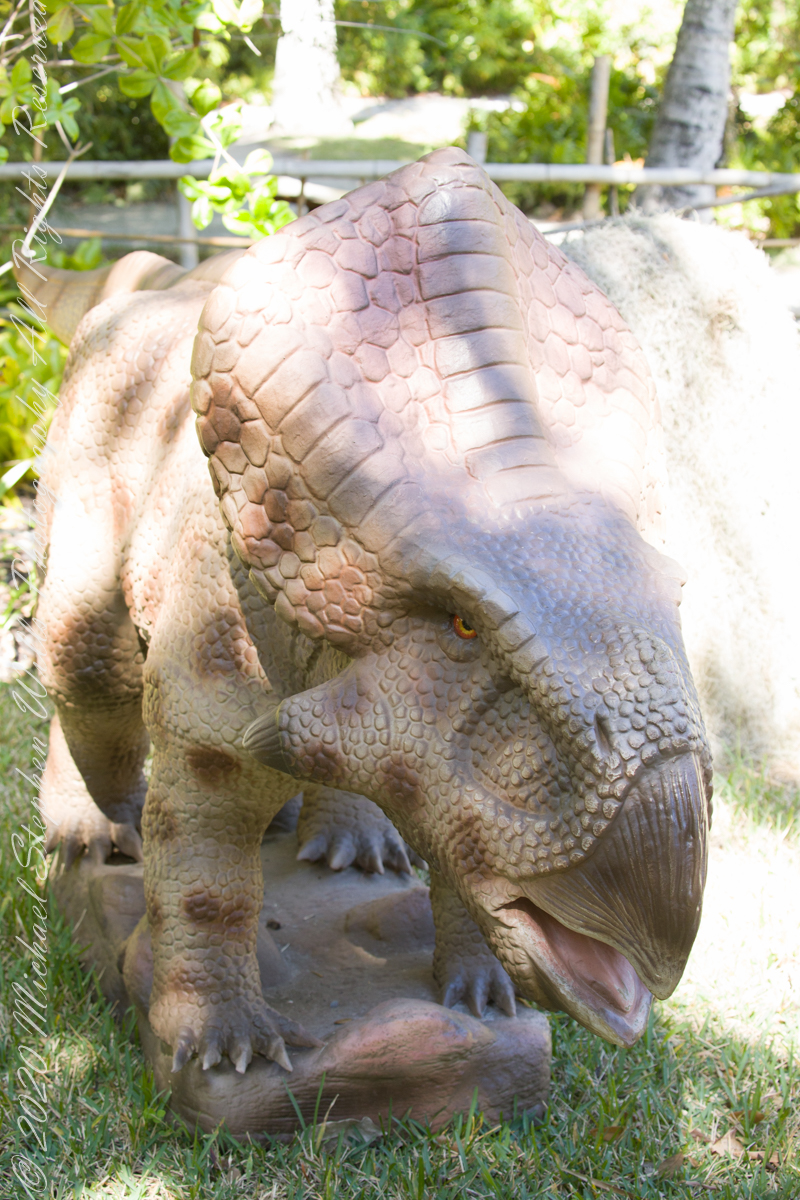
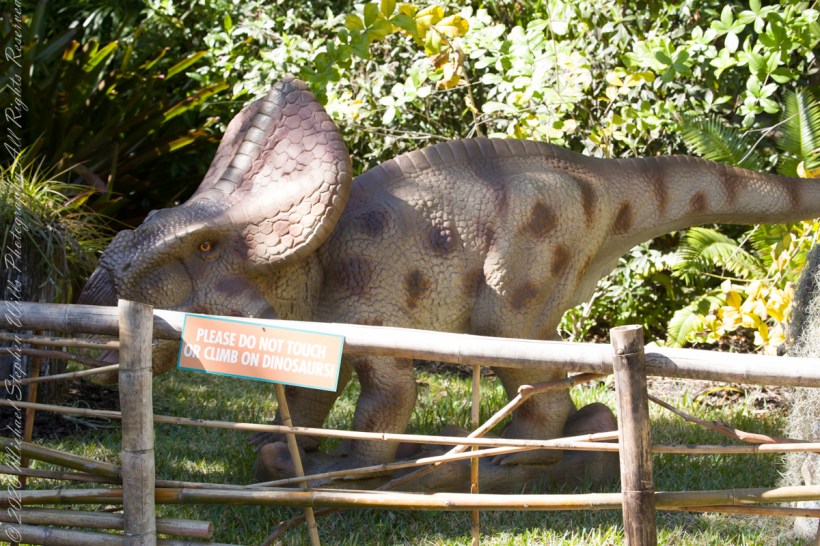
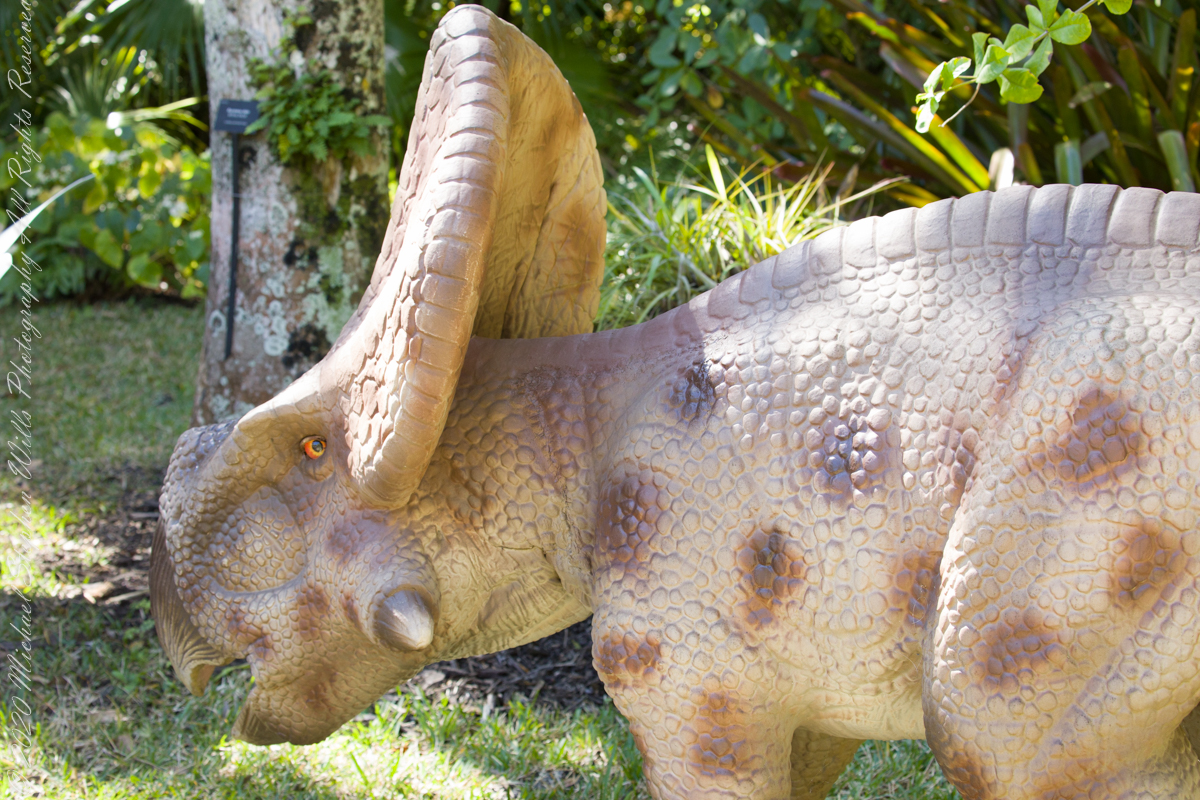
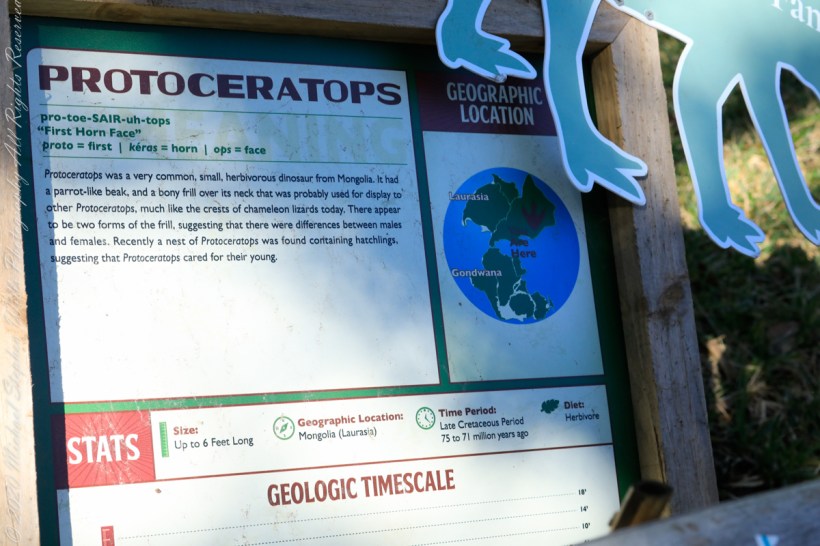
Protoceratops was a very common, small, herbivorous dinosaur first discovered in Mongolia.
It had a parrot-like beak, and a bony frill over its neck that was probably used for display to other Protoceratops, much like the crests of chameleon lizards today.
There appear to be two forms of the frill, suggesting there were differences between males and females.
Recently a Protoceratops nest was found containing hatchlings, leading some scientists to believe this successful species cared for its young.
References: text is from the park placard with minor edits.
Copyright 2022 Michael Stephen Wills All Rights Reserved
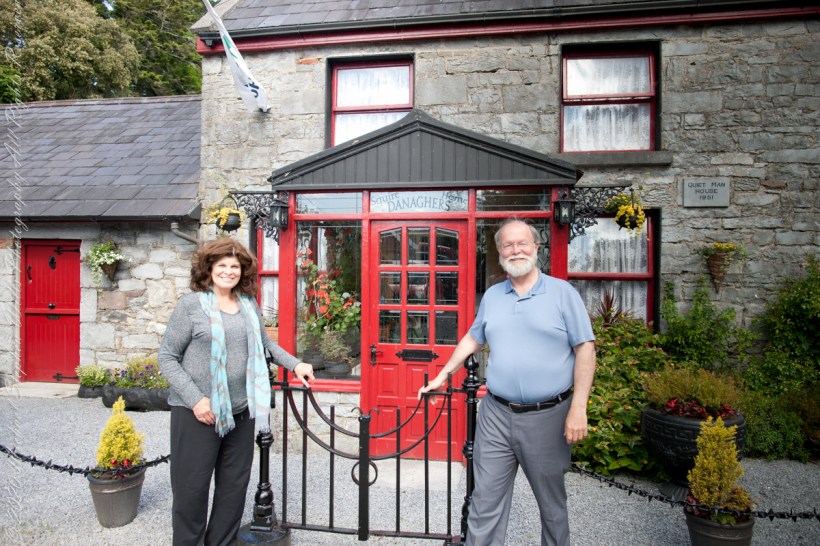
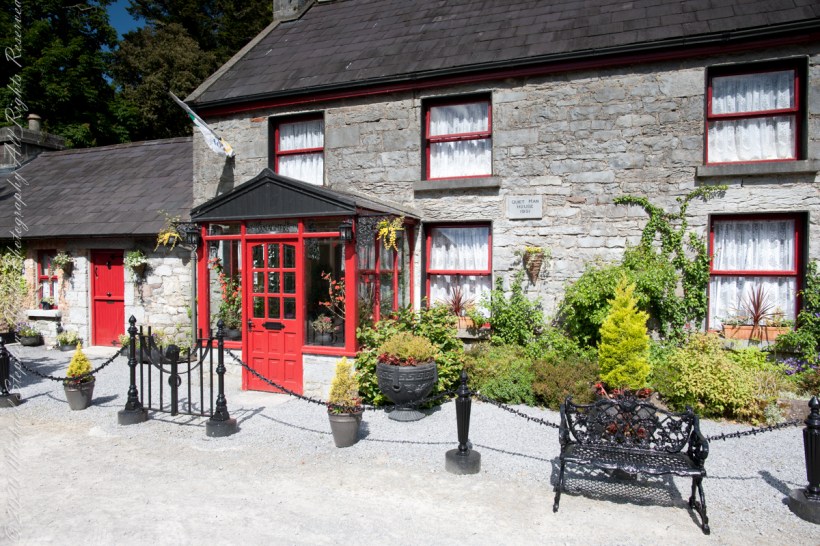
A location from the 1952 film “The Quiet Man”. The house appears on no maps, located on the Ashford Castle grounds. Head toward the Ashford Castle Old School House and you will come upon it. County Mayo, near the Village Cong, Connemara, County Mayo, Republic of Ireland.
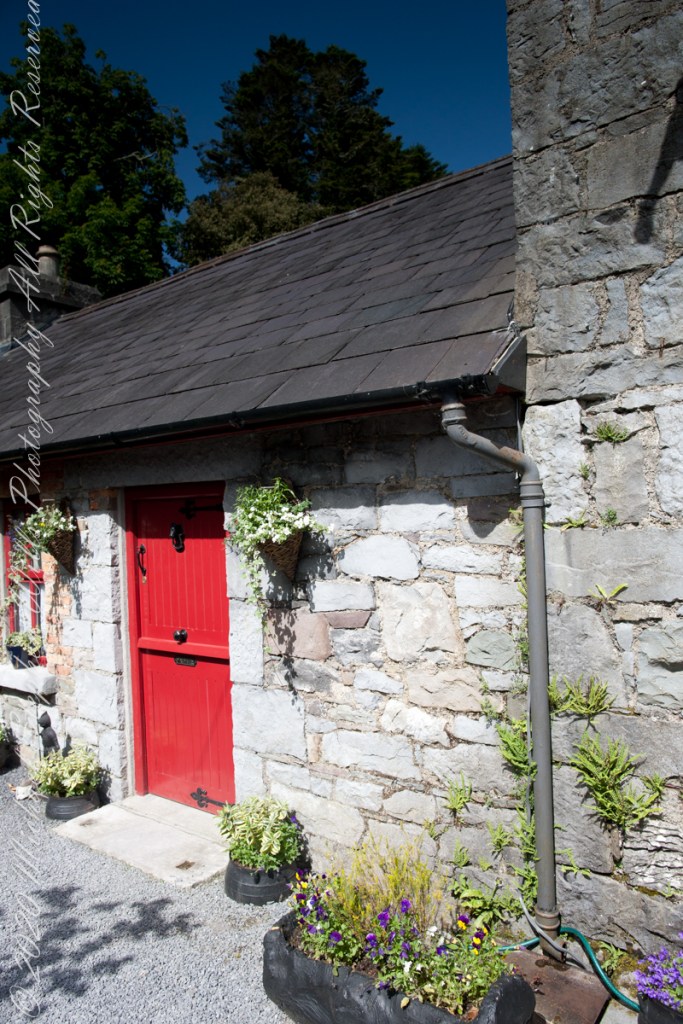
I recall there are scenes from “The Quiet Man” featuring characters using this Dutch door, seen to the left in the above photograph and below in a closer shot.
In this photograph the glass etching on entrance, identifying the home, is clearer. Also note the plaque: “Quiet Man House 1951.” Is the plaque wrong? No, while 1952 was the world-wide film release year, filming commenced on June 7, 1951.
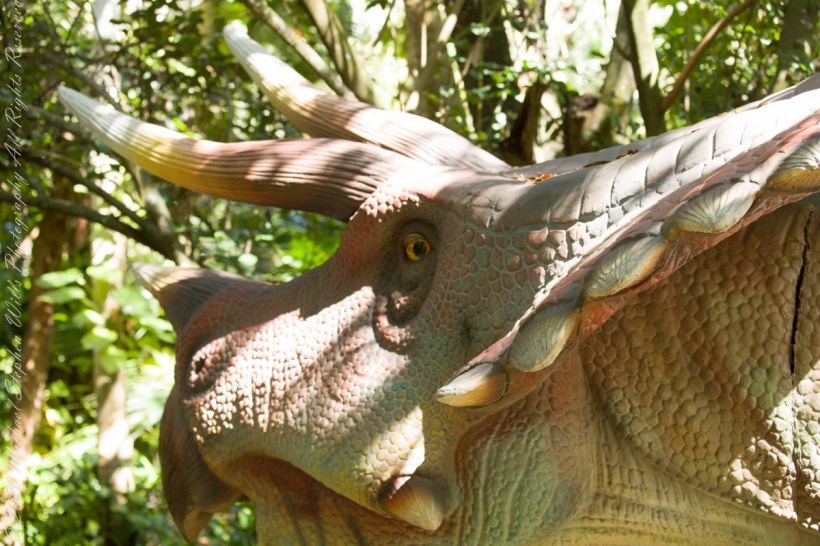
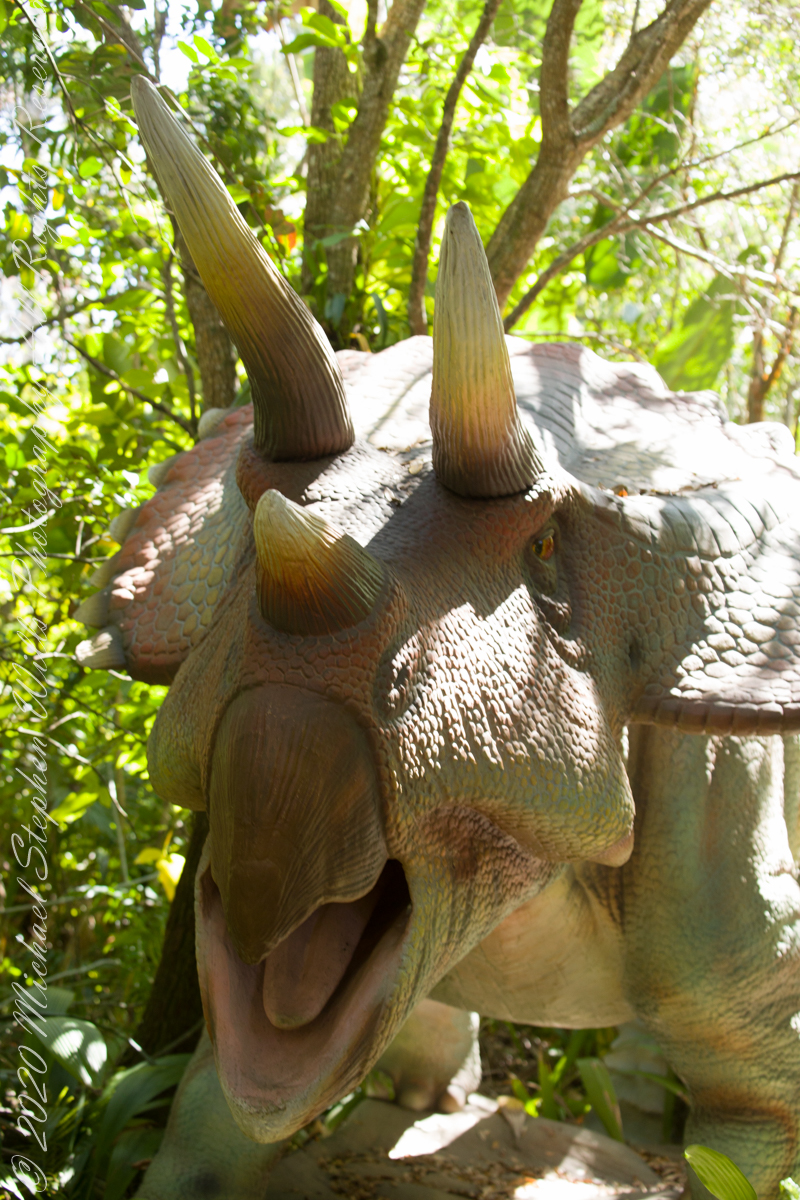
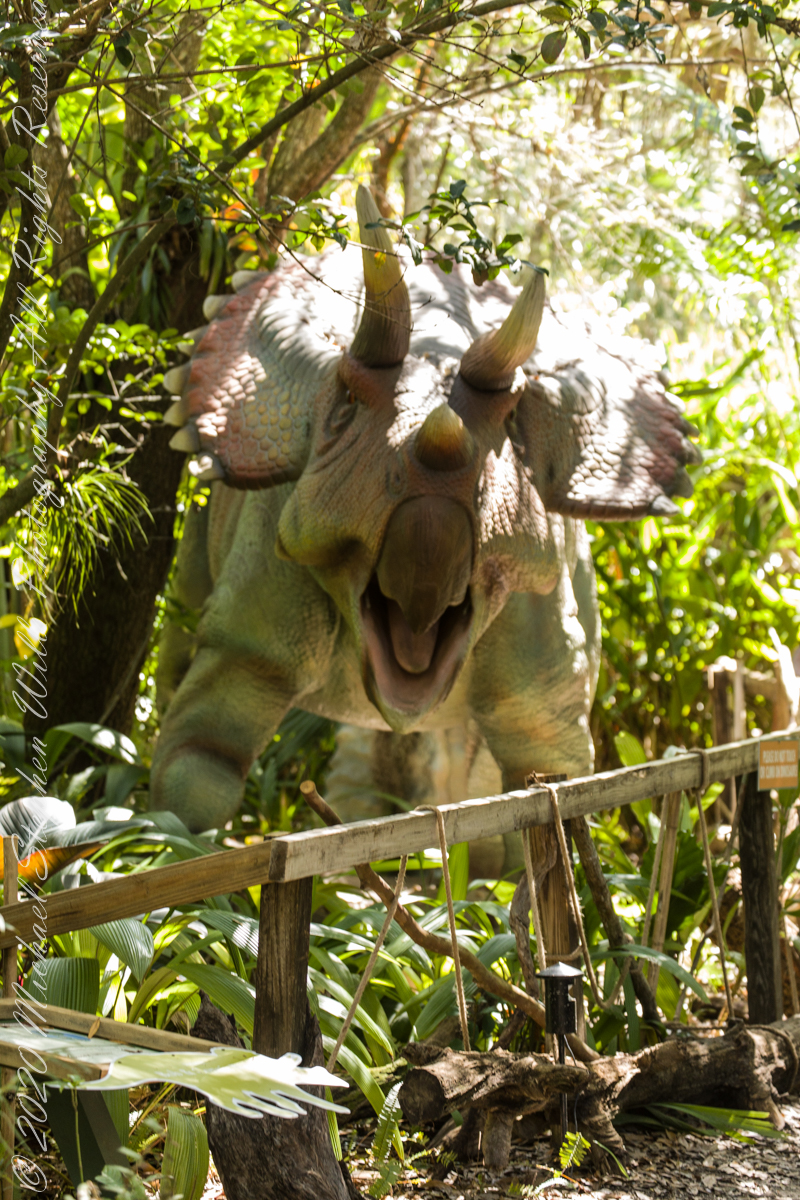
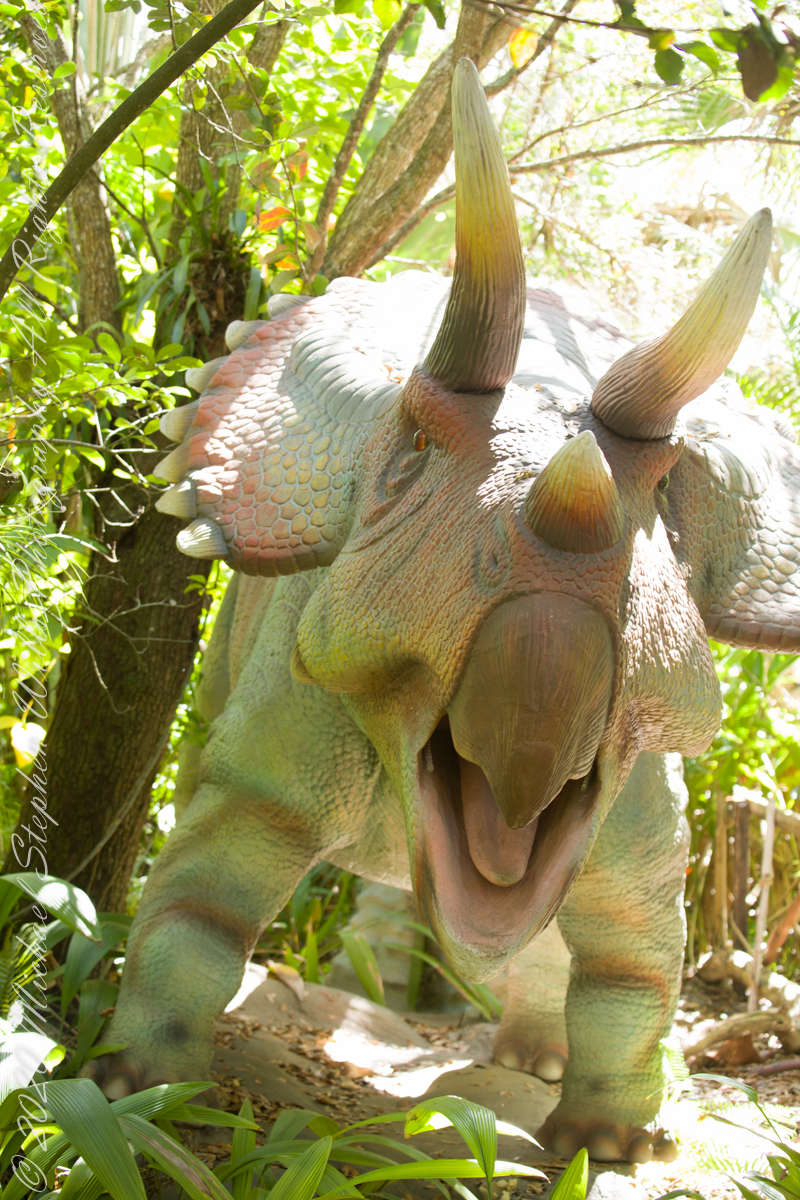
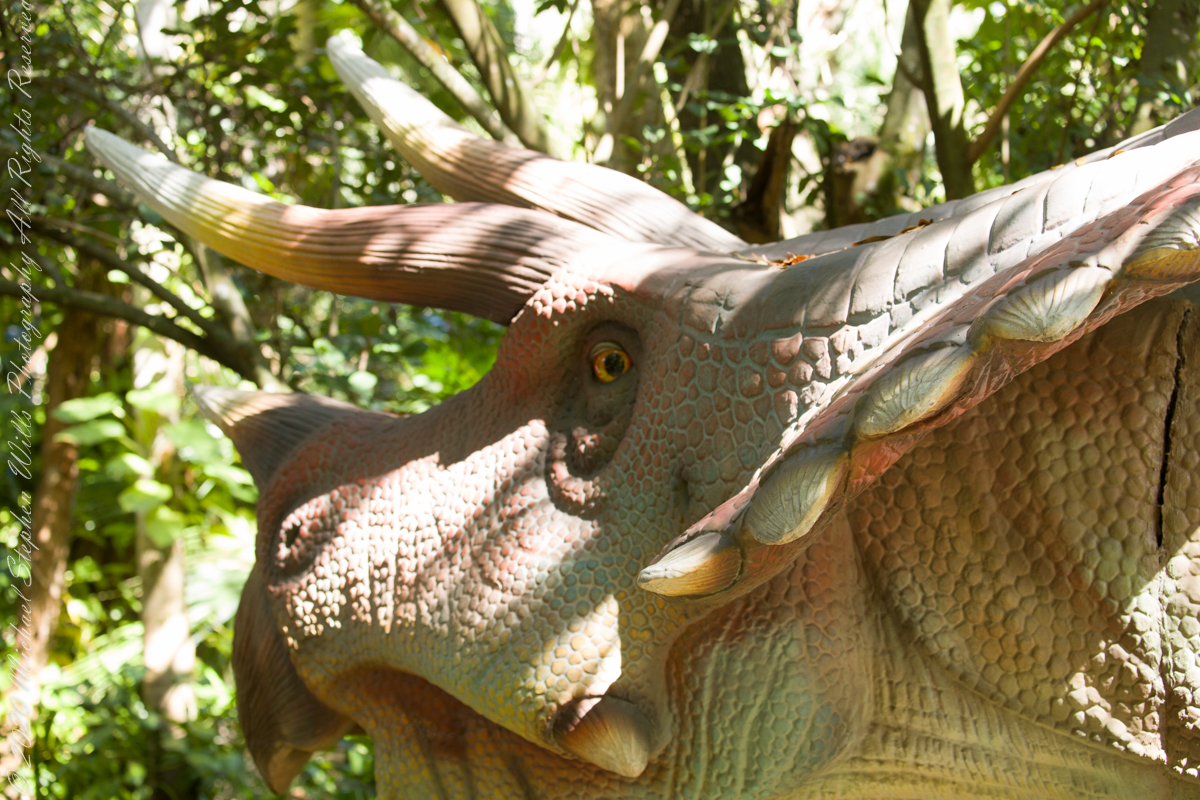
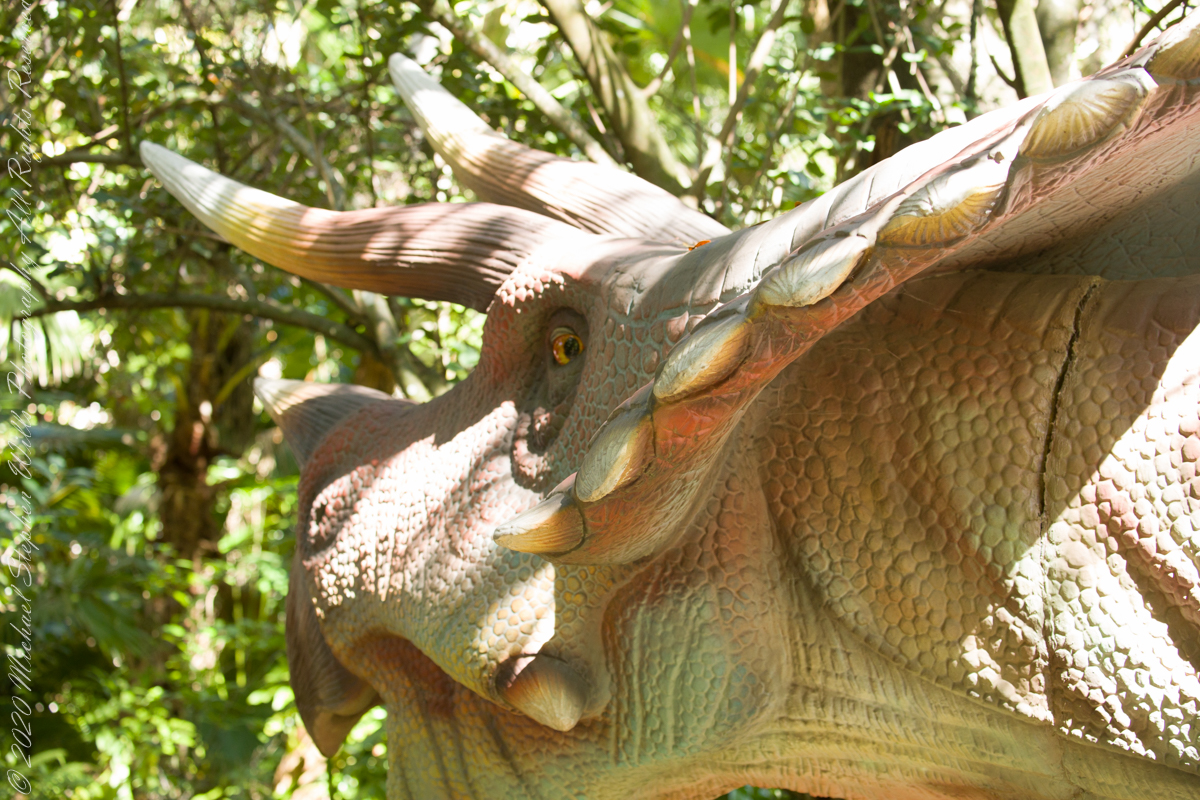
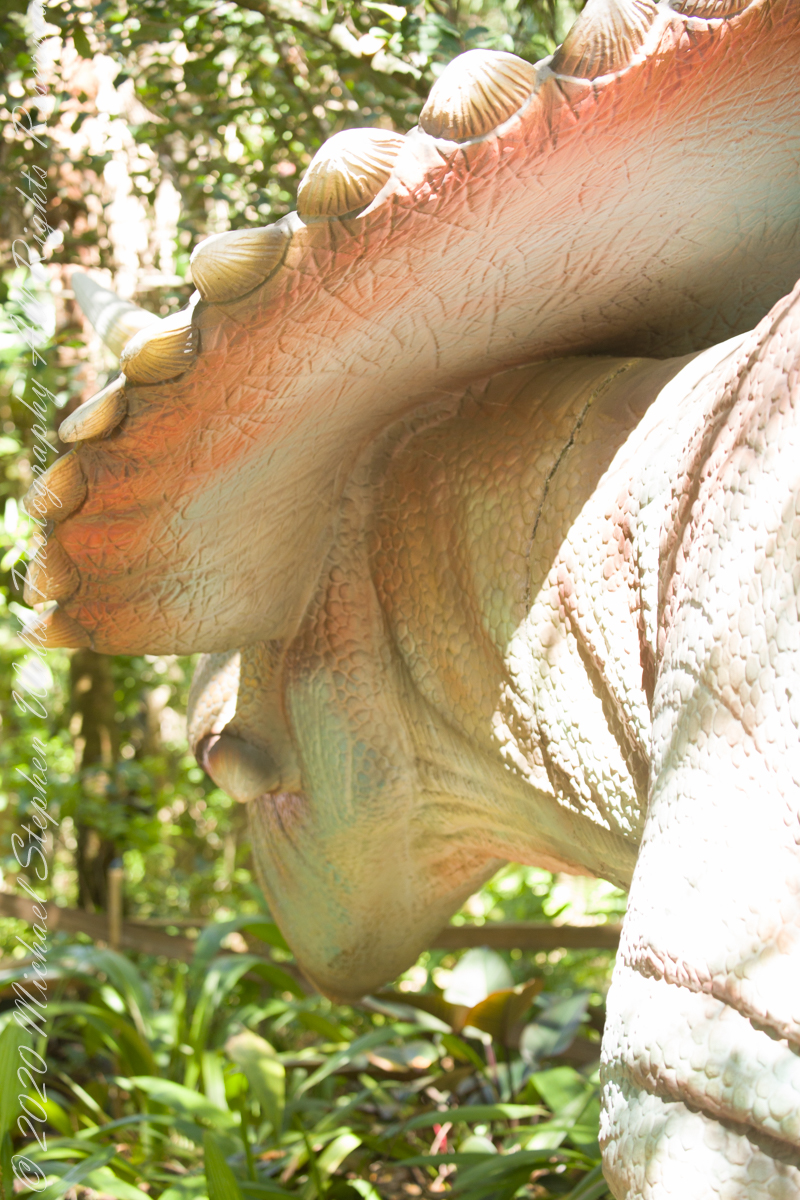
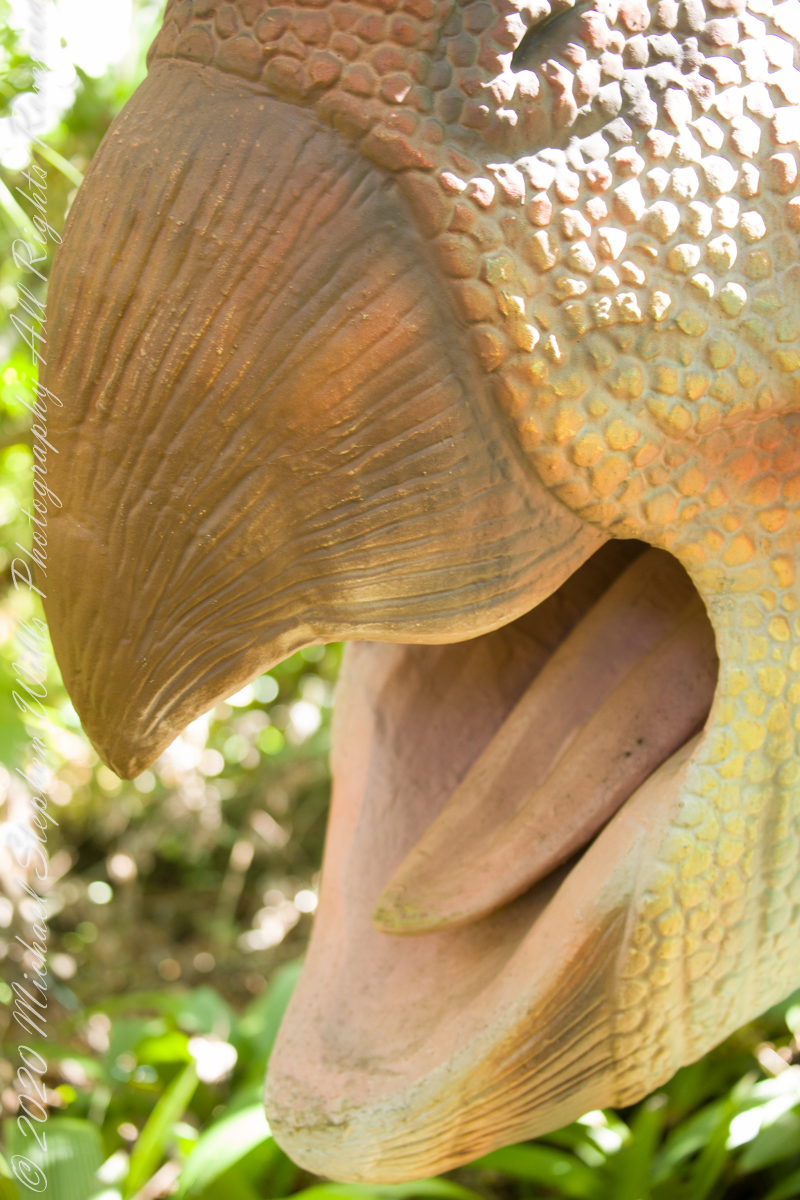
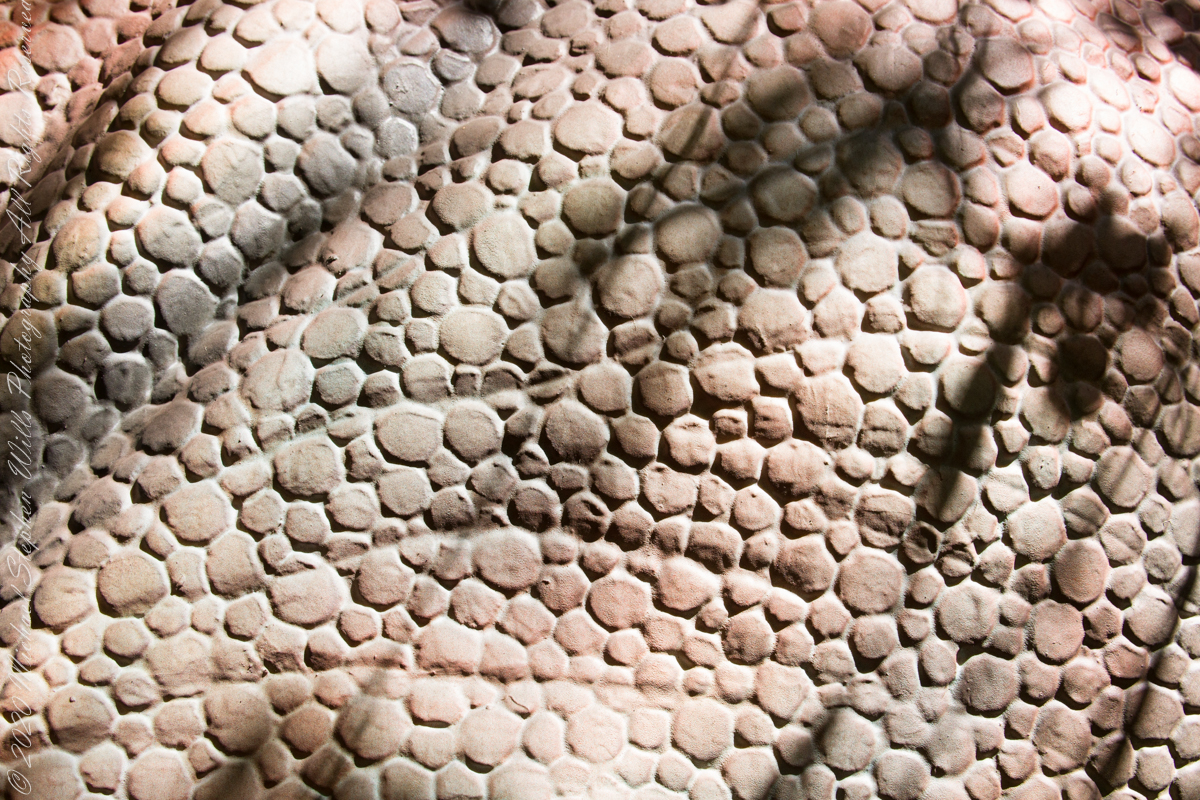
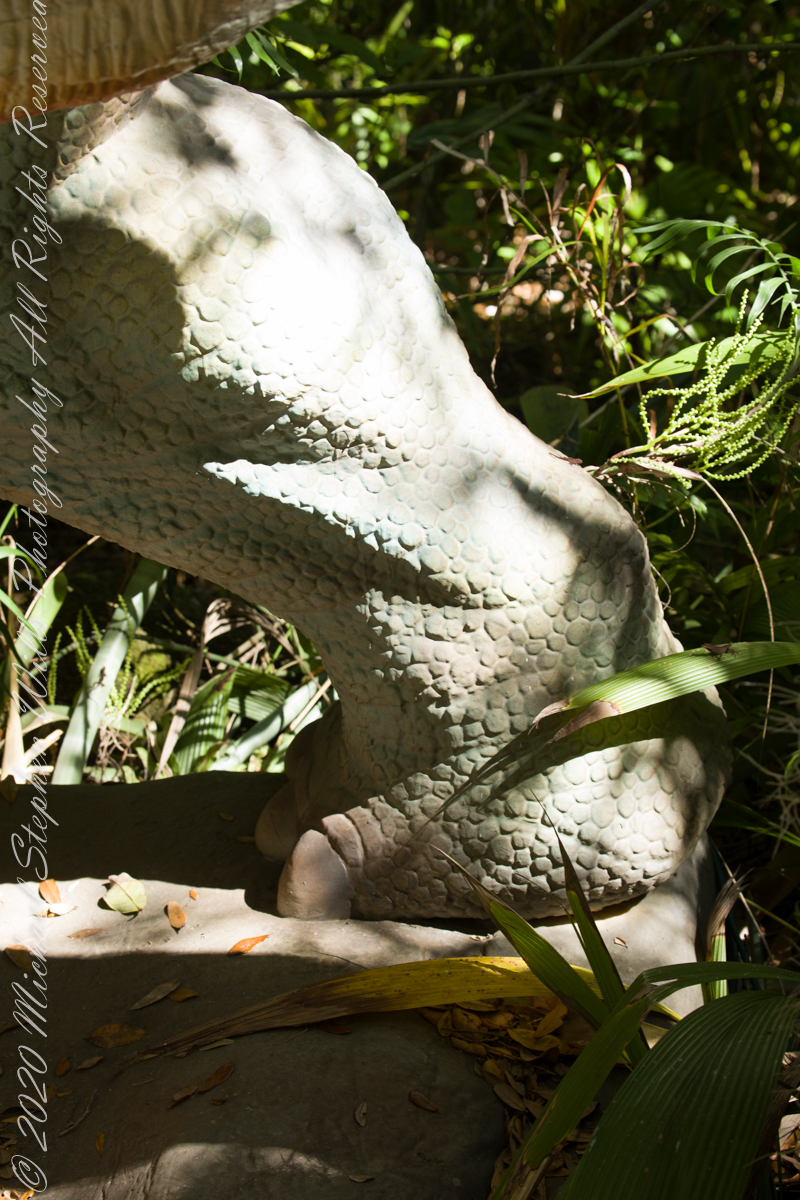
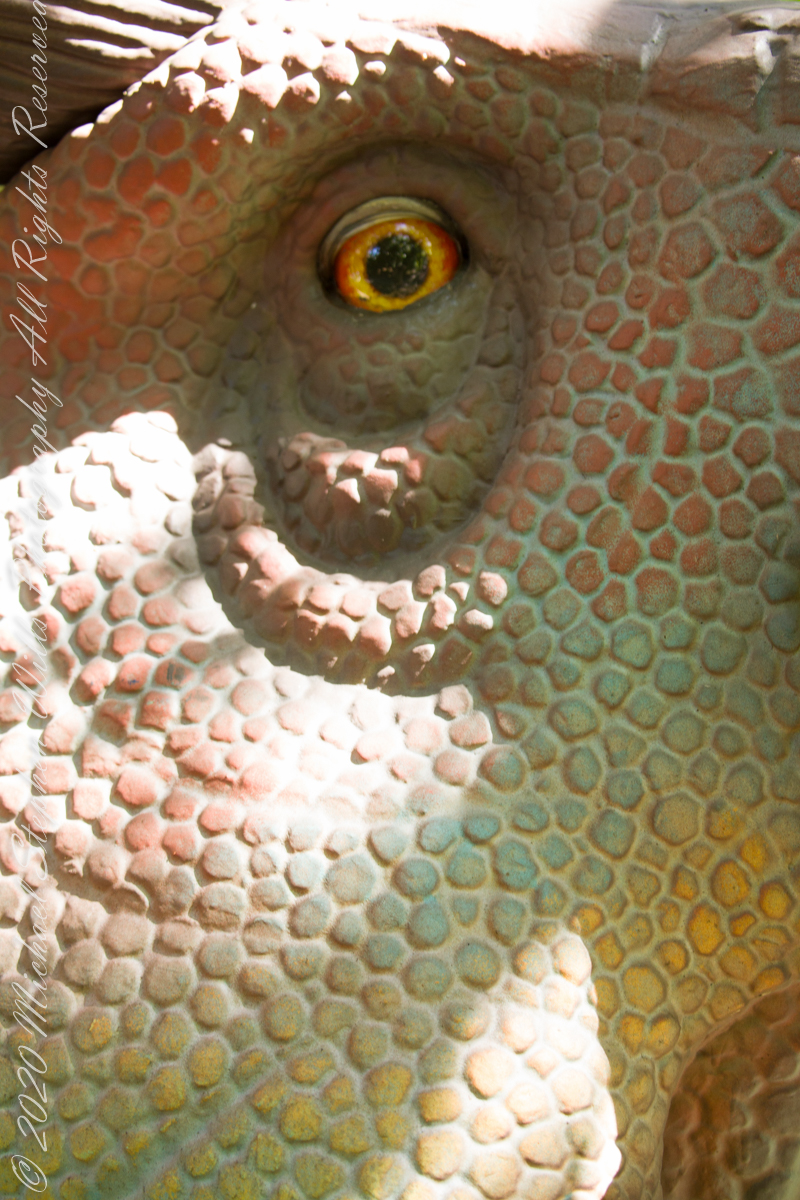
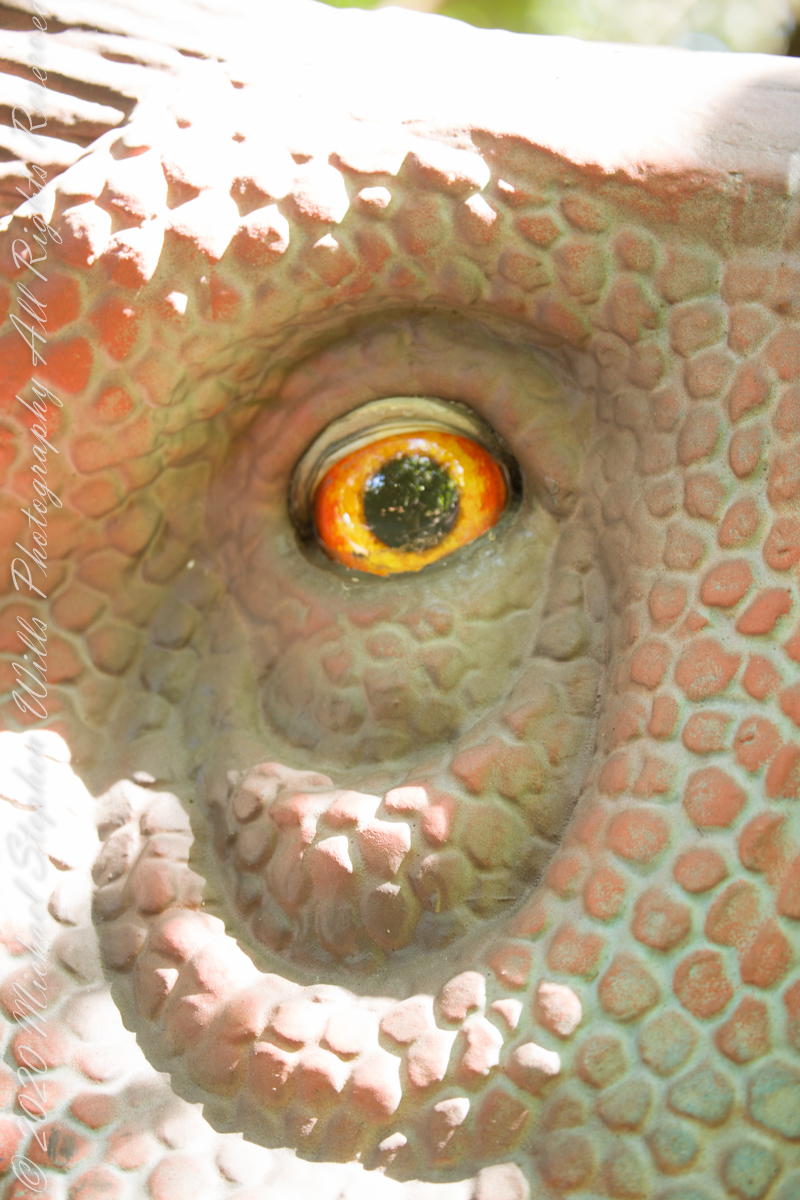
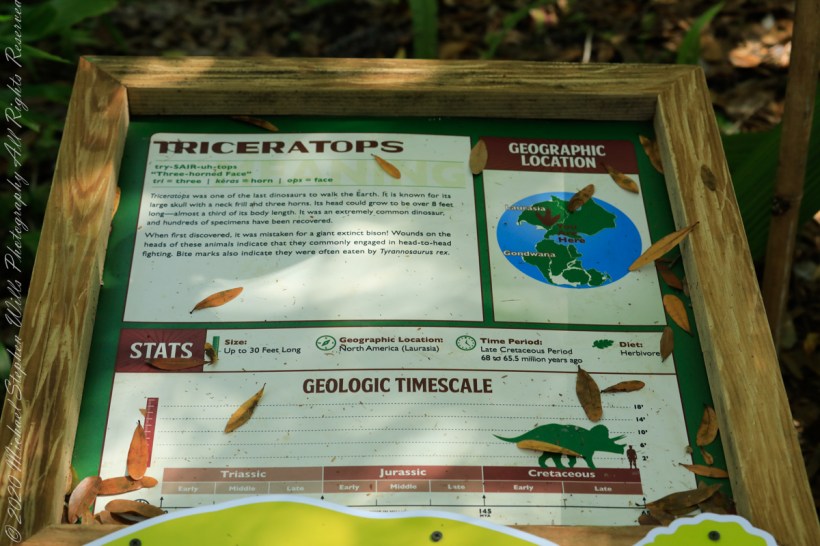
Triceratops was one of the last dinosaurs to walk the Earth. It is known for its large skull with a neck frill and three horns. Its head could grow to be over 8 feet long, almost a third of its body length. It was an extremely common dinosaur, and hundreds of specimens have been recovered. When first discovered, it was mistaken for a giant extinct bison. Wounds on the head of these animals indicated they commonly engaged in head-to-head fighting. Bite marks also indicate they were often eaten by Tyrannosaurus Rex.
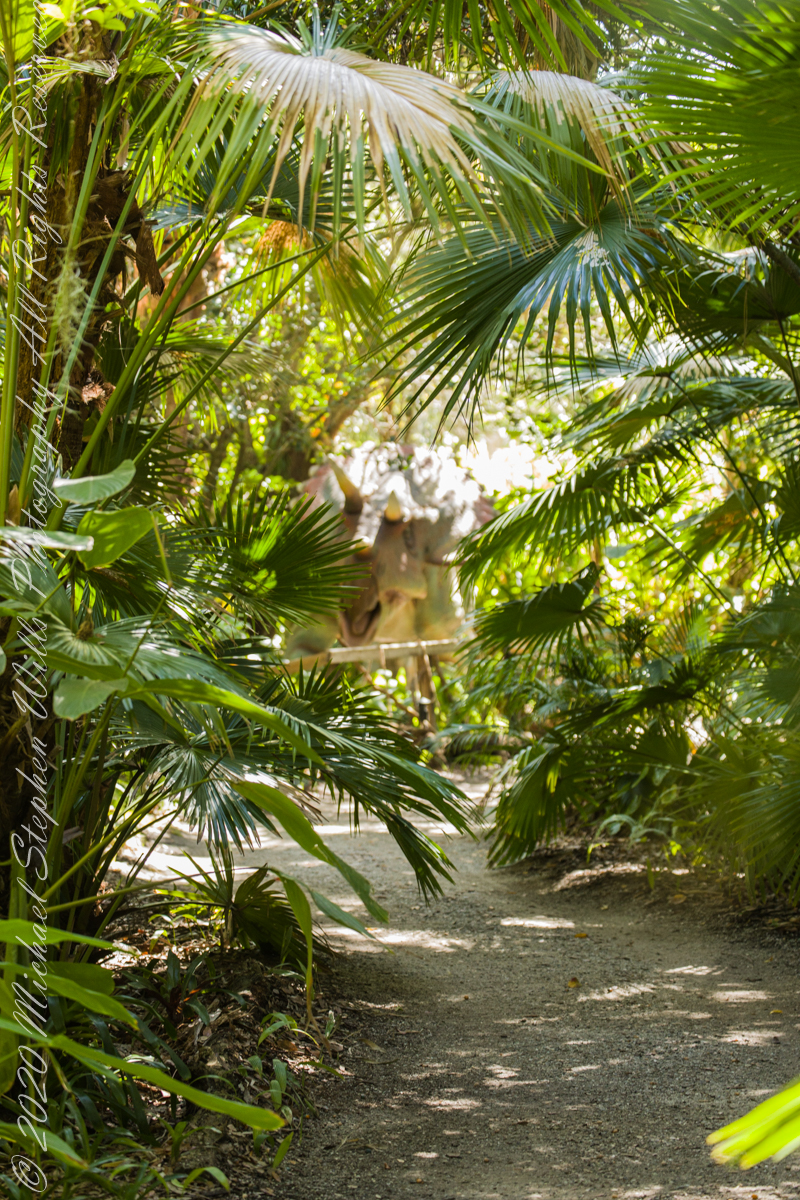
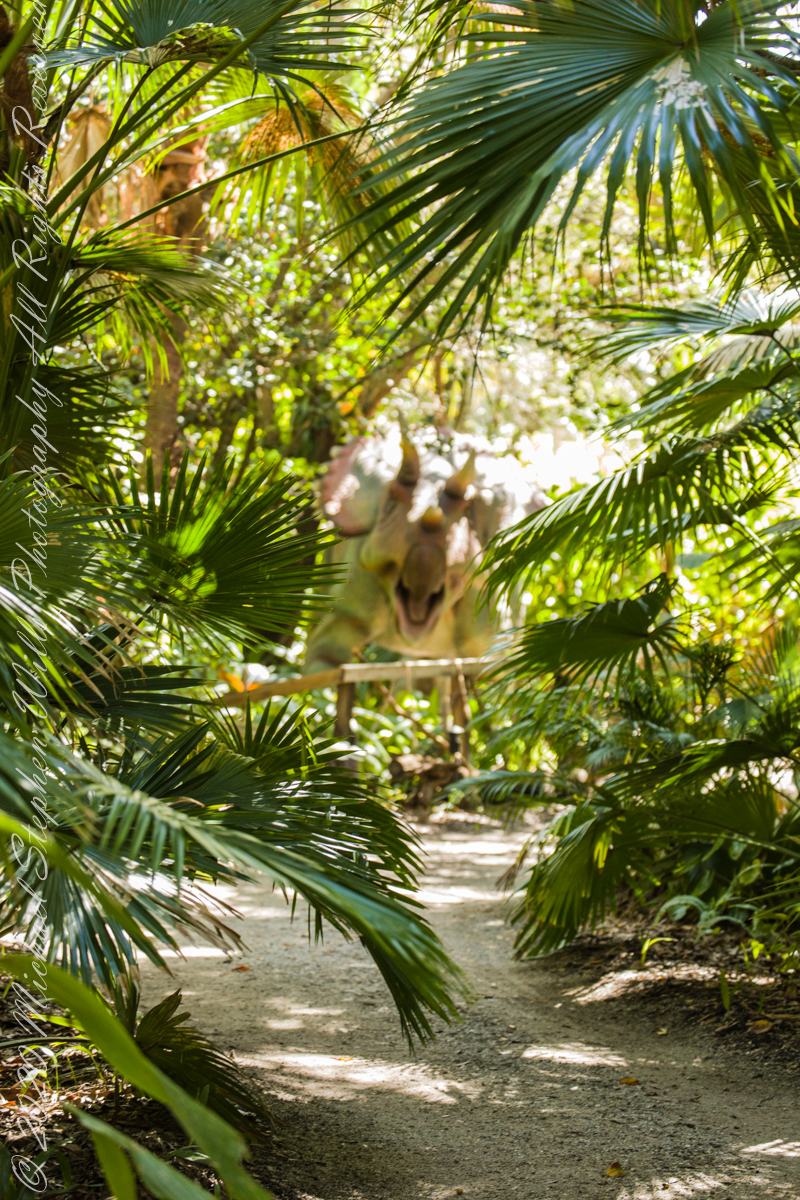
Triceratops emerges from the jungle
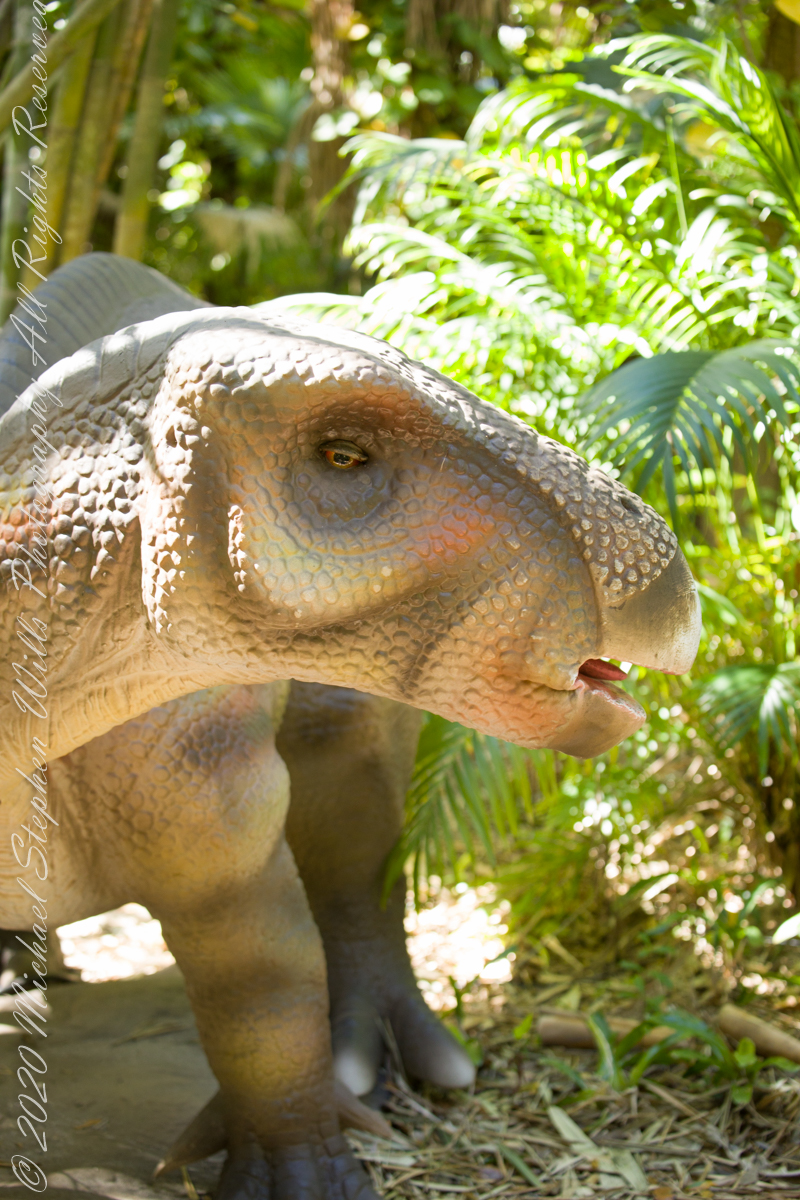
Head and neck
strong beak for a vegetarian diettough skinso.id supportBright eyes bring the figure to life
References: text is from the park placard with minor edits.
Copyright 2022 Michael Stephen Wills All Rights Reserved
Discover the charm of Cong, Ireland, through a stunning sculpture celebrating The Quiet Man. Join me as I explore the town’s cinematic legacy and reflect on the enduring magic of film.
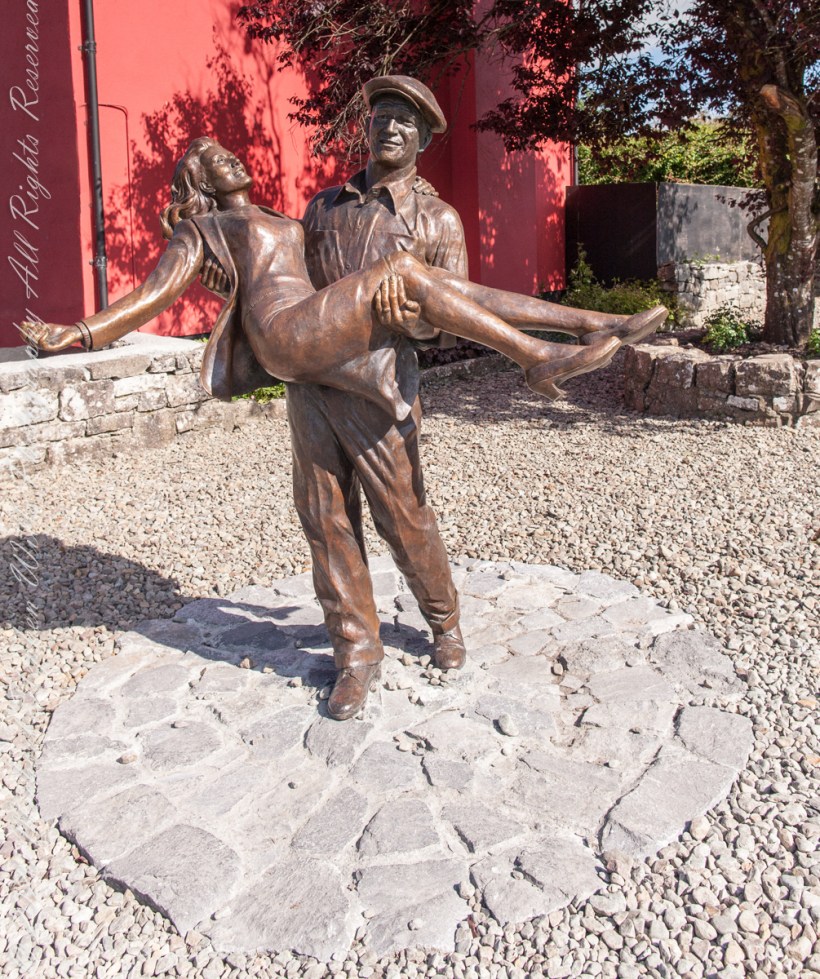
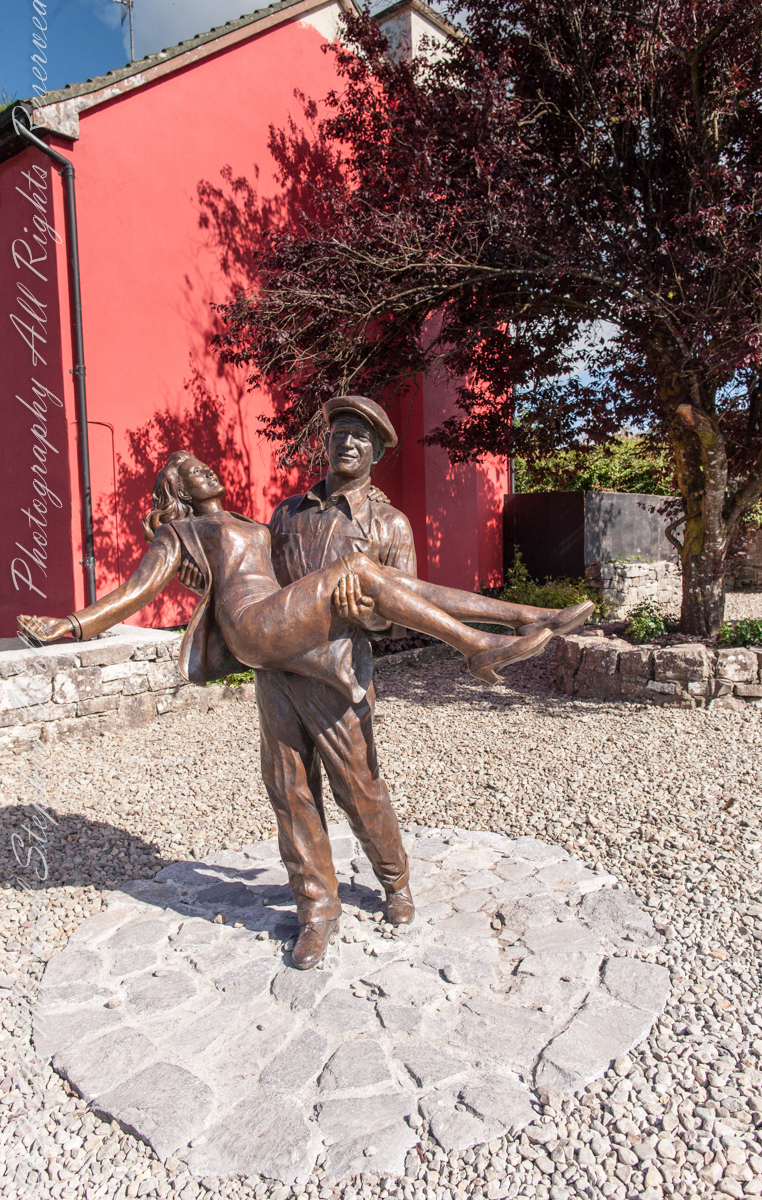
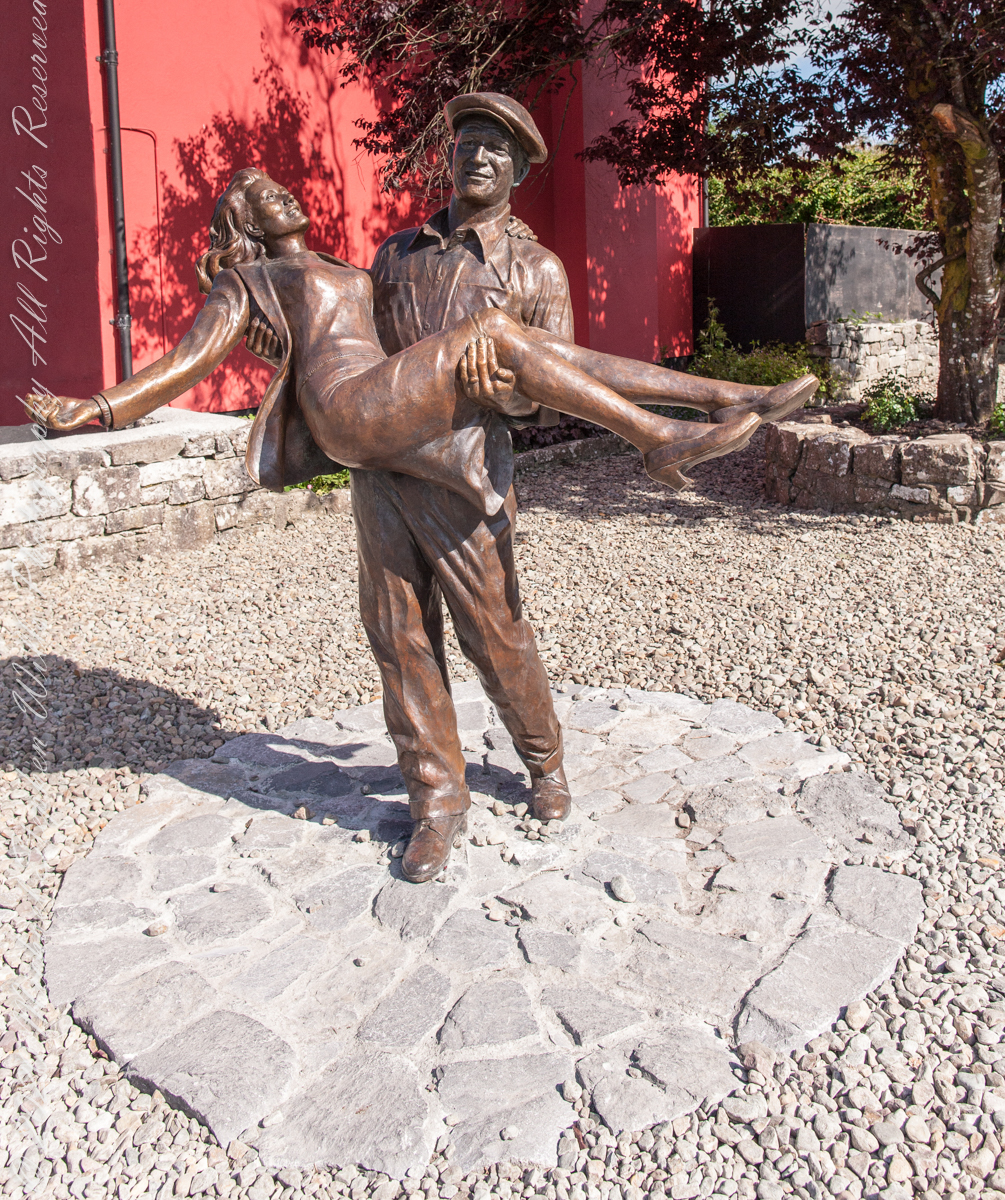
During a May 2014 exploration of the village Cong in County Mayo, Ireland, we encountered this remarkable sculpture that transported me back to one of my favorite classic films, “The Quiet Man.” The bronze statue, depicting John Wayne’s character, Sean Thornton, carrying Maureen O’Hara’s Mary Kate Danaher, stands against the backdrop of the town, a visual homage to the cinematic legacy that has become intertwined with Cong’s identity.
As I stood before the sculpture, memories of watching The Quiet Man flooded back. The Quiet Man, with its vibrant depiction of Irish culture and scenery, had always held a special place in my heart. It’s a story of love, cultural clashes, and the journey of a man returning to his roots, themes that resonate deeply within the lush landscapes of County Mayo. Cong served as the primary filming location, and the town has embraced this legacy wholeheartedly, turning the film into a cornerstone of its identity.
The sculpture, created by Mark Rode, who has a foundry an hour away in Swinford, was installed the year before, 2013, yet it felt as though it had always been there, seamlessly blending with the surroundings. Rode’s work captures the essence of the characters with remarkable detail. In The Quiet Man, the scene where Sean carries Mary Kate in his arms takes place after he retrieves her from the train station. This moment symbolizes their reconciliation and is a pivotal scene in the film, capturing their renewed bond and Sean’s determination to stand up for their relationship. The piece celebrates not just the film, but also the spirit of the town and its connection to cinematic history.
Mark Rode, known for his ability to bring characters to life through sculpture, has a unique talent for capturing the essence of his subjects. His works often reflect a deep understanding of human emotion and storytelling, qualities that shine through in this particular piece. The installation of the sculpture was met with excitement from both locals and visitors, further cementing Cong’s status as a beloved tourist destination.
Reflecting on our visit, I realized how much this small town had embraced its role in cinematic history. The streets of Cong are dotted with nods to The Quiet Man—from themed shops to plaques marking filming locations. Each element serves as a reminder of the film’s impact on the town and its people. The statue stands as a centerpiece, inviting fans of the film to relive its magic while introducing new generations to its charm.
I couldn’t help but meditate on the lasting impact of art and film on a community. The installation of this sculpture not only celebrates a beloved movie but also invigorates the town’s economy through tourism, drawing visitors eager to walk in the footsteps of their favorite characters. It’s a testament to the power of storytelling and its ability to transcend time, connecting people across generations and cultures.
The statue of Sean and Mary Kate in Cong is a symbol of the town’s vibrant history and its enduring connection to the film. Mark Rode’s creation captures this essence beautifully, inviting all who visit to pause, reminisce, and celebrate the intertwining of art and life in this picturesque Irish village.
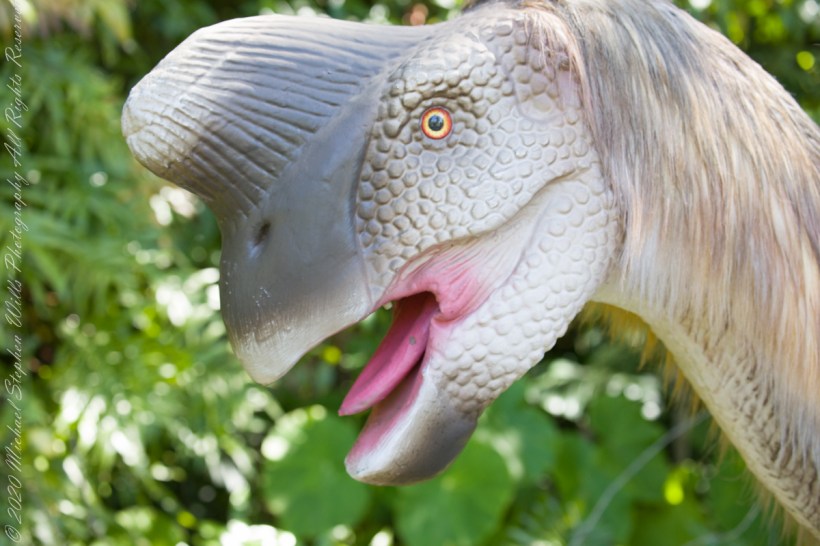
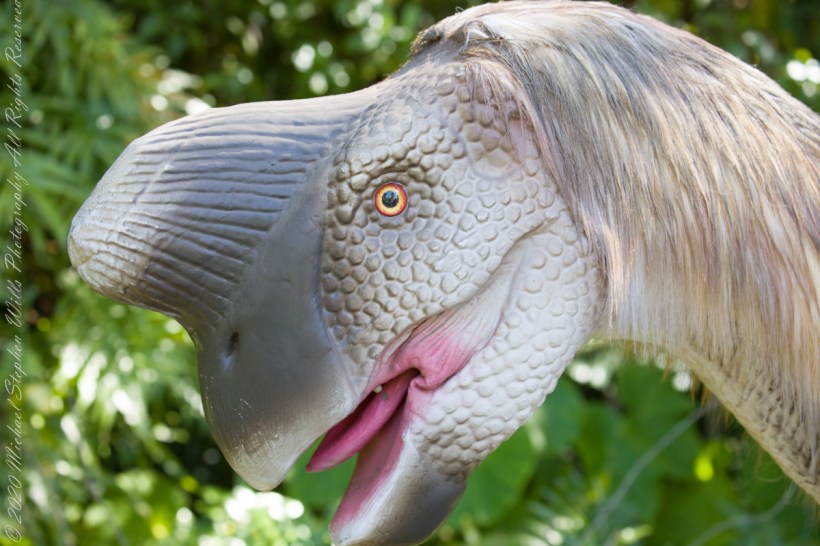
Here presented are two versions of the same image. One cropped. Please leave a comment stating which you prefer and why. Thank You
Use this slide show, flip back and forth to compare the images, reach a conclusion on which you prefer.
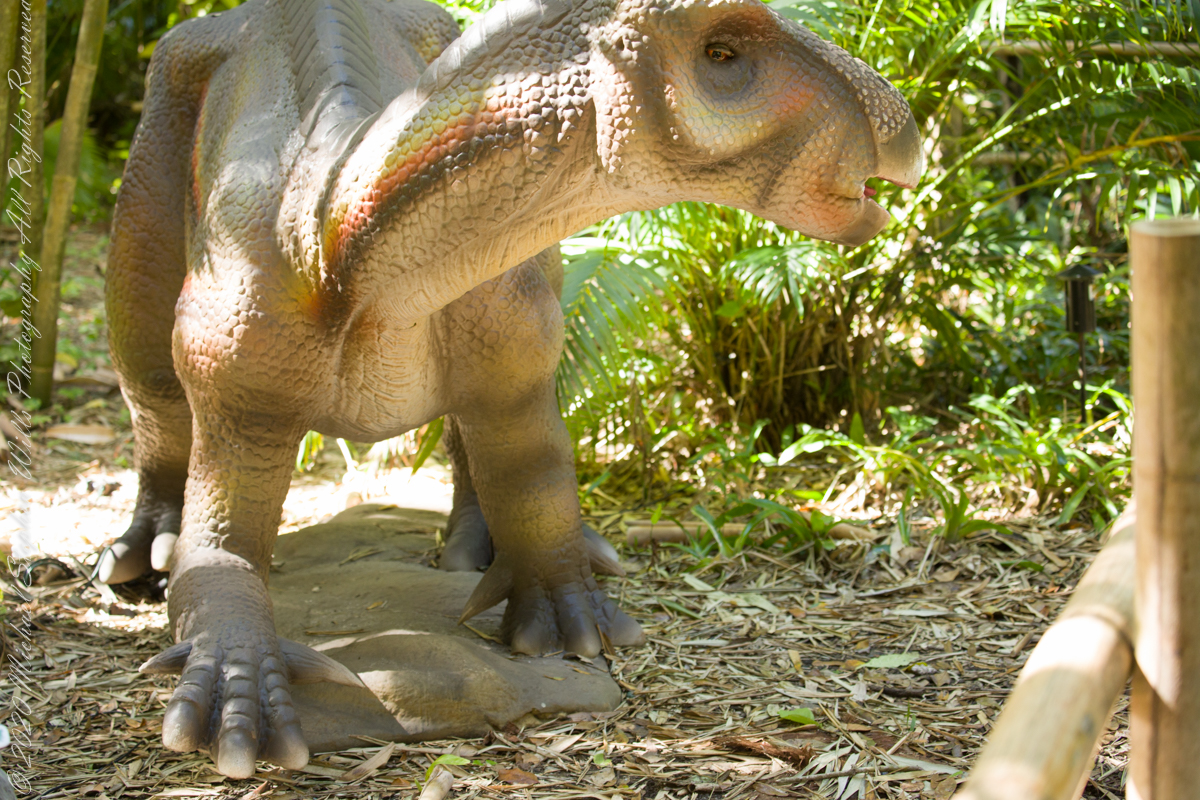
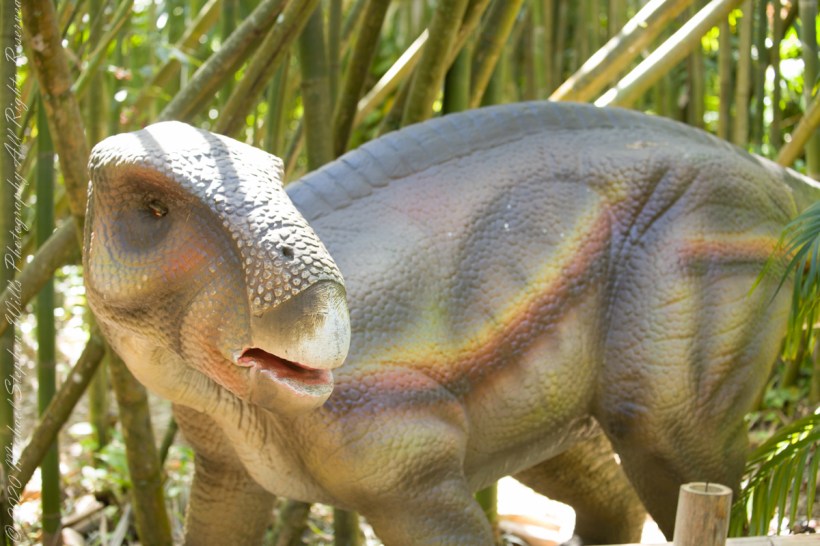
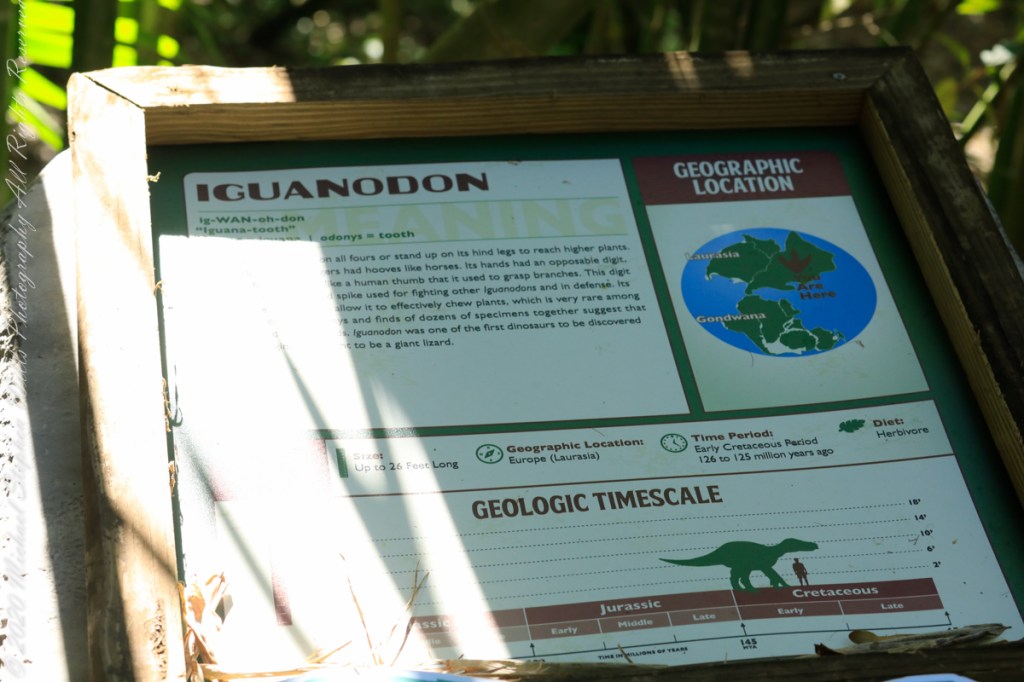
Iguanodon was able to walk on all fours or stand on its hind legs to reach higher plants. It has hooves like horses. Its hands had an opposable digit, like a human thumb, used to grasp branches. This digit had a spike used for fighting other Iguanodons, in defense and feeding, as a tool to open fruits for example.
Iguanodon was able to walk on all fours or stand on its hind legs to reach higher plants. It has hooves like horses. Its hands had an opposable digit, like a human thumb, used to grasp branches. This digit had a spike used for fighting other Iguanodons, in defense and feeding, as a tool to open fruits for example.
References: text is from the park placard with minor edits.
Copyright 2022 Michael Stephen Wills All Rights Reserved
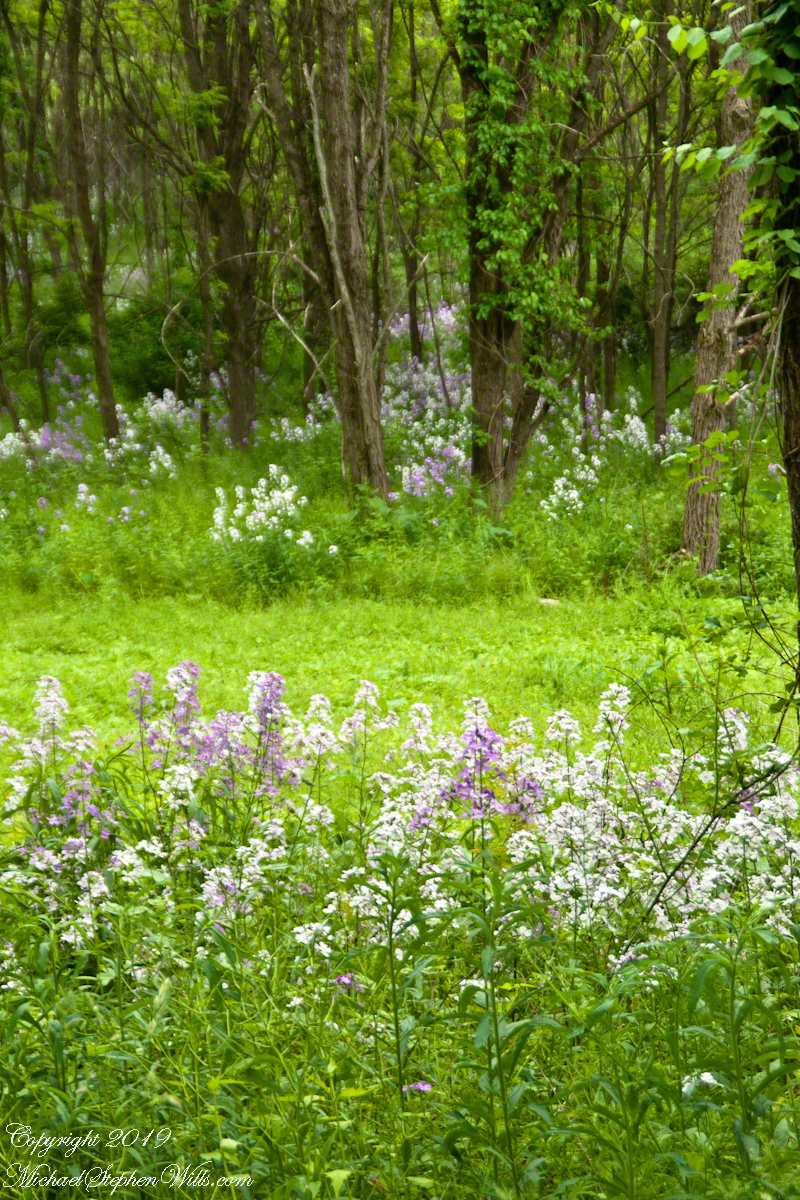
Working as a consulting dietitian, back in the 1980s, on a early June drive from Canisteo, New York on route 19 north of Mansfield, Pennsylvania, where the road goes through the Tioga-Hammond Lakes Recreation area there were miles of phlox growing on the east side of the road. The fragrance of phlox was pervasive with the window down and to this day I remember that time when phlox is in bloom as it was on June 5th, last week.
Click any photograph for a larger image.
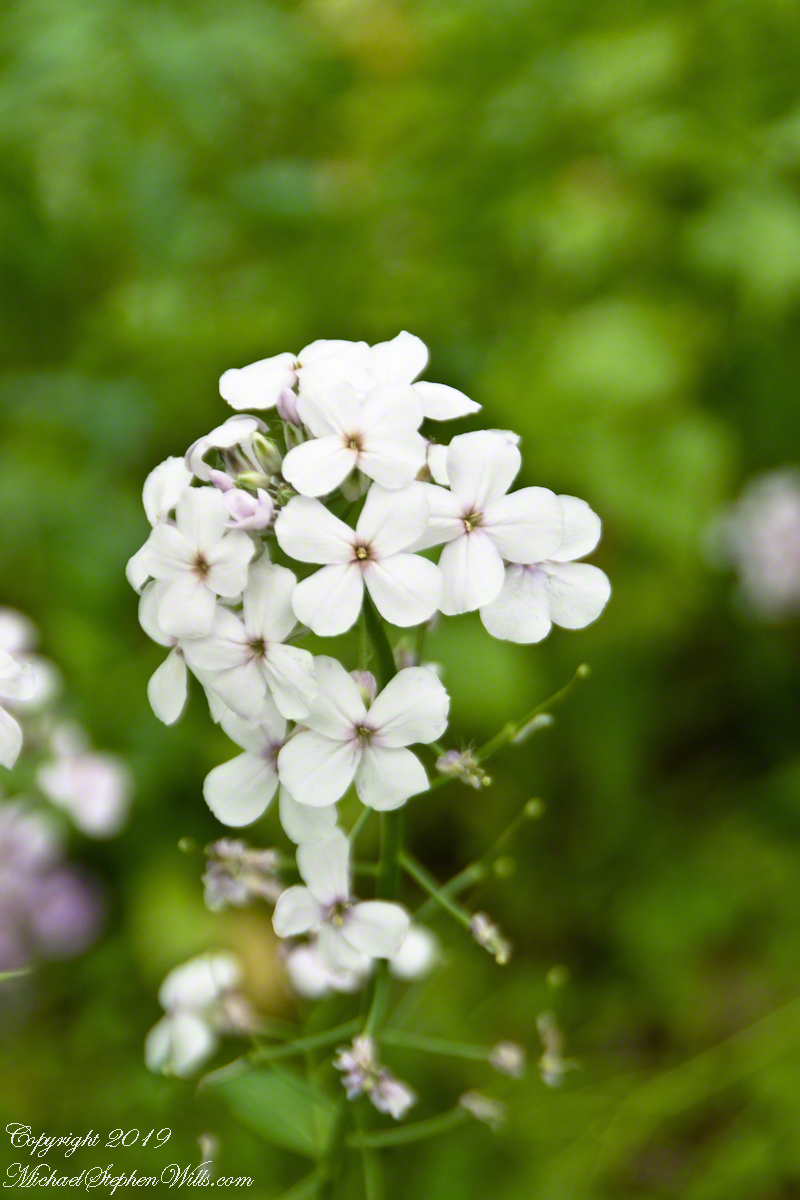
The species name (Phlox) divaricata means “with a spreading and straggling habit”.
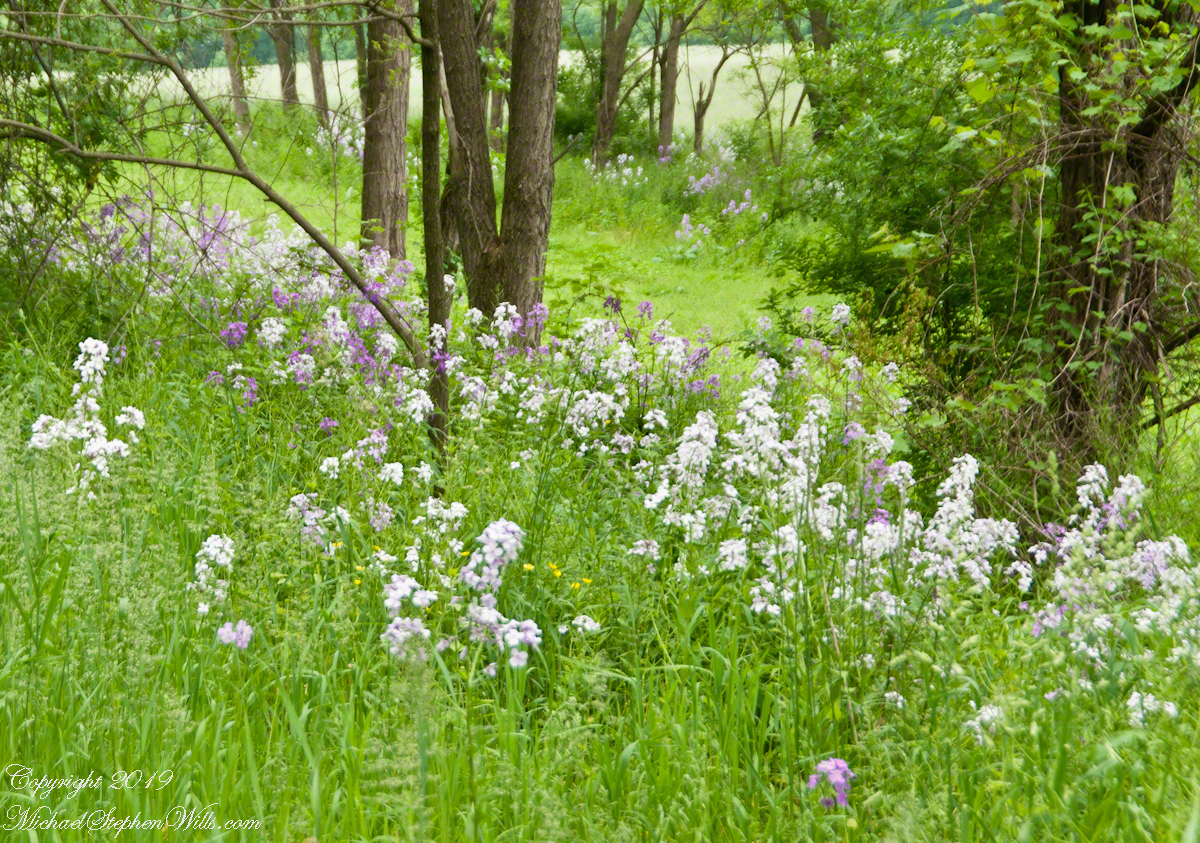
On the way to Treman State Park, to check out wildflowers, on an afternoon that threatened rain I came upon these stands of phlox, growing as it does under trees in damp soil on the east side of Colegrove Road. We’ve had plentiful rain this spring.
Phlox is abundant here
Looking it up in my reference book, “The Botanical Garden”, the plentiful number of species was daunting. (CLICK ME for more about this reference.) Bloom times spread across the calendar from May through August and into autumn. Species blooming in June were just not a good match.
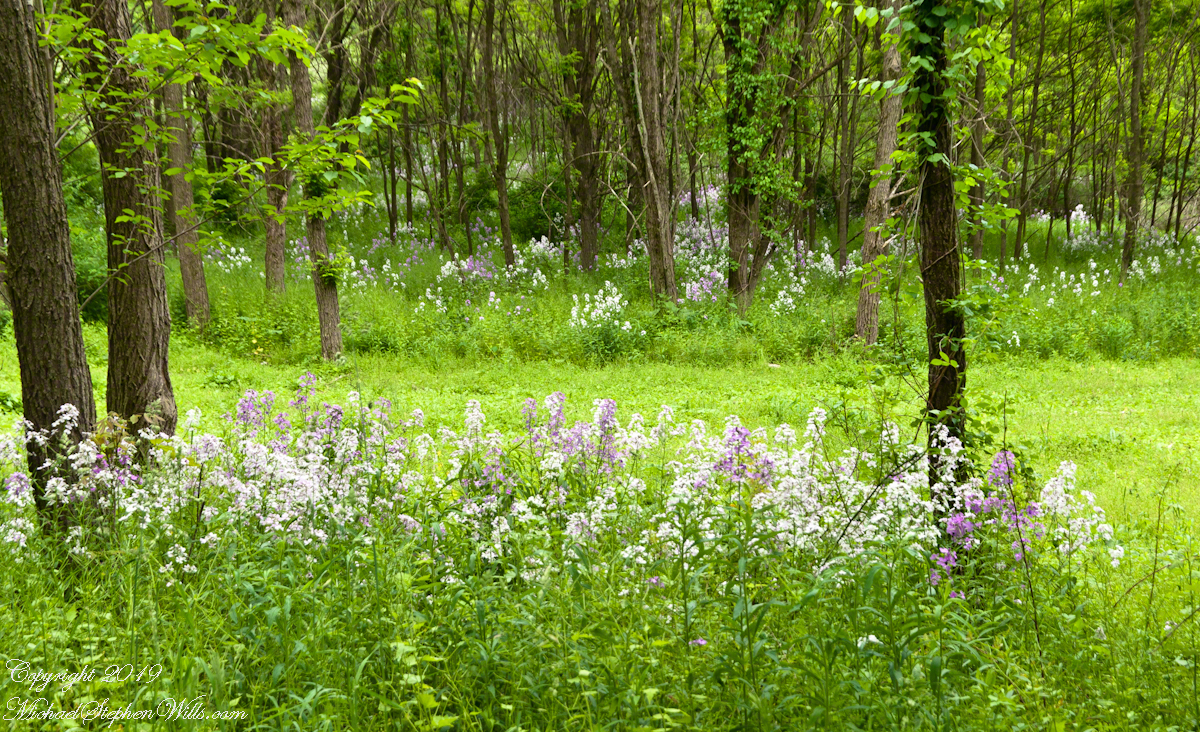
The blooms seem to go on forever into the woods.
It was a surprising result, though in retrospect given the wide distribution and abundance of species, is to be expected. So I poked around the internet search engines, results from varied search strings, until Phlox divaricata popped up as a wildflower with a late May / early June bloom and growth habit and flowers matching these.
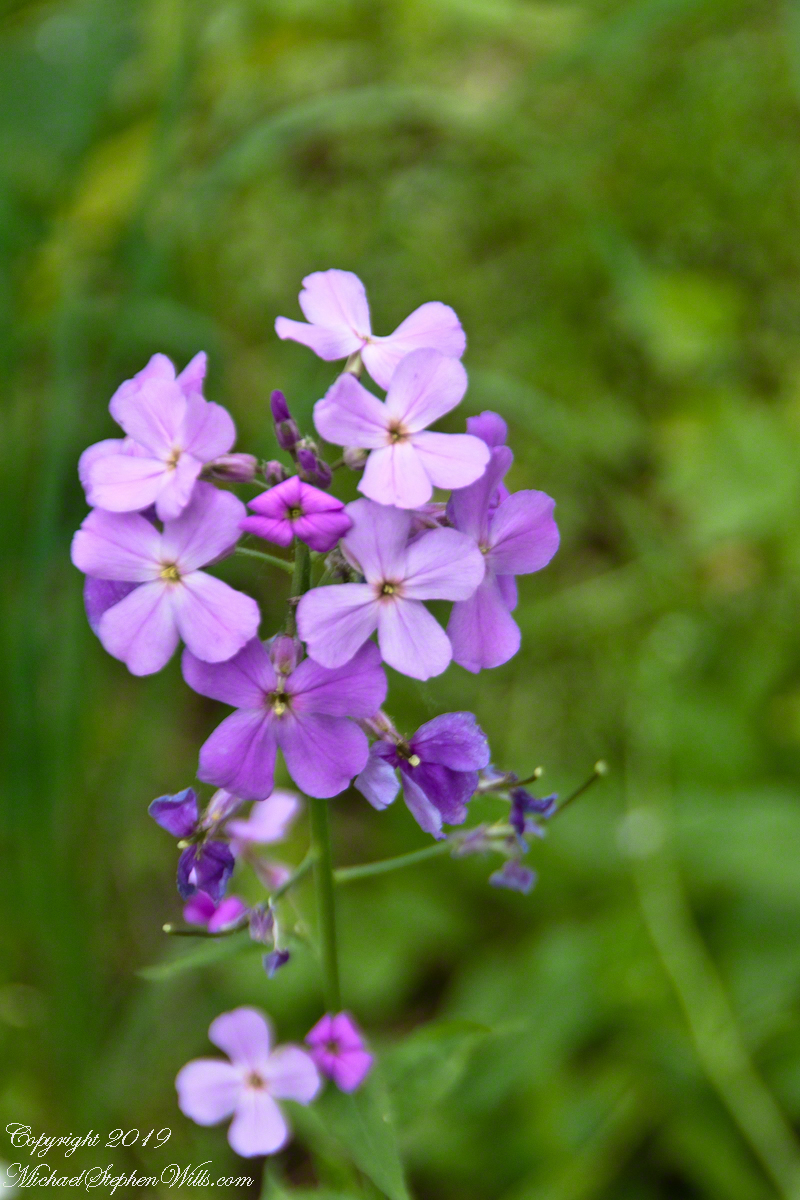
I captured macros of the two hues from roadside specimens.
Copyright 2019 All Rights Reserved Michael Stephen Wills
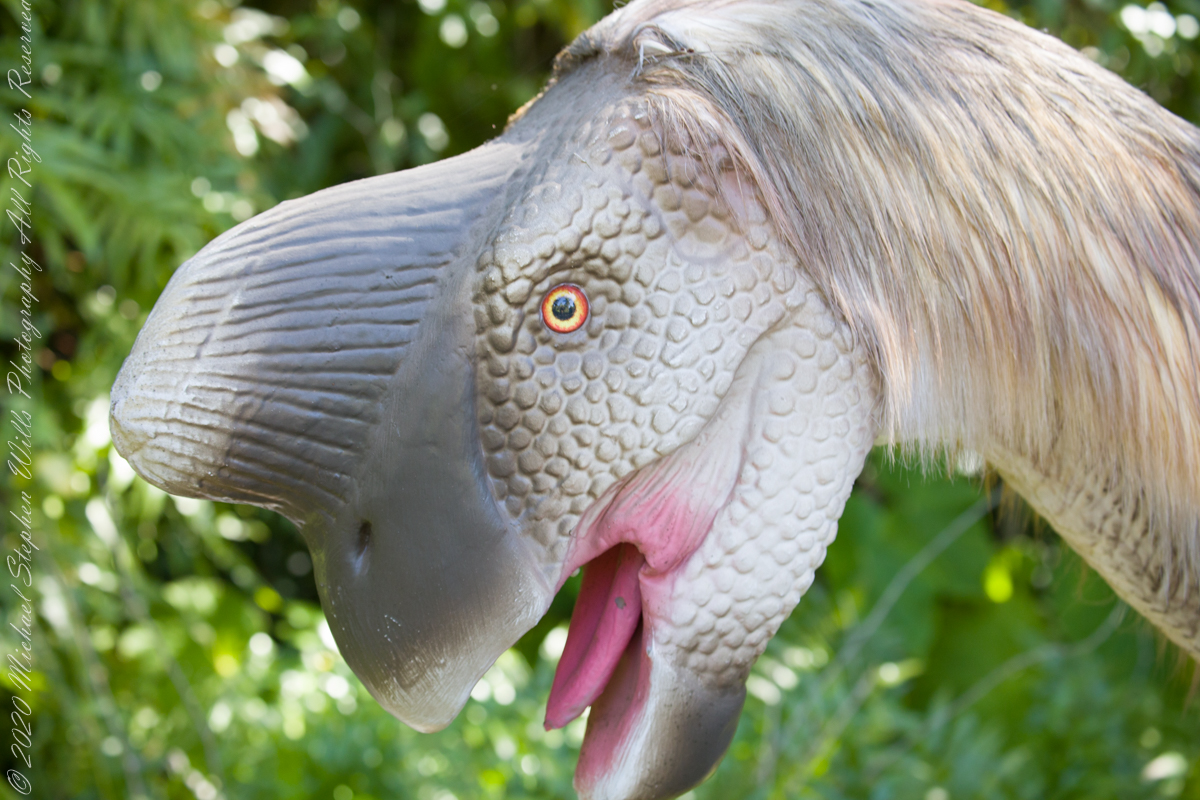
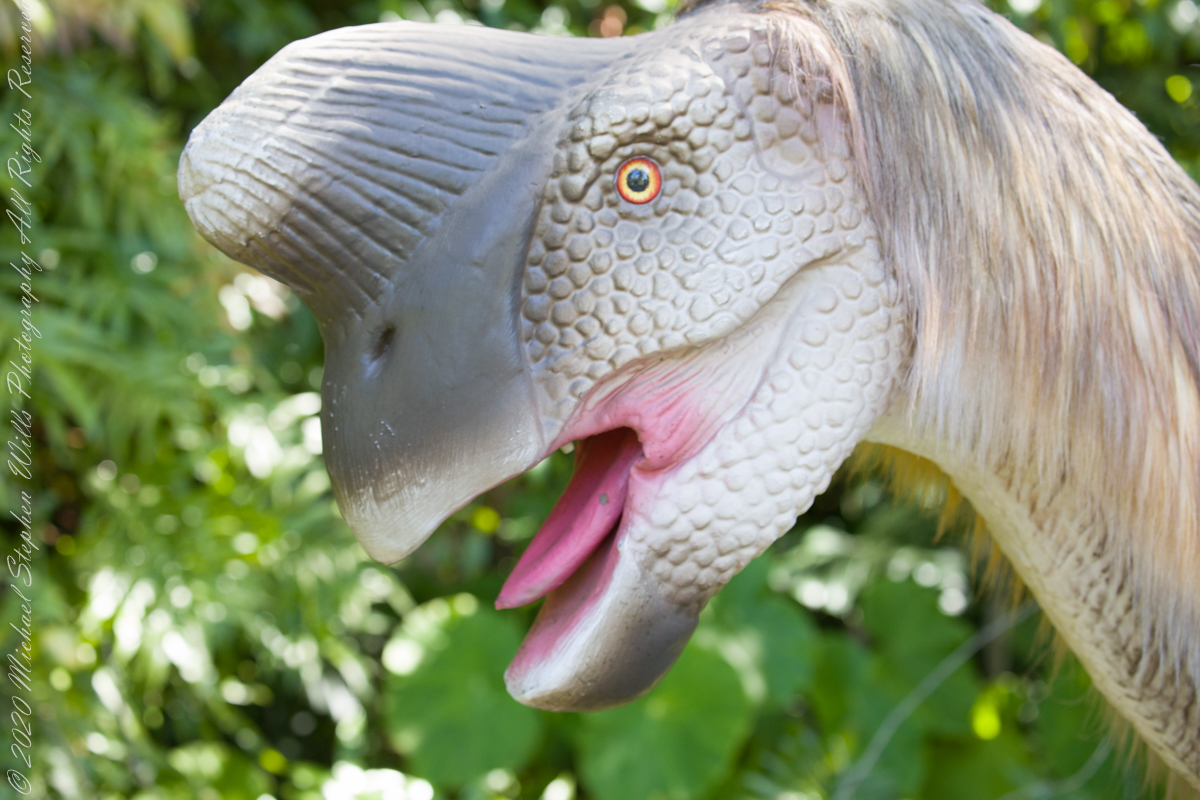
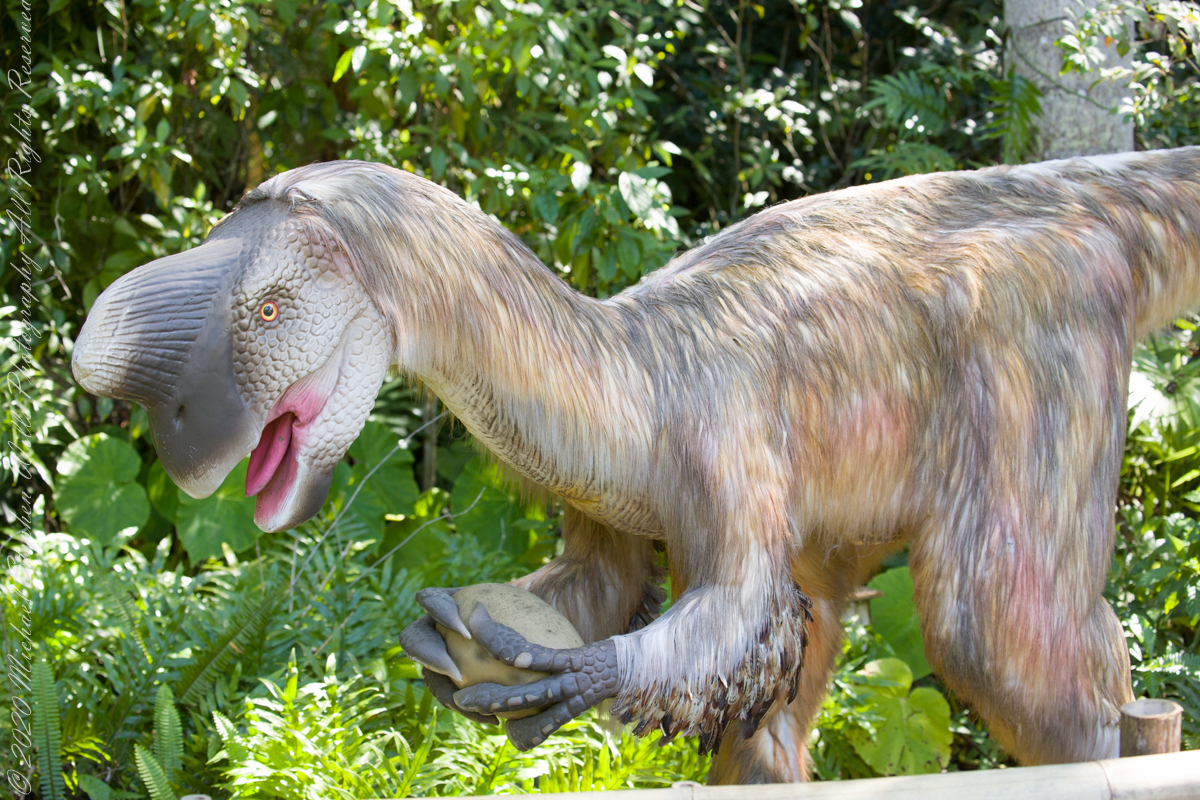
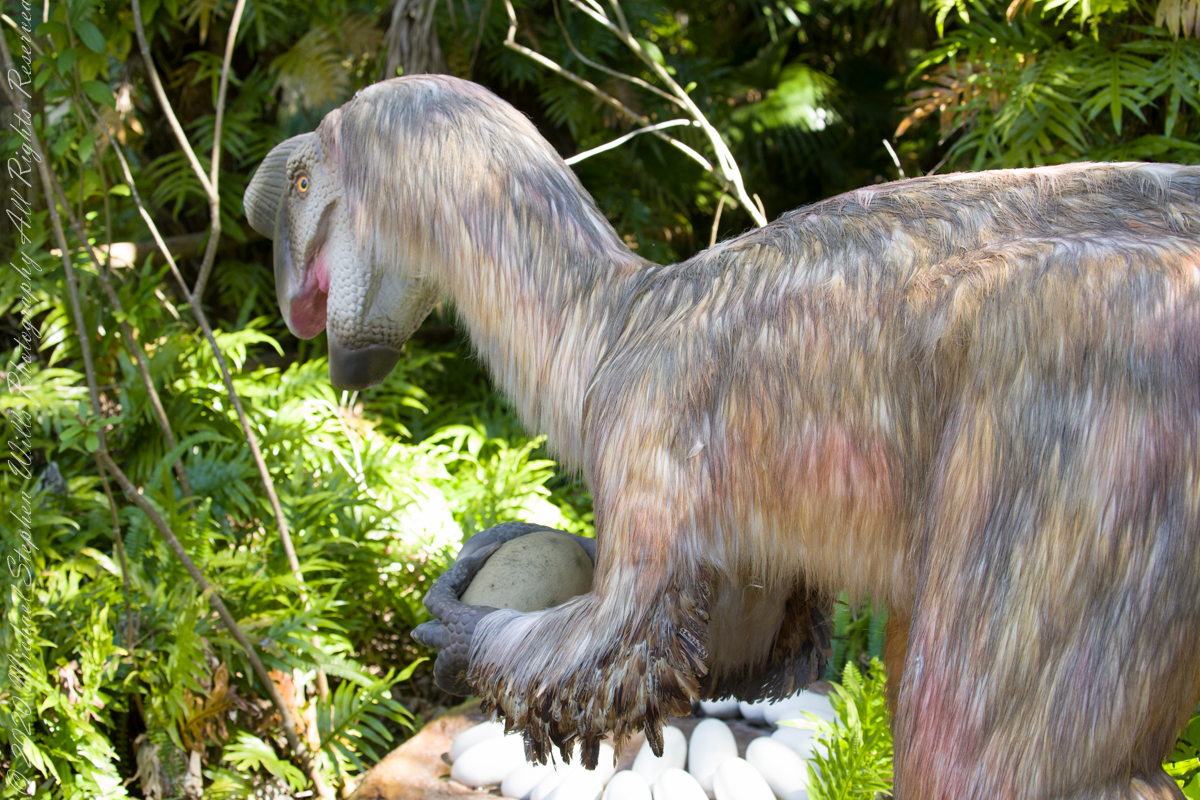
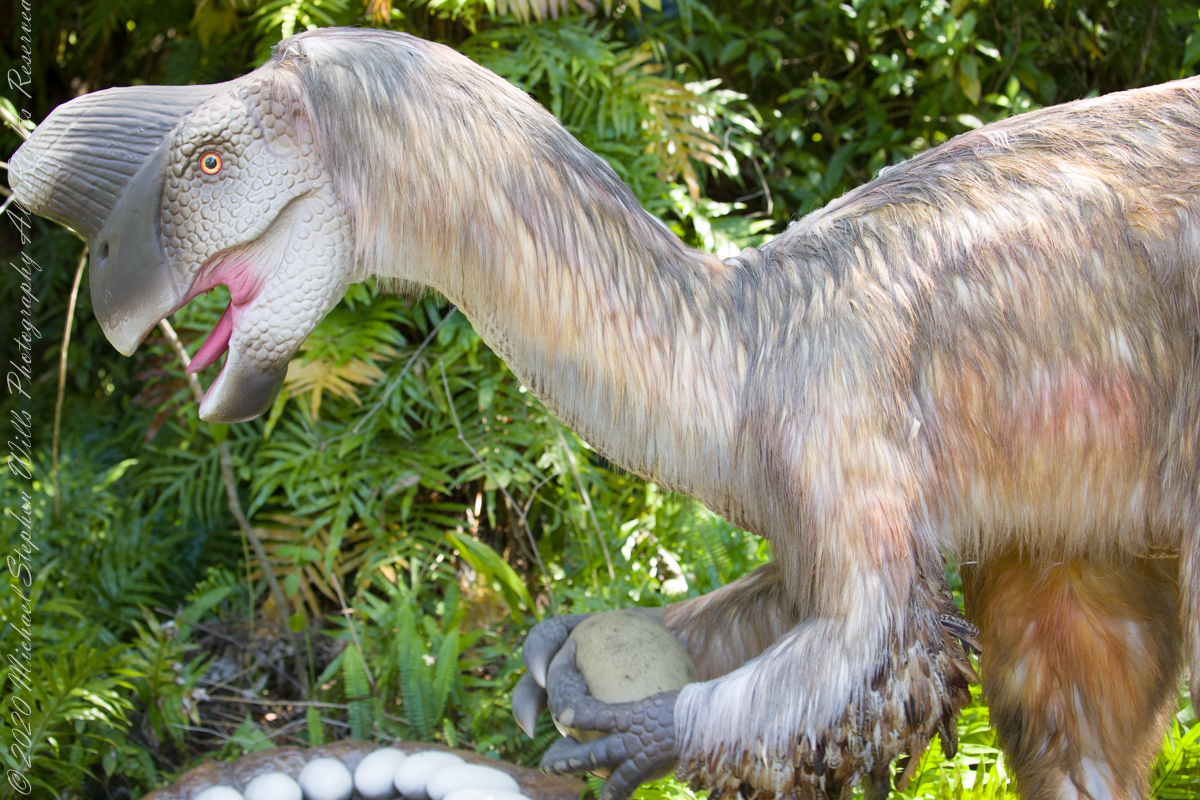
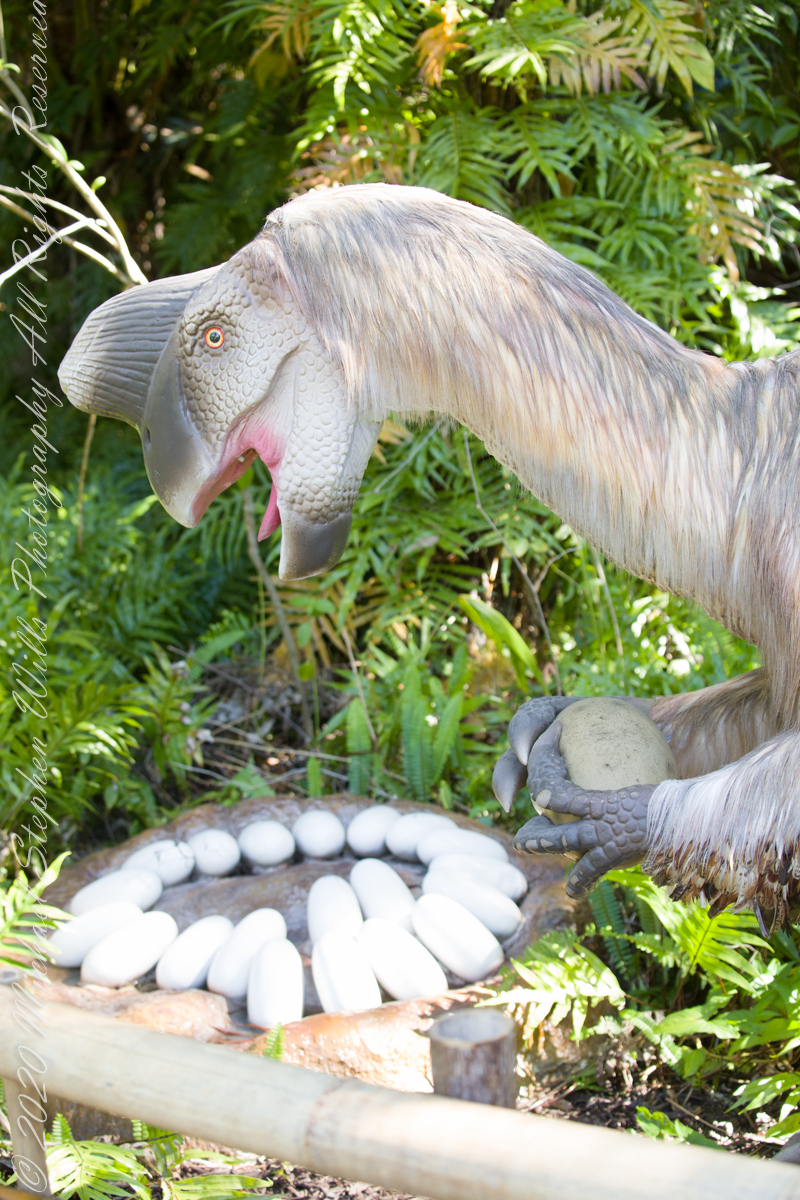
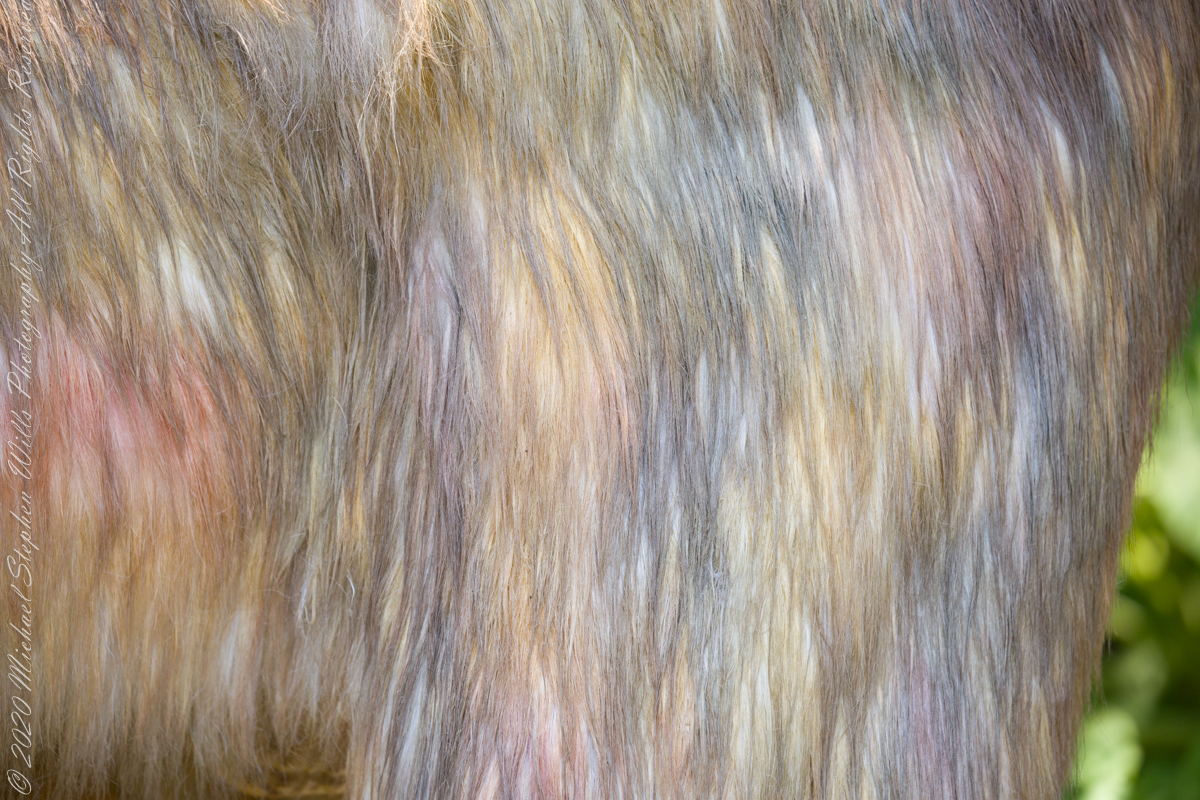
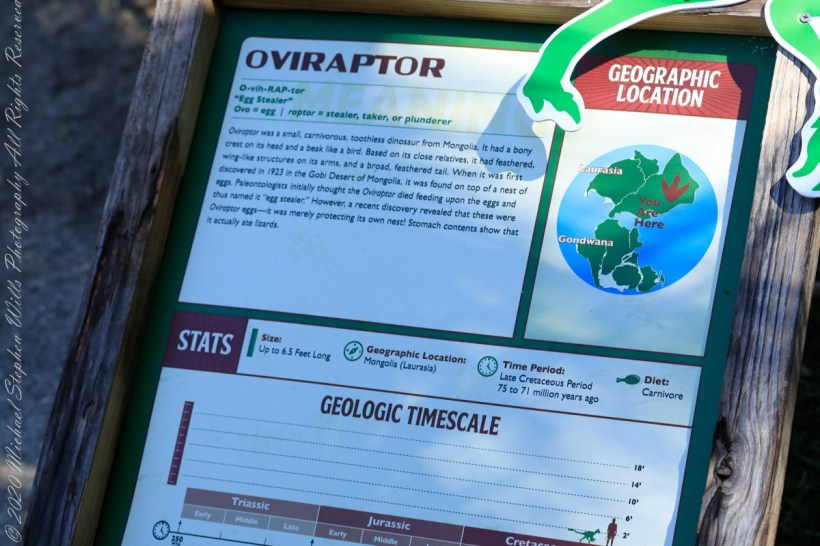
Oviraptor was a small, carnivorous, toothless dinosaur from Mongolia. It had a bony crest on its head and a beak like a bird. Based on its close relatives, it had feathered, wind-like structure on its arms, and a broad, feathered tail. When it was first discovered in 1932 in the Gobi Desert of Mongolia, it was found on top of a nest of eggs. Paleontologists initially thought the Oviraptor died feeding upon the eggs and thus named it “egg stealer.” However, a recent discovery revealed these were Oviraptor eggs — it was merely protecting its own nest! Stomach contents show it actually ate lizards.
fine feather fur
References: text is from the park placard with minor edits.
Copyright 2022 Michael Stephen Wills All Rights Reserved
Here is a repost of a popular and interesting article. The answer is in comments. Thanks, readers!!
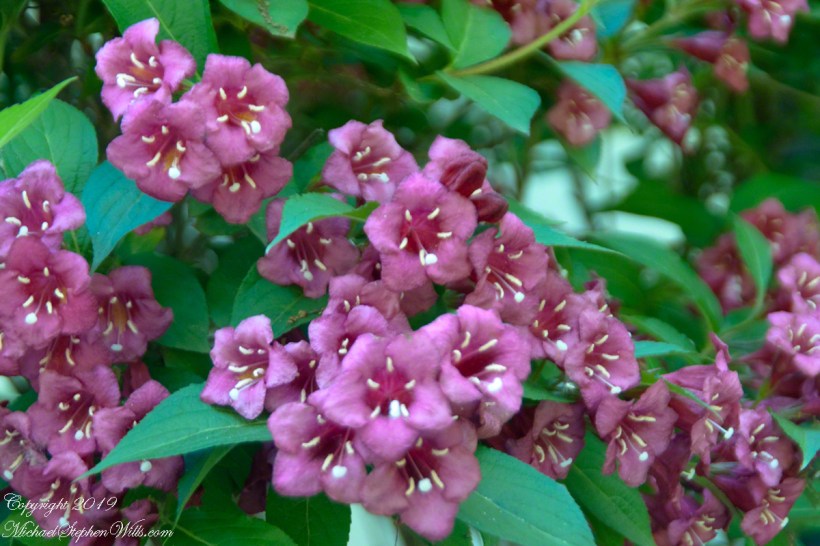
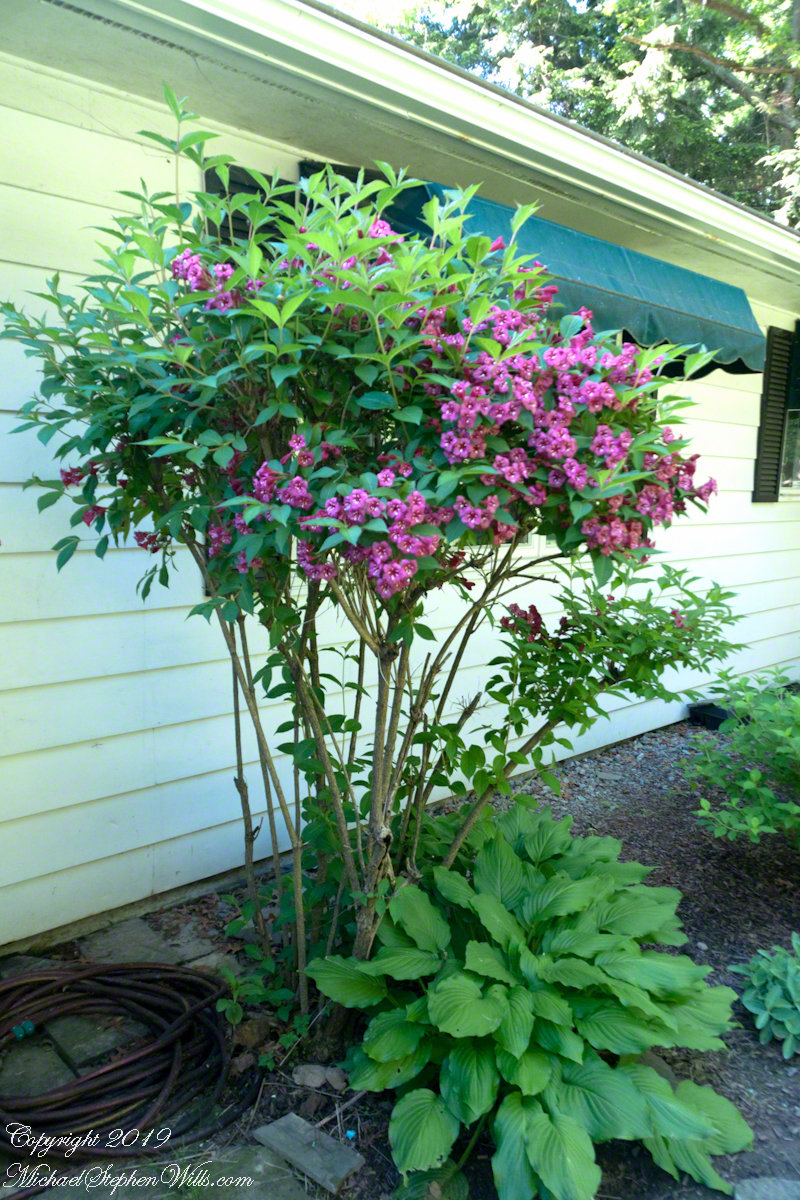
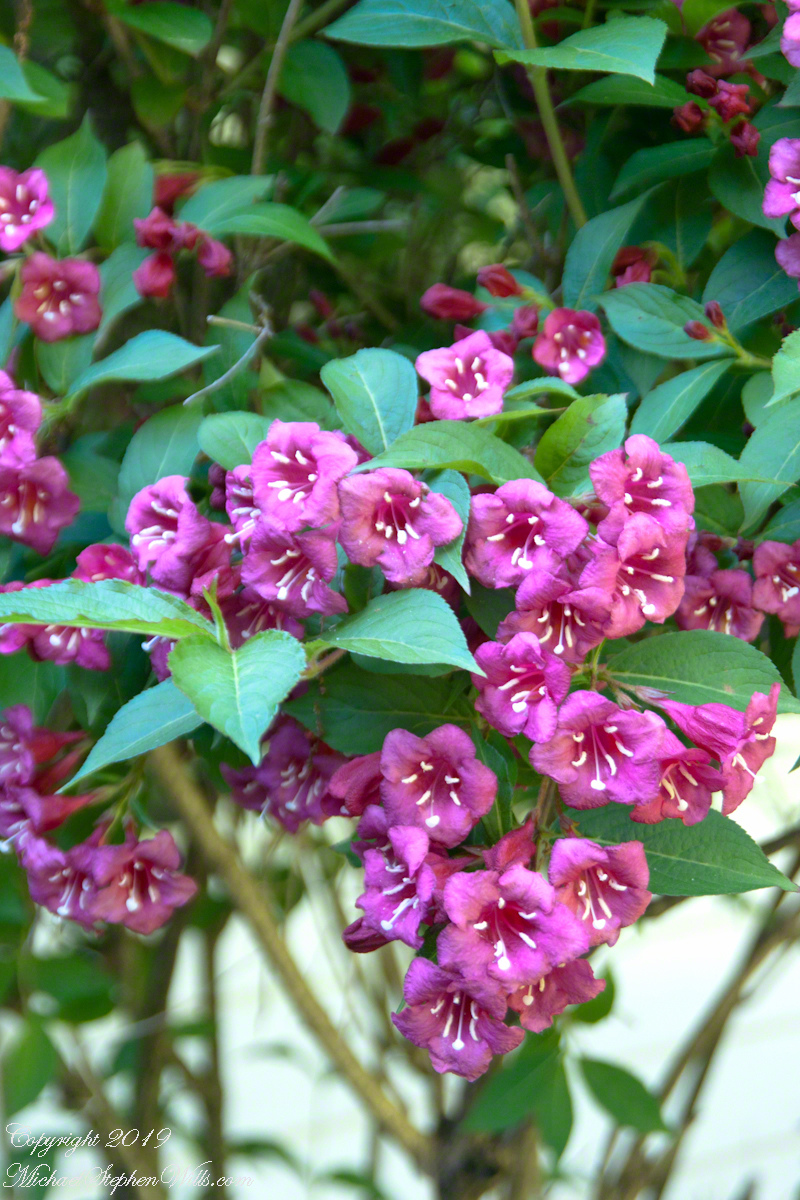
I need your help this morning. This year each of these bushes in front of our kitchen window has profuse blooms after Pam pruned and fertilized them early spring. I am coming up blank with identifying them.
The two bushes are over six feet tall and lose leaves each autumn (deciduous).
Here are some photographs. Can any readers identify these bushes? The common name or scientific will be much appreciated.
Thanks so much.
Copyright 2022 All Rights Reserved Michael Stephen Wills
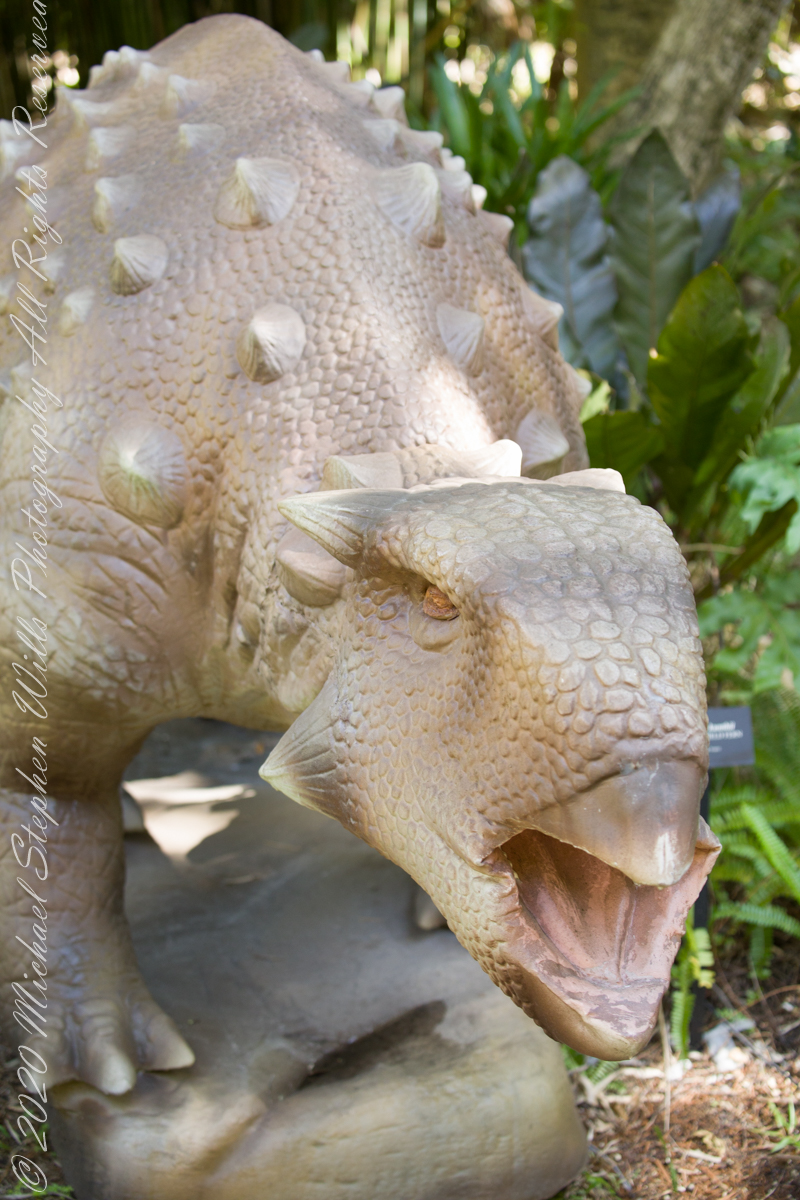
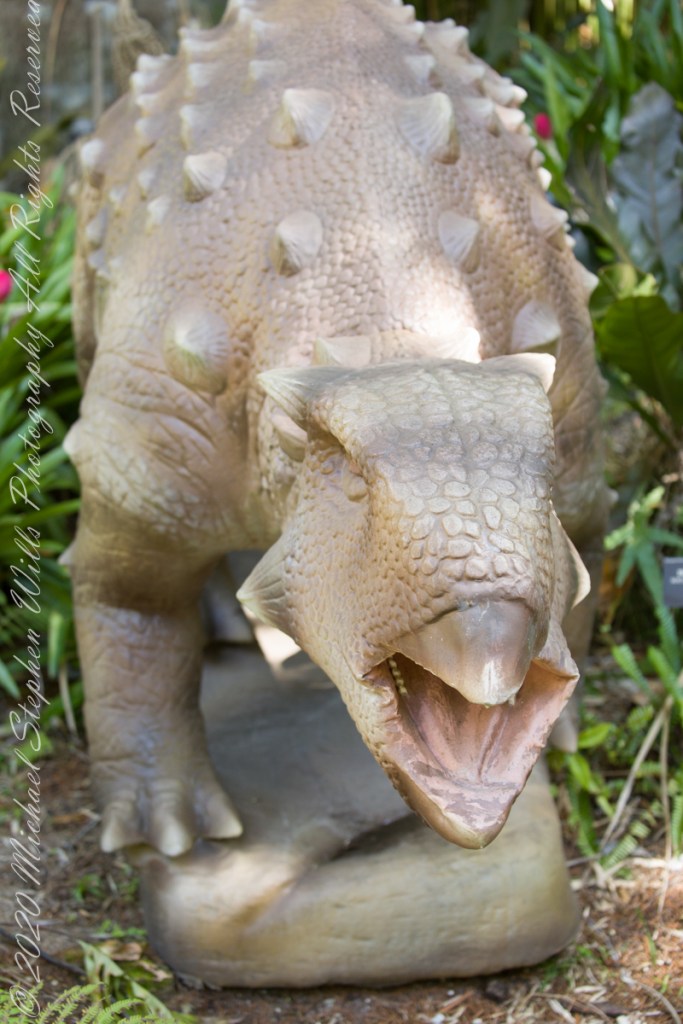
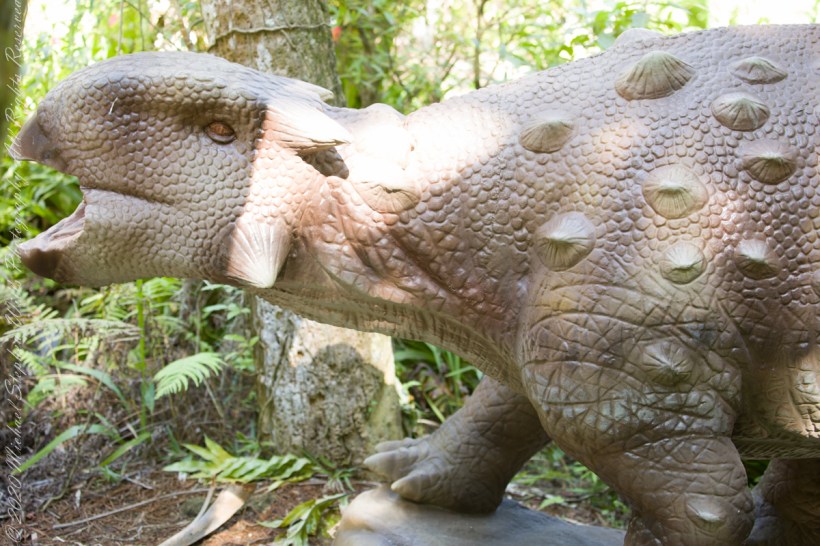
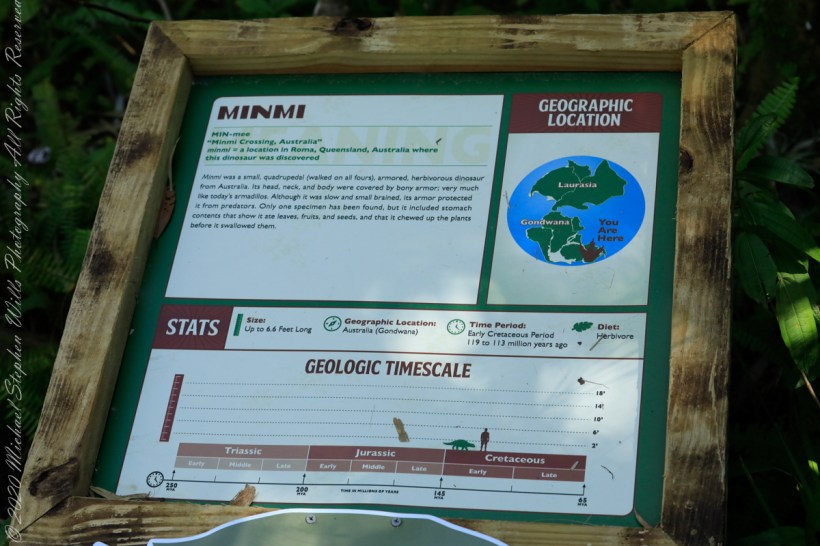
Minmi was a small, quadrupedal, armored, herbivorous dinosaur from Australia. Its head, neck and body were covered by bony armor, very much like today’s armadillos. Although it was slow and small brained, its armor protected it from predators. Only one specimen has been found, but it included stomach contents that show it ate leaves, fruit and seeds, and that it chewed up the plants before it swallowed them. Minmi is the location in Roma, Queensland, Australia where this dinosaur was discovered.
References: text is from the park placard with minor edits.
Copyright 2022 Michael Stephen Wills All Rights Reserved
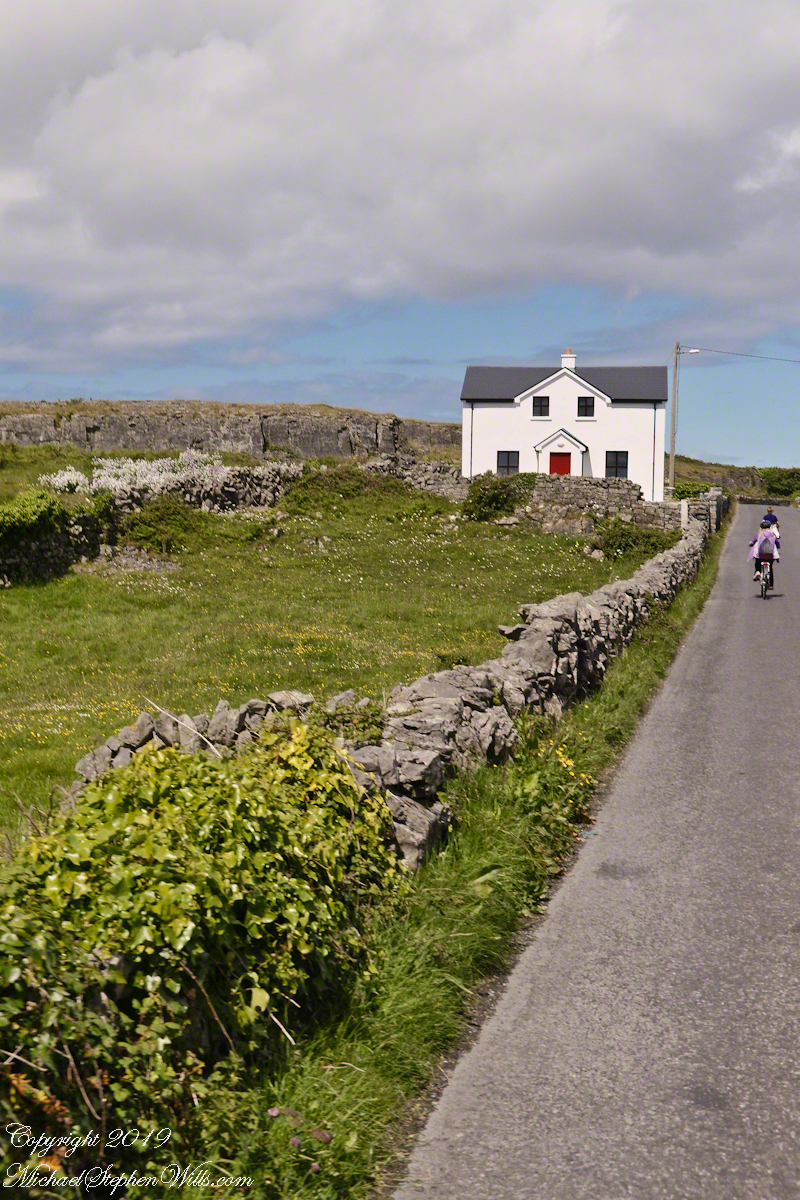
Admittedly, I over-planned the Ireland trip. For every day possible the venues were pre-booked and paid. In theory planning provides more flexibility when life interrupts.
For the Inishmore planning, a perfect day, for me, was tooling around on a bicycle stopping where we pleased with welcome exercise in between. That was unrealistic, the day worked out otherwise.
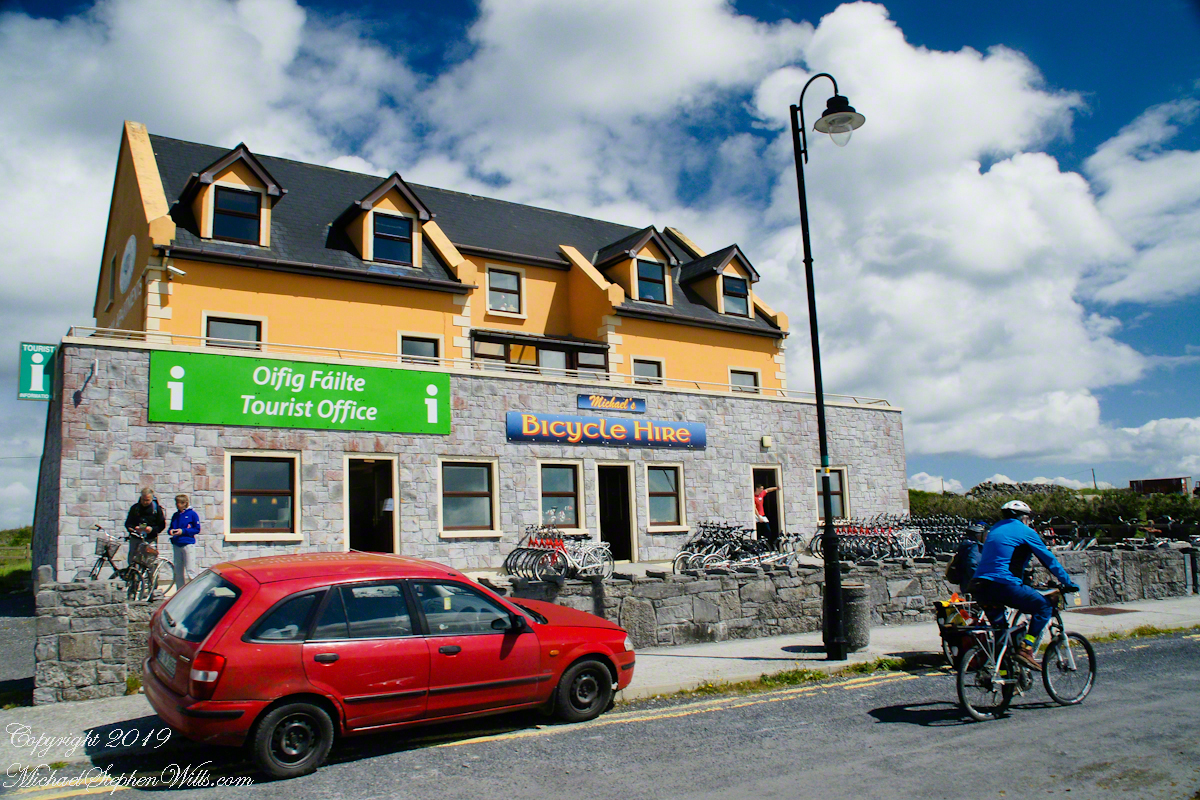
Upon disembarking from Queen of Aran, our ferry out of Doolin, onto the Kilronan quay we walked toward the bicycle rental and Pam refused to bicycle. Her objections were many, safety, impending rain, time. She did have a point about time, the ferry leaves at a set time leaving errant tourists to fend for themselves. We were unused to cycling, still Dun Aonghasa is just over 5 miles from Kilronan, less than an hour round trip. With our starting time of 11:30 am there was 3.5 hours slack for returning to the quay before the 4 pm departure. Plenty of time for wandering the ruins and stopping along the way.
We followed Pam’s advice. Still there were the many bicyclists. Perched on our horse drawn carriage, on the uphill runs, each bicyclist we passed was proof positive to Pam of the wisdom of our choice. I was silently envious of their freedom and overlooked the many mini-buses on the narrow road.
When the day comes to mind, not often, I am left with the guilty feeling of not stopping into the bicycle rental office to cancel the reservation. An email was waiting for me the next day, asking where we were. Thus, the title of this post, “Stiffed.”
Pam’s Response to this post.
Pam’s reasons for not wanting to ride a bicycle around Inishmore: “I hadn’t been on a bike for approximately 20 years. However, if it wasn’t going to rain (it did), if the narrow road was larger, if there weren’t any minibuses loaded to the gills or horse traps sharing the same single lane, I would have considered it. Sitting back and enjoying the beautiful view on our private horse trap and listening to our very knowledgeable tour guide/driver was the highlight of this adventure for me. I am sorry you felt like you didn’t have a choice.”
Pam’s correction of my statement about her being concerned about time: “Time wasn’t a factor in my decision making. I also didn’t have a problem with you biking but there was no way I was going to do that.”
Copyright 2022 Michael Stephen Wills All Rights Reserved

 Michael Stephen Wills Photography