La Girona V

Gold and Silver

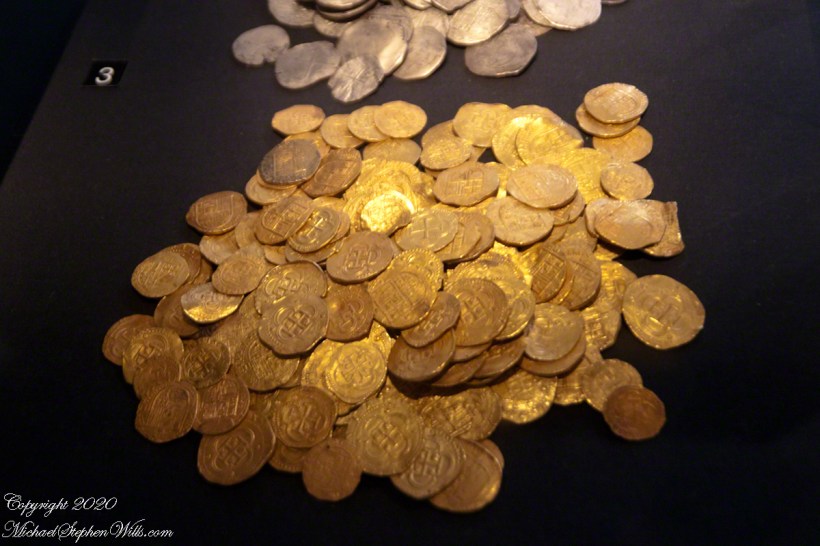
Today’s focus from Belfast’s Ulster Museum permanent exhibit “Treasures from the Girona” is the lengths the Spanish went to acquire costly metals. Gold was the lure Columbus held out to Spanish royalty. The Spanish found their El Dorado in the accumulated wealth of the Incas, acquired through force and murder.

Inca temples were covered in gold. The Spanish needed only to peel it off and carry it away. They found some gold to mine, minimal compared to the silver. Armada ships did not haul gold and silver from the American and the modern treasure hunter’s yield was not expected to be huge, nor was it. As silver and, to a lesser extent, gold filled Spanish coffers the ambitions of the Spanish monarchs were unleashed. It financed the building and launching of the Armada.

Click photograph for a larger view. To do this from WordPress Reader, you need to first click the title of this post to open a new page.
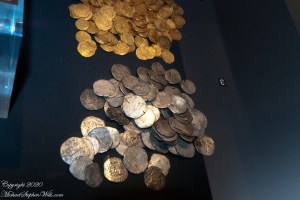
Among the hundreds of silver coins were many eight-real pieces, often called “pieces of eight”. The “silver hill” of Potosi, discovered in 1544 in Bolivia, provided most of the silver bullion for the Spanish Empire. Ten percent of mine workers were Inca slaves. After these were worked to death, the Spanish acquired African slaves.
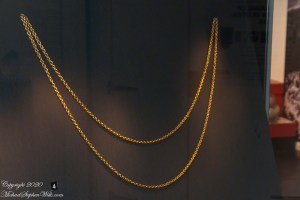
I wonder if the ship Captains discarded their kilogram of gold chain to the enveloping waves, in exchange for survival. My guess is, “no”. It was an emblem of rank, losing it was a personal disgrace.
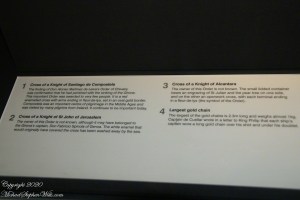
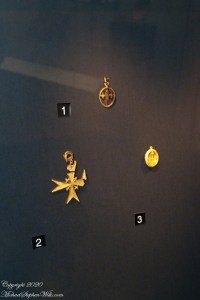
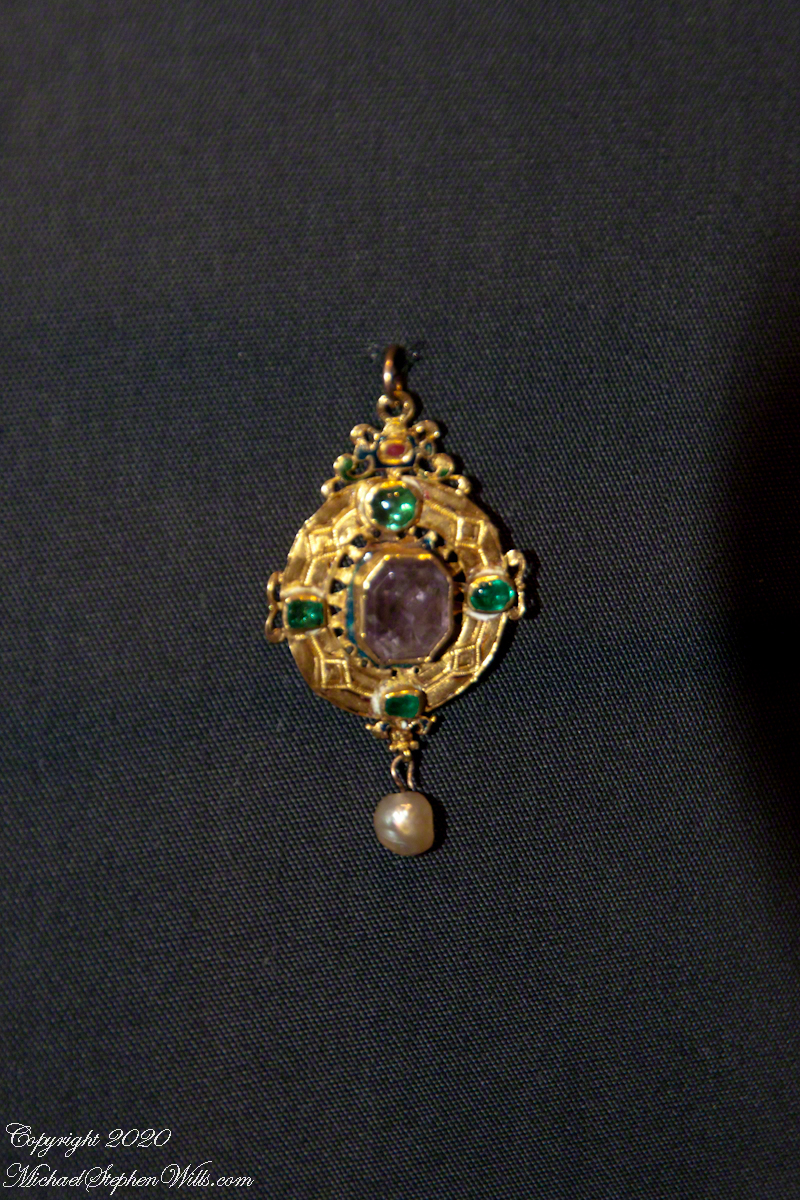
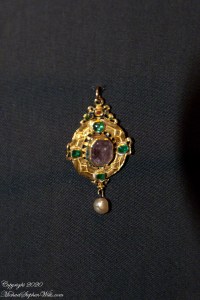
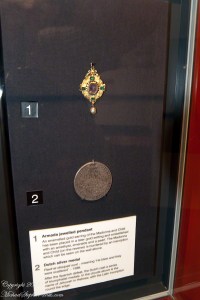
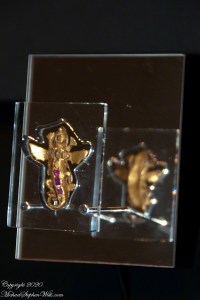
(from the Museum Placard) The jewel in the following photograph epitomizes the wealth and outreach of the Spanish Empire in the late sixteenth century and has become an icon for the Armada. Just three of the original nine rubies survive. The jewel takes the form of an exotic animal, either a real Mexican salamander or a mythical creature, and reflects the great importance of the gold and silver brought from the colonies. The gold came from South America, with the rubies probably came from Burma. In legend, the salamander had the twin magical properties of being able to both extinguish and survive fire. This made it a powerful good luck charm on a wooden fighting ship, where fire was one of the greatest dangers.
Odds and ends….

To be continued….. (Click for the first post of this series)

Click Me for my Shutterstock Gallery
Copyright 2020 All Rights Reserved Michael Stephen Wills

La Girona IV

The fate of La Girona

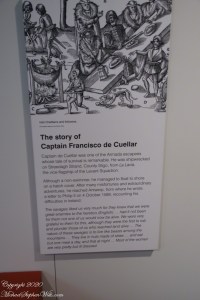
Today’s exploration of the Ulster Museum permanent exhibit “Treasures from the Girona” begins with the account of a survivor.

Click photograph for a larger view. To do this from WordPress Reader, you need to first click the title of this post to open a new page.

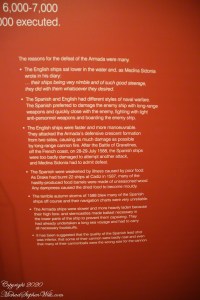
He was extremely fortunate to escape with his life. After Calais, the attack of the English fireships, the Spanish ships suffered repeated North Atlantic storms, driven onto the irregular coast of which they had no knowledge or charts. It was with the assistance of Irish natives the survivors were able to regroup and embark on an ill-fated escape.

The reason for the heavy losses from the Girona wreck was the crew from several other ruined ships were on board.

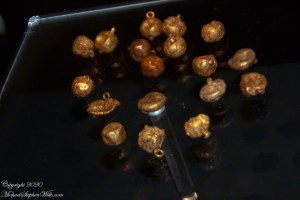
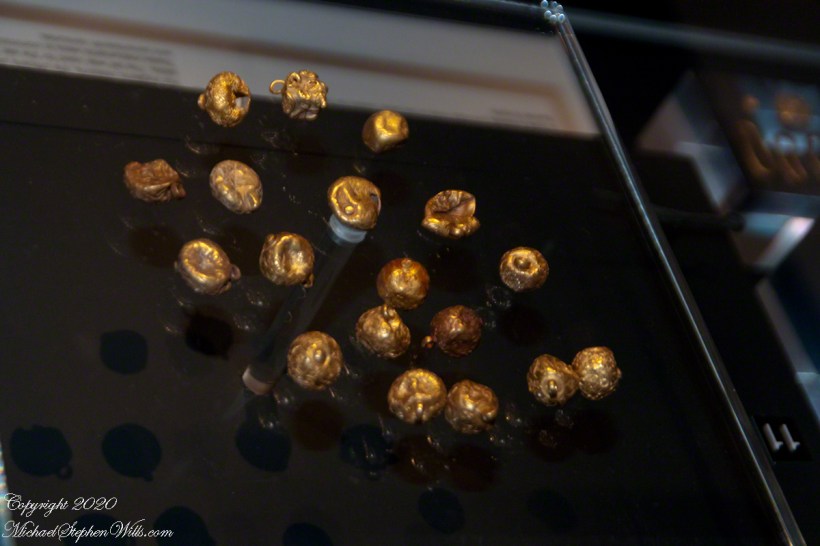
The individuality of the lost comes across through their gold trimmings. It is said that wealthy Spaniards owned up to four sets of gold buttons, each with a different design.

To be continued….. (Click for the first post of this series)

Click Me for my Shutterstock Gallery
Copyright 2020 All Rights Reserved Michael Stephen Wills

La Girona III

A Disaster Examined

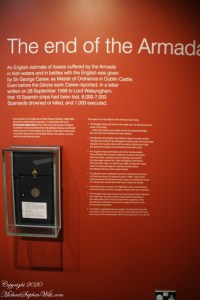
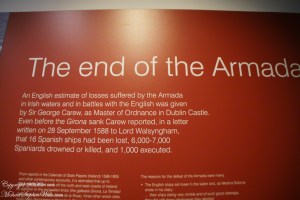
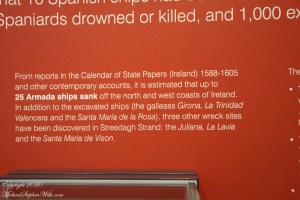
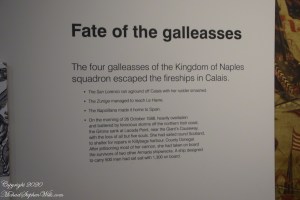
In this post we explore further, using my photographs of the Ulster Museum exhibit “Treasures from the Girona”, how the Spanish galleass La Girona came to be wrecked on the north coast of Ireland. It was not the only ship lost. Of the 130 armada ships, a third (43) did not return.

Click photograph for a larger view. To do this from WordPress Reader, you need to first click the title of this post to open a new page.

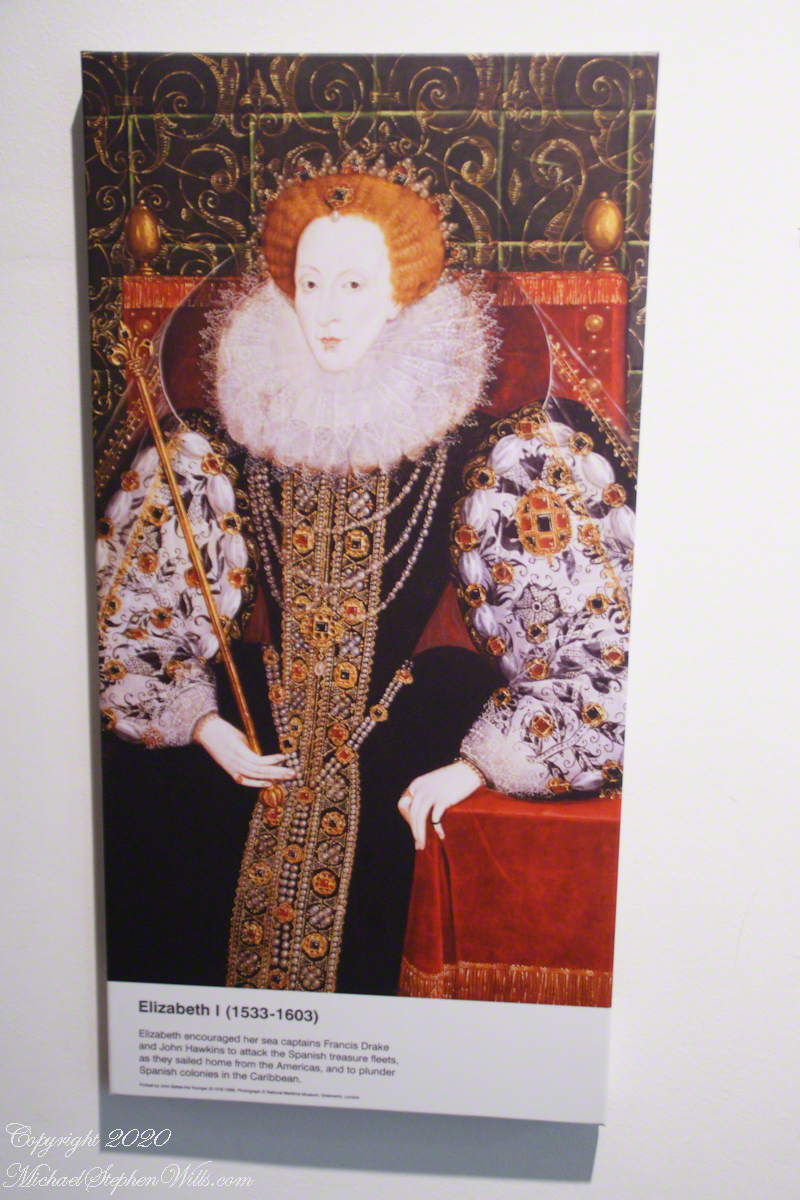
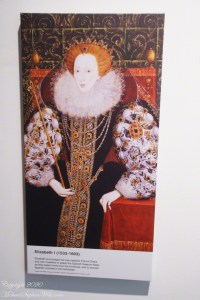
Religion was the crux, Catholic Spain wanted to forestall Queen Elizabeth I’s establishment of Protestantism initiated by her father King Henry VII.

This placard displays treasure. The text implies it was not recovered from La Girona. The bronze medallion was struck by the Dutch in commemoration of the victory.

To be continued….. (Click for the first post of this series)

Click Me for my Shutterstock Gallery
Copyright 2020 All Rights Reserved Michael Stephen Wills

La Girona II

Historical Background to the wreck of La Girona

Pam and I woke early on June 8 for that 138 mile drive to my cousin’s farm on the Cooley peninsula, County Louth, Republic of Ireland. Learning the day before, from the Giants Causeway visitor center, of treasure recovered from a shipwreck off that coast, we planned to visit Belfast, where the Ulster Museum has a permanent exhibit, “Treasures from the Girona”. This is just a taste of the historical provided by this excellent exhibit….if you visit Northern Ireland make time to visit the Ulster Museum.

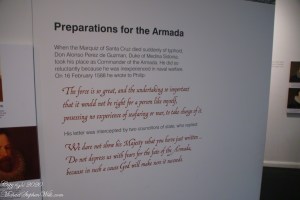
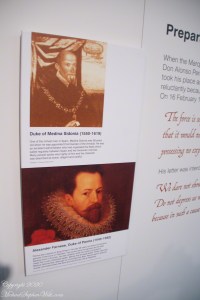
In this post we explore, using my photographs of the museum exhibits, how the Spanish galleass La Girona came to be in the North Atlantic off the Irish coast. The ship was part of a fleet supporting an invasion of England from Flanders.

Click photograph for a larger view. To do this from WordPress Reader, you need to first click the title of this post to open a new page.

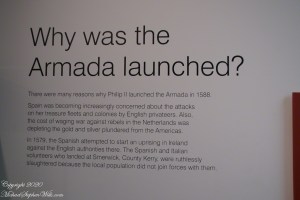
Religion was the crux, Catholic Spain wanted to forestall Queen Elizabeth I’s establishment of Protestantism initiated by her father King Henry VII and support of Dutch protestants against Spain. State sponsored piracy of Spanish ships was a secondary justification.

To be continued….. (Click for the first post of this series)

Click Me for my Shutterstock Gallery
Copyright 2020 All Rights Reserved Michael Stephen Wills

La Girona I

Shipwreck!!!

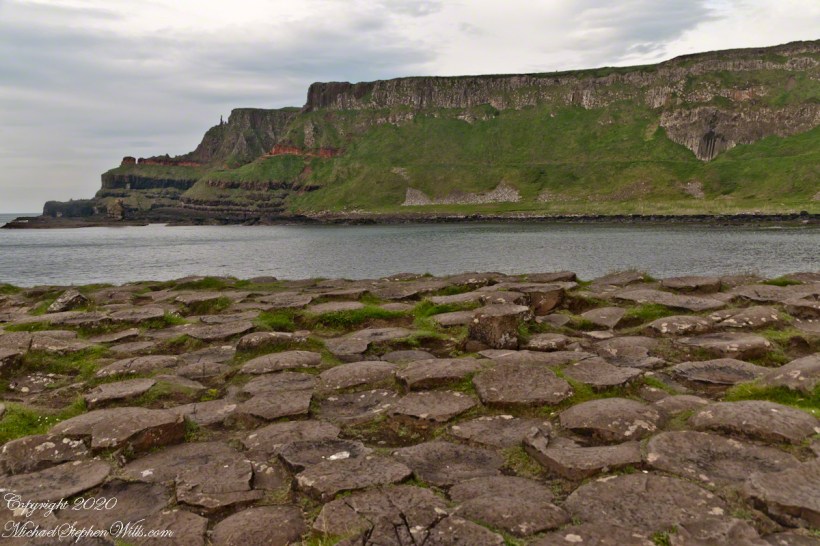
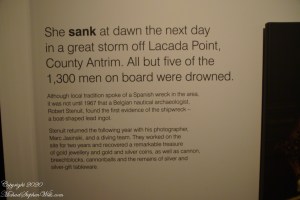
Seen here on the afternoon of June 6, 2014 against the foreground of Giants Causeway pavement stones, Lacada Point is where on the morning of October 26, 1588 the Spanish galleass “La Girona” foundered and sank at Port na Spaniagh (the bay to the east of the point). Five souls of the 1,300 on board survived the wreck.

Our time at the Giants Causeway visitor center yielded this new fact. While it was only Pam who ventured close to the Lacada Point, the following day we were able to view the treasure recovered from the site 379 years later. A portion is on permanent display at the Ulster Museum, Belfast. We visited “Treasures from the Girona” the following day.

To be continued…..

Click Me for my Shutterstock Gallery
Copyright 2020 All Rights Reserved Michael Stephen Wills

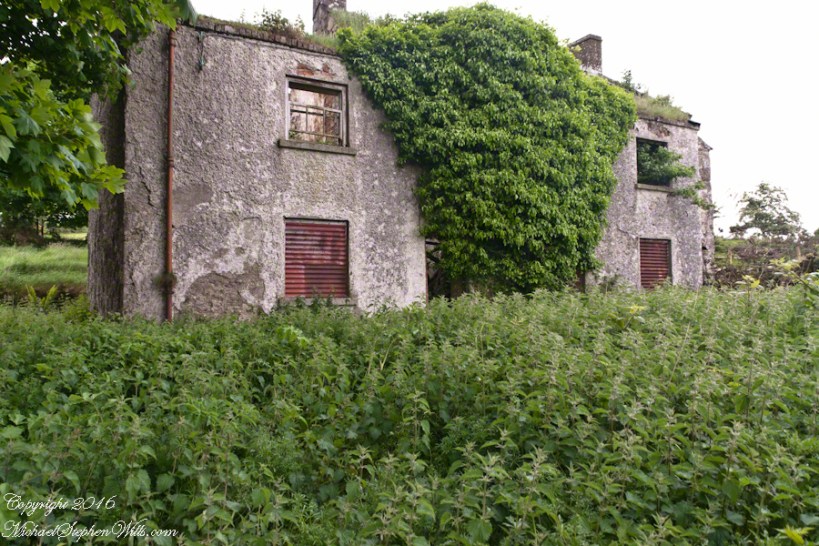
Irish Countryside: the Old Aghameen School, repost

Have a wonderful July 4th Holiday (from the USA)

Click me to visit this post from Ireland.

Copyright 2020 Michael Stephen Wills All Rights Reserved

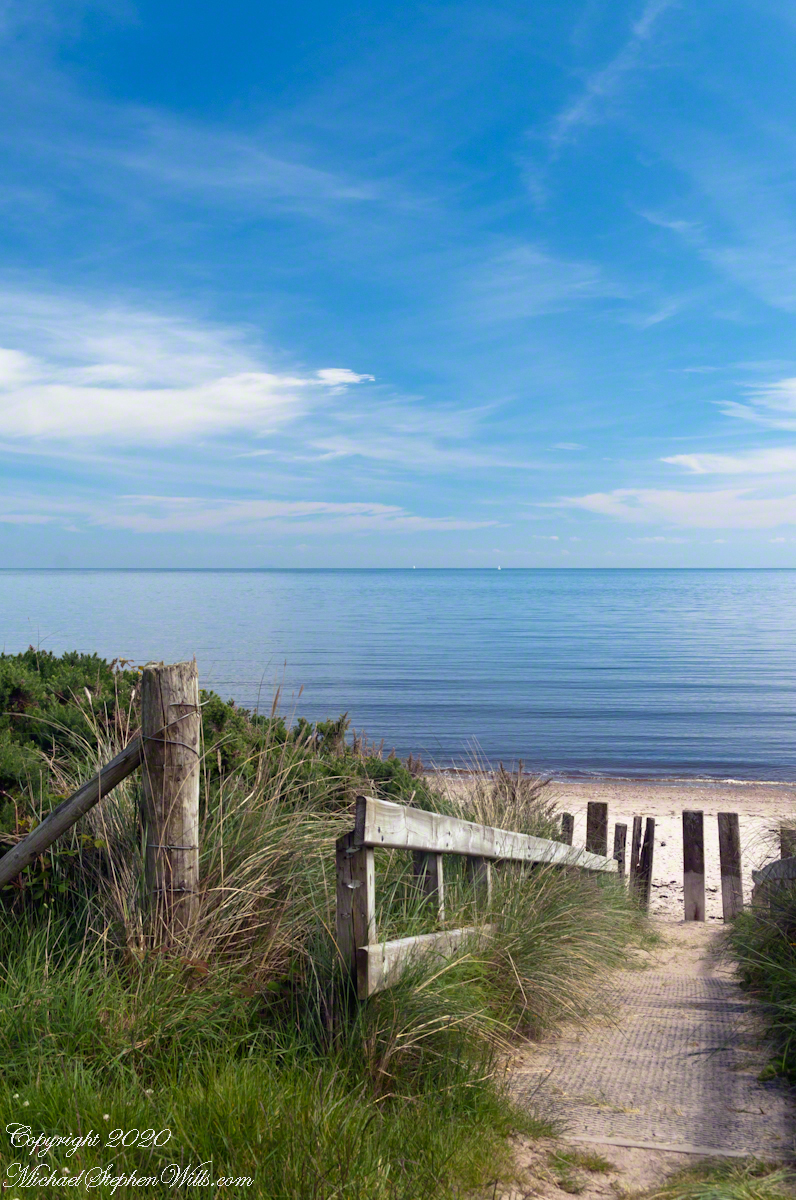
Cushendun Published

Photography accepted this week by Getty

Click me to visit Getty, my recently accepted Cushendun photography.

Copyright 2020 All Rights Reserved Michael Stephen Wills

Beauty and Infection

Cutting Trees to Fight Disease in Glenariff Forest Park

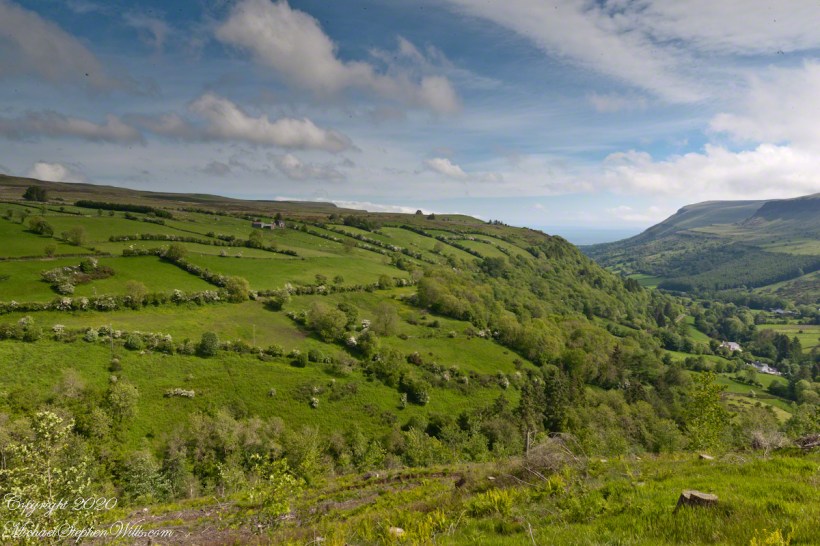
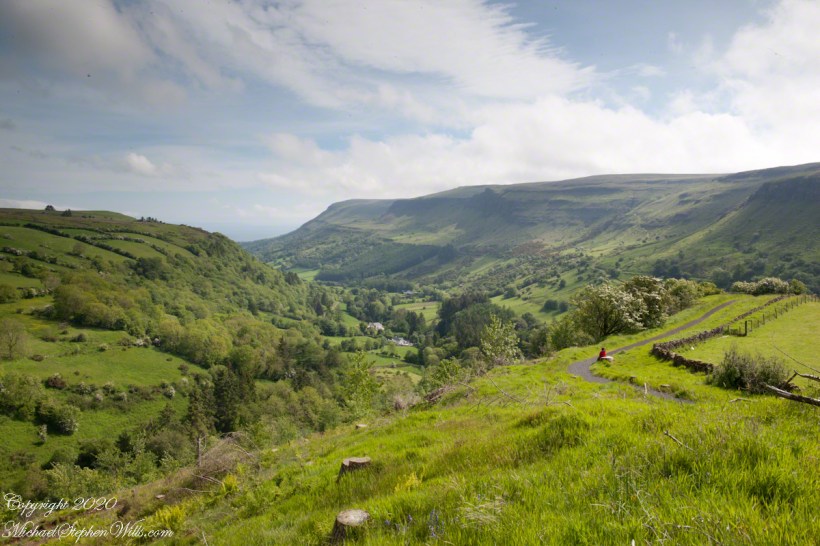
White Hawthorne tree blooms grace hedgerows of the rural hillside facing Glenariff Forest Park. The other white is grazing sheep. The North Channel of the Irish Sea is visible at the foot of the glen, with the shore of Scotland just visible.

Foreground are the stumps of mature trees cut by the forest service to control the oomycete plant pathogen Phytophthora ramorum. We visited June 2014, the year before, October 2013, the Belfast Telegraph reported “Northern Ireland is close to the point where it will be impossible to eradicate a virulent disease from the forests where it has taken hold.” Glenariff Forest part was one of those forests and the tree stumps are victims of that struggle.

Click photograph for a larger view. To do this from WordPress Reader, you need to first click the title of this post to open a new page.

Here is a link to this photograph on Getty.

Copyright 2020 All Rights Reserved Michael Stephen Wills

Getting My Work Out There

A Blessed Easter to Everyone

Comparing this view with the first of this series, first glance, with the camera held steady on a Manfrotto studio tripod, it is identical but from the play of light and cloud. My model Pam walked a few feet to sit in quiet contemplation of the beautiful surroundings.

To produce stock photography I research the details of the image, to write an informative caption. For example, in the post “Another Glenariff View” my identification of the Rowan was from a two volume atlas, paging through page after page.

Click photograph for a larger view. To do this from WordPress Reader, you need to first click the title of this post to open a new page.

Here is a link to my Glenariff photographs on Getty.

Copyright 2020 All Rights Reserved Michael Stephen Wills

Glenariff Green

a closer look

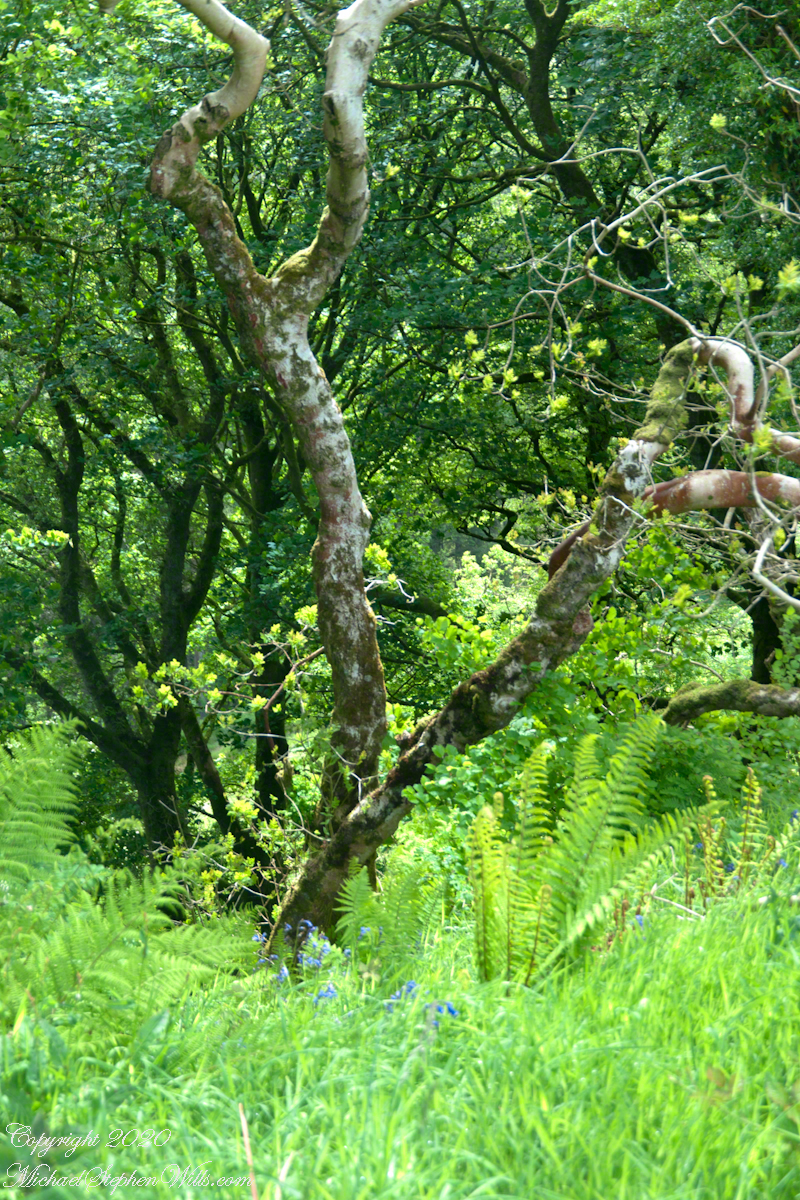
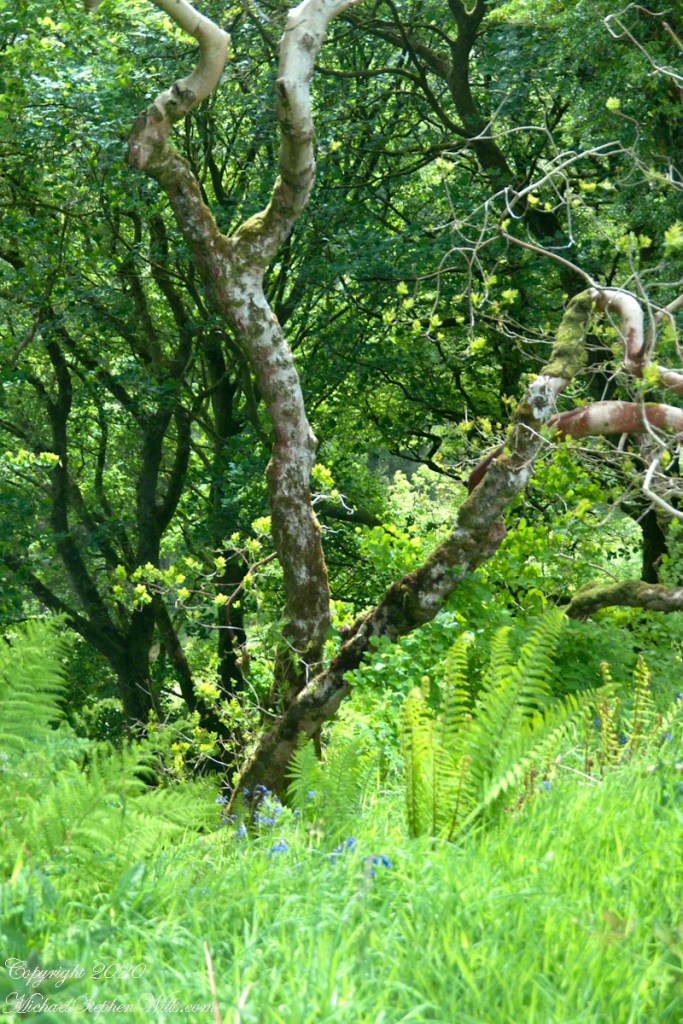
Walking around the park trails with a handheld Sony Alpha 700 dslr, a Sony DT 18-200mm variable lens mounted. Sorry to say, I was selective and have only these three photographs to supplement the grand views of the previous two posts. Click me for the first post of this series.

These are from the upper portion of the Red Trail, we did not wander far from the car park. Such a funny term for a parking lot, a park for cars. The cafe offers pick me ups and we indulged.

Click photograph for a larger view. To do this from WordPress Reader, you need to first click the title of this post to open a new page.

Here is a link my Glenariff photograph on Getty.

Copyright 2020 All Rights Reserved Michael Stephen Wills