The Autumn Tapestry of Cayuga Lake: A Journey on the Treman Park Lake Loop

Autumn’s Arrival Along Cayuga Lake

In Autumn 2024, the Treman Park Lake Loop of the Cayuga Waterfront Trail in Ithaca, New York, unfurled a vibrant display of seasonal transition. The natural landscape, adorned with fiery hues of reds, oranges, and yellows, reflected in the rippling waters of Cayuga Lake, creating a harmony of color and light. This is a scenic journey through stories of plant and animal life that call this place home—including the majestic Osprey (Pandion haliaetus) that nests along the shore.

The Osprey’s Watchtower

A sight to greet visitors is the solitary osprey nest perched high on a pole. Used by Osprey families during their breeding season, this nest stands as a testament to their remarkable recovery in the Finger Lakes region. Ospreys, once declining due to pesticide use, have rebounded significantly following conservation efforts.
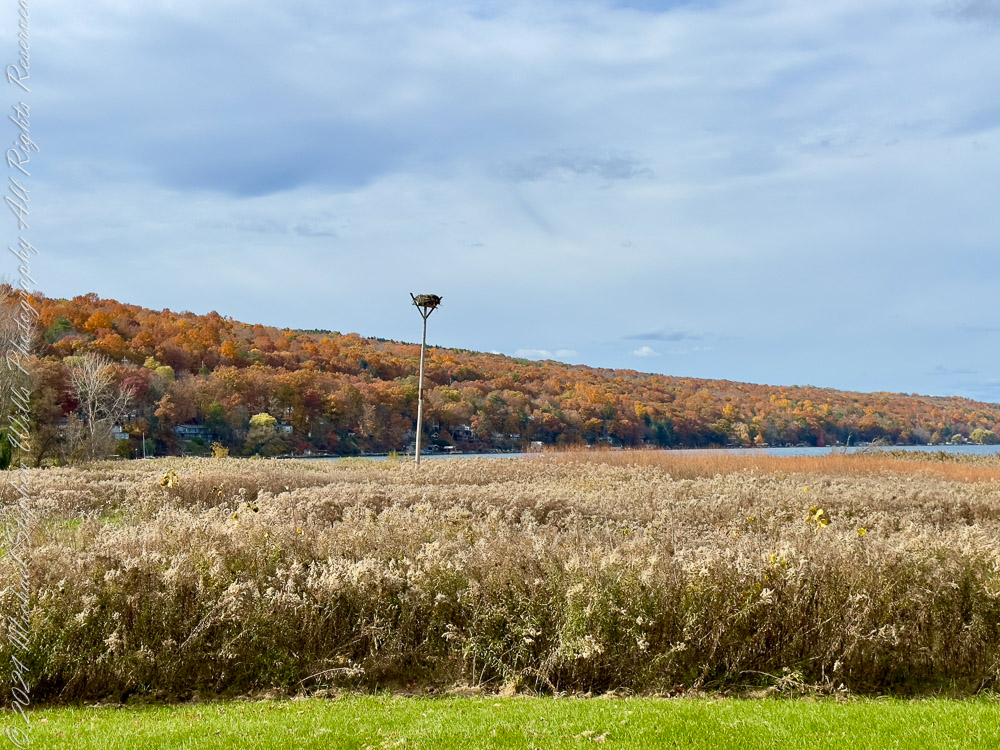
With a wingspan of up to 6 feet, these raptors are expert fish hunters, often seen diving talons-first into the lake to snatch their prey. During autumn, as their young take flight, the nest remains an empty marker of the summer’s success—a reminder of the cyclical nature of life along the lake.

Did You Know? Ospreys are often referred to as “fish hawks” because fish make up 99% of their diet.

The Meadow and Its Golden Touch: Reedbeds and Goldenrod

Surrounding the osprey pole, expansive meadows of grasses and reeds sway with the breeze. Among these are stands of Common Reed (Phragmites australis), a tall grass with feathery plumes that catch the sunlight. While Phragmites can sometimes be invasive, they provide crucial shelter and food for various species of birds and insects.
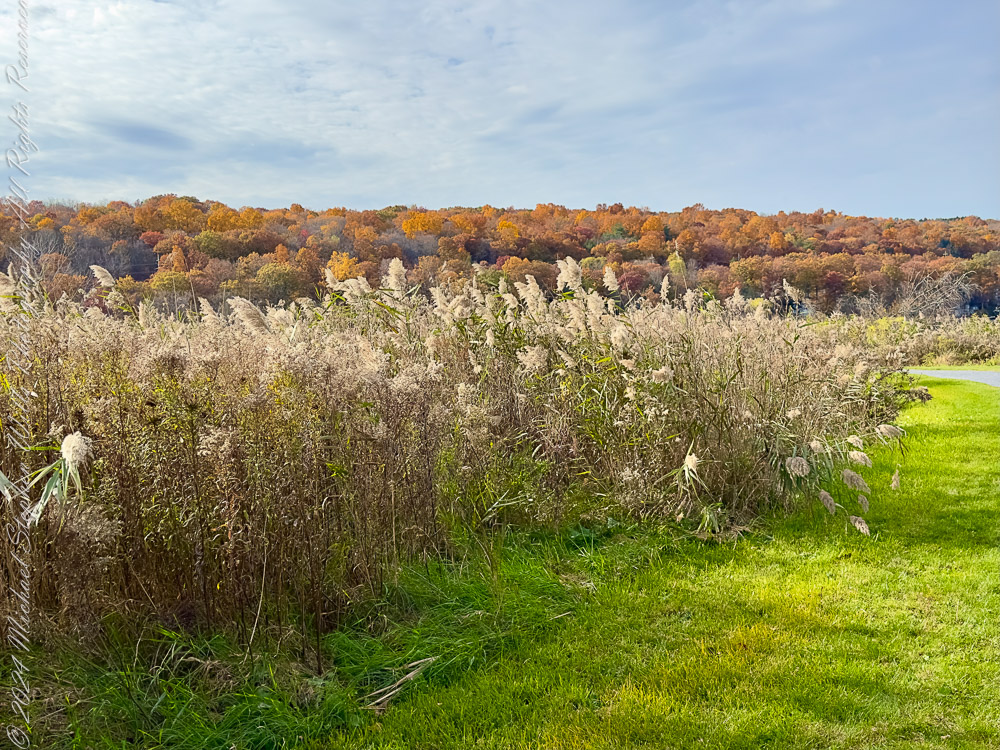
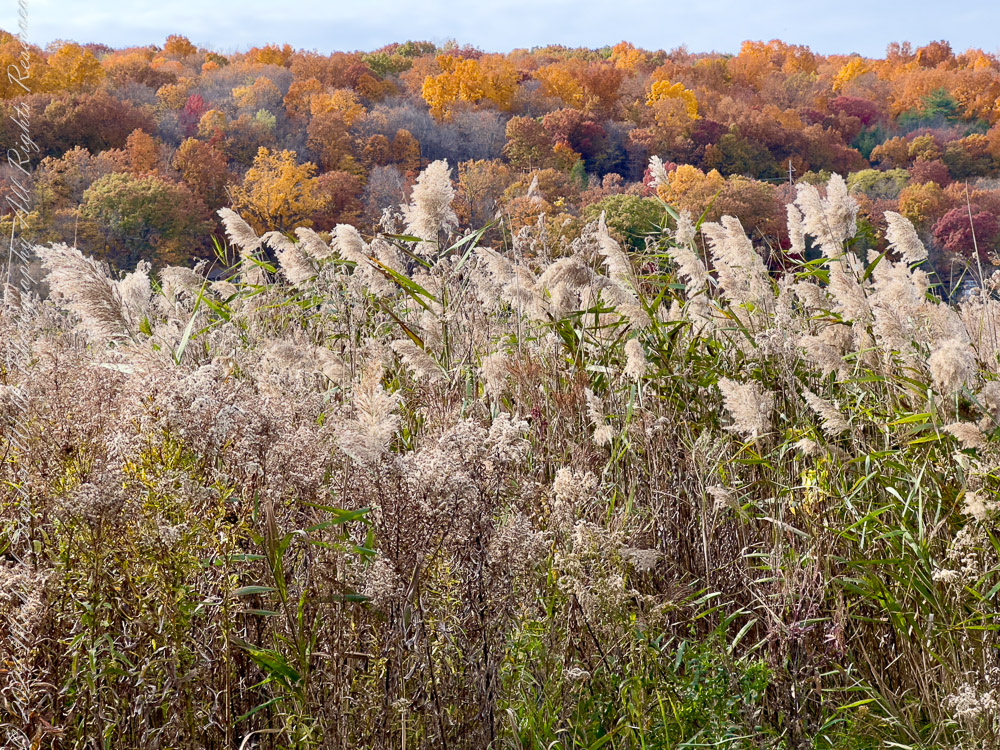
Intermixed with the reeds are patches of Goldenrod (Solidago spp.), whose bright yellow flowers are a signature of late summer and autumn in the Northeast. Goldenrods are critical for pollinators, offering nectar to bees, butterflies, and migrating insects like the Monarch butterfly (Danaus plexippus).

Ecological Note: Goldenrods are often mistakenly blamed for allergies; the real culprit is ragweed (Ambrosia artemisiifolia), which blooms at the same time but releases airborne pollen.

A Lake Alive with History and Beauty

The shimmering blue waters of Cayuga Lake form the centerpiece of this trail. The lake, stretching nearly 40 miles, is the longest of the Finger Lakes and steeped in geological and cultural history. Its name is derived from the Cayuga Nation, part of the Haudenosaunee Confederacy, who inhabited the region for centuries.

The striking red lighthouse in the water serves as a vivid counterpoint to the natural surroundings. Built to aid navigation, it now stands as a picturesque focal point for photographers and nature enthusiasts alike.
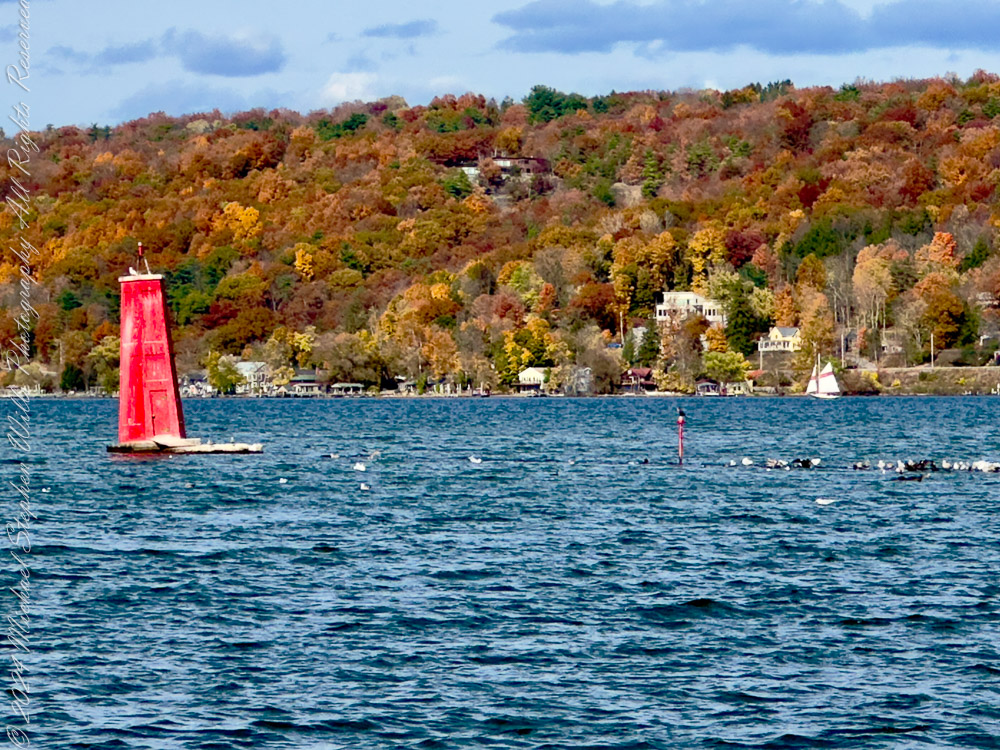
Cayuga Inlet Light Beacon

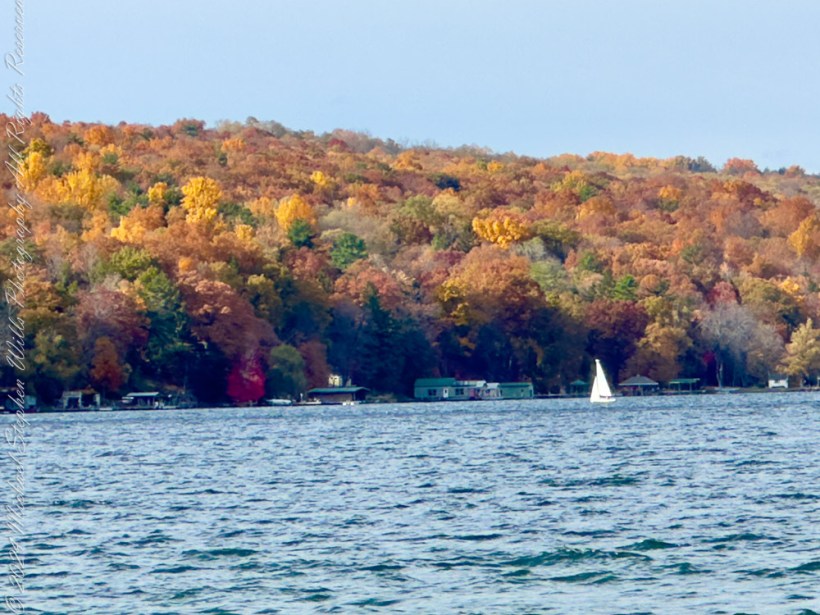
In the distance, a sailboat glides across the lake—a serene reminder of the recreational draw that Cayuga Lake holds year-round.
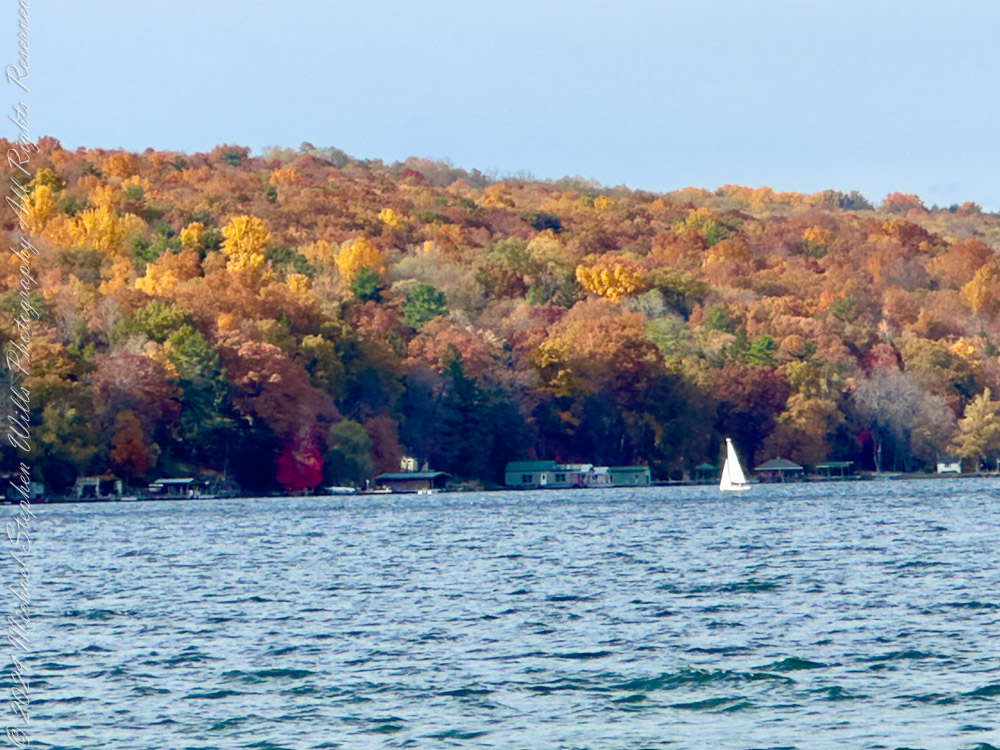
West shore with sailboat and lake houses

The Forest Fringe: A Kaleidoscope of Color

The forests that fringe the meadow and the lake present an explosion of autumn color. Trees such as Sugar Maple (Acer saccharum), Red Oak (Quercus rubra), and Black Cherry (Prunus serotina) dominate the canopy, their leaves transforming into brilliant oranges, scarlets, and deep burgundies. The Sugar Maple, in particular, is renowned for its vibrant golden-orange foliage, a hallmark of the northeastern fall.
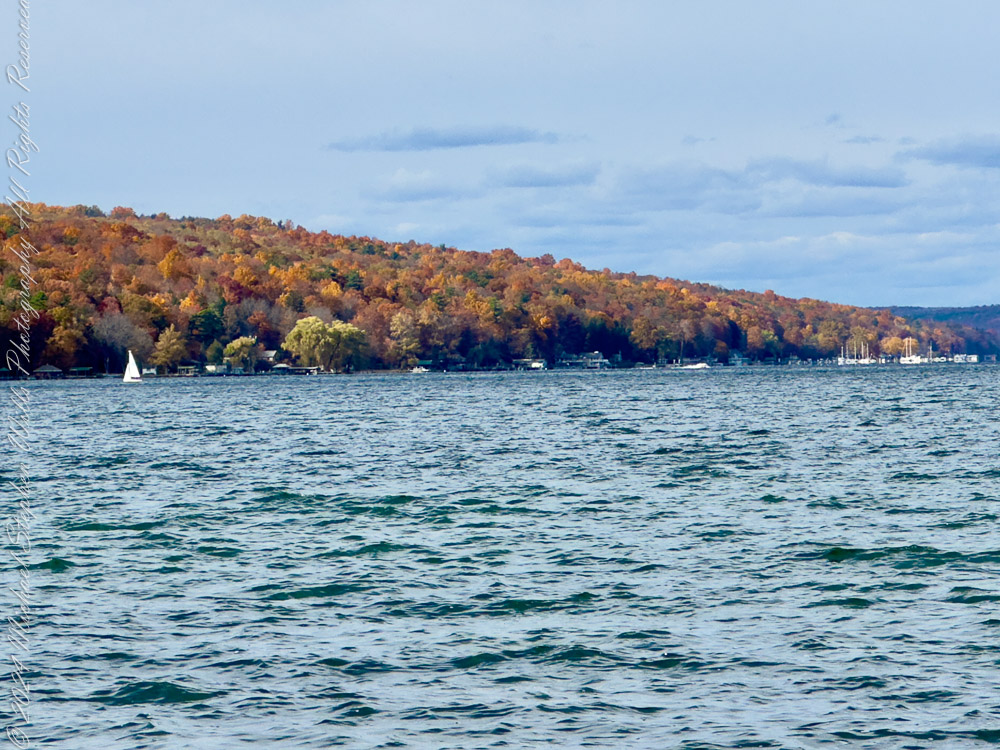
The Ithaca Yacht Club lies south of Maplewood Point

Closer to the ground, the understory hums with the activity of migrating birds and foraging mammals. Squirrels can be seen gathering acorns, preparing for the winter months ahead, while chickadees flit among the branches, calling their cheerful “fee-bee” notes.

Historical Fact: The Finger Lakes were carved out by retreating glaciers over 10,000 years ago, leaving behind these deep, elongated lakes and fertile soil that supports rich biodiversity.

A Path Through Time and Nature

Walking the Treman Park Lake Loop is a sensory journey—the crispness of the autumn air, the rustling of reeds, and the rhythmic lapping of waves against the shore combine to evoke a timeless tranquility.
From the vibrant meadows to the osprey’s lofty perch and the quiet expanse of Cayuga Lake, this section of the Waterfront Trail encapsulates the beauty and diversity of the Finger Lakes ecosystem. Whether for quiet reflection or active exploration, it remains a treasured destination in every season.

Closing Thoughts

As autumn deepens, this landscape prepares for the dormancy of winter. Yet the stories it holds—from the osprey’s nest to the goldenrod’s bloom—remain alive, waiting to be rediscovered with each new season. The Treman Park Lake Loop is not just a trail; it is a canvas of life, change, and history painted by nature’s hand.

Reflection: To walk this trail is to connect with a land shaped by glaciers, nurtured by waters, and home to countless species that continue to thrive amid the ever-turning wheel of the seasons.
Enter your email to receive notification of future postings. I will not sell or share your email address.

Where Waters Meet and Leaves Turn: A Journey Along the Cayuga Waterfront Trail

The Cayuga Waterfront Trail beautifully showcases autumn’s colors, history, and ecological significance through its landscapes and trees like Sugar Maples.


Where Fall Creek Meets Cayuga Lake
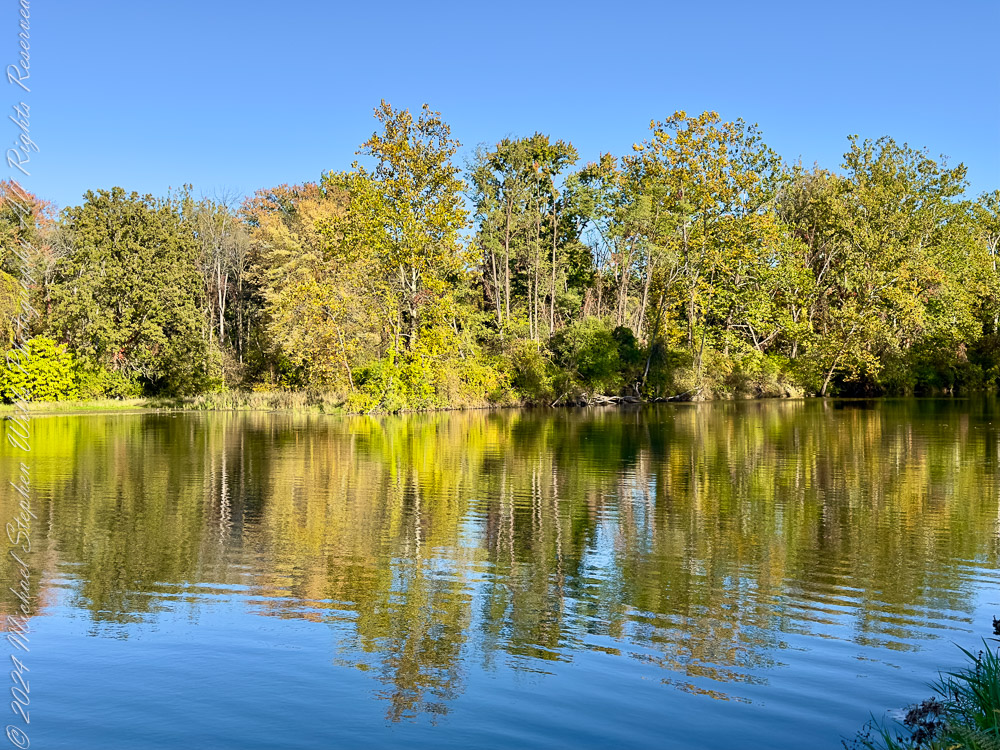
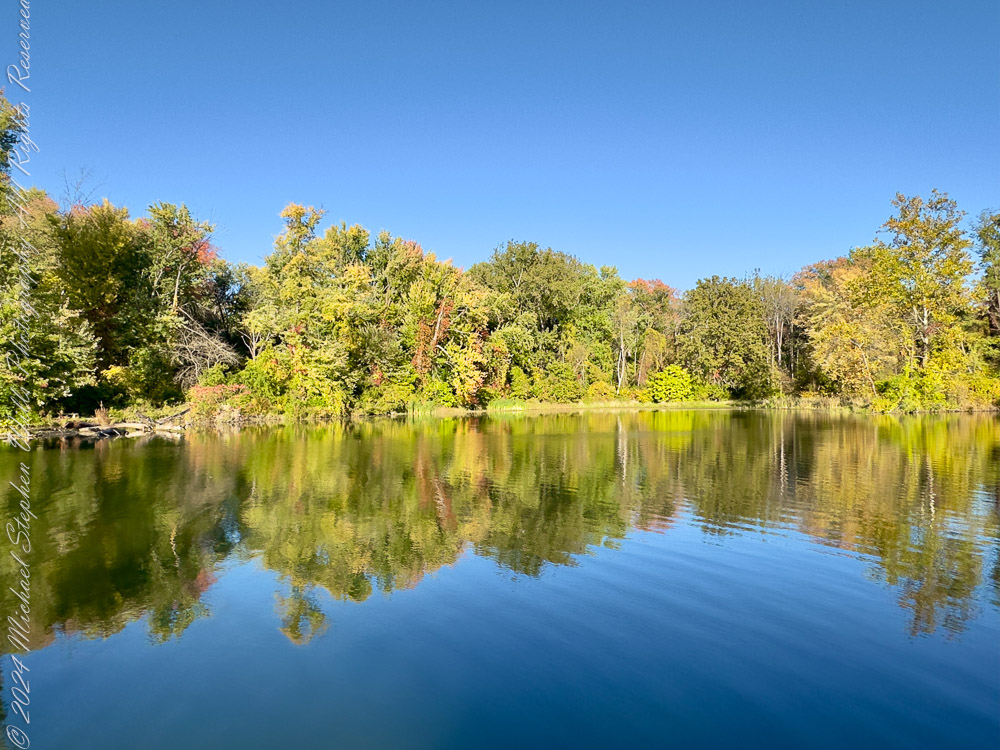
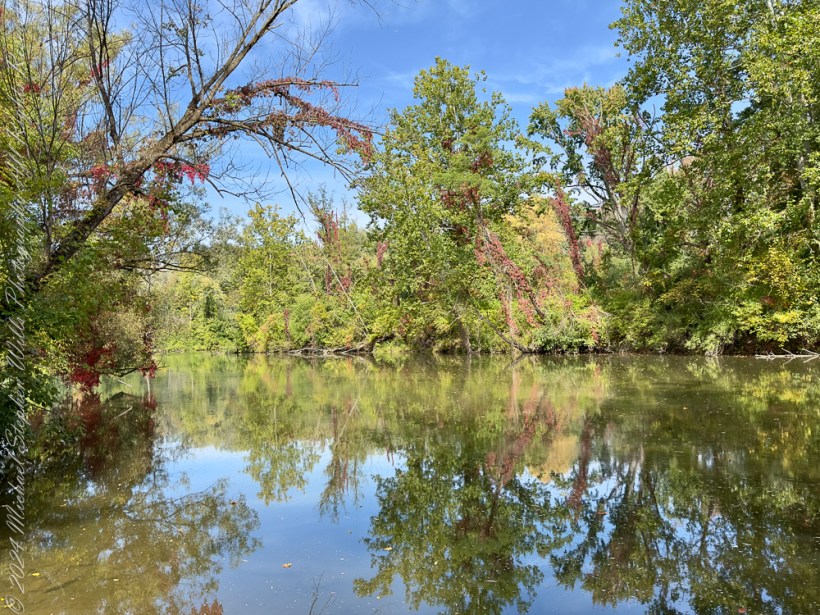
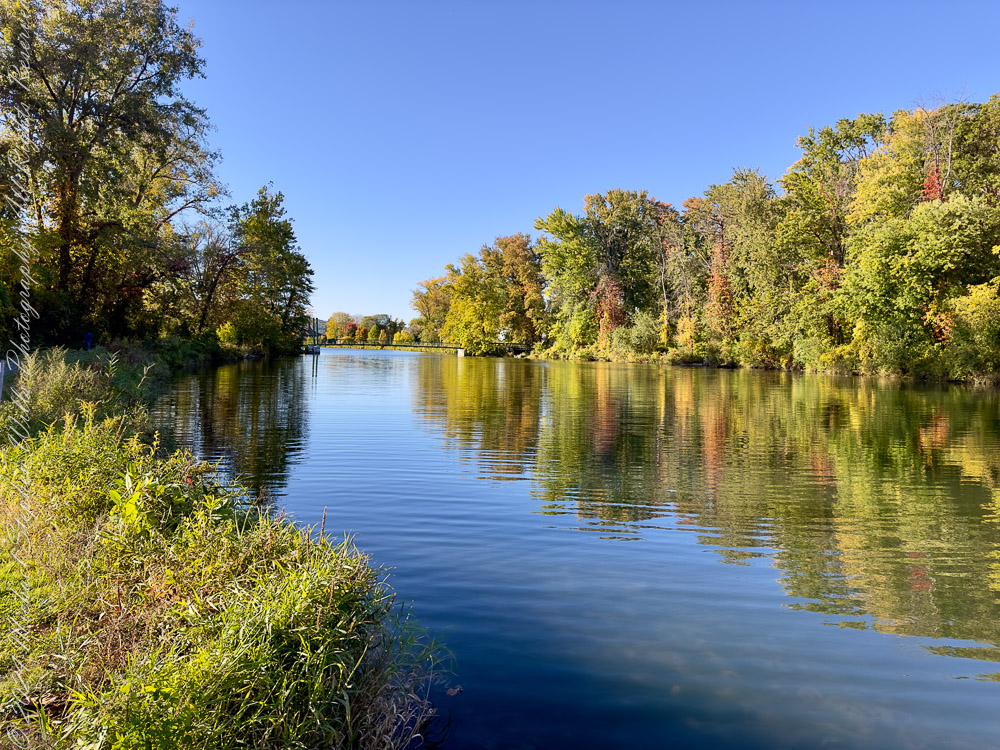
Here, where Fall Creek flows gently into Cayuga Lake, the merging waters reflect the season’s colors like a painter’s palette. Across the shimmering surface, Renwick Woods of Stewart Park stands as a quiet sanctuary of mixed hardwoods and wetlands. The reflections capture our trees together with the essence of autumn’s stillness.

Dominating the shoreline, you can spot Silver Maple (Acer saccharinum) and Cottonwood (Populus deltoides), trees that thrive in damp soils. Silver Maples, with their elegant, deeply lobed leaves, are perfectly suited for this riparian environment. The cottonwood, recognizable by its broad, triangular leaves, plays a vital role in stabilizing streambanks.

Quick Fact: Cottonwoods are among the fastest-growing trees in North America, capable of sprouting leaves within weeks of being washed ashore as driftwood.

Steamboat Landing: A Glimpse of History
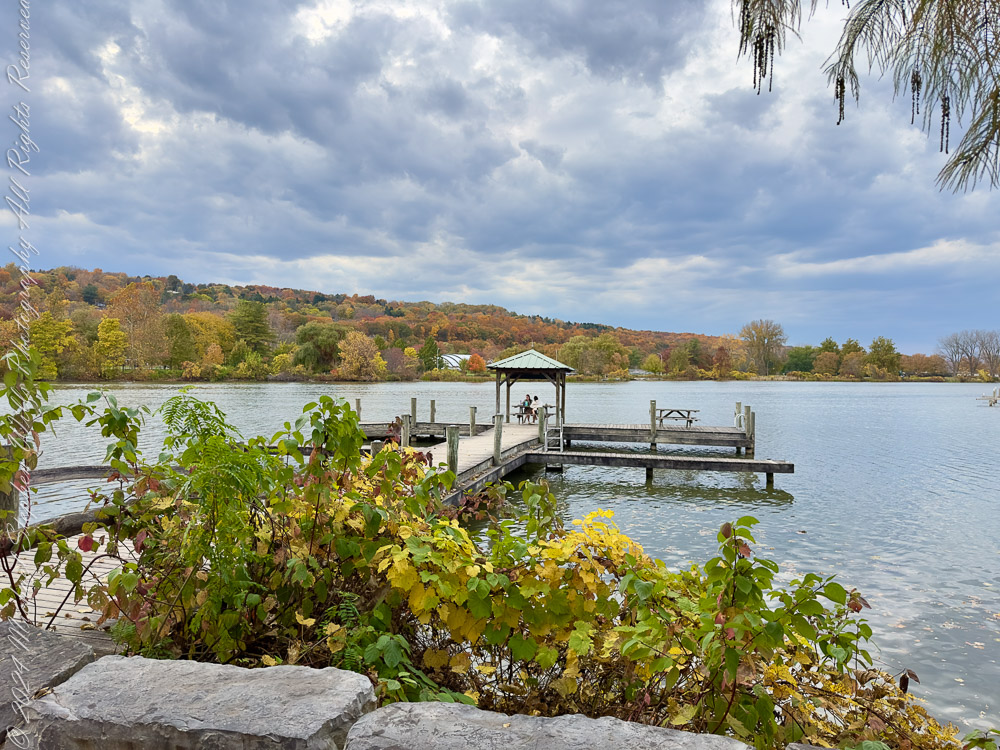
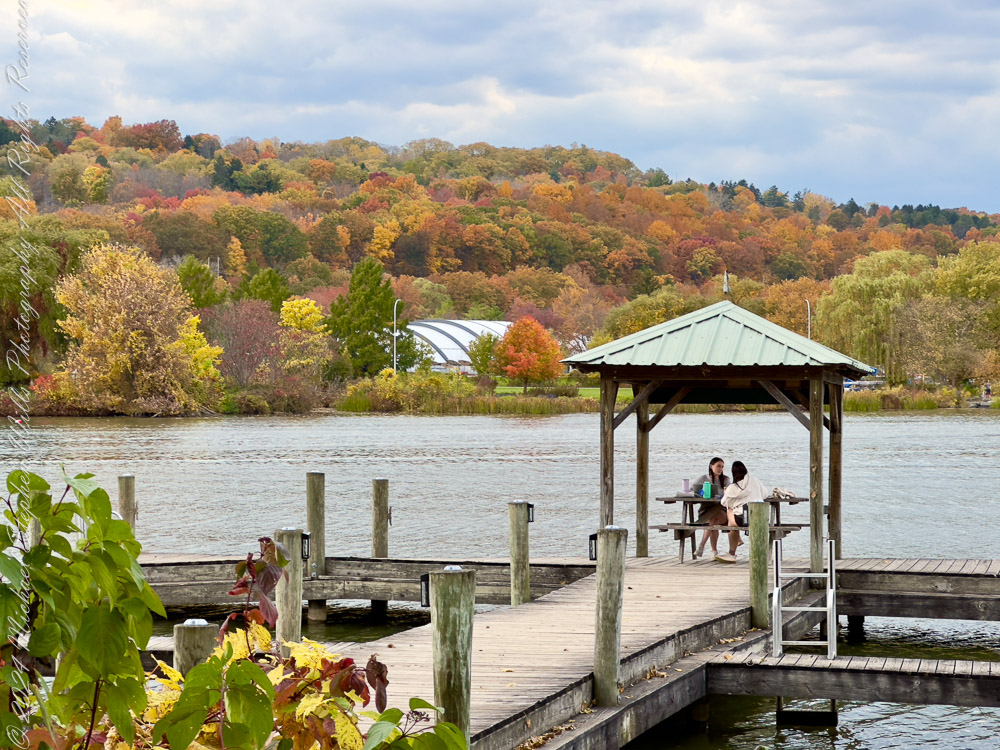
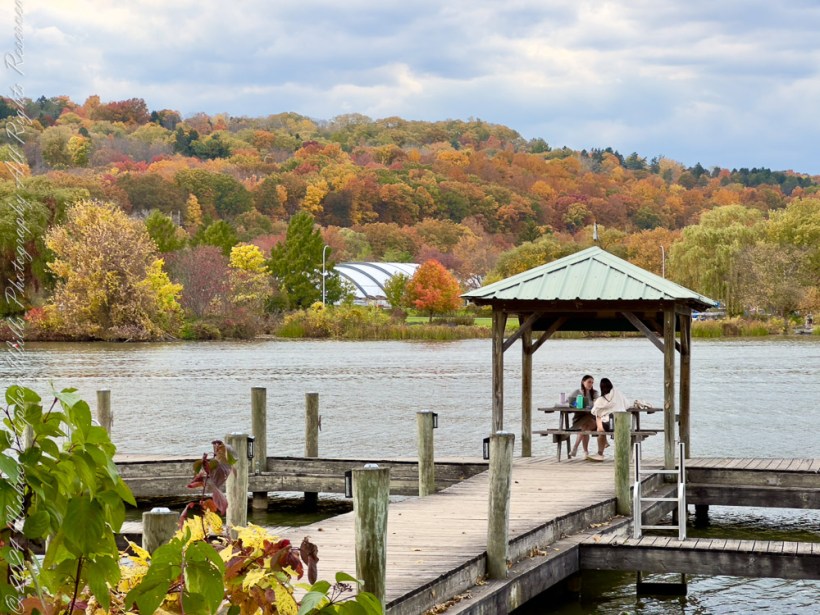
The wooden docks at Steamboat Landing, now home to the bustling Ithaca Farmer’s Market, speak of bygone eras when steamboats ferried goods and people across Cayuga Lake. Today, as golden foliage cloaks the hills in the distance, this spot remains an anchor for community and connection.

Foregrounded in the photos are plants like Grape Vine (Vitis spp.), with their sprawling, hardy stems turning yellow as temperatures drop. Grapevines, both wild and cultivated, thrive along the lakeshore and remind us of their agricultural importance in the Finger Lakes.

Also visible are some shrubs of Virginia Creeper (Parthenocissus quinquefolia) turning crimson, their vibrant hues climbing posts and fences as they embrace autumn’s spotlight.

Did You Know? Steamboat Landing was part of Ithaca’s rich lake commerce history during the 19th and early 20th centuries, connecting travelers to destinations far and wide.

The Crimson Canopy: Japanese Maple
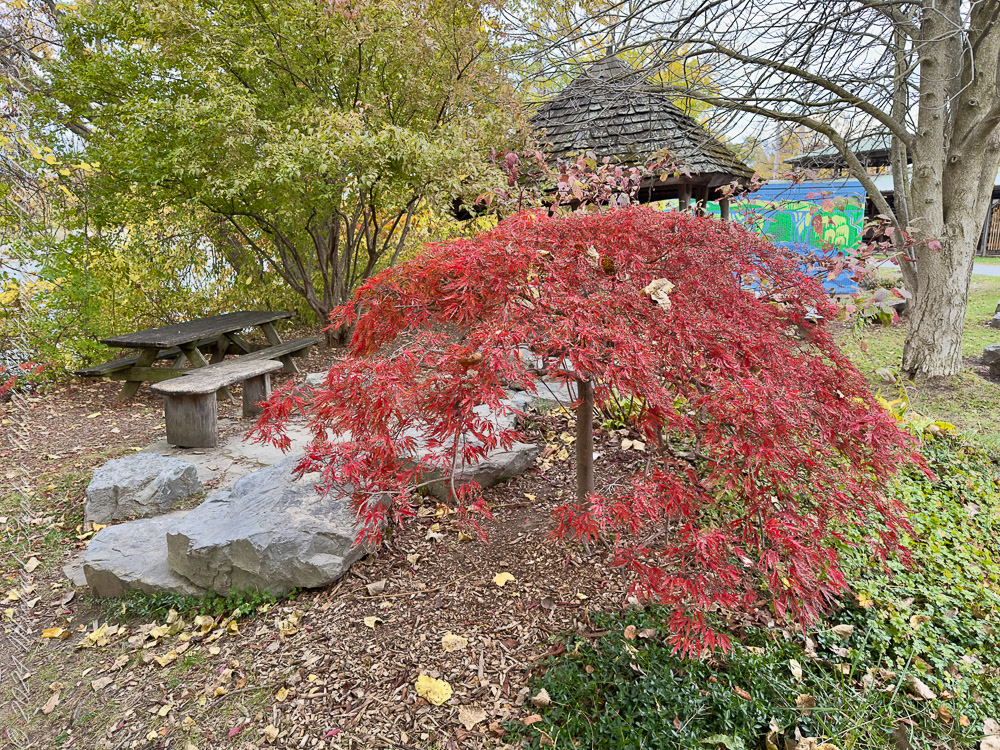
This photo highlights a stunning Japanese Maple (Acer palmatum), its feathery, scarlet foliage cascading delicately in front of the pavilion. Native to East Asia, Japanese Maples have found a beloved place in landscapes across the world for their graceful form and brilliant seasonal displays.

Alongside its boughs, weathered benches and stone pathways invite rest and reflection — a beautiful marriage of human craftsmanship and nature’s artistry.

Fun Fact: Japanese Maples are often pruned meticulously in Japanese gardens to emphasize their architectural shape, turning them into living sculptures.

The Treman Park Lake Loop: Autumn’s Golden Finale
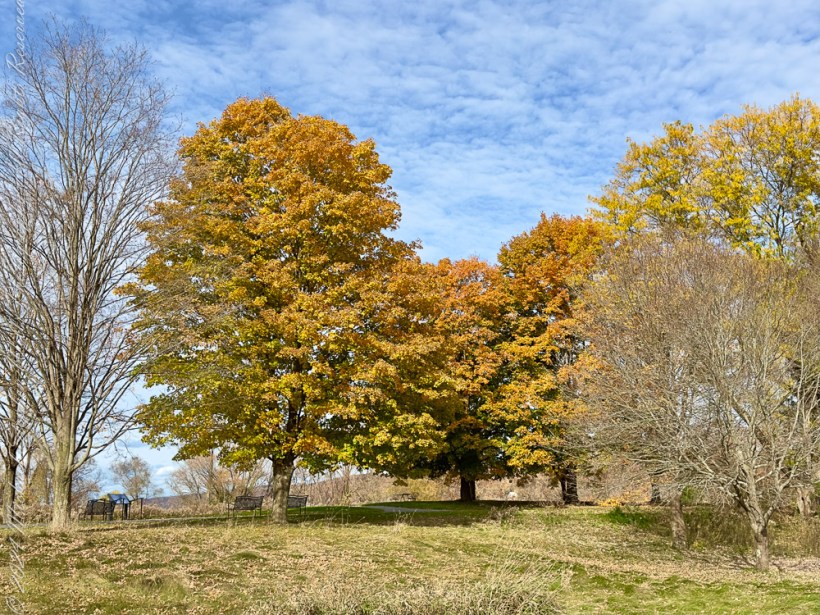
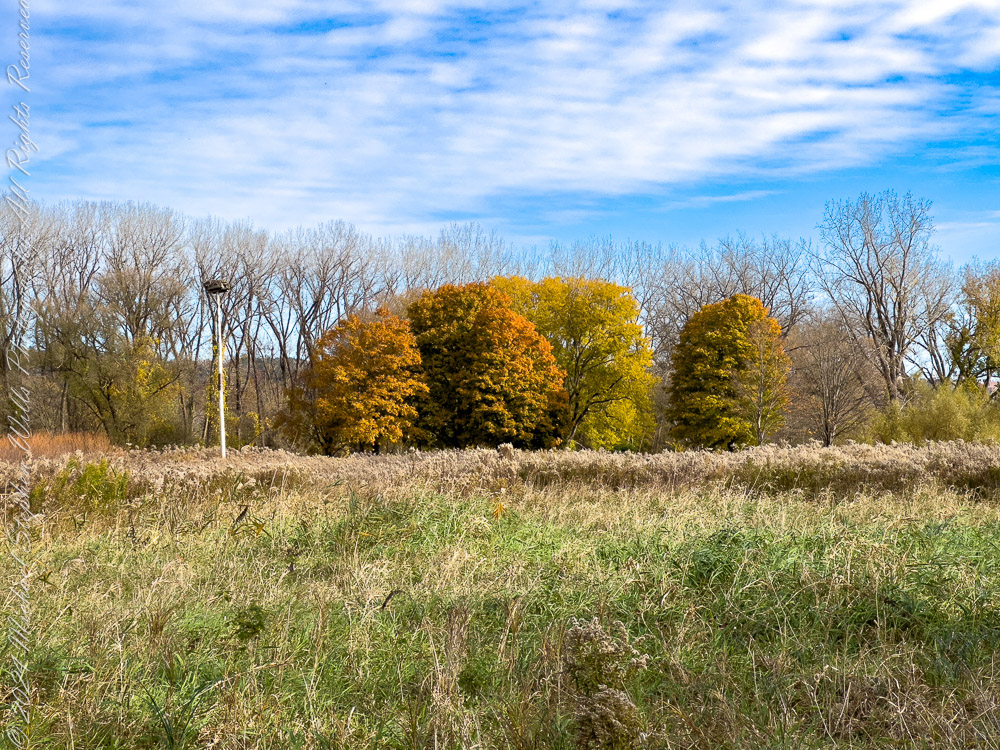
Our journey concludes with this sweeping landscape from the Treman Park Lake Loop. The towering Sugar Maples (Acer saccharum) dominate the view, their crowns now a rich, golden orange — a signature of northeastern forests. Known as the tree that gives us maple syrup, Sugar Maples are quintessential symbols of autumn in the Finger Lakes.

To the right, bare branches of earlier-shedding trees stand in contrast, whispering the arrival of winter. The sky above, painted with soft clouds, completes the scene of a serene seasonal transition.

Interesting Note: Sugar Maples can live for over 300 years, their wood prized for furniture and instruments, and their sap a sweet gift of the forest.

Closing Thoughts
From the quiet confluence of Fall Creek and Cayuga Lake to the historic docks of Steamboat Landing and the golden maples of Treman Park, autumn on the Cayuga Waterfront Trail is a symphony of color, history, and ecological wonder. Whether you’re strolling, photographing, or simply pausing to take it all in, these moments capture both the grandeur and subtlety of the season.

Enter your email to receive notification of future postings. I will not sell or share your email address.

Autumn Trail Adventures: Nature’s Colorful Showcase

The Cayuga Waterfront Trail showcases autumn’s beauty through vibrant plants like pokeweed, oak, Virginia Creeper, and New England Asters.

A Flash of Red: The Mysterious Pokeweed

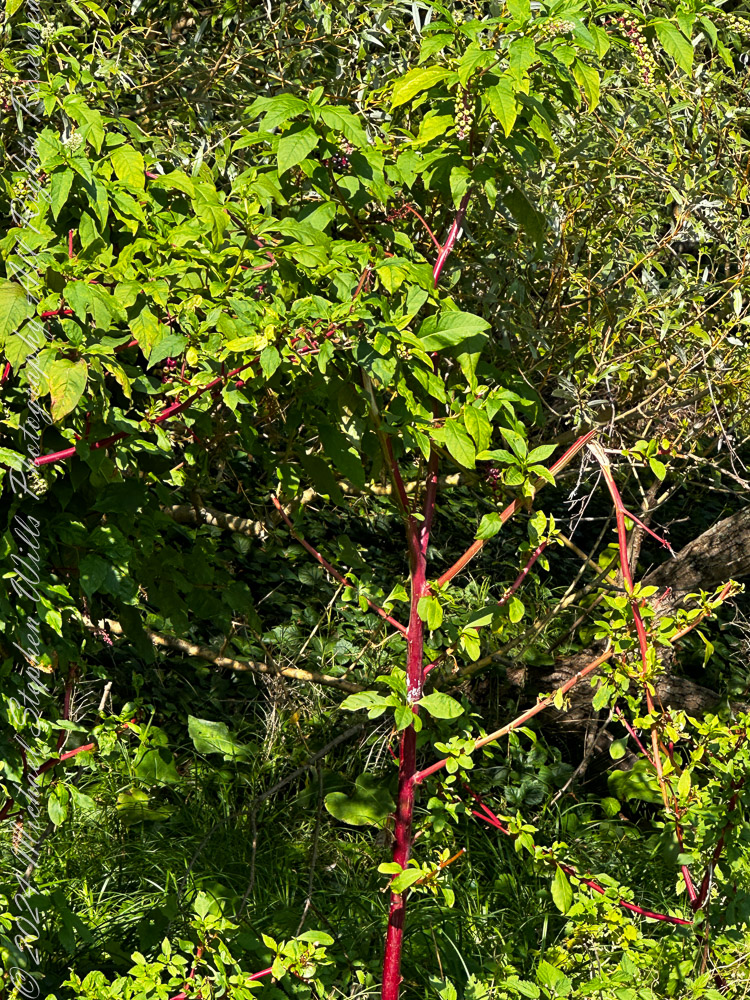
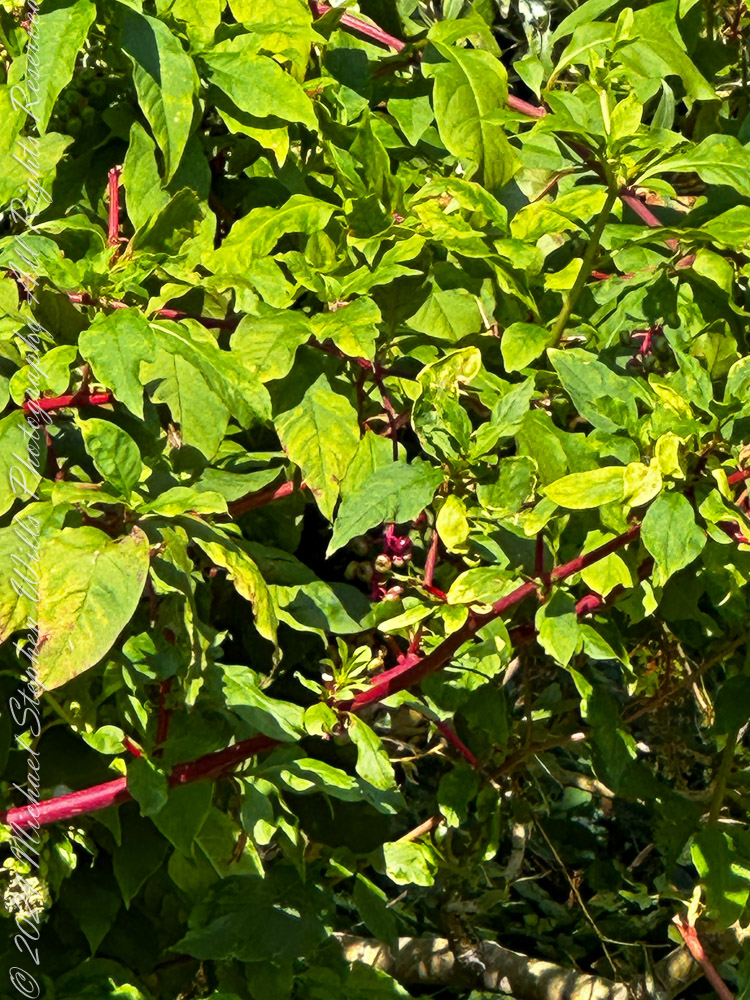
Our explorations along Ithaca’s Cayuga Waterfront Trail begins with the striking Pokeweed (Phytolacca americana), its ruby-red stems rising like sentinels against a sea of green leaves. At a glance, it’s bold, almost tropical, yet this native plant is a quintessential autumn feature in the Northeast. Those drooping clusters of berries (not yet ripe here) are food for birds like robins and mourning doves — though toxic to us, pokeweed adds a bit of danger to its beauty.

Nature’s Note: While visually stunning, pokeweed’s ripe purple berries were historically used as dye. Early settlers and Native Americans knew its power, though caution is always the rule here!

The Mighty Oak: Sentinel of the Trail

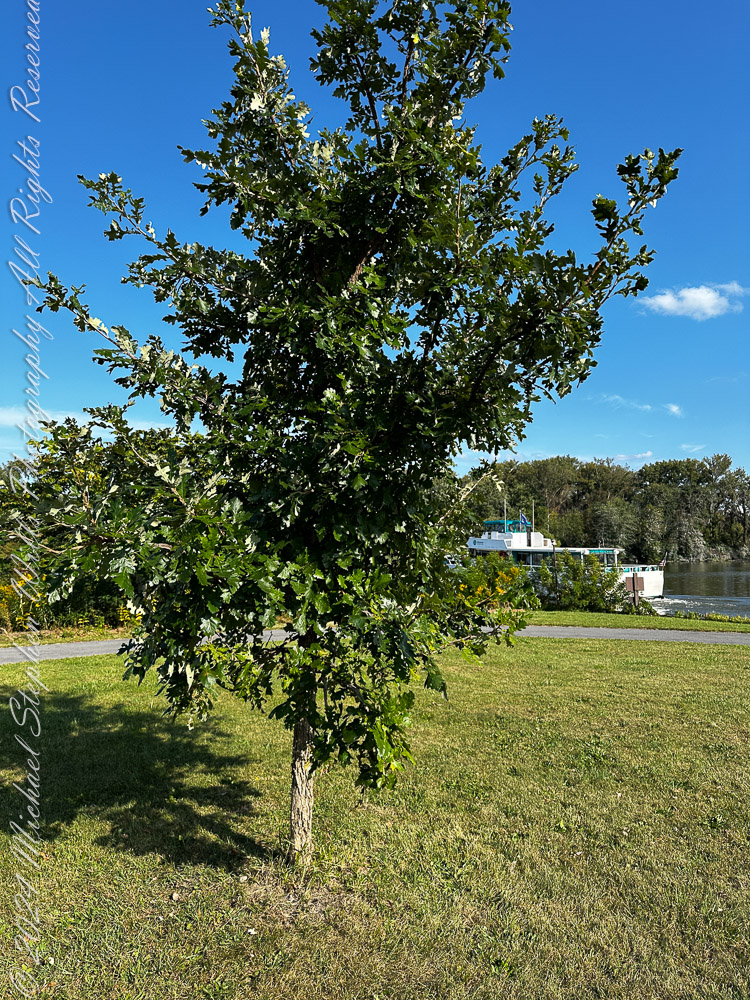
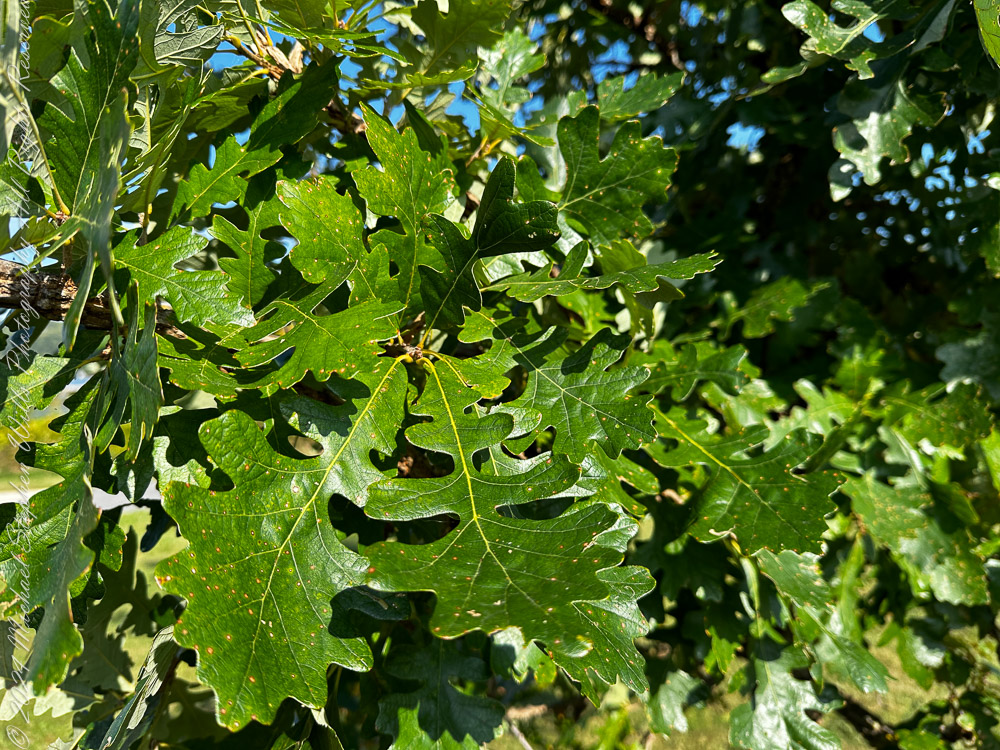
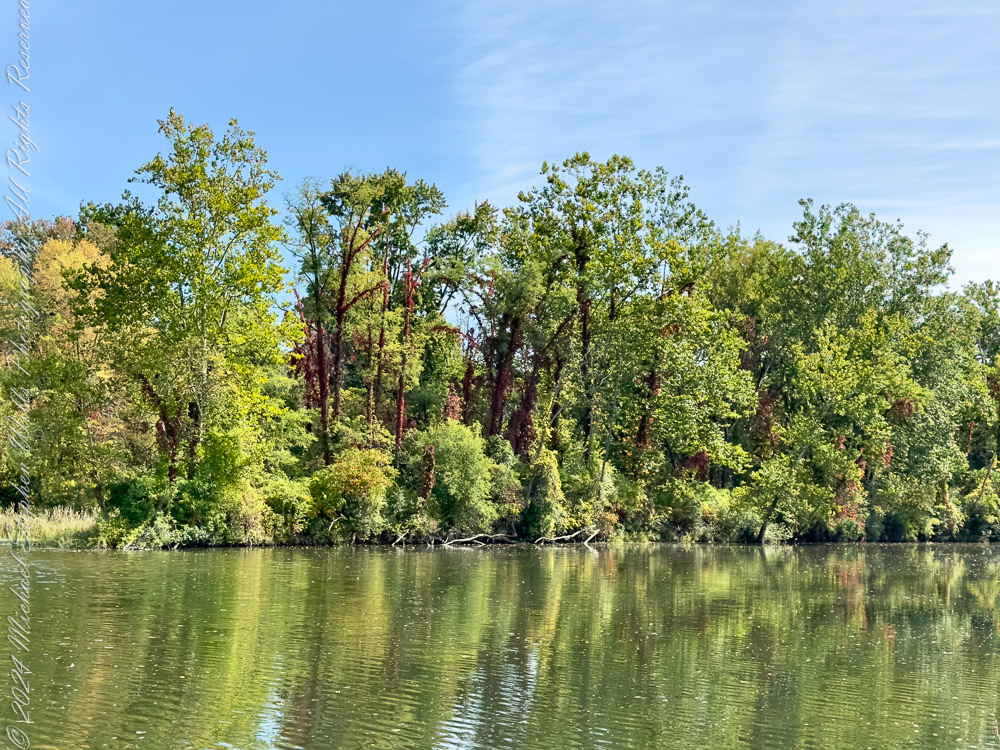
Next, we imnagine the cool shade of an oak tree, its lobed leaves silhouetted like green lacework against the clear blue sky. The photogenic Oaks are ecosystem powerhouses. Supporting hundreds of species of moths, butterflies, and birds, oaks quietly hold the fabric of nature together.

In autumn, these leaves will transform, dropping gently to create warm beds for overwintering insects. Stand beneath its branches long enough, and you’ll swear it whispers stories of the seasons gone by.

Quick Fact: Oaks produce acorns that are a favorite food of squirrels. Ever notice a squirrel “planting” them? That’s nature’s accidental reforestation plan in action.

Reflections of Autumn’s Palette

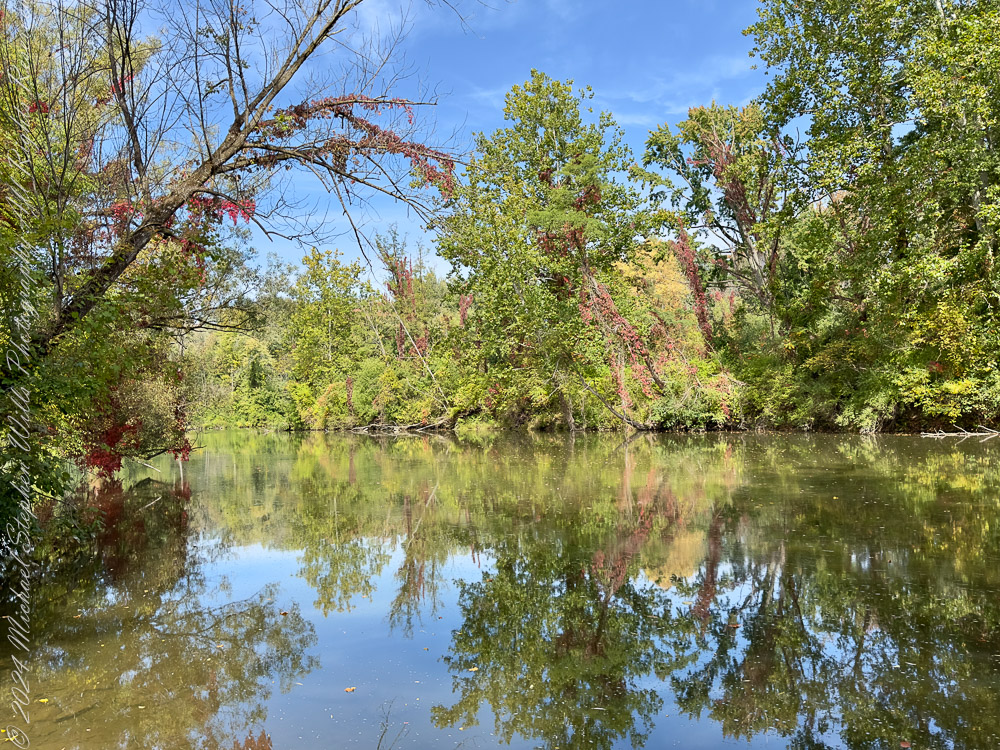
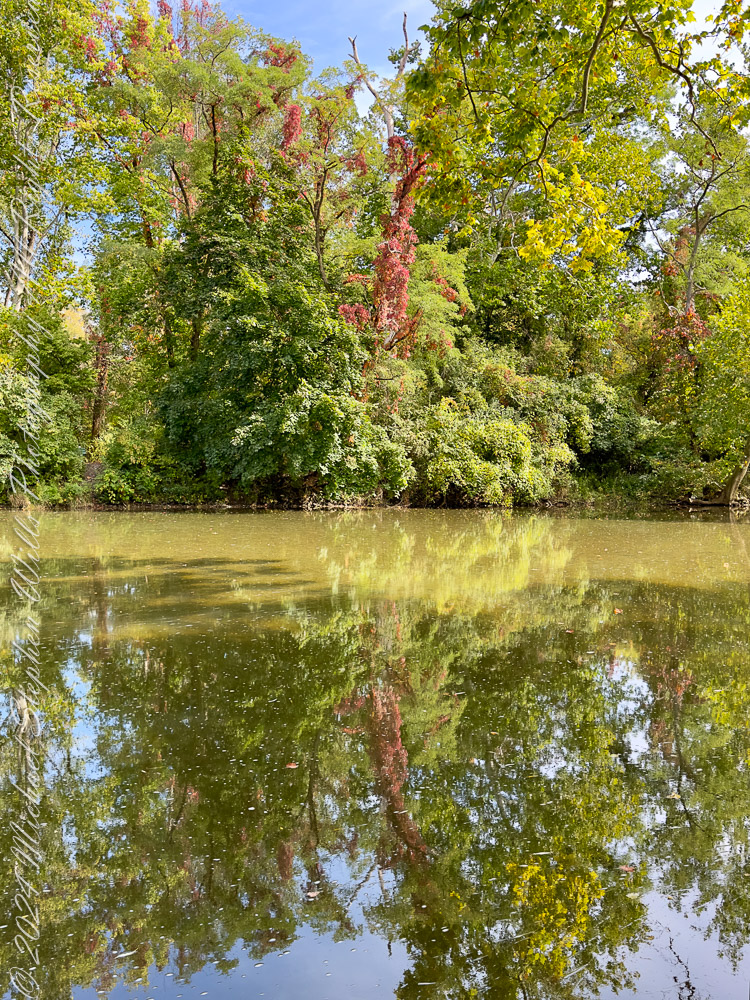
We reach the water’s edge, where the serene surface where Fall Creek joins Cayuga Lake mirrors the fiery splashes of red Virginia Creeper (Parthenocissus quinquefolia) winding through the trees. This climbing vine, with its scarlet fall foliage, is like nature’s ribbon tying the forest together.

The reflection — a perfect painting — blurs the boundary between land and water. Here, quiet reigns, save for the soft ripple of a fish or the rustle of leaves overhead.

Curious Note: Virginia Creeper is often mistaken for poison ivy. The secret? Virginia Creeper has five leaflets, while poison ivy wears three — nature’s rhyme: “Leaves of three, let it be.”

Aster Alley: A Burst of Purple Beauty

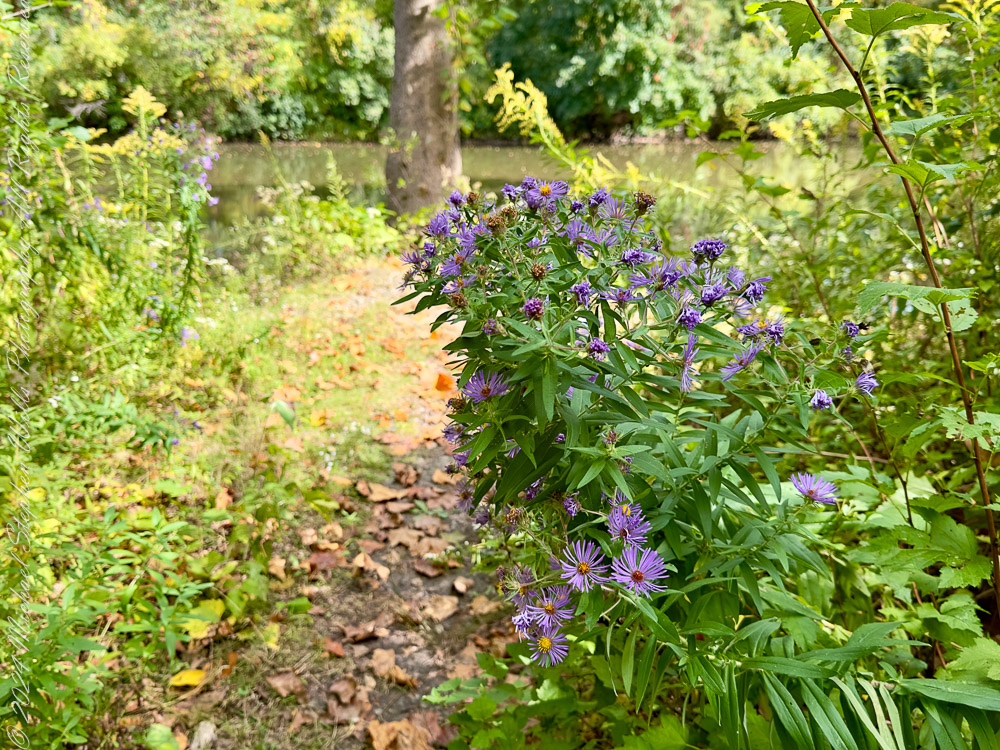
On the trail’s side, a cheerful gathering of New England Asters (Symphyotrichum novae-angliae) steals the spotlight. These vibrant purple flowers, with their golden centers, are late-season treasures. As most blooms fade, asters feed pollinators like bees and butterflies in their final push before winter.

Walk by slowly, and you might catch a bumblebee lazily humming its thanks — a last sip of nectar before the chill sets in.

Did You Know? Asters get their name from the Greek word for star. Fitting, don’t you think?

Nature’s Quilt: Pine Needle Carpet

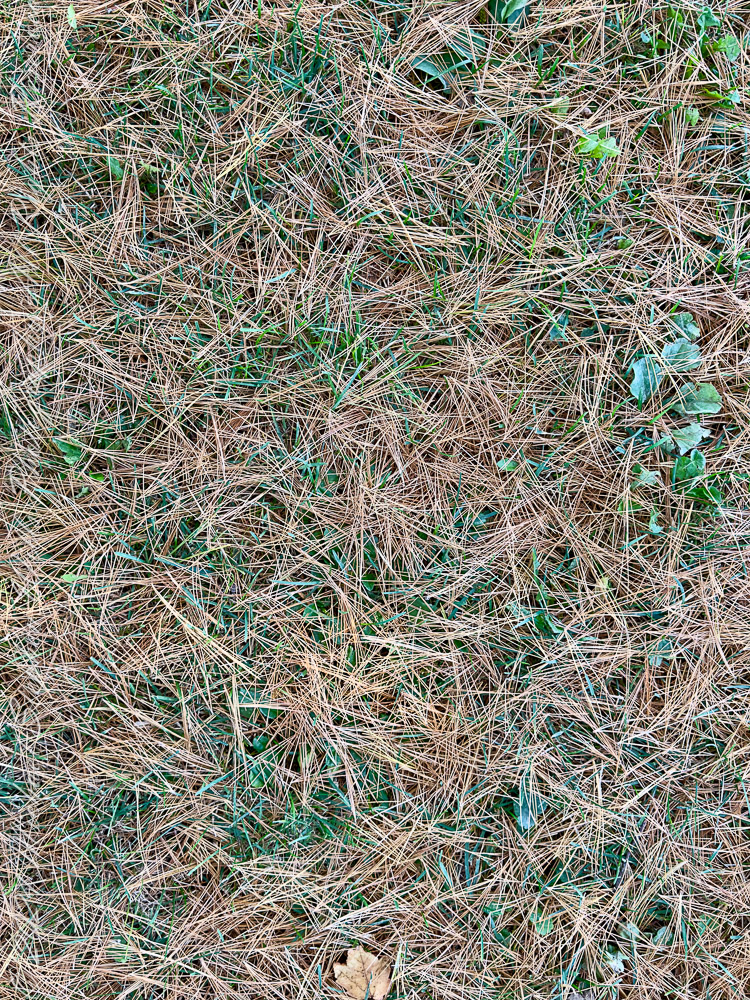
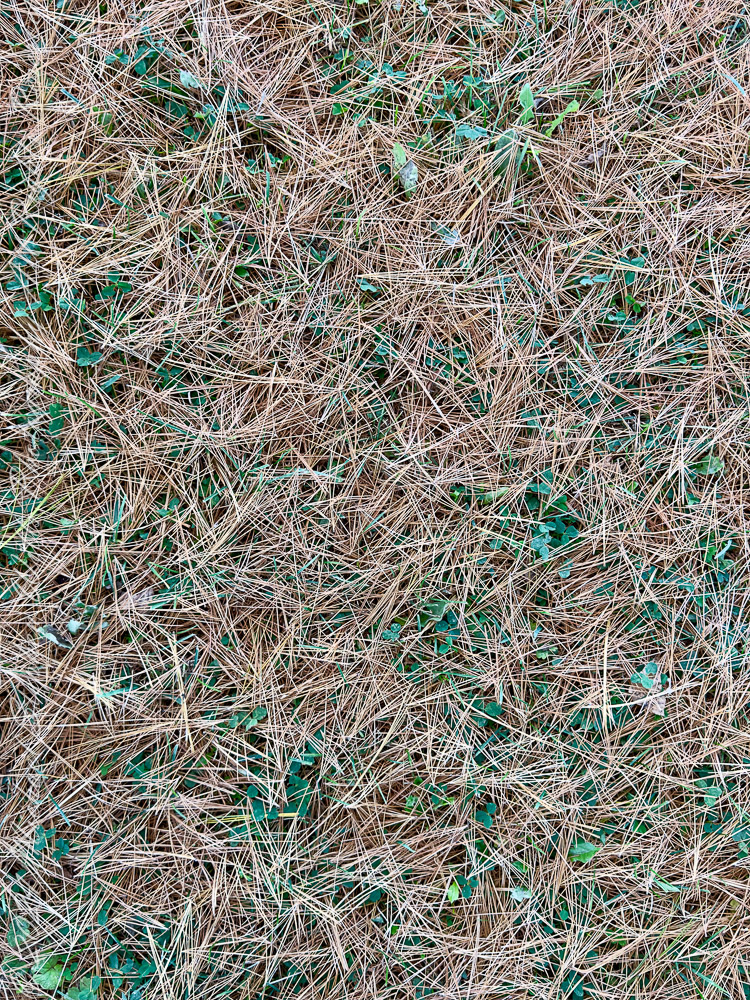
Finally, we tread across a textured carpet of pine needles, blanketing the ground in warm, earthy hues. Beneath this seemingly simple scene lies a story of renewal. As pines shed their needles, they enrich the soil with organic matter, providing a soft bed for new life to sprout in the spring.

The crunch underfoot feels both nostalgic and meditative — a gentle reminder that every fallen needle is part of nature’s endless cycle.

Fun Observation: Pine needles, often called “nature’s mulch,” are slightly acidic, which helps pine trees thrive while keeping competition at bay.

Closing Thoughts

From the bold reds of pokeweed to the mirrored waters adorned with Virginia Creeper, and the twinkle of asters amid the foliage, autumn along the Cayuga Waterfront Trail is a celebration of nature’s resilience and beauty. It’s a quiet reminder that even as the seasons shift, the world remains vibrant — a living, breathing tapestry stitched together by trees, plants, and reflections.

So, walk slowly, listen closely, and let the stories of leaves, stems, and waters guide your journey.

Enter your email to receive notification of future postings. I will not sell or share your email address.