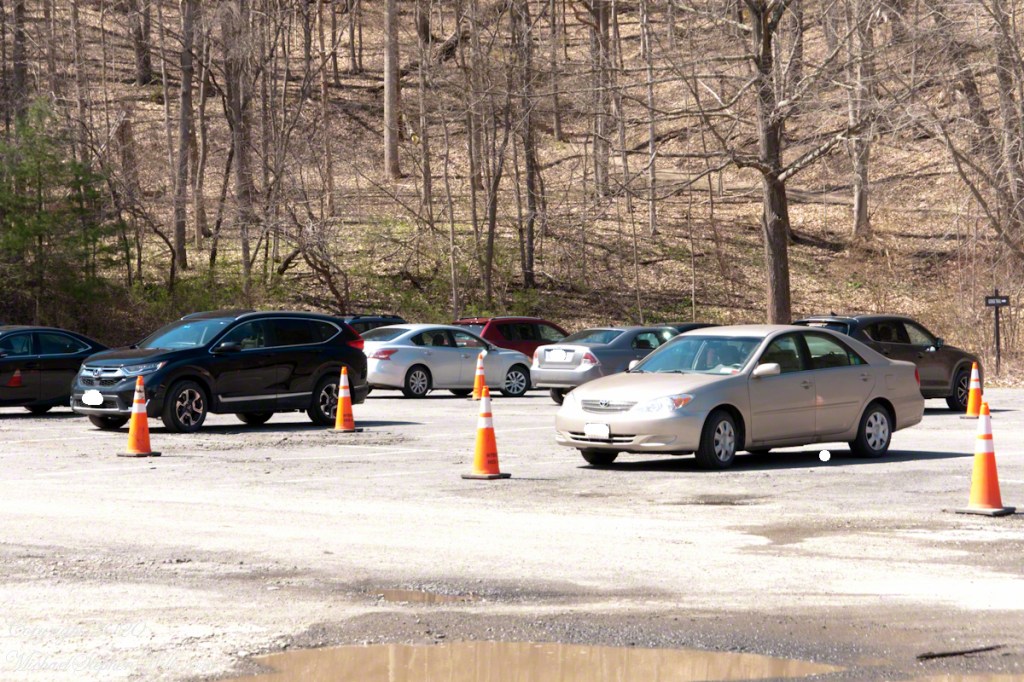
Parks were open during Govenor Cuomo’s “New York State on PAUSE.” Still, as a member of the at-risk group I was reluctant to visit, unsure of how crowded it will be. On a Monday afternoon, bright with sun, I drove over to Robert H. Treman lower park to check out the situation.
Click photograph for a larger view. To do this from WordPress Reader, you need to first click the title of this post to open a new page.
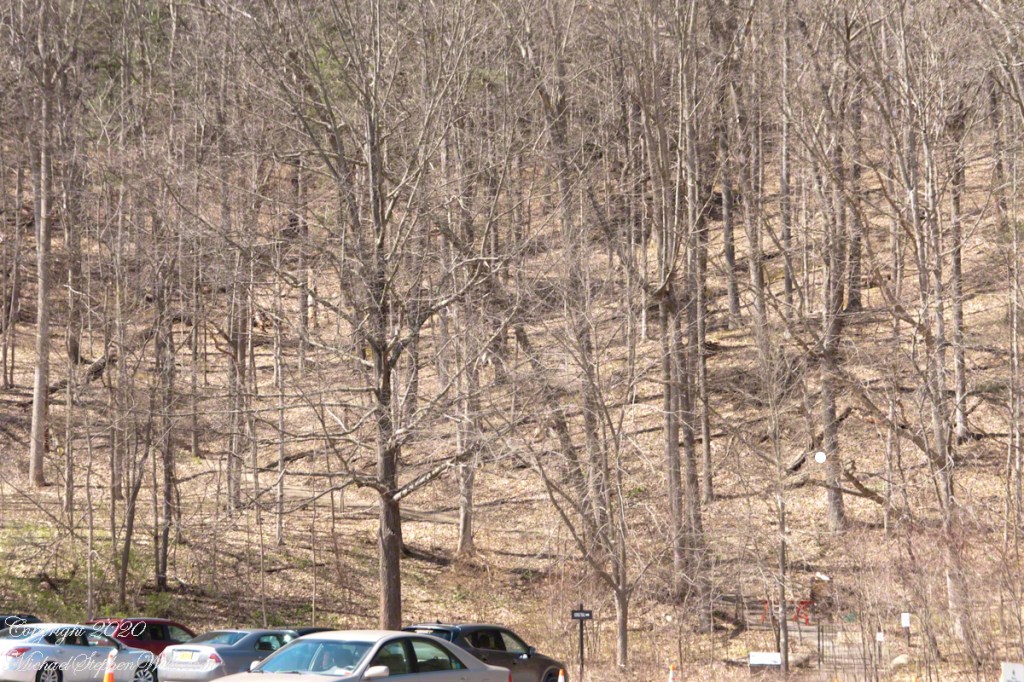
Social Separation ParkingGorge Trail is Closed for the winterParking Lot
I carried the Sony in hand and packed in a Canon with macro lens and a Manfrotto travel tripod.
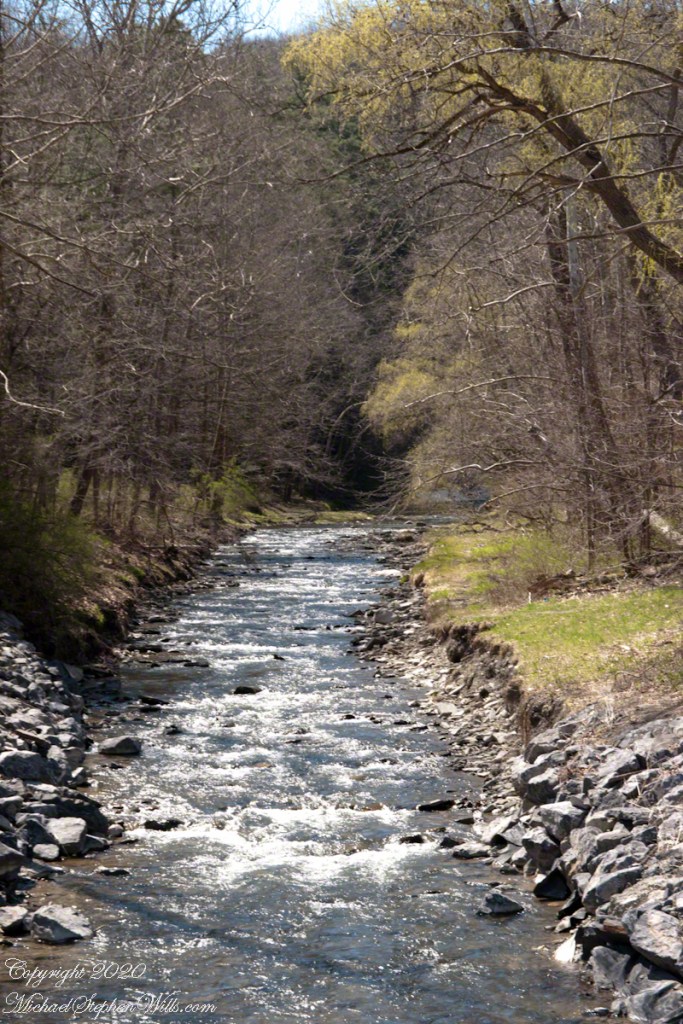
Enfield Creek from park bridge
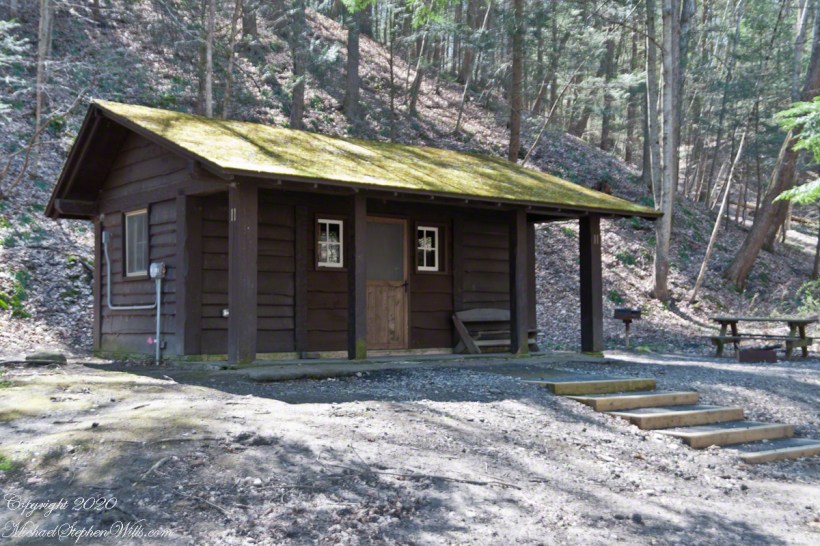
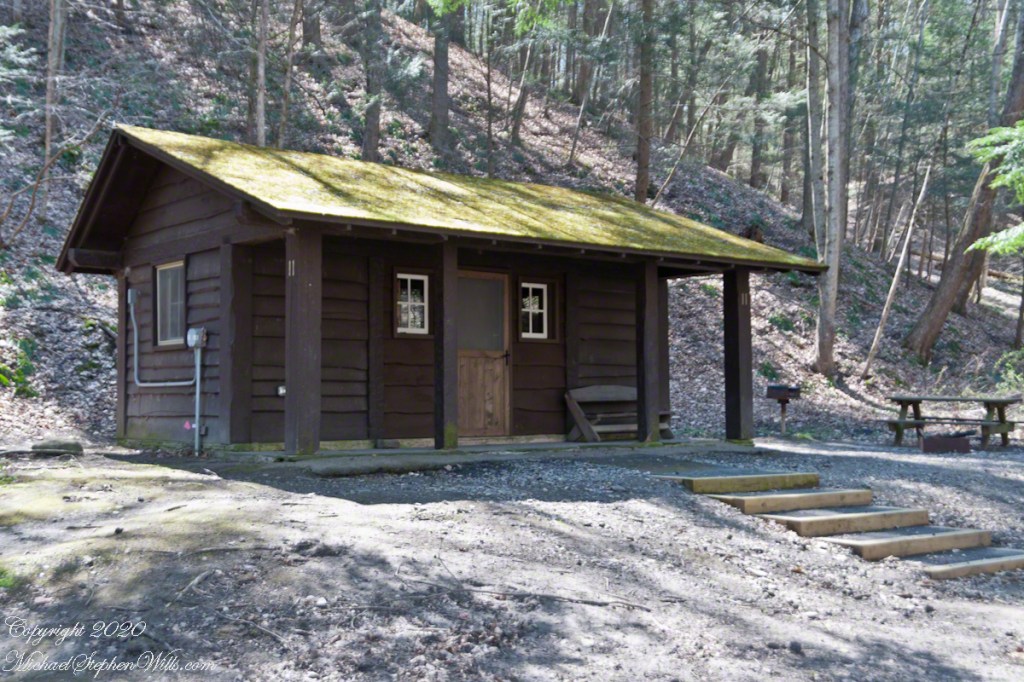
The path to a trail that climbs up the south side of Enfield Glen crosses Enfield Creek via a bridge, wends through cabins……
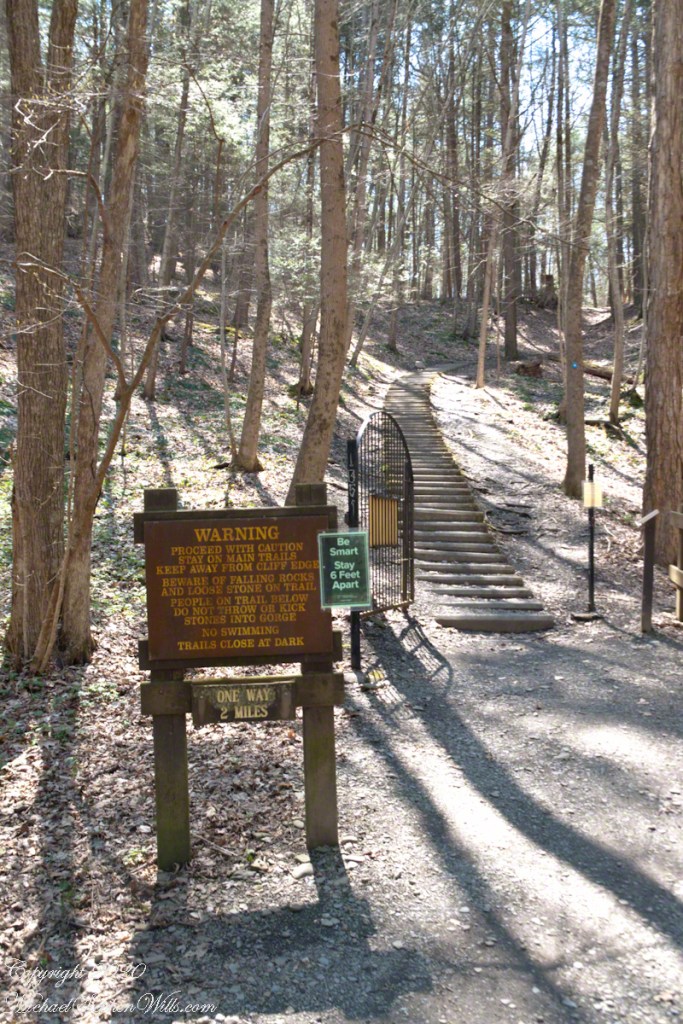
…..then heads up stairs that can seem to be forever. The green sign with white letters is new. This the South Rim Trail avoids the cliffs that make the Gorge trail so dangerous November through May.
Copyright 2024 All Rights Reserved Michael Stephen Wills
Here is a recapitulation of my latest posts in the form of a slideshow.
Click photograph to start show. To do this from WordPress Reader, you need to first click the title of this post to open a new page.
Robert H. Treman New York State Park.
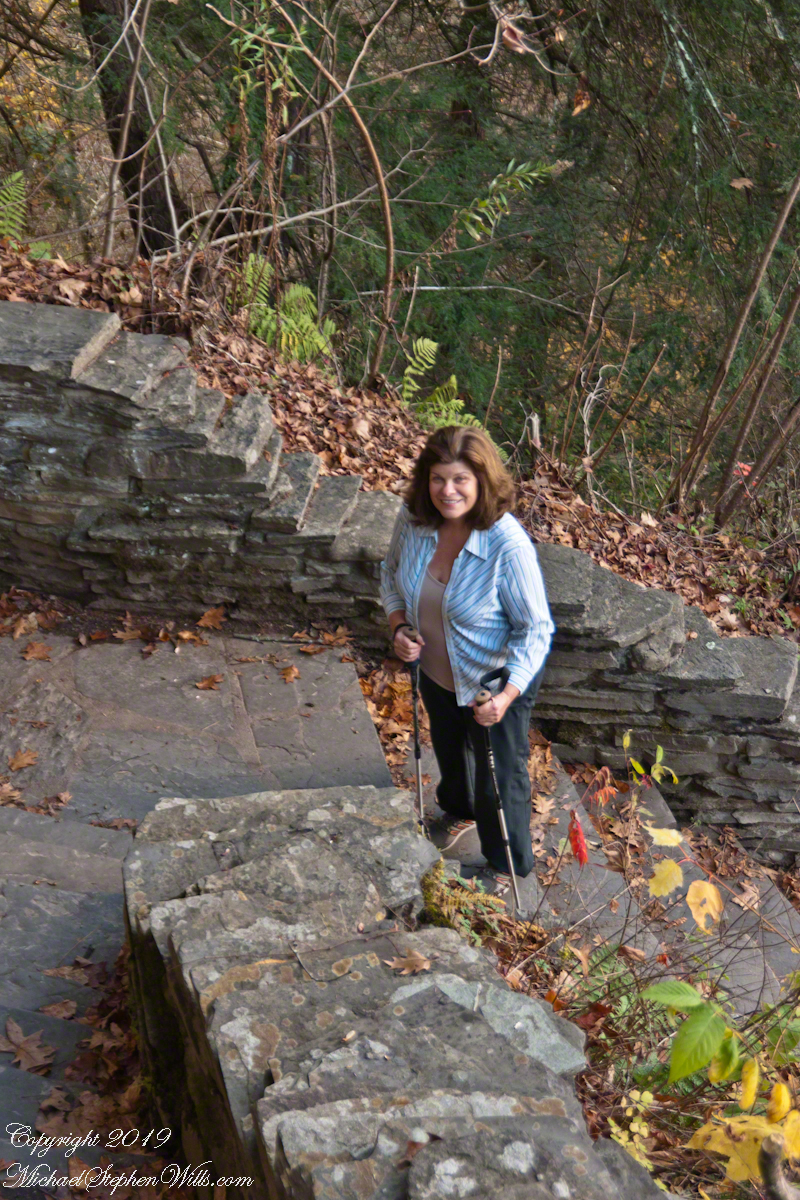
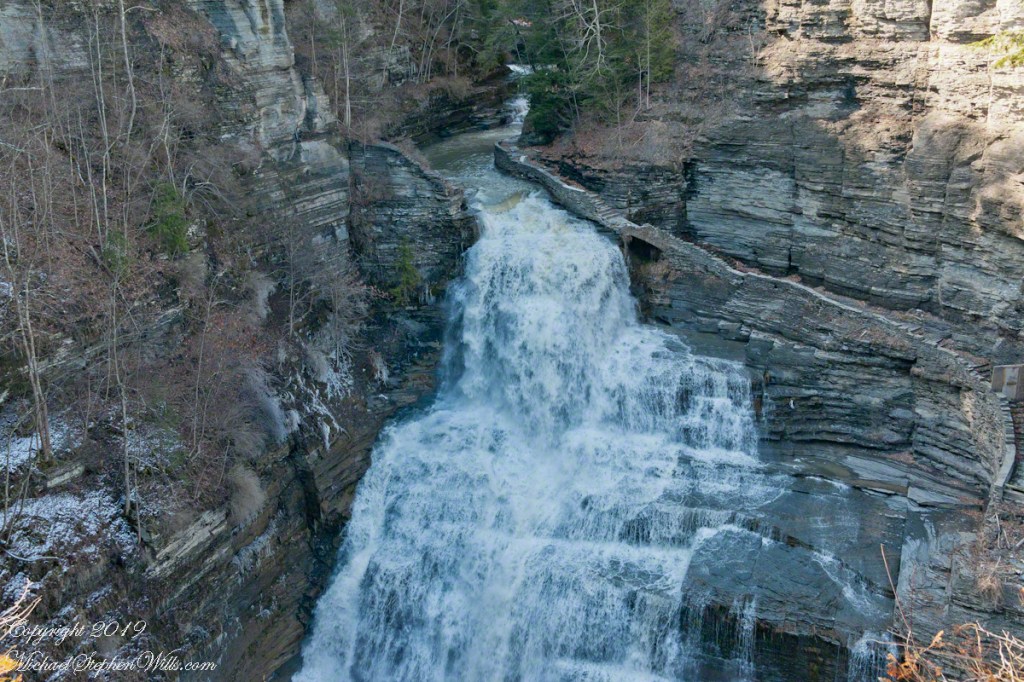
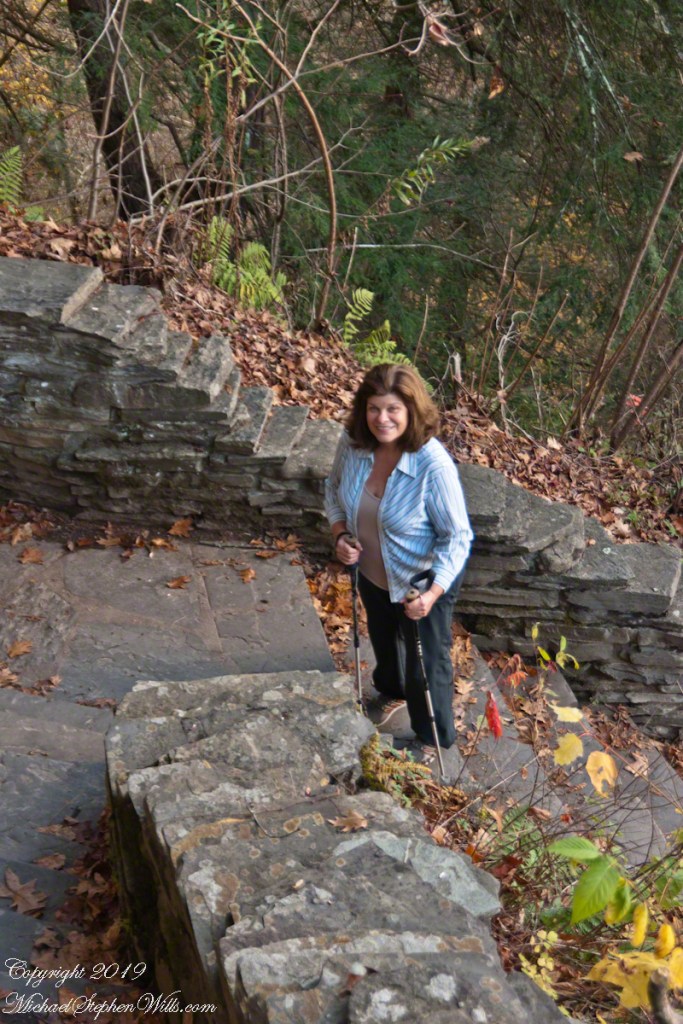
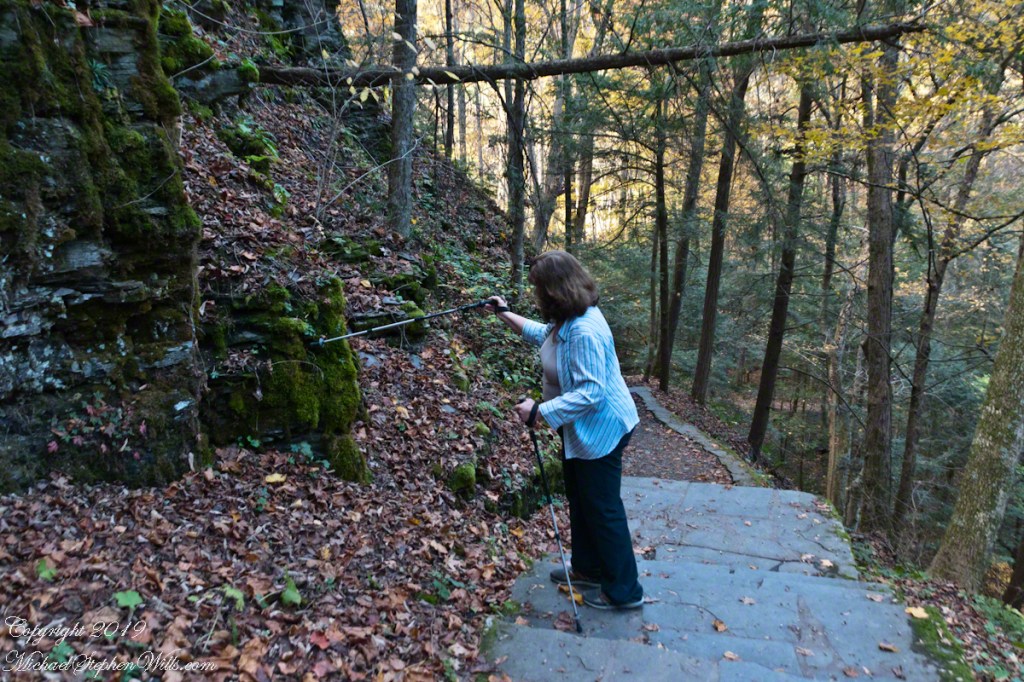
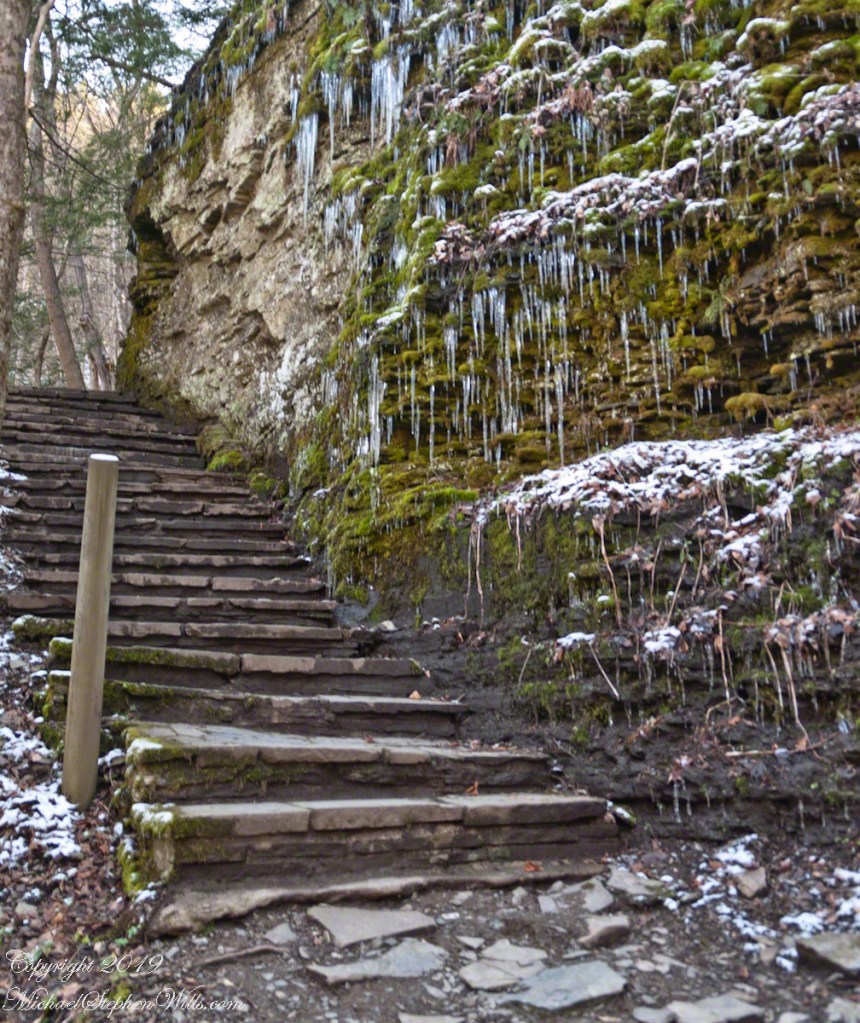
Lower Lucifer Falls, early spring eveningLucifer Falls, early spring eveningPam on the Cliff StaircasePam examines the mossSo Like a Christmas TreeCliff StairLucifer Falls with Hemlock CurtainIcicle WonderlandSudden Frost April, Cliff StairsIcicles, Cliff StairSedimentary WallsIcicles hang over Fish KillRim Trail AscentRim Trail iciclesRim Trail icicles with lichen, moss and fern.Rim Trail icicles with lichen, moss and fern.Gully IGully IIVernal Pool with Vinca VineBeneath the Cliff Stairs IIBeneath the Cliff Stairs IRim Trail AscentFern, Moss, young trees, April SnowFresh Icicle with FernFern Frond with Early April SnowLate April Snow dusted with light
Copyright 2024 All Rights Reserved Michael Stephen Wills
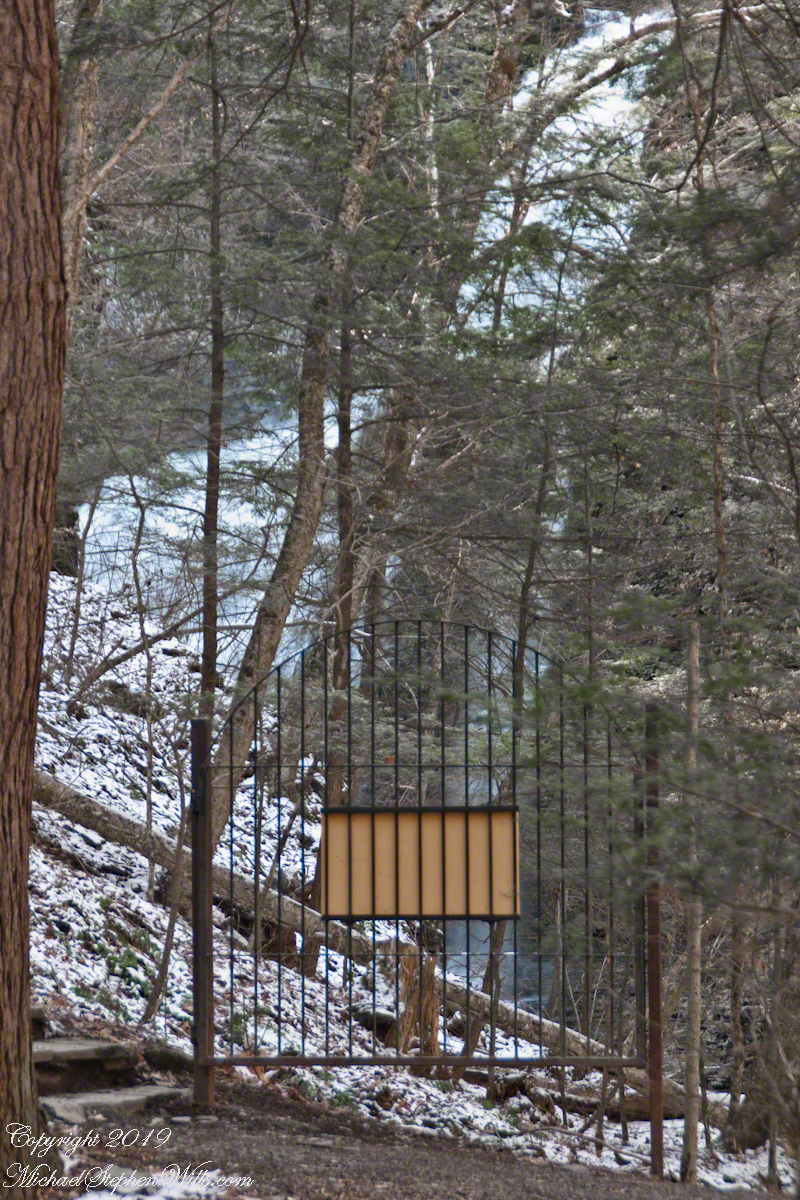
It is the Gorge Trail that’s closed for the cold months, November through April. The Rim Trail remains open for those who dare icy, steep paths Unlike Gorge Trail, Rim Trail climbs above the dangerous cliffs from which rocks are wedged free by ice to fall on the trail. On an early spring day, after a sudden frost, we walked the Rim Trail to capture the moment.
Here is the steep start, climbing up from the Upper Park where a footbridge crosses Fish Kill. Kill is the old Dutch word for creek. Fish Kill mergers with Enfield Creek a few hundred feet downstream.
Click photograph for a larger view. To do this from WordPress Reader, you need to first click the title of this post to open a new page.
Rim Trail Ascent
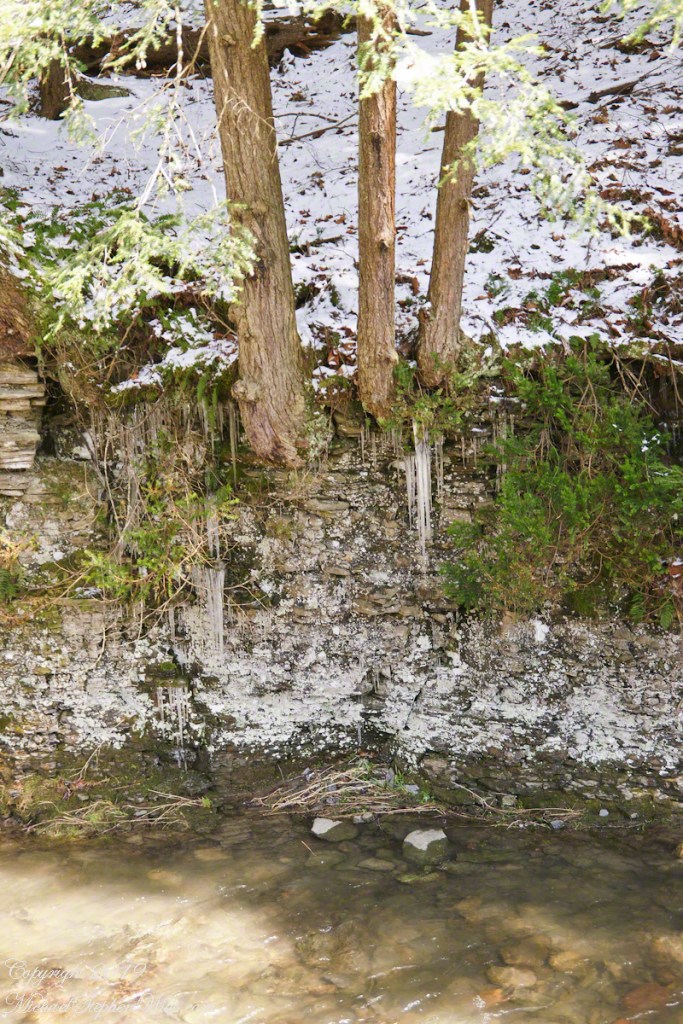
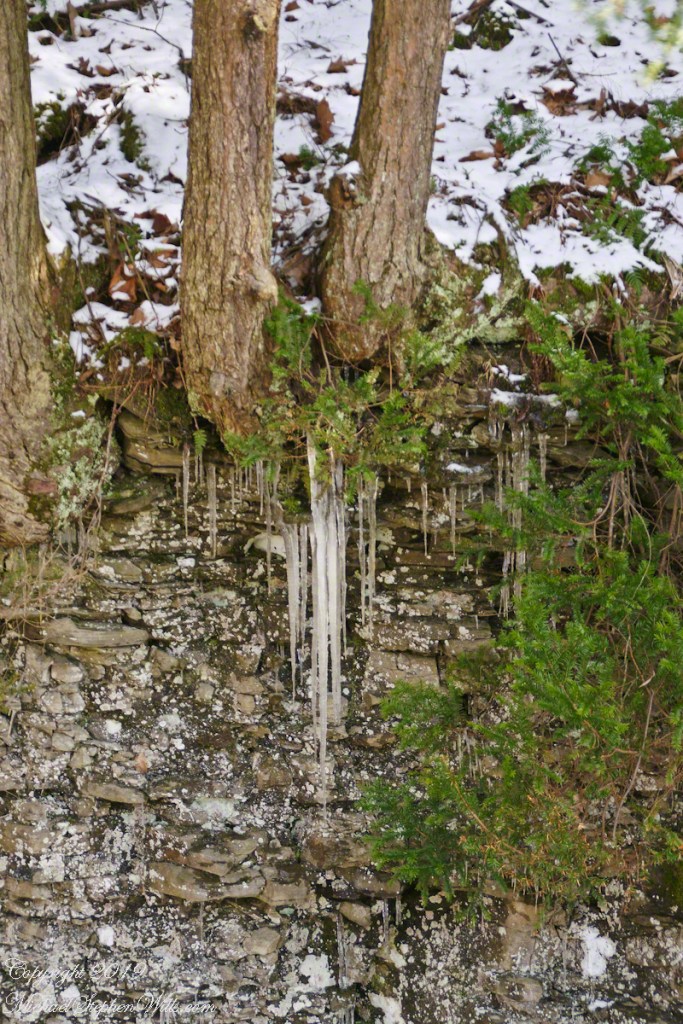
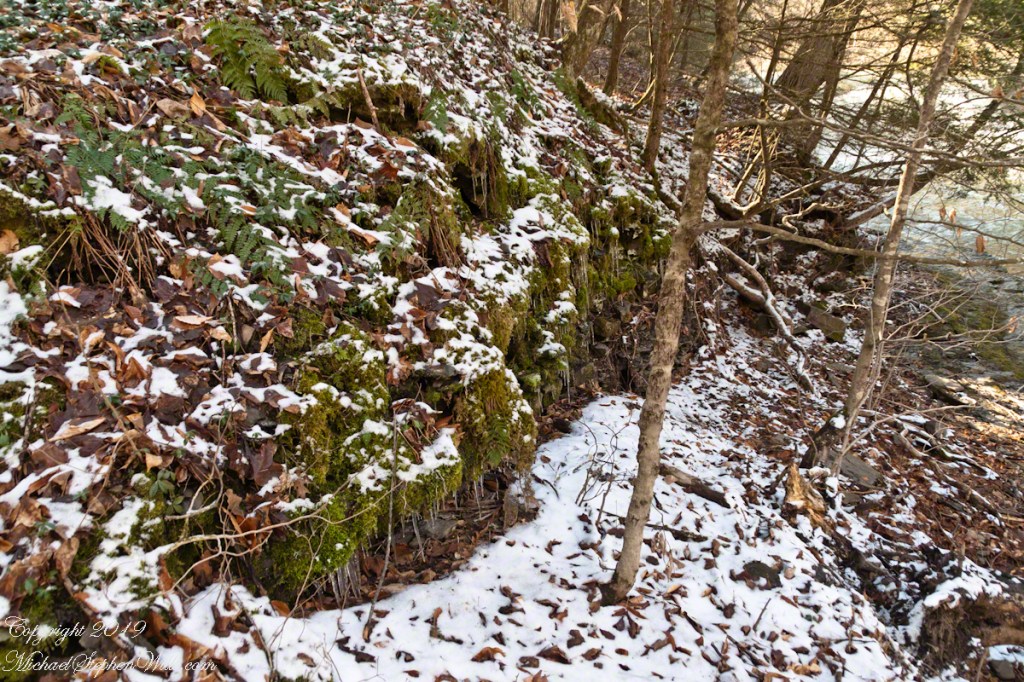
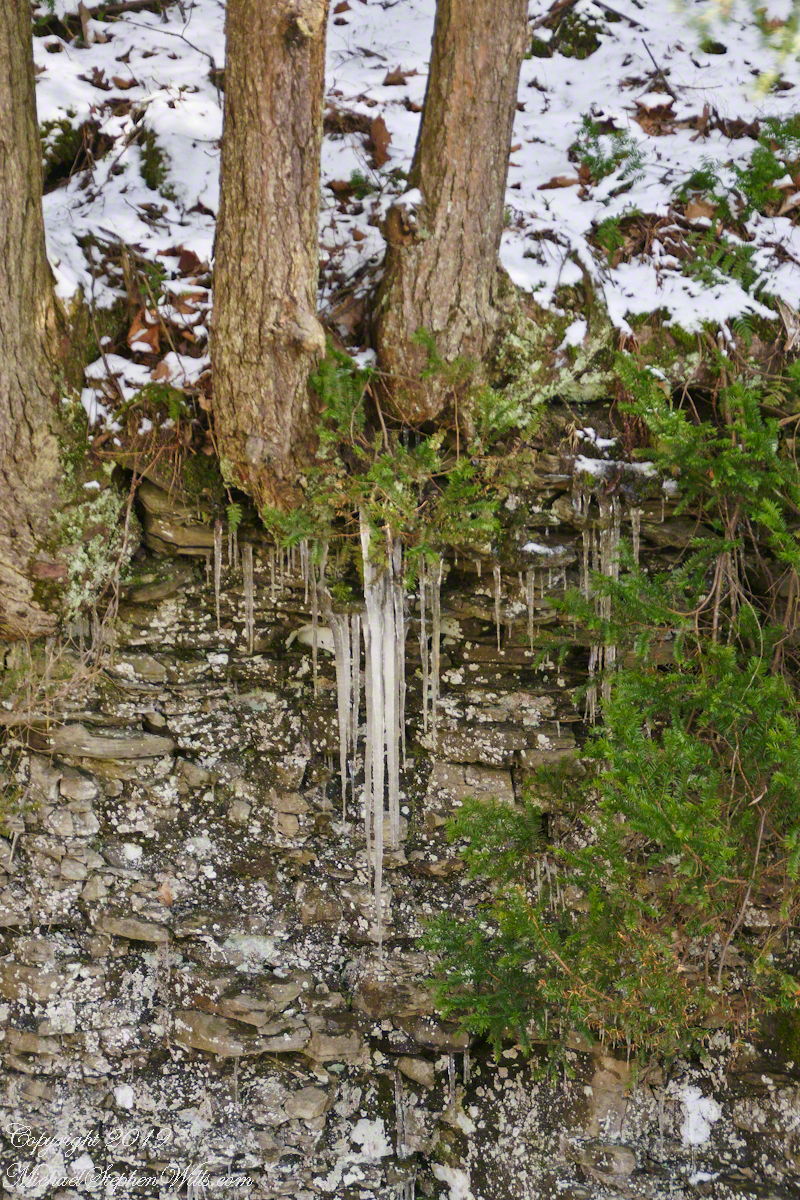
This north facing slope stays frozen into May. Here layers of the sedimentary rock shale, laid down in a shallow warm sea over 350 million years ago, are slowly pried apart. Hemlock tree roots wedge between rock layers, slowly growing. The action of ice, water expands in volume at the point of freezing, aids the process.
In places the rock face appears to be a hastily made dry stone wall, the rock layers are so disrupted by plant and frost.
Rim Trail icicles
These shots were hand held. I used a Sony Alpha 700 dslr with a variable “zoom” lens, great for framing compositions.
Robert H. Treman New York State Park.
Click for a slideshow of this Waterfall of the Old Mill sequence
Falls by the Old Mill, early springThe falls run free of ice. On an early spring day, after a sudden frost, we walked the Rim Trail to capture the moment.The falls run free of ice. On an early spring day, after a sudden frost, we walked the Rim Trail to capture the moment.New icicles formed overnight from seeps through the sedimentary walls around the Waterfall by the Old Mill. On an early spring day, after a sudden frost, we walked the Rim Trail to capture the moment.Rim Trail icicles
Copyright 2024 All Rights Reserved Michael Stephen Wills
Here the Rim Trail climbs out of the flats beneath the Cliff Stairs, away from Enfield Creek, onto the upper slopes of the gorge.
Click photograph for a larger view. To do this from WordPress Reader, you need to first click the title of this post to open a new page.
Rim Trail Ascent
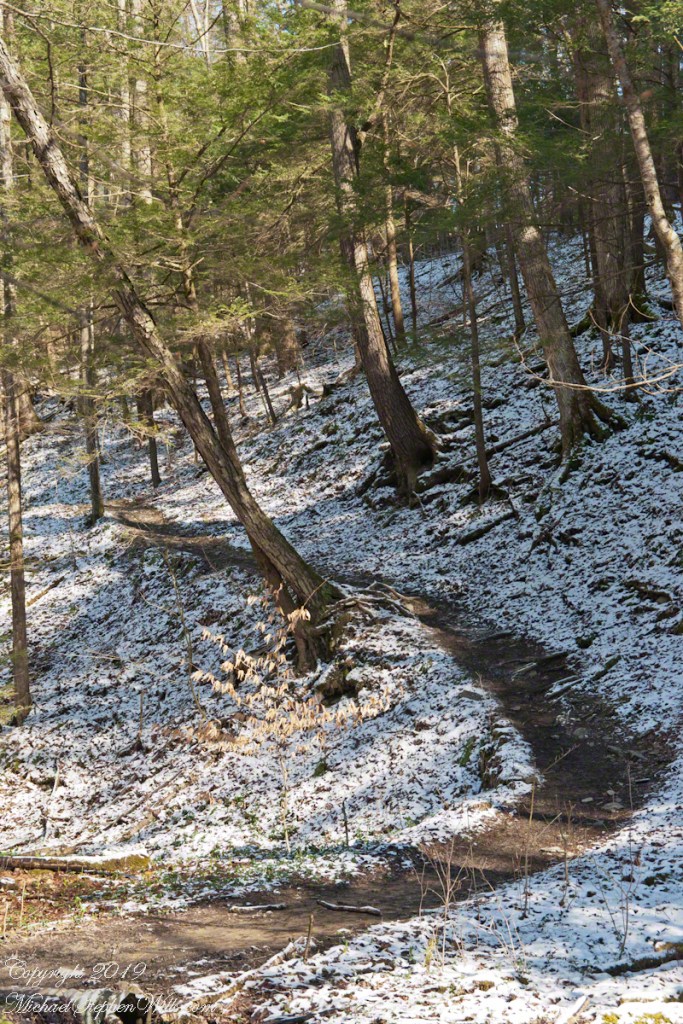
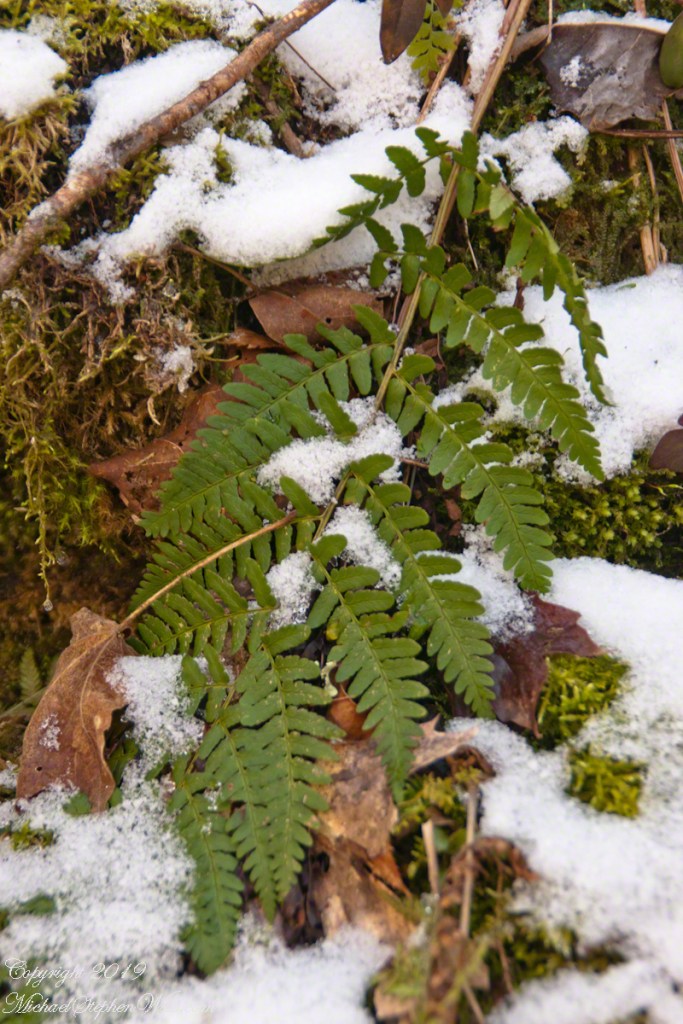
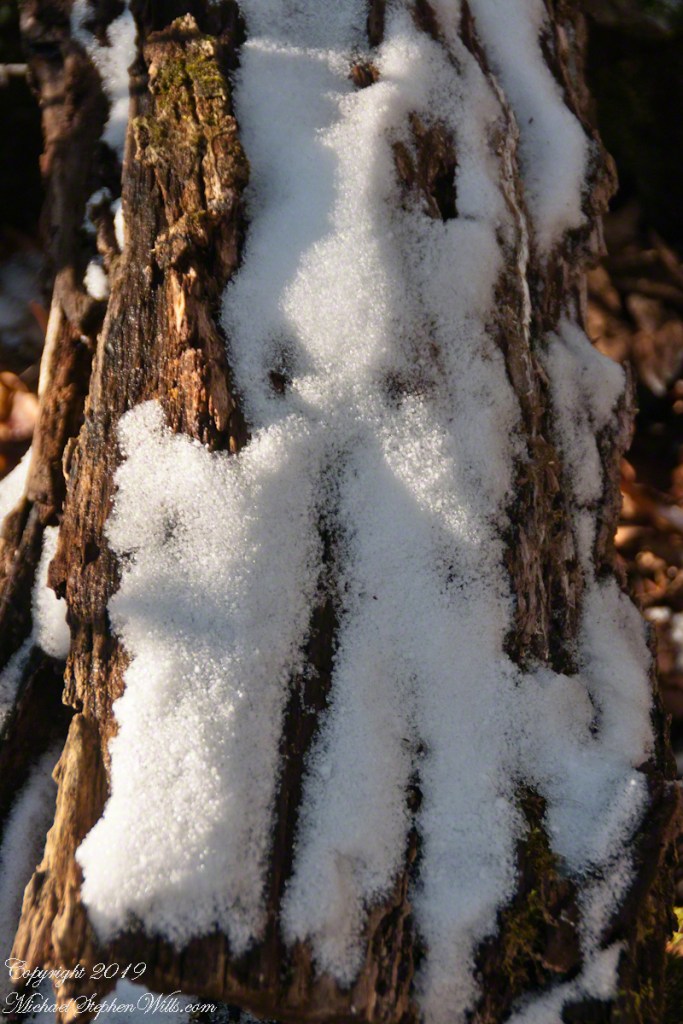
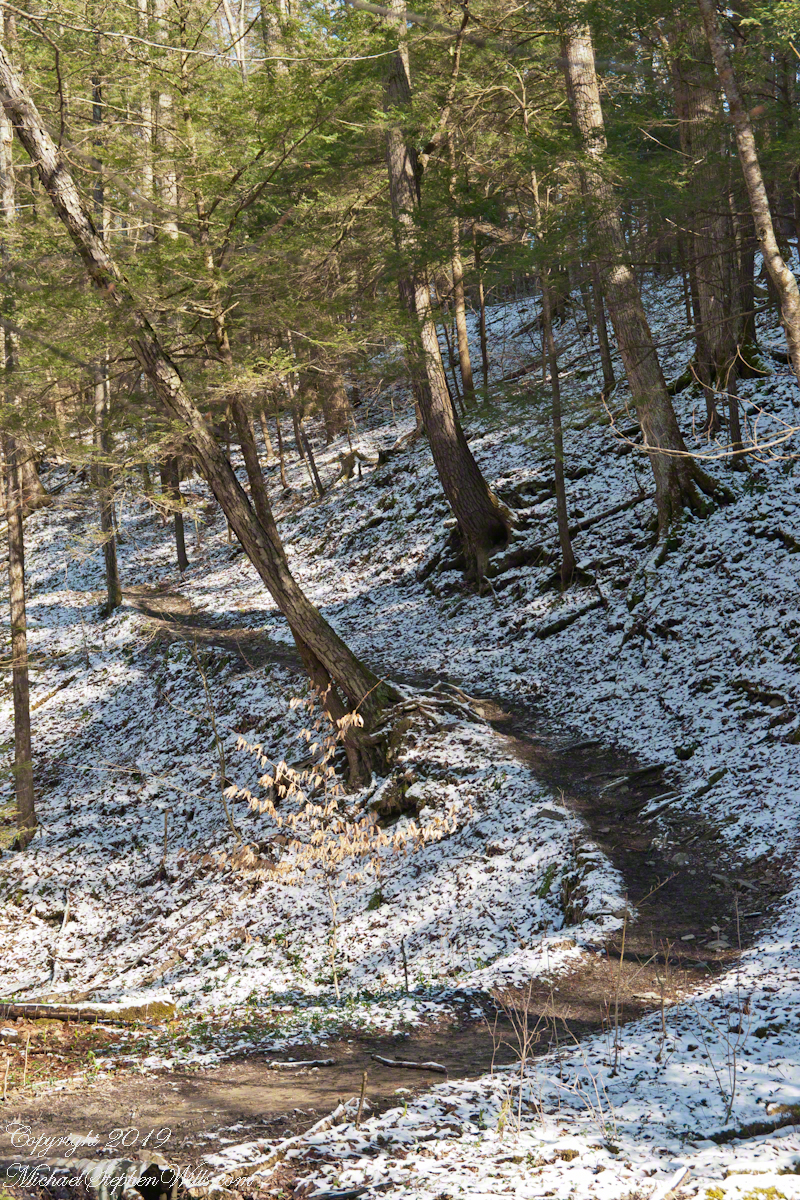
Early spring snow highlights the path, threading between hemlocks. The American realistic painter Andrew Wyeth comes to mind with I see the mottled texture of this light snow. He captured some of this in landscape paintings such as “Snow Flurries.”
Here is more of this effect……
Fern, Moss, young trees, April Snow
These shots were hand held. I used a Sony Alpha 700 dslr with a variable “zoom” lens, great for framing compositions.
Robert H. Treman New York State Park.
Click for a slideshow of this Fertile Flats sequence.
Beneath the Cliff Stairs IBeneath the Cliff Stairs IIRim Trail AscentVernal Pool with Vinca VineFern, Moss, young trees, April Snow
Copyright 2024 All Rights Reserved Michael Stephen Wills
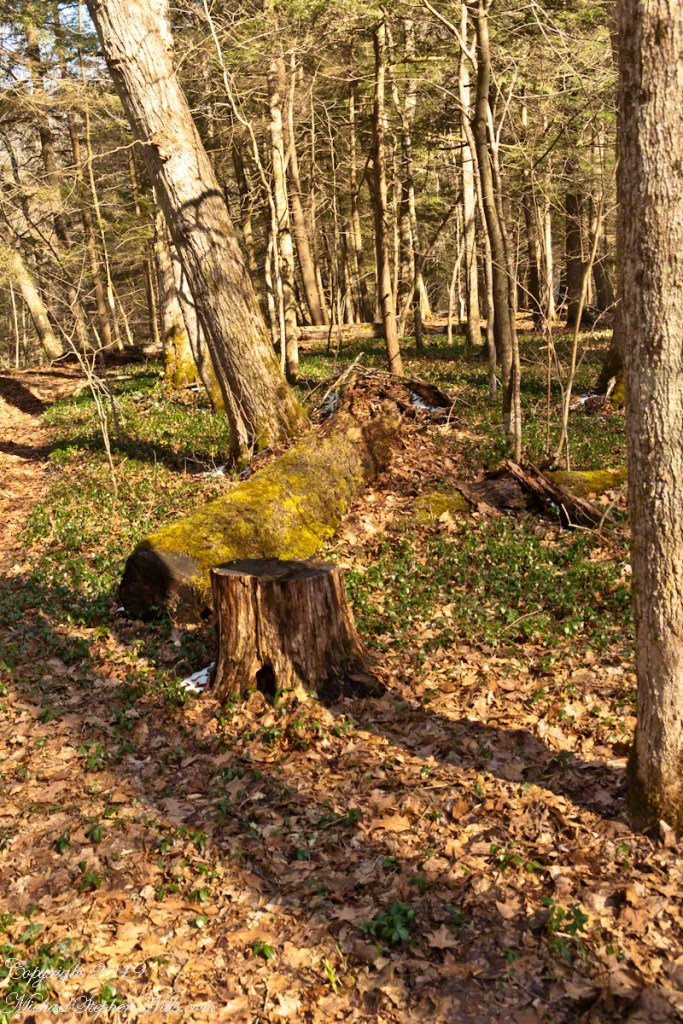
A broad, fertile flat between gorge walls supports a dense growth of invasive creeping myrtle. Springtime there is a sprinkling of small blue flowers, this may be the source of another name, periwinkle, or lesser periwinkle.
Click photograph for a larger view. To do this from WordPress Reader, you need to first click the title of this post to open a new page.
Beneath the Cliff Stairs I
Periwinkle is an evergreen and in early times vinca vine (another name we call it, from the scientific name Vinca Minor) was planted in graveyards and cemeteries. The isolated growth of vinca vine in this section of the gorge maybe from such a planting on a lost grave.
Beneath the Cliff Stairs II
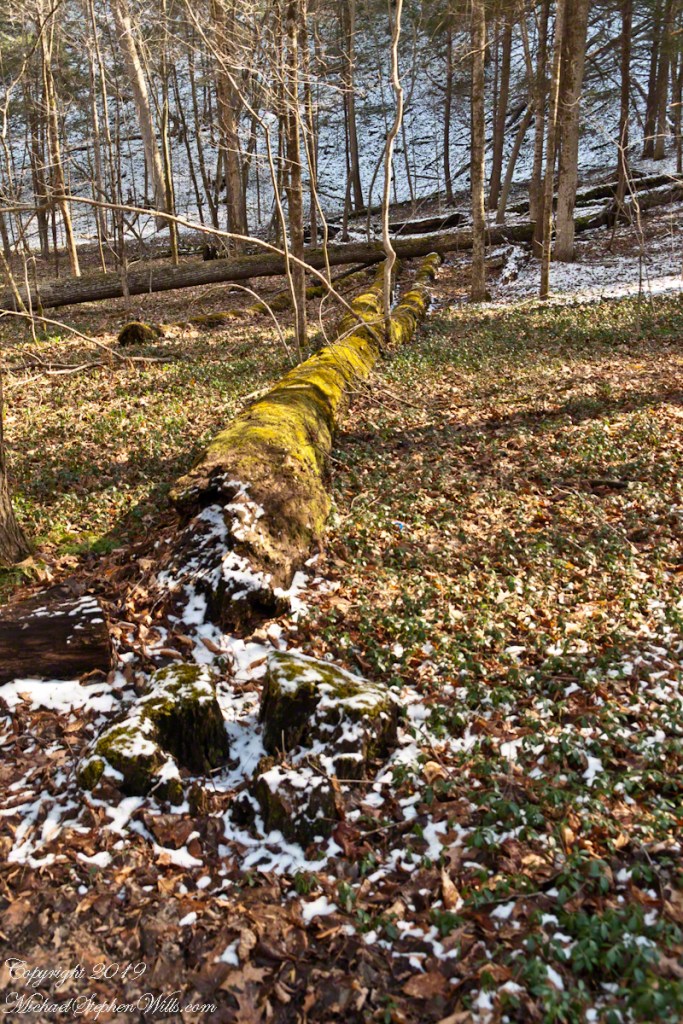
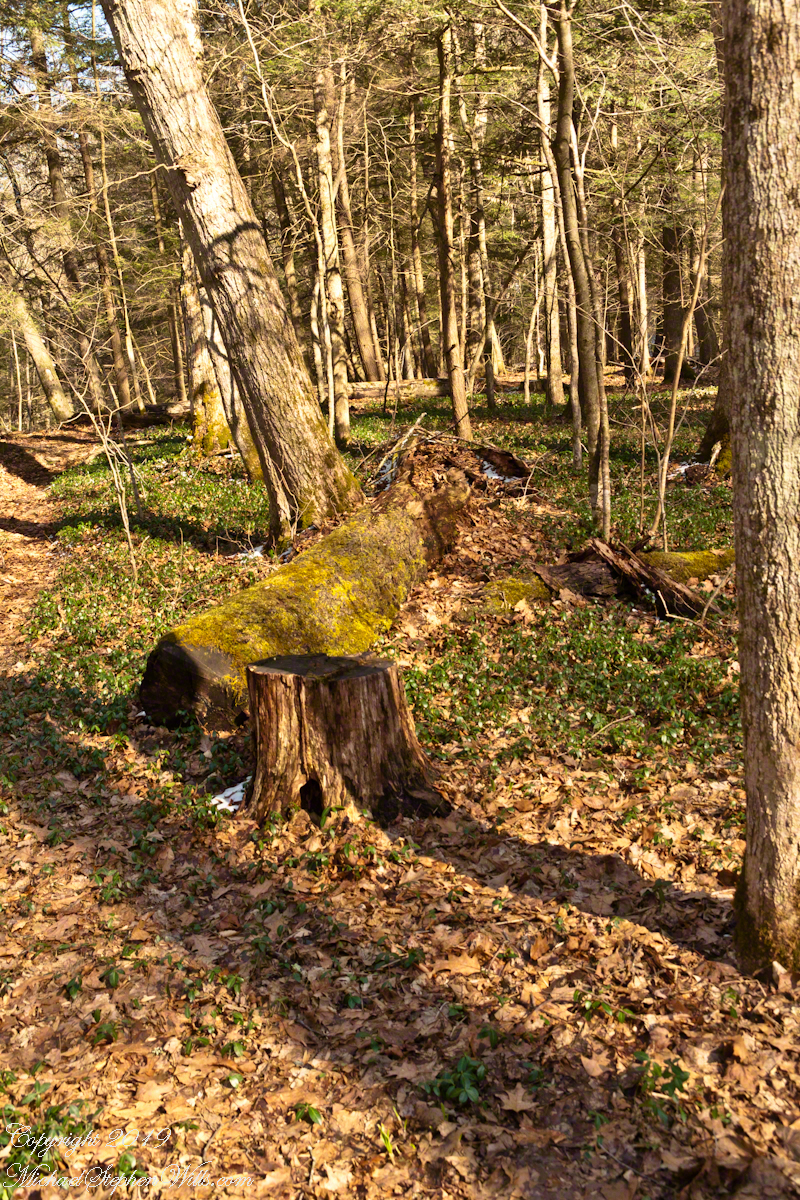
Today, the park practices leaving fallen trees in place, here they are covered in years of moss, a memory of headstones. Lesser Perriwinkle is significant for the living as the source of vincamine, from the leaves. A synthetic form of this compound is a potent vasodilator, a therapeutic treatment for stroke and other brain disorders.
These shots were hand held. I used a Sony Alpha 700 dslr with a variable “zoom” lens, great for framing compositions.
Robert H. Treman New York State Park.
Source: Wikipedia, “Vinca Minor.”
Click for a slideshow of this Fertile Flats sequence.
Beneath the Cliff Stairs IBeneath the Cliff Stairs IIVernal Pool with Vinca Vine
Copyright 2024 All Rights Reserved Michael Stephen Wills
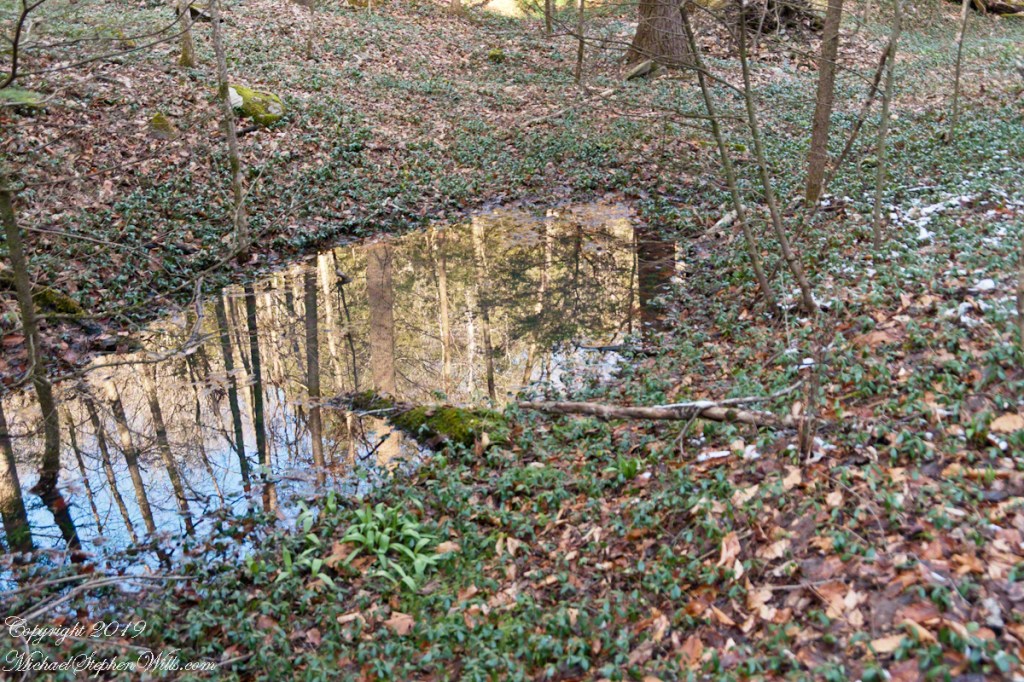
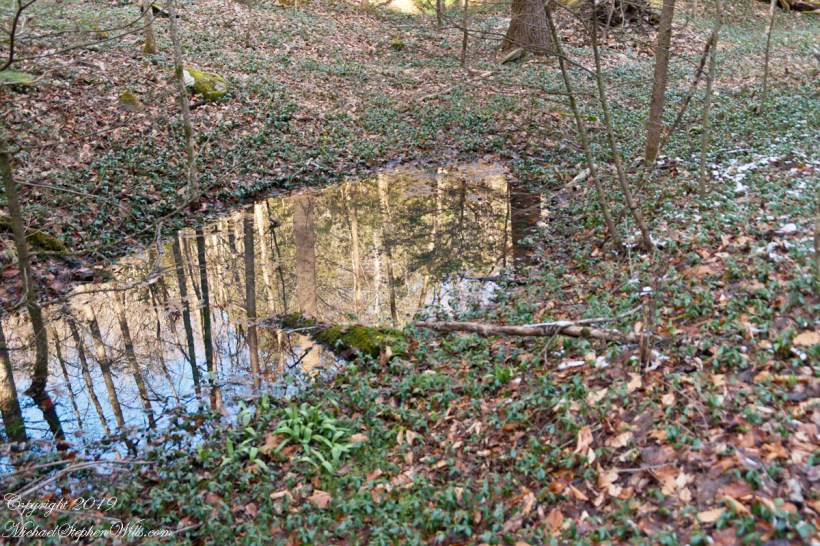
Melting snow, spring rains, gather in hollows of the forest floor to form ephemeral pools important for the development of amphibian life.
Click photograph for a larger view. To do this from WordPress Reader, you need to first click the title of this post to open a new page.
Vernal Pool with Vinca Vine
Also named vernal pools, from the Latin word for spring or the time of the equinox. The pools are ephemeral in the sense of being temporary, disappearing in the warmer, dryer late spring and summer months, a characteristic important for amphibian live in being devoid of predatory fish.
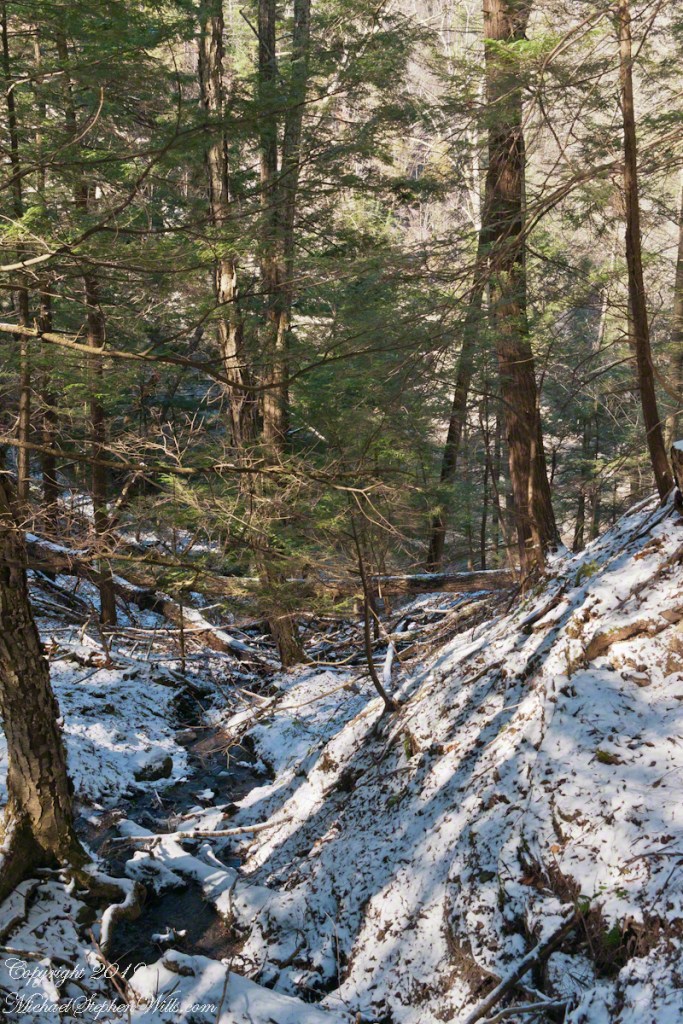
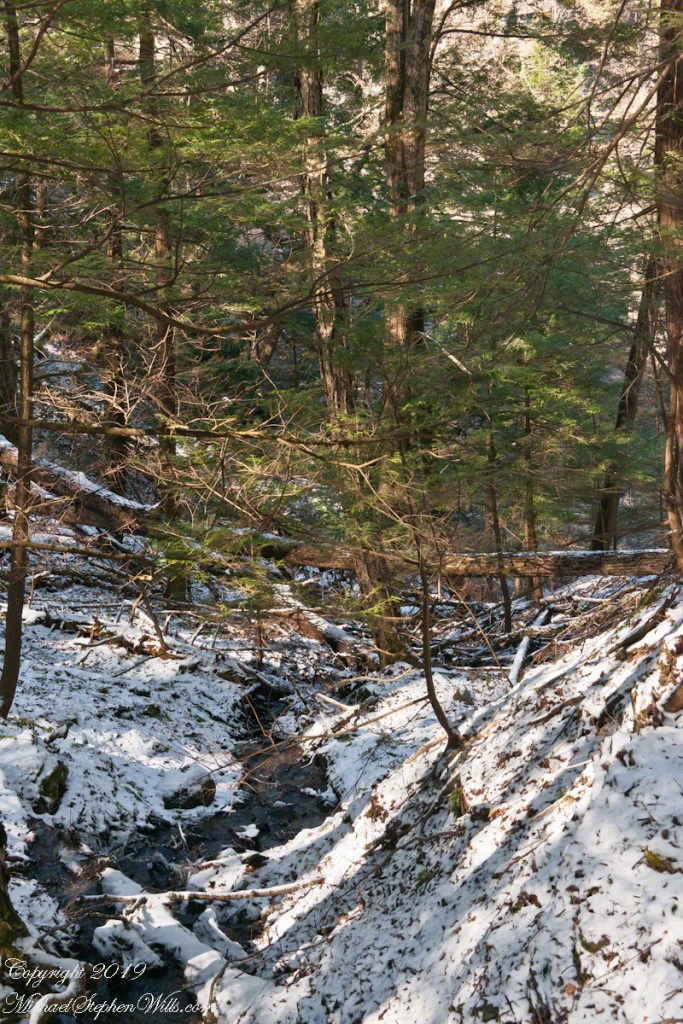
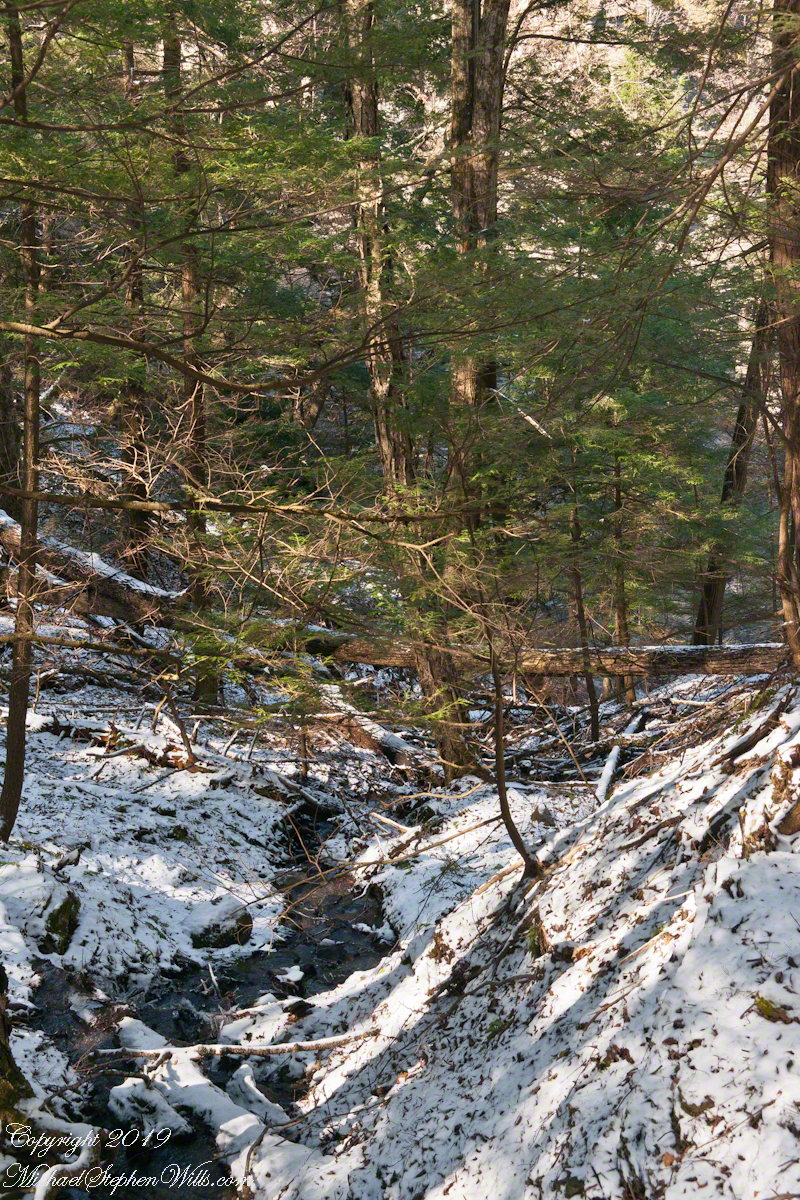
Rim trail traverses gullies. These creases in the gorge walls were formed by small streams flowing to Enfield Creek.
Click photograph for a larger view. To do this from WordPress Reader, you need to first click the title of this post to open a new page.
Gully I
Some passages require a wade, others have elaborate walkways with bridges. I initially wanted to call these ravines. Upon researching the term discovered while ravines are formed by erosion, the scale here is much smaller. I could rename Enfield Gorge, to Enfield Ravine.
Gully II
These shots were hand held. I used a Sony Alpha 700 dslr with a variable “zoom” lens, great for framing compositions.
Robert H. Treman New York State Park.
Click for a slideshow of this Waterfall of the Old Mill sequence
Rim Trail AscentRim Trail iciclesRim Trail icicles with lichen, moss and fern.Gully IGully II
Copyright 2024 All Rights Reserved Michael Stephen Wills
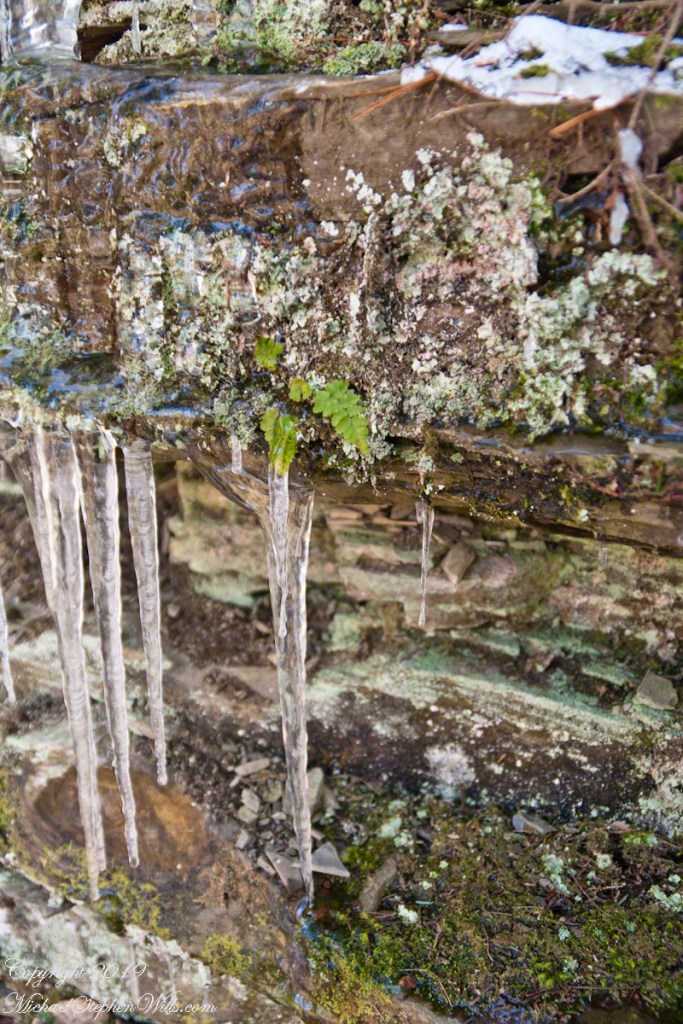
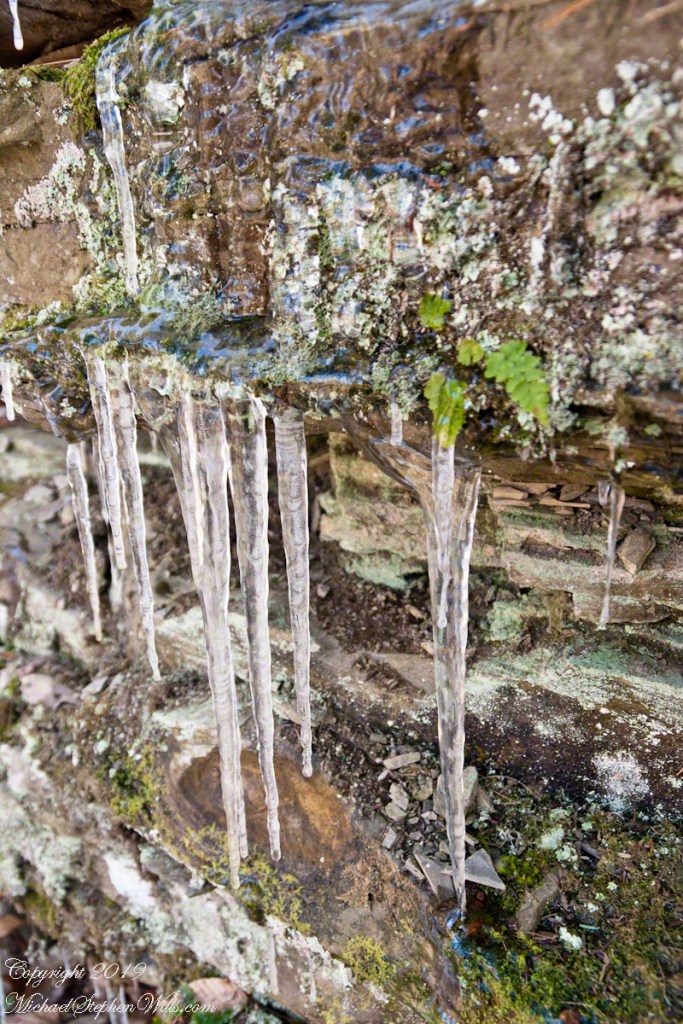
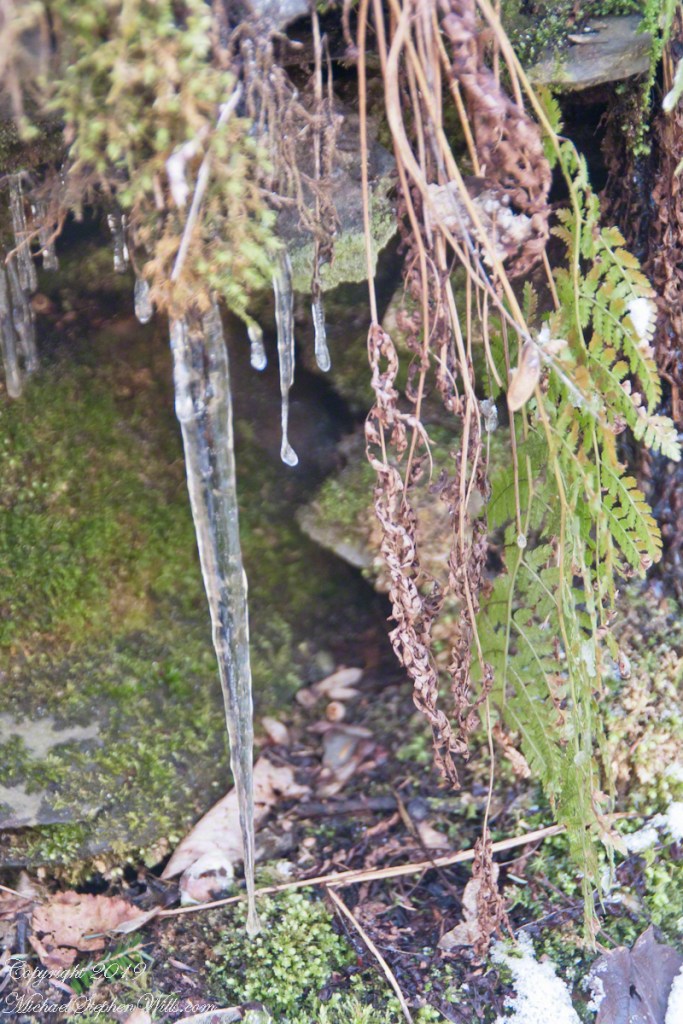
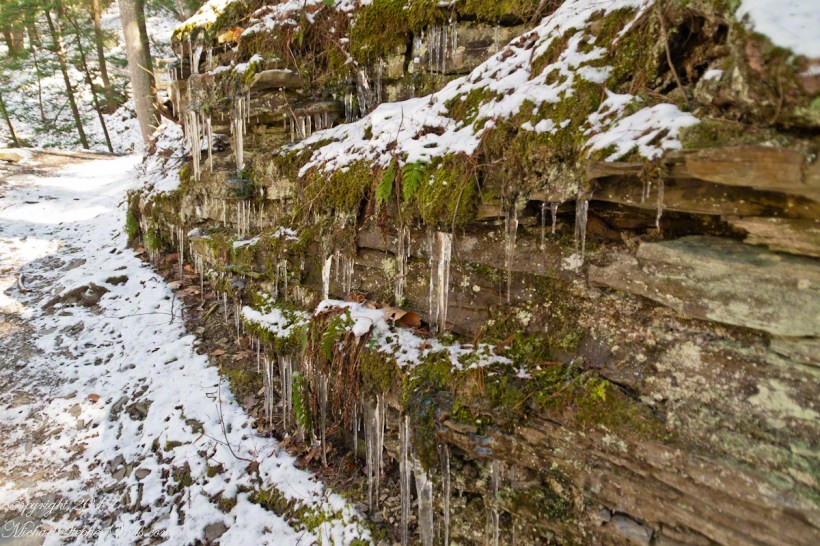
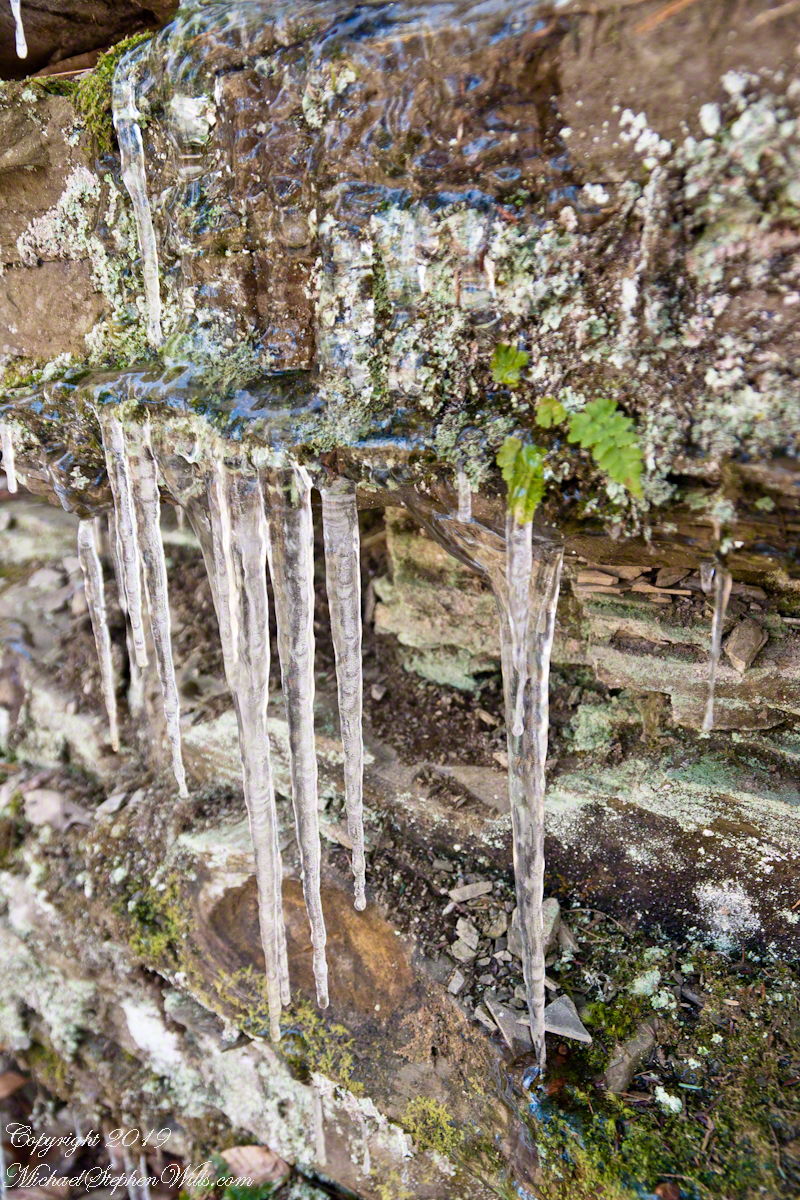
Water drips steadily from seeps, places water follows hidden cracks to emerge from the darkness. In warm seasons these may be a patch of moisture enabling the growth of ferns, only becoming evident when air is cold enough to freeze slowly running water.
Click photograph for a larger view. To do this from WordPress Reader, you need to first click the title of this post to open a new page.
Rim Trail icicles with lichen, moss and fern.
These macros capture the Moss, Fern and Lichen. These thrive in this environment.
These shots were hand held. I used a Sony Alpha 700 dslr with a variable “zoom” lens, great for framing compositions.
Robert H. Treman New York State Park.
Click for a slideshow of this Waterfall of the Old Mill sequence
Falls by the Old Mill, early springPlace where Fish Kill was harnessed to power the Old Mill Fish Kill Waterfall at the Old Mill. Sedimentary WallsIcicles hang over Fish KillRim Trail AscentRim Trail iciclesRim Trail icicles with lichen, moss and fern.This macro captures the Moss, Fern and Lichen. These thrive in this environment.
Copyright 2024 All Rights Reserved Michael Stephen Wills
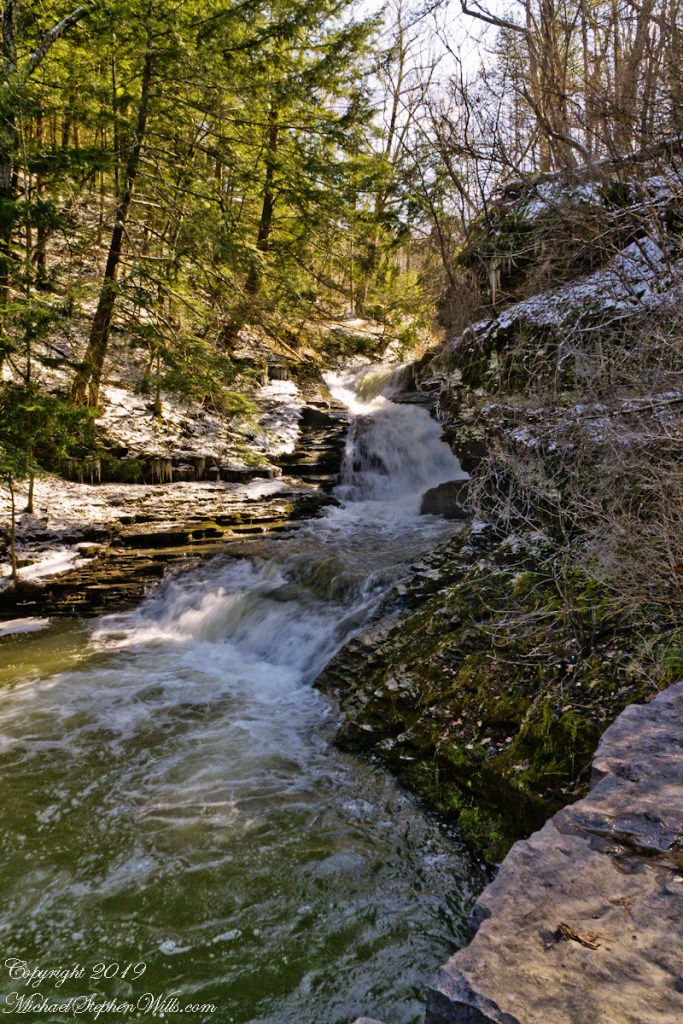
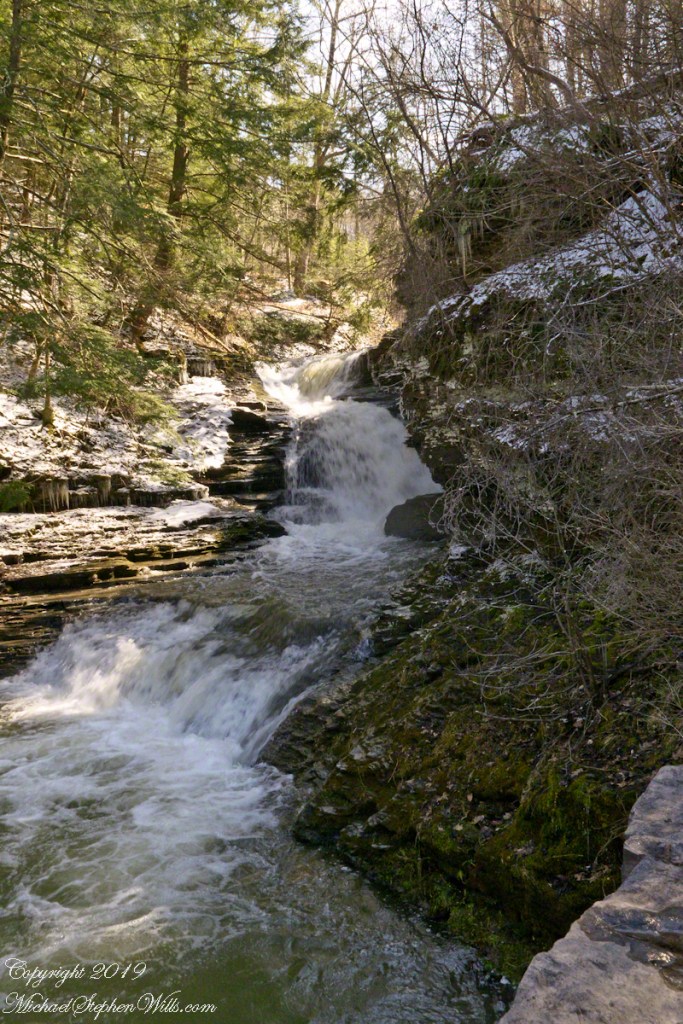
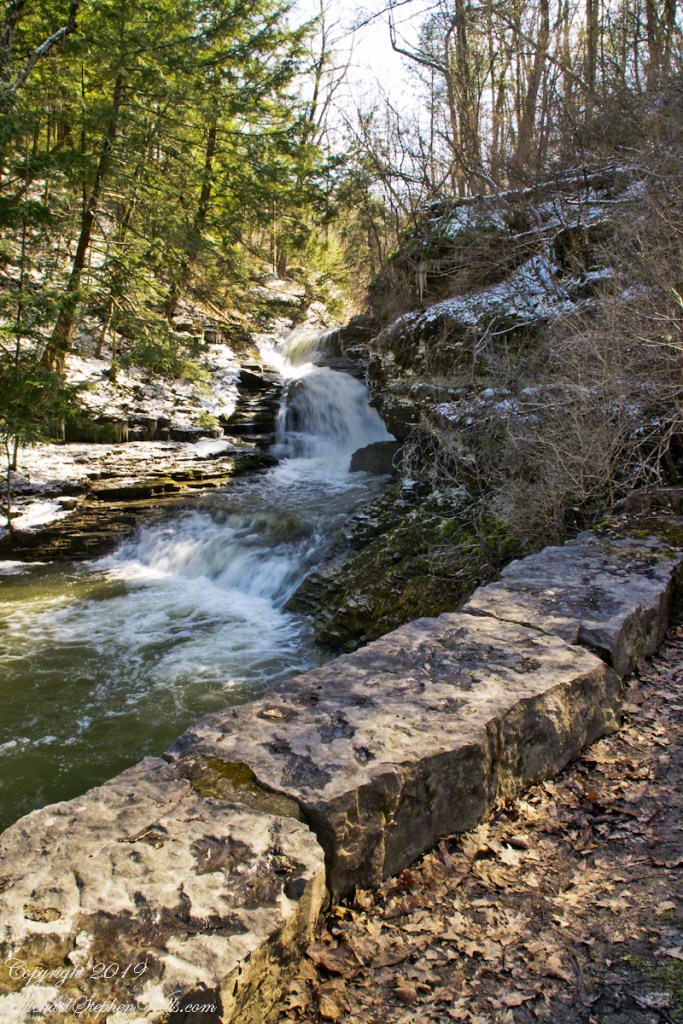
Step into an early spring morning where sudden frosts adorn the Waterfall by the Old Mill with fleeting icicles, capturing nature’s delicate balance between freeze and thaw.
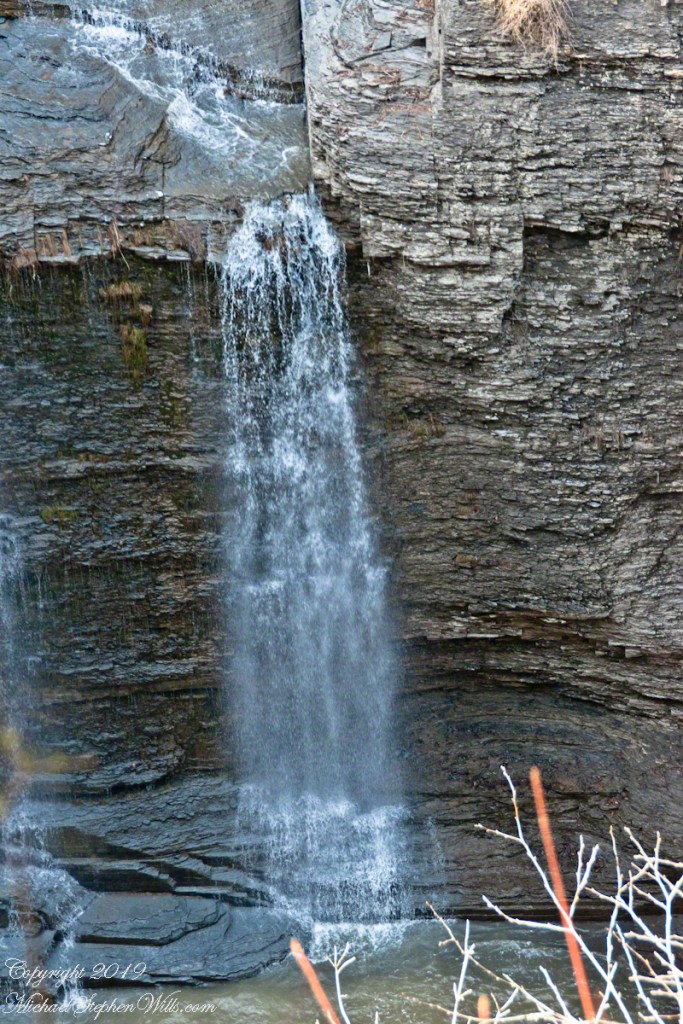
New icicles formed overnight from seeps through the sedimentary walls around the Waterfall by the Old Mill. On an early spring day, after a sudden frost, we walked the Rim Trail to capture the moment.
Here icicles formed during the quick April freeze hand above Fish Kill. Kill is an old Dutch word for creek.
Click photograph for a larger view. To do this from WordPress Reader, you need to first click the title of this post to open a new page.
Sedimentary Walls
Here a mix of frost and lichen mottle the rock layers.
These shots were hand held. I used a Sony Alpha 700 dslr with a variable “zoom” lens, great for framing compositions.
Robert H. Treman New York State Park.
Click for a slideshow of this Waterfall of the Old Mill sequence
Falls by the Old Mill, early spring
Copyright 2024 All Rights Reserved Michael Stephen Wills