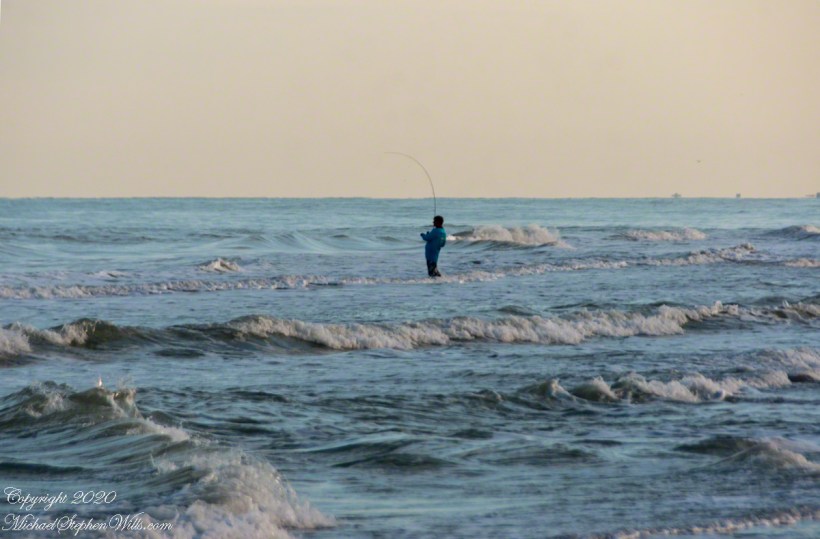
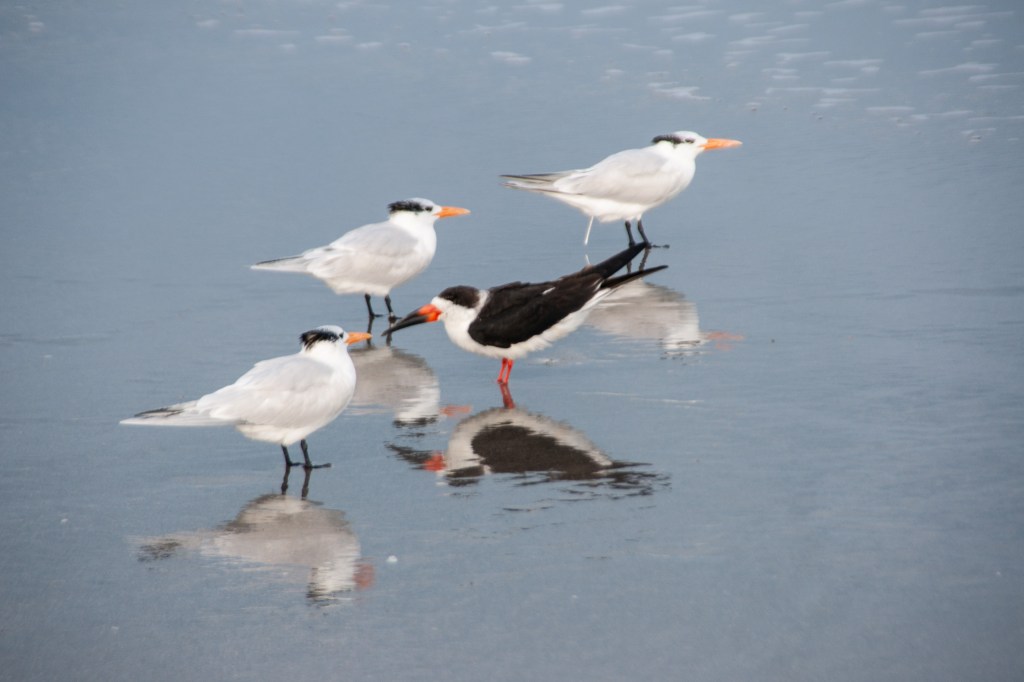
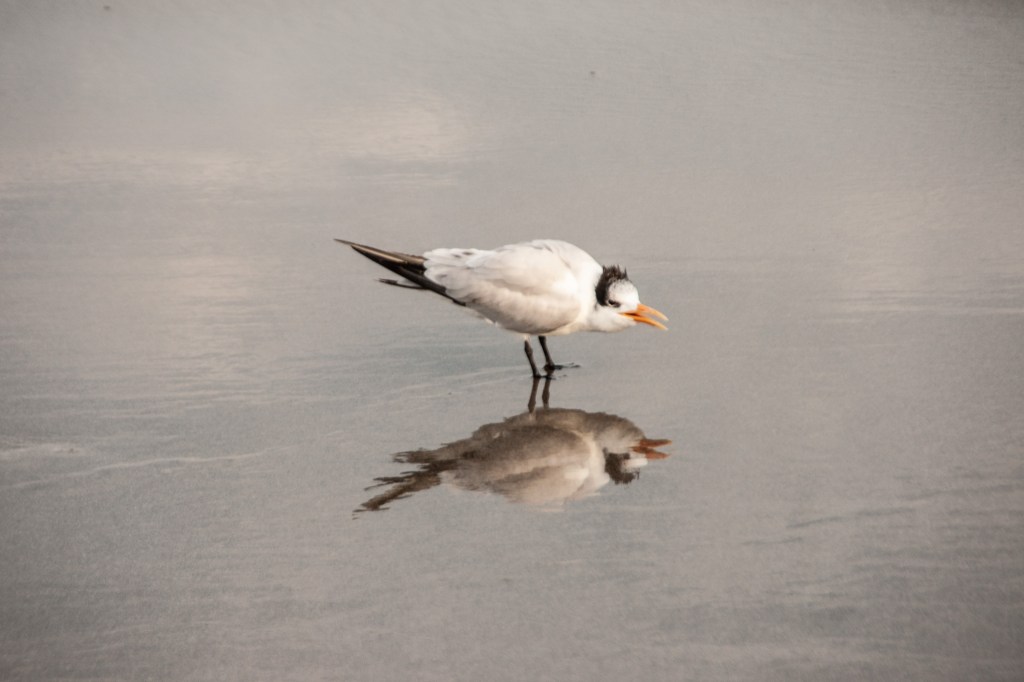
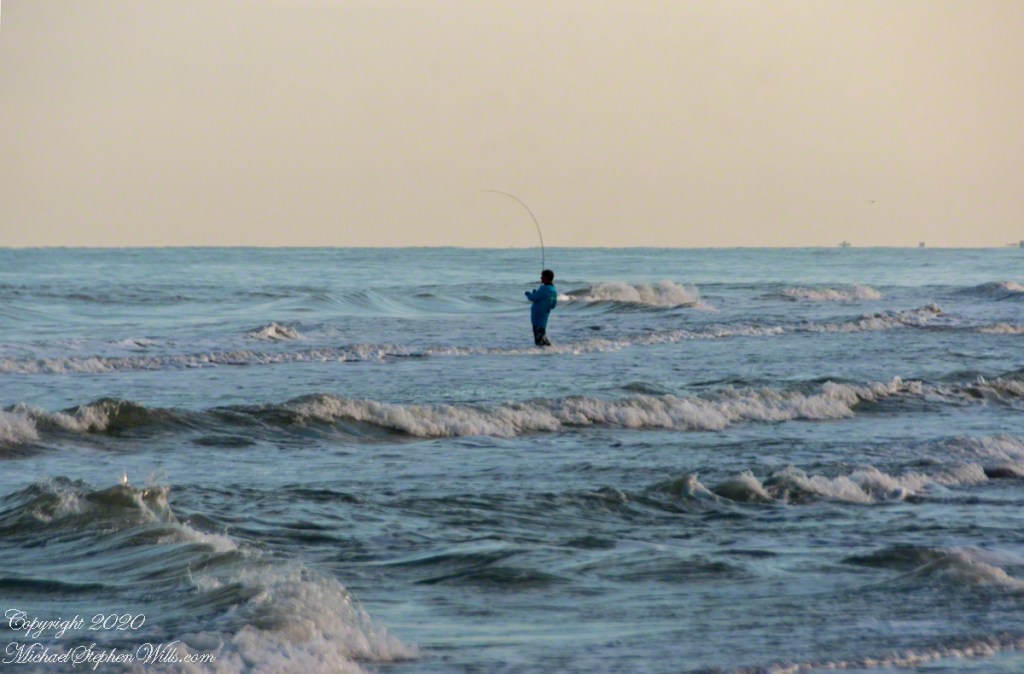
After 2 pm check in we interrupted unpacking for a sundown beach walk, IPhones and Sony Alpha 700 camera in hand on the last evening of 2019. There is a business on A1A, the main road through town, advertising “beach weddings” and “elopements.” Here, using the 18 – 200 mm f3.5-6.2 lens, I spied this grouping of a mature couple holding hands, minister in attendance, for a wedding ceremony witnessed by young adult children on the right, parents (?) left. The groom’s shorts contrast with the bride’s white gown.
Sunlight, low in the western sky, was perfect for mirror-like reflections in the retreating surf.
A given of the Atlantic beach is the late afternoon light, best for capturing figures against the ocean.
Written below the high tide mark, a message inscribed, impermanent in spite of the deep cuts.
I have practice framing sunsets against beach development. Cannot complain as we enjoy our beach side condo.
A slide show of these images.
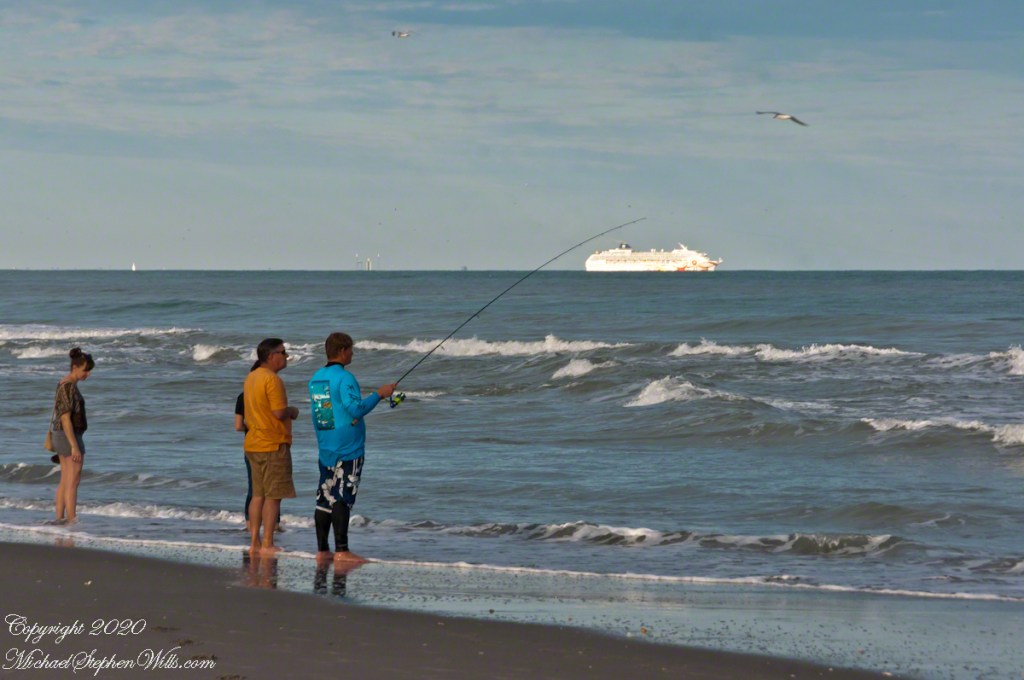
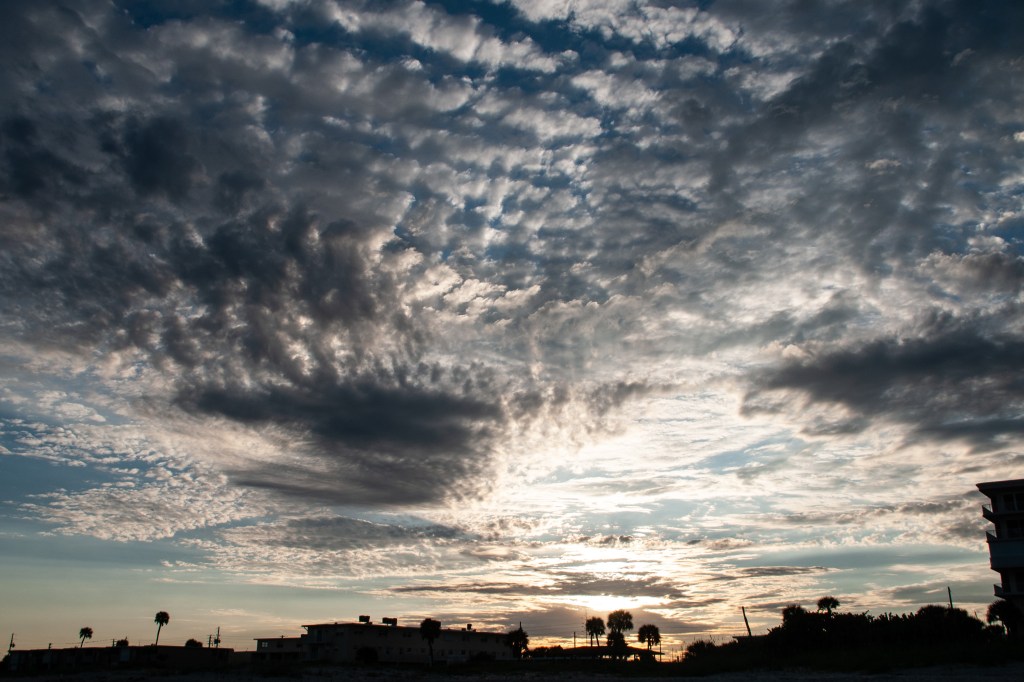
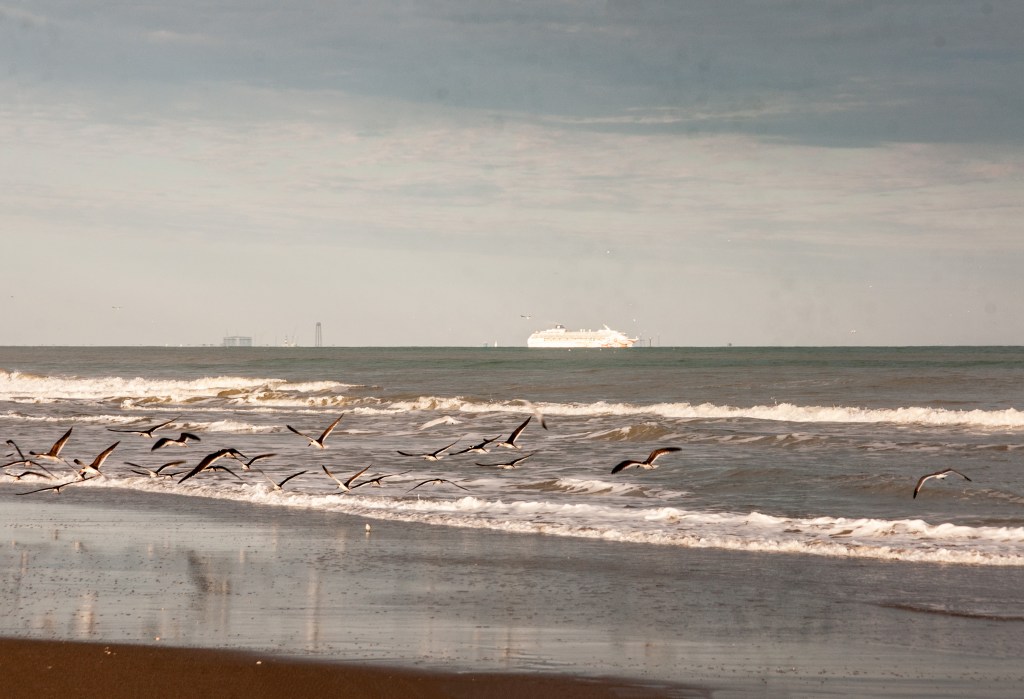
Mature Love / Beach VowsCruise Ships Depart Cape Canaveral Late AfternoonTo Each His Own PassionSurf CastingBlack Skimmer Going His Own WayGull ReflectionLast Sunset of 2019Messages in the Sand Washed Away Twice Daily at High Tide
Copyright 2024 All Rights Reserved Michael Stephen Wills
Witness a duel not of might, but of vibrant melodies between the cardinal and song sparrow. This 14-second video captures a fleeting yet profound moment in the Finger Lakes’ springtime chorus. Join us in unraveling the significance behind this avian serenade.
In the serene backdrop of the Finger Lakes in upstate New York, an enchanting encounter unfolds as the first whispers of spring touch the air. It’s March 14th, a day that marks the gentle shift from the silent, introspective winter to the lively, expressive season of spring. On this day, a captivating spectacle takes place — a duel not of might, but of melody. Two distinguished songbirds, a male cardinal (Cardinalis cardinalis) with its vibrant red plumage that seems to capture the very essence of life itself, and a male song sparrow (Melospiza melodia), modest in color yet profound in voice, engage in an early springtime symphony.
This 14-second video, garnished with brevity, captures a fleeting moment in nature’s grand concert, where these feathered musicians compete, not for supremacy, but for the sheer joy of song and the chance to herald the new season. The cardinal, with its rich, whistling tunes, fills the air with a repertoire of songs that resonate with the promise of new beginnings. Meanwhile, the song sparrow, with its intricate melodies that vary dramatically from bird to bird, offers a counterpoint that is both complex and captivating.
This auditory duel, set against the tranquil beauty of the Finger Lakes, is more than just a display of vocal prowess. It’s a ritual that speaks to the heart of nature’s cycle, a testament to the resilience and adaptability of these species. As these songbirds vie for the attention of mates and assert their presence in the spring landscape, they also remind us of the enduring beauty and mystery of the natural world. You’ll also catch the call of a crow and, in the distance, another Cardinal.
This moment, brief yet infinitely rich, invites us to pause and listen, to lose ourselves in the simple yet profound joy of birdsong. It’s a reminder that, even in the quietest corners of the world, life thrums with vibrancy and the promise of renewal. Join us as we delve into the story behind this melodic encounter, exploring the significance of song in the lives of these birds and the heralding of spring in the Finger Lakes.
Copyright 2024 Michael Stephen Wills All Rights Reserved
The exposed mudflats on tidal wetlands attract a variety of shorebirds. Shorebirds are seasonal residents that make long migratory journeys between their breeding grounds in the Arctic and their wintering areas in South America. Merritt Island NWR provides an important resting and feeding area for this group of birds. Some stay for the winter, and others use the refuge as a fuel stop before continuing on their journey.
In tidal areas, shorebird feeding schedules are influenced by the cycle of the tides. Changes in tidal cycles expose foraging areas in mudflats for a period during the day. At other points during the cycle, the water in these same areas becomes too deep or the ground too dry for shorebirds to feed effectively.
Shorebirds of different species can and do forage together. Because bill length and shape varies from species to species, birds can pursue different prey in the same area at the same time without competing with each other. Because of varying bill lengths, the different bird species find their food at different depths in the substrate. Mixed species of shorebirds are a common sight.
Reference: the text of this blog was transcribed from signage along the Blackpoint Wildlife Drive of Merritt Island National Wildlife Refuge, Brevard County, Florida
Copyright 2024 Michael Stephen Wills All Rights Reserved.
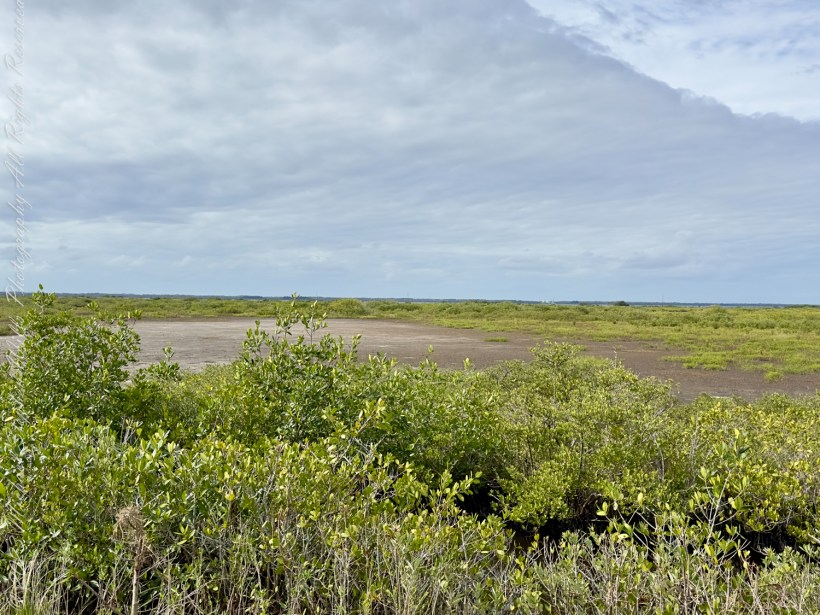
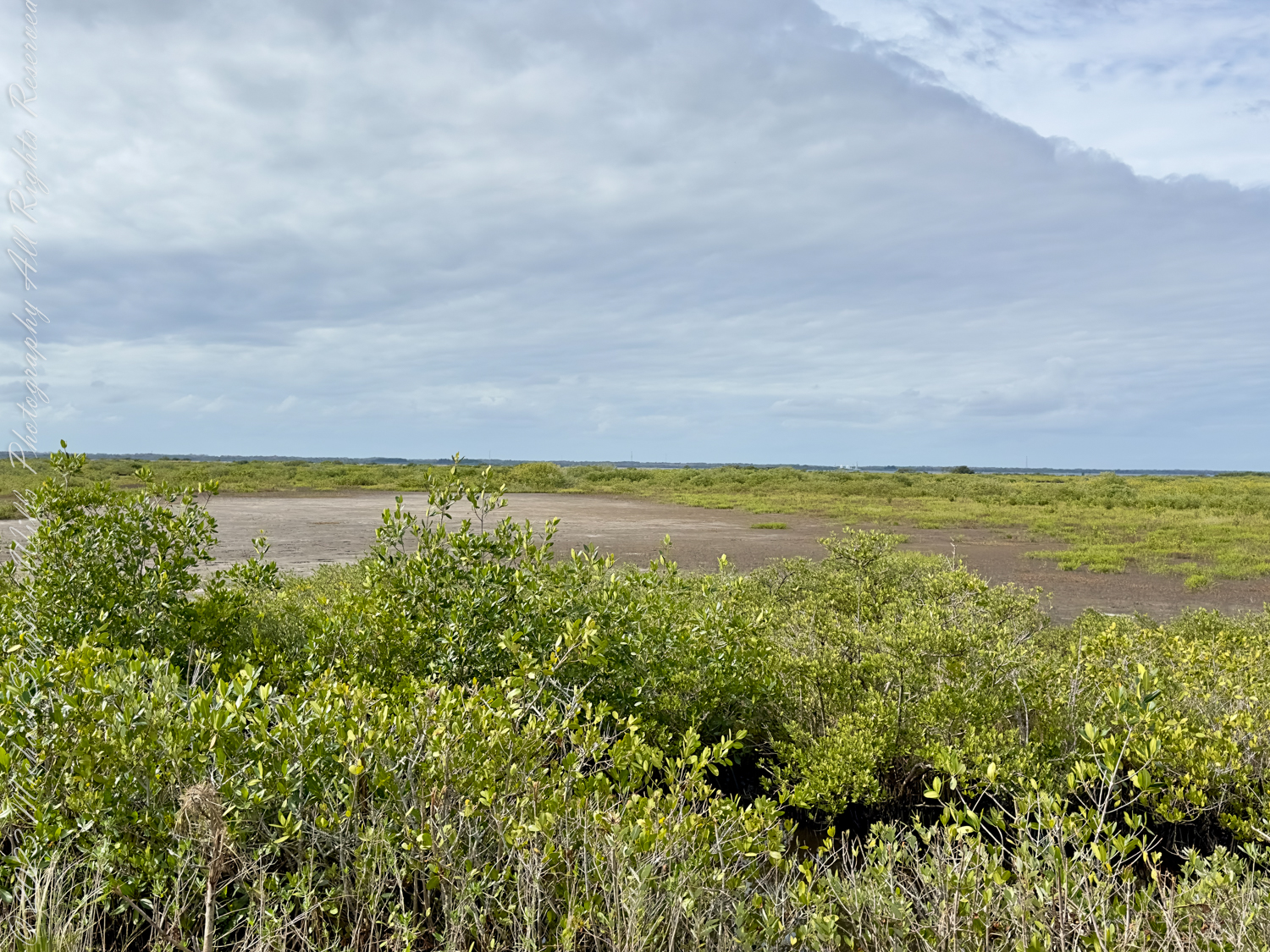
As my wife, Pam, and I entered the breezy expanse of the Merritt Island National Wildlife Refuge, the world seemed to slow down, allowing us to savor every moment of my journey along Blackpoint Drive. The sky, a sprawling canvas of muted greys, reflected in the wind ruffled waters, enhancing the tranquility of this haven.
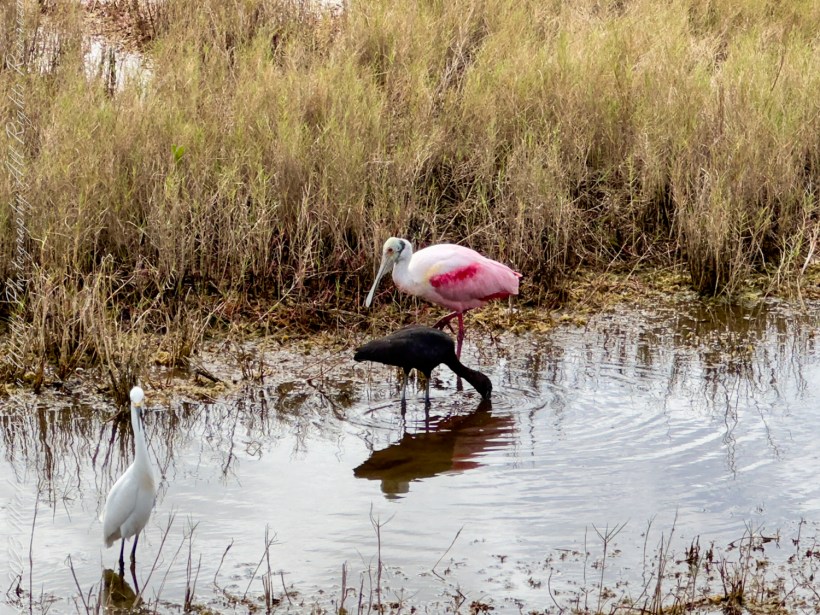
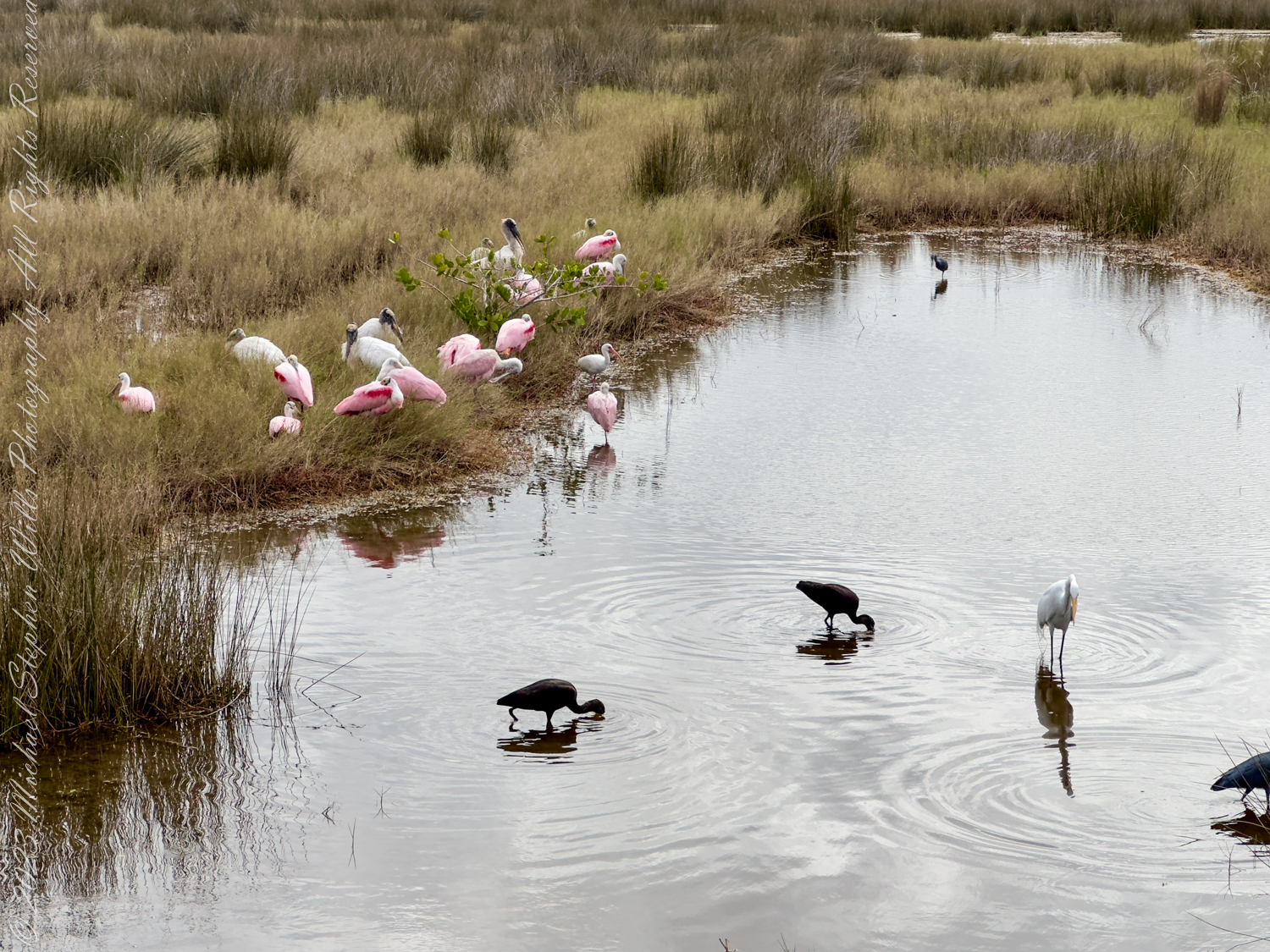
Our first encounter was with the elegant Roseate Spoonbills (Platalea ajaja), their vibrant pink feathers a stark contrast against the earthy tones of the marsh. They waded with purpose, their spoon-shaped bills sifting through the water, a dance of survival that was both methodical and beautiful.
In the company of the spoonbills were the stoic Great Egrets (Ardea alba), statuesque in their white plumage. They stood motionless, like sentinels guarding the water’s edge, only to strike with lightning speed when prey ventured too close.
We watched as the Glossy Ibises (Plegadis falcinellus) dipped their curved bills into the water, each movement a study of precision, their dark feathers glistening with an iridescent sheen when caught by the light.
Amongst these avian aristocrats, the unassuming American White Ibises (Eudocimus albus) went about their business. Their red beaks probed the shallows, unperturbed by the presence of their more colorful neighbors or by my watchful eyes.
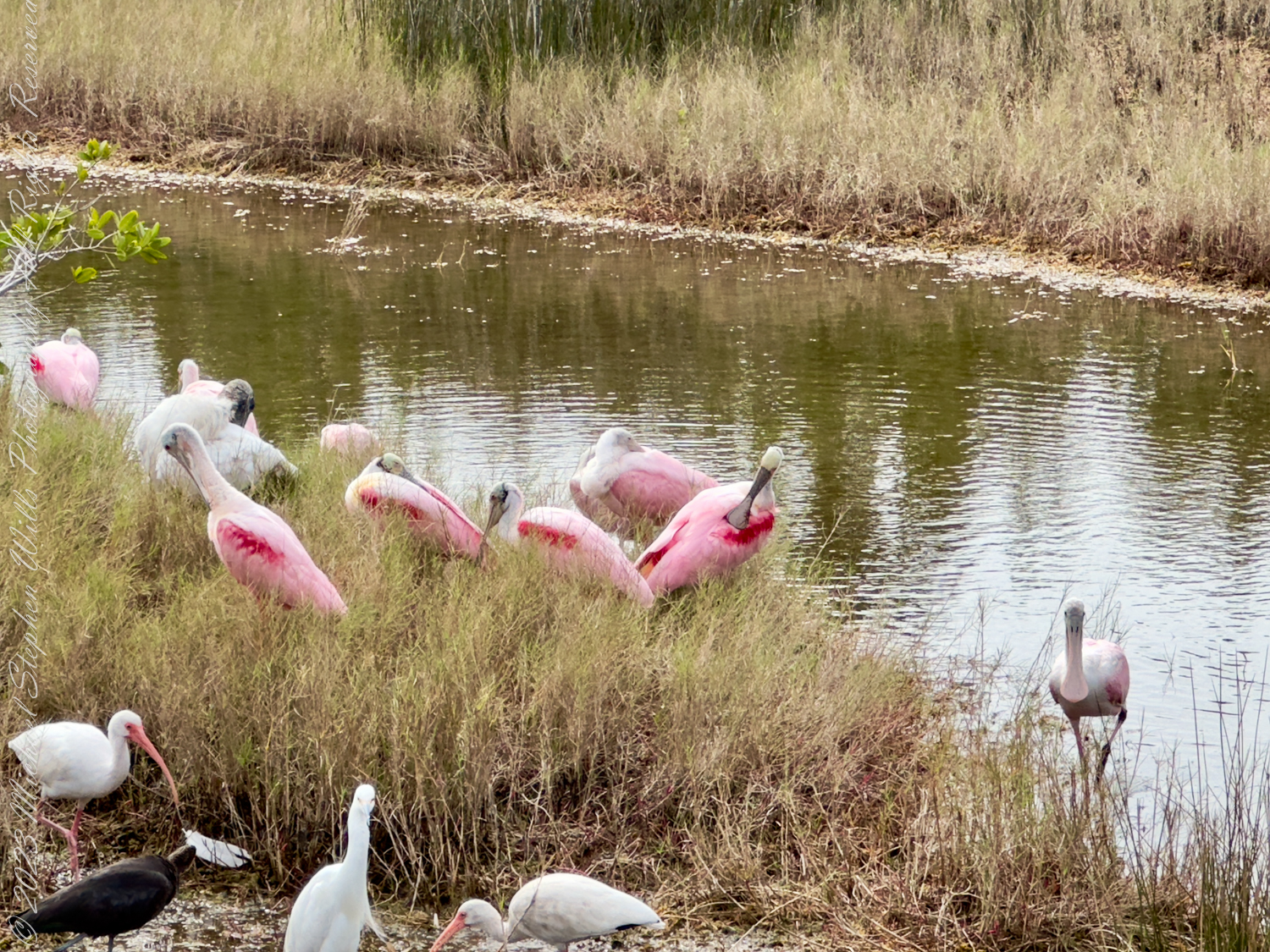
As we ventured further, the landscape shifted, the water opening up to reveal a gathering of Spoonbills and White Ibises, a community united by the need to feed and the safety of numbers. The occasional flap of wings and contented calls created a symphony that celebrated life in these wetlands.
Isolation took on a new meaning when I spotted a solitary Roseate Spoonbill, its reflection a perfect mirror image on the water’s surface. It was a moment of quiet introspection, the bird and I alone in our thoughts.
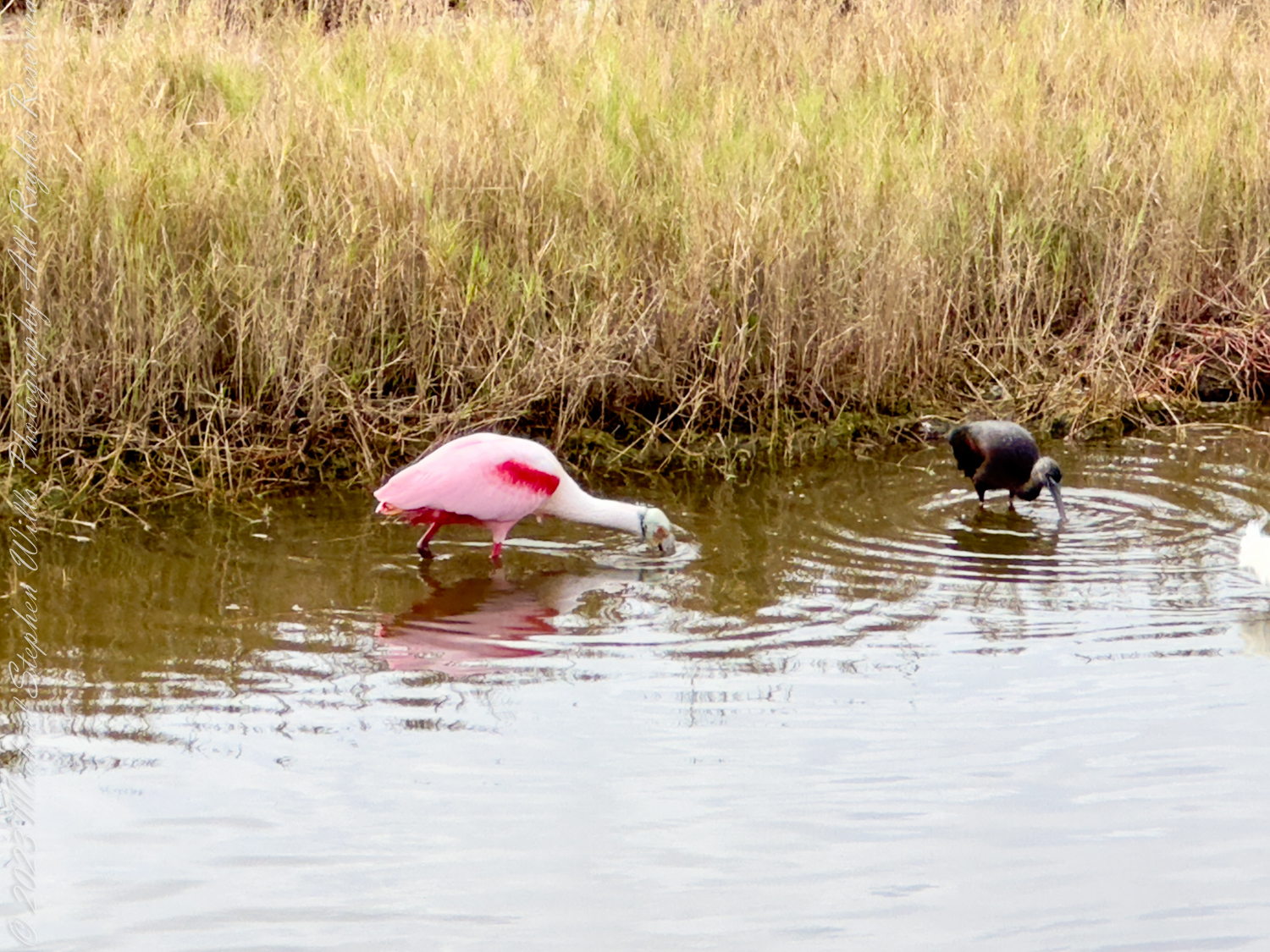
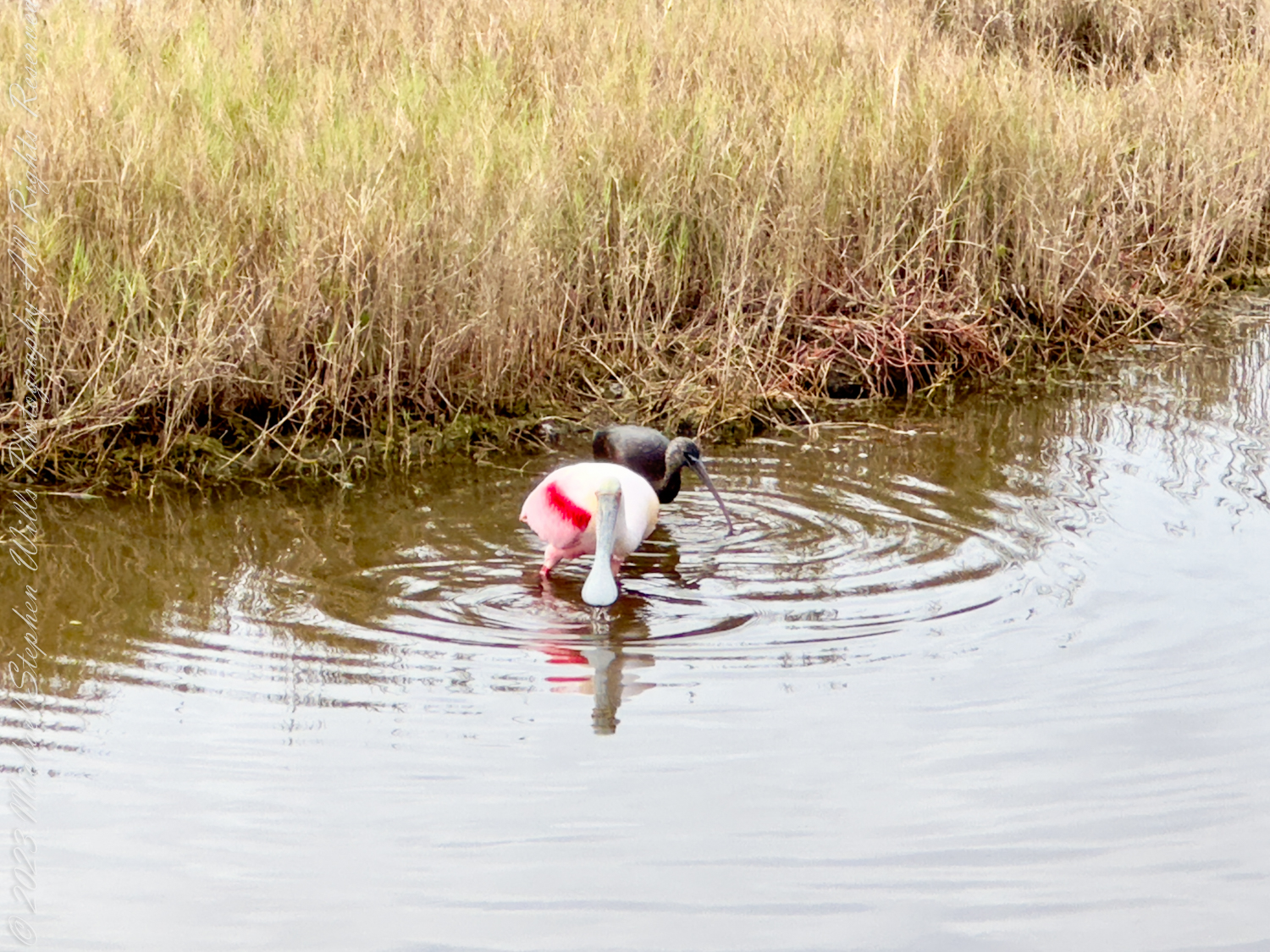
Another scene captured my attention as a single spoonbill foraged alongside a Glossy Ibis. The two species, different in appearance and yet similar in their quest for sustenance, shared the space in harmonious coexistence.
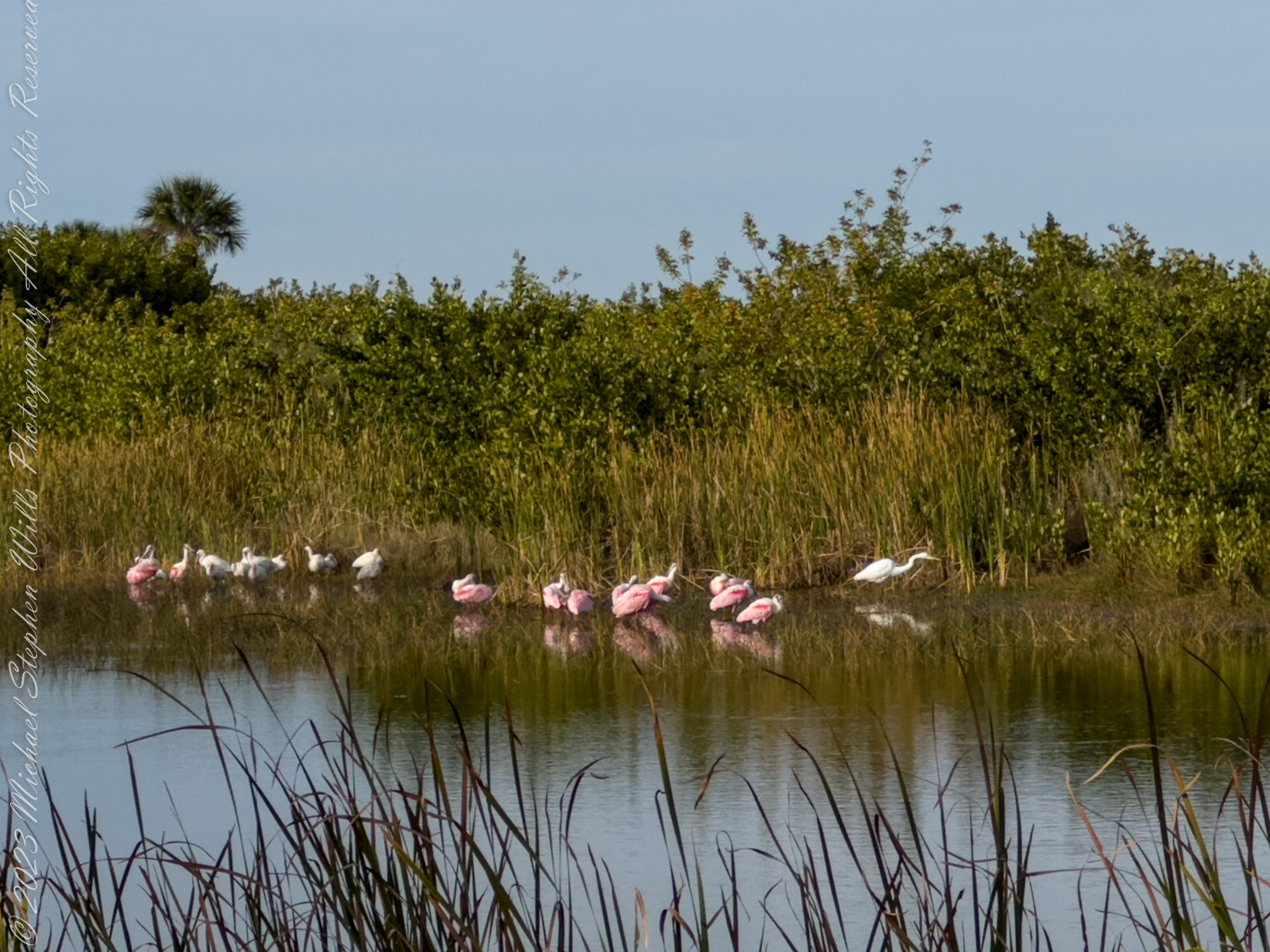
Further along, the vista opened up, and we were greeted by a panoramic view of spoonbills dotted along the distant shoreline, the greenery forming a lush backdrop to their pink hues. The expanse of the refuge unfolded before me, a reminder of the vastness and the wild beauty that had drawn us here.
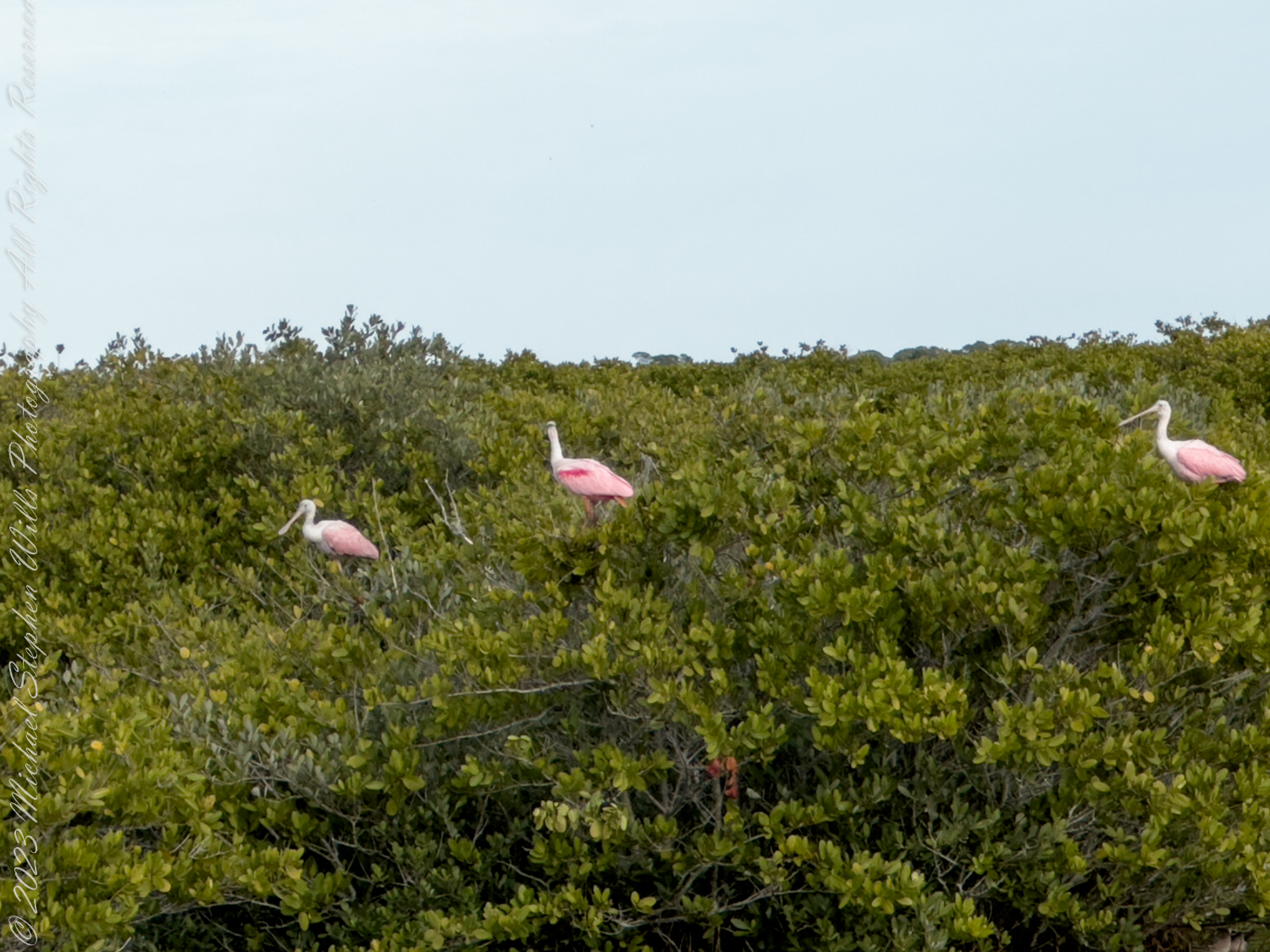
On another stretch, the spoonbills perched in the green embrace of the mangroves, their pink feathers a burst of color among the leaves. It was a scene of natural artistry, the birds blending yet standing out against their verdant stage.
In the final leg of our journey, I found spoonbills perched high in the shrubbery, a testament to the refuge’s diversity. Even in the dense foliage, life thrived, and these birds, usually seen wading, now adorned the treetops like living ornaments.
This drive along Blackpoint was more than a mere observation; it was a passage through a world where time held little sway, and nature was the sole architect. Each bird, each ripple on the water, and each whisper of the grass told a story of existence, resilience, and the intricate web of life. Here, in this secluded corner of the world, we found a connection to the earth and its inhabitants that would stay with us long after.
Copyright 2024 Michael Stephen Wills All Rights Reserved
On the winding Blackpoint Wildlife Drive, Pam and I were spellbound by a ballet of Roseate Spoonbills and Wood Storks, a wild canvas coming alive, revealing the magic bestowed by our cherished Senior Passport
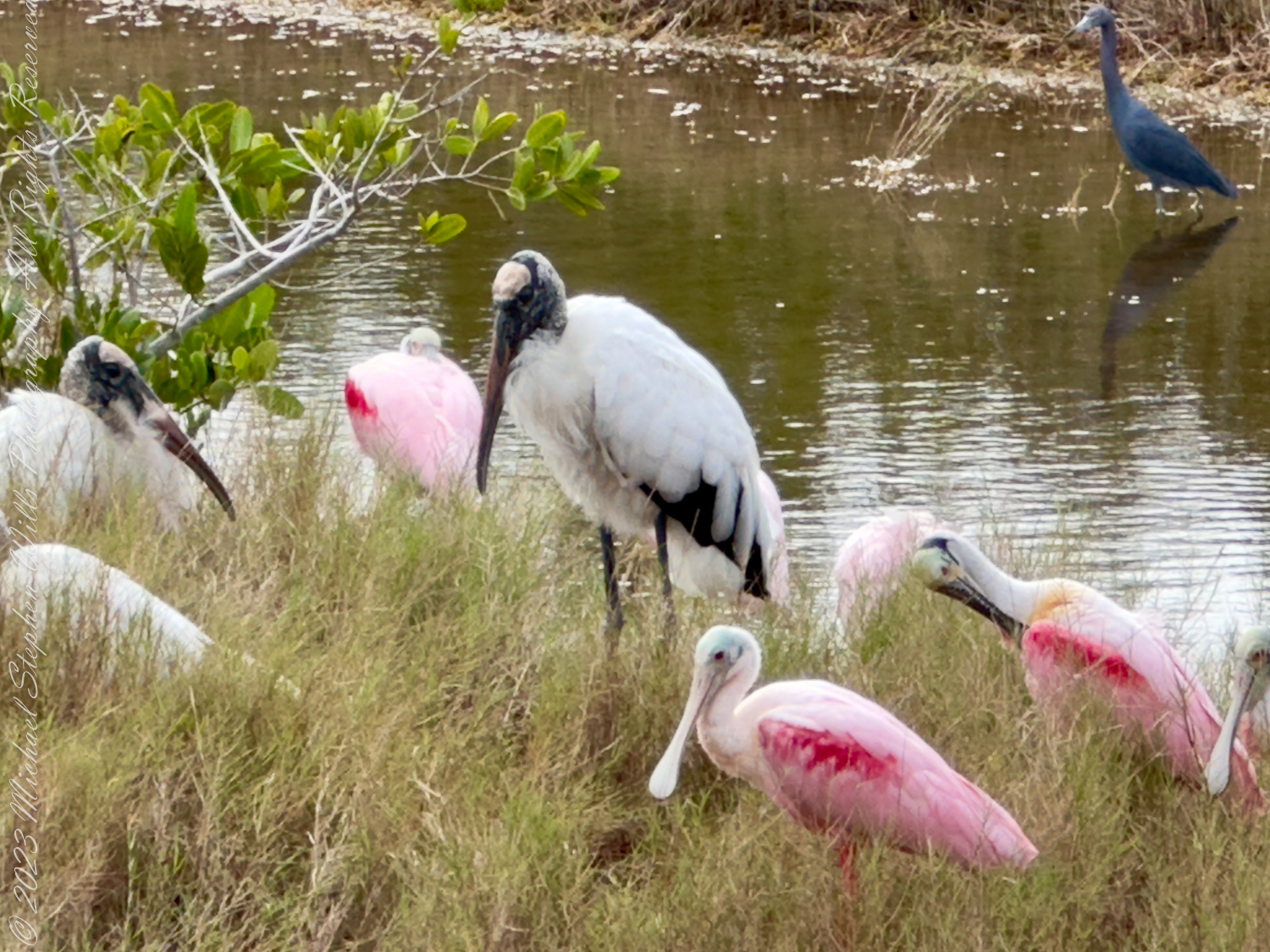
As Pam and I embarked on our journey along the Blackpoint Wildlife Drive we found ourselves privy to an otherworldly marshland assembly. Our eyes were drawn to the stately Wood Storks, or Mycteria americana, standing with a poise that belied their somewhat awkward appearance. Their towering figures were hunched in contemplation, their bald heads surveying the waters for a potential feast.
Beside them Roseate Spoonbills (Platalea ajaja) painted the landscape with strokes of vivid pink. Their spoon-shaped bills, an evolutionary masterpiece, skimmed the shallow waters. It was a delightful contrast, the elegant pink plumage among the grasses, like a splash of paint on a raw canvas.
Companion to these gentle giants, the diminutive Tricolored Heron, Egretta tricolor, stalked the shallows. Its slender form was a study in grace, and the blue-gray feathers shimmered with a hint of lavender as it moved with stealthy precision, a silent hunter amidst the reeds.
The discovery felt like stumbling upon a secret meeting, a council of the feathered kind, where each bird played its role in the delicate balance of the ecosystem. Pam and I shared a look of awe, our whispered words lost in the gentle rustling of the wind. There was a sense of unity, of different species coexisting in harmony, and we were the transient witnesses to their world.
Our journey within Merritt Island National Wildlife Refuge was not just a passage through land but through time. Each turn of the drive revealed another chapter of this living story, and our hearts raced with the excitement of what we might find next. The National Park Service Senior Passport, which we clutched like a treasure map, granted us the privilege to explore this bounty of nature. It was more than a pass; it was a key to worlds unseen and adventures untold.
As senior citizens, this passport to nature’s sanctuaries was a reminder that wonderment has no age. It afforded us the freedom to explore, to learn, and to lose ourselves in the beauty of our nation’s natural heritage. Each stamp in our passport was not just a mark of where we had been, but a memory etched into our lives, a story waiting to be told.
This drive, with Pam by my side, was more than birdwatching. We communicated with nature, laying testament to the beauty that lay in the simple things, the everyday miracles of life that often go unnoticed. We left the Blackpoint Wildlife Drive with a renewed sense of purpose and a reminder of our place in this vast, interconnected web of life.
We returned home with our spirits lifted and our minds filled with the colors of the birds—the Wood Storks, the Roseate Spoonbills, the Tricolored Heron—and the many unnamed creatures that had crossed our paths. It was a mosaic of life, each creature a piece that completed this intricate puzzle of existence. Our encounter with this unusual congregation was a gift, a moment of pure, unadulterated joy, a chapter in our ongoing adventure, one we would recount with smiles and a sparkle in our eyes for years to come.
Copyright 2024 Michael Stephen Wills All Rights Reserved
Discover the captivating world of Laughing Gulls, the jesters of Cocoa Beach’s shores. Dive into their lives, exploring the dance of courtship, the adaptability in their diet, and their vital role in the coastal symphony.
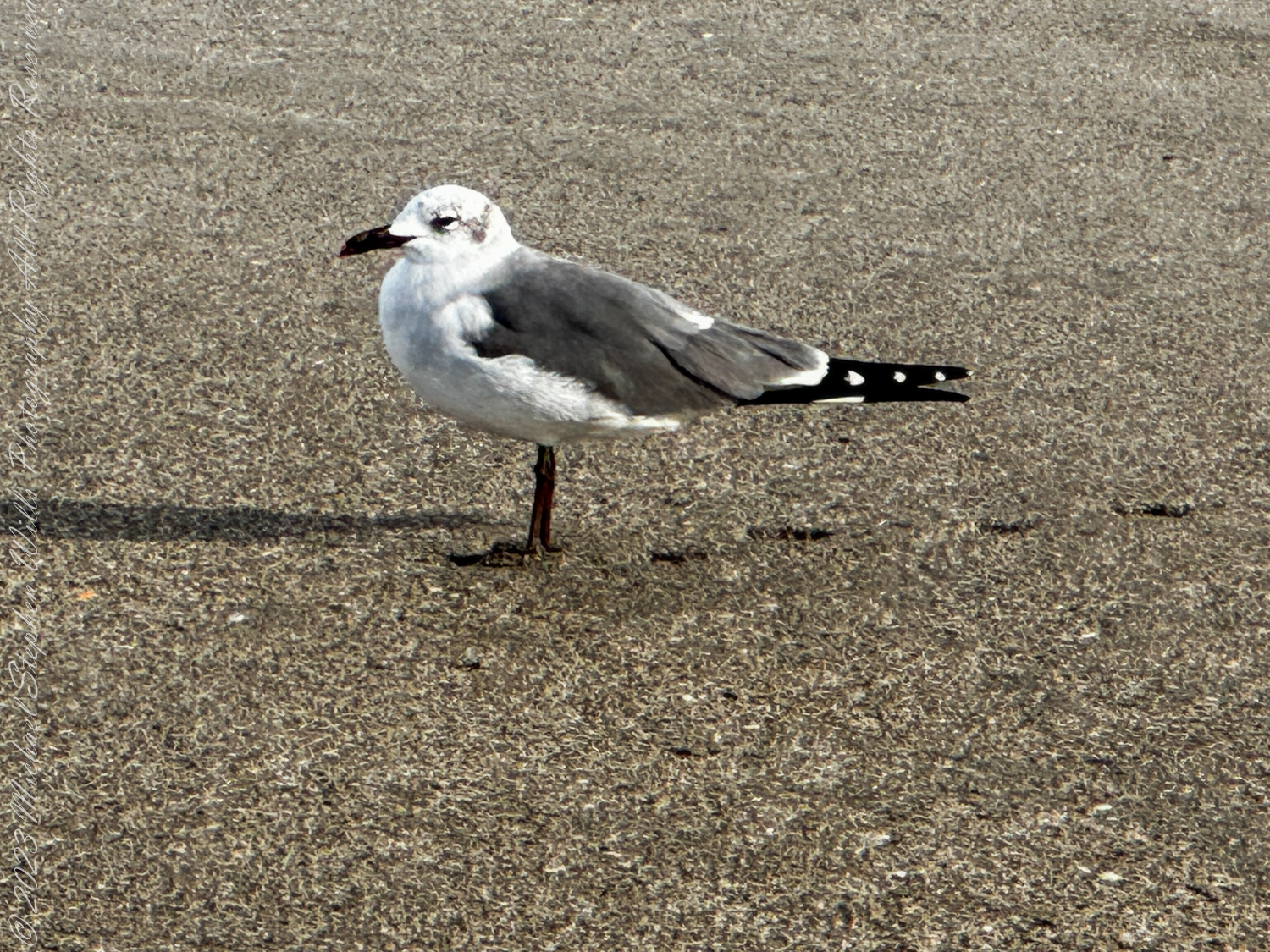
On the shores of Cocoa Beach, where the Atlantic’s waves gently knead the sands of Brevard County, Laughing Gulls (Leucophaeus atricilla) enact their daily ballet of survival and adaptation. In the span of mere minutes, the shifting light of Florida’s coastal theater presents two scenes, each with the same protagonist yet donned in starkly different costumes.
The Many Faces of Adaptation
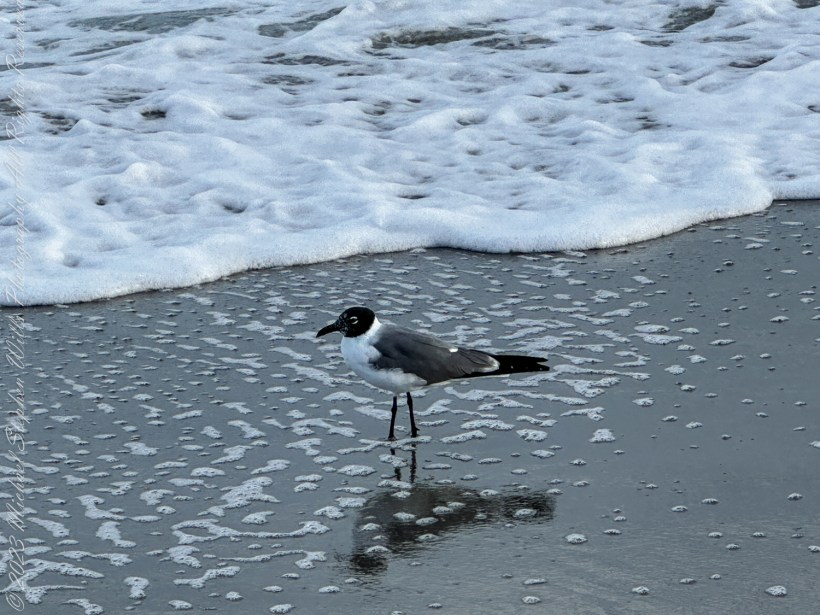
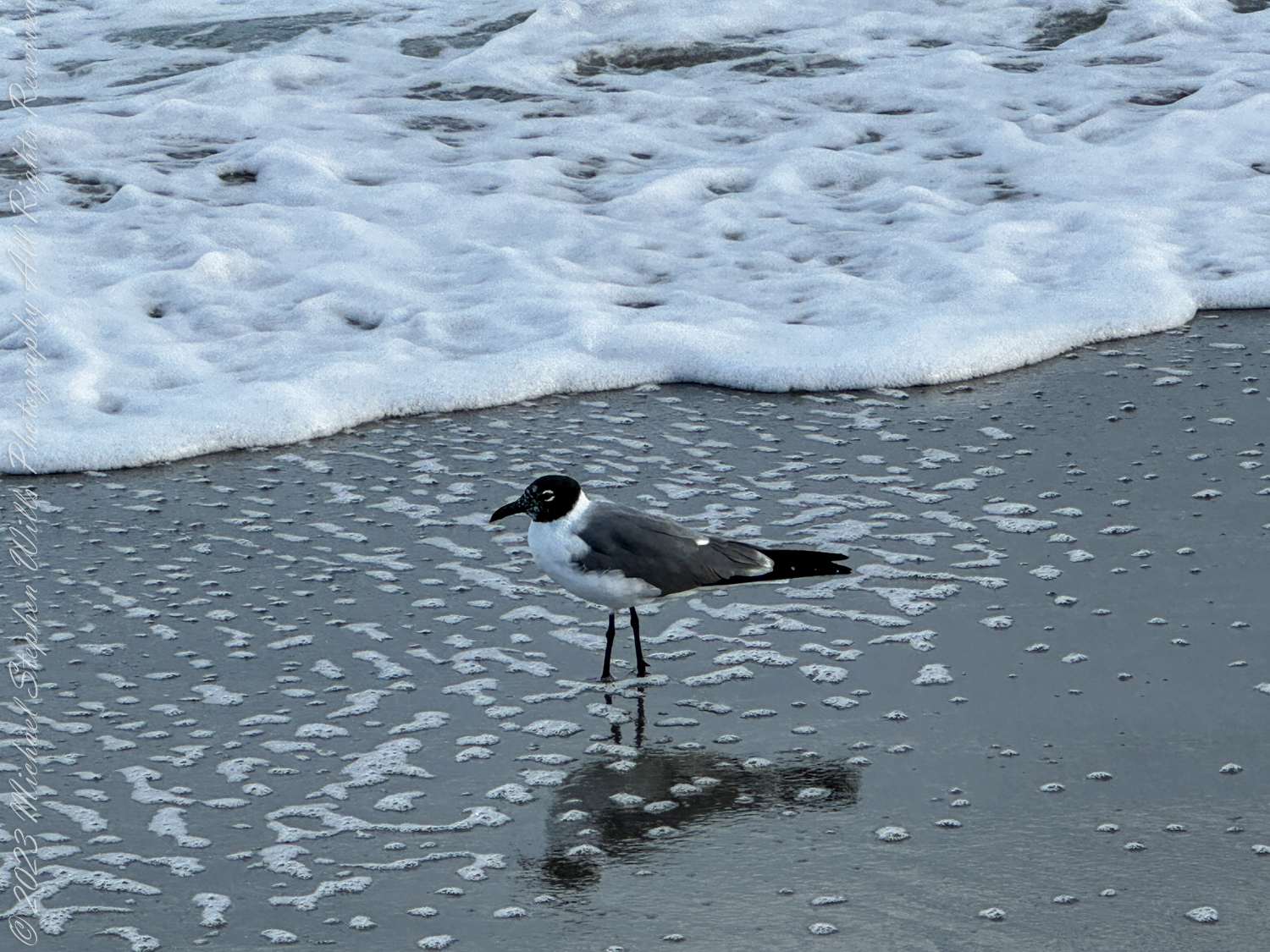
The first gull, captured against the frothy lace of the incoming tide, is the epitome of the breeding plumage: a sleek, black hood that starkly contrasts its pearl-grey wings. This attire is not merely for allure but speaks of its readiness to engage in the rituals of courtship and the responsibilities of rearing the next generation. This black hood, a seasonal crown, fades as the duties of breeding wane, revealing the less conspicuous garb of the non-breeding season—a mottled grey head atop the same sturdy body, ready to blend into the off-season’s landscape.
Laughing Gull with breeding plumageLaughing Gull, nonbreeding plumage
Minutes Of Separation
The mere minutes that separate the two photographs are but a whisper in the grand dialogue of evolutionary time. Yet, they offer a glimpse into the ever-present duality of the Laughing Gull’s life. In one, the gull stands resolute, black-headed and bold against the soft chaos of the sea’s edge. In the other, its head appears dusted with the wisdom of age, a visual softening that speaks to the less confrontational time of year.
Here are some observations to make sense of this disparity:
Overlap of Molting Periods: Laughing Gulls do not all breed at the same time; some individuals may start molting into or out of breeding plumage earlier or later than others. This can result in birds with different plumage being seen together.
Varied Maturity: Younger gulls or those not yet of breeding age may not have developed the breeding plumage, while adults in the same flock may display full breeding colors.
Breeding Colonies: Gulls often nest in colonies where birds in different stages of the breeding cycle can be observed together, including those that may have lost mates or failed to breed and therefore did not develop breeding plumage.
Health or Nutritional Status: Sometimes a bird’s plumage can be affected by its health or nutritional status. A gull in poor health might not molt into breeding plumage as expected.
Geographic and Climatic Factors: Local environmental conditions can influence the timing of molting. Birds in the same location can experience different environmental cues that might affect their molt.
Non-breeding Visitors: During the breeding season, some non-breeding birds may still be present and intermingle with breeding birds, either because they are passing through the area or they are non-breeding residents.
Extended Breeding Season: In areas with a long breeding season, such as in subtropical and tropical regions, the breeding and non-breeding plumages can be seen at the same time due to the extended period over which breeding can occur.
Masters of the Coastal Realm
The Laughing Gulls are more than just residents of the coast; they are its caretakers and witnesses. Their laughing calls are synonymous with the ocean’s breath, a soundscape that harmonizes with the rhythmic crashing of waves. These birds thrive in the intertidal zone, a challenging environment where land and sea engage in a perpetual tussle. Here, they must be opportunistic, agile, and resourceful, for the beach offers both a cornucopia of food and the threat of unpredictability.
The Ebb and Flow of Existence
The life of a Laughing Gull is intimately tied to the ebb and flow of the tides. Their diet is a testament to their adaptability, comprising anything the sea yields—fish, crustaceans, and even the unfortunate insects that stray too close to the brine. They are pirates of the shore, unafraid to snatch a meal from another bird or scavenge the remains of human activity.
Reflections on Change and Constancy
Laughing Gulls are the embodiment of the sea’s narrative around us—a story of change and constancy. Their lives are a testament to the tumultuous history of the ocean, and their presence is a thread that connects us to the vast, blue mystery. They remind us that, while the sea’s moods are many and its faces ever-changing, it remains a central force in the narrative of life on Earth.
In the Face of Tomorrow
In the space between these two images, we find a profound lesson on the nature of time and the resilience of life. The Laughing Gulls of Cocoa Beach, with their shifting plumage and timeless cries, are messengers of the past, envoys of the present, and harbingers of the future. As we contemplate their existence, we are reminded of our own place within the natural world—a world that requires our understanding and protection, lest the laughter of these gulls fades into the silent archives of history.
The Laughing Gulls of Cocoa Beach continue their dance, unfazed by the human gaze, their lives a fluid adaptation to the sea’s caprices. And as the sun marches across the sky, casting the story of these gulls into relief against the shifting sands, we are privileged to observe, to learn, and to cherish the Atlantic Ocean’s enduring tale.
Copyright 2024 Michael Stephen Wills All Rights Reserved
Join me in reliving the enchanting evening on Cocoa Beach where my wife and I discovered a rare, intact Atrina rigida shell. Dive into the world of this fascinating bivalve through our story of ecological wonder and natural beauty.
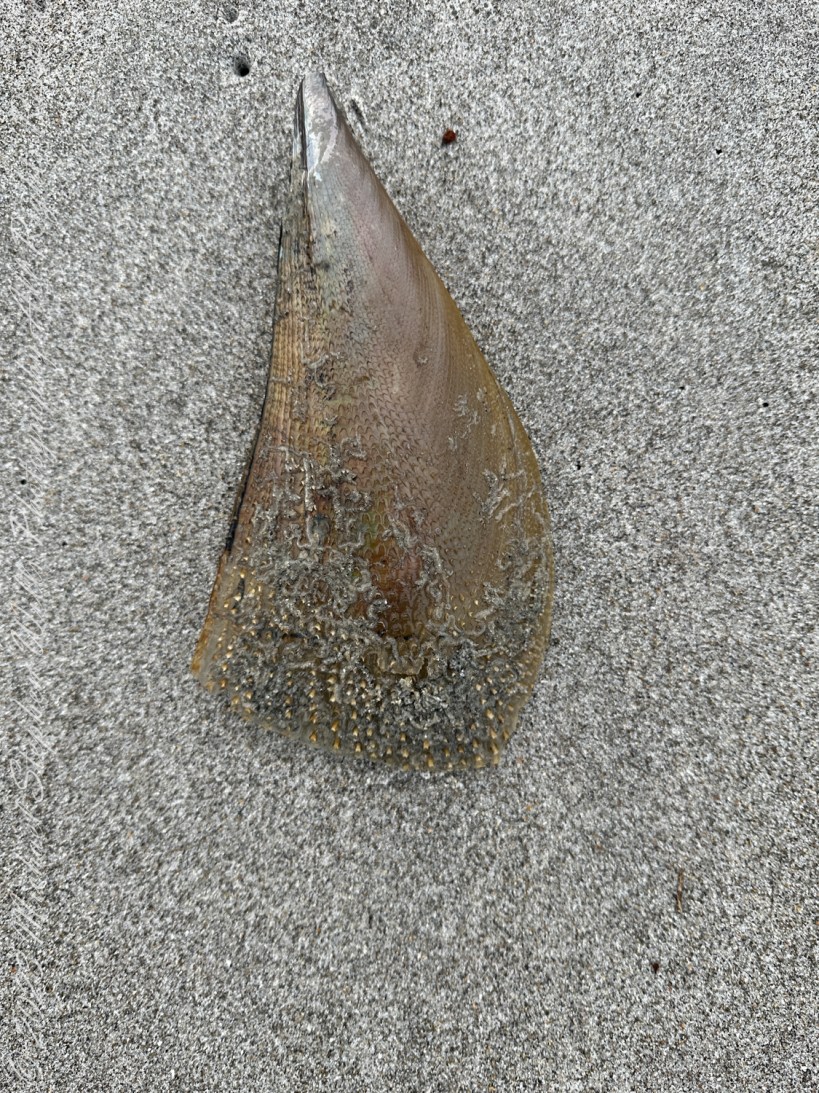
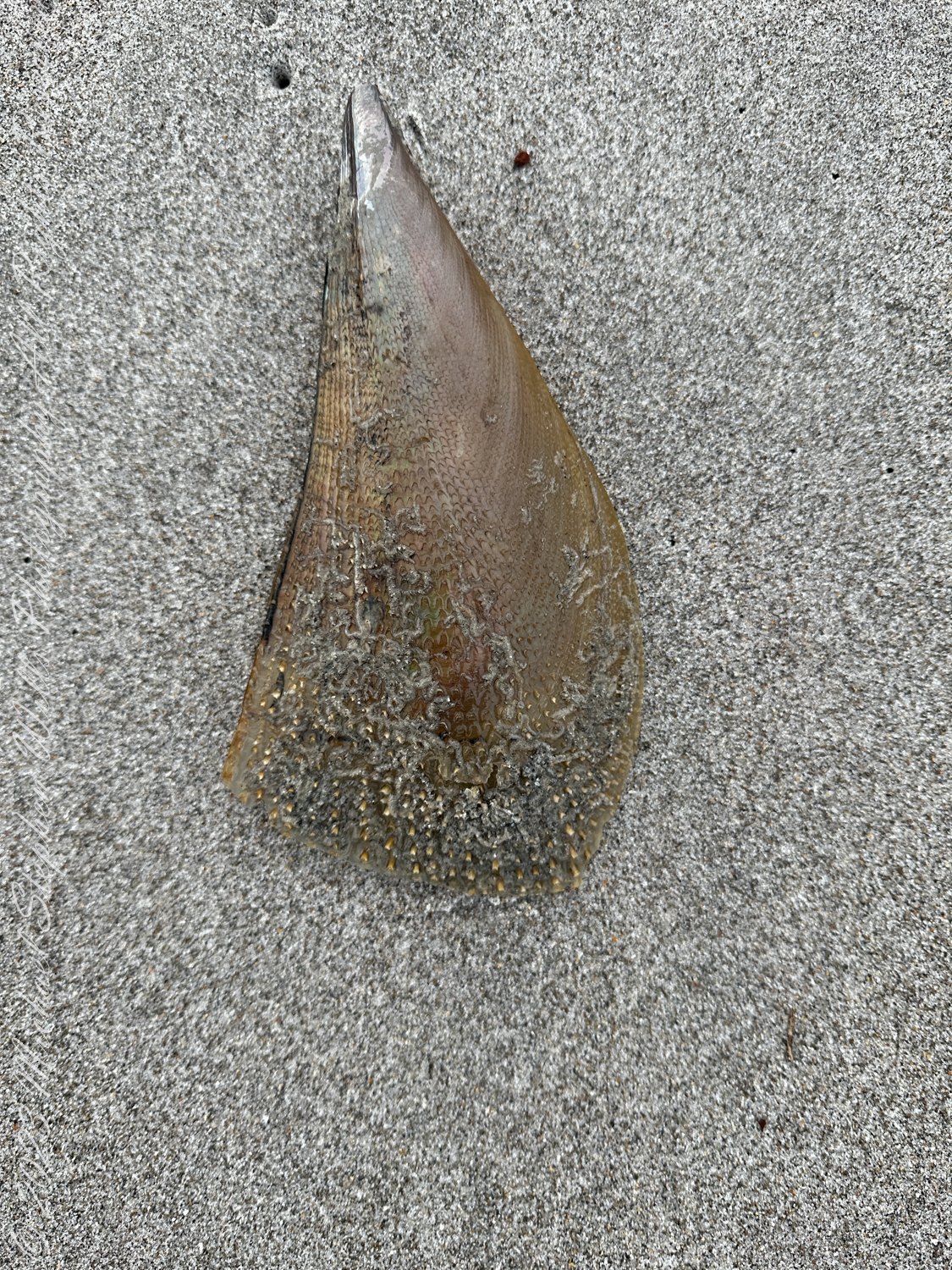
One evening, as the sun dipped below the horizon, my wife Pam and I walked along the Cocoa Beach shore. There, among the relics of the receding high tide, I found a complete shell, a rare occurrence where often only fragments are discovered. This intact specimen was a rigid pen shell, scientifically known as Atrina rigida, its 6-inch length and 4-inch width a testament to its resilience in the face of the ocean’s might.
A Rigid Pen Shell (Atrina rigida). These bivalves are found in sandy or muddy substrates in shallow waters and are characterized by their triangular shape and distinctive long, pointed end. This specimen is about 6 inches long, 4 inches wide.
Etymology and Common Name
The scientific name ‘Atrina rigida’ is steeped in Latin origins, with ‘atrium’ suggesting a ‘hall’ and ‘rigidus’ denoting ‘stiff.’ This nomenclature reflects the shell’s hardy structure, reminiscent of a grand hall’s architecture, standing firm against the elements. The common name “Pen Shell” draws from the shell’s elongated, pen-like appearance when it stands vertically in the sand, resembling antique writing quills used in centuries past.
Ecology and Habitat
“The rigid pen mollusk burrows as it grows, but the wide posterior end of the shell always remains exposed so water from above the seafloor can be drawn through the inhalant chamber of the mantle cavity. Typical of bivalves, water is drawn over gills or ctenidium by the beating of cilia where oxygen from the water is absorbed. Suspended food and other water-borne nutrients also become trapped in mucus, which is then transported to the mouth, digested and expelled as feces. Unique gutter-like waste canals in the viscera of the inhalant chamber also help to keep gills and other organs clear from silt and other unwanted water-borne particles by expelling these as pseudofeces. Its anterior end is typically buried in fine substrate and attached by byssal threads, with its wider posterior gaping end extending just above the sea bottom surface to facilitate filter-feeding. Algae (e.g. Lobophora variegata) and invertebrates such as sponges and encrusting corals tend to grow on the exposed part of the shell and may camouflage it very well.” [1]
Rarity of a Whole Pen Shell
Typically, one finds only broken shards of these shells, the complete forms often victims to the ocean’s relentless energy or human activity. The intact shell I found lying atop the sand was therefore a unique and precious find, its wholeness mirroring the unbroken evening calm.
The Beauty of Nacre and Sea Silk
Look inside a rigid pen shell to find a hidden treasure: the nacre, or mother-of-pearl, lining the interior. This lustrous, iridescent layer is typically found on the inner surface, a stark contrast to the rough exterior. The nacre’s smooth, reflective quality has made pen shells a source of ornamentation throughout history, their beauty extracted from the depths to adorn human creations.
“Sea silk is an extremely fine, rare, and valuable fabric that is made from the long silky filaments or byssus secreted by a gland in the foot of pen shells (in particular Pinna nobilis). The byssus is used by the clam to attach itself to the seabed.
Sea silk was produced in the Mediterranean region from the large marine bivalve mollusk Pinna nobilis until early in the 20th century. The animal, whose shell is sometimes almost a metre long, adheres itself pointed end down to rocks in the intertidal zone using a tuft of very strong thin fibres. These byssi or filaments (which can be six centimeters long) are spun and, when treated with lemon juice, turn a golden color, which never fades.
The cloth produced from these filaments can be woven even more finely than silk, and is extremely light and warm; it was said that a pair of women’s gloves made from the fabric could fit into half a walnut shell and a pair of stockings in a snuffbox. The cloth attracts clothes moths, the larvae of which will eat it.
Pinna nobilis is also sometimes gathered for its edible flesh and occasional pearls of fair quality.” [2]
Location and Personal Impact
Our discovery on Cocoa Beach, a location known for its diverse marine life, added to the sense of connection with the natural world. The shell’s journey to rest upon the sand, whole and unblemished, felt like a shared secret between the ocean and us, a fleeting glimpse into the life of a creature whose home is often hidden beneath the waves.
Conservation and Reflection
This encounter with a complete Atrina rigida emphasizes the importance of marine conservation and protecting such fragile ecosystems. It serves as a poignant reminder of our responsibility to the environment and the need for collective action to preserve the ocean’s myriad inhabitants.
Conclusion
Finding a whole rigid pen shell amidst our peaceful walk was an extraordinary event that transcended mere chance. It provided a moment of awe, an opportunity to marvel at the elegance of nature’s design, and a reminder of the delicate balance that exists within our planet’s ecosystems. This intact Atrina rigida from Cocoa Beach will forever symbolize the enduring beauty and complexity of the marine world.
References
Wikipedia articles for “Atrina rigida,”
and “Sea Silk.”
Copyright 2024 Michael Stephen Wills All Rights Reserved
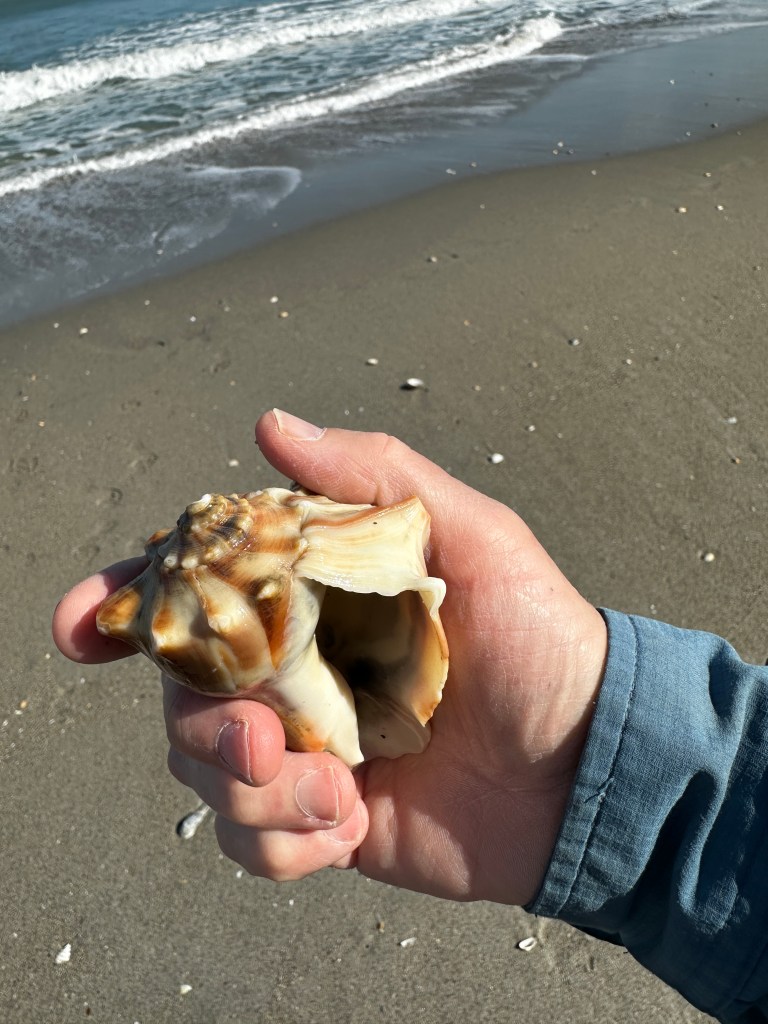
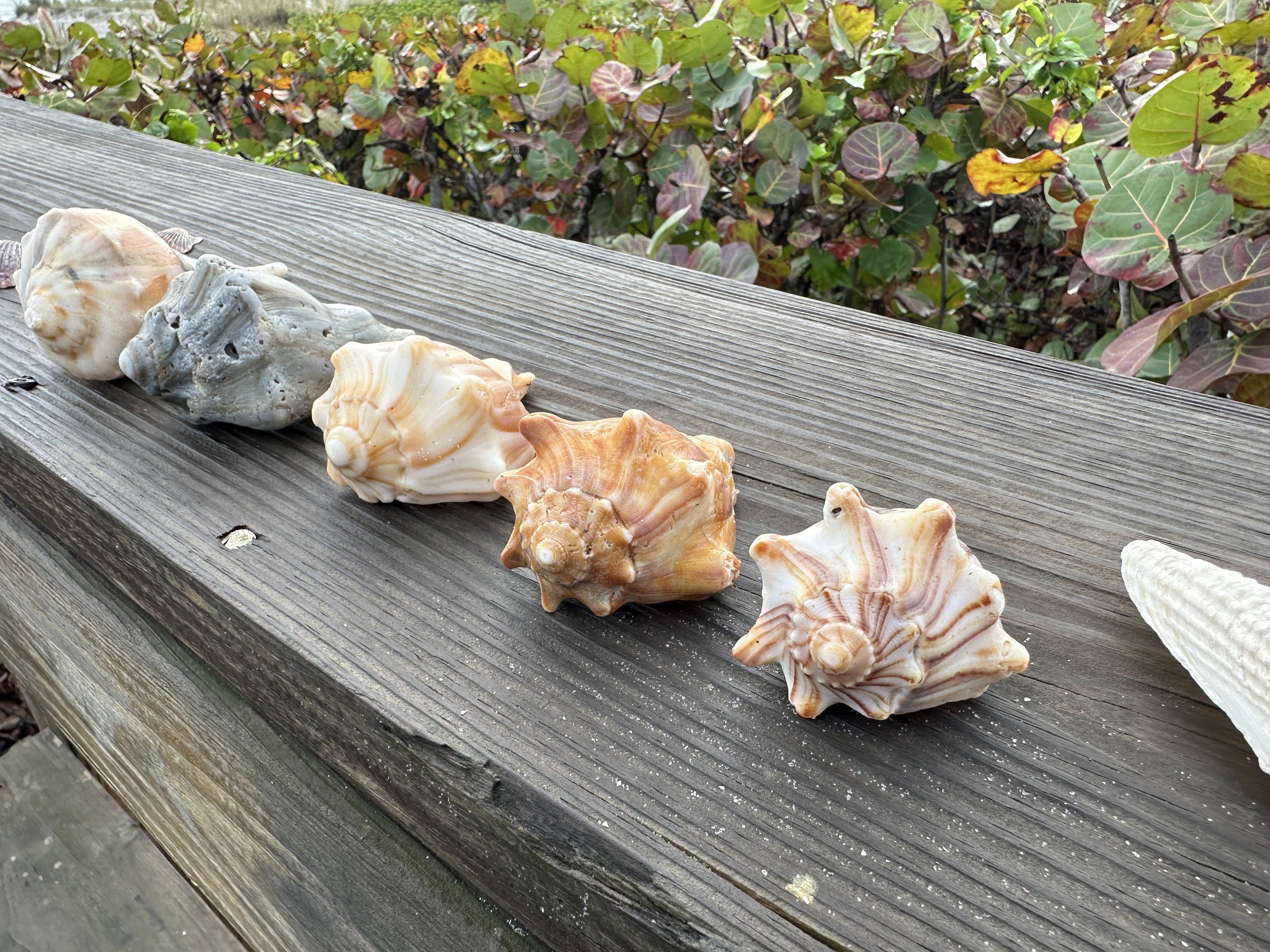
As you stroll along the beach, the beauty of whelk shells captures your attention. Ever wondered how these intricate structures form? Dive into the secrets of their creation, from cosmic origins to mollusk mastery. Discover the fascinating world within their shells
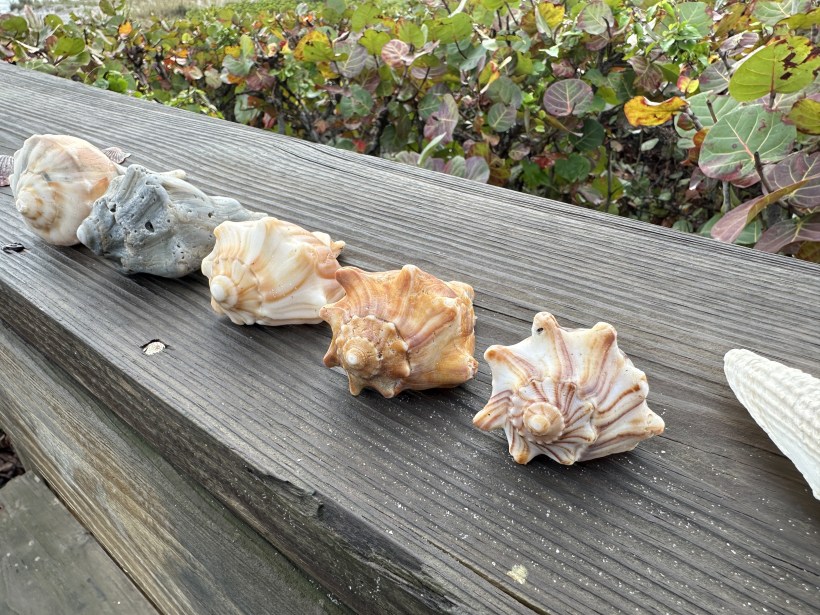
As I wander along the coast, the variety of seashells scattered across the beach fascinates me, particularly the whelk shells with their intricate designs and robust structure. This marvel of nature prompts me to delve into the science behind the formation of these shells, which are not just homes for the marine creatures but also a testament to the extraordinary processes that take place both within the organisms and across the cosmos.
The Architect: The Mantle of the Whelk
The journey of a whelk shell begins within the mollusk itself, specifically with an organ called the mantle. This organ is a marvel of biological engineering, responsible for laying down the calcium that forms the shell’s backbone. It secretes a matrix, a kind of biological scaffolding composed of proteins and polysaccharides, and then directs the deposition of calcium carbonate within this matrix to create the hard shell. The mantle’s work is meticulous, ensuring the shell’s growth and repair throughout the whelk’s lifetime.
The Building Blocks: Calcium, Carbon, and Oxygen
So why do the elements calcium, carbon, and oxygen play such a crucial role in shell formation? It’s a question of availability and suitability. These elements are abundant in the marine environment—calcium dissolved in seawater, carbon, and oxygen from both water and air. Their chemical properties allow the formation of calcium carbonate, a stable compound that can adopt various forms like calcite and aragonite, offering structural diversity for shells. Calcium carbonate’s moderate solubility enables mollusks to control shell formation precisely, and its biocompatibility ensures the process is safe for the living organism. Above all, the resulting crystalline structure provides immense strength and rigidity, a natural armor against predators and environmental challenges.
The Role of Calcium Carbonate
Calcium carbonate (CaCO₃) is not just a building block for shells; it’s a common substance that shapes our world. Found in rocks as calcite and aragonite, it forms limestone, the basis of pearls, and even the eggshells we encounter daily. This compound is an active player in both industrial applications and biological functions, serving as an agricultural amendment, a component in cement, and even a dietary supplement for humans.
The Mollusk’s Craft: Extracting from the Environment
Whelks are not alchemists; they do not create calcium carbonate from thin air. Instead, they are master extractors, pulling calcium and carbonate ions from their surroundings and depositing them as calcium carbonate to form their shells. The mantle is at the heart of this process, secreting proteins and enzymes to facilitate ion extraction from the water. The precise regulation of ion concentrations and pH ensures the calcium carbonate crystallizes in the desired form, perfectly tailored for the whelk’s protection.
Star-born Elements: The Cosmic Connection
It’s astounding to think that the elements composing whelk shells are not just earthly but cosmic in origin. The calcium (atomic number 20), carbon (atomic number 6), and oxygen (atomic number 8) that are so critical to these marine structures owe their abundance to the stars. The life cycles of stars, from their hydrogen (atomic number 1) and helium (atomic number 2) fueled births to the explosive supernovae and neutron star collisions that mark their deaths, generate and scatter these elements throughout the universe. These star-born materials eventually coalesced to form our solar system and Earth, providing the necessary ingredients for geological and biological phenomena, including the formation of the whelk shells I hold in my hand.
As I reflect on the shells before me, I am reminded of the interconnectedness of all things—from the inner workings of a tiny mollusk to the vast and violent furnaces of stars. These shells are not just remnants of life; they are cosmic artifacts, a reminder of our connection to the universe and the extraordinary processes that shape our existence.
Copyright 2024 Michael Stephen Wills All Rights Reserved
Discover the elegance of the American Coot through our journey at Merritt Island, where these unsung avians dance across the water, crafting nature’s own symphony of survival and grace.
There we were, Pam and I, standing before the serene waters of the Merritt Island National Wildlife Refuge, when a cluster of American Coots (Fulica americana) caught our eyes. Locally known as mud hens, marsh hens, or pond ducks, these coots were anything but mundane. Their dark plumage blended with the ripples, while their ivory bills gleamed like beacons, leading our gaze across the liquid expanse.
The Coot’s Constellation
As a throng, they moved with purposeful grace, a constellation of birds, each a star in their own right. With lobed toes spread like aquatic fans, they paddled through the water, their movements an embodiment of nature’s ingenuity. These “poule d’eau,” as the French settlers once called them, displayed a mastery over their domain, both in water and on land.
Social Weave
A Raft of American Coots
The coots assembled not as a random flock but as a deliberate collective, a raft in both name and function. They maneuvered with a collective intelligence, each bird’s action rippling through the group, exemplifying the coots’ penchant for community. Their group dynamics, a blend of cooperation and competition, painted a picture of the delicate balance within ecosystems.
An Ecological Perspective
In the tapestry of the refuge’s ecology, the American Coot stitched its niche with precision. Whether known as “baldpate” or “crow duck,” these birds were critical to the habitat they frequented, acting as both consumers and contributors. They pruned the vegetation, controlling its growth, and served as prey, connecting the food web in a cycle that spanned generations.
The Taxonomic Twist: Coots vs. Ducks
As the coots continued their ballet on the water, I turned to Pam, ready to demystify the common misconception that coots and ducks are close relatives. “Though they share the wetland stage,” I began, “these two are cast in different roles by nature’s hand.”
Orders Apart
Coots are members of the order Gruiformes, which includes rails and cranes, characterized by their elongated bodies and short wings. Ducks, on the other hand, belong to the order Anseriformes, which also encompasses swans and geese, known for their broad, flat bills and webbed feet.
Distinct Lineages
This taxonomic separation marks a deep evolutionary divide. The Gruiformes, with their lobed toes and distinctive calls, represent a lineage adapted for a life traversing the marshy edges of the world. Anseriformes, with their specialized bills for filtering and dabbling, reveal a lineage fine-tuned for exploiting the aquatic resources more extensively.
The Cultural Mosaic
Despite their commonality, coots have etched a place in cultural folklore, often overshadowed by more colorful avian neighbors. Yet, their ubiquity across North American wetlands has made them a familiar sight, a symbol of the wild’s persistent pulse. To us, they were the embodiment of the unsung wilderness, a chapter in the storybook of natural history.
Embracing the Ensemble
As the day waned, the water transformed into a canvas of orange and purple hues, with the coots as its subjects. “Behold the marsh’s musicians,” I mused to Pam, “each note they play is a beat in the heart of the wild.” Our encounter with the American Coot—a bird of many names but one singular, remarkable essence—was a harmonious reminder of nature’s interconnected ballet.
Copyright 2024 Michael Stephen Wills All Rights Reserved
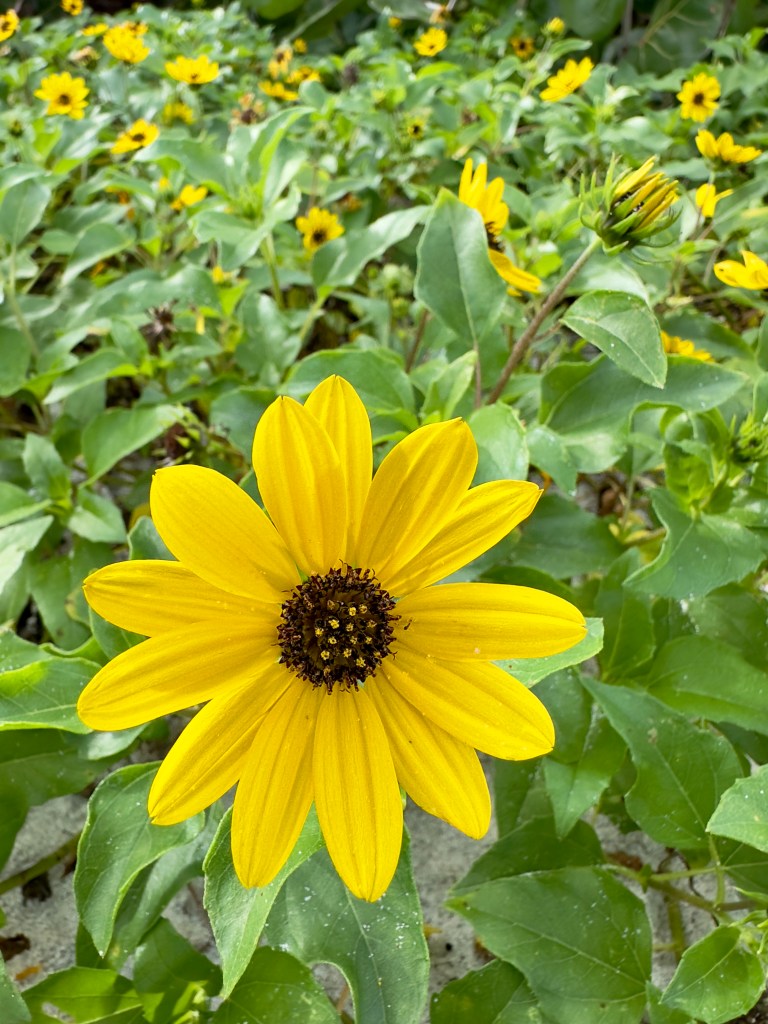
Discover the resilient beauty of Florida’s dune sunflowers through the eyes of a beachcomber. Uncover the secrets of Helianthus debilis, a symbol of hope thriving where sea meets sand. Join the coastal dance of life.
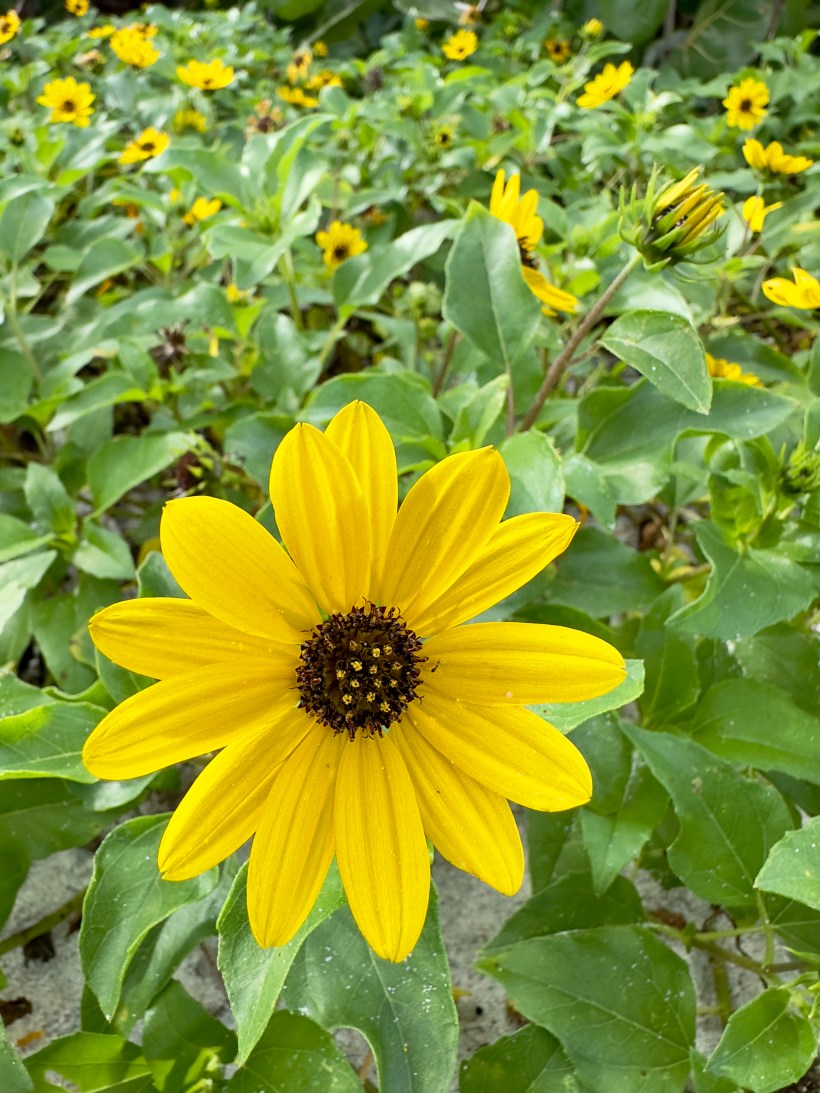
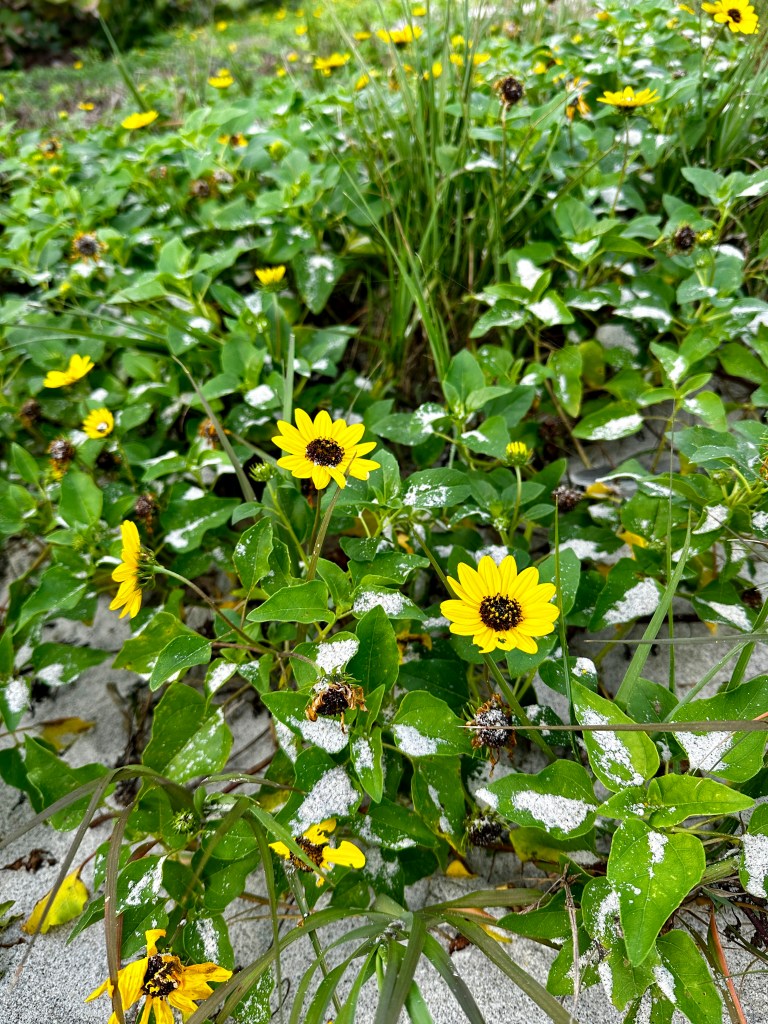
Strolling along the beachfront of Patrick Space Force Base, Florida, my gaze is captivated by a cluster of dune sunflowers, or Helianthus debilis. These hardy perennials are native to the coastal sand dunes of the southeastern United States and have made a home amidst the sandy grains where few dare to take root.
The Sunflower’s Domain
Helianthus debilis, distinguished by its large, yellow ray florets and dark center disks, thrives in this challenging environment. The dunes provide a unique ecosystem, where the sunflowers can withstand high salinity, shifting sands, and the full force of the sun’s rays. Their deep root systems anchor the sandy soil, helping to prevent erosion and maintain the integrity of the dune landscape.
Adaptation and Survival
The dune sunflower’s adaptation to its coastal environment is a marvel of nature. Its silvery-green leaves are covered with tiny hairs, reflecting sunlight and conserving moisture. The flowers bloom throughout the year, ensuring a constant presence of color along the dunes. Their hardiness is a testament to the sunflower’s evolutionary success in a habitat where freshwater is scarce and the soil is nutrient-poor.
A Native’s Role in the Ecosystem
As a native species, the dune sunflower plays a crucial role in the coastal ecosystem. It serves as a food source for local wildlife, including insects and birds, and its presence helps stabilize dune formations. The ecological value of Helianthus debilis extends beyond its beauty, as it contributes to the biodiversity and resilience of the coastal dunes.
The Dynamics of Dune Life
The life of a dune sunflower is inextricably linked to the ebb and flow of the coastal environment. Each plant is a microhabitat, supporting a range of organisms from the larvae of the dune butterfly to the burrowing beetles that find refuge in the sand. The interaction between the sunflowers and these creatures creates a dynamic web of life, each species depending on the others for survival.
Reflections on Resilience
The dune sunflower’s ability to flourish in such an austere environment is a profound reminder of the resilience of nature. As I observe the sunflowers, I am struck by their tenacity, their willingness to face the elements head-on. They are a beacon of life in a place where existence is a daily challenge, and their perseverance is a lesson in the art of endurance.
Conclusion: A Testament to Nature’s Ingenuity
As the sun begins to set, casting a warm glow over the dunes, I take a final look at the Helianthus debilis. Their scientific wonders and ecological im portance leave a lasting impression. They are not just flowers; they are a testament to nature’s ingenuity, an embodiment of the delicate balance between life and the environment. These dune sunflowers are a symbol of hope, a reminder that in the face of adversity, life finds a way to not just survive, but to thrive.
Copyright 2024 Michael Stephen Wills All Rights Reserved