Echoes of Autumn: Finding Beauty and Wonder in a Willow’s Fungal Bloom

On a sunny September morning along the shores of Cayuga Lake, I encountered the vibrant Chicken of the Woods fungus. Its striking colors and intriguing history make it a fascinating discovery in nature’s ongoing cycle of life and decay.

A Serendipitous Discovery on a September Morning


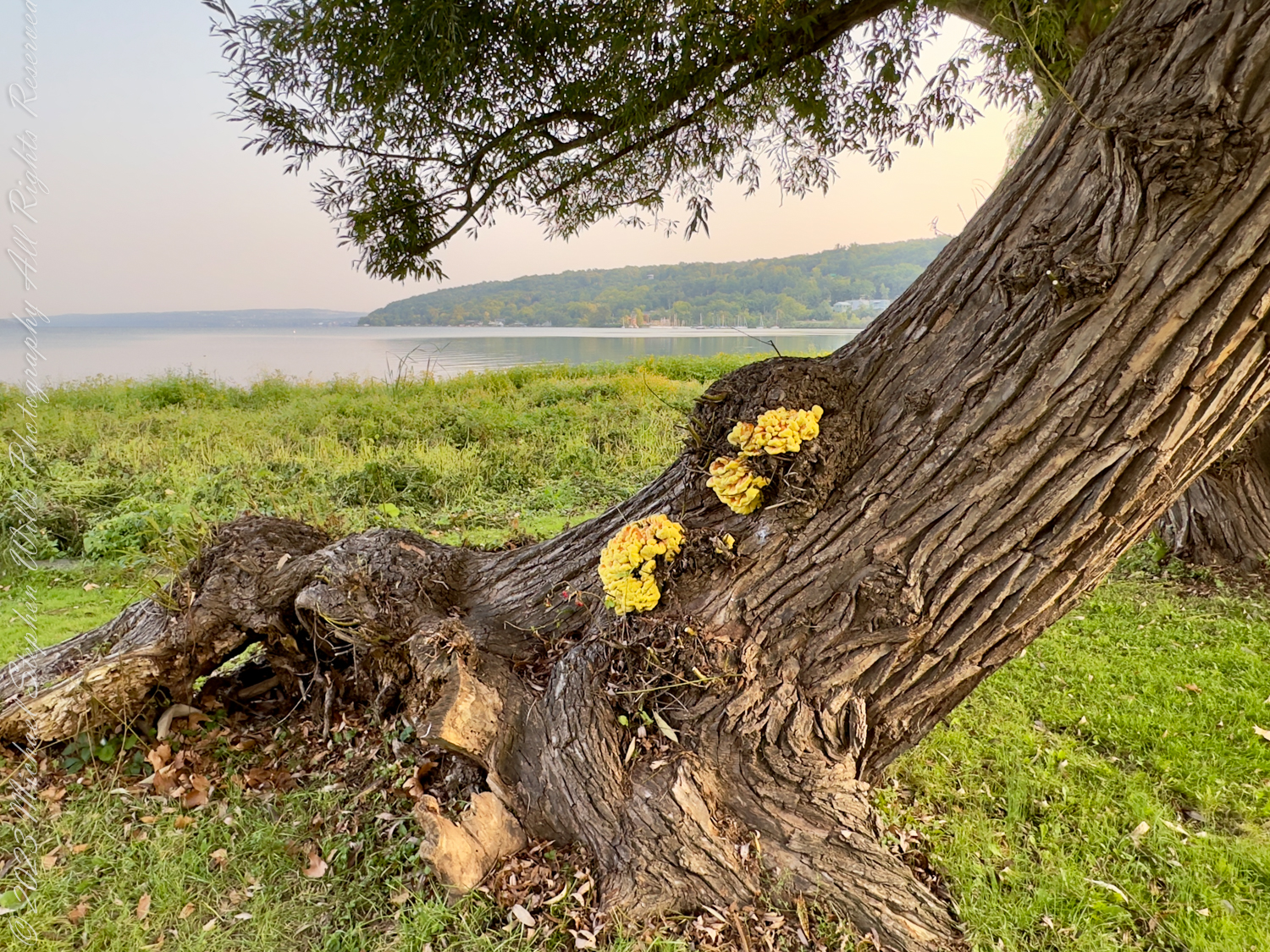
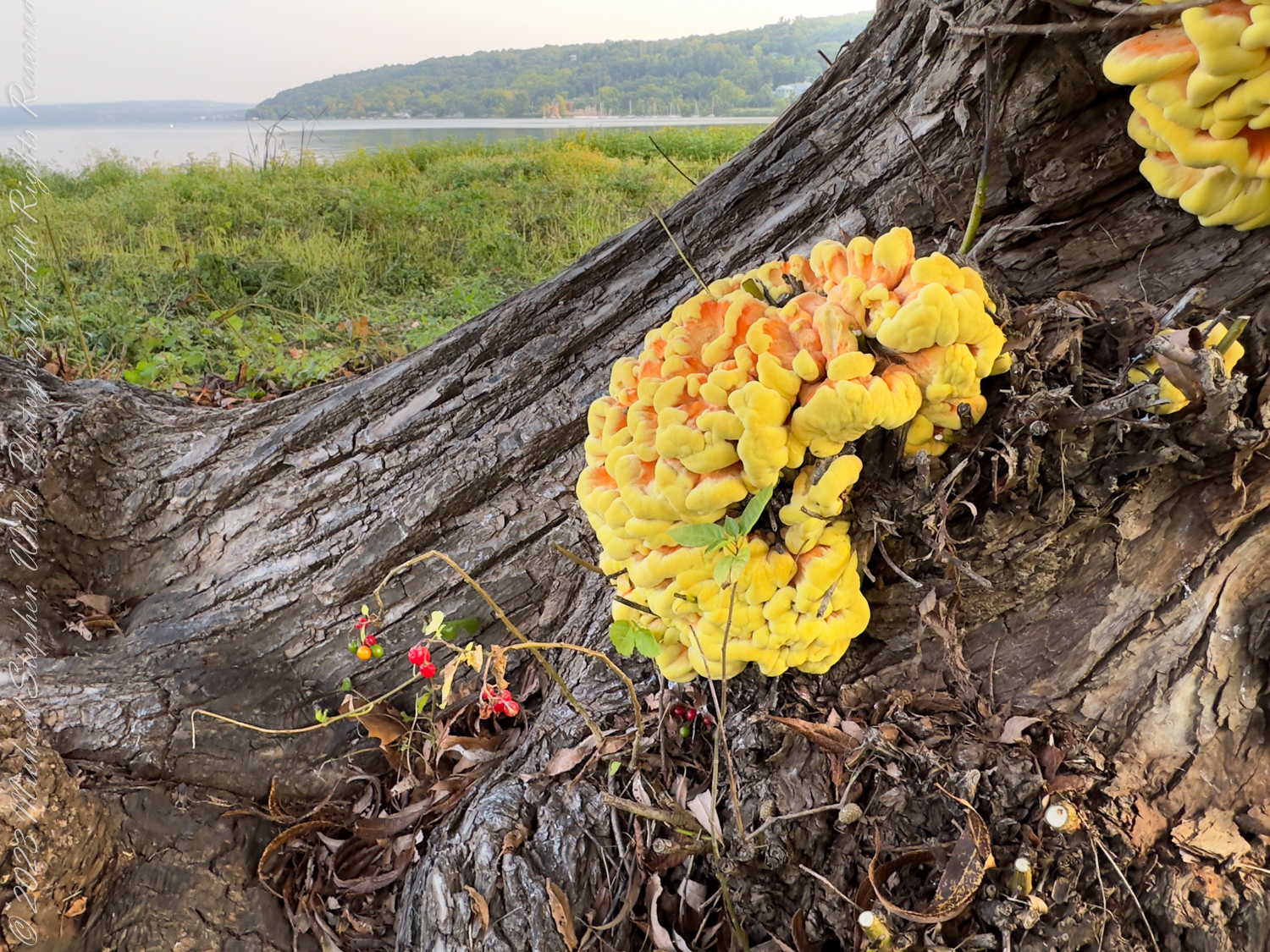
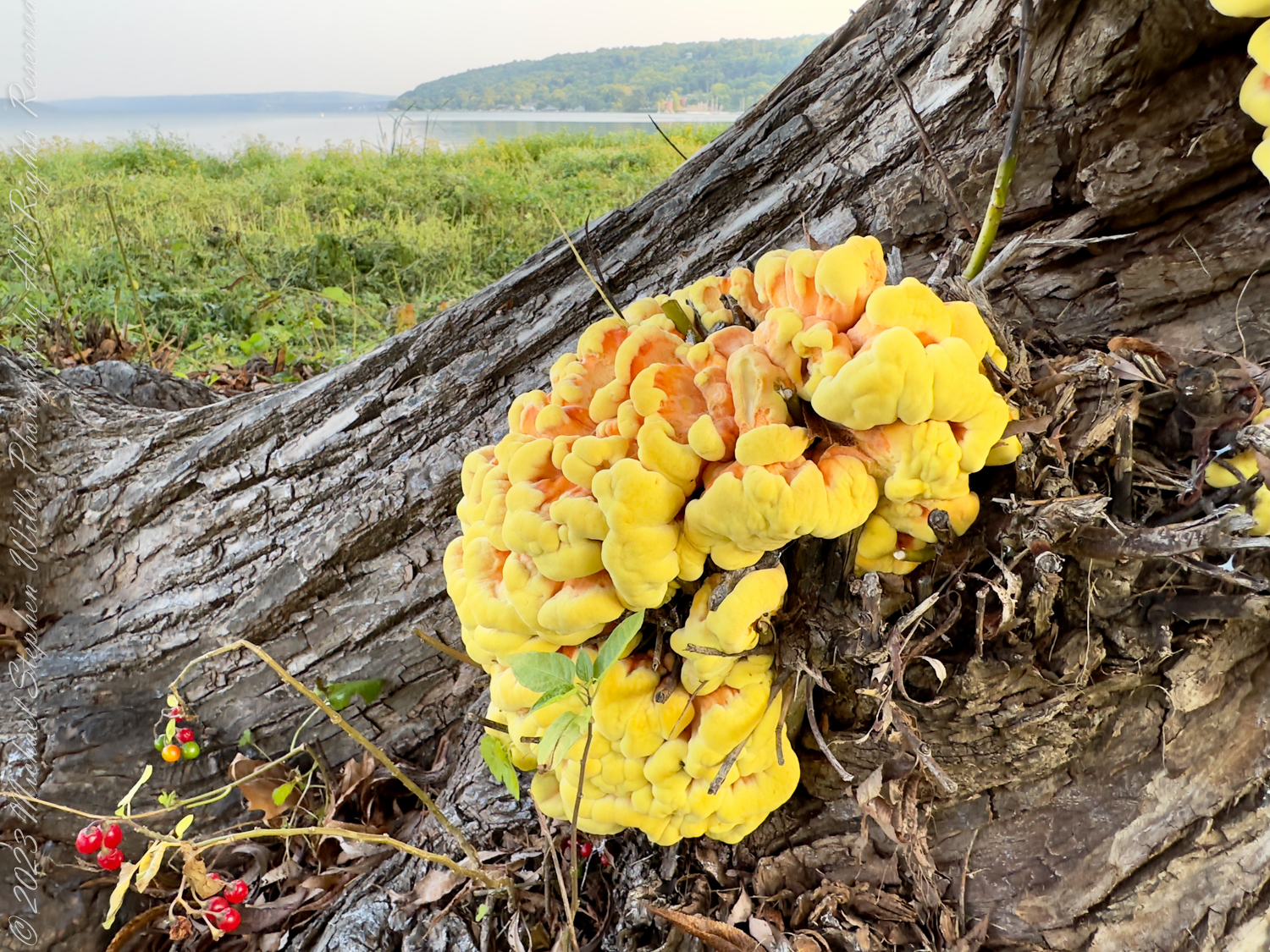
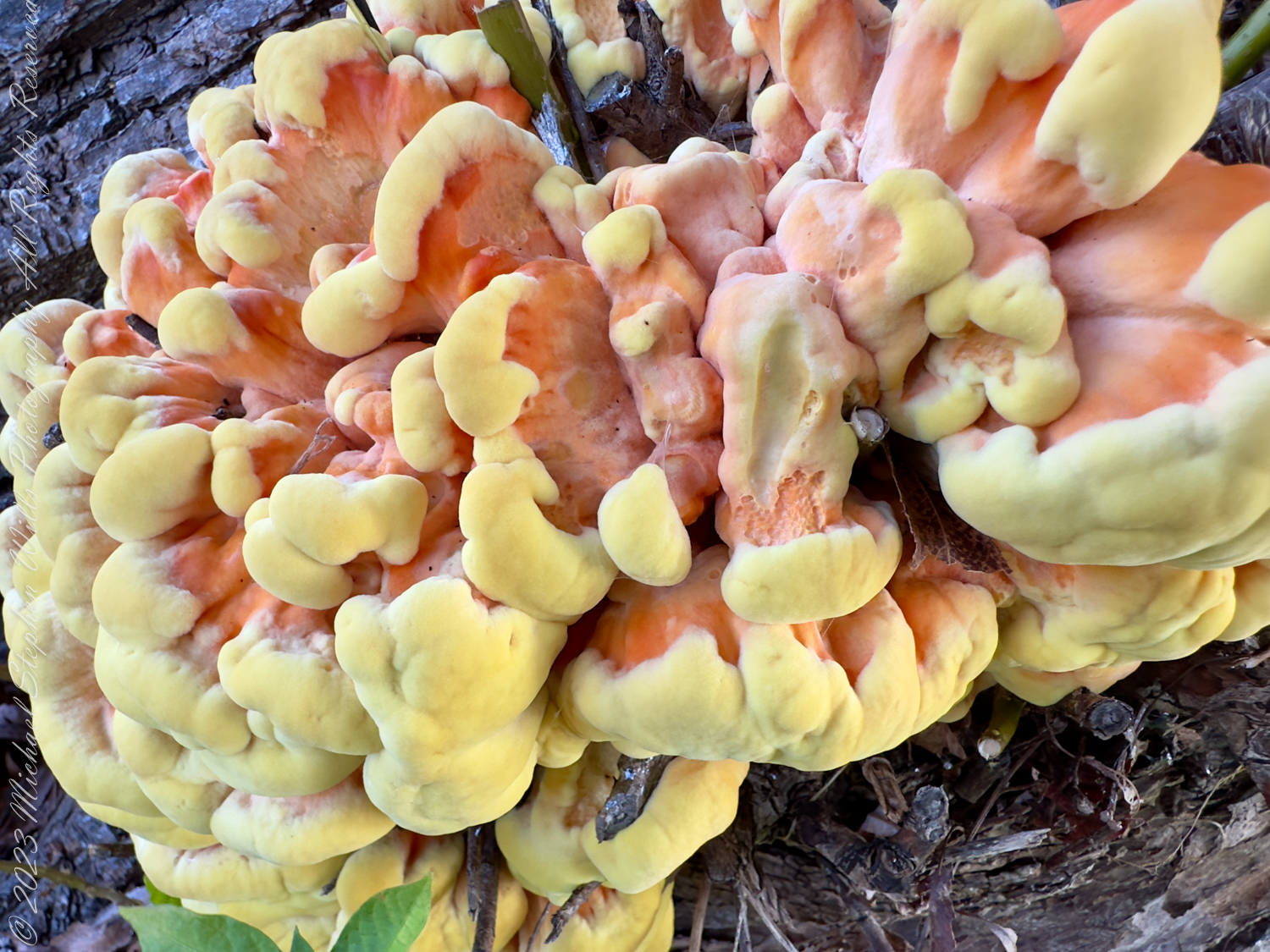
It was a crisp, sunny September morning when Pam and I set out for a leisurely walk along the shore of Cayuga Lake in Ithaca, New York. The lake shimmered in the morning light, framed by the early hints of fall colors on the surrounding hills. We had been walking for some time, enjoying the peaceful rhythm of nature, when something unusual caught my eye—a cluster of bright yellow-orange growths on the trunk of an apparently hale White Willow tree.

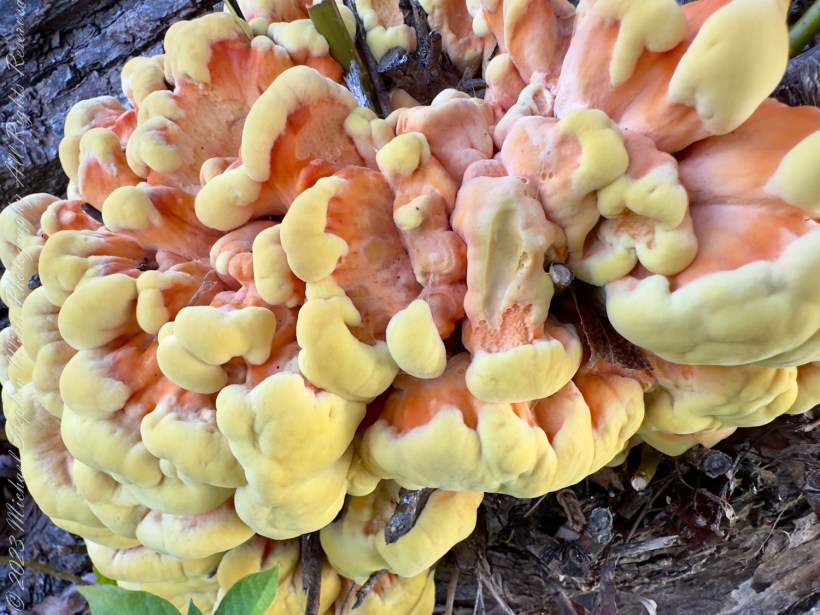
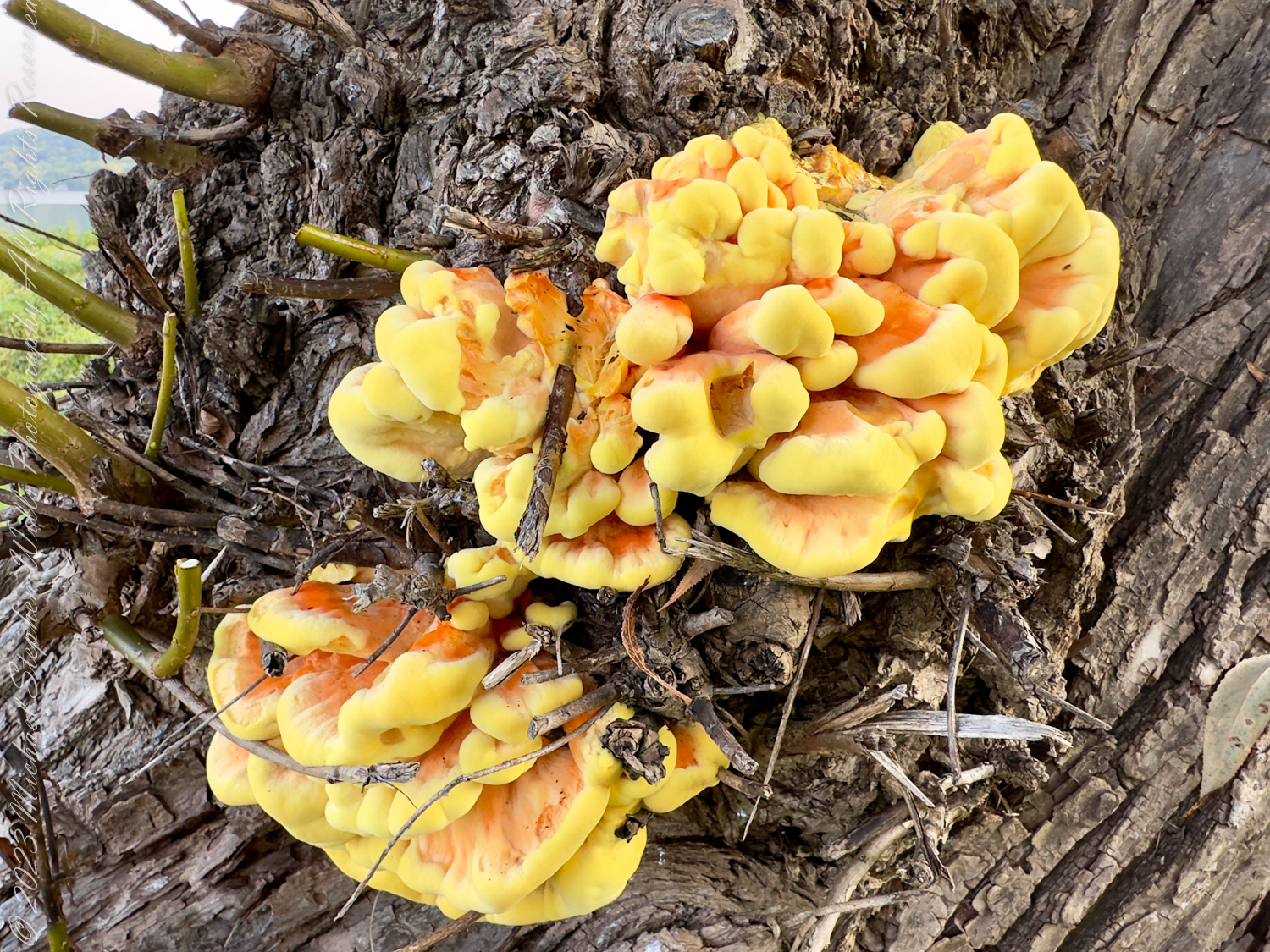
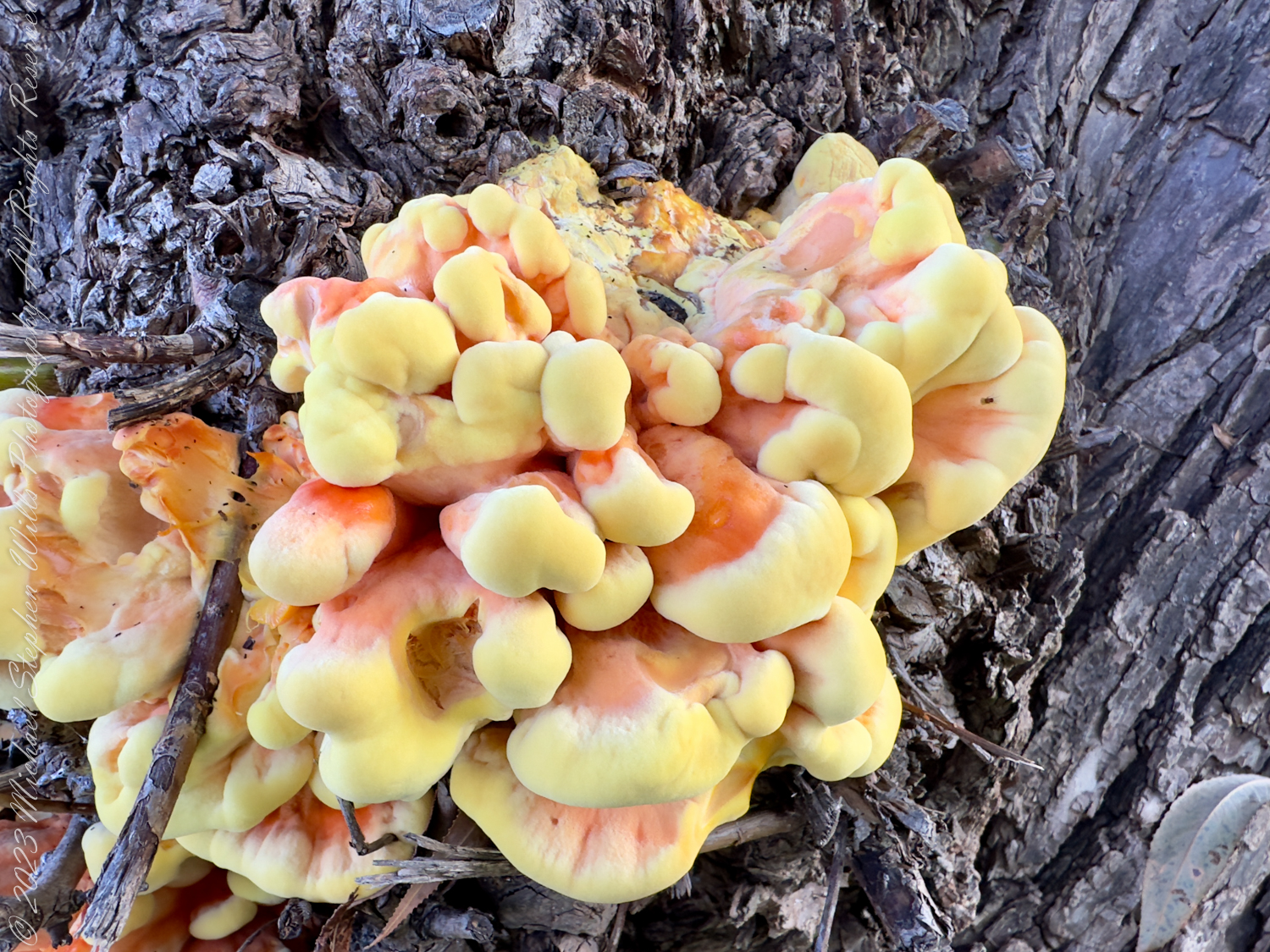
Curious, I approached the tree, and upon closer inspection, I realized these growths were something special, took these photographs of the vibrant clusters and later researched them to be Laetiporus sulphureus, commonly known as Chicken of the Woods. The striking colors of the fungus, a combination of deep orange and golden yellow, stood out in stark contrast to the gnarled, dark bark of the willow. It was a discovery that sparked a deeper interest in learning about the fascinating history and characteristics of this unique fungus.

The Vibrant History of Chicken of the Woods


Laetiporus sulphureus has been known to mycologists and naturalists for centuries, and its distinctive appearance has earned it a place among the most recognizable fungi in the world. Its common name, Chicken of the Woods, stems from the texture and flavor of its flesh, which, when cooked, is said to resemble that of chicken. This has made it a popular edible mushroom among foragers, particularly in Europe and North America, where it often grows on hardwood trees such as oak, cherry, and, as I found, occasionally on willows.

The fungus was first scientifically described by German mycologist August Batsch in 1789. Since then, it has been the subject of numerous studies, particularly due to its unique ability to grow on living trees, decaying wood, and sometimes even on dead trunks. This dual nature makes it both a decomposer and a potential pathogen, depending on the health of its host tree.

Historically, Chicken of the Woods has had various uses, ranging from culinary to medicinal. In traditional folk medicine, it was used for its antibacterial properties, and some cultures believed it could help heal wounds or infections when applied as a poultice. Today, research continues into its potential medicinal applications, including its possible role in supporting immune function and its antioxidant properties.

A Friend to Some, a Foe to Trees


While Laetiporus sulphureus may delight foragers and mushroom enthusiasts, it is not always welcomed by the trees it inhabits. The fungus is classified as a saprotroph, meaning it feeds on dead or decaying organic matter. However, it is also capable of acting as a parasite, attacking the heartwood of living trees. Over time, the fungus can cause brown rot, a form of decay that weakens the tree from the inside out. For trees already compromised by age or environmental stress, an infestation of Chicken of the Woods can be the final blow, leading to their eventual death and collapse.

The willow tree I encountered by Cayuga Lake had clearly seen many seasons, its twisted trunk and sprawling limbs a testament to decades of life along the shoreline. The presence of the fungus, while beautiful and intriguing, could also be an indicator that this tree was in decline. Still, the symbiotic relationship between the tree and the fungus was a reminder of nature’s cycles—of life, decay, and renewal.

Culinary and Medicinal Uses of Chicken of the Woods


One of the most interesting aspects of Chicken of the Woods is its edibility. Foragers and chefs alike prize the young, tender fruiting bodies for their chicken-like texture and mild flavor. When prepared properly, the fungus can be sautéed, fried, or even used in stews, providing a nutritious and flavorful addition to a variety of dishes. However, caution is required, as some individuals may experience allergic reactions or gastrointestinal upset after consuming it. Additionally, older specimens of the fungus can become woody and less palatable.

Beyond the kitchen, Chicken of the Woods has a history of medicinal use. In some cultures, it has been used to treat ailments ranging from respiratory infections to digestive issues. Modern research is beginning to explore the bioactive compounds present in the fungus, with preliminary studies suggesting that it may have antibacterial and antioxidant properties. These potential health benefits add yet another layer of intrigue to this already fascinating species.

An Essential Role in the Ecosystem


As well as serving human needs, Chicken of the Woods also plays a vital role in the ecosystems it inhabits. As a decomposer, the fungus breaks down dead and decaying wood, returning valuable nutrients to the soil and promoting the growth of new plant life. In this way, it contributes to the cycle of life and death that sustains forest ecosystems. Various insects and animals, including beetles and birds, may also use the fungus as a food source or shelter, further highlighting its ecological importance.

A Lasting Impression


As Pam and I continued our walk along Cayuga Lake, I couldn’t help but feel a sense of gratitude for the serendipitous discovery I had made that morning. The sight of the Chicken of the Woods clinging to the willow tree was a vivid reminder of nature’s endless capacity for surprise and wonder. Though this fungus may be humble in its origin, its history, uses, and ecological significance elevate it to a position of great interest and value in the natural world.

In that quiet September morning light, standing beside the lake with the colors of early autumn beginning to emerge, I realized that moments like these—moments of connection with nature—are what keep me returning to the trails and shores of Ithaca, always eager for the next discovery.

Copyright 2024 Michael Stephen Wills All Rights Reserved

Grandson Sam is Eight!!

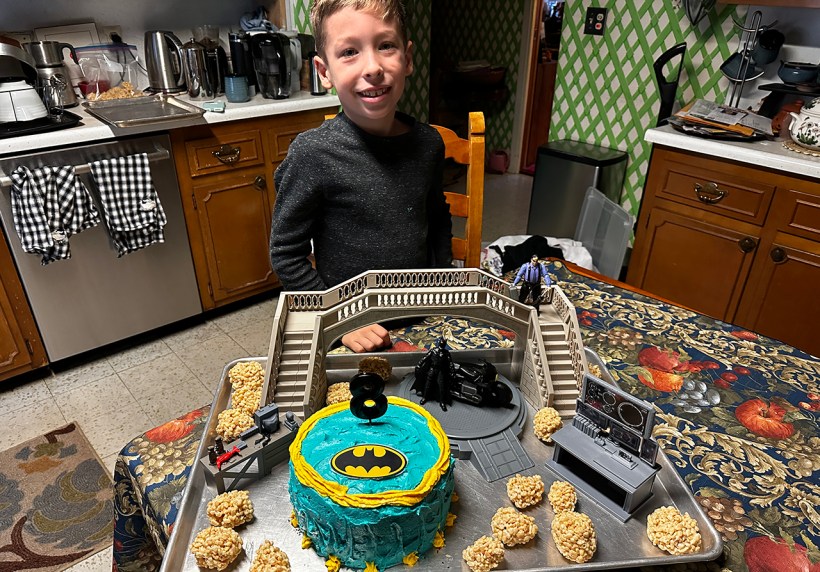
In a heartwarming YouTube video, Samuel Jack Wills and his grandmother Pam turn cake-making into an adventure in celebration of his Batman-themed birthday. The video captures endearing family traditions, from a talking doorbell to playful gift unwrapping, and culminates in the creation of a Bat-Signal adorned cake and joyous birthday song.

Grab your capes, click on our video, and be a part of our delightful celebration that’s sure to lift your spirits sky-high!

🎉 Get ready for an extraordinary adventure into the world of cake-making with our superstar, Samuel Jack Wills, and his magical sidekick, Grandma Pam! 🍰✨ It’s a special day just before Halloween, and the excitement is as palpable as the crisp autumn air. 🍂

🦇 In our latest heartwarming YouTube video, witness the grand entrance of our birthday hero, Sam, as he strides through the gate with his dad, Sean Wills, to a chorus of giggles and gasps, thanks to our quirky, talking doorbell that’s become an outrageous family tradition. 🎈

Join us in the celebration as Sam unwraps wonders from Grandma Pam and Grandpa Michael: from a thrilling Batman-themed birthday card that lights up the room with a Bat-Signal magnetic sticker, to a fleet of Gotham-inspired toys including an aircraft, the Batcave, and even miniature treasures like a suitcase brimming with play 100 dollar bills. 🏰💰

Sam and Grandma Pam put on their chef hats, discussing and designing a cake that’s not just a treat but a superhero saga! 🎂 With buttercream as smooth as velvet and chocolate layers that whisper ‘indulge’, they create a masterpiece adorned with blue and yellow frosting, featuring the iconic Bat-Signal.

And what’s a Batcave without boulders? Watch them skillfully make Rice Krispy treat boulders to scatter around their edible Batcave — a feast for the eyes as much as the taste buds. 🍫

The grand finale is a chorus of joy as Sam, surrounded by his loving family, basks in the glow of birthday candles and the warmth of the Birthday Song. 🎶 It’s a day where memories are made, laughter is shared, and love is multiplied.

So grab your capes, click on our video, and be a part of our delightful celebration that’s sure to lift your spirits sky-high! 🚀 Don’t forget to like, share, and subscribe for more family fun with the Wills clan! #SuperSamCakeAdventure 🥳👨‍🍳

Copyright 2023 Michael Stephen Wills All Right Reserved http://www.MichaelStephenWills.com

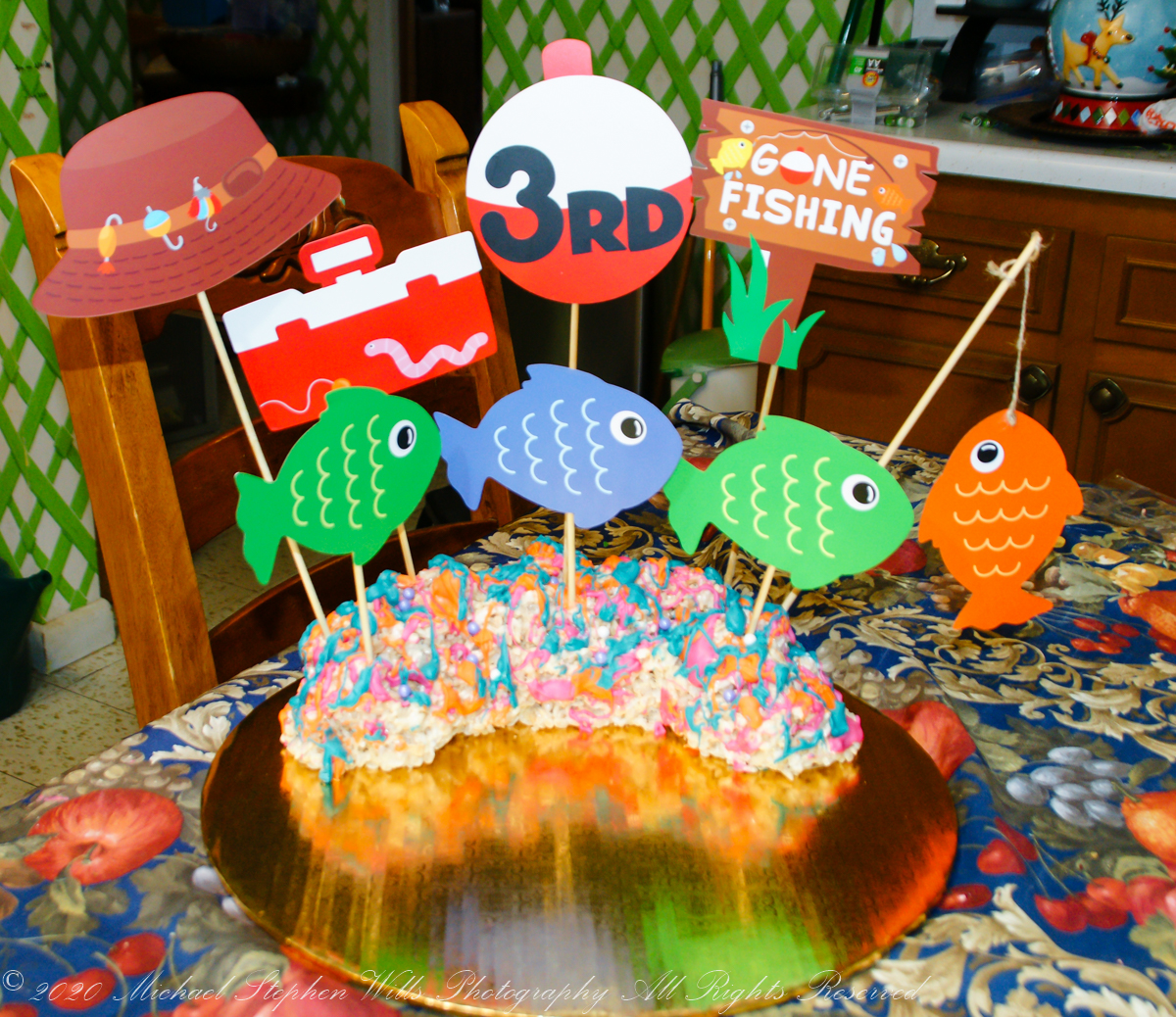
Gone Fish’in

Rory’s Third Birthday

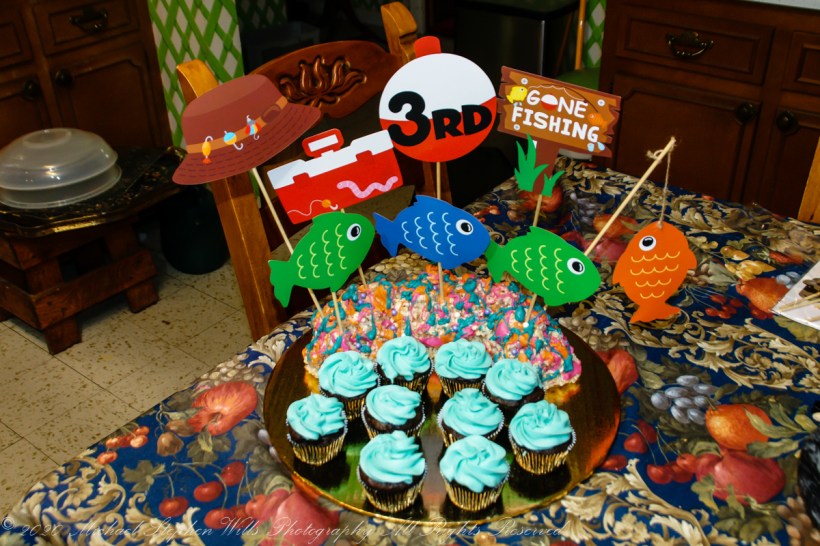
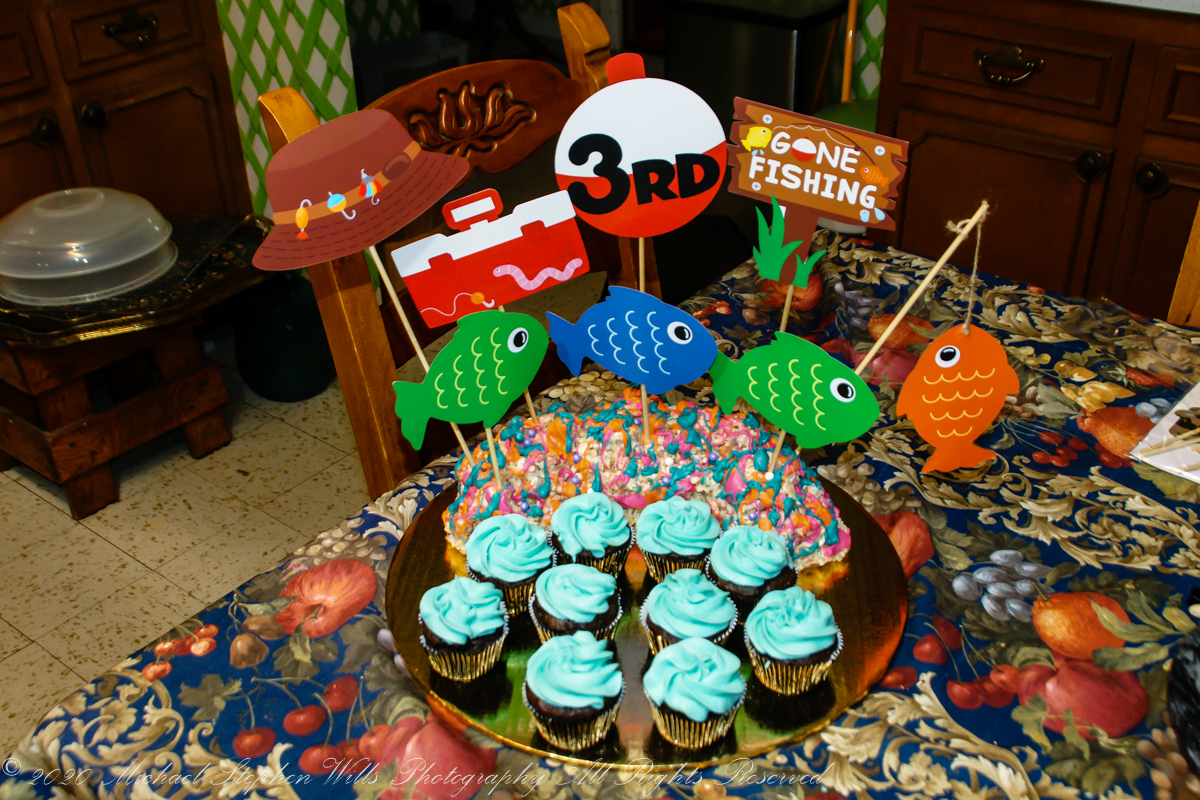
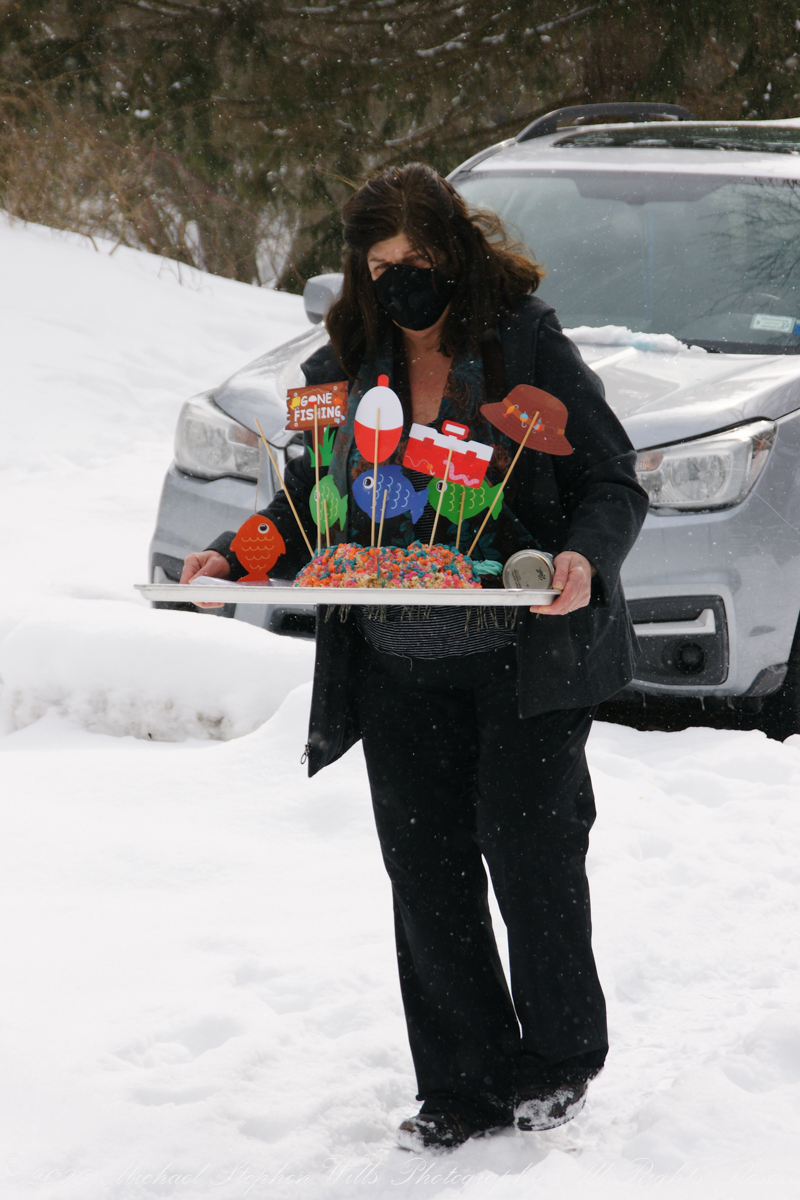
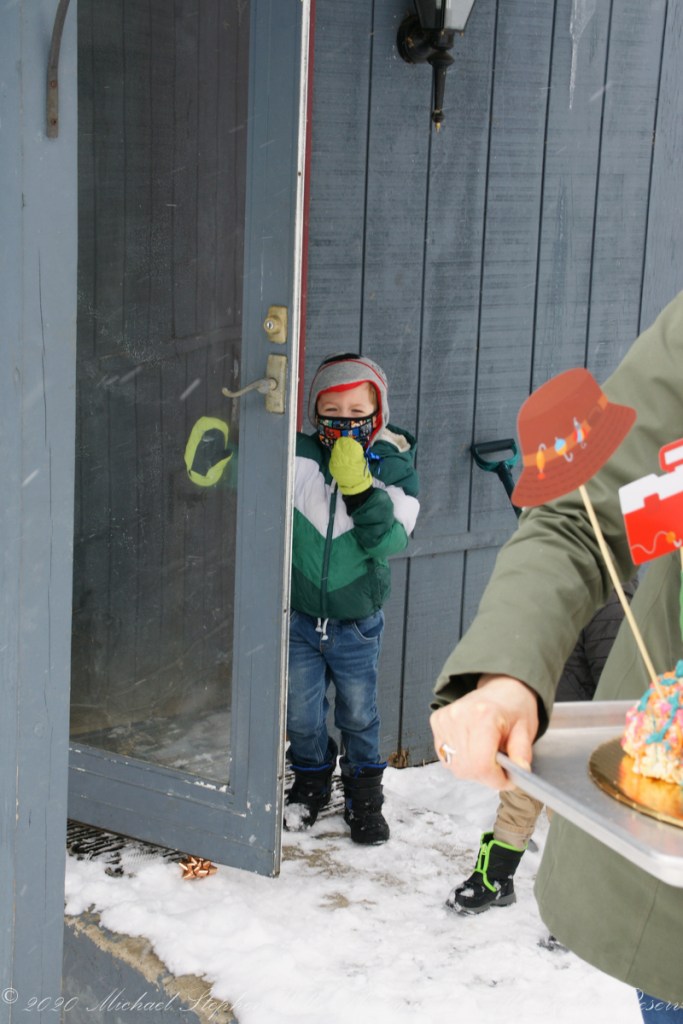
Cake design and production by Grandma for Rory’s Third 3 Birthday. On the lead up to the special day, Grandmother phones Rory to interview him for his birthday cake wishes. Rice Krispy treats drizzled with melted colored chocolate to resemble a coral reef. Chocolate cupcakes with homemade buttercream icing.

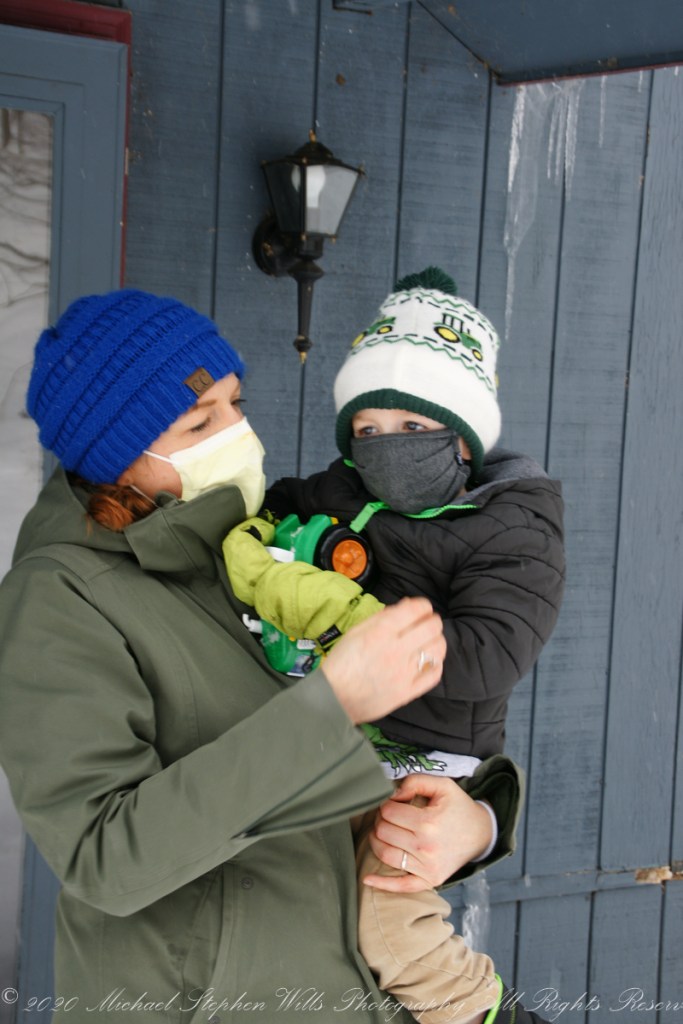
This was three years ago at the start of Covid-19 pandemic. We drove up his long, snowy drive way……

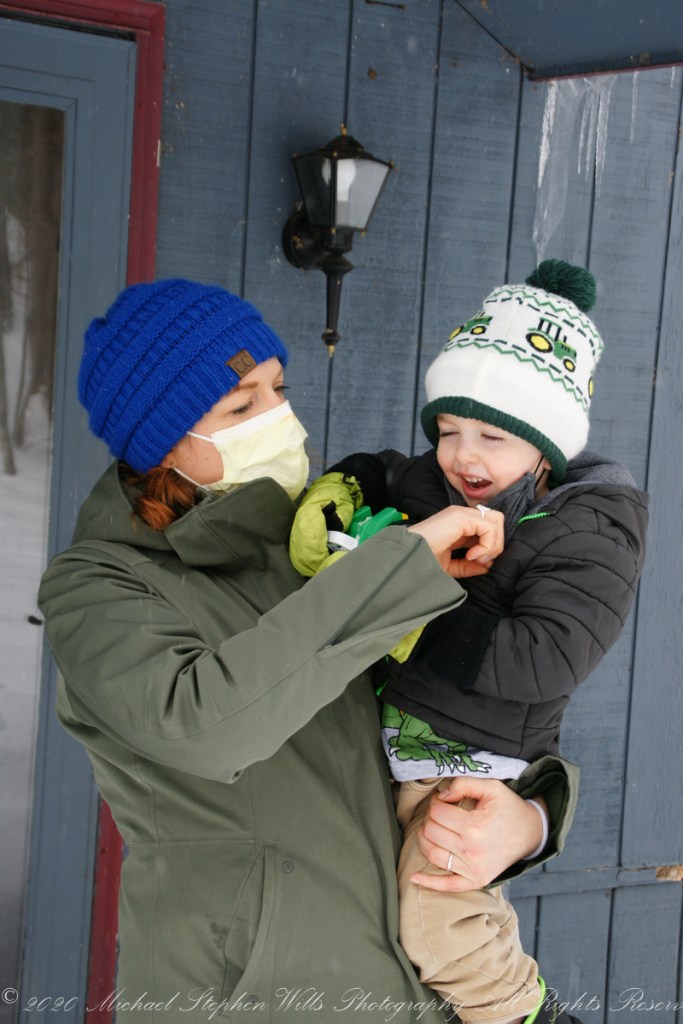
Rory, Mom and brother Sam welcomed us.

Pam had Swedish fish and other fixings for Rory to put on the finishing touches.

Copyright 2023 Michael Stephen Wills All Rights Reserved

Valentines Day Greetings

1959 through today

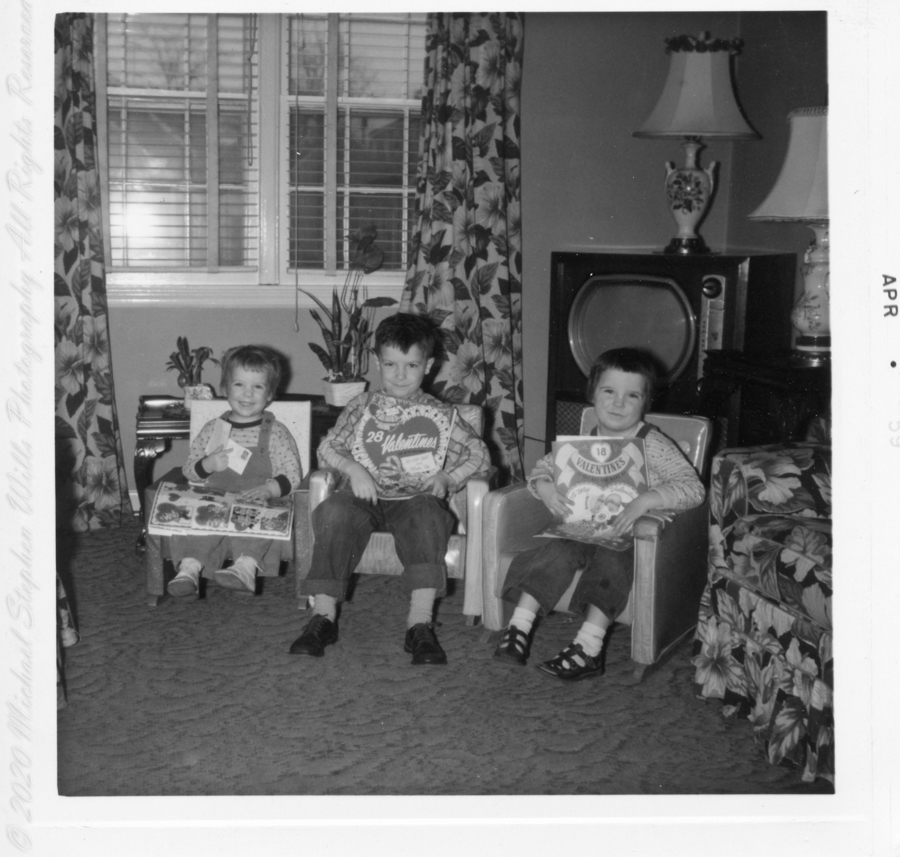
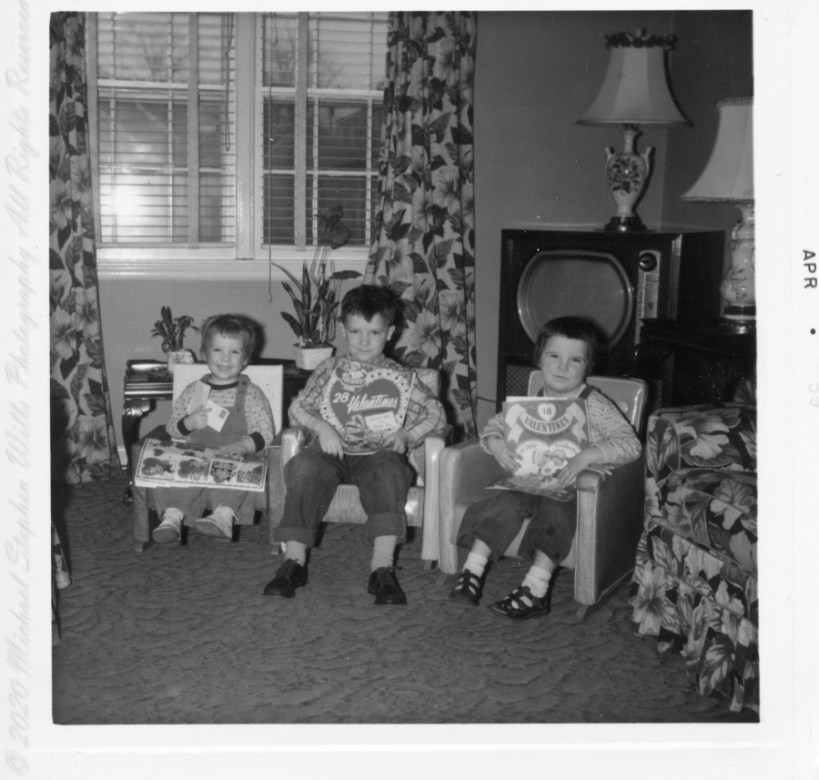
Theresa (2), Michael (5), Christine (4) in the livingroom of 107 Deepdale Parkway, Albertson, New York on Valentines Day 1959

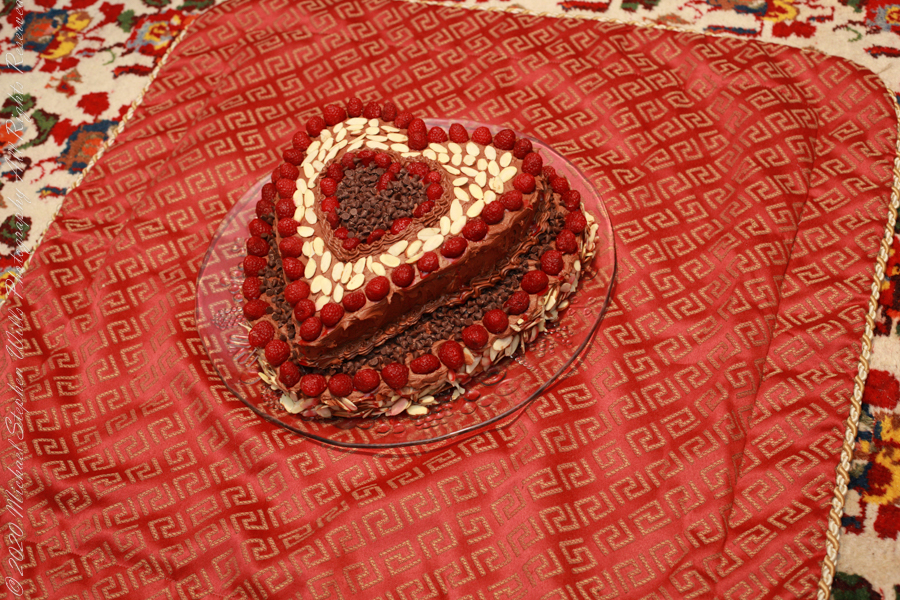
Chocolate Valentines Day cake by Pamela Wills

Pam and I aboard the Oceania Regatta sailing the Pacific Ocean off Chile. The following day we reached Puerto Montt.
Copyright 2025 Michael Stephen Wills All Rights Reserved

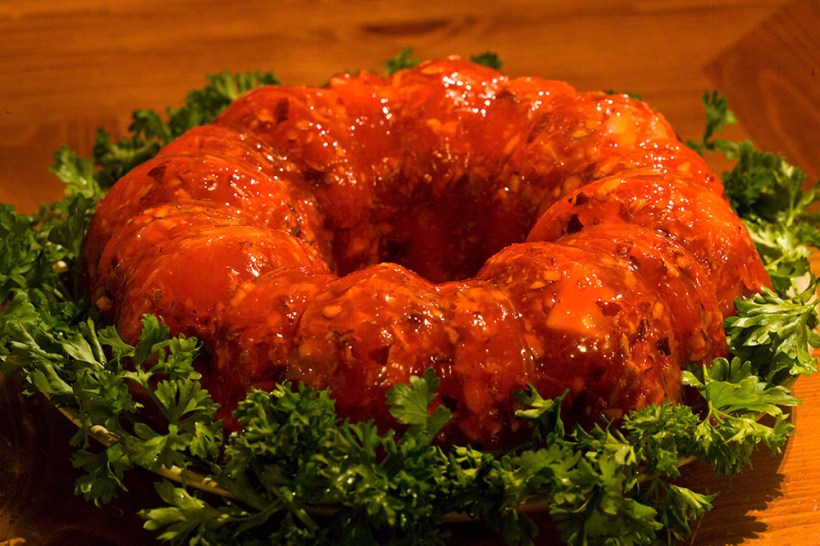
Pam’s Holiday Cranberry Pecan Salad

Our holiday tradition

You will be well-remembered for years when Pam’s salad is part of your holiday celebration. We hosted 2017 Thanksgiving and Pam’s salad was requested by her son and daughter’s families. When we went around the table to give thanks, our six year old grandson offered, “I am thankful for the jello”, meaning Pam’s salad.

My wife, Pamela Wills, perfected this recipe over the years as a nutritious and tasty dish she could make in advance.

Thanksgiving, Hanukkah, Christmas or Anytime

Holiday Cranberry-Pecan Salad travels well and is a visually appealing dish to share at parties.

Holiday Cranberry-Pecan Salad

Ingredients:

1 12 oz. bag of raw cranberries

1 6 oz. box of raspberry gelatin

1 6 oz. box of orange gelatin

3 cups orange juice

3 cups boiling water

1 large orange

2 large apples of your choice (I use sweet/tart/firm apples)

1 tablespoon orange rind

½ cup chopped pecans

Curly leaf parsley

3-4 small bunches of green grapes. I dip the grapes in water, then in sugar and let dry. Or you can use raw cranberries.

Directions:

  1. Boil water. In large mixing bowl pour water over raspberry and orange gelatin and stir until dissolved. Wait a few minutes until the gelatin cools down (keep stirring). Add orange juice and stir again. Place in refrigerator until gelatin is the consistency of raw egg whites. This is tricky step since, if you don’t let it set up enough, the fruit will sink to the bottom.  When set too much the fruit mixture won’t blend with the gelatin.
  2. In food processor finely chopped cranberries. By hand cut orange and apples into small bit-size pieces. Combine chopped cranberries, apples and orange. Fold in grated orange rind and pecans. Set this aside while waiting for the gelatin (see above).
  3. Fold fruit mixture into the gelatin. With a large spoon scoop up mixture and transfer it to a Bundt pan. Cover with plastic wrap and return to the refrigerator for several hours or until set.

To serve:

Dip bottom of mold into a sink of a few inches of luke warm water (not too warm or the gelatin will melt). Turn upside down on a large round platter or plate and garnish around the edges with parsley and the sugar-coated grapes or raw cranberries.

This is a great dish to share at a holiday party since you can make it in advance. My family prefers it over cooked cranberry relish and it is even good enough to serve as a dessert. It is easy to make, it’s festive and has always been a big hit. Enjoy!

Note: EAT the parsley garnish. Parsely is packed with vitamins and minerals.  Just 7.5 grams (a fraction of an ounce) contains 150+% of most people’s Vitamin K requirement and about 15% for Vitamin A and C.