Historical Wonders of Ashford Castle and Its Natural Surroundings

At Ashford Castle, swans glide on the Cong River’s glassy waters, weaving together myth, history, and cinema in a timeless reflection of Ireland’s enduring spirit.

Headed south from Cong Village, past the venerable Cong Abbey then Saint Mary’s Church of Ireland, the road bends into the Ashford Castle estate. Time seems to shift here. The stonework of the abbey lingers in memory, only to give way to manicured parkland, ancient trees, and the shimmer of water. The road itself, aptly named Ashford Castle, carries the traveler to a place where history, nature, and imagination meet.
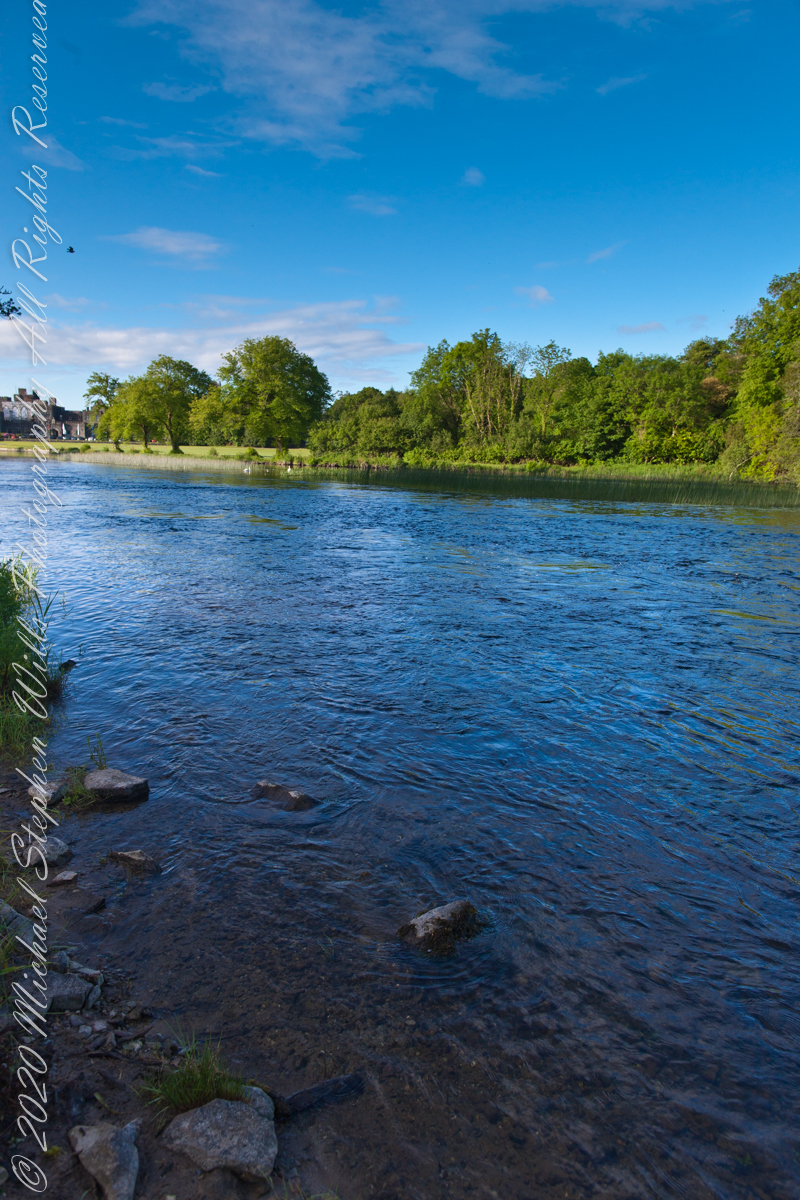
I do not recall passing a guard box on my first visit, though one now stands firmly on the roadside, manned and proper, as though the estate were never meant to be entered without ceremony. In truth, Ashford Castle has always carried the air of a threshold—between village and wild, past and present, myth and reality.
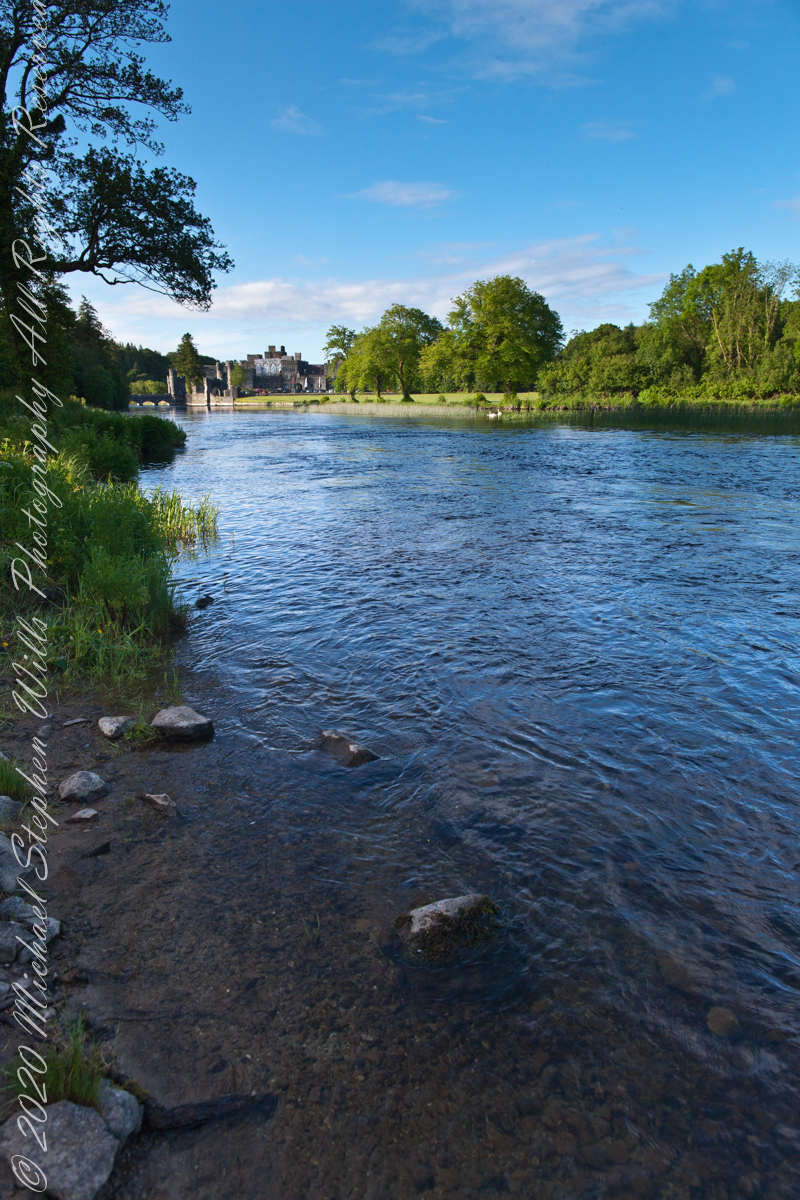
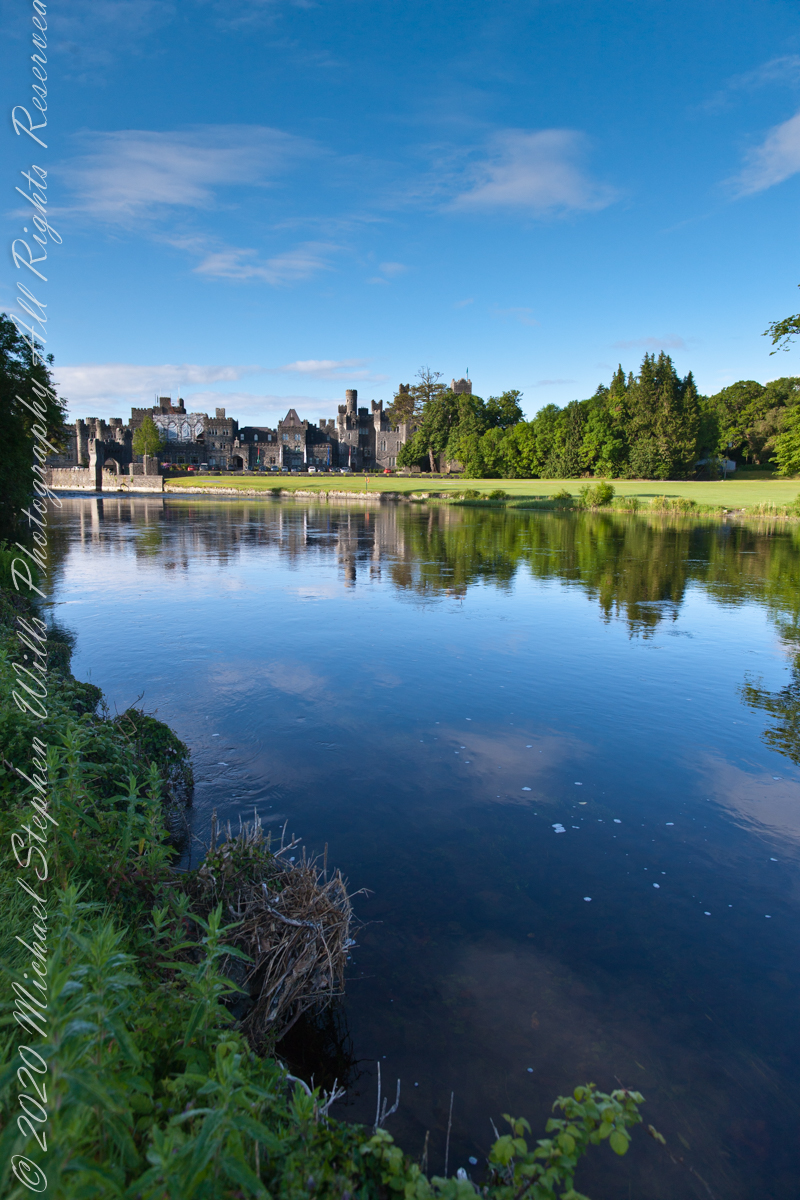
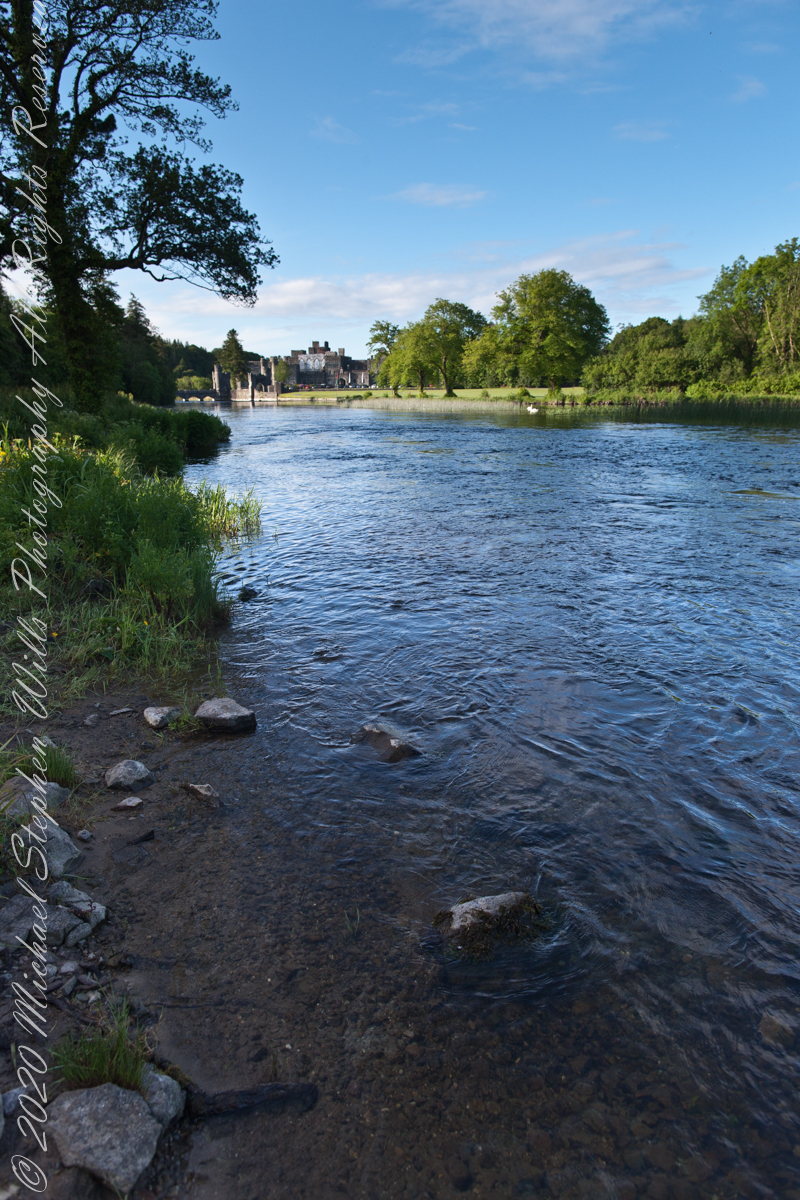
Soon the road brings one to the banks of the Cong River. Here the water widens, flowing calm and sure, and across it rises the battlemented silhouette of Ashford Castle itself. Its towers, turrets, and stony walls seem to grow from the riverbank like something inevitable, a fortress transformed into elegance. The castle’s mirrored reflection on the water doubles the grandeur, as though the real and imagined castle exist side by side.
It is no wonder filmmakers found inspiration here. Scenes from the classic 1952 film The Quiet Man—the tale of Sean Thornton, played by John Wayne, and the fiery Mary Kate Danaher, embodied by Maureen O’Hara—were shot on the far bank of this very river. To watch them walking by these waters is to see Ashford Castle woven into Hollywood’s Irish dreamscape, a backdrop both romantic and enduring.

Yet long before cinema, the river was already a stage. The Cong River is a natural marvel. It emerges from the same Carboniferous limestone that shapes the Burren of County Clare—an austere landscape of limestone pavements etched with fossils and caves, where rare alpine and Mediterranean plants thrive among ancient tombs. Through fissures in this ancient bedrock, the waters of Lough Mask find their way underground before rising again at Cong. This subterranean journey, through stone filters laid down some 350 million years ago, leaves the water clarified, luminous, and cold. By the time it slides past Ashford Castle, it has the purity of glass.
It is in this clarity while walking the opposite bank on a different morning I found a parent swan and its cygnet feeding. The adult glided, immaculate, its long neck bowed as drops of river fell from its beak. At its side, the cygnet paddled with earnest strokes, gray down still clinging, a fragile shadow of what it would one day become. Together they traced a quiet path across the water, ripples fanning behind them.
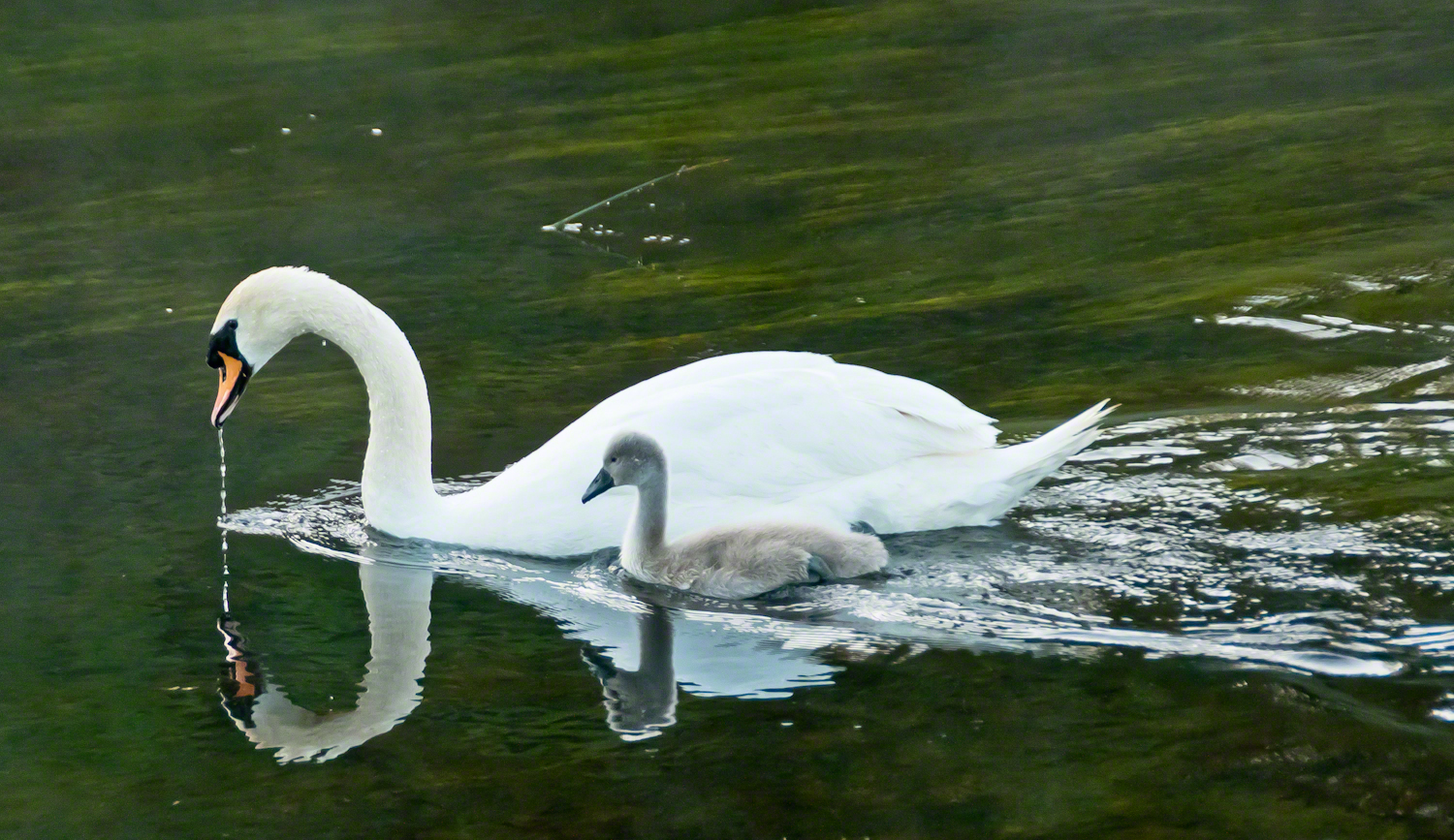
Few images so perfectly match their setting: a medieval castle, guardian of centuries, reflected in the same waters where these swans carried on their timeless rhythm of nurture and growth. It was as if the river itself composed the scene—a blending of stone, water, bird, and sky that belonged nowhere else but here.

The swan has long been a symbol in Irish lore. The Children of Lir, cursed to live as swans for nine hundred years, are among the most haunting figures of Celtic mythology. To see the white bird with its offspring before Ashford Castle was to glimpse that myth breathing still, alive on the Cong River.

Photographers know the difficulty of capturing water and stone without losing the life between them. On that morning, however, the river gave freely—its surface alternately smooth as glass and dappled with breeze. Stones at the water’s edge appeared like stepping-stones into history. Each frame revealed another face of the estate: the wide reach of the Cong, the castle framed by trees, the play of cloud shadows across the current.

The castle itself, though reshaped as a luxury retreat, still speaks of older times. Founded in the 13th century by the Anglo-Normans, Ashford passed through centuries of conquest and change before becoming, in the 19th century, a romantic Victorian pile. Today its battlements remain picturesque rather than defensive, but the sense of continuity—of lives unfolding along these banks—has not faded.
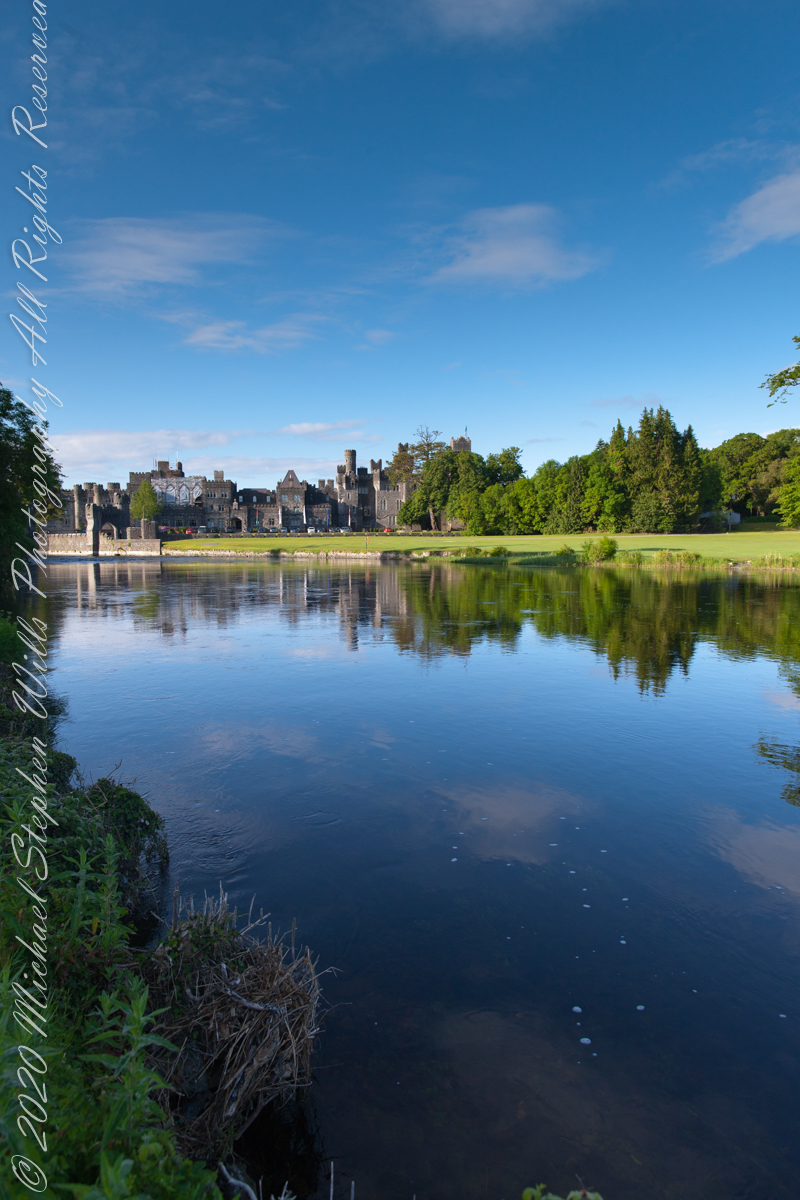
Standing there, camera in hand, I was struck by the layered meaning of this place. The Cong River flows from unseen caverns, purified by limestone older than memory. It nourishes swans, reeds, and trout alike. It reflects both a castle and a sky. Along its opposite bank, legends of cinema and Celtic lore alike find footing.

As the swan and cygnet drifted slowly downstream, I thought of them as part of the same enduring thread. Parent and child mirrored castle and village, past and future, permanence and change. The ripples they left widened until they touched both banks, an unbroken gesture across centuries.

Click this link to read another Ireland story “The Cloigtheach of Glendalough.”

Click this link to read another Ireland story “Killeany Bouy.”
Enter your email to receive notification of future postings. I will not sell or share your email address.

Pelicans Skimming Waves

Wave Play

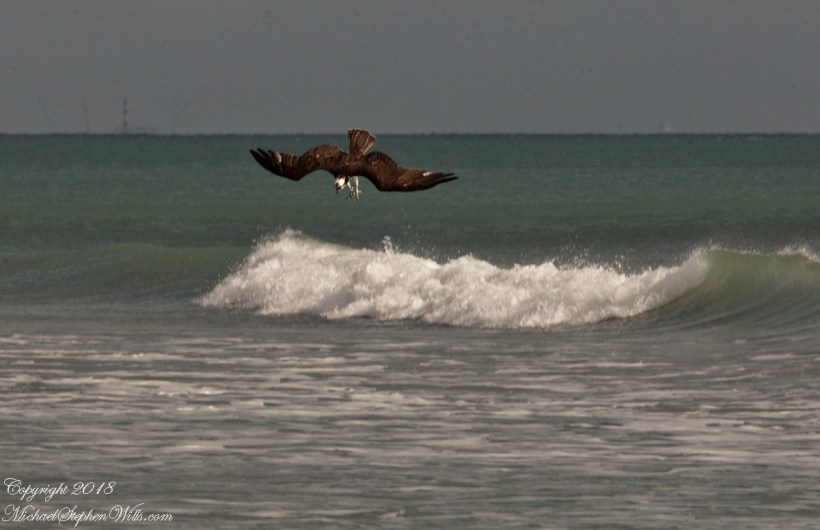
Brown Pelicans (Pelecanus occidentalis) fly as linear flocks of a few individuals, at altitude over the shore, and low over the surf line as seen here. Taken January 27, 2020 with the IPhone 8, there is a the insertion of the modern world as a cruise ship comes into view. The ship departs Cape Canaveral Cruise port for parts unknown.

Pelicans, when skimming the waves solo, fly even closer, and do wipe-out when a wingtip hits the water. This bird successfully negotiates a path through the surf.

Click this link to visit “Queen Victoria Arrival” on my blog.

Copyright 2024 All Right Reserved Michael Stephen Wills Photography

Harvest Views

One October Evening

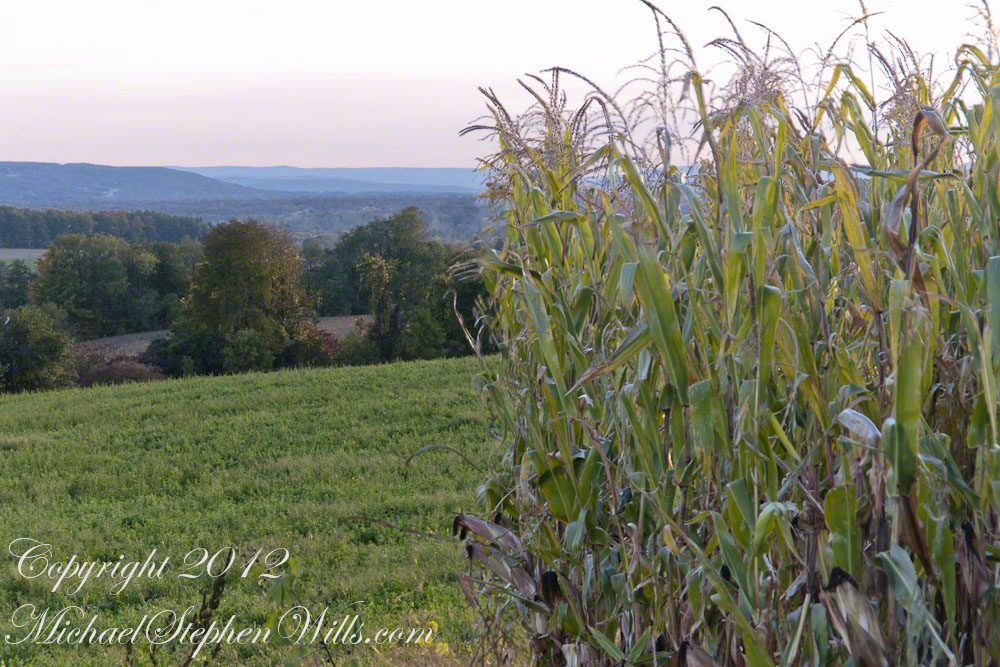
When Pam and I lived in an converted mill house on Malloryville Road one walk we’d take with cameras was out the front door, turn right and walk the road to the hilltop to take in the views.

“October Evening on Fall Creek Farmland”

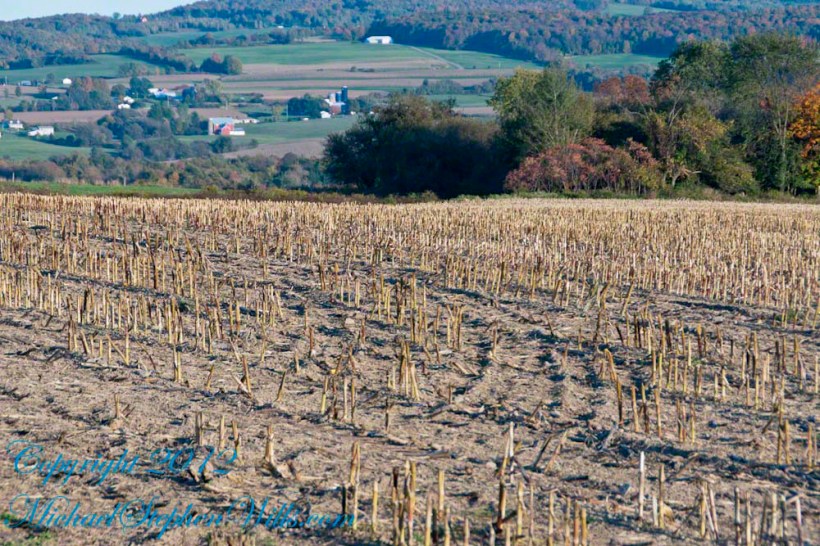
Ripe corn on Malloryville Road from a hill above the Fall Creek valley.

Click any photograph to visit my OnLine Gallery “Finger Lakes Memories.”

“Into the Distance”

Fall Creek Valley view from Malloryville Road looking southwest.  In the far distance is Connecticut Hill.  You can see the towers of Ithaca College from here, but not in this photograph.

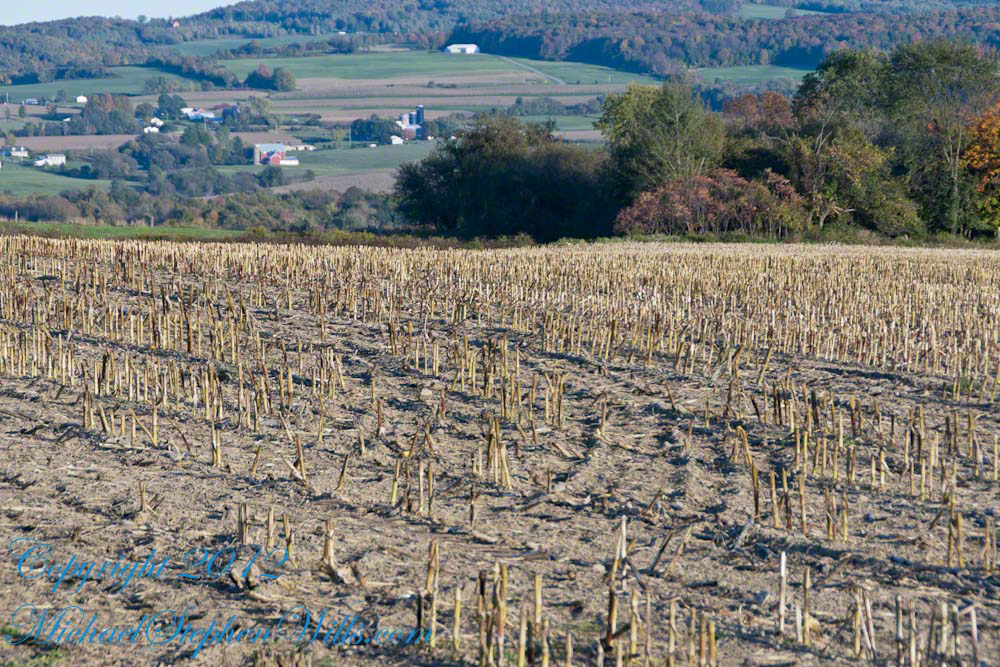
“Harvested Field”

Here are more views from this Harvest View evening.  Click the link to go there.

“Celestial Geese”

“Antique Silo Apple Harvest?”

Copyright 2024 Michael Stephen Wills All Rights Reserved

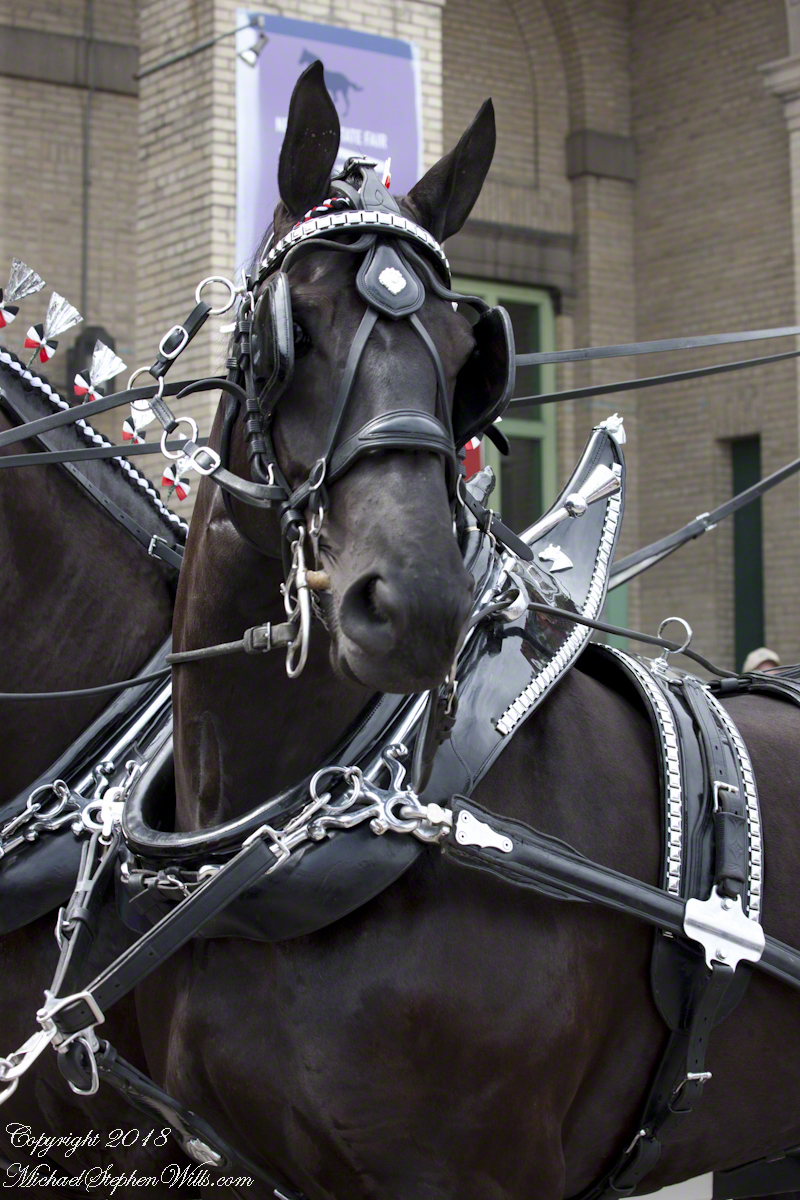
New York State Fair Four (4) Horse Hitch Competition

Enter to enjoy up-close portraits of the teams with competition action shots.

Continue reading “New York State Fair Four (4) Horse Hitch Competition”

Man of War Beach Walk

Beauties and Dangers Encountered During a Walk on the Beach

Over the years my selection of beach texture photography has expanded. Click this link or any photograph to visit my Textures Abstracts Patterns fine art gallery.

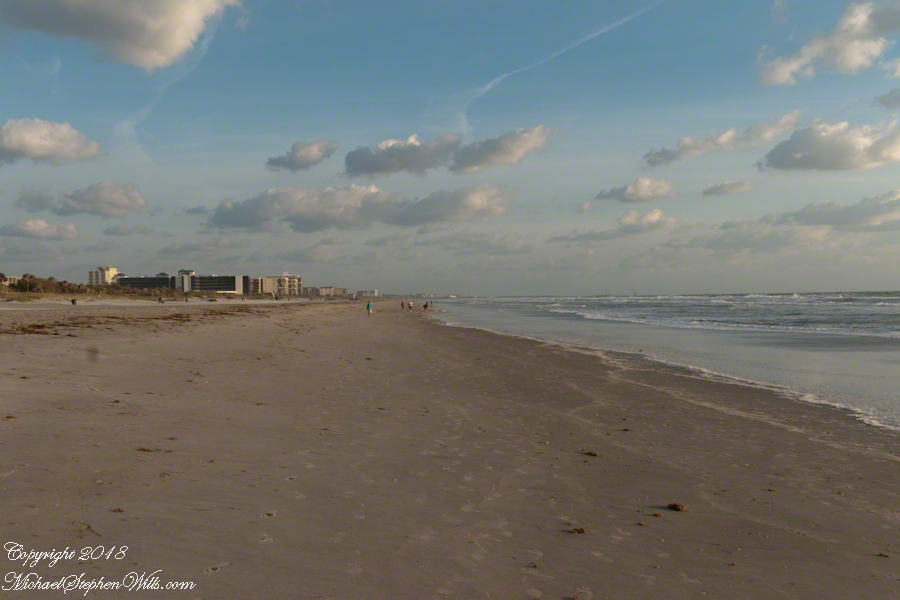
Setting off from the International Palms Resort Pam and I turned left, walking toward the pier, about 2.5 miles away. On the left is Lori Wilson (public) Park. One benefit of this location is the lifeguard station and “protected” swimming. We have reservations about ocean swimming: Sharks? Man ‘O War?

Headed north on Cocoa Beach – CLICK ME for more abstract photography.

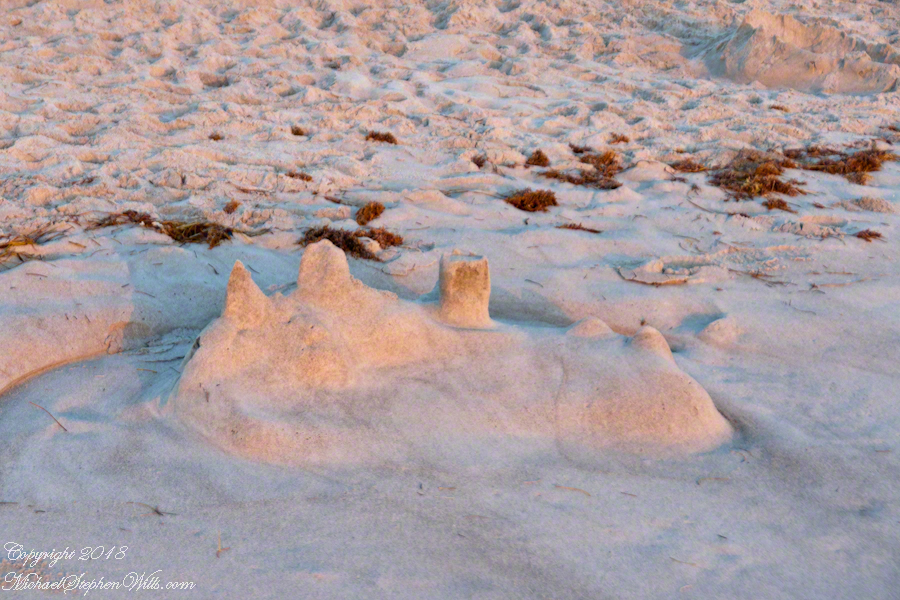
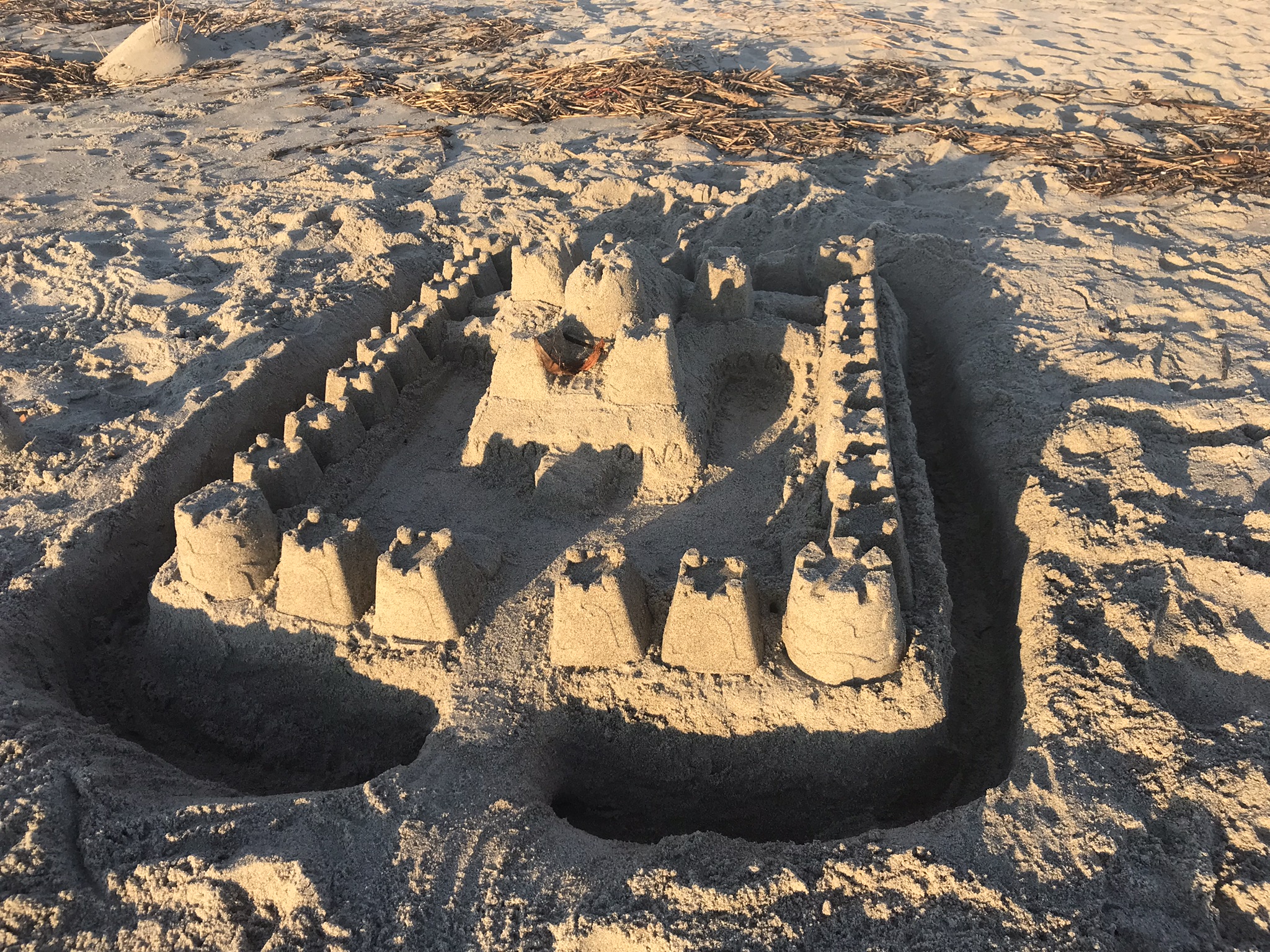
That hotel with the dark windows, on the north side of Lori Wilson Park is the Hilton. This sandcastle, washed out by high tide, caught in the dawn light, was in front of the Hilton. It brings to mind the interaction of nature and people.

Washed Out Sand Castle – CLICK ME for more abstract photography.

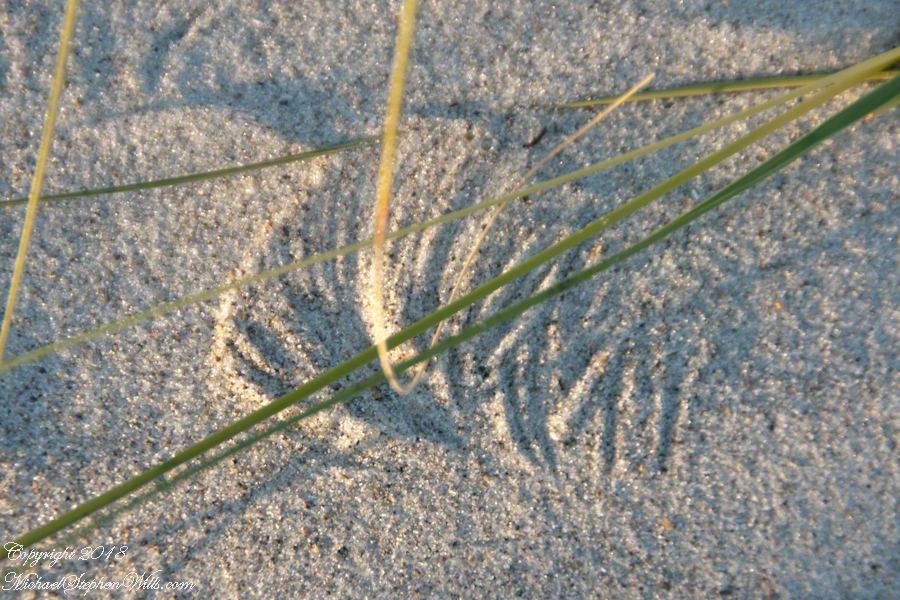
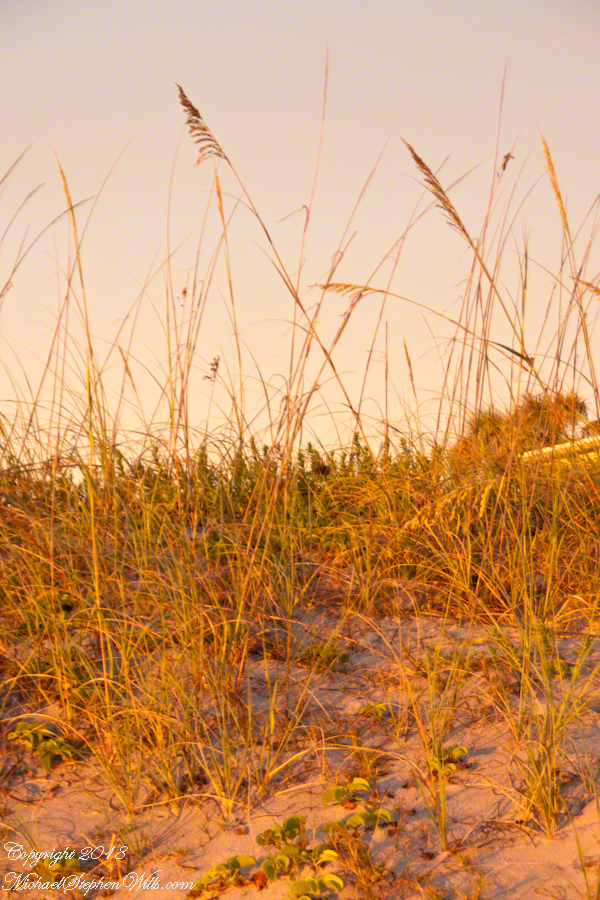
There were strong on-shore winds that day. Dune grass driven by the wind made this pattern.

Click photo to visit my Fine Art Gallery
Wind Driven Pattern – CLICK ME for more abstract photography.

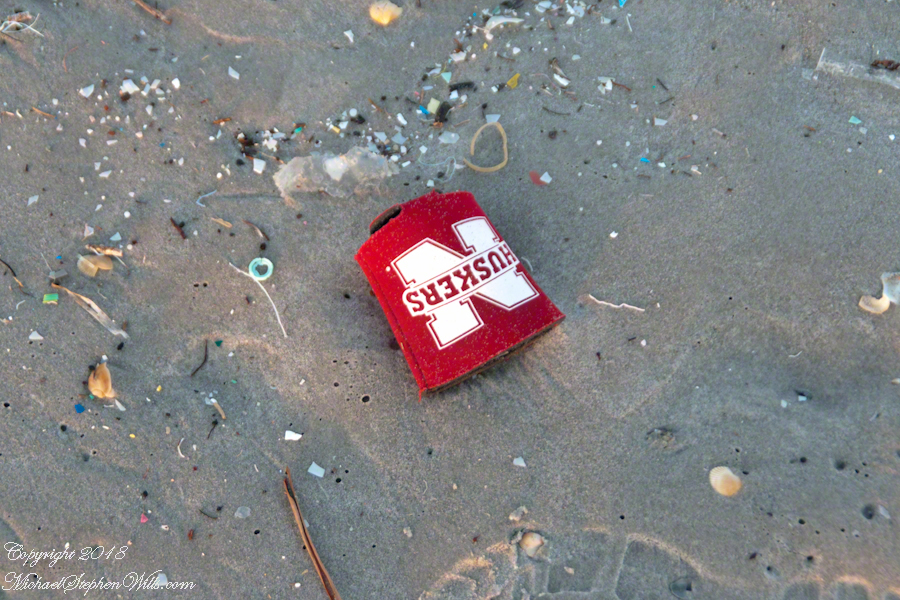
The wind and tide washed ashore all sorts of man-mad junk.

These small pieces of plastic washes off distant islands by hurricanes, the plastic ground up into bits.

The branded drink holder, the “corn huskers” of the University of Nebraska Lincoln, does not speak well for the alumni as these are sold locally. Community-minded people walk the beach with bags, picking up the bigger stuff.

When the wind changed the small plastic washed out with the next high tide and the beach was cleared.

Debris from Hurricane and Tourists – CLICK ME for more abstract photography.

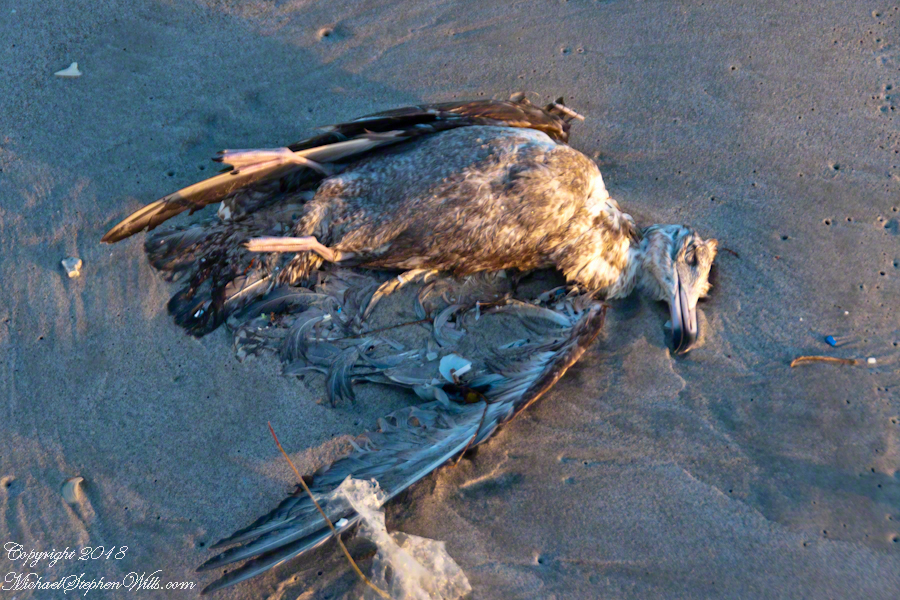
Corpse of a gull with ground up plastic bits.

Gull Corps – CLICK ME for more abstract photography.

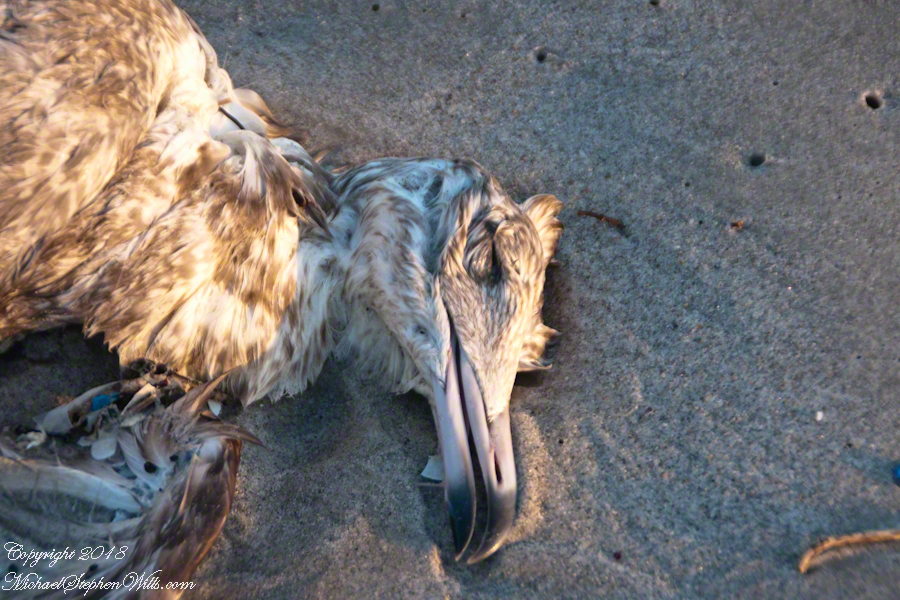
The gull beak has the same cruel beauty in death as it does in life.

Click photo to visit my Fine Art Gallery
Gull Corps – CLICK ME for more abstract photography.

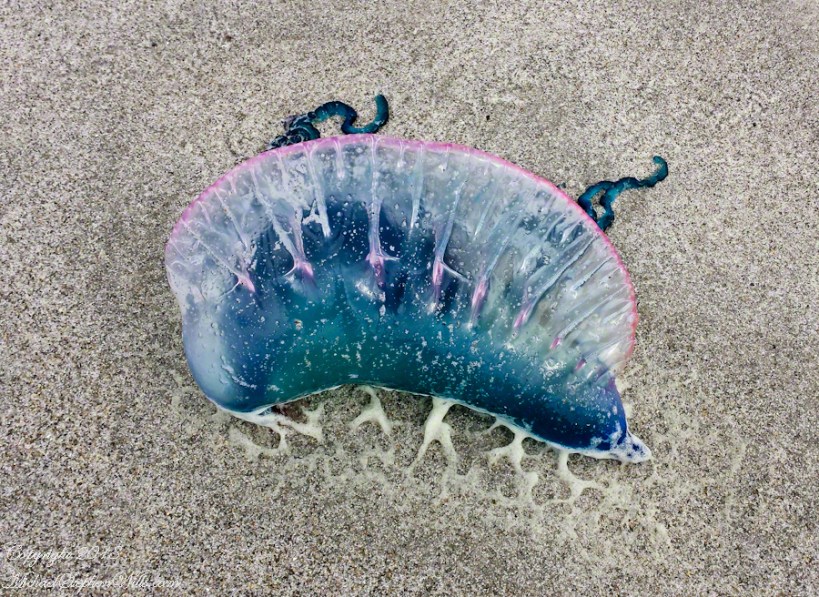
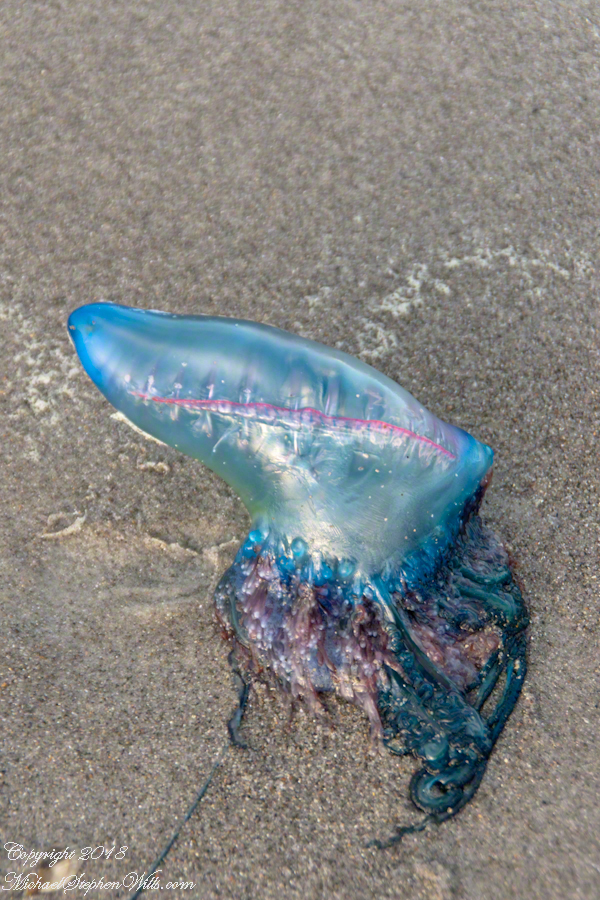
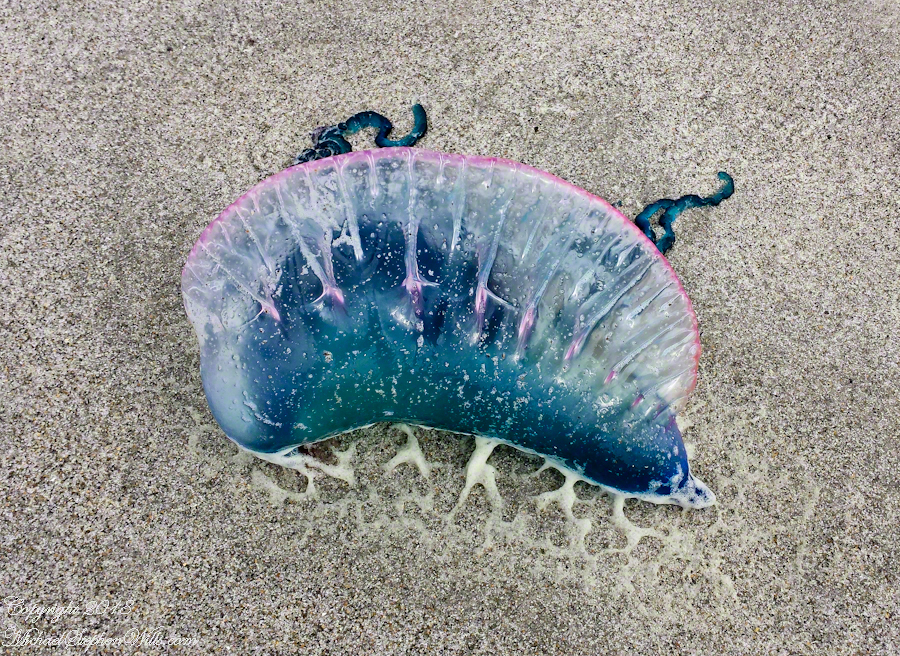
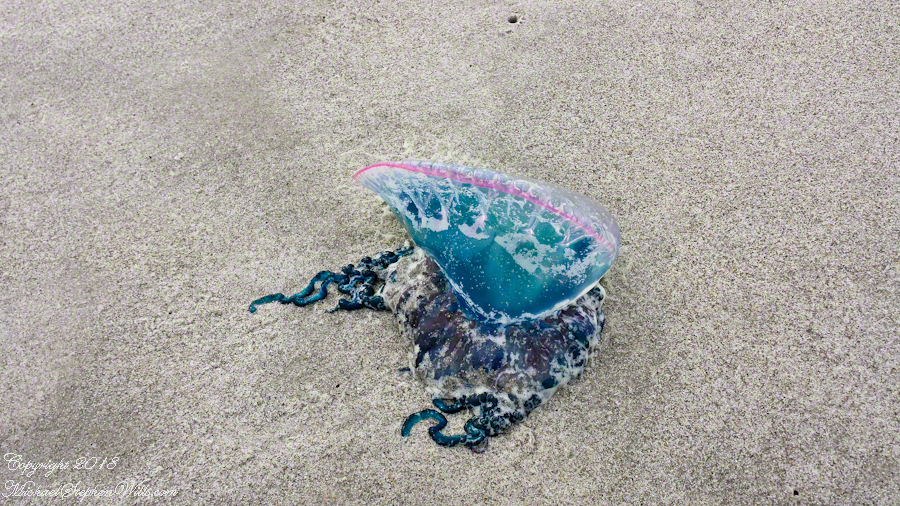
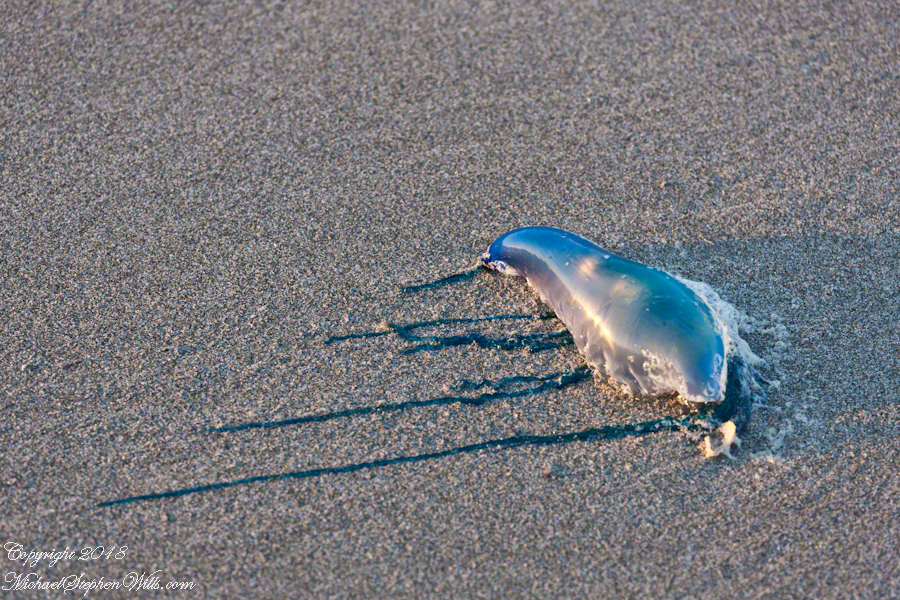
The wind drove ashore living creatures, left them on the beach to dry out or as food for crabs and gulls. After a Man Of War washes up on a beach it is still dangerous. Long tentacles extend from the body and can deliver painful stings.

Beached Man Of War – CLICK ME for more abstract photography.

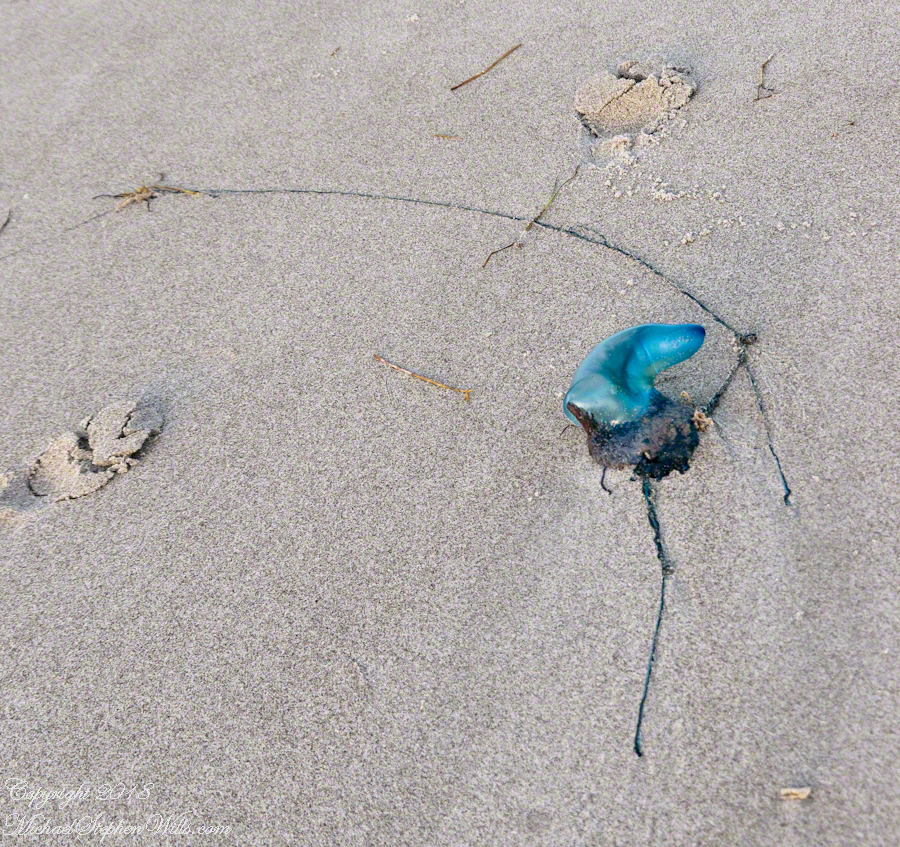
The person walking around these tentacles is wisely wearing shoes, as I can tell from the footprint shape.

Each such tentacle is threaded with stinging, venom-filled structures coiled, like a spring, ready to pump venom into the victim for the purpose of feeding, catching larval and small fishes and squids.

These structures, called nematocysts fire on contact and do not differentiate targets be it a human foot or a squid.

Click photo to visit my Fine Art Gallery
Man of War with extended tentacles – CLICK ME for more abstract photography.

The crest of the Portuguese Man of War is very visible in the water, the sac can be inflated/deflated to catch the wind or even sink the organism to escape surface feeders. The fanciful resemblance of the floating crest to a sailing ship is the origin of the organism’s popular name. The scientific name is Physalia physalis. While it appears to be a single creature, it is actually several working together for common benefit.

Named After Sailing Ships – CLICK ME for more abstract photography.

In Australia they call these baddies “blue bottles.” So descriptive.

We talked with life guards about first aid procedure, for the stings, and were not comforted by their ignorance. We had done the research ourselves. Be informed before you step onto the beach. Do not expect well informed assistance in the case of a sting, pre-arm yourself with knowledge.

Click photo to visit my Fine Art Gallery
Life guards were not knowledgeable – CLICK ME for more abstract photography.

This is an especially dangerous configuration of a beached Man O’ War (also known at Floating Terror): a blue balloon with strings trailing from it. Young children will see the balloon and want to grab or play with it. If we see tourist families with young children, when these are around, we will go out of our way to warn them.

Dangerous fun balloon configuration – CLICK ME for more abstract photography.

These disconcerting findings on the beach do not diminish our enjoyment of the environment, instead we are left with a greater appreciation and respect for the ocean.

Dunes welcome us home after a successful sunrise photo shoot.

Click photo to visit my Fine Art Gallery
Glowing Dunes at Sun rise – CLICK ME for more abstract photography.

Please browse my reasonably priced stock photography. License a photograph, download and use it for your website or blog. I have 100’s of clients, worldwide. Click this link to browse all my Getty IStock Photography offerings.

Or click this link or any photograph or this link to select a print with custom framing from my “Textures” Fine Art Gallery.

Copyright 2022 Michael Stephen Wills All Rights Reserved

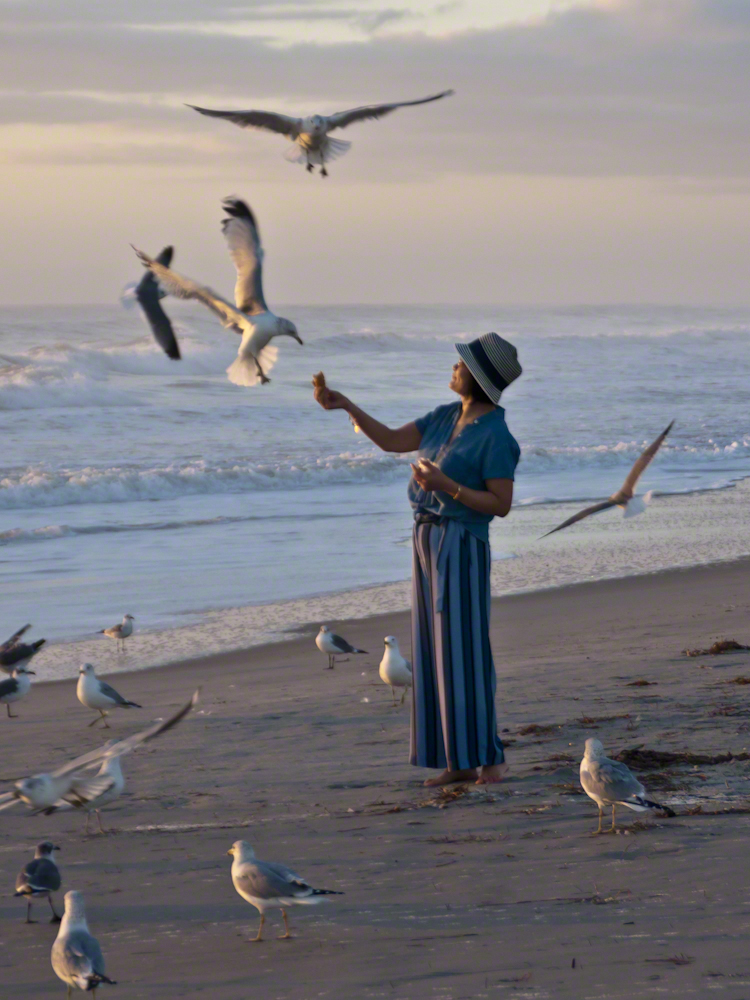
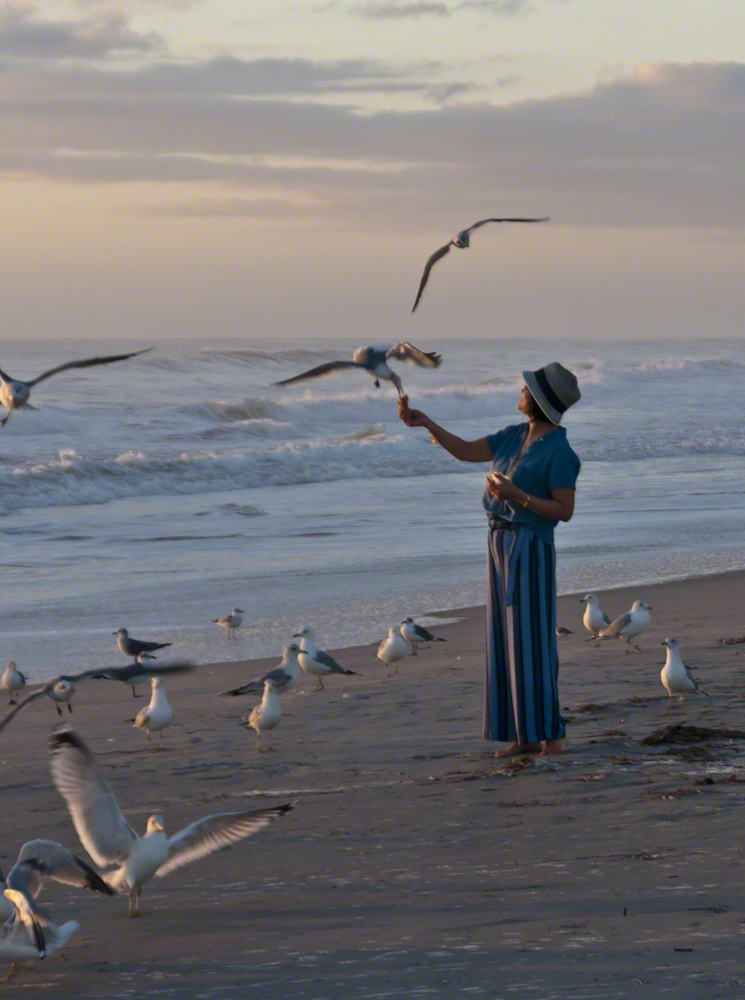
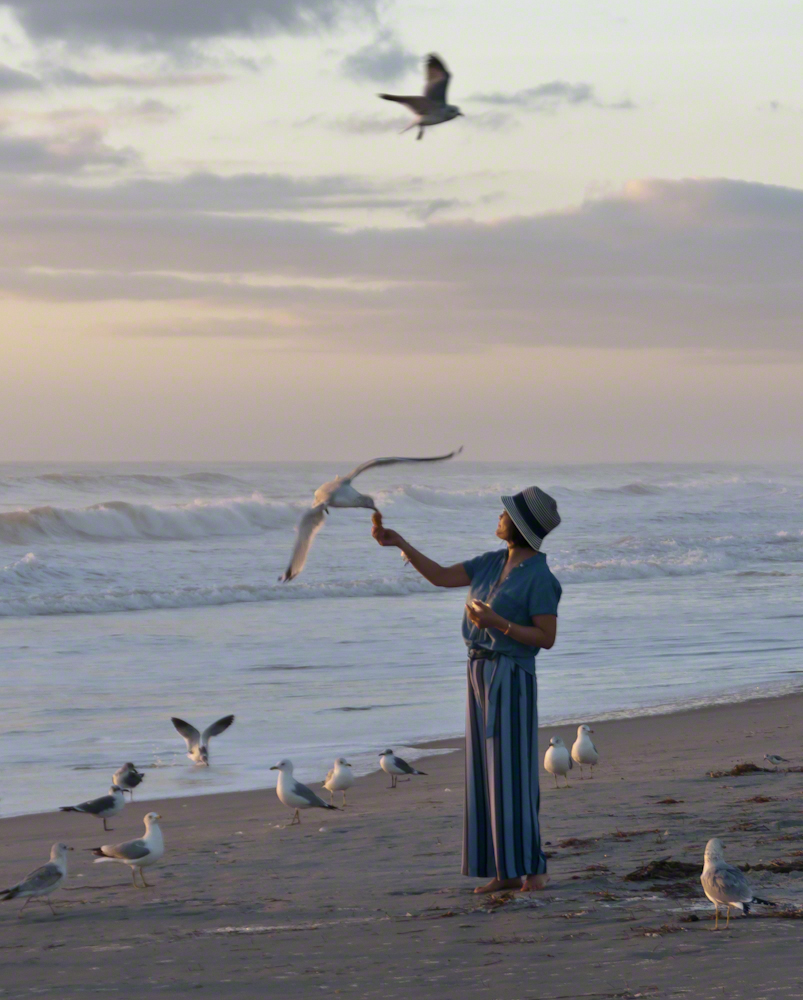
Lady Feeding Gulls, Cocoa Beach Dawn

unflappable lady hand feeds seagulls

When Pam read my post “Black Skimmers Feeding” she asked, “Where is the photo of resting Skimmers?”

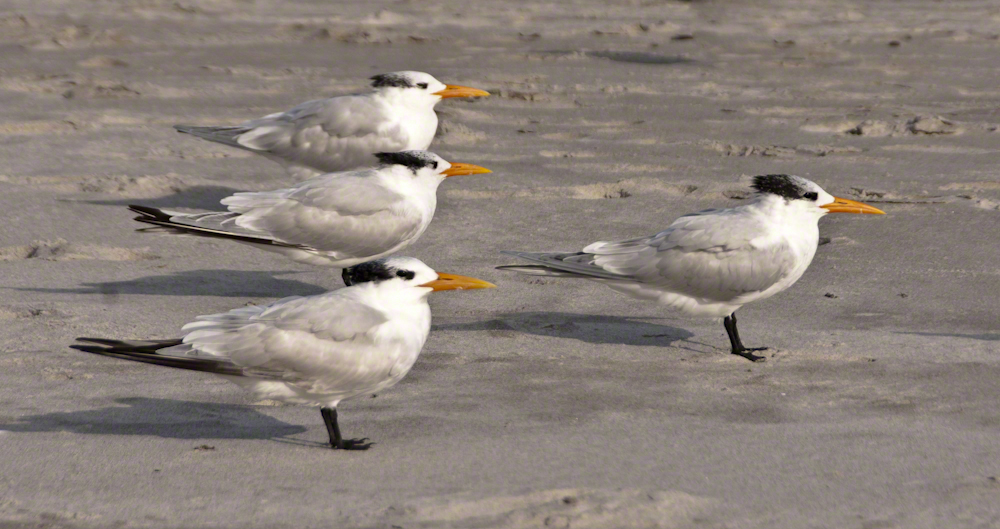
To answer her question, I looked through Cocoa Beach photographs and discovered I did NOT capture the Skimmers resting.  Instead, here are a related species, the Royal Tern (scientific name: Thalasseus maximus), whose behavior is similar in that it exclusively feeds from the water. There was a wind that morning and these individuals face into it.  These birds are, from a human point of view, well behaved, unlike the opportunistic gull.

Royal Terns at rest

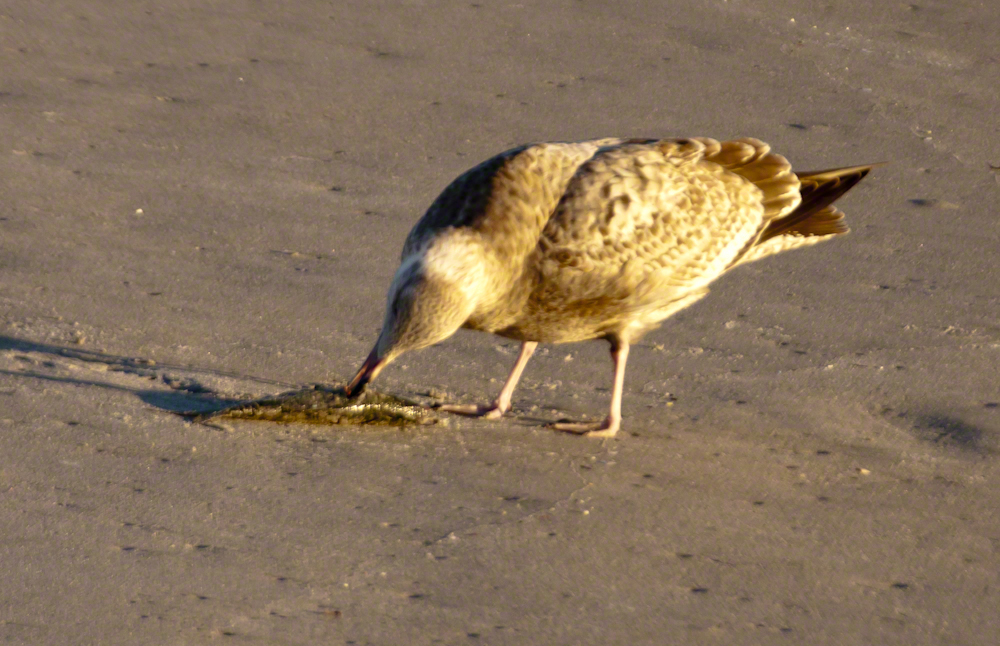
I searched around the web for identification of this gull without success.

Scavenging Gull – CLICK ME for more Florida photography.

It dines on a dead fish washed up by the surf.  In my previous posting I used the word “grifting” to describe gull behavior, again this is from the human point of view.  Gulls are notorious for stealing food from unwary beach goers, brazening walking over to unguarded chips (any kind), for instance, grabbing them and flying off.  If the chip stash is large, this sets off a nasty feeding frenzy when tens of gulls swoop in and grab.

Here is a series of photographs, demonstrating this behavior.

Click Me for more Florida photos from my IStock offerings.
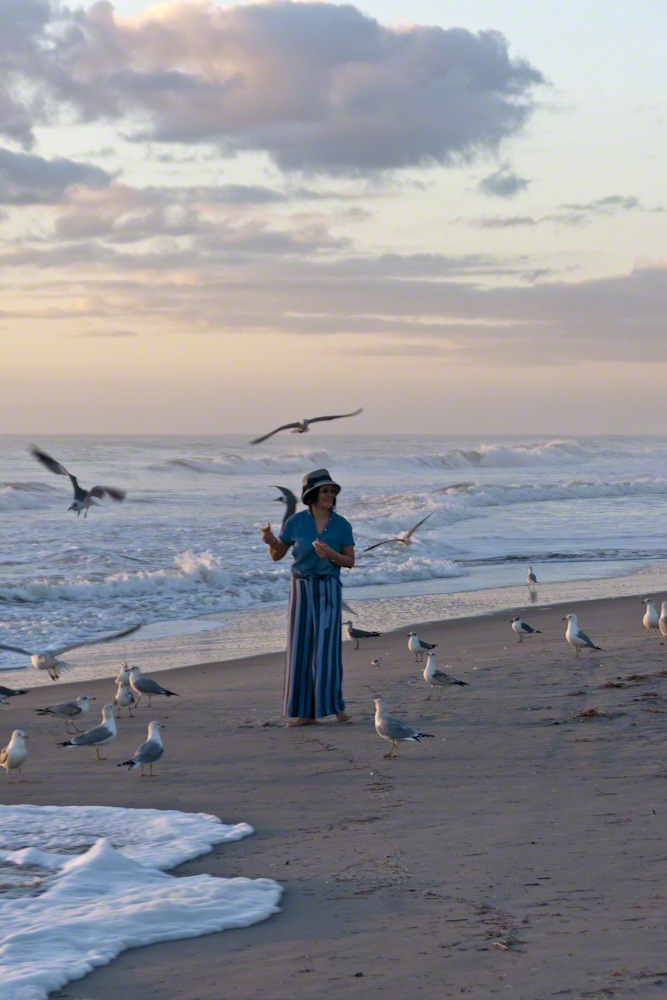
The dawn flowed over Cocoa Beach as a lady attracted a crowd of hungry gulls, reminiscent of scenes from Hitchcock’s “The Birds.”

Lady and Gulls

She is obviously an experienced gull feeder, unflappable with a steady hand

Lady and Gulls – CLICK ME for more Florida photography.

She had come to the shore at dawn for a photo shoot.  Her male companion (husband?) was there with a camera.

Lady and Gulls – CLICK ME for more Florida photography.

Pam and I were there for the dawn, me with the Sony camera.

Lady and Gulls – CLICK ME for more Florida photography.

At first, I stood there amazed at the spectacle.  She was in such control of the situation, not a victim, more like a lion tamer.

Then, Pam said, “You have to get this.”  And I did.

Enter your email to receive notification of future postings. I will not sell or share your email address.
Skellig Puffins

The Lovable Puffin

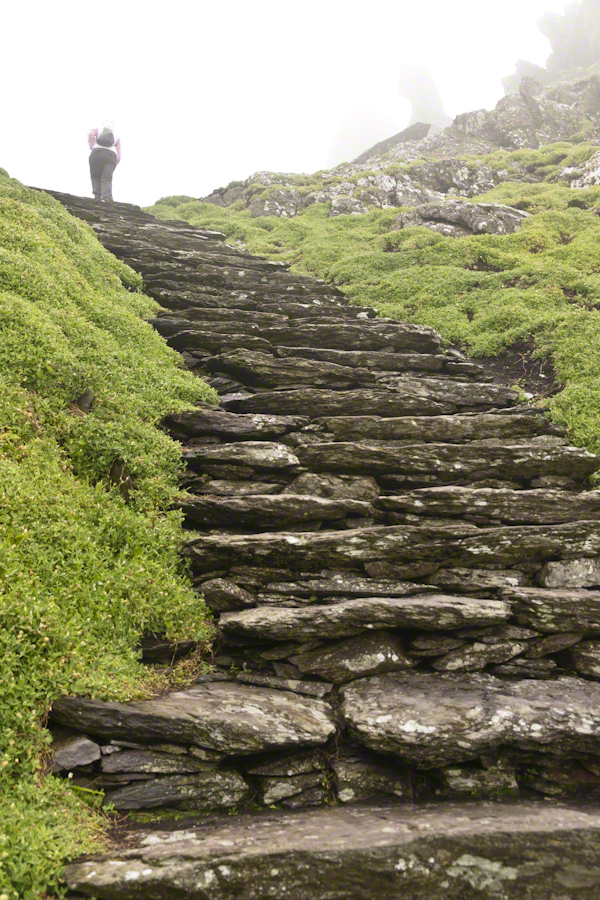
Each of the 603 steps between the Skellig Michael dock and the monastery evoked contemplation, caution, wonder and gratitude.

  • Contemplation: how did the monks manage to survive while placing the steps?  It can only be by a careful division of labor once a survival tripod was build.  By tripod I mean the basics food, shelter, warmth.
  • Caution: as with any steps, for a 60+ person I have learned the hard way falls take a long time to recover from.
  • Gratitude: for the opportunity, growth and knowledge afforded by travel.
  • Wonder: every step offered a new vantage and discovery.

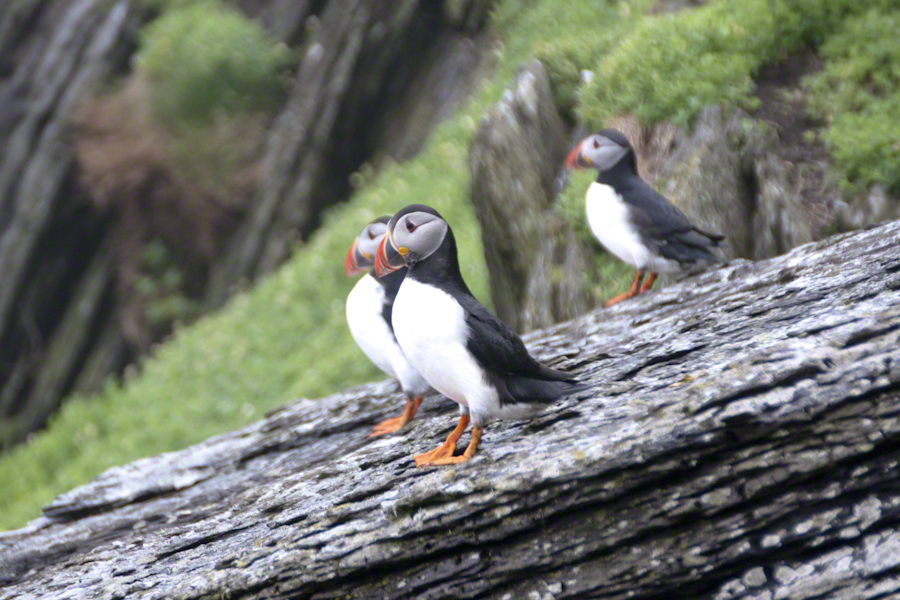
Puffins were on my mind for most of the lower steps being immediately at hand, almost underfoot, constantly.  Underfoot, not in a obnoxious way.  Underfoot in being right there, unabashed, going about the business of life.  Pam and I were lucky, Puffin wise, for the weather.  Sensible birds, when the visibility is low Puffins stay close to the burrow, making improvements and socialize with neighbors.

Puffins of Michael Skellig

Bad News: Atlantic Puffin populations are on a precipitous decline across Ireland and British Islands.  There are talks of a population collapse.  Researchers enlisted assistance from wildlife photography enthusiasts with outstanding results released in 2017.  The photographs showed parents returning with less nutritious fish.  The stress on Puffin populations follows the decline of fish stocks from over fishing.  I listed two references at the end of this post.

The disturbing element to our experience was not one of the birds flew in with a catch.  On second thought, this is not unexpected.  Late May the eggs are laid and under incubation.  The individuals in these photographs were feeding only themselves.  If we returned mid-June there would be chicks to feed.

Puffins of Michael Skellig
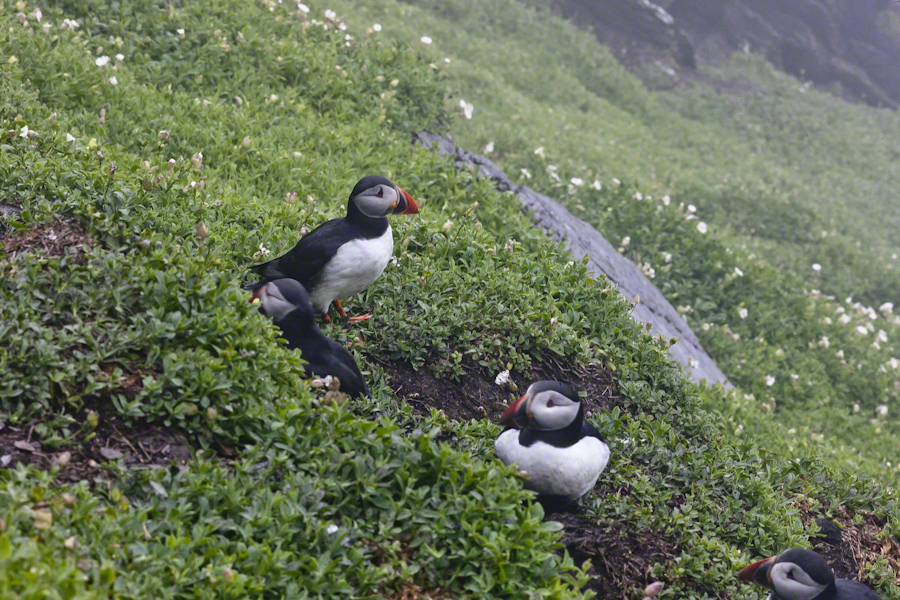
Puffin with an inquisitive attitude

Why do we love Puffins?  We see reminders of ourselves.  The expressive large eyes, over a striking beak and there is something expressive about the birds’ body movements.  Don’t you almost know what’s on the mind of this fellow?  “What’s going on, over there?”

Puffins of Michael Skellig
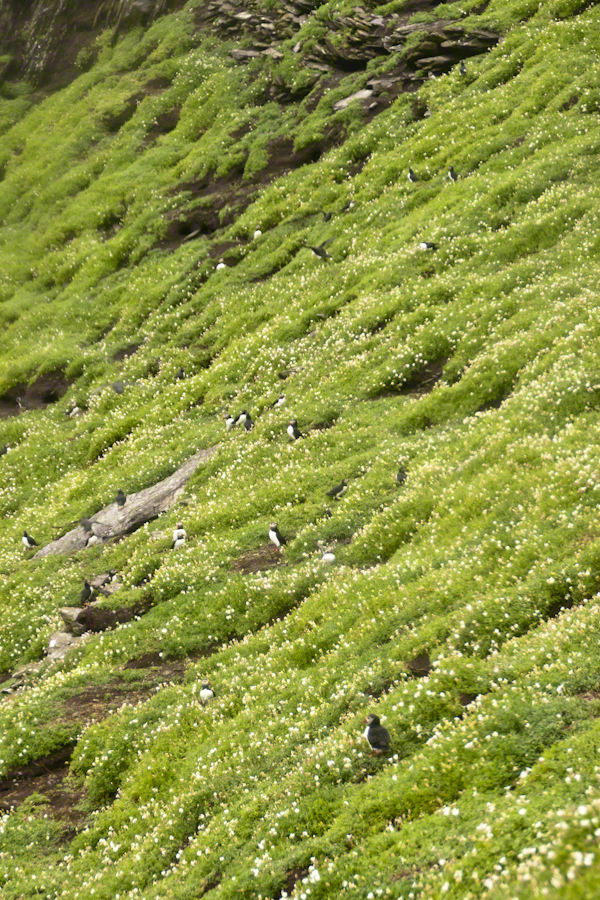
A colony of nesting puffins on a flowering cliff of green.

Puffins are small birds, the size of a human hand.  This colony returned in late March or early April, each breeding pair claiming a nesting site.  The coloring of the beak happens during breeding.  The bird molts while at sea during the winter, the beak and other brightly colored facial characteristics are lost.

Social Puffin
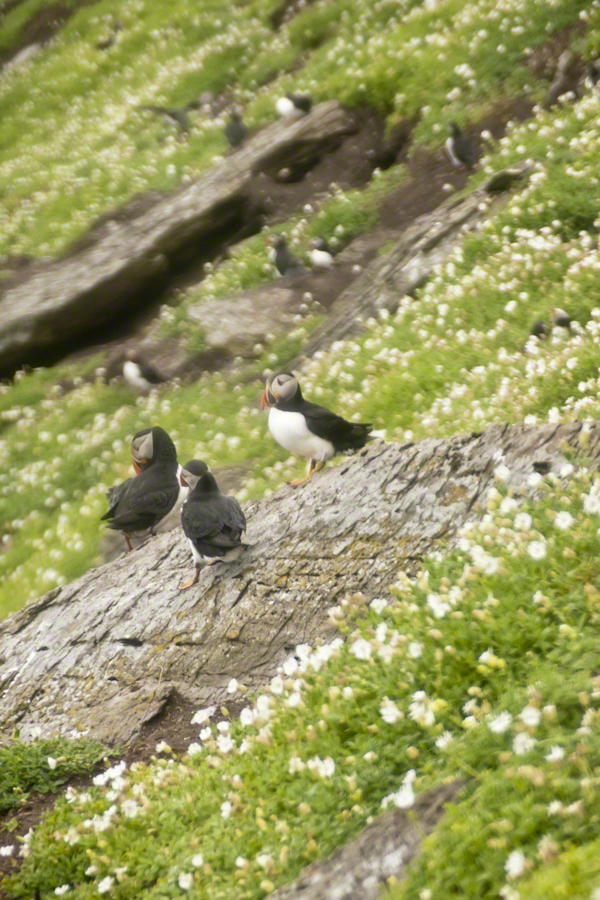
Michael Skellig puffins in social setting on cliff with burrows and flowers.

Puffin sexual differentiation is unique among birds.  The coloring and markings are identical between males and females.  Males are somewhat larger than females is all.

Puffins of Michael Skellig
Soft soil covering the flanks of Skellig Michael is the site of age old Puffin colonies.

Here is Puffin nesting behavior up close.  I did some research on the flowering plants surrounding the burrows and am not sure.  I believe the white flowers are a mixture of Sea Campion and Sea Mayweed.

As far as my photographic technique.  There are two sets of Puffin shots from Skellig Michael.  For the the walk to the top, the monastery site, I used the lighter Sony Alpha A700 dslr with a Sony variable lens, DT 18-200 mm F3.5 – 6.3.  On top, I switched to the Canon EOS 1Ds Mark III and, for the descent, fitted a Canon EF 200mm f/2.8L USM lens.

The shot above and following are the Canon, taken on descent.  Prior shots are the Sony, taken on ascent.

Puffins of Michael Skellig
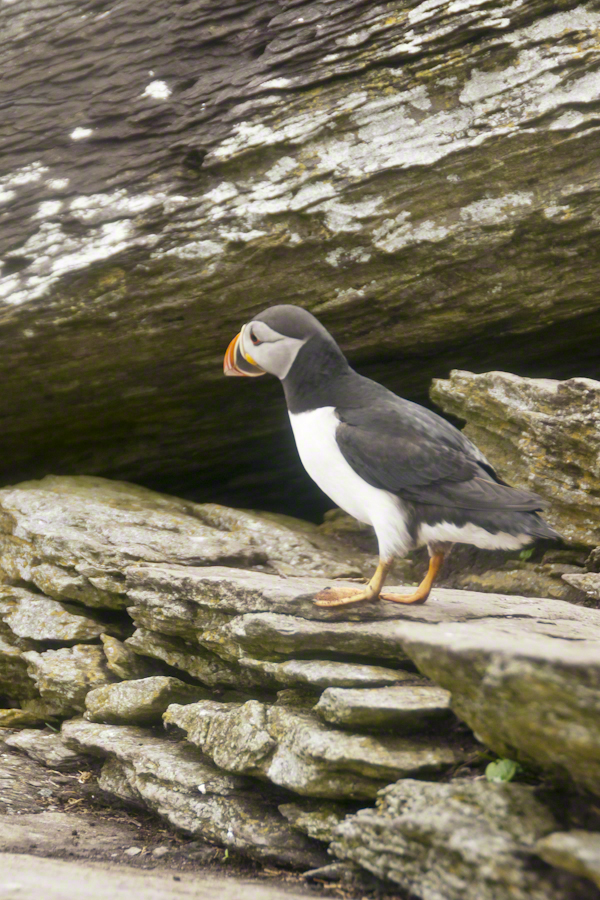
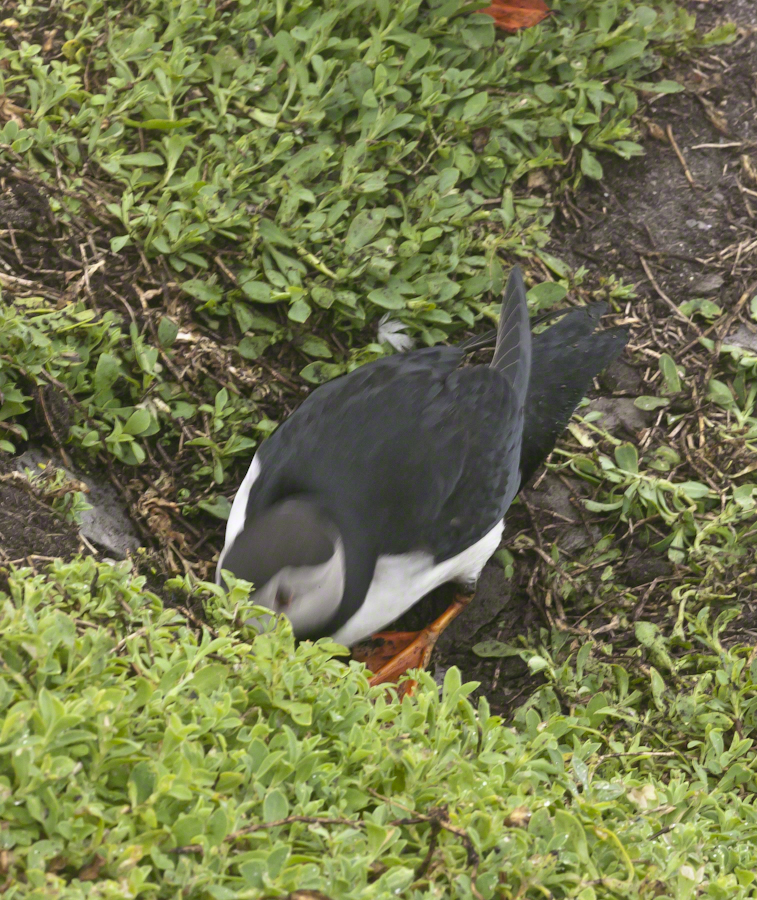
Puffin Entering Burrow

Puffins have striking black and white plumage and leg color some describe as “tangerine.”  Tangerine?  I guess.  Here an individual ducks into the burrow.
Puffins of Michael Skellig
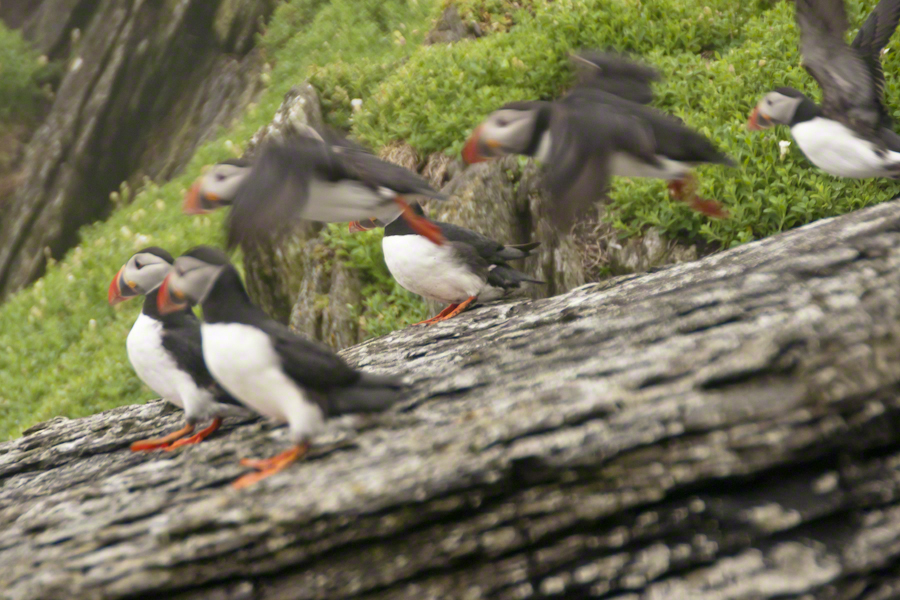
A grouping of Michael Skellig puffins, the foremost with an attitude of regard.

I did not spend a great deal of time in any one spot, being time limited and needing to get back to the boat.  Don’t recall very much social interactions between individuals, other than this perching together on the rocks.  The foreground Puffin seems to take the behavior of another bird to task.
Puffins of Michael Skellig
Puffins are capable, if awkward, fliers.
Click for another Ireland Posting, “On the River Cong.”
 
References
Puffins and Technology
Clues to the Puffin Population Decline

Copyright 2022 Michael Stephen Wills All Rights Reserves

Launch!

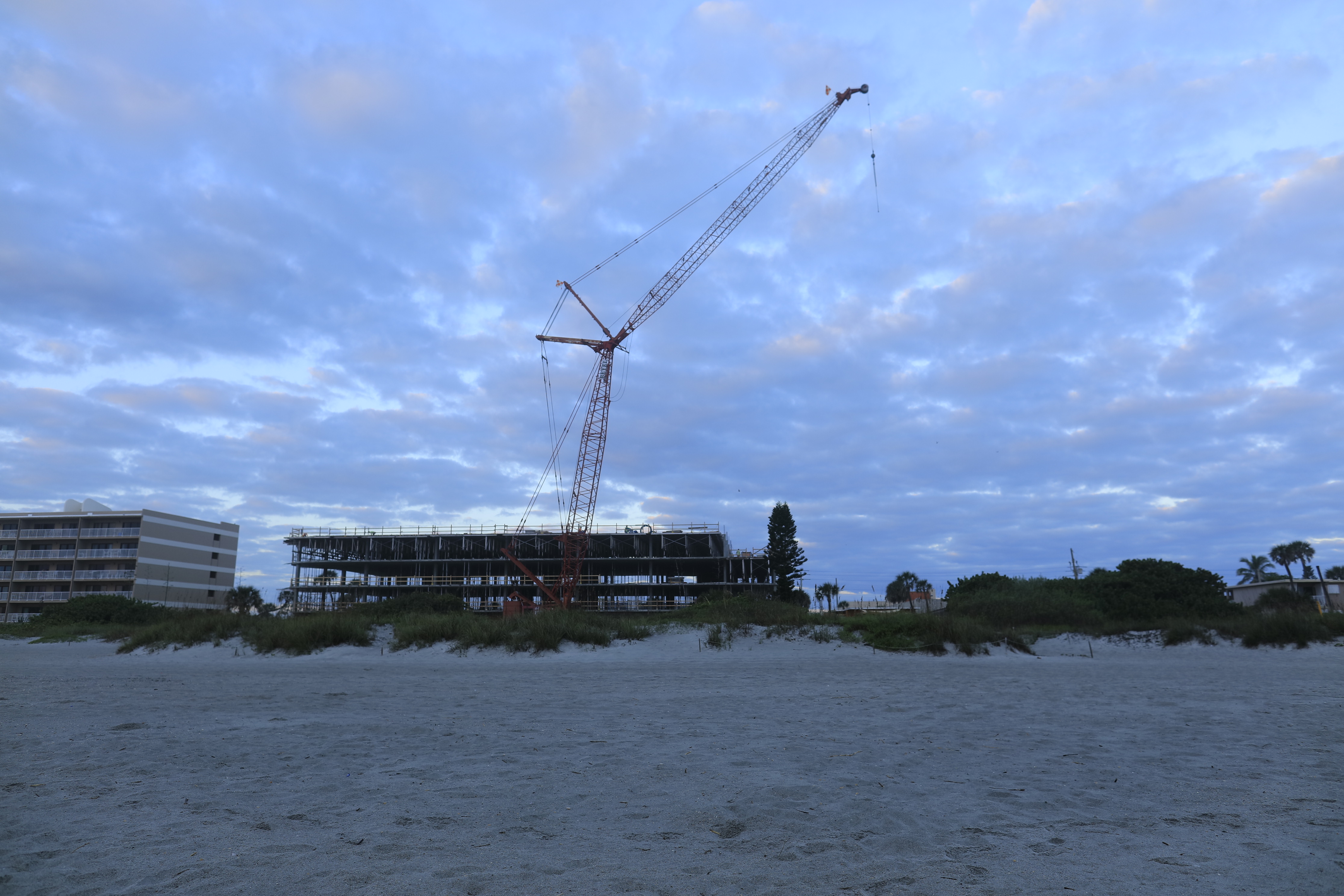
Another day, Cocoa Beach, Florida

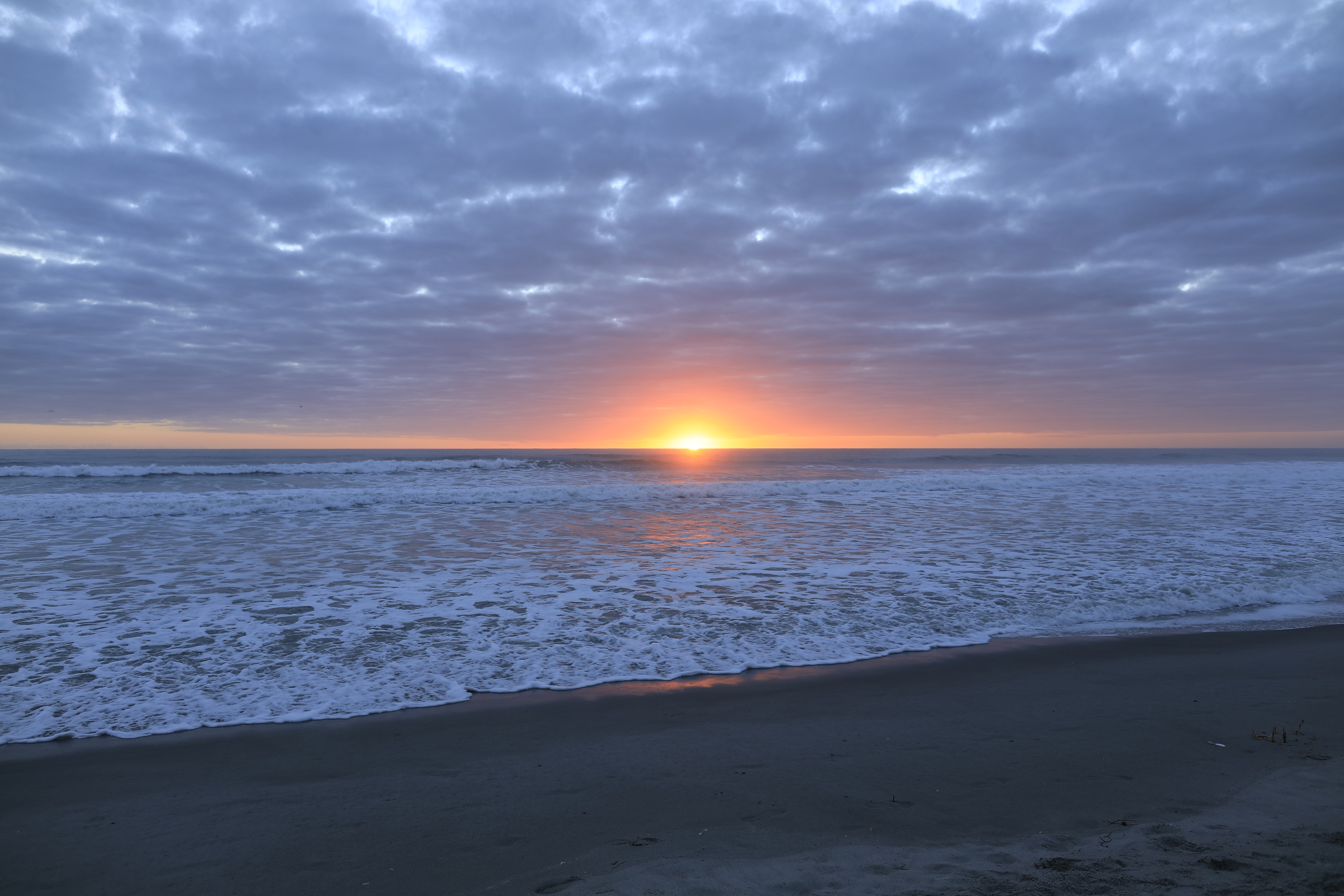
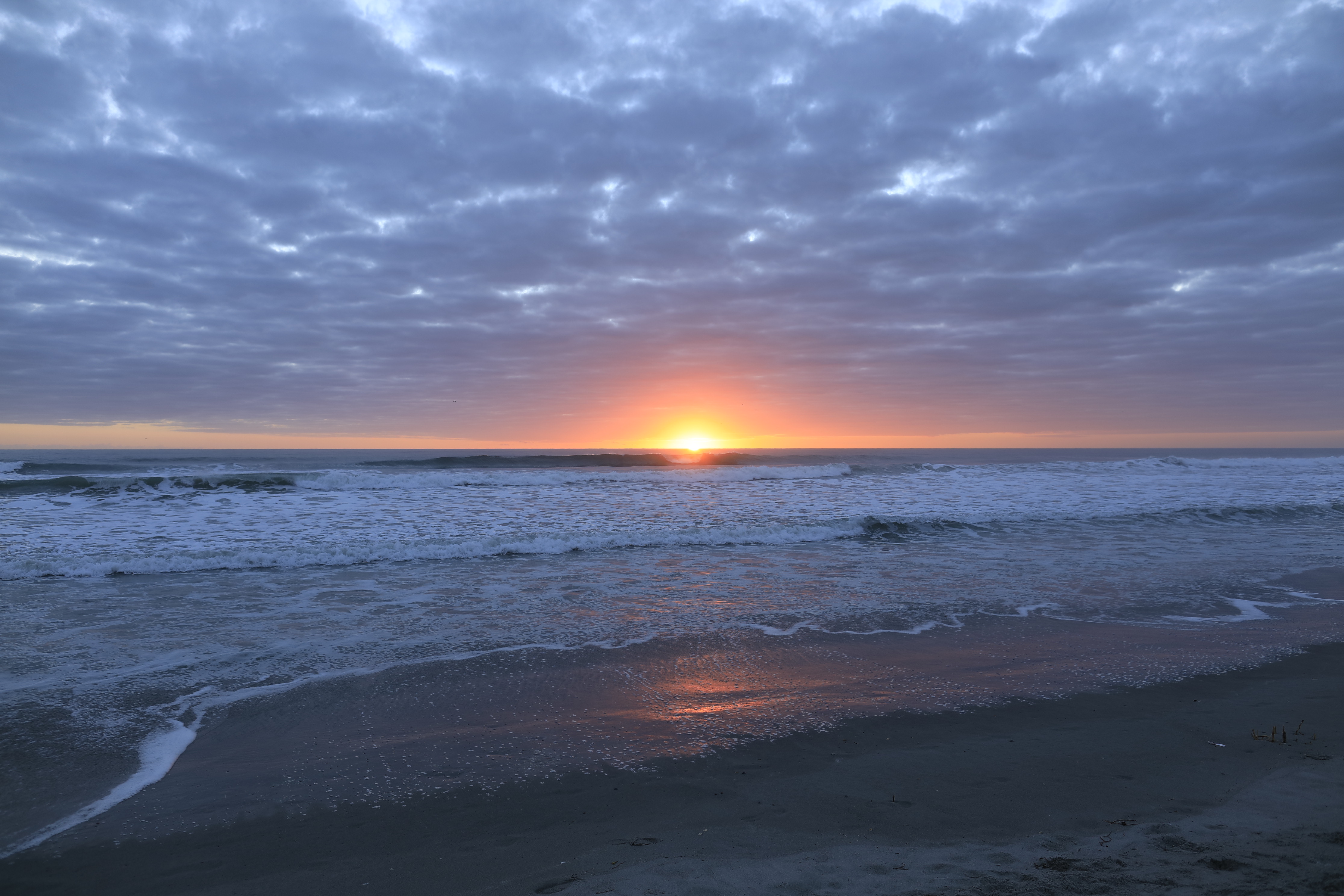
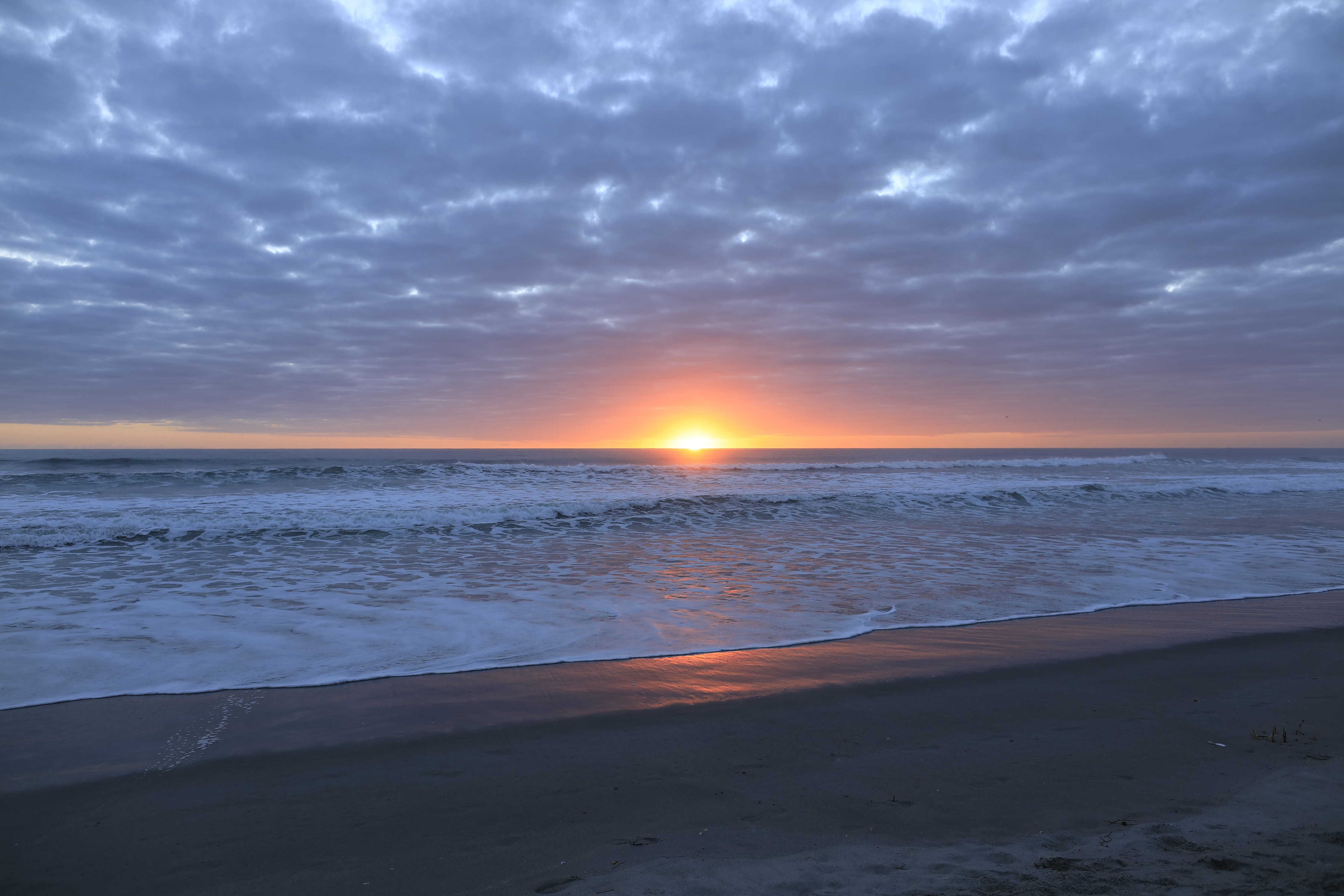
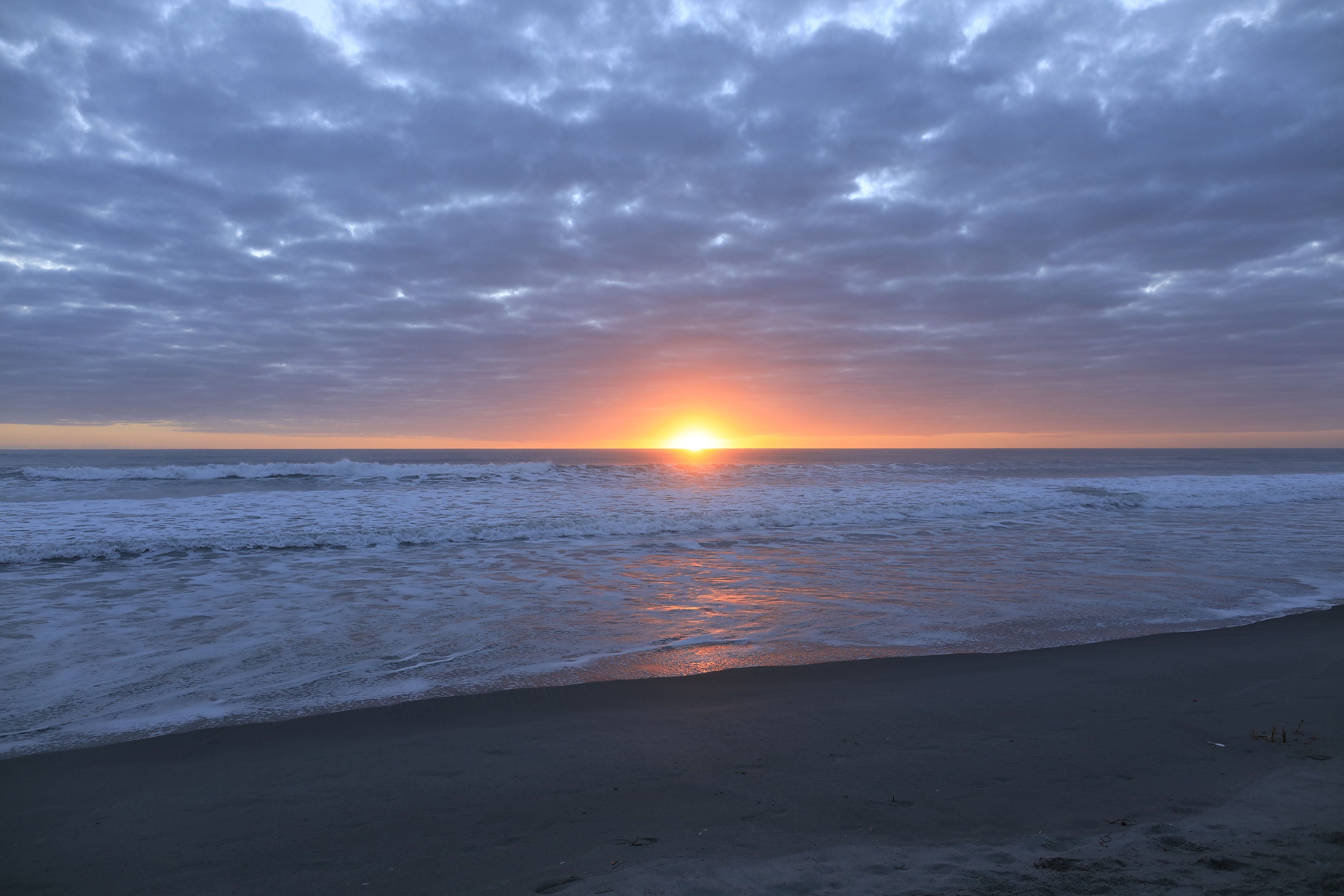
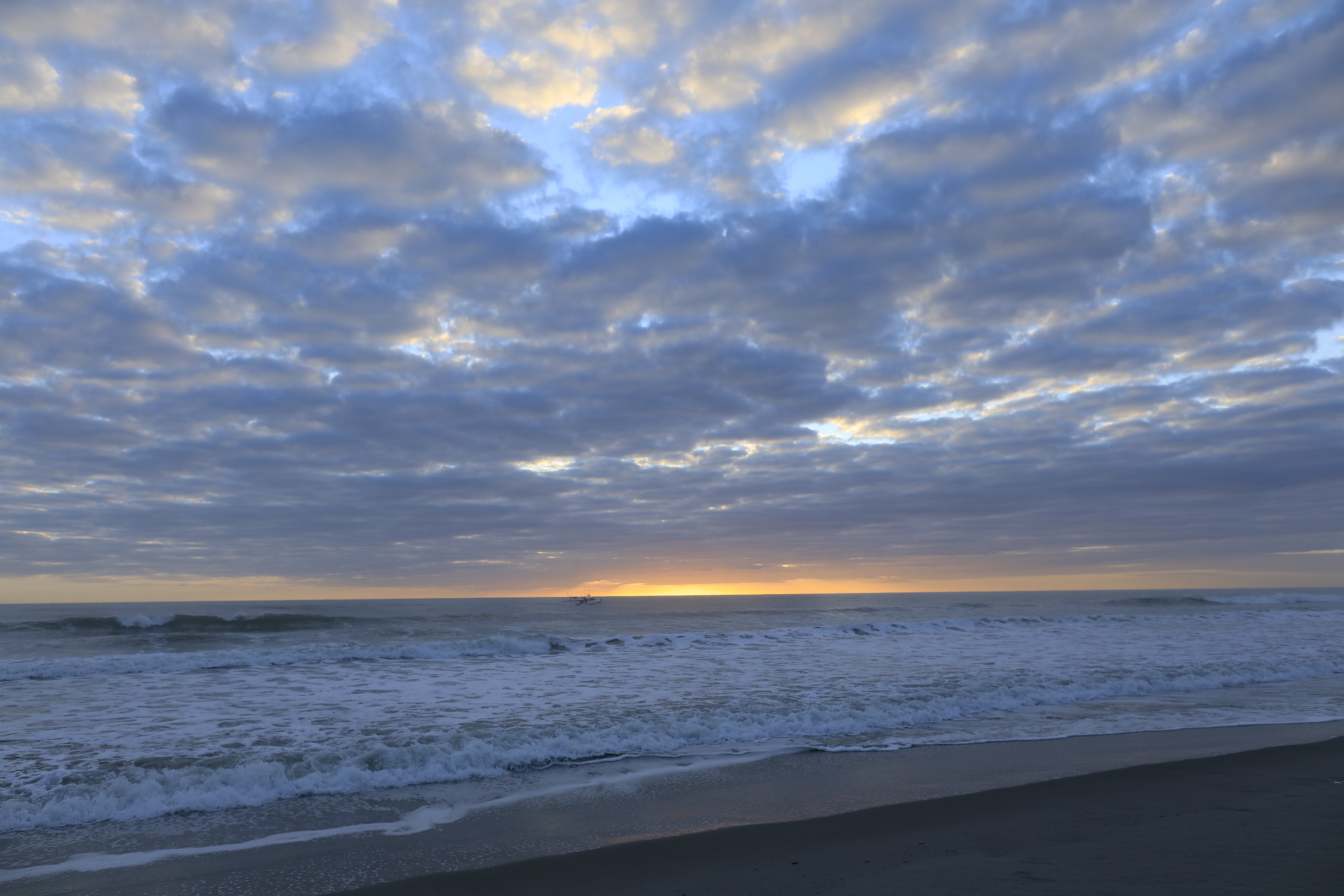
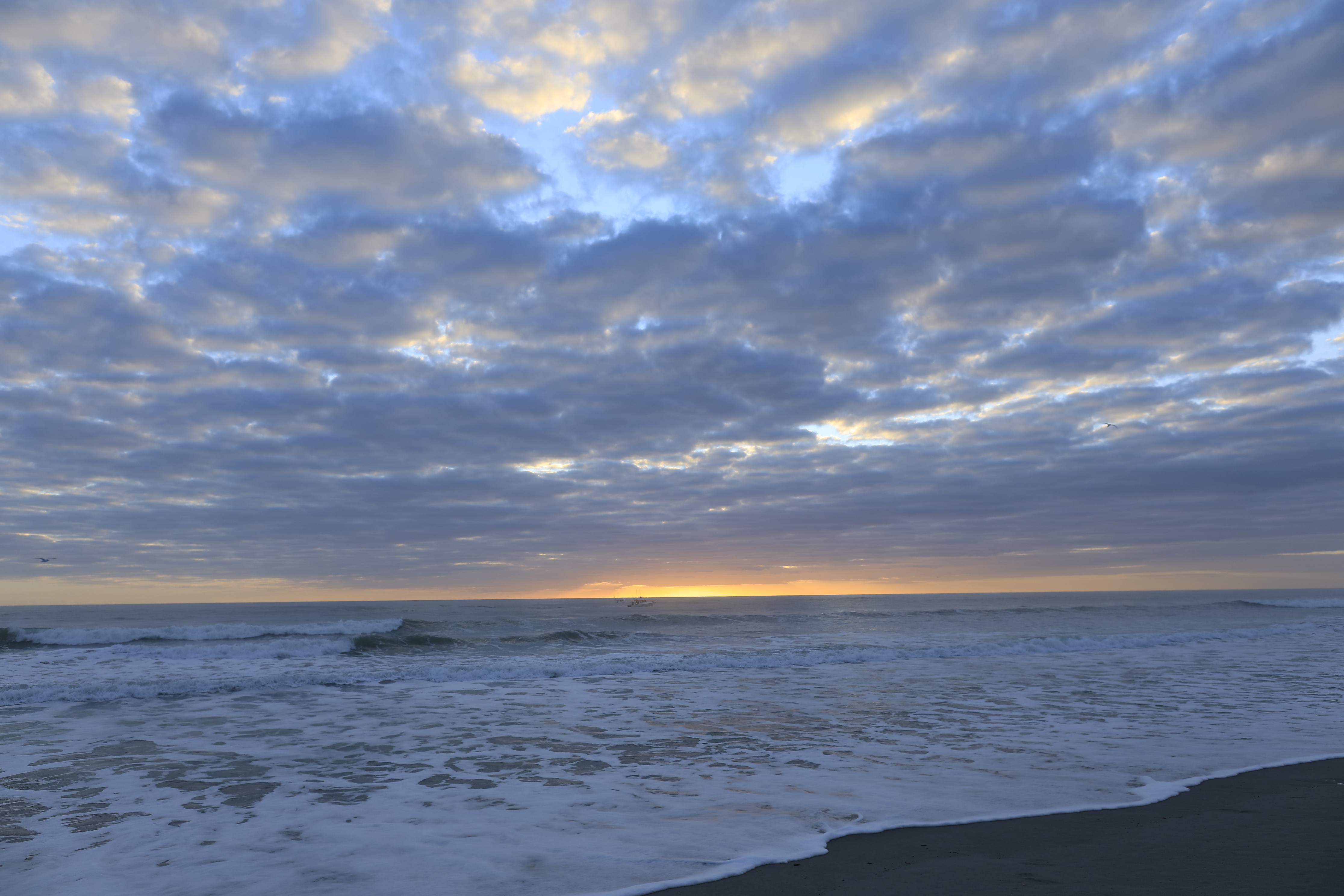
Pre-dawn sky
Just Before Dawn
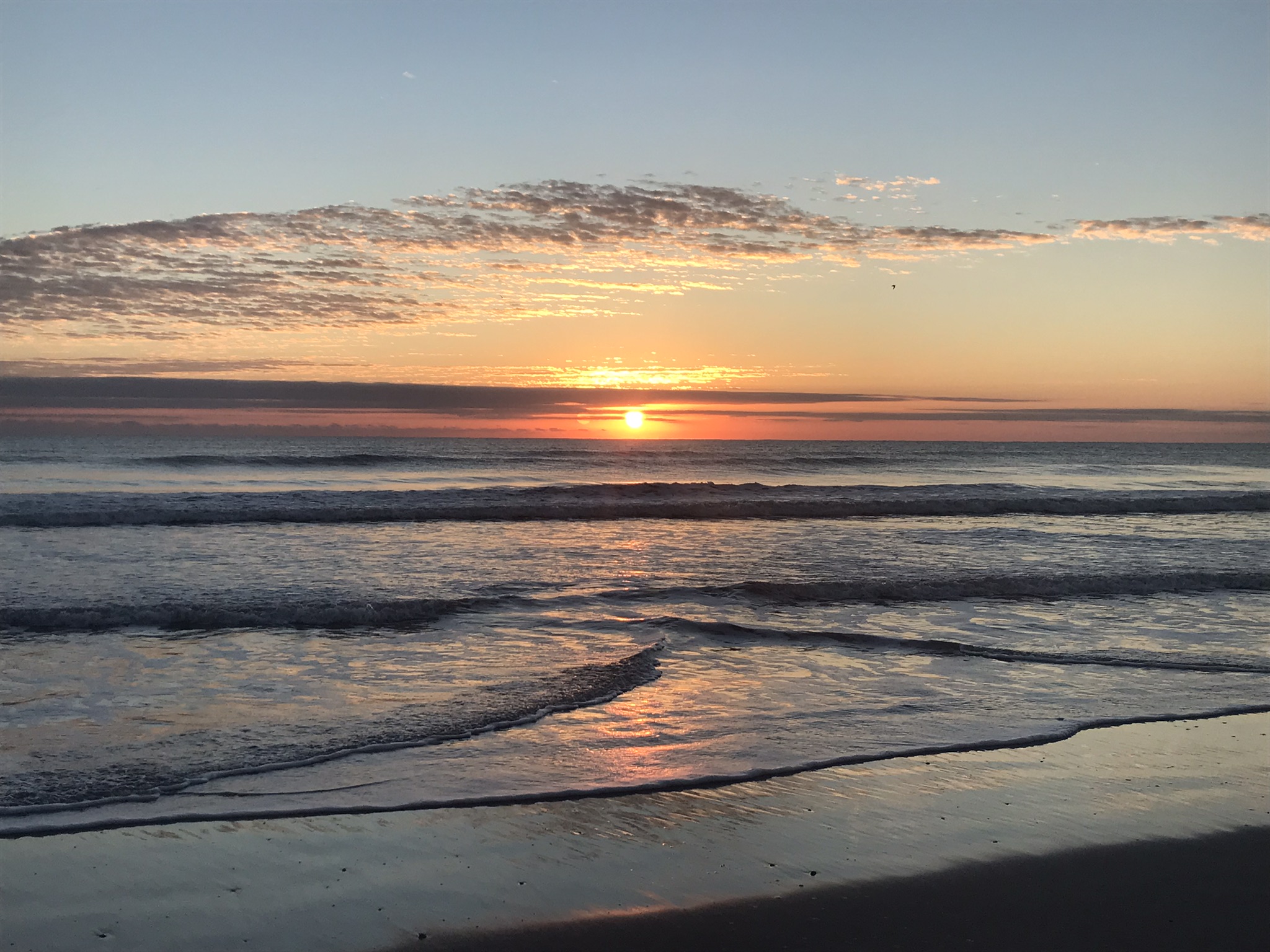
Rising Sun
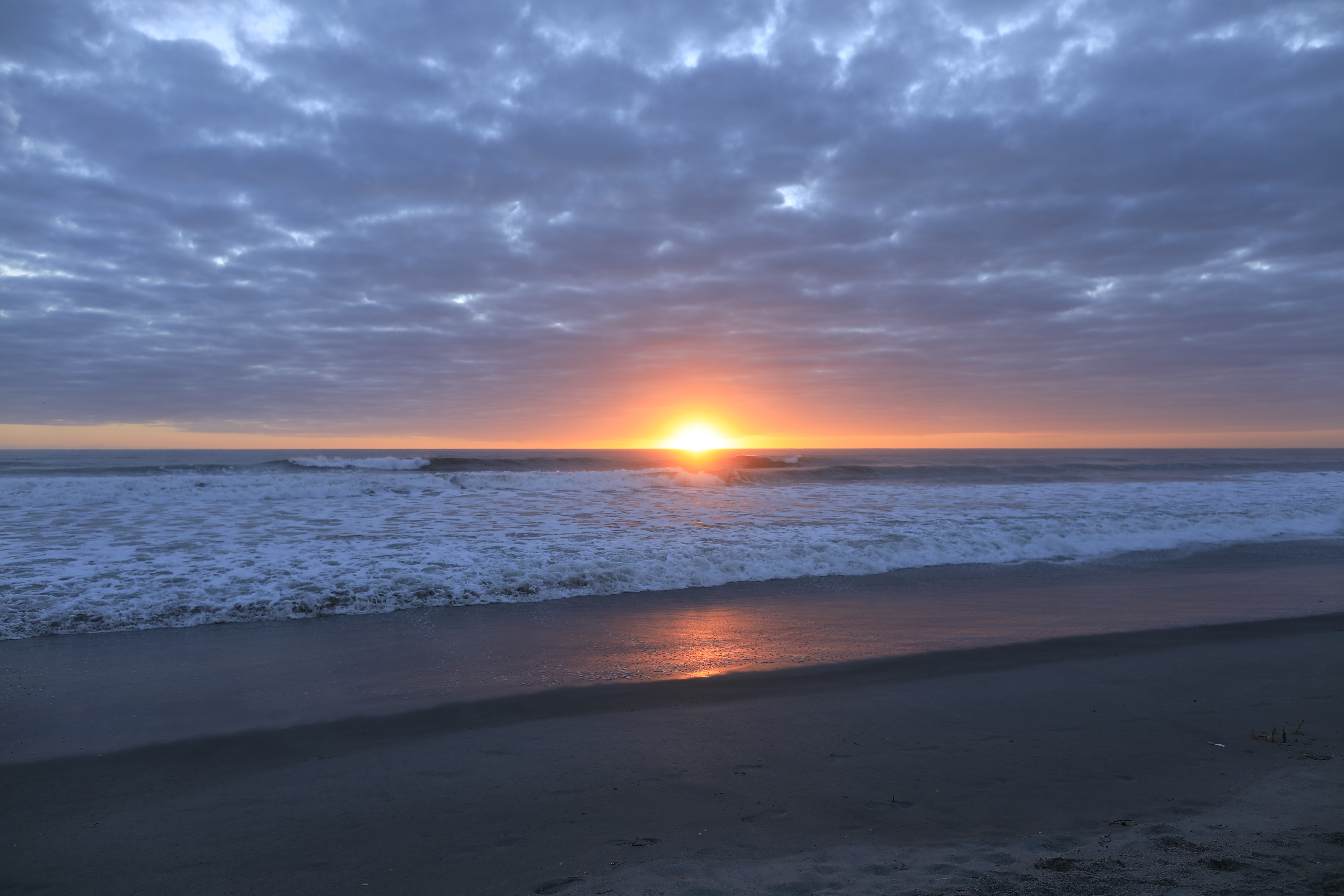
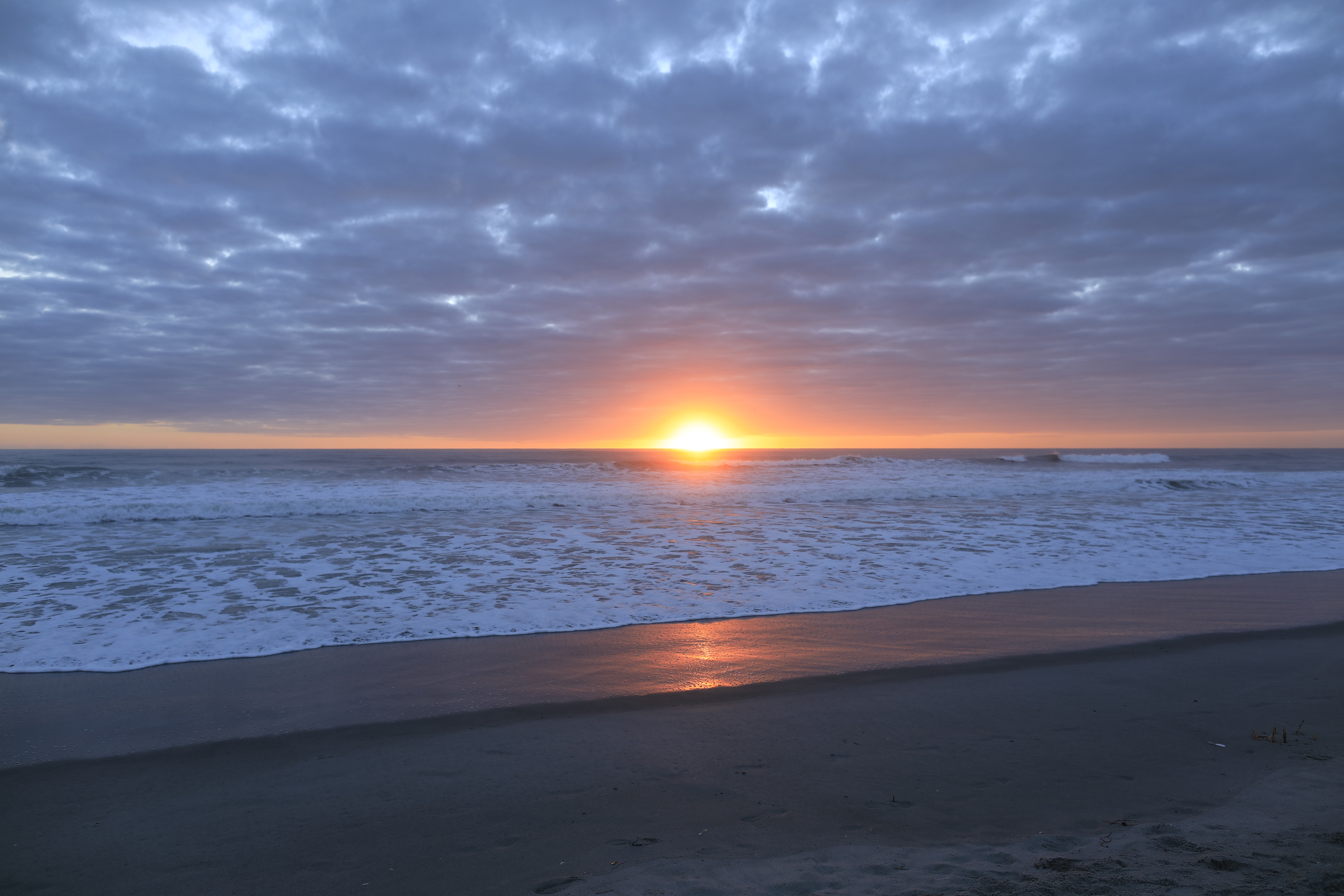
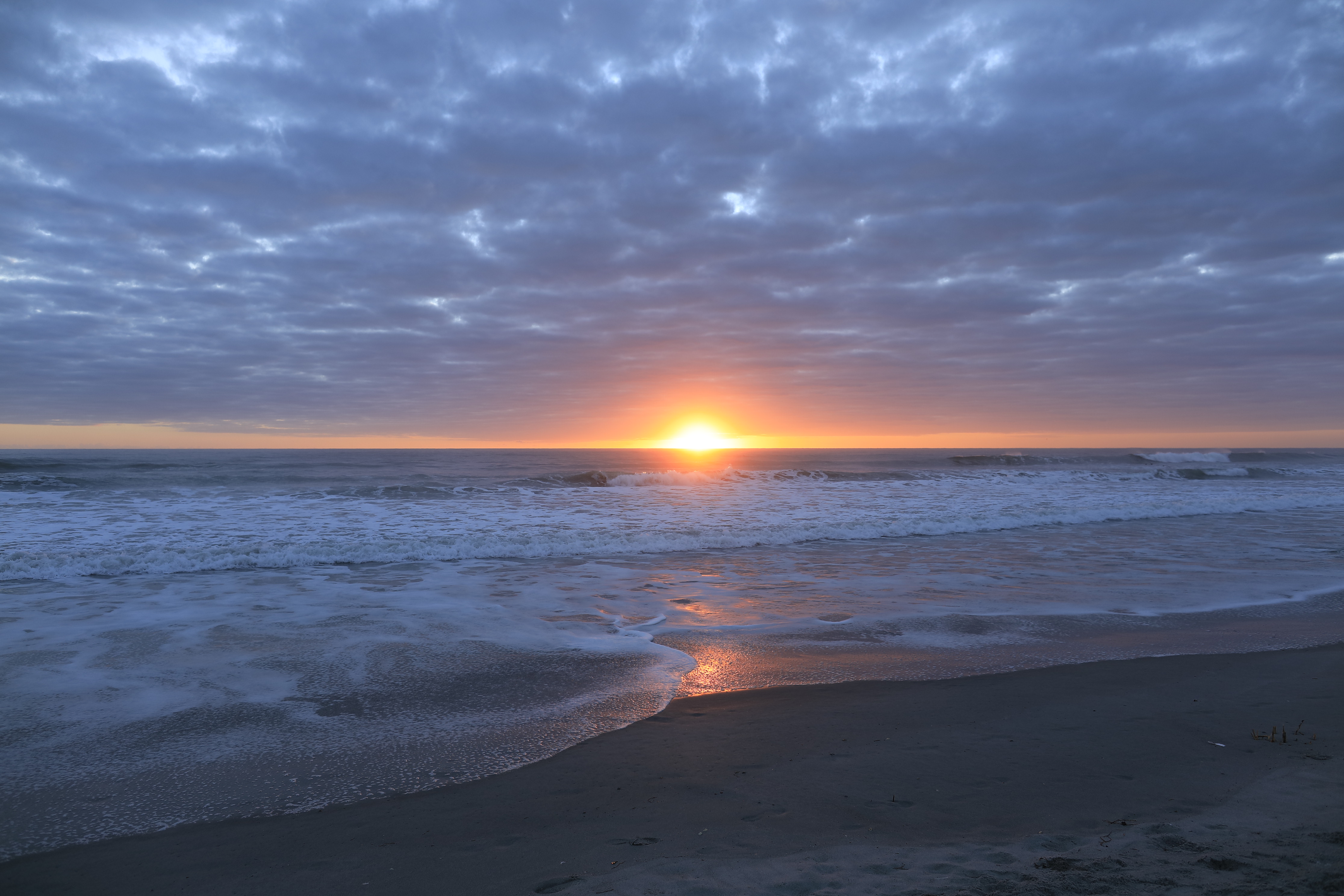
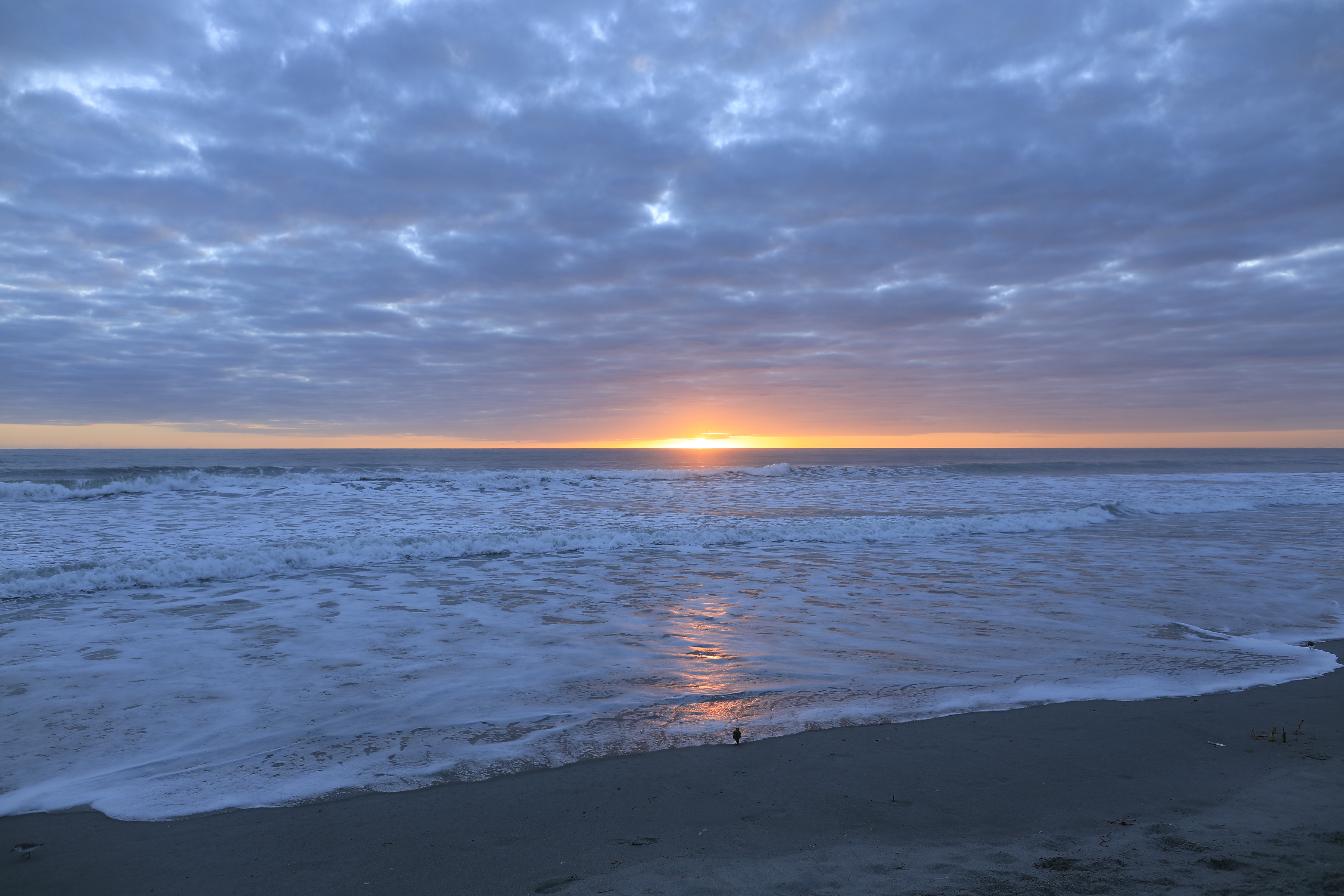
Sunrise Surf
Motorized Boarder

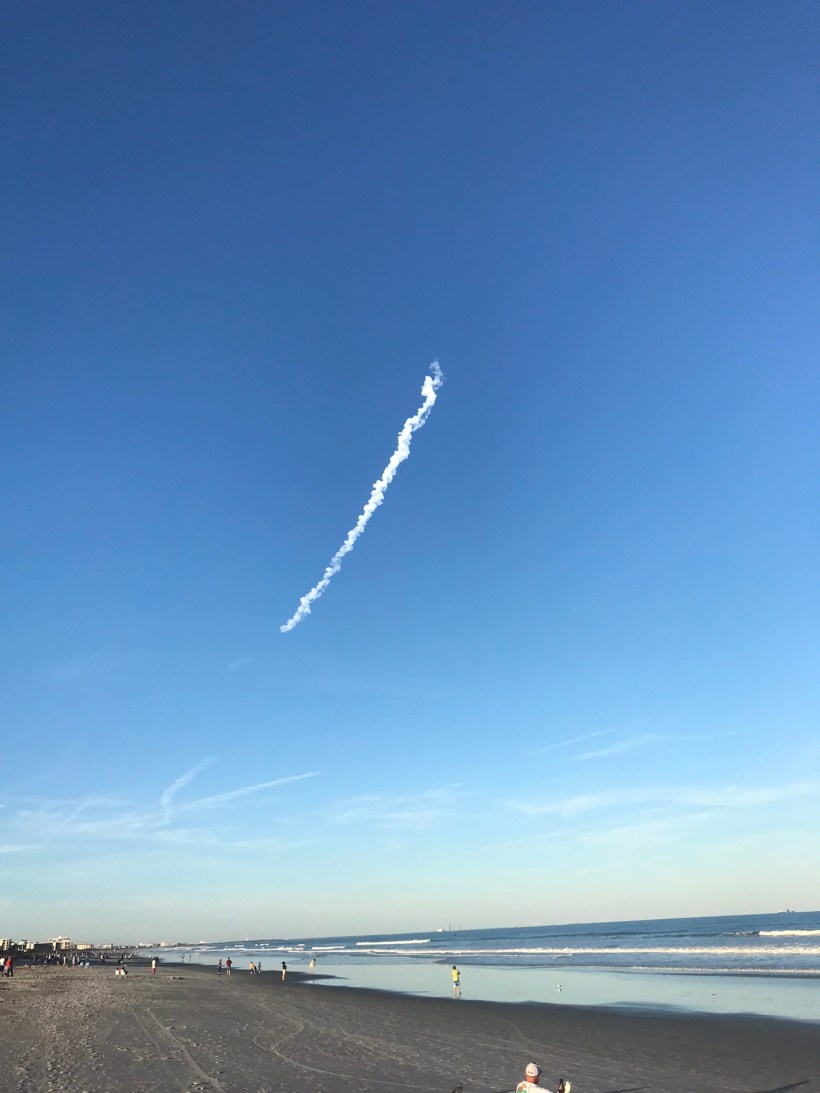
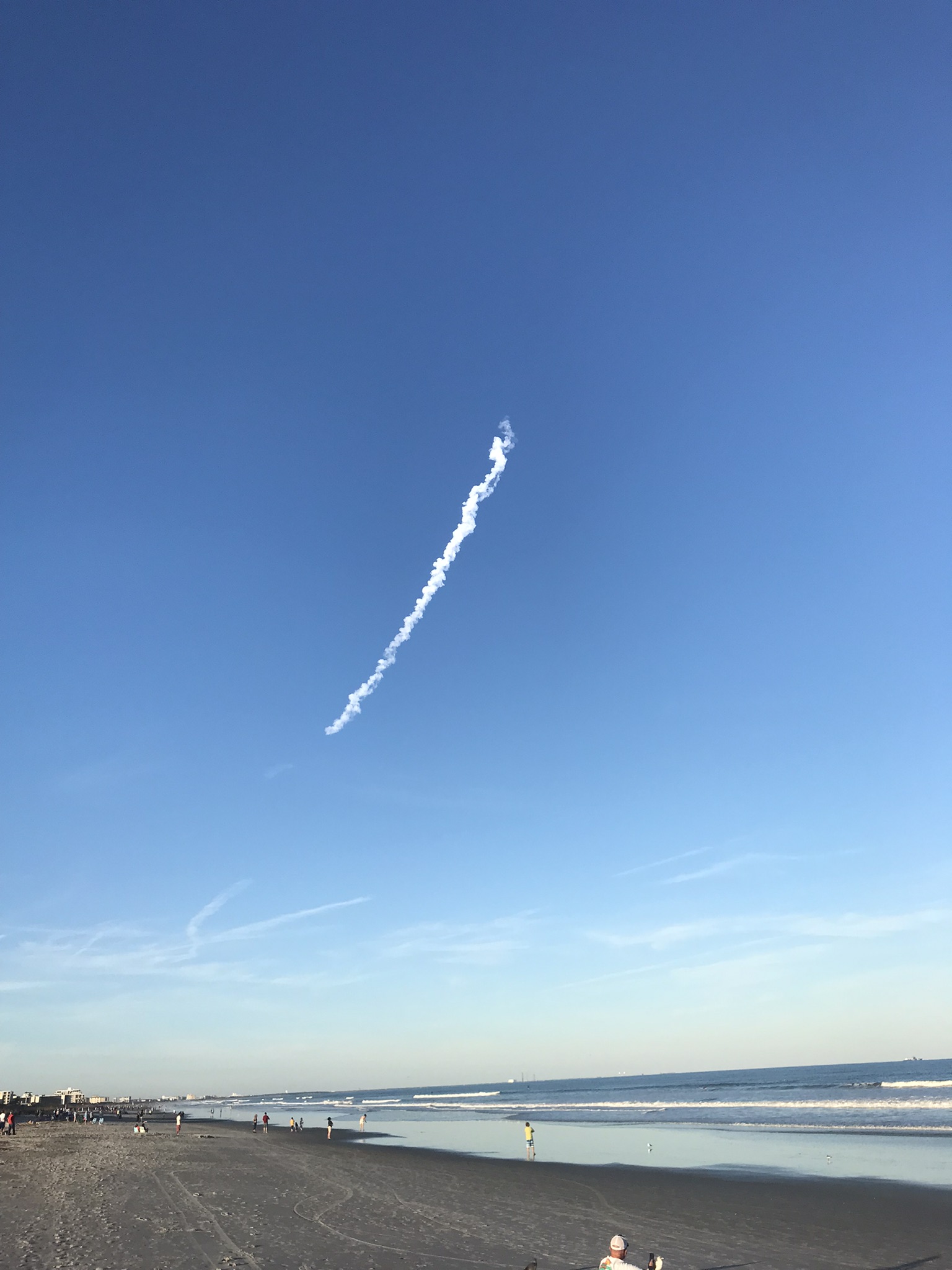
beachcomber who told us of a rocket launch scheduled for just before sunset. Sure enough, here it is.

Rocket Launch

Sunrise and More

Another day, Cocoa Beach, Florida

Click this link for any photograph to visit my Florida Fine Art Photography Gallery.

Canon dslr photographs

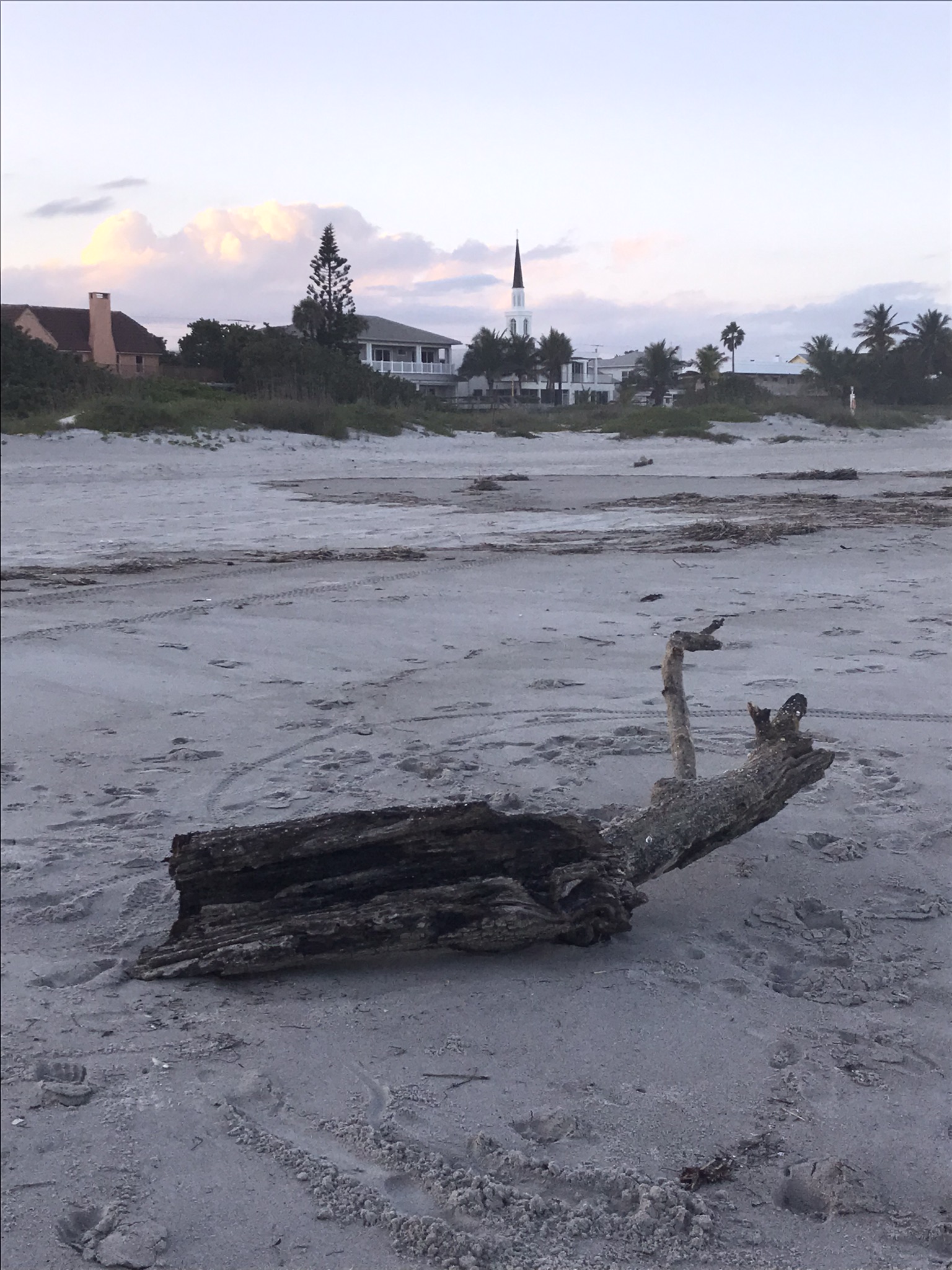
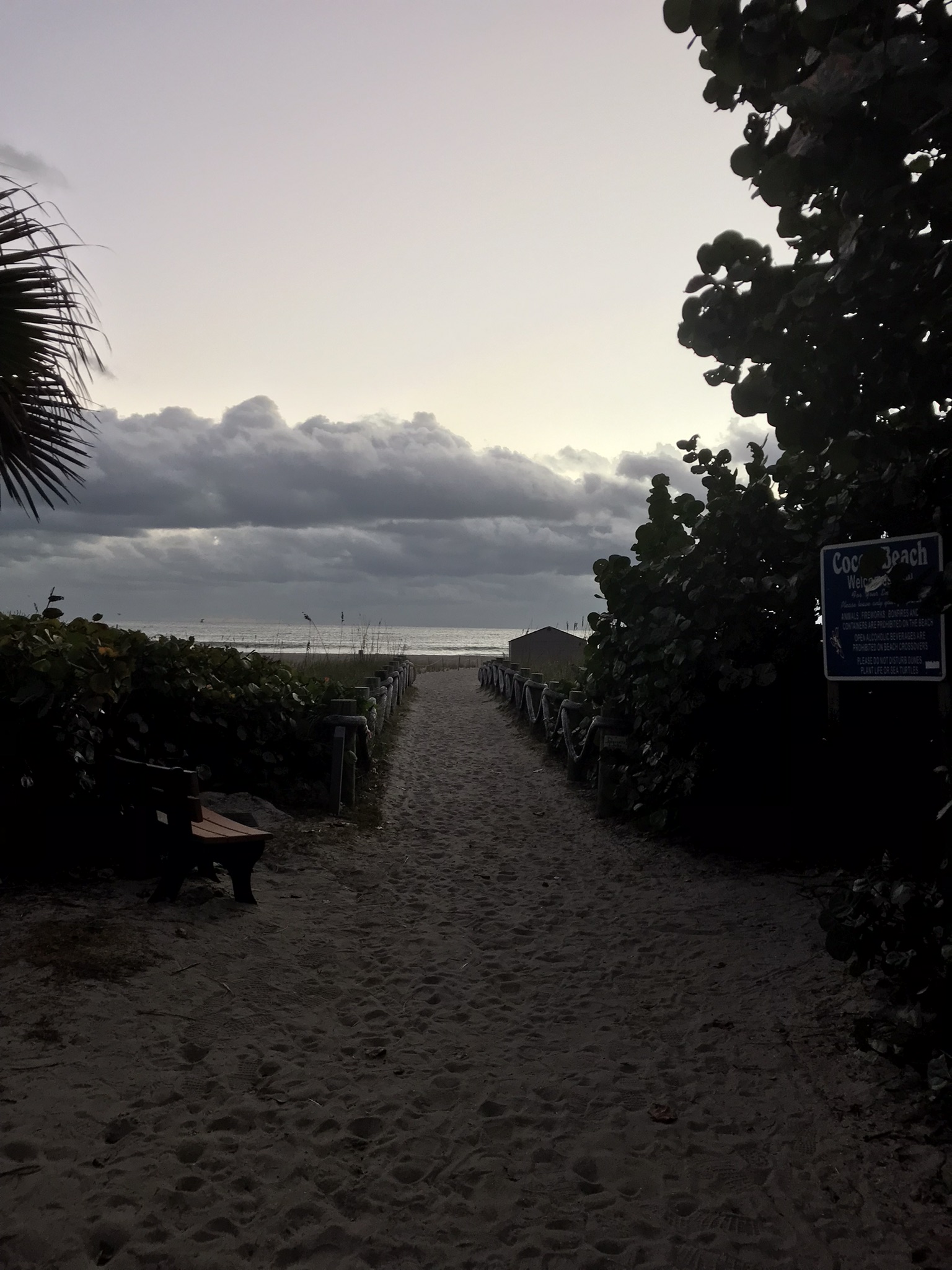
First Day

Cocoa Beach, Florida

Click this link for any photograph to visit my Florida Fine Art Photography Gallery.

IPhone 7 photographs and videos

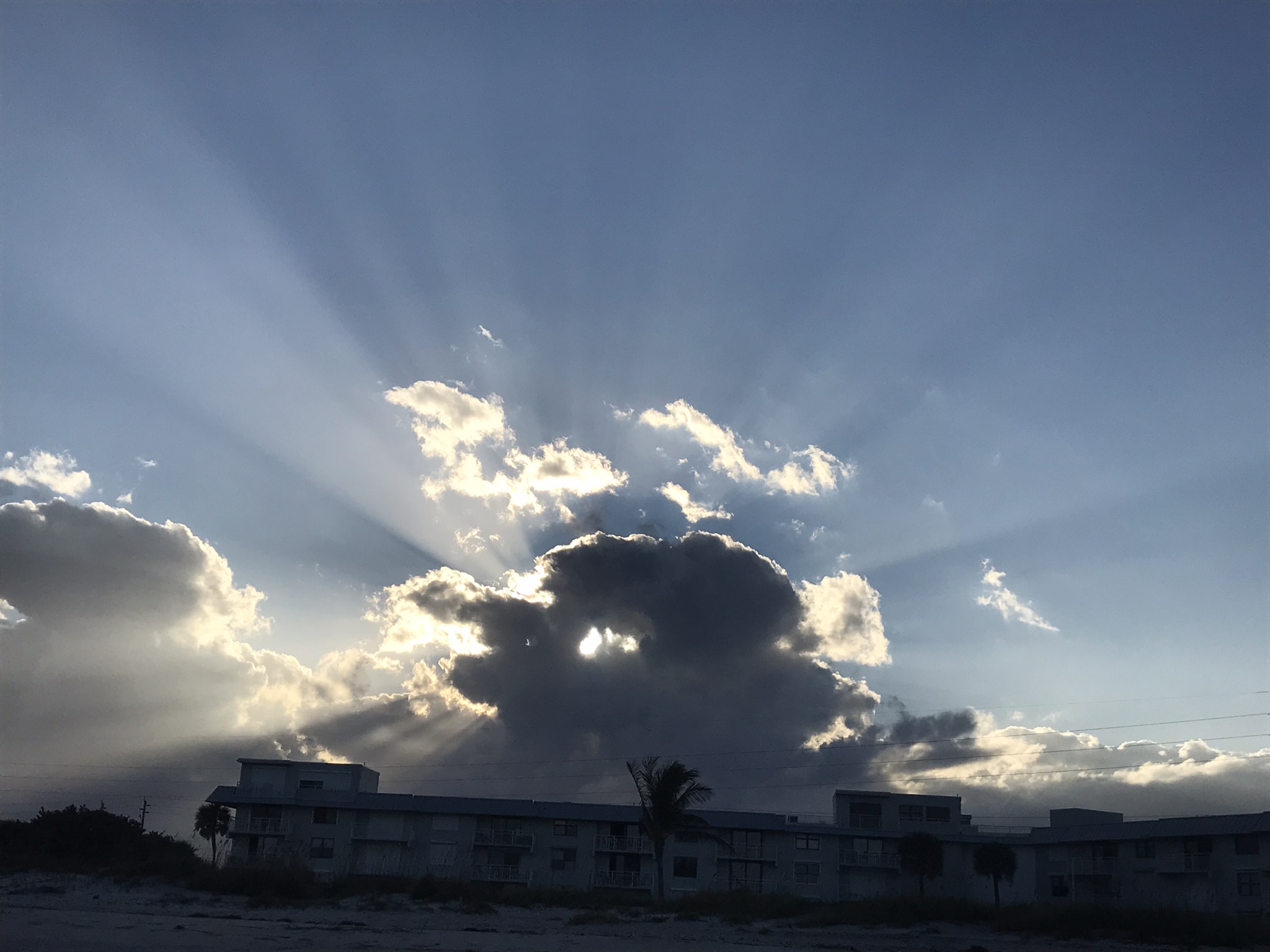
Sunrise
Sunrise Scan
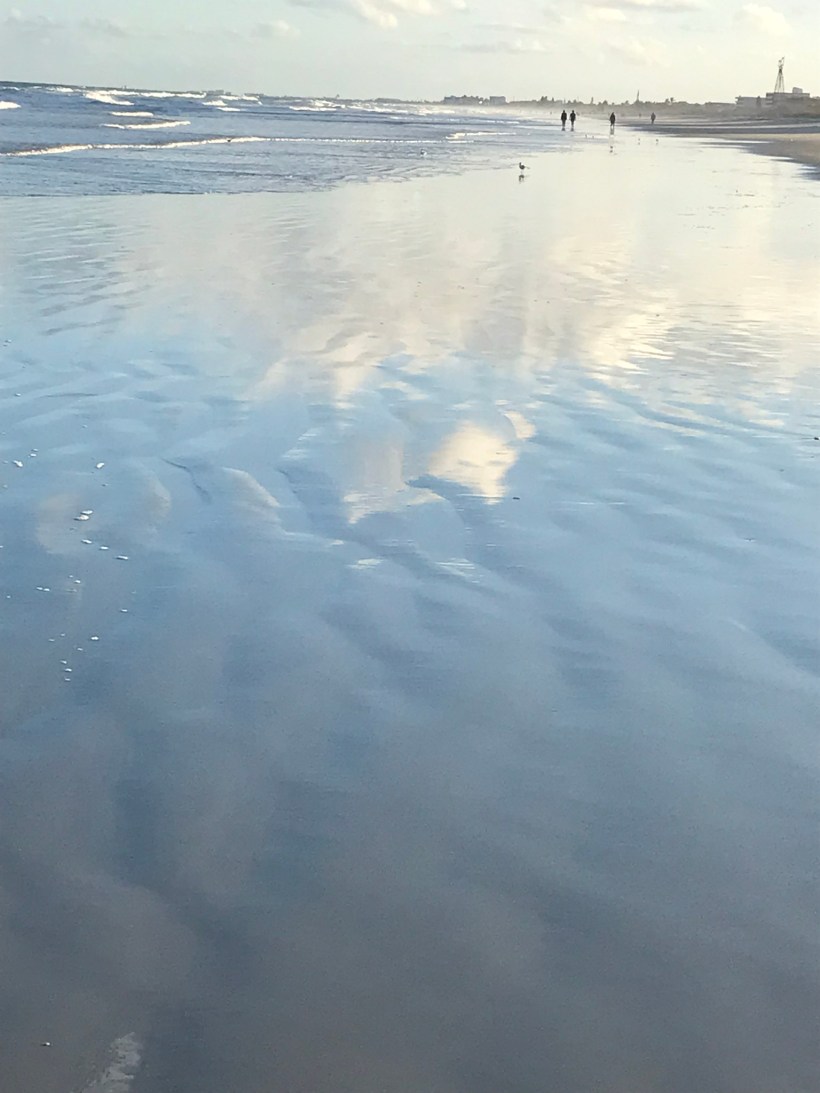
Morning Surf
Willet Feeding
Kite Boarding
Rippling Surf Wash