A Flash of Red: The Mysterious Pokeweed
Our explorations along Ithaca’s Cayuga Waterfront Trail begins with the striking Pokeweed (Phytolacca americana), its ruby-red stems rising like sentinels against a sea of green leaves. At a glance, it’s bold, almost tropical, yet this native plant is a quintessential autumn feature in the Northeast. Those drooping clusters of berries (not yet ripe here) are food for birds like robins and mourning doves — though toxic to us, pokeweed adds a bit of danger to its beauty.
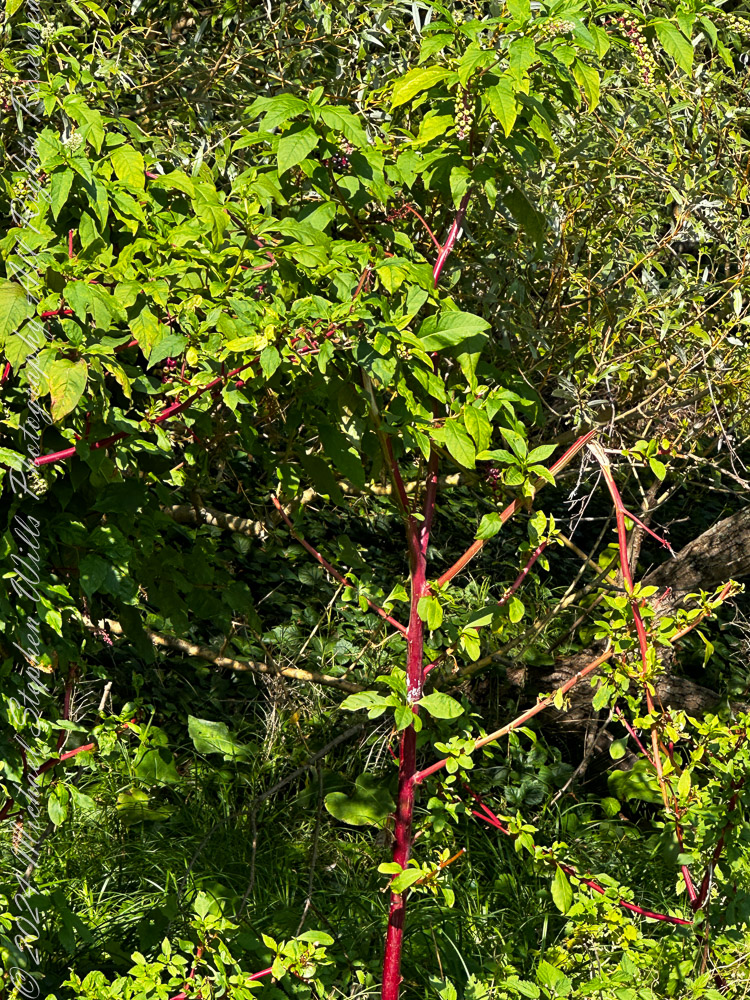
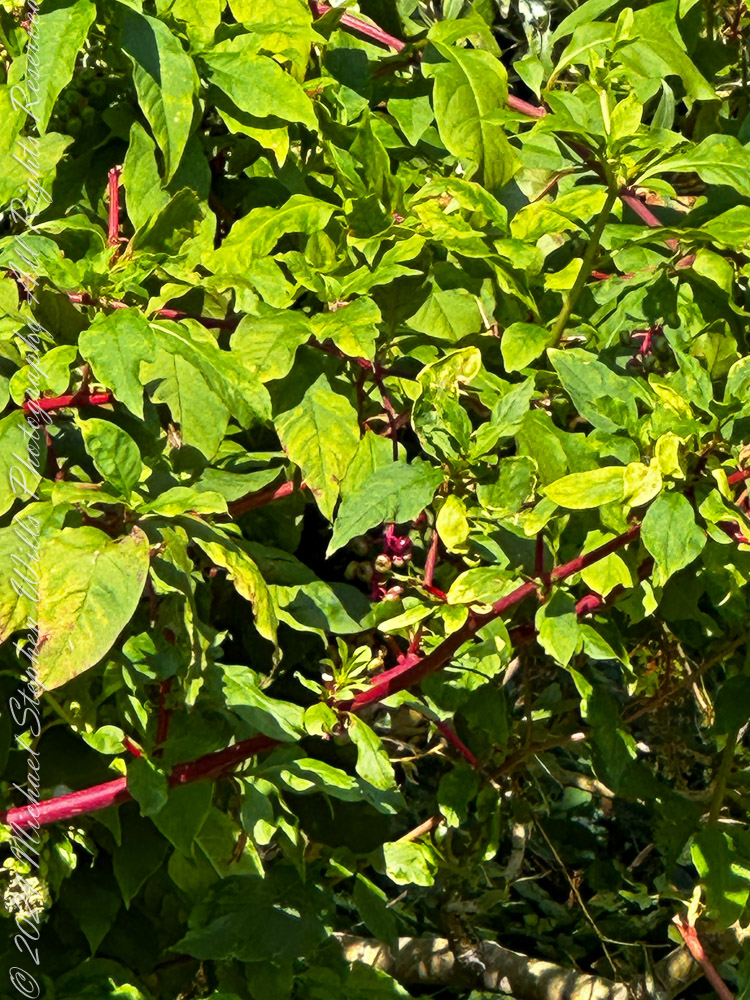
Nature’s Note: While visually stunning, pokeweed’s ripe purple berries were historically used as dye. Early settlers and Native Americans knew its power, though caution is always the rule here!
The Mighty Oak: Sentinel of the Trail
Next, we imnagine the cool shade of an oak tree, its lobed leaves silhouetted like green lacework against the clear blue sky. The photogenic Oaks are ecosystem powerhouses. Supporting hundreds of species of moths, butterflies, and birds, oaks quietly hold the fabric of nature together.
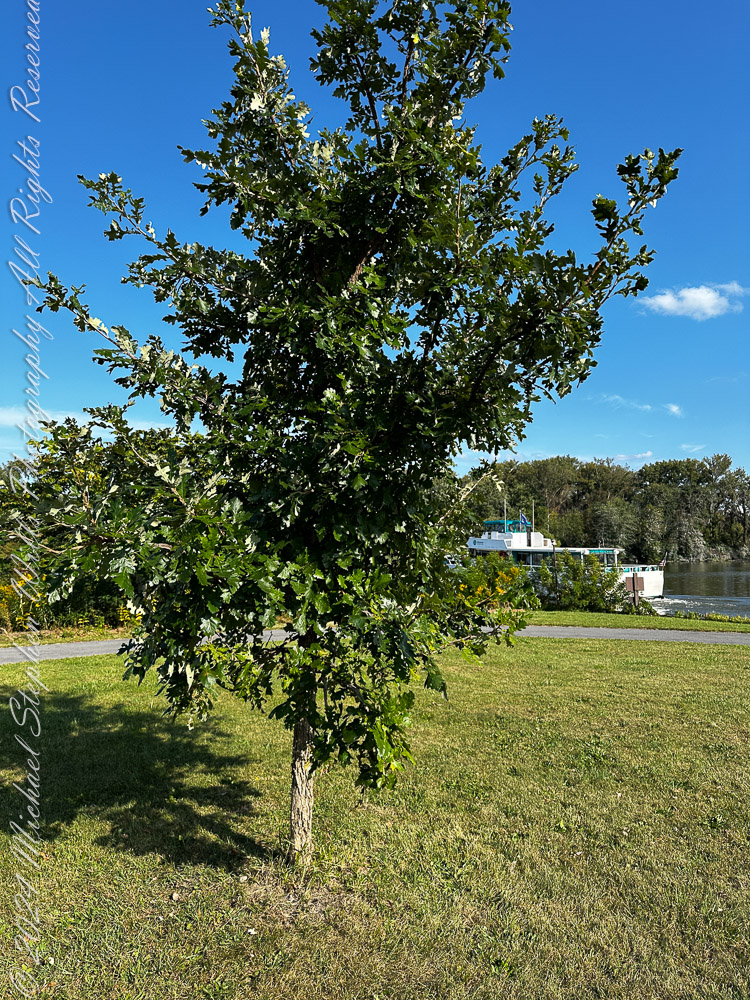
In autumn, these leaves will transform, dropping gently to create warm beds for overwintering insects. Stand beneath its branches long enough, and you’ll swear it whispers stories of the seasons gone by.
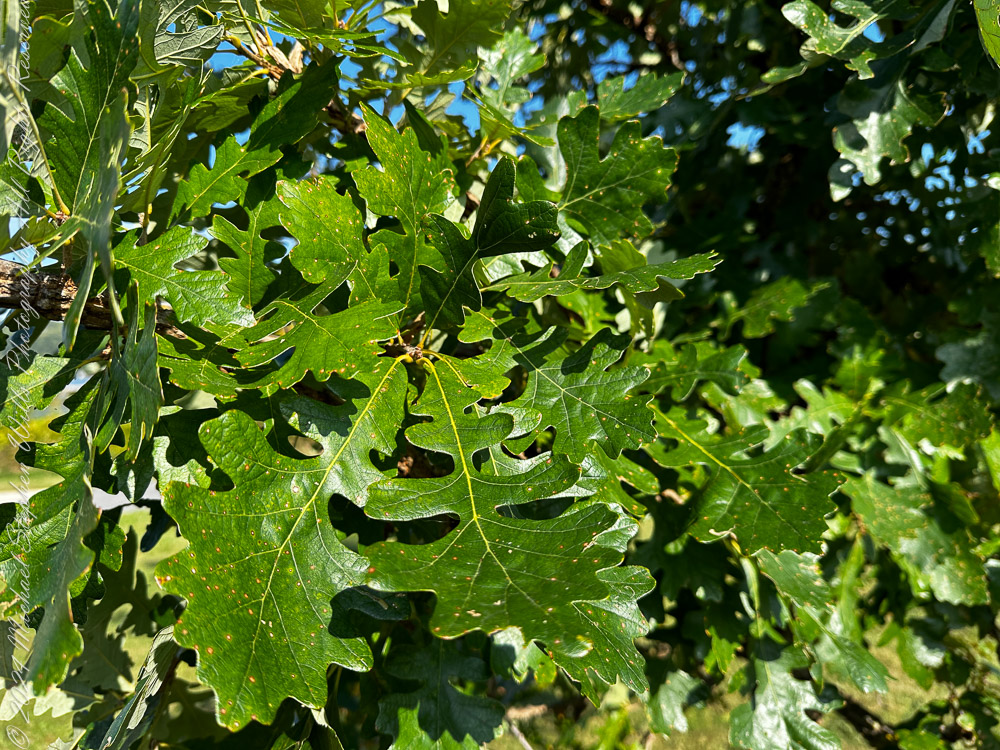
Quick Fact: Oaks produce acorns that are a favorite food of squirrels. Ever notice a squirrel “planting” them? That’s nature’s accidental reforestation plan in action.
Reflections of Autumn’s Palette
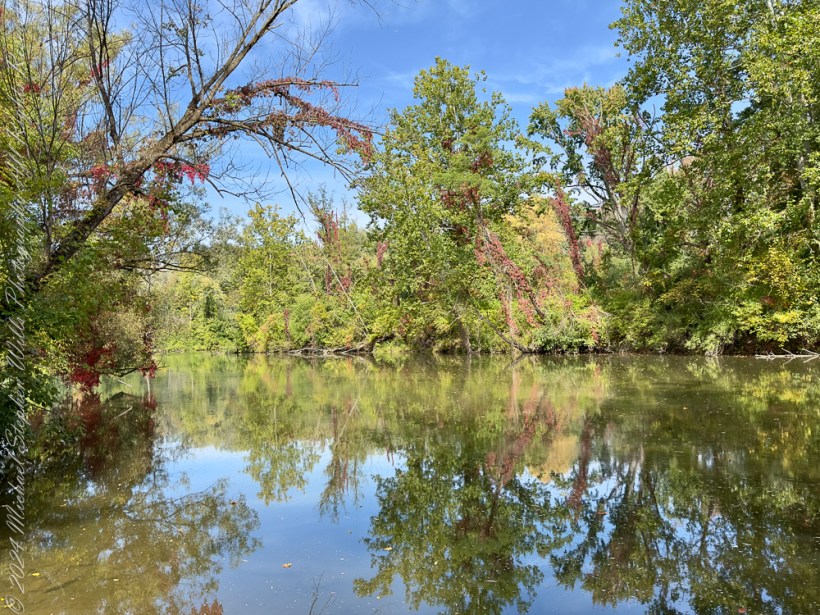
We reach the water’s edge, where the serene surface where Fall Creek joins Cayuga Lake mirrors the fiery splashes of red Virginia Creeper (Parthenocissus quinquefolia) winding through the trees. This climbing vine, with its scarlet fall foliage, is like nature’s ribbon tying the forest together.
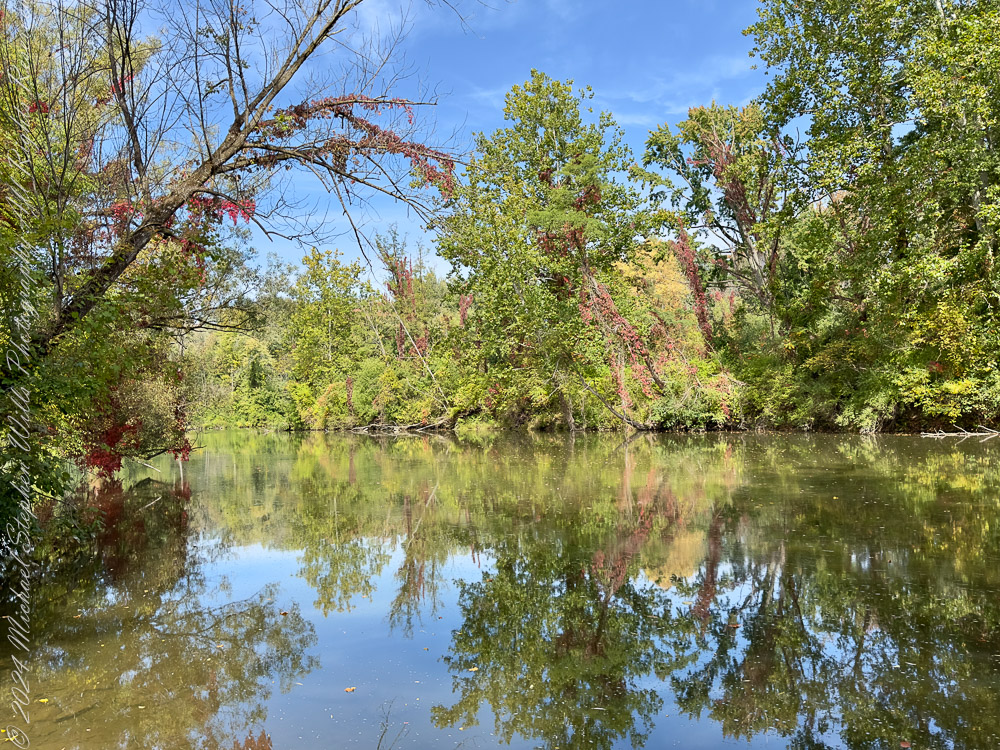
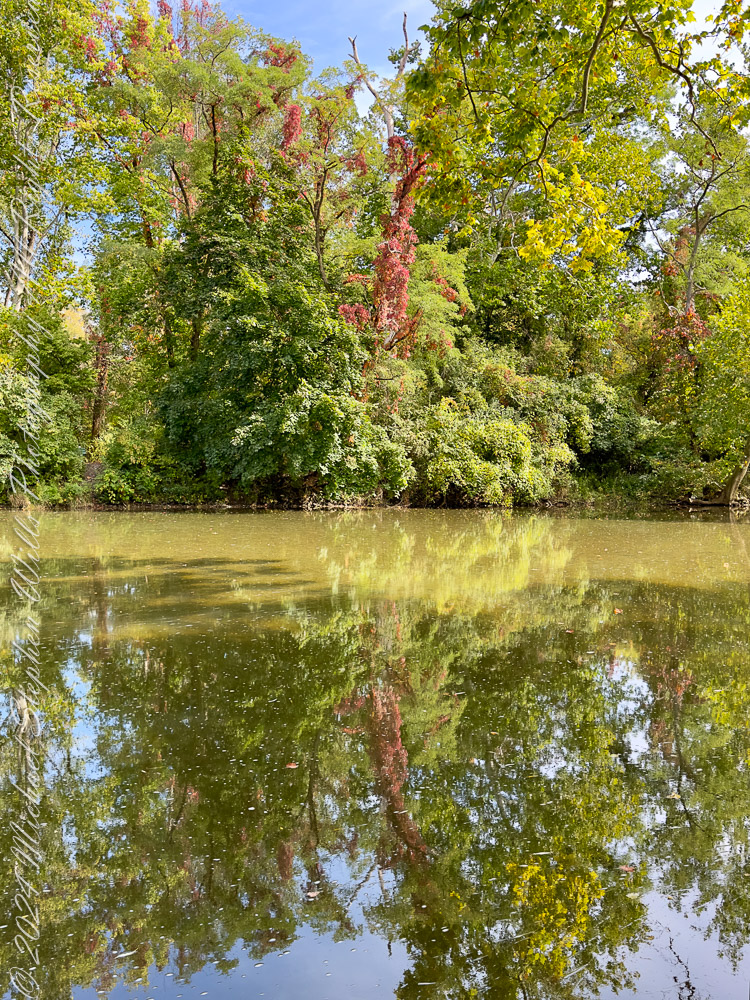
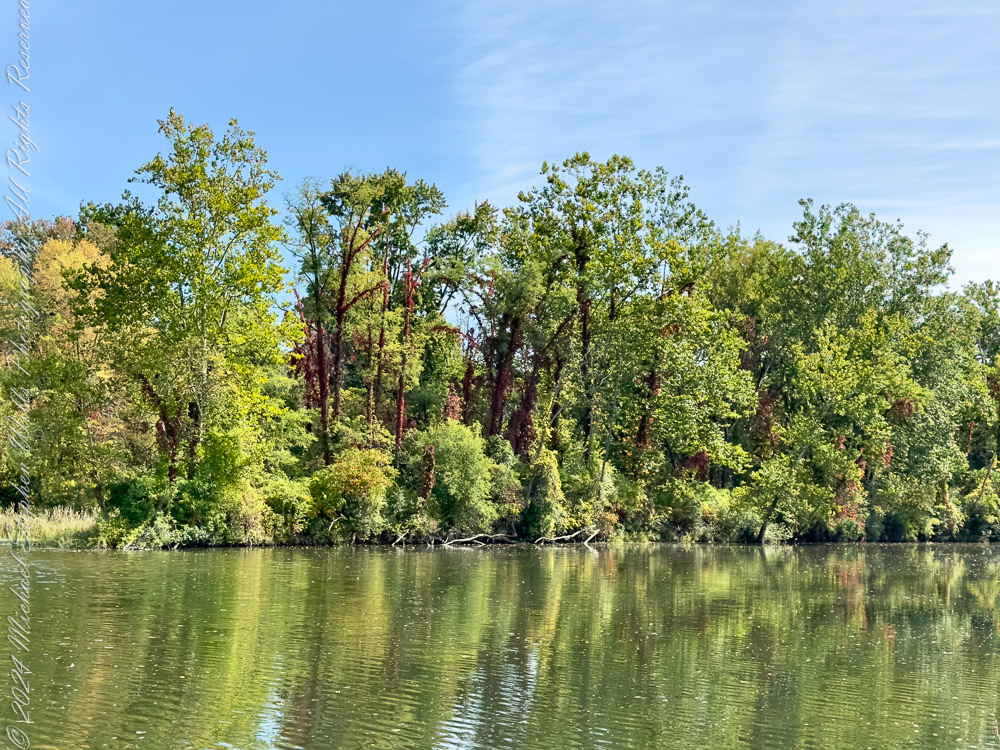
The reflection — a perfect painting — blurs the boundary between land and water. Here, quiet reigns, save for the soft ripple of a fish or the rustle of leaves overhead.
Curious Note: Virginia Creeper is often mistaken for poison ivy. The secret? Virginia Creeper has five leaflets, while poison ivy wears three — nature’s rhyme: “Leaves of three, let it be.”
Aster Alley: A Burst of Purple Beauty
On the trail’s side, a cheerful gathering of New England Asters (Symphyotrichum novae-angliae) steals the spotlight. These vibrant purple flowers, with their golden centers, are late-season treasures. As most blooms fade, asters feed pollinators like bees and butterflies in their final push before winter.
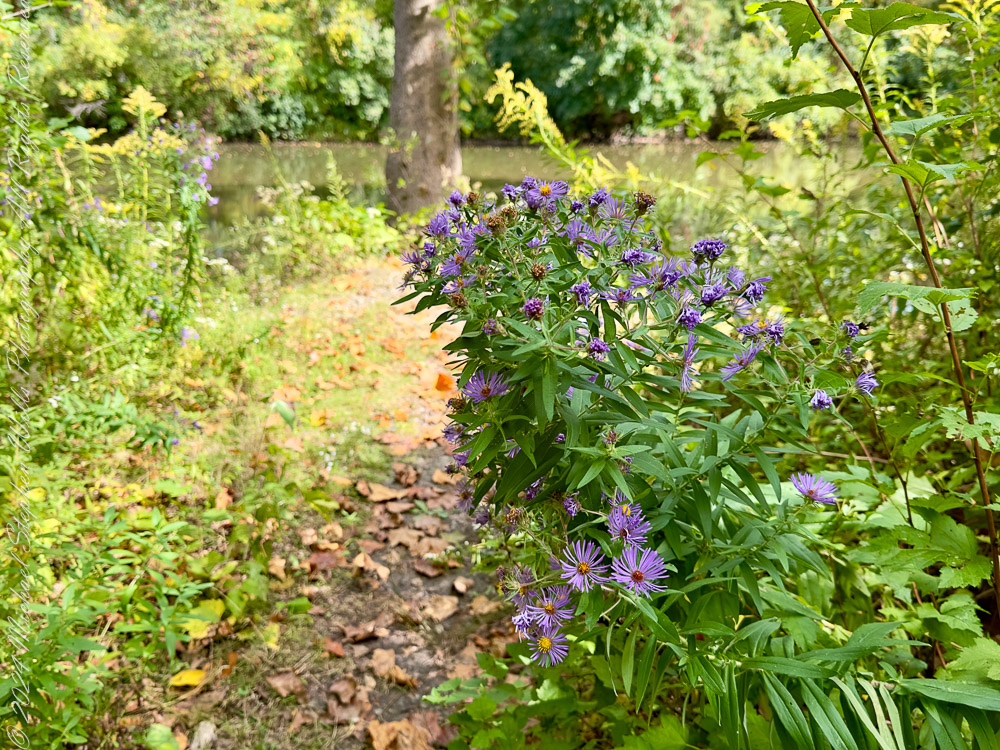
Walk by slowly, and you might catch a bumblebee lazily humming its thanks — a last sip of nectar before the chill sets in.
Did You Know? Asters get their name from the Greek word for star. Fitting, don’t you think?
Nature’s Quilt: Pine Needle Carpet
Finally, we tread across a textured carpet of pine needles, blanketing the ground in warm, earthy hues. Beneath this seemingly simple scene lies a story of renewal. As pines shed their needles, they enrich the soil with organic matter, providing a soft bed for new life to sprout in the spring.
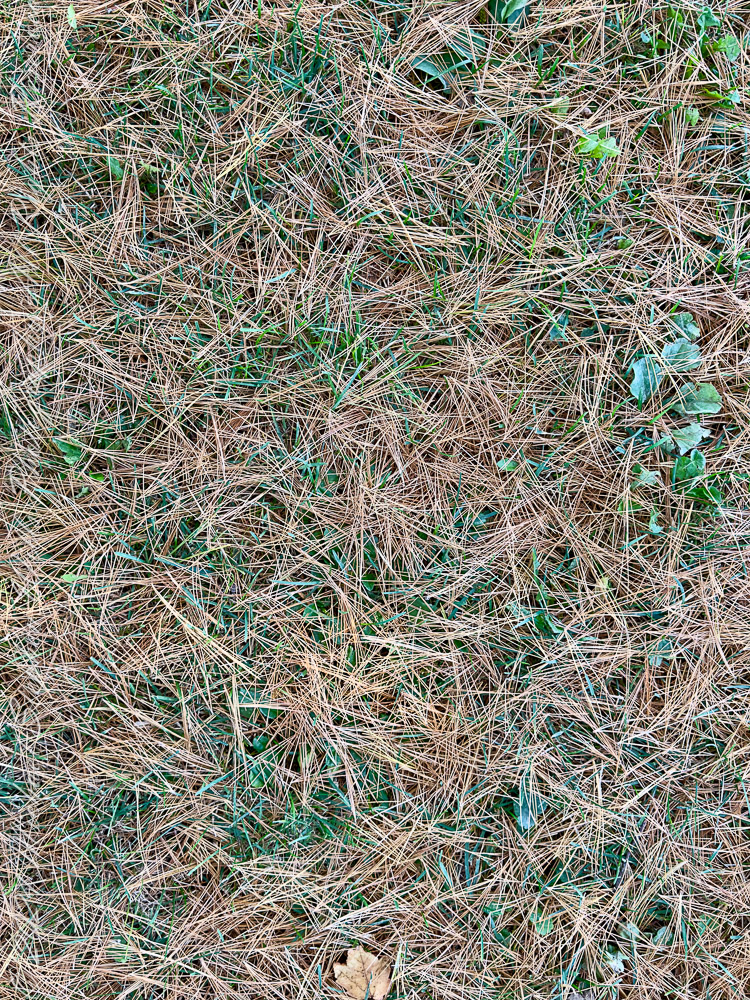
The crunch underfoot feels both nostalgic and meditative — a gentle reminder that every fallen needle is part of nature’s endless cycle.
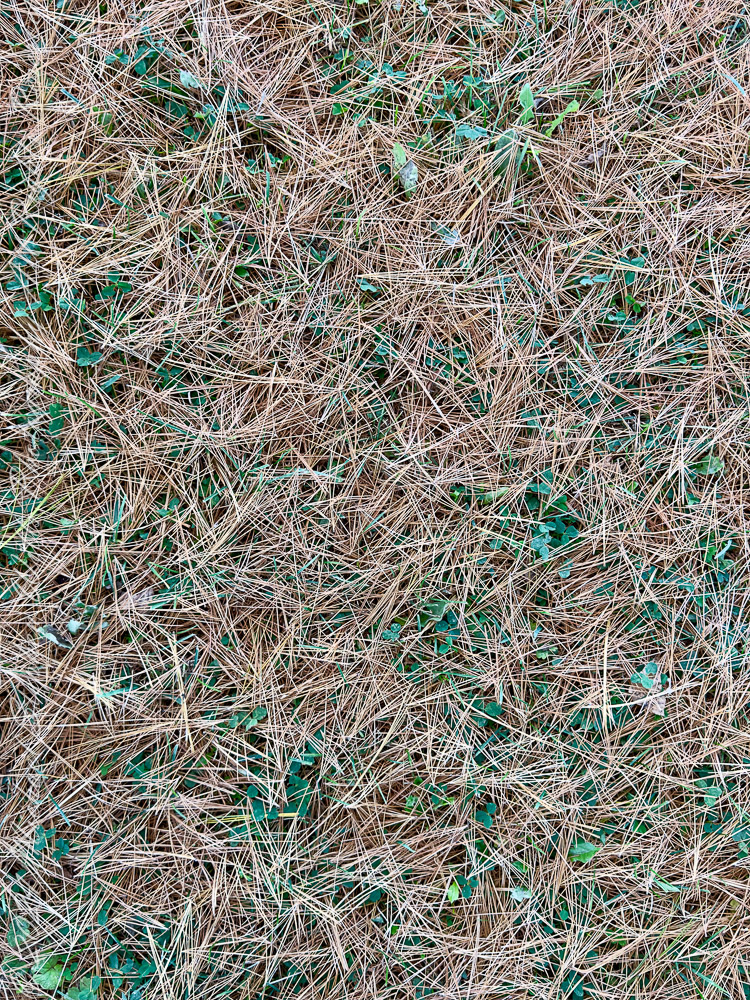
Fun Observation: Pine needles, often called “nature’s mulch,” are slightly acidic, which helps pine trees thrive while keeping competition at bay.
Closing Thoughts
From the bold reds of pokeweed to the mirrored waters adorned with Virginia Creeper, and the twinkle of asters amid the foliage, autumn along the Cayuga Waterfront Trail is a celebration of nature’s resilience and beauty. It’s a quiet reminder that even as the seasons shift, the world remains vibrant — a living, breathing tapestry stitched together by trees, plants, and reflections.
So, walk slowly, listen closely, and let the stories of leaves, stems, and waters guide your journey.






 Michael Stephen Wills Photography