Golden Gift

White on White

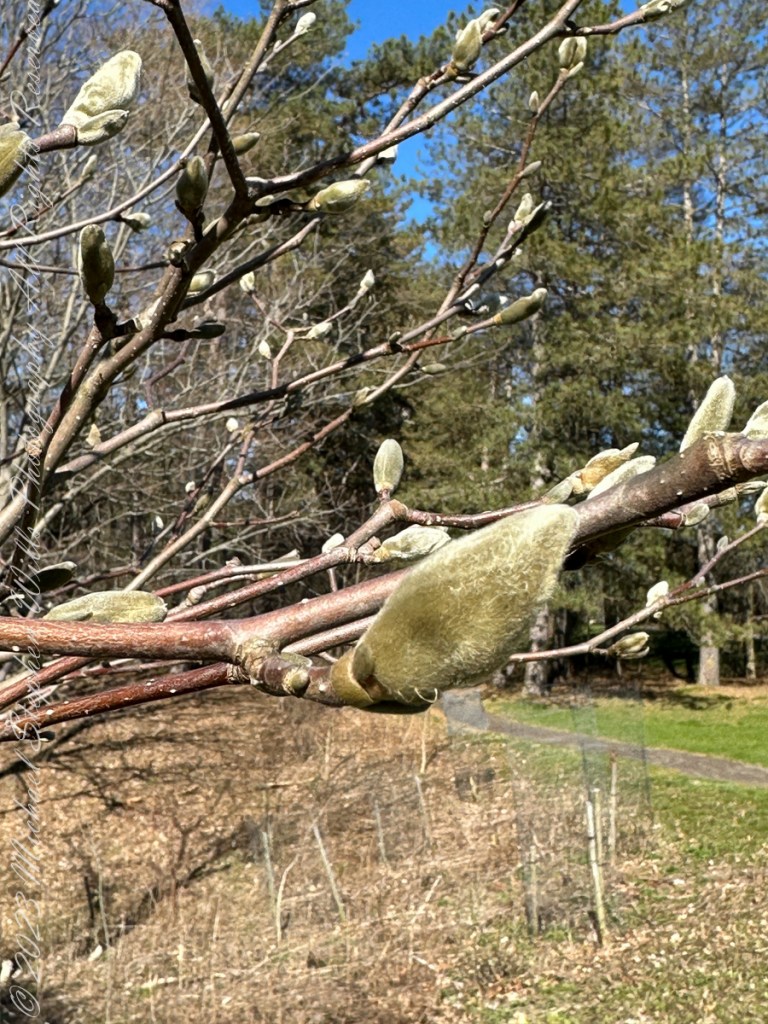
We mistook this magnolia tree for a “pussy willow” from its flower bud texture and shape.

Click Me for “Finger Lakes Memories” my online gallery.

All photography using the IPhone 14 ProMax triple camera, raw format, edited on the phone.
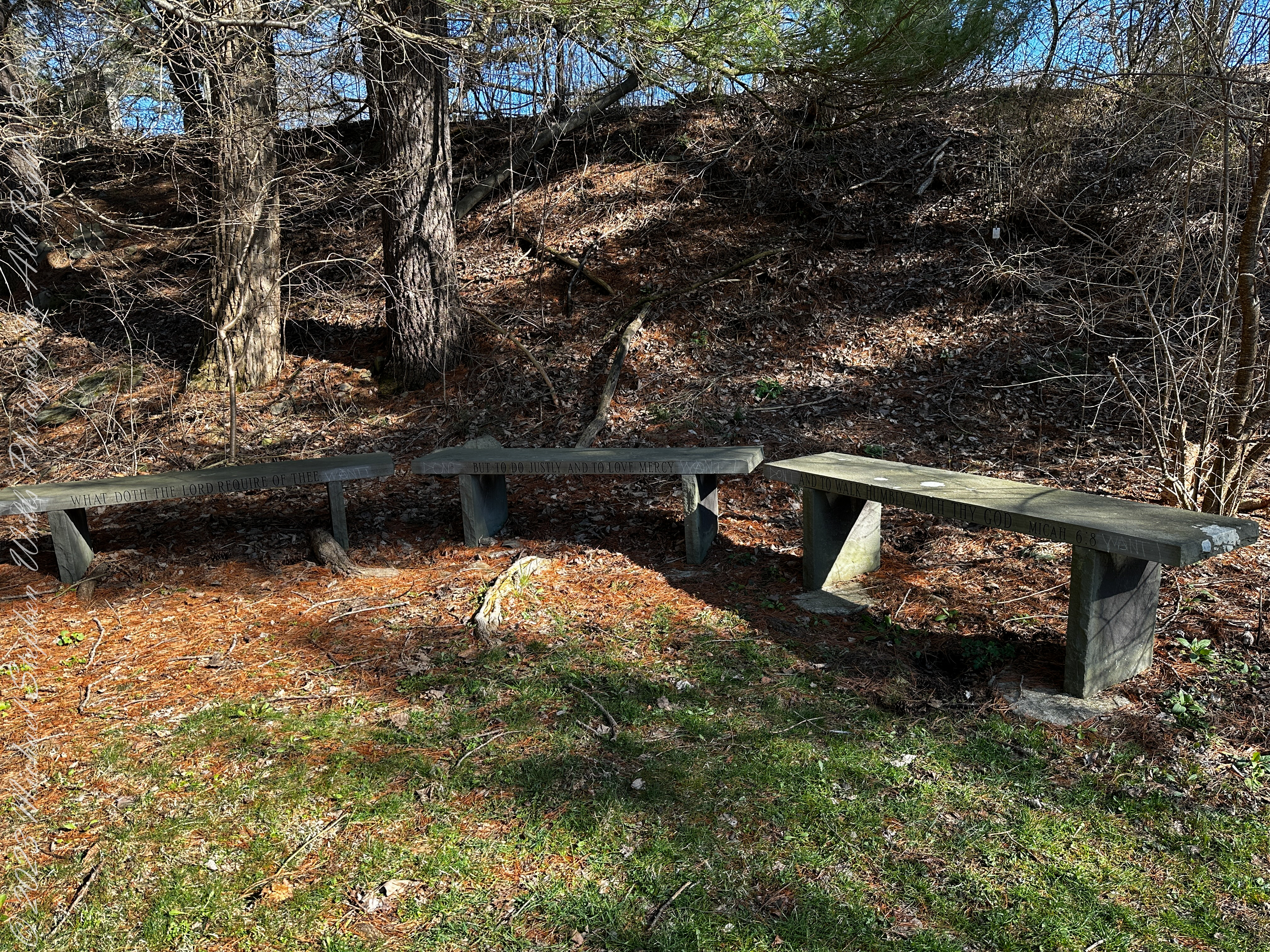
The signage attached to a branch disabused us of this impression, incorrect all for being true until the flowers burst forth.

Magnolia “Golden Gift” Magnoliaceae

Description

A visually beautiful magnolia whose golden flowers bloom in abundance and persist well; a small tree or large shrub with a loosely pyramidal form and large relatively coarse leaves; flowers appear before the foliage; an ideal landscape or garden accent

Ornamental Features

Golden Gift Magnolia is covered in stunning fragrant gold cup-shaped flowers held atop the branches in early spring before the leaves. It has dark green deciduous foliage. The large pointy leaves turn coppery bronze in fall.

Landscape Attributes

Golden Gift Magnolia is a deciduous tree with a distinctive and refined pyramidal form. Its relatively coarse texture can be used to stand it apart from other landscape plants with finer foliage. This is a relatively low maintenance tree and should only be pruned after flowering to avoid removing any of the current season’s flowers. It has no significant negative characteristics.

Ancient

Magnolia is an ancient genus. Appearing before bees evolved, the flowers are theorized to have evolved to encourage pollination by beetles. To avoid damage from pollinating beetles, the carpels of Magnolia flowers are extremely tough. Fossilized specimens of M. acuminata have been found dating to 20 million years ago, and fossils of plants identifiably belonging to the Magnoliaceae date to 95 million years ago. Another aspect of Magnolia considered to represent an ancestral state is that the flower bud is enclosed in a bract rather than in sepals; the perianth parts are undifferentiated and called tepals rather than distinct sepals and petals. Magnolia shares the tepal characteristic with several other flowering plants near the base of the flowering plant lineage such as Amborella and Nymphaea (as well as with many more recently derived plants such as Lilium).

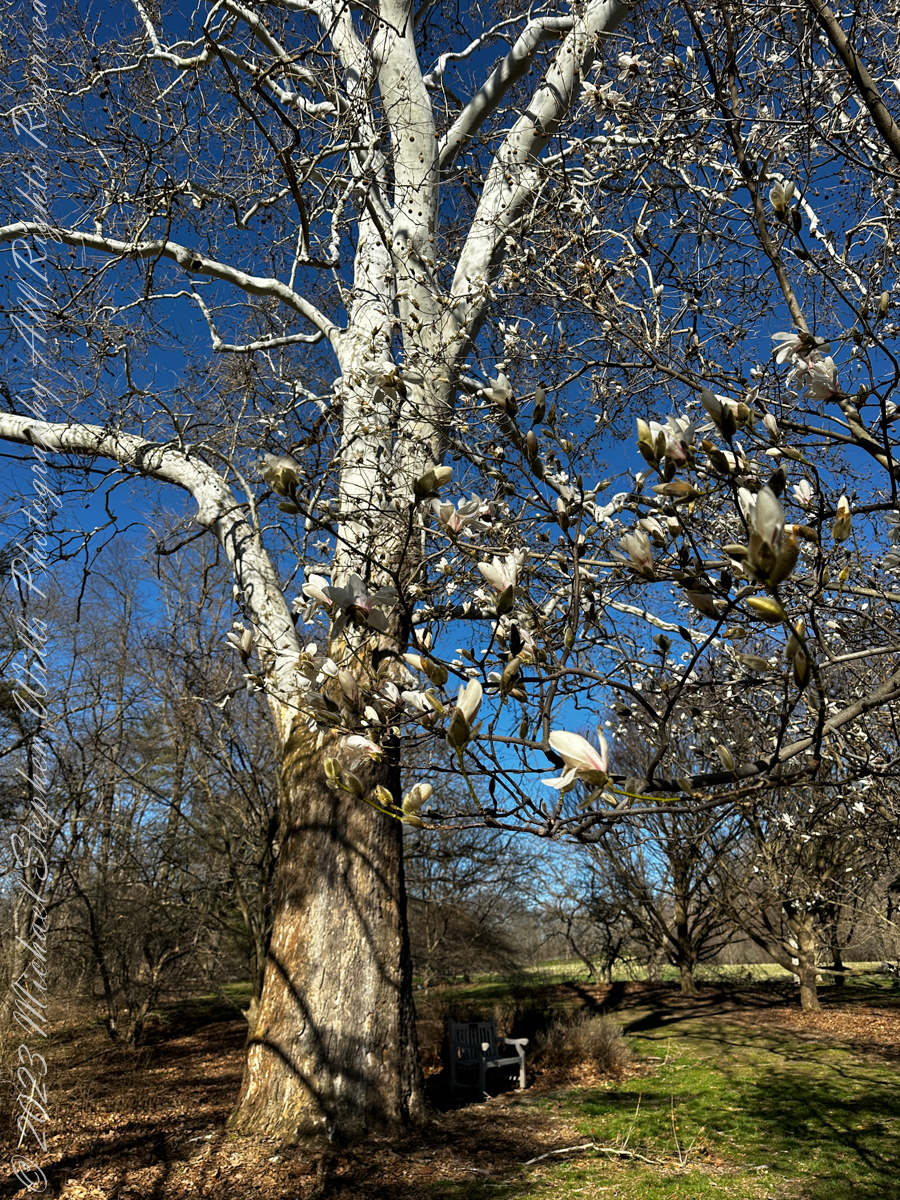
With a neighbor, Sycamore or “Buttonwood”

Copyright 2023 Michael Stephen Wills All Rights Reserved

Green Pillar

Unusual Oak

Pam and I ambled around the Arboretum for our Easter 2023 outing.

Click Me for “Finger Lakes Memories” my online gallery.

All photography using the IPhone 14 ProMax triple camera, raw format, edited on the phone.

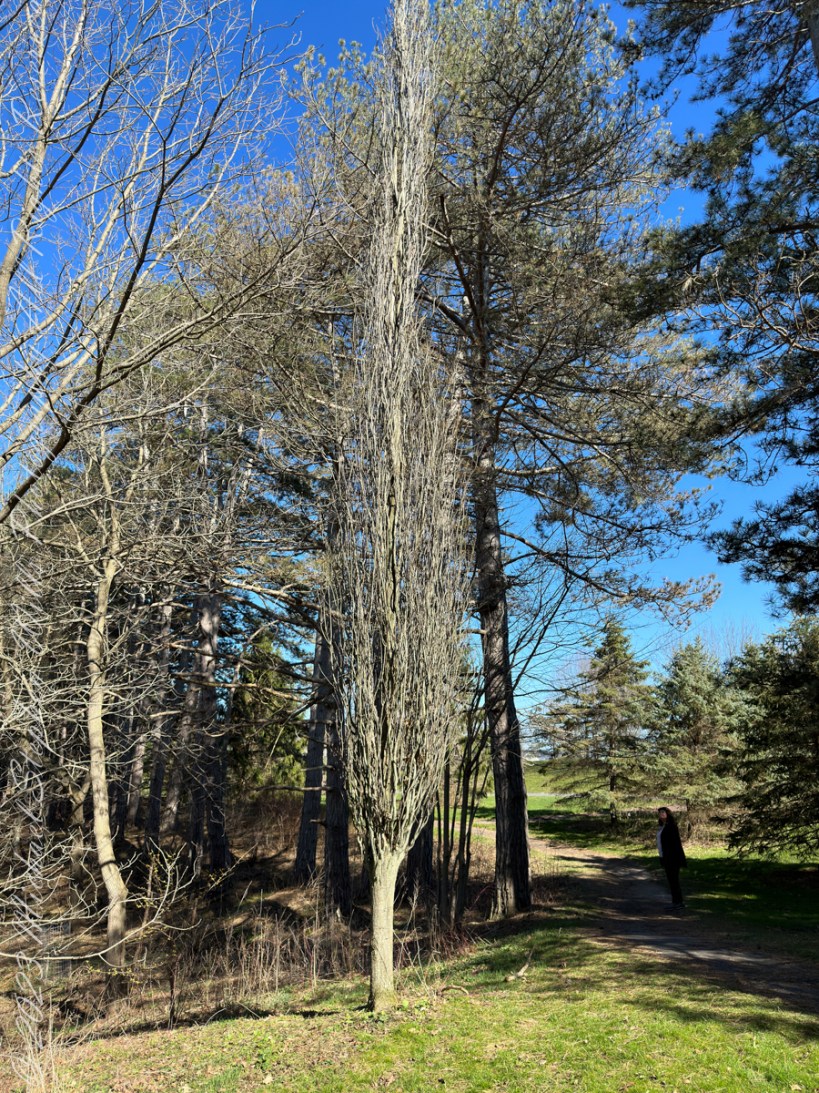
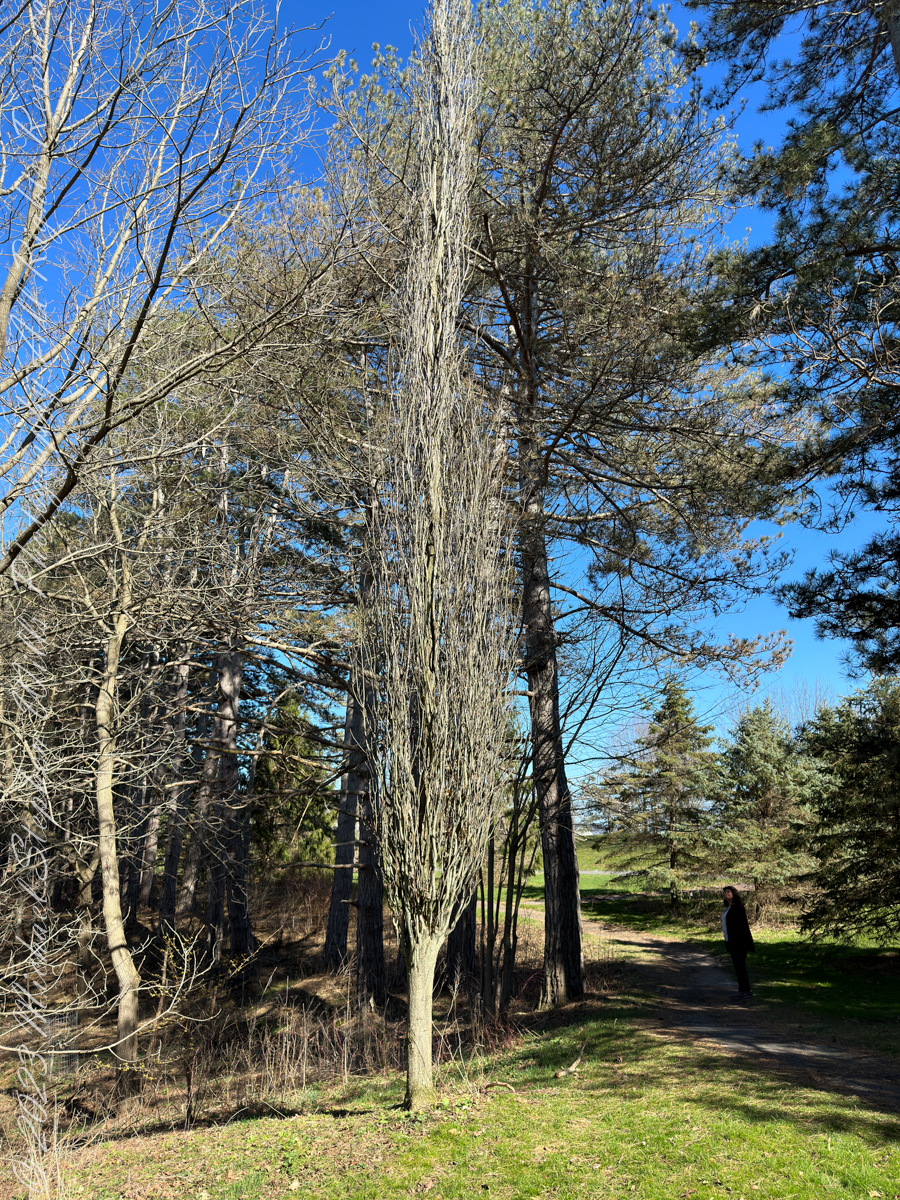
We marveled at this Pin Oak tree, unlike any other oak we have encountered.

Copyright 2023 Michael Stephen Wills All Rights Reserved

Jack Pine

New York Native

Pam and I ambled around the Arboretum for our Easter 2023 outing. Ezra Cornell had a large farm on the East Hill above Ithaca, New York. As part of locating New York State’s land-grant college in Ithaca, Cornell offered to donate the farm for use as a campus. Parts of this property remain in use as farmland. Our walk followed the outer Arboretum reaches along this research farm.

Click Me for “Finger Lakes Memories” my online gallery.

All photography using the IPhone 14 ProMax triple camera, raw format, edited on the phone.

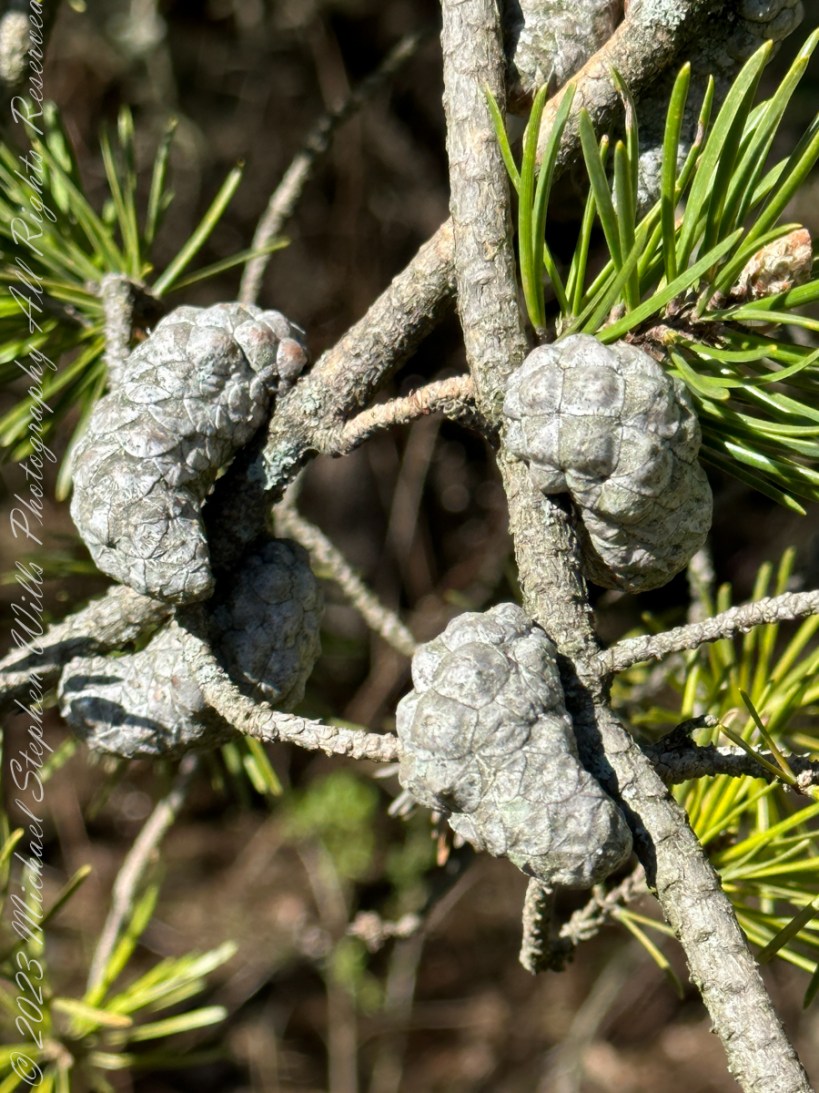
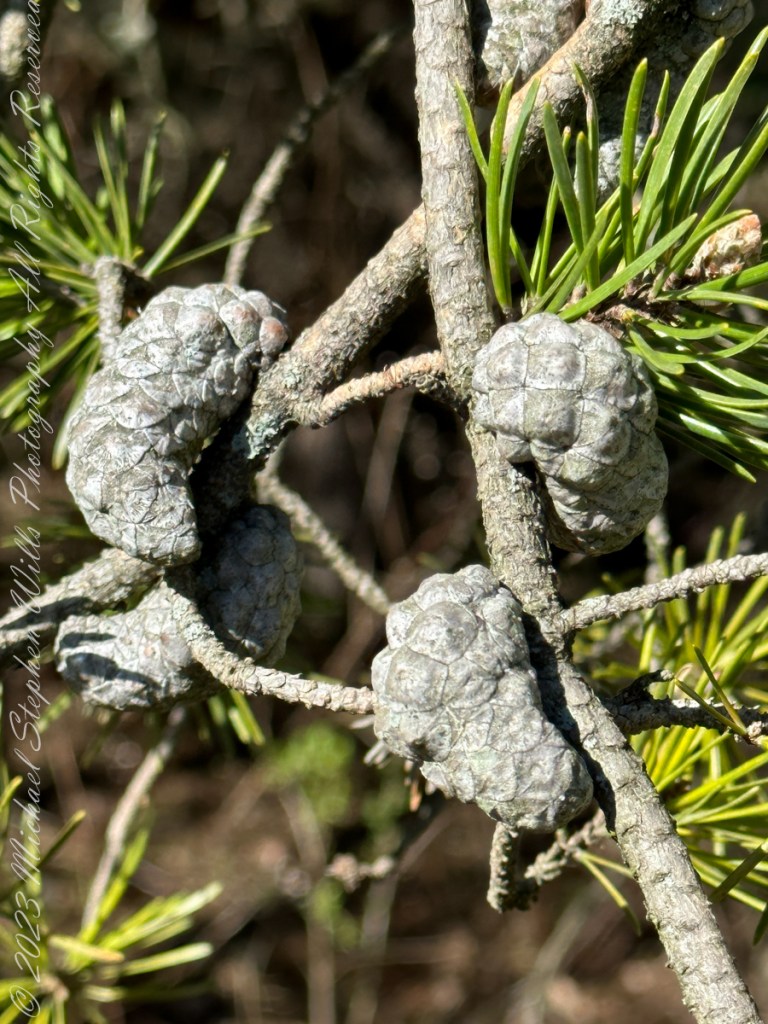
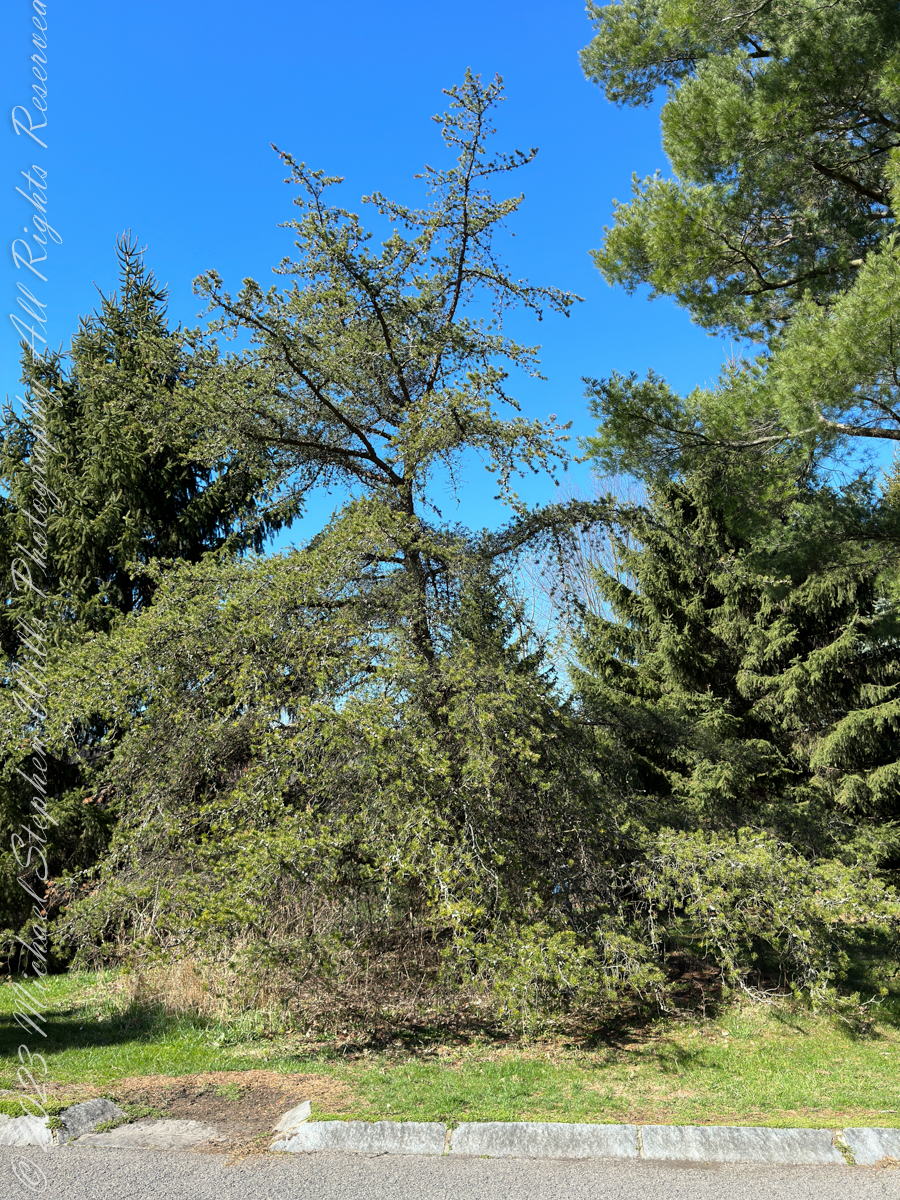
Growing off the road that loops around the Arboretum, this scraggly pine, the Jack Pine, attracted our attention by the grey colored growths curving around the branches 

Serotinous

These are pinecones with the unusual property of not opening, hanging onto the branch, turning this color, until the appropriate conditions arise, serotinous is the botanic term for this. They open when exposed to intense heat, greater than or equal to 50 °C (122 °F). The typical case is in a fire, however cones on the lower branches can open when temperatures reach 27 °C (81 °F) due to the heat being reflected off the ground. 

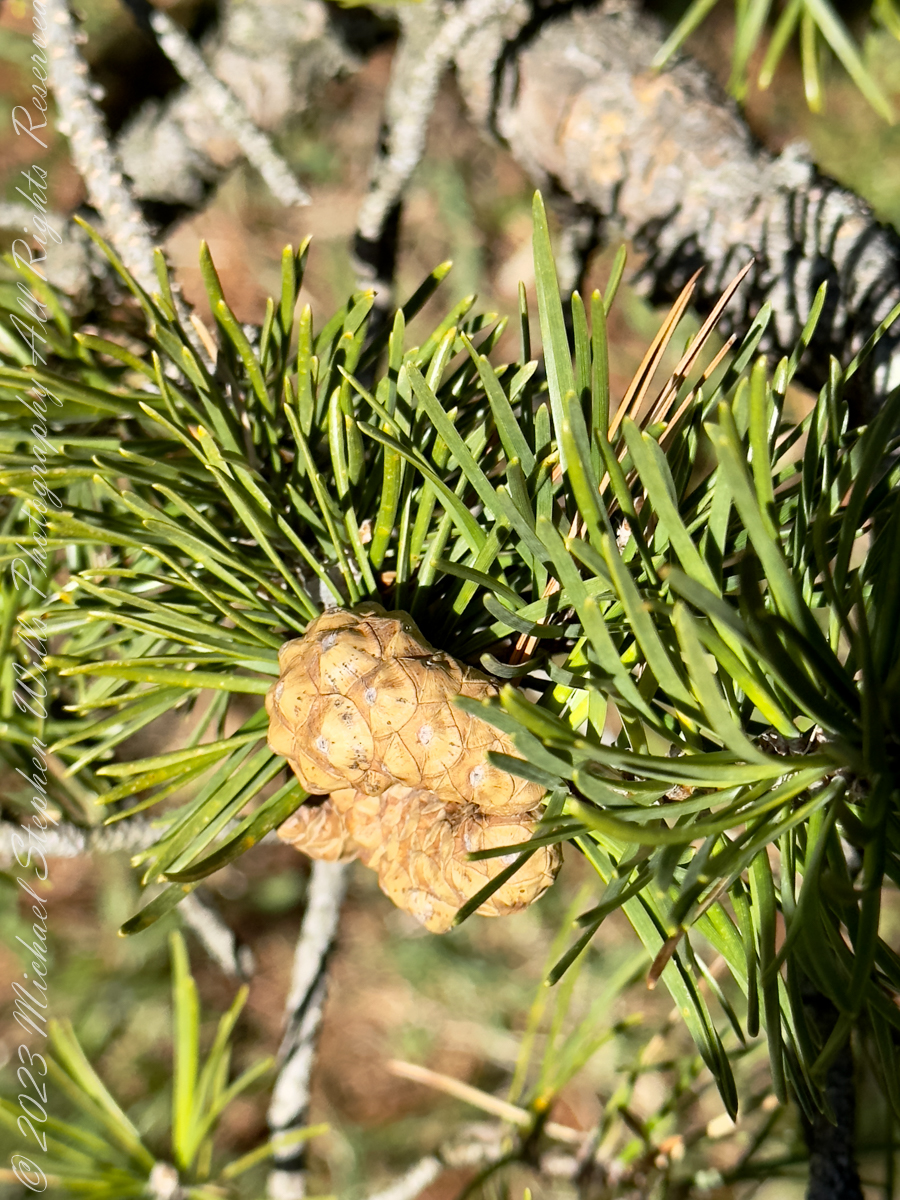
The Color of Younger Jack Pine Cones

Form and Behavior

Tolerant of conditions that preclude other trees, Jack Pines can form pure stands on sandy or rocky soil. It is fire-adapted to stand-replacing fires, with the cones remaining closed for many years, until a forest fire kills the mature trees and opens the cones, reseeding the burnt ground.

Native

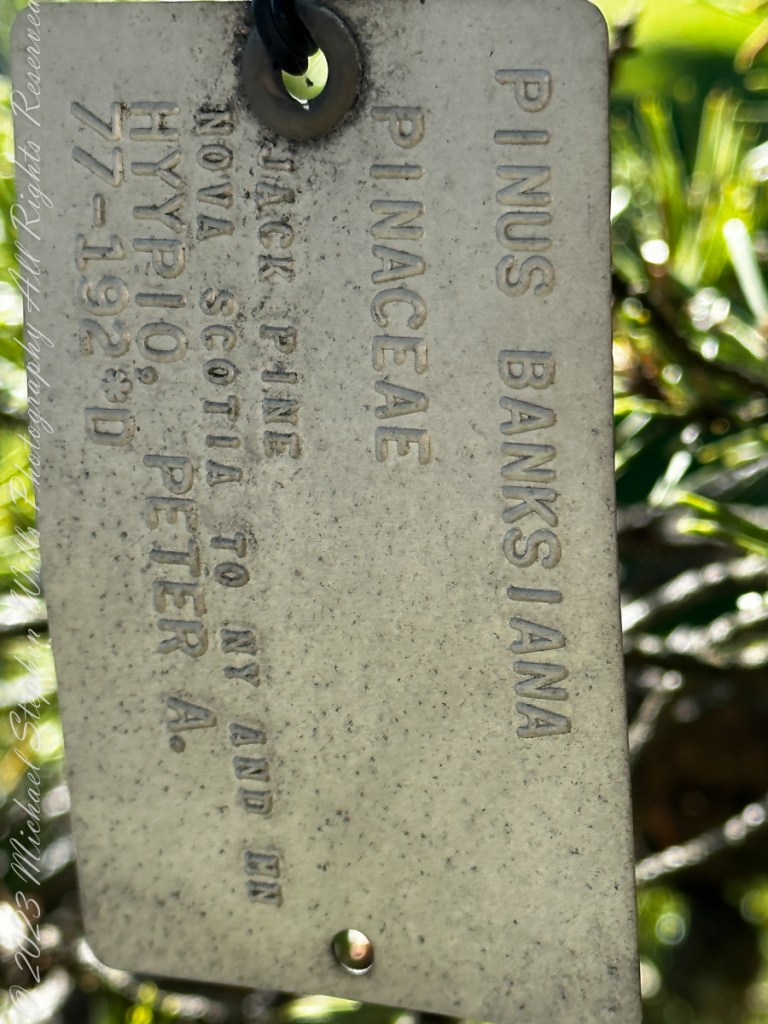
Pinus Banksiana, Pinaceae, Jack Pine, Nova scotia to New York and Minnesota

Joseph Banks classified this pine during a 1766 expedition to Labrador and Newfoundland, the scientific name, Pinus Banksiana, is in his honor.  Jack Pine is native to eastern North America in the far north, south to northwestern Pennsylvania, including New York State.

Copyright 2023 Michael Stephen Wills All Rights Reserved

Creeping up on 1200 Readers….

….and a photographic gallery.

As of April 5th 1181 is the count of subscribers to this blog, an interesting number. The individual numerals sum to a prime number, 11. I appreciate each and every “1” added together, you readers. Thank You.

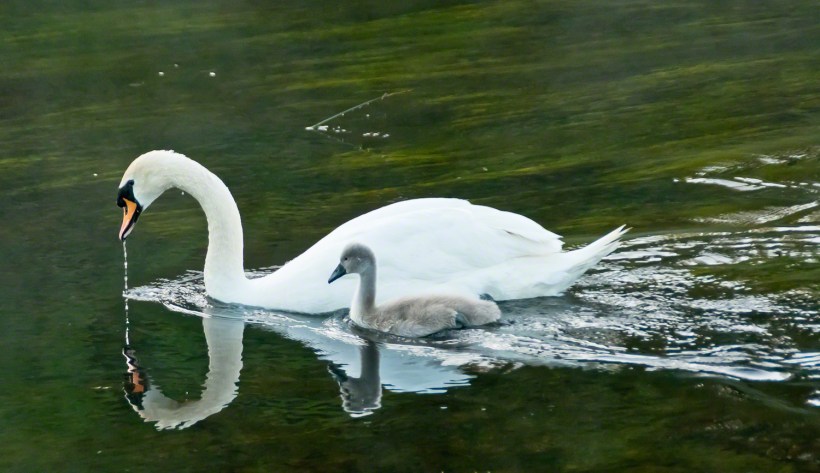
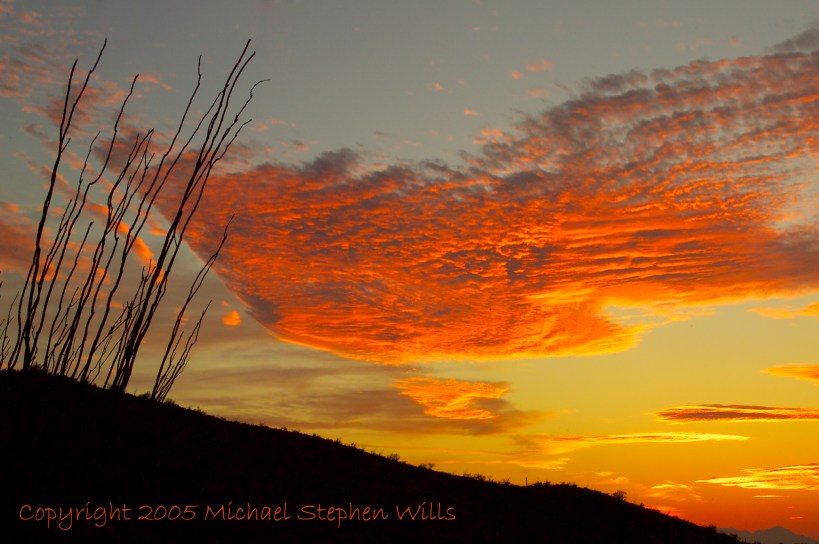
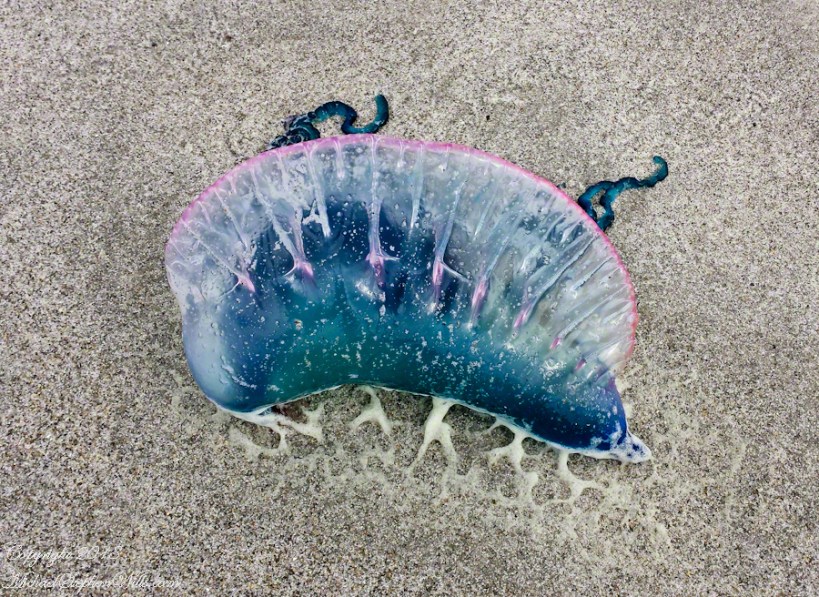
Coincidentally, yesterday 1,200 of my blogs are published….Here is a selection of images from these posts.

Click Me for my Shutterstock Gallery

Copyright 2023 All Rights Reserved Michael Stephen Wills

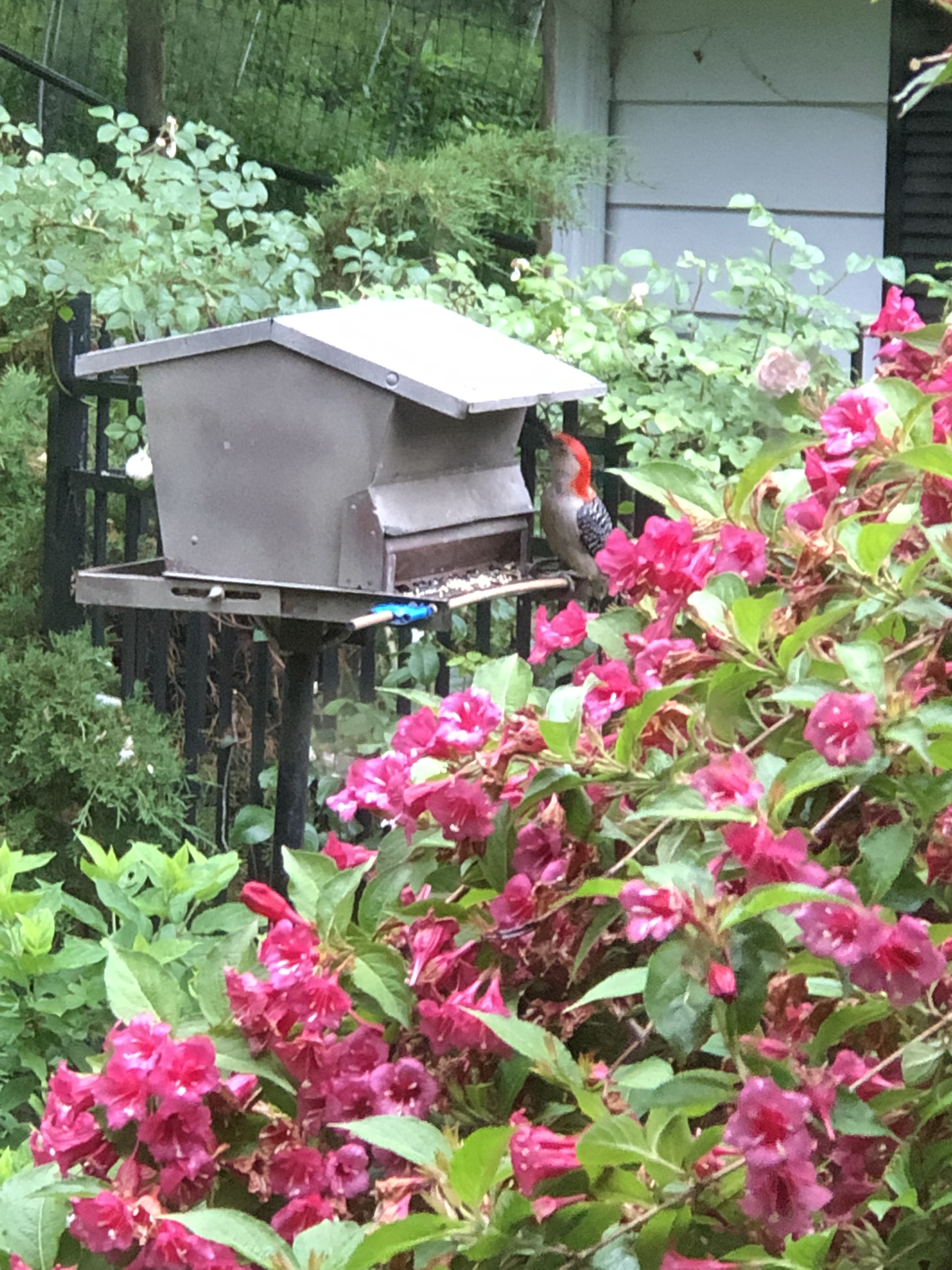
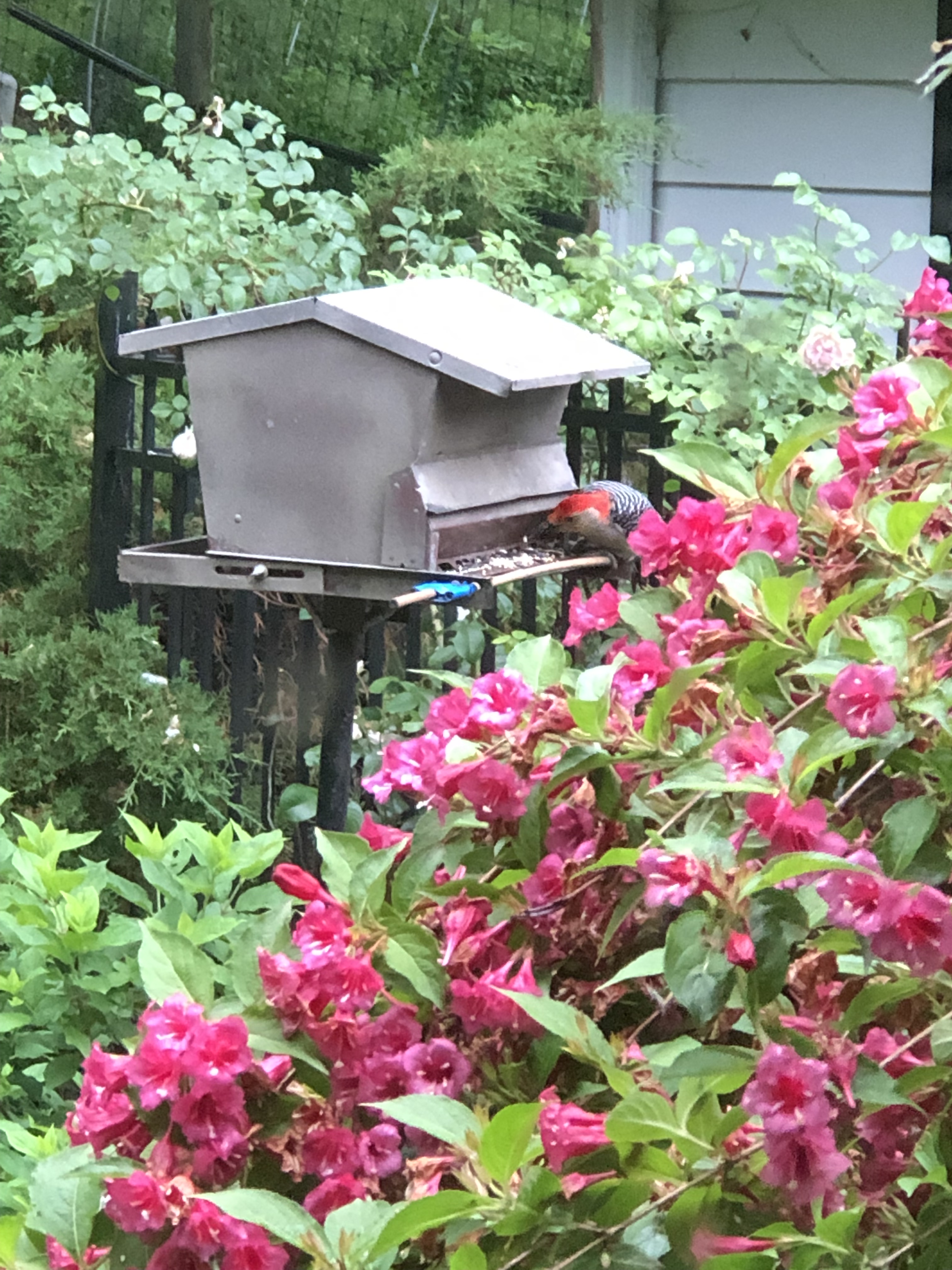
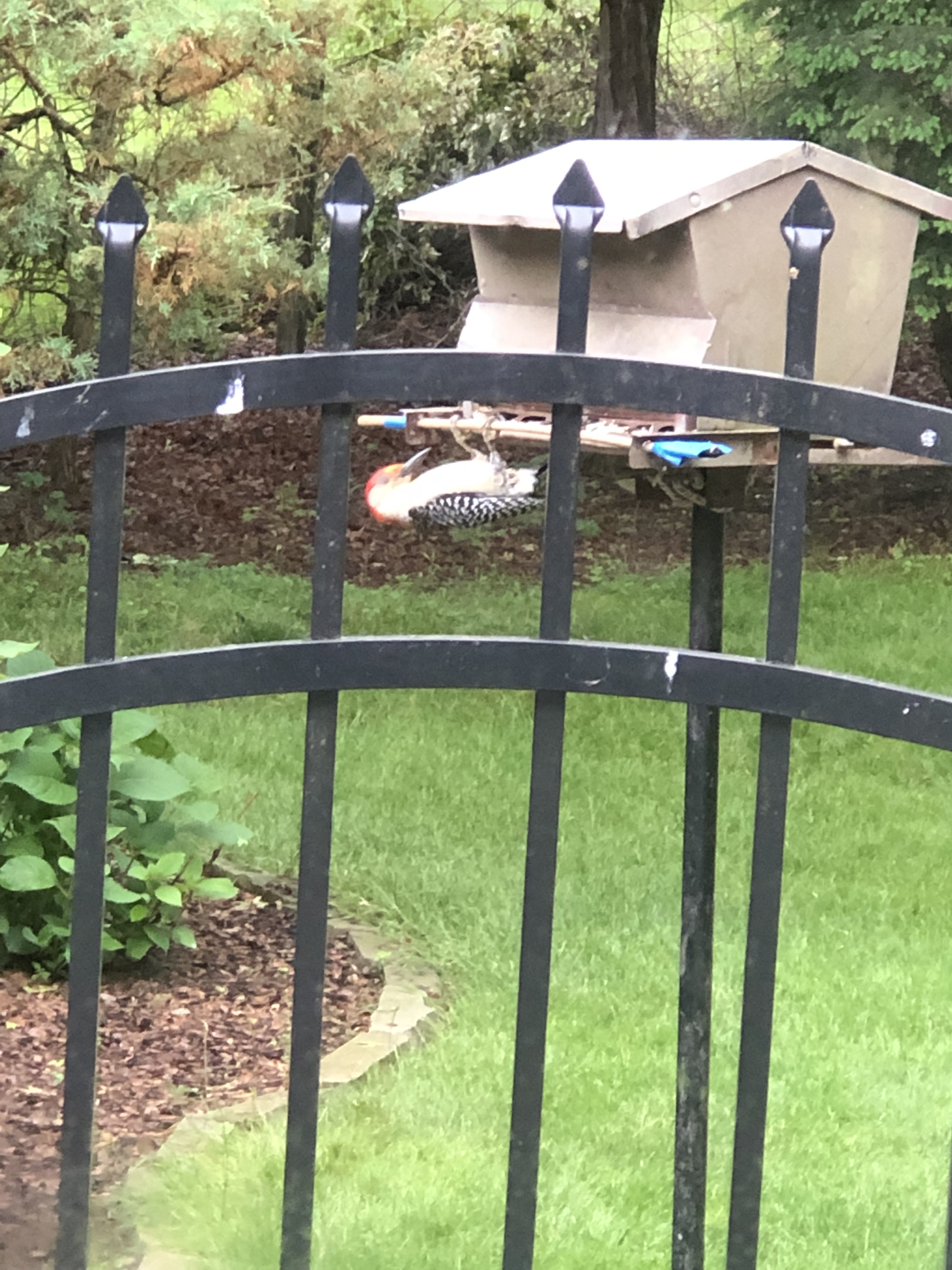
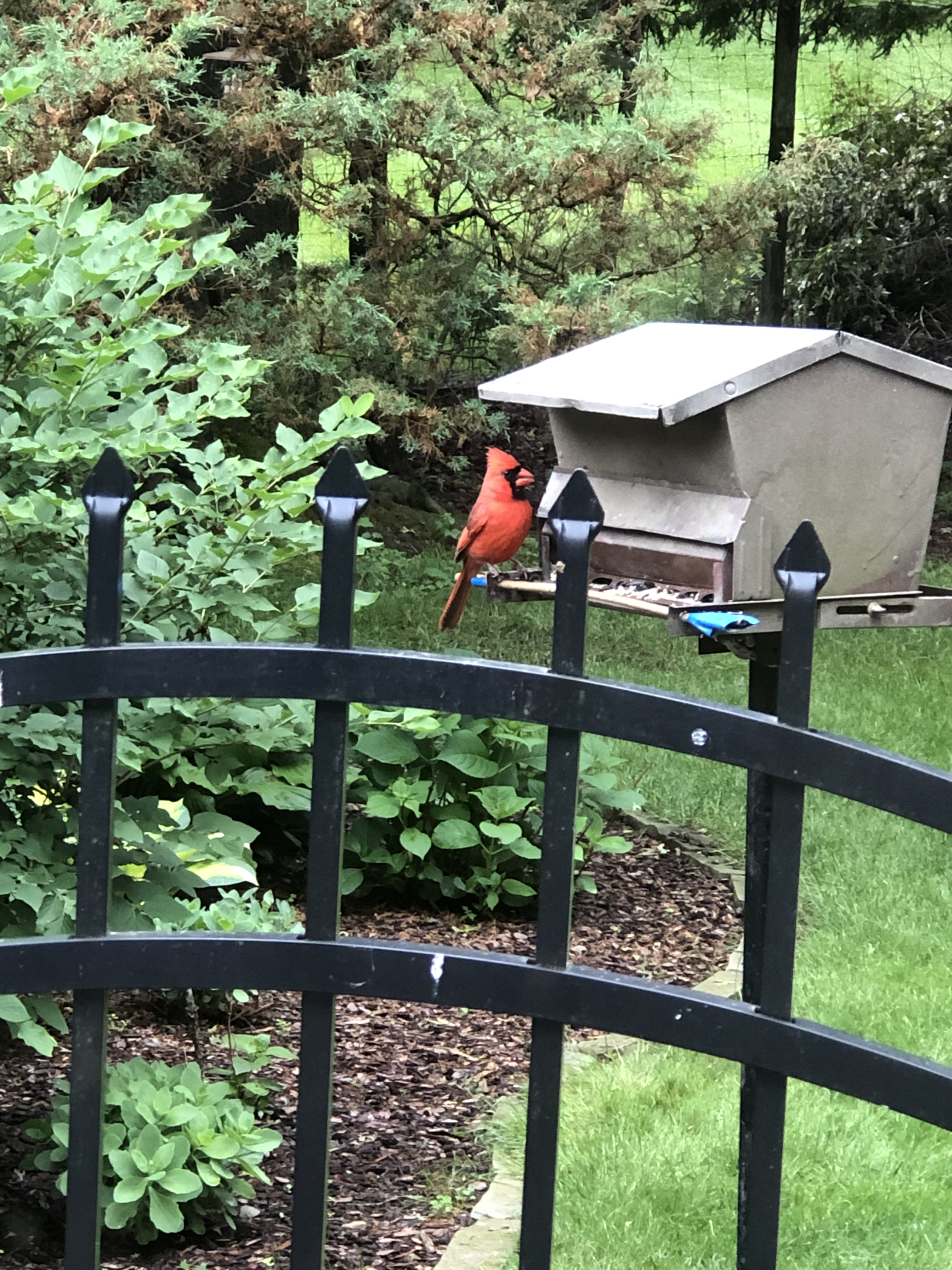
Birds Around the Weigela

an exceptional bloom for our backyard wonder

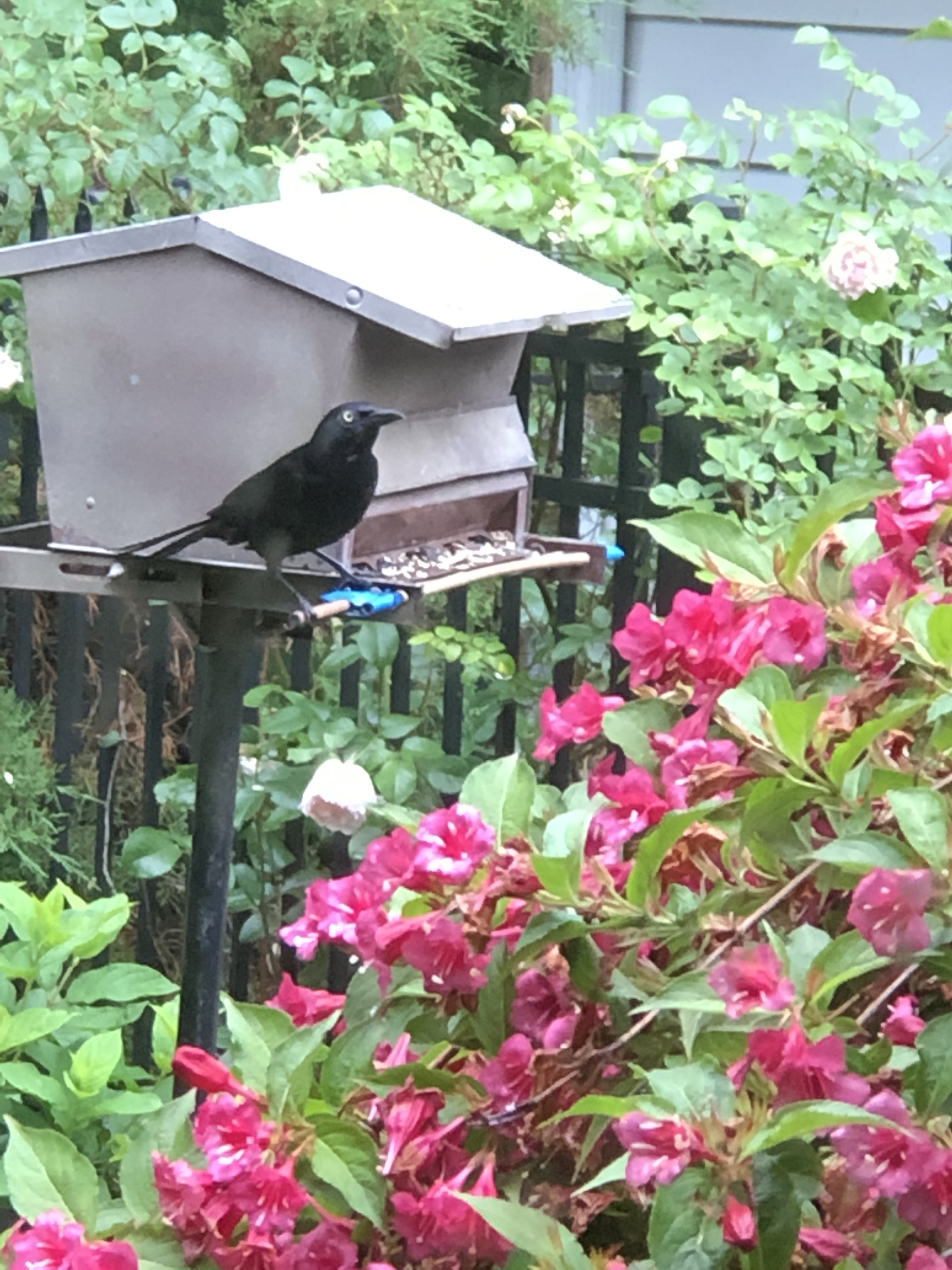
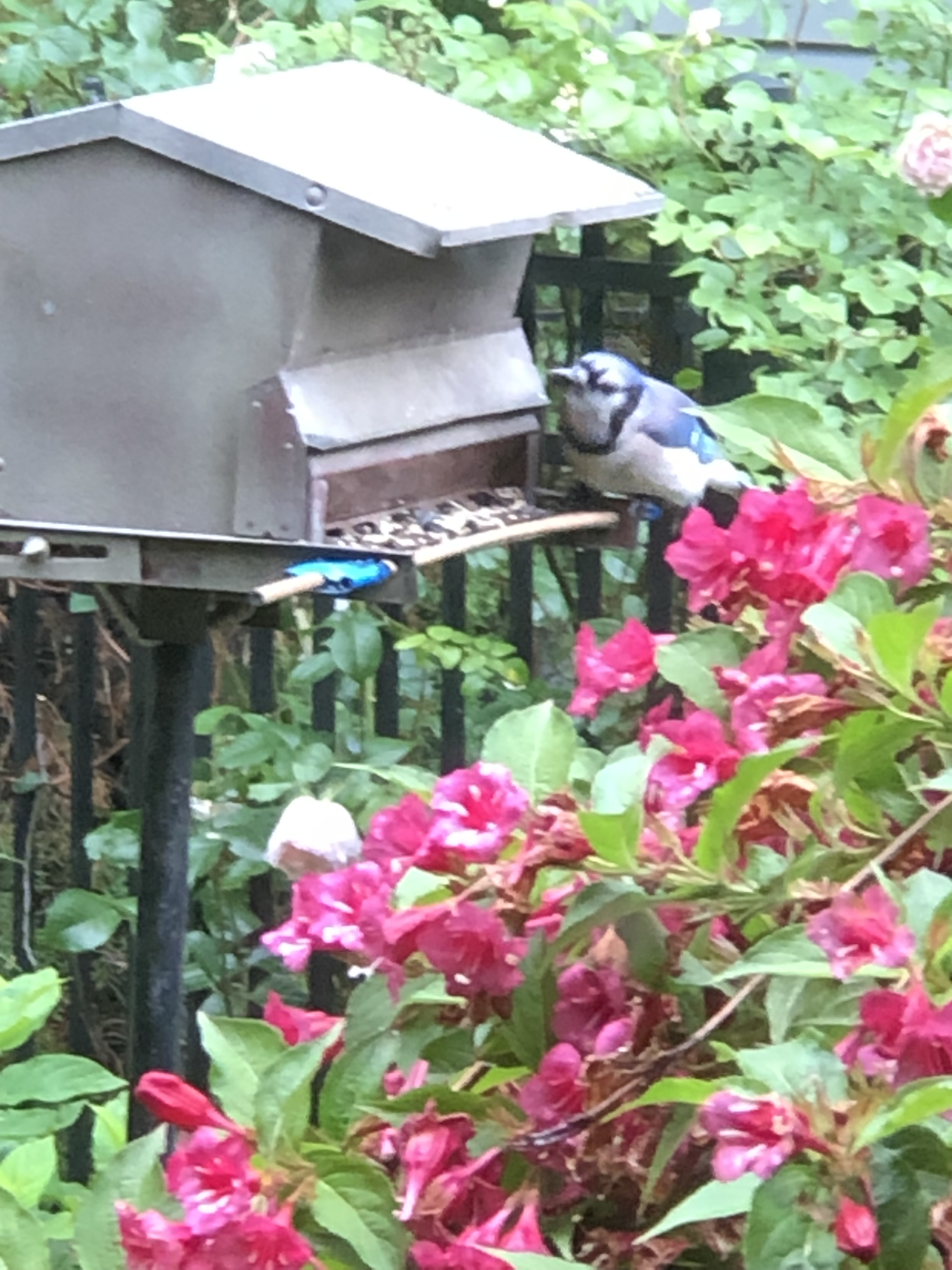
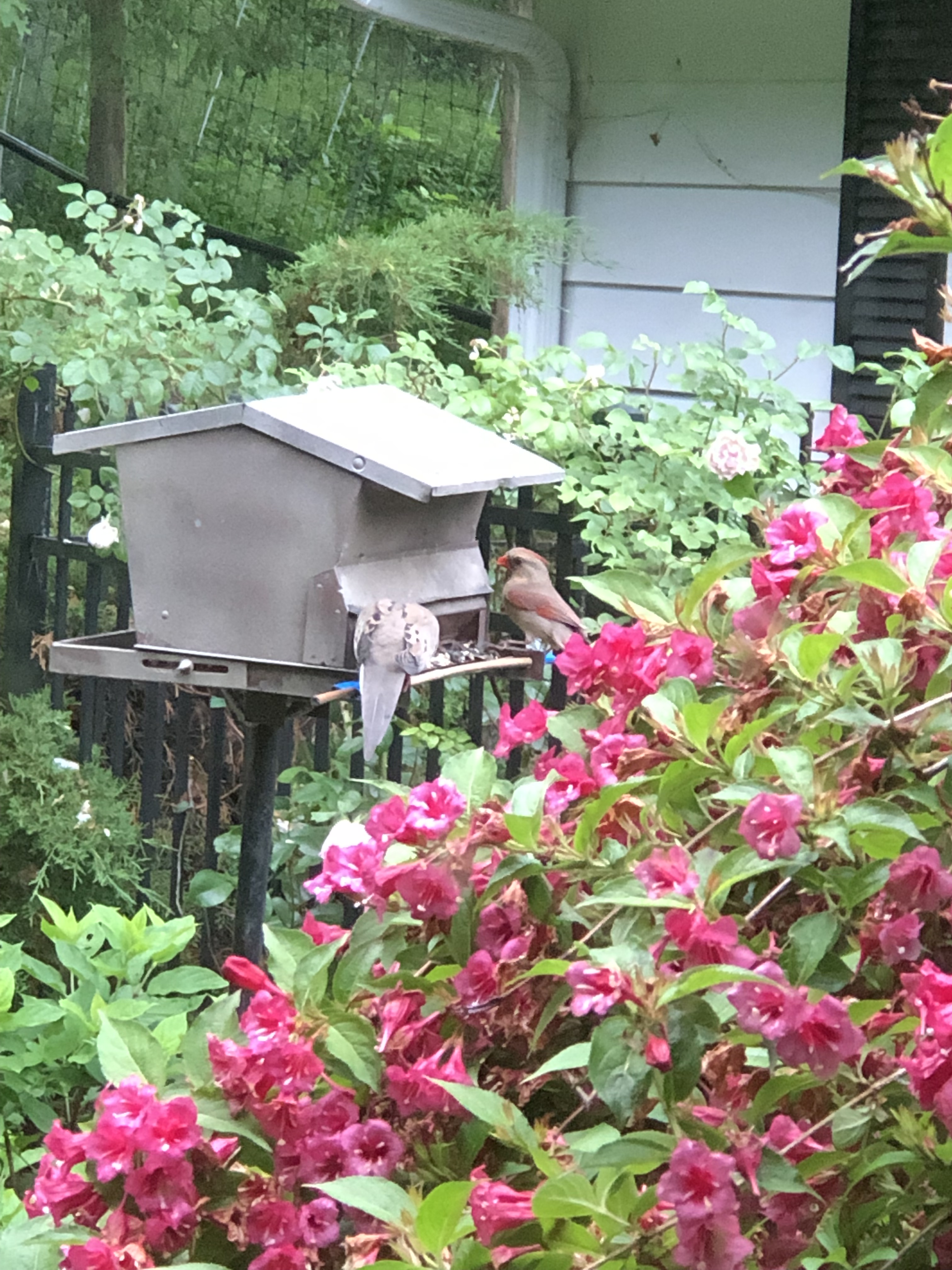
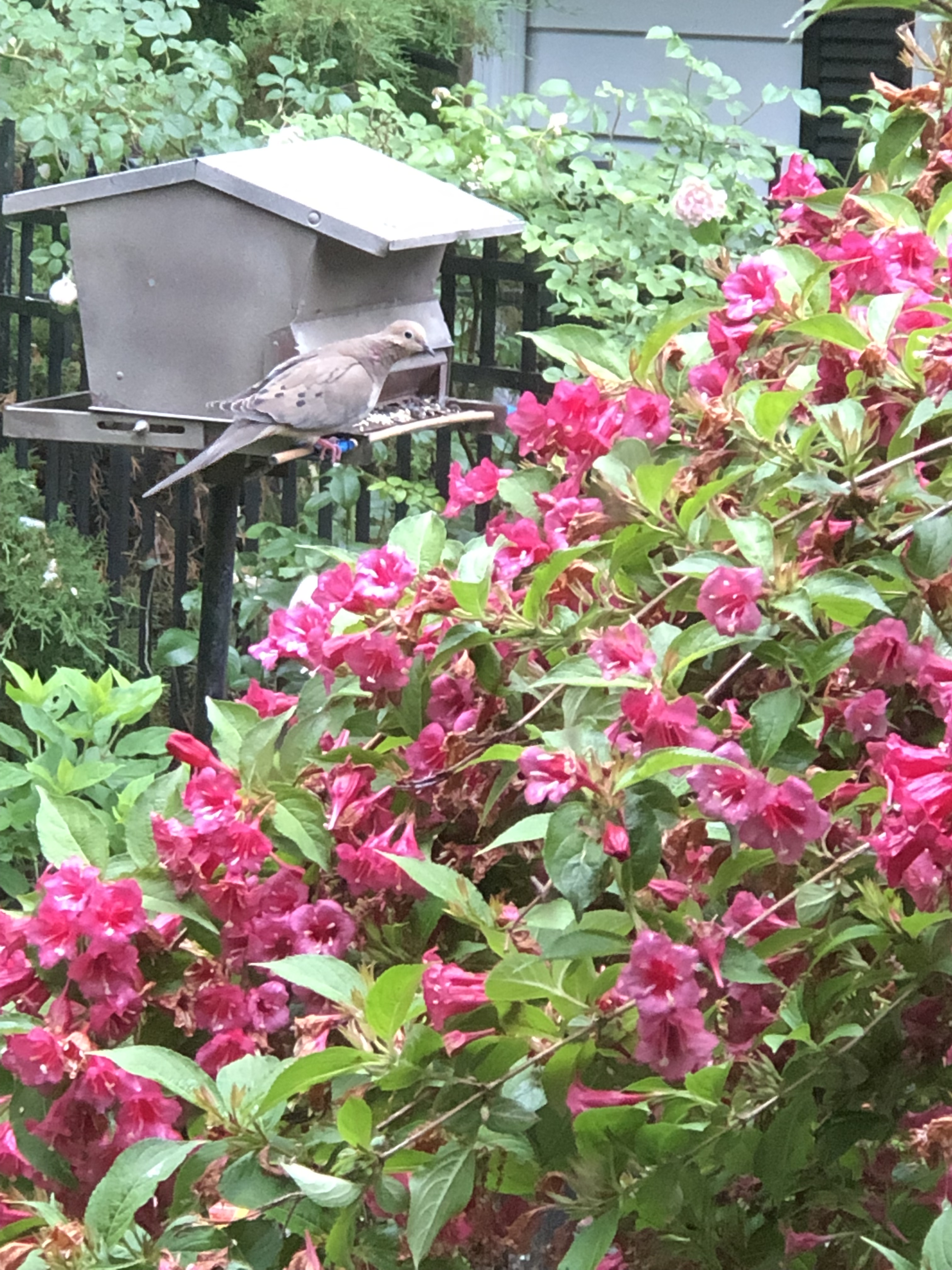
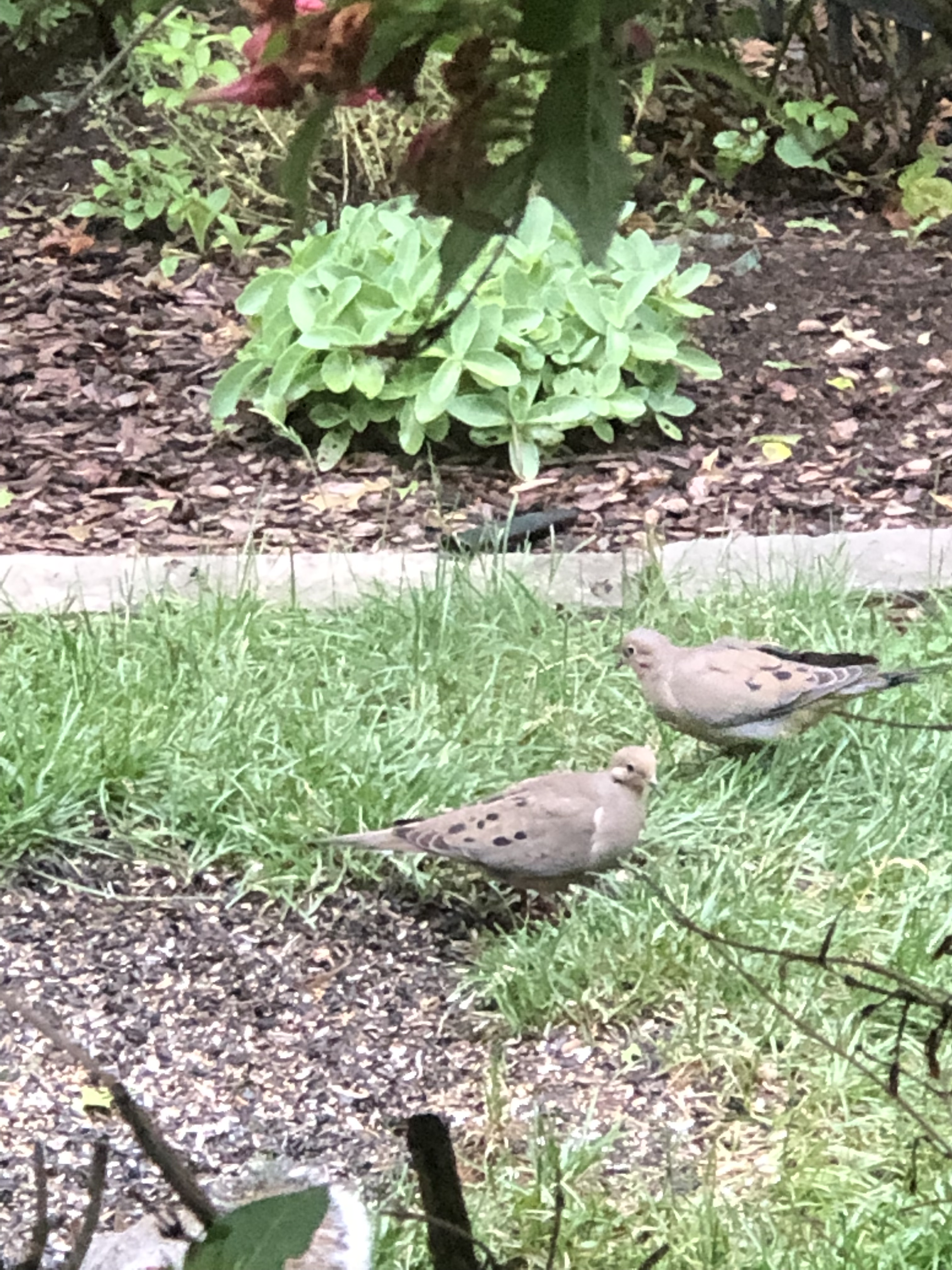
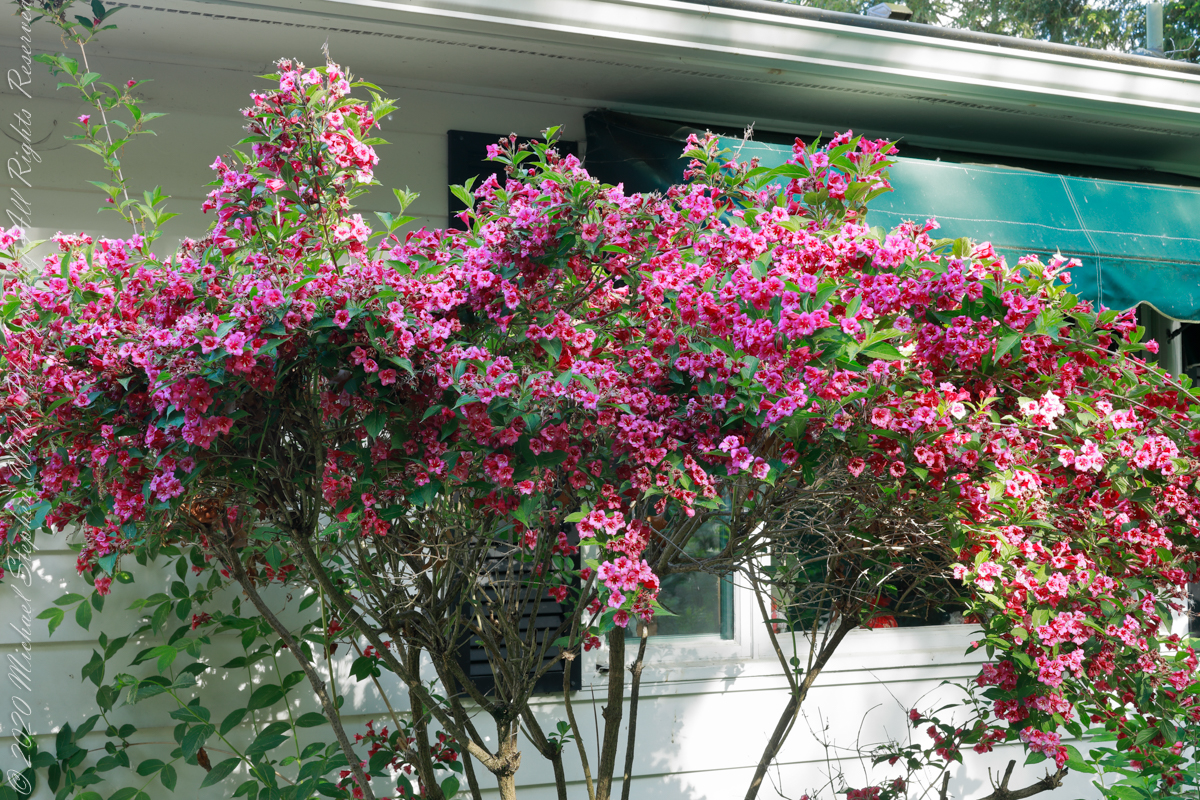
Sad to say, today, Sunday June 12th, the flowering bush is spent, the blooms withered and falling. Pam took time to document some visitors while the Weigela was in its glory. This is a sample of the species we enjoy while washing the dishes.

These photographs were taken by Pam through our windows with her Iphone 8 plus.

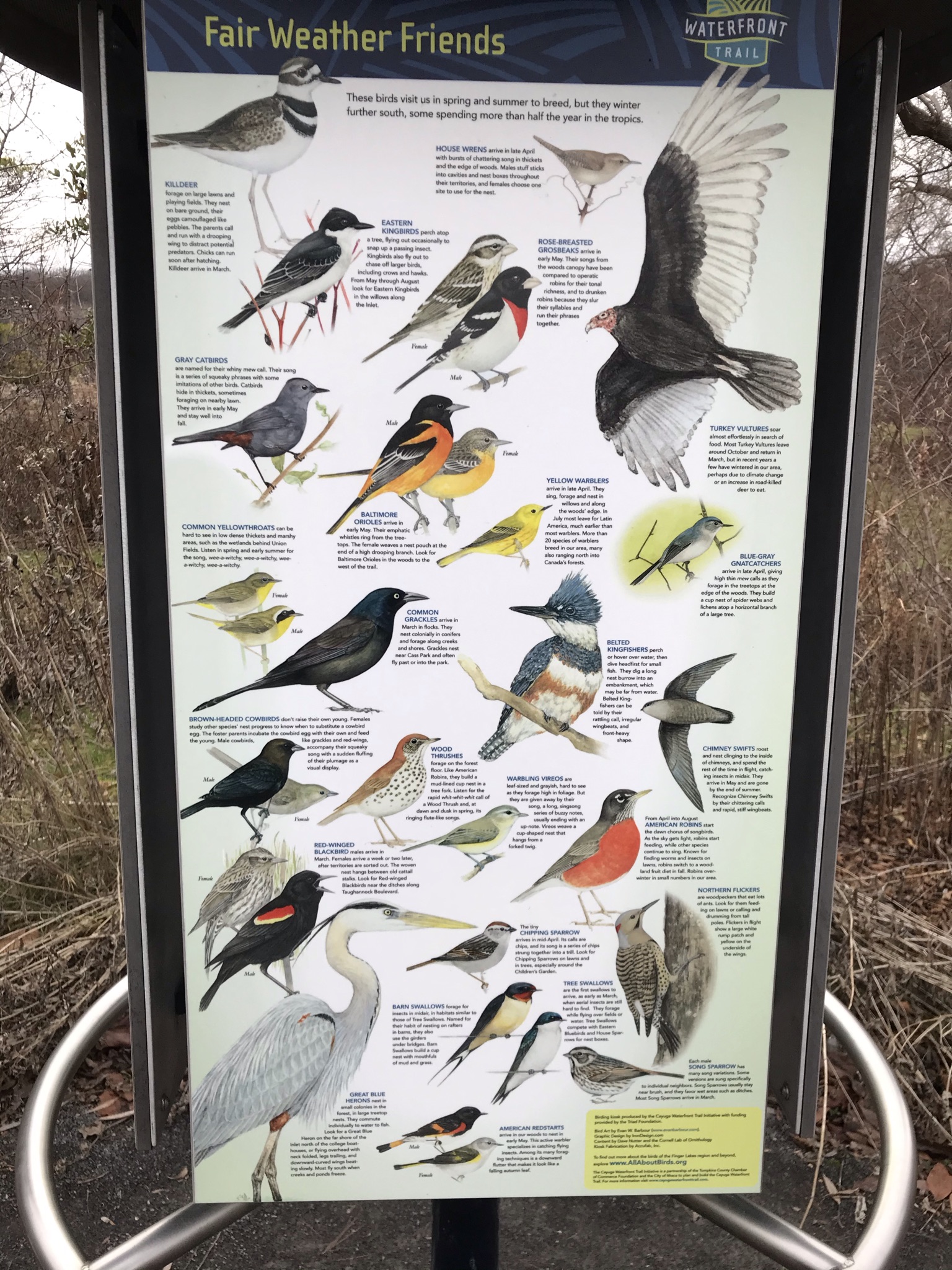
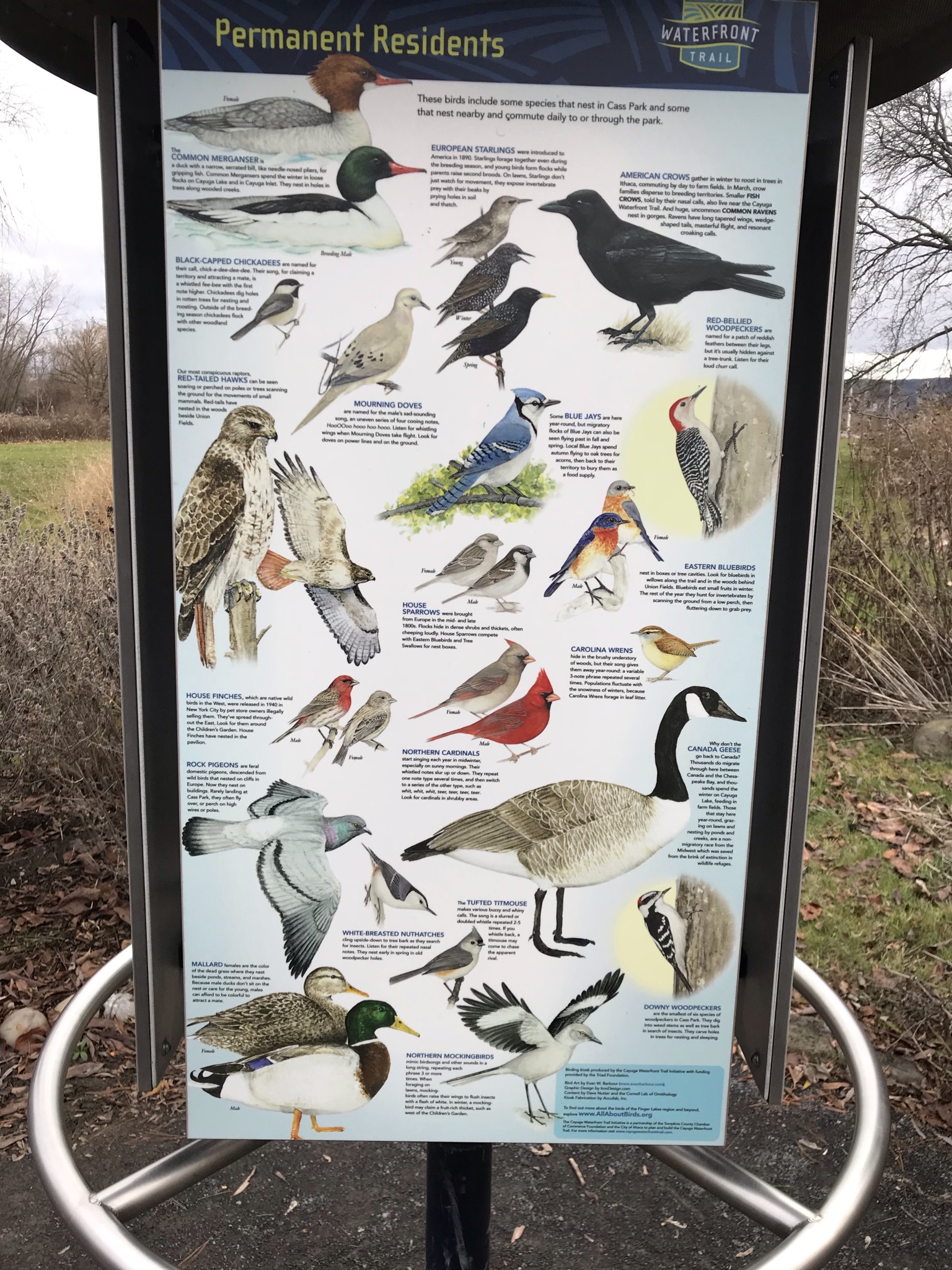
Here is a series of informative signs from Cass Park, just down the hill on the Cayuga Lake Inlet. Pictured are resident birds, most of them visited our backyard feeder.

Click me to find background information on our Weigela bush.

Copyright 2022 All Rights Reserved Michael Stephen Wills

Weigela Bountiful

an exceptional bloom for our backyard wonder

Click me to find background information on our Weigela bush.

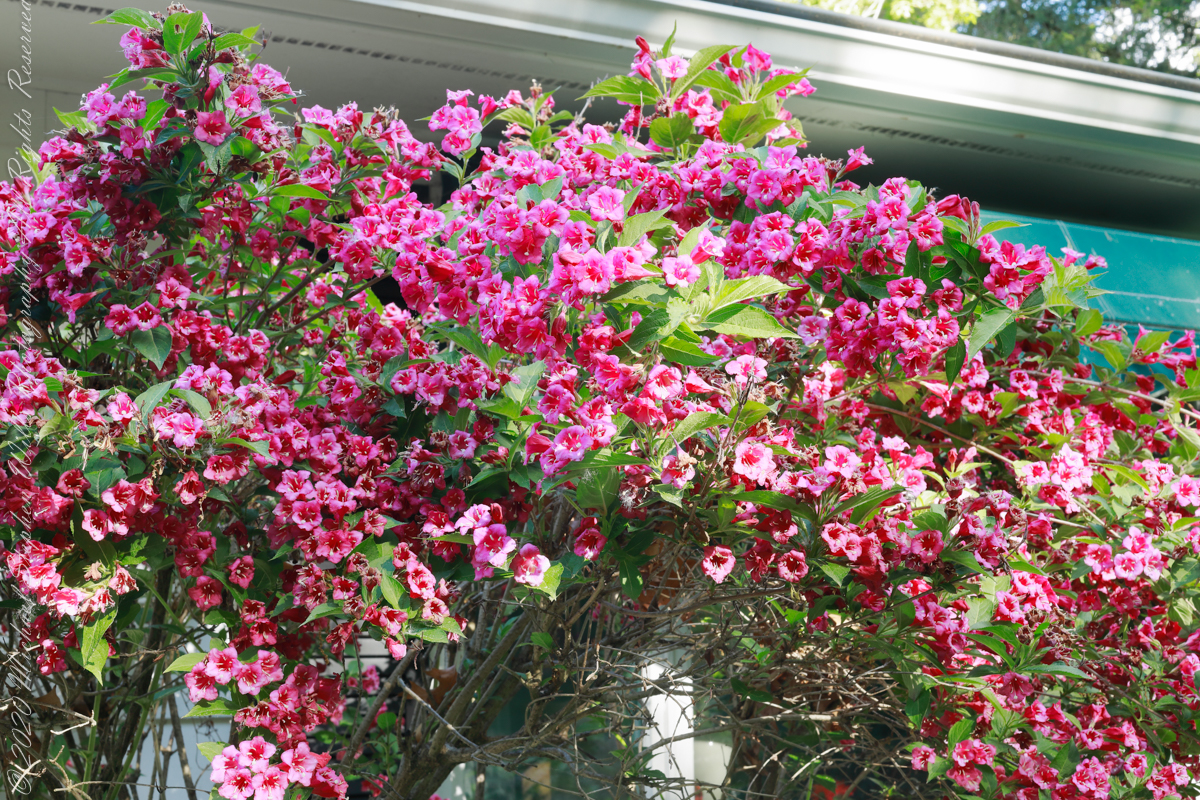
2022 is a breakout year for the Weigela bushes of our yard, each has bloomed literally for a month. The flowers are still fresh today.

Click either photograph to view a larger image on a new browser tab.

These photographs were taken with a Canon EOS 5D Mark IV dslr and the Canon EF 50mm f/1.2L USM lens with a “BeFree” Manfrotto tripod with ball head. f-stop was tamped down to the maximum, f16 for this lens. Exposures were taken in the evening with the sunlight filtered through our hemlock trees.

Copyright 2022 All Rights Reserved Michael Stephen Wills

Spring Fragrance

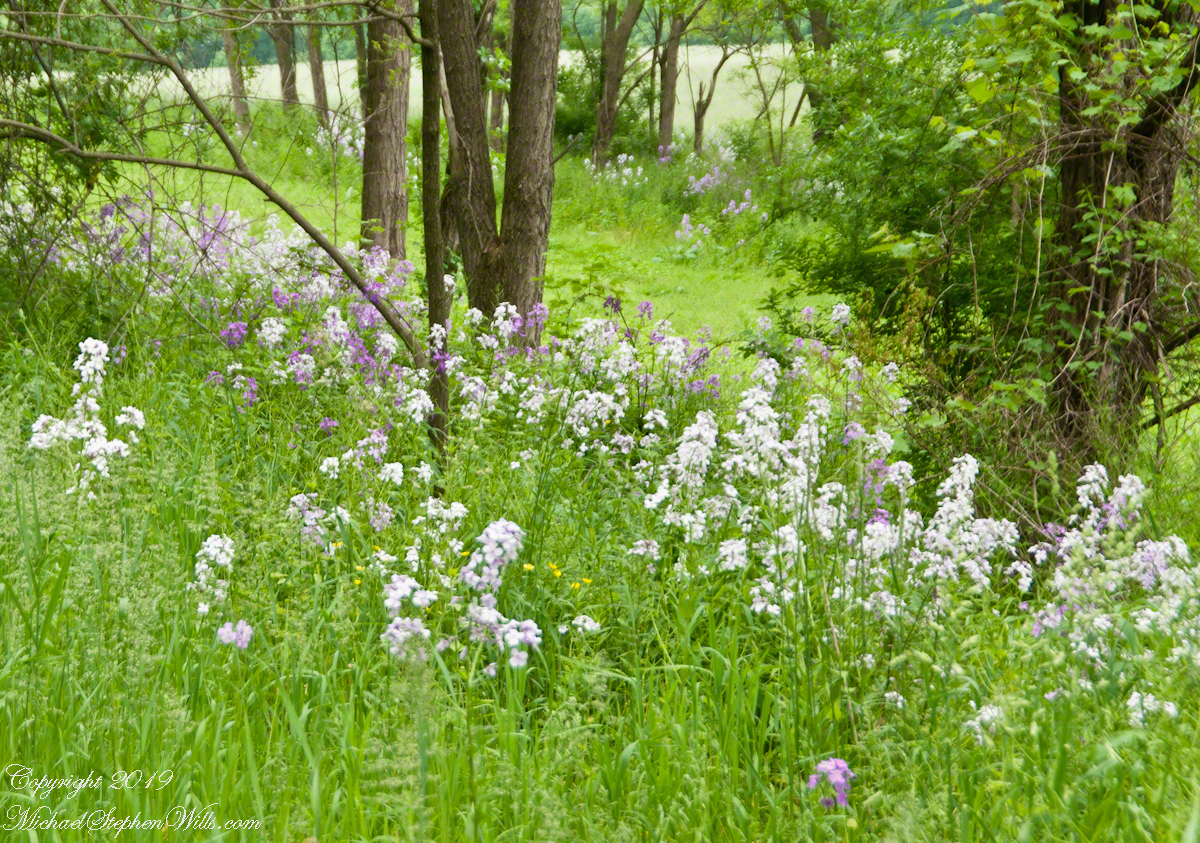
What Phlox fragrance brings to mind.

Working as a consulting dietitian, back in the 1980s, on a early June drive from Canisteo, New York on route 19 north of Mansfield, Pennsylvania, where the road goes through the Tioga-Hammond Lakes Recreation area there were miles of phlox growing on the east side of the road. The fragrance of phlox was pervasive with the window down and to this day I remember that time when phlox is in bloom as it was on June 5th, last week.

Click any photograph for a larger image.
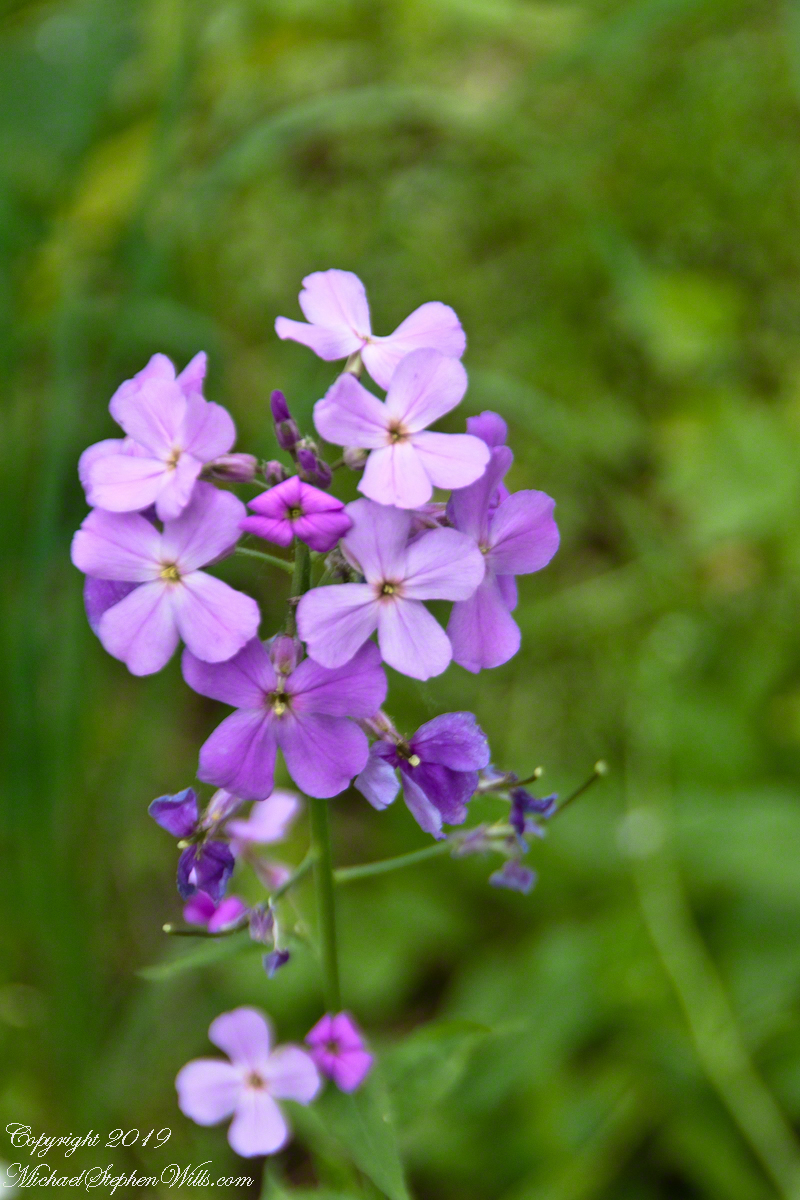
The species name (Phlox) divaricata means “with a spreading and straggling habit”.

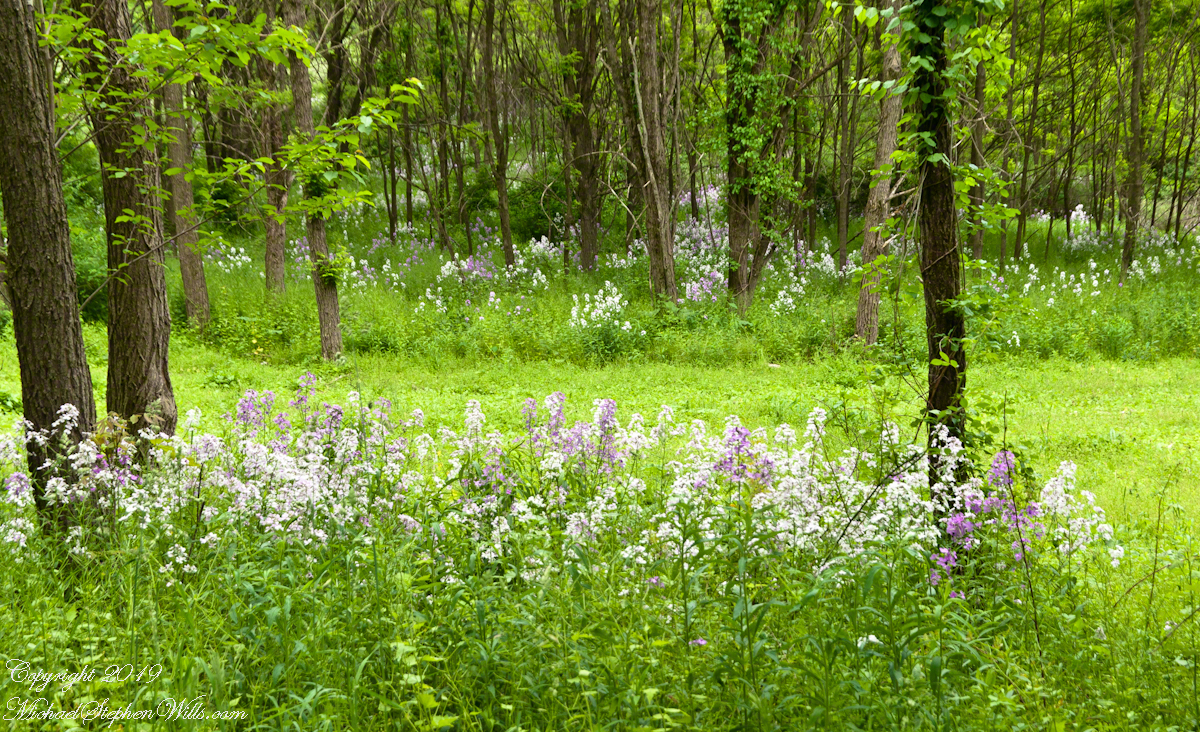
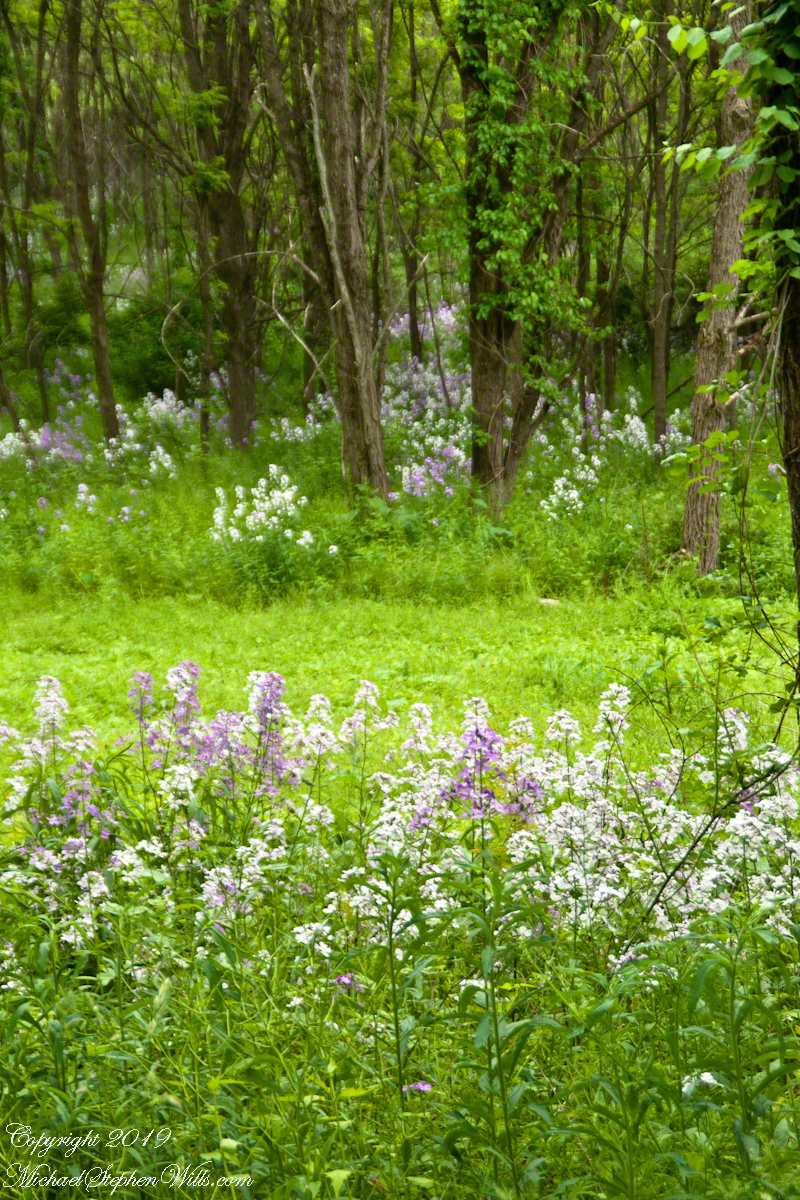
On the way to Treman State Park, to check out wildflowers, on an afternoon that threatened rain I came upon these stands of phlox, growing as it does under trees in damp soil on the east side of Colegrove Road. We’ve had plentiful rain this spring.

Phlox is abundant here

Looking it up in my reference book, “The Botanical Garden”, the plentiful number of species was daunting. (CLICK ME for more about this reference.) Bloom times spread across the calendar from May through August and into autumn. Species blooming in June were just not a good match.

The blooms seem to go on forever into the woods.

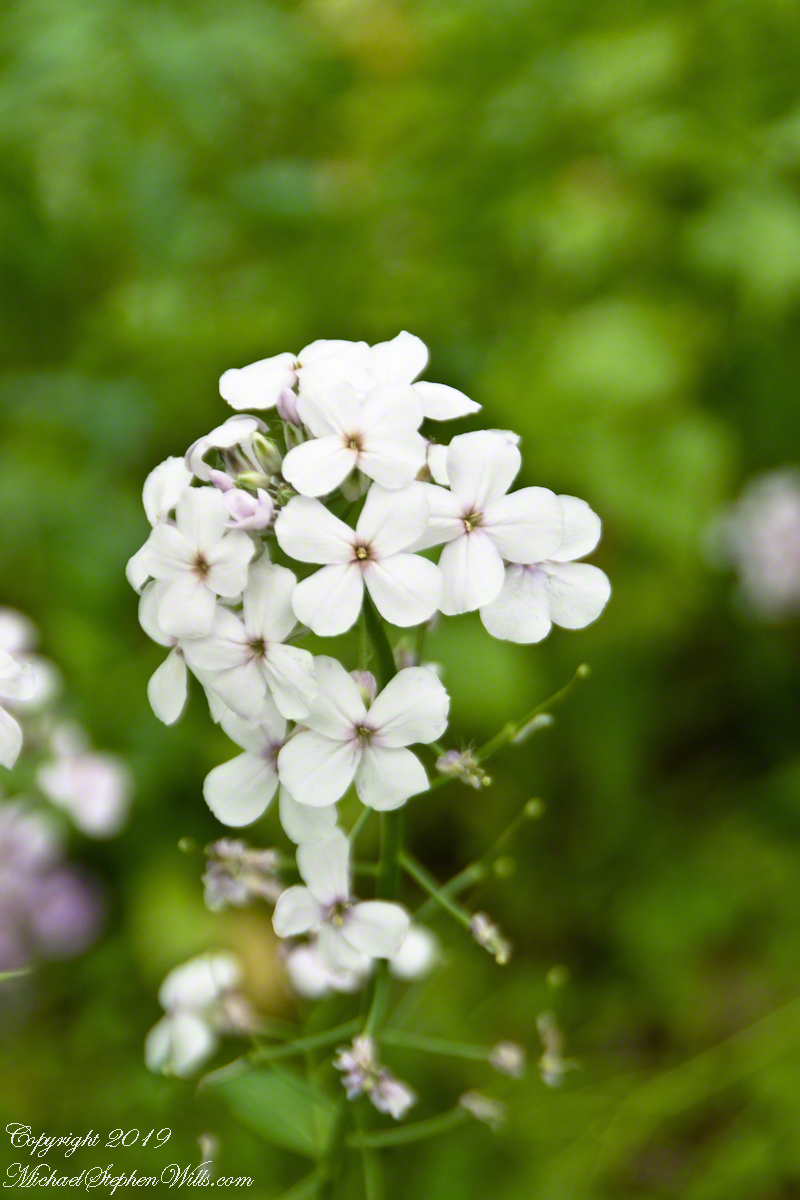
It was a surprising result, though in retrospect given the wide distribution and abundance of species, is to be expected. So I poked around the internet search engines, results from varied search strings, until Phlox divaricata popped up as a wildflower with a late May / early June bloom and growth habit and flowers matching these.

I captured macros of the two hues from roadside specimens.

Copyright 2019 All Rights Reserved Michael Stephen Wills

Flowering Bush Mystery

Request for Assistance

Here is a repost of a popular and interesting article. The answer is in comments. Thanks, readers!!

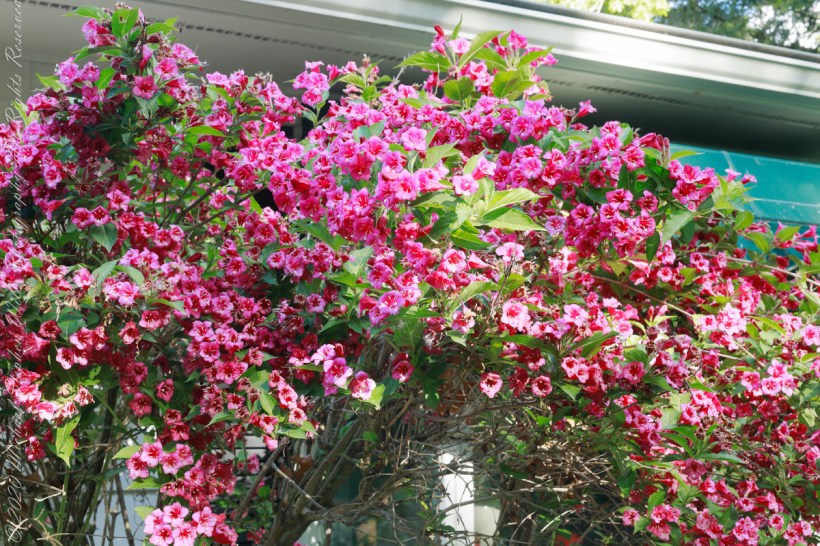
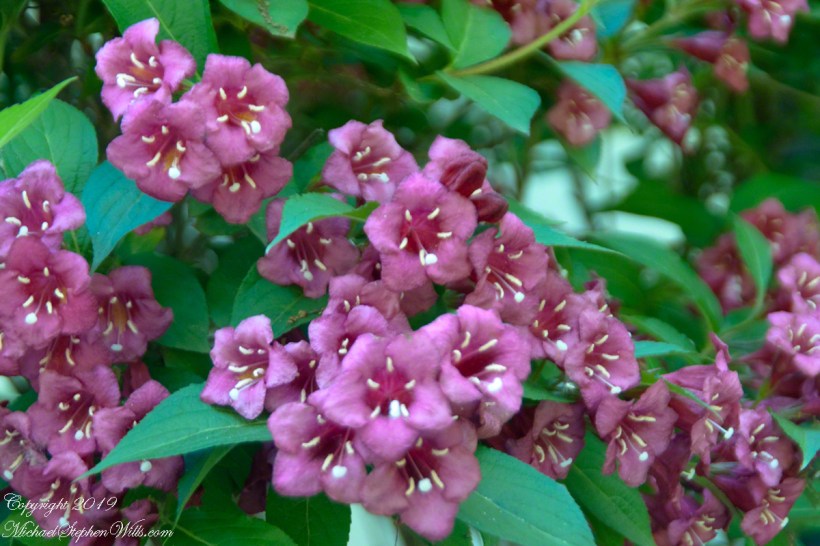
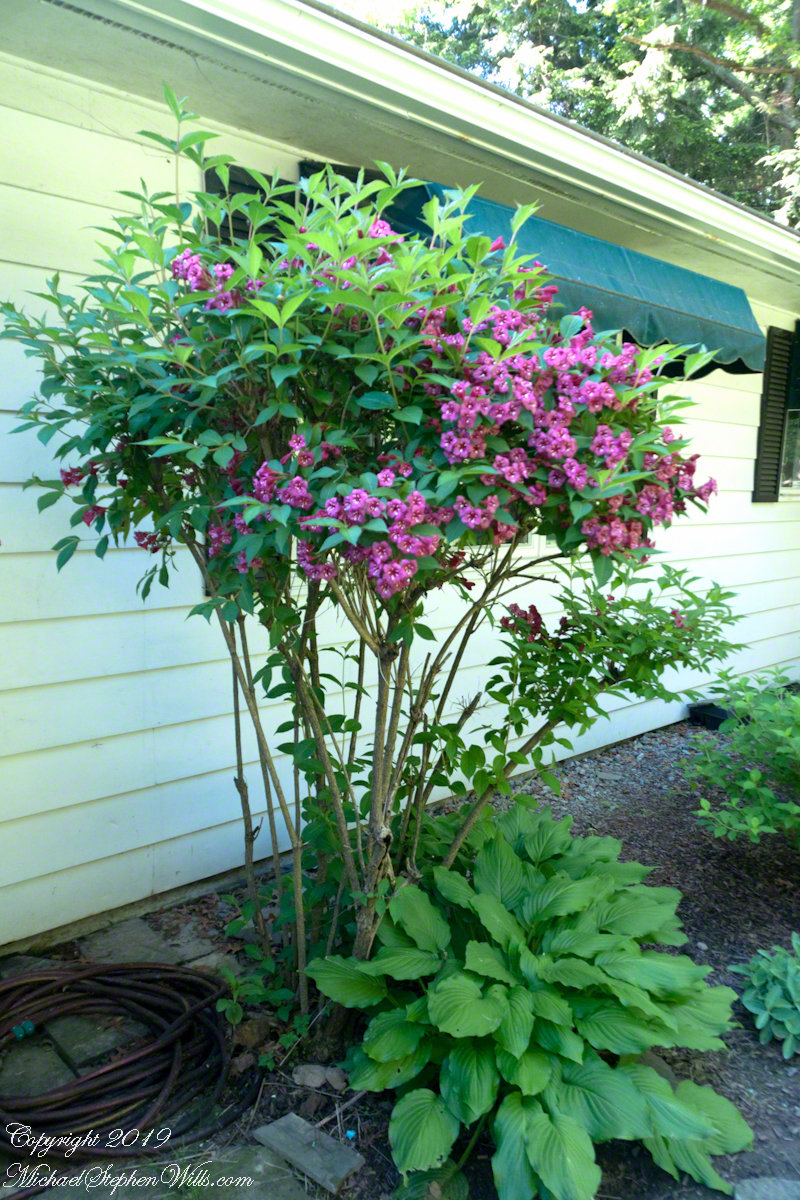
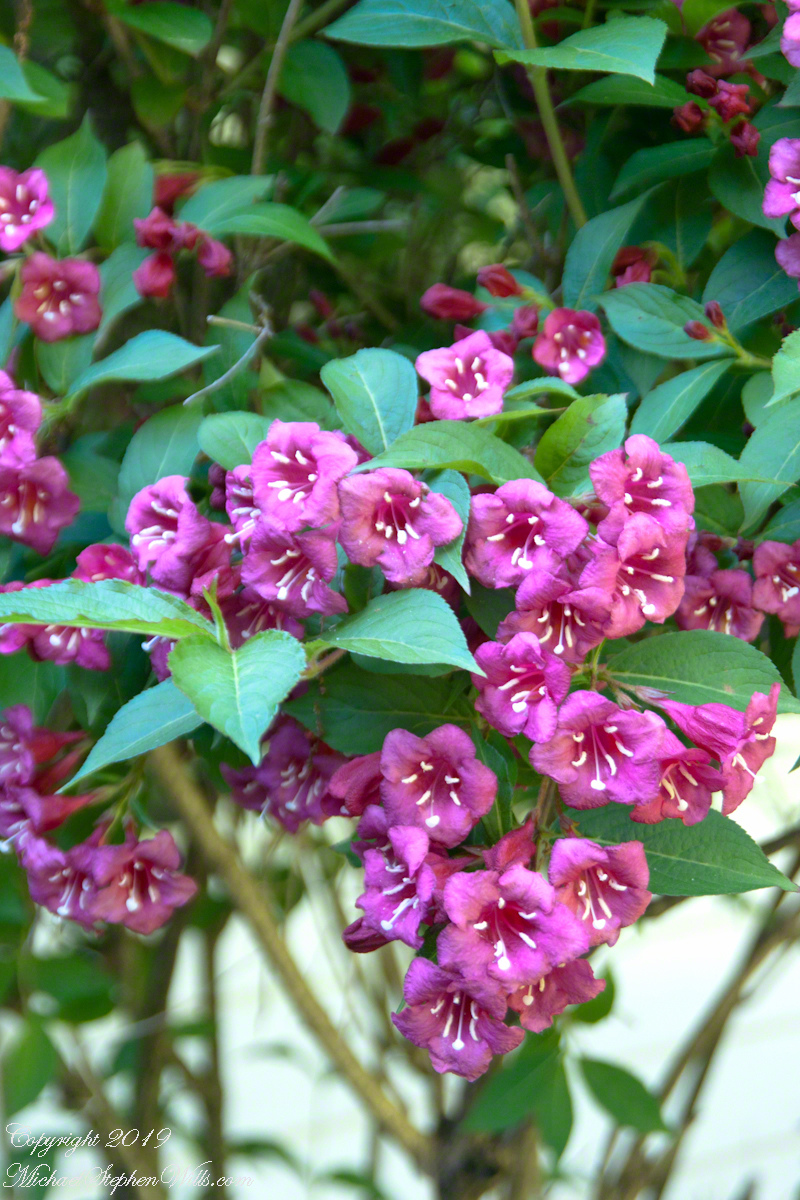
I need your help this morning. This year each of these bushes in front of our kitchen window has profuse blooms after Pam pruned and fertilized them early spring. I am coming up blank with identifying them.

The two bushes are over six feet tall and lose leaves each autumn (deciduous).

Here are some photographs. Can any readers identify these bushes? The common name or scientific will be much appreciated.

Thanks so much.


Copyright 2022 All Rights Reserved Michael Stephen Wills

Creeping up on 900 Readers….

….and a photographic gallery.

As of June 9, 881 is the count of subscribers to this blog, an interesting number. The individual numerals sum to a prime number, 17. I appreciate each and every “1” added together, you readers. Thank You.

Today, June 20, 5:44 pm Eastern Daylight Time, is the Summer Solstice for our Northern Hemisphere, the longest day of the year.

Here is a selection of images from past posts.

Click any photograph for a slide show. To do this from WordPress Reader, you need to first click the title of this post to open a new page.

Click Me for my Shutterstock Gallery

Copyright 2019 All Rights Reserved Michael Stephen Wills

Creeping up on 800 Readers….

….or 800 creeping up on me.

797 is the count of subscribers to this blog, an interesting number. The individual numerals sum to a prime number, 23. The first and last can be swapped to yield the same number. I appreciate each and every “1” added together, you readers. Thank You.

Here is a selection of images from post posts.

Click any photograph for a slide show. To do this from WordPress Reader, you need to first click the title of this post to open a new page.

Copyright 2019 All Rights Reserved Michael Stephen Wills