Stones That Traveled: Glacial Erratics, Deep Time, and the Stories They Leave Behind

Glacial erratics are immigrant stones—carried south by ice, dropped without explanation, and left behind to challenge our sense of permanence, place, and deep time.

There are rocks that merely sit where gravity has placed them, and then there are rocks that arrive with stories already embedded—foreign syllables carried south on ice, dropped without explanation, and left for us to puzzle over. Glacial erratics belong to the second category. They are migrants with no passports, refugees of deep time, whose presence quietly contradicts the landscape that hosts them.

Long before anyone reached for a hand lens or an ice-flow diagram, people answered such contradictions with imagination. In Ireland, a boulder perched just so on a mountain side is not a geologic problem but a resting place. Leprechauns, we are told, favor such stones—high enough to observe human intrusion, solid enough to outlast it. Skepticism, as folklore reminds us, is not always a stable position. Kevin Woods—better known as McCoillte—found that out the hard way when doubt collided with experience on the slopes of Slieve Foye. What followed was not merely a conversion story, but an act of modern mythmaking: folklore translated into bureaucracy, imagination petitioning regulation, and “The Last Leprechauns” entering the unlikely language of conservation. Stone, story, and belief hardened together into something oddly durable.

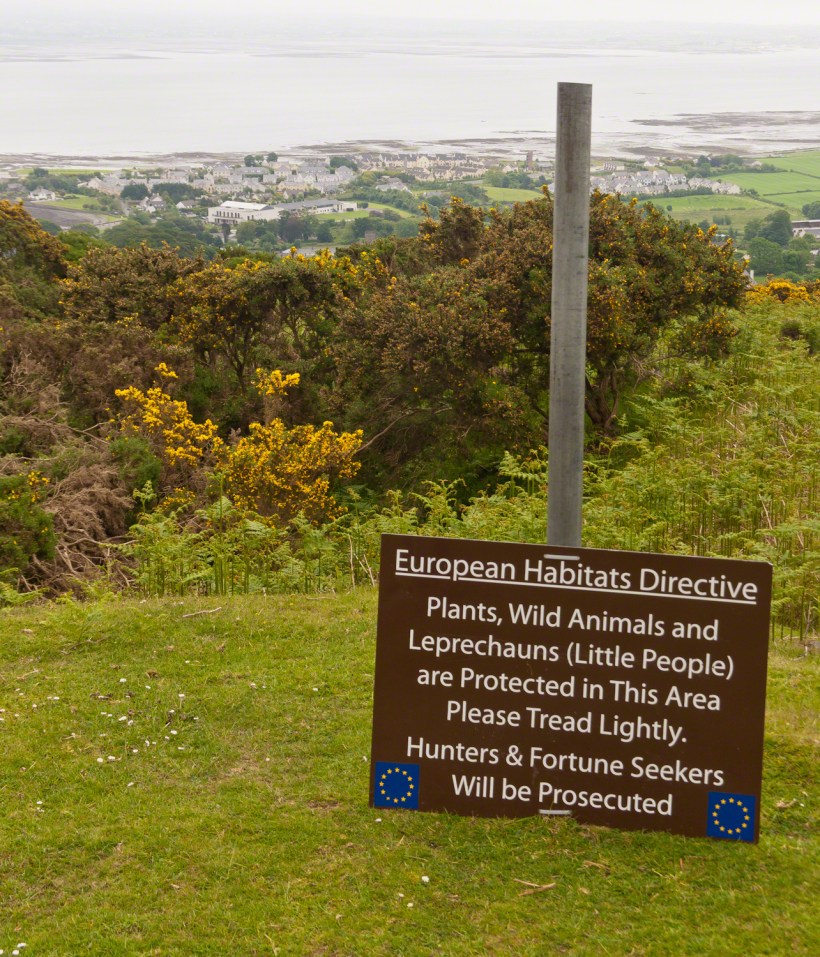
Rocks such as this are a favorite perch for leprechauns to rest and contemplate the works of man who have invaded their world. Inhabitants of Carlingford who wander Slieve Foye have come upon them often enough, their stories and certitude in the existence of the Little People are resistant to manifold doubters with their reasons and arguments. Kevin Woods, aka McCoillte, was a doubter until worked on a stone wall on property he owned on Ghan Road, Carlingford. His belief did not arise on the discovery of the leather purse, covered with ages of dust and lime, nor with the gold coins inside. McCoillte pocketed the coins for luck. As luck would have it, McCoillte loved to walk on Slieve Foye. It was on one such walk he and his dog encountered Little People who paralyzed them to escape. His unexplained absence led to troubles with the wife. This experience brought McCoillte around to enough of a belief that he, with lots of help, succeeded in petitioning the E.U. European Habitats directive to recognize leprechauns a protected species. A reserve was establish on Slieve Foye to protect the “Last Leprechauns” and you can google this phrase to learn more about McCoillte’s stories.

Back in the Finger Lakes, we tend to use a different grammar when confronted by an out-of-place rock. We name it, classify it, and trace its lineage northward. Erratics scattered across Tompkins County are geological sentences that begin somewhere else entirely. The bedrock beneath Ithaca—Devonian shale and sandstone—cannot account for crystalline intruders left behind like forgotten punctuation marks. These stones speak of ice sheets thick enough to erase valleys and decisive enough to transport mountains in fragments.

Some of those fragments have been domesticated. Cornell, for example, has never been shy about rearranging its stones. An unremarked erratic along the Allen Trail may once have been shrugged off as inconvenient rubble, while another—dragged from the Sixmile Creek valley—was carved into a seat and made eloquent. The Tarr memorial boulder, resting near McGraw Hall, transforms erratic stone into deliberate monument. It invites rest, contemplation, and perhaps gratitude for those who taught us how to read landscapes written by glaciers.
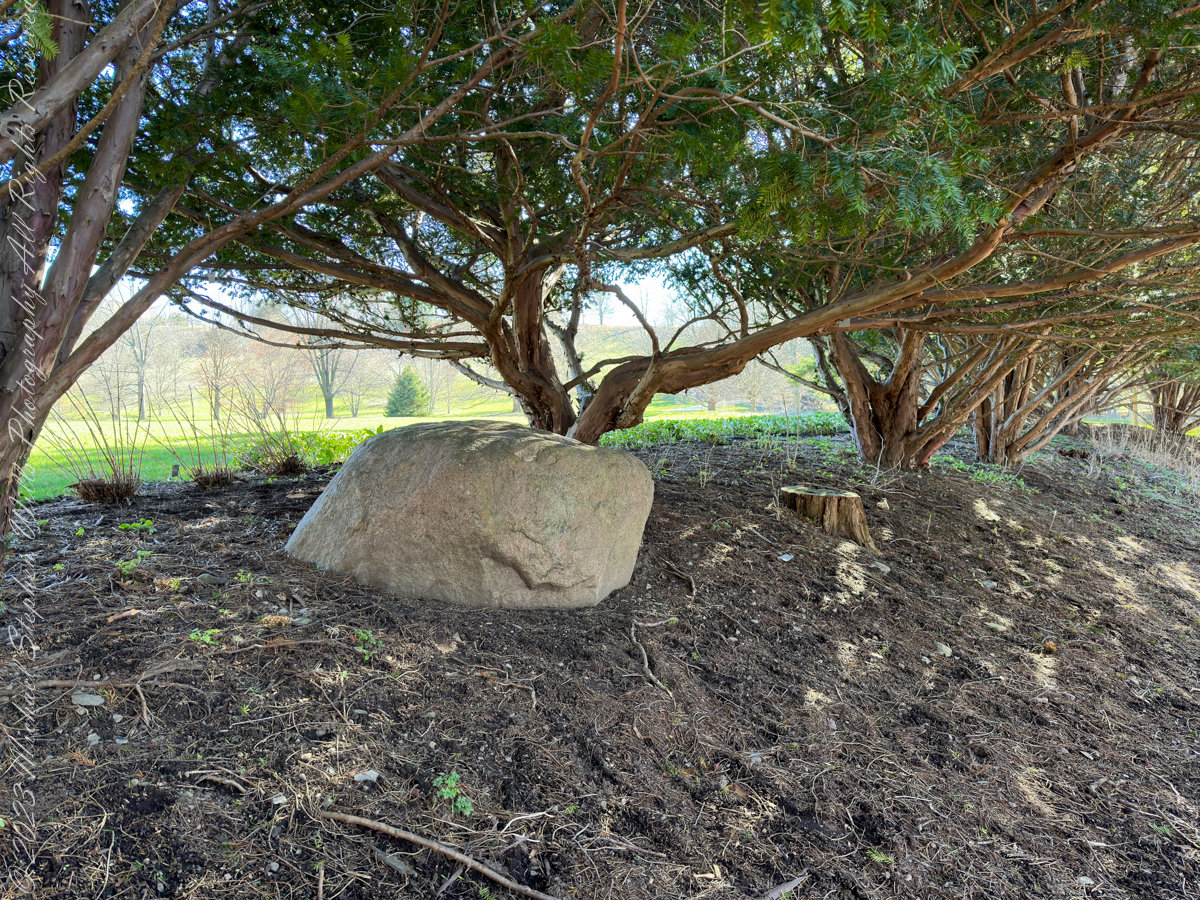
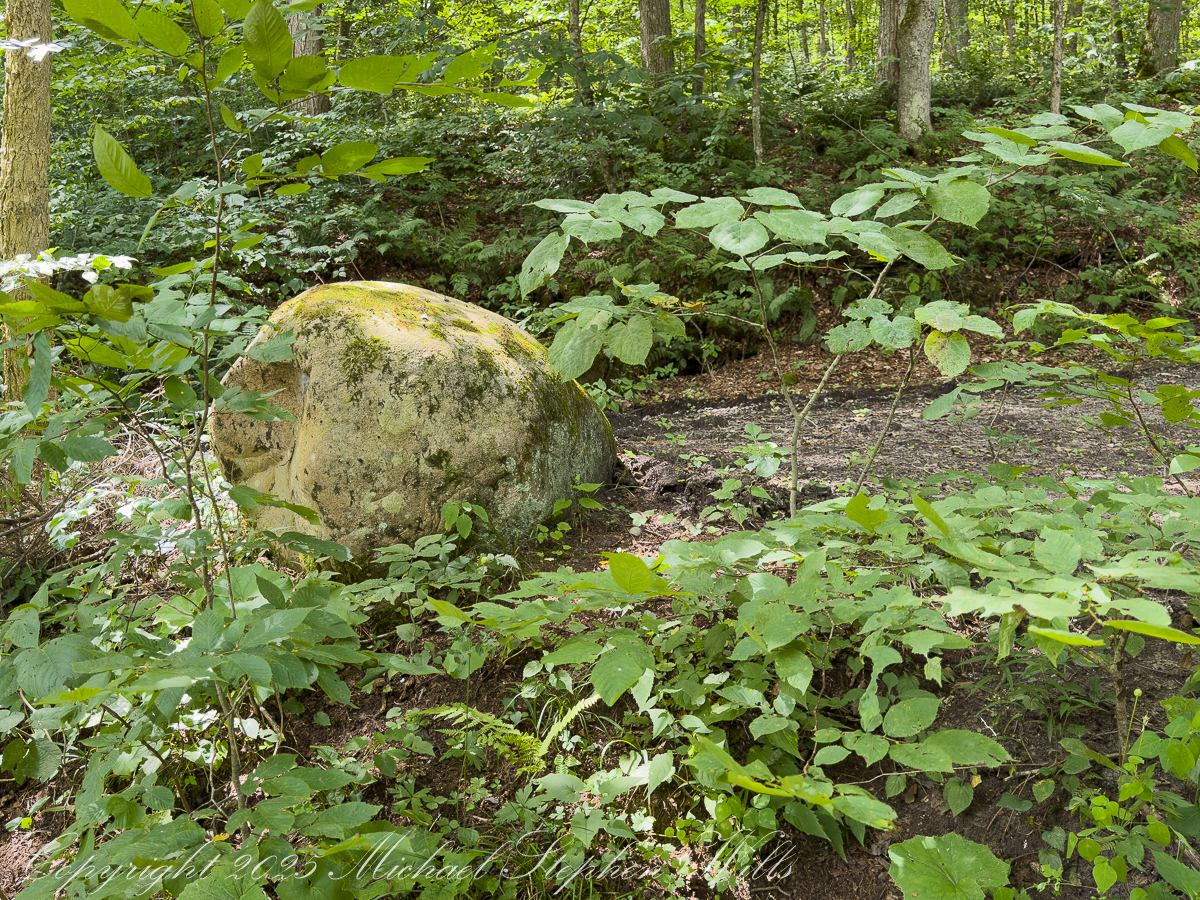
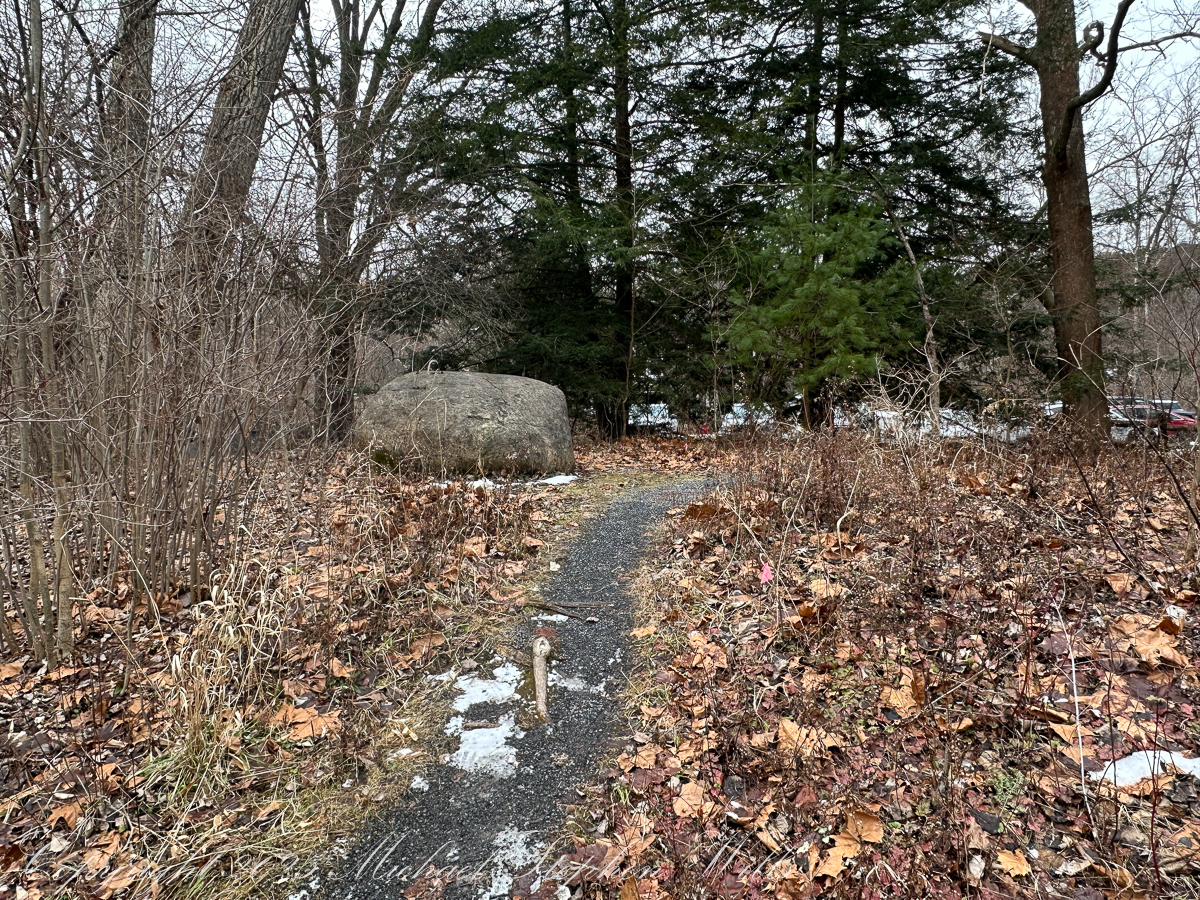
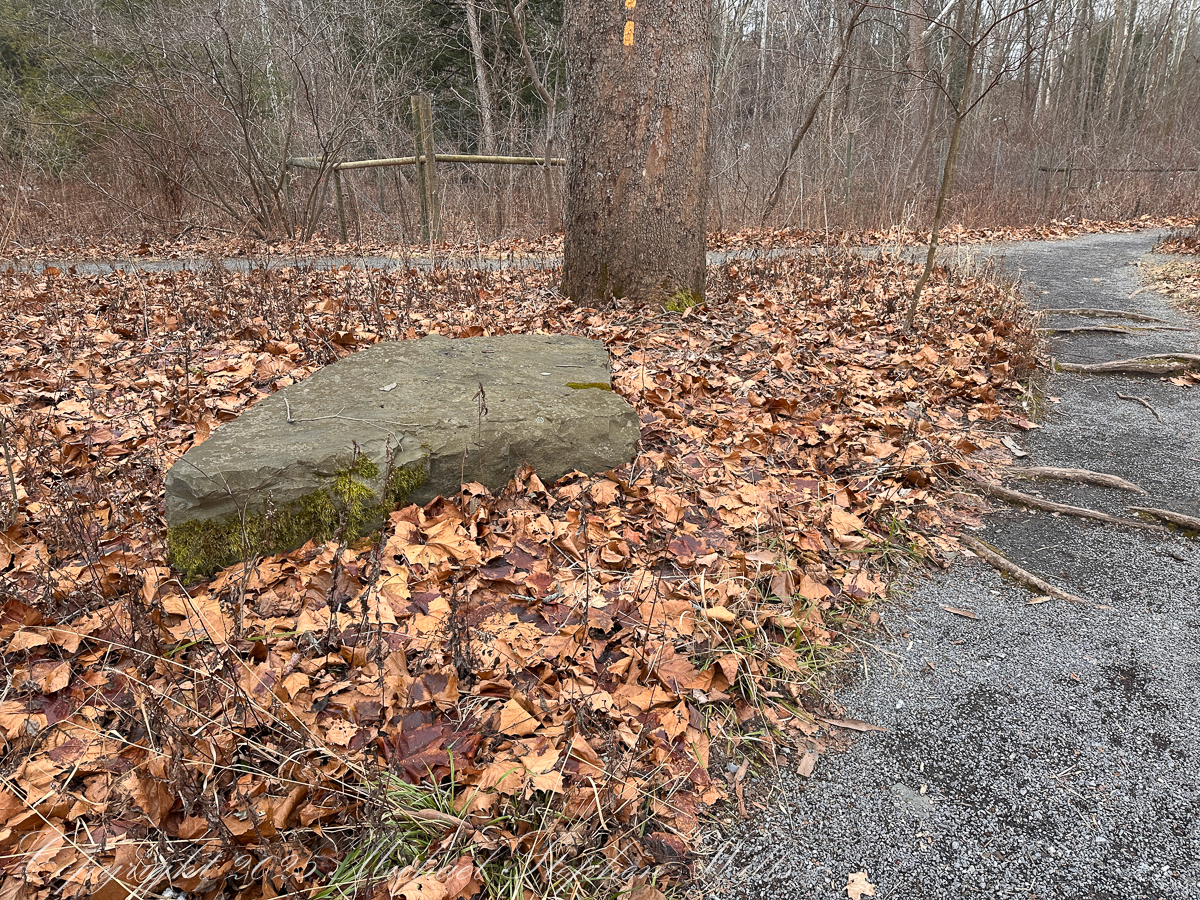
We find boulders of crystalline rock, commonly derived from Adirondack sources, left behind on the surface of ablation moraine, in the Finger Lakes Region. Cornell finds some and move them, maybe the case for this unremarked erratic found along the Allen Trail of FR Newman Arboretum. Another enormous erratic, brought in from the Sixmile Creek valley, was carved into a seat as a memorial to Professor R.S. Tarr who deciphered much of the glacial history of the Finger Lakes Region. Find it at the southwest corner of McCraw Hall on the Cornell University Campus. Reference: “The Finger Lakes Region: Its Origin and Nature,” O.D. von Engeln, Cornell University Press, 1961 page 106

Glacial Erratic, Fillmore Glen

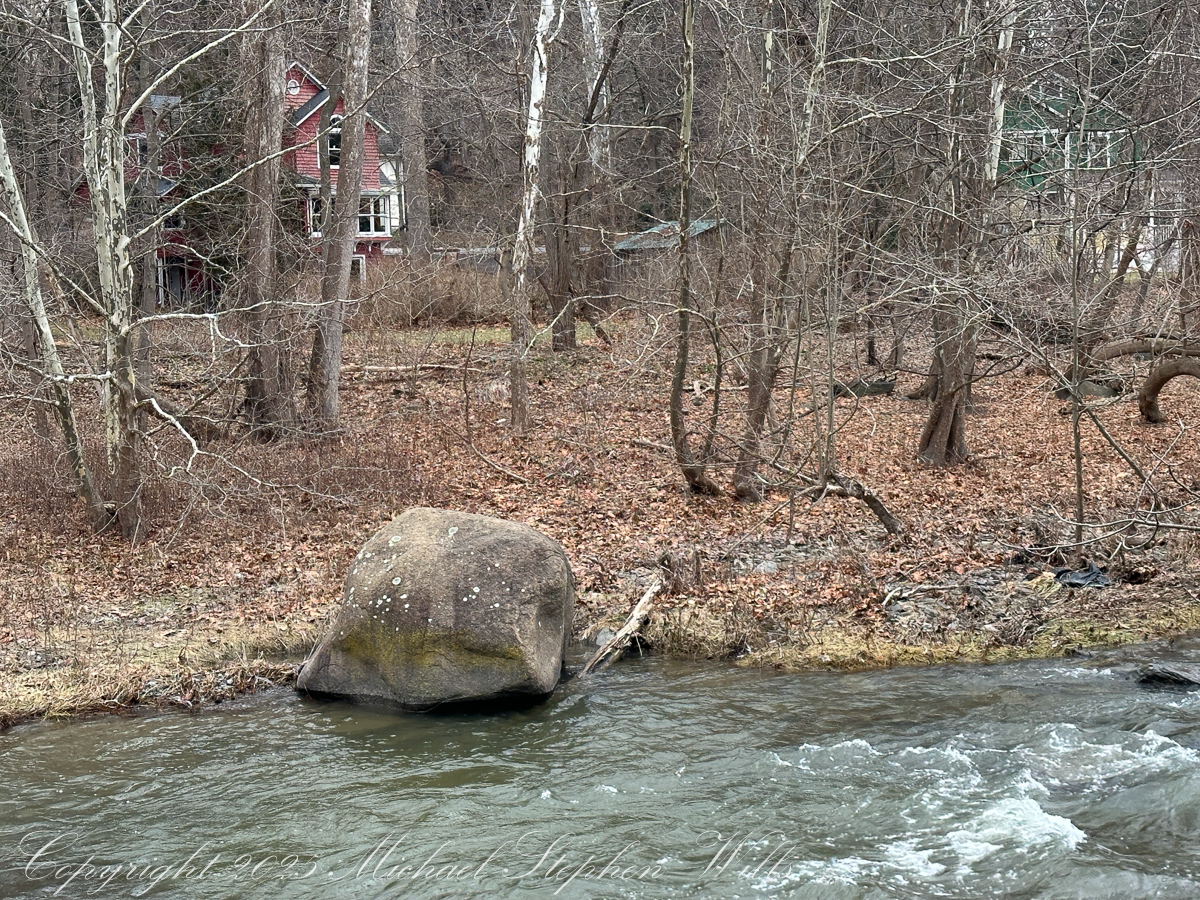
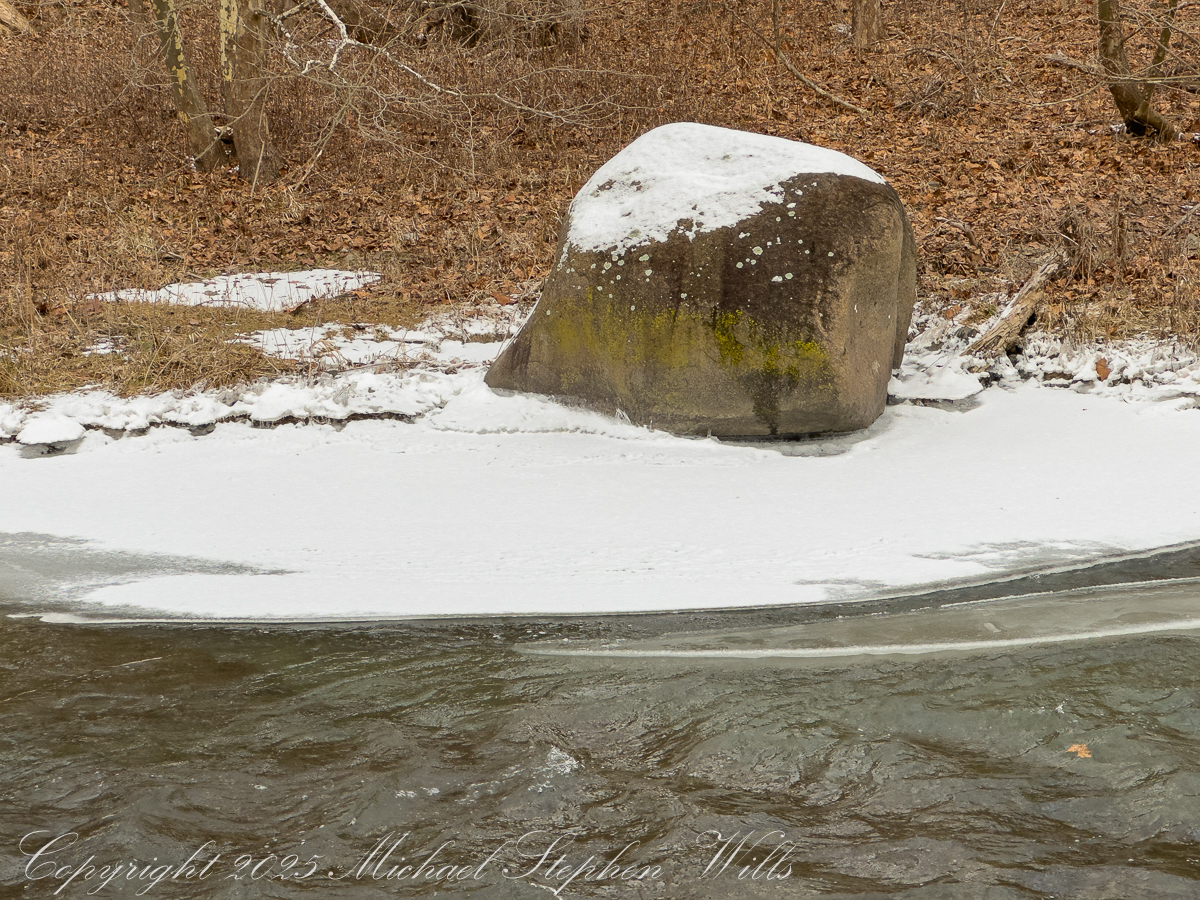
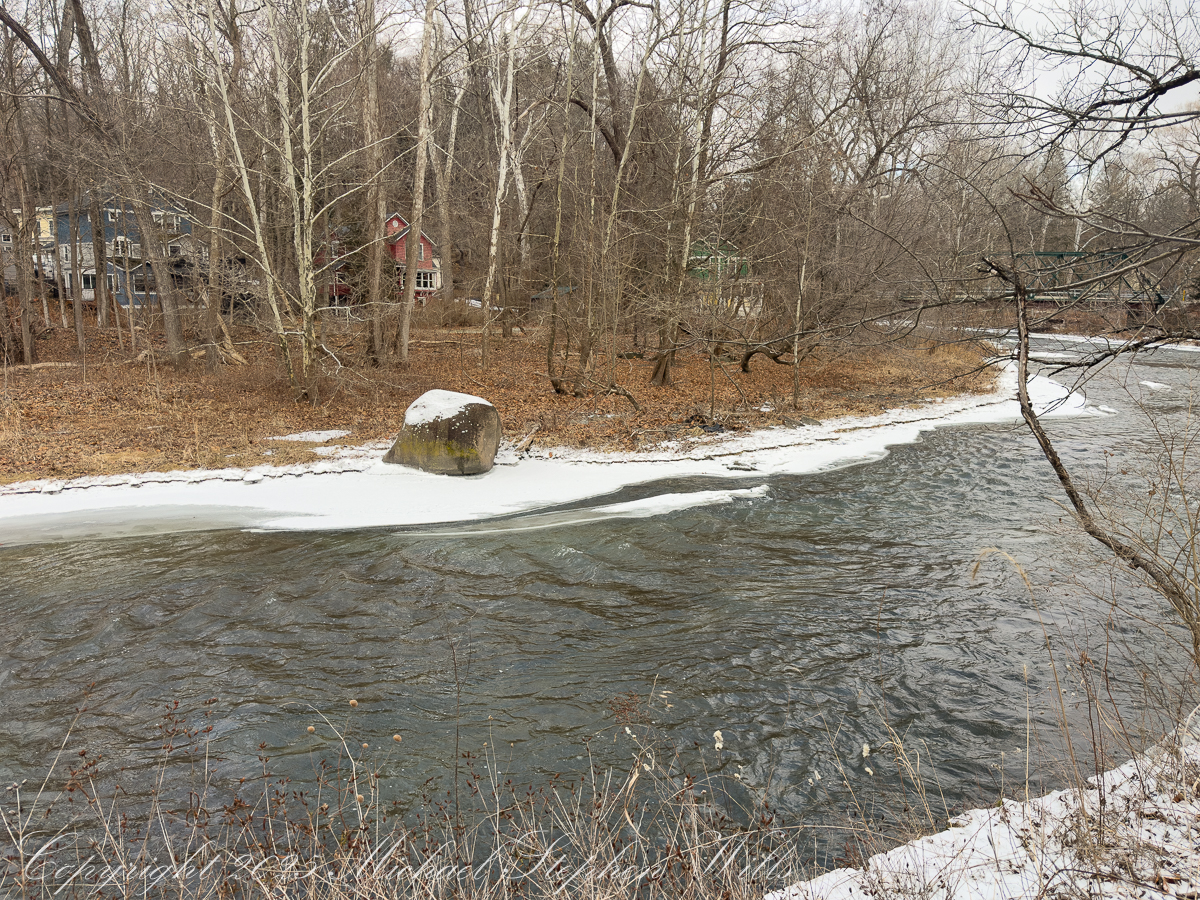
Elsewhere, erratics remain defiantly themselves. In winter, one along Fall Creek alternates between anonymity and revelation, depending on whether snow smooths its surface or retreats to expose lichen constellations. Bridges pass overhead, traffic flows, semesters turn over, yet the rock remains unimpressed. It has already endured pressure sufficient to rearrange its crystals; a passing academic calendar is not likely to trouble it.
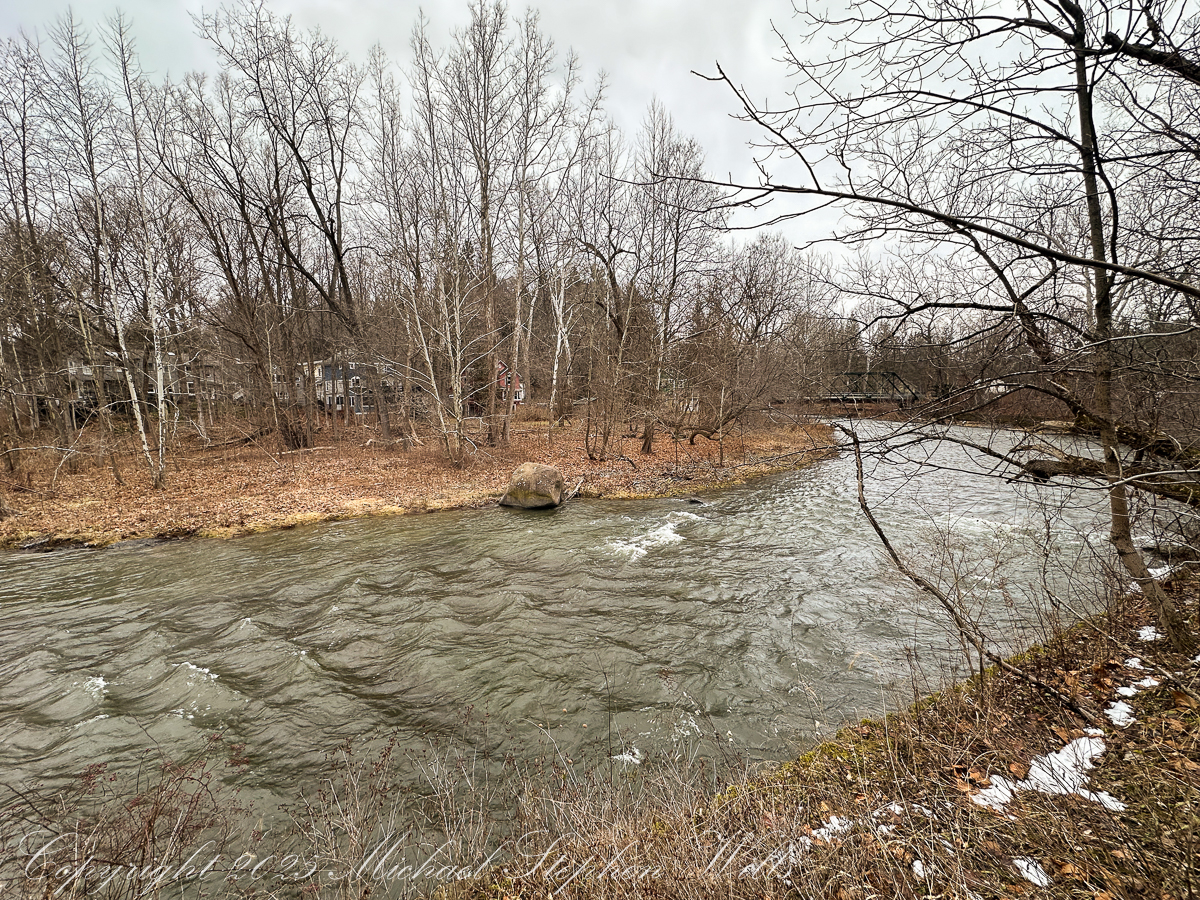
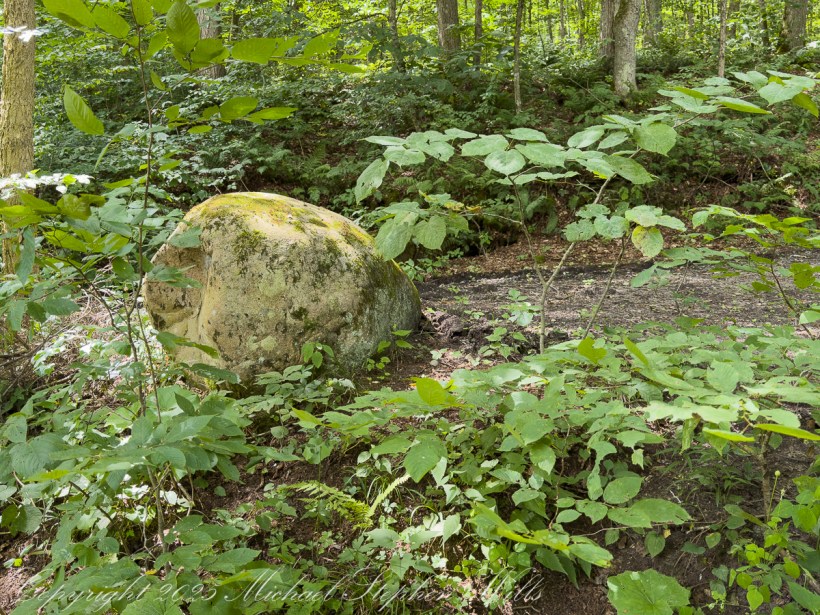
This boulder, a glacial erratic, was found near Fall Creek and the Cornell Botanic Gardens Horticulture Building. Cornell University, Ithaca, Tompkins County, New York State

This rock, a glacial erratic, was found near Fall Creek and the Cornell Botanic Gardens Horticulture Building. Cornell University, Ithaca, Tompkins County, New York State

Then there are the stones that confront us most directly—those we stumble upon in fields, pulled from soil by plow or frost, demanding explanation. A white, iron-stained marble boulder in a Tompkins County field is not subtle about its foreignness. It does not belong to the local vocabulary of shale and sandstone. Its pale surface, crystalline texture, and mineral scars point insistently north, toward the Grenville terrane of the Adirondack Lowlands. The Balmat–Edwards–Gouverneur marble belt offers the most persuasive origin story: metamorphosed carbonate rock carried south by Laurentide ice, released when climate and physics finally lost patience with one another.
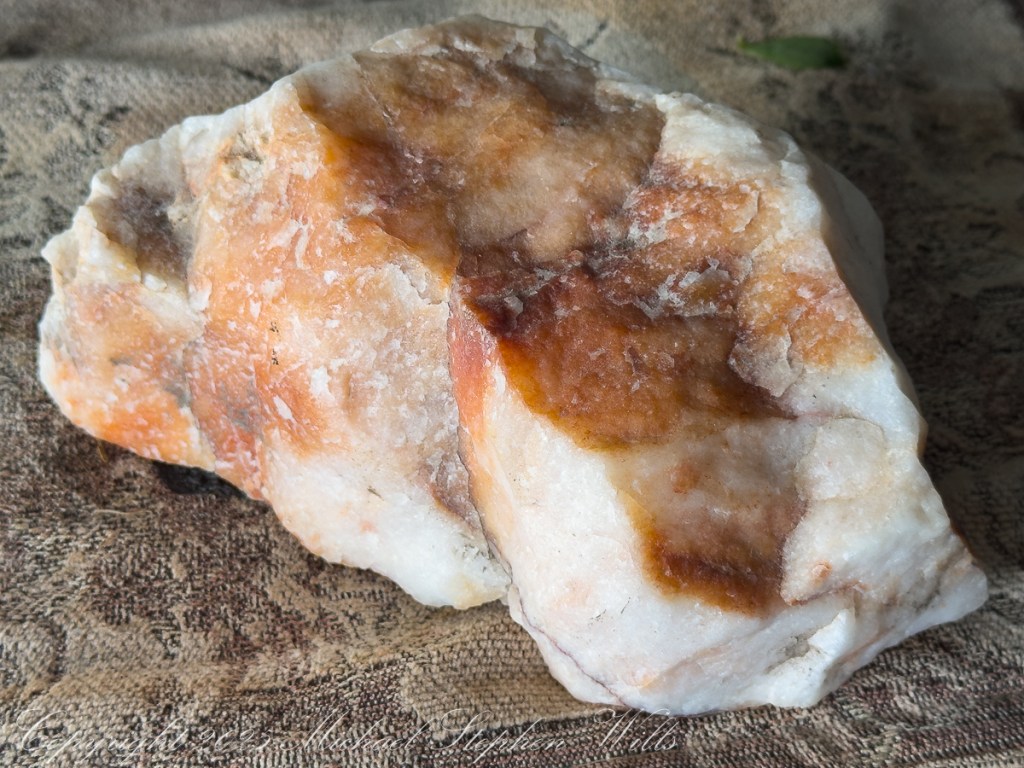
I found this white marble erratic in a Tompkins County field. The highest-probability source is Grenville marble from the NW Adirondack Lowlands / St. Lawrence County (Gouverneur/Balmat–Edwards marble belt), delivered by southward-flowing Laurentide ice. I say the most probable source is metamorphosed carbonate (marble) from the Grenville terrane to the north—especially the northwest Adirondack Lowlands / St. Lawrence County marble belt (the “Gouverneur Marble” and related Grenville marbles), transported south by the last Laurentide ice sheet. Why that’s the best bet: Ice-flow geometry favors a northern source. In the Finger Lakes, glacial ice advanced with a flow direction that was very close to due south, guided by the north–south bedrock valleys. Tompkins County erratics are “exotic” imports. Local bedrock around Ithaca/Tompkins is Devonian shale/sandstone, but the region contains many nonlocal (“exotic”) glacial erratics carried in from much farther north (including southern Canada and beyond). Marble isn’t local to the Ithaca area, but it is abundant in the NW Adirondack Lowlands. The Balmat–Edwards/Gouverneur area in St. Lawrence County is a classic Grenville Lowlands district with marble belts (the same province that yields cream/white building marble around Gouverneur).

What makes this particular erratic compelling is not just its provenance, but the improbability of its journey. Ice moved with purpose here, flowing south along bedrock valleys like Fall Creek and Cayuga troughs, turning the Finger Lakes region into a conveyor belt for distant geology. When the ice melted, it left behind evidence that refuses to blend in. Erratics are geological truth-tellers. They announce that this place was once unrecognizable, that what seems permanent is merely provisional.

Perhaps that is why folklore clings so naturally to stone. Whether leprechauns or Laurentide ice are credited, erratics insist on a larger frame of reference. They ask us to imagine landscapes in motion and beliefs under revision. A boulder can be a seat, a marker, a perch, or a puzzle—but never merely background. It waits, quietly confident, for us to catch up to its story.

Enter your email to receive notification of future postings. I will not sell or share your email address.

Ireland on the Mind at Christmas

Irish Christmas Spirit

A previous post, “Christmas Tableau”, provides some context.  The photographs from that set were accepted by Getty for stock images.  Click the link to take a look:  “Cozy Snowmen” on Getty Stock.

This is part of my project to document our Christmas memories through photography.  Here we explore the Irish and Ireland themes of our decorated Christmas Tree.

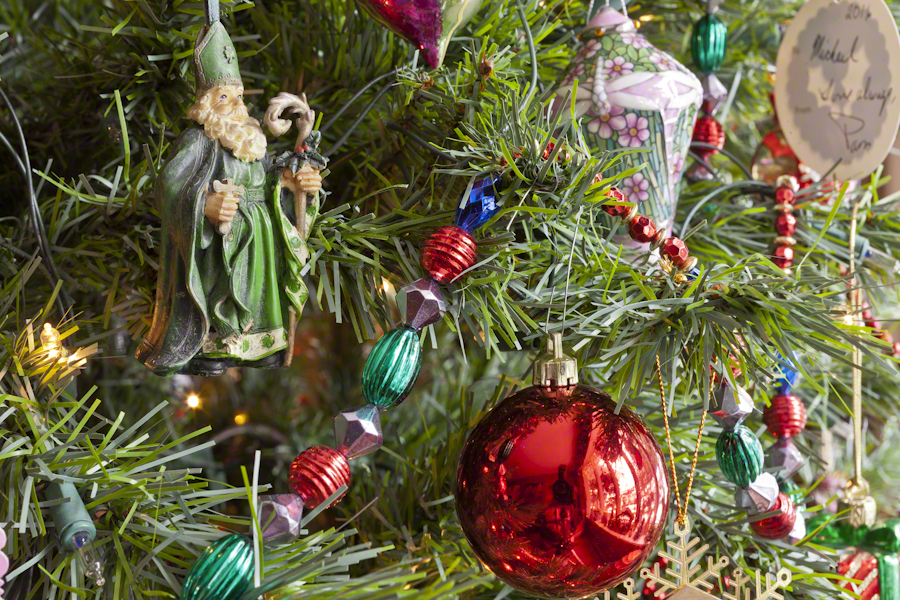
Where would we be without Saint Patrick?  He was a force, to be sure.  A favorite story,  is the landing of his return to the island 432 AD.  The tides on the eastern coast of the Irish Sea can be strong.  His plan was to sail up to coast further north than what we call today Strangford Lough.  On passing this inlet the boat was swept into the lough tidal narrows.  Circumstances called for a landing, rather than wait for the tide.  Patrick came ashore where the Slaney River enter the lough and “quickly converted” the local chieftan, Dichu, who provided a barn for holding services.  The name of the town “Saul” in Irish is Sabhall Phádraig, translated as “Patrick’s Barn.”

IrelandChristmas-1

In this posting I’ll go lighter on descriptions of technique.  Leave it to say I held to the Canon fixed lens EF 50mm f1.2L USM throughout.  Some, like the photograph of Saint Patrick, used a tripod.  Others, like the latter two of the following Irish Themed Cross set were handheld.  Generally a flash was used to supplement ambient sunlight from a large north-facing bay window.

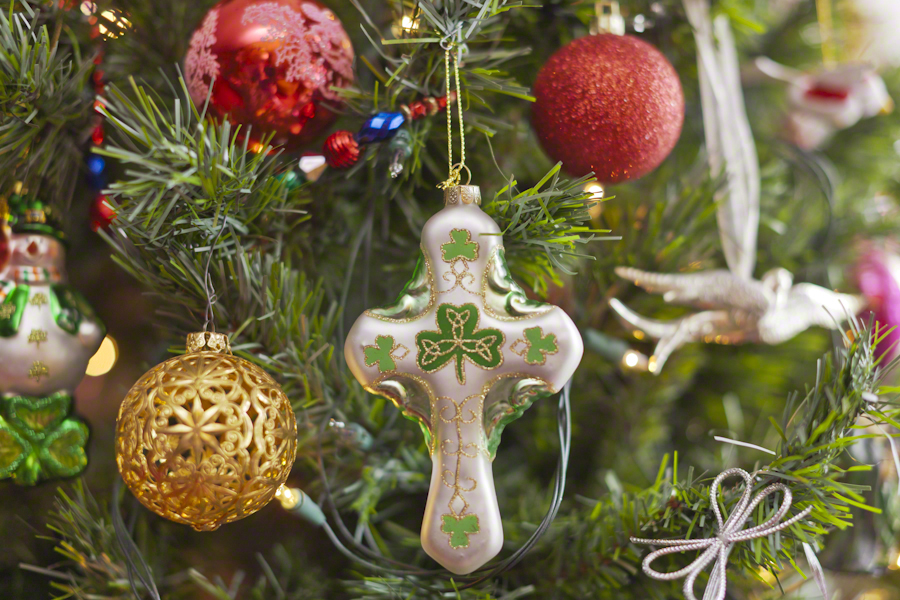
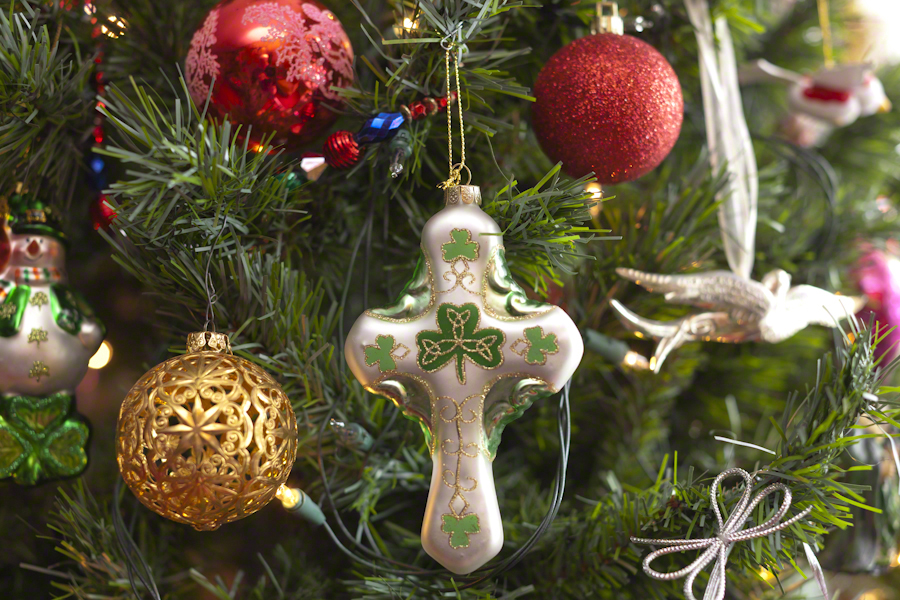
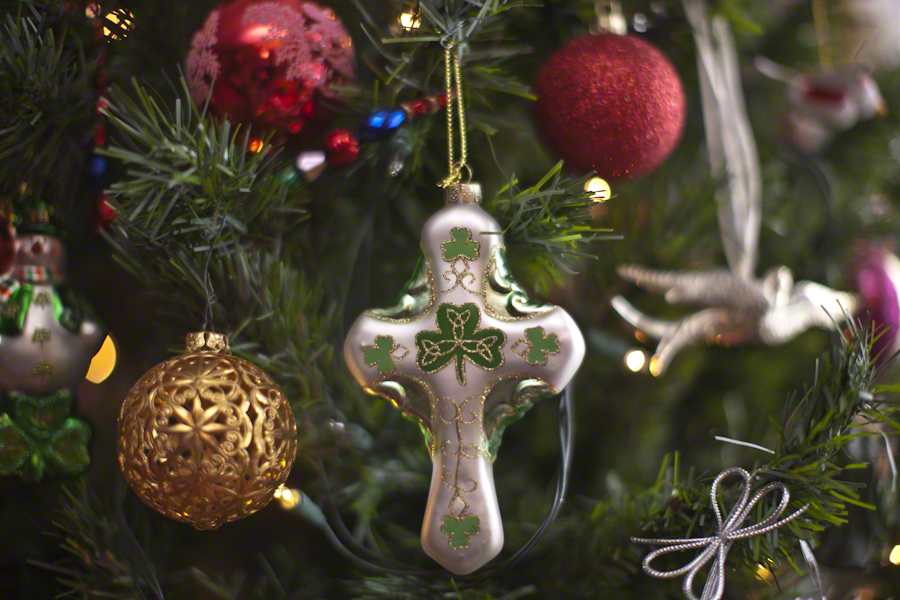
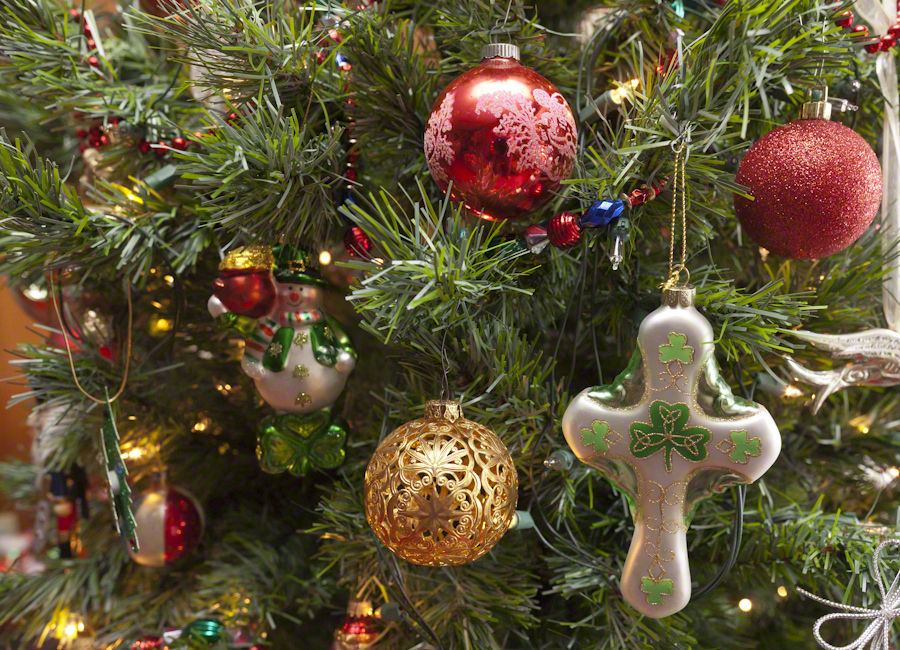
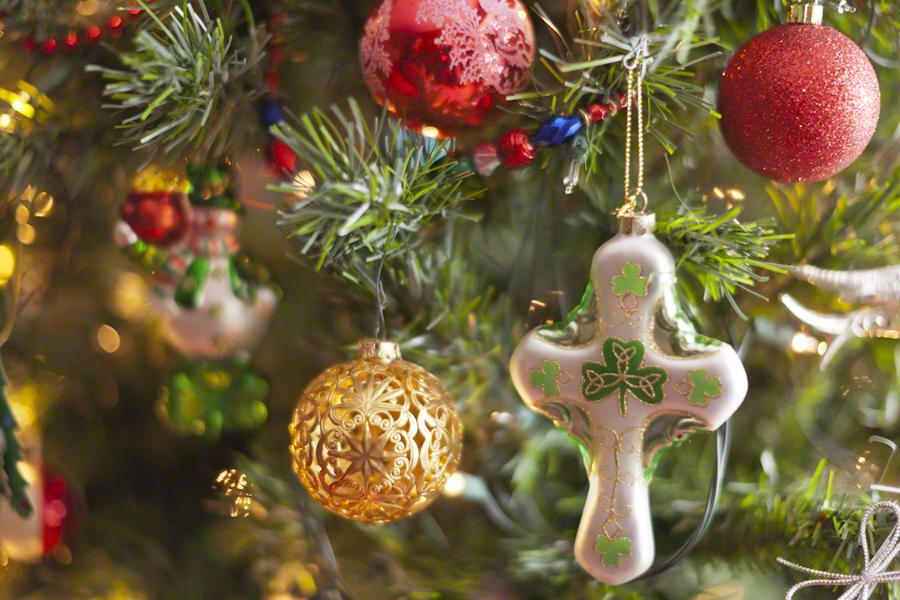
Here the “celtic” cross is converted to an Irish theme through a substitution of a shamrock with golden decoration inspired by pagan neolithic petroglyphs for the nimbus (circle) intersecting the central intersection of arms and stem.

For the first three I played with aperture, taking advantage of the stability of a tripod.  The final two of the set are handheld.

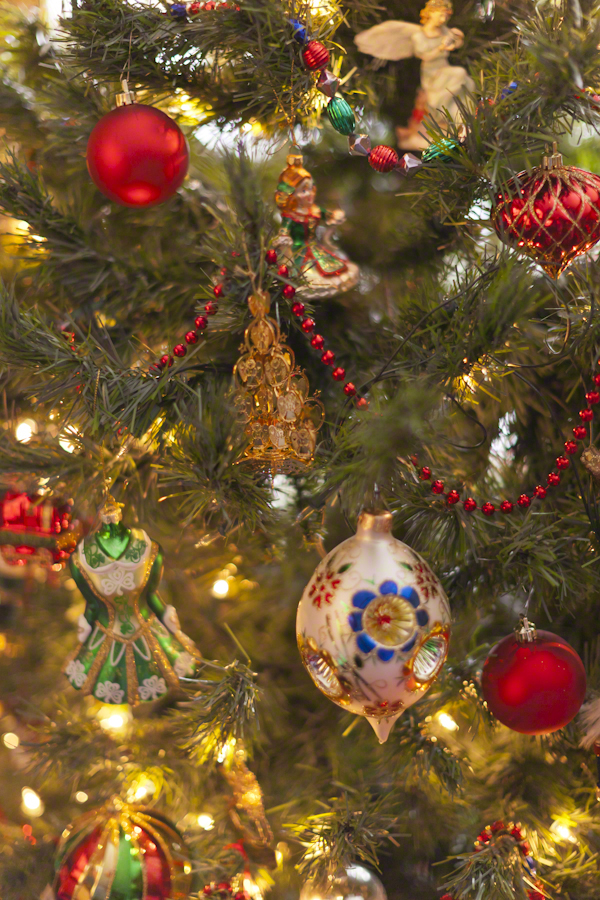
Note the fanciful leprechaun snowman with pot o’ gold, on the left.

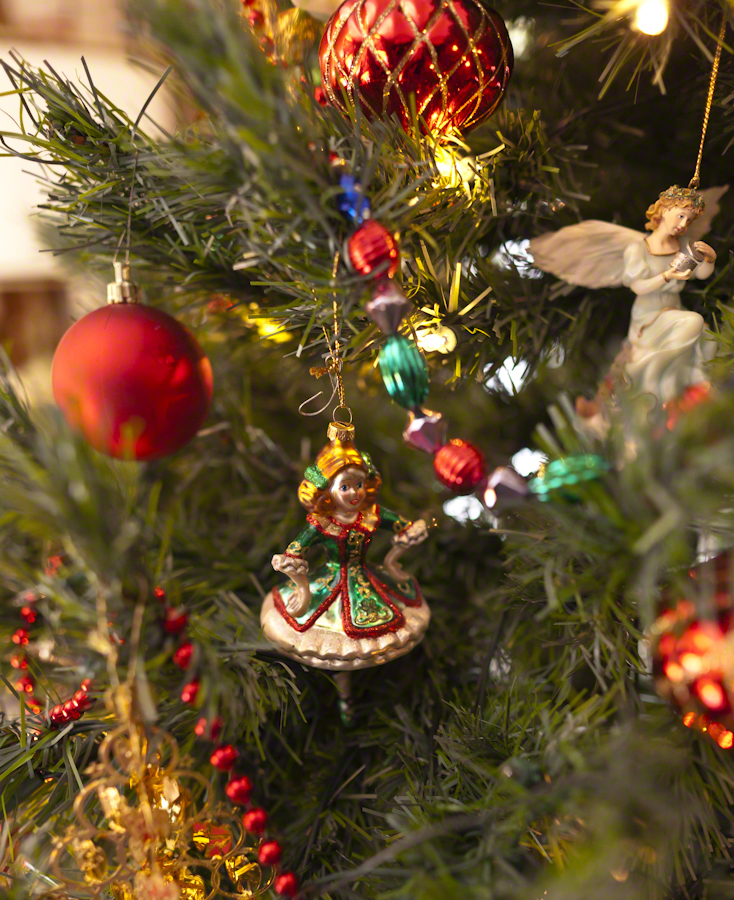
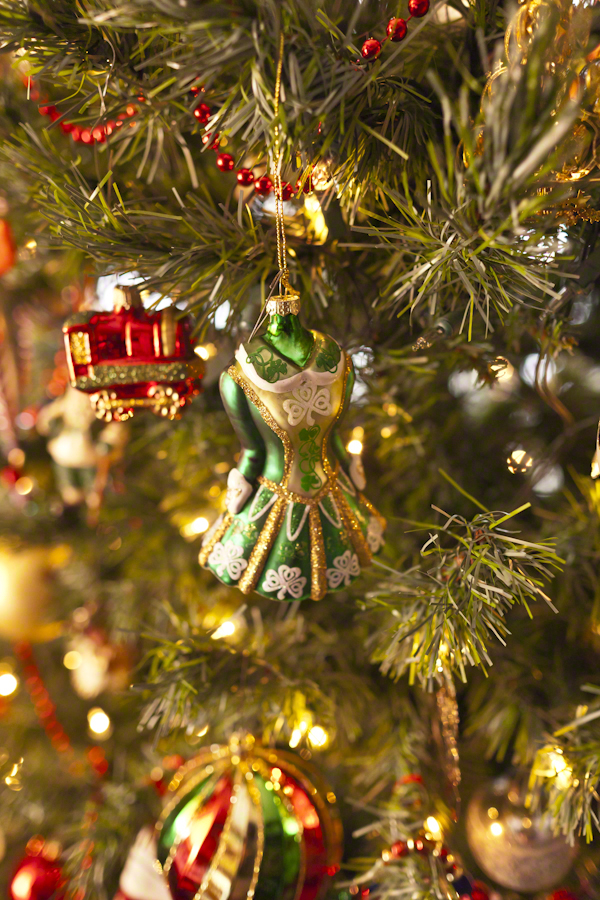
Blown glass Irish dancers.

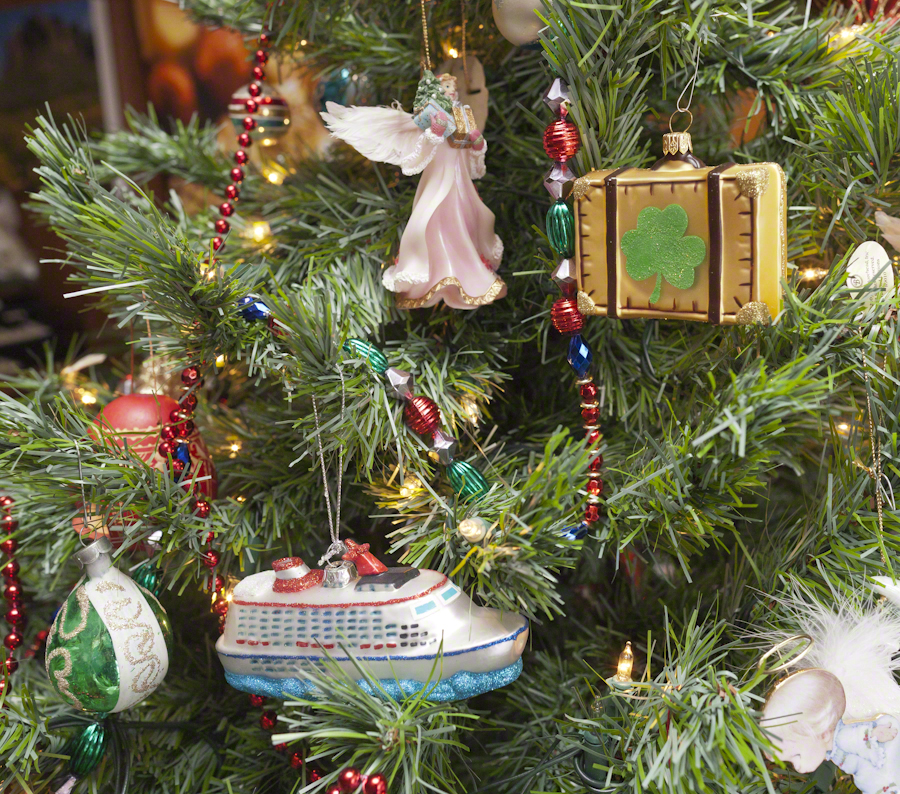
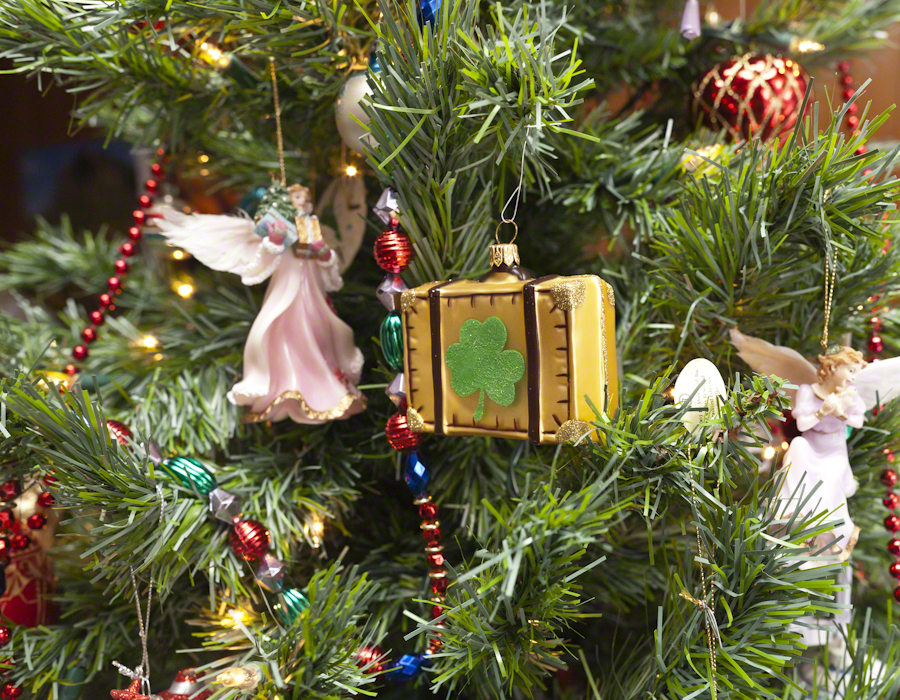
“Travel memories”

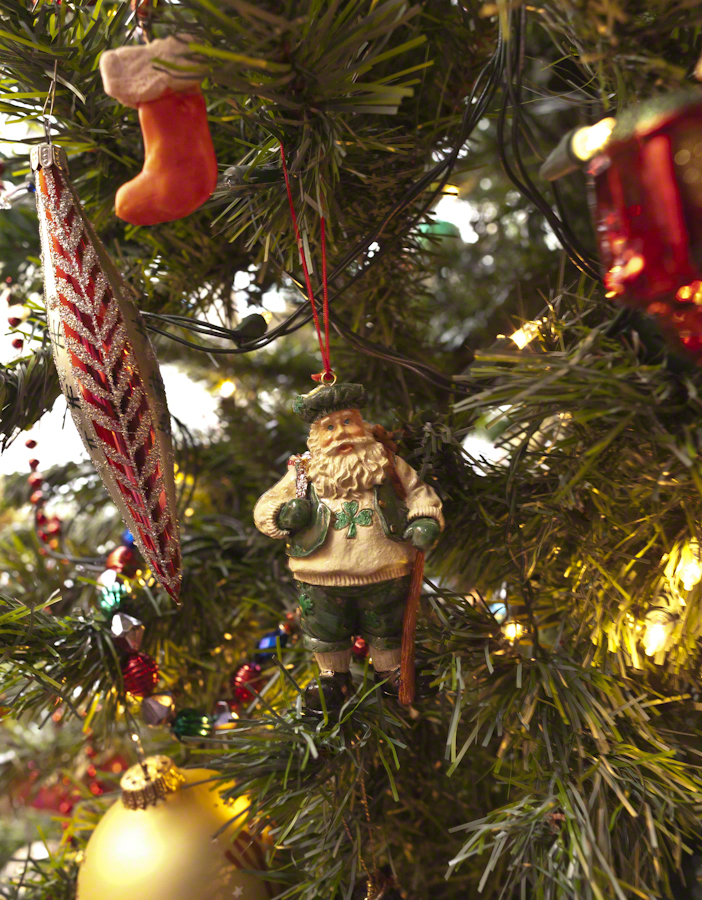
Lets’s finish up with a resin cast Santa Claus in hiking garb.  Hiking is a favorite activity of ours.  Featuring a stout staff and Aran Island sweater.

IrelandChristmas-17

Leprechaun Home Invasion

Saint Patrick Day Family Humor

In a previous posting we hiked through the only European Union Leprechaun Preserve on Slieve Foy above Carlingford, County Louth, Ireland.

EuHabitatsDirective-02267

This home was lower on the mountain, on the way to town.

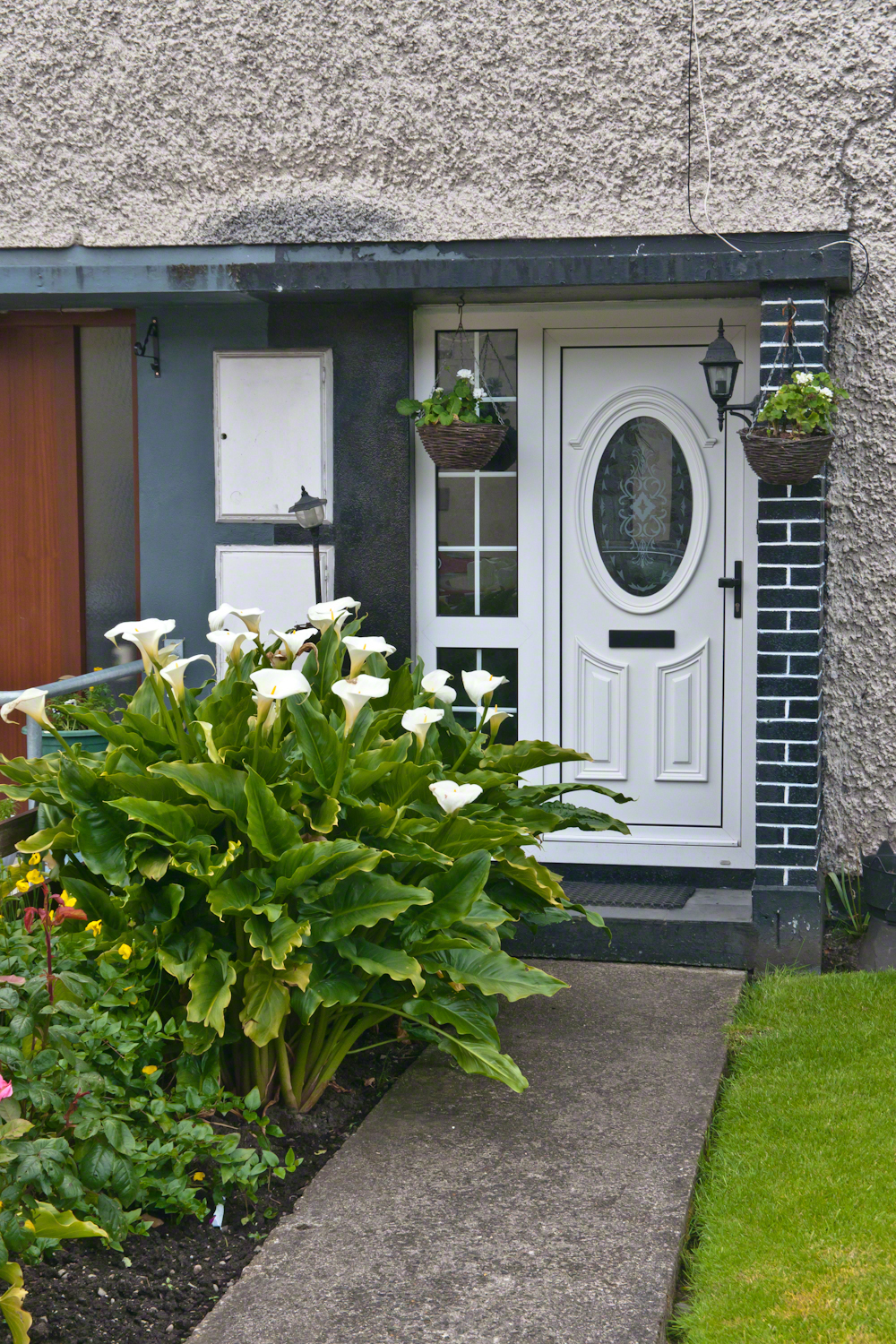
Entrance with Calla Lilies, Carlingford
Caring touches to a well tended home entrance along the Tain Way, Carlingford, County Louth, Ireland.

You will not find Calla Lilies thriving in front yards here in Ithaca, New York (43 degrees north latitude) as they do in the Temperate Oceanic Climate of Ireland, pictured in Carlingford on a June day.  At 54 degrees these Calla Lilies are growing at a latitude 800 miles north of Ithaca, in the middle of Quebec Province, Canada.

In spite of this, here in Ithaca we keep March 17th, Saint Patrick’s Day, warm.  In the home of our three grandchildren (3, 4 and 6 years old) who live in Ithaca they celebrate by playing tricks on Leprechauns.

This year, we visited Saint Patrick’s Day eve and reviewed their bag of tricks with the Leprechaun in Chief, their Mom.  In response, the Leprechauns leave them letters to make it clear the tricks did not work.  On top of this, the children have big laughs on the tricks played in return.  A favorite is finding their socks taped all over the mirror.

Mom pulled out a few of the Leprechaun letters and we read them for the children to great laughter as they remembered tricks of previous years.  Afterwards, when alone with Mom, Pam and I recalled the tradition in Chicago, to color the river green (a well as green milkshakes, etc), and suggested to the Leprechaun in Chief to put green food color in the toilet.  It was a winning idea.

The next morning Mom, on hearing the toilet flushed repeatedly, found her 4 year old daughter totally appalled.  “The Leprechauns used our toilet (and did not flush).  YUUUUKKKK.”  She then ran upstairs hoping for a “clean” bathroom up there.  Well, green milkshakes are off the menu.

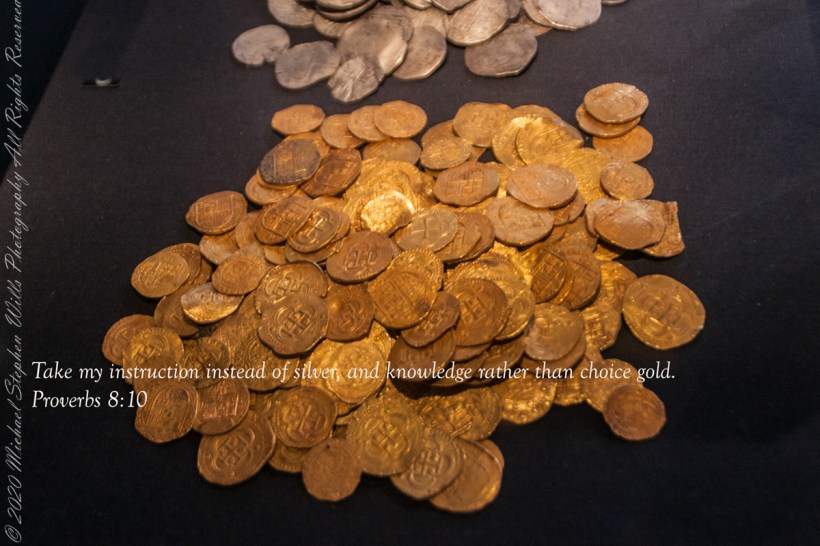
Treasure

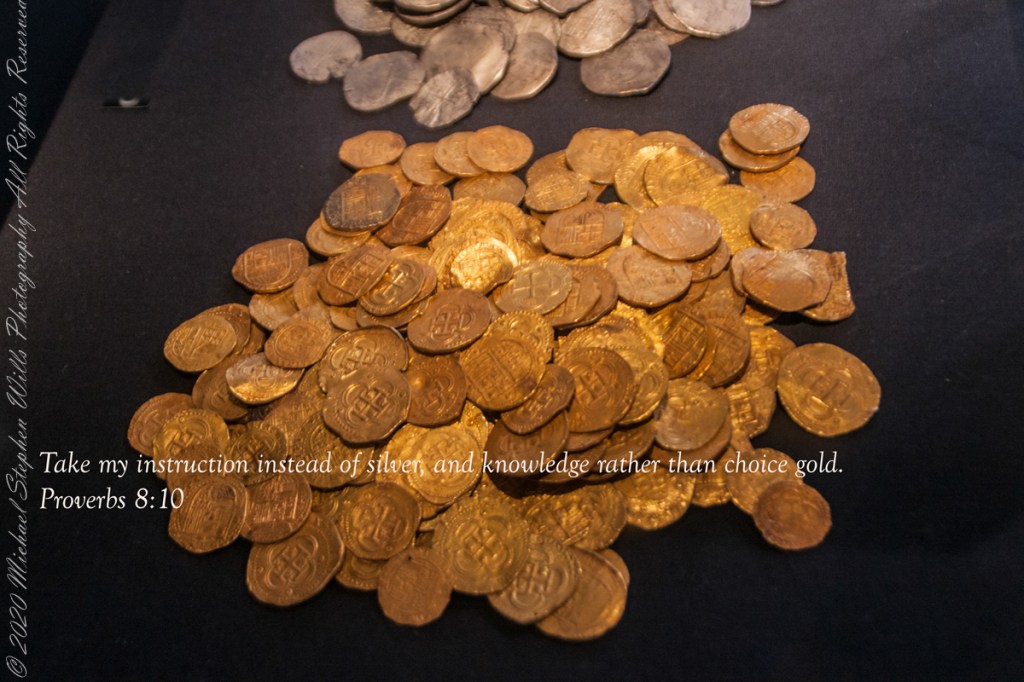
Gold on display for the permanent exhibit “Treasures of the Girona,” Ulster Museum, Belfast. It is not Leprechaun gold, certainly.

“Lay not up for yourselves treasures upon earth, where moth and rust doth corrupt, and where thieves break through and steal: But lay up for yourselves treasures in heaven, where neither moth nor rust doth corrupt, and where thieves do not break through nor steal: For where your treasure is, there will your heart be also.” Matthew 6:19-24

Ireland on the Mind at Christmas

Reflections and Mementoes

Where would we be without Saint Patrick?  He was a force, to be sure.  A favorite story, is the landing of his return to the island 432 AD.  The tides on the eastern coast of the Irish Sea can be strong.  His plan was to sail up to coast further north than what we call today Strangford Lough.  On passing this inlet the boat was swept into the lough tidal narrows.  Circumstances called for a landing, rather than wait for the tide.  Patrick came ashore where the Slaney River enter the lough and “quickly converted” the local chieftan, Dichu, who provided a barn for holding services.  The name of the town “Saul” in Irish is Sabhall Phádraig, translated as “Patrick’s Barn.”

IrelandChristmas-1

In this posting I’ll go lighter on descriptions of technique.  Leave it to say I held to the Canon fixed lens EF 50mm f1.2L USM throughout.  Some, like the photograph of Saint Patrick, used a tripod.  Others, like the latter two of the following Irish Themed Cross set were handheld.  Generally a flash was used to supplement ambient sunlight from a large north-facing bay window.

Here the “celtic” cross is converted to an Irish theme through a substitution of a shamrock with golden decoration inspired by pagan neolithic petroglyphs for the nimbus (circle) intersecting the central intersection of arms and stem.

For the first three I played with aperture, taking advantage of the stability of a tripod.  The final two of the set are handheld.

Note the fanciful leprechaun snowman with pot o’ gold, on the left.

Blown glass Irish dancers.

“Travel memories”

Lets’s finish up with a resin cast Santa Claus in hiking garb.  Hiking is a favorite activity of ours.  Featuring a stout staff and Aran Island sweater.

IrelandChristmas-17
Copyright 2040 Michael Stephen Wills All Rights Reserved