A Dance of Light and Sand in Antelope Canyon

Antelope Canyon, a sacred space in the Navajo Nation, reveals the dance of light and sand within its ancient walls. The interplay of erosion and transformation highlights beauty in impermanence, emphasizing patience and reverence for nature’s ever-changing essence.

Enveloped by shadows and light in the stillness of Antelope Canyon the air carries silence—vast and ancient—interrupted only by the whispers of grains shifting under unseen currents. Here the red rock of the northwestern corner of the Navajo Nation was pulverized into sand by the action of wind, water, sun, and cold. The walls, carved by patient time, cradle the moment as if holding a sacred breath.
Antelope Canyon is in the Navajo Nation near Page, Coconino County, Arizona

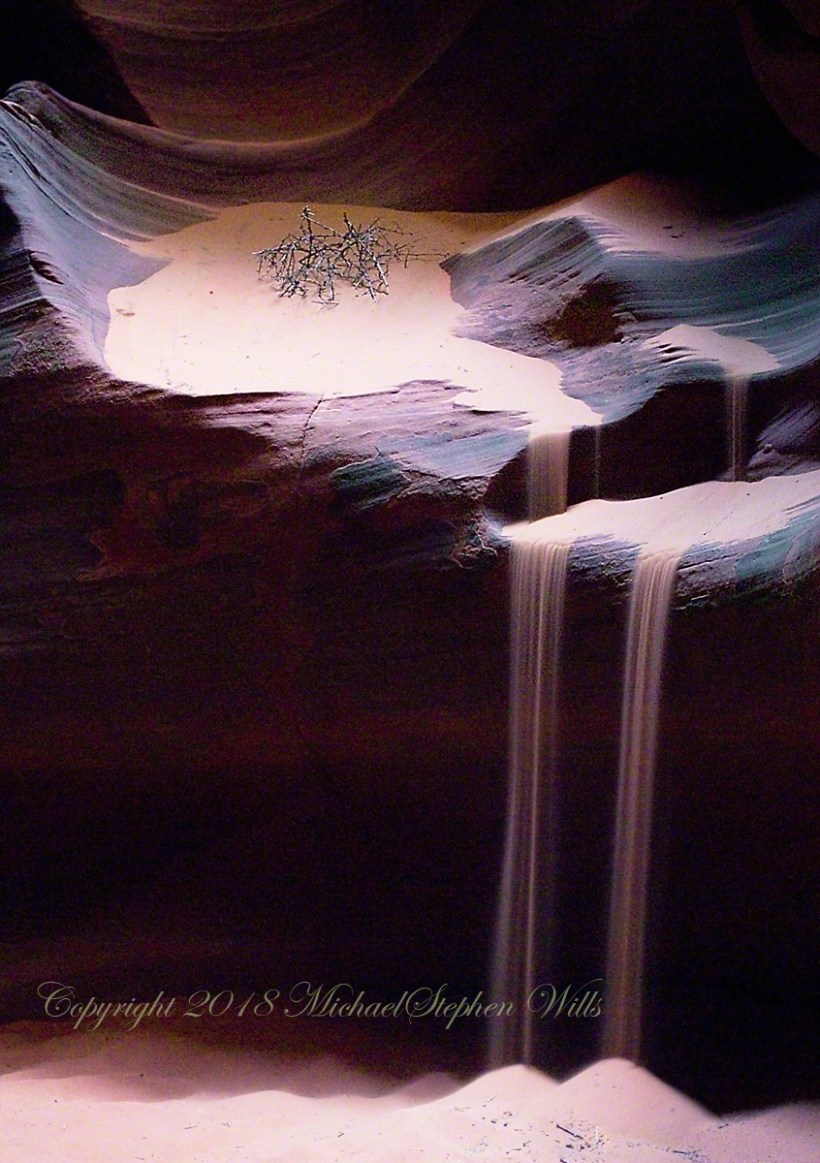
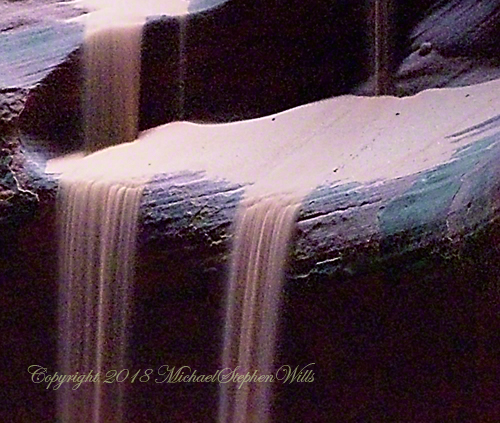
Antelope Canyon, timeless and transient, has summoned me to witness something unique—a dance between light and matter. The delicate, insistent sand flows like water from a carved bench, shaping the scene with quiet power. It tumbles as if alive, forming ephemeral cascades, revealing that erosion is not destruction but transformation. Each grain a story—a fragment of the ages, polished smooth by untold moments of pressure and release.

A Slot of Shadows and Light


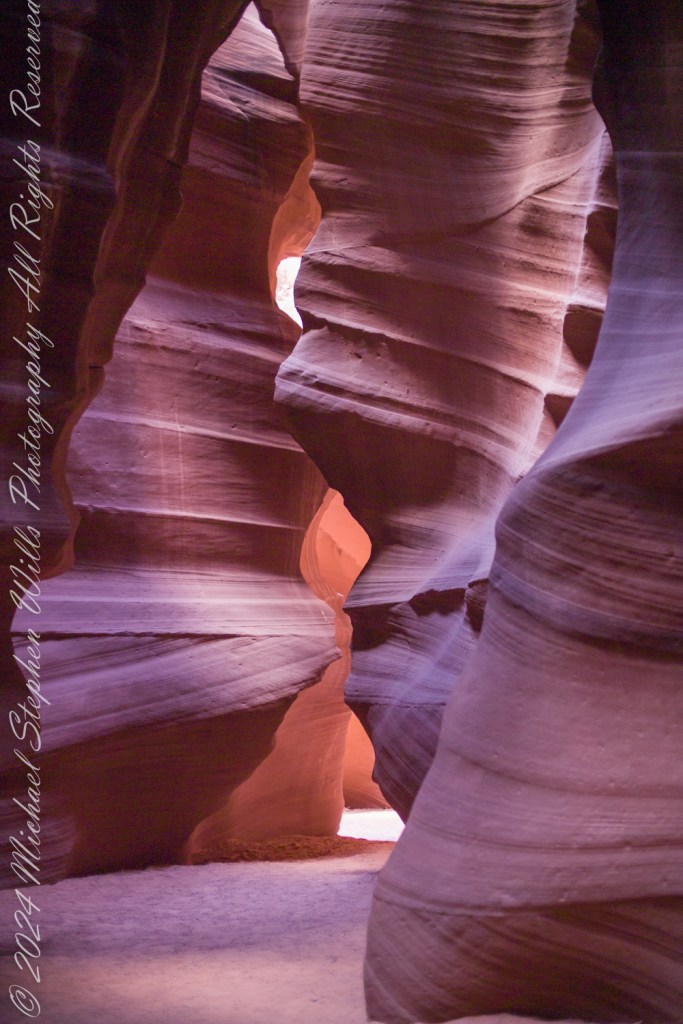
I wait in the dry darkness of upper Antelope Canyon for the perfect moment to capture the spirit of the place. Light penetrates the narrow slot above, a thin beam spilling through the crevice, drawn by something deep below. In this confined space, sunlight becomes an entity. It touches the red sand and animates the space, revealing stone textures and the fleeting movement of sand in freefall.
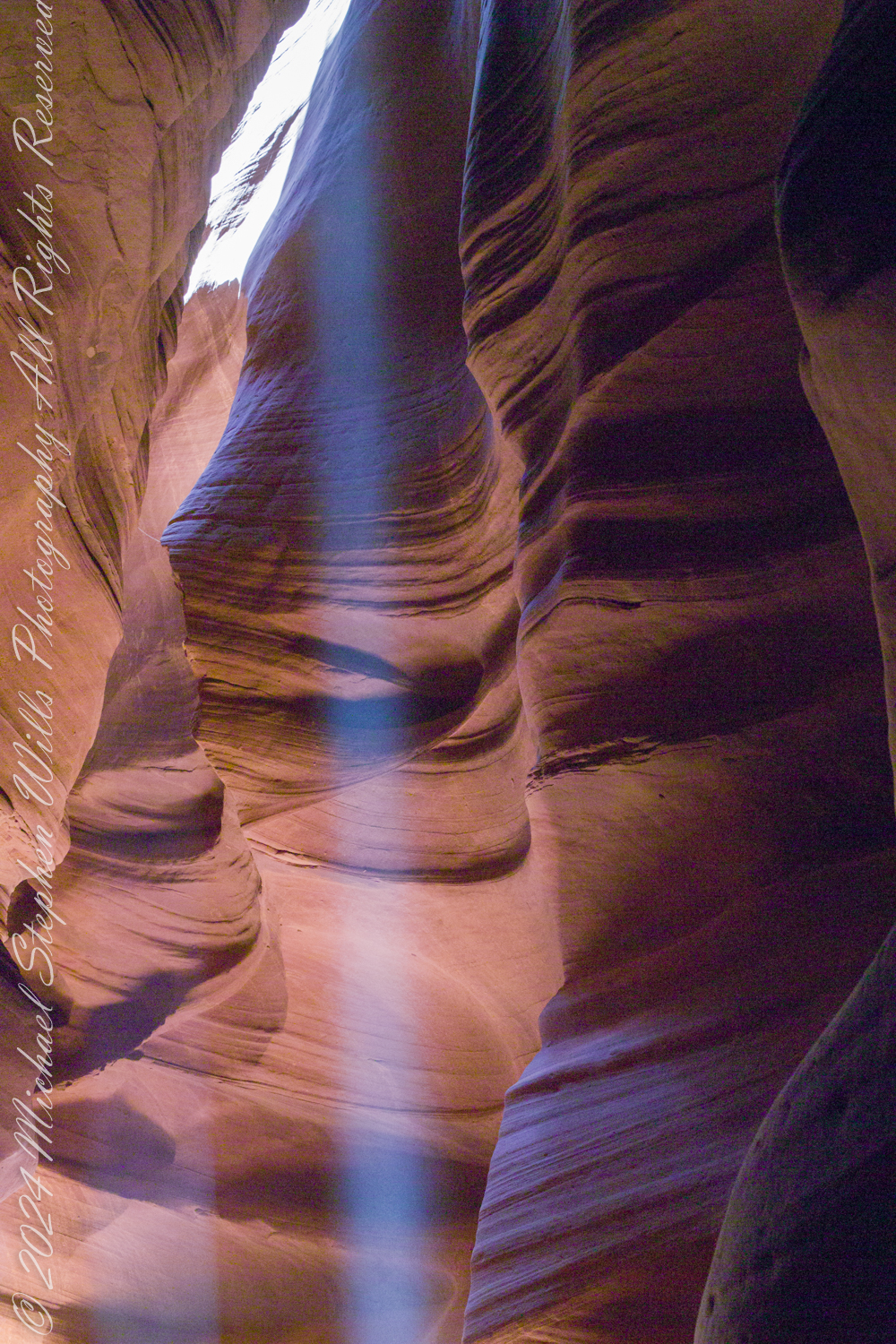
Antelope Canyon is in the Navajo Nation near Page, Coconino County, Arizona

The play between dark and light reminds me that beauty often lies in contrast. The polished walls that surround me were once jagged, raw stone. They have become smooth under nature’s relentless touch—proof that endurance shapes elegance. The canyon’s walls, though fixed in place, seem to sigh as the sand slips over them, embodying a paradox of permanence and impermanence.

An Elemental Meditation


I am a visitor as well as part of a conversation held in languages older than words—spoken by rock, sand, shadow, and light. I sense the ancient stories etched into the stone and carried within each grain that spills like an hourglass. Here, nothing is wasted; everything contributes to a continuous process of becoming. The sand, which once formed the walls, now shapes the canyon floor, each element recycling into the next chapter of this landscape’s life.
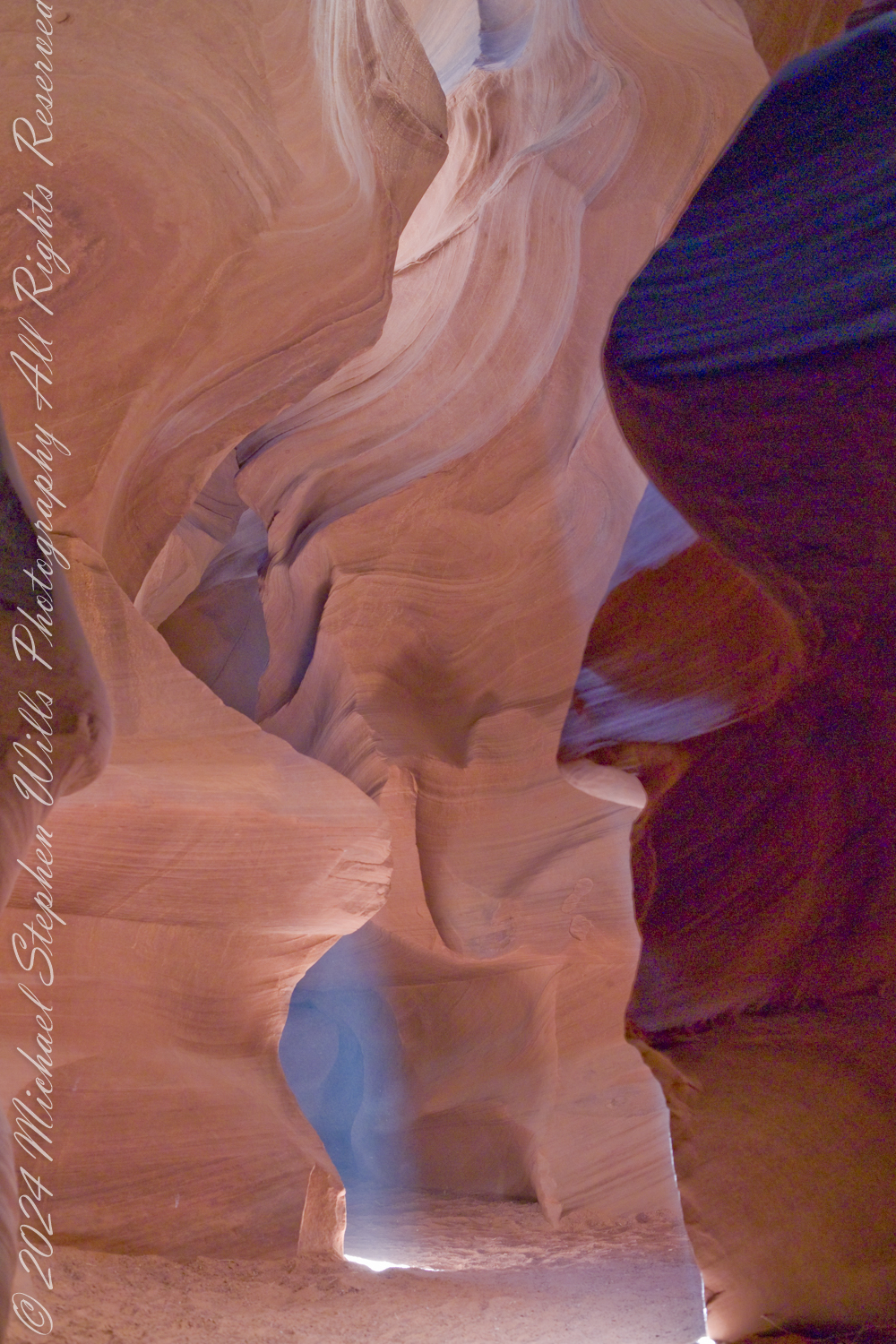
Antelope Canyon is in the Navajo Nation near Page, Coconino County, Arizona

The act of waiting for a right moment teaches me that patience is both passive and an active engagement with time. I am reminded that what I witness will never be exactly the same again. Even though the canyon may stand for millennia, each second contains a uniqueness. The sand cascading before my eyes will settle, be disturbed, and flow again—but never in quite the same way.

Capturing the Spirit of Place


I set the camera on a rented tripod, knowing photography is an imperfect attempt to hold onto what cannot be possessed. This place does not belong to me—it belongs to itself, shaped by forces far greater than any human hand. My role is not to own the scene but to honor it, to acknowledge its fleeting magnificence by framing a moment within the lens.

The shutter clicks, the cascade of sand becomes immortalized held in that instant. Yet I know that the photograph, while capturing the image, will not fully encompass the spirit of what I have experienced. This place is a meditation, a reminder that life itself flows in ways we cannot control. Like the red sand, we are carried by forces—sometimes gentle, sometimes fierce—shaping and reshaping us through time.
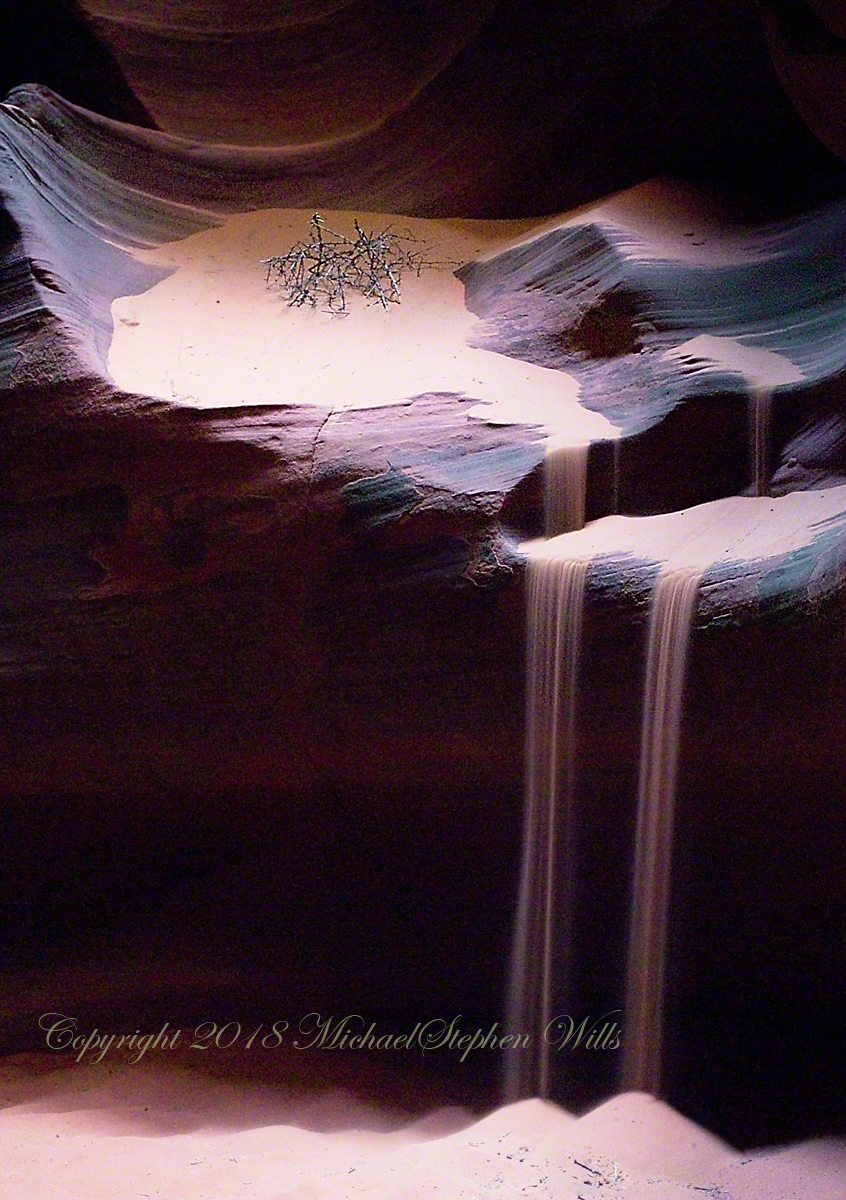
As I gaze at the sand, a quiet sense of reverence flows through me. This moment, like the grains tumbling in front of me, is already slipping into the past. But in its passing, it leaves behind something intangible yet enduring—a memory of beauty found not in permanence but in change.
Click this link for my Fine Art Photography gallery.

Click this link for another Arizona post, “A Dry Piece of Paradise.”

Enter your email to receive notification of future postings. I will not sell or share your email address.

White House Ruin

In 2003 and 2008, the author visited and photographed White House Ruin in Canyon de Chelly, observing changes in landscape.

In November 2003, my son Sean and I journeyed up Route 191 from Petrified Forest National Park, arriving in Chinle on a crisp autumn afternoon. My photography equipment at the time was modest: a Sony Point and Shoot 5 MP camera with filters, a purse-like over-the-shoulder bag, and a basic tripod from Kmart.

We reached the White House trailhead in Canyon de Chelly and began our hike. The trail was quiet, and as the sun set at 5:20 pm, we found ourselves virtually alone. A dense growth of Russian Olive trees dominated the wash at that time. In the dimming light, I captured a distant shot of the White House Ruin, whitewashed, set against the backdrop of autumn-hued Russian Olive foliage. Nearby, a grove of Cottonwoods, still green, stood near the canyon wall.

By the time Pam and I returned in July 2008, four years and nine months later, the landscape had changed. The invasive Russian Olives had been removed, and the White House Ruin was no longer painted white.

The same Route 191 that Sean and I had taken in 2003 led us through the Four Corners region of Northern Arizona. Pam and I had traveled from Colorado, arriving in the late afternoon. This time, the Navajo Reservation’s adherence to daylight savings time meant the sun wouldn’t set until 8:33 pm. My aim was to photograph the White House Ruin that I had missed years earlier.

That July day the sun set 8:33 pm as the Navajo Reservation observes daylight savings time. My goal was to photograph the White House Ruin I missed in 2003. We arrived at the trail head. My photography kit was expanded from 2003, now included a Kodak DSC Pro slr/C, the “C” meaning “Canon” lens mounting, a Sony 700 alpha slr (I only use a variable lens), Manfrotto tripod with hydrostatic ball head, and the backpack style Lowe camera case. With the tripod it is over 25 pounds.

With this on my back I was prepared to boogie down the trail. At the height of tourist season there were many more people at the trailhead. Pam, being a friendly person, started a conversation while I ploughed ahead along the flat canyon rim. It is solid red sandstone, beautiful, generally level with enough unevenness to require attention. When Pam saw how far ahead I was she tried to catch up, tripped, fell hard.

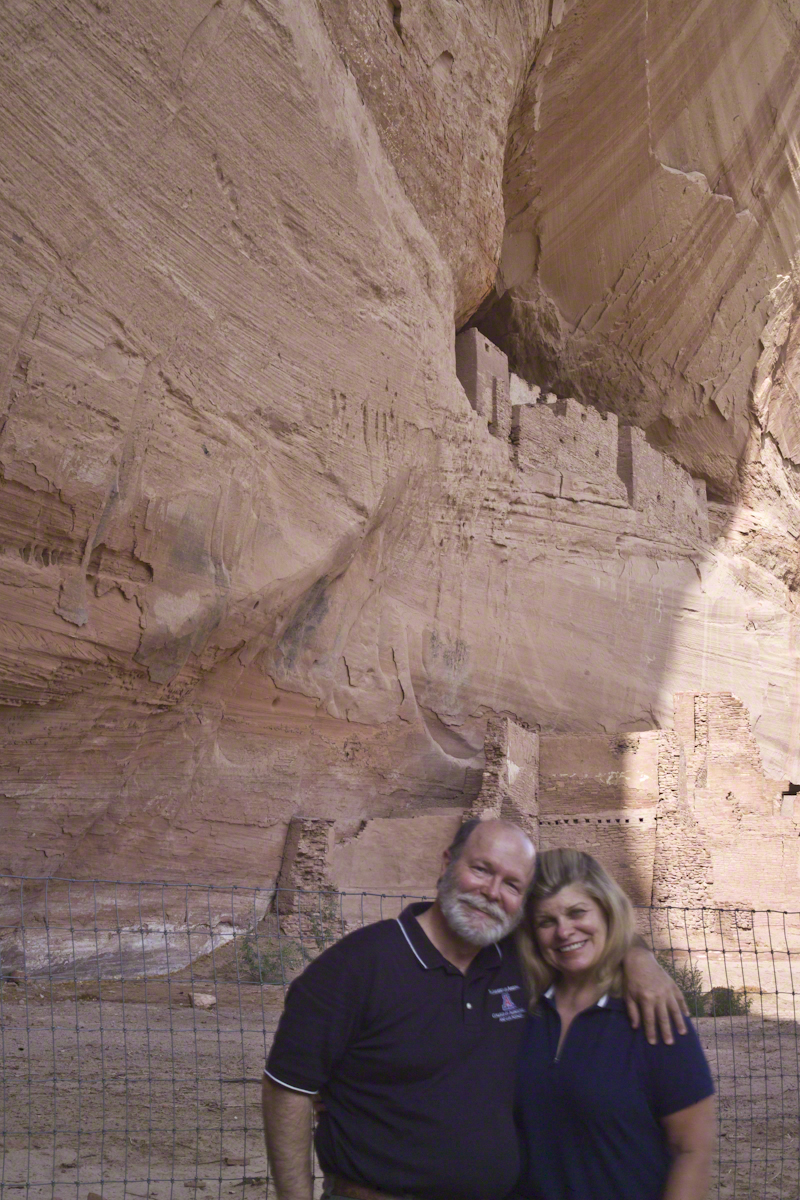
I backtracked to Pam and we decided what to do. She thought, maybe, the fall broke a rib. We decided to proceed and descended, slowly, together. Here we are in front of the ruin. The sun, low in the sky, is moving below the south canyon wall. This is a perfect time, and I used both cameras.

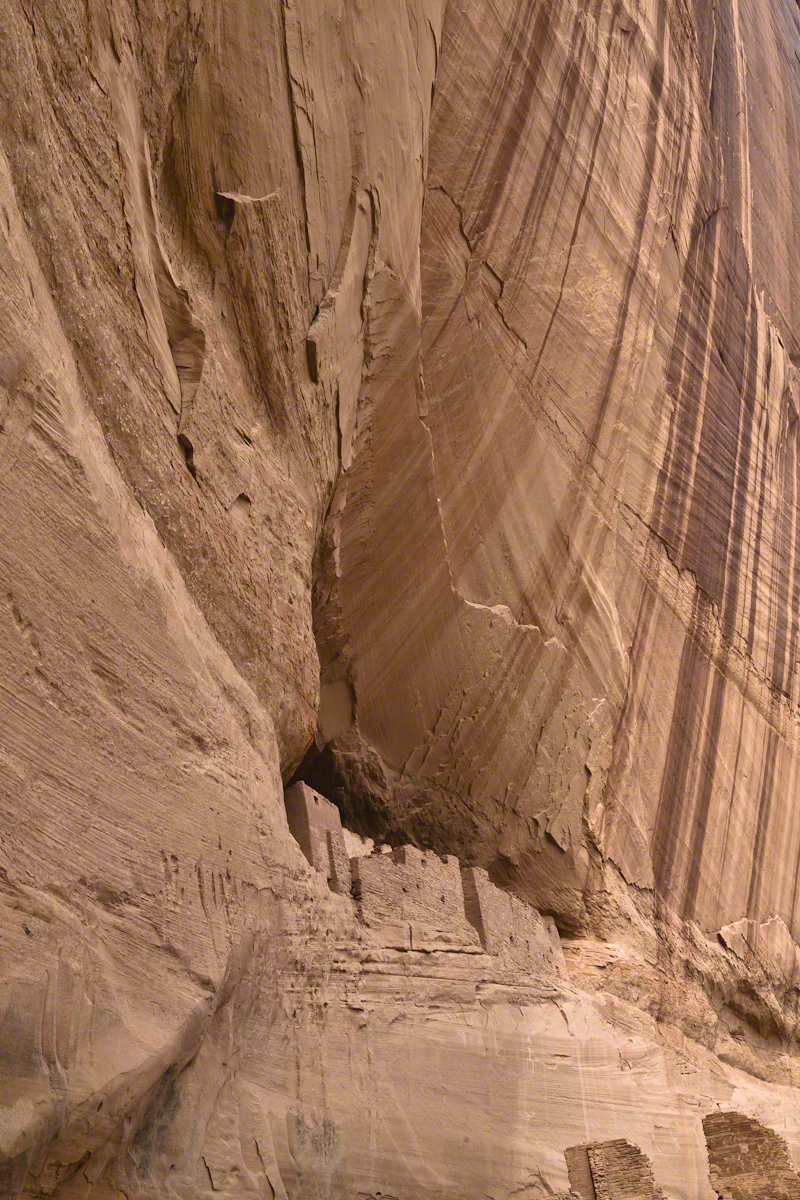
The sweep of cliff and desert varnish was my intent to capture. Here it is through the Canon 50 mm lens.

Click link for this White House photograph in my Online gallery.

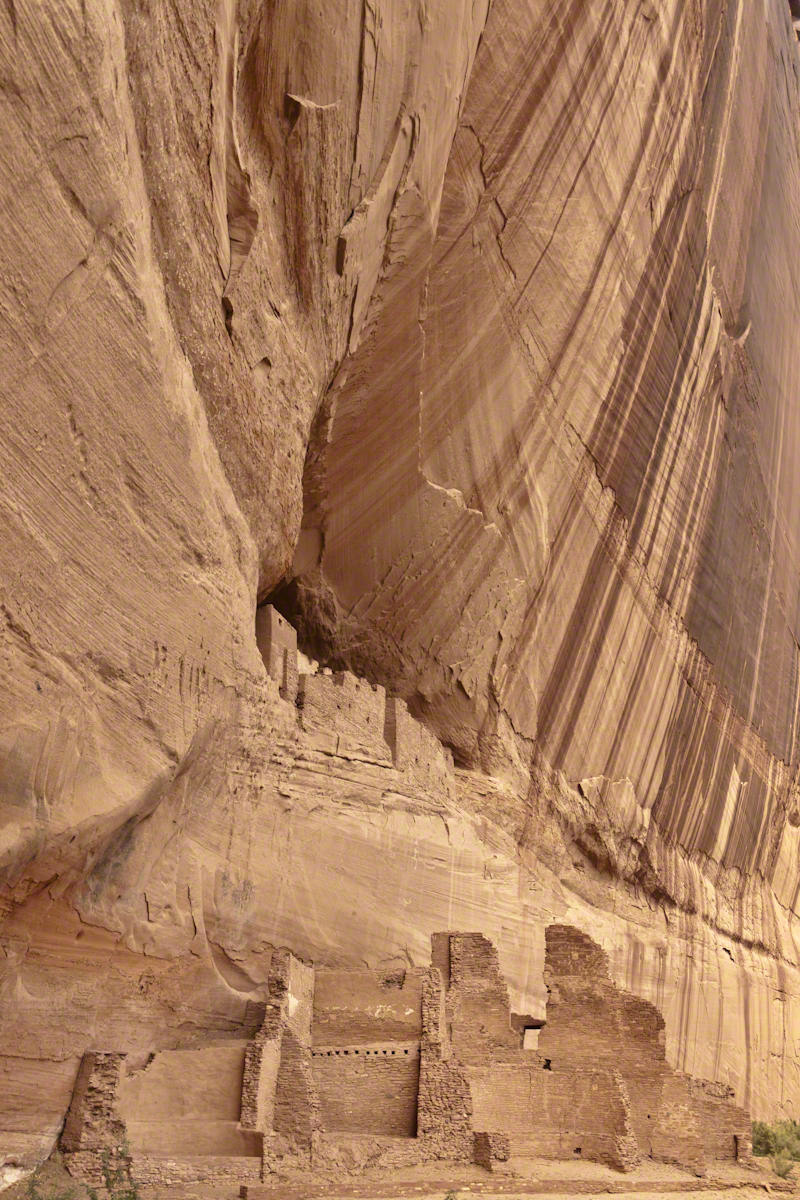
I captured this version with the Sony Alpha 700 slr, the variable lens set to widest angle.

Click link for this White House photograph from my online gallery.

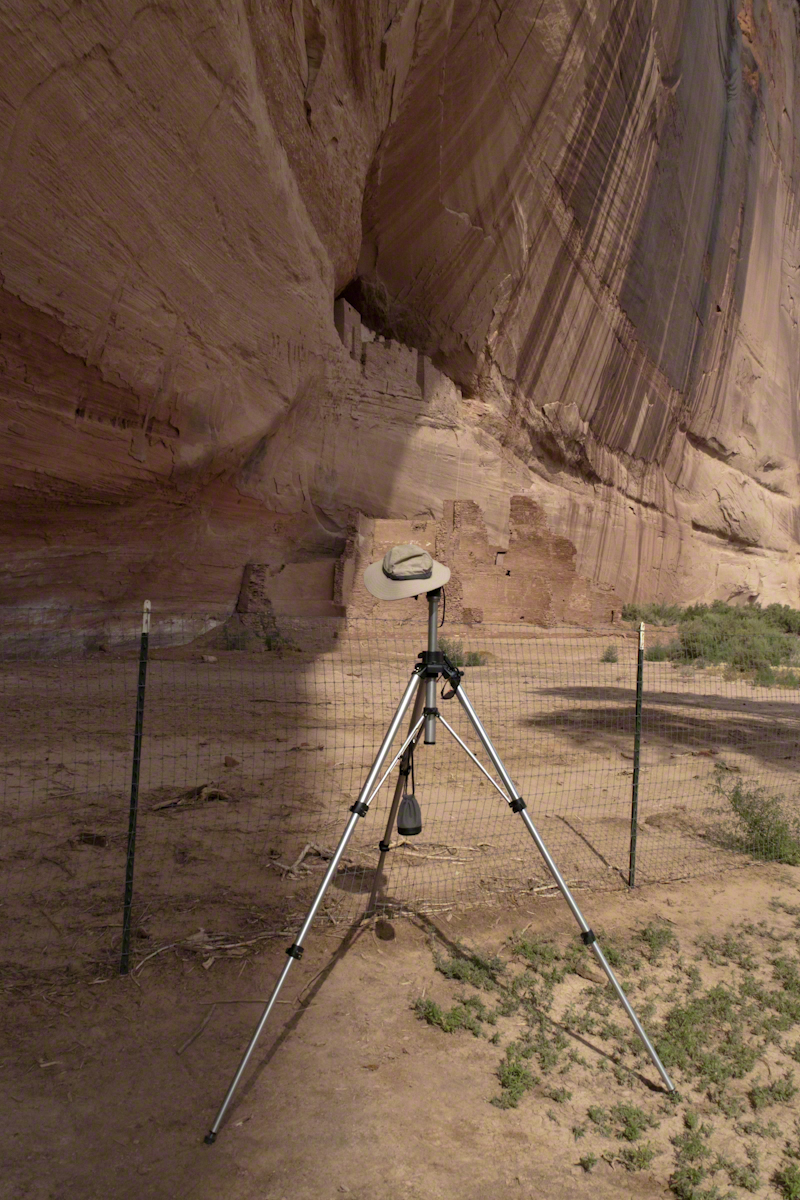
Here the camera setup waits out the sun…..

Click Me to view my photographs on Getty.

Copyright 2023 Michael Stephen Wills All Rights Reserved http://www.MichaelStephenWills.com

Portrait of a Navajo Guide

In November 2004, a visit to Canyon de Chelly with guide Hadley Tsosie revealed ancient petroglyphs and ruins, highlighting Navajo culture and the canyon’s unique beauty.

On November 3, 2004 my son, Sean, and I made our way to Chinle, Arizona on the Navajo Reservation at the mouth of Canyon de Chelly.

The next day, driving a rented 4 wheel drive, we arrived at the visitor center, at dawn, and there met Hadley Tsosie who worked as a guide. This is how you do it, if learning about the Canyon is your goal. It is possible to walk, unaccompanied, into the canyon to view the “White House” and this I highly recommend. Tourists can also drive around the rim to various overlooks. This is what most people do.

The canyon is still farmed and the tribe only allows visitors when accompanied by a guide. Only Diné (Navajo) are certified as guides. They know the rights of way and the preferences of the landowners.

We negotiated with Hadley to take us for half a day for our interest in petroglyphs and ruins. It is important to start early when the sun is low in the sky, when directly overhead the details of ruins and petroglyphs are washed out by the light. Catching the late afternoon/evening sun is also an approach that requires detailed knowledge of the route, taking into account the time of year.

Hadley was an excellent choice, though he was our only option on that day. He was fluent in Navajo beliefs, the lore of the canyon and generous in sharing what he knew.

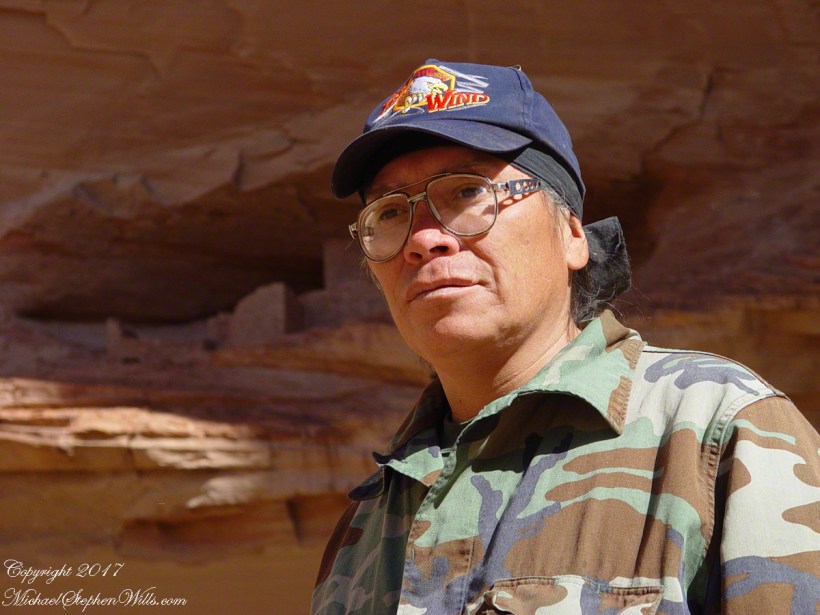
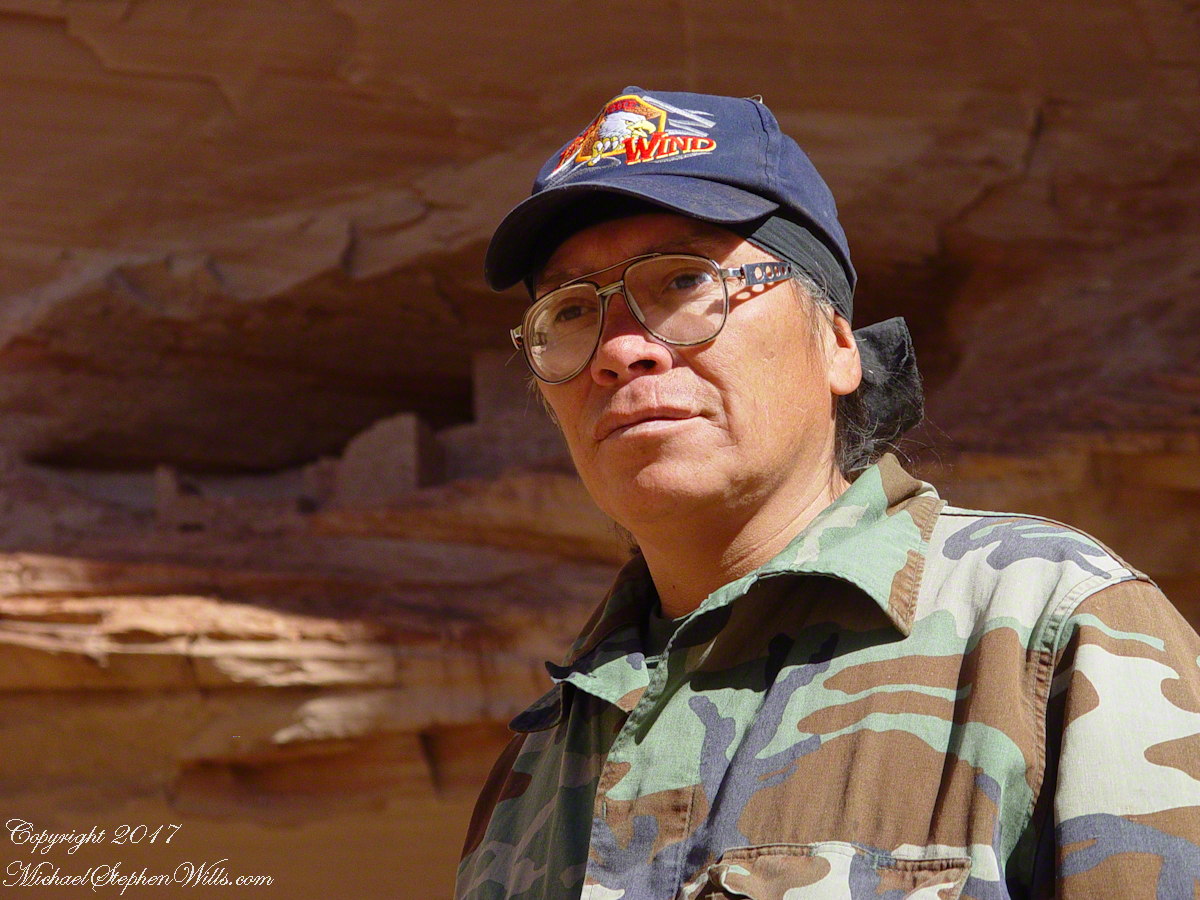
Here is Hadley, approximately 6.2 miles into the canyon with the “Ledge Ruin” behind. We arrived at the junction just in time, before the sun was high enough to wash out the ruin. It is slow going into the canyon what with the deep sand and water that must be negotiated. Hadley did the driving and was expert. We passed other parties bogged down in the wet sand. I do not believe it was luck that kept us moving . We stopped many times to talk and admire the petroglyphs and pictographs.

Petroglyphs are symbols incised, or cut, into the surface (the name means petro, “rock”, glyph, “symbol”). In the desert climate of the southwestern USA a thin, dark pigment forms on rock surfaces of overhanging cliffs. The pigment forms from infrequent precipitation, in the form of water, flowing downward over the surface or even dew. The high heat of the desert drives a chemical reaction between water, clays, iron and manganese oxide to form a coating on the rock surface. The dark coating, called “desert varnish”, contrasts with the underlying rock. When it is scraped away a line forms. Many of the petroglyphs were of this form. Others were carved into the rock itself, more time consuming and durable. No one knows when the petroglyphs were made, they were always there are respected. People have inhabited Canyon de Chelly for over a thousand years.
The word pictograph has a different meaning when used to describe prehistoric art. The earliest writing were symbols incised in wet clay, then allowed to harden. The pictographs we viewed was prehistoric art, mostly white pigment on the red rock, outlines of hands. There were also kokopelli, the outline of a flute player and jagged lines, symbolizing, Peter told us, lightening.

In November the cottonwoods were in fall foliage, a brilliant yellow under a cloudless sky. The sun is lower in the south and rises later. The Navajo Reservation follows daylight savings time, unlike Arizona. This November morning the sun rose around 7:45 am, so if you are not an early riser this time of year is an excellent choice for a Canyon de Chelly tour.

Click for the next posting in this series, “Junction Ruin Musings”

Enter your email to receive notification of future postings. I will not sell or share your email address.