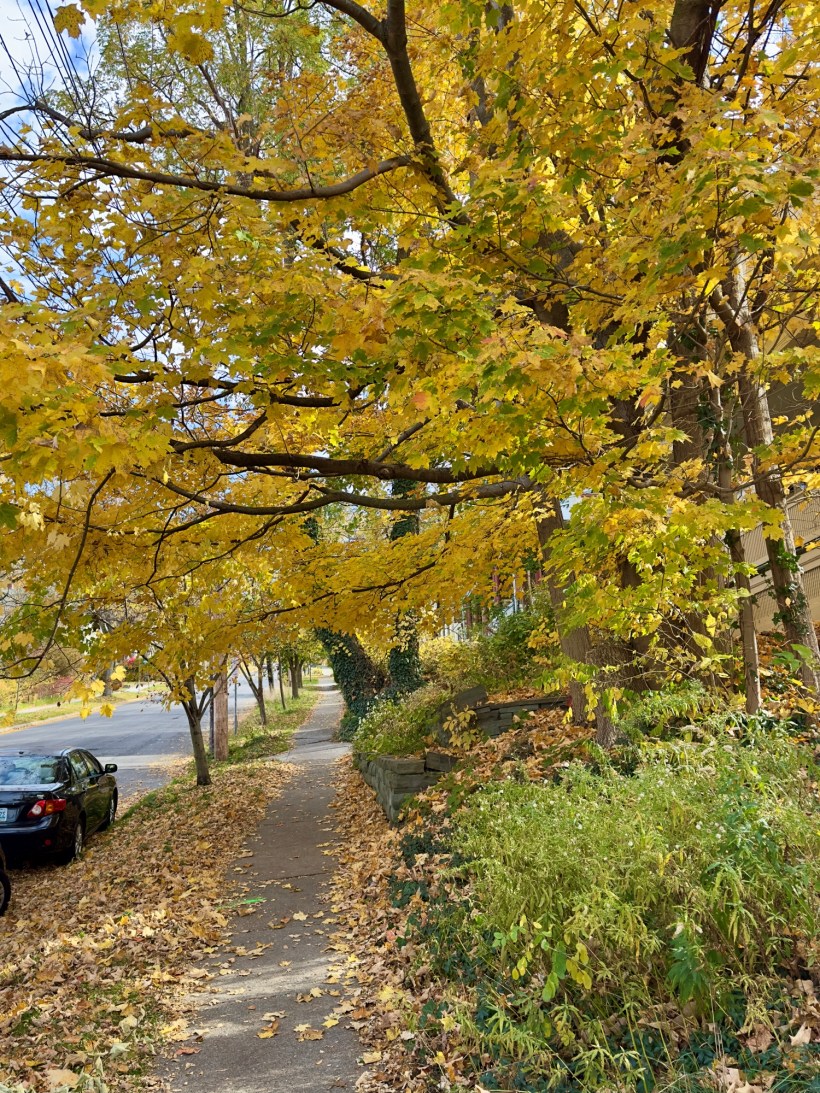
The Enchantment of Autumn Over Cascadilla Gorge

Join me for a serene autumn walk in Ithaca, appreciating nature’s beauty, impermanence, and the calming rhythms of life.

A few days before Halloween, I found myself on the rim of Cascadilla Gorge, Ithaca’s autumnal crown jewel. The air had that crisp October quality, each breath carrying a hint of the colder days to come yet still tempered by the lingering warmth of early fall. A breeze carried a scent of damp earth and decaying leaves, a rich, organic aroma that signaled the turning of the seasons. The path beneath my feet was a tapestry of fallen leaves—russet, gold, and burnt orange—a natural carpet leading me through a world suspended between vibrancy and rest.
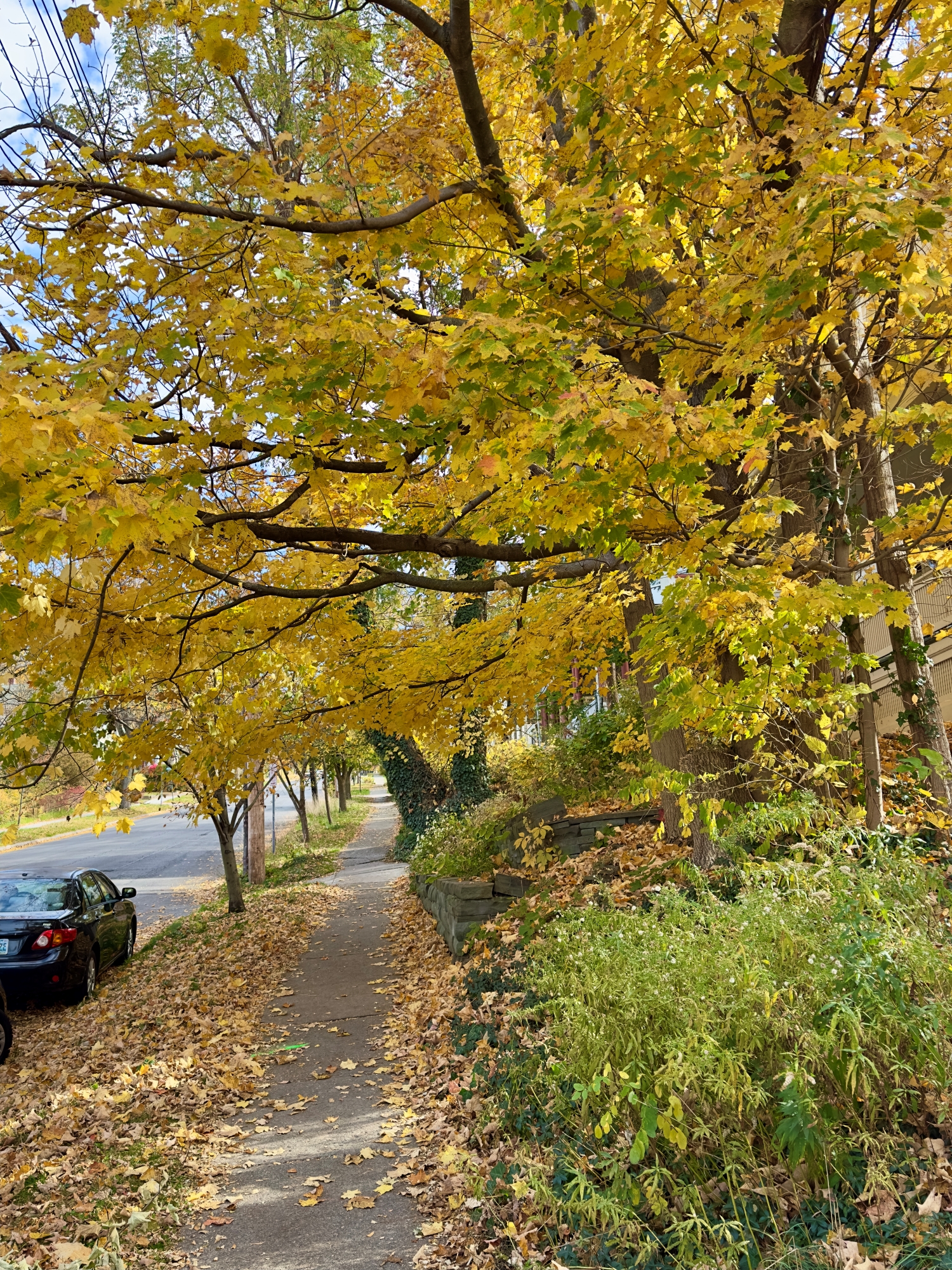
Golden Canopy over Buffalo Street Sidewalk

Continuing up Buffalo Street, I marveled at the trees, their branches thick with yellow and gold leaves, creating a canopy above. The leaves shivered with every gust, whispering the ancient secrets of the forest. The air was infused with the sweet, woody fragrance of maple and oak, mingling with the faint scent of chimney smoke from nearby houses. The sunlight filtered through, casting a dappled pattern on the sidewalk, a fleeting mosaic as the leaves danced in the wind. A sense of impermanence struck me; soon, these leaves would be gone, leaving bare branches silhouetted against a winter sky.
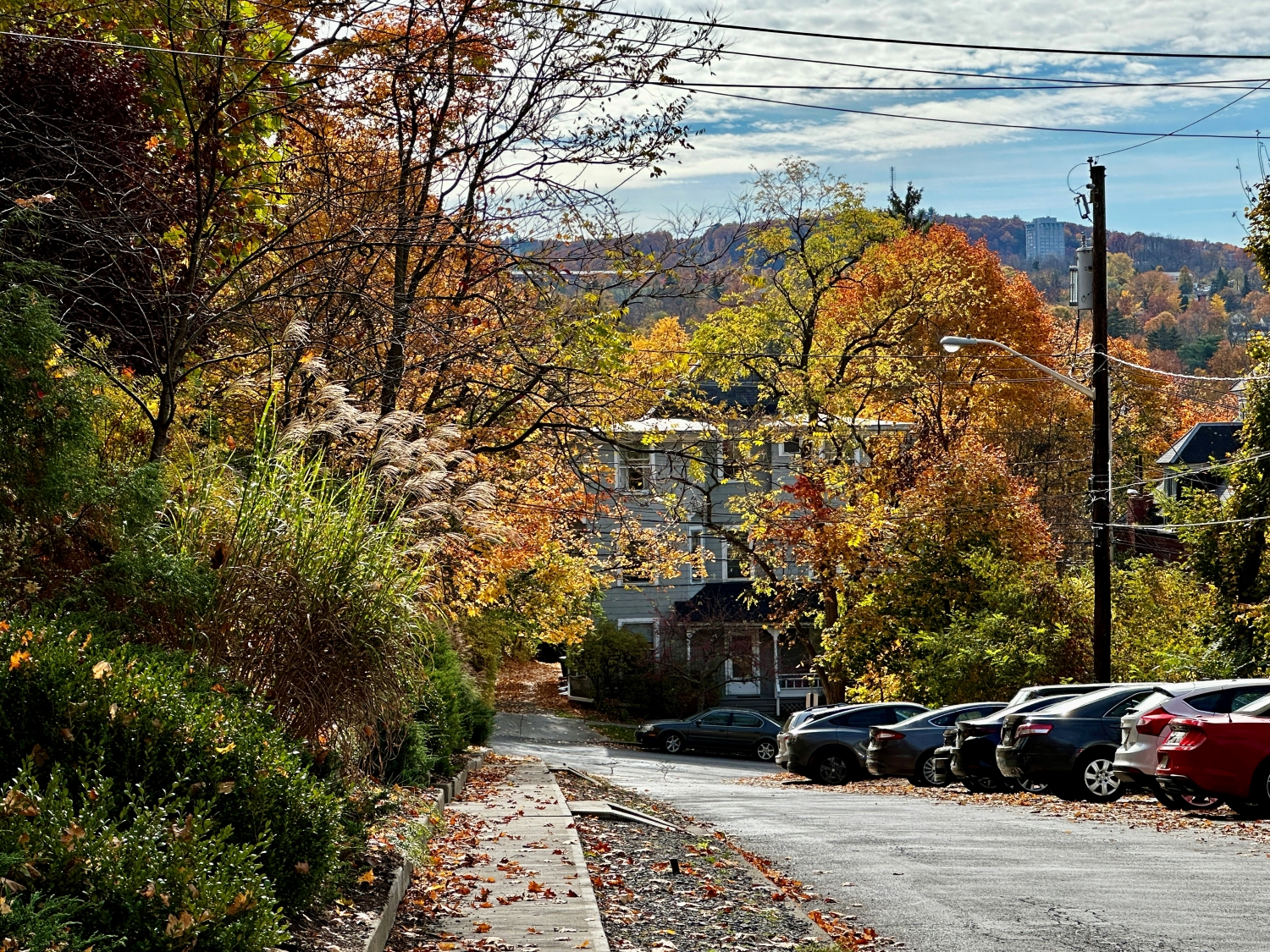
Scene from Dewitt Place toward South Hill and Ithaca College

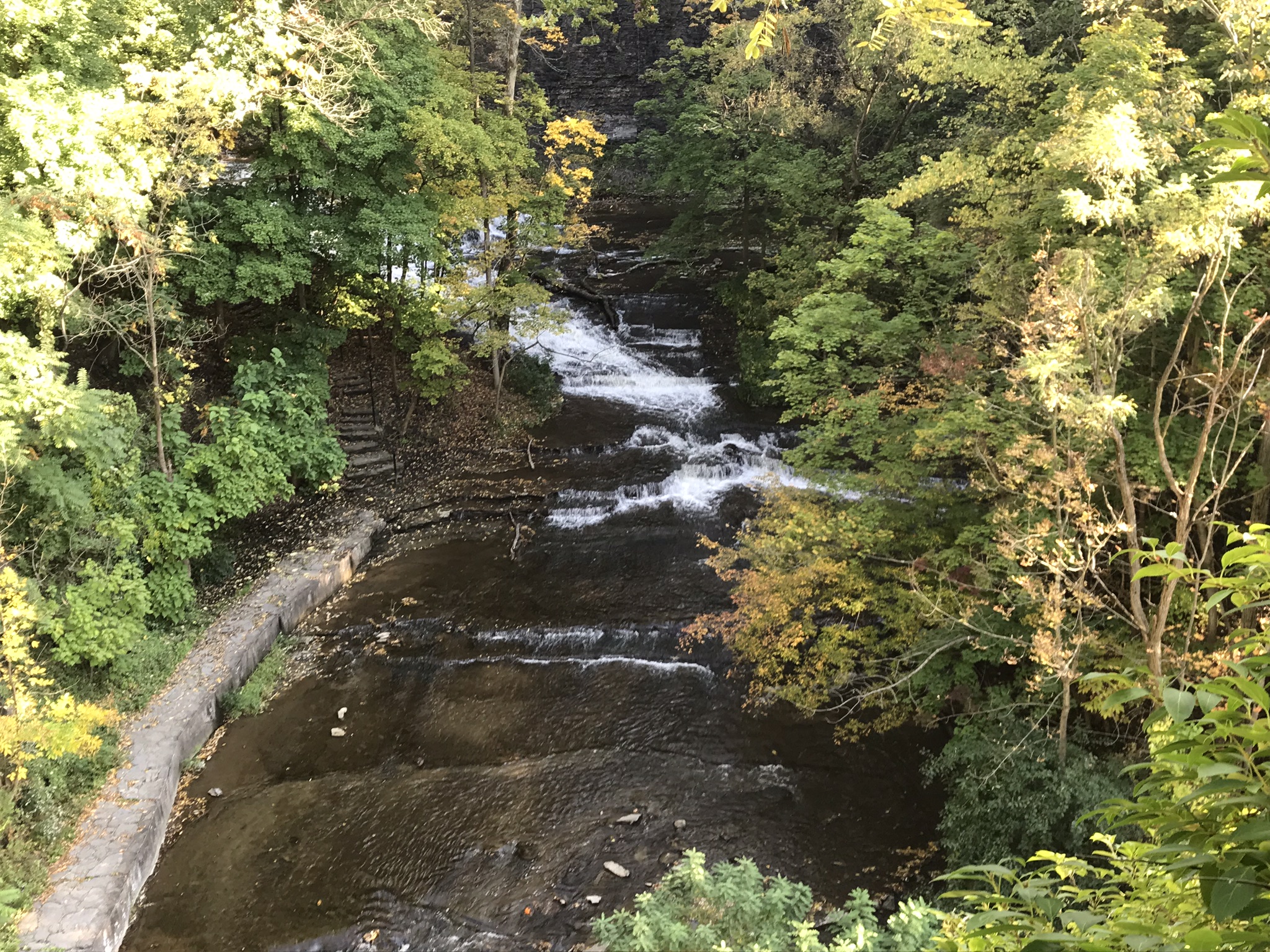
Crossing the Stewart Avenue bridge, the Cascadilla Gorge came into view, a steep wall of stratified rock layers standing guard over the gently flowing stream below. The contrast between stone and foliage was breathtaking—the hard, unyielding rock juxtaposed with the softness of leaves in full autumnal bloom. The earthy scent of wet stone mixed with the crisp aroma of the flowing water, creating a sensory tapestry unique to the gorge. The colors seemed to intensify against the gray and brown of the cliff, each leaf like a brushstroke on nature’s canvas, celebrating the season’s final flourish before surrendering to winter.
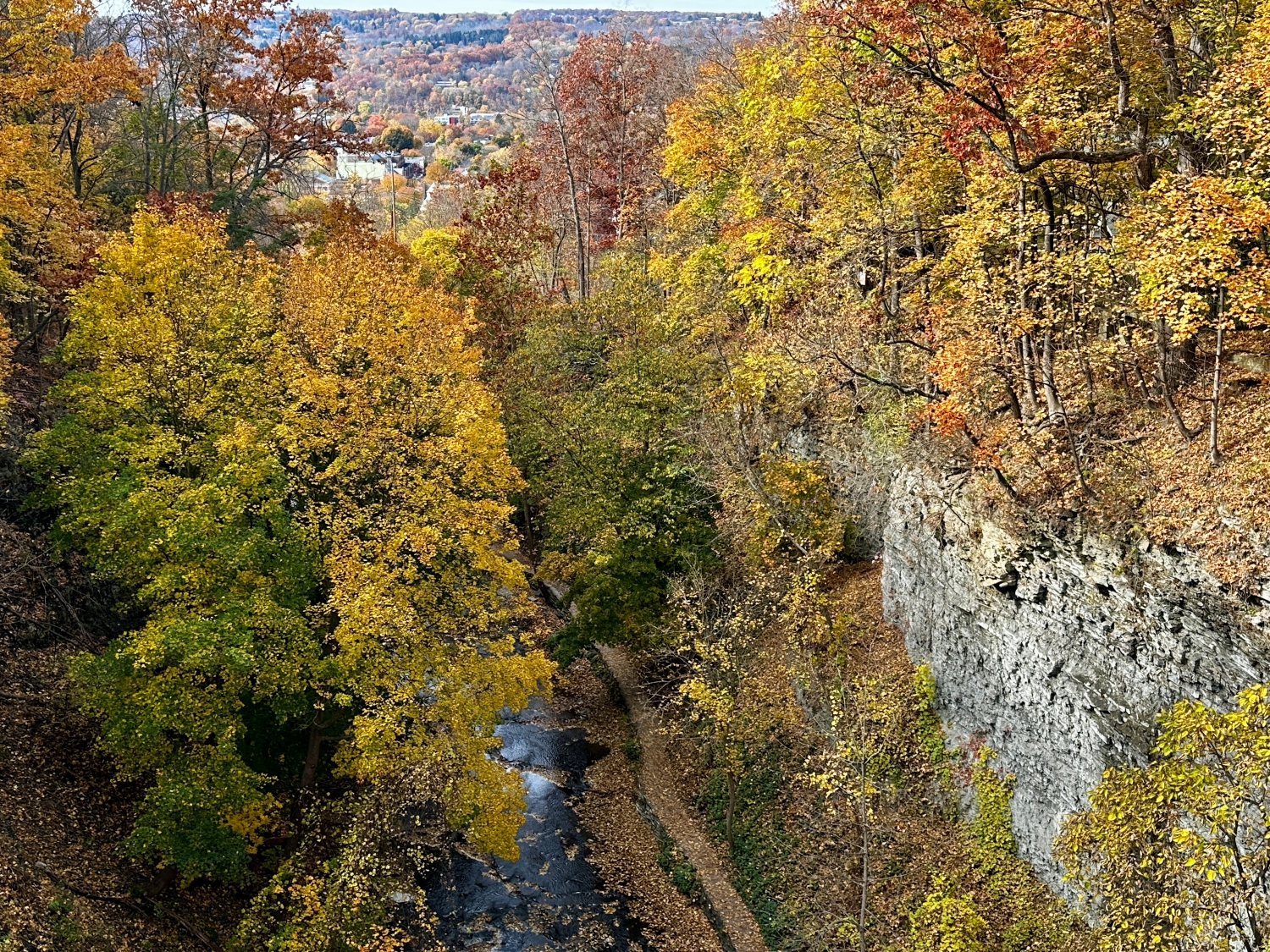
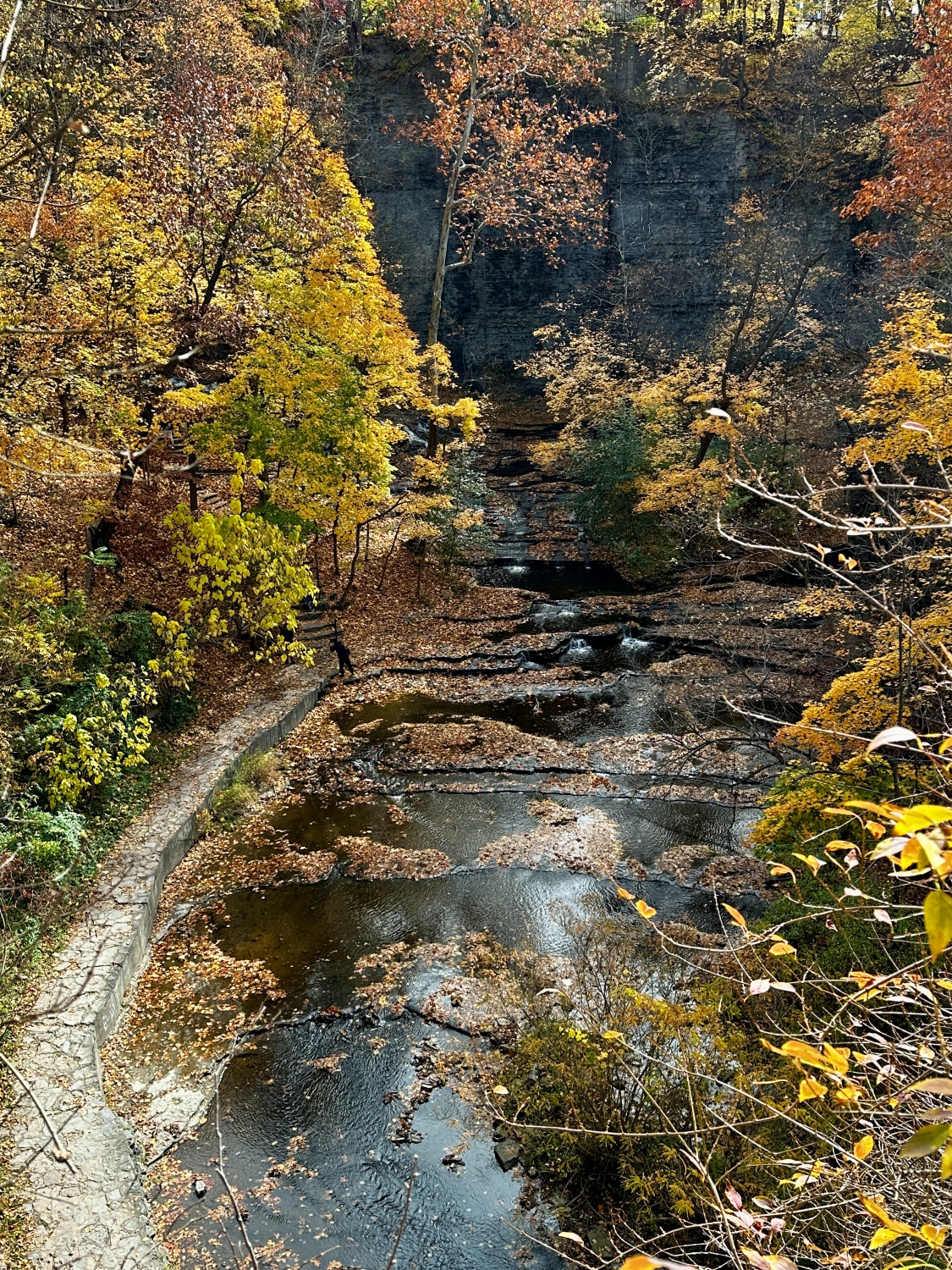
Below footpath along the gorge rim, the creek wound through, its banks littered with leaves that had completed their journey from branch to earth. They floated on the water’s surface, spinning gently in the current as though reluctant to leave this last dance. The sound of the water was a steady undercurrent, soothing and rhythmic, as it tumbled over stones and carved its way through the gorge. I paused to watch, entranced by the way water and rock, ephemeral and eternal, seemed to coexist in a kind of harmony.
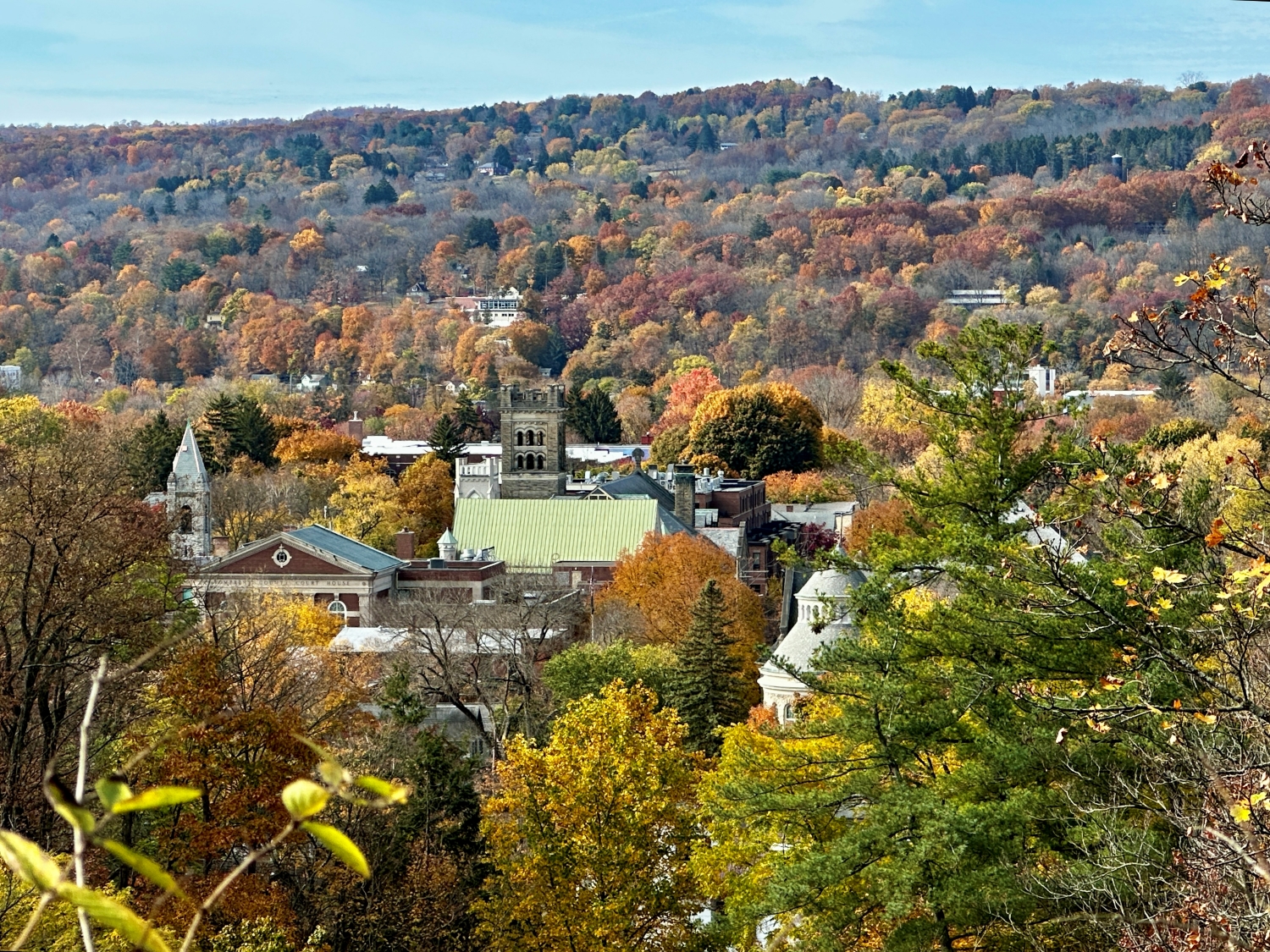
I stopped at a lookout point and surveyed the town sprawled out below, nestled amidst the fiery colors of the surrounding hills. The architecture of Ithaca’s buildings peeked through the trees, each roof and spire framed by the season’s palette. This was a town embraced by nature; its rhythm dictated as much by the seasons as by human hands. The sight stirred a sense of gratitude within me; here was a place that reminded you to slow down and observe, to notice the subtle shifts in light, in color, in the way a single gust of wind could change a landscape.
I continued along the rim, passing a small waterfall that spilled over the rocks with a quiet insistence. The water had carved smooth pathways in the stone, evidence of its long journey and persistent power. The sunlight hit the spray just right, casting a fleeting rainbow that shimmered and then disappeared as I moved. I felt a sense of companionship with the water—both of us moving forward, shaped by the paths we traverse, yet always adapting to whatever lay ahead.
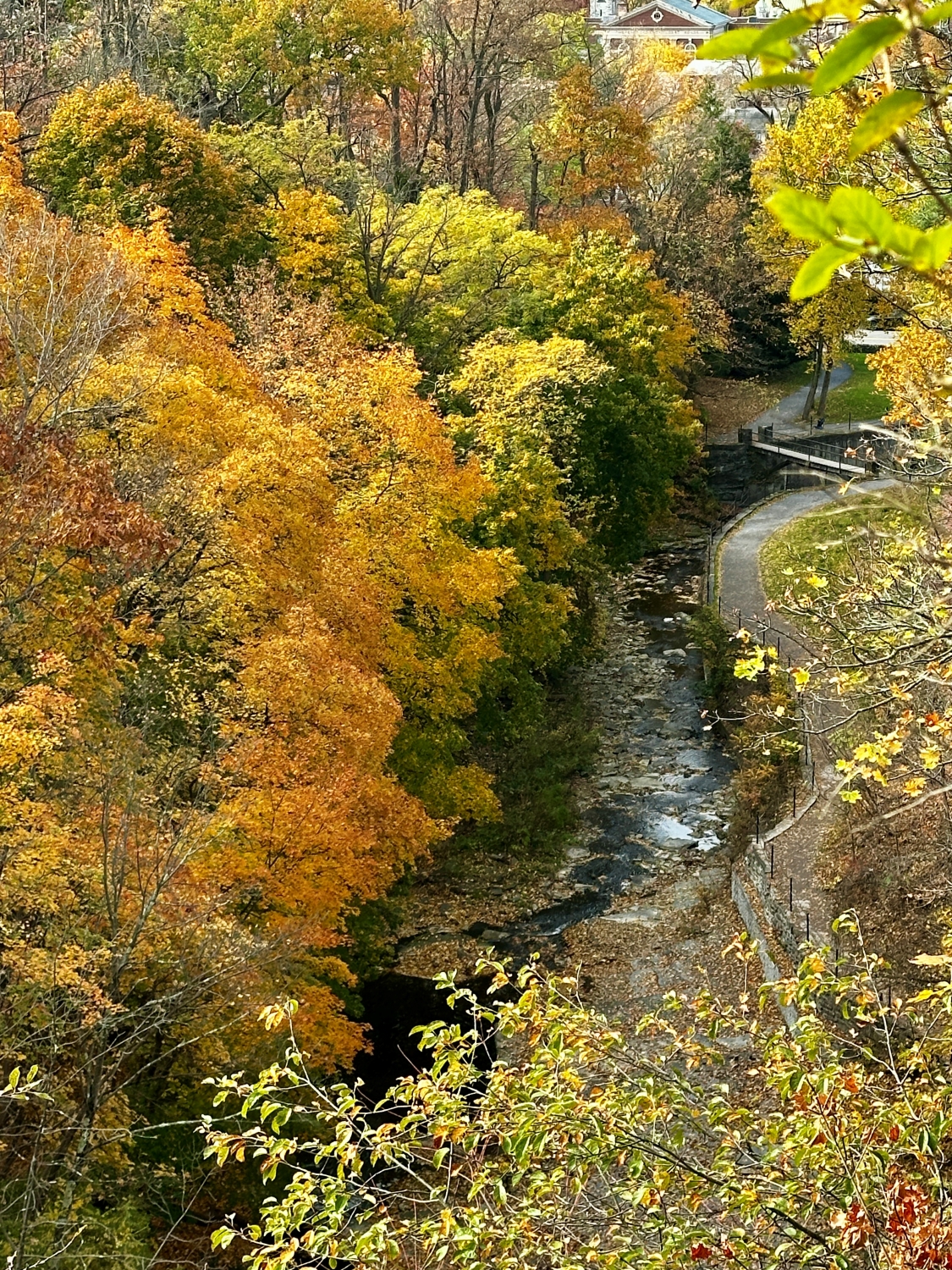
The last part of the trail led me through a dense thicket of trees, their branches hanging low, forming a natural archway. The air was heavy with the musky scent of fallen leaves and the spicy aroma of pine needles underfoot. Here, the light was softer, muted by the thick canopy overhead. The quietness enveloped me, broken only by the occasional rustle of a squirrel in the leaves or the distant caw of a crow. It was the kind of silence that feels sacred, where each sound, no matter how small, becomes profound.
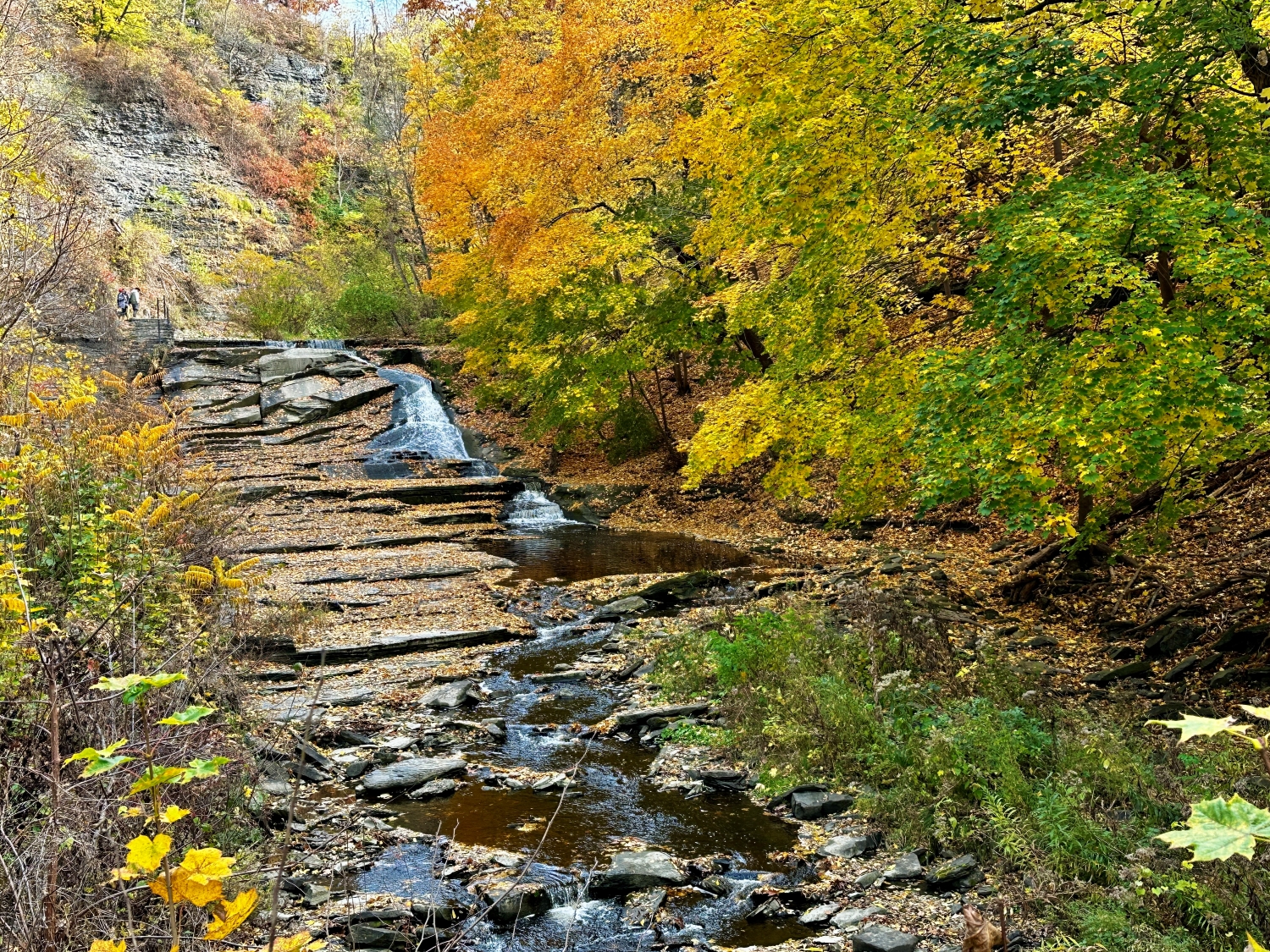
Entering Cascadilla Gorge from Linn Street

Emerging from the shaded path, I took one last look back at the gorge. The scene was both familiar and new—a blend of natural beauty and the nostalgia of seasons past. I felt a sense of peace, grounded by the cycles of the earth, by the ebb and flow of life around me. In this moment, on the brink of Halloween, the world felt both hauntingly beautiful and reassuringly steadfast, a reminder that even as the leaves fall and the days grow shorter, there is a promise of renewal in the quiet persistence of nature.
Enter your email to receive notification of future postings. I will not sell or share your email address.

Cascadilla Gorge Walks: Scenic Views and History

An 84-degree October walk up Cascadilla Gorge—quiet paths, bluestone porches, fresh paint on the bridge—waiting for the footbridge to catch the last, warm evening sunlight.

Every fall I make a point of walking Cascadilla Gorge at least once. On an 84-degree October 9 afternoon, Pam was tied up with chores, so I parked downtown and stopped to see the grandchildren. They were with their mom. Two were “too tired” after school to do anything. The youngest, at the age of four, was not yet in school and he floated the idea of the skateboard park; for me, that wasn’t in the cards. So I set off on foot up Court Street, past the residence of Buddhist monks at the gorge entrance.

Cascadilla Gorge is part of Cornell Botanic Gardens (formerly the Plantations), the university unit that stewards natural areas and gardens across campus. Foot traffic was light. A sign explained why: the lower trail was closed at Stewart Avenue, where the bridge spans the ravine. I crossed to the north side by the Christian Science church and wound up Cascadilla Park Road to the rim trail that climbs East Hill toward campus.

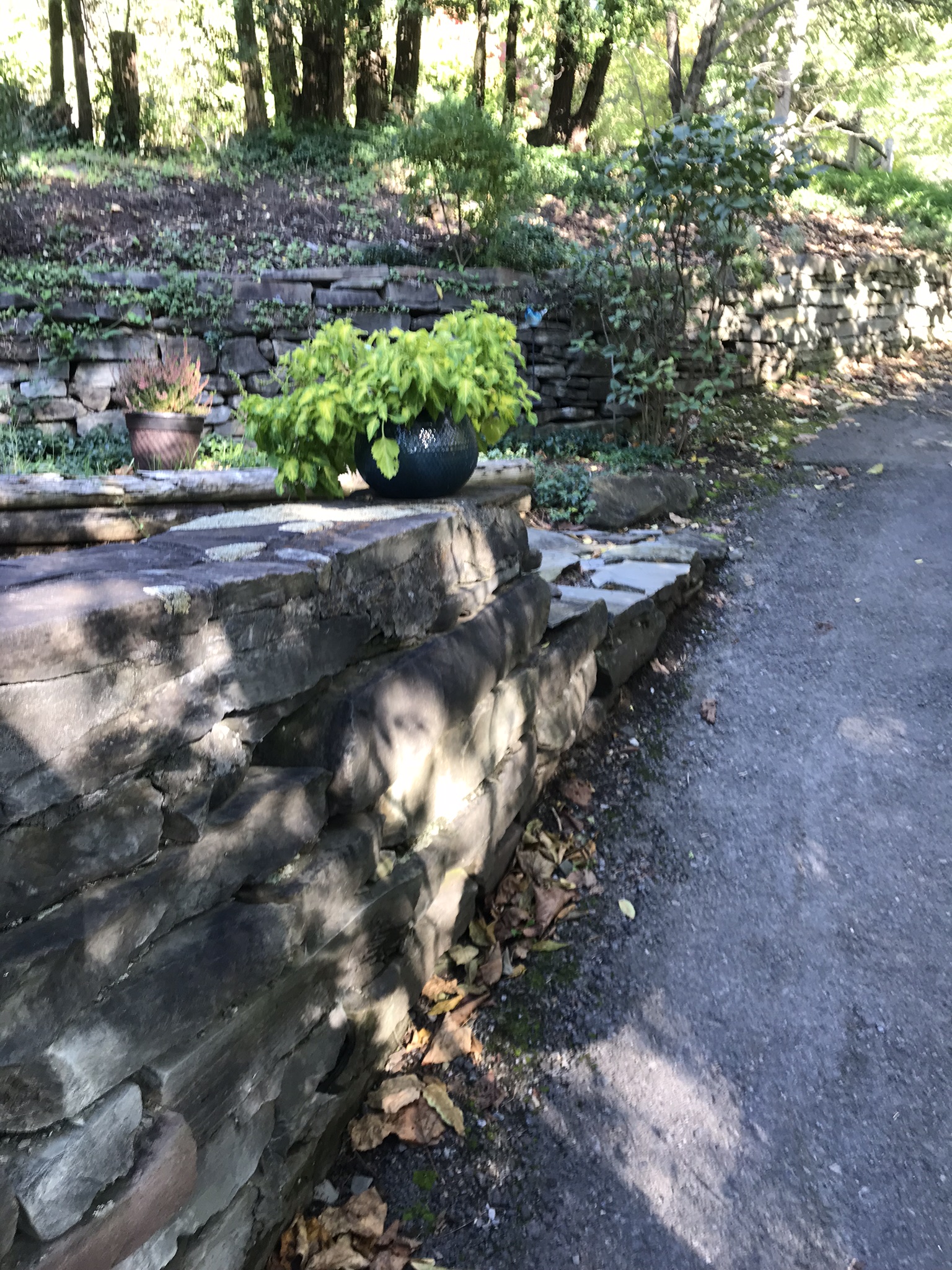
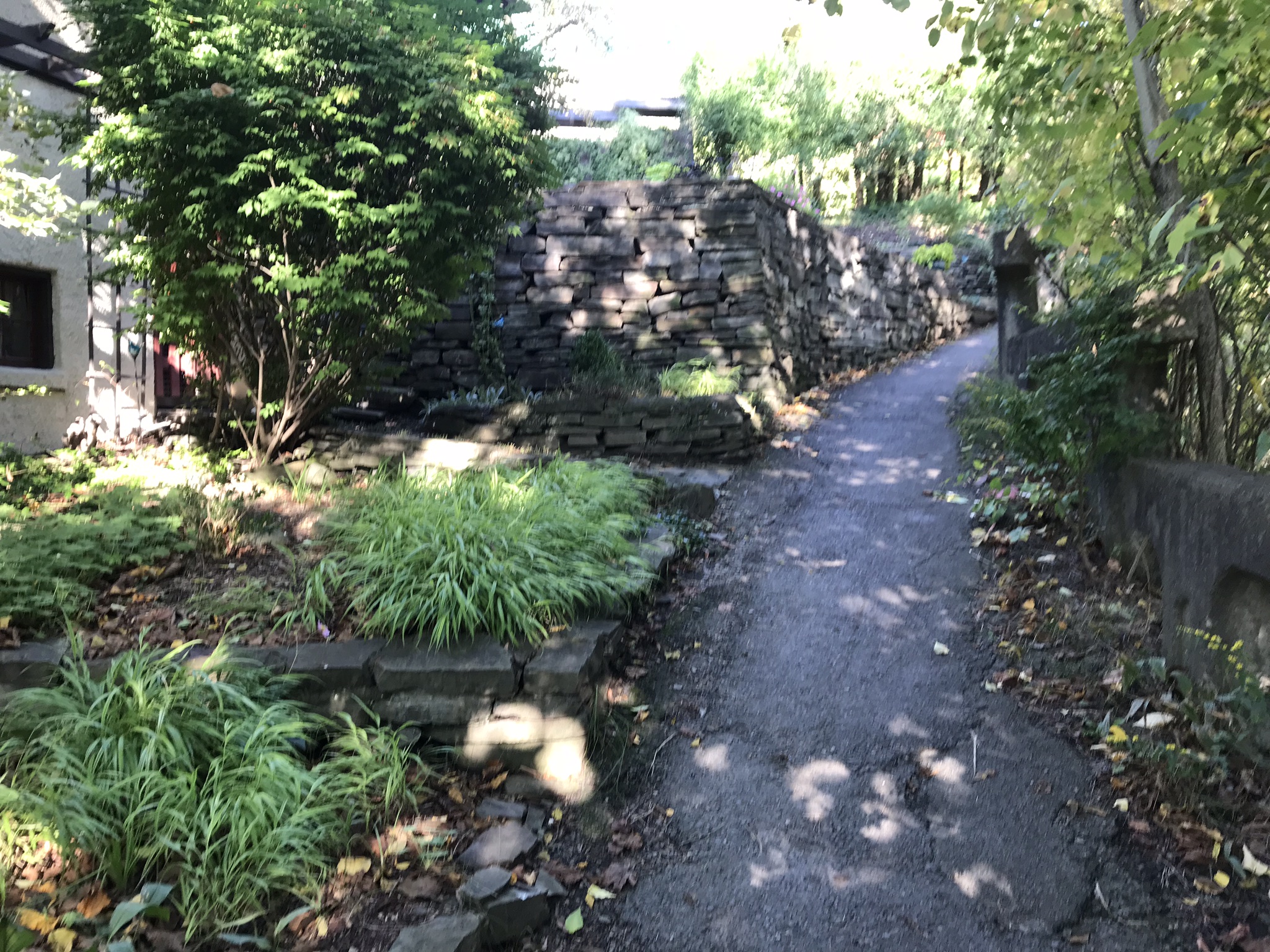
Homes line this stretch, porches facing the gorge where the constant music of creek and falls carries up. Not feeling ambitious, I made a few phone snapshots. Here the path squeezes past a porch built of local “bluestone,” a feldspathic sandstone native to the region—around town it’s sometimes called “Llenroc,” Cornell in reverse.

That pot you see in the previous photo gets a closer look here, with more of the same weathered bluestone.

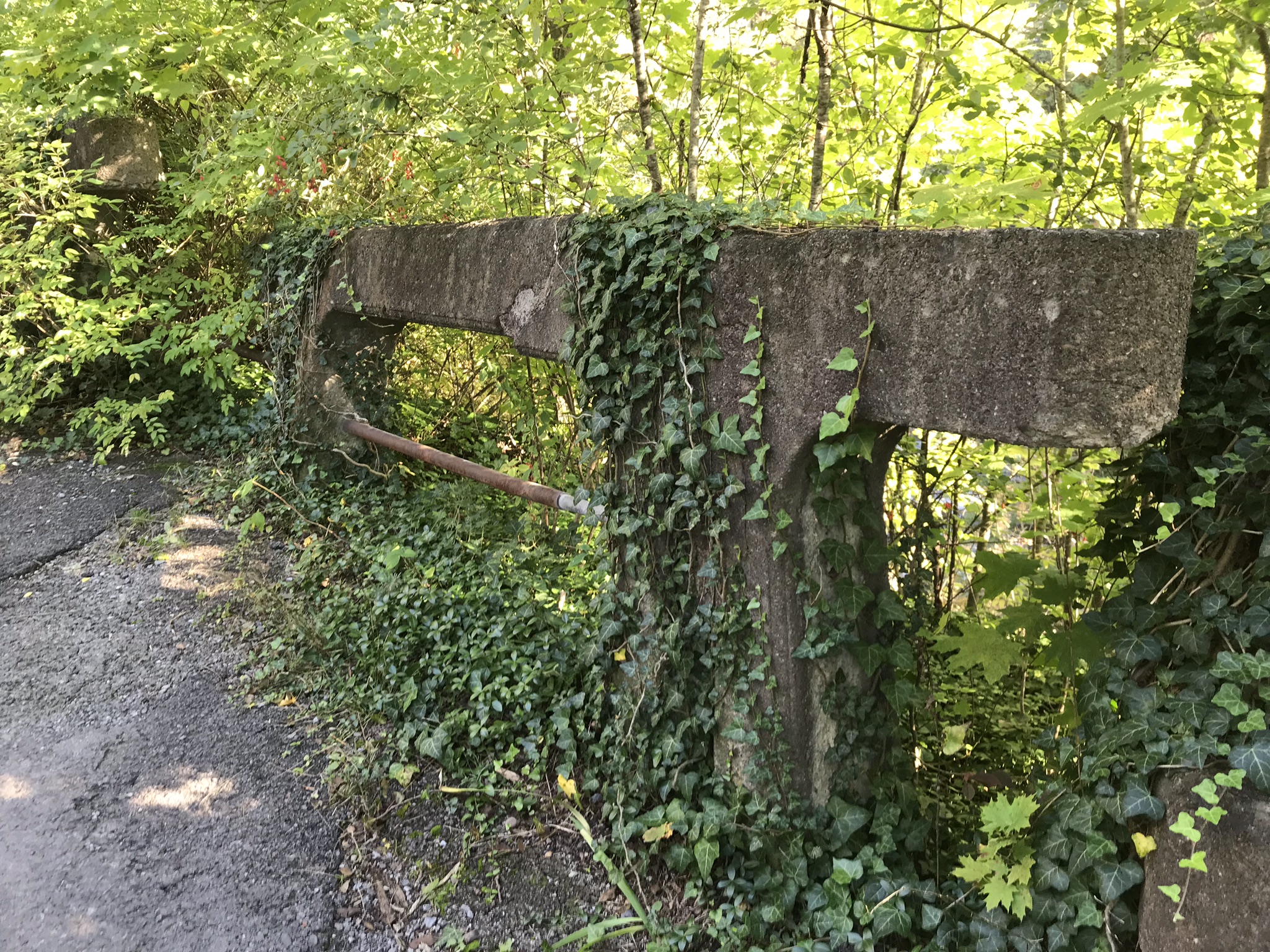
The drop to the gorge floor is steep, sheer in places. The barrier fence looks stout in some sections and thins to almost nothing in others. A few years ago, a recent Cornell graduate walking home late along this path fell to his death. I continued to the fork for the Ithaca City Cemetery, climbed to Stewart Avenue, turned right to cross the Cascadilla bridge, then right again onto the Gorge Rim Trail back toward town. At the bridge I noticed part of the closure work: fresh paint on the bridge and on the suicide-prevention netting beneath. On September 24—just fifteen days earlier—a Cornell senior had jumped; the net caught him, and the fire department brought him to safety.

From the concrete barrier in that photo you can peer into the gorge: a beautiful view, the steady voice of water rising from below. I try to leave the darker stories where they belong—at least until the sight of fresh paint pulls them back to mind.

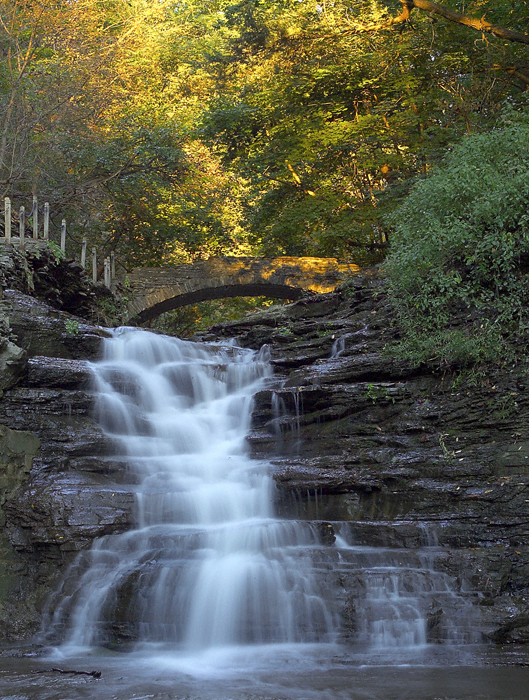
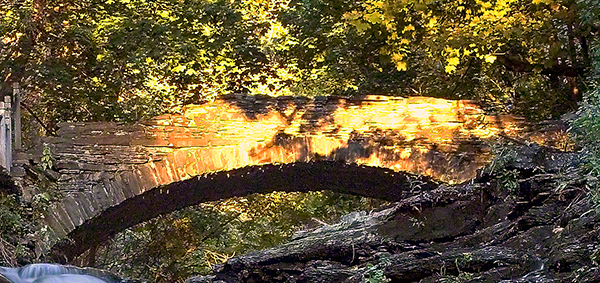
I took the following photograph in 2005, the September before my previous post, “Autumn Stroll in Sapsucker Woods” with the Kodak DSC pro slr-c, an ND filter, 50 mm lens and a tripod. It was a planned session, I work waterproof boots and was able to stand in the creek after a series of rain-free days. At this time of the year the gorge opens to the setting sun. I waited, taking a series of photographs for the perfect amount of light on the footbridge. The feature photograph (the header to this posting) is a detail from a shot with the bridge more fully lit.

The header image for this post comes from a planned session in September 2005, just before the photograph of my “Autumn Stroll in Sapsucker Woods” post. I used a Kodak DCS Pro SLR/c with an ND filter, a 50 mm lens, and a tripod. After several rain-free days I wore waterproof boots and stood mid-creek. In autumn the gorge opens to the setting sun; I waited and shot a sequence until the light laid perfectly across the footbridge. The banner image is a detail from a frame where the bridge is more fully lit.

We have a framed print of that photograph at home. I mounted it as a gift to Pam on our first Valentine’s Day.

“September Sunset in Cascadilla Gorge”

If you’ve walked Cascadilla Gorge in autumn, I’d love to hear your favorite vantage points—porches along the rim, the lower stone steps, or the footbridge at golden hour. Do you know any stories about Llenroc bluestone on these houses, or remember the Stewart Avenue Bridge before its safety upgrades? Photographers: what helps you balance deep shade and bright water from the designated trails? Share a tip or a memory in the comments.

Enter your email to receive notification of future postings. I will not sell or share your email address.