A Serene Walk in Glendalough: Nature and History Unite

Find here a serene visit to Glendalough, highlighting the ancient beauty of its landscape, monastic history, and the deep sense of peace felt among the gravestones.

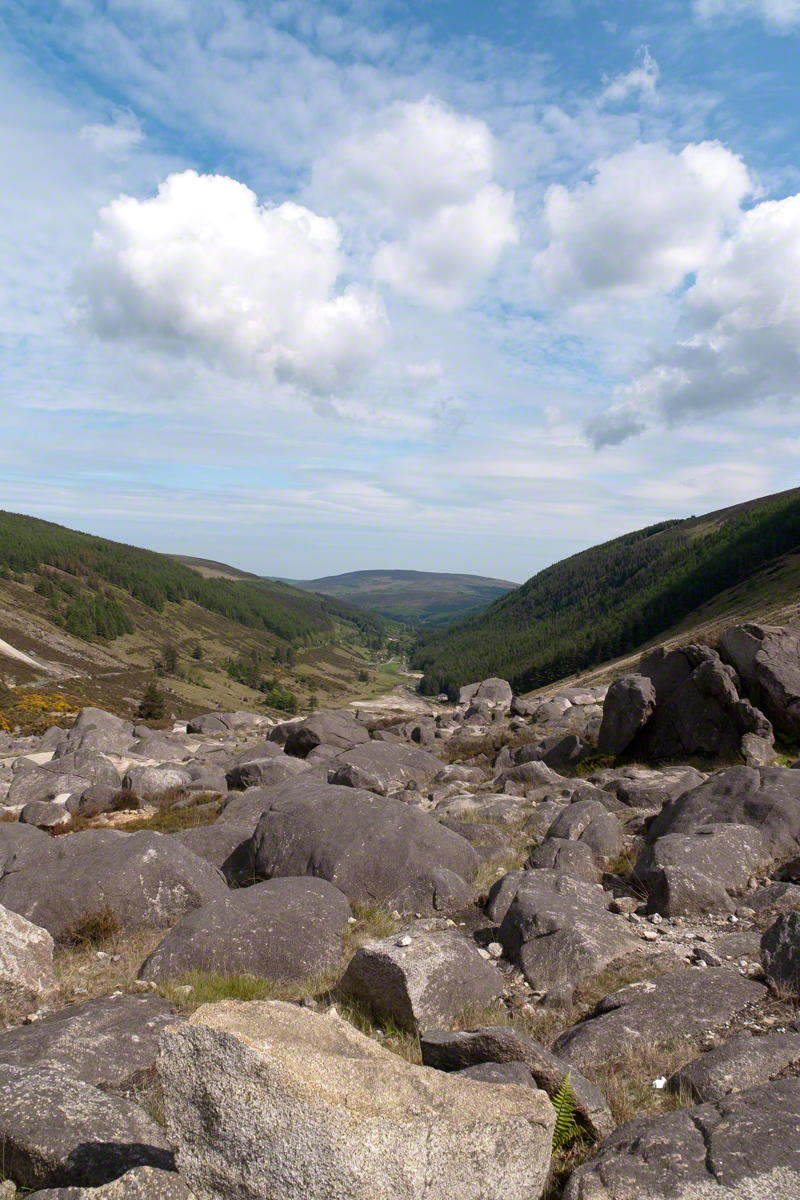
We arrived in Glendalough on a bright spring morning, a gentle breeze carrying the scent of grass and distant water. Even before stepping out of the car, I sensed something ancient in the air, as though the centuries themselves lay waiting among the stones. The peaks of the Wicklow Mountains rose around me, their slopes draped in verdant forests that whispered of forgotten tales. In the distance, shimmering like a secret, the Upper Lake beckoned under the watchful hush of rugged hillsides. I took a deep breath and started my wander.
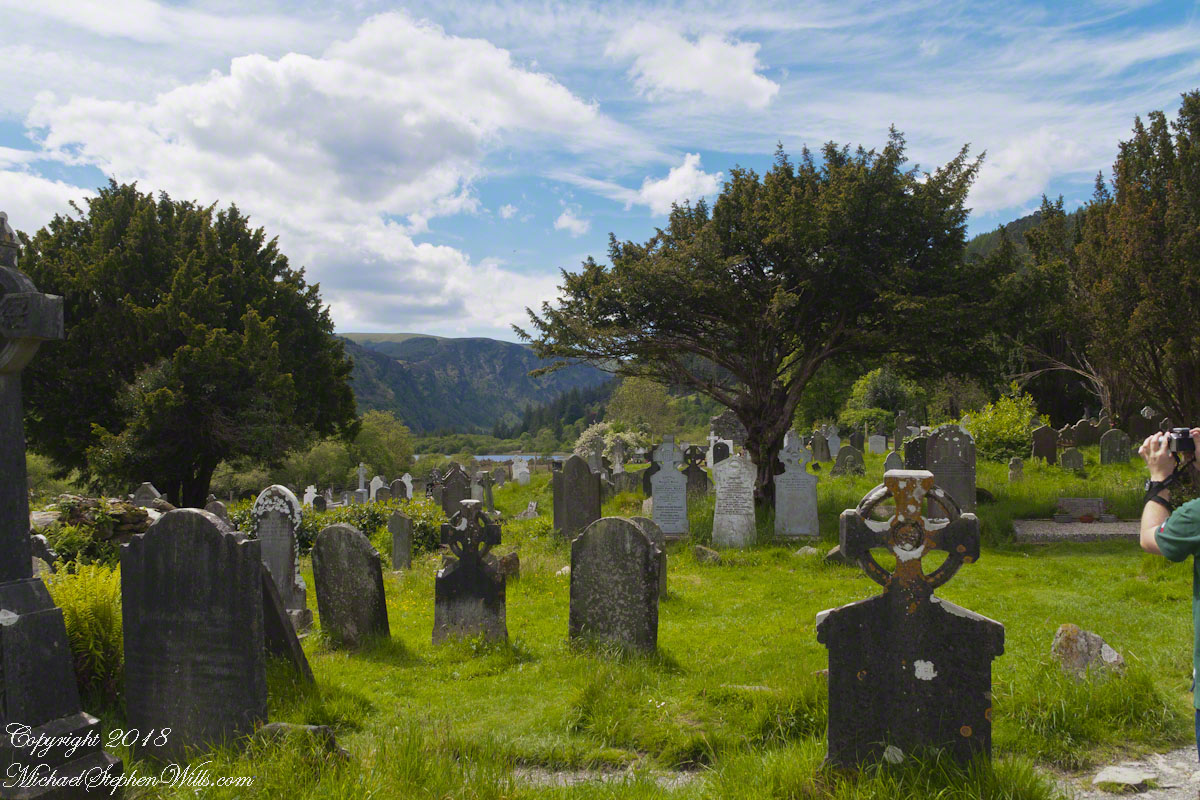
One of the lakes for which the valley is named, above the headstones in the mid-distance

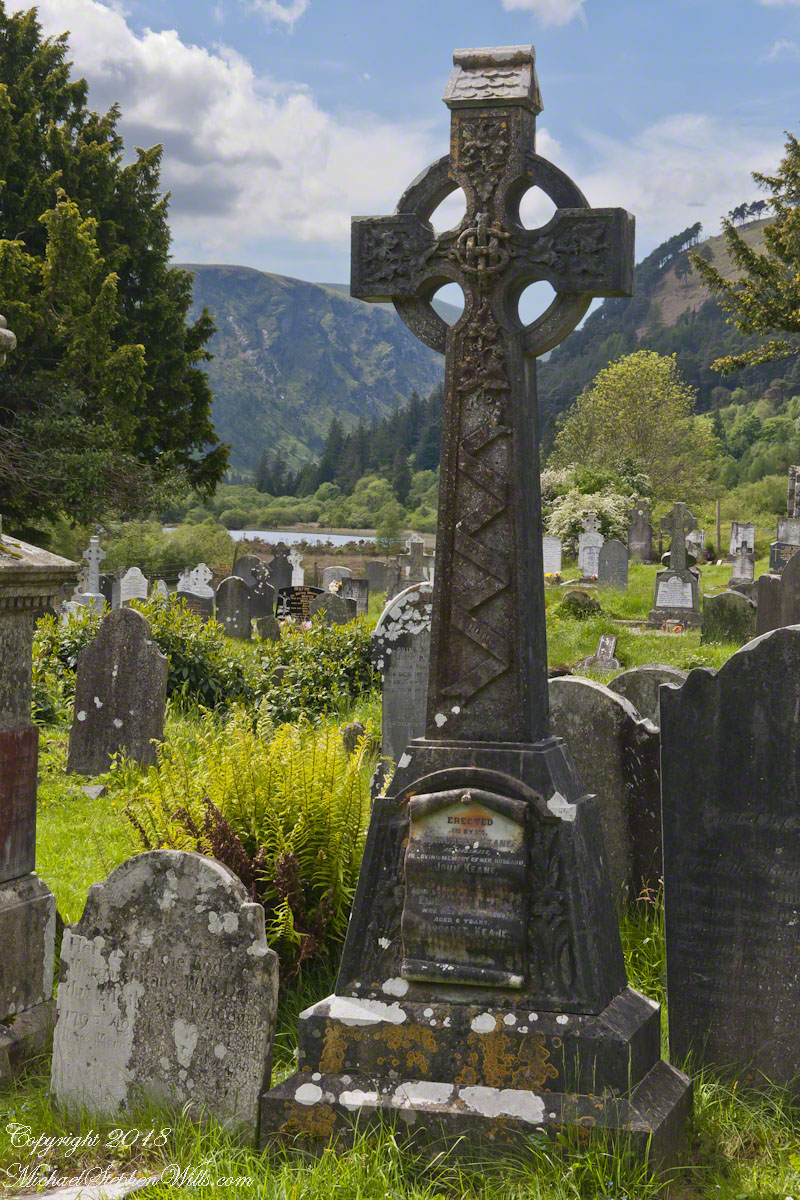
Walking through the monastic settlement, I felt enveloped by a hush both reverential and oddly comforting. The path led me to a cluster of gravestones leaning gently askew, each marked by Celtic crosses standing guard over the memory of those buried below. One cross, carved from sturdy stone, immediately drew my attention with its intricate knotwork etched deep into the surface. The front of it bore swirling designs reminiscent of interwoven vines—symbols of eternity, continuity, and faith. I found myself imagining centuries of pilgrims, each pausing here, hands gently resting on the weathered carvings, offering up their prayers and hopes.
Memorial from a mother to her 6 year old son and husband

A bit farther on, I came upon a small grouping of headstones bowed in silent unity. Ferns and moss carpeted the ground in bright greens, creating a natural tapestry that wove together life and memory. The slightly overgrown grass softened the entire landscape, allowing each stone to stand quietly yet firmly in the earth. From behind these markers, I caught my first glimpse of the shimmering lake, framed perfectly by the slopes of the valley. The water’s surface reflected the sky’s azure brilliance and accentuated the gentle hush that fell upon the graveyard like a comforting quilt.

As I paused to take a few photographs, I felt a hint of magic floating through the air—an indefinable sense that beyond what my eyes perceived, an age-old spirit thrived. The Celtic symbols on the headstones seemed alive, their swirling knots hinting at the cycle of life and death, the oneness of the world, and the bridging of earthly existence with the mystic realm. I found myself recalling old Irish legends: stories of saints who could converse with animals, of spirits dwelling in hidden glades, of holy wells that healed weary travelers. It felt as though those tales were all around me, wrapped in the tapestry of this timeless valley.

Looking out toward the remains of the stone church—its walls crumbled yet proud—my imagination conjured the chanting of monks, their voices echoing off the surrounding hills. The same forest that sheltered me now would have encircled them all those centuries ago, shifting from season to season. It was easy to picture them gathering by the lake’s edge, cups of cold, clear water cupped in their hands, or moving reverently among the graves of those who had come before them. Here, time seemed an illusion. The line between past and present faded as I stood among these enduring stones.

Winding paths of grass guided me to another section of the cemetery, where weathered inscriptions told the stories of families, lineages, and deep connections to the land. Some headstones were so old that the lettering had nearly eroded, but others still proudly bore legible names and dates. Names like Power, Byrne, and Keane were etched in memory, followed by poignant words of affection and devotion. The place felt both solemn and comforting at once—a harmonious interplay of remembrance, reverence, and the gentle pulse of nature.
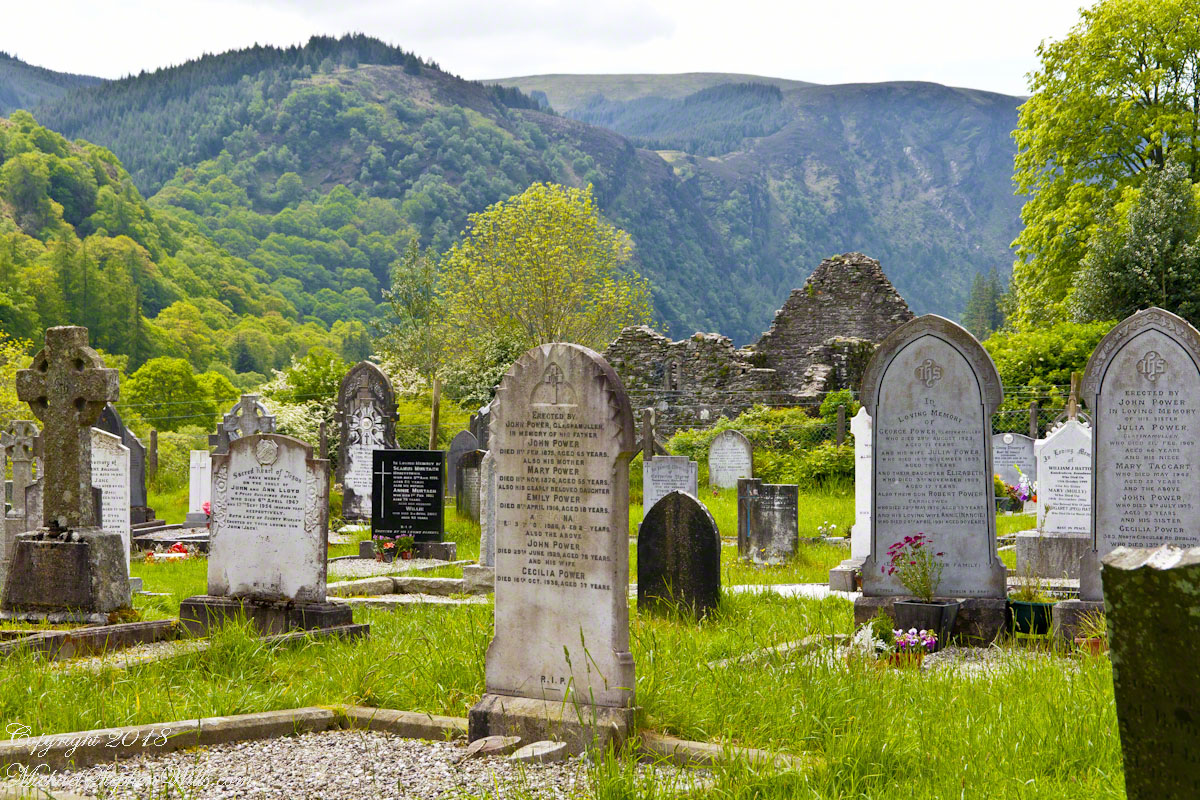
Valley walls are dramatic and steep

A sudden breeze rippled through the trees, setting the leaves to dance and carrying the lilt of birdsong across the valley. I turned to admire the view once more, and there, between towering yew trees, the lake glowed like a polished mirror. Soft clouds glided overhead in a pale blue sky. The entire scene seemed woven from a single, unbroken strand—mountain, forest, gravestone, lake, and sky merging in a spellbinding harmony. It was the kind of moment that invited awe, a moment in which to lose oneself and yet feel more fully found.

I left the cemetery with a deeper sense of peace than I had known in some time. The photographs I took may capture the beauty of Glendalough’s ancient crosses and serene landscape, but it’s the intangible hush of centuries and the gentle brush of magic that remain with me. With every step back toward the car, I felt the warmth of timelessness, and as the day’s golden light enveloped the stone monuments behind me, I carried away a tiny spark of the valley’s enchantment—a reminder that some places are truly touched by the divine.Look closely at the carved scroll at the foot of the cross.

For more background of this site, see my posting “The Cloigheach of Glendalough.”
Enter your email to receive notification of future postings. I will not sell or share your email address.

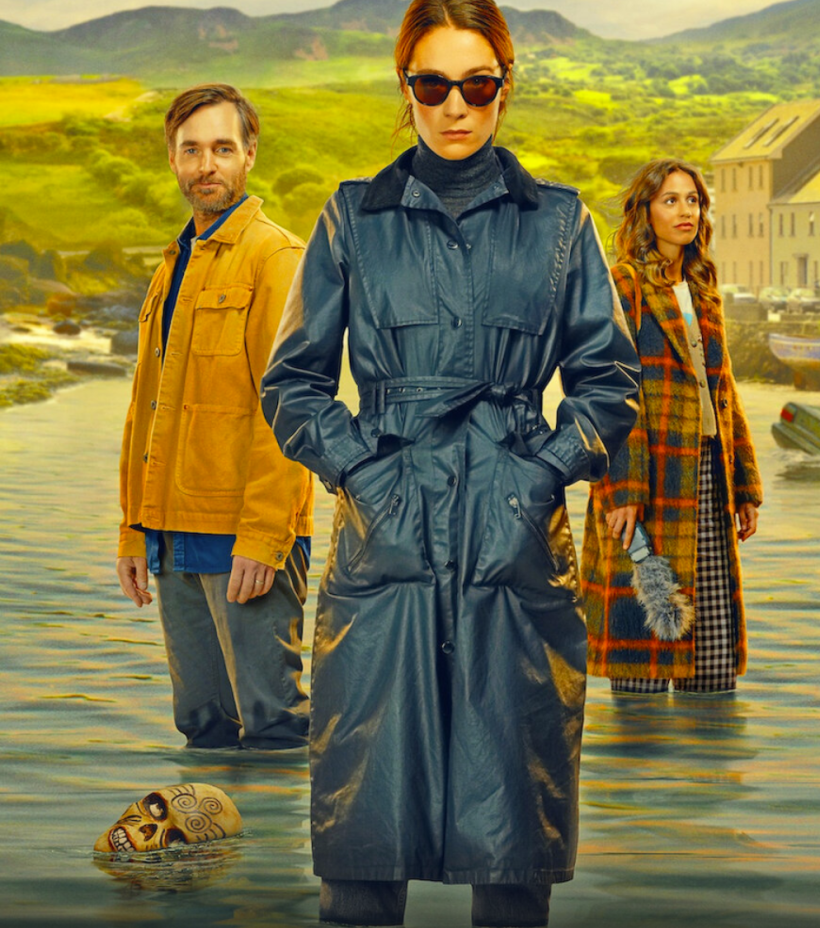
A Review of the Netflix Series “Bodkin.”

“Bodkin” on Netflix masterfully blends intrigue and dark humor, offering razor-sharp storytelling and stellar performances. Dive into a world of enigma and suspense, where every detail demands attention and rewards you with compelling drama.

The word “bodkin” evokes images of a small, sharp tool, deftly navigating the tightest of spaces. This precision and ability to cut through complexities is mirrored in Netflix’s new series, “Bodkin,” a masterful blend of intrigue and dark humor that carves out its own niche in the crowded landscape of modern television.

From the opening scenes, “Bodkin” plunges viewers into a world brimming with enigma and suspense. The series is a taut narrative tapestry, meticulously woven with threads of mystery, psychological depth, and unexpected wit. Its storytelling is as sharp and incisive as the tool it’s named after, deftly unpicking the tangled skeins of its characters’ lives and secrets.

The show is anchored by an ensemble cast delivering performances that are nothing short of stellar. Each actor brings a unique shade to their character, creating a rich mosaic of personalities that are as compelling as they are multifaceted. The writing is crisp and clever, peppered with dialogue that crackles with intelligence and dry humor. It’s this blend of sharp wit and deep emotion that sets “Bodkin” apart from its peers.

Visually, “Bodkin” is a feast for the eyes. The cinematography captures the essence of its settings, transforming them into integral characters in their own right. The lush, atmospheric shots heighten the sense of place and mood, drawing viewers deeper into the show’s intricate world. The pacing is perfect, unspooling its mysteries with a rhythm that keeps viewers perpetually on the edge of their seats.

However, “Bodkin” is not without its minor flaws. At times, the labyrinthine plot can seem almost too dense, requiring viewers to pay close attention to every detail. But these moments are fleeting and overshadowed by the series’ many strengths.

In summary, “Bodkin” is a razor-sharp triumph, a series that cuts through the clutter with its incisive storytelling, brilliant performances, and visual splendor. It’s a show that demands and rewards attention, a true gem in Netflix’s ever-expanding treasure trove of content.

Copyright 2024 Michael Stephen Wills All Rights Reserved

Newgrange X

Step into the ancient world of Neolithic monuments and discover the astounding astronomical knowledge of our ancestors. Explore the Newgrange Lightbox in Ireland and similar marvels across Europe, revealing a deep connection between ancient peoples and the cosmos. Join me in unveiling these architectural wonders.

Continue reading “Newgrange X”

Newgrange VIII

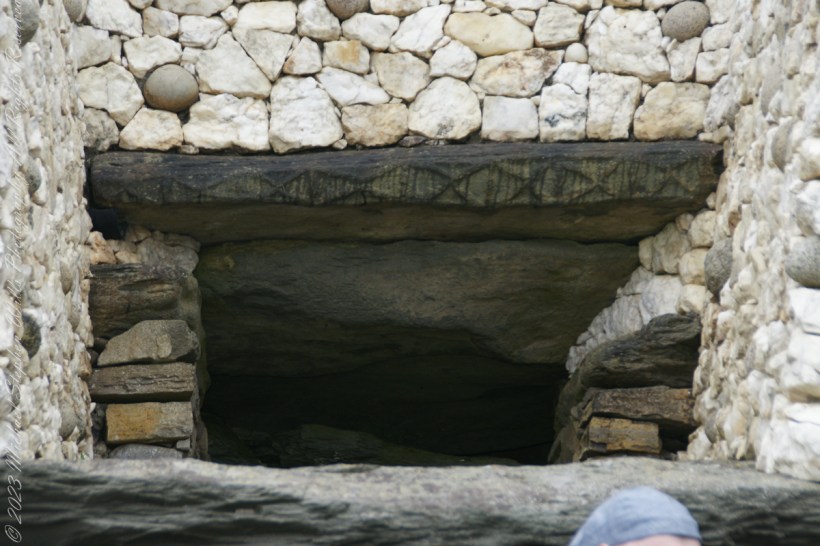
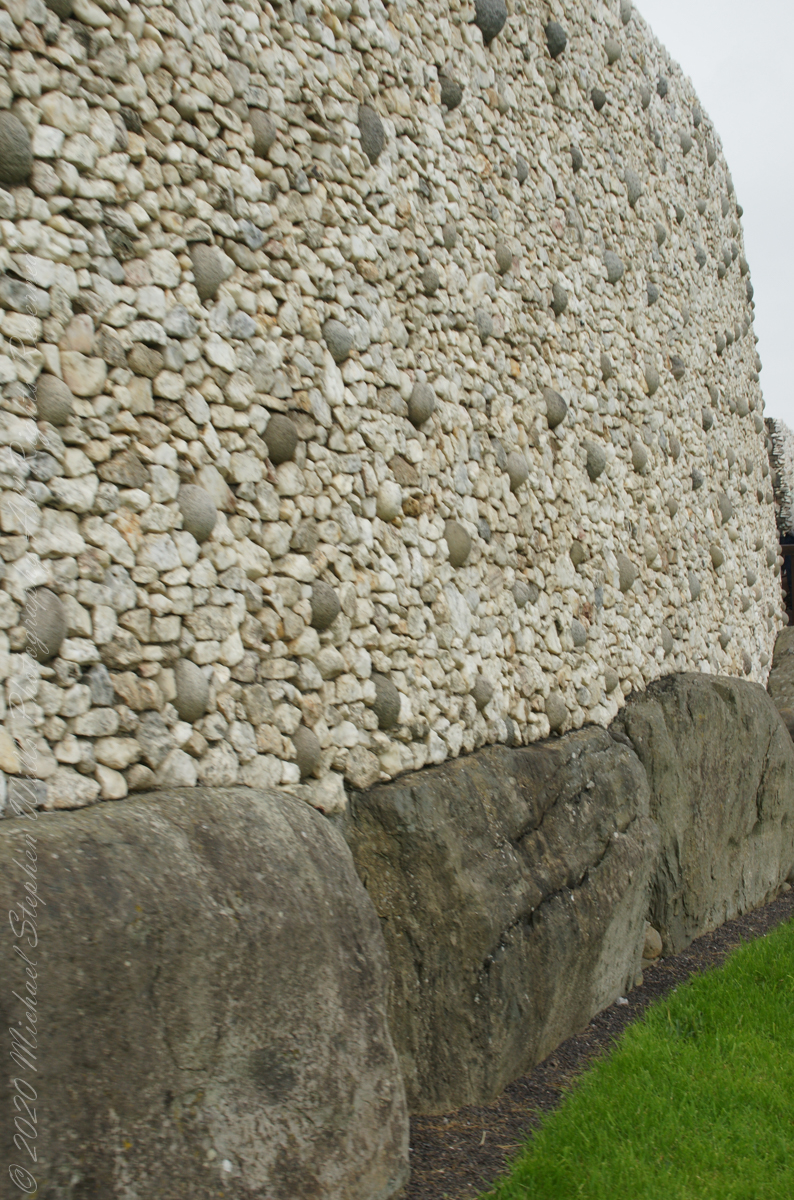
The Newgrange facade and kerbstones consists of stones from various locations, believed to be transported by sea and river.

The Newgrange façade and entrance of today is a creation from the large quantity of small stones unearthed and conserved during excavation given form by a steel-reinforced concrete retention wall. 

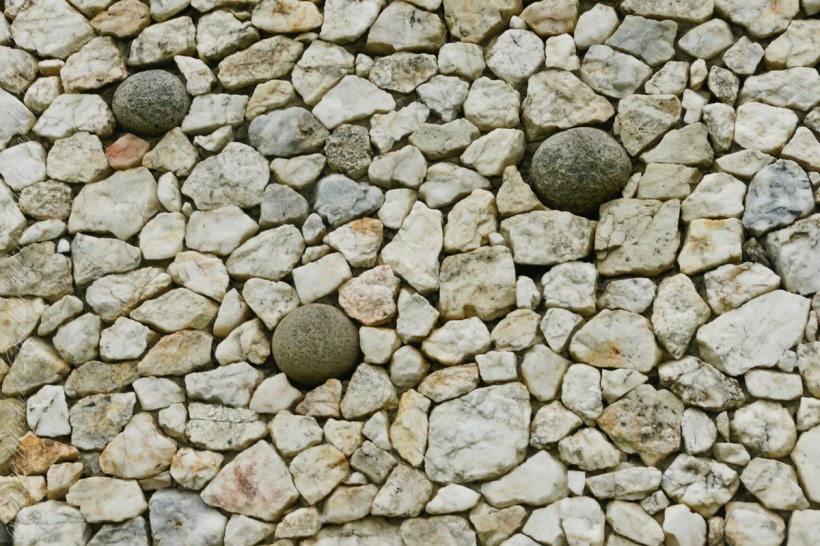
The brilliant white quartz cobblestones were collected from the Wicklow Mountains, 31 miles to the south.  Our guide called them “sunstones” for the way they reflect sunlight. In the following photograph is white quartz, the same excavated 1967-1975 from the Newgrange site and incorporated into the facade, I collected from “Miners Way” along R756 (above Glendalough).

You can also see in these photographs dark rounded granodiorite cobbles from the Mourne Mountains, 31 miles to the north.  Dark gabbro cobbles from the Cooley Mountains and banded siltstone from the shore at Carlingford Lough both locations on the Cooley Peninsula where my mother’s family still has farms.

The stones may have been transported to Newgrange by sea and up the River Boyne by fastening them to the underside of boats at low tide. None of the structural slabs were quarried, for they show signs of having been weathered naturally, so they must have been collected and then transported, largely uphill, to the Newgrange site. The granite basins found inside the chambers also came from the Mournes.

Geological analysis indicates that the thousands of pebbles that make up the cairn, which together would have weighed about 200,000 tons, came from the nearby river terraces of the Boyne. There is a large pond in this area that is believed to be the site quarried for the pebbles by the builders of Newgrange.

Most of the 547 slabs that make up the inner passage, chambers, and the outer kerbstones are greywacke. Some or all of them may have been brought from sites either 3 miles away or from the rocky beach at Clogherhead, County Louth, about 12 miles to the northeast.

Click Me for the first post of this series.

Copyright 2023 Michael Stephen Wills All Rights Reserved

The Cloigtheach of Glendalough

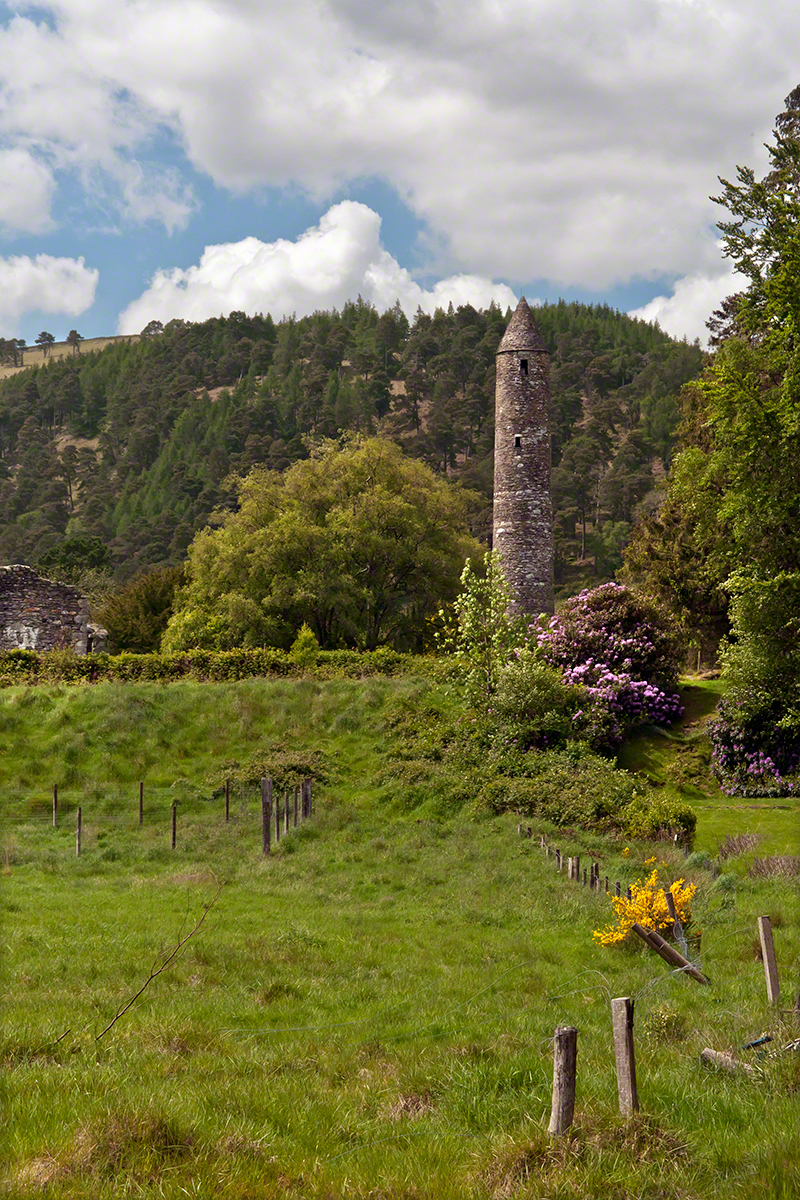
A fine round stone tower of mica slate and granite

Cloigtheach is the Irish language name for a round stone tower.  The word’s literal meaning is “Bell House.”  This fine example of mica slate and granite is found in the Glendalough valley of County Wicklow, Ireland.

The sun was past noon when we arrived at this glacial valley of the Wicklow mountains.  In the few hours available I shot the tower from numerous angles and chose this because the tower is placed in the larger natural environment, viewed as a singular object apart from the monastic city the tower is placed among.

The Cloigtheach of Glendalough– CLICK ME!!!!

Saint Kevin founded a monastic settlement within Glendalough valley almost 1,500 years ago, in the late 6th century A.D. As a religious center the monastery flourished for 600+ years, becoming a monastic city. Destroyed by English forces in 1398, it was disestablished at that time. Still, Glendalough served as a pilgrimage destination through the intervening centuries. The surviving buildings date from the 10th through 12th centuries.

Rebuilding and restoration efforts began 1876, including the roof of this tower using original stones. At 30.48 meters (100 feet) tall the Cloigtheach of Glendalough is the landmark by which the site is known.

Enter your email to receive notification of future postings. I will not sell or share your email address.

Glendalough View near Turlough Hill

An exceptional vista on a May afternoon

Head west from the Monastic City at the foot of the valley, climb pass the waterfalls to reach this east facing viewpoint.

I am standing near the path pilgrims from the west of Ireland travelled to the Glendalough holy sites.

Also, at my feet are “sun stones” a white quartz used by the builders of the Newgrange monument of the Boyne River Valley.

Click the link for my online gallery of Irish theme.
Click link for another Ireland Story “On the Tain Way.”

Copyright 2021 Michael Stephen Wills