Otherworldly Assembly?

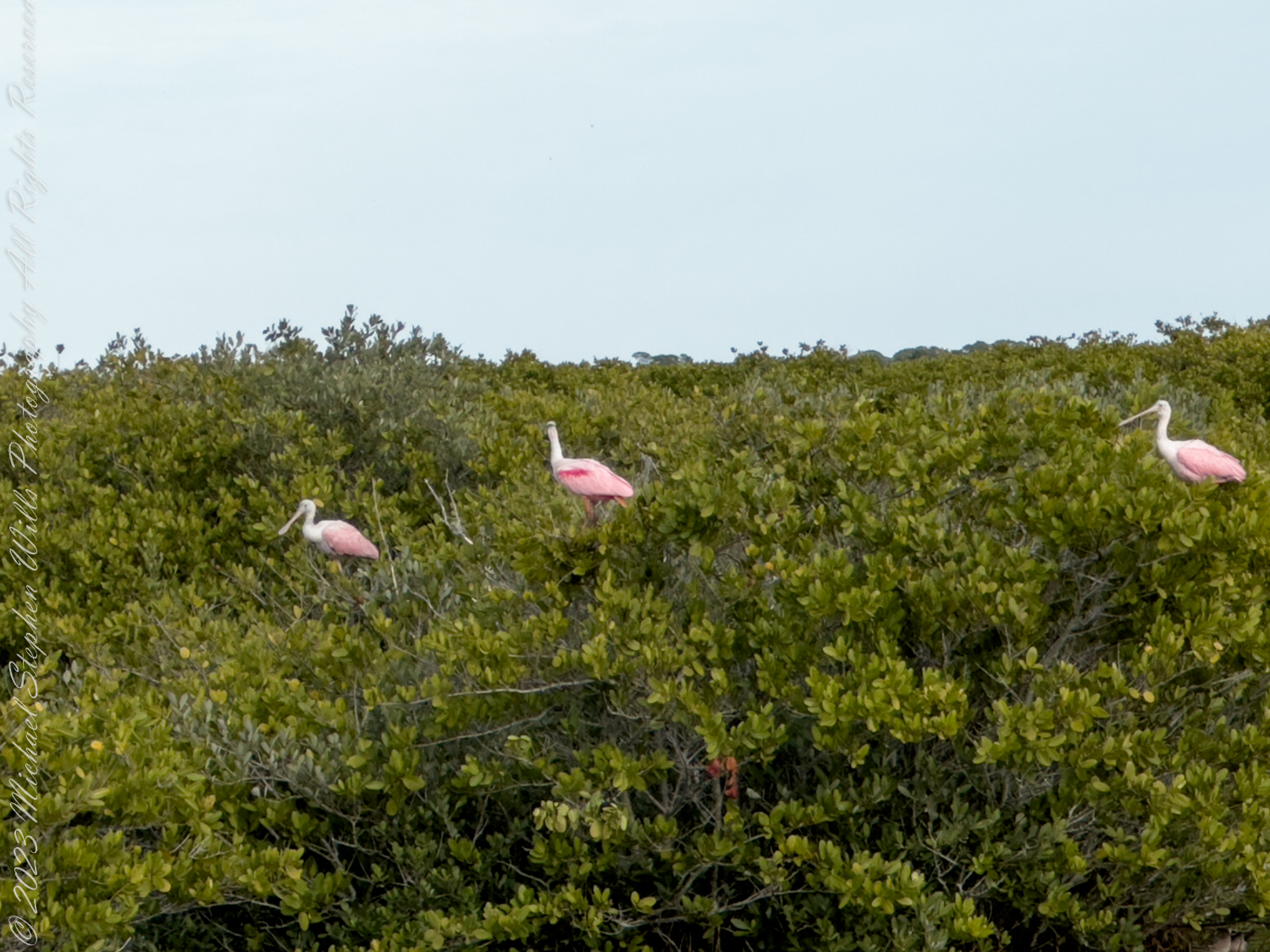
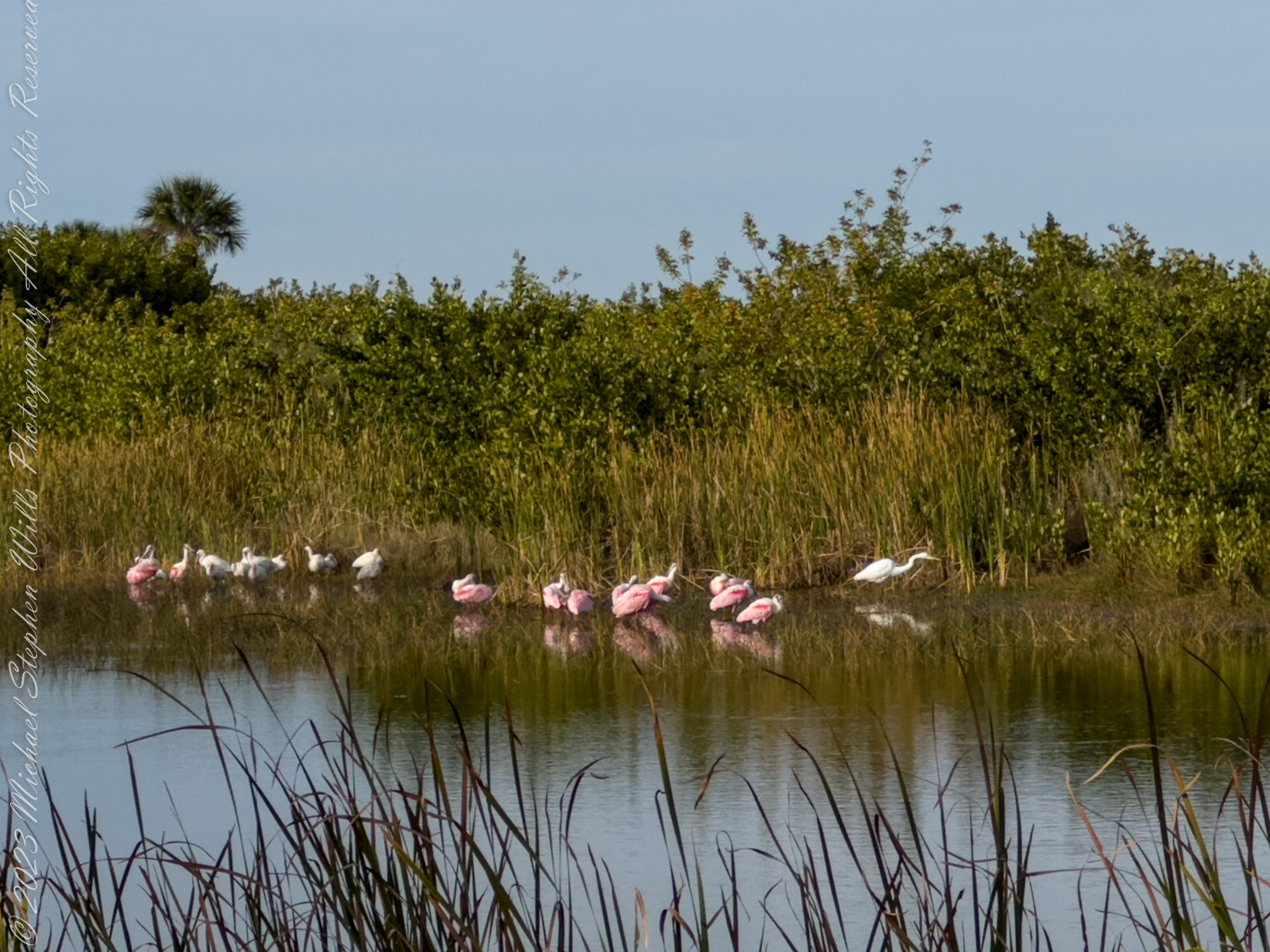
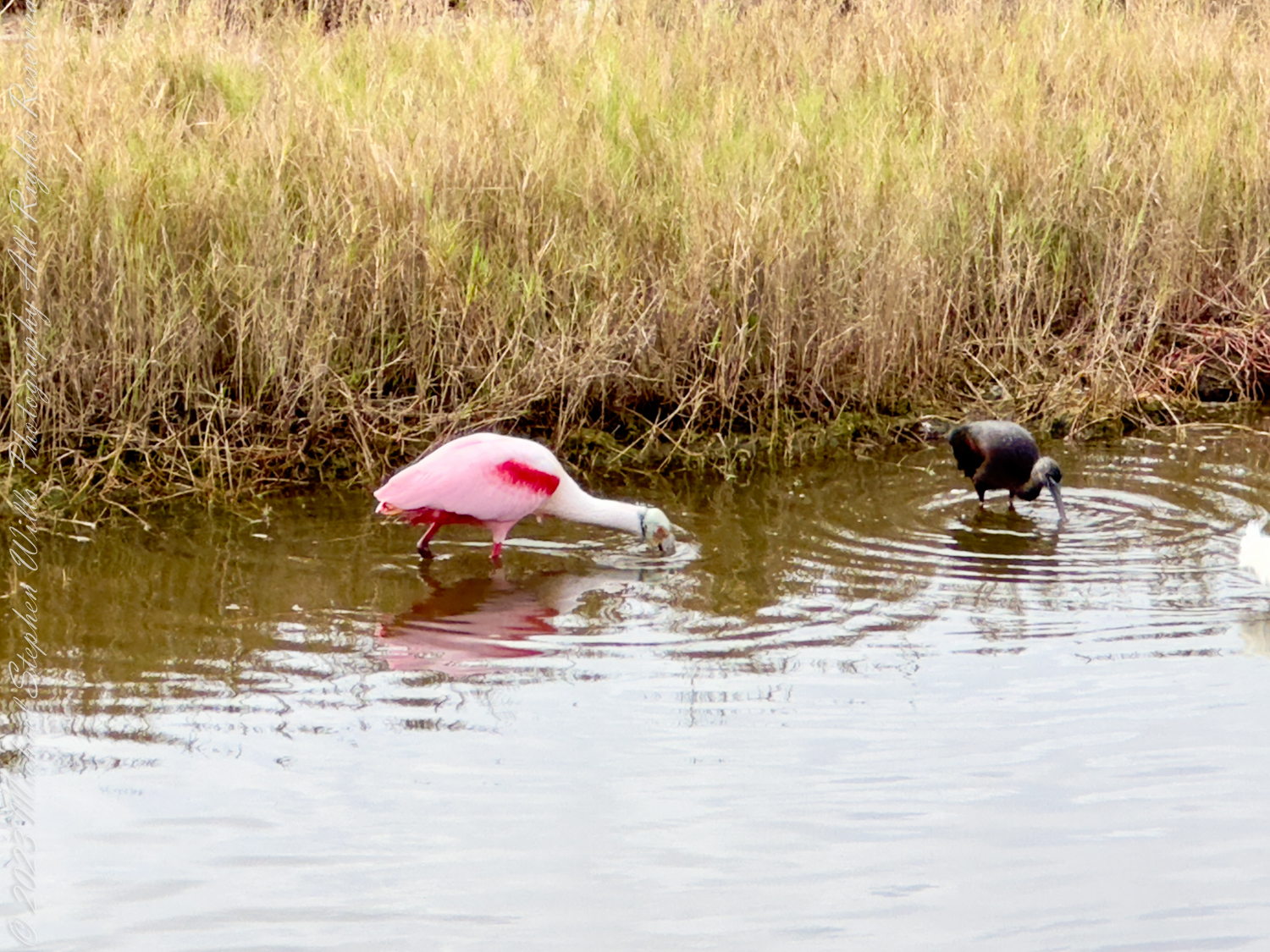
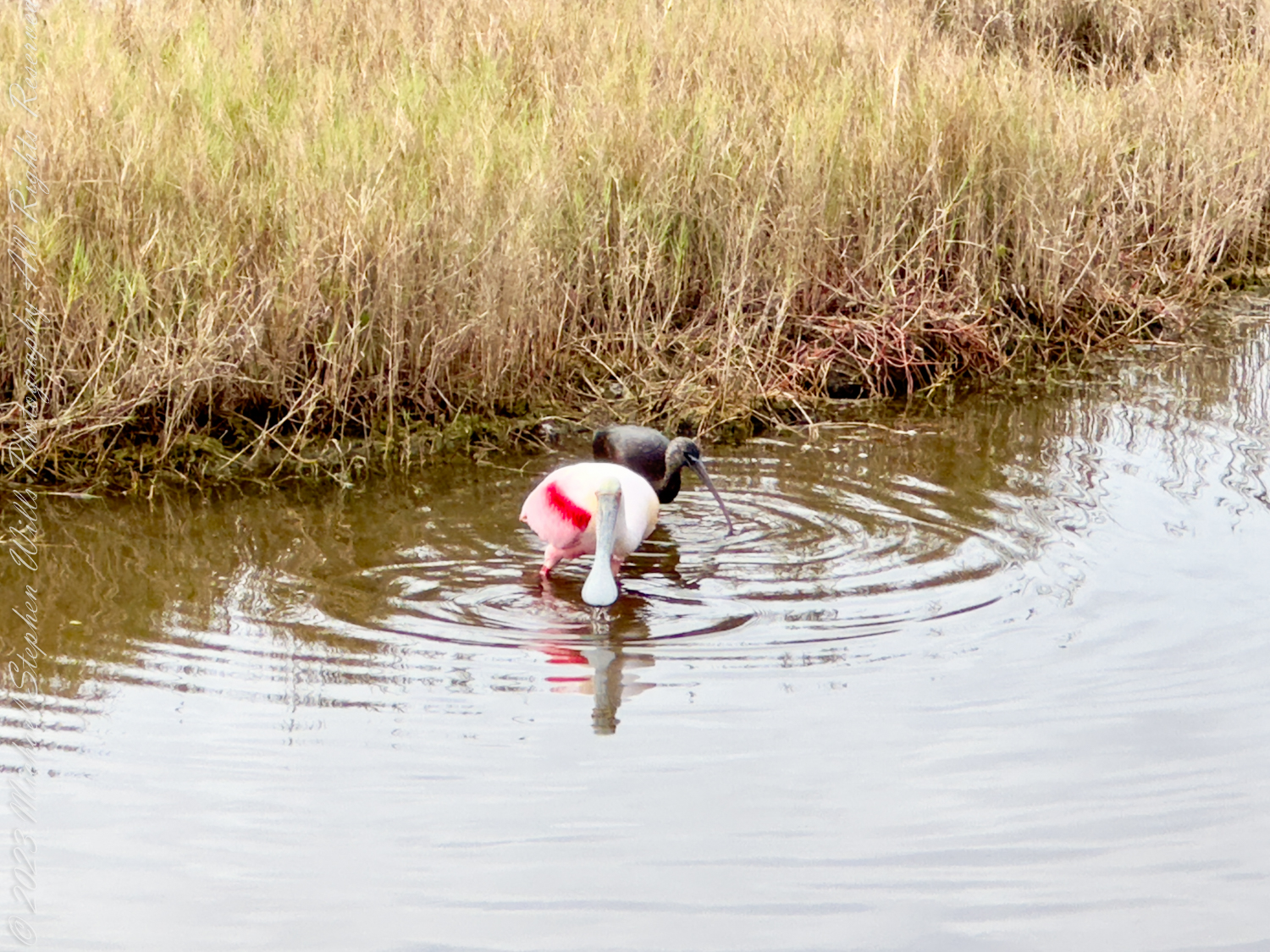
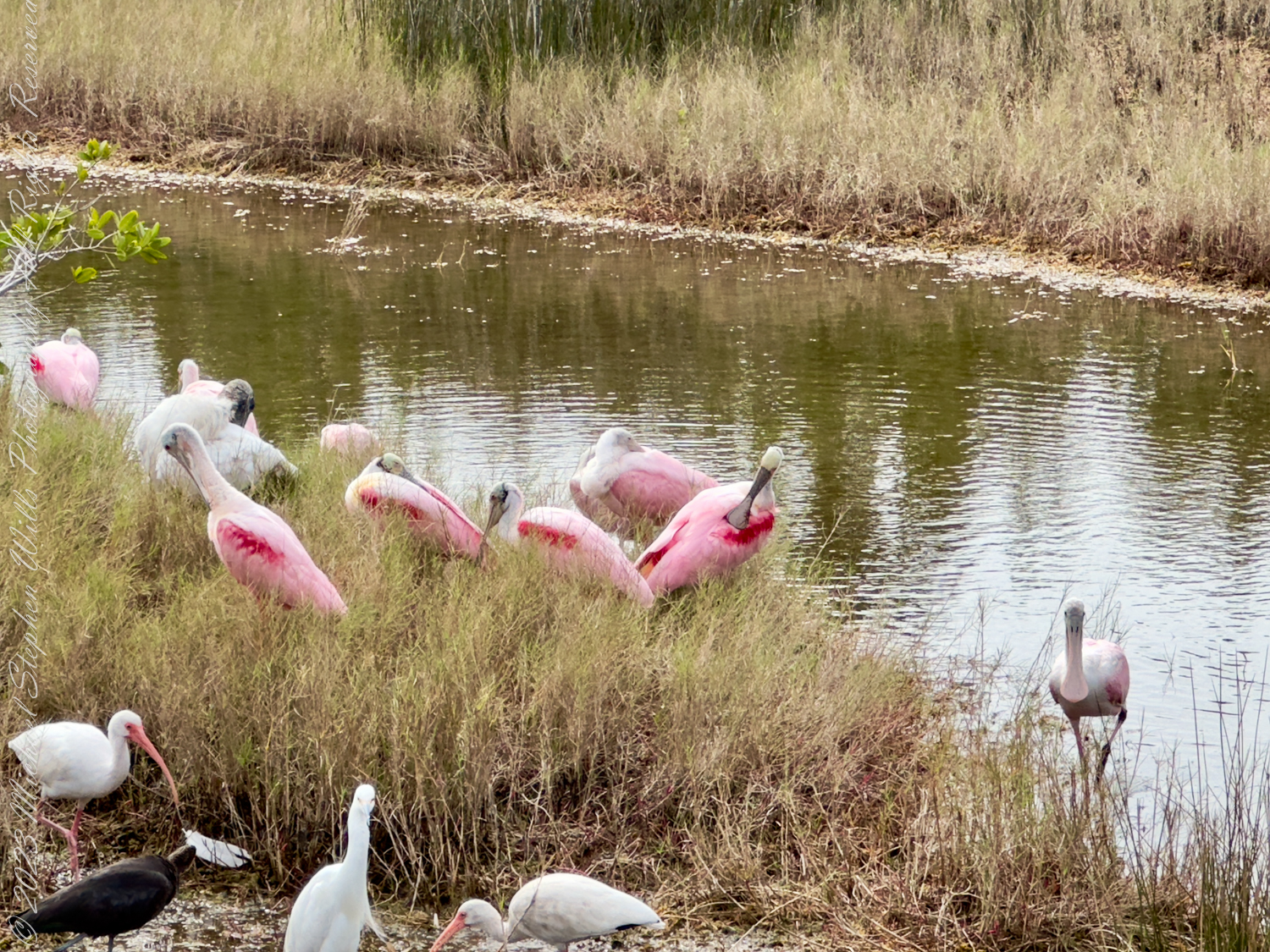
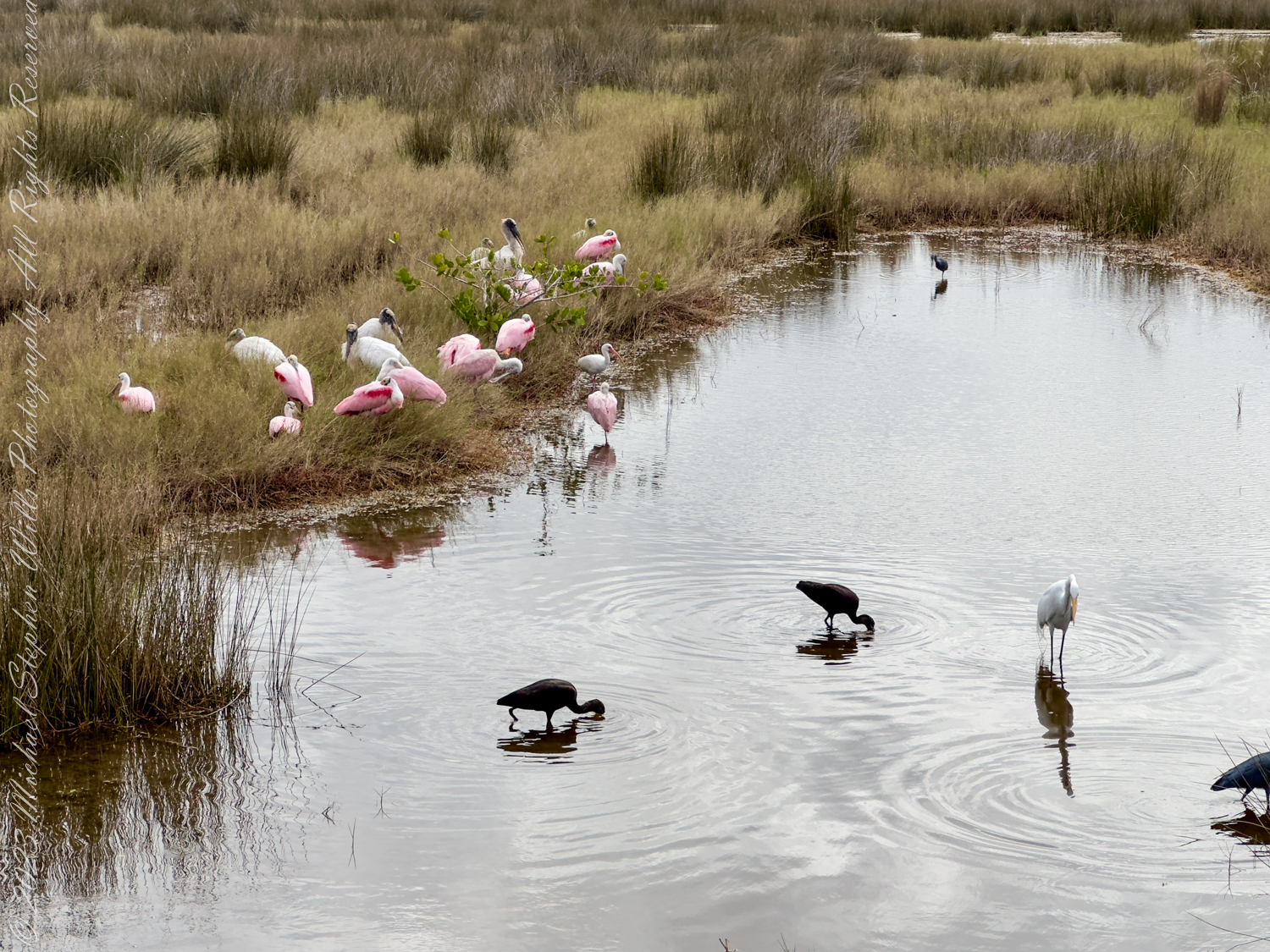
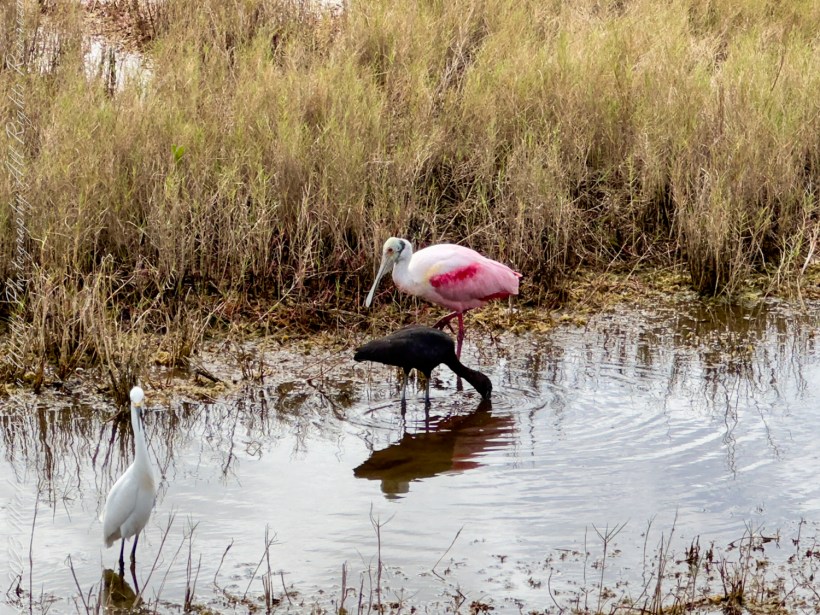
On the winding Blackpoint Wildlife Drive, Pam and I were spellbound by a ballet of Roseate Spoonbills and Wood Storks, a wild canvas coming alive, revealing the magic bestowed by our cherished Senior Passport

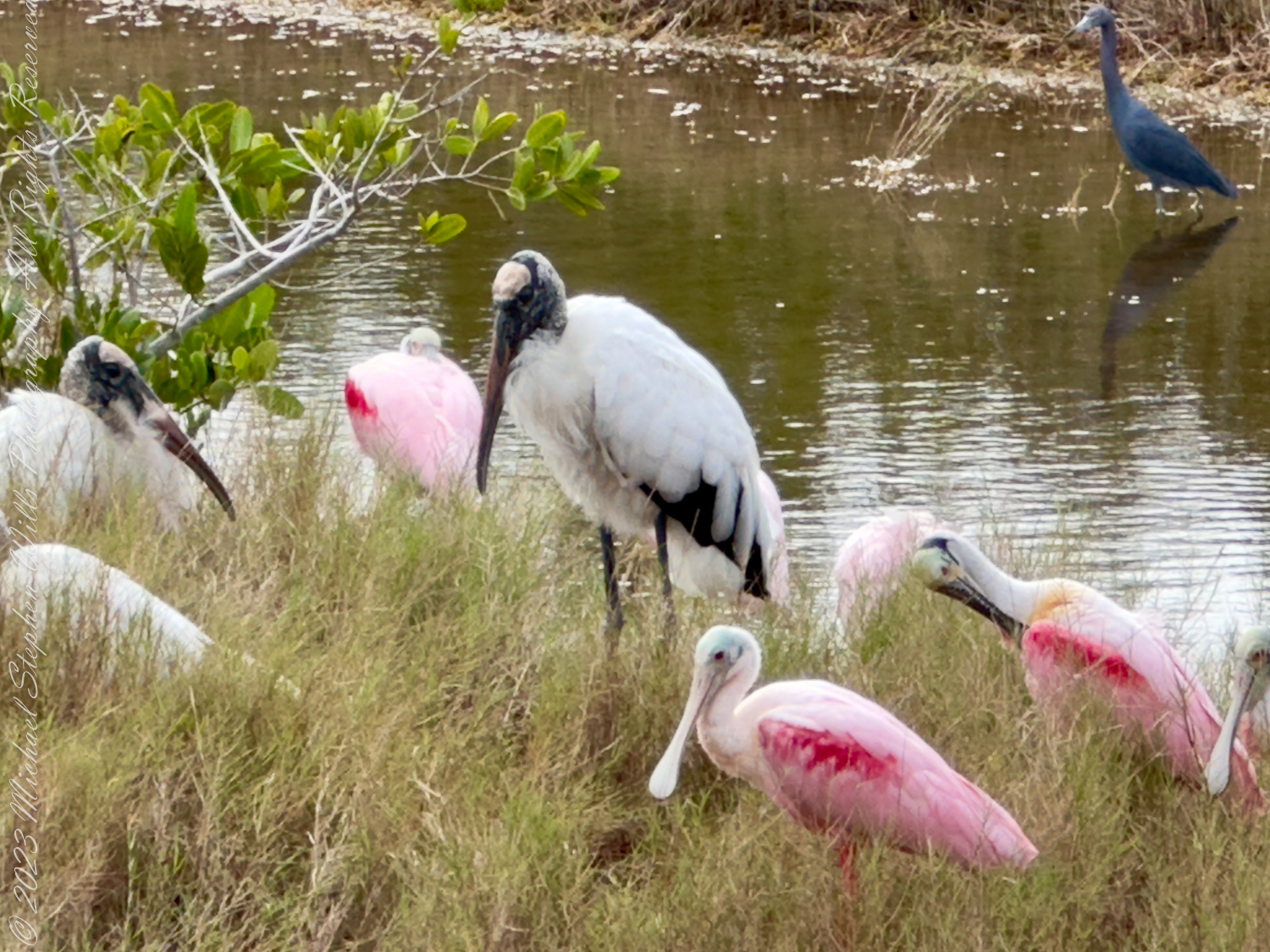
As Pam and I embarked on our journey along the Blackpoint Wildlife Drive we found ourselves privy to an otherworldly marshland assembly. Our eyes were drawn to the stately Wood Storks, or Mycteria americana, standing with a poise that belied their somewhat awkward appearance. Their towering figures were hunched in contemplation, their bald heads surveying the waters for a potential feast.

Beside them Roseate Spoonbills (Platalea ajaja) painted the landscape with strokes of vivid pink. Their spoon-shaped bills, an evolutionary masterpiece, skimmed the shallow waters. It was a delightful contrast, the elegant pink plumage among the grasses, like a splash of paint on a raw canvas.

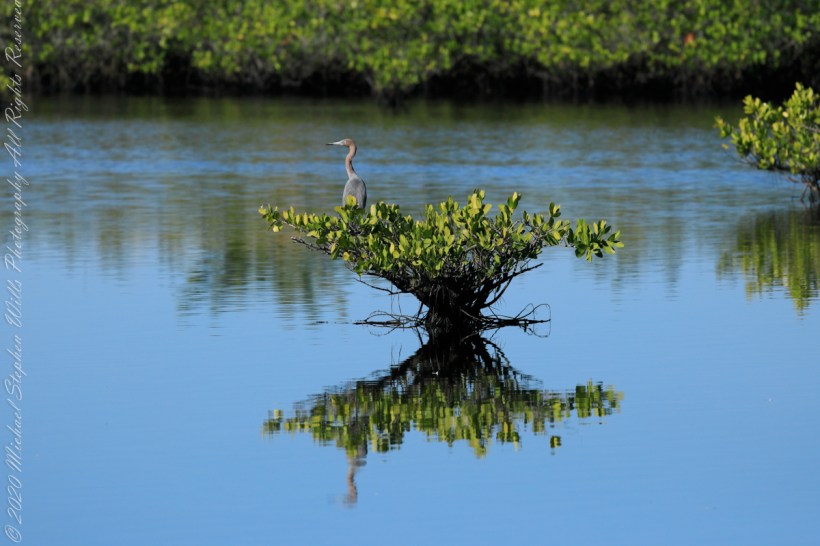
Companion to these gentle giants, the diminutive Tricolored Heron, Egretta tricolor, stalked the shallows. Its slender form was a study in grace, and the blue-gray feathers shimmered with a hint of lavender as it moved with stealthy precision, a silent hunter amidst the reeds.

The discovery felt like stumbling upon a secret meeting, a council of the feathered kind, where each bird played its role in the delicate balance of the ecosystem. Pam and I shared a look of awe, our whispered words lost in the gentle rustling of the wind. There was a sense of unity, of different species coexisting in harmony, and we were the transient witnesses to their world.

Our journey within Merritt Island National Wildlife Refuge was not just a passage through land but through time. Each turn of the drive revealed another chapter of this living story, and our hearts raced with the excitement of what we might find next. The National Park Service Senior Passport, which we clutched like a treasure map, granted us the privilege to explore this bounty of nature. It was more than a pass; it was a key to worlds unseen and adventures untold.

As senior citizens, this passport to nature’s sanctuaries was a reminder that wonderment has no age. It afforded us the freedom to explore, to learn, and to lose ourselves in the beauty of our nation’s natural heritage. Each stamp in our passport was not just a mark of where we had been, but a memory etched into our lives, a story waiting to be told.

This drive, with Pam by my side, was more than birdwatching. We communicated with nature, laying testament to the beauty that lay in the simple things, the everyday miracles of life that often go unnoticed. We left the Blackpoint Wildlife Drive with a renewed sense of purpose and a reminder of our place in this vast, interconnected web of life.

We returned home with our spirits lifted and our minds filled with the colors of the birds—the Wood Storks, the Roseate Spoonbills, the Tricolored Heron—and the many unnamed creatures that had crossed our paths. It was a mosaic of life, each creature a piece that completed this intricate puzzle of existence. Our encounter with this unusual congregation was a gift, a moment of pure, unadulterated joy, a chapter in our ongoing adventure, one we would recount with smiles and a sparkle in our eyes for years to come.

Copyright 2024 Michael Stephen Wills All Rights Reserved

A Raft of Coots on Merritt Island

Discover the elegance of the American Coot through our journey at Merritt Island, where these unsung avians dance across the water, crafting nature’s own symphony of survival and grace.

First Glimpse

There we were, Pam and I, standing before the serene waters of the Merritt Island National Wildlife Refuge, when a cluster of American Coots (Fulica americana) caught our eyes. Locally known as mud hens, marsh hens, or pond ducks, these coots were anything but mundane. Their dark plumage blended with the ripples, while their ivory bills gleamed like beacons, leading our gaze across the liquid expanse.

The Coot’s Constellation

As a throng, they moved with purposeful grace, a constellation of birds, each a star in their own right. With lobed toes spread like aquatic fans, they paddled through the water, their movements an embodiment of nature’s ingenuity. These “poule d’eau,” as the French settlers once called them, displayed a mastery over their domain, both in water and on land.

Social Weave

A Raft of American Coots

The coots assembled not as a random flock but as a deliberate collective, a raft in both name and function. They maneuvered with a collective intelligence, each bird’s action rippling through the group, exemplifying the coots’ penchant for community. Their group dynamics, a blend of cooperation and competition, painted a picture of the delicate balance within ecosystems.

An Ecological Perspective

In the tapestry of the refuge’s ecology, the American Coot stitched its niche with precision. Whether known as “baldpate” or “crow duck,” these birds were critical to the habitat they frequented, acting as both consumers and contributors. They pruned the vegetation, controlling its growth, and served as prey, connecting the food web in a cycle that spanned generations.


The Taxonomic Twist: Coots vs. Ducks

As the coots continued their ballet on the water, I turned to Pam, ready to demystify the common misconception that coots and ducks are close relatives. “Though they share the wetland stage,” I began, “these two are cast in different roles by nature’s hand.”

Orders Apart

Coots are members of the order Gruiformes, which includes rails and cranes, characterized by their elongated bodies and short wings. Ducks, on the other hand, belong to the order Anseriformes, which also encompasses swans and geese, known for their broad, flat bills and webbed feet.

Distinct Lineages

This taxonomic separation marks a deep evolutionary divide. The Gruiformes, with their lobed toes and distinctive calls, represent a lineage adapted for a life traversing the marshy edges of the world. Anseriformes, with their specialized bills for filtering and dabbling, reveal a lineage fine-tuned for exploiting the aquatic resources more extensively.

The Cultural Mosaic

Despite their commonality, coots have etched a place in cultural folklore, often overshadowed by more colorful avian neighbors. Yet, their ubiquity across North American wetlands has made them a familiar sight, a symbol of the wild’s persistent pulse. To us, they were the embodiment of the unsung wilderness, a chapter in the storybook of natural history.

Embracing the Ensemble

As the day waned, the water transformed into a canvas of orange and purple hues, with the coots as its subjects. “Behold the marsh’s musicians,” I mused to Pam, “each note they play is a beat in the heart of the wild.” Our encounter with the American Coot—a bird of many names but one singular, remarkable essence—was a harmonious reminder of nature’s interconnected ballet.

Copyright 2024 Michael Stephen Wills All Rights Reserved

Life and Death

Among the 7,000 year old remains found in Windover Bog was the skeleton of a boy crippled from spina bifida who had to be carried around and treated for the 16 years of his life.

I was born into a world that danced around me, a world I could only witness but never fully join. My legs, unlike those of the other children in our tribe, refused to carry me. I spent my days close to our hut, watching the life of our village unfold from my corner, shaded by the leafy arms of the great trees.

My mother was my bridge to the world. She carried me to the edge of the waters, where I would watch my friends play, their laughter a melody I cherished. She showed me the way the water held stories, the way the reeds whispered in the wind. She taught me to weave, my fingers nimble and quick, making up for my still legs.

As I grew, I found my place among my people. I became a keeper of stories, a weaver of tales, just as I wove reeds into baskets. My voice became my movement, my words a dance.

Then, illness found me. It crept into our hut, a shadow that no fire could dispel. My mother’s eyes, always so full of warmth, grew clouded with fear. She fought for me, her hands constantly working – crushing herbs, whispering prayers.

I saw her struggle; saw the toll it took. I wanted to ease her burden, tell her it would be alright, but my voice had begun to fail me. All I could do was squeeze her hand, a silent message of love and gratitude.

As my breaths grew shallower, I watched her. She was my world, her face the last thing I saw as I drifted away, her lullabies carrying me to a place of peace.

I am his mother, heartbroken and weary. My son, my joy, lies motionless, his chest barely rising. I had always carried him, but now, there’s a journey I cannot make with him.

I remember his laughter, bright and clear, despite his bound body. His spirit had wings, even if his legs did not. He was the light of our tribe, a storyteller, a dreamer.

When he leaves me, my heart shatters. The tribe gathers, offering comfort, but the void he leaves is too vast. We prepare him for his final journey, wrapping his body, laying beside him his favorite weaving tools, the small toys he cherished.

We take him to the bog, our sacred place. Gently, we lay him in the water, his final cradle. The waters close over him, holding him in an eternal embrace.

Years pass, but his memory remains, alive in the stories I tell by the fire.

Copyright 2023 Michael Stephen Wills All Rights Reserved http://www.MichaelStephenWills.com

Shuffle off

All Souls’ Day, observed on November 2, is a Christian tradition of praying for the deceased, originating from ancient practices and shaping cultural rituals like Mexico’s Día de los Muertos.

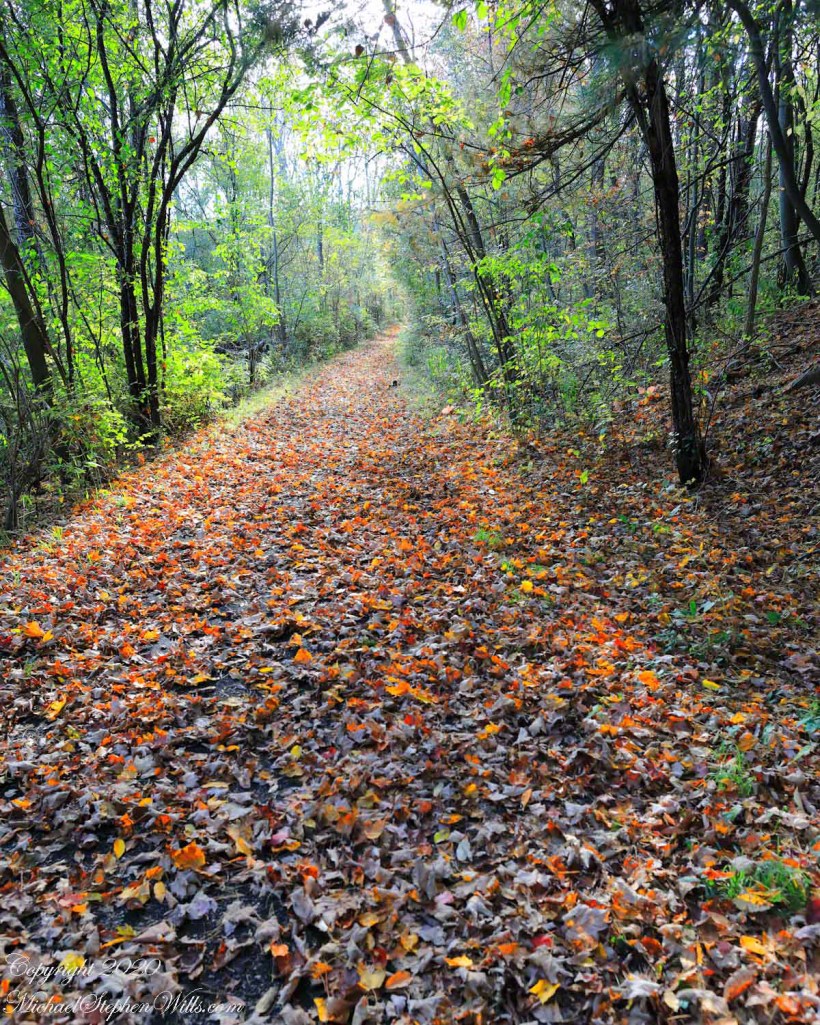
Shuffling through the hot coals of autumn on All Souls Day.

Click image for a larger version.

All Souls’ Day, observed on November 2nd, is a day of prayer and remembrance for the souls of the deceased. Stemming from ancient traditions and solidified within the Christian liturgical calendar, this day serves as a solemn occasion to commemorate the departed. Its roots are deep, with a rich history that intertwines with both religious and cultural practices over centuries.

Origins
The concept of dedicating a day to remember the dead predates Christianity. Many ancient civilizations, such as the Egyptians and the Celts, held ceremonies and festivals to honor the deceased. The Celts, for instance, celebrated Samhain, which marked the end of harvest and the beginning of winter. This was believed to be a time when the veil between the living and the dead was thinnest.

As Christianity spread across Europe, there was an attempt to integrate pagan practices into the Christian framework, leading to the establishment of days dedicated to the deceased. By the 7th century, monastic communities in Europe had begun to designate a day to pray for the departed members of their communities.

Establishment
All Souls’ Day was formally institutionalized by St. Odilo of Cluny in 998 AD. He declared November 2nd as a day for all the monasteries associated with his Benedictine congregation to pray for the souls in purgatory. This practice quickly spread, and by the 11th century, it was widely celebrated throughout Christian Europe.

Theology Behind the Celebration
Central to All Souls’ Day is the belief in Purgatory – an interim state where souls undergo purification before entering Heaven. It’s believed that the prayers of the living can aid these souls, expediting their journey to paradise.

Modern Observations
Today, All Souls’ Day is observed with varying levels of prominence across Christian denominations. In Roman Catholicism, it retains significant importance, with masses dedicated to the departed. In other Christian traditions, it may merge with other observances, like All Saints’ Day (November 1st) or be passed over entirely.

Cultural Influences
Over time, All Souls’ Day has influenced and been influenced by local customs and traditions. In Mexico, for instance, Día de los Muertos (Day of the Dead) coincides with All Souls’ Day but has its distinct flair, involving vibrant parades, elaborate altars, and specific foods.

Bullet Points Summary:

Ancient Foundations: All Souls’ Day has its roots in ancient civilizations that honored the dead.
Samhain: The Celts observed Samhain, marking a time of close proximity between the living and the dead.
Christian Integration: Early Christians attempted to integrate existing pagan rituals into their religious framework.
Monastic Observances: By the 7th century, monastic communities began designating days for the departed.
St. Odilo of Cluny: He formalized All Souls’ Day in 998 AD for his Benedictine congregation.
Spread: By the 11th century, the observance had spread throughout Christian Europe.
Purgatory: Central to the day’s theology is the belief in purgatory and the power of prayers to aid souls.
Variation in Observance: The day’s significance varies across Christian denominations.
Cultural Mergers: Local traditions, like Mexico’s Día de los Muertos, have both influenced and been influenced by All Souls’ Day.
Modern Practices: Today, the day may involve attending masses, lighting candles, and visiting graves of loved ones.
In essence, All Souls’ Day is not just a day on the liturgical calendar; it’s a reflection of humanity’s timeless effort to understand, honor, and find meaning in the cyclical nature of life and death. Through rituals and observances, we bridge the gap between the past, present, and the profound mystery of the hereafter.
Click Me for another Malloryville post, “Formed By Water.”

Copyright 2023 Michael Stephen Wills All Rights Reserved

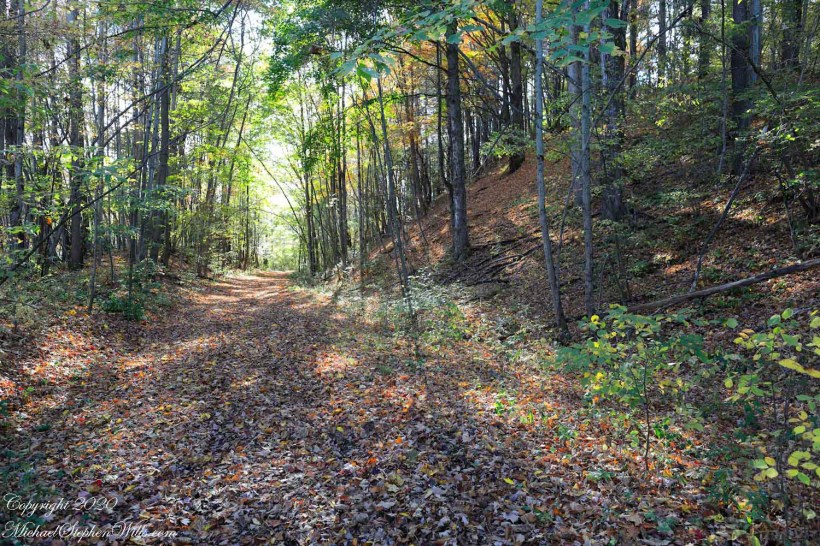
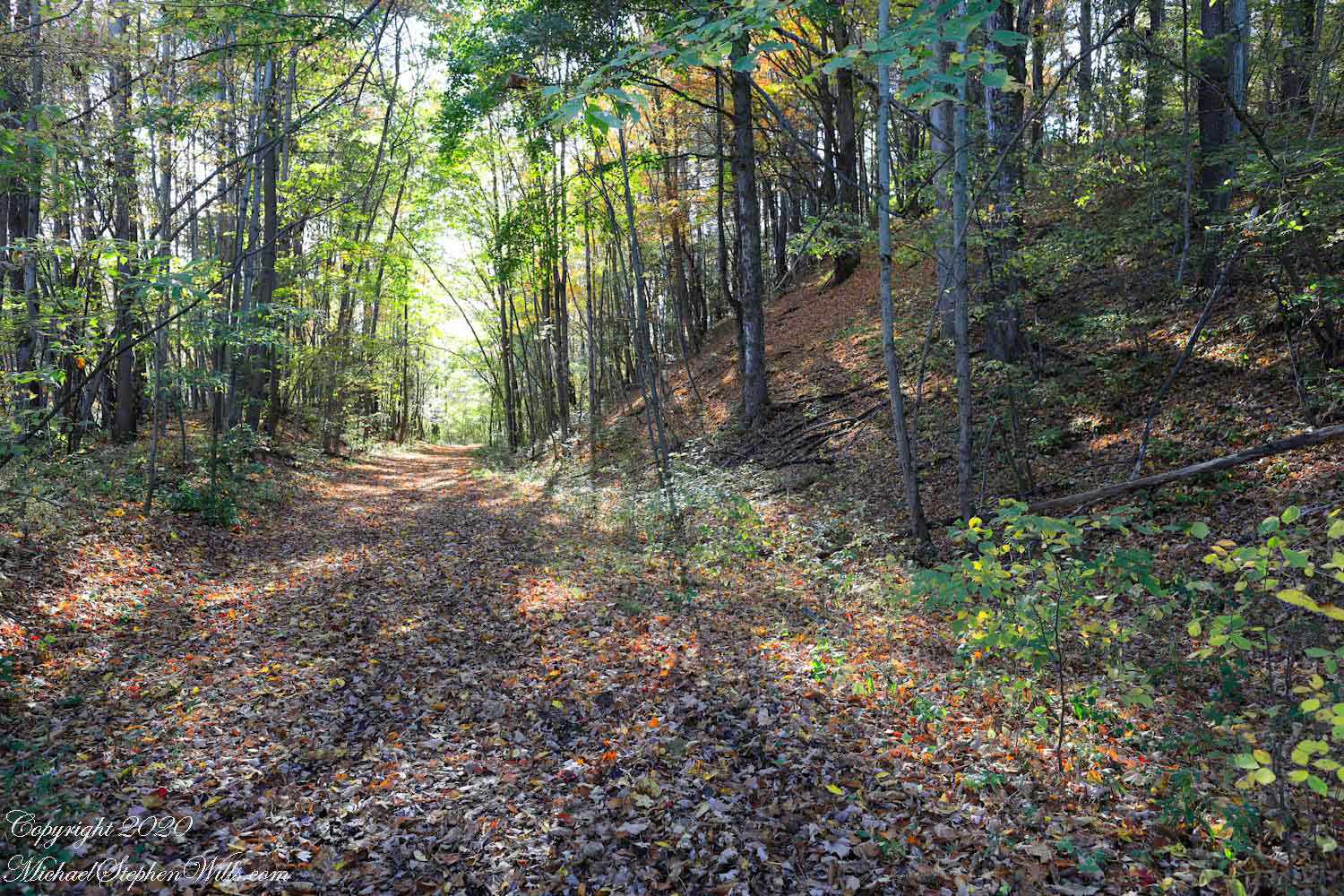
Dappled Sunlight

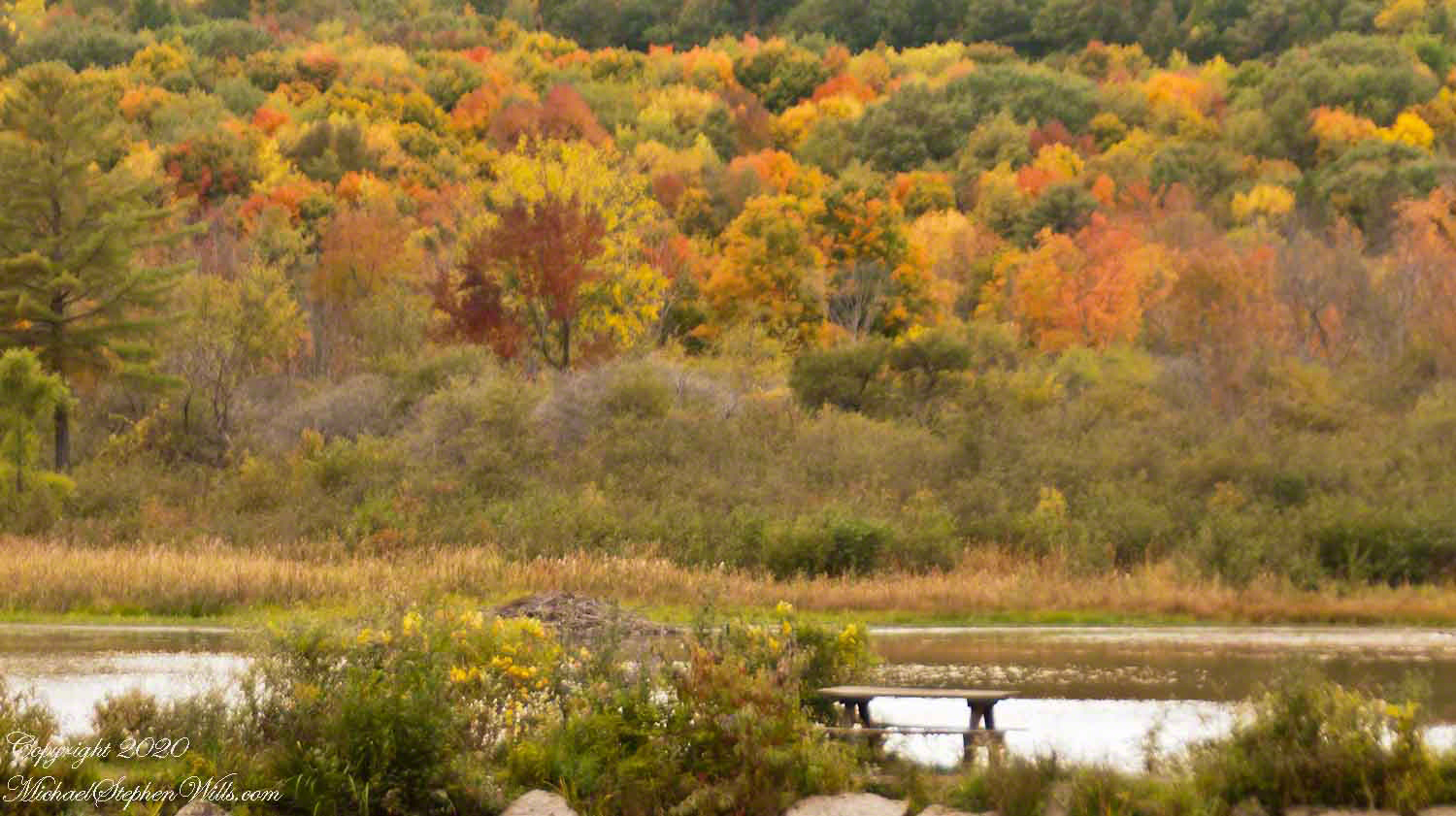
The Malloryville eskers near Freeville, New York, highlight the region’s glacial history and contribute significantly to biodiversity and local ecology.

Walking here, I enjoy telling the grandchildren of the immense, mile-high ice sheet that once covered this land 10,000 years ago, creating these hills and hollows.

Click Me for another Malloryville post, “Formed By Water.”

Eskers are geological features that tell a rich tale of the glacial history of an area. In the landscape near Freeville, New York, the eskers of Malloryville stand as prominent reminders of the last Ice Age and the profound effects glaciers have had on the North American terrain. These elongated ridges, composed primarily of sand and gravel, not only offer a visual spectacle but also provide crucial insights into the glacial processes that shaped the region.

Eskers are formed by the deposition of sediment from meltwater rivers flowing on the surface of or within glaciers. As these glaciers recede, the sediment accumulates in the paths previously carved by the meltwater streams, eventually forming ridges. The Malloryville eskers are particularly notable for their well-preserved structure, giving geologists and enthusiasts alike a clear vision of the patterns of glacial meltwater flow from thousands of years ago.

Located just a few miles from Freeville, the Malloryville eskers are an intriguing natural attraction. The topography of the area, largely shaped by the Laurentide Ice Sheet during the last glacial maximum, is characterized by various glacial features, but the eskers are undeniably some of the most distinct. Their serpentine-like appearance, weaving through the landscape, immediately captures one’s attention and beckons further exploration.

From an ecological perspective, the eskers of Malloryville contribute to the area’s biodiversity. The unique microenvironments created by these ridges offer habitats that differ from the surrounding landscape. This differentiation allows for a variety of plant species to thrive, some of which are specially adapted to the well-drained soils of the eskers. Additionally, these ridges act as corridors for wildlife, facilitating movement and offering vantage points for species like deer and birds of prey.

Historically, the eskers near Freeville have also had an impact on human activity. Native American communities, recognizing the strategic advantage of these high grounds, are known to have used them as pathways or even settlement sites. In more recent history, the gravel and sand composition of the eskers have made them targets for mining activities. While this has led to the alteration or destruction of some sections, it has also highlighted the importance of preserving these unique geological features for future generations.

Efforts to study and preserve the Malloryville eskers have grown in recent years. Local educational institutions, in collaboration with geological societies, have undertaken detailed studies to understand the formation and significance of these features better. Such initiatives not only contribute to the scientific understanding of glacial processes but also raise awareness about the importance of conserving unique geological formations. Given the potential impacts of climate change on glacial landscapes worldwide, the eskers serve as a poignant reminder of the dynamic nature of our planet and the traces left behind by the ebb and flow of ice ages.

In conclusion, the eskers of Malloryville near Freeville, New York, stand as testaments to the glacial history of the region. These winding ridges, with their intricate patterns and rich ecological contributions, weave a story of natural processes that have spanned millennia. They remind us of the ever-changing nature of our planet and underscore the importance of understanding and preserving its geological wonders. Whether one views them with the eyes of a scientist, historian, or nature enthusiast, the Malloryville eskers offer a captivating glimpse into the ancient forces that have shaped the world around us.

Copyright 2020 Michael Stephen Wills All Rights Reserved

Coming and Going

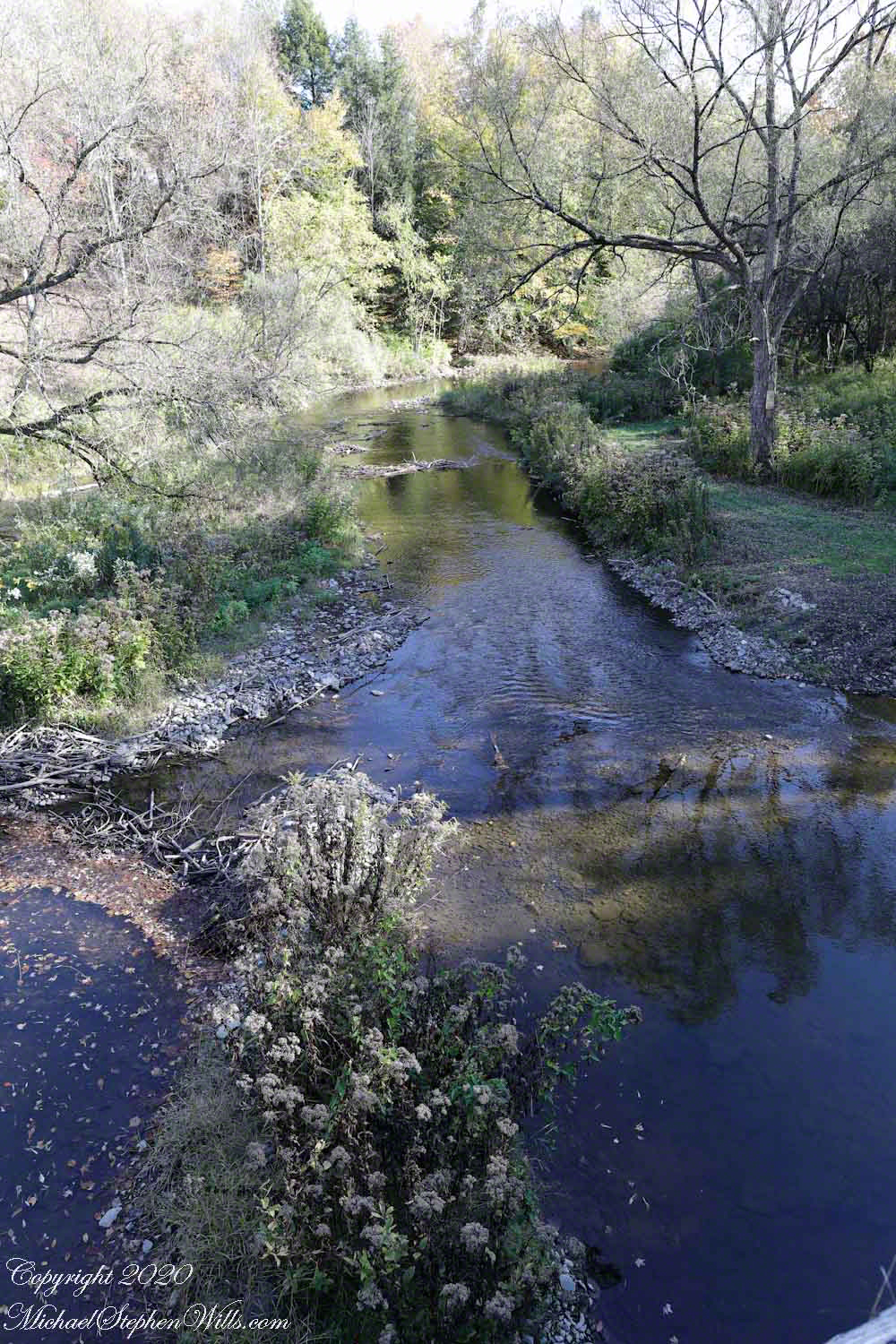
beneath the bridge

Standing on a stream spanning bridge it is fun to drop a stick or leaf, watch the progress, disappearing beneath the bridge to emerge and continue riding the water downstream.

Click image for a larger version.

Click Me for another Malloryville post, “Formed By Water.”

Copyright 2023 Michael Stephen Wills All Rights Reserved

more Jennings Pond IV

Still life and stillness

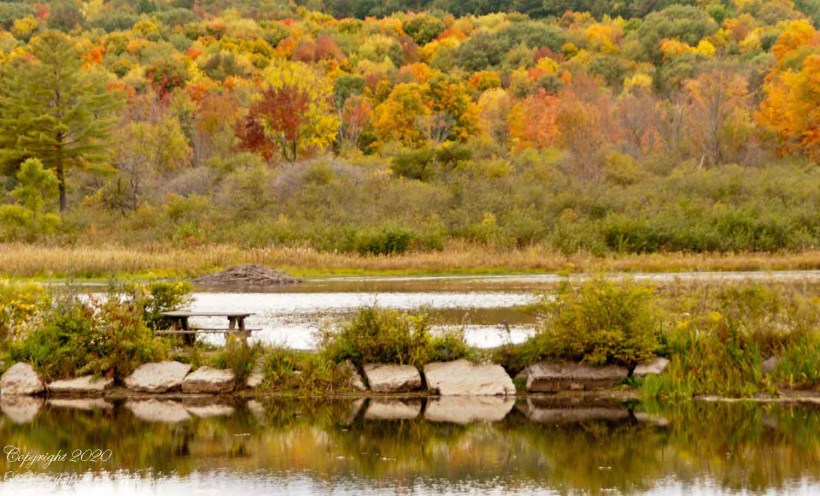
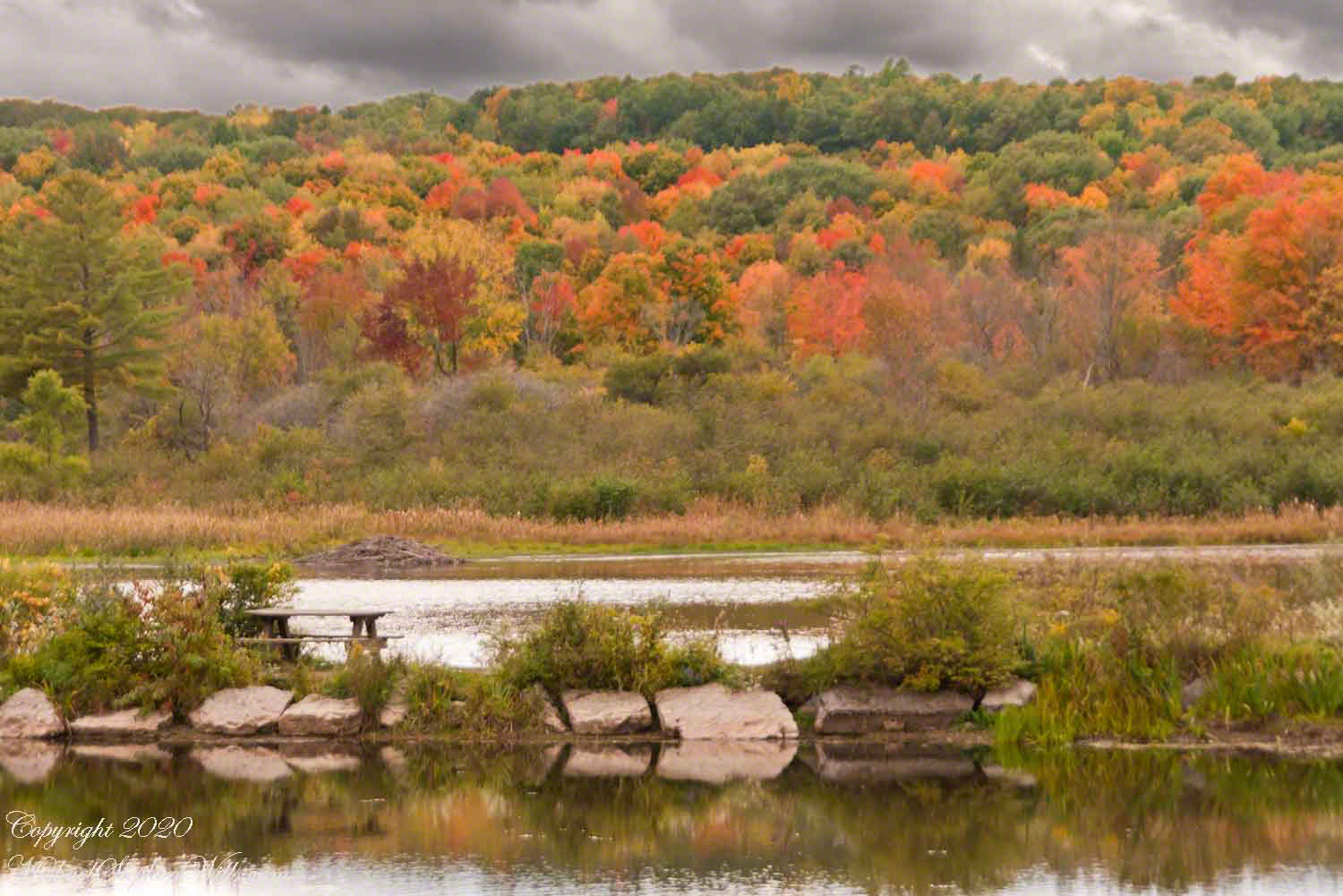
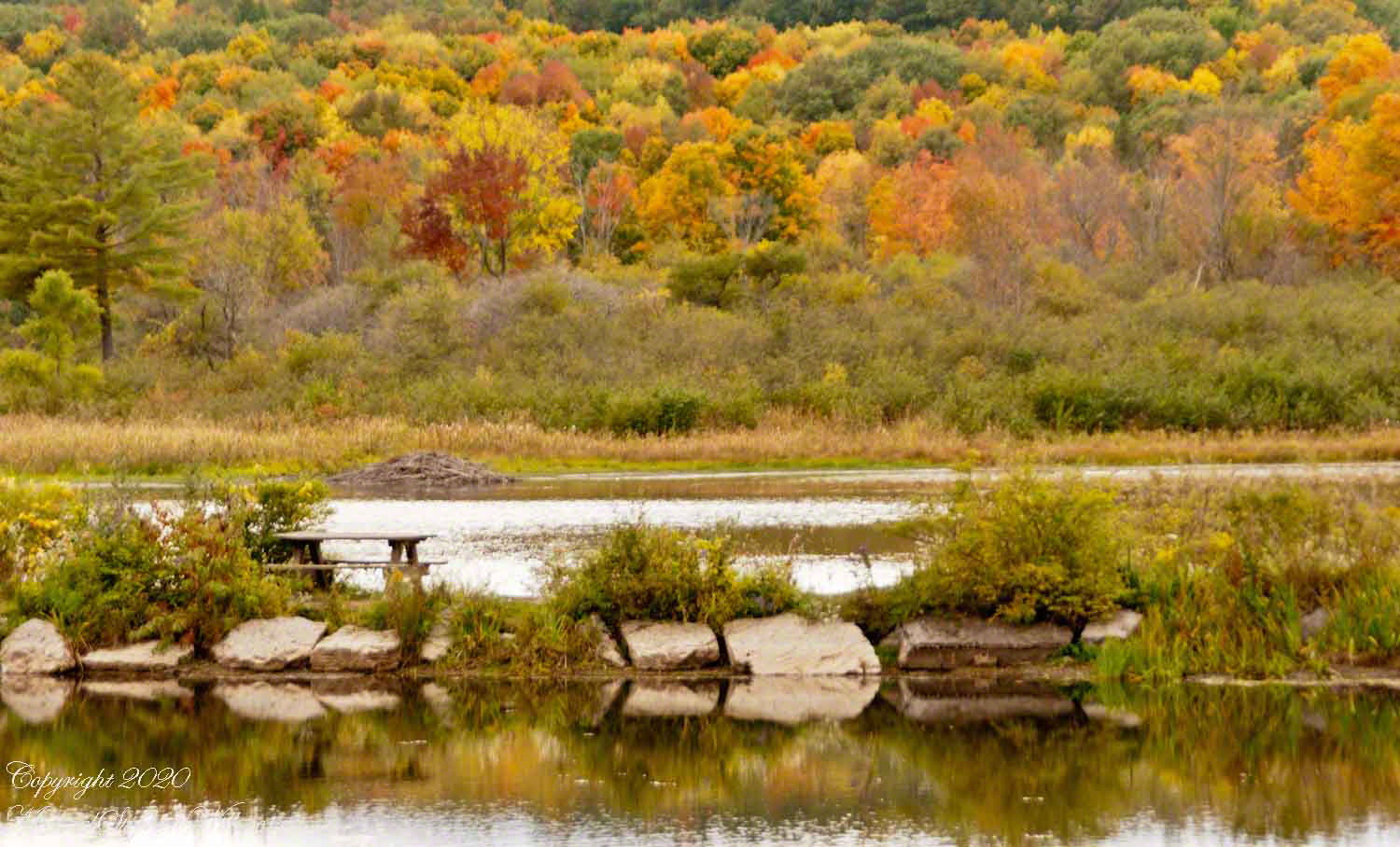
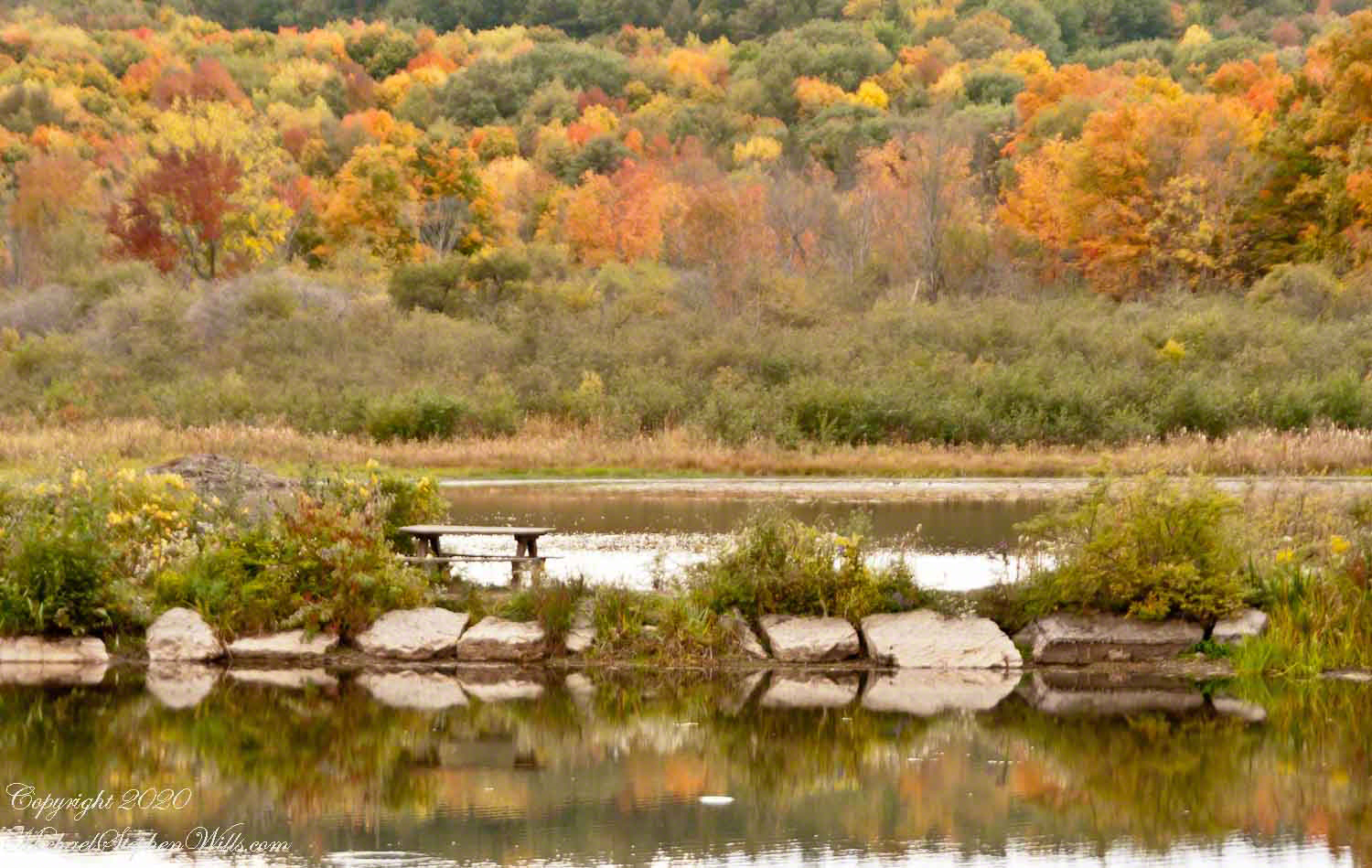
I described Jennings Pond to Pam and we returned together. Here is a photographic essay from that day, one of a series.

The first image is the small concrete dam, taken from the footbridge over the pond outlet, source for Buttermilk Creek.

Copyright 2023 Michael Stephen Wills All Rights Reserved

more Jennings Pond III

Picnics on the berm

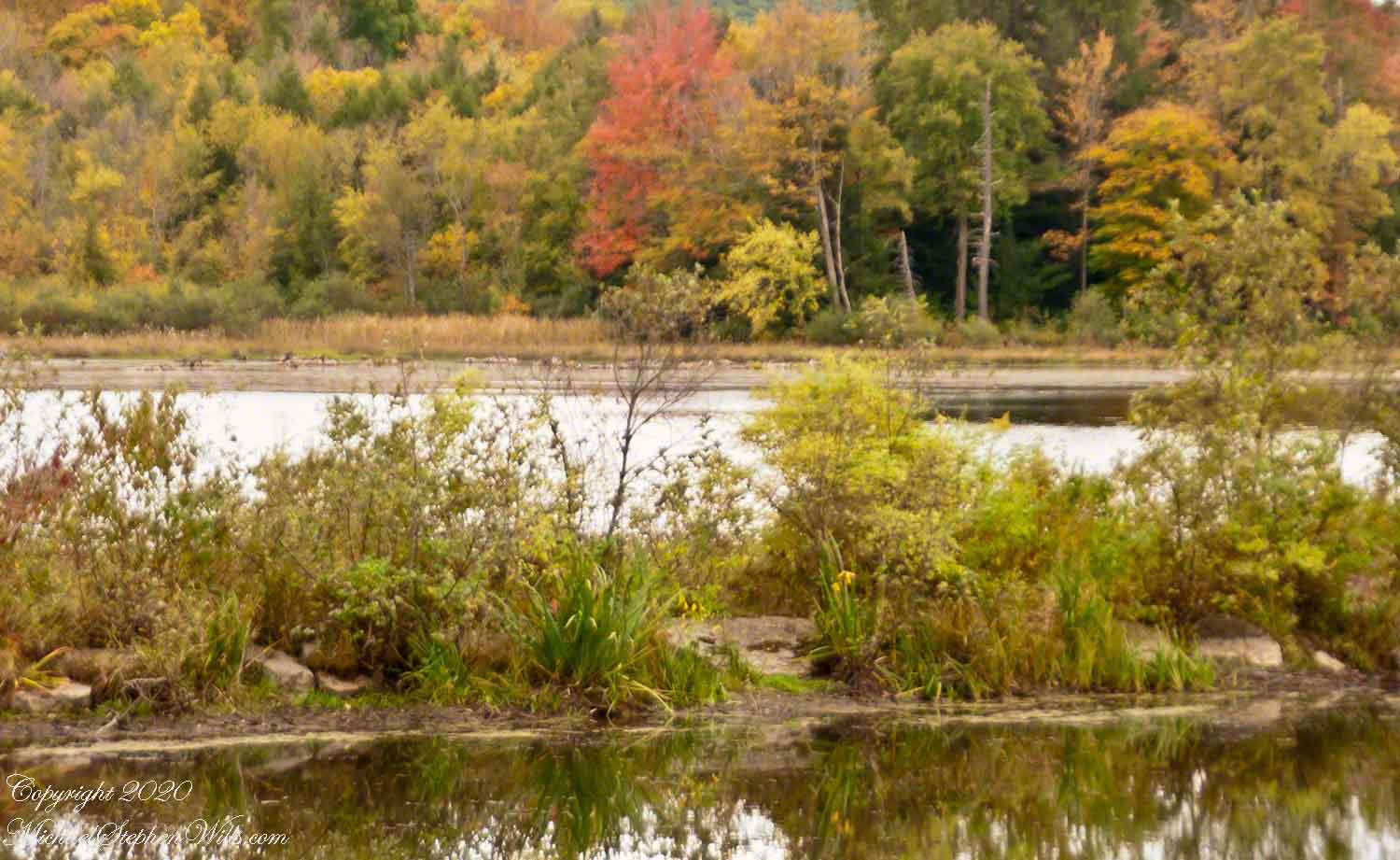
I described Jennings Pond to Pam and we returned together. Here is a photographic essay from that day, one of a series.

Copyright 2023 Michael Stephen Wills All Rights Reserved

Edible

nonmigratory?

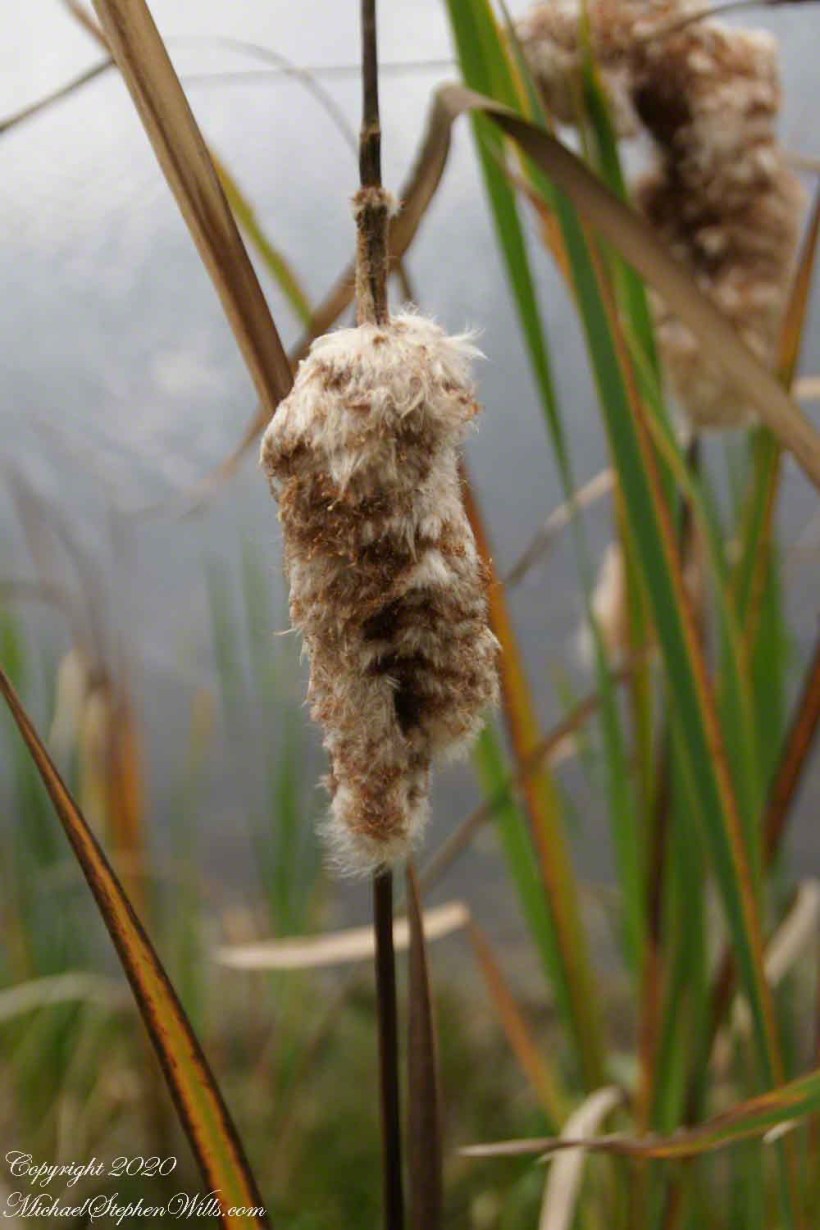
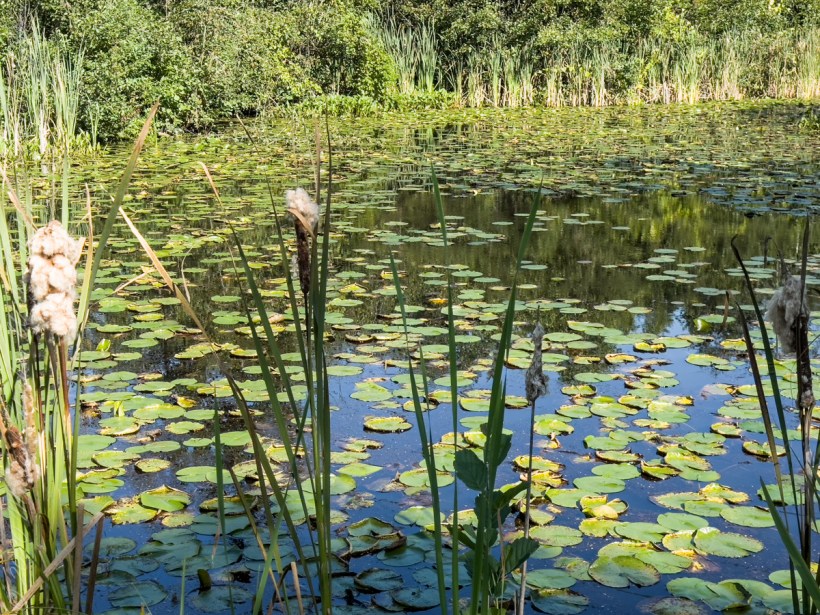
Thursday last, grandsons Sam and Rory and I visited Sapsucker Woods, enjoying a late summer morning from a wooden observation platform over this watery swamp. “Look, hot dogs!!”

“Typha is a genus of about 30 species of monocotyledonous flowering plants in the family Typhaceae. These plants have a variety of common names, in British English as bulrush or reedmace, in American English as reed, cattail, or punks, in Australia as cumbungi or bulrush, in Canada as bulrush or cattail, and in New Zealand as reed, cattail, bulrush or raupo.”

“Many parts of the Typha plant are edible to humans. Before the plant flowers, the tender inside of the shoots can be squeezed out and eaten raw or cooked. The starchy rhizomes are nutritious with a protein content comparable to that of maize or rice. They can be processed into a flour with 266 kcal per 100 grams, and are most often harvested from late autumn to early spring. They are fibrous, and the starch must be scraped or sucked from the tough fibers. Baby shoots emerging from the rhizomes, which are sometimes subterranean, can be picked and eaten raw. Also underground is a carbohydrate lump which can be peeled and eaten raw or cooked like a potato. The plant is one championed by survival experts because various parts can be eaten throughout the year. Plants growing in polluted water can accumulate lead and pesticide residues in their rhizomes, and these should not be eaten.”

“The rind of young stems can be peeled off, and the tender white heart inside can be eaten raw or boiled and eaten like asparagus. This food has been popular among the Cossacks in Russia, and has been called “Cossack asparagus”. The leaf bases can be eaten raw or cooked, especially in late spring when they are young and tender. In early summer the sheath can be removed from the developing green flower spike, which can then be boiled and eaten like corn on the cob. In mid-summer when the male flowers are mature, the pollen can be collected and used as a flour supplement or thickener.”

Click me for another Sapsucker Woods posting.

Reference: text in italics and quotes is from the Wikipedia, “Typha.”

Copyright 2023 Michael Stephen Wills All Rights Reserved.

Fragrant

Native Americans used it as a herbal remedy for a variety of ailments.

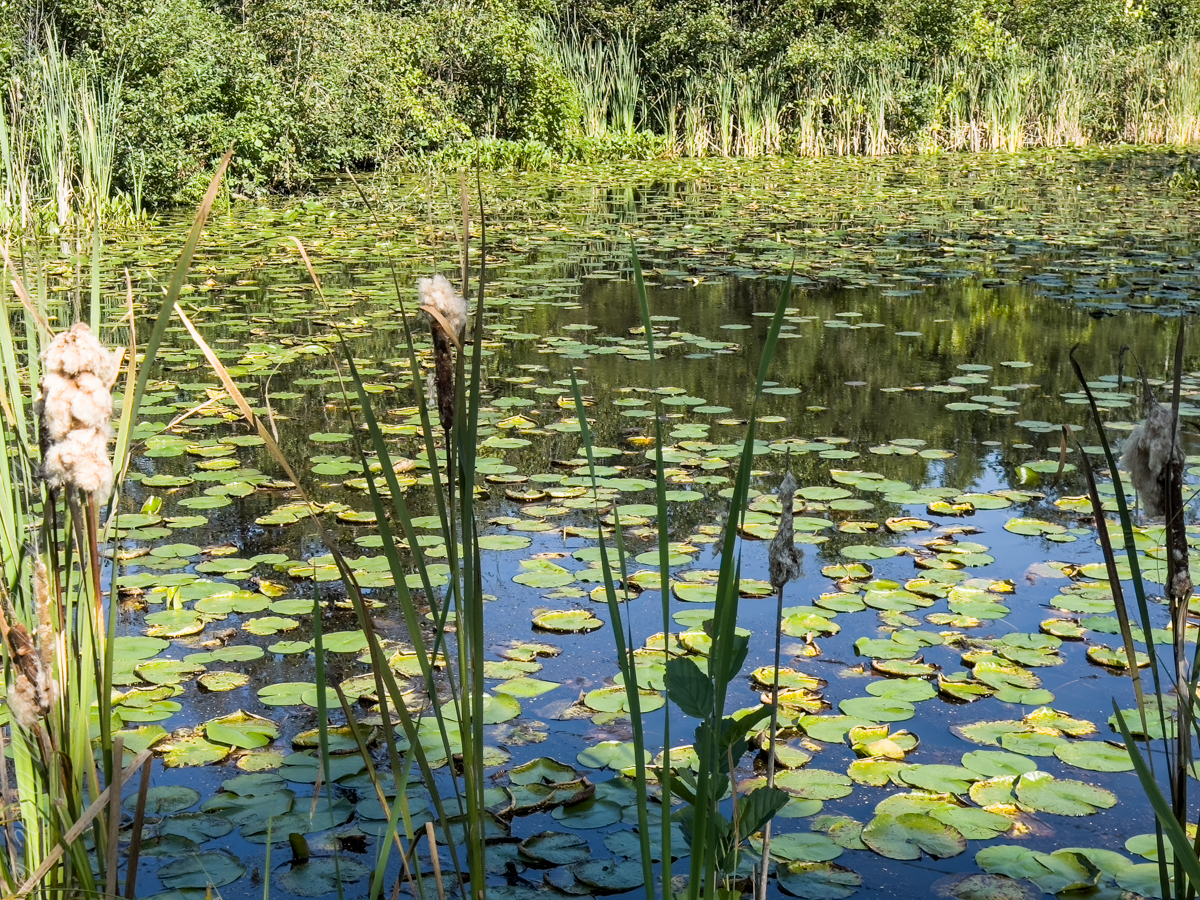
Thursday last, grandsons Sam and Rory and I visited Sapsucker Woods, enjoying a late summer morning we clambered onto a wooden platform over a watery swamp.

Look closely for flowers and buds of the White Water Lily native to New York State. 

Although the young leaves of White Water-lily reportedly can be boiled and served as a vegetable, the main human use of this plant appears to have been medicinal. Native Americans used it as a herbal remedy for a variety of ailments, including colds, tuberculosis, bronchial complaints, toothaches, and mouth sores.

The many names for this plant: American White Waterlily, American White Water-lily, Fragrant Water-lily, Fragrant White Water Lily, Fragrant White Water-lily, Sweet Water-lily, Sweet-scented Water Lily, Sweet-scented White Waterlily, Tompkins County, Water, Water Lily, Waterlily, White Water Lily, White Waterlily, White Water-lily (Nymphaea odorata ssp. odorata)

Click me for another Sapsucker Woods posting.

Copyright 2023 Michael Stephen Wills All Rights Reserved.