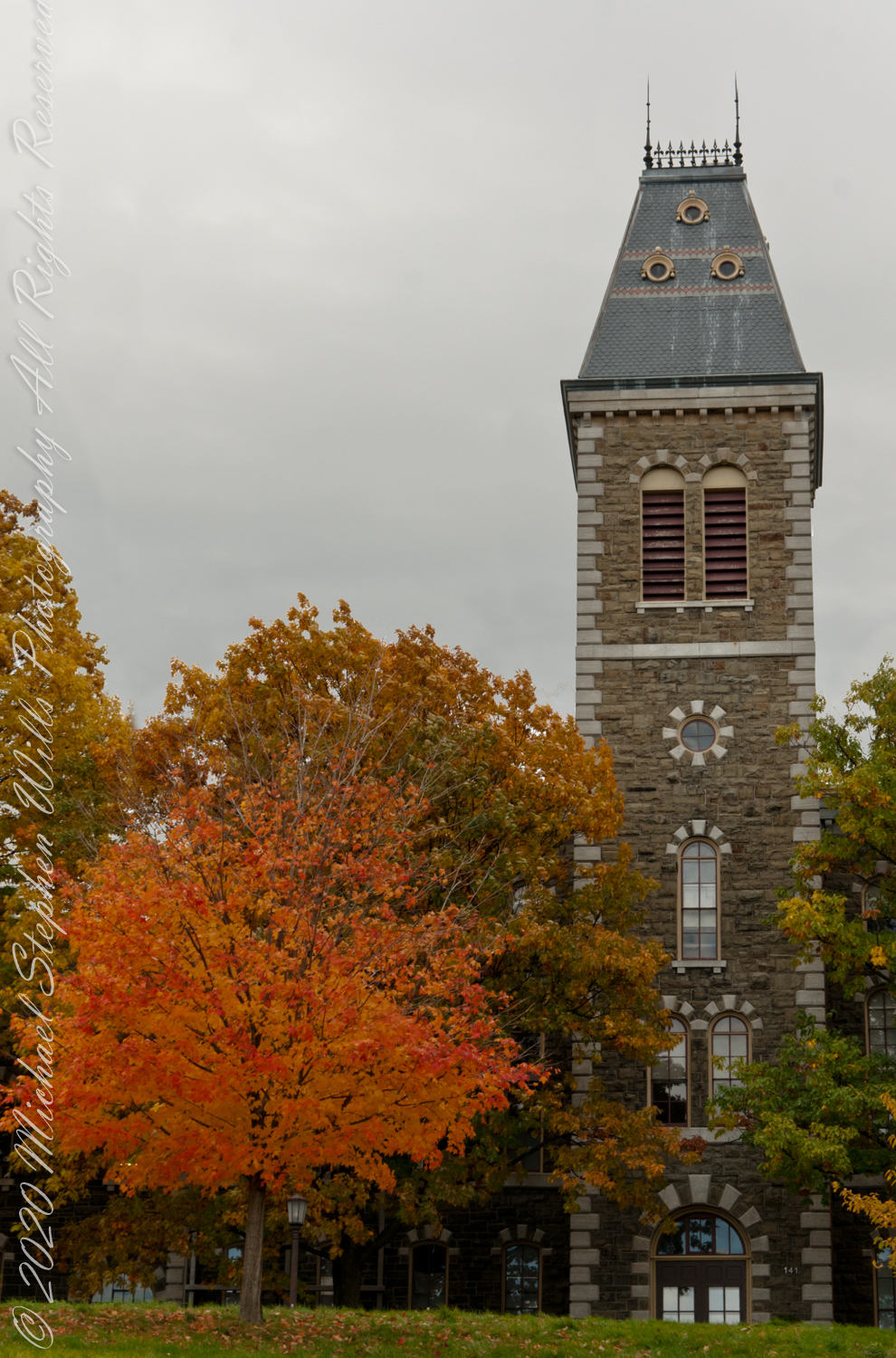
Named for founding trustee John McGraw, who gave $120,000 for construction of the building, McGraw Hall, designed by architect Archimedes N. Russell, opened in 1872.
Built of an Ithaca stone known as Lenrock, the four-story building was the first on campus to include a tower and today is home to the American Studies Program, Department of History, Department of Anthropology, and Archaeology Intercollege Program.
Jennie McGraw, daughter of John McGraw, donated the chimes to be placed in the tower, where they stayed until McGraw Tower was built in 1891.
This year the College of Arts and Sciences inaugurated a comprehensive renovation of McGraw Hall.
Copyright 2023 Michael Stephen Wills All Rights Reserved
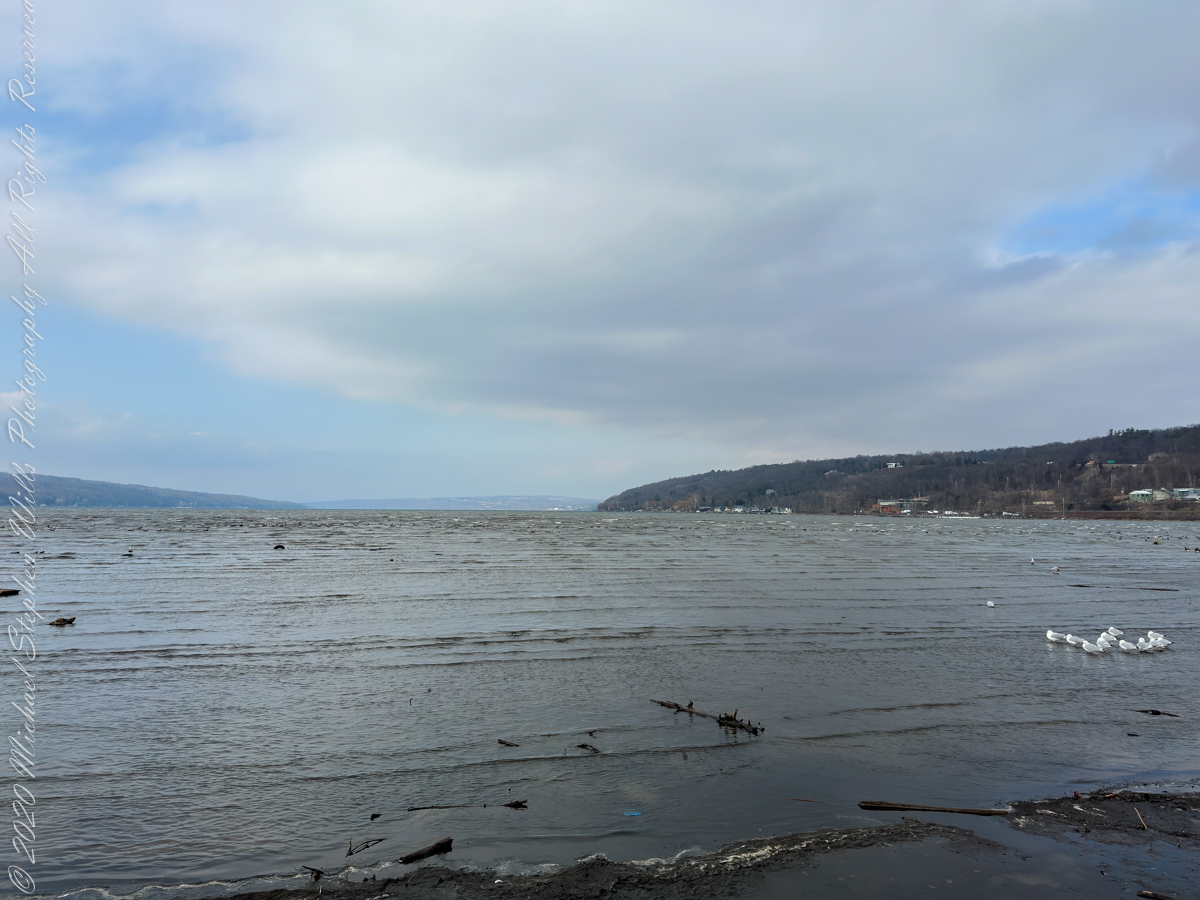
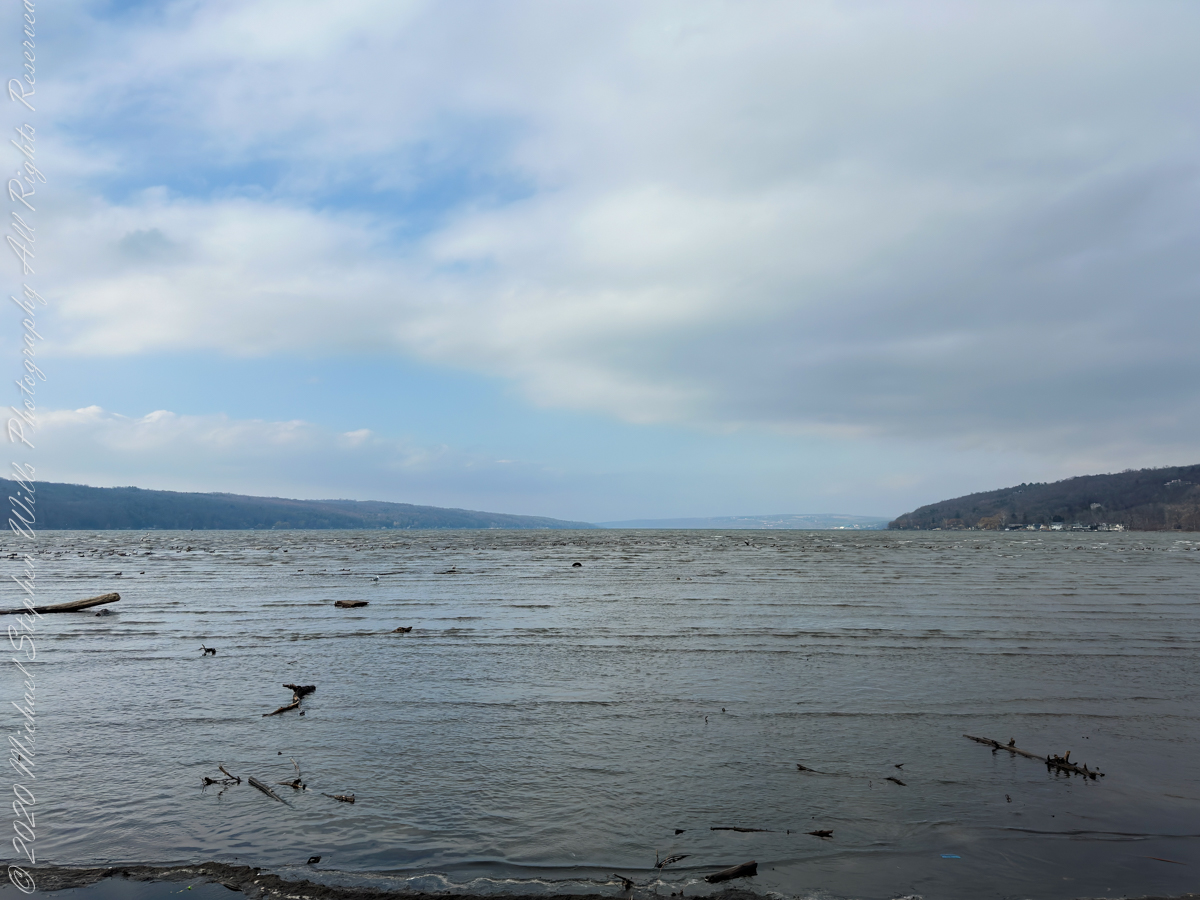
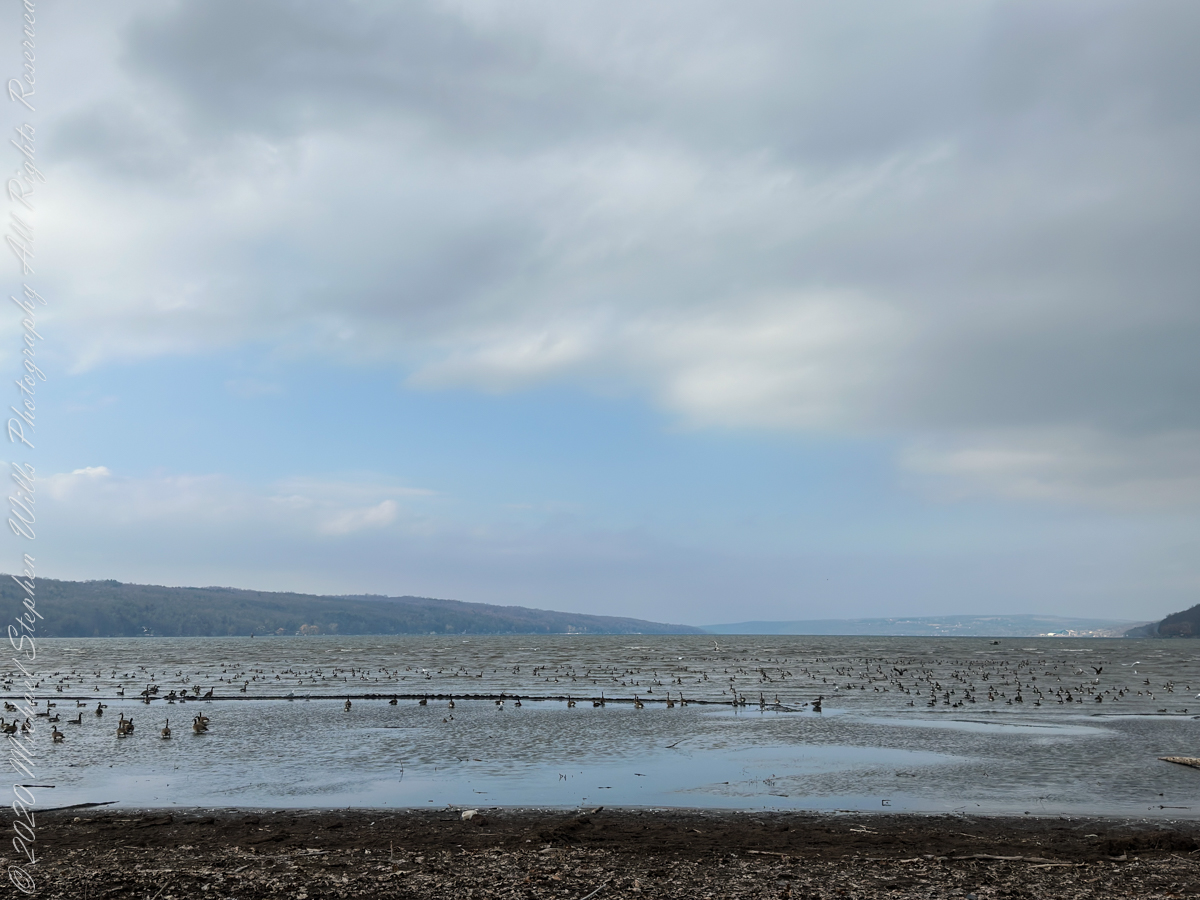
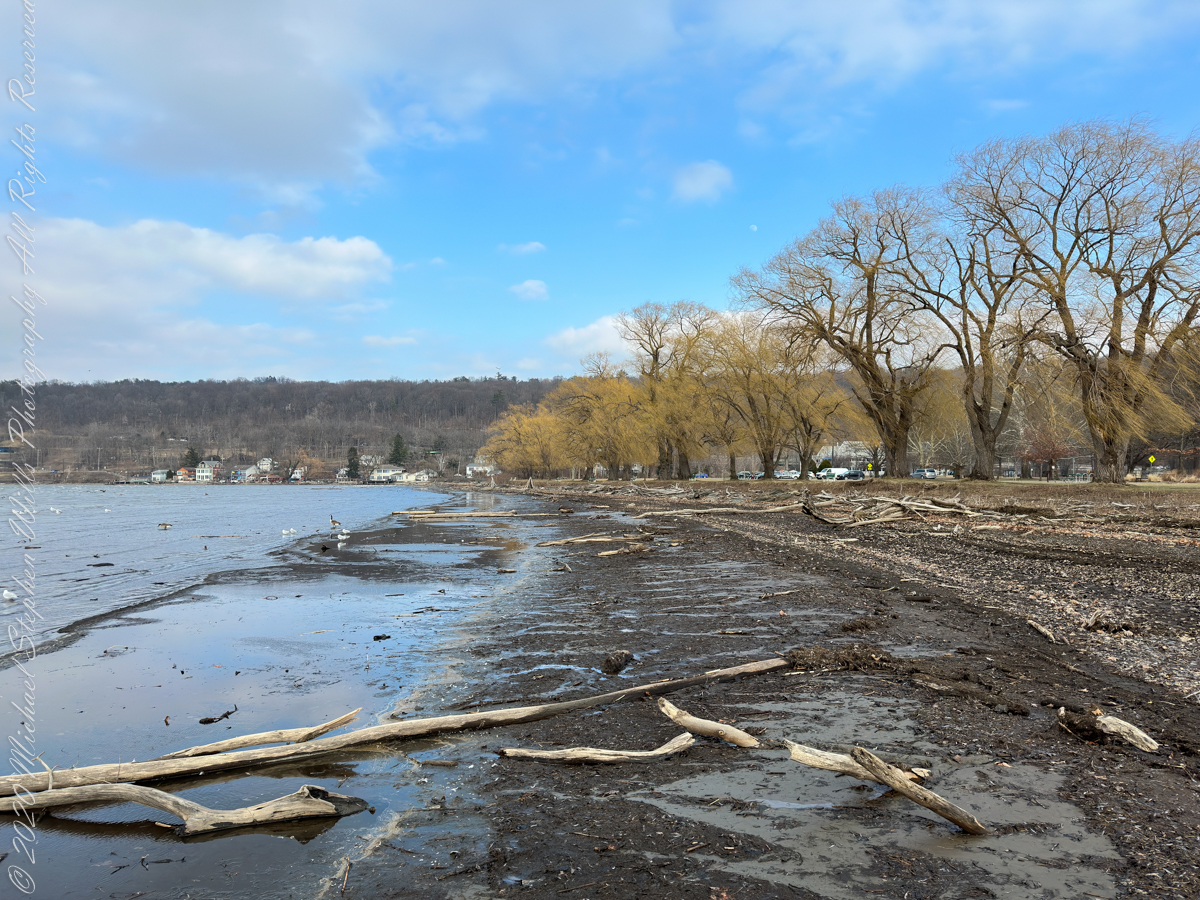
Pam and I have sailed past Crowbar Point, the arm of land projecting into the lake on left, so we know this end of Cayuga Lake well. The lake reach northward is deceiving as the bulk of the 39-mile reach is north of the headlands of the west lakeshore visible in the distance as the apparent end of the lake.
I love the pale blue of late February / early March skies.
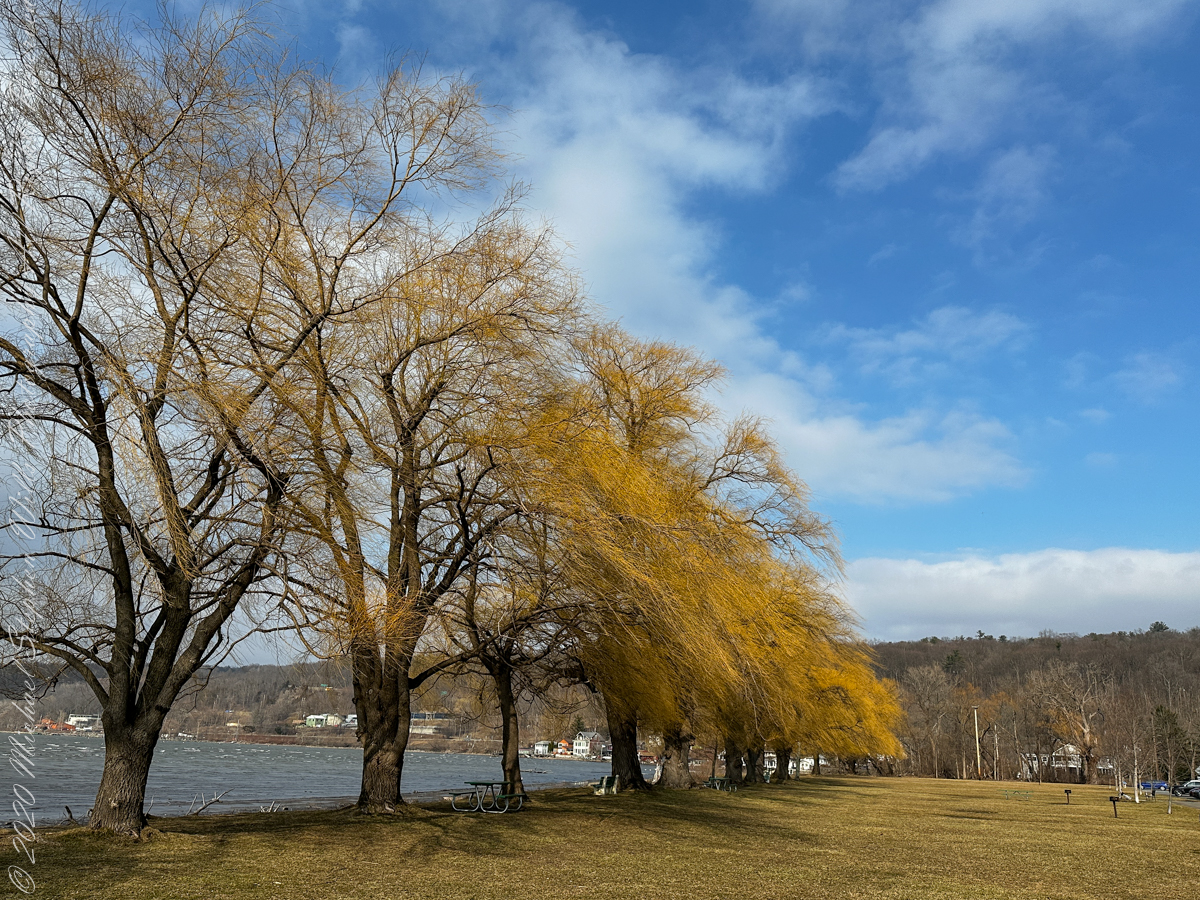
Also known as White Willow, for the white undersides of the leaves that flash in the wind. These flourish on the southernmost shore of Cayuga Lake.
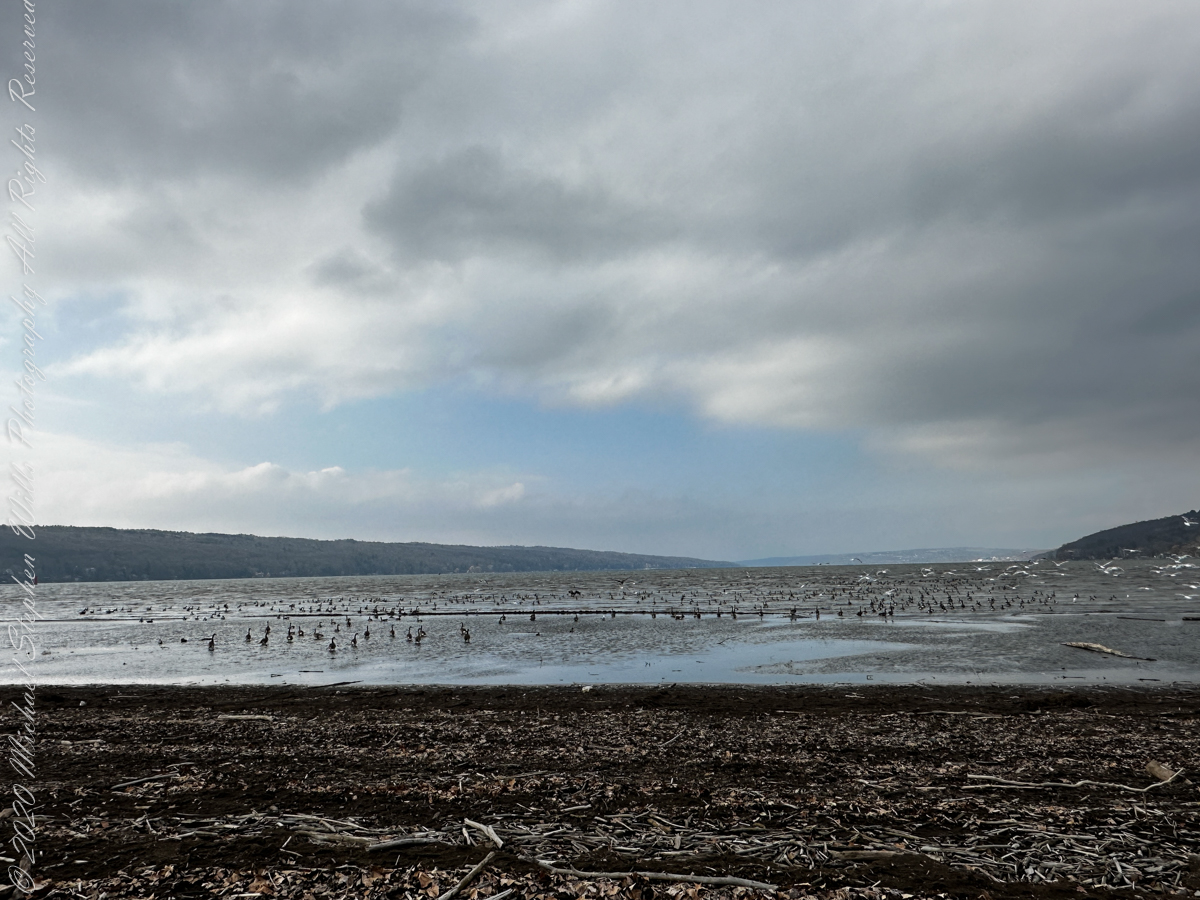
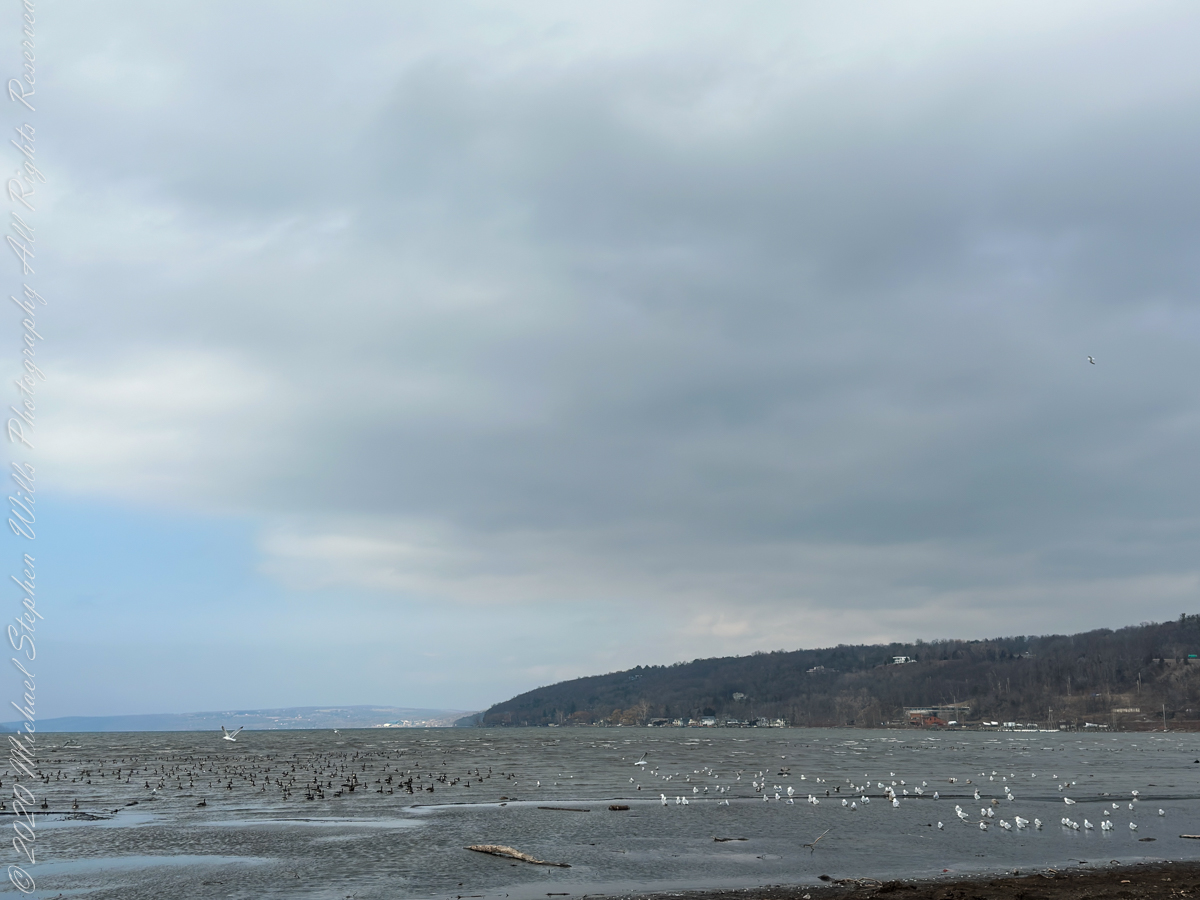
Here is a video of a large gathering of Canadian Geese, multitudes landing to ride lake waves on an unsettled, windy March afternoon.
Copyright 2023 Michael Stephen Wills All Rights Reserved
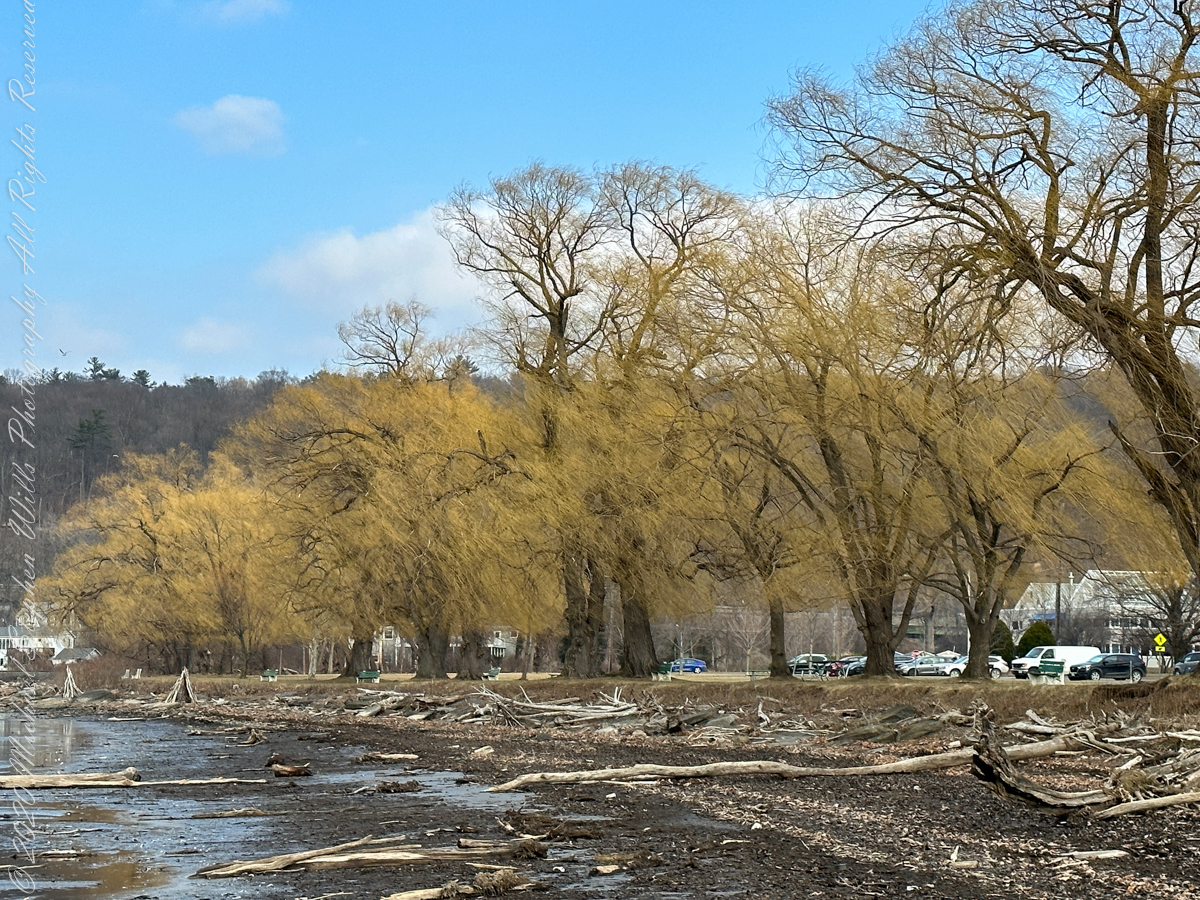
Among the earliest plants to flower, brilliant yellow willows (Salix alba ‘Tristis’) are glorious early spring as new growth sprouts.
Willows native to New York State are all shrub-like, the homeland of these large trees is Europe and Asia.
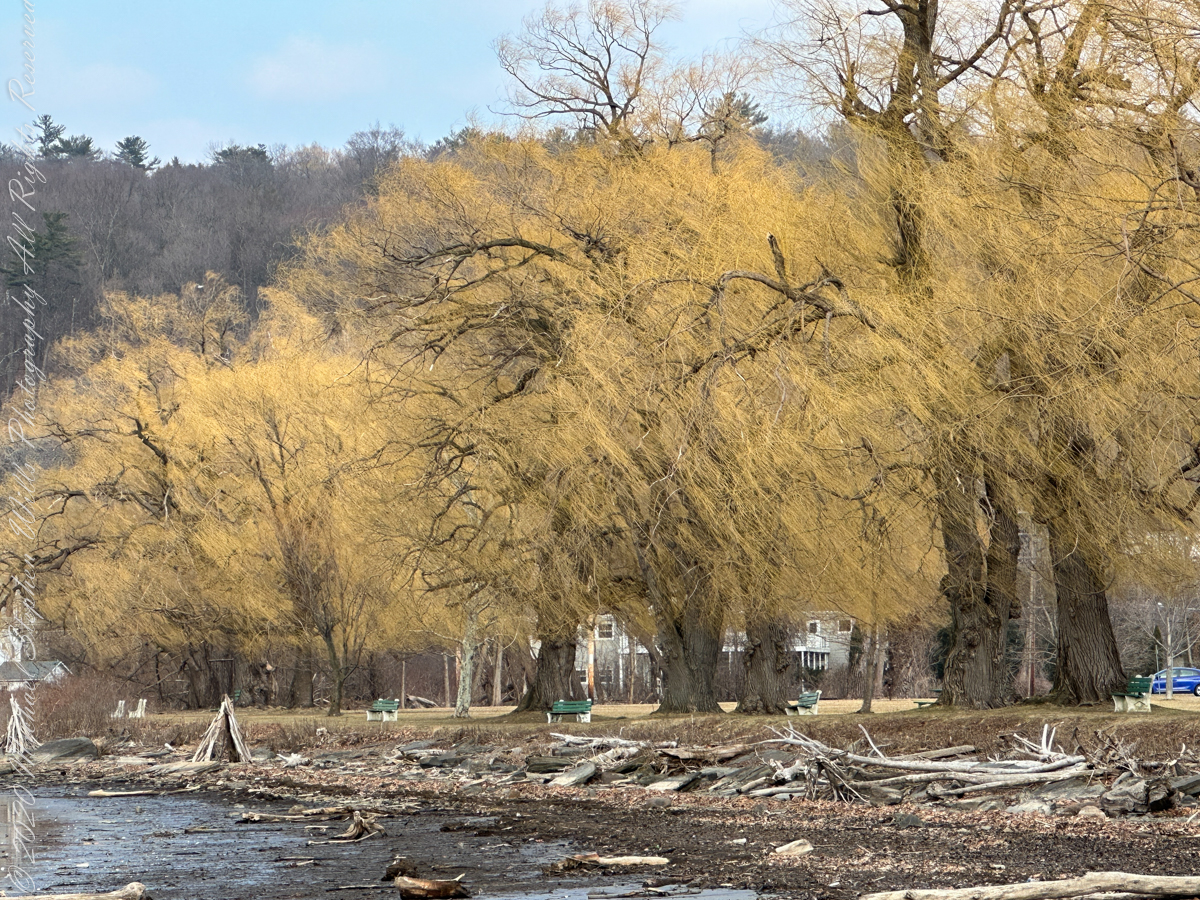
Also known as White Willow, for the white undersides of the leaves that flash in the wind. These flourish on the southernmost shore of Cayuga Lake.
Willow bark does NOT have analgesic properties. The genus name, Salix, is the root for acetylsalicylic acid (aka aspirin), a chemical that does not appear in nature, originally synthesized from salicylic acid extracted from Meadowsweet.
Movement of budding willow branches in a north wind off Cayuga Lake
Copyright 2023 Michael Stephen Wills All Rights Reserved
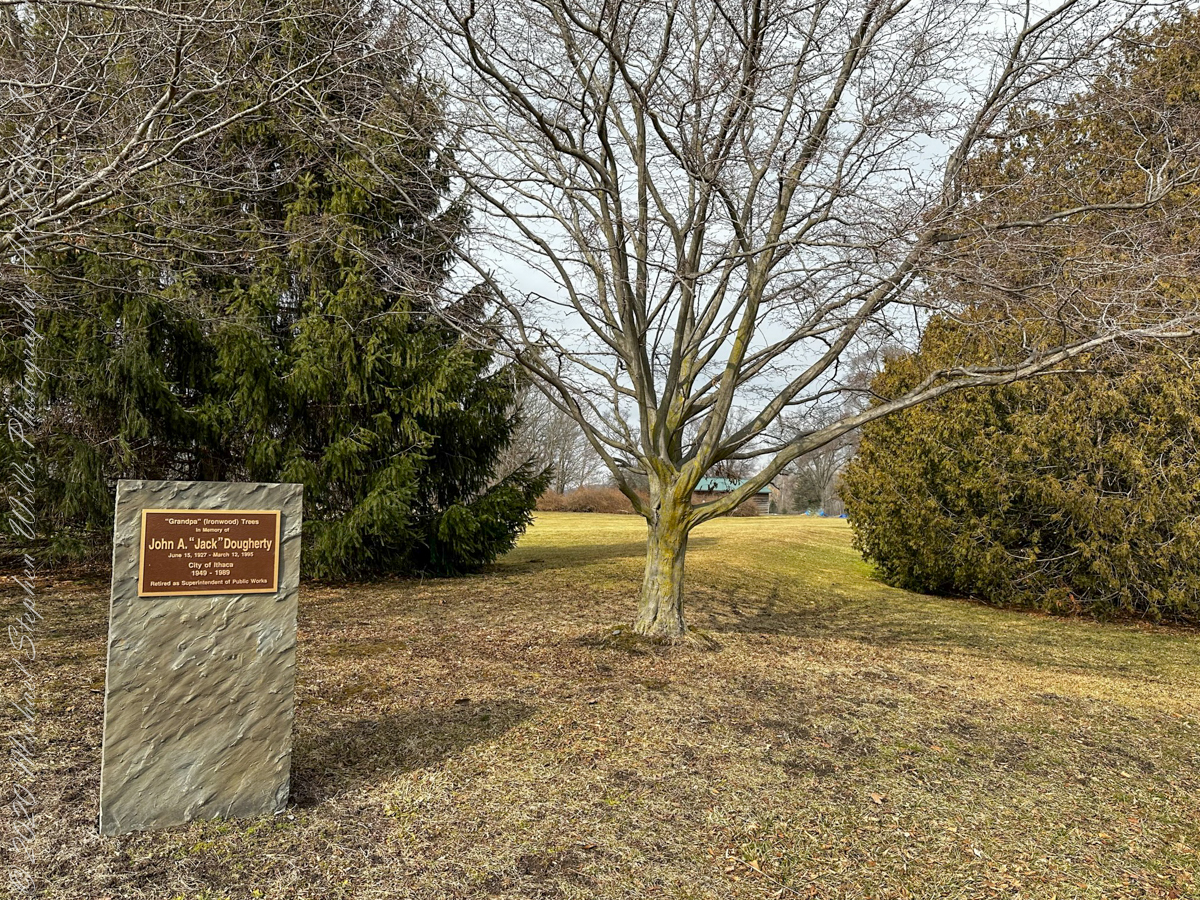
Another Cayuga Waterfront Trail stop is this memorial. The plaque reads ” ‘Grandpa’ (Ironwood) Trees in memory of John A. ‘Jack’ Dougherty; June 15, 1927 – March 12, 1995; City of Ithaca 1949-1989, Retired as Superintendent of Public Works.” Located near the intersection of Pier Road and Willow Avenue, Newman Golf Course, Ithaca, Tompkins County, New York. That is an Ironwood tree, midgound center.
The American Hornbeam (scientific name: Carpinus caroliniana) is also known as Musclewood for the rippled surface of the mature trunk. Other names are blue-beech, ironwood and muscle beech.
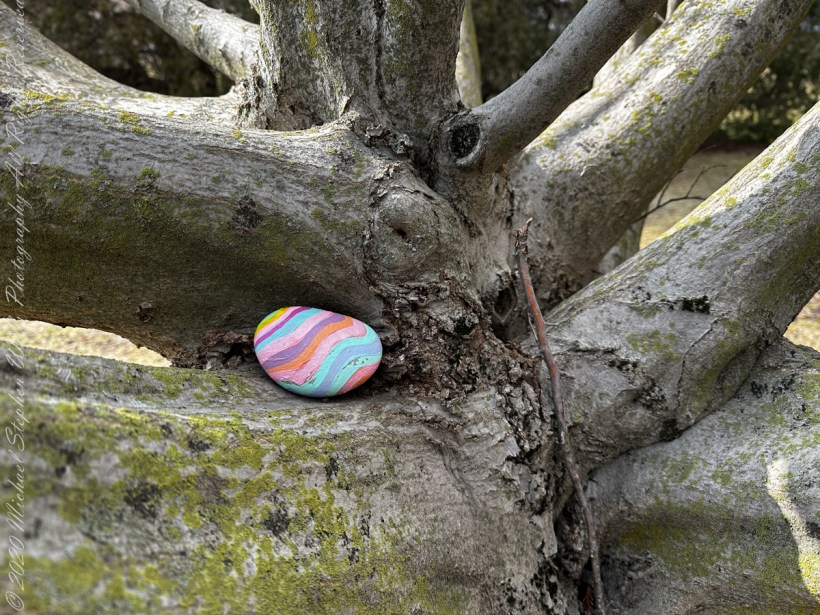
Nestled on the trunk……
Copyright 2023 Michael Stephen Wills All Rights Reserved
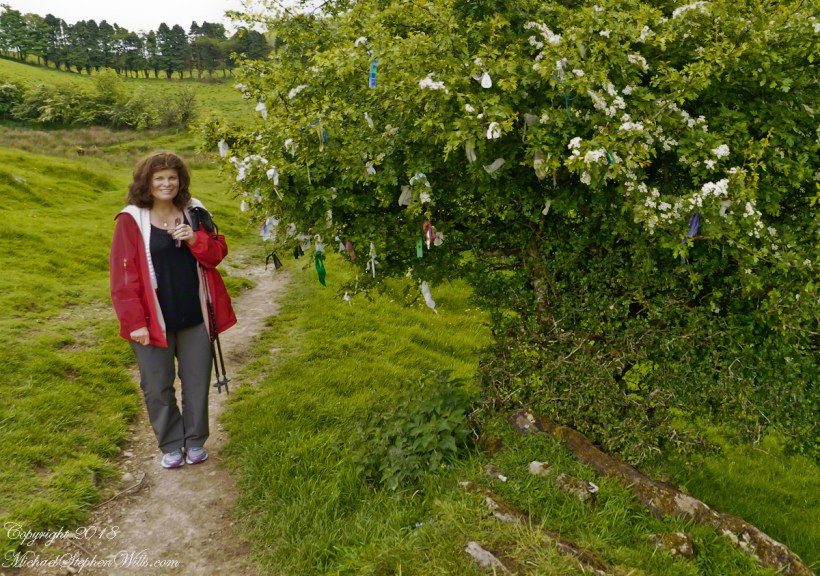
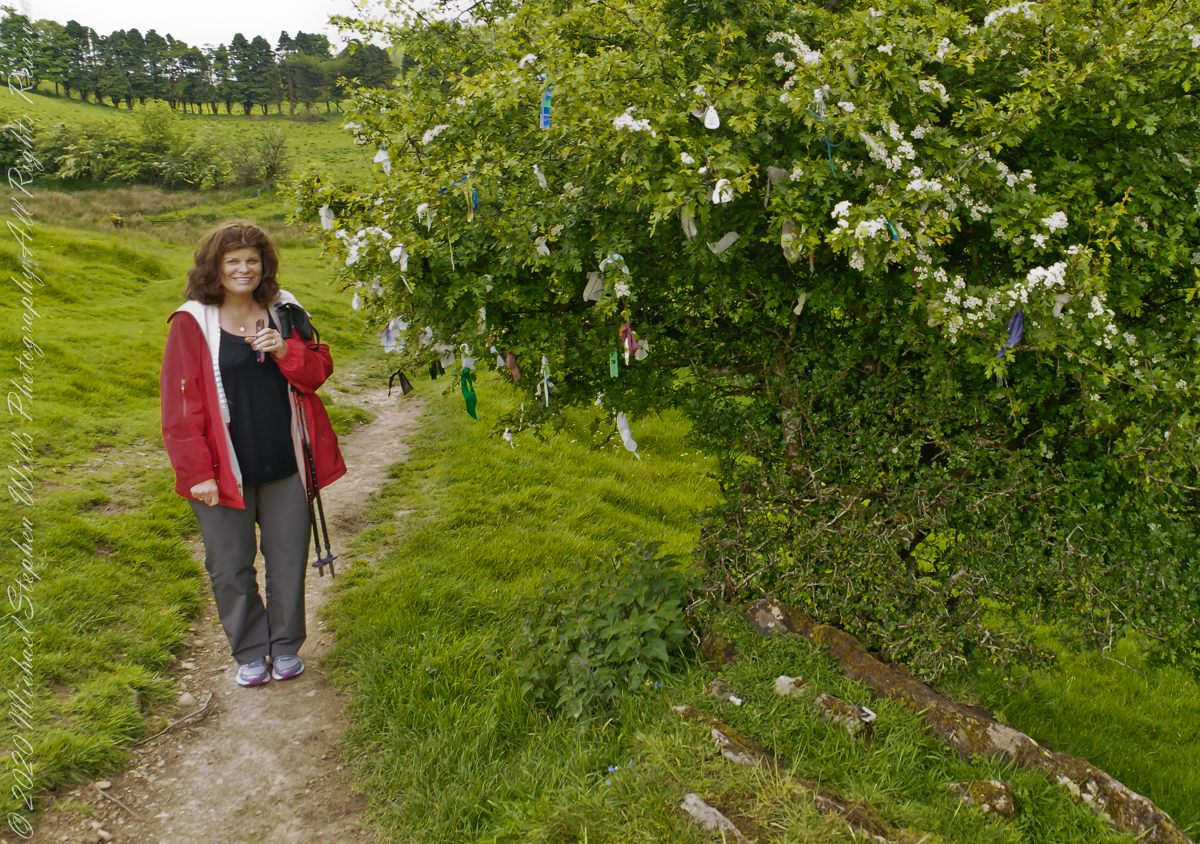
Pam and I were lucky enough to plan our tour of Ireland for May and June when the Hawthorne trees are in bloom. Named sceach gheal in Gaelic, the white clusters of blossoms symbolize hope. Hawthorns are plentiful throughout the island. The Irish revere the tree and associate each Hawthorn with the Little People. There are roads in Ireland that curve around a Hawthorn tree because the local people convinced the engineers to do so, to save the tree.
This specimen, covered with offerings (to the Little People?), is on the trail to Loughcrew. Even with her knee trouble, Pam made it to the top of the Hag’s Mountain to visit Cairn T of the Loughcrew Passage tombs.
The steep path to Loughcrew passes a hawthorn covered with flowers and may offerings.
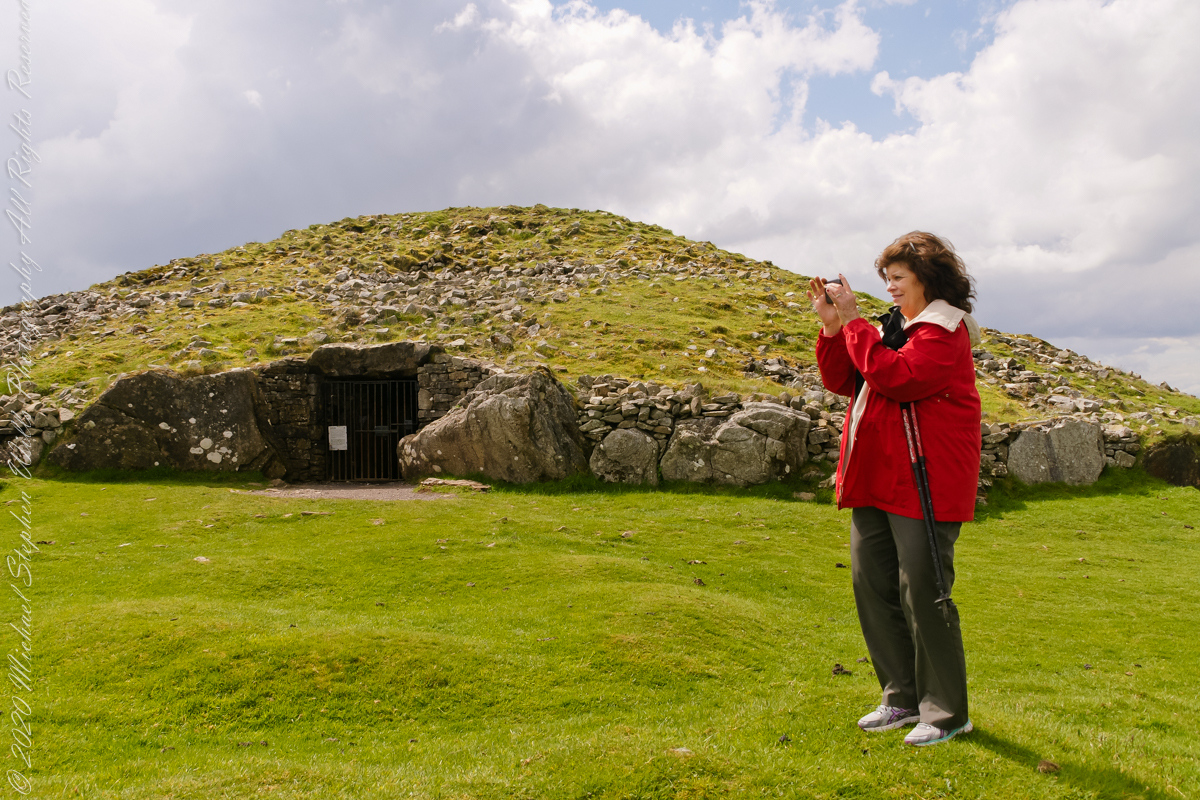
Pam loves to capture images and returned from Ireland with a large collection. Most of the photos of me at work are by Pam. Here Pam is capturing the summit view of Hag’s Mountain with the Cairn T entrance gate in the background. Lucky for us, a fellow visitor made the trip to Loughcrew Gardens and picked up the gate key from the café. In a later post I will share my work from inside this passage tomb.
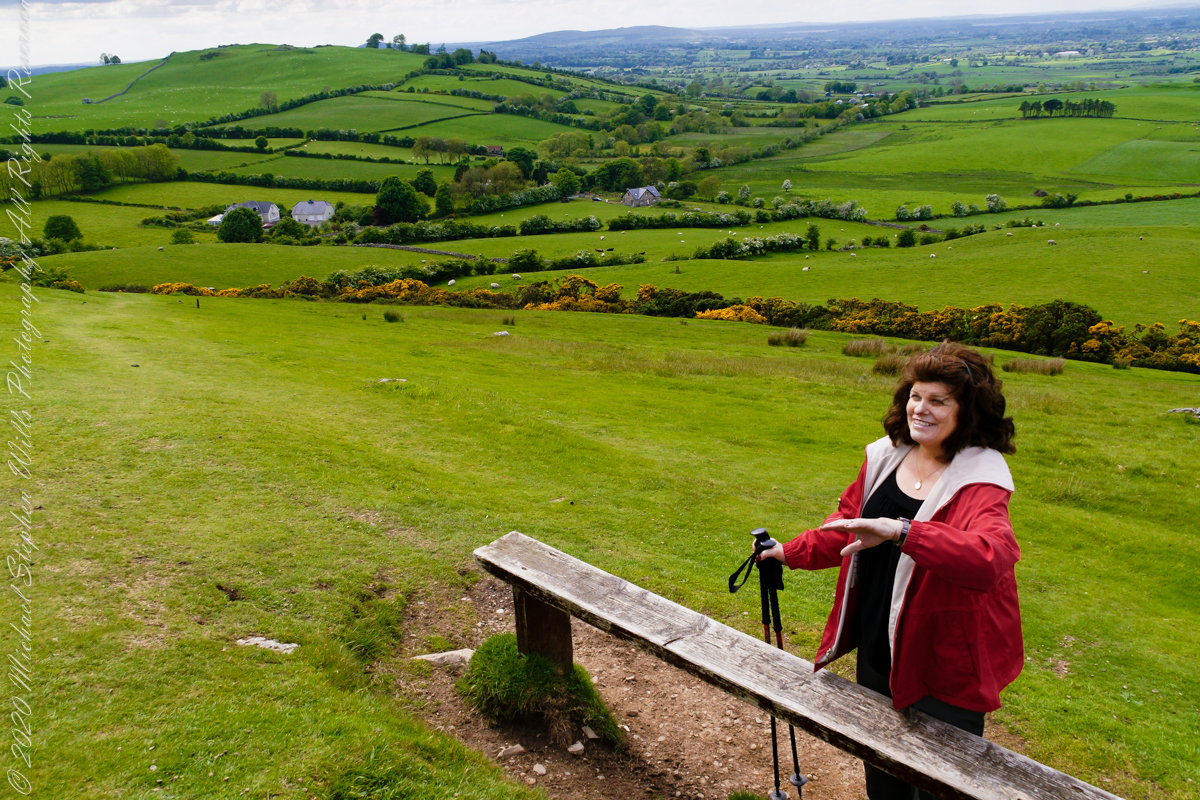
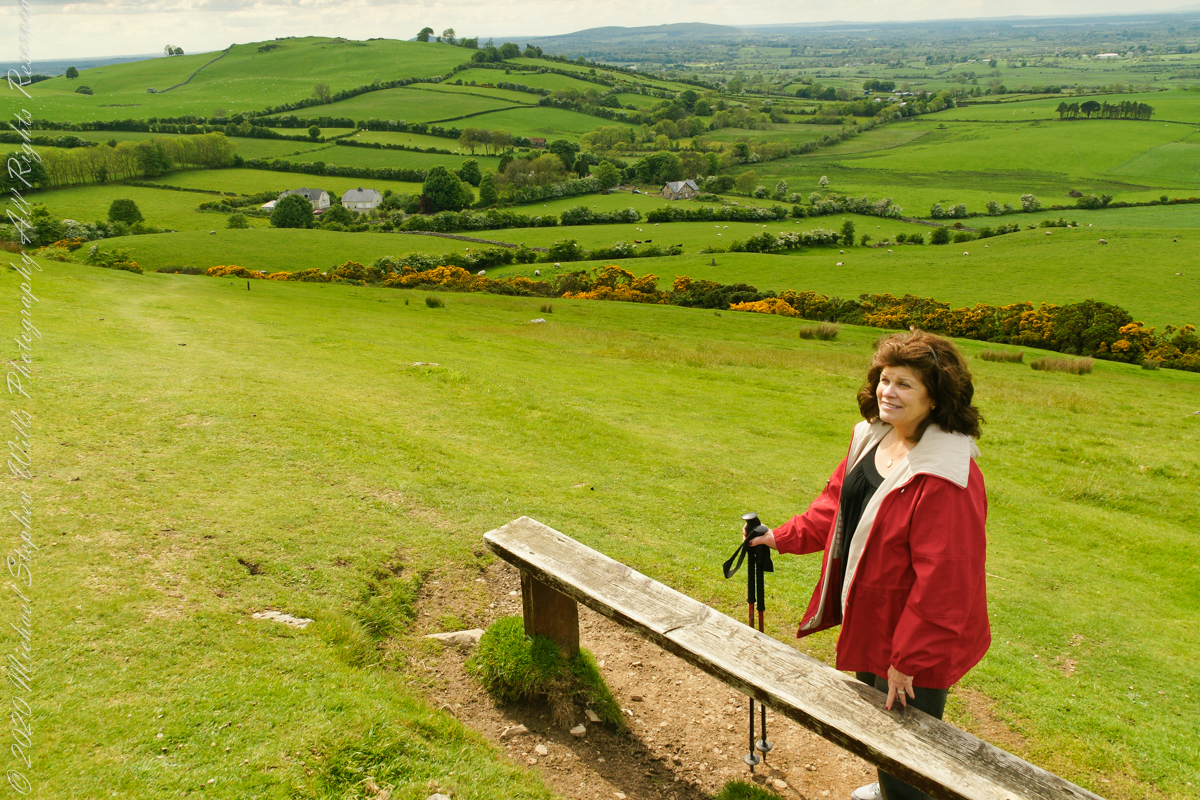
Pam makes friends wherever we go. She started down the mountain before me to take it easy on her knees. When I caught up, Pam and a young Irish family were deep in conversation. I took the opportunity to capture Pam with that gorgeous view to the northwest, Irish countryside with Lake of the Branches in the far distance.
Copyright 2023 Michael Stephen Wills All Rights Reserved
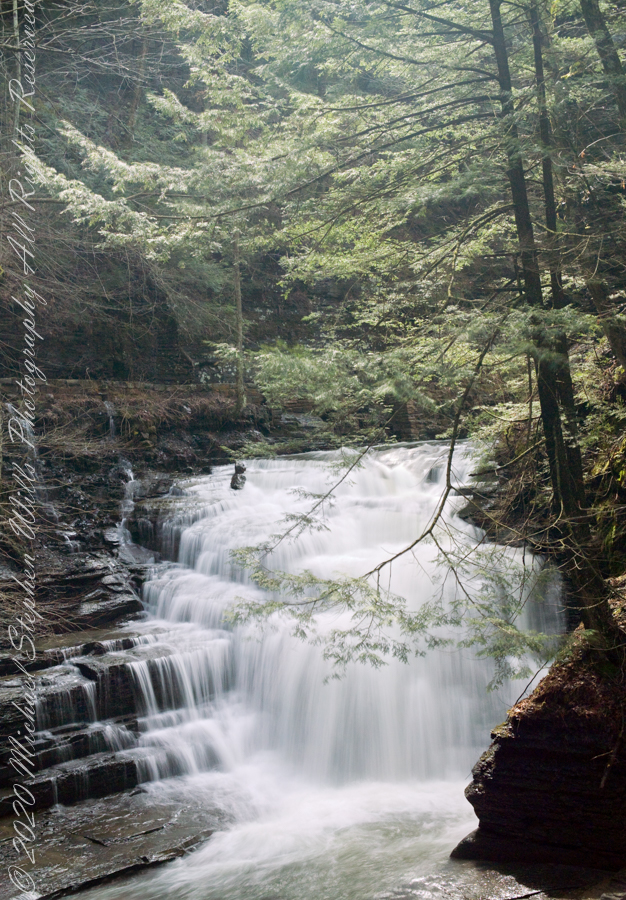
Here is the third waterfall in the Fillmore Glen Gallery of Waterfalls, shaded by hemlocks, below bridge eight (8) on an early spring morning of high-water volume.
A high dynamic range rendering from several exposures from a Kodak DSC Pro SLR/c with a Canon EF 50 mm f/1.4 USM all mounted on a very stable Manfrotto 468MG tripod with Hydrostatic Ball Head.
Fillmore Glen State Park Moravia, Cayuga County, New York.
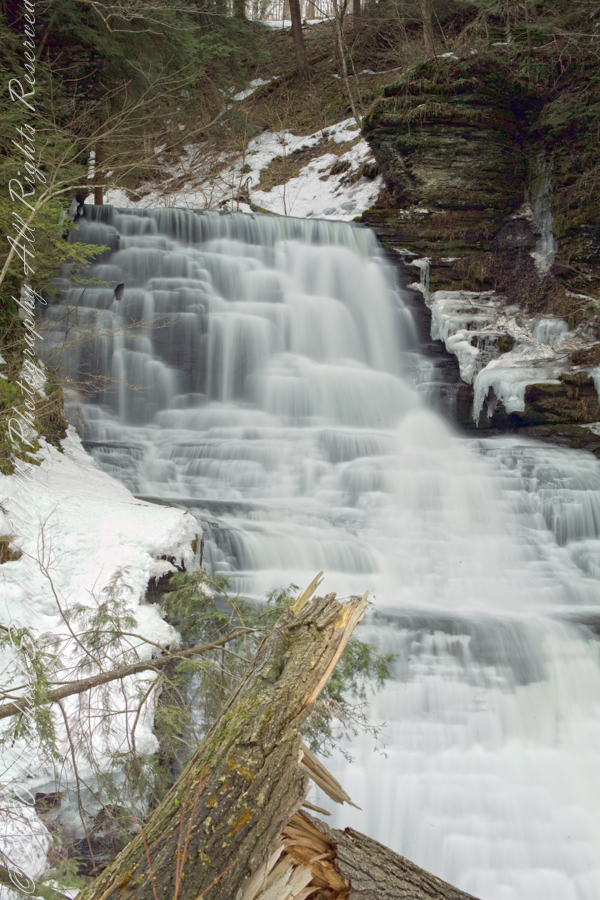
Portrait orientation of the waterfall beneath the dam reveals the length the water takes across a cliff face. A shattered Hemlock destroyed over previous winter is in foreground.
A high dynamic range rendering from several exposures from a Kodak DSC Pro SLR/c with a Canon EF 50 mm f/1.4 USM all mounted on a very stable Manfrotto 468MG tripod with Hydrostatic Ball Head.
Fillmore Glen State Park Moravia, Cayuga County, New York.
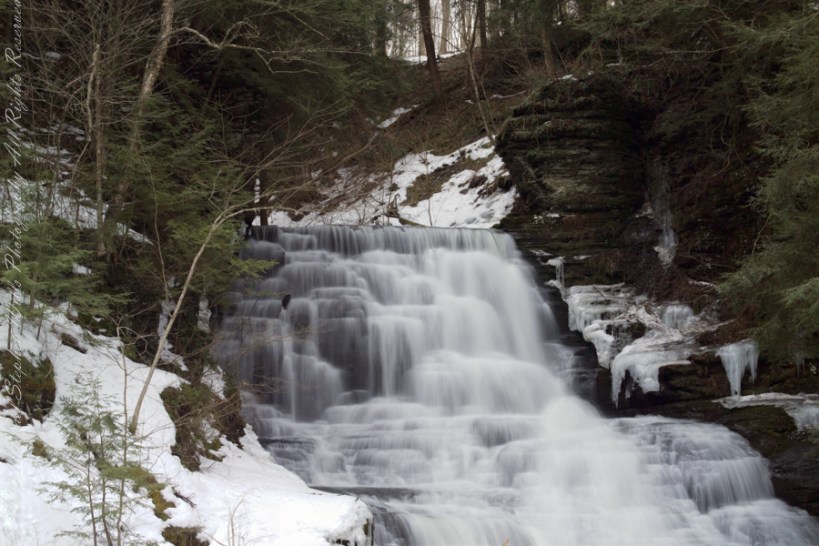
The high waterfall flowing from the outlet from the dam of Dry Creek on a spring morning just after the solstice. A shattered Hemlock destroyed over previous winter is in foregound. Fillmore Glen State Park, Moravia, Cayuga County, New York
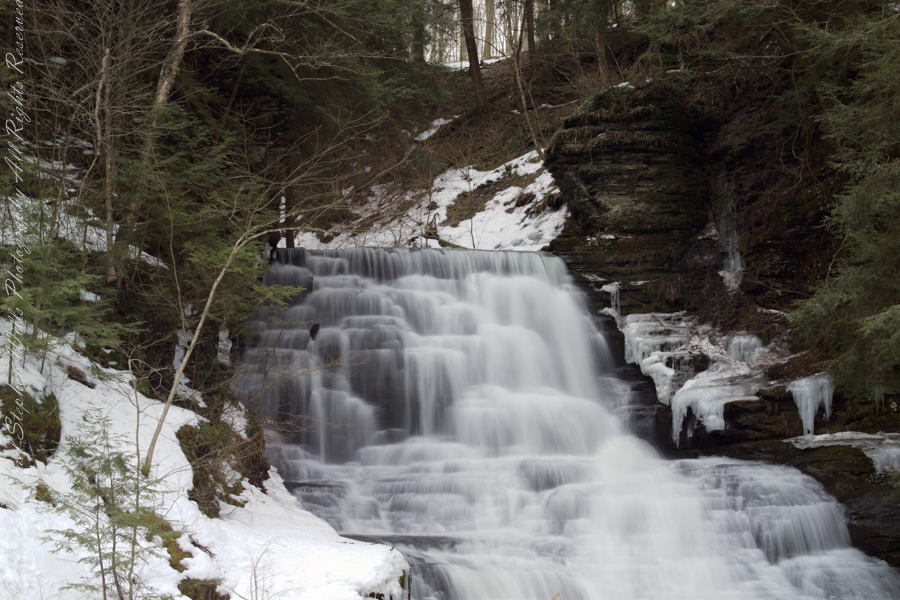
The upper portion of a high waterfall flowing from the outlet from the dam of Dry Creek on a spring morning just after the solstice.
A high dynamic range rendering from several exposures from a Kodak DSC Pro SLR/c with a Canon EF 50 mm f/1.4 USM all mounted on a very stable Manfrotto 468MG tripod with Hydrostatic Ball Head.
Fillmore Glen State Park Moravia, Cayuga County, New York.
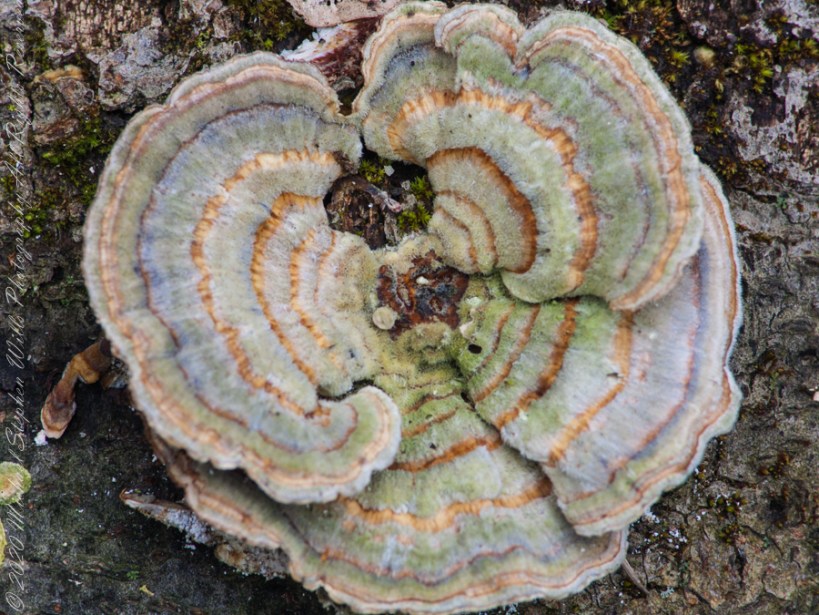
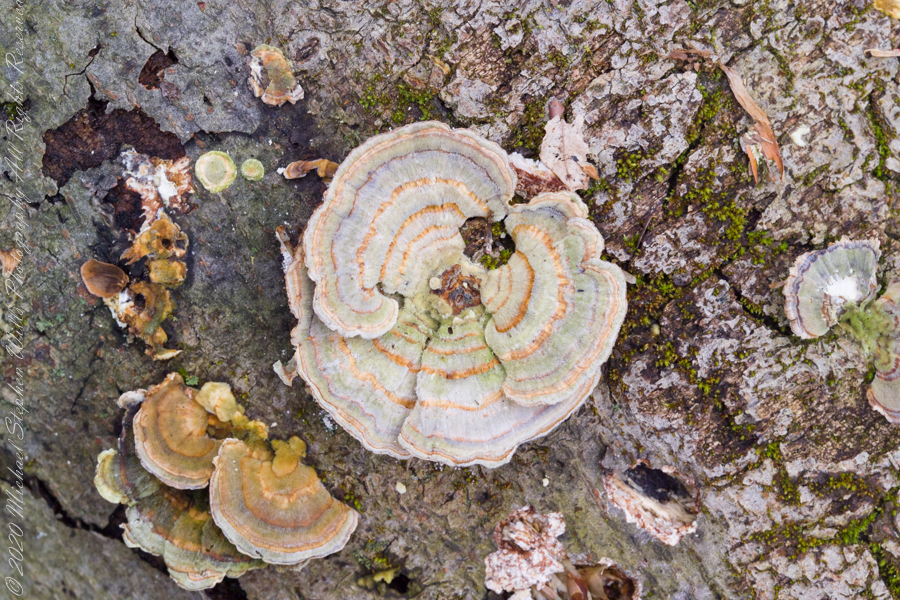
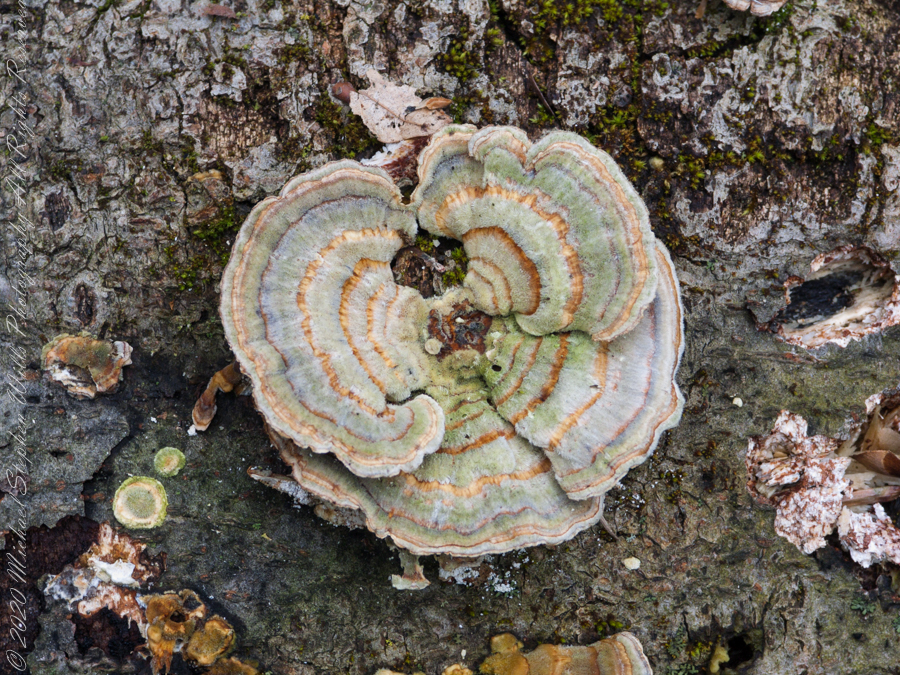
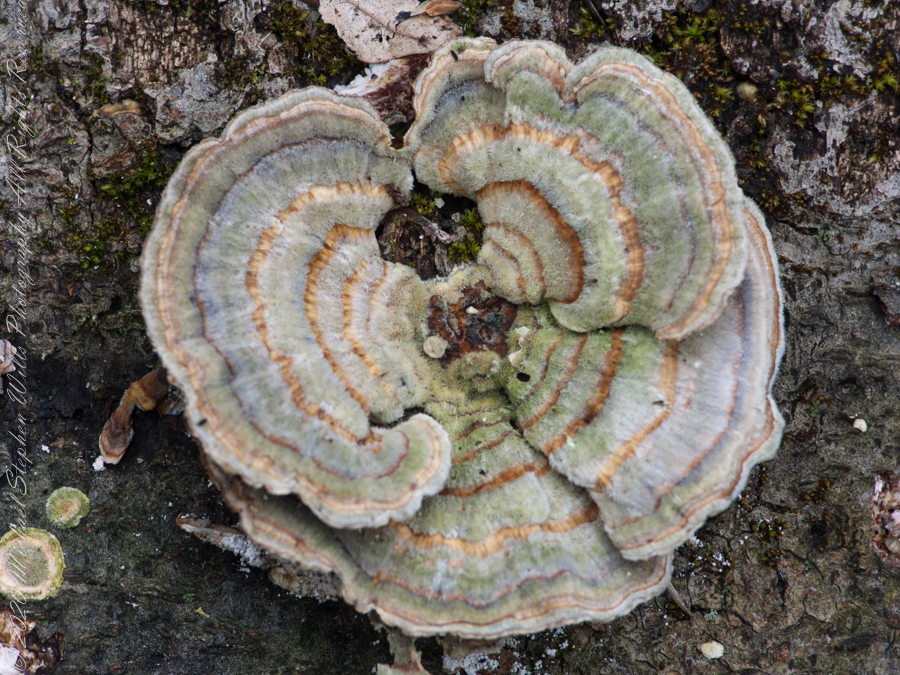
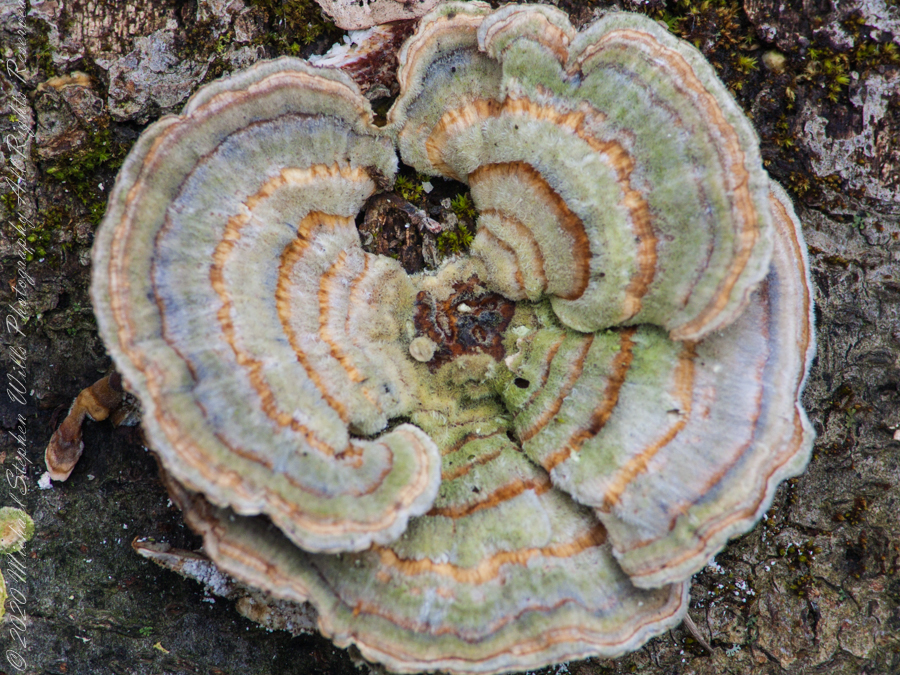
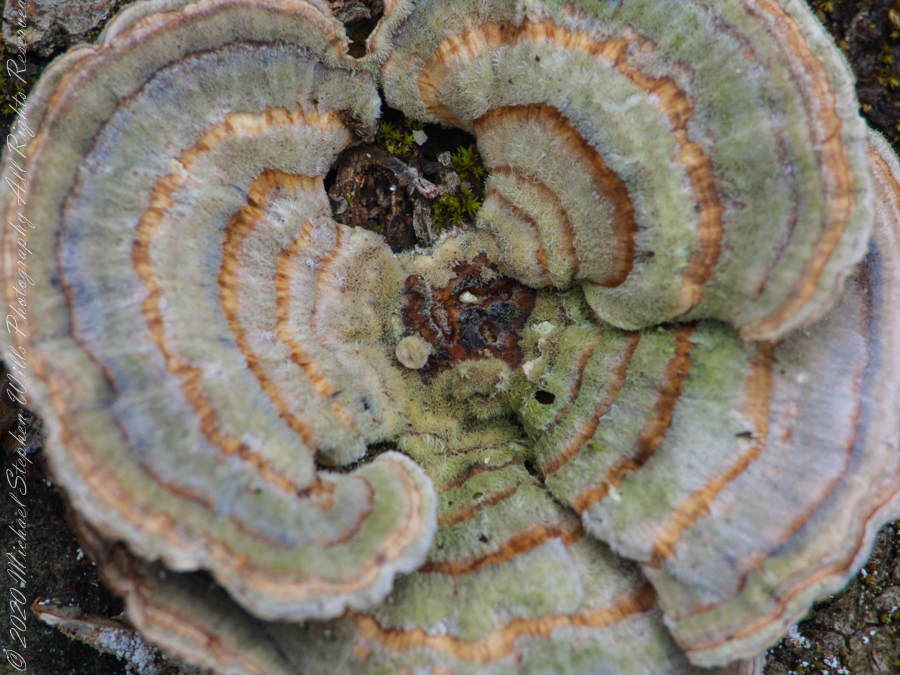
Trametes versicolor – also known as Coriolus versicolor and Polyporus versicolor – is a common polypore mushroom found throughout the world.
Meaning ‘of several colors’, versicolor reliably describes this fungus that displays a variety of colors. For example, because its shape and multiple colors are similar to those of a wild turkey, T. versicolor is commonly called turkey tail.
Found on a rotting Hemlock stump, Fillmore Glen State Park Moravia, Cayuga County, New York.
Kodak DSC Pro SLR/c with a Canon EF 100 mm f/2.8 Macro USM lens stabilized on a Manfrotto 468MG tripod with Hydrostatic Ball Head
Polypores are a group of fungi that form large fruiting bodies with pores or tubes on the underside (see Delimitation for exceptions). They are a morphological group of basidiomycetes-like gilled mushrooms and hydnoid fungi, and not all polypores are closely related to each other.
Kodak DSC Pro SLR/c with a Canon EF 100 mm f/2.8 Macro USM lens stabilized on a Manfrotto 468MG tripod with Hydrostatic Ball Head
Polypores are also called bracket fungi or shelf fungi, and they characteristically produce woody, shelf- or bracket-shaped or occasionally circular fruiting bodies that are called conks.
Sony alpha 700, Sony Lens DT 18-200mm F3.5-6.3 stabilized on a Manfrotto 468MG tripod with Hydrostatic Ball Head
Most polypores inhabit tree trunks or branches consuming the wood, but some soil-inhabiting species form mycorrhiza with trees. Polypores and the related corticioid fungi are the most important agents of wood decay, playing a very significant role in nutrient cycling and aiding carbon dioxide absorption by forest ecosystems.
Sony DSC F828 stabilized on a Manfrotto 468MG tripod with Hydrostatic Ball Head
Sony DSC F828 stabilized on a Manfrotto 468MG tripod with Hydrostatic Ball Head
Sony DSC F828 stabilized on a Manfrotto 468MG tripod with Hydrostatic Ball Head




 Michael Stephen Wills Photography