Today, I have a companion post to “A Summer Flower and Waterfalls” from a time of Coronavirus (COVID-19) from a walk cut short by inconsiderate people not following New York laws.
All photographs and videos are from an Apple IPhone 7.
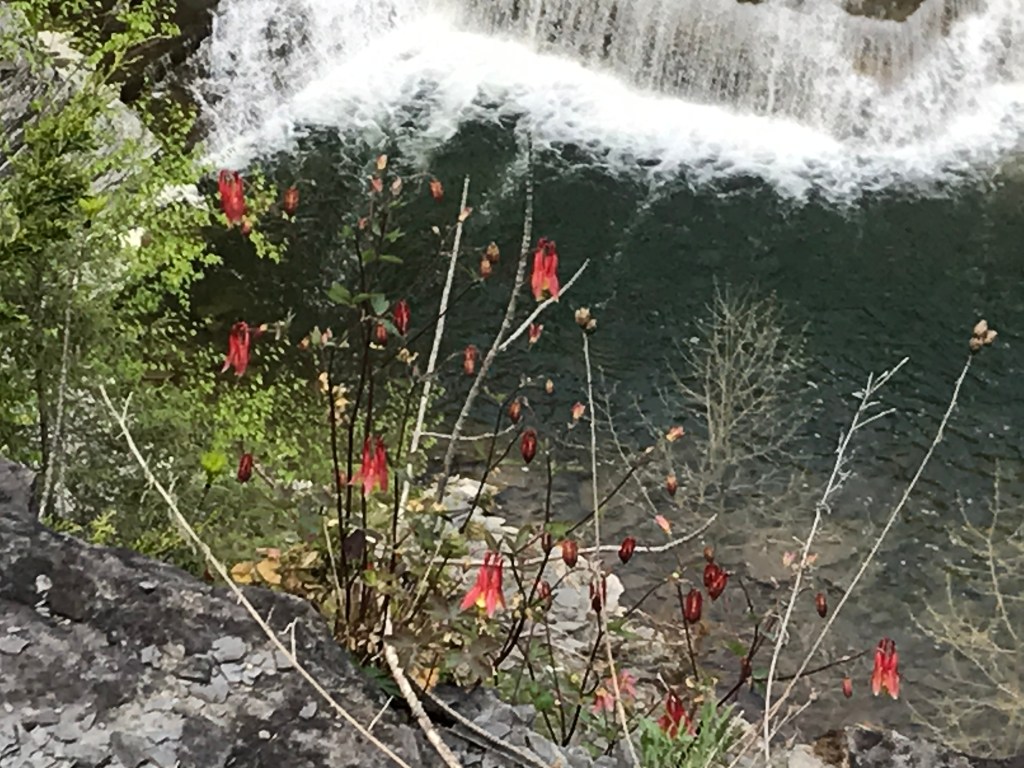
Here is a long and close shot of Columbine Flowers thriving on the edge of a gorge cliff.
Click photograph for a larger view. To do this from WordPress Reader, you need to first click the title of this post to open a new page.
With a video of the movement of this wildflower against a backdrop of flowing water over a 100 feet below.
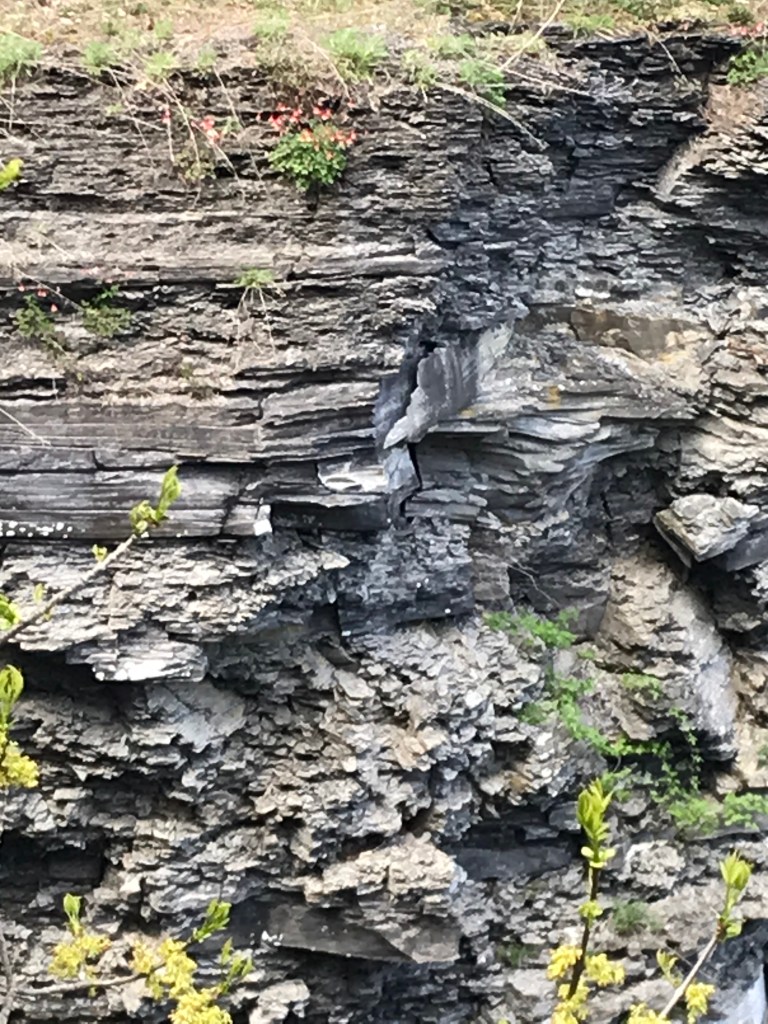
A scan of the upper gorge with some marvelous clouds.
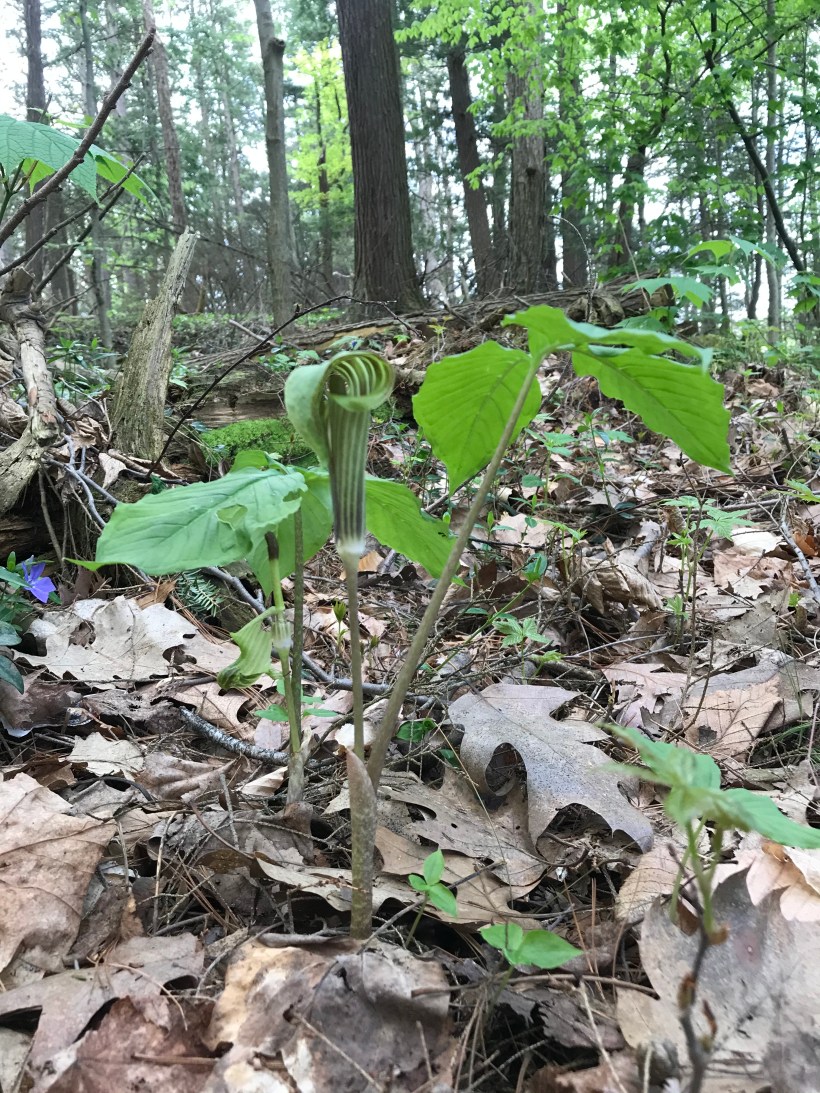
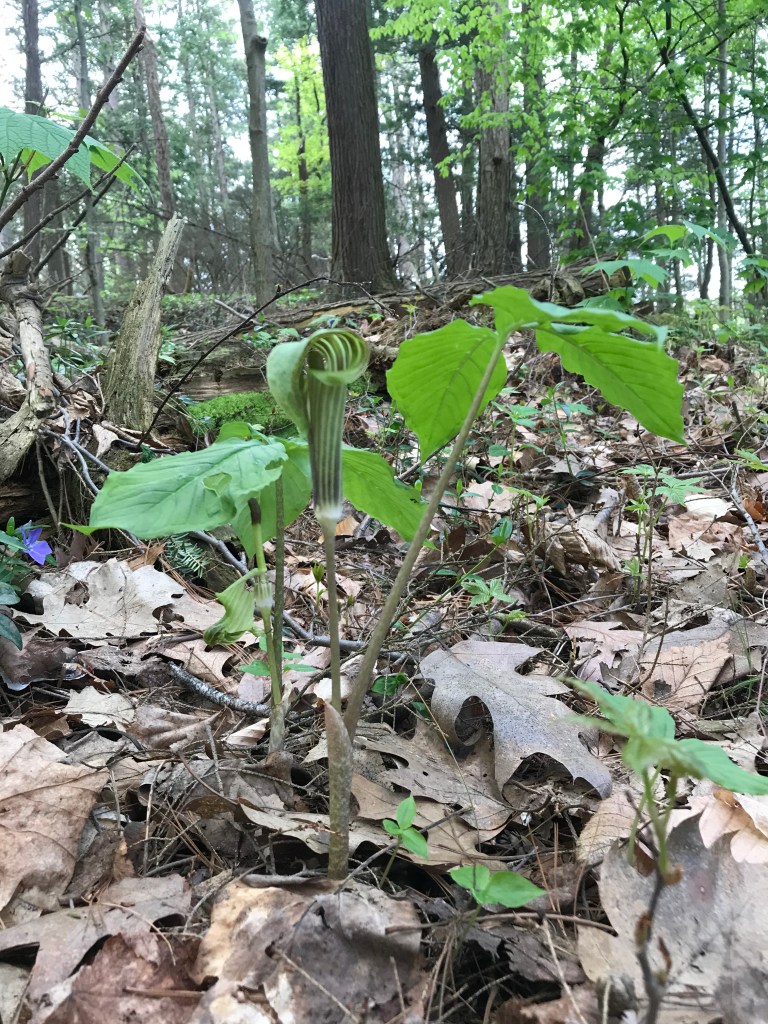
Continuing onto the forest trail I spotted this Jack-In-The-Pulpit. Here is a photograph and short video.
My walk this day was cut short by joggers, unmasked, on the narrow trail. For each I stepped off to put 6 feet between us. So inconsiderate and unnecessary, selfish.
Copyright 2020 All Rights Reserved Michael Stephen Wills
As of June 9, 881 is the count of subscribers to this blog, an interesting number. The individual numerals sum to a prime number, 17. I appreciate each and every “1” added together, you readers. Thank You.
Today, June 20, 5:44 pm Eastern Daylight Time, is the Summer Solstice for our Northern Hemisphere, the longest day of the year.
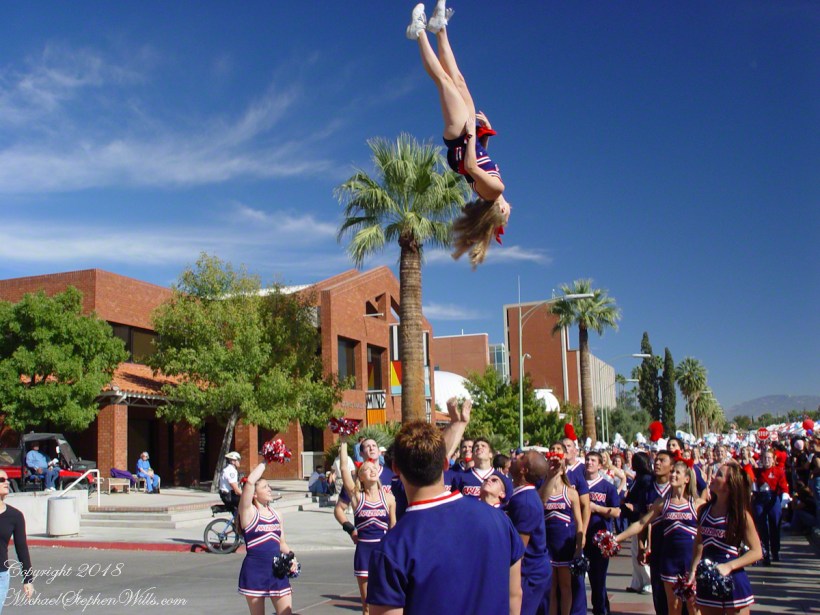
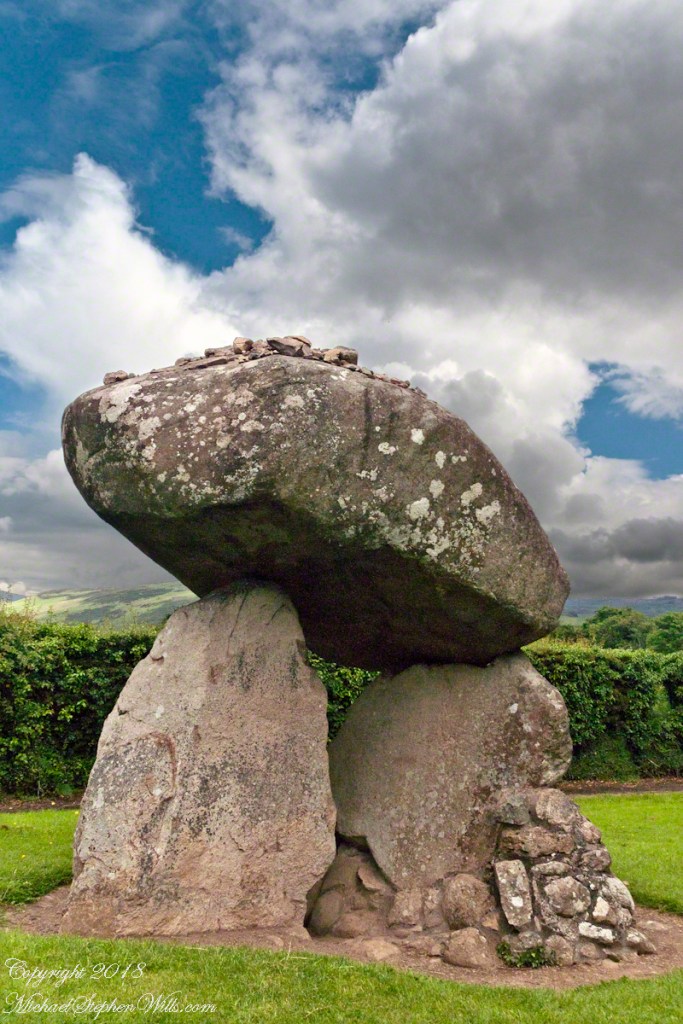
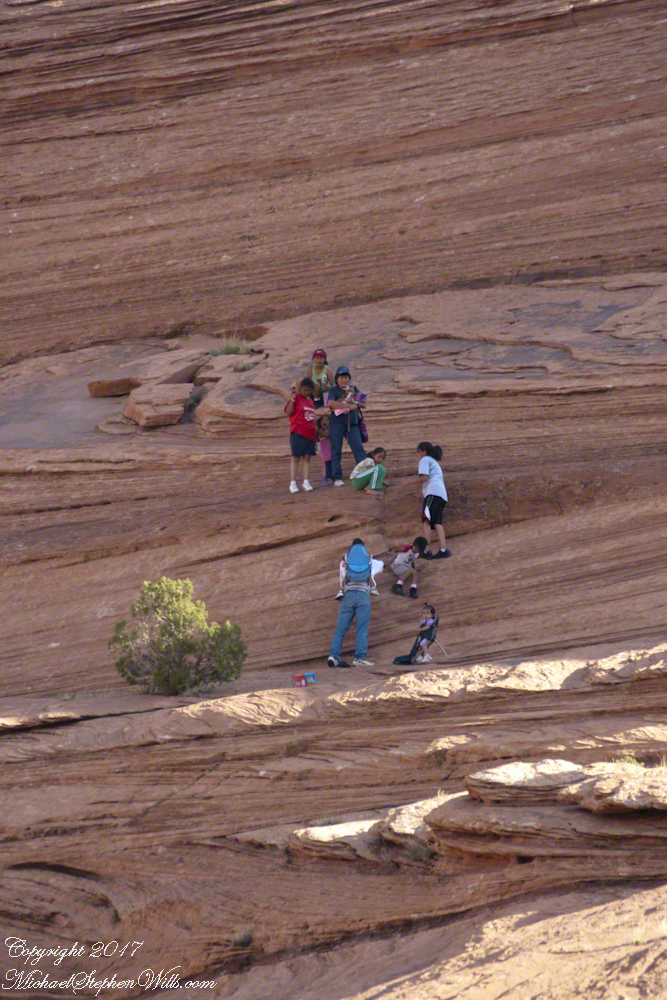
Here is a selection of images from past posts.
Click any photograph for a slide show. To do this from WordPress Reader, you need to first click the title of this post to open a new page.
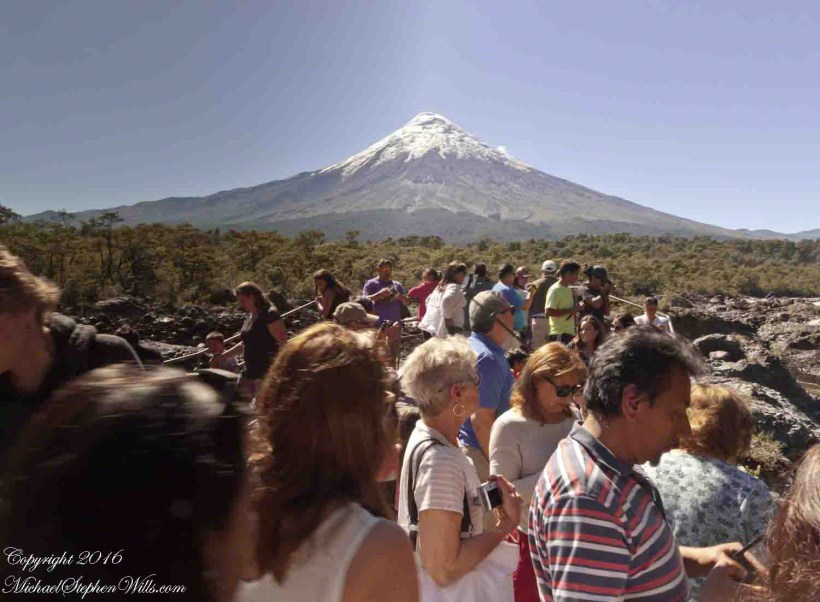
The trail at Petrohue Falls is packed with tourists on a sunny summer afternoon.
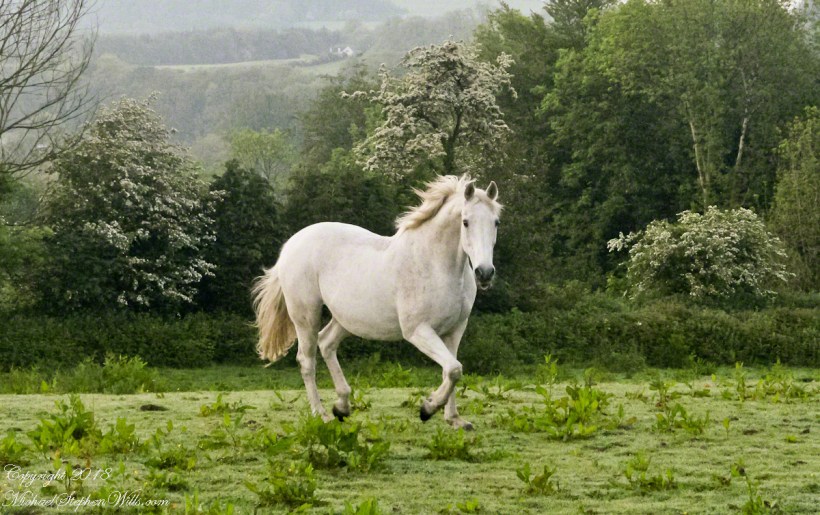
Pam and Mike Wills stayed with Marantha House B&B, during our Spring 2014 Ireland Tour. It was our base in County Cork. Our day of arrival, that evening, I visited Charlemagne and fed him an apple, saved from dinner. We learned from our hosts, Olwen and Douglas Venn, he is a retired show horse they rescued. The following morning I visited Charlemagne again with an apple and my camera. As I walked up, starting from the far end of his field, Charlemagne rewarded me with a series of astounding poses, trotting toward me in fine form. The morning mists, hawthorn in bloom, distant hills came together for this memory.
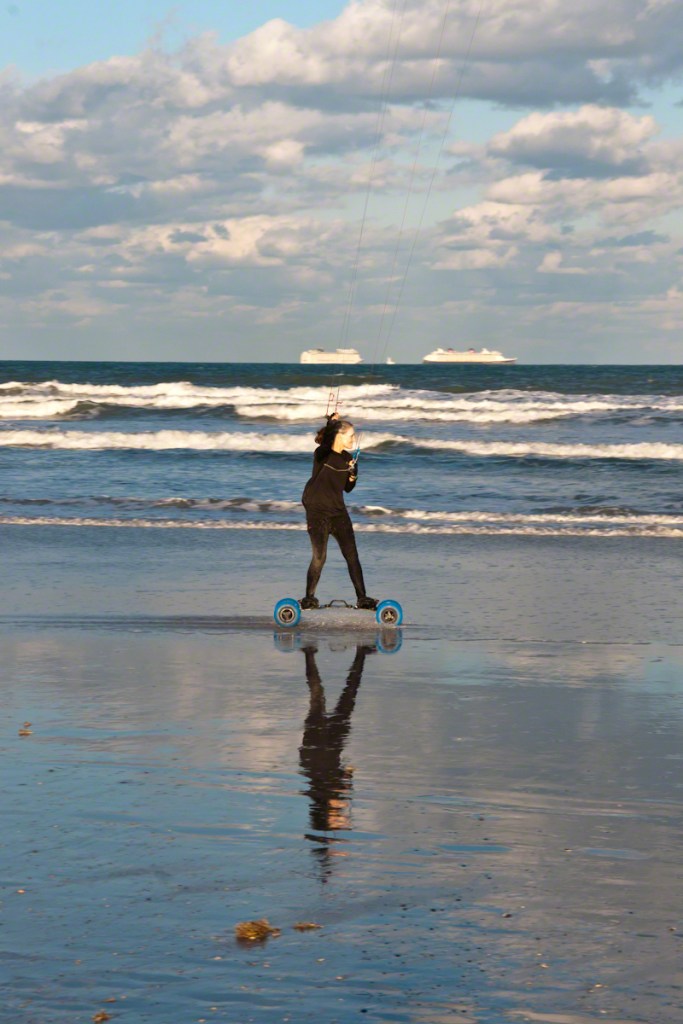
Newlyweds on Cocoa Beach waiting for the photographer in a perfect early evening light. A cruise ship departing from Port Canaveral in the distance.
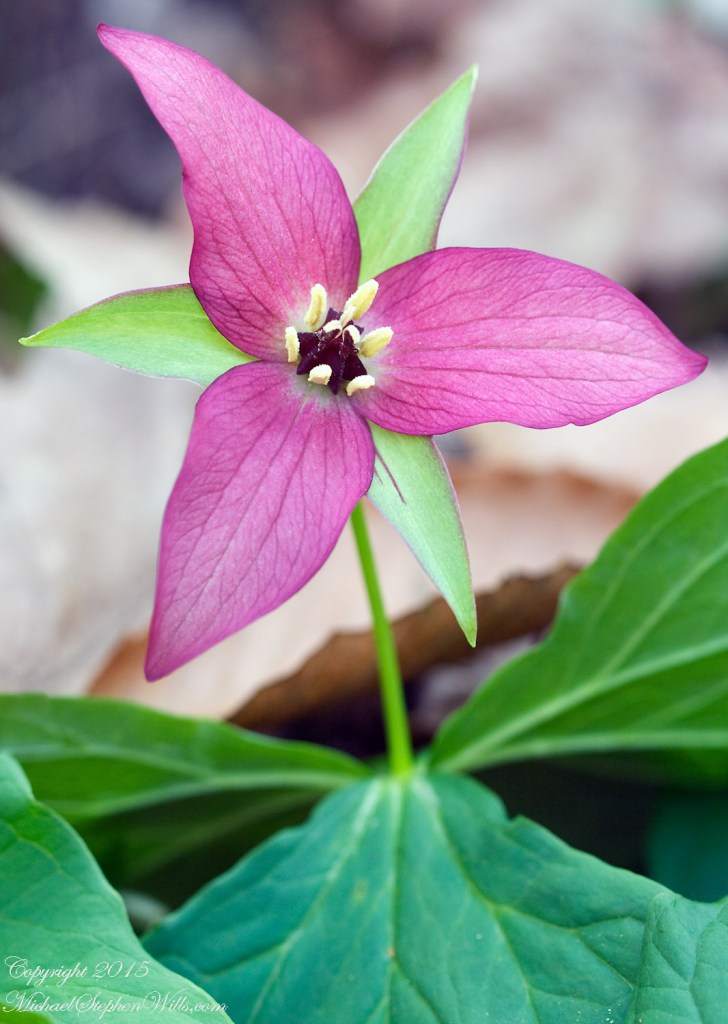
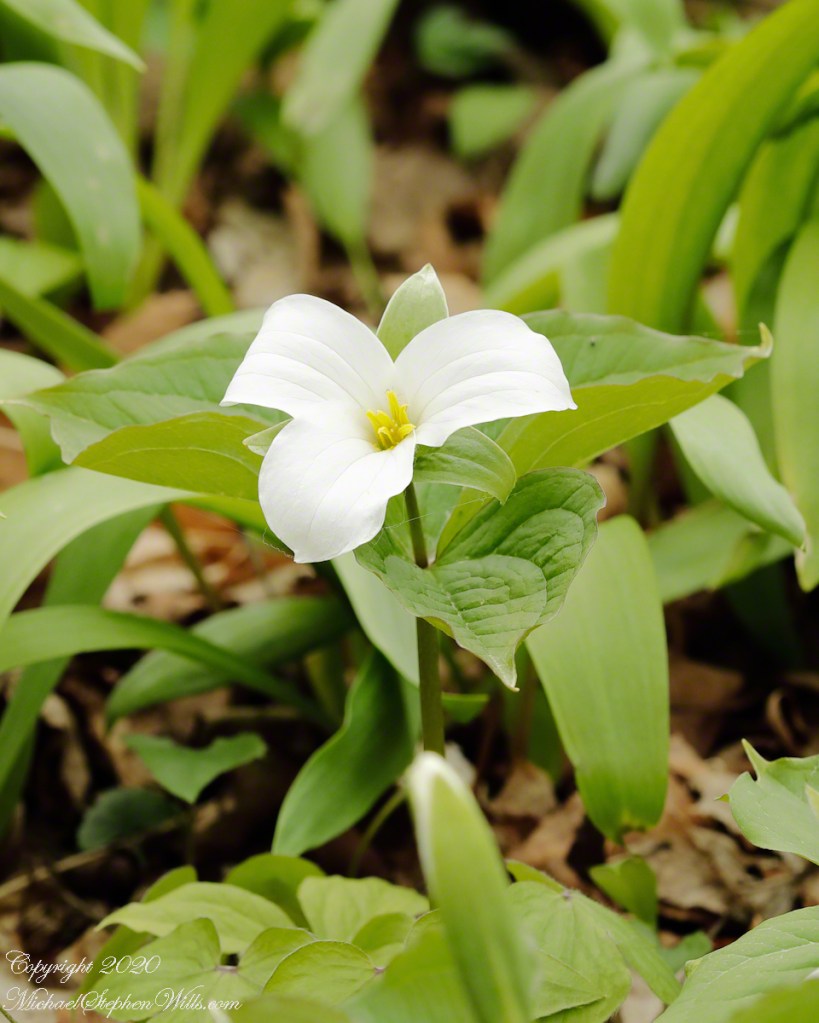
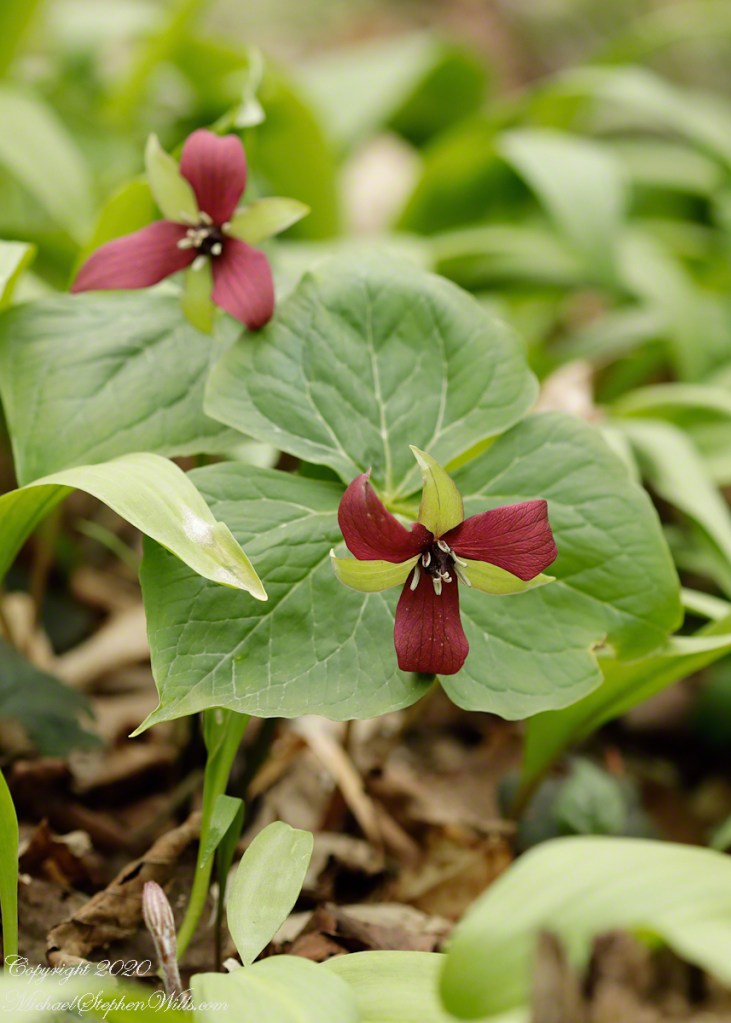
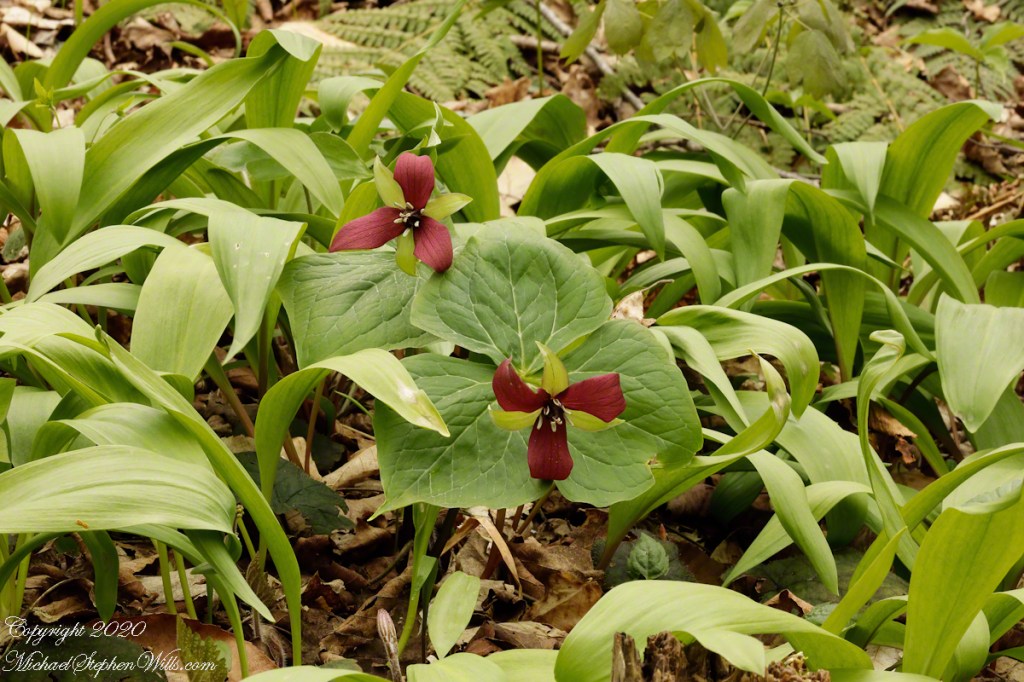
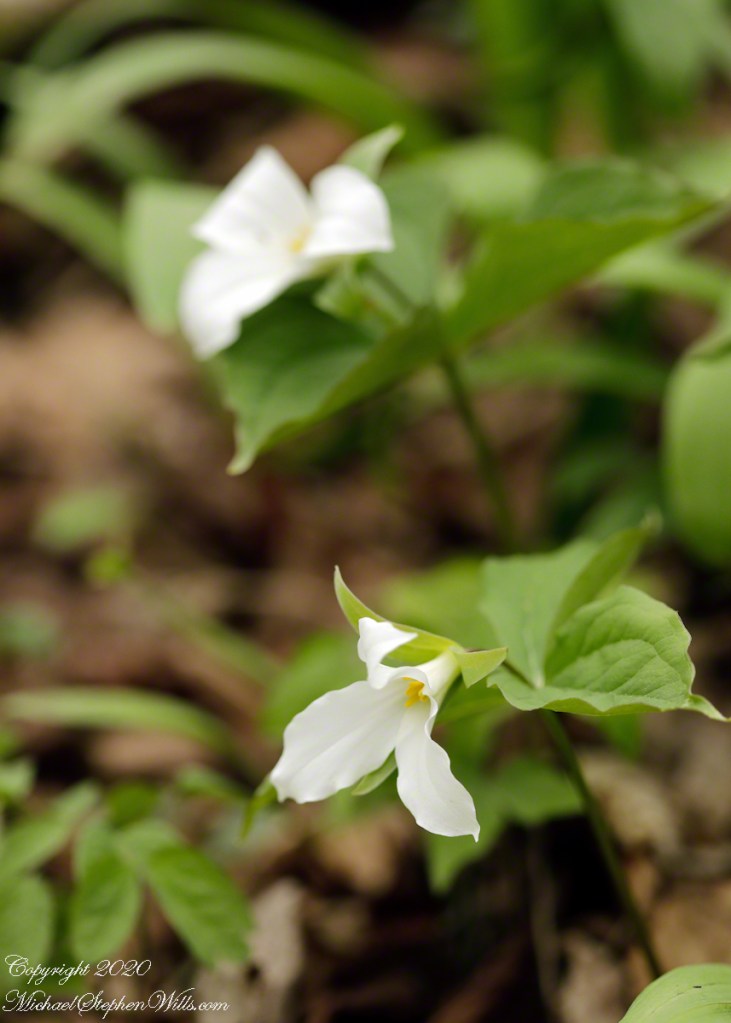
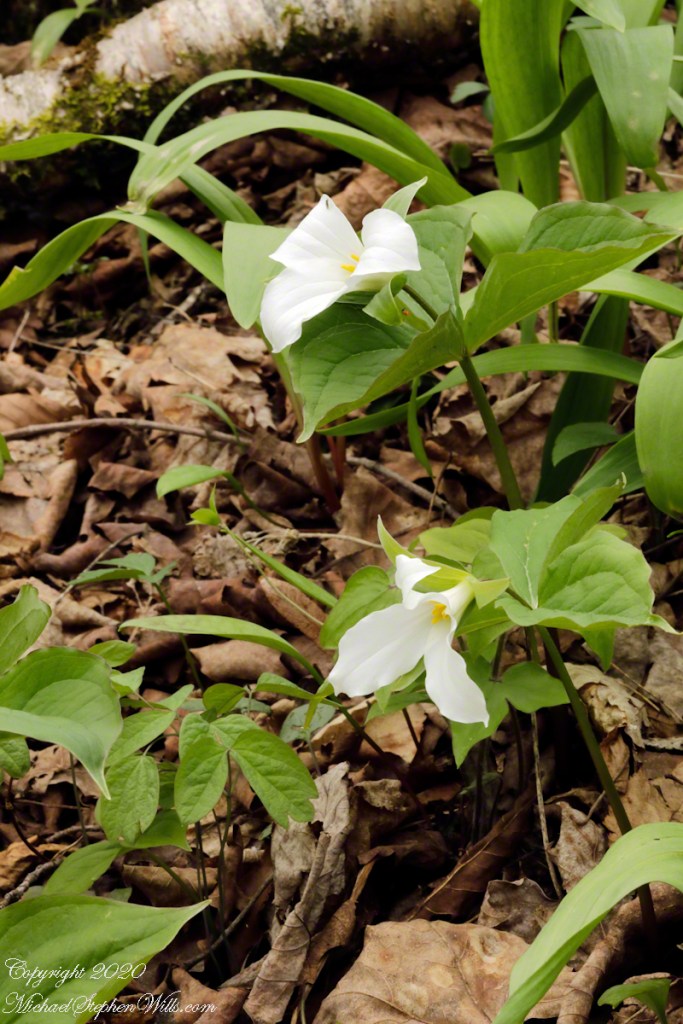
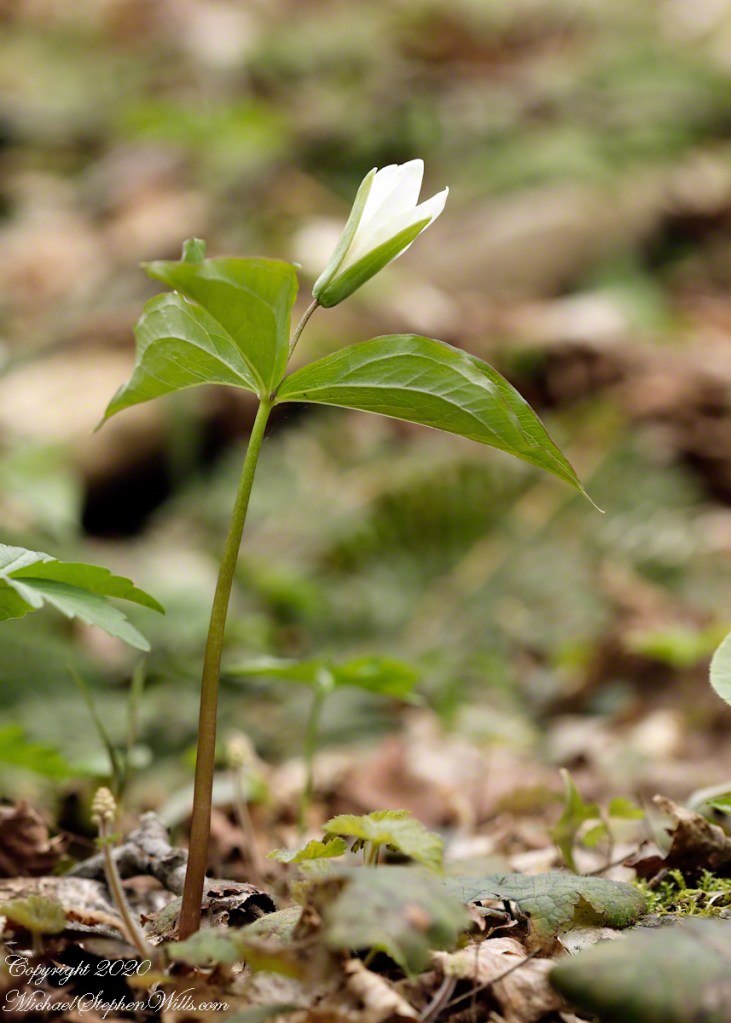
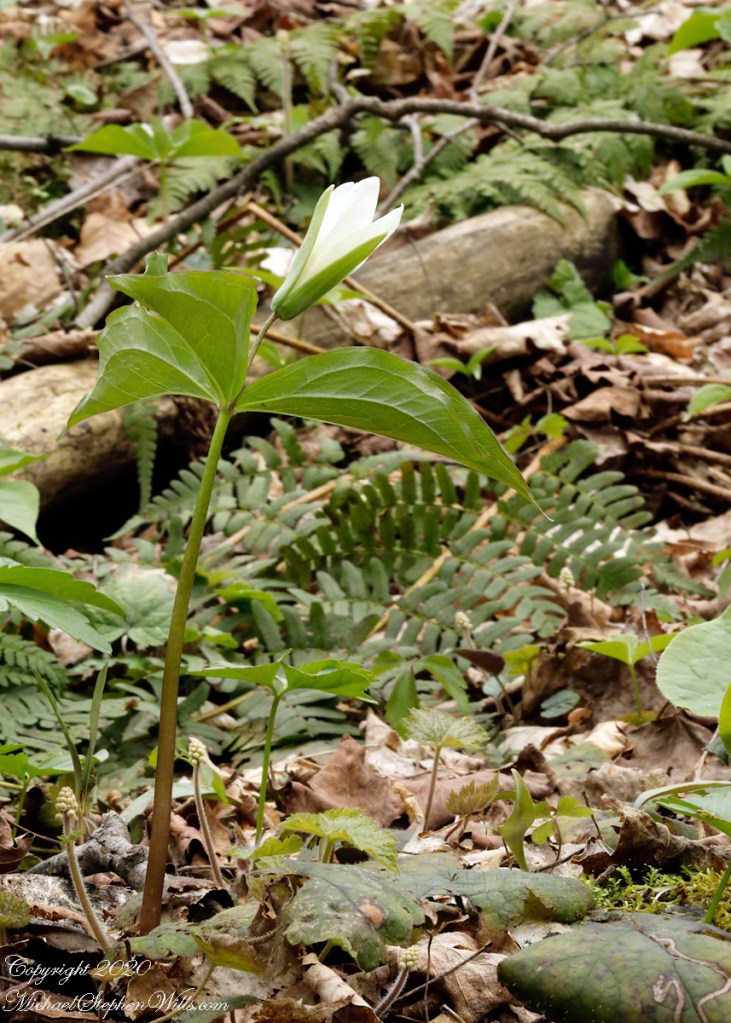
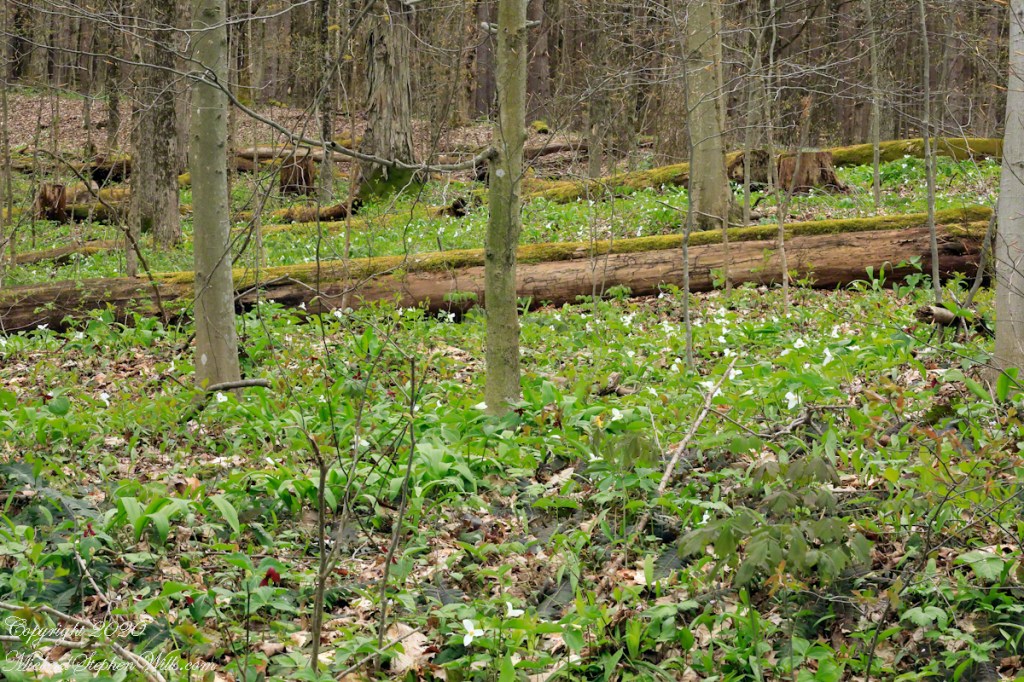
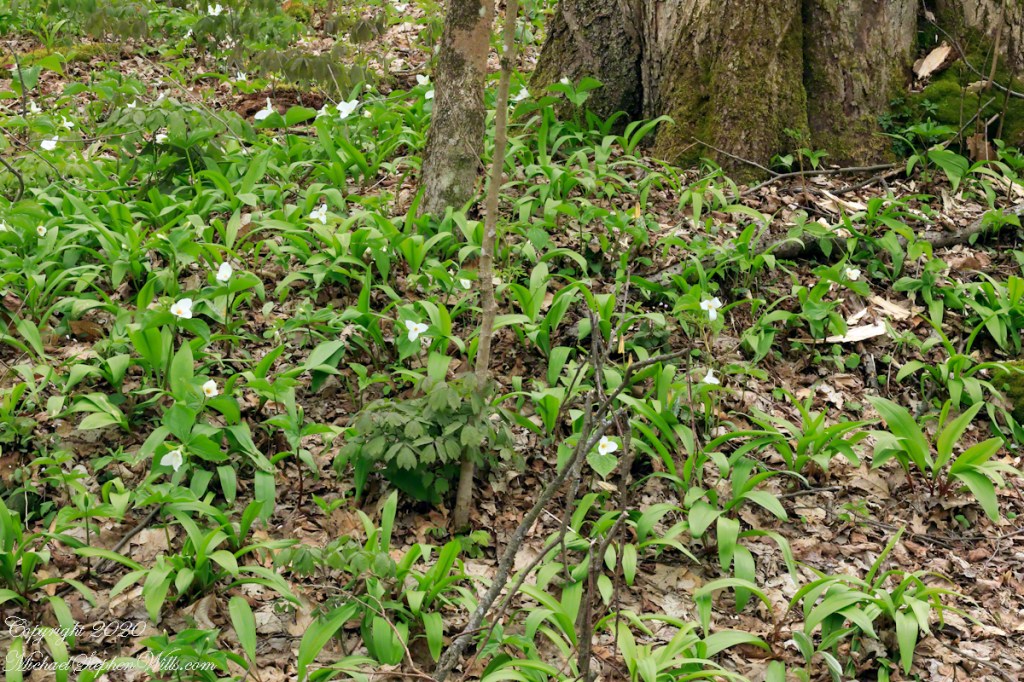
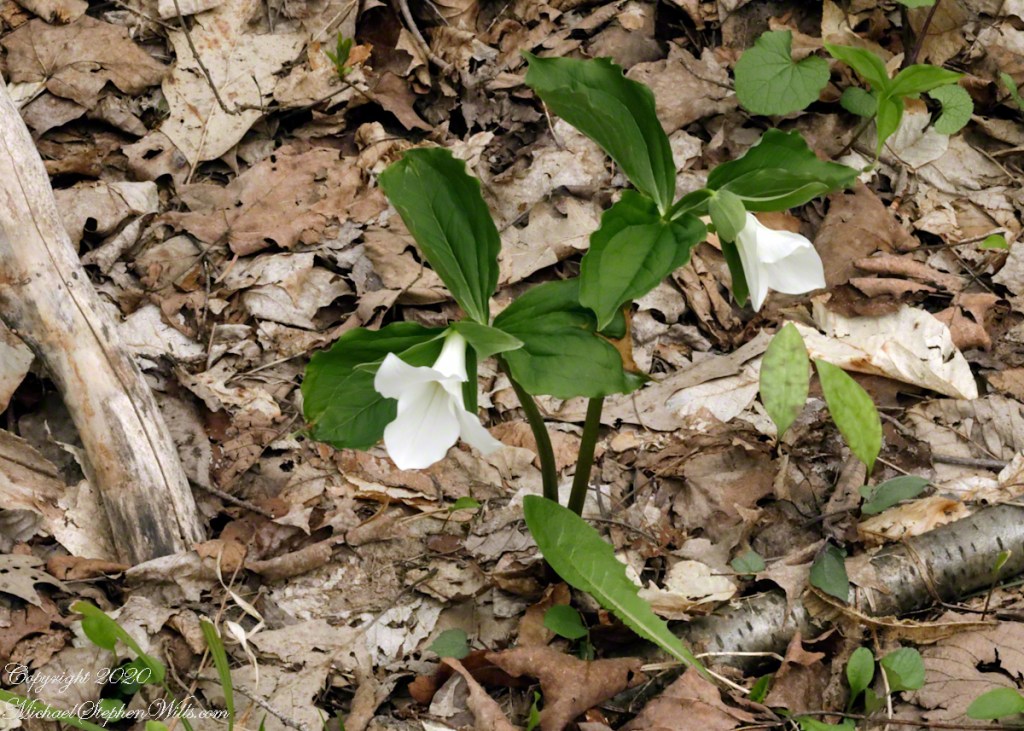
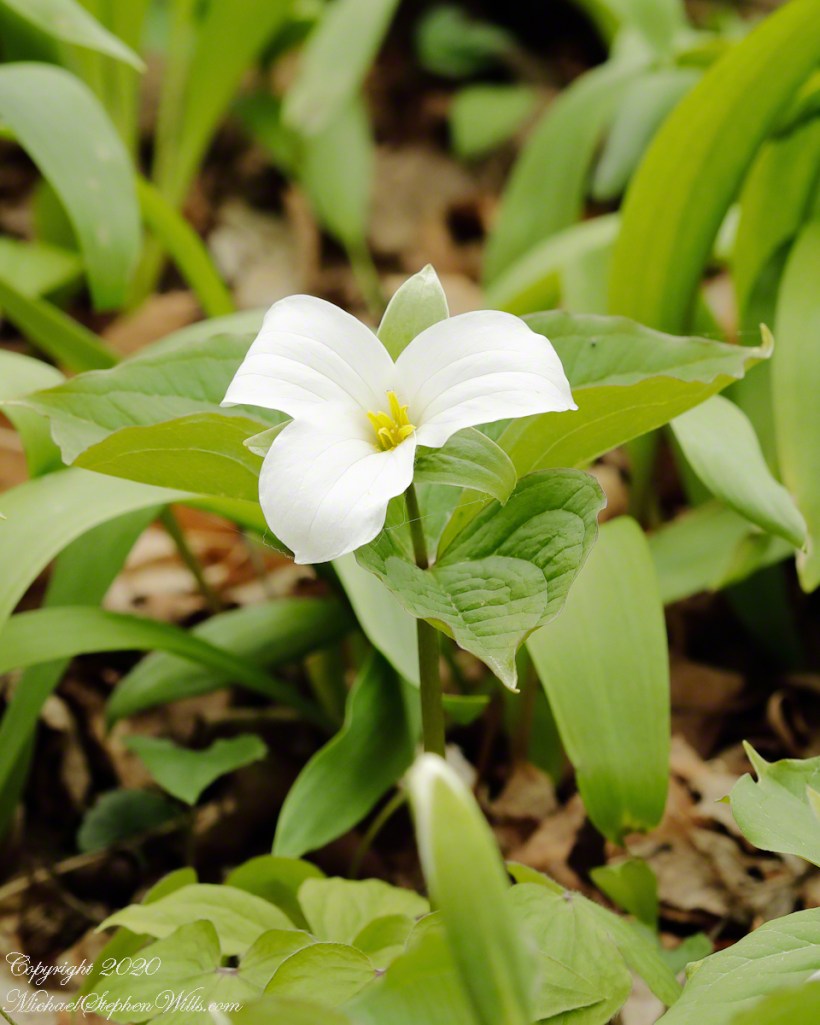
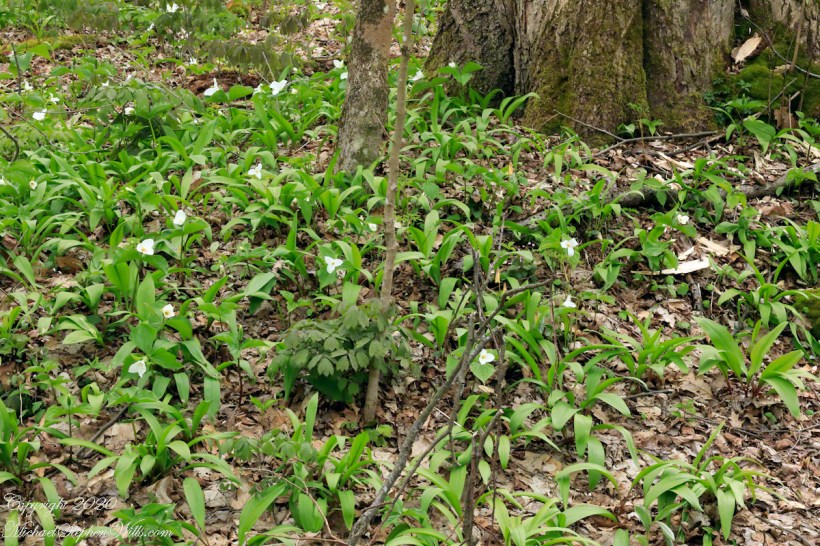
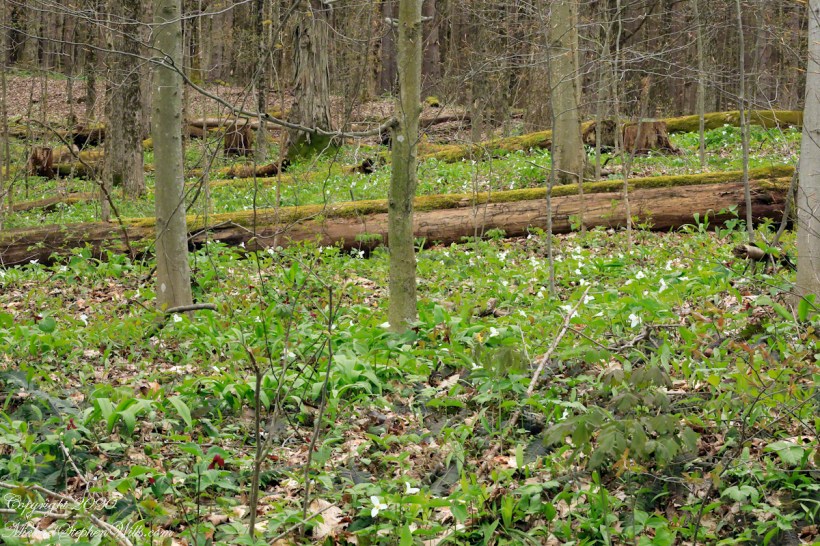
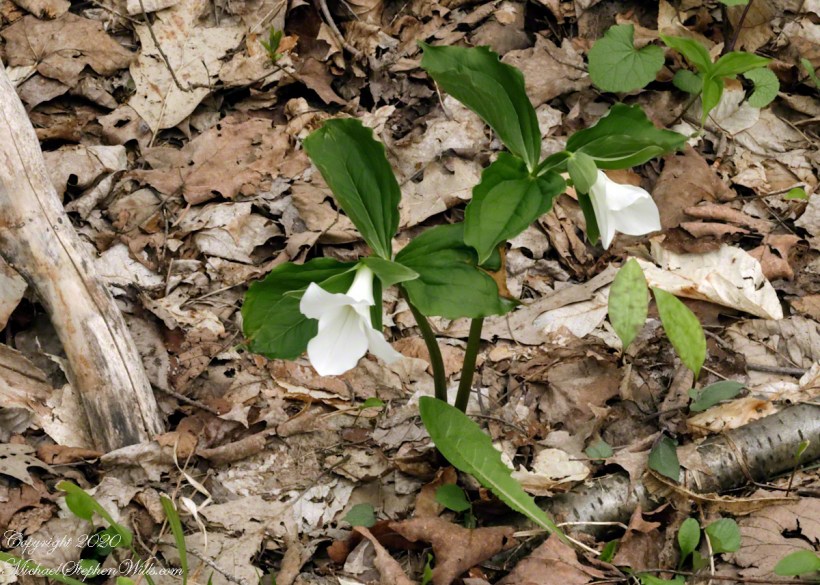
Trillium bloom April through May in central New York State. I found these blooming on the rim of Fillmore Glen near Owasco Lake and the town of Moravia.
Don Roberto is on the bow
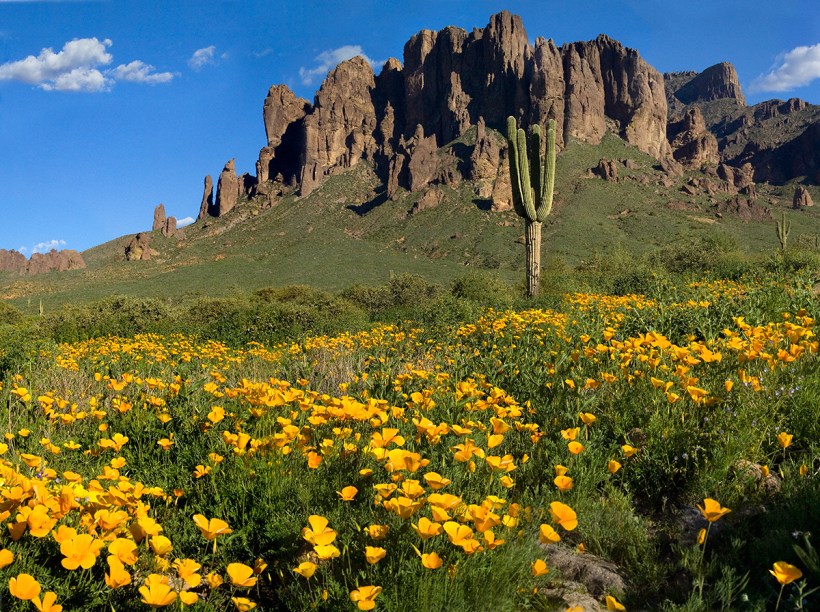
Mexican Poppies bloomed in profusion throughout the Superstitions after the plentiful winter rains of 2008.
Pamela and Michael Wills with Iceberg Glacier, Bernardo O’Higgins National Park, Fjord Tempanos, Chile aboard the Oceania Regatta
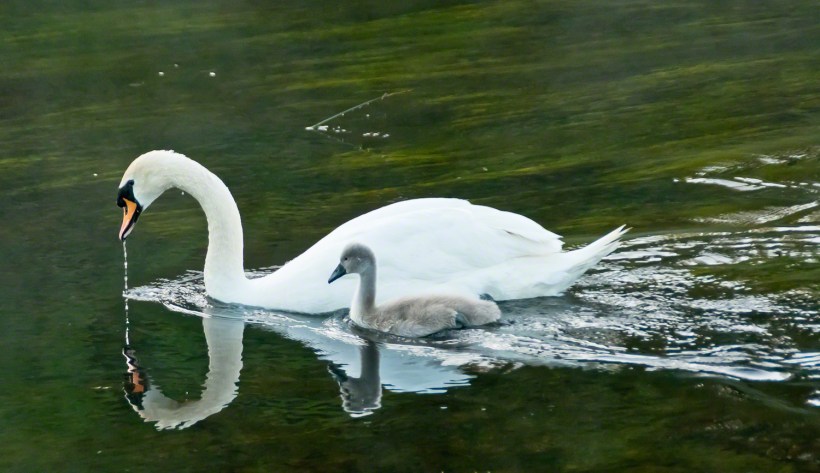
A swan and cygnet feeding from the pristine waters of the River Cong, County Mayo, Ireland. Outside the door of Ashford Castle.
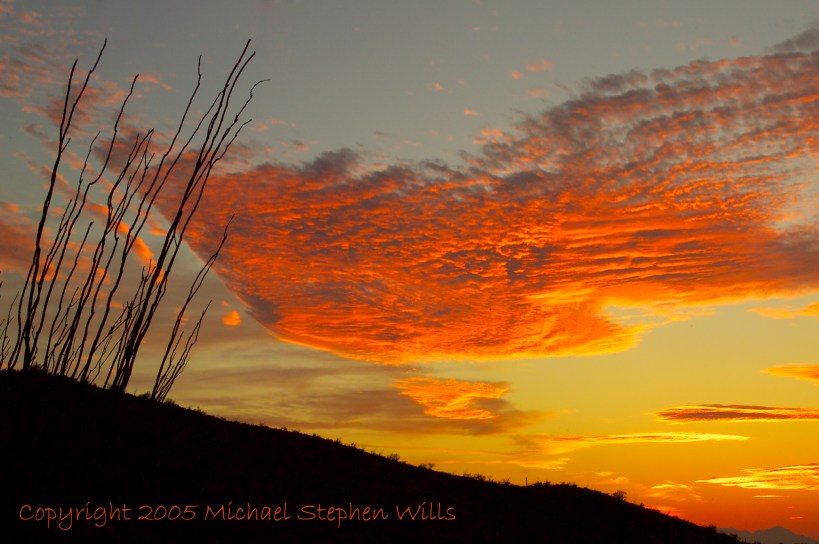
Ocotillo Sunset
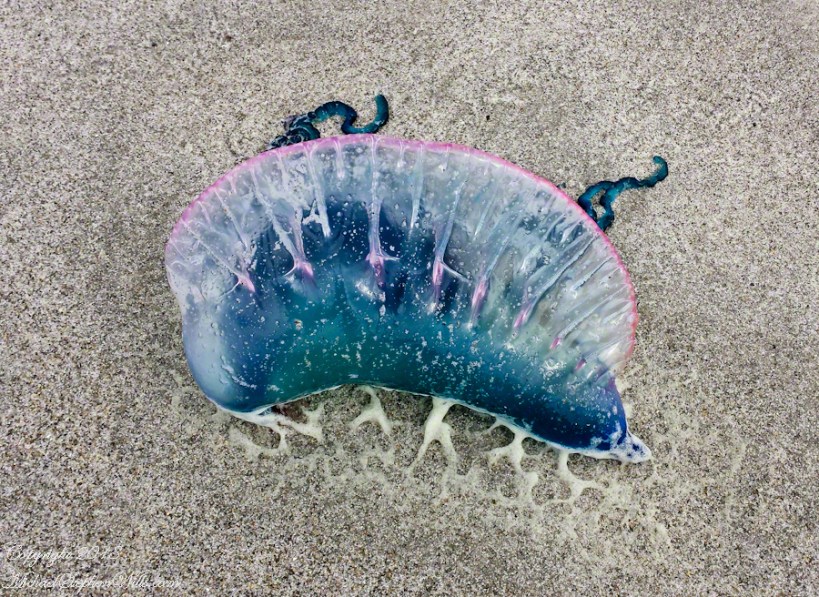
The crest of the Portugest Man of War is very visible in the water, the sac can be inflated/deflated to catch the wind or even sink the organism to escape surface feeders.
Another solution to the crooked horizon is to level, crop, and build out the lost portions, as I did here. Very time consuming….better to keep the horizon level in the camera, difficult for me to remember.
Taken from the entrance.
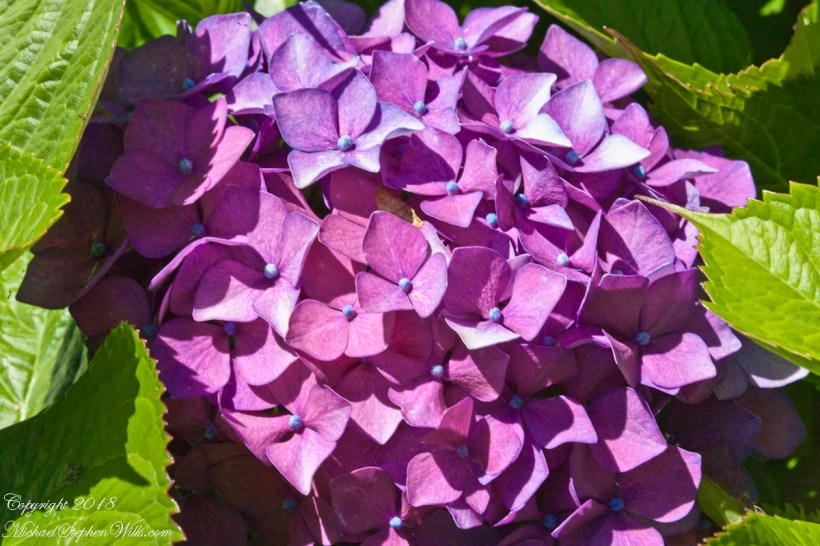
Hydrangea Ensenada ClubAleman Chile February 15, 2016
Nectar at the base of each flower petal may be the quixotic quest of this mosquito. Quixotic because the physical characteristics of benefit to human predation, a light body, makes it unsuited to delve into the petals. Flowers are like people in emitting carbon dioxide, another mosquito attractant. If it is looking for blood here this mosquito is also at a loss.
Click photograph for larger image. To do this from WordPress Reader, you need to first click the title of this post to open a new page.
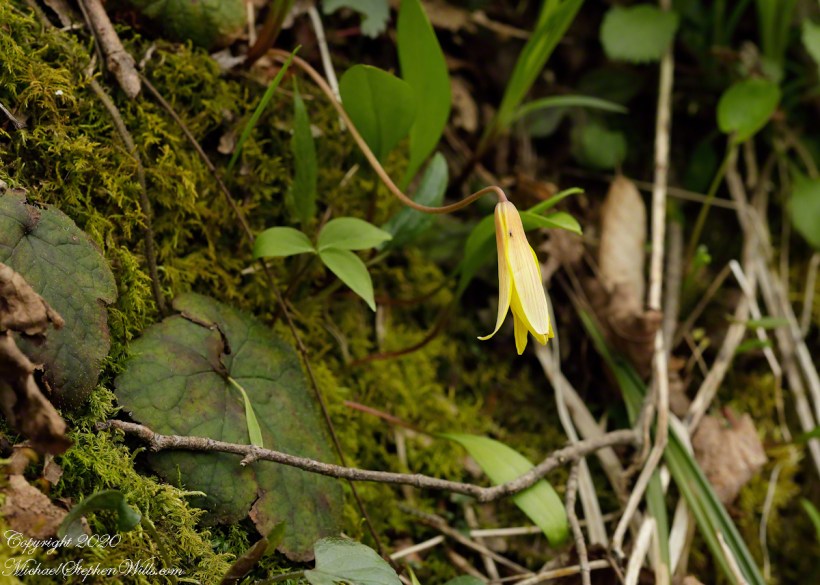
Another lily with a tiny fly (mosquito?) perched at the base.
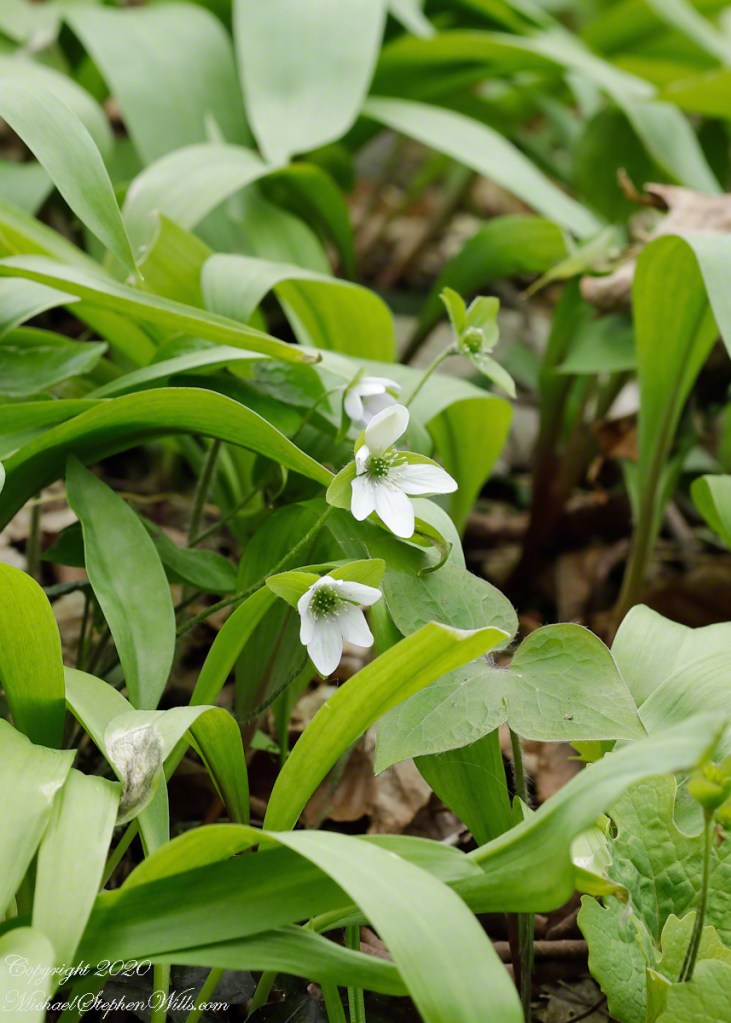
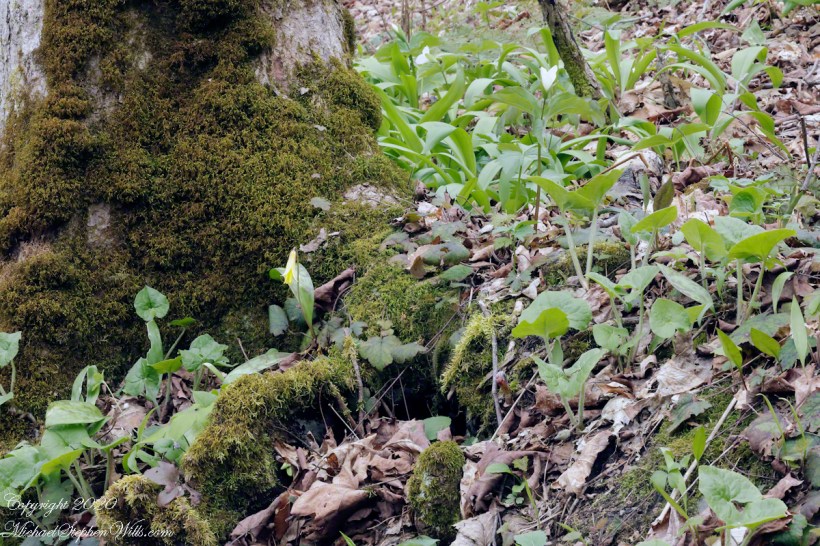
Here is a gallery recapping my afternoon among the wonders of Fillmore Glen, a New York State park, Moravia, New York. I visited there during the New York COVID-19 “PAUSE.” ENJOY!!
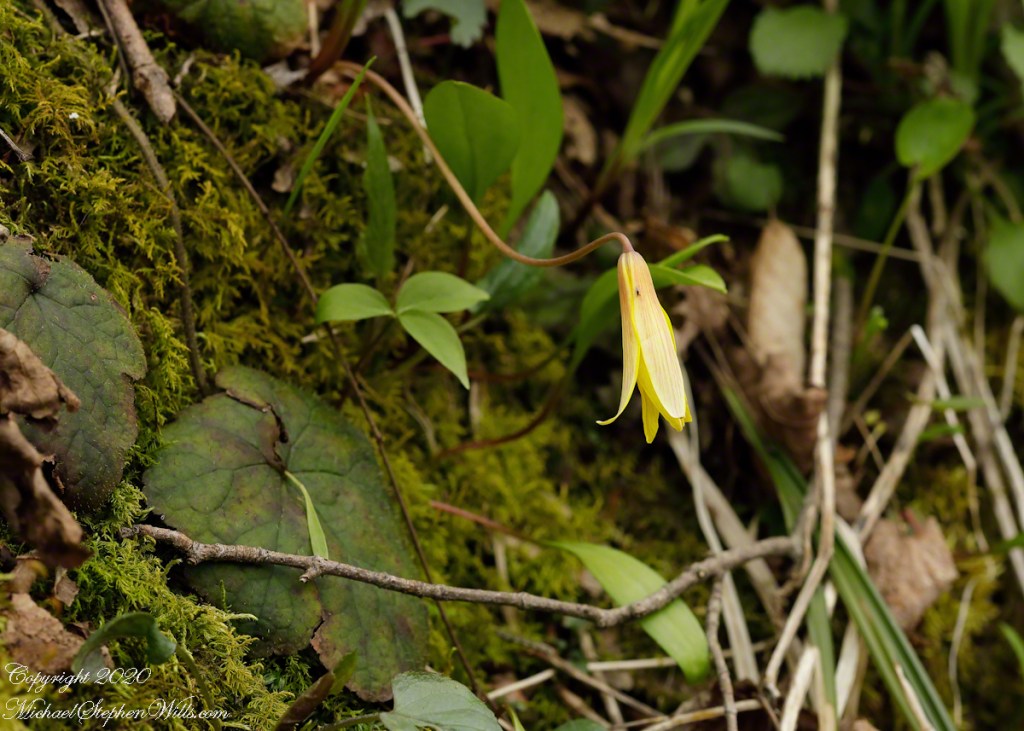
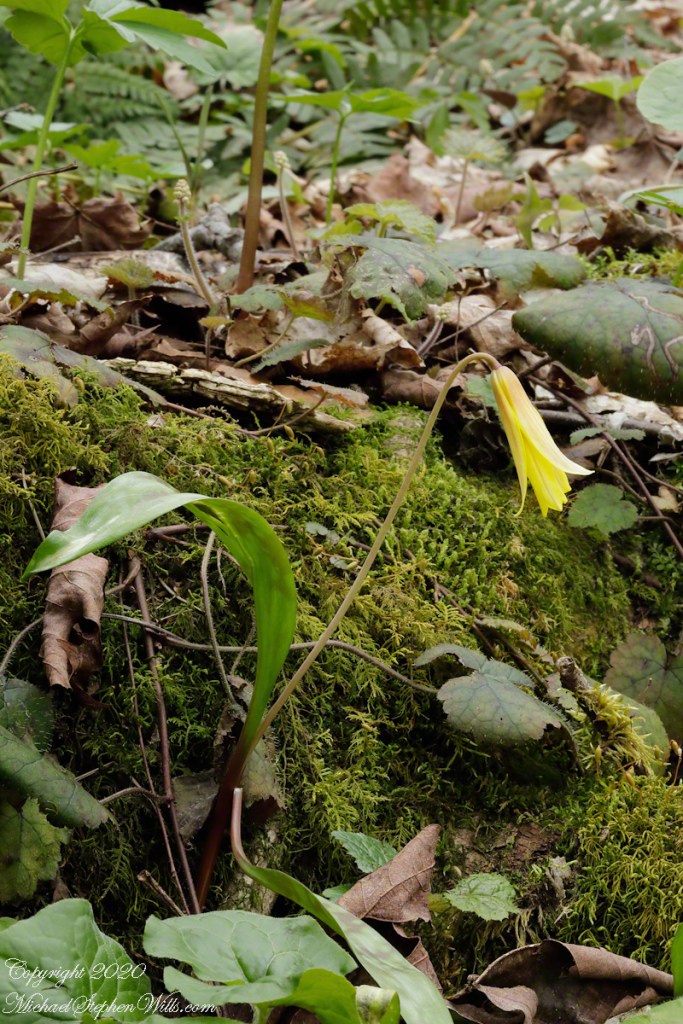
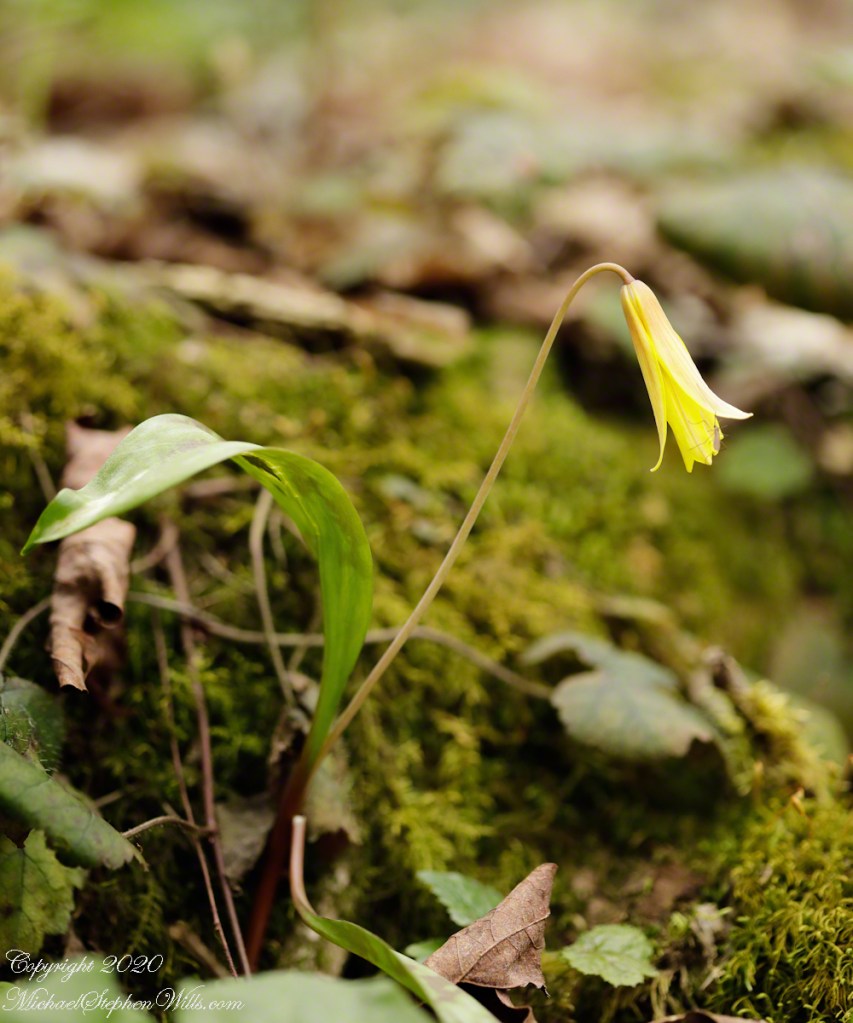
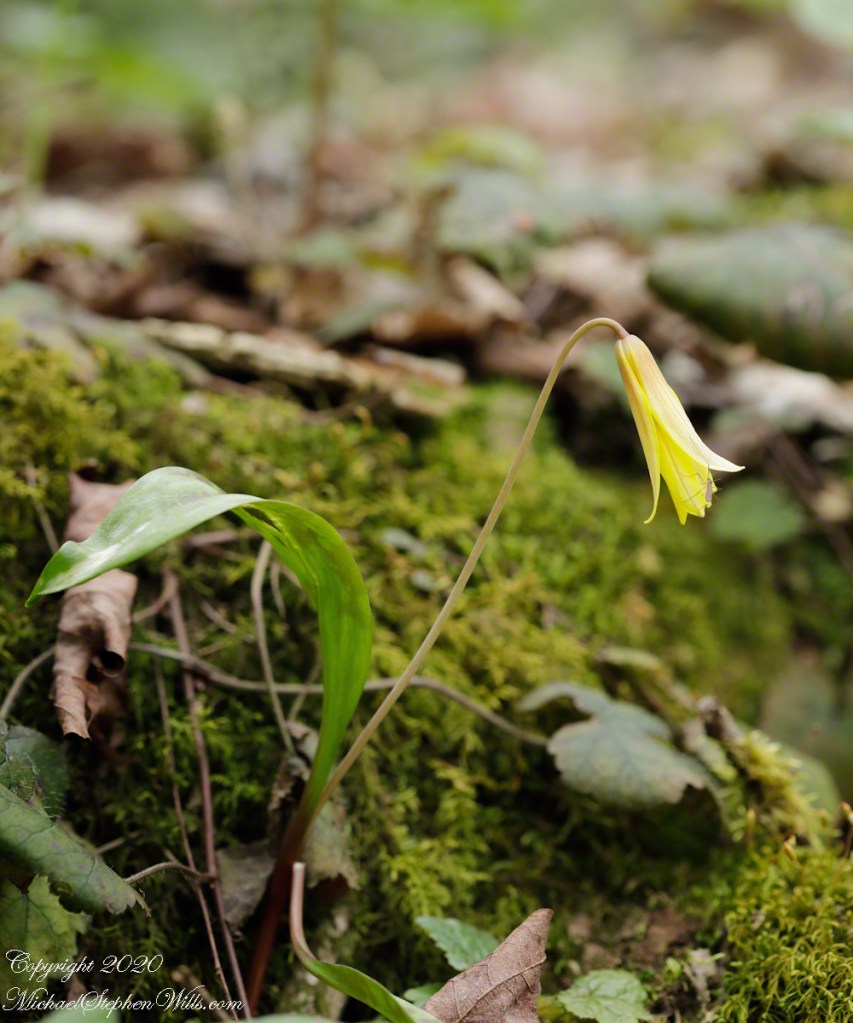
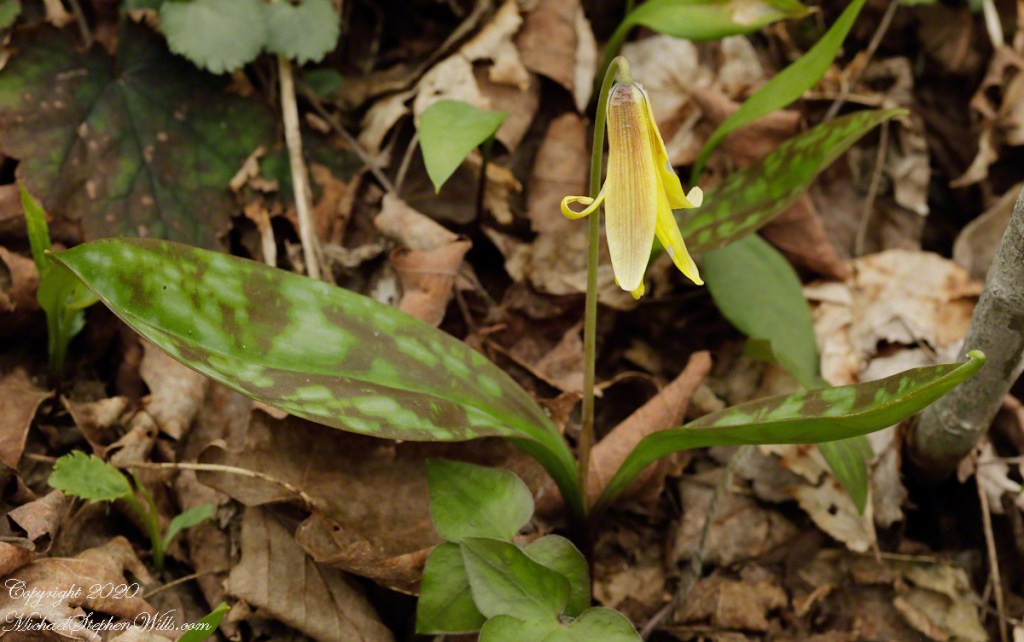
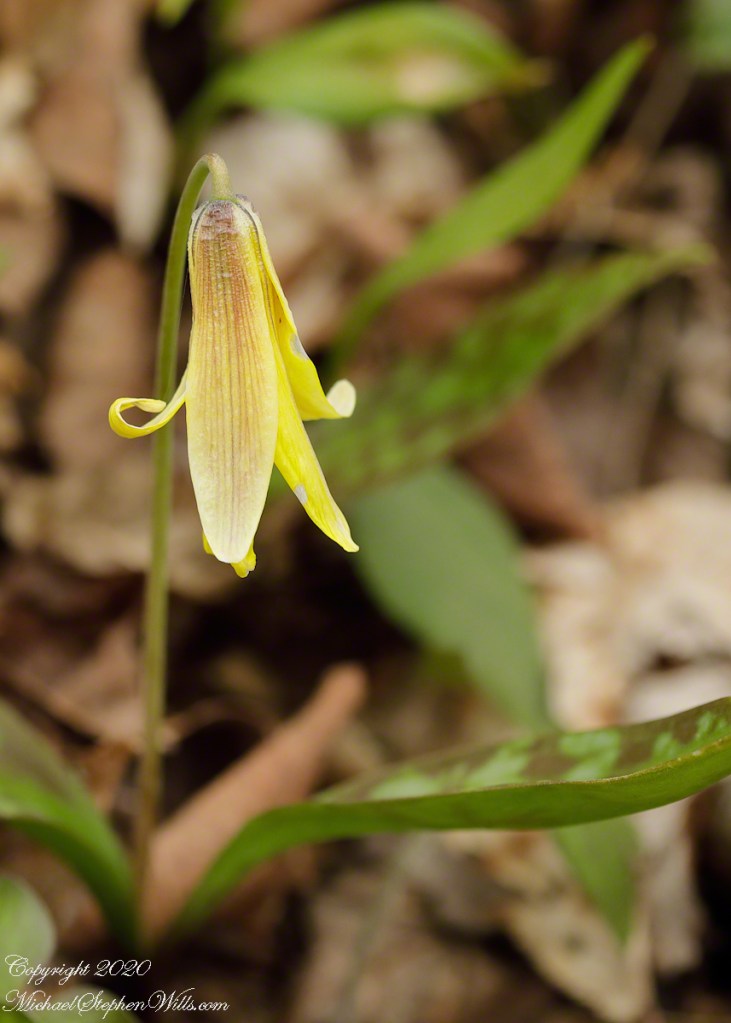
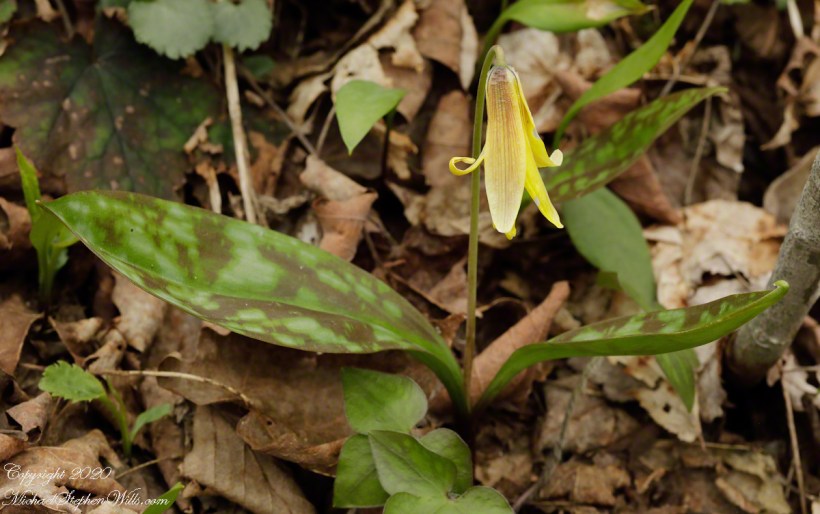
The Trout Lily (Erythronium americanum) is named for the mottled brown leaves resembling marking on trout.The Trout Lily (Erythronium americanum) is named for the mottled brown leaves resembling marking on trout.The Trout Lily (Erythronium americanum) is named for the mottled brown leaves resembling marking on trout.
Copyright 2020 All Rights Reserved Michael Stephen Wills
Amazing natural sights were mine while living 25 years on the edge of the Malloryville Preserve near Freeville, Tompkins County, New York. None more so than early one Memorial Day, 2004, walking the bank of Fall Creek opposite home I came upon, totally unexpected, a first time sighting of a Trout Lily.
Today’s header image is one of my attempts at capturing the Malloryville Trout Lily’s from April 2006. This year’s visit to Fillmore Glen yielded my first “perfect” photographs of this flower.
Click photograph for larger image. To do this from WordPress Reader, you need to first click the title of this post to open a new page.
Several popular names for this flower originate from the distinctive leafs markings, “Adder’s Tongue Lily” and “Fawn Lily” among them. The second is from the American naturalist and author, John Burroughs, who observed them from his home among the Catskill Mountains of New York State.
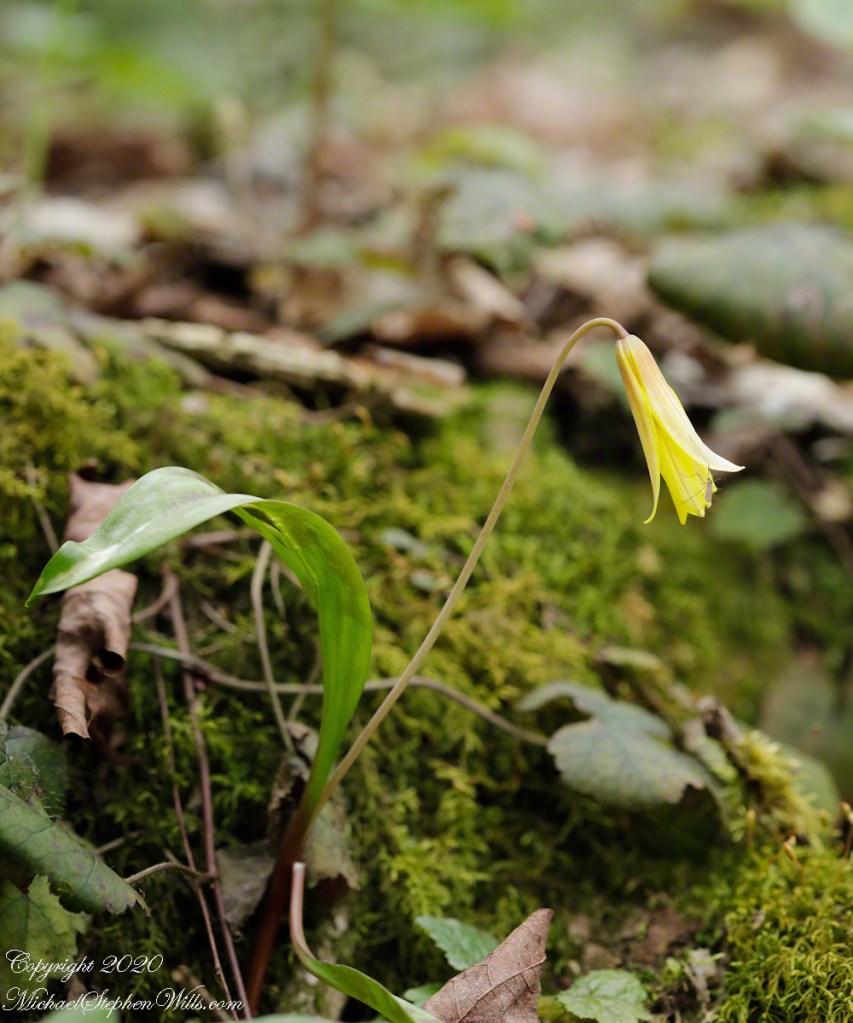
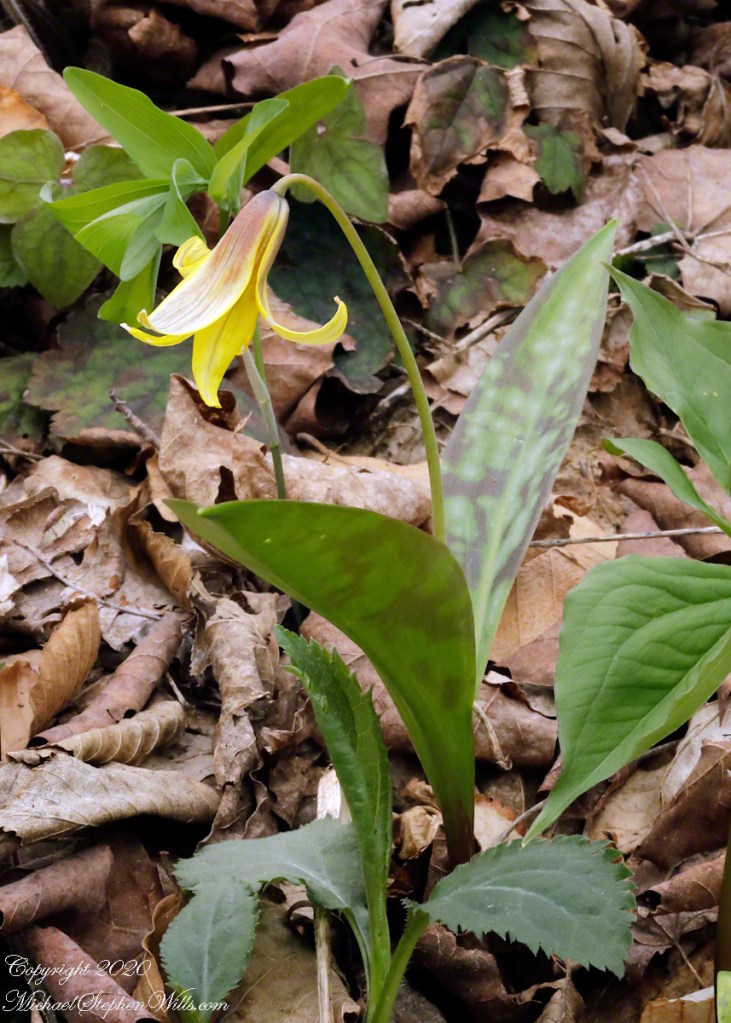
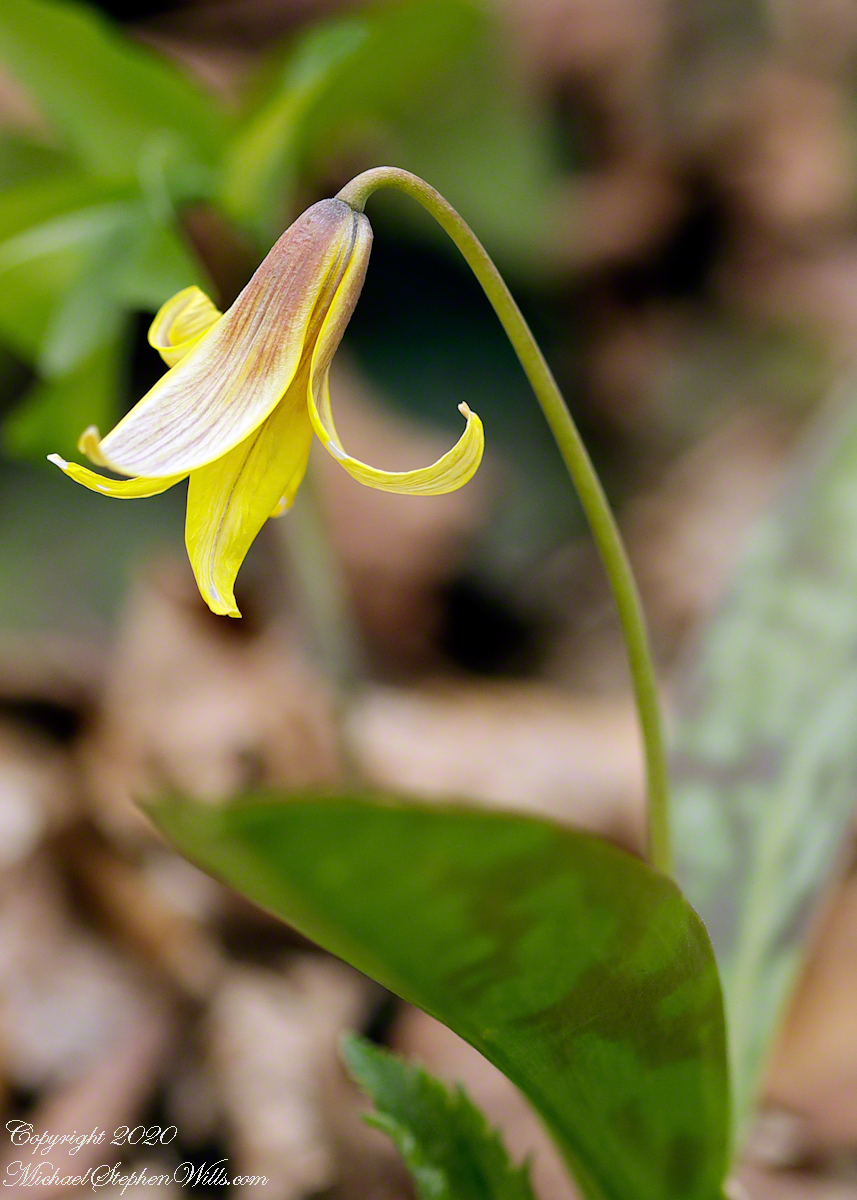
The Trout Lily (Erythronium americanum) is named for the mottled brown leaves resembling marking on trout.
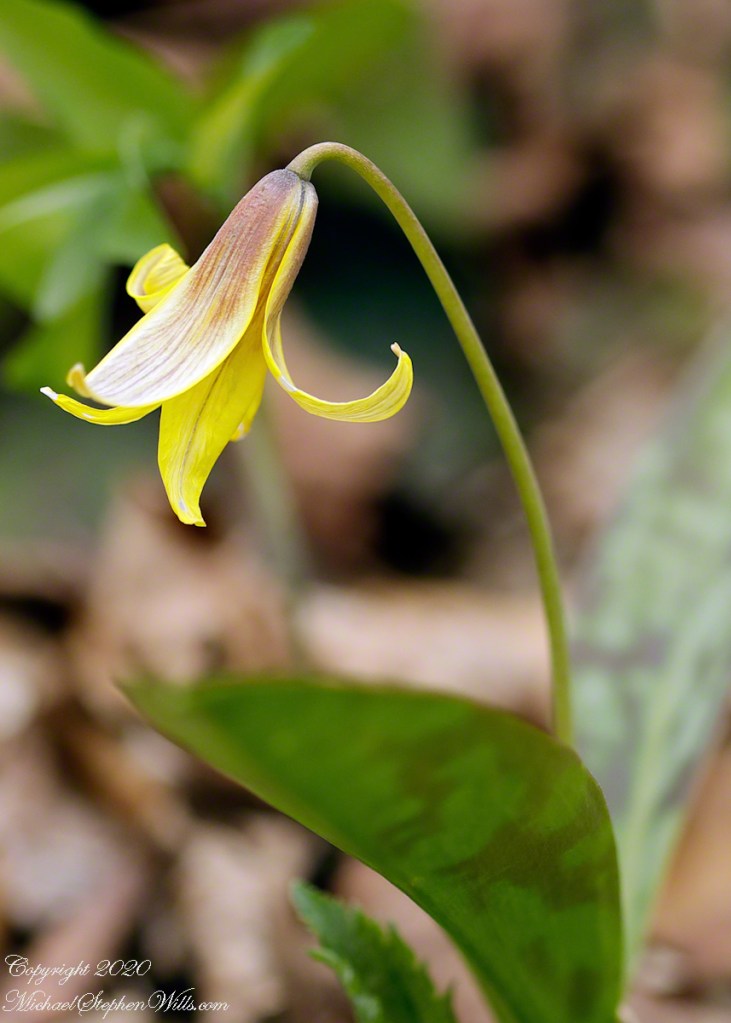
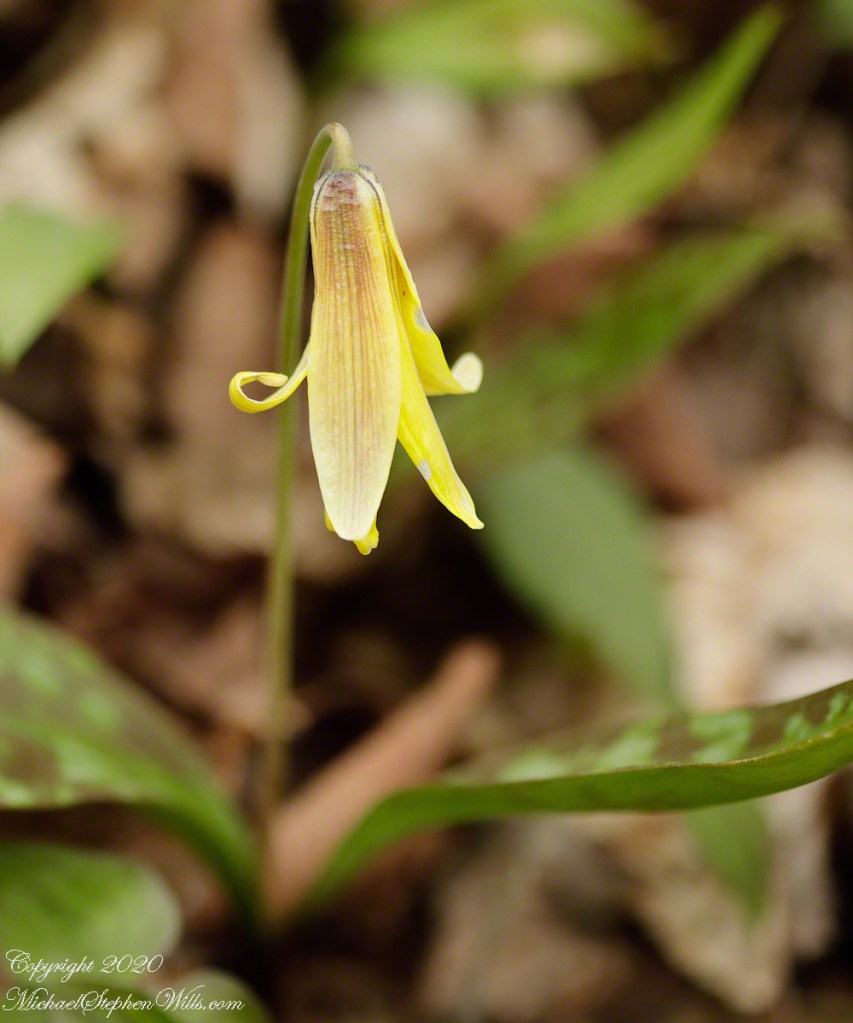
Three corolla (petal) characteristics of the Trout Lily (Erythronium americanum) are seen in today’s photograph: the pointed ends referred to yesterday, a reflexing (bending back) seen when the season warms up. Purple striations grouping together basally and spreading toward the tip is the third.
A purple flush, tending toward red, is a coloring associated with the genus name. “Erythro-” is from the Greek for the color red.
Click photograph for larger image. To do this from WordPress Reader, you need to first click the title of this post to open a new page.
Trout Lily (Erythronium americanum) is named for the mottled brown leaves resembling markings on trout. The source of another name, “Dog Tooth Lily,” is hidden. My surmise was the pointed flower petals, instead it is for the pointed corms, modified stems developing underground and used to store energy to survive winter conditions.
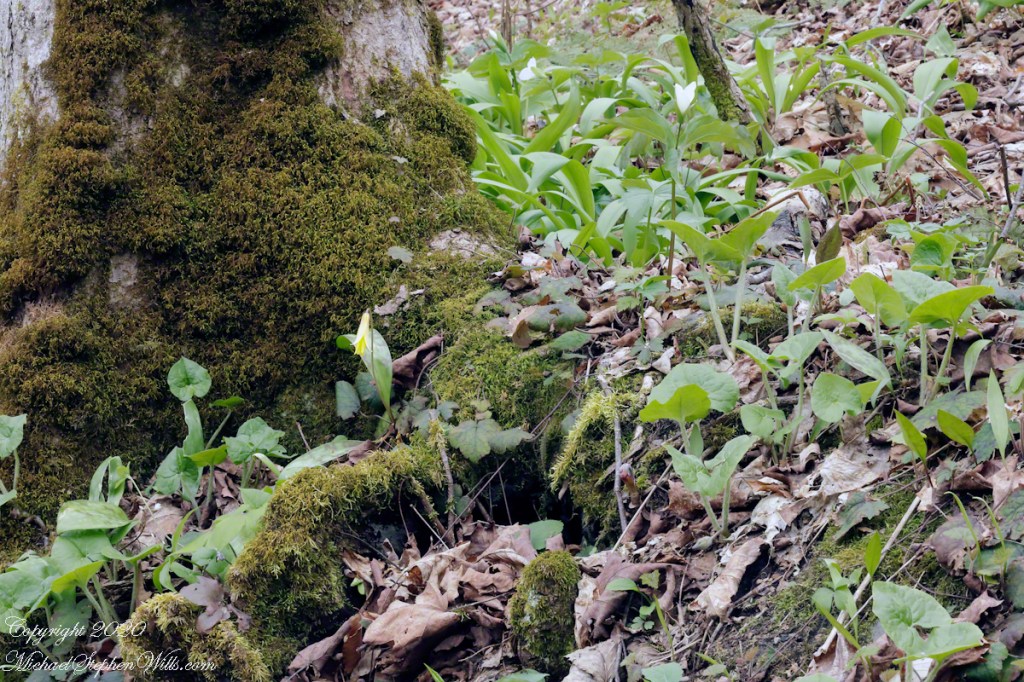
An individual Trout Lily is seen here in an environmental shot, cradled by a tree root, and in a macro with the leaves that suggest the common name. Both shots are from the Canon 100 mm “macro” lens. All photographs in this series are from my May 5, 2020 afternoon visit during the Coronavirus pandemic.
Click photograph for larger image. To do this from WordPress Reader, you need to first click the title of this post to open a new page.
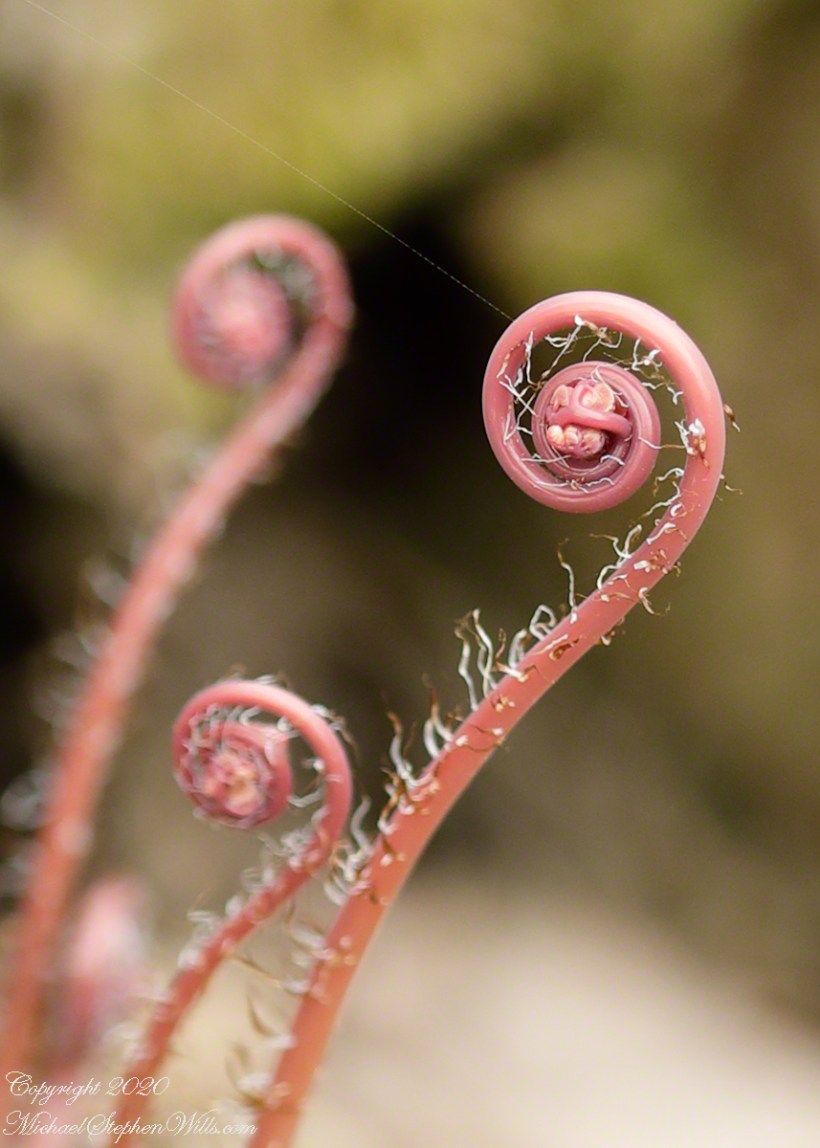
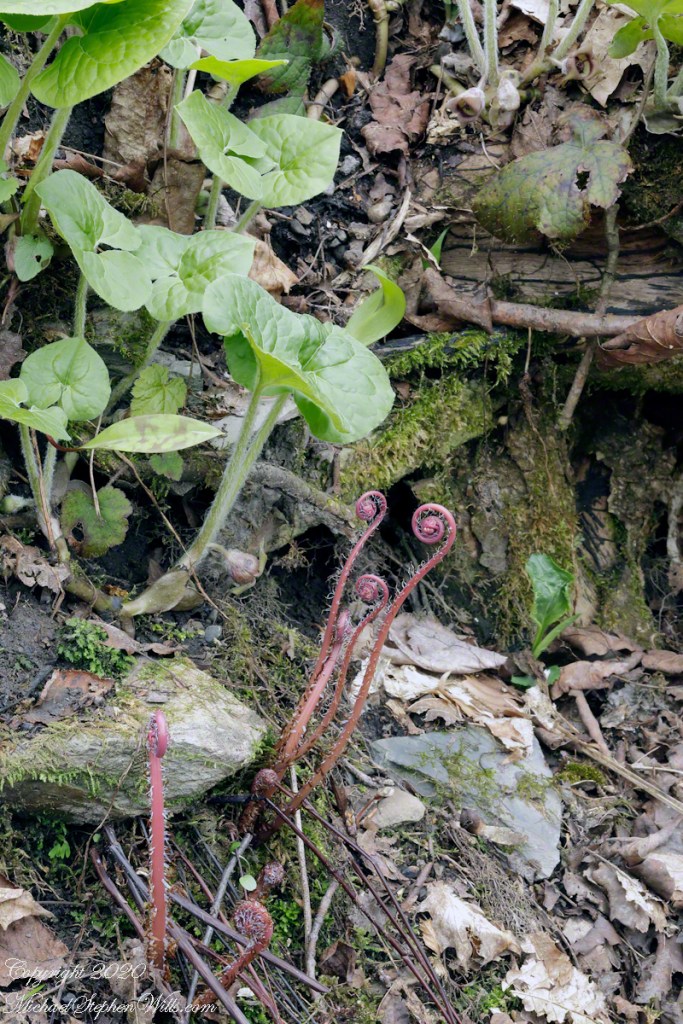
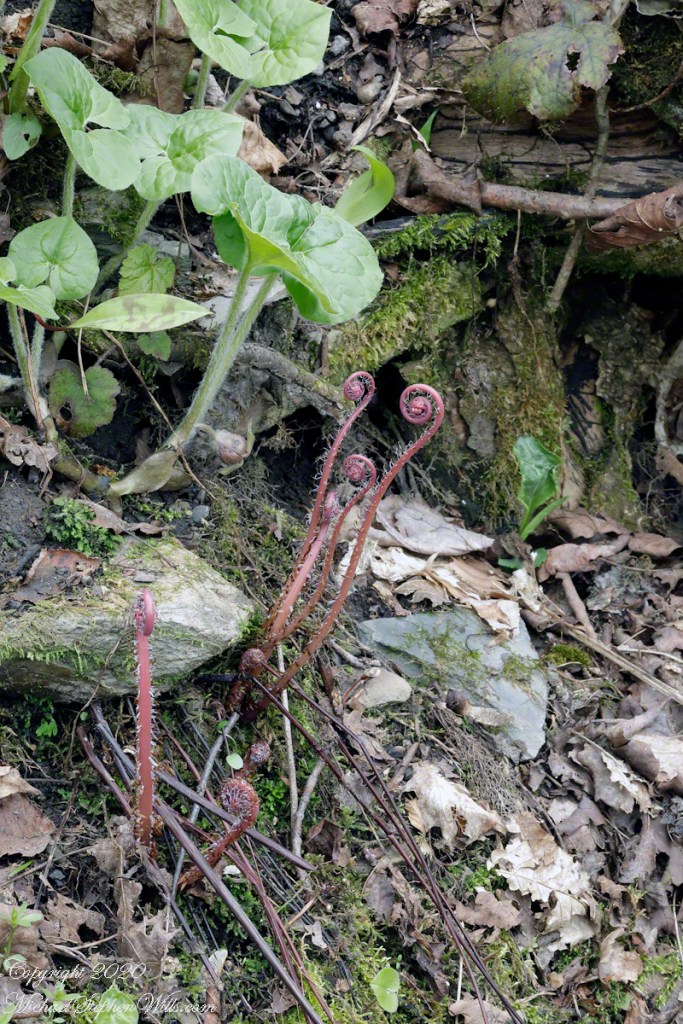
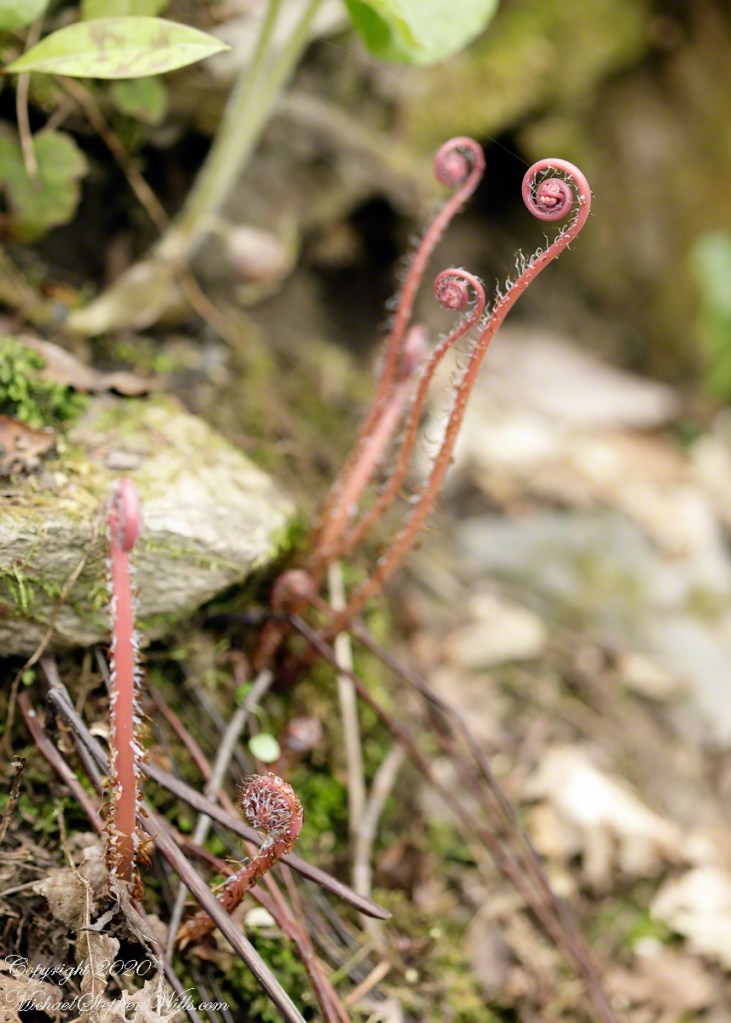
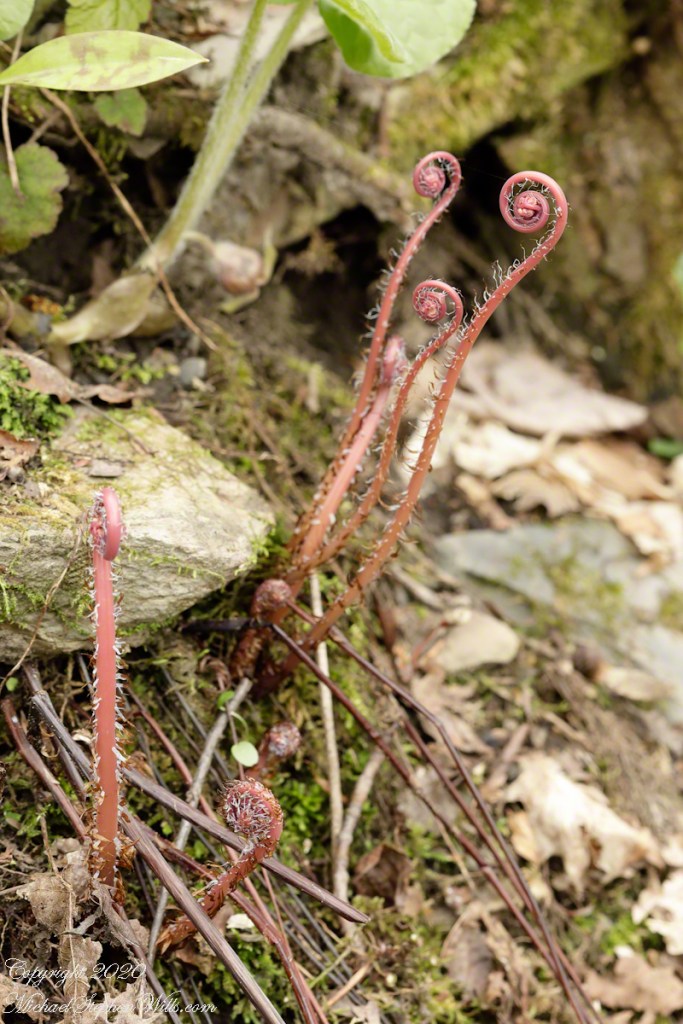
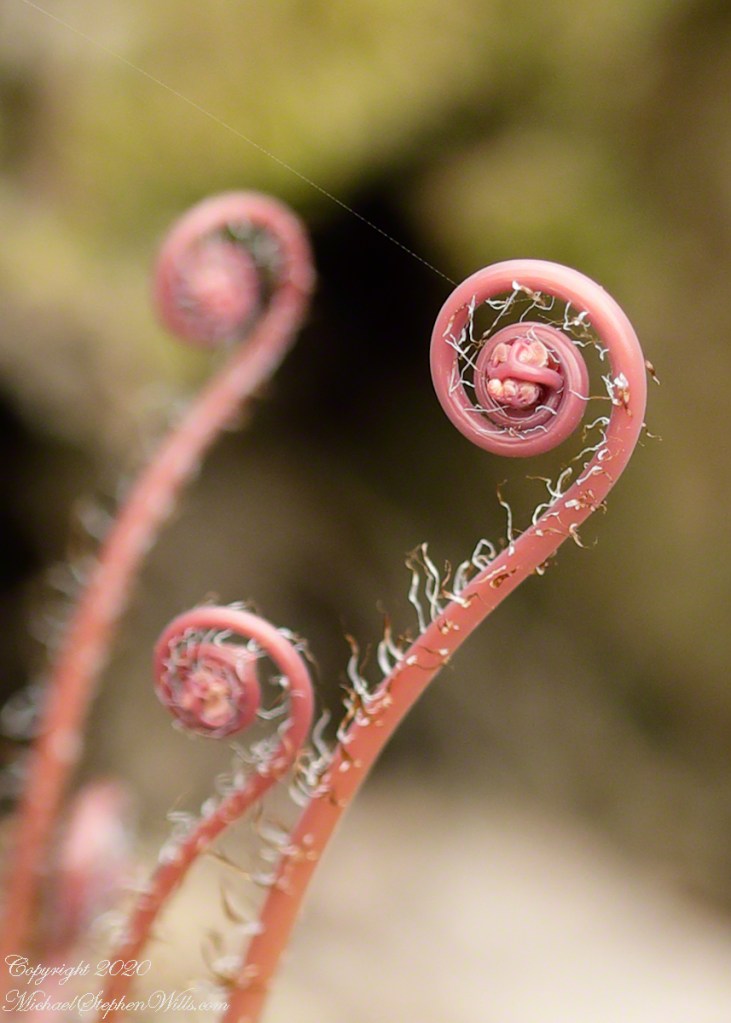
Athumb’s width span for each unfurling stalk of this unidentified colony. Fern? Flowering plant?
Each image is from a Canon 100 mm macro lens, camera mounted on a sturdy studio tripod I carried a few hundred feet to this bank within Fillmore Glen New York State park.
Here is another assignment from the “Fundamentals of Photography” course, to capture a scene at different f-stops, the degree to which the diaphragm is open, to control the width of the lens aperture. Increasing f-stop narrows lens aperture.
For this f32 image, the least possible apeture for this lens, resulting in maximum depth of field. Everything in view is in focus, increasing the visual elements competing for the viewer’s attention. On the other hand, a distracting element is more information about where the plant is thriving.
Click photograph for larger image. To do this from WordPress Reader, you need to first click the title of this post to open a new page.
f32
At 8 f-stop aperture is at a midpoint, elements of the background are out of focus, though still recognizable. The sturdy tripod, well situated, enables me to take the exact same view, changing only the f-stop (and associated shutter speed, the higher the f-stop the slower the shutter speed. As the aperture decreases, less light enters the camera and more time is required to collect enough light to expose the digital media. Slower shutter speed means more time for spring breezes to move the delicately balanced plant stalk, resulting a blur for a subject otherwise in focus.
In this image I removed all but the immediate surroundings of the red stalks.
f8
At f2.8 the diaphram is wide open, a maximum amount of light enters the camera and shutter speed is higher as well. Less of the image is in focus, a single subject is in sharp relief. Prior to cropping more than one stalk is in focus, competing for attention.
f2.8
After cropping a single stalk is the image subject, reminding me of swirling galaxies. The drawback is reduction in image size: 30 reduced to 1.3 (6,744 to 1,371). I needed to reposition the tripod and camera for a closer shot of the circinate scene elements and a image with a higher resolution of this fascinating episode in the life of a plant. I am tempted to visit Malloryville where large ferns unfurl.