Venus at dawn

Planet Thoughts

Since 1500 B.C. until today…..

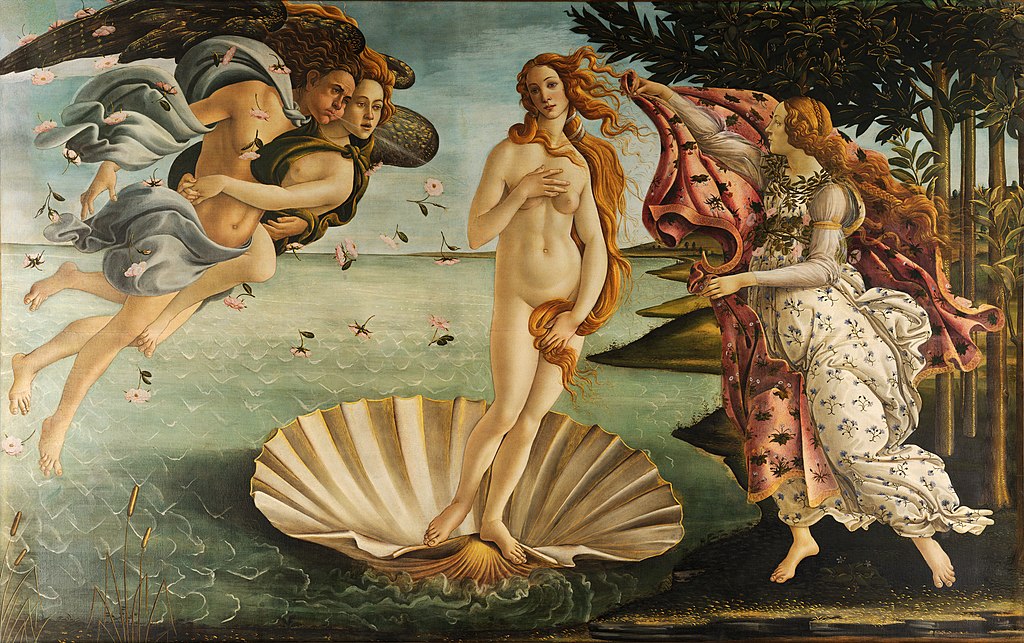
The planet we call Venus has ancient associations with fertility goddesses. The link has persisted at least from the 1600 century B.C. inscribed on Sumerian cuneiform tablets. Three thousand years later the Italian artist Botticelli created in tempura paint on canvas the image of Venus rising from the sea, as the planet Venus does today.
Venus Rising

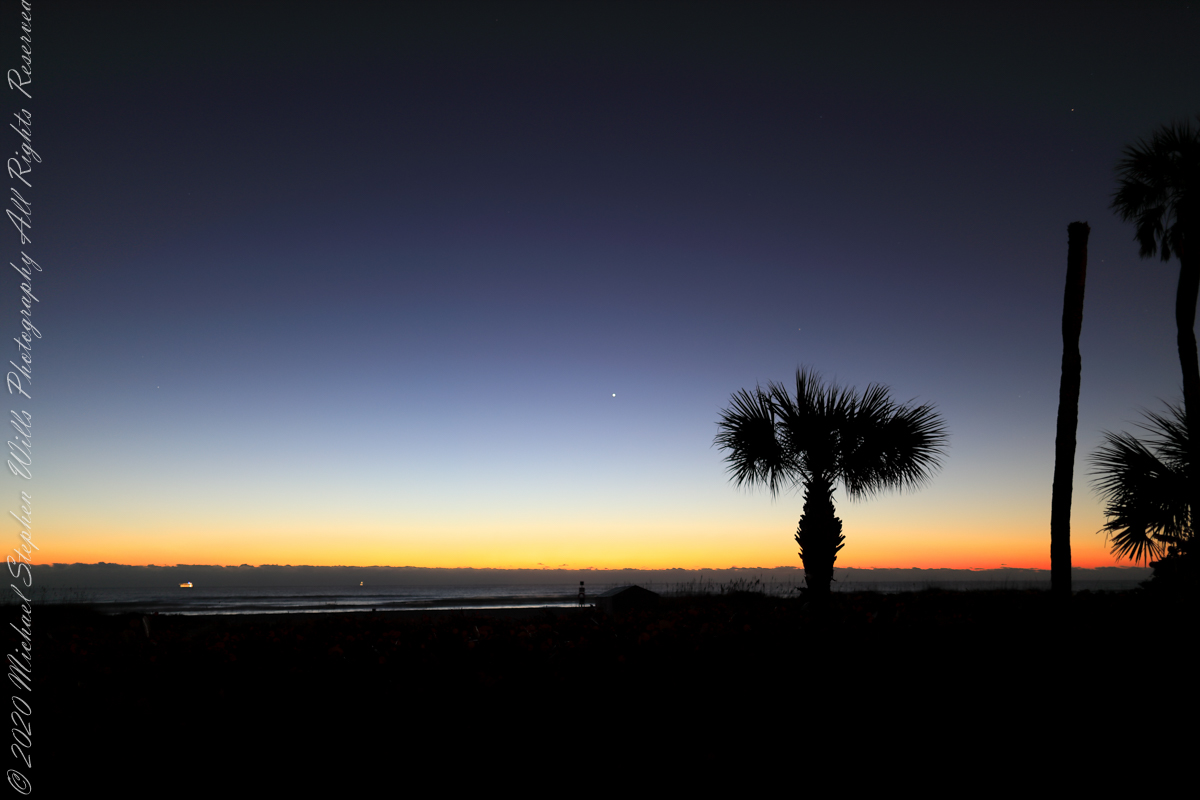
Here is Venus rising from the sea at dawn January 2022, at its brightest and most beautiful. Some mistake this new light in the east for airplane lights; the bright disk of Venus is 25 times brighter than Sirius, enough to cast shadows at night. As Venus proceeds in its orbit, the planet alternately sets after the sun and rises before it, seemingly appearing new each time.
This February I caught a newly risen Venus in this IPhone 7 video, reflected in the waves. It seemed to be a flashing headlight on the beach, the Venus reflection came and went with the passing waves. Venus is the upper, the reflection is beneath. Use the lower right control for the full view.

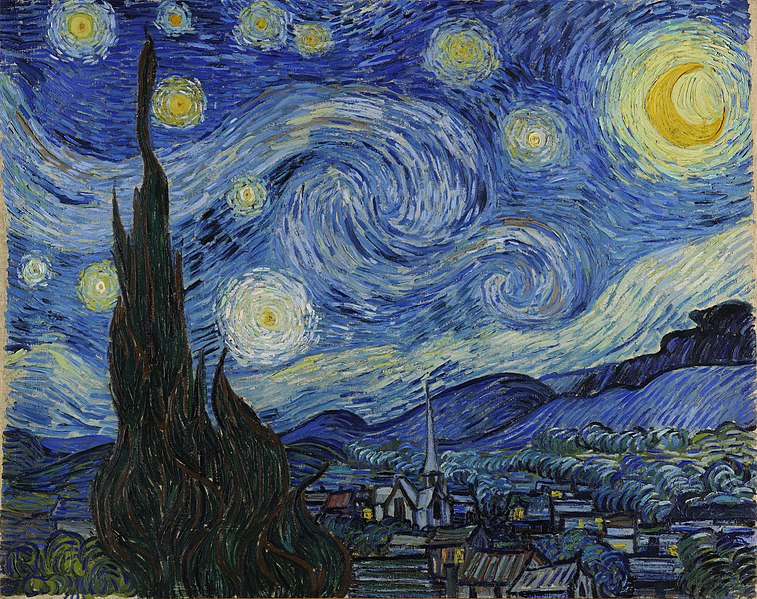
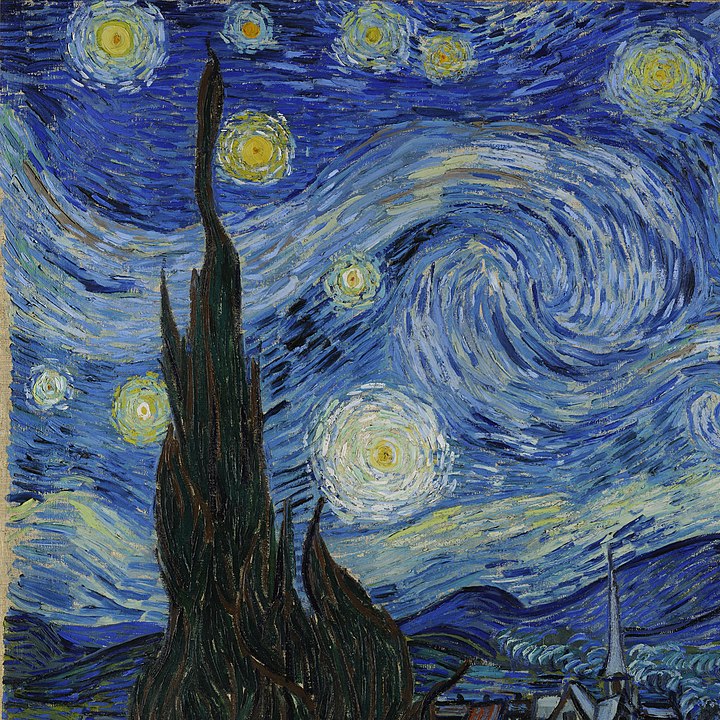
Looking from his window June 1889, Vincent VanGogh included Venus in his “Starry Night” painting, seen to the right of the Cypress tree.
Here is a closer view of Venus last January, the planet disk is apparent, unlike even the closest stars, Venus is seen as a whole object. Click on image for a full view.
Venus and Mars

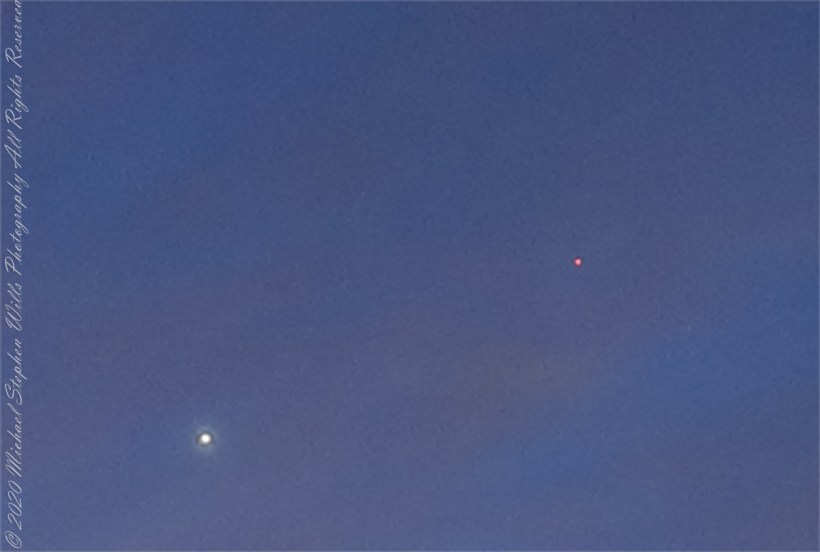
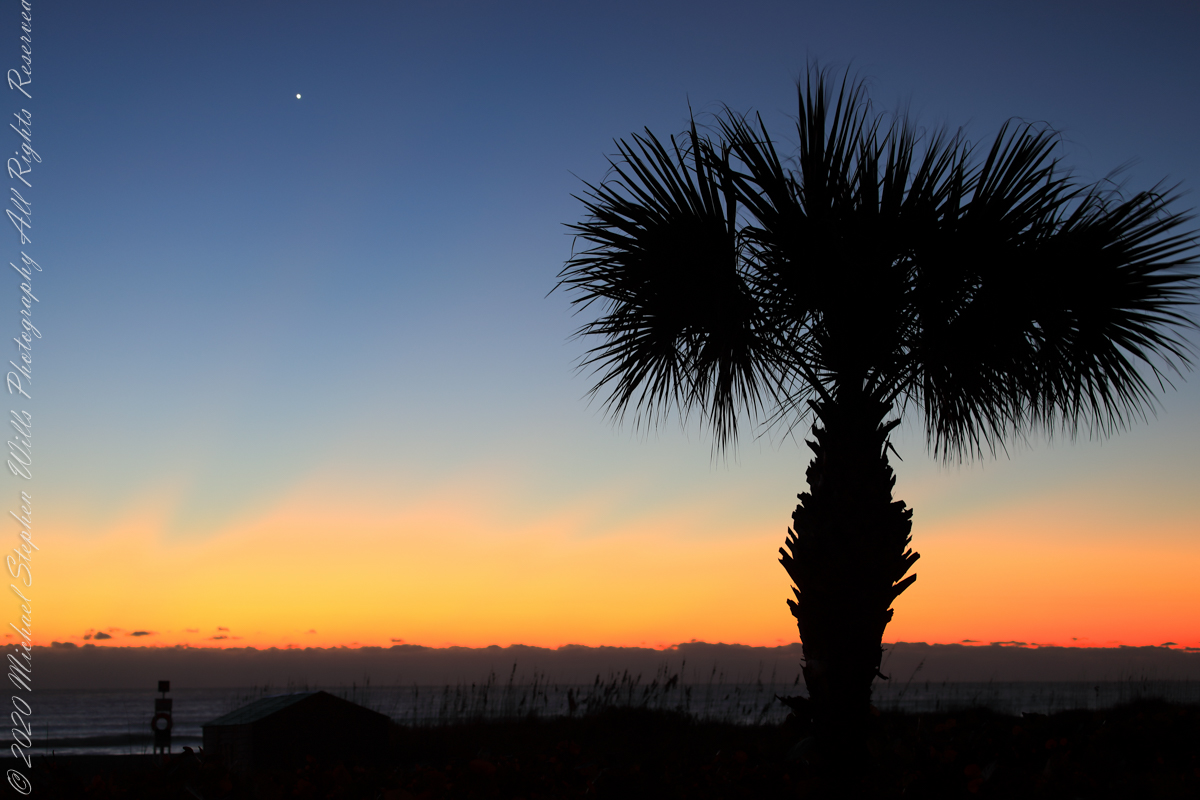
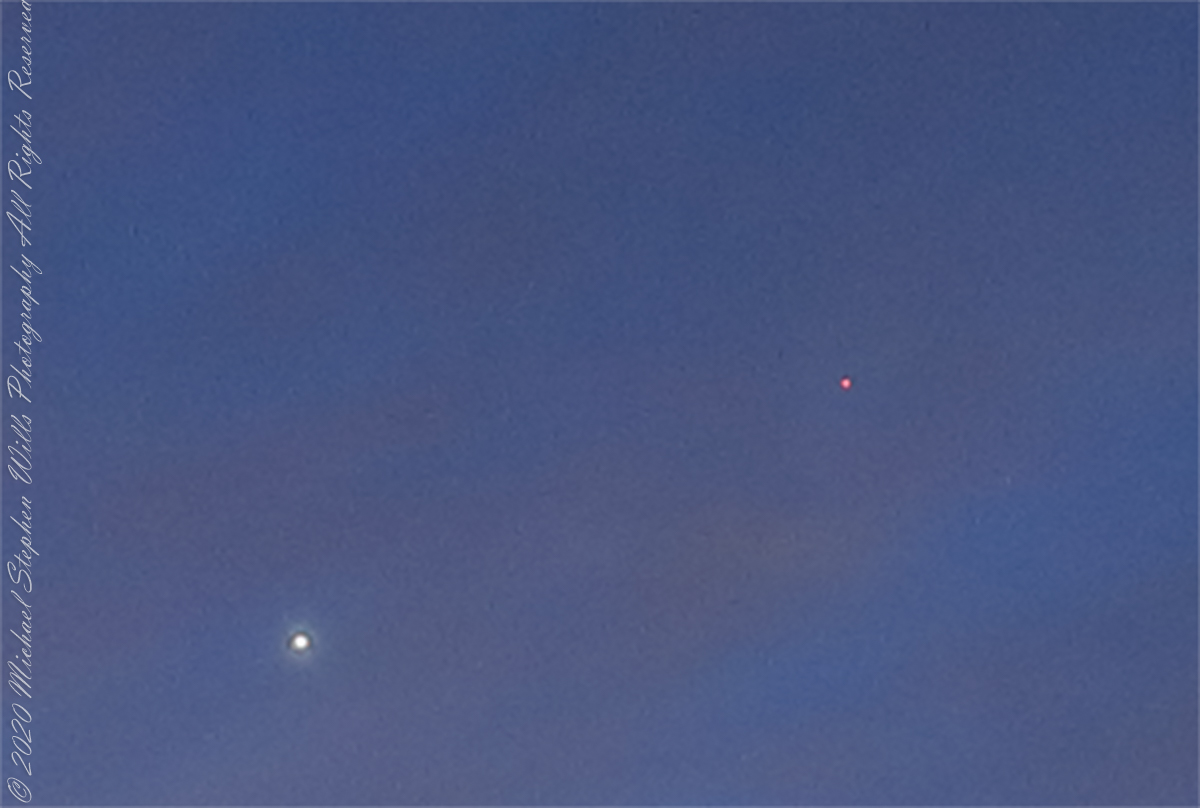
Venus and Mars shared 2022’s pre-dawn winter sky. Click on the first image for a full-size view. Mars is seen above the palm tree stump, on the right. In this photograph, from early February, Venus and Mar apparently moved closer. The closeness is an illusion, the planets are millions of miles apart, on either side of Earth’s orbit. Click on the photograph for a full-size view, Mars can just be made out to the right and above Venus.

This crop clearly shows the brightness of Venus compared to Mars.
Island Romance

Happy Valentine’s Day with the original Moby Dick

Thinking about the Aran Islands for my posts, “Killeany Bouy” and “Inisheer Welcomes the 2014 Gaeltacht Irish Football champions” brought me back to Isla Mocha.

Herman Melville’s thoughts were in and around this island off the central Chilean coast when he penned “Moby Dick” in the mid-nineteenth century while sitting in the city of Boston.  He was brought Moby Dick not only by his own experiences on a whaling ship, almost certainly Melville owned a copy of Jeremiah N. Reynolds’ “Mocha Dick: Or The White Whale of the Pacific: A Leaf from a Manuscript Journal,” an true-life account of adventures around Isla Mocha.  Sometime around 1810 Reynolds personally experienced encounters with Mocha Dick after the crew of an Antarctic expedition mutinied, stranding him at Valparaíso, Chile where he remained for two years.
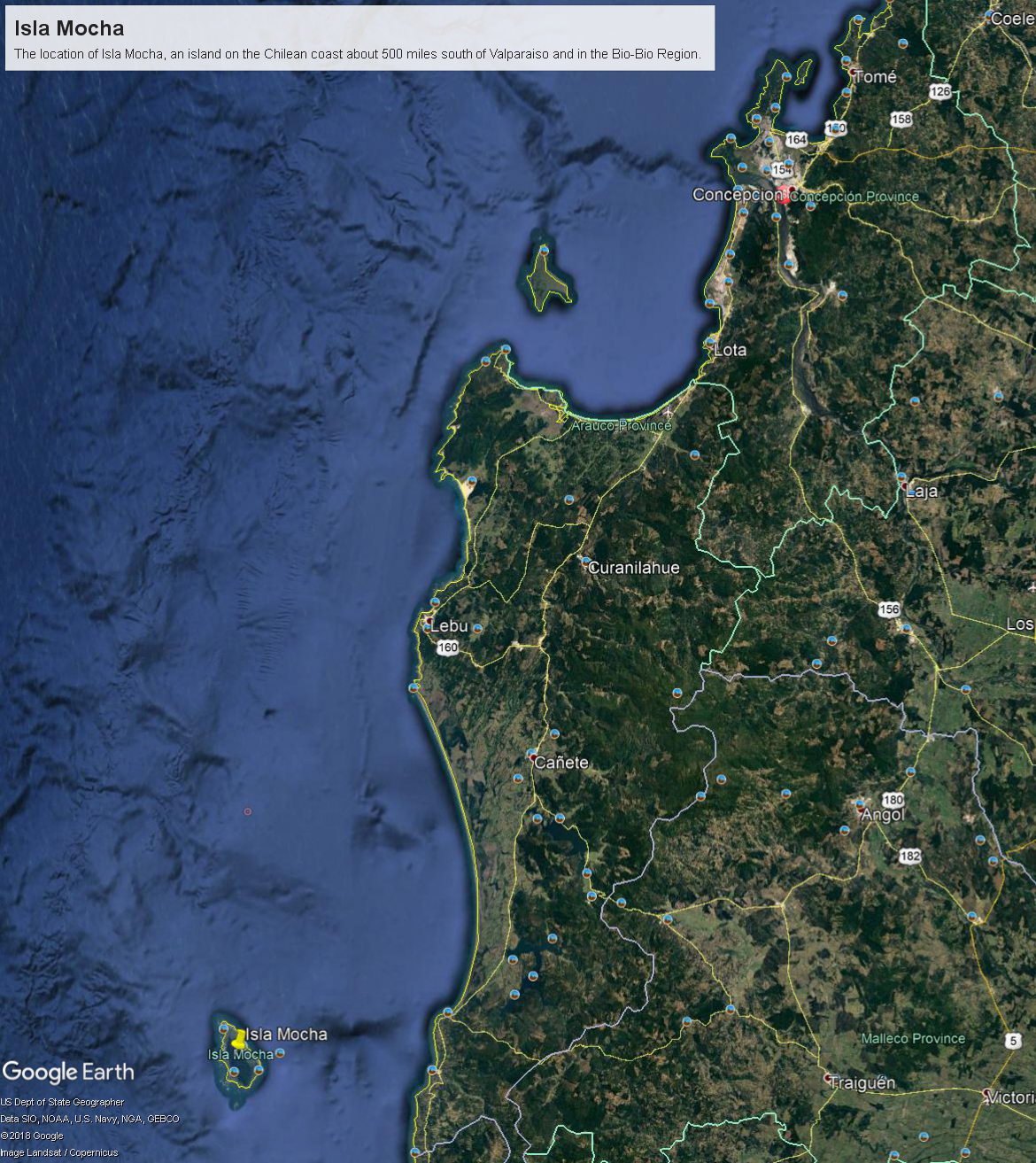
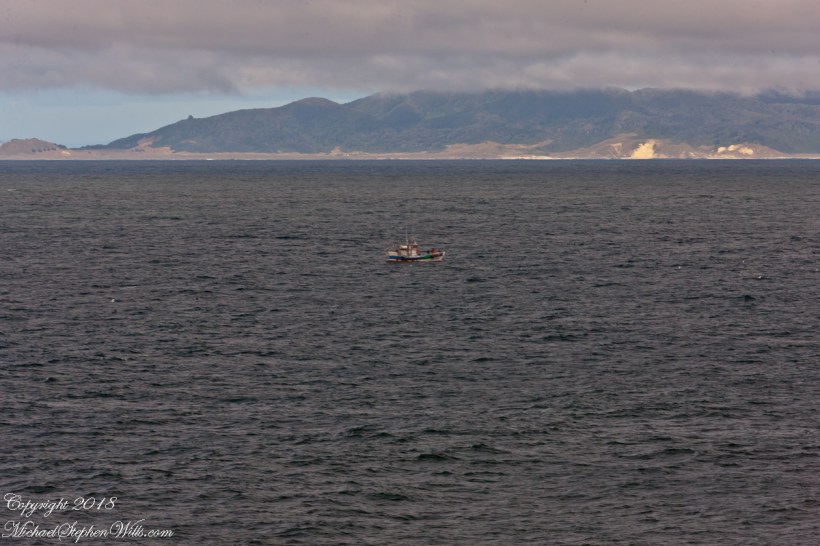
Located  38°21’45.62″S,  73°55’6.91″W, around 8 miles in size north to south, 3.5 miles east to west Isla Mocha is surprisingly simple to find.  A ridge of mountains run the north south axis, just 20 miles off the coast, a ship following the coast will find it easily, as I did from the balcony of the Oceania Regatta during a “sea day” of travel between Valparaiso and Puerto Montt.

MochaIslandGoogleMpasNarrow

Since waking that day I was on the lookout for Isla Mocha.  In preparation for our month-long cruise around South America every mile of our itinerary was scoured for interesting sights, experiences and information.  When I first learned of Isla Mocha (Mocha Island in English) and the connection with Melville reading about it in Boston, just as I was in Ithaca, one of my goals for that day was to catch sight of Isla Mocha as it rose from the horizon.

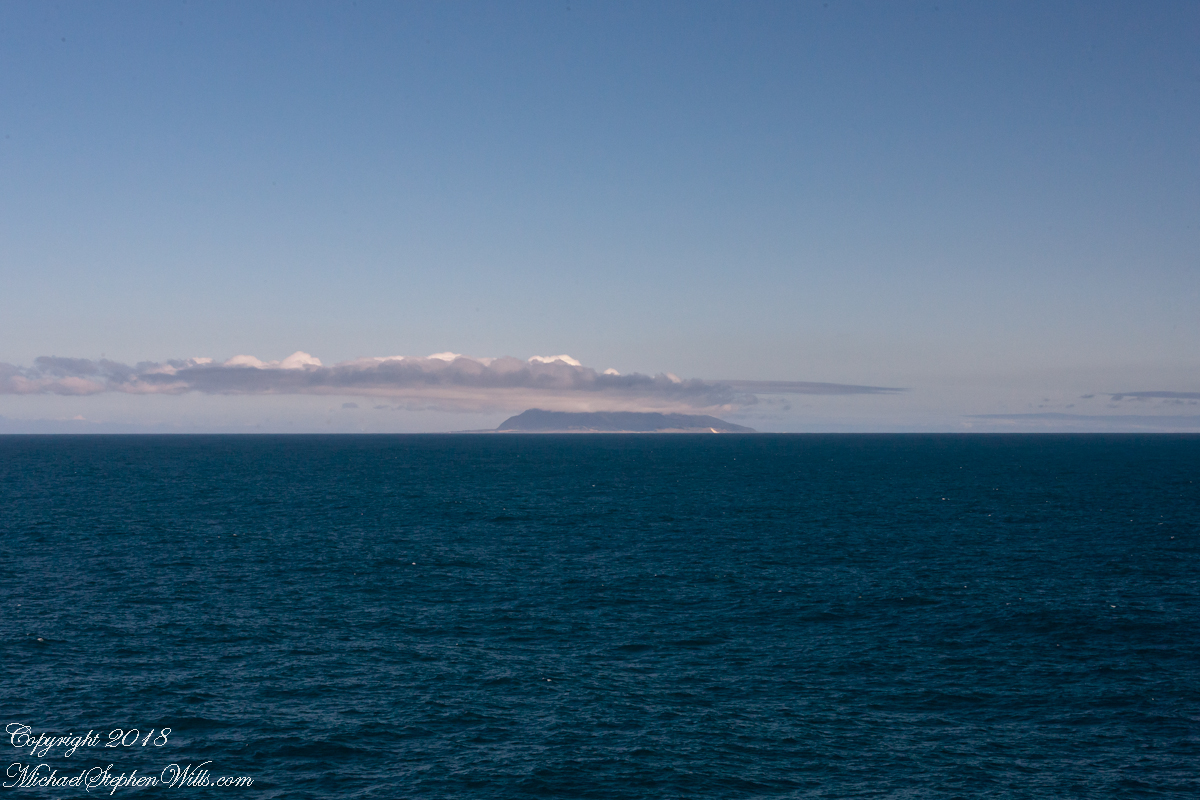
My goal was made easier for the cloud formation from the island mountains.  Here is my first photograph, taken from our balcony on the port side.  I chose the port side just for the landward view as the ship progressed southward on the western coast of South America.  The Canon EOS-1Ds Mark III was tripod mounted with an EF 70-300 f4-5.6L variable lens set to 70 mm.  We are northwest of the island with the coast just visible.

Isla Mocha First Sighting

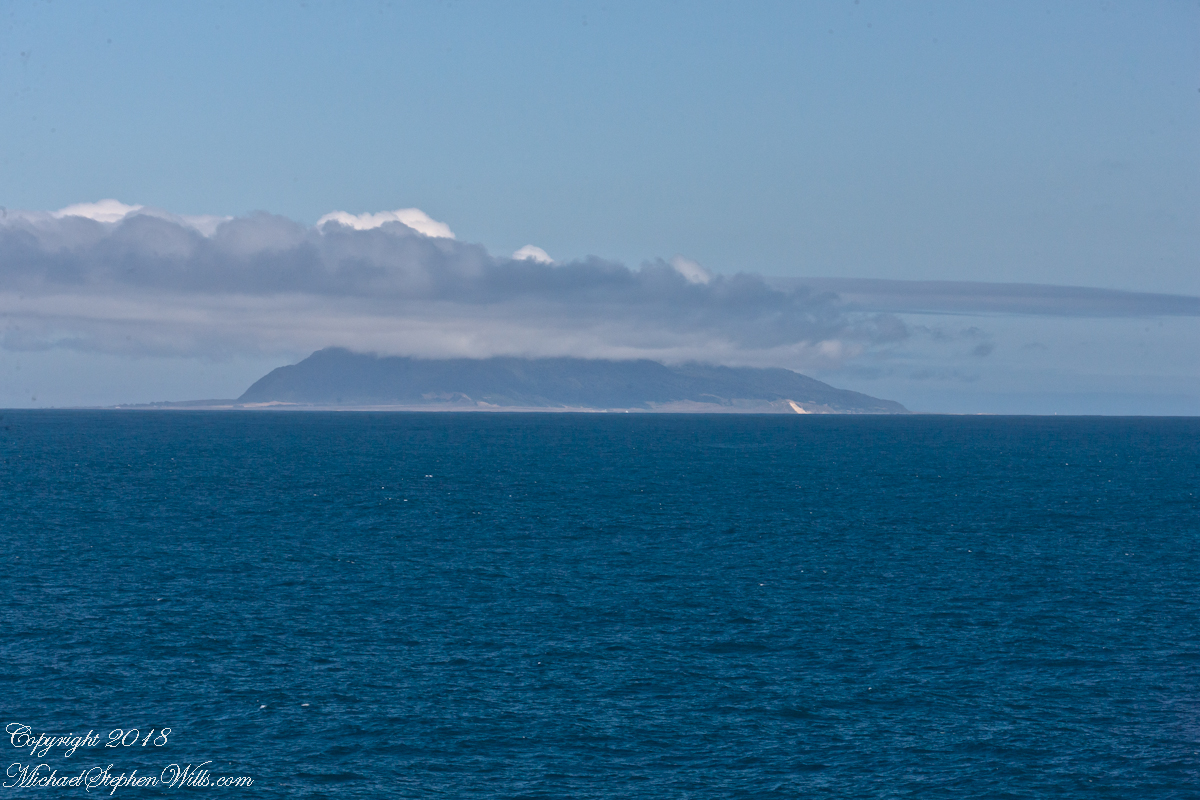
Another view with 188 mm focal length.  The ship must have turned eastward, as the view progressed the island came closer.  It was a fantastic thought to cruise above the subduction zone where the Nazca plate dives beneath the South American Plate.  In the distance, on a clear day, the volcanic cones Villarrea and Quertrupillan are visible.

RomanceOfIslandsMochaIsland2016-2

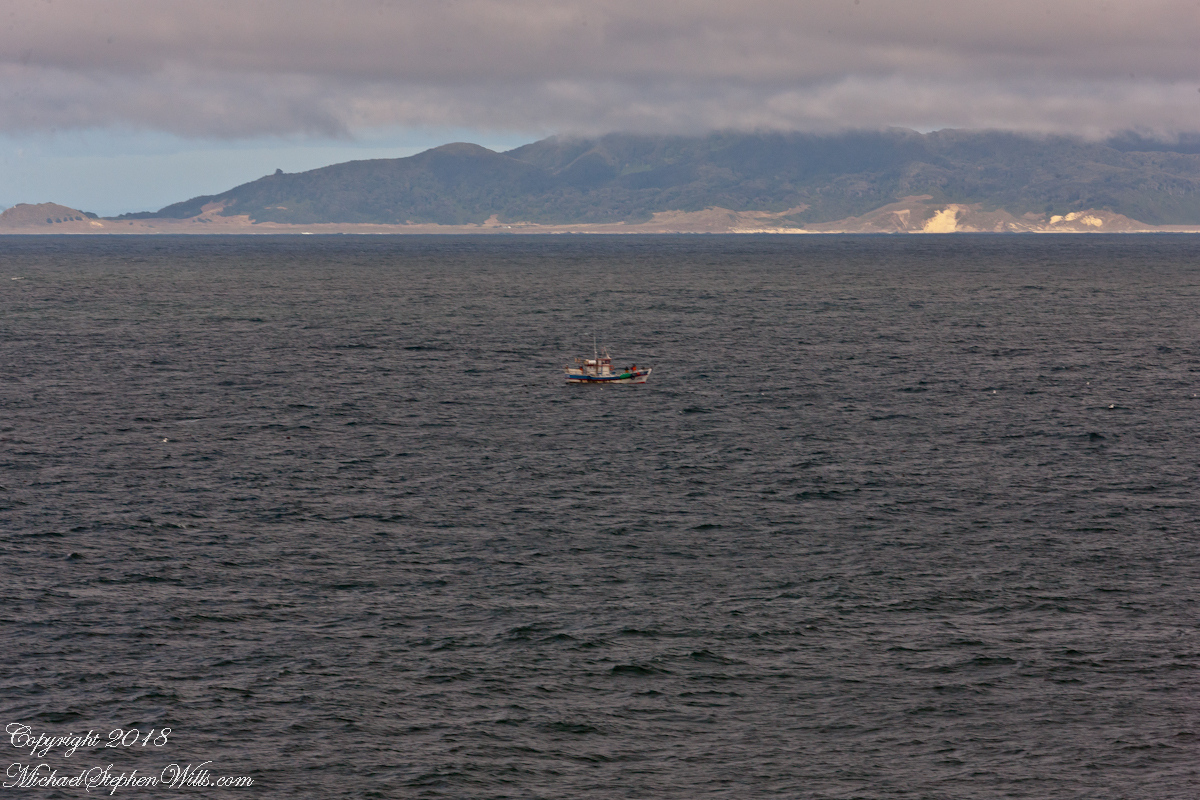
With the island due east, only a few miles away, the lens at 221 mm focal length.  A fisherman is having an easier day in a calm sea.  The indigenous people told stories of the souls of the dead travelling west to Isla Mocha.  Pirates used the island as a resupply base.  The fishing boat was the only sign of life.

RomanceOfIslandsMochaIsland2016-3

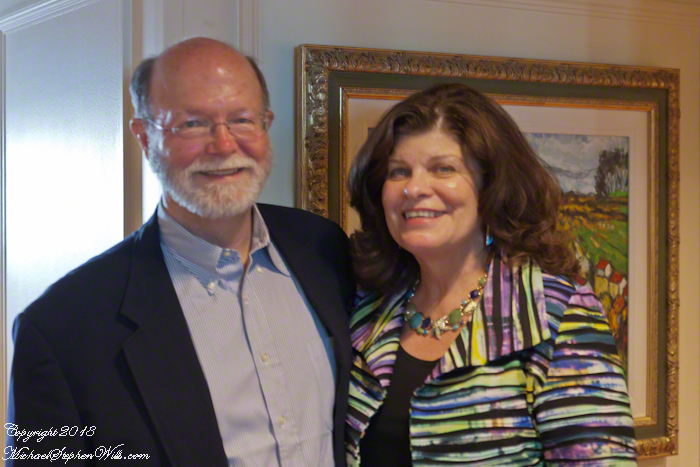
That was February 14th Valentine’s Day.  With Isla Mocha passing into the distance I changed for an evening with Pam.  Here we are headed to dinner, somewhere off the coast of Chile’s Lakes (and volcano) region.

Valentines Day 2016

German Club “To the Watermill”

Nostalgia and Great Food

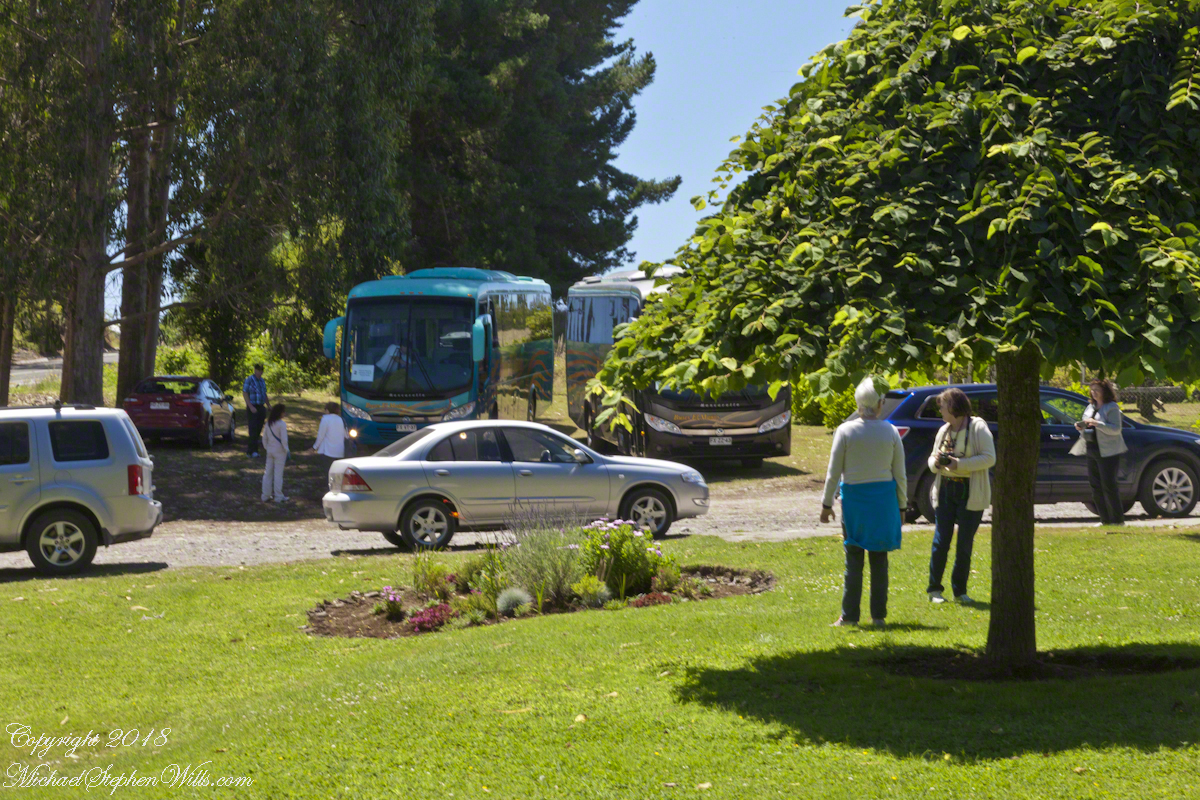
Our tour of Chilean Lake Country and Volcanoes began from the harbor of Puerto Montt, in the tender we boarded from the ship Regatta. This is a small boat carried in the hold and deployed to transport passengers to ports without docking facilities. Once on land, we met our guide for the day and boarded the bus.

I have yet to post about our first stop, Puerto Varas, a 20 minute ride and our first exposure to the influence of 19th Century German settlers seen, from our bus windows, in the architecture. Today’s post is about our lunch stop, a restaurant half way between Puerto Varas and Ensenada.

Click any photograph for a larger view.

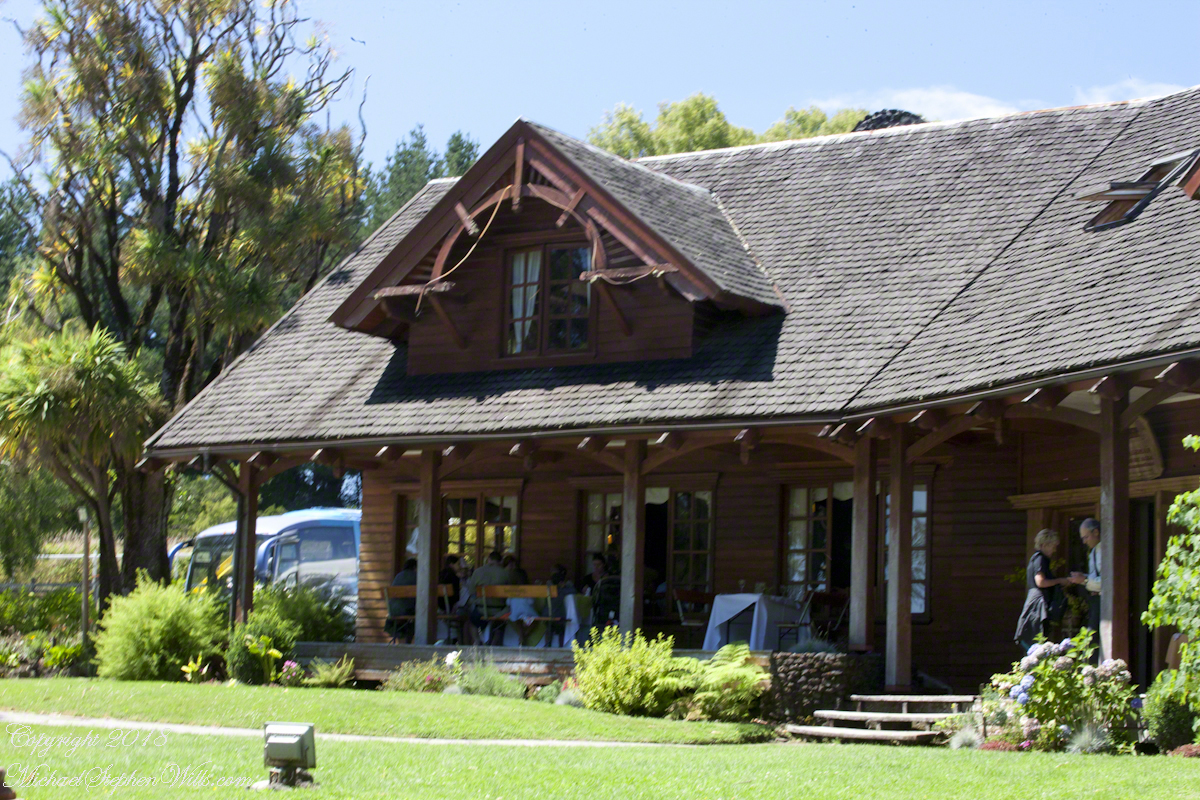
Club Aleman Molino de Agua

Club Alemans (German Clubs) are found in Puerto Montt, Puerto Varas, and here. Each is a gathering place for locals to celebrate their heritage, a feeling somewhat diluted over time to where, now, they speak of themselves as “Chileans of German extraction” and the great majority speak Spanish at home and are exposed to the German language as school courses.

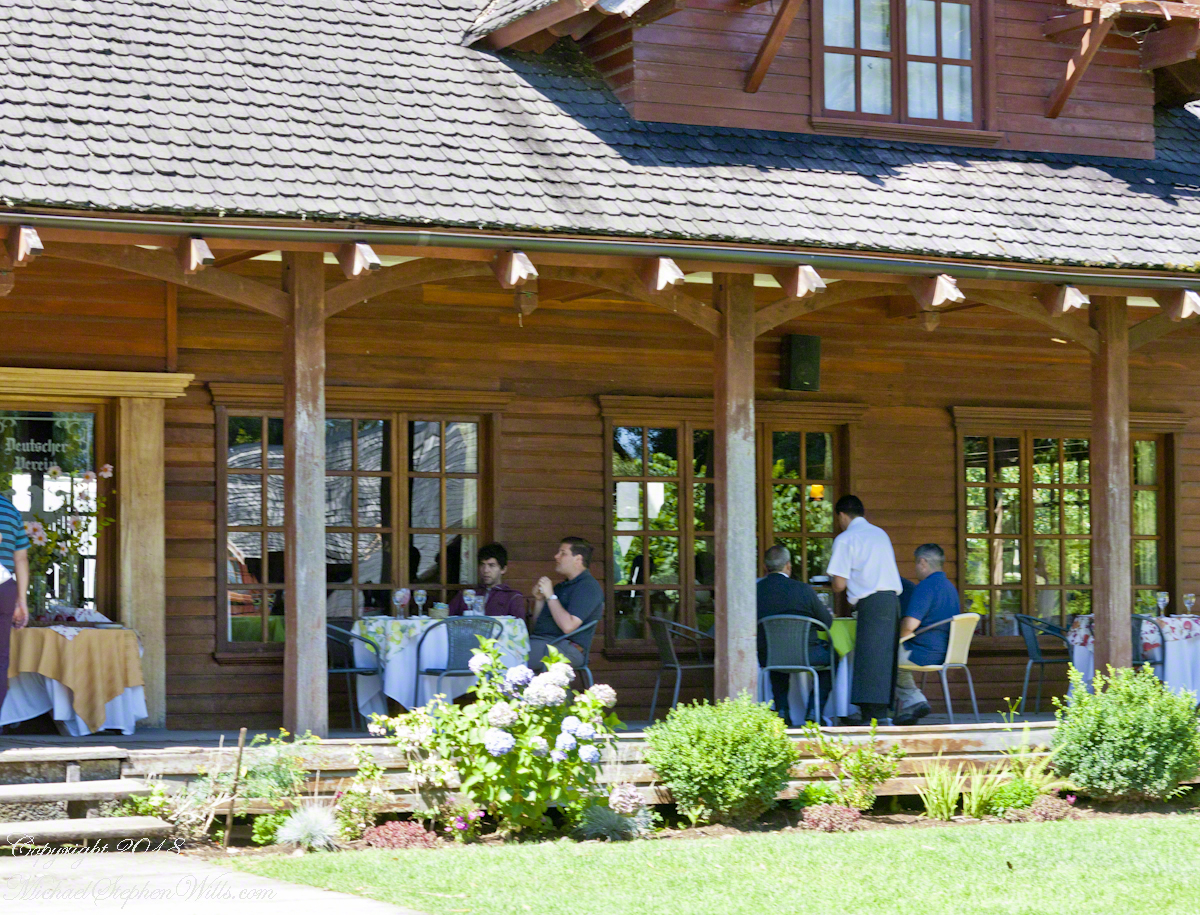
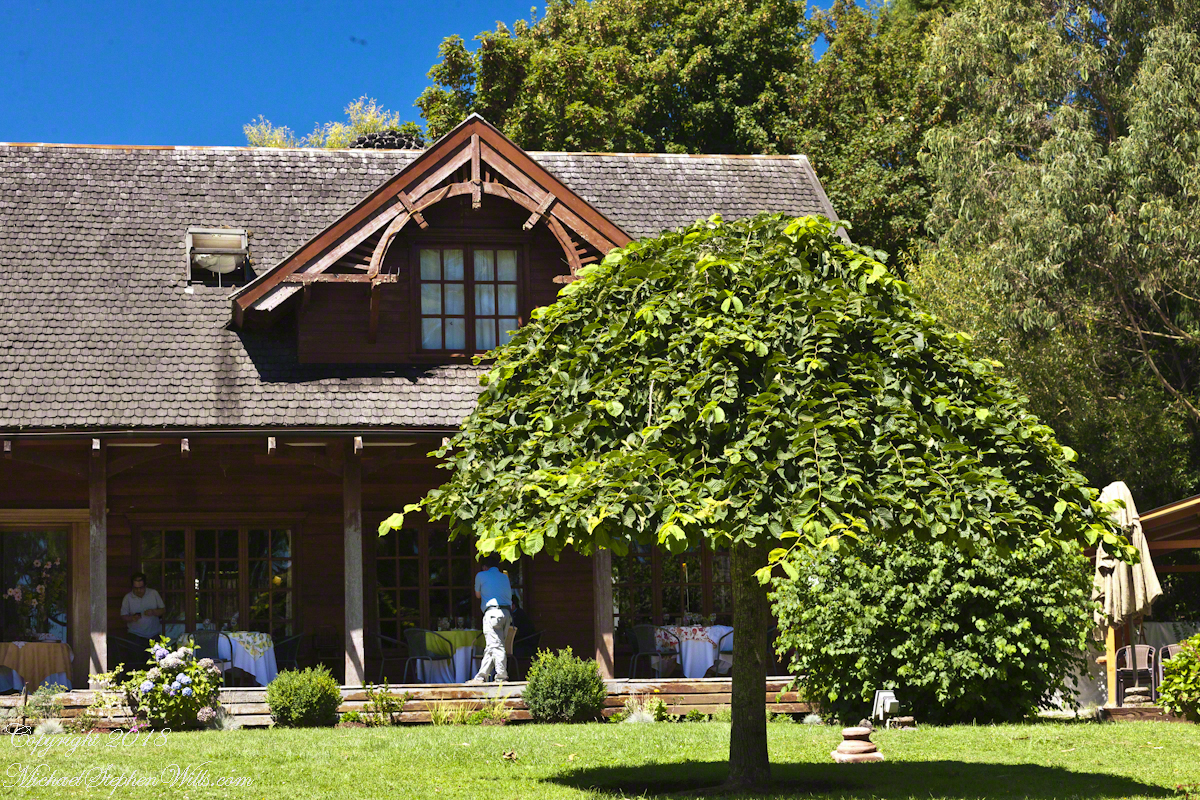
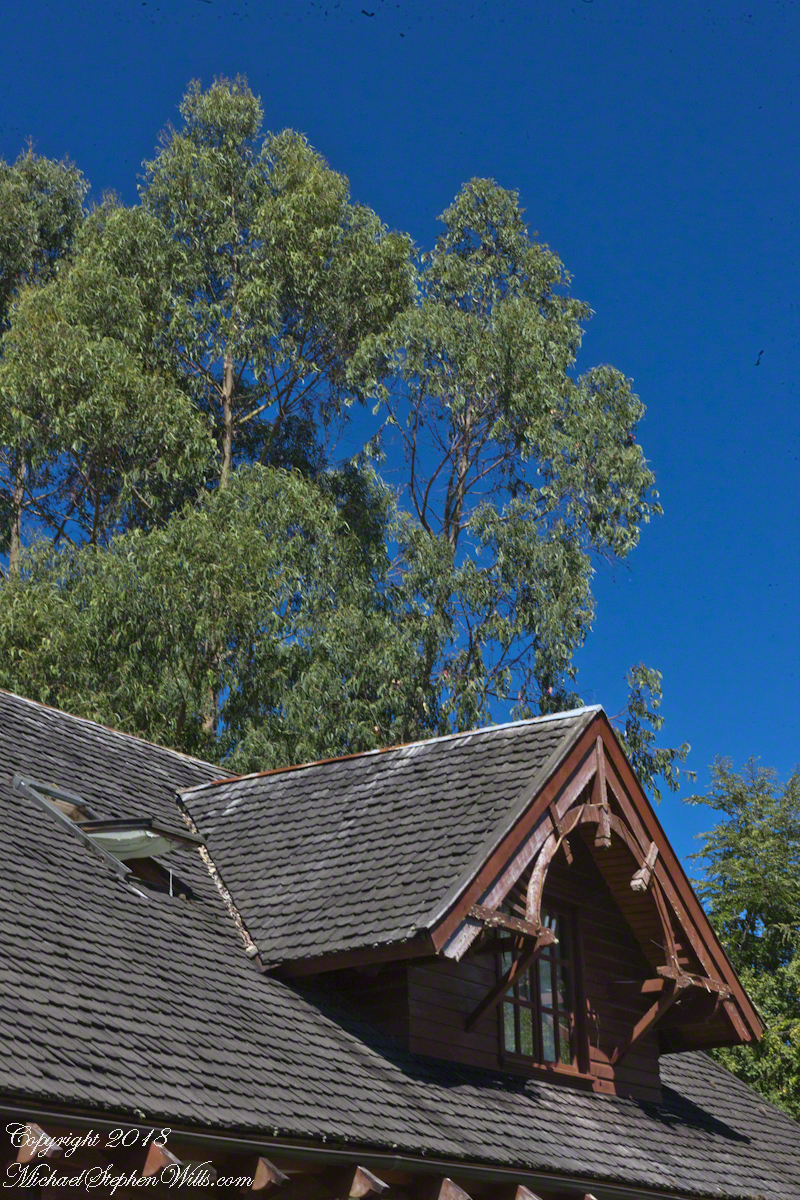
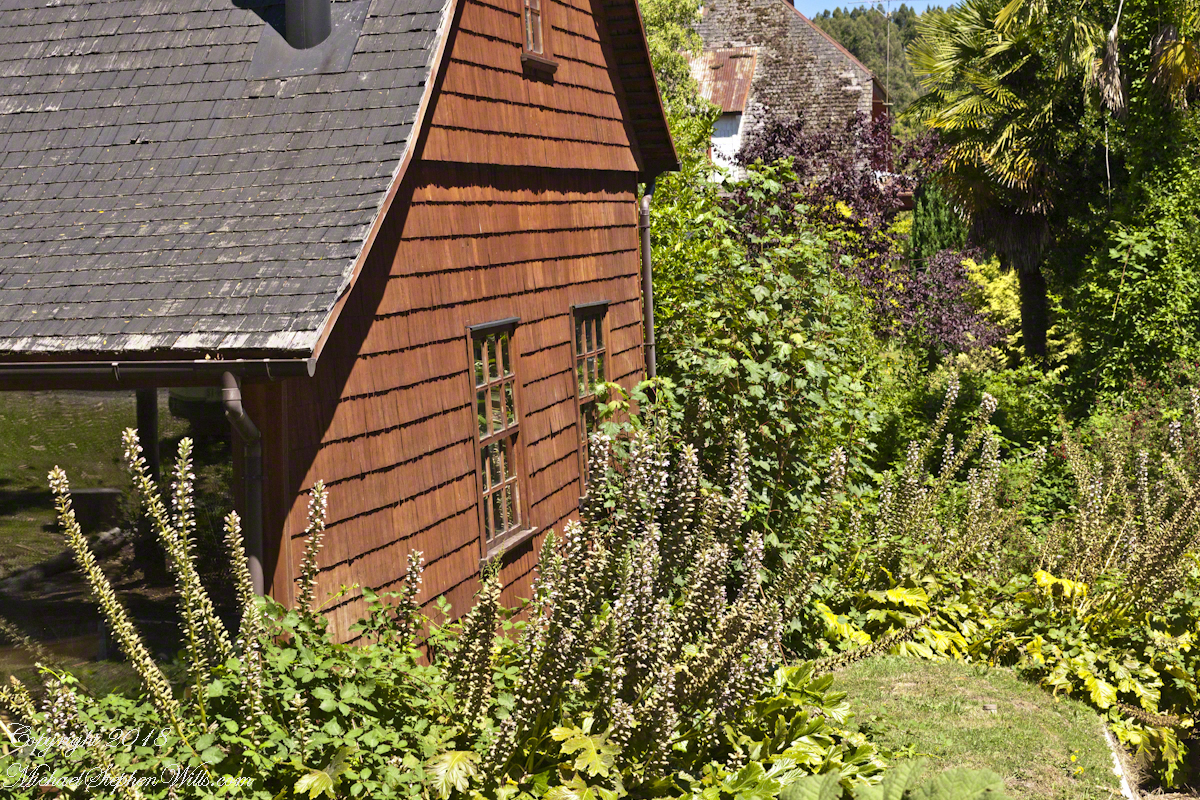
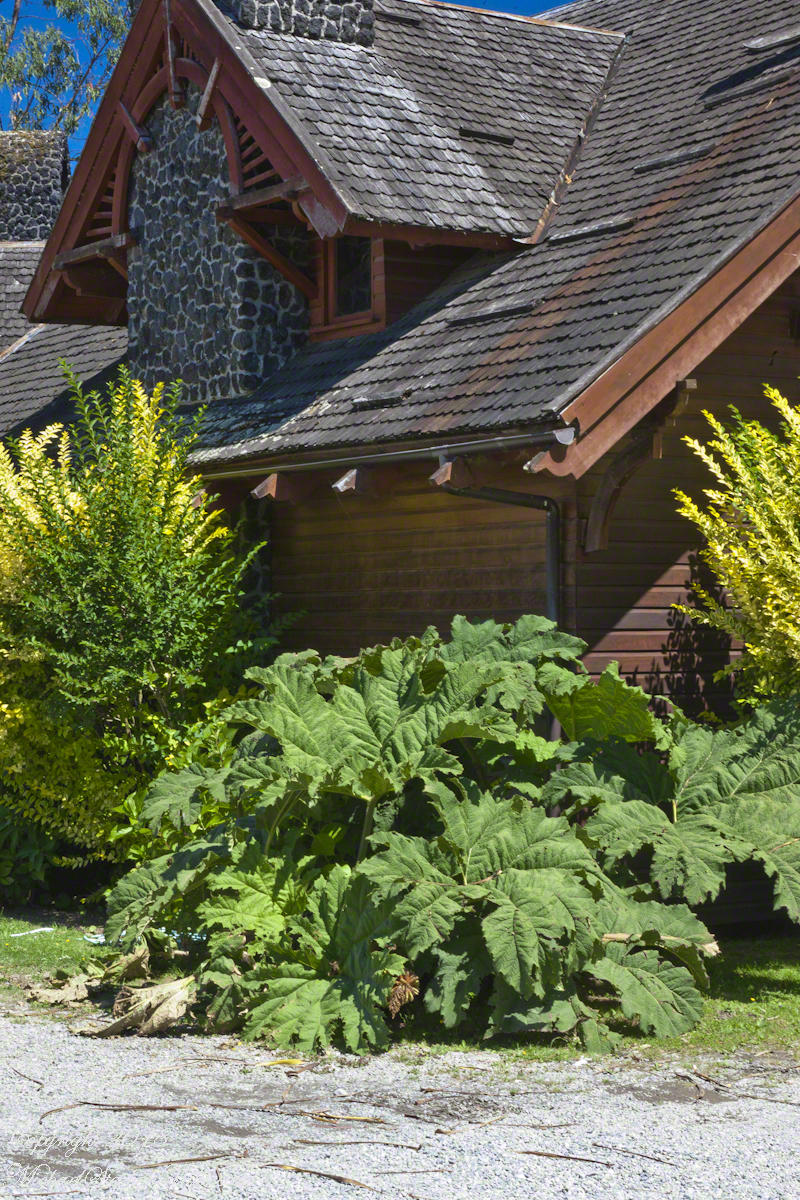
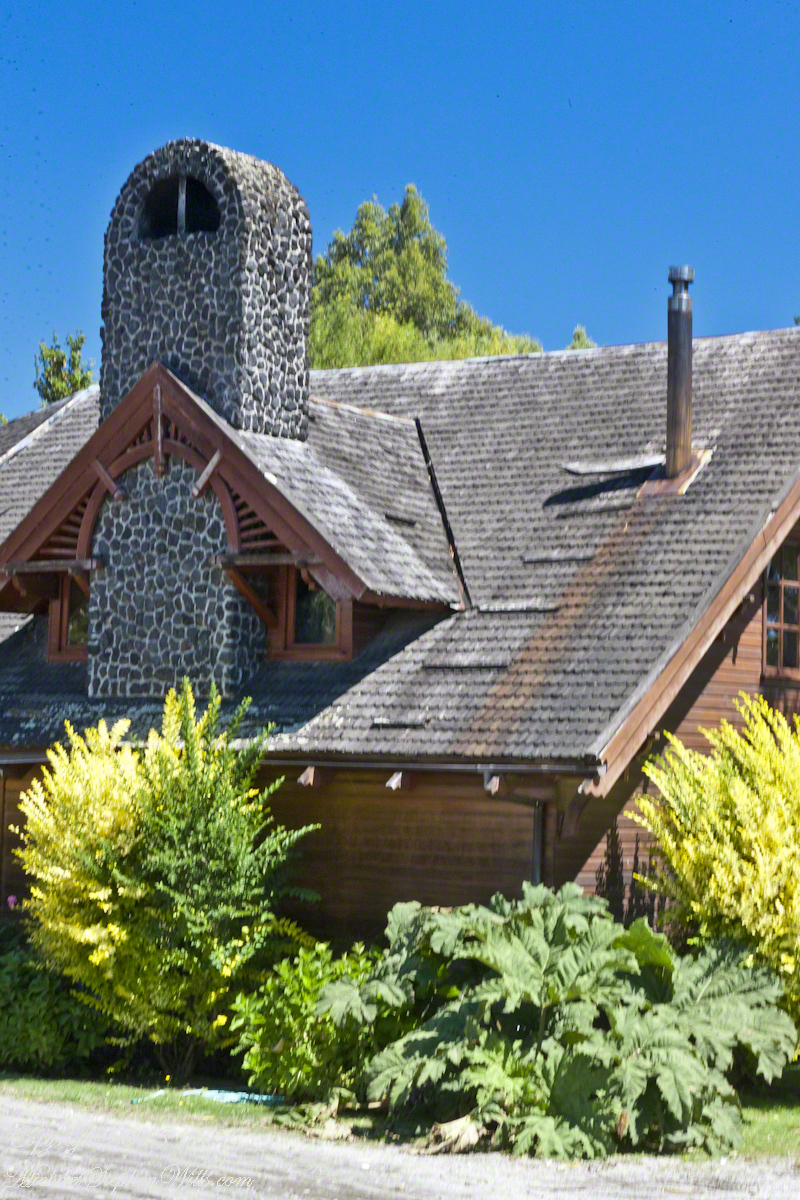
For past generations, the link was stronger, German was the language spoken at home and there was homesickness for the cultural traditions left behind and somewhat alleviated by the similarity of Chilean Lake Country to foothills of the Alps. Once established, the settlers duplicated the architectural features using local wood. Notably, many houses are clad with shingles from the Alerce (also known as Fitzroya cupressoides), a type of Cypress native to southern Chile and Argentina. The roof shingles of Club Aleman, seen below, were of this type.

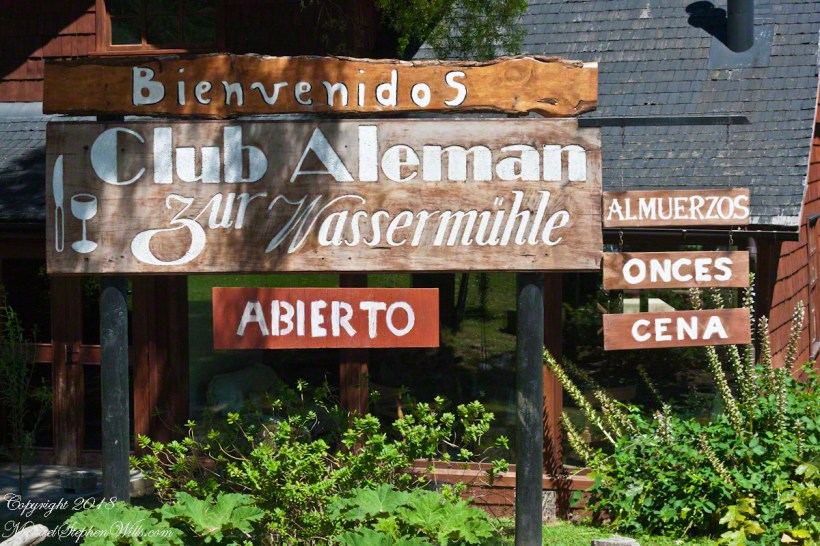
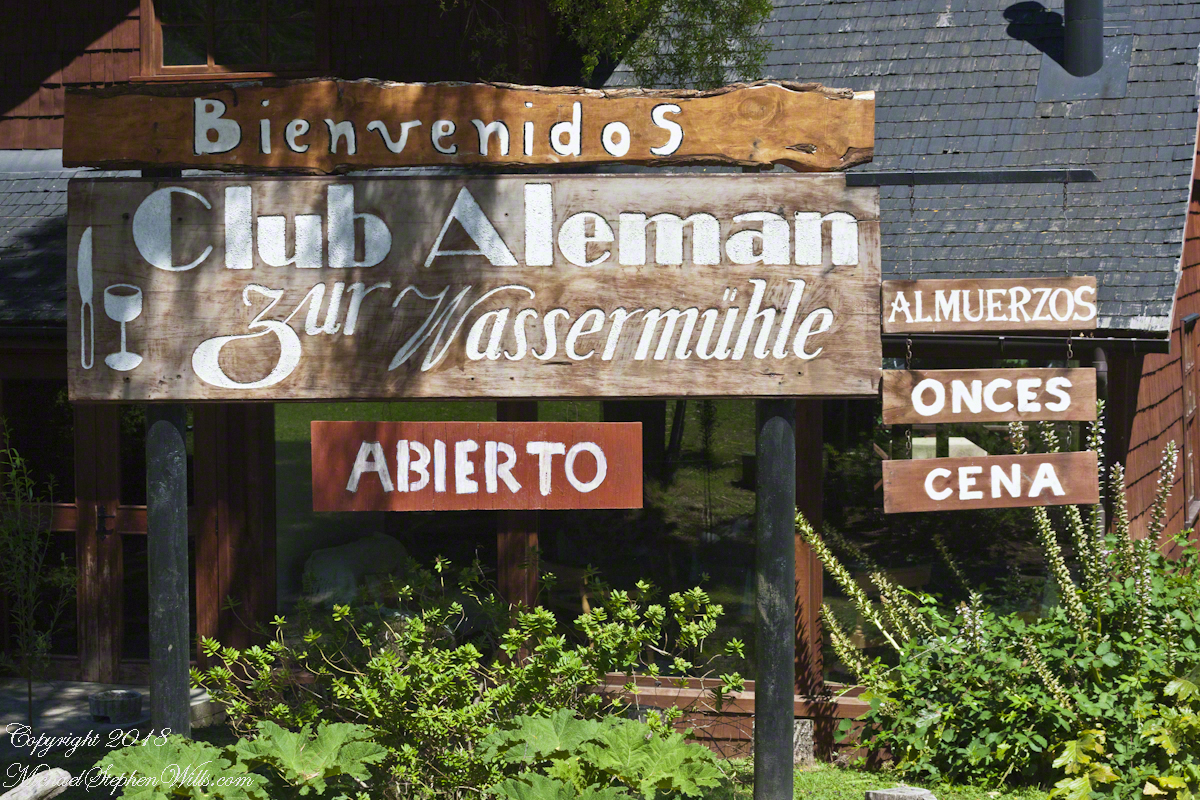
The sign translates to “German Club: to the watermill” from the two languages used: Spanish and German. The sign reads “lunch, dinner, late night.” “Onces means Late Night.

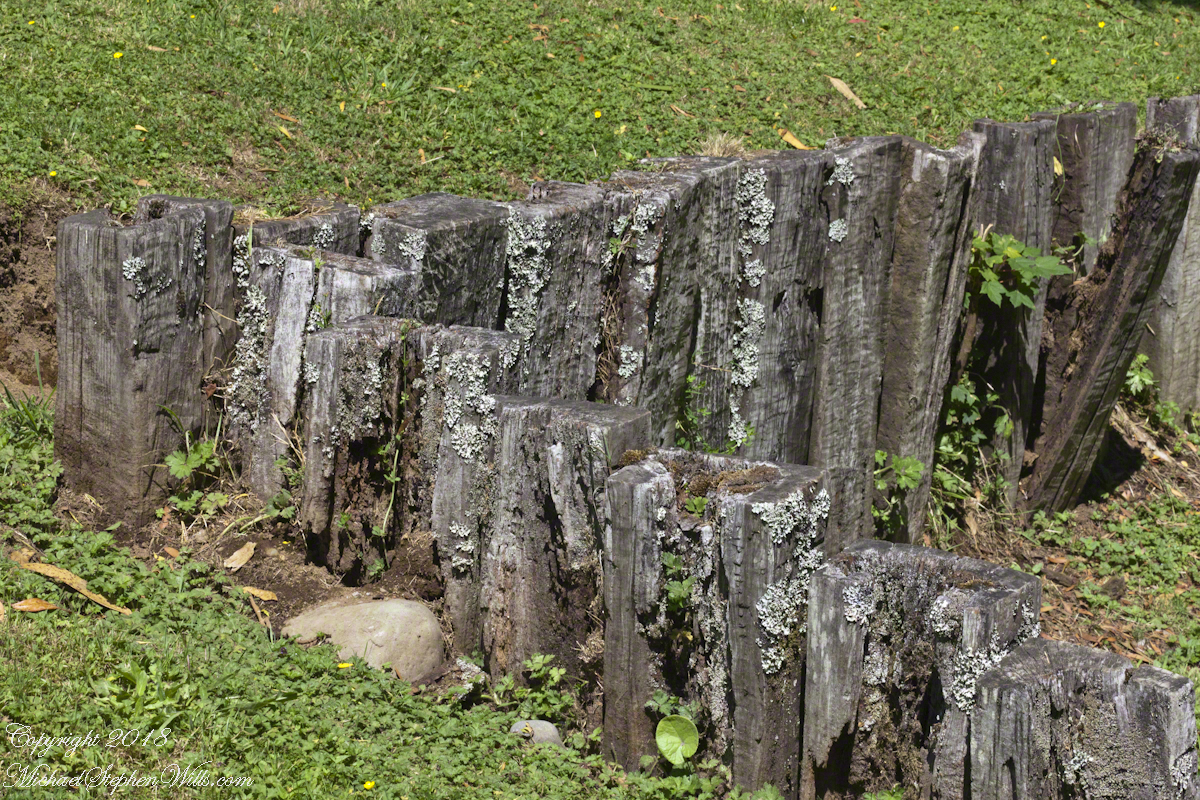
The “watermill” is a nostalgic, sentimental reference echoed in architectural and decorative details throughout the property, such as this series of posted set to suggest a device used to control water flow. There is no water flowing through the property.

Our lunch was excellent Chilean fare, but I don’t recall what it was, exactly and I didn’t photograph the interior. For us, an plus of using these cruise tours is all the details are taken care of, releasing us to maximize our enjoyment of the surroundings.

A dark side to these settings was the attraction the area had to un-remorseful Nazis fleeing war crime prosecution. In Chile and Argentina they found refuge in the 1940’s, 50’s and were supporters of the Pinochet dictatorship. None of this history was presented by our excellent guide, nor was it reflected in these rustic charms.

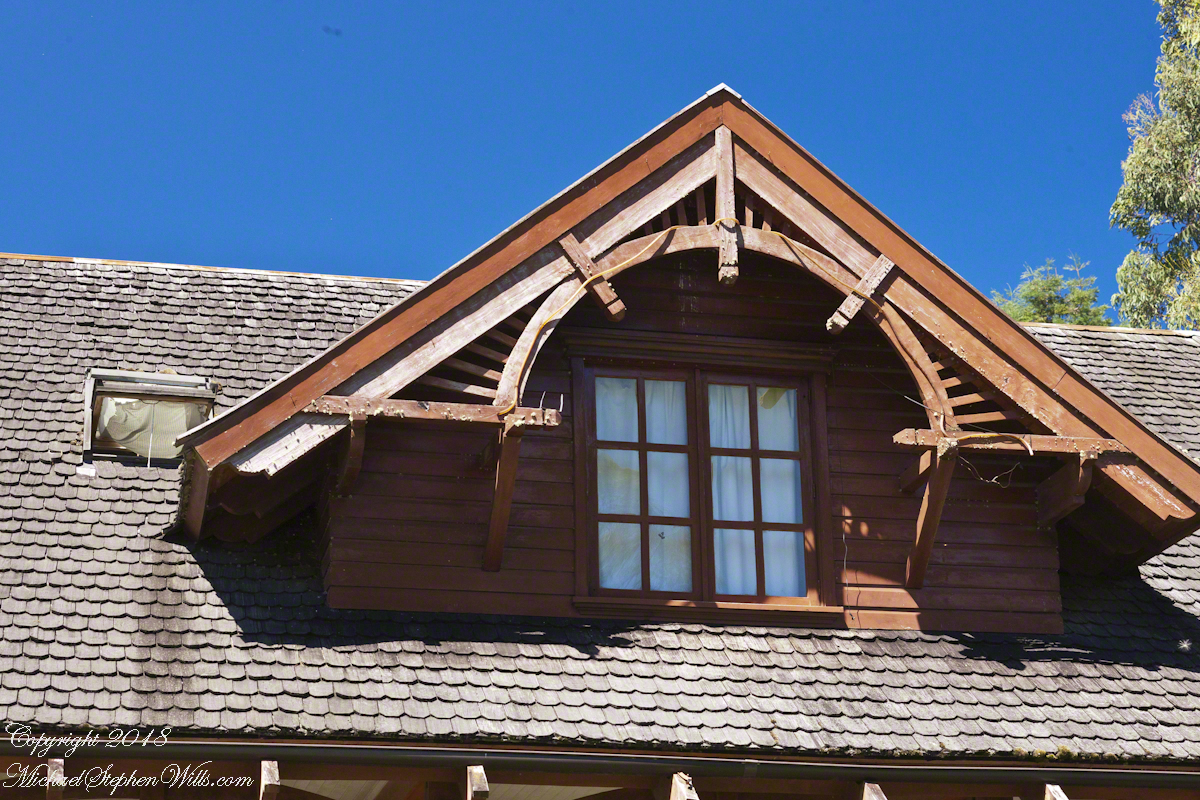
I was fascinated, for some reason, by the two dormers of the main building root with the wheel-like decoration.

The Garden

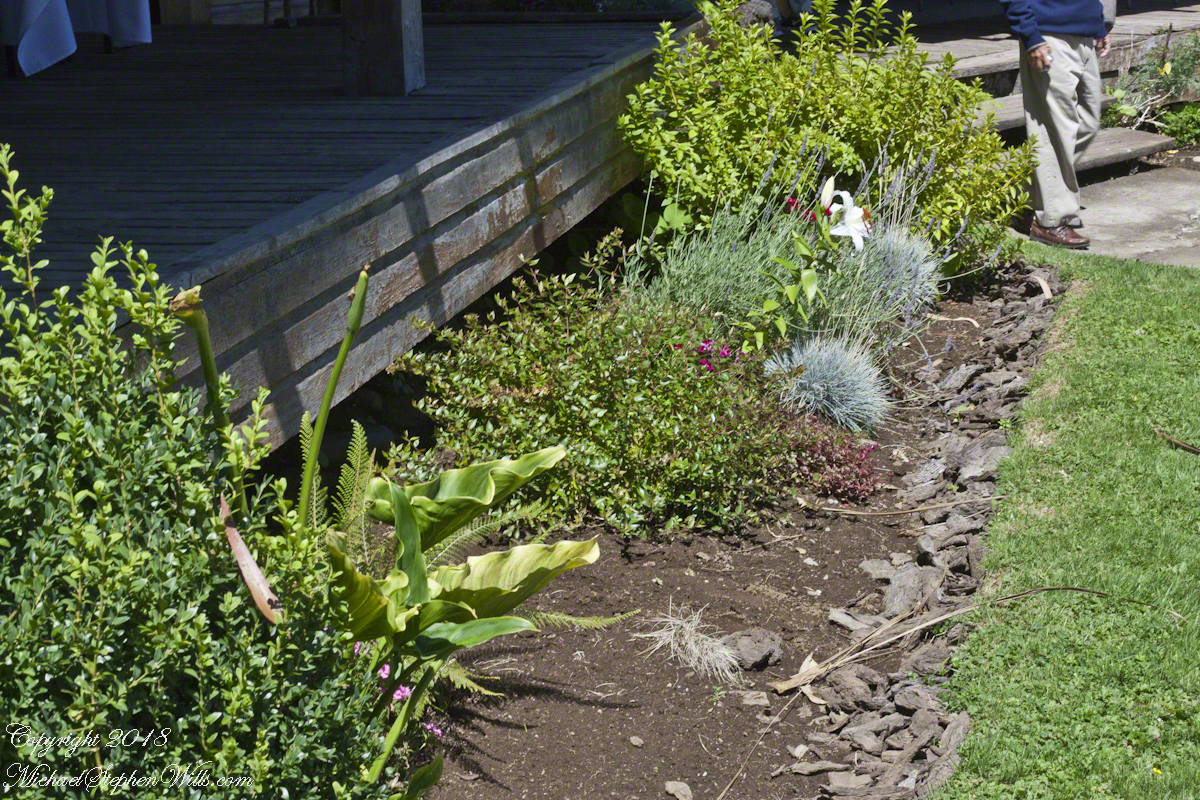
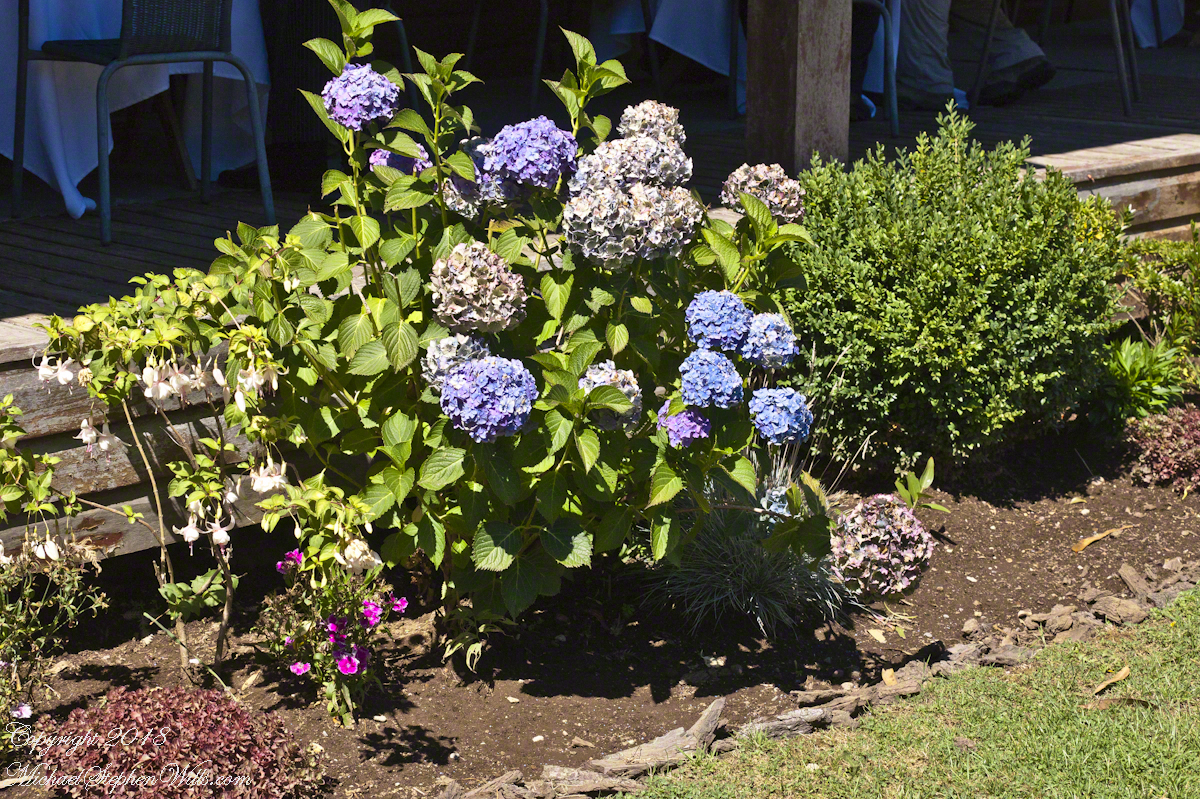
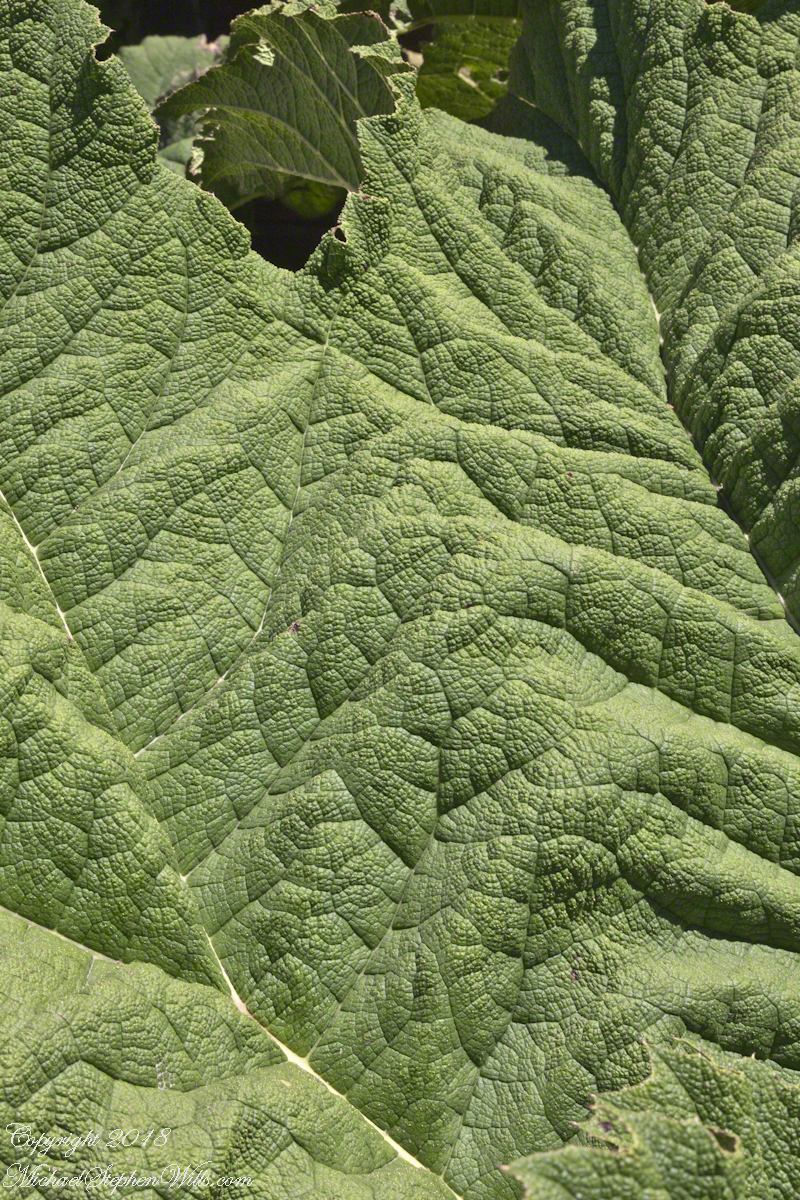
A native plant encountered frequently in our travels, growing wild, and here.
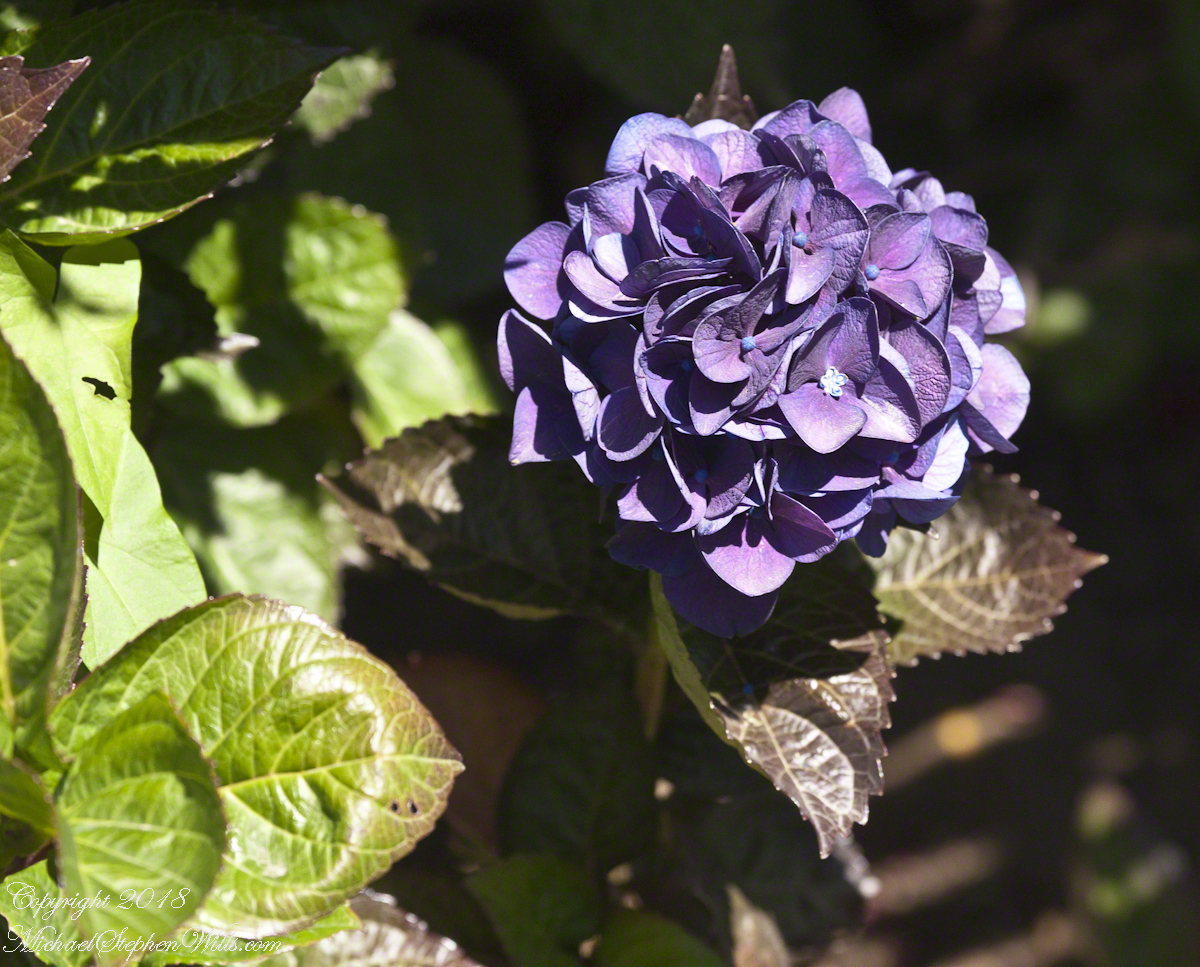
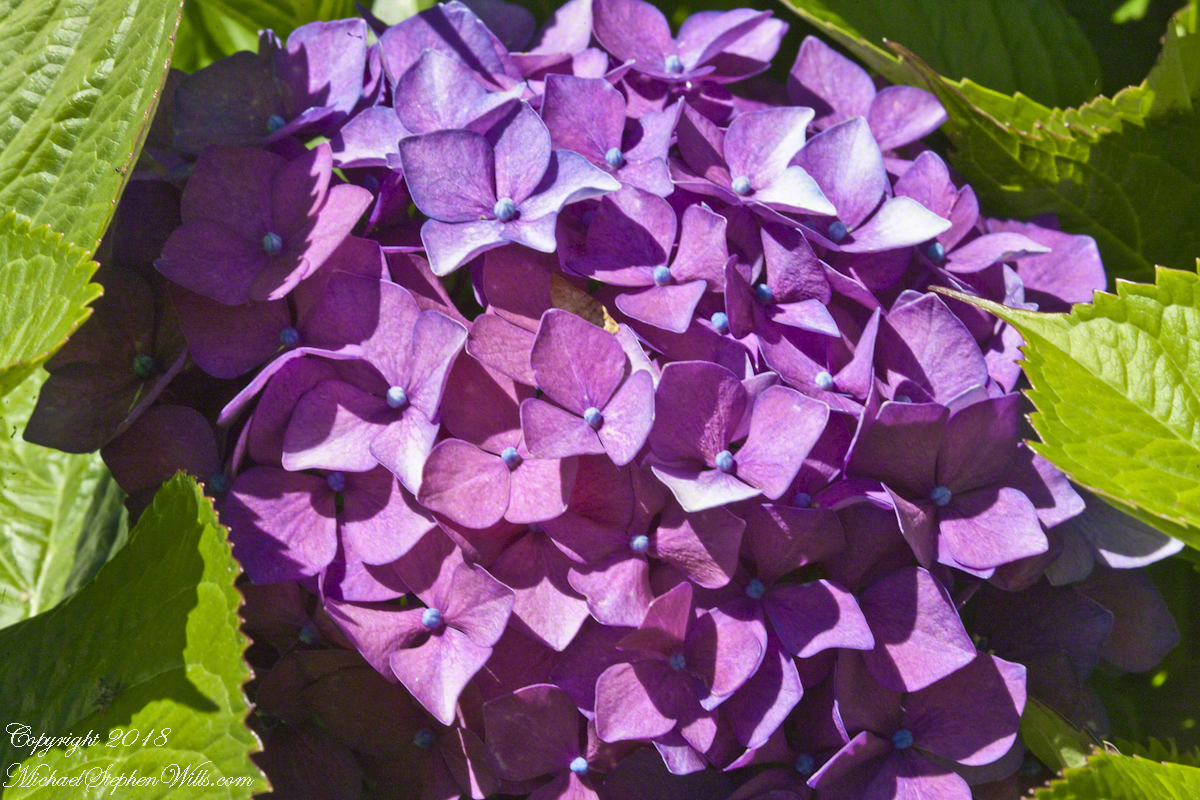
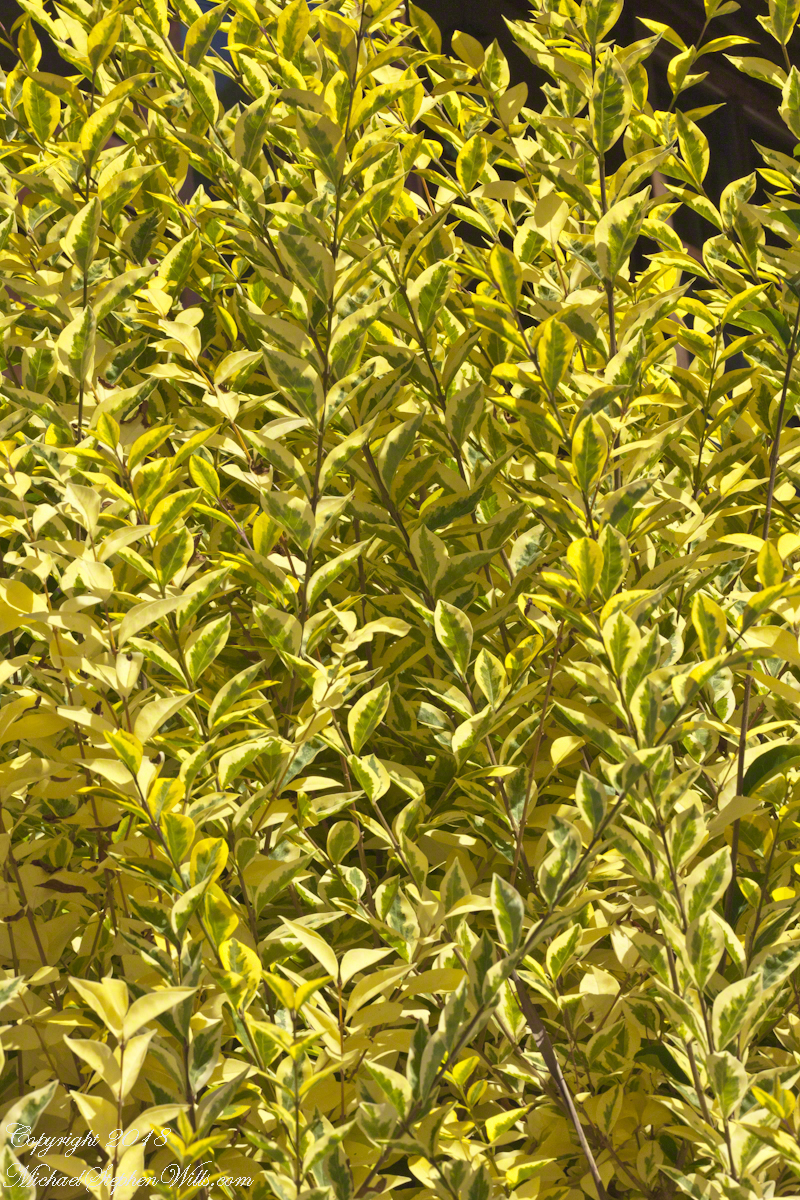
Close-up of the shrub growing to either side of those large leaves.

Calbuco Simmered

An unsettling volcanic neighborhood

Postings last week featured the symmetrical, haunting cone of Orsorno and I have more images and stories to share of this quiescent horror in waiting. Today you will learn of another stratovolcano just 16 miles from Orsorno, also ancient; unlike Orsorno, misshapen and a current threat to local residents.

Calbuco is its name, taken from an indigenous language, “Blue Water” in English. It must refer to the water of Lake Llanquihe. As we drove Road 225 Calbuco was on one side, to the south, the lake on the other. When we visited Petrohué Falls, the river forms a southern boundary to the Llanquihue National Reserve from which Calbuco rises.

April 2015 Eruptions

Where we planned out trip, nine months before this day in February 2016, Calbuco erupted without warning with explosions one step below that of Mount St. Helen’s 1980 event. The volcanic plume of ash and cinders reached more than 10 kilometers ( 6+ miles ) high. It was fortunate the wind direction took the ash away from the nearby cities of Puerto Varas and Puerto Montt. Each is about 17 miles from Calbuco. As it was, the catastrophe destroyed crops and made farmers lives difficult. Farmers and the residents of the rural village Ensenada, nine miles away, evacuated to save their lives. Abandoned farm animals perished. Village residents returned to homes, roads, gardens covered in ash.

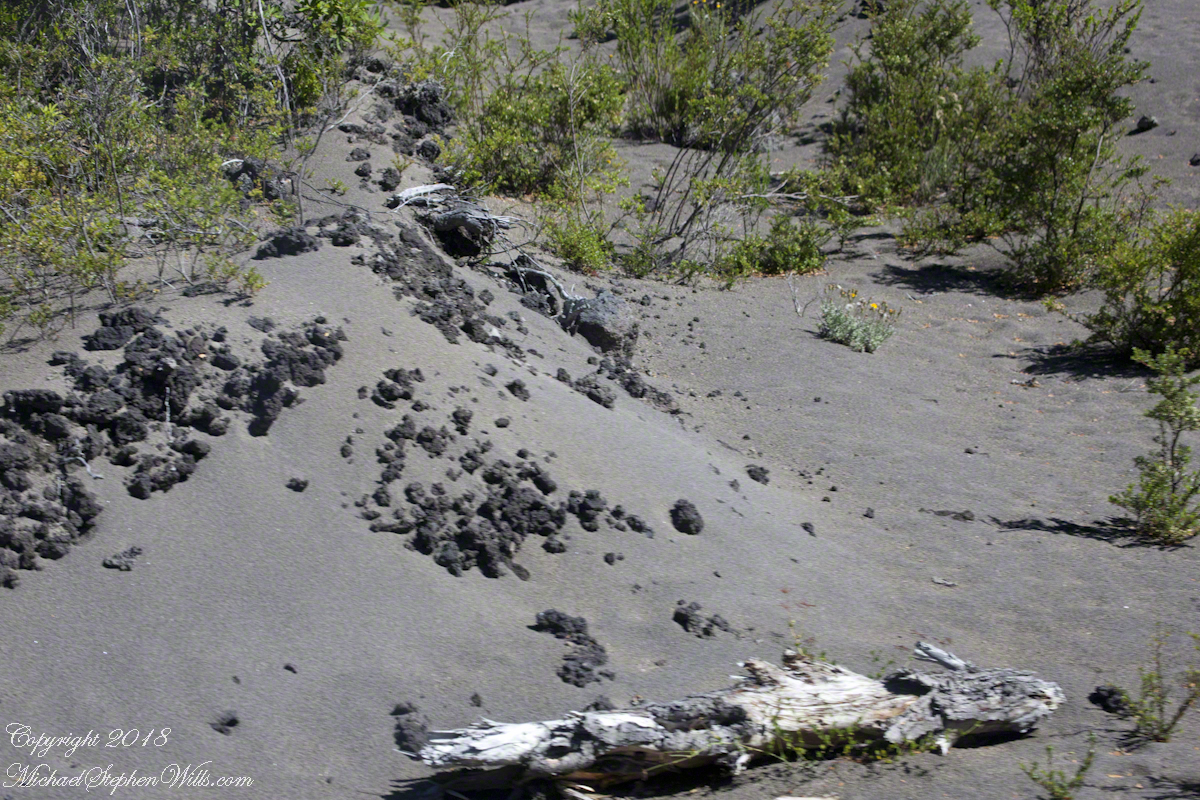
Here is a photograph of an ash and cinder drift from the explosion, just off Road 555 on the slopes of Orsorno volcano, above Ensenada village.

Click any photograph for a larger view.

Settlement Beneath Active Volcanos

At the start of the 18th Century the provinces around Lake Llanquihe were thinly populated. The government of Chile, in anticipation of seizure of the land by European powers, cooperated with efforts of German emigres to resettle German families fleeing a disorderly revolution. Today the region show the cultural influence of these settlers. Here is the exterior of the Club Alemain (“German Club”), the restaurant along Road 225 were we had an excellent lunch. ††
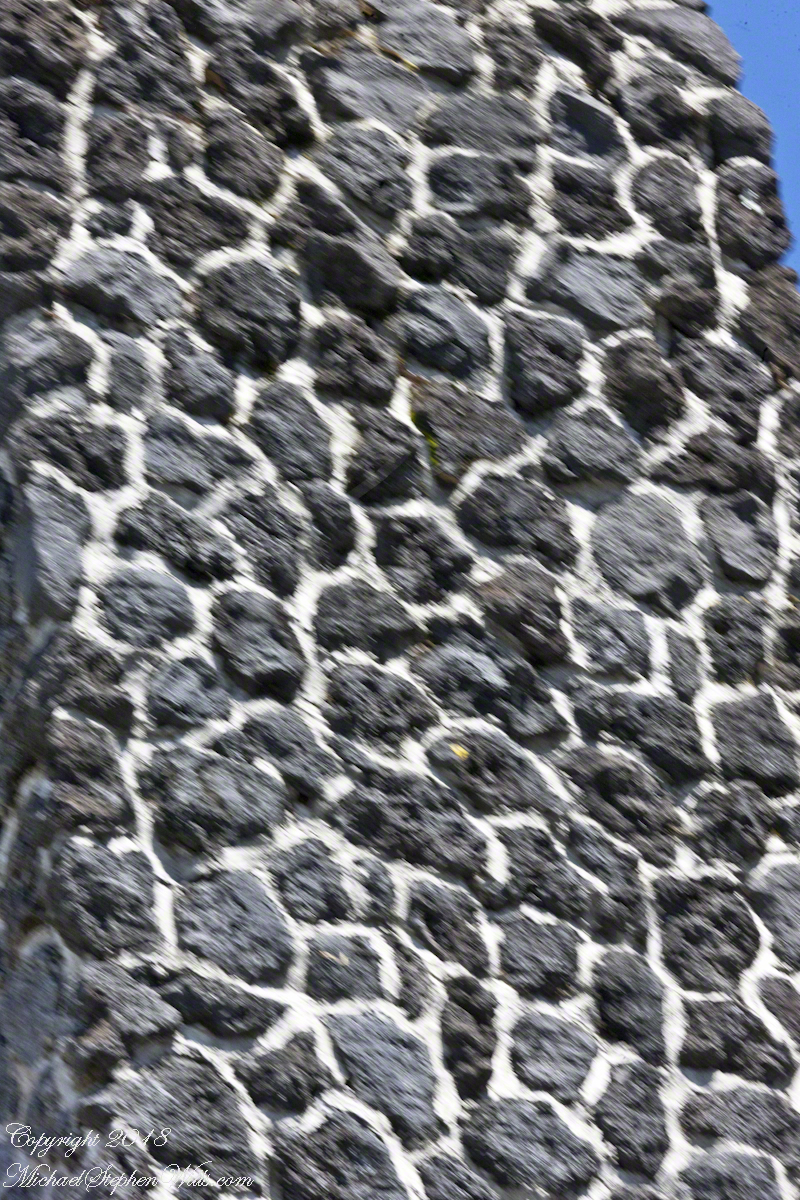
Look closely at the chimney. The stones are black and porous, volcanic cinders from Calbuco eruptions.
German settlers were there to witness, and suffer, the 1893-1895 Calbuco eruptions, one of the most explosive experienced in Southern Chile. Debris was ejected eight kilometers with large flows of hot mud. Farmers on the eastern shore of Lake Llanquihe petitioned the government to be resettled elsewhere. Without options, many remained.
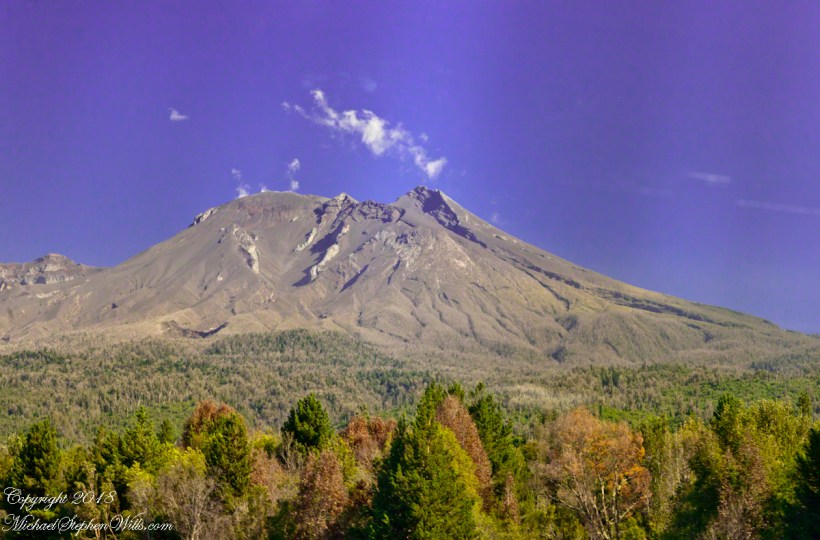
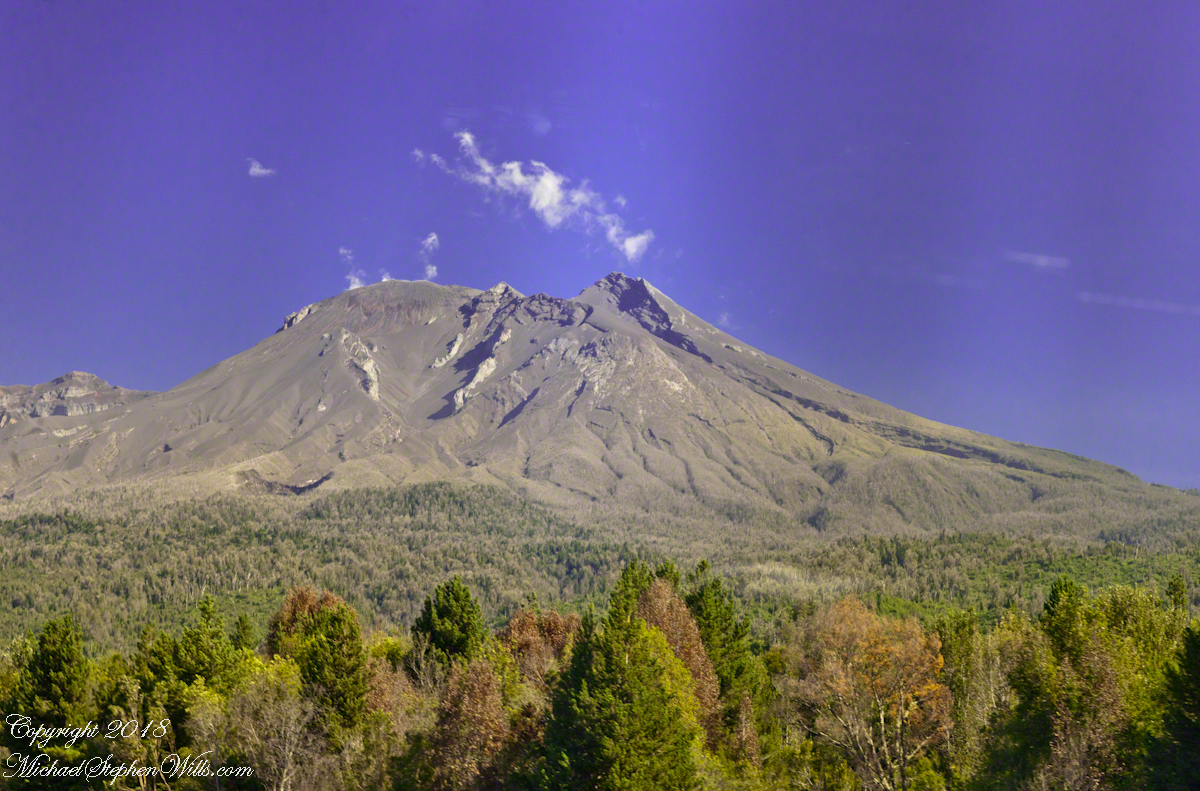
Here is a view of the monster, a threatening presence to the south. That is vapor from the active caldera. Today, people live here, enjoying the current moments of their surroundings.

Calbuco Volcano, February 15, 2016

Click me for the first post in this series, “Orsorno Volcan

o and Tourists.”

Copyright 2022 All Rights Reserved Michael Stephen Wills

Selfie Sticks and Petrohué Waterfalls

the selfie and me, me, me

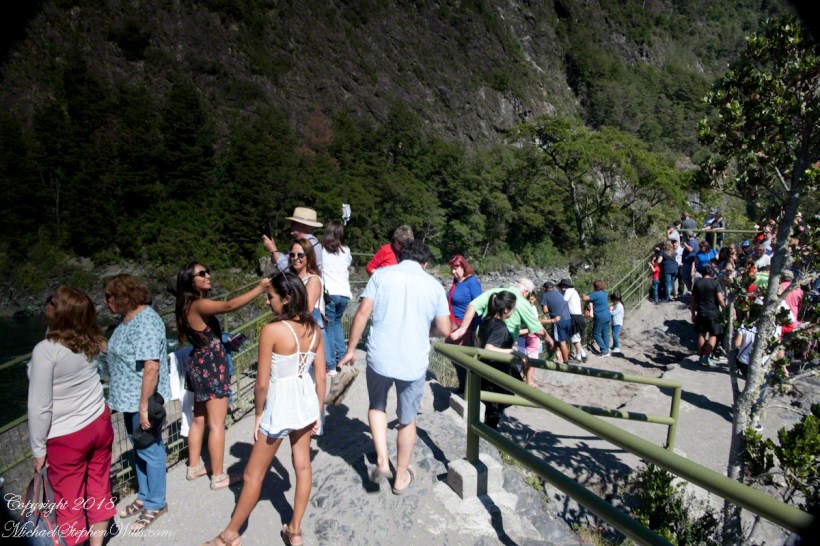
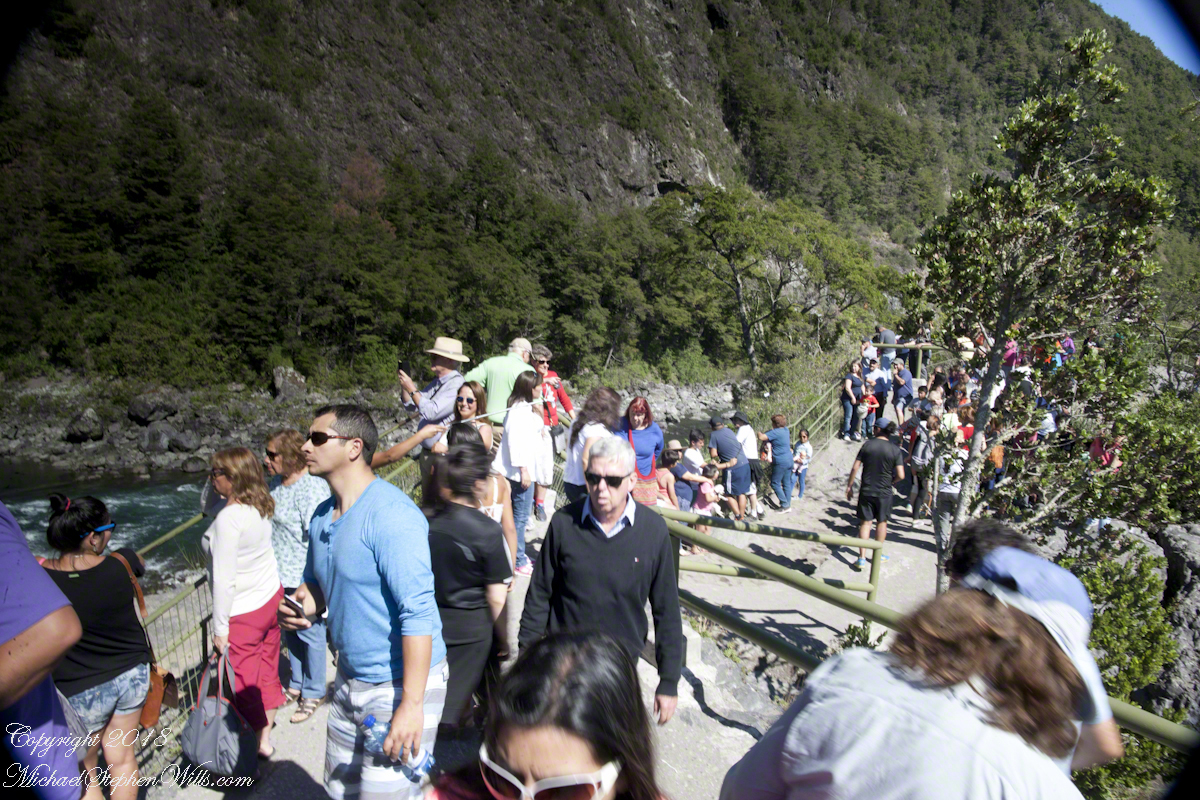
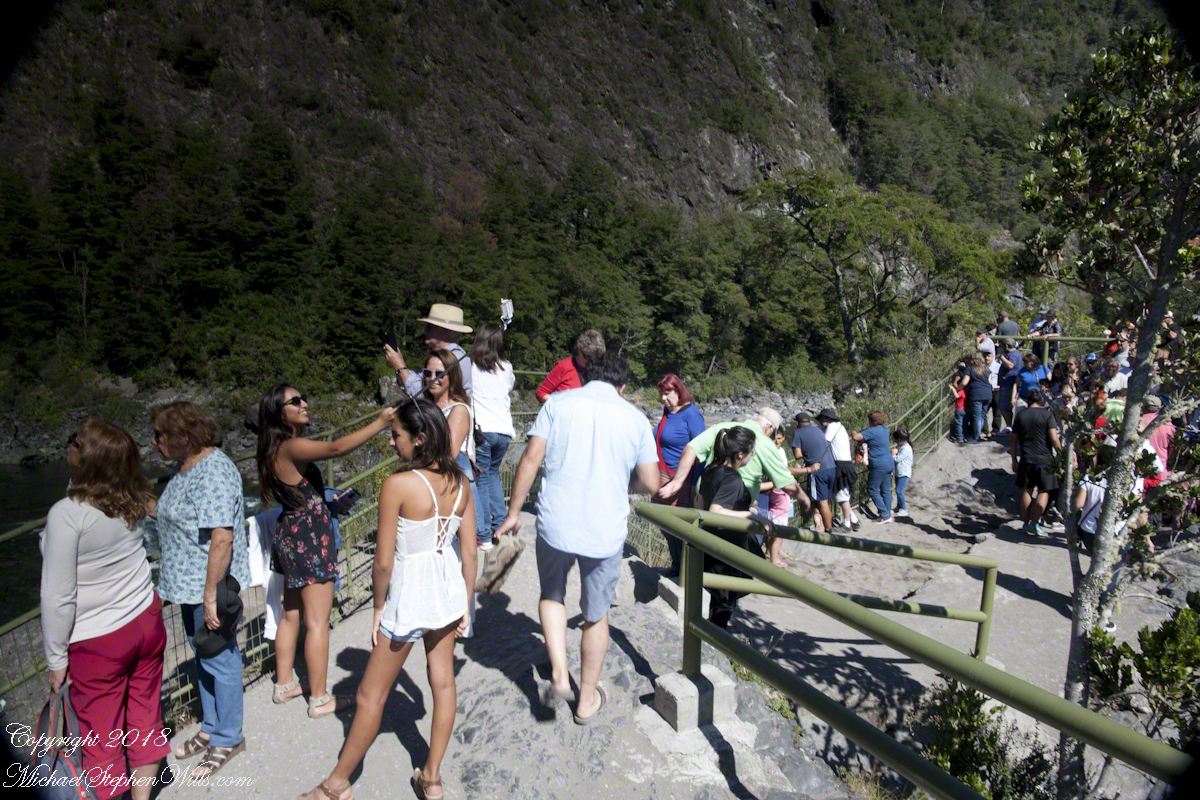
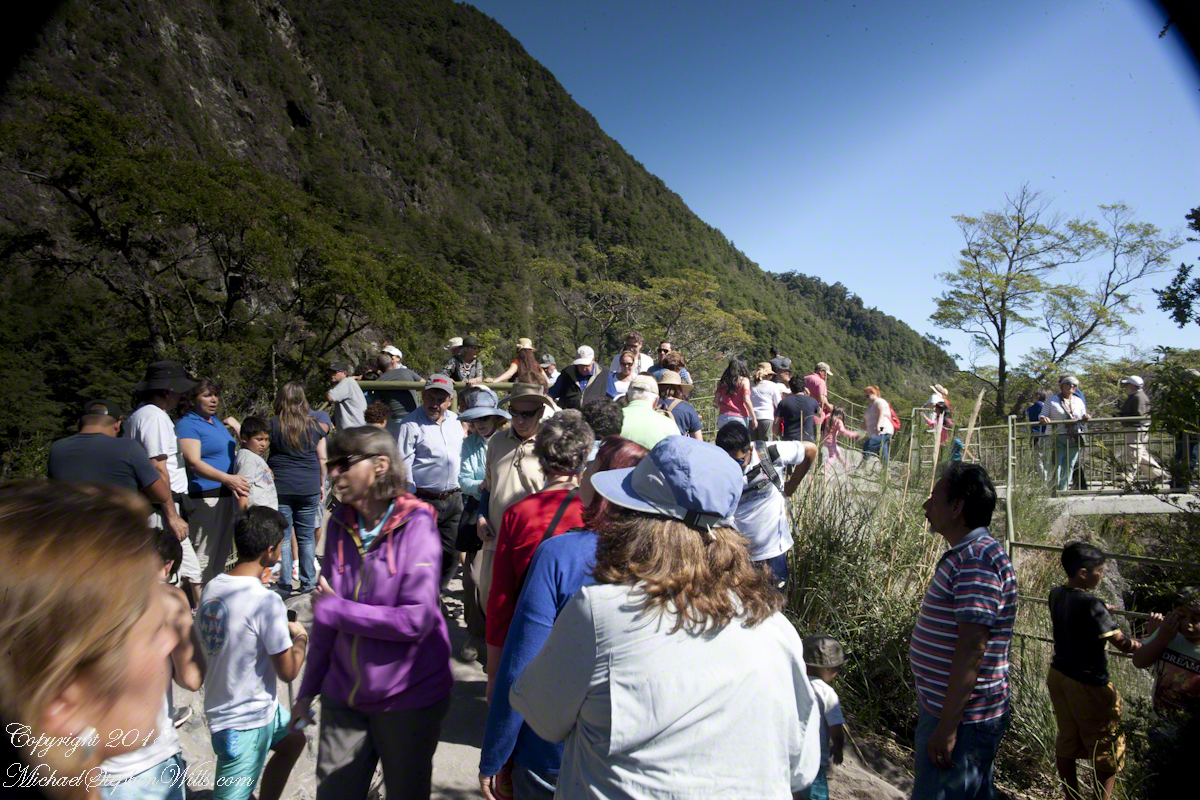
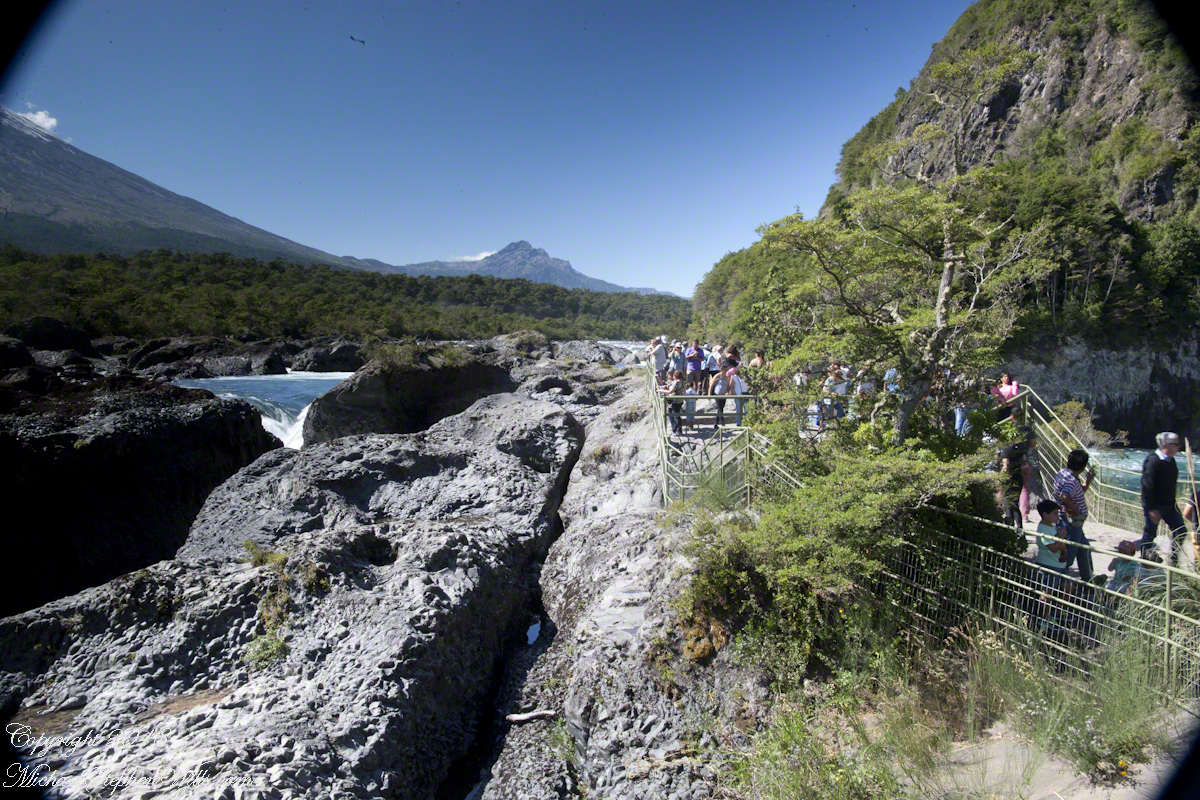
Petrohué Waterfalls are on the tourist track, traffic on the walkway was heavy on the southern hemisphere summer day, February 2016, of our visit. People were relaxed and friendly, the walkway well designed and safe. The wide angle lens was mounted on my Canon dslr, with a circular graduated neutral density filter. This is a filter with the upper third restrictive to light fading gradually to clear and mounted on a ring to rotated to cover the bright portion of the view. I used this successfully in the previous postings to obtain an exposure of the bright sky and darker land (for example, “Orsorno Volcano and Tourists.”). I could not resist capturing our fellow tourists. With a wide angle lens it is easy to do candid shots, such as the following. Most people are unaware of the capability of the 24 mm wide angle lens.

Click any photograph for a larger view.

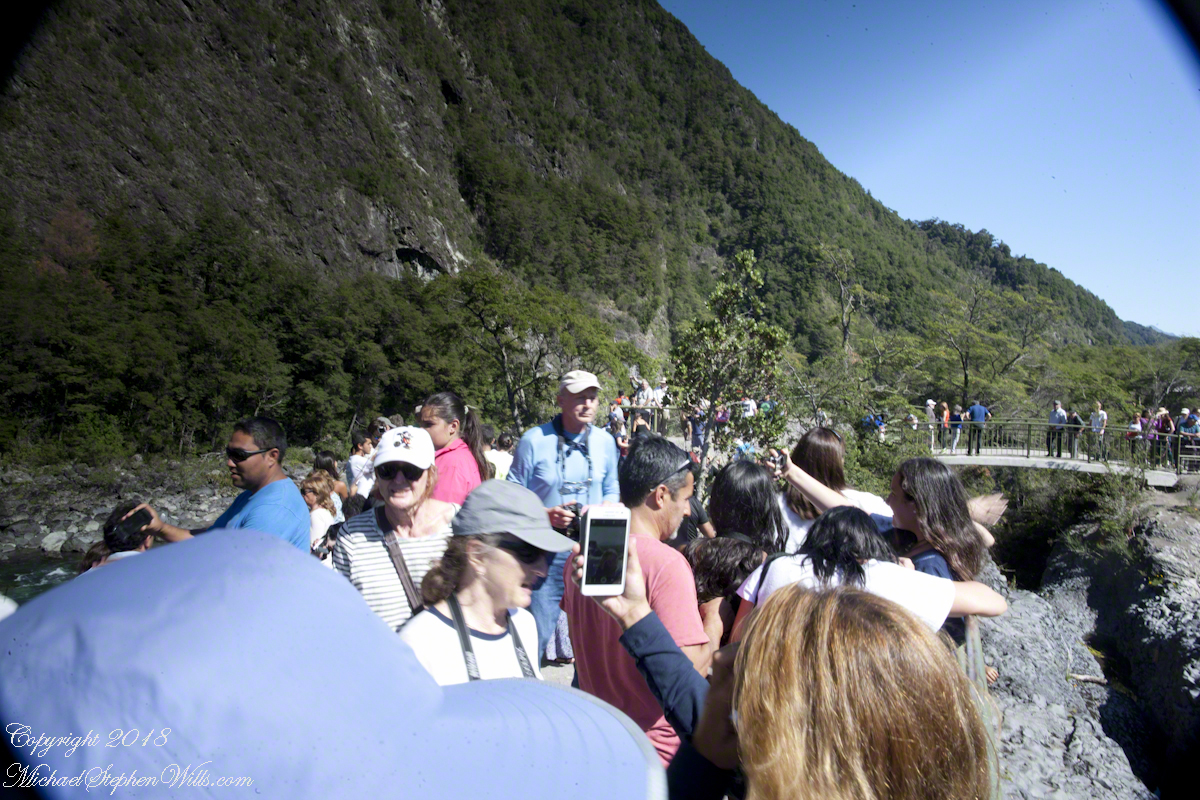
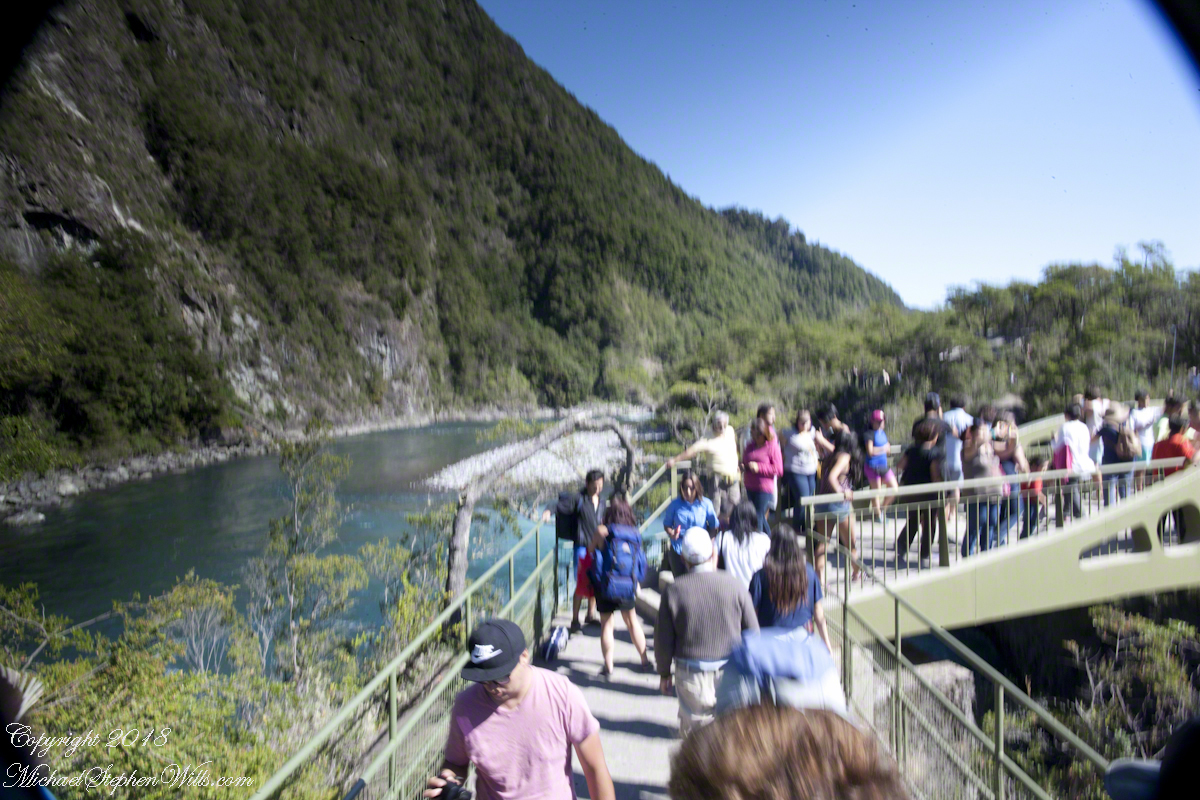
Unfortunately, in the rush of the crowd and moment the dual use of a configuration for landscape and (candid) street photography lead to mistakes. I did not have the lens hood attached correctly, you can see the hood in each corner. Then there is the circular, graduated filter. In the above photograph, the shaded portion runs across the lower left to the upper right. The subject is watching me photograph the water.

Here, I turned around from photographing the Orsorno Volcano to capture these selfie fans leaning against the railing to capture themselves and the volcano through they are in the minority. The trail is a “dead end”, rising to the point above the falls, where I am standing.

Selfie Stick

We started back down towards the point over the incredible emerald green water. There were three teenagers having fun with a selfie stick. Around them are people entranced by the water, as we werel.

Smile!! You’re on Candid Camera

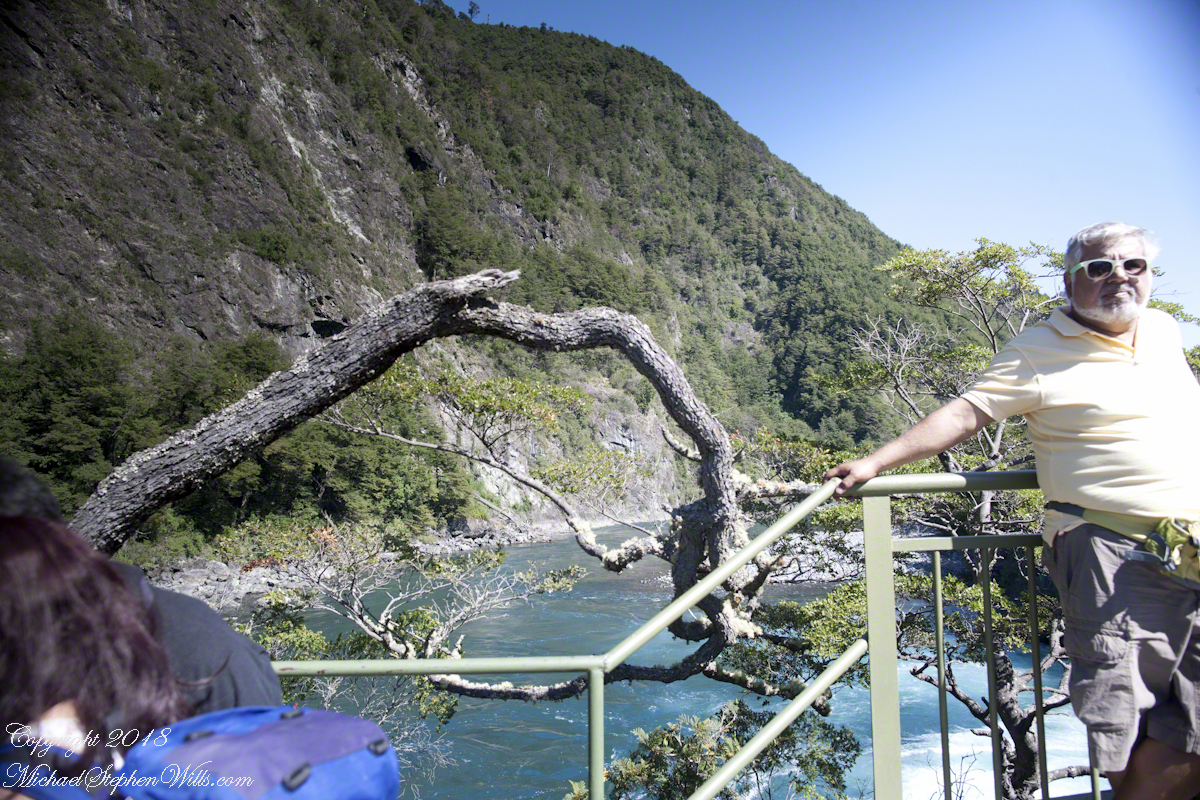
Headed back, I thought that curving tree was a good subject. Turned out, a fellow tourist heightened the interest of the shot. You see him, leaning against the railing next to the tree in the mid-distance of the following shot.

Here I am, looking back toward the child of Orsorno and the entire length of the observation walkway filled with people.

The Striking Colors of Petrohué Waterfalls

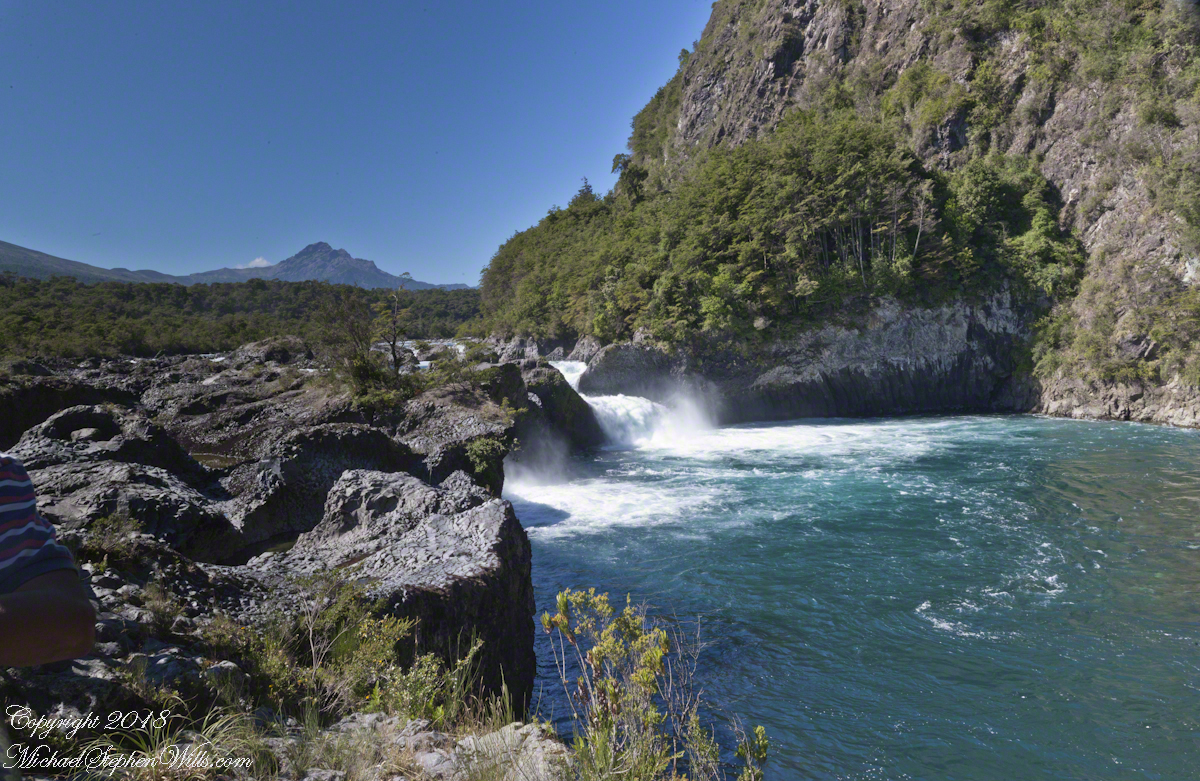
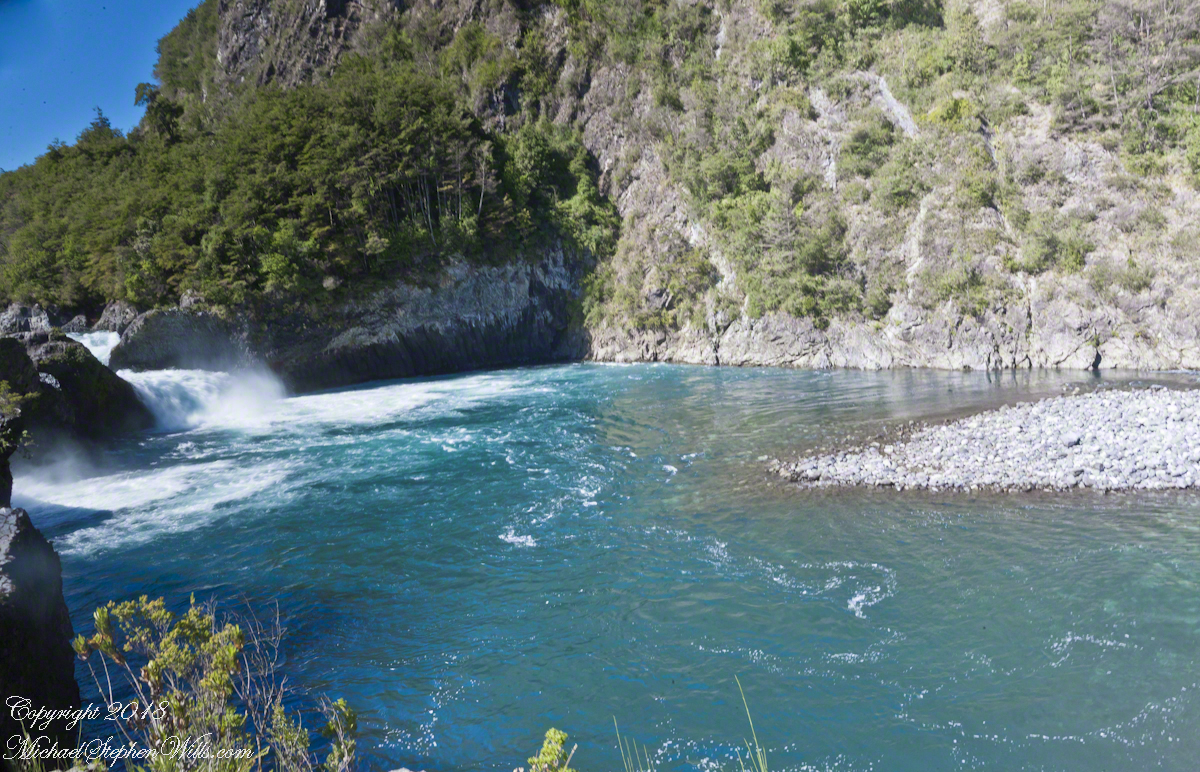
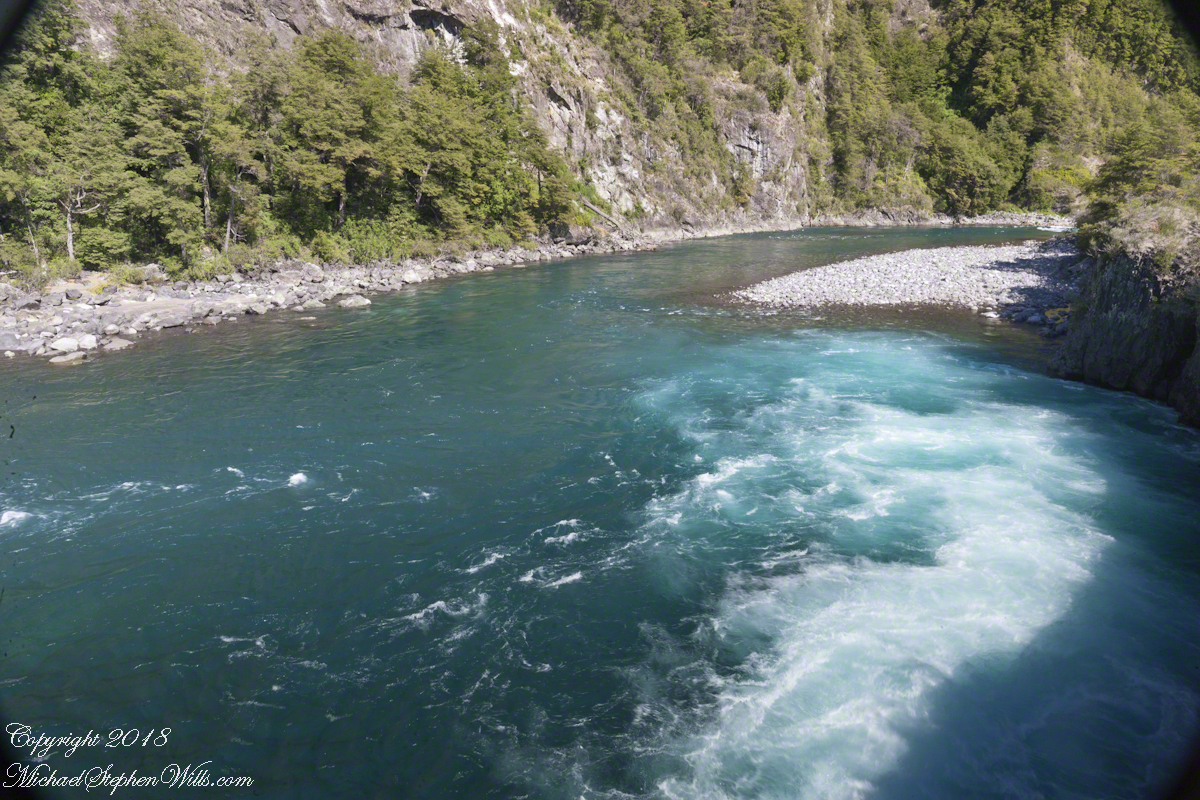
Emerald Water, colored by glacial minerals

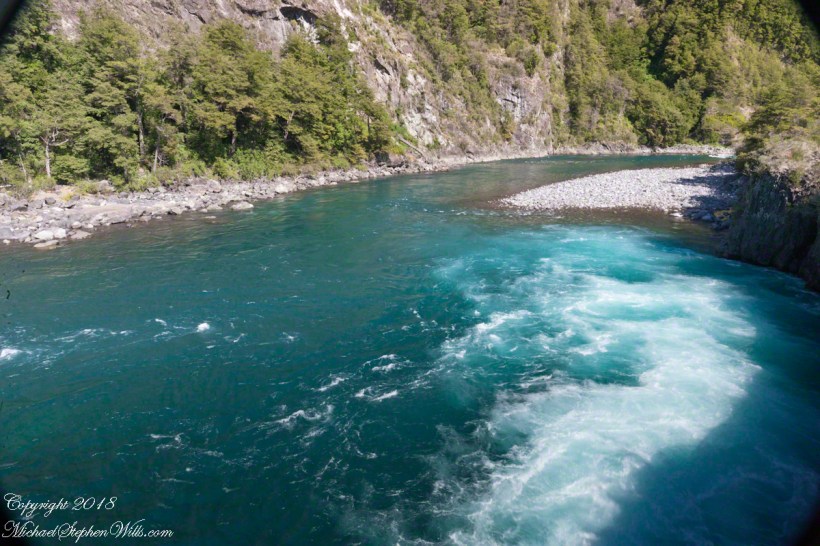
Glacial meltwater from Lake Todos los Santos (All Saints Lake) forms Petrohué River and, where the river flows over lava from the Orsorno Volcano, Petrohué Falls. This set of photographs features the emerald color the river originating from glacial minerals.

Click any photograph for a larger view.

A strangeness of these photographs is this is the middle of February, Chilean summertime.

Force of Nature

Another strangeness, not readily apparent, is the effect of the Coriolis force. Here in the Northern Hemisphere water (any moving mass, really) moving perpendicular to the rotating surface of the earth (a property of water is the surface follows the contour of the solid surface over which it flows) will tend to flow in a clockwise direction. Crossing the equator, in the Southern Hemisphere the tendency reverses, tending to flow to the left, counter-clockwise. With some imagination the effect of the Coriolis force can be seen in the following photograph.

Moll’s Gap on Getty

Happy New Year….starting it off right

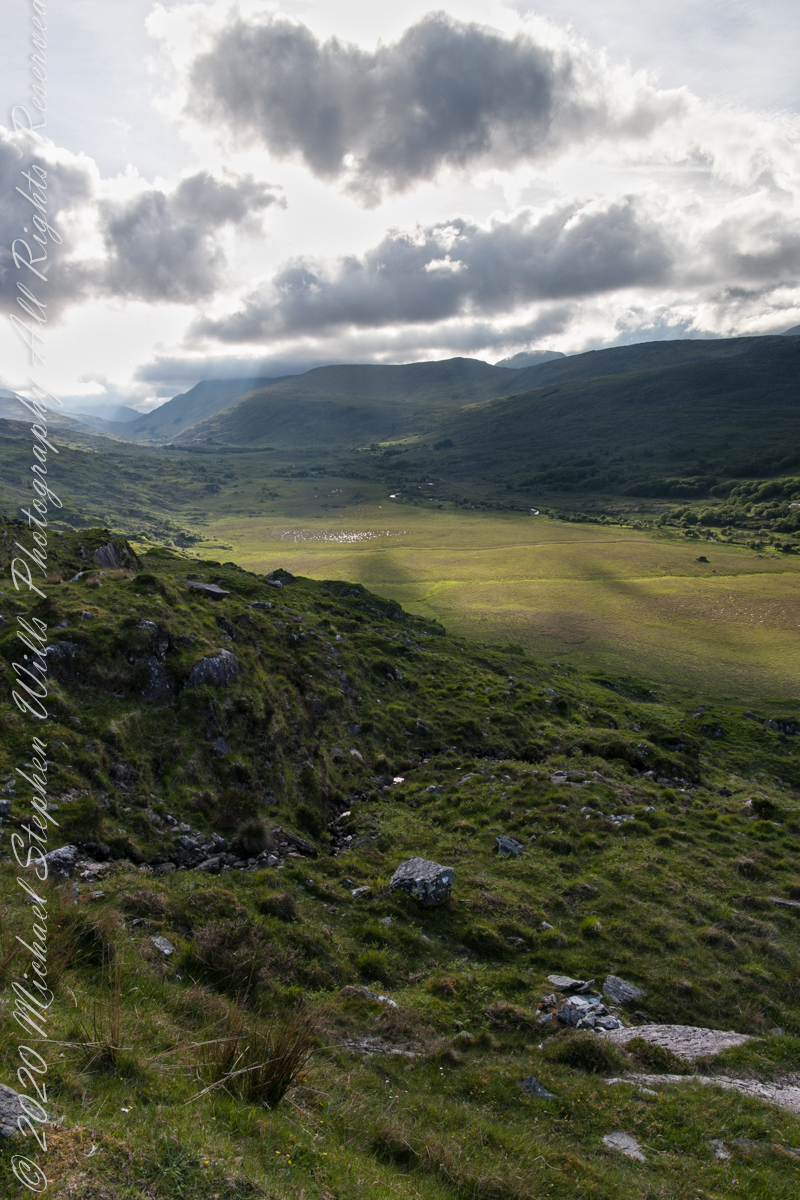
We are near Molls Gap on the Ring of Kerry. At our feet is Eric townland, there’s an eponymous Bog Nature Reserve down there. At our feet is Eric townland, there’s an eponymous Bog Nature Reserve down there.

Click me for the two (2) Molls Gap photographs accepted and published by Getty.

Click pic for larger view in a new browser tab. If you are in WordPress Reader, open the post to use this feature.

Copyright 2021 Michael Stephen Wills All Rights Reserved

Seven Ladies View Accepted by Getty

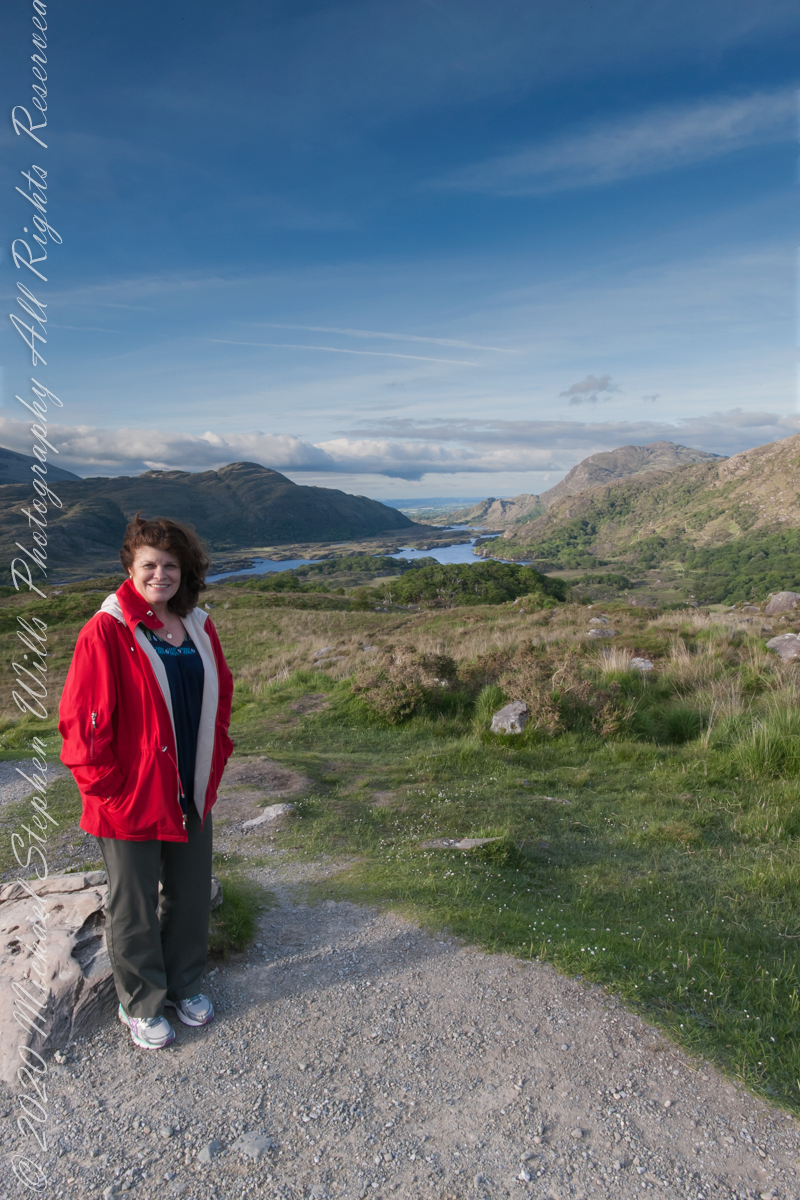
My wife, Pam, at Ladies View, on the Ring of Kerry

Here we are, on the road from Kenmare to Killarney, N71, part of the Ring of Kerry around the Iveragh Peninsula. The view was celebrated by Queen Victoria’s Ladies-in-Waiting during an 1861 tour of Ireland

Click me for the seven (7) Ladies View photographs accepted and published by Getty.

Click pic for larger view in a new browser tab. If you are in WordPress Reader, open the post to use this feature.

Copyright 2021 Michael Stephen Wills All Rights Reserved

Orsorno Volcano and Petrohué Waterfalls

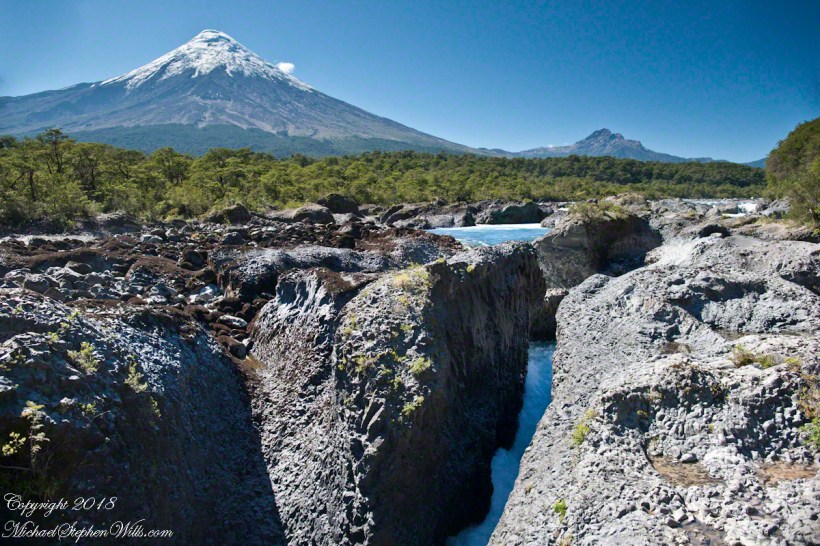
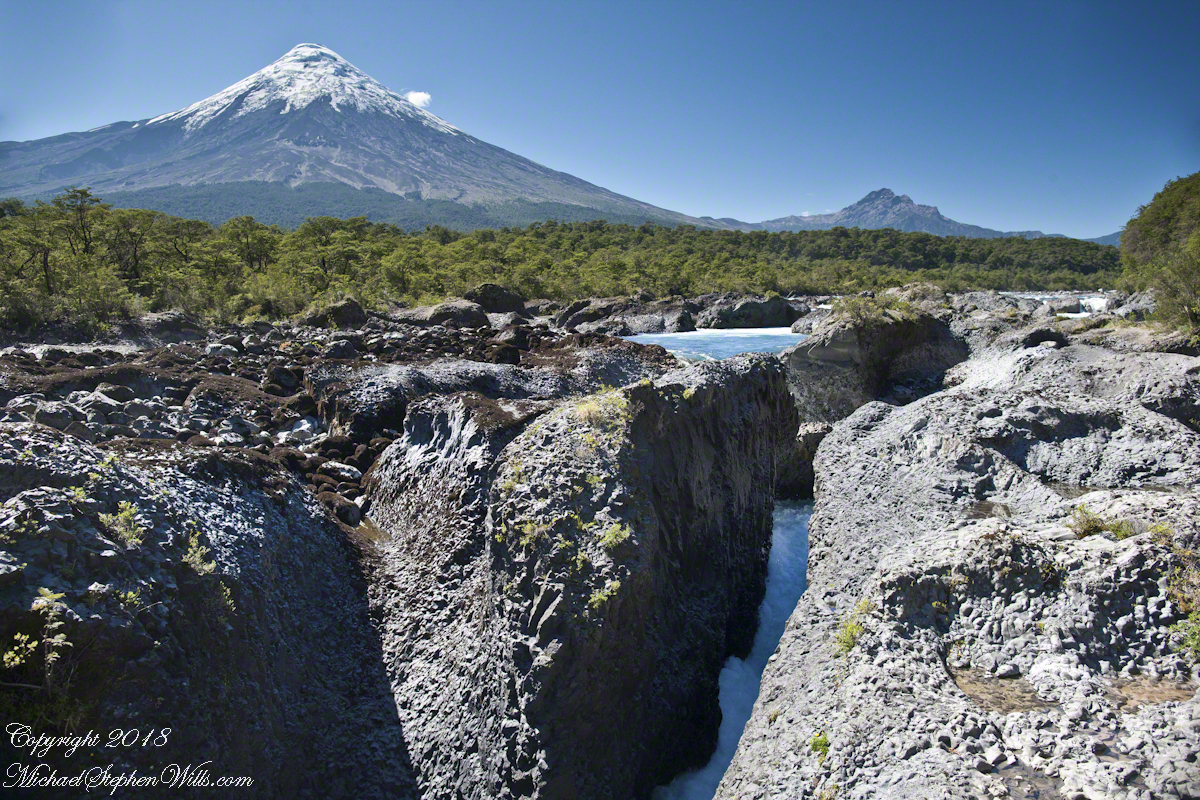
Petrohué Waterfalls (pronounced petro-WEH) is within Vicente Pérez Rosales National Park of Chile. For me, this view was one of the draws of our entire trip, that stratovolcano and its craggy children in the distance the same type as Mount Vesuvius, the volcano that wiped Pompeii off the map in 79 AD. Described by Pliny, the eruption type is named even today “plinian,” the most destructive and violent of all volcanic eruptions.

It was an irrational happiness I felt walking this place, I still smile to myself remembering it.

Click photograph for a larger view.
The mastery of water over volcanic rock deposited by ancient eruptions of the Orsorno Volcano.

Ladies View 10

last version

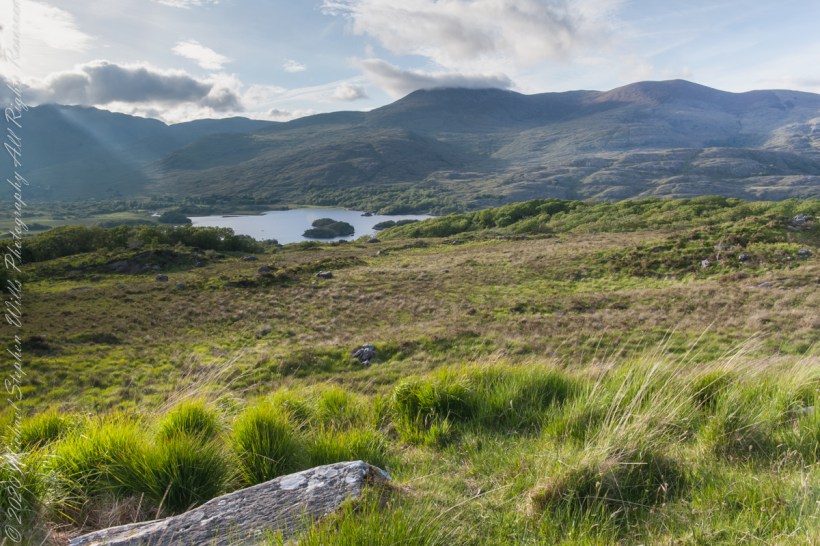
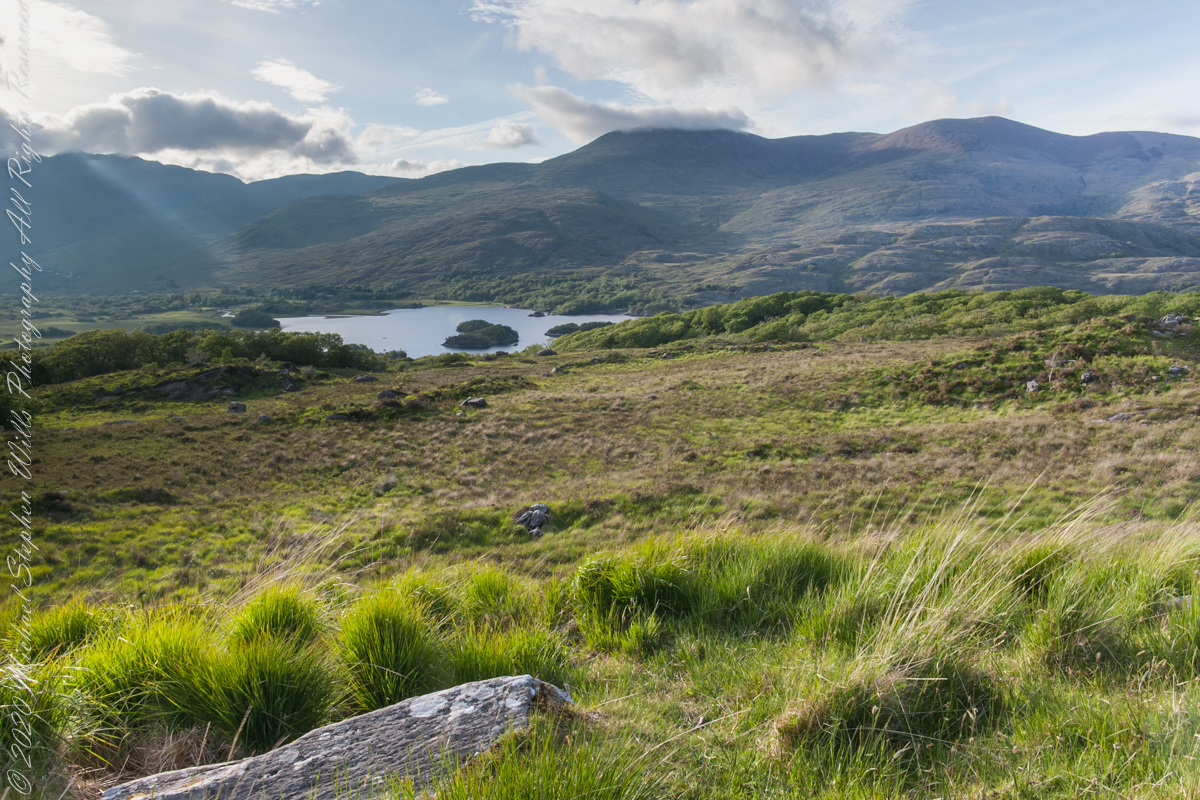
Here we are, on the road from Kenmare to Killarney, N71, part of the Ring of Kerry around the Iveragh Peninsula. The view was celebrated by Queen Victoria’s Ladies-in-Waiting during an 1861 tour of Ireland

Here the camera, link #9, is turned toward the sun, low in the evening sky, emerging from clouds with a bright sunbeam on Upper Killarney Lake. The previous view was portrait orientation. This is landscape orientation.

Click pic for larger view in a new browser tab. If you are in WordPress Reader, open the post to use this feature.

Copyright 2021 Michael Stephen Wills All Rights Reserved